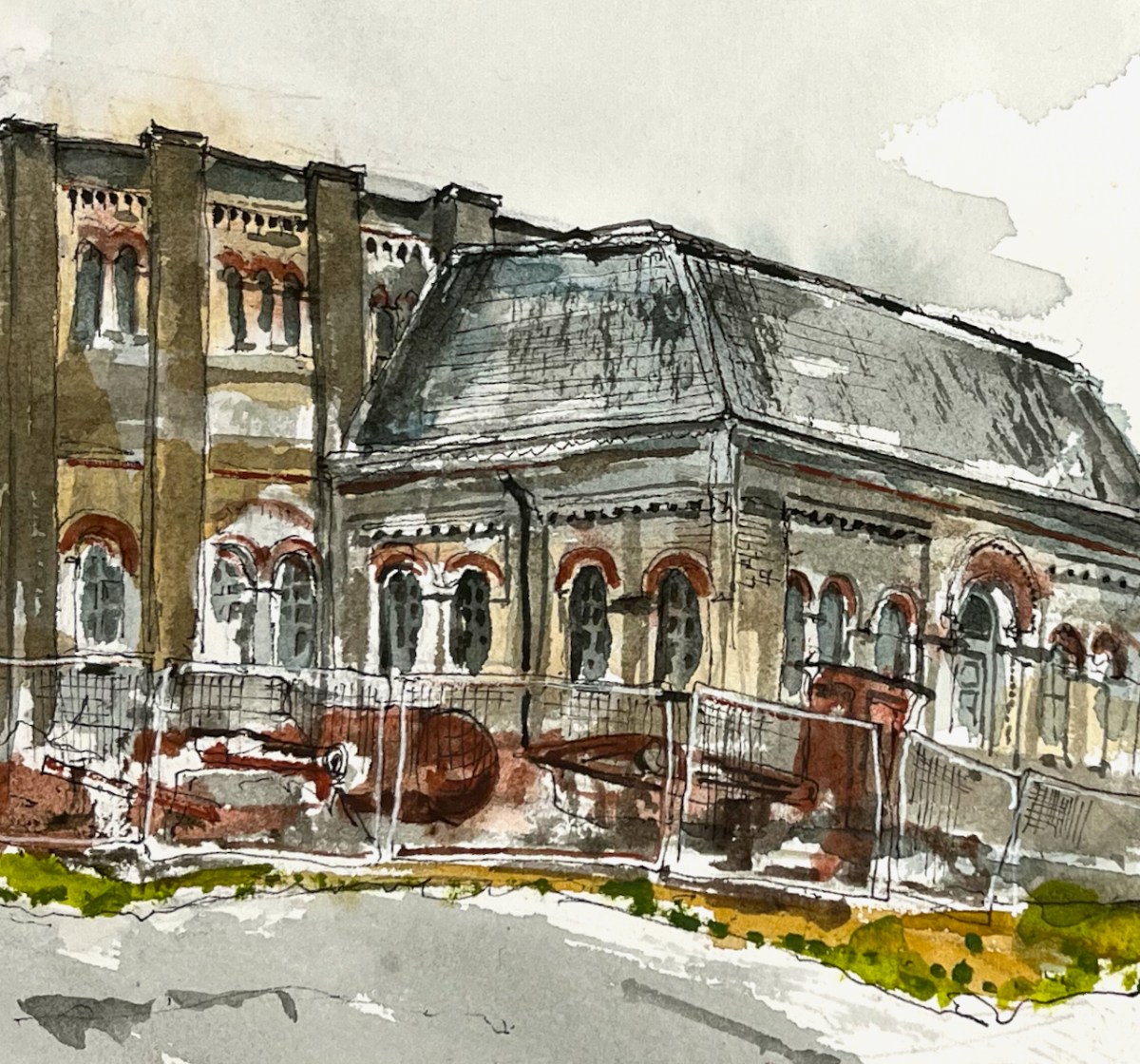
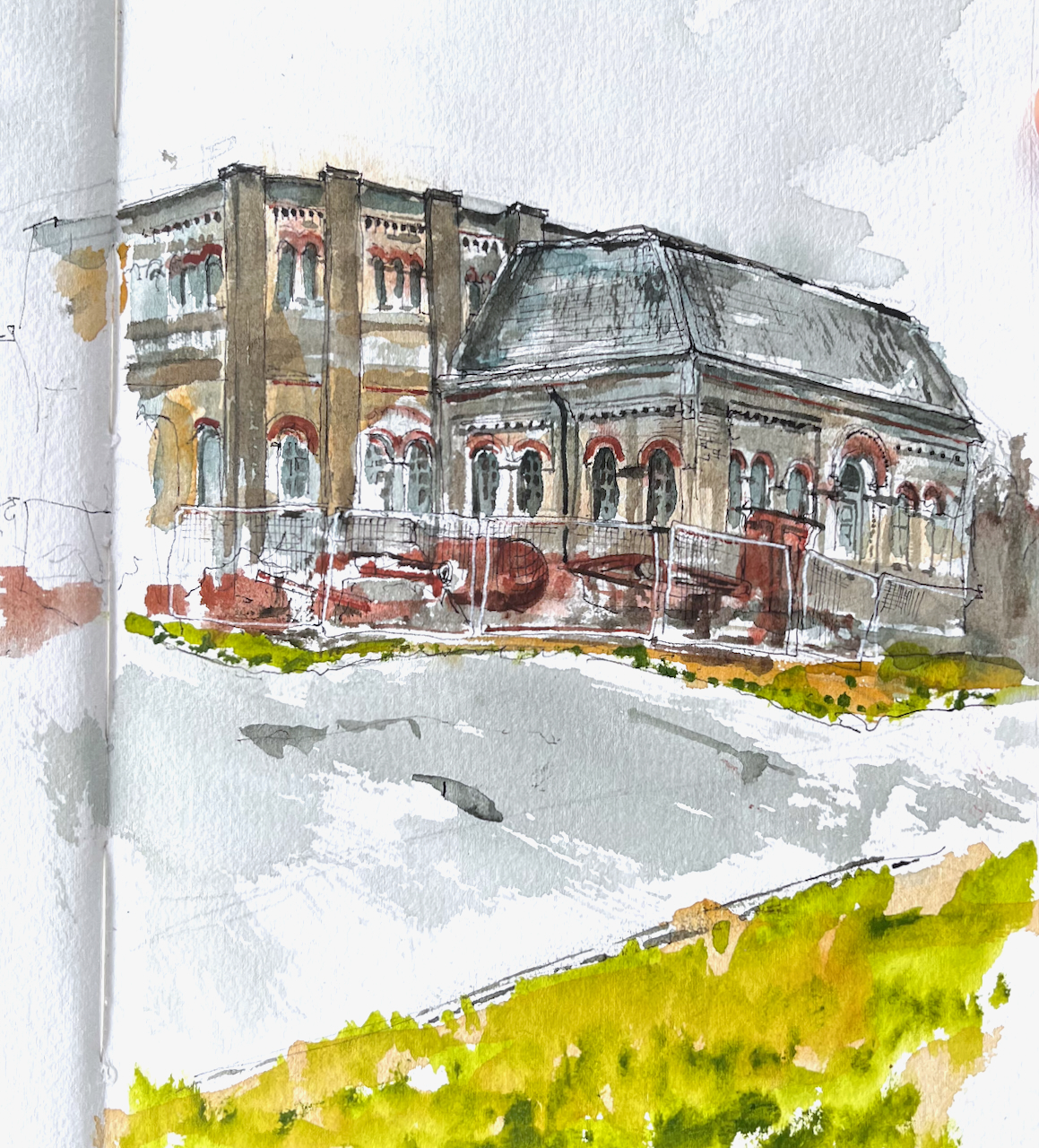
Here is a view of the old engine house of Crossness Pumping Station, on the South bank of the River Thames.
This is a former sewage pumping station. It was designed by the engineer Joseph Bazalgette and opened on the 4th April 18651 . It is the equivalent for South London of the Abbey Mills sewage pumping station on the North side of the Thames, which I have sketched previously.
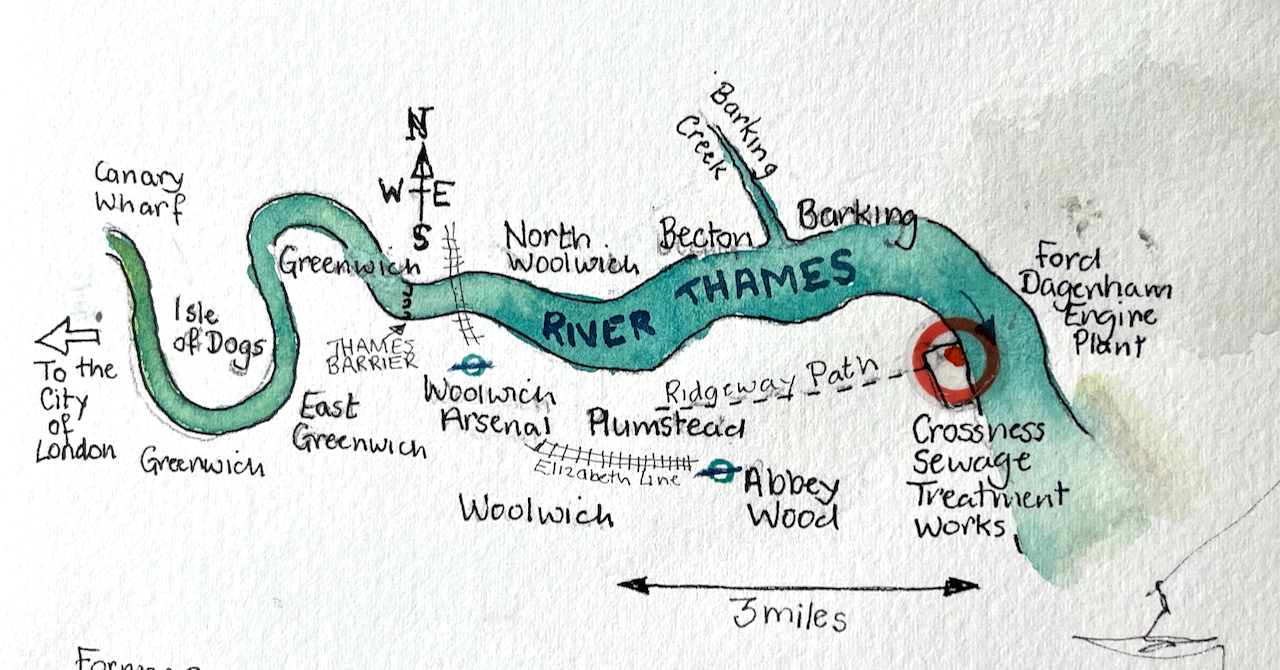
These two pumping stations were important components of Bazalgette’s plan to rid London of cholera by removing sewage from central London. His idea was to pump the sewage from the conurbations in central London and shift it to Crossness and Beckton. This did indeed solve the problem of cholera in the city. It did not solve the problem of untreated sewage in the Thames: it just moved it downstream and away from the main residential areas of the time. Untreated sewage was pumped into the river at Crossness and Beckton on the ebb tide.
In 1878 the passenger steamer Princess Alice collided with another vessel and sank right at the spot where the sewers released their waste into the Thames. People who survived the collision died as a result of immersion in the polluted water .2
The exact number of passengers on board the Princess Alice during that fatal voyage is unknown, as is the number lost, but it is thought that around 640 people drowned, making this Britain’s worst inland waterway disaster.
Royal Museums Greenwich (https://www.rmg.co.uk/stories/blog/library-archive/drowning-sewage-sinking-princess-alice)
This terrible tragedy and the consequent public outcry prompted the authorities to shift the problem even further downstream. Sewage boats were used to transport raw sewage into the Thames estuary and dump it in the North Sea. Amazingly, this continued until 1998:
The tragedy prompted the introduction of what became known as ‘Bovril boats’ (due to the unfortunate colour and consistency of their cargo), which carried sewage sludge out to the Thames Estuary and North Sea, disposing of it there.This continued until 1998, when EU legislation forbade it due to contamination of beaches.
Royal Museums Greenwich https://www.rmg.co.uk/stories/topics/pollution-river-thames-history
These days the sewage is treated3 (mostly). Next to the Victorian pumping station I sketched, there is a vast modern sewage treatment works belonging to Thames Water. Sewage is transformed by bacterial action and filtering. It becomes water and “sludge”. The water goes into the Thames. The sludge is used as agricultural fertiliser or burned for electrical power generation.
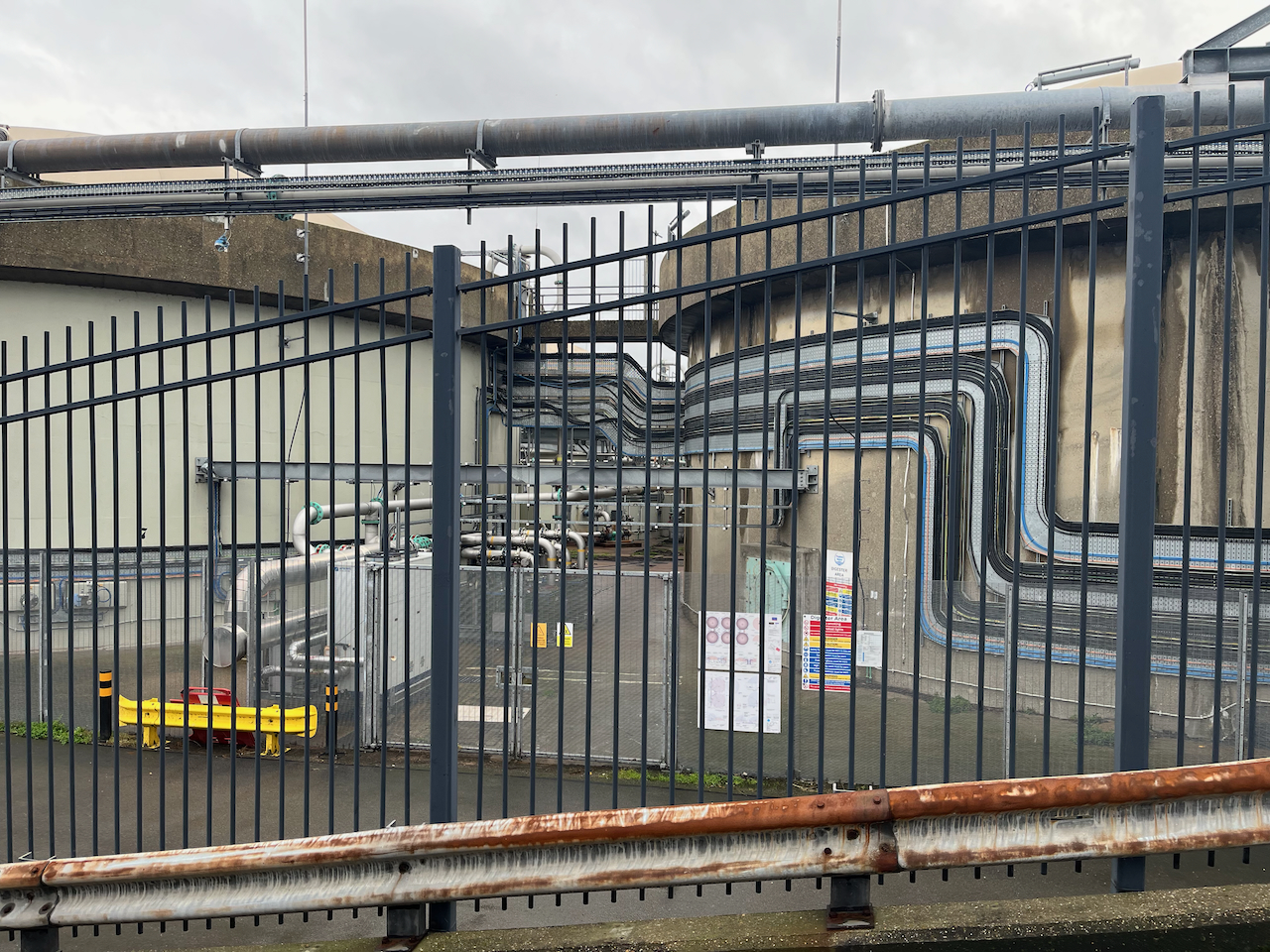
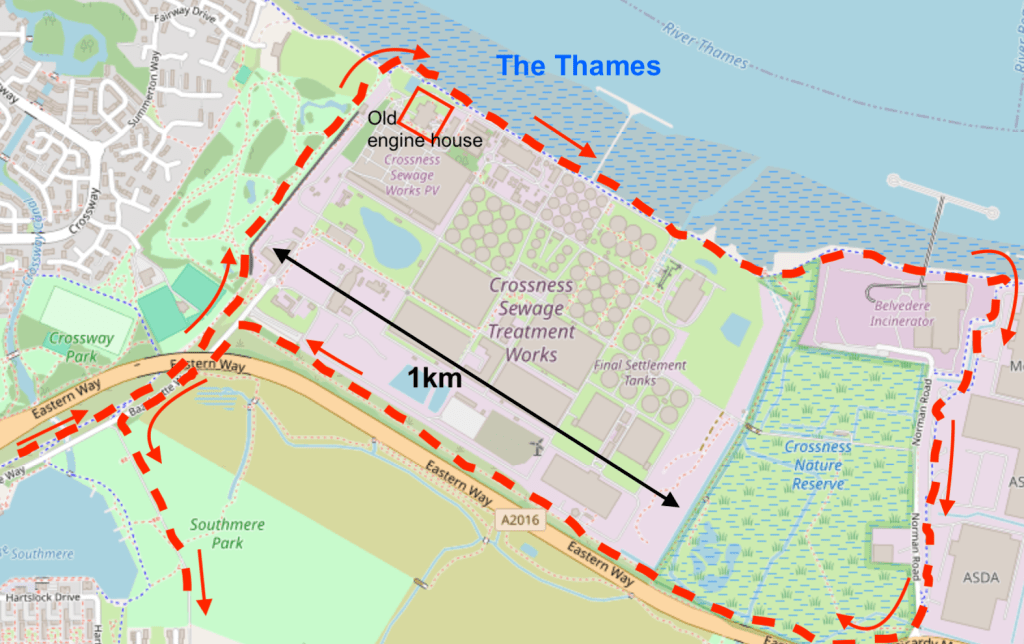
On my walk I circumnavigated this enormous treatment plant. It hardly smelt atall.
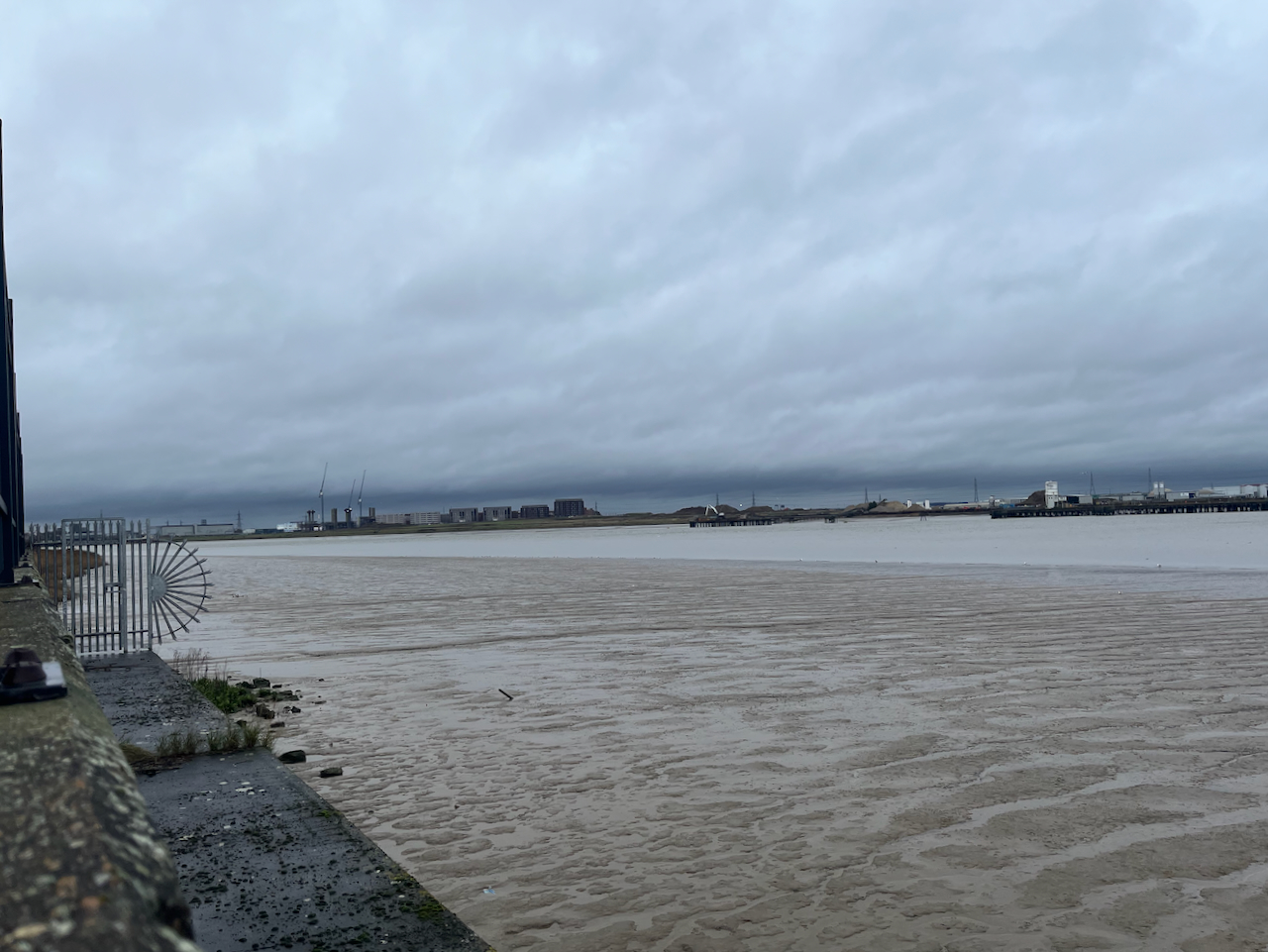
The Thames is vast here.
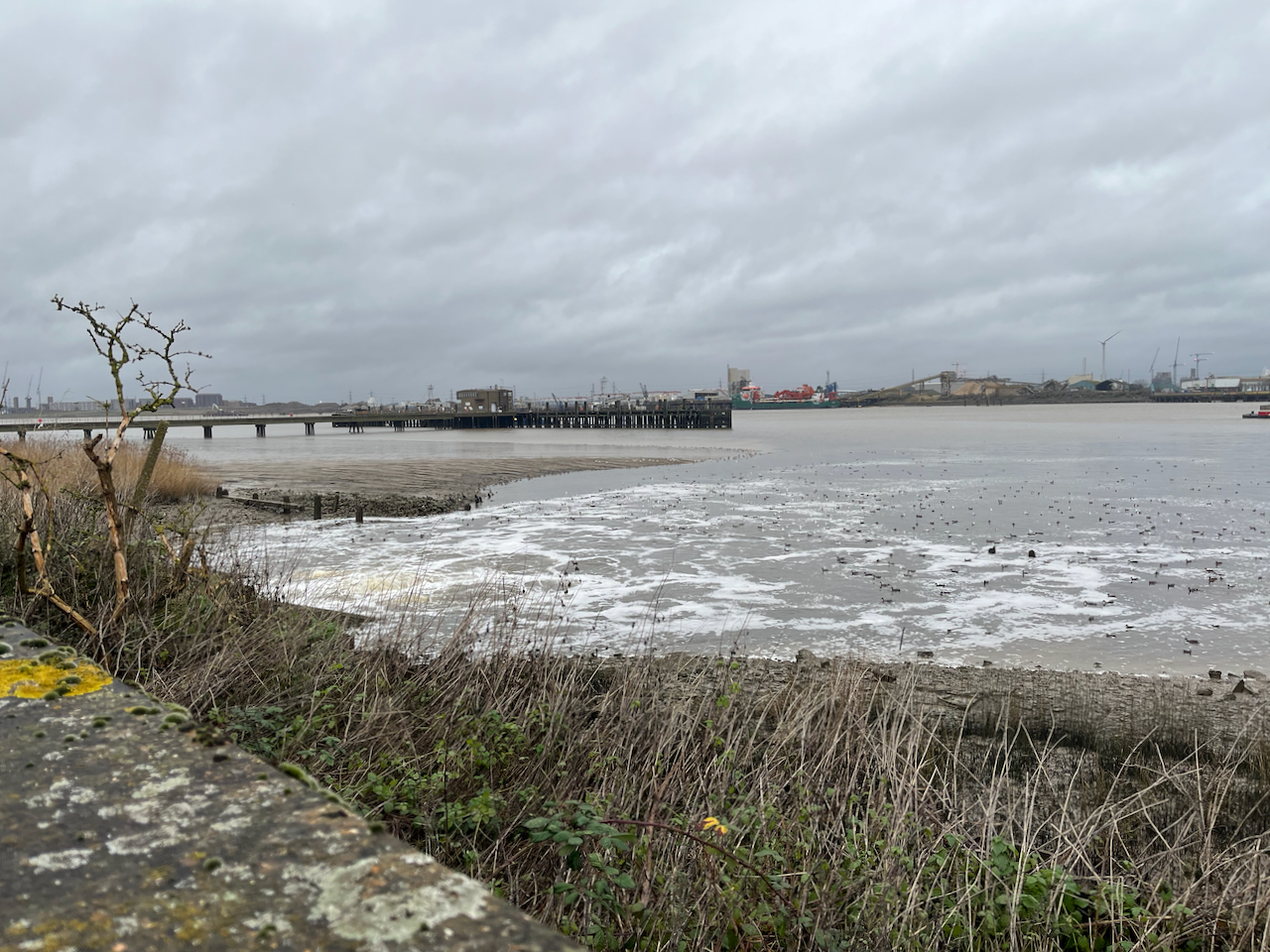
I sketched the Engine House from the Thames Path. It is behind some tall and strong fencing, which I did not put in the picture.
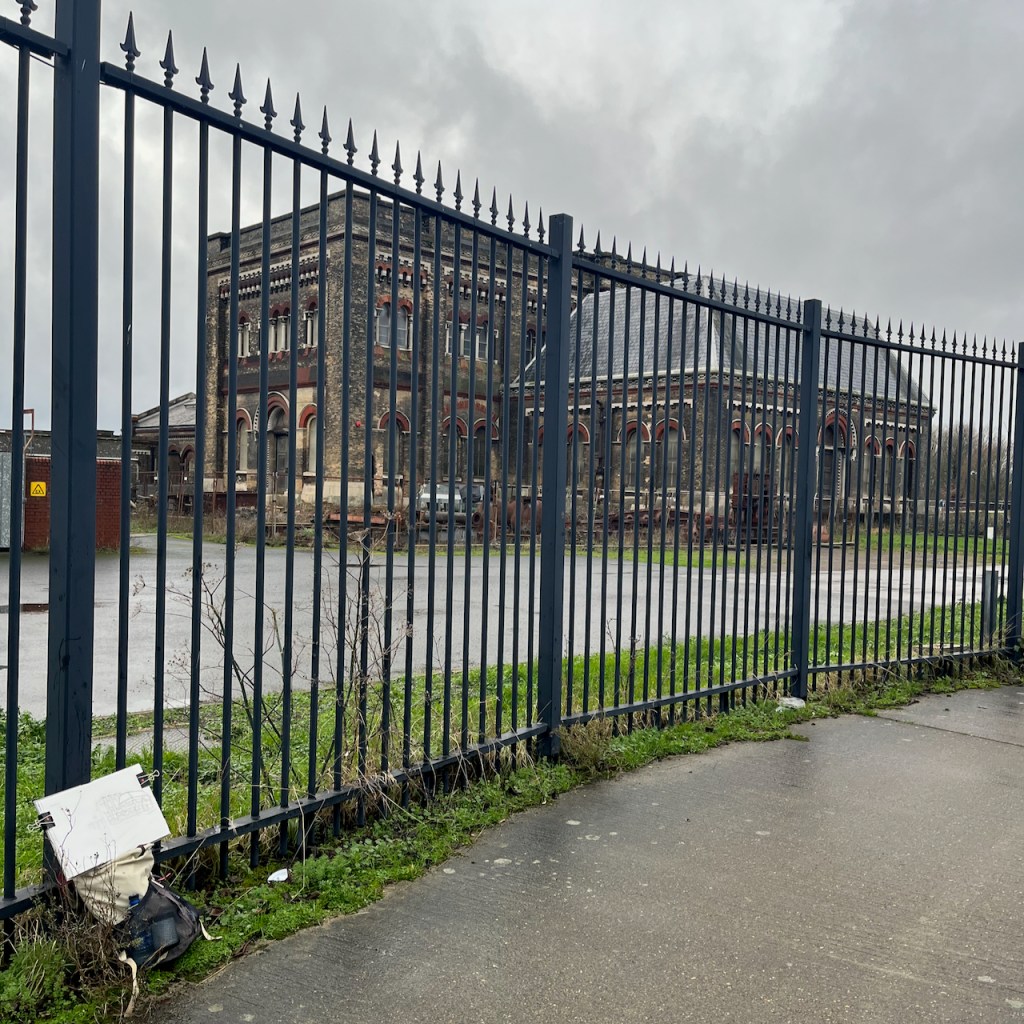
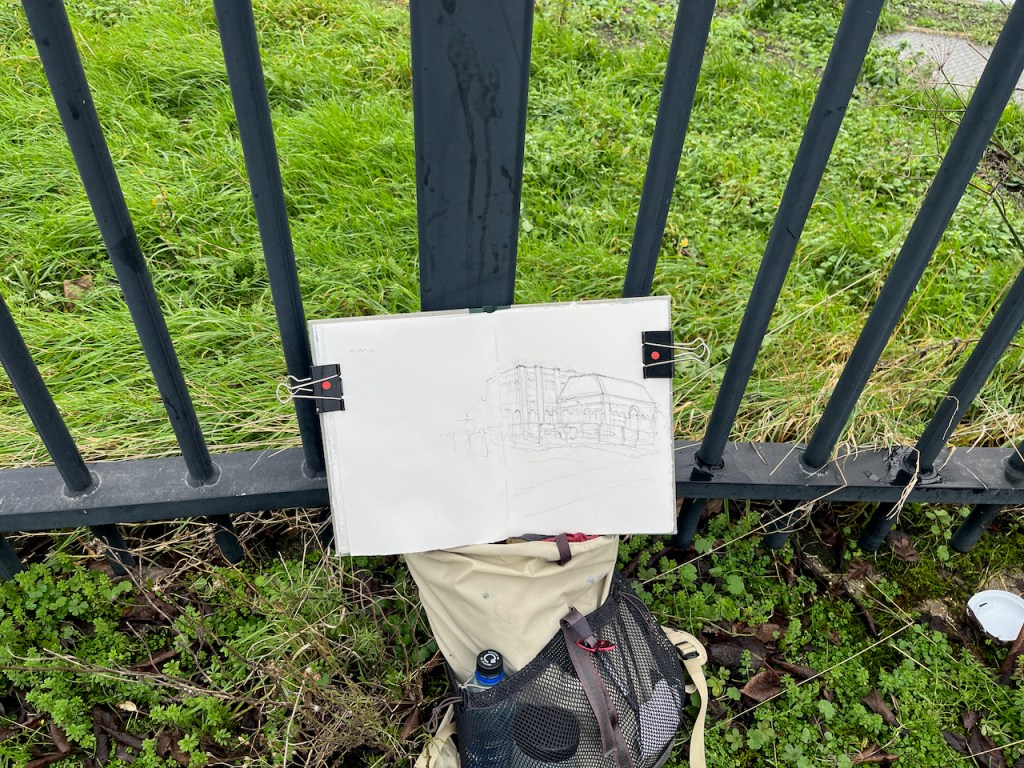
As you can see, it was raining, on and off.
Here is a photograph of the Pumping Station as it neared completion. It is from a fascinating blog post on the “Historic England” website.
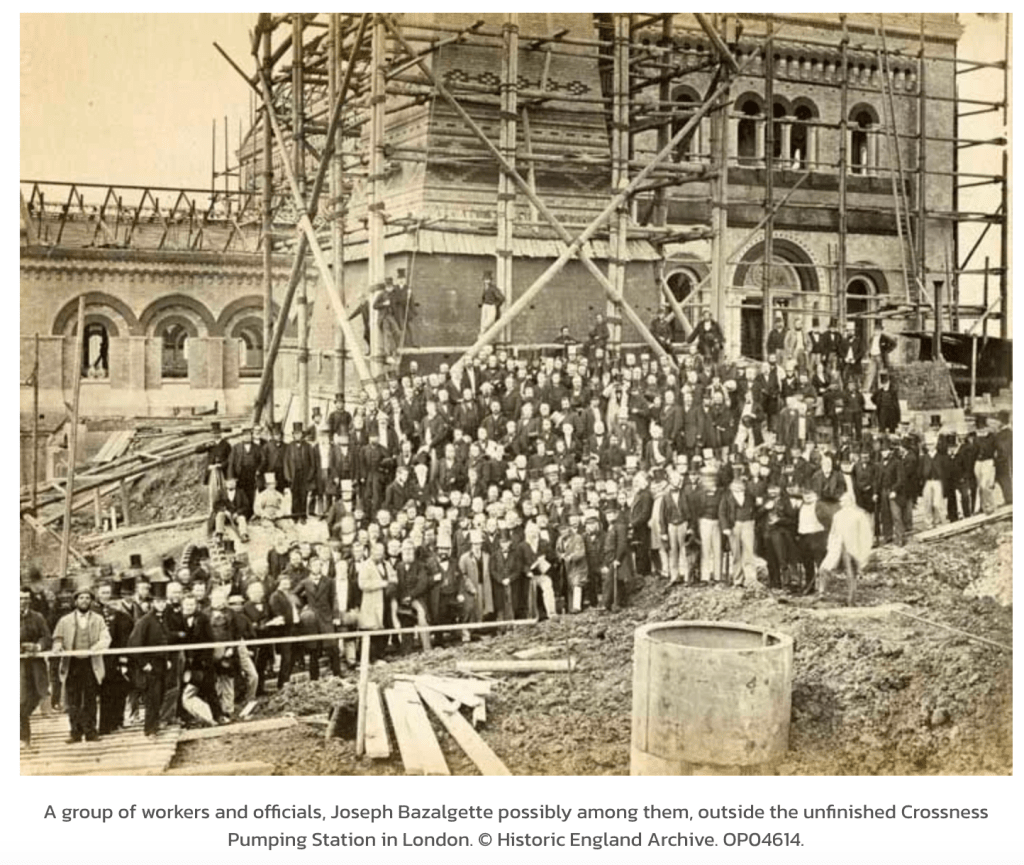
The photo is more-or-less the same viewpoint as my sketch. I hope that the workers in this picture felt proud of their achievement, and would be glad to know that their work has been honoured, and building continues on the site.
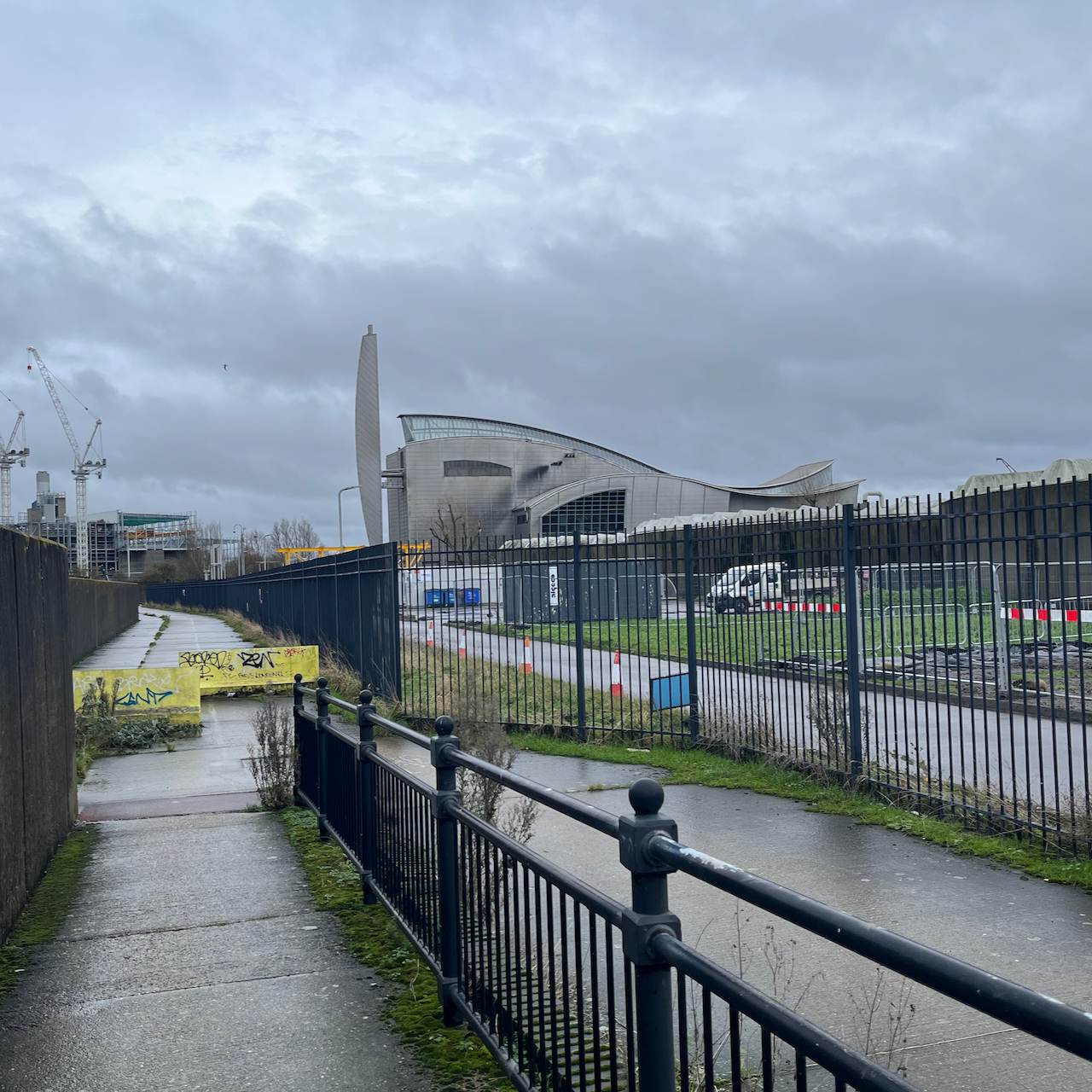
The old engine house is maintained by the Crossness Trust.

- Dates of construction from the Historic England listing: https://historicengland.org.uk/services-skills/education/educational-images/crossness-pumping-station-belvedere-road-bexley-8211, and from the Crossness History site: https://crossness.org.uk/timeline/ ↩︎
- The problem of pollution in the Thames and disaster of the “Princess Alice” is related on the Royal Museums Greenwich site: https://www.rmg.co.uk/stories/topics/pollution-river-thames-history ↩︎
- The Thames Water site has a description of sewage treatment here. There is a detailed description of sludge incineration in this article of 2019: https://greenwichindustrialhistory.blogspot.com/2019/11/crossess-sewage-sludge-incinerator.html
↩︎

 Jane Sketching