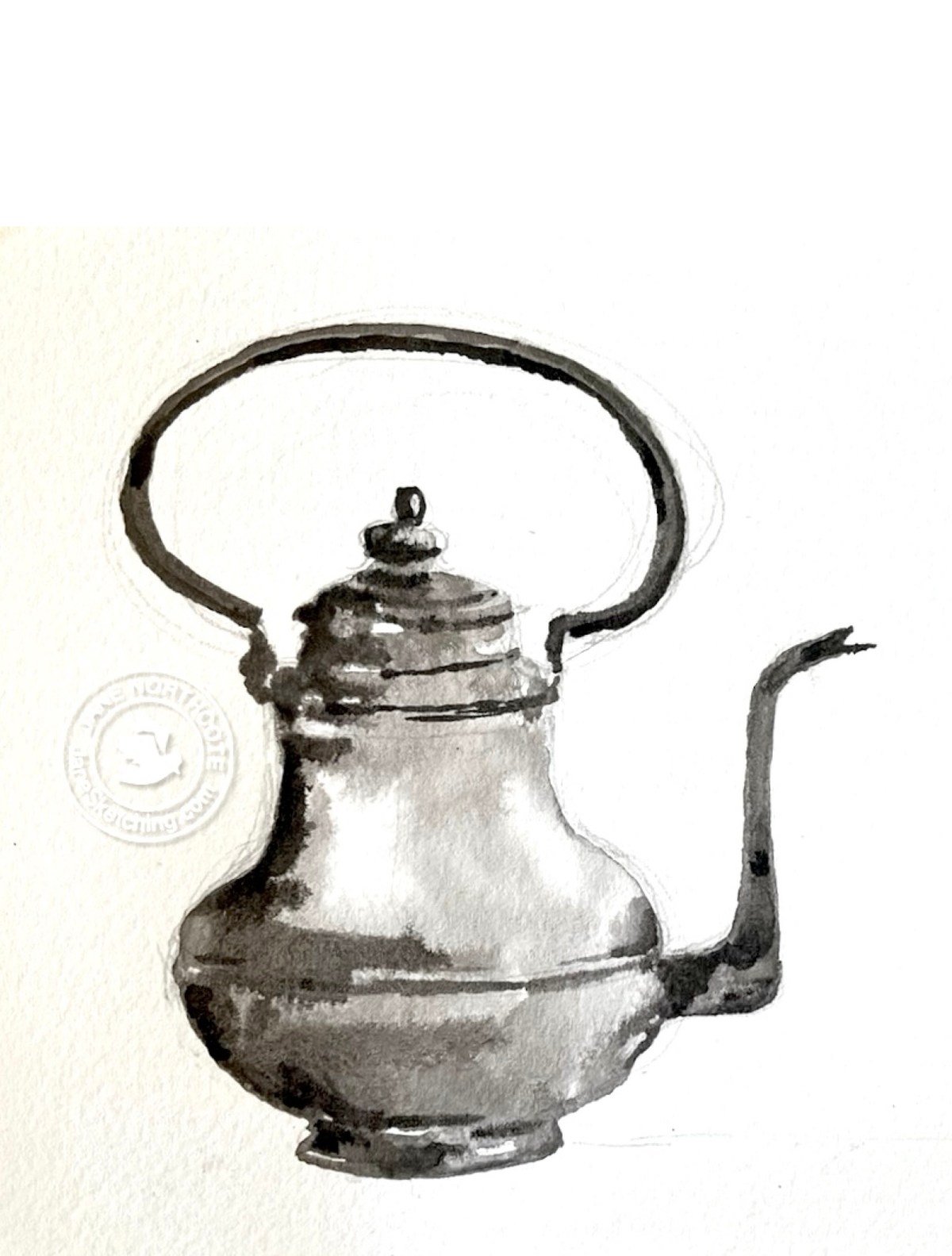
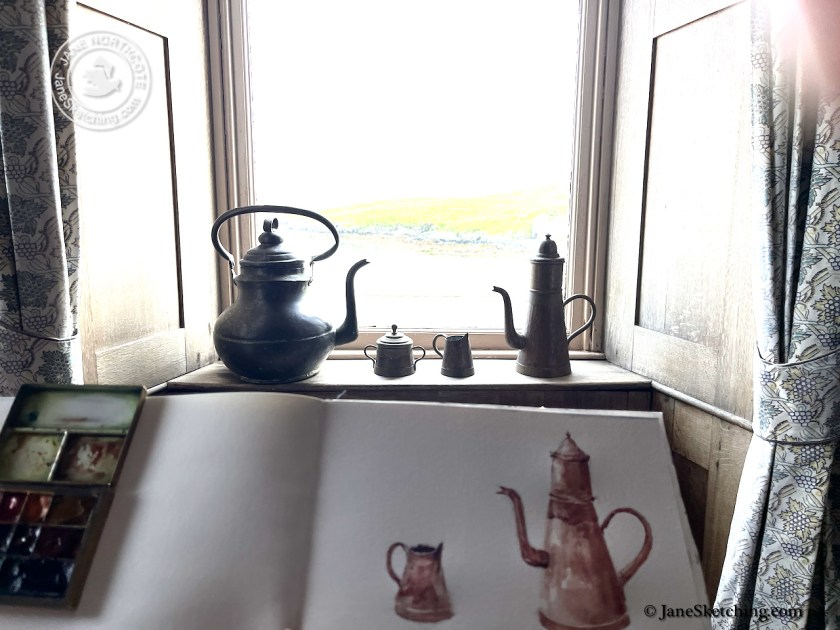
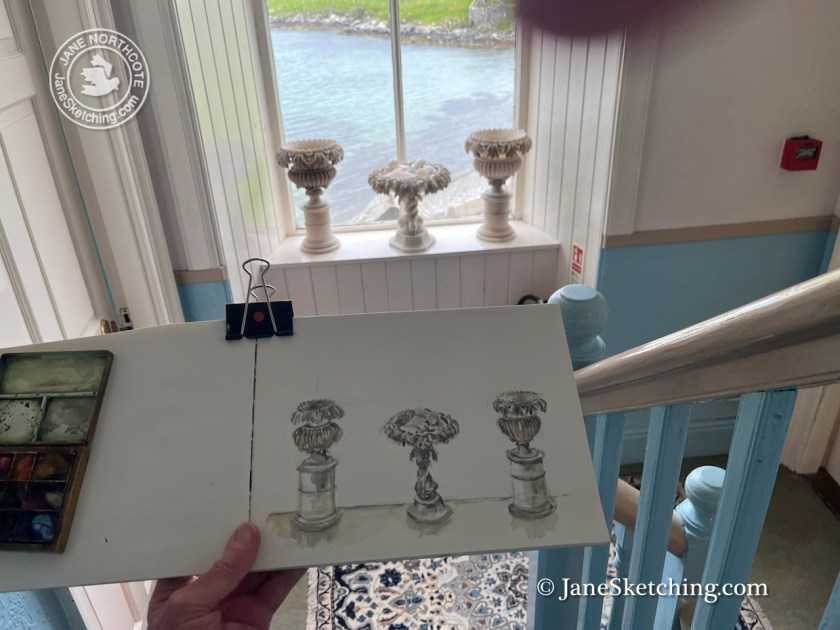
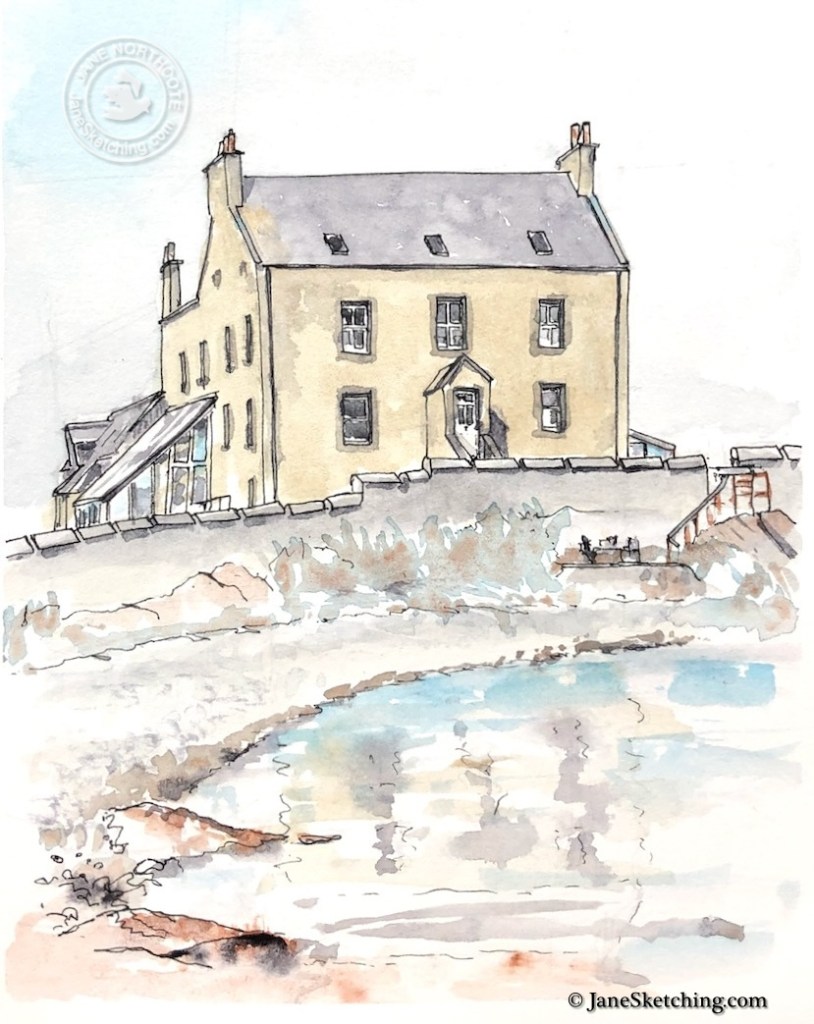
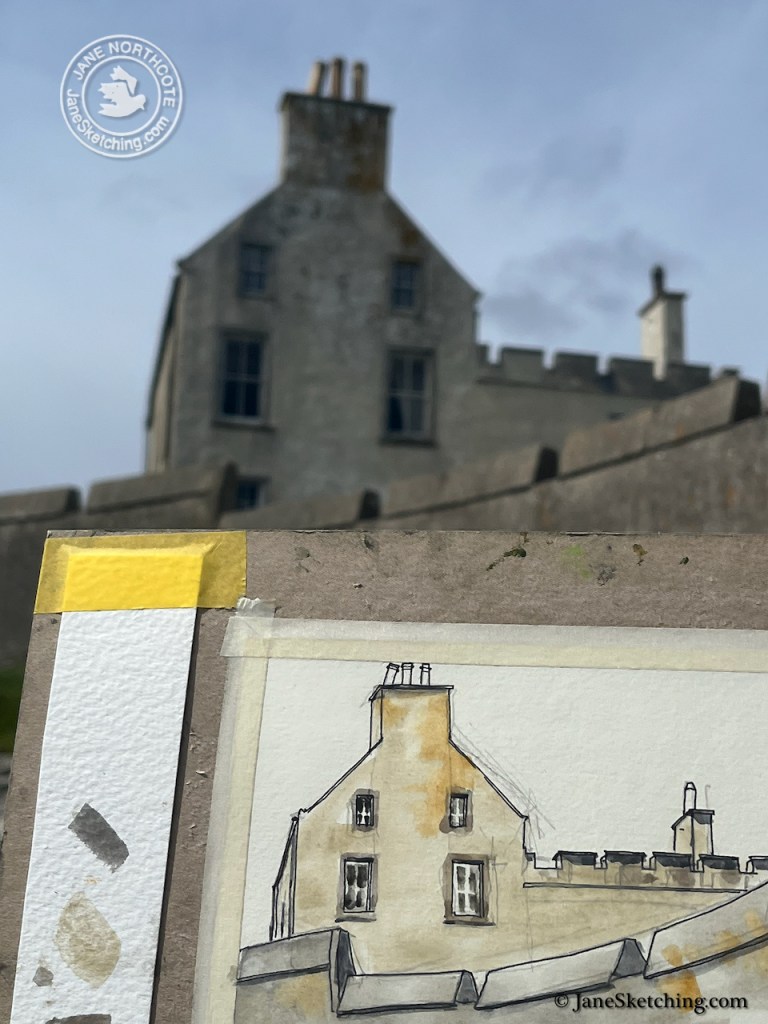
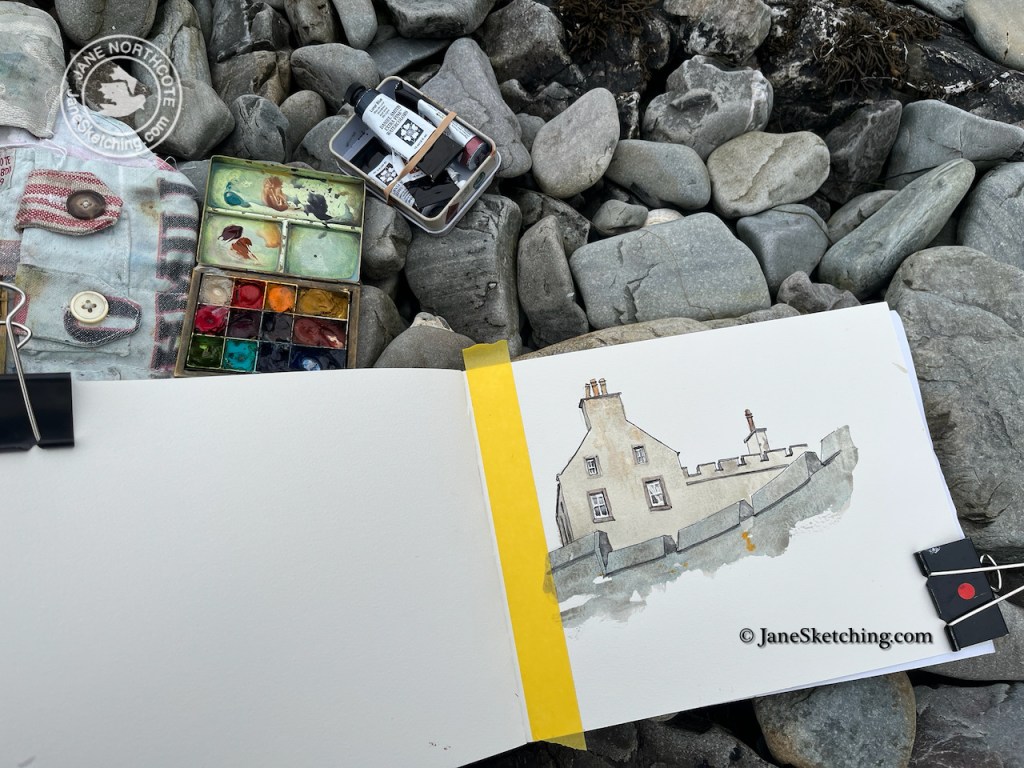
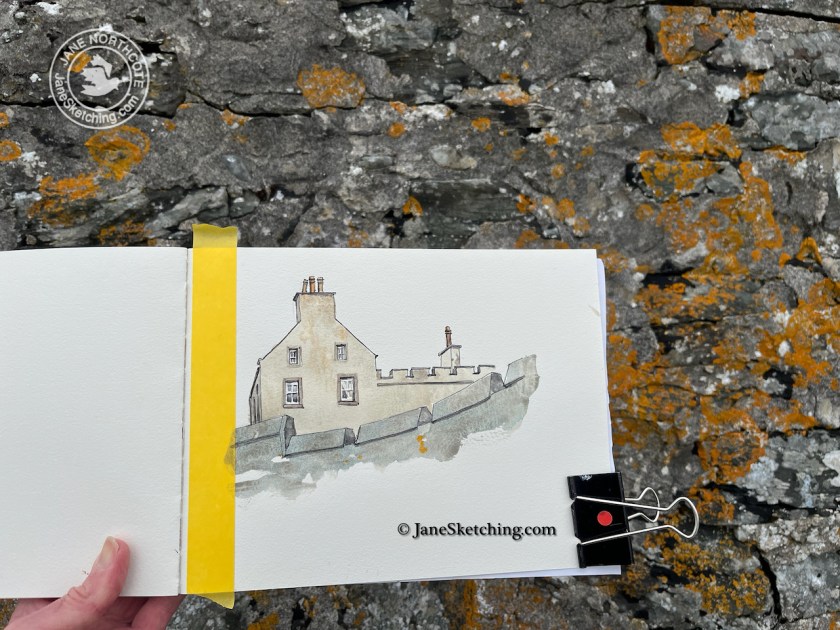
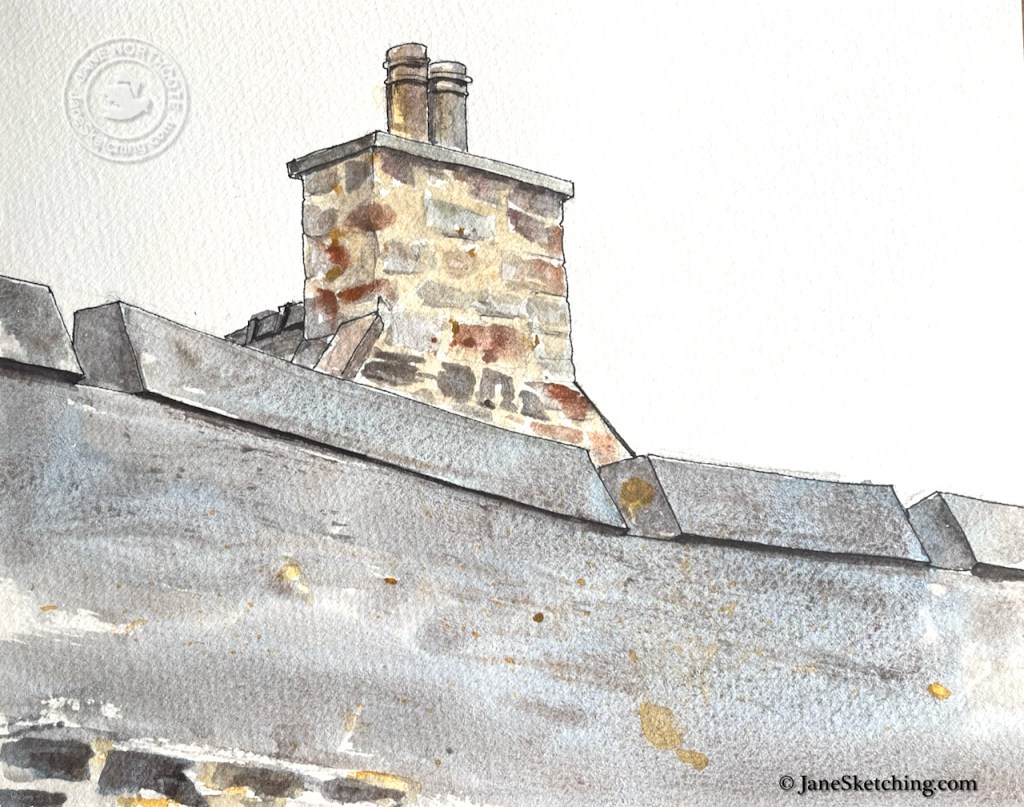
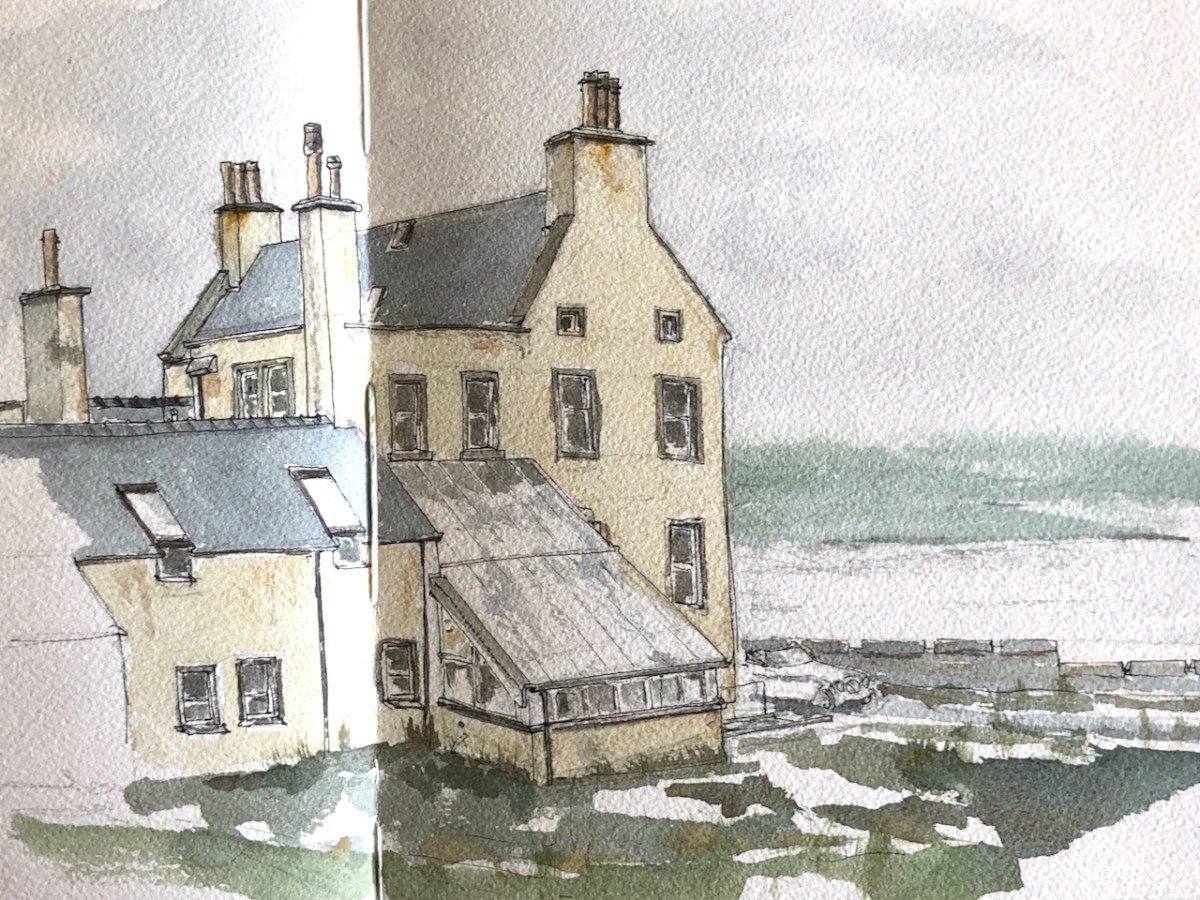
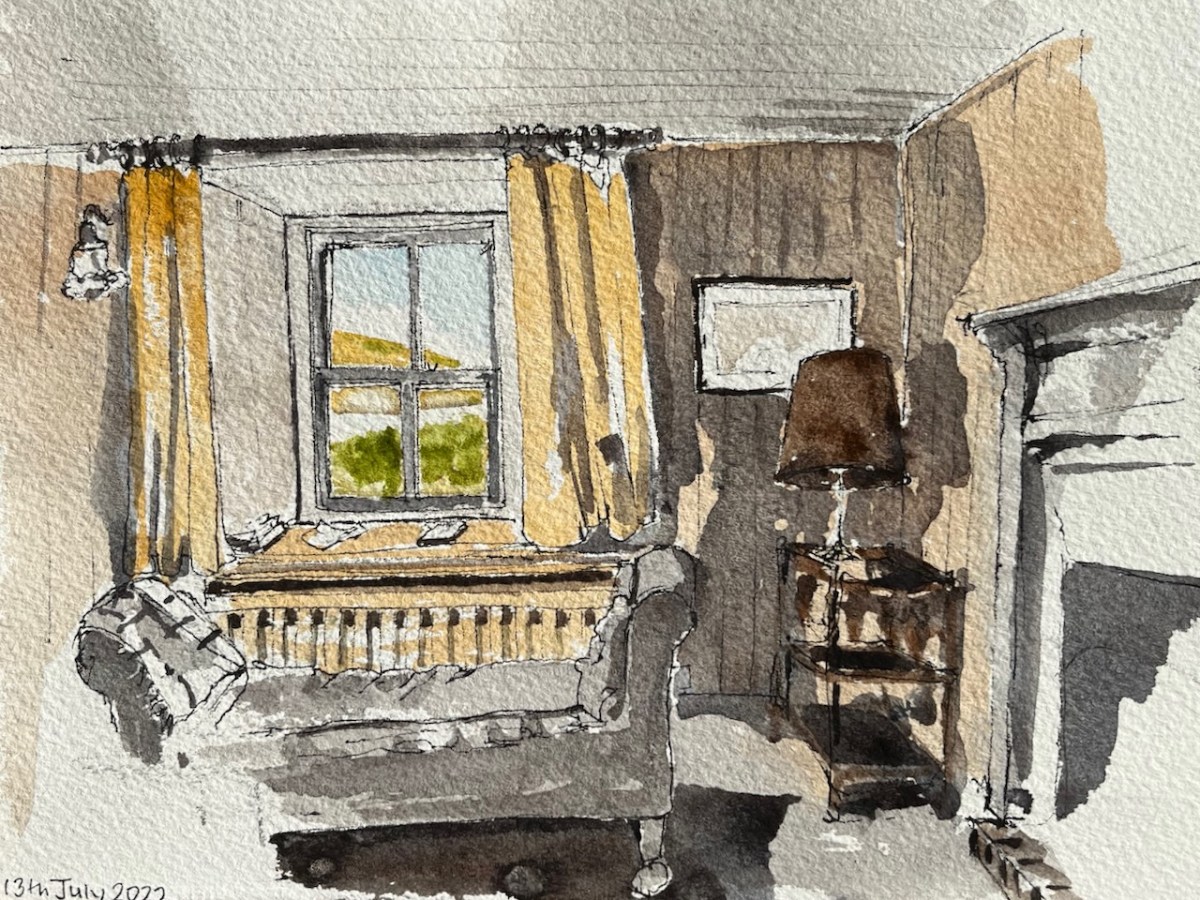
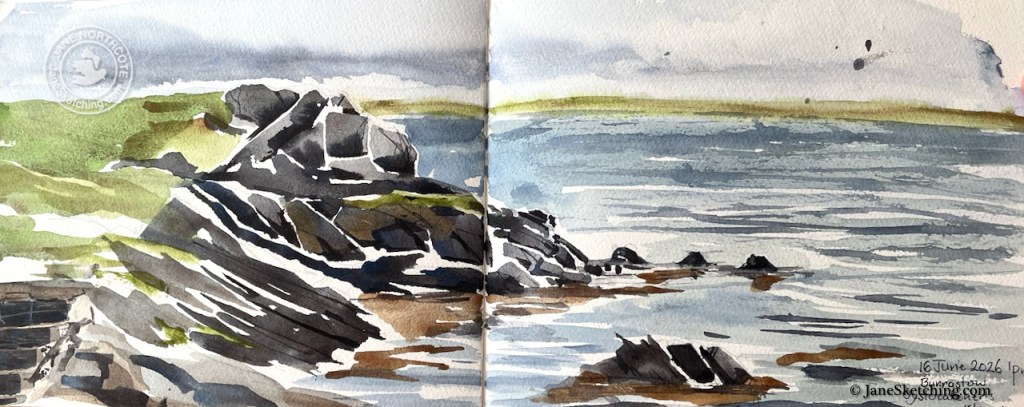
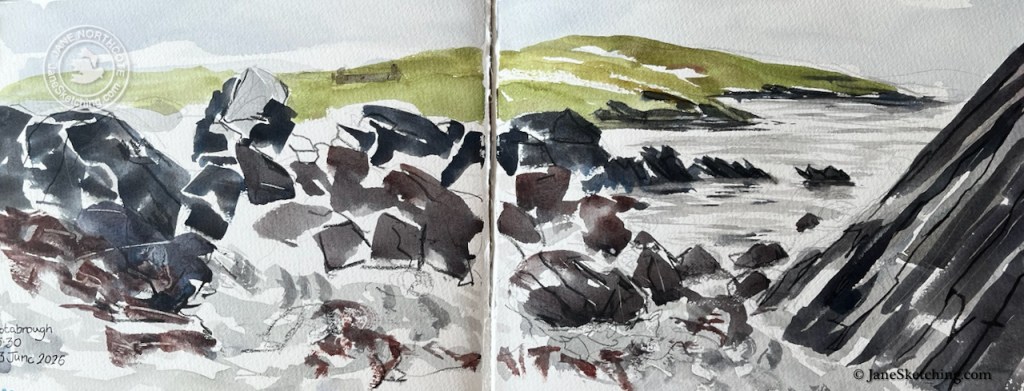
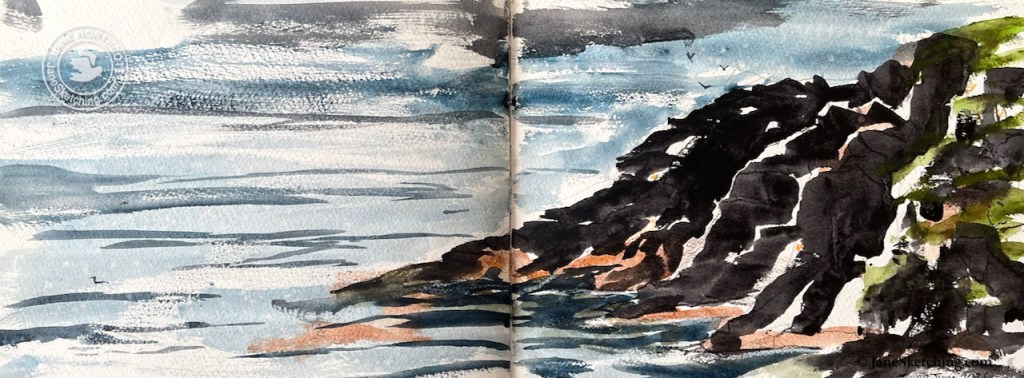
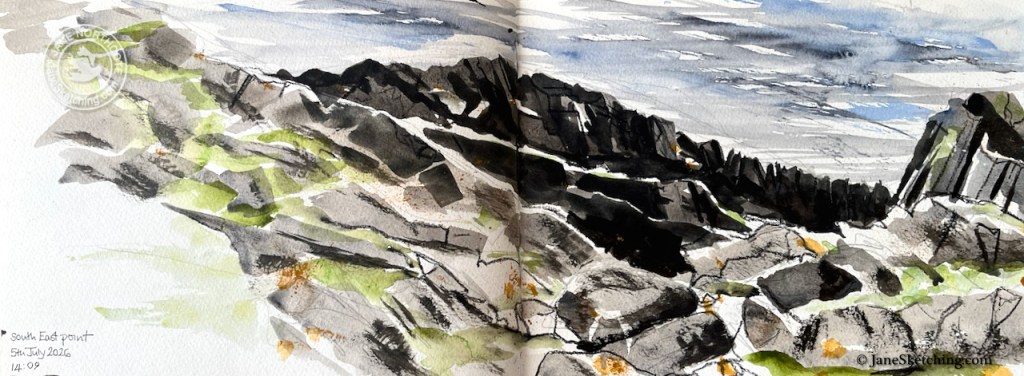
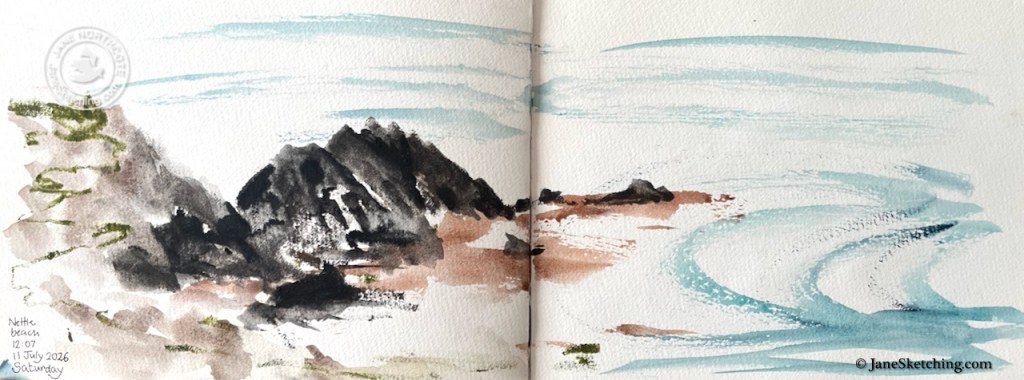
Here are some drawings at Burrastow House, near Walls, on the West side of Shetland. In previous years I have sketched the front of the house from across the bay:
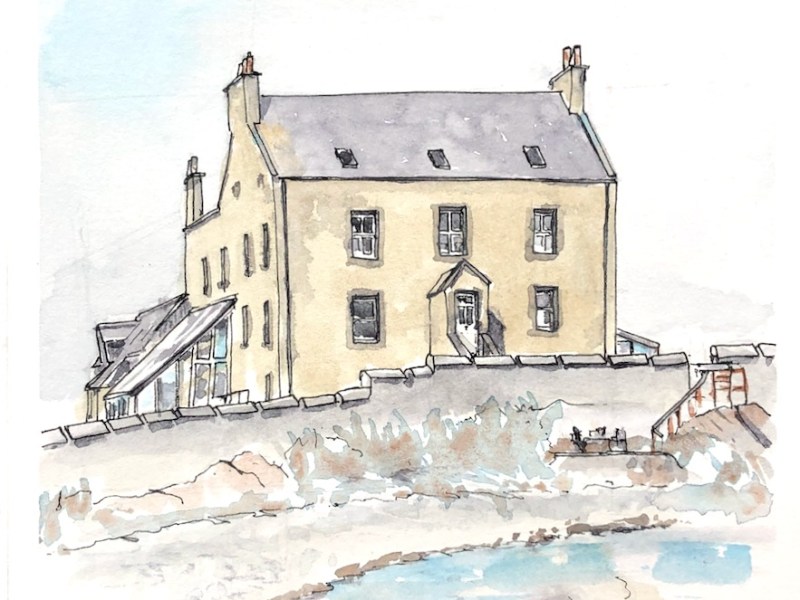
Burrastow House sketched 2020
To the right of this drawing is a beach. You can look up at the house from the beach:
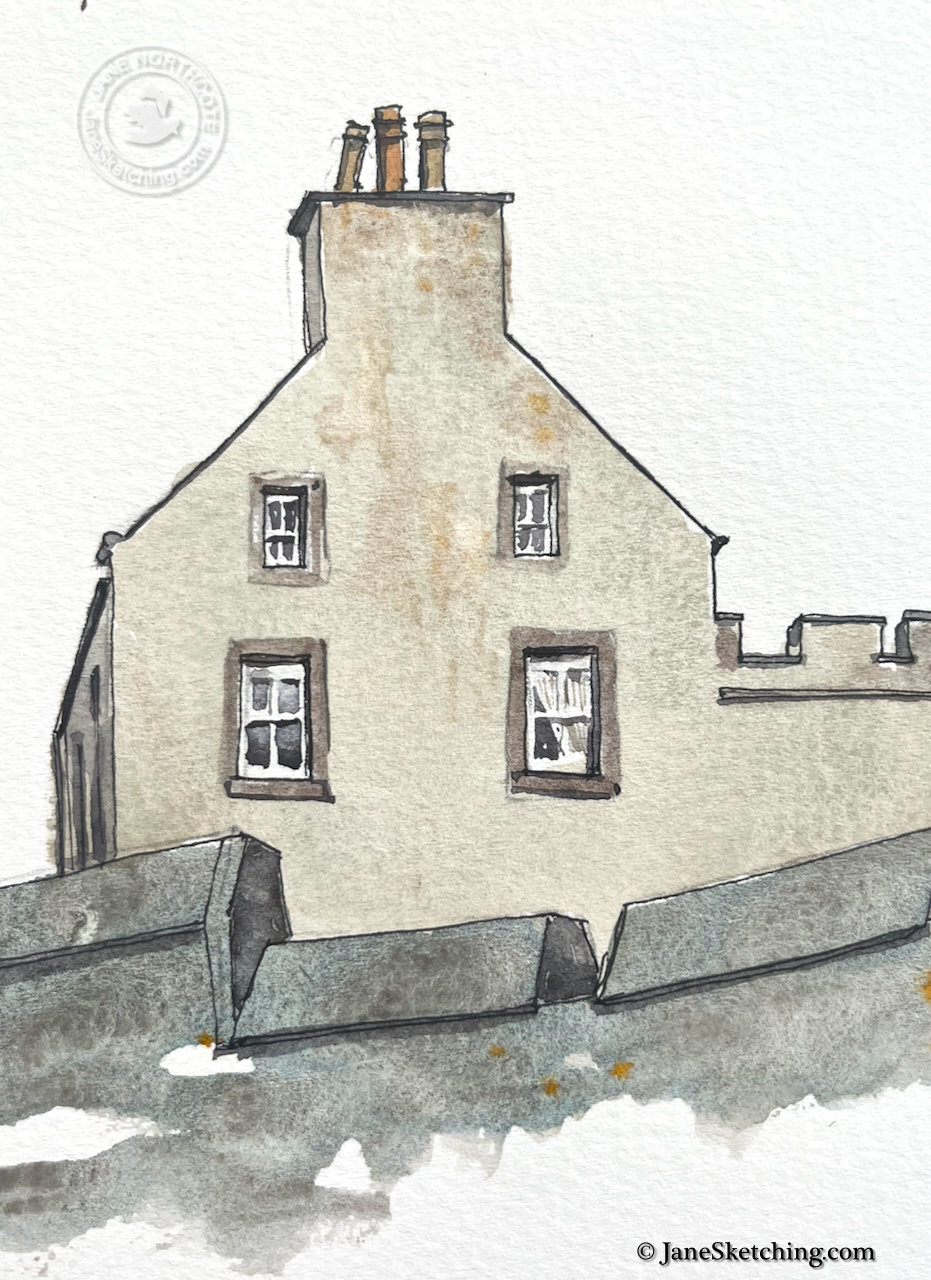
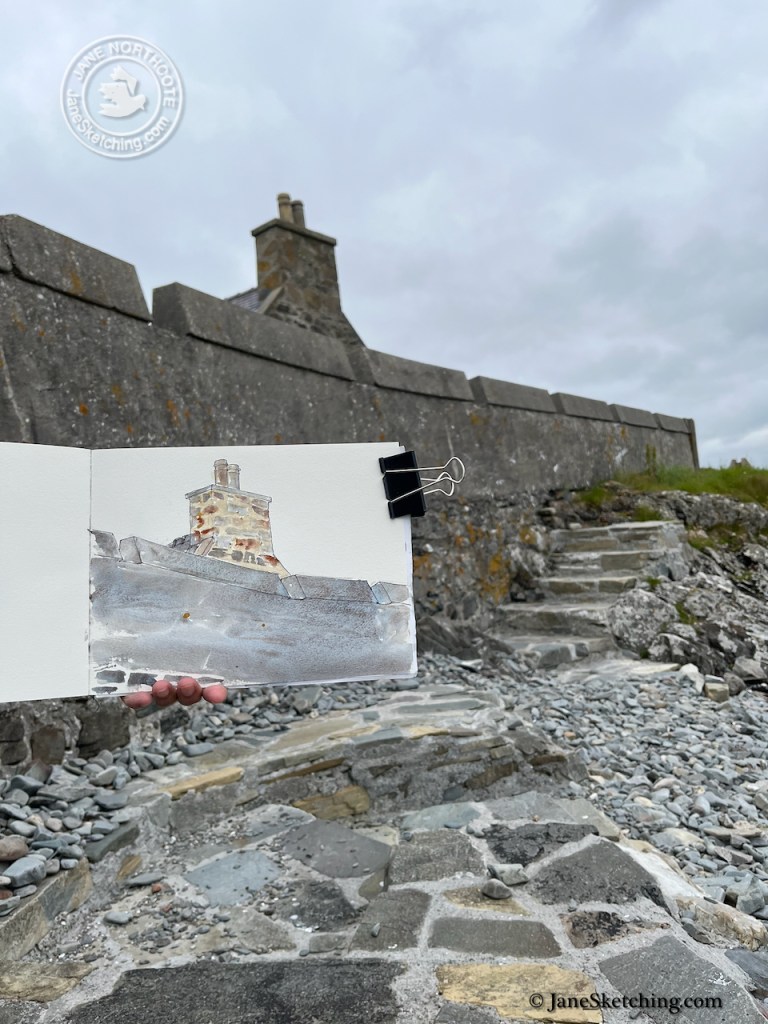
The wall has lichen.
The yellow stripe down the sketchbook edge is masking tape. I remove it when the drawing is done so that there is a clean edge.
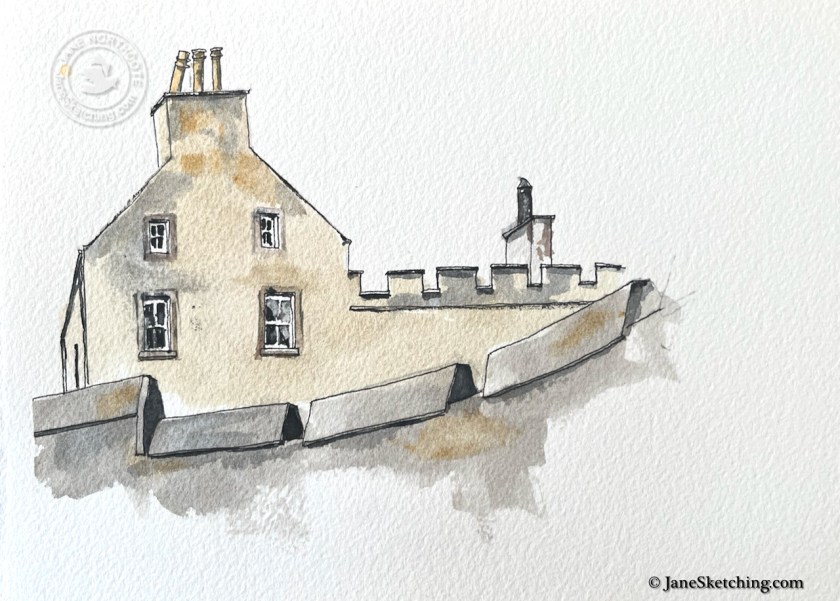
Looking the other way you see the edge of Burrastow Cottage.
While I was drawing on the beach, a man arrived, walking on the seaward side of the wall. After a brief chat, he continued on up those steps shown in the photo. He was walking the entire coast of Shetland. So he went along the shore and around the promontory. He was very thorough, and very determined.
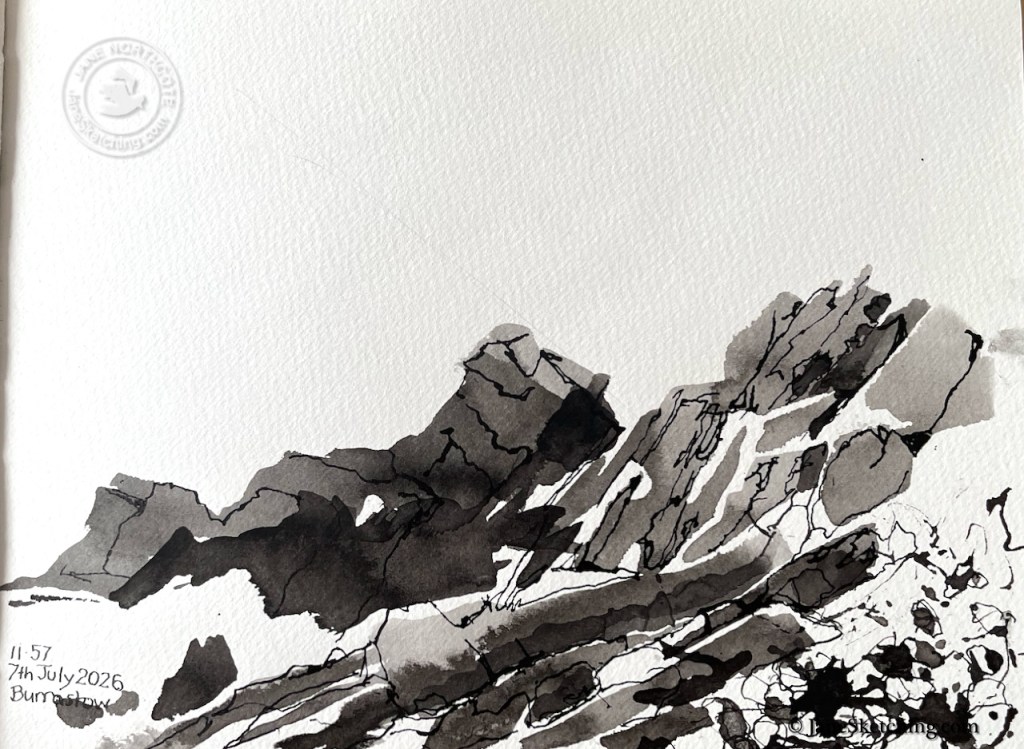
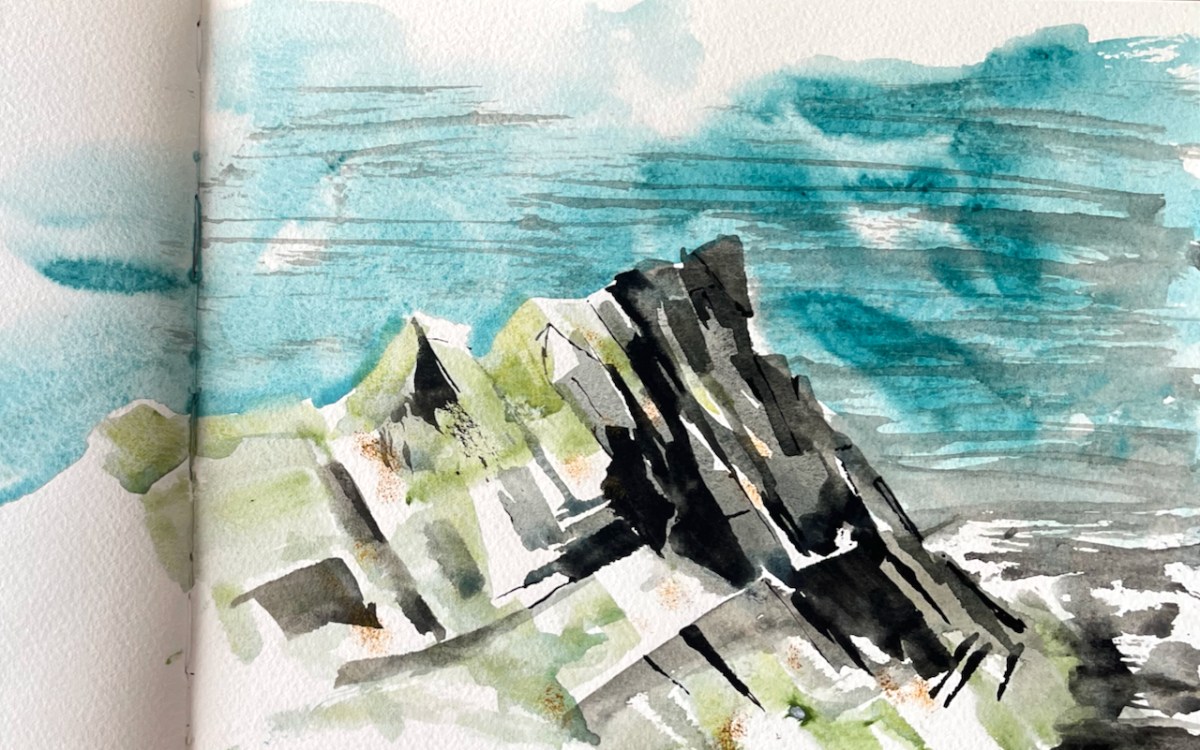
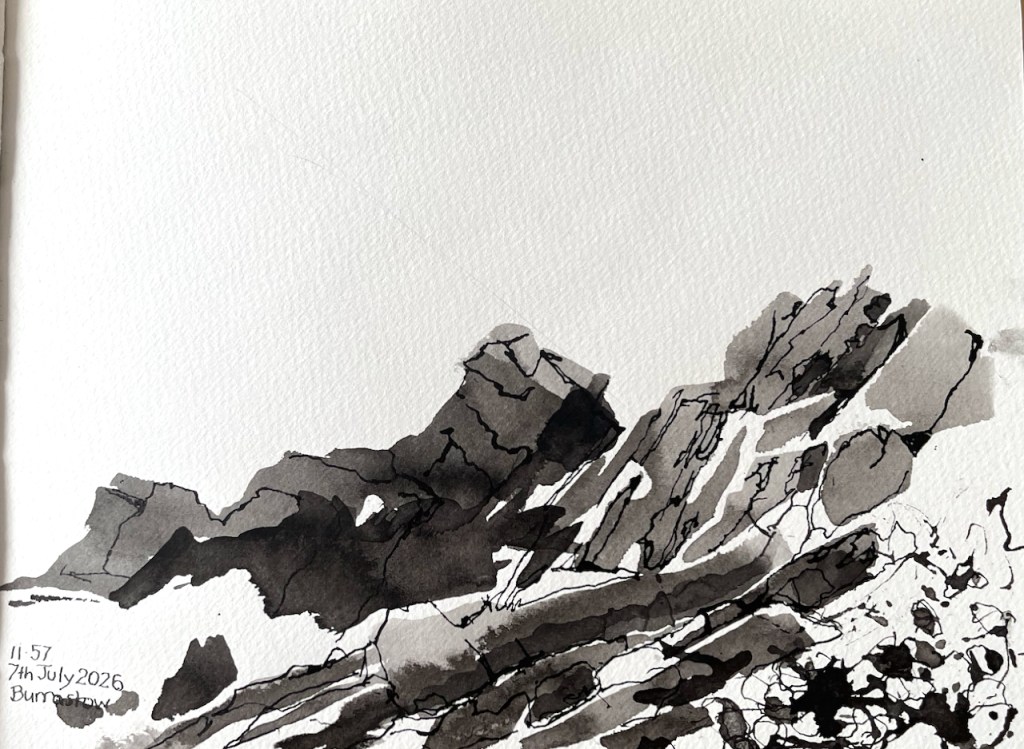
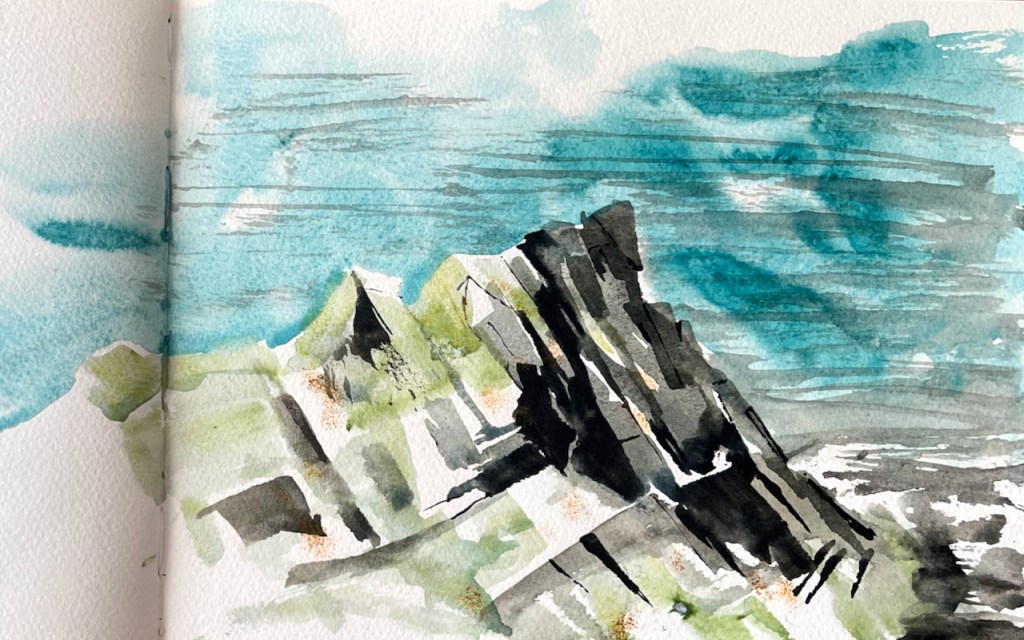
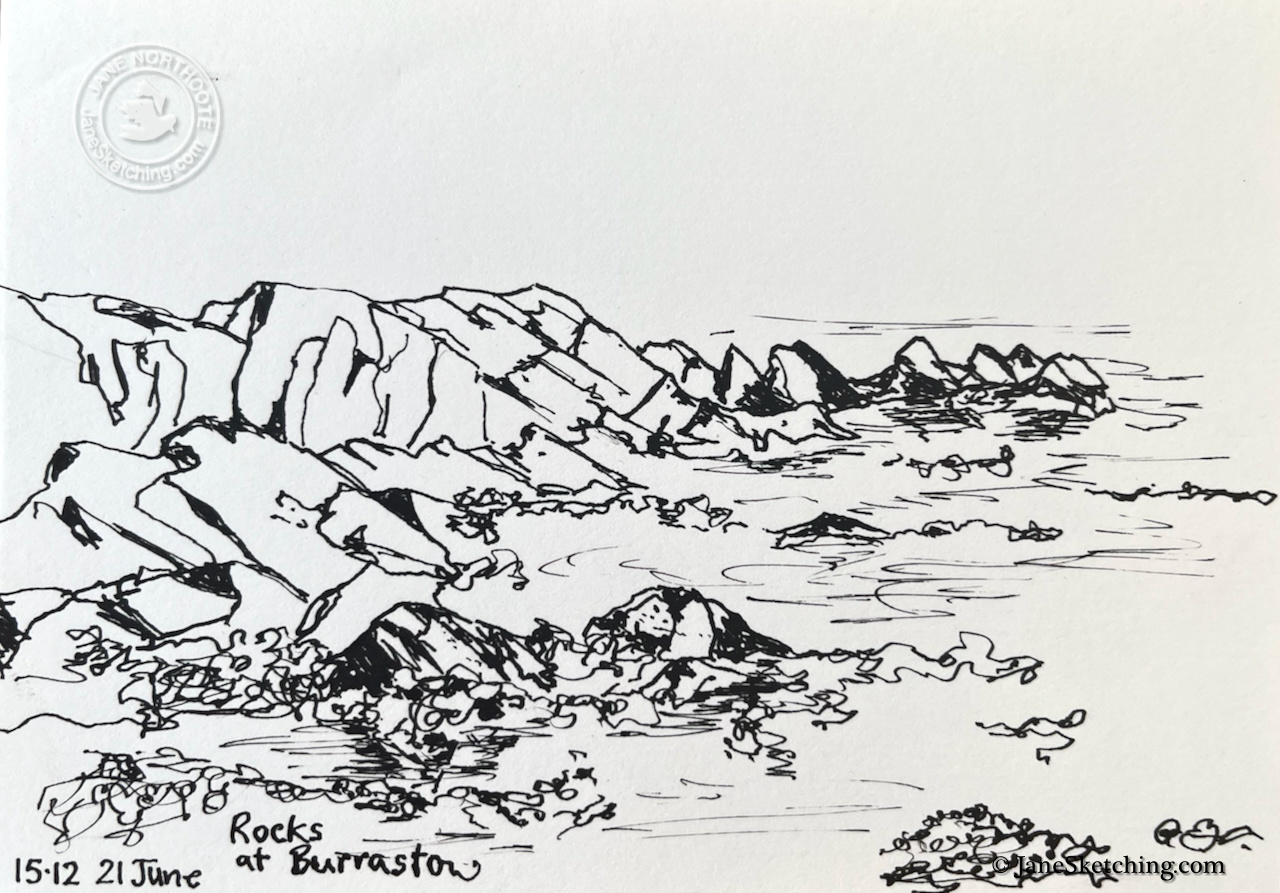
Here are rocks, looking to sea from the same point on Burrastow beach. The man walking the coast of Shetland had been scrambling over such rocks.
Rocks at Burrastow – pen and ink
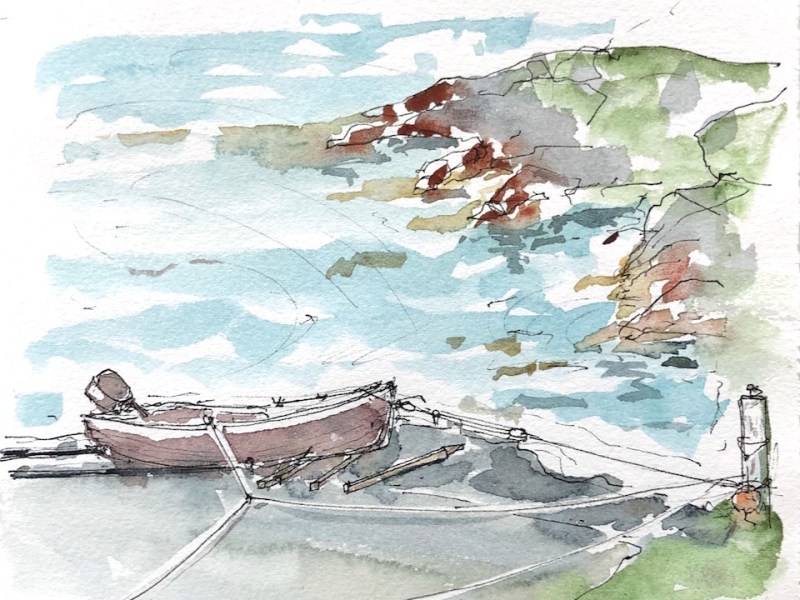
It’s a lovely spot. I have sketched at Burrastow before:
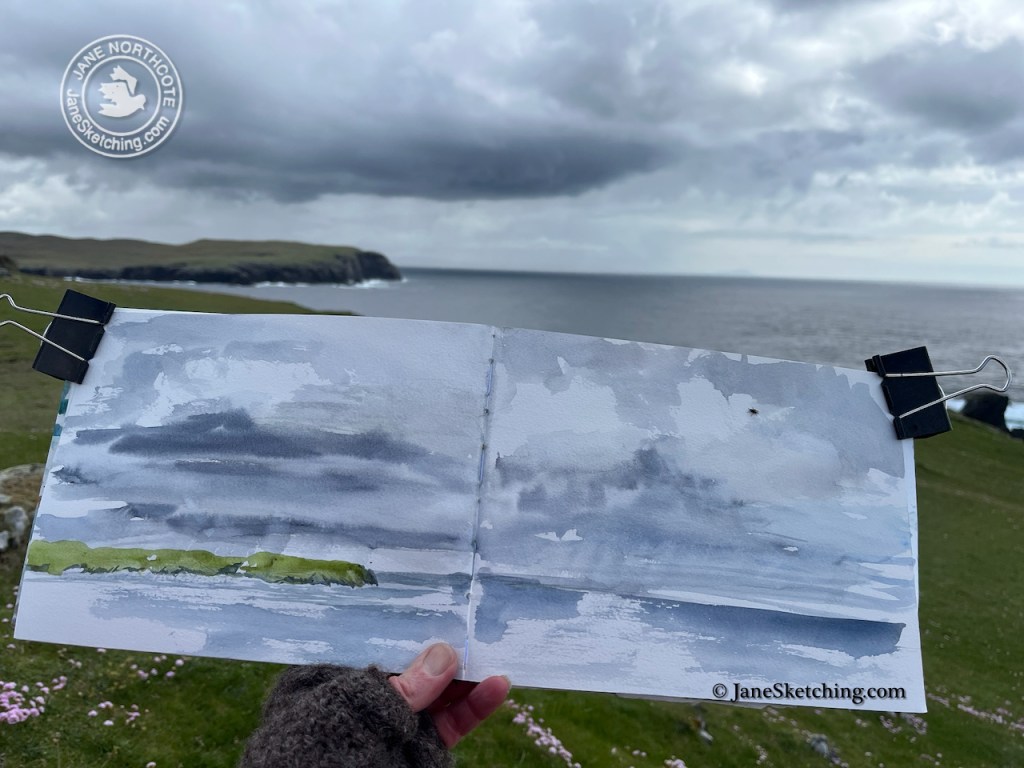
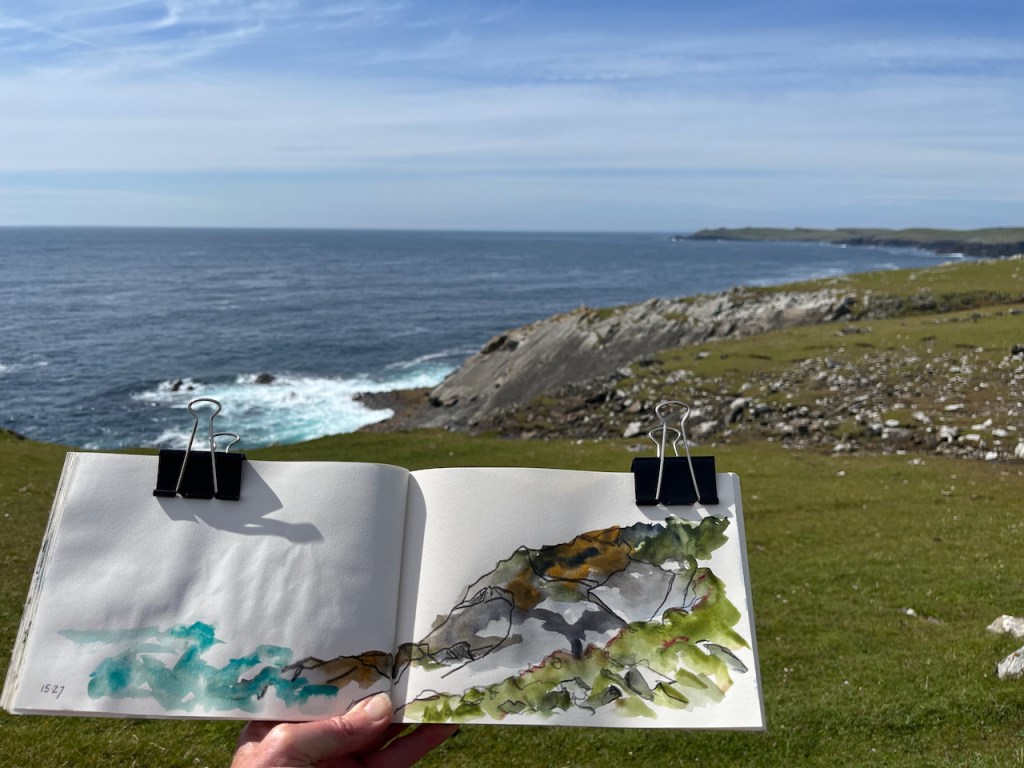
Oh how wonderful to be on the clifftop sketching the changing sky!
13th June 2026, Littlure
That sky contained rain. It came down and made a contribution to my picture.
13th June 2026, Littlure, rain on the page.
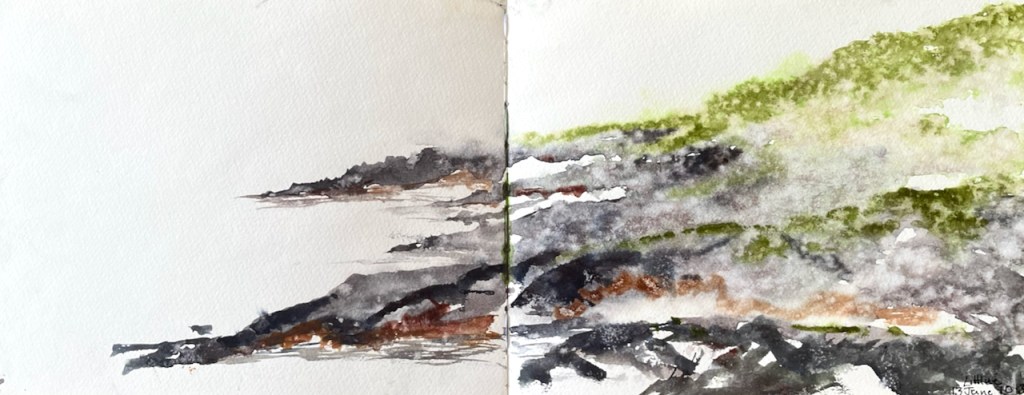
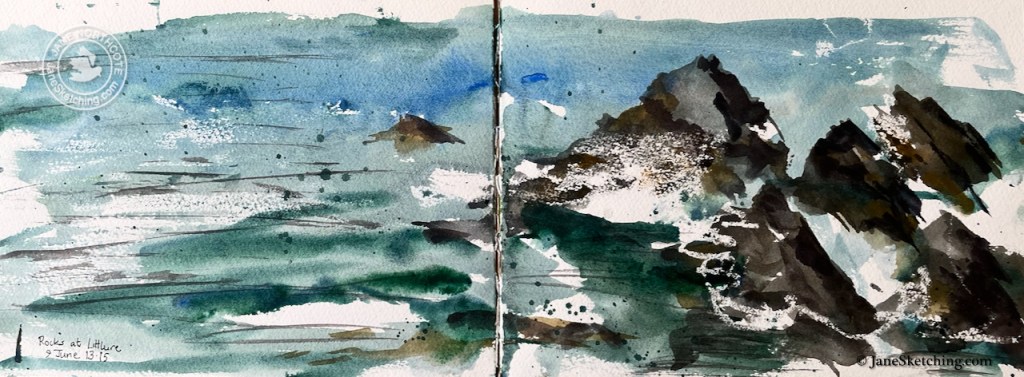
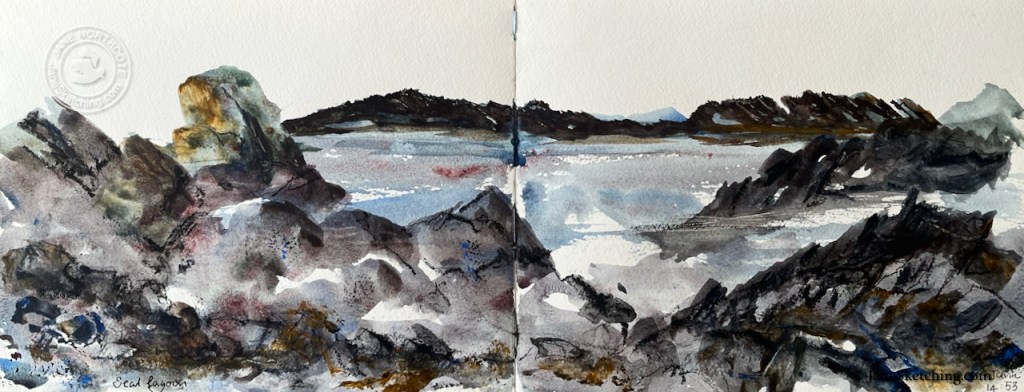
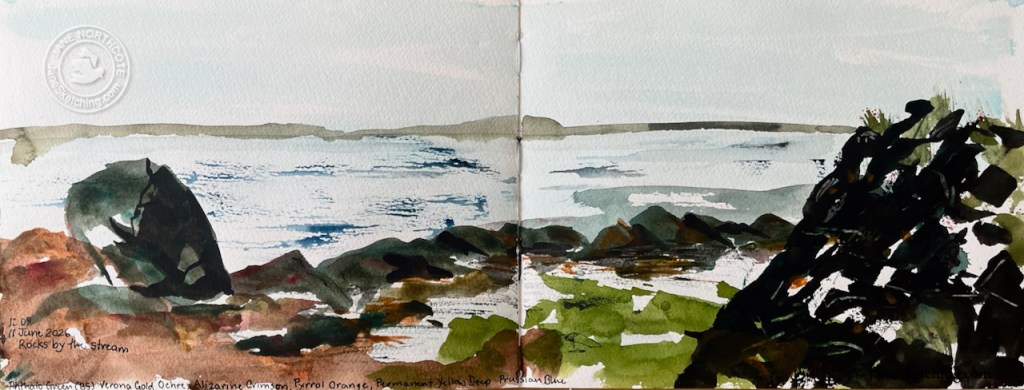
I made a lot of sketches of rocks. Here are eight sketchbook pages in a slideshow. (It might not play on a mobile device.)
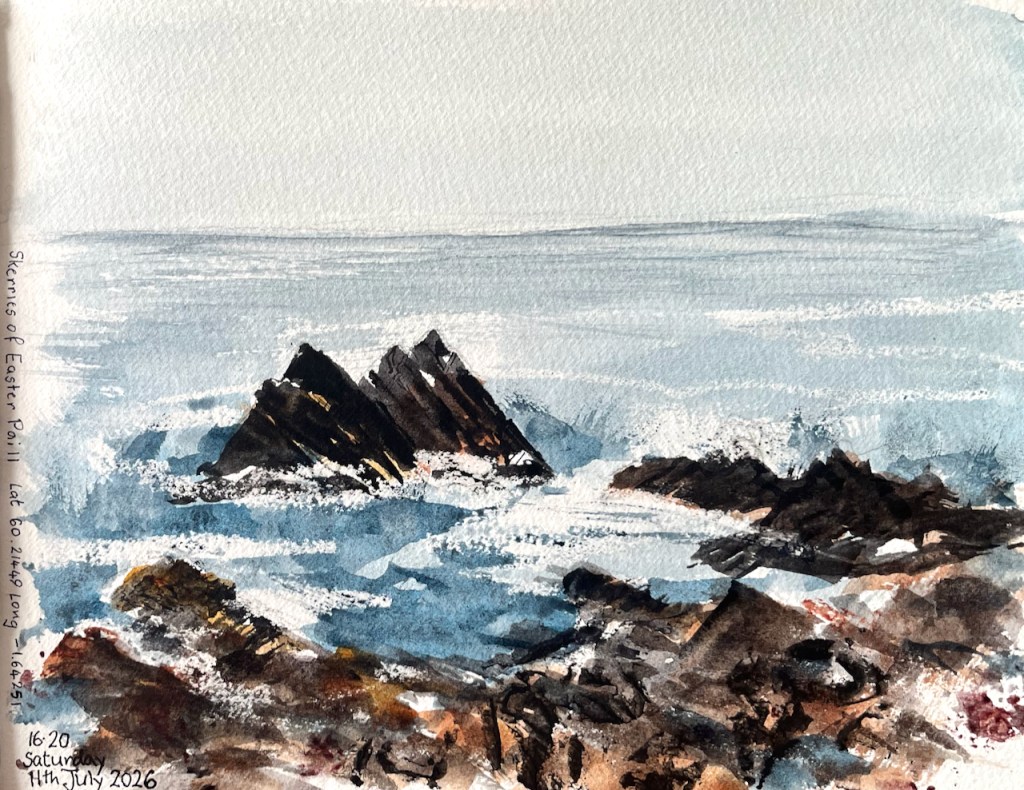
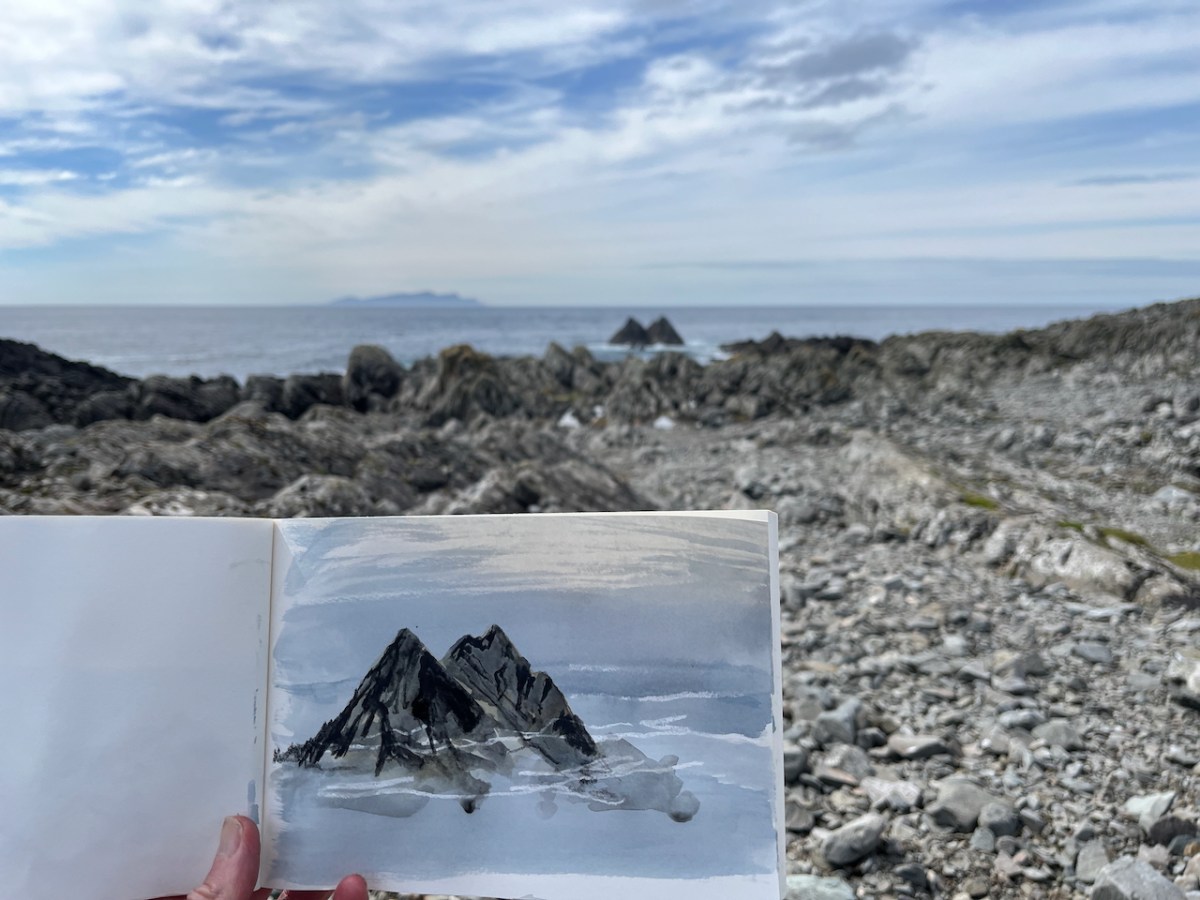
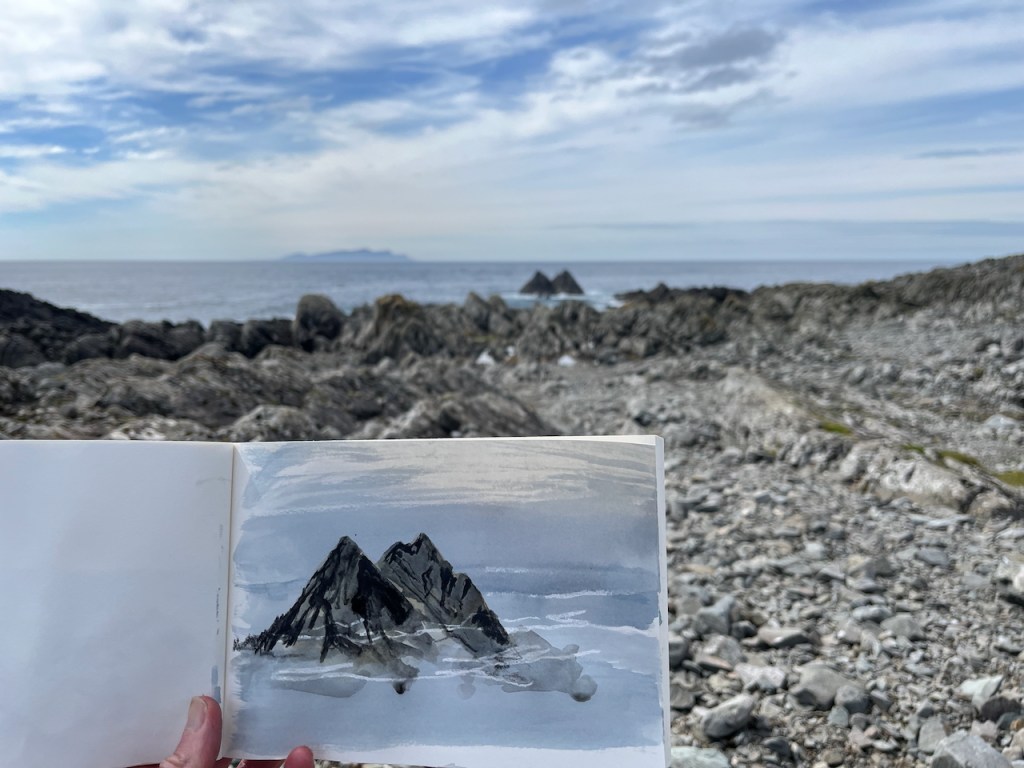
The rocks on the West side of Shetland have angles and points. I particularly like the purity of shape of these rocks: the Skerries of Easter Pail. They are almost exact equilateral triangles.
Skerries of Easter Paill: Latitude 60.21449 Longitude 1.64251 OS reference HU 19912 47846
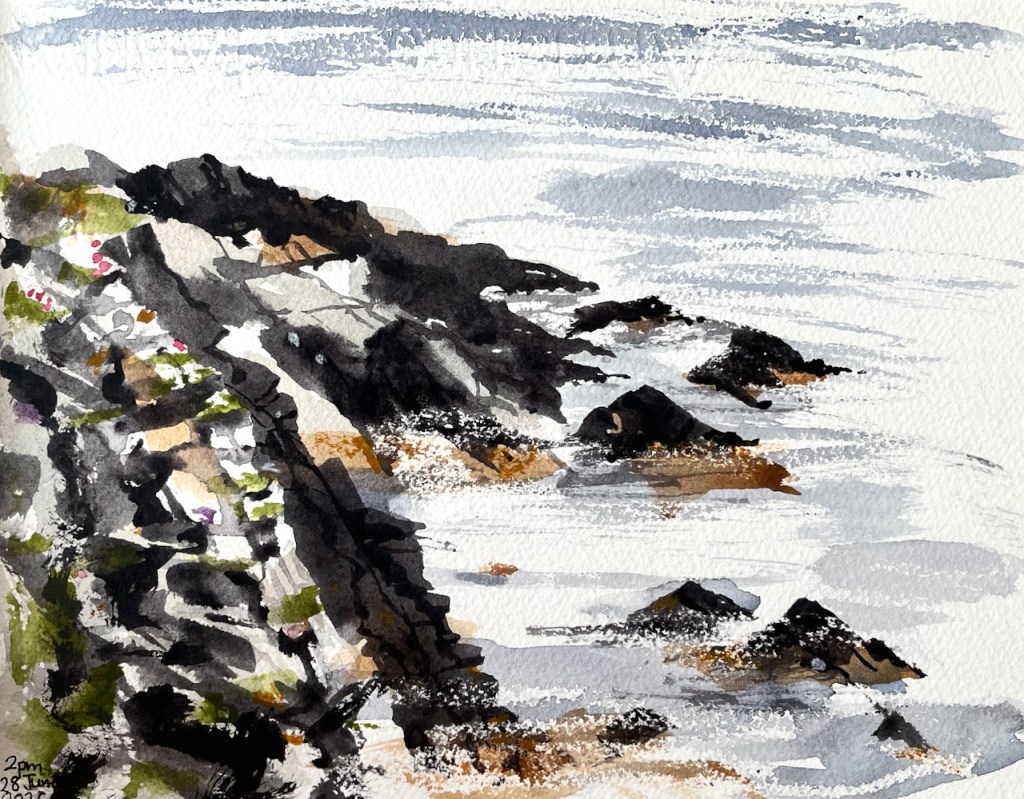
Here are more rocks, all showing the distinctive angle, about 60 degrees.
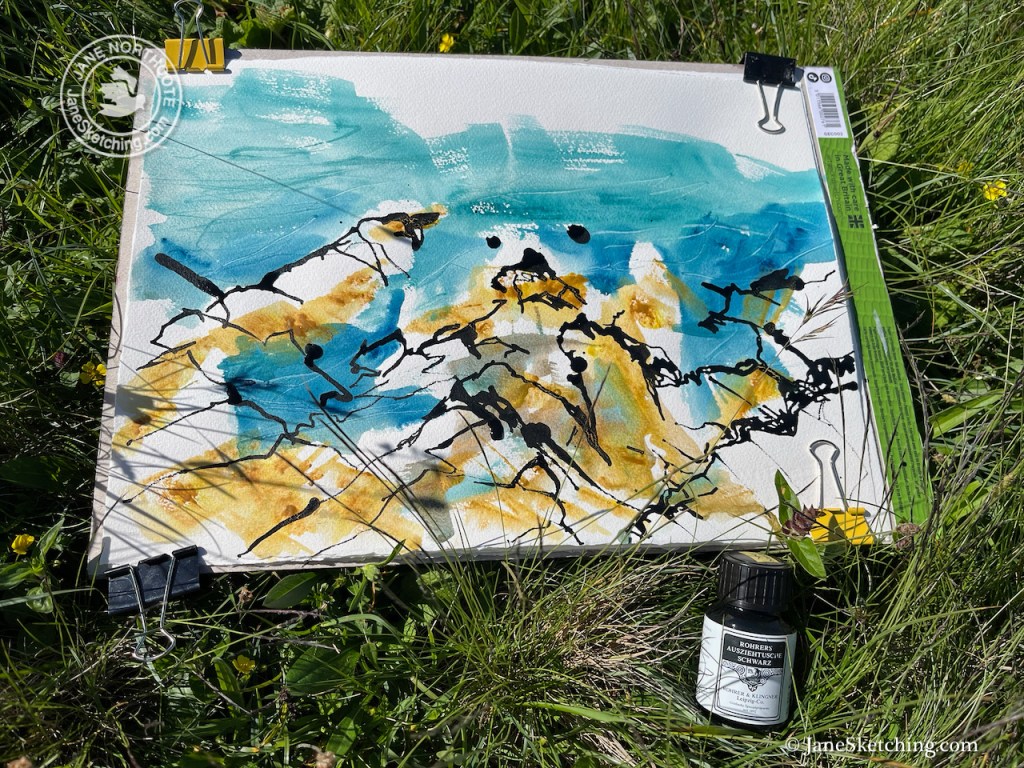
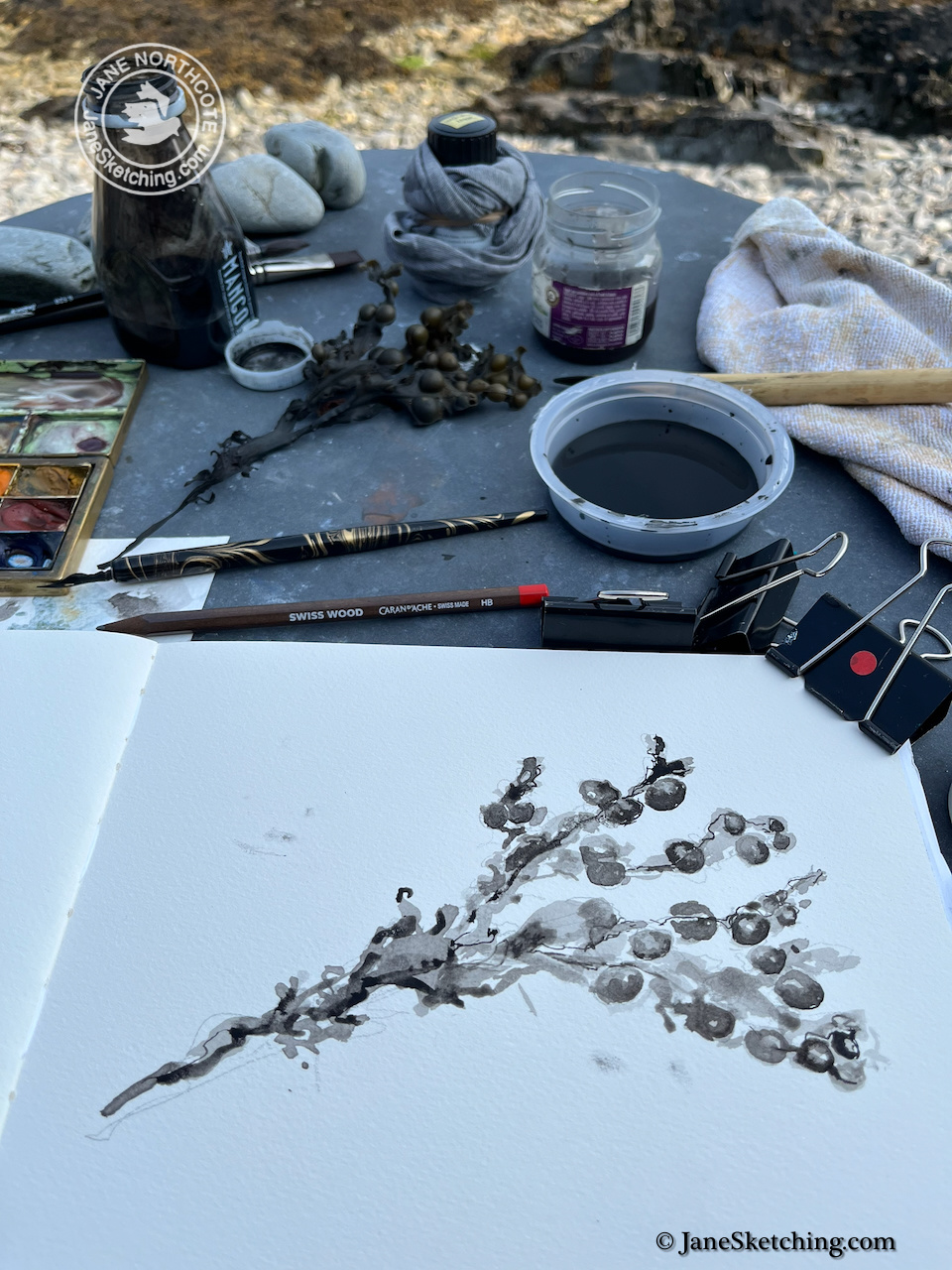
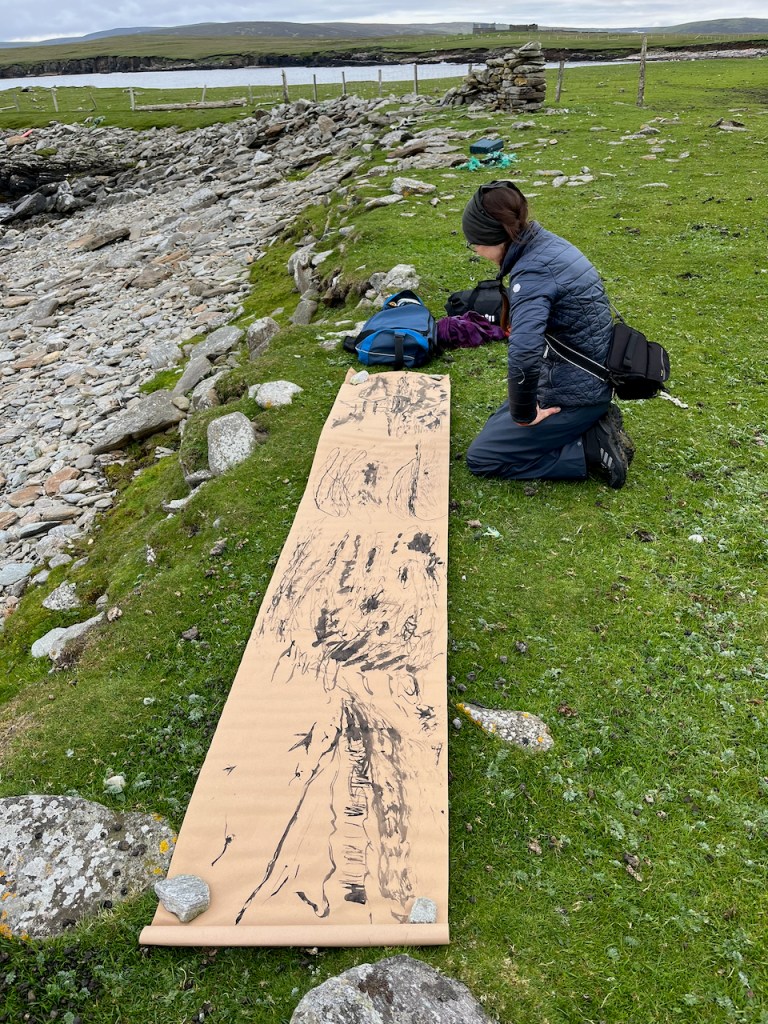
On this visit, I tried a new medium: dip pen and ink.
The ink is Rohrer & Klinger “Auszeihtusche Schwarz”
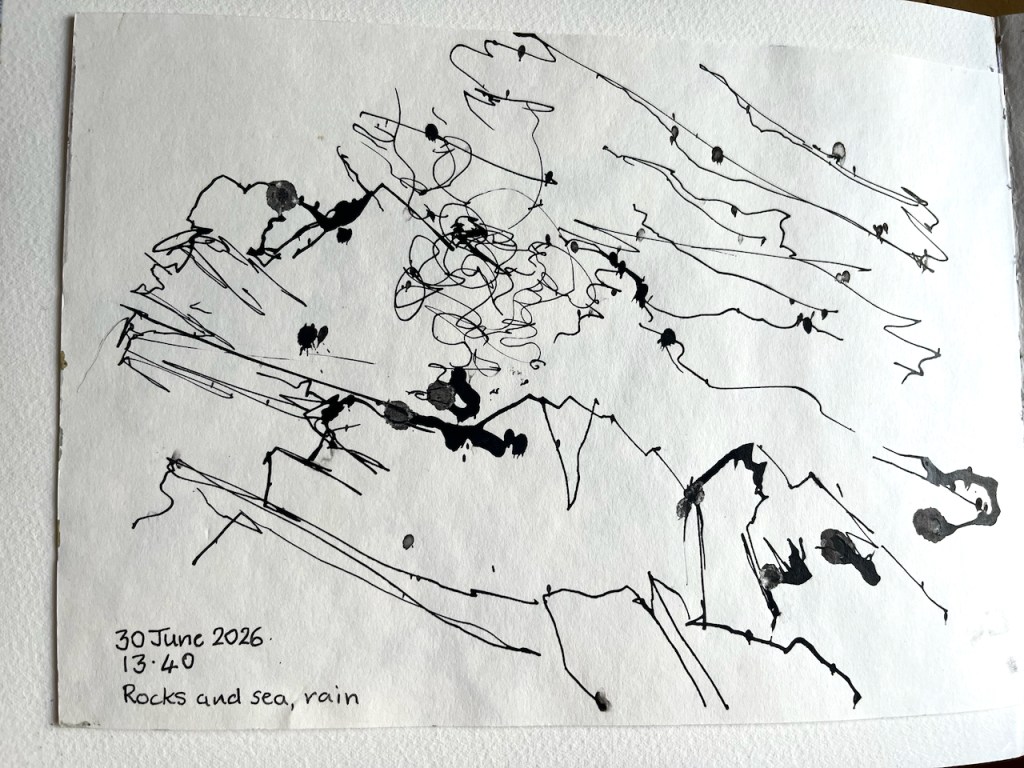
The ink is Rohrer & Klinger “Auszeihtusche Schwarz” which means (I think) “drawing ink, black”. German speakers out there, please offer a better translation? It is highly pigmented, waterproof, permanent, shellac based, and for dip pens only. In the picture above I used it with an amazing bamboo pen supplied by L Cornelissen & Son. Great fun. The picture above is large by my usual standards. The ink took a surprisingly long time to dry, then rain started and I rushed back, trying to shield the picture under its cardboard drawing board. I had more than one such sheet and they flapped like flags. Needless to say the highly pigmented ink got everywhere: on my raincoat, on my hat (how???).
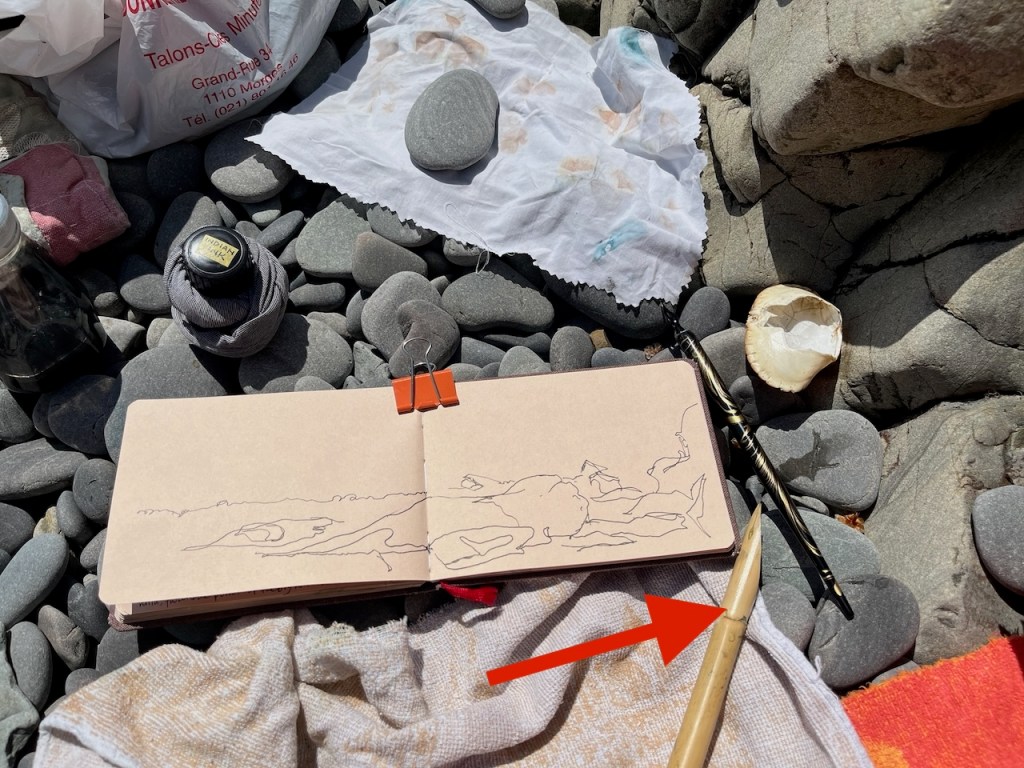
Here’s the bamboo pen under calmer conditions. As you see I have now learned to wrap the bottle in a cloth to catch drips, and to label it clearly, so it doesn’t get confused with fountain pen ink which is in a similar bottle.
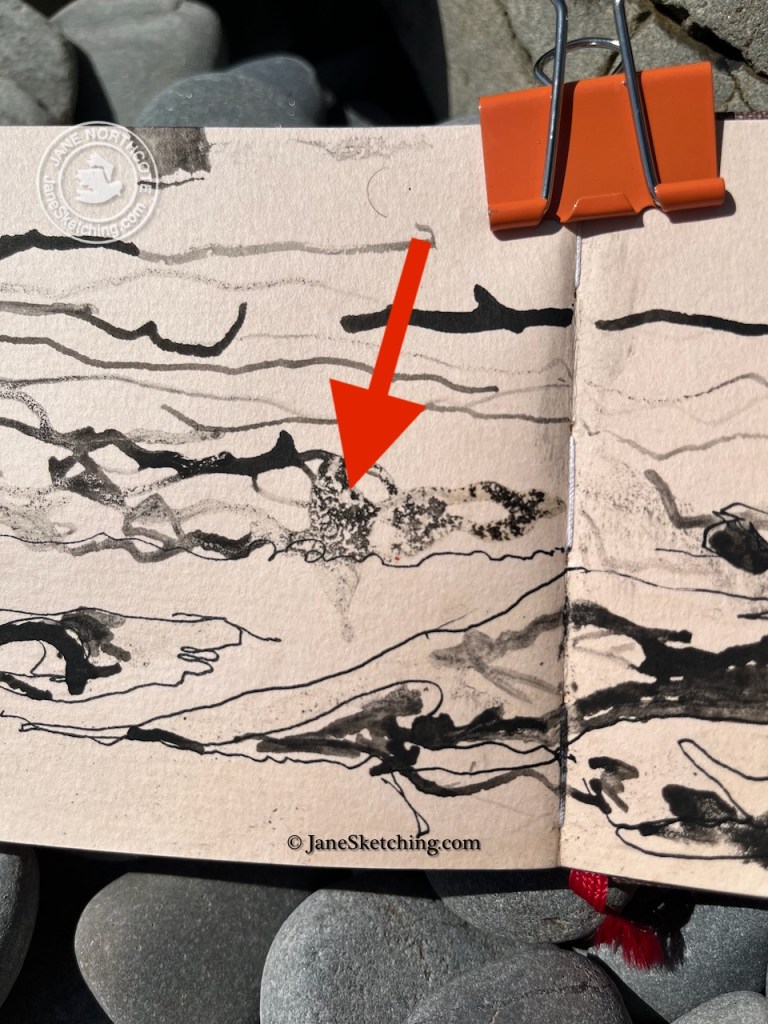
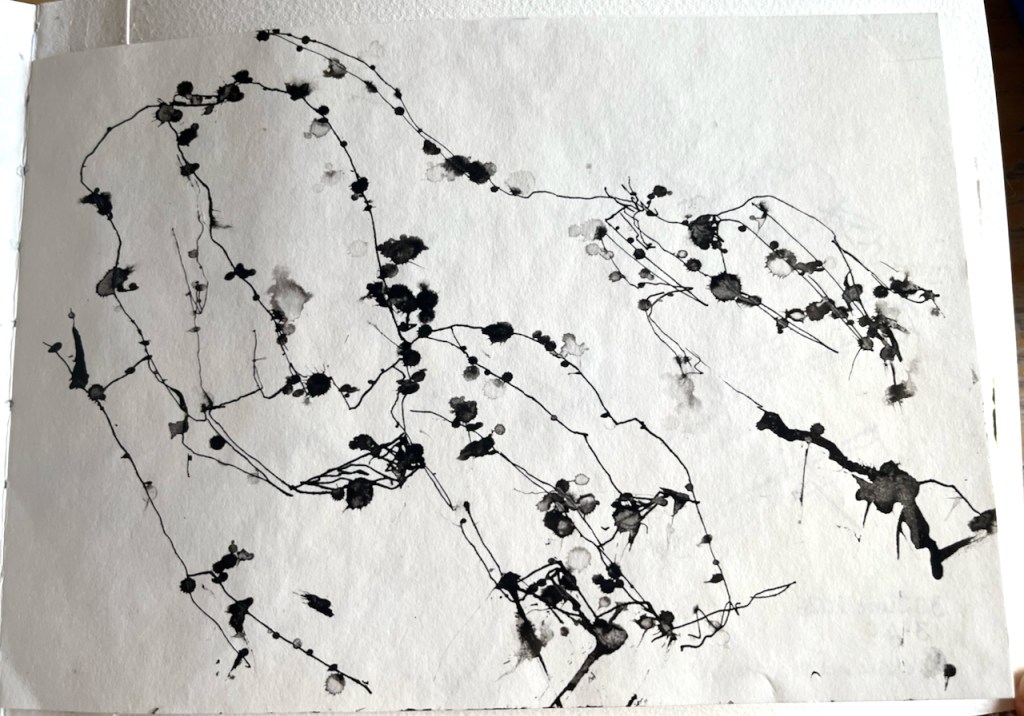
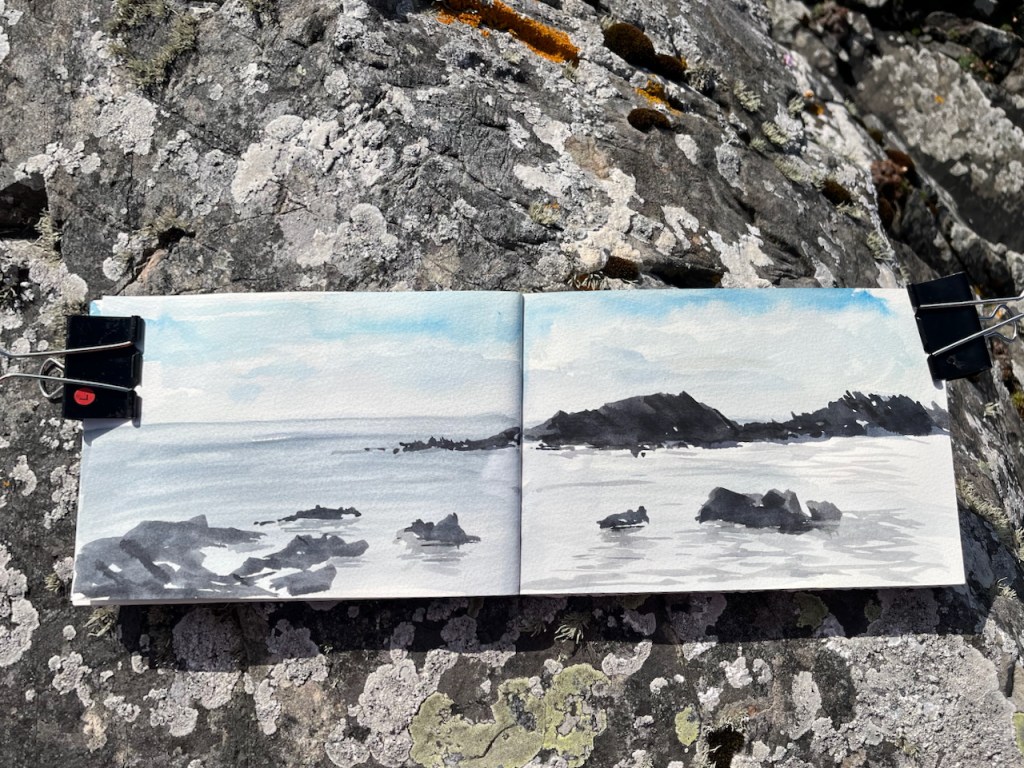
This was a warm day after a refreshing dip in the sea. I drew some pictures of the rocks. I used sea water to dilute the ink. This produced some interesting effects.
You see how the shellac-based ink interacted with the sea water to make little dots and swirls, a pleasing effect.
Here are some more pictures done in this ink, undiluted, and diluted with fresh water.
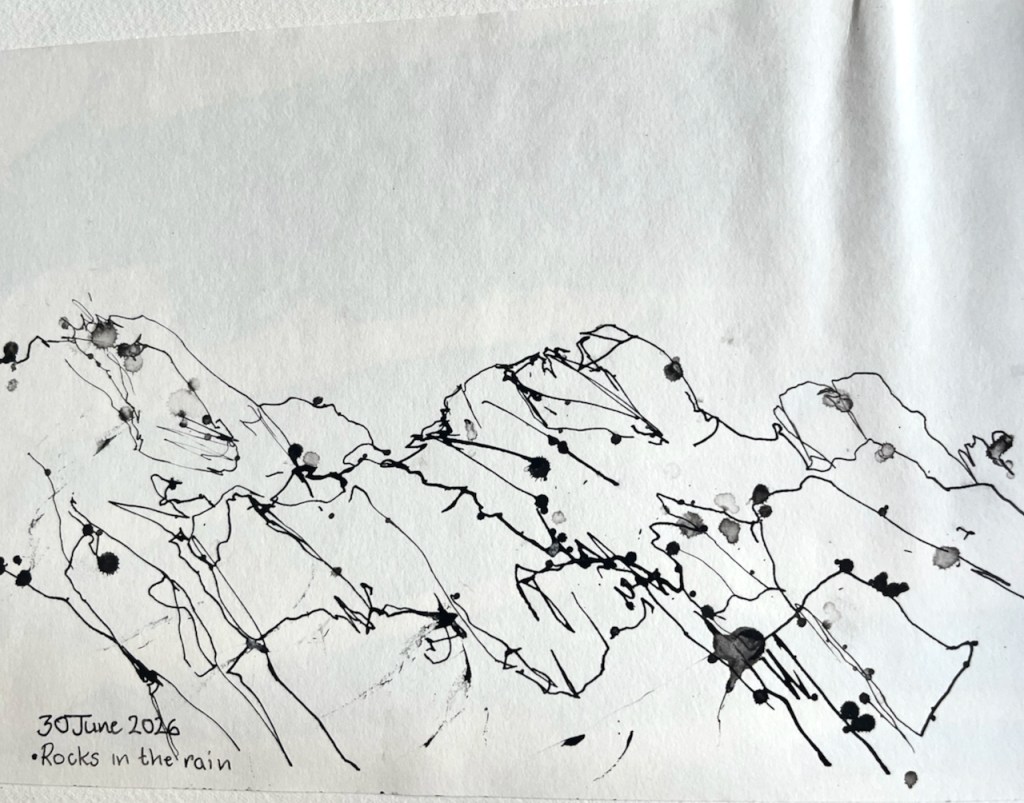
This ink is waterproof, but only *after* it has dried. This is sometimes a challenge in the Shetland climate. Here are some rock studies, with contributions from the rain falling on wet ink.
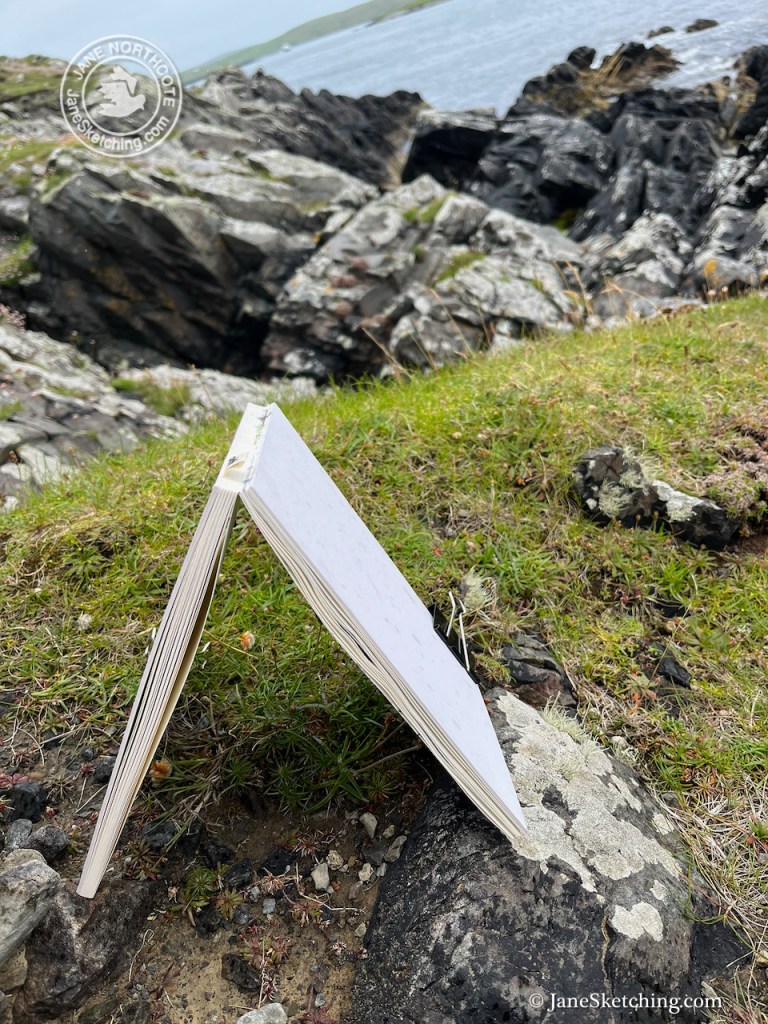
I tried to protect the drawings by turning the sketchbook into a sort of tent.
I enjoyed this new medium and the high-contrast effects I could obtain.
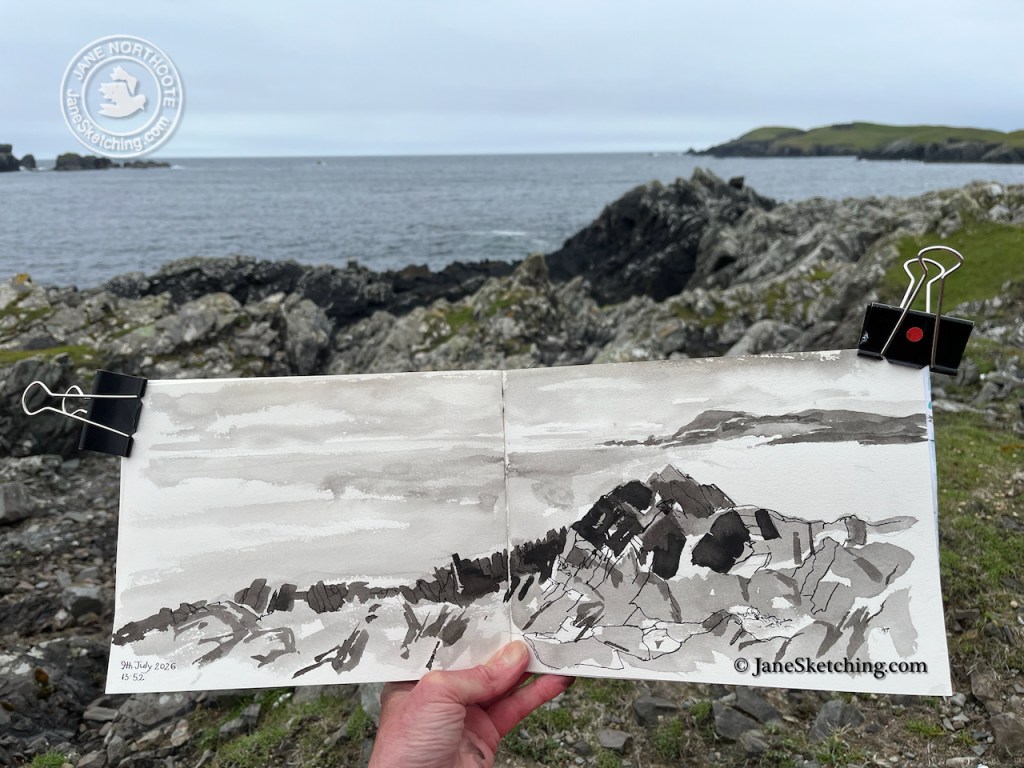
Rocks, diluted and undiluted drawing ink.
In the next post, I will show sketches of Burrastow House, on the West side, near Walls.
Click a button below to share this post online, email it, or print it:
I love boats, and the sea, and I draw pictures. So I found myself in the company of an enthusiastic group of artist-sailors, on board the Lady of Avenel, in Lerwick in Shetland, about to set off for a week’s sketching and sailing.
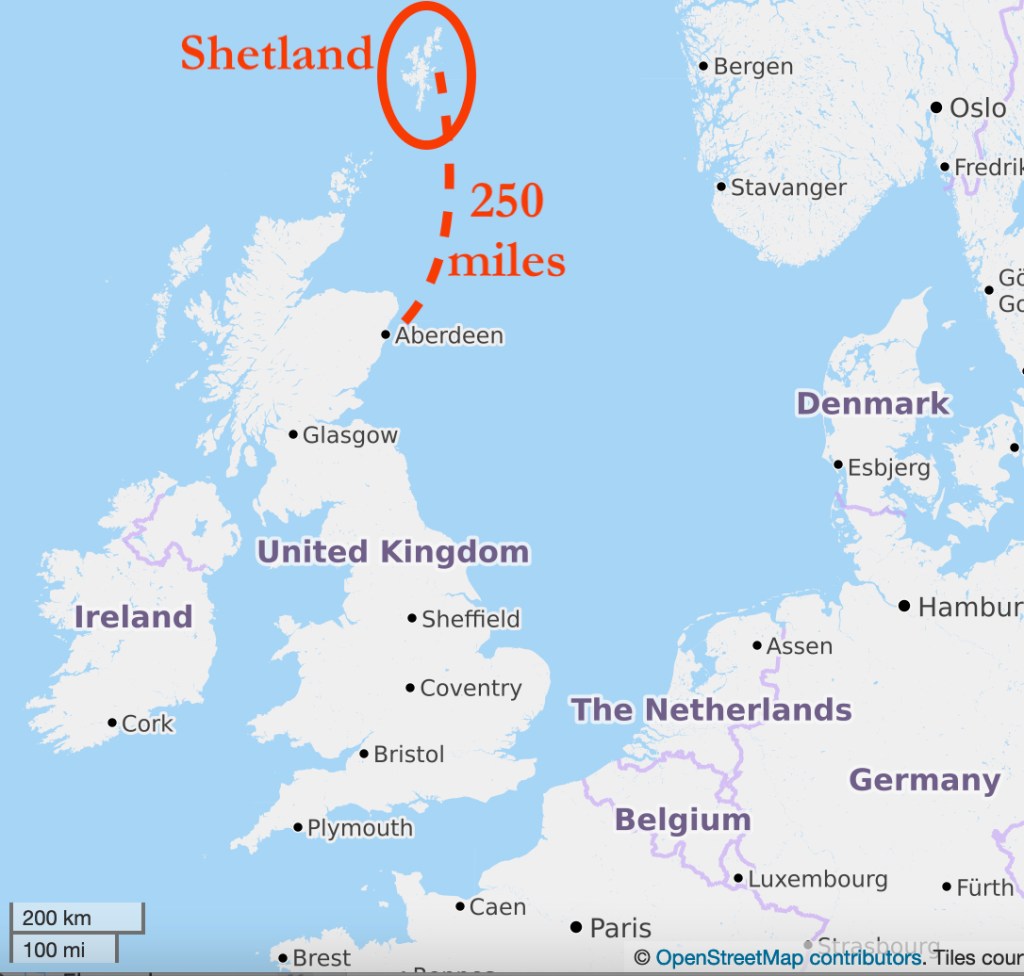
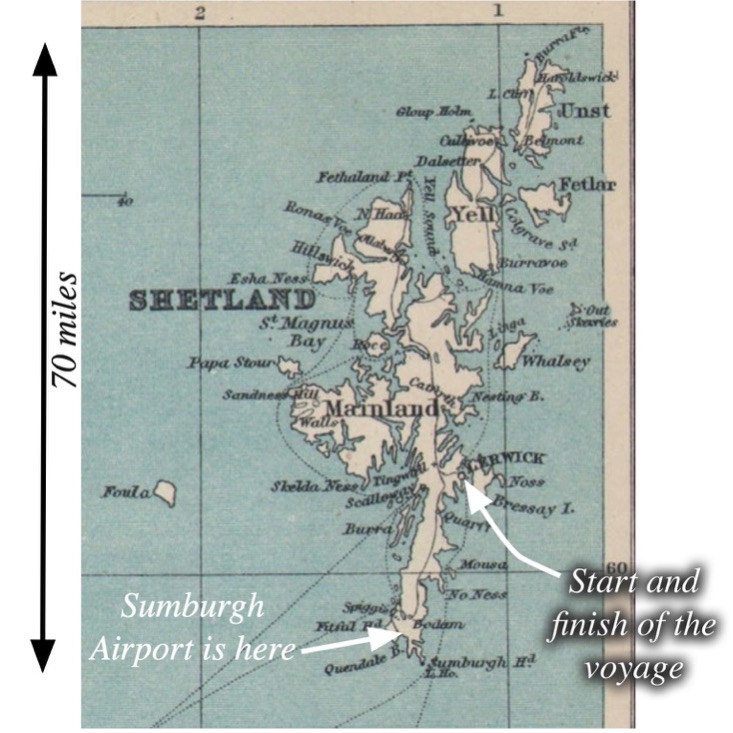
Shetland, for those who are a bit hazy about it, is a group of islands 100 miles or so off the North coast of Scotland. It is part of the UK. Our voyage took us to the most Northerly part of the UK, and I swam at the most northerly beach. But that was later. We set off from Lerwick, which is about half way up the biggest island of the Shetland group.
Our voyage took us up the east side of the islands, between the islands of Whalsay, Yell and Unst, and up to the most Northerly lighthouse, Muckle Flugga.
We had a full professional crew: Charles the skipper, Nessie the mate, Tom the cook, and Lyn the second mate.
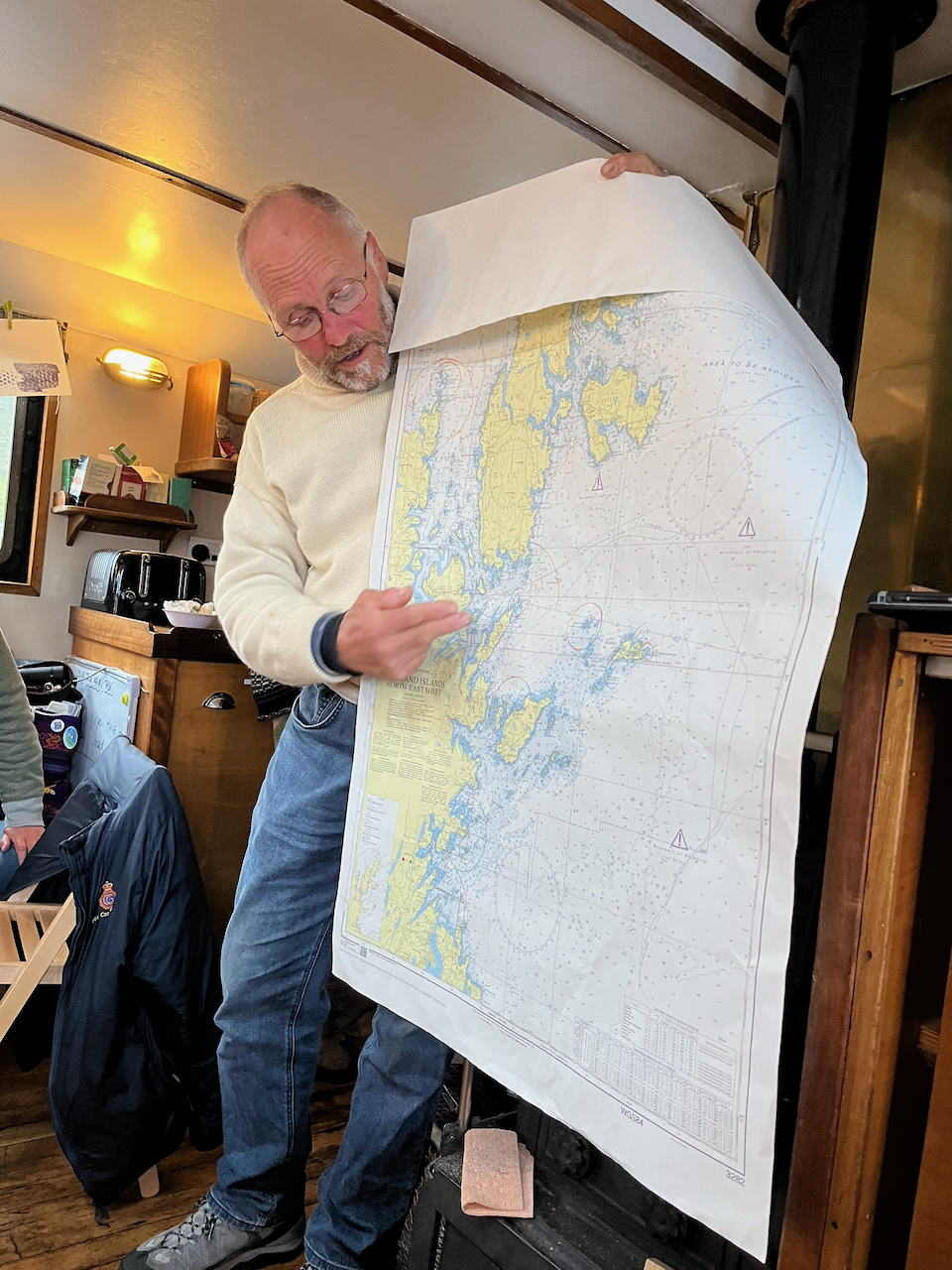
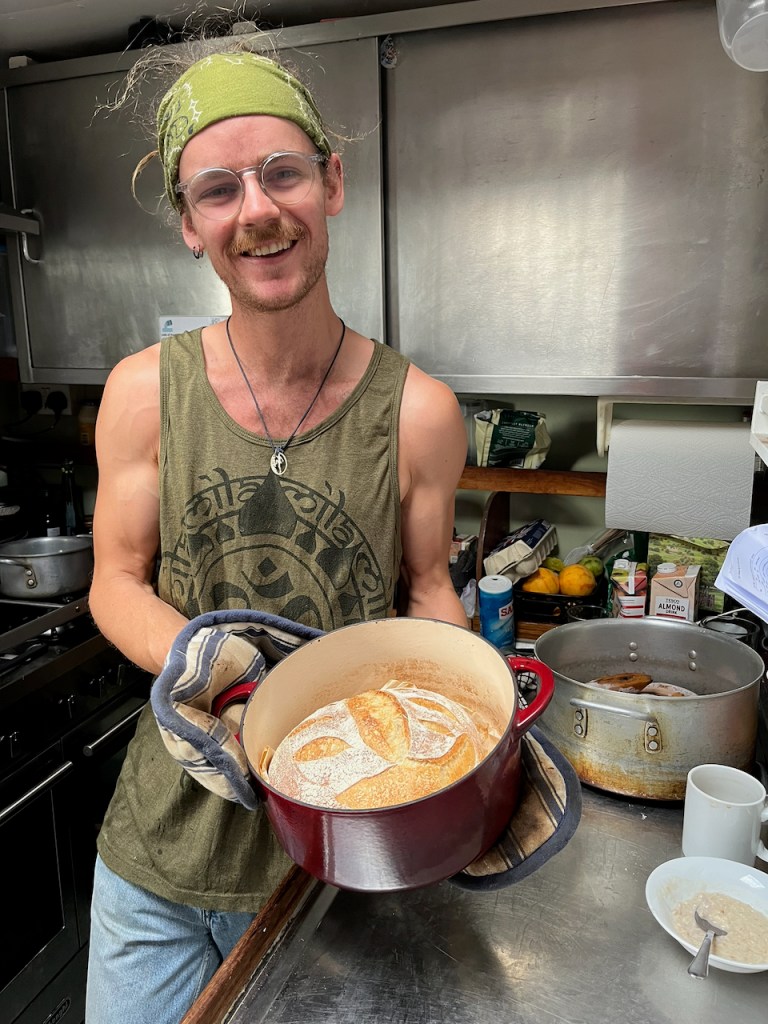
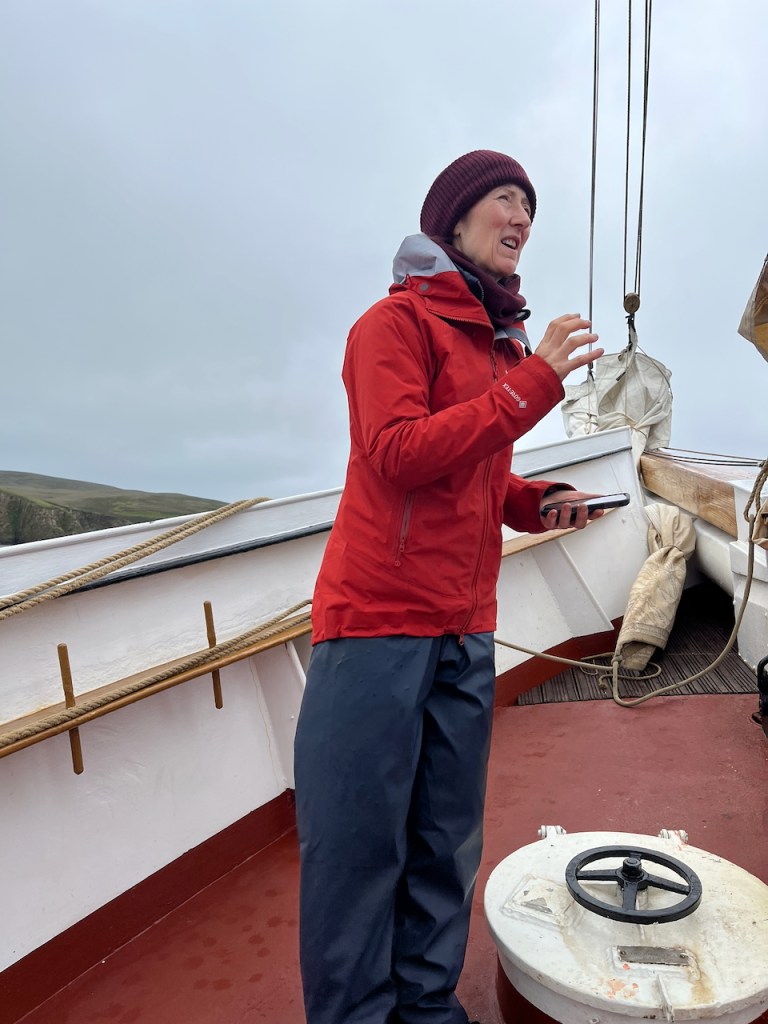
Here is Charles, the captain, describing the next day’s route.Here is Tom, the ship’s cook, who baked fresh sourdough bread every day
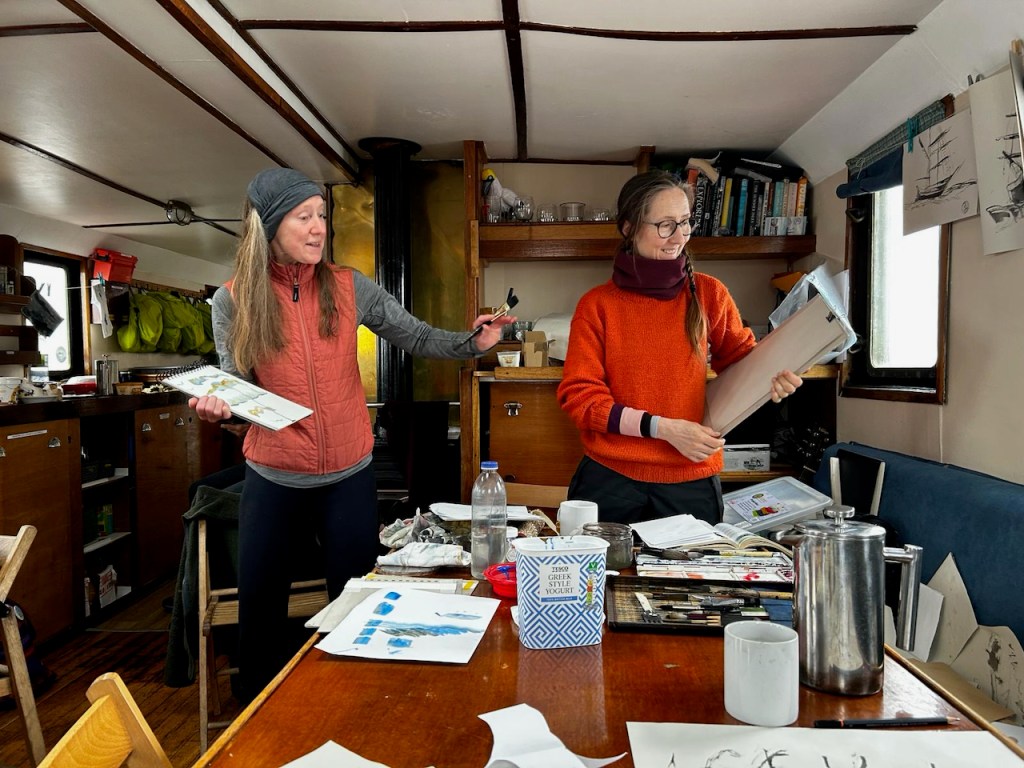
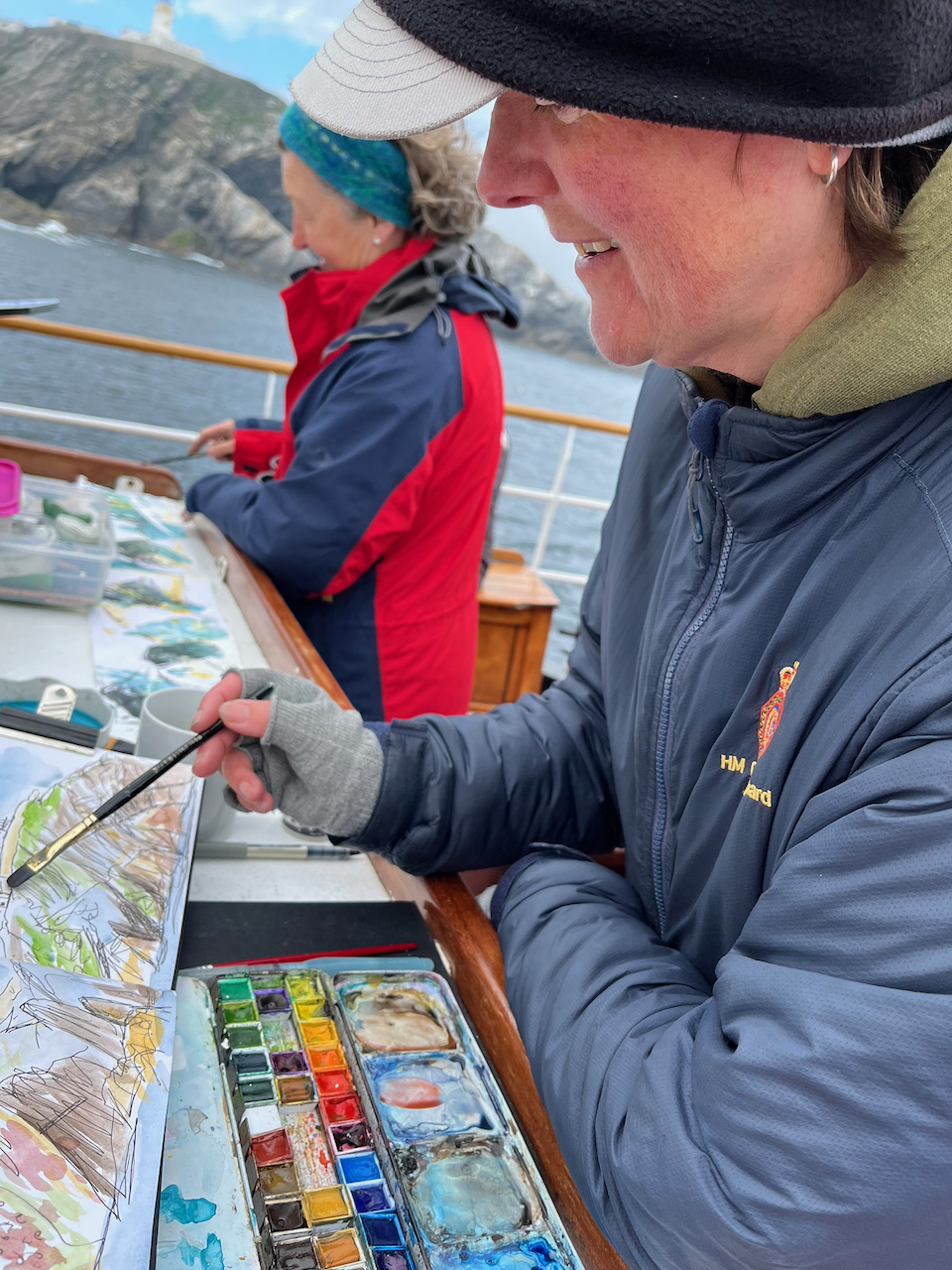
Alice and I were leading the art workshops. We did colour mixing, painting sea and sky, brushmarks, colour layering, distance, and all sorts of exercises and experiments with techniques appropriate for the landscape.
Here are Alice (right) and me (left) on the boat, demonstrating brushstrokesAlice explaining “outline drawing”Alice on the foredeck, during a workshop
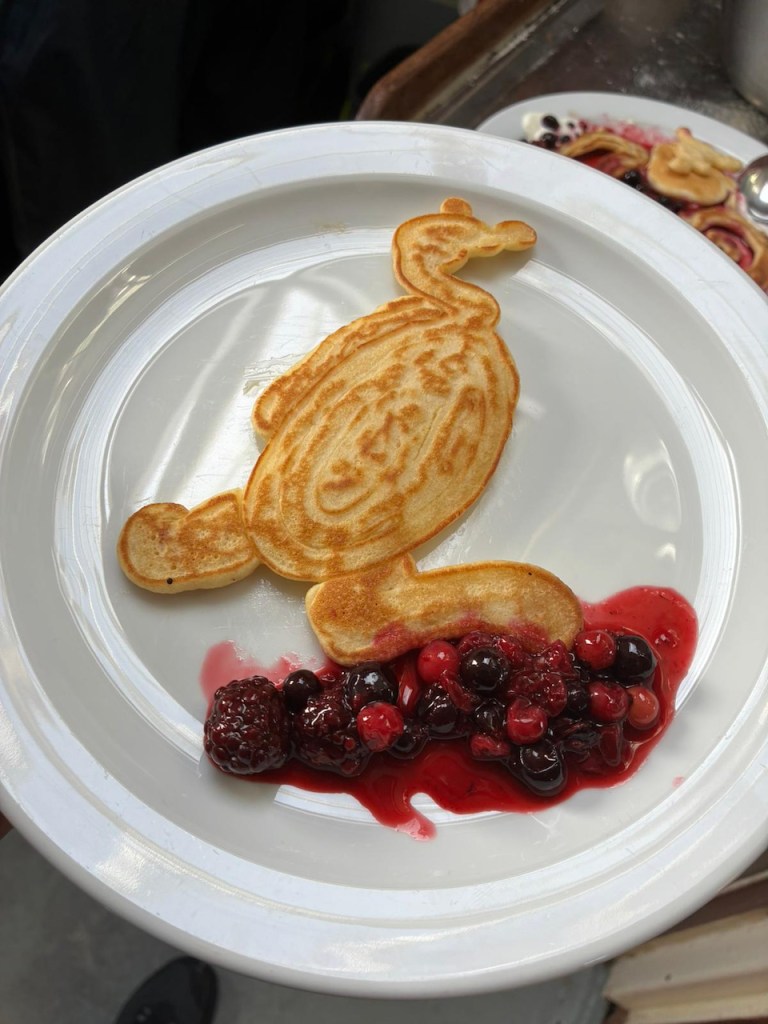
It was a lot of fun, and everyone was very productive. The cook Tom was inspired to produce art too in his special medium. He produced amazing “pancake art” in addition to all the other meals and cakes. His cooking was an outstanding creative production.
Pancake art
If you also are inspired (by the sketching, the sailing …or the cake…) and would like to join such a voyage, have a look at the “Lady of Avenel” site: https://www.ladyofavenel.com/sketchandsail
I filled a sketchbook with drawings. Here’s a quick video:
Sketchbook flick-through (36 seconds – no audio) (video may not play on mobile version)
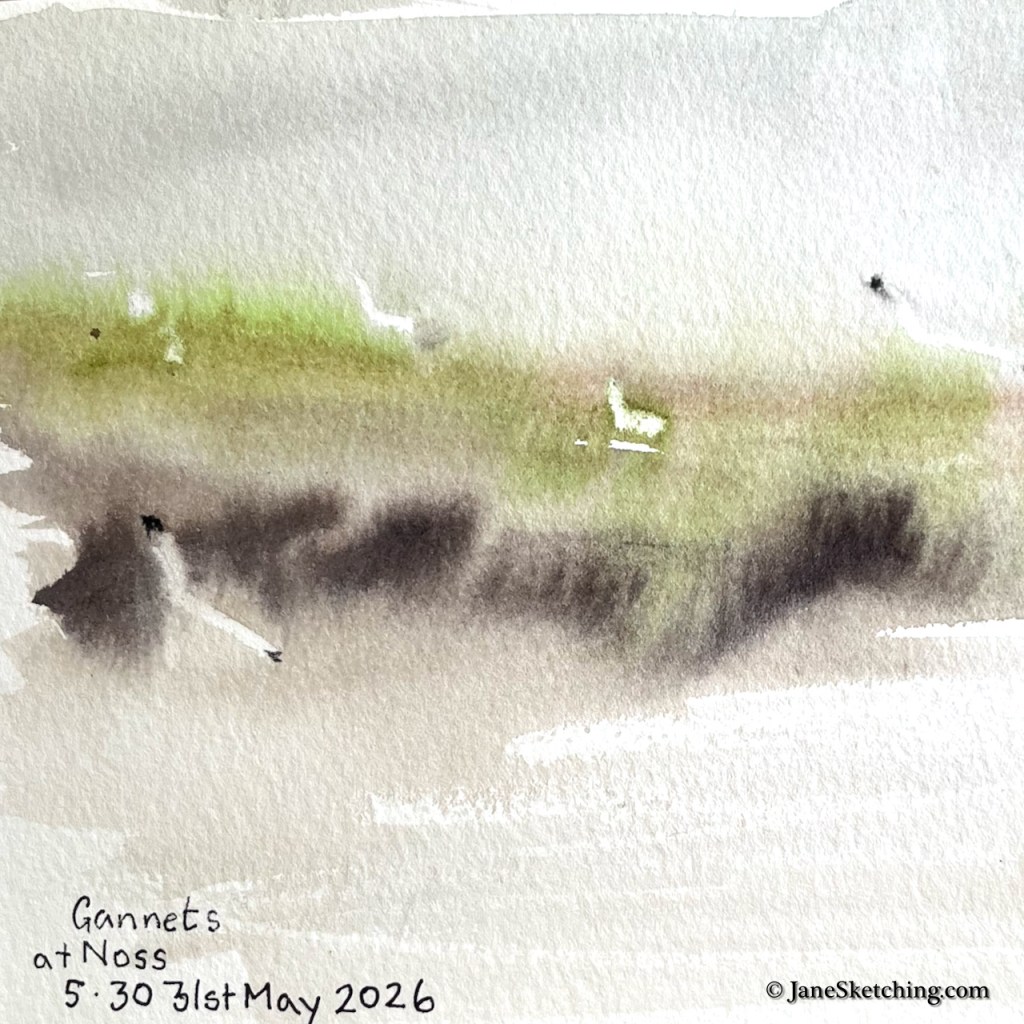
On the very first day, our skipper steered us up to the cliffs of the island of Noss, so we could have a go at sketching the seabirds.
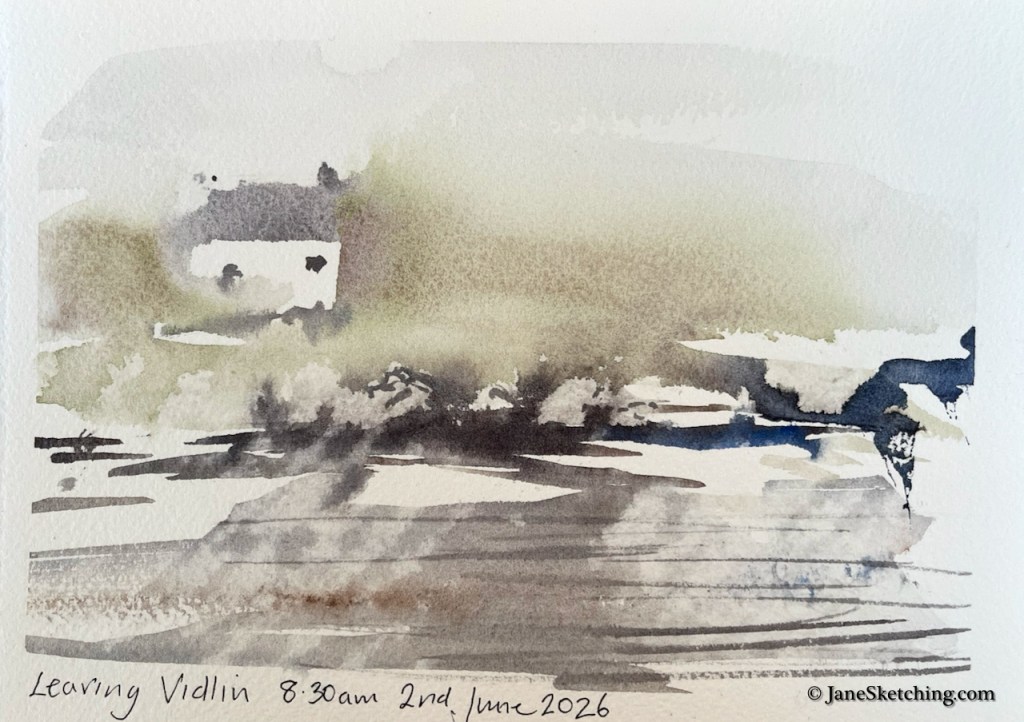
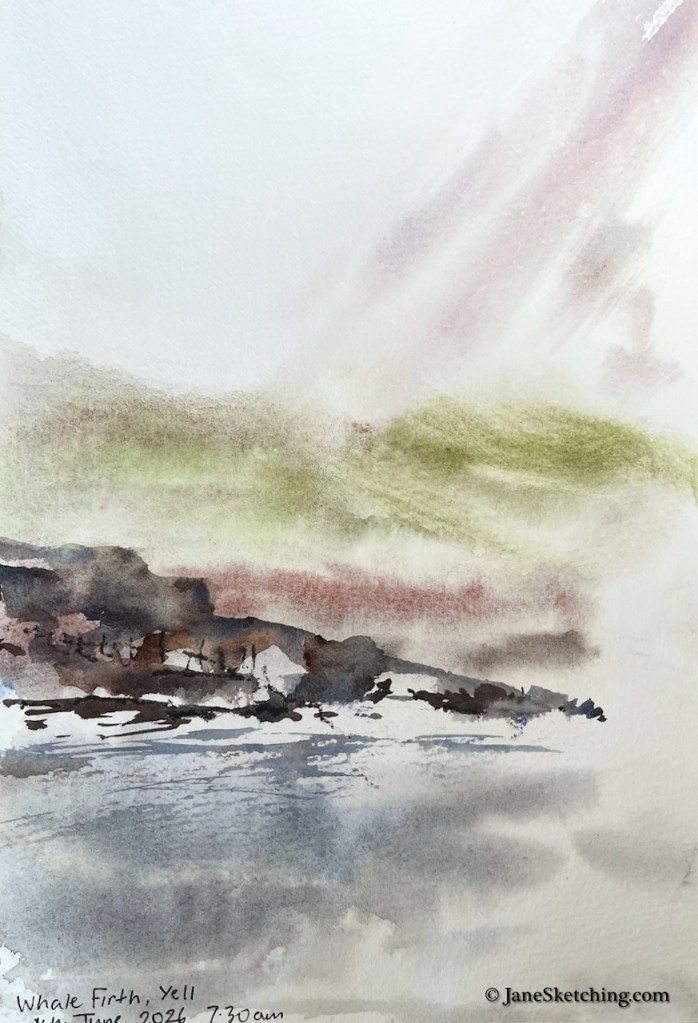
On some days there was fog. It’s possible to paint in the fog. It produces amazing atmospheric effects.
This is a particular Shetland phenomenon: when you look horizontally you see fog, but the light from above is still bright, and seems to make the fog glow. Here’s another fog painting.
The wind soon blew the fog away. Shetland is famous for its wind, and we were on a sailing boat.
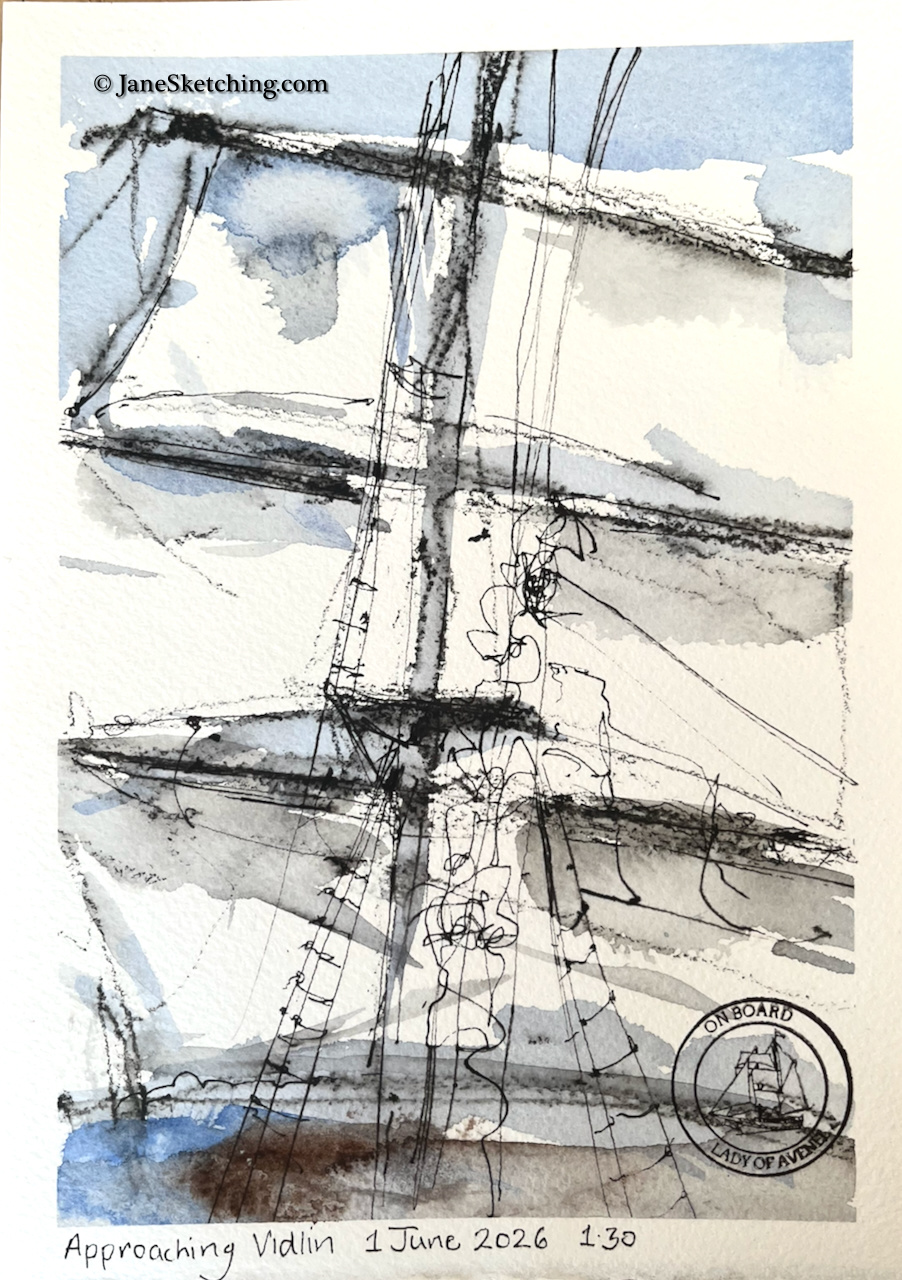
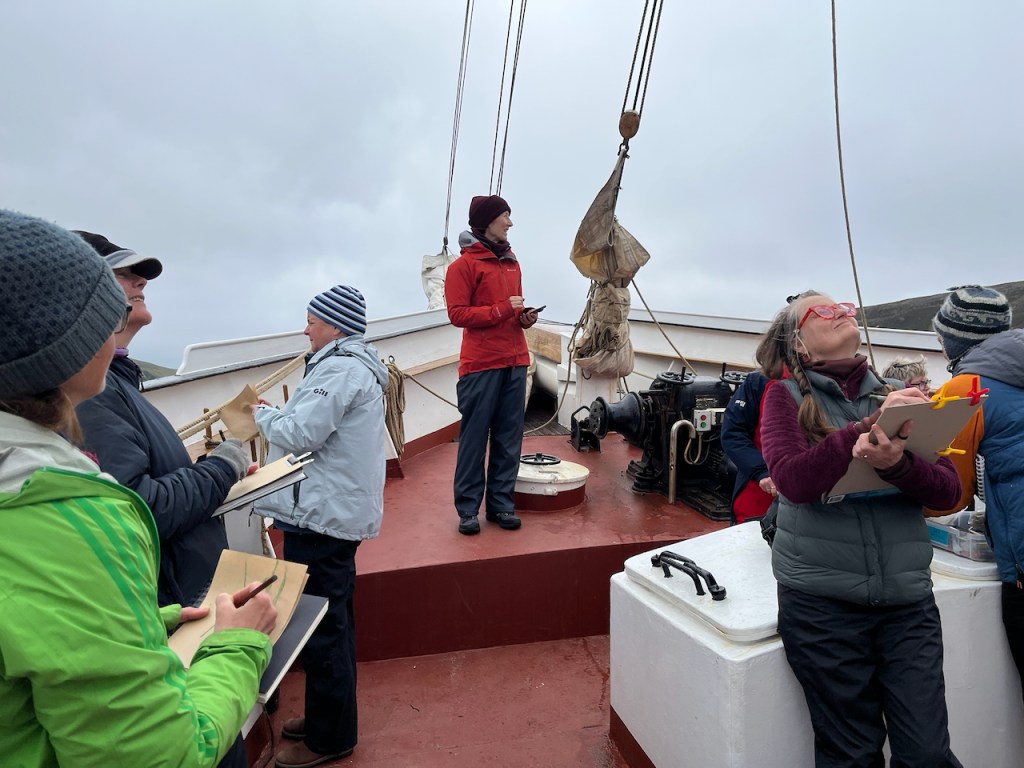
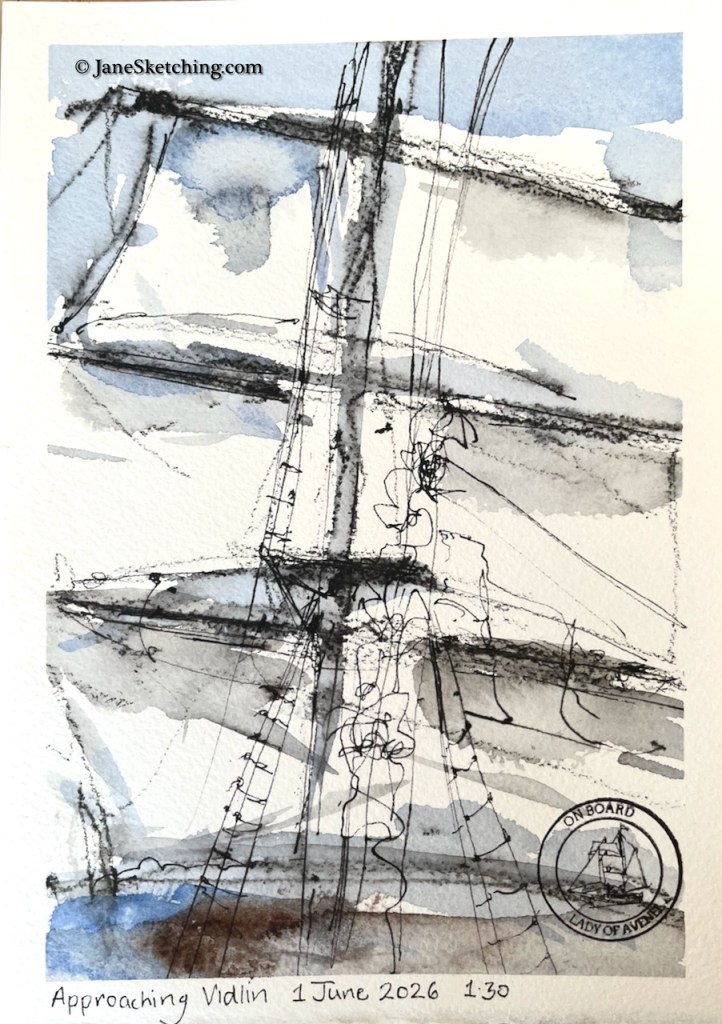
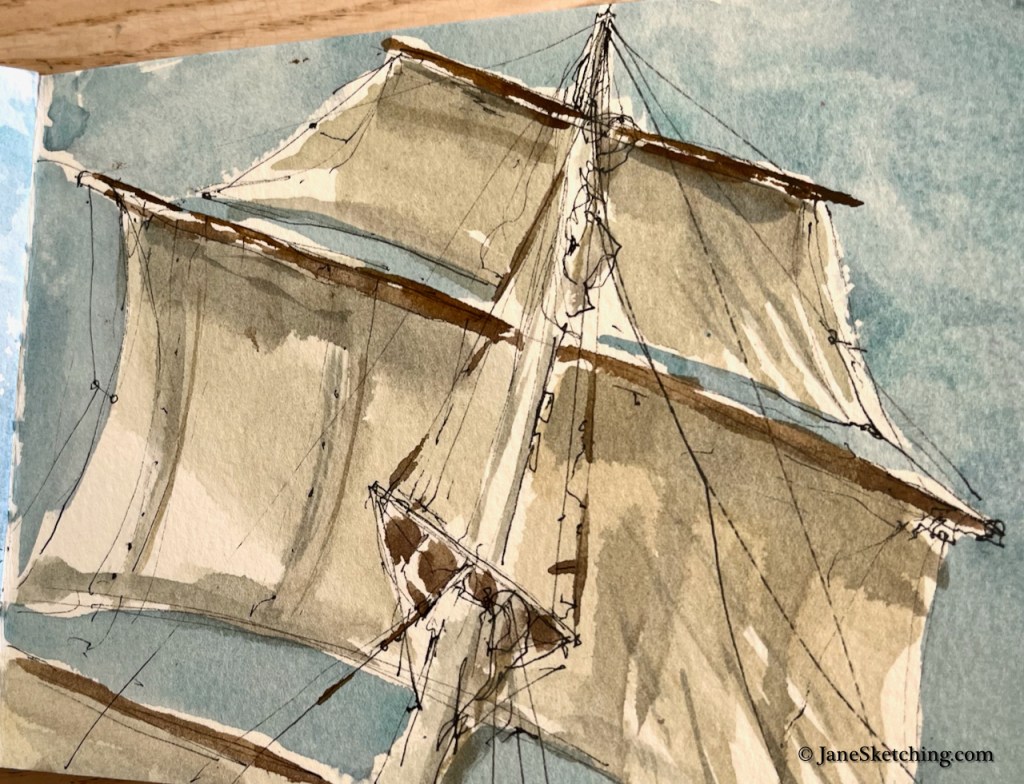
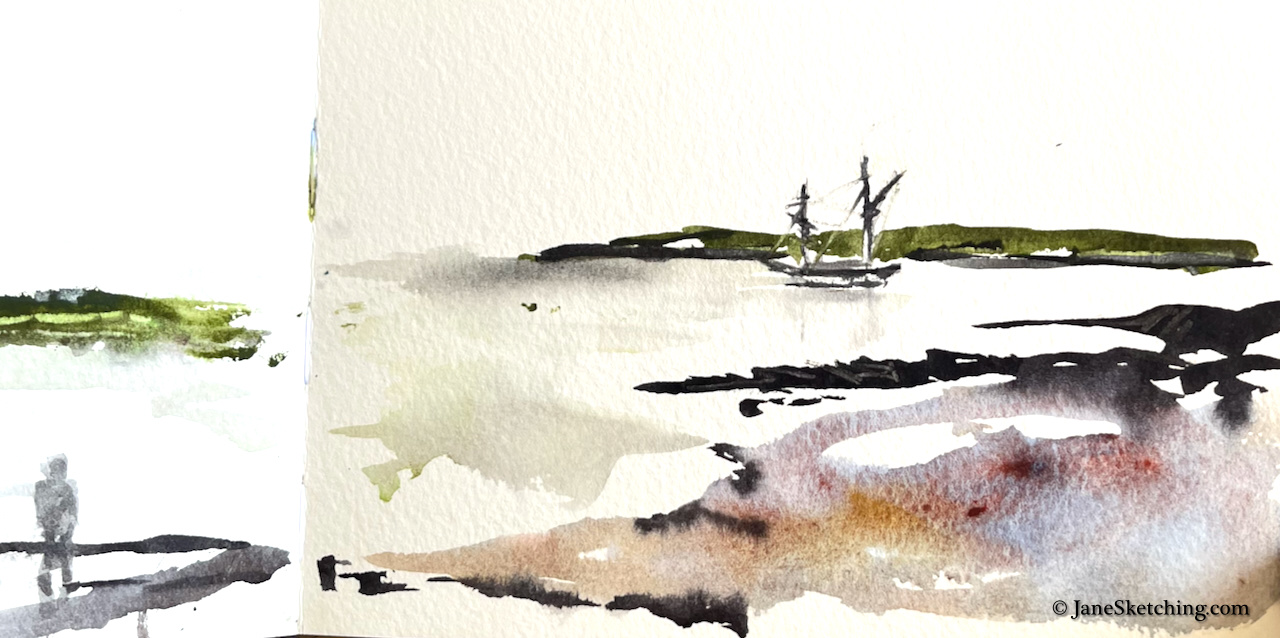
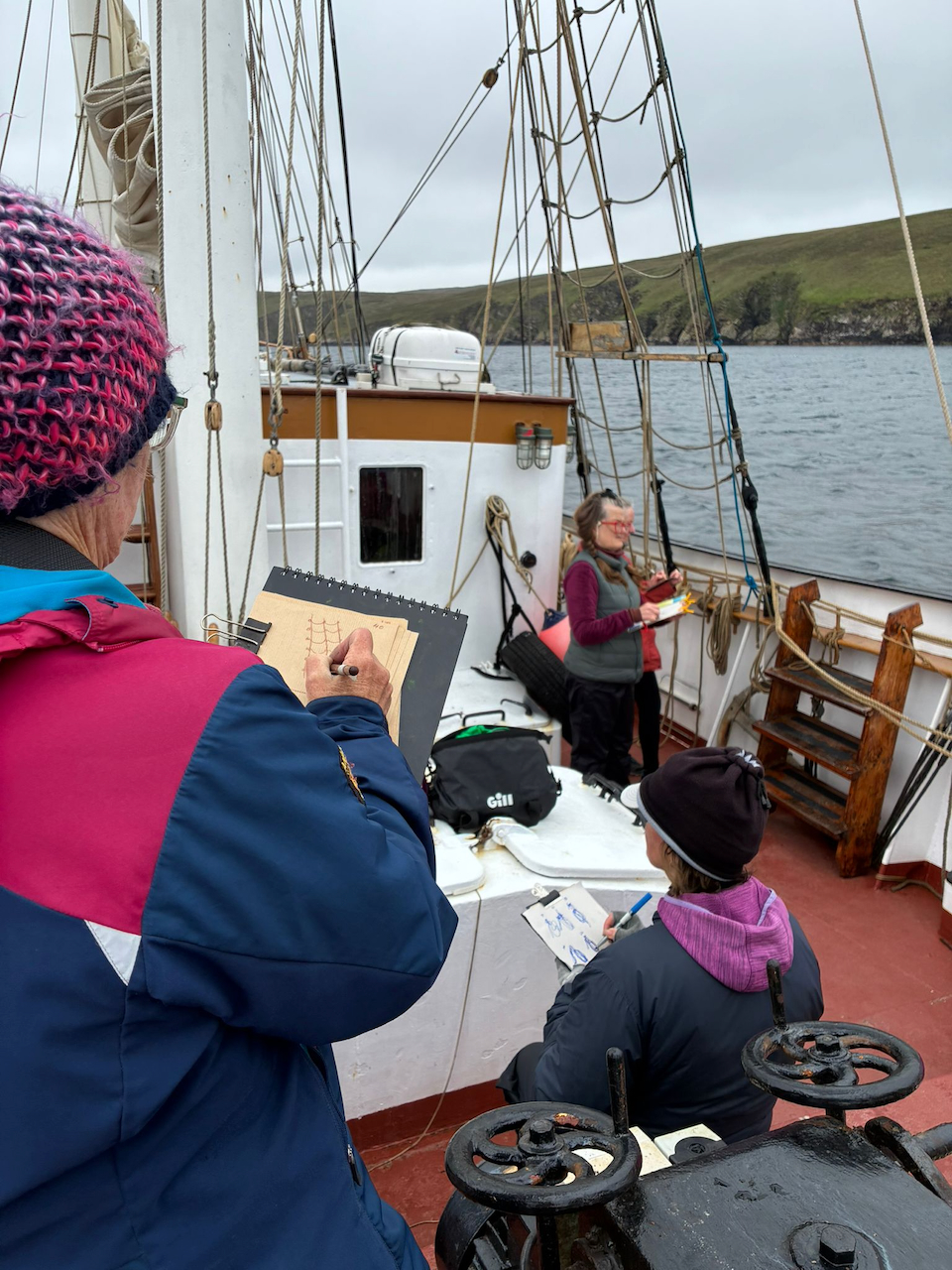
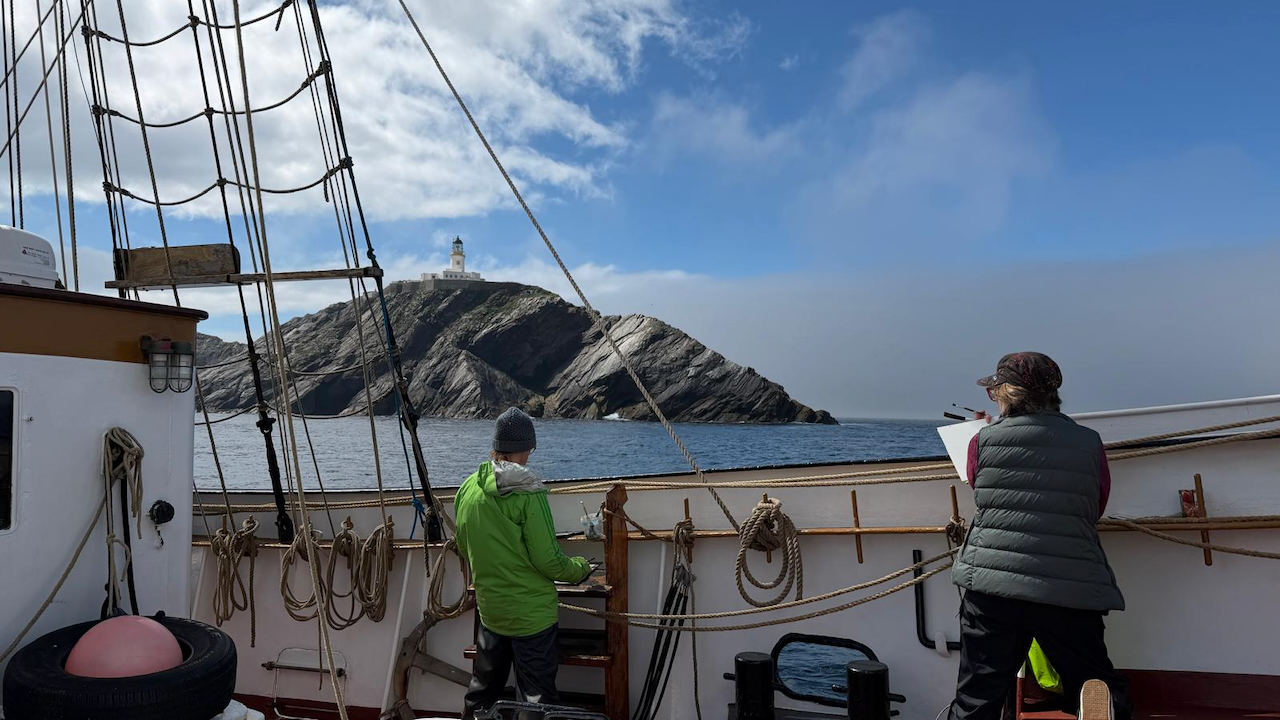
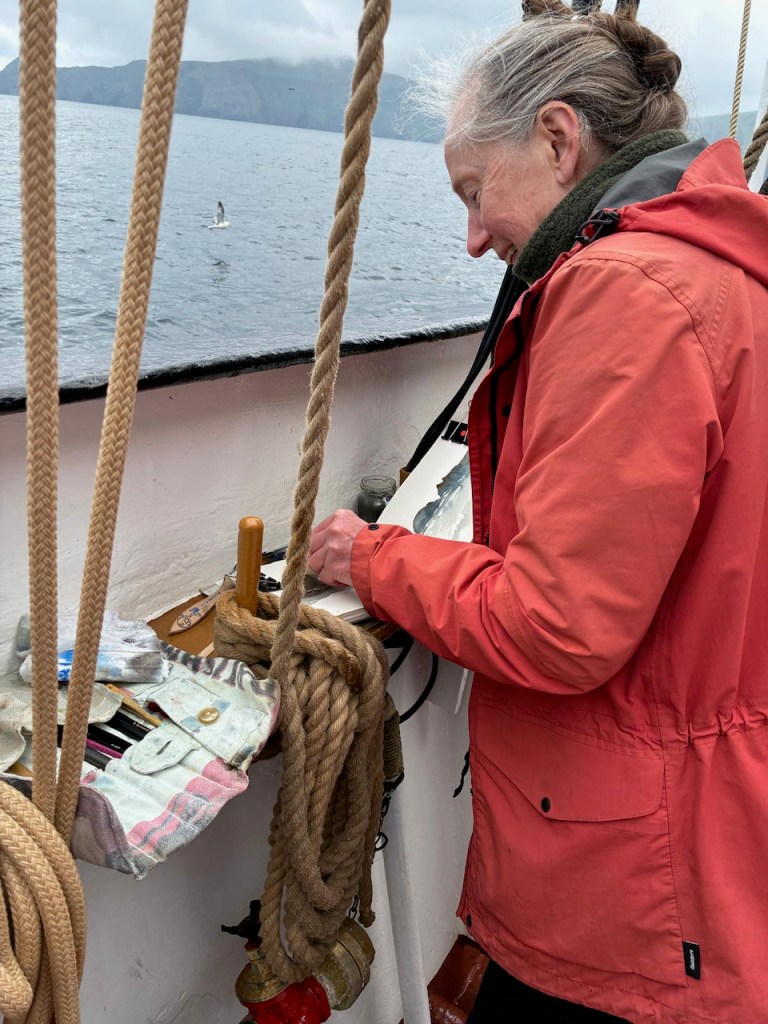
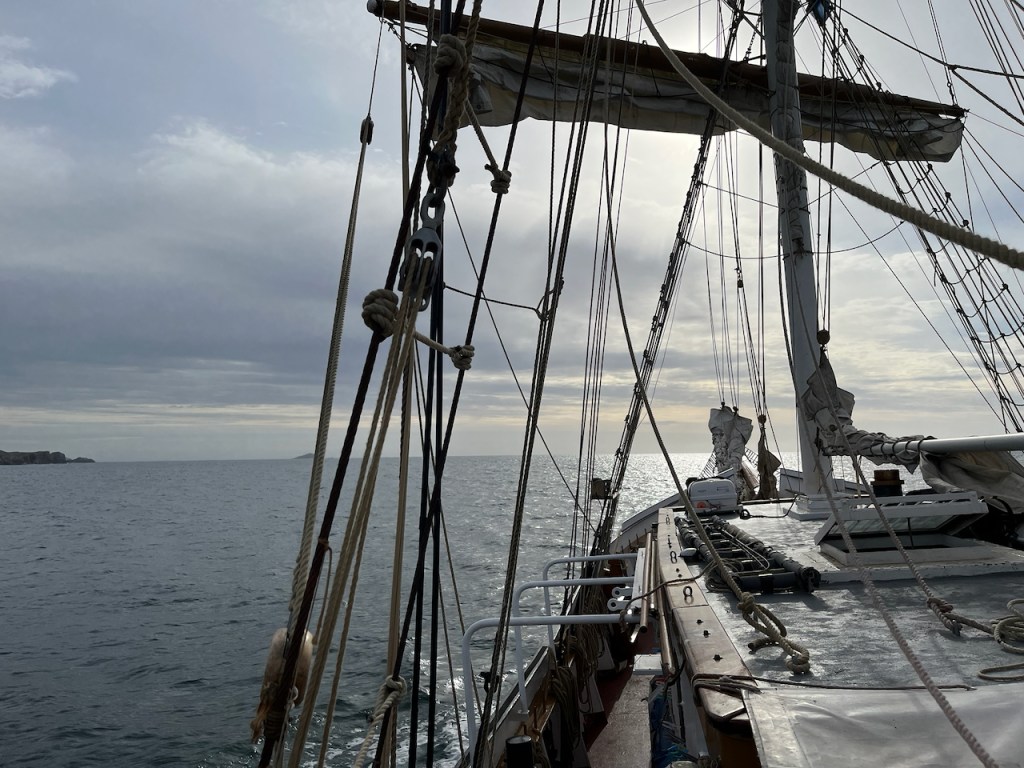
There are a lot of ropes to control those sails. I couldn’t get them all in. It’s a challenge to do these sketches on a moving boat – and of course the crew are trimming those sails all the time and shifting them about, and liable to take one of them down altogether, or put another one up. So you have to be quick. Perhaps a little accuracy is lost.
Alice ran a great workshop on speed sketching, which was just as well.
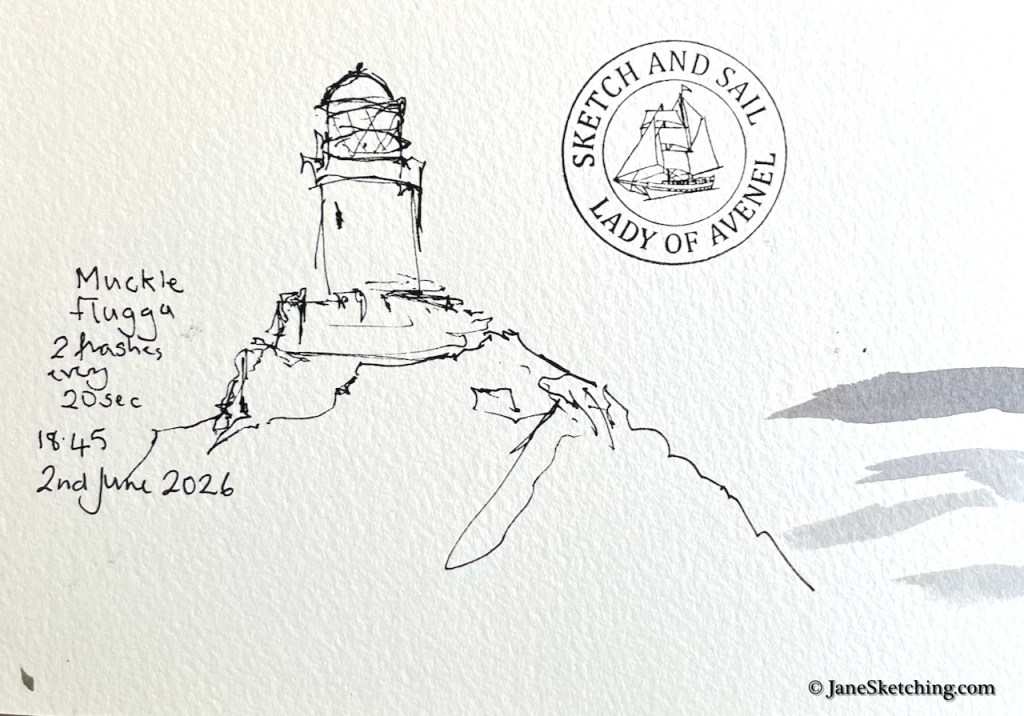
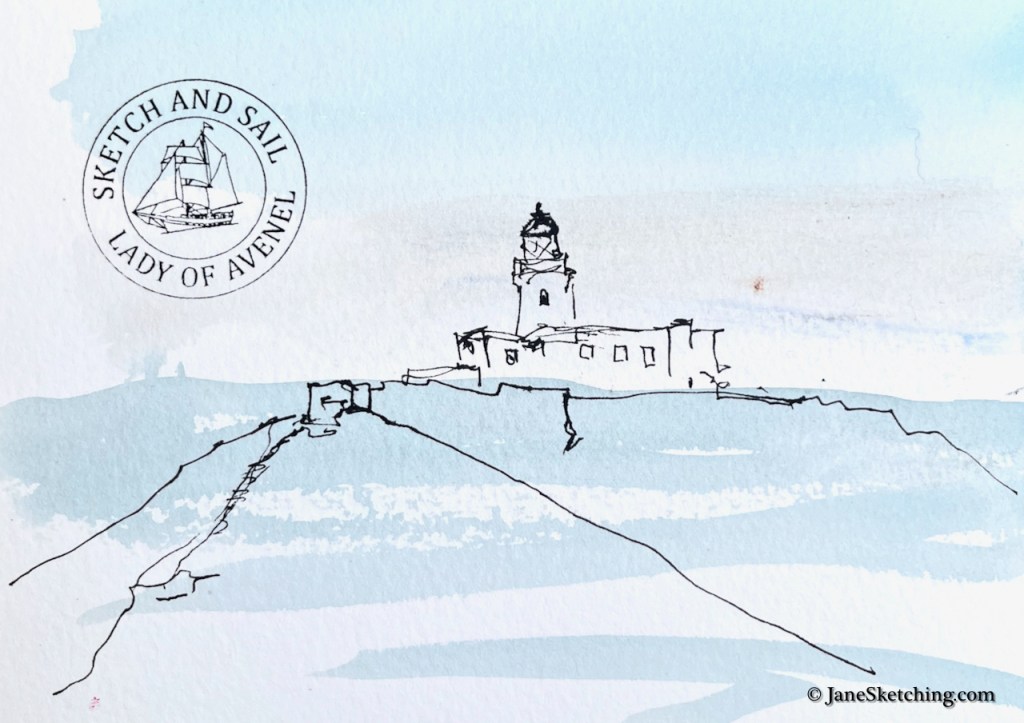
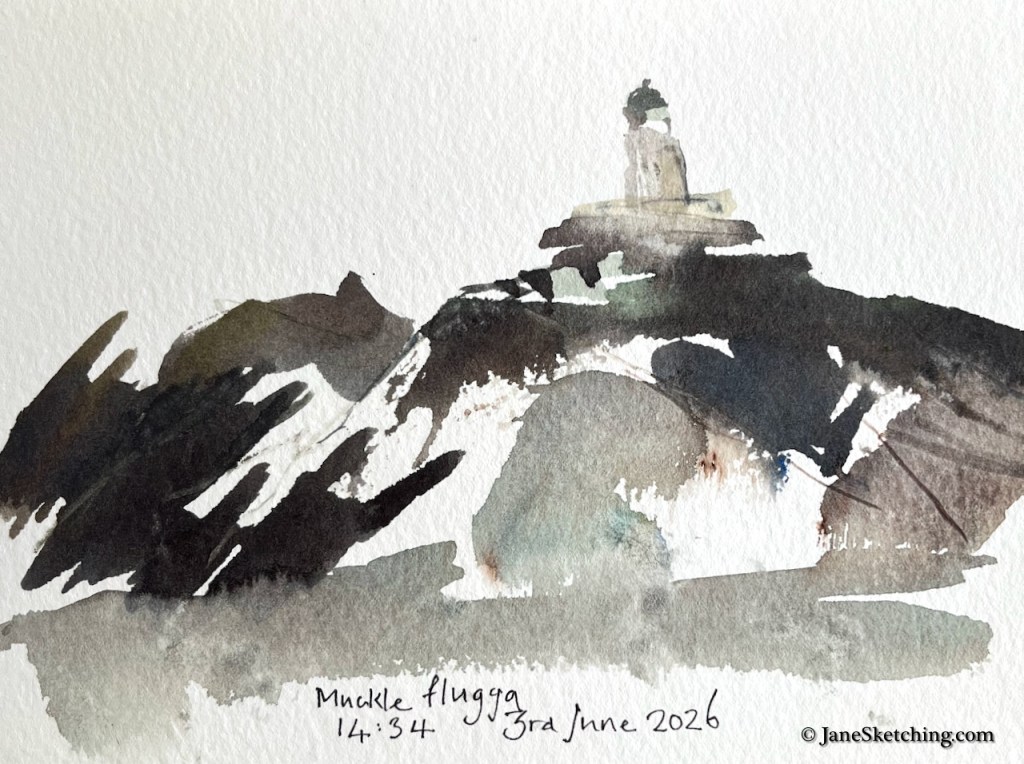
At the northern point of our voyage is the lighthouse at Muckle Flugga. Charles the skipper accepted our request to sail round in small circles so that we could have a good chance to sketch it.
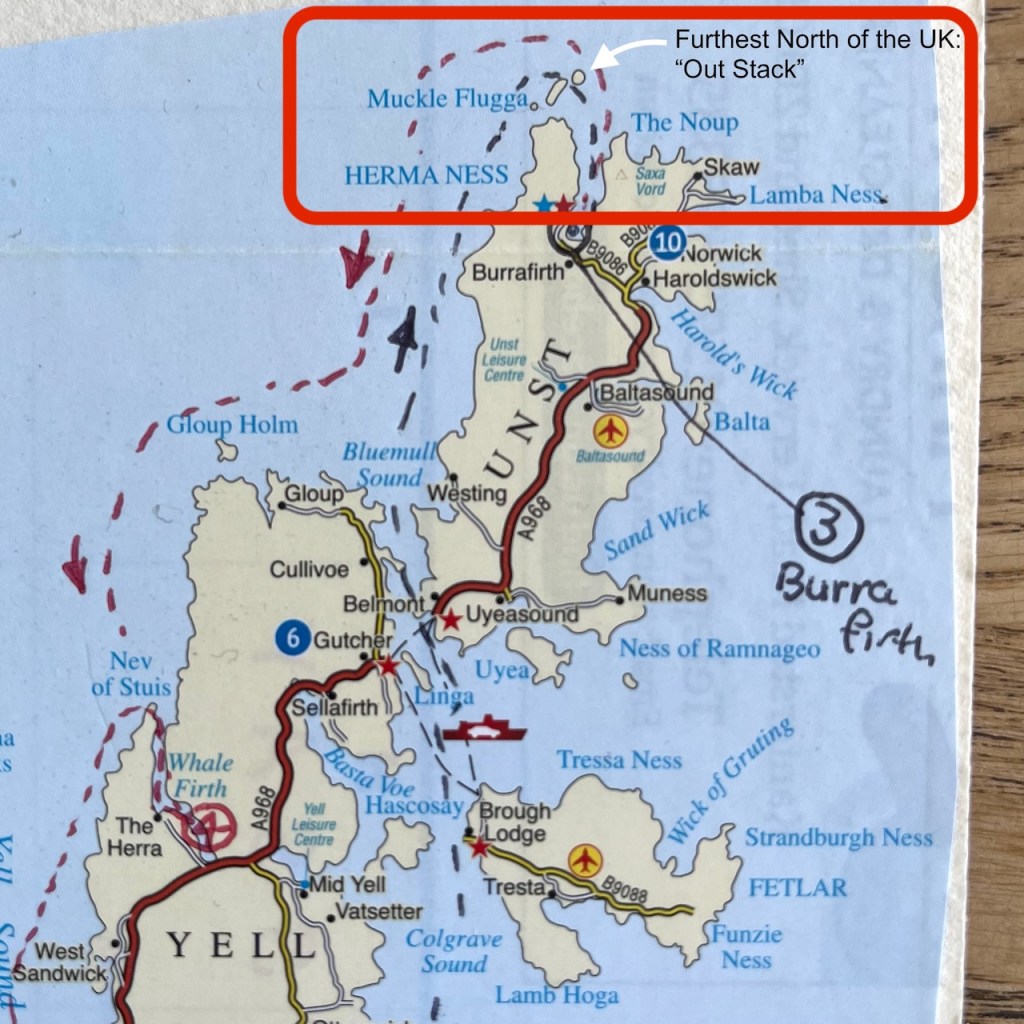
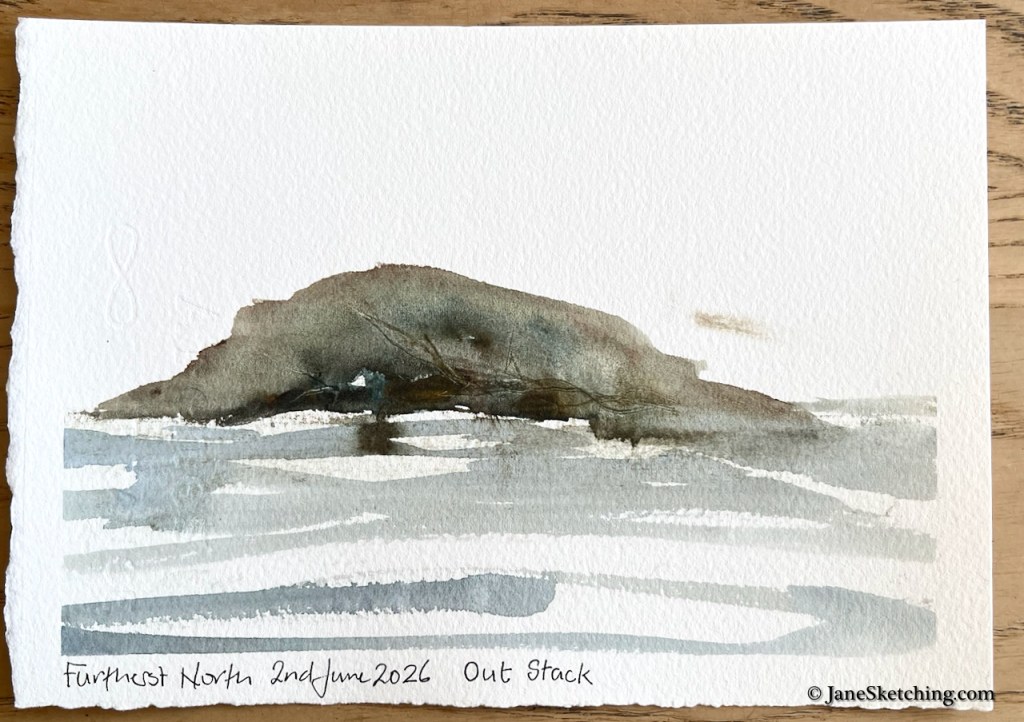
Even further north than Muckle Flugga is a little island: Out Stack.
Here is what that furthest north point of the UK looks like:
Out Stack 60.8603°N 0.8741°W
We landed at some magical remote beaches.
We made big pictures as well as sketches in sketchbooks.
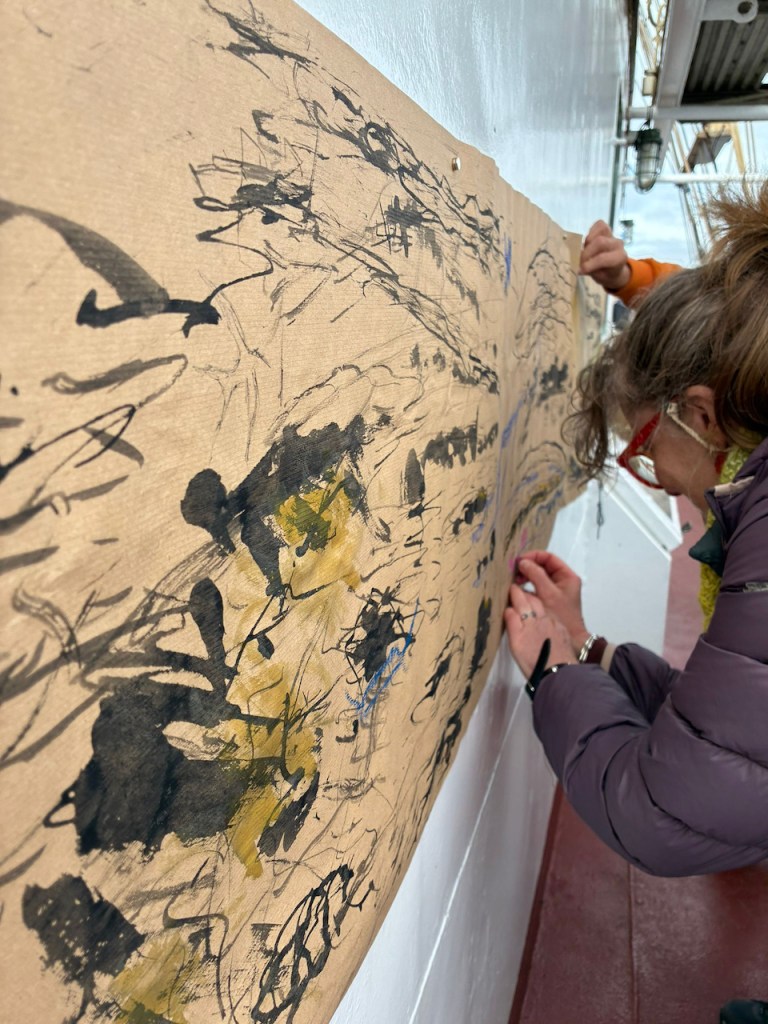
On one beach, Alice organised a huge picture made by many people. ….….who then added to it on board. We found we could fasten the picture to the cabin of the boat with magnets.
…and all the participants in the 2026 Shetland Sketch and Sail. Thank you for your enthusiasm, your inventiveness, and your companionship on the journey.
Click a button below to share this post online, email it, or print it:
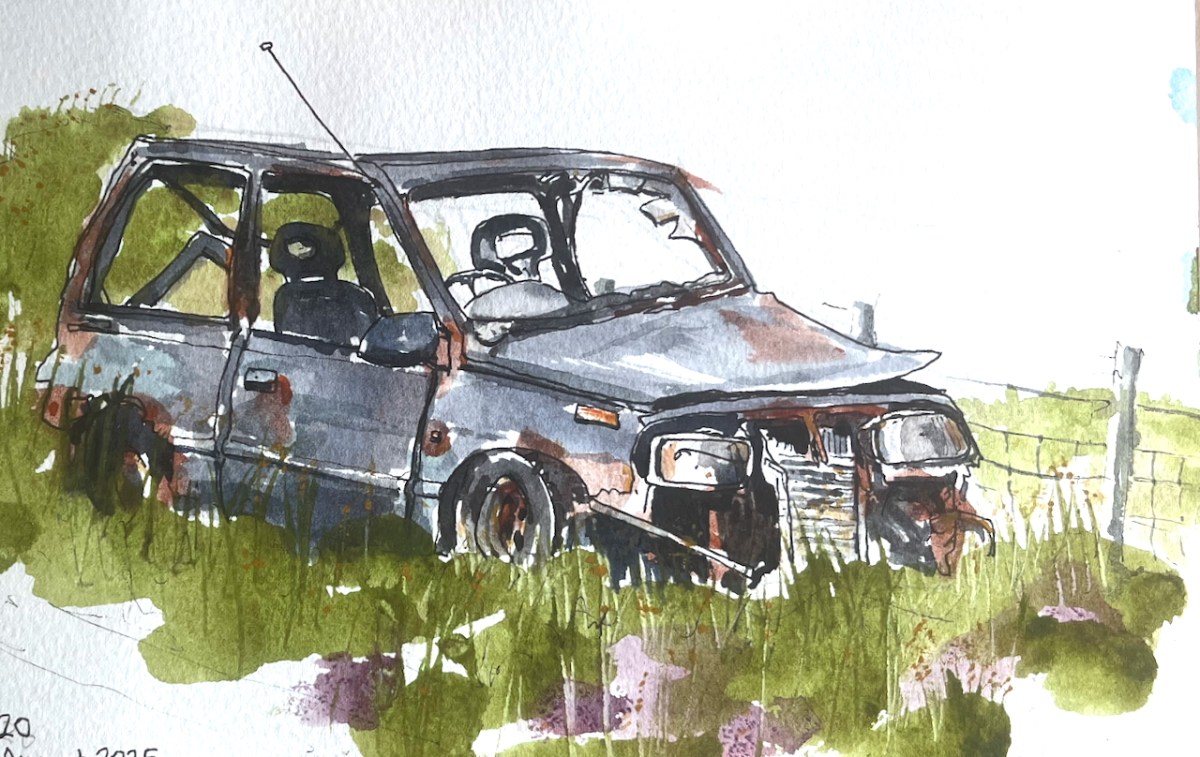
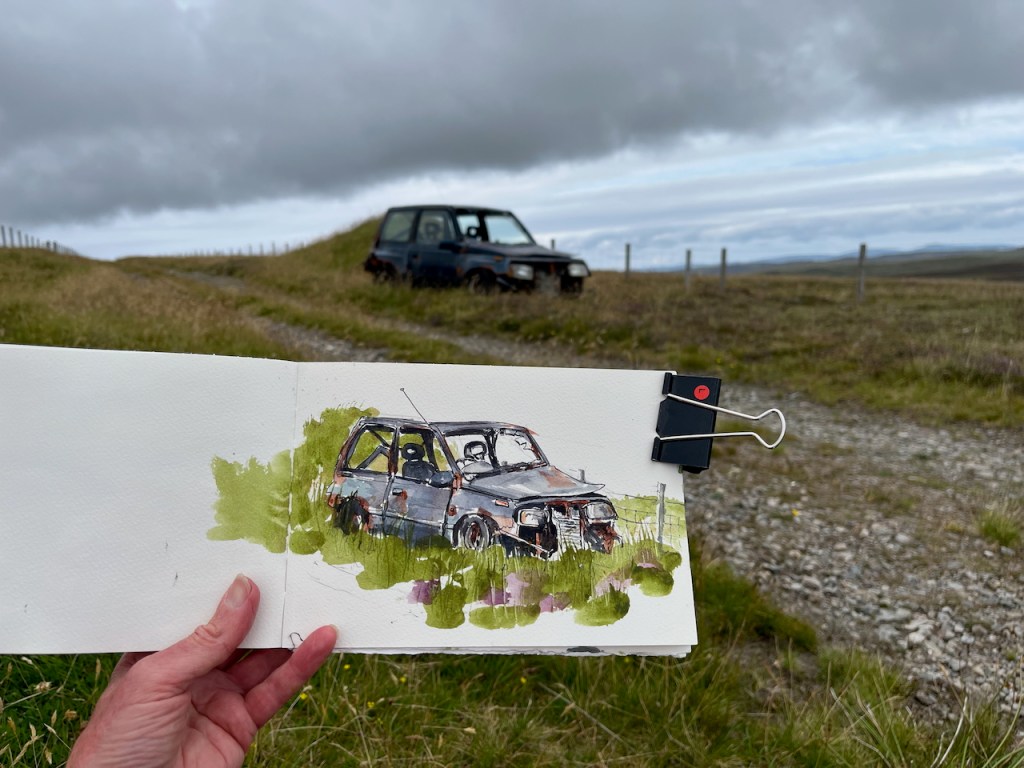
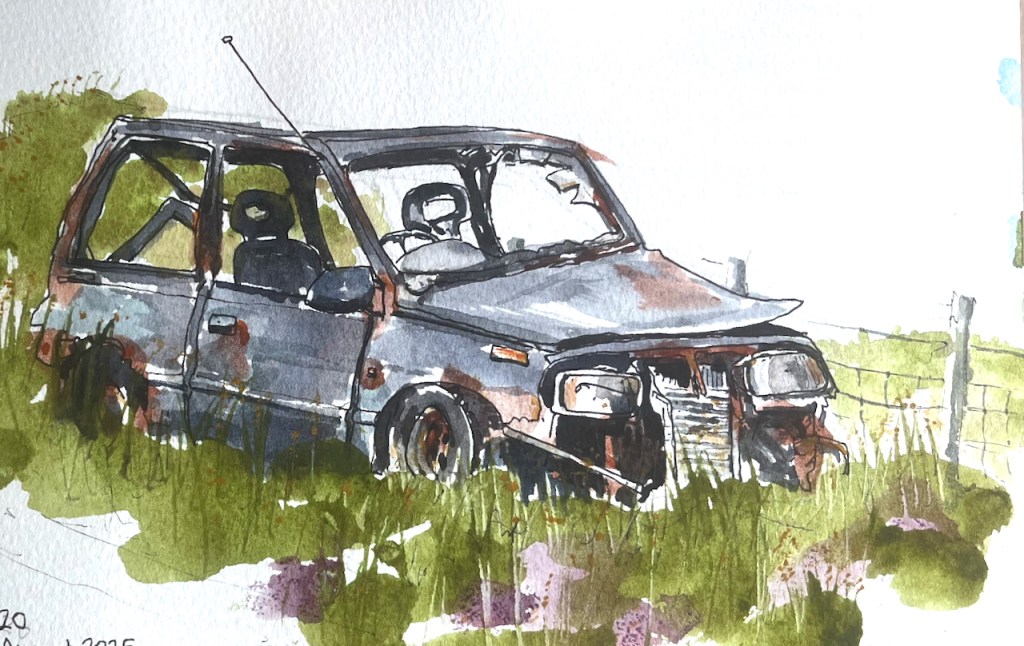
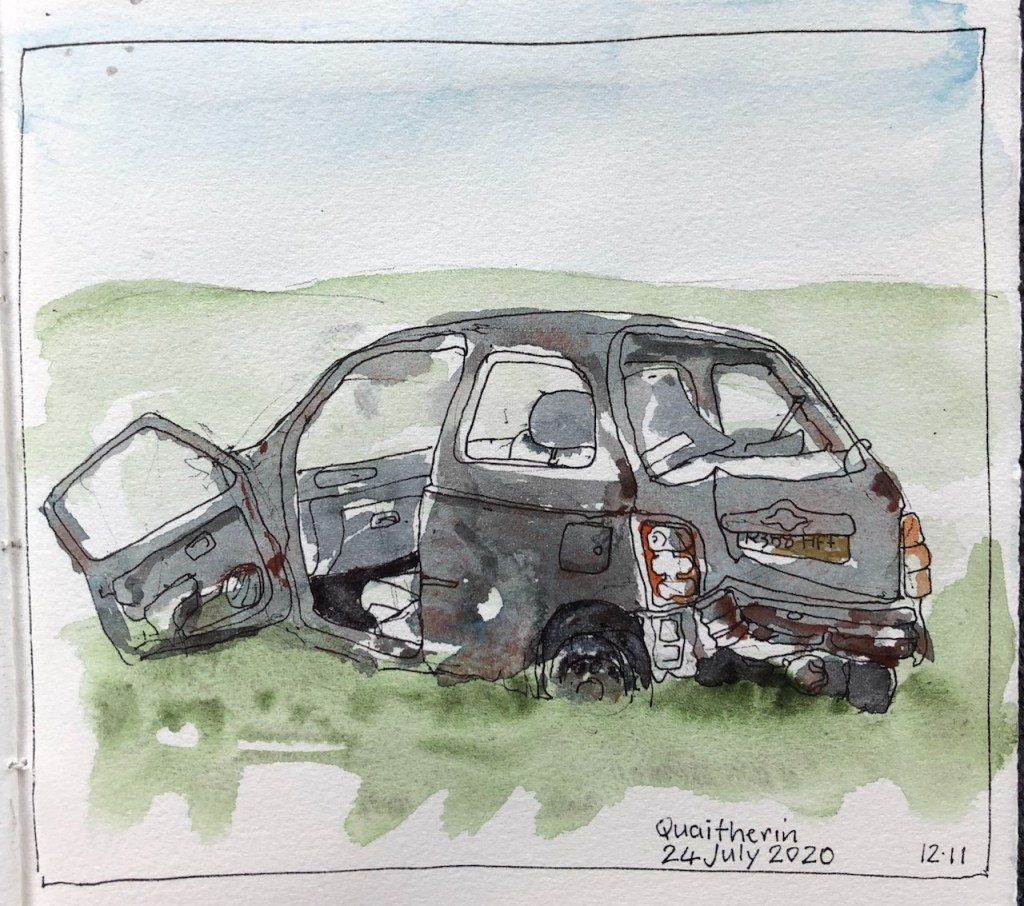
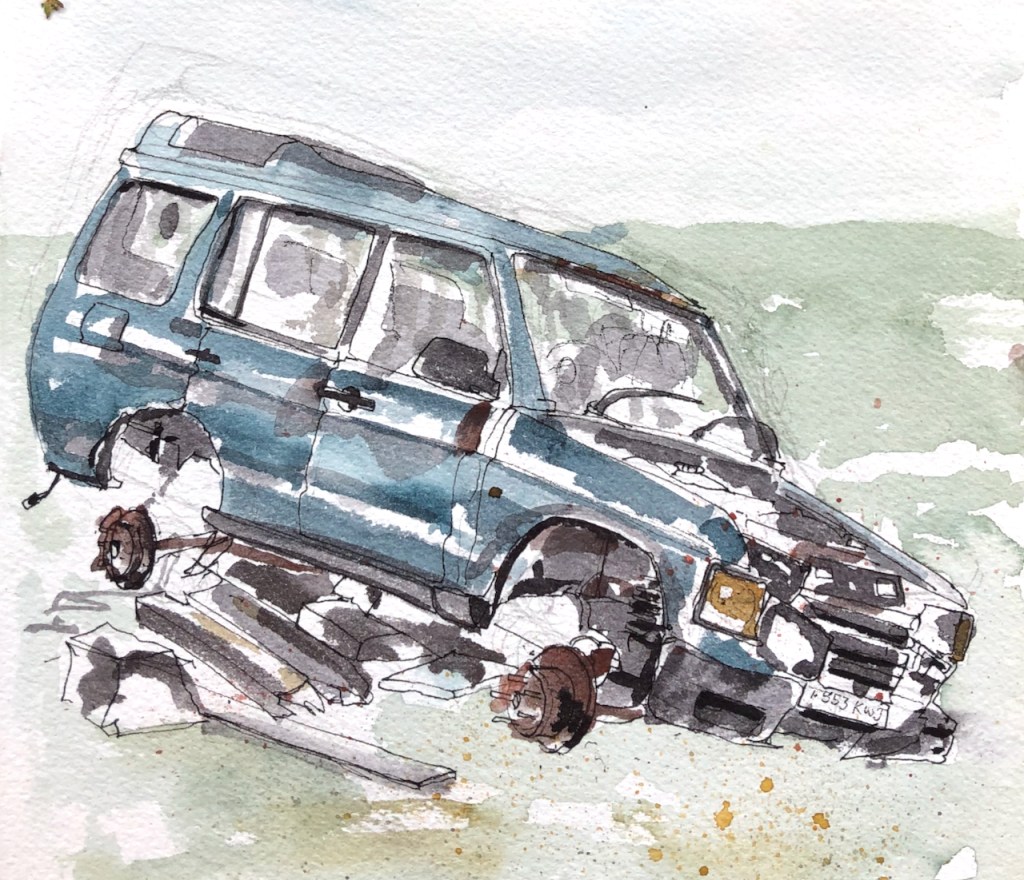
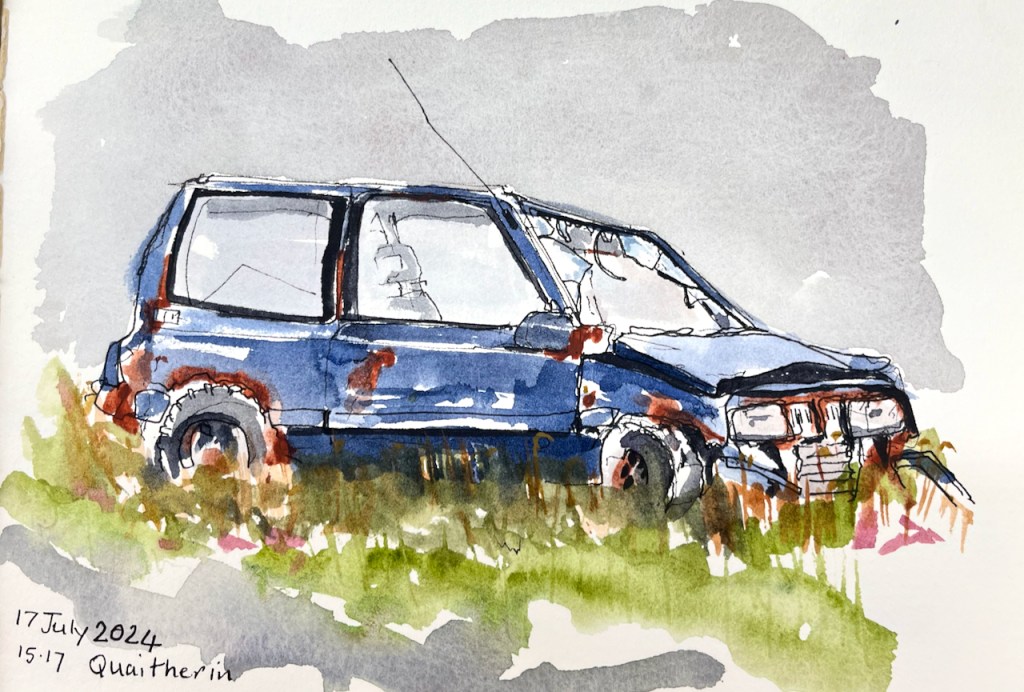
There’s a walk up to the Verda Stane. From up there you can see for miles, a vast undulating landscape. On the walk back down there’s a track. On the track I found an abandoned car, Escudo.
It has become a bit more decrepit. There is more rust. The radiator has fallen off. But it is still there, complete with number plate. This time I saw its name: “Escudo”, on the back door.
Rain was coming.
I managed to complete the sketch, glad to be there. And then I walked back to the road, and along the road, in the fine rain.
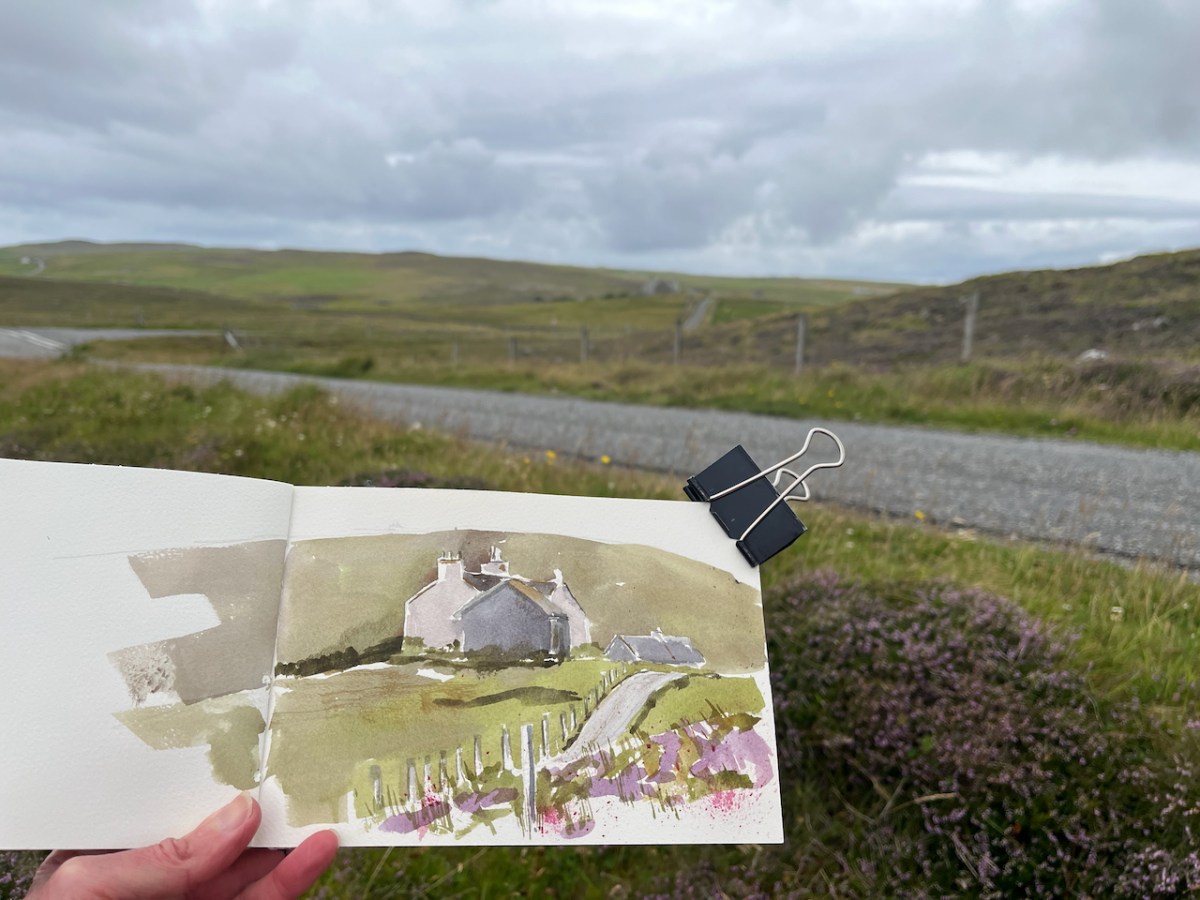
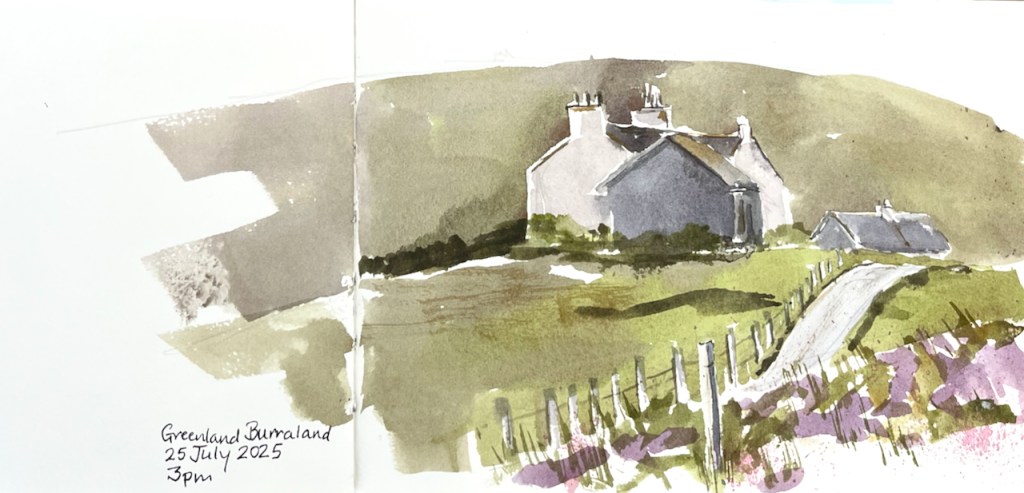
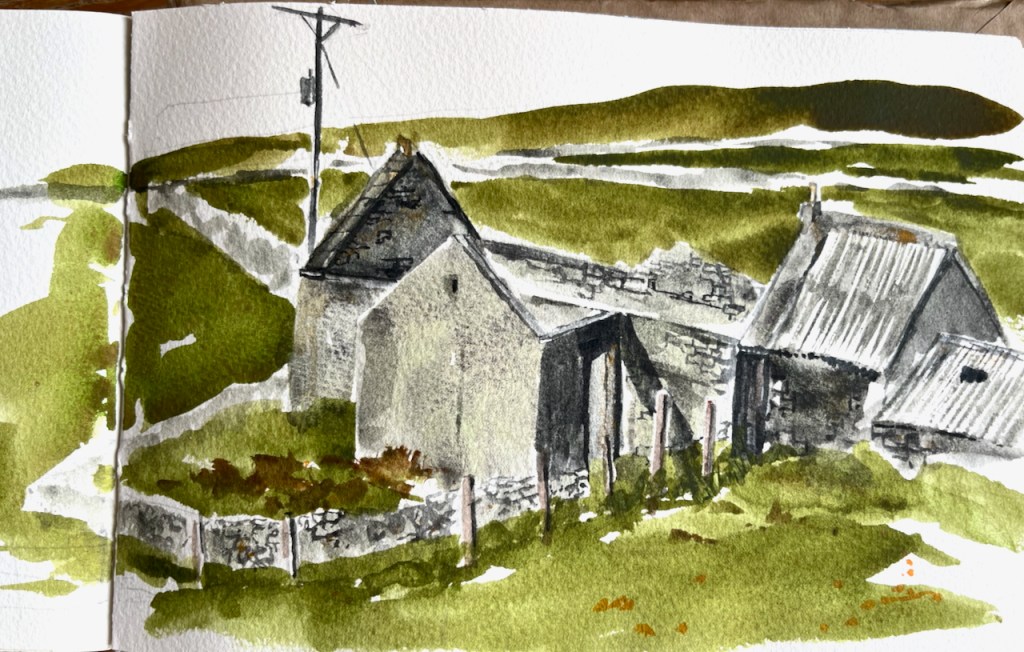
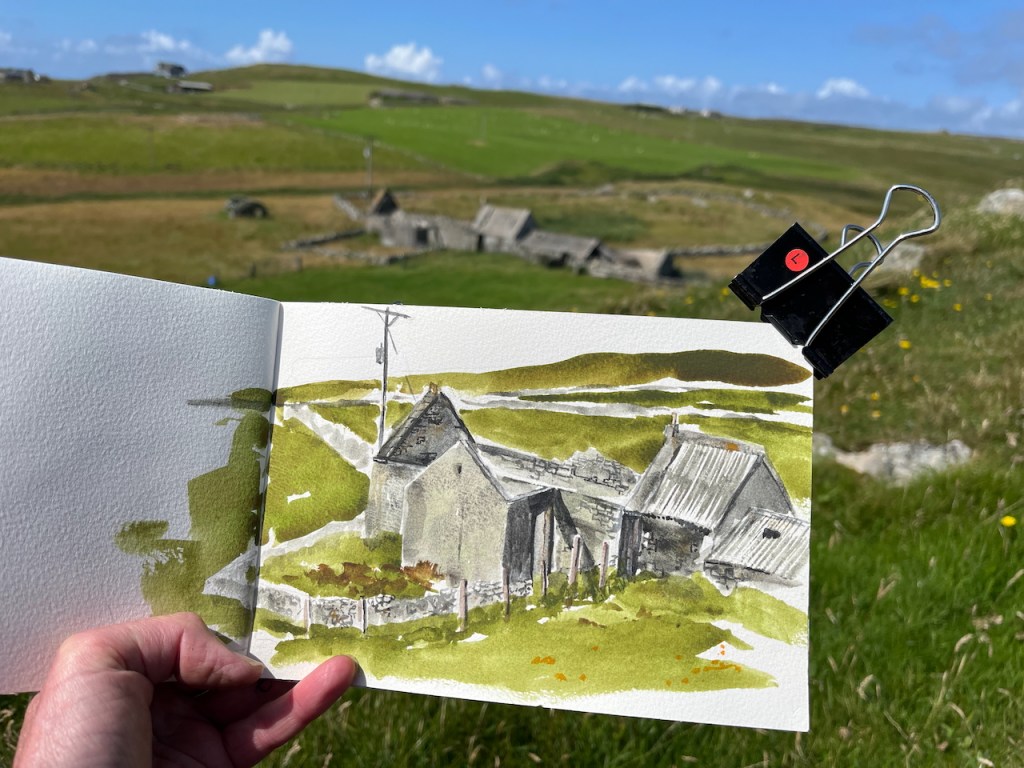
I sketched some of the characteristic houses on the West side of Shetland.
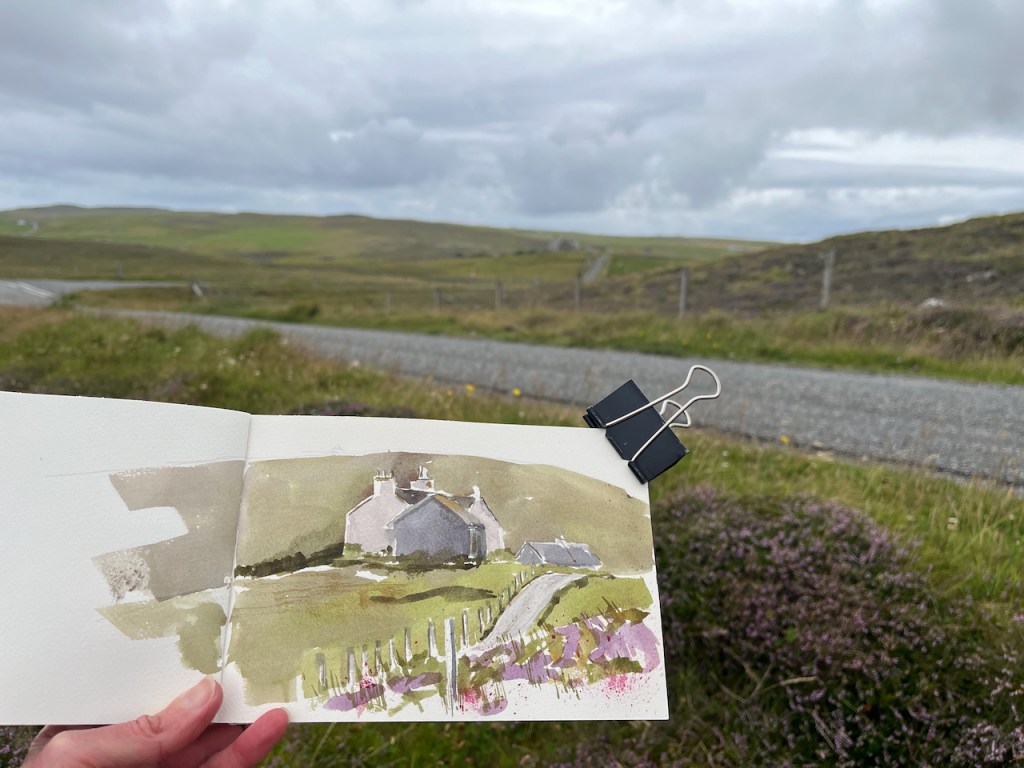
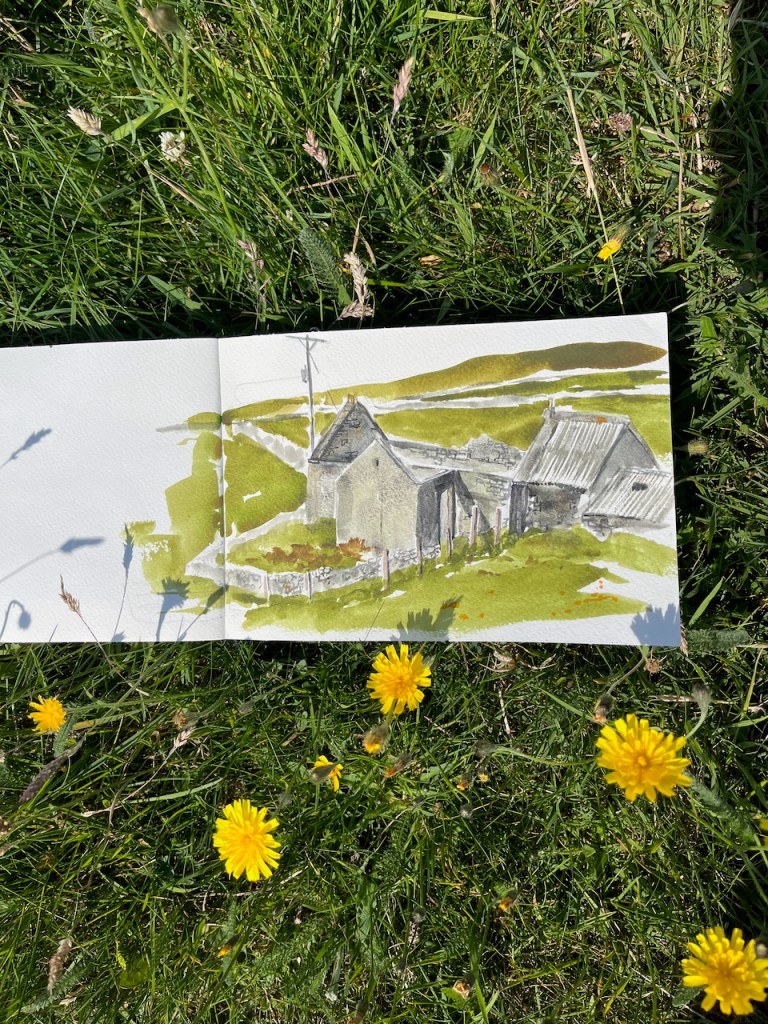
Houses at Greenland Burraland, Shetland West side. July 2025Sketching by the side of the road. The houses I am sketching are in the centre distance.
The houses above in Greenland Burraland are working farms and family homes.
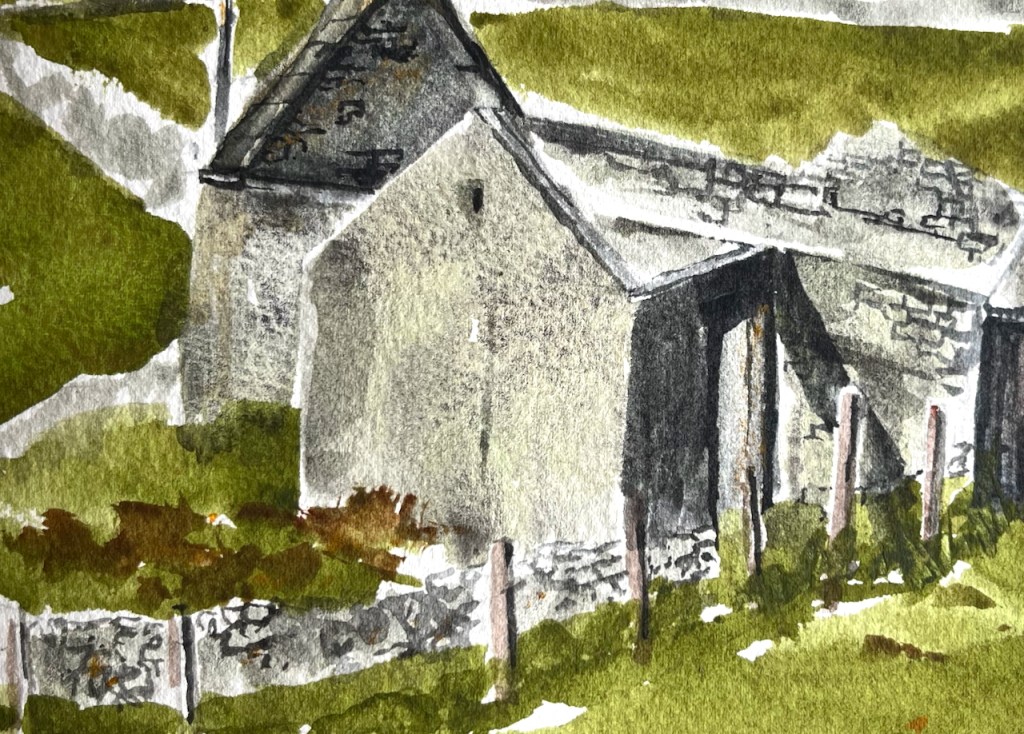
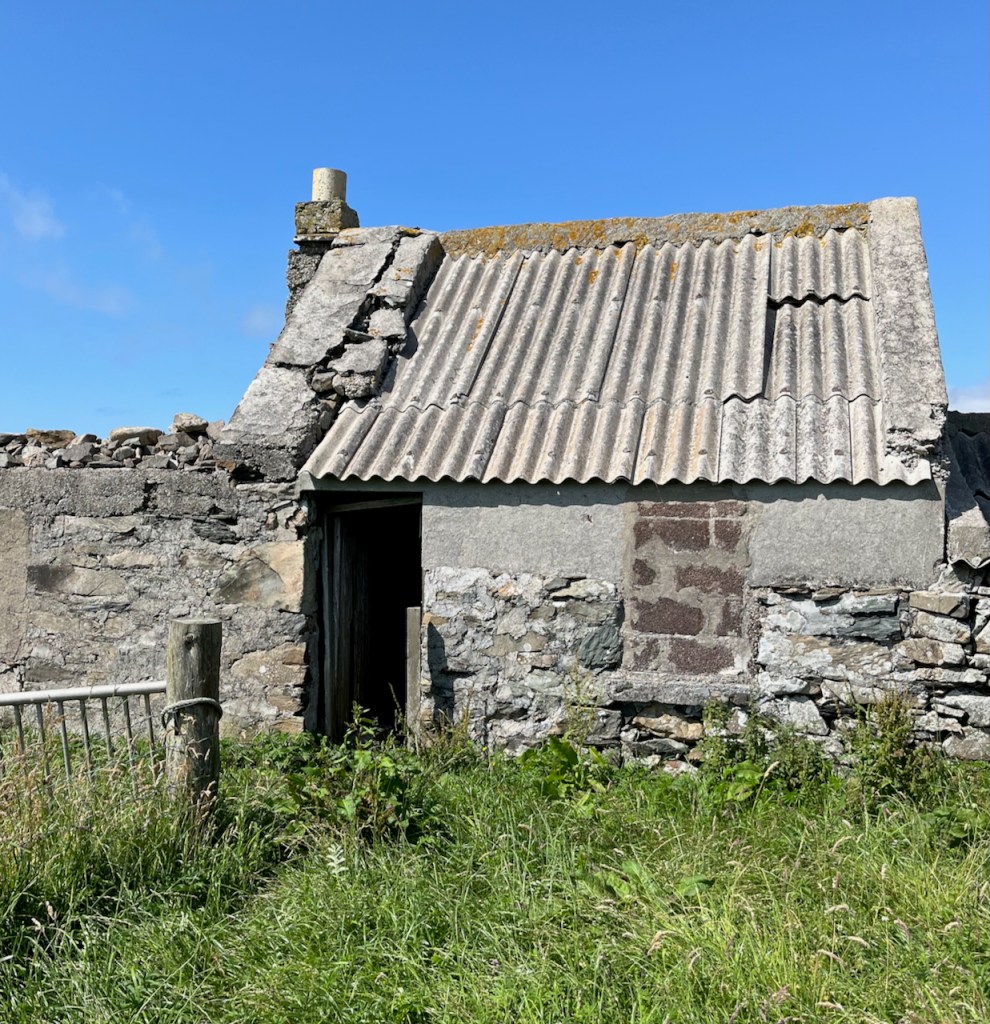
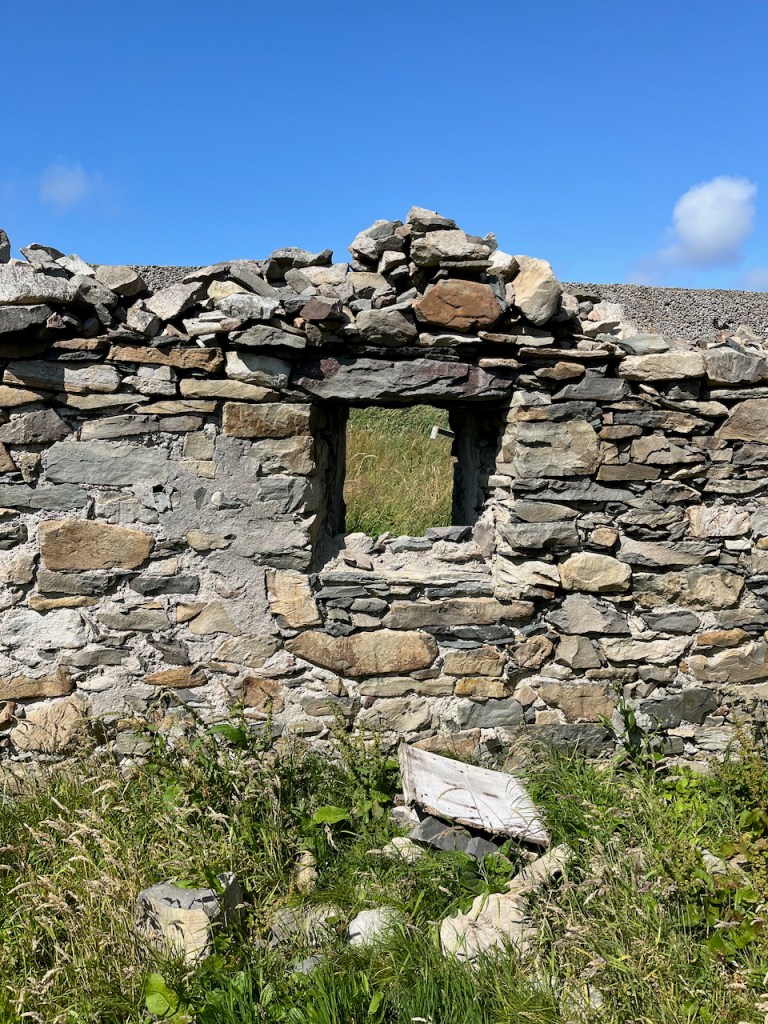
Some of the croft houses are abandoned, and starting to fall down. Here is a ruined croft house near the standing stone at Vesquoy, Shetland West side.
House by the standing stone, July 2025
I sketched it from the hill above.
Sketching the house by the standing stone.
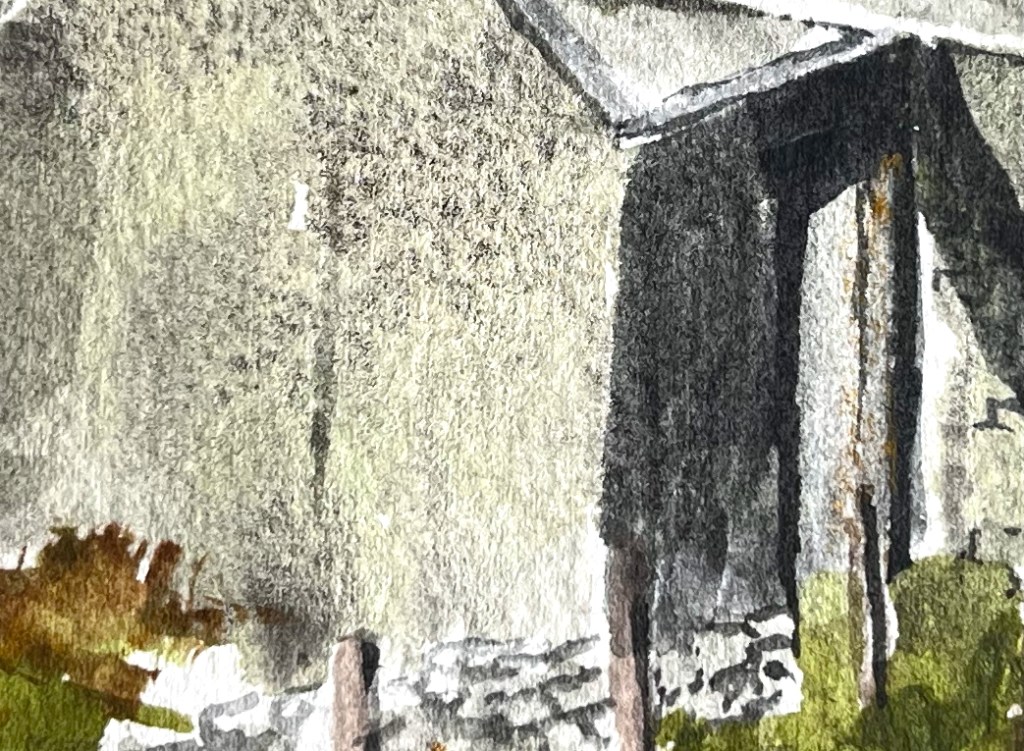
I used heavily granulating colours to show the walls.
This is Daniel Smith Hematite Genuine: a mineral watercolour which breaks into gritty particles when you put it on the paper with lots of water.
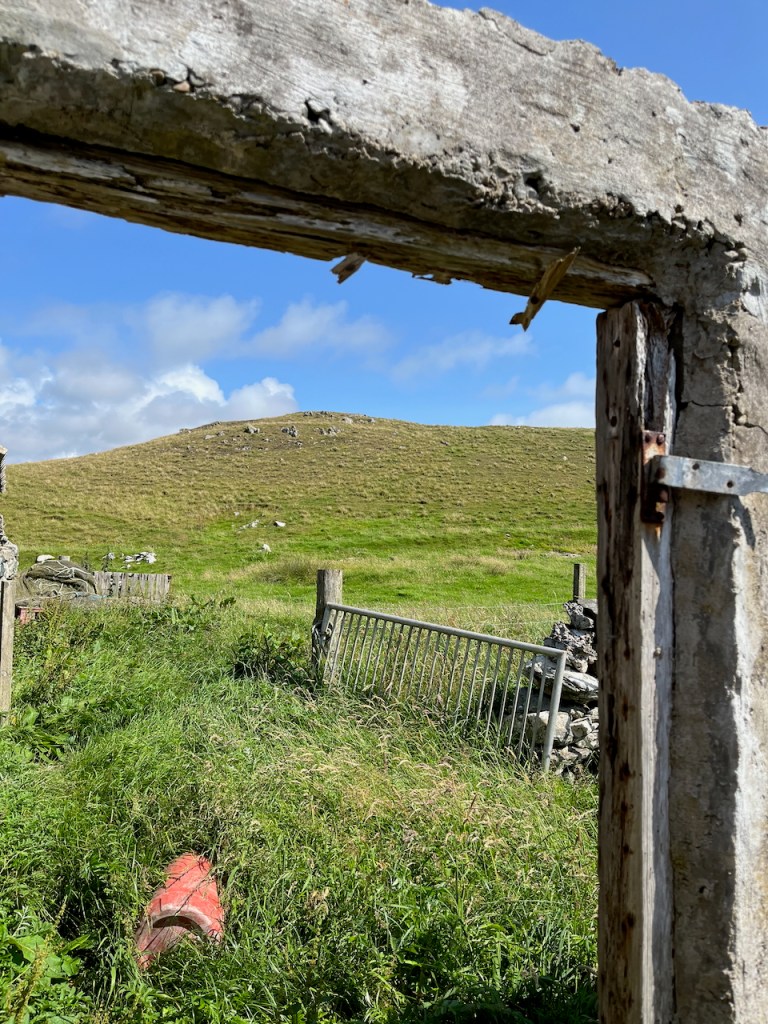
Then I walked down to have a look.
Looking up towards the hill where I was sketchingPatchwork barnThe variety of colours in the walls
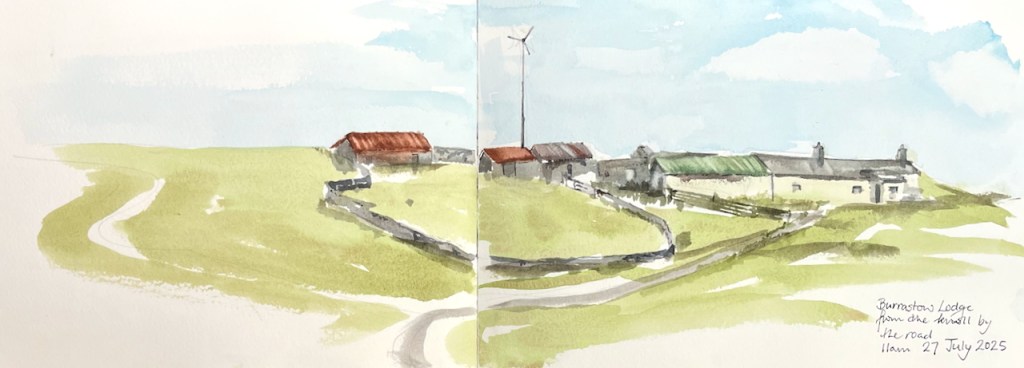
On the same day, here I am looking up at a string of dwellings and barns on the brow of another hill.
Burrastow Lodge, July 2025
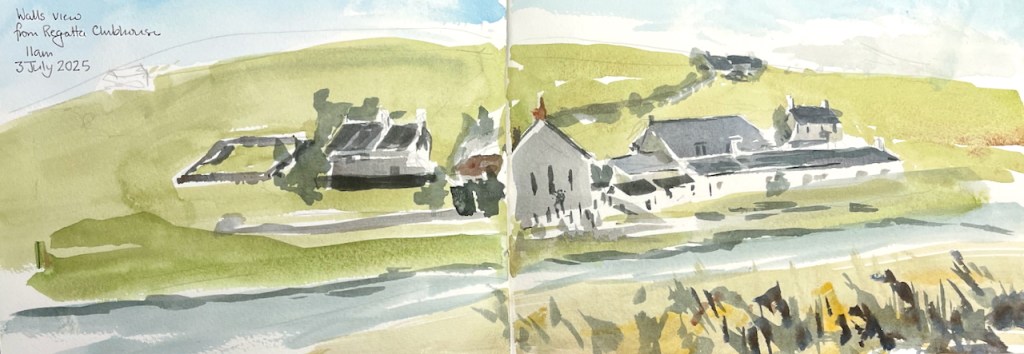
At the beginning of July I did this sketch (below) of some buildings in Walls.
Walls, across the Voe, July 2025
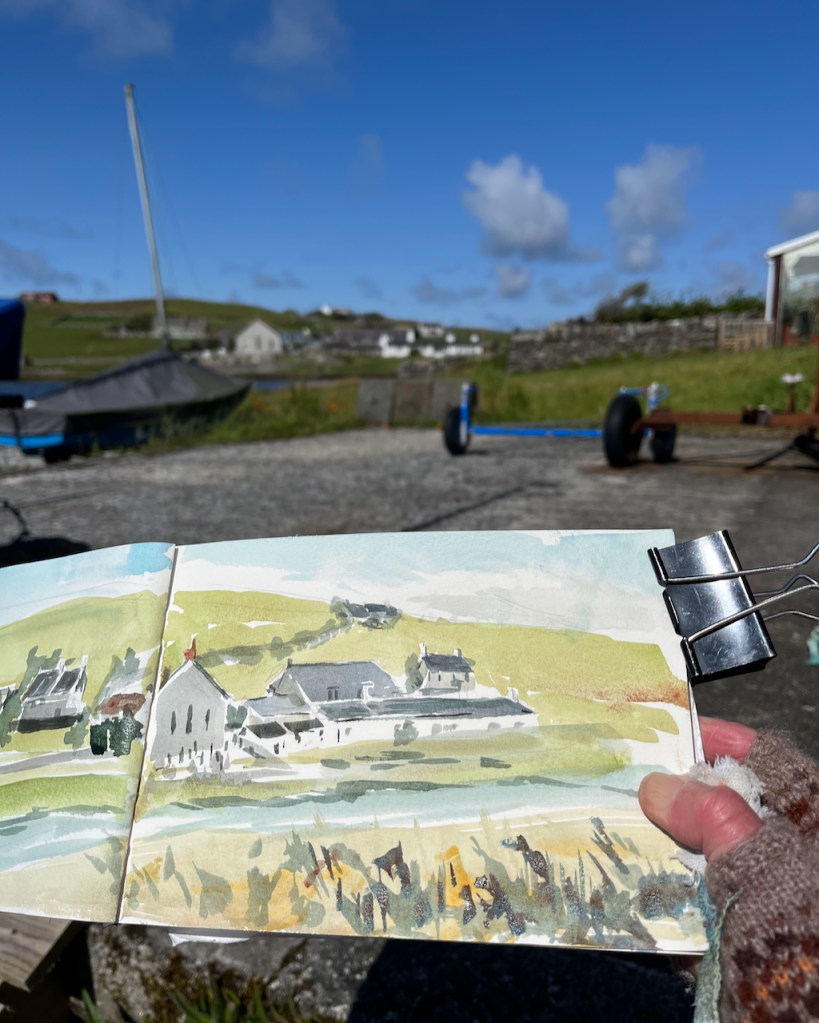
I was sitting on an uncomfortable stone ledge next to the Regatta Clubhouse. I was wondering, for the umpteenth time, whether it is worth the effort to carry a seat around with me.
Sketching in Walls
Despite that blue sky, it was cold, and very windy. Note the gloves. I had just done some grocery shopping at the Walls Shop and here I was, resting, before the long walk back up the hill, up several hills.
One of the reasons I sketch is to imprint moments in my mind. This sketch brings back to me the sensation of the clear moving air. My eyes were watering from the cold and wind, so the view became unfocussed. My eyes were watering from the bright light also. I had only recently arrived from London and my eyes were still acclimatising to the brightness. I put on sunglasses. It was an effort to see, and an effort to continue, and the picture came out somewhat…..approximate. But I keep it as a reminder of that moment of arrival, that determination.
Click a button below to share this post online, email it, or print it:
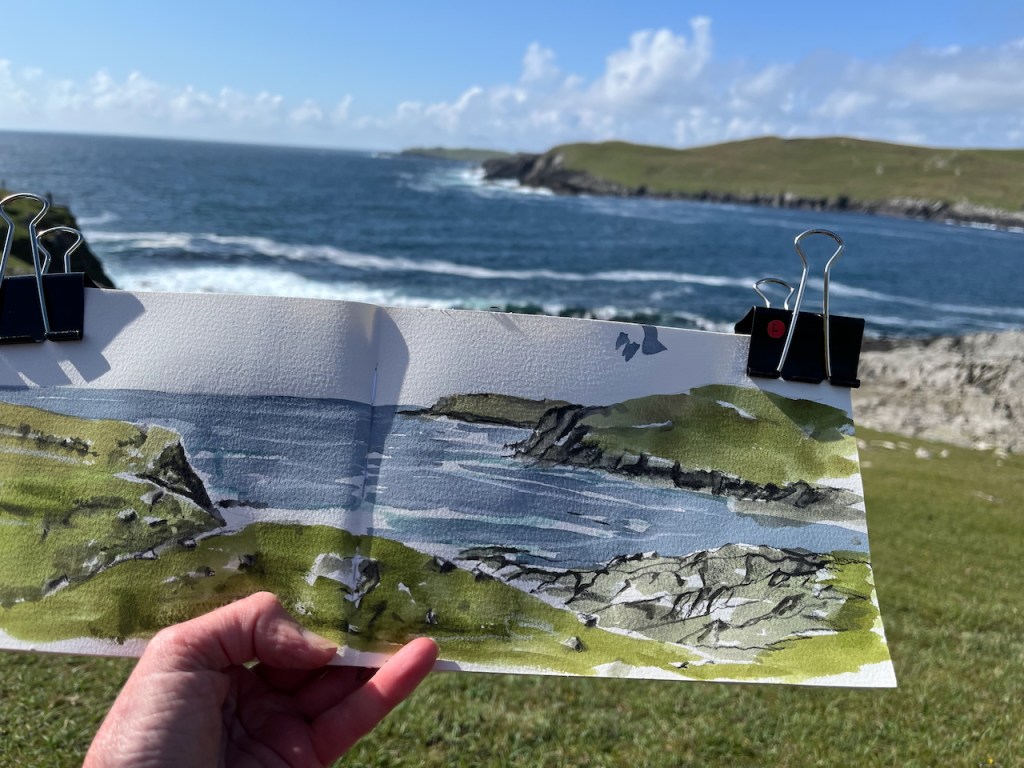
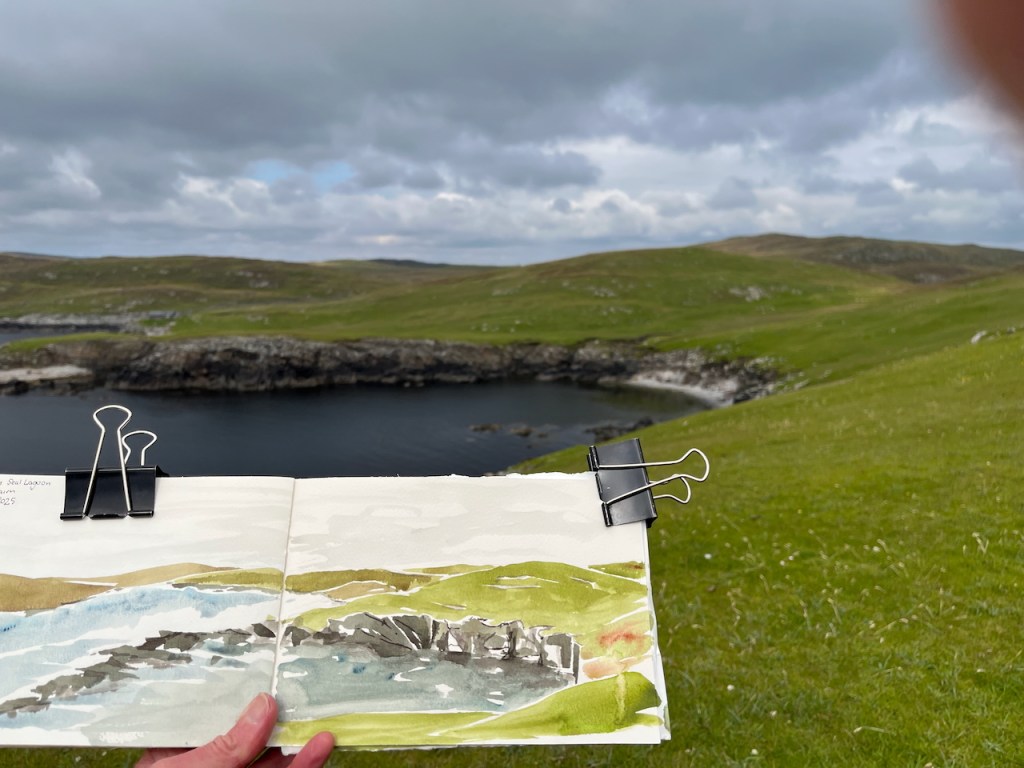
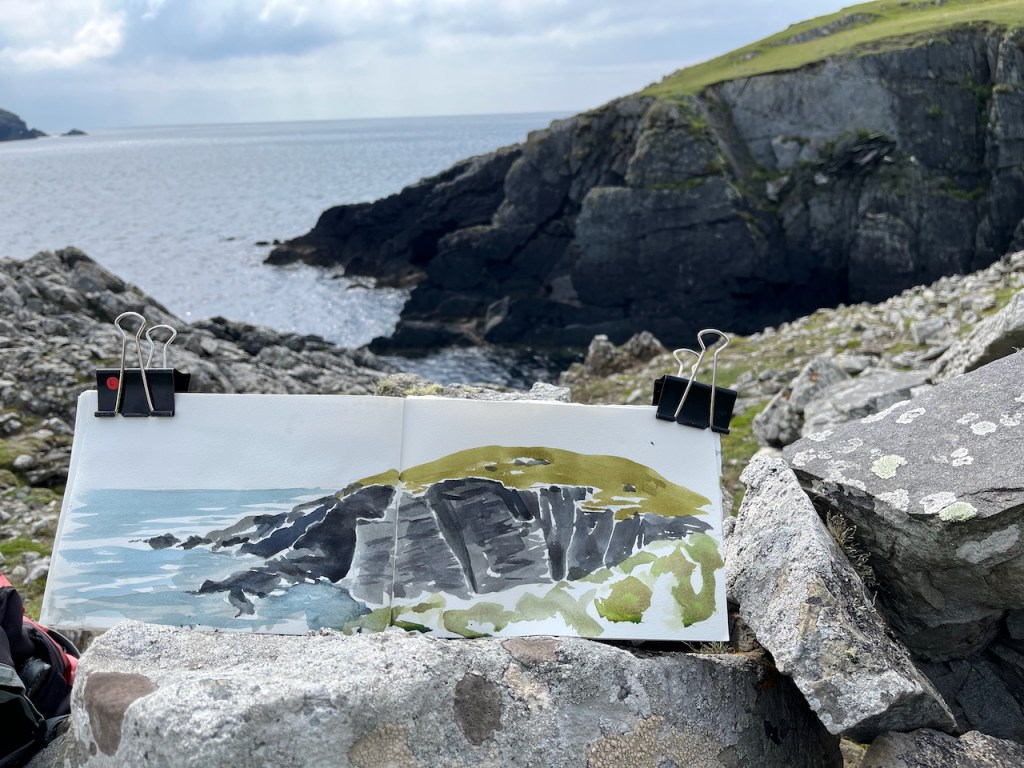
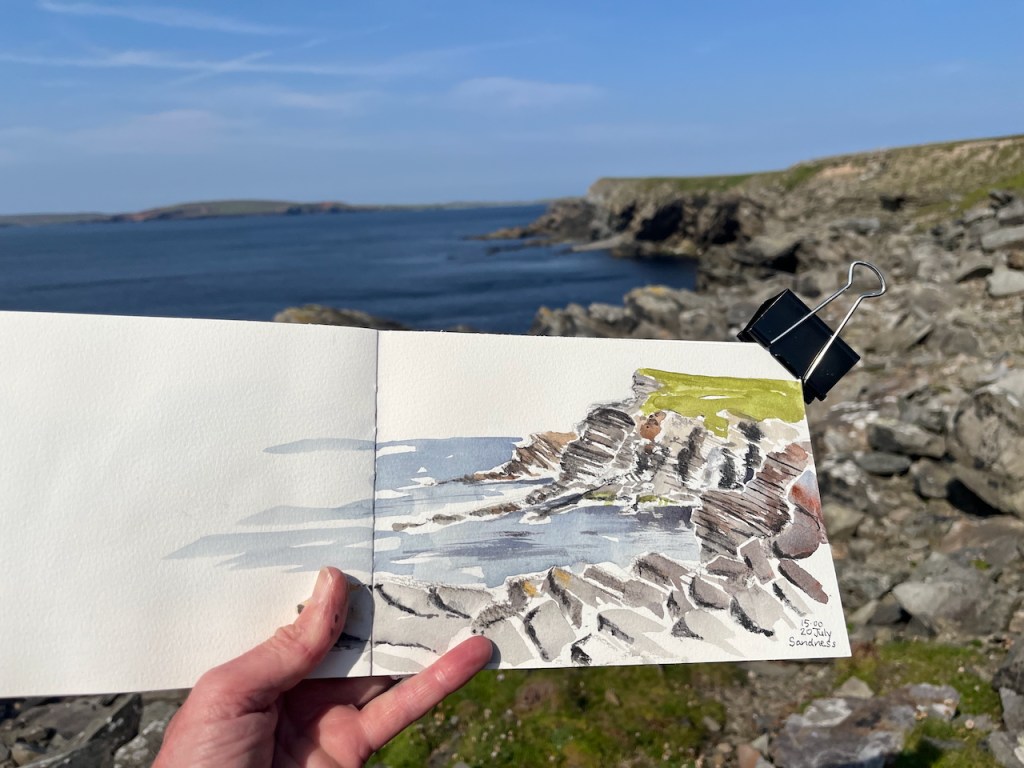
Skerries of Easter Paill, see Foula in the distanceRocks of the Seal LagoonPoint of the HusFootabroughBeach near the Seal Lagoon, from the high cairn.Where fulmars nestSandness
These pictures make it all look calm. It’s not calm. Shetland is a very windy place. While I am sketching, unseen forces turn the pages, move the paint palette around and tip my water over.
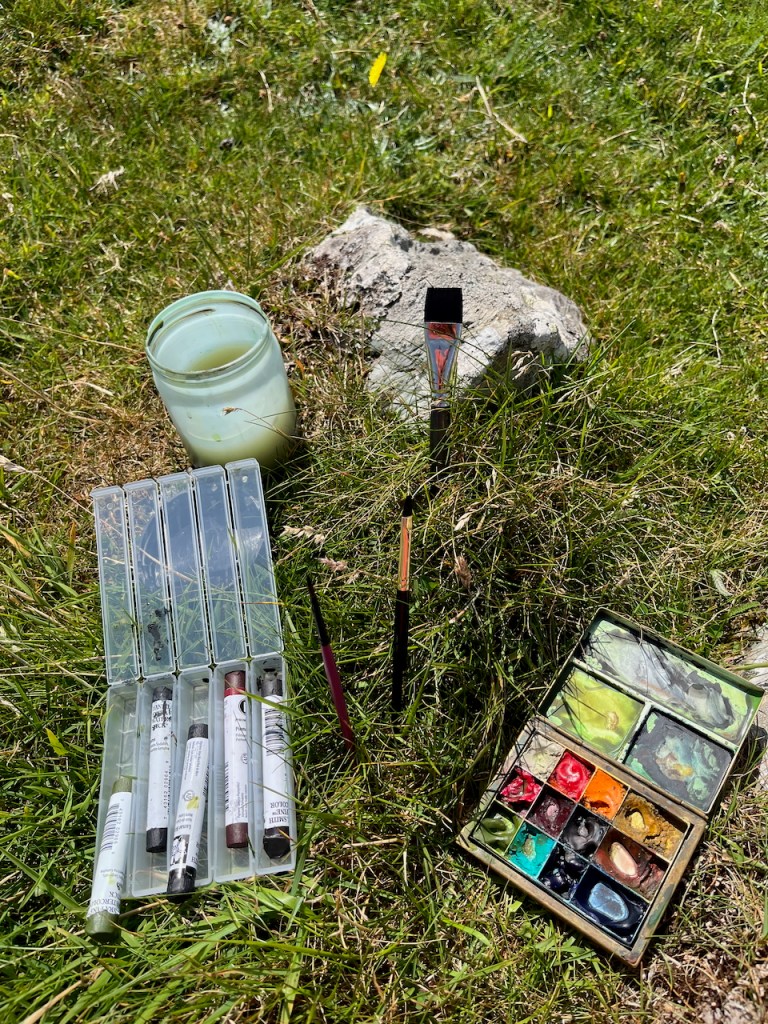
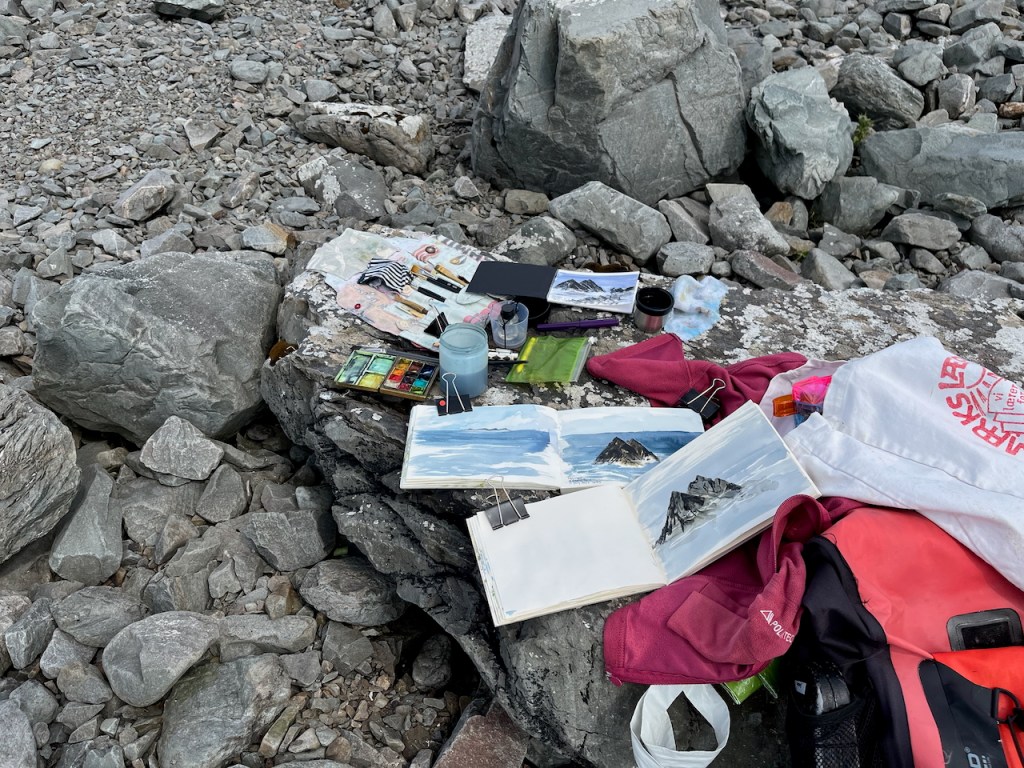
Sketching location: brushes, palette, water, …
It is also damp. Paint takes a while to dry. So I do several paintings at once: I put the first wash on, and while that dries, I start another picture.
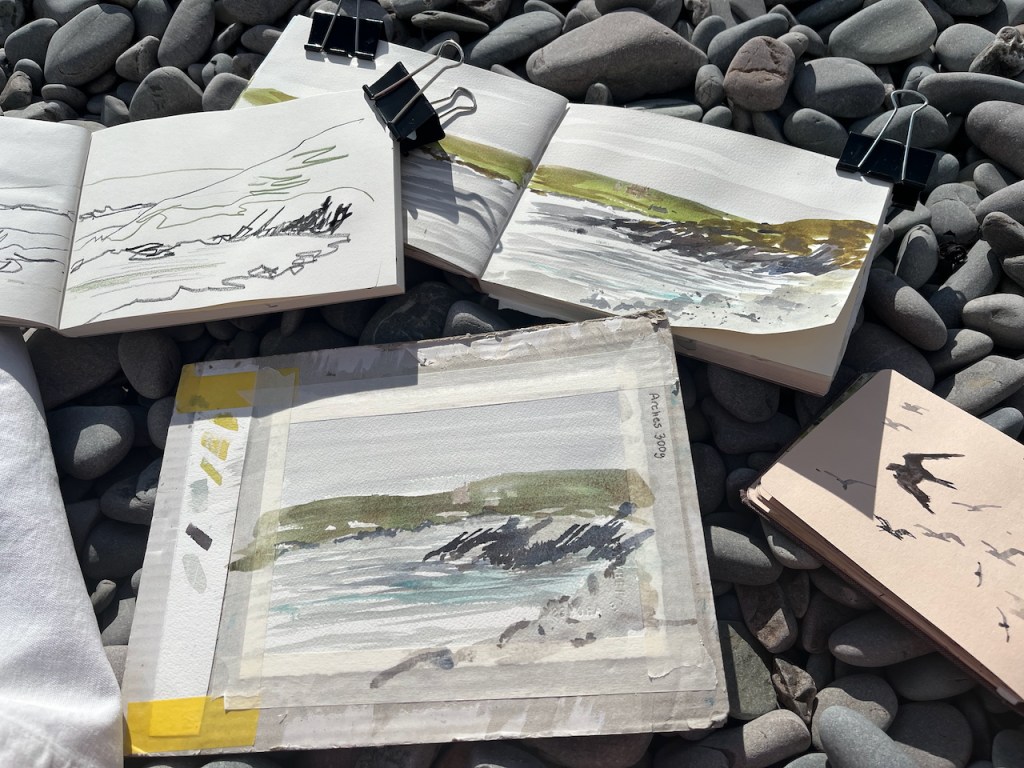
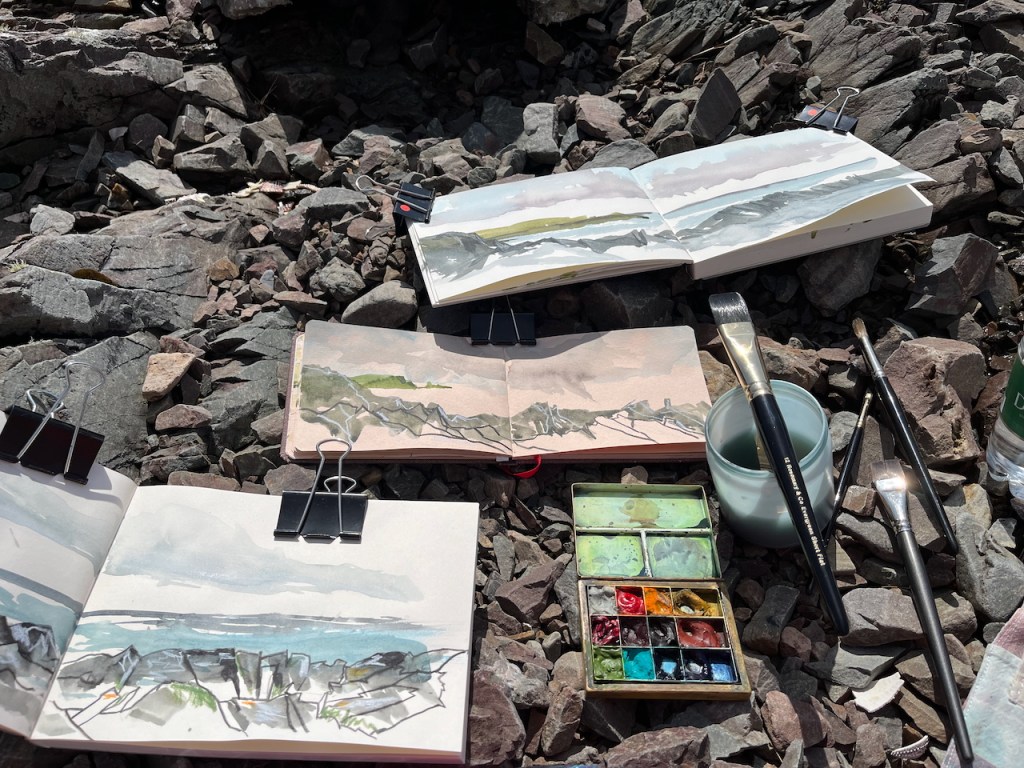
Multiple drawings on the go. Dragon Beach: 3 sketchbooks and a postcardMultiple Sketchbooks: Littlure.
In the picture above you see my basic equipment. The paintbox is brass, which makes it heavy so it doesn’t blow away. The paintboxes I use are described here. The brushes are from Rosemary Brushes. The big one on the water pot is one of their Evergreen Short Flat brushes, size 12. It’s about an inch across, very handy for drawing quickly.
The sketchbooks are, from top to bottom:
JP Purcell 190gsm watercolour sketchbook A5
Hahnemühle Toned Watercolour book A6
JP Purcell cartridge paper sketchbook A5 – Stockwell Cartridge 130gsm
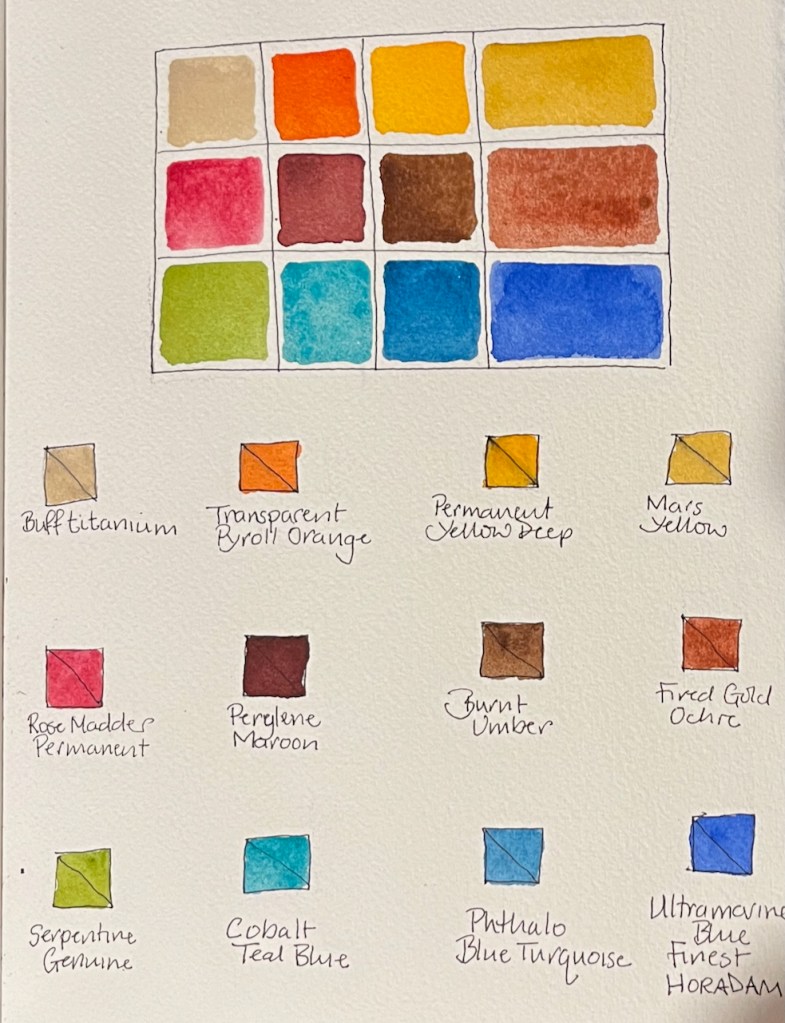
Here are the twelve colours in the paintbox. They are all Daniel Smith except the Ultramarine Blue, which is Schmincke Horadam.
Let me know if you have any other questions!
In my next post I will show sketches of Shetland croft houses.
Click a button below to share this post online, email it, or print it:
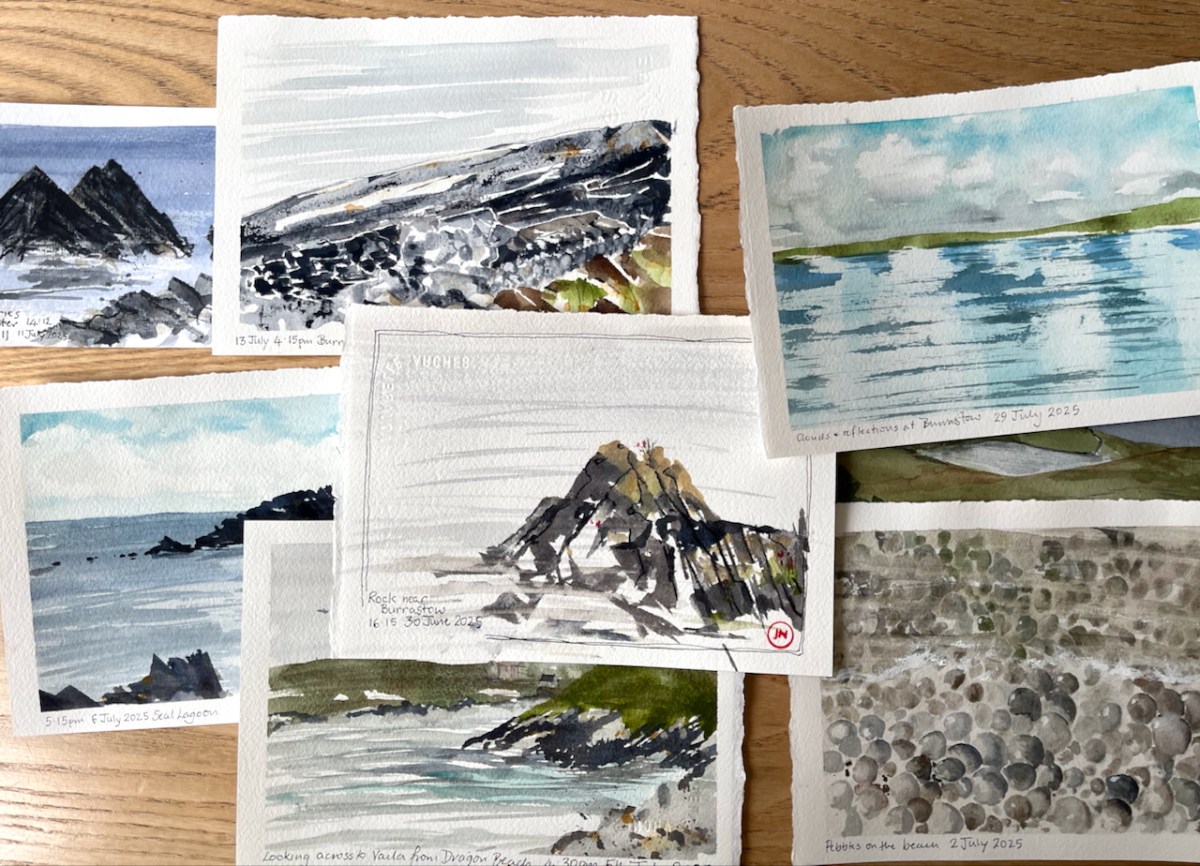
Glorious Shetland! I make postcards when I am there, to communicate what I see.
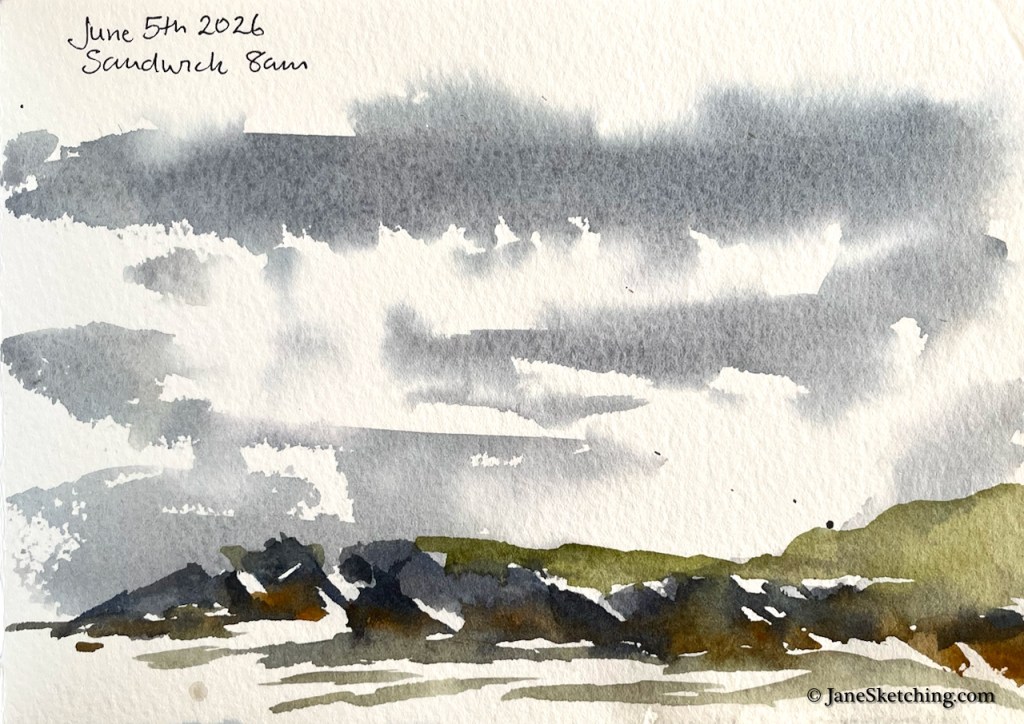
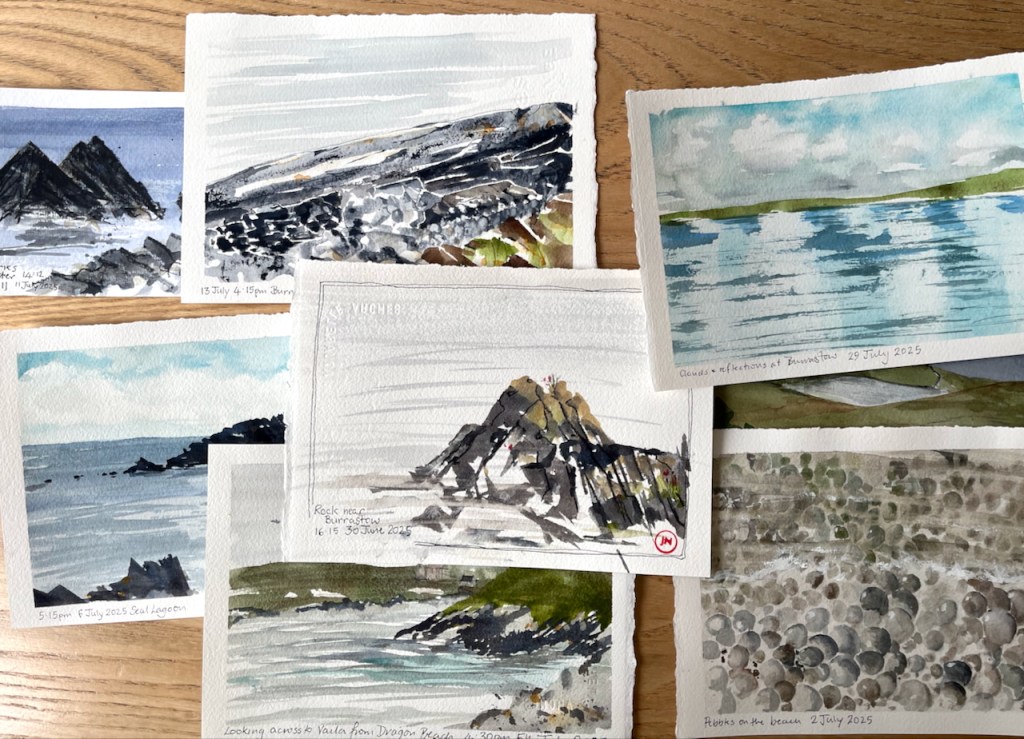
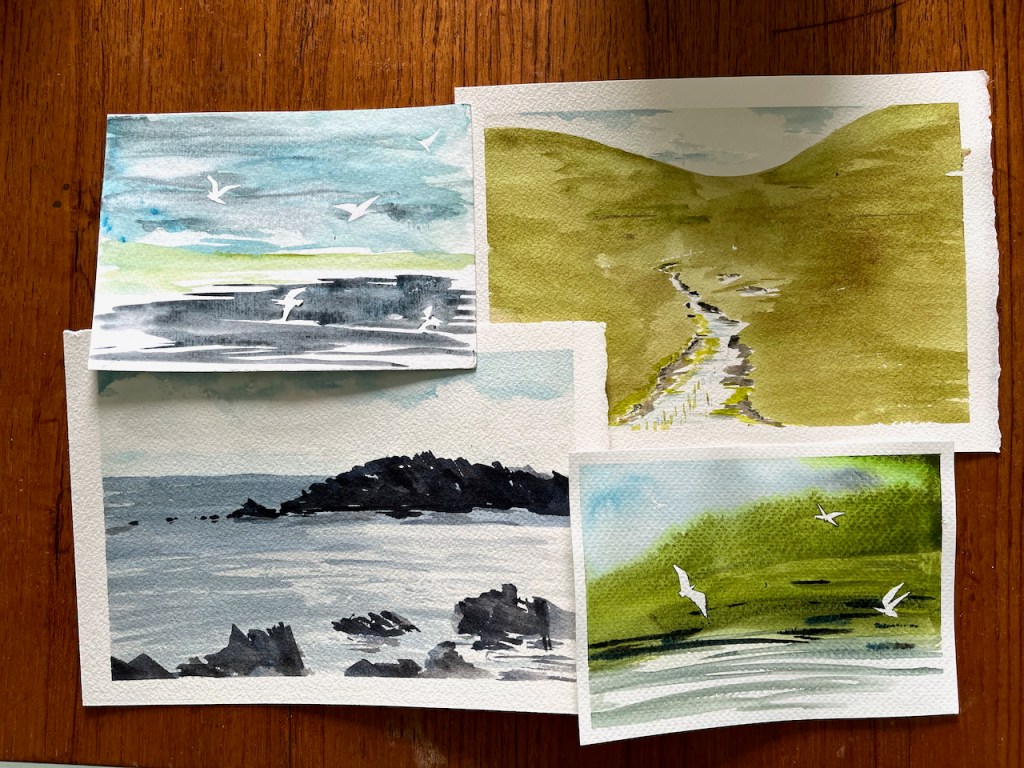
Here are small sketches of the landscapes on the West side of Shetland.
They are A5 size or smaller, on watercolour paper.
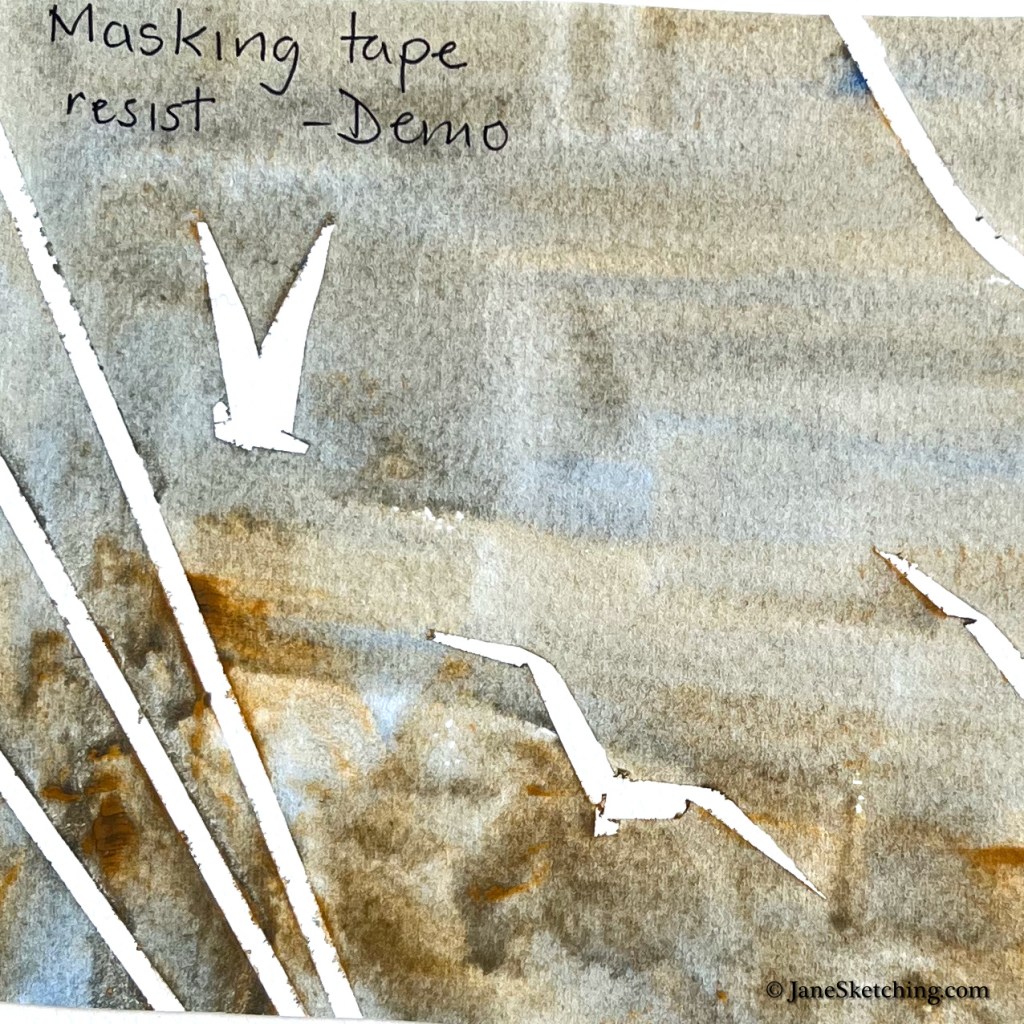
The smaller postcards are 6″x 4″. The birds are done using masking tape.
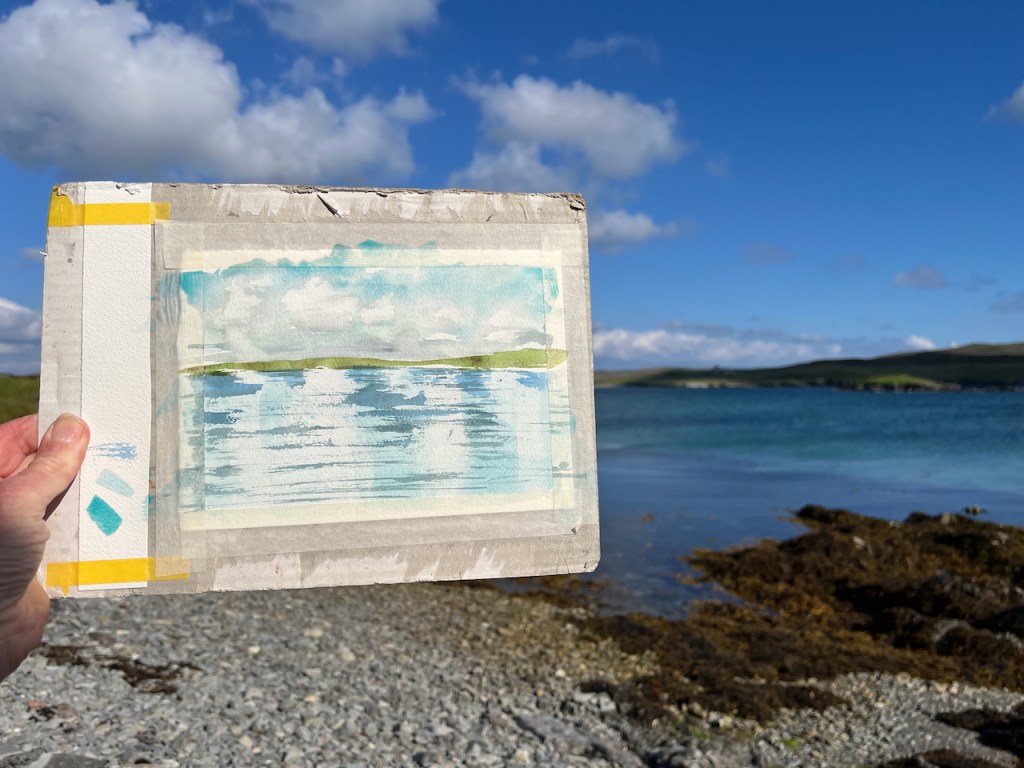
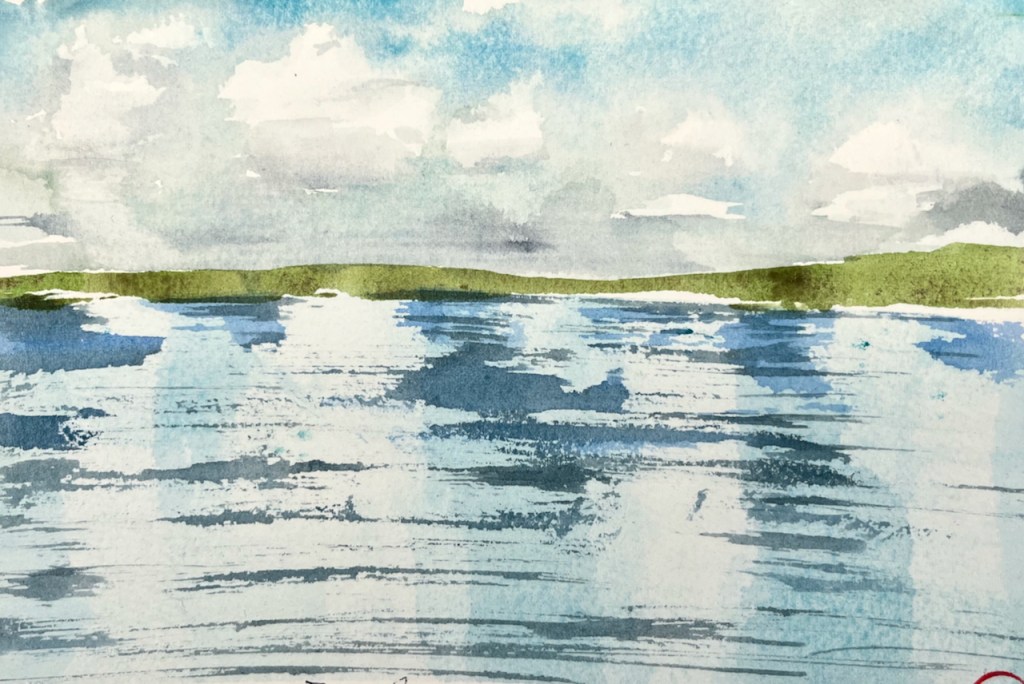
Here is work in progress on the “reflections” postcard.
The A5 postcard is fastened to the backing board with masking tape. The backing board is cardboard: the back of a pad of paper. On the left is a strip of watercolour paper to try out the colours and the brush strokes before I put them on the card.
Then when the drawing is finished I remove the masking tape, which leaves a neat edge.
Colours are Daniel Smith watercolours, on Arches Aquarelle 300gsm paper. All whites are the white of the paper.
NEXT YEAR, 2026 – “Sketch and Sail” is going to Shetland! I will be on board the sailing vessel “Lady of Avenel” with a group of fellow artists. Would you like to join us? We’ll be living on board for a week, sailing round the coast of Shetland. It will be a marvellous opportunity to see the magnificent cliffs from below, and the land from afar. No experience of sailing or sketching necessary. Sunday 31st of May to Saturday 6th June 2026. See this page for more information, or contact me.
Click a button below to share this post online, email it, or print it:
It was foggy, cold and wet outside. I made pigments.
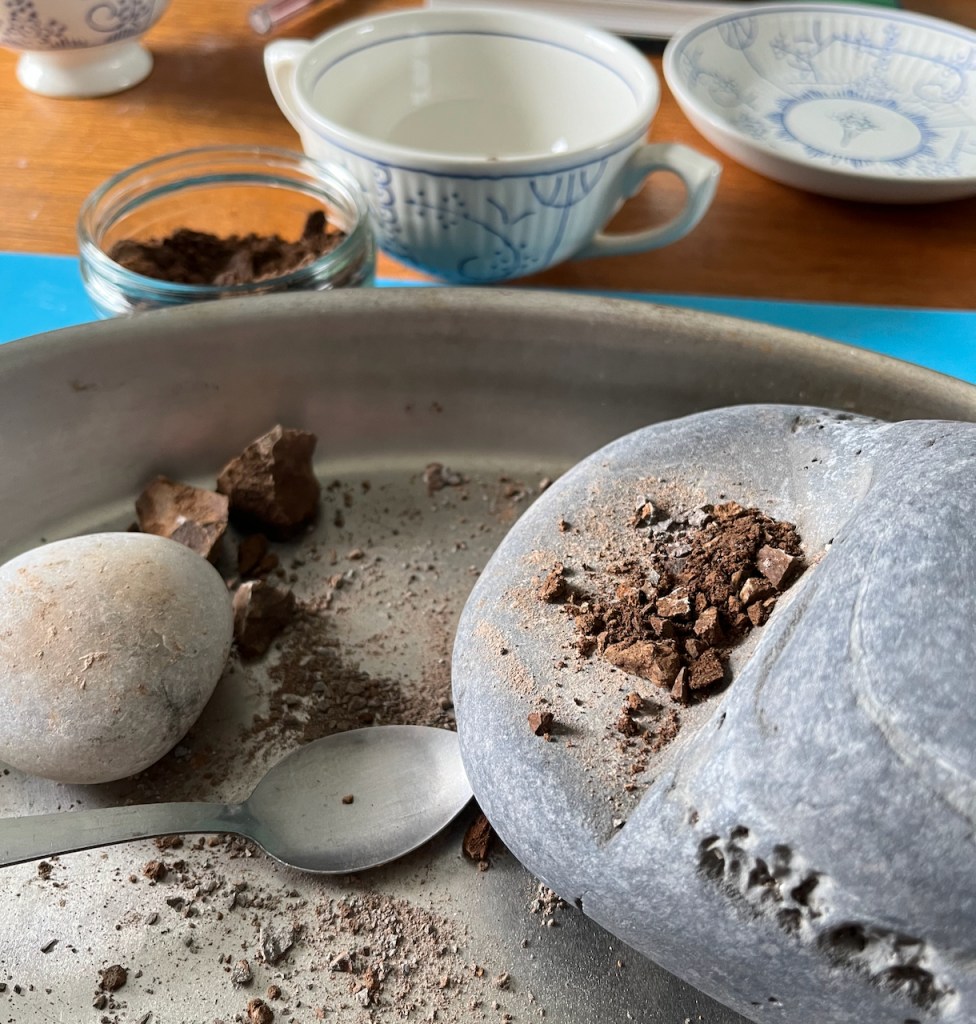
I collected earth from round about. I know from previous attempts that it works best if you have fine earth. So I went up the road in the rain and scooped up the fine silt running off a track. I dried it indoors, and then crushed it to what I hoped was a fine powder.
As you see I had an excellent beach stone for this purpose.
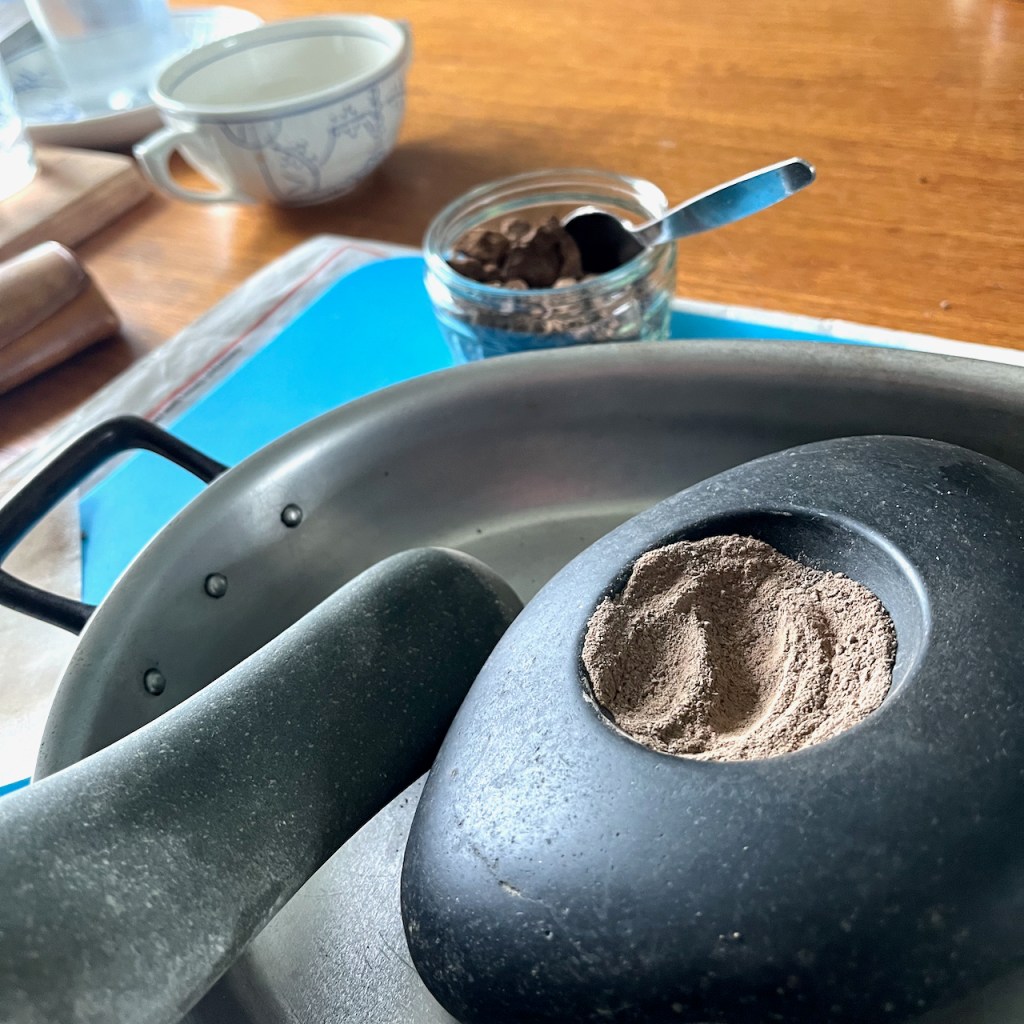
Then to grind it finer I had a pestle and mortar. This is a beautiful home-made item.
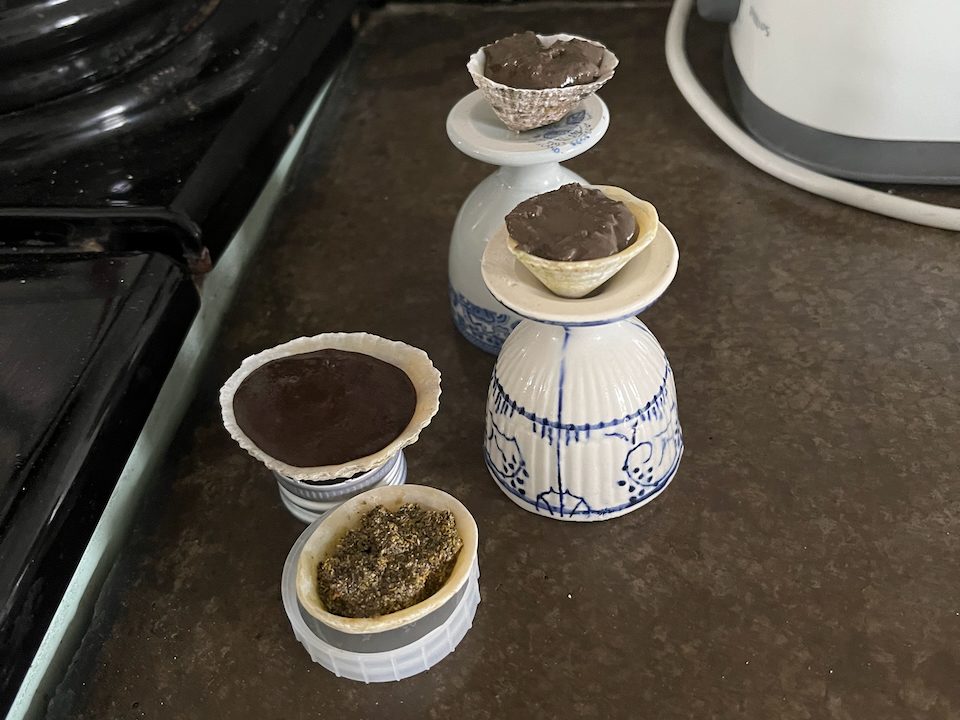
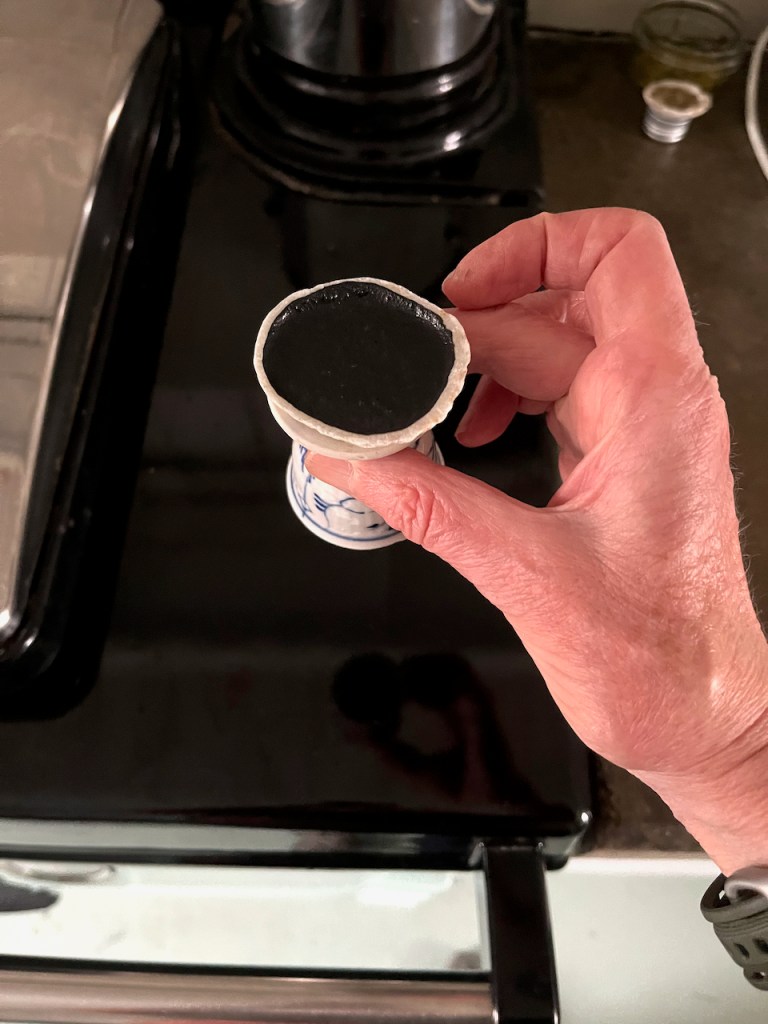
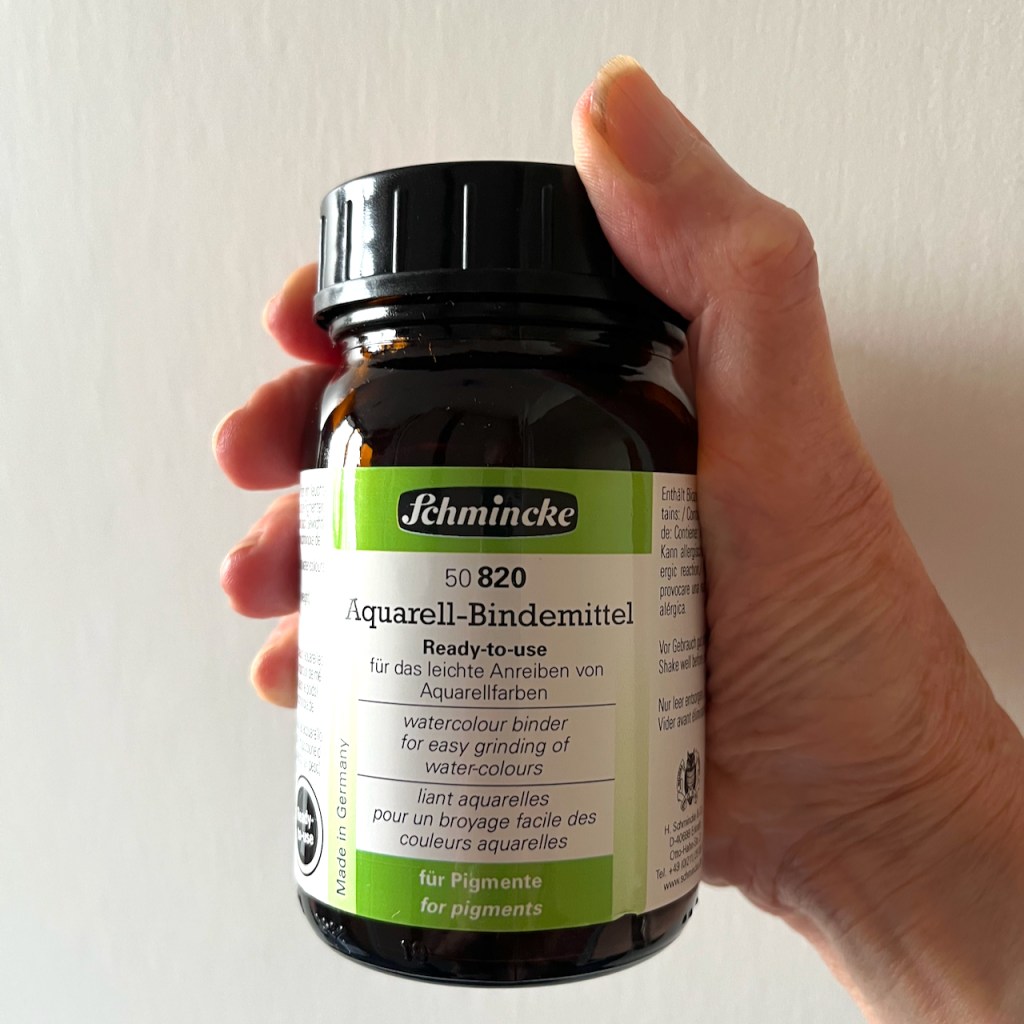
Now I have earth pigment. To make watercolour I add Schmincke Watercolour Binder in the ration of 2 parts binder to 1 part pigment. Mix and put in a limpet shell. It’s ready to use immediately as a paste, or it dries and can be rewetted like normal pan watercolours. Here are the paints drying:
Pigment mixes in limpet shells, drying on eggs cups (to keep them level).
Above you see paints made of earth from different places. At the front is a paint made from yellow lichen. The lichen was bright yellow on the stone wall. I couldn’t find a way to separate out the bright yellow surface from the grey underneath, so the pigment is a grey/yellow mix.
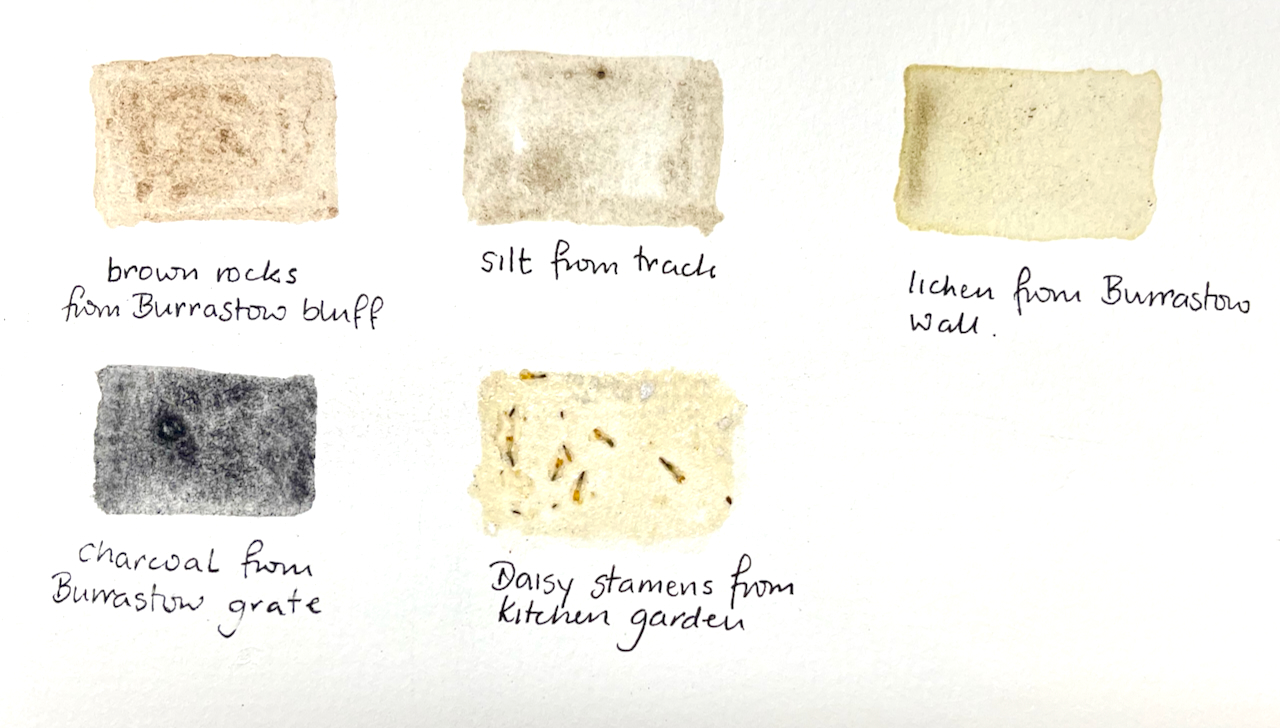
Here is a selection of pigment experiments, to show how they look when painted:
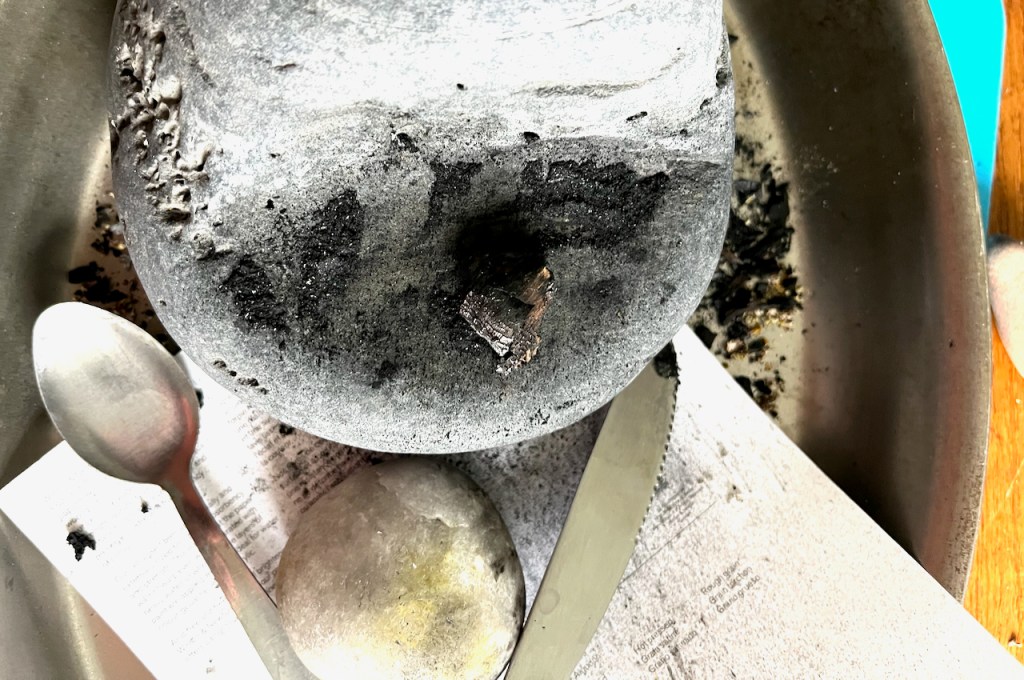
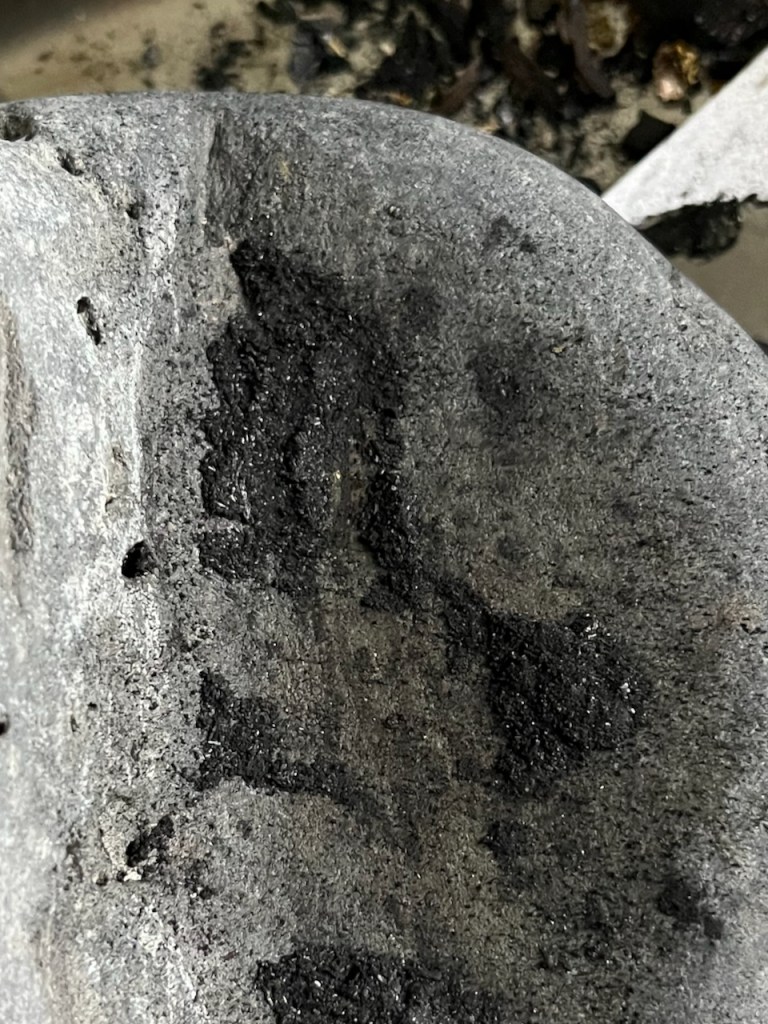
Making the charcoal pigment was not so effective as I thought it would be. I found a small chunk of black charcoal from the grate and proceeded to crush it. This produced skittering fragments and airborne dust which settled everywhere. It did not produce a fine powder in my pestle and mortar. It produced hard, flaky, bits. As you see above, the paint it produced was granular and not very black.
Trying to grind the charcoalGround charcoal: bitsCharcoal paint
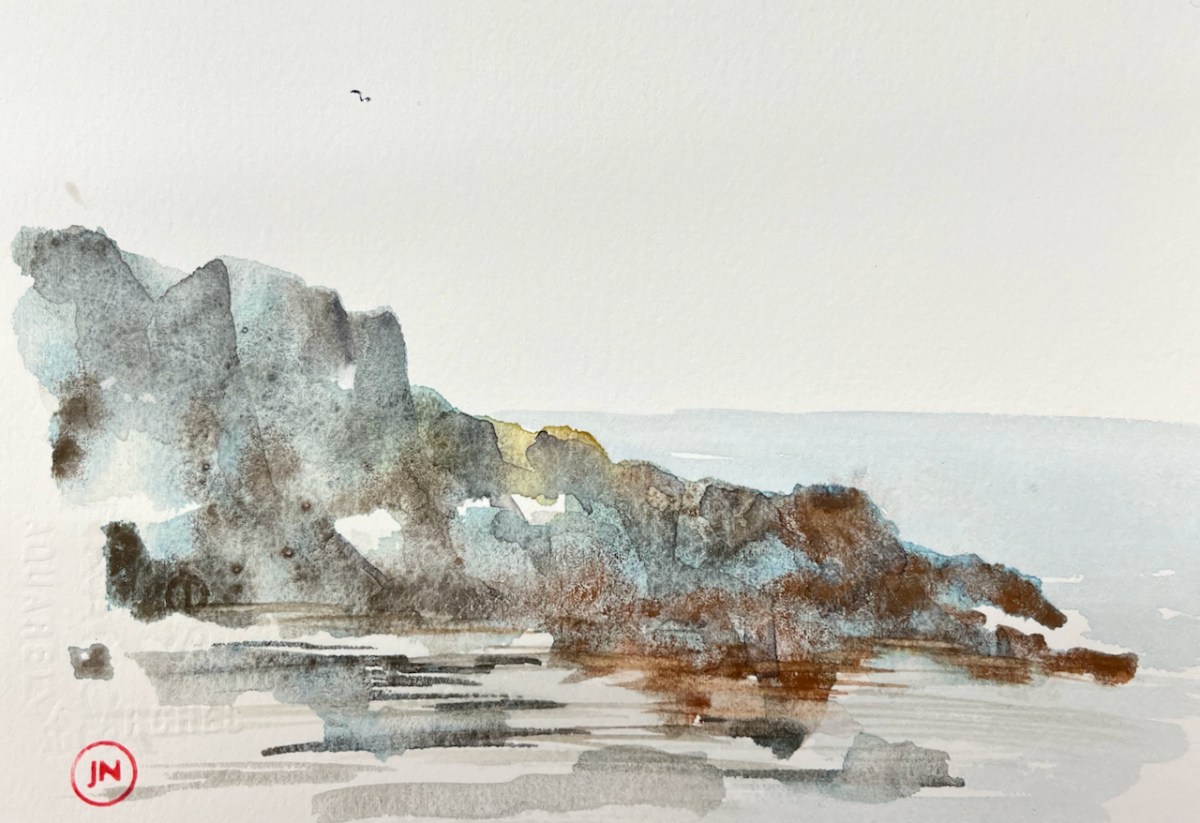
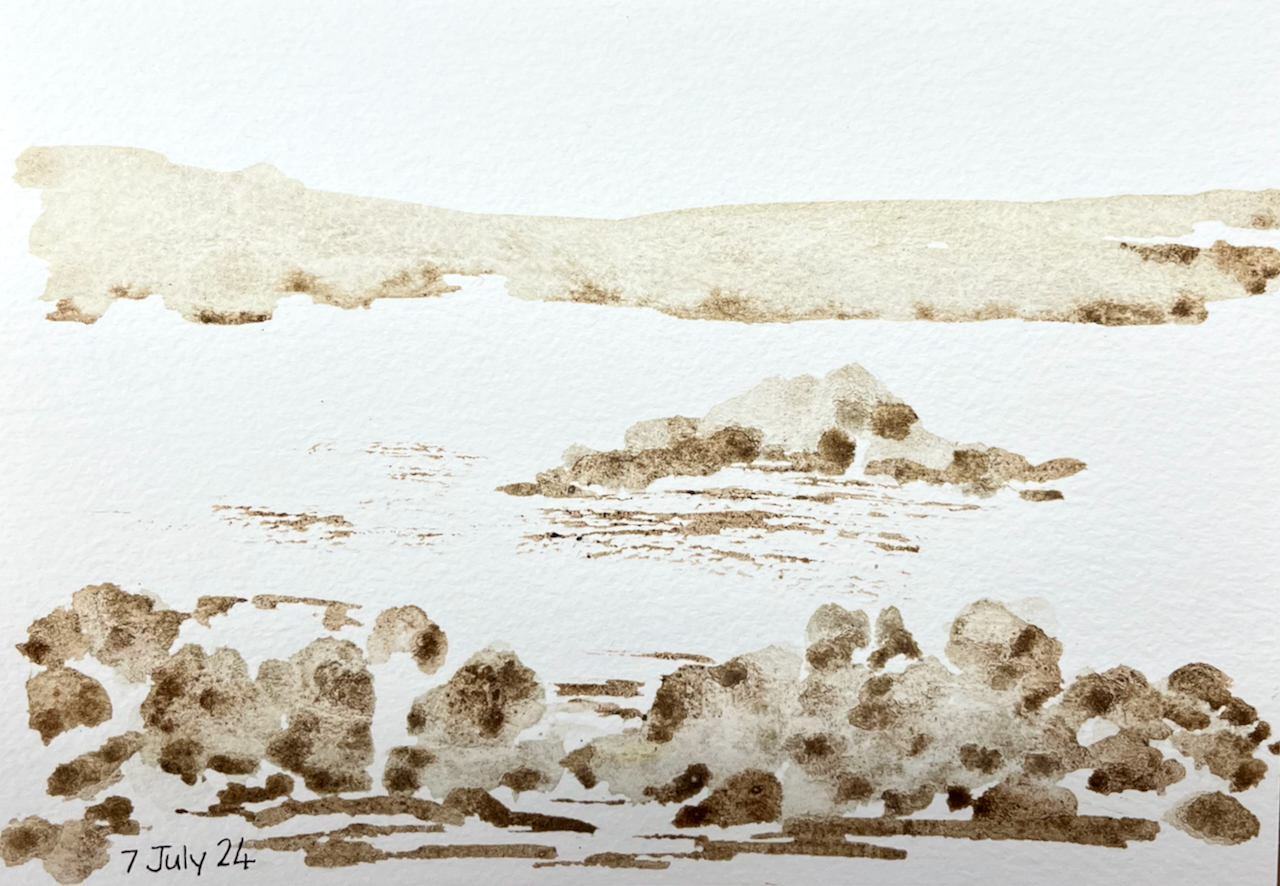
Here is a picture painted entirely with home-made pigments:
Coastal scene: painted with home-made pigments.
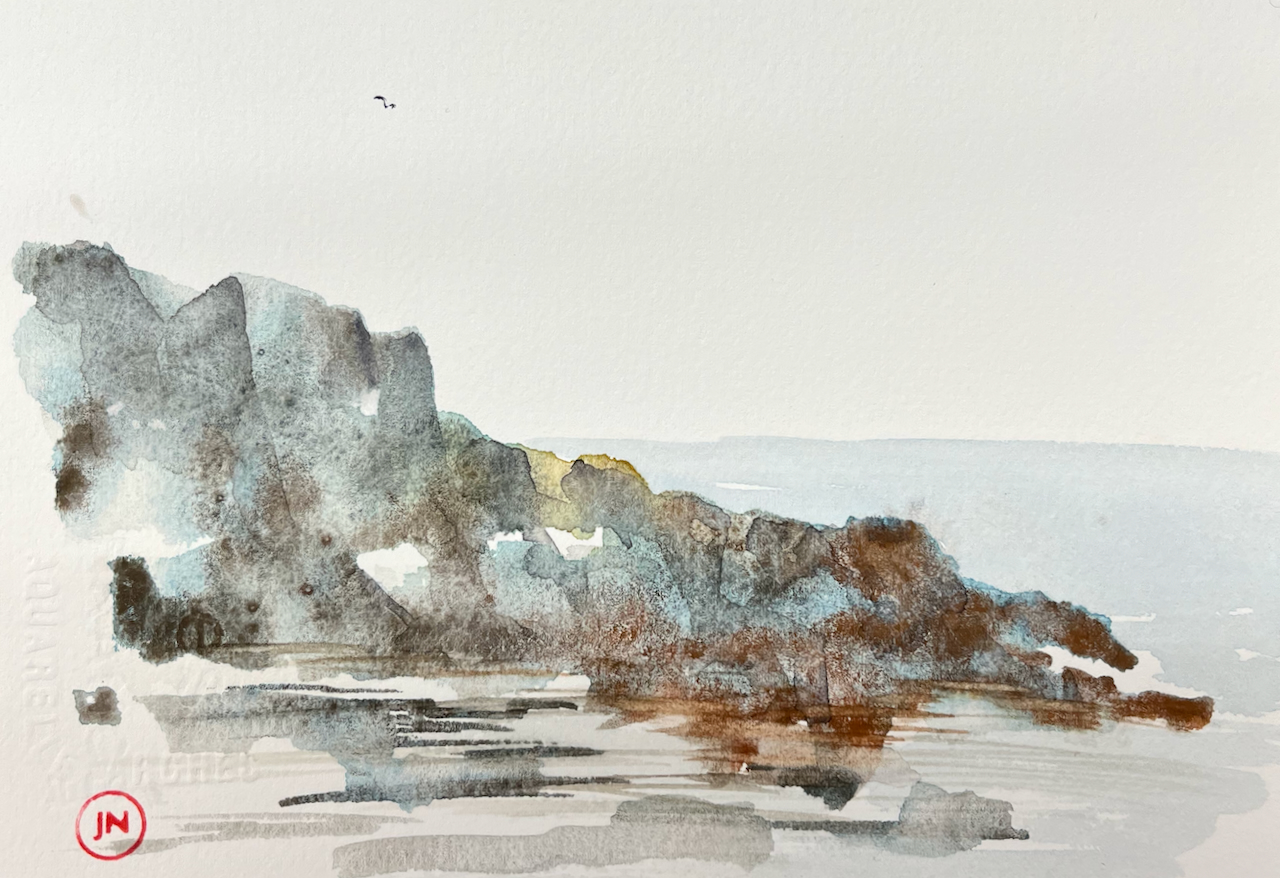
Here is a picture painted with home-made pigments and shop-bought watercolours:
“Promontory”. Painted with home-made watercolours with shop-bought watercolour (blue).
This is the binder I used:
Click a button below to share this post online, email it, or print it: