Courage on Nile St N1

This is the view looking West from the junction of Nile St and East St, in the borough of Hackney, London N1.
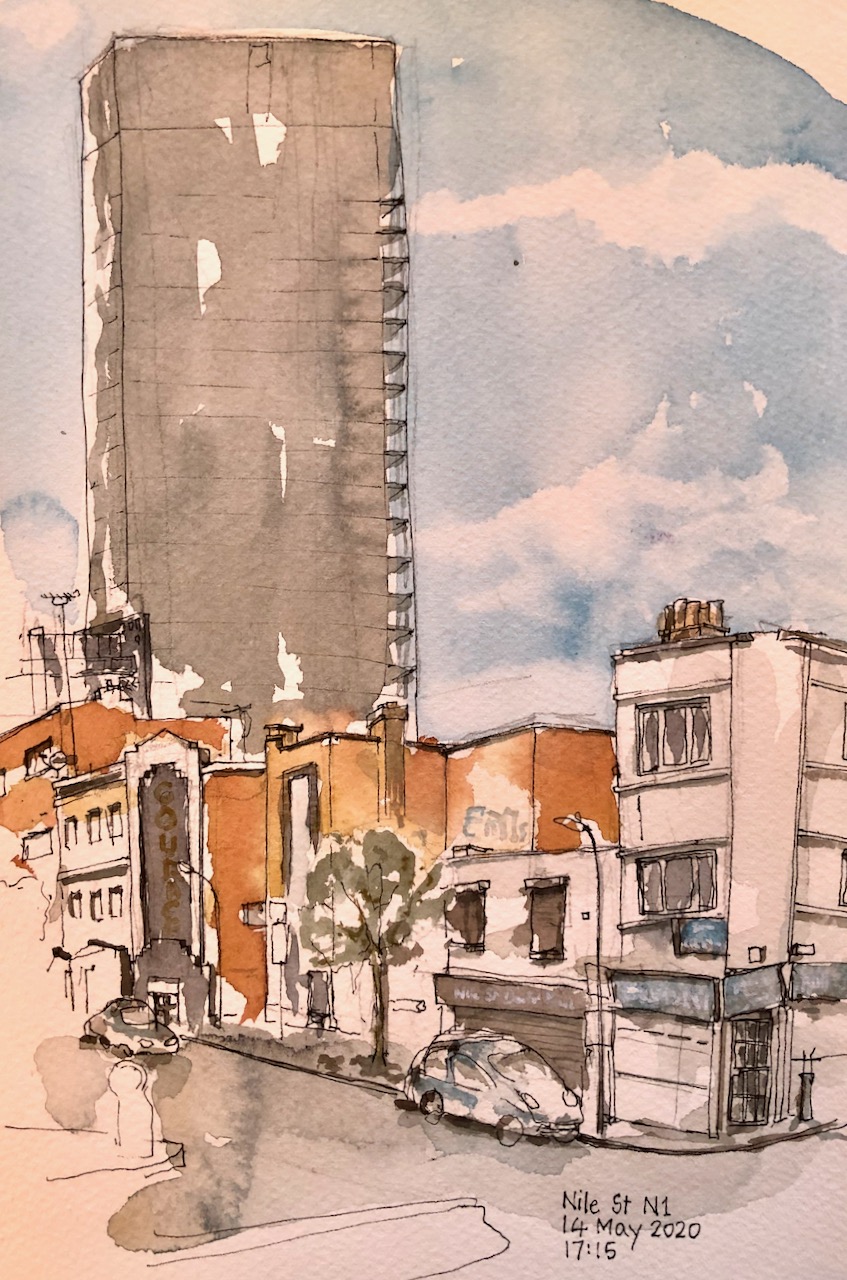
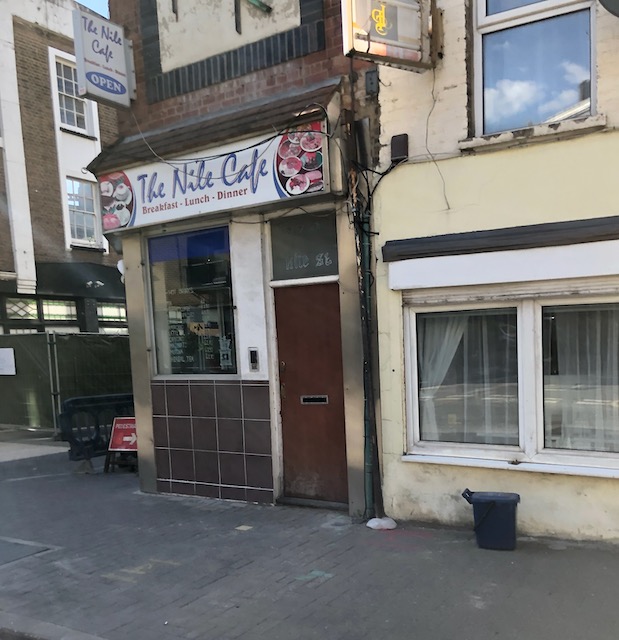
Courage in Nile St: the N1 Dry Cleaners, Nile St Dental Practice, Nile St Café, The Duke of W, The Makers Shoreditch overhead.

I was leaning against a wall on a wide pavement, on the corner. I judged that I was easy to avoid there, and social distance could easily be maintained. In fact, there were almost no passers-by, and those that passed were intent on their destination. I doubt they even noticed me. A woman pushing a pram stopped though, and said (from a respectful distance) how nice it was to see someone sketching. She asked what I was sketching in that particular spot. Gesturing towards my sightline, I said I liked the contrast between the smaller, older buildings and the big modern tower. I’m not sure she shared my enthusiasm. But we smiled at each other in the sun. It was a pleasure to have conversation with a stranger.

The location of the drawing, showing the sightline.

Here is a collection of photos in the area where I was standing.

Signs and spaces

In my drawing there is the large vertical sign which says “COURAGE”. That is a pub, now decommissioned. Its sign has deteriorated so now it is the “Duke of W”.

Just before the pub, above the Nile Café, there is a large framed portion of wall. The frame is neat tiles. It looks as though that might have once contained a picture or a slogan. Now it is blank. The street artists have drawn on the brick wall above the dentists.
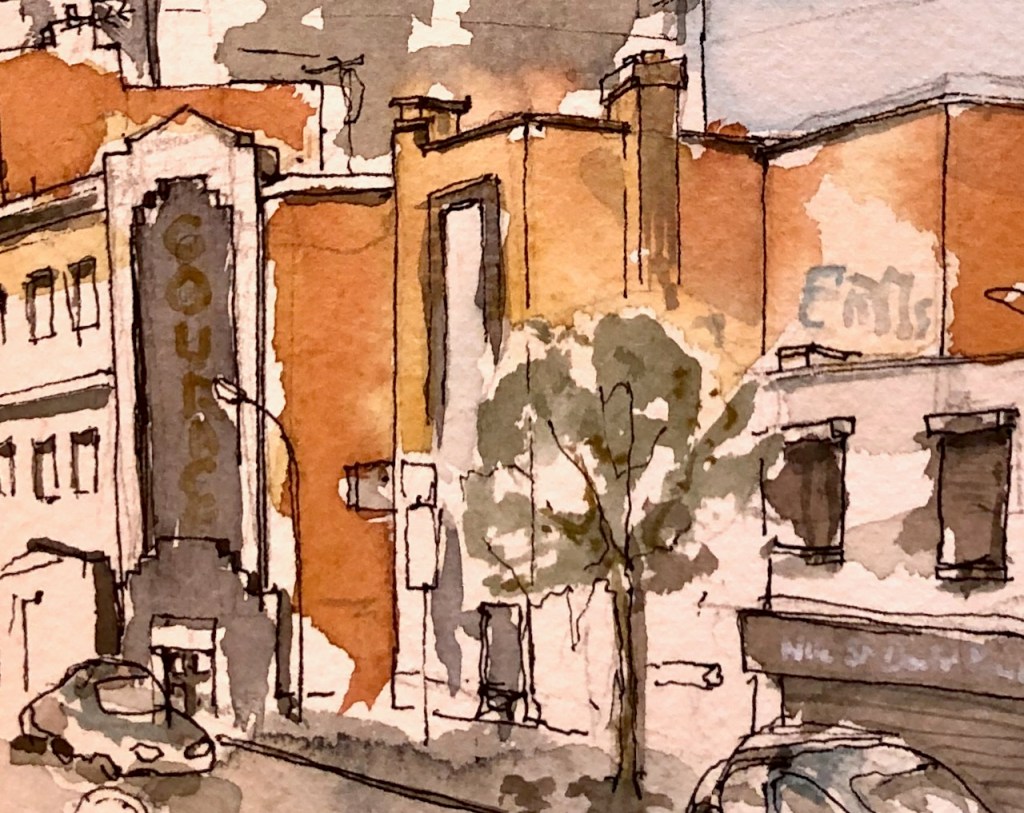
Signs and spaces

This drawing took one hour, drawn and coloured on location with a bit of finishing at home. It was really hot in the sun, although the temperature was only about 10 degrees C.

Colours: Daniel Smith: Burnt Umber, Mars Yellow, Perinone Orange. Winsor and Newton: Phthalo Blue Turquoise, for the sky and mixing.

Sketchbook: Etchr
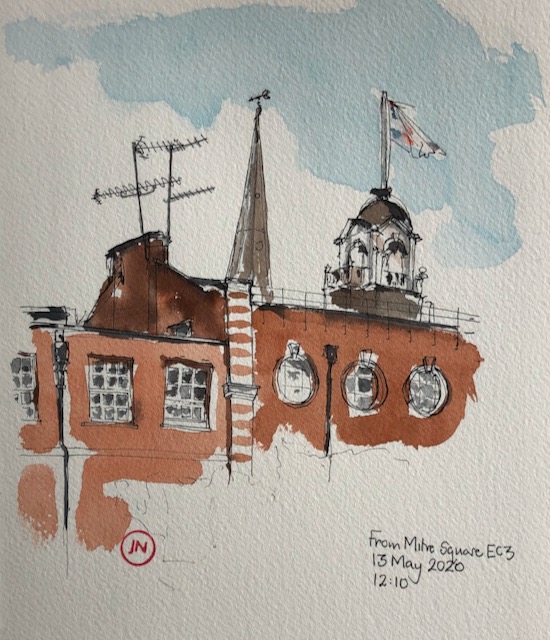
From Mitre Square

From today, Wednesday, in England we are allowed to take exercise for “unlimited time” and allowed to sit on benches in a public space. So that means I can go out and sketch. I quickly did so today, in case these permissions are revoked in the coming days.

Walking round the City was a joy: the air is clear, and the streets are empty. Mostly, the people about are working on construction sites, of which there are quite a few in the City. Construction workers are visible as they are wearing their special hi-vis outfits. I walked about enjoying the architecture, and the air, and the birdsong. I came to a small empty parklet: Mitre Square. A notice said that here was the site of the Priory of the Holy Trinity, founded 1108. There’s not a sign of it now. The nave of the abbey is now Mitre Street, said the notice.

I sat on one of the benches and drew the view.

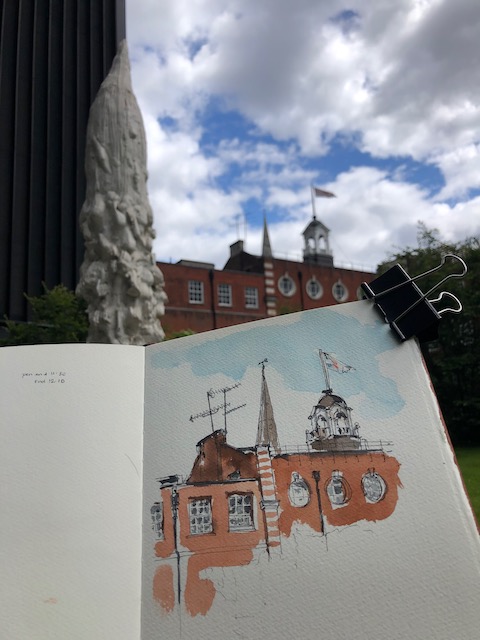
From Mitre Square: Sir John Cass School, and the spire of St Botolphs.

I enjoyed the sequence of TV aerials – Spire – Cupola.

A woman in a face mask with a child in a face mask appeared. They both removed their face masks. She carefully placed a plastic bag on the bench, and then she sat down. The child wandered about. Then they both ate apples, and the child continued to wander about while the woman interacted with her mobile phone. A man came out of one of the nearby offices and stood on the grass, did some stretching for a few minutes, stared into the distance, and then went indoors again. While all this was going on, a large van backed onto the square, and a man unloaded a lawn mower. He then proceeded to cut the little patches of grass on the square. At the same time, two street sweepers arrived. They swept part of the square, then went to have their break. This was logical, as the person mowing was spreading grass cuttings everywhere. After he had finished, which only took about 10 minutes – it is not a large square,and there is not much grass – the street sweepers came back and swept up after him. Then they went away, and the woman and child went away, silence descended and I had the square to myself again.

In the square was a strange statue called “Climb” by Juliana Cerqueira Lake. It was white and, according to the notice, it was a cast of the tunnel she made by burrowing through a cylinder of clay. You can see it on the left of this photo:

In Mitre Square: “Climb” by Juliana Cerqueira Lake is on the left.

Today’s announcement:


https://www.bbc.co.uk/news/explainers-52530518 downloaded 13th May 19:17

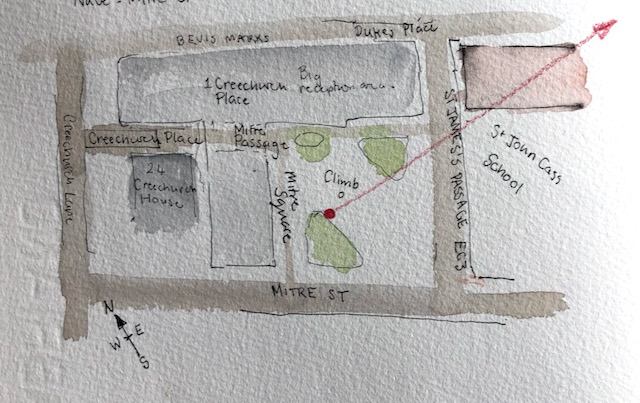
Map of where I was:

Arrow shows the sightline of the drawing.

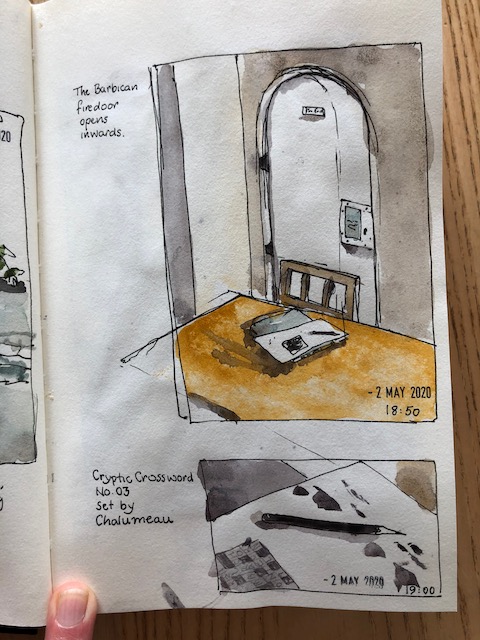
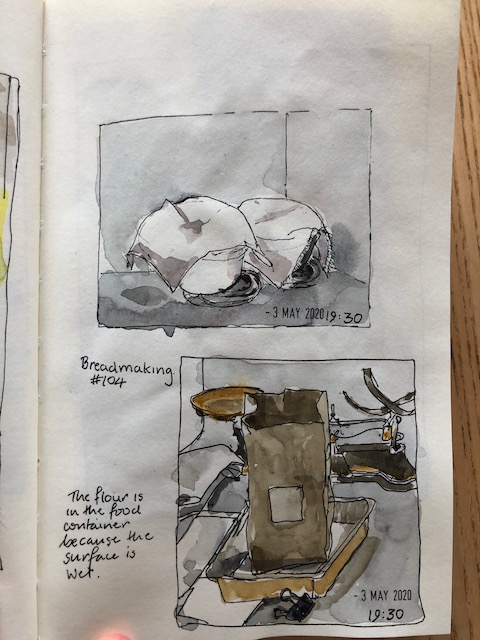
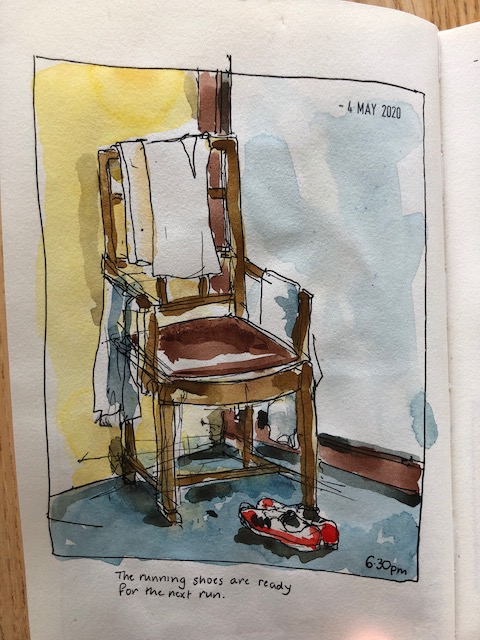
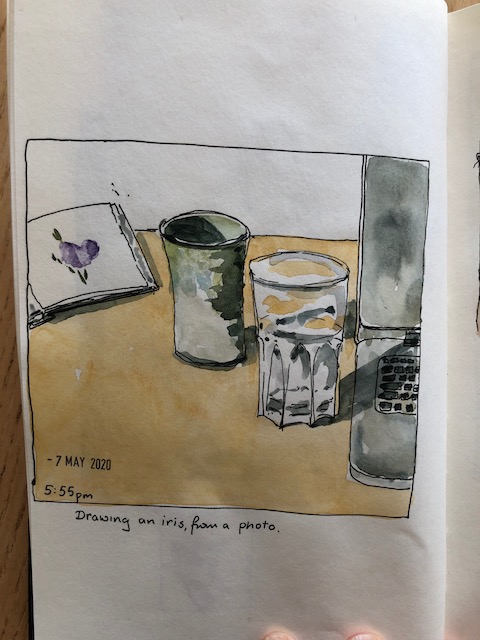
Indoor scenes (1 May to 11 May)

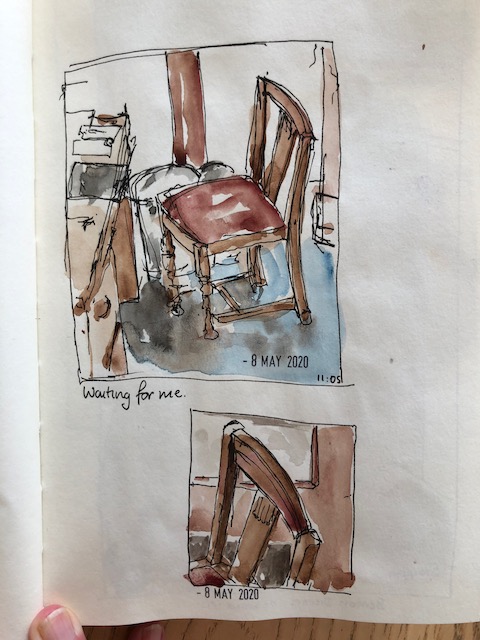
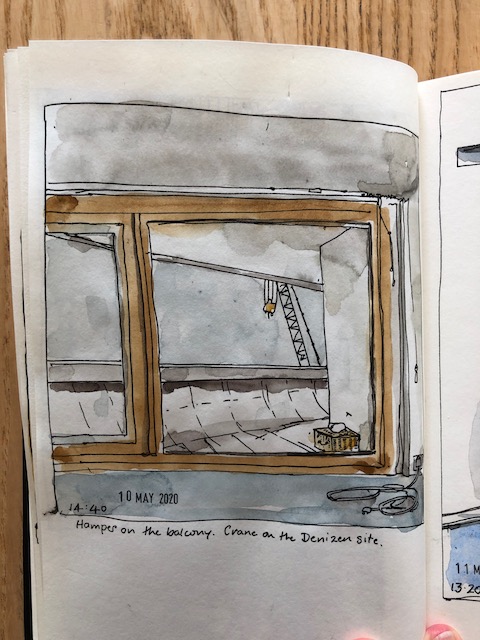
I have continued to draw indoor scenes. Here are the latest pictures:

Earlier Indoor Scenes are in this post: Indoor scenes (11 Apr – 1 May)

They are all in a Gamma Series Stillman and Bern sketchbook.

Here are three videos showing the sketchbook to date – with voiceover!

Indoor Scenes (1)
Indoor scenes (2)
Indoor scenes (3)

Online life drawing – Laetitia

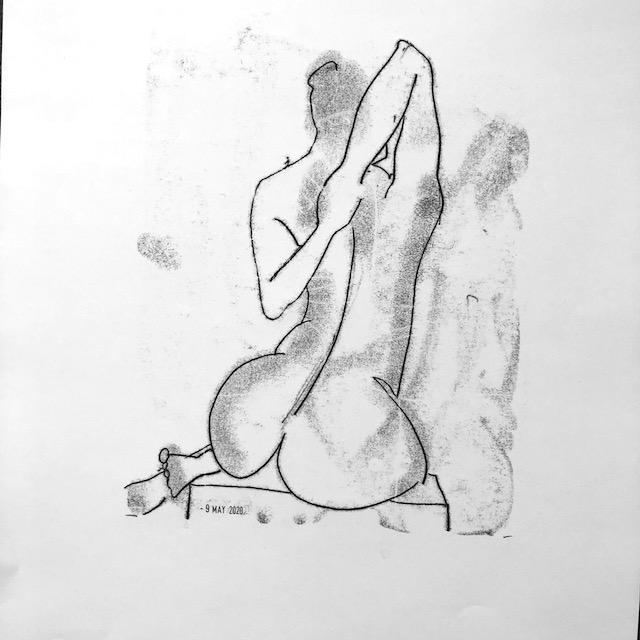
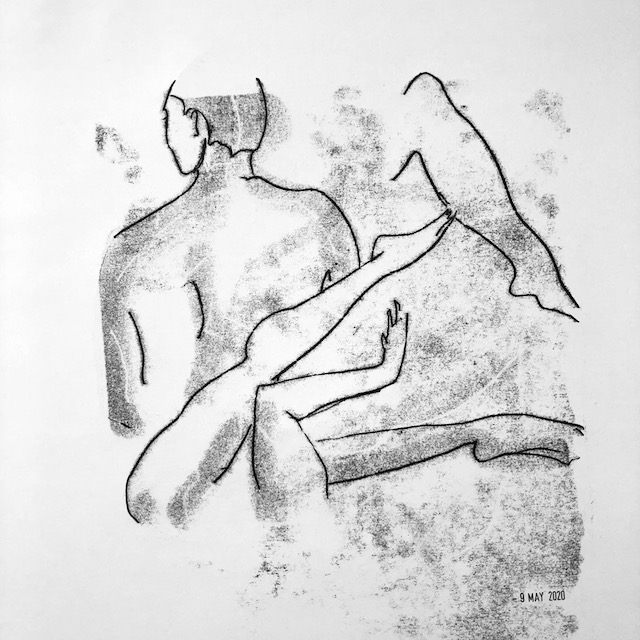
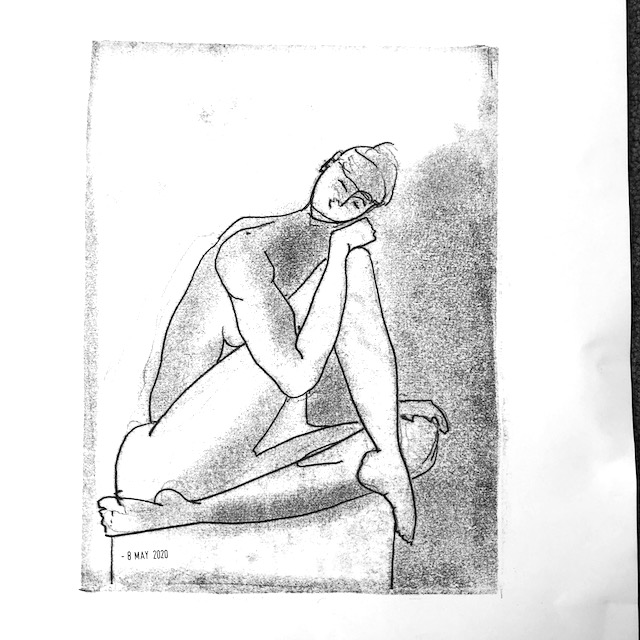
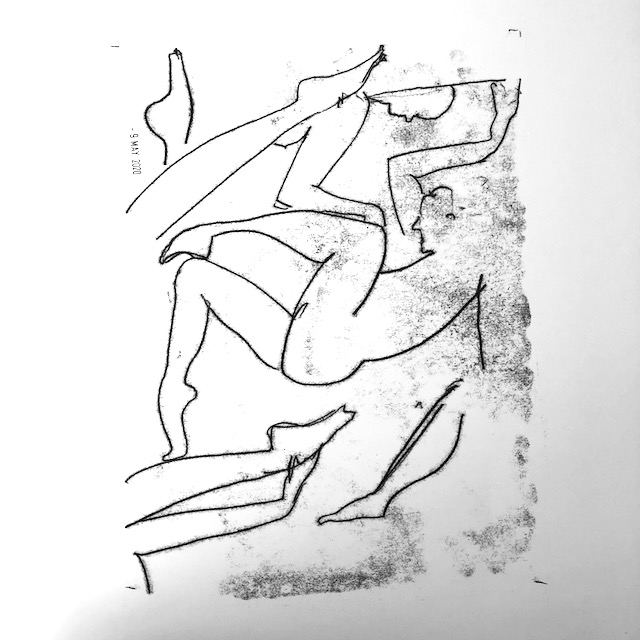
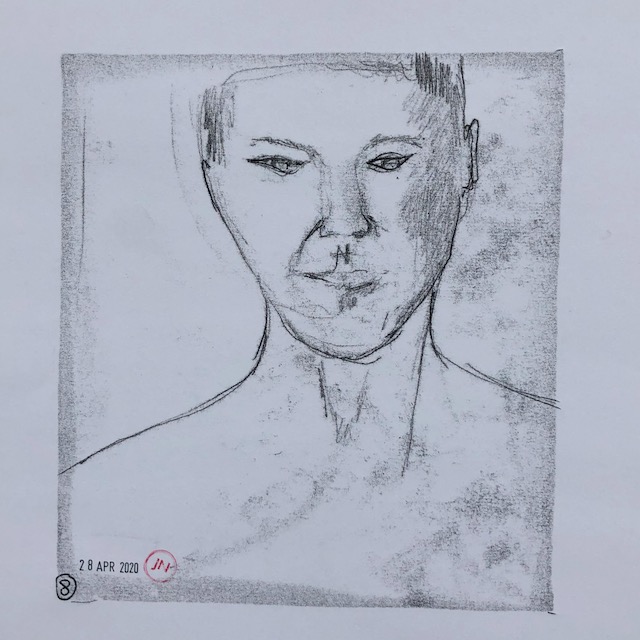
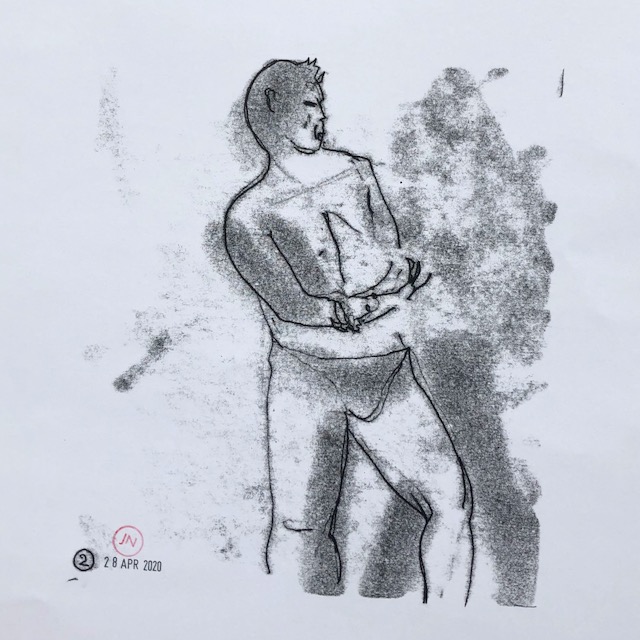
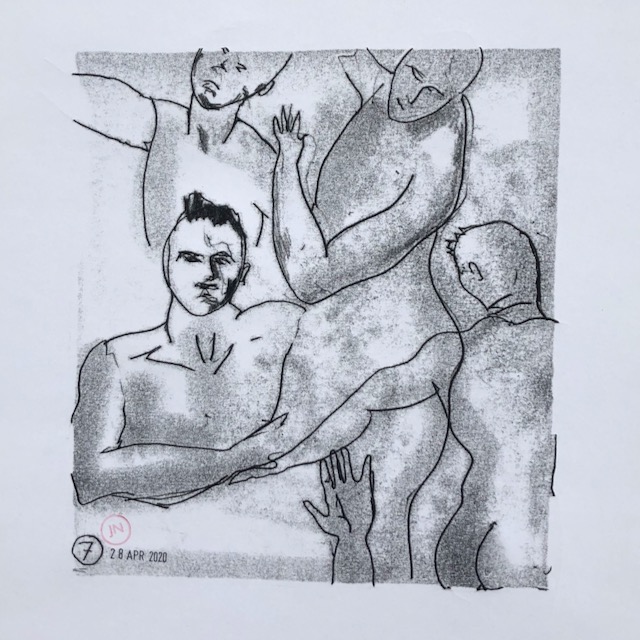
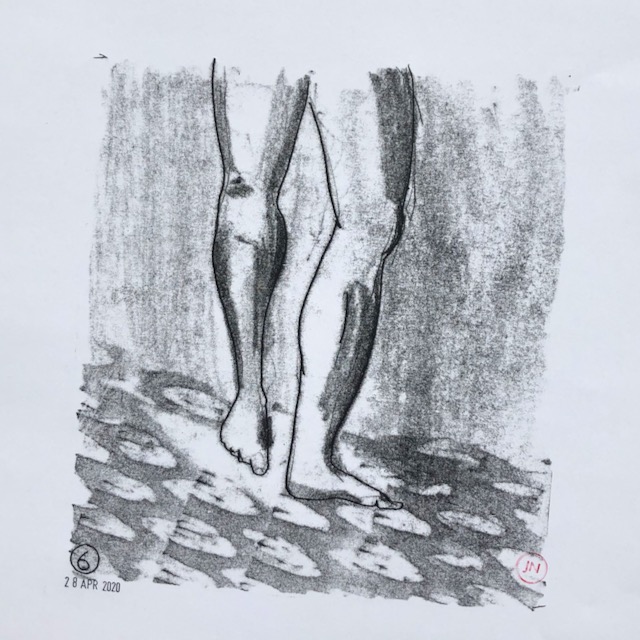
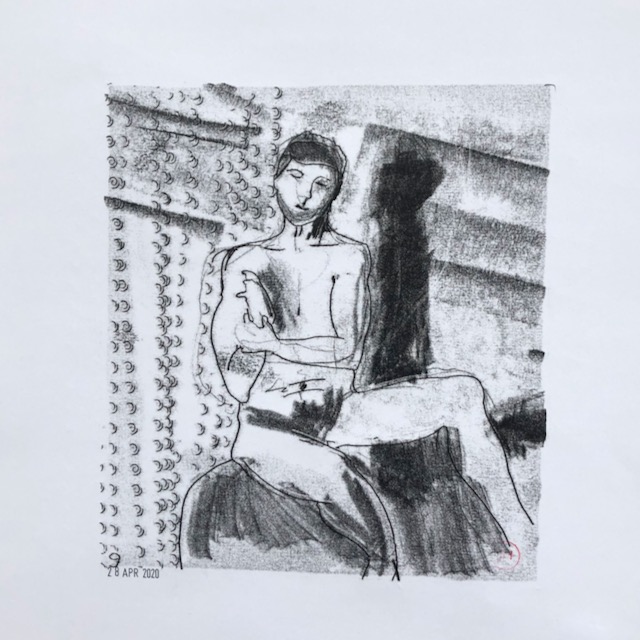
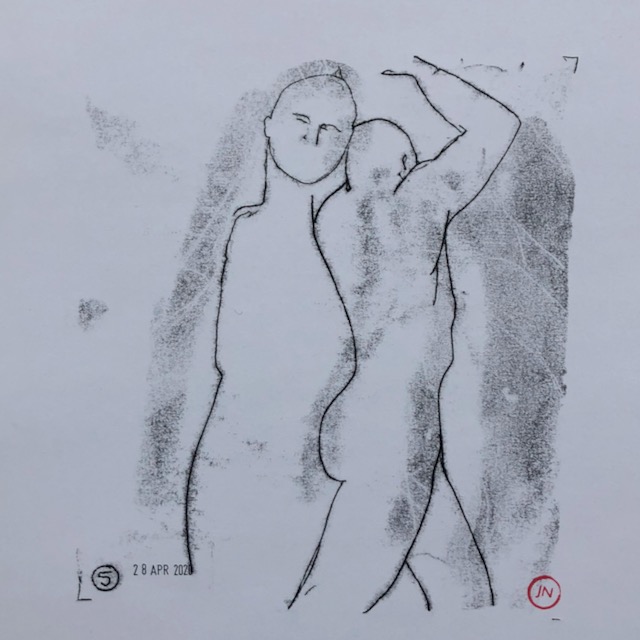
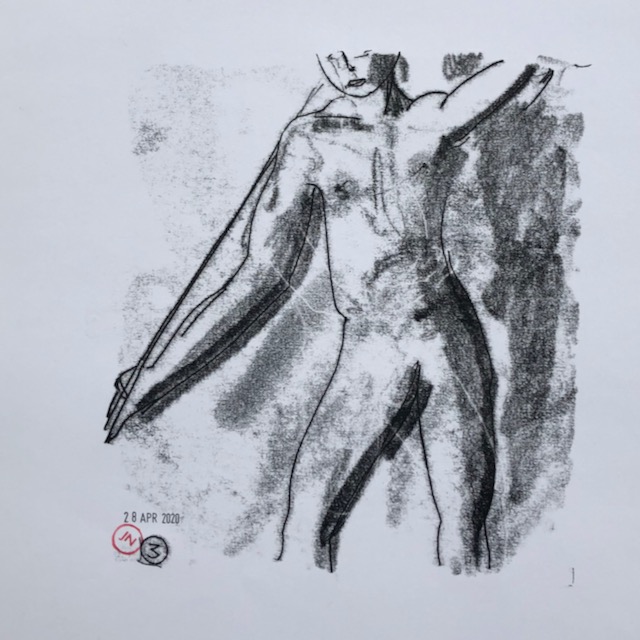
Here are some monoprint sketches of Laetitia, a ballerina with the Opera de Paris. This was a life drawing session , 9th May 2020, organised by @londondrawing. 200 people took part, from all over the world.

Iris: watercolours

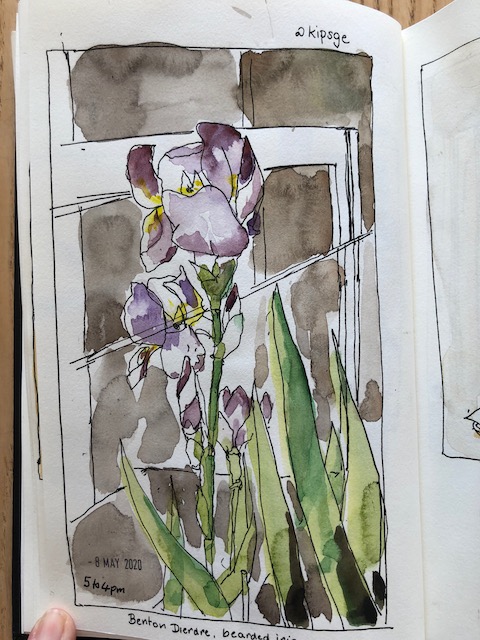
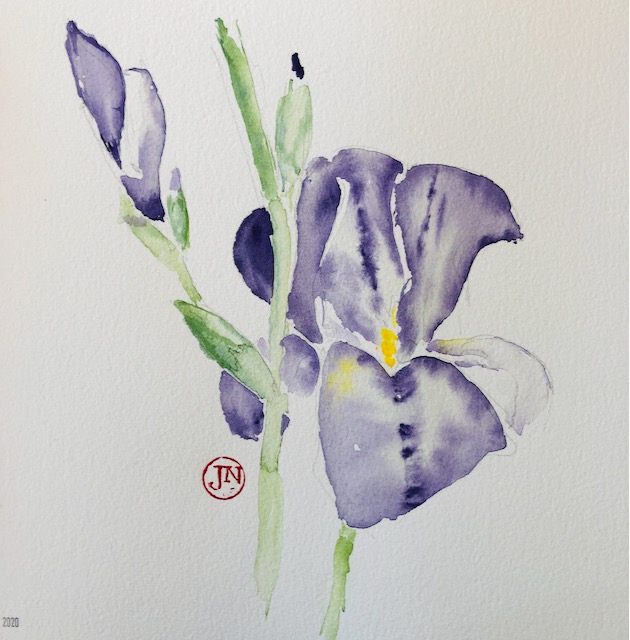
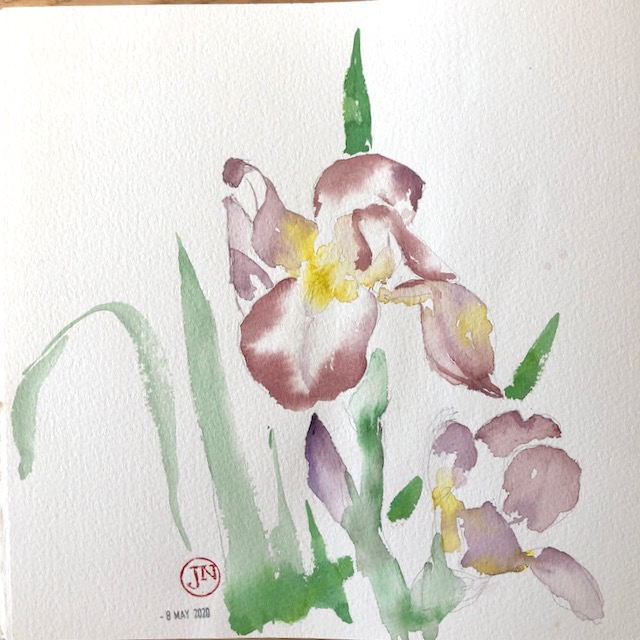
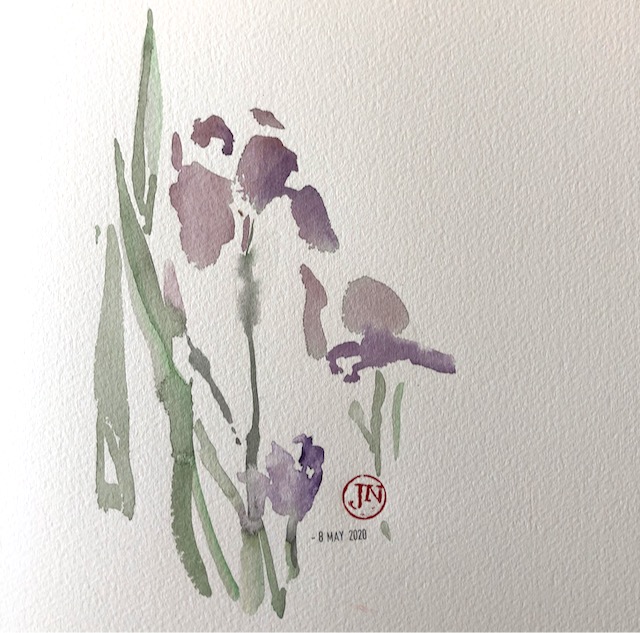
Here are more pictures of the Benton Dierdre iris. These are watercolours, done wet-in-wet, a technique I understand is called “tarashi-komi” in Japan.

Iris: monoprints

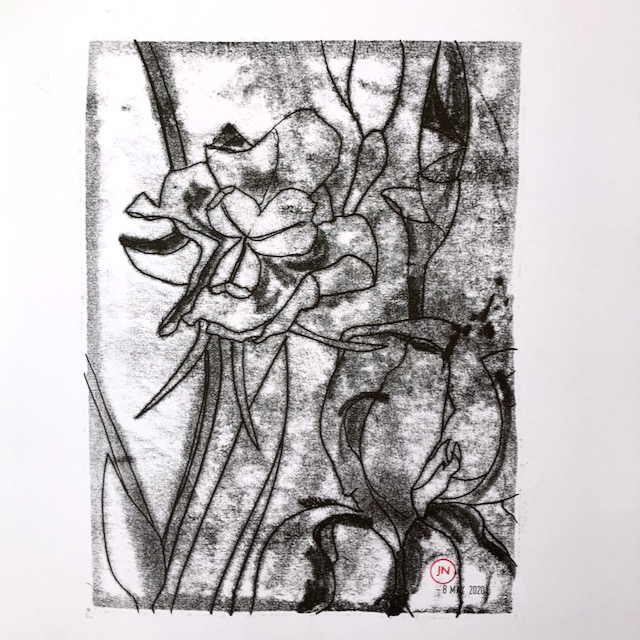
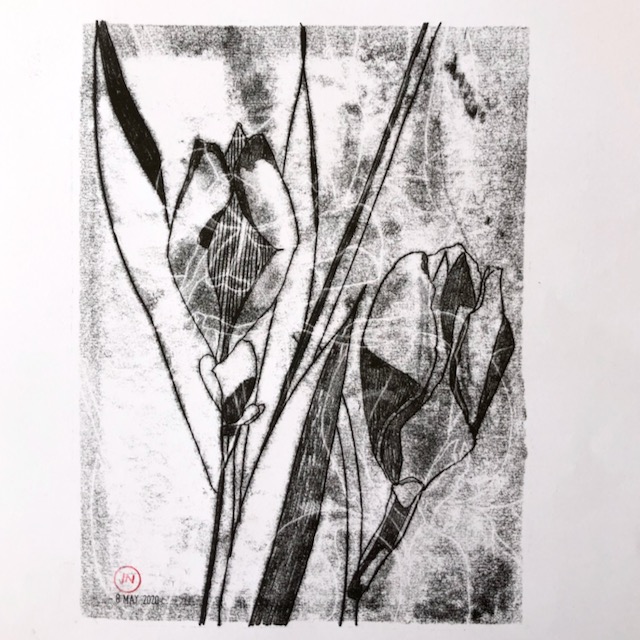
My neighbour sent me a video of an iris he is cultivating on his balcony. It is a very special iris, a Benton Deirdre. Here is the description: “bred by artist and plantsman Sir Cedric Morris in 1945. Rose pink standards and ivory falls with lilac red margins.”

It is special also because it managed to bloom on the windy balcony high up on this tower block. My neighbour kindly sent me photographs and a video which I used as inspiration for a number of monoprints. Here are some monoprints made this morning.

Indoor scenes (11 Apr – 1 May)

Since I live in a flat, “stay at home” means “stay indoors”.

I started drawing the scenes around the flat.

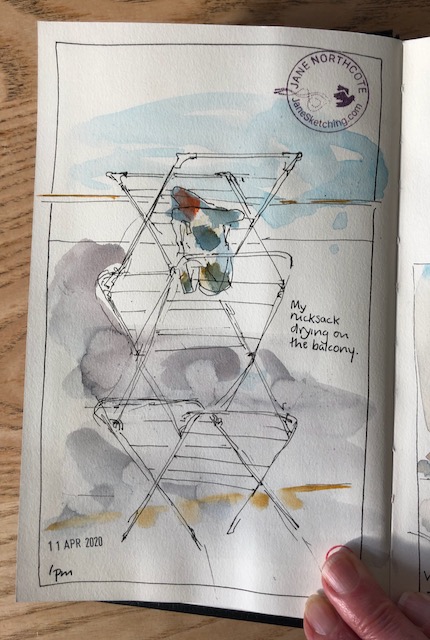
I can look outdoors. We have a balcony which is just big enough for the drying rack. I have mended my rucksack. Then I washed it. After all, I won’t be needing a rucksack for a while.
My principle is to draw things as I find them. I don’t move or adjust them. These are vernacular still lives: the way things are.
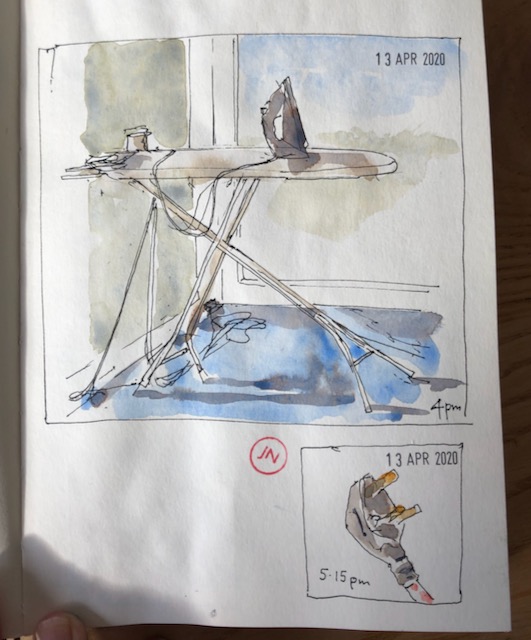
Here is the ironing board.
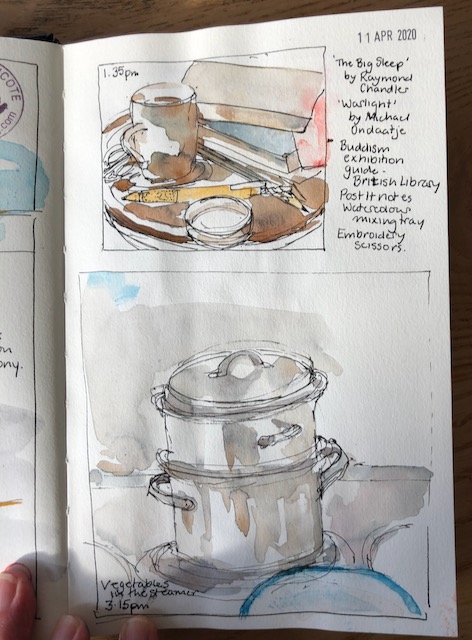
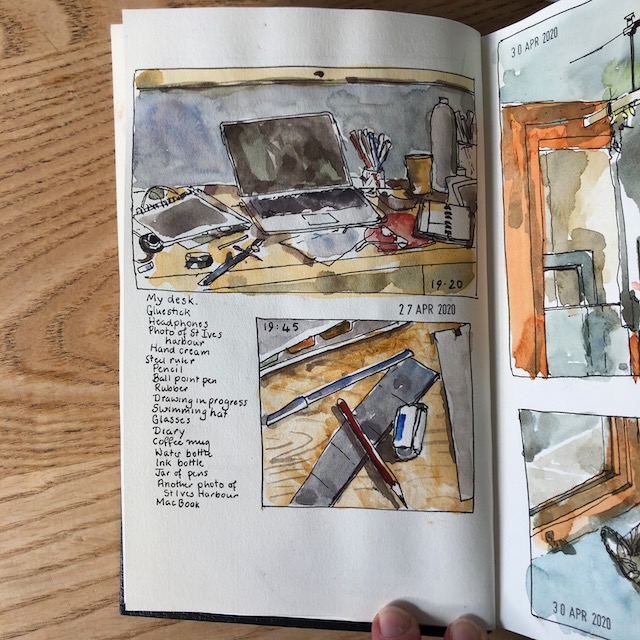
Here are the things which accumulate at the end of the sofa.
A scene by the kitchen sink.
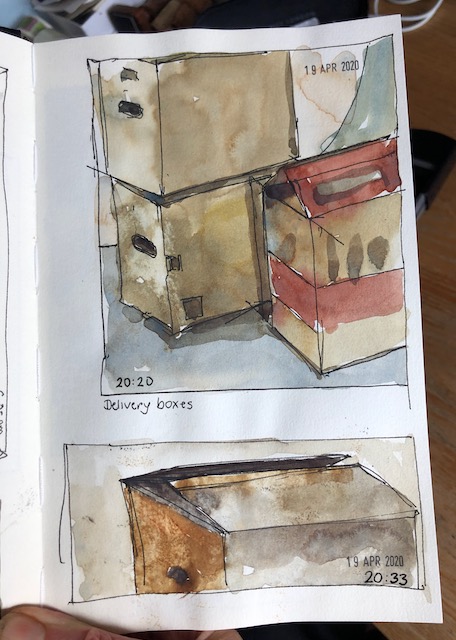
An apple from the vegetable delivery.
Evening scenes
The important HDMI connector. I learned to make the TV work from my laptop. This was for the online life-drawing sessions.
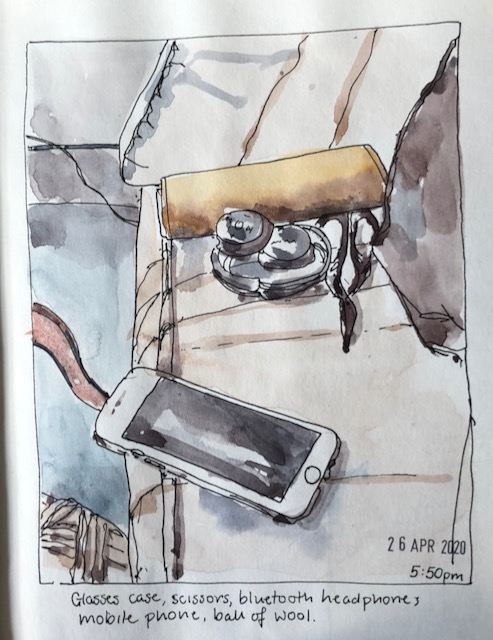
Miscellaneous objects get thrown together. Here, some knitting items meet the mobile phone technology.
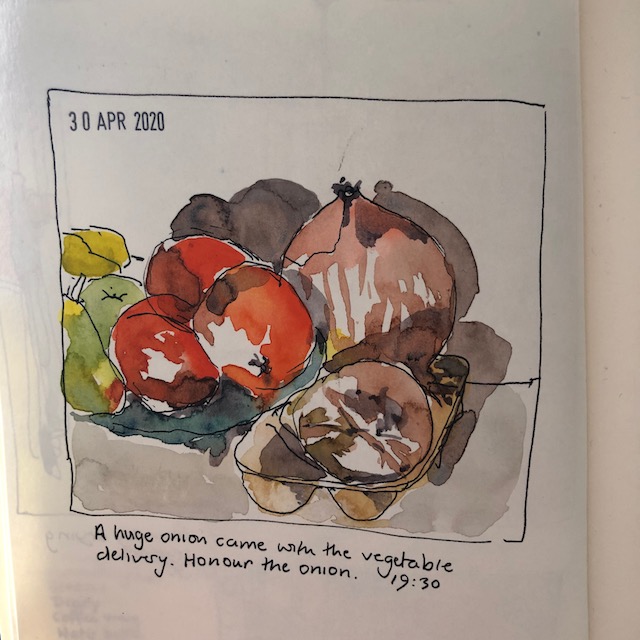
The huge onion.
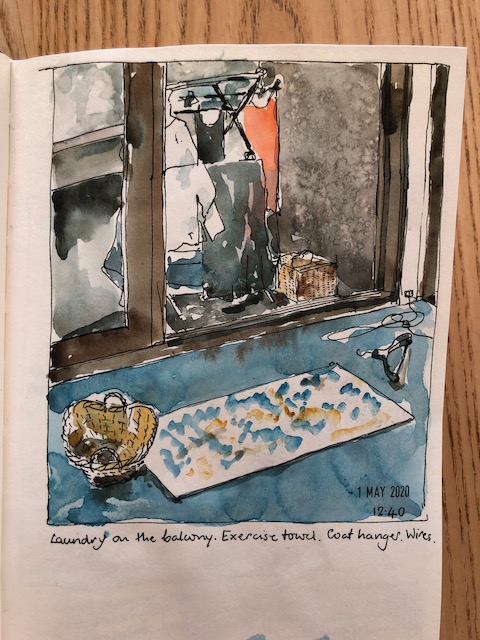
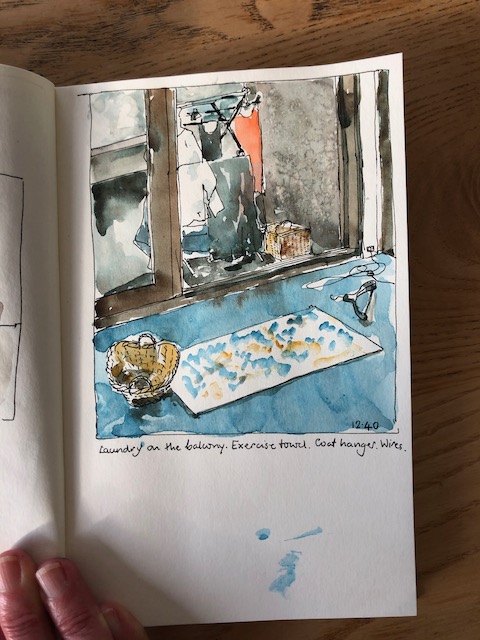
Laundry on the balcony, exercise towel, coat hanger. Before I finishd this picture, the rain came down, and I had to go out and get the washing in.
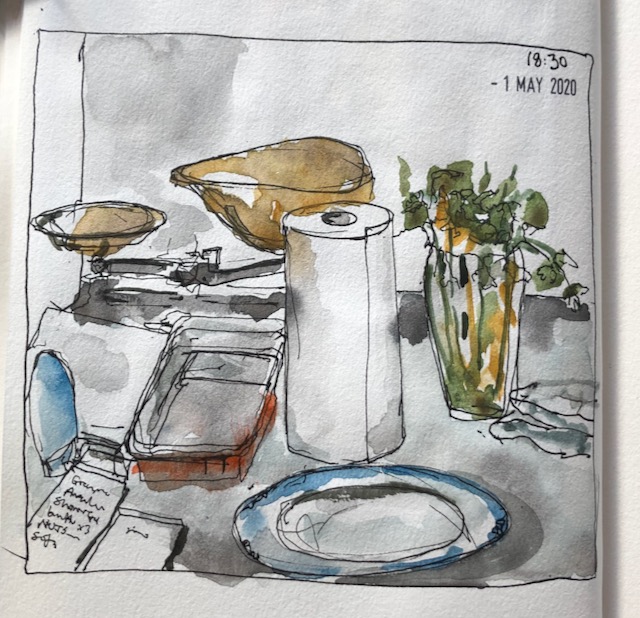
Items form social groups: the weighing machine, the kitchen roll, a food container, the enamel plate, two shopping lists, the hand cream, a beer glass with the parsely in.

These are the drawings up to today, 1st May.

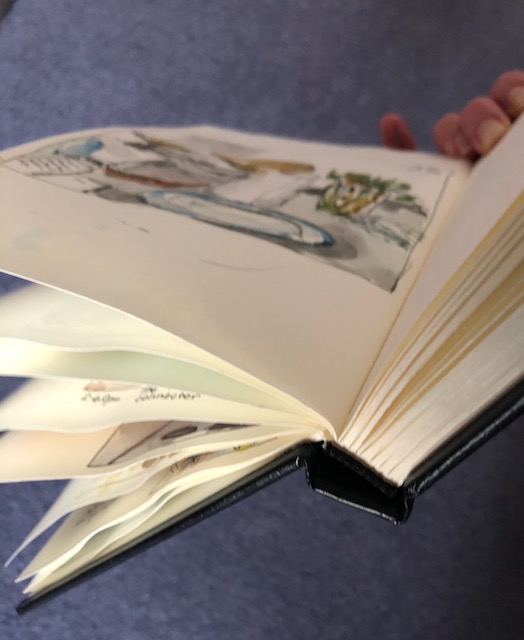
Stillman+Bern, Gamma series sketchbook. Still a lot of pages left to fill.

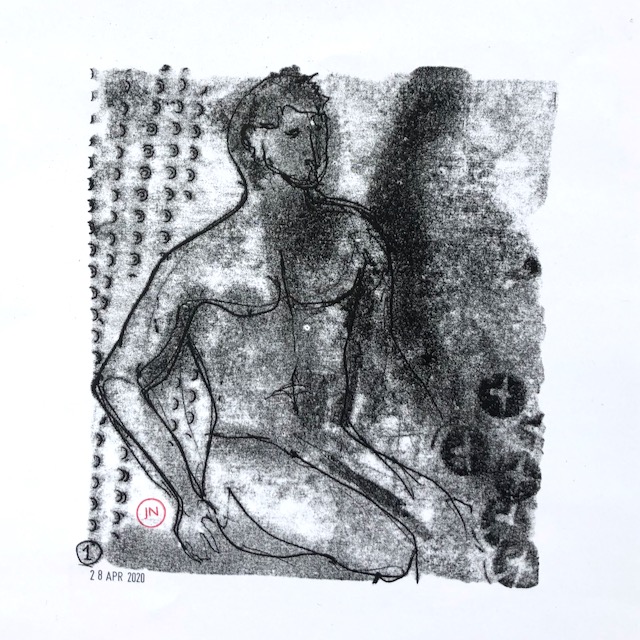
Online Life Drawing – David Wan

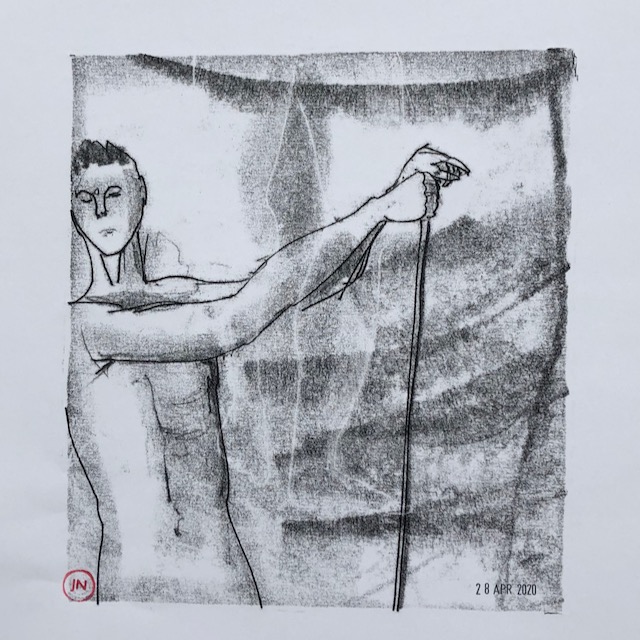
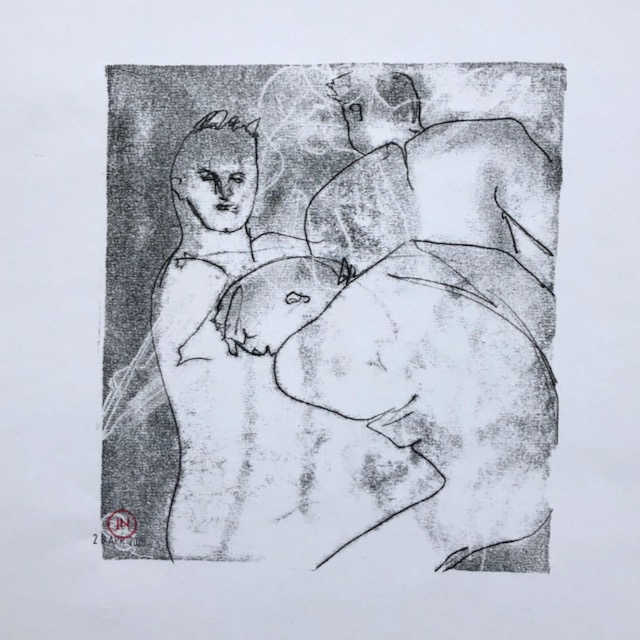
London Drawing (@LondonDrawing) organised another online life drawing session, this time with the model David Wan (@DavidWanLondon).

These pictures are monoprints, made by drawing or pressing on the paper which is placed on top of an inky sheet. What you see is the reverse of the sketch. The places where I pressed took up the ink. It’s like drawing or pressing on top of carbon paper, if you remember carbon paper. I like the technique because I can’t see what I’m drawing, so the lines tend to be more free, and I worry less about “getting it right”. The dark patches are made by pressing in the paper with fingers or an object, so it’s possible to get very dark tones quickly, which I like. It’s also a bit unpredictable, at least for a beginner like me, I have, so that the picture is a bit of a surprise. It helps that the picture is a mirror image, so when it appears, it’s different from what I drew.

If you’d like to see examples of a master of this technique, see the website or instagram account of John Carbery, @johncarbery.

Collage/postcard: a corner of the flat

Here is a postcard from indoors:

It shows a corner of the flat. You see the sun outside, and birds, and the city. You see parks, rivers and the great outdoors. But mostly, you see the sun on the carpet.

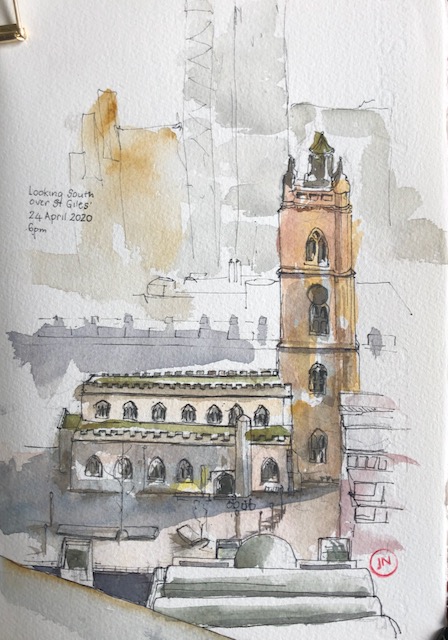
Looking South to St Giles’

I drew St Giles’ Cripplegate, as seen from the window of the flat.

St Giles Cripplegate, from the North

The church is surrounded by the buildings of the Barbican estate. To the right of the church is the City of London School for Girls. Behind it in the picture you see a representation of the Barbican block called “Wallside”, and then behind that, are the office blocks of the City. In the foreground is Frobisher Crescent.

St Giles’ was damaged by enemy action in the 1939-45 conflict. Artists showed the damage. I was particularly struck by the work of Sam Carter, and William Coldstream, shown by the East London Group in their excellent and informative Twitter stream (@EastLondonGroup) – their tweets are embedded below, if you scroll down. Here’s the picture by William Coldstream, 1946:

St Giles Cripplegate (1946) by William Coldstream, in the Arts Council Collection. Thanks to @EastLondonGroup twitter stream for showing this work.

As you see in the picture above by William Coldstream, in 1946 the church itself was damaged, and it was surrounded by rubble. This picture must have been painted from the current location of the Museum of London. The damage was done in a bombing raid in about 1940. The plants have had 6 years to grow.

The Barbican was built on the area destroyed by bombing. St Giles was rebuilt.

Here is my view and my drawing in progress.

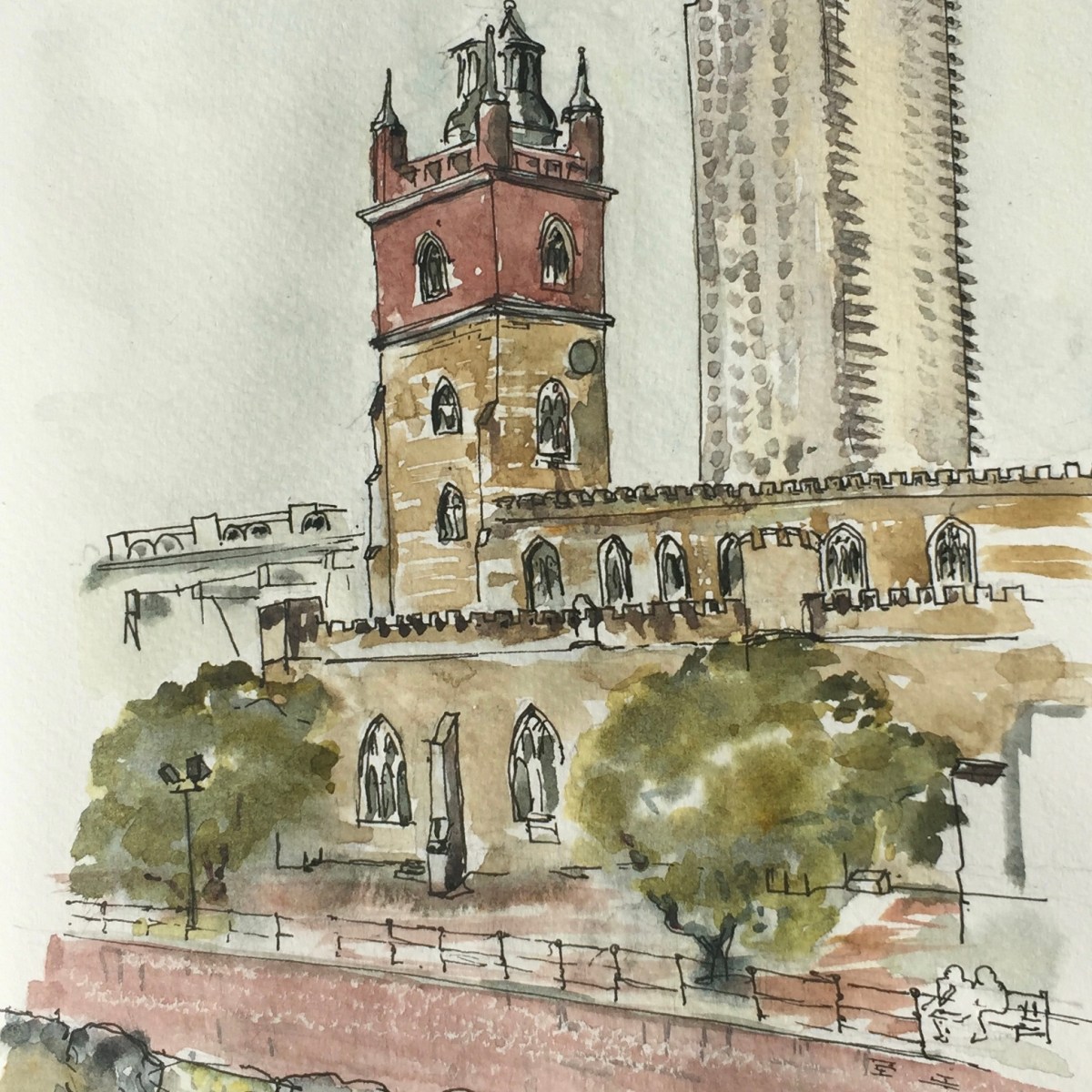
I have drawn St Giles before:

A quick sketch of St Giles Church

Here is St Giles Church from the Lakeside Terrace of the Barbican. While I drew this, three men were shovelling mud from the bottom of the lake. The mud is black and viscous and the men were remarkably cheerful in their task. They would have made good subjects for a drawing too. But for now,…

St Giles and Bastion House

Today Urban Sketchers London held a “sketch crawl” in the Barbican. So I joined them. An astonishing number and diversity of people assembled inside the entrance of the Barbican Centre at the appointed time of 11am. I counted about 35 and then another dozen or so joined. All shapes and sizes of people, tall, short,…

St Giles’ and Cromwell Tower

Here is today’s sketch showing: London Wall – 2nd century AD Barber-Surgeons Hall – current building 1969, first hall, on this site 1441 St Giles Church – current building 1966, first church on this site by 1090 Barbican, Cromwell Tower,  Wallside and Arts Centre – 1965-82 Braithwaite House – completed around 1963 White Collar Factory…

St Giles’ Church and Shakespeare Tower

Here is a sketch from a staircase from the Barbican Podium, just outside the Dentists but just inside the old London Wall. Parts of the Roman London Wall are in the foreground, 2nd century AD. St Giles’ has Roman foundations and is much rebuilt. The church we see now is the 1966 restoration following designs…

Here are the tweets from the East London Group: