A quick sketch on a cold day. 45 minutes, standing outside the “Indigo Coffee House”. Nearby, bicycles were parked on the fence surrounding the church of St Edward, King and Martyr.
I wanted to catch the bright sunlight in Kings Parade, seen from the relative darkness of St Edwards Passage.
Click a button below to share this post online, email it, or print it:
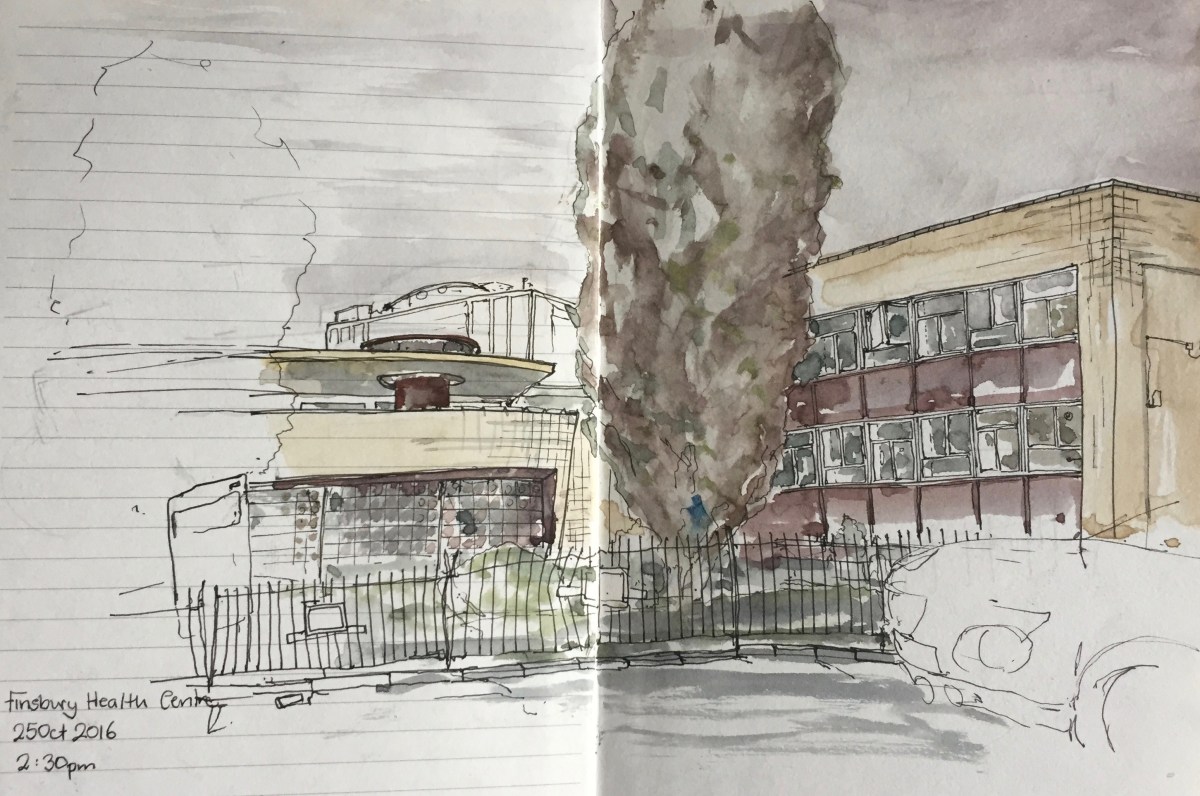
Built 1935-38 designed by Lubetkin and the Tecton Architectural Practice.
Partly restored mid 1990s, but still looks dilapidated, especially round the back.
Evidently still in use as a medical centre. While I drew the picture, ambulances arrived and departed, carrying elderly and disabled patients. A mother and child looked at my drawing. The mother encouraged the child to see how slowly I was drawing.
Posting this in 2019, after I went to the Wellcome Collection “Living Buildings” exhibition, and learned how carefully this health centre had been thought about. There was a mural inside, which was destroyed in the Second World War.
Postcard from wellcomecollection.org, “Exhibition display panels explaining features of the design of the Finsbury Health Centre, Pine Street, Finsbury London. Cheerful atmosphere. Lubetkin and tectonic. 1938. RIBA collection.”
Click a button below to share this post online, email it, or print it:
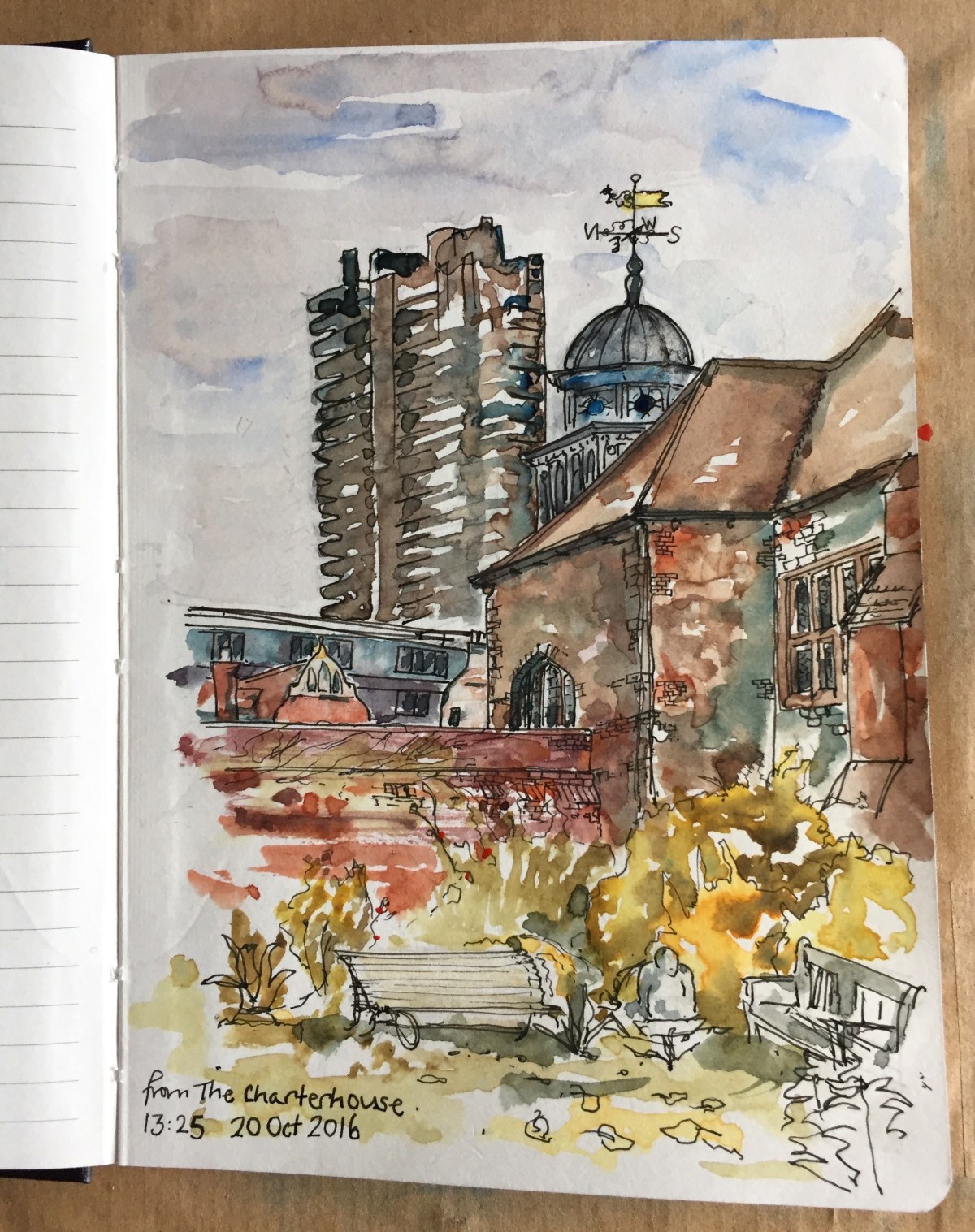
This is my first sketch at The Charterhouse, as a guest of the Preacher, Reverend Robin Isherwood.
The building on the right is the Great Hall, Tudor, around 1600. Beyond it is a Barbican tower, 1970s.
The small dome is the roof of the Chapel of The Charterhouse, 17th Century, by Francis Carter. According to Pevsner*, Francis Carter had “previously worked at Trinity College Cambridge, and from 1614 was chief clerk of the King’s Works under Inigo Jones.”
*The Buildings of England, LONDON 4: NORTH, Bridget Cherry and Nicolas Pevsner, page 619
Click a button below to share this post online, email it, or print it:







 Jane Sketching