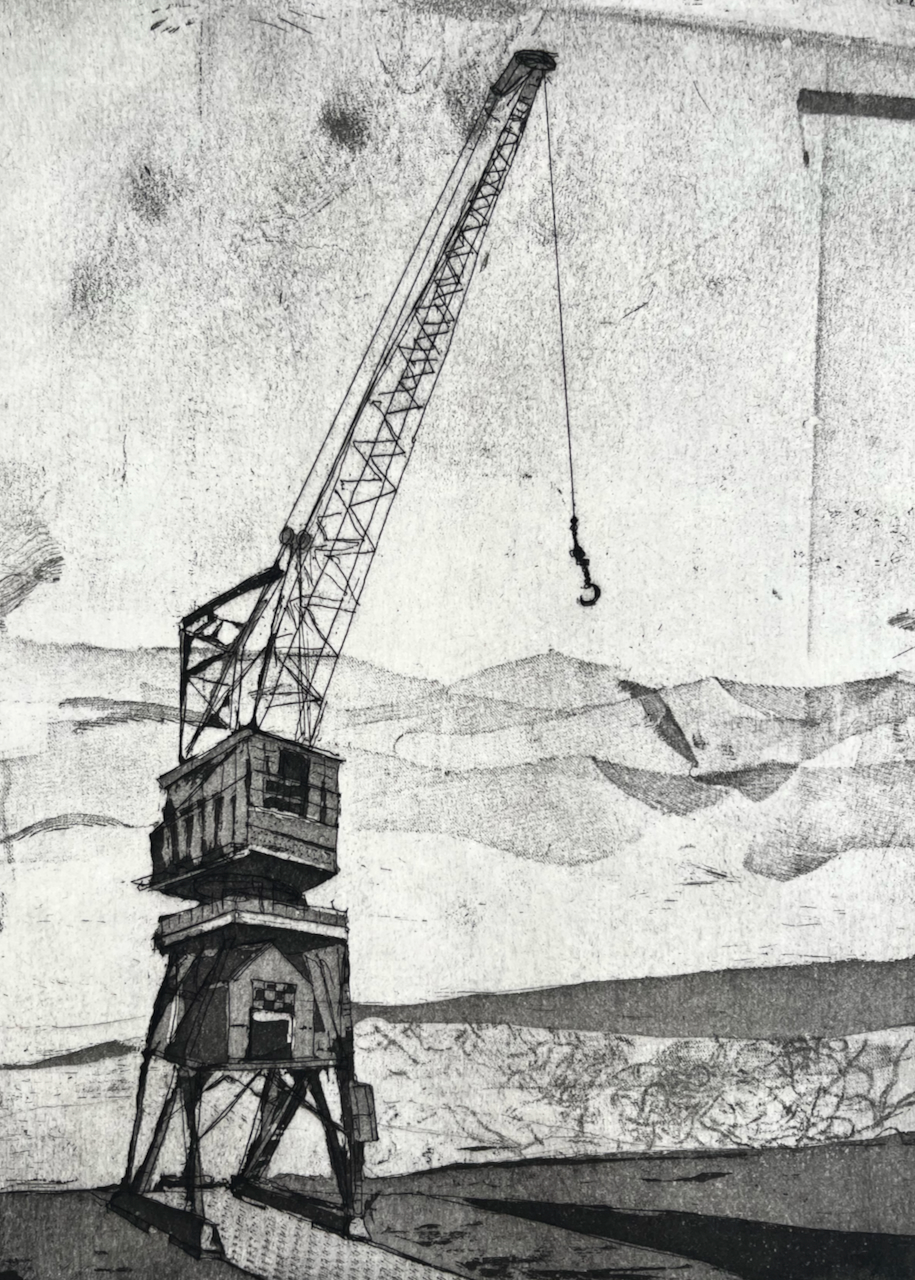
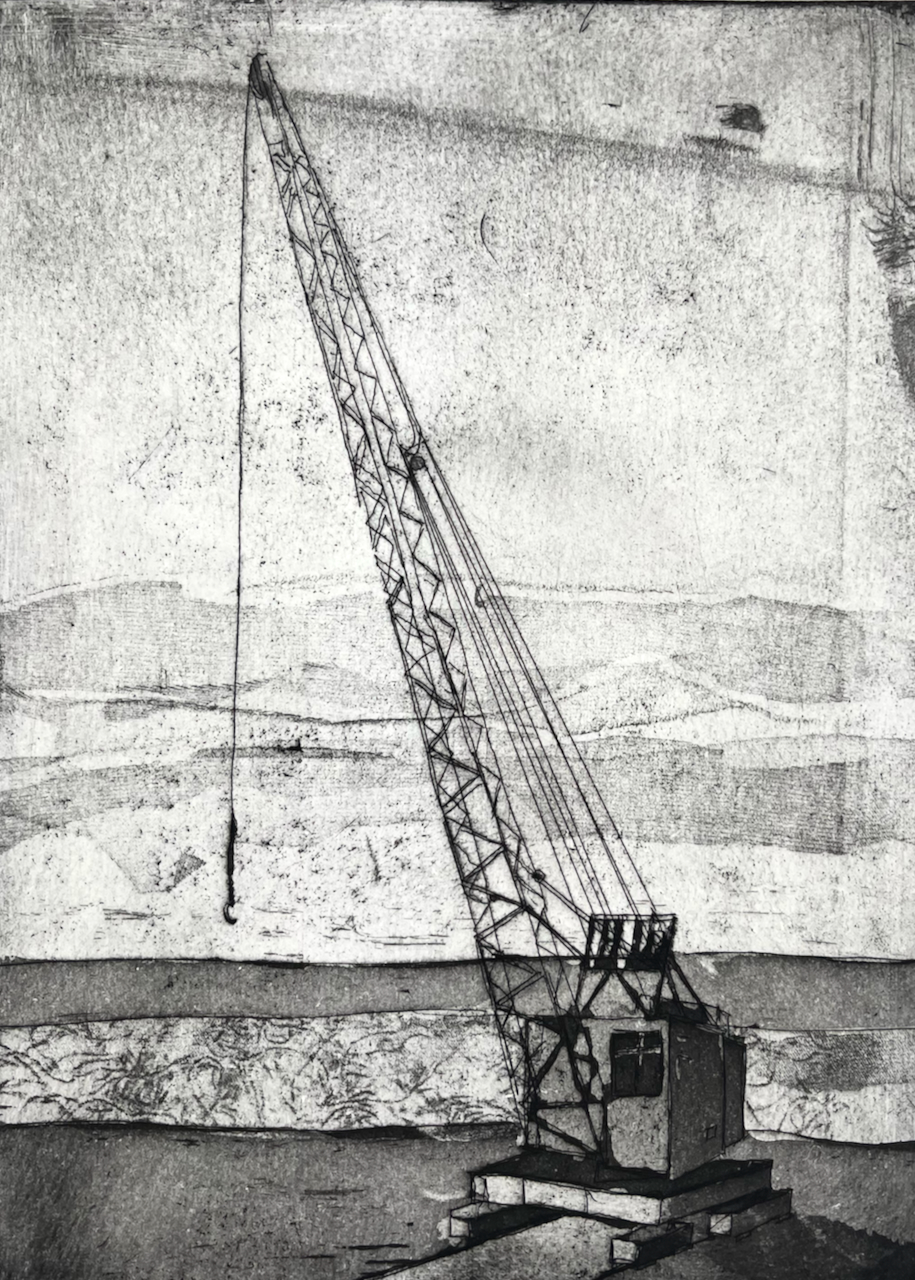
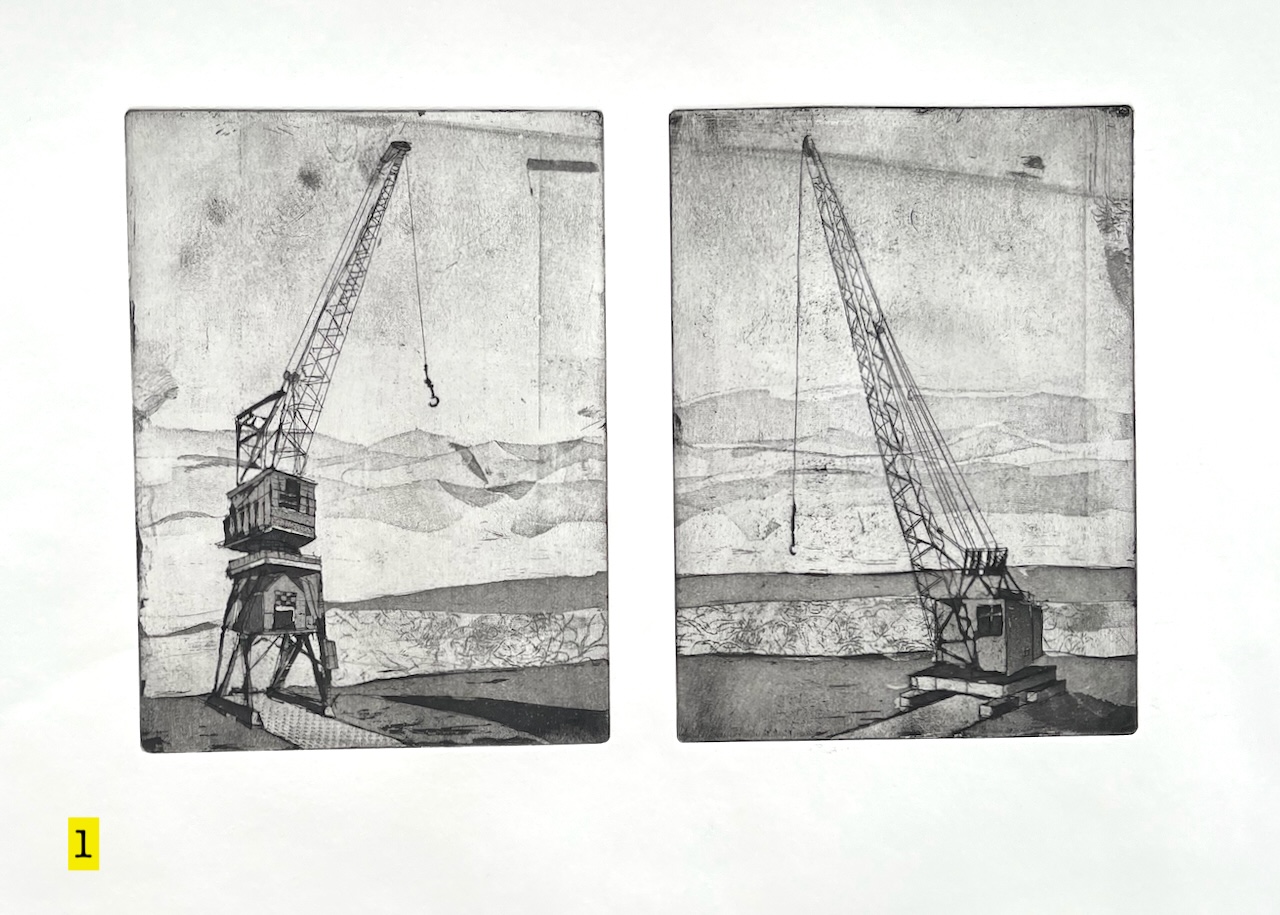
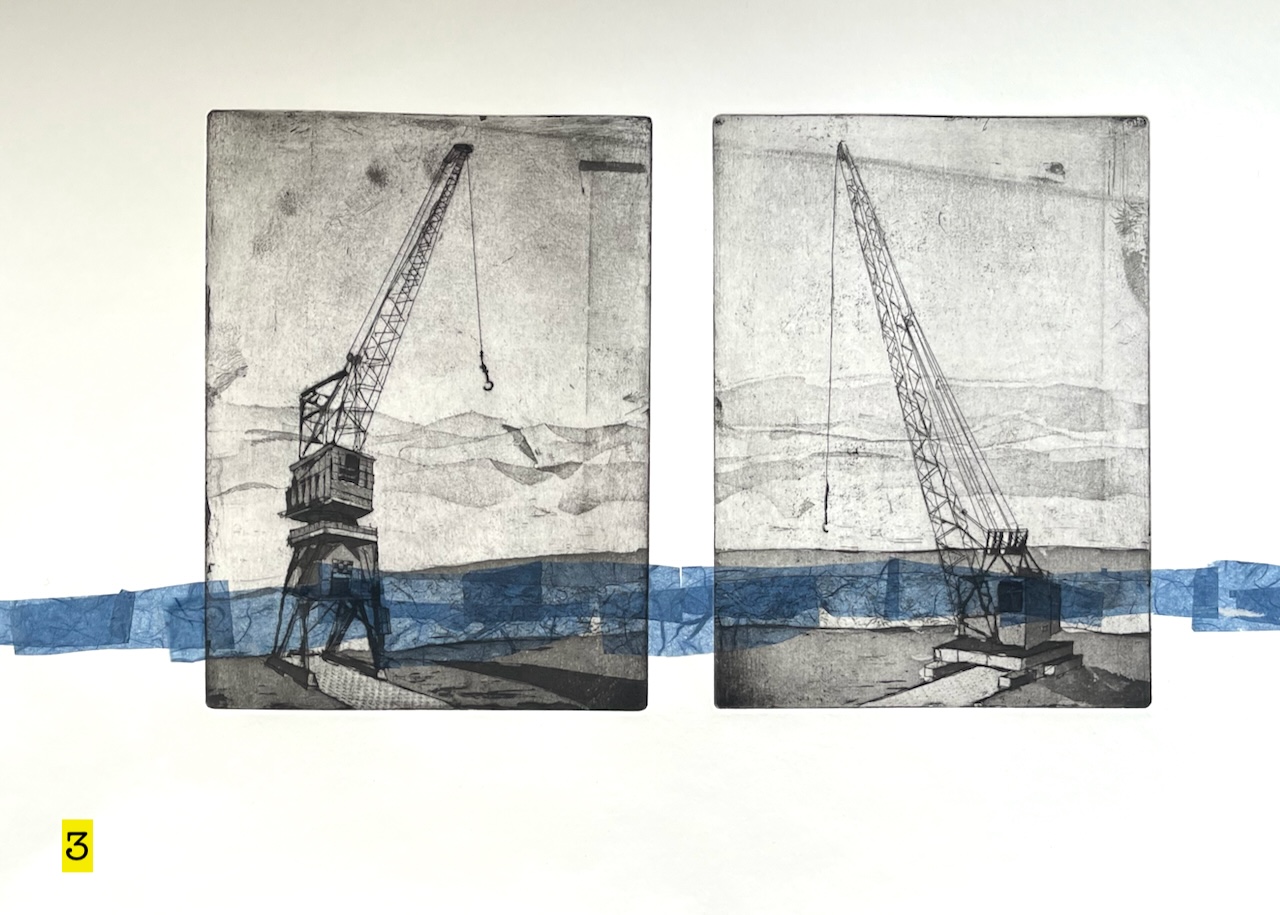
They stand by the river, ready for work. They are old cranes. It’s a long time since they lifted loads. But they hold themselves ready, should the call come. While they wait, they talk to each other.
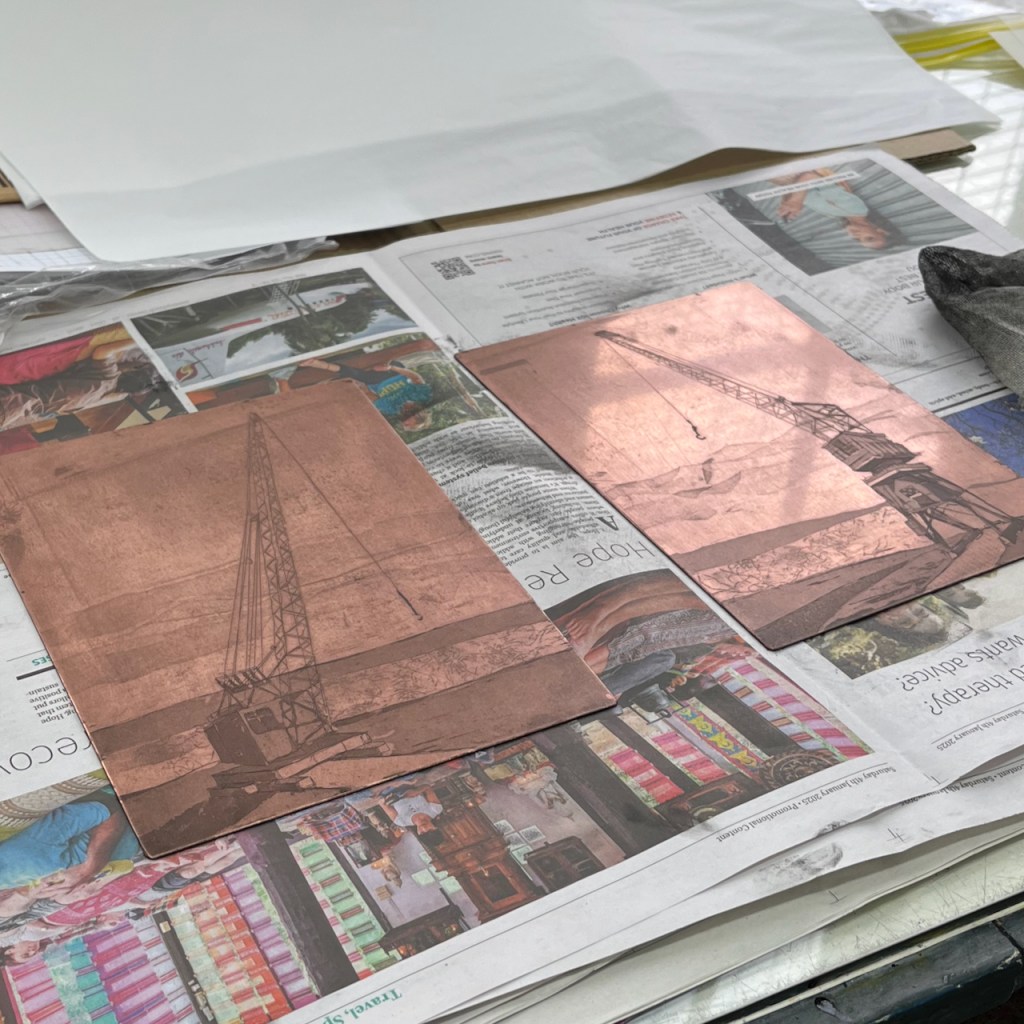
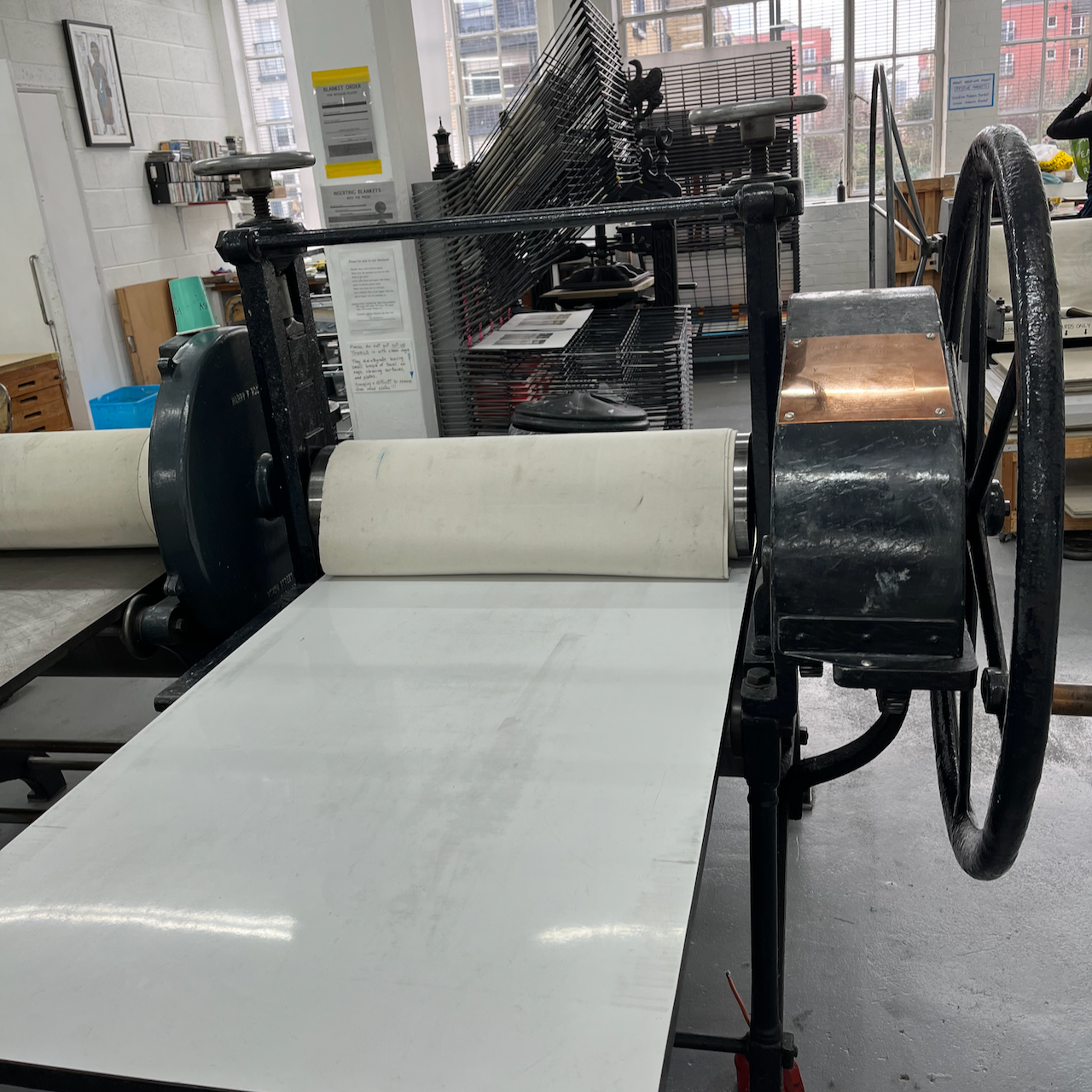
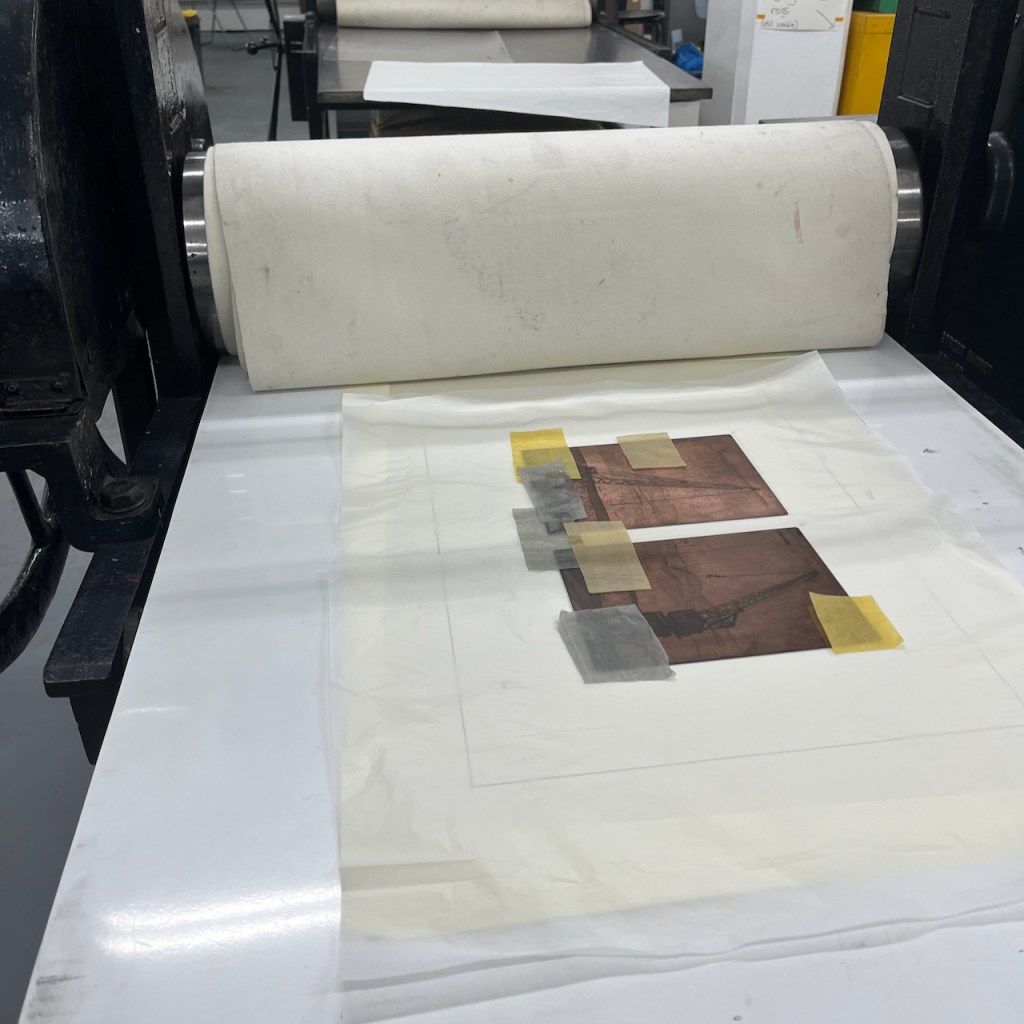
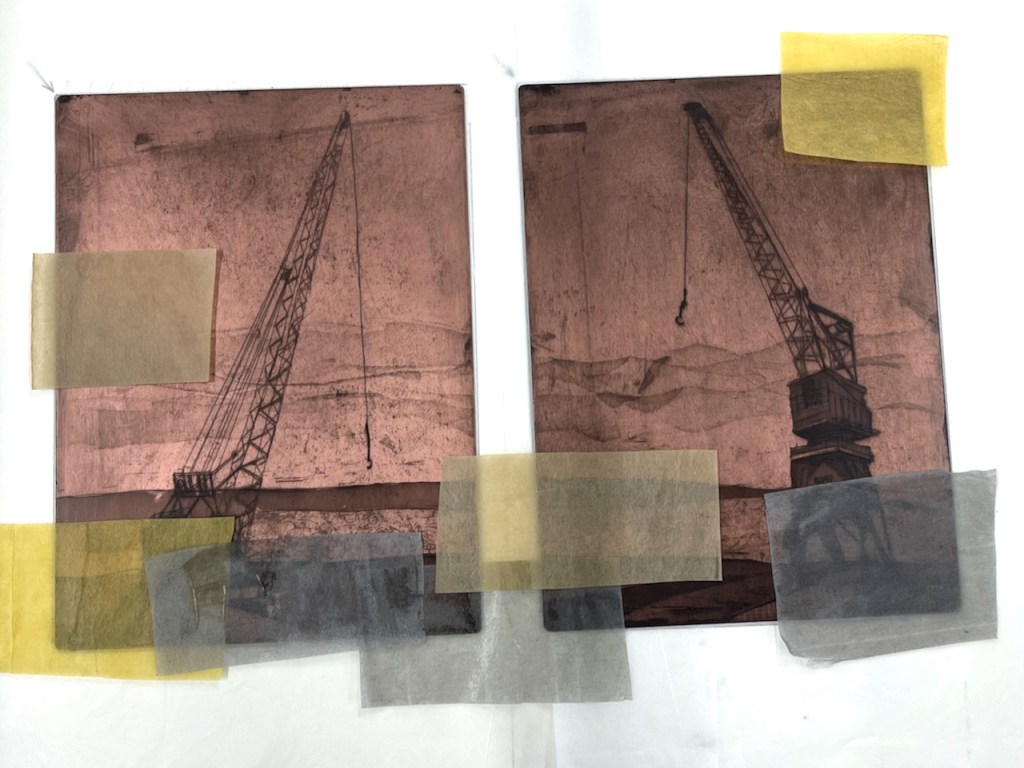
So I put them on the same sheet, they go together through the etching press.
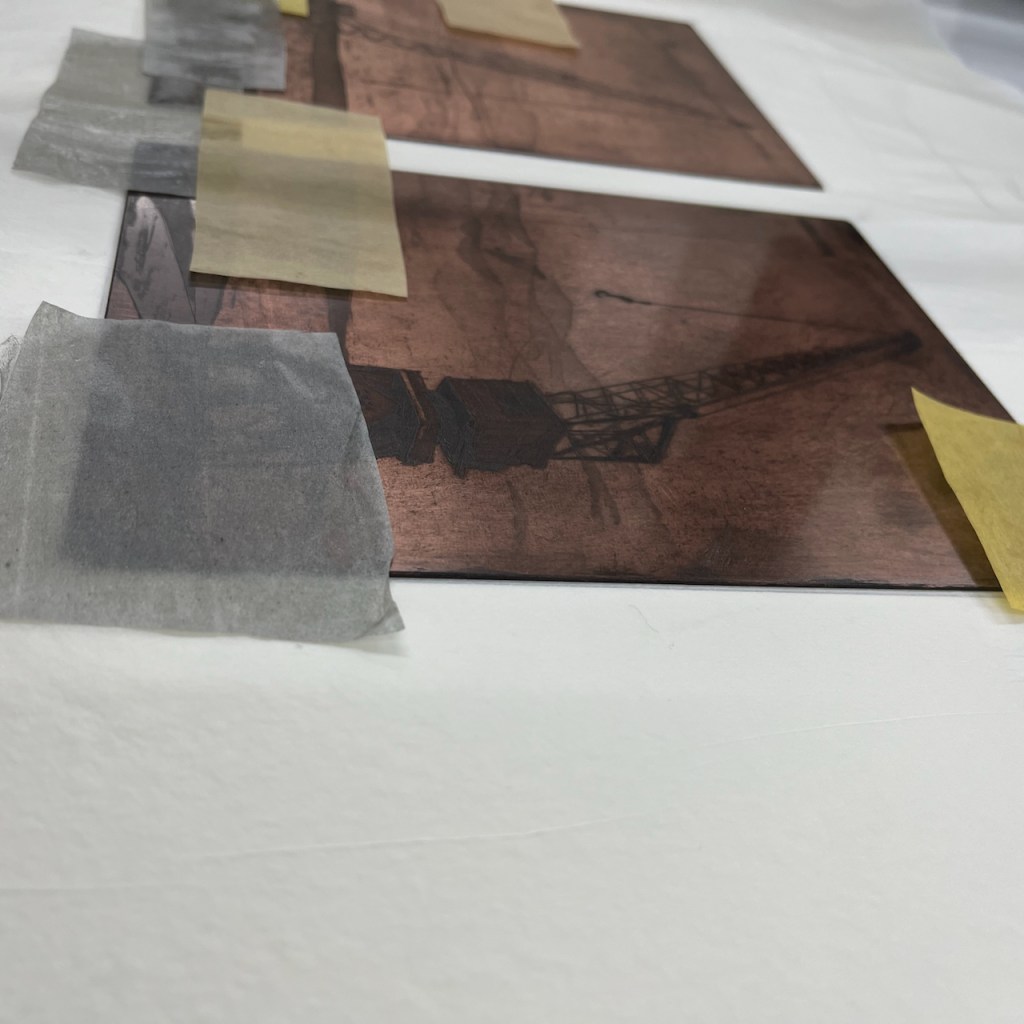
Copper platesPrinting pressPlates on the press (print #2)print #5 drying
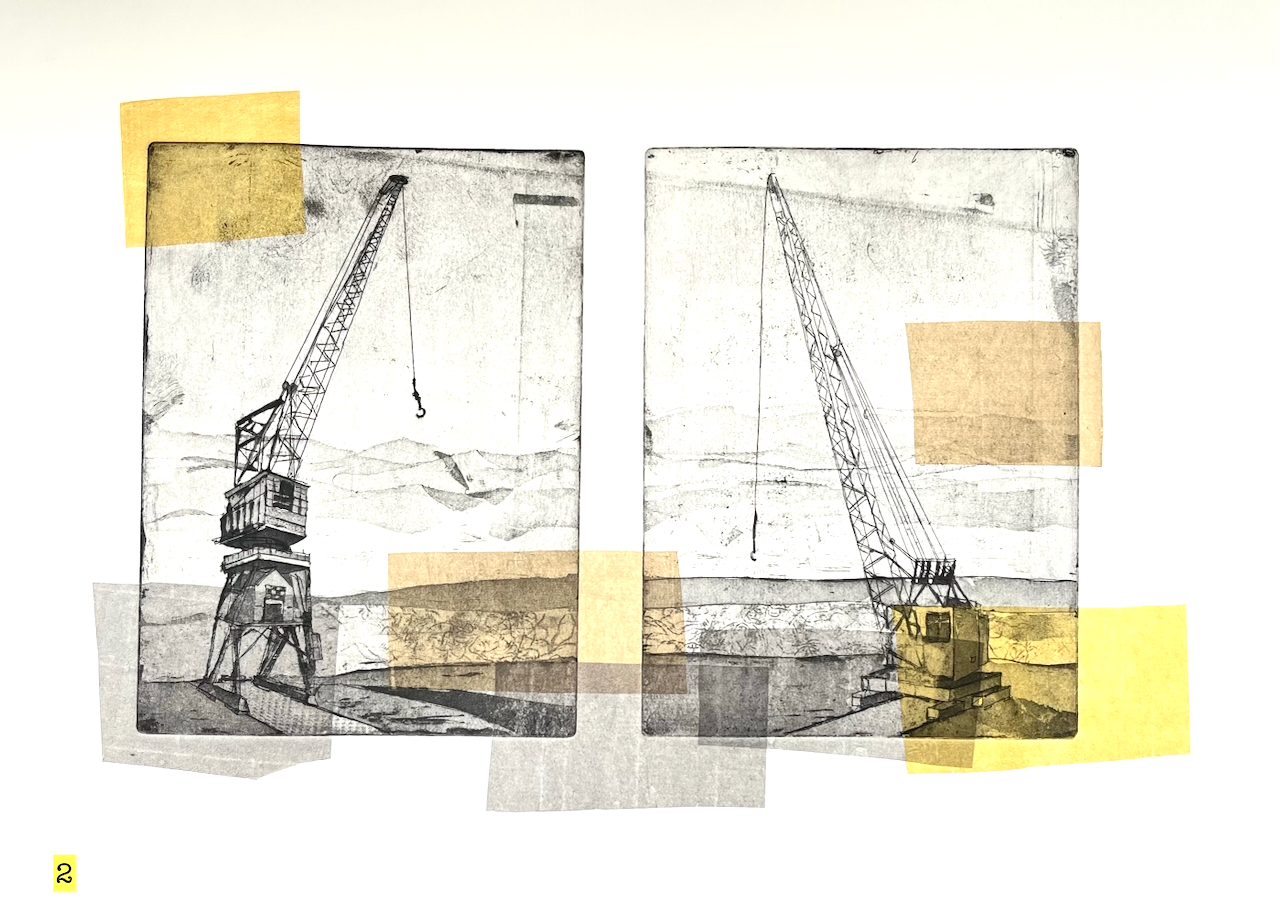
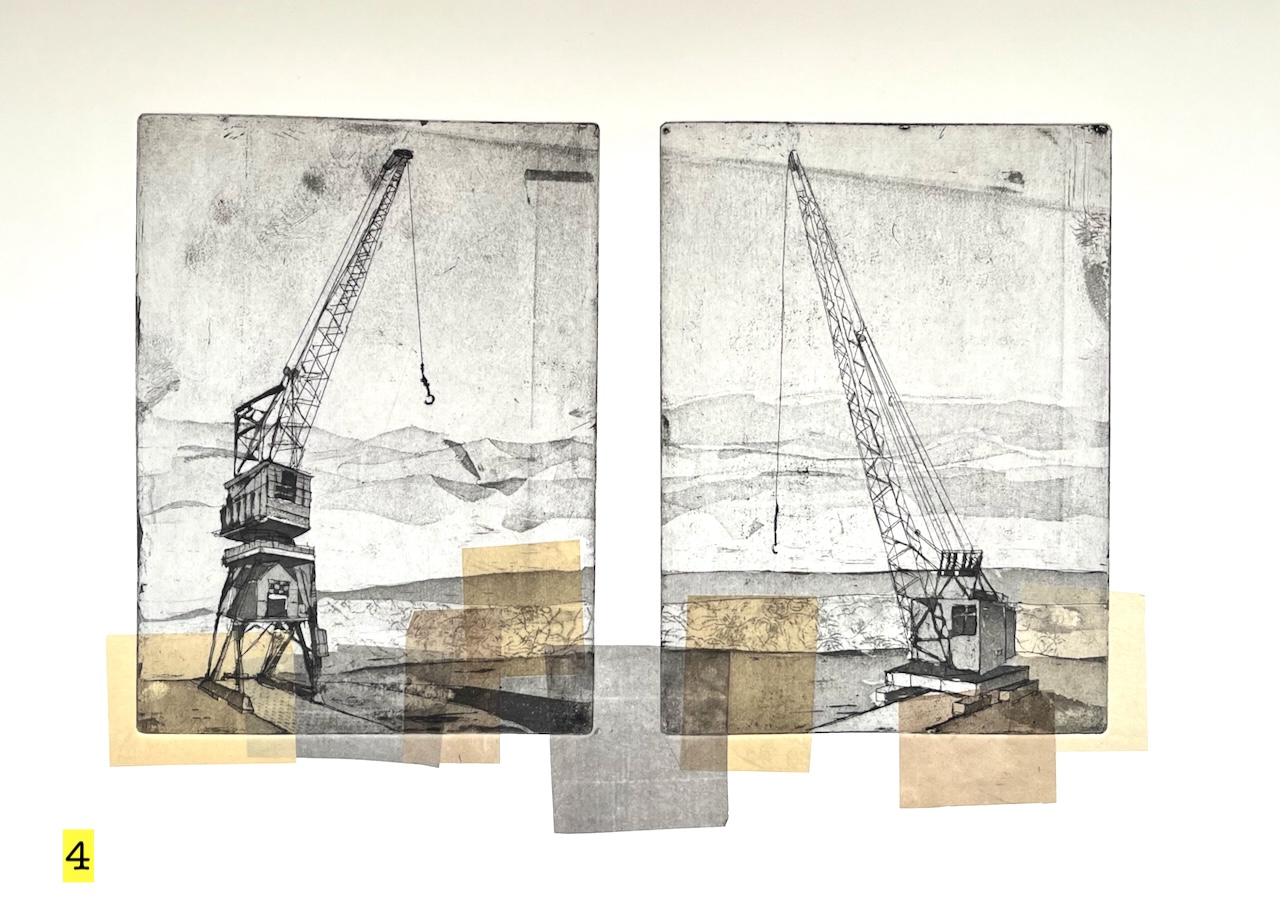
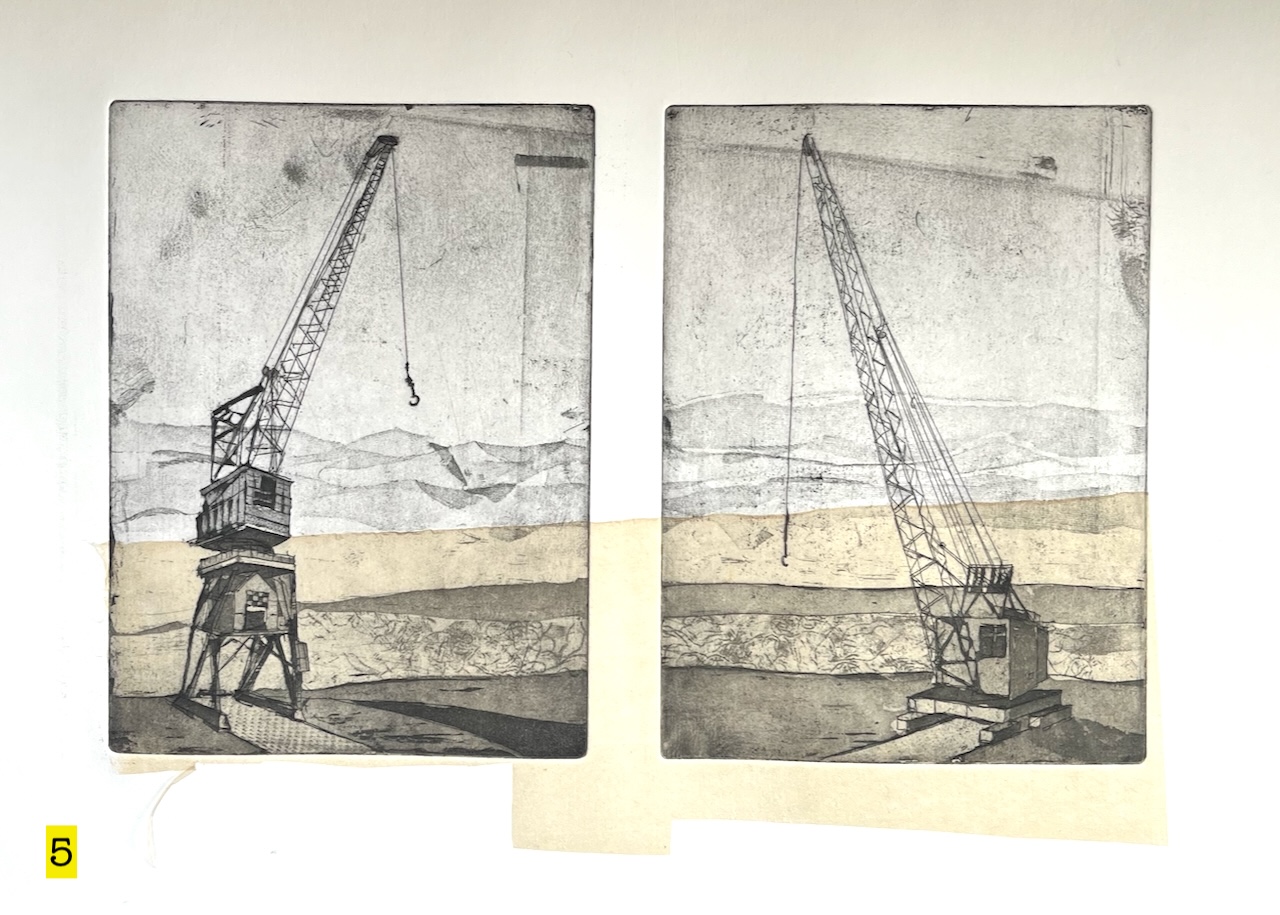
I made five prints of these cranes. The colour is added using the “chine colle” technique.
“Chine collé” means putting paper on top of the plate before it goes into the press. I have written about it on this page.
Here is the paper on top of the plate. It has glue on the top surface. The paper is very lightweight Japanese paper. It’s quite hard to get it to stay in position.
Here is a video of this plate after it’s been through the press:
Printing “Two Cranes”: thanks to friends at East London Printmakers for helping me with the video
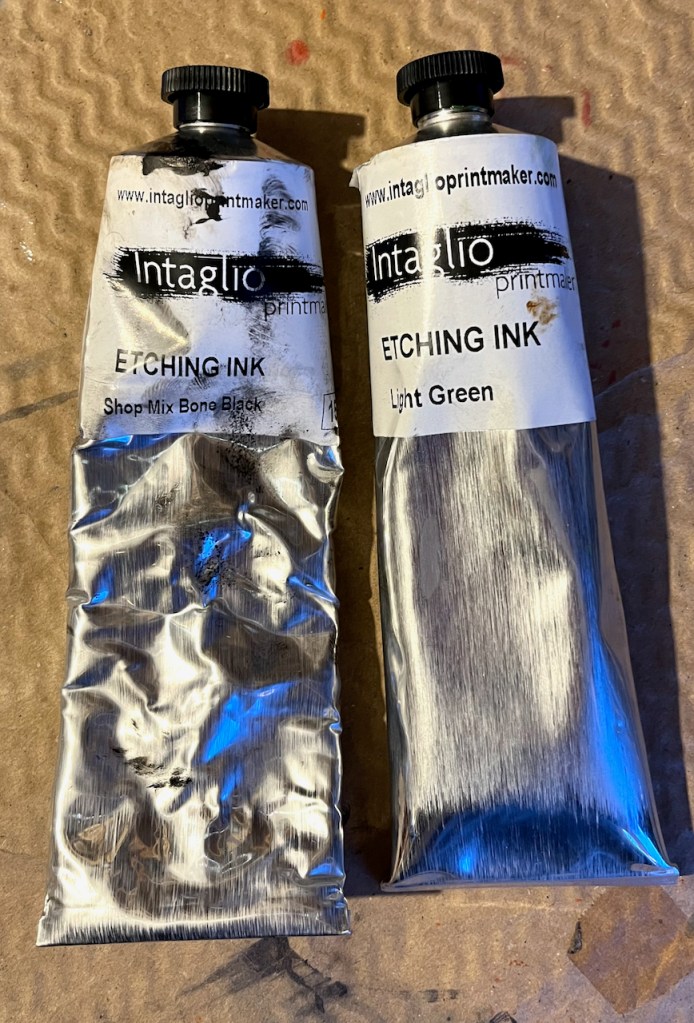
I etched the plates and made these prints at East London Printmakers, Stepney. The techniques for making the plates are hard ground, soft ground, aquatint and dry point. The ink is Intaglio Printmakers Shop Mix Bone Black.
The cranes are at The Historic Dockyard, Chatham, Kent ME4 4TE
Let me know if you’d like a “Two Cranes” print? The sheet is about A2 size.
Click a button below to share this post online, email it, or print it:
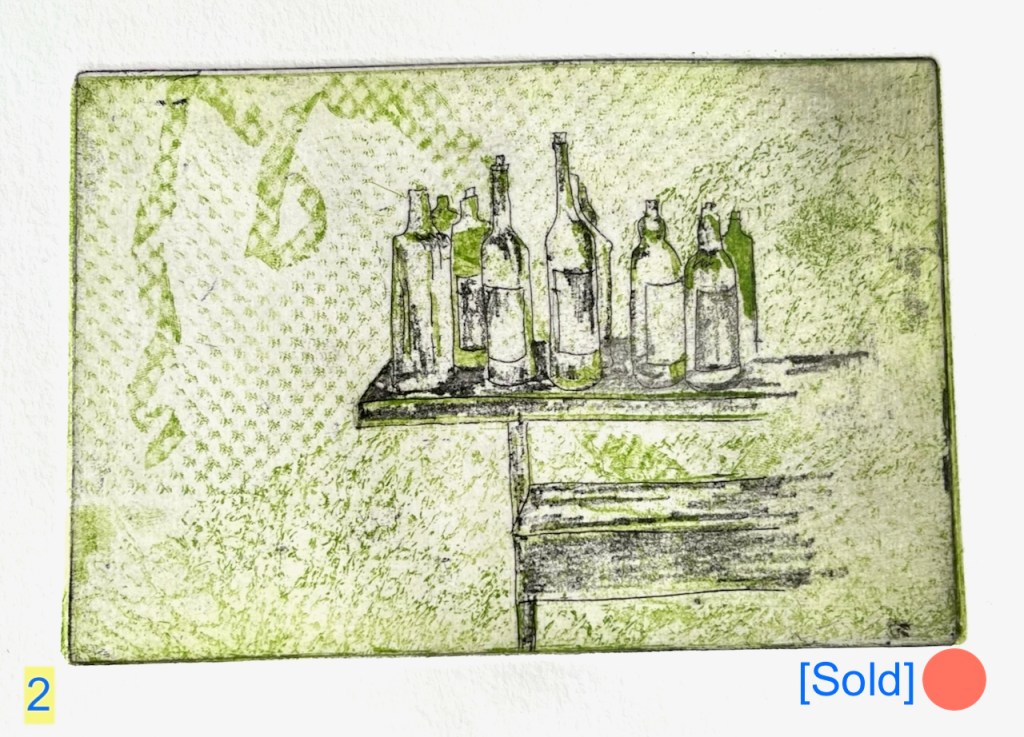
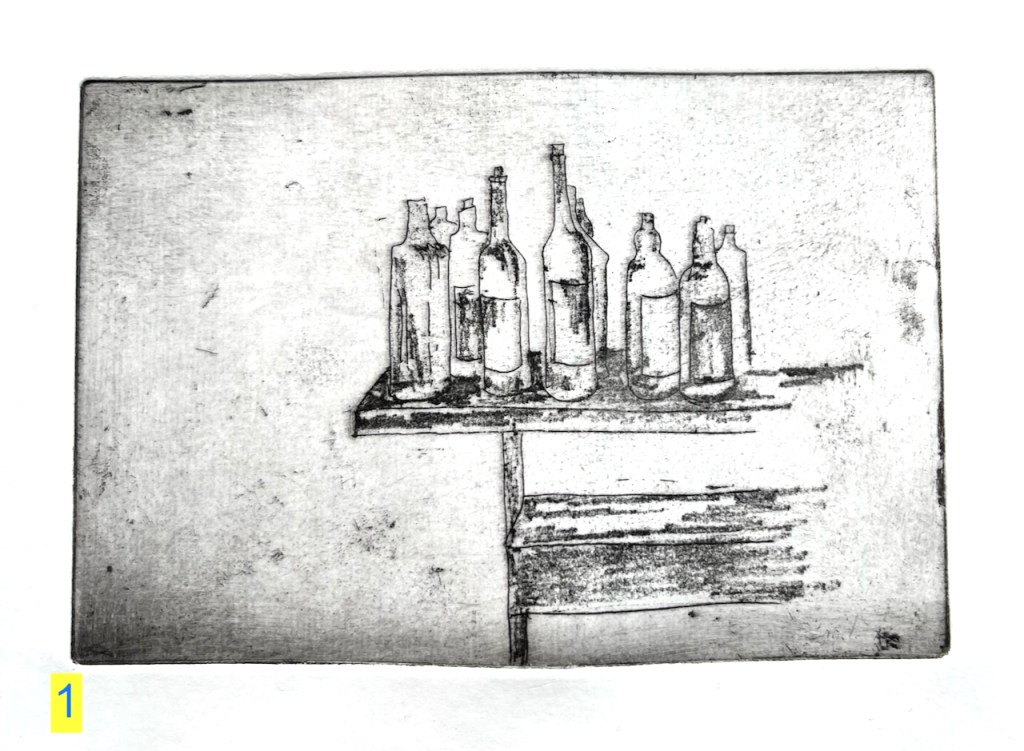
The ink is Intaglio Printmaker etching ink: Bone Black Shop Mix, and Light Green. Print 3 is made from two etched copper plates: first I printed the background pattern using green ink, then I printed the bottles and table, using black ink on another plate.
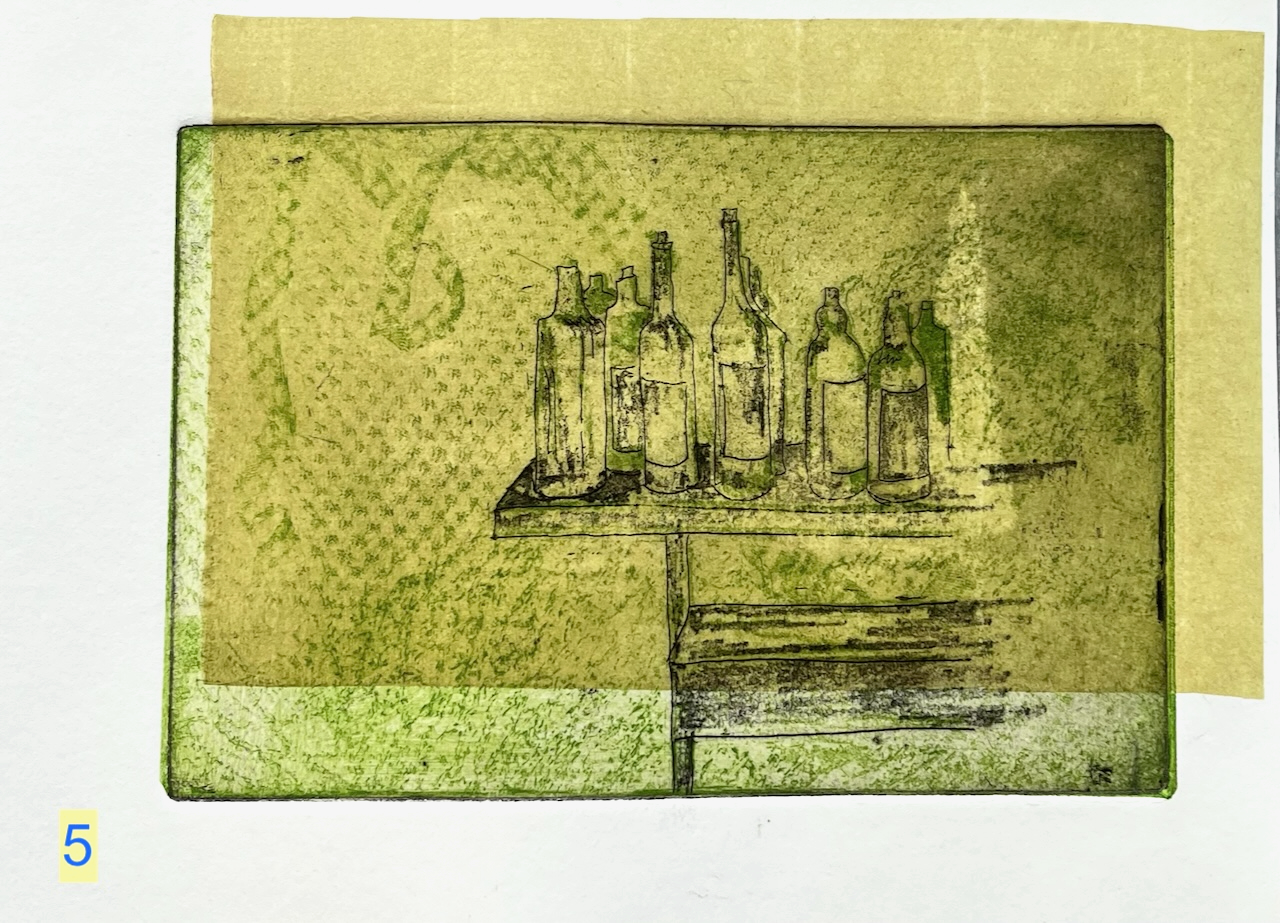
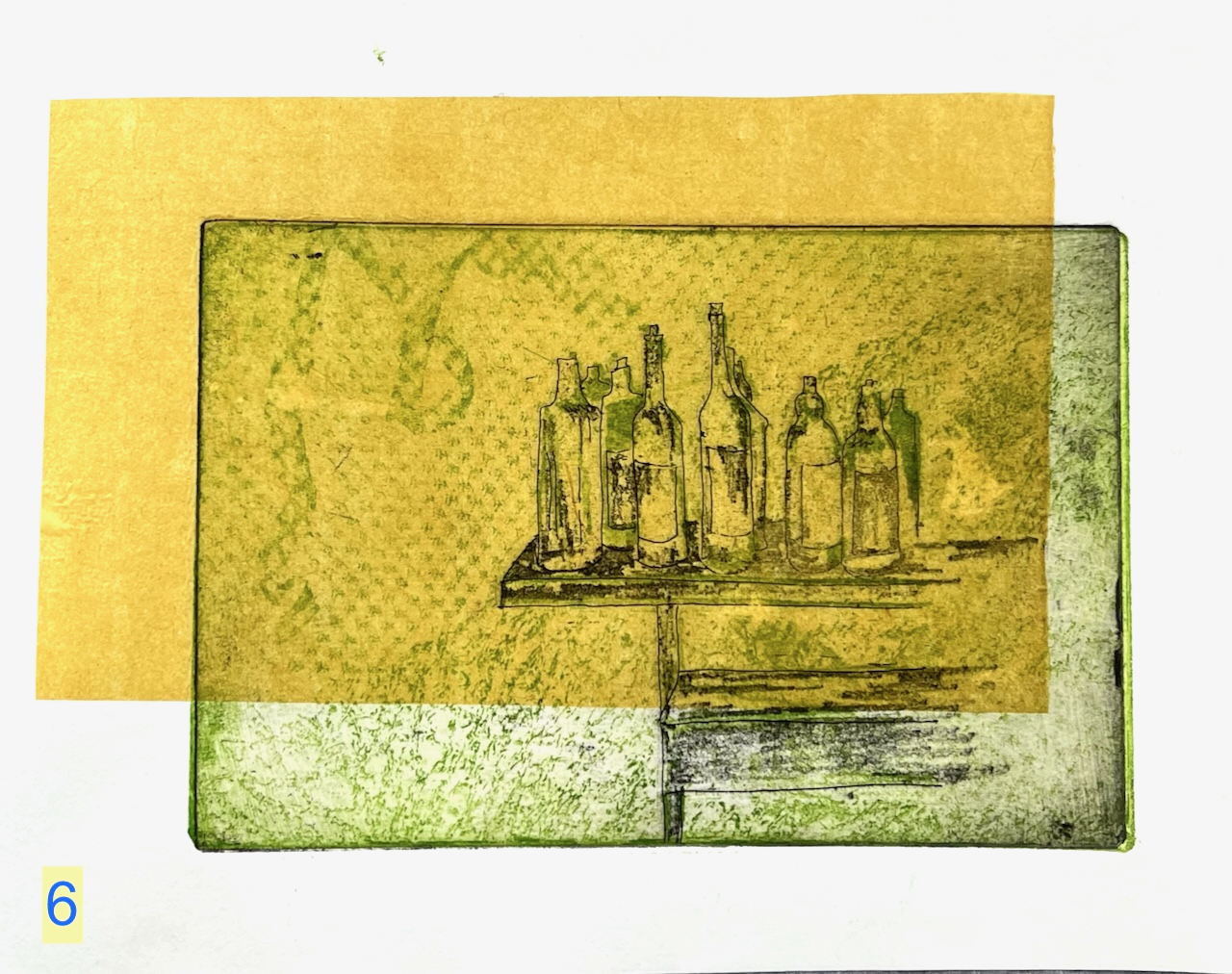
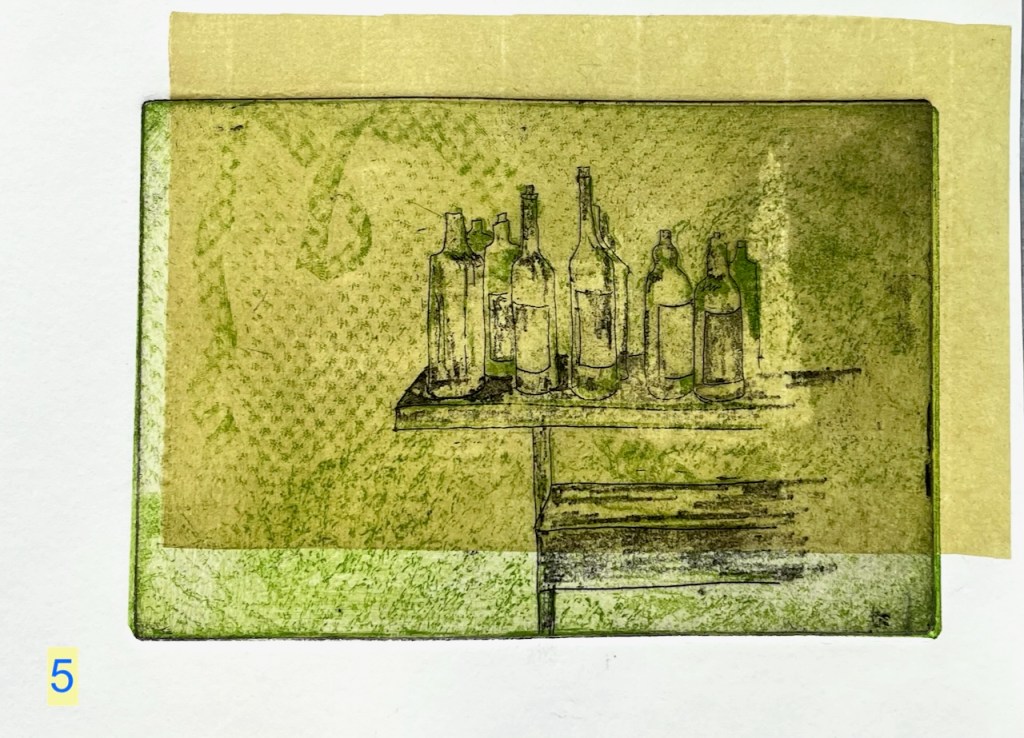
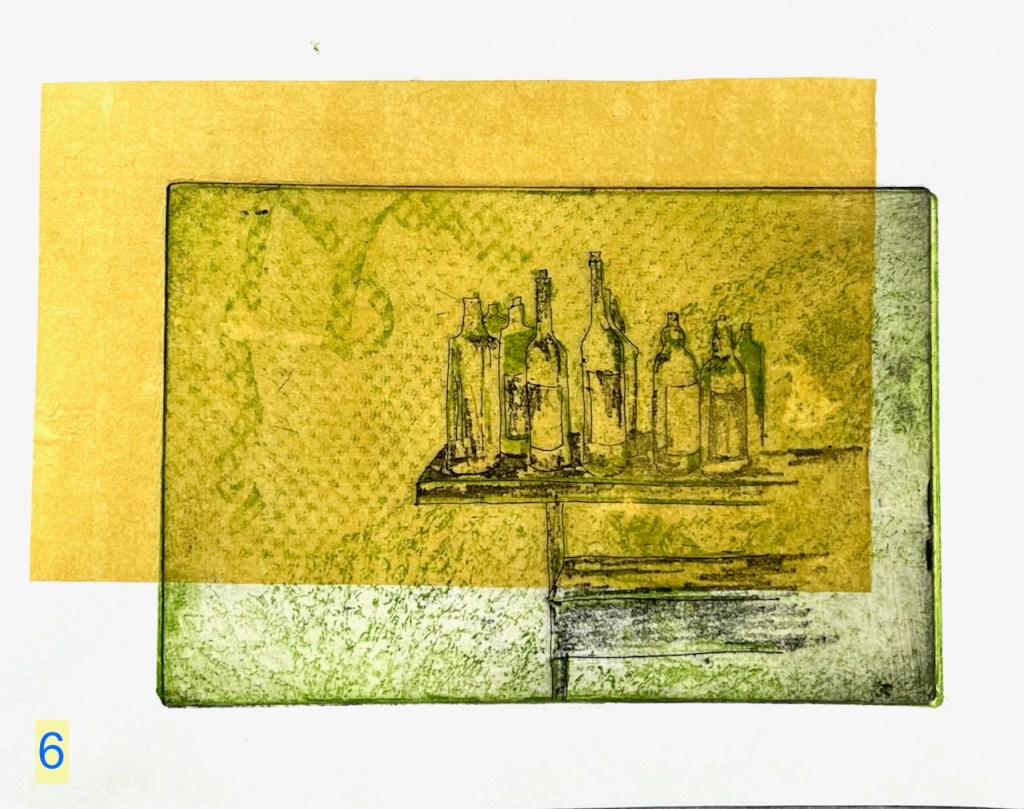
Then I made some more prints adding chine collé. Here are prints 5 and 6.
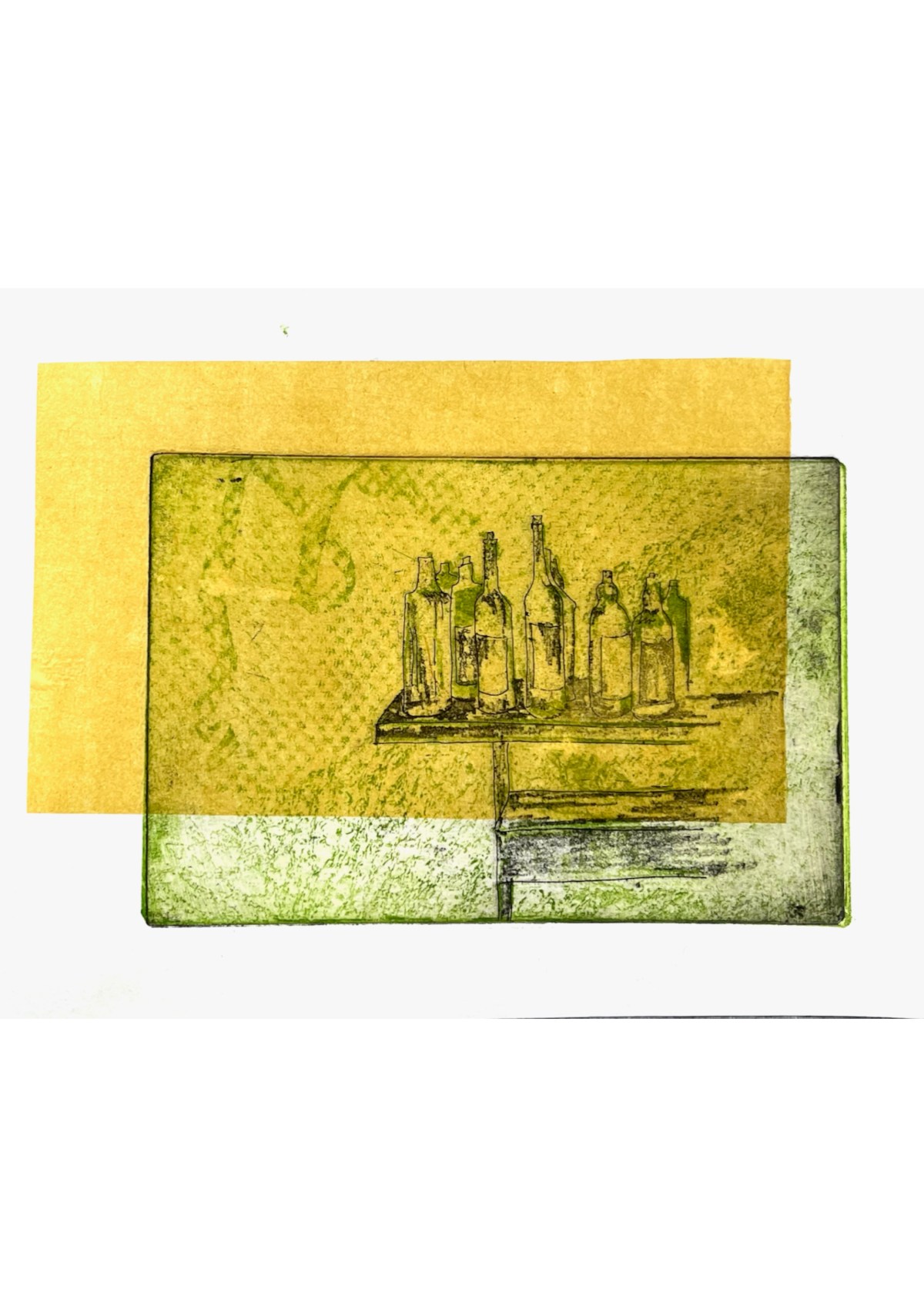
Chine collé is thin paper. I put it on the plate before the print roller goes over. The heavy rollers squeeze the coloured paper onto the picture, giving the yellow rectangles on the images of prints 5 and 6. The yellow rectangles give a sense of depth – maybe you are looking at these bottles through a window. Or maybe there is a window above casting a sunlit patch.
Prints 5 and 6 are made using two plates and chine collé. The process is lengthy and fraught with potential error:
put the glue on the yellow chine collé paper. Let it dry.
ink the green plate, the background
ink the black plate, the foreground. (don’t get them the wrong way round)
put the green plate on the press, inked side up (not inked side down)
put the white paper on top of it (don’t get ink smudges on the white paper)
roll the press across the plate, and keep the end of the paper under the roller so it doesn’t move while you….
…remove the green plate, and replace it with the black plate (get it oriented exactly where the green plate was, and the right way up, and the right way round)
put the glued chine collé paper on the black plate, glue side up (it is very lightweight and drifts about when someone walks past)
let the white print paper fall on top (as it falls it wants to dislodge the layers underneath)
roll the print press
remove the finished print ( examine – did it work?)
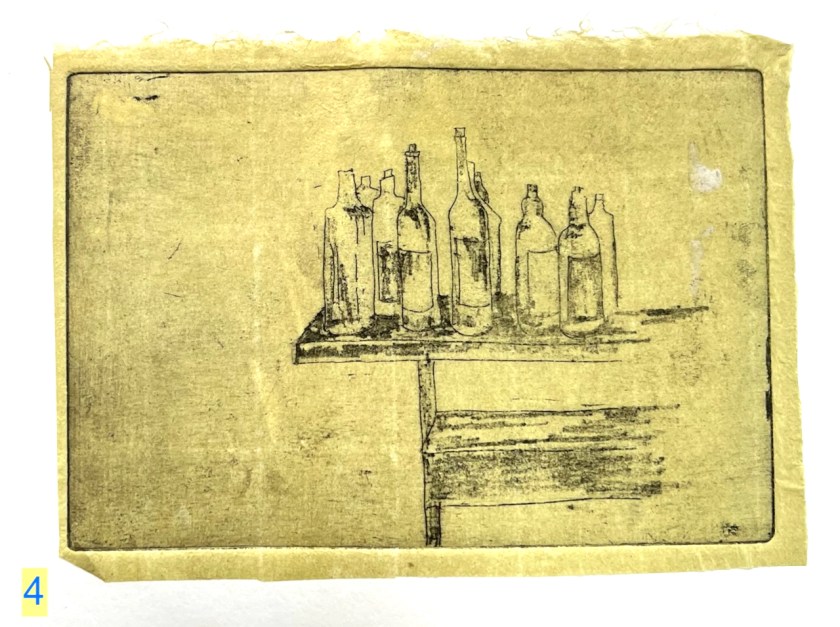
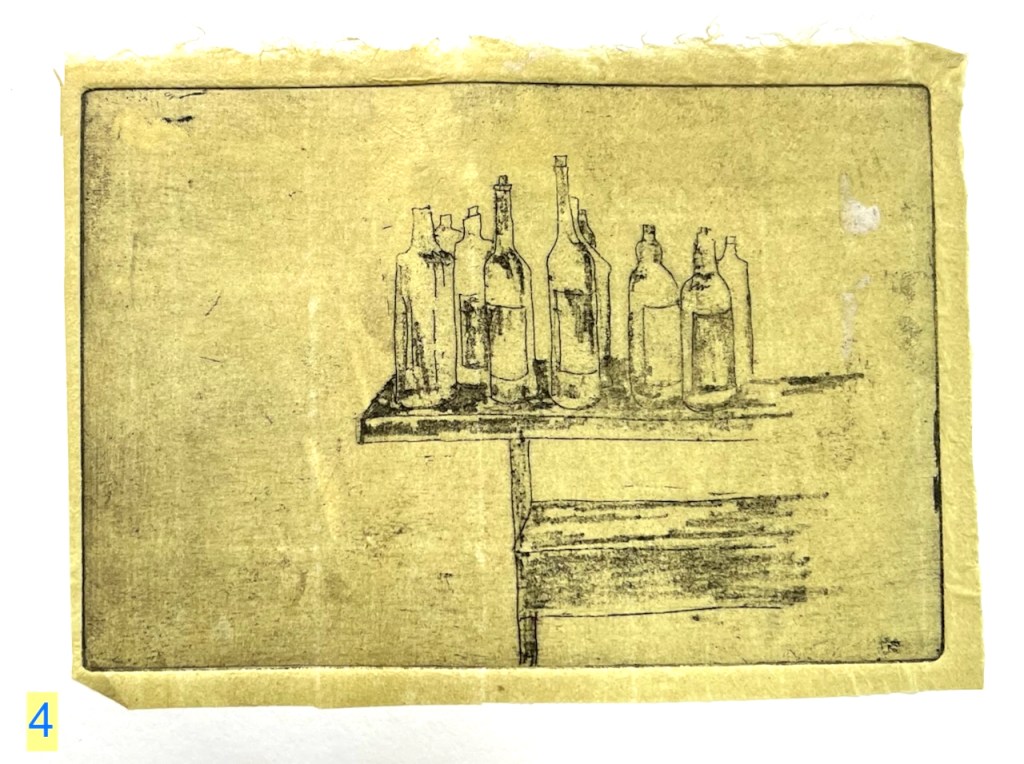
It is also possible to use the chine collé to provide a background for the whole image. Here is print 4. This is made using chine collé and one plate.
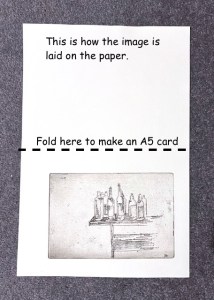
All these prints are made using heavyweight Fabriano Unica printing paper. It can be folded in half to make an A5 card to send to the absinthe enthusiast or wine drinker in your life. Or you can cut it down and frame it to make a small picture for your kitchen. The image itself is about postcard size: 10cm x 15cm. Let me know if you would like one? £25 + postage.
Here is a gallery of all six prints from this second series. These are all handmade prints from the etching press – not digital prints. I’ve numbered the prints in this post for easy reference. The numbers do not appear on the print you will receive. I can sign them if you like or not if you prefer them blank.
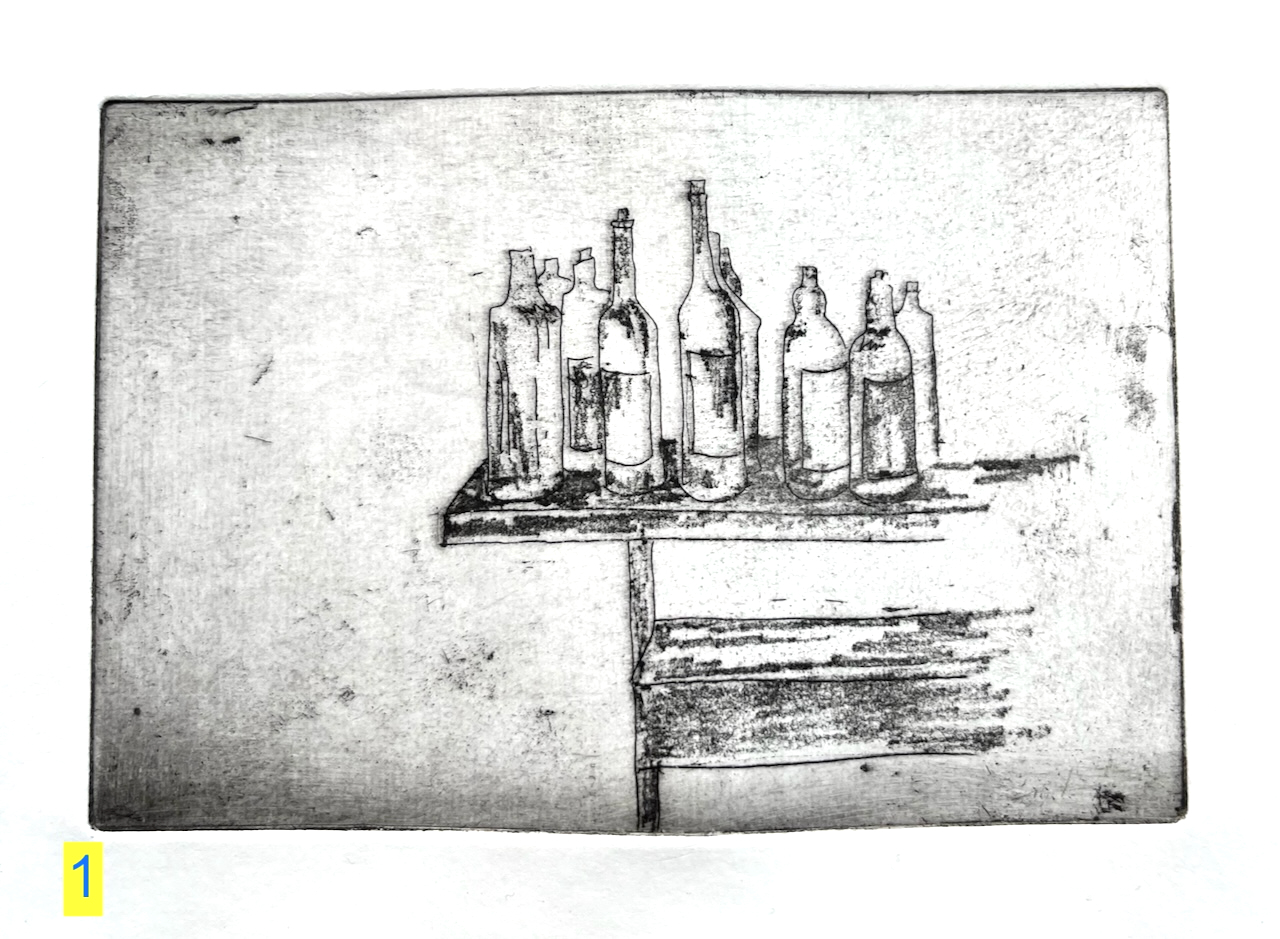
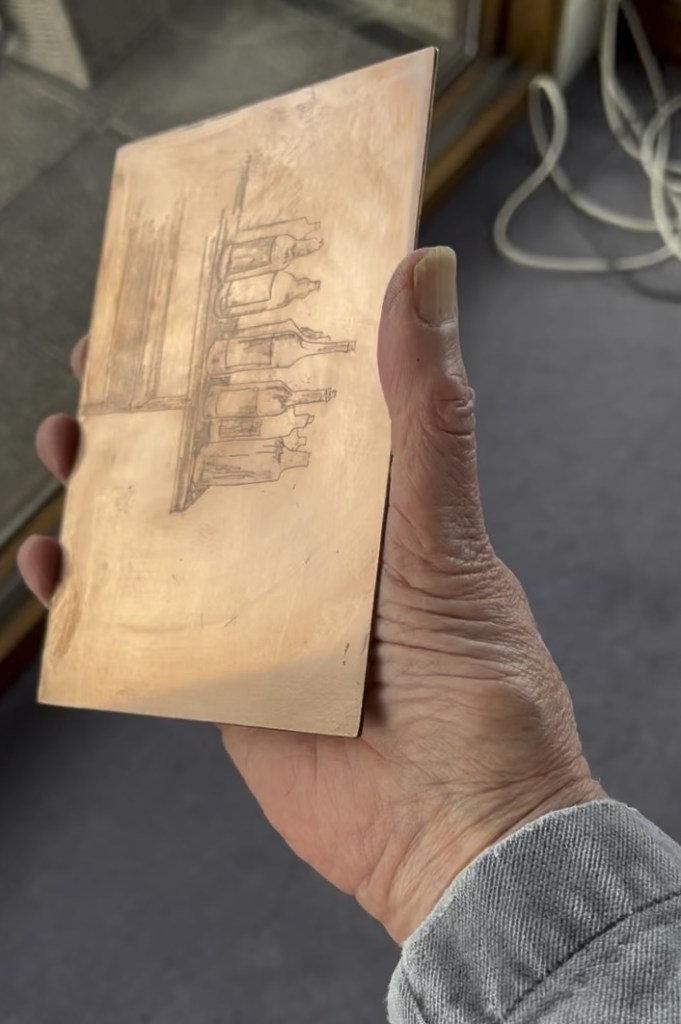
Here’s the copper plate I used for the black foreground:
Click a button below to share this post online, email it, or print it:


 Jane Sketching