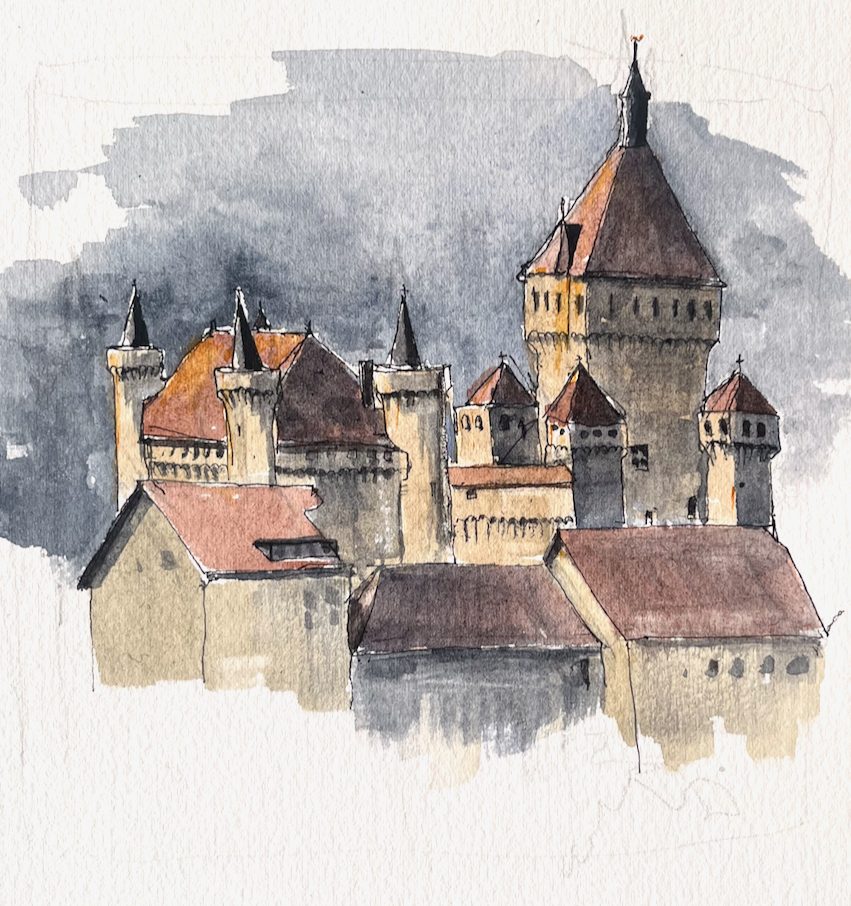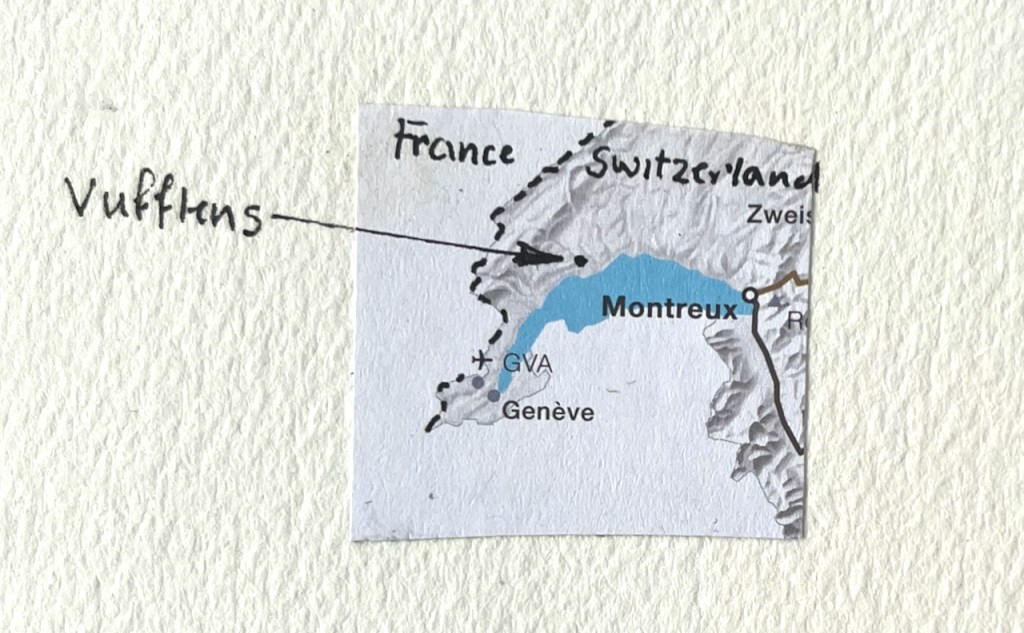
Château de Vufflens, Vaud, Switzerland

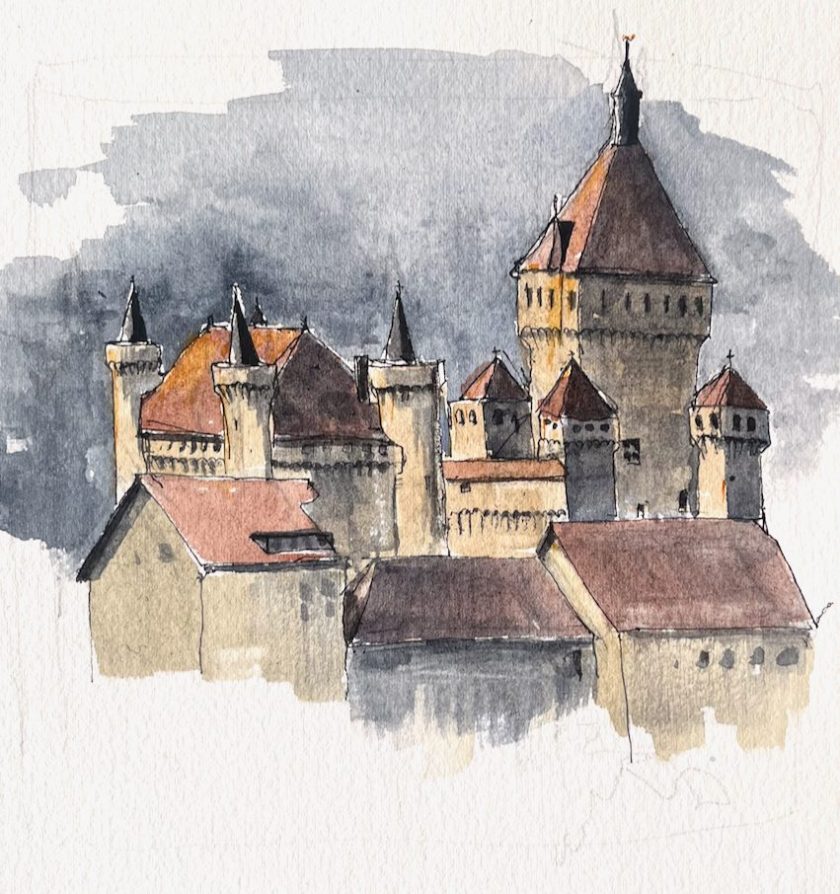
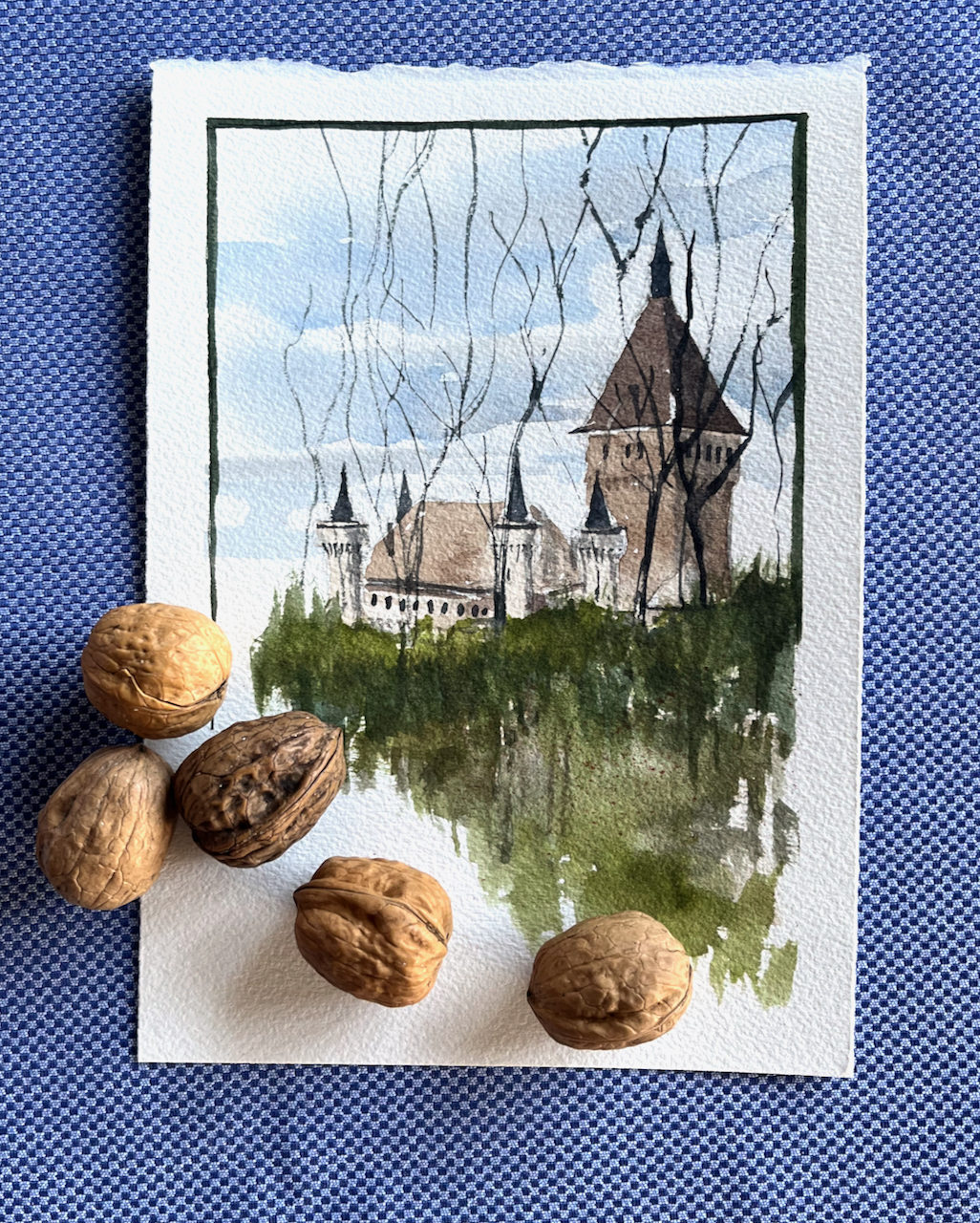
Fine rain started as I sketched the Château de Vufflens. At first I thought I could keep sketching. But then rain arrived in large-size drops, some containing ice. I took refuge under an archway. There was a view of the castle from there, but a different view. Also, standing there, I was, very possibly, in someone’s garden. I am not sure about Swiss laws on trespass. All I was sure of was that there would be laws. I assembled suitable French phrases in my head, to be ready to explain and apologise. And I restarted the sketch from this new angle. Then the rain stopped.

I inspected the sky suspiciously. I watched the cloud movements. Clouds just appear here, over the mountains, as from a volcano. They don’t proceed in an orderly succession as they do over the Atlantic. However all seemed more lightweight and friendly than it did earlier. I exited from the archway, and resumed my place on the public roadway. There are probably laws about sketching on the public roadway too.

But no-one even walked past. Not a car. Not a person. Not a dog. So that was alright. I finished the sketch. And then the rain started again.

Château de Vufflens in the morning, 24 March 2024 11:15 in Sketchbook 14

This castle is privately owned. It is on a rock in the valley, surrounded by high walls. Houses cluster at the bases of the walls. if you know the work of Mervyn Peake, think “Gormenghast”.

It was originally constructed in the middle ages, 1420-1430, for Henri de Colombier, an adviser to Duke Amadeus VIII of Savoy, I was told. It looks well maintained, and vast.

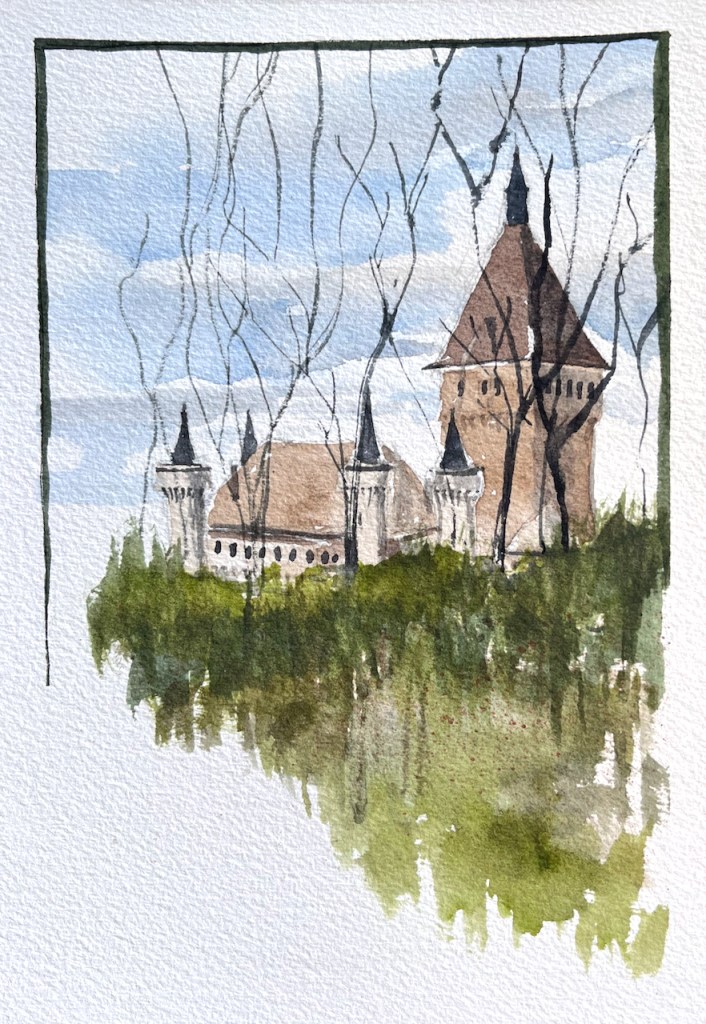
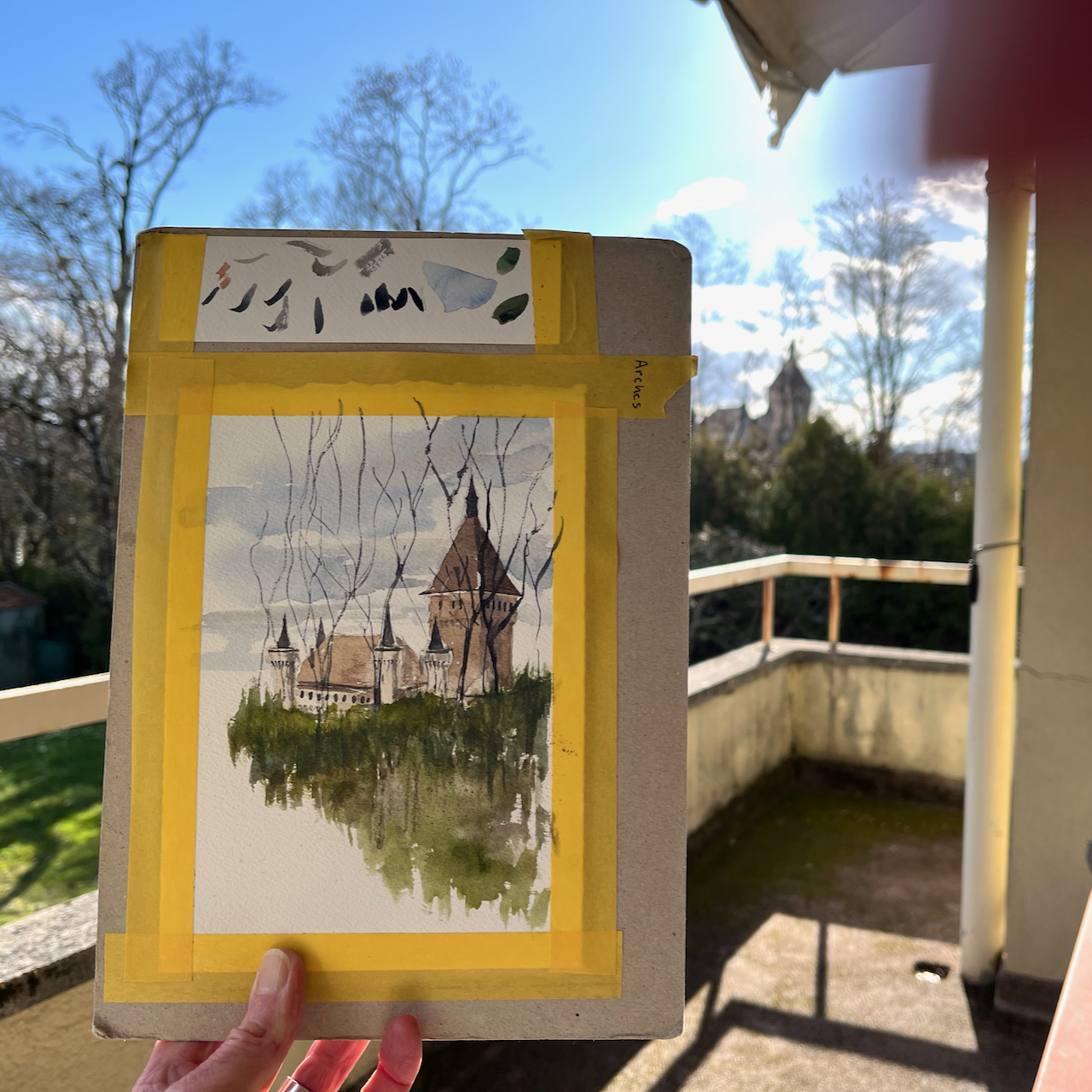
Later that day I made another attempt at drawing the castle, from a different angle. From this new viewpoint I could be under cover, but there were trees. I put the trees in.

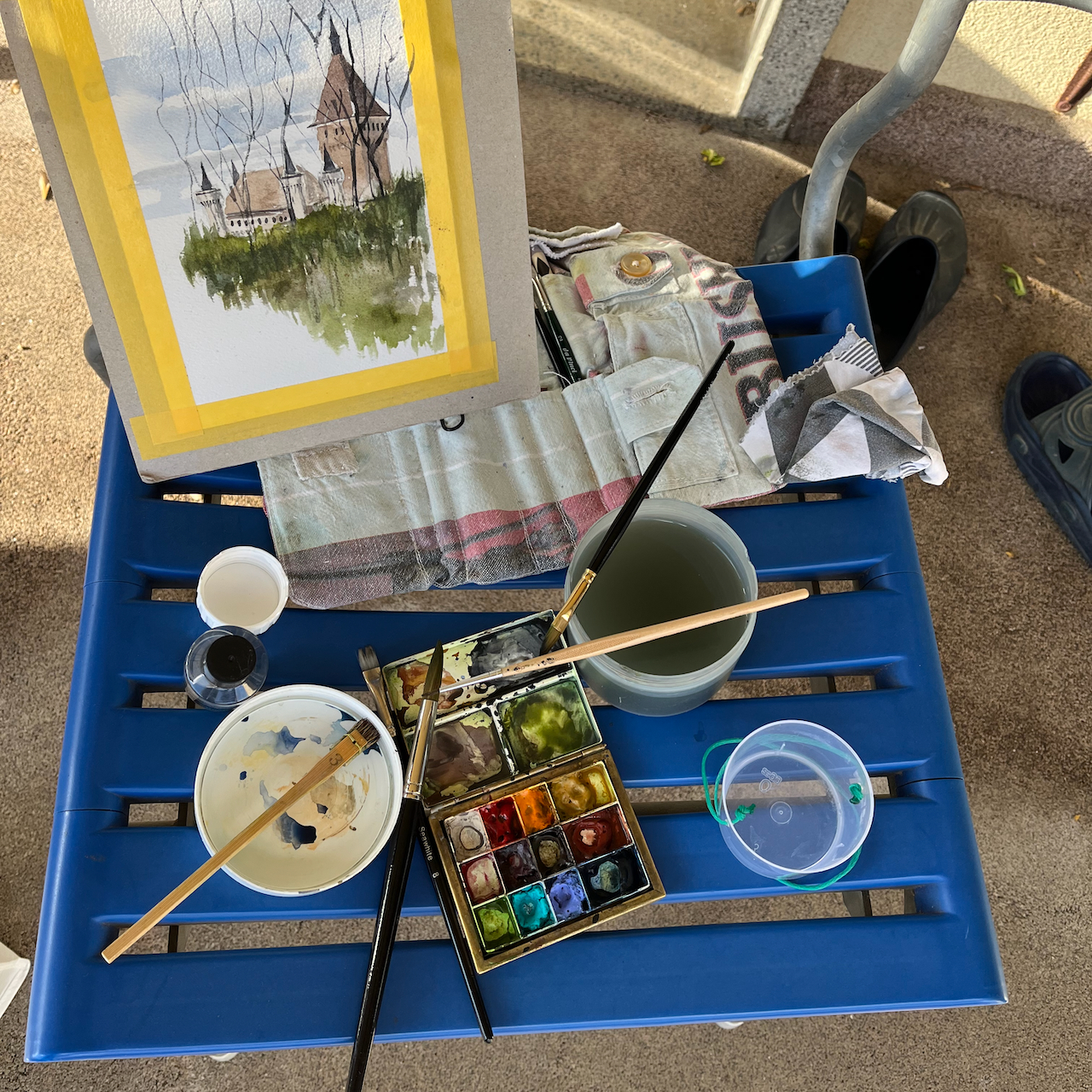
Château de Vufflens in the afternoon. 24th March 2024, 4pm. 6″ x 8″ on Arches Aquarelle card

The walnuts came from the trees.

St George’s Esher, Old Church, KT10 9PX

After sketching the Tin Tabernacle in Esher West End, I walked into the town centre to sketch another St George’s: St George’s Old Church.

St George’s, Esher, Old Church. Sketched February 2024 in Sketchbook 14

Here is the notice by the door:

ST GEORGE ESHER
This church is cared for by
The Churches
Conservation Trust
.
Although no longer needed for regular worship, it remains a consecrated building, a part of England’s history, maintained for the benefit of this and future generations.

Here is the notice hanging from a post by the gate:

Welcome to ST. GEORGE’S CHURCH

Esher’s oldest public building and one of the earliest Anglican churches.
Most of the structure is 16th Century Tudor Two 18th Century features of te Church are a 3-decker pulpit and the Newcastle chamber pew designed by Sir John Vanburgh for Thomas Pelham., Duke of Newcastle and his brother Henry: both served as Prime Minister.
Princess Charlotte – heir to George IV – and Prince Leopold – who became the first King of the Belgians – worshipped here when they lived at Claremont after their marriage in 1816.
Queen Victoria, Leopold’s niece attended services when visiting her uncle and later came with Prince Albert.
When Christ Church was completed in 1854 St George’s ceased to be the Parish Church.
Restored by the community in 1965 it remains a consecrated building now in the care of the Churches Conservation Trust. Several services are held each year. It is also a venue for music and the arts.

I sketched it from the graveyard, as the sun set. So many angles and views! It has been altered and added to and mended, yet is graceful and somehow perfect.

Behind the church there were crocuses.

A wonderful place! Tranquillity just off the main road.

Here’s a map. I walked here from the St Georges West End, along the route marked with a red line on the map: a half hour’s walk, just over a mile.

Here is work in progress on the drawing.

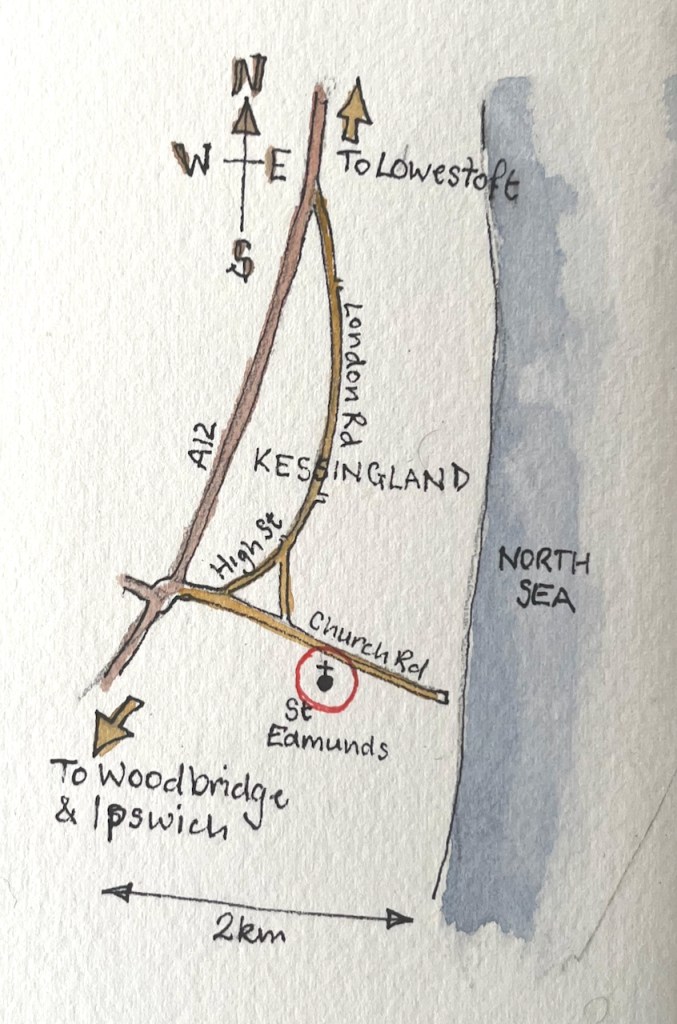
St Edmund, Kessingland NR33 7SQ

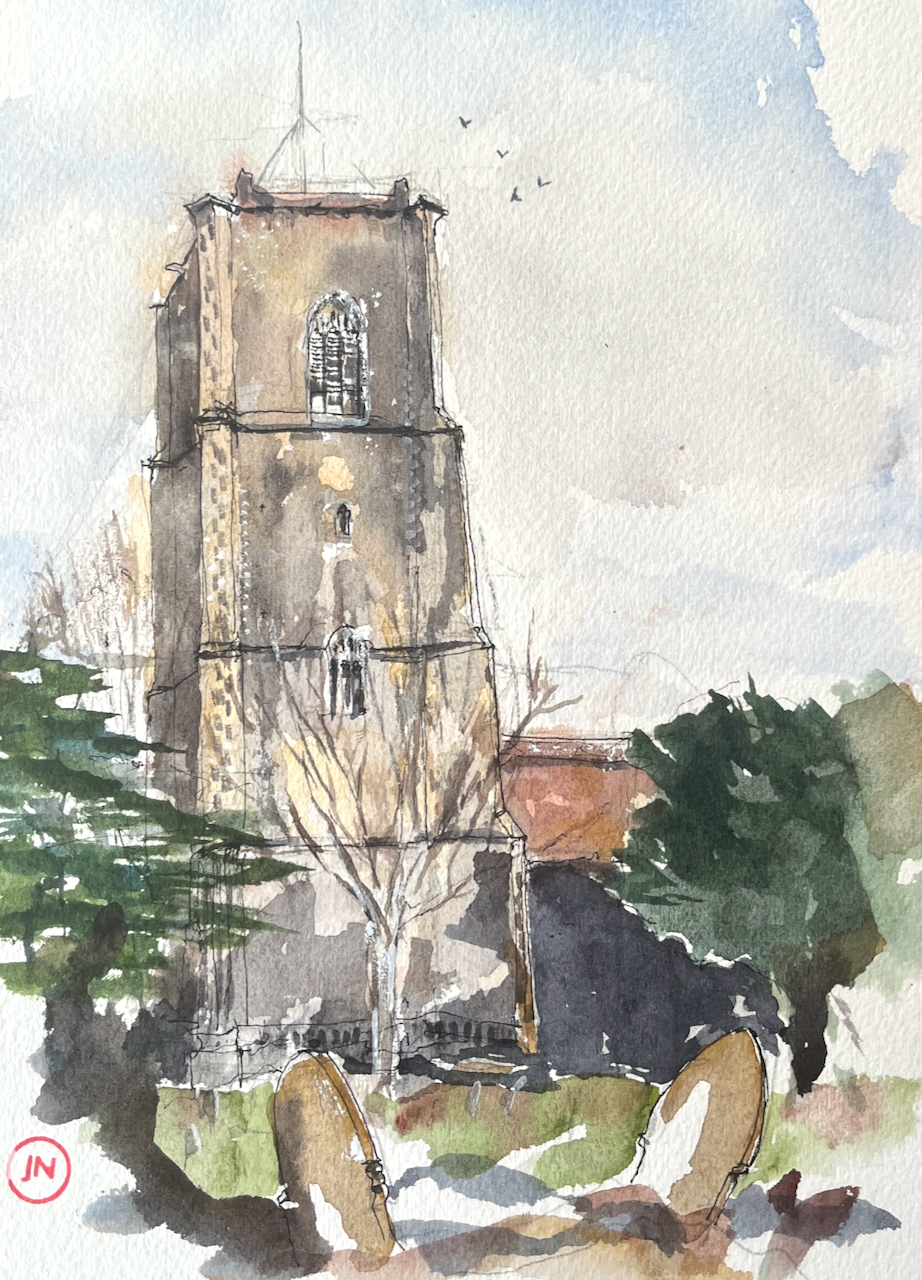
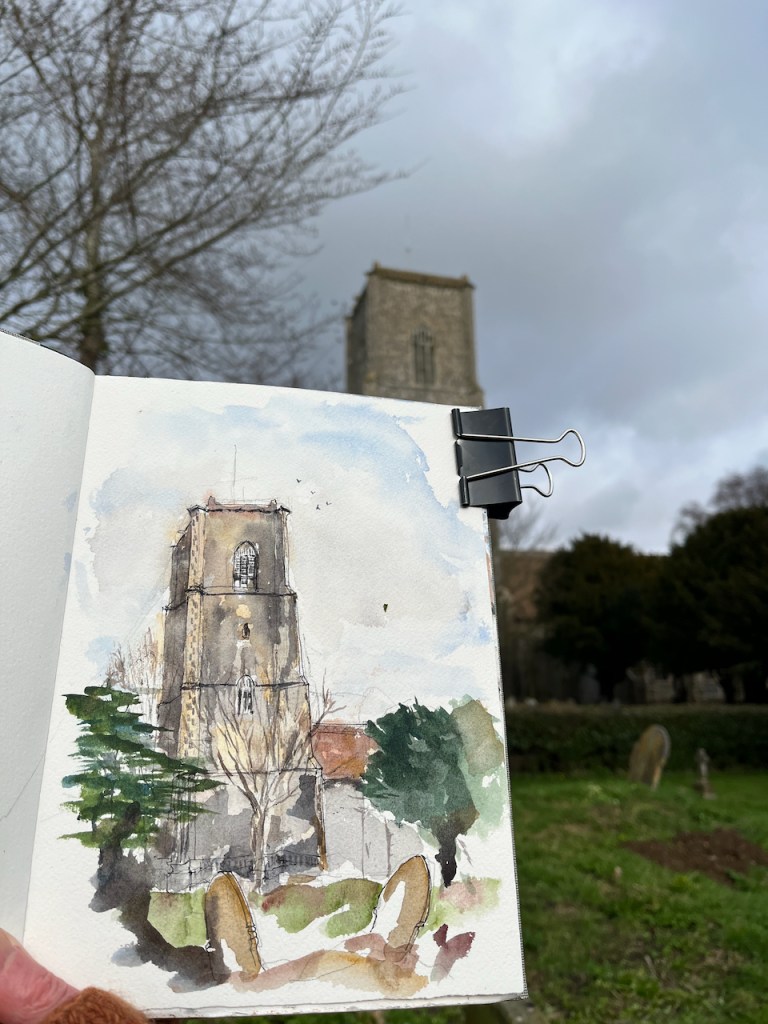
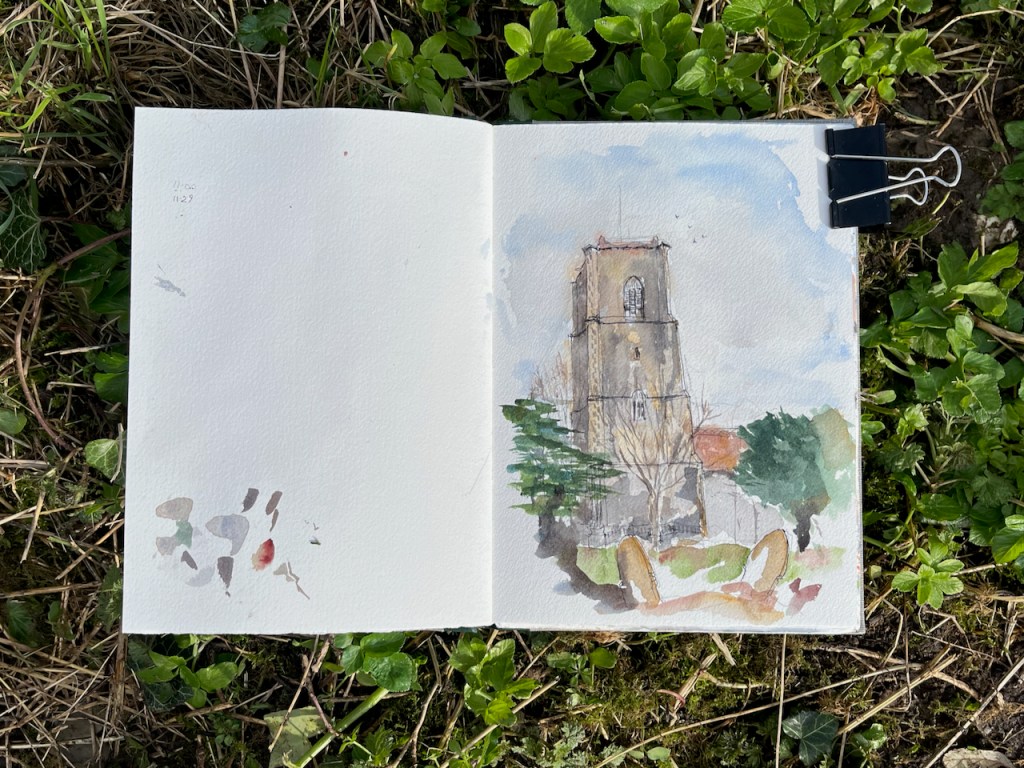
Here is the church of St Edmund, Kessingland, seen from the south.

Church of St Edmund, Kessingland. Sketched 11 February 2024, 12:30 in Sketchbook 14

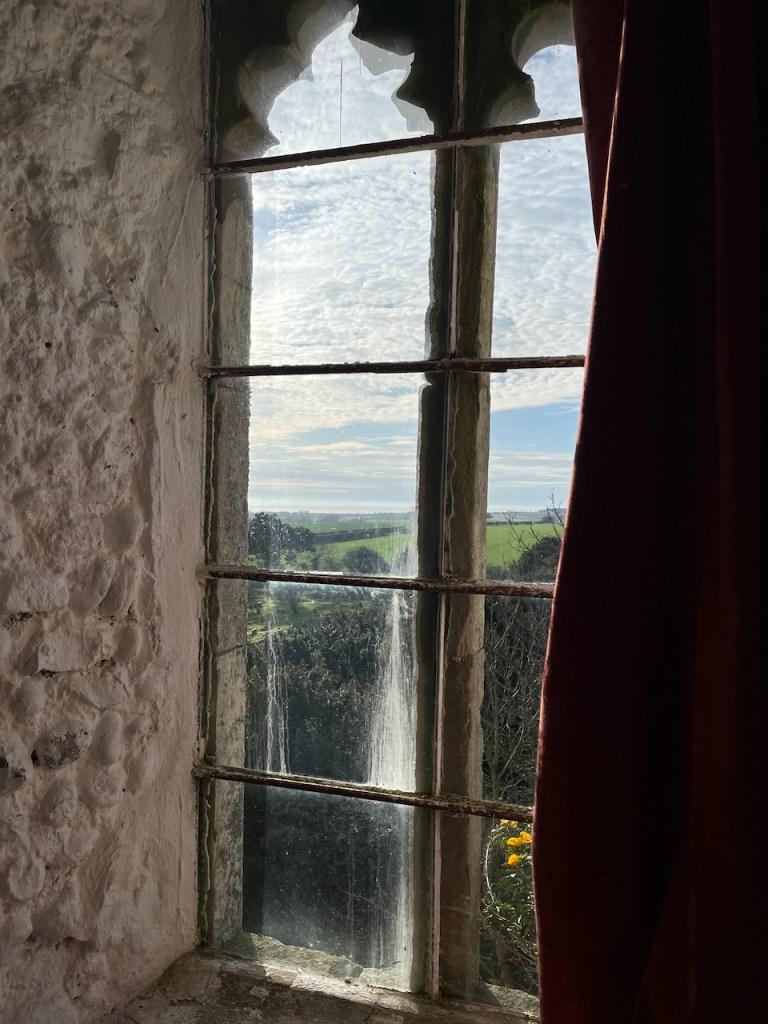
I was a guest of the bell ringers, who kindly invited me to their loft. There are six bells. I witnessed their splendid peals, which made the tower shake slightly under my feet. This was a surprise to me, as the walls of the tower are about three foot thick. But apparently it’s perfectly normal. Then I went outside and sketched the church from the south.

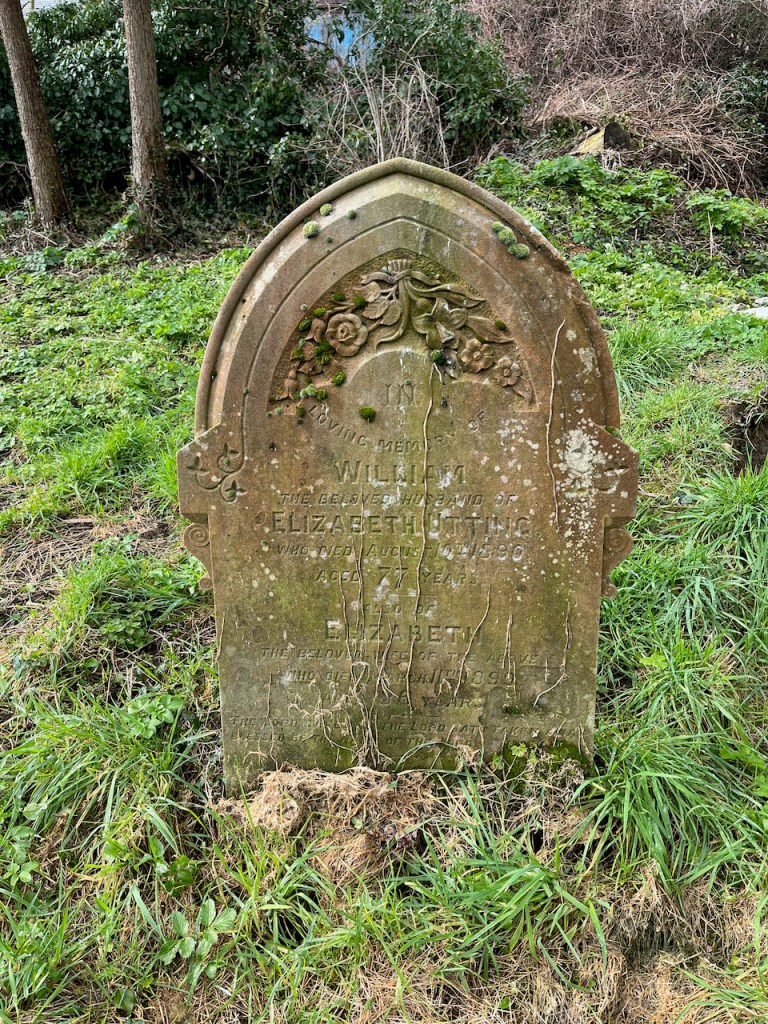
It was a beautiful place to stand and sketch: a peaceful country churchyard. The gravestone in front of me, in the foreground in the picture, carried stone carved flowers, and cushions of moss.

This tower is very old. According to the Historic England listing, the tower is from the 15th century and Grade I listed. There is neat flint work, in a chequerboard pattern higher up and in vertical lines lower down, with a horizontal border at ground level. The nave is thatched! It has recently received new thatch, in a glowing russet colour which you can just see to the right of the tower.

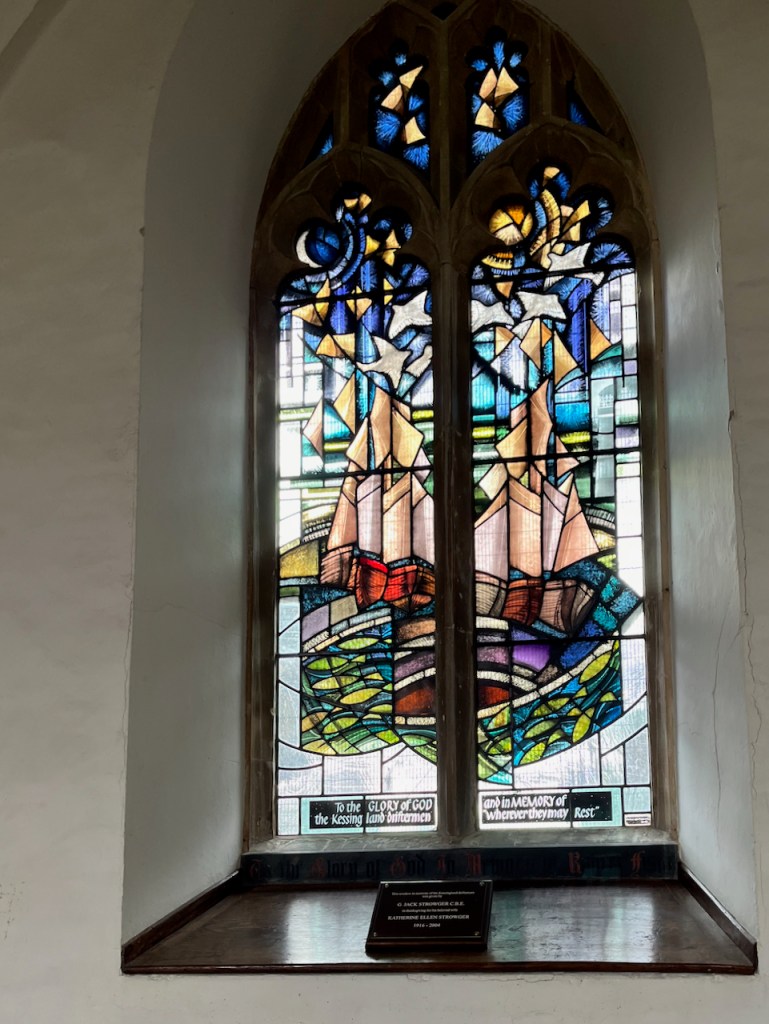
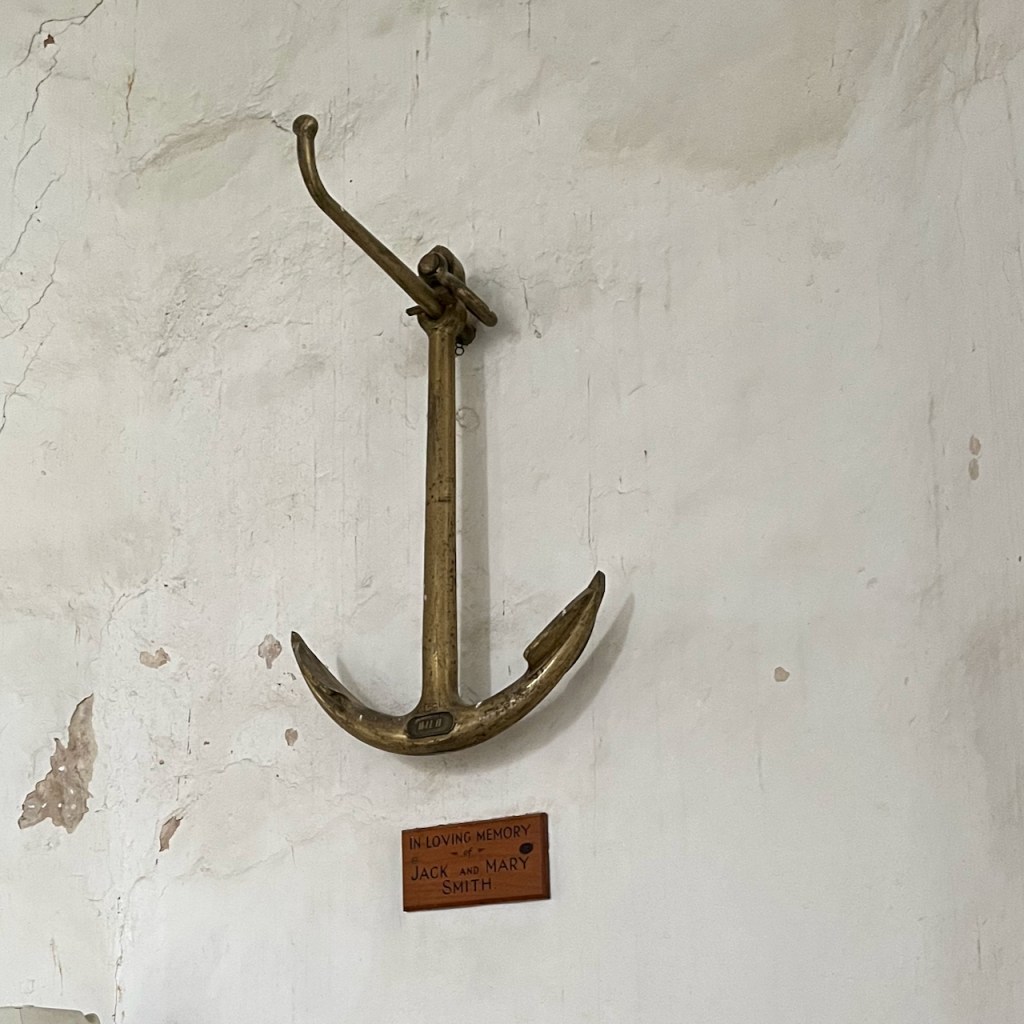
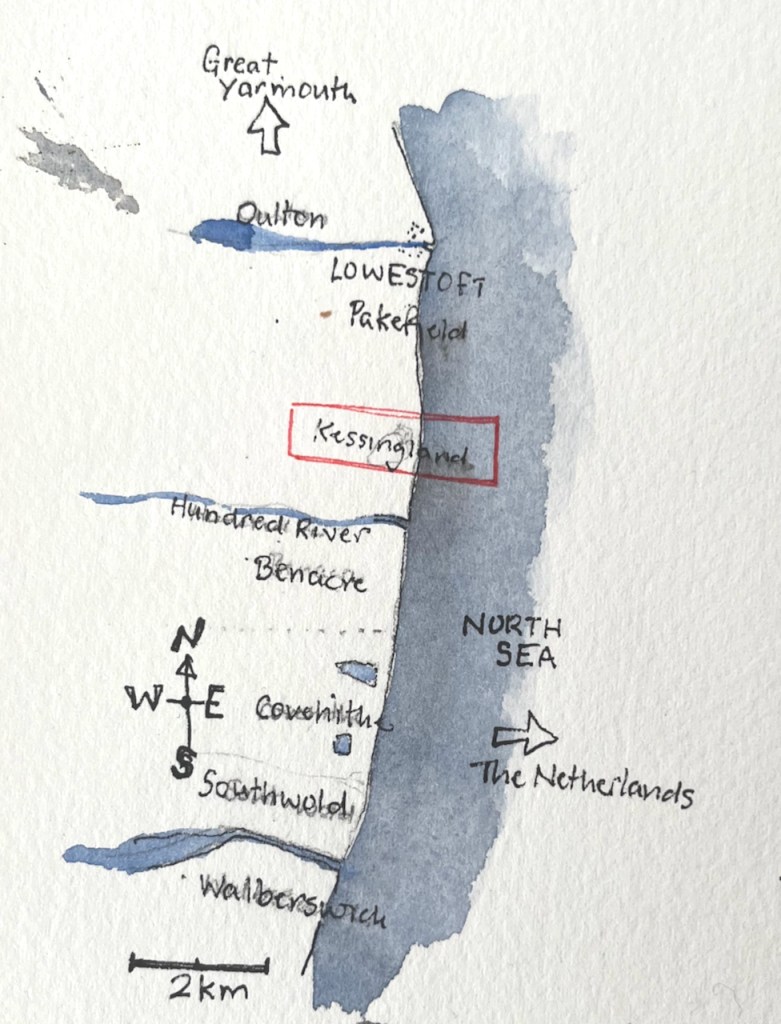
The church is about half a mile from the sea. There is a stained glass window, dated 2007, by Nicola Kantorowicz, dedicated to the “Glory of God and the memory of Kessingland driftermen, ‘where ever they may rest'”. It was given by G. Jack Strowger in memory of his wife Katherine. There is a ship’s wheel on the wall, and another on a low pulpit. An anchor hangs from the wall, “in loving memory of Jack and Mary Smith”.

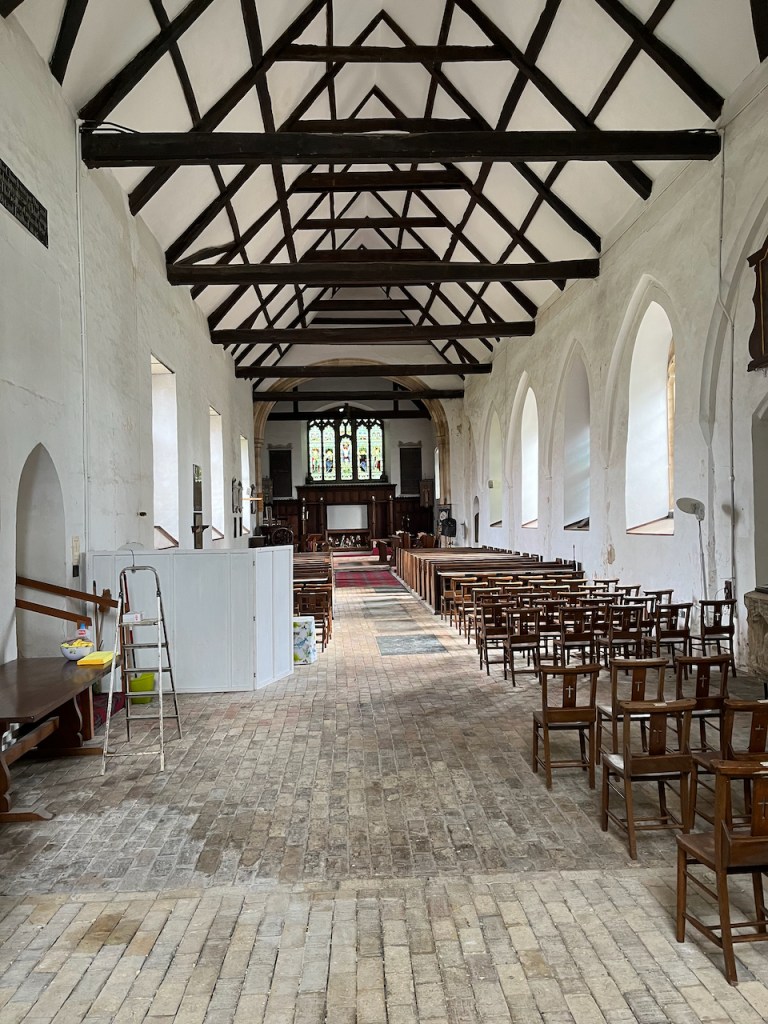
The nave of the Church of St Edmund, Kessingland, looking east.

It’s well worth a visit if you are in the area.