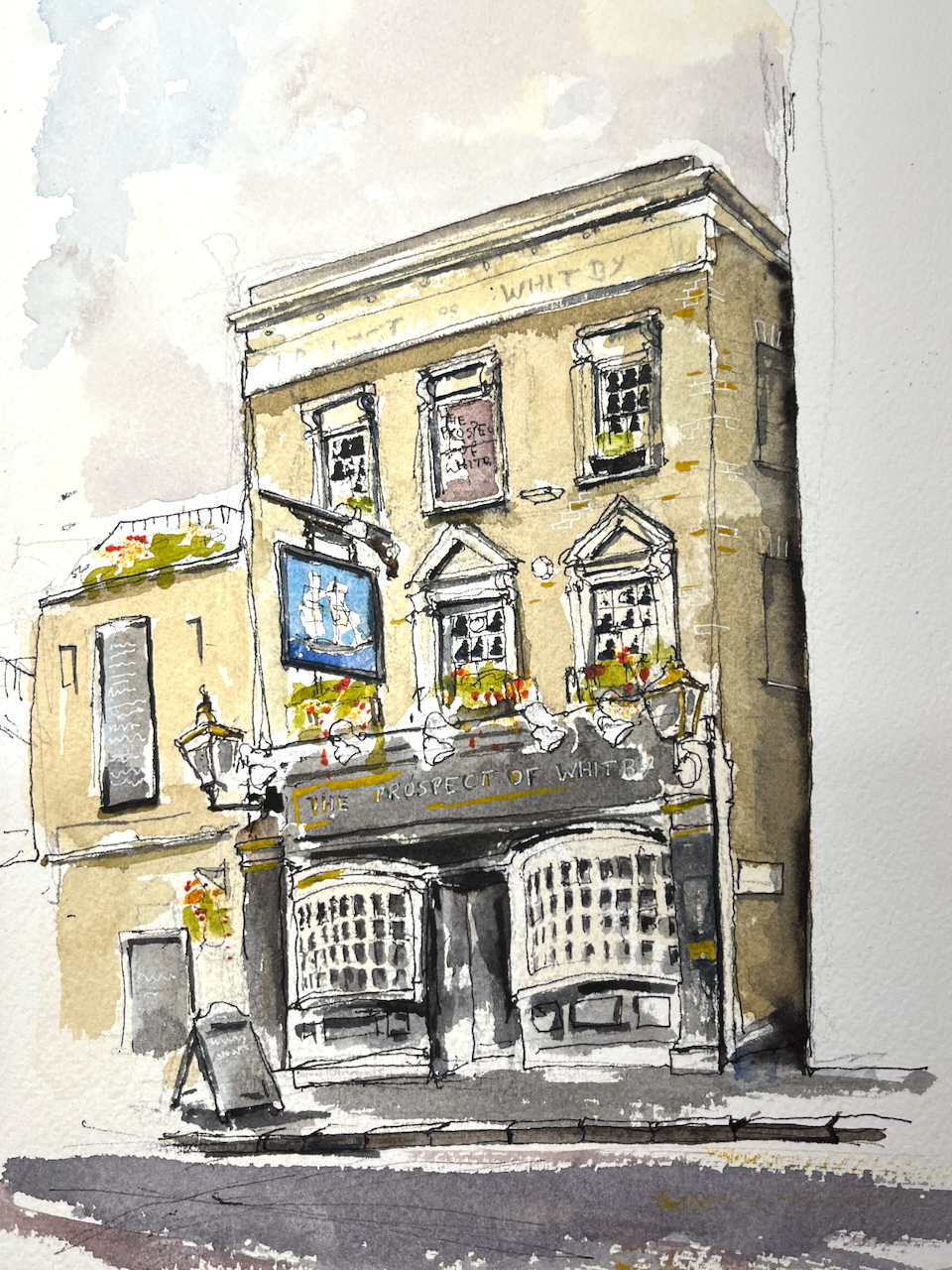
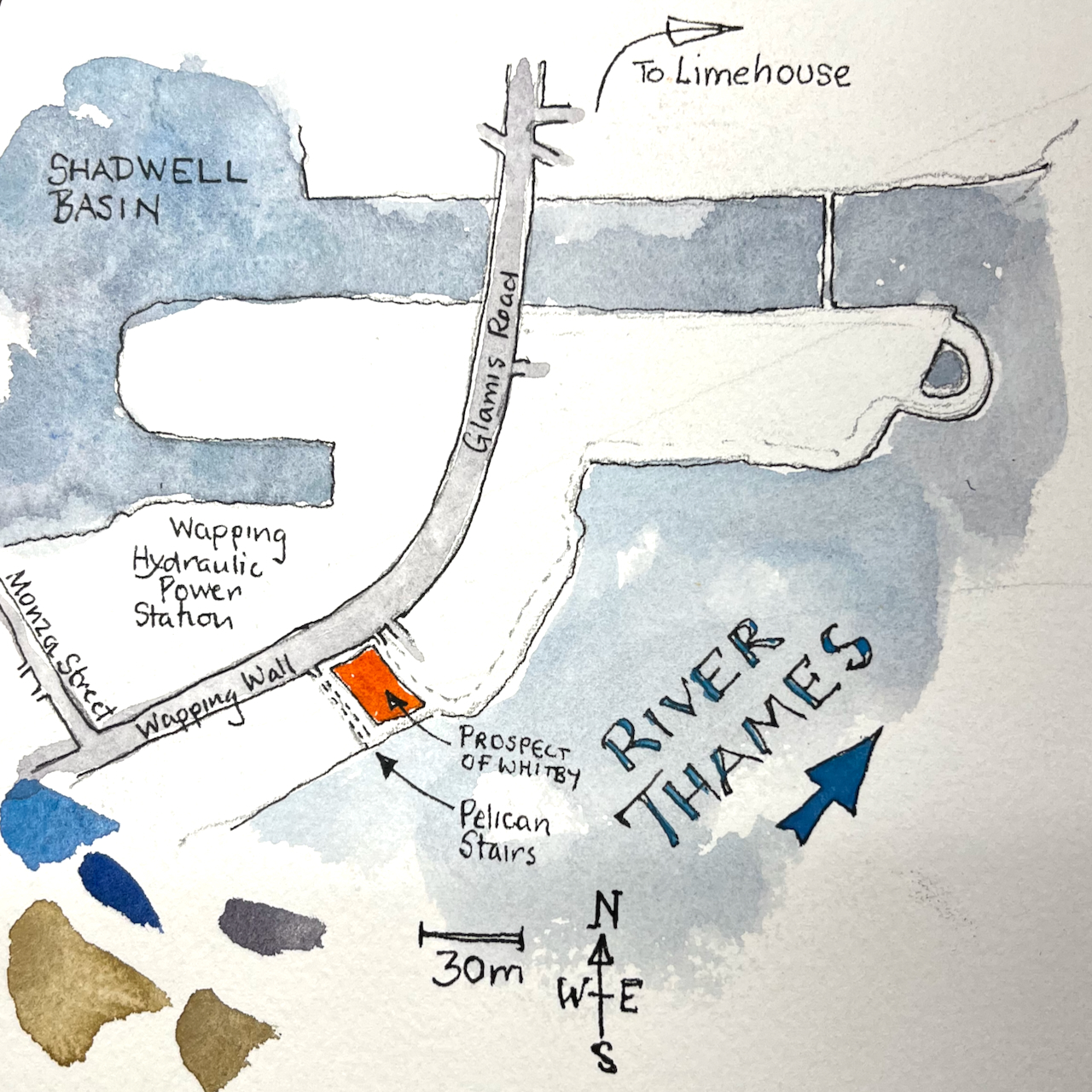
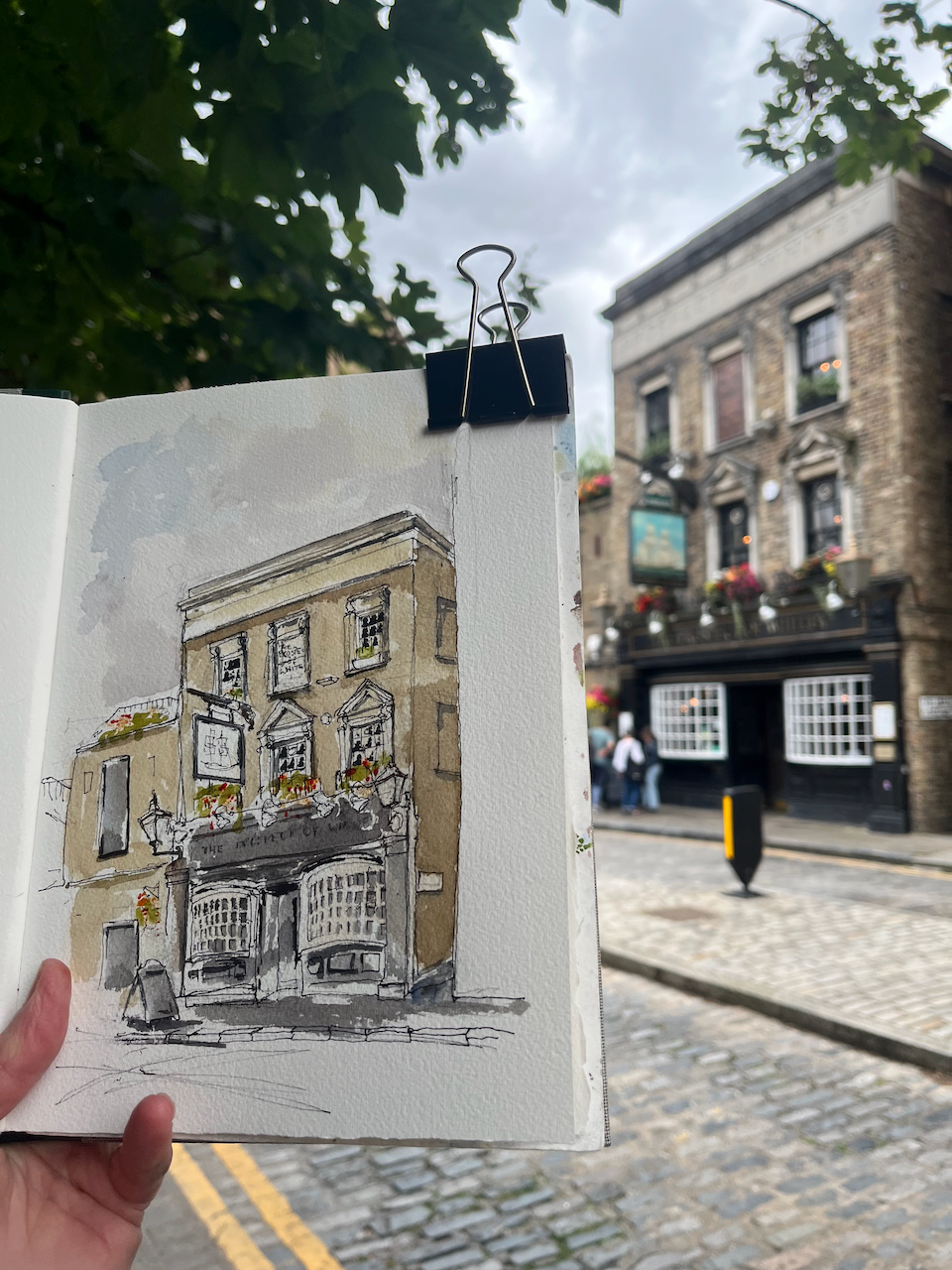
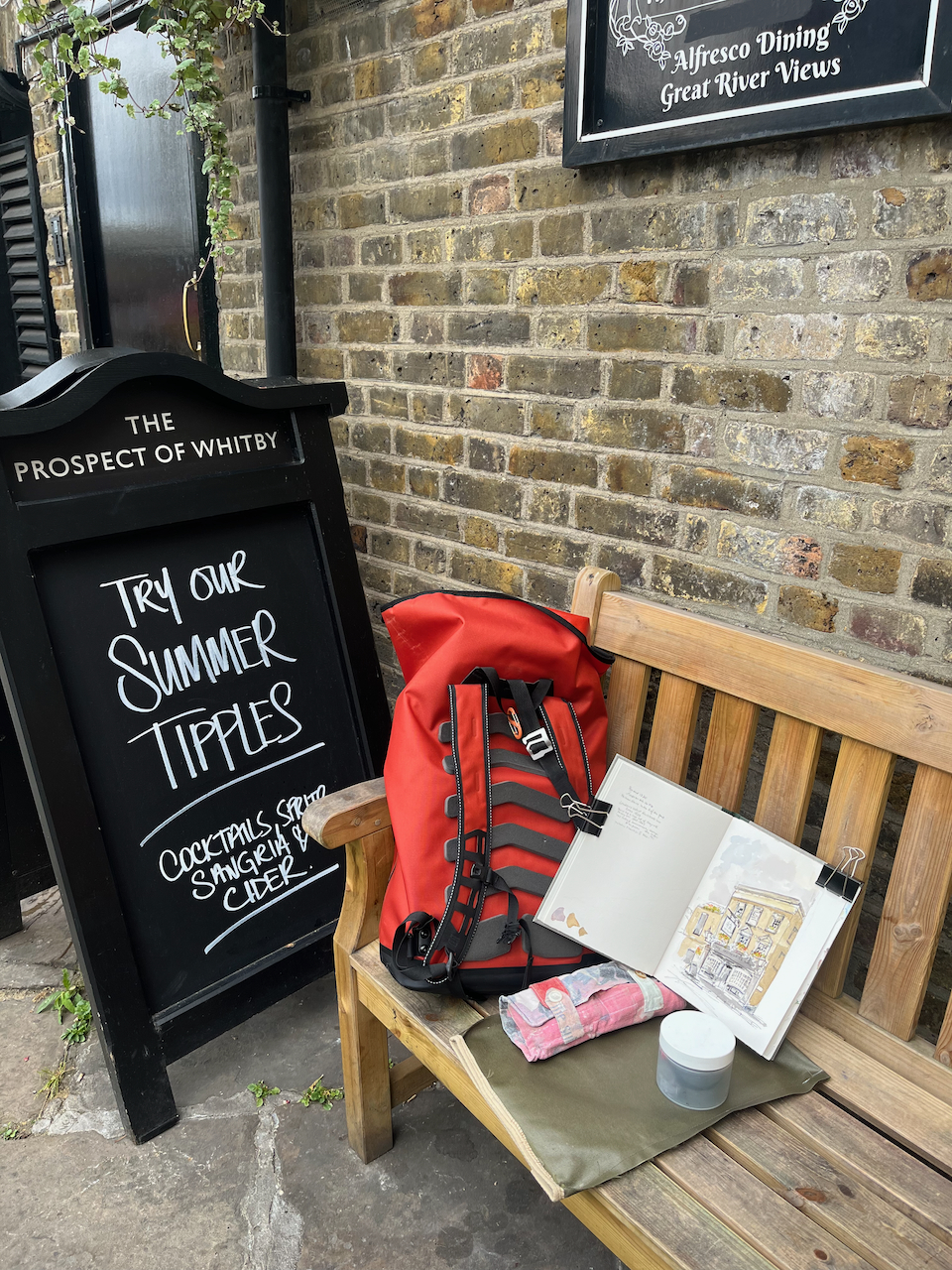
Here is the “Prospect of Whitby” pub by the Thames in Wapping.
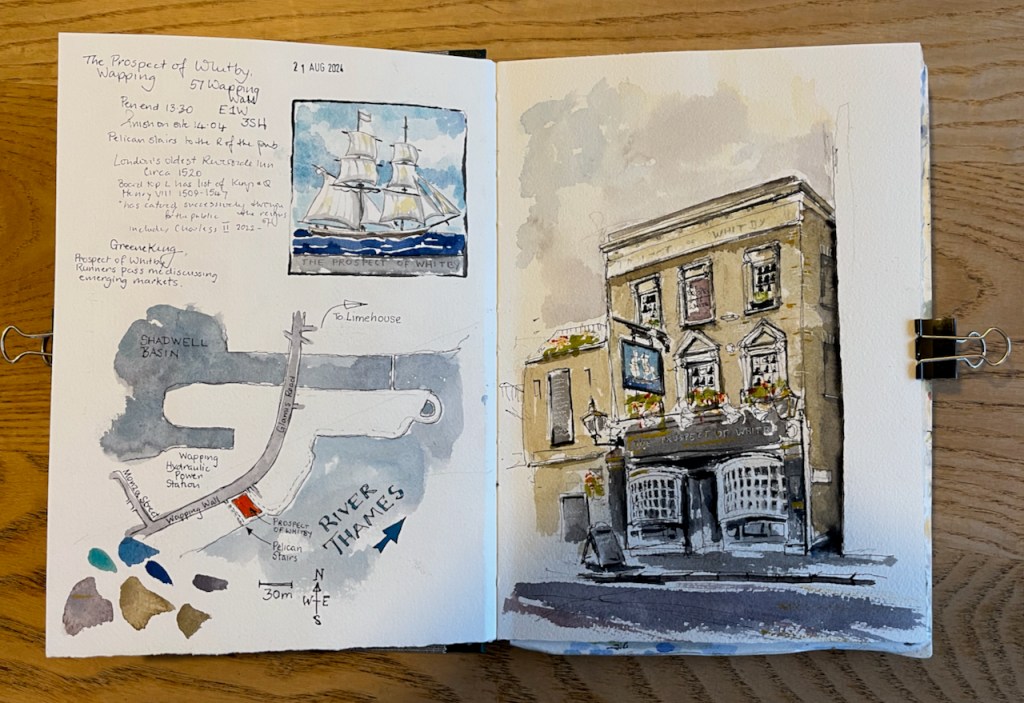
“The Prospect of Whitby” sketched 21 August 2024 at 2pm, the first picture in Sketchbook 15
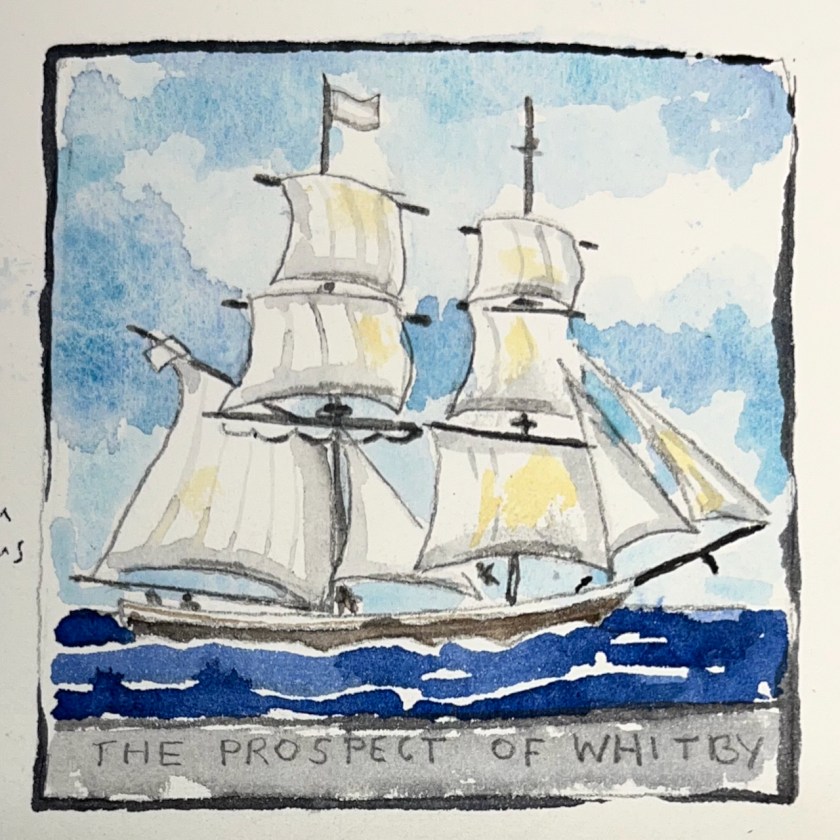
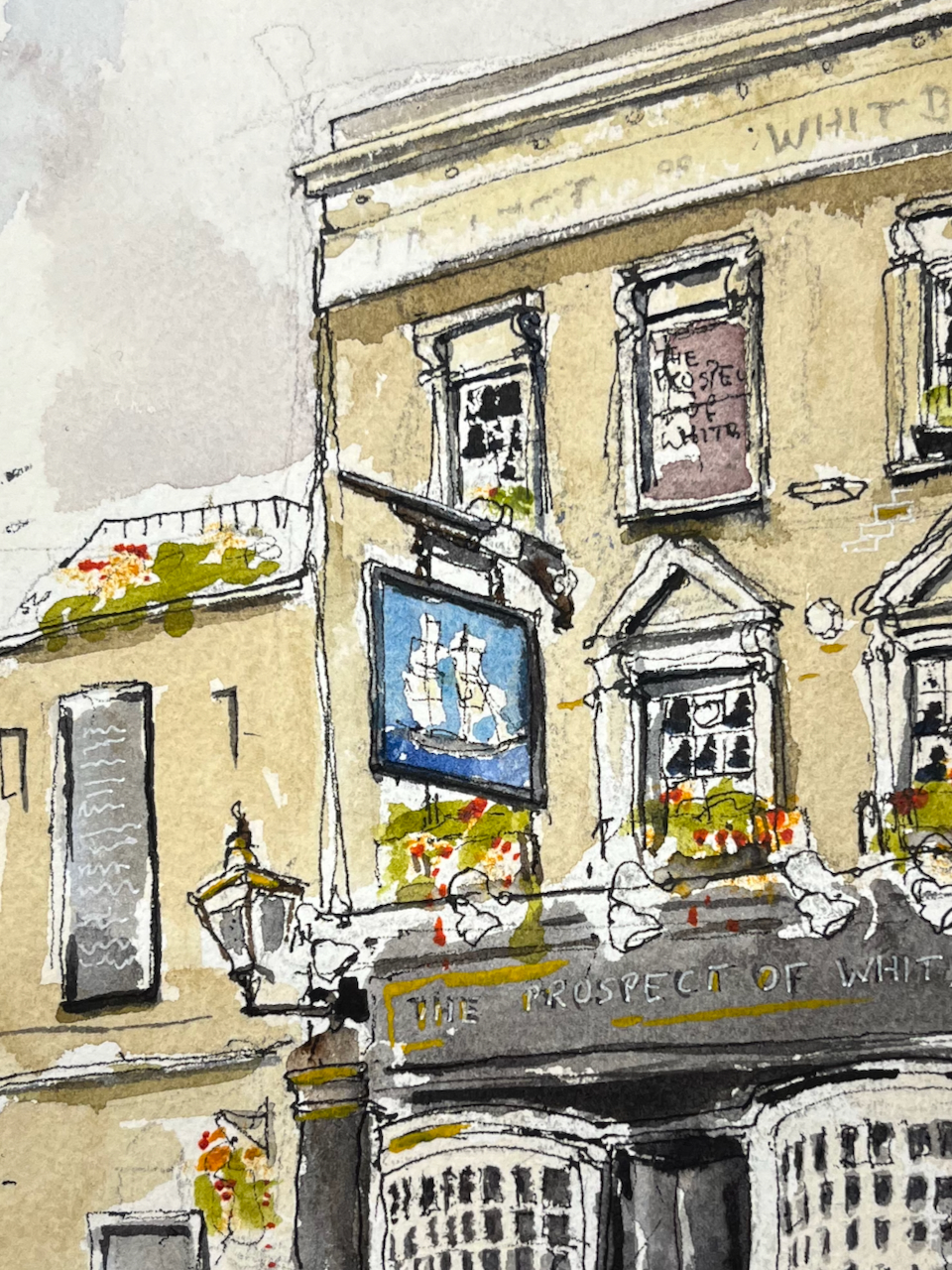
The “Prospect of Whitby” is the name of a ship.
The coal boat, “Prospect of Whitby”, from the pub sign.
There is an informative entry about the whole area in “The London Inheritance” website. He writes:
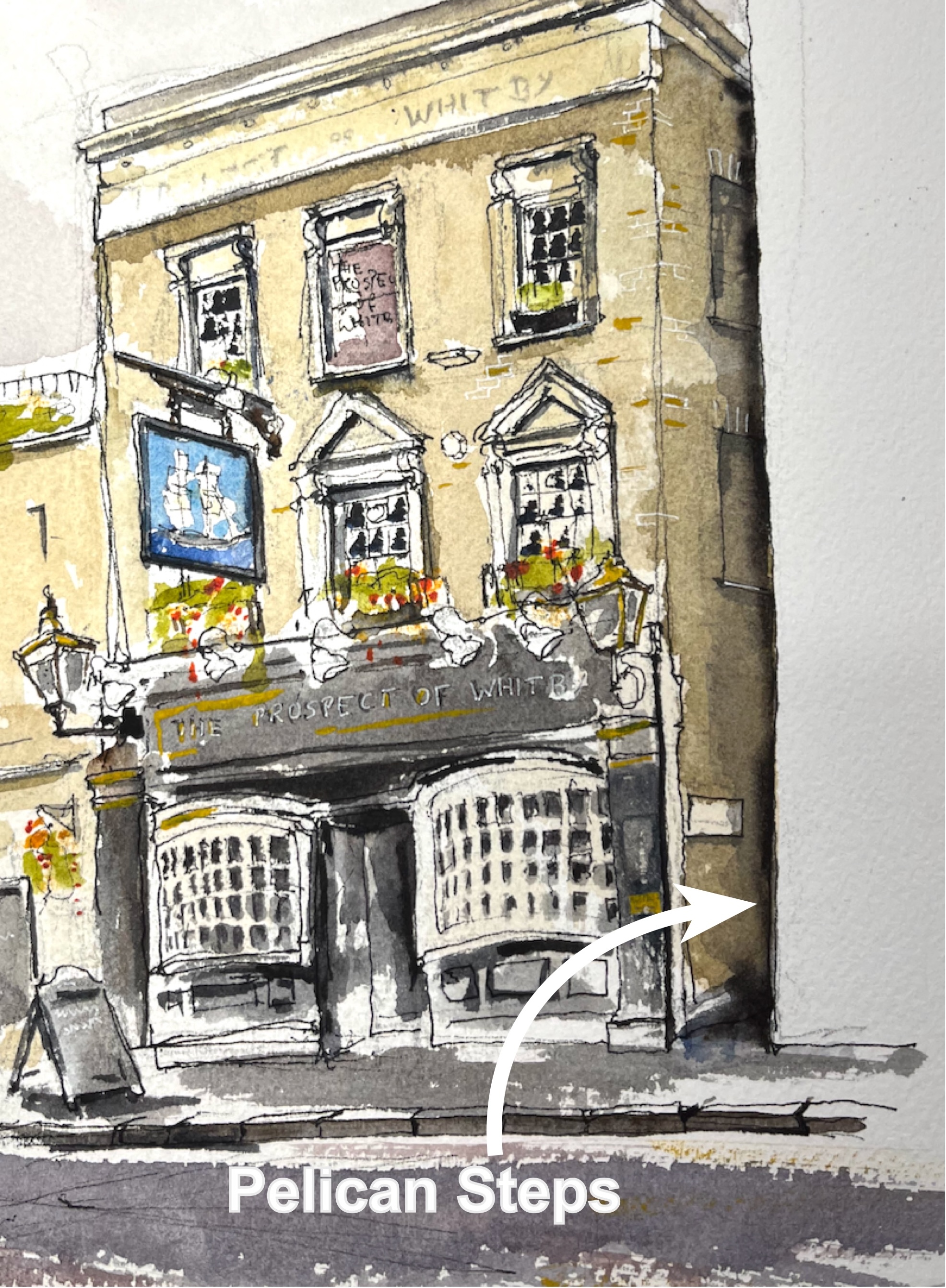
“The pub was originally called The Pelican and the alley and stairs down to the river at the side of the pub to the right are still named Pelican Stairs.“
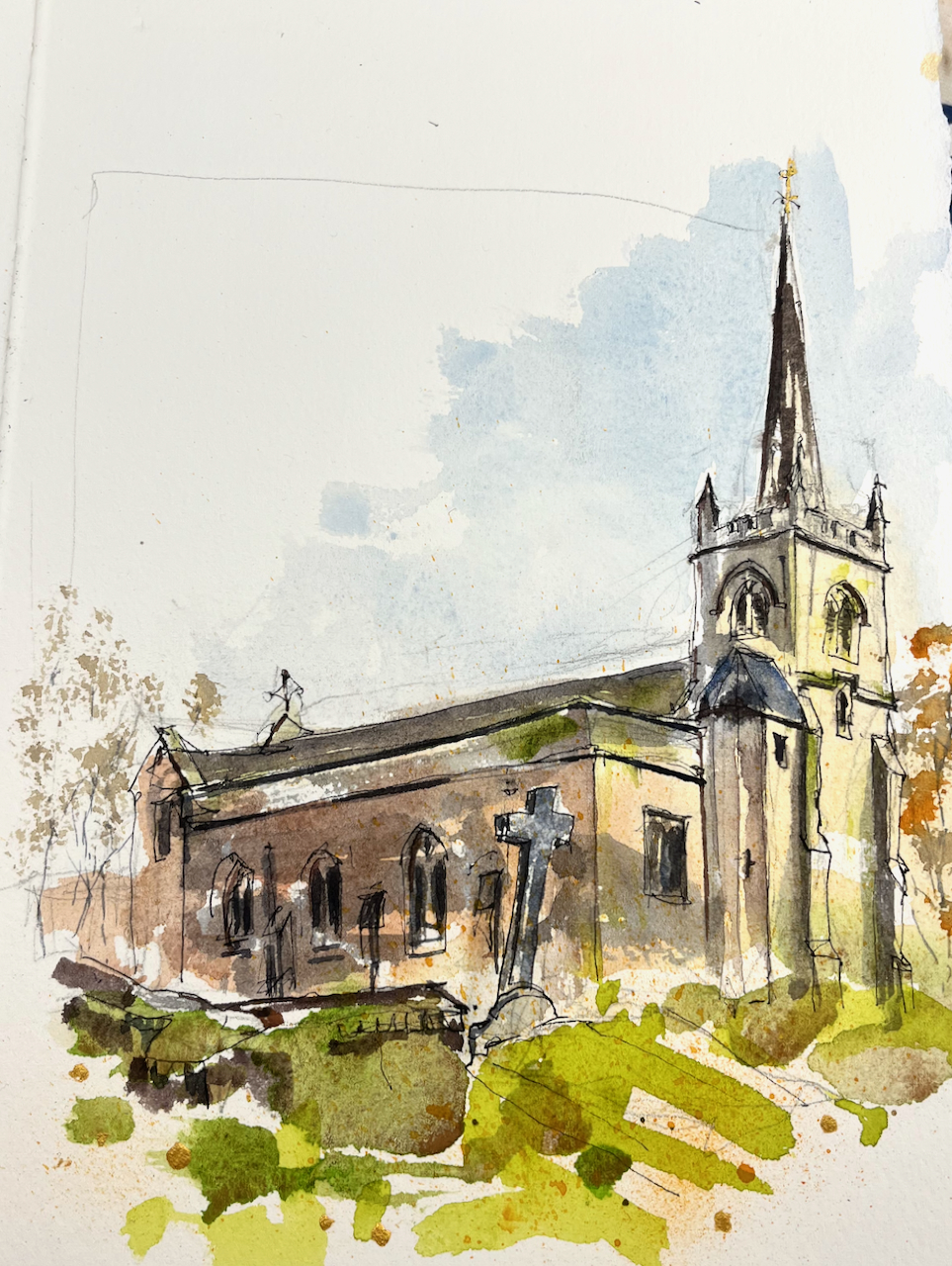
Having sketched the Stoke Newington New Church, I was keen also to sketch the Old Church, which is just the other side of the road. This church is Elizabethan, constructed in 1562, on a very ancient site. It is in active use, and shares a vicar with the New Church across the way.
Old Church of St Mary, Stoke Newington, London N10 sketched 1 December 2023 in Sketchbook 13
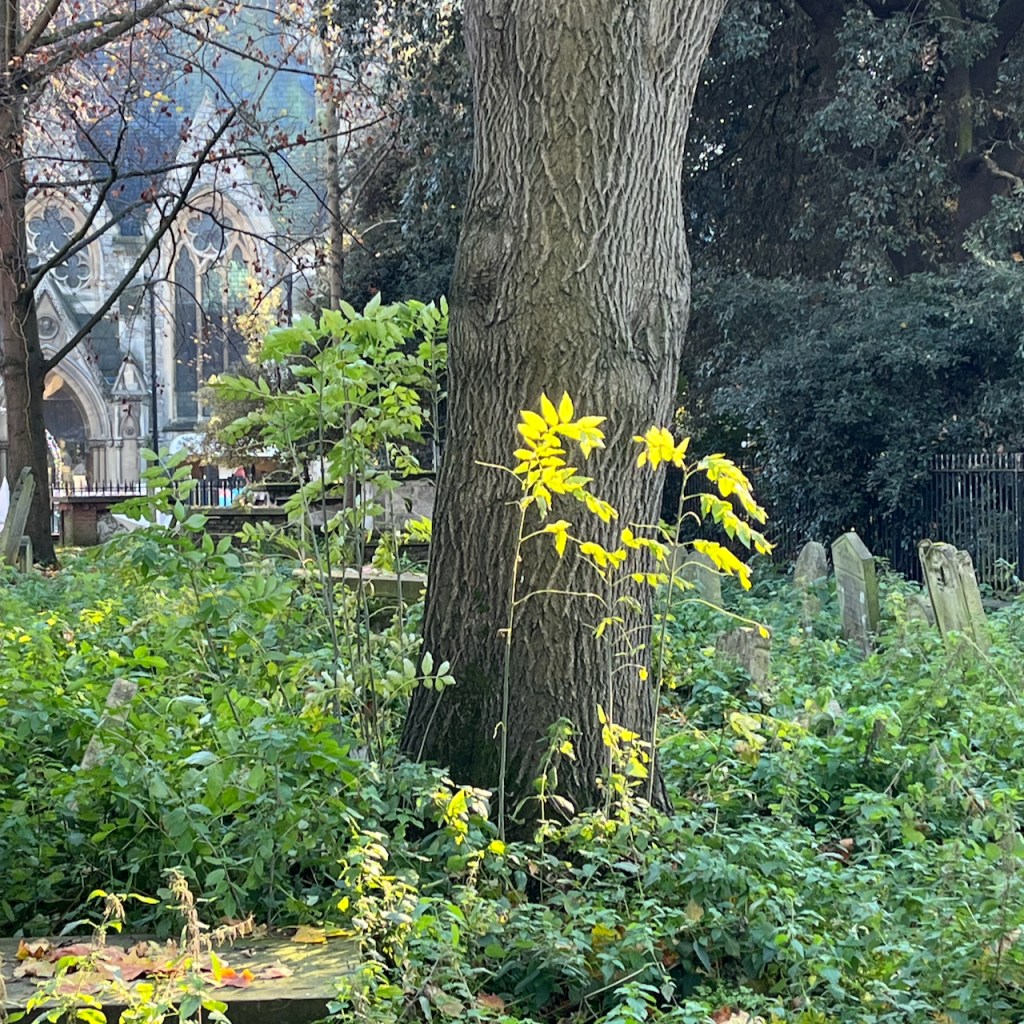
The churchyard is overgrown and atmospheric, it was wonderful to stand there on this cold clear day.
The building is Grade II* listed. The listing is here and the At Risk listing is here. It is listed because of much of the building from 1563 has survived, and because very few churches were built in this period. Also, the listing comments on its “group value”, because it stands next to the New Church. “The two make a memorable contrast and are a striking visual representation of the demographic changes from the C16 to the C19 in this area.” says the listing. The Old Church is small and domestic in scale, the New Church is magnificently huge.
Some history is given on the placard by the entrance.
ST. MARY’S OLD CHURCH, STOKE NEWINGTON The Manor of Stoke Newington is recorded in the Domesday Book (1086) to be the property of the Canons of St.Pauls Cathedral in whose possession it still remains. It is reputed to have been the Gift of King Athelstan about the year 940. It is probable therefore that a Church has occupied this site since Anglo-Saxon times. The South Aisle was built in 1563 by William Patten Lord of the Manor In.1829 Sir Charles Barry enlarged the Church. Severe bomb damage was sustained in 1940 and the Church was restored to its present state in 1953.
The future? This building is on the Historic England Heritage at Risk register, at risk level A, the highest, because there is “immediate risk of further rapid deterioration or loss of fabric; no solution agreed”
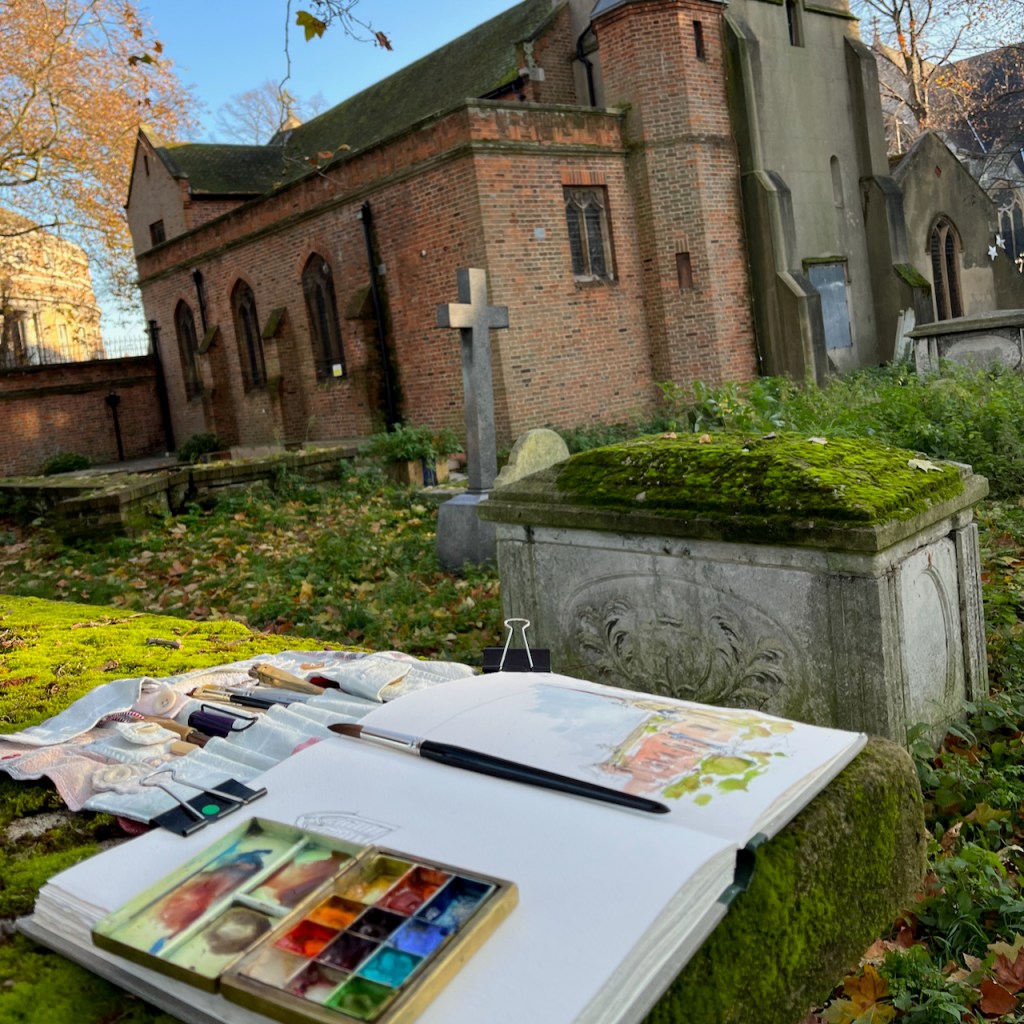
I sketched the church quickly as it was 2 degrees C outdoors. Then I caught the number 73 bus back down the hill to central London. Here is work in progress on the sketch.
Click a button below to share this post online, email it, or print it:







 Jane Sketching