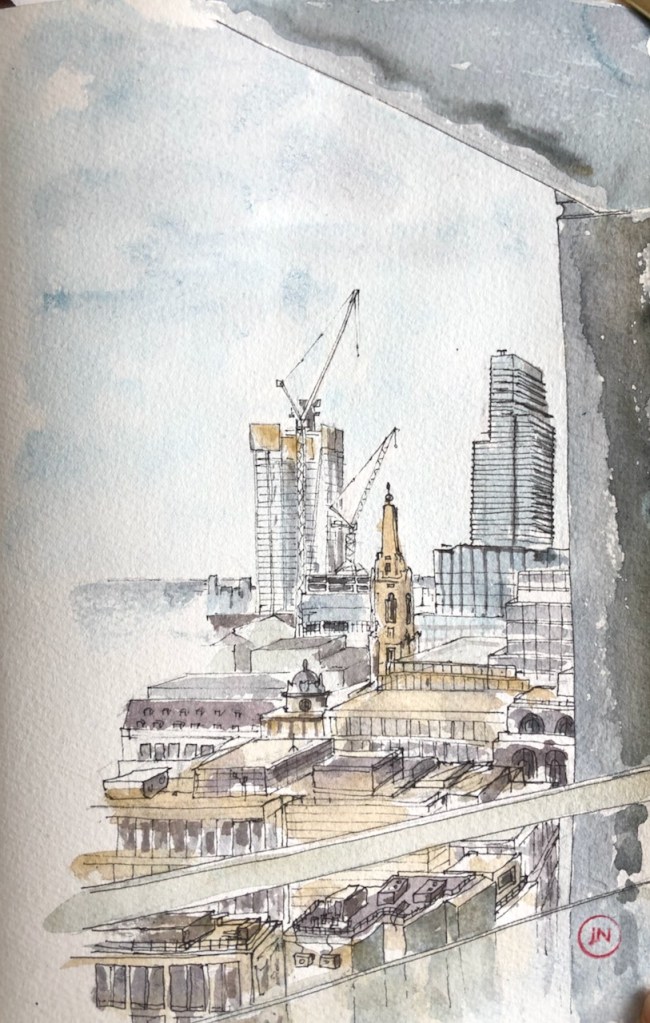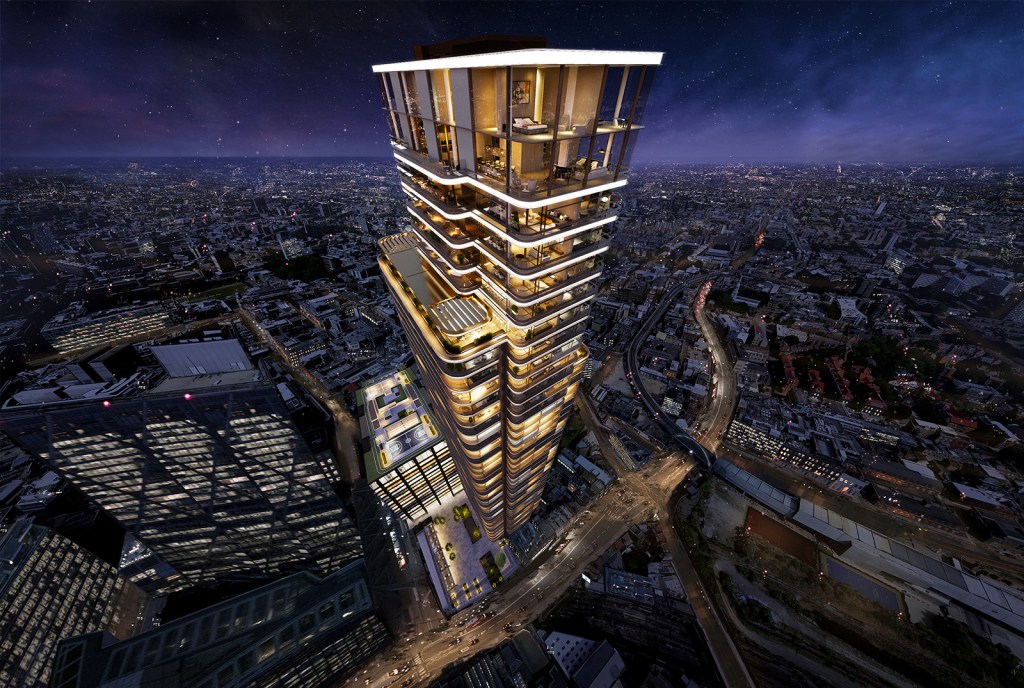
HYLO Building under construction

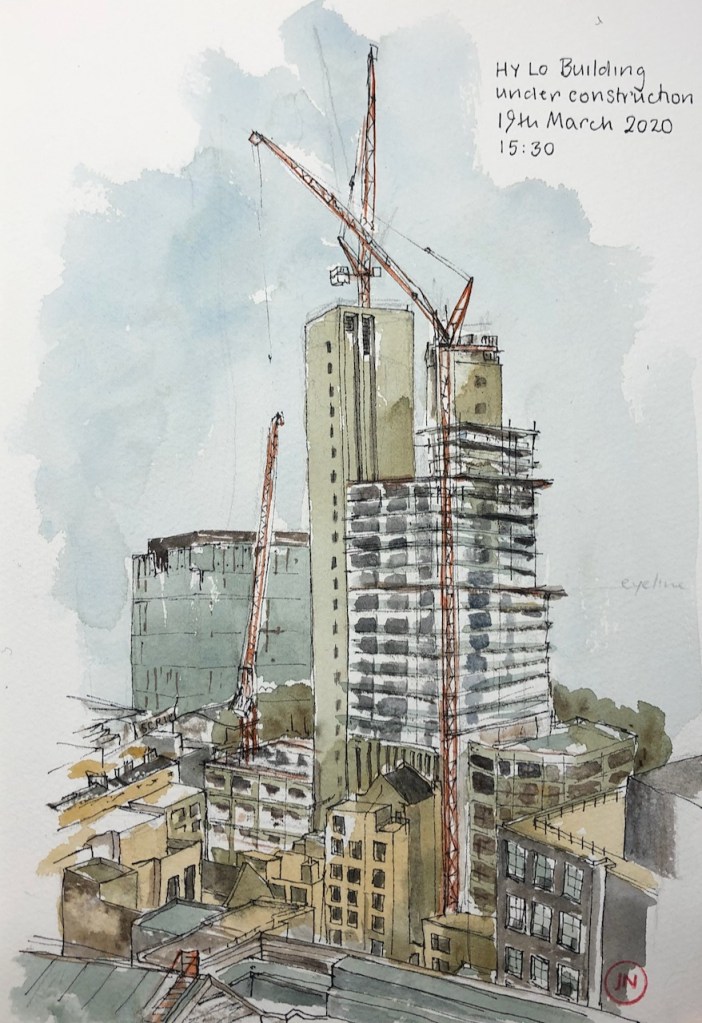
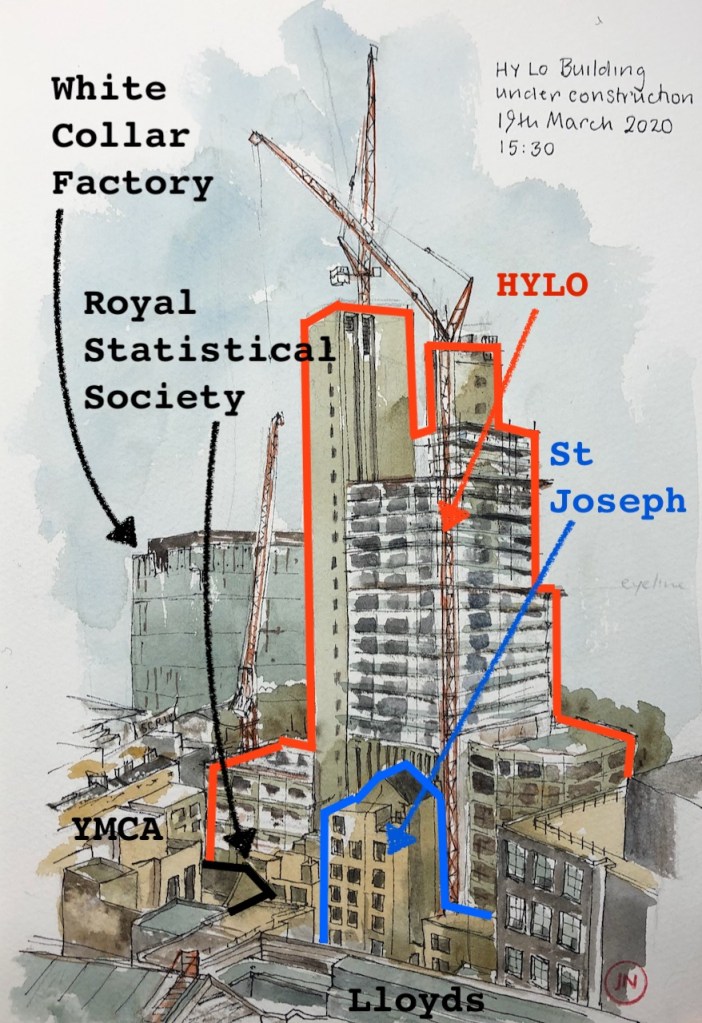
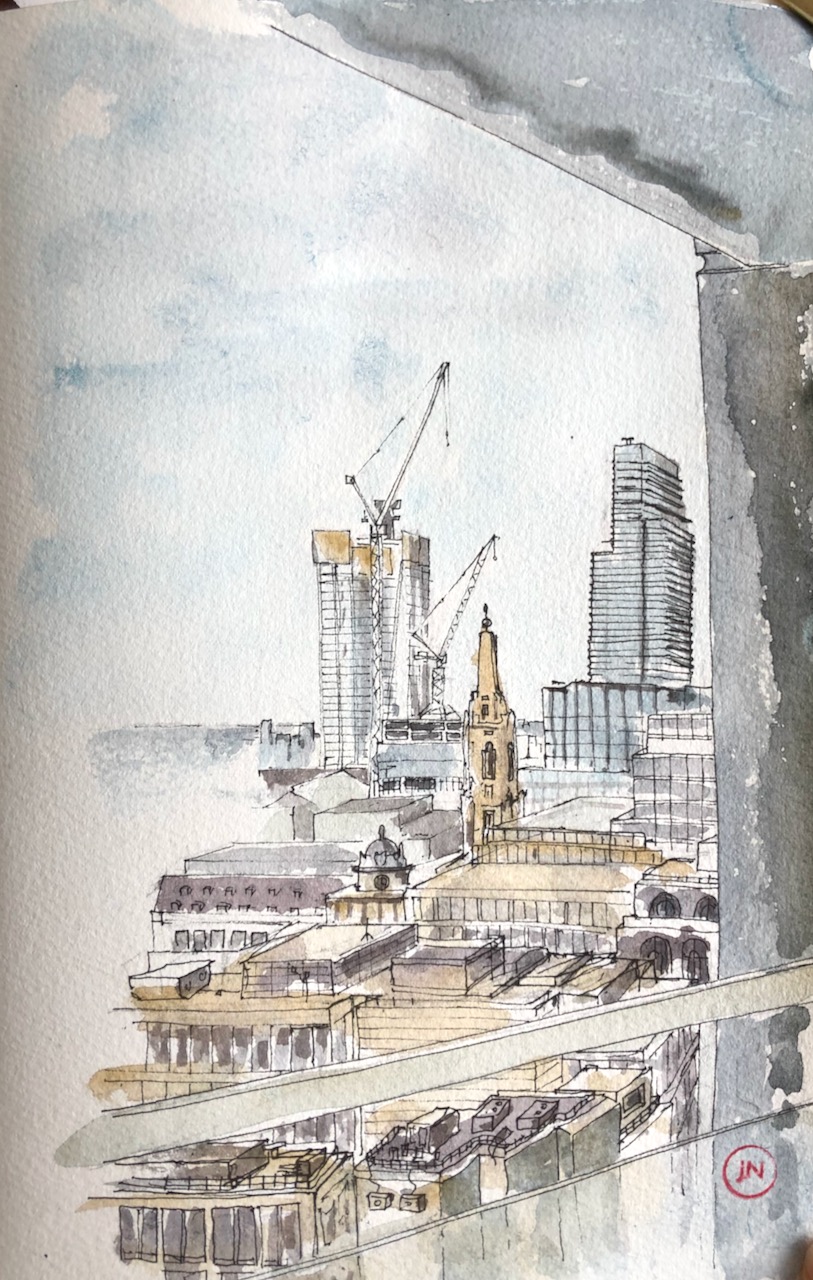
Here is the “HYLO” Building on Bunhill Row.

HYLO, on the site of the Finsbury Tower.

It will be “premium office and retail space over 29 floors”. The developer is “CIT”:

Steve Riddell, Managing Director Developments, CIT, says [on the CIT website]: “As the line between corporate and creative becomes more integrated, our aim is to provide a workplace solution that offers flexible spaces that embrace collaboration and connectivity at the same time. We are excited for HYLO to become the defining destination in the Old Street district.”

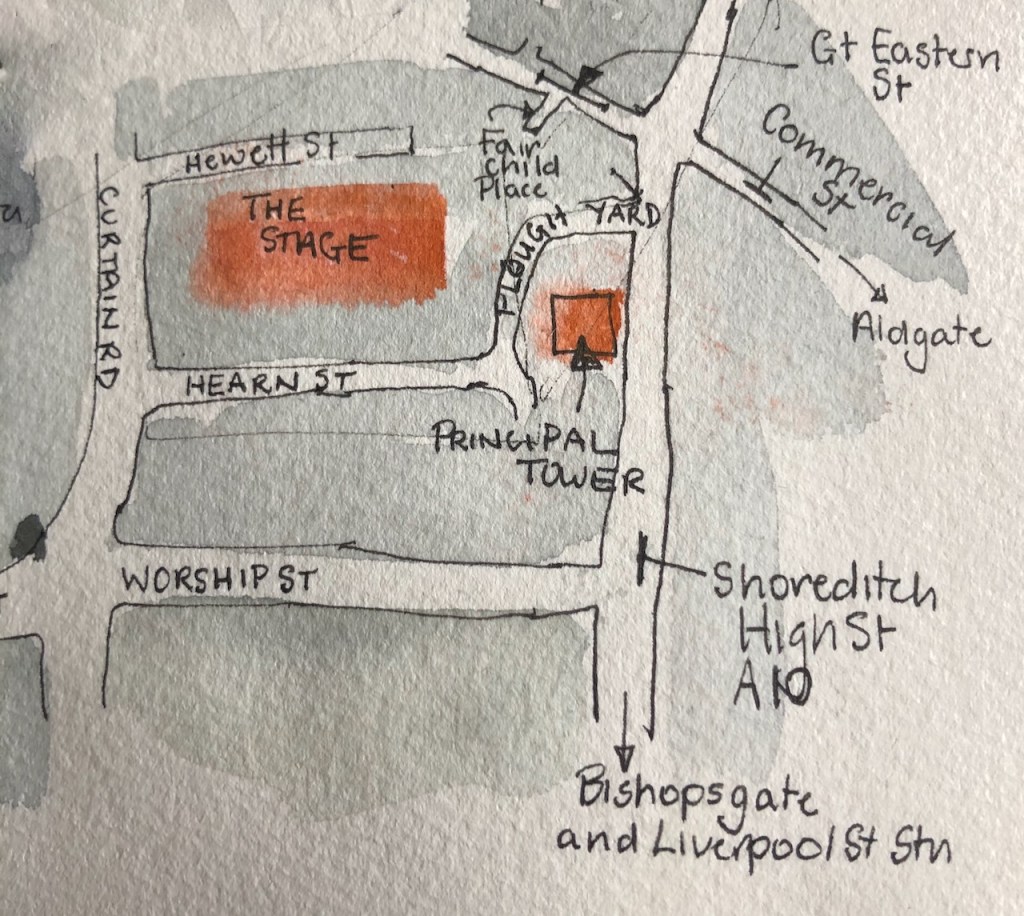
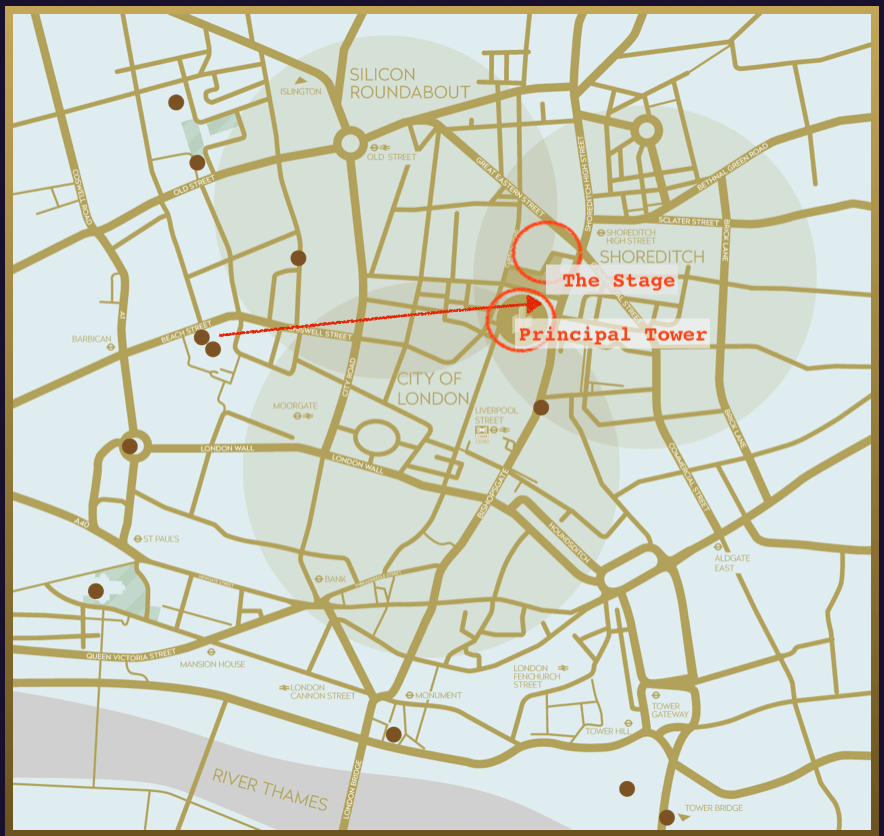
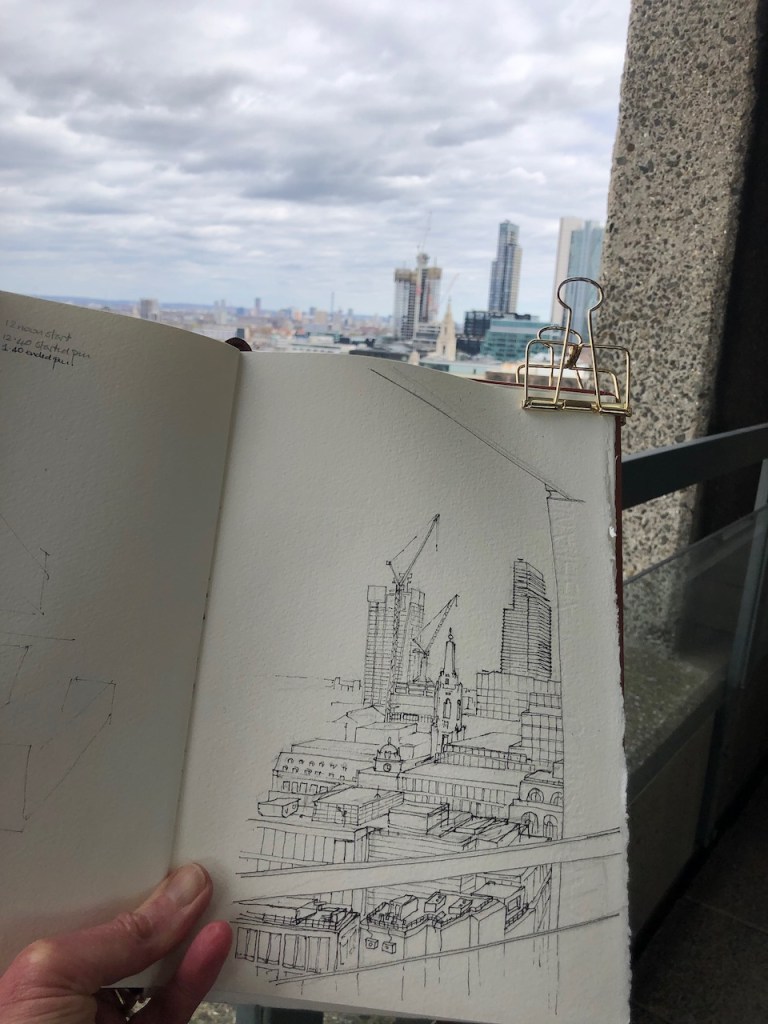
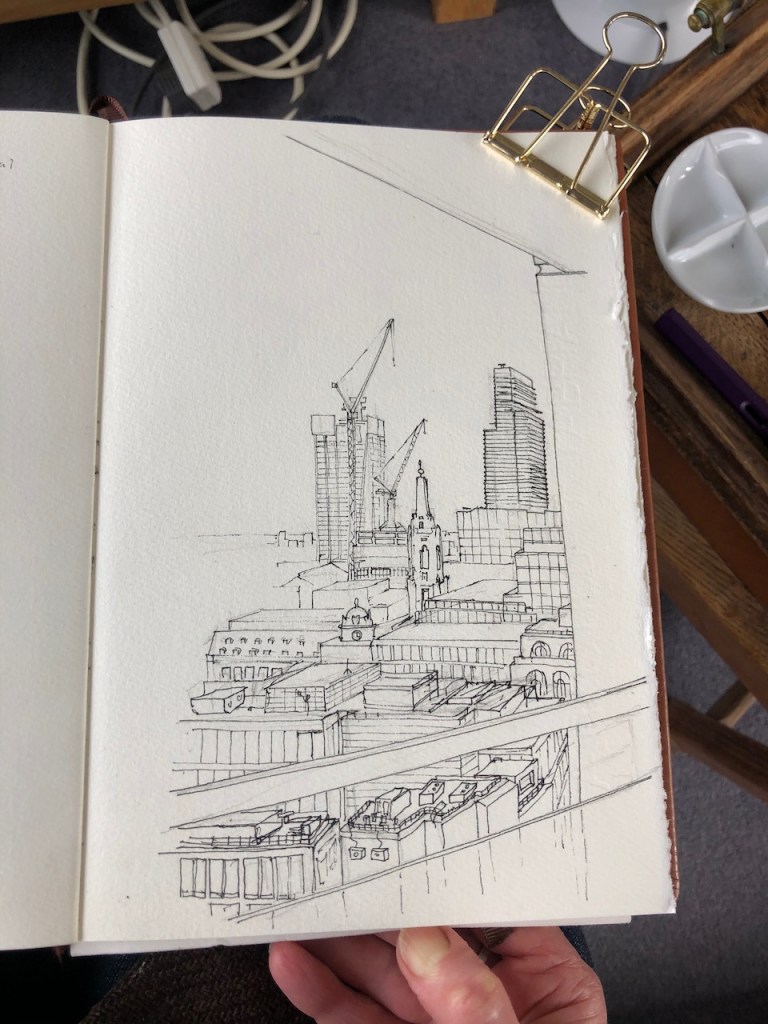
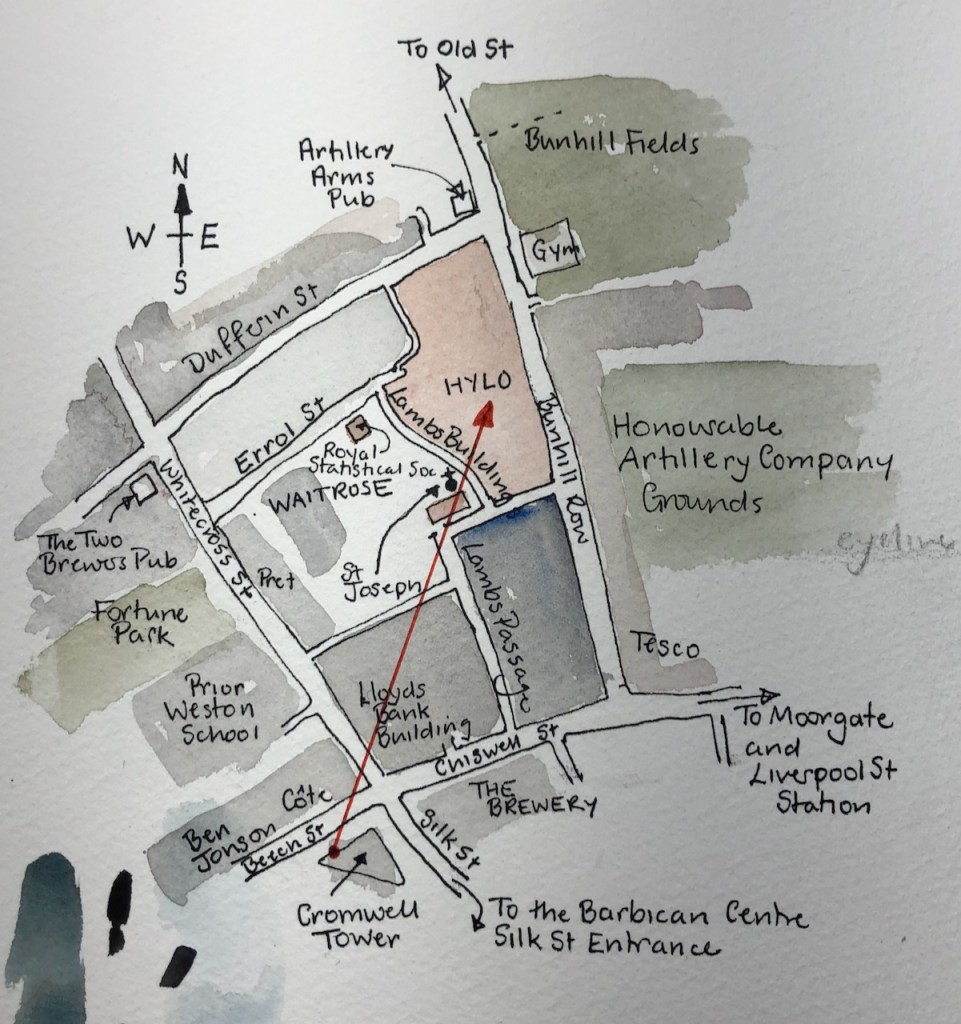
The drawing also shows buildings associated with St Joseph’s Catholic Church, these are in front of HYLO, and dwarfed by it. The cube behind HYLO on the left is “White Collar Factory” and mixed-use office space on Old Street Roundabout. Offices on Lambs Passage are on the right. In the front, at the bottom of the drawing, are the extensive air conditioning ducts and roof apparatus on a building of Lloyds Bank. On the lower left is a YMCA, being rebuilt as accommodation for young homeless people. Here’s a map and an annotated drawing.

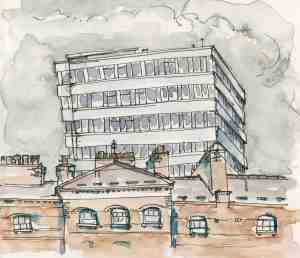
HYLO is on the site of the former Finsbury Tower. Here is what it looked like before:

Finsbury Tower 3rd August 2016
Finsbury Tower on Bunhill Row above Peabody Estate buildings. Finsbury Tower was a 1960s office building now undergoing extensive renovation. According to the planning application, the renovation will add 12 storeys to the existing 16, doubling the building’s height. 

Here are some other drawings in this area:

Lamb’s Buildings EC1

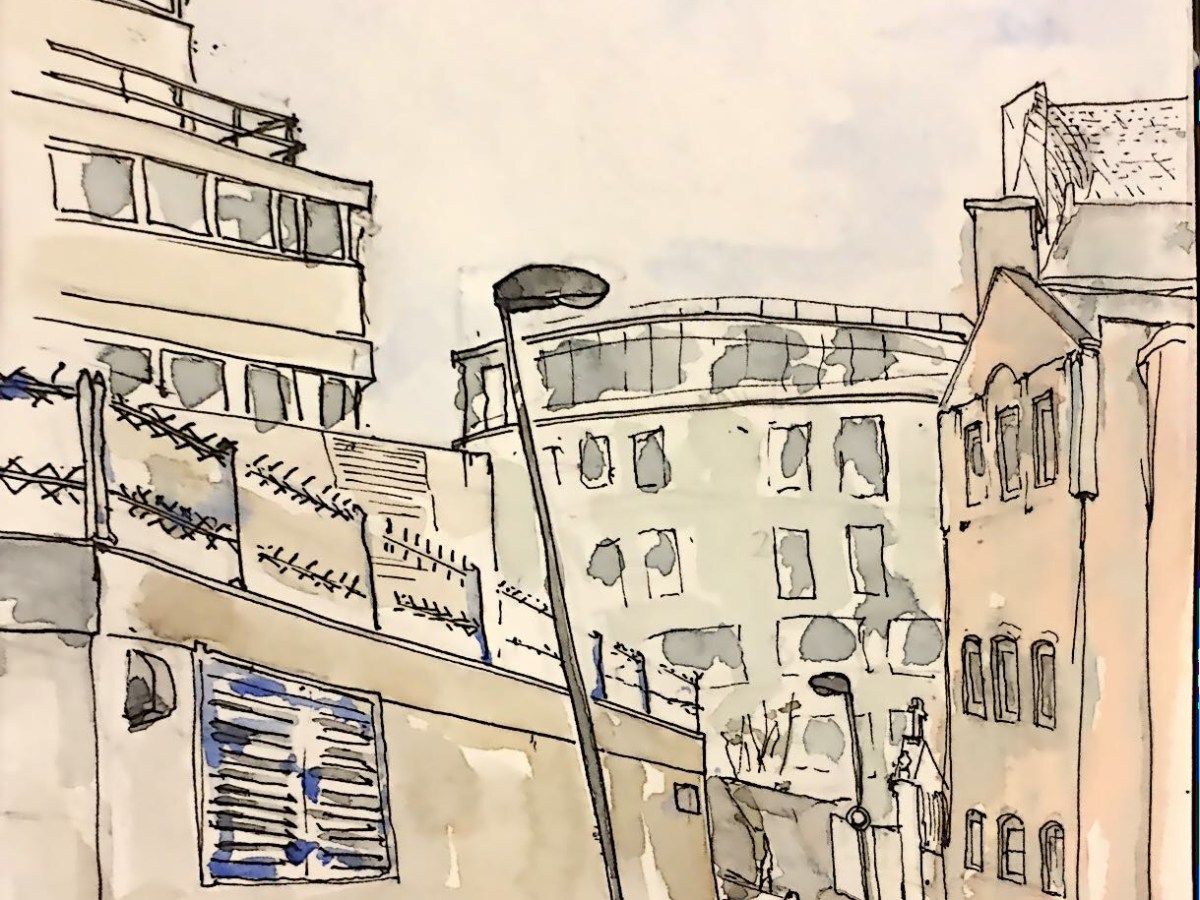
St Joseph’s Bunhill Row on right. From the church notice board: “A small chapel in the basement of a former school 1901”. Contains windows from St Mary Moorfields 1820. Remodelled 1993 by Anthony Delarue “in a vaguely Florentine Renaissance manner”. The crib is there until Feb 2nd, and the church is open Fridays 12noon to…

YMCA site, Errol St EC1

This site is a few minutes walk from where I live. There will be a “new home for young homeless Londoners”. “146 beds, 10 000 lives, 60 years”, says the text on the hoarding. There will be 146 en-suite rooms, an “affordable gym for the whole community” and a “social enterprise unit”. You can see…

Scalpel from Bank

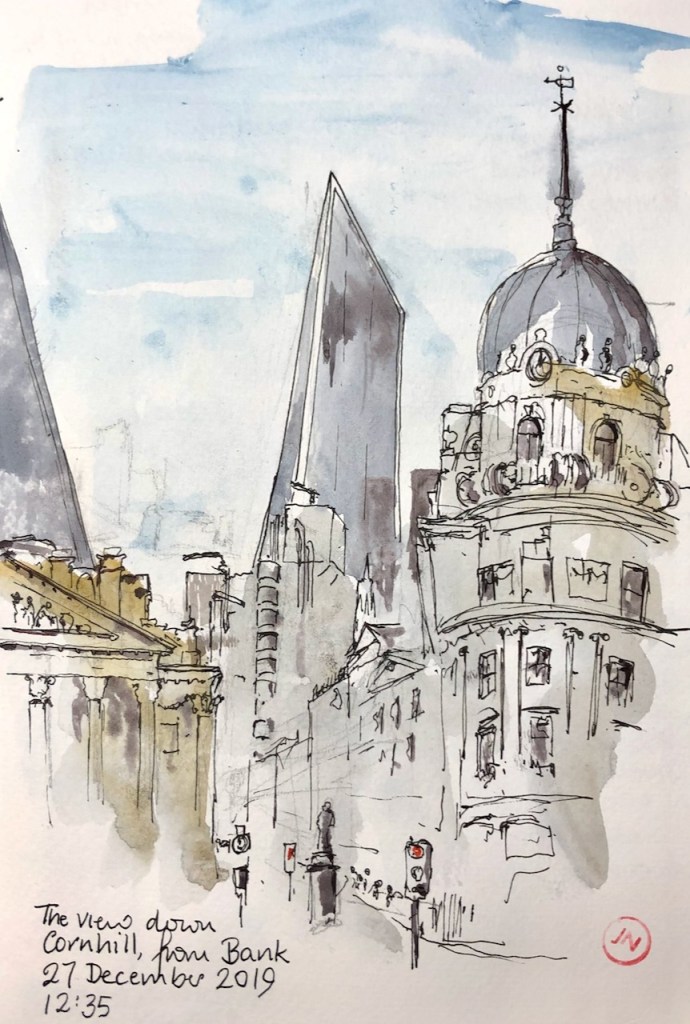
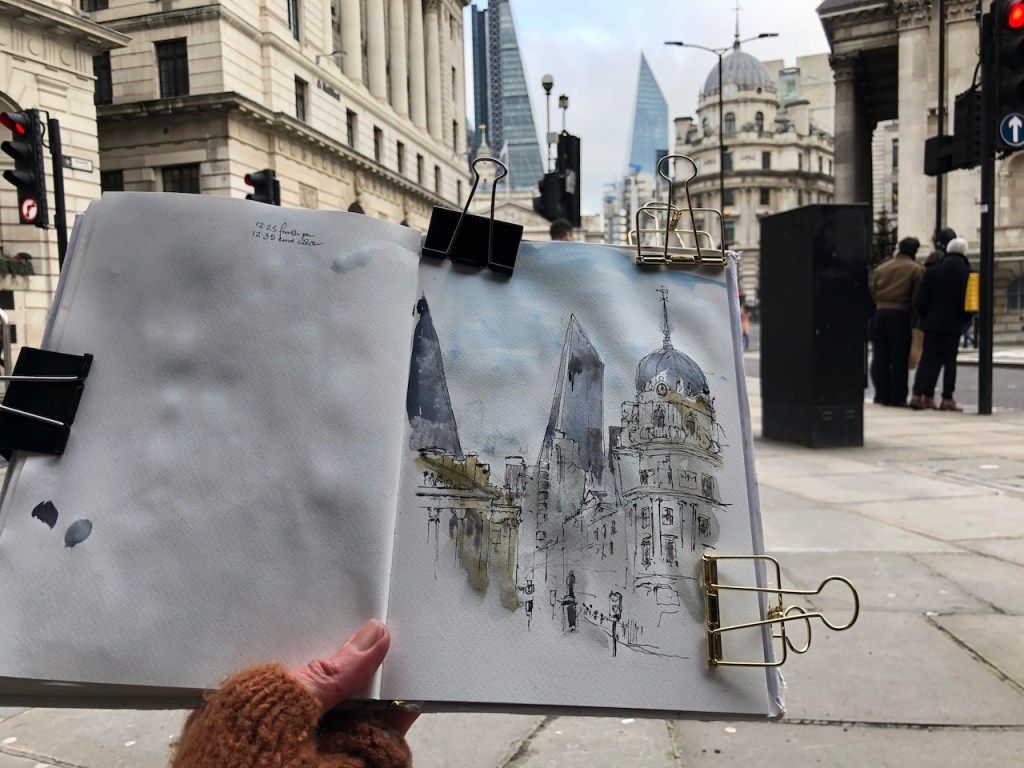
Here is the Scalpel Building, seen from Bank Junction.

The statue in the centre of the bottom of the picture is neither a statesman, nor a warrior, nor a monarch. It celebrates an engineer: J.H. Greathead, “inventor of the travelling shield that made possible the cutting of the tunnels of London’s deep level tube system”. There is a picture of his invention on the plinth.

The “travelling shield” depicted on the plinth of Greathead’s statue in Cornhill.

Greathead’s idea was to make the shield cylindrical, rather than rectangular as it had been previously. He also invented ways to spray concrete and grouting on the walls, and also to pressurise the tunnel, so as to make the workers a bit safer from cave-ins. His later shields were equipped with cutting jaws or teeth, to excavate the earth ahead.

“Most tunnelling shields are still loosely based on Greathead’s Shields design” says Wikipedia, including the “Tunnel Boring Machines” which are used, for example, for Crossrail.

The statue was created in 1994, and stands, appropriately enough, on a ventilation shaft for the Waterloo and City Line.

J.H. Greathead on his plinth/ventilation shaft.

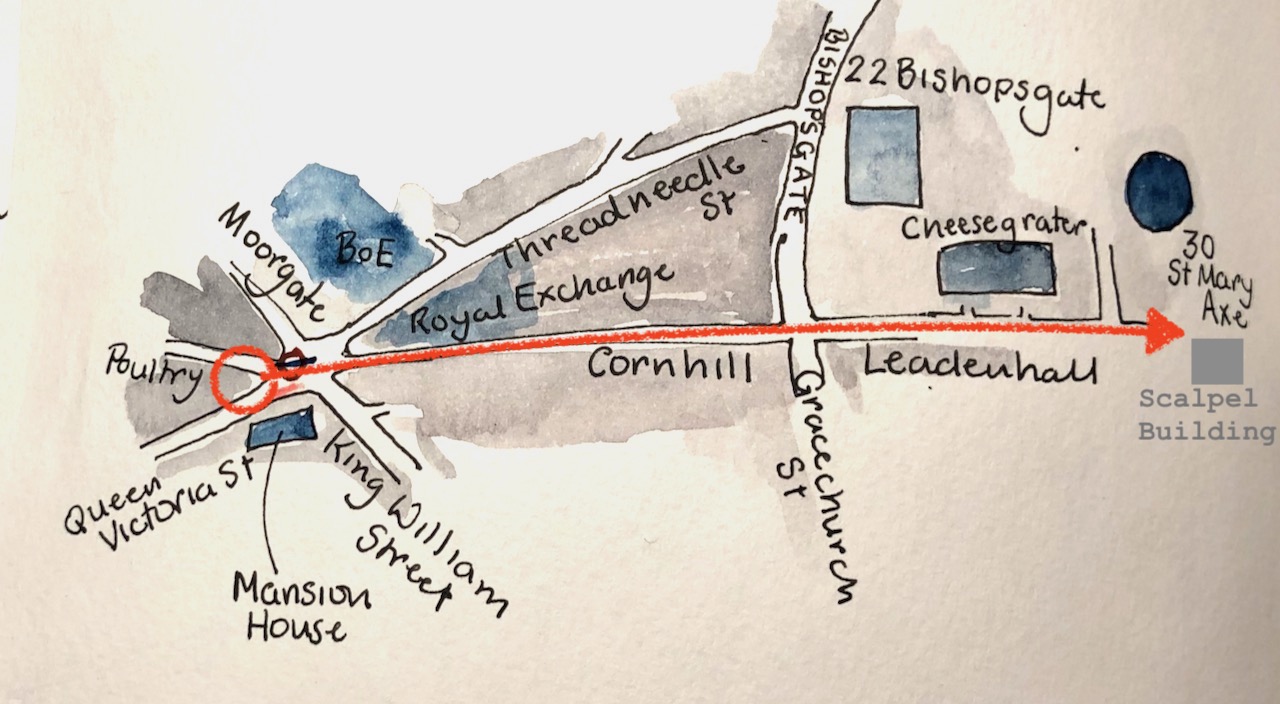
I drew this picture standing at One Poultry. Here are maps:

Here is work in progress:

Work in progress, the scene from One Poultry.

About 45 minutes. The sky is Prussian Blue, very dilute. The other colours used are Mars Yellow, and Perylene Maroon, all Daniel Smith watercolours. The grey is Perylene Maroon and Prussian Blue. The traffic lights are Pyrrol Red.

Coal Drops Yard N1C from the Skip Garden

Here is the view from high up in the marvellous Skip Garden at Kings Cross. Coal Drops Yard roofs are in the background, behind the crane.

IMG_2061

I did this picture with just three colours: cobalt blue, yellow ochre, and alizarin crimson. The yellow ochre and cobalt blue refused to make green. They made grey.

Here is the picture under construction.

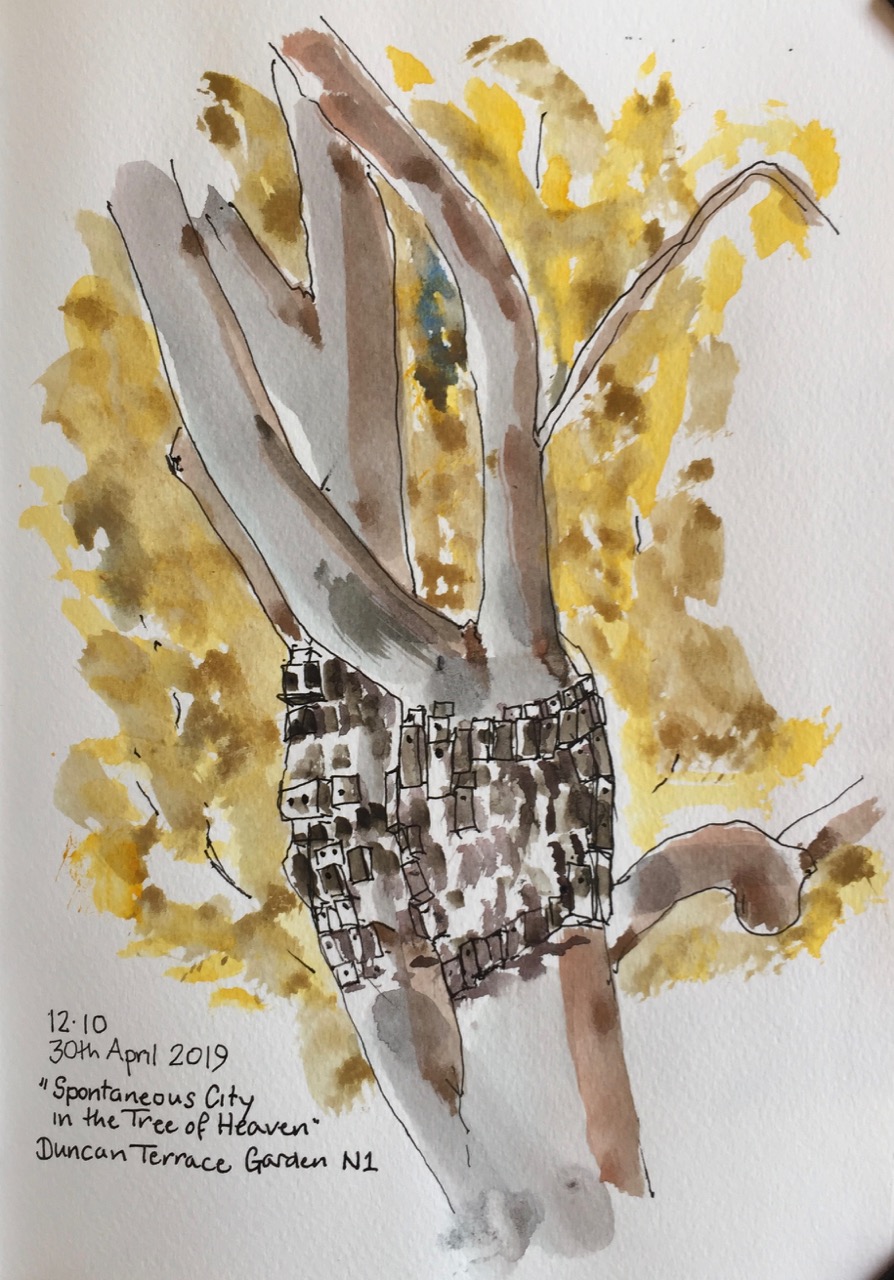
IMG_2060On the way to Kings Cross I passed through Duncan Terrace Gardens, in Islington, where there is an extraordinary “bird hotel” in one of the gigantic trees. It was made by “London Field Works” and consists of 300 specially made bird boxes, all different sizes, fitted round the tree.

A nearby notice assured me: “The method of installation has been designed in close consultation with the Forestry Commission and the borough’s ecology dept to enable the tree to continue to grow and expand.”

The Shard from Borough Market

fullsizeoutput_3317

Walking back from Intaglio Printmaker in Southwark, I thought it would be a good idea to walk through Borough Market. It was not. The crowds were so closely pressed together, and walking and stopping, that I could make no headway through the main part of the market. So I went round the edge, and glimpsed the Shard, high above the roofs.

The roofs, and the lights, look old but they are not really old. The lights, the nearest ones, are gas lights, with real gas flames. They are recent. The market was re-created and enlarged in the late 1990s. It’s now easy to believe that it’s always been a thriving London market.  But it hasn’t. The “Blueprint” website from developers CBRE says:

In the 1980s, the surrounding area of Borough Market had undergone severe decline. The market’s days as a wholesale hub were threatened by the growth of supermarket retailers and the nearby development of the New Covent Garden market in Vauxhall in the 1970s. By 1994, the market had as few as nine traders and an income of less than £400k per year…..

The first “green shoot” for the market emerged … in 1996. The market had hit rock bottom with little left but a few traders and a mobile barber’s stall operating from a caravan. Neil’s Yard Dairy approached the market seeking additional space in damp conditions for the preservation of their expanding cheese business. Damp space, according to [George] Nicholson [market chairman], “was something we had lots of.”


fullsizeoutput_331bI drew this picture standing up in Stoney Street. There was a strong wind. Papers, mostly takeaway food wrappers, rushed along in the air as if they had somewhere to go.

There were huge crowds outside Monmouth coffee. The whole of Stoney Street, to the right of my picture,  was occupied by people.

Astonishingly, cars appeared. This picture took about 45 minutes and in that time I must have seen about 10 cars, one every few minutes. They arrived and stopped, seeing the crowds. Then, no doubt consulting a GPS which said this was indeed a street, they pushed on.

People walked past me, eating food from wrappers or drinking beer from cans. One drinker rolled over to me. “Are you drawing a picture?” he leered, ready to make fun.

“No,” I replied, “I’m riding a bicycle.” In his drink-fuddled haze, he had a problem to process that.

He turned to his fellow drinkers. “She says she’s riding a bicycle,” he announced. His wise companions hurried him on.


The Atlas Building – prints

This week I made prints of an etching of the Atlas Building. The etchings are based on a sketch I made.

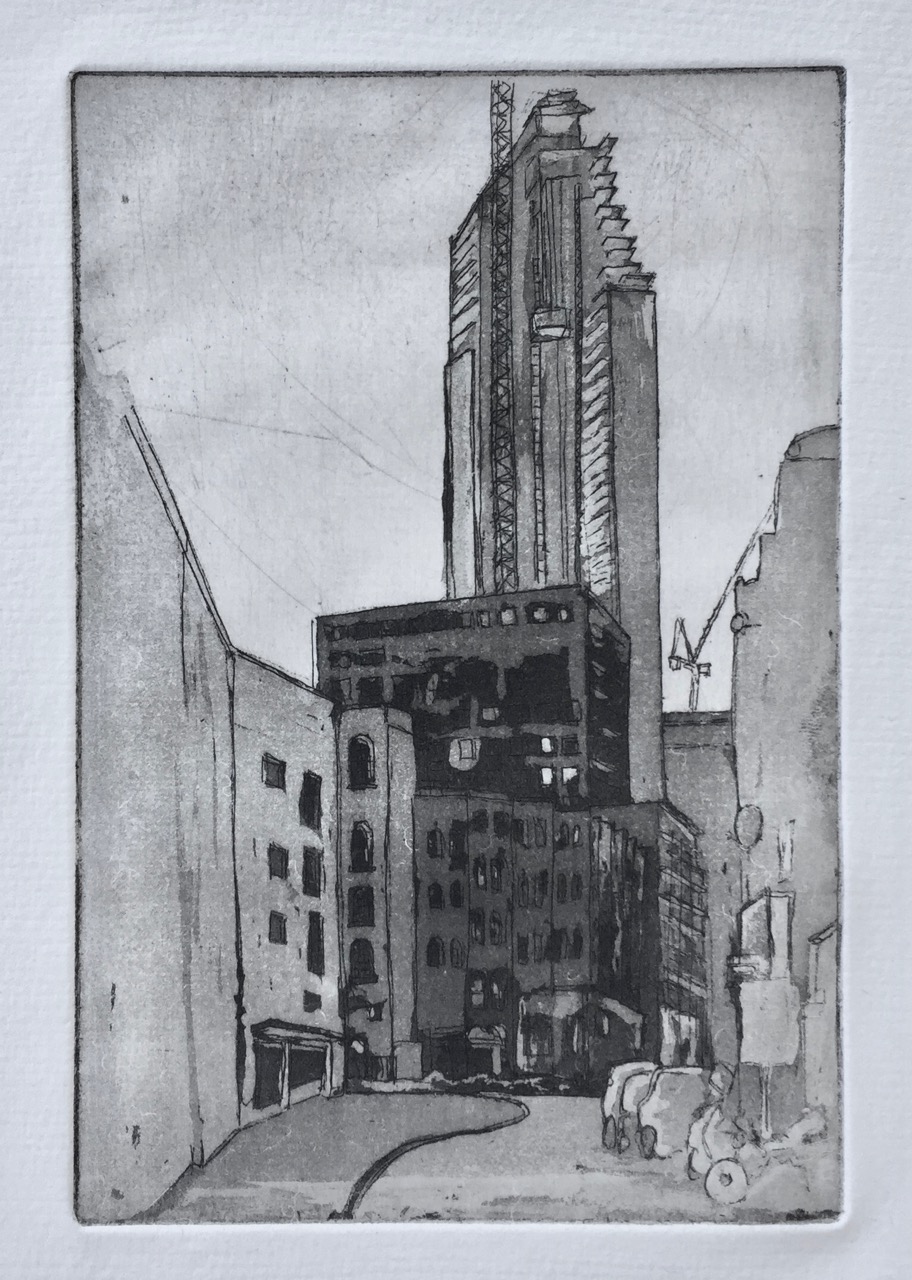
I made 12 prints. Here they are.

They are all for sale! Please let me know if you would like to buy one. All are printed on etching paper “Fabriano Unica”. They are intended to be used as greetings cards. So the print is to the side like this:

Version 2

They fold in half to make a greeting card which fits in a C5 envelope.

Equally they can be folded in half or cut, and put in a frame size A5.

If you’d like to buy one, please contact me, and say which one you’d like. They are numbered – click the images in the gallery above. £5 each + postage. These are handmade items by me, an amateur printer. Thumb marks, imperfections, ink smudges and other defects reflect the handmade nature of the items and, as they say, “should not be regarded as defects”.

This is all preparation for my “Towers” exhibition in February 2019.

The process I use is “chine collé”. Here are some photos of work in progress:

To see more detail on the process,  look at this page, which explains all the stages.

The photos above are in “East London Printmakers” in Stepney, where I do my work.

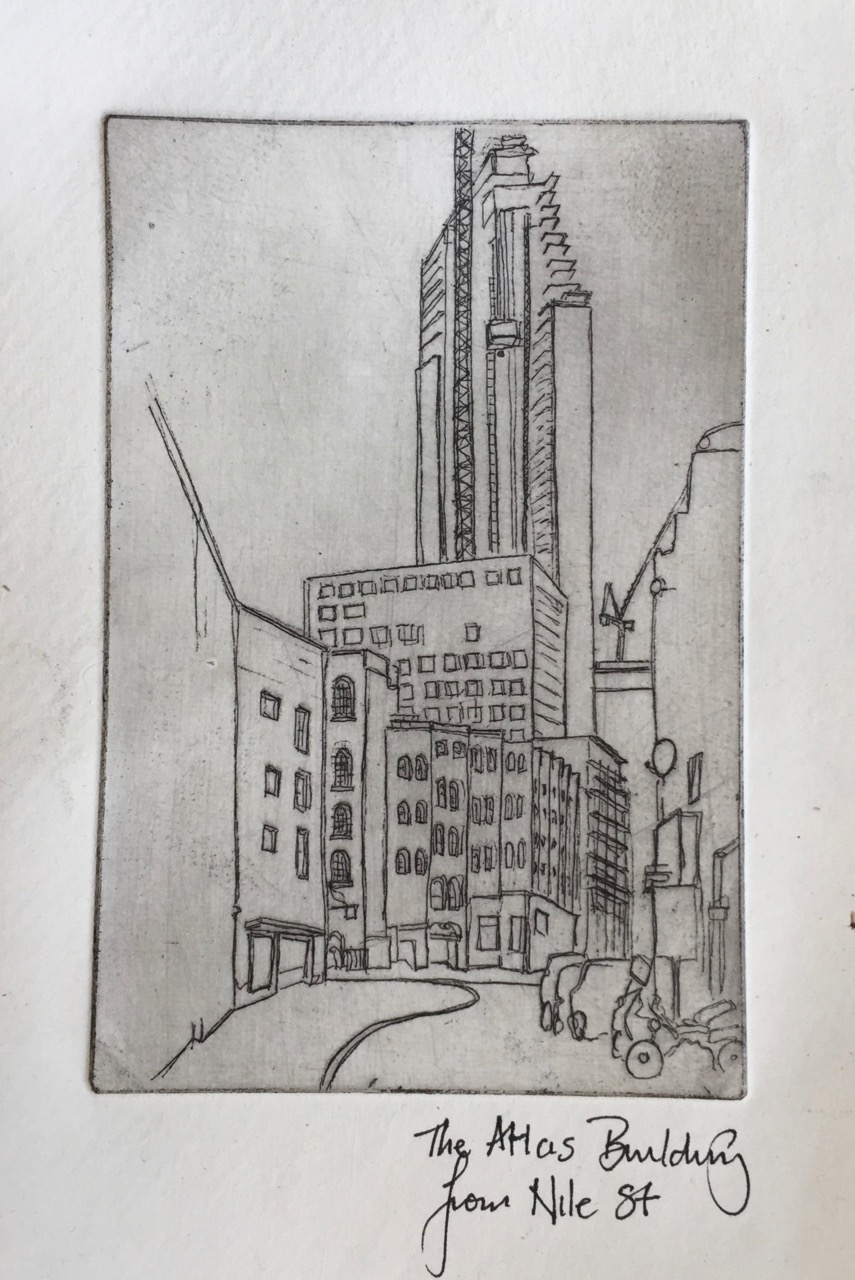
Here is the original sketch on which the prints are based.

fullsizeoutput_1b98
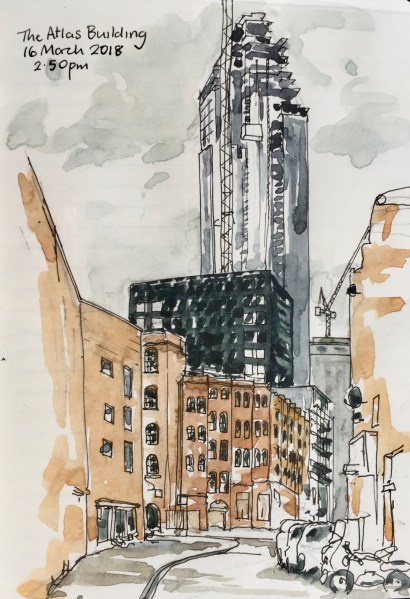
Atlas Building

The Atlas Building – print

Today I worked on a print of the Atlas Building. This is based on a watercolour I did in March this year in a peregrination around City Road.

Here the hard ground print:

IMG_4349

Then aquatint:


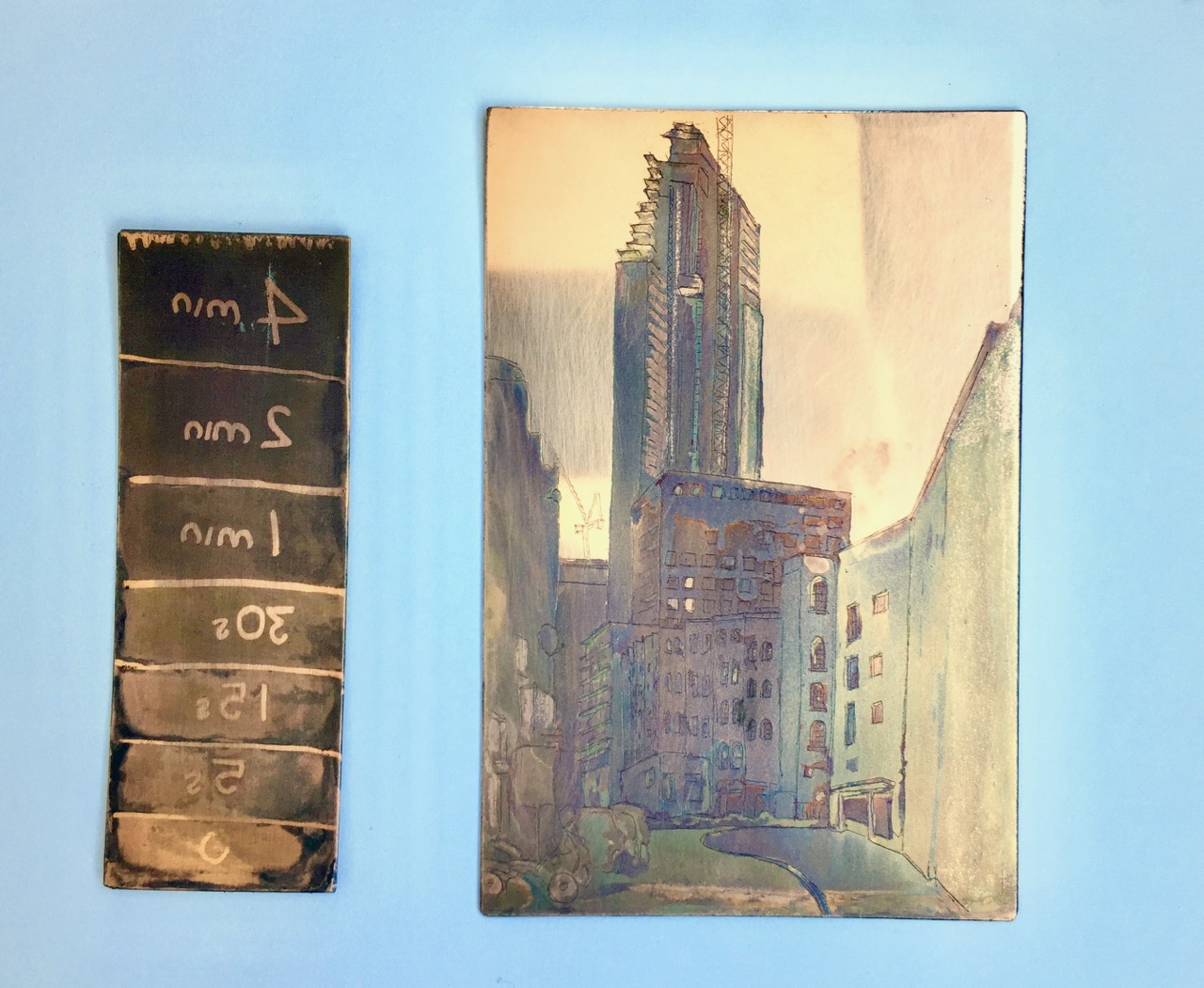
IMG_4354 (1)This was an aquatint with 6 tones, which is about the maximum I can achieve. On the 4th and 5th dip it’s difficult to see what I’m doing.
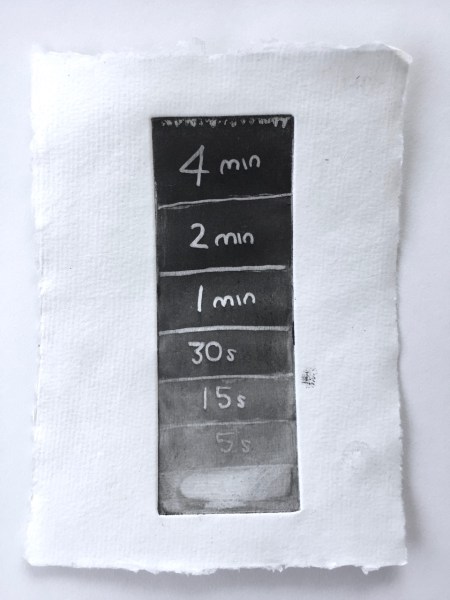
These pictures are postcard-size, with the intention of making cards.

IMG_4355 (1)Here’s the test plate print.

I’m in the question about whether the aquatint needs more work. I thought it did when I first saw it, but now I’m not so sure. It isn’t as dark as the photo looks. Comments welcome.

Aquatint and test plate on Khadi handmade paper. Hard ground print on handmade paper from Paperchase. Printing done at East London Printmakers. Ink is Intaglio Printmaker “Shop Mix Bone Black” from a tube. Etching on 10cm x 15cm copper plate using Edinburgh Etch.

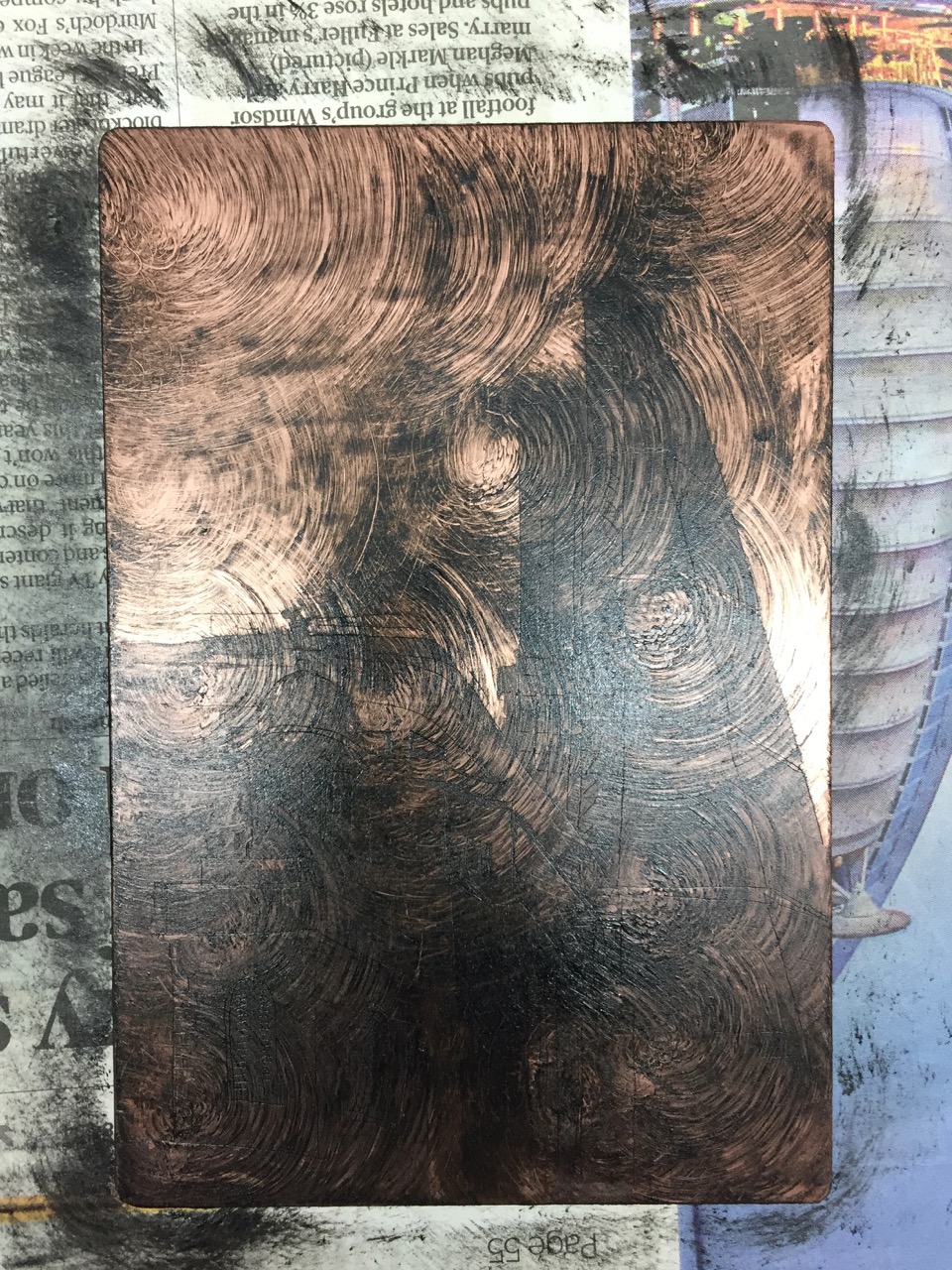
Here are the copper plates:

IMG_4357

The Cheesegrater, etching

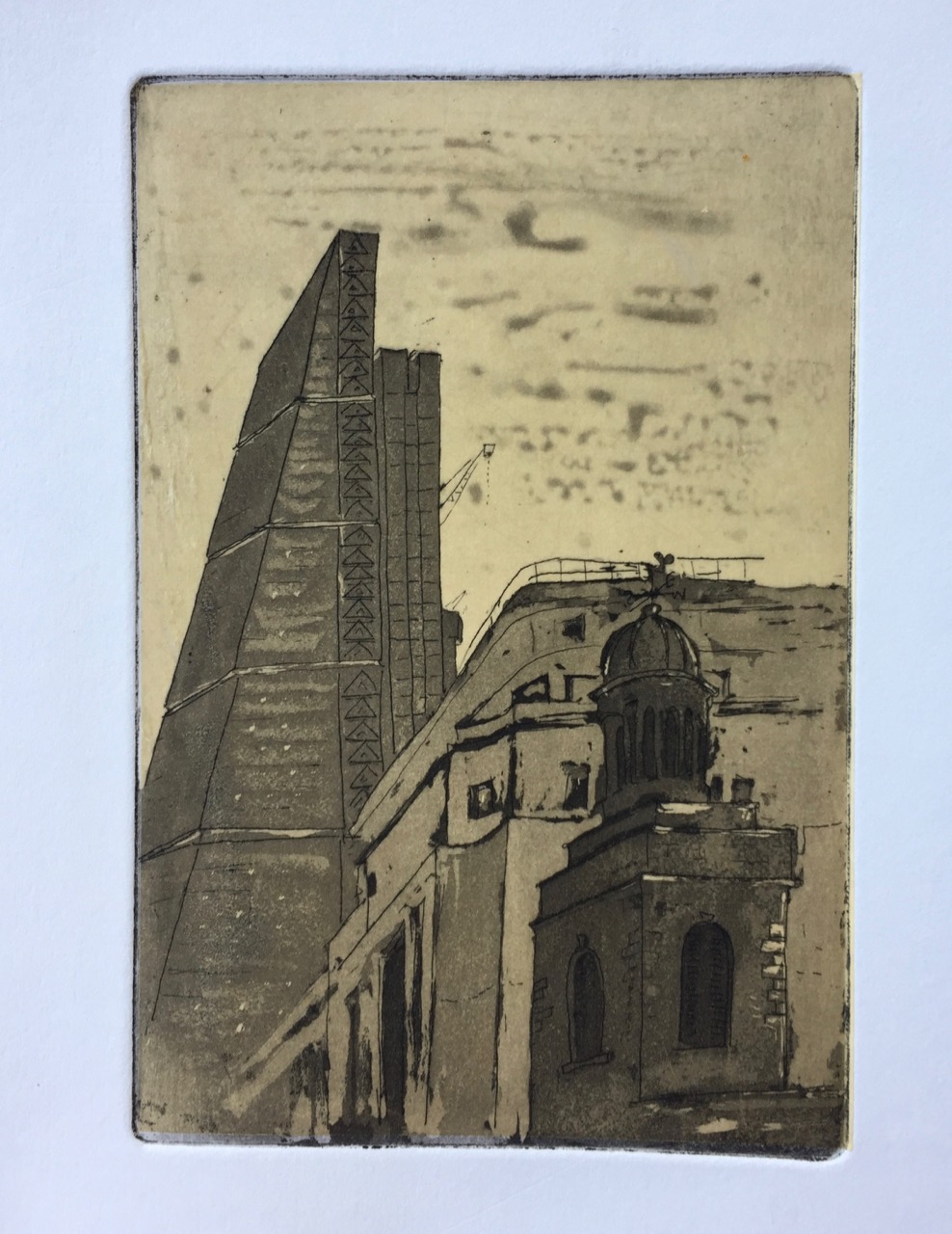
Yesterday I did an etching based on a sketch I made of the Cheesegrater and St Katharine Cree.

IMG_2650

This is a post-card sized etching on copper plate, printed by the technique called Chine collé.  Japanese paper is the coloured background, and is printed and glued to Fabriano Unica, all in one process. It’s a bit tricky, but gives a good result, I think. The Japanese paper takes the ink very well, and provides the coloured background.

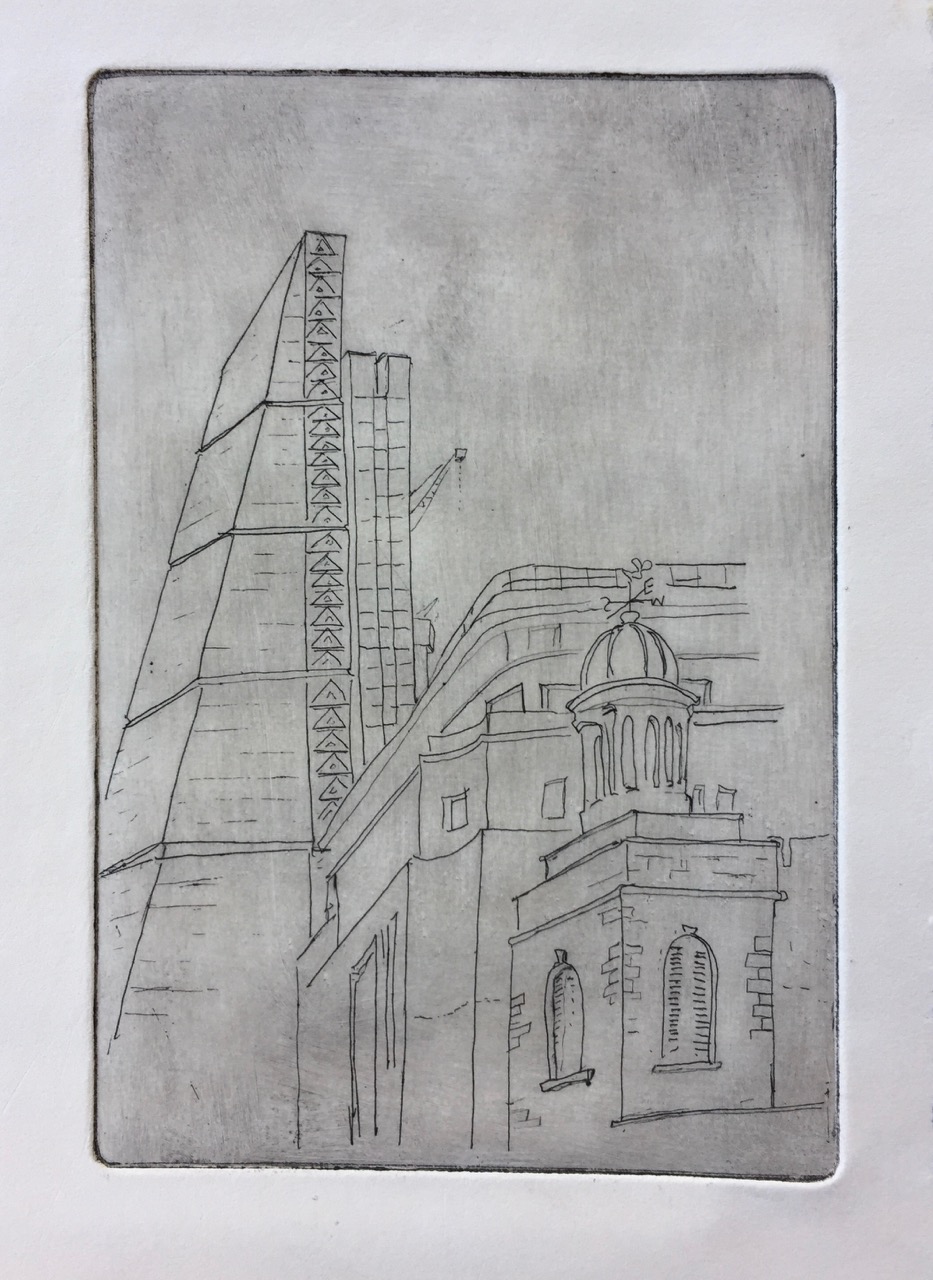
The plate is made using a hard-ground etch, then aquatint. Hard-ground etch means I put a varnish on the plate, then draw the picture in the varnish, so revealing lines of bare copper. Then I dip the plate in acid for 20 minutes. The acid attacks the bare copper and makes lines. Then if I print it, it looks like this:

IMG_2649

The next stage is aquatint, to make the tones. Aquatint is nothing to do with water, and nothing to do with colour. The name is misleading. The plate goes in a box, where I’ve turned a handle to make clouds of fine rosin. The rosin drops on the plate like rain. Then it’s annealed with a gas burner. Now there are lots of tiny dots in a random pattern on the plate. The skill now is to paint and dip the plate, so as to get the tones. The longer the plate stays in the acid, the blacker the tone. But if you leave it too long the acid bites off all the dots and the tone is light again.

The picture has 5 tones and plate tone. The darkest tone was in the acid for 4 minutes.

Here is the plate being inked up:

IMG_2648

I did the printing on the Henderson press at East London Printmakers.

The Cheesegrater from the East

I have previously drawn the Cheesegrater from Threadneedle Street. Today I went to find a good view from the East. I was keen to include the ancient church of St Katharine Cree.

Here is the Cheesegrater from Leadenhall, just east of Creechurch Lane.

fullsizeoutput_1ab9

The current building of St Katharine Cree is 1633. The tower that I’ve drawn is from 1504. Parts of the church date back to the Mediaeval Priory 1108. This place is a survivor. It survived

  • the Great Fire 1666
  • The Second World War, which damaged the roof
  • the Baltic Exchange bomb, 1992, which blew out the central part of the 17th Century East window.

The Cheesegrater, aka The Leadenhall Building, 122 Leadenhall St, was finished in July 2014. The architects were Rogers Stirk Harbour + Partners.

Behind, you can just see the cranes for 22 Bishopsgate under construction.

Drawn standing in the street, 1 hour, drawn and coloured on location.