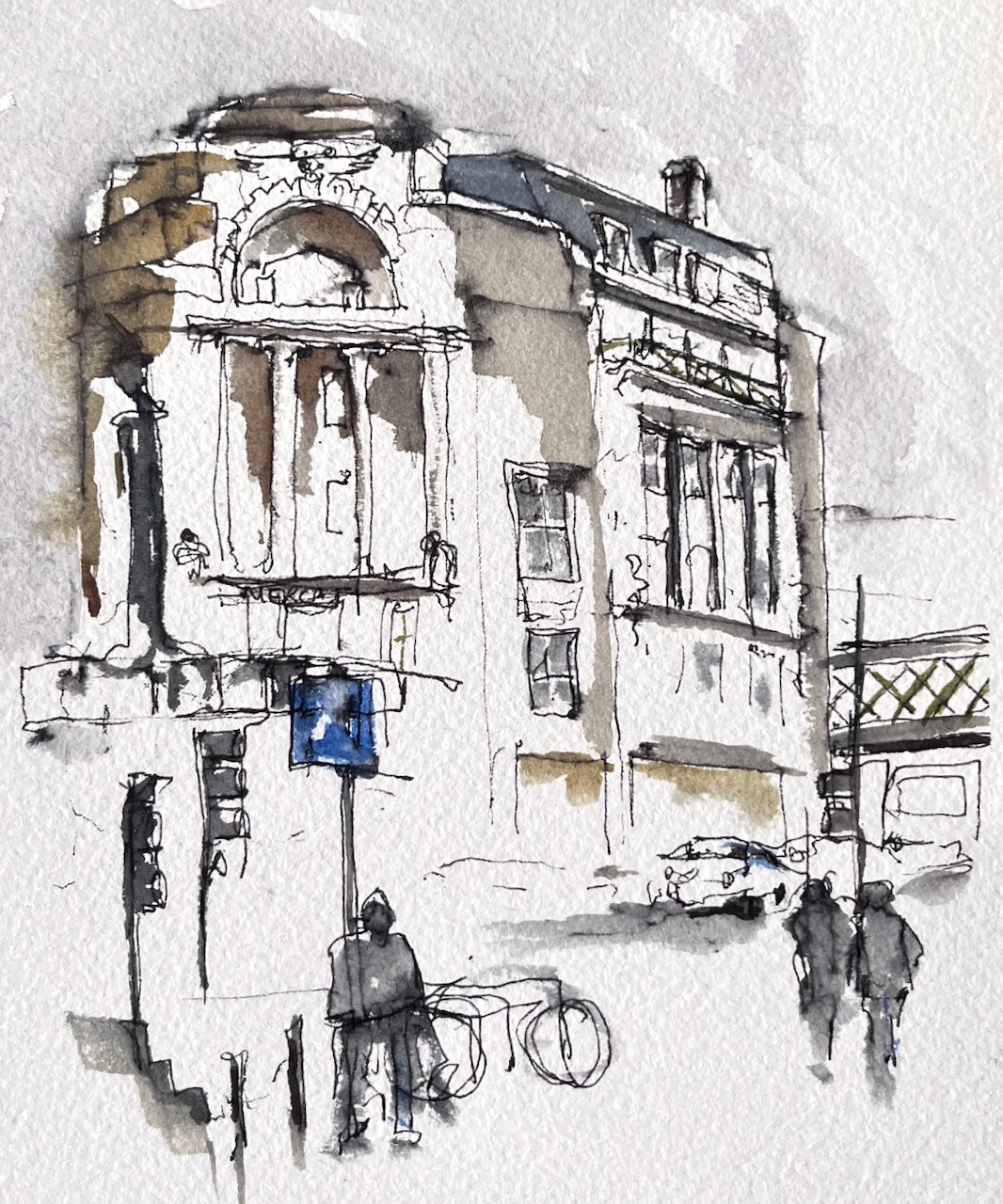
Mercat Building, Glasgow, G1 5AB

On my way up to the West of Scotland I had a day in Glasgow. The overnight train had arrived at 07:30 and the bus to Oban didn’t leave until 18:05. I emerged from Glasgow Central into the mist and fine rain, and walked up the hill to find the “Buchanan Bus Station”. My idea was to stash my bag in the Left Luggage facility and then spend my time exploring Glasgow.

Glasgow at 07:30 on a wet morning in March is not so very enticing. I had the lowest possible expectations as I entered the bus station. Although huge, the bus station had been difficult to find, hidden as it is behind a monumental building called “Buchanan Galleries”. This is neither a “gallery” of the art sort, nor a shopping centre, as far as I could work out. It is a multi-story car-park. Every shop I had passed on the way up had been closed, possibly permanently, or so it seemed to me. There was a wind, I was getting wet, and I was hungry. Despite the confident announcements on its website, I was starting to think that the Left Luggage at Buchanan Bus Station would be closed.

But, contrary to all expectations, the Left Luggage Office was lit up, the door open, and everything looked new and clean inside. Even better, a cheerful man in a beanie hat soon appeared behind the desk, took charge of my pack, and efficiently operated the locker system. I exchanged a £5 note for a receipt with a code, put the receipt deep within my pockets, and set off into the grey morning feeling a lot more cheerful.

This came to typify my experience of Glasgow: a grey and wet city enlivened by cheerful welcoming people.
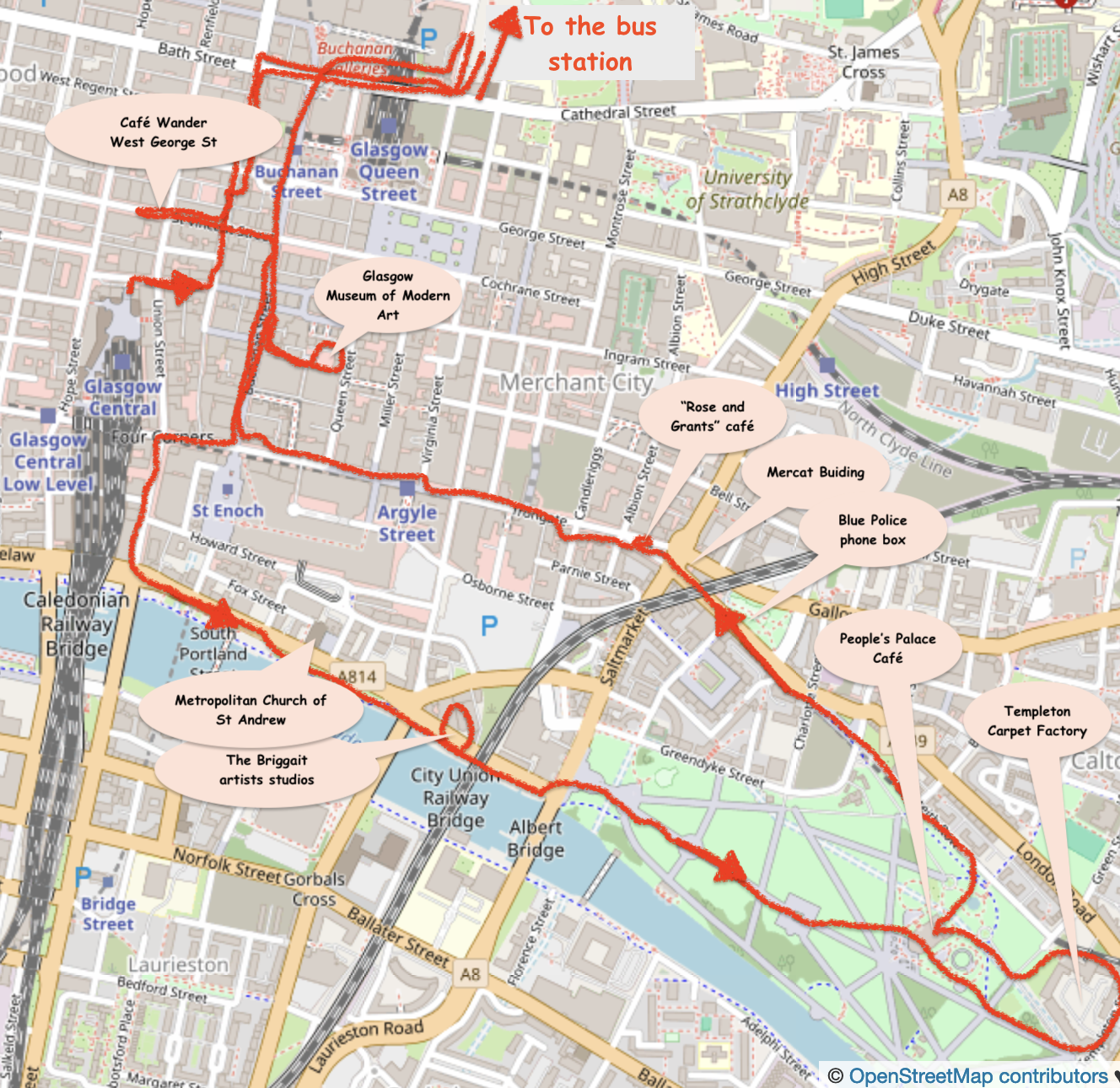
My wanderings around Glasgow. Positions of monuments and cafés are approximate. Map (c) Open Street Map Contributors.

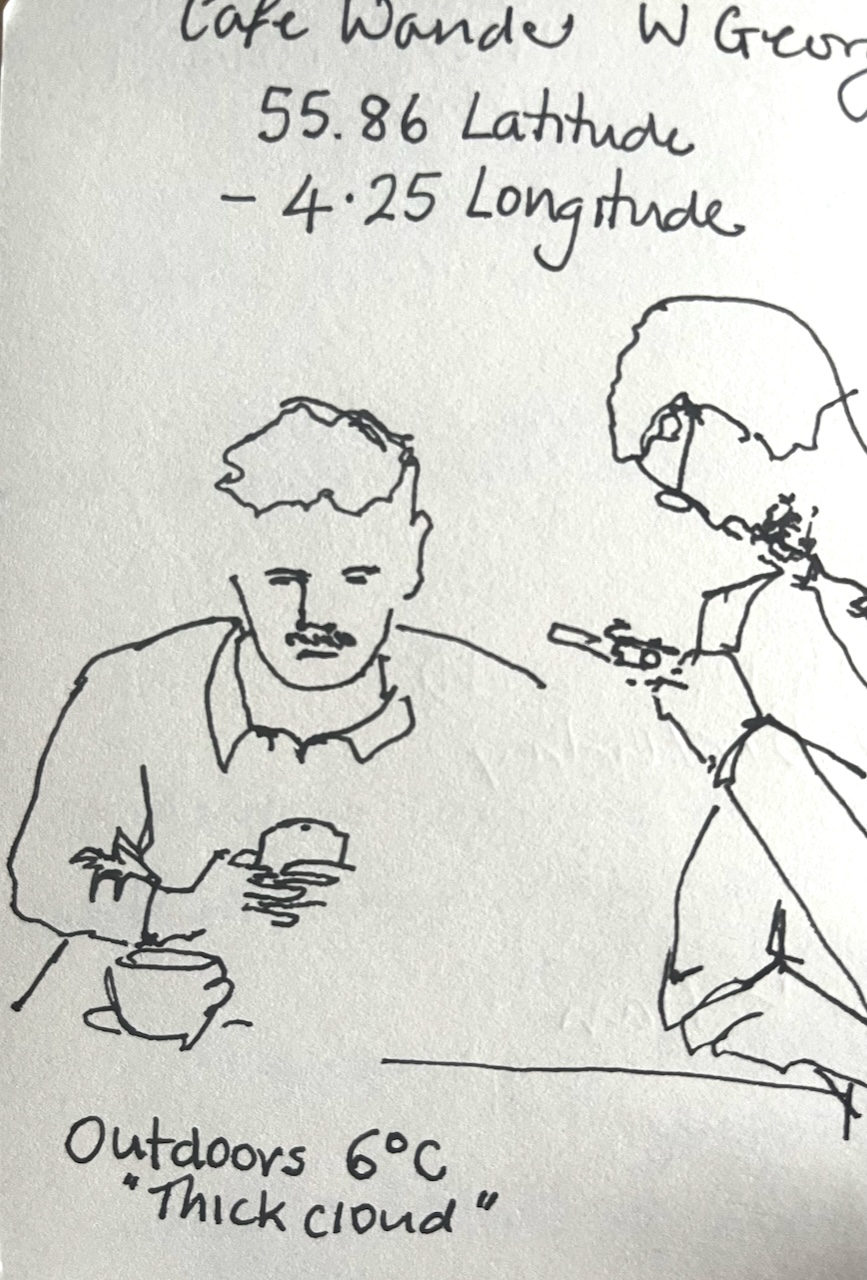
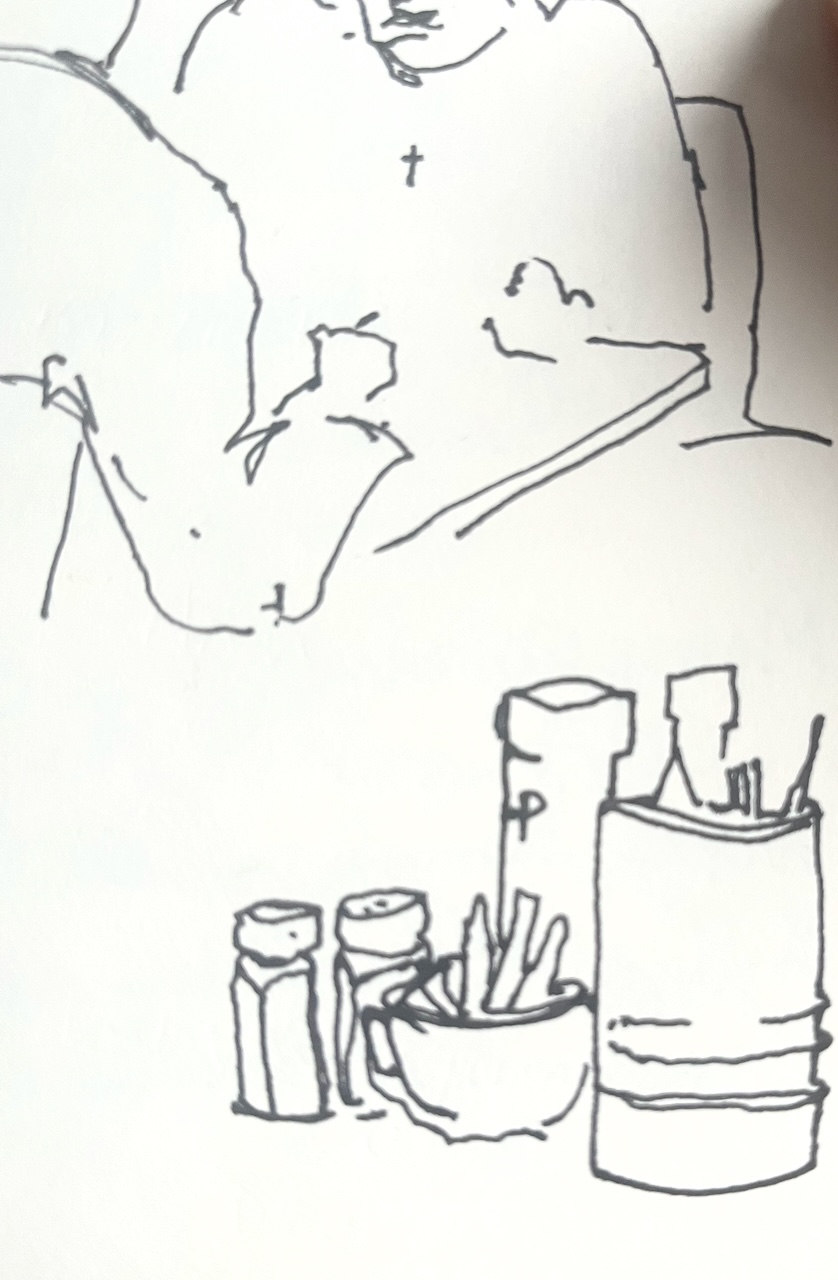
Walking out of the bus station, and wandering at random through the grid of streets, I spotted the “Café Wander” in a basement. This is at 110 West George St and was a great find: welcoming people, a big mug of tea, food, and a charging point for my phone. No rush, I could think and sketch, and feel as though I’d arrived. I decided to head for the river. A river tells you about a city.
The amazing thing about Glasgow is that there are these magnificent buildings, and a lot of them are apparently empty. Or at least they are empty from the 2nd floor up. At street level there is a band of multi-coloured shopfronts, some shuttered. Higher up the Victorian optimism and wealth proclaims itself in ornamented facades, fancy windows, sculptures, and carved names of proud institutions: “St Vincents Chambers”, “Bank of Scotland”. But these higher floors are deserted. The windows are dusty, the facades chipped, the statues dark with dust. But still.

The river told me nothing about Glasgow, except that Glasgow seems to ignore its river. There is a main road, a magnificently restored catholic church, and a succession of buildings which in London would be converted to luxury flats but which in Glasgow remain as buildings awaiting their future. By the time I reached the park, I was really cold. Hacking my way against what was now a biting wind, I encountered a small round woman with a small round dog, coming the other way. She caught my eye and laughed, holding firmly on to the dog’s lead as though it anchored her to the ground. “Bitter!” she announced, still laughing. I agreed that it was.

I wanted to ask her some important questions, such as whether the “People’s Palace” had a café, and what was that brightly coloured building in the misty distance? But conversation was going to be impossible in that wind, so she and I passed each other in amicable silence, allies against the elements.

The brightly coloured building was called “Templeton Buildings”. It had no café, and no information. There was a bar, predictably closed. I circumnavigated it, and then set off for the “People’s Palace”. In the distance I’d seen someone come out, but they could have been a builder or a janitor.

It was now raining in earnest. All my papers, tickets and art equipment were in dry-bags inside my backpack, which had been a good precaution. I’ve been in Scotland before. The People’s Palace appeared out of the mist, a huge Victorian edifice, looking formidable and very closed. It was not closed. There was a board outside. A café! I pushed open the door, ready to be rebuffed at any moment, but no, inside was warmth and light, a museum of some sort, public toilets, and a café.

The “People’s Palace” Glasgow Green.

I more or less fell into the café. The friendly person at the counter gave me a guided tour of the home-made cakes, evidently from personal experience. Since he looked like someone who knew his cakes, I accepted his recommendation for the coconut sponge and took a window seat by an old fashioned radiator that was pumping out heat. From there, I watched through the window at coach tours who arrived to look at a fountain in the rain. This is the Doulton Fountain, gifted to Glasgow in 1888 by the Doulton Pottery in Lambeth, London. It would look very nice in the sun: a good sketching subject.

The friendly cake-expert directed me to information panels which told me about Templeton Buildings. This is the former Templeton Carpet Factory, which ceased operation only in 1980.
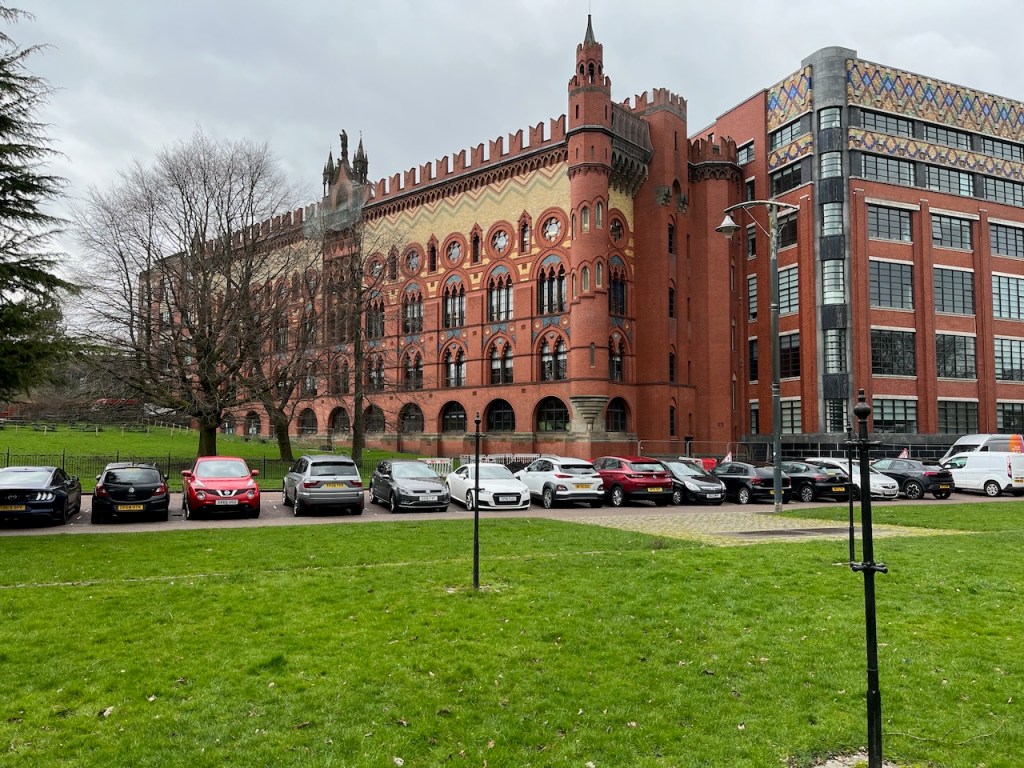
photo of Templeton Buildings

Eventually, fortified by cake, I was off again in the rain which had abated slightly. I was determined to sketch at least one of the Glasgow buildings. I came to the end of a long road, there was the Mercat Building.

Mercat Building, 26-36 Gallowgate, Glasgow, G1 5AB: 1928-31 designed by Andrew Graham Henderson who lived and worked in Glasgow 1882 – 1963

This was a very quick sketch, on an A5 card, done from a doorway as the rain came down. I stopped before all the colours ran together and retreated into “Rose and Grant”, another welcoming café where the people were not atall put out by my washing my brushes in their water glass and spreading out my watercolour equipment on the table, making copious use of the supplied paper napkins for art purposes.

My tour of Glasgow included the Museum of Modern Art, which has a peaceful library in the basement, as well as small galleries where the pictures have commendably large-type curation. Not crowded. Easy to navigate. Friendly.

I ended up back at Buchanan Street Bus Station, successfully retrieved my pack and was early for my bus.

Glasgow is definitely a City to return to.
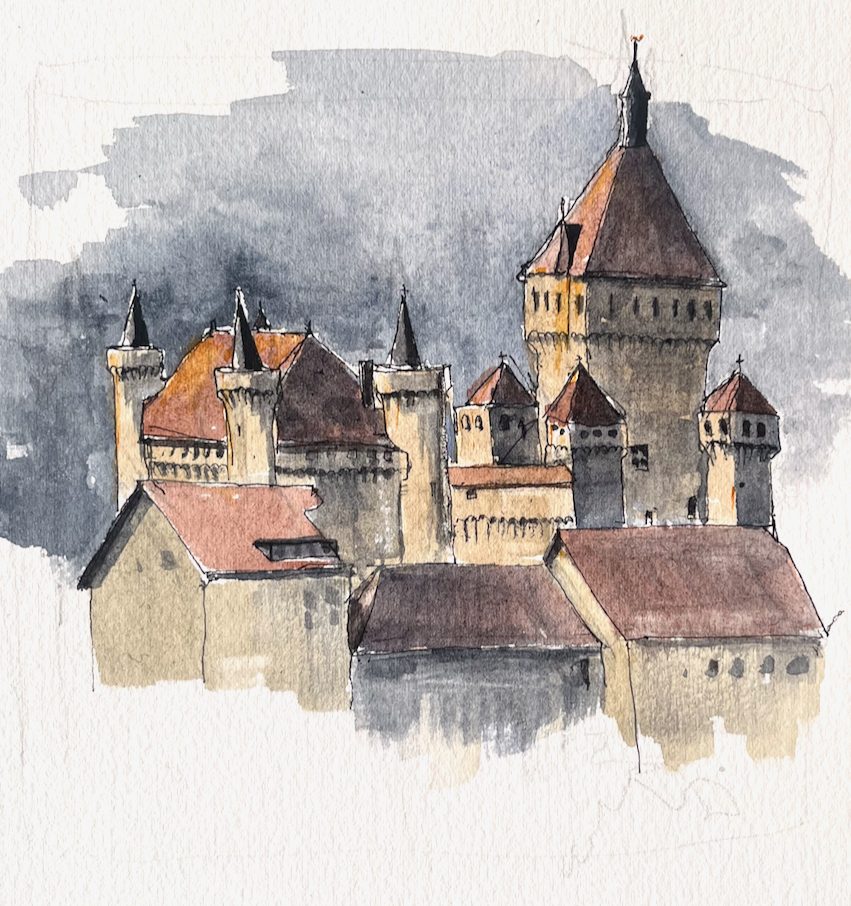
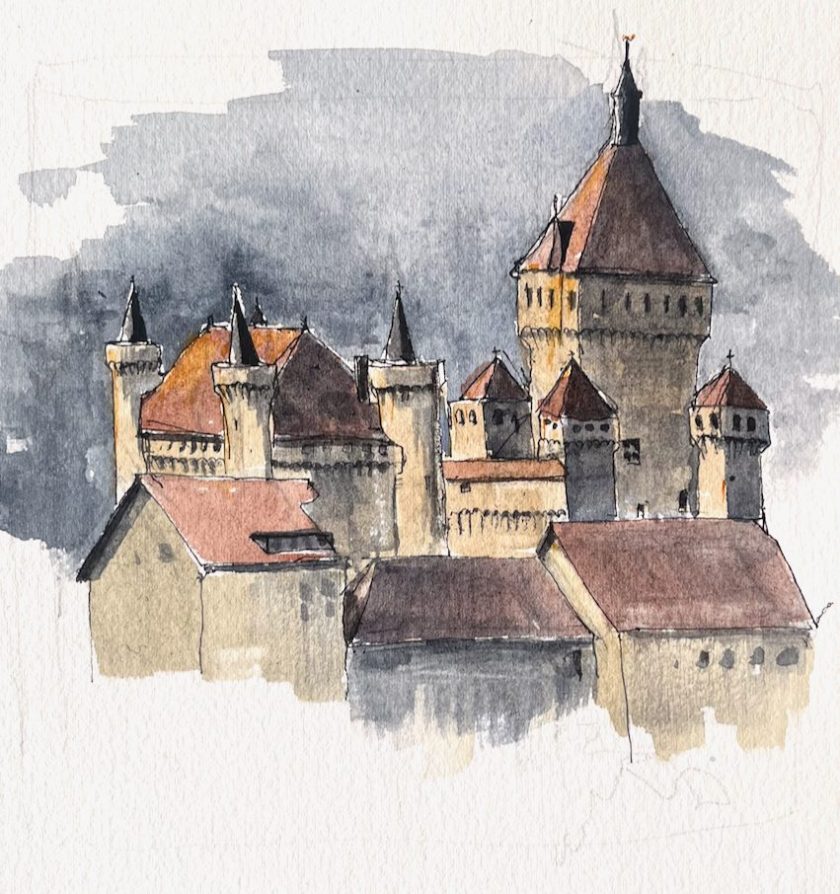
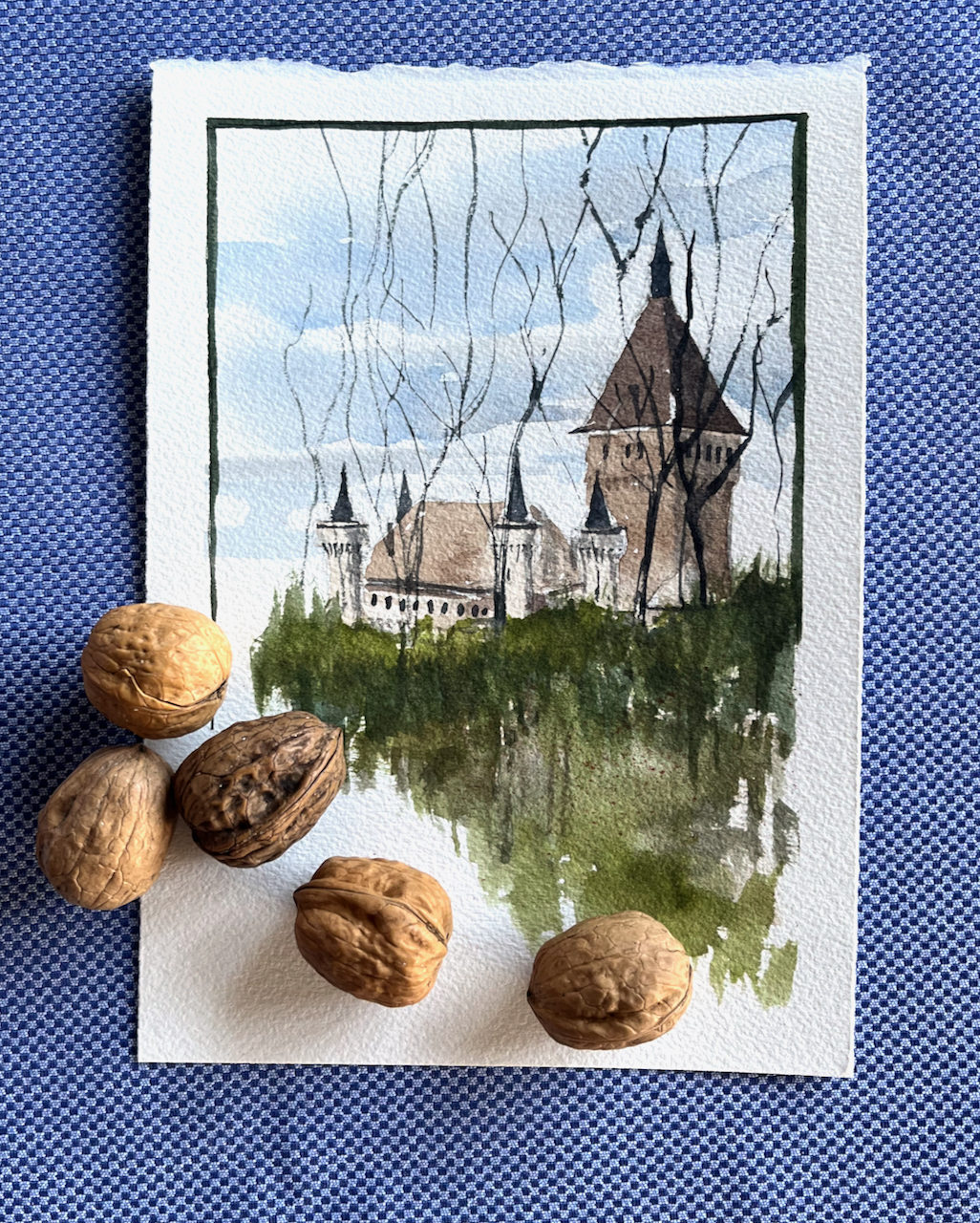
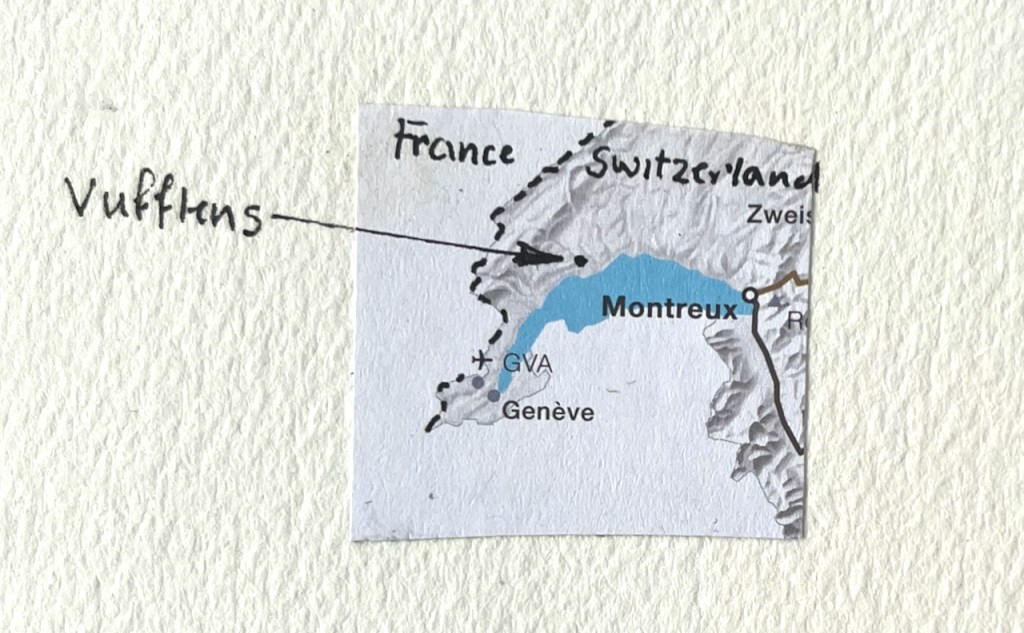
Château de Vufflens, Vaud, Switzerland

Fine rain started as I sketched the Château de Vufflens. At first I thought I could keep sketching. But then rain arrived in large-size drops, some containing ice. I took refuge under an archway. There was a view of the castle from there, but a different view. Also, standing there, I was, very possibly, in someone’s garden. I am not sure about Swiss laws on trespass. All I was sure of was that there would be laws. I assembled suitable French phrases in my head, to be ready to explain and apologise. And I restarted the sketch from this new angle. Then the rain stopped.

I inspected the sky suspiciously. I watched the cloud movements. Clouds just appear here, over the mountains, as from a volcano. They don’t proceed in an orderly succession as they do over the Atlantic. However all seemed more lightweight and friendly than it did earlier. I exited from the archway, and resumed my place on the public roadway. There are probably laws about sketching on the public roadway too.

But no-one even walked past. Not a car. Not a person. Not a dog. So that was alright. I finished the sketch. And then the rain started again.

Château de Vufflens in the morning, 24 March 2024 11:15 in Sketchbook 14

This castle is privately owned. It is on a rock in the valley, surrounded by high walls. Houses cluster at the bases of the walls. if you know the work of Mervyn Peake, think “Gormenghast”.

It was originally constructed in the middle ages, 1420-1430, for Henri de Colombier, an adviser to Duke Amadeus VIII of Savoy, I was told. It looks well maintained, and vast.

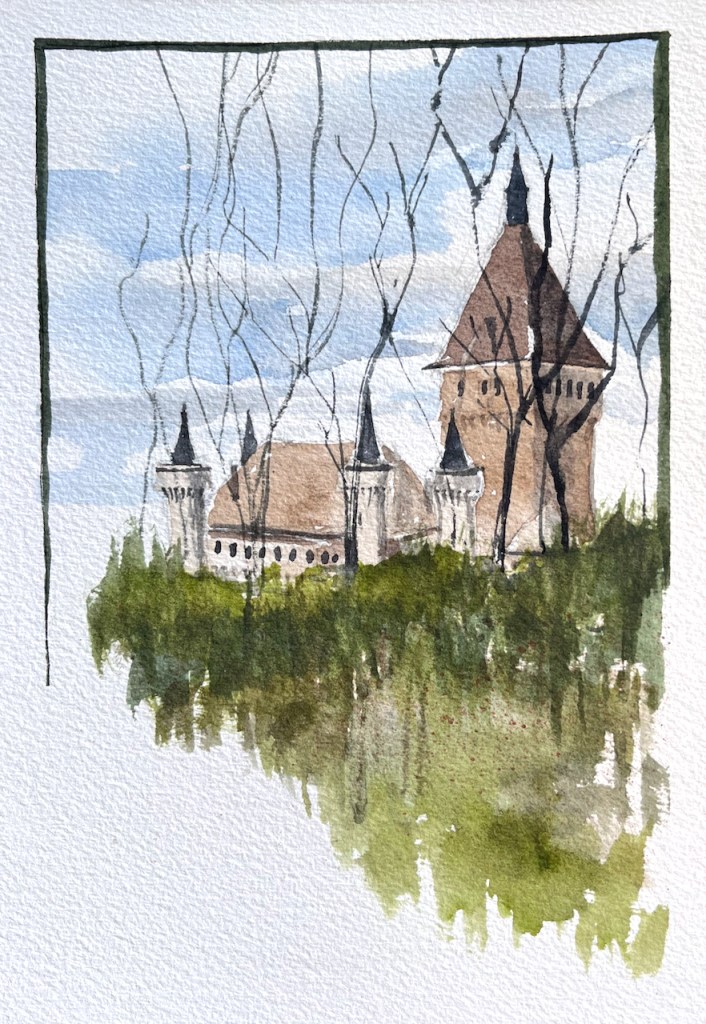
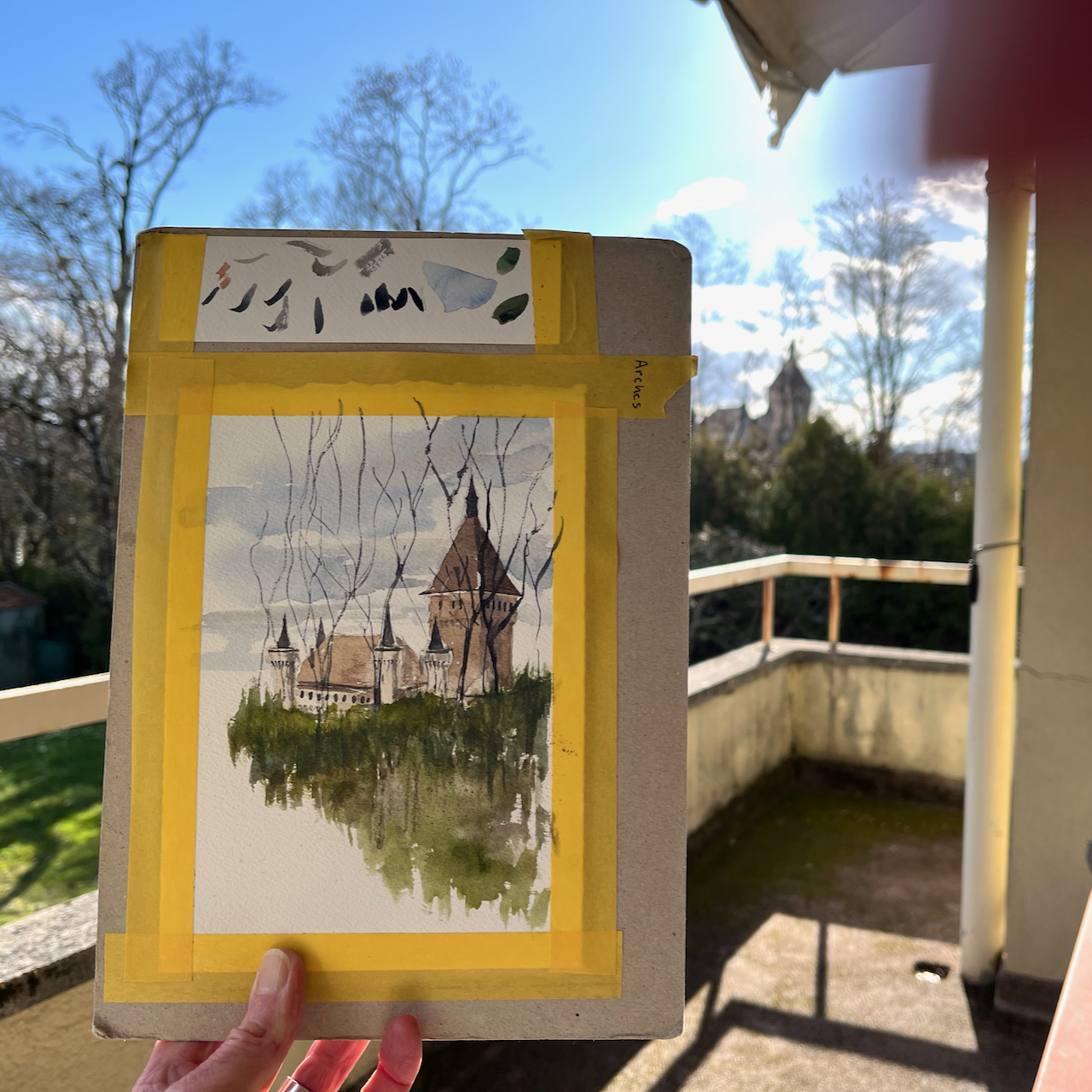
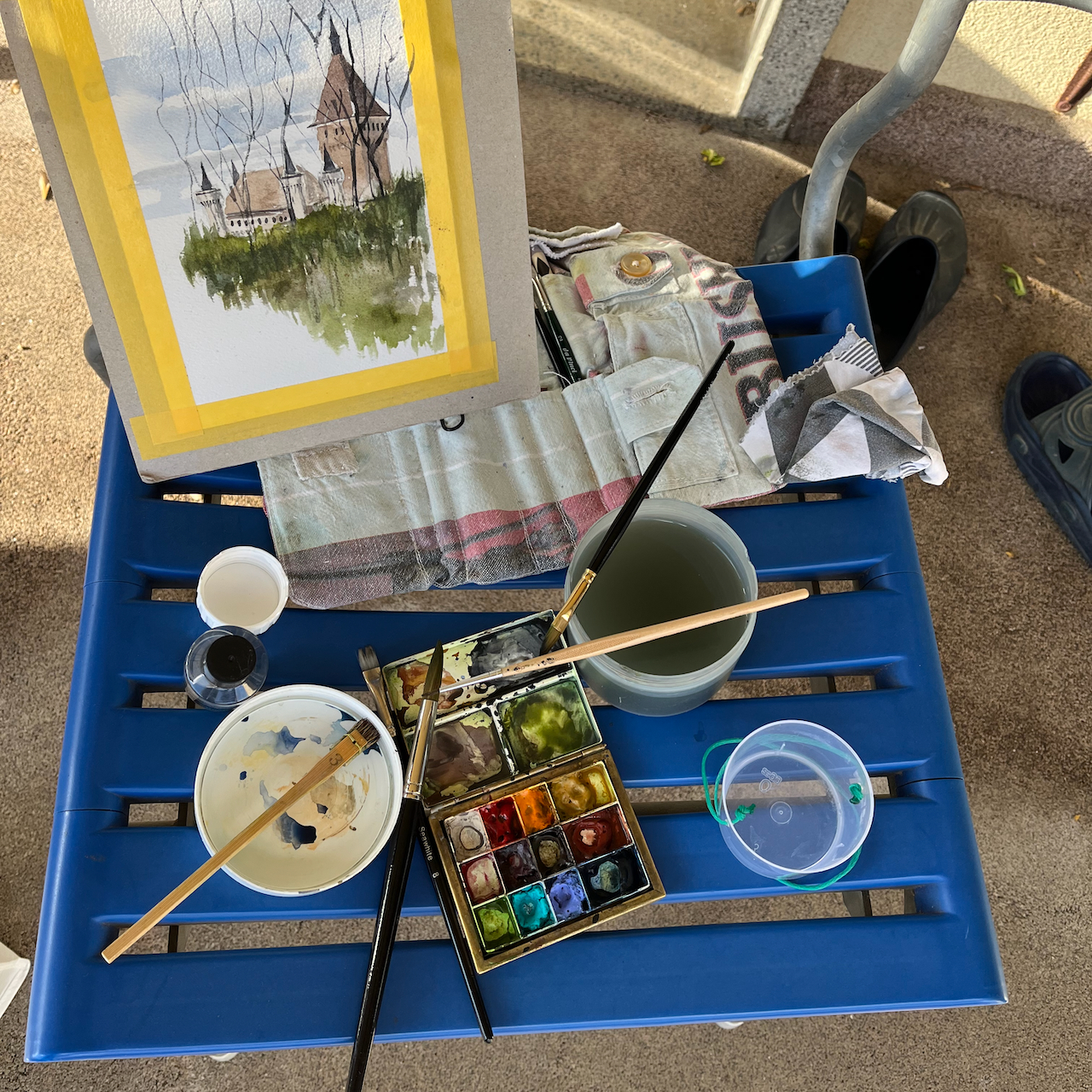
Later that day I made another attempt at drawing the castle, from a different angle. From this new viewpoint I could be under cover, but there were trees. I put the trees in.

Château de Vufflens in the afternoon. 24th March 2024, 4pm. 6″ x 8″ on Arches Aquarelle card

The walnuts came from the trees.

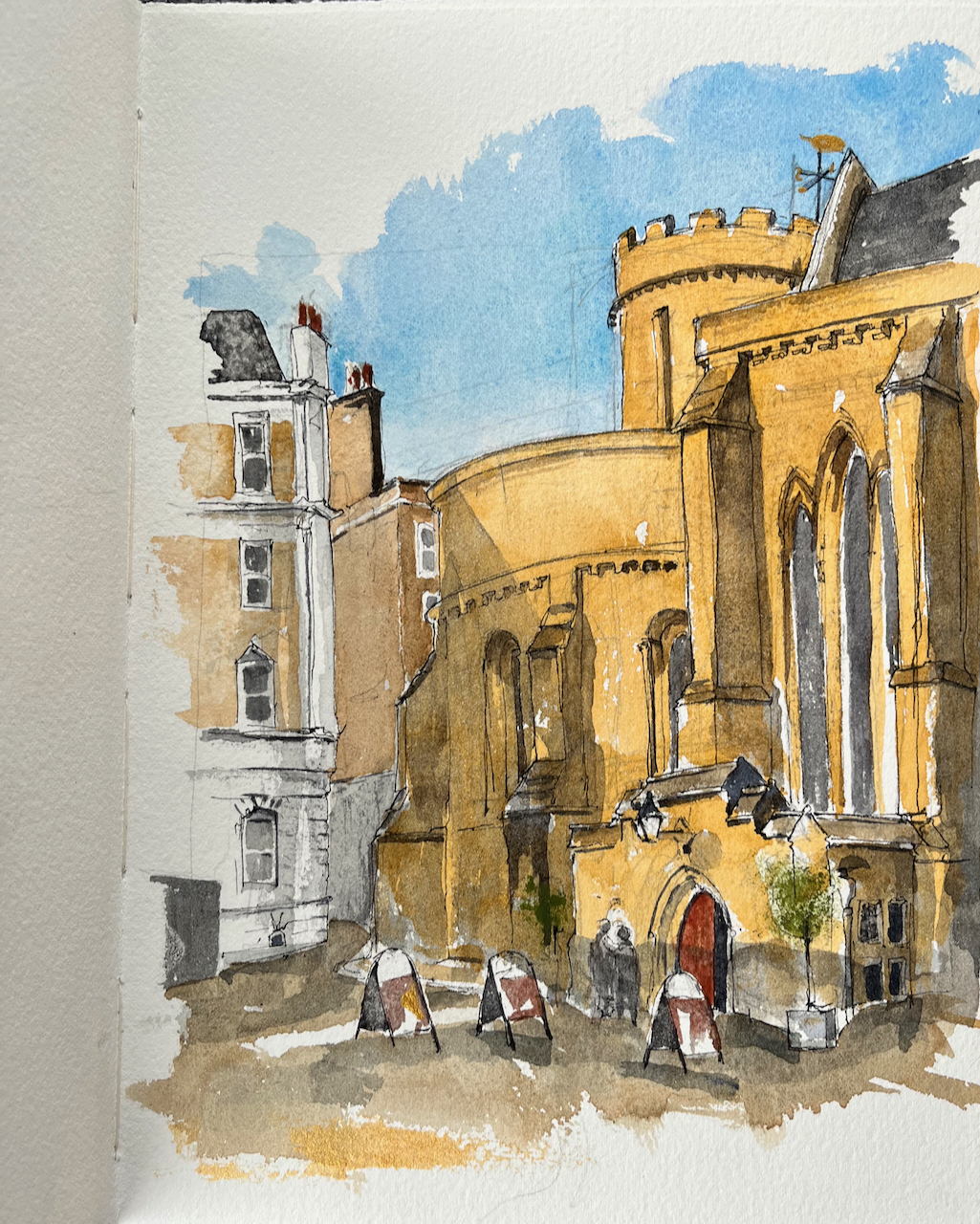
The Temple Church, Temple, London EC4

The Inns of Court are an ancient area of London, around Fleet Street, close to the Royal Courts of Justice. It’s an area of narrow lanes and quiet courtyards. Lawyers’ practices are there.

In amongst the buildings is this church, which opened on 10 February 1185.

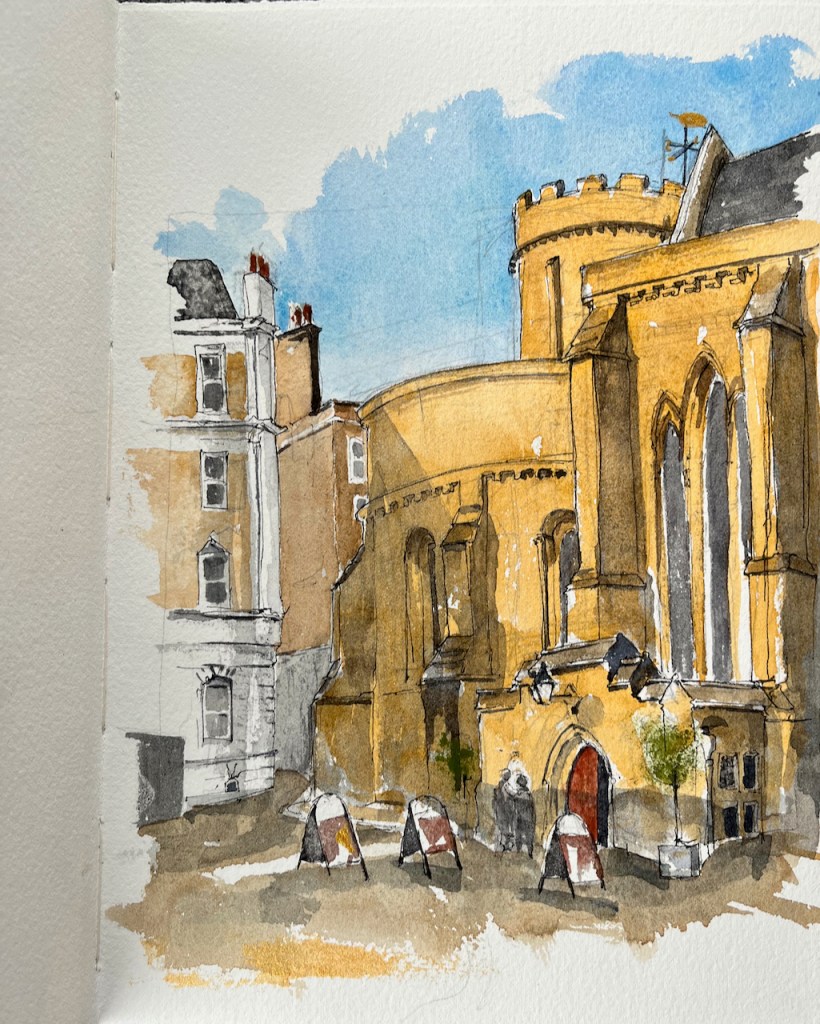
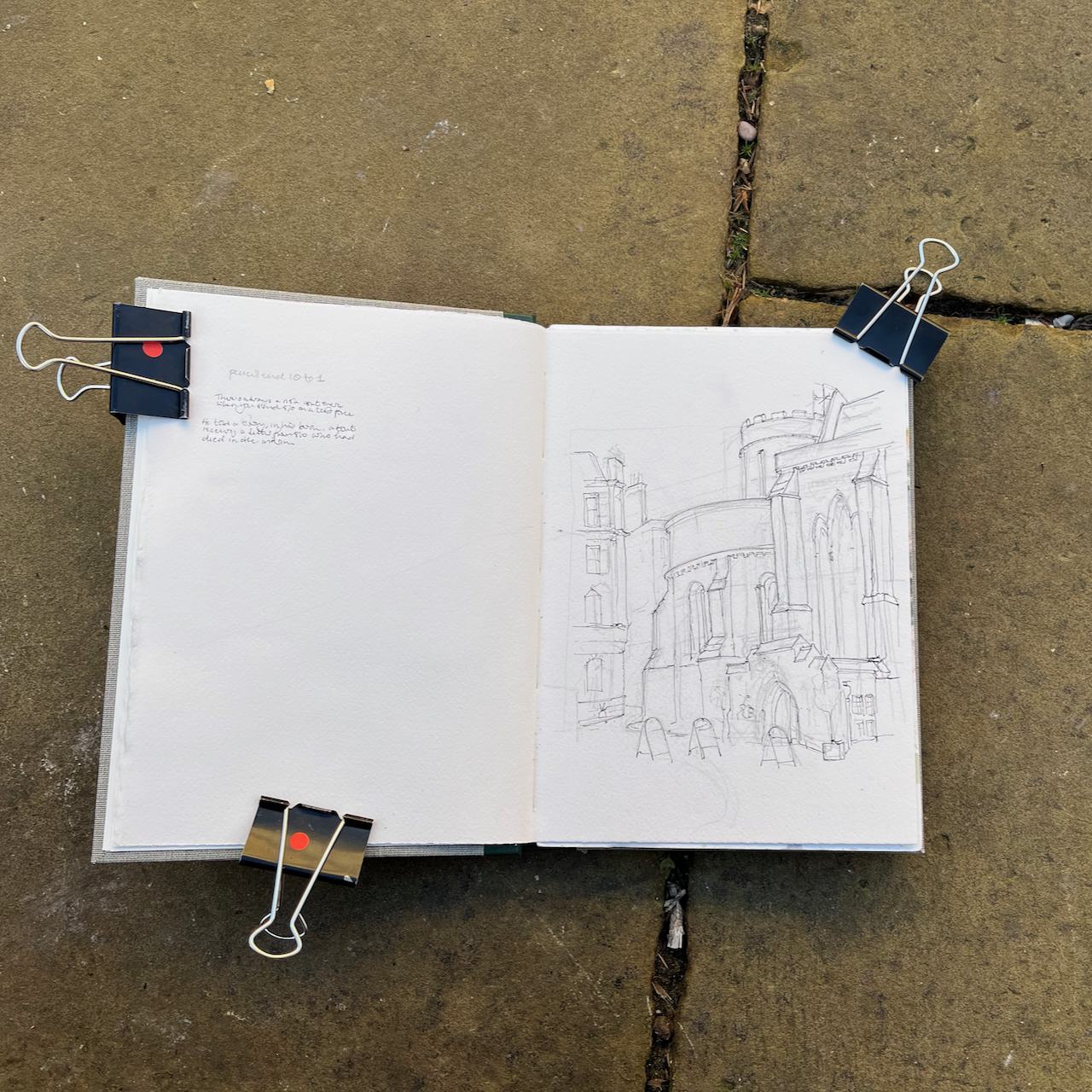
Temple Church, 14th February 2023, in sketchbook 13

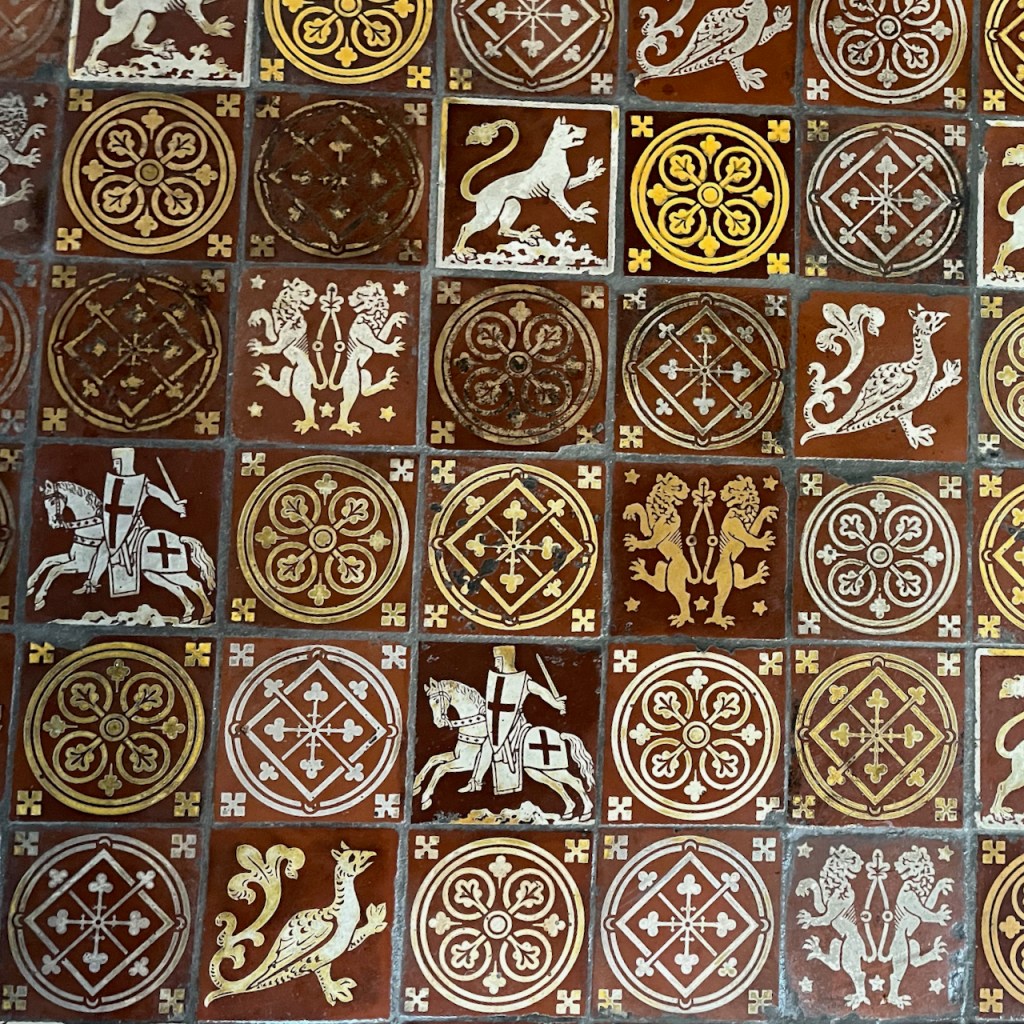
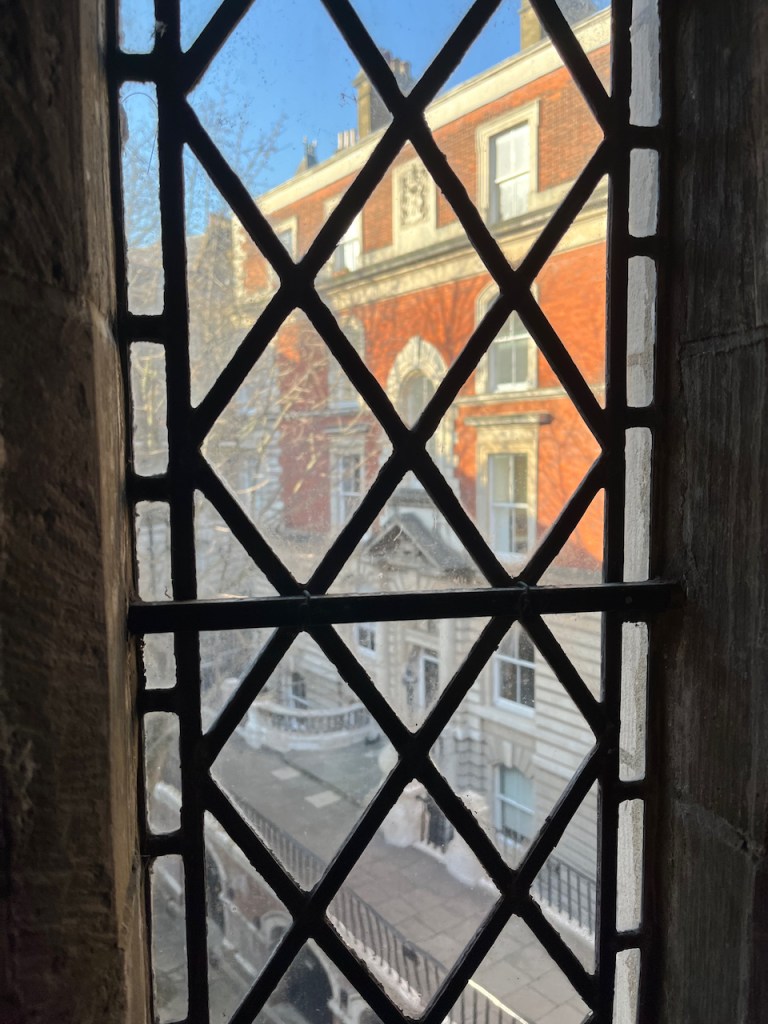
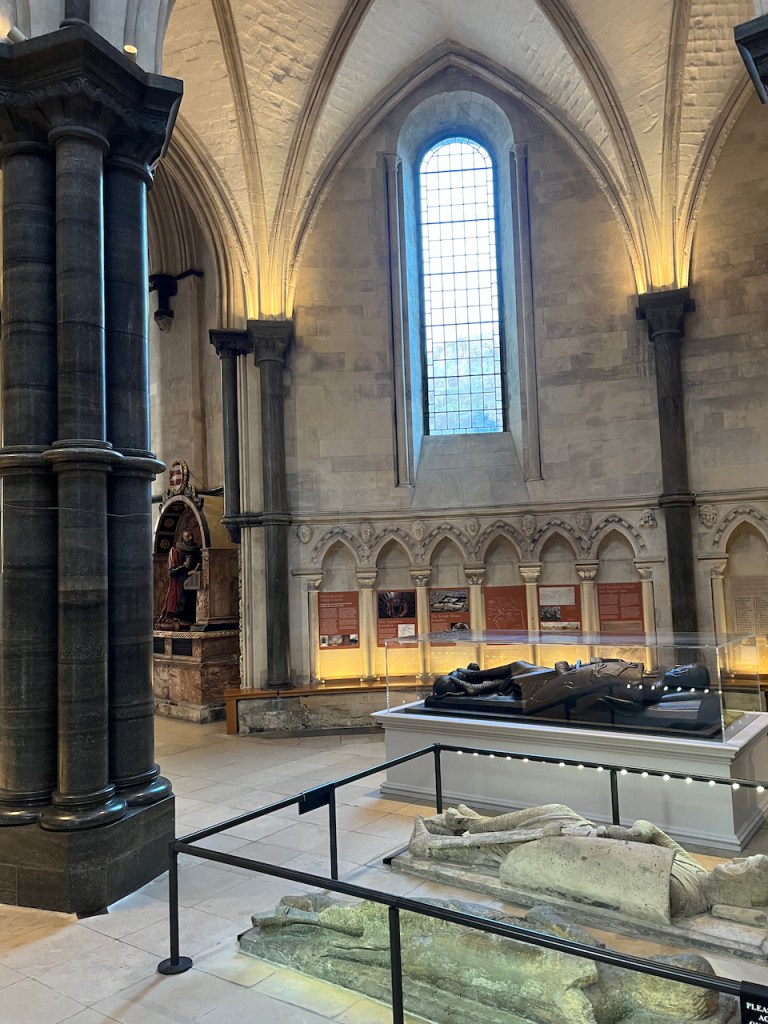
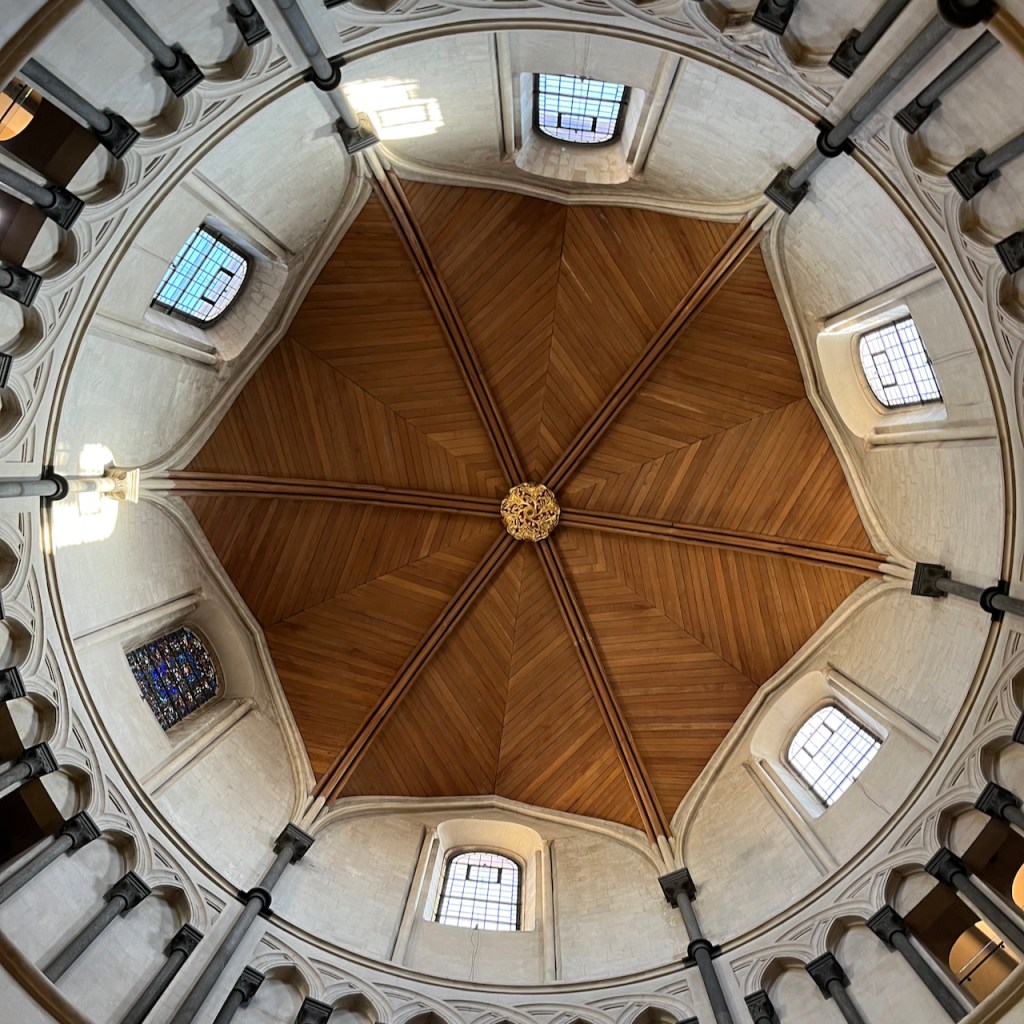
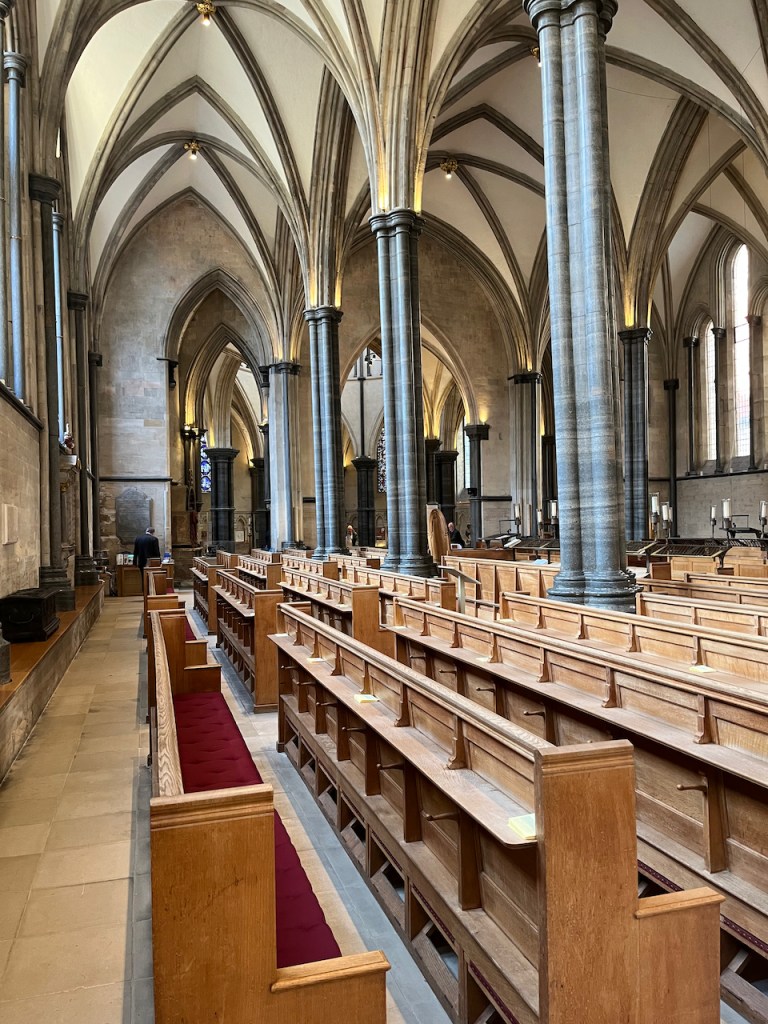
The church is open to visitors. I went in. It’s a splendid space, very calm, beautifully vaulted. You can even go up a narrow winding staircase inside the round structure I have drawn. Here are some photos of the inside.

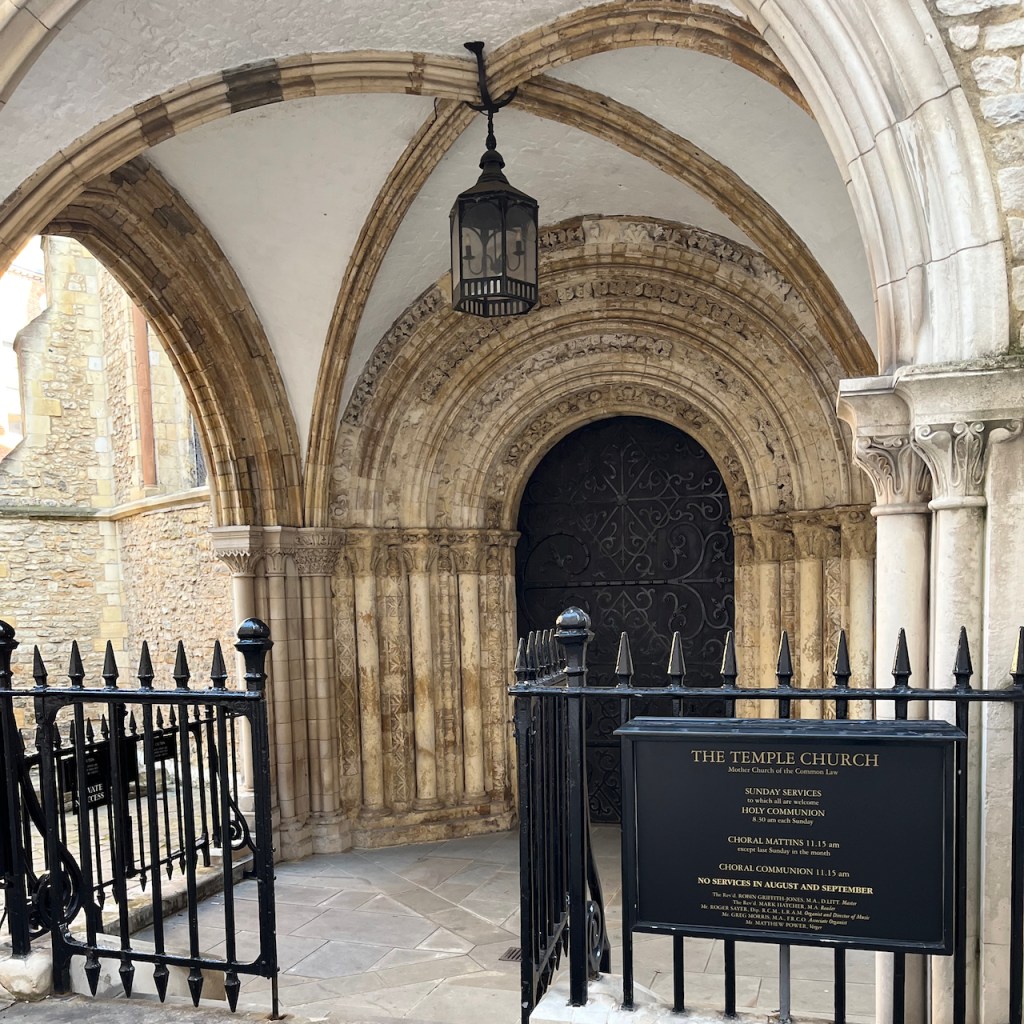
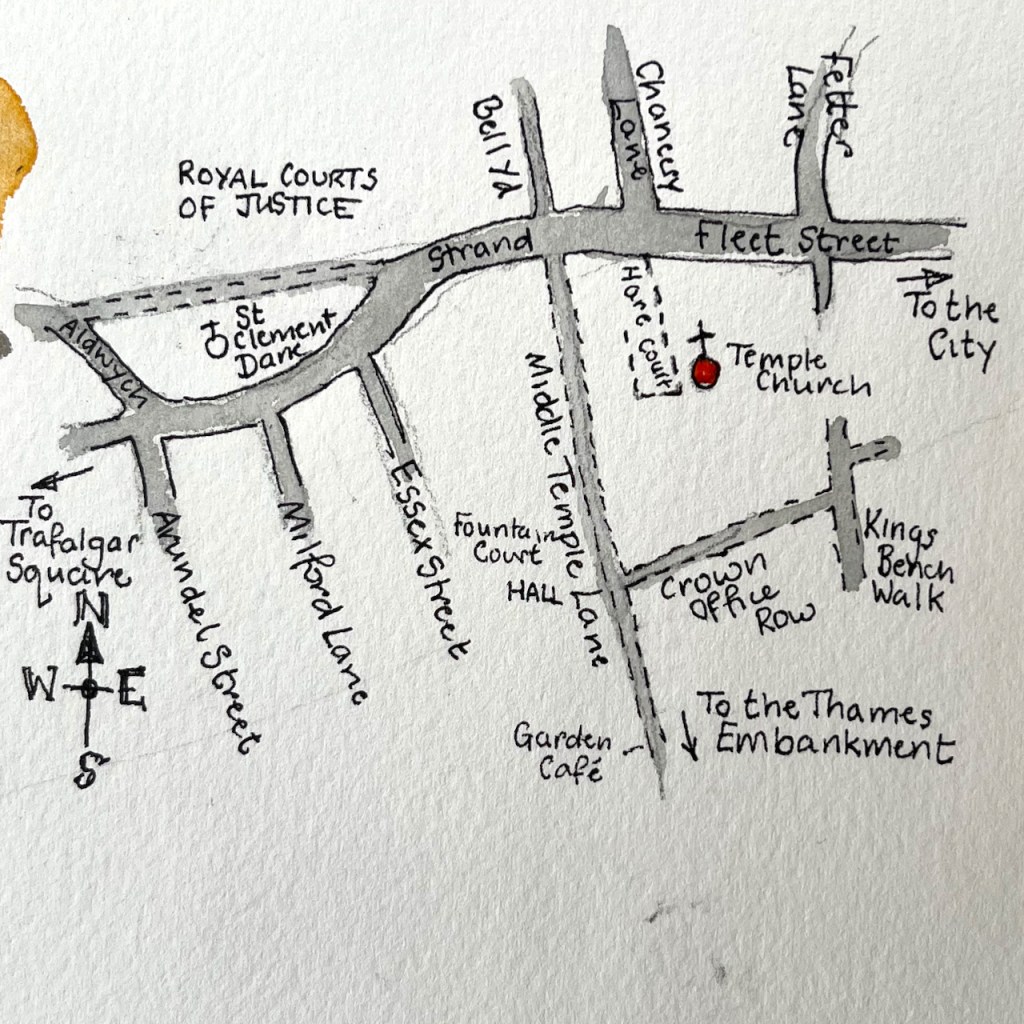
Here’s a map and a photo of the Norman arch on the outside

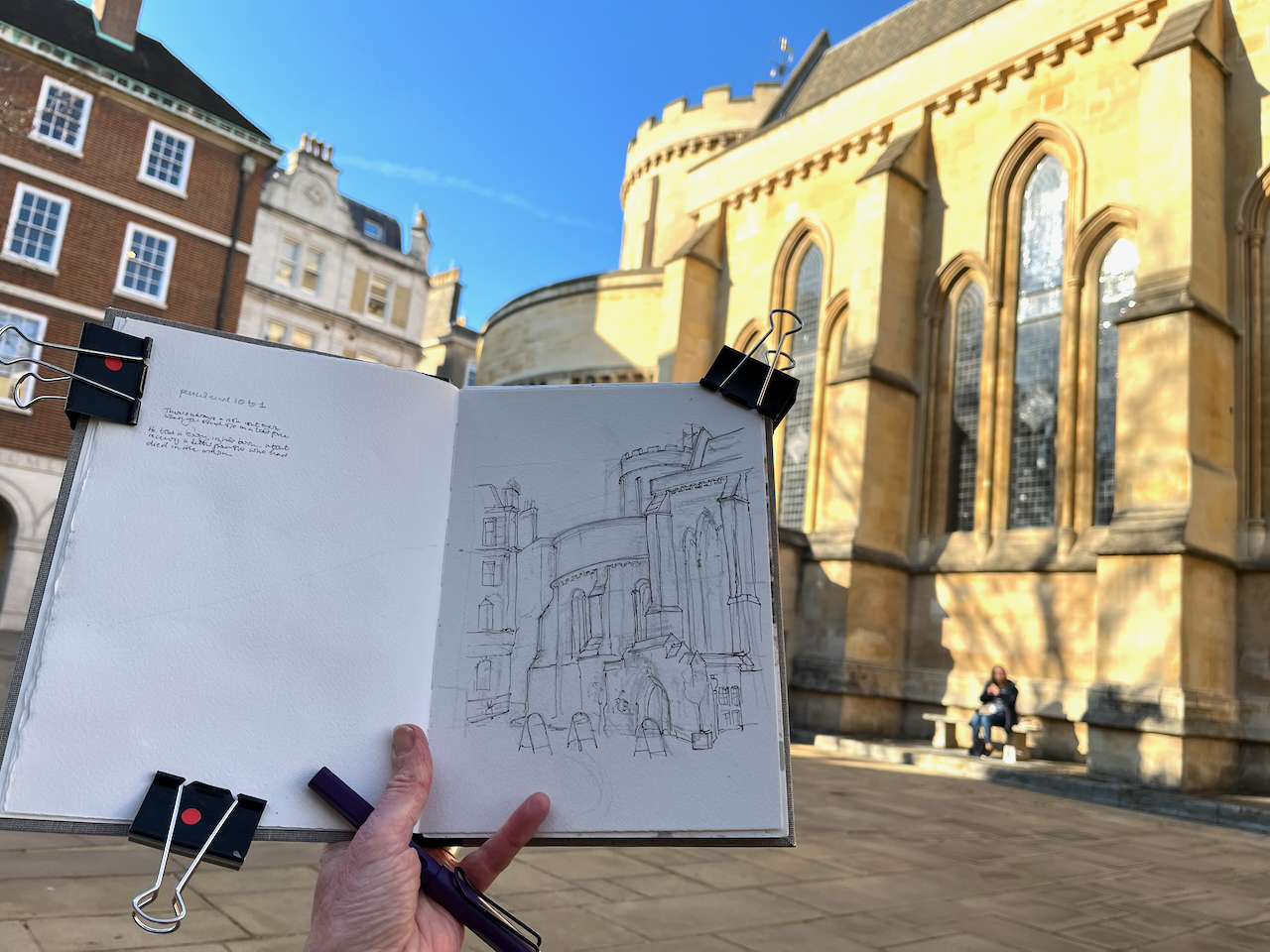
Here are some work-in-progress photos.

St Martin-in-the-Fields, WC2

On the way back from a visit to the West End, I passed St-Martin-in-the-Fields, standing out against the cold sky.

St Martin-in-the-Fields, Trafalgar Square. Sketched 2nd Dec 2022, in sketchbook 12

The statue in the foreground, left, is the Edith Cavell Memorial, seen from the back. Edith Cavell (1865-1915) was a British nurse. In German-occupied Belgium, guided by her principles of humanity and her Christian faith, she provided medical care to soldiers irrespective of which side they were on. She was executed by a German firing squad 1915, because she had helped Belgian, British and French soldiers to escape the German occupation and reach Britain. Her grave is in Norwich Cathedral.

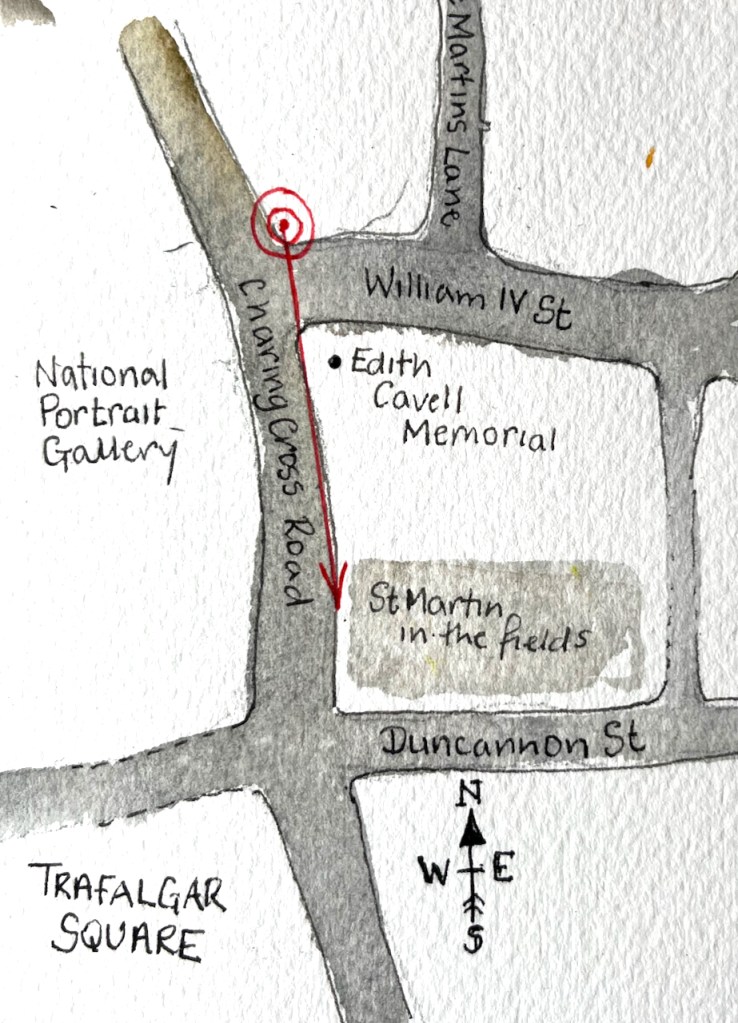
I sketched standing on a corner of the Charing Cross road, see map above. This turned out to be a very noisy location. The National Portrait Gallery is being refurbished and there was continuous drilling and banging. Buses and cars ground their gears, and thundered past, rushing through the traffic lights to shriek to a halt at the next junction.

But St-Martin-in-the-Fields rose above it all. The inscriptions which faced me on the Edith Cavell Memorial were: “Determination”, “Fortitude”.

Bank of England – Tivoli Corner

I took advantage of the road closures for the Queen’s Platinum Jubilee to sketch this corner of the Bank of England.

Bank of England – Tivoli Corner, 2nd June 2022, in Sketchbook 12
Temple of Vesta, Tivoli, modern photo from Wikipedia Commons on this link

This is the North-West corner of the Bank of England. The perimeter wall was designed by John Soane in 1805. The design of the corner was inspired by the Temple of Vesta at Tivoli.

The John Soane museum has a marvellous digital archive with detailed notes on his work on the Bank of England. John Soane was surveyor to the Bank of England for 45 years, from 1788 to 1833. During that time the role of the Bank of England changed from a small bank helping out the government with the national debt, to a significant national institution, printing money and managing Income Tax. The Soane museum archive notes:

Since its foundation in 1694, the Bank of England had financed Britain’s wars and managed the national debt. War, therefore, resulted in more business for the Bank, demanding extensive alterations and additions. Soane’s vast building work was largely the result of the French Revolutionary and Napoleonic Wars that lasted from 1793 to 1815. More space was required as the staff doubled during this time and the bank note printing process was carried out on site. In addition, new offices were required as the Bank’s responsibilities and roles changed, such as a place for managing the newly instituted Income Tax of 1799.

Madeleine Helmer, 2010-2011, on this link © Sir John Soane’s Museum, London

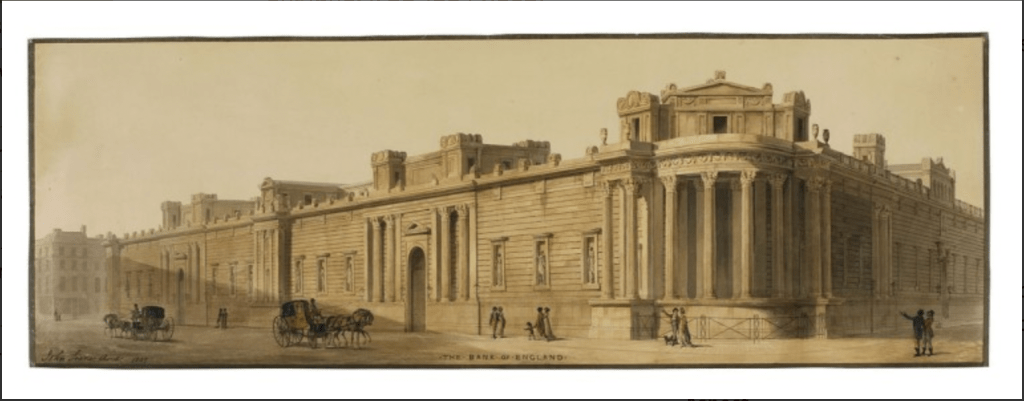
Here is a view from the North-West in 1807, showing the John Soane Bank of England as constructed. You see the Tivoli Corner, which is there today.

North face of the Bank of England, exhibited in the Royal Academy 1809, by “John Soane Archt 1807” Photo: © Sir John Soane’s Museum, London, http://collections.soane.org/OBJECT3718

John Soane’s 3-storey building was demolished to make way for a new 7-storey building constructed 1925-39 by Herbert Baker. Soane’s perimeter wall was retained, but everything else was replaced. It is Herbert Baker who is responsible for that dome in my drawing, and also for the marvellous walk-through passage at this corner. You can see the North side of the passage in my drawing. For more photos of this passage and a description, I recommend the wonderful “IanVisits” site. Ian visits Tivoli Corner on this link. Or go there! And look up.

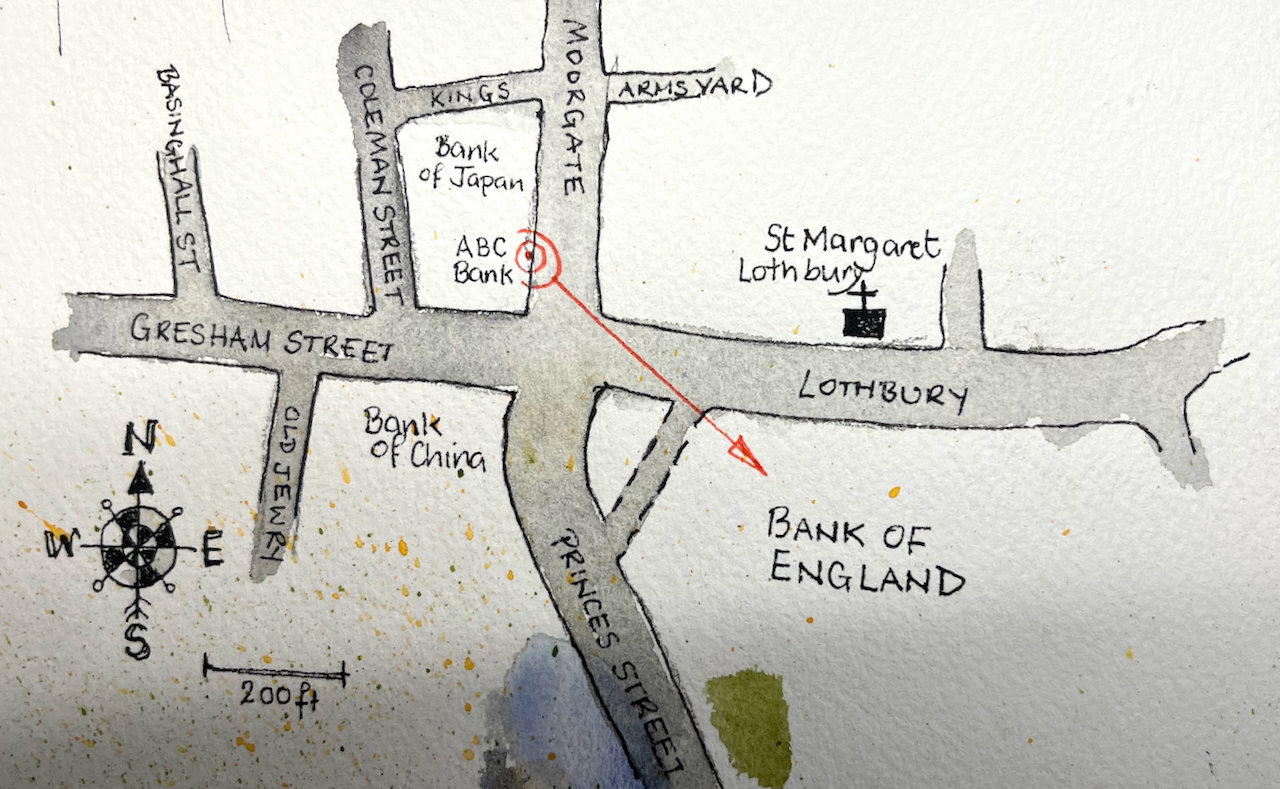
I took advantage of the road closure to sketch standing in Moorgate.

As I sketched, people walked past either side of me, in extraordinary hats. Everyone was cheerful and the sun shone. I enjoyed chatting to the various people who stopped to examine my drawing or comment on the view.

Pen, before the colour went on

You see the traffic bollards in the drawing. Those were patiently removed by a security guard every time a police vehicle approached, and equally patiently replaced. This must have happened about six times in the hour and half I was there.

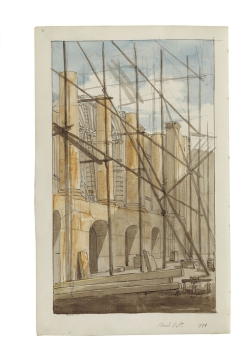
Site progress drawings 1798. Joseph Michael Gandy (1771-1843) Photo: © Sir John Soane’s Museum, London SM (58) volume 69/14

The John Soane archive notes on Tivoli corner are on this link. This site has some lively “work-in-progress” drawings of the construction of the Bank of England. Here is one. See how modern it looks! It was drawn in 1798, the same year that Nelson fought Napoleon in the Battle of the Nile.