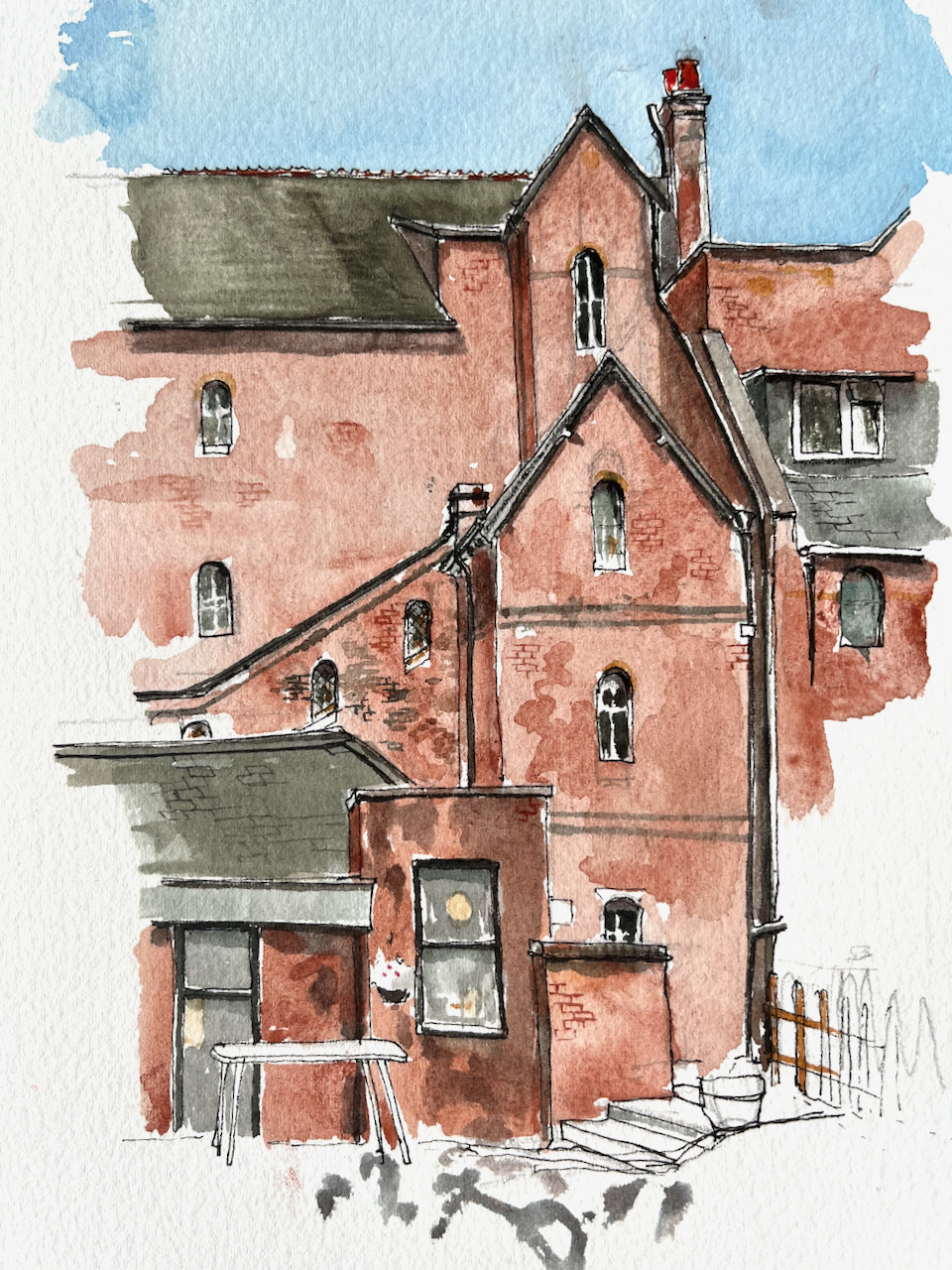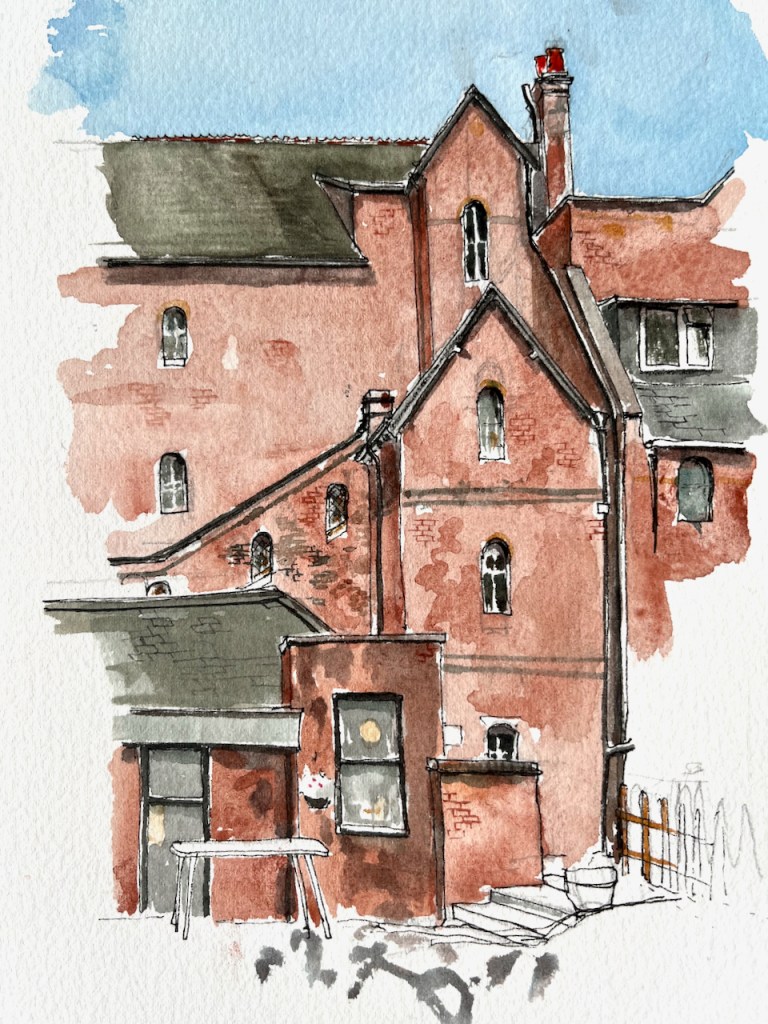
119a Walton Street, Oxford OX2

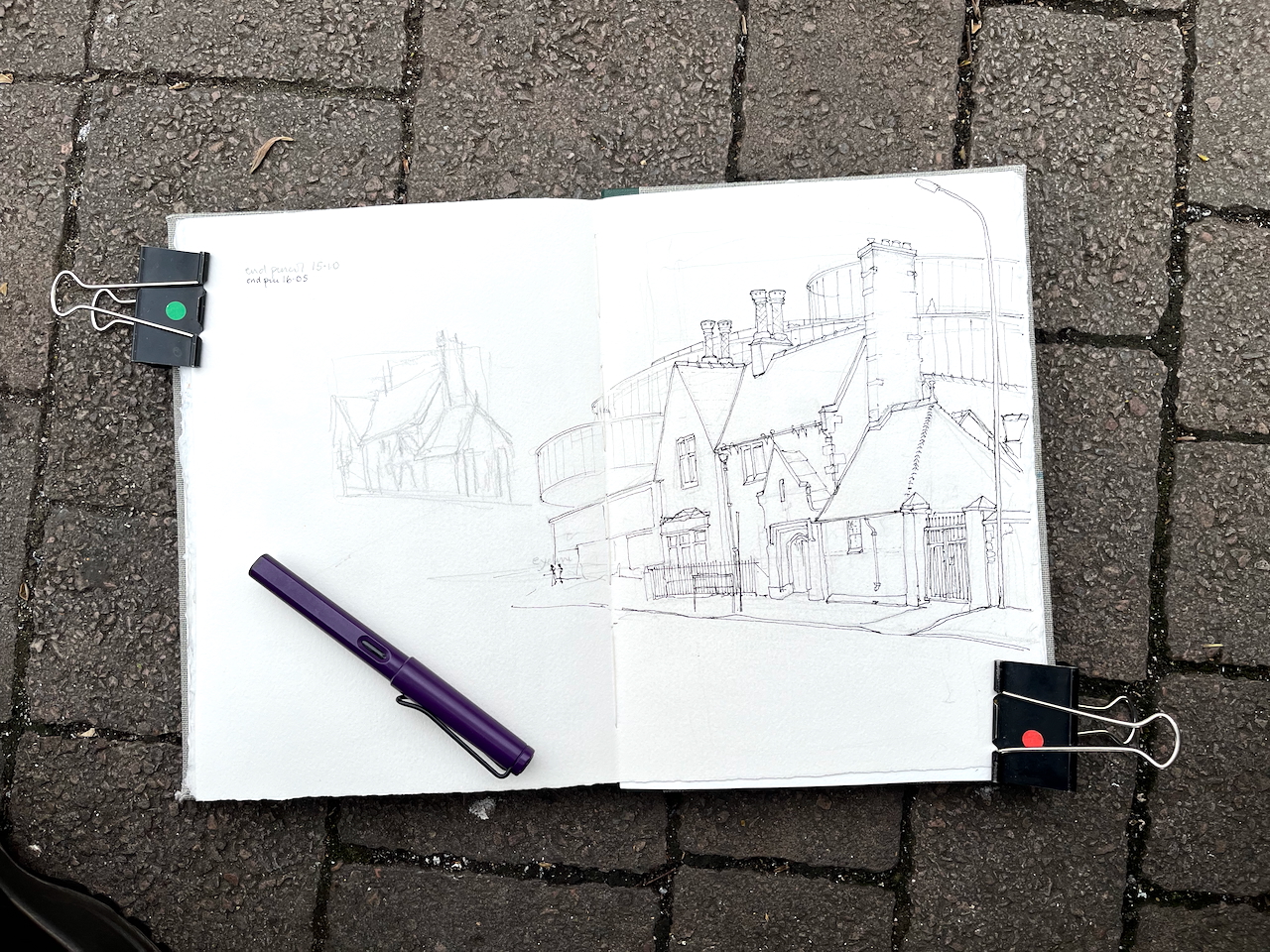
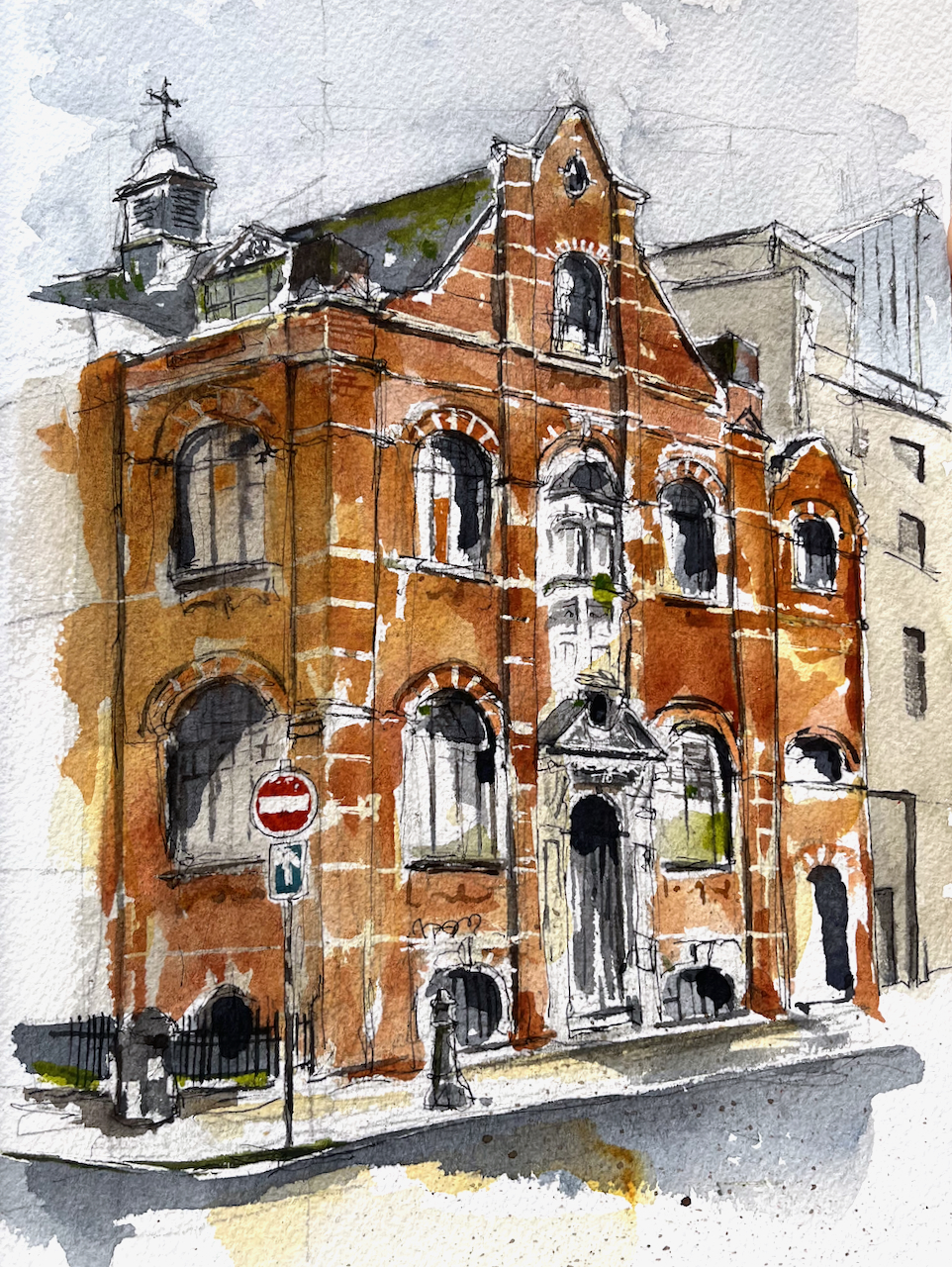
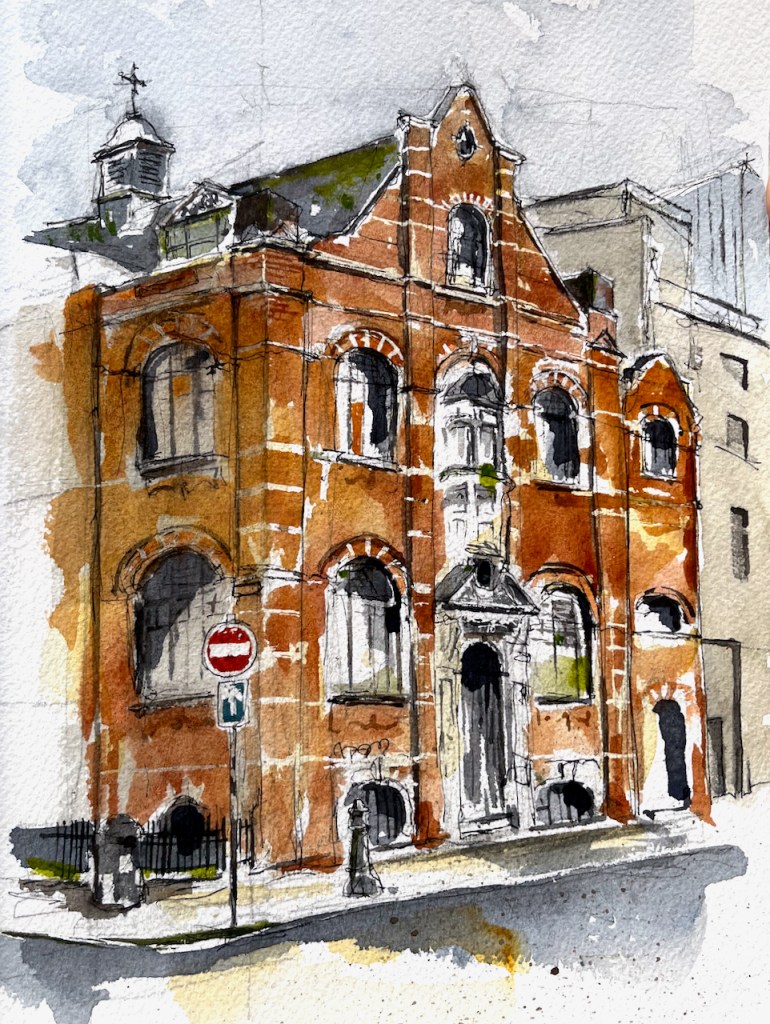
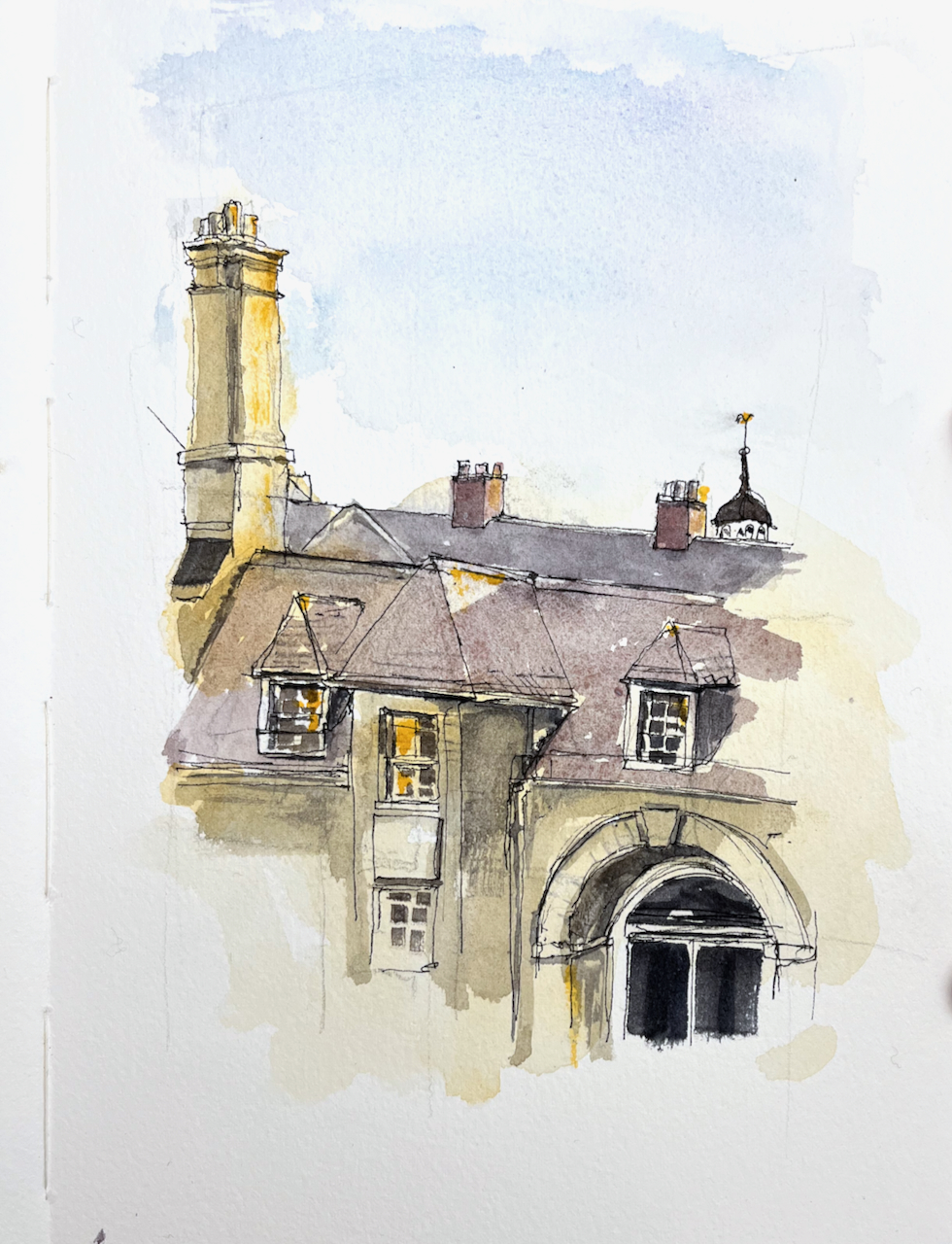
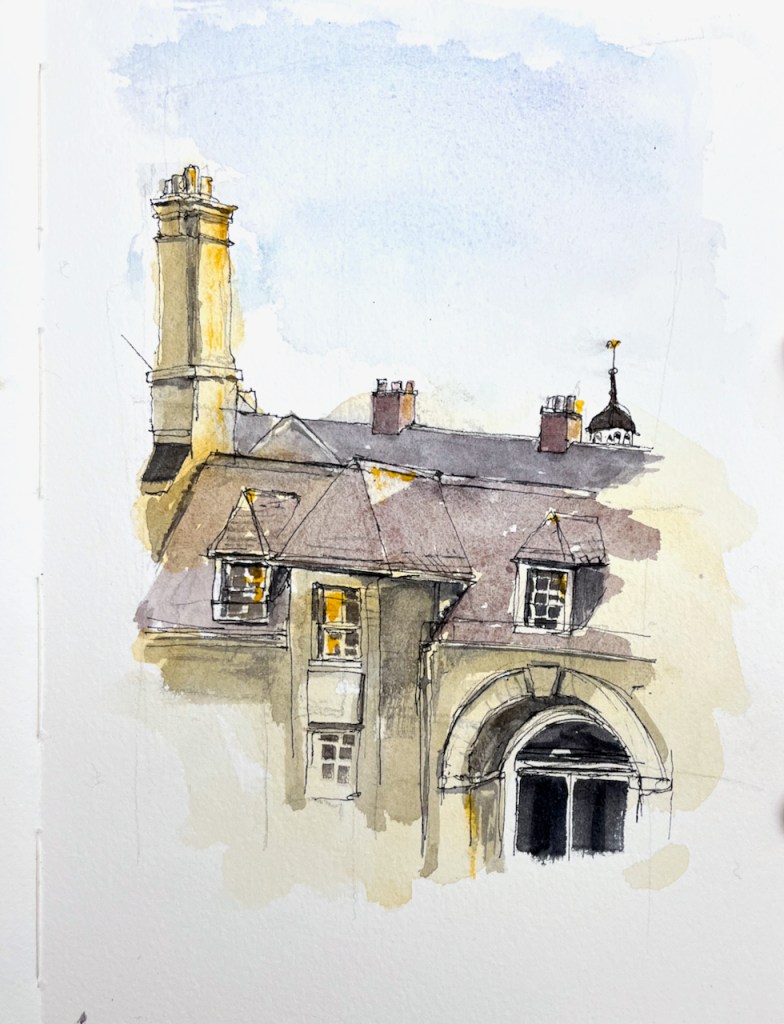
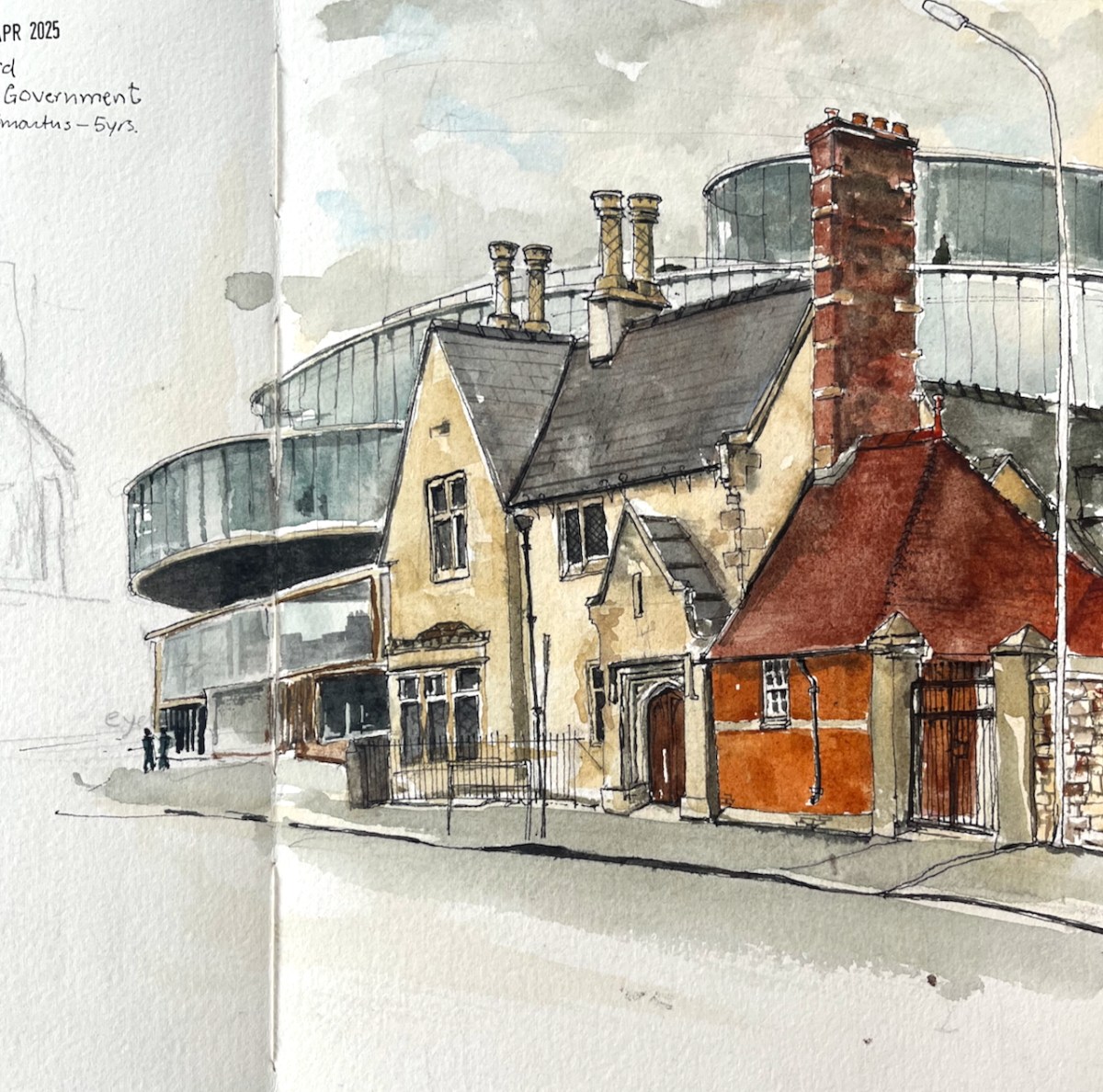
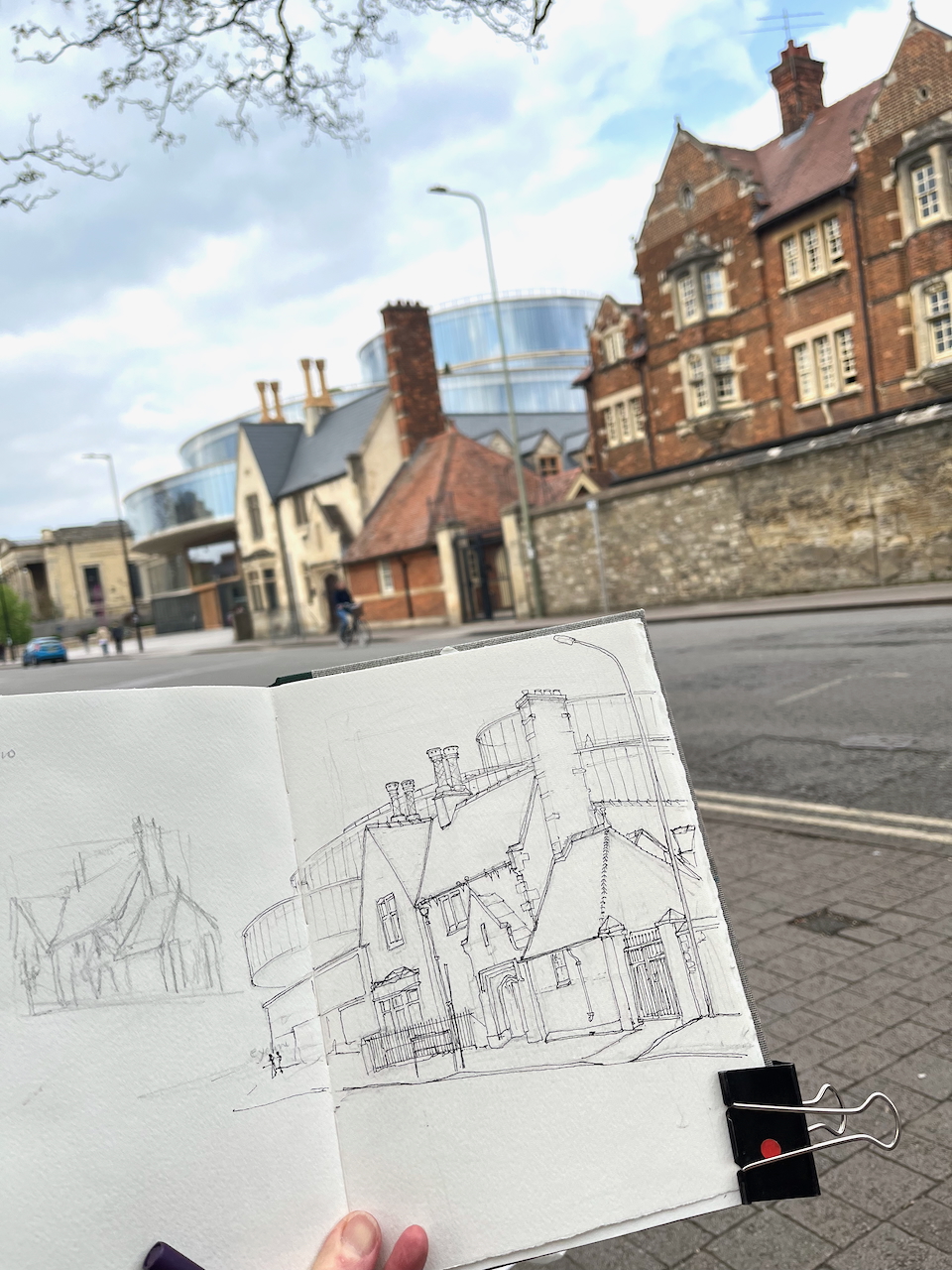
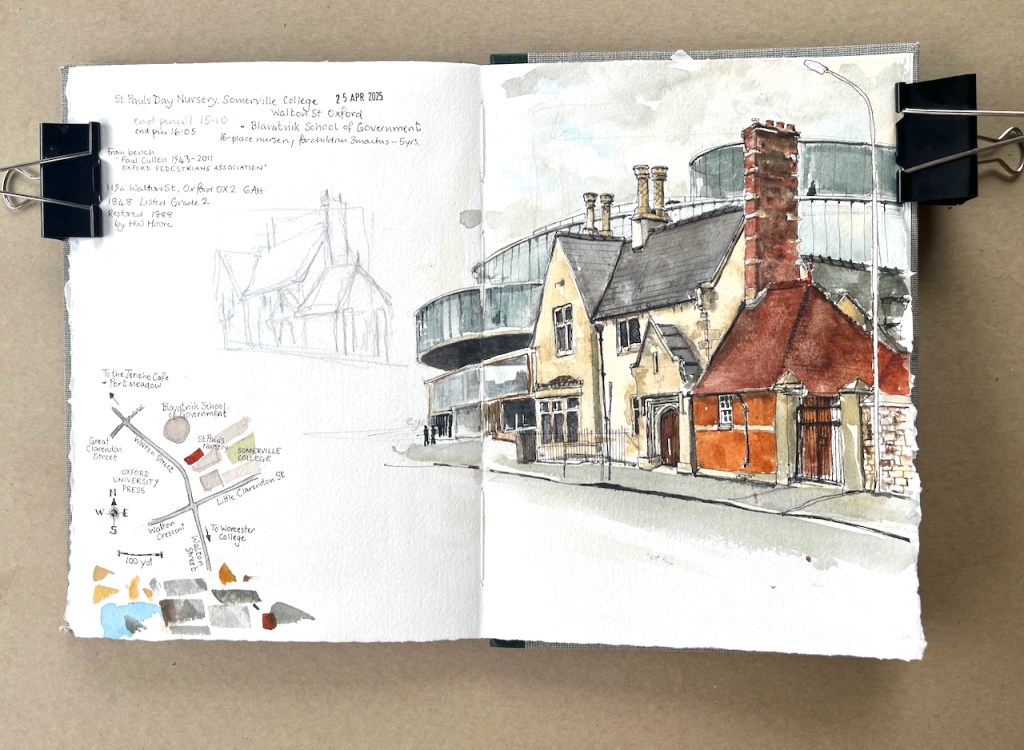
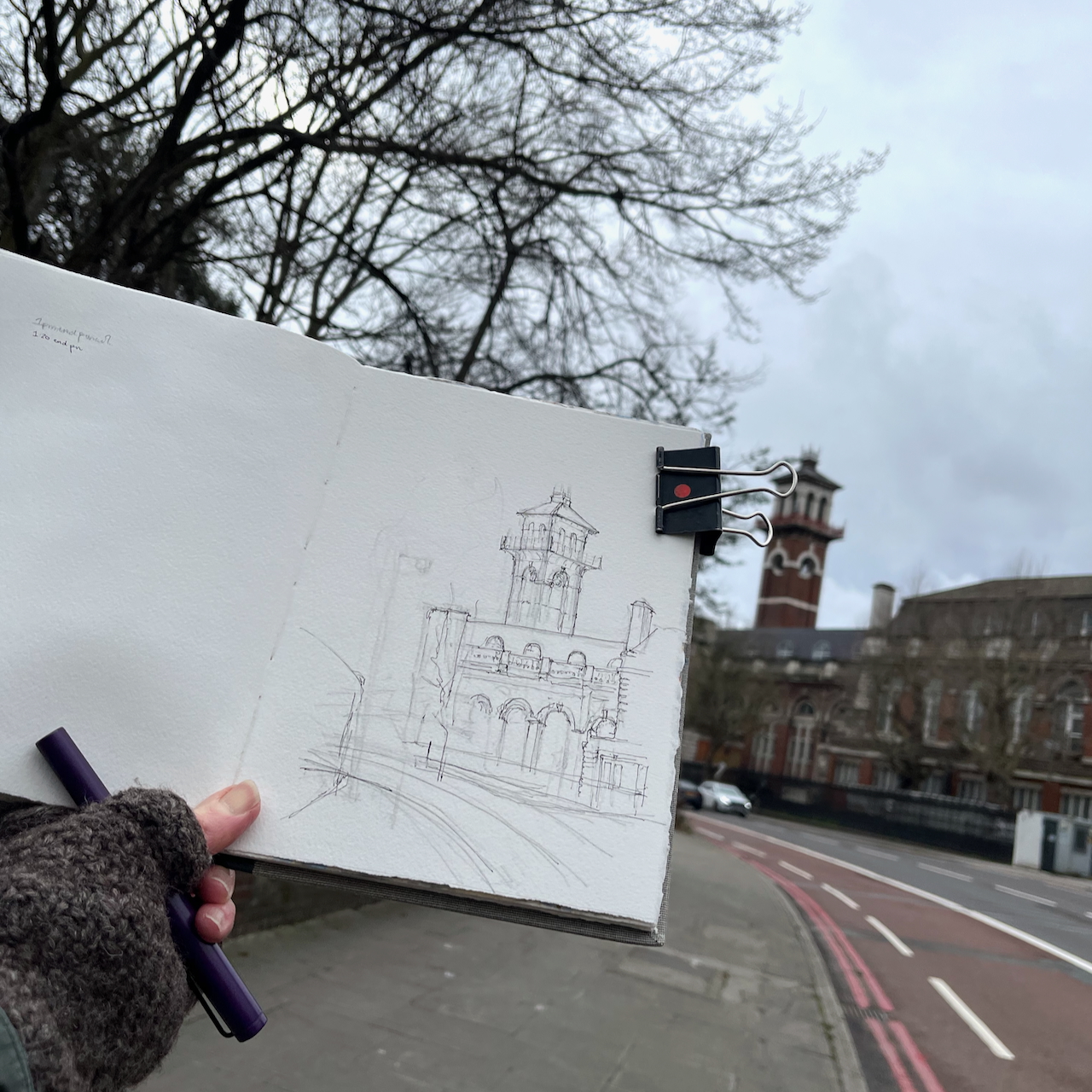
This 19th Century building on Walton Street is a nursery school. It contrasts with the huge sweeping curves of the Blavatnick School of Government behind.
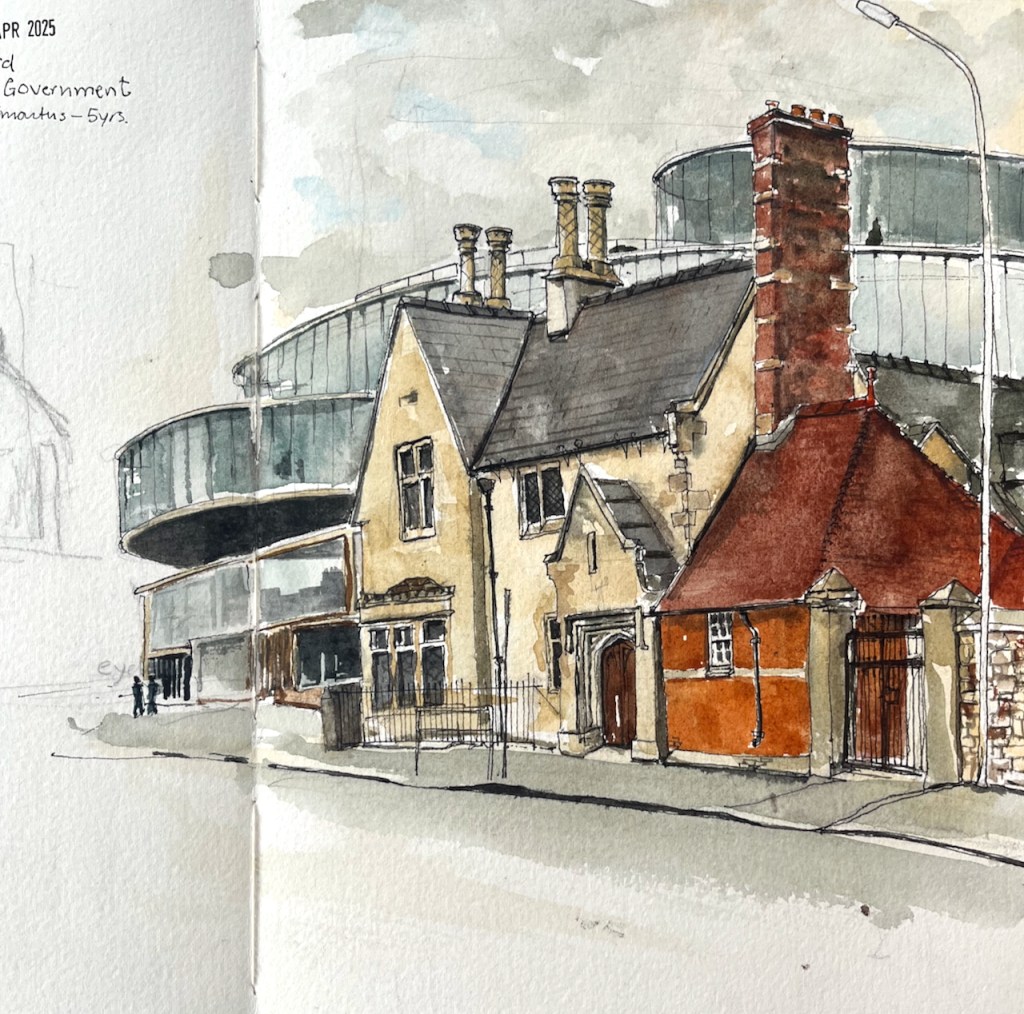
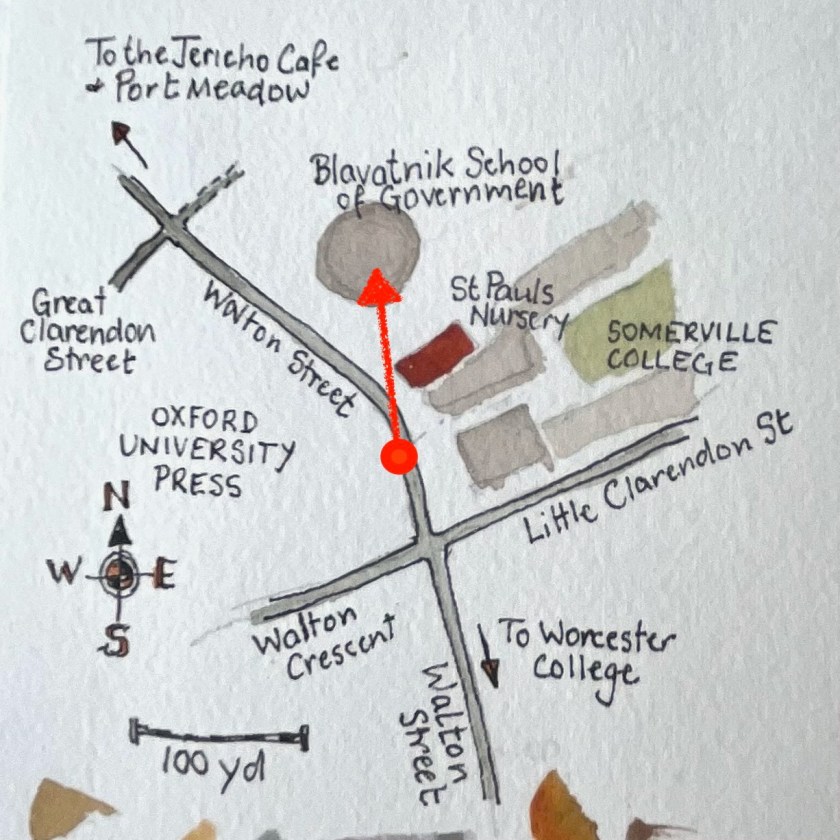
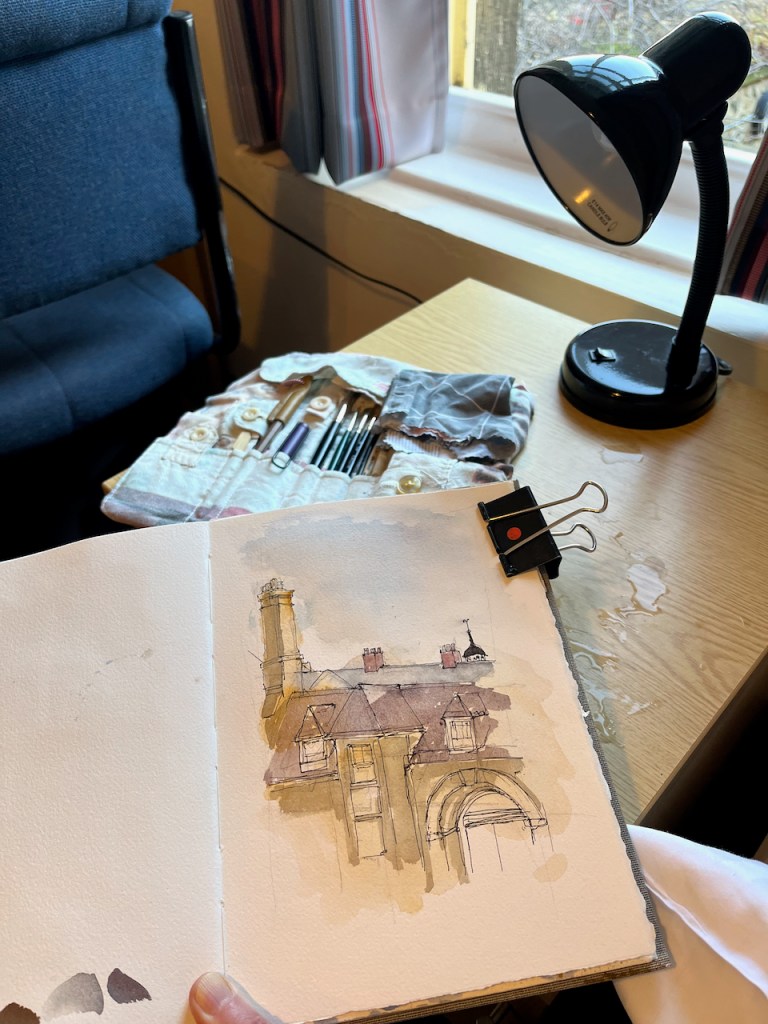
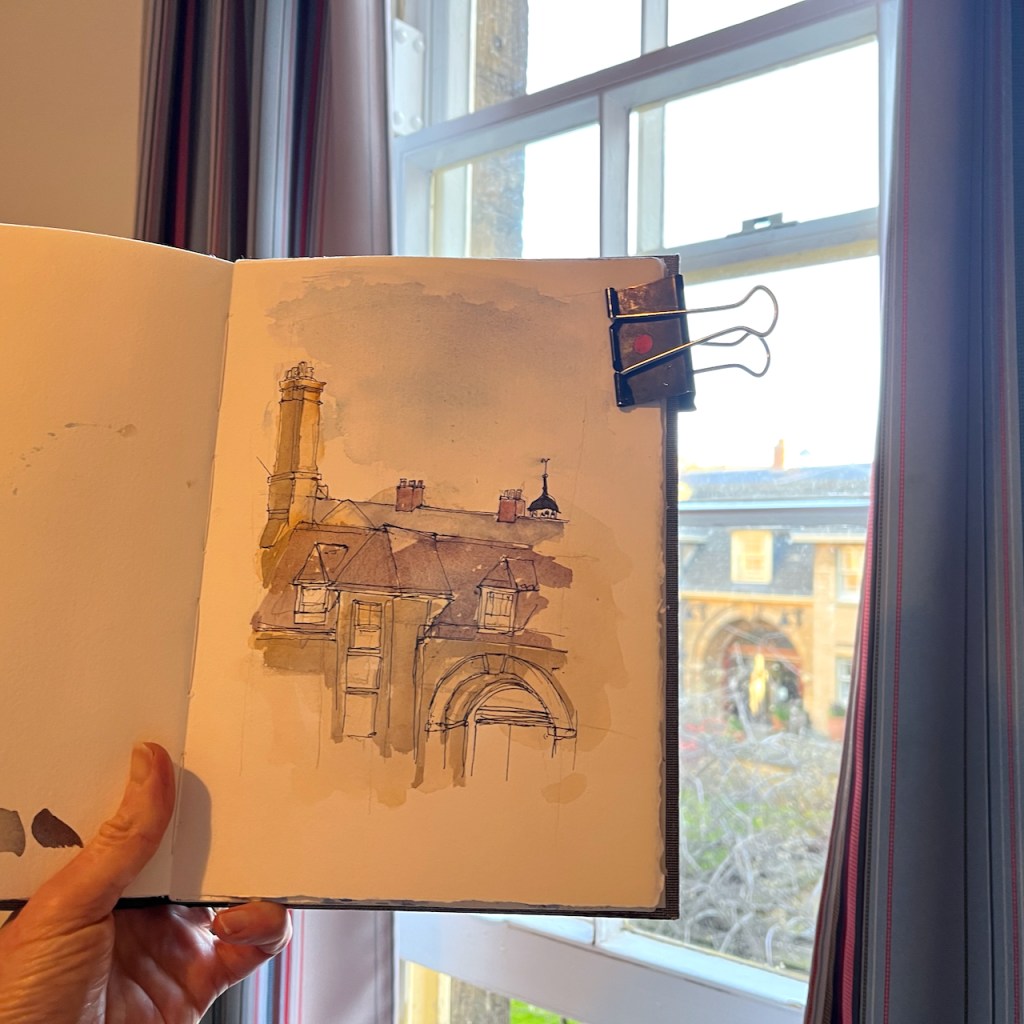
St Paul’s Nursery, 119a Walton Street, Oxford OX2 6AH. Sketched 25 April 2025 in sketchbook 15
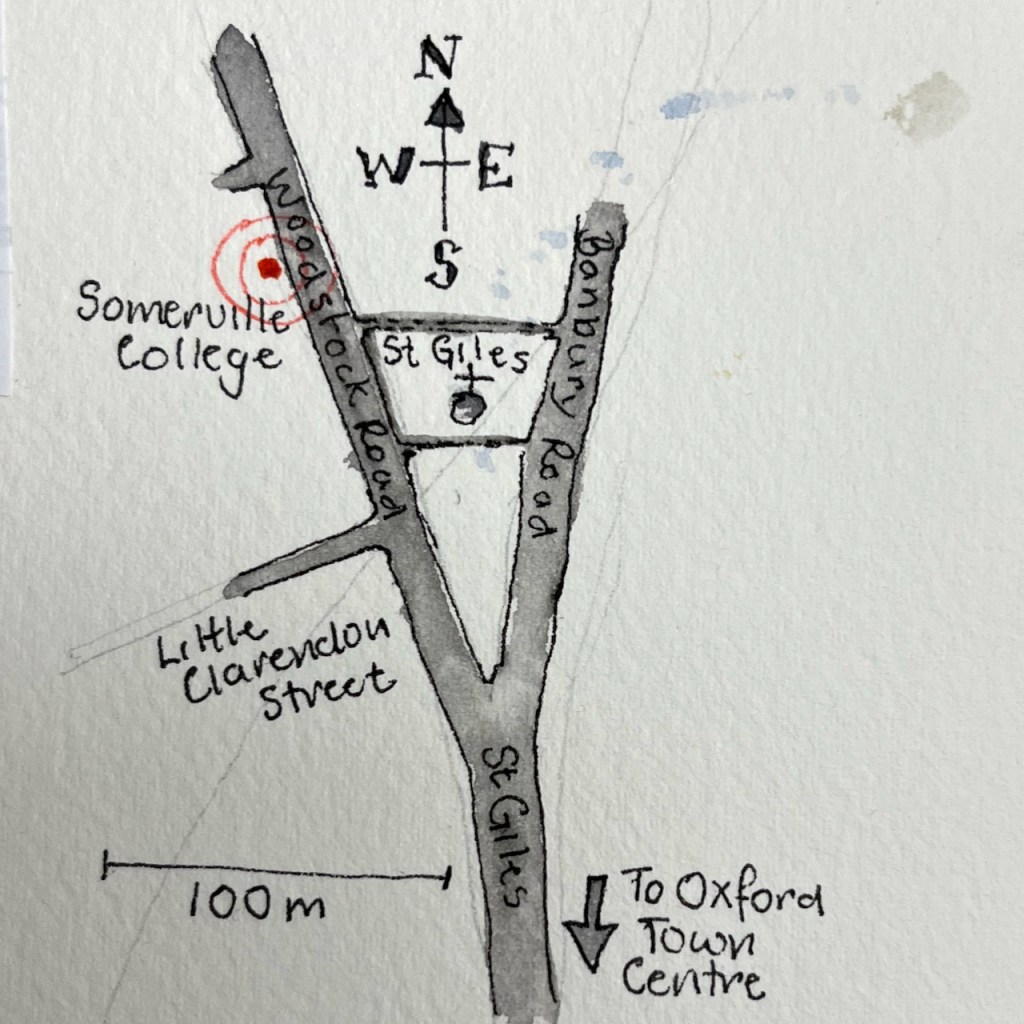
Map of the sketching location, showing the sight line of the sketch.

The building now houses a co-ed nursery:
“St Paul’s Nursery is a 16-place day nursery that caters for children between the ages of 3 months and 5 years. The Nursery was established as a work place nursery for the staff of Somerville College, but now opens its doors to children whose parents work elsewhere.” [note 1]

The original building of 1848 is described in “The Builder” magazine of that year. [note2]

Here is what it looked like originally:
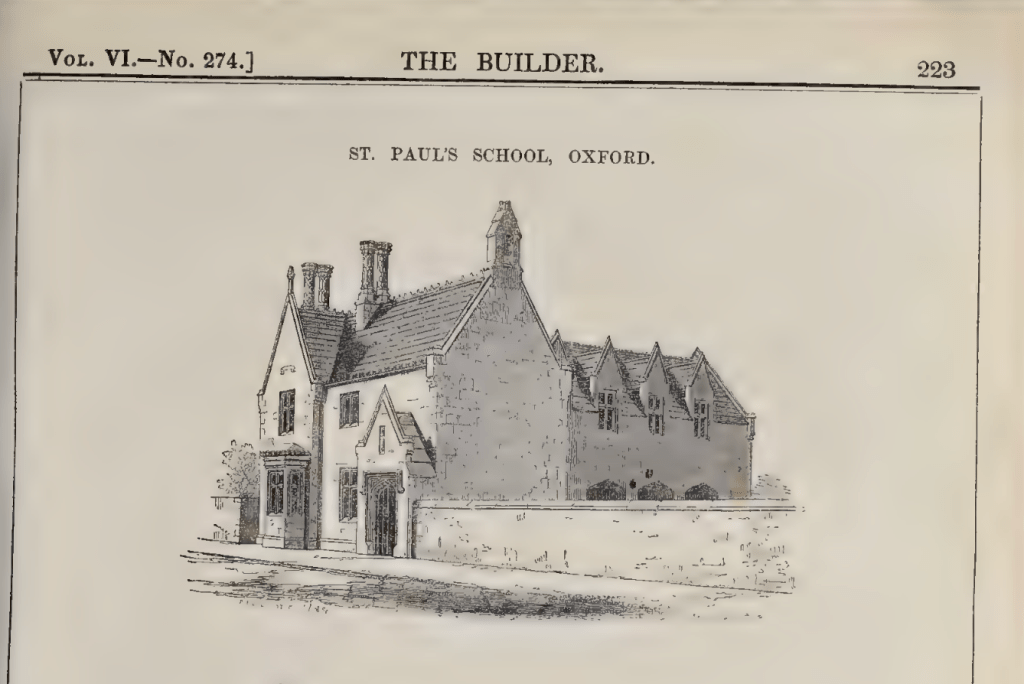
According to the (fascinating!) article in The Builder, the school was originally only for girls. Inside the building pictured above was a “dwelling house” for the mistress, a room for the vicar “to conduct his parochial business” , and a school room “55 feet long, 20 feet wide, and 18 feet between the apex and the floor”. Because there was no outdoor playground, the architect placed the school-room on the “second floor” and the lower room became the playground. I take it that by “second floor” the author meant what we now call “first floor”. The author of the article, who seems also to be the architect, describes with pride the construction of the roof:

“In the construction not a particle of wood has been used. The roofs are supported on terra-cotta ribs, with transverse sleepers of the same material, and the floors, arched on geometrical principles, are formed by tiles set in cement ; both are of undoubted strength and durability.” [from “The Builder” article, see note 2]

So the structural elements of the roof are terracotta? Really? If anyone has been inside this excellent building, can they tell me if this is still the case? Did the roof and the floors turn out to be durable, as the article says?

“St Paul’s Nursery” is now part of Somerville College. “St Paul’s Church” is the big building like a Greek temple which is on Walton Street on the other side of the Blavatnik building. It was out-of-use as a church by the early 1970s, and became a wine bar called “Freud”. It now looks sadly dilapidated. Some of its history is on this link.

The Blavatnik School of Government started in 2012. It moved into the new building on Walton Street in 2016. The building is by Herzog and De Meuron. The architects’ drawings of it, and some internal and external photos are on this link.

The Blavatnik School of Government mission statement, as written on the door of the building.

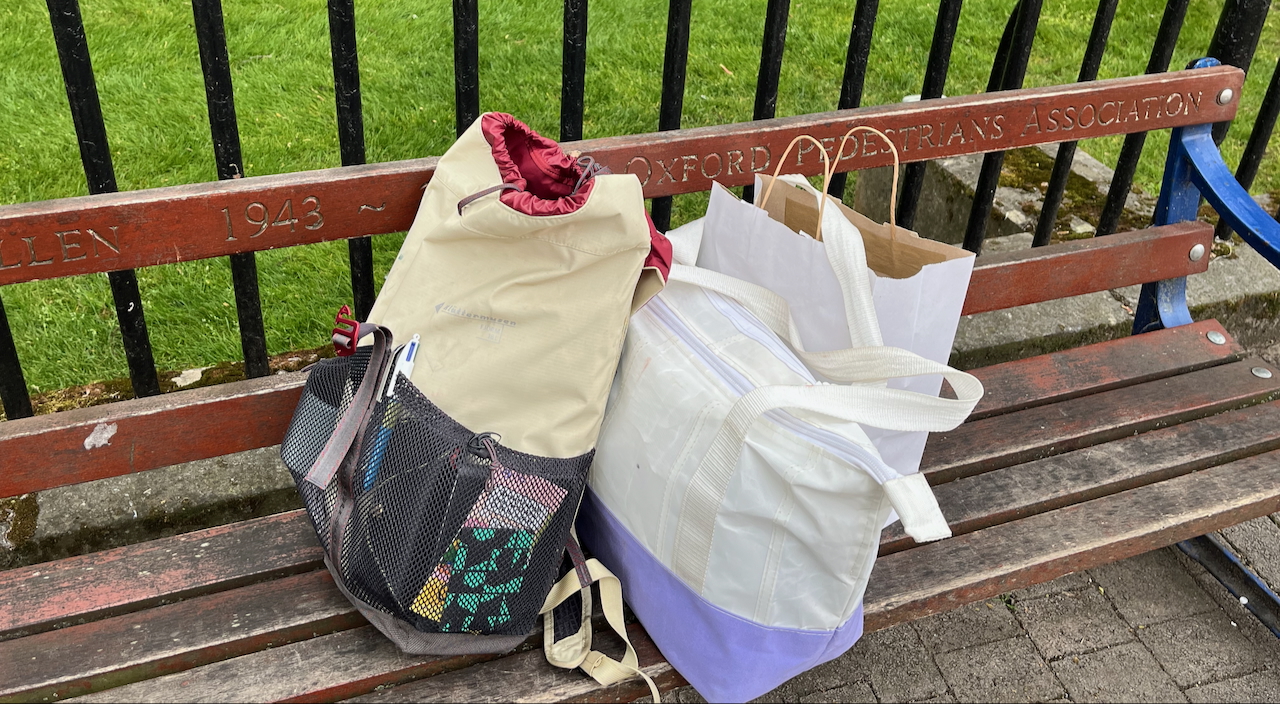
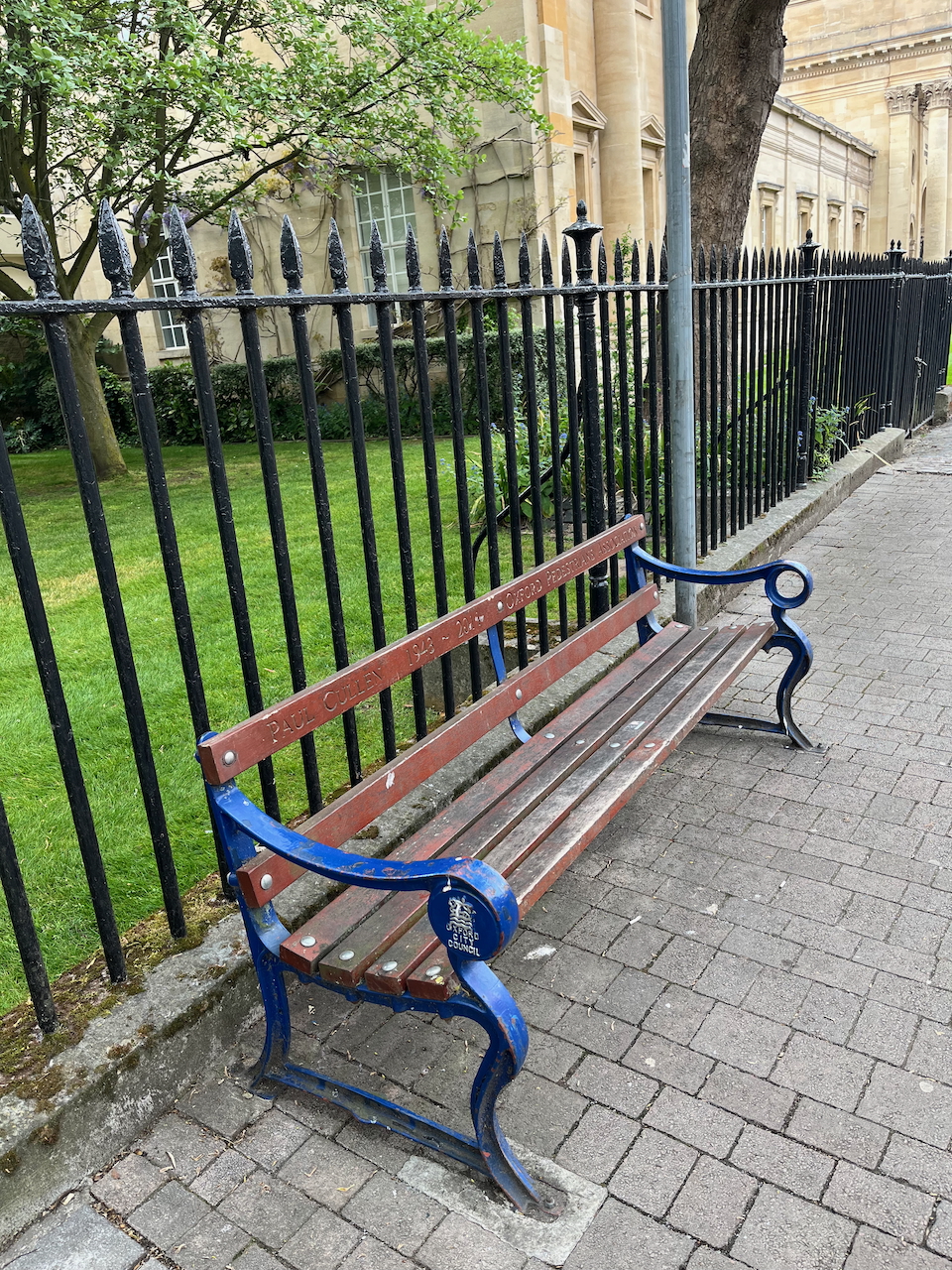
I made the sketch from a convenient bench outside the Oxford University Press. The bench was dedicated to
“Paul Cullen 1943-2011
Oxford Pedestrians Association”.
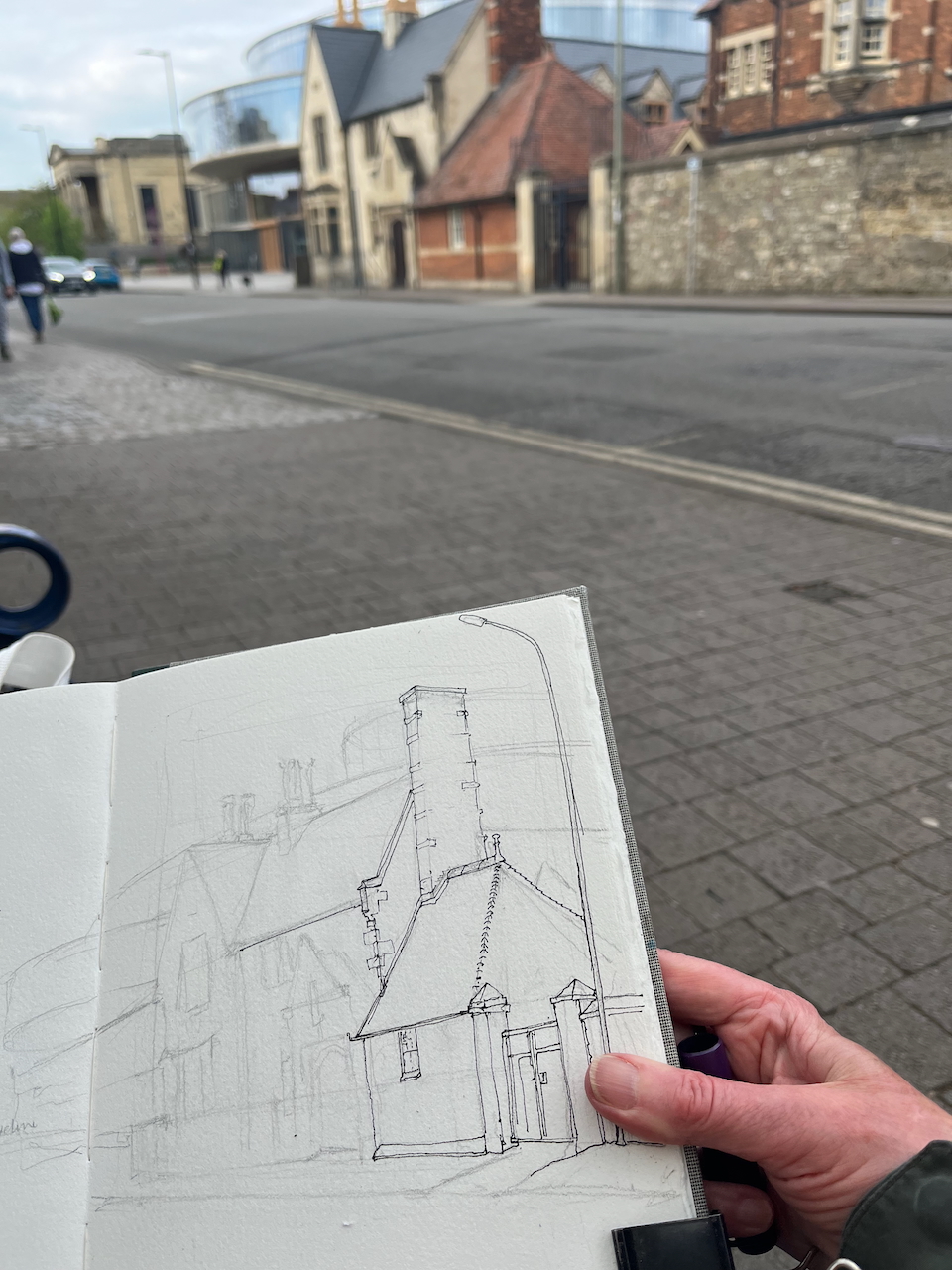
The inscription on the bench was easily read. But there was an inscription on the building I’d been drawing, and I couldn’t read that.
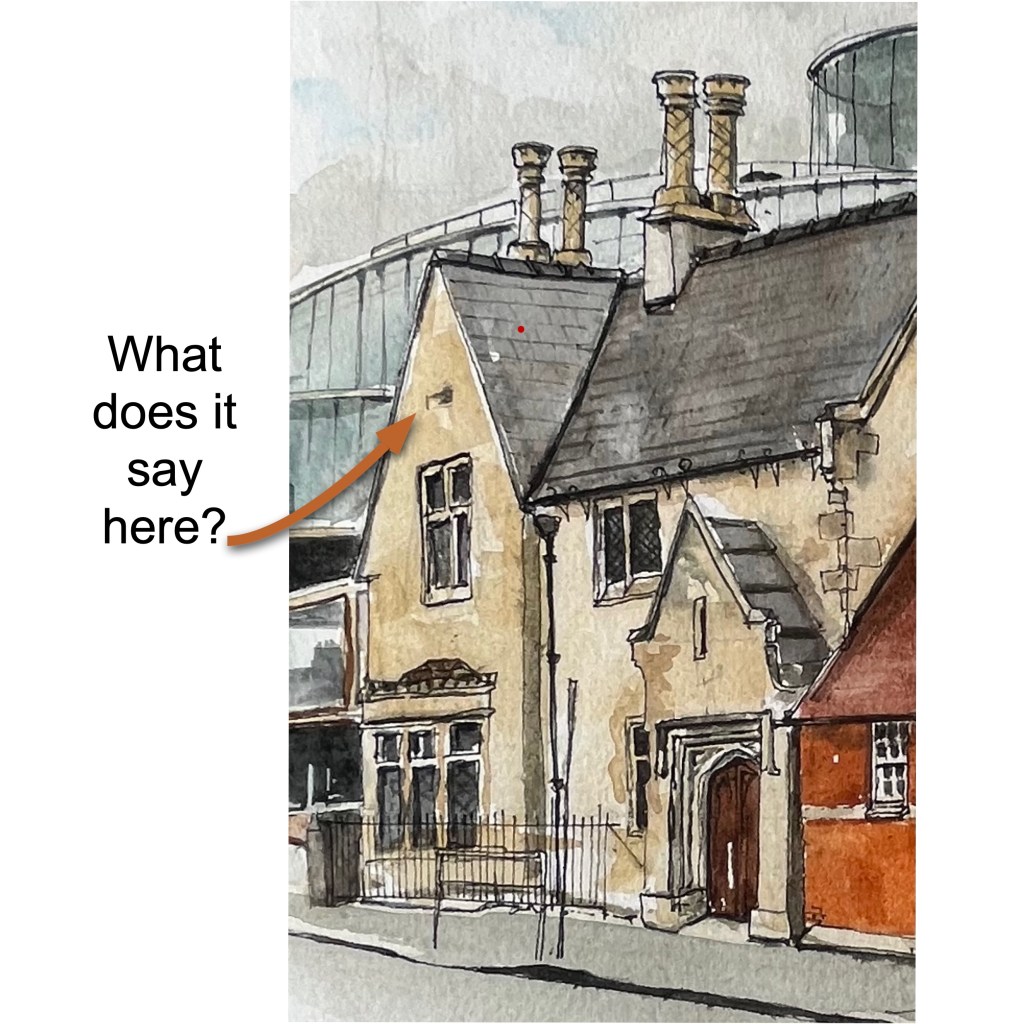
There is a stucco scroll with writing on the gable of the nursery building. Try as I might I could not read it.I assumed my ageing eyes were at fault. So I stopped two young people on the pavement and asked them if they could read it. They took my request seriously, and gave the task their full attention, which was kind of them. However they could not read it either. “Something Something CCC something something” was our joint conclusion. 1848 would be MDCCCXLVIII. Does it say that? If you are walking along Walton Street with a high-powered telescope, or if you have an old photo which shows the building in a less eroded state, then can you tell me what it says?
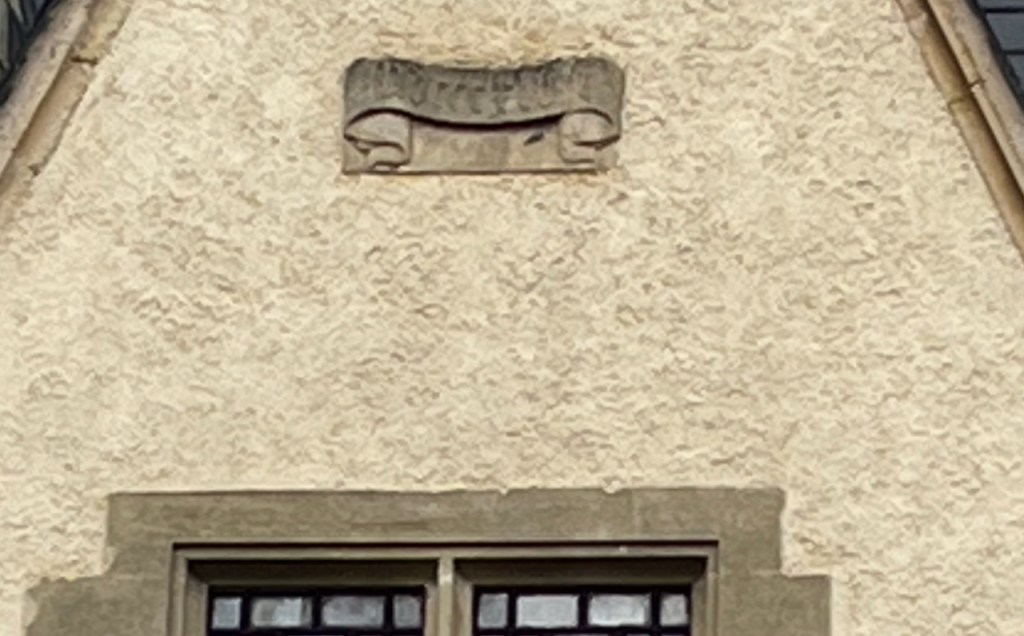
What does it say? (The iPhone can’t read it either….)

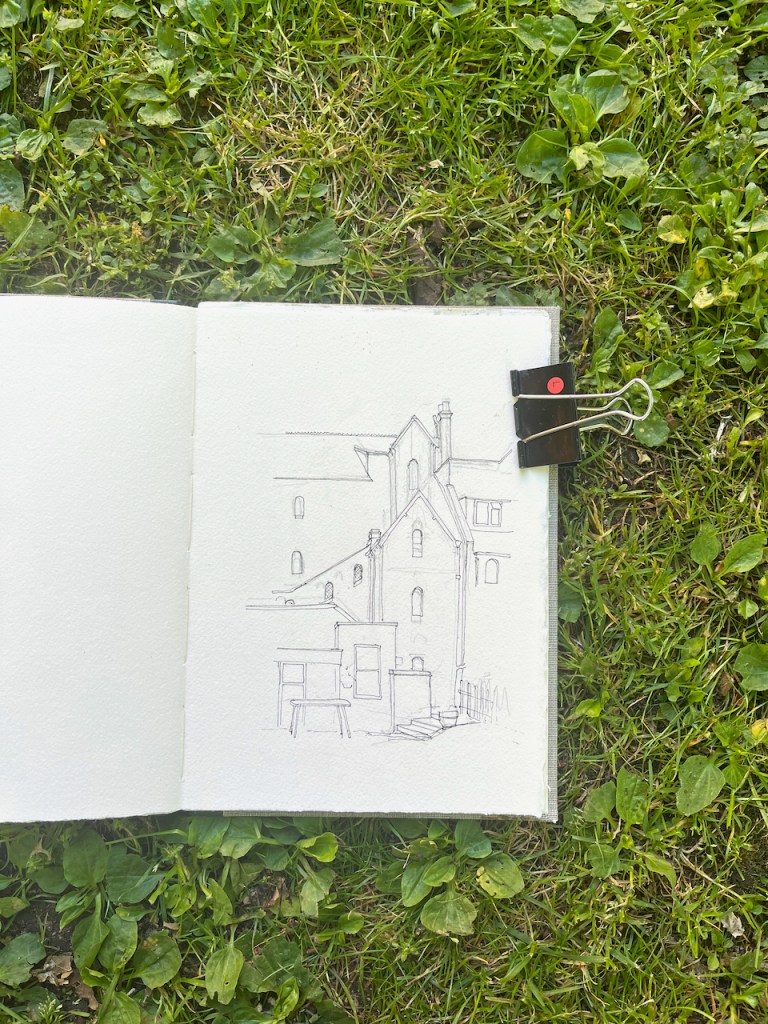
St Pauls Day Nursery and Blavatnik building. Sketchbook 15 page spread.

Note 1: Somerville College Website, Nursery Handbook, on this link:
https://www.some.ox.ac.uk/wp-content/uploads/2021/06/Nursery-Handbook-updated-June-2018.pdf

Note 2: “The Builder” magazine is online. You can find the 1848 volume at this link:

I have transcribed the letter relating to St Paul’s School: (2 pages pdf)

The letter is apparently written by the architect. They say, for example, “we have perhaps rather exceeded the bound of usual practice in ornamental detail” and refers to “our site”. But he or she does not sign their name, simply giving initials: “T.C.”. I have not been able to discover who “T.C.” is.
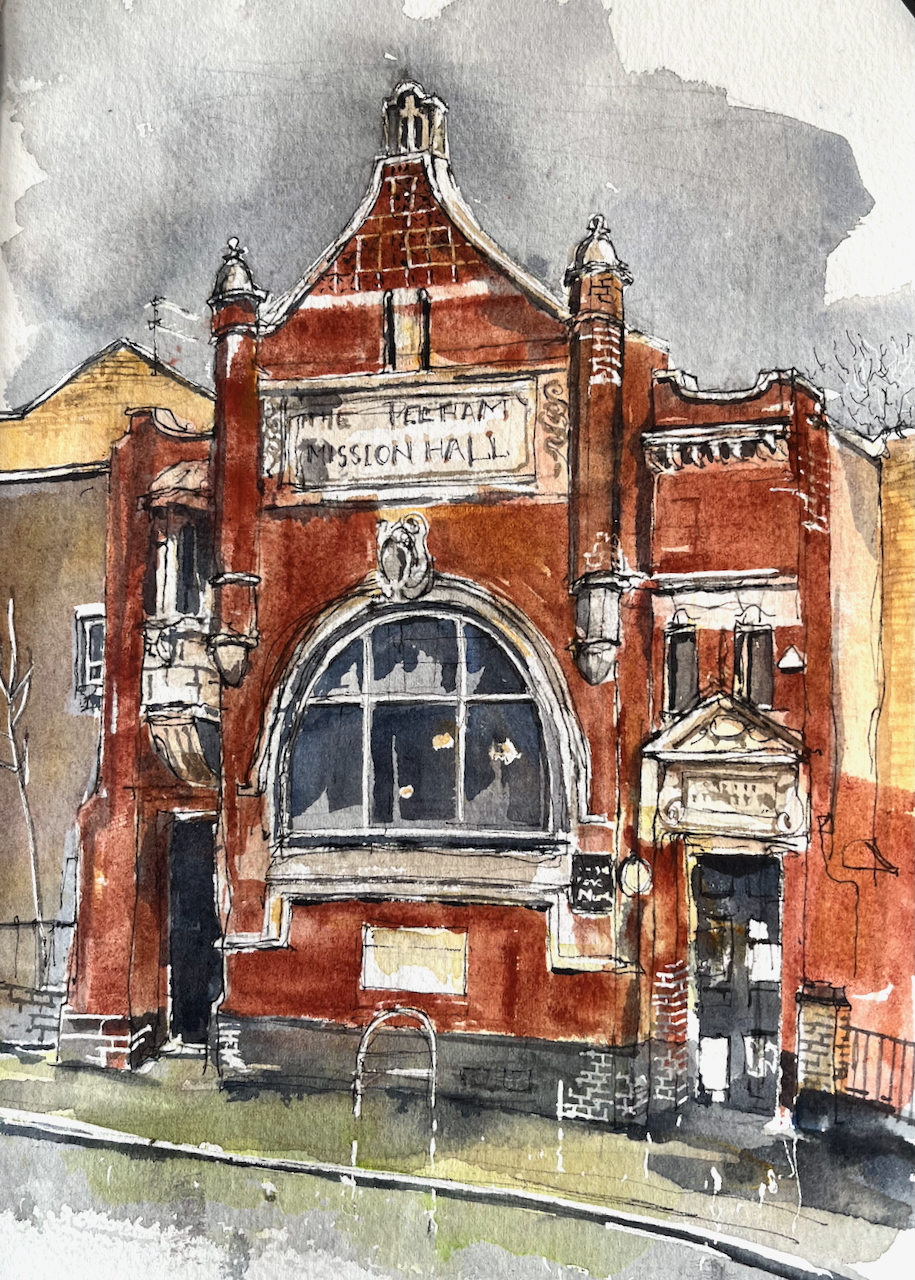
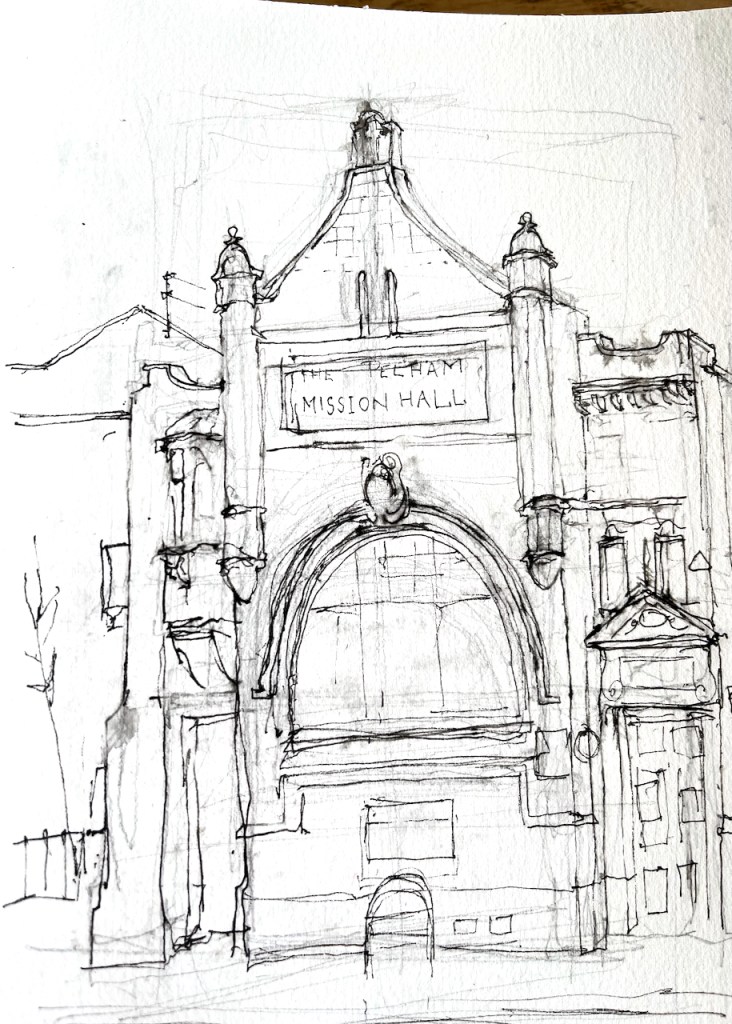
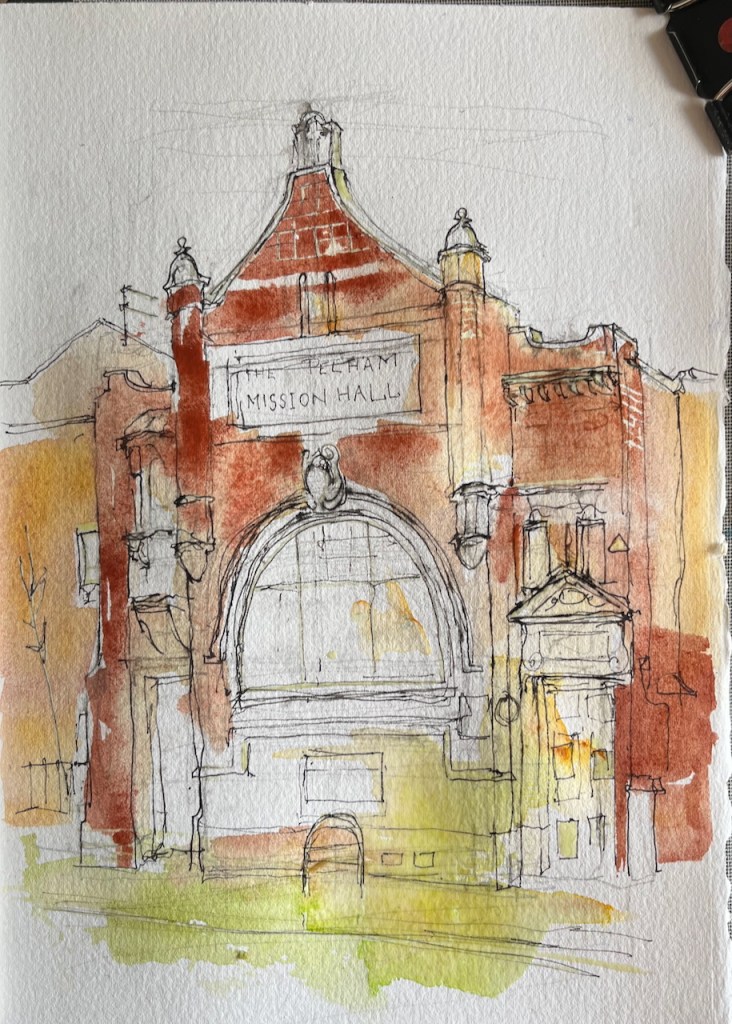
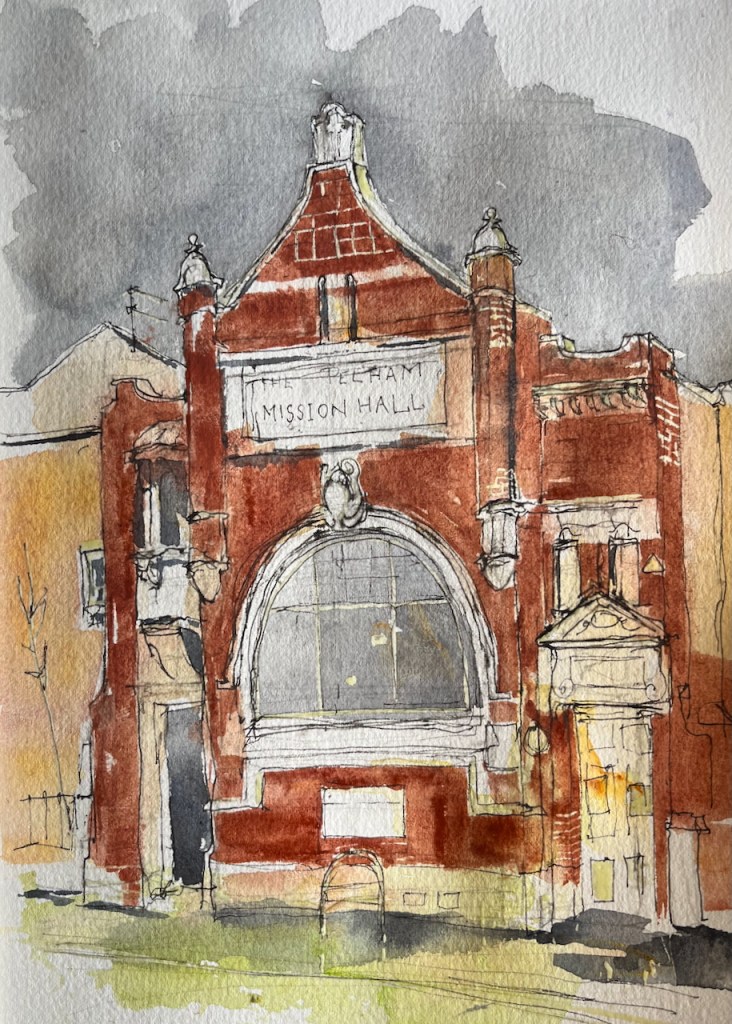
Pelham Mission Hall, Lambeth SE11

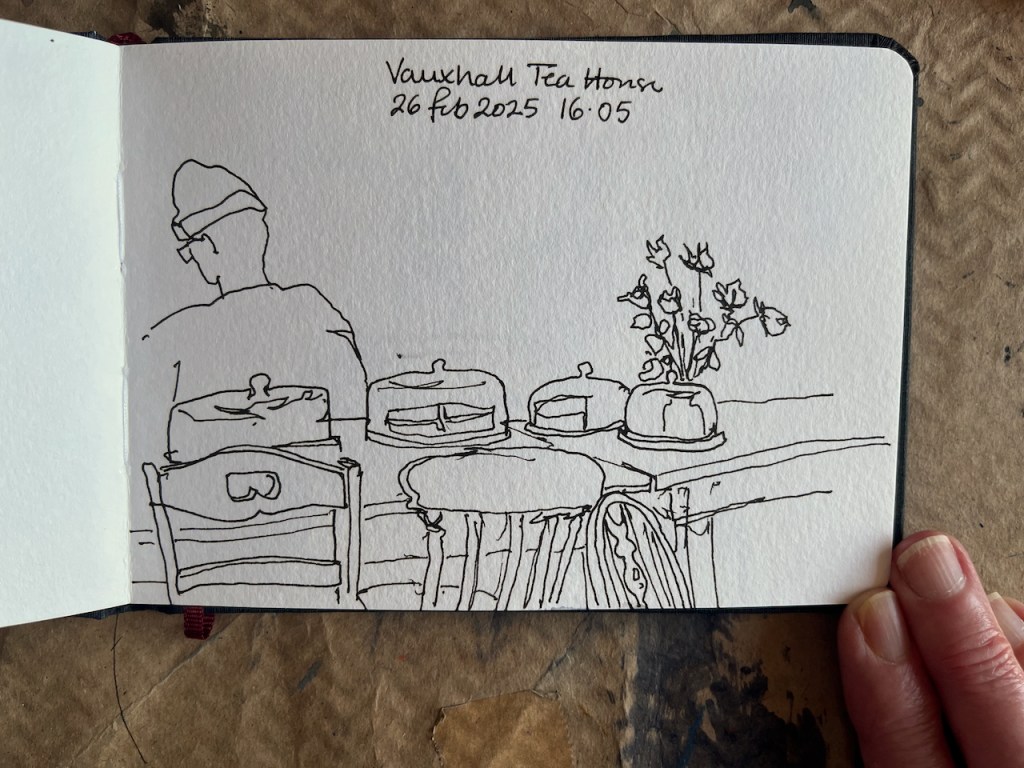
This ornate building stands out amongst the plain and functional housing along Lambeth Walk. I walked past it on my way to the Vauxhall Tea House.

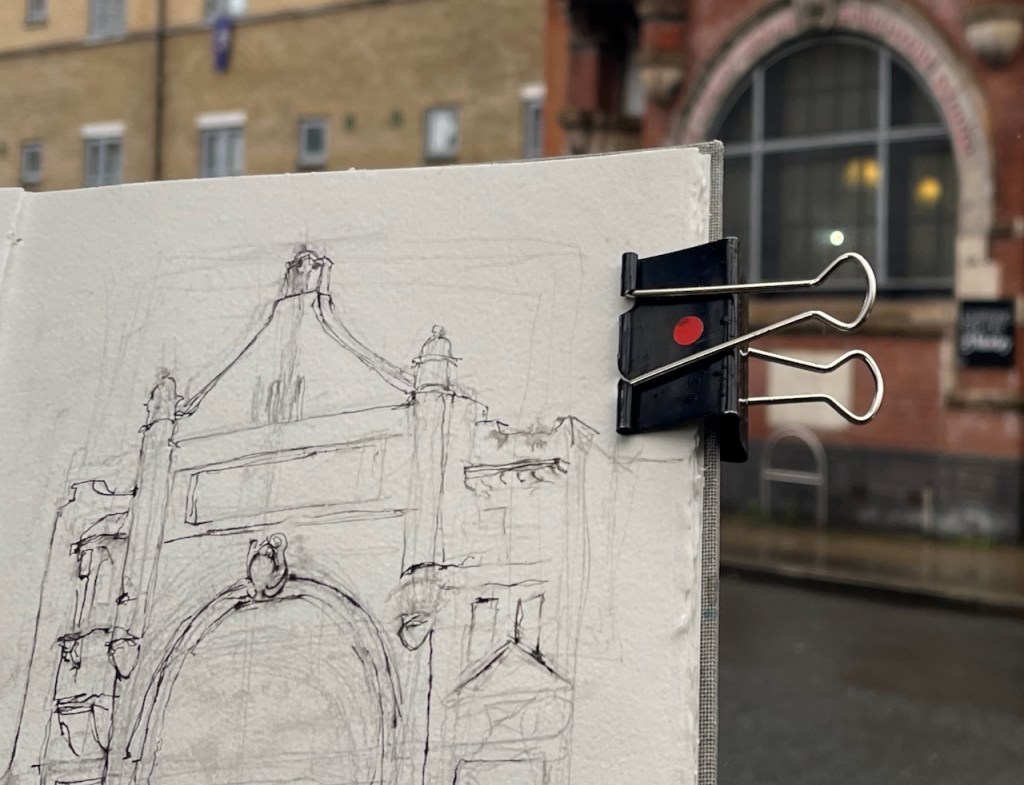
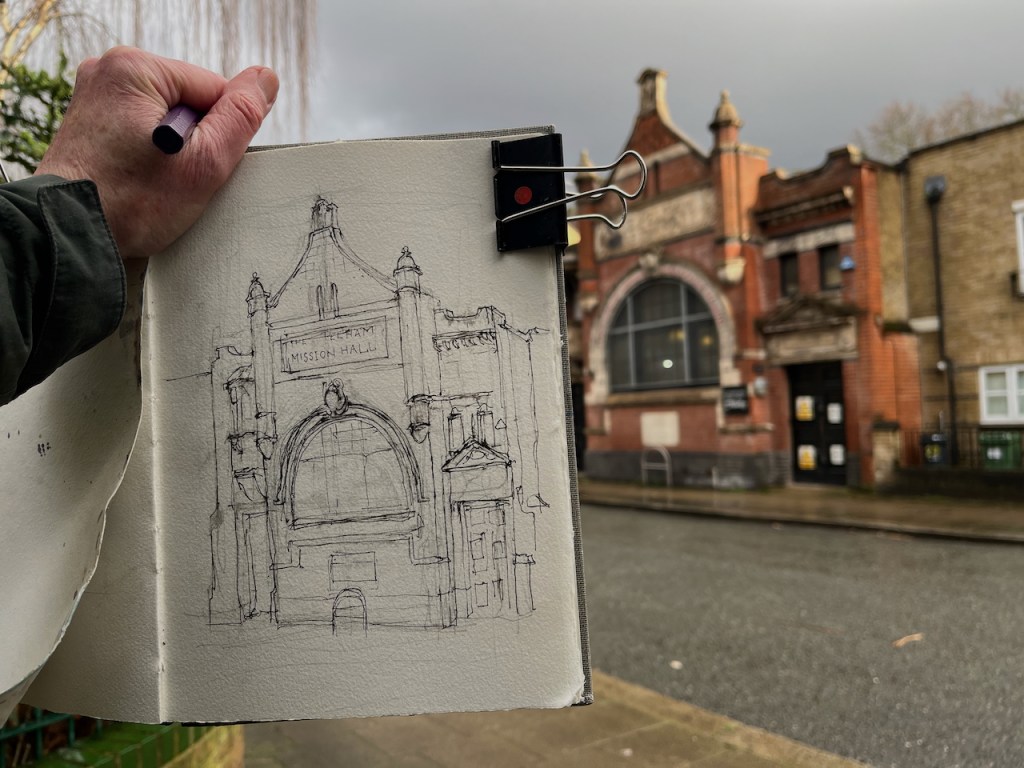
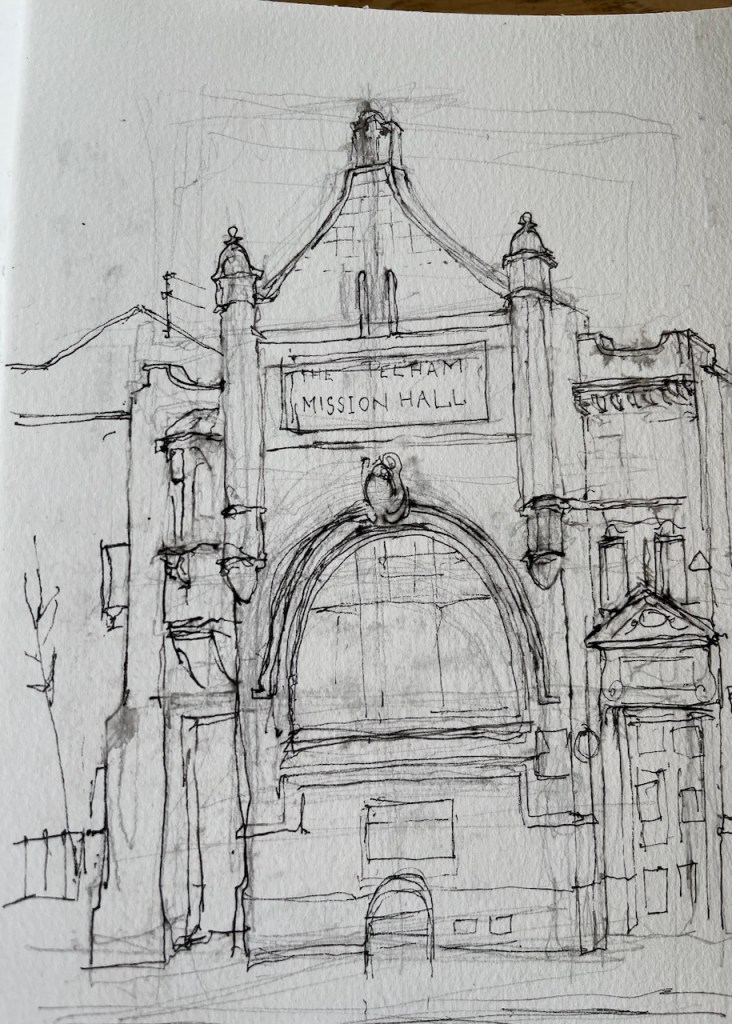
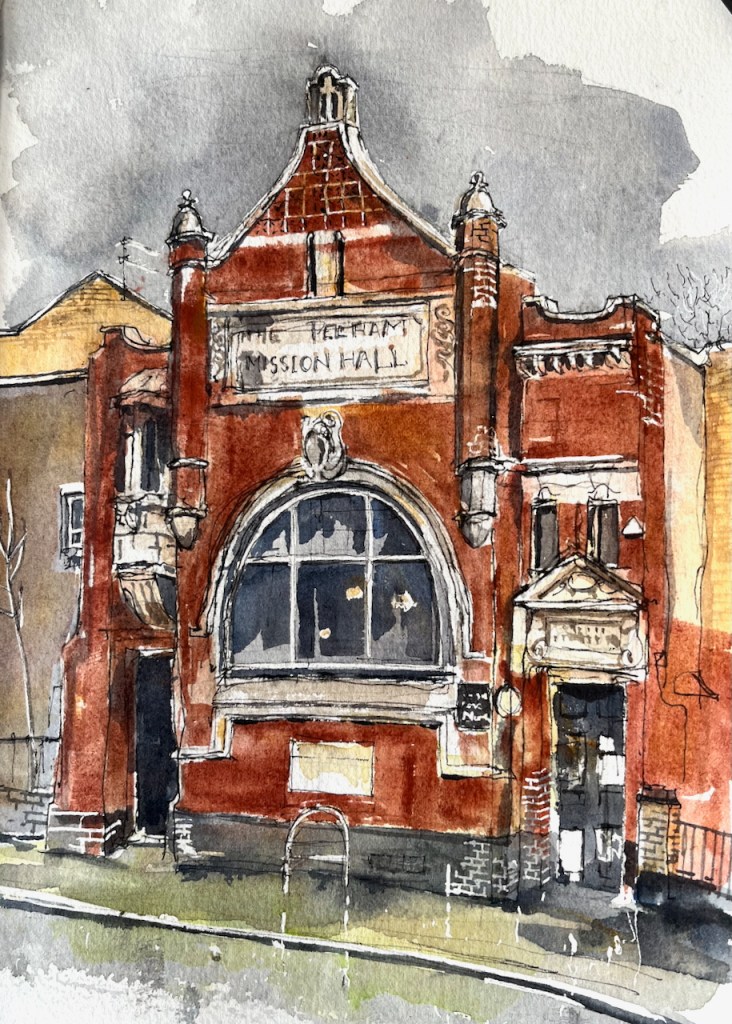
Pelham Mission Hall, Lambeth Walk, Lambeth SE11. in Sketchbook 15, 26 Feb 2025
Canopy

Rain threatened, but I started the sketch anyway. I was sheltering underneath a sort of canopy on the opposite side of the road. This canopy had the significant disadvantage that it was perforated with a pattern of decorative holes.

I sketch using a pen which has waterproof ink. The ink is waterproof once it has dried. But if I try sketching when the paper is wet, the ink runs. I continued until the pen protested that it couldn’t make marks under these conditions.

The paper I use is Arches Aquarelle. It is “heavily sized”, which means it throws off the water, at least at first. But after sustained drizzle, it starts to become absorbent.

All these things started to happen. The paper became spongy. The pen spluttered. Rain sneaked through the perforated canopy and dripped down the inside of my coat. Water slid off the leaves into my bag. I tried to wrap the sketchbook up and I crammed it into my backpack. I have a waterproof backpack. It was already wet on the outside. Now it was becoming wet on the inside. I stood in the rain and considered. I breathed using a yoga technique. Yoga breathing techniques are quite effective in the rain. There was a rhythm to the drips.

Then the rhythm slowed. Perhaps I could just do a bit more drawing? Slowly, I extracted and unwrapped my book. I flicked the pen to get the ink to flow again. I made each pen stroke count.

The rain eased enough.

This was as far as I got.

Then I went to the Vauxhall Tea House to warm up.

I finished the drawing of Pelham Mission Hall later at my desk.

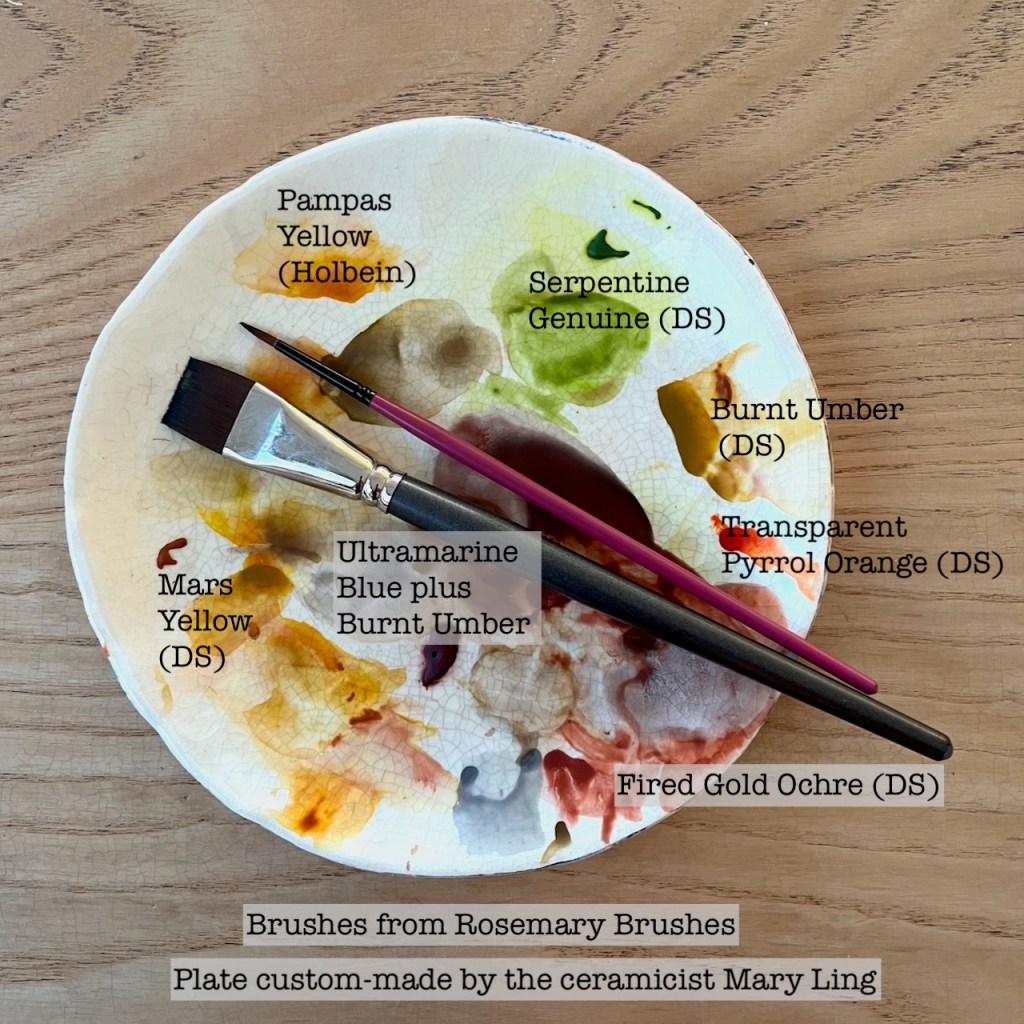
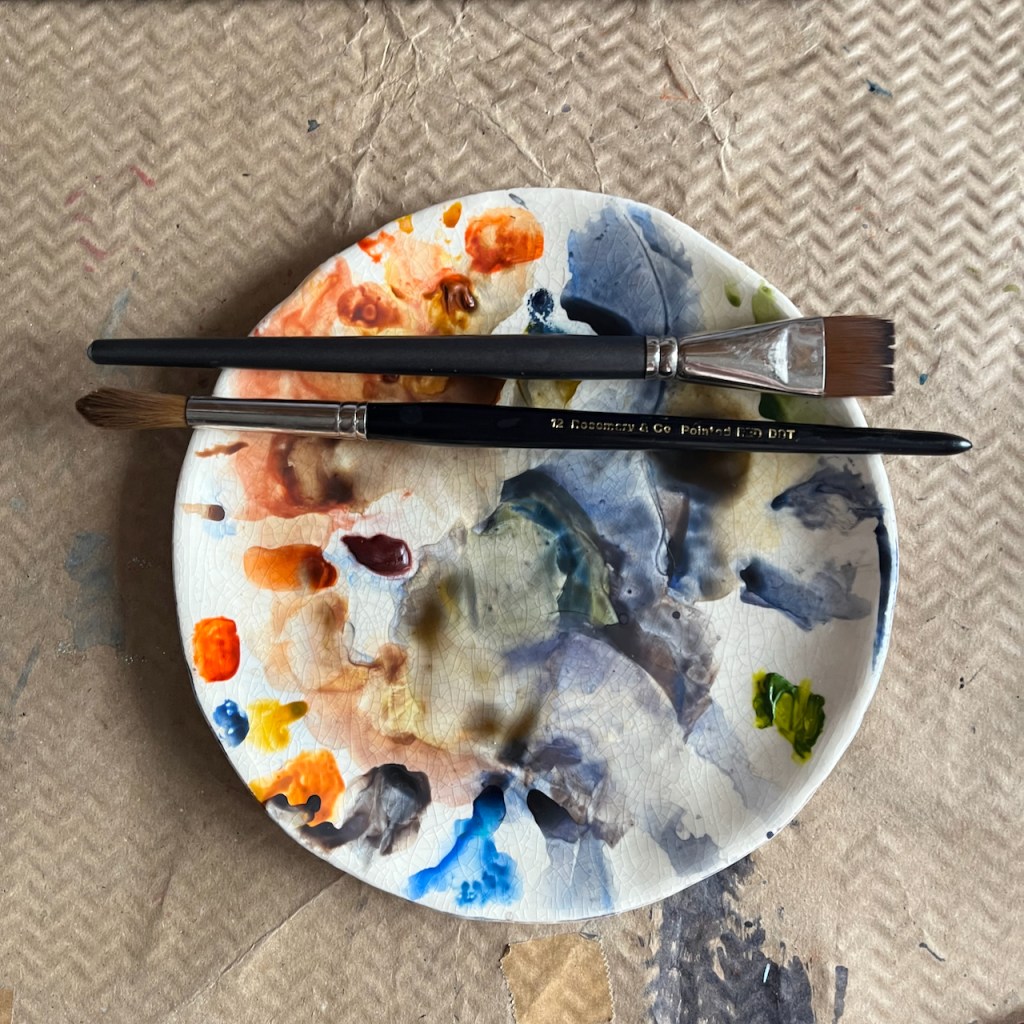
Here are the colours I used:


Pelham Mission Hall was completed in 1910.
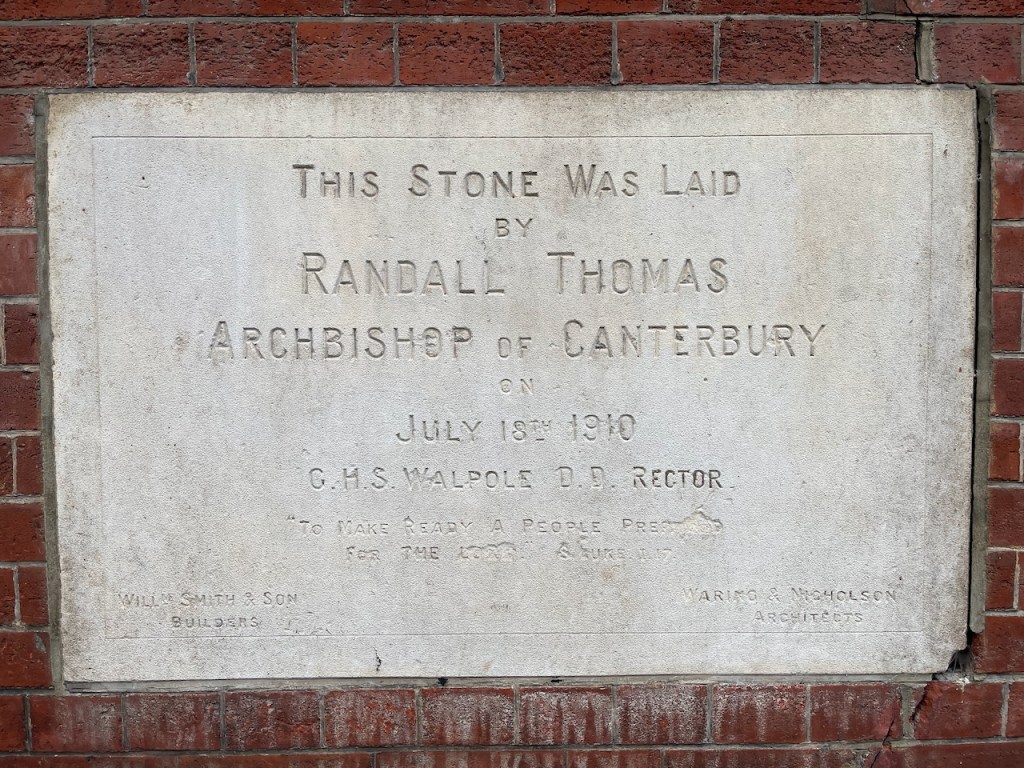
The text on the big stone slab under the window tells me this.
Foundation stone: This stone was laid by Randall Thomas, Archbishop of Canterbury, on July 18th 1910. G.H.S. Walpole D. D. Rector. “To make ready a people for the Lord” Luke 1.17
Waring and Nicholson architects. William Smith and Son Builders.
Buildings often have a foundation stone. Usually they just say who, and when. This one also says why. Its mission, as stated on the stone, was “To make ready a people for the Lord”. This is a line from a verse in St Luke’s gospel in the Christian Bible. The context is this:

And he shall go before him in the spirit and power of Elias, to turn the hearts of the fathers to the children, and the disobedient to the wisdom of the just; to make ready a people prepared for the Lord.

Luke 1.17. King James version1

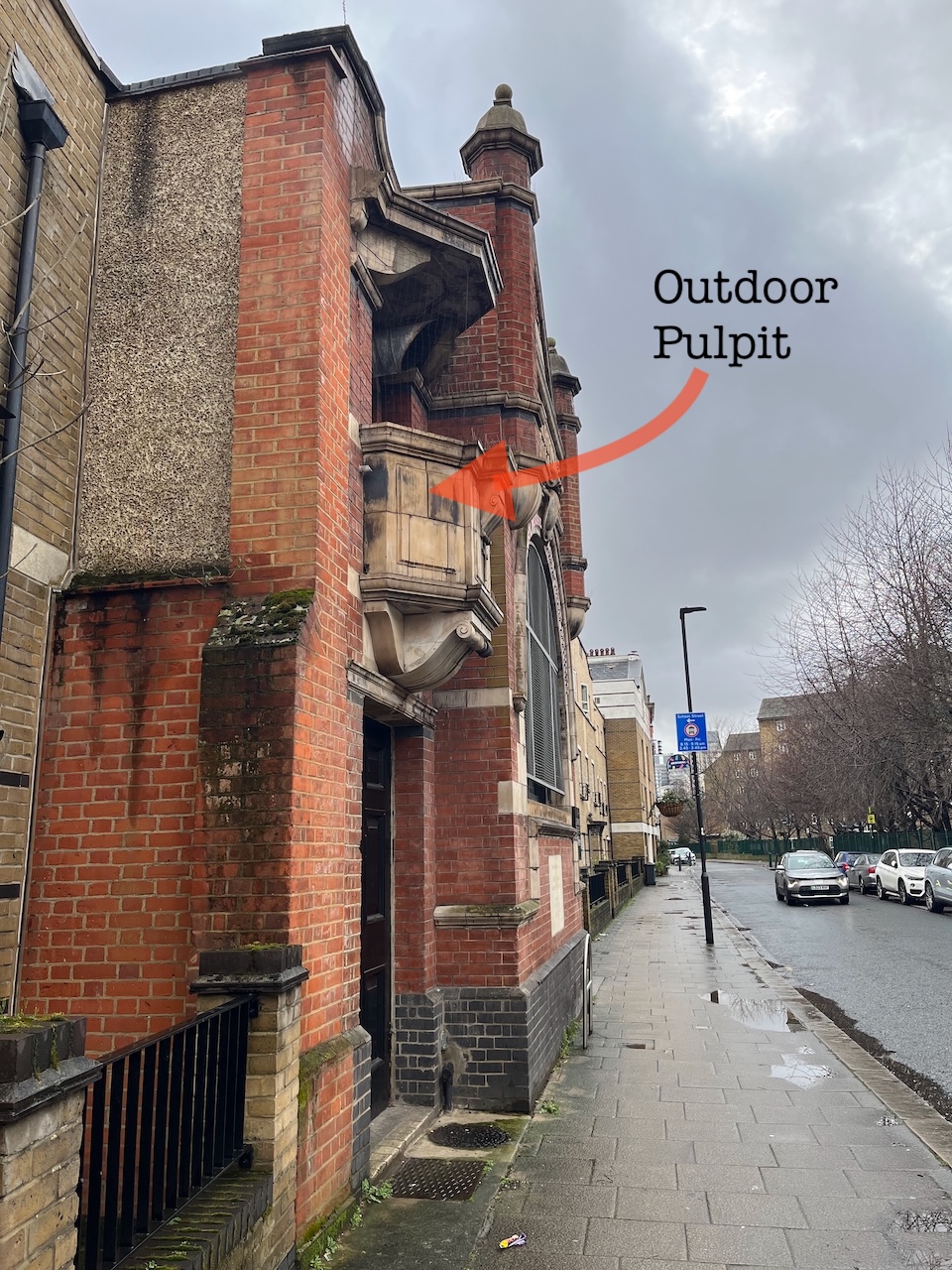
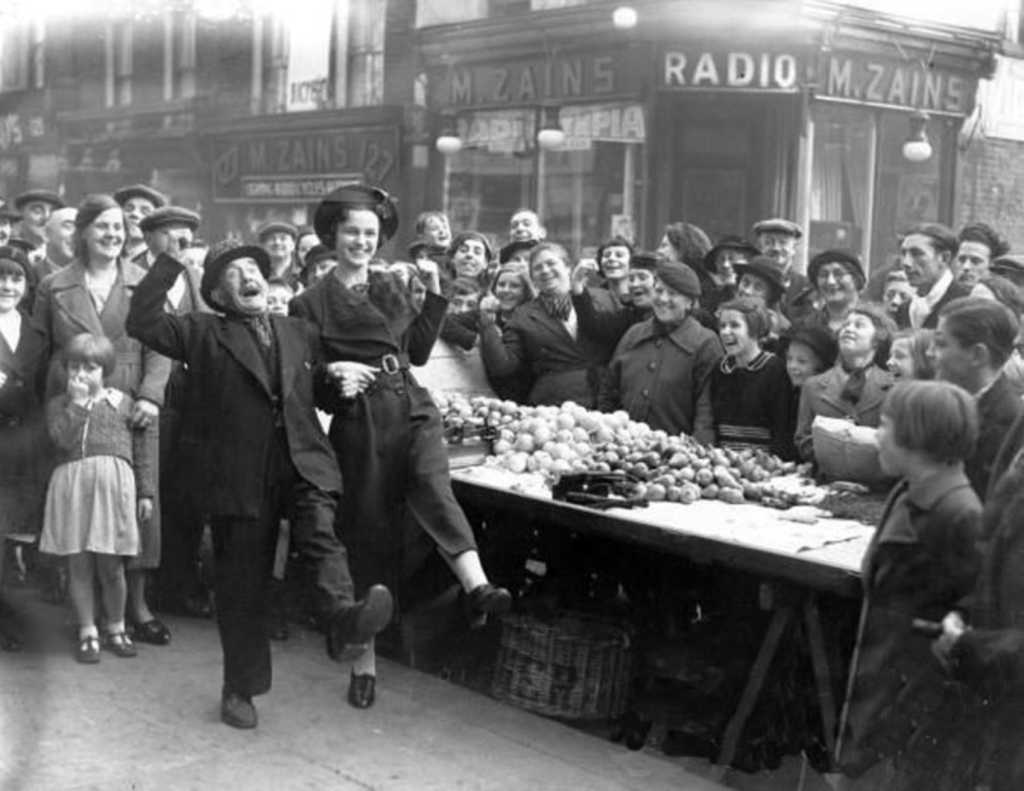
This building was created as an urban missionary post. There was a street market along Lambeth Walk at the time, and up to the 1960s. 2 I imagine the missionaries preaching from their outdoor pulpit to the street traders and their customers. It must have been hard for the preacher to make themselves heard.
The Hall is named for Francis G. Pelham 1844-1905, 5th Earl of Chichester, educated Eton and Cambridge, who was rector of Lambeth 1884-1894. 4

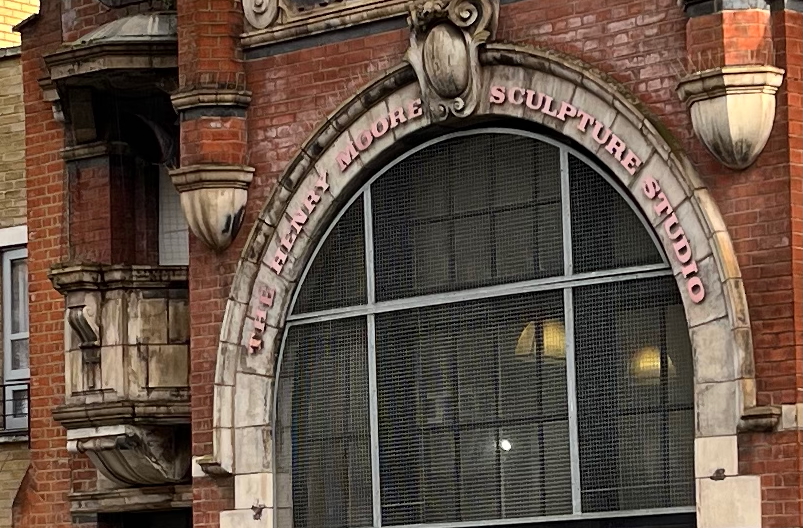
The building is now the “Henry Moore Sculpture Studio at Pelham Hall” part of Morley College. The sculptor Henry Moore donated a small sculpture to Morley College in 1977, which was sold at auction and helped to raise money for the lease of Pelham Hall. In return, the College named the sculpture studio after him, as written on the front of the building5.

Pelham Mission Hall, now The Henry Moore Sculpture Studio. The outdoor pulpit is on the left.

A ventilation pipe from the sculpture studio now exhausts through the outdoor pulpit.

While I was in the Vauxhall Tea House, the sun came out. It was calm in there. A few moments of paradise.


  1. I find the King James’ version here a little ambiguous here in the pronouns. Who is the “he”, who is the “him”? A modern translation: ‘John will prepare the people for the Lord to come to them. The Holy Spirit will lead John as he led Elijah. John will do powerful things as Elijah did. He will help fathers to love their children. He will teach people who do not obey God. Then they will know what things are right. And they will do them. Then they will be ready when the Lord comes.’.
    Translation: “The Easy Bible”. Thank you to http://www.biblegateway.com for sorting that out. ↩︎
  2. https://vauxhallhistory.org/lambeth-walk-street-market/ ↩︎
  3. This wonderful photo is from the local history site : http://partletontree.com/LambethWalk.htm ↩︎
  4. The link to Francis G. Pelham is given in the caption to a London Picture Archive photo. See this link: https://www.londonpicturearchive.org.uk/view-item?i=92169&WINID=1742396935298
    ↩︎
  5. The information about the Henry Moore donation is from the Morley College website on this link: https://www.morleygallery.com/sculpture ↩︎

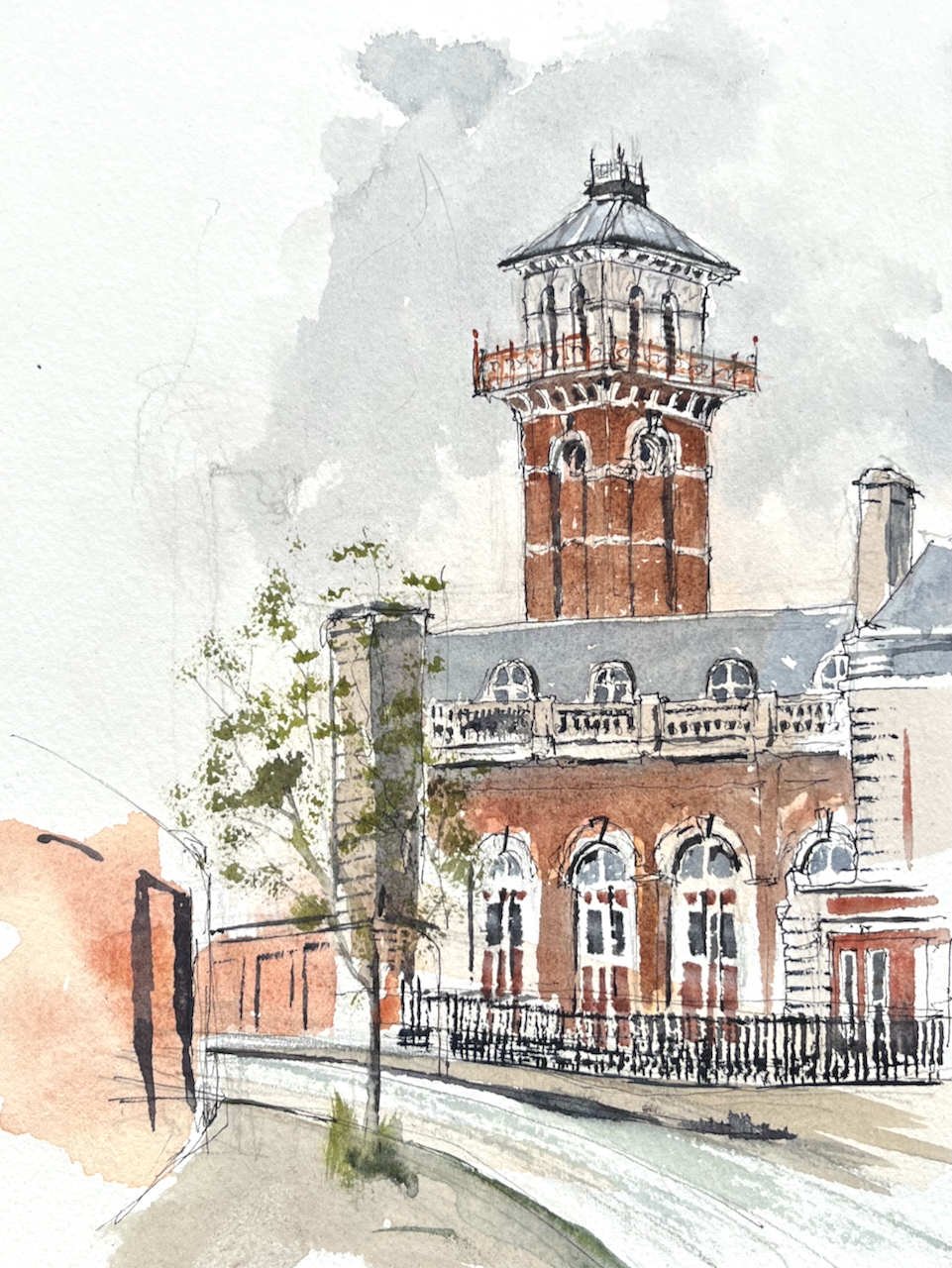
Tower at St Thomas’ Hospital Medical School, Lambeth, SE1

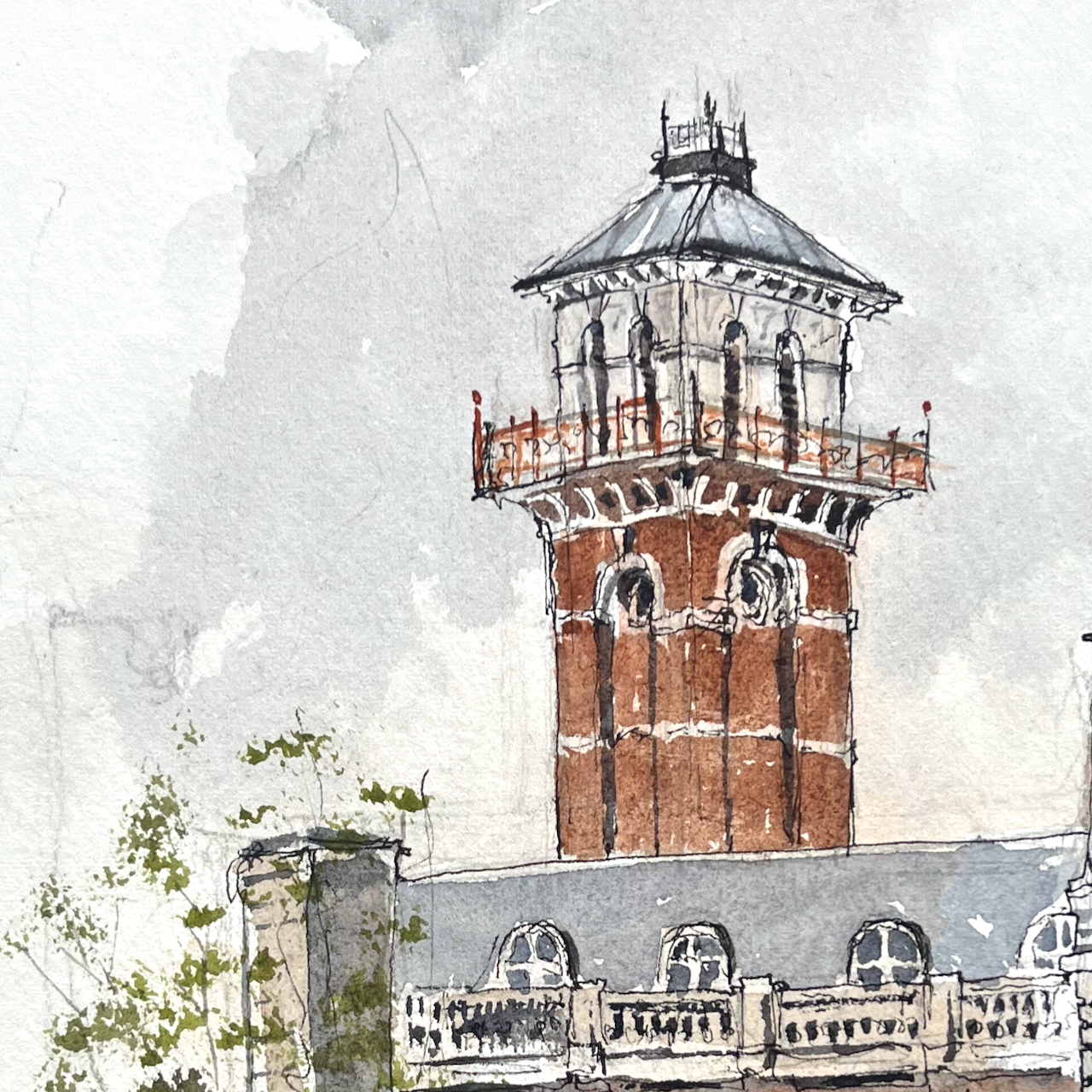
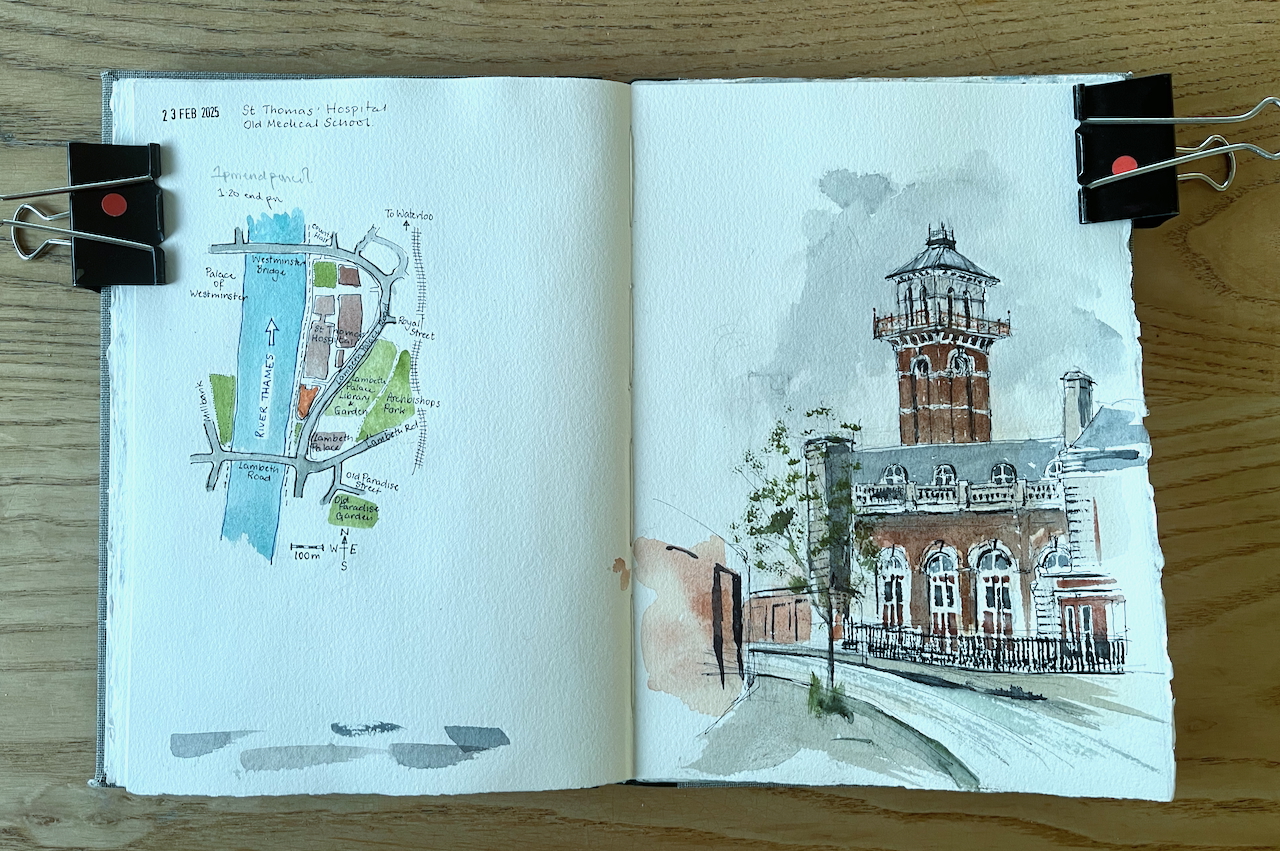
There is a splendid tower south of St Thomas’ Hospital on the South bank of the River Thames. Here it is, sketched from the Lambeth Palace Road.

St Thomas’ hospital medical school, from the Lambeth Palace Road SE1, sketched 23rd February 2025 in sketchbook 15

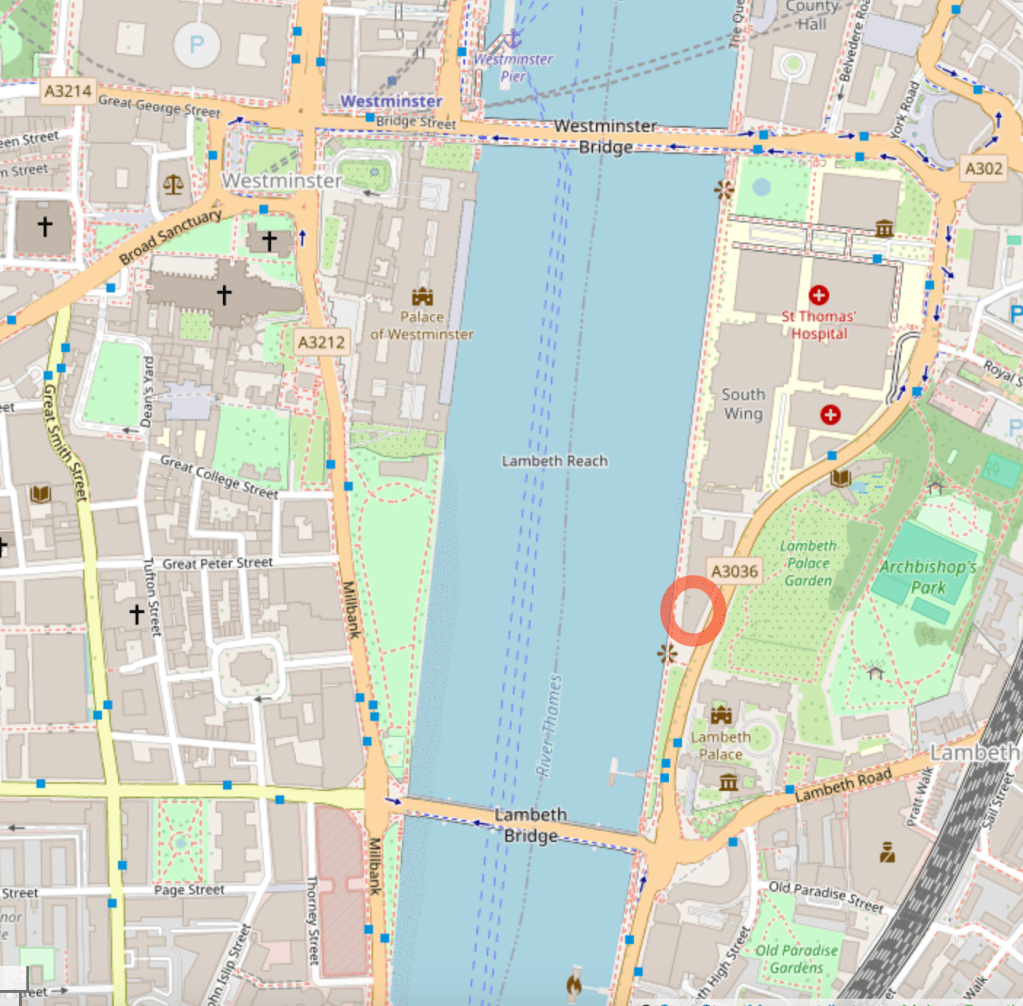
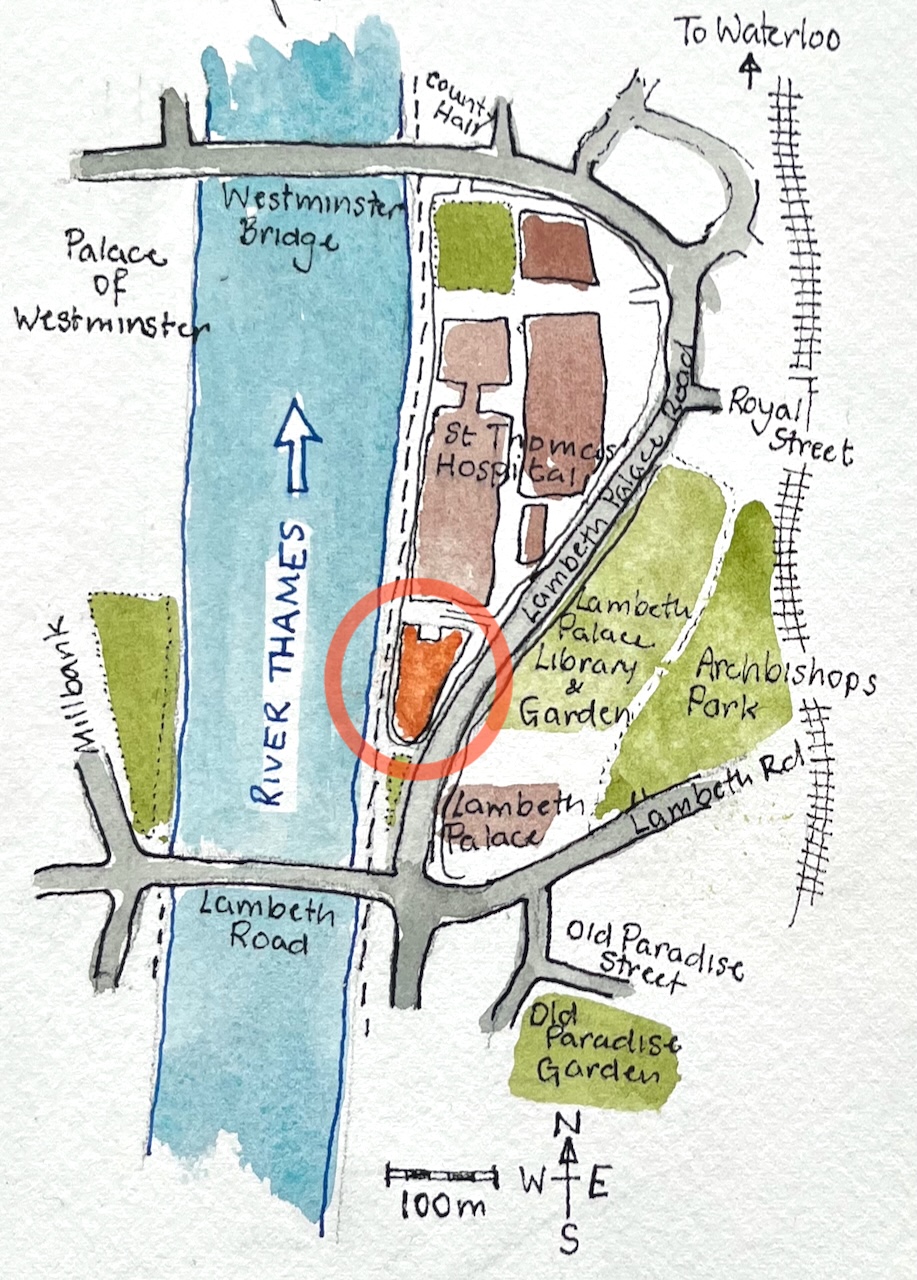
This tower, and the buildings below it, are right next to the Thames, opposite the Houses of Parliament. It is a splendid position.

Position of St Thomas’ medical school (circled): opposite the Palace of Westminster.
Map (c) Openstreetmap contributors. Click to enlarge.

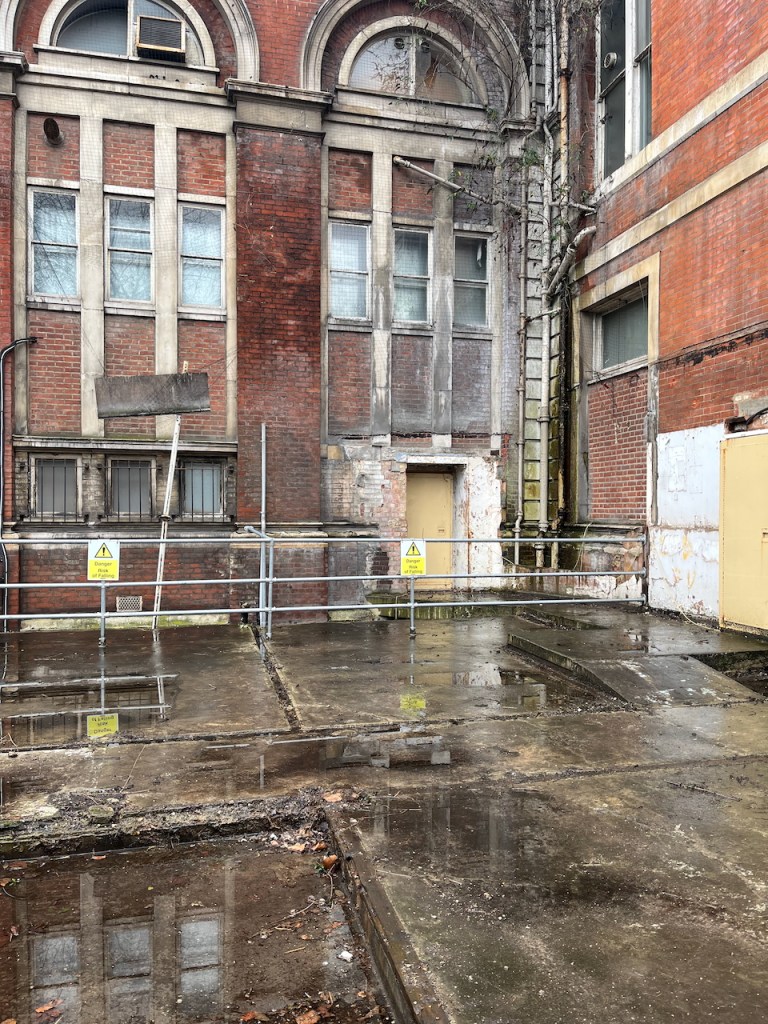
Given this prominent central location, I was astonished to discover that these buildings are derelict.

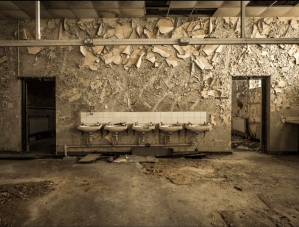
If you look through the railings which are in my drawing, this is what you see:

Inside the old medical school: photo from Dibsphotography.com . Click the image to go to their site: many more photos are there.

Urban explorers have posted pictures of the sadly decayed interior. For example on this link and this link and this link. Some have ascended the tower and posted pictures taken from up there. Their photographs show an abandoned lecture theatre, peeling plaster, elegant fireplaces covered in dust and mould, laboratory samples lying about gathering dust, molecule trees in a tangled heap, test tubes and old notes.

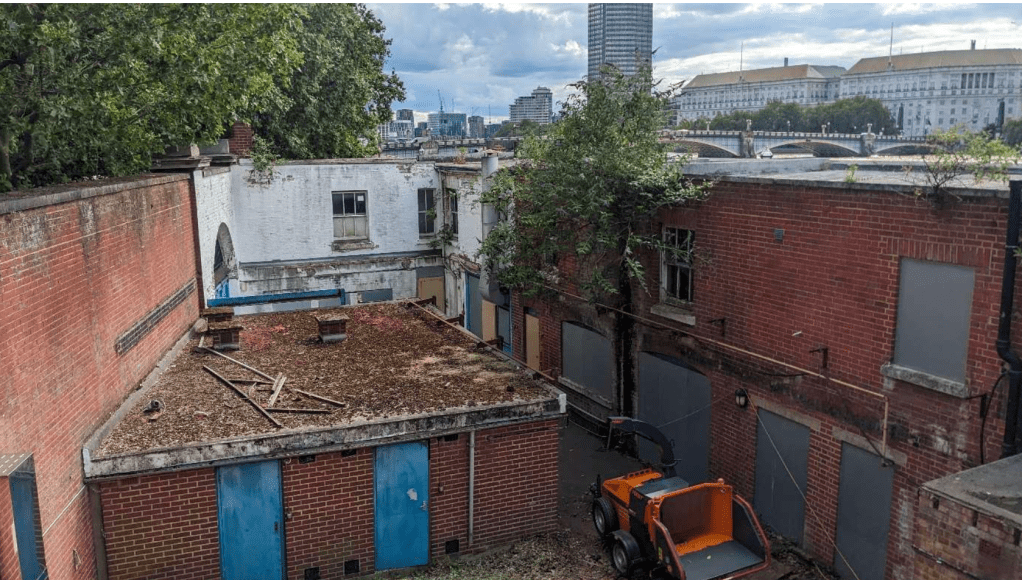
As well as the grand buildings, there are low-level houses within the site.

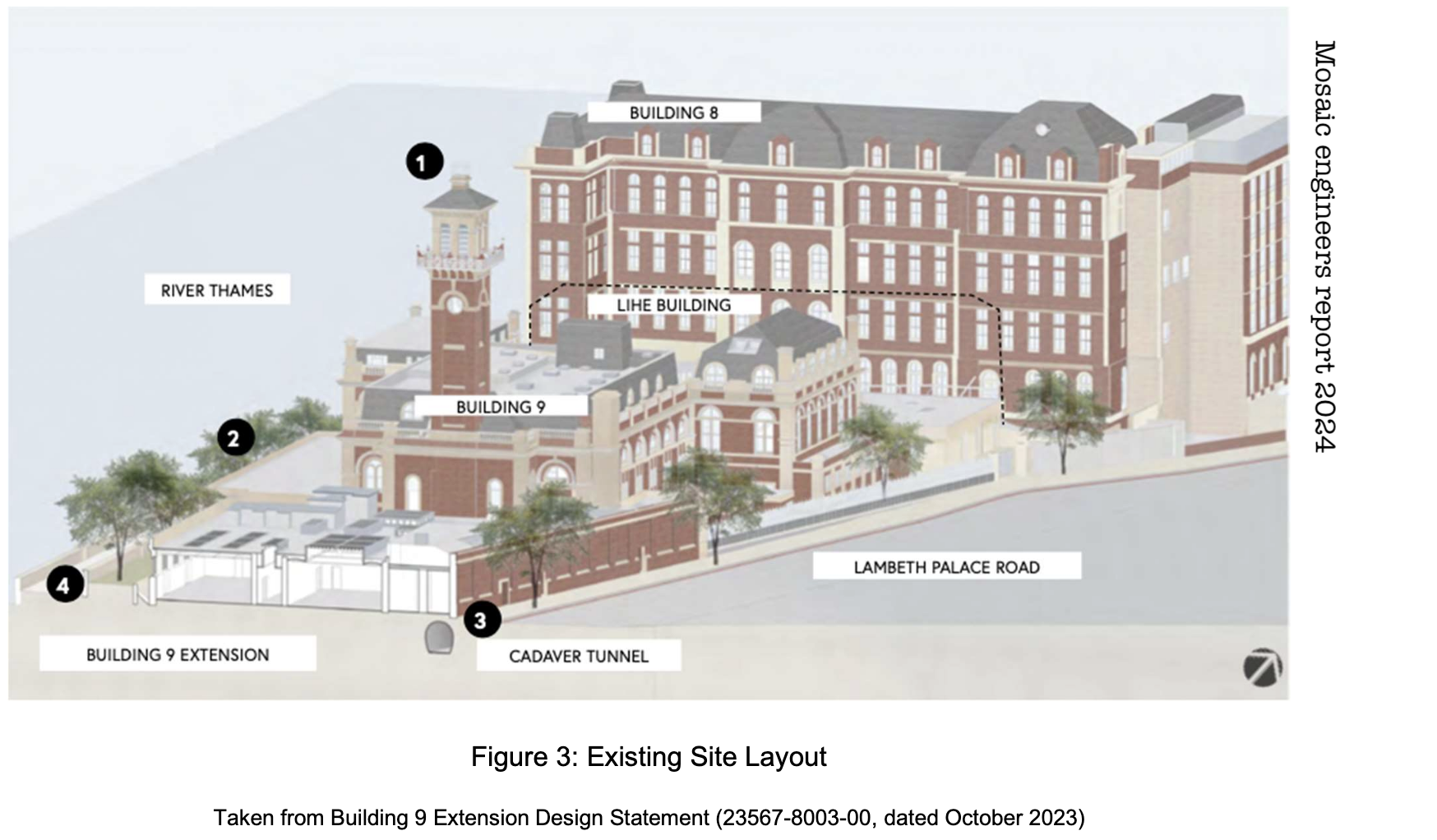
Looking South, below the tower. Picture from Mosaic Engineers report, see note 1

So what’s going on?

This part of St Thomas’ hospital was a medical school and library since the hospital was built here in around 1870. This part of the site was abandoned 20 years ago, as medical schools moved and merged. Then, it seems, nothing happened for 10 years, as the lecture theatres, laboratories and corridors gradually decayed.

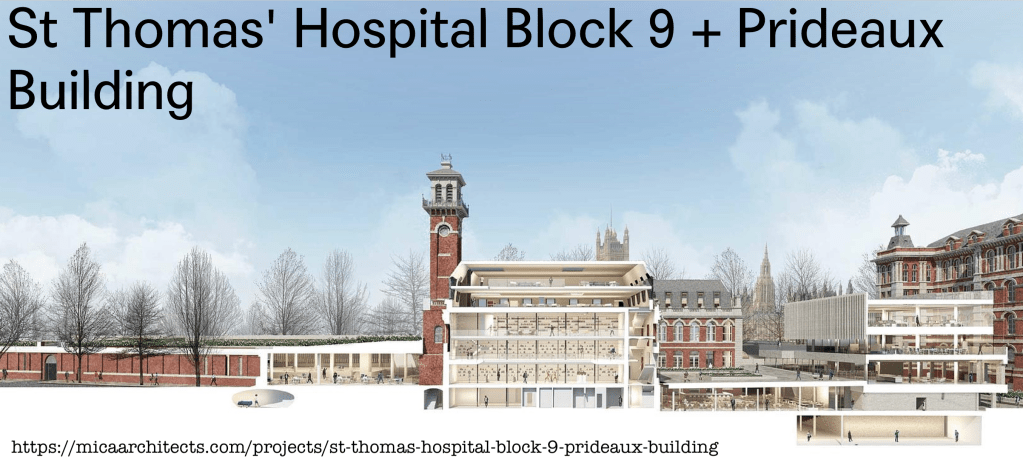
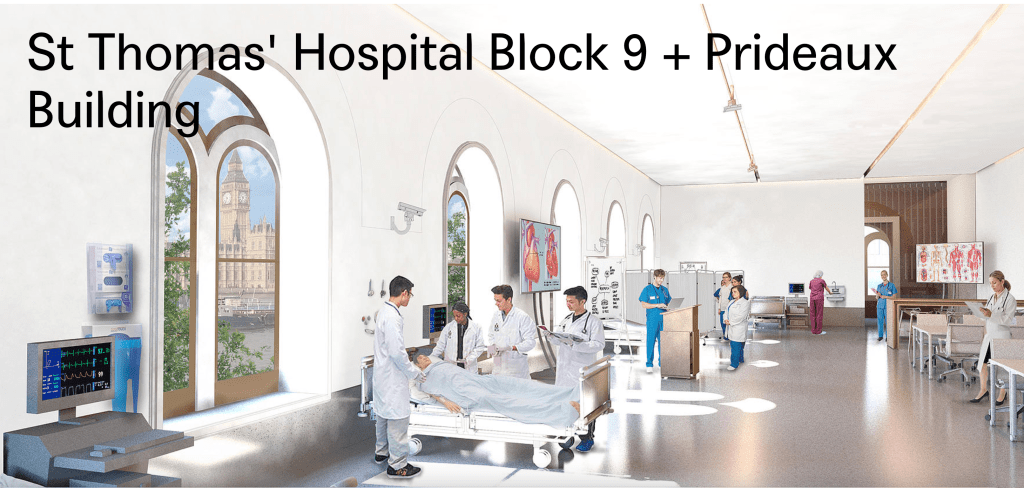
In 2015, there was a plan. The website for MICA architects shows a proposal for a new medical school on this site. This proposal is dated “2015-ongoing”. Click the image below to see their drawings of radical new buildings, and future medical students engaged in lectures and conversations, with spectacular views of the Houses of Parliament through the huge windows.

Lambeth Council granted planning permission in 2016, reference 16/02387/FUL. That was nearly ten years ago. Still the site remains derelict.

However, now it seems that progress is happening. On the Lambeth Council planning site, there is an impressive in-depth survey of the site by Mosaic Civil engineers, dated July 2024. They look at the Geology, Soil Chemistry, Hydrogeology, Hydrology, Flood Risk, Unexploded Ordnance, Ground Stability, and Invasive Weed, to name but a few. Hydrogeology seems to be answering the question: are there any aquifers or wells here? (answer: no). Hydrology is answering the question: how does the water flow around here, and will any sewage or nasty chemicals wash into the site? (answer: well, there is a Thames Water “storm sewage overflow” pipe into the Thames just upstream from here….). This report also contains photos, and a useful history of the site (Note 1).

St. Thomas´ Hospital was constructed in its current location in 1871 following the
construction of the Albert Embankment (which required reclamation of land from the River Thames)and the demolition of old boatbuilding and barge house sites which dated back to the 1680s.” (page 6, history of the site)

Mosaic engineers report page 6, history of the site

The volume “London – South” of the Pevsner architectural guides, says that St Thomas’ was..

…built on the current site by Henry Currey 1868-71, one of the first civic hospitals in London to adopt the principle of “Nightingale” wards to allow maximum ventilation and dispersal of foul air.

Florence Nightingale (1820–1910) was a pioneering nurse and reformer of the profession. She had a profound impact on the architecture of hospitals.

“The first principle of hospital construction is to divide the sick among separate pavilions,” she wrote in her 1863 ‘Notes on Hospitals’. Pavilions were large, rectangular, open-plan wards that made it easier for nurses to supervise all patients. These wards became known as Nightingale Wards.”

London Museum website

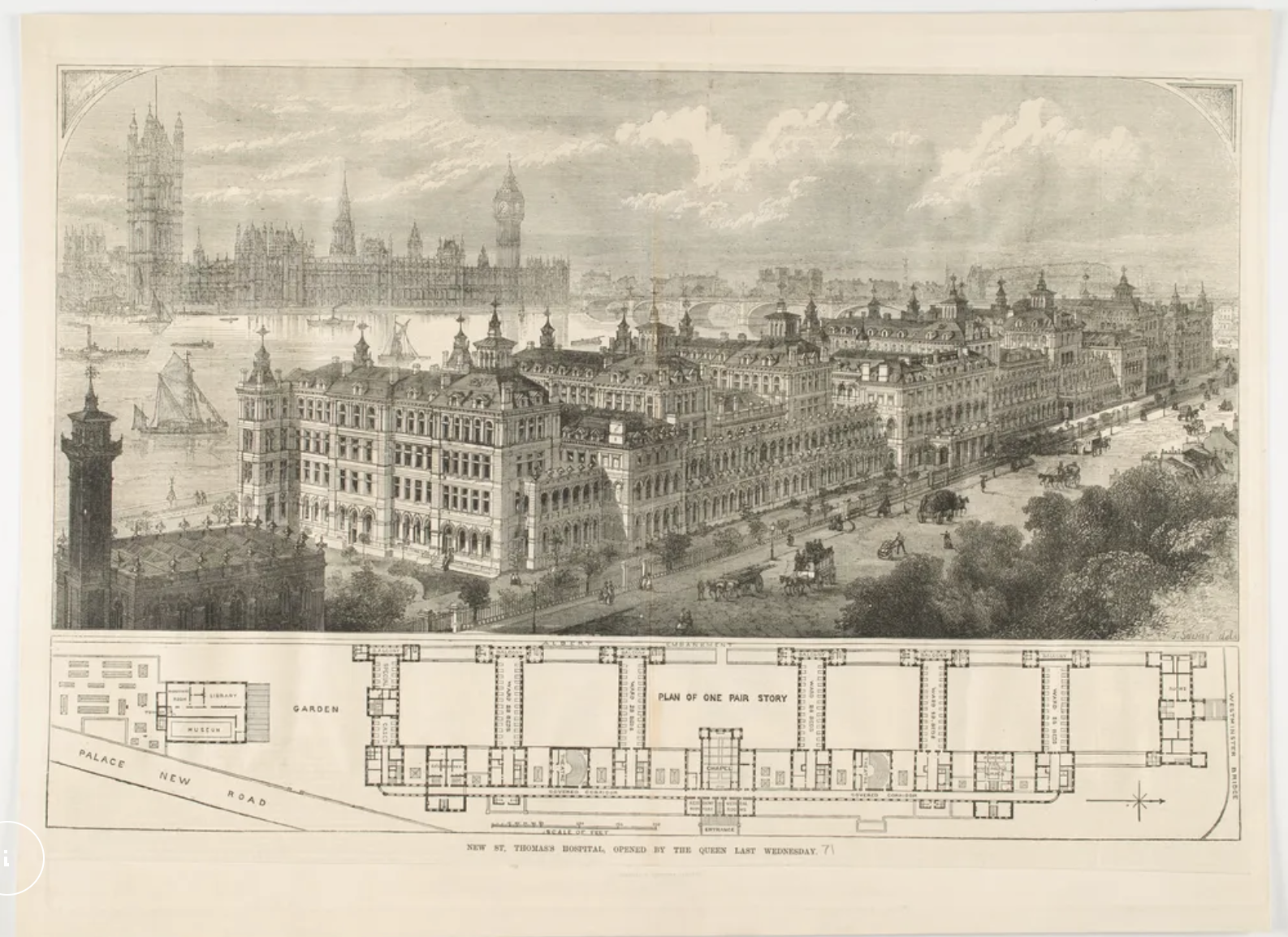
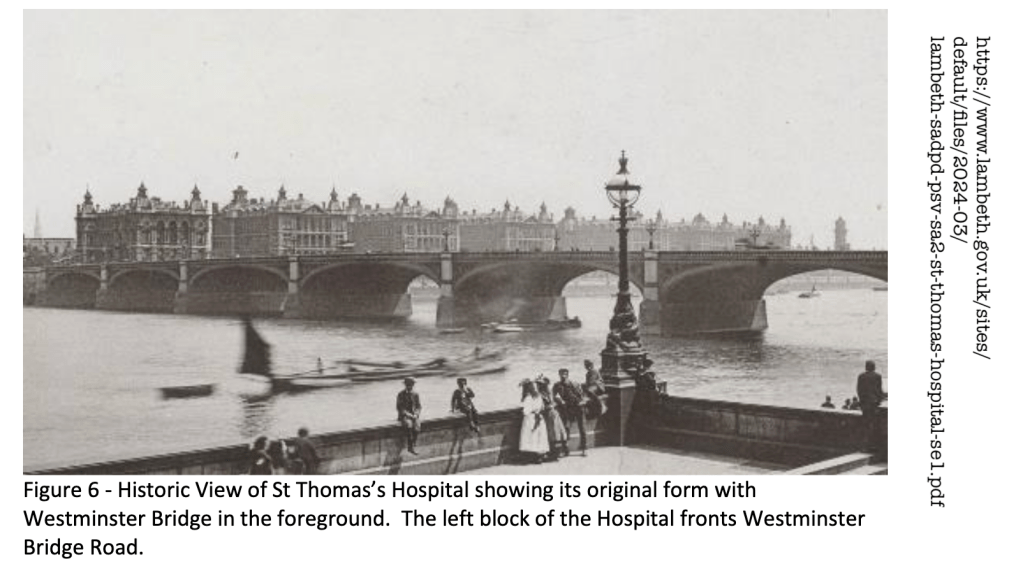
The London Museum website presents a picture of St Thomas’ hospital as an example of this architecture. There were seven such pavilions. As you see in the pictures below, the hospital rivalled the Houses of Parliament in its size and pinnacled magnificence.

“St Thomas’ hospital opened by the Queen last Wednesday”.
This picture is from the London Museum website. The Tower I sketched is on the left.

Here is a historic photo from the other side of the river. Westminster Bridge spans the river. The tower I sketched is on the right.

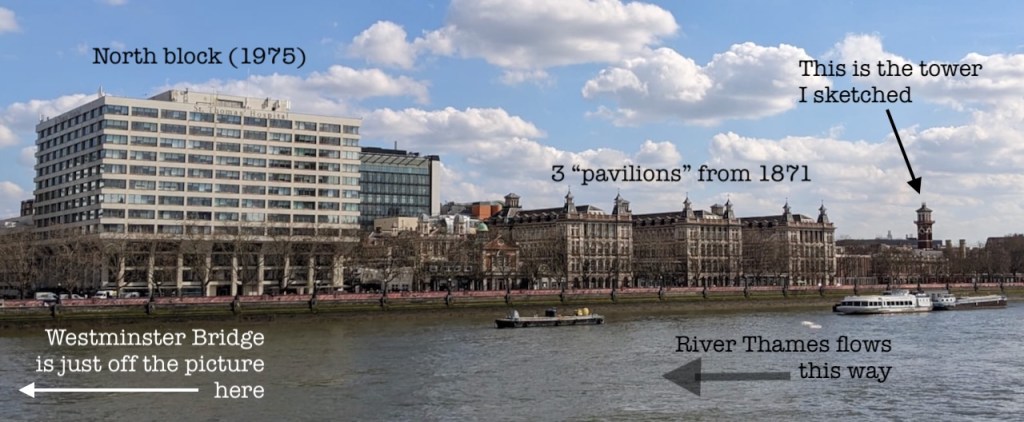
The hospital looks different today. The North pavilion was destroyed by enemy action in the 1939-45 conflict, and other parts of the building were damaged beyond repair. The only part remaining was the Tower to the south, and 3 of the southernmost pavilions. A large block was built in 1975 to replace the north pavilion. The website “Ebb and Flow” has some excellent pictures from 2023, showing the 1975 building in detail, and paying tribute to the dedicated people who work in this building.

Below is a photo from August last year. The 1975 buildings are on the left, the original buildings, still derelict, are on the right. In front is the National Covid Memorial Wall.

View of St Thomas’ from the Thames path, August 2024. (Photo (c) JaneSketching. )

The remaining pavilions and the tower are Grade II listed, number 1080373. Many new buildings of the hospital have been created around them, including the Evelina hospital for children.

Now we can expect the renovation of the southern part of the hospital.

Picture from Mica Architects proposal: click picture to go to their website
(https://micaarchitects.com/projects/st-thomas-hospital-block-9-prideaux-building)

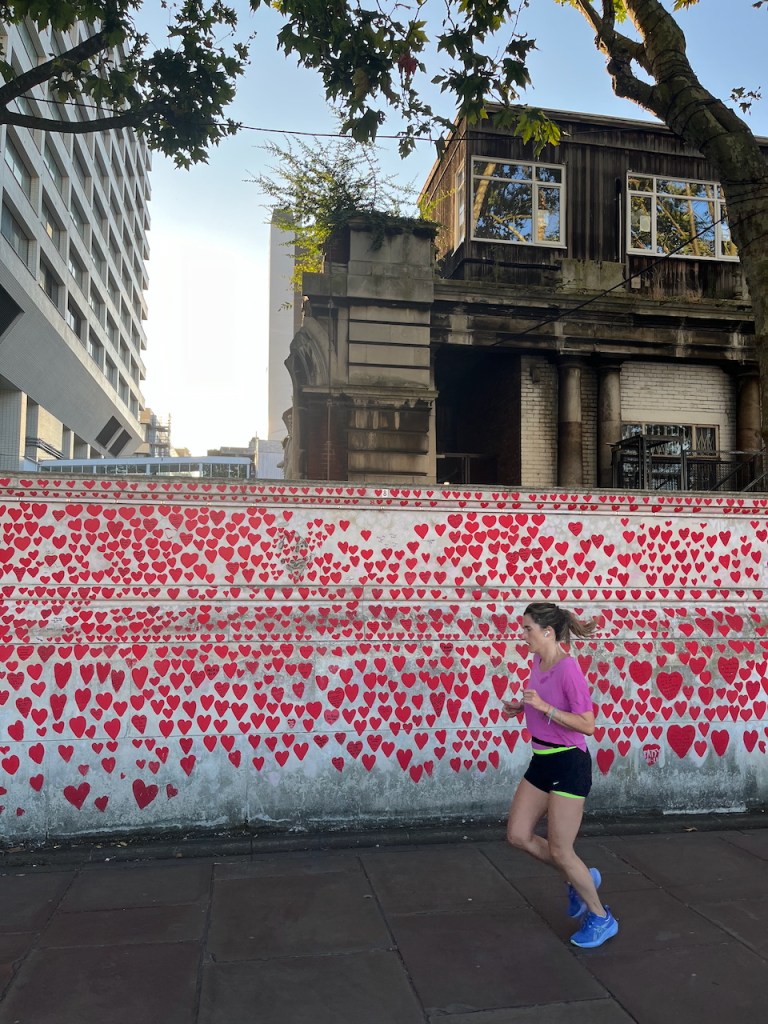
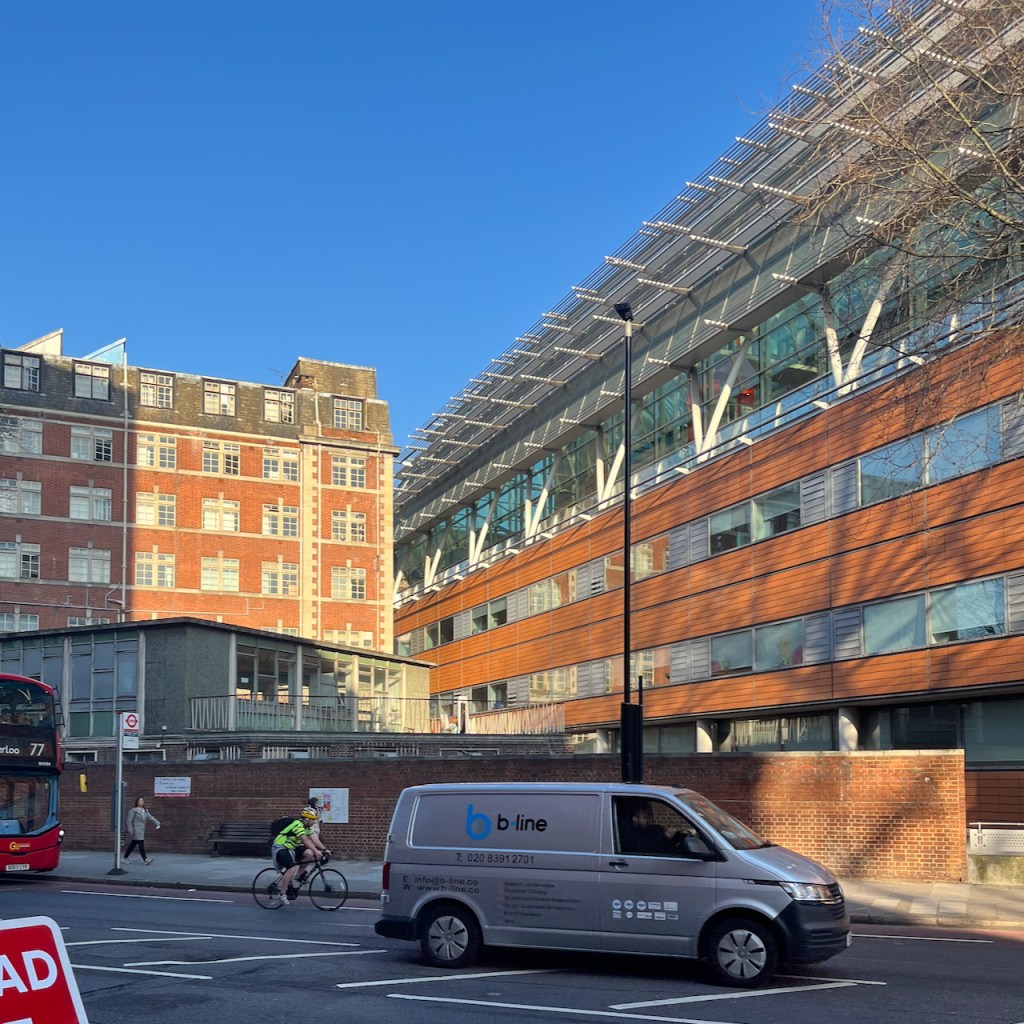
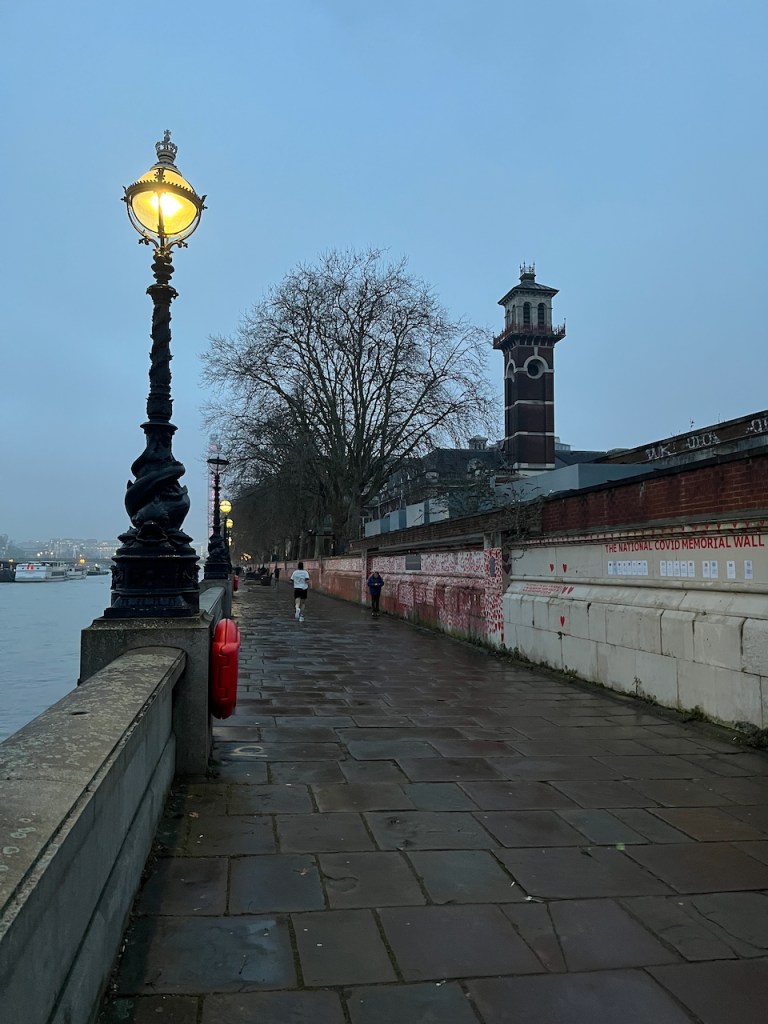
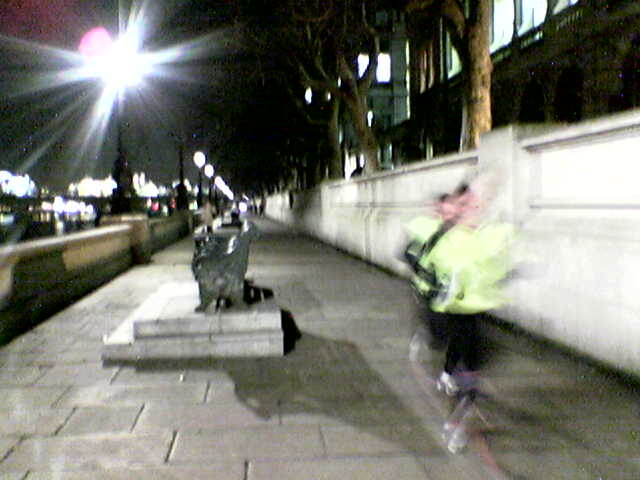
I have run and walked past this building for twenty years. I’m so glad that doing the sketch has prompted me to discover what’s going on behind the high walls. Here are some snapshots from the embankment. The hospital is on the right, behind the wall.

Early morning, 17th March 2025
Early morning 12 January 2006. Mobile phones weren’t so great at taking photos then.

I thank the ambulance staff, administrators and medical professionals of St Thomas’ hospital who were there when needed after a terrifying incident.
We all have such incidents in our lives. The hospital is more than a building. It is a place of caring, a community and a store of knowledge, from Nightingale to now. Thank you NHS.


Note 1: The report from Mosaic civil engineers is called
“Mosaic Civil and Structural engineers report
FINAL REPORT
PHASE 1 PRELIMINARY CONTAMINATION RISK ASSESSMENT REPORT
01/07/2024″

It is on this link, as part of the ongoing planning proposal.

If that link doesn’t work, you can find it here:

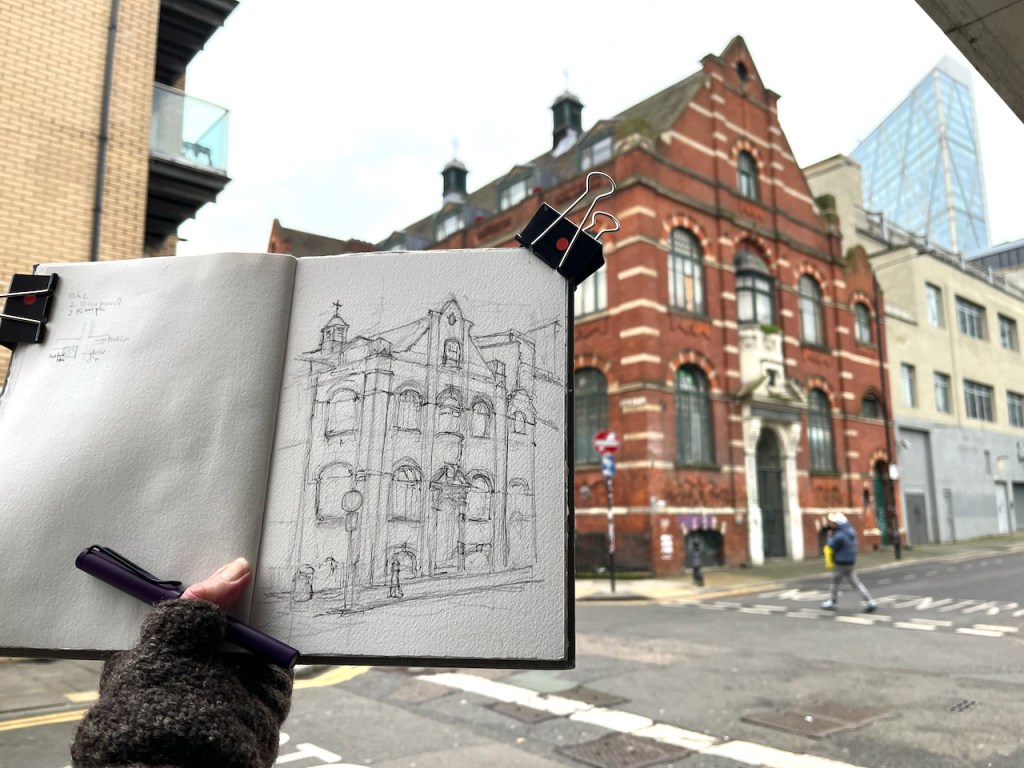
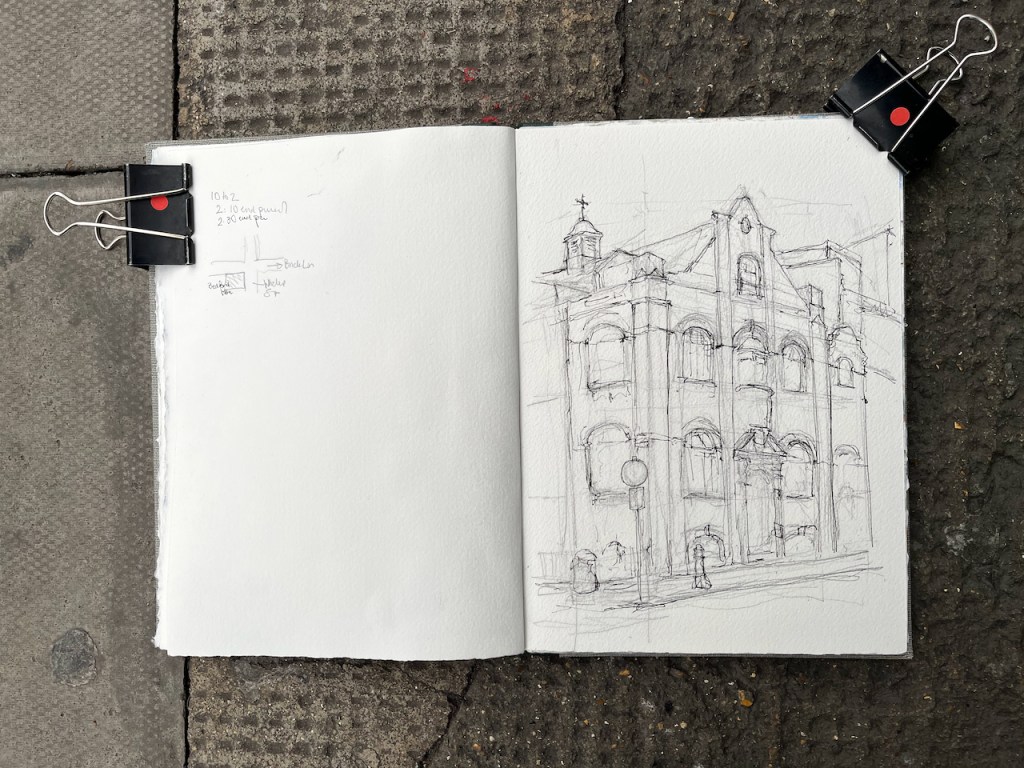
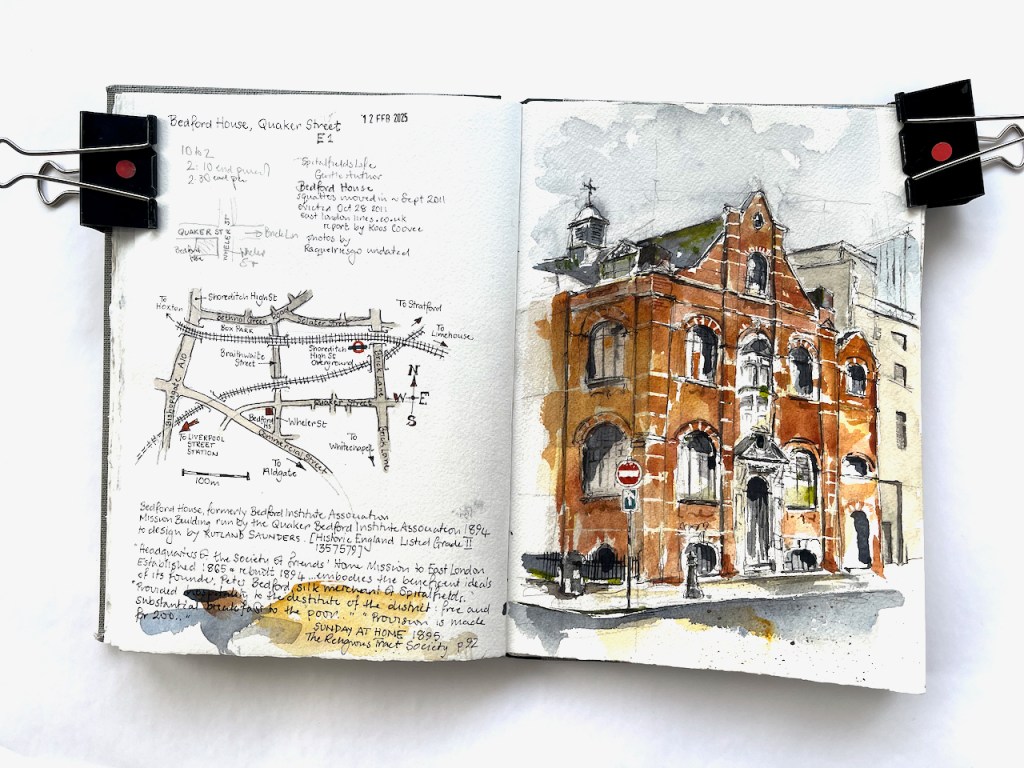
Bedford House, Quaker Street, London E1

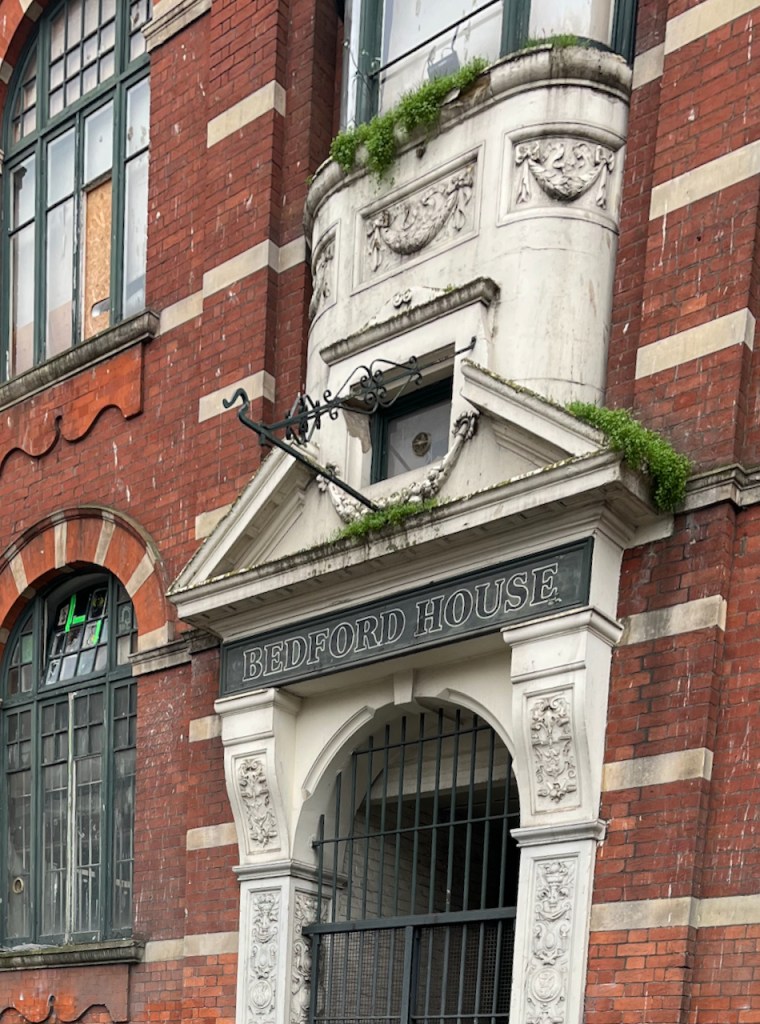
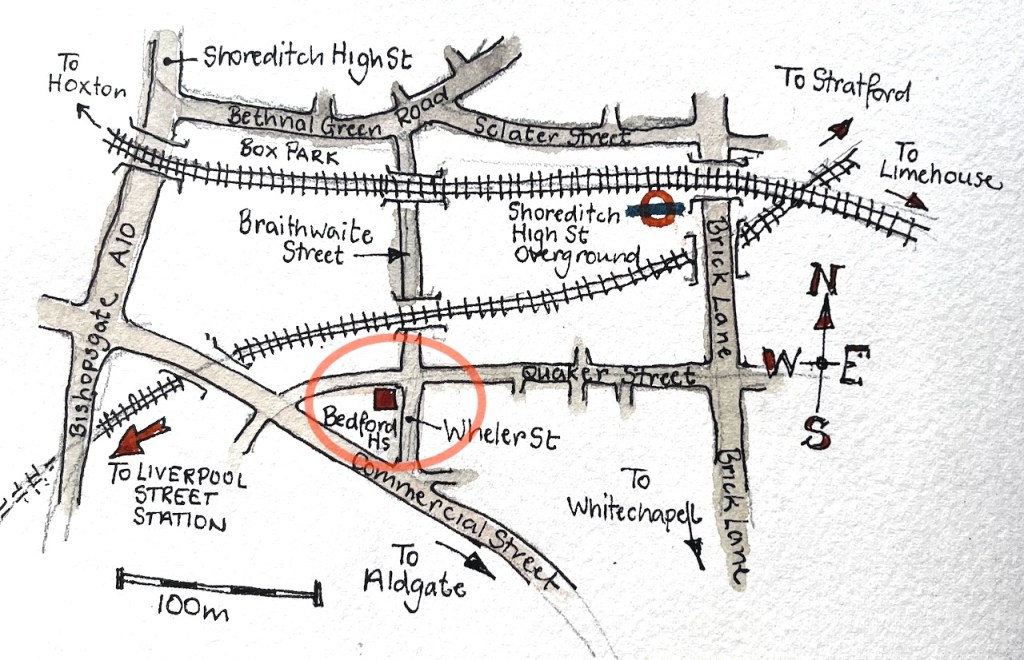
This magnificent building is on the corner of Quaker Street and Wheler Street, in east London, near Liverpool Street Station.

Bedford House, Quaker Street. Sketched 12 February 2025 in Sketchbook 15

It is intriguing: grand but dilapidated. Grass grows from the ledges, windows are broken and patched. The front door is blocked with a waste bin. But it has style.

At one time it was bright, new, clean and purposeful. This was the headquarters of a Quaker mission in east London: the Bedford Institute Association. It was built in 1894 replacing a previous building.

The lofty, picturesque, red-brick building, with its gables and tall roof, is constructed and equipped with solidity, and liberality and far-sightedness which distinguish all the admirable buildings erected by the trustees.”

“Sunday at Home” published by the Religious Tract Society, 1895, Volume 42, page 92

This issue of “Sunday at Home” published in 1895, goes on to describe the work which was undertaken in the building, which was less than a year old at the time of writing. Its purpose was to provide hospitality and education for the destitute of the locality.

“The Sunday begins with a well-planned hospitality to the destitute of the district – a free and substantial breakfast to the poor whose poverty is nowhere seen in a more aggravated form than in Spitalfields.

Provision is made for two hundred, who are supplied with tickets of admission by those who well know the district […] The large lower room in which they are received and comfortably seated is built for purpose, and is itself a lesson in cleanly living as well as of hospitality. The needful ventilation of a room crowded by two hundred guests, entirely devoid of any resources for personal cleanliness, is supplied by rapidly revolving steam fans placed over the doorways…

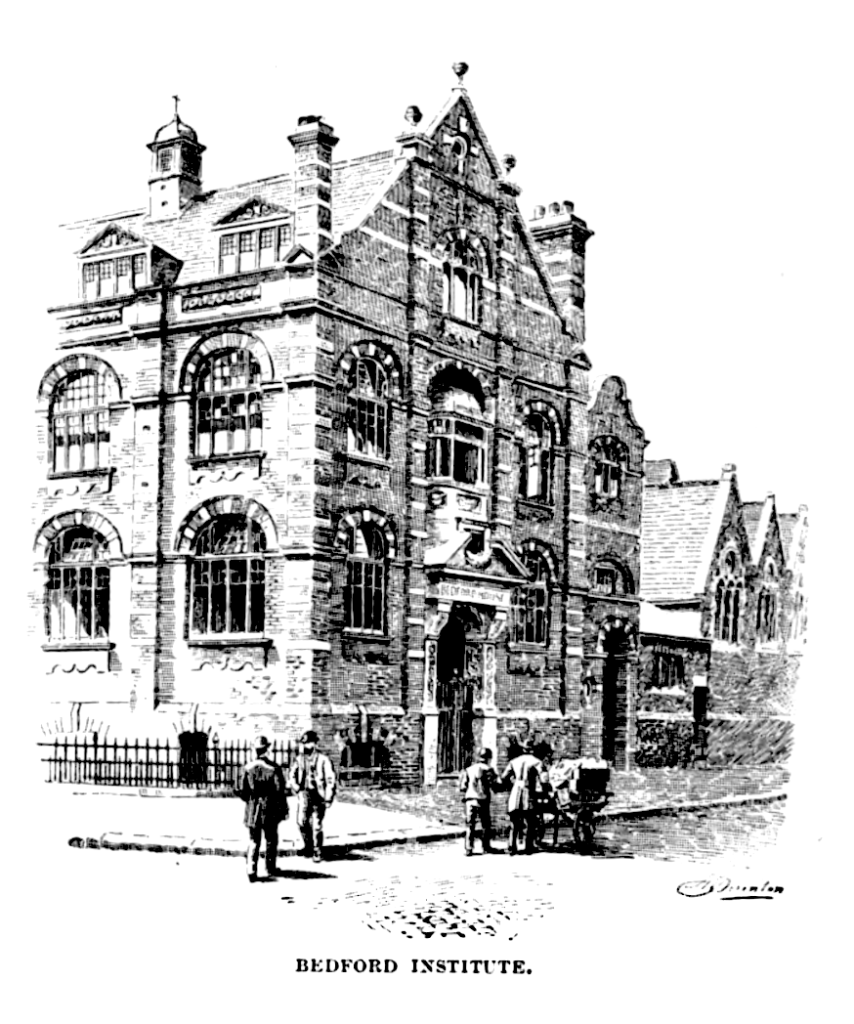
The article contains a picture, drawn from almost exactly the same spot where I was standing:

At that time there were tall chimneys on the front corners of the building, now reduced to stumps, as you see in my picture. Otherwise the building looks unchanged, on the outside at least. Even the cast-iron railings, centre left, are still there. The adjacent buildings on the right, with the ecclesiastical pointed windows, have been replaced by modern buildings, taller and boxier, with rectangular windows.

Although I was able to read in detail about the use of the building in 1895, I have been unable to discover much of its more recent history. In 2011, for a few months, squatters lived there. “The Gentle Author” visited the house during their occupation1 A photographer, Raquel Riesgo, documented her life during the squat. The squatters were evicted on October 28th 2011.

But what happened next? This building was created to serve destitute people in Spitalfields. Does it continue its mission?

If anyone knows what’s happening there now, I’d be really interested. Please comment below or get in touch.


I found “Sunday at Home” thanks to a link in a comment by Deidre Murray on the listing in Historic England.
“Sunday at Home – a family magazine for Sabbath reading v.42” is available on the website of the Hathi Trust on this link:
https://babel.hathitrust.org/cgi/pt?id=mdp.39015068375545&seq=108&view=1up
or if that doesn’t work try this link:
https://hdl.handle.net/2027/mdp.39015068375545

The publication is “Public Domain, Google-digitized.

The pages I have referenced start on this link: https://hdl.handle.net/2027/mdp.39015068375545?urlappend=%3Bseq=108%3Bownerid=13510798887051007-112

The name of the author of the article and of the artist who drew the picture are not given.

Click below to read or download the pages relating to the Bedford Institute:


  1. The Gentle Author describes his visit in a blog post: https://spitalfieldslife.com/2011/09/29/at-bedford-house/ Reading the comments on his post, there is a sense of the local mixed opinions surrounding this squat. ↩︎

Imperial War Museum North, Manchester, M17

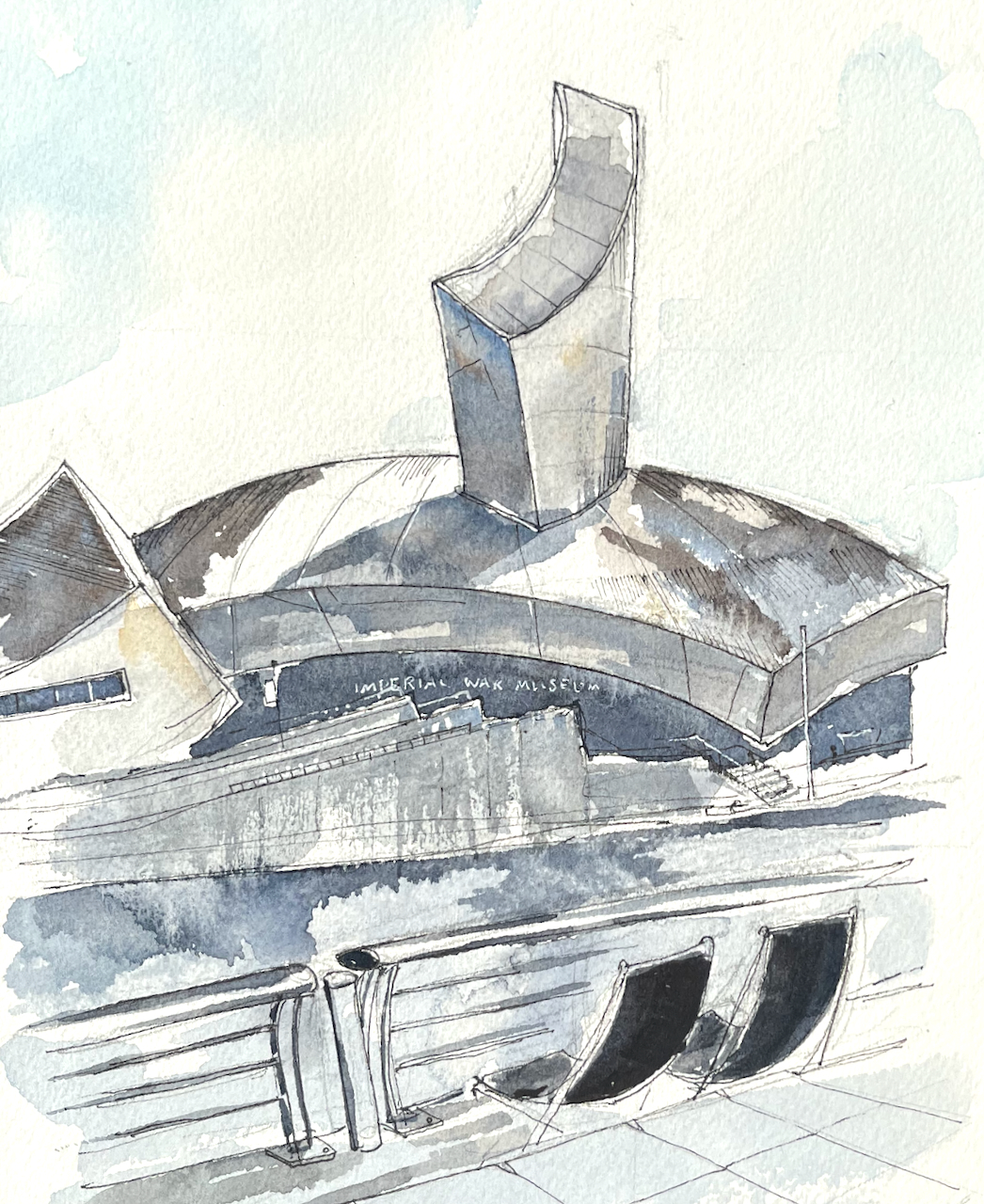
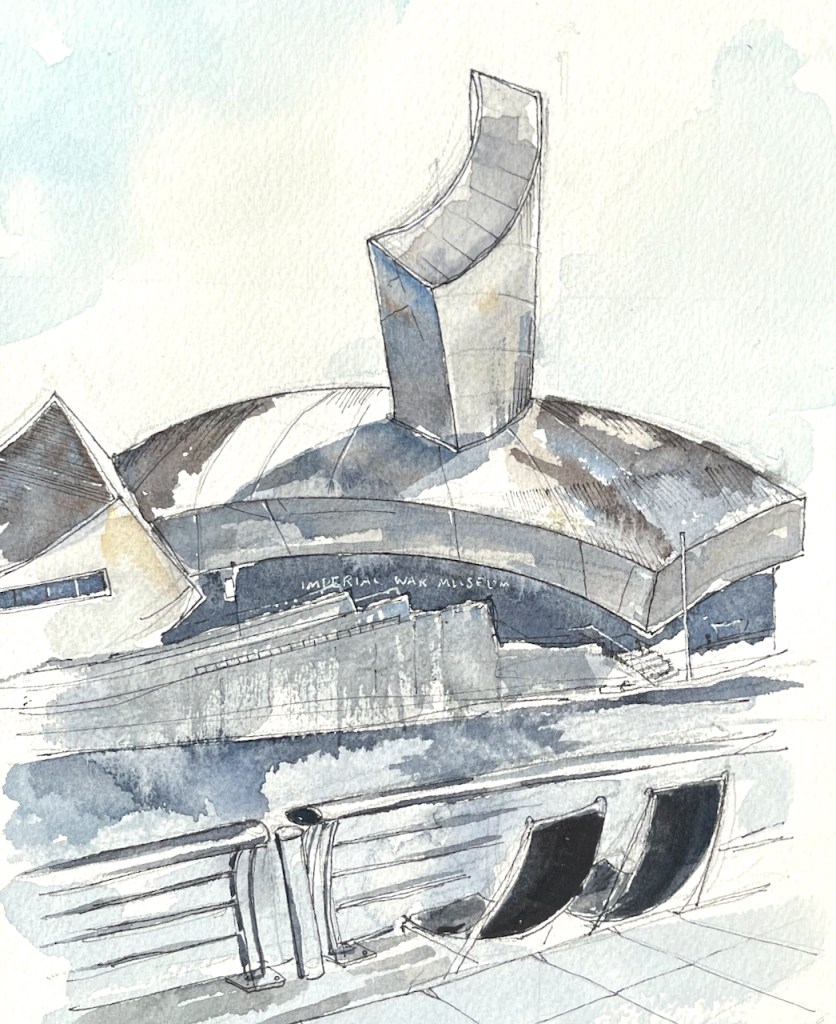
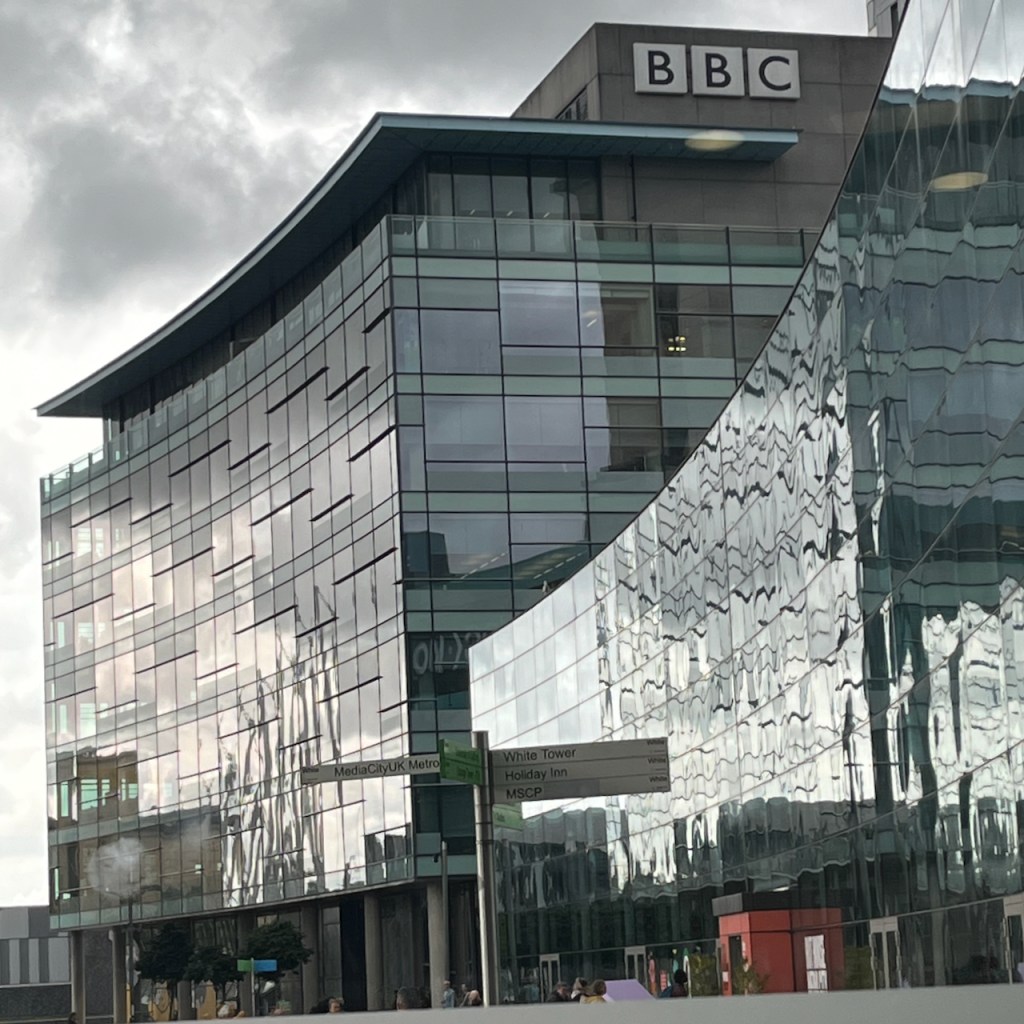
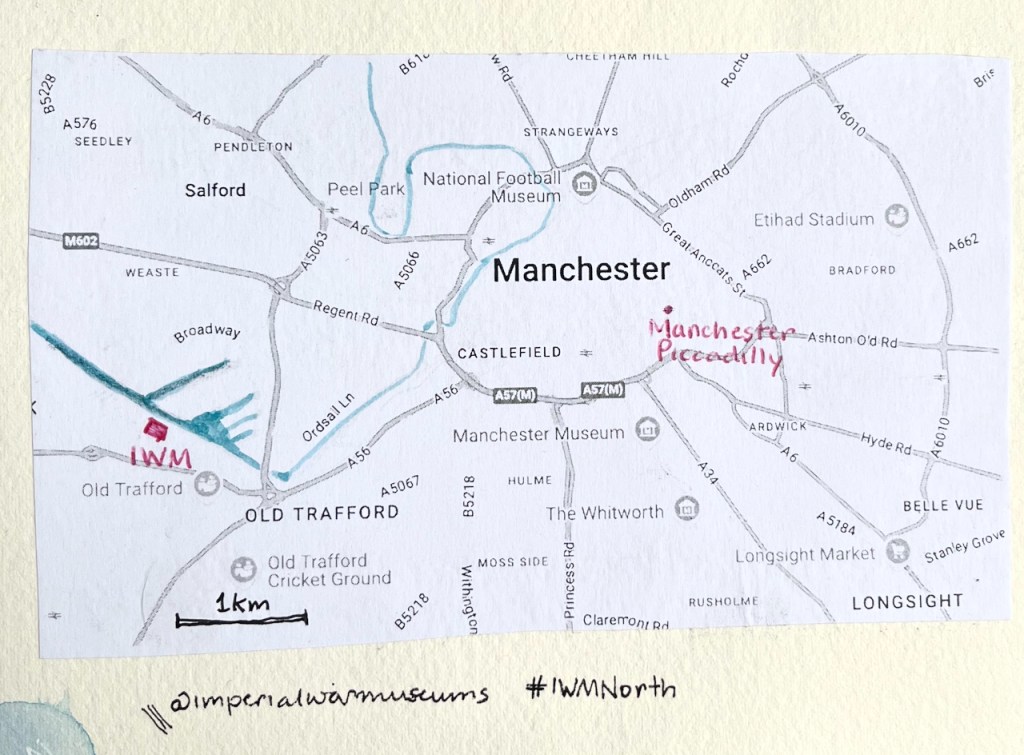
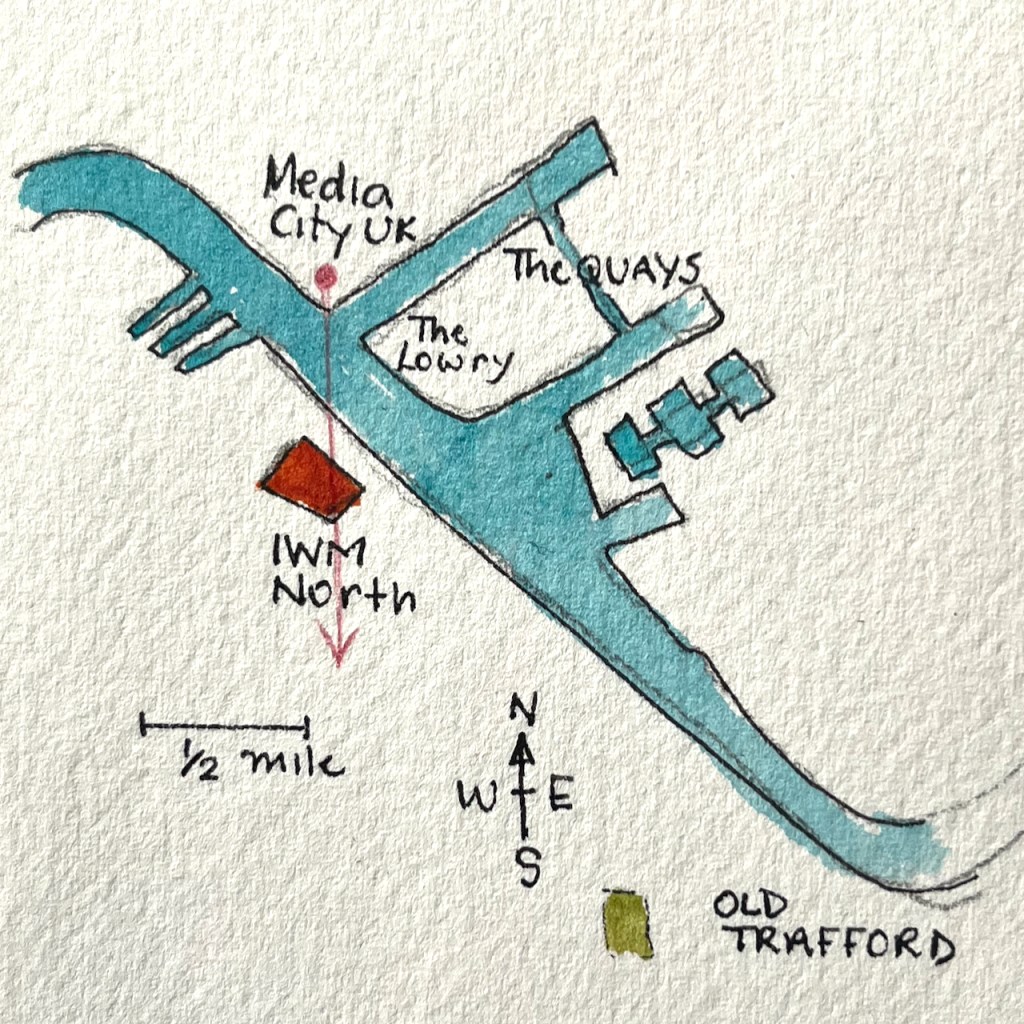
Across the water from Media City UK, is this striking building.

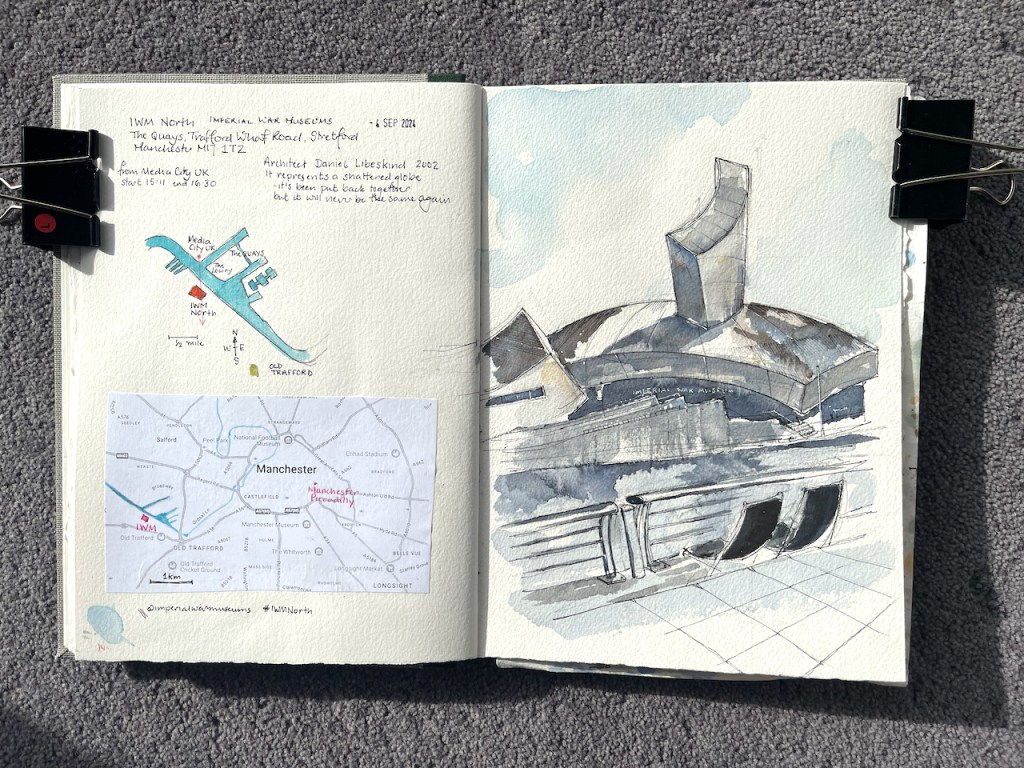
IWM North, sketched from Media City UK in Sketchbook 15

This is “IWM North“. I enjoyed the way the vast curves of the building were echoed in the humble shape of the deckchairs.

The architect is Daniel Libeskind. It was his first UK building, constructed in 2002. It represents a shattered globe: it’s been put back together, but it will never be the same again.

From the IWM North website

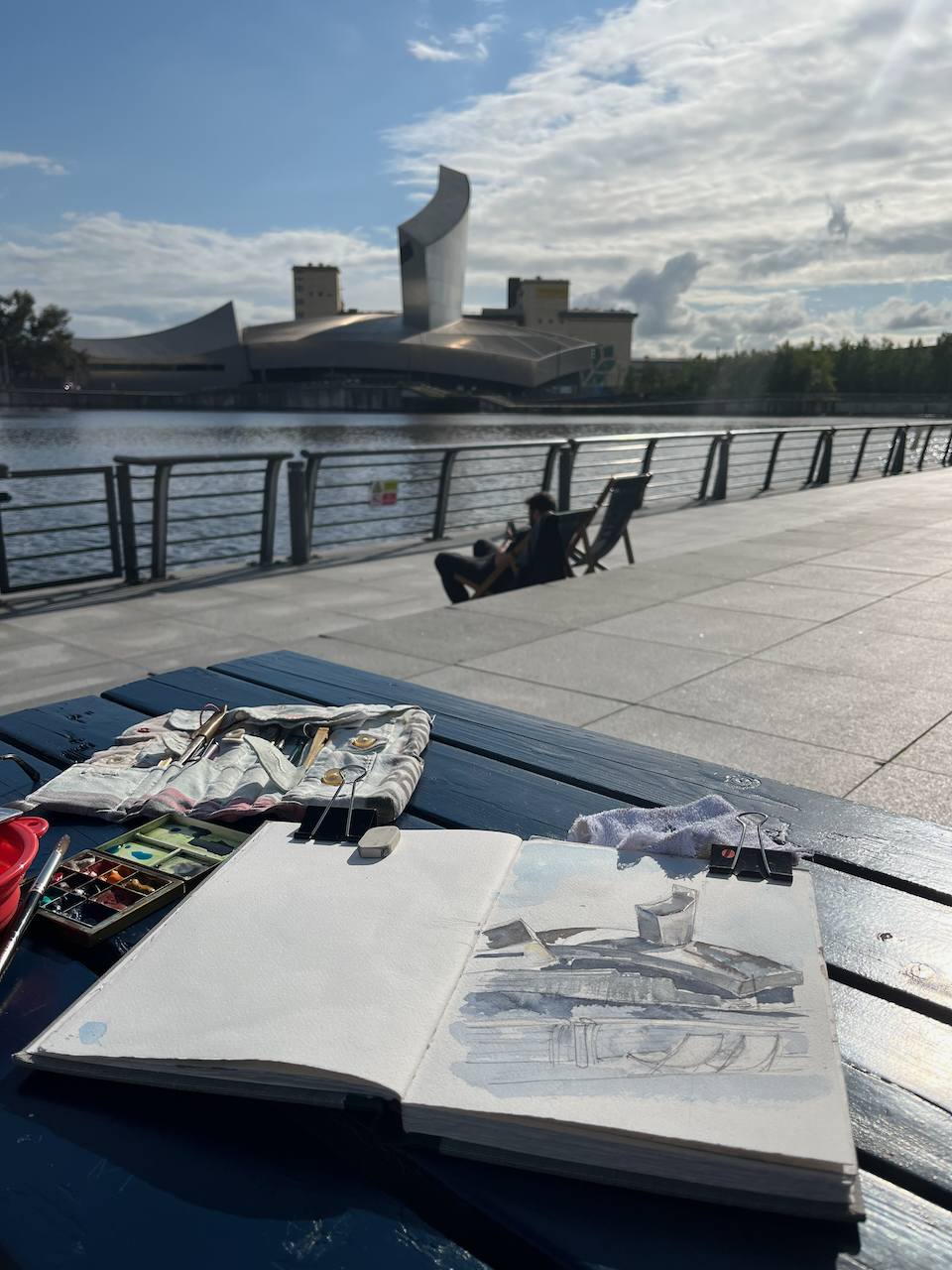
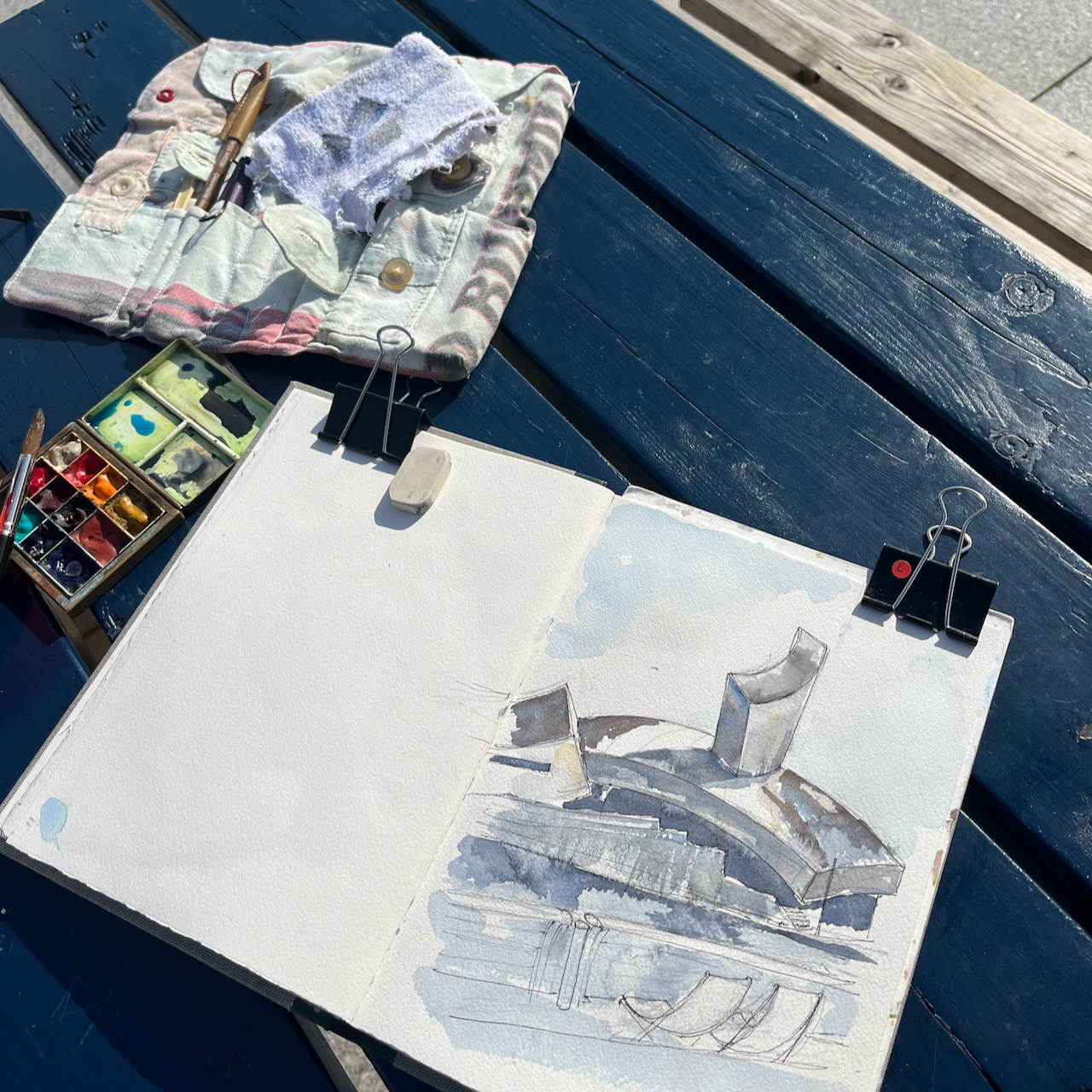
Here is work in progress on the sketch, the view across the water:

The marvellous curves of Media City UK

On the radio many years ago, I heard a director of the Imperial War Museum say that he was director of an establishment whose name contained three words each with negative connotations: “Imperial” “War” and “Museum”.
I note with interest, therefore, that it is now branded “IWM”.
“Imperial War Museums” has 5 sites: IWM London (in Lambeth), HMS Belfast on the Thames, the aircraft museum in Duxford, The Churchill War Rooms in Whitehall, and this one, the IWM North.

Sketchbook 15

Tragedy, for me, is not a conflict between right and wrong, but between two different kinds of right.

Peter Shaffer, playwright.

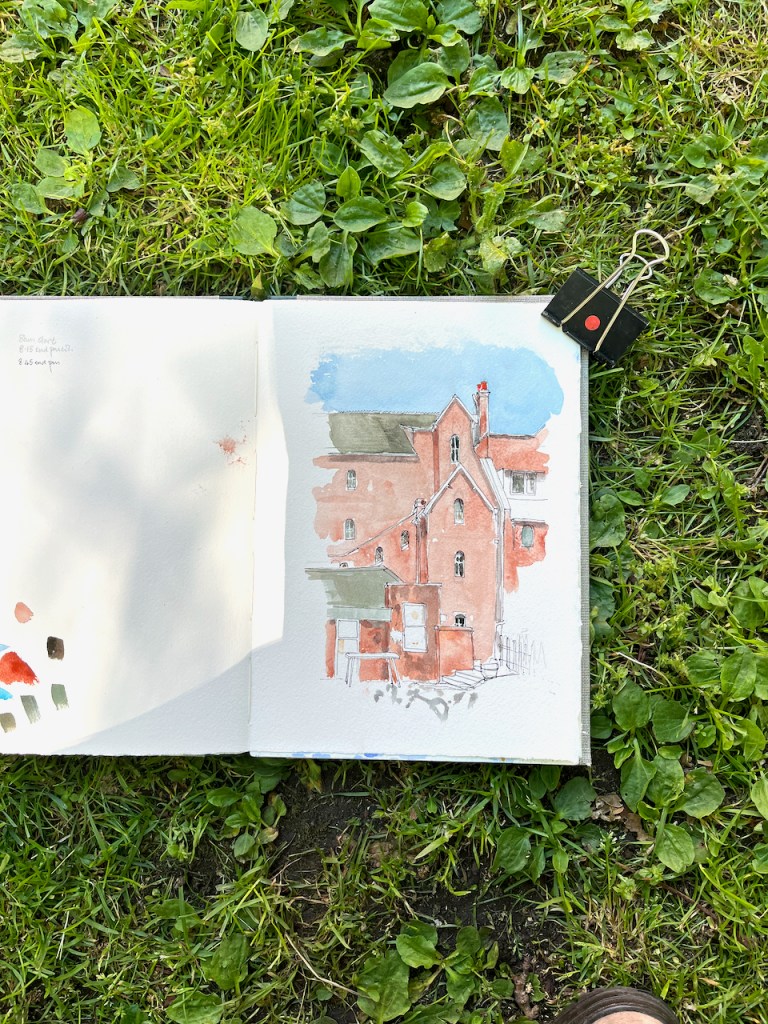
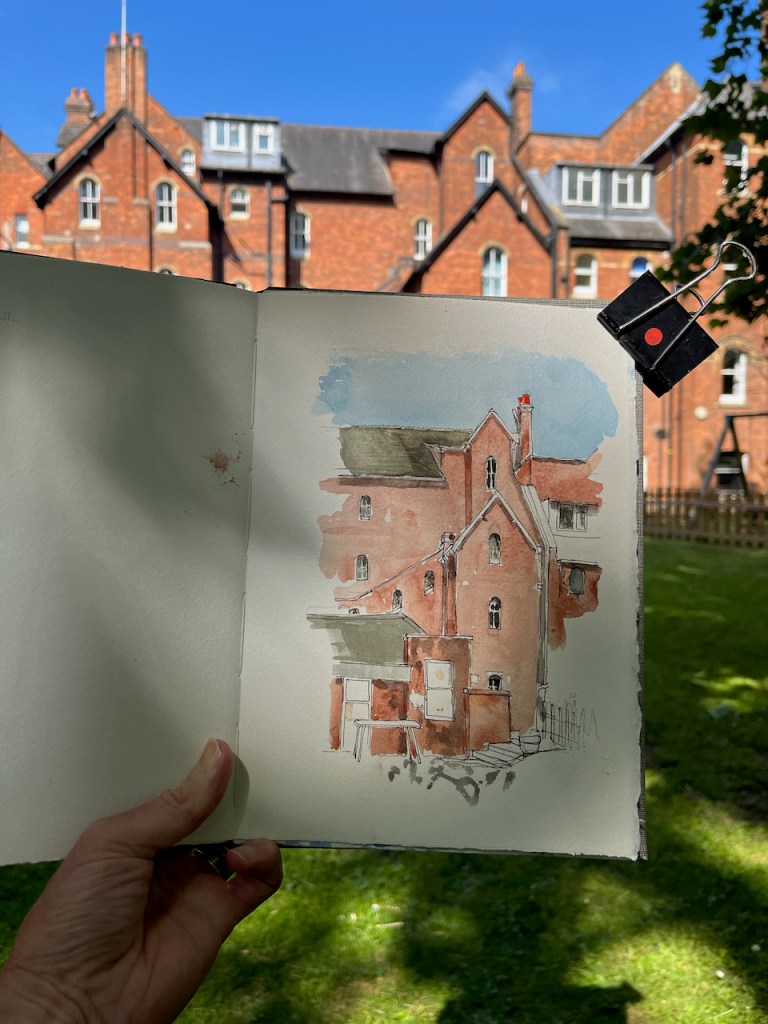
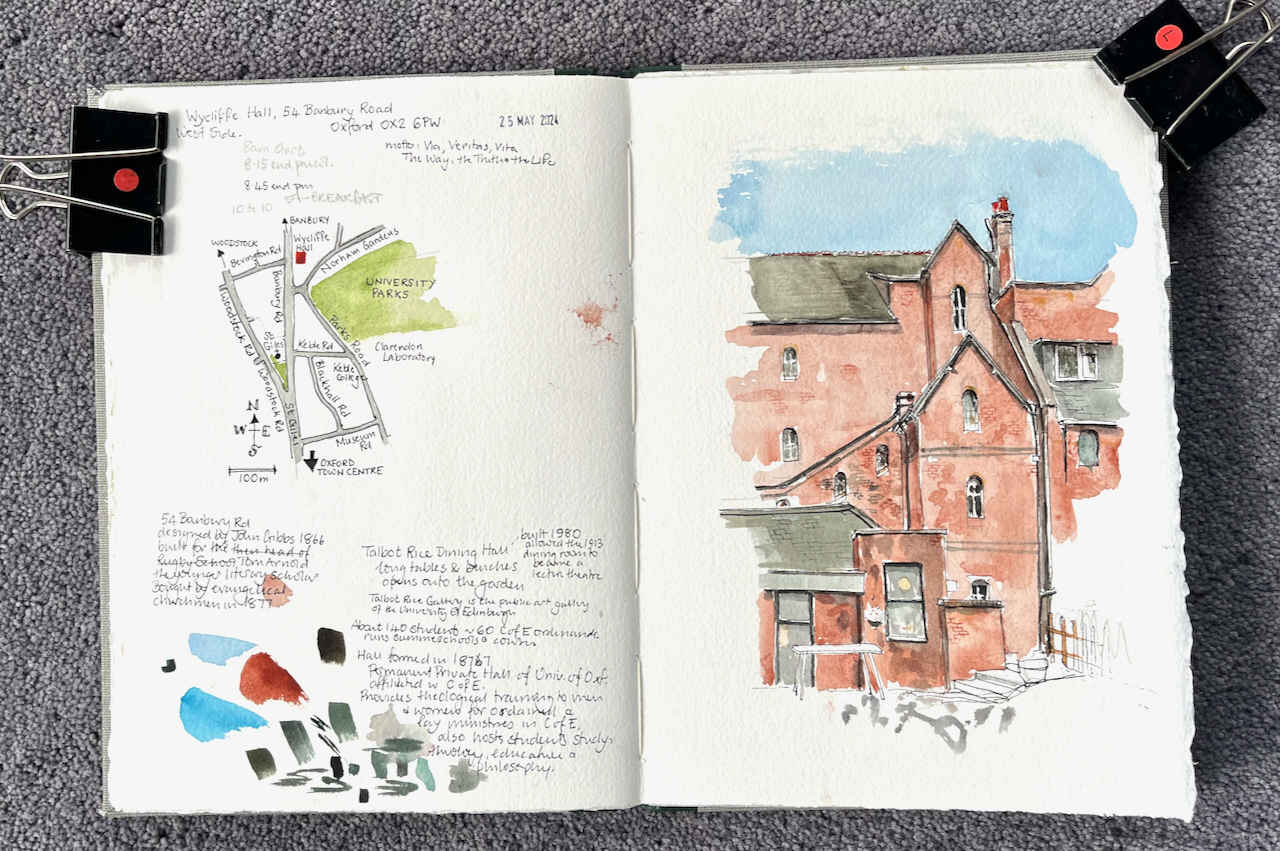
Wycliffe Hall west side, Oxford OX2

Wycliffe Hall is a “permanent private hall” in the University of Oxford. A permanent private hall is like a college, in that it provides accommodation and tuition for its students. The difference is that a college is governed by its Master and Fellows, whereas the Hall is governed, at least in part, by the Church of England. It is an Anglican theological college, offering courses in philosophy and theology, and preparing people for ordination into the Church of England. John Wycliffe was a 14th century Bible translator, scholar and churchman.

I stayed there as a bed-and-breakfast guest, and sketched this picture from a bench beneath the branches of the plane tree in the gardens. Breakfast is served in the Talbot Rice Dining Room, shown on the bottom left of the picture. I was waiting for it to open.

Wycliffe Hall, West side, 09:40. In Sketchbook 14, 25 May 2024.

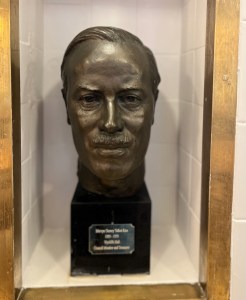
The “Talbot Rice Dining Hall” was built in 1980. The “Bulletin of the Association of British Theological and Philosophical Libraries” volume 16 number 2 dated June 2009*, contains a history of Wycliffe Hall, which informs me that this dining hall is named after Mervyn Talbot Rice (1899-1979), a “friend of Wycliffe”.

Sculpture portrait of Mervyn Gurney Talbot-Rice, in the dining room at Wycliffe Hall (Photo: Feb 2025)

When they say “friend of Wycliffe”, they must mean a friend of the the Hall, as John Wycliffe died 600 years ago. The Talbot Rice art gallery in Edinburgh is named after David Talbot Rice, one of Mervyn’s sons.

The breakfast room opened, and I took my place at one of the long tables. Behind me, three, or possibly four, men were already engaged in a serious conversation about Middle Eastern politics. Judging by the various accents, at least one of them was American. They took different points of view, and argued from personal experience, with courtesy. At another table, a group of young men and women were working out complicated logistics to do with rowing. Who was to be cox? Who was rowing? When? Where? Another man engaged the member of staff in a lively conversation on management techniques prevalent in a particular football team and how this may or may not affect their chances.

Between them all, I finished my porridge and headed back out to the plane tree to continue my picture.

I’ve sketched at Wycliffe Hall before. Click the image below to go to the post.

Wycliffe Hall Chapel

*The link to the Bulletin is here. Or if that doesn’t work, the pdf is below. The history of Wycliffe Hall starts on page 19.

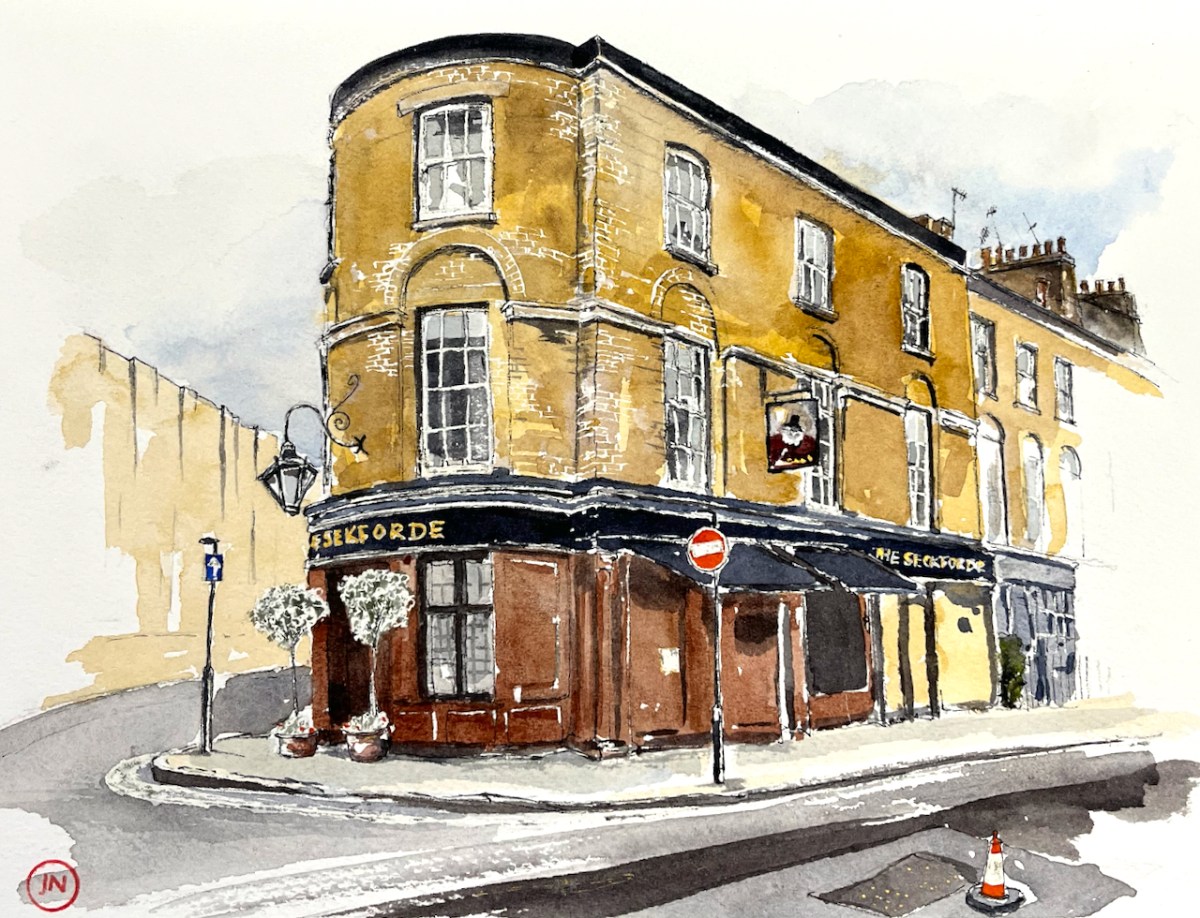
The Sekforde – a commission

The Sekforde EC1R 0HA, Clerkenwell, sketched March 2024 12″ x 9″ [commission]

This watercolour was specially commissioned to celebrate a happy event.

The colours are:

  • Mars Yellow
  • Fired Gold Ochre
  • Ultramarine Blue
  • Burnt Umber
  • plus some Horadam Random Grey, some Daniel Smith Green Serpentine Genuine, and Pyrrol Red for the street sign and road marker.
  • Gold paint for the lettering.

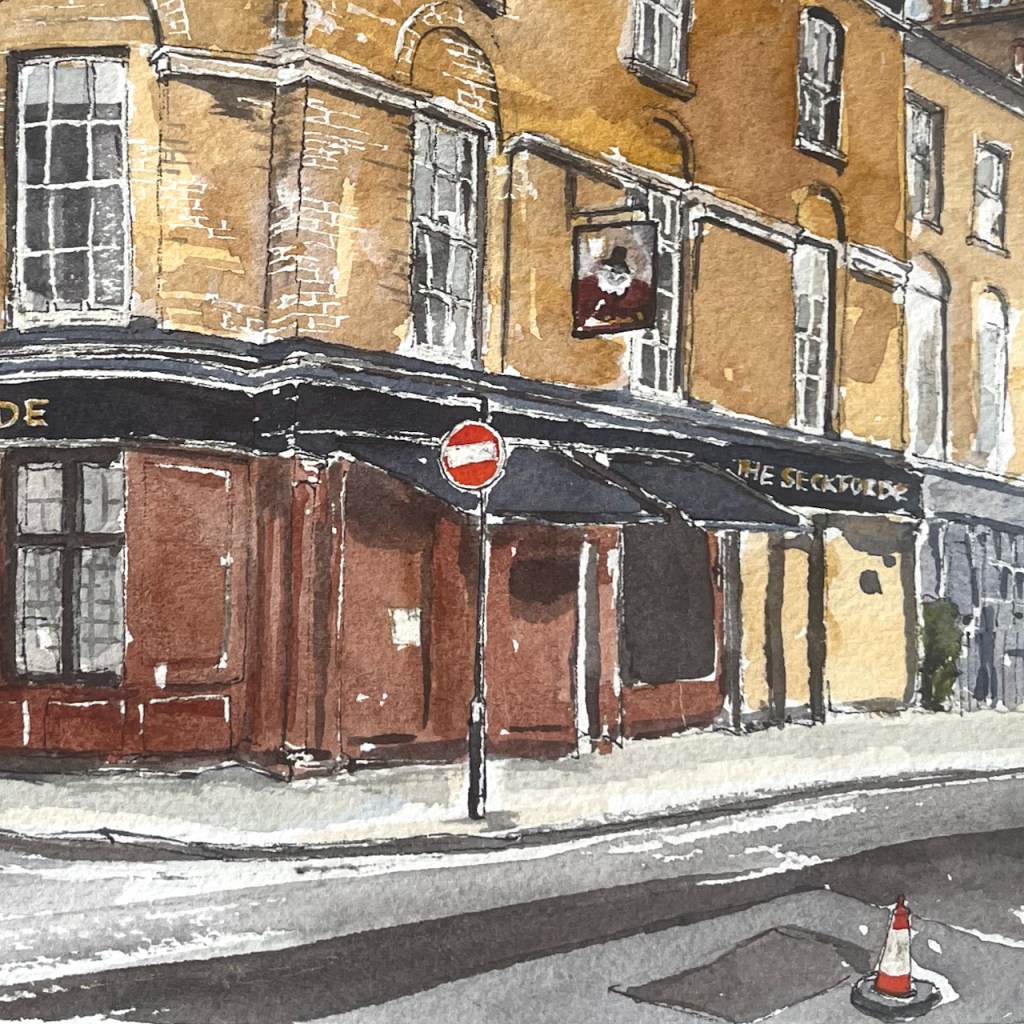
Admire the bricks! I am very pleased with this effect. It was done by applying a rubber resist, “pebeo drawing gum” to the paper before I did any painting. The paint does not adhere to the rubber resist. When I had done all the colour, I rubbed off the rubber resist and hey presto! bricks.

Thank you to my client for their encouraging words and for inspiring me to make this picture of The Sekforde. Here are some details of the drawing.

I have sketched The Sekforde previously, see this link: The Sekforde, Clerkenwell

UPDATE:

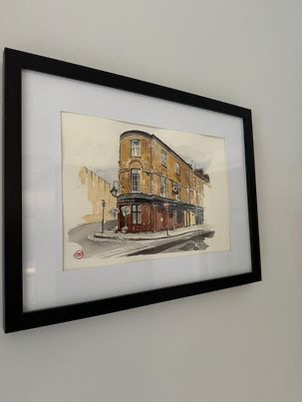
My client kindly sent me photos of the framed picture!

Somerville College, Oxford: Porters’ Lodge

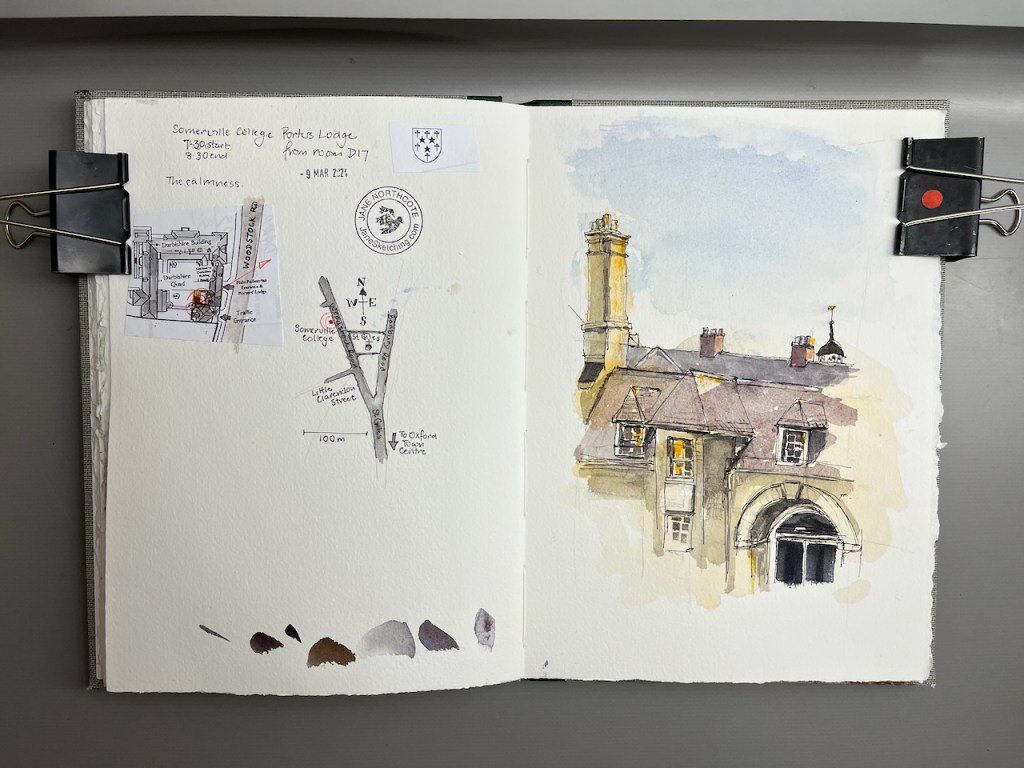
Here is the view from room D17 in Somerville College, OX2 6HD.

View from D17, Somerville College Porters’ Lodge. 9th March 2024, 07:30am, in Sketchbook 14

I sketched it quickly, before leaving, just as the sun was coming up.

Somerville College was women-only for the first 115 years of its existence. It started to admit men in 1994.

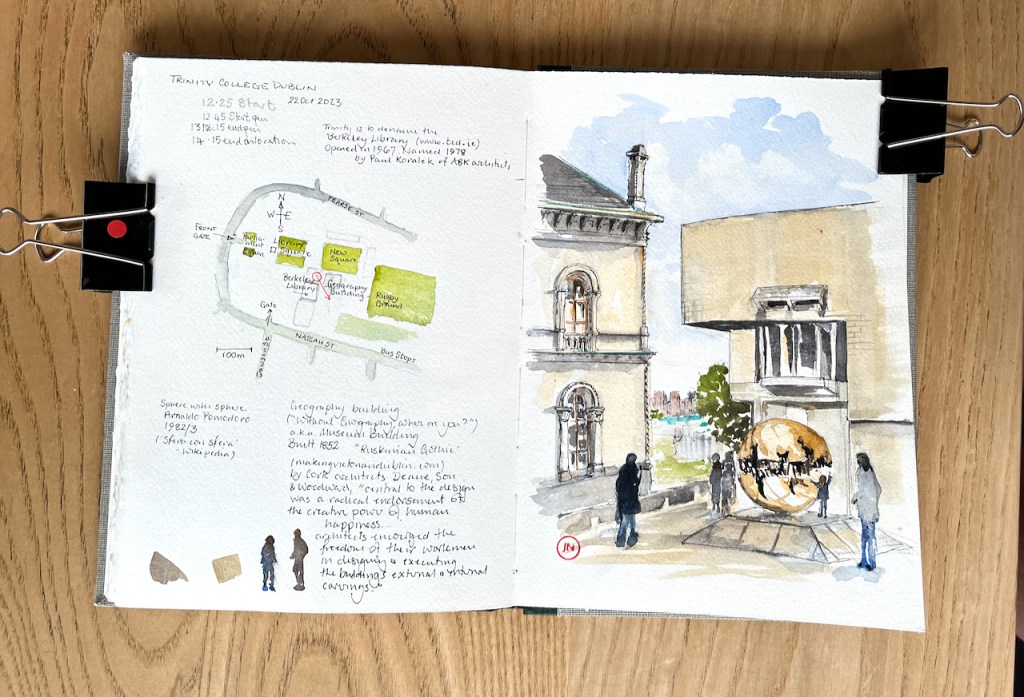
Trinity College Dublin, corner

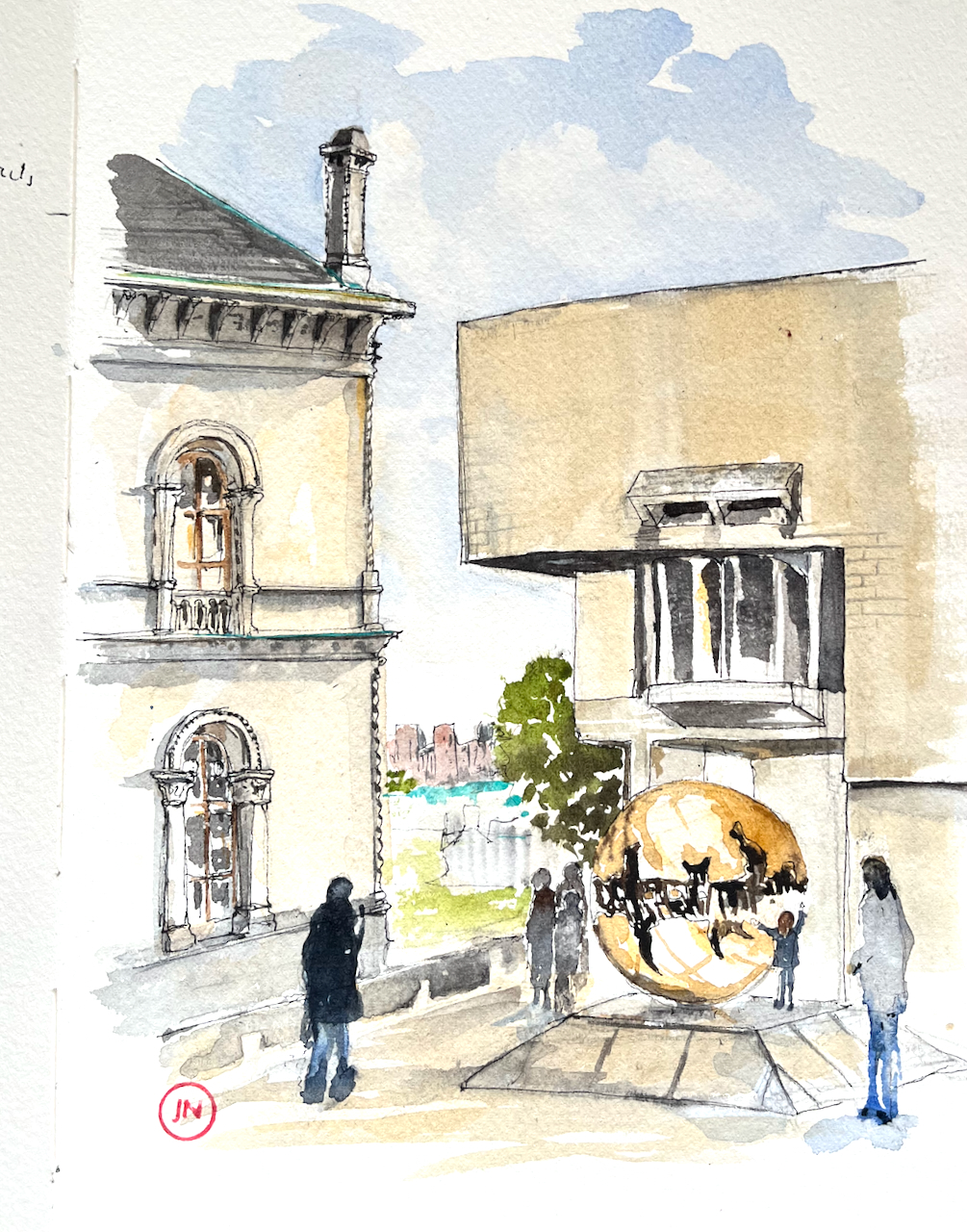
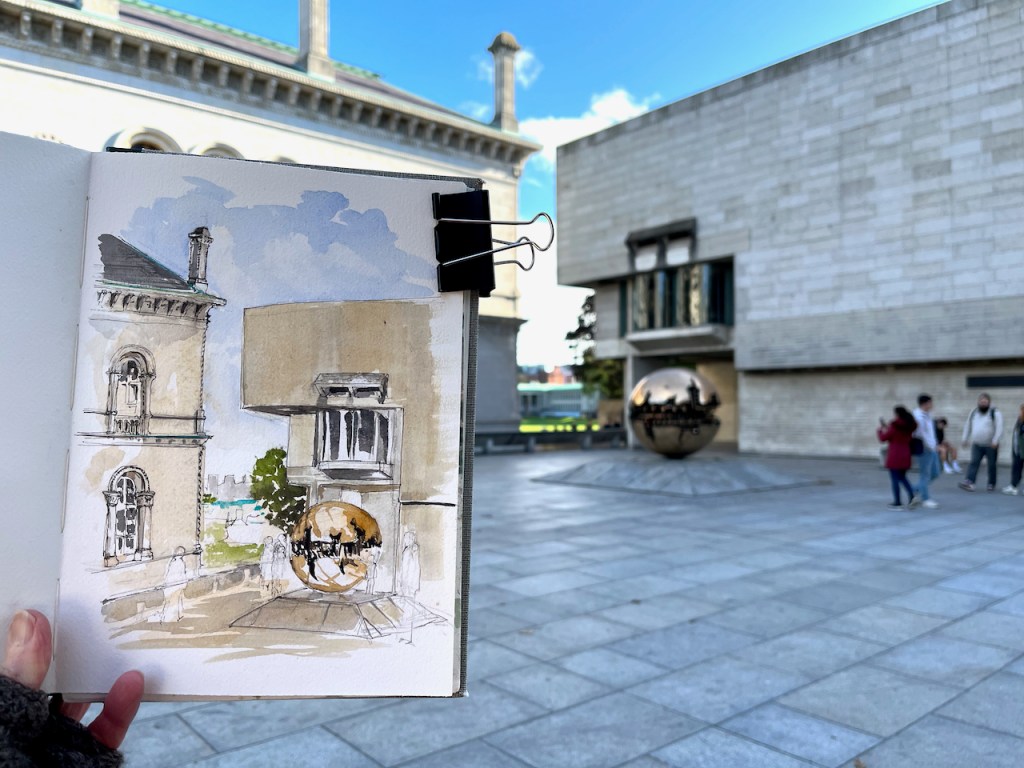
I was intrigued by this juxtaposition of two very different buildings, each radical in its own way. The top corners are just a few feet from each other.

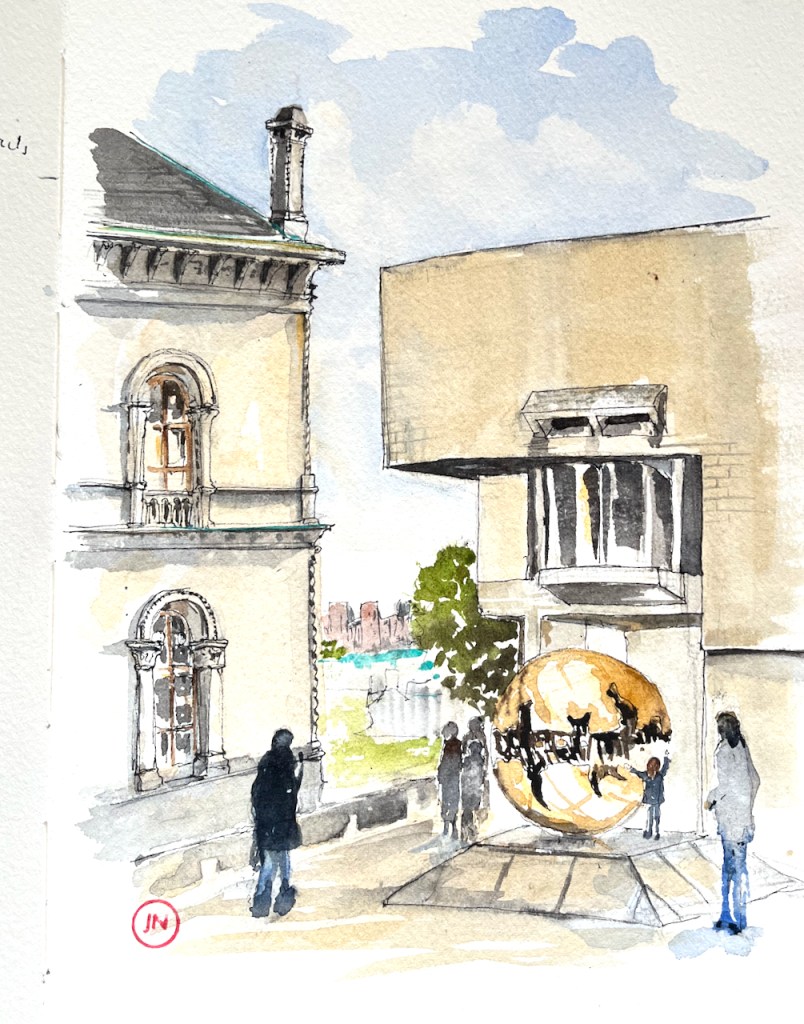
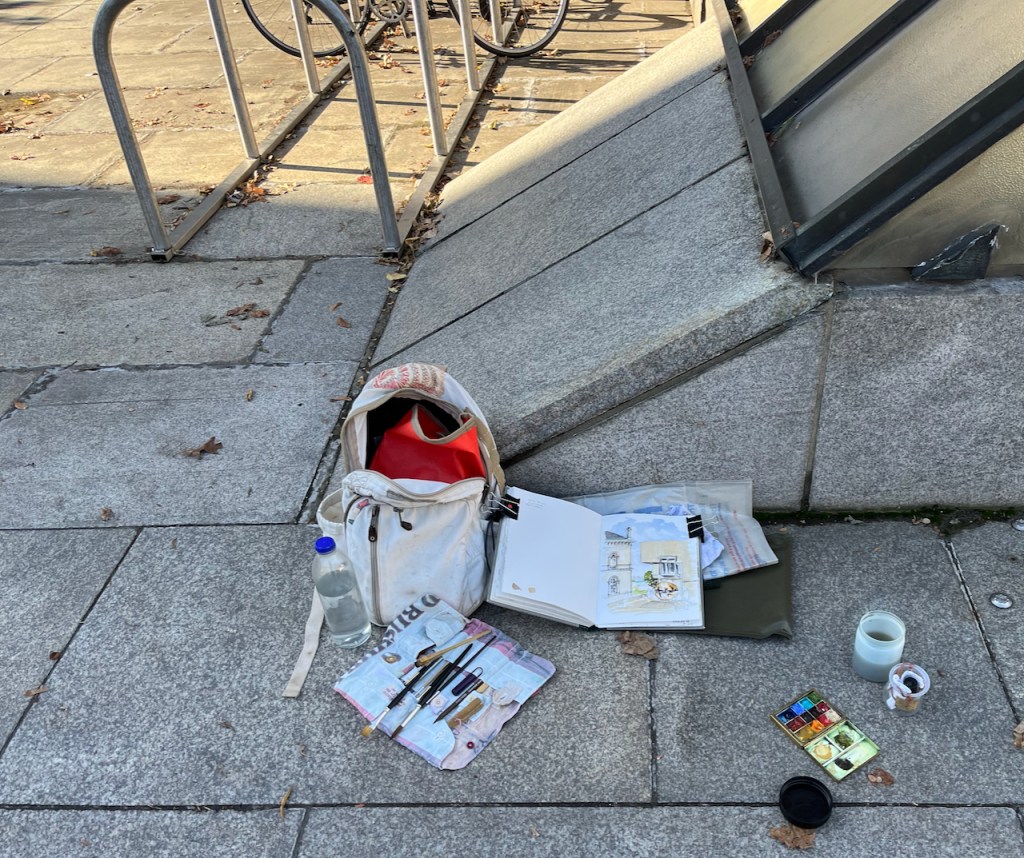
A corner of Trinity College Dublin: Museum Building on the left, Library on the right with “Sphere with Sphere” in front. October 22nd 2023, in Sketchbook 13

The building on the left is called the Museum Building. It houses the Geography department, amongst others. I know this because there was a notice visible in one of its windows asking:

“Without Geography, where are you?”

This building was finished in 1852. According to the website “makingvictoriandublin.com” the style is called “Ruskinian Gothic”. The design is by Cork architects Deane, Son and Woodward, influenced by the philosophies of the English writer, artist and art critic John Ruskin, says the Making Victorian Dublin site.

Central to the design was a radical endorsement of the creative power of human happiness…the architects encouraged the freedom of their workmen [sic] in designing and executing the building’s external and internal carvings.

makingvictoriandublin.com

The external and internal carvings are very complex combinations of leaves and flowers. A notice inside the building tells us that all the building’s carvings are by brothers John and James O’Shea of O’Shea and Whelan and that they gathered wild flowers and animals (amazingly) to use as models.

Even as the Museum Building was being built the Dublin press recognised it as the first experiment in British and Ireland of Ruskin’s radical views – a clear demonstration of the ‘the desireableness of employing the minds of the workmen’.

This experiment’, wrote the reviewer in the Dublin Express, ‘proves the general correctness of [Ruskin’s] views, and, moreover, has resulted far better than even the most sanguine advocates of this system had allowed themselves to expect.’

makingvictoriandublin.com

The whole building is influenced by Venetian designs observed by John Ruskin.

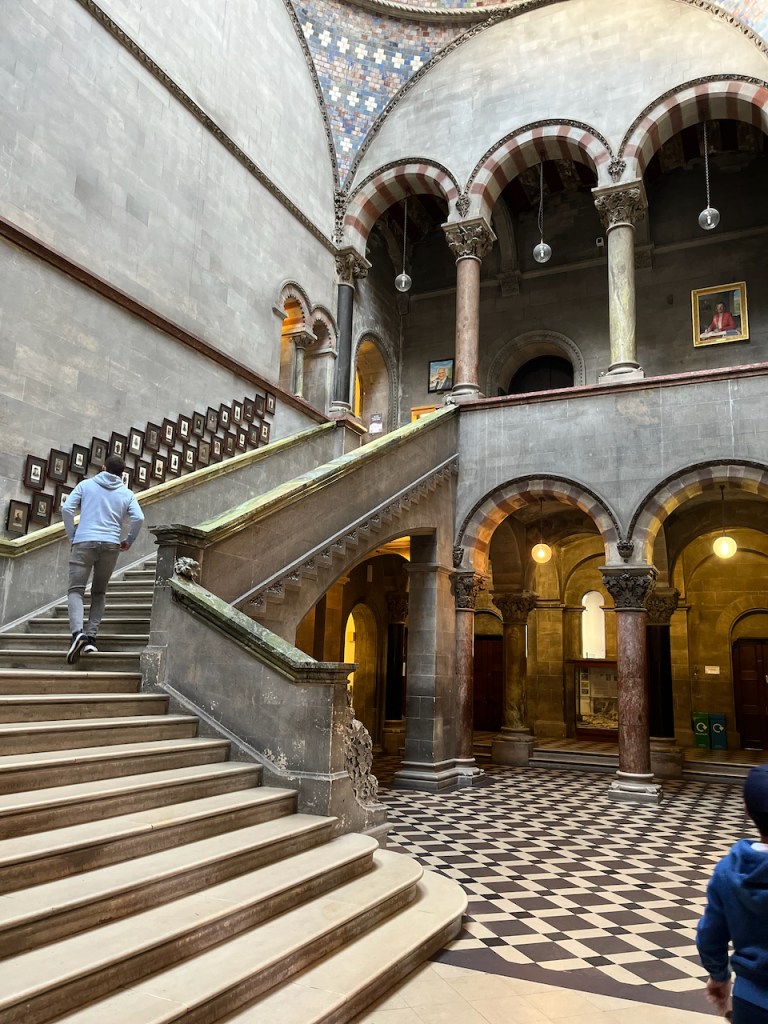
The inside of the building is spectacular. As well as the soaring architecture and the fascinating patterns and arches, there are also two skeletons of elks, some dinosaur footprints, and a model of a floating crane boat. You could spend hours there sketching.

Museum Building, Trinity College Dublin, interior, 22 October 2023.

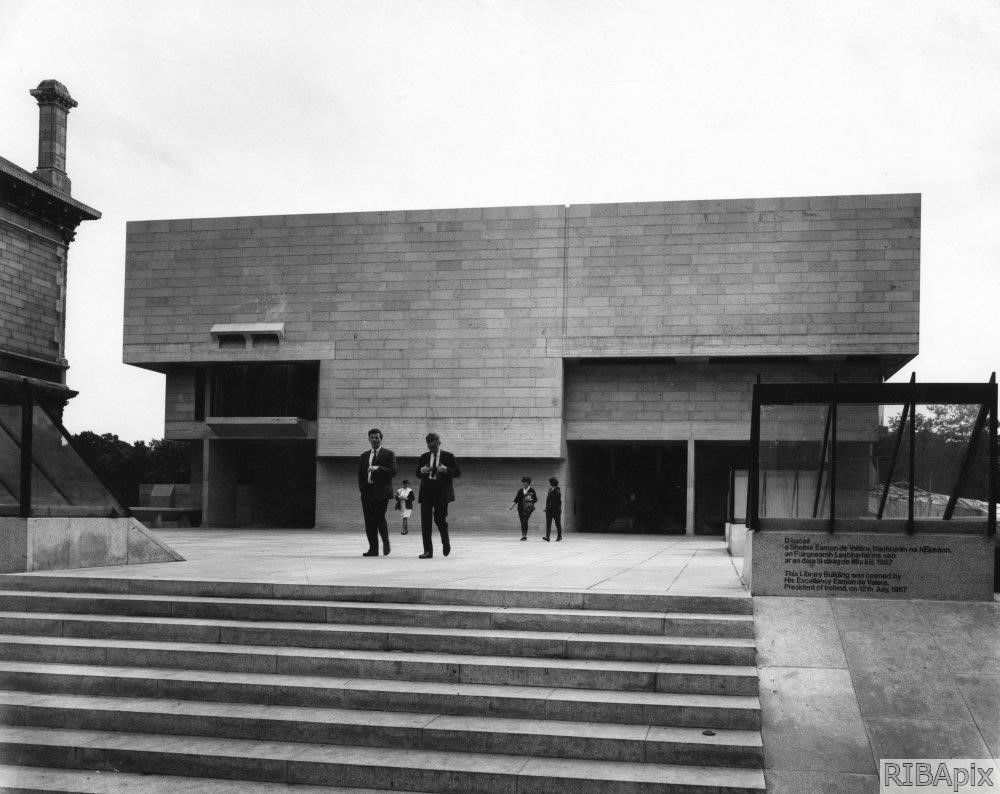
The building on the right of my drawing is a library, opened in 1967. It is in the radical style of that period: the Brutalist style. The building’s clean lines and functional appearance are characteristic of this style. The architect was Paul Koralek of ABK architects.

The library in 1967: Berkeley Library, Trinity College, Dublin: the entrance front and raised forecourt. Photo credit: Architectural Press Archive / RIBA Collections. [RIBA51354] Used with permission.

In 2017 the College ran a celebration of the library after 50 years. Their website includes pictures of the interior and furnishings. https://www.tcd.ie/library/berkeley

Two buildings talking to each other
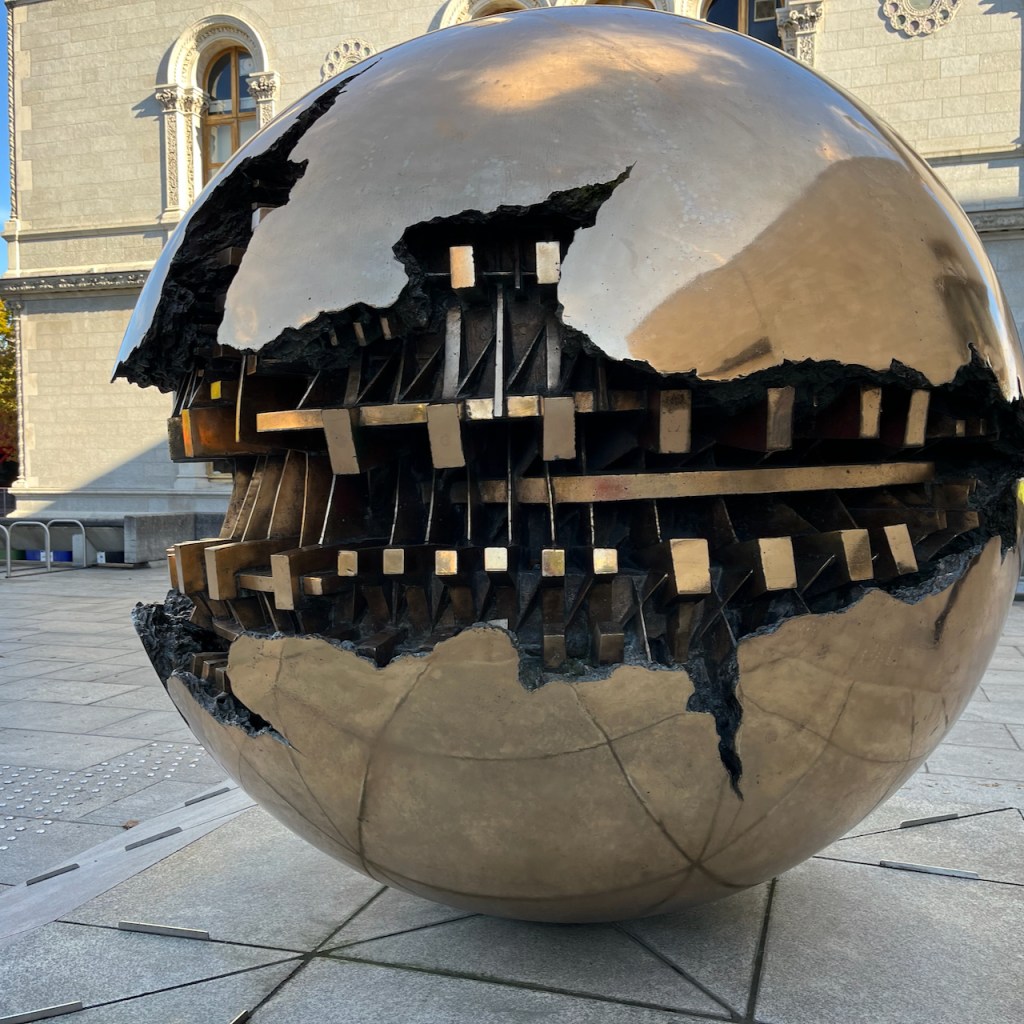
“Sphere with Sphere”

The spherical object in my drawing is a sculpture by Arnaldo Pomodoro called “Sphere with Sphere 1982/3” according to an inscription on the pavement.

I sketched for about an hour and a half. During that time waves of people crossed the square. There were a remarkable number of tourists, some with tour guides, moving in groups.

At one point, a solitary woman approached me and asked to see the picture. She smiled and said something in her own language which sounded like a compliment. So I said thank you, and smiled back. She told me that she didn’t speak English, and held up four fingers, counting, to explain she had only been here for four days. She was from Ukraine, she said. Her hands modelled an aeroplane taking off and landing. A wide uplifted arm gesture took in the autumn sun, the buildings and the people, expressing gladness to be here. She pointed at my drawing, and nodded again, making what was evidently a positive comment and a connection. Then she said goodbye and I said goodbye.

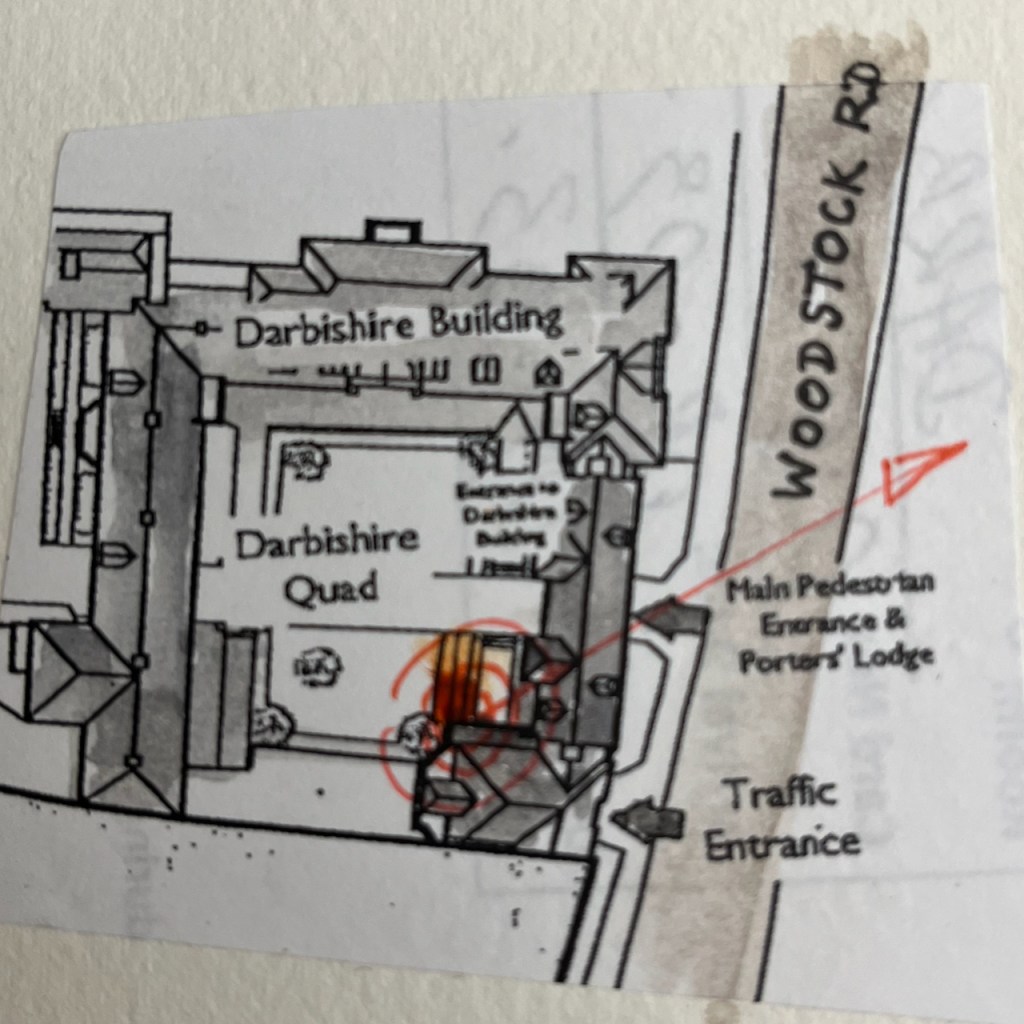
Sketching location
Sketchbook 13

Colours used:

  • Buff titanium (all brickwork and concrete)
  • Mars Yellow (brickwork, concrete, sphere
  • Ultramarine Blue plus Lavender (sky)
  • Ultramarine Blue plus Burnt Umber (all greys)
  • Serpentine Genuine (trees)
  • a small bit of Cobalt Teal Blue and Fired Gold Ochre in the background

All Daniel Smith watercolours except the Ultramarine Blue which is Horadam watercolour.

Garden of the Museum of the Order of St John, Clerkenwell, London EC1

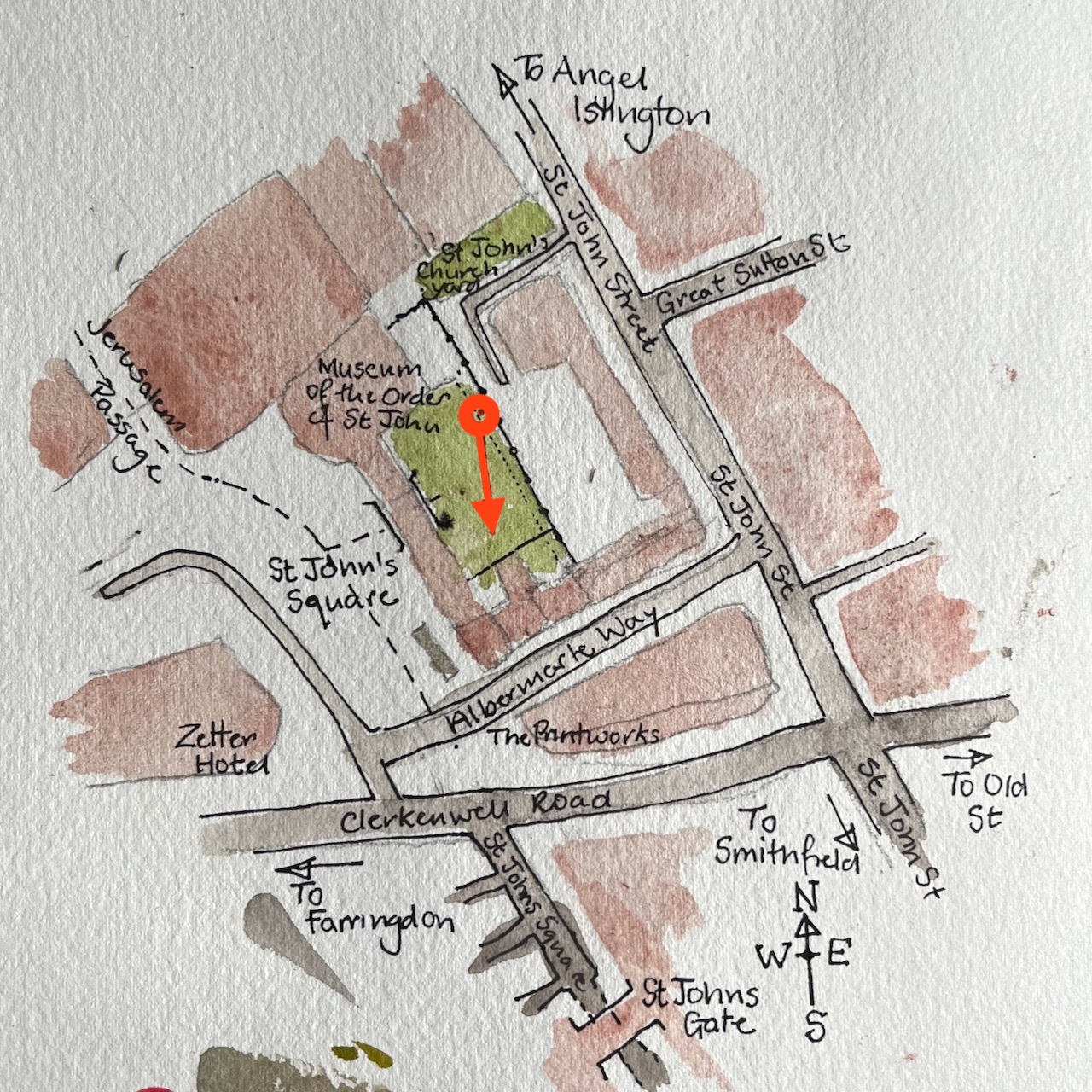
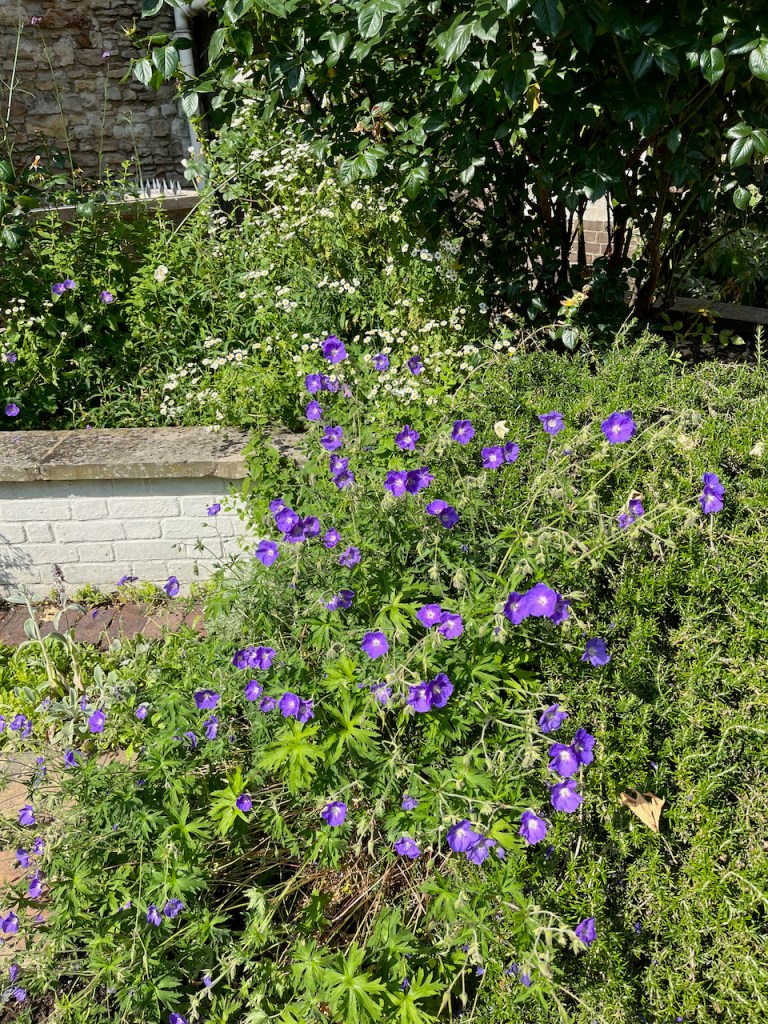
On a hot day, in need of healing, I re-discovered this herb garden. It is hidden away the other side of a gate off St John’s Square in Clerkenwell. The gate is open and you can walk right in. There are benches, and aromatic plants. At the back, there’s.a cloister.

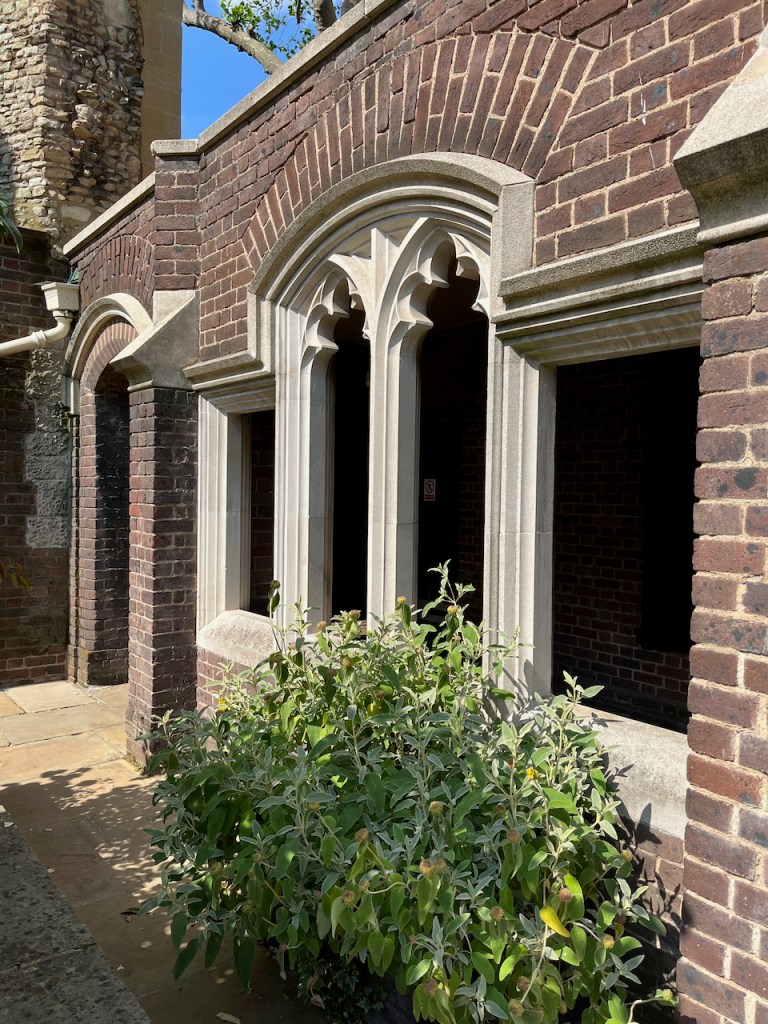
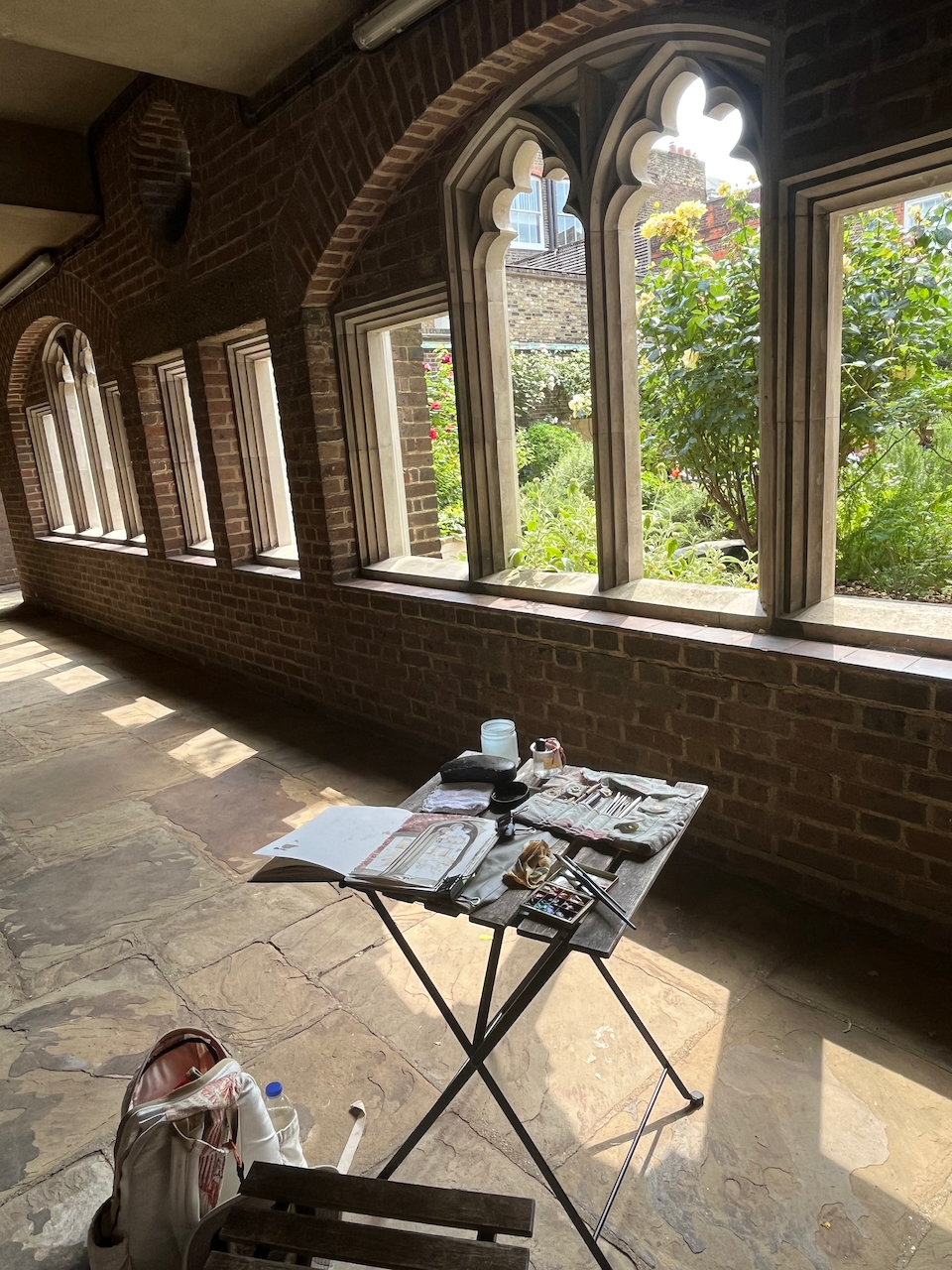
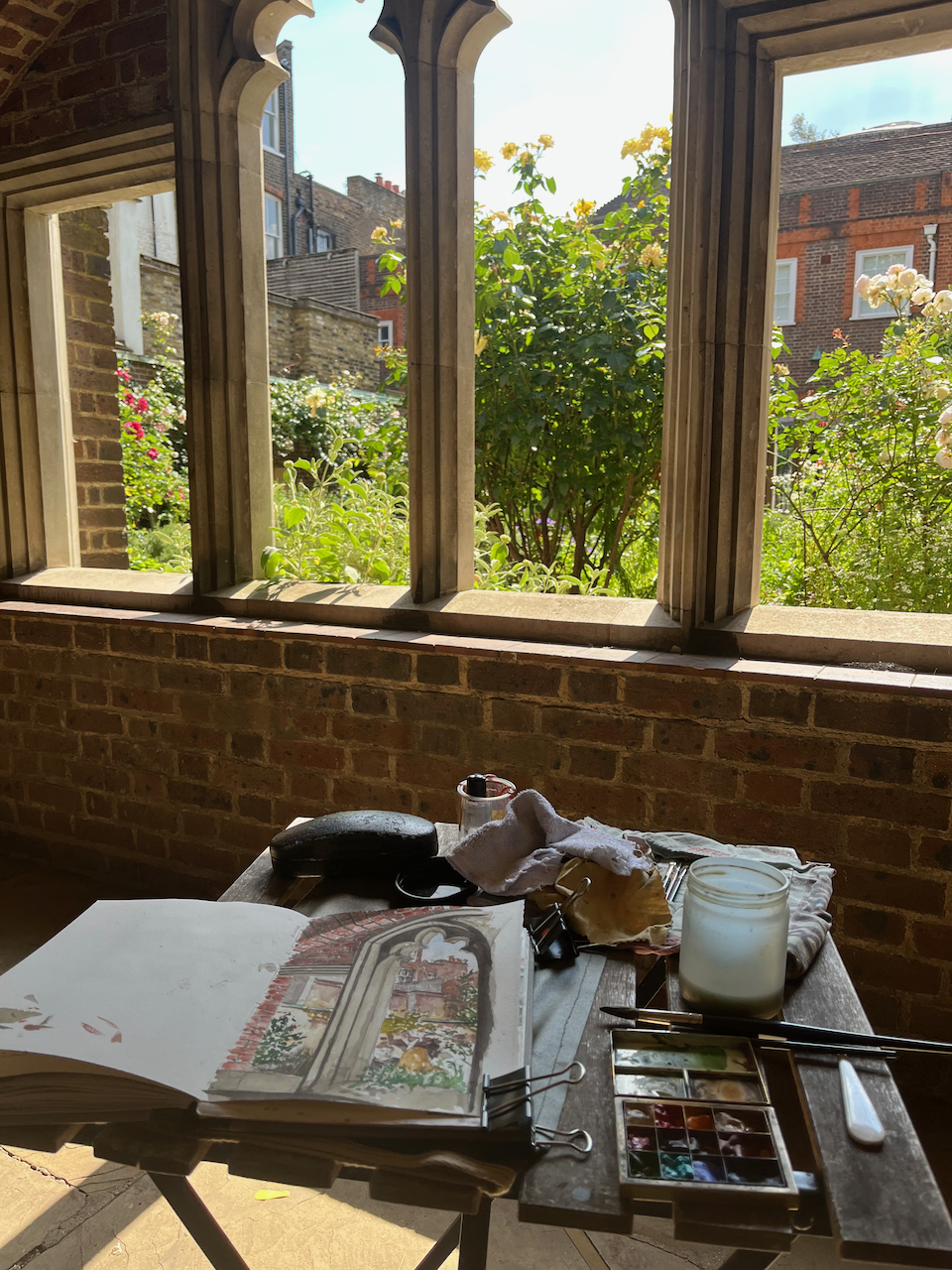
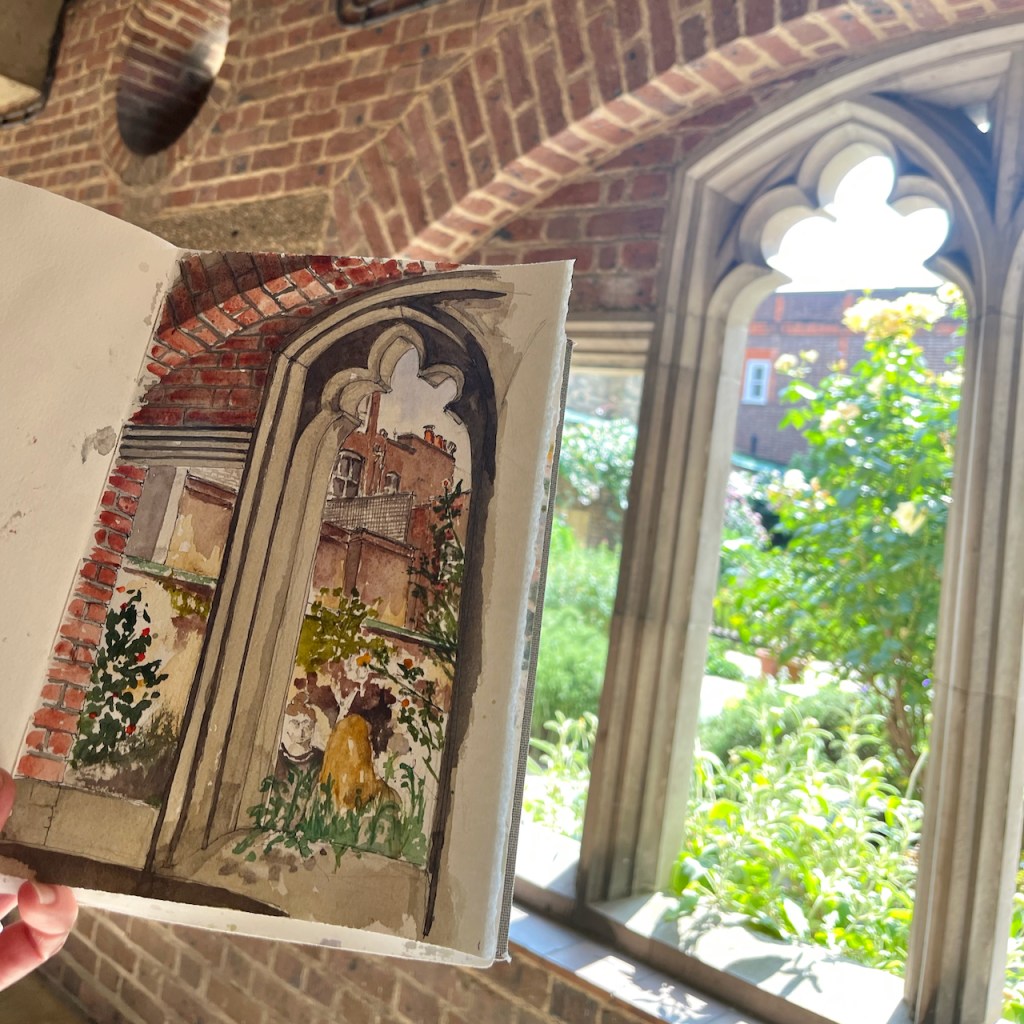
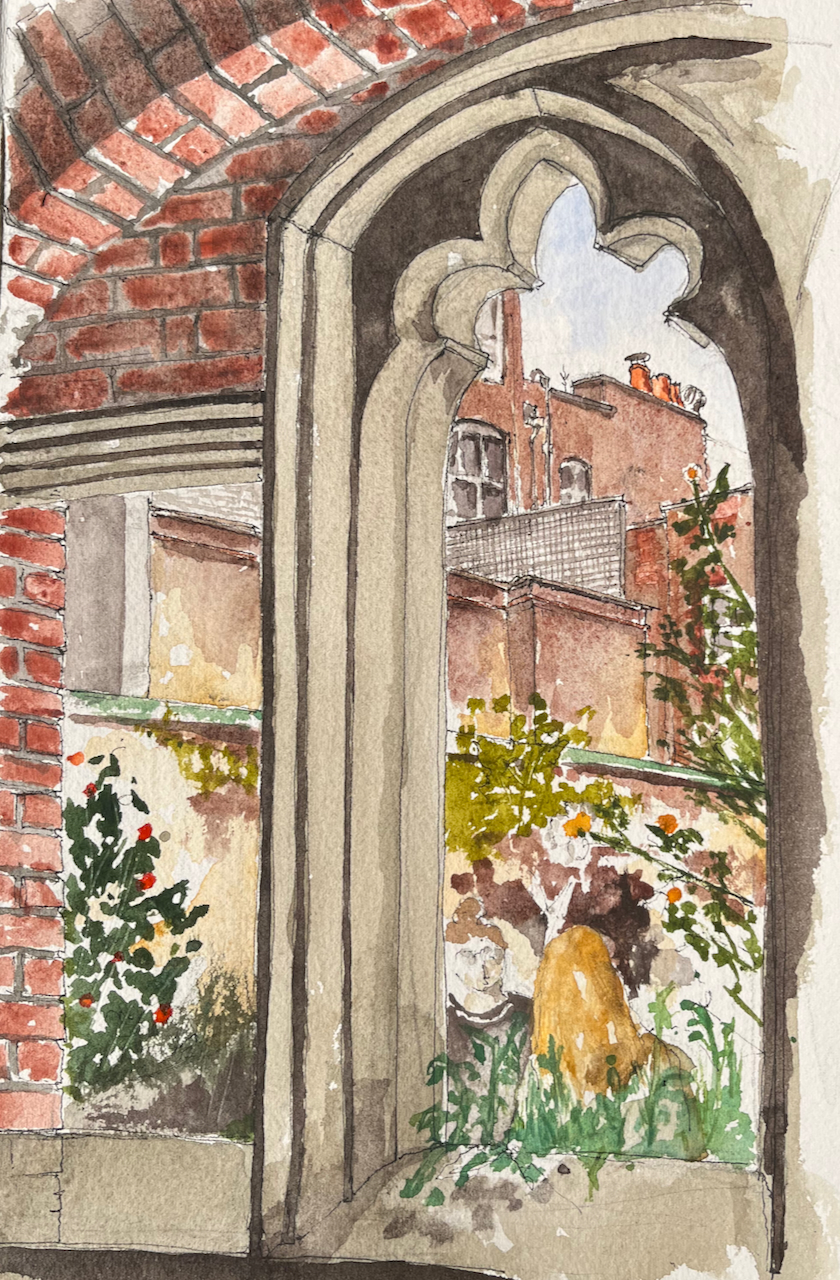
I went in the cloister, and found the ideal place to sketch: cool, still, and quiet, with a view from those windows.

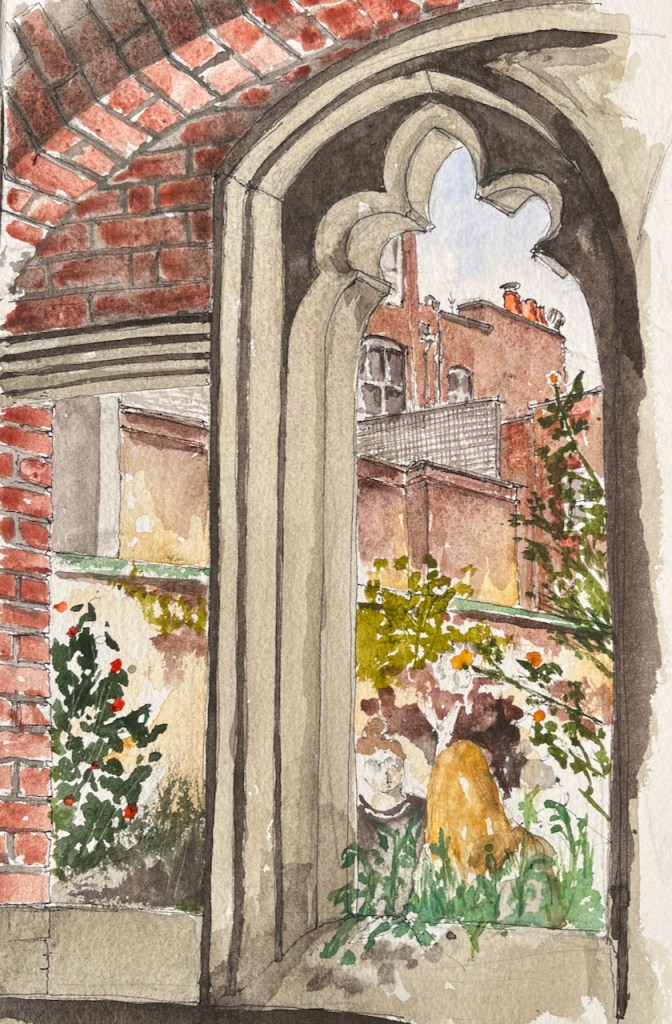
Here’s the view:

From the Cloister, looking into the garden, 15th June 2023, 10″ x 8″ in Sketchbook 13

The Order of St John has a long history.

By 1080, a hospital had been established in Jerusalem by a group of monks under the guidance of Brother Gerard. Its purpose was to care for the many pilgrims who had become ill on their travels to the Holy Land. The men and women who worked there were members of a new religious order, officially recognised by the Church in 1113. Known as the Hospitallers, they cared for anyone, without distinction of race or faith.

website of the Museum of the Order of St John [https://museumstjohn.org.uk/our-story/history-of-the-order/]

These days, this is the organisation behind St John Ambulance.

The garden is wonderful. A place of solace. People from the offices around go there to eat their lunches and also to discuss office politics I realised. But also to read books, dream, doze, and of course, to sketch. There is a book stand by the gate as you go in, with secondhand books you can borrow or buy.

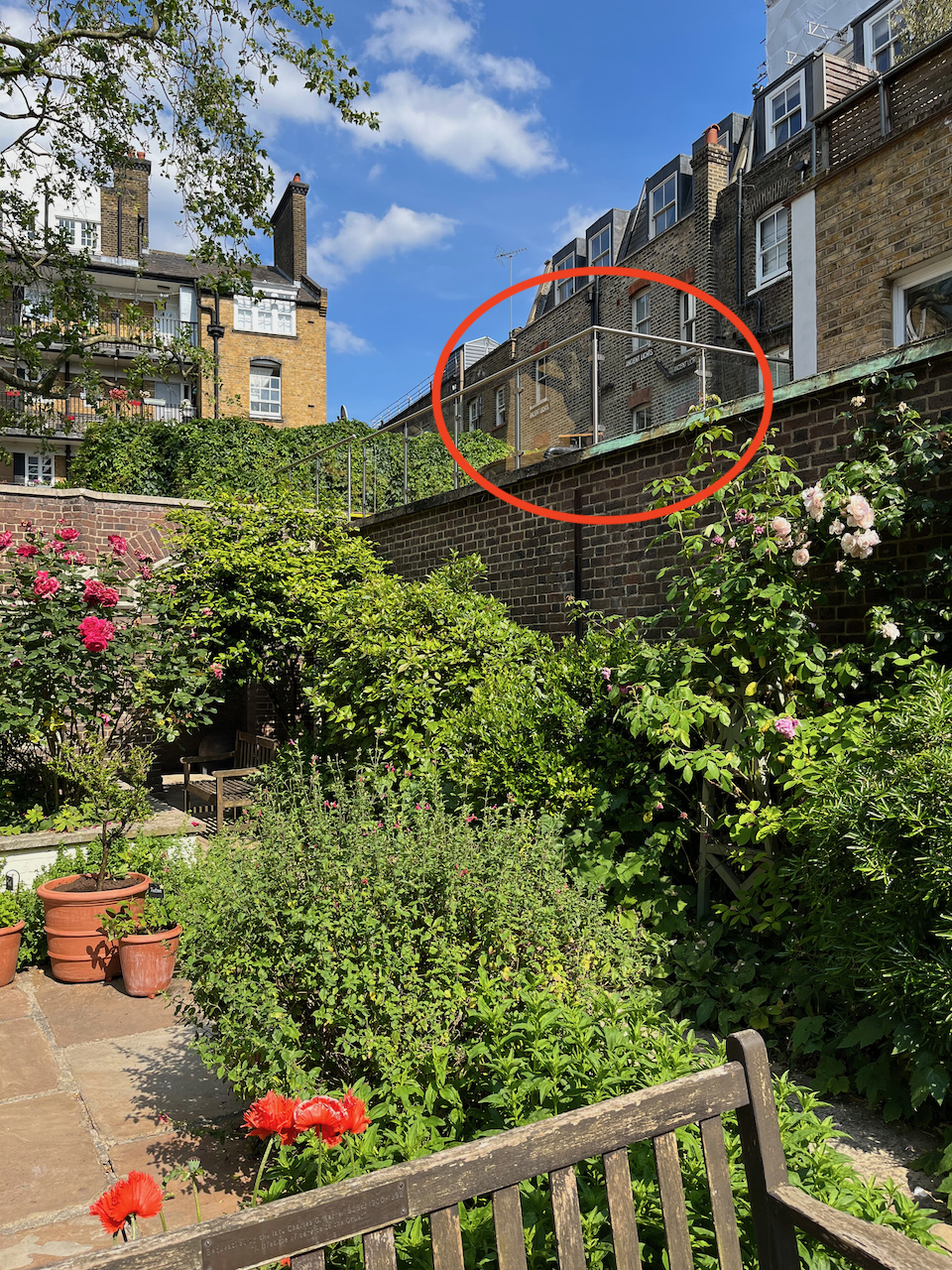
I’ve sketched in this garden a few years ago, from a slightly different viewpoint:

My sketch shows the backs of houses on Albemarle Way. This street and others nearby feature in the novel “Troubled Blood” by Robert Galbraith.

I looked back at the houses as I walked through the garden on my way out. I saw that one of them claims “Ancient Lights”. That’s asserting the right to light, and was a way in law to prevent anyone constructing a tall building which obstructed your windows. It’s “ancient” because you had to have enjoyed the benefit of the light for 20 years or more before you could assert “Ancient Lights”. This has now been superseded by “modern planning laws” I read. But maybe we should put some “ancient lights” notices on the windows of our flat, just to be sure.

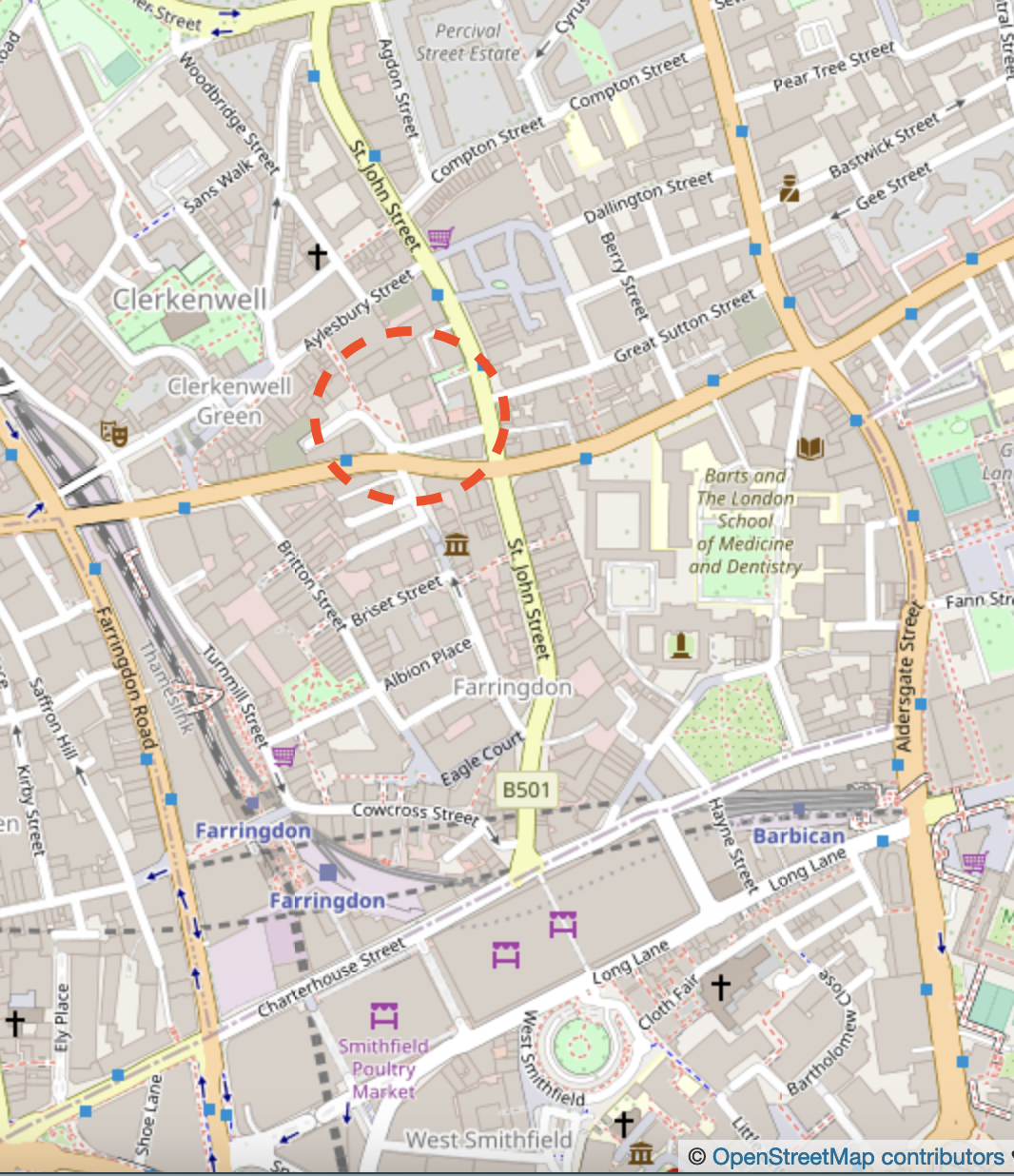
Here are maps:

The drawing took three hours. By the end of that time, my mood had transformed itself, and I walked out healthier than I walked in.