St Barnabus Jericho, Oxford OX2

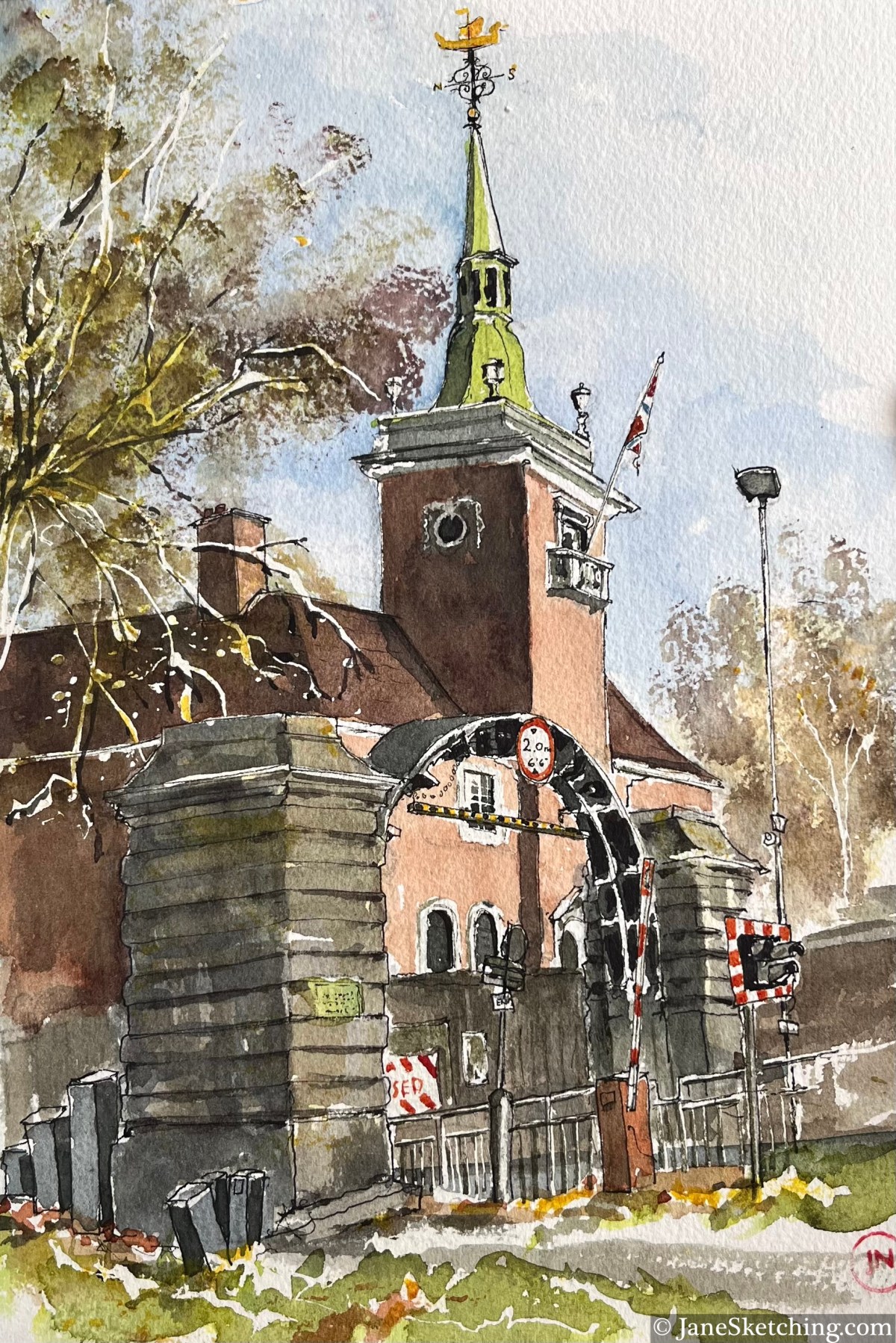
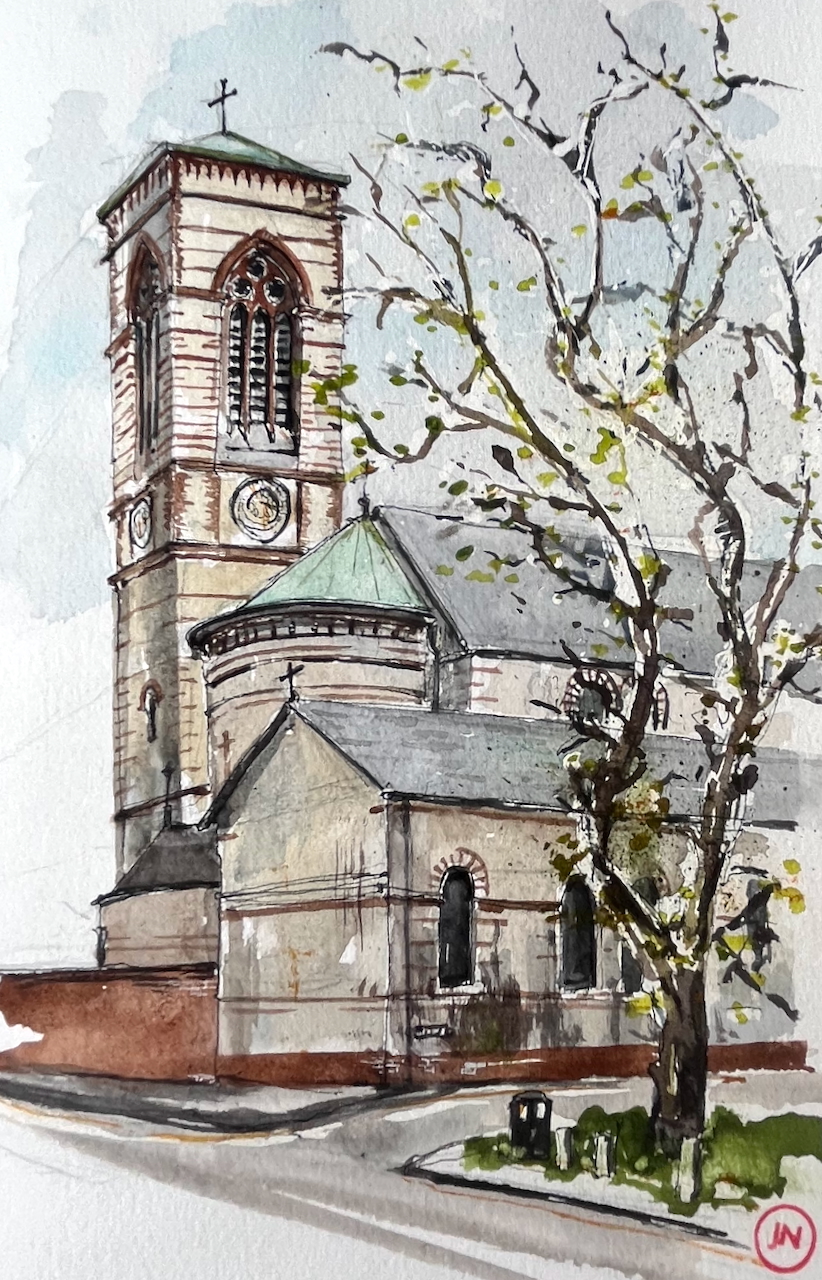
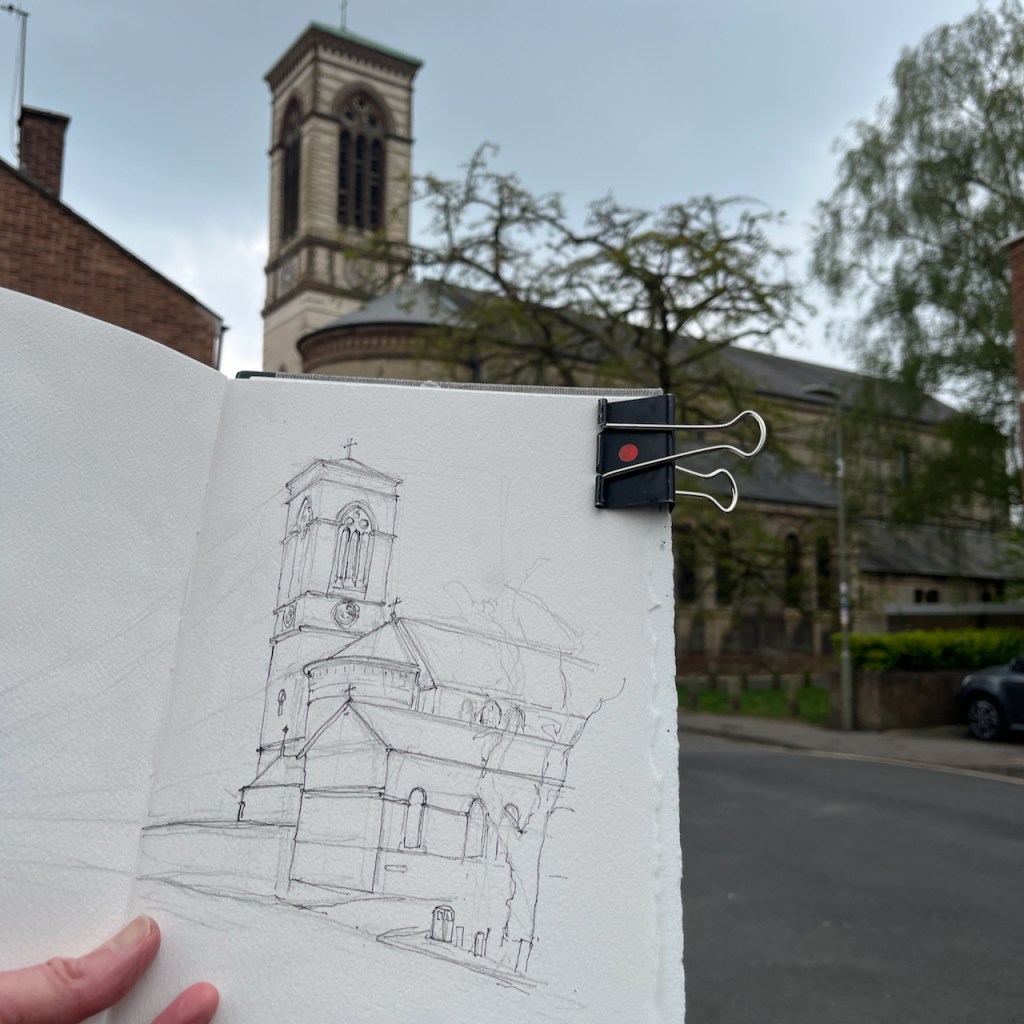
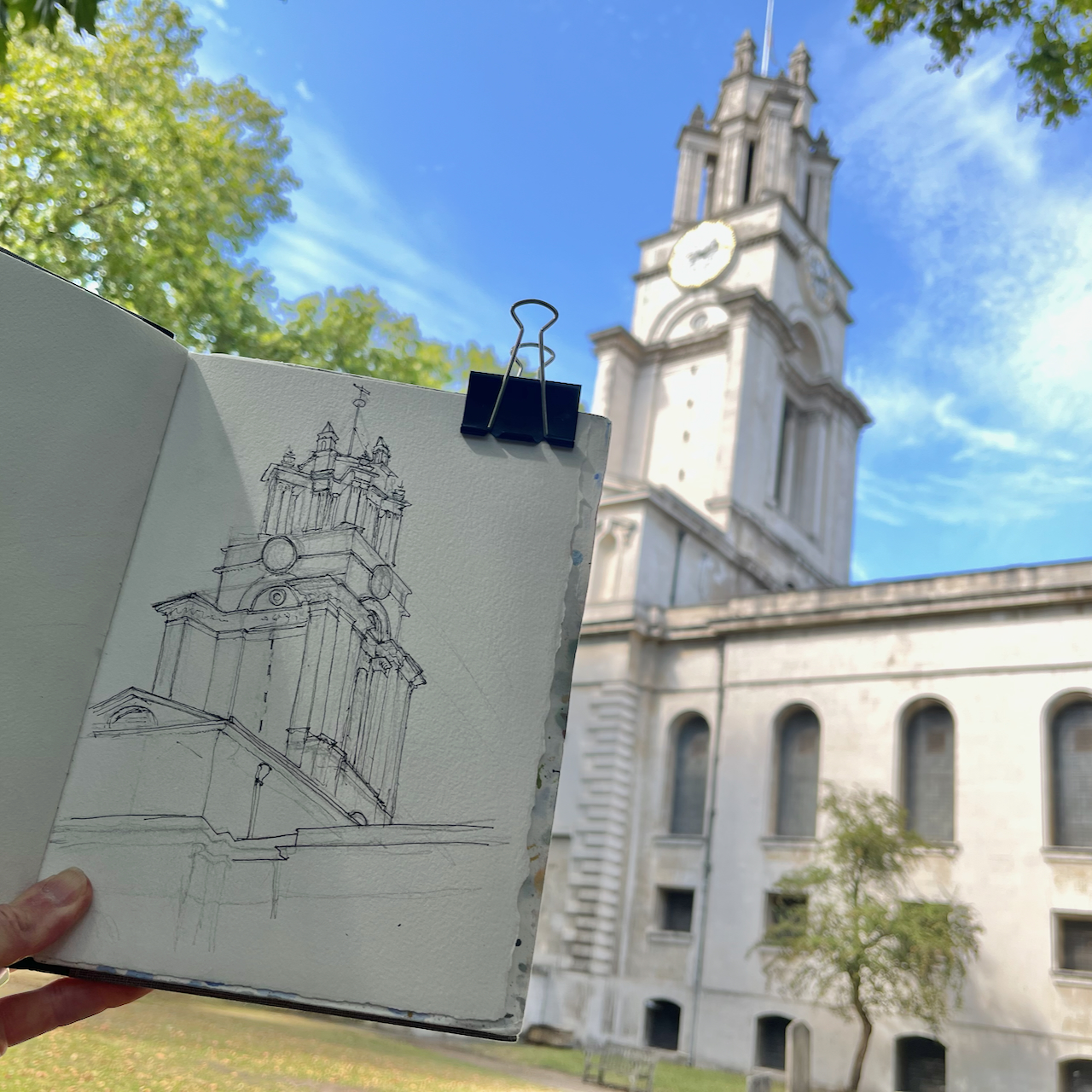
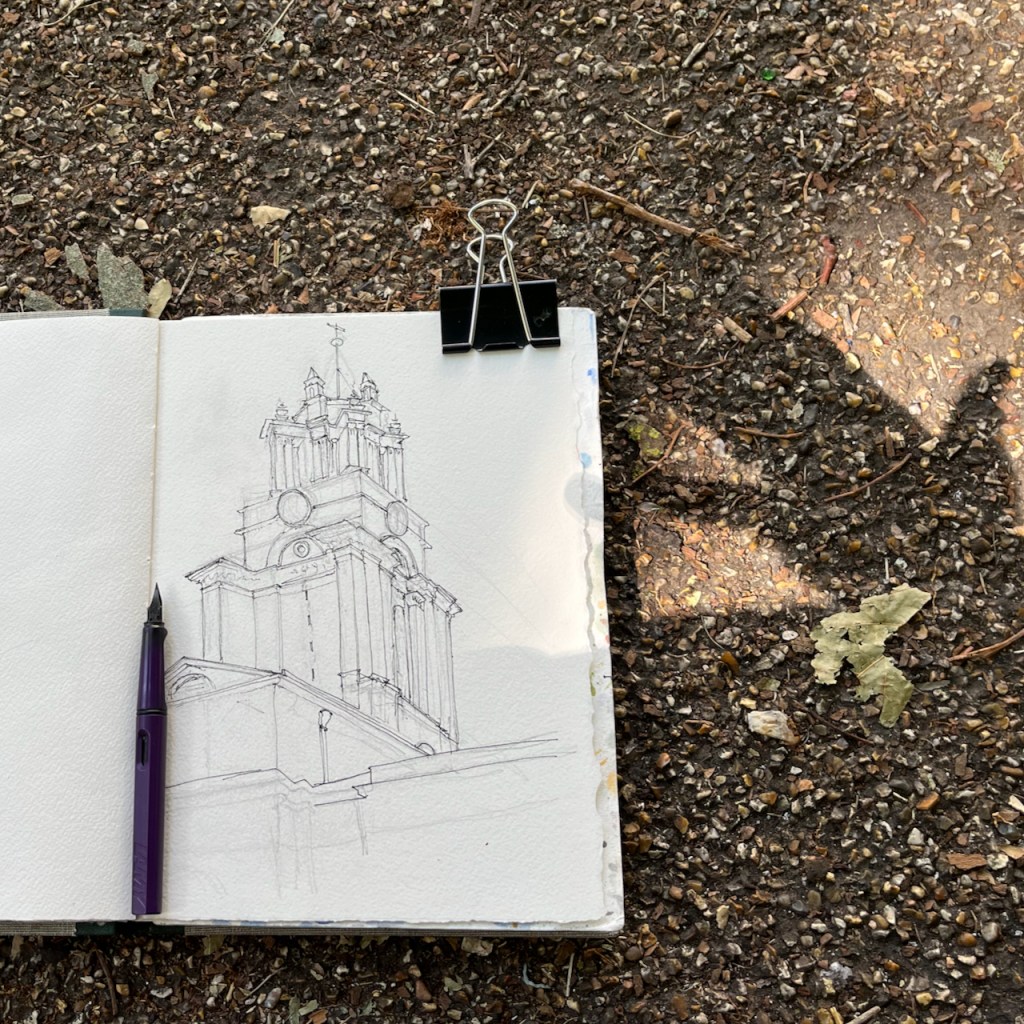
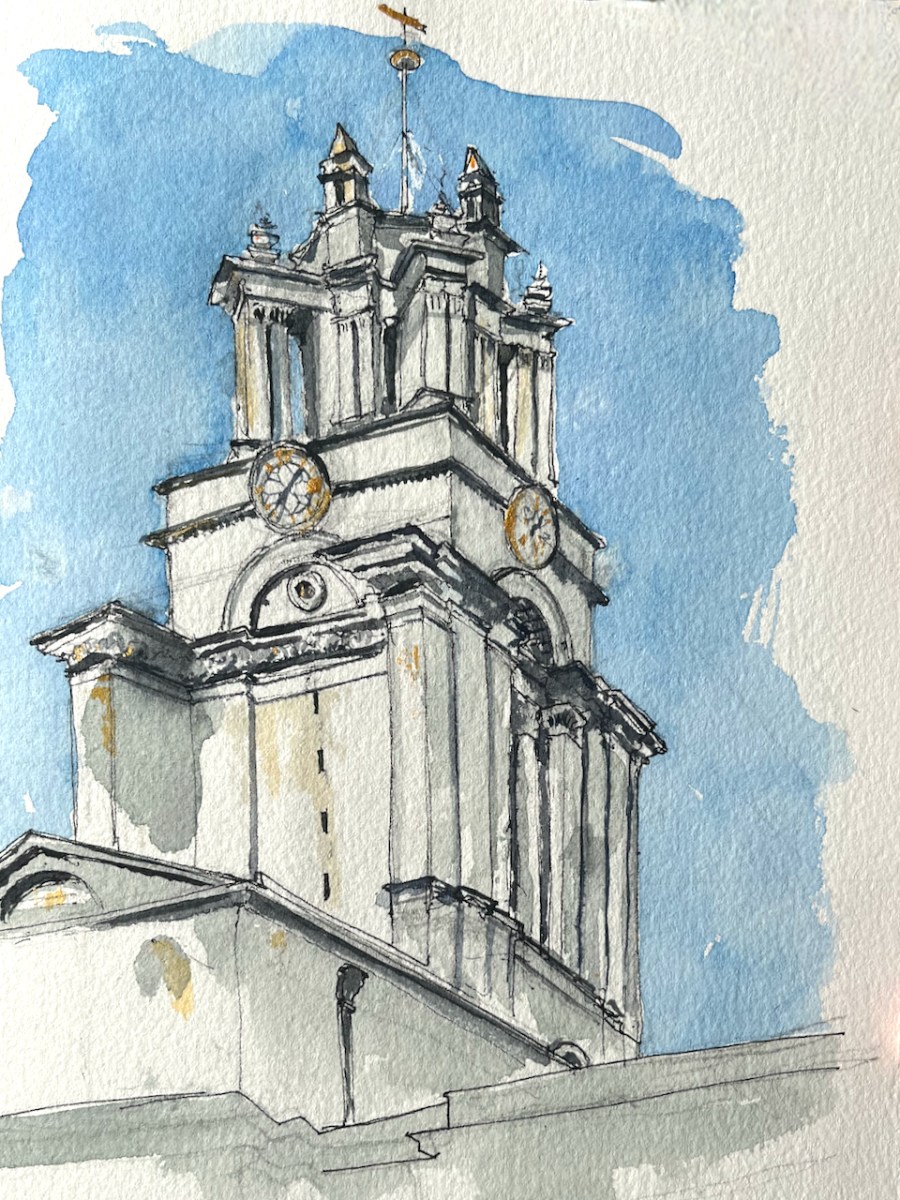
Walking through Jericho on my way to the station, I glimpsed this church tower, and heard its bells. I wove through the small streets until I found it.

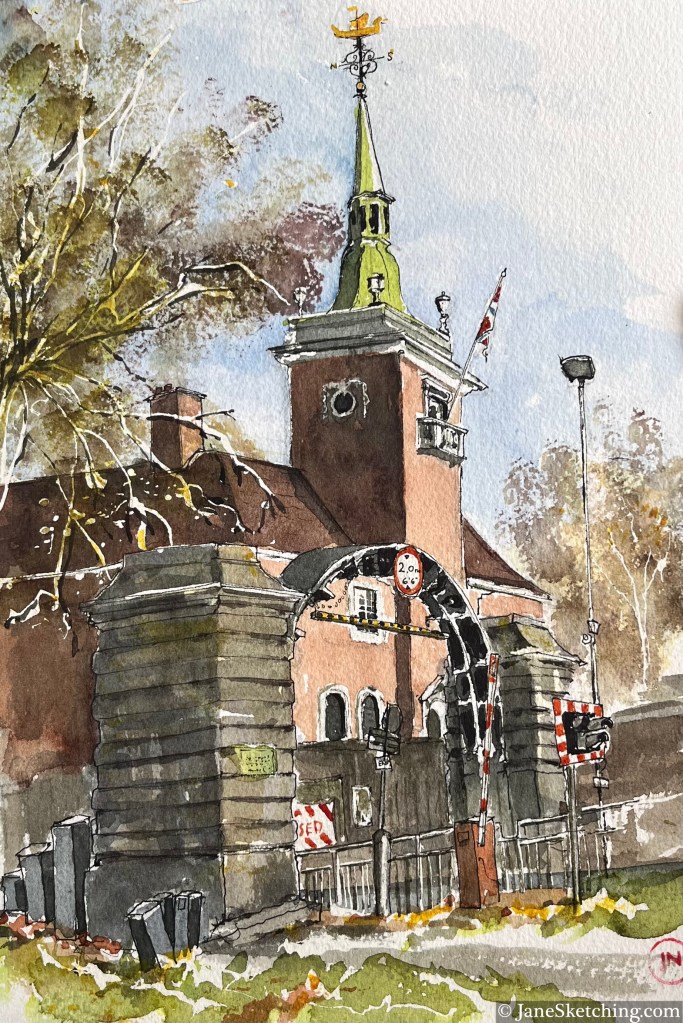
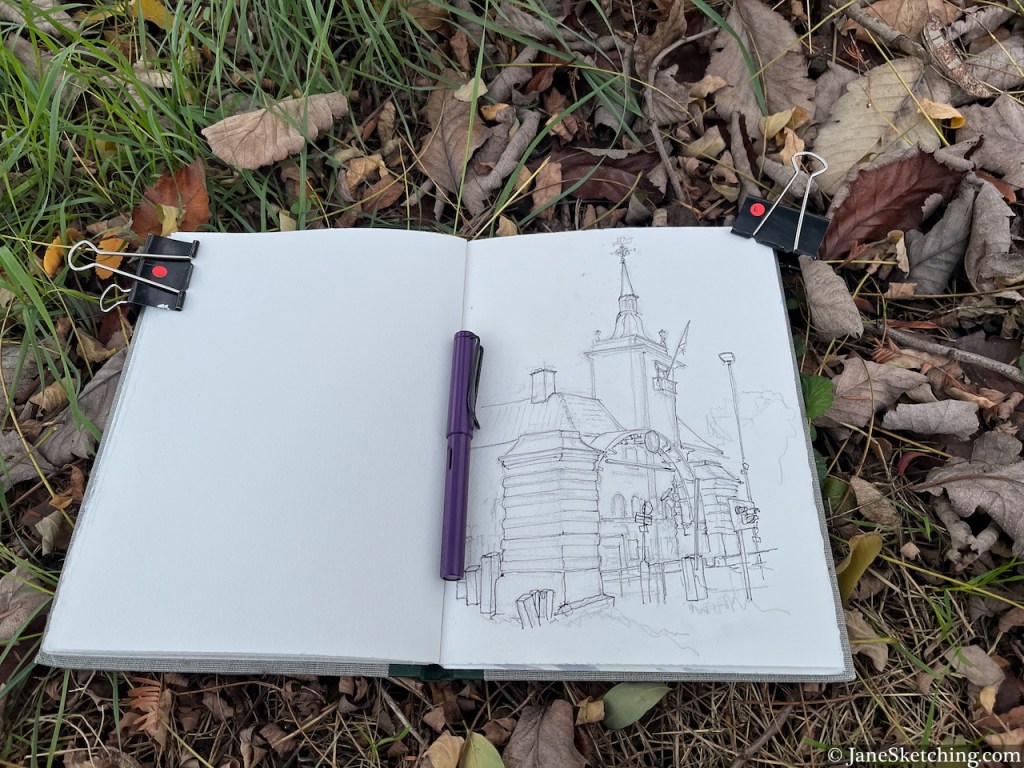
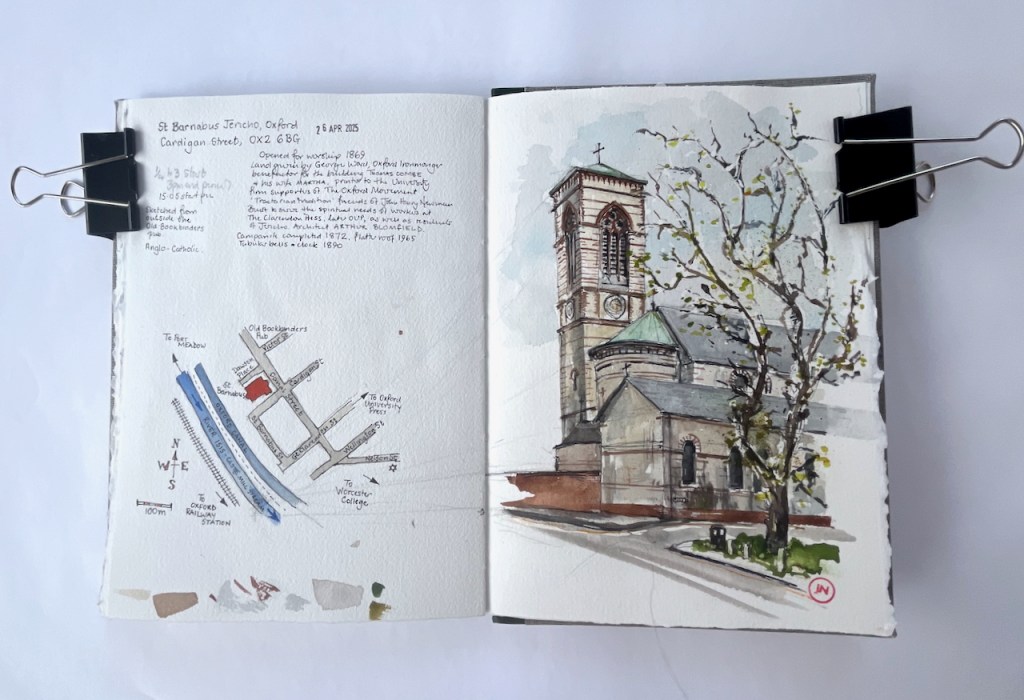
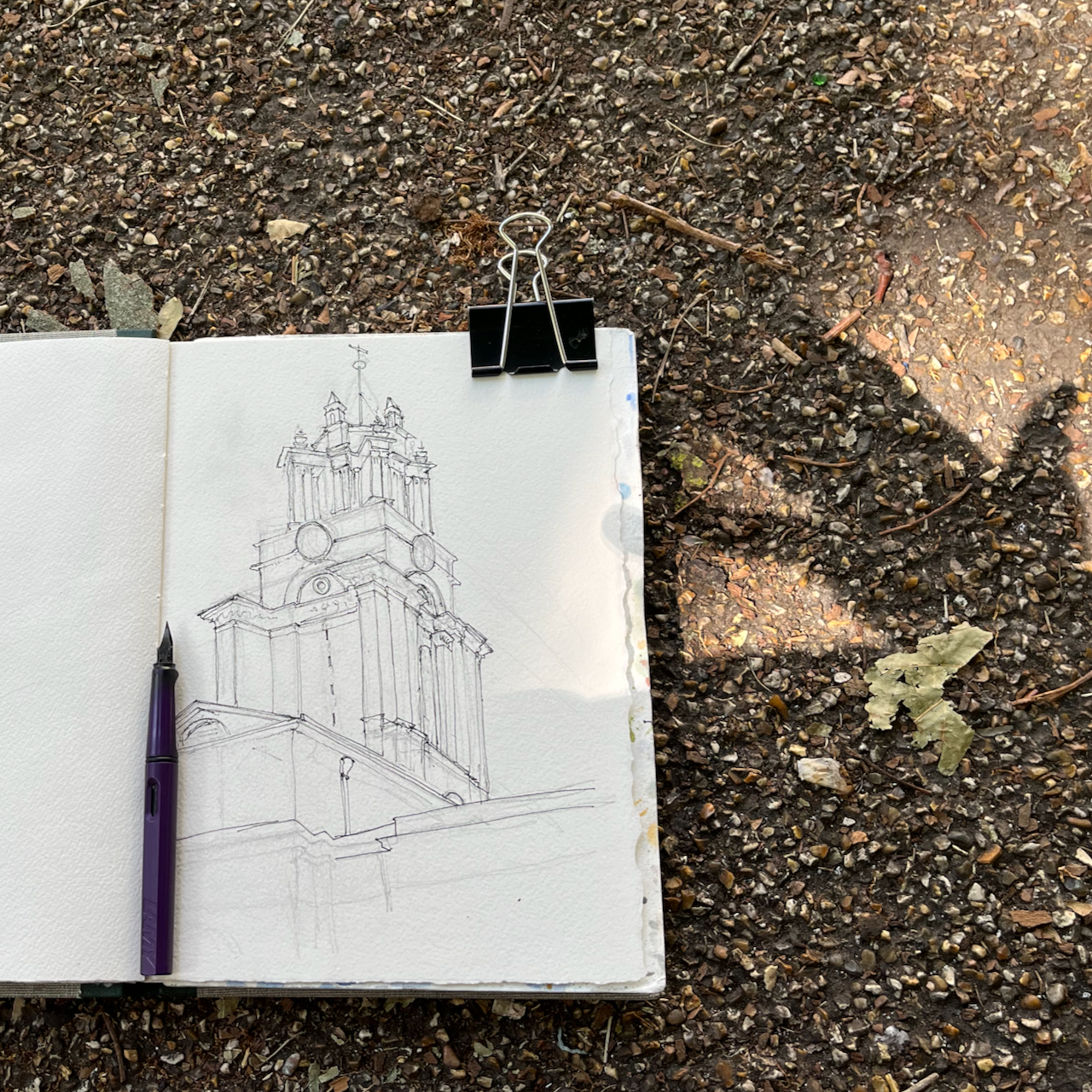
St Barnabus Jericho, OX2 6BG, sketched 26 April 2025 in Sketchbook 15.

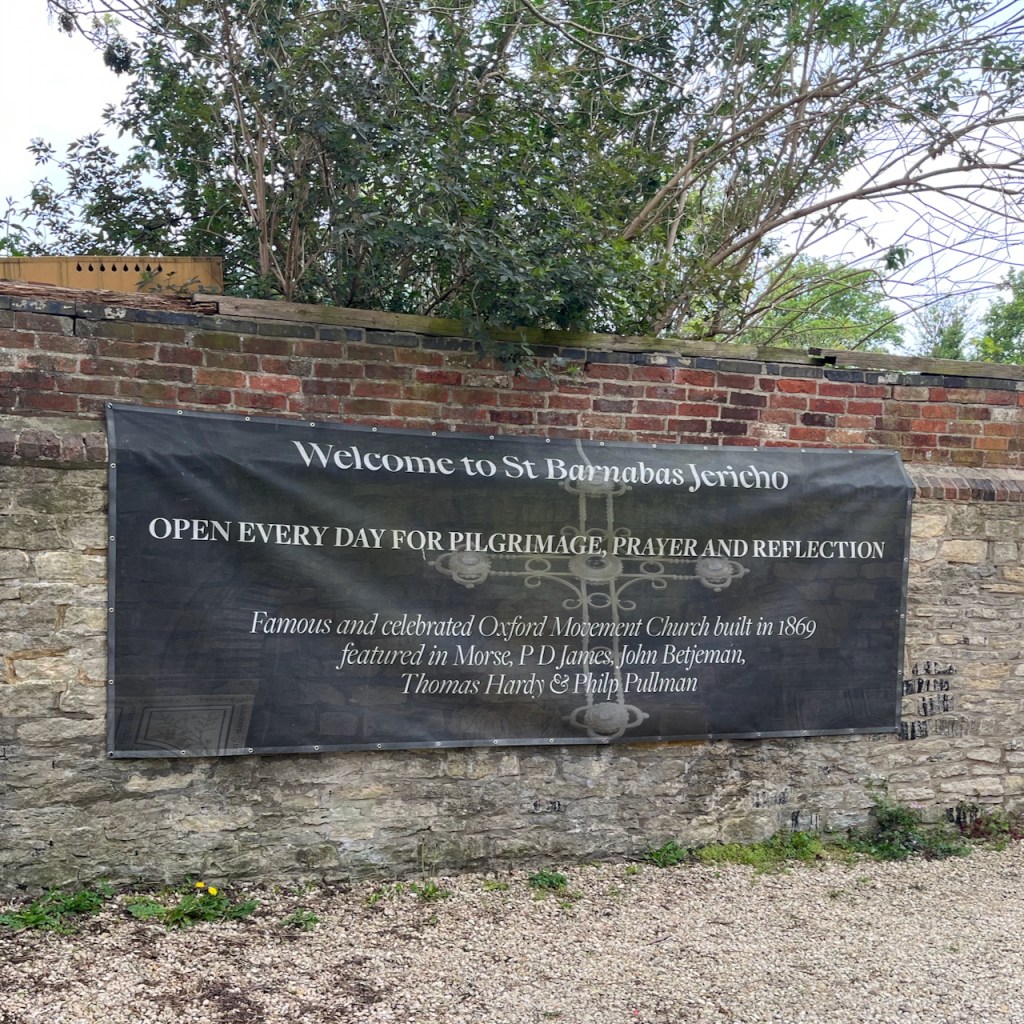
This is St Barnabus Jericho. Its website says that it is also known as “Oxford Basilica”. It was built as the daughter church of St Paul’s, which is the Grecian-style building on Walton Street, now no longer a church1.

St Paul’s is not far away, just the other side of The Oxford University Press. It was opened in 1836, and became part of the “Oxford Movement”. The Oxford Movement was campaign within the Church of England, led by influential clergymen and theologians in the 1830s. They challenged the contemporary way of thinking in the Church, saying that services were too plain, and that much of value from the Catholic tradition had been left behind. They sought to re-instate some of the theology, pageantry and ritual from the Catholic tradition, and they put it into their services. They also had a social calling, drawn to help working people and the disadvantaged.2

As you can imagine, this was contentious: popular with some people, and regarded as suspicious and un-English by others. In the 1830s, the movement flourished in this part of Oxford. The services at St Paul’s became so crowded that another church was needed. In addition, Oxford University Press moved into its huge site on Walton Street in 1830, which brought many workers to the area. So an additional church was created, and this was St Barnabus.

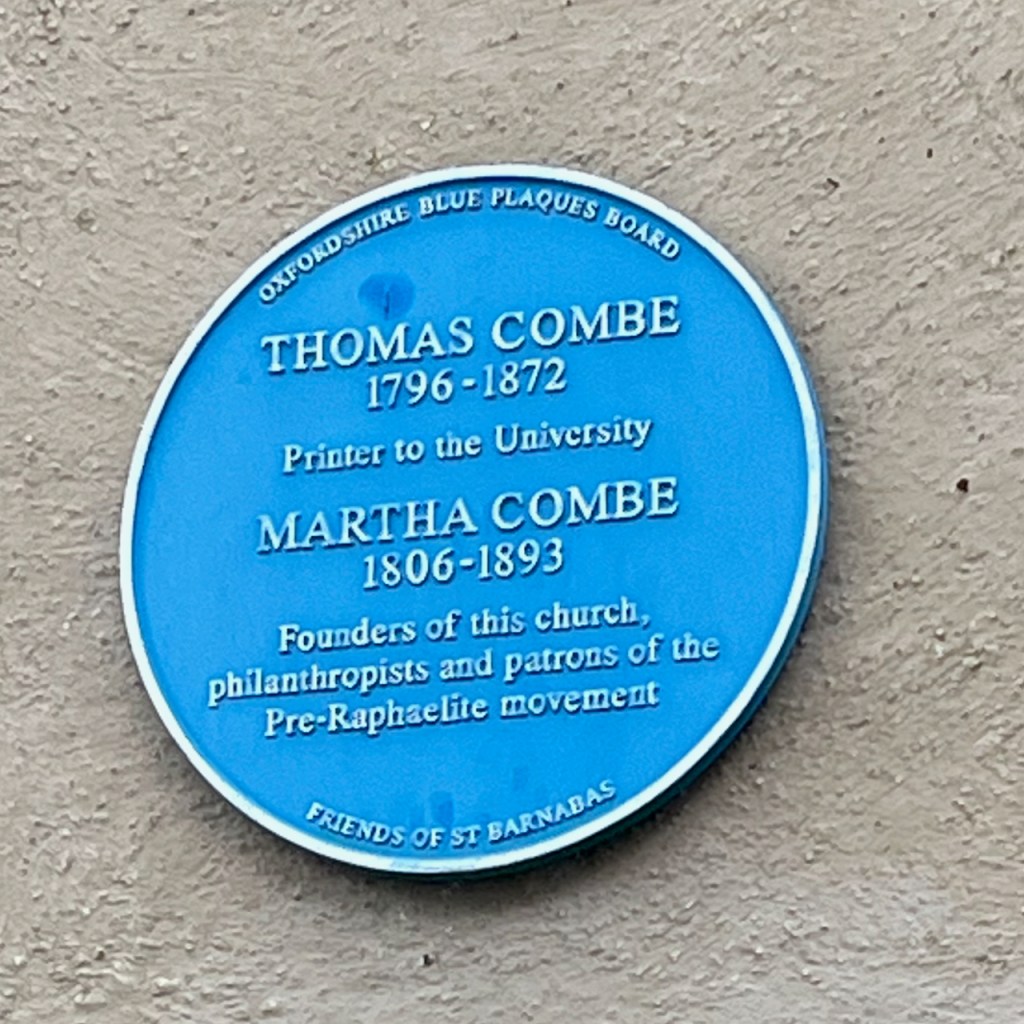
“The land for St Barnabas was given by George Ward who was an Oxford ironmonger, and the benefactor for the Church building was the generous Thomas Combe, Printer to the University, along his wife Martha.” [https://www.sbarnabas.org.uk/history]

St Barnabus opened for worship in 1869, and is flourishing to this day. Inside it is awe-inspiring and uplifting, with its highly decorated walls and vast size.

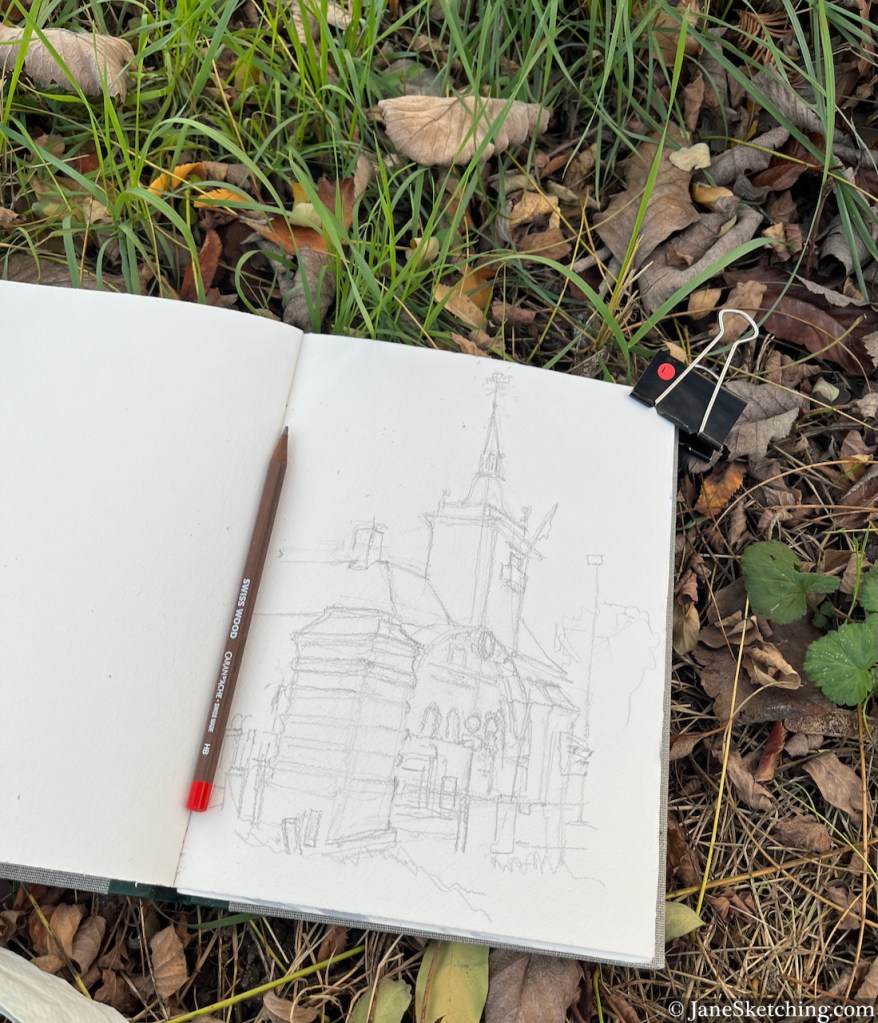
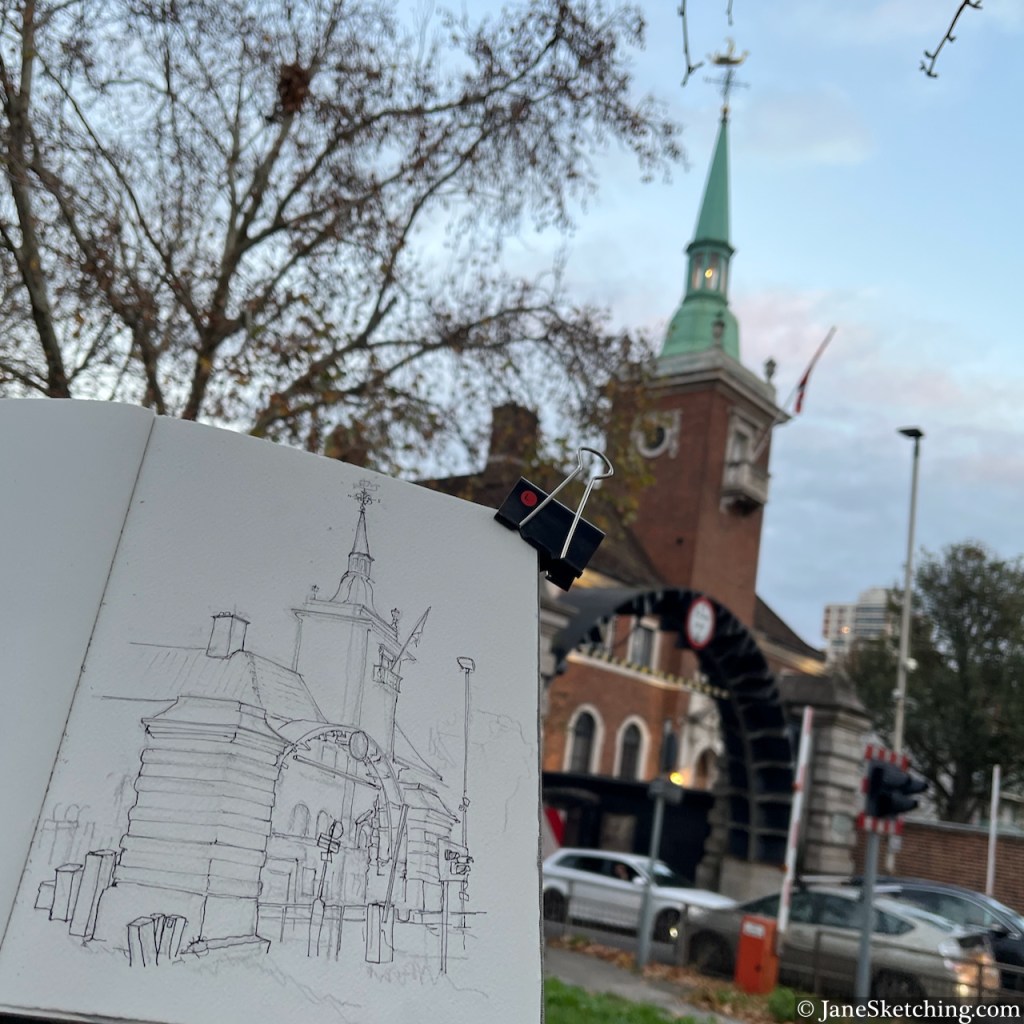
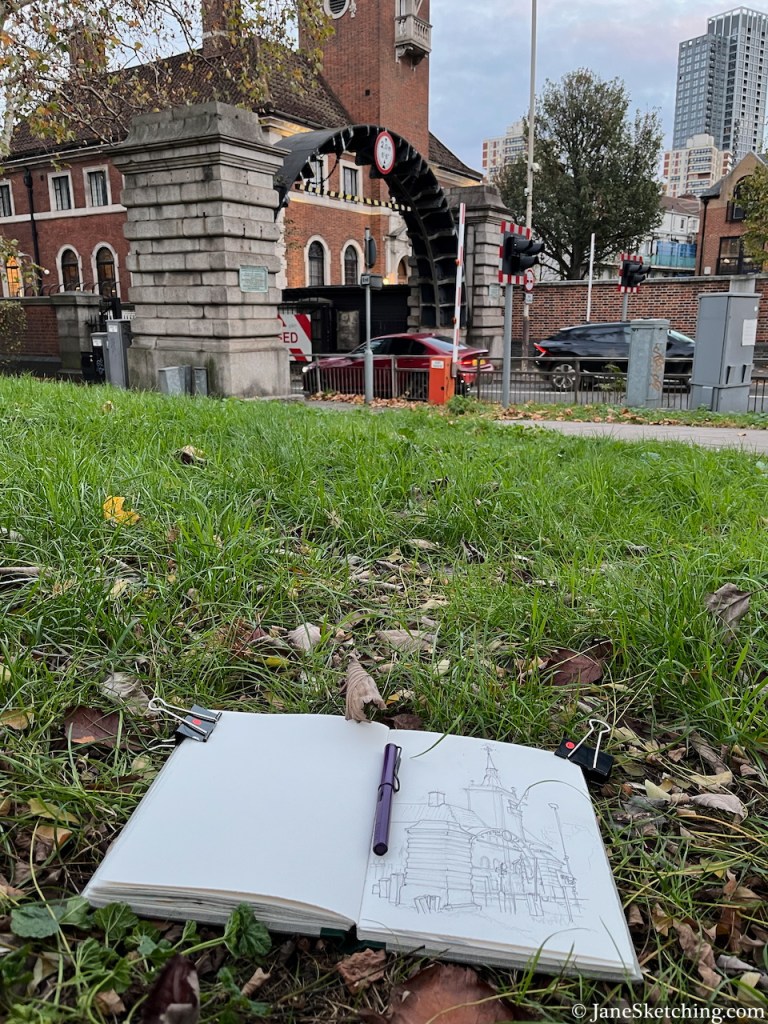
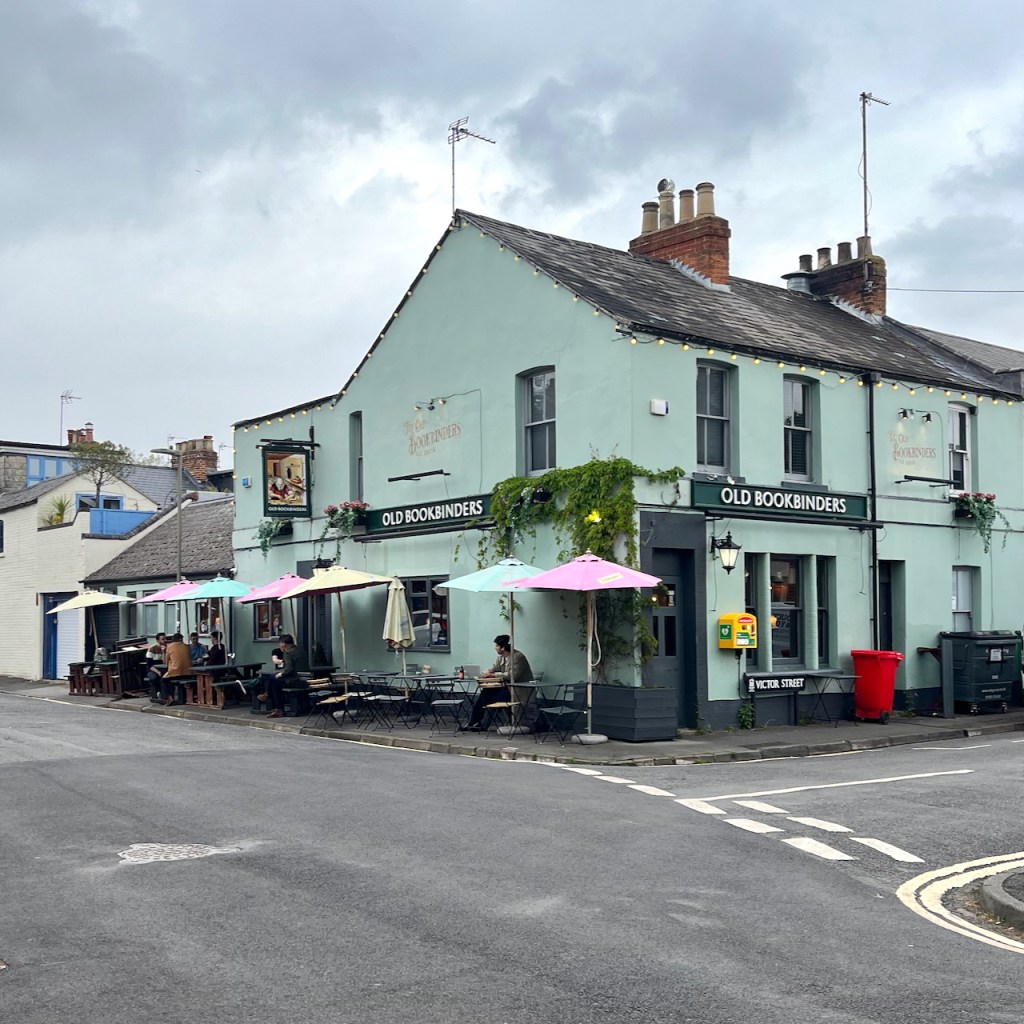
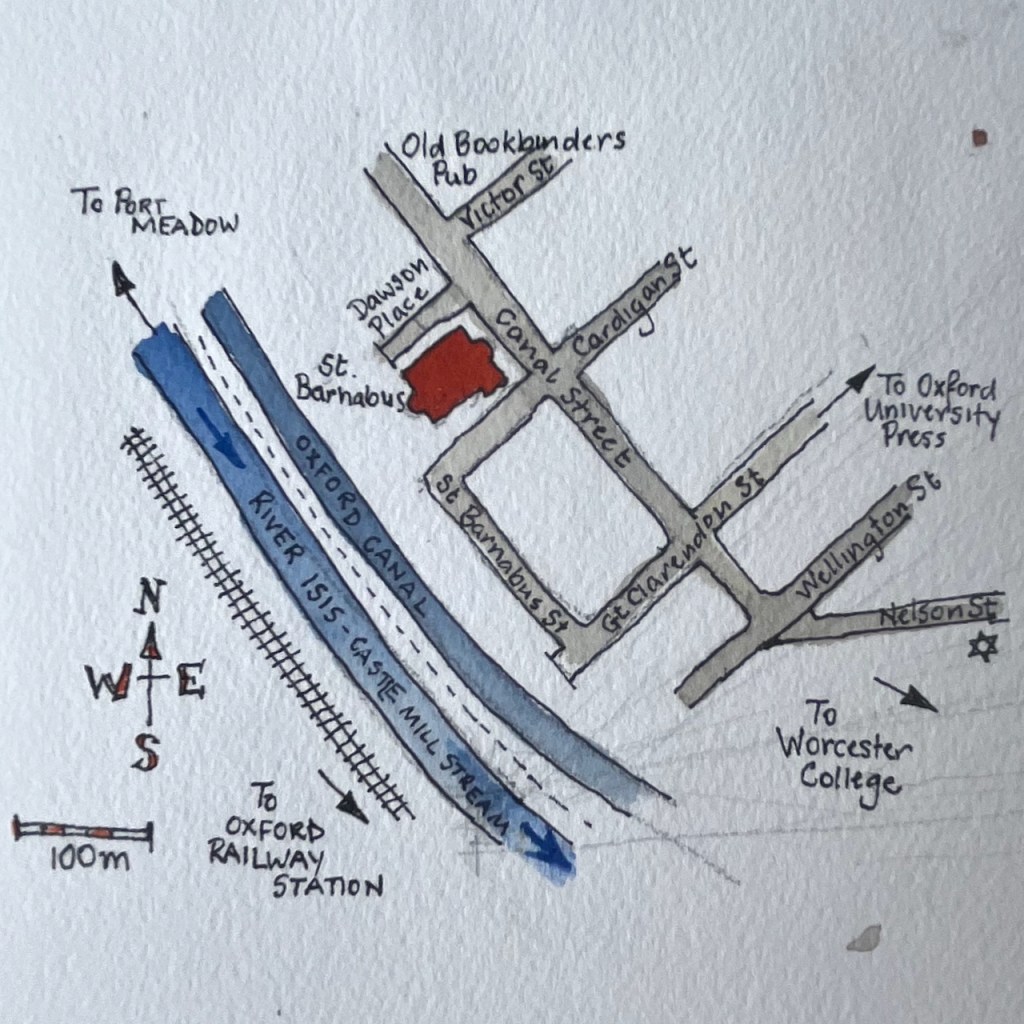
I sketched St Barnabus from outside “The Old Bookbinders” pub, delighted and frustrated in equal measure by the extraordinary detail in that tower. And I was looking at its clock, which informed me of the passing minutes until my train.

I finished the pen-and-ink drawing. Then I walked on, past Worcester College, to the railway station.

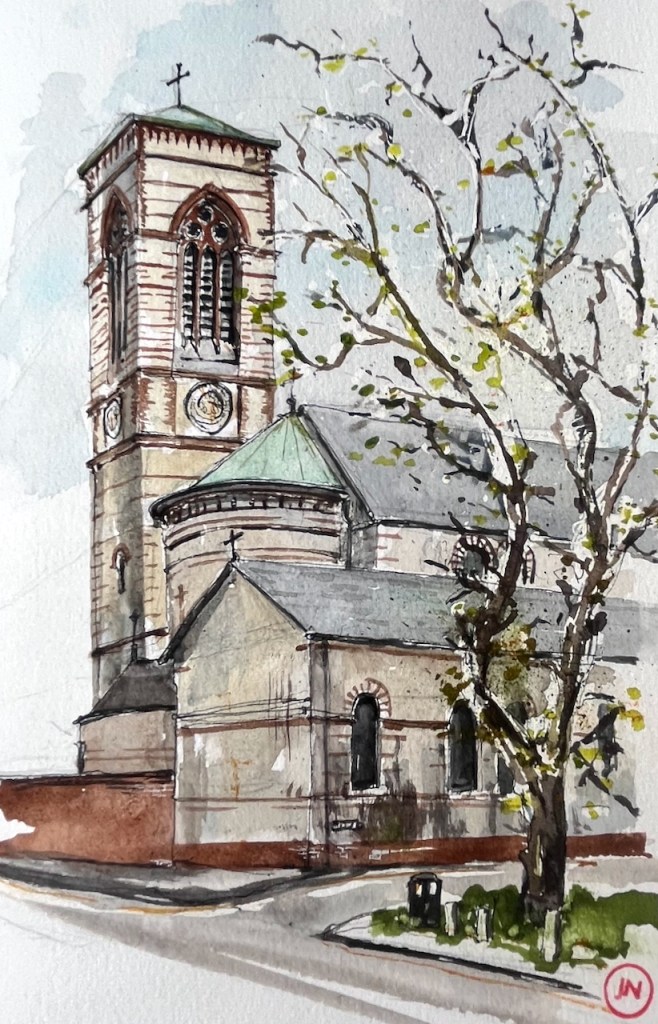
Sketchbook spread, St Barnabus Jericho. Sketchbook 15.

Footnotes

  1. St Paul’s: the impressive Grecian temple building on Walton St is no longer a church, but the “St Paul’s” name lives on. I’ve done an earlier sketch which shows St Paul’s Nursery, still very much in operation and part of Somerville College.
    ↩︎
  2. Oxford Movement: This is my non-specialist summary of a significant and complex theological and social movement. For a proper description see, for example the Wikipedia Article, or this glossary article. ↩︎

Tower of St Anne’s Church Limehouse, E14

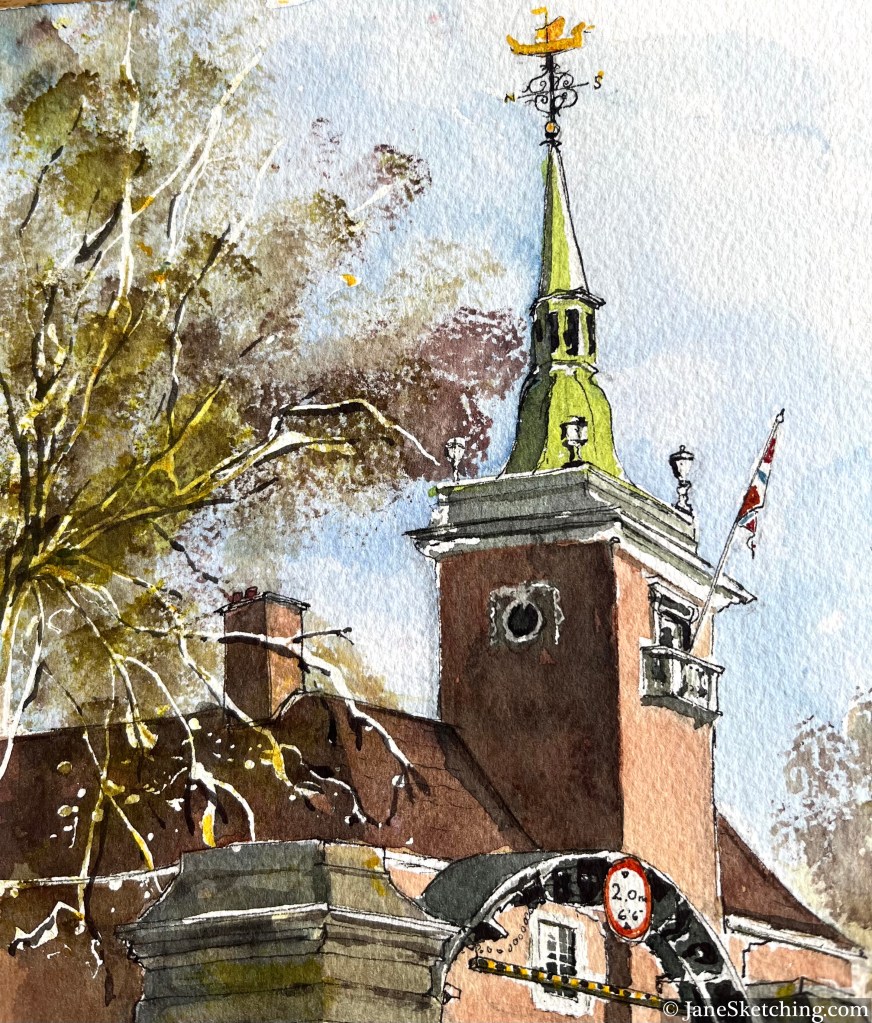
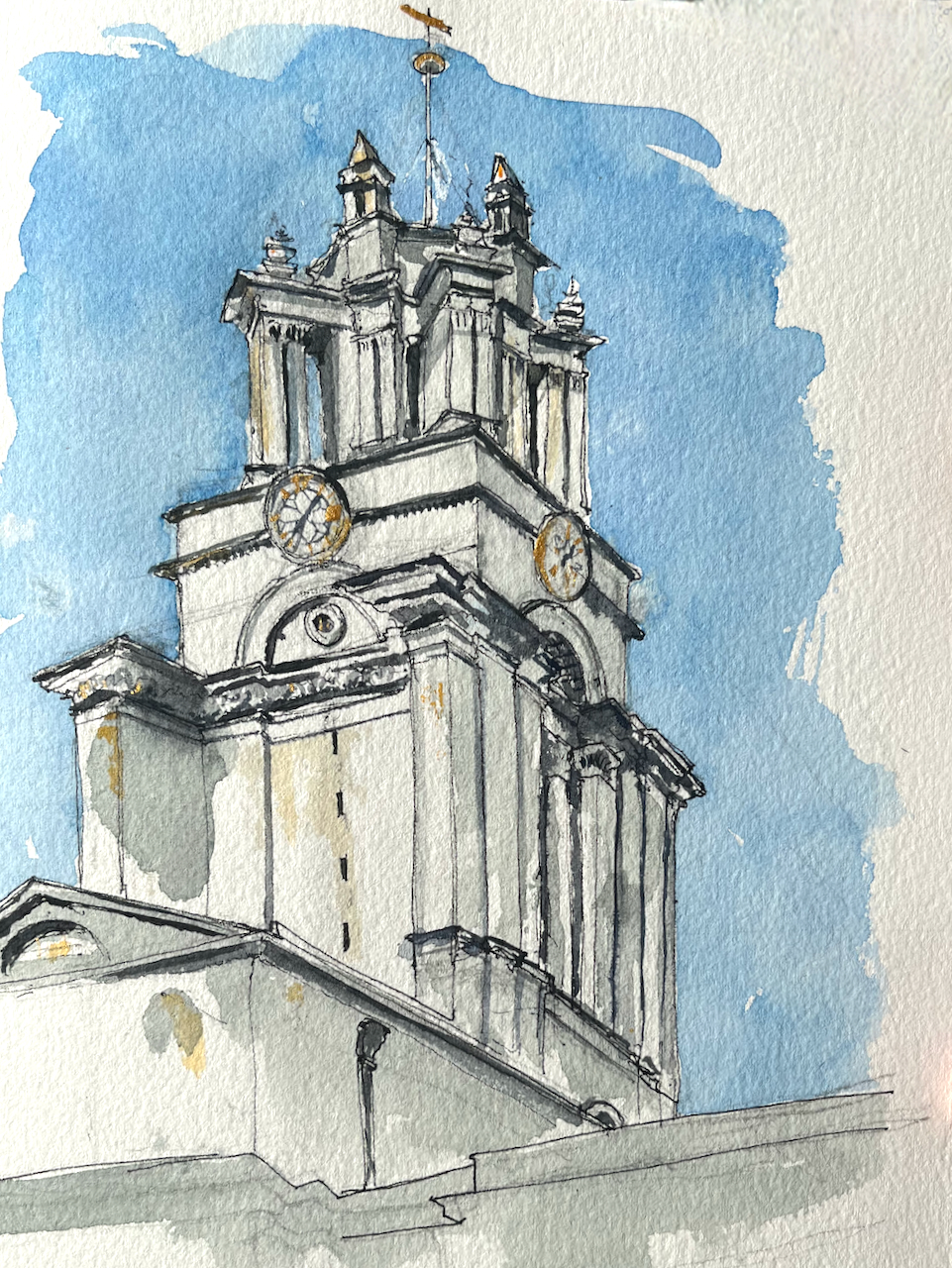
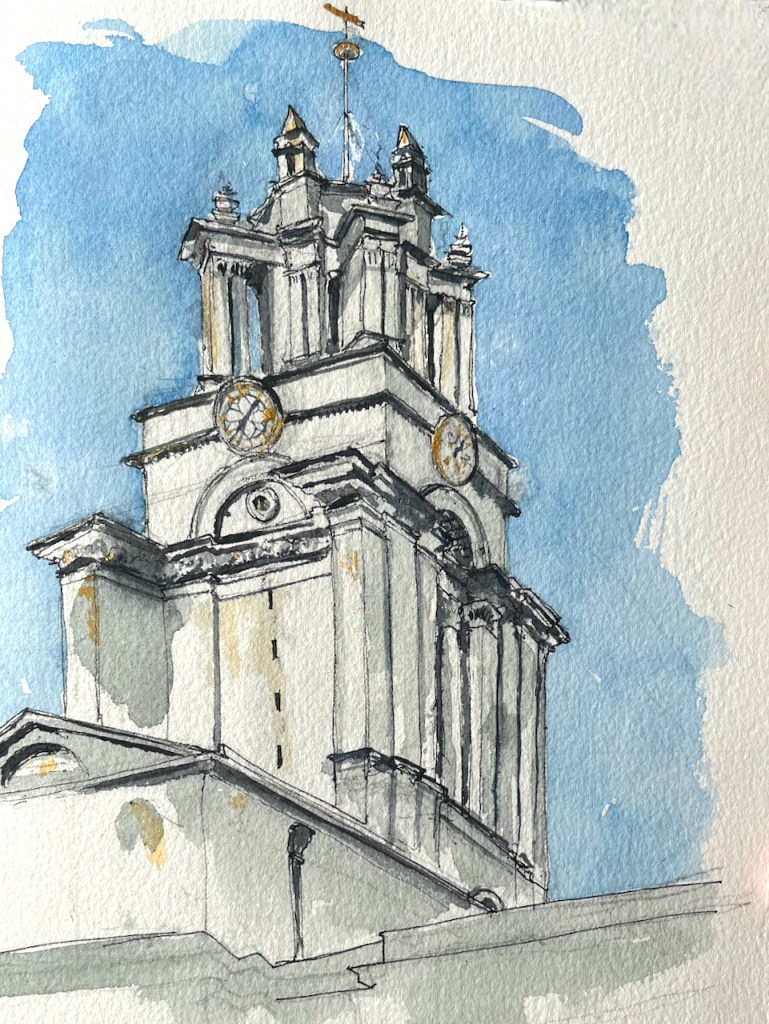
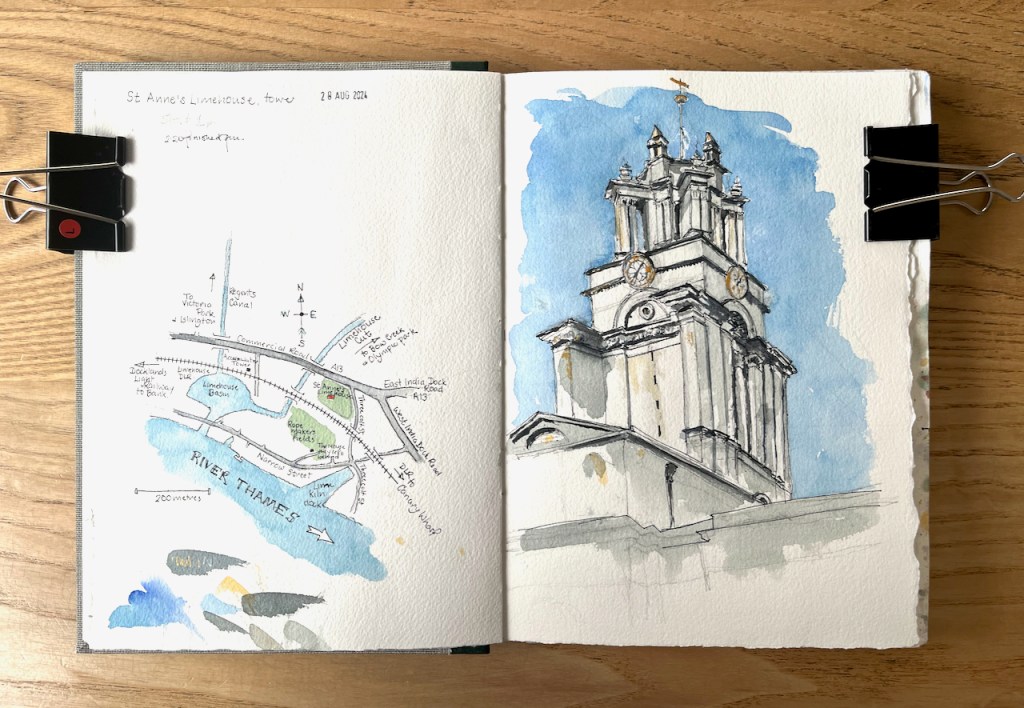
This is the tower of St Anne’s Church Limehouse, seen from the south.
St Anne’s is a church designed by Nicholas Hawksmoor, consecrated in 1730.

St Anne’s Church Limehouse tower, sketched 28 August 2024 in sketchbook 15

This tower shows the marine connections of this church:

The prominent tower with its golden ball on the flagpole became a Trinity House “sea mark” on navigational charts and the Queens Regulations still permit St Anne’s Limehouse to display the White Ensign”.

Wikipedia (1 October 2024)
White ensign

The White Ensign is definitely flying. In my drawing the flag is blowing away from me, so you can’t see it well. It is the flag flown by British Navy ships and certain navy-related buildings on land, of which St Anne’s in one.

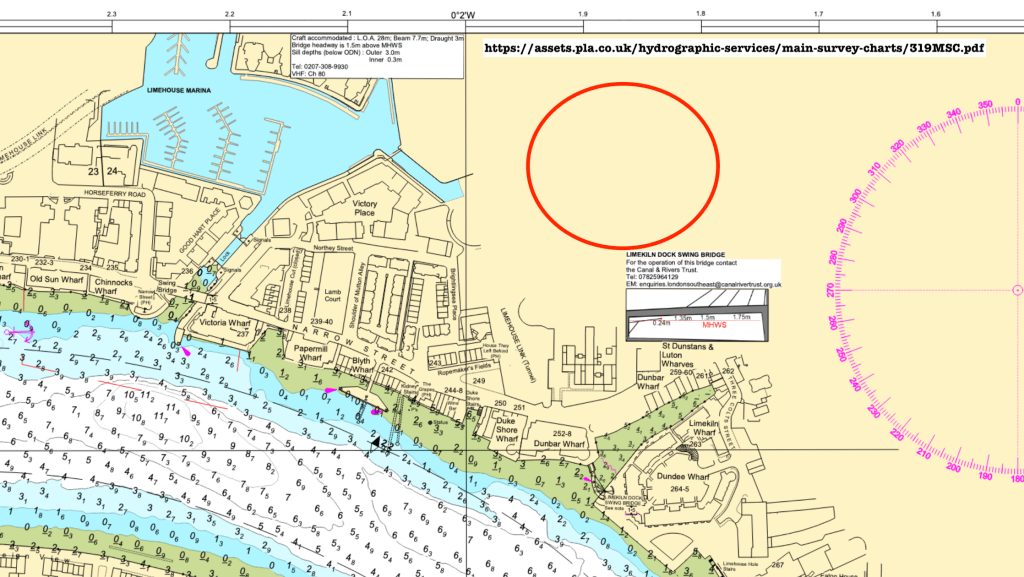
The golden ball is clearly visible on the flagpole, the “sea mark” mentioned in articles about the church. I had a look to see if I could find St Anne’s on a navigational chart. The Port of London Authority offers navigational maps of the Thames – but sadly St Anne’s is not shown as a “sea mark” on any of them.

Detail from Chart 319 from the Port of London Authority. The red circle where St Anne’s is, but it’s not shown as a “sea mark”.

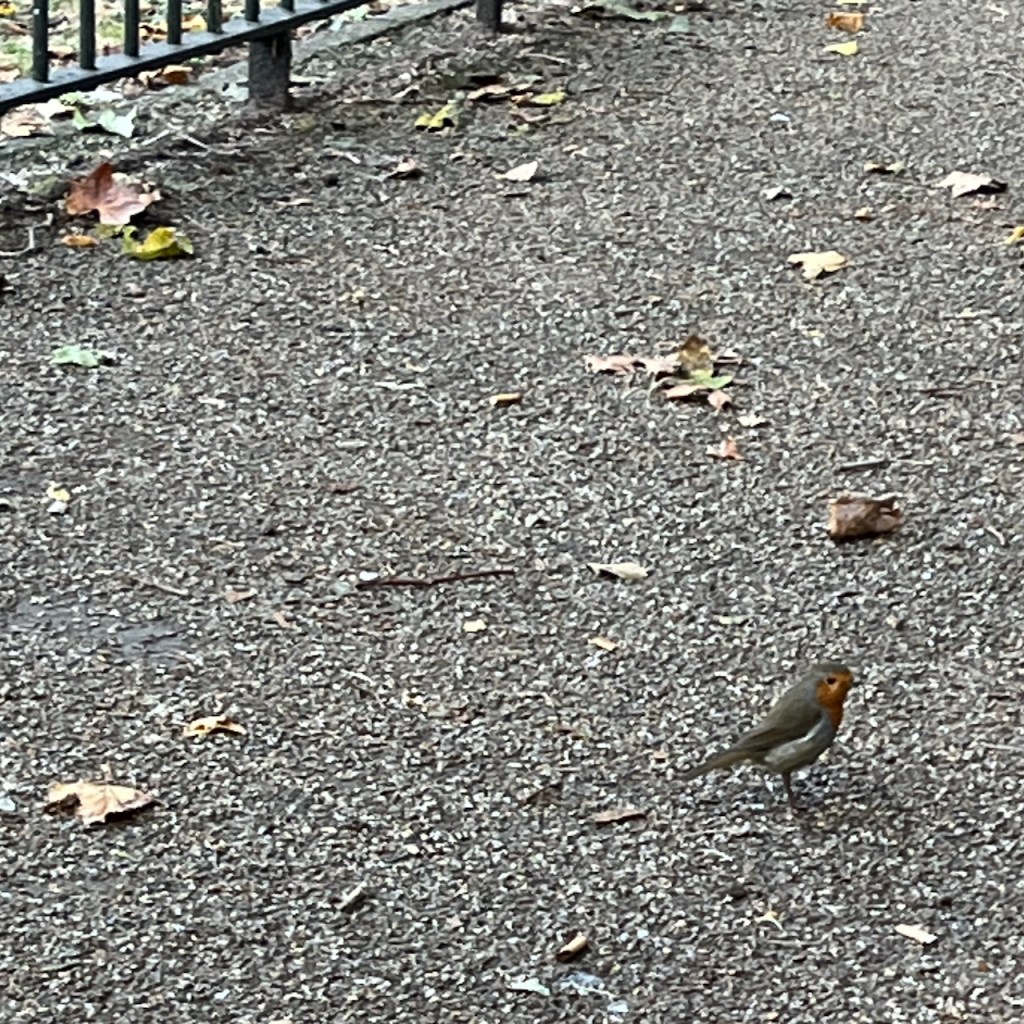
The church has a lovely quiet garden. I sketched from the wooden seat, watched by a robin.

Sketchbook 15

Here are other sketches I’ve done around Limehouse and Wapping, near here:

Christ Church, Esher, KT10

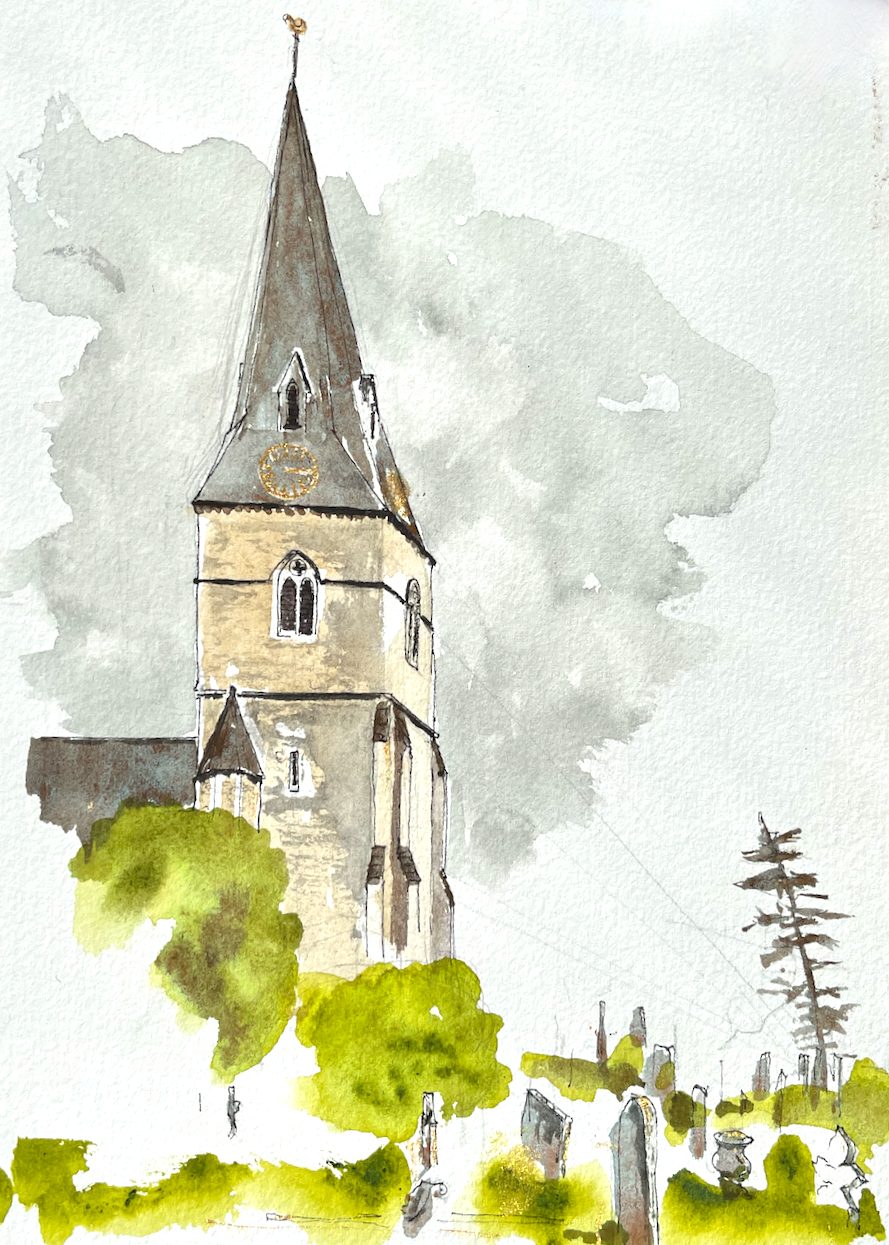
Christ Church Esher stands on the top of a hill, near the intersection of roads that marks Esher town centre.

Christ Church, Church Street, Esher, Surrey, KT10 8 QS. Sketched 28 May 2024, in Sketchbook 14

The church has a “splayed foot” spire.

SPLAYED-FOOT: variation of the broach form, found in England principally in the south-east, in which the four cardinal faces are splayed out near their bases, to cover the corners, while oblique (or intermediate) faces taper away to a point.

BROACH: starting from a square base, then carried into an octagonal section by means of triangular faces.

– Pevsner’s Architectural Glossary, page 116, under “SPIRE”

This simple and elegant geometry turned out to be rather tricky to draw. I worked hard to get the shape of the spire correct.

Sketching the spire of Christ Church

The church was built in 1853-1854 to the design of Benjamin Ferrey (1810-1880) according to its Historic England listing entry. Ferrey studied under A.W.N. Pugin1, and like Pugin, designed in the style known as “Gothic Revival”. Christ Church was built because the growing congregation could no longer be housed in the smaller St George’s, a little way down the hill.

I sketched the church on location and added the colour later. The colours are:

  • Mars Yellow
  • Green Gold
  • Phthalo Blue Turquoise

I used just three colours, all Daniel Smith. I used gold paint for the clock. The clock is on the roof of the spire, which is remarkable. Usually the clock is on the tower, below the spire. So I wanted to put it in and show its unusual location.

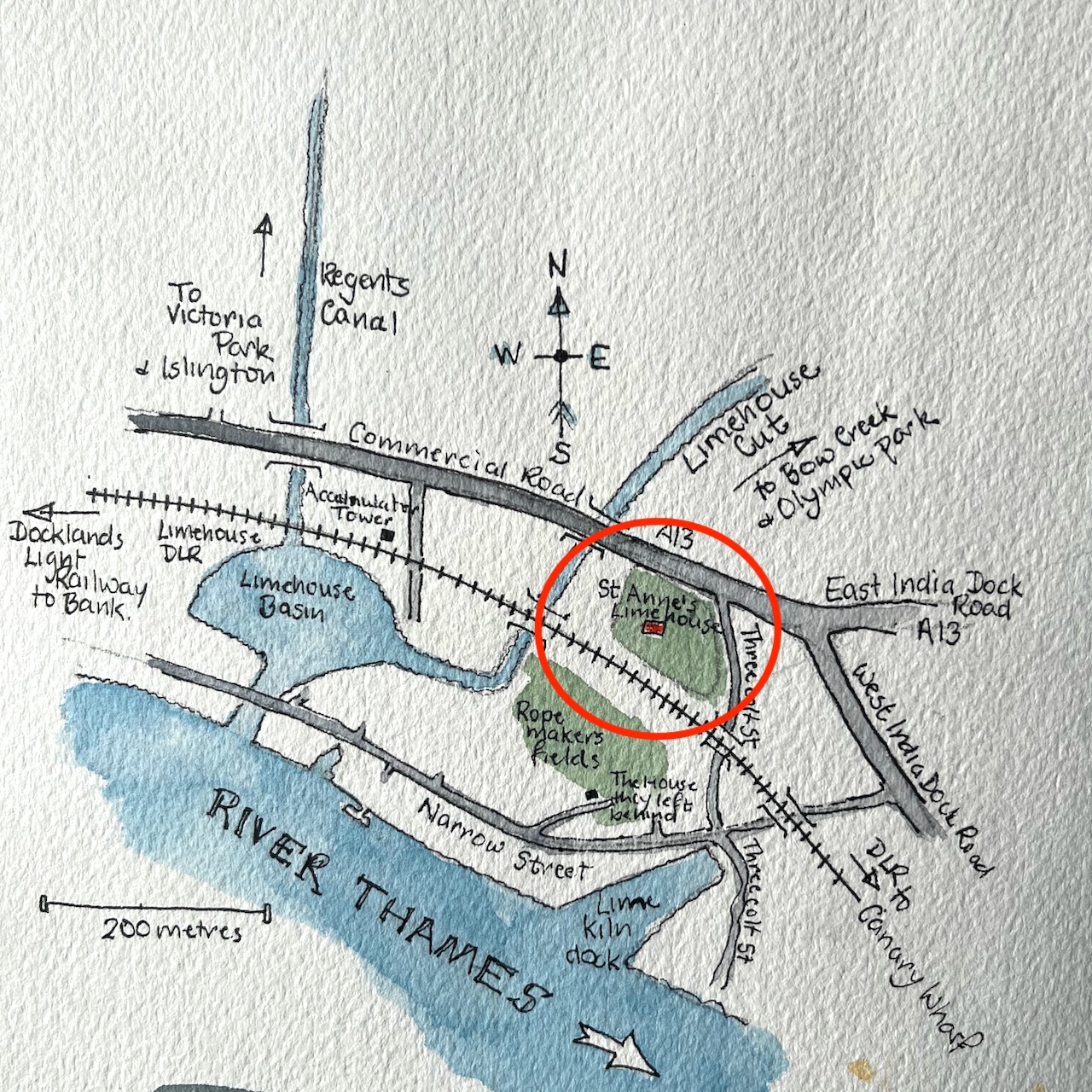
Here is a sketch map of the area.

See this post for my sketch of St George’s, this post for the Tin Tabernacle in West End Esher, and this post for sketches of the council housing in Lower Green.


References

Historic England Listing Entry: https://historicengland.org.uk/listing/the-list/list-entry/1188268?section=comments-and-photos downloaded 7th June 2024, contains also many photos of the interior of Christ Church.

Ferrey’s biography is on Wikipedia, and also on “The Victorian Web” at this link: https://victorianweb.org/art/architecture/ferrey/

1A.W.N. Pugin designed, amongst other things, the inside of the Houses of Parliament: https://heritagecollections.parliament.uk/stories/the-architects-barry-pugin-and-scott/. The Houses of Parliament are a classic example of Gothic Revival Style. The Houses of Parliament were designed by a team consisting of Charles Barry, A.W.N. Pugin and later Giles Gilbert Scott.

Crete sketches 2024

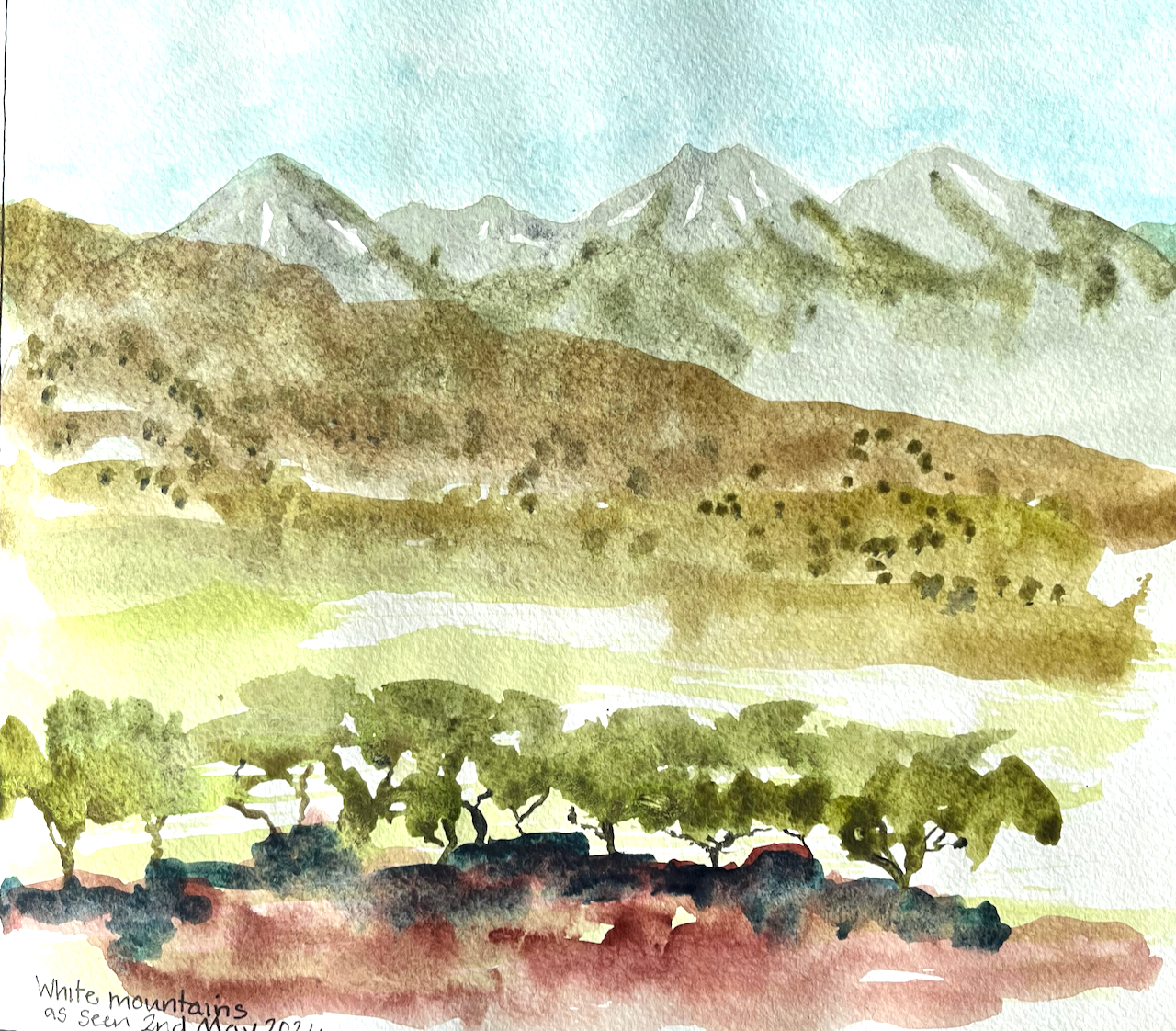
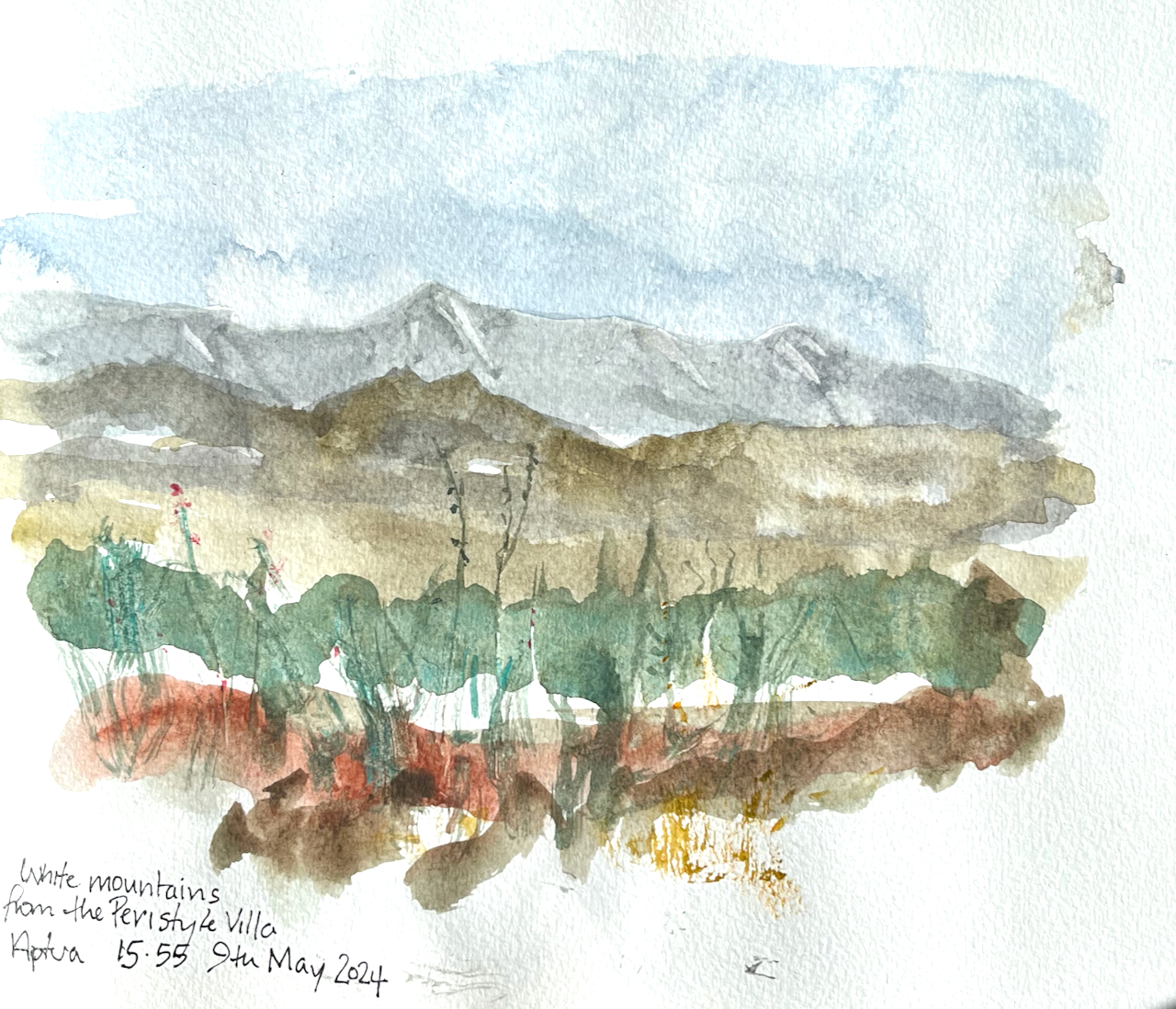
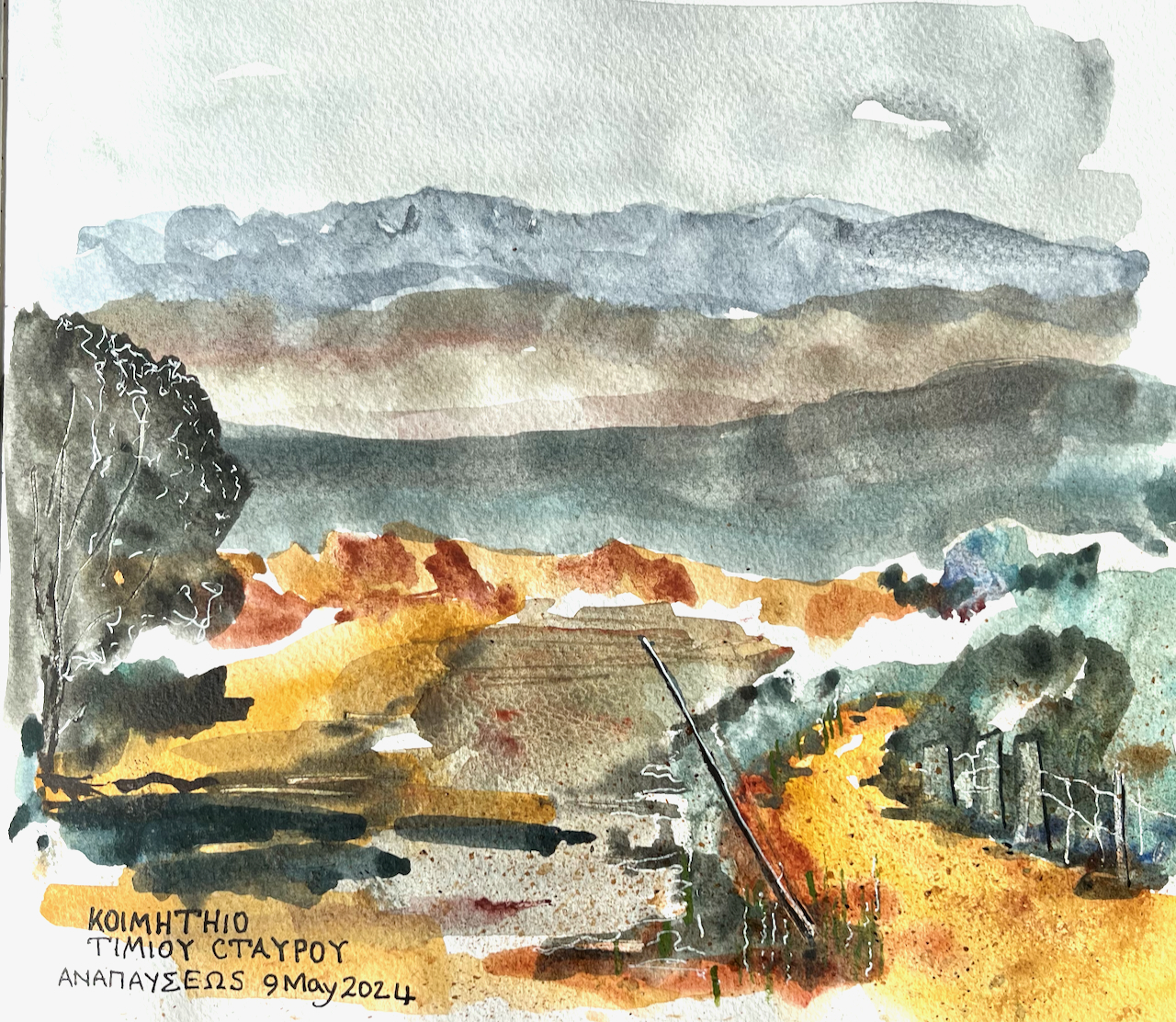
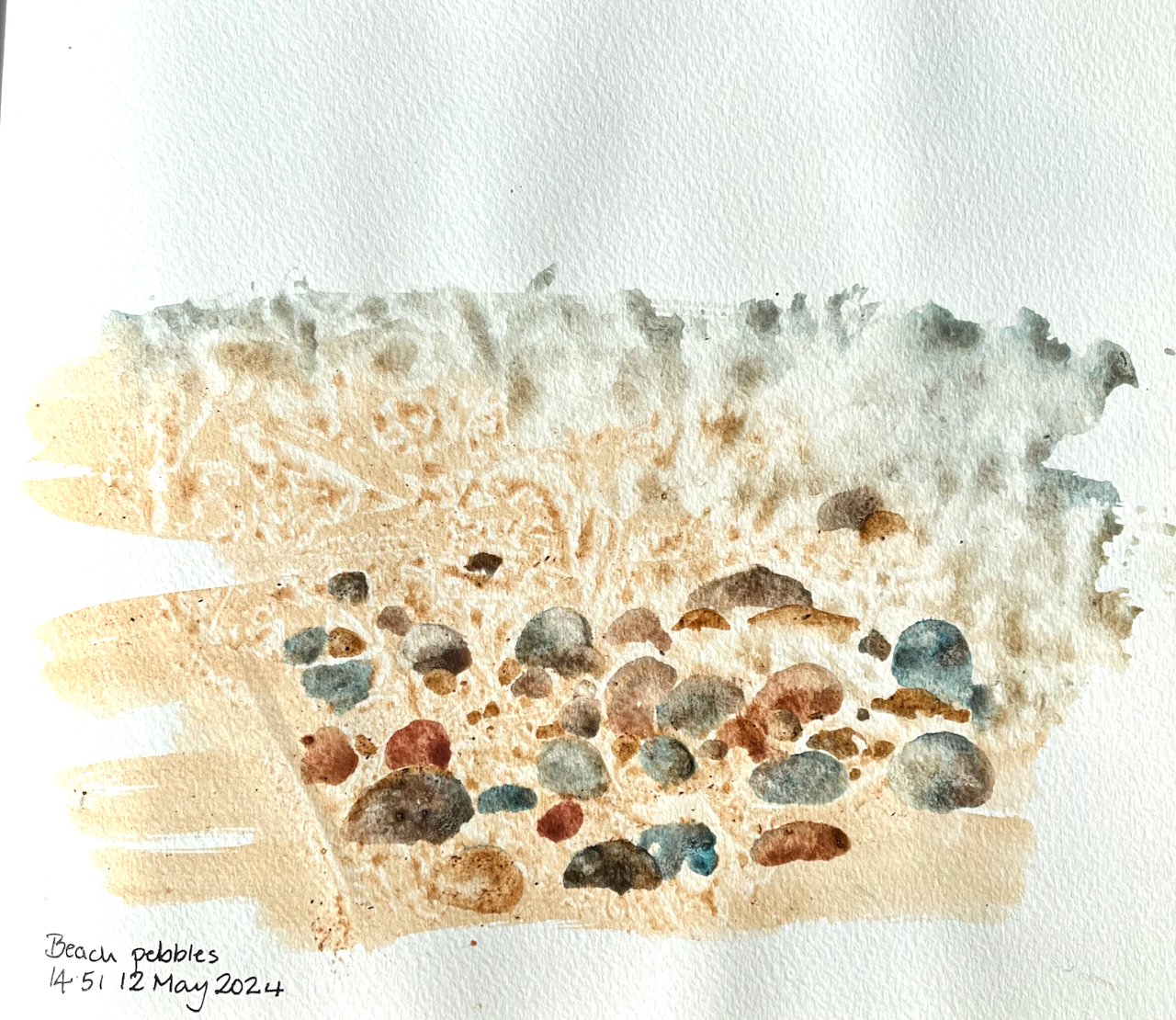
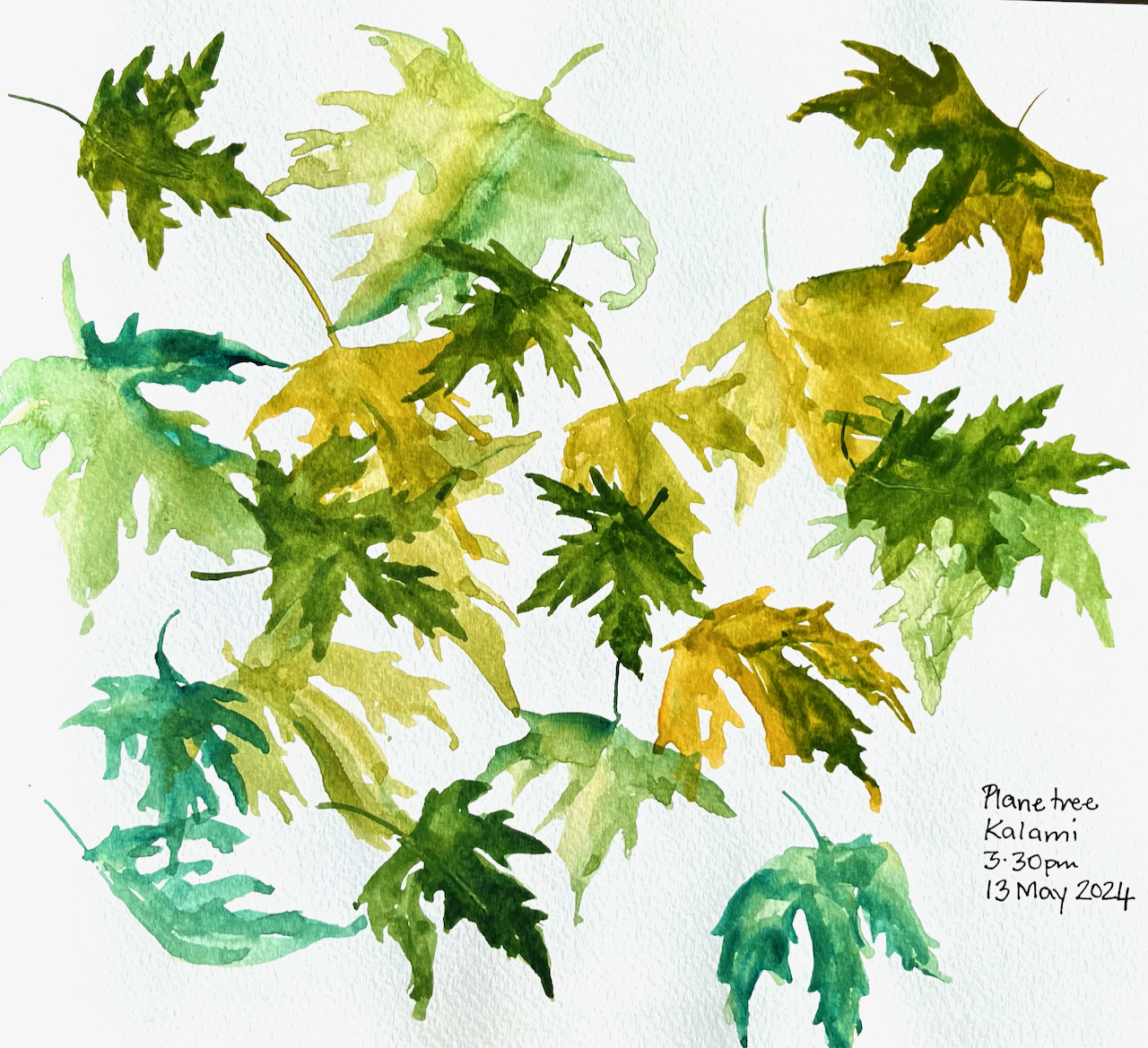
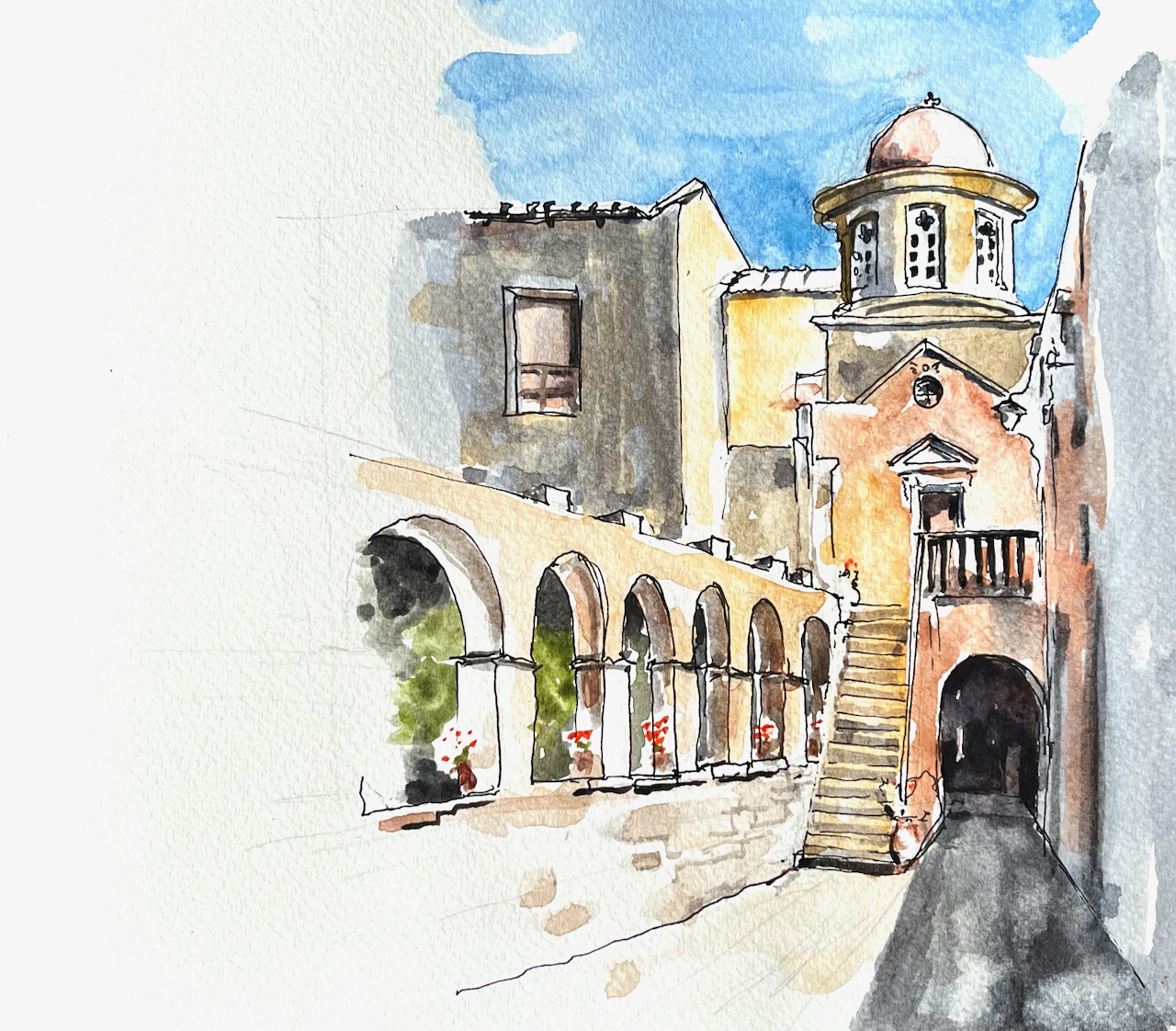
Here are a selection of sketches made in Crete. The sketchbook is Jackson’s Art Supplies’ own brand, 160gsm watercolour paper, cotton blend, about 8″ x 9″.

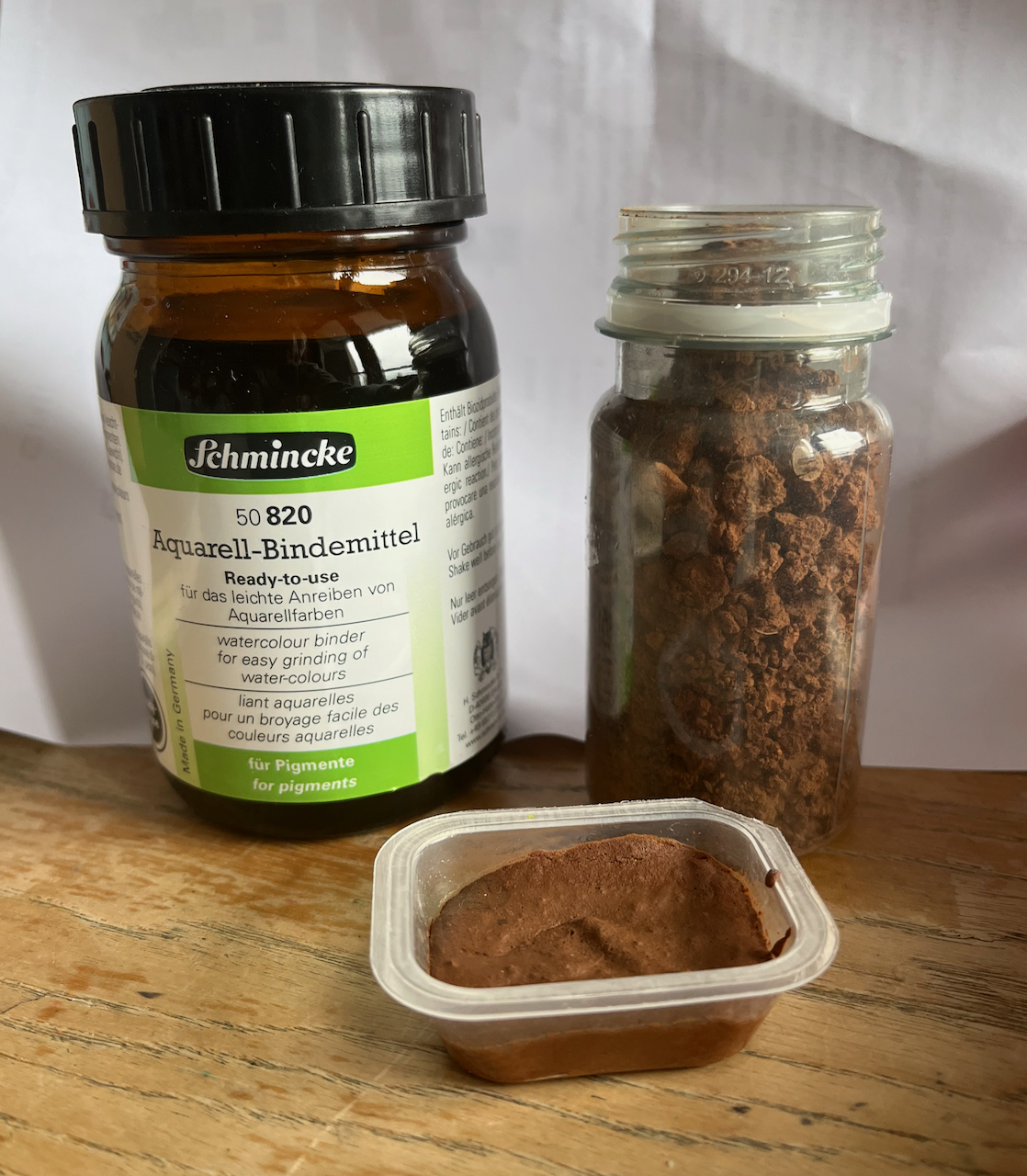
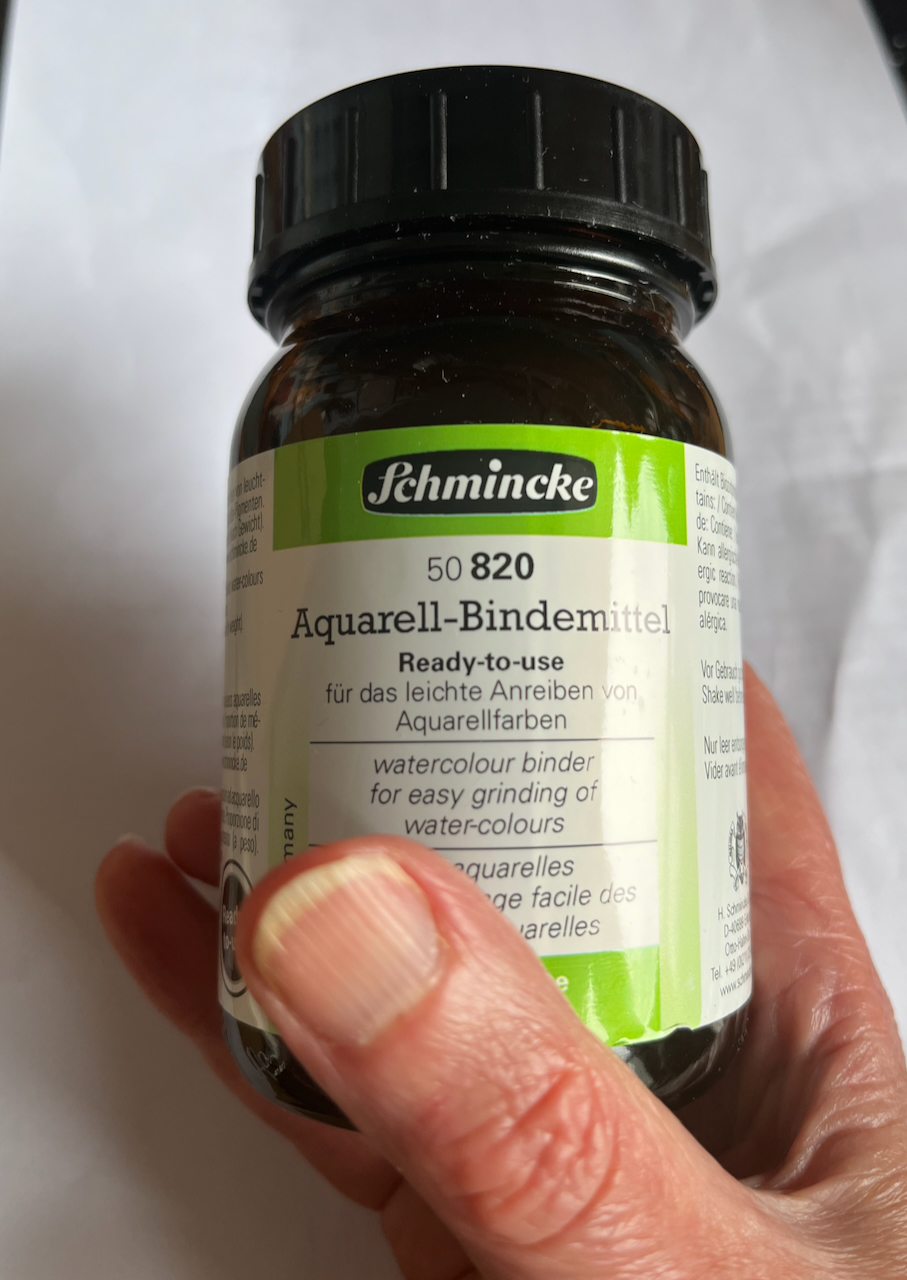
I used some of the local earth as pigment, to make a watercolour, using Schmincke watercolour binder.

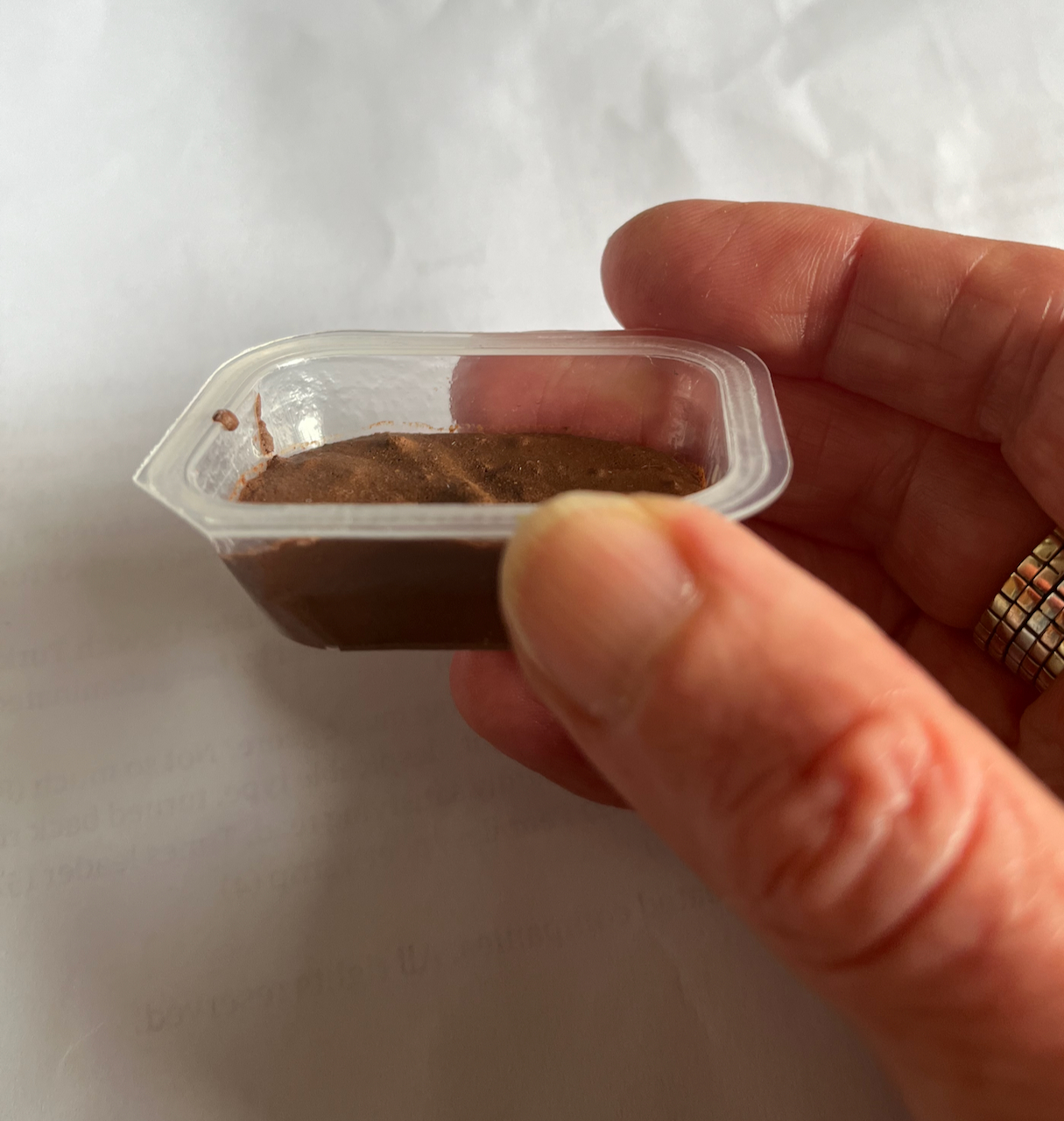
I ground the earth using a stone, breaking it up to make a powder like talcum powder. It still had bits in, but I managed to separate it by shaking, and scooped most of the bits off the top with a teaspoon. Then add an equal quantity, by volume, of the binder, and scoop into a suitable receptacle. It can be used immediately: it has the consistency of paint from a tube. Or. leave it to dry, then it’s like a watercolour pan. The “suitable receptacle” here is an empty butter portion container.

Home-made watercolour pan.

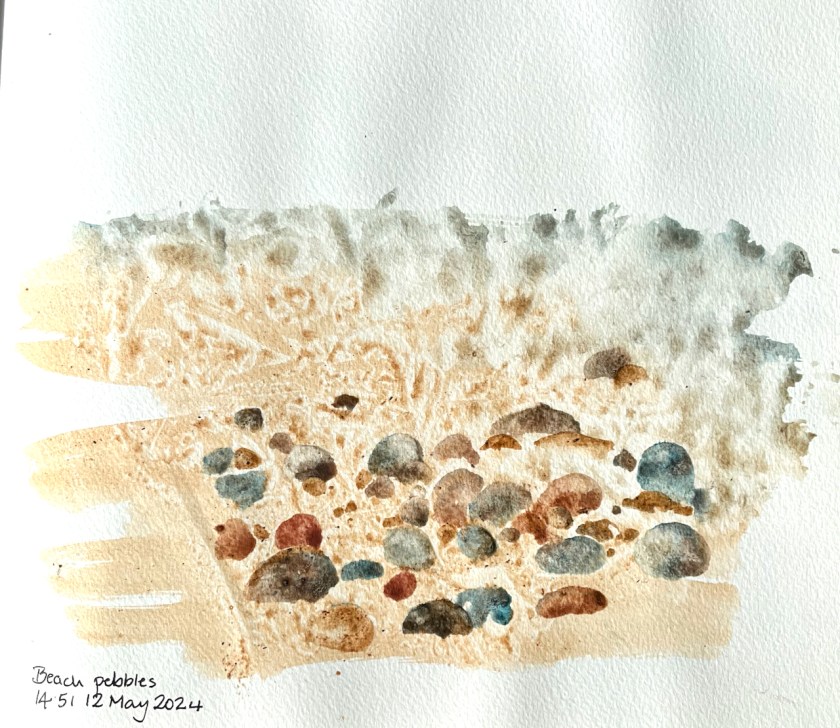
The watercolour works amazing well. It is a rich red-brown colour. Ideal for painting the surrounding scenery.

Painting with home-made watercolour

You can see it, for example, in this picture:

Here is a flick through the sketchbook:

Crete sketchbook flick-through

Cambridge Hall, Kilburn NW6 5BA

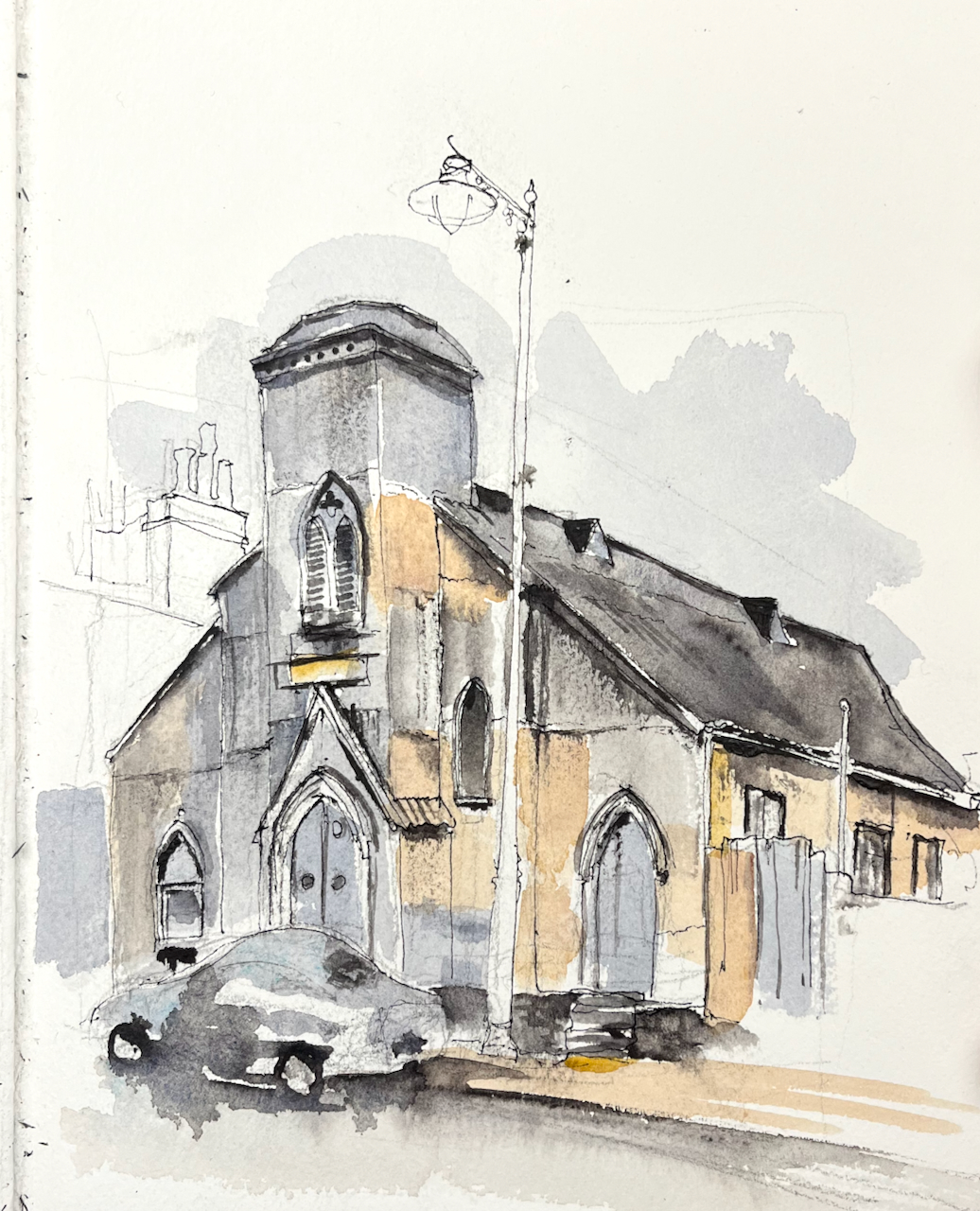
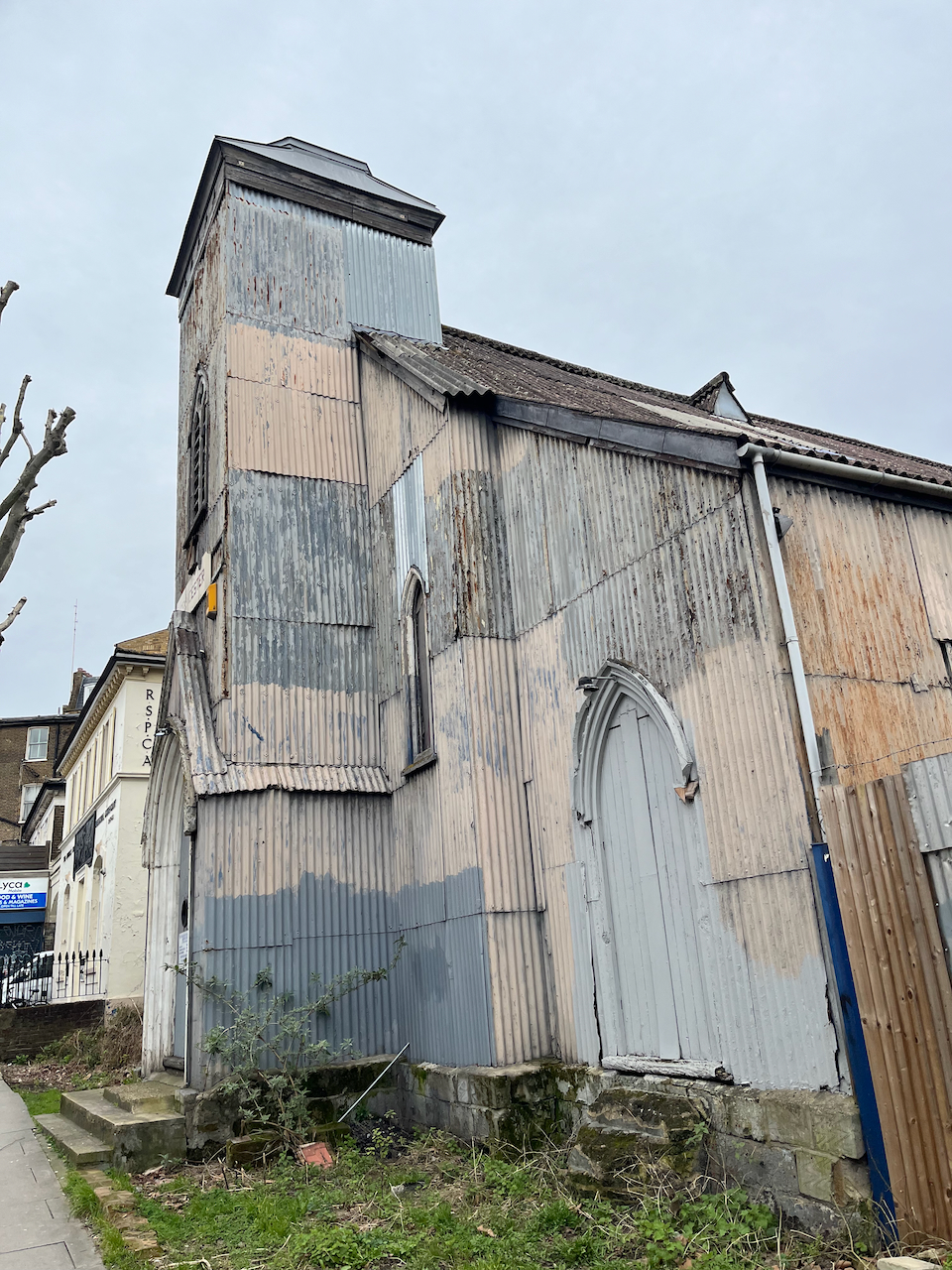
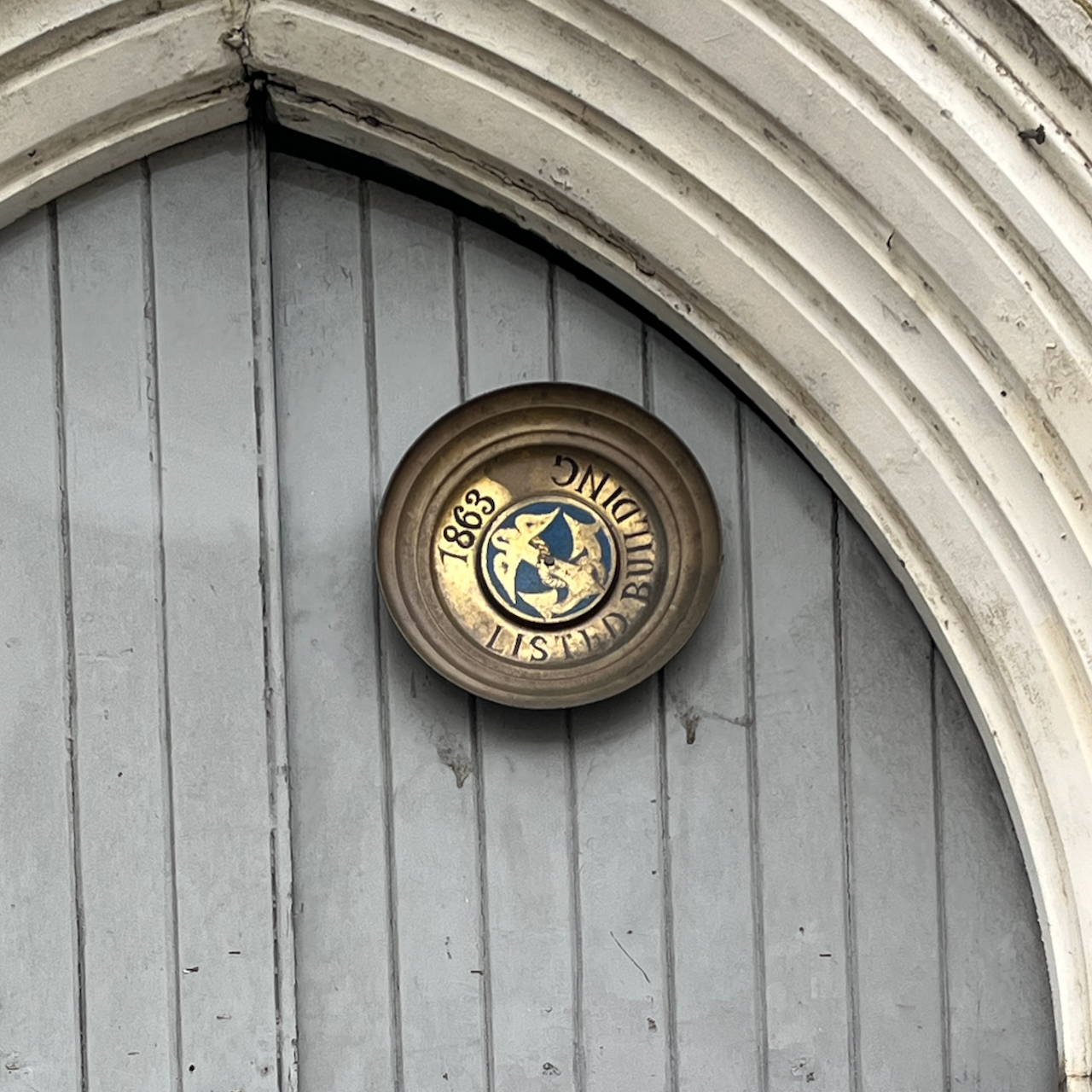
I was reading about “tin tabernacles” having sketched the “Tin Tabernacle” in Esher. I discovered, via a Historic England blog article, that there is a Tin Tabernacle in Kilburn in London. So I went to have a look. It is an “iron church” built of galvanised corrugated iron in 1863. It used to have a steeple, but that has disappeared.

Here it is now:

Cambridge Hall, Cambridge Avenue, Kilburn NW6 5BA, sketched 28 February 2024 3pm in sketchbook 14

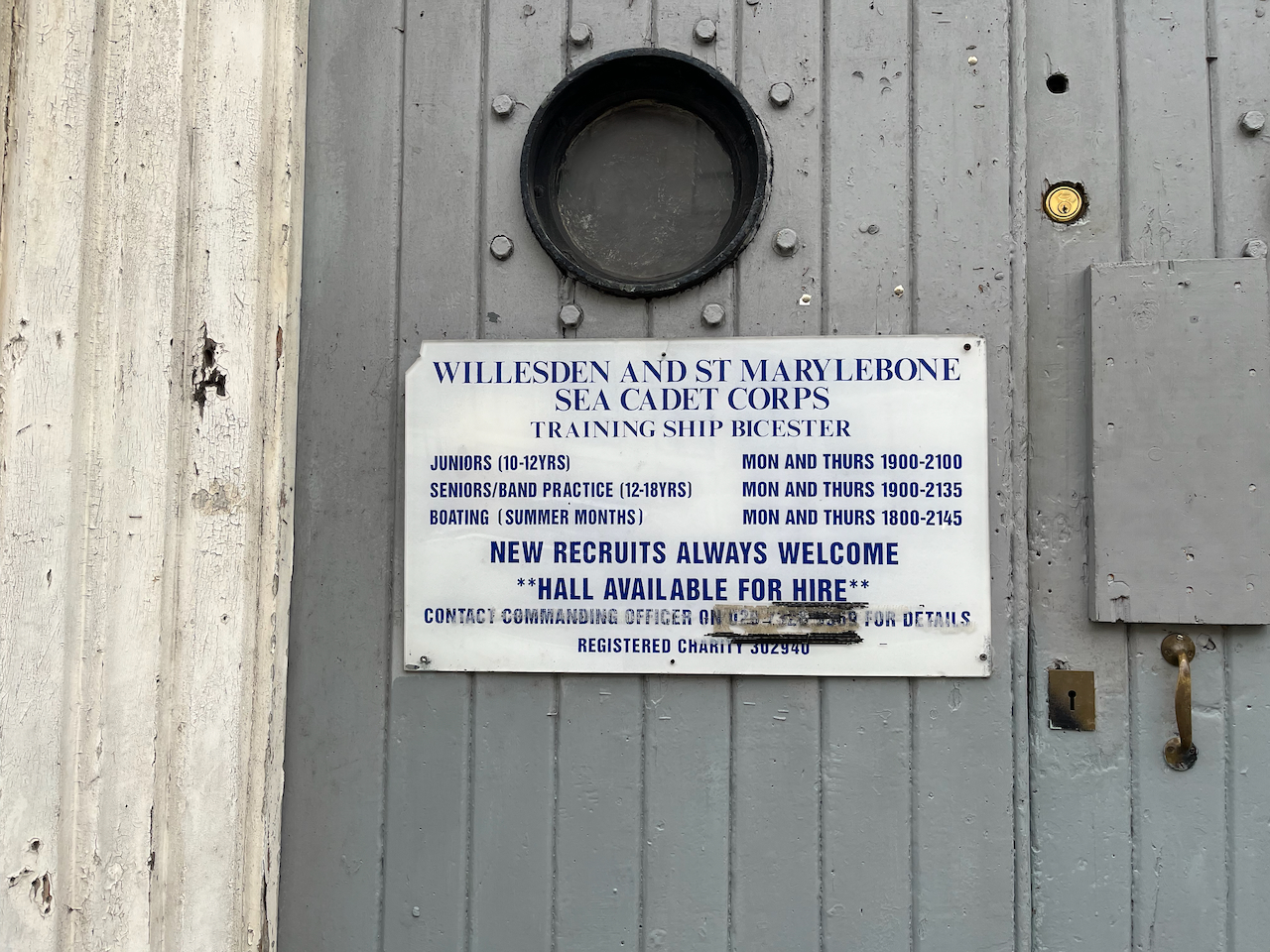
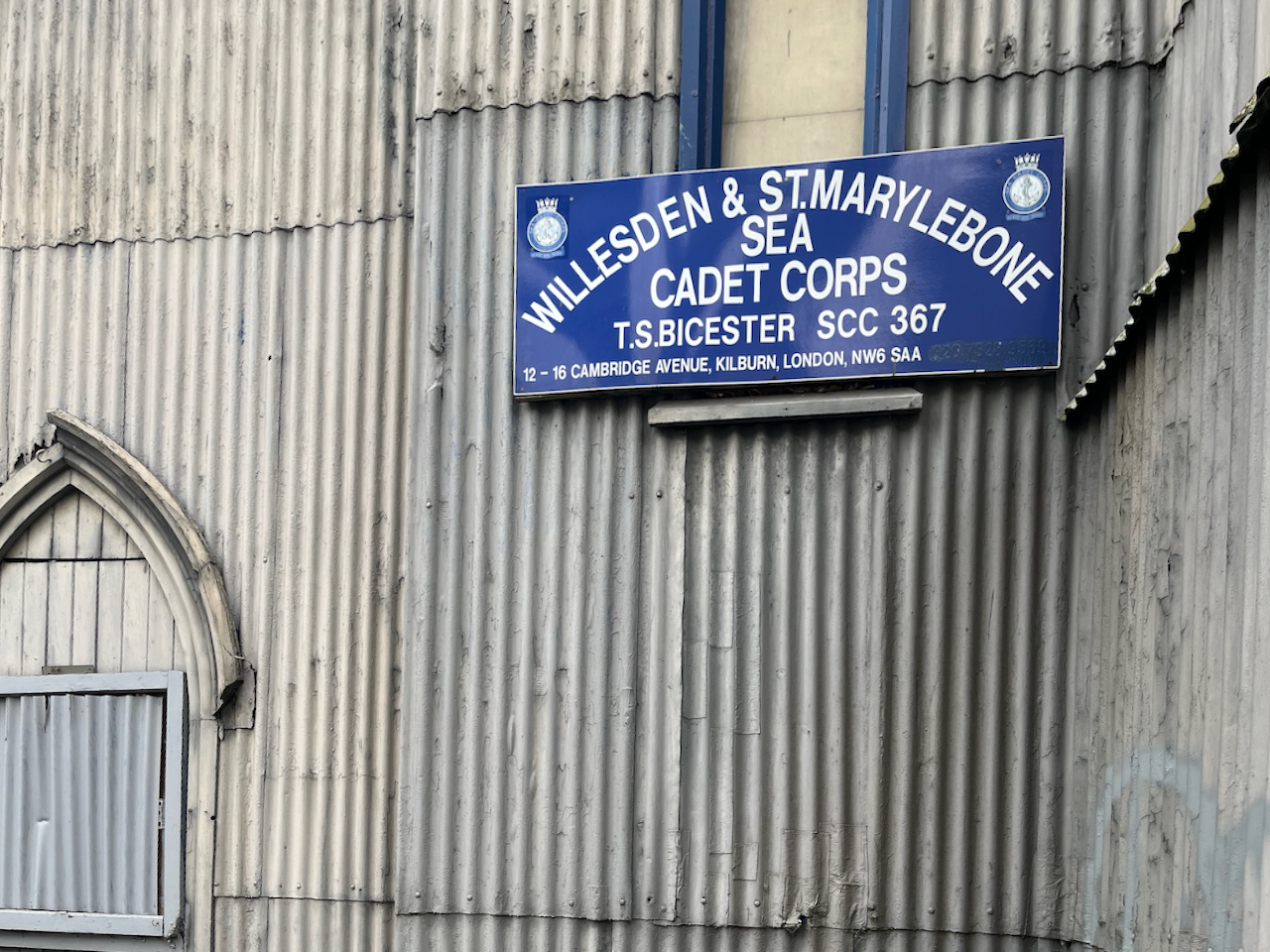
The building was built as a church, and more recently was a centre for Sea Cadets. Its future is under discussion, according to an article on the London Historic Buildings Trust site (LHBT).

The site is owned by Notting Hill Genesis Housing Association (NHG).  LHBT are currently working with NHG and the Sea Cadets, supported by Historic England and the Conservation Officer at Brent Council, to explore how the building can be stabilised and used in the future.

https://londonhistoricbuildings.org.uk/index.php/tin-tabernacle-kilburn/

The latest date mentioned in this article is 2021, so I guess the exploration is still going on. It’s listed as a “current project” on their website. The building was looking a little precarious when I visited this year (February 2024). An alarm was sounding inside.

It is Grade II listed, and on the Heritage at Risk Register. The listing is on this link. It is currently an events venue, the website is:
http://tintabernaclekilburn.org/

Here are some photos of the outside:

The building is about 150m north of Kilburn Park underground station on the Bakerloo Line.

The London Historic Buildings site has a “Virtual Visit” link, so you can see what it looks like inside, and there is a timeline of the building (click below to see it, 2 pages PDF):

It’s a building with a varied history. I wonder what will happen to it?

Sketch and notes in sketchbook 14

St George’s Esher, Old Church, KT10 9PX

After sketching the Tin Tabernacle in Esher West End, I walked into the town centre to sketch another St George’s: St George’s Old Church.

St George’s, Esher, Old Church. Sketched February 2024 in Sketchbook 14

Here is the notice by the door:

ST GEORGE ESHER
This church is cared for by
The Churches
Conservation Trust
.
Although no longer needed for regular worship, it remains a consecrated building, a part of England’s history, maintained for the benefit of this and future generations.

Here is the notice hanging from a post by the gate:

Welcome to ST. GEORGE’S CHURCH

Esher’s oldest public building and one of the earliest Anglican churches.
Most of the structure is 16th Century Tudor Two 18th Century features of te Church are a 3-decker pulpit and the Newcastle chamber pew designed by Sir John Vanburgh for Thomas Pelham., Duke of Newcastle and his brother Henry: both served as Prime Minister.
Princess Charlotte – heir to George IV – and Prince Leopold – who became the first King of the Belgians – worshipped here when they lived at Claremont after their marriage in 1816.
Queen Victoria, Leopold’s niece attended services when visiting her uncle and later came with Prince Albert.
When Christ Church was completed in 1854 St George’s ceased to be the Parish Church.
Restored by the community in 1965 it remains a consecrated building now in the care of the Churches Conservation Trust. Several services are held each year. It is also a venue for music and the arts.

I sketched it from the graveyard, as the sun set. So many angles and views! It has been altered and added to and mended, yet is graceful and somehow perfect.

Behind the church there were crocuses.

A wonderful place! Tranquillity just off the main road.

Here’s a map. I walked here from the St Georges West End, along the route marked with a red line on the map: a half hour’s walk, just over a mile.

Here is work in progress on the drawing.

Tin Tabernacle, St George’s West End, Esher KT10 8LF

Beside the green on the West side of Esher stands this iron church, St George’s West End.

St George’s West End, Esher. Sketched on location February 2024, in Sketchbook 14

It has a single bell in its small bell tower, and a fence made in a particular way, which I tried hard to show. I wondered if it is intentionally in the shape of a line of crosses, appropriate for a Christian church.

This is one of dozens of “tin tabernacles” or iron churches across the UK. Wikipedia has a whole list. Some of them are strikingly similar to this one.

They were built in the late 19th century, in response to expanding demand, using the new technology of corrugated iron. Many of them, including this one, were pre-fabricated.

According to a 2004 article on this church by Angela Stockbridge the land was donated by Queen Victoria in 1878. “A need was felt to make provision for “the spiritual wants of the “Aged, Poor and Infirm of West End”” and to spare them from the steep and often muddy climb into Esher” she writes. It was intended to be a temporary church. 145 years later, here it is, still standing, and still hosting services.

The church is dedicated to St George. Above the porch is a stained glass window, evidently showing the Knight slaughtering the Dragon. I could just make him out standing on the stirrups of his white horse. The church was closed when I visited, but I hope to go inside on a future occasion. I am told that inside it is cladded with white-painted wood panelling.

I sketched the church from the village green opposite. It was damp and muddy. When I’d had enough, I retreated to the “Prince of Wales” for some lunch. Then I went on to sketch the church in Esher town centre: another St George’s.

Esher is to the West of London, with a main line railway station in to Waterloo.

“They do tend to heat up in summer and stay cold in winter, and the rain makes a noise on their roofs, but they have proved remarkably sturdy. As one commentator writes, “Tin Tabernacles are an important if brief and overlooked episode in the history of church architecture,” and have a claim to “be recognised as listed buildings, particularly as examples of prefabrication” (Dopson 204-05).”
Dopson, Laurence. “Tin Tabernacles.” Words from “The Countryman”. Ed. Valerie Porter. Newton Abbot: David & Charles, 2007. 204-05.

https://victorianweb.org/art/architecture/churches/58.html
In the “Prince of Wales”

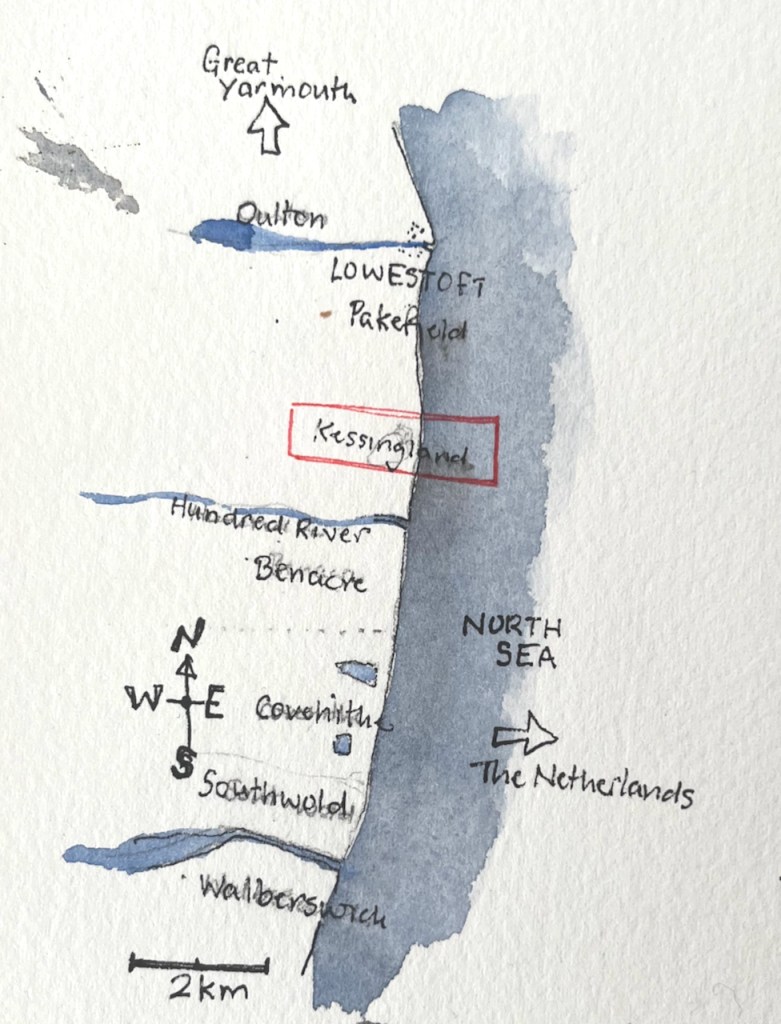
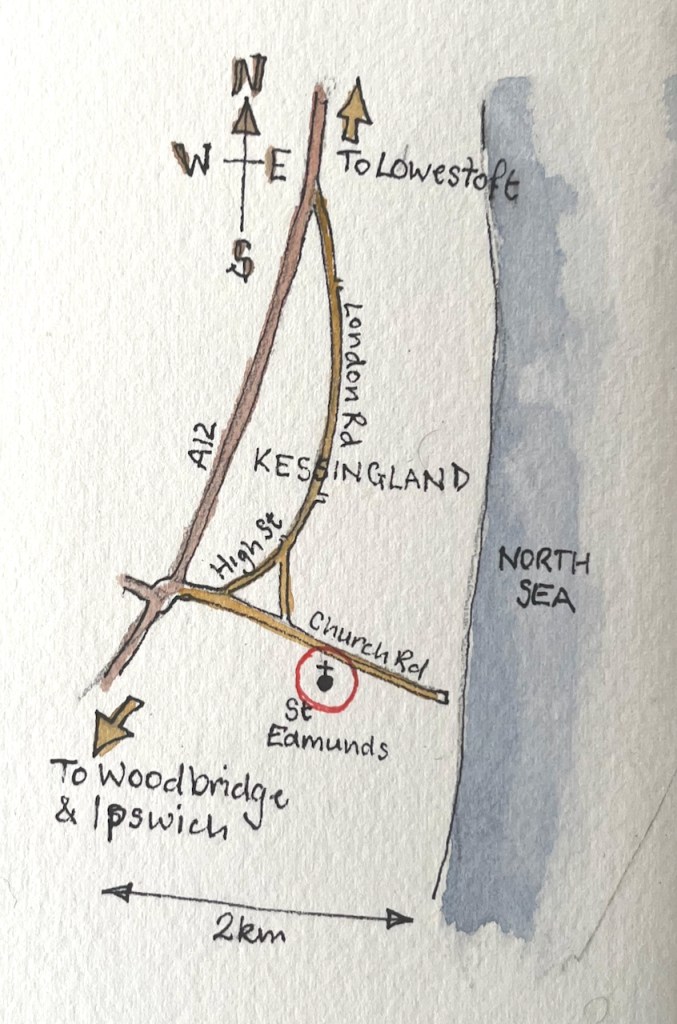
St Edmund, Kessingland NR33 7SQ

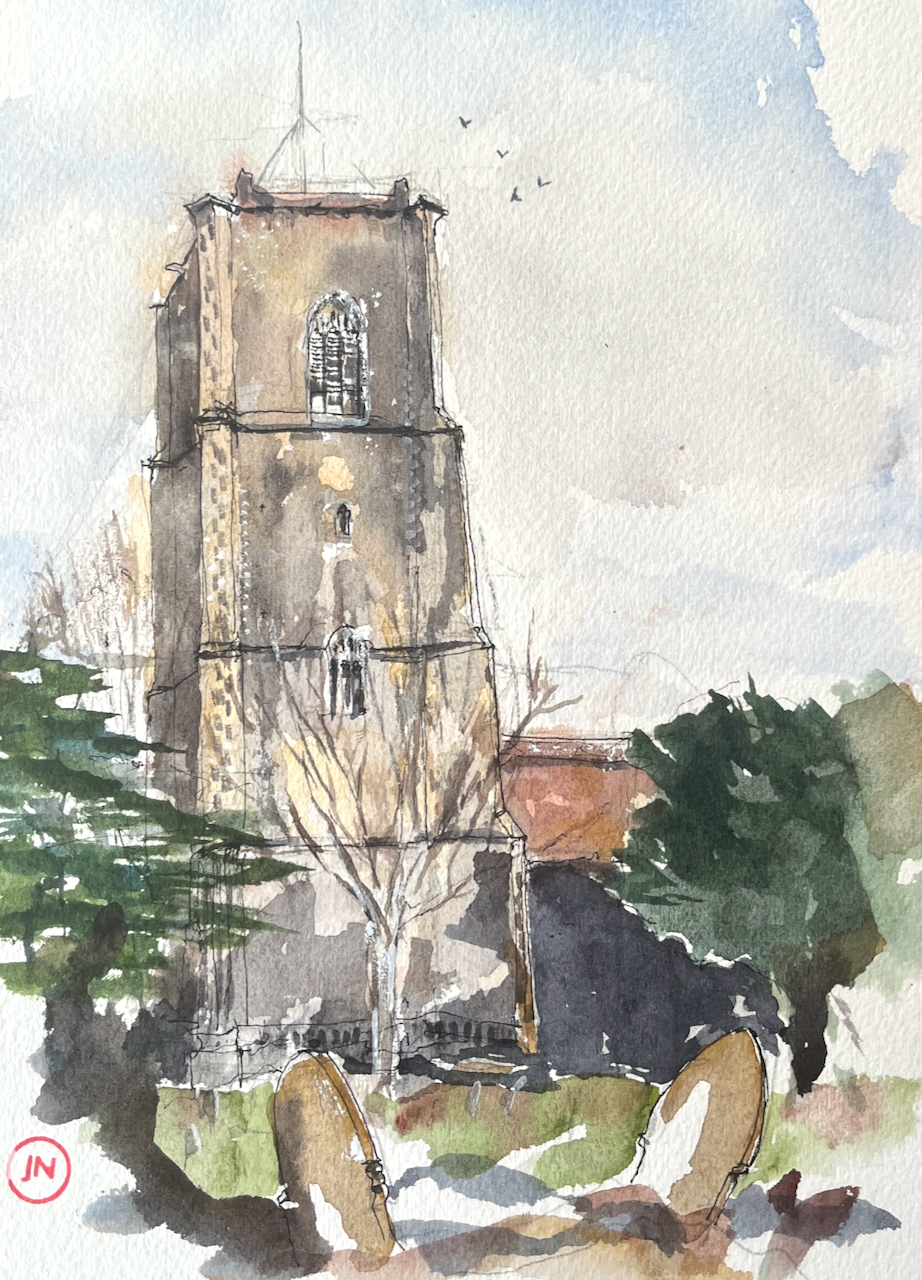
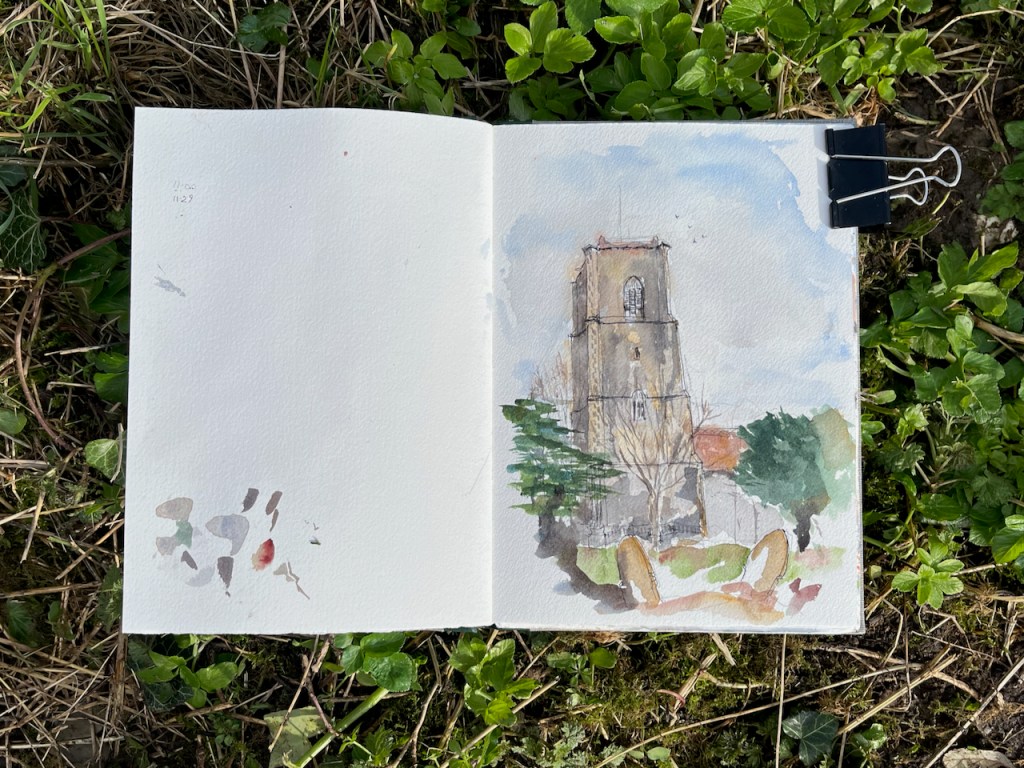
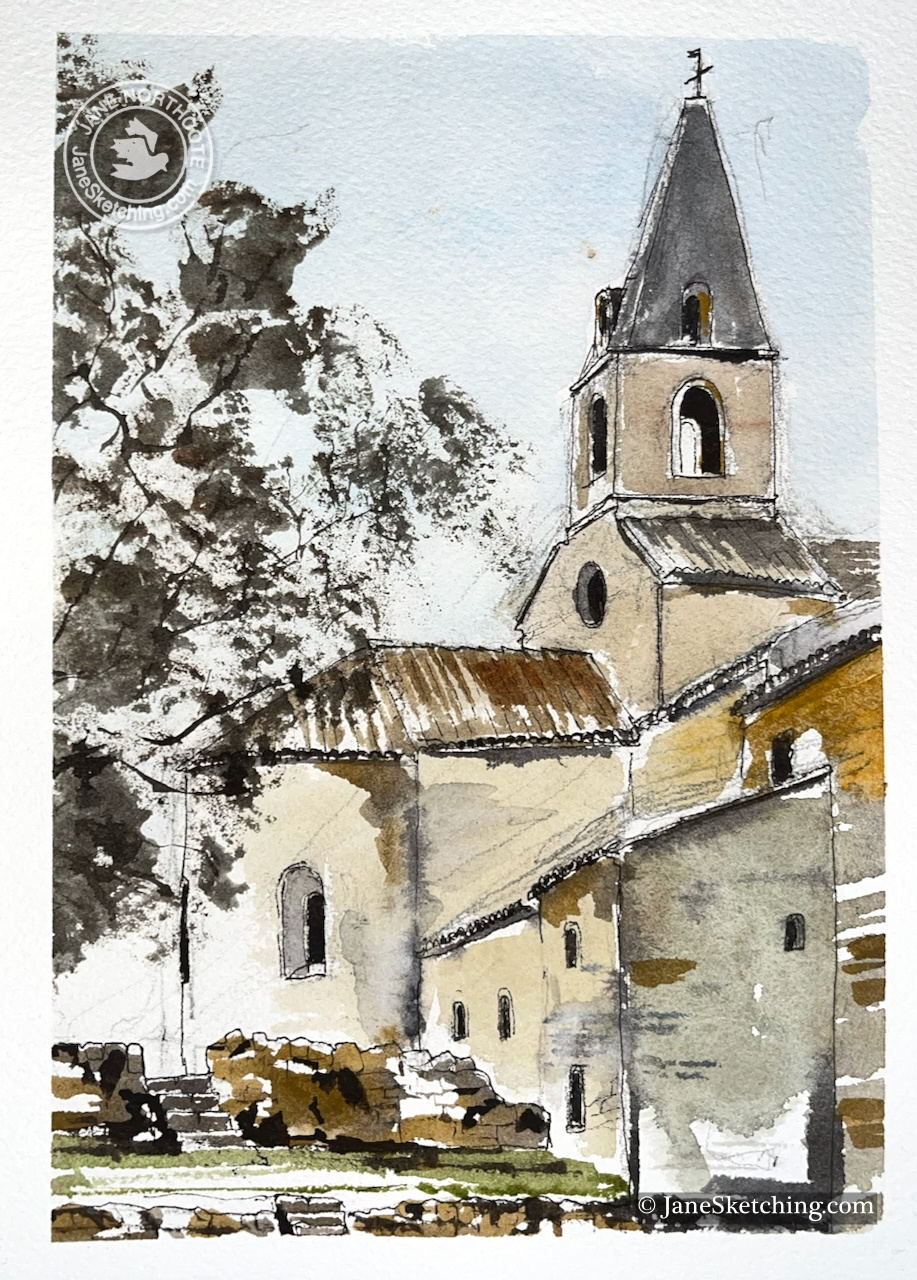
Here is the church of St Edmund, Kessingland, seen from the south.

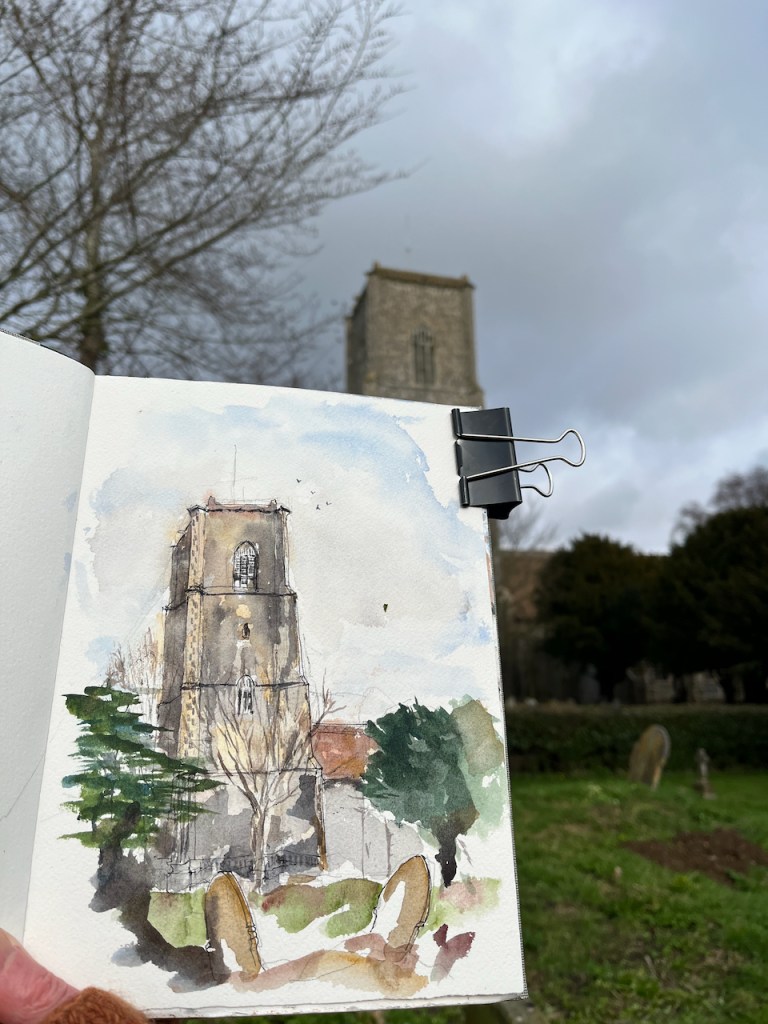
Church of St Edmund, Kessingland. Sketched 11 February 2024, 12:30 in Sketchbook 14

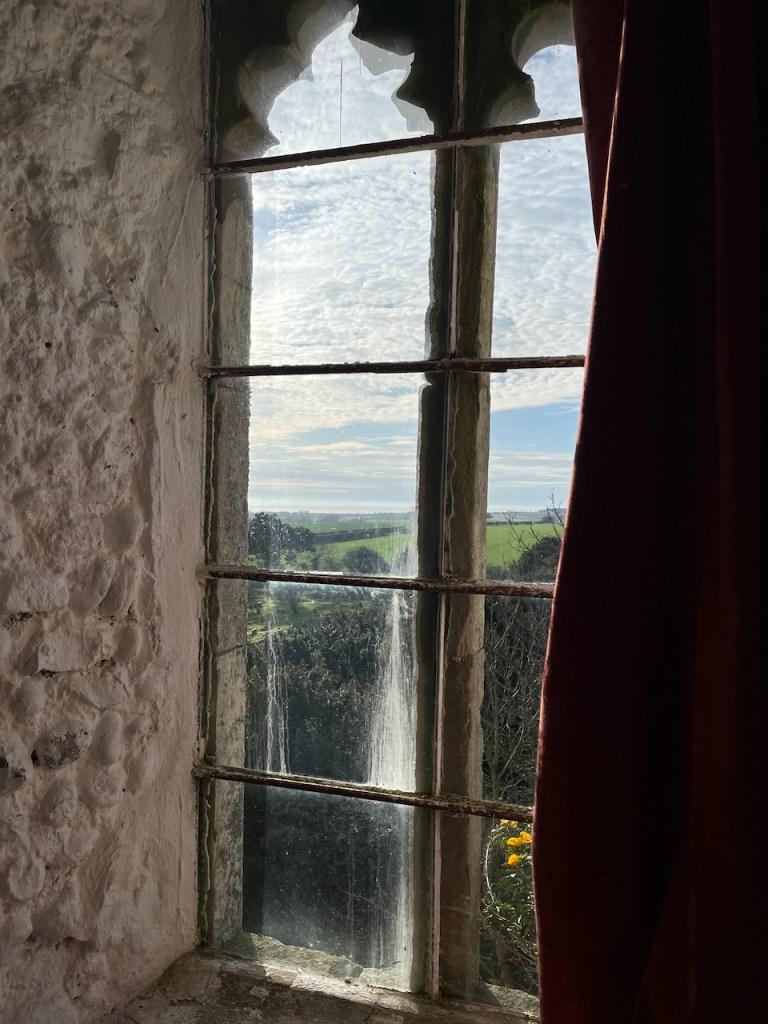
I was a guest of the bell ringers, who kindly invited me to their loft. There are six bells. I witnessed their splendid peals, which made the tower shake slightly under my feet. This was a surprise to me, as the walls of the tower are about three foot thick. But apparently it’s perfectly normal. Then I went outside and sketched the church from the south.

It was a beautiful place to stand and sketch: a peaceful country churchyard. The gravestone in front of me, in the foreground in the picture, carried stone carved flowers, and cushions of moss.

This tower is very old. According to the Historic England listing, the tower is from the 15th century and Grade I listed. There is neat flint work, in a chequerboard pattern higher up and in vertical lines lower down, with a horizontal border at ground level. The nave is thatched! It has recently received new thatch, in a glowing russet colour which you can just see to the right of the tower.

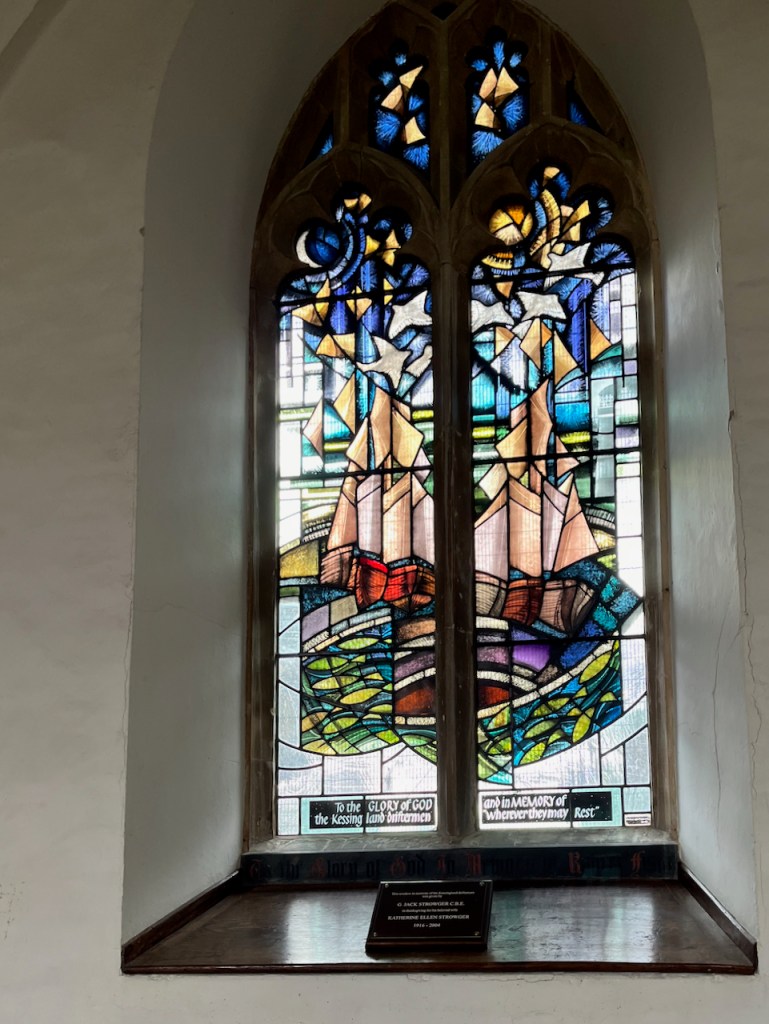
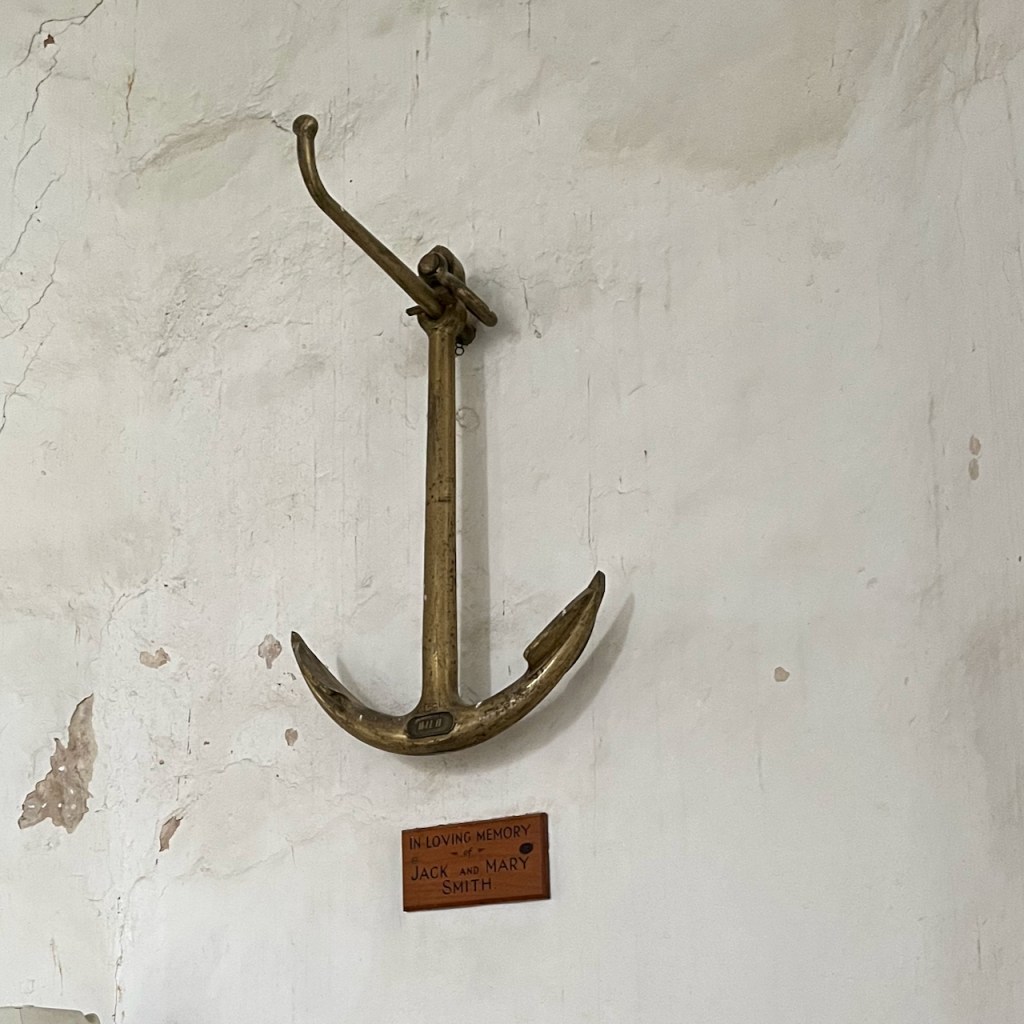
The church is about half a mile from the sea. There is a stained glass window, dated 2007, by Nicola Kantorowicz, dedicated to the “Glory of God and the memory of Kessingland driftermen, ‘where ever they may rest'”. It was given by G. Jack Strowger in memory of his wife Katherine. There is a ship’s wheel on the wall, and another on a low pulpit. An anchor hangs from the wall, “in loving memory of Jack and Mary Smith”.

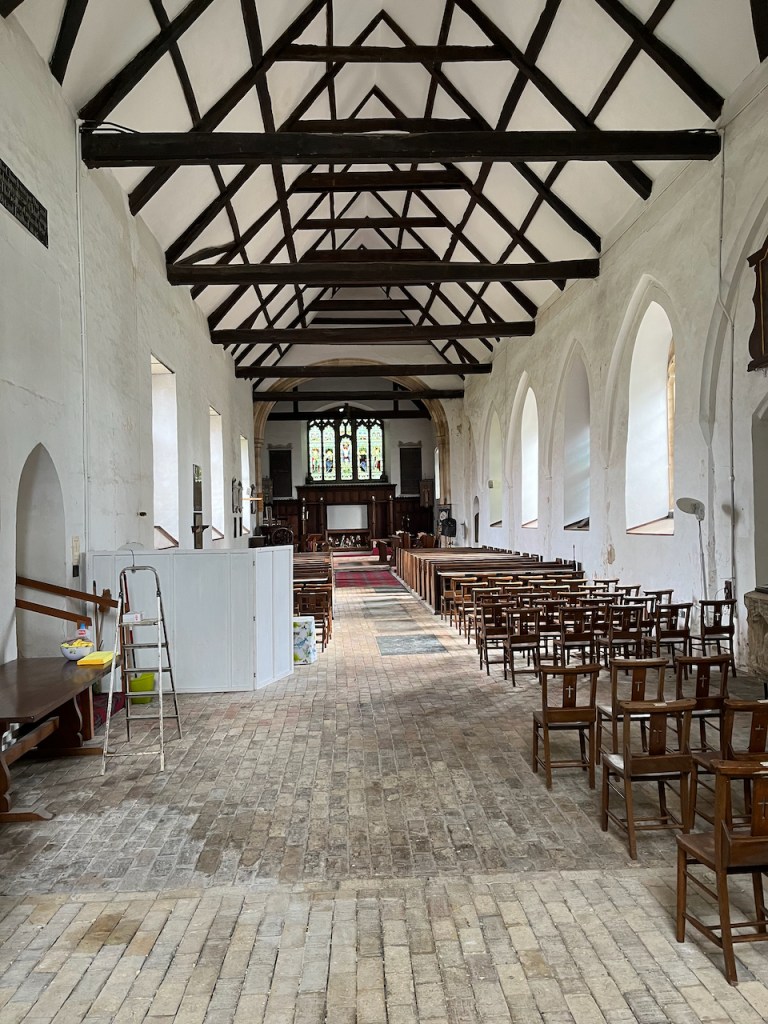
The nave of the Church of St Edmund, Kessingland, looking east.

It’s well worth a visit if you are in the area.

St Clement Danes, Strand, WC2

St Clement Danes stands on a traffic island in the Strand.

St Clement Danes, Strand, WC2R 1DH, sketched 7 February 2024 13:30 in sketchbook 14

I sketched this church over a lunchtime. At 1pm its bells played its tune, “Oranges and Lemons“, a little haphazardly, but quite distinct.

Why St Clement Danes? What’s Danish about it? According to the church leaflet, in the 9th century, “Danish settlers who had married English wives were allowed to settle in the area taking over a small church dedicated to St Clement. The Church came to be known as ‘St-Clement-of-the-Danes'”.
A rather more brutal story is told by the Viking Ship museum of Roskilde in Denmark:

“By the 9th century London was yet again a powerful and wealthy town attracting the attention of the Danish Vikings. They attacked London in AD 842, and again in AD 851, and The Great Army spent the winter in the town in AD 871-72.”
“Cnut became King of England and in AD 1018 he was able to send his army back to Denmark. He burdened the English population with the tax thingild to pay for the maintenance of a small army. He also placed his Danish garrisons around London, including by the church St. Clemens Danes. Generally, Cnut was a popular king, and during his reign peace prevailed in England. Cnut died in AD 1035 and one of his sons, Harold Harefoot, took over the English throne.
On his death Harefoot he was buried in Westminster Church, but his brother Harthacnut ordered the body to be dug up and thrown into the Thames. Perhaps Harold Harefoot was re-buried in St. Clemens Danes outside the town wall. The peace in England was over.”

The “Science Nordic” site offers lively descriptions of the Danish people that arrived in England in the 9th and 10th centuries. Today we might describe them as “economic migrants”

“In eastern England the Vikings discovered a milder climate and a rich agricultural landscape, similar to the one they knew back home. Faced with a lack of good farming land in Denmark, many families decided to try their luck on the other side of the North Sea.”
Dr Jane Kershaw, Archaeologist and Viking researcher

St Clements no longer has any particular Danish connection. It is linked to the Royal Air Force. The statue outside, in the bottom centre of my sketch, is

“Air Chief Marshall Lord Downing, Baron of Bentley Priory, Fighter Command 1936-40”

according to the inscription on his plinth. The Danish church in London is St Katherines, to the East of Regents Park.

Here is the song the bells played, with links to my drawings of the churches:

Oranges and lemons,
Say the bells of St. Clement’s. (St Clement Danes)
You owe me five farthings,
Say the bells of St. Martin’s. (St Martin in the Fields)
When will you pay me?
Say the bells at Old Bailey. (St Sepulchre-without-Newgate)

When I grow rich,
Say the bells at Shoreditch. (St Leonard Shoreditch)
When will that be?
Say the bells of Stepney.(St Dunstan’s Stepney)
I do not know,
Says the great bell at Bow. (St Mary Le Bow)
Here comes a candle to light you to bed,
And here comes a chopper to chop off your head!

15 Lamb’s Passage EC1

An old brick building stands amongst the new-build. The paint on its window frames is flaking, and its brickwork is dark from the smoke of a previous age, yet it retains its dignity: a grandmother of a building.

15 Lamb’s Passage, London EC1, sketched 5th January 2024 in Sketchbook 14, 4pm, 6 degrees C

This is the former St Joseph’s School, built in 1901, which ceased operation as a school in 1977. On its roof you can see the wire netting which once must have surrounded a playground or netball court.

St Joseph’s Church is in the basement, accessed by the porch you can just see to the right of my drawing behind the furthest lamppost.

Entrance to St Joseph’s Catholic Church, Lamb’s Buildings: porch built 1993 to the design of Anthony Delarue (from https://parish.rcdow.org.uk/bunhillrow/about-the-parish/)

The area in front of the building is a quiet garden, in memory of Basil Hume, an English Catholic bishop. Sometimes the gate is open and you can go in. It has been arranged so that, even in this tiny space, it is possible to walk some kind of small pilgrimage, along a path, across a ditch, past a tree, and so round a corner to rest in the shaded hut. On the way you encounter a splendid birch tree with white bark, which I have seen grow from a sapling.

BE 
STILL
AND
KNOW
THAT
I AM
GOD
This quiet garden 
is dedicated to the
memory of BASIL HUME
monk and shepherd
1923-1999

Number 15 Lamb’s Buildings hosts several organisations now. The City Photographic Society uses the Church Hall in this building. It is also the registered office of the Catholic Herald. I have often heard music as I pass by, so it might also be used as a rehearsal space. There is ballroom dancing on Mondays. The smaller building to the south, on the left of my drawing, hosts a pregnancy advice centre. So this is a set of buildings is in use, actively serving the community despite the flaking paint.

I made this drawing quickly as the light faded on a cold and windy evening. After the pen, I retreated back to my desk to apply the colour.

The musician Andrew Pink has written in detail about this building, including a description of the organ in the basement church. His piece is here: https://andrewpink.org/lambs-buildings/. The church website is here: https://parish.rcdow.org.uk/bunhillrow/about-the-parish

Here are some more photos of the building: