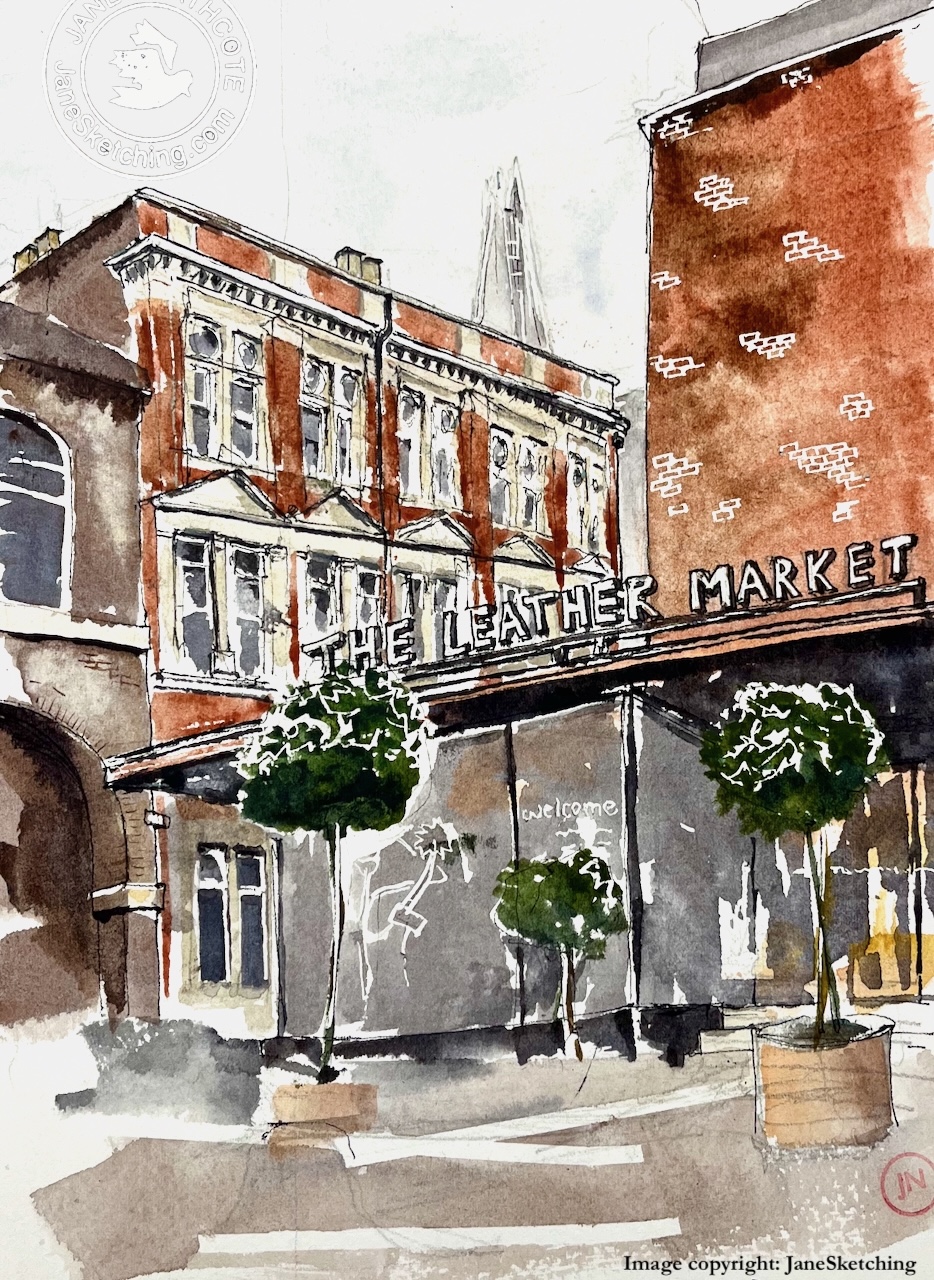
The Leather Market Workspace, Bermondsey, SE1 3ER

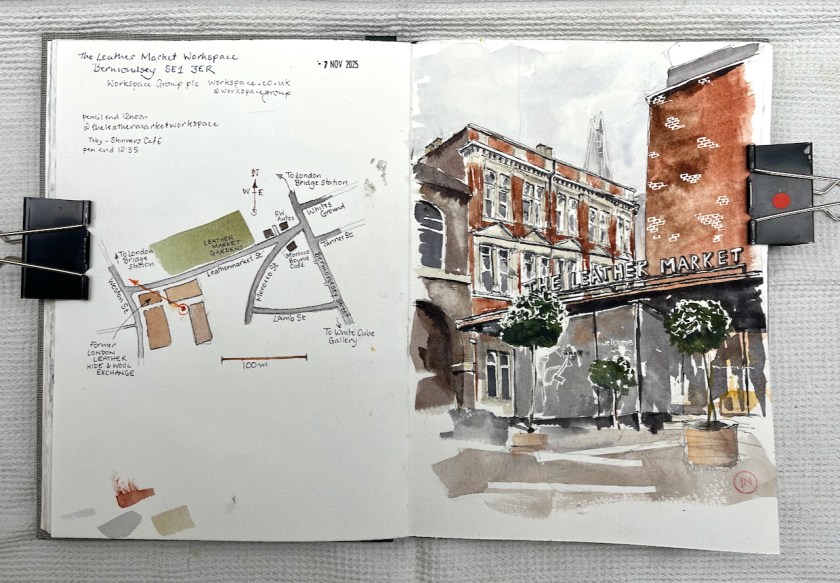
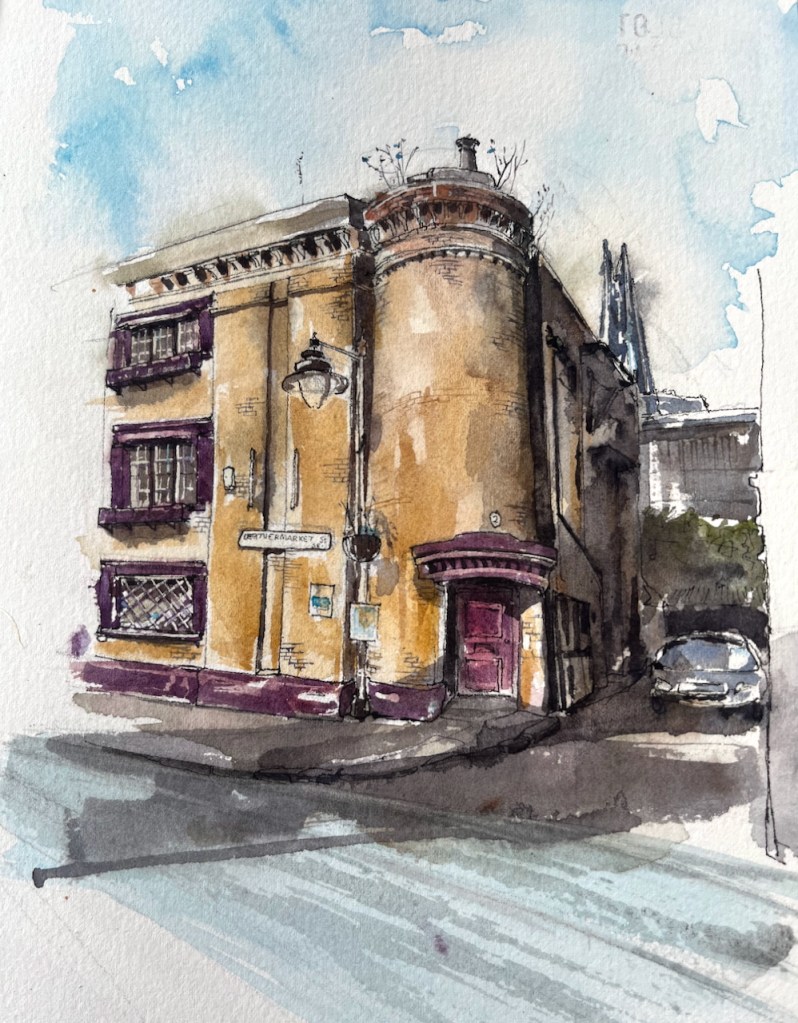
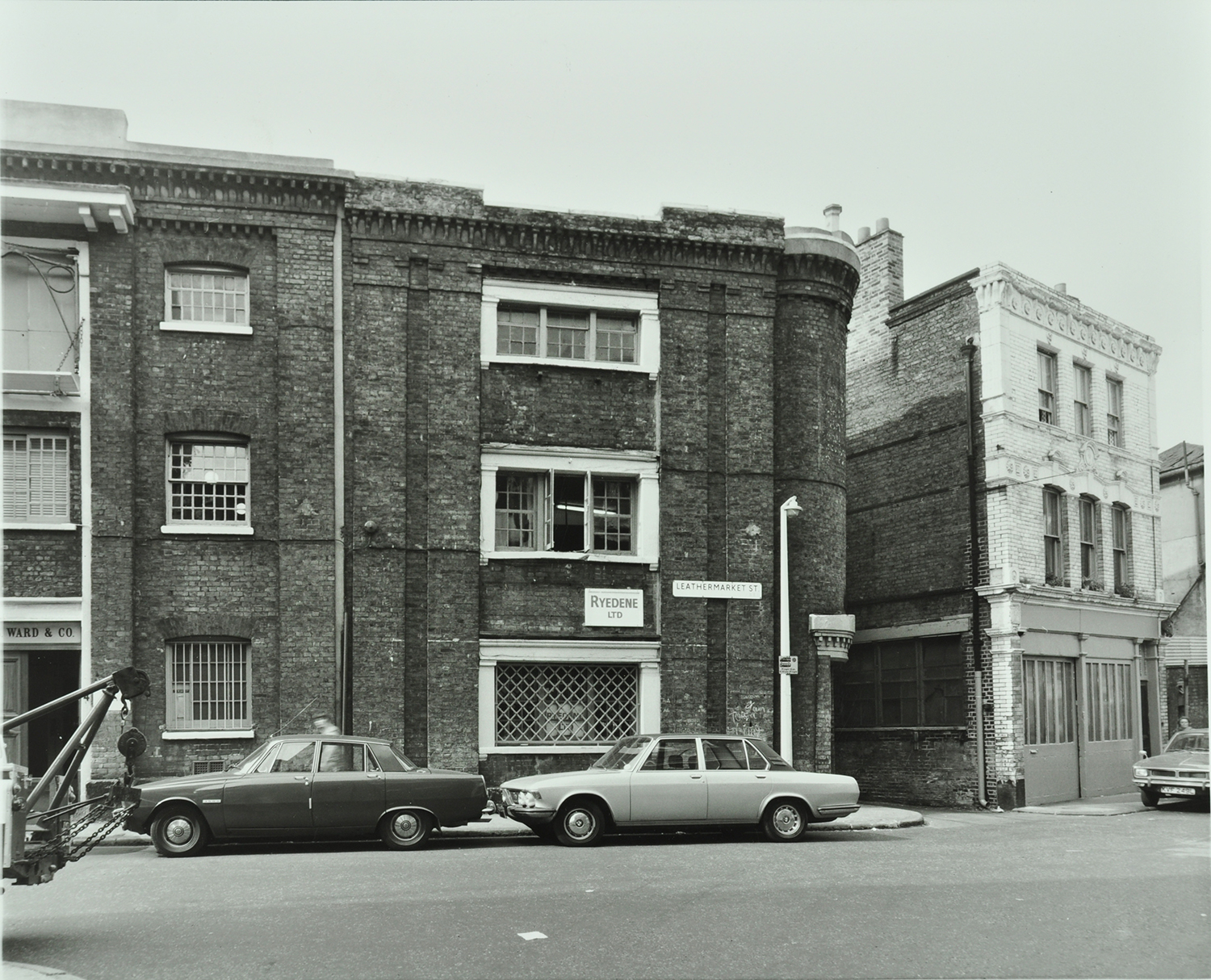
Here is The Leather Market Workspace. The Victorian building on the left is the back of the Grade II listed former “London Leather, Hide & Wool Exchange”, 1878, designed by George Elkington and Sons.
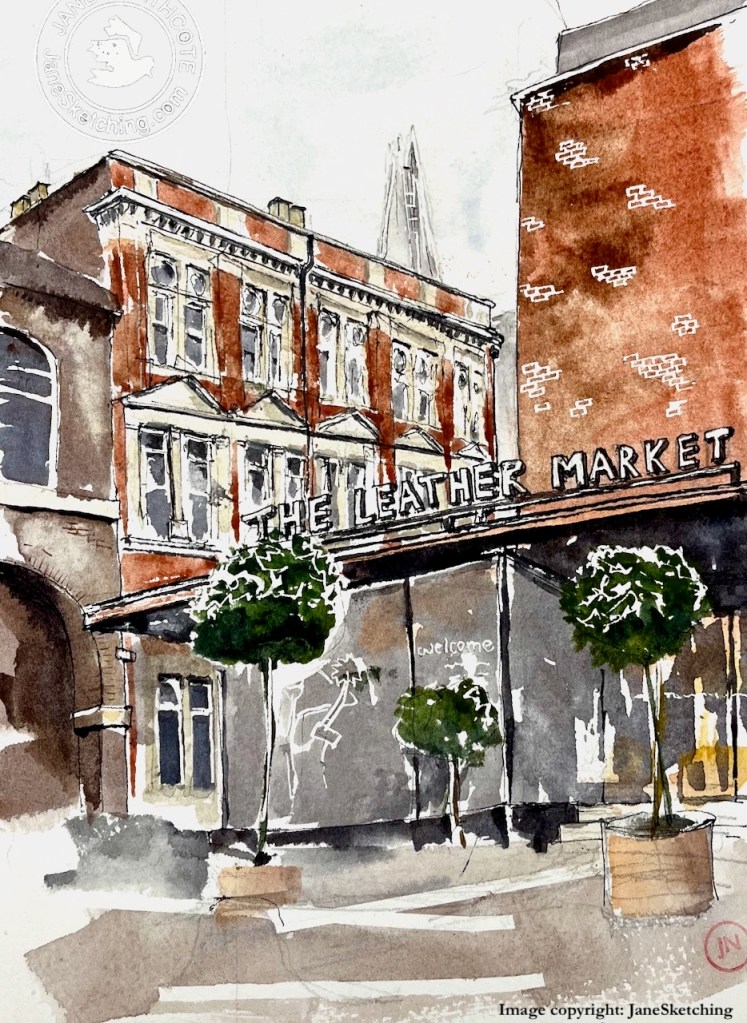
My idea had been to sketch the front of the Victorian building from Weston Street. But the front was obscured by delivery vans.

We were on the point of abandoning the project, when Toby appeared.
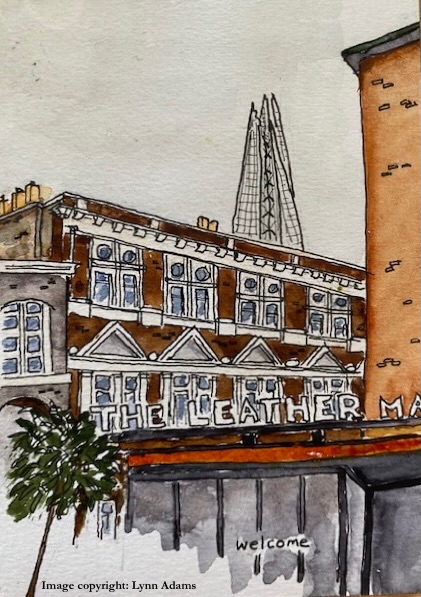
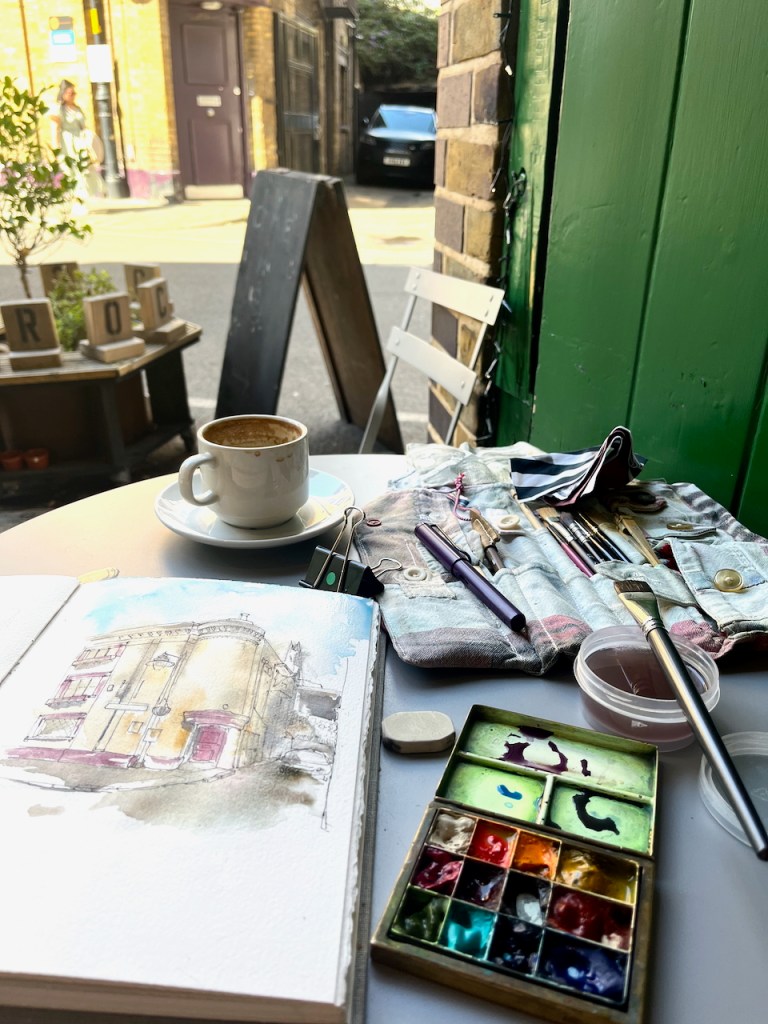
Toby, it turns out, is in charge of a café. He was standing on the pavement next to a huge arch by the Victorian frontage. Come in! he suggested. Lynn and I followed him through the arch. The space opened out into a large yard, with seats. Toby went into his café and we walked around the yard, sizing up the artistic possibilities. Lynn uttered a shriek of delight. She had discovered a point at the edge of the courtyard with an unexpected view of The Shard. And trees. This was her quest. She settled down to sketch while I went to procure coffee from Toby and his team. Then I started sketching too.

“The Leather Market” is one of a collection of co-working spaces managed by Workspace Group plc. We sketched and drank our coffee in the calm yard. Workers passed by and made encouraging comments.
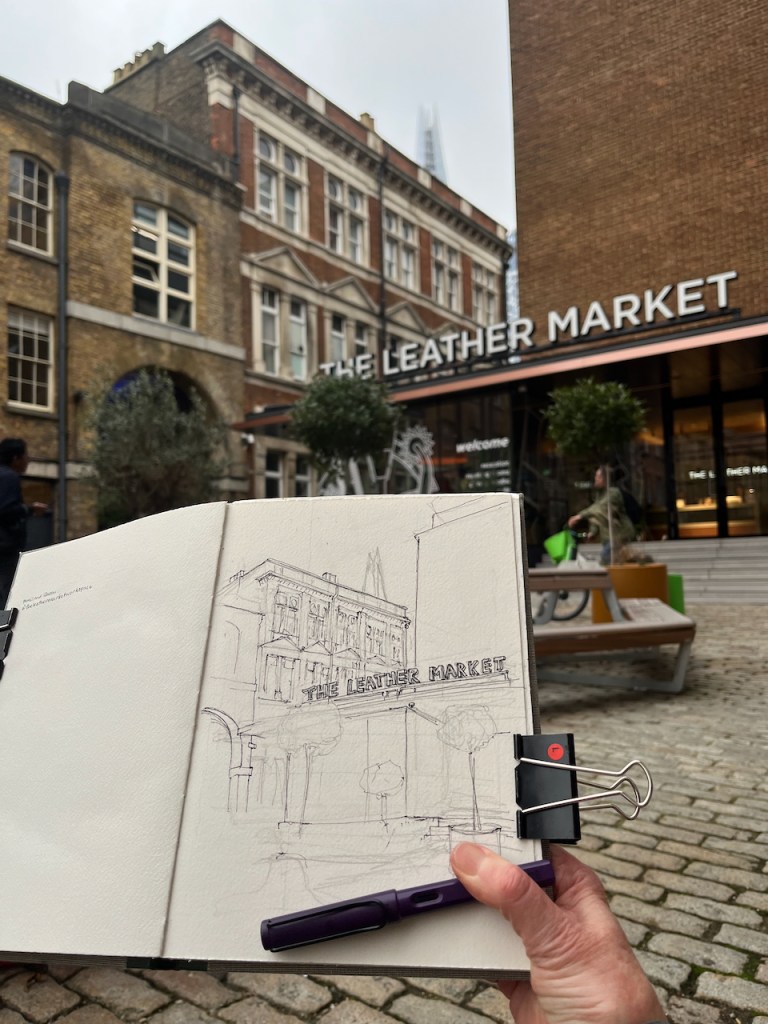
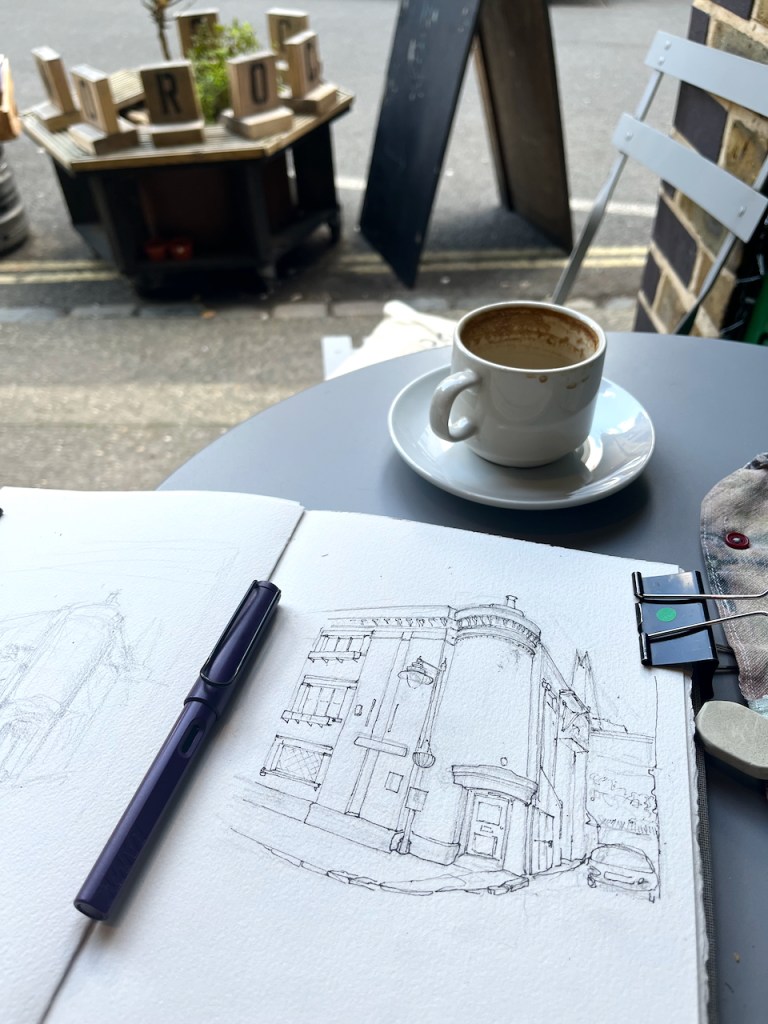
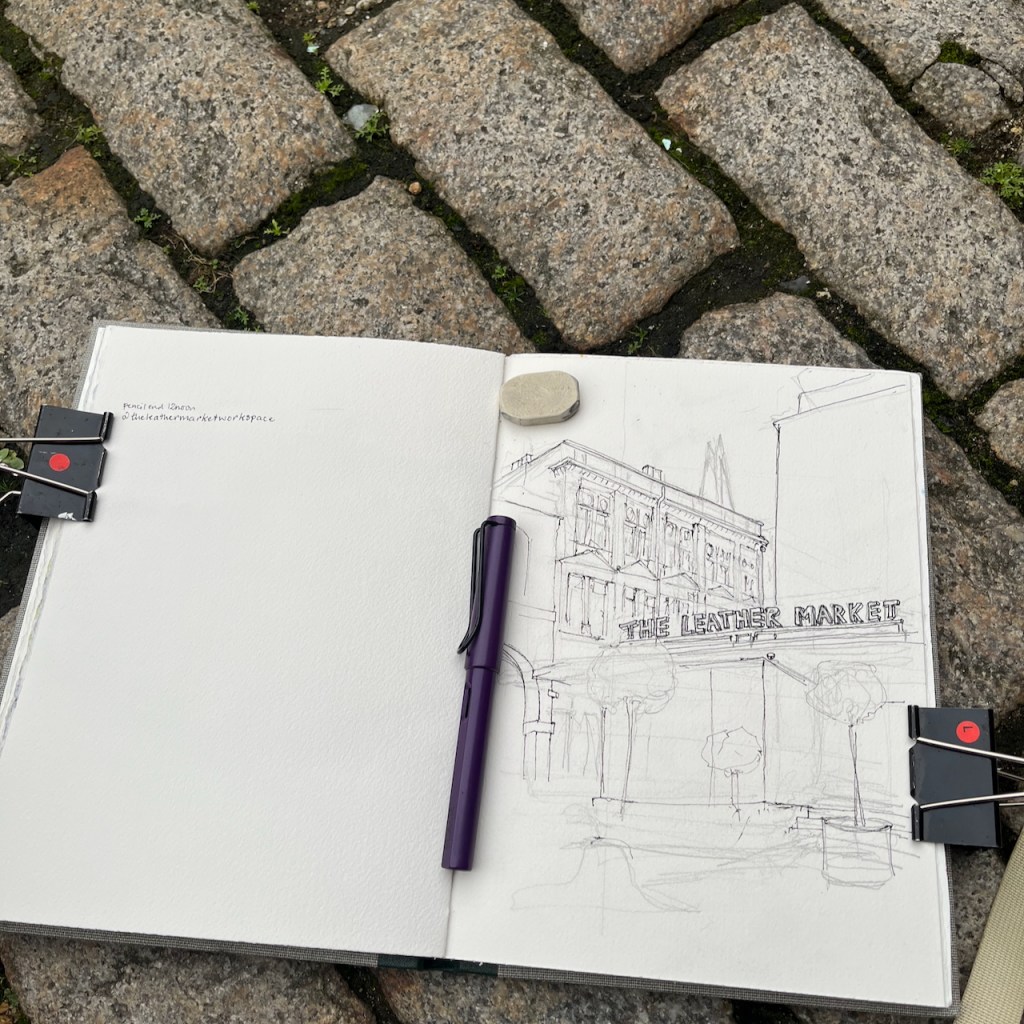
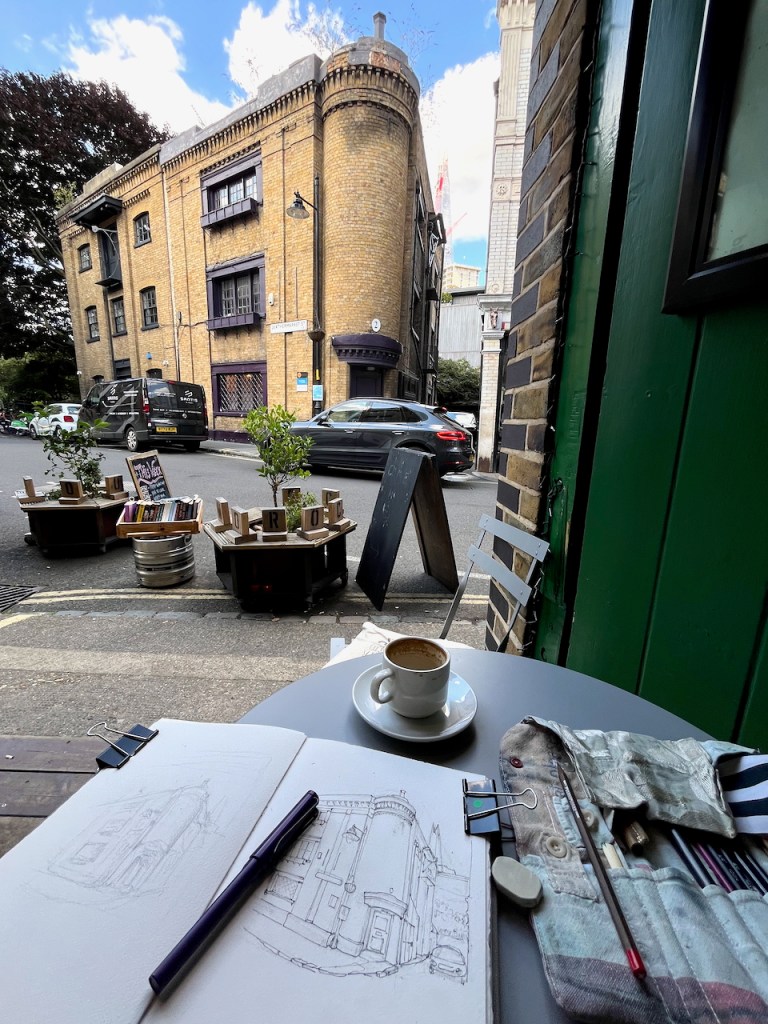
Working on a sketch of The Leather Market. Pen: Lamy Safari fountain pen

We returned our coffee cups to the friendly café, and set off to explore more of Bermondsey. By the time we emerged out through the arch, the delivery vans had gone from the front of the building.
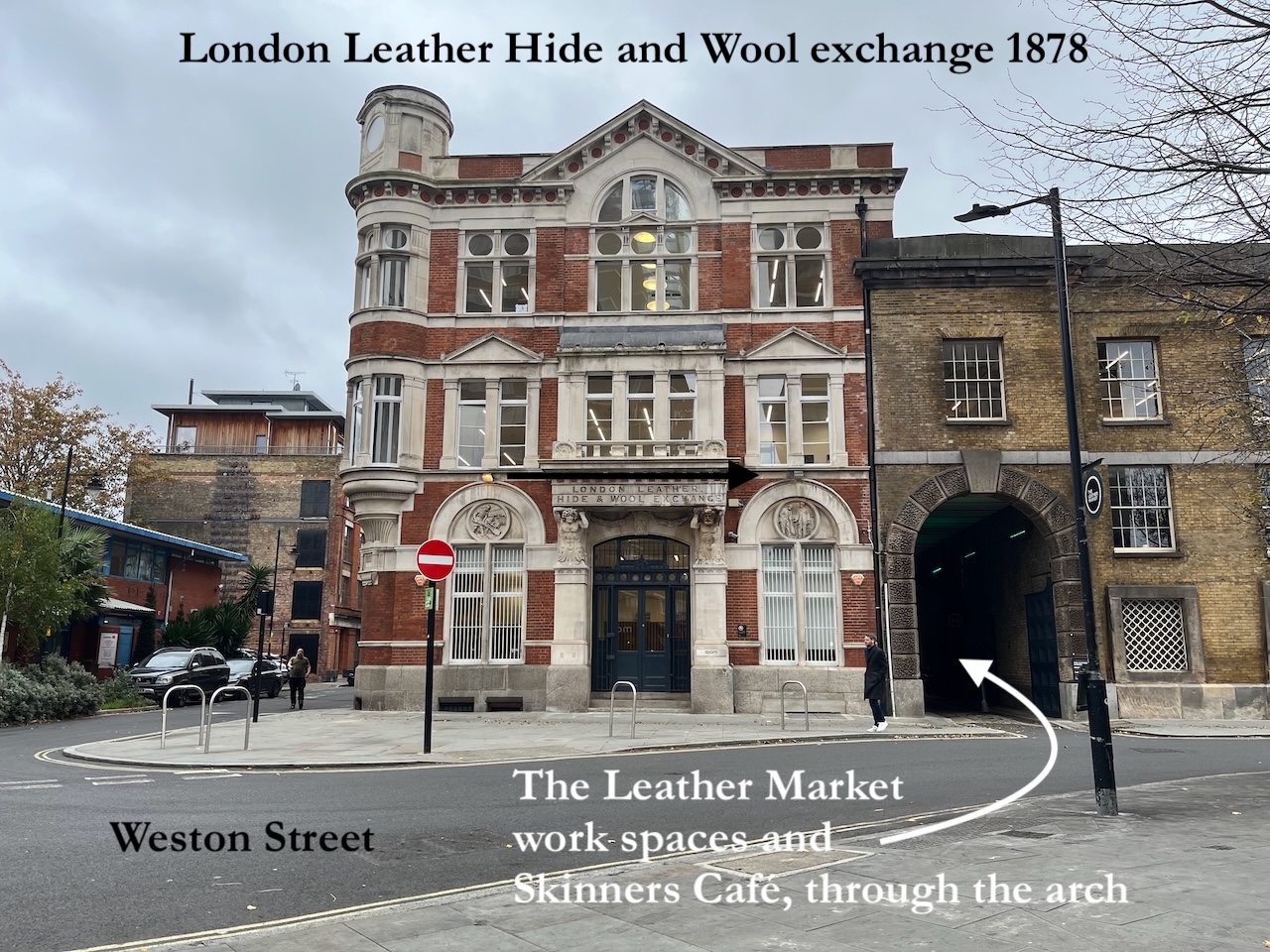
Thank you to Toby and his team from Skinners Café for making us so welcome!

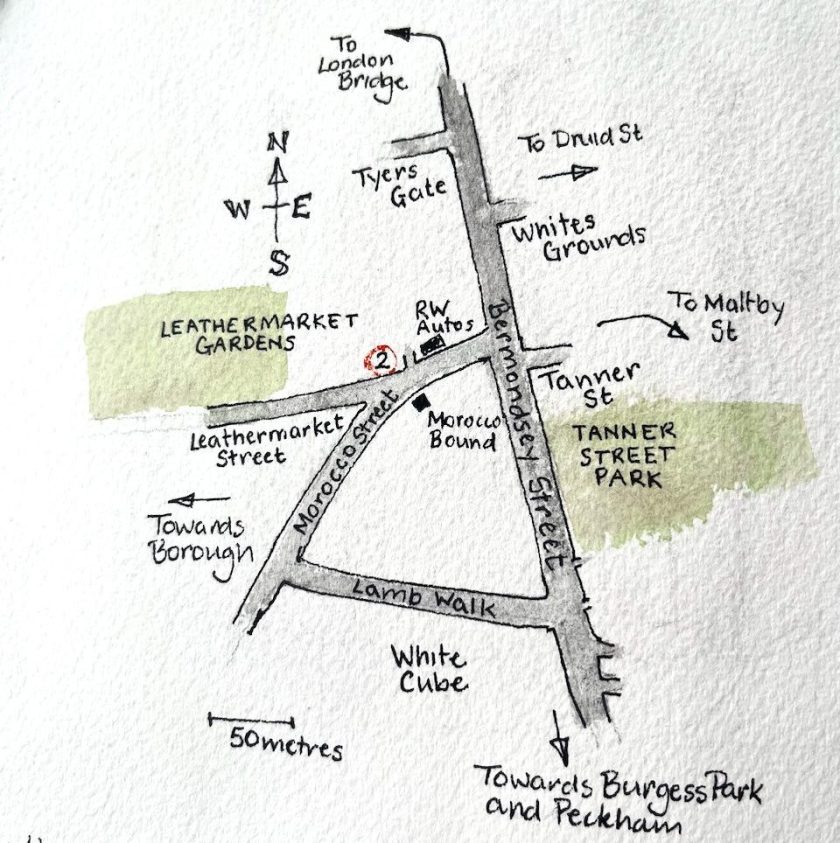
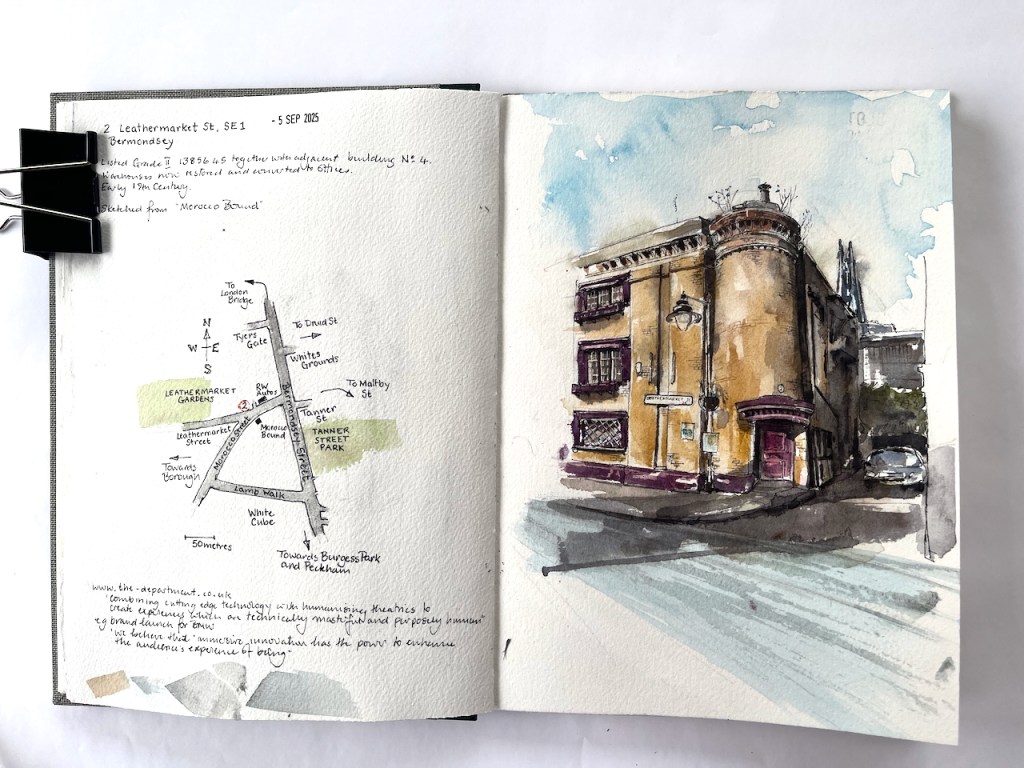
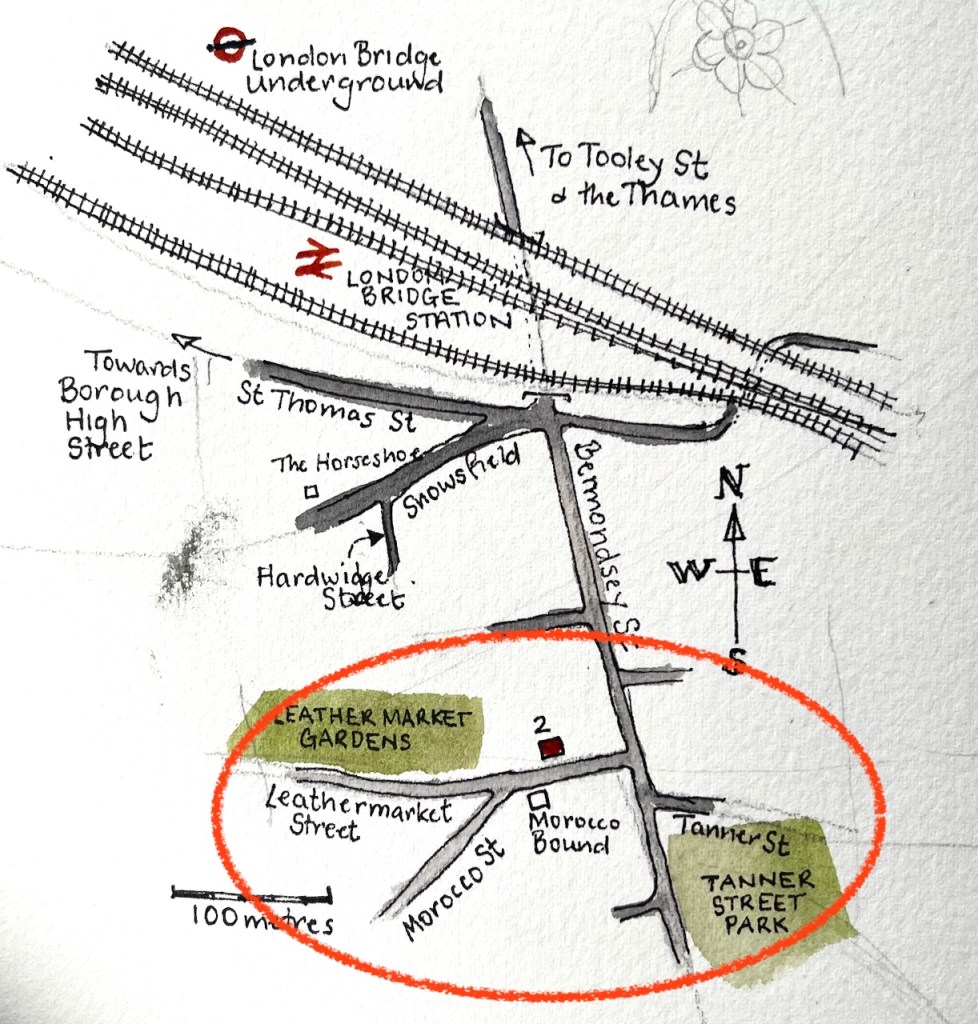
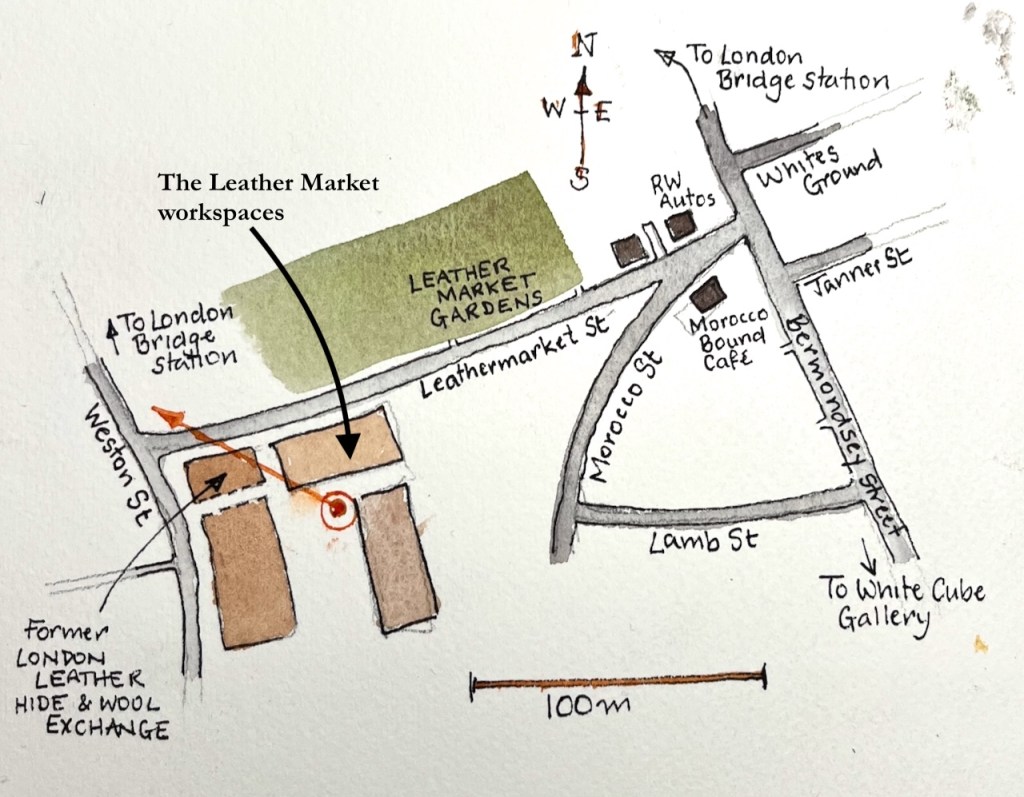
Here’s a map:
Colours, all Daniel Smith watercolours:

  • Fired Gold Ochre for the bricks
  • Burnt Umber and Ultramarine Blue for the grey and blacks
  • Serpentine Genuine for the greens
  • Some Transparent Pyrrol Orange and Mars Yellow for the light indoors
  • all the whites are the paper, fine lines achieved using masking tape and rubber resist.

My pen is a Lamy Safari with EF nib, and De Atramentis Document Black waterproof ink. Paper is Arches Aquarelle 300gsm CP, in a book made by Wyvern Bindery of Hoxton
I have sketched in Bermondsey before:
St James Bermondsey SE1

Walking back from the Little Bread Pedlar with my bag of goodies, I came to a standstill in front of St James’ Church, Bermondsey. This is a…

keep reading
2 Leathermarket Street, Bermondsey, SE1

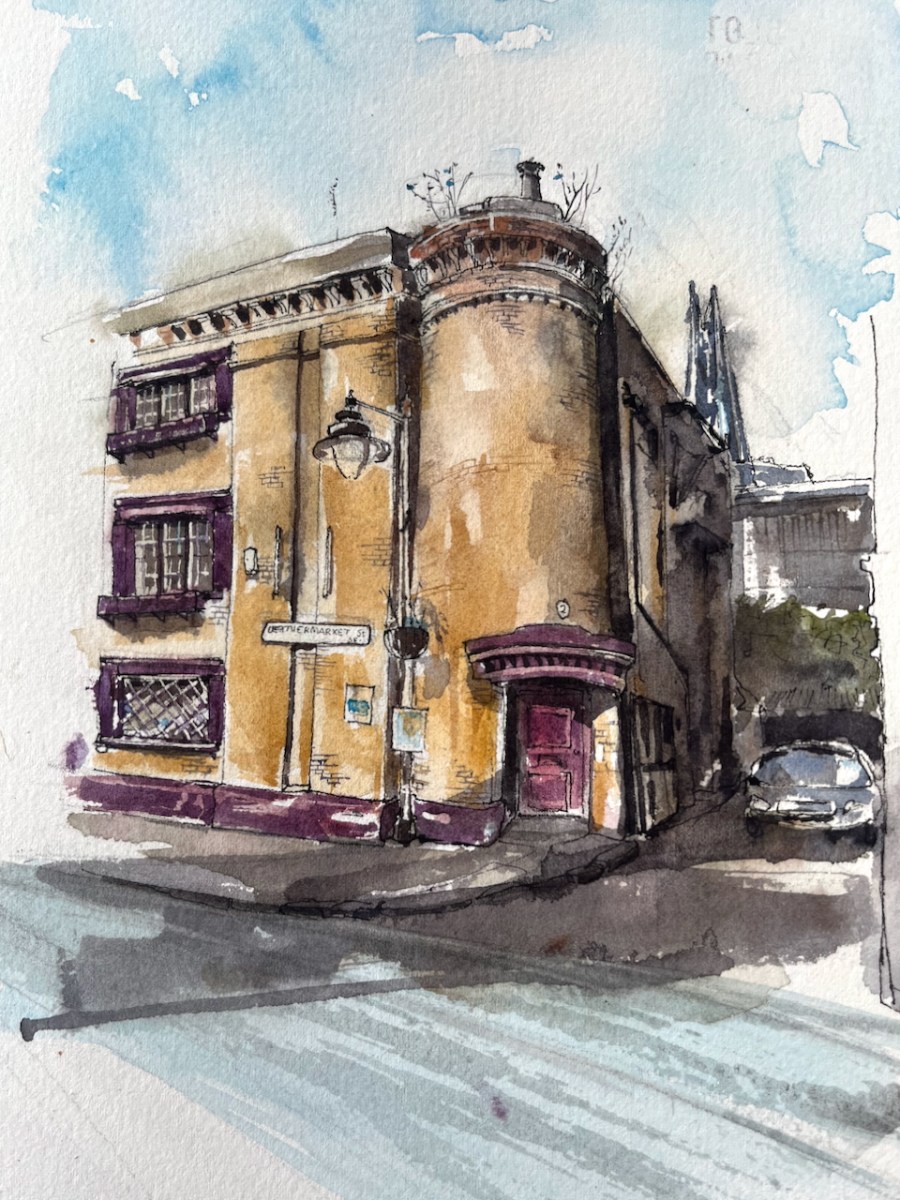
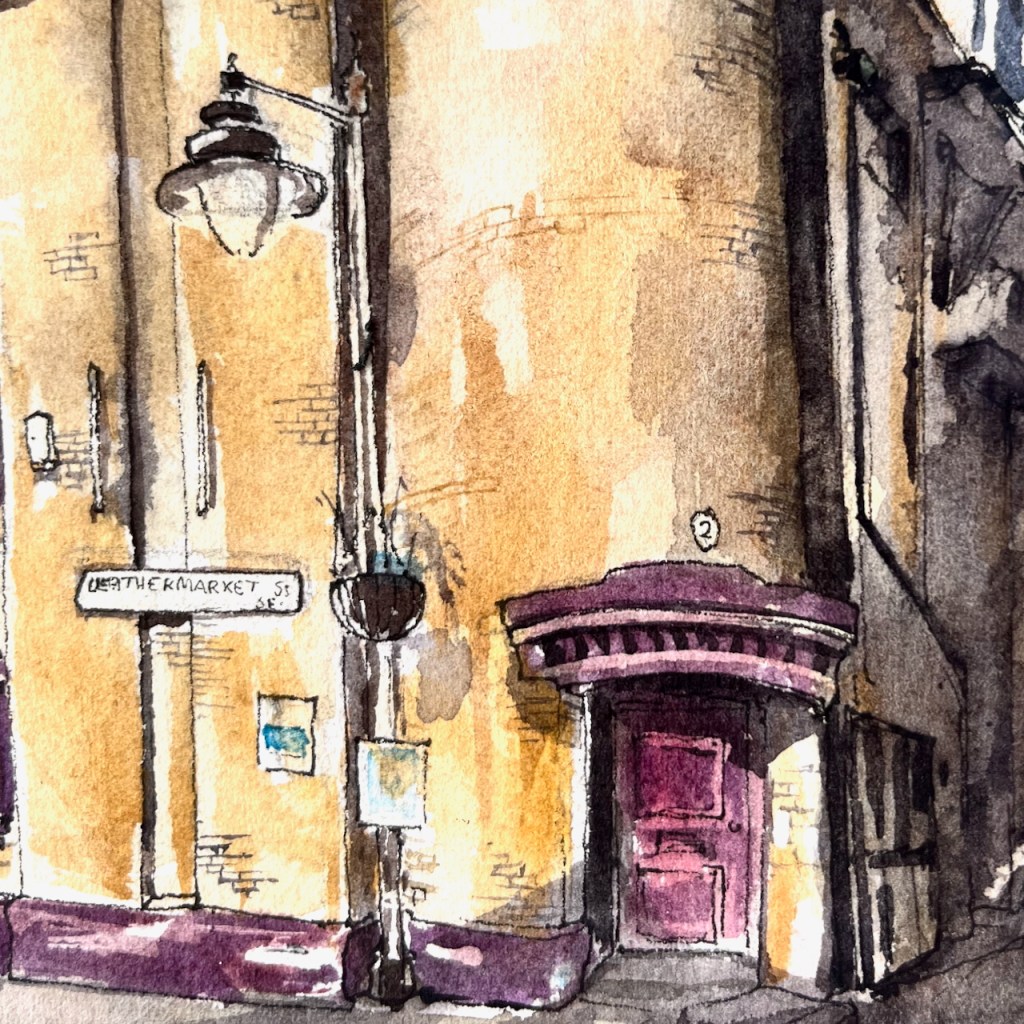
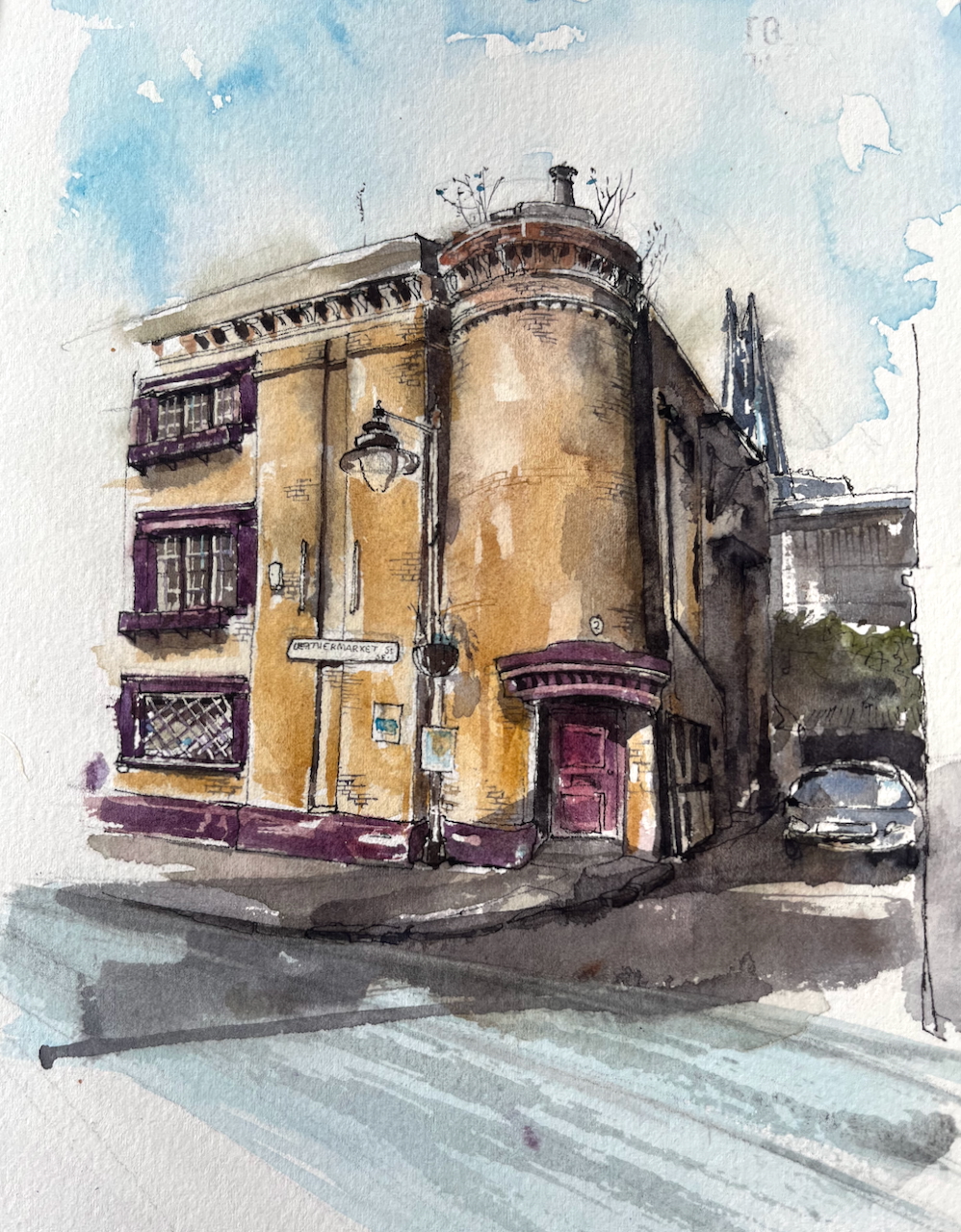
From the café “Morocco Bound” I sketched the distinctive building across the street.

This is 2 Leathermarket Street:

2 Leathermarket Street, London SE1 3HN. Sketched 5th September 2025 in Sketchbook 16

In the distance you see The Shard, at London Bridge Station.

This was the leathermaking district up to the beginning of the twentieth century. We have Leathermarket St, Morocco St, and Tanner St. The former “Leather Hide and Wool Exchange” is further up Leathermarket Street, towards Borough, to the west.

The building was listed Grade II in 1972. It is early 19th century, according to the listing.

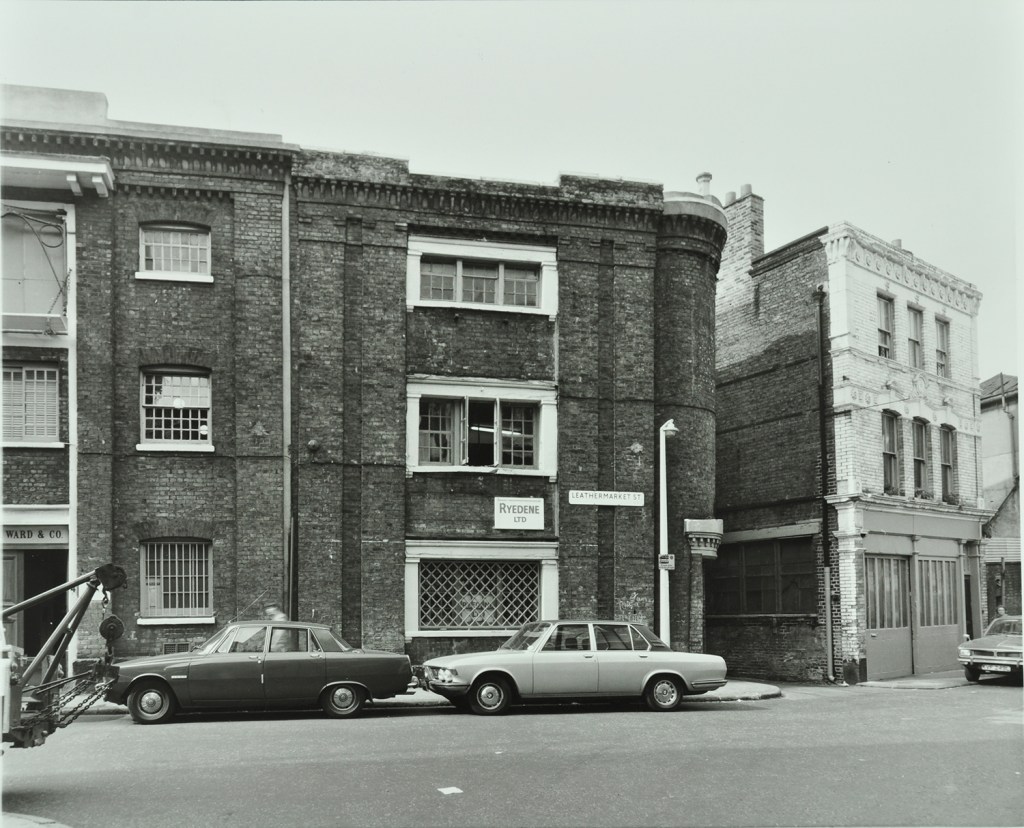
Here is the area in 1976, in a picture from the London Archives, used with permission:

1976 photo, Building in Morocco Street, record number 51956
image source: (c) The London Archives (City of London Corporation), picture used under licence reference #007089
https://www.londonpicturearchive.org.uk/view-item?i=54304&WINID=1730309548612

The windows are all still there as in 1976, with the same window frames, now painted purple. Even the weird little chimneypot on the top of the turret is still there, as it was 50 years ago. In this 1976 picture the placard between the windows says “Ryedene Ltd” but I have been unable to discover if this company was in the leather business. There is no placard now.

“The Department” now occupies this building. Their business, according to their website, is:

https://www.the-department.co.uk/services/ downloaded 31 October 2025

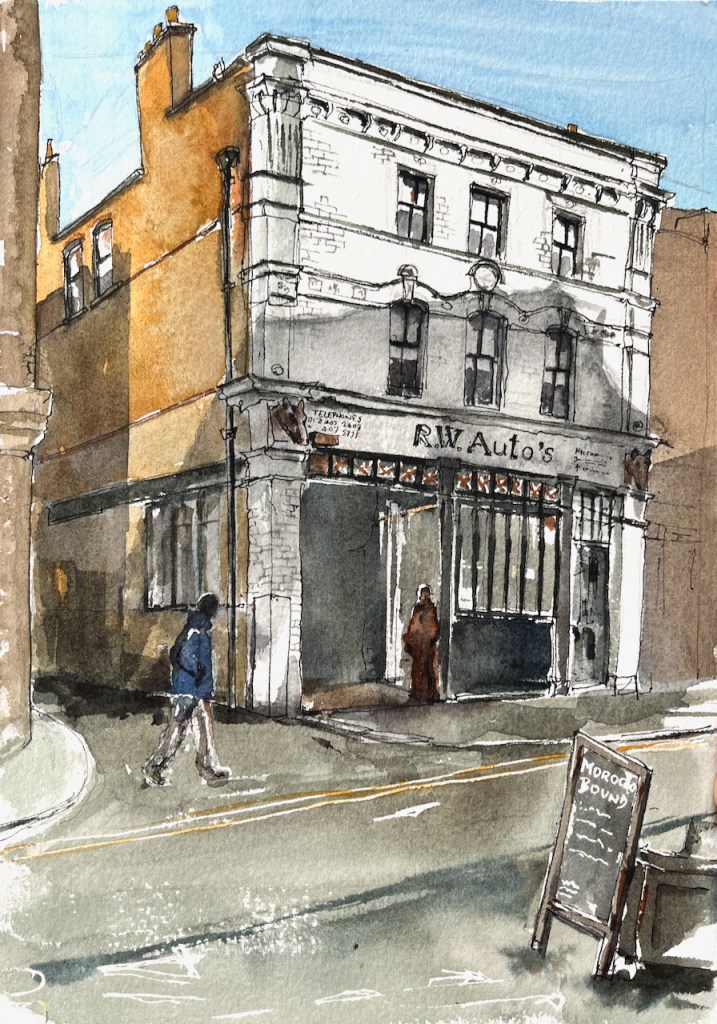
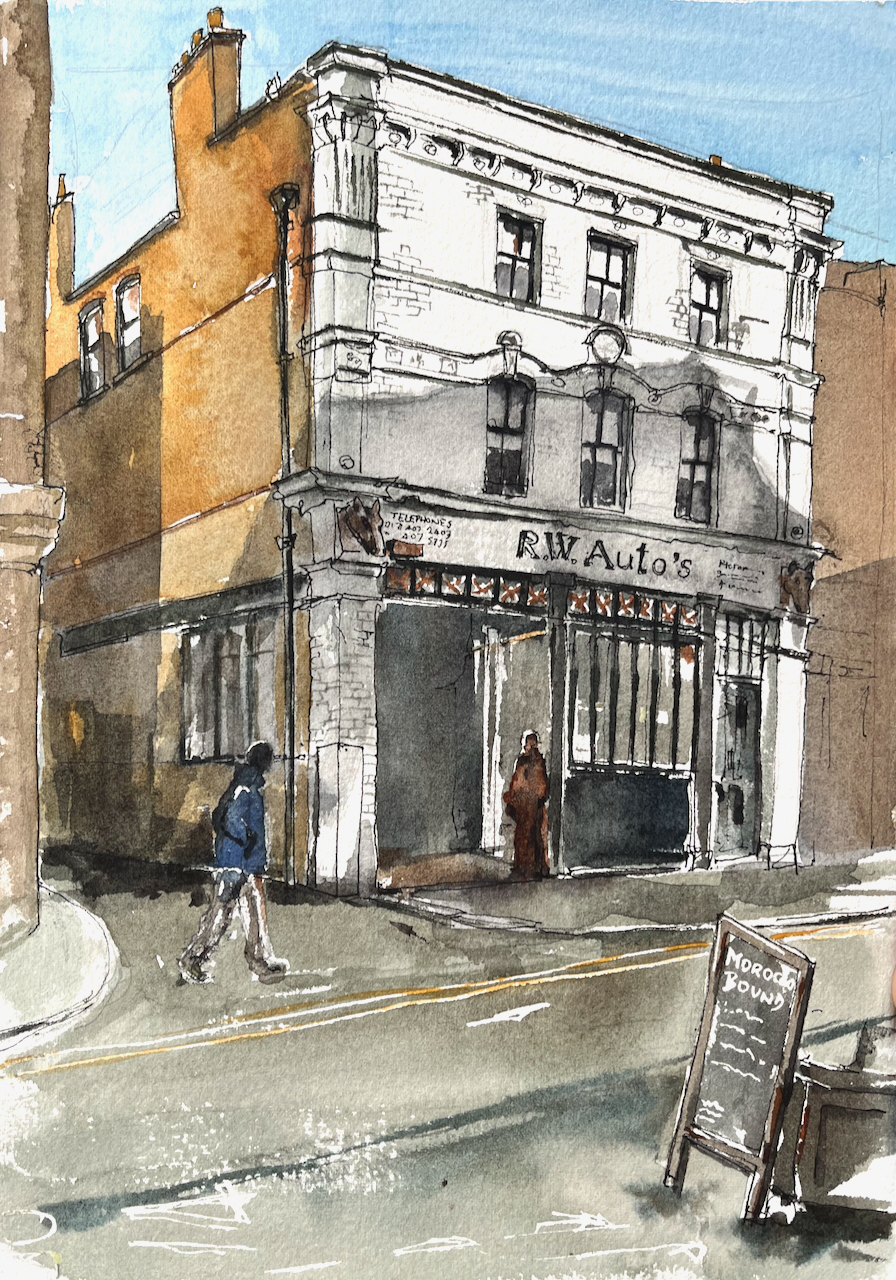
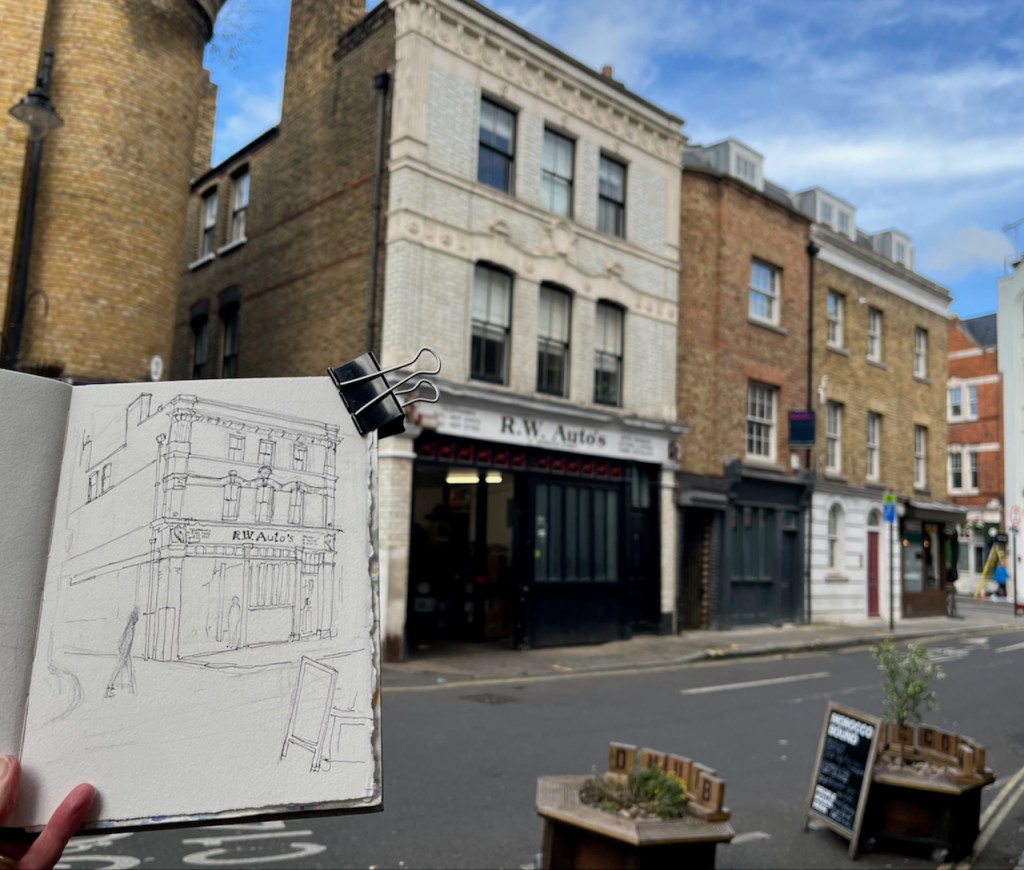
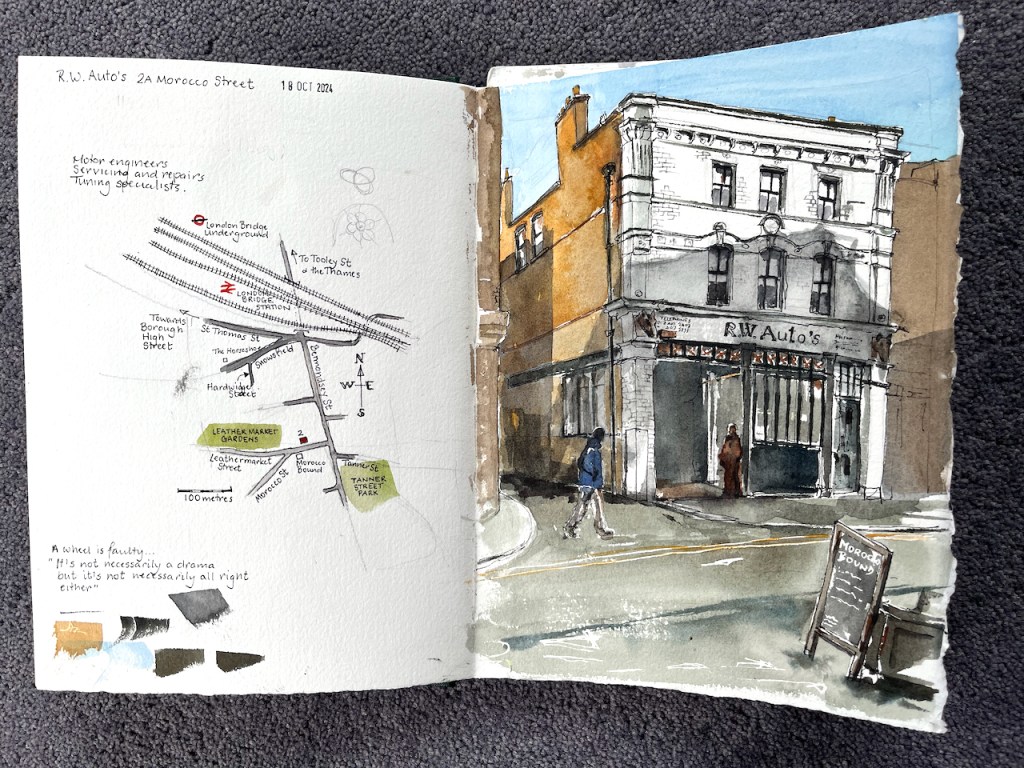
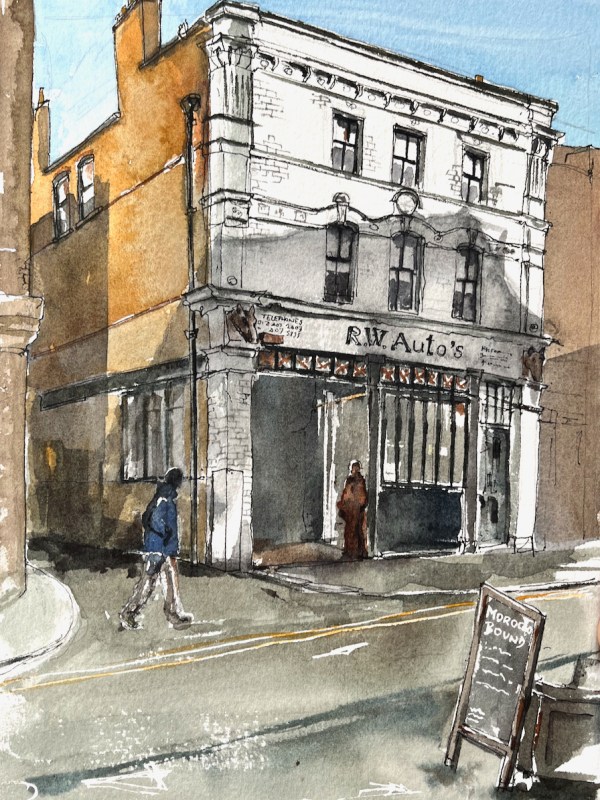
To the right of 2 Leathermarket Street is a garage, “R.W. Auto’s” which I have sketched previously:

2 Morocco Street, sketched from “Morocco Bound”, 18th October 2024, 2pm in Sketchbook 15

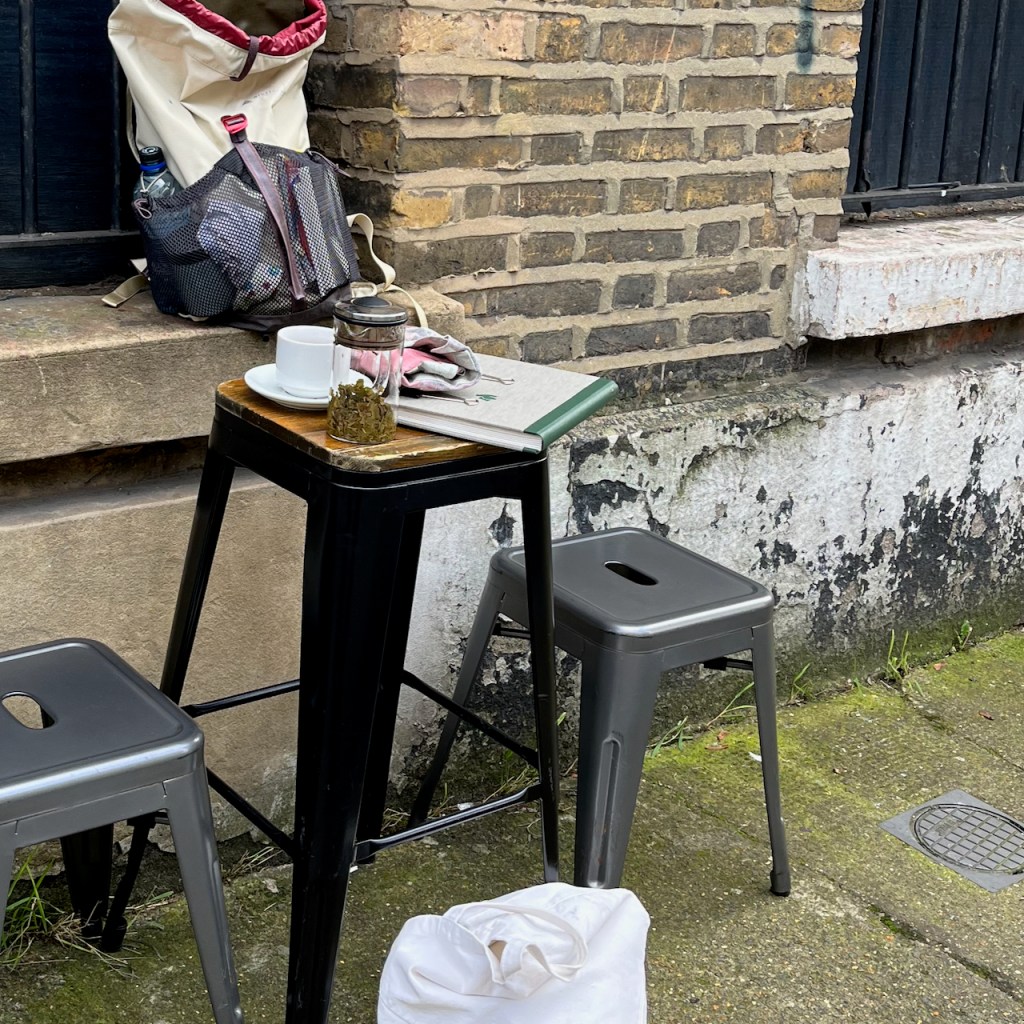
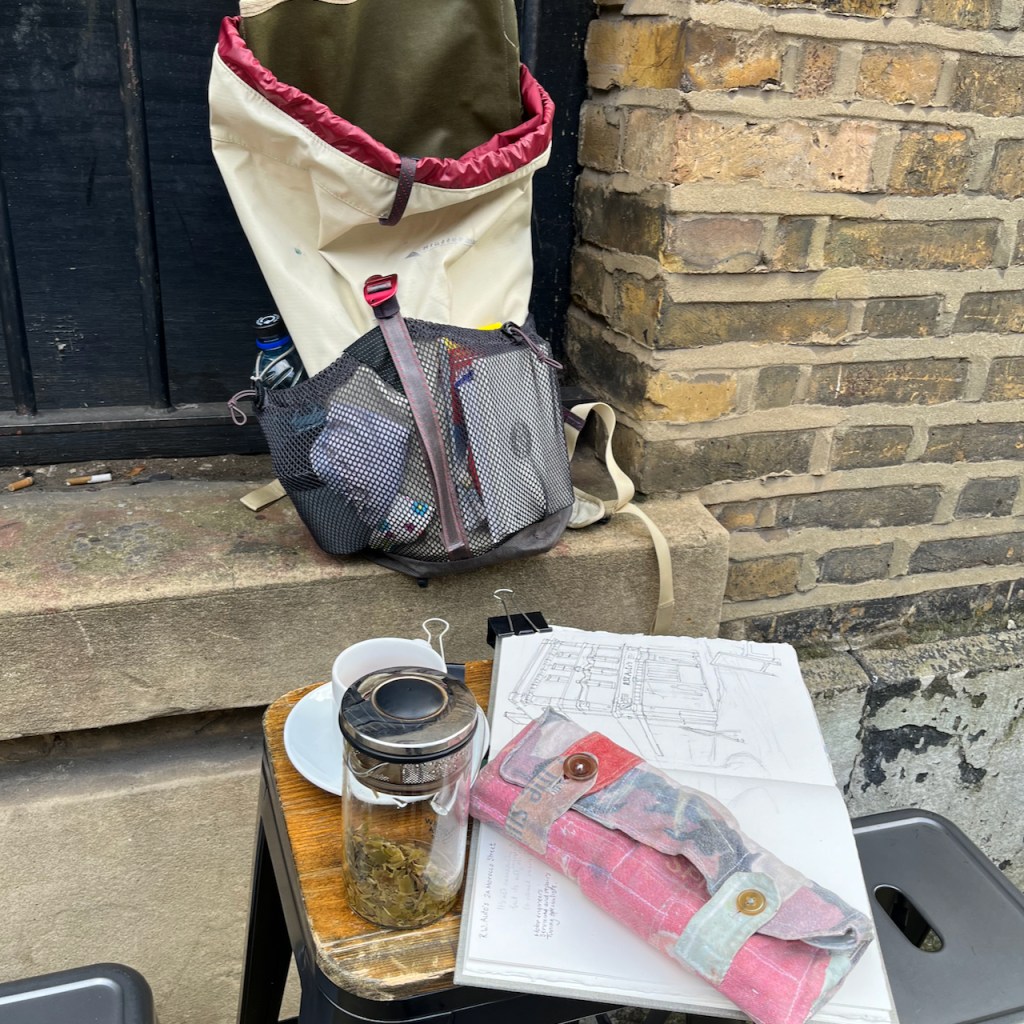
Thank you to “Morocco Bound” for their hospitality while I sketched these pictures. It’s a calm and welcoming bookshop and café in an interesting location. I’ll be back!

Page spread, Sketchbook 16

2 Morocco Street, Bermondsey, London SE1

Bermondsey is an area of London just to the south of London Bridge. I had tea at the bookshop and café called “Morocco Bound”. From a table outside Morocco Bound, I sketched the building opposite.

2 Morocco Street, sketched from “Morocco Bound”, 18th October 2024, 2pm in Sketchbook 15

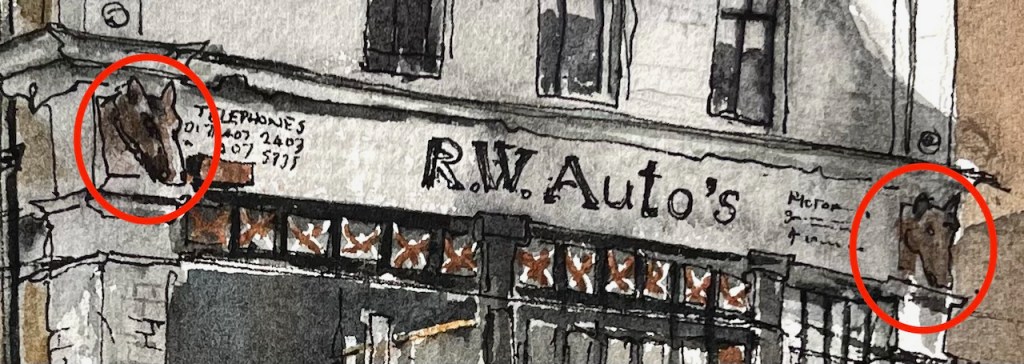
As you see, on the ground floor there is a motor repair shop, “R.W. Auto’s”.

RW Autos is Southwark’s top garage offering a range of car services including MOT’s, repairs and servicing. Our Southwark garage has been established since 1969 and serves a plethora of private and corporate clients. Our team provide you with a friendly, reliable, personal, efficient, and affordable service.

RW Autos website

The names of the streets round here indicate the historic industry of the area: tanning and leather making: Leathermarket Street, Tanner Street, Morocco Street.

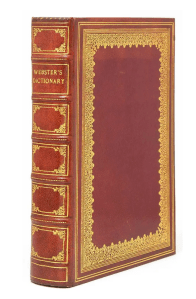
A 1967 Webster’s dictionary, morocco bound. Source: for sale on James Cummins bookseller website (30 Oct 2024)

I was sketching on Morocco Street. Morocco is a type of soft leather. It is used for gloves and wallets, for example. It is also used for book bindings, hence the name of the café: ‘Morocco Bound”. According to the “Medieval and Early Modern Orients (MEMOs)” scholarly site1, Morocco leather was originally “a kind of extremely fine, soft, hard-wearing, and richly dyed sumac-tanned goatskin, originating in the Sokoto region of northern Nigeria, transported across the Sahara and exported to Europe by Maghrebi, particularly Moroccan, merchants.”. This was in the 16th and 17th centuries.

This luxury product was greatly imitated over the following years, so that “by the turn of the nineteenth century, nearly all obvious distinctions between imported and locally produced morocco leather had been erased, and to many modern curators, ‘morocco’ refers either to the distinctive grain, or simply to goat leather bindings, whatever their origin.”

Books are still bound in “morocco leather” today.

The phrase “Morocco bound” occurs in a song from the 1942 film “Road to Morocco” with Bing Crosby, Bob Hope and Dorothy Lamour. Here is an extract:

We may run into villains but we're not afraid to roam
Because we read the story and we end up safe at home
Certainly do get around
Like Webster's Dictionary we're Morocco bound

We certainly do get around
Like a complete set of Shakespeare that you get
In the corner drugstore for a dollar ninety-eight
We're Morocco bound

Or, like a volume of Omar Khayyam that you buy in the
Department store at Christmas time for your cousin Julia
We're Morocco bound....

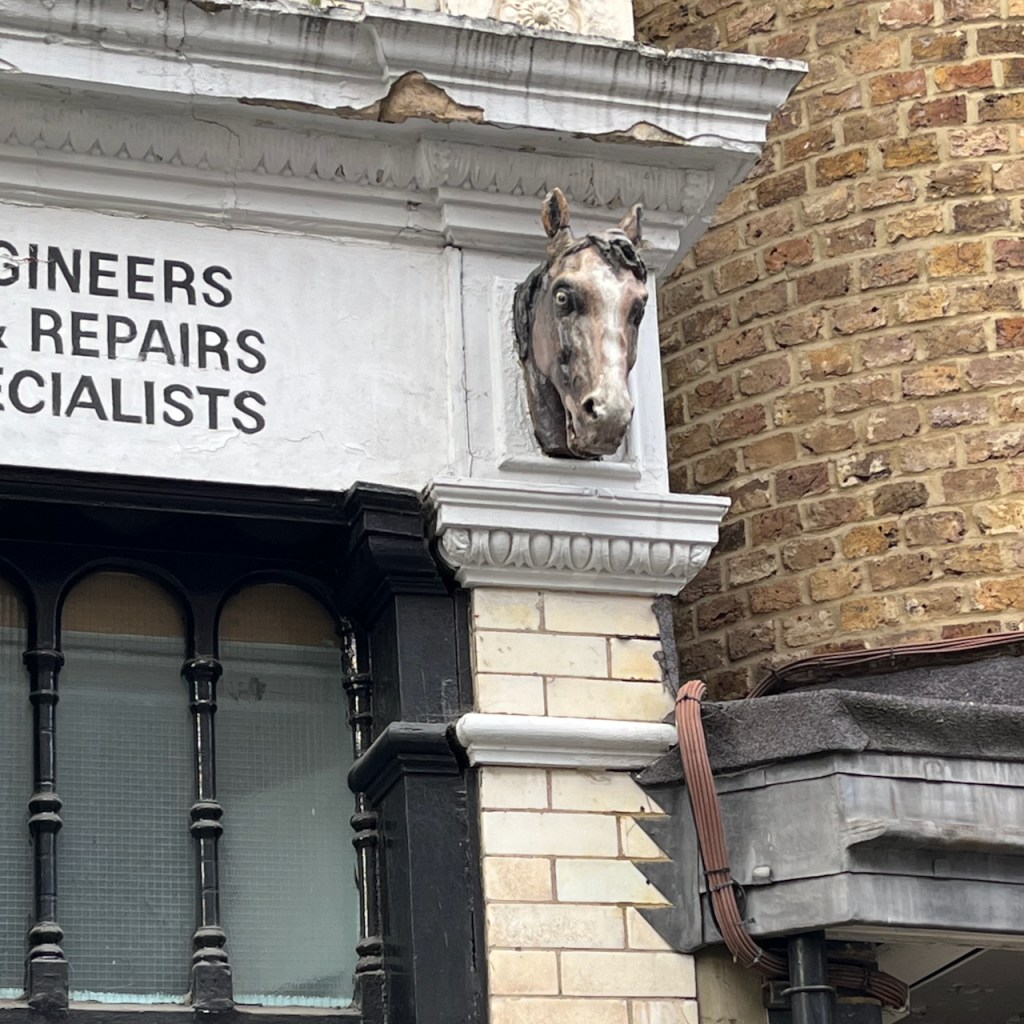
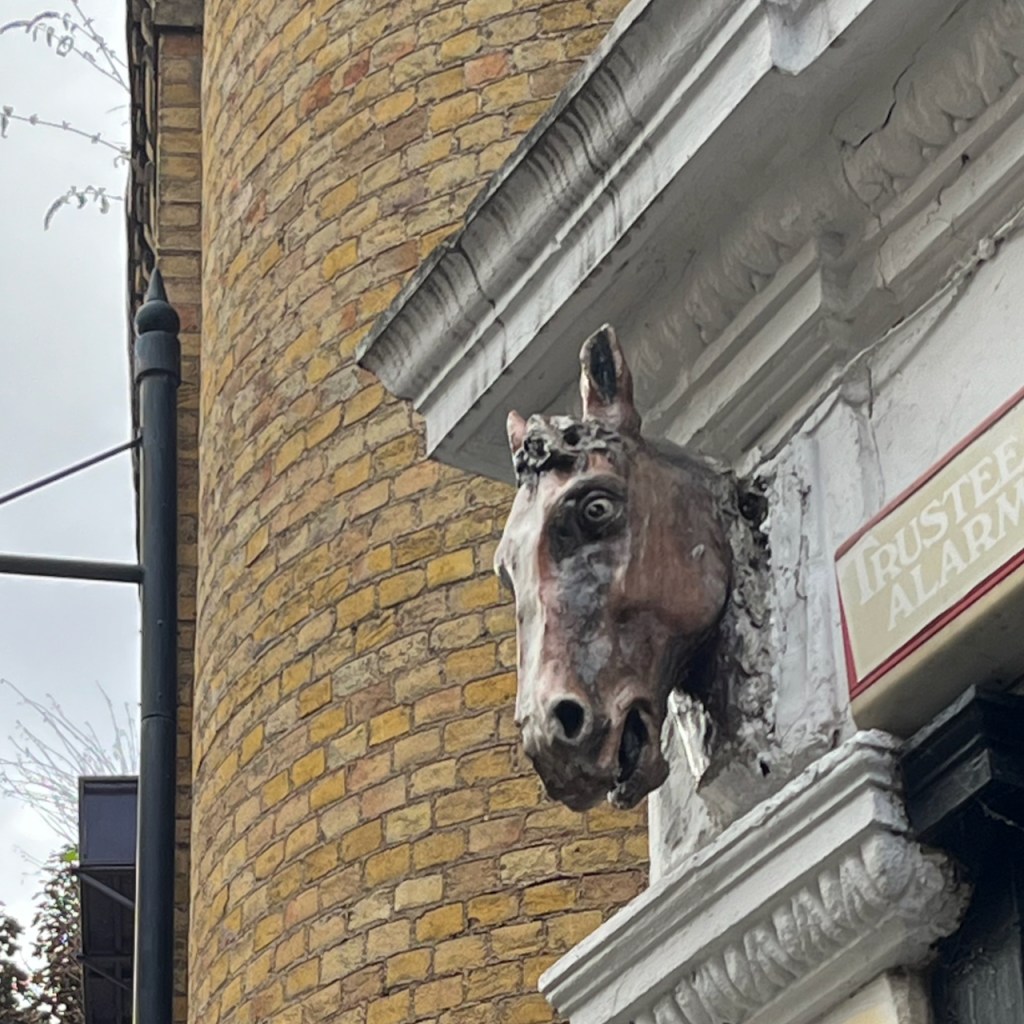
It was only when I started looking at the building carefully that I noticed the horses’ heads. It turns out these are a bit of a mystery.

The mystery of the Horses’ Heads

I found this 1976 photo in the London Picture Archives, reproduced here with permission:

1976 photo, Building in Morocco Street, record number 51956
image source: (c) The London Archives (City of London Corporation), picture used under licence reference #007089
https://www.londonpicturearchive.org.uk/view-item?i=54304&WINID=1730309548612

You see Number 2 on the right of the photo, looking very much as it does today. Except that there are no horses’ heads. When did they appear?

Various websites2 suggest that Number 2 Morocco Street was “once a smithy”. If this was a smithy with horses’ heads in (say) the early twentieth century, then someone removed them before the photo was taken in 1976, and has put them back some time afterwards. Or the building became a smithy after 1976, in which case it must have been one of the very few left in London at that time. Or the horses’ heads are a recent decorative addition and not related to the original purpose of the building atall. It’s a mystery. Next time I am in the area I will go and enquire at R.W. Auto’s.


  1. Medieval and Early Modern Orients (MEMOs) is an AHRC-funded decolonial project that seeks to further knowledge and understanding of the early interactions between England and the Islamic Worlds. AHRC is the Arts and Humanities Research Council. The quotations come from an article on their site entitled “Morocco Leather and Material Understandings of the Maghreb in Early Modern Britain” dated 14 November 2022 on this link: https://memorients.com/articles/morocco-leather-and-material-understandings-of-the-maghreb-in-early-modern-britain ↩︎
  2. Various websites suggest that this building was once a smithy. Here are the links:
    Layers of London: https://www.layersoflondon.org/map/records/morocco-street. “2a R.W.Autos with horses heads was a smithy/farrier”
    Bermondsey Boy: http://www.bermondseyboy.net/viewtopic.php?t=260. This website includes a photo from 2015 – with horses heads, and the commentary. “RW AUTO’S The two horse heads above the front of this garage workshop are the last clue that is was once a smithy – a blacksmiths.” This website also includes a 1968 photo which has no horses heads. ↩︎
Sketchbook 15 page spread

St James Bermondsey SE1

quick sketch

Walking back from the Little Bread Pedlar with my bag of goodies, I came to a standstill in front of St James’ Church, Bermondsey.

This is a magnificent 19th Century church, with a dragon as a weathervane. There is a generous park around the church, and benches. I made a quick sketch.

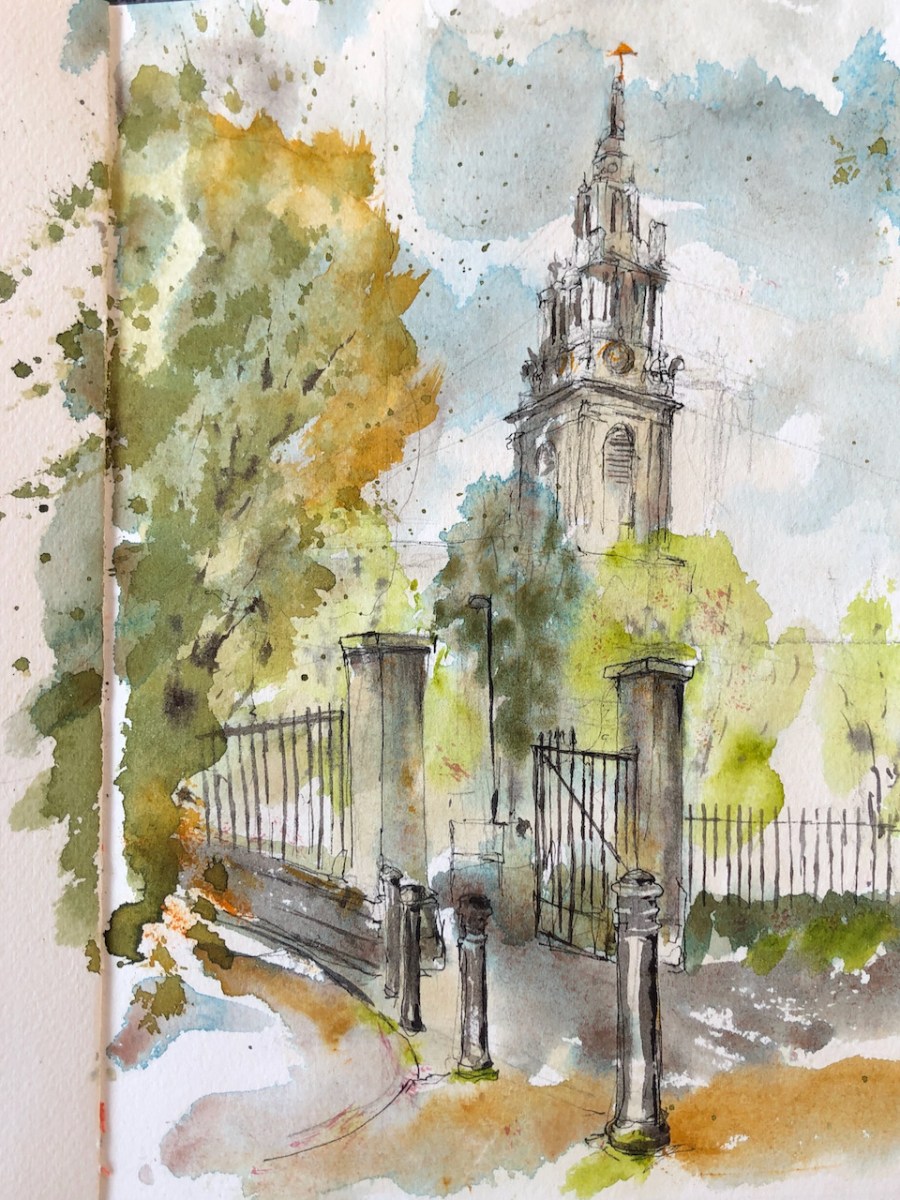
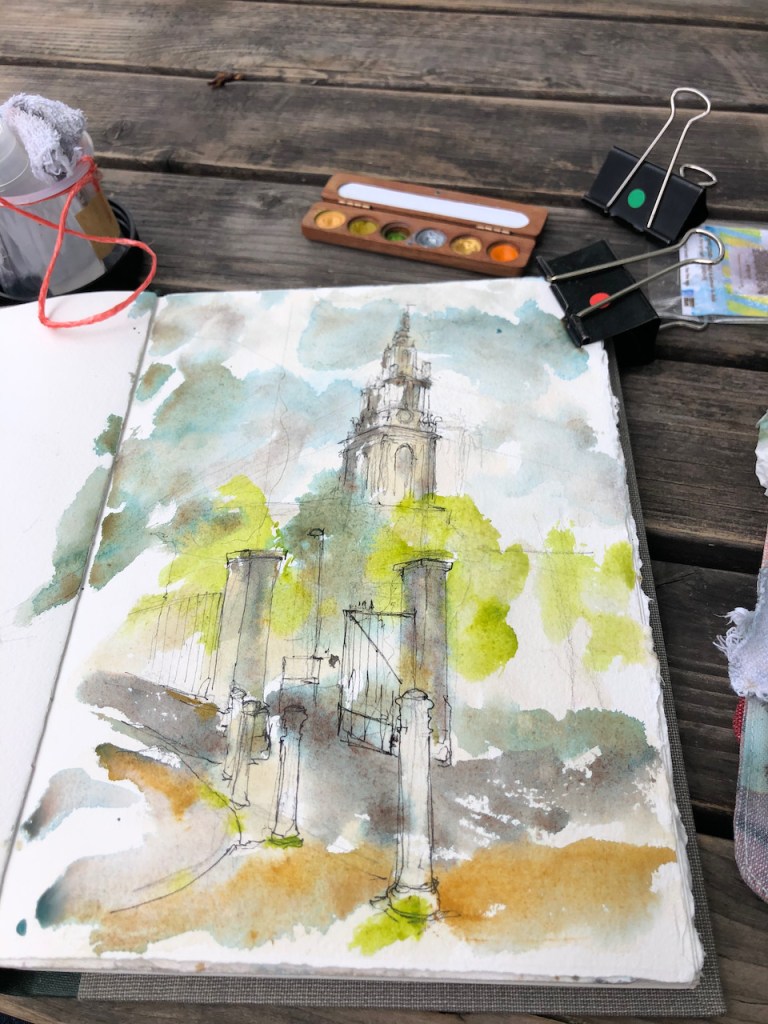
After my lunch, I walked along the West side of the church and passed between huge stone gateposts. Looking back, the church was spectacular against a moody sky.

There were some convenient benches stacked outside a closed pub, so I sat down and made a longer sketch.

St James’ Church, Bermondsey, 7″ x 10″ in Sketchbook 10. 5th May 2021 14:15

From this angle, the church might be in the countryside. What you can’t see in the drawing is the half-timbered pub, which is just off to the left. It is called “The Gregorian”. The pub sign is a heraldic shield, with a black dragon facing a white dove. The motto below the shield reads “SHALOM”. I can find no explanation for why a pub in Bermondsey should have a greeting in Hebrew on its coat of arms. But there it is. The pub was closed, so I couldn’t ask them.

The church is remarkable in many ways. For one thing, it is enormous, and very solidly built. Walking along the West wall, I could see that there was a crypt along the entire length. The steeple has clocks on each of its four faces, which is commendable and generous, in my view. All of the clocks were working, and showed the right time, including the one which was facing North over the roof of the Nave, and thus invisible except by a narrow angle.

As I was drawing this, the rain started, and then stopped, and started again. Eventually I packed up and finished the drawing at my desk when I got home. I also found out more about the church. The first stone was laid in 1827 and it was consecrated in 1829. The church was built as part of a huge Church building programme, funded by central government after the Napoleonic wars. The fund was called the “million-pound fund” and the churches built are called “Waterloo Churches” or “Commissioners’ Churches” for the Church Commissioners who managed the programme. Wikipedia has a whole article on the subject. I found it interesting that the government would embark on such expenditure when surely its funds were depleted after the wars? Information on a notice board by the church says that the fund was established as a thank-offering for peace, and a memorial to the soldiers who had fallen. Wikipedia offers two additional explanations.

  1. The demographics of the country were changing substantially in the first part of the 19th century. There were churches where there were insufficient people, and people where there were insufficient churches. This was certainly the case in Bermondsey, where the population quadrupled during the 19th century, from roughly 17 thousand in 1801 to over 80 thousand in 1901. The people were engaged in trades associated with the docks, such as ropemaking.
  2. It was seen by the government as important to provide churches in order to prevent insurrection (note 1). Churches provided guidance, stability, and social control. The French revolution of 1789-99 lived in people’s memories.

St James’ Church accommodated 2000 people, when built. It continues to offer services and describes itself as an Anglican evangelical church, with a “vibrant and active congregation of all ages and backgrounds, drawn from many countries in the world.” This is from the information leaflet on the church website. (Note 3) This information leaflet contains the following picture of the restored dragon weathervane, which I couldn’t resist including here:

“Restored and regilded, St James’s dragon weathervane, returns to Bermondsey in 2018” (from St James Bermondsey History leaflet, Note 3, and vicar’s blog: Note 4)

According to the church website (note 2), the bells were cast by Mears of Whitechapel from the canon left behind by Napoleon. The architect was James Savage.

Here is work in progress on the drawing:

  1. Wikipedia article quotes Port, M. H. (2006), 600 New Churches: the Church Building Commission 1818-1856 (2nd ed.), Reading: Spire Books, pages 15 and 16 ISBN978-1-904965-08-4
  2. Website of St James Bermondsey: is here. http://www.godlovesbermondsey.co.uk/our-history.php
  3. St James Church website history information leaflet: http://www.godlovesbermondsey.co.uk/resources/Church%20History%20Leaflet%202019a%20-%20June%2022%20%20FINAL.pdf
  4. The vicar of St James published a blog article about the return of the dragon here: https://bermondseyvicar.blogspot.com/2018/08/the-dragon-returns.html?m=0