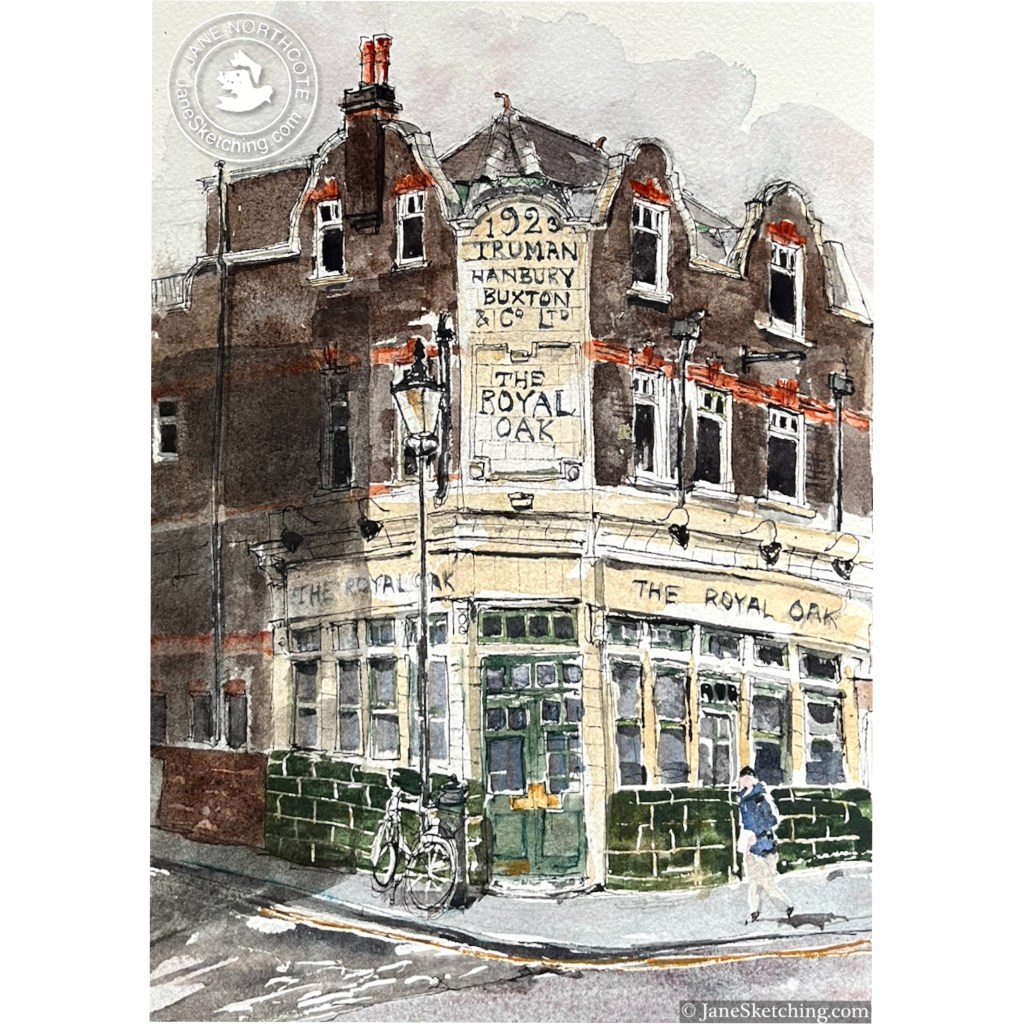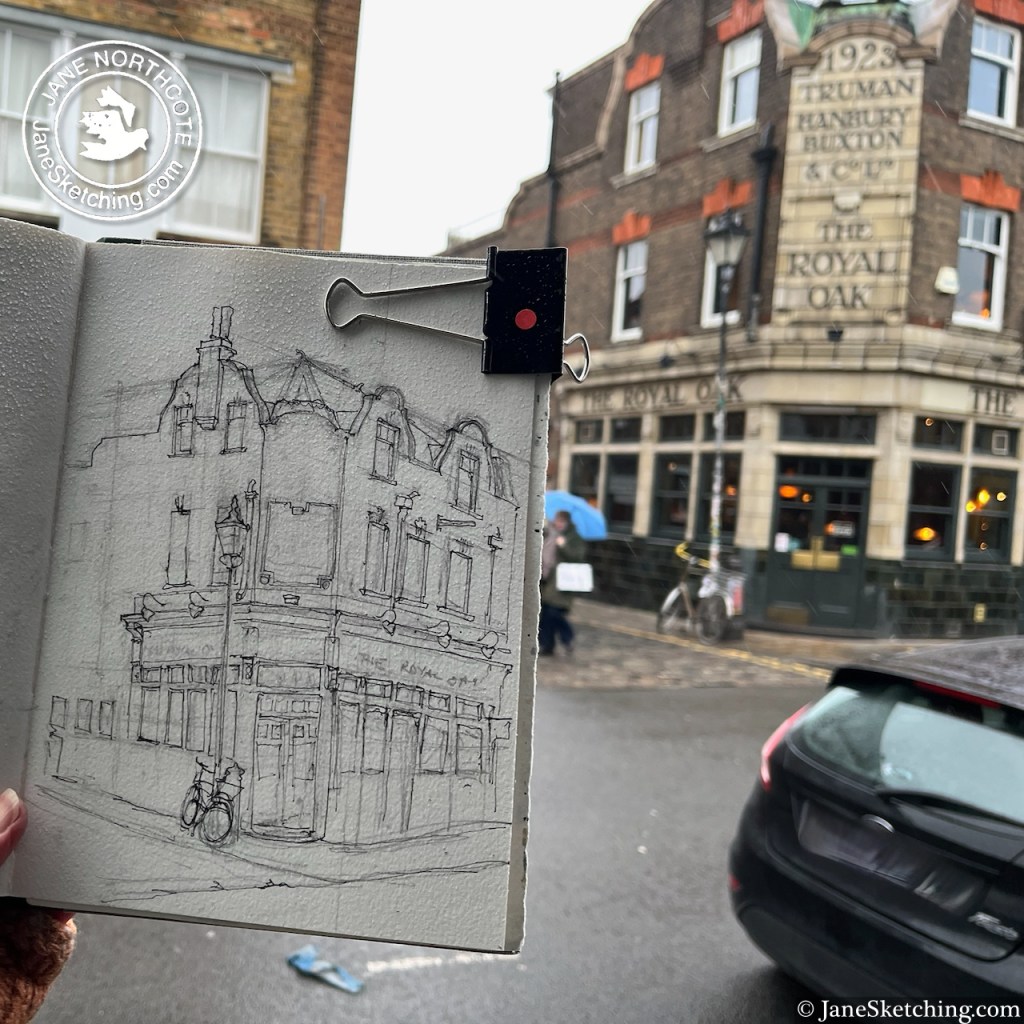
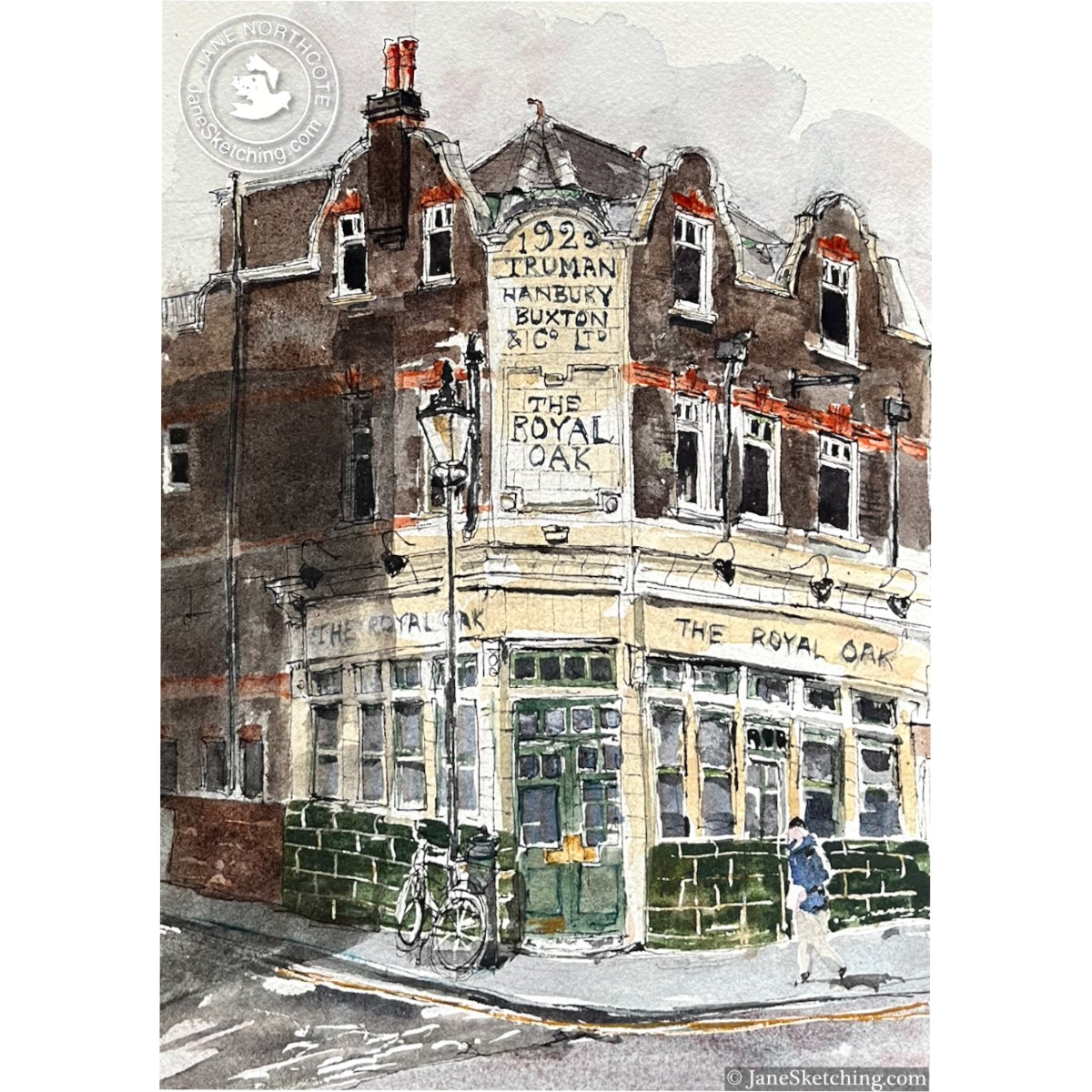
1 Wood Close E2

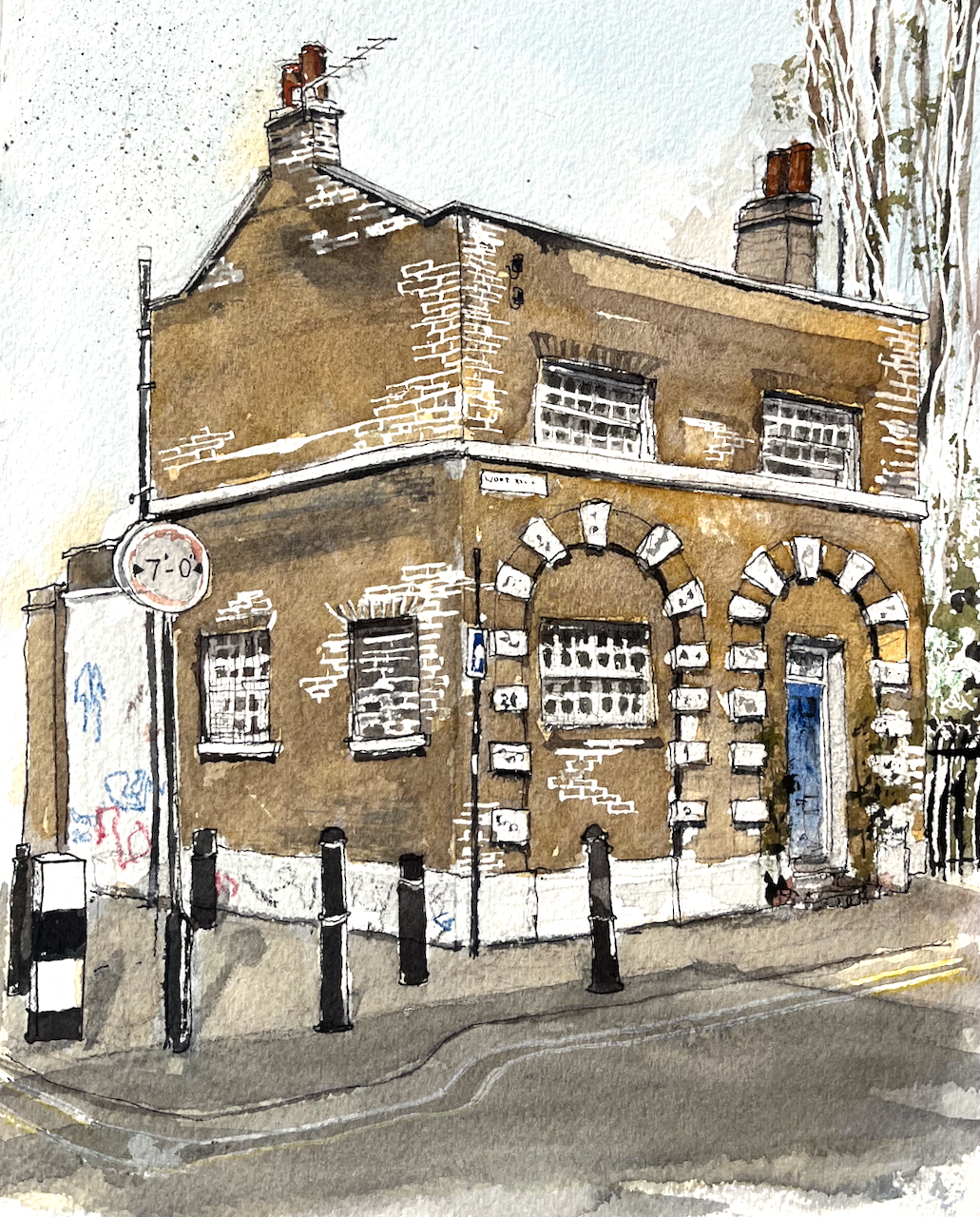
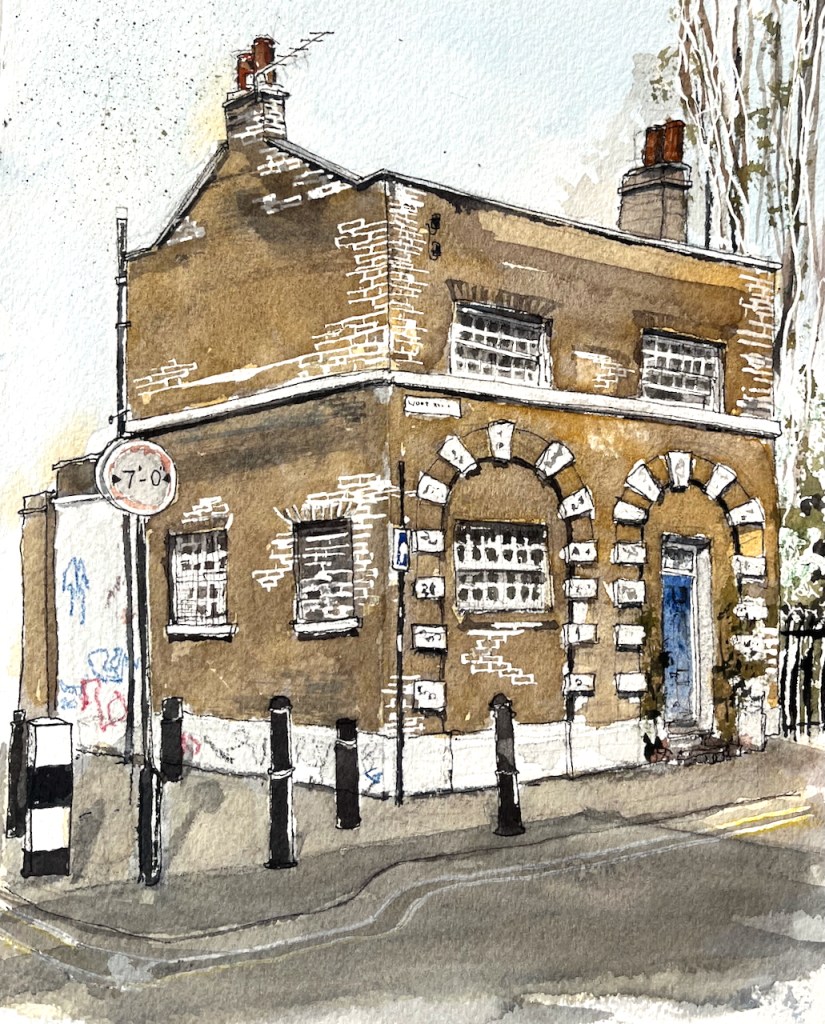
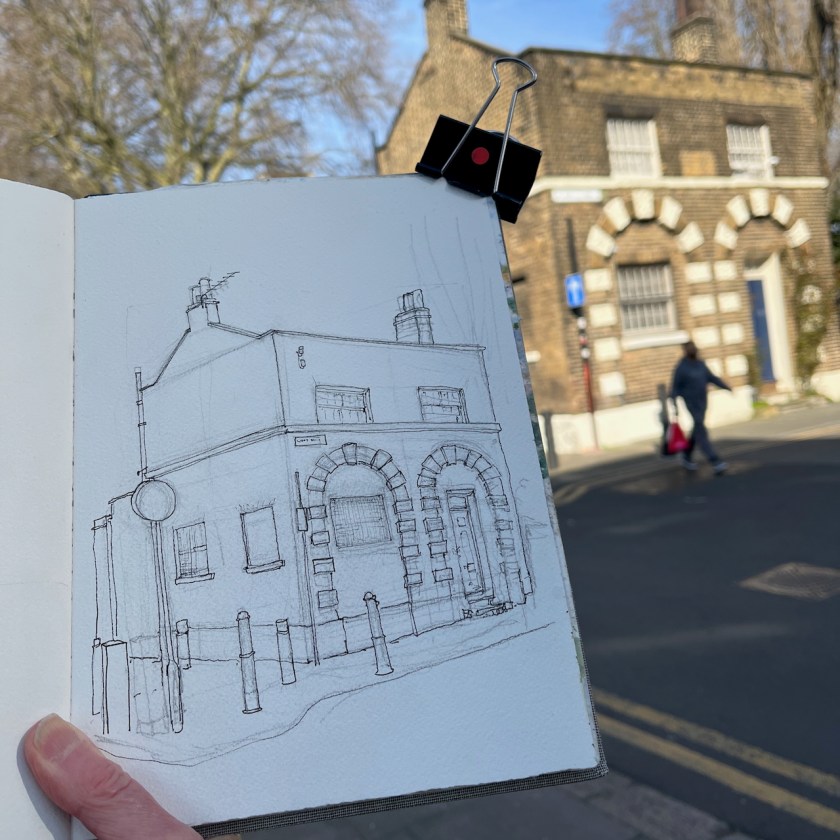
See this interesting building! It’s just a few hundred yards from Brick Lane in East London.

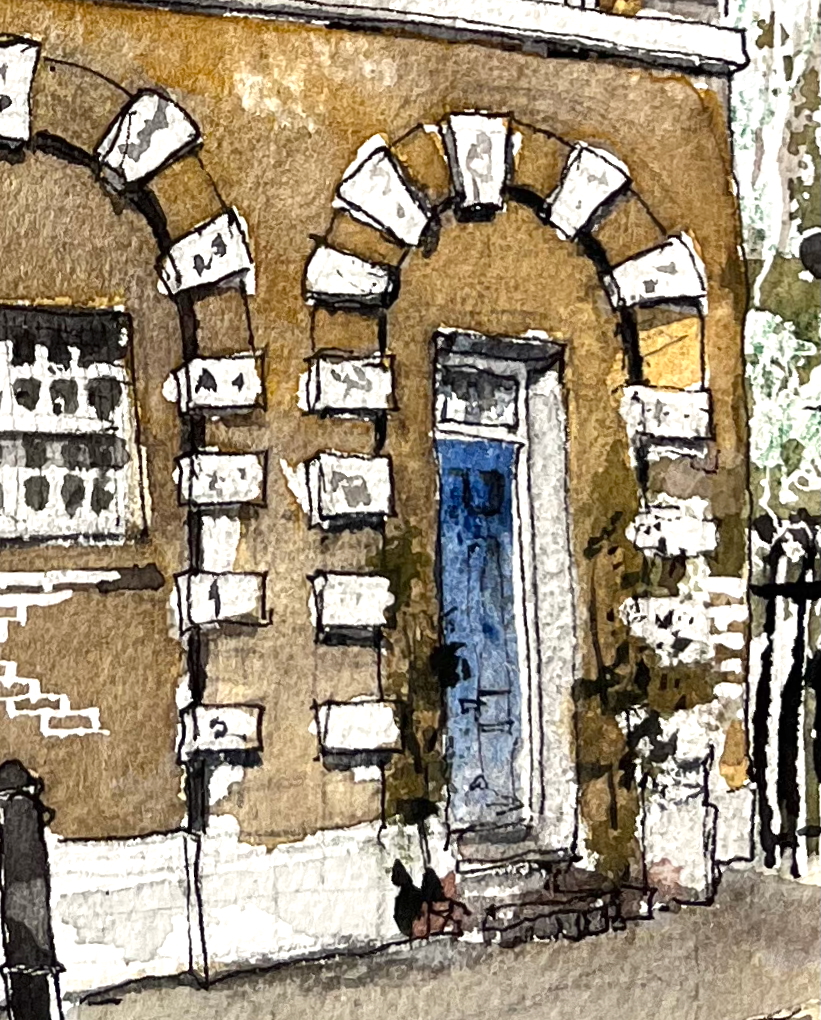
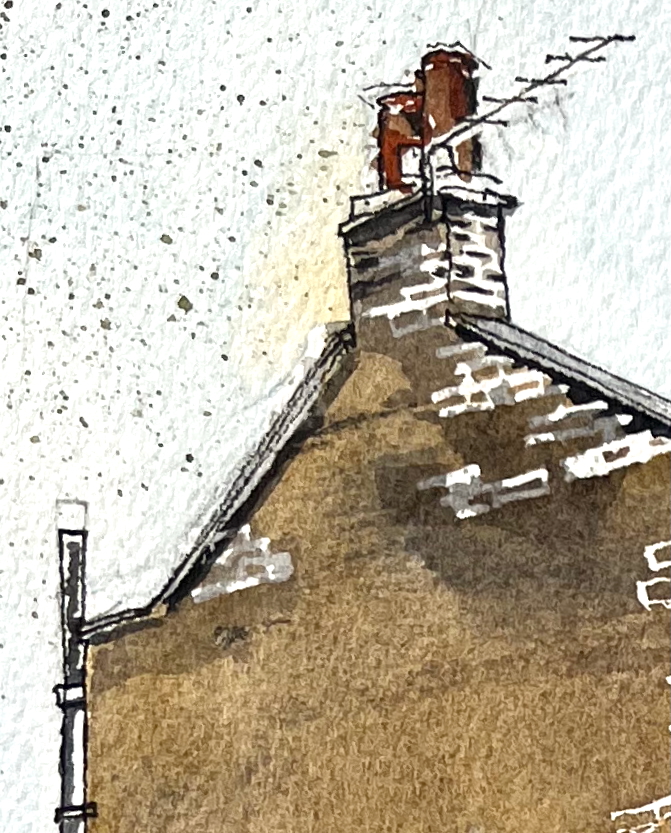
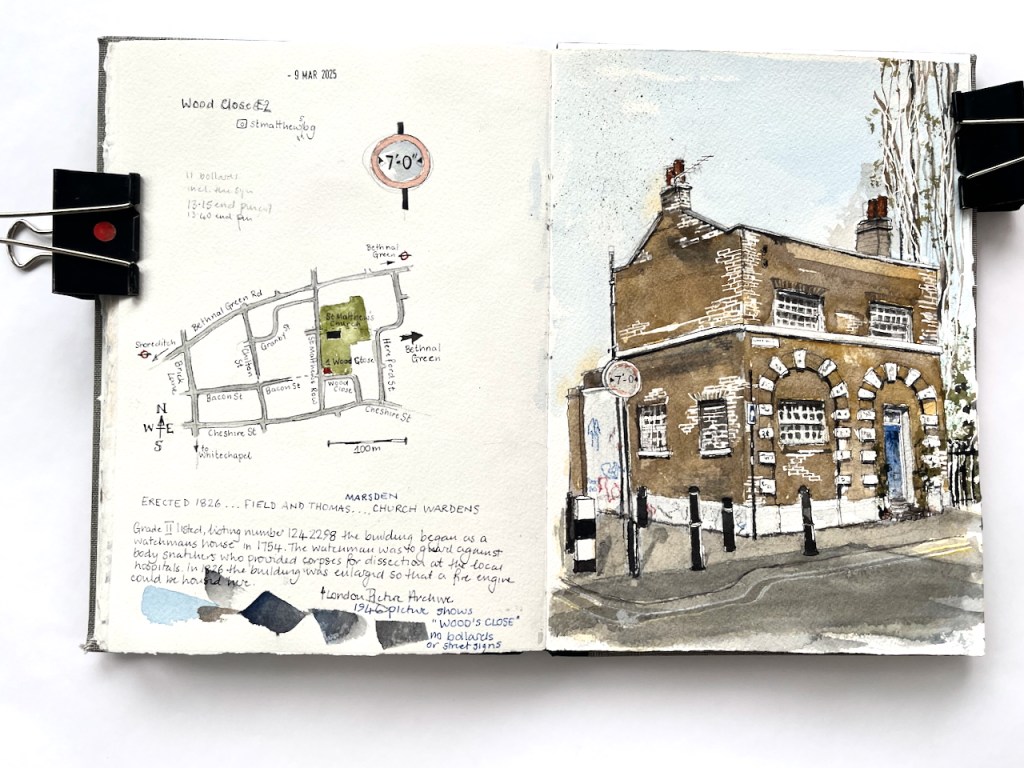
1 Wood Close E2, sketched around midday, 9th March 2025 in sketchbook 15

I’d walked past it a few days previously, when I had been taking a circuitous route through East London on the way back from Hackney Wick. It’s an unusual building for the neighbourhood, most of which is terraces or blocks of post-war flats. This building stood out, on its own, at a street corner. What is it doing there?

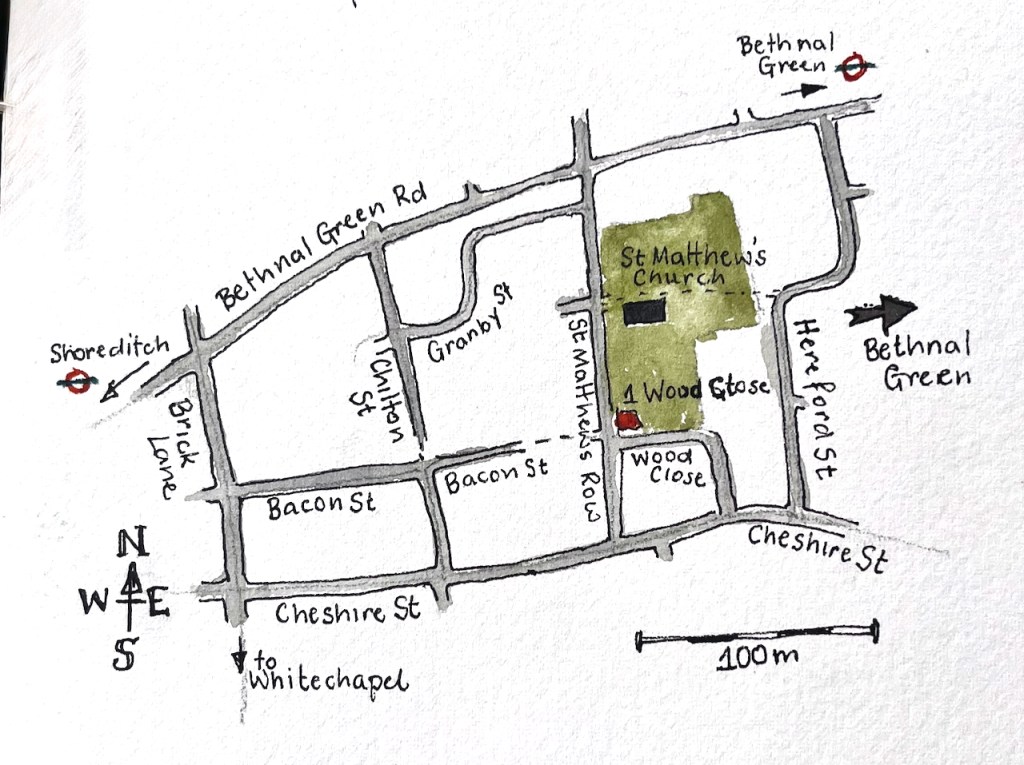
Sketch map showing the location of Wood Close: just to the east of Brick Lane.

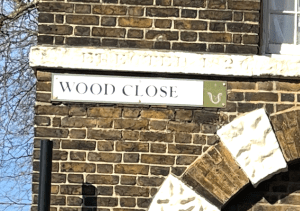
I went back a few days later for a closer look. On the white band at the front of the building I could decipher some words:
“ERECTED 1826 [something] FIELD AND THOMAS [something] CHURCH WARDENS”

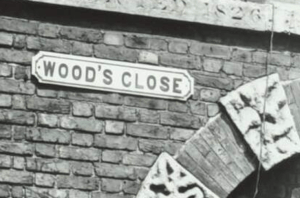
London Picture Archive has a photo of this building from 1946. The words on the front were a little clearer in 1946, so I can read that Thomas’ second name was MARSDEN. The London Picture Archive caption says that “the building began as a watchman’s house in 1754. The watchman was to guard against body snatchers who provided corpses for dissection to local hospitals. ” So that’s what it was doing: it was guarding the graveyard.

The London Picture Archive caption goes on to say that “In 1826 the building was enlarged so that a fire engine could be housed there.” That’s the building we see now, labelled 1826. It doesn’t look big enough for a fire engine.

In the London Picture Archive photo from 1946, the street name affixed to the building says “Wood’s Close” which would indicate it was named after someone called Wood. Today the street name on the building is “Wood Close”

This building is listed Grade II.

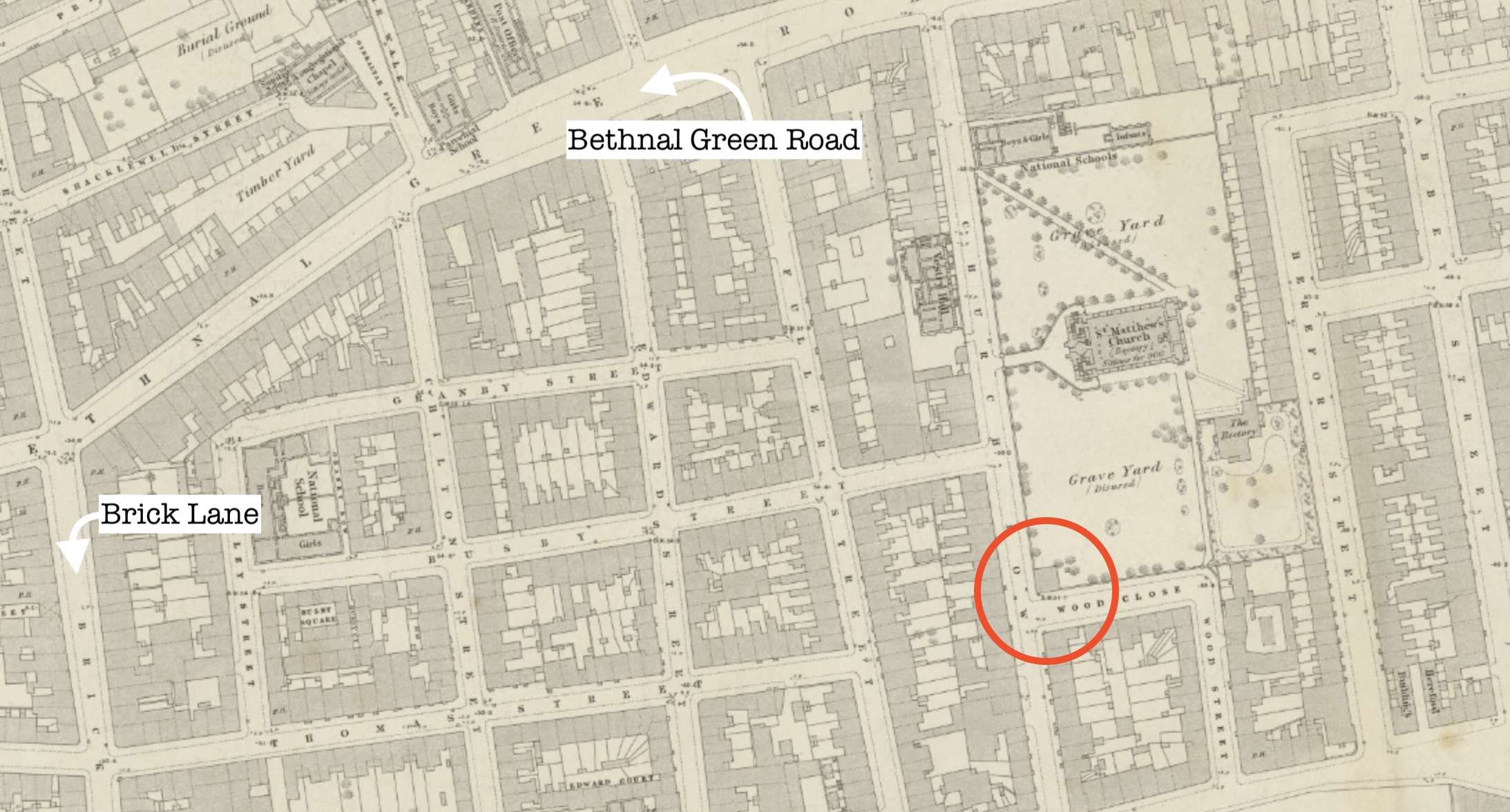
This link shows a 1872 map. Here’s an extract. Click the map to go to the National Library of Scotland map which is very detailed. The street is called “Wood Close” on this map. You can see the “Grave Yard (disused)”. The Watch House, circled in red below, is in the corner of the graveyard, which makes sense.

Area around Wood Close: 1872. Reproduced with the permission of the National Library of Scotland CC-BY(NLS)

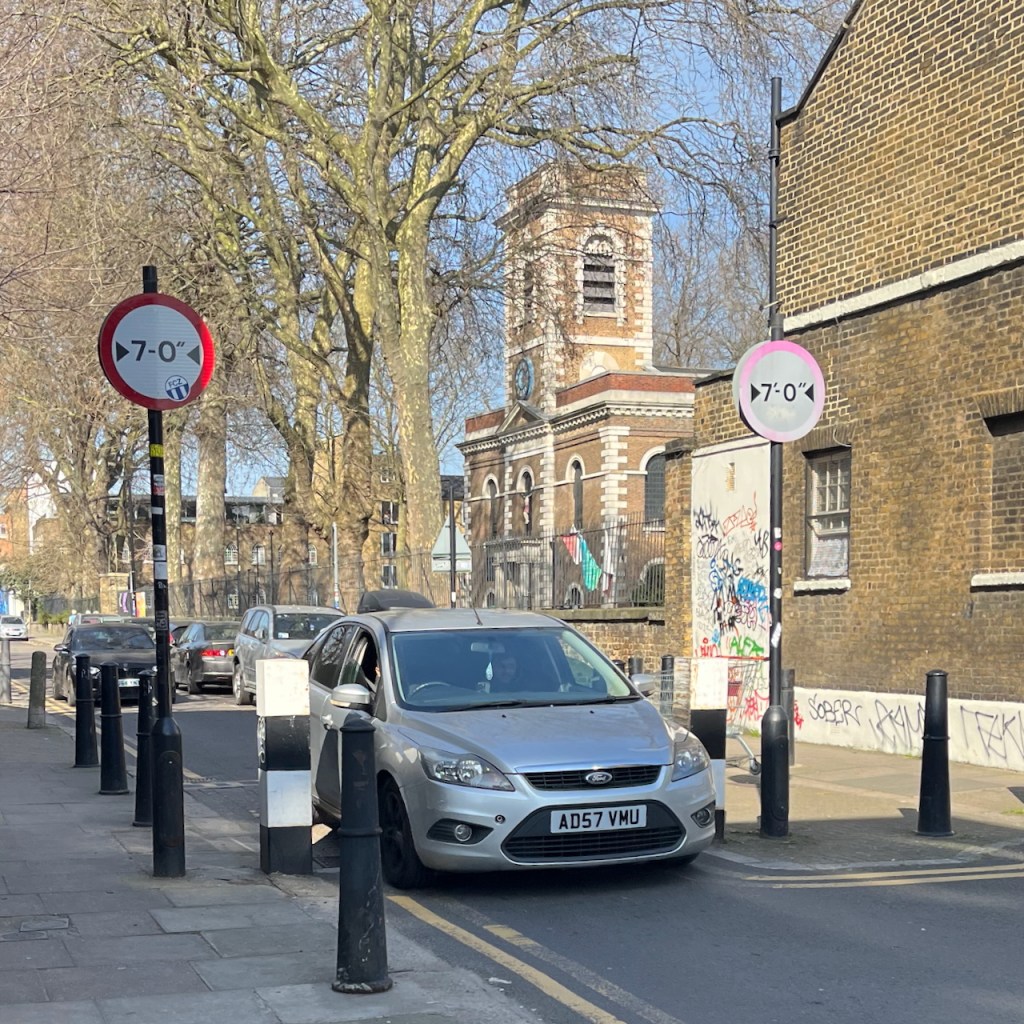
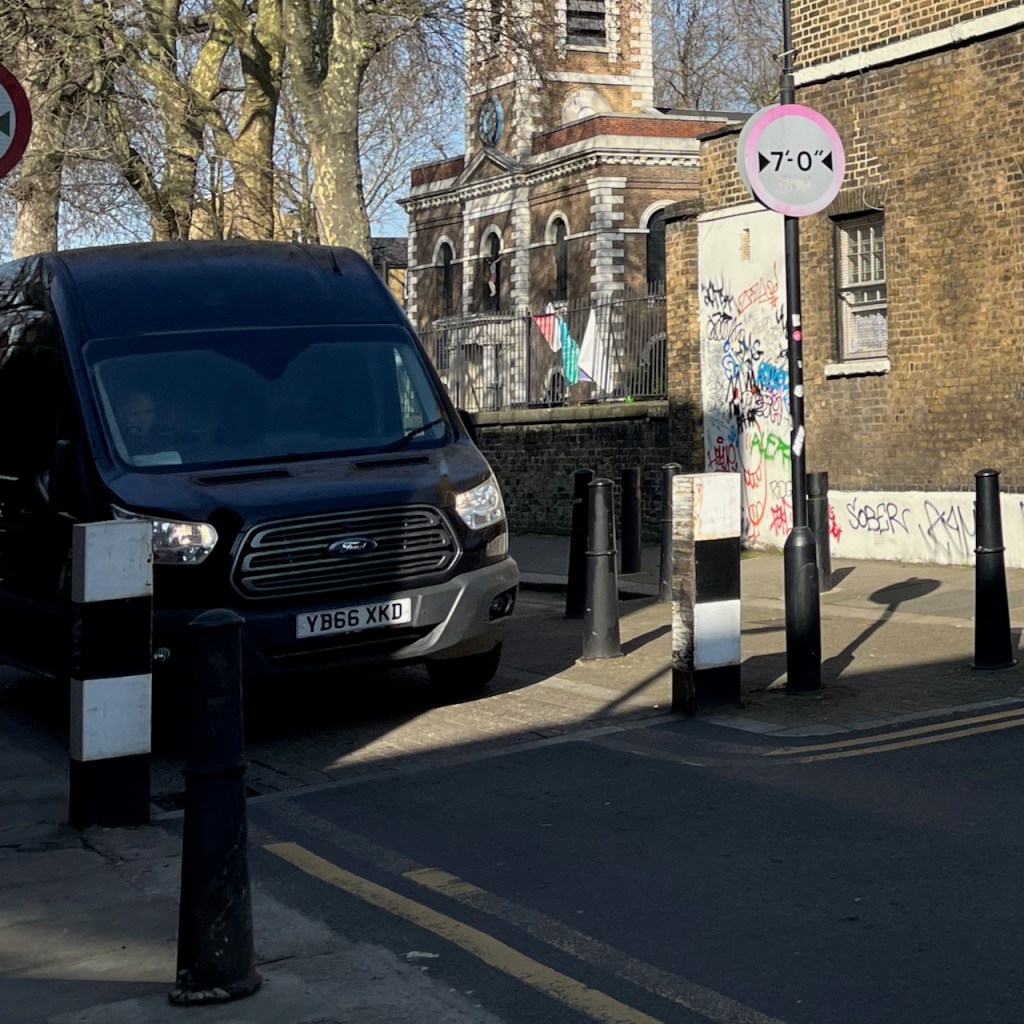
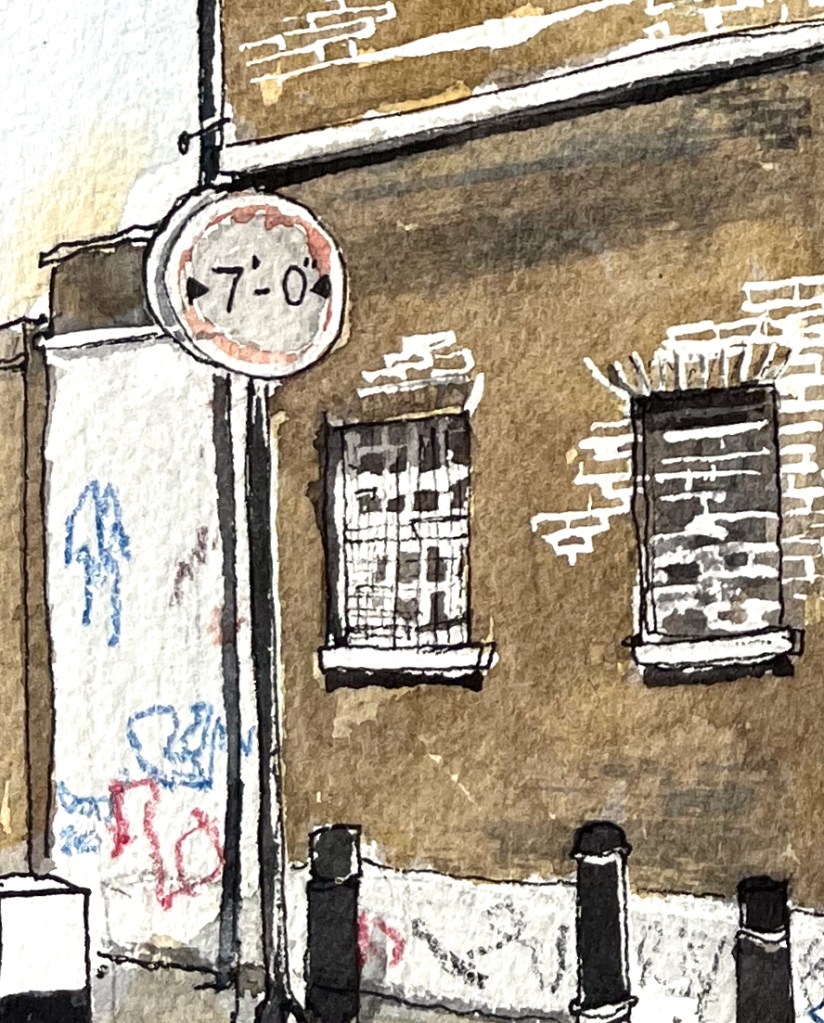
As you see in my sketch, there are now a prodigious number of bollards in front of the house. I counted ten of them, standing like an amused crowd next to the “7′-0” sign . While I was standing there sketching, I saw why. The idea is to restrict the width of St Matthew’s Row so that vehicles have to slow down or stop, and cars can’t sneak round the edges. I watched agog as huge limousines edged between the bollards.

This Watch House, and the nearby Parish Hall are owned by St Matthews Church:

The Church also own the Watch House on Wood Close, which is currently let out to private tenants, and the Parish Hall on Hereford Street, currently let out to State51.

https://www.st-matthews.org.uk/hire-our-spaces/

It’s a house on a corner, with an active life and a history. I was glad to make its acquaintance.

Shiplake House, Arnold Circus

This is the “Boundary Estate”, Britain’s first council estate, opened in 1900. It was built to the design of Owen Fleming and his team.  Fleming was a member of the Housing of the Working Classes branch of the LCC’s* Architecture department. He was 26 years old.

The aim of Boundary Estate project was to replace slums, in an area of disease, want, squalor and crime known as “Old Nicol”. The slums were pulled down, and replaced  by dwellings that were more healthy, and more pleasant to live in. The area was also provided with schools, a laundry, shops and clubrooms. The problem was, of course, that these dwellings were more expensive than the previous slums. The former inhabitants of the area couldn’t afford the rent, and had to go elsewhere. Better-off workers in stable employment moved in.

Here’s what one part of it looks like now.

IMG_1952
Shiplake House, Arnold Circus, in Sketchbook 4, 10″ x 7″

This is Shiplake House, on Arnold Circus. It didn’t look in very good repair. The paint was flaking. As you see, the outside was festooned with wires, some going no-where. The windows were dirty, though none were actually broken. This disrepair was surprising, as these are sturdy buildings, close to trendy Shoreditch High St, Brick Lane, and the City.

IMG_1955
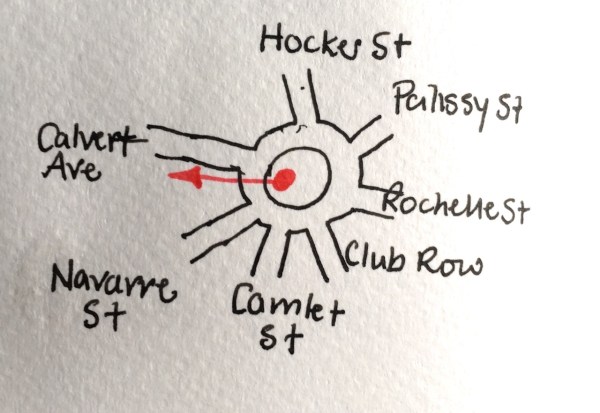
Arnold Circus, showing my direction of view for the picture of Shiplake House.

Shoreditch High St is visible from the little hill which is Arnold Circus, where I sat to draw the picture. There are seven roads which meet at Arnold Circus. Is this a record?

I read about the Boundary Estate in “Municipal Dreams, the rise and fall of council housing” by John Boughton. This is a fascinating book, answering my questions about why governments over the decades have, and have not, built council houses. Why did they do it, and why did they stop doing it? His website Metropolitan Dreams is also a great read and recommended.

Here is the drawing before the colour went on, showing Shiplake House in the background.

IMG_1946

*LCC= London County Council, disbanded in 1965, and replaced by the GLC = Greater London Council which covered a larger area. The GLC was itself abolished in 1986, and its powers went to the London Boroughs. It was abolished largely because its leader, Ken Livingstone, was a high-spending Labour politician whose policies were opposed to those of Prime Minister Margaret Thatcher. Then when the GLA= Greater London Authority was established in 2000 the first Mayor elected was Ken Livingstone.  He began his victory speech with the words: “As I was saying before I was so rudely interrupted 14 years ago …”