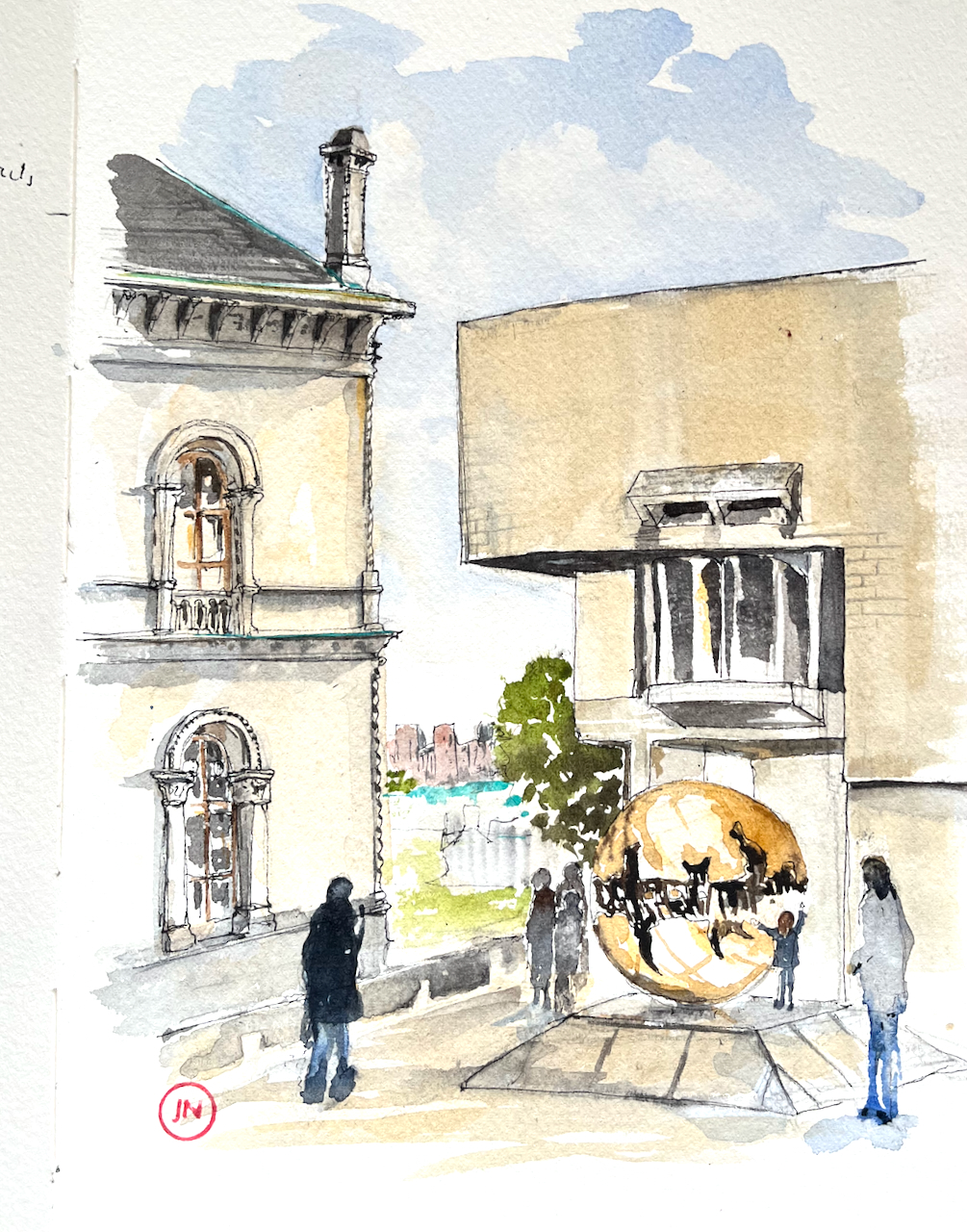
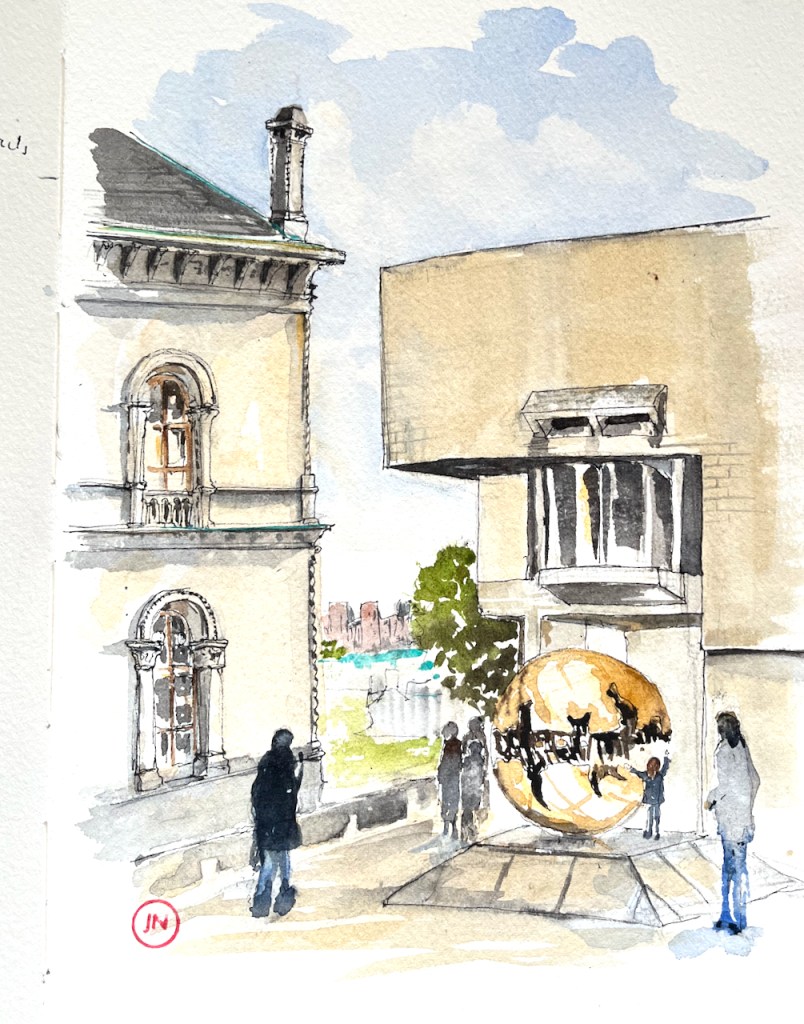
I was intrigued by this juxtaposition of two very different buildings, each radical in its own way. The top corners are just a few feet from each other.
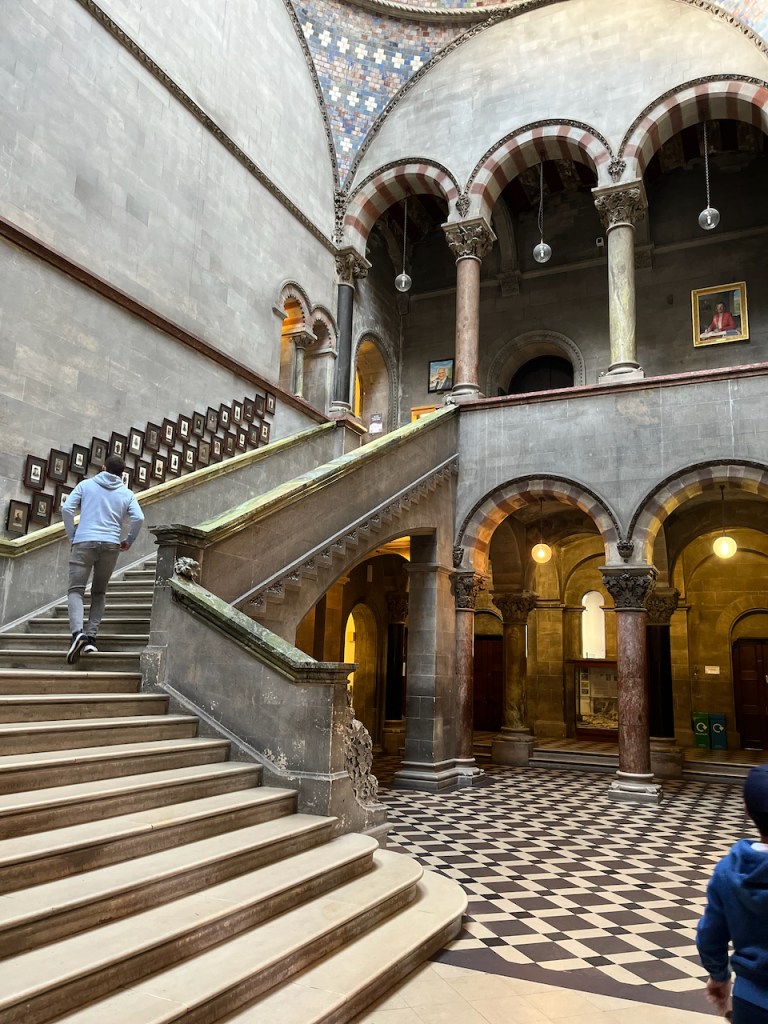
The building on the left is called the Museum Building. It houses the Geography department, amongst others. I know this because there was a notice visible in one of its windows asking:
“Without Geography, where are you?”
This building was finished in 1852. According to the website “makingvictoriandublin.com” the style is called “Ruskinian Gothic”. The design is by Cork architects Deane, Son and Woodward, influenced by the philosophies of the English writer, artist and art critic John Ruskin, says the Making Victorian Dublin site.
Central to the design was a radical endorsement of the creative power of human happiness…the architects encouraged the freedom of their workmen [sic] in designing and executing the building’s external and internal carvings.
“makingvictoriandublin.com“
The external and internal carvings are very complex combinations of leaves and flowers. A notice inside the building tells us that all the building’s carvings are by brothers John and James O’Shea of O’Shea and Whelan and that they gathered wild flowers and animals (amazingly) to use as models.
Even as the Museum Building was being built the Dublin press recognised it as the first experiment in British and Ireland of Ruskin’s radical views – a clear demonstration of the ‘the desireableness of employing the minds of the workmen’.
This experiment’, wrote the reviewer in the Dublin Express, ‘proves the general correctness of [Ruskin’s] views, and, moreover, has resulted far better than even the most sanguine advocates of this system had allowed themselves to expect.’
“makingvictoriandublin.com“
The whole building is influenced by Venetian designs observed by John Ruskin.
The inside of the building is spectacular. As well as the soaring architecture and the fascinating patterns and arches, there are also two skeletons of elks, some dinosaur footprints, and a model of a floating crane boat. You could spend hours there sketching.
The building on the right of my drawing is a library, opened in 1967. It is in the radical style of that period: the Brutalist style. The building’s clean lines and functional appearance are characteristic of this style. The architect was Paul Koralek of ABK architects.
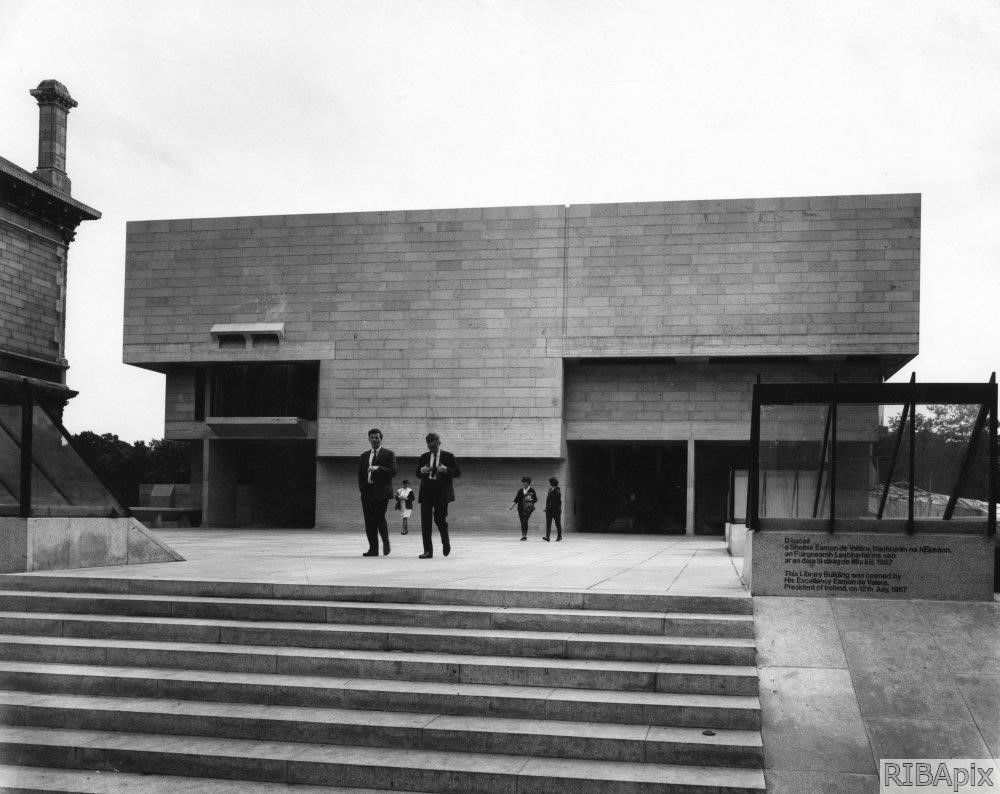
In 2017 the College ran a celebration of the library after 50 years. Their website includes pictures of the interior and furnishings. https://www.tcd.ie/library/berkeley


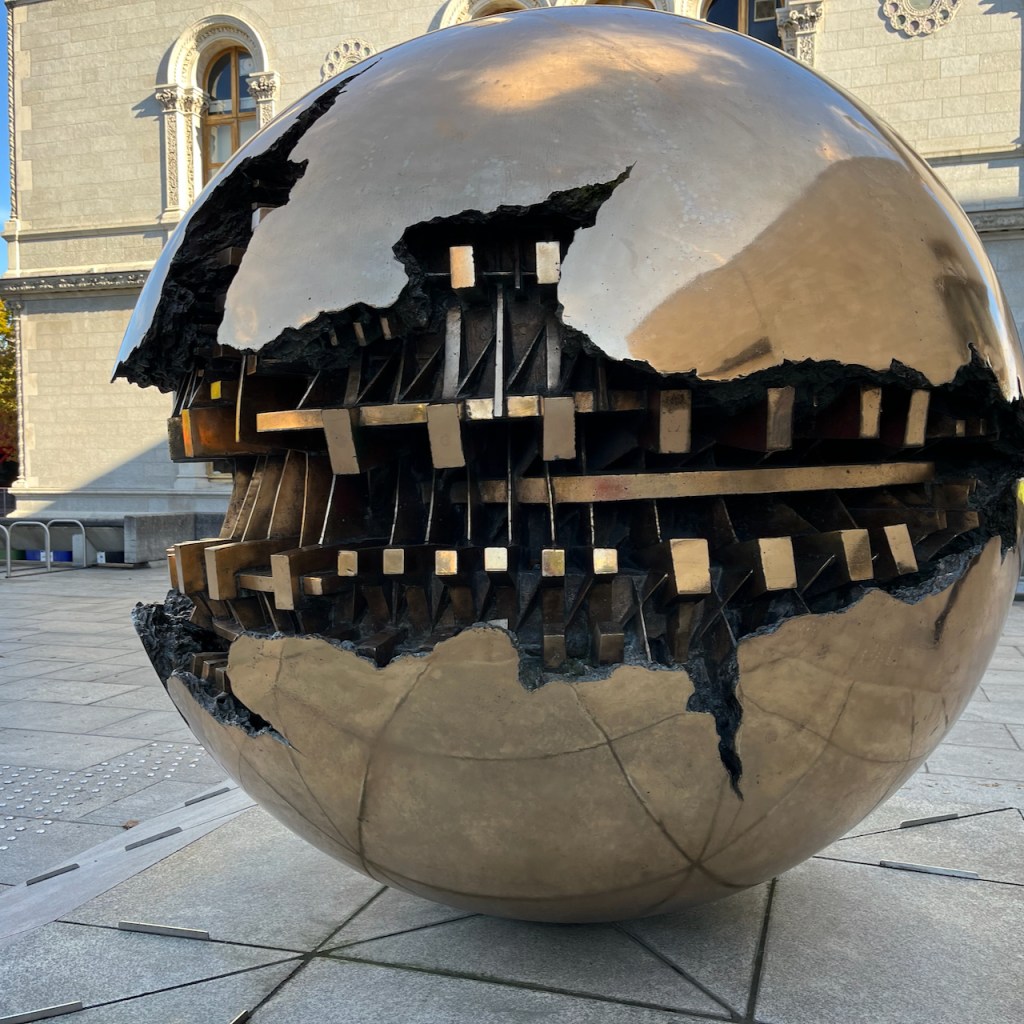
The spherical object in my drawing is a sculpture by Arnaldo Pomodoro called “Sphere with Sphere 1982/3” according to an inscription on the pavement.

I sketched for about an hour and a half. During that time waves of people crossed the square. There were a remarkable number of tourists, some with tour guides, moving in groups.
At one point, a solitary woman approached me and asked to see the picture. She smiled and said something in her own language which sounded like a compliment. So I said thank you, and smiled back. She told me that she didn’t speak English, and held up four fingers, counting, to explain she had only been here for four days. She was from Ukraine, she said. Her hands modelled an aeroplane taking off and landing. A wide uplifted arm gesture took in the autumn sun, the buildings and the people, expressing gladness to be here. She pointed at my drawing, and nodded again, making what was evidently a positive comment and a connection. Then she said goodbye and I said goodbye.
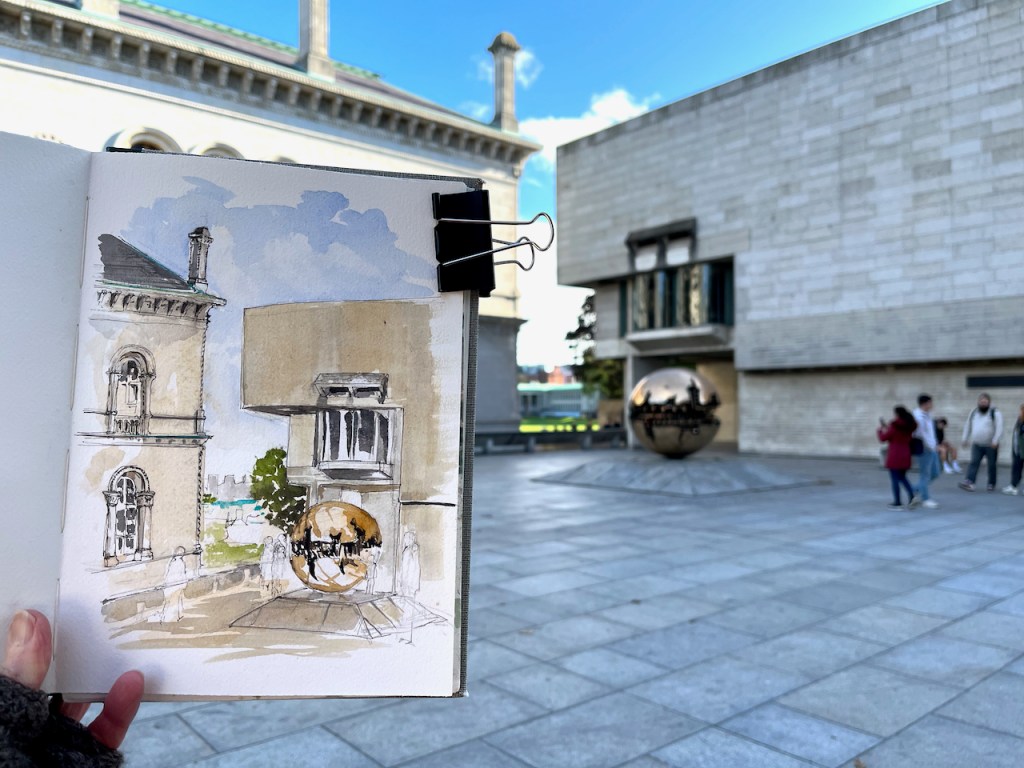
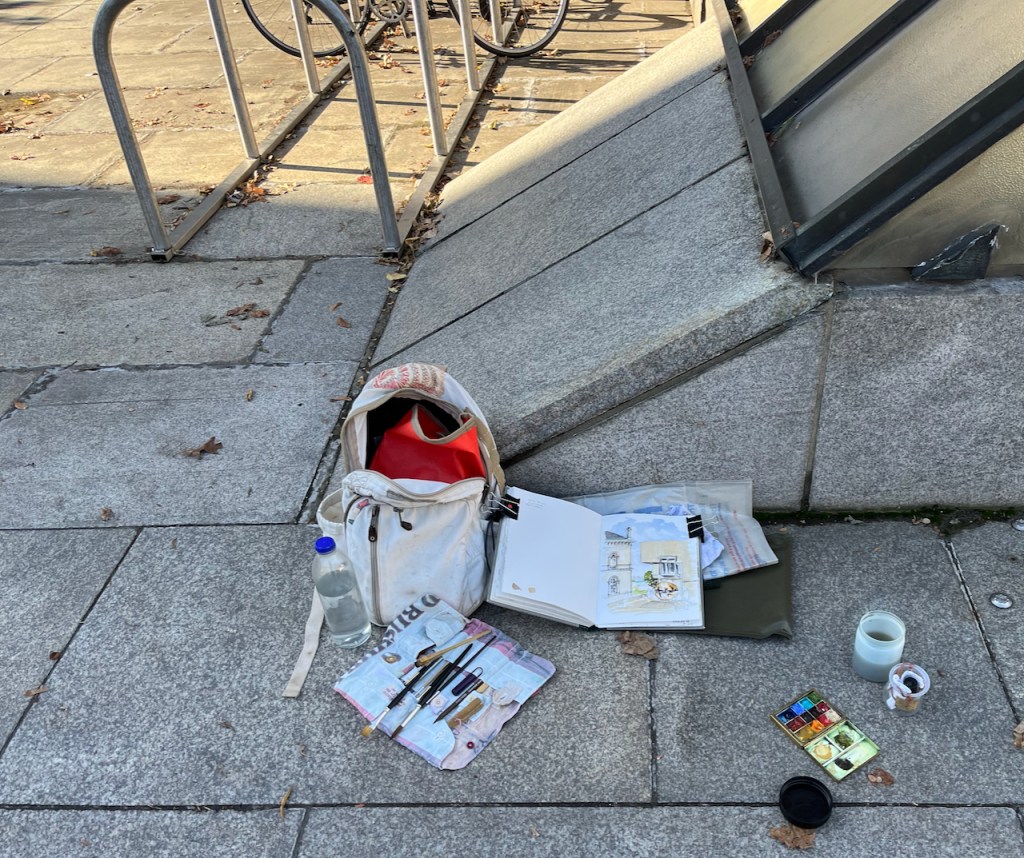

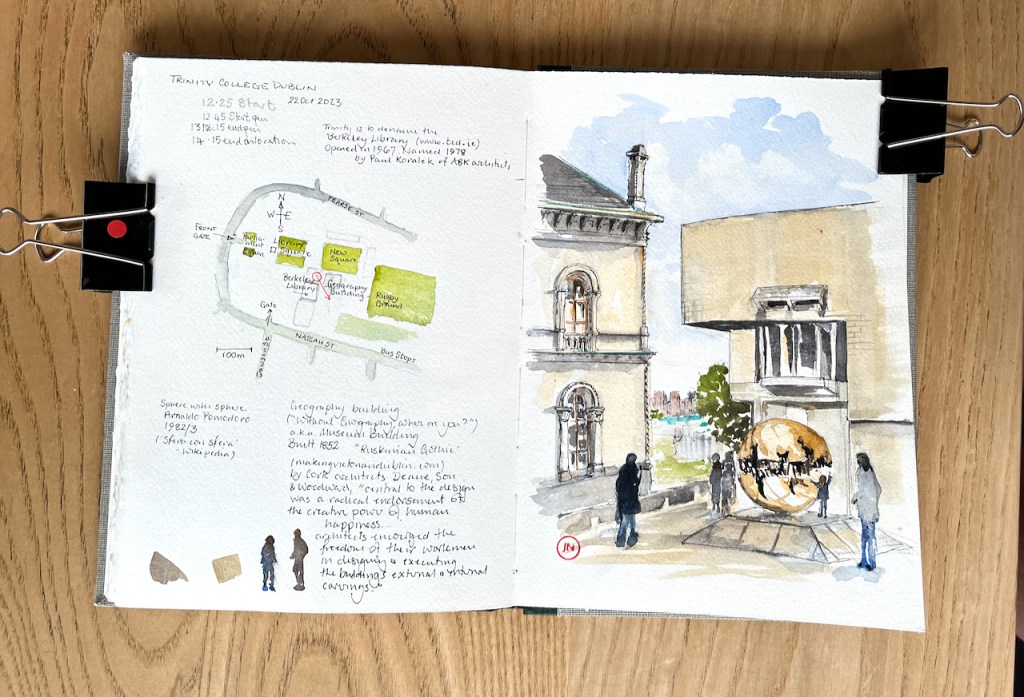

Colours used:
- Buff titanium (all brickwork and concrete)
- Mars Yellow (brickwork, concrete, sphere
- Ultramarine Blue plus Lavender (sky)
- Ultramarine Blue plus Burnt Umber (all greys)
- Serpentine Genuine (trees)
- a small bit of Cobalt Teal Blue and Fired Gold Ochre in the background
All Daniel Smith watercolours except the Ultramarine Blue which is Horadam watercolour.
 Jane Sketching