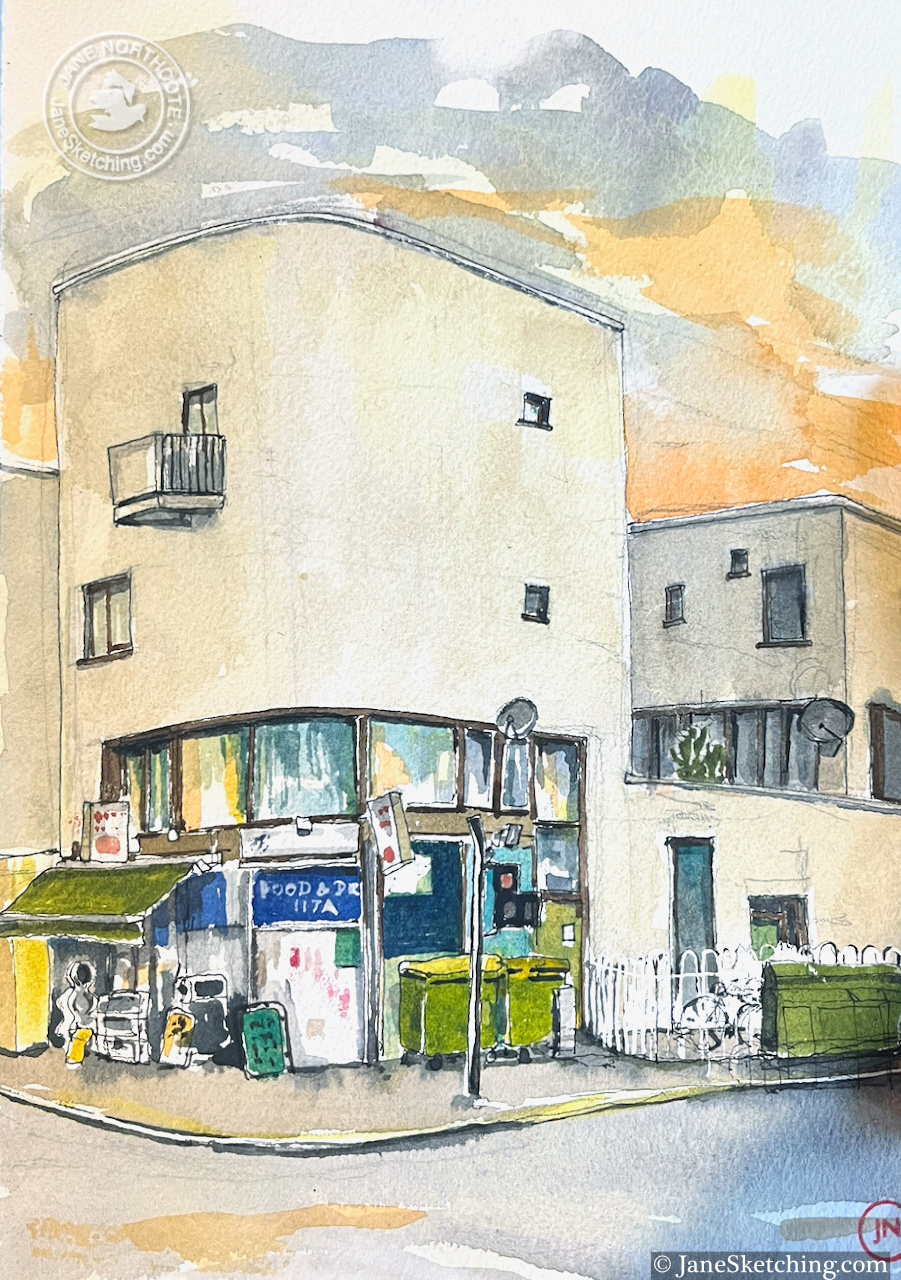
1 Wood Close E2

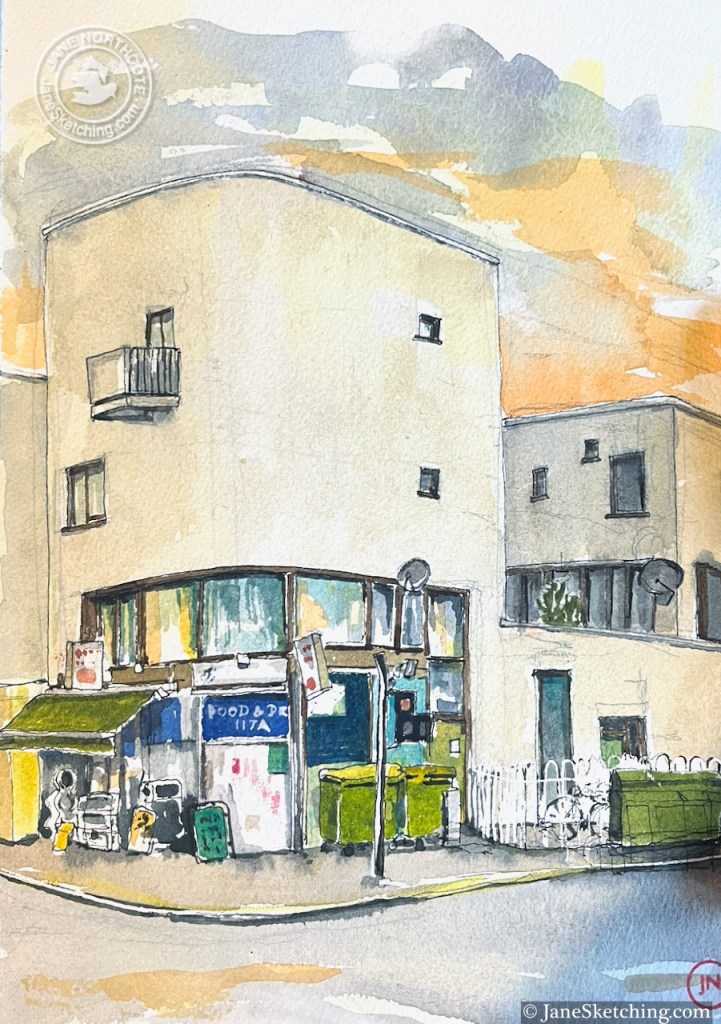
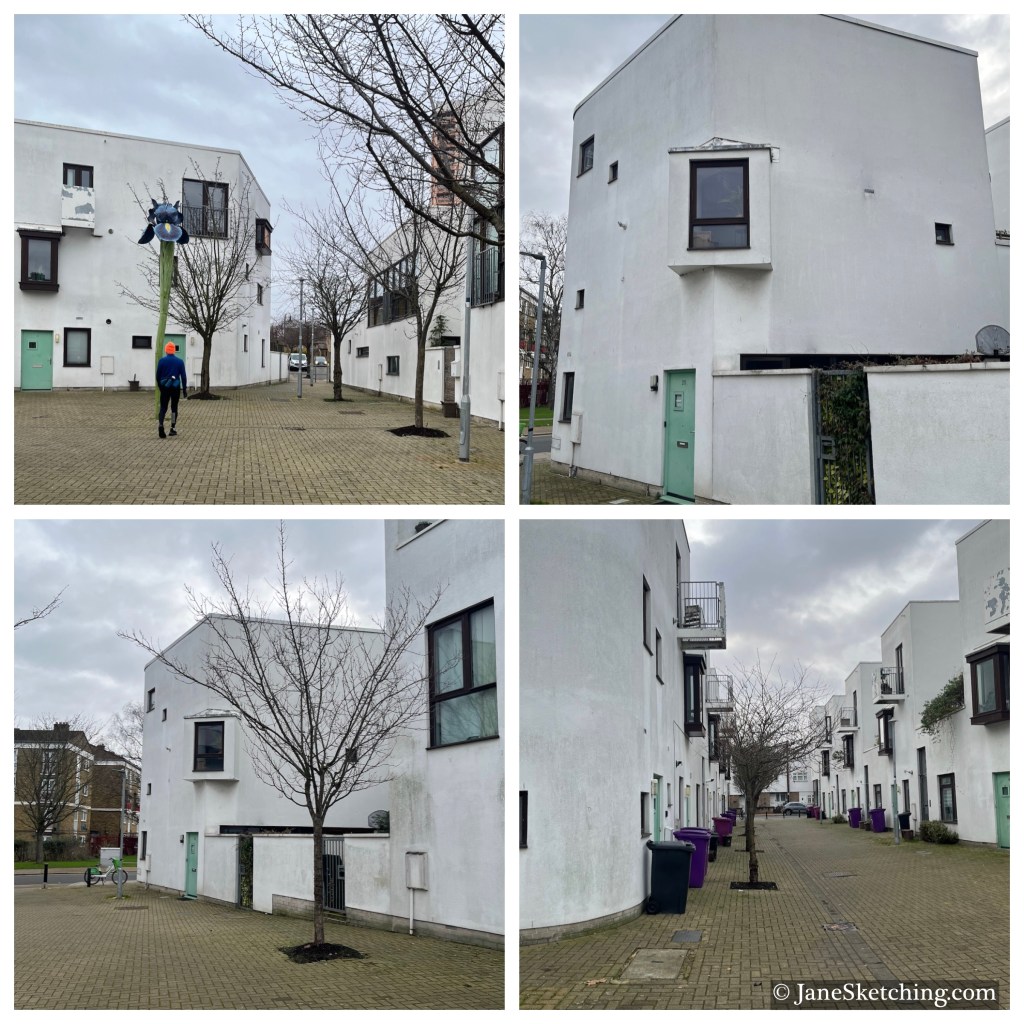
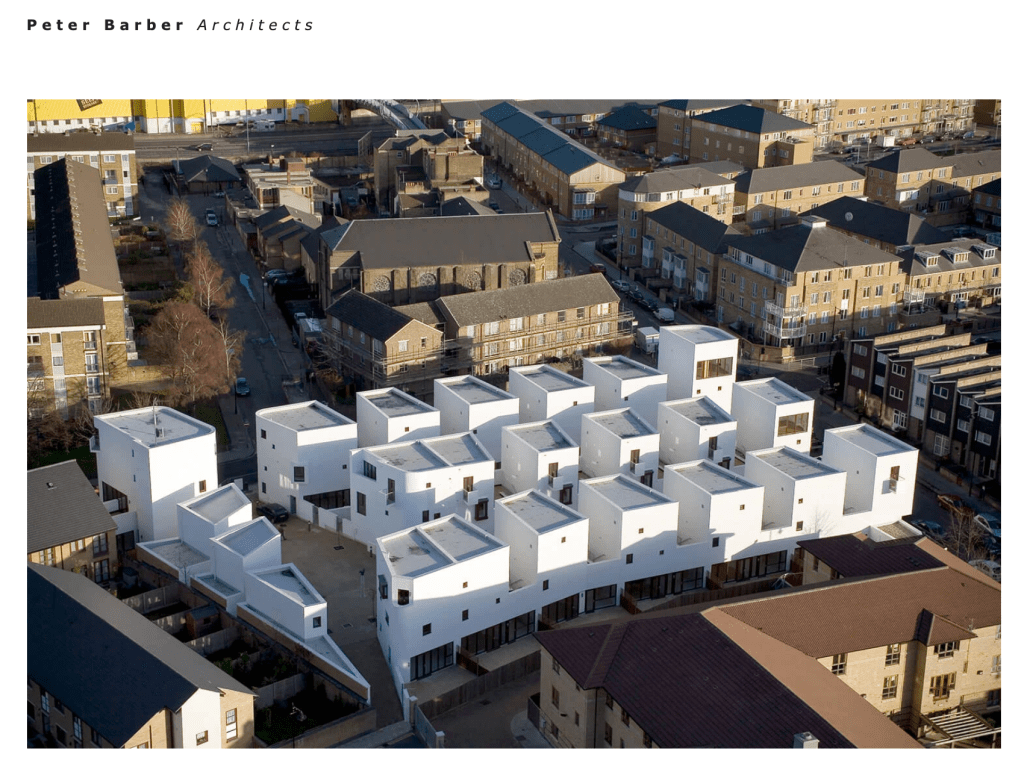
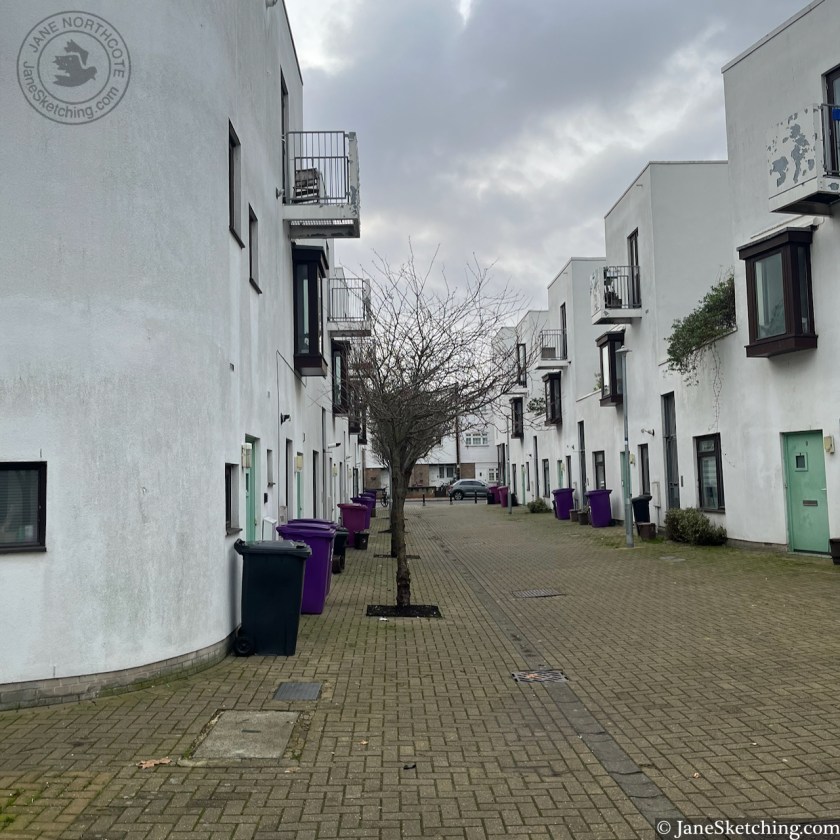
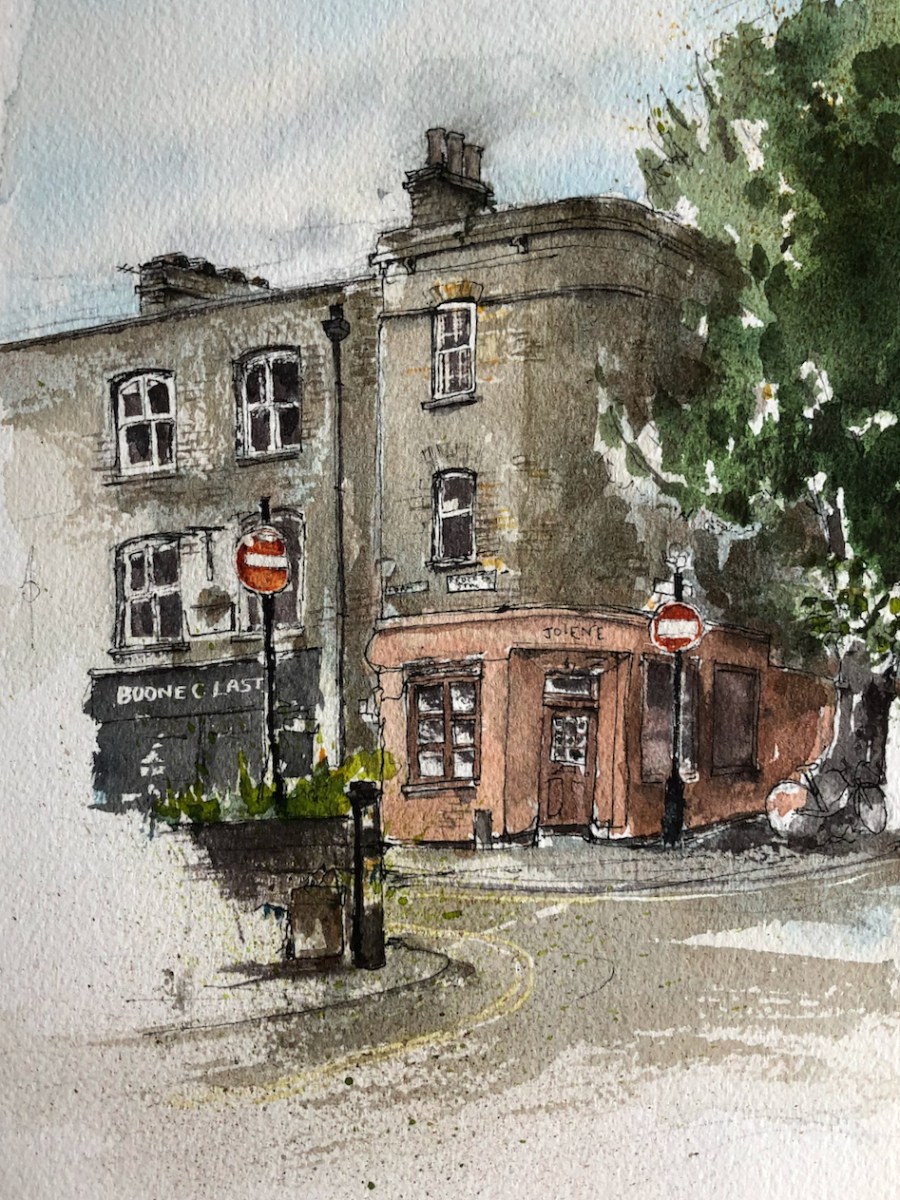
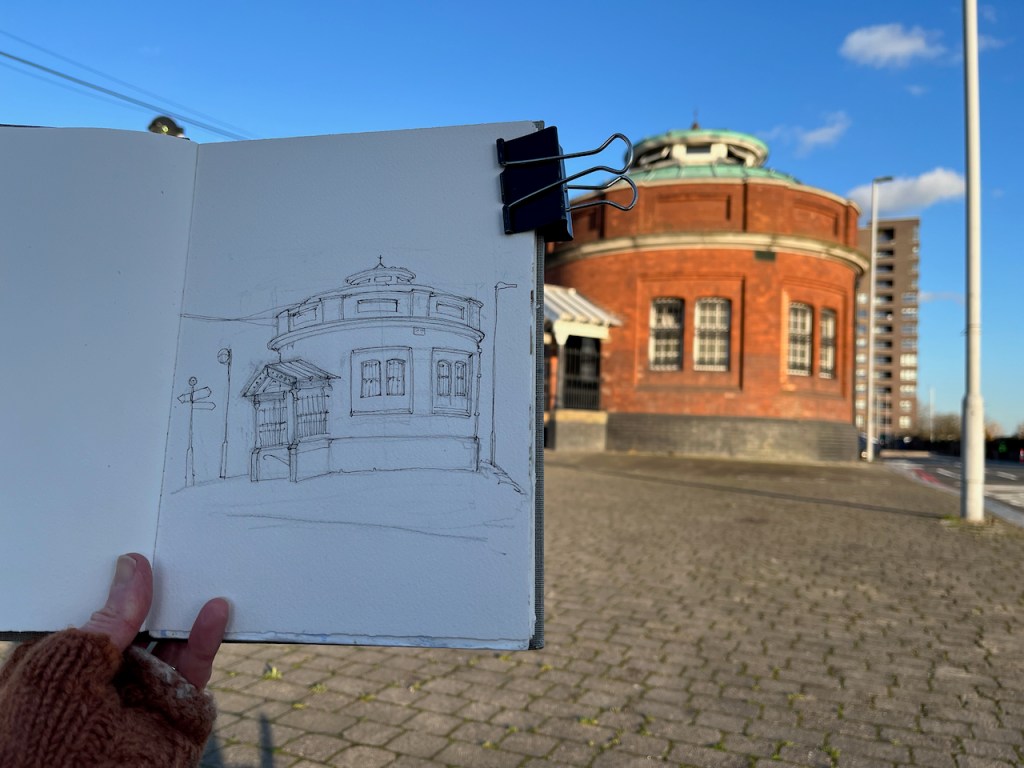
See this interesting building! It’s just a few hundred yards from Brick Lane in East London.

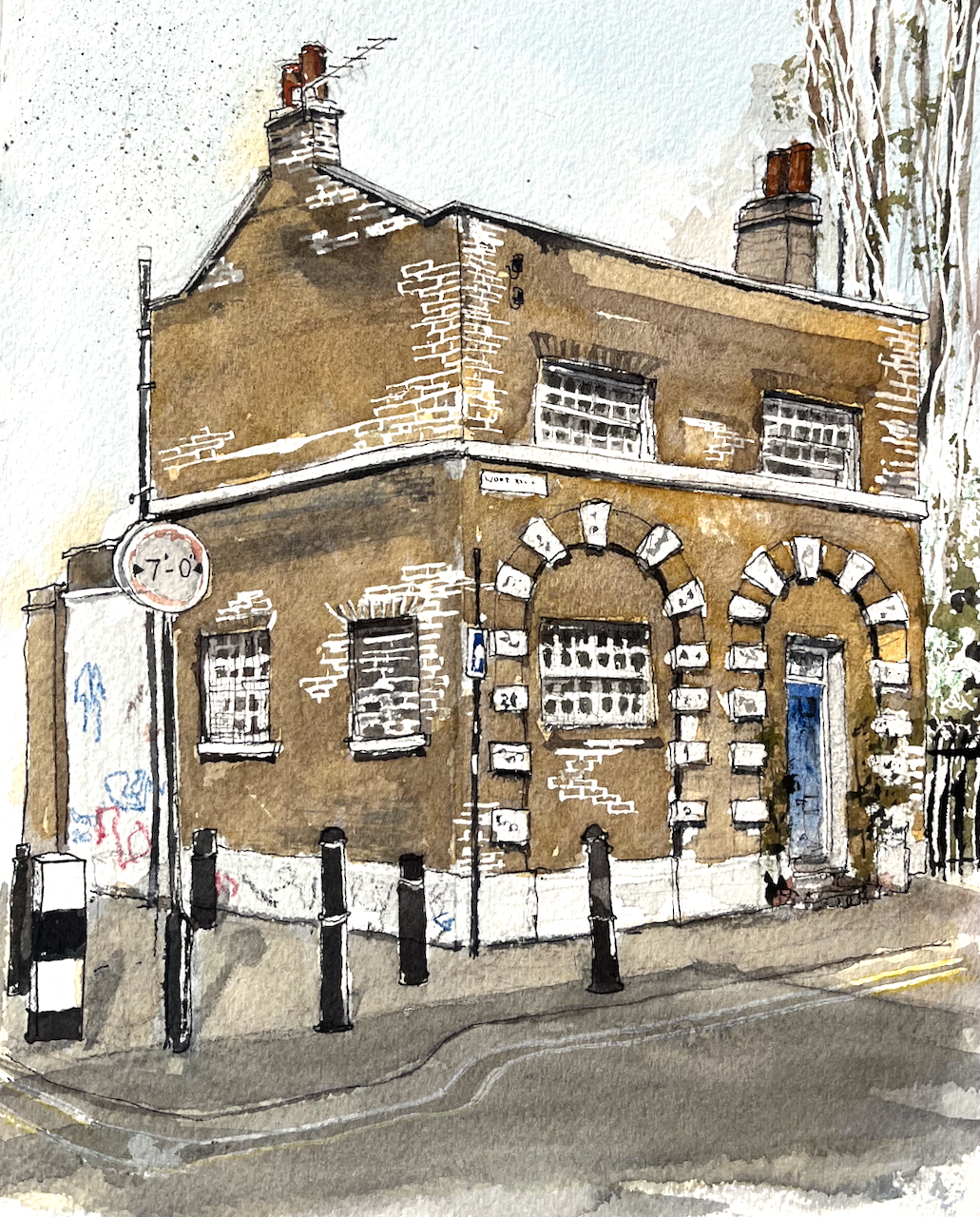
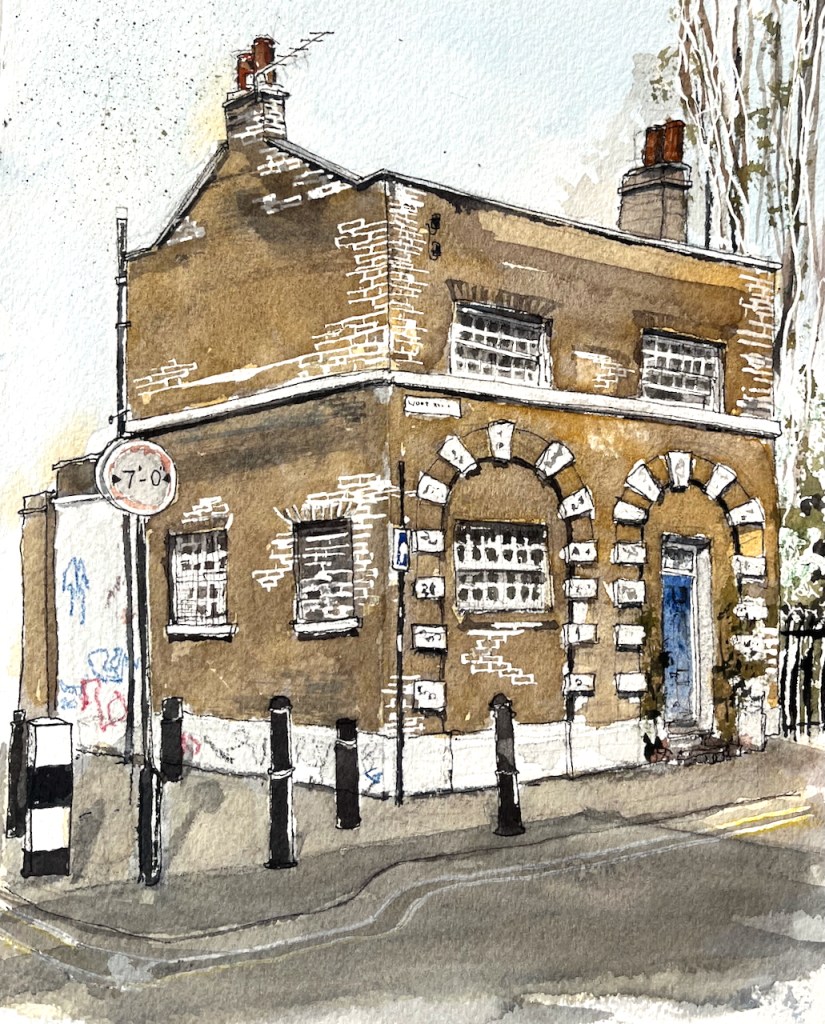
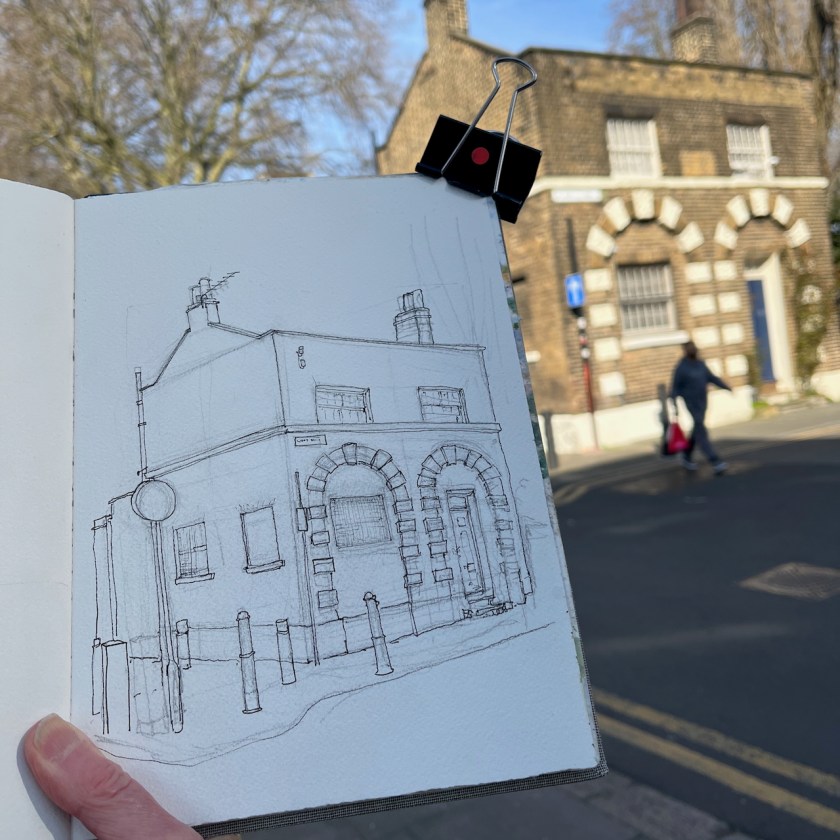
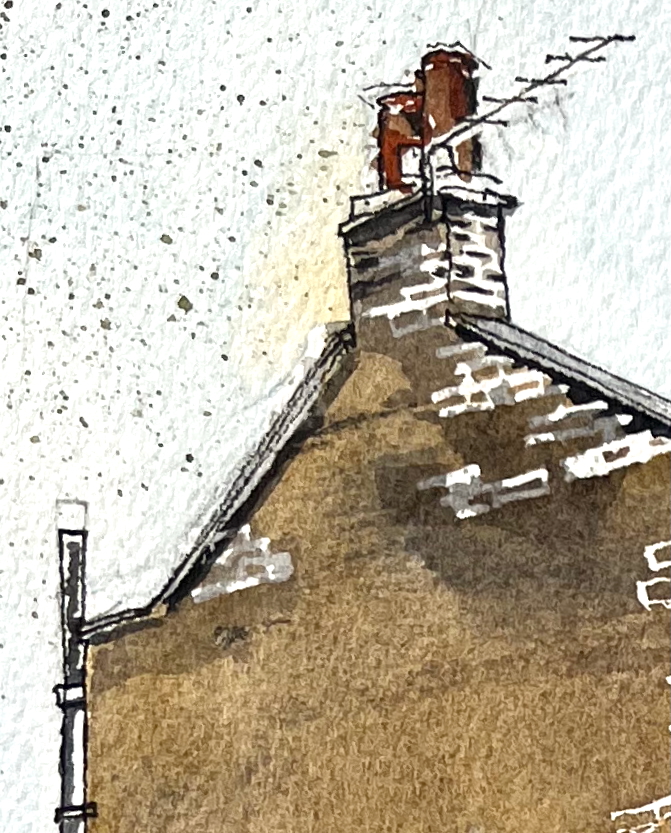
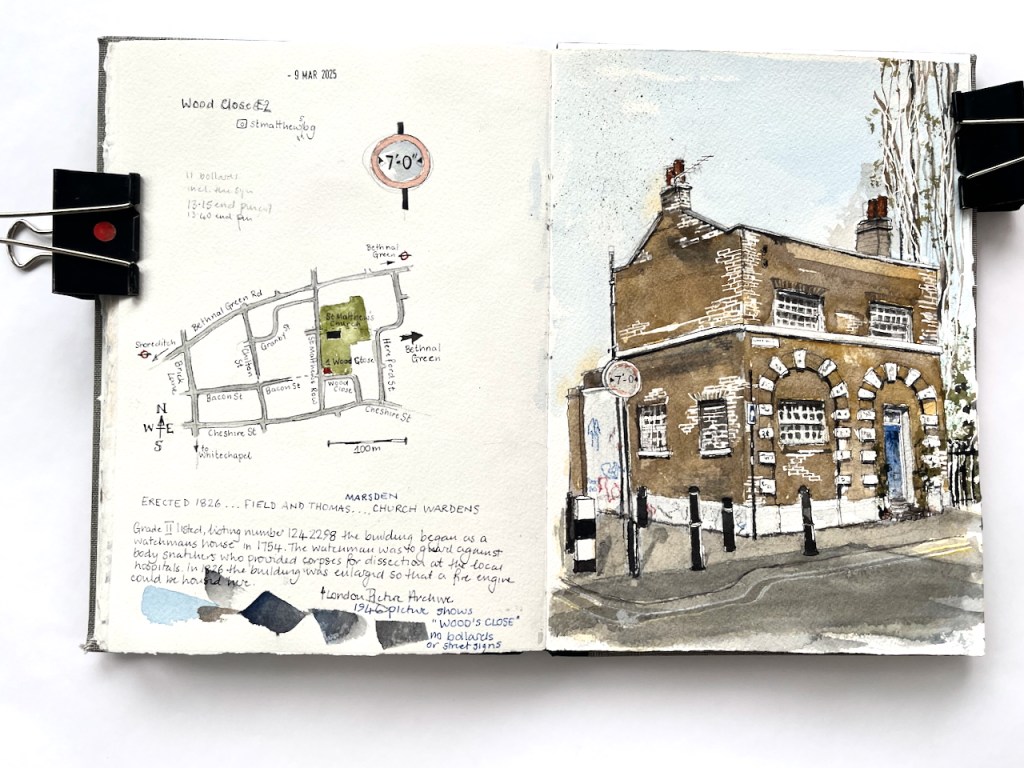
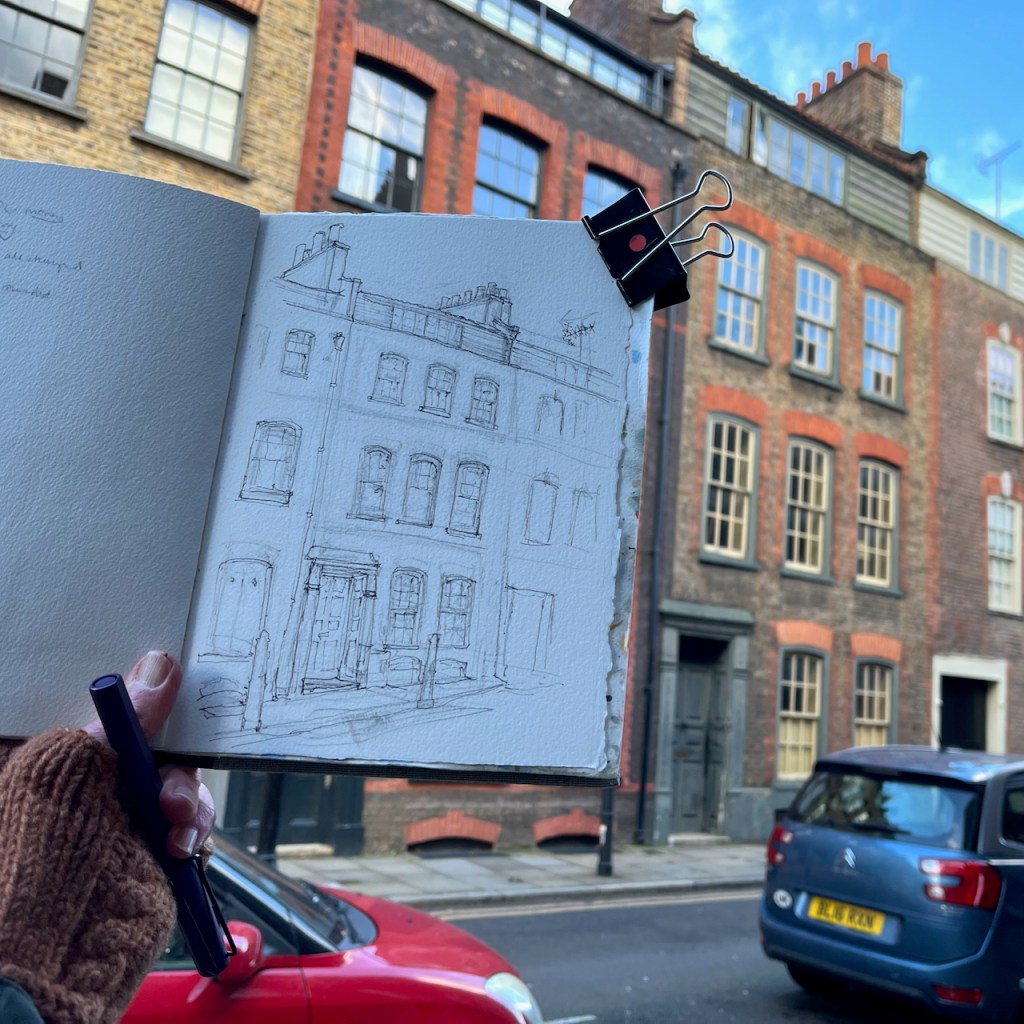
1 Wood Close E2, sketched around midday, 9th March 2025 in sketchbook 15

I’d walked past it a few days previously, when I had been taking a circuitous route through East London on the way back from Hackney Wick. It’s an unusual building for the neighbourhood, most of which is terraces or blocks of post-war flats. This building stood out, on its own, at a street corner. What is it doing there?

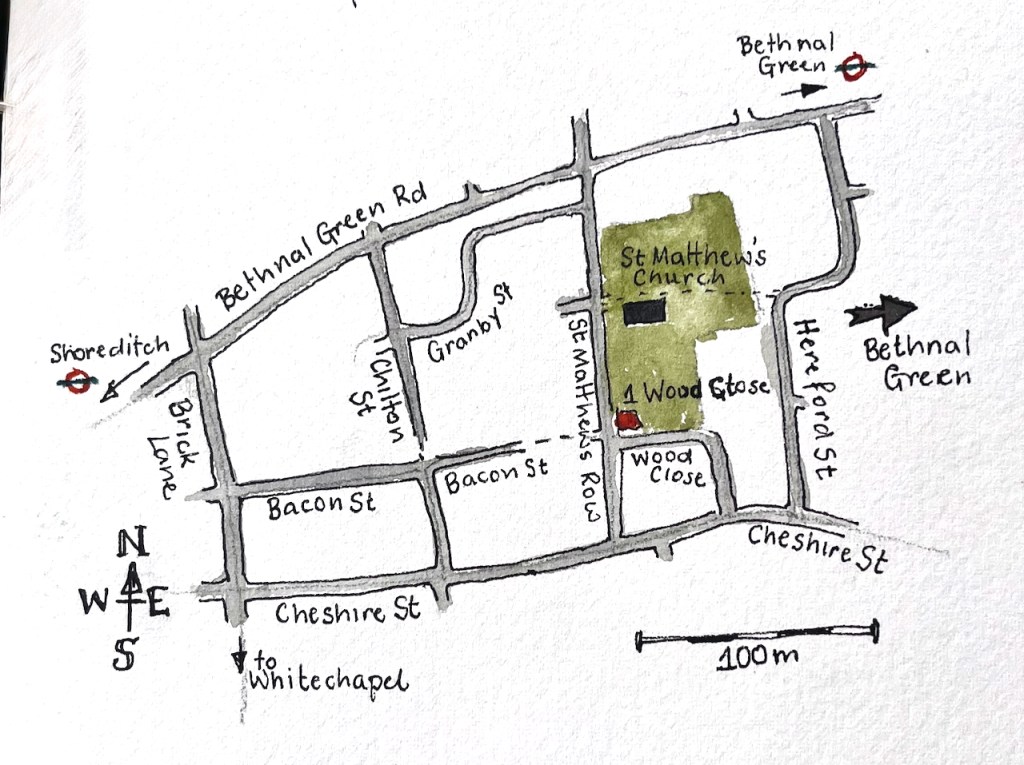
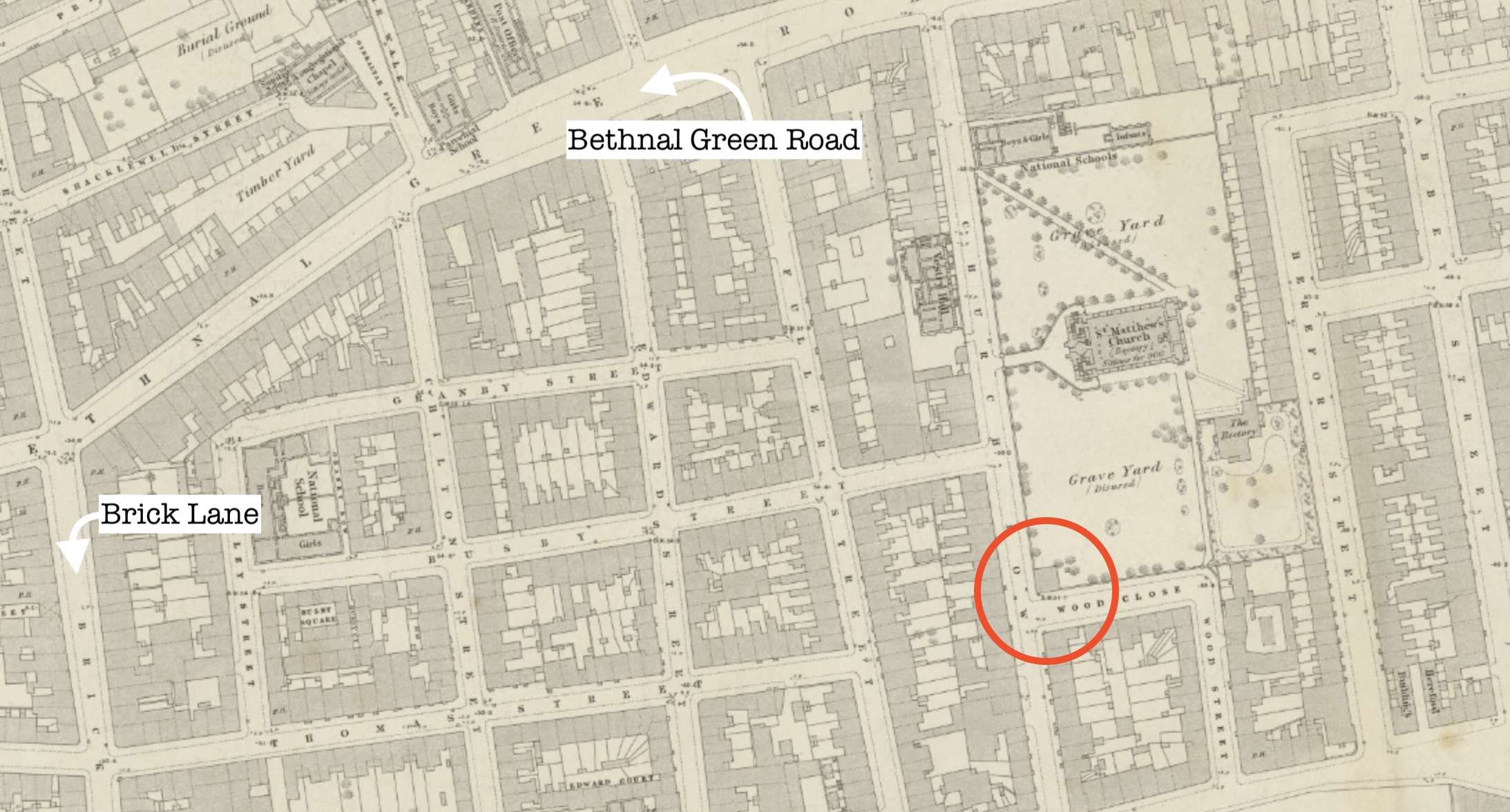
Sketch map showing the location of Wood Close: just to the east of Brick Lane.

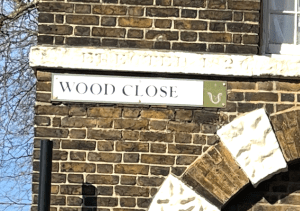
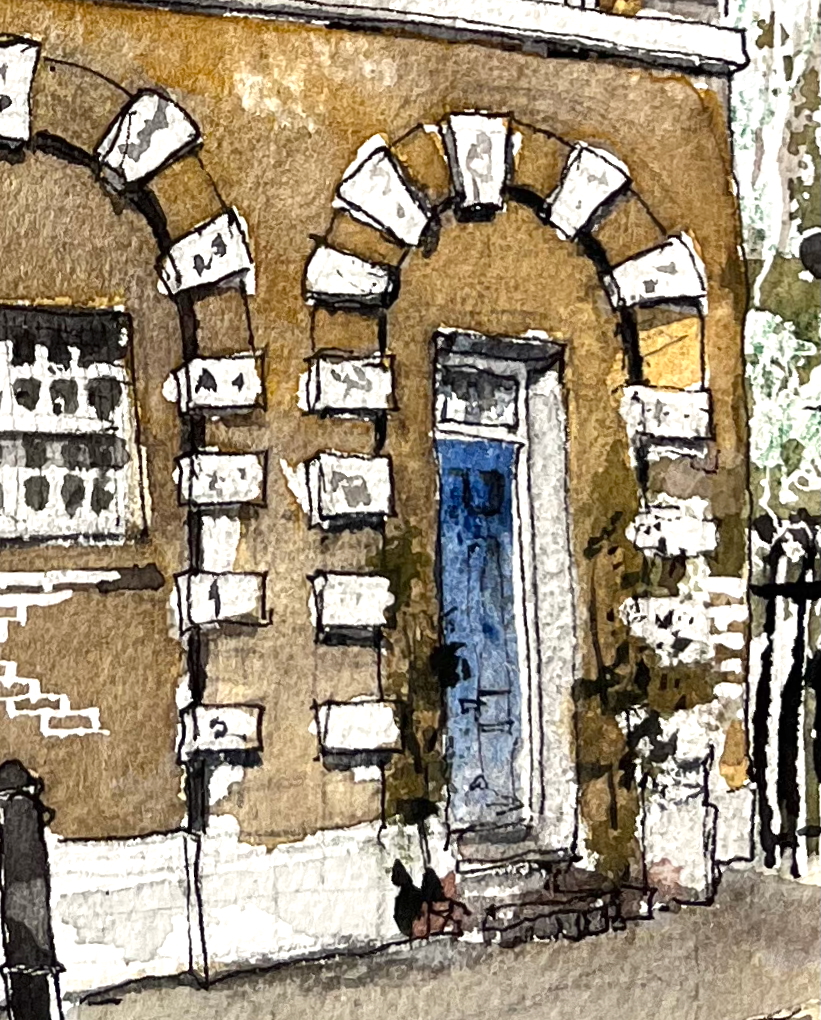
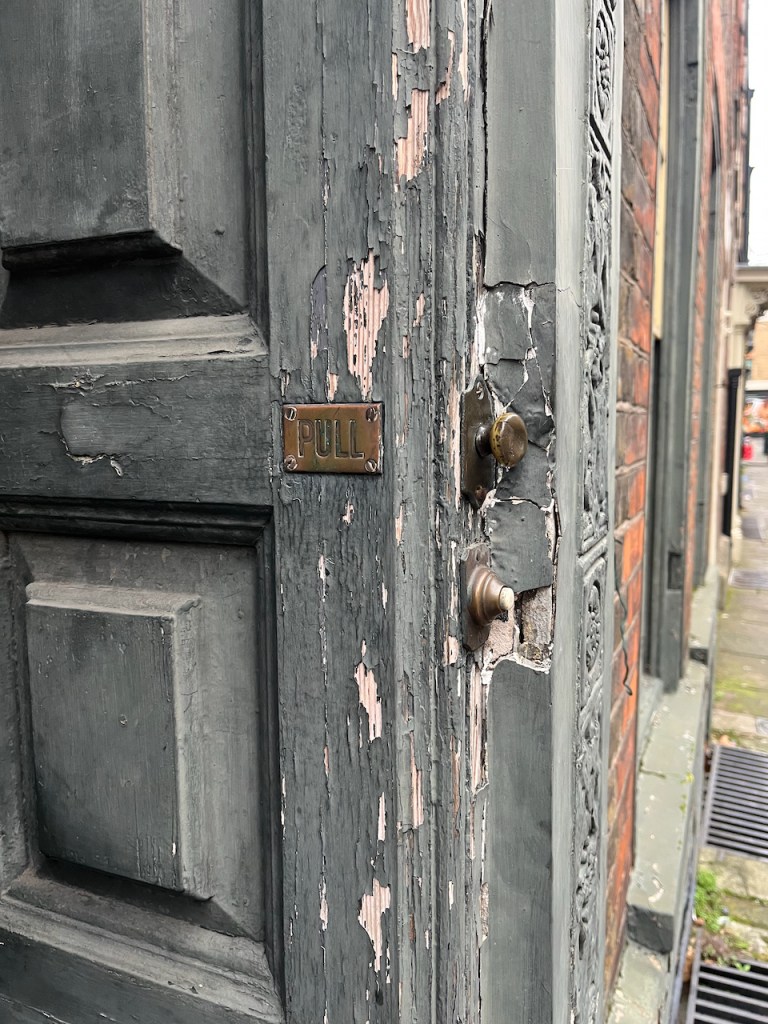
I went back a few days later for a closer look. On the white band at the front of the building I could decipher some words:
“ERECTED 1826 [something] FIELD AND THOMAS [something] CHURCH WARDENS”

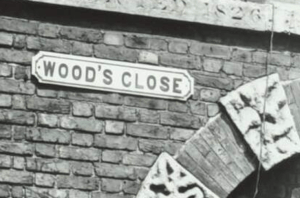
London Picture Archive has a photo of this building from 1946. The words on the front were a little clearer in 1946, so I can read that Thomas’ second name was MARSDEN. The London Picture Archive caption says that “the building began as a watchman’s house in 1754. The watchman was to guard against body snatchers who provided corpses for dissection to local hospitals. ” So that’s what it was doing: it was guarding the graveyard.

The London Picture Archive caption goes on to say that “In 1826 the building was enlarged so that a fire engine could be housed there.” That’s the building we see now, labelled 1826. It doesn’t look big enough for a fire engine.

In the London Picture Archive photo from 1946, the street name affixed to the building says “Wood’s Close” which would indicate it was named after someone called Wood. Today the street name on the building is “Wood Close”

This building is listed Grade II.

This link shows a 1872 map. Here’s an extract. Click the map to go to the National Library of Scotland map which is very detailed. The street is called “Wood Close” on this map. You can see the “Grave Yard (disused)”. The Watch House, circled in red below, is in the corner of the graveyard, which makes sense.

Area around Wood Close: 1872. Reproduced with the permission of the National Library of Scotland CC-BY(NLS)

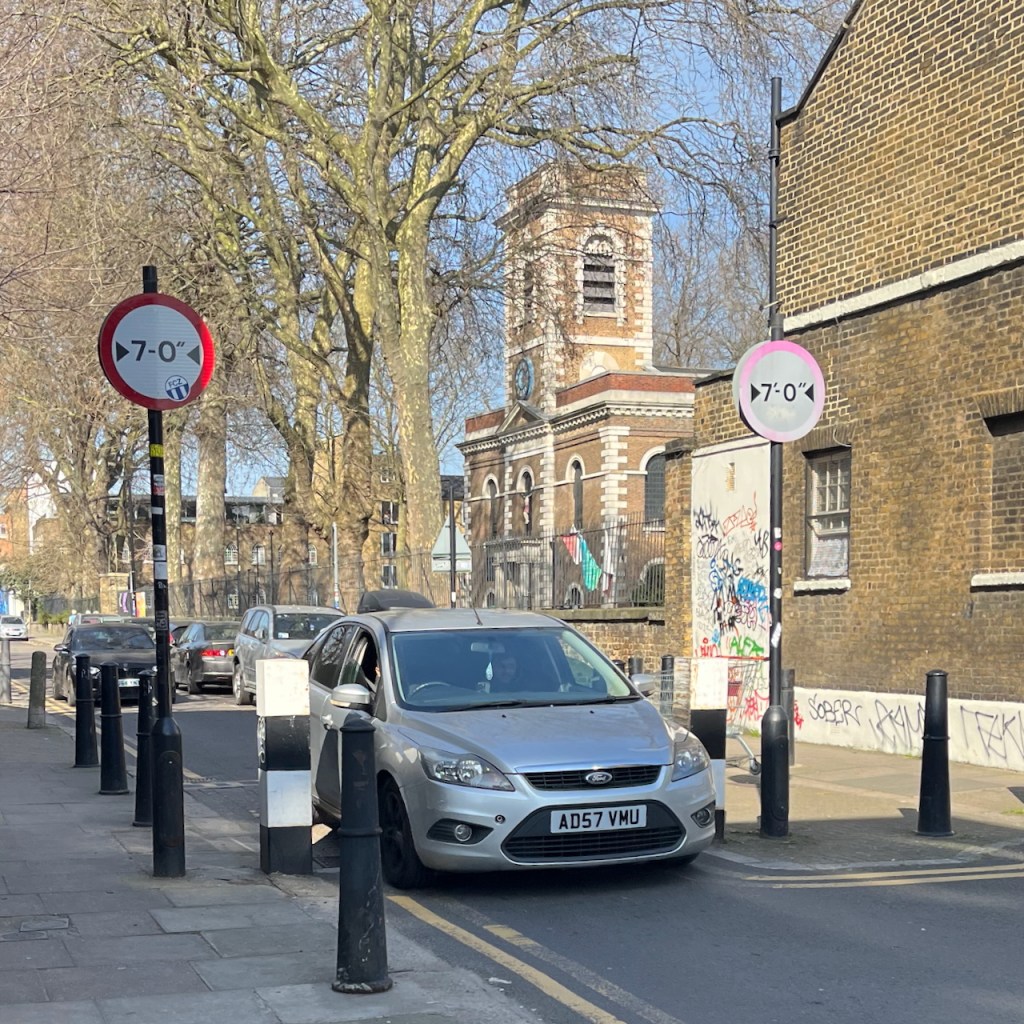
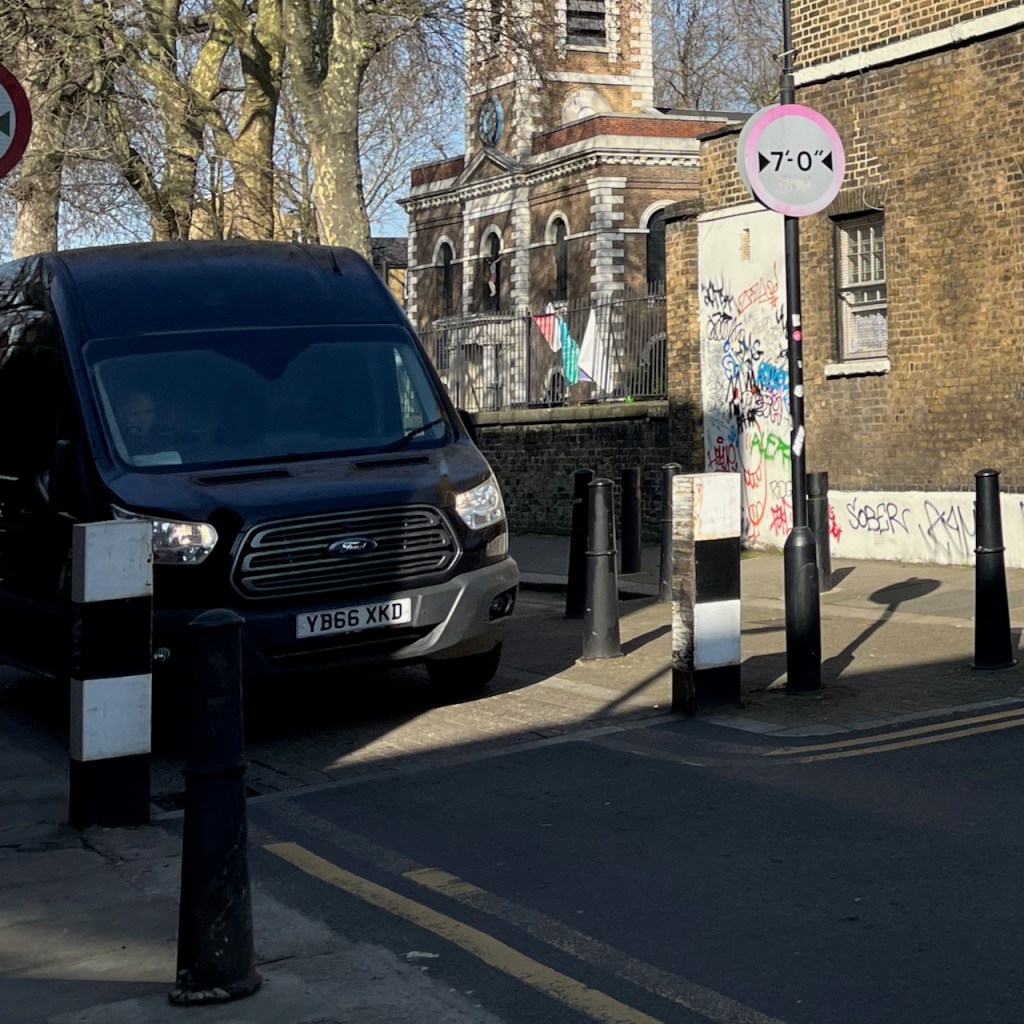
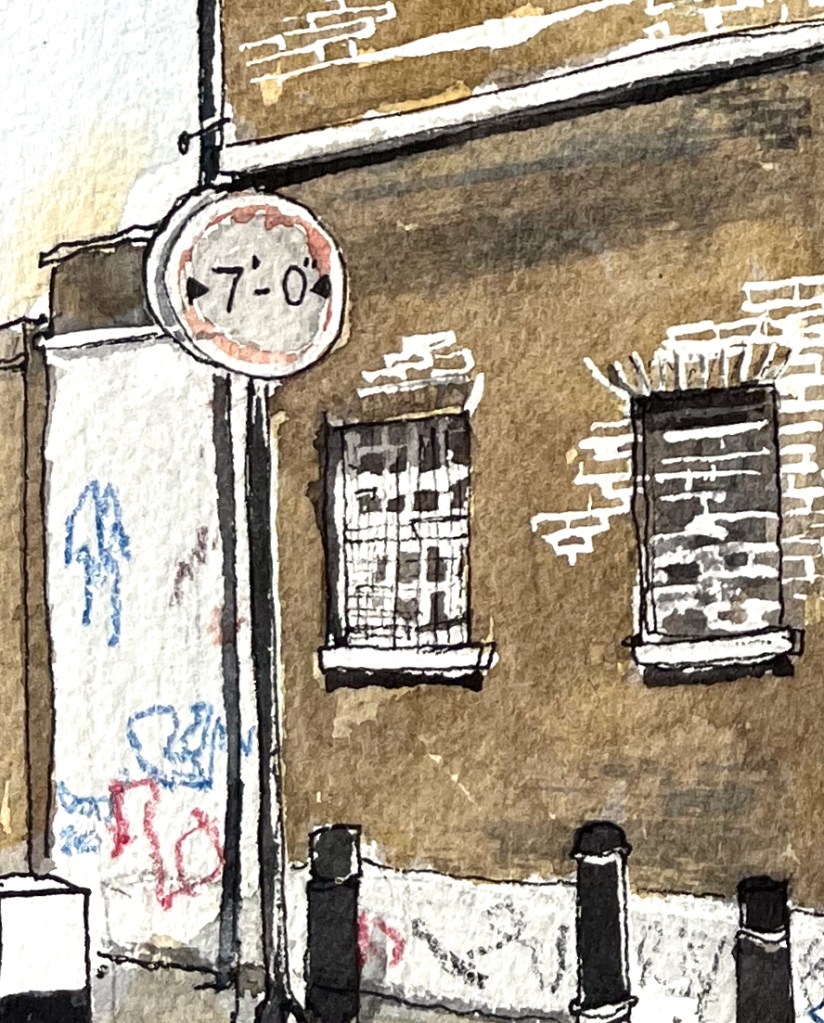
As you see in my sketch, there are now a prodigious number of bollards in front of the house. I counted ten of them, standing like an amused crowd next to the “7′-0” sign . While I was standing there sketching, I saw why. The idea is to restrict the width of St Matthew’s Row so that vehicles have to slow down or stop, and cars can’t sneak round the edges. I watched agog as huge limousines edged between the bollards.

This Watch House, and the nearby Parish Hall are owned by St Matthews Church:

The Church also own the Watch House on Wood Close, which is currently let out to private tenants, and the Parish Hall on Hereford Street, currently let out to State51.

https://www.st-matthews.org.uk/hire-our-spaces/

It’s a house on a corner, with an active life and a history. I was glad to make its acquaintance.

25 Fournier Street, London E1

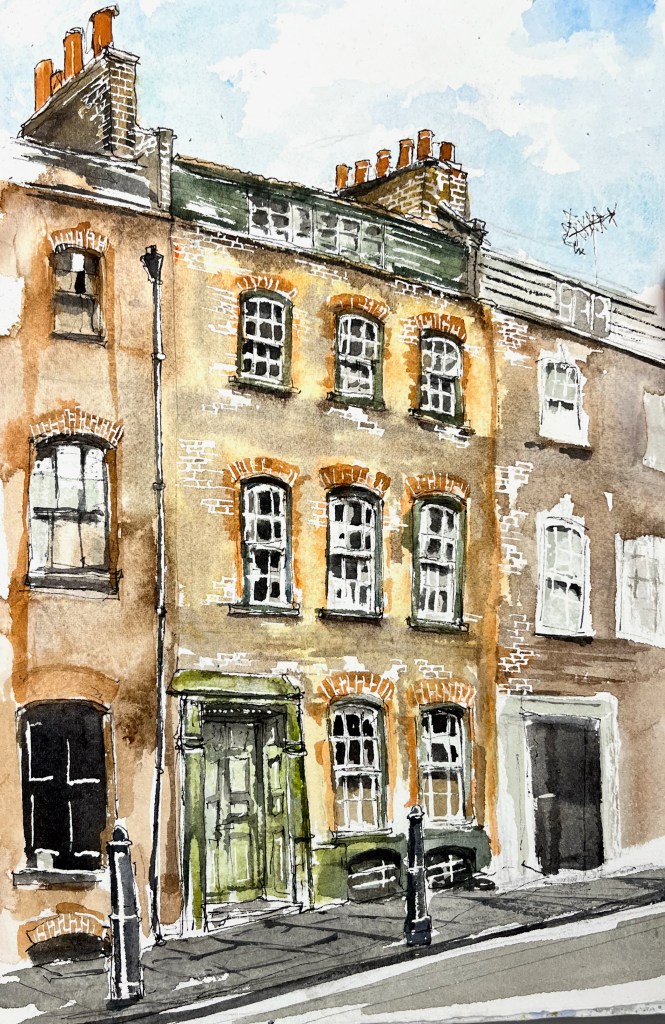
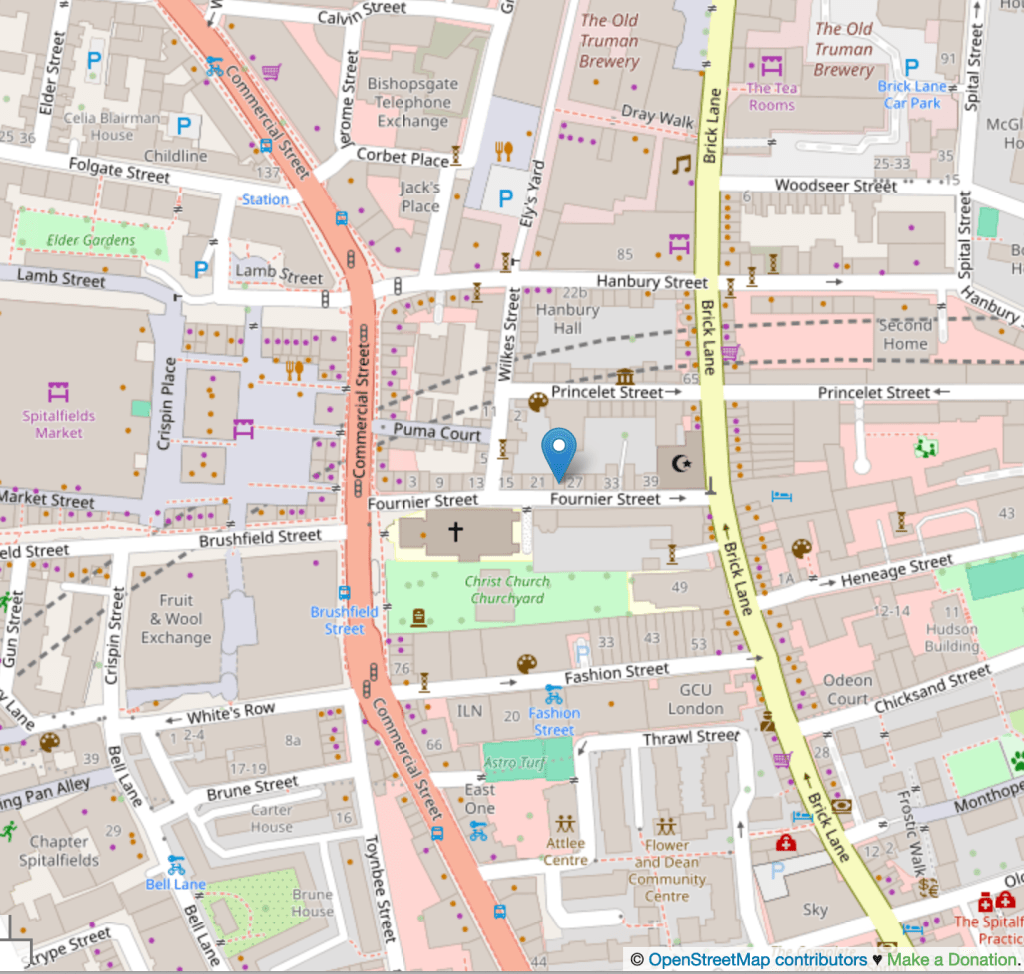
Fournier Street is a row of 18th century houses in Spitalfields, east London. Here is number 25.

25 Fournier Street, sketched 19th December 2024 in sketchbook 15

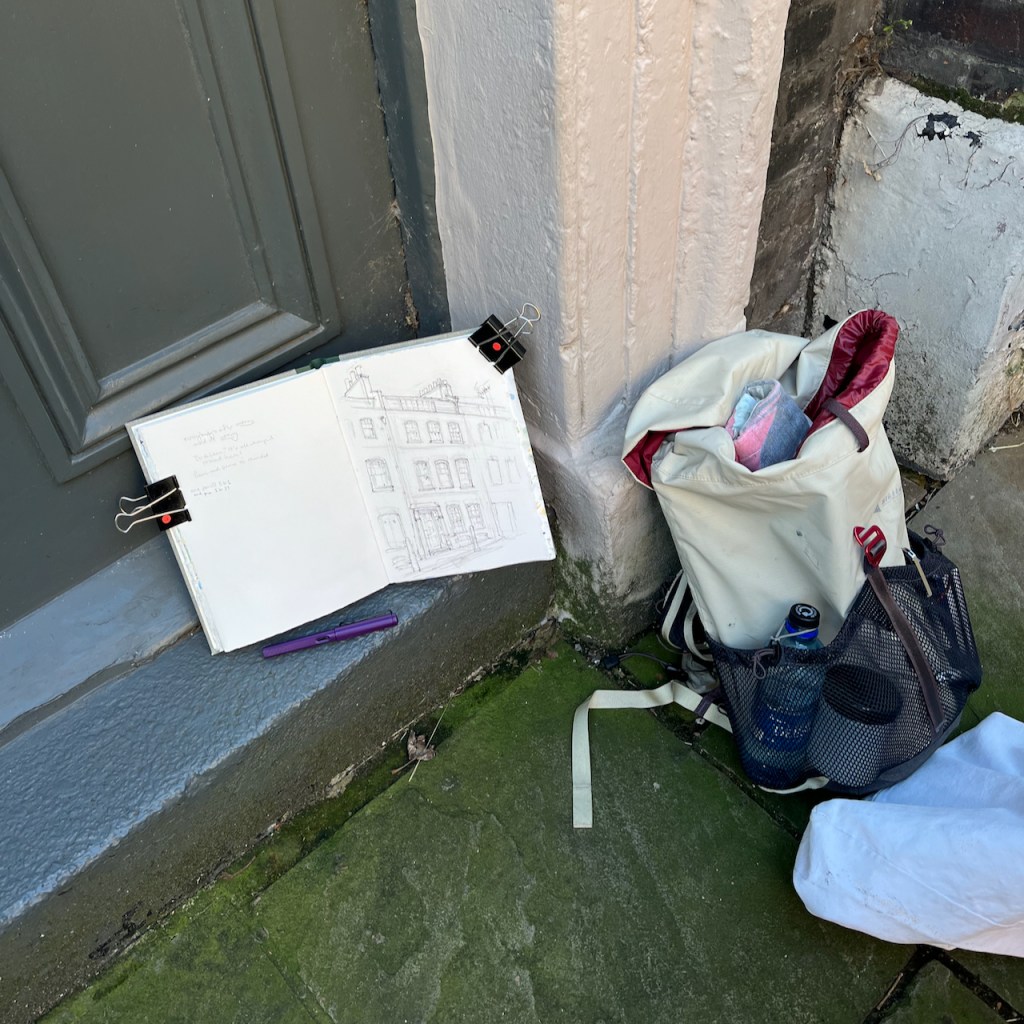
The weather was cold, and I was sheltering from the wind in a doorway opposite.

People rushed past on the pavement in front of me. It was nearing Christmas. I caught fragments of conversation. “Everyone’s after money” said a woman to her companion, “and it’s wrong!“.

I enjoyed spending time looking at this elegant house. The tops of the windows are curved. This is quite common in London. What is unusual here is that the wooden window frames are also curved, and the top panes of glass are curved to match. This must make replacing the glass quite a labour, I thought, and the curved sash window frames would need a skilled carpenter.

A woman approached, looking bothered. She caught sight of me in my doorway. I thought she wanted to open the door where I was standing, to enter the house behind me. So I was ready to express my apologies and move my stuff out of the way. But no, she wanted directions to Brick Lane, which is at the end of Fournier Street. “Just there,” I said, pointing. Brick Lane was almost visible, in a straight line from where we were standing.

She was flustered and didn’t seem quite to believe my simple direction. “It’s all changed round here!” she objected. I paused.

This street has hardly changed in 300 years. I’d just spent an hour looking at a house that was built in 1727. But I didn’t say that: a latent voice episode1.

She was an artist too, she told me. She was looking for a gallery. She hurried off, in the direction I’d indicated.

I was left looking at the house, and thinking.

  1. latent voice episodes = “potential communications that may or may not in fact occur”, Harvard Business School paper: Working Knowledge, Q&A with Amy C. Edmondson, author: Sarah Jane Gilbert, March 20, 2006. “Latent voice episodes” is a useful concept, I think. It’s for those times when you might speak, but don’t. ↩︎

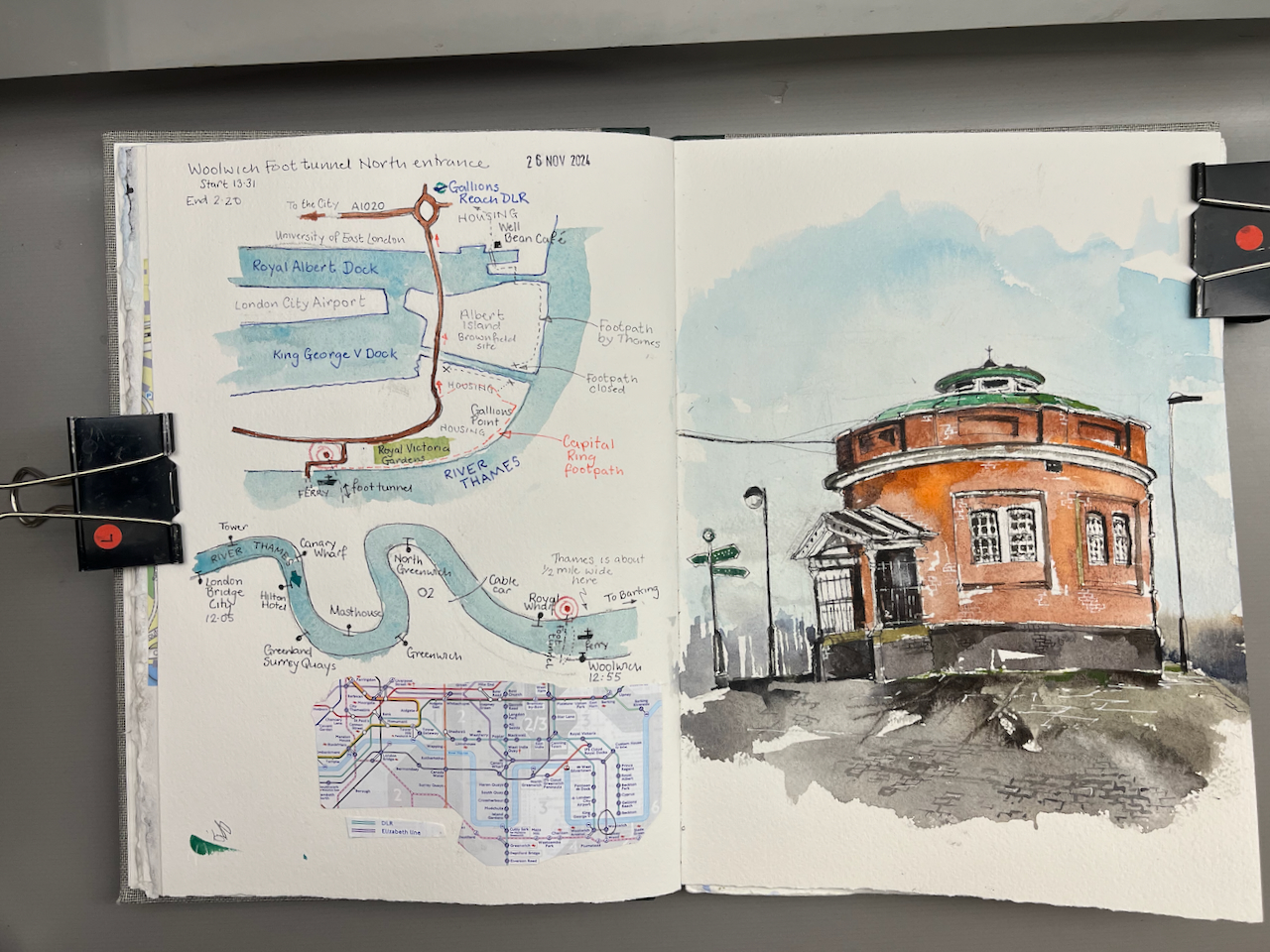
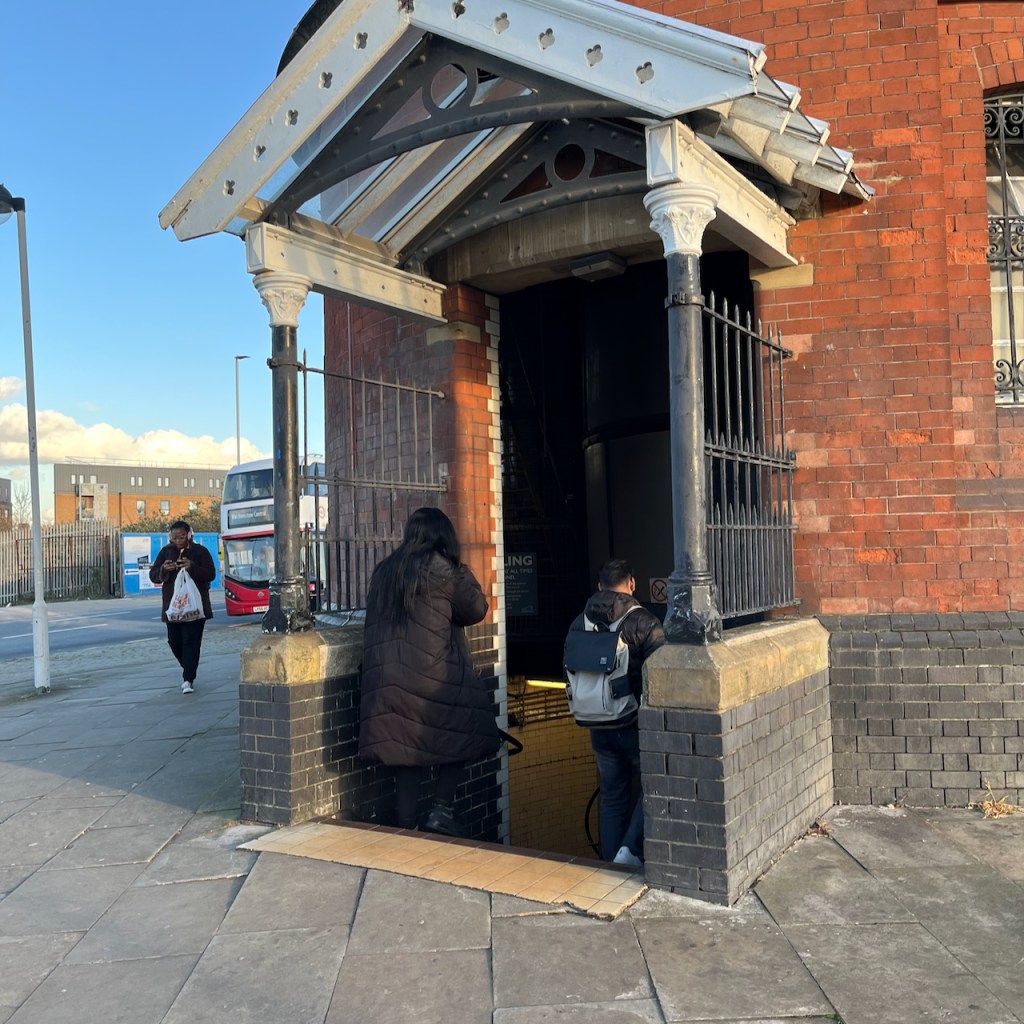
North entrance to the Woolwich Foot Tunnel, E16

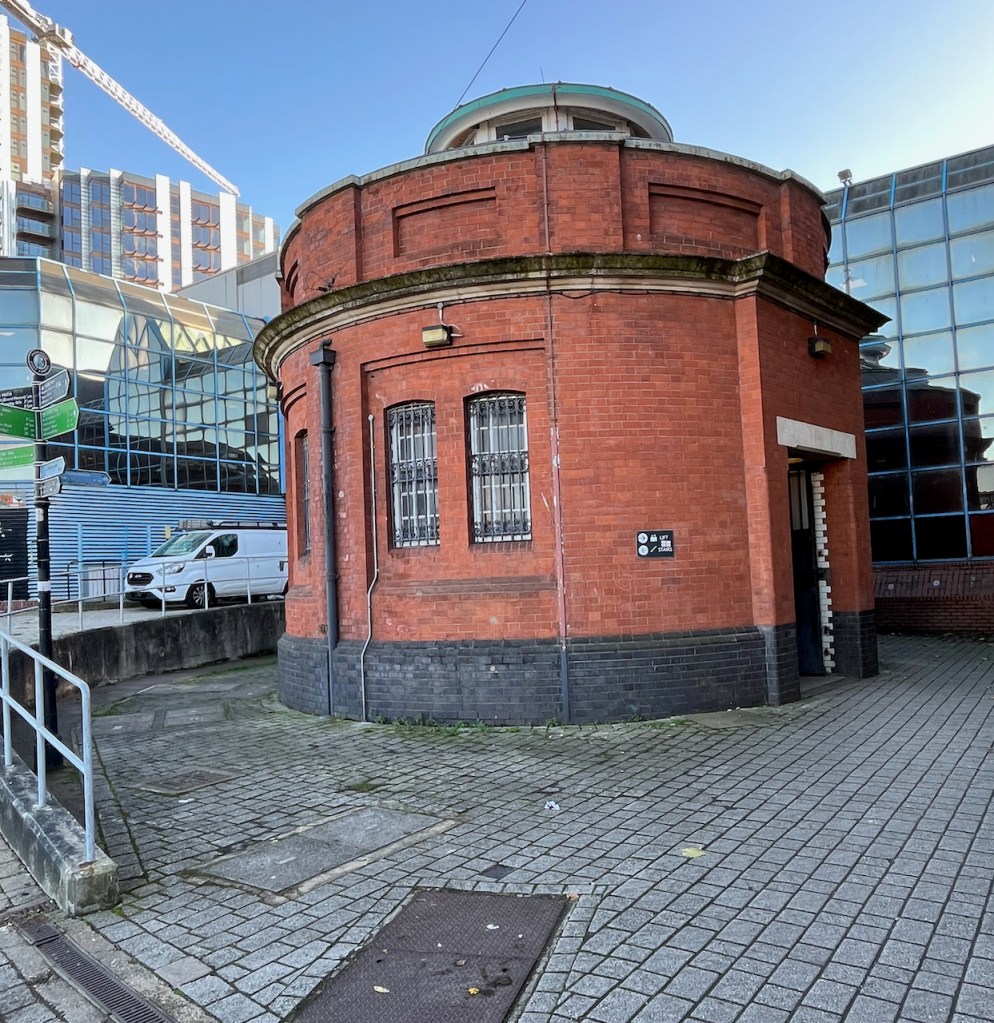
The North entrance to the Woolwich foot tunnel stands isolated on a traffic island.

North entrance to the Woolwich Foot Tunnel, sketched 26th November 2024 in Sketchbook 15

The Woolwich Foot Tunnel opened in 1912, and is still open today, 24 hours a day. It connects the North and South sides of the River Thames.

I walked through the tunnel on an adventure exploring Docklands, inspired (once again!) by a fascinating article on the “London Inheritance” site.

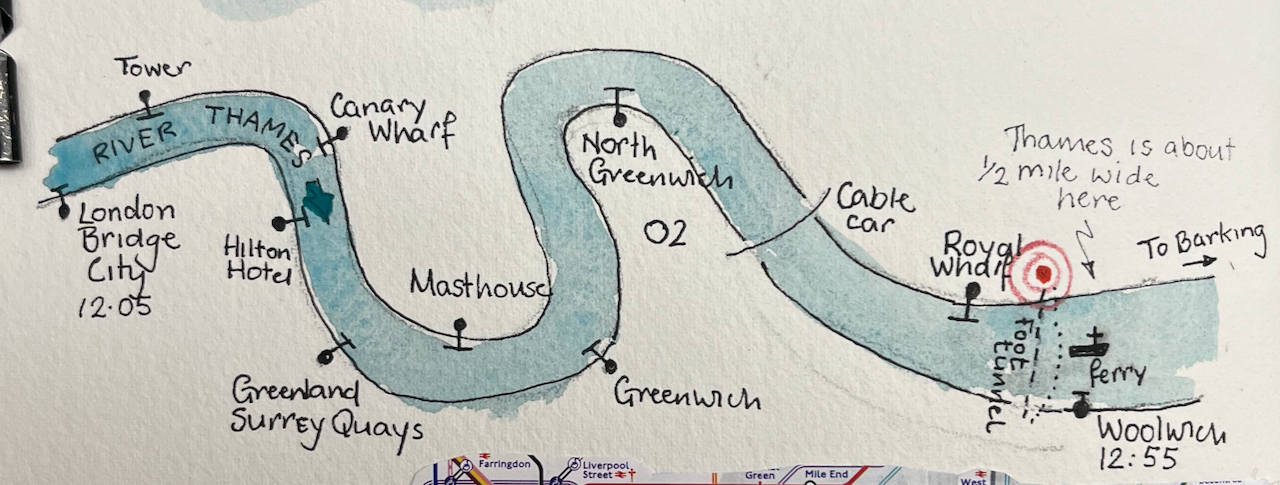
My expedition started at London Bridge pier, with a trip down the Thames on the riverboat. This seemed the simplest way to get to the docks. It takes about 50 minutes to go from London Bridge to Woolwich.

The route of the riverboat from London Bridge to Woolwich.

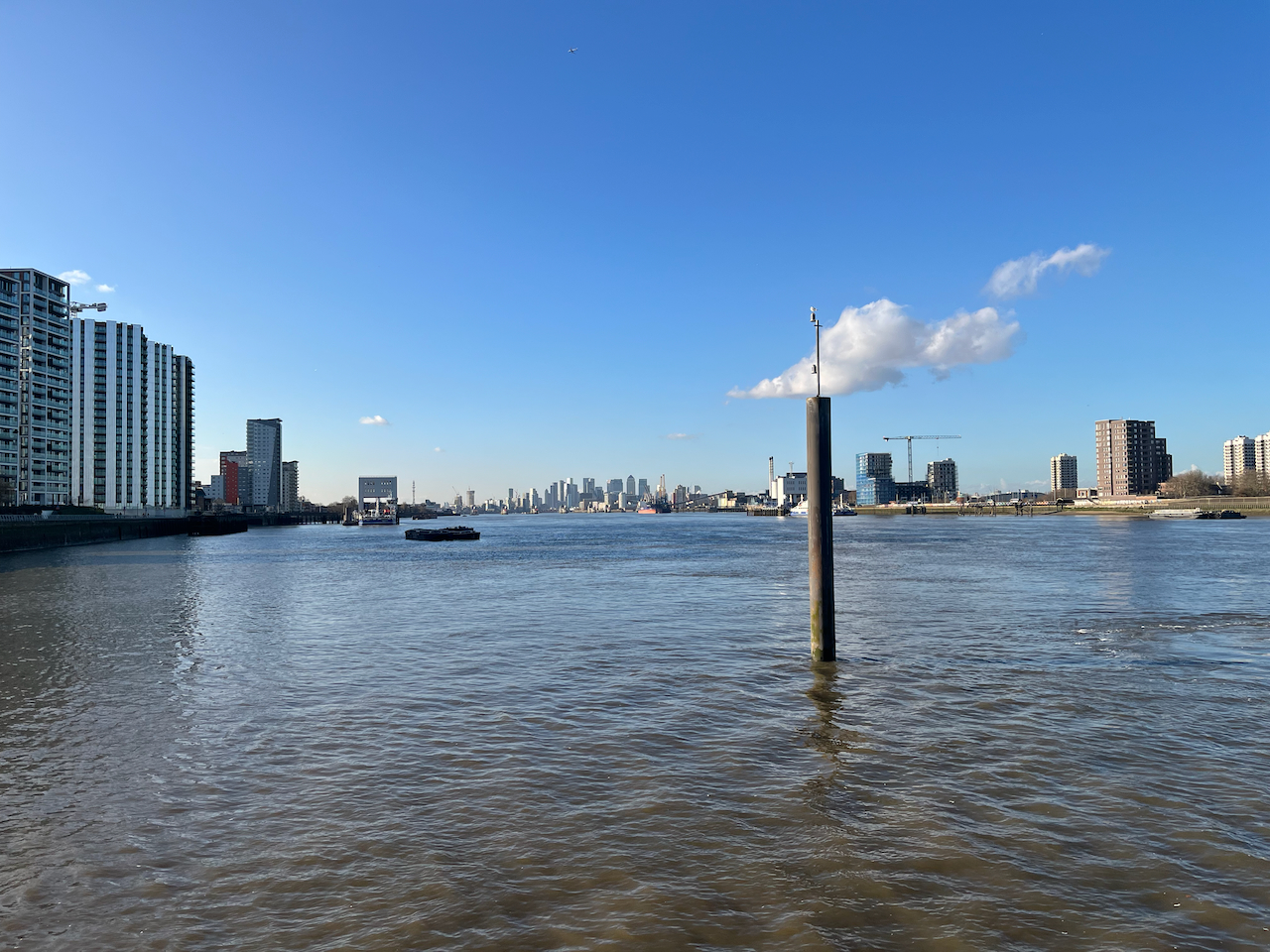
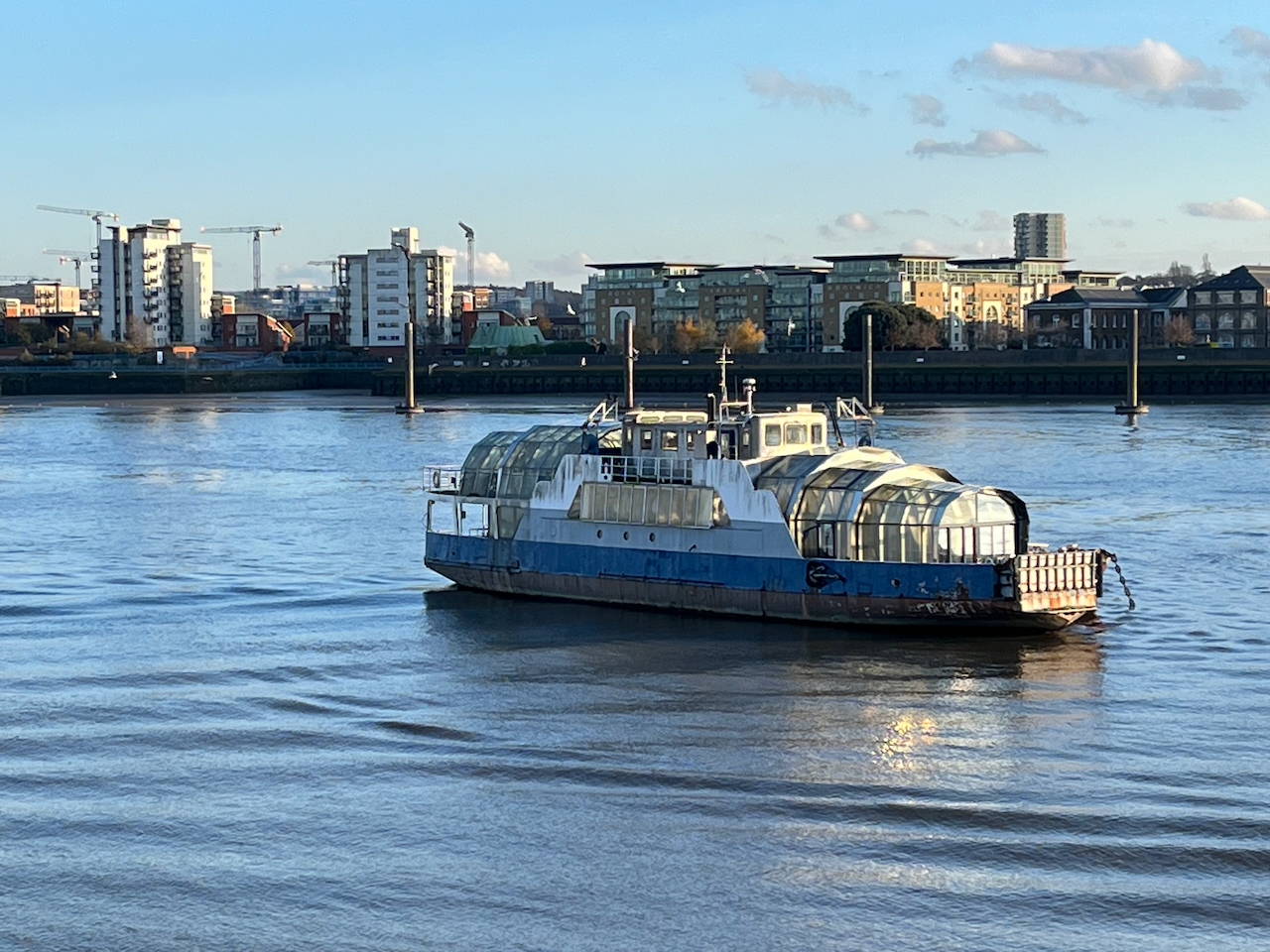
Everyone gets out at Greenwich, but it’s well worth going a bit further. The boat is empty, the Thames is huge, and the sky opens out.

The City of London seen in the distance, from the Woolwich Royal Arsenal Pier

The river boat pier at Woolwich is on the South side of the river. I was keen to explore the North side, so I walked a little way to find the entrance to the foot tunnel. There is also a ferry, but I wanted to experience the foot tunnel.

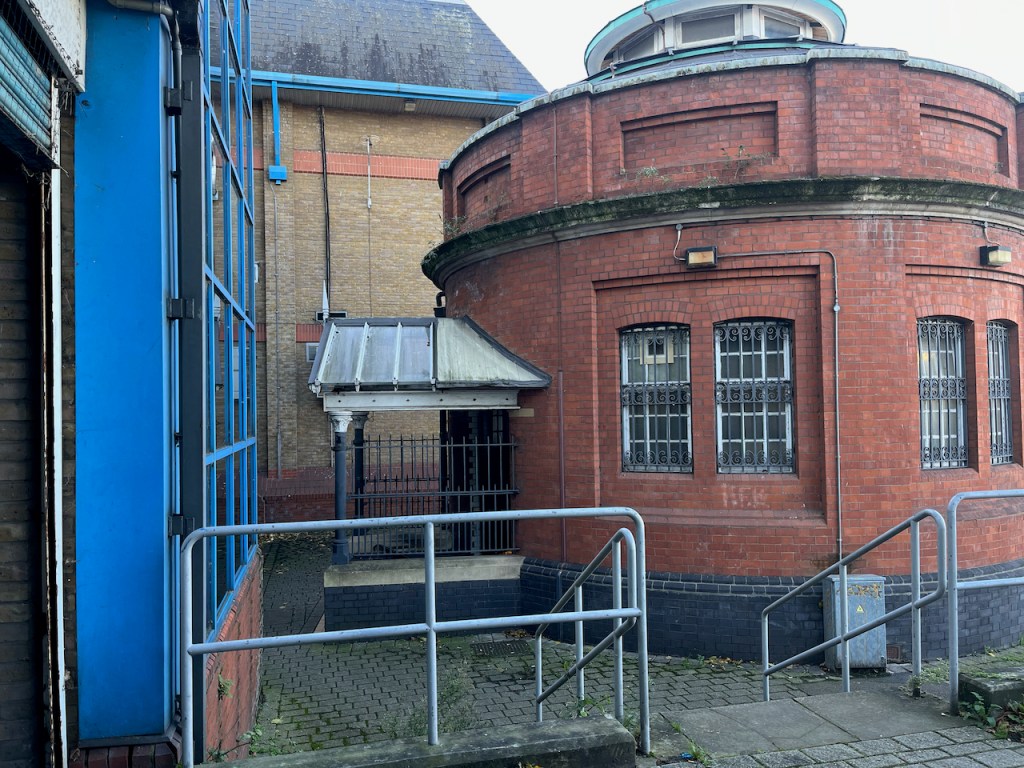
The South entrance to the foot tunnel is hard to find. It’s crammed into a dark space behind the leisure centre. It looks somewhat dingy and derelict.

South entrance of the Woolwich Foot tunnel, hemmed in by 1970s buildings.

You have the option of the lift or the stairs. I followed the arrow to the stairs. The stairs are round the back. You have to find your way in, sidling between the wall of the leisure centre and the columned entrance to the tunnel. I can’t help feeling that the constructors of the tunnel would be appalled that their ornate entrance had been obstructed in this way.

Entrance to the stairs, under the canopy. Leisure Centre is the blue part on the left.

By this time I was rather doubting the wisdom of this undertaking, as the old building seemed so abandoned, and the entrance was so dark. However, the stairs were brightly lit, and it all seemed feasible. So down I went.

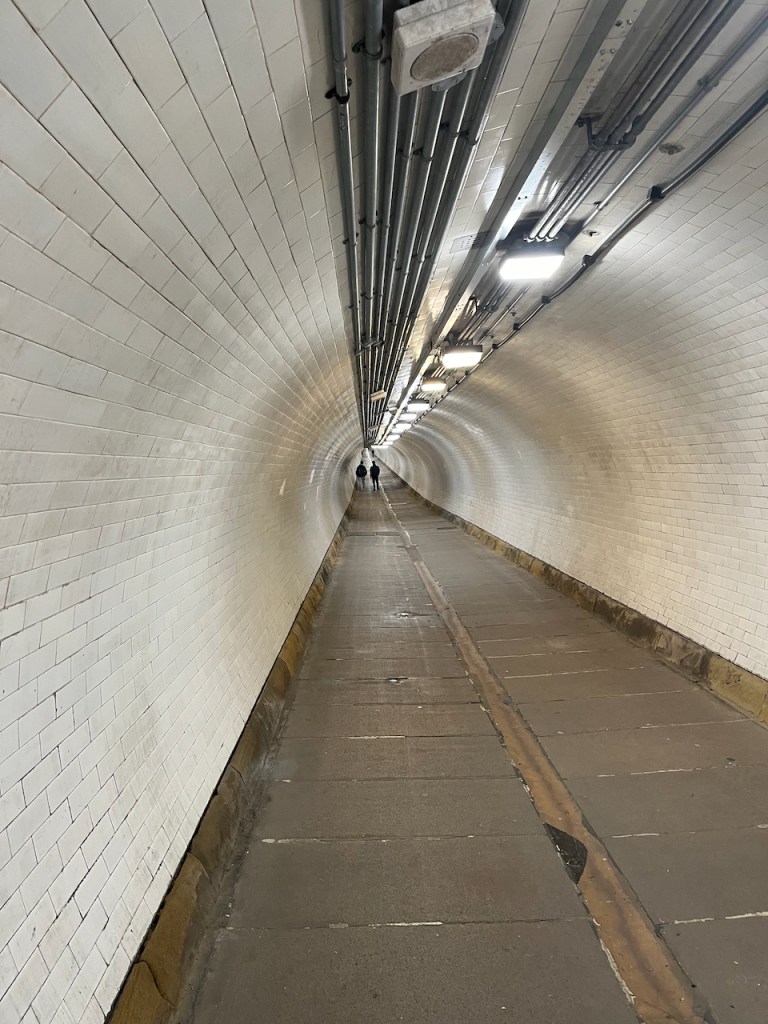
The tunnel itself is marvellous: all bright and clean, with amazing acoustics. I could hear the distant voices of people ahead of me.

Inside the Woolwich Foot Tunnel

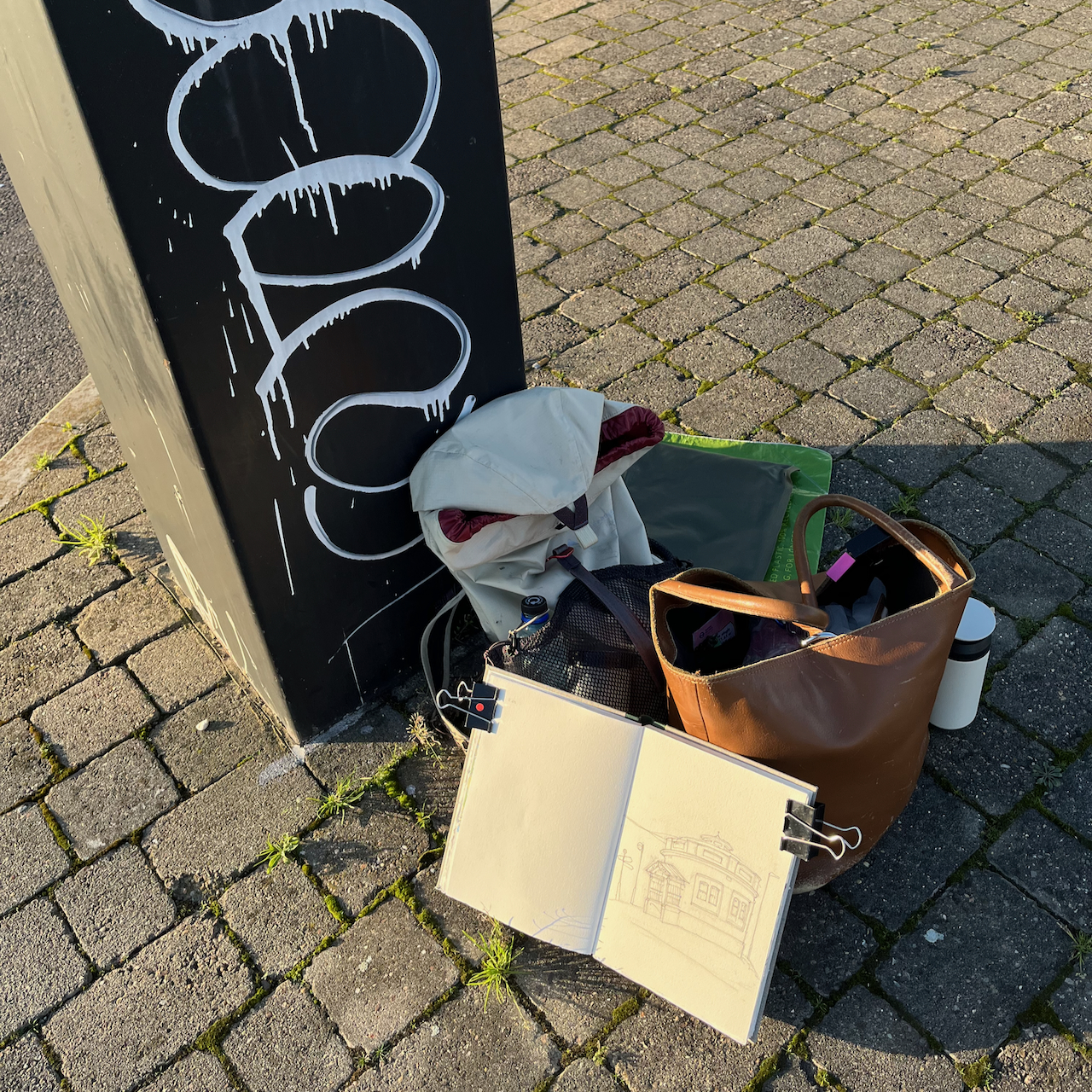
On the North side there is a different world. The North entrance, unlike its Southern counterpart, stands proud and isolated on an expanse of concrete. I sat down and sketched it.

The building stands on a traffic island which is a junction of many routes. The A117 takes heavy traffic onto the pier, to load onto the Woolwich Ferry. There’s a bus, the Superloop SL2 ,which goes to Walthamstow. People walk from the bus to the foot tunnel.

North entrance to the foot tunnel. The Superloop bus from Walthamstow is in the background.

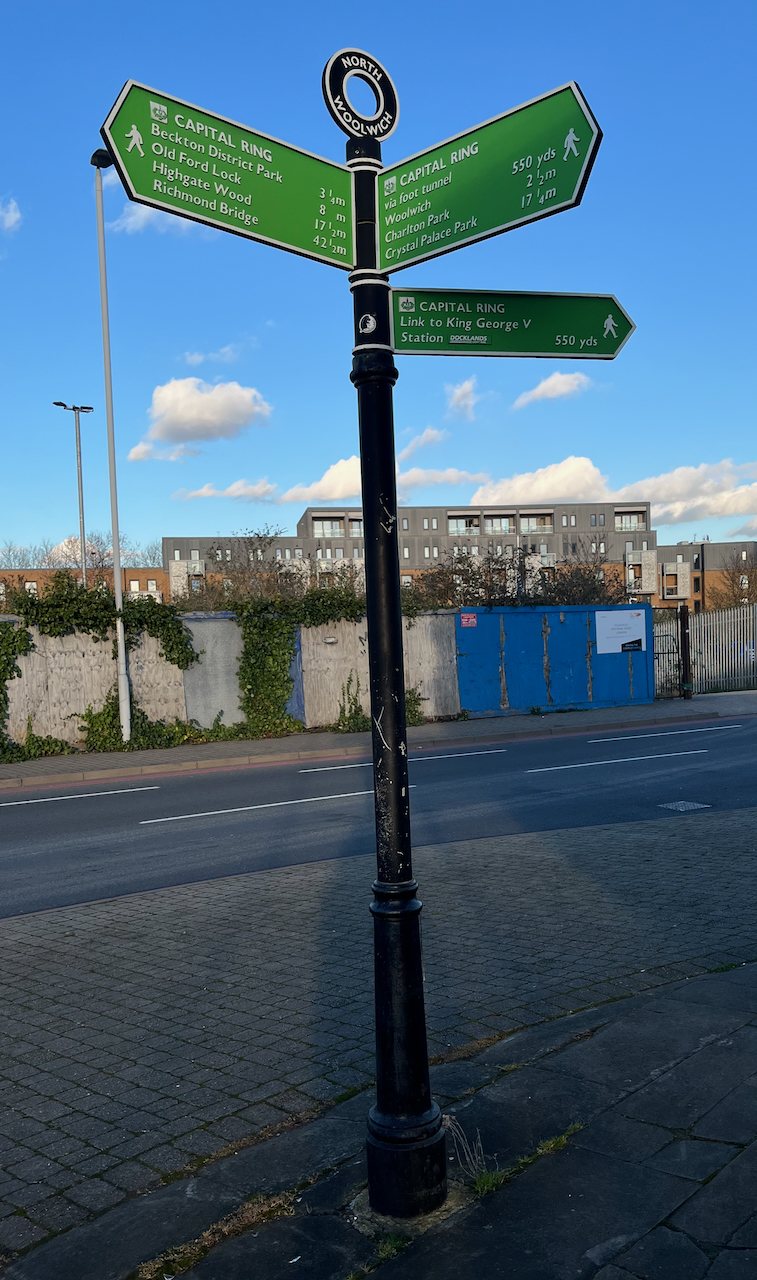
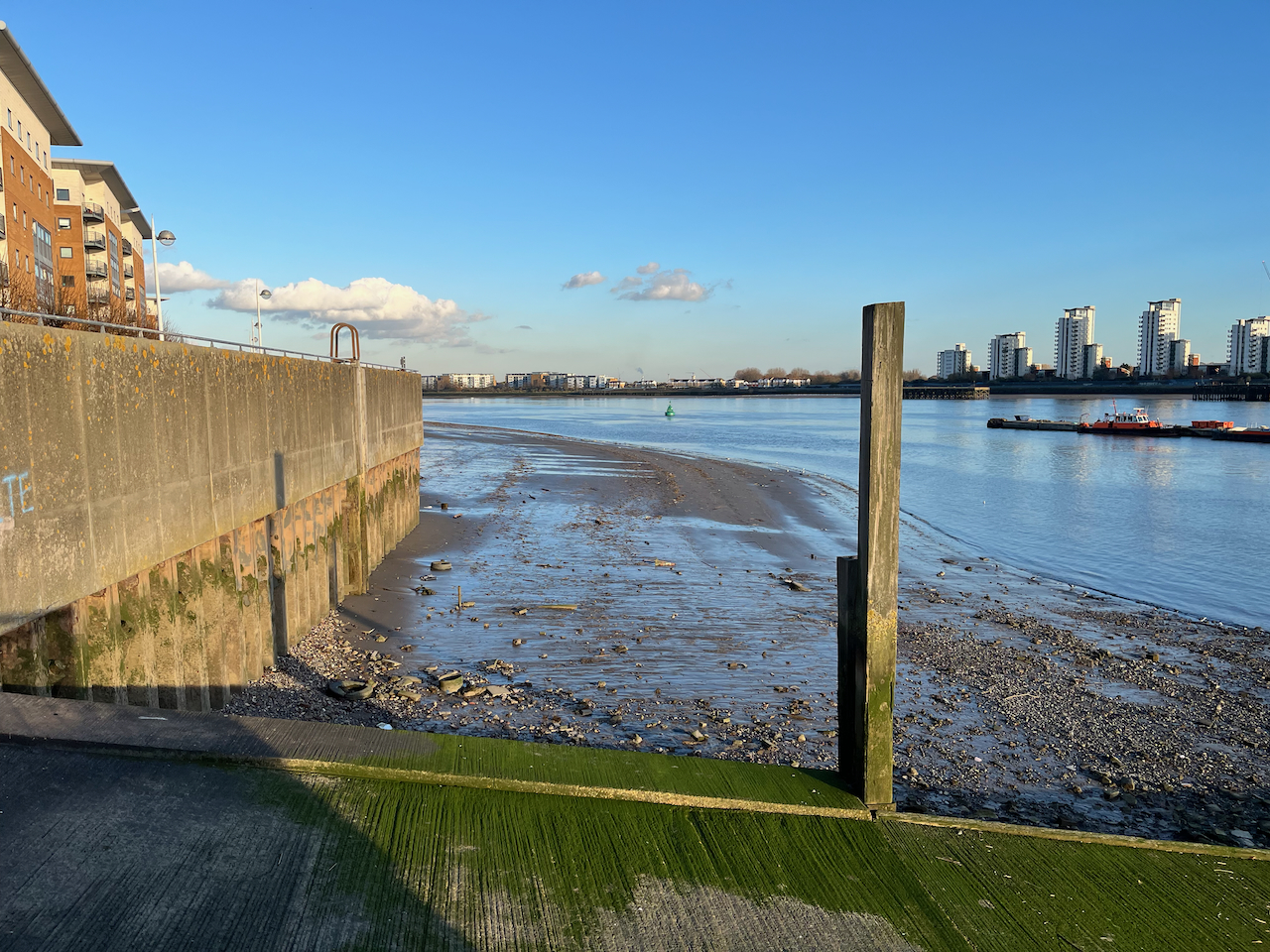
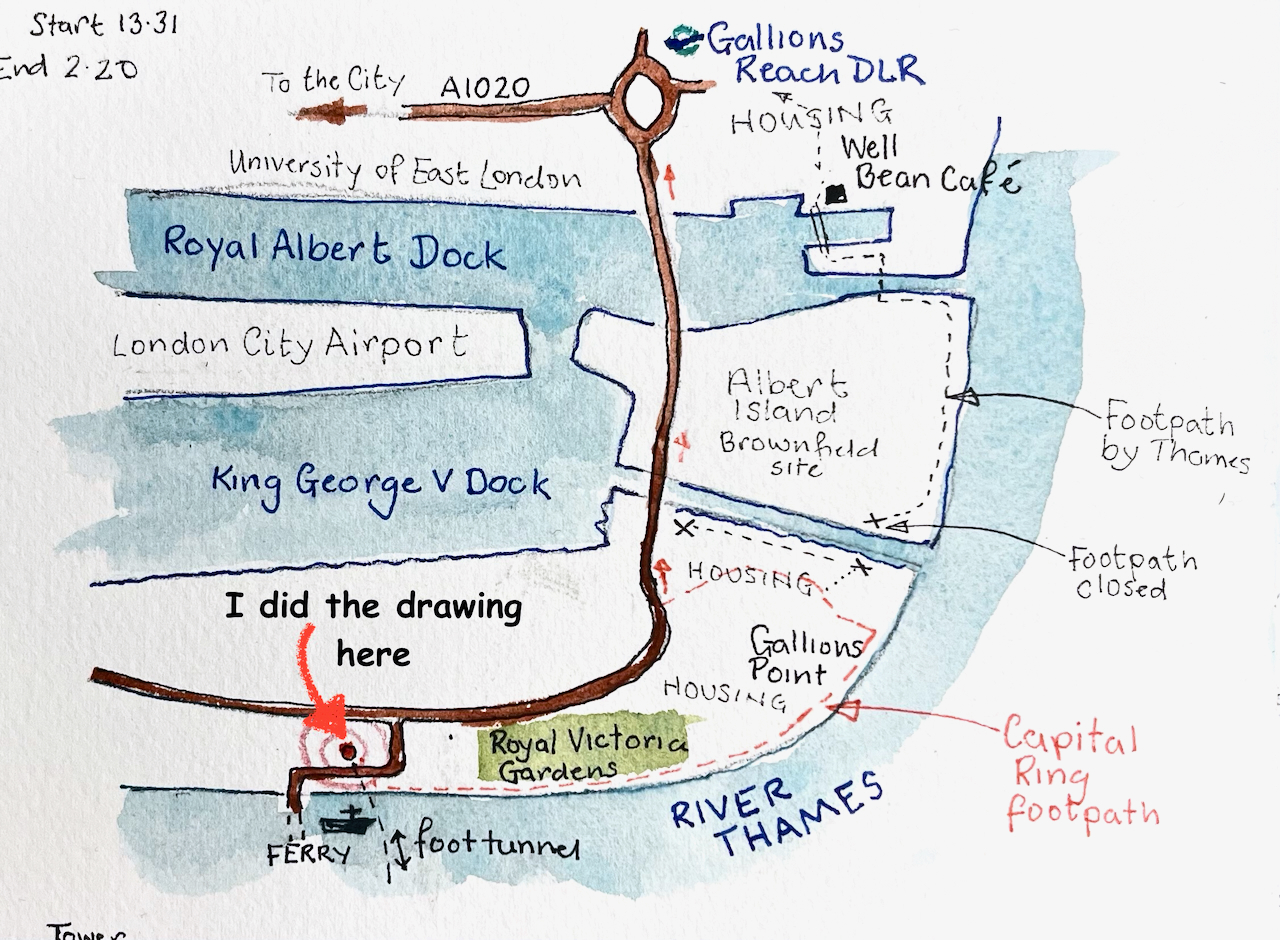
The signpost on the left of my drawing indicates the long distance footpath “The Capital Ring”. I followed this route along the Thames a little way. The path is cut off after the Galleons Point Housing development. Signs say that the lock gates are being maintained. So the route returns to the main road and passes over the spectacular bridges across the docks.

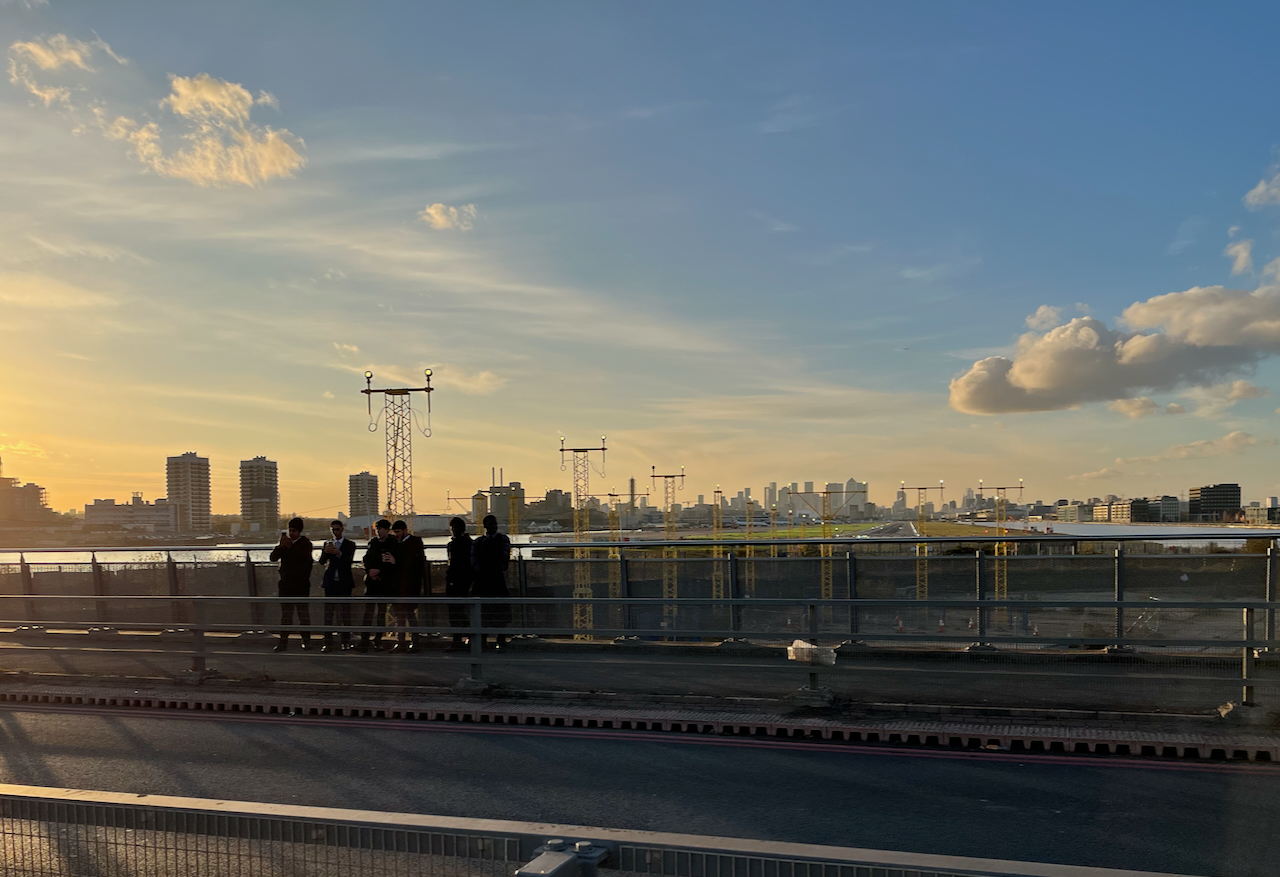
The bridges offer a view directly down the runway of London City Airport. When I walked past, some boys were enthusiastically photographing the aircraft on their mobile phones.

Plane spotters on the bridge over the Royal Albert Dock. City of London in the distance.

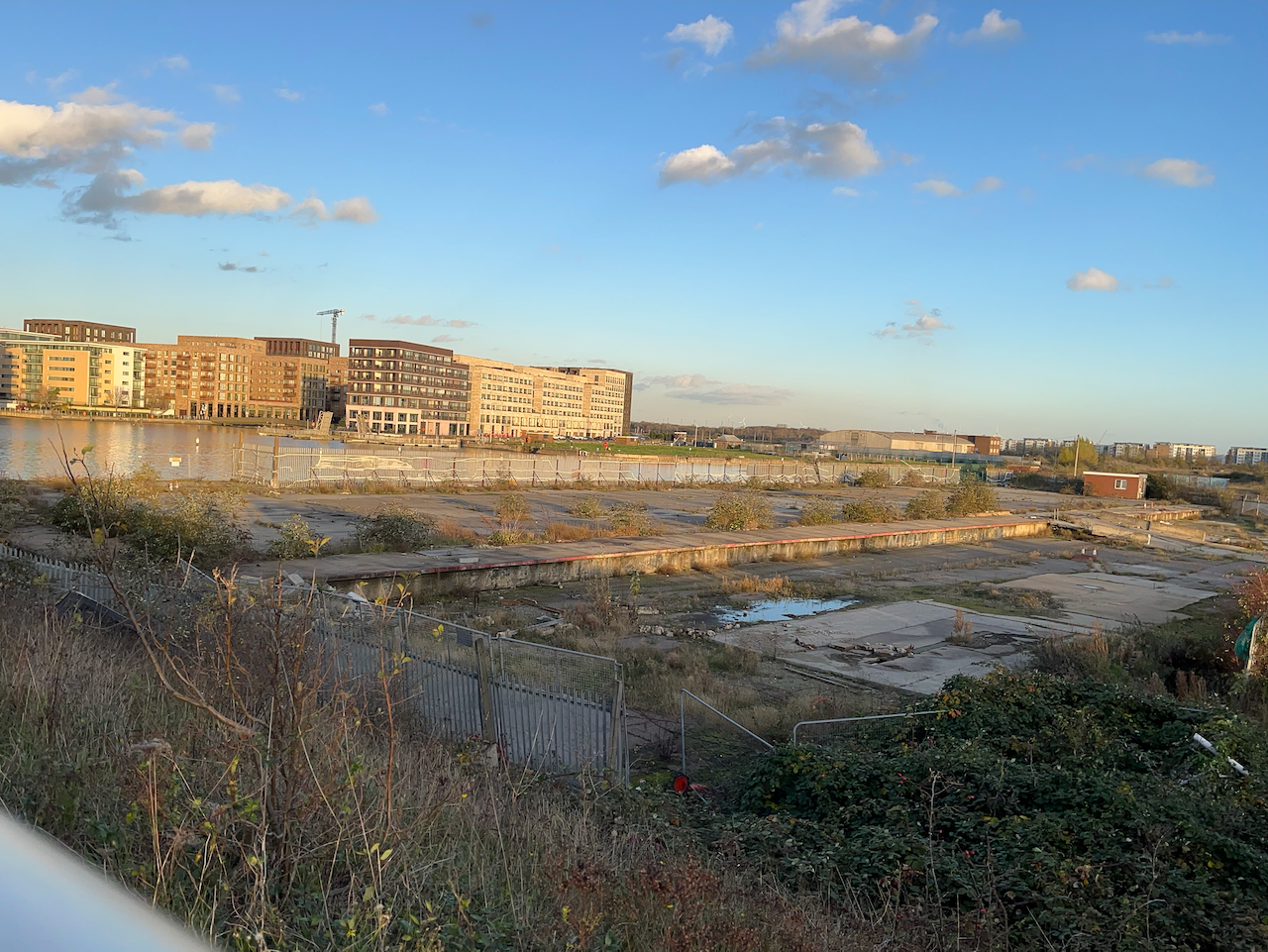
The other direction from the airport, looking toward the Thames, is a scene which seems to define what we mean by “brown field site”.

A brown field site: Albert Island, North Woolwich. This photo was taken from the same spot as the one above, but looking the other way.

In the distance on the left, you see the housing developments round Gallions Reach. The quantity of space round here is astounding. And the docks are enormous.

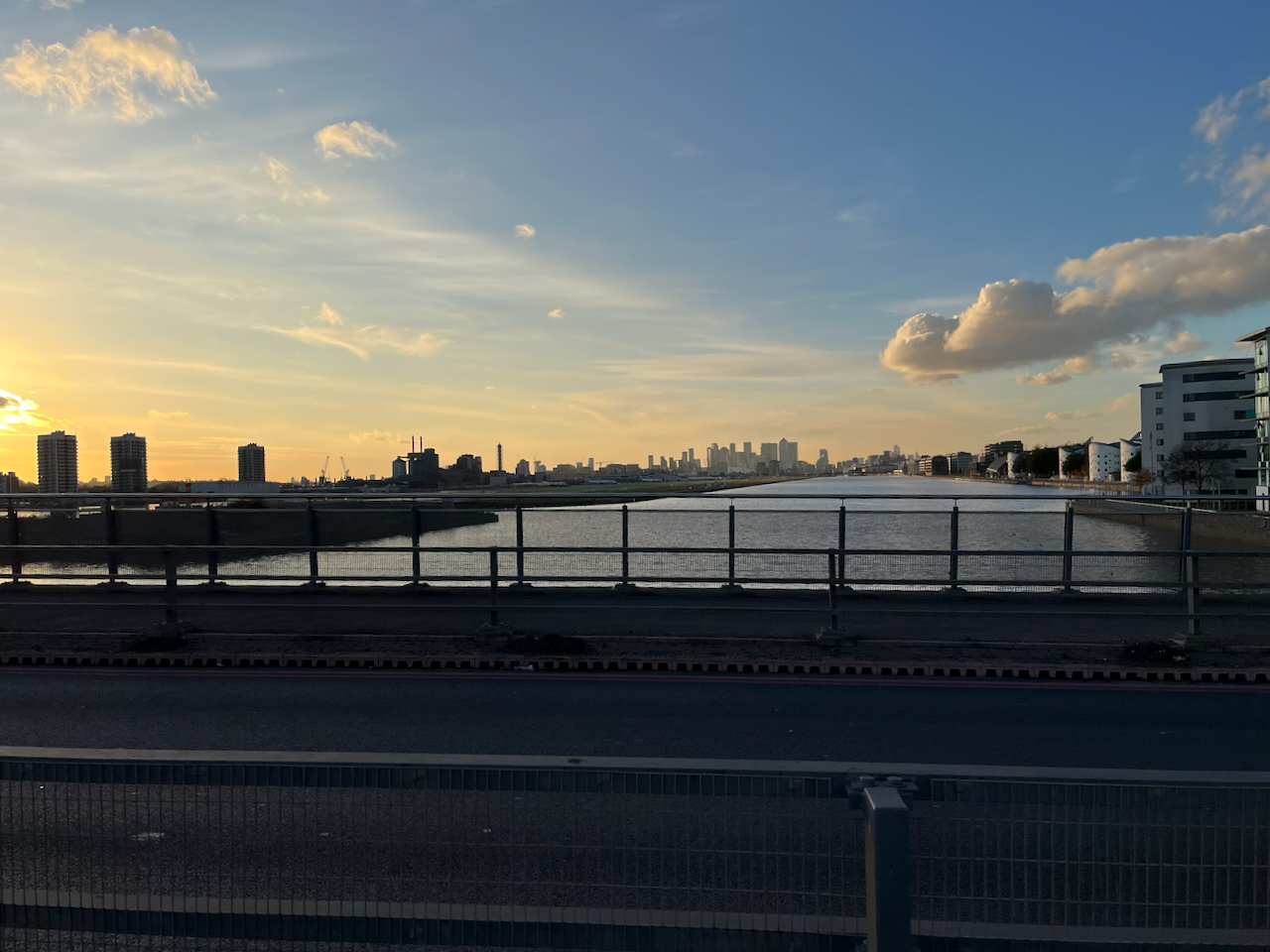
Royal Albert Dock from the Steve Redgrave Bridge. The dock is about a mile long. The University of East London is on the right, City Airport on the left, City of London towers in the distance.

I walked on over these immense bridges over the docks. An oncoming bus tooted cheerfully. I looked up to see the driver smiling a friendly greeting. Perhaps I looked a little lonely and cold. The bus rushed on. I felt warmer.

On the other side of the bridge I warmed up in the “Wild Bean Café” (recommended) and then made my way to Gallions Reach DLR station and thence to central London.

If in need of wide open spaces and a bit of distance from the problems of the City, then a trip downriver is definitely the thing.

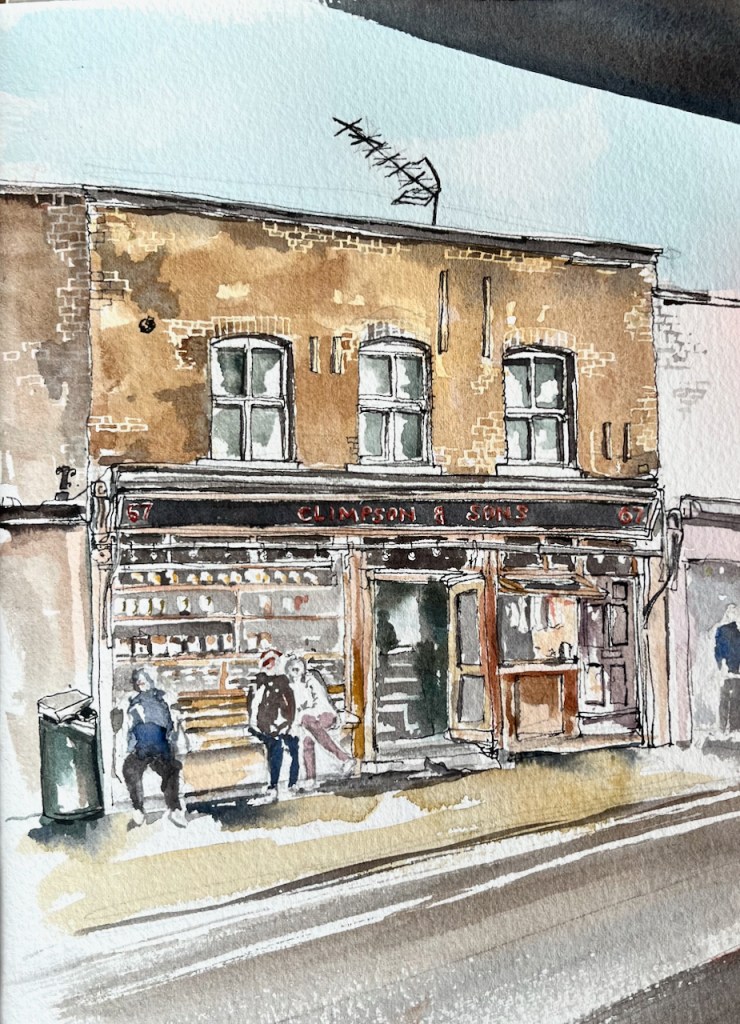
Climpson & Sons – Broadway Market E8

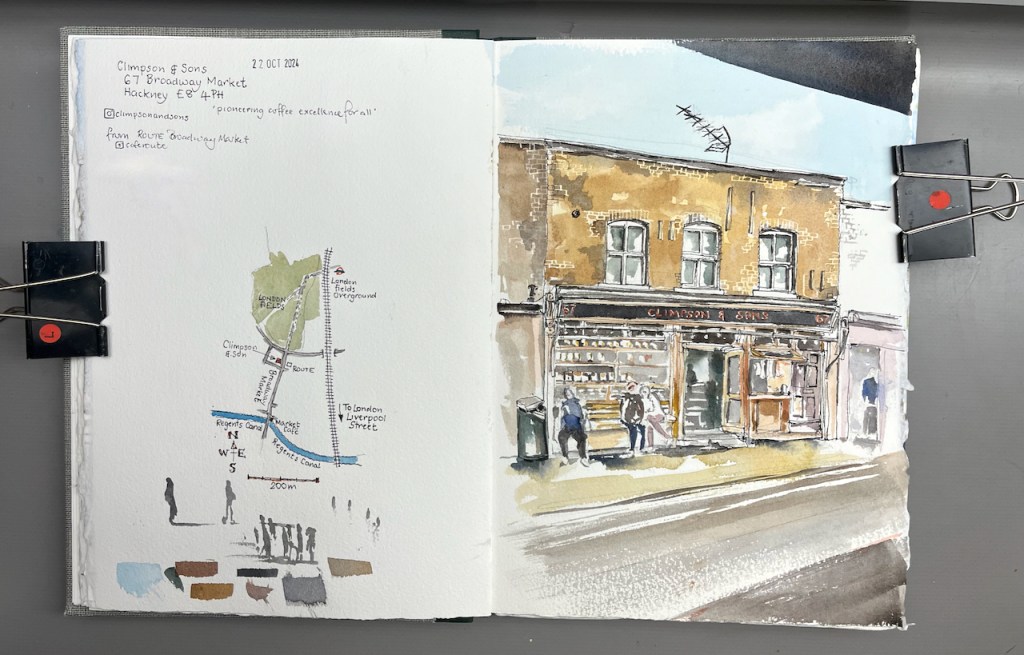
Here is a sketch of the coffee merchant Climpson & Sons, on Broadway Market in Hackney.

Climpson & Sons, 67 Broadway Market, London E8, sketched 22 October 2024 in Sketchbook 15

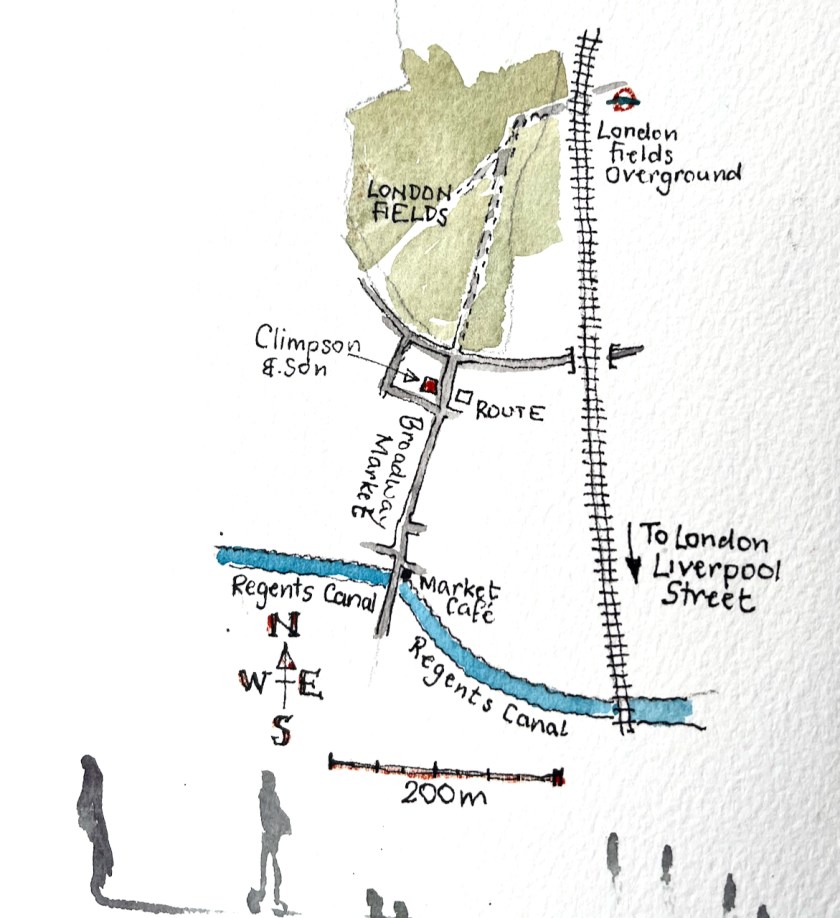
I was sitting at a table in the café opposite, which is called “Route”.

Climpsons are a coffee merchant and roastery based in East London. They roast their coffee in Walthamstow, and their HQ is just the other side of London Fields from Broadway Market.

They were doing a brisk trade as I sketched, and people drank their coffees on the benches outside.

I did most of the sketch on location and finished it at my desk.

Sketchbook 15

Limehouse Accumulator Tower, E14

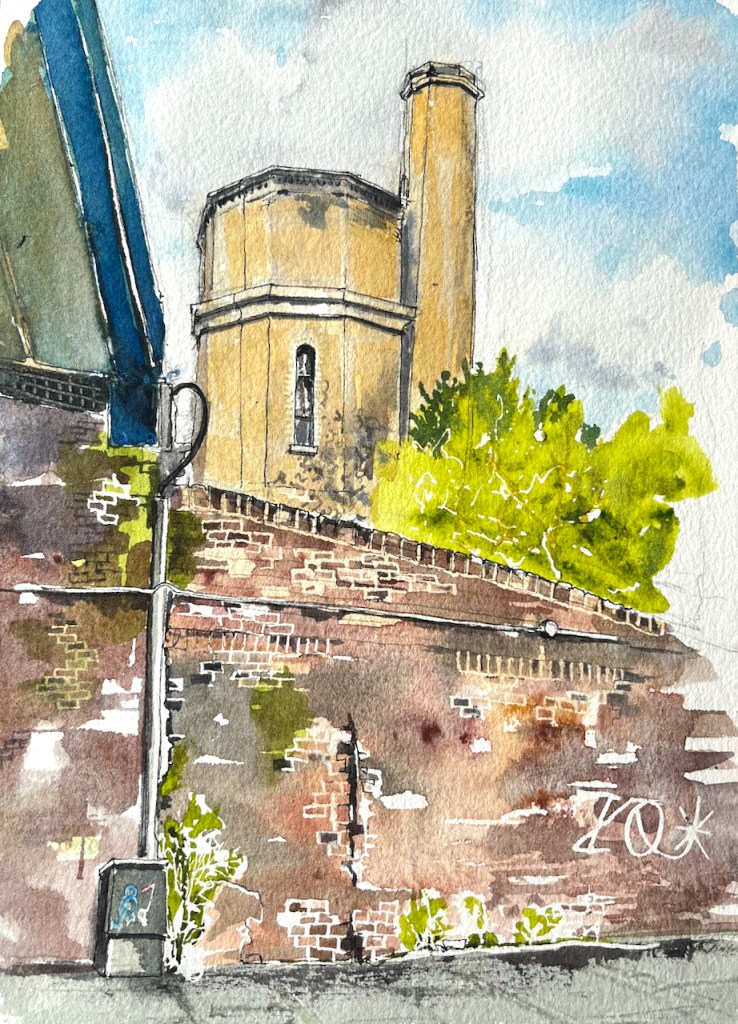
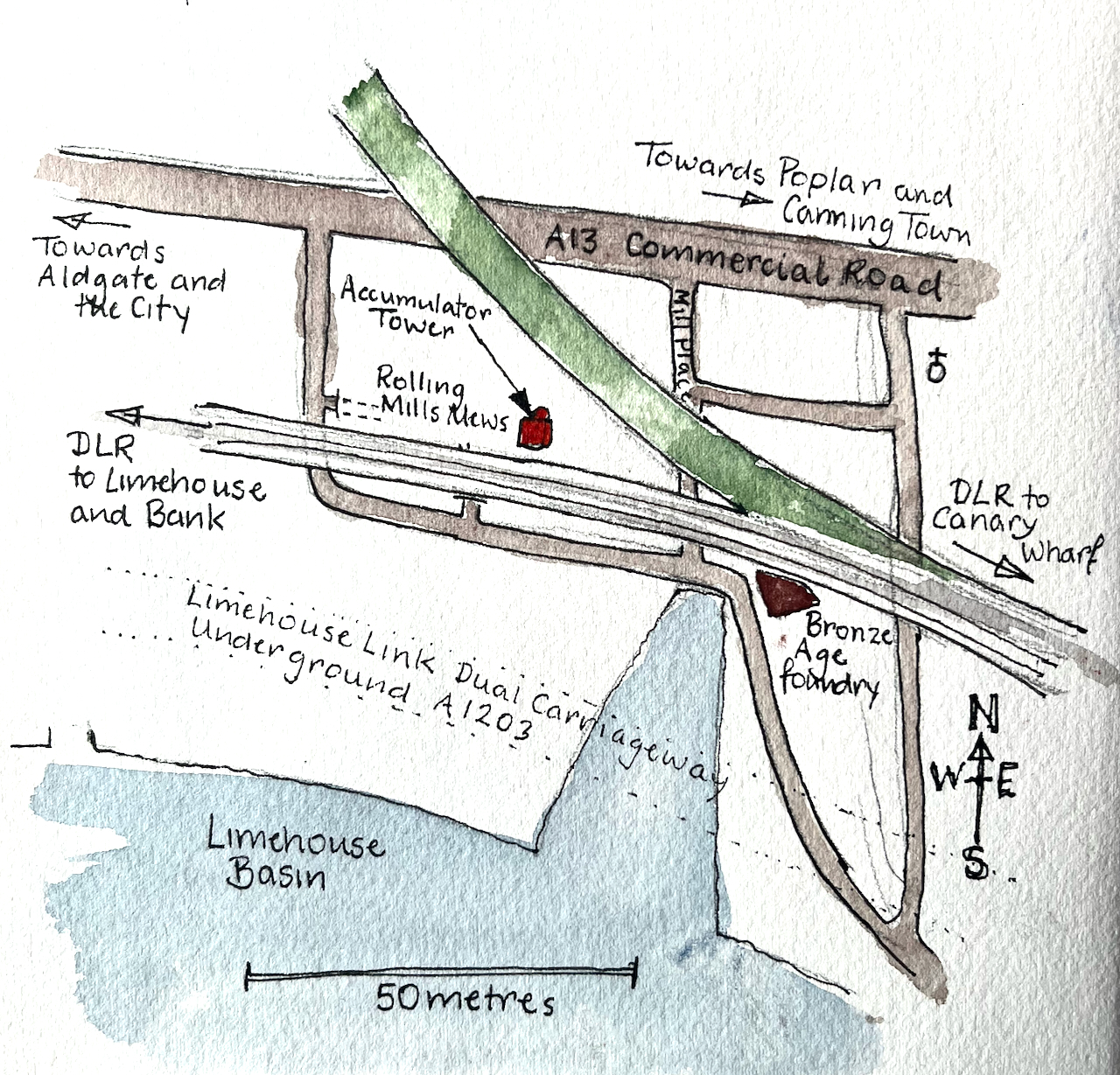
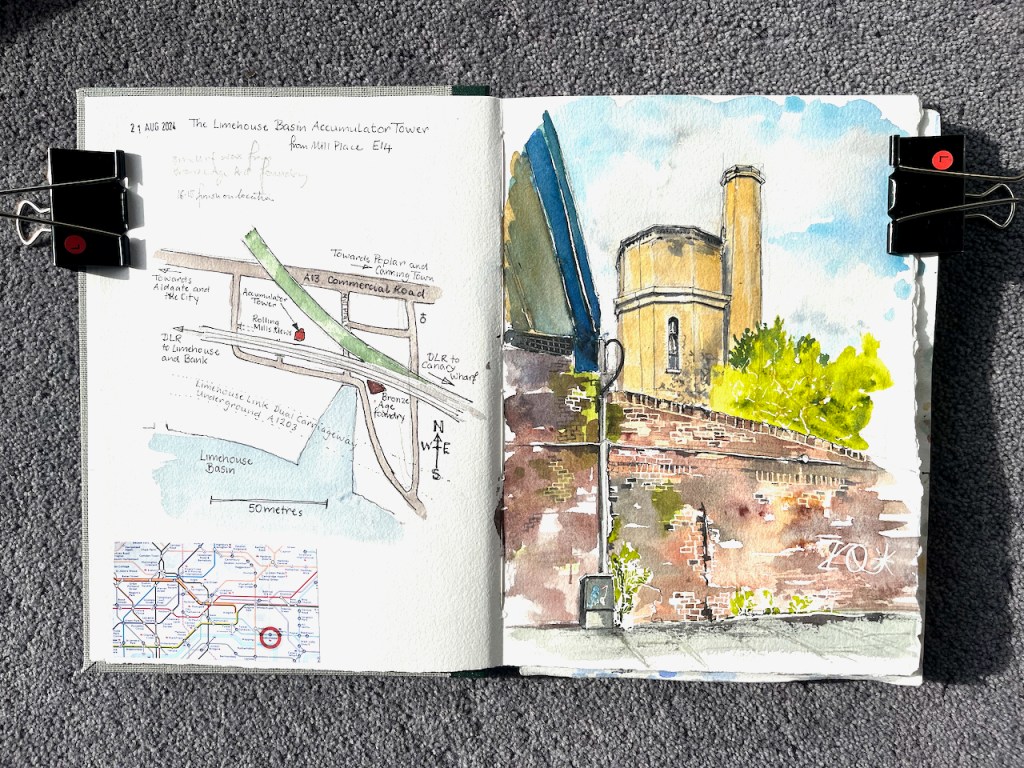
This is the Limehouse Accumulator Tower, seen from Mill Place, London E14.

Limehouse Accumulator Tower, sketched 21 August 2024, in Sketchbook 15

In the 19th century, this building provided hydraulic power to machinery in the Limehouse docks. Hydraulic power is a way of transmitting energy from one place to another.

The problem at the time was that steam engines could generate motive force, but only where they were. You could build a big powerful steam engine, but you couldn’t put a steam engine next to every crane, capstan, or set of lock gates. You also didn’t want to fire up a steam engine every time someone wanted to use the lock gates. So you had to find a way of transmitting the power from the steam engine to the machinery which used it. And you had to find a way of storing the power so it was available on demand. Before the use of electricity was common, power was transmitted using pressurized water.
The steam engine located in this building was used to pump water into the adjacent accumulator tower, by lifting a heavy weight. The heavy weight was a neat fit on top of the water inside the tower and pushed the water down. Water does not compress. So the weight just sat there, applying pressure to the water. The pressurised water was distributed around the docks in thick cast-iron pipes. When the lock-keeper wanted to operate the lock gates they opened a tap and the force of the pressurized water opened the gates. Then they closed the taps. Far away, the weight moved down very slightly in the accumulator tower. Eventually the steam engine was used to pull the weight up to the top again.

That’s 19th century hydraulic power. Power is transmitted by pressurised water in cast-iron pipes: the original, functional, steam-punk.

I find it marvellous. I’ve drawn the much bigger London Hydraulic Power station here. The Limehouse building is smaller. It was built in 1869, one of several in the area at the time. It was restored in 1994/5, but sadly the weight and machinery are removed. There is a detailed history of the building on this link from the Greater London Industrial Archaeology Society.

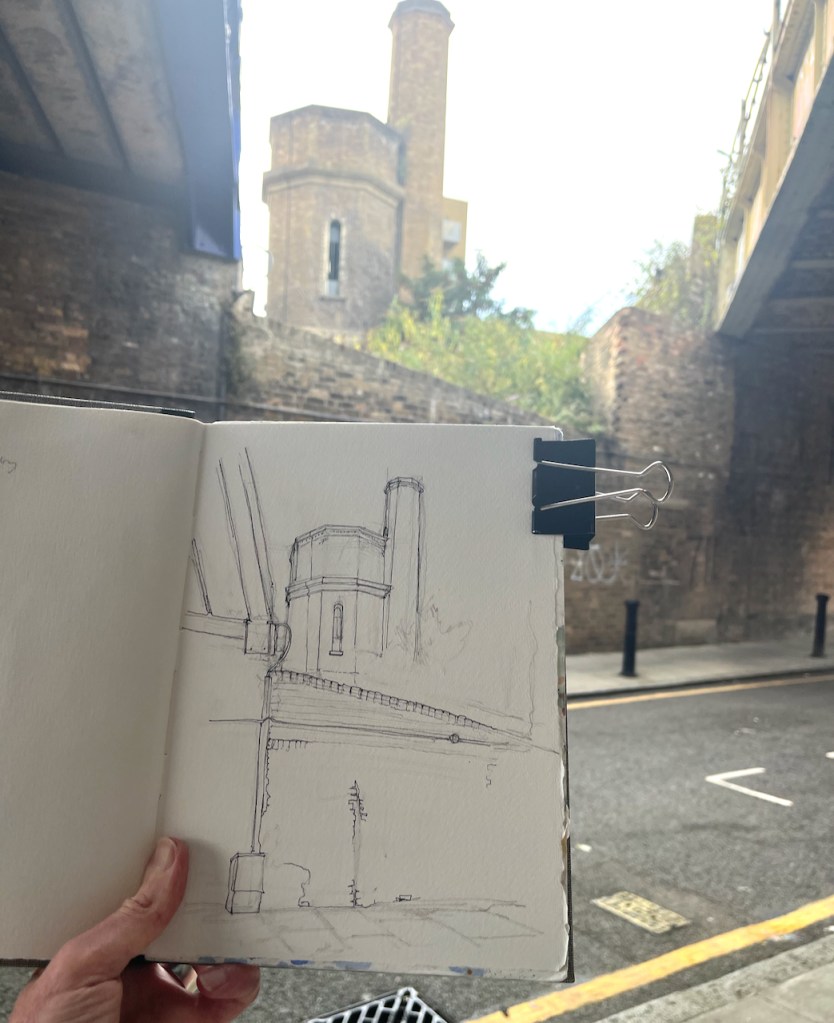
Sketching the Limehouse Accumulator Tower. The modern Docklands Light Railway lines run over the Victorian bridge to the left, the bridge to the right is disused.

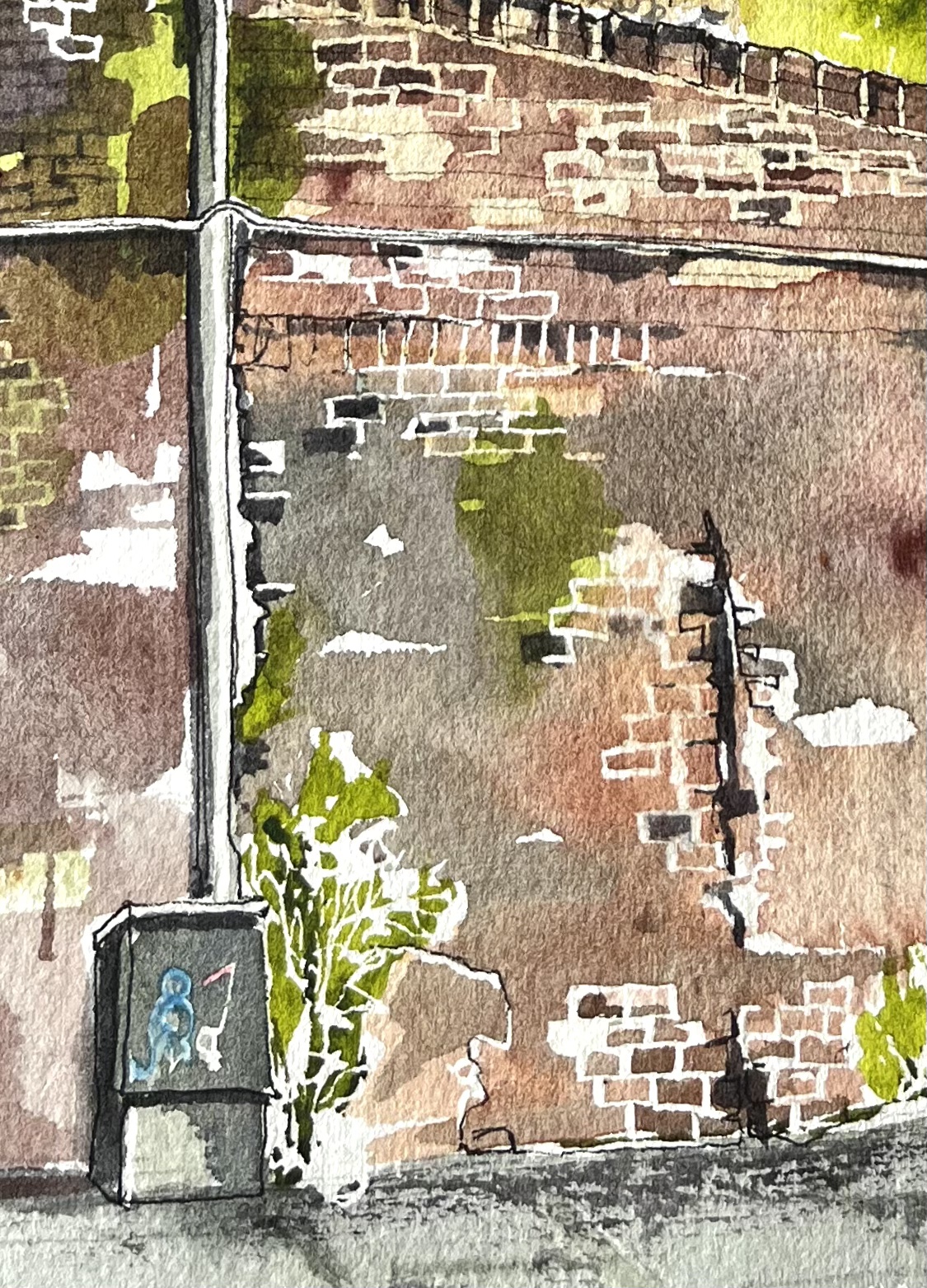
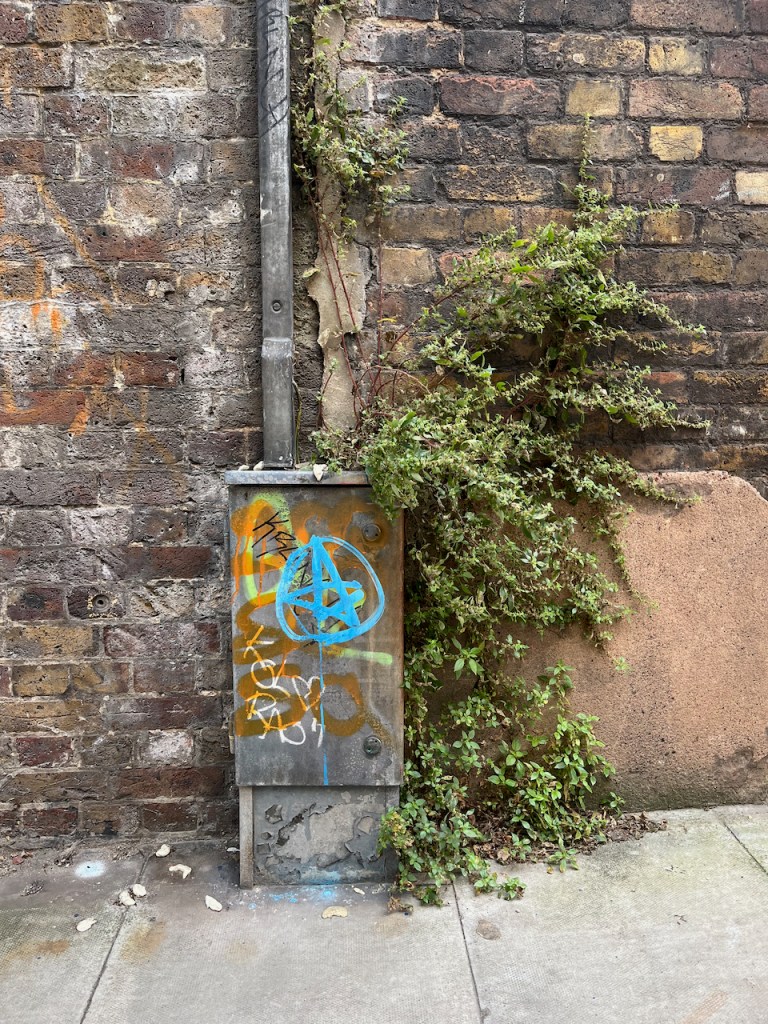
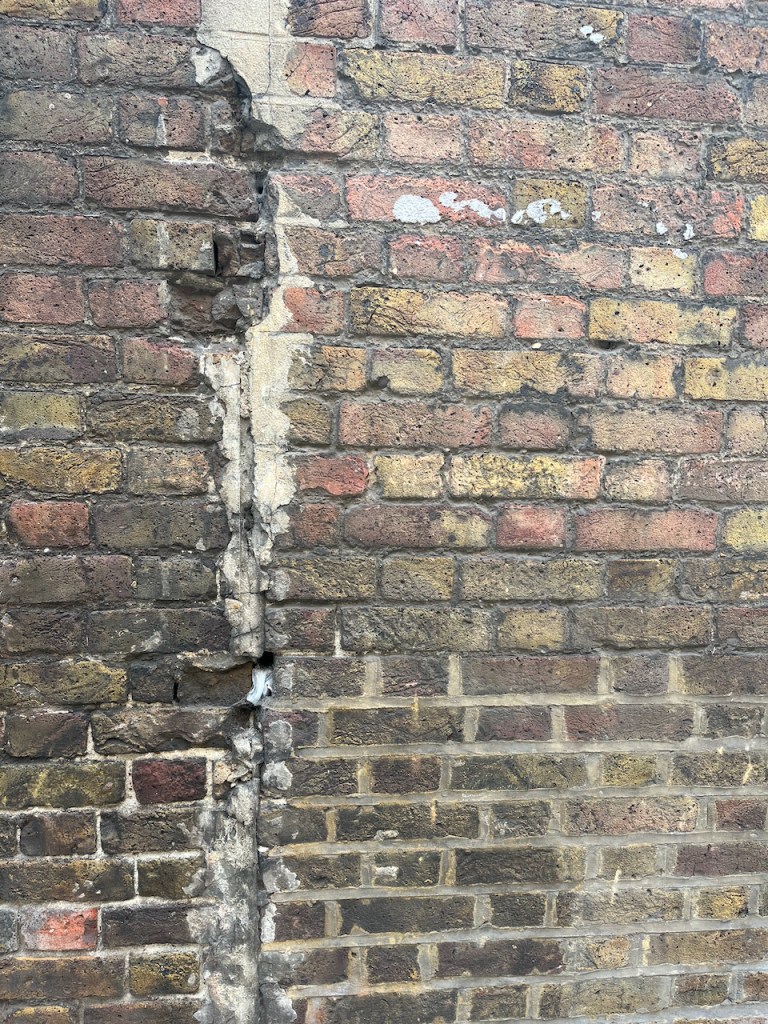
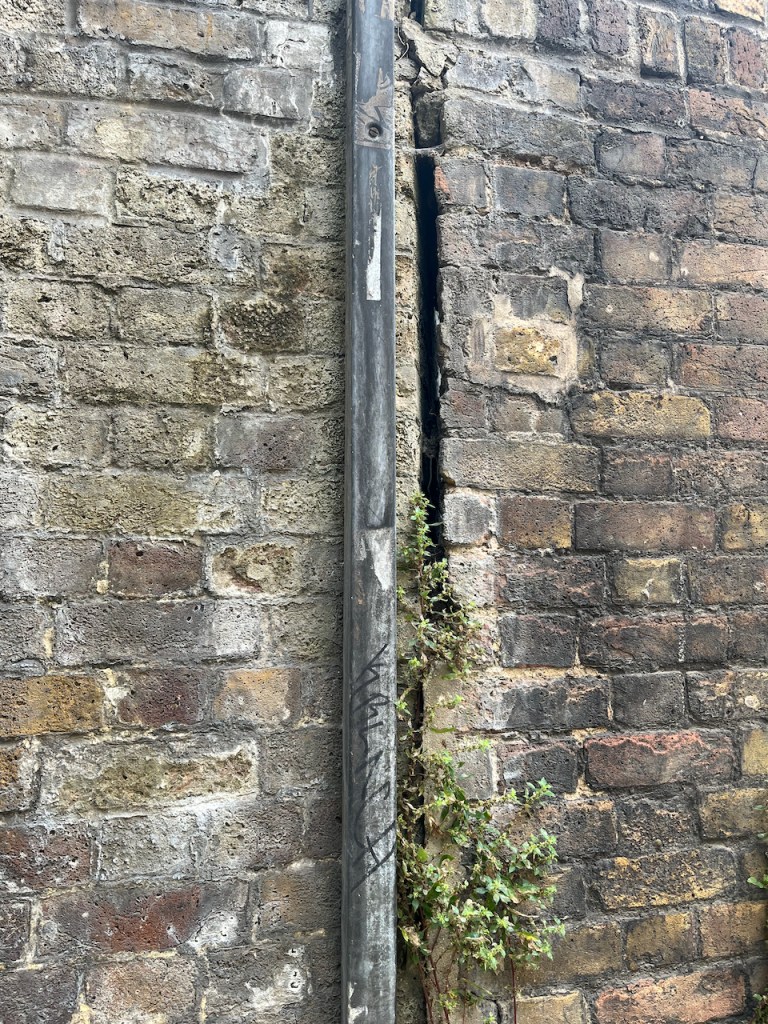
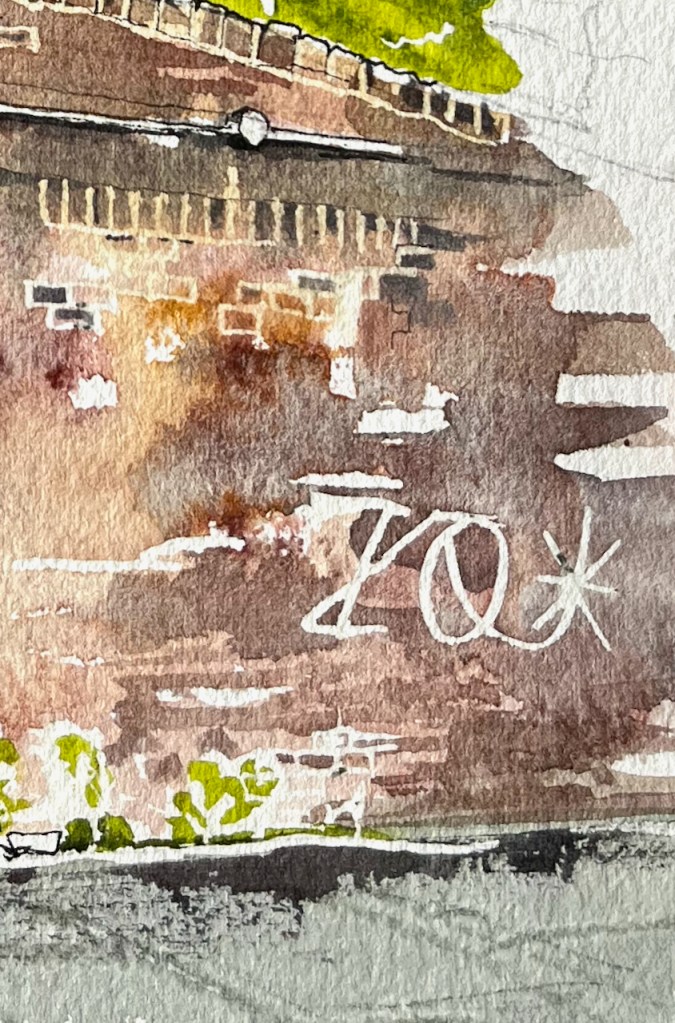
Standing in Mill Place to make this sketch, I became aware of all the history that is embedded in walls. The one in front of me had been altered, rebuilt, and amended several times. A bit had been added on top. Plants lived there. A graffiti artist had made their mark on the crumbling stone.

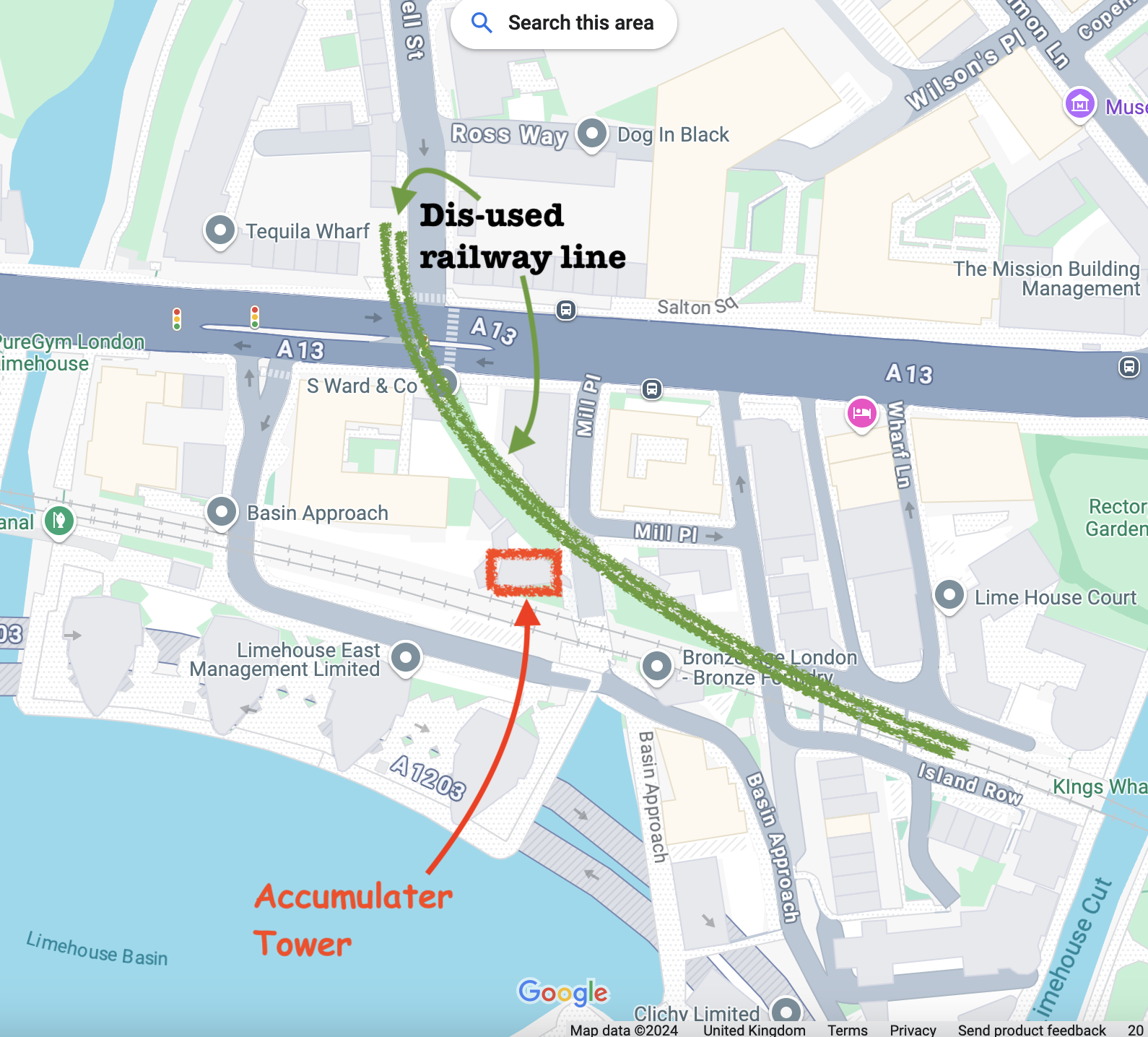
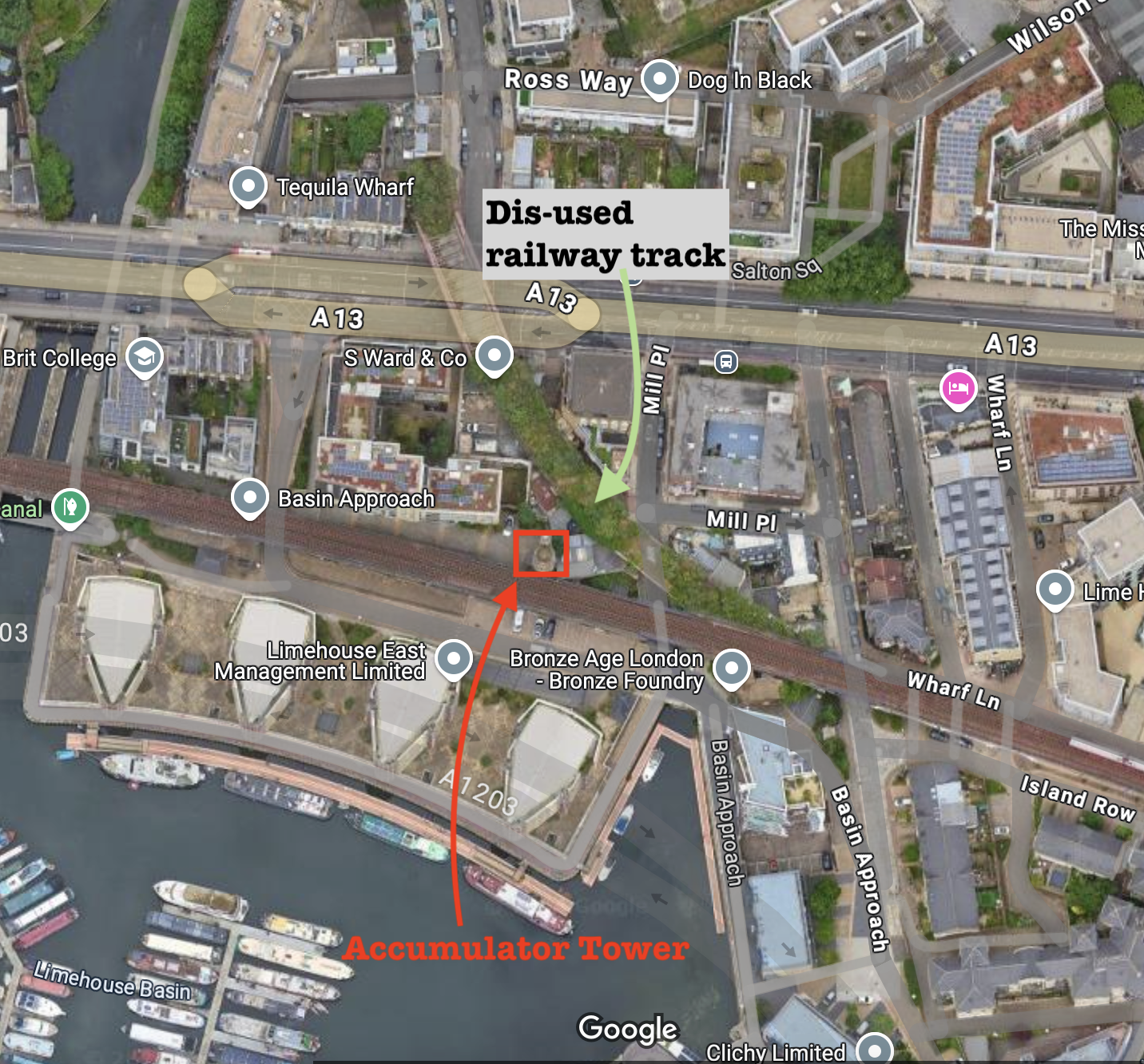
I was standing under two bridges, both 19th century. Both survivors. One holds the modern Docklands Light Railway. The other had wonderful strong vaulting. But it held no railway. I walked around trying to find out where it went. The Google aerial view confirms what I suspected: it is a ghost railway. On the bridge there is verdant greenery where the railway used to be. It goes across a second sturdy bridge, over the A13, and then stops.

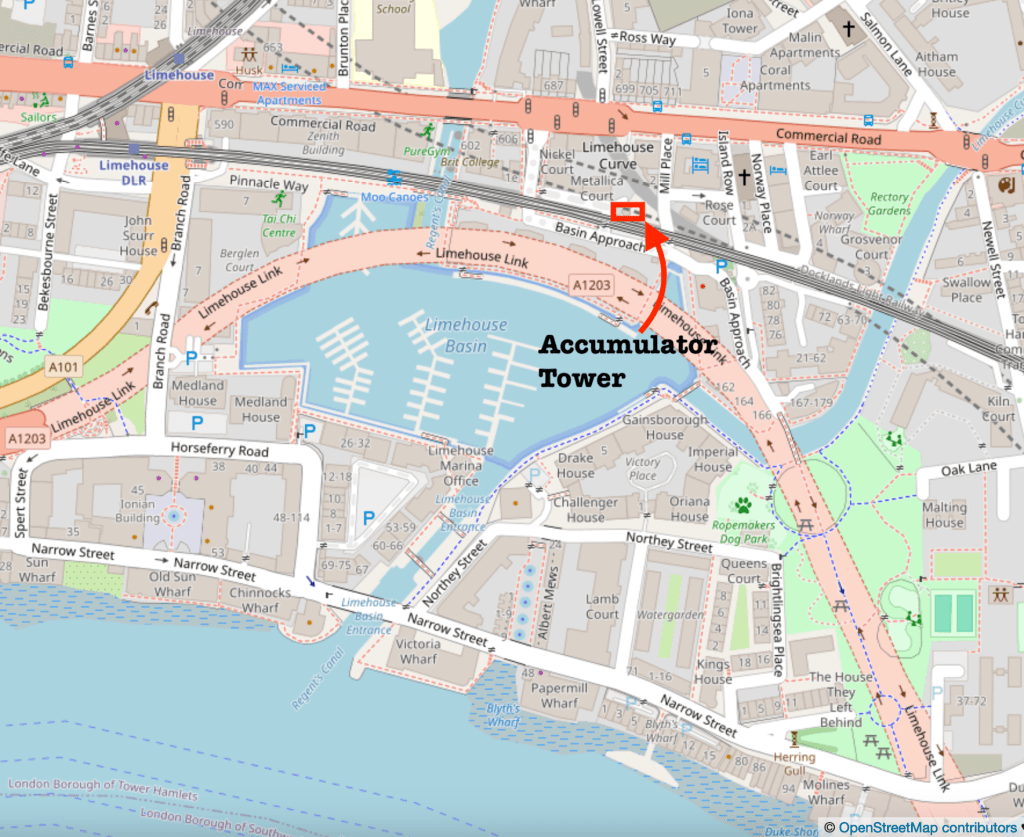
Here are some maps which show the position of the Accumulator Tower and the absence of a railway (click to enlarge).

In this whole area the works of Victorian engineers make themselves felt. Each bridge is a triumph of the bricklayers’ skill: not only strikingly beautiful, with clean curves and neat detailing, but also enduring, powerful and functional 150 years later.

Sketchbook 15
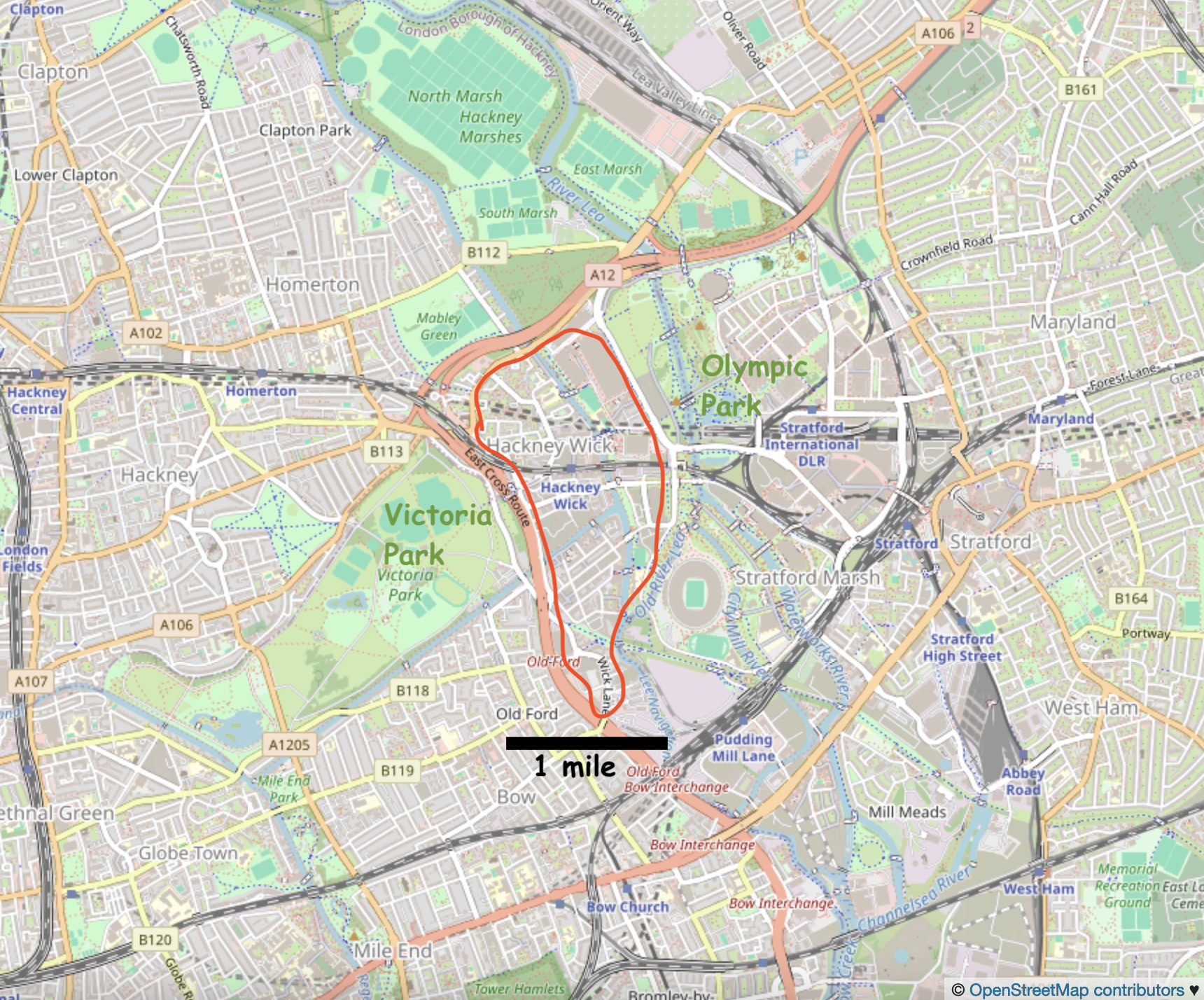
map (c) OpenStreetMap contributors: click to go to the map

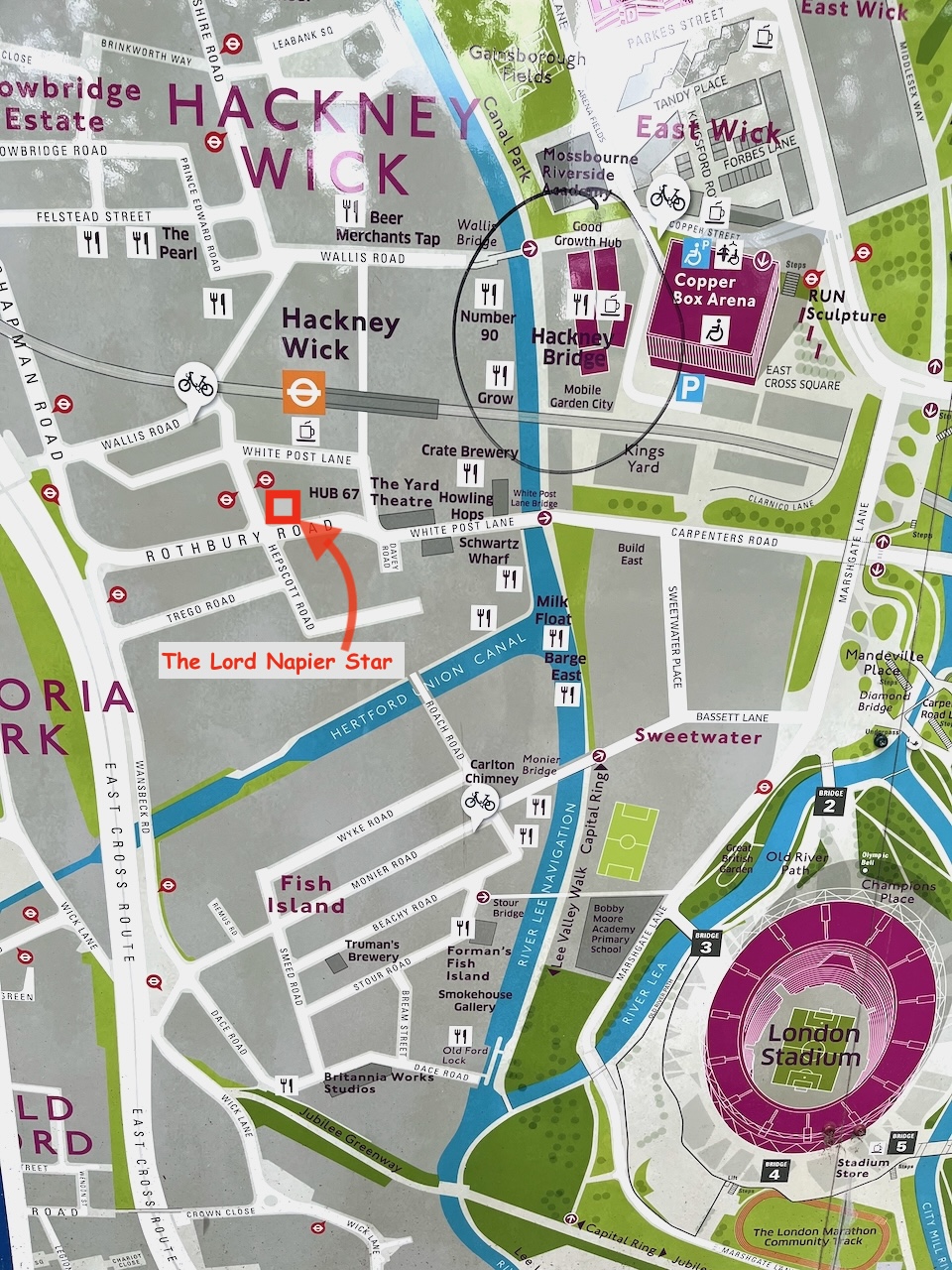
The Lord Napier Star, of Hackney Wick, E9

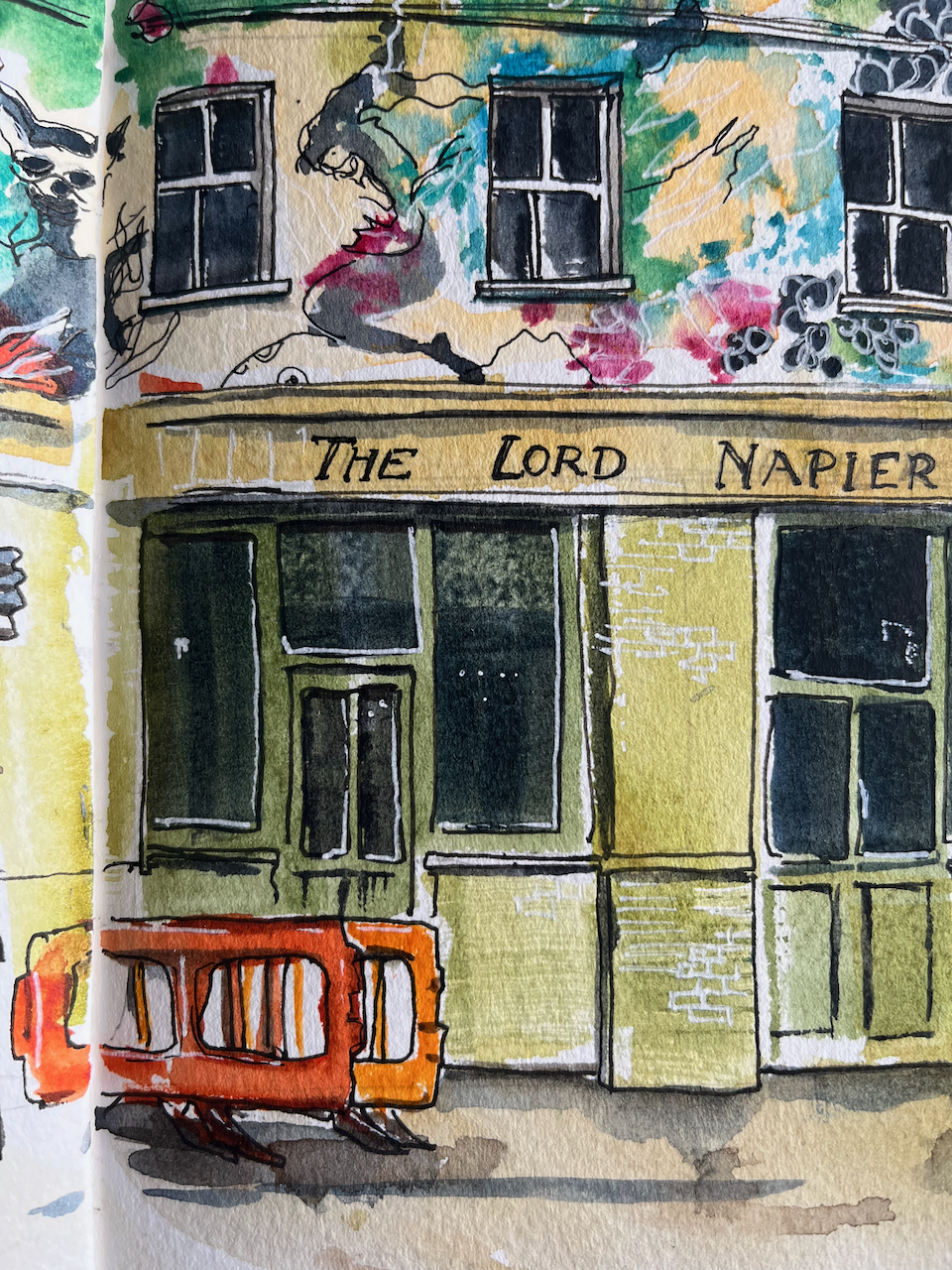
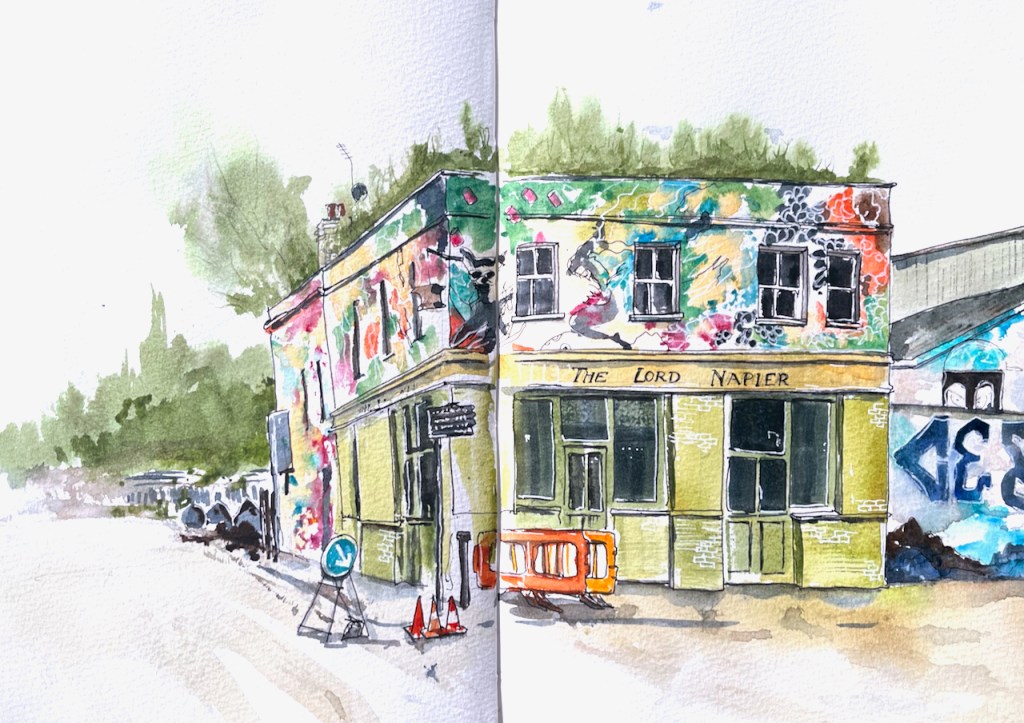
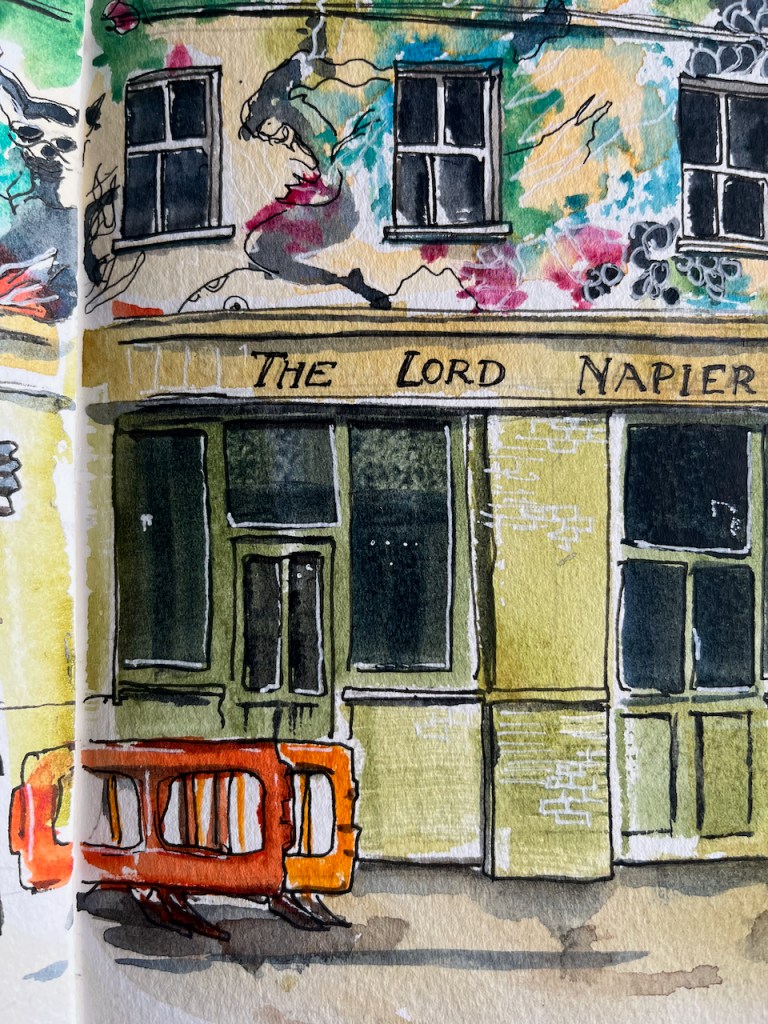
Here is a sketch of the remarkable pub, The Lord Napier, now the Lord Napier Star.

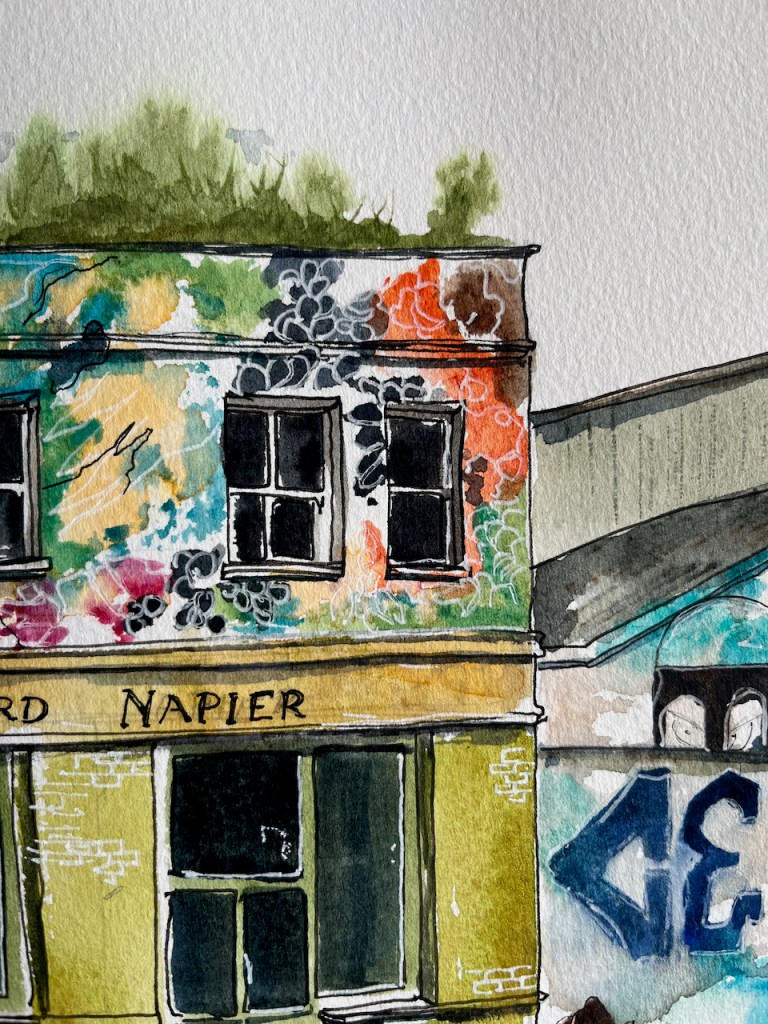
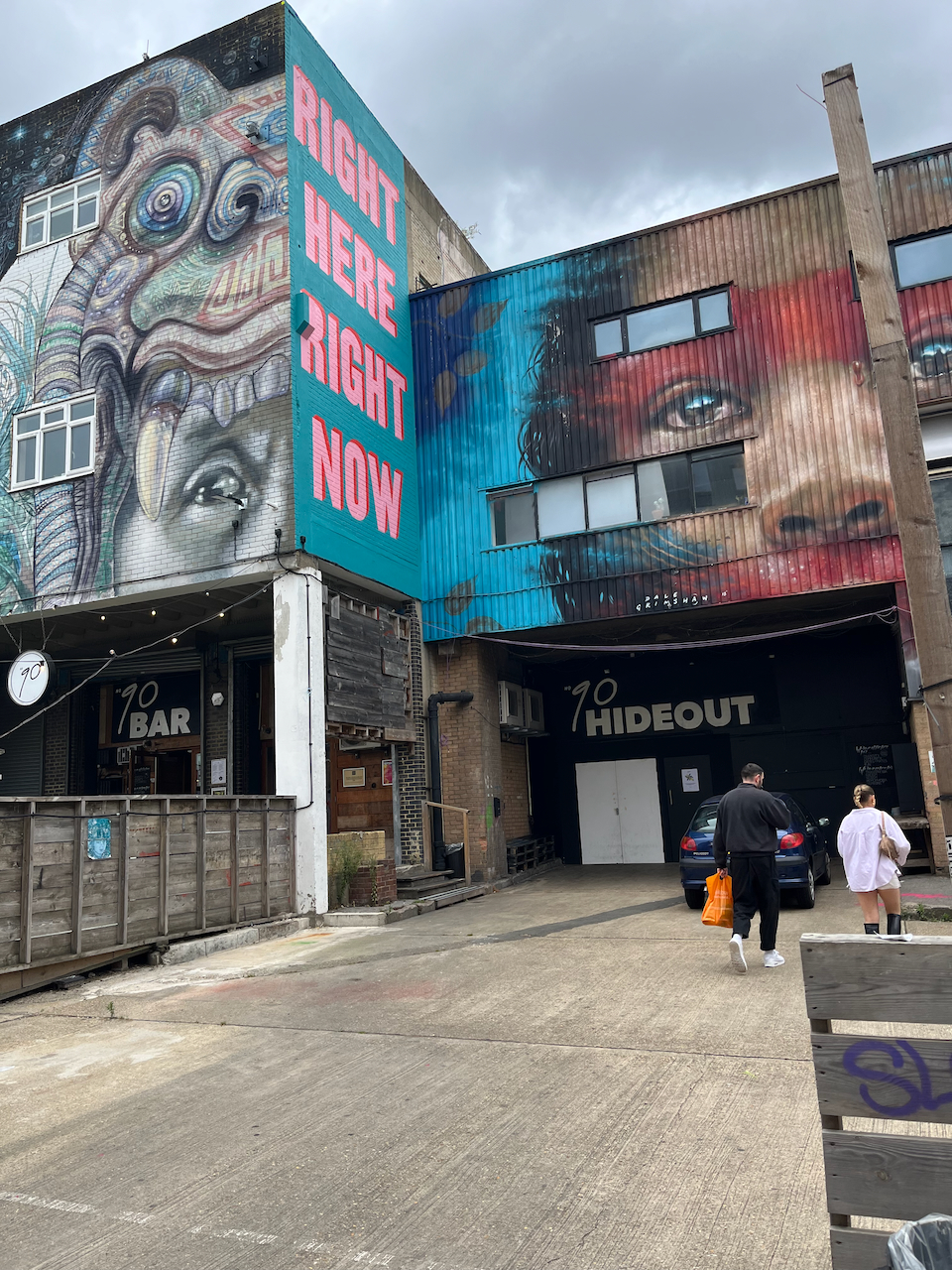
As you see, the top of the pub is covered in street art. I had fun trying to copy it. The original art is done at large scale with a spray can. My drawing is at small scale with watercolour and gel pens.

The pub has history. It has been a working pub, derelict, a rave venue, a squat. Now it is back to being a pub again.

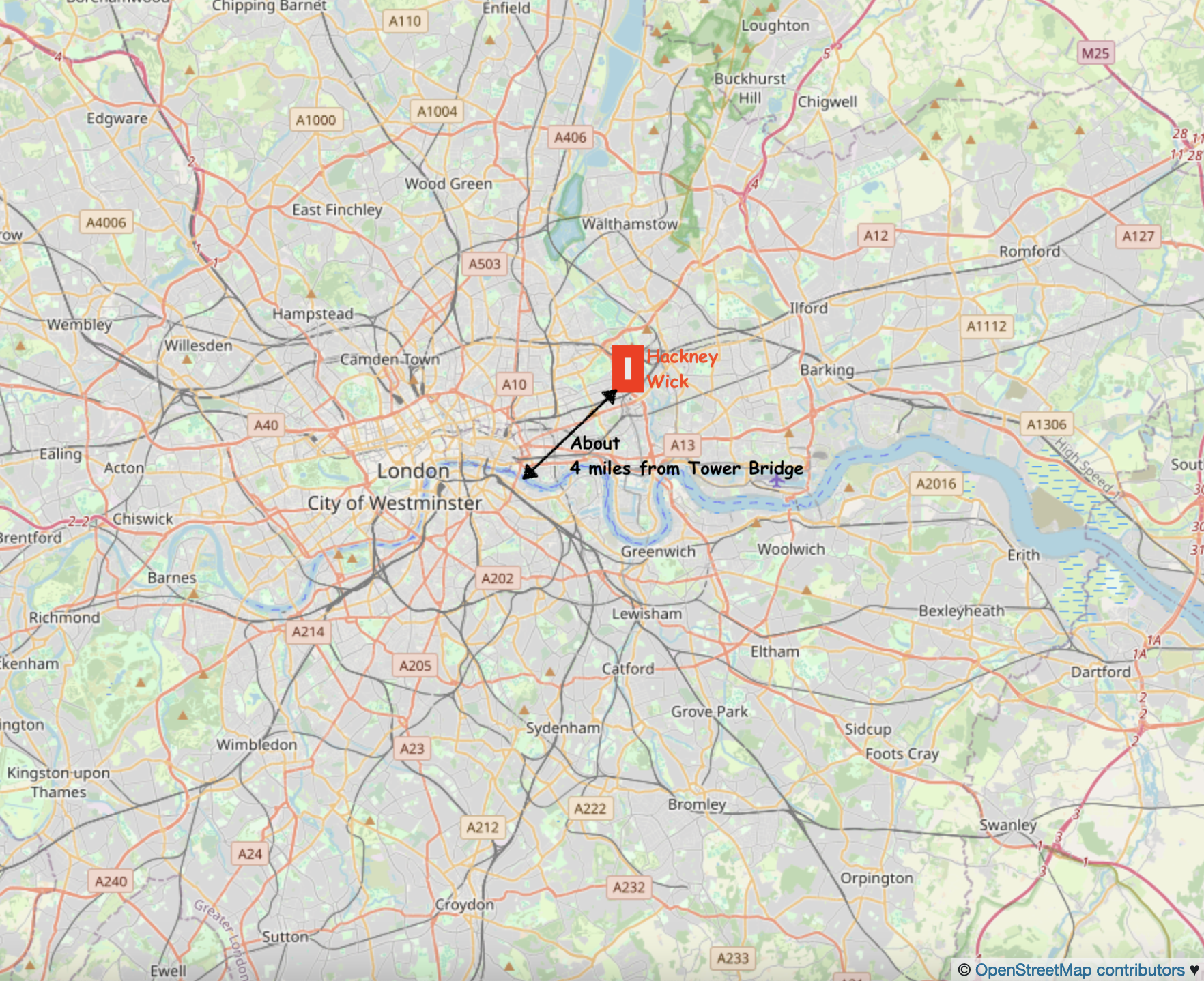
Hackney Wick is in East London between Victoria Park and the Olympic Park.

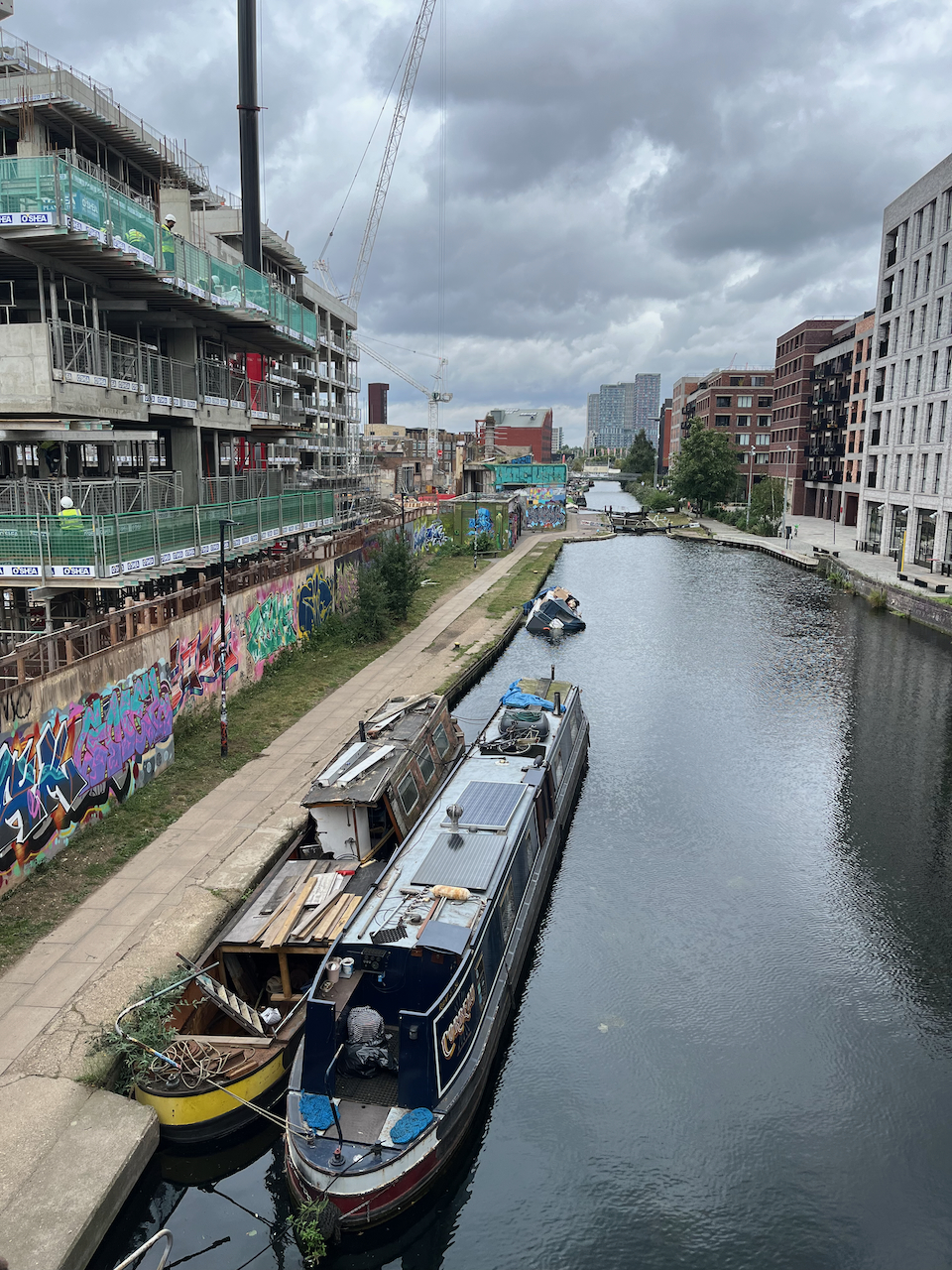
I have walked and run through there at intervals over the last twenty years. It has changed remarkably. The company I use for printing my artwork moved over there about 5 years ago, from a location in central London. I thought “what!” and “why?”. Now I realise that they were at the start of a trend. They were wise. The area is on the up. It used to be somewhat derelict and somewhat dodgy. Now the old buildings are taken over by new businesses, and there are cranes everywhere, constructing buildings where there were coal depots, docks, builders yards, heavy industry.

There are new residential buildings, at human scale of 3 to 5 stories, with footpaths and green spaces in between, and commerce at ground level. The commerce is, yes, coffee shops, but also gyms, shared office spaces, businesses to do with the film industry, music and film studios, a bakery, and what looked like scenery painting studios. It felt as though real things happened there, new businesses moving in, people living near where they worked, businesses springing up to serve the people who live there.

I found it cheering and energising. And I recommend the café I found: “The Ethical Bean” on Dace Road.