
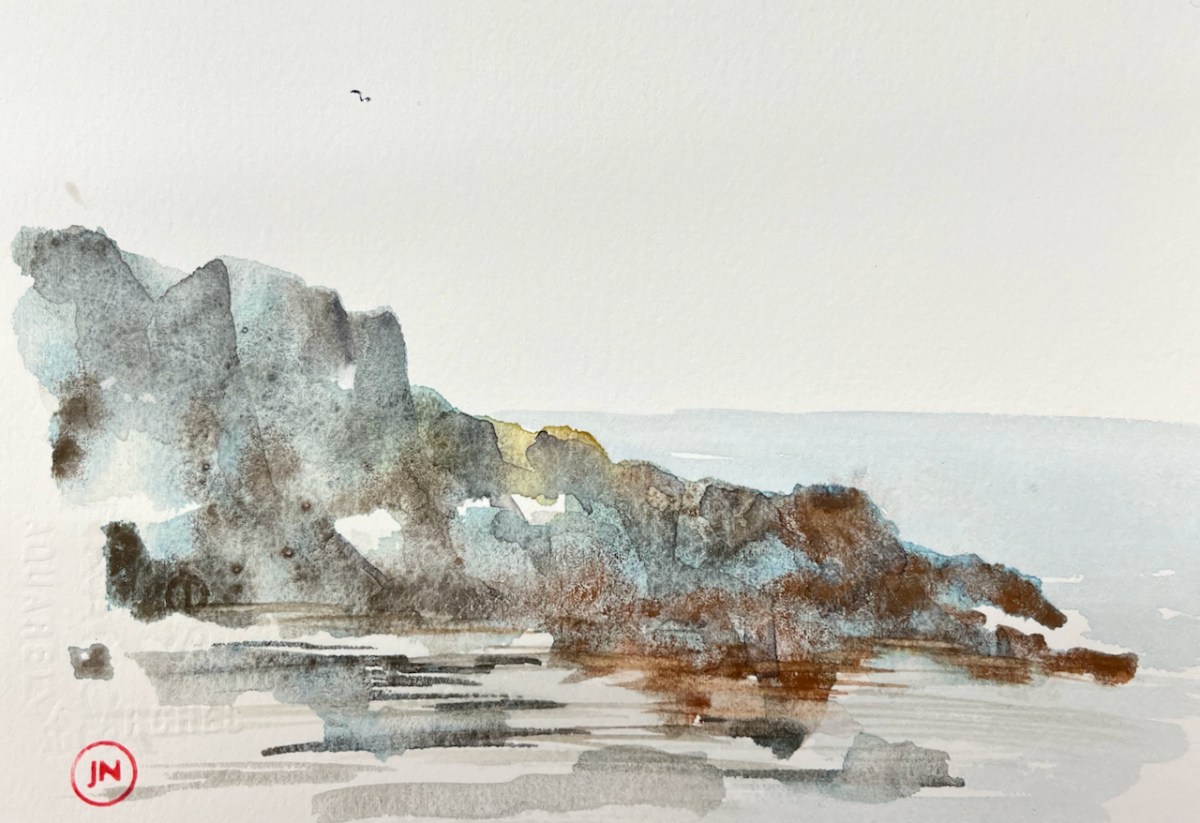
It was foggy, cold and wet outside. I made pigments.
I collected earth from round about. I know from previous attempts that it works best if you have fine earth. So I went up the road in the rain and scooped up the fine silt running off a track. I dried it indoors, and then crushed it to what I hoped was a fine powder.
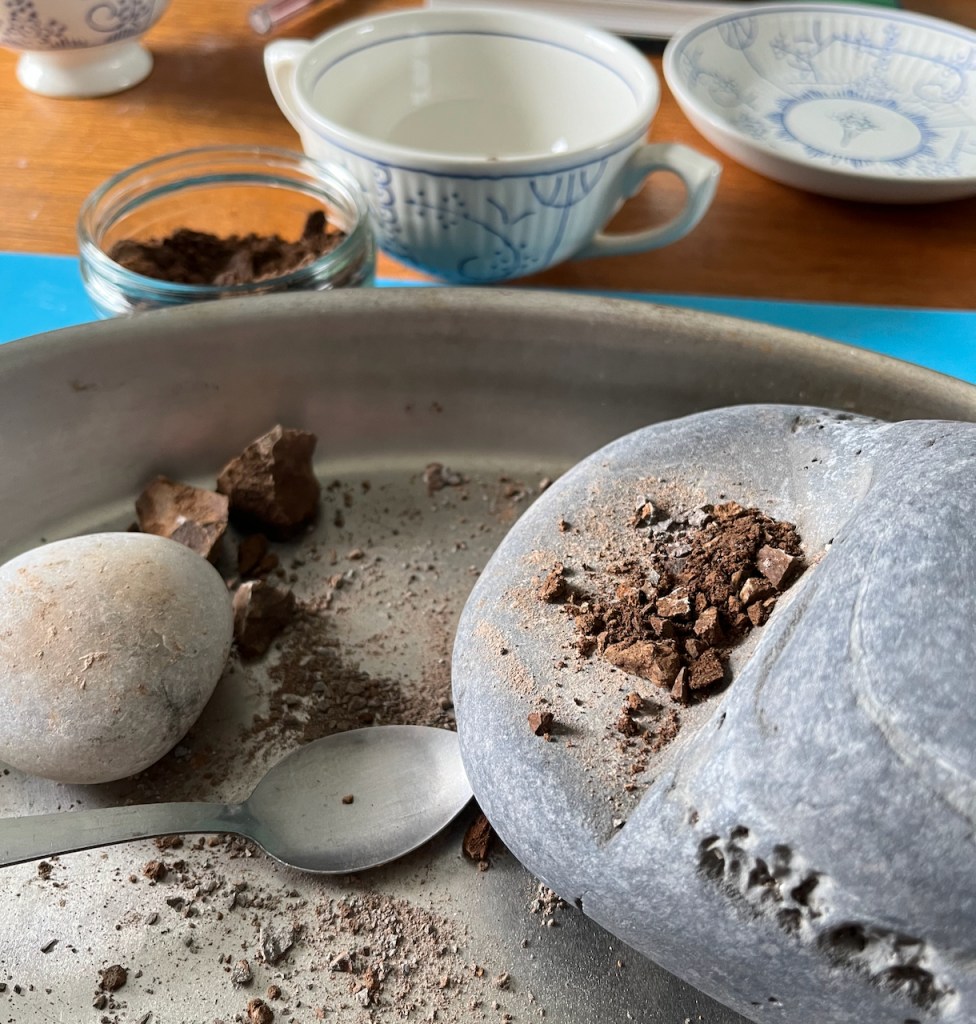
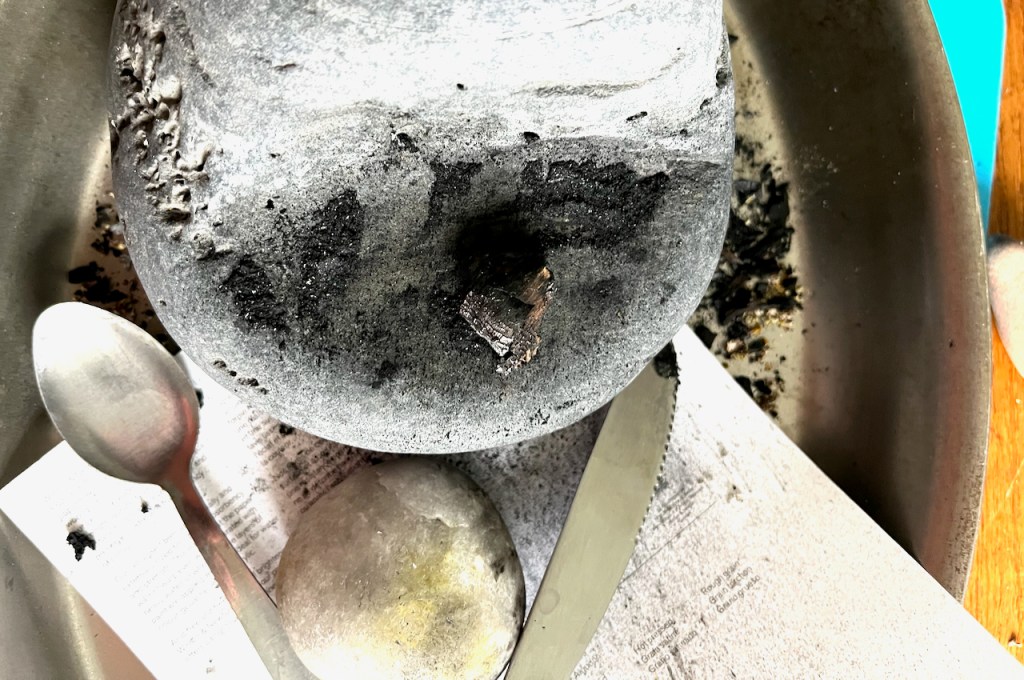
As you see I had an excellent beach stone for this purpose.
Then to grind it finer I had a pestle and mortar. This is a beautiful home-made item.
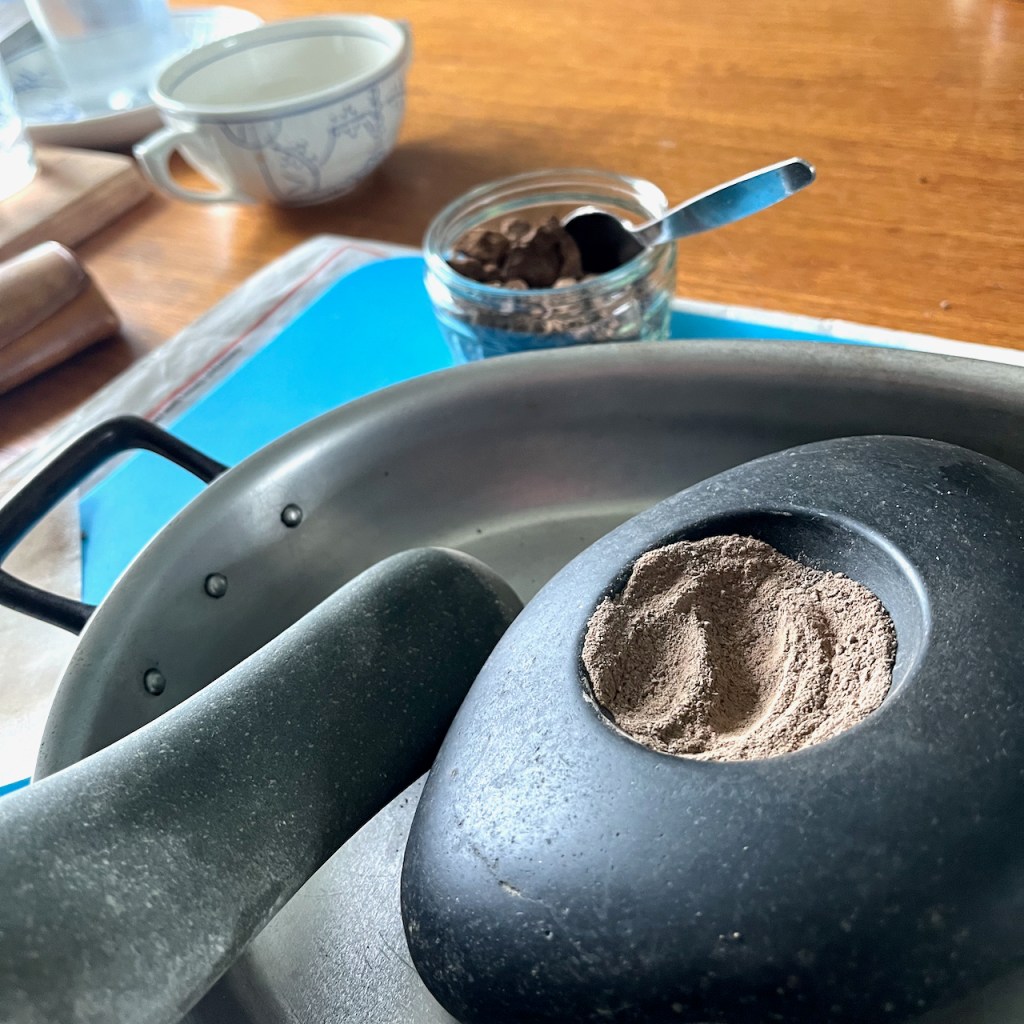
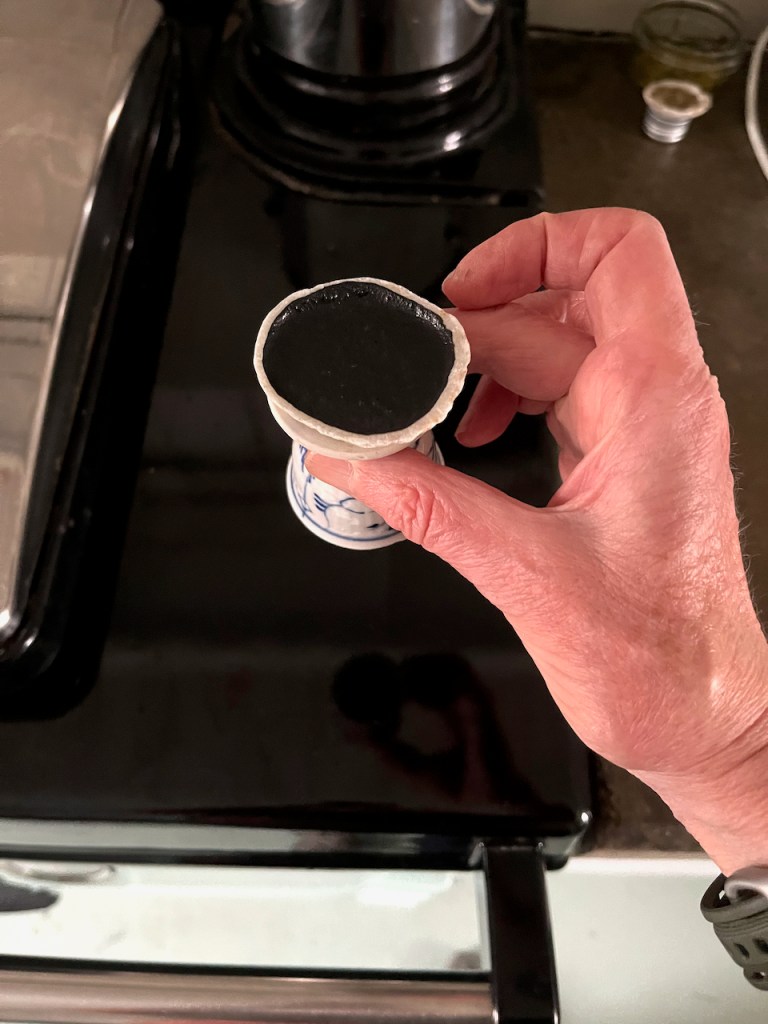
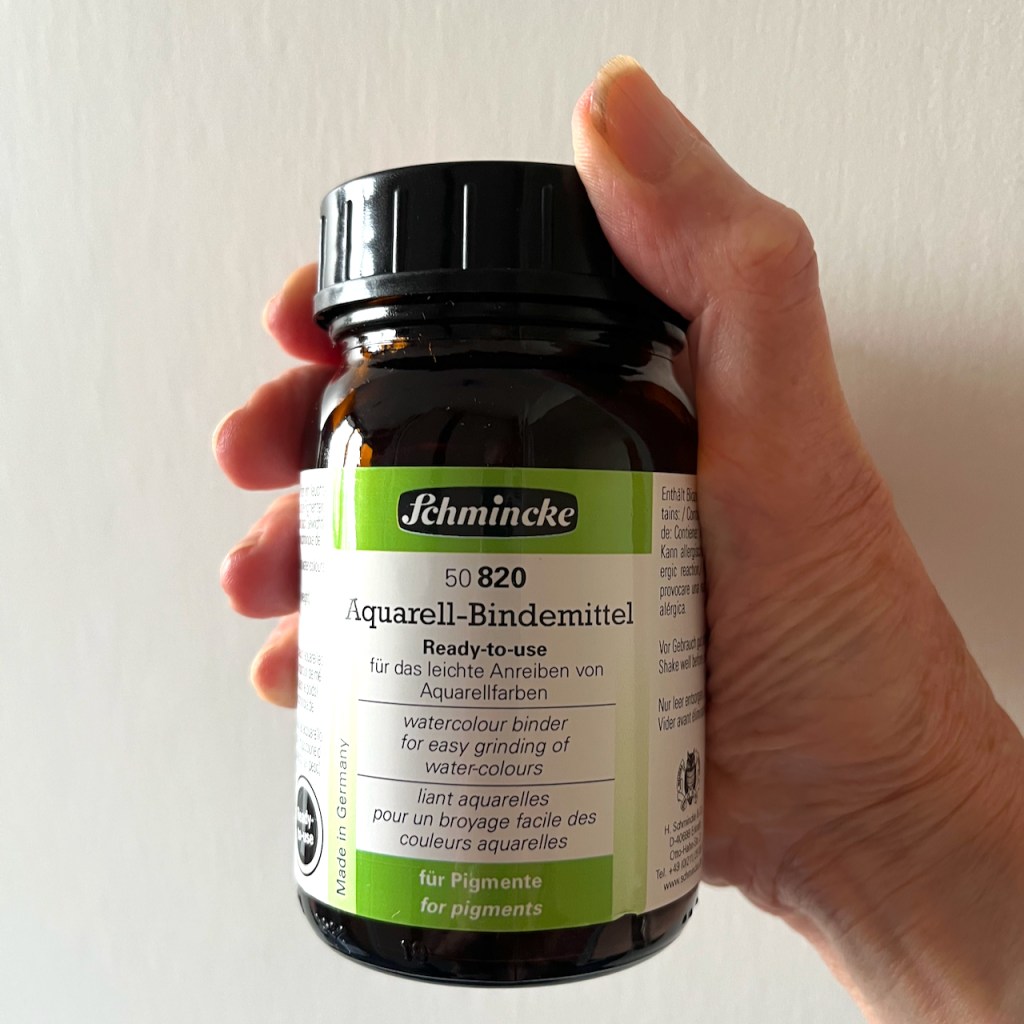
Now I have earth pigment. To make watercolour I add Schmincke Watercolour Binder in the ration of 2 parts binder to 1 part pigment. Mix and put in a limpet shell. It’s ready to use immediately as a paste, or it dries and can be rewetted like normal pan watercolours. Here are the paints drying:
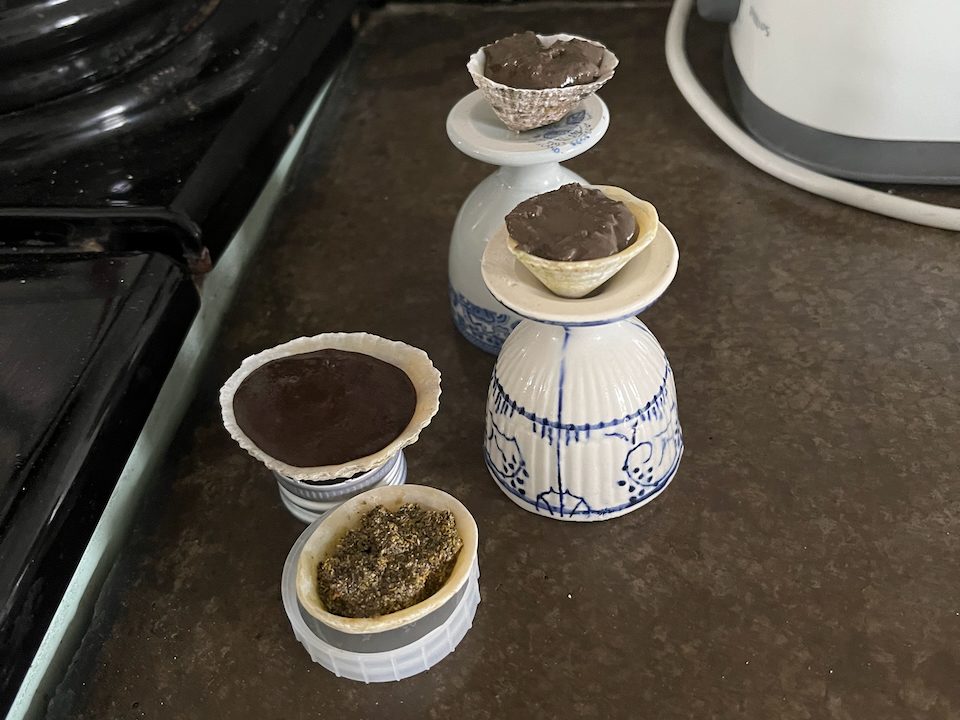
Above you see paints made of earth from different places. At the front is a paint made from yellow lichen. The lichen was bright yellow on the stone wall. I couldn’t find a way to separate out the bright yellow surface from the grey underneath, so the pigment is a grey/yellow mix.
Here is a selection of pigment experiments, to show how they look when painted:
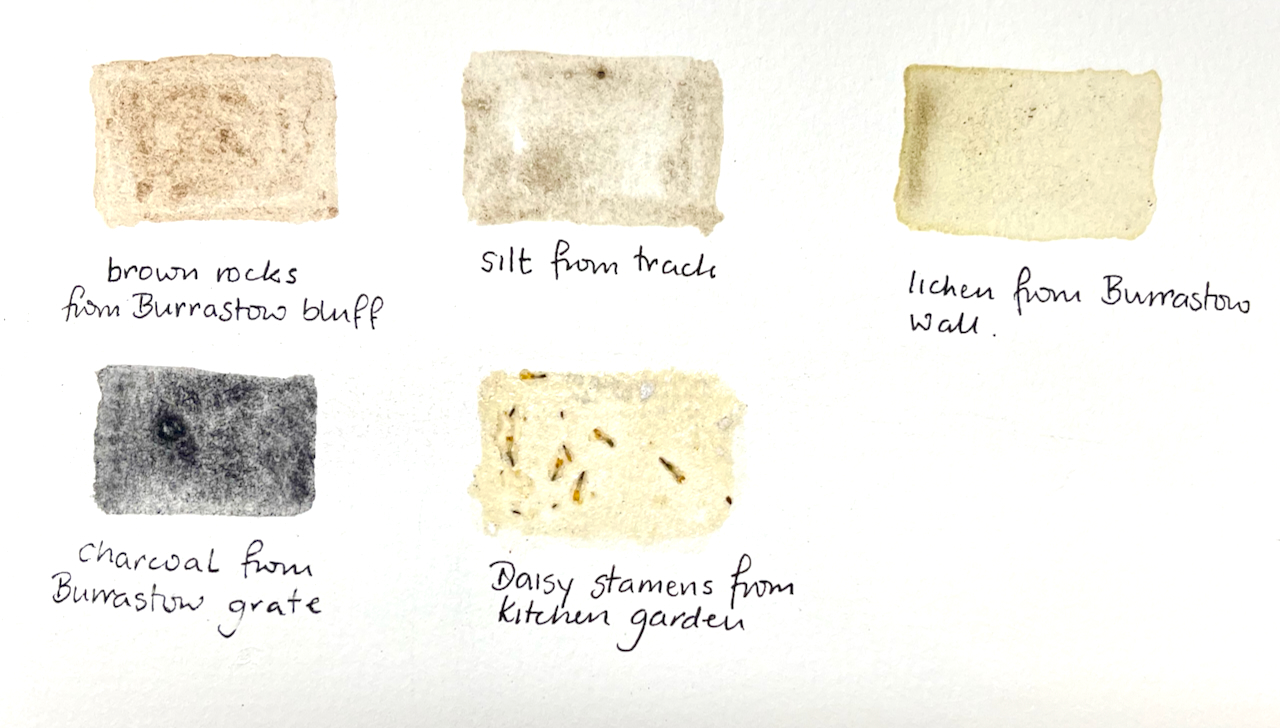
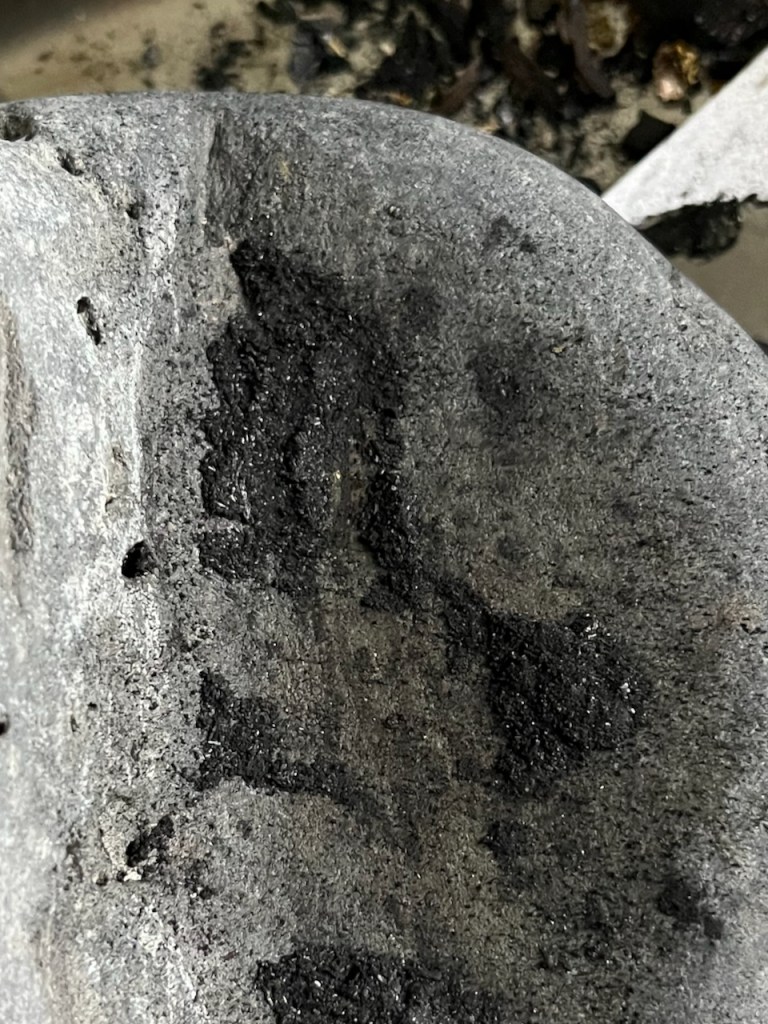
Making the charcoal pigment was not so effective as I thought it would be. I found a small chunk of black charcoal from the grate and proceeded to crush it. This produced skittering fragments and airborne dust which settled everywhere. It did not produce a fine powder in my pestle and mortar. It produced hard, flaky, bits. As you see above, the paint it produced was granular and not very black.
Here is a picture painted entirely with home-made pigments:
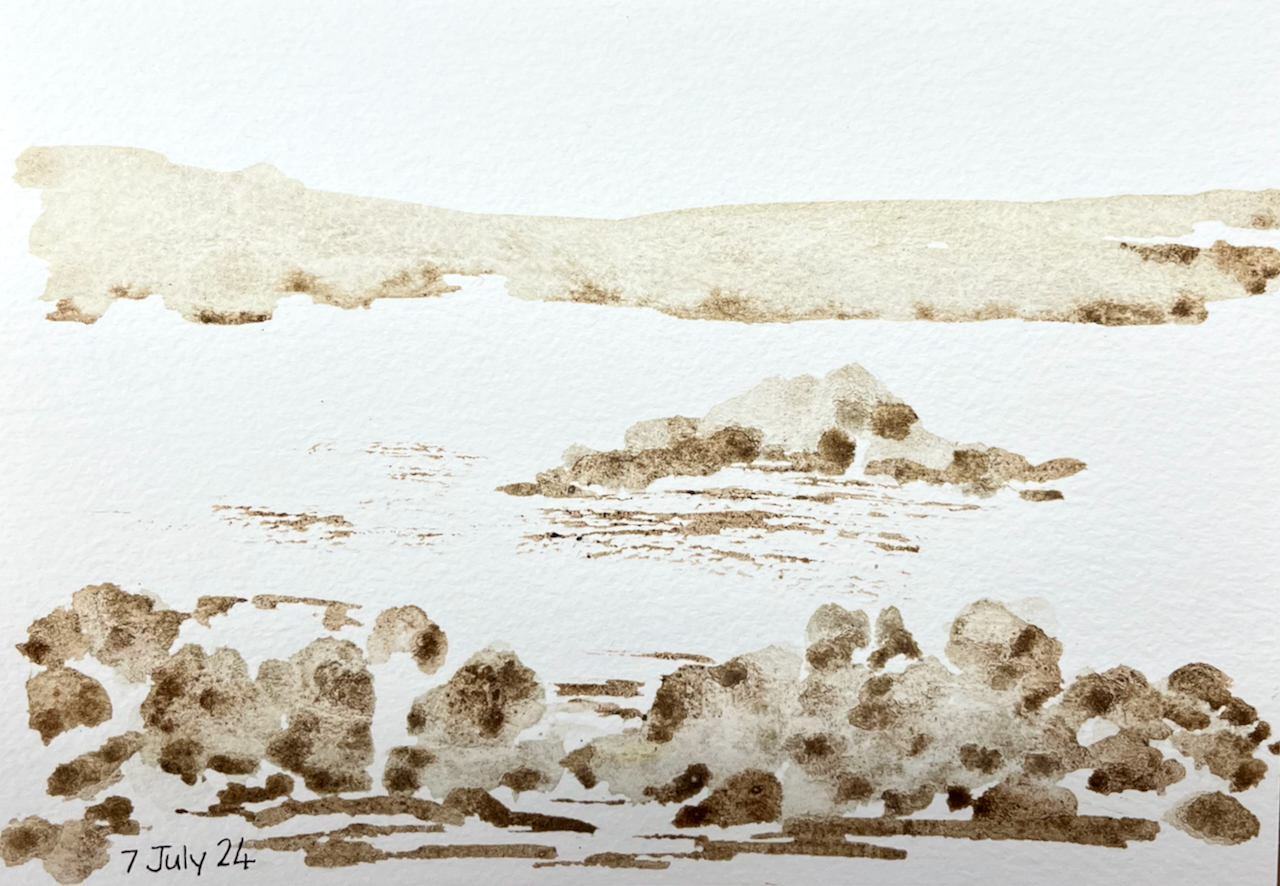
Here is a picture painted with home-made pigments and shop-bought watercolours:
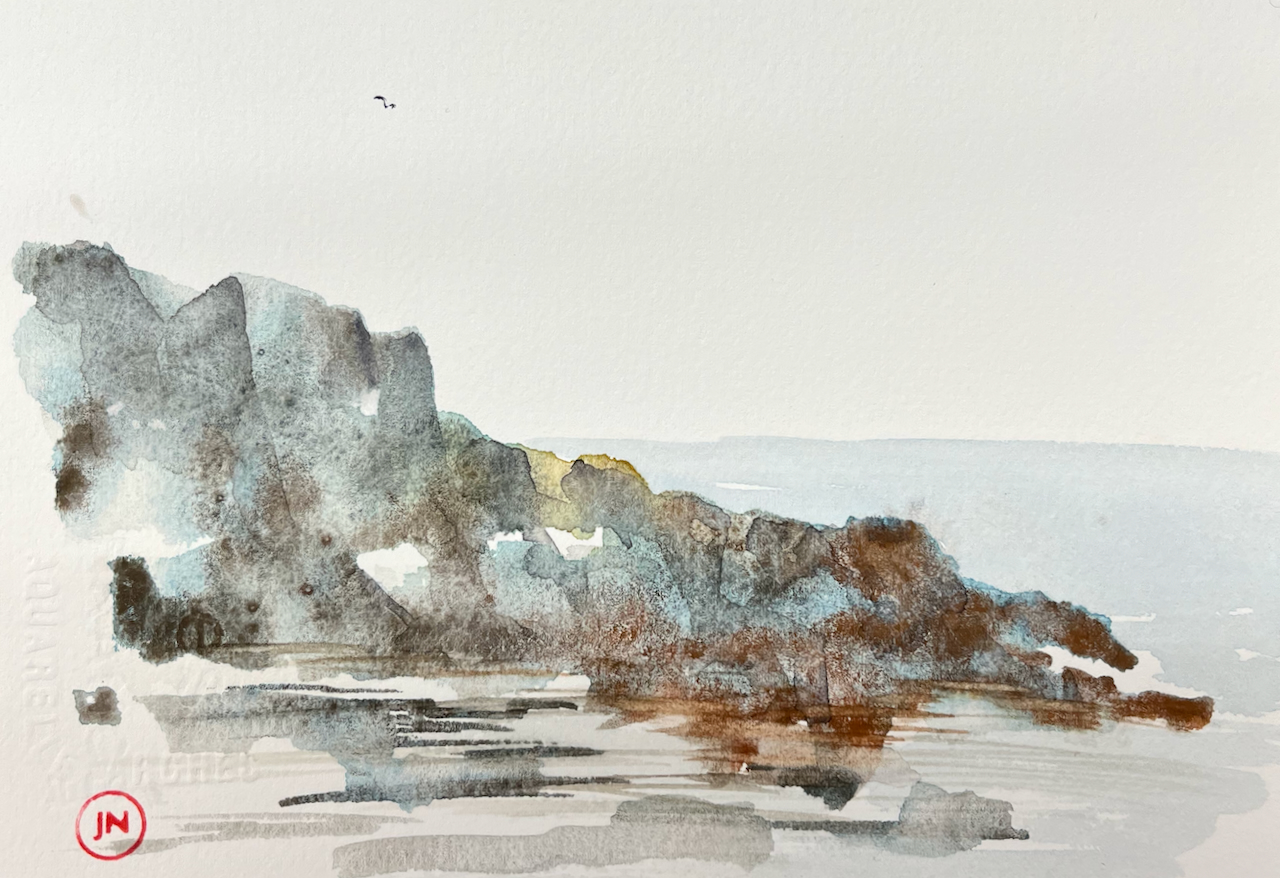
This is the binder I used:
 Jane Sketching