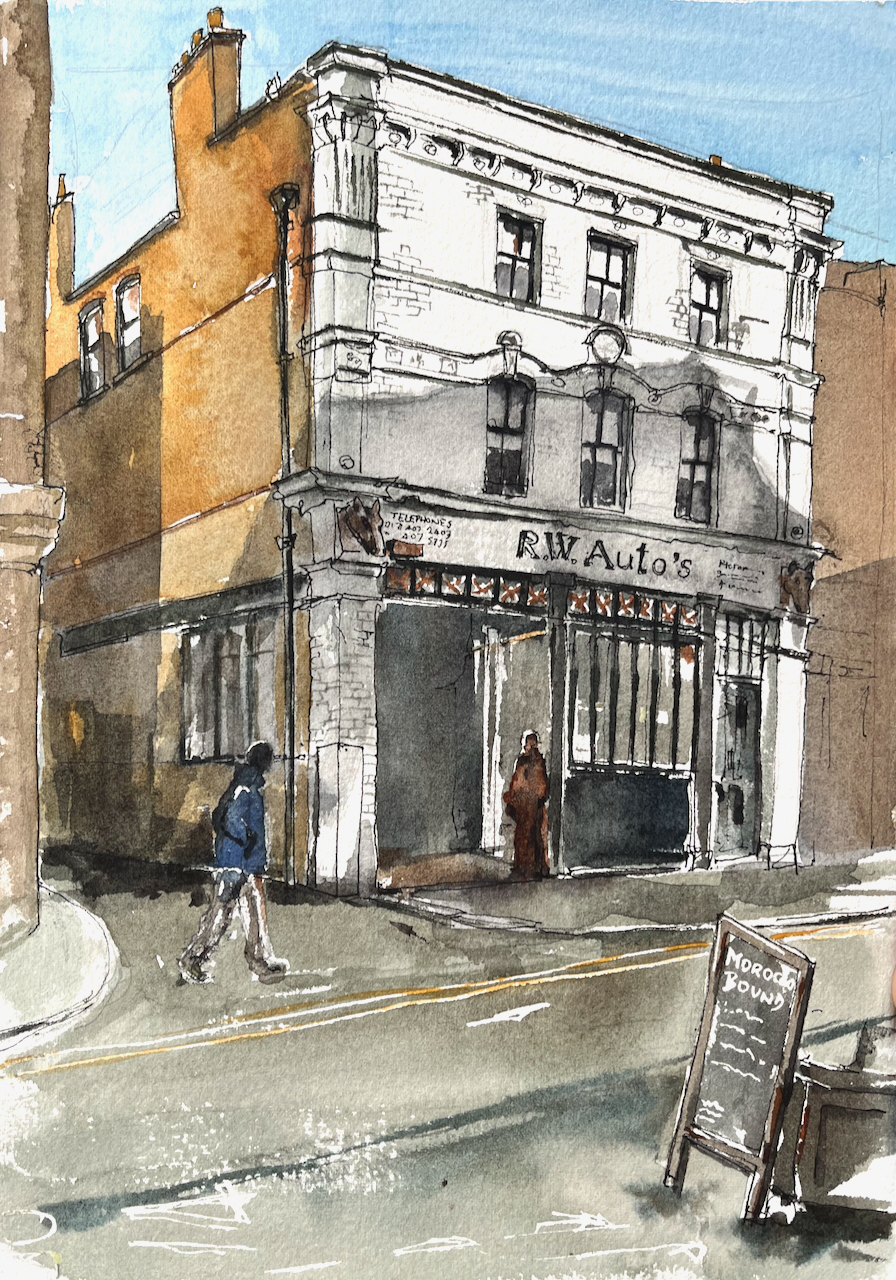
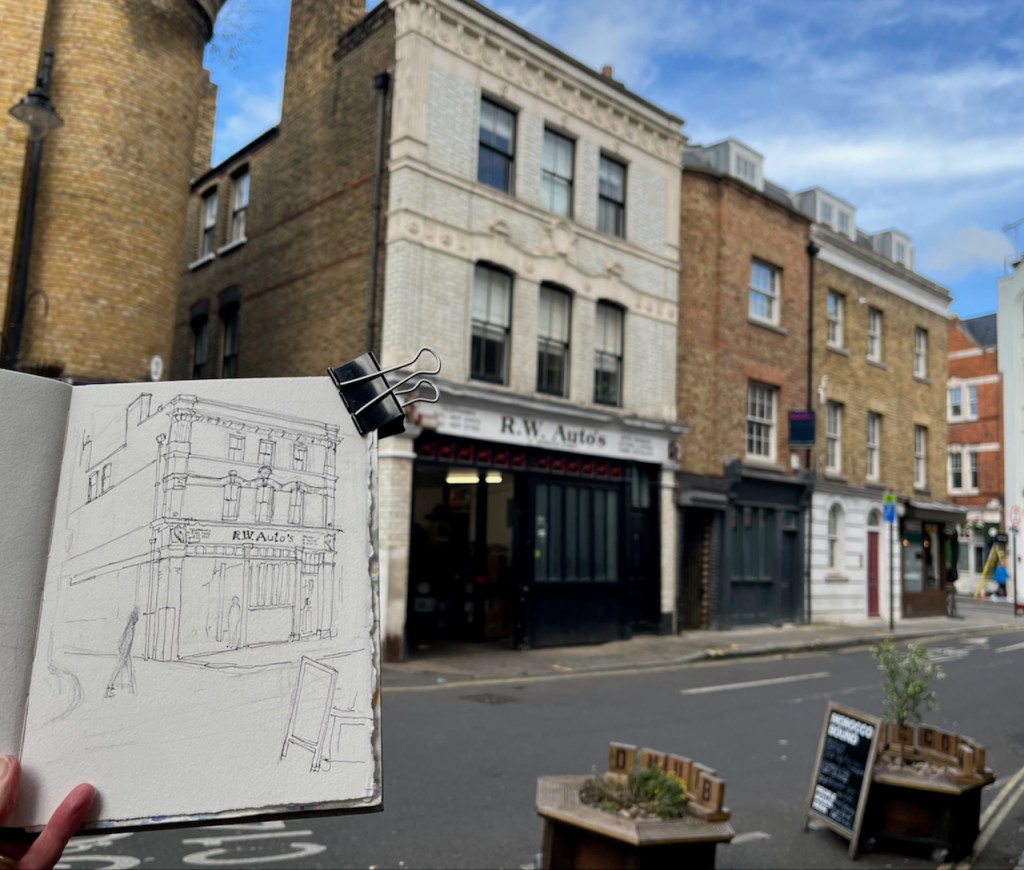
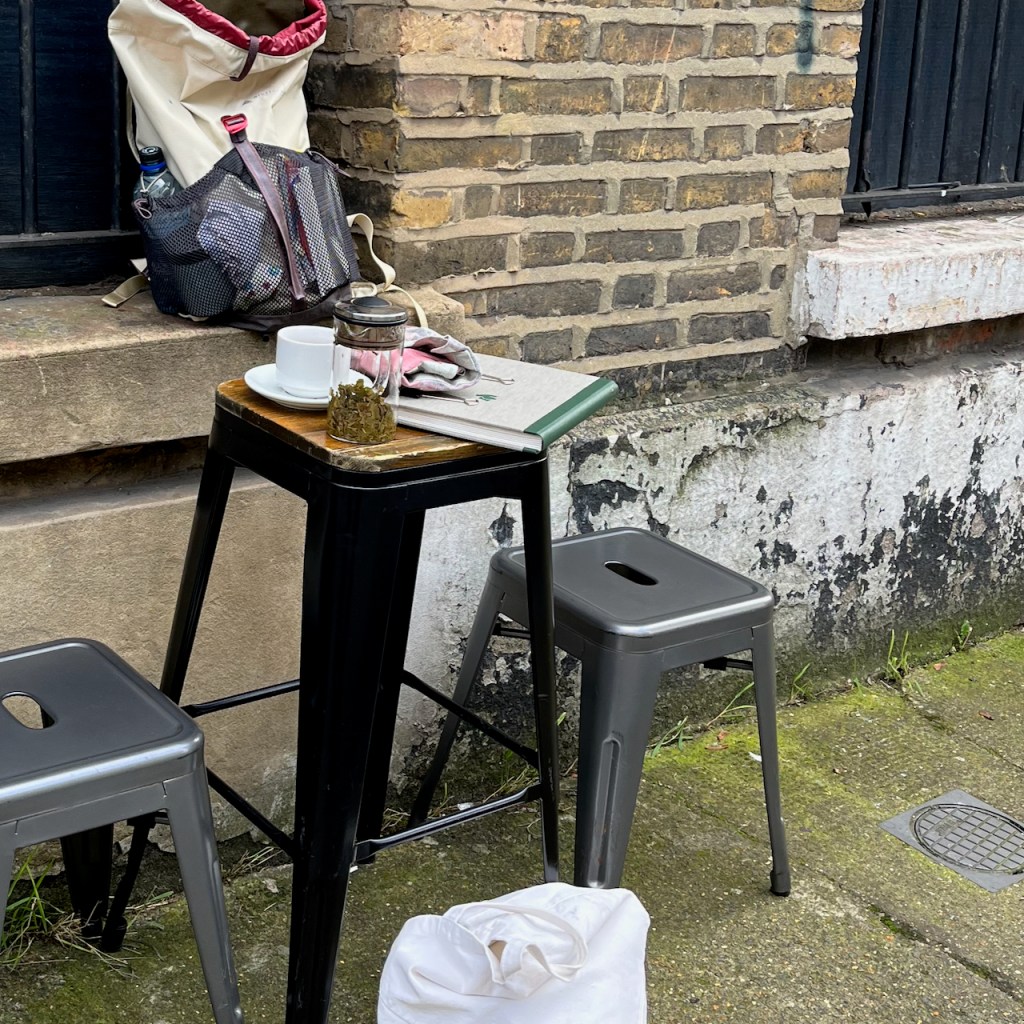
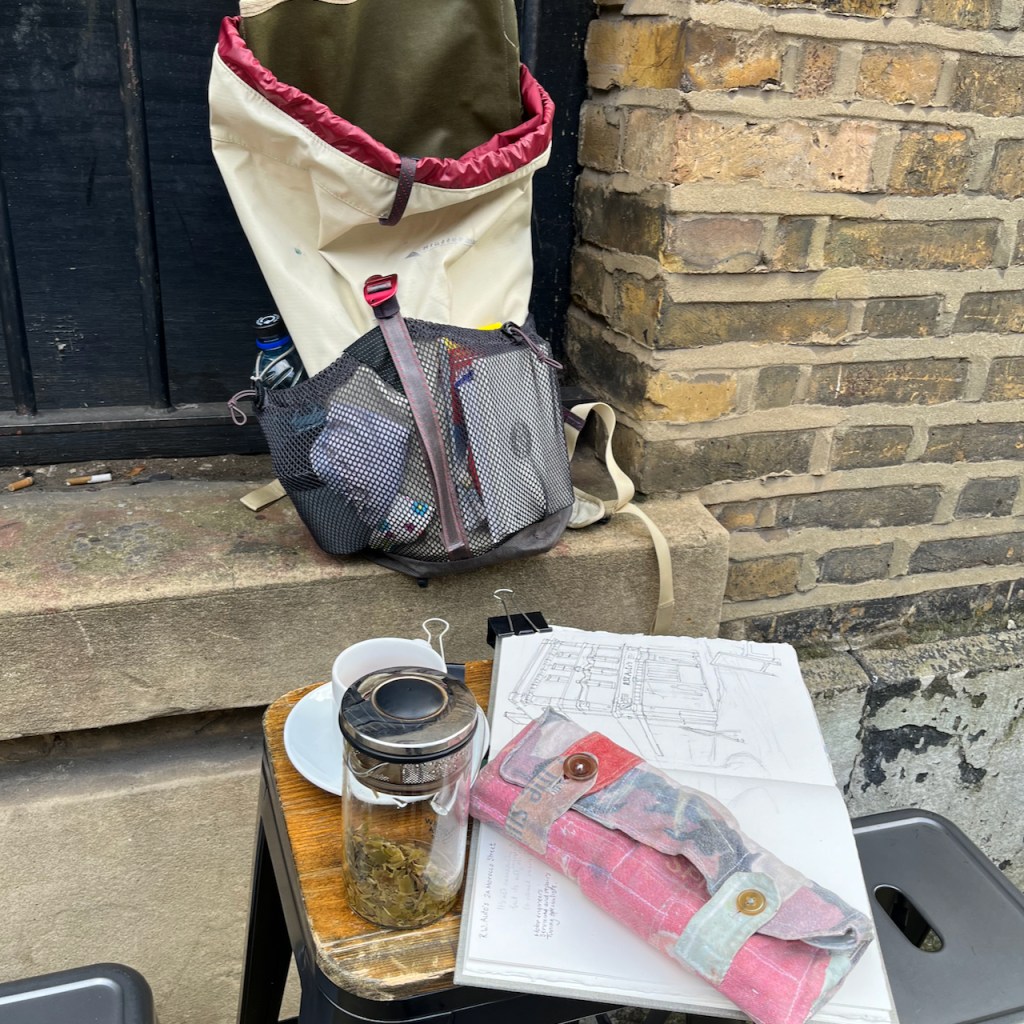
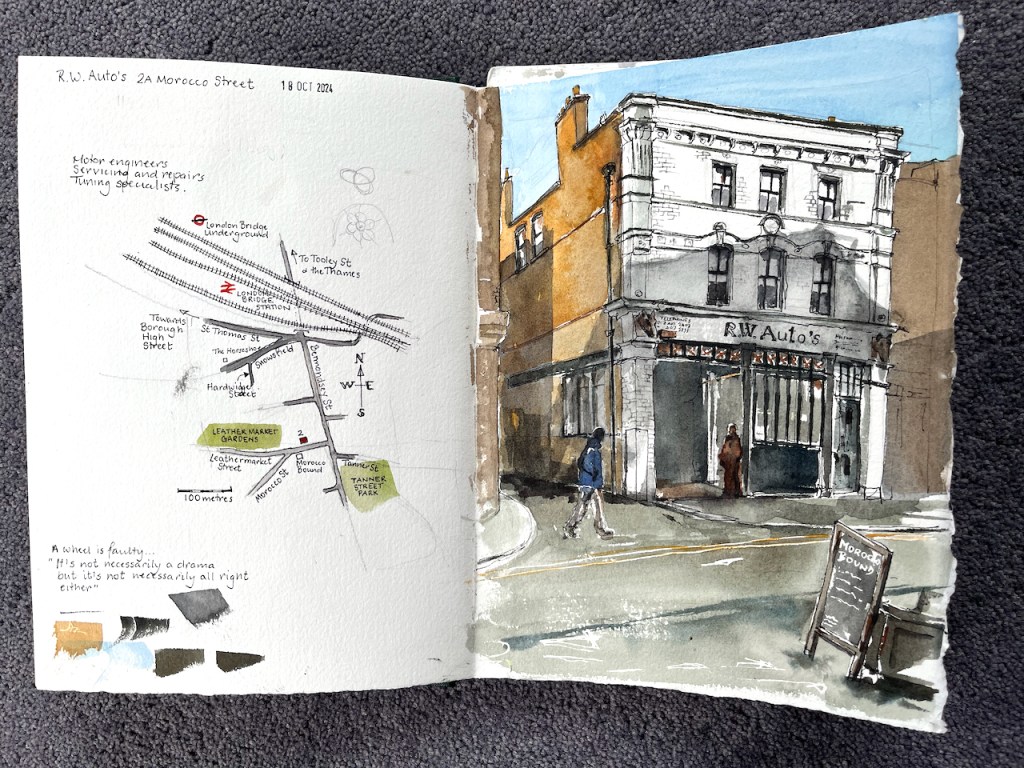
Bermondsey is an area of London just to the south of London Bridge. I had tea at the bookshop and café called “Morocco Bound”. From a table outside Morocco Bound, I sketched the building opposite.
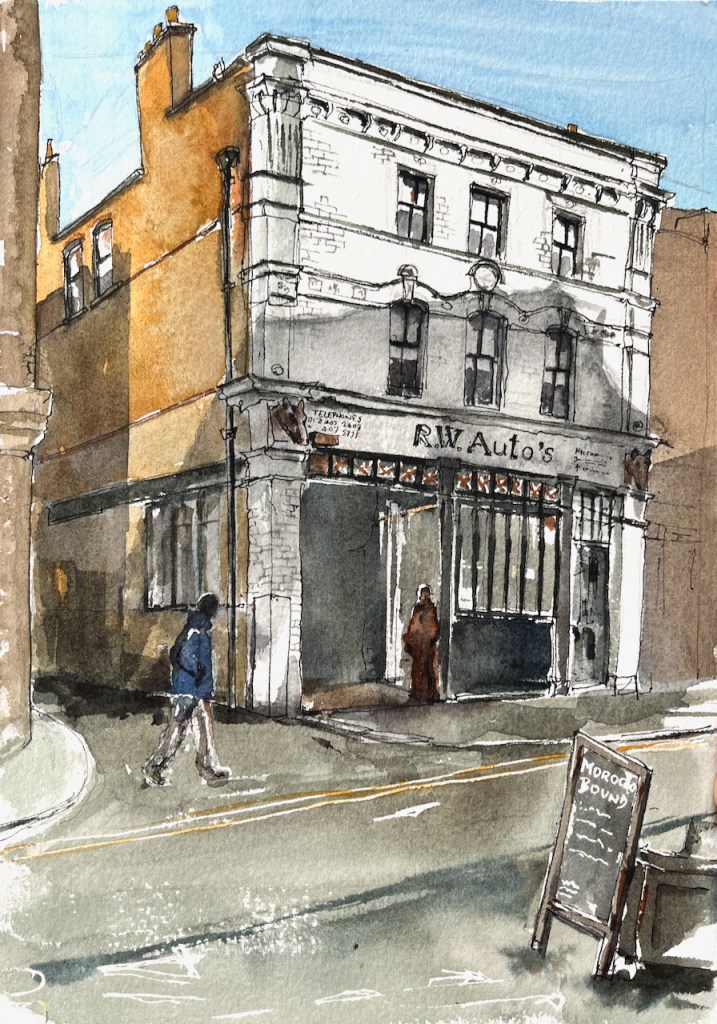
As you see, on the ground floor there is a motor repair shop, “R.W. Auto’s”.
RW Autos is Southwark’s top garage offering a range of car services including MOT’s, repairs and servicing. Our Southwark garage has been established since 1969 and serves a plethora of private and corporate clients. Our team provide you with a friendly, reliable, personal, efficient, and affordable service.
RW Autos website
The names of the streets round here indicate the historic industry of the area: tanning and leather making: Leathermarket Street, Tanner Street, Morocco Street.
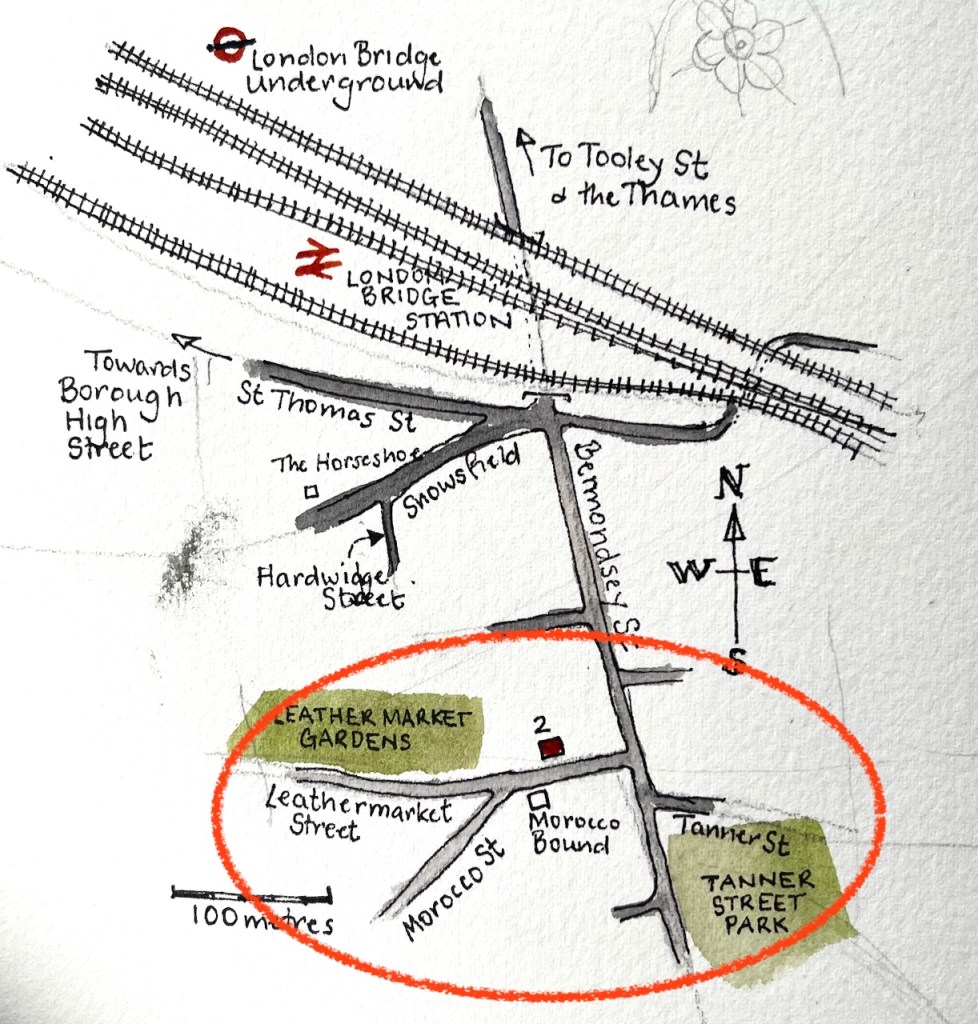
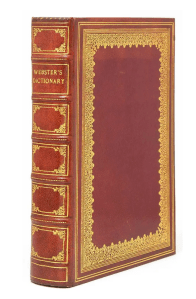
I was sketching on Morocco Street. Morocco is a type of soft leather. It is used for gloves and wallets, for example. It is also used for book bindings, hence the name of the café: ‘Morocco Bound”. According to the “Medieval and Early Modern Orients (MEMOs)” scholarly site1, Morocco leather was originally “a kind of extremely fine, soft, hard-wearing, and richly dyed sumac-tanned goatskin, originating in the Sokoto region of northern Nigeria, transported across the Sahara and exported to Europe by Maghrebi, particularly Moroccan, merchants.”. This was in the 16th and 17th centuries.
This luxury product was greatly imitated over the following years, so that “by the turn of the nineteenth century, nearly all obvious distinctions between imported and locally produced morocco leather had been erased, and to many modern curators, ‘morocco’ refers either to the distinctive grain, or simply to goat leather bindings, whatever their origin.”
Books are still bound in “morocco leather” today.
The phrase “Morocco bound” occurs in a song from the 1942 film “Road to Morocco” with Bing Crosby, Bob Hope and Dorothy Lamour. Here is an extract:
We may run into villains but we're not afraid to roam
Because we read the story and we end up safe at home
Certainly do get around
Like Webster's Dictionary we're Morocco bound

We certainly do get around
Like a complete set of Shakespeare that you get
In the corner drugstore for a dollar ninety-eight
We're Morocco bound

Or, like a volume of Omar Khayyam that you buy in the
Department store at Christmas time for your cousin Julia
We're Morocco bound....
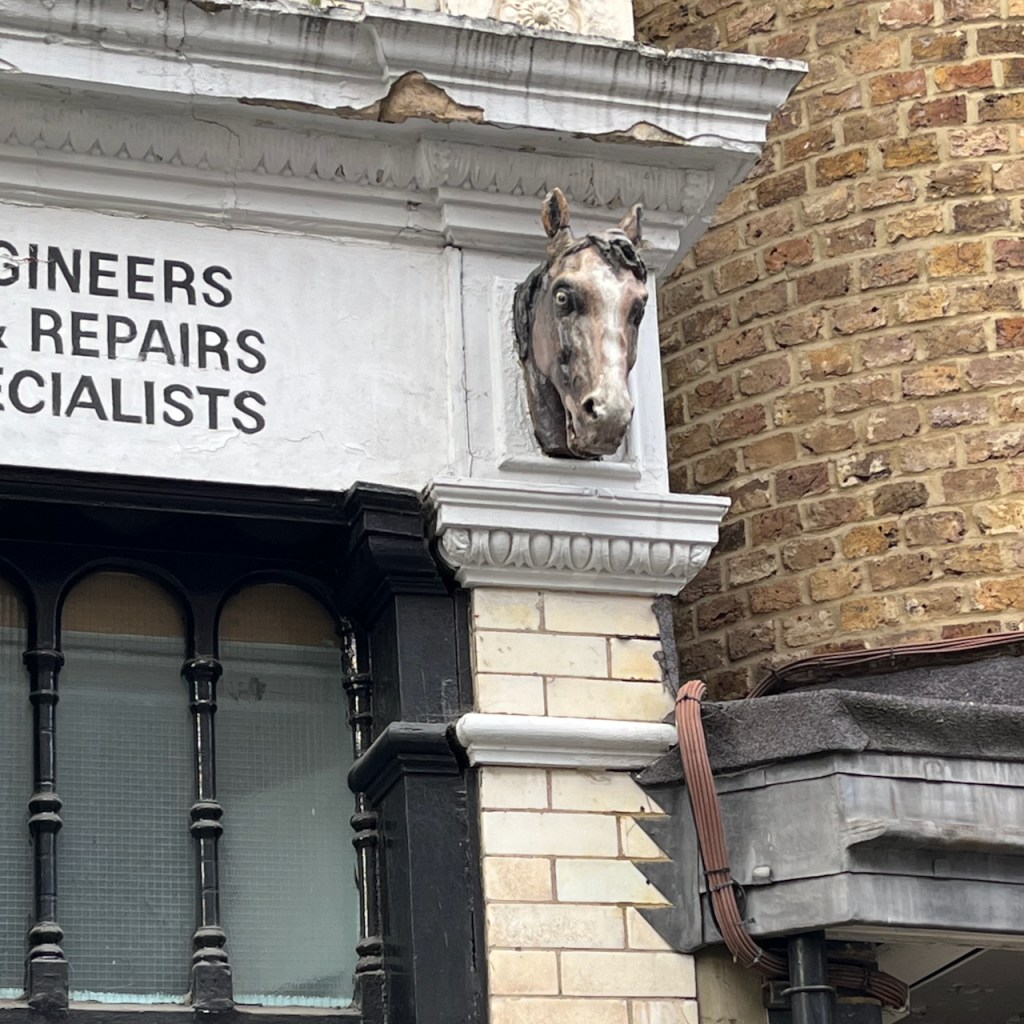
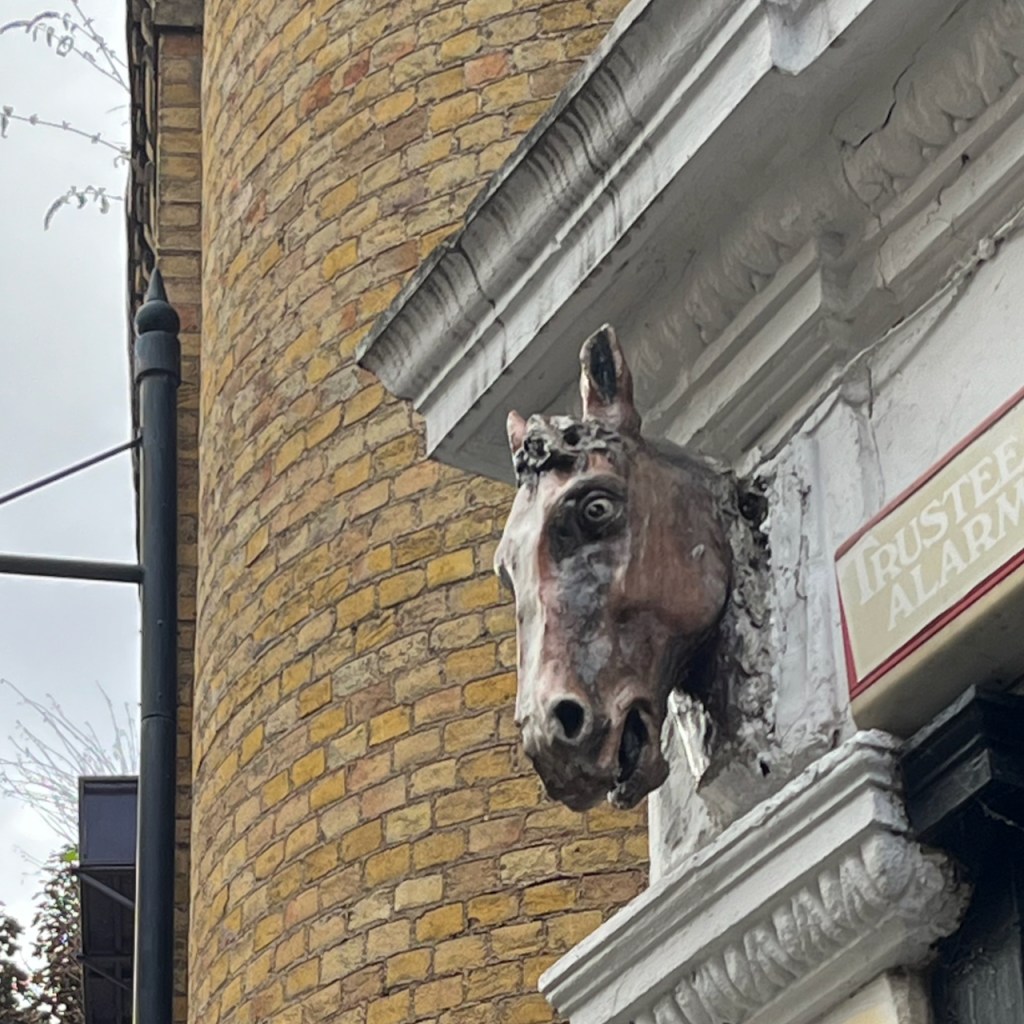
It was only when I started looking at the building carefully that I noticed the horses’ heads. It turns out these are a bit of a mystery.
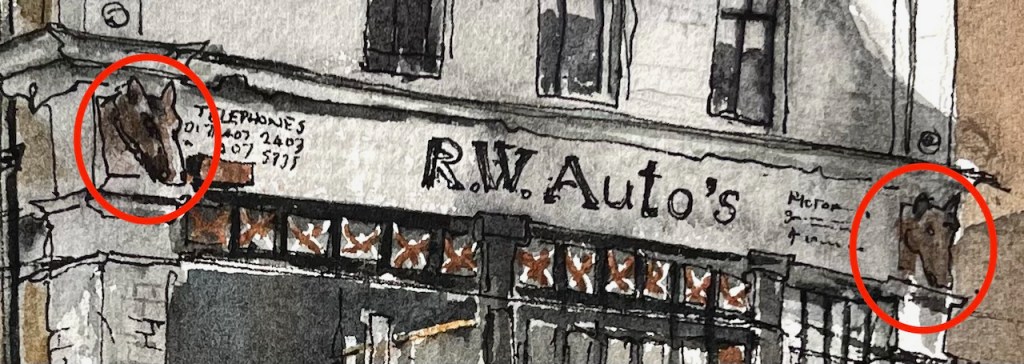
The mystery of the Horses’ Heads
I found this 1976 photo in the London Picture Archives, reproduced here with permission:
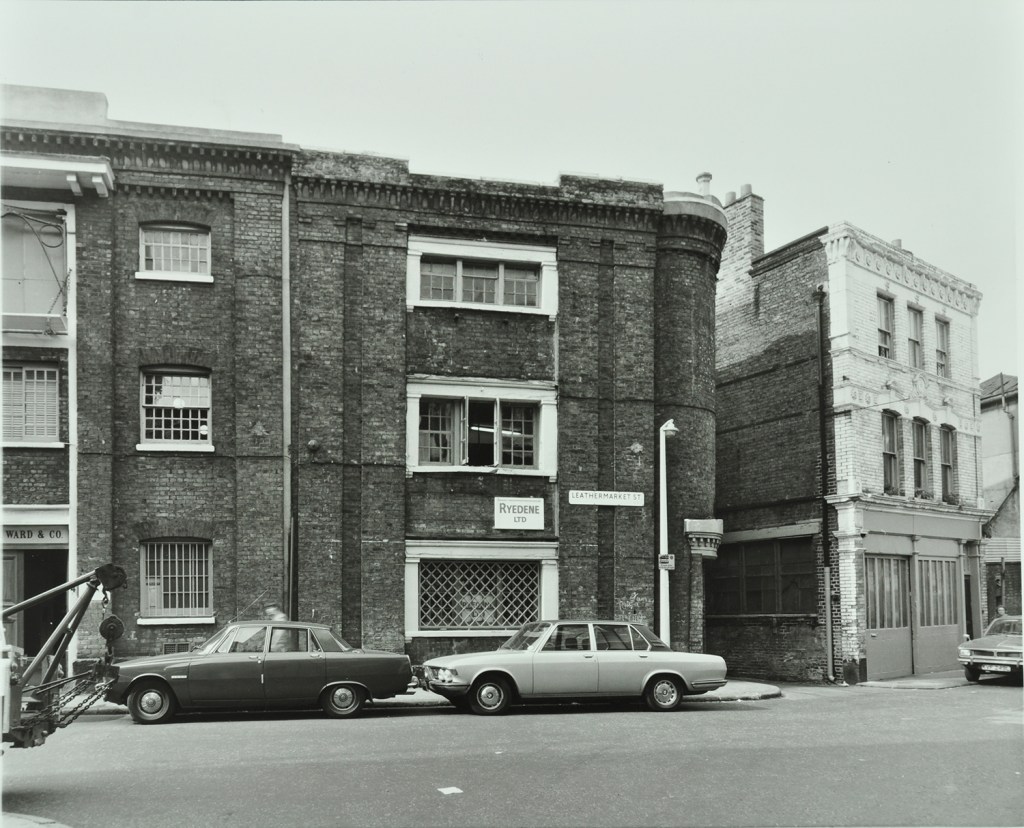
image source: (c) The London Archives (City of London Corporation), picture used under licence reference #007089
https://www.londonpicturearchive.org.uk/view-item?i=54304&WINID=1730309548612
You see Number 2 on the right of the photo, looking very much as it does today. Except that there are no horses’ heads. When did they appear?
Various websites2 suggest that Number 2 Morocco Street was “once a smithy”. If this was a smithy with horses’ heads in (say) the early twentieth century, then someone removed them before the photo was taken in 1976, and has put them back some time afterwards. Or the building became a smithy after 1976, in which case it must have been one of the very few left in London at that time. Or the horses’ heads are a recent decorative addition and not related to the original purpose of the building atall. It’s a mystery. Next time I am in the area I will go and enquire at R.W. Auto’s.
- Medieval and Early Modern Orients (MEMOs) is an AHRC-funded decolonial project that seeks to further knowledge and understanding of the early interactions between England and the Islamic Worlds. AHRC is the Arts and Humanities Research Council. The quotations come from an article on their site entitled “Morocco Leather and Material Understandings of the Maghreb in Early Modern Britain” dated 14 November 2022 on this link: https://memorients.com/articles/morocco-leather-and-material-understandings-of-the-maghreb-in-early-modern-britain ↩︎
- Various websites suggest that this building was once a smithy. Here are the links:
Layers of London: https://www.layersoflondon.org/map/records/morocco-street. “2a R.W.Autos with horses heads was a smithy/farrier”
Bermondsey Boy: http://www.bermondseyboy.net/viewtopic.php?t=260. This website includes a photo from 2015 – with horses heads, and the commentary. “RW AUTO’S The two horse heads above the front of this garage workshop are the last clue that is was once a smithy – a blacksmiths.” This website also includes a 1968 photo which has no horses heads. ↩︎

 Jane Sketching
What an interesting one, Jane!
Gloria
Gloria Goodwin Raheja Professor Emerita of Anthropology University of Minnesota
http://cla.umn.edu/about/directory/profile/raheja
LikeLike