
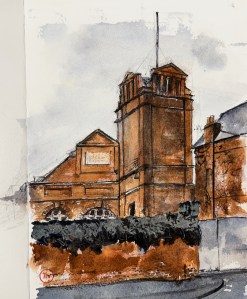
Here is the London Hydraulic Power Station in Wapping, now known as 25 Wapping Wall. In September 2026 here was an art installation there. The alert location manager spotted my post from January 2023 and got in touch. Would I like to visit? Yes I would!
Lucy from Location Works kindly made me welcome and gave me a tour. We had fun tracing the pipes, and finding out how the water flowed.
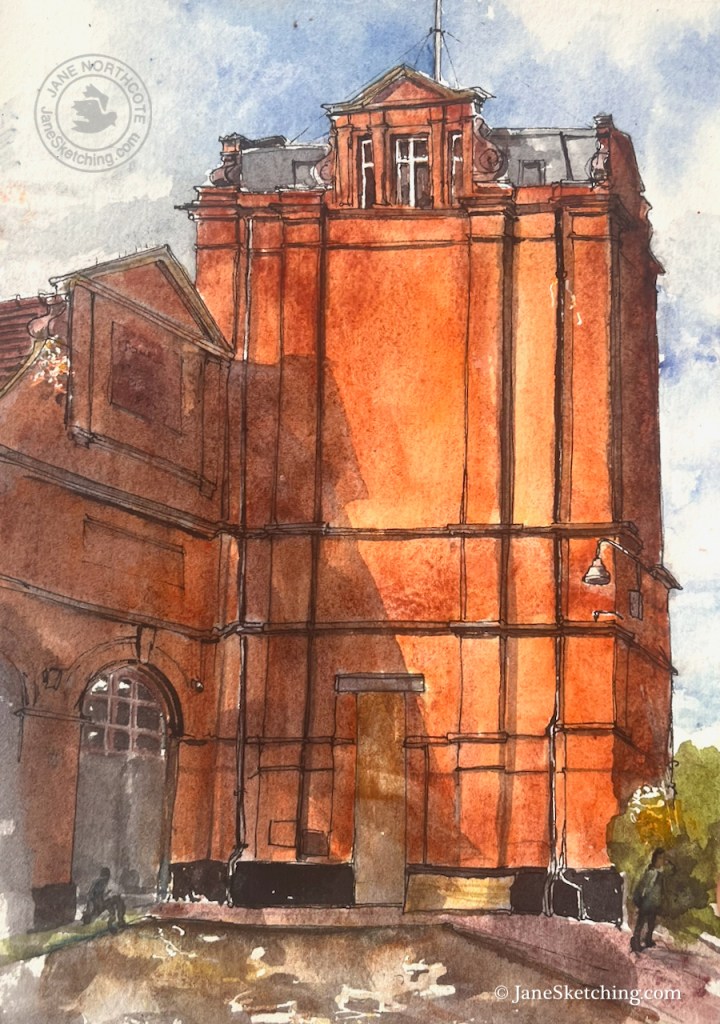
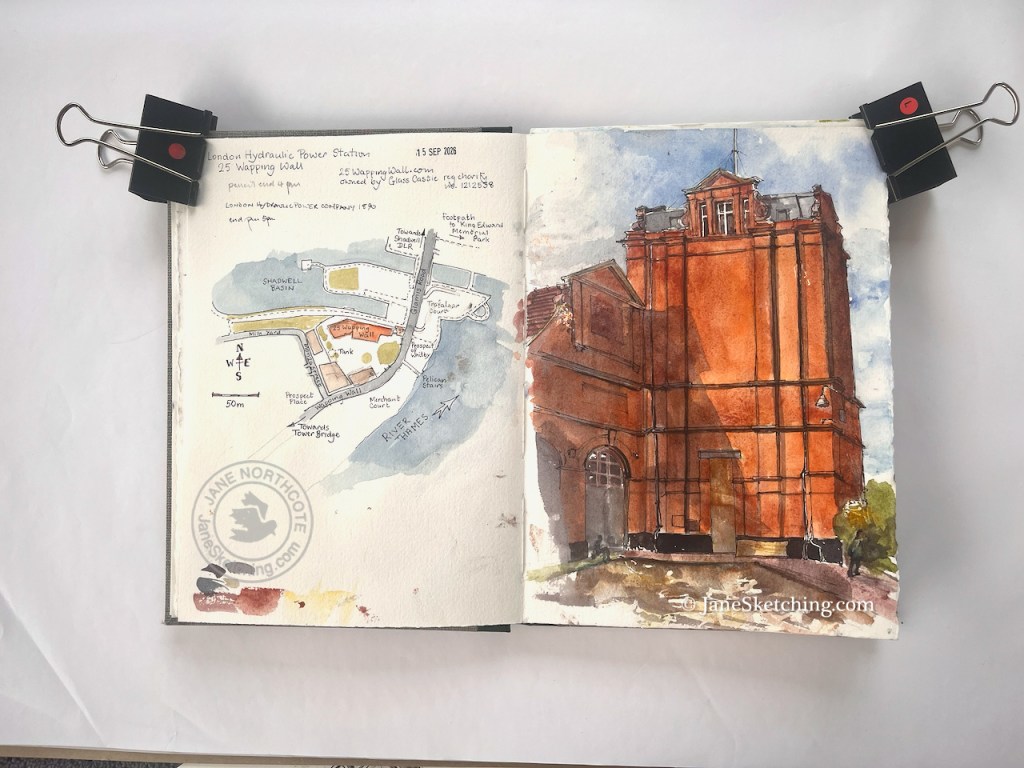
Then I did some sketching. Here is the Accumulator Tower.
Here is an overall view of the power station.
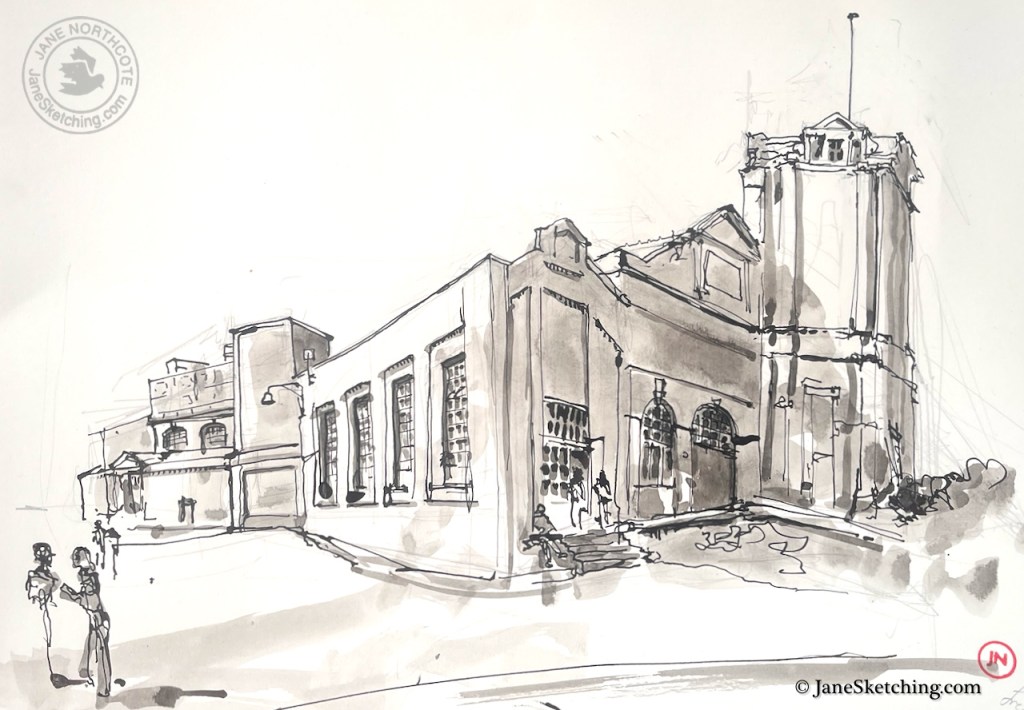
On the right is the accumulator tower. The left and centre buildings housed the machinery which pumped the water. On the far left, at the top, are water tanks. I later found out that there are also water tanks underground, underneath where the people are standing on the left.
Hydraulic power was a way to transmit power from one place to another. These days we use electrical cables. But in the nineteenth century they hadn’t yet discovered how to generate and transmit electricity in industrial quantities. If you had a lock gate to open, or a theatre curtain to raise, or a printing press to operate, you had to do it either manually or with steam power.
You probably didn’t want to install a noisy dirty steam engine right next to your lock gate, theatre or printing press. Since you only wanted the power occasionally, it didn’t make sense to go to the trouble of building your own steam engine. So, what could you do? Answer: put a really big steam engine somewhere else, and transmit the power, using water. The power station at Wapping housed one of those really big steam engines. The steam engine pumped water at high pressure into cast-iron pipes. At the other end of the cast-iron pipe, the lock keeper opened a tap, releasing this high pressure water, which pushed the lock gates open. Or it raised theatre curtains, or operated printing presses and cranes, raised lifts. Amazing. 1
The water was in underground cast-iron pipes, 2 to 10 inches in diameter. The water was at around 800 psi or 55 bar, which is a very high pressure2. Just to give you an idea, normal water pressure in your kitchen taps in the UK is less than 1 bar3.
To maintain this high pressure despite variable demand, the steam engines pumped the water into the accumulator tower, where it raised a heavy weight. The accumulator tower was a sort of “battery”, storing power until it was needed.
I was thrilled to be able to discover the inside of this building which I had previously sketched from the outside. There is still some of the original machinery in there. Here are some snapshots. Photographs cannot convey the grandeur of the space and the quiet dignity of the machines.
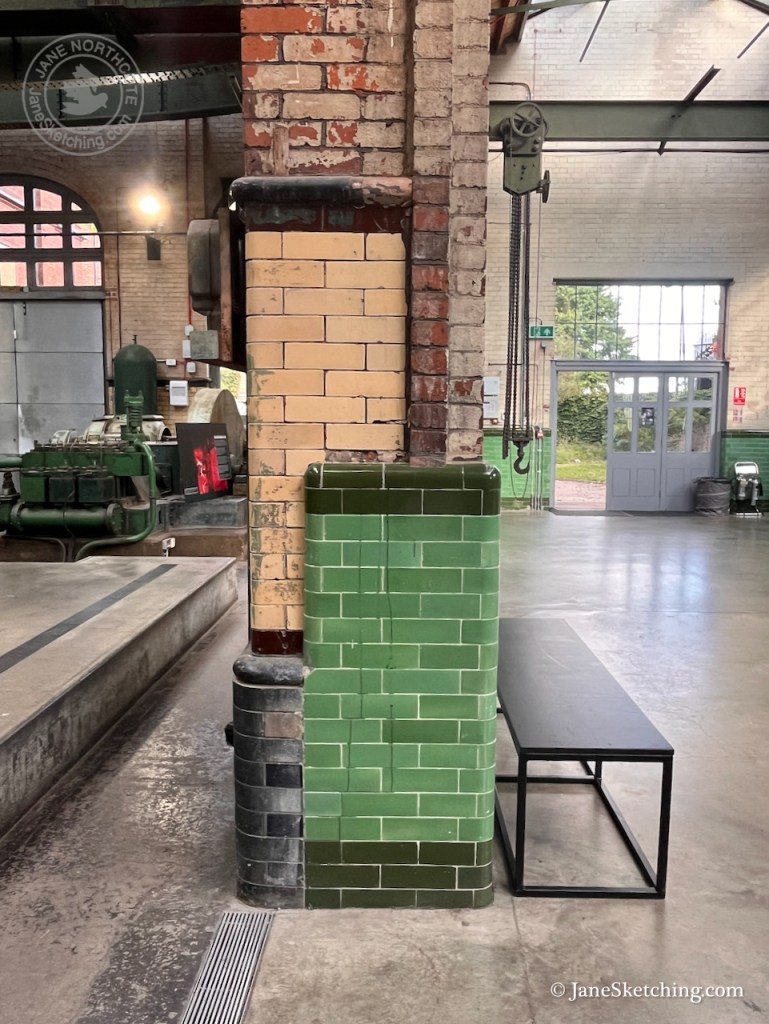
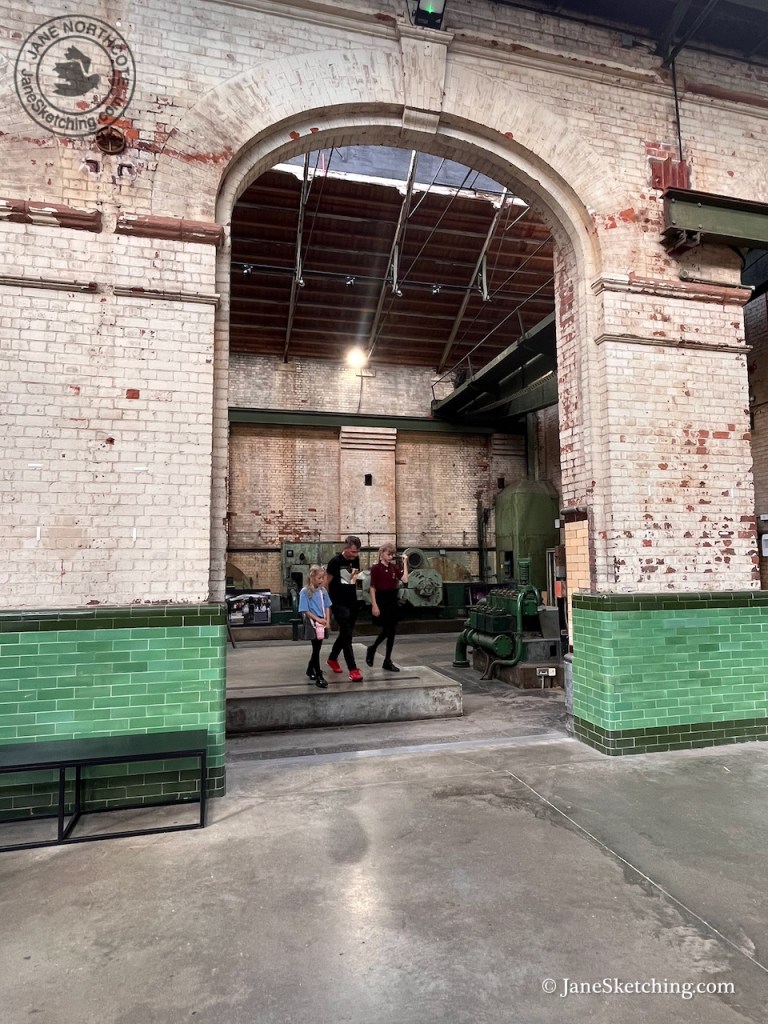
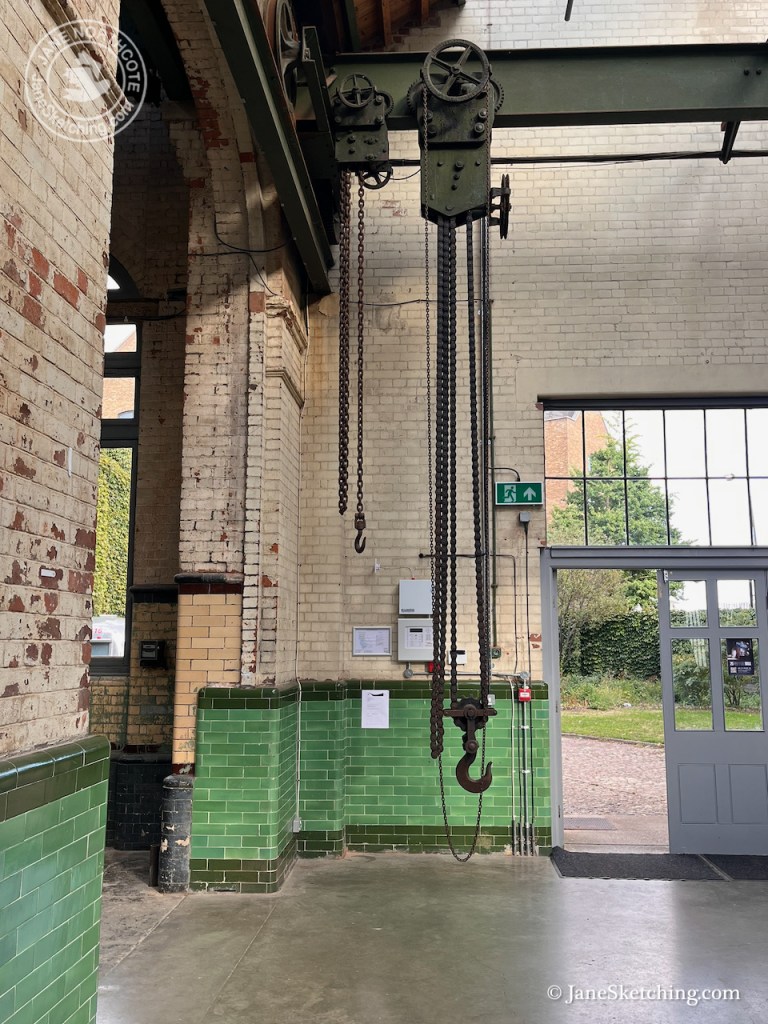
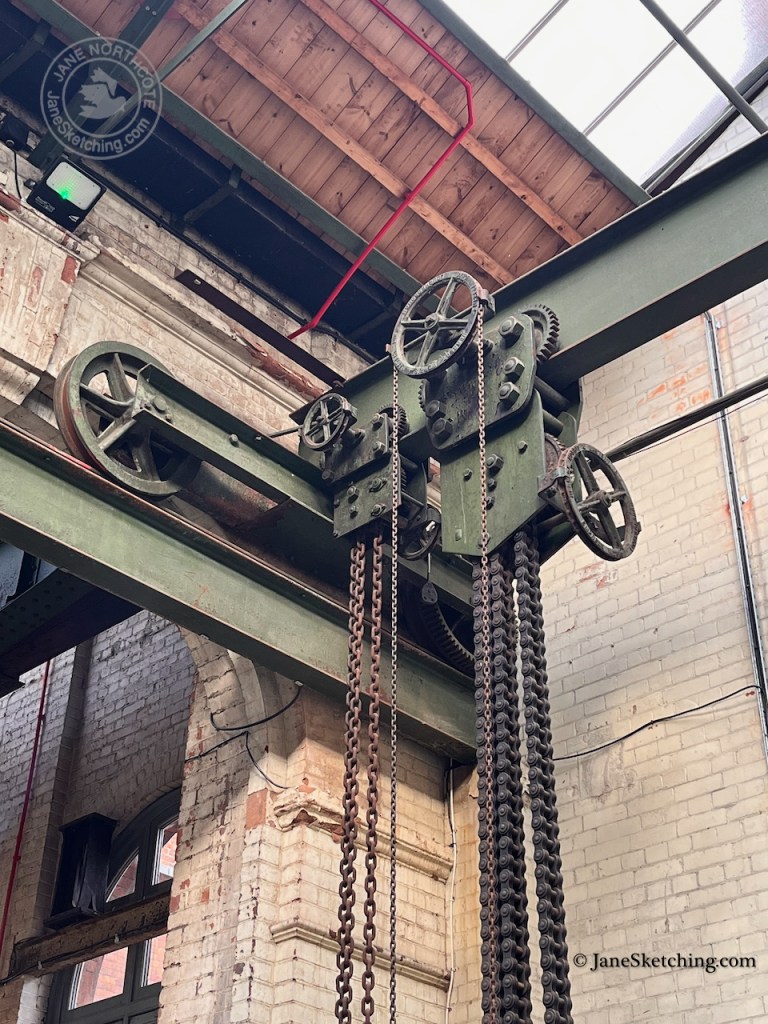
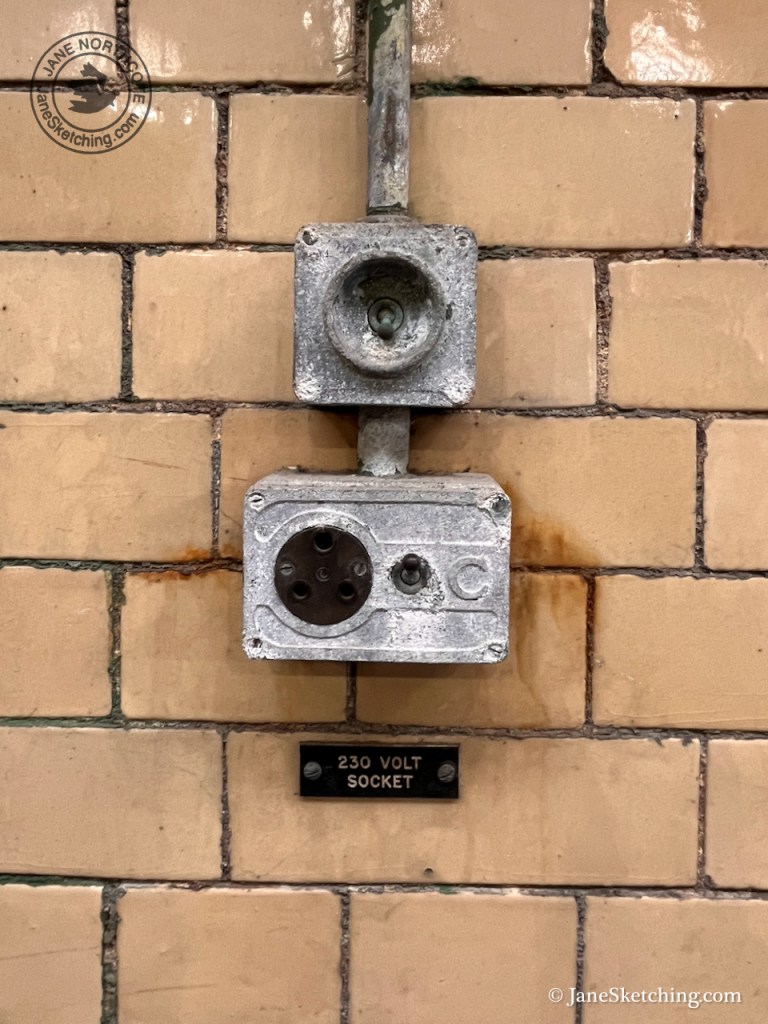
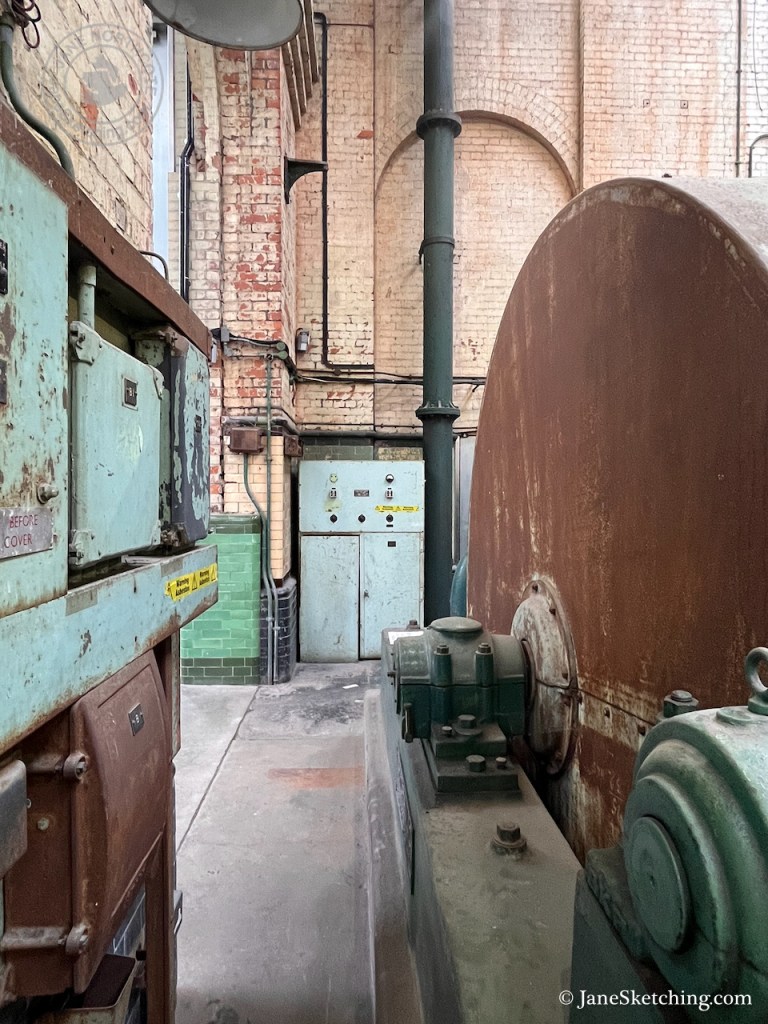
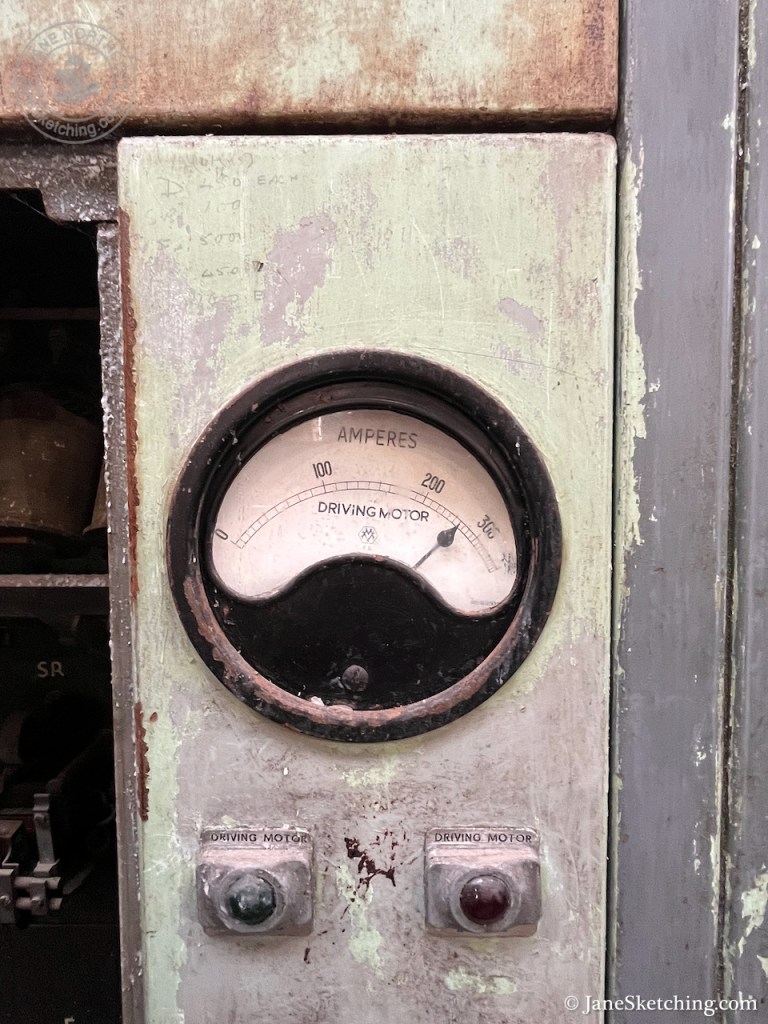
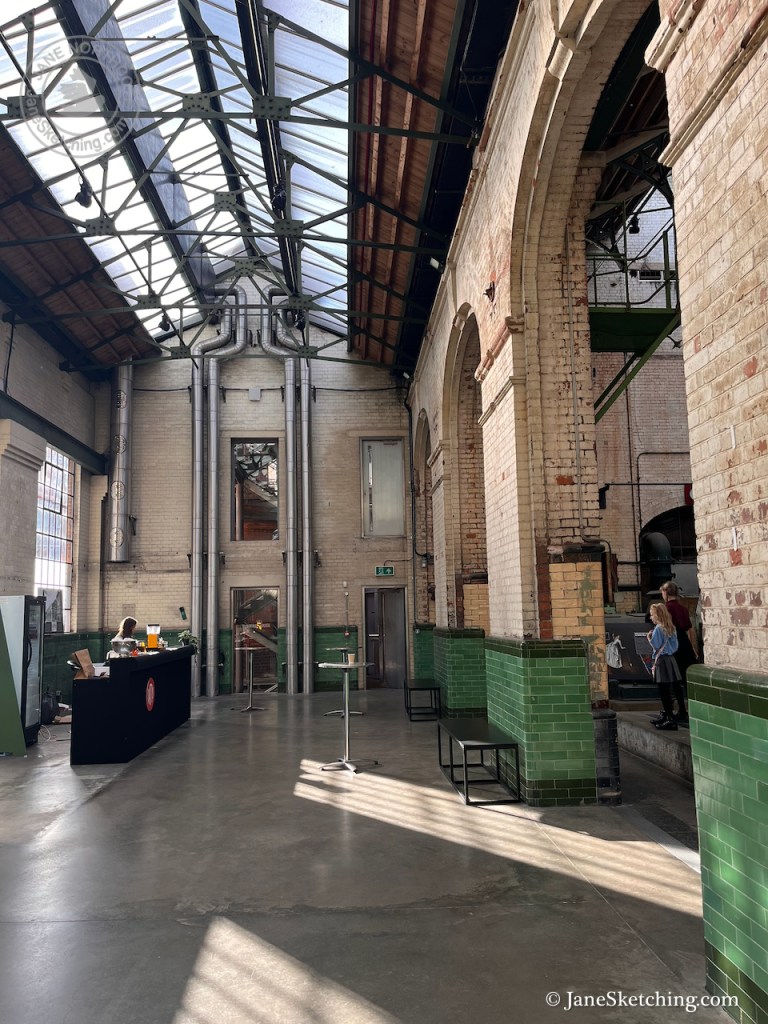
I was very taken by the textures of the surfaces.
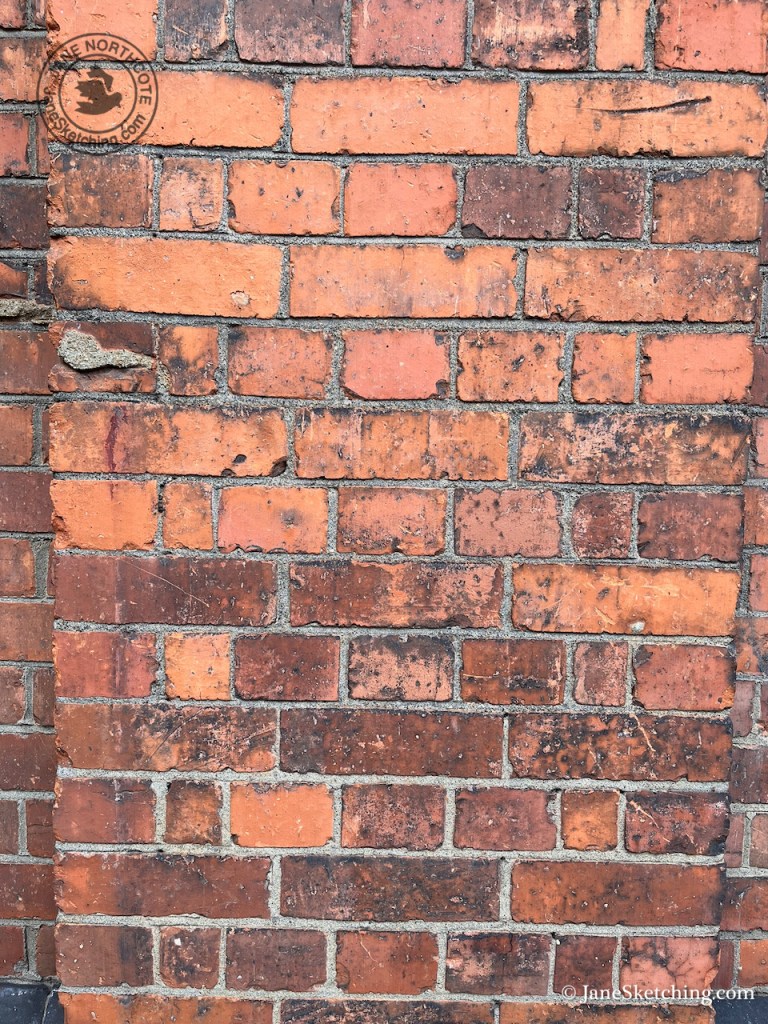
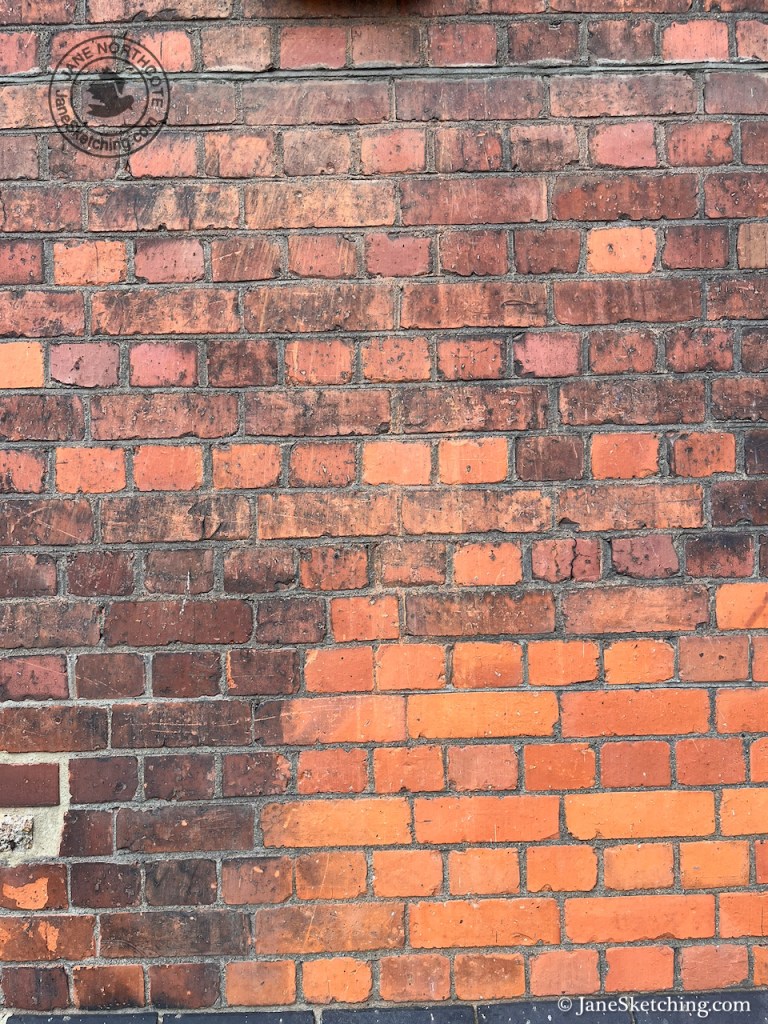
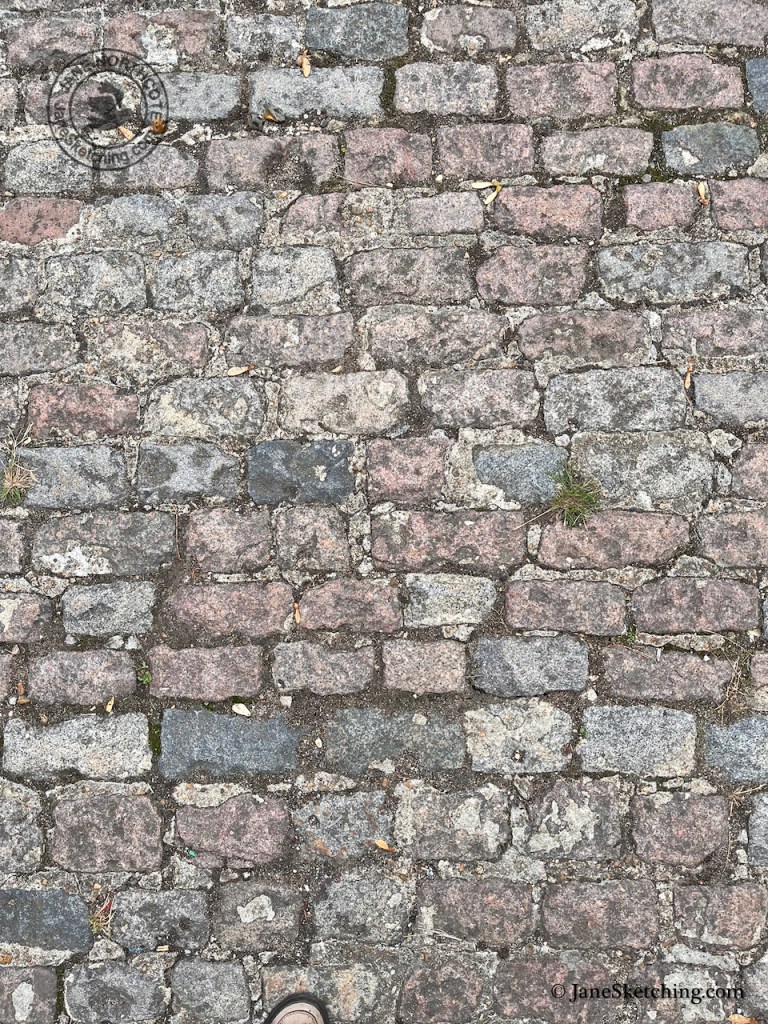
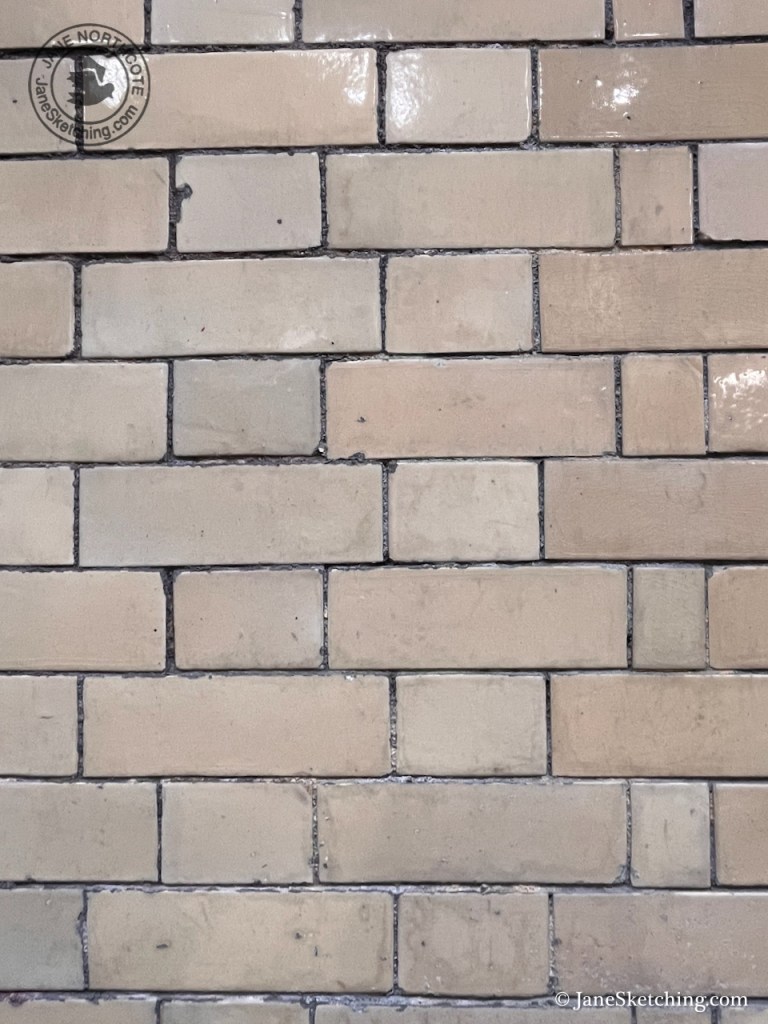
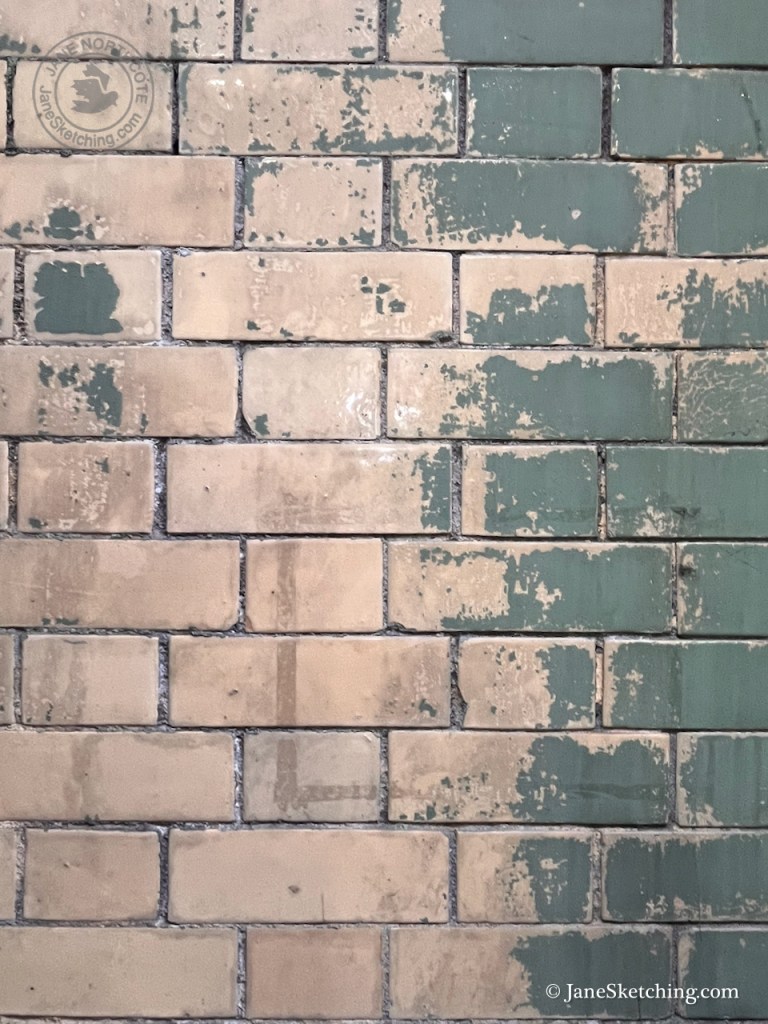
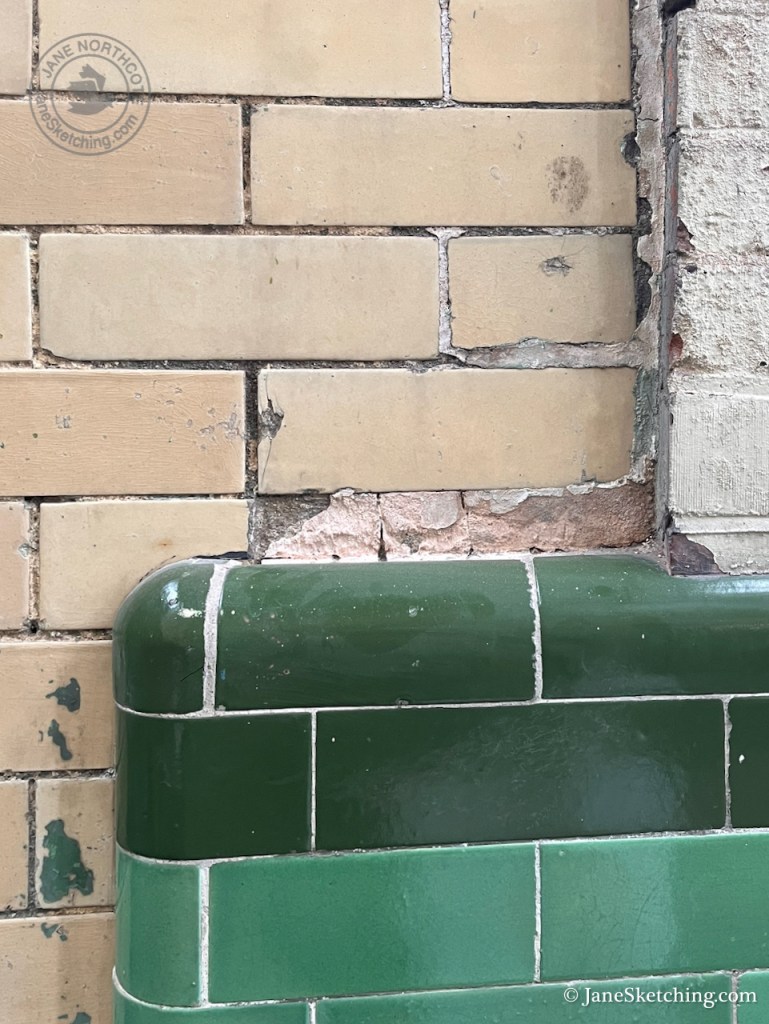
The building is now owned by the Glass Castle Foundation, a registered charity.4 They plan to use the building to host arts events:
…new owners Glass Castle Foundation have ambitious plans to turn this iconic building into a new cultural powerhouse for London. A thoughtful renovation programme from 2026 onwards will transform it into a stunning performance space and gallery for the arts, while carefully preserving its priceless industrial heritage and architecture…
https://25wappingwall.com/
The location is managed by Location Works. Many thanks to Lucy of Location Works for offering me this chance to see inside the power station.
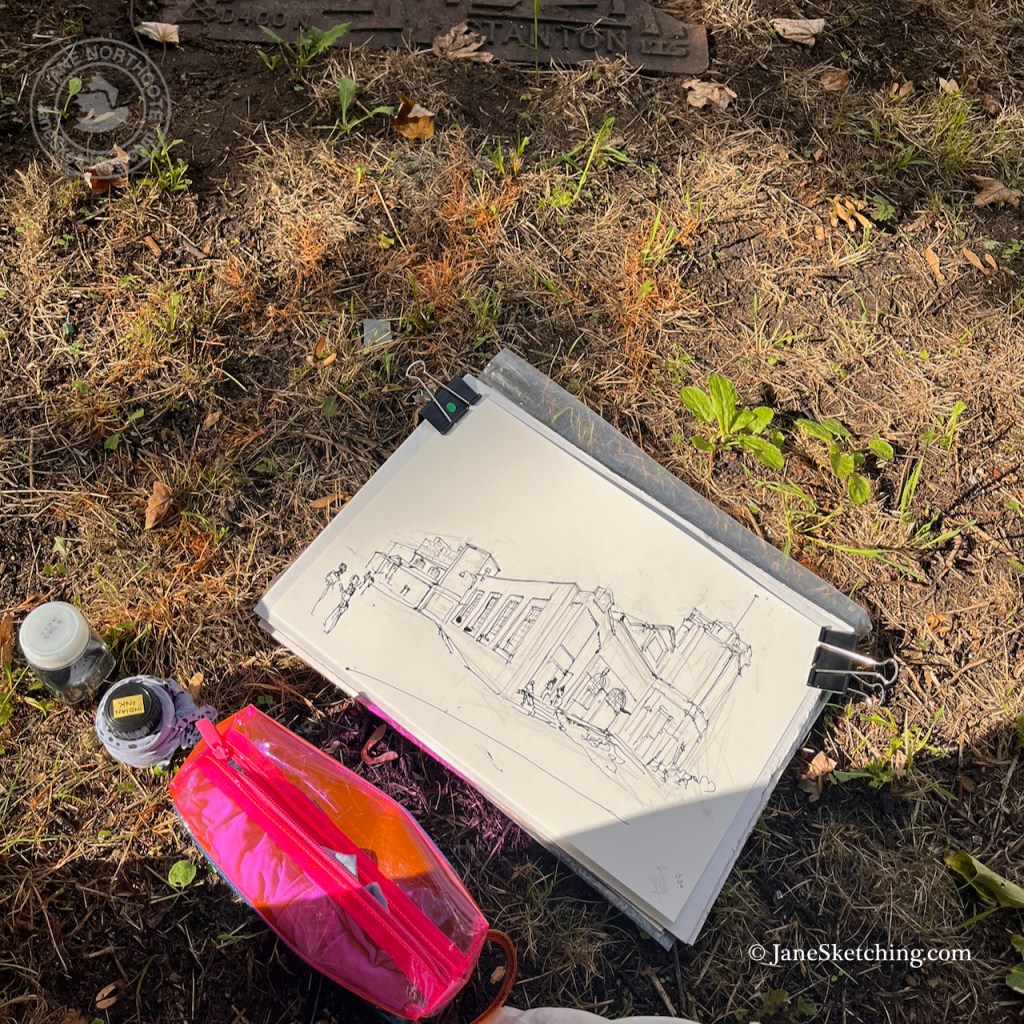
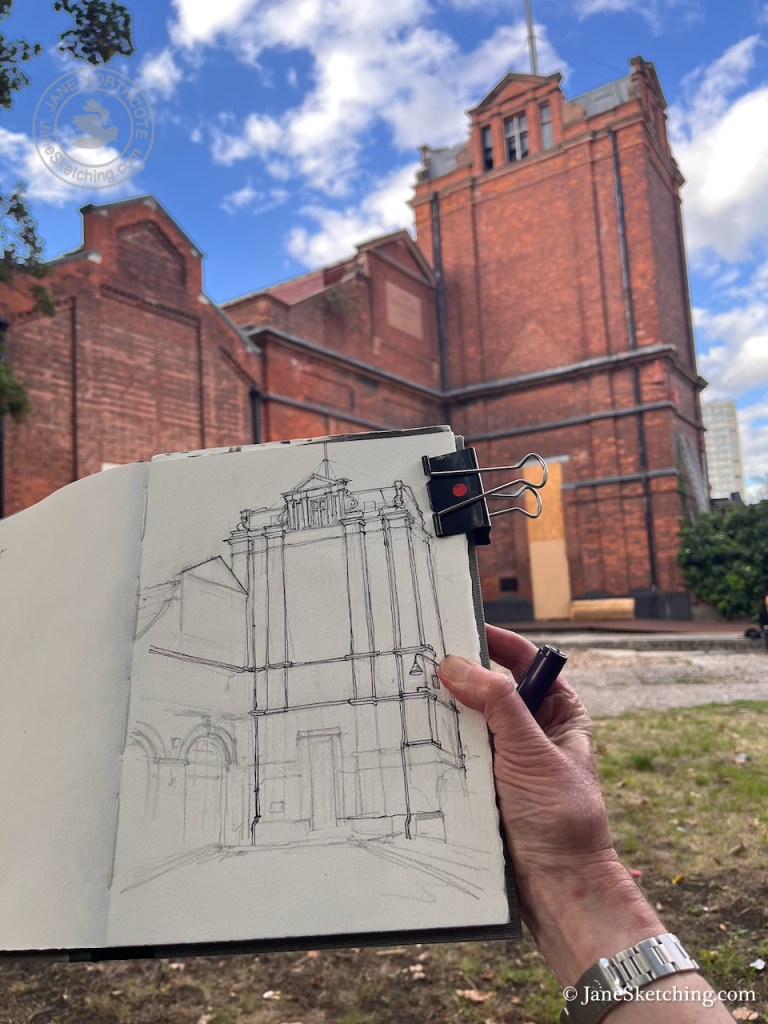
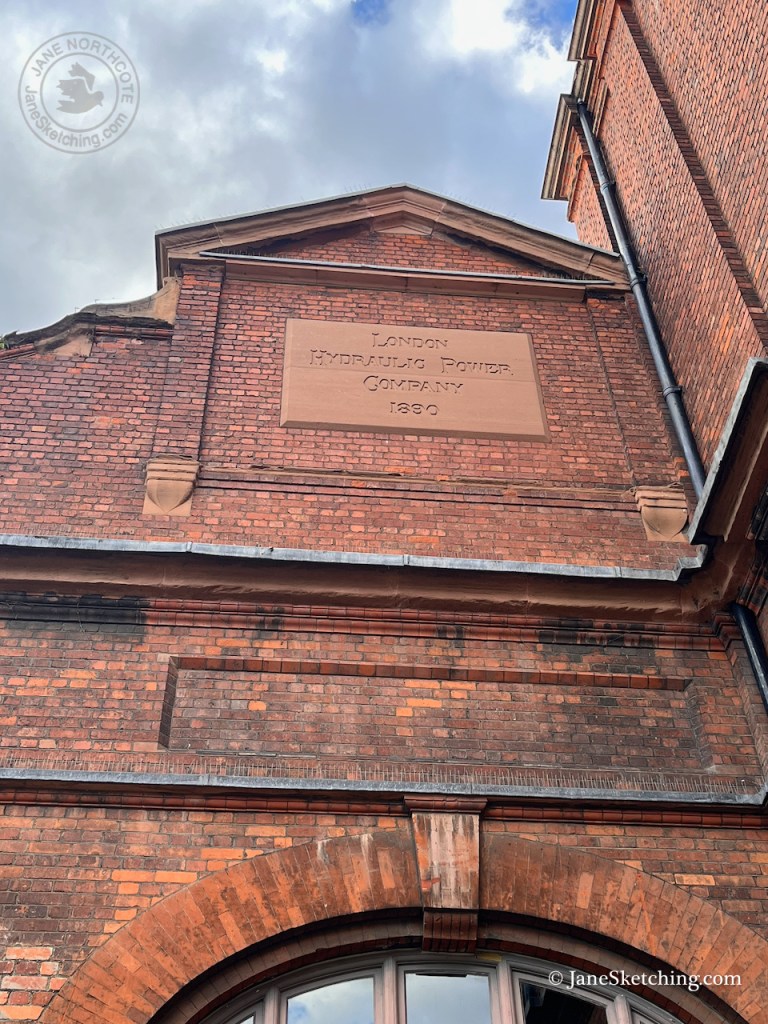

I’ve also sketched another former hydraulic power station, in Limehouse:
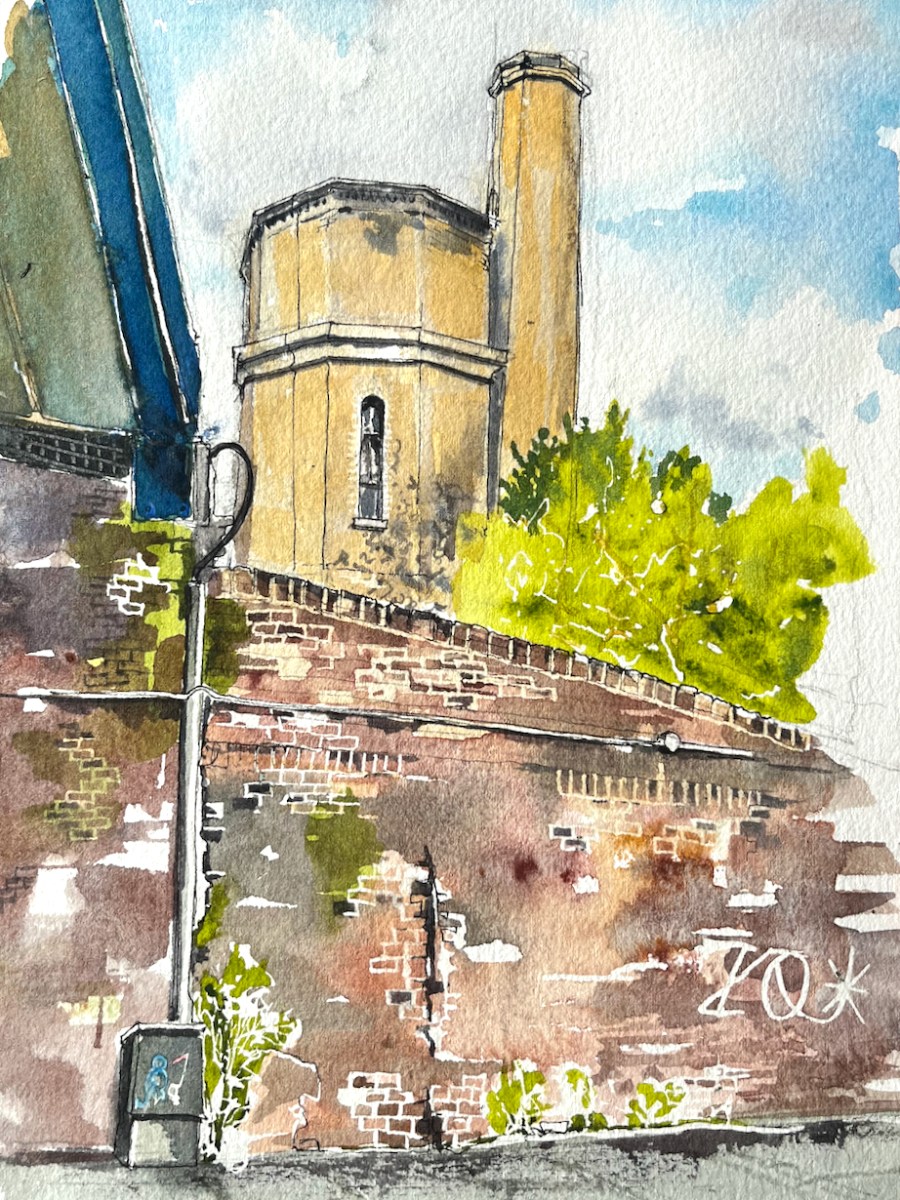
Limehouse Accumulator Tower, E14
This is the Limehouse Accumulator Tower, seen from Mill Place, London E14. In the 19th century, this building provided hydraulic power to machinery in the Limehouse docks. Hydraulic power is…
Keep readingSee also my earlier post on London Hydraulic Power:
- There’s an explanation of hydraulic power on the Subterranea Britannica website https://www.subbrit.org.uk/features/hydraulic-power-in-london/
Hydraulic Power in London, written by Andy Emmerson ↩︎ - Technical details from https://en.wikipedia.org/wiki/London_Hydraulic_Power_Company ↩︎
- “psi” (pounds per square inch) and “bar” are measures of water pressure. Ofwat says that water companies must maintain “water of seven metres static head” in the connecting pipe to your house. This is about 10 pounds per square inch, or 0.7 bar. This is a measure of the force with which the water comes out of the tap when you turn it on.
↩︎ - The Glass Castle Foundation, Registered Charity Number 1212538, has three trustees, according to the Charity Commission website: Suneil Setiya, Neil Cosgrove and Greg Skinner. Mr Setiya and Mr Skinner are among the founders of Quadrature Capital, https://www.quadrature.ai/, an electronic trading company.
↩︎


Ah yes, I think I have seen that place in the distance sometime ago. Interesting sketch.
LikeLike
Fascinating as always. Plus great sketches!
LikeLike