“We are one of the few streets in the country composed of sixty independent shops. Small art galleries sit next to cup cake shops, vintage clothes stores, English and Italian delis, garden and antique shops. There is also a wealth of great pubs, cafes and restaurants.”
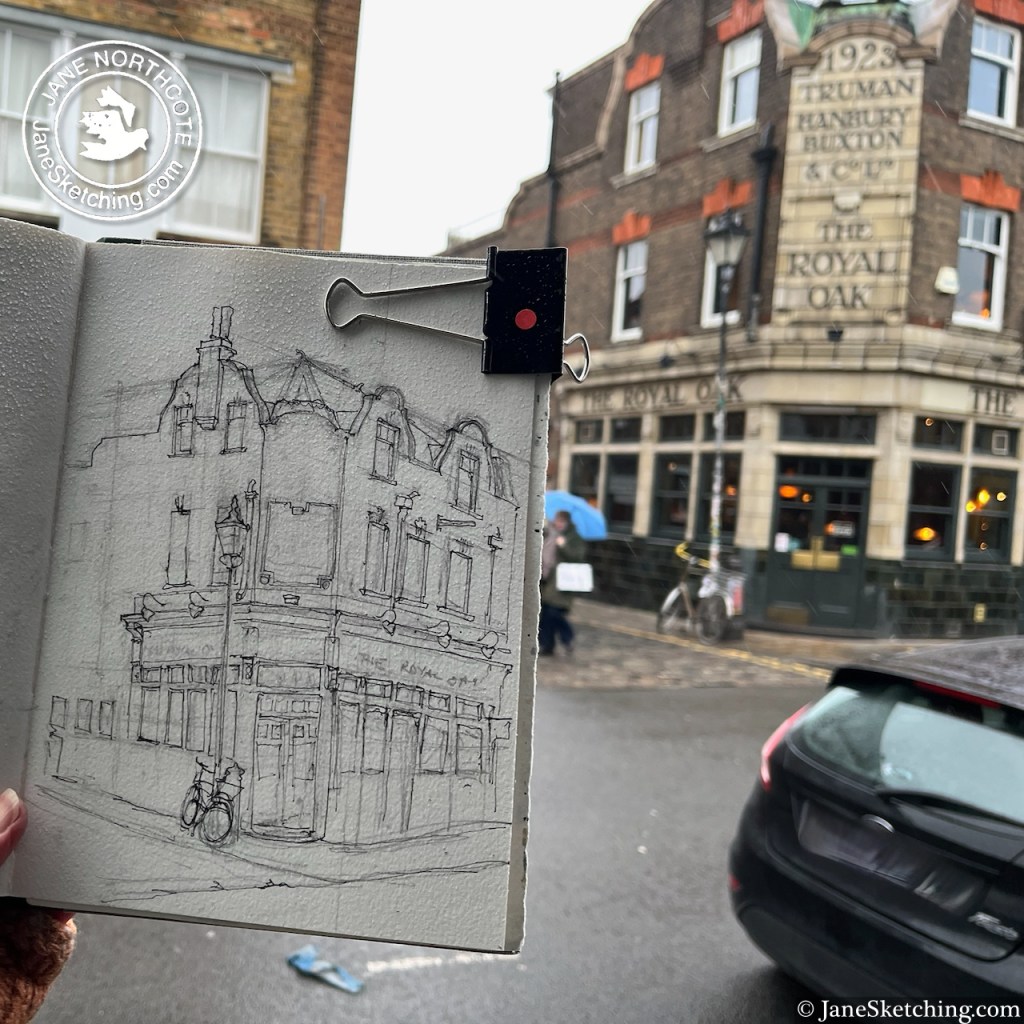
This is true, although you need to know that many of these shops are open only Friday-Sunday. I was there on a rainy Thursday. This was probably just as well, because it meant I had a good view of the pub from the doorway of the shop opposite.
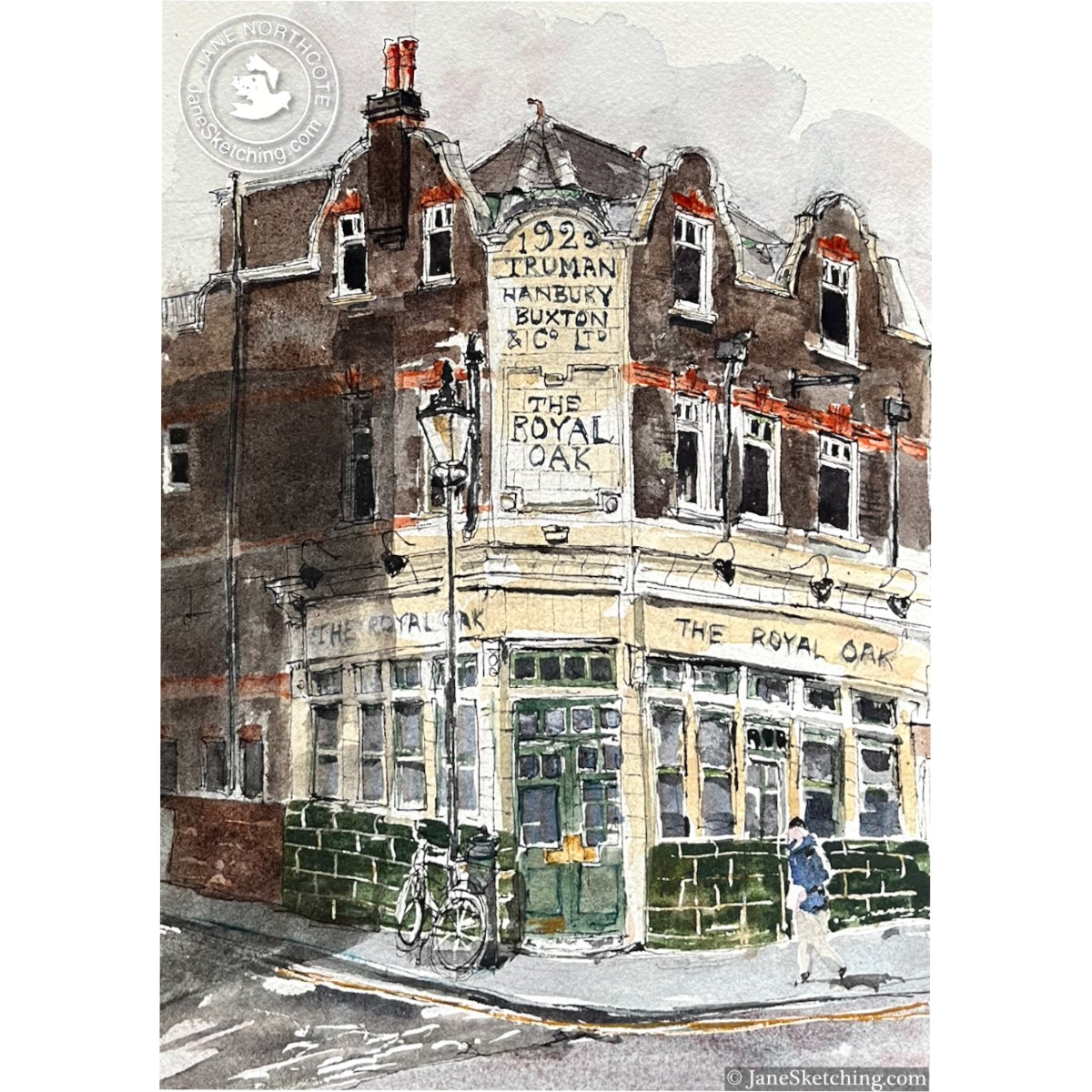
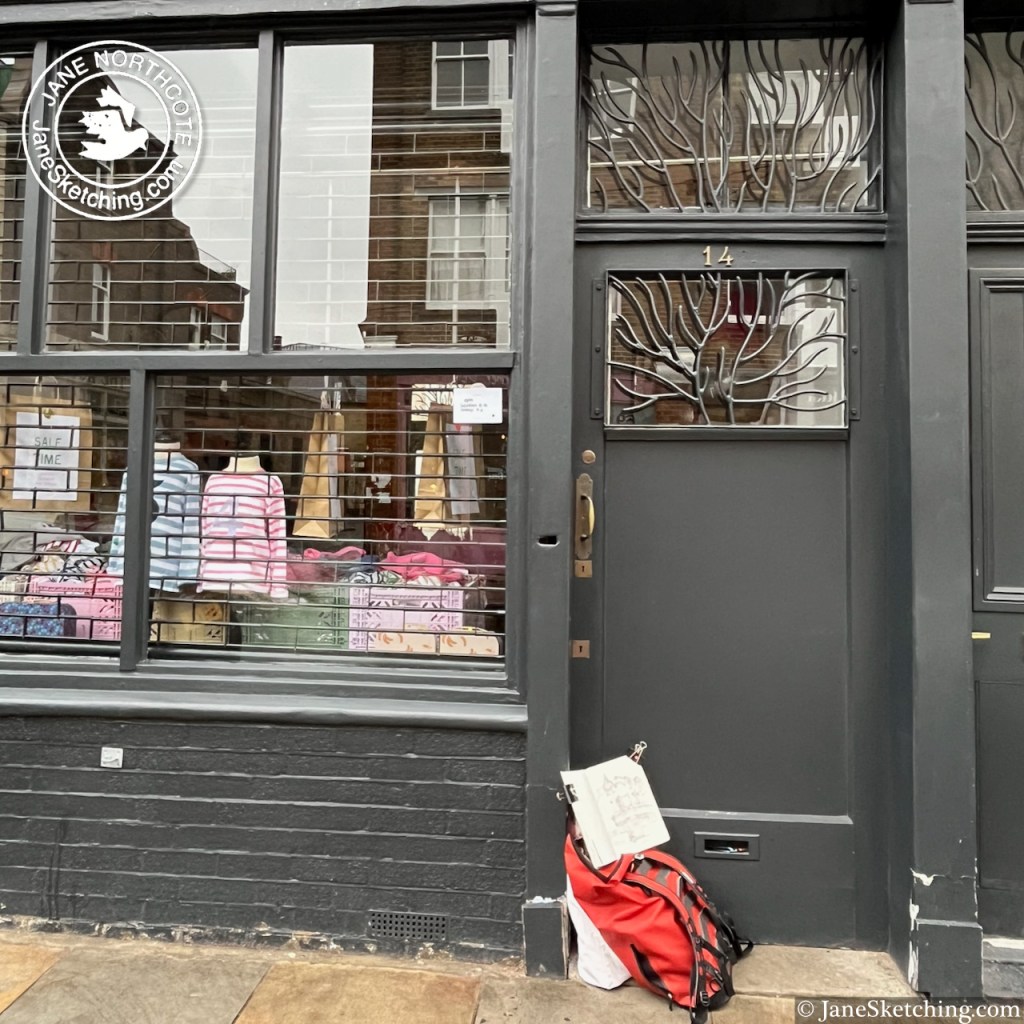
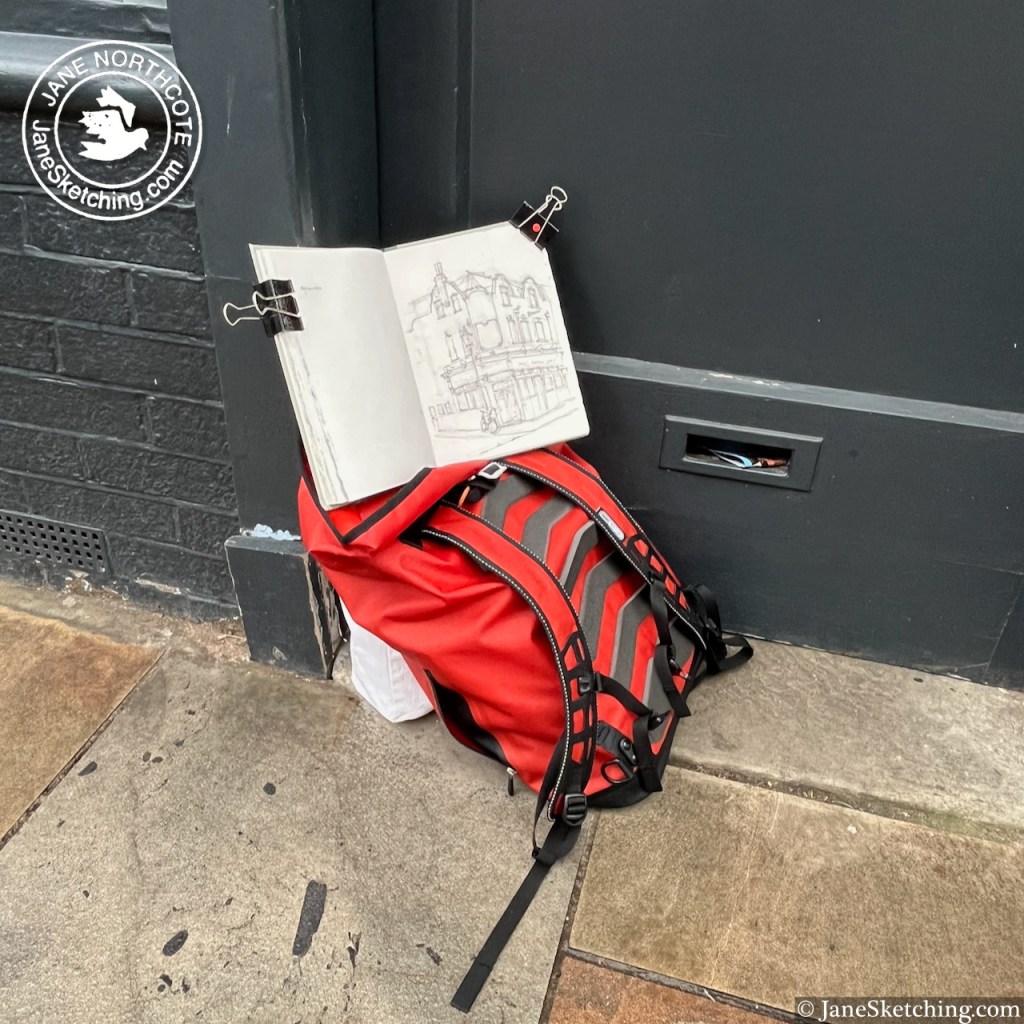
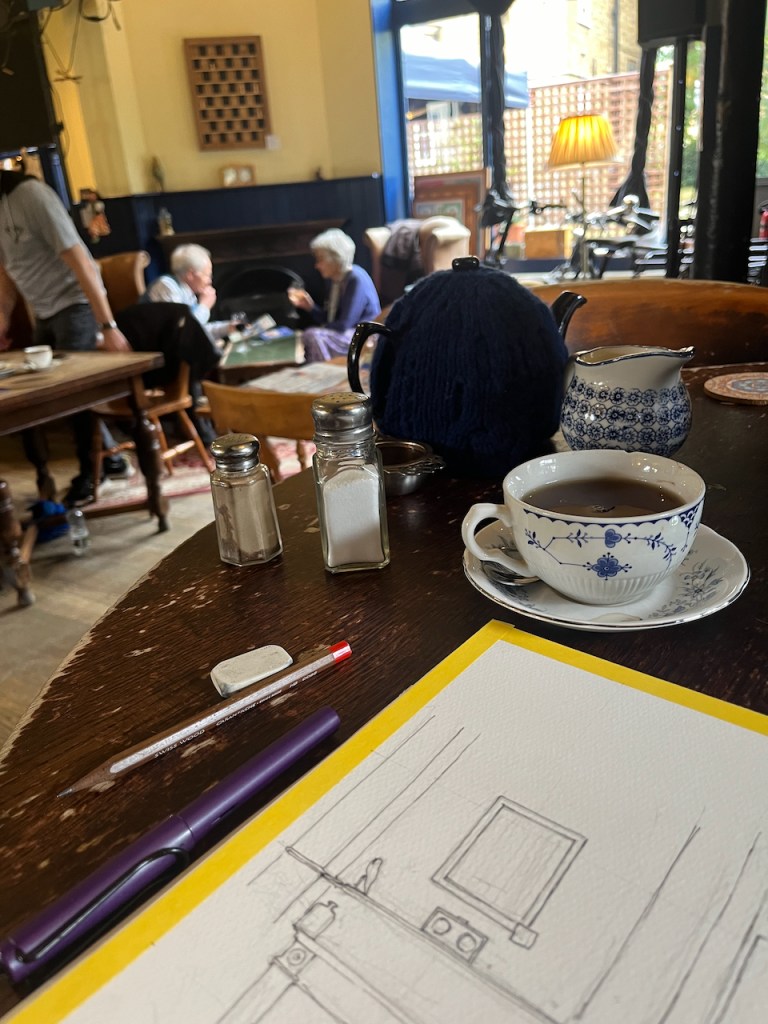
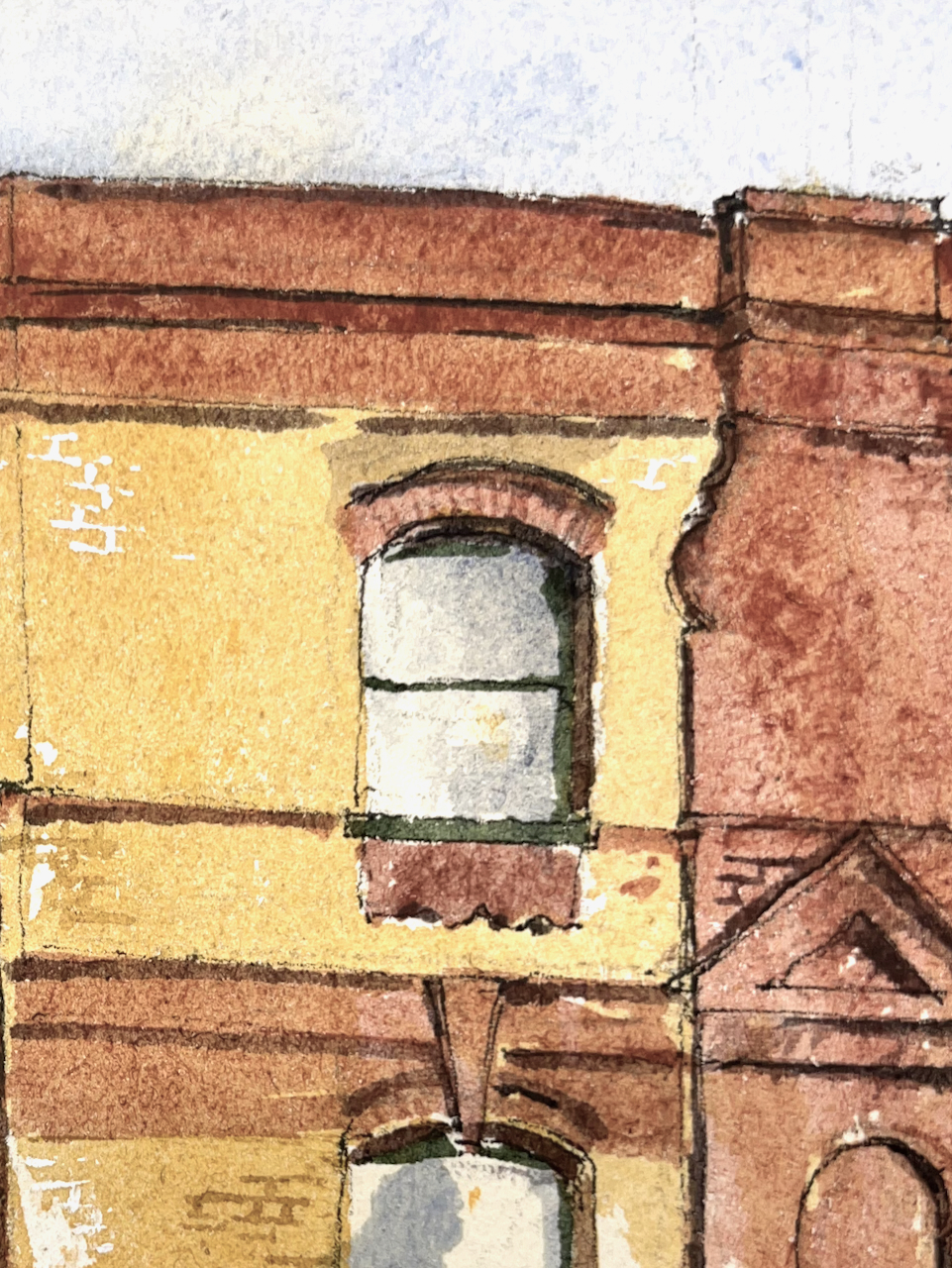
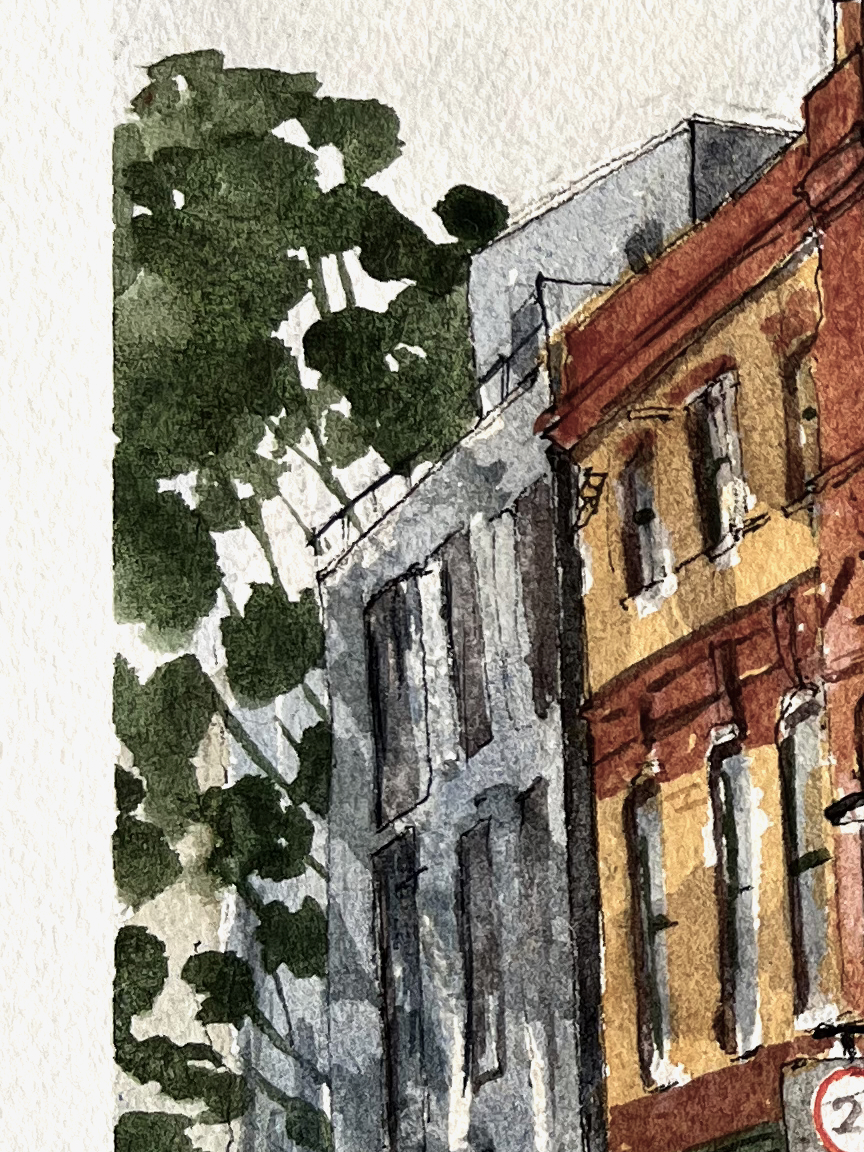
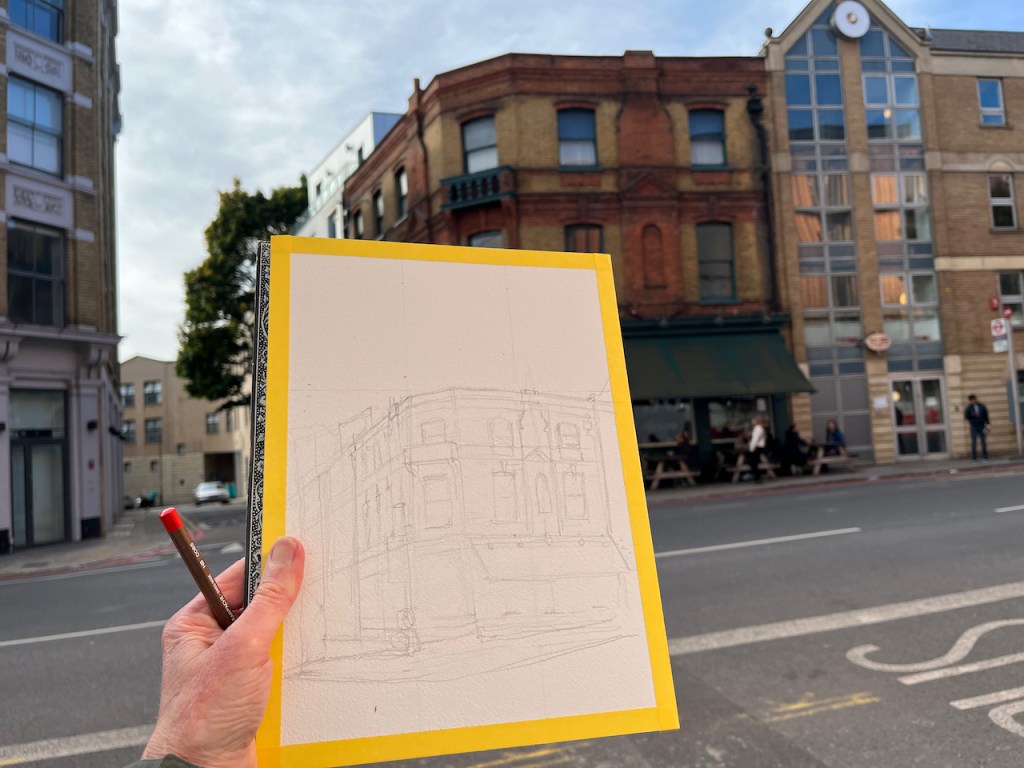
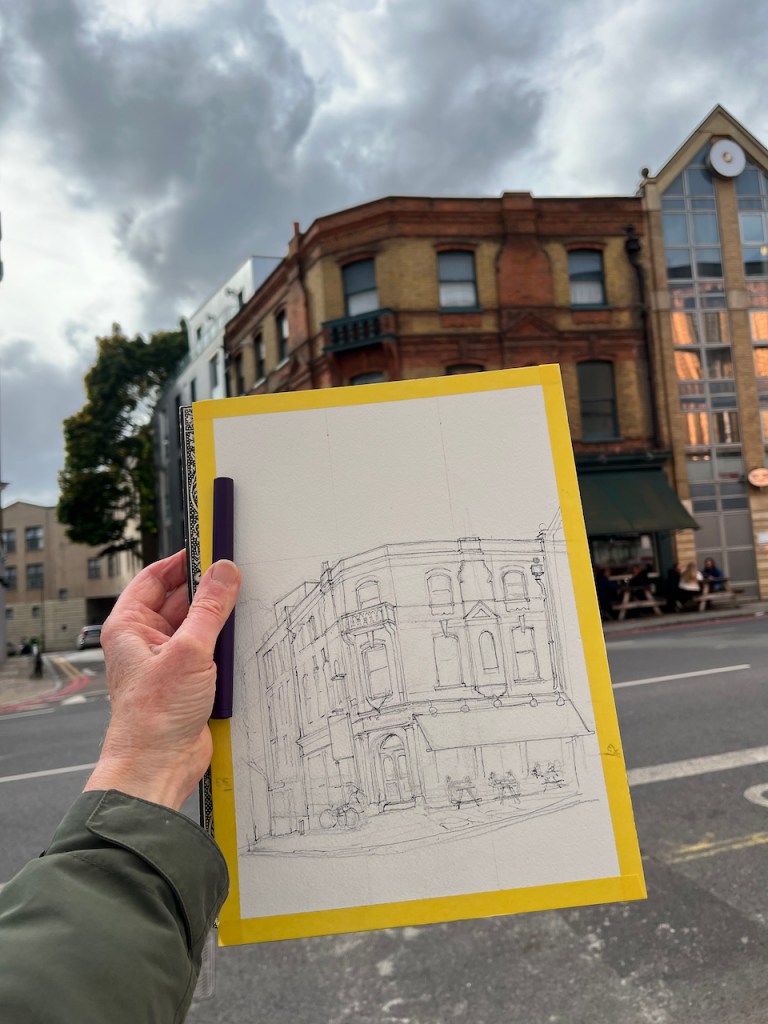
Sketching “The Royal Oak” from outside “Bob and Blossom” on Columbia Road
It was the nicest-smelling location for sketching. There was a coffee shop opposite distributing coffee-and-croissant aromas into the damp air, and somewhere nearby must have been selling soap, because there were wafts of tangerine, cedar, and lavender, smelling clean and unusual.
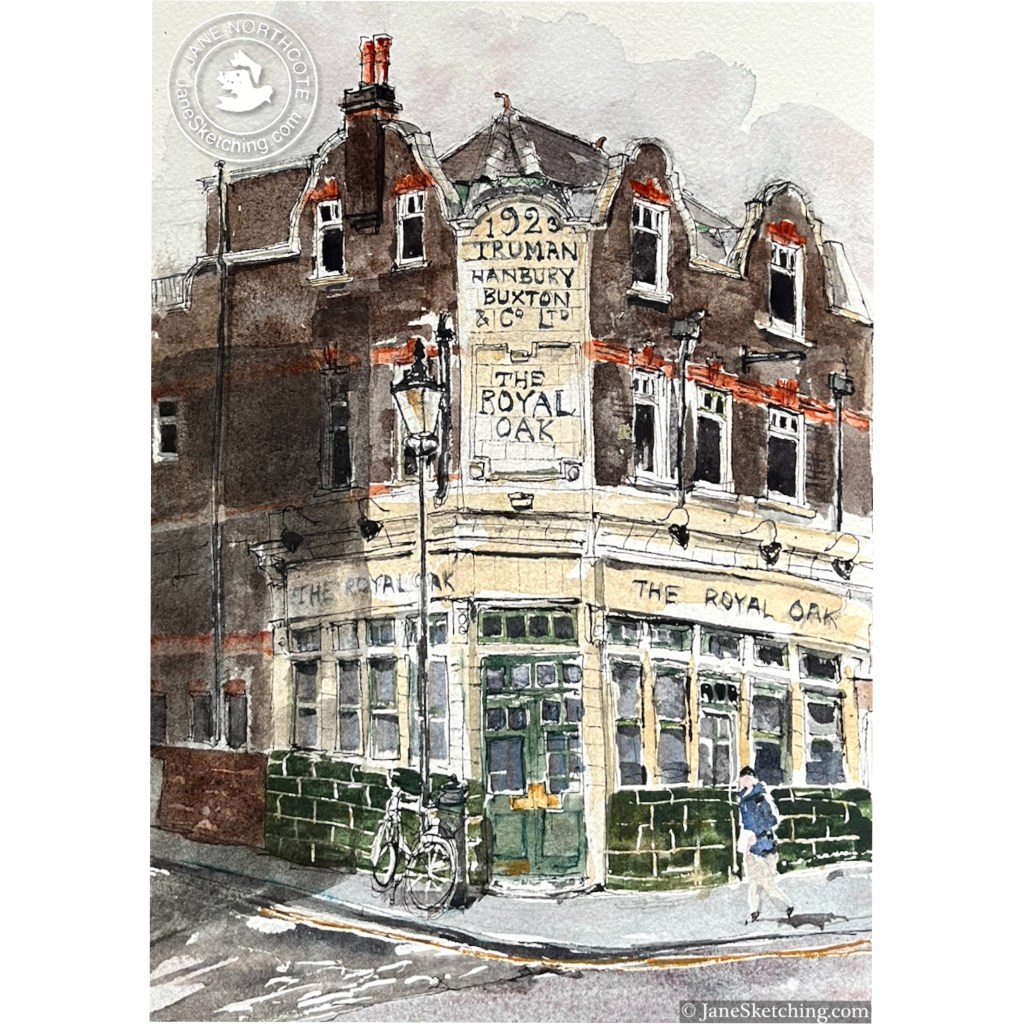
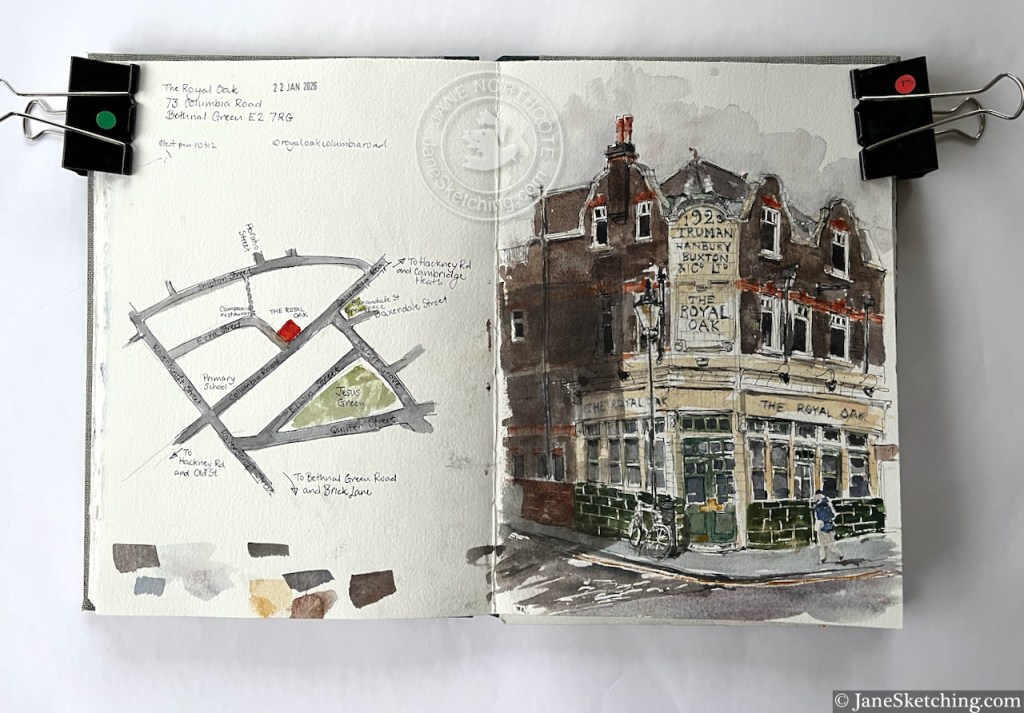
The pub is Grade II listed, listing reference 1426765. The present building is from 1923, built to the designs of Arthur Edward Sewell, for Trumans Brewery. The listing notes “Trumans distinctive green mottled tiling” which you can see in my sketch. According to the listing, there was a previous pub here, of the same name, from before 1842. The listing also maintains that this is an “early pub” with a licence to open from 9am on Sundays to serve the market-goers. This doesn’t seem to be the case any more, according to the pub website. But if you know different, or if you are the pub, please correct me!
It is now a Youngs pub, open every day from 12 noon.
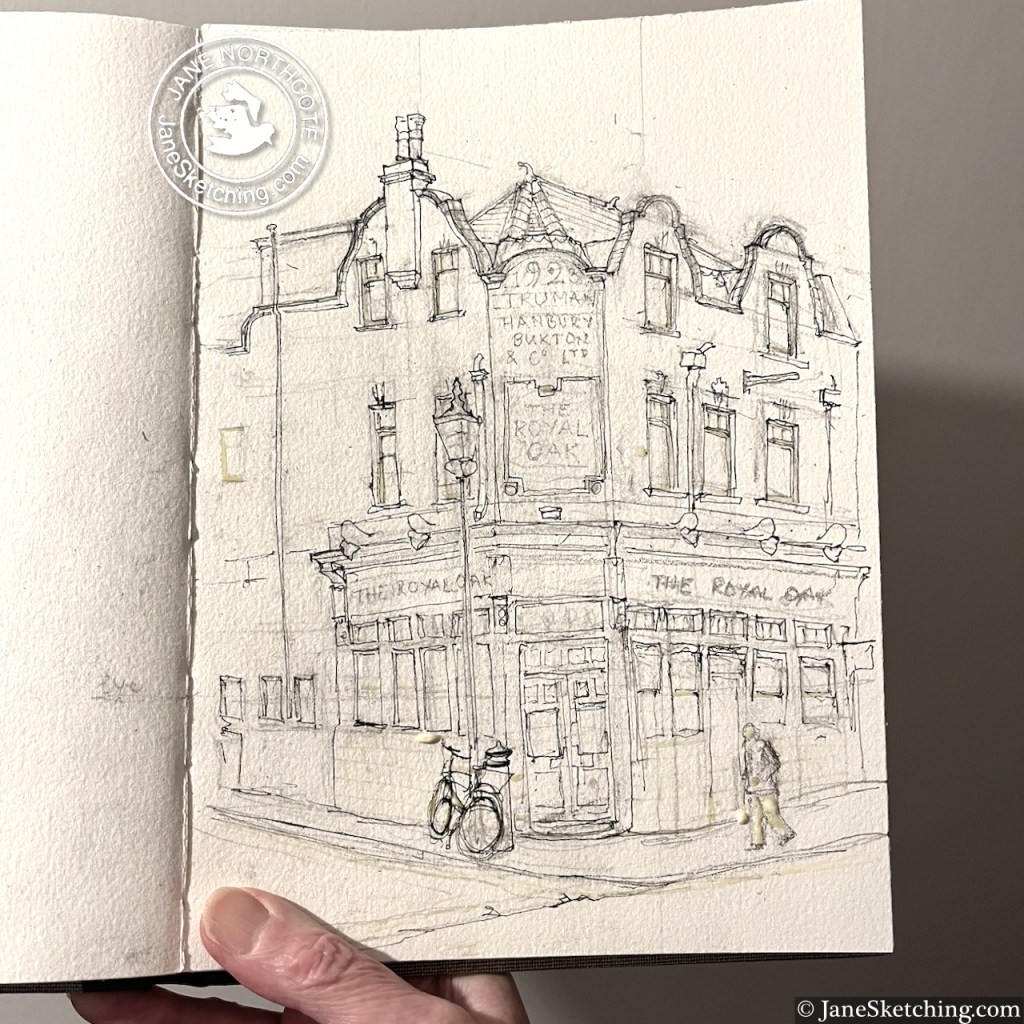
The Royal Oak, sketchbook spread, Sketchbook 16What it looked like before the colour went on
Click a button below to share this post online, email it, or print it:
On the 2nd January I joined a group of other artists sketching on London’s South Bank. This was an event organised by Jackson’s Art Supplies of Dalston.
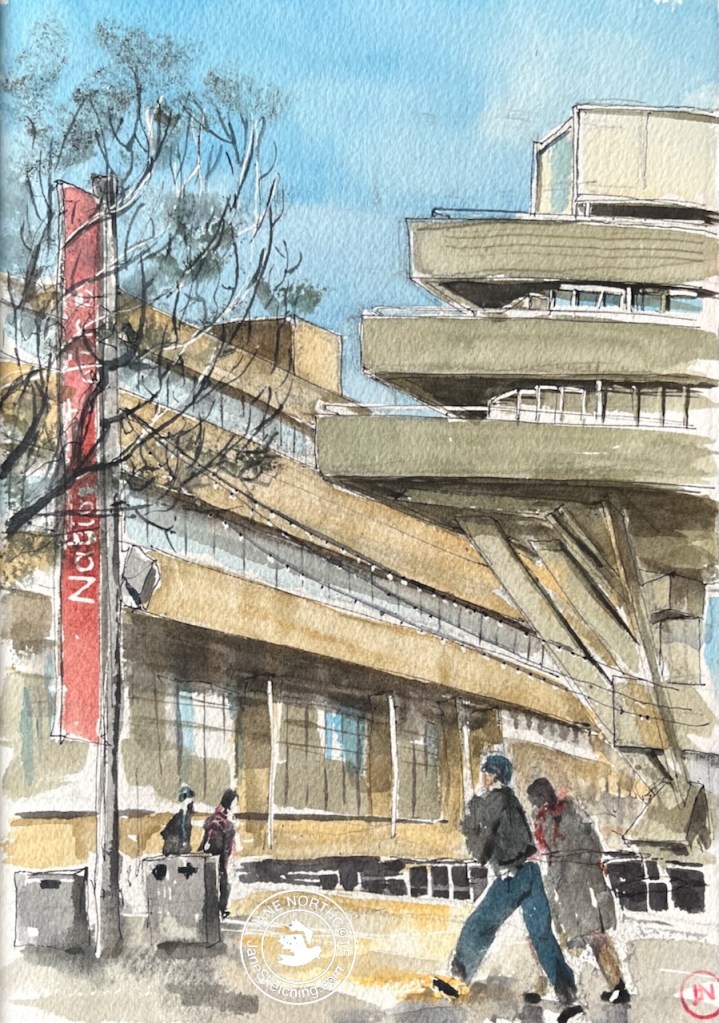
The first picture I attempted was of the National Theatre.
Sketching the National Theatre – 2nd January 2026
It was extremely cold and there was an unforgiving wind.
I managed to finish the pen-and-ink but at this point I abandoned the idea of putting the watercolour on the picture, and hurried into the National Theatre to thaw out. The staff there patiently inspected my bag of art equipment. In the café I found a group of other artists from the event, drinking coffee, testing the operation of their fingers and talking about art materials.
Coffee and company warmed me up. I decided to try simpler drawings using big crayons that I could wield in gloves. Here’s a flick through the sketchbook:
South Bank sketchbook flick-through
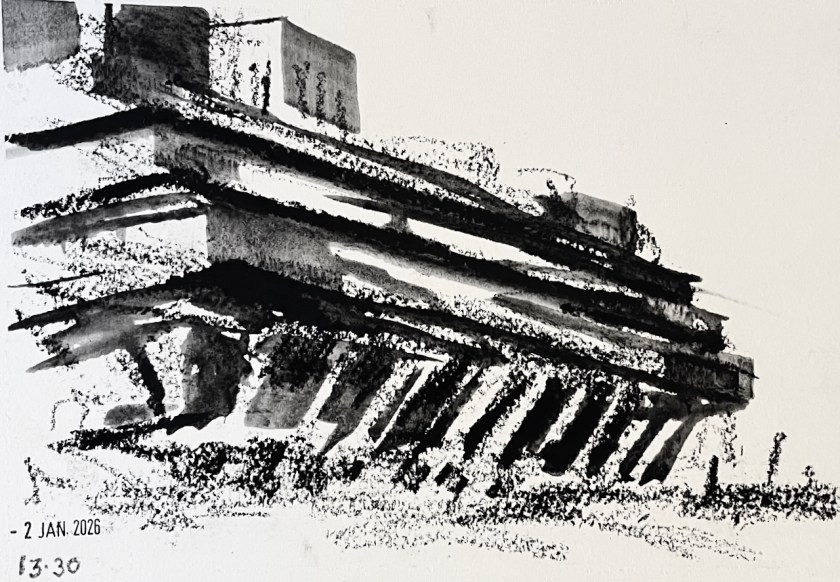
The black marks are made with a Derwent “inktense” stick. These sticks make charcoal-like marks, which you can then darken or spread out with water.
The National Theatre – inktense stick on Arches cold-pressed paper
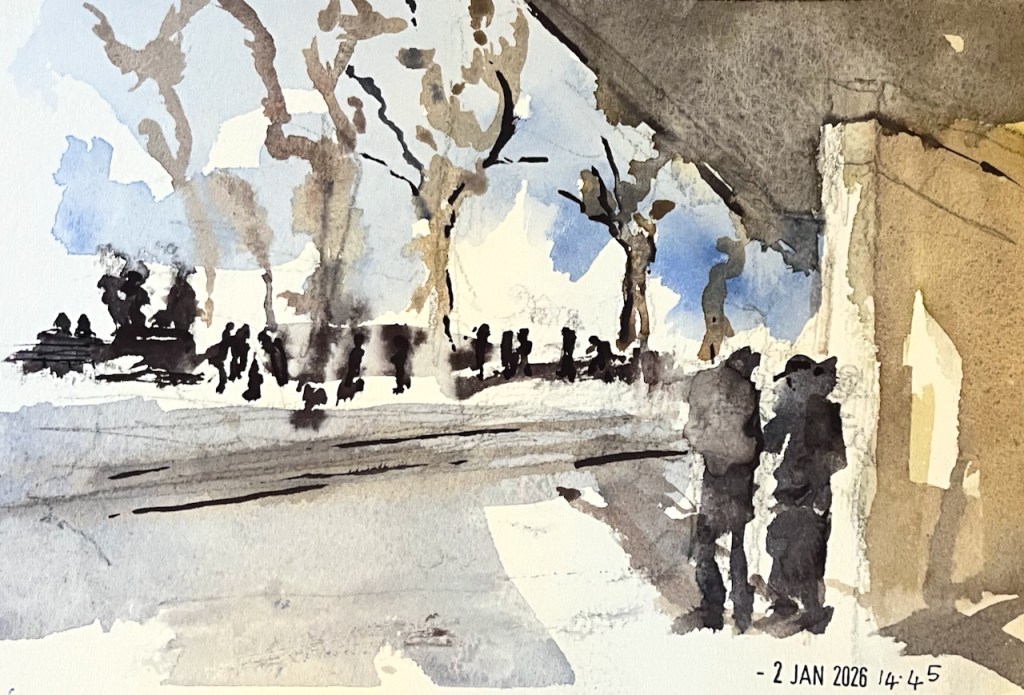
Here’s my last picture of the day. I was determined to use the watercolours, and found a spot where the wind was attenuated by a concrete wall.
At 3pm we all congregated and shared our pictures. I was really impressed at how many of us had persisted, in the cold, right to the end of the event, and at the wonderful work everyone had done. I mean, doing anything at that temperature was an achievement, I thought. You can see a picture of the assembled participants in the Jackson’s newsletter on this link.
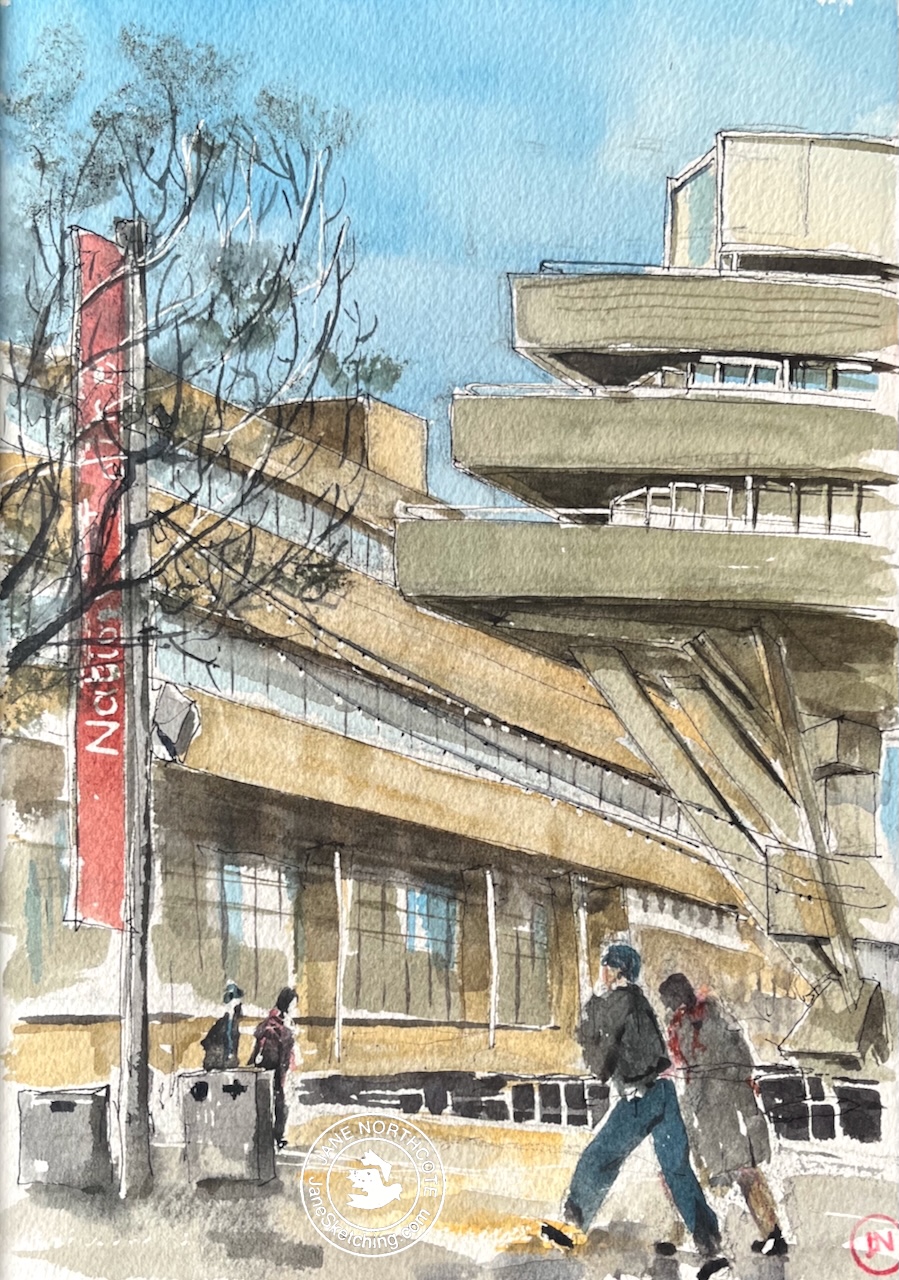
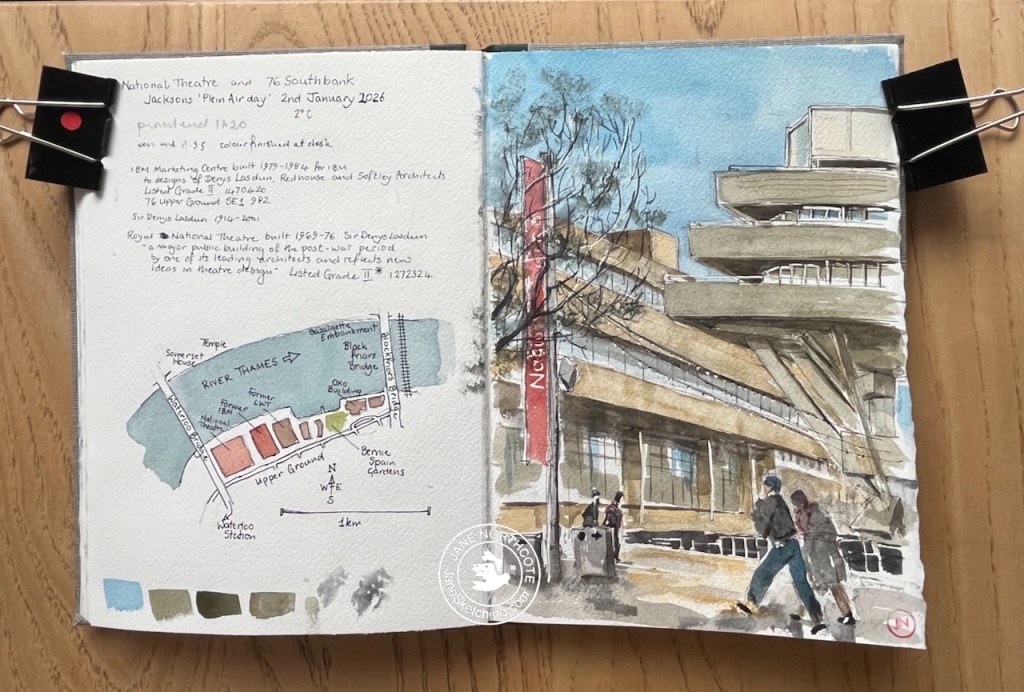
Later, at home in the warm, I added the watercolour to my initial sketch of the National Theatre.
National Theatre and 76 South Bank – 2nd January 2026 in sketchbook 16
It was an inspiring day out. Thank you to the Jackson’s team for the initiative and the organisation. And thanks to the wonderful National Theatre for the warm and welcoming spaces, the café, and the toilets…..!
Click a button below to share this post online, email it, or print it:
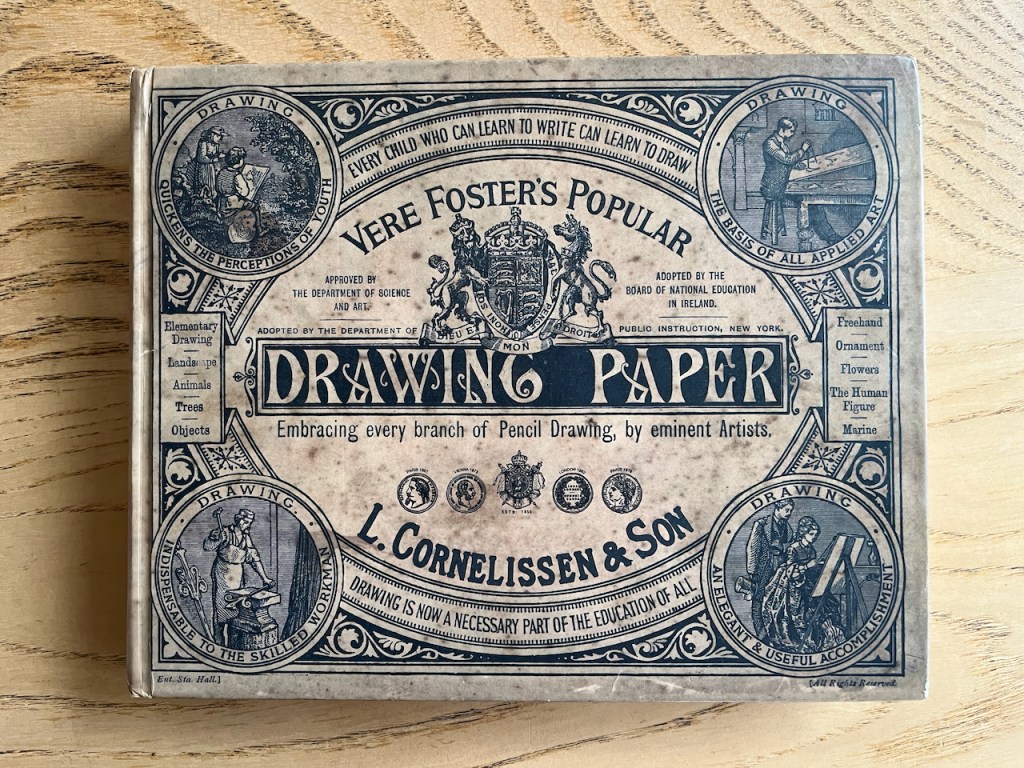
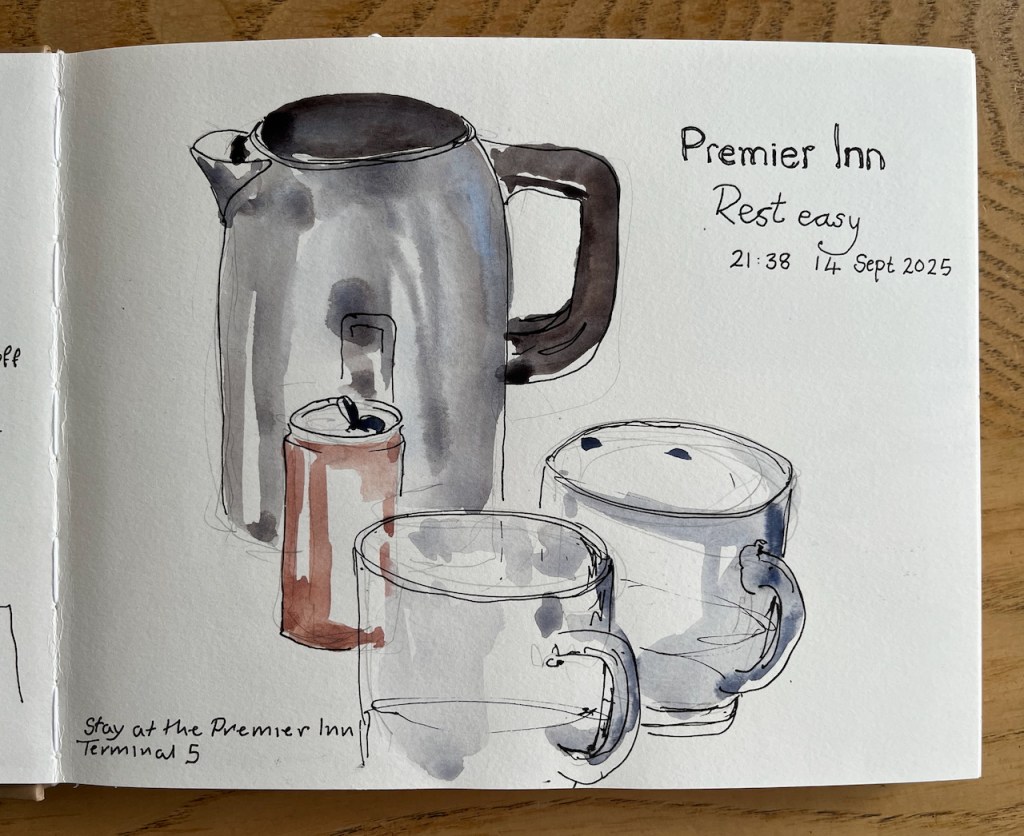
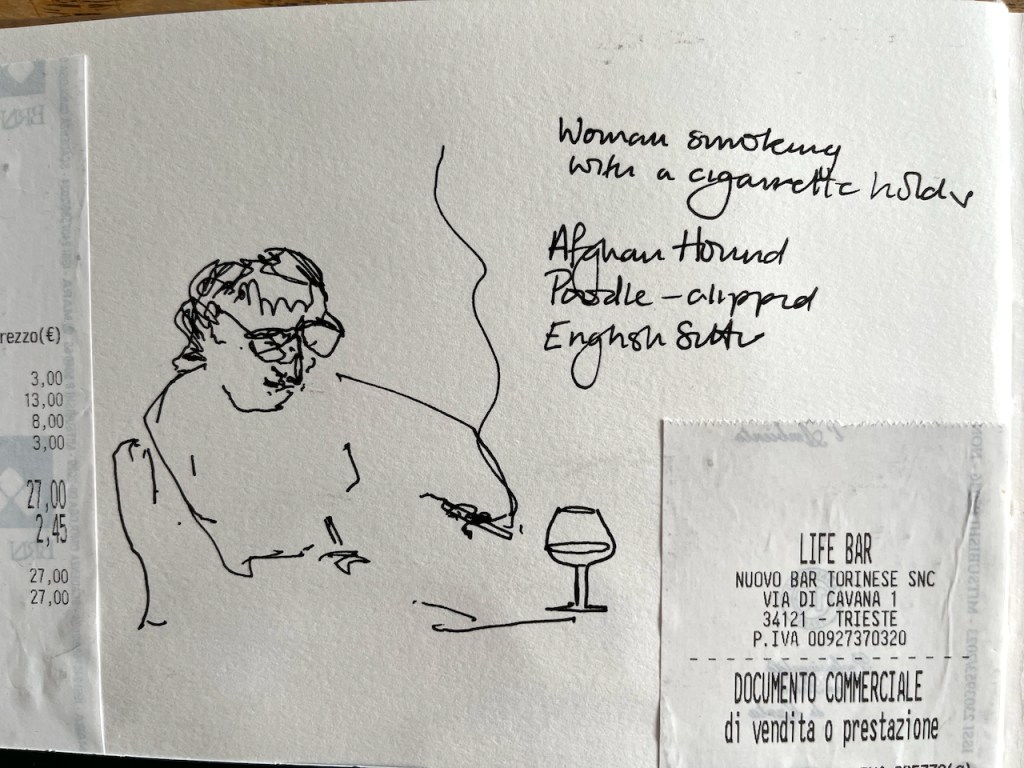
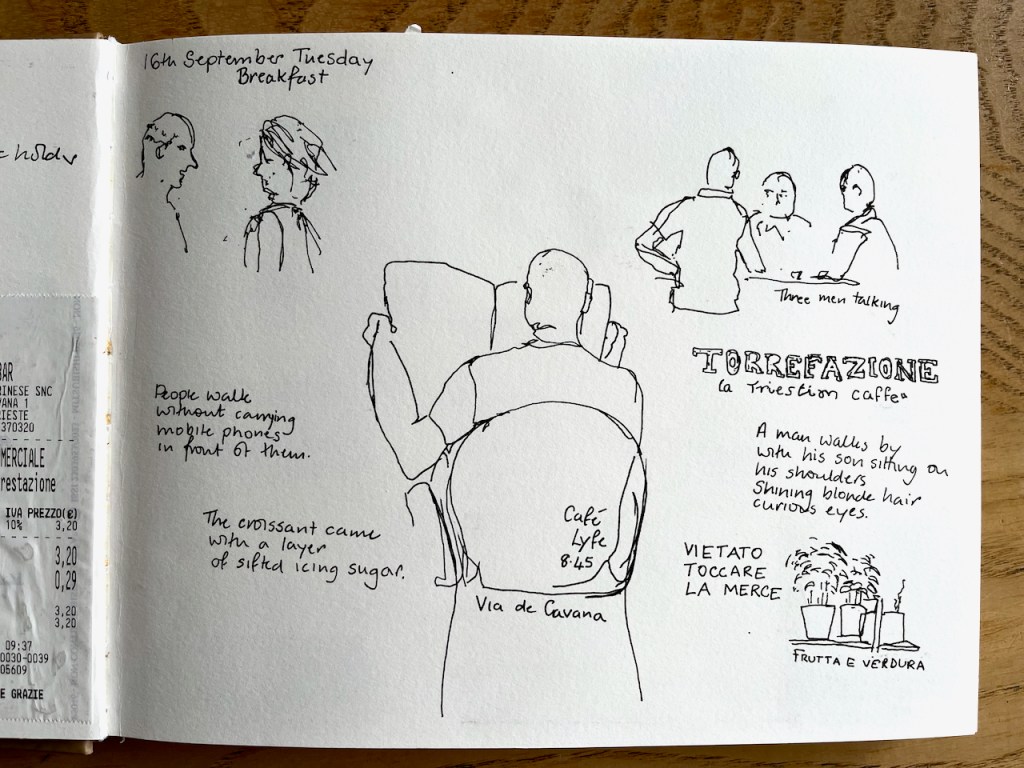
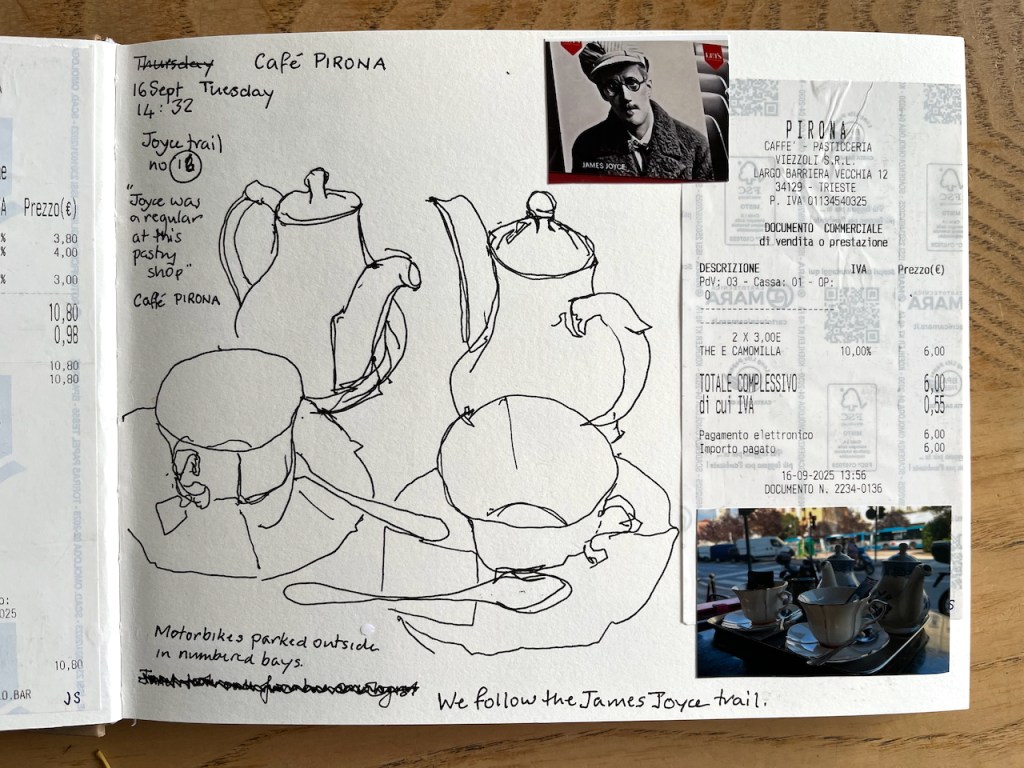
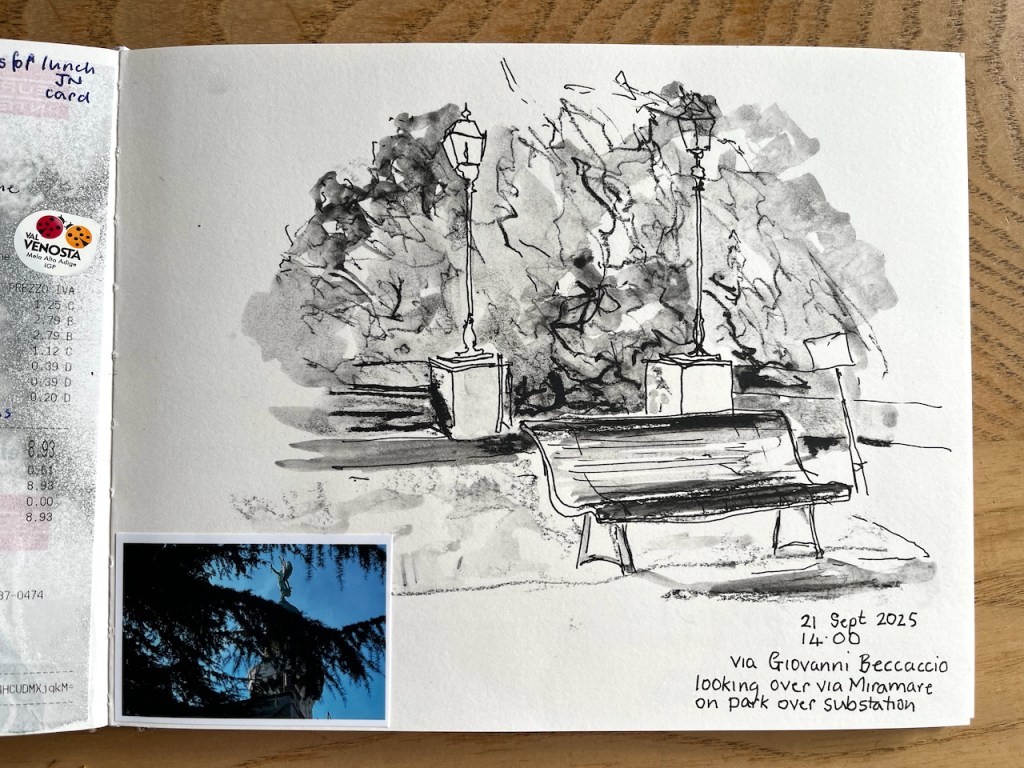
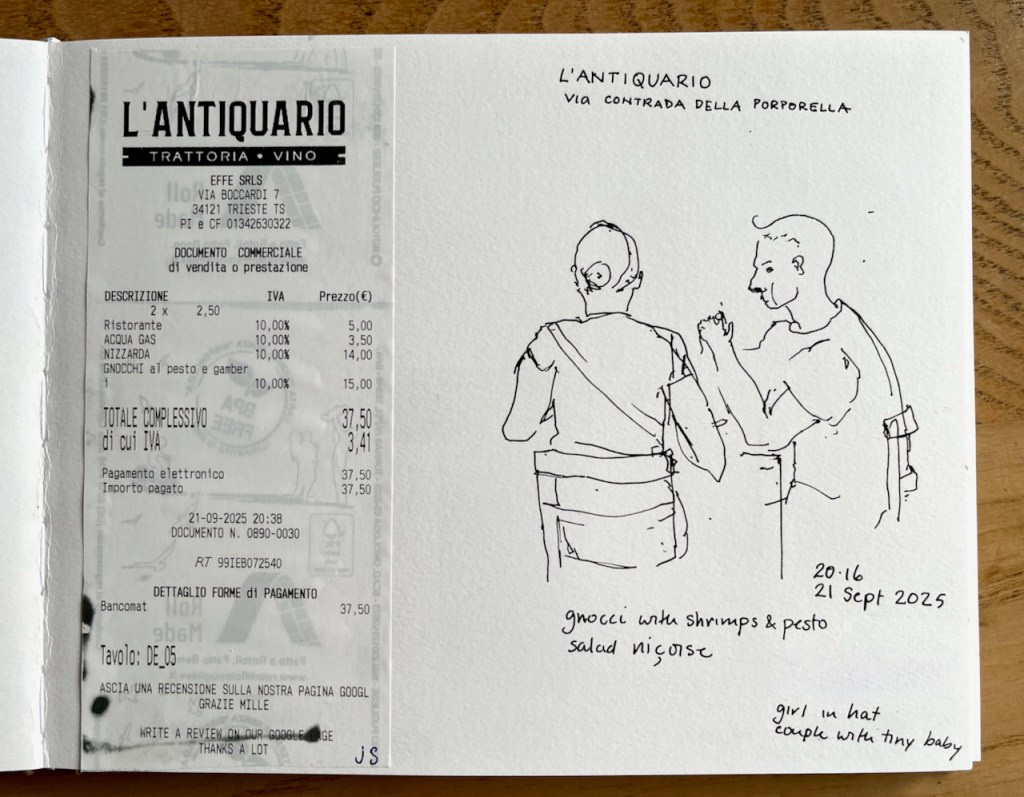
I was gifted a sketchbook from L Cornelissen of London, a marvellous thing, beautifully bound.
Sketchbook from L Cornelissen, 9.5 inches by 7.5 inches, thick cartridge paper
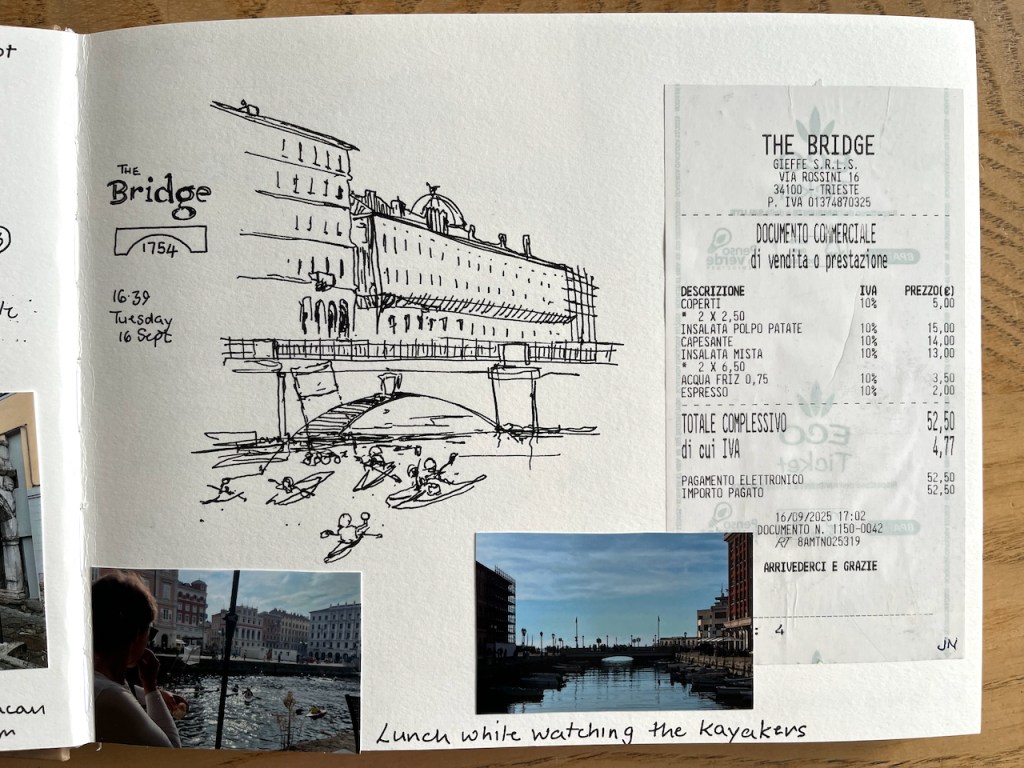
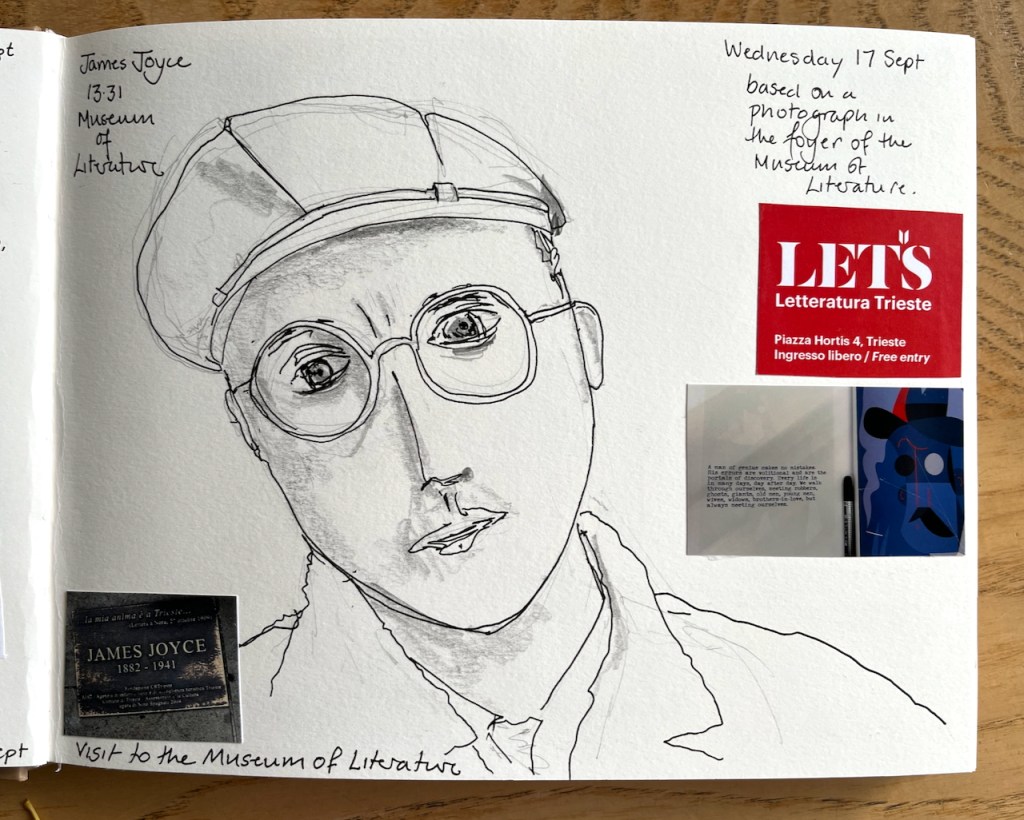
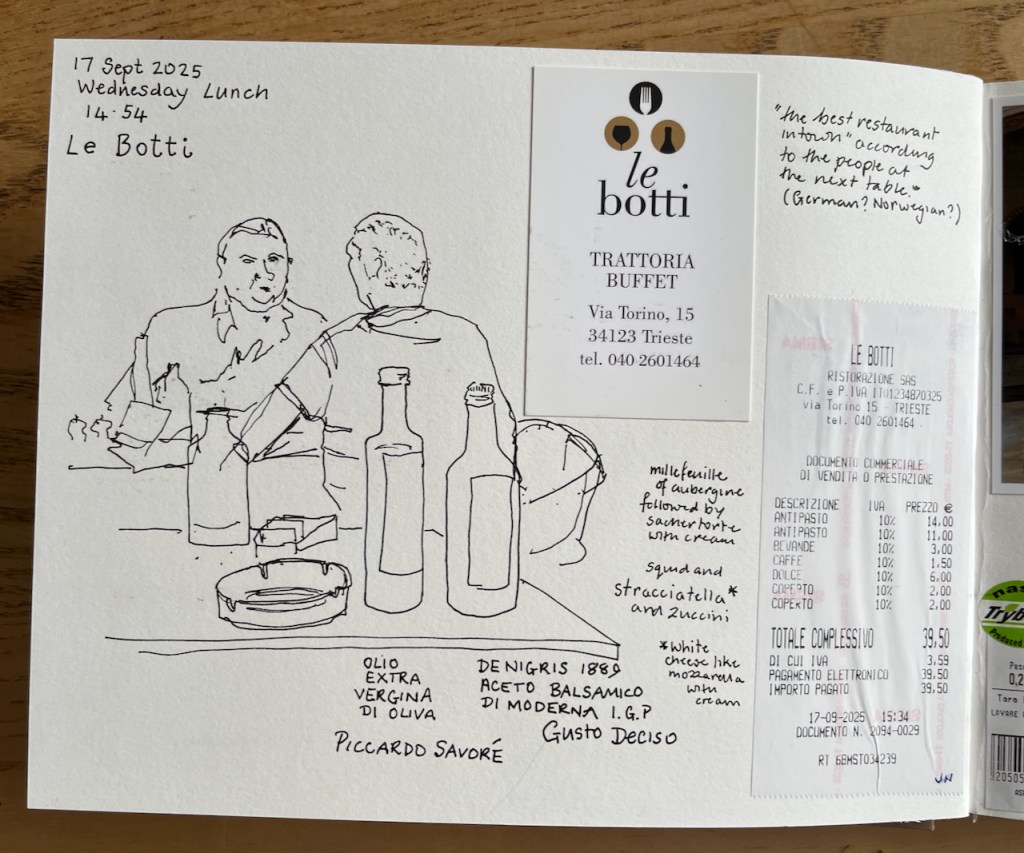
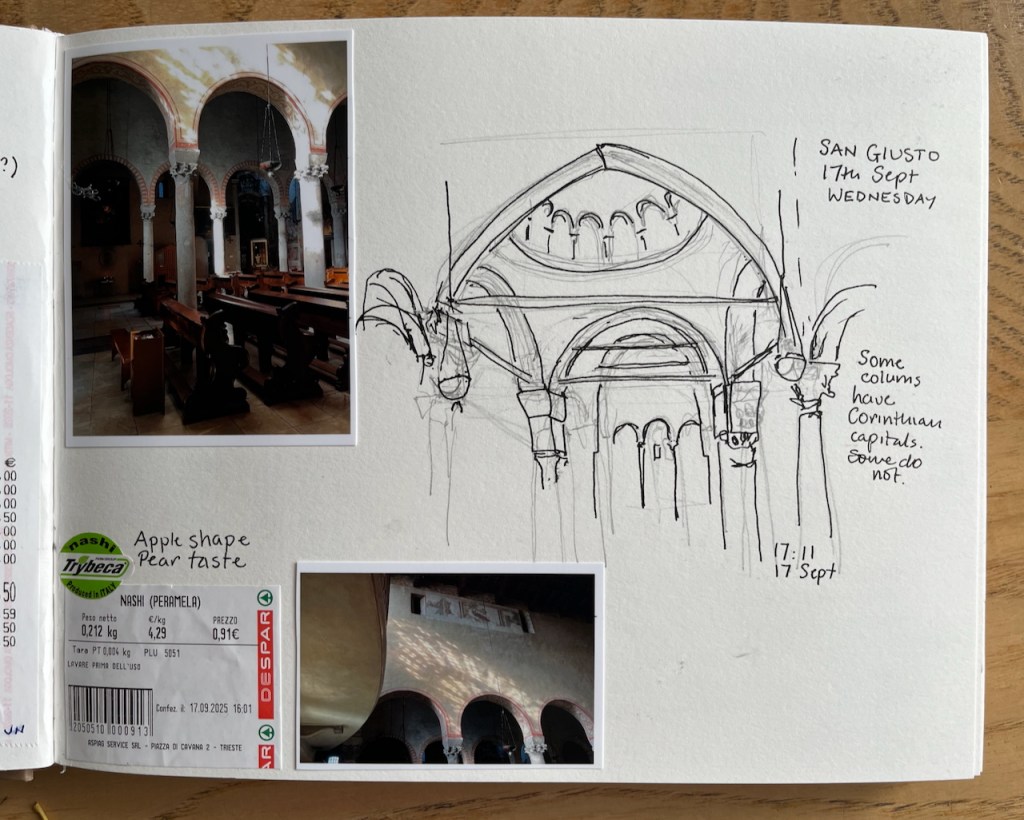
It seemed perfect for taking on a visit to Trieste, Italy.
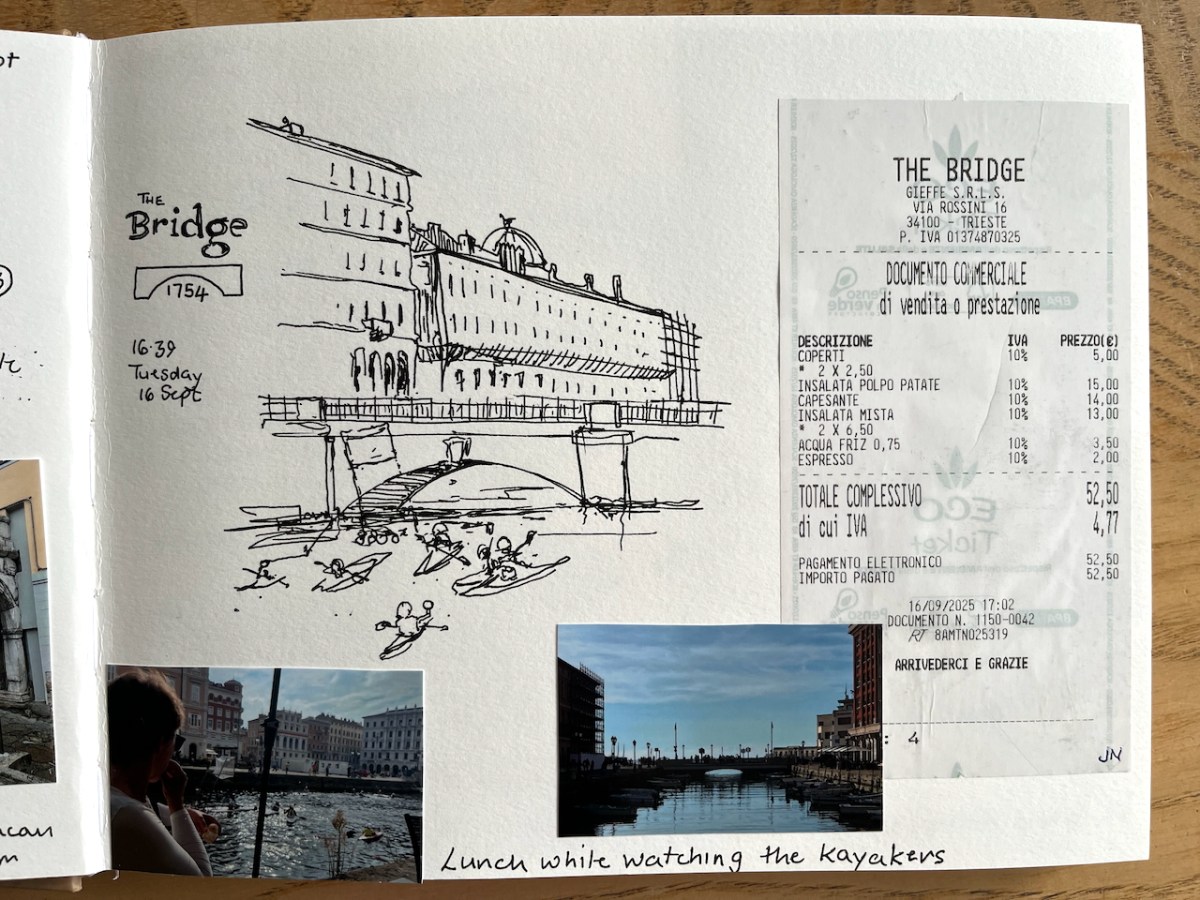
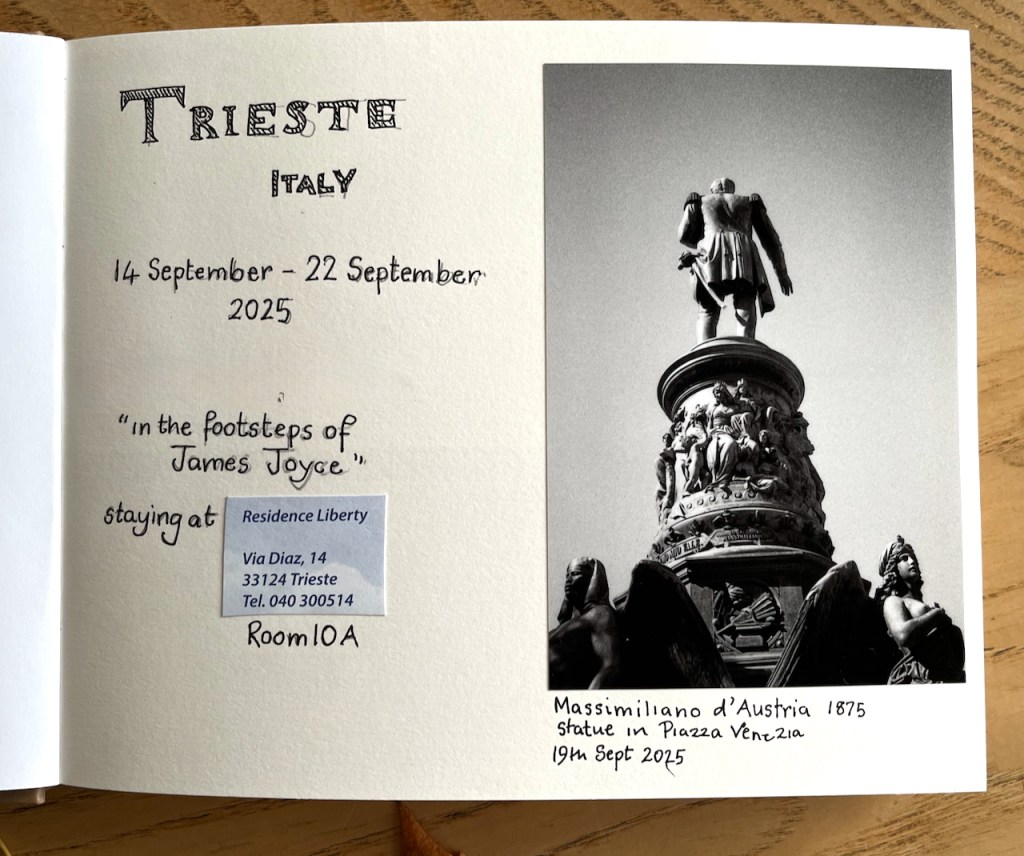
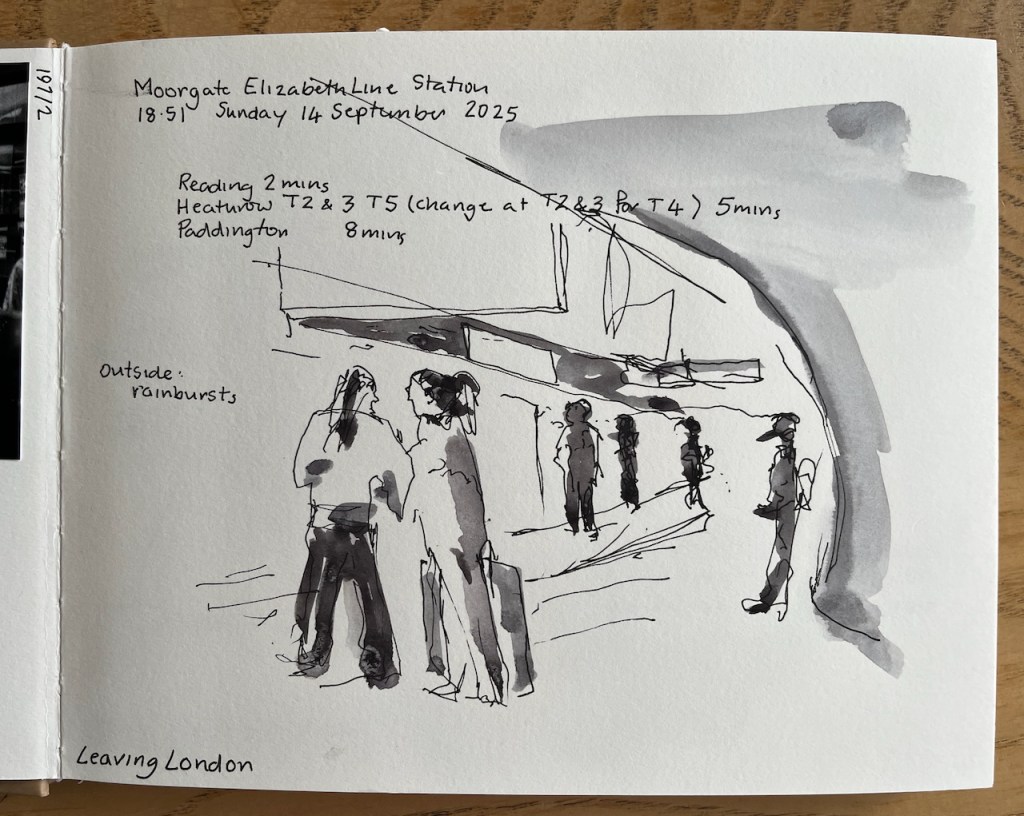
I used it for notes, sketches, and as a sort of scrapbook. After the trip I added photos. Here are some of the pages.
Here is a video of the journal (silent, about 90 seconds).
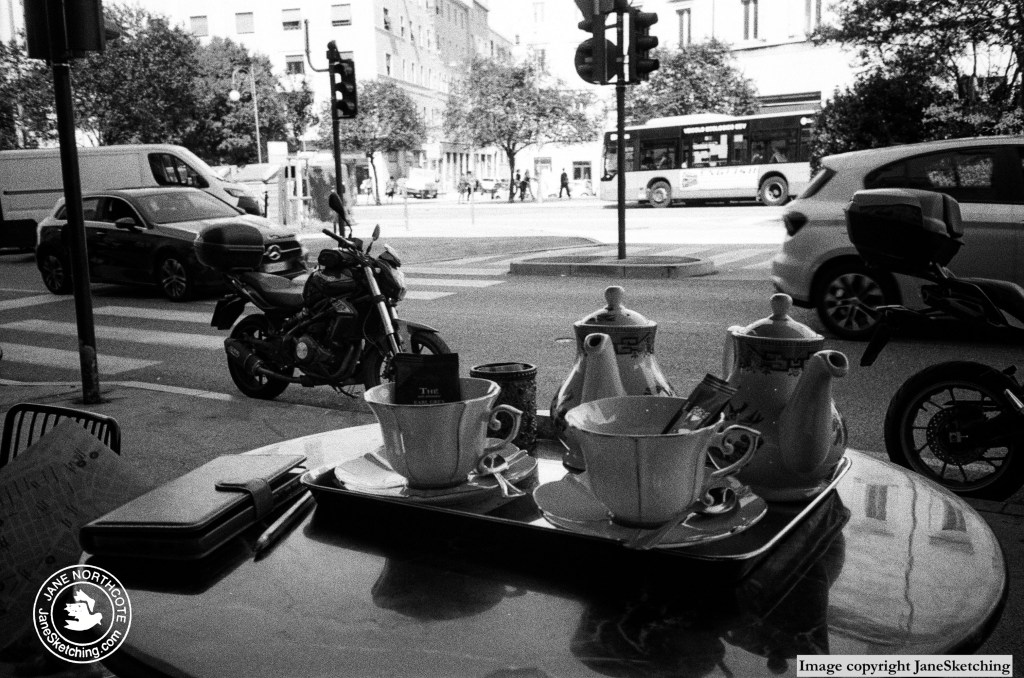
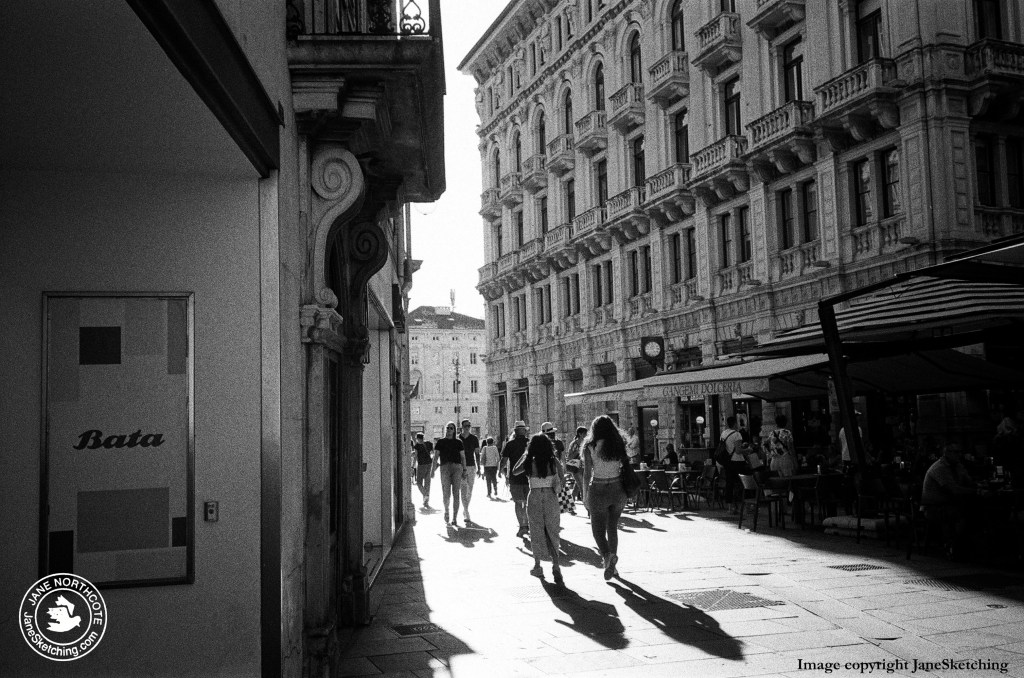
The black and white photos are analogue, from a film camera. The camera is an Olympus XA2 point-and-shoot from the 1980s, and the film was Kentmere 400 pan, developed and printed by Analogue Wonderland.
Click a button below to share this post online, email it, or print it:
My idea that day was to sketch some interesting corner pubs in Bloomsbury.
By the time I had emerged from my flat and was on the street, the bright autumn day had turned stormy. After a few paces, the rain started falling. Everyone dashed for cover. I sheltered in a doorway, together with another woman, two strangers in a refuge, grinning and rolling our eyes. “Well, it is September”. At a pause in the deluge, we both emerged and went our separate ways. I went doggedly towards the West, but no, the rain returned, seemingly even more torrential. I dashed from doorway to doorway, like a fugitive in a spy novel, finding cover where I could. Then I spotted the generous overhang of Smithfield Market and rushed underneath, the rain spattering on the glass above. There was no sign of the deluge ceasing, so I considered, as you do in these strange interim conditions: to go on? to go back? Or to stay where you are?
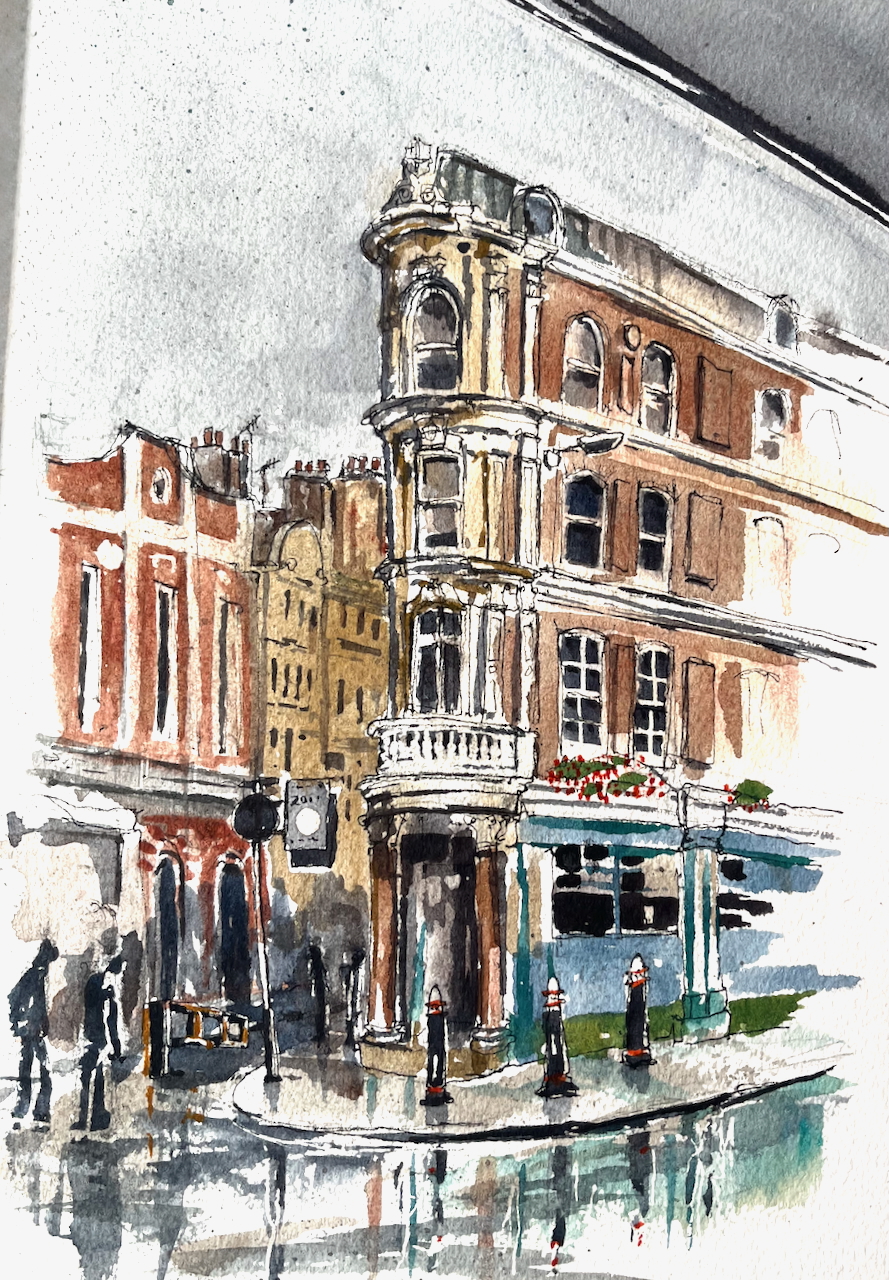
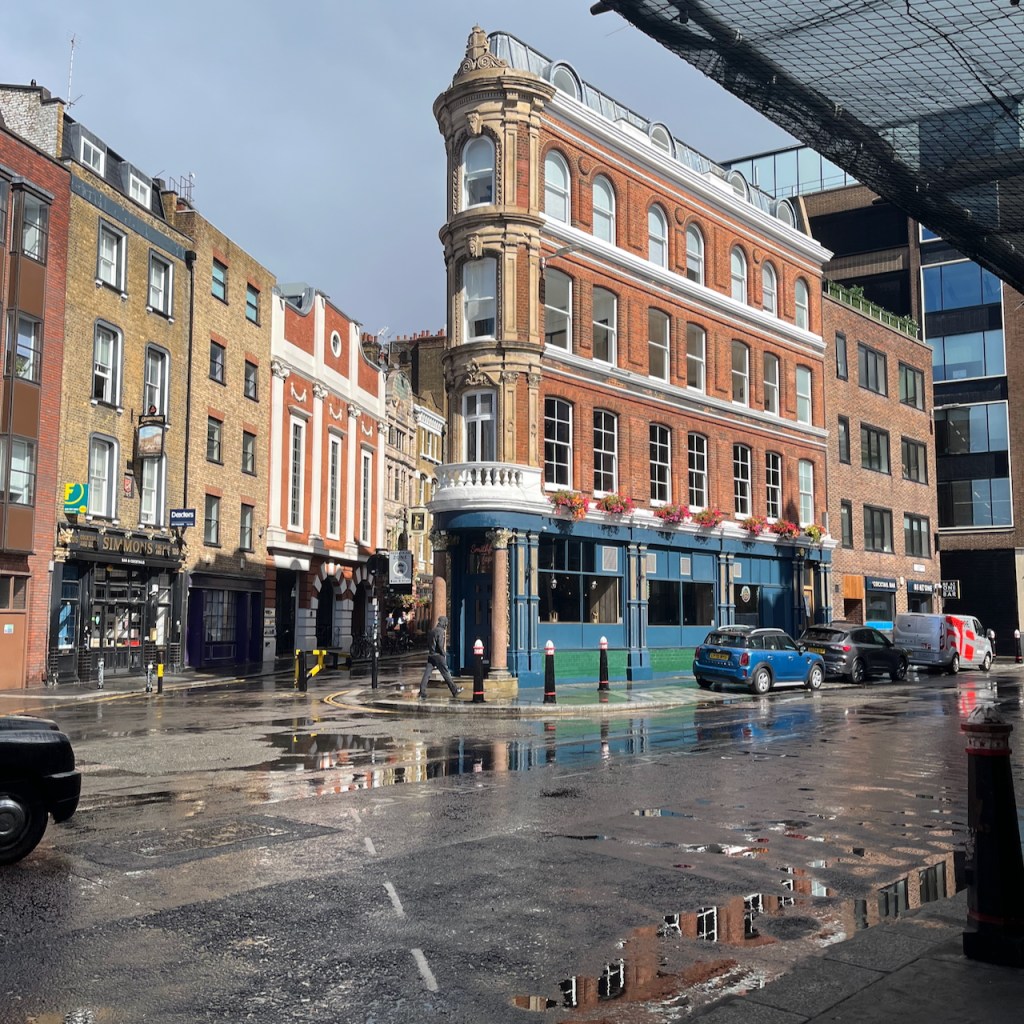
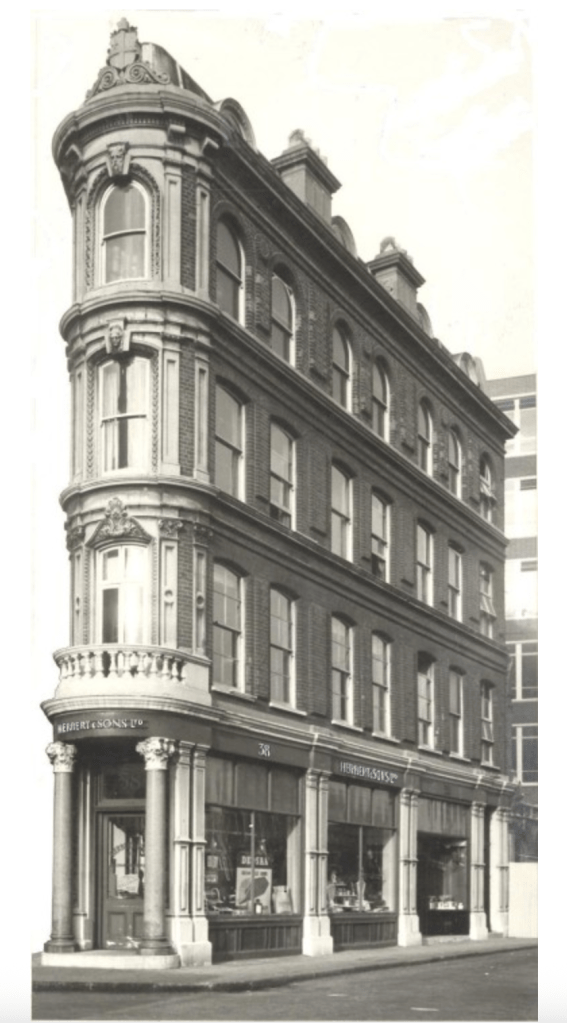
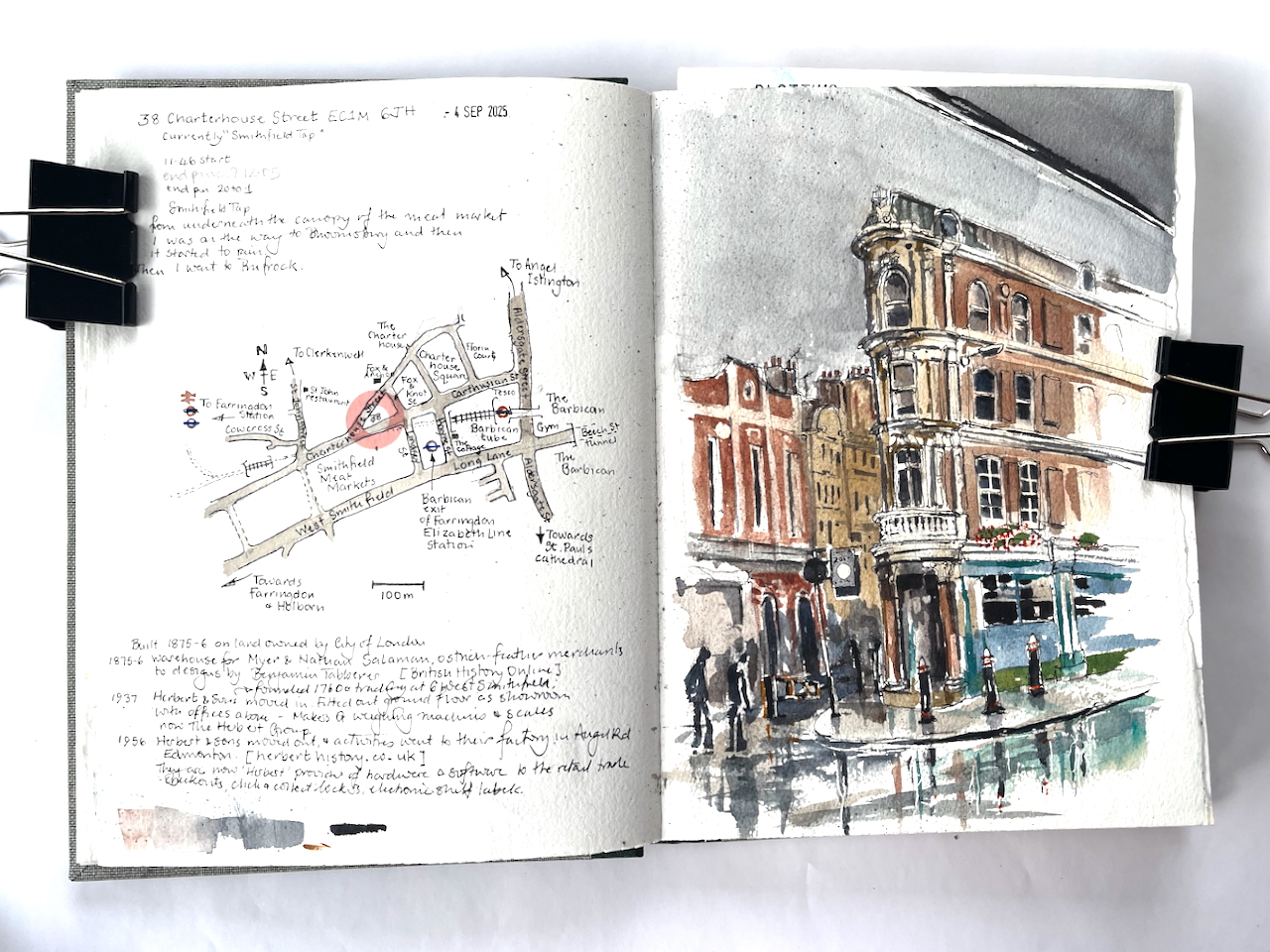
Why not do the drawing right here? Over the other side of the road is a building occupying an acute angle between roads. It wasn’t in my plan, but by this time I had abandoned my plan. So here is 38 Charterhouse Street, sketched from the shelter of the Smithfield Meat Market canopy.
38 Charterhouse Street, EC1M 6JH sketched 4th September 2025 in Sketchbook 16
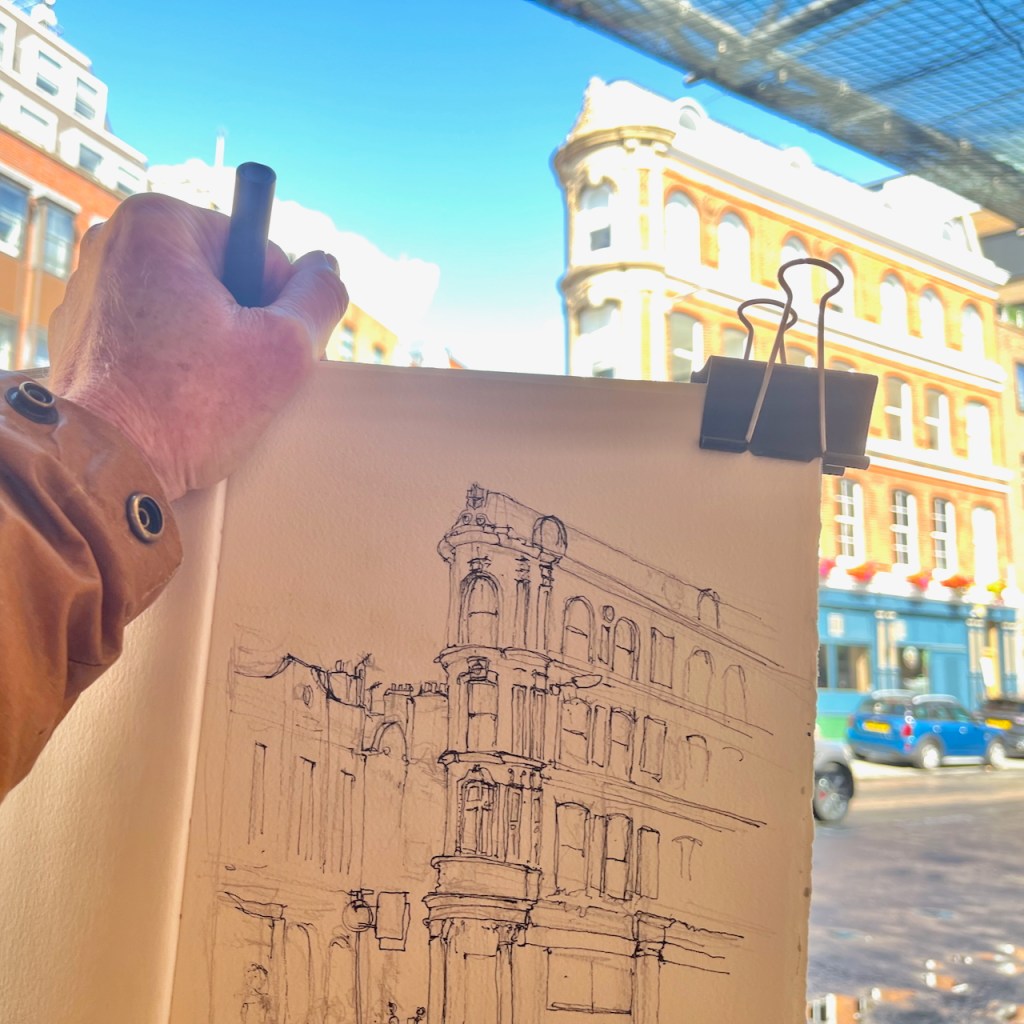
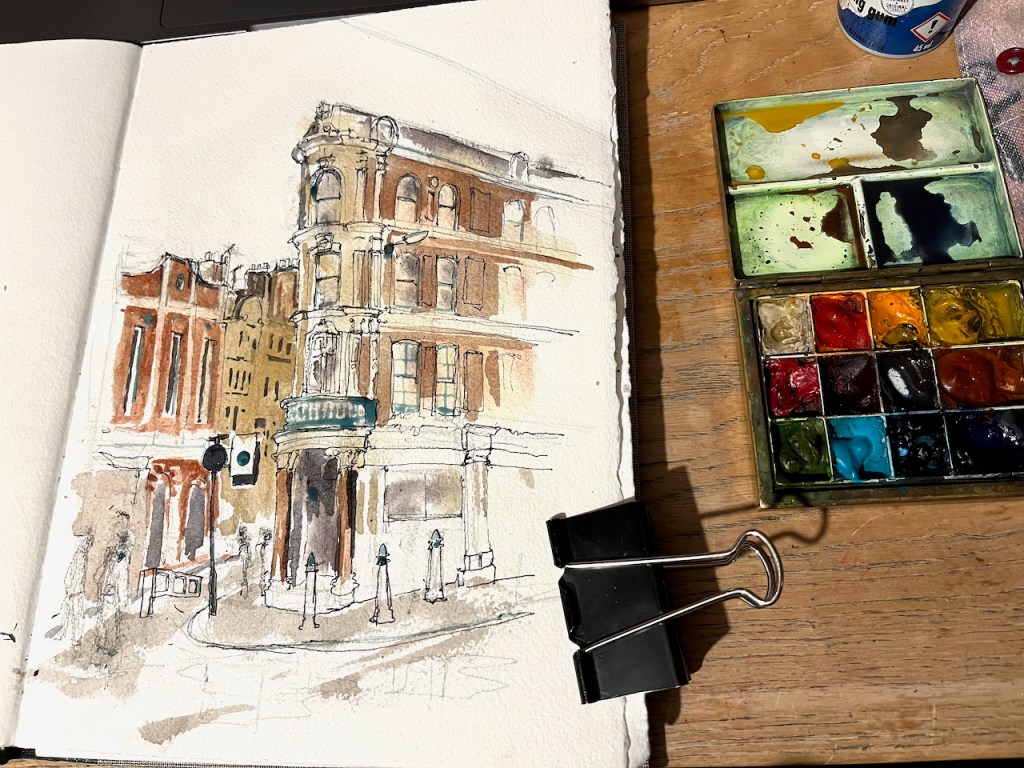
I sketched it in pen on location. Part way through the process, a group of workers started to clean the area behind me, using high-pressure water hoses. A fine mist appeared in the air, adding to the general dampness. I finished the drawing later that evening, in my warm dry room.
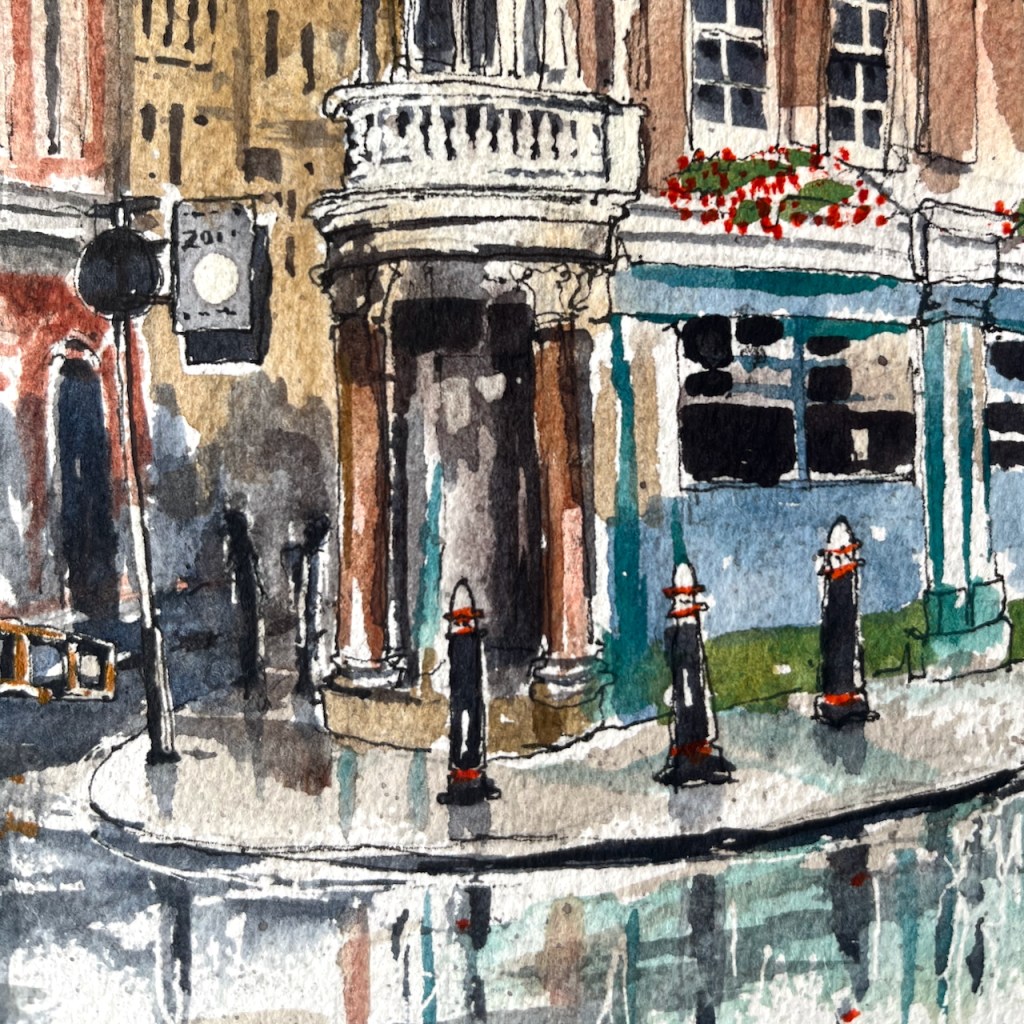
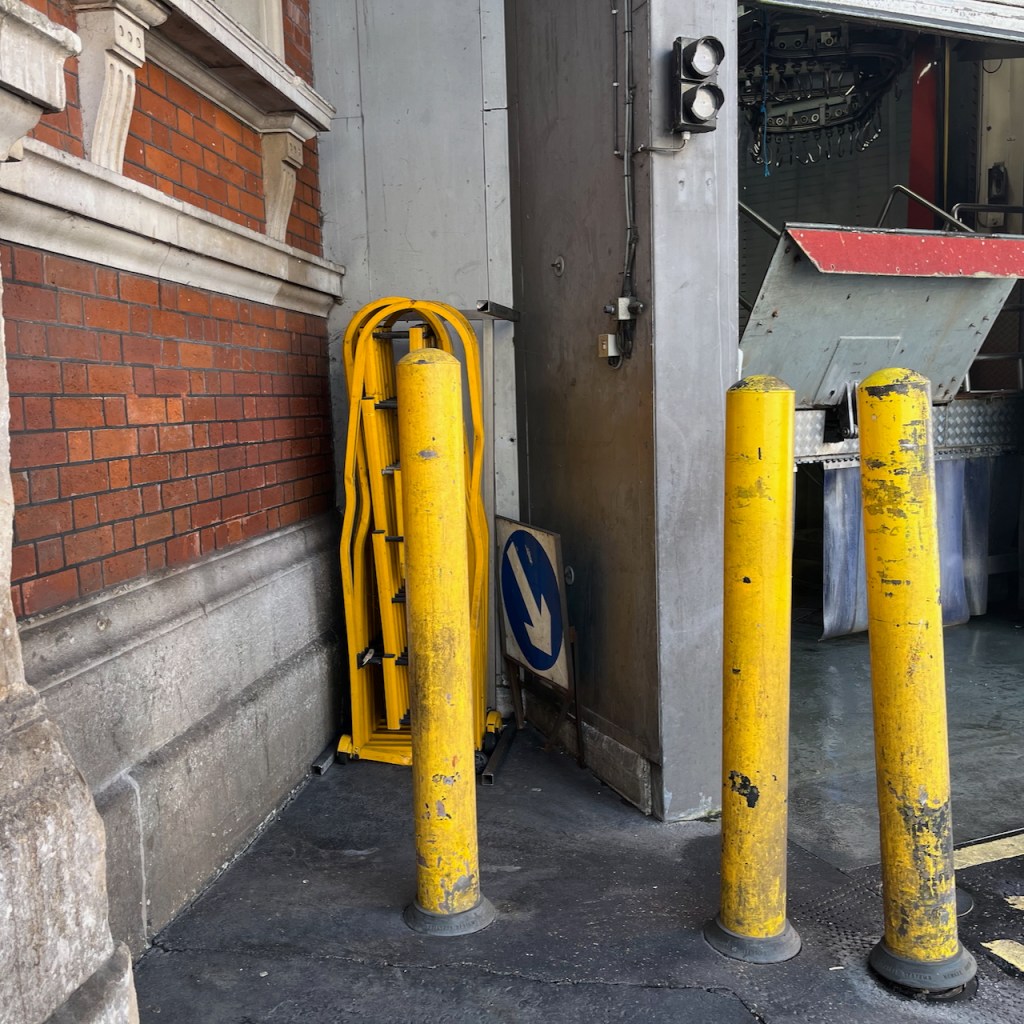
38 Charterhouse Street, photoDrawing in progress on locationDetail of finished drawingThis was where I was standing to sketch, this area was cleaned with high-pressure water hoses.
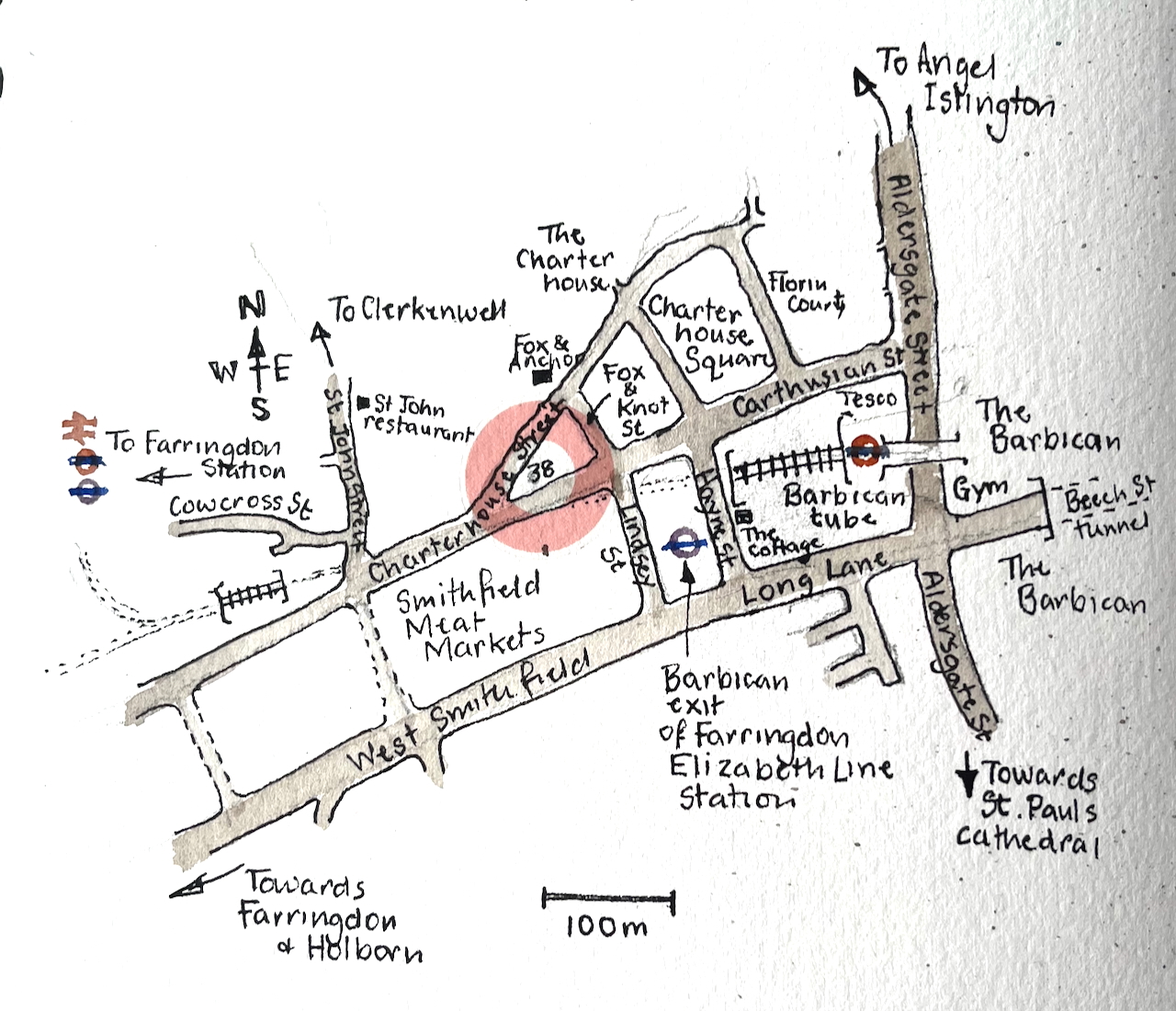
Here is a map.
As you see, number 38 stands on a little triangle of land, bounded by Charterhouse Street, Carthusian Street and the tiny alley called Fox and Knot Street.
British History Online offers some history for this triangular plot. In the 1860s the City of London redeveloped the Smithfield Meat Market. At the time it had been mostly an open-air market. The City turned it into the covered market it is today. The surrounding lanes and buildings were also affected, both by the redevelopment and the increased trade.
In 1869–70, with the new market building complete, it was resolved to take the new road along the north side of the market further east into the square itself, carried out in 1873–4. The road was called Charterhouse Street, apparently at the suggestion of the Charterhouse, Whereas in 1860 Charterhouse Lane enjoyed a mix of businesses, in 1876 half of the sixteen surviving houses were occupied by meat and poultry traders. The same trades dominated the new buildings put up, though there were also coffee rooms to rival the two remaining pubs and a large bank at the corner with St John Street. By the time of the Second World War most of the buildings west of the Fox and Anchor at No. 115 were purpose-built cold stores. Only with the decline of Smithfield Market did the grip of the meat trades loosen. Today restaurants and bars have largely supplanted them.
The Fox and Anchor pub and the former cold stores are on the left of my drawing. I’ve drawn the marvellous frontage of the Fox and Anchor here.
British History Online describes the block on the corner, number 38:
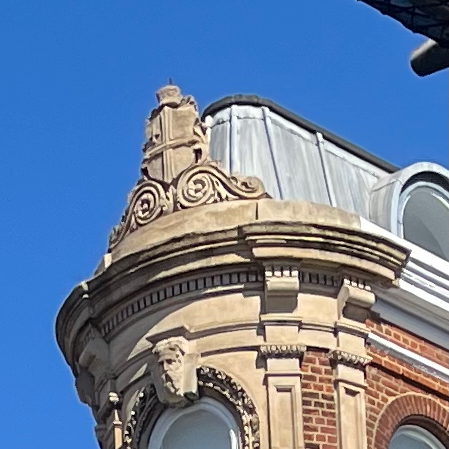
The City of London arms on the building today.
The remnant of ground at the angle between the old and new roads was laid out for a small block of buildings and allotted the numbers 38–42 (even) Charterhouse Street, behind which a tiny street, Fox and Knot Street, was cut through in 1871. The name was taken from Fox and Knot Yard, a court obliterated by the new market.
The small triangular block west of Fox and Knot Street […] just within the City boundary, belongs to the land acquired by the Corporation of London in the 1860s for the Smithfield Market development. Set out for building in 1871–2, it remained empty until 1875–6. At the apex a warehouse (No. 38), was then built for Myer and Nathan Salaman, ostrich-feather merchants, to designs by Benjamin Tabberer. […] It is four storeys high, of red brick with regular fenestration; all the ornamentation is concentrated on the narrow corner. For many years there were coffee-rooms here.
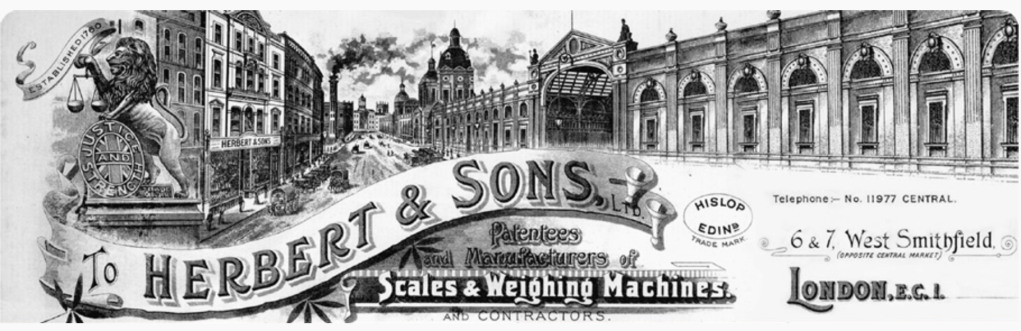
So, in 1875 it was an ostrich-feather warehouse, which must have been a great place to visit. The next mention of the building is on the website of Herbert, a present-day supplier of technology to retail businesses. They have a section of their website devoted to their long history. In the early twentieth century they were supplying weighing machines and balances from their offices in West Smithfield and a factory in Edmonton.
Herbert and Son moved out in 1956 and consolidated their operations into their Edmonton site. Since then, the building has been a coffee house, and, more recently, various bars. It is now the “Smithfield Tap”.
On the way to and from Sketch and Sail last week, my journey took me through Glasgow. I spent a few hours walking around that city, sketchbook in hand.
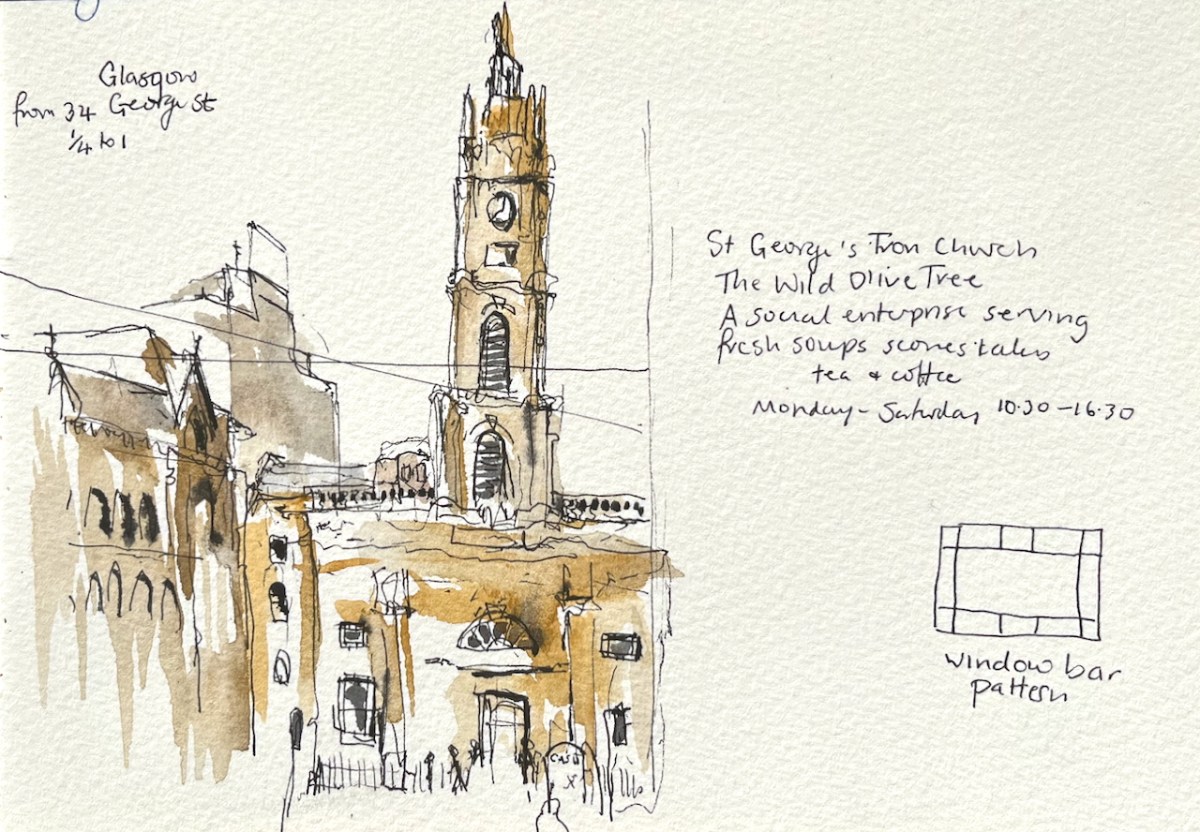
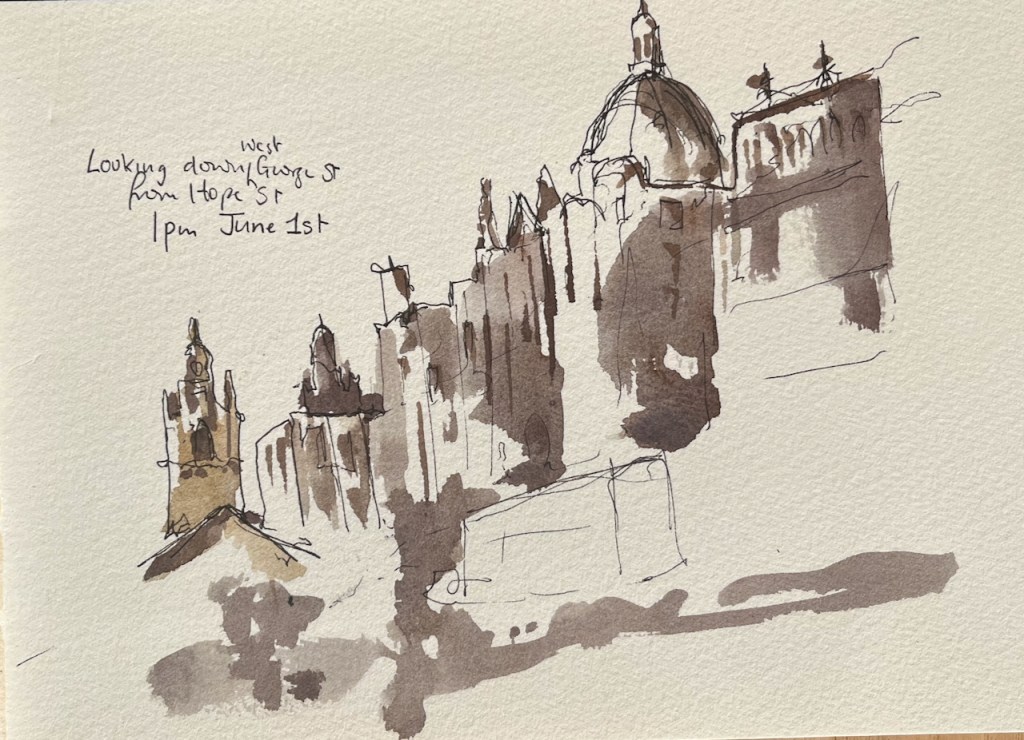
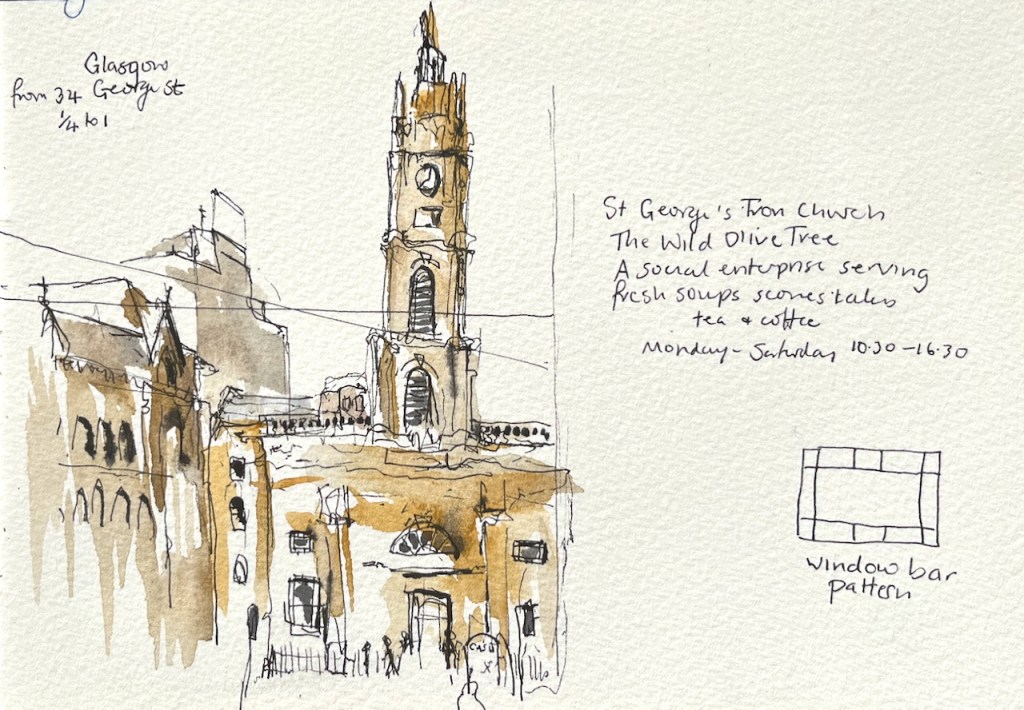
Here is West George Street, looking east, downhill towards St Georges Tron Church.
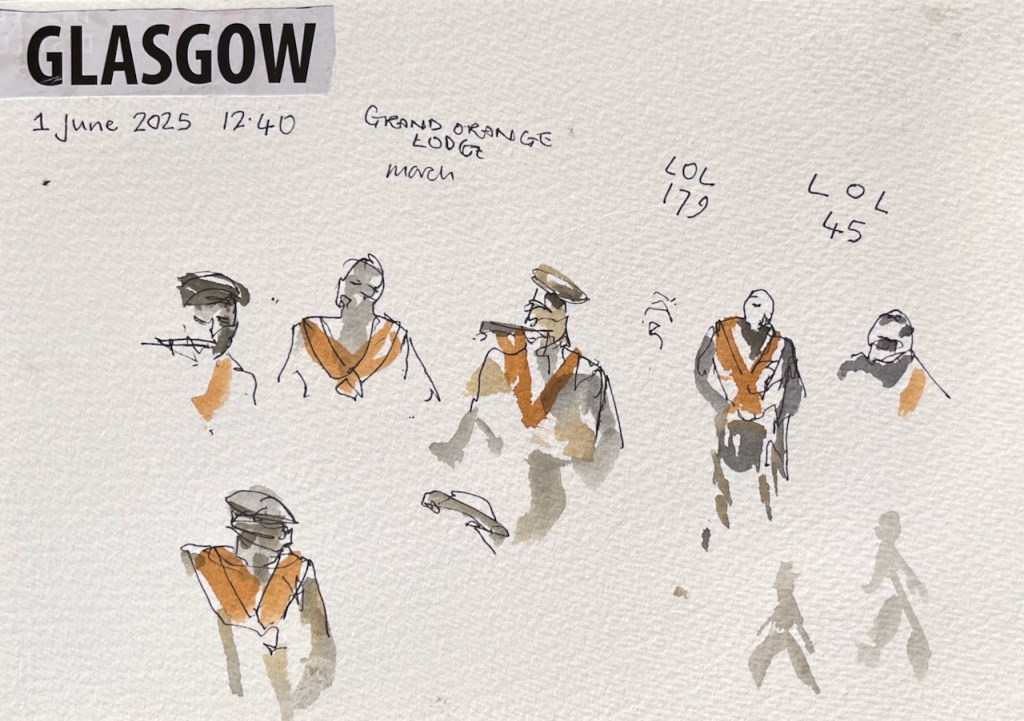
This was a Sunday. Glasgow was quiet. Until there was the sound of flutes, or perhaps more accurately fifes. And then a procession. I tried to sketch the people as they walked by.
Who were they? What was it about? I had sort of guessed, before I asked the police officer. “The Grand Orange Lodge” he told me. So this was an Orange March, a procession by Protestant fraternal societies. I had heard of them in the news as taking place in Northern Ireland, but I had not heard of them in Glasgow, or anywhere else. They arouse contention in some contexts. This procession seemed low-key and passed through peacefully, gone almost before I had thought through what I was looking at.
I walked on, in the opposite direction, towards the West End of Glasgow.
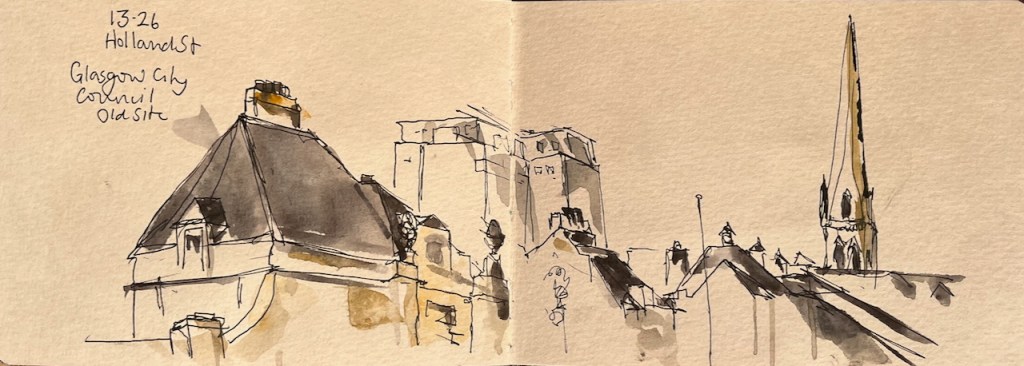
In Glasgow there are magnificent Victorian buildings, some of them strangely derelict and empty. Here is the roofscape of the former buildings of Glasgow City Council: huge empty buildings around a vast courtyard.
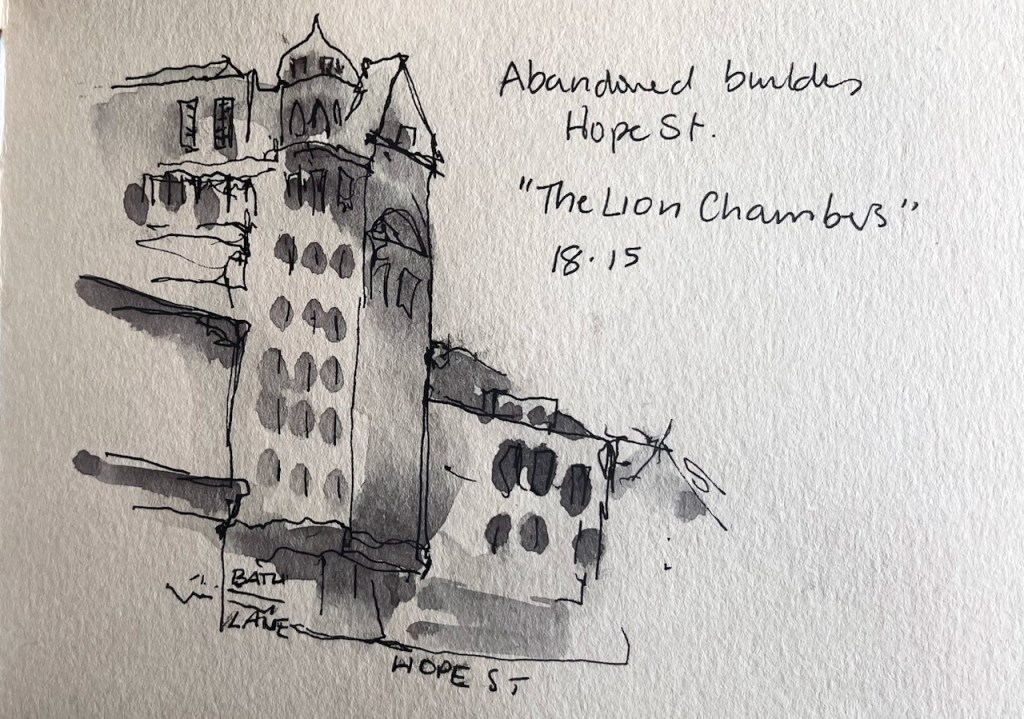
Here is an eight storey building on Hope Street: “The Lion Chambers”, perhaps a former legal practice.
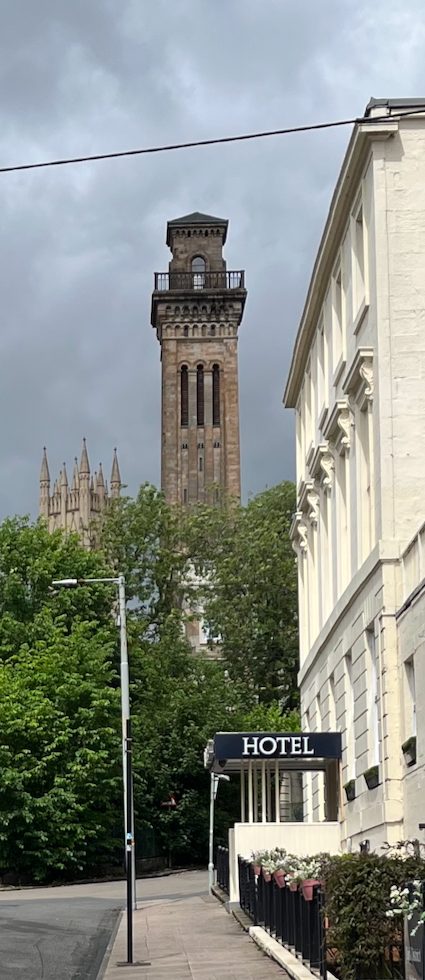
One of the joys of walking in cities is that you pass through invisible membranes, barely detectable boundaries between the derelict areas and the areas that have been reinvigorated, or between the commercial areas and the residential districts. As I walked West I saw a tower on the horizon, with a parapet.
This looked like the type of tower I have sketched in London at St Thomas’ hospital.
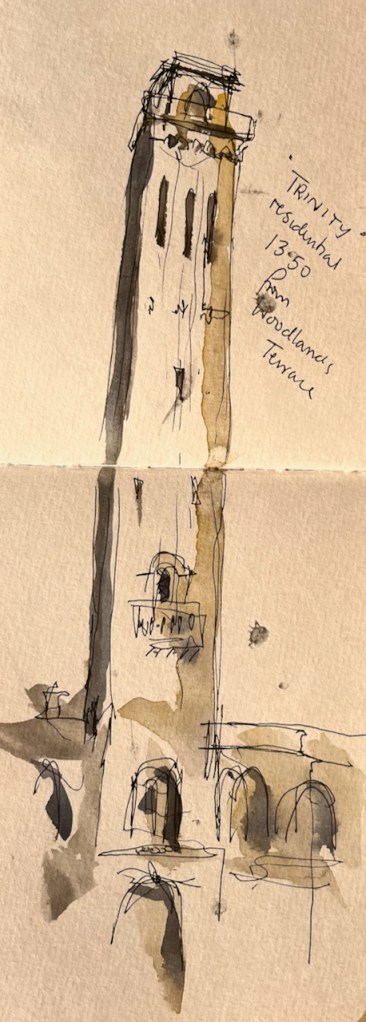
But on closer inspection it turned out to be a church. Or rather, it had been a church. Now it is a residential tower called “Trinity”, looking very smart.
I was sketching between rainstorms. By this time I was high up overlooking the city.
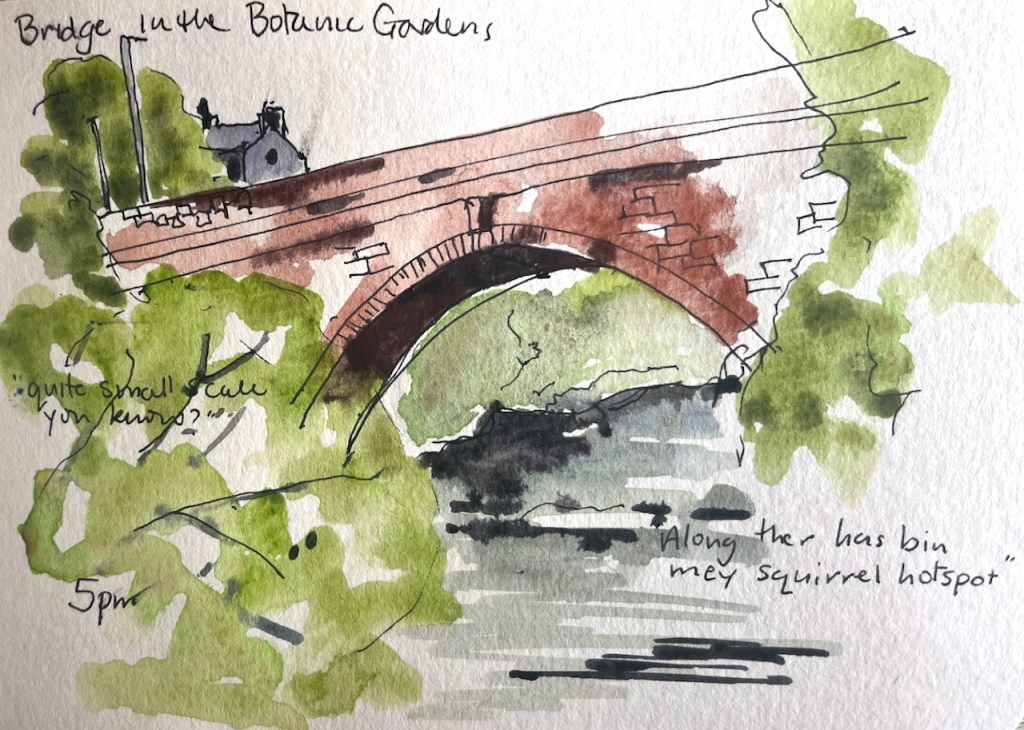
A bit further on there is the botanic gardens. The rain stopped and suddenly the place looked like a sunlit utopia, with people of all kinds and all ages out sitting on benches and chatting to each other amongst flowers and cultivated trees. Further on still, I came to a river.
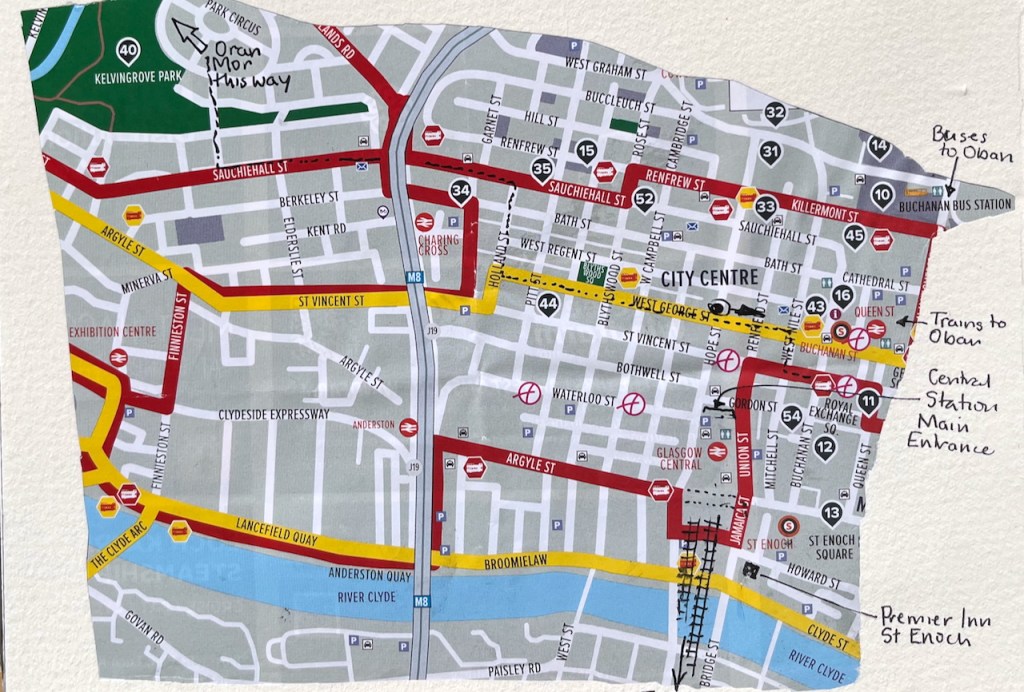
It was time to turn around and head back East. I became comprehensively lost amongst the pedestrian underpasses knotted around the M8 motorway. But an elderly gentleman put me right, turning around and walking with me to the summit of a bridge, from which vantage point he could indicate the correct route with his walking stick.
It’s a city of many cities, is Glasgow. Wealth and dereliction, renovation and decay. There is a sense of waves of renewal, ups and downs. Or perhaps that was just because I was returning from a sea trip, and the pavement was not yet entirely steady under my feet.
Click a button below to share this post online, email it, or print it:
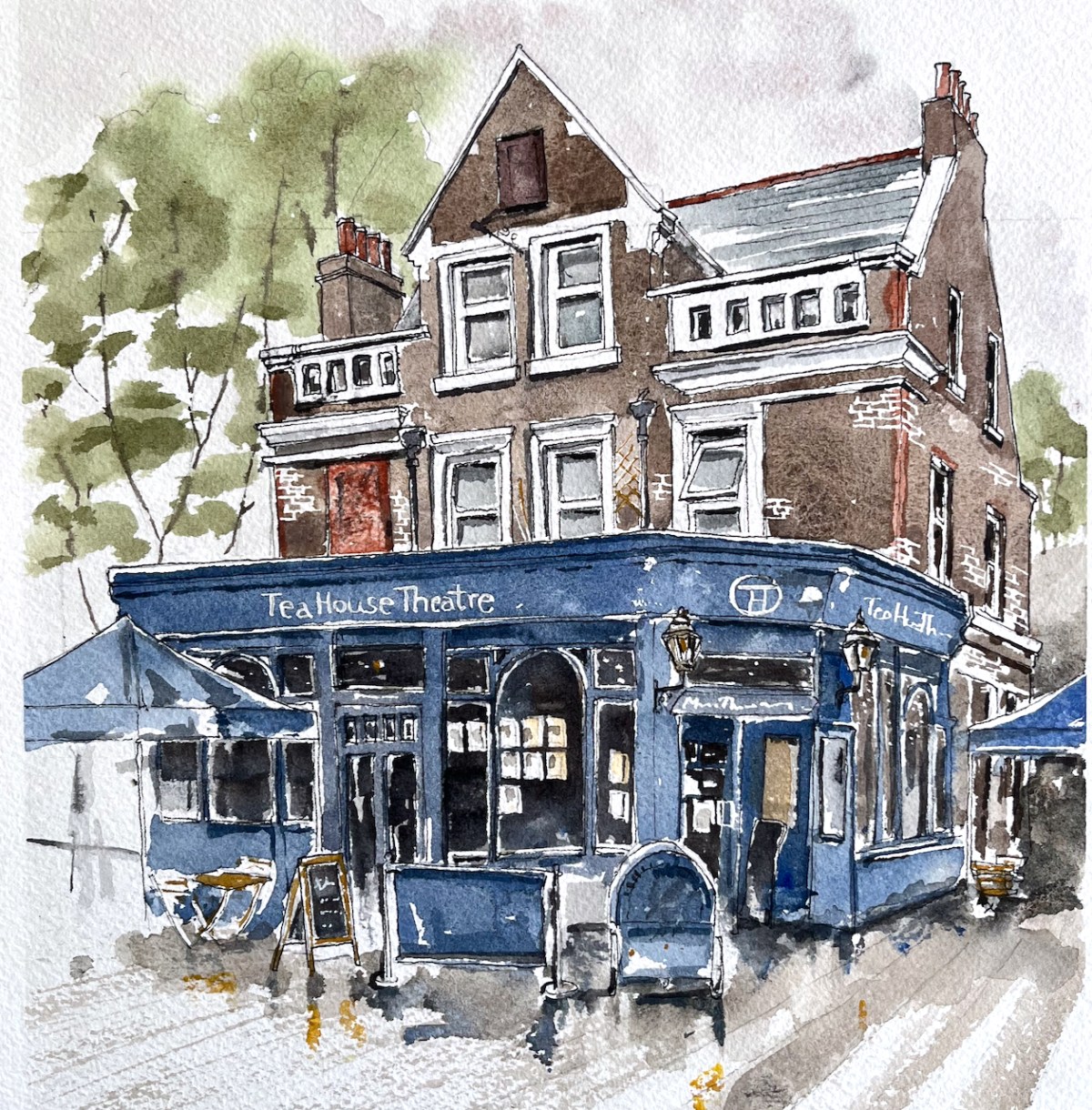
The Vauxhall Tea House Theatre is one on my favourite places. It is a “tea house by day, theatre by night”. Here is a sketch of the outside:
Vauxhall Tea House Theatre, 12″ x 9″ pen and wash original. [sold]
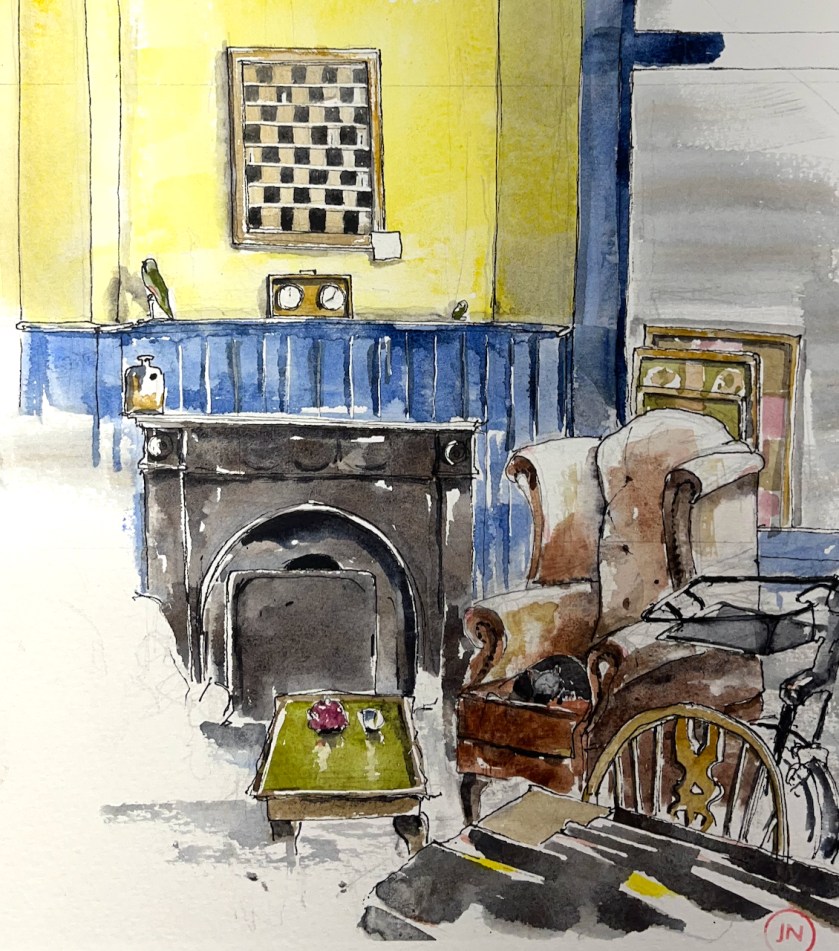
Here is a sketch of the interior by day:
Vauxhall Tea House Theatre, interior with cat. 12″ x 9″ pen and wash original. [Sold]
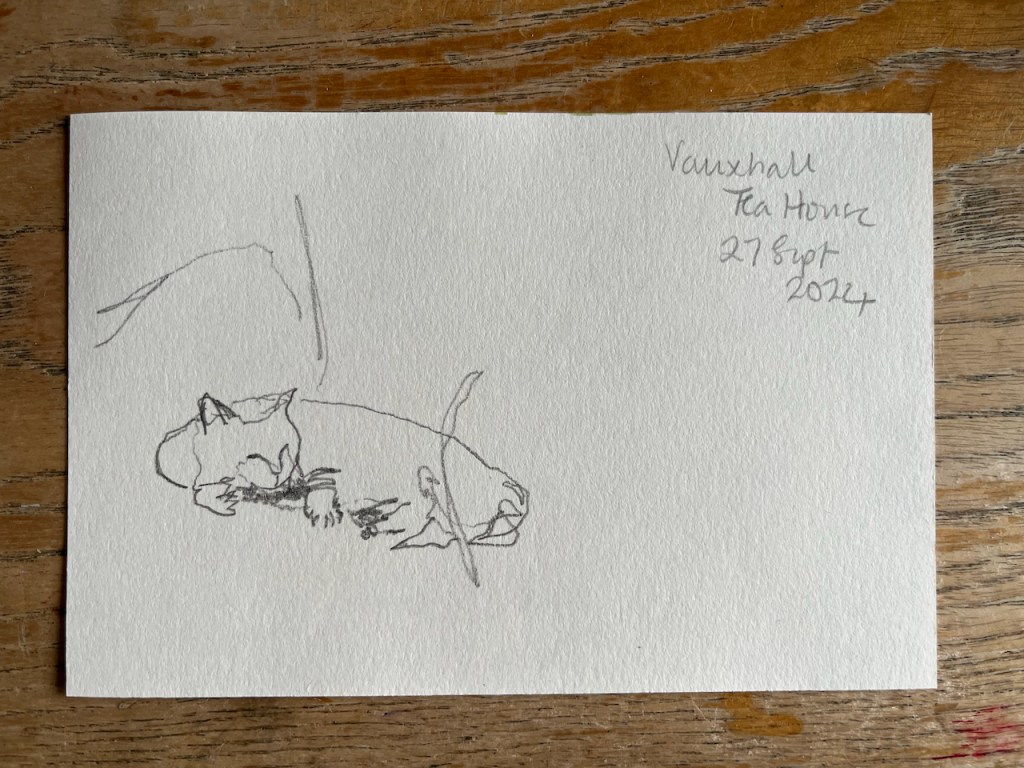
There are winged chairs you can sink into, wooden tables you can work at, magazines and newspapers you can read. There is tea. There is cake. There is at least one cat.
It’s a short walk from Vauxhall station. Definitely worth a visit.
“We are trying to be different. We will not hurry you. If you visit us on your lunch break, then have one, you will be more productive in the afternoon. If you want to have a meeting, we will not disturb you. If you are ‘working from home’, we have wifi. If you have children, we have highchairs, a chest of toys, and milkshakes. We always have the daily papers, so please, relax, and share in what we are trying to create, take a load off, and have a cuppa.”
Magnificent!
Click a button below to share this post online, email it, or print it:
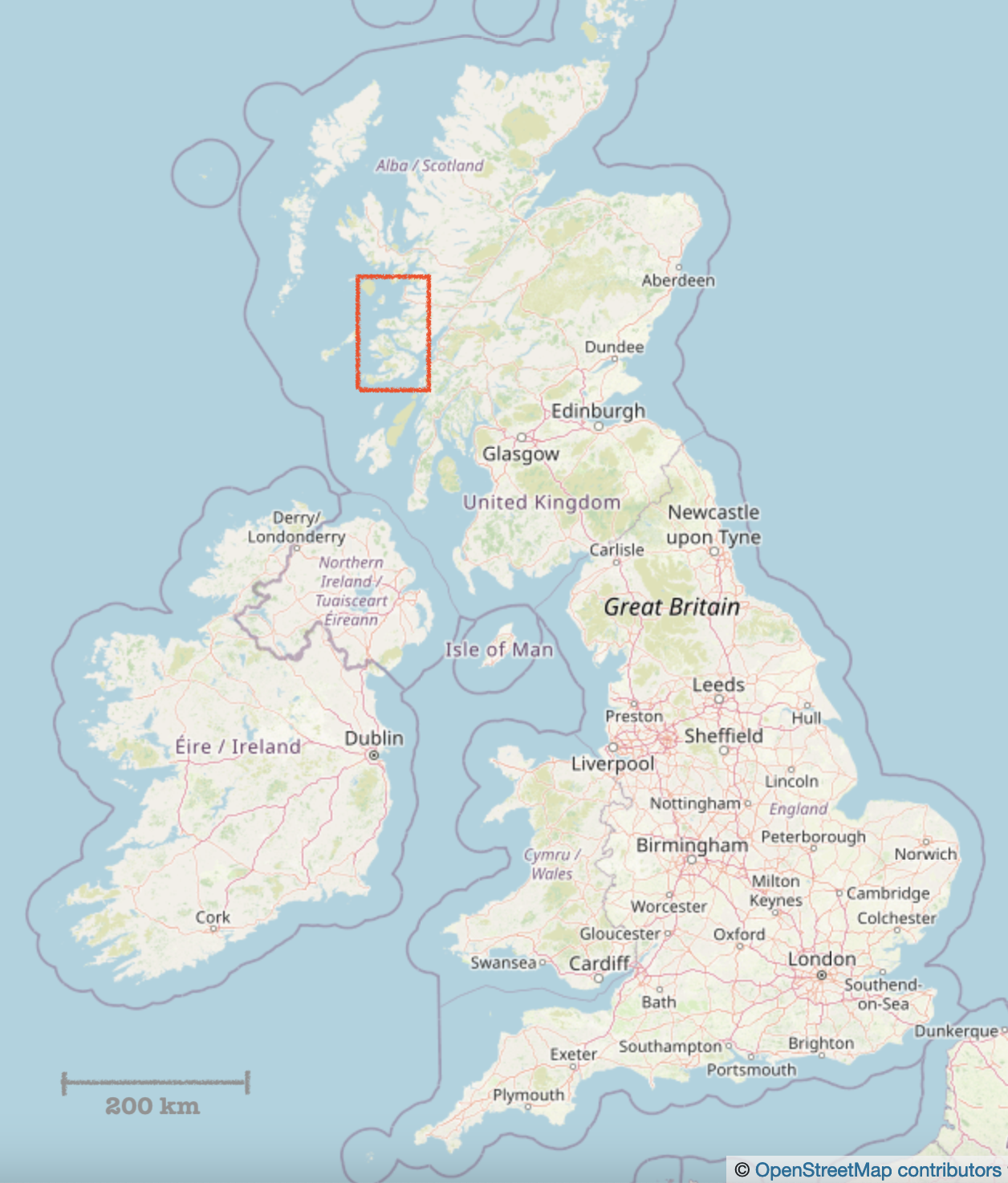
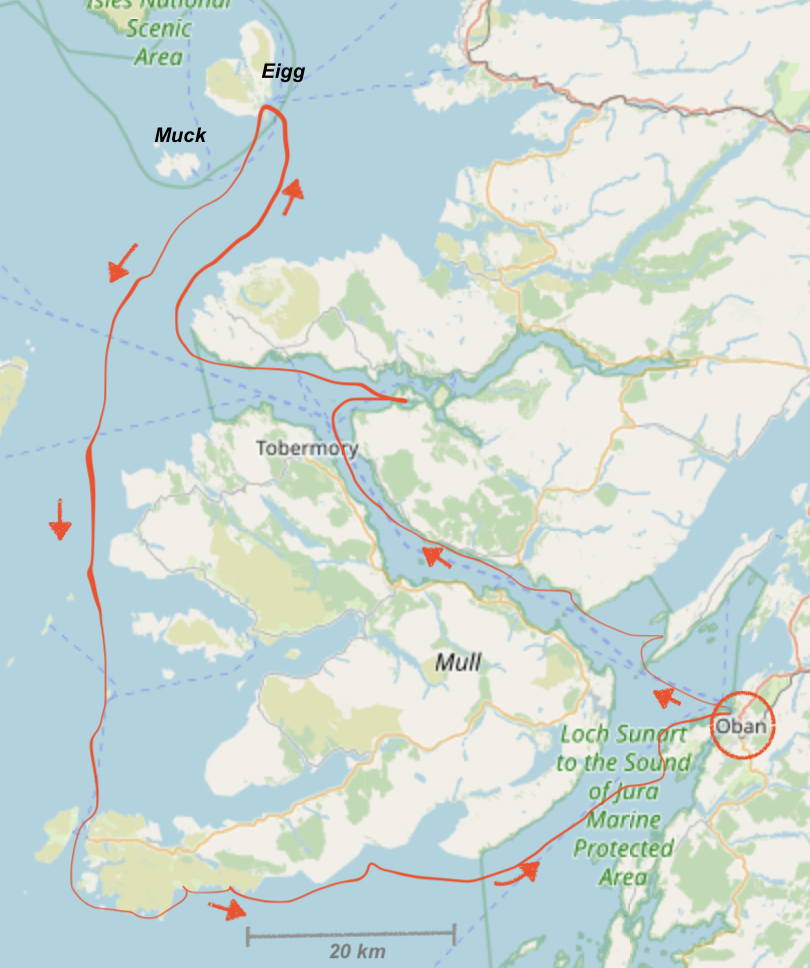
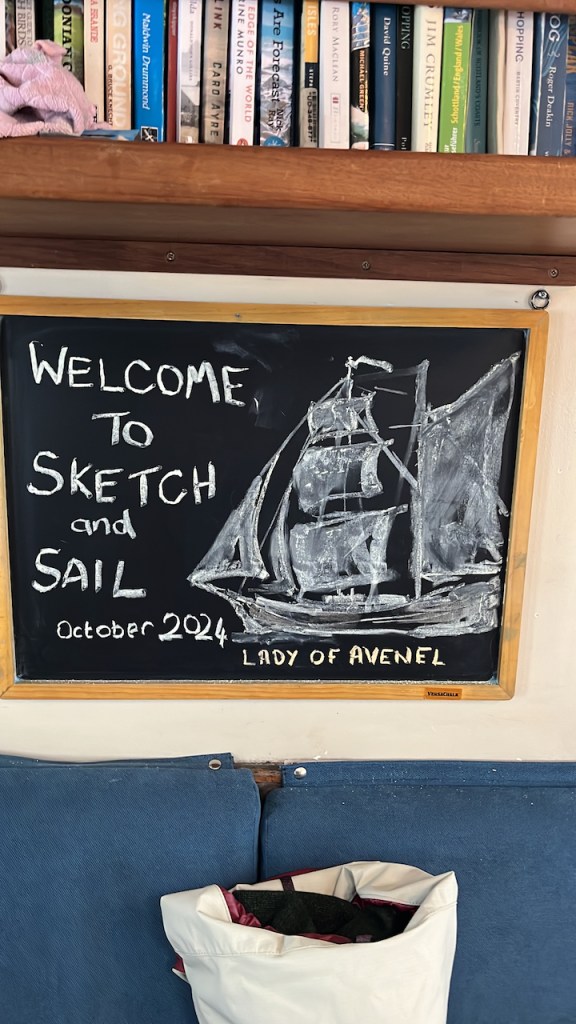
I’m just back from an invigorating week on “Sketch and Sail”with fellow artist Alice Angus and a group of guests, all sketching and learning. We were hosted by the marvellous crew of the Lady of Avenel, who managed the ship and provided all our meals. Our voyage was around the Isle of Mull in the Inner Hebrides, see maps below. We had amazing fun, laughed a lot, got wet, got dry again, got blown about, and enthusiastically sketched the experience. Everyone was very productive: lots of pictures were made, sketchbooks were filled, postcards were painted and sent.
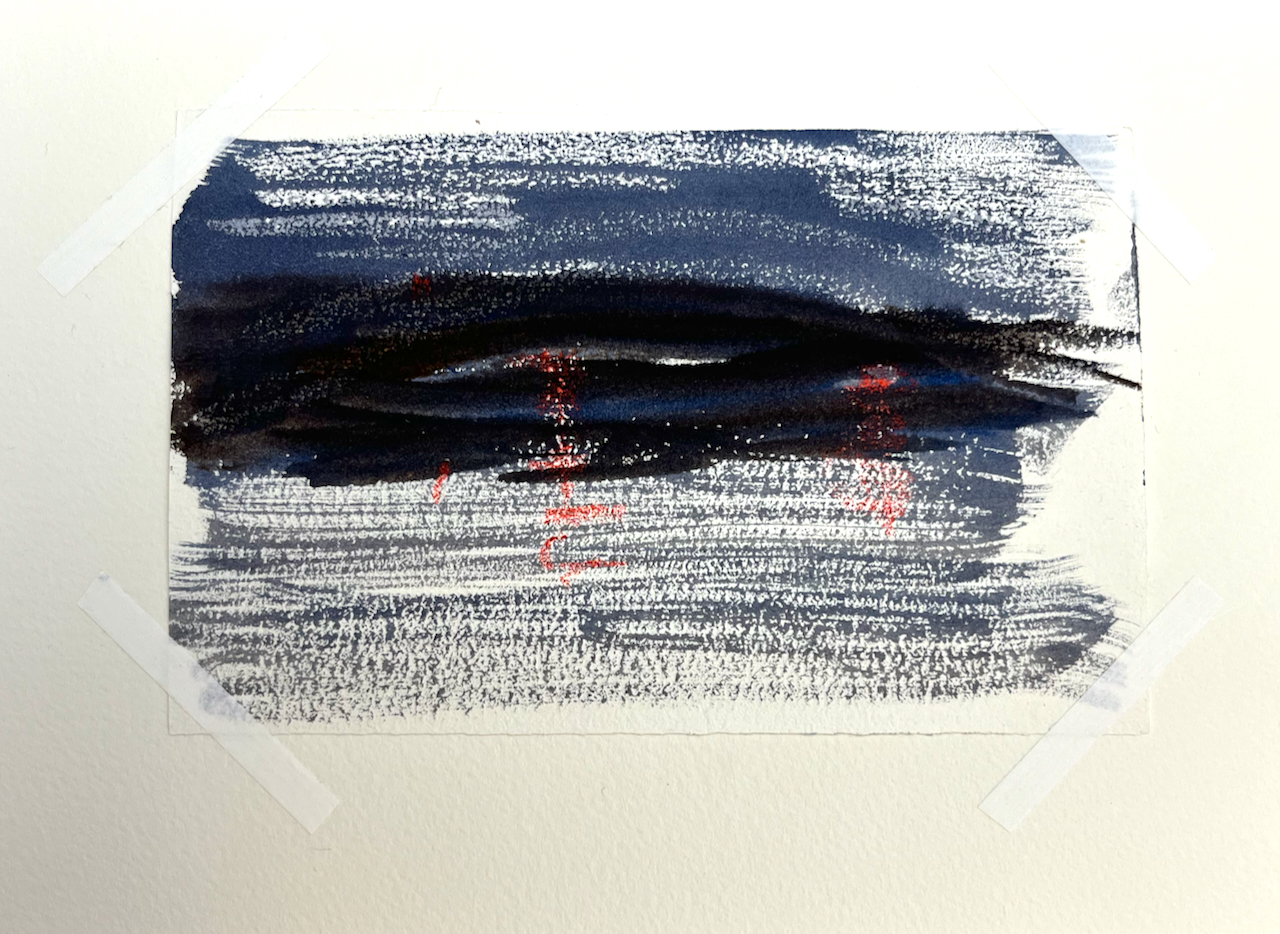
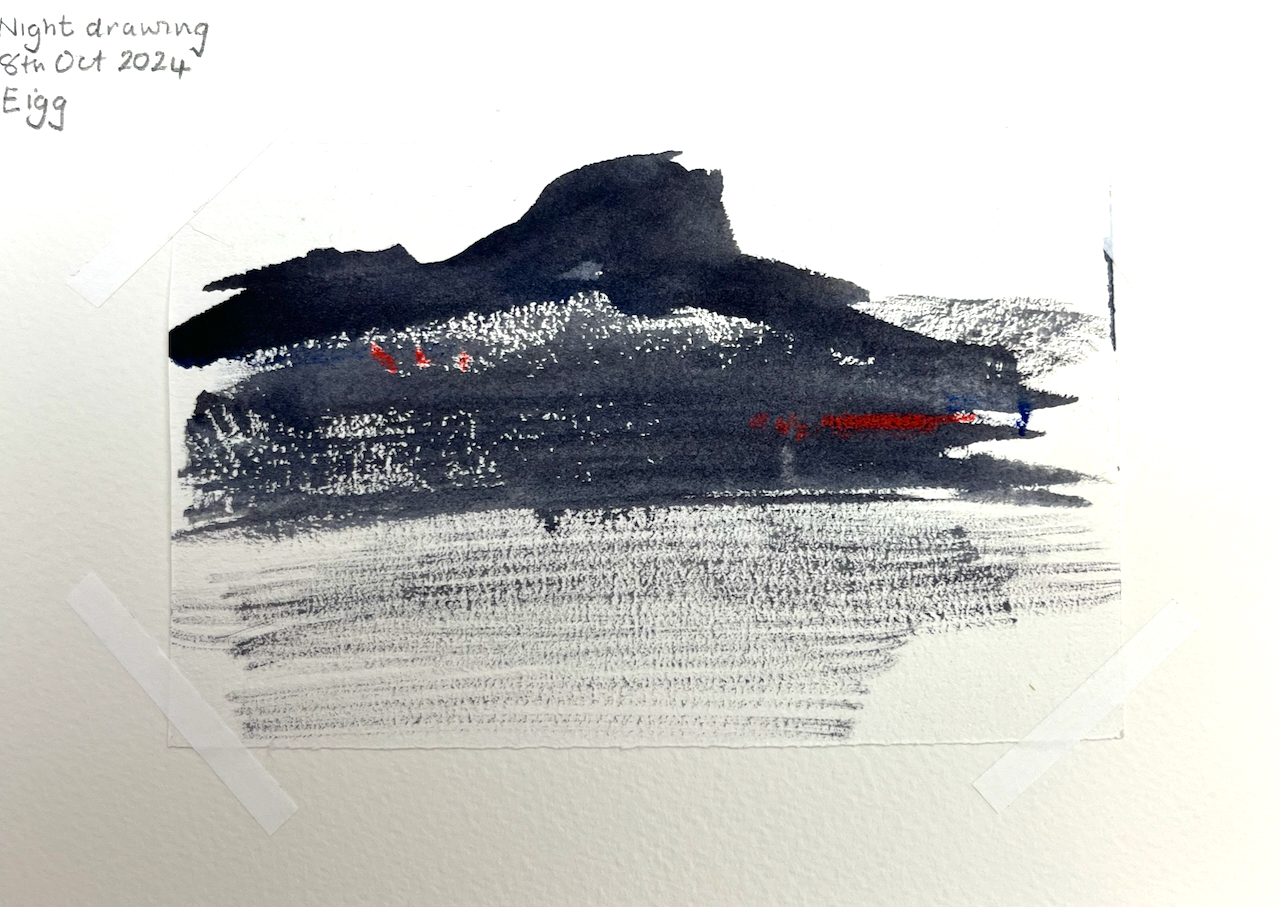
Alice and I ran workshops on brushstrokes, rapid sketching, outline drawing, sketching kit, painting sea and sky and many other exercises. We all shared thoughts and ideas on tools and techniques, and everyone learned a lot, including me. We also did an experimental workshop on sketching in the dark.
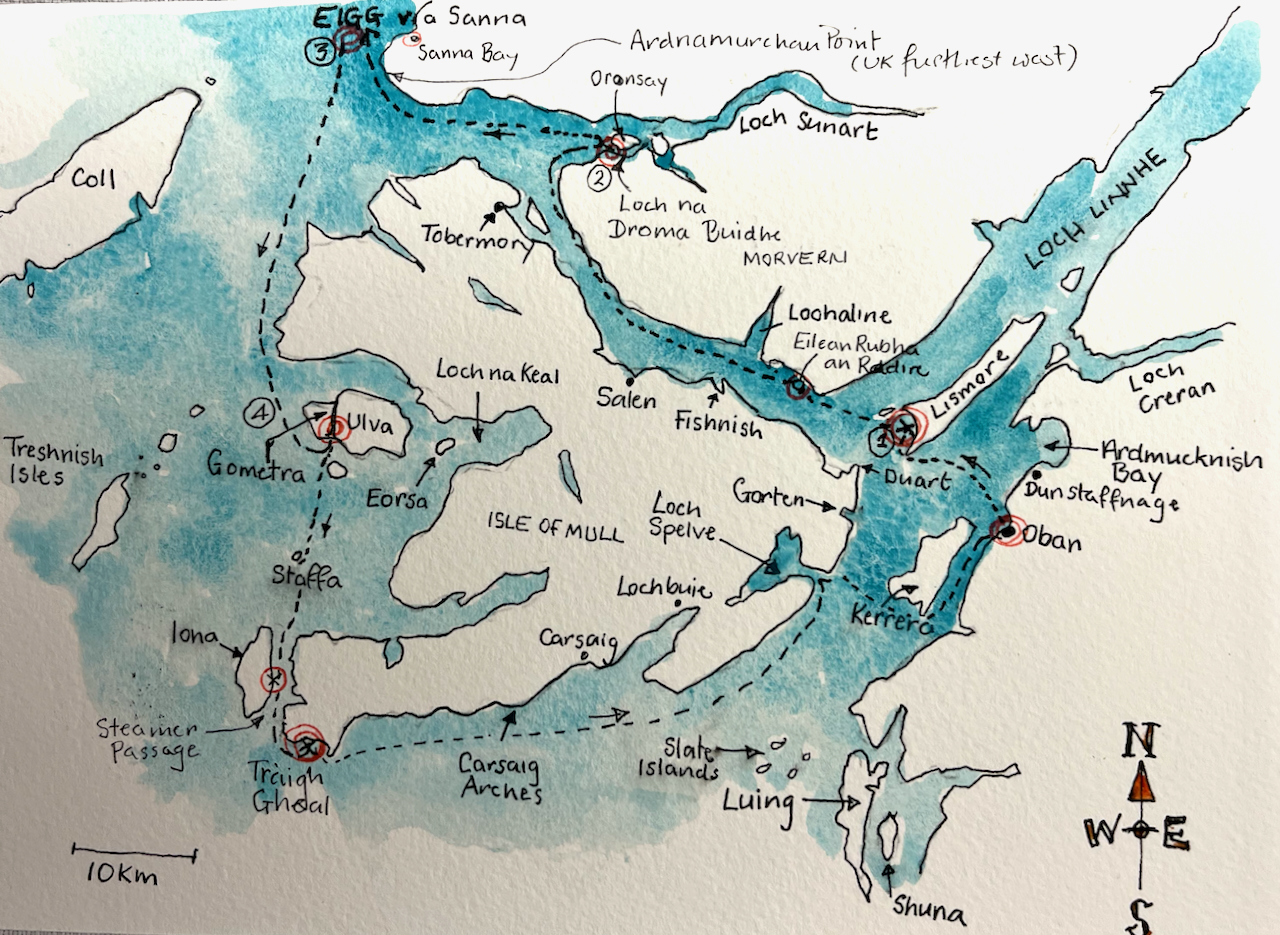
Here is a map of where we went.
Maps showing our route [map (c) Open Street Map contributors]
On this post is a selection of my work from this voyage. For more about the ship, and future plans, see the Lady of Avenel website.
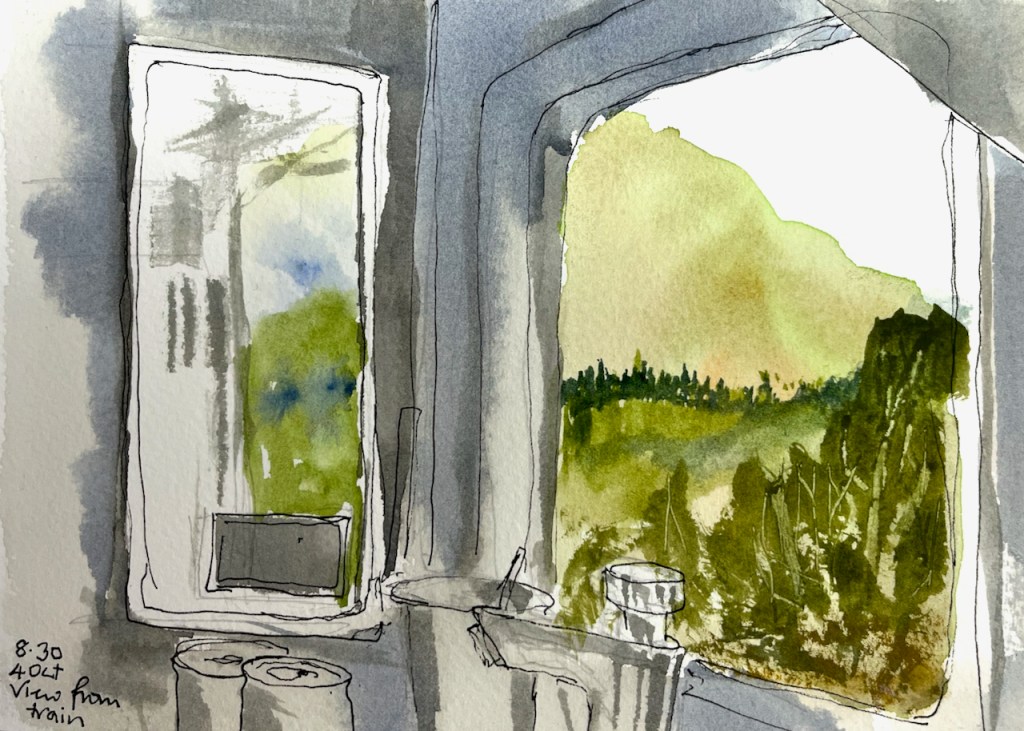
I travelled North on the Caledonian Sleeper, and did some sketching on the train.
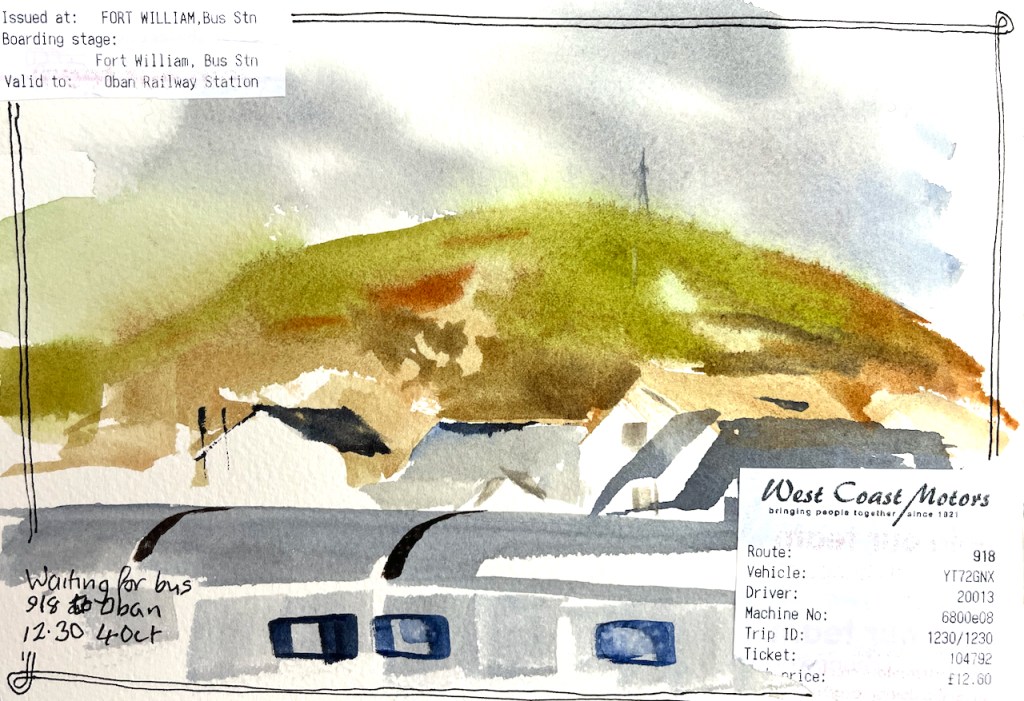
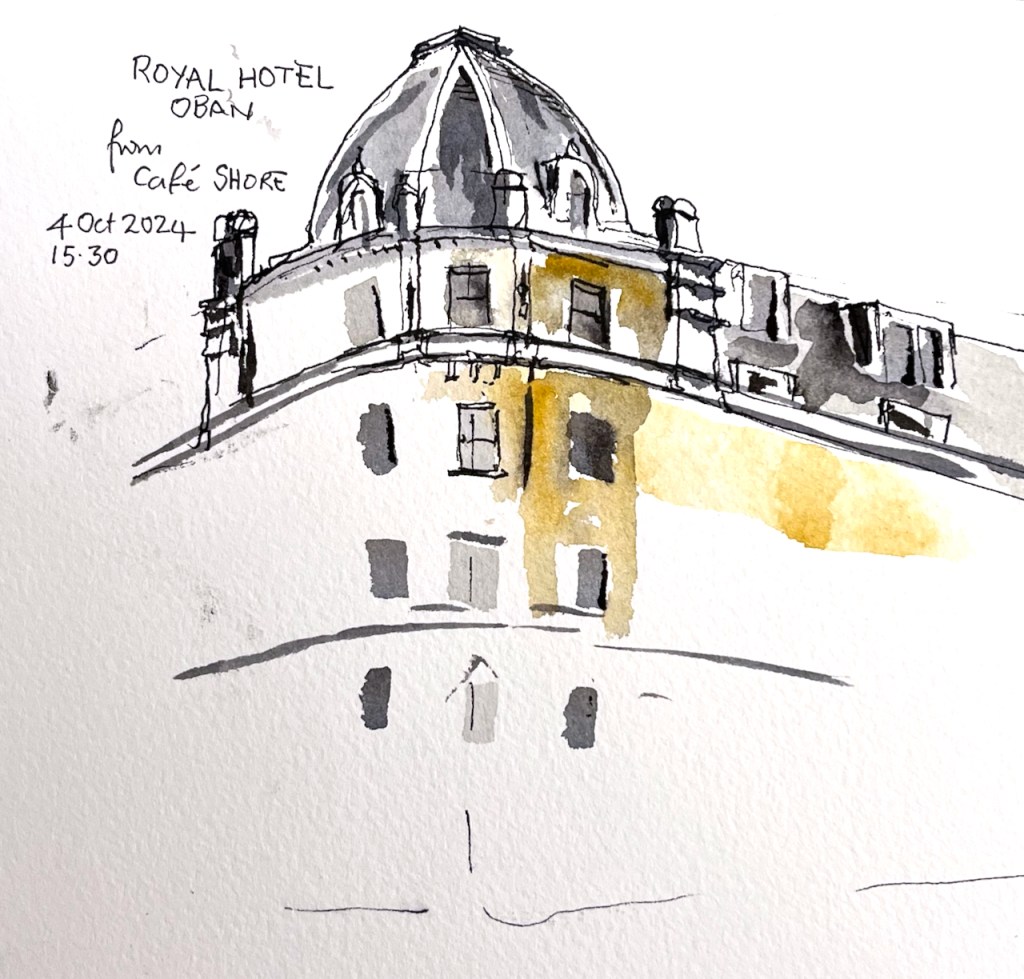
Scottish highlands, sketched in the sleeping cabin on the train.Waiting for the bus from Fort William to ObanQuick sketch in a café in ObanSketching on the journey to Oban
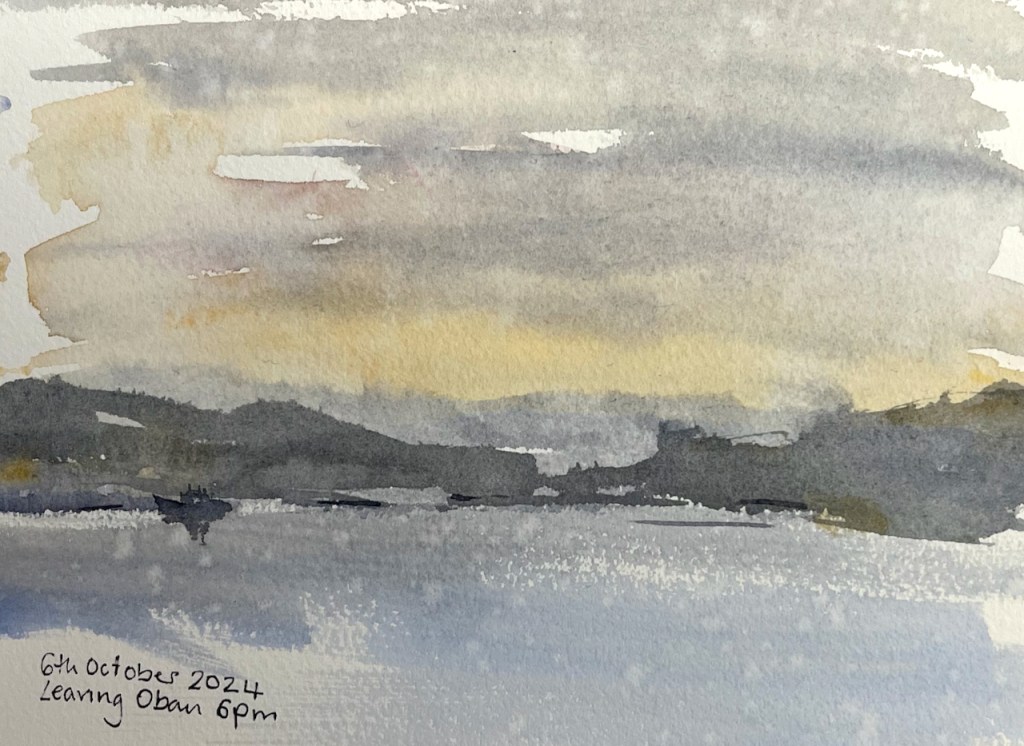
The guests came on board in Oban, and we set off in the evening for the week’s voyage.
Leaving Oban, 6th October 2024. There was fine rain, some of which landed on the picture.Sketch map
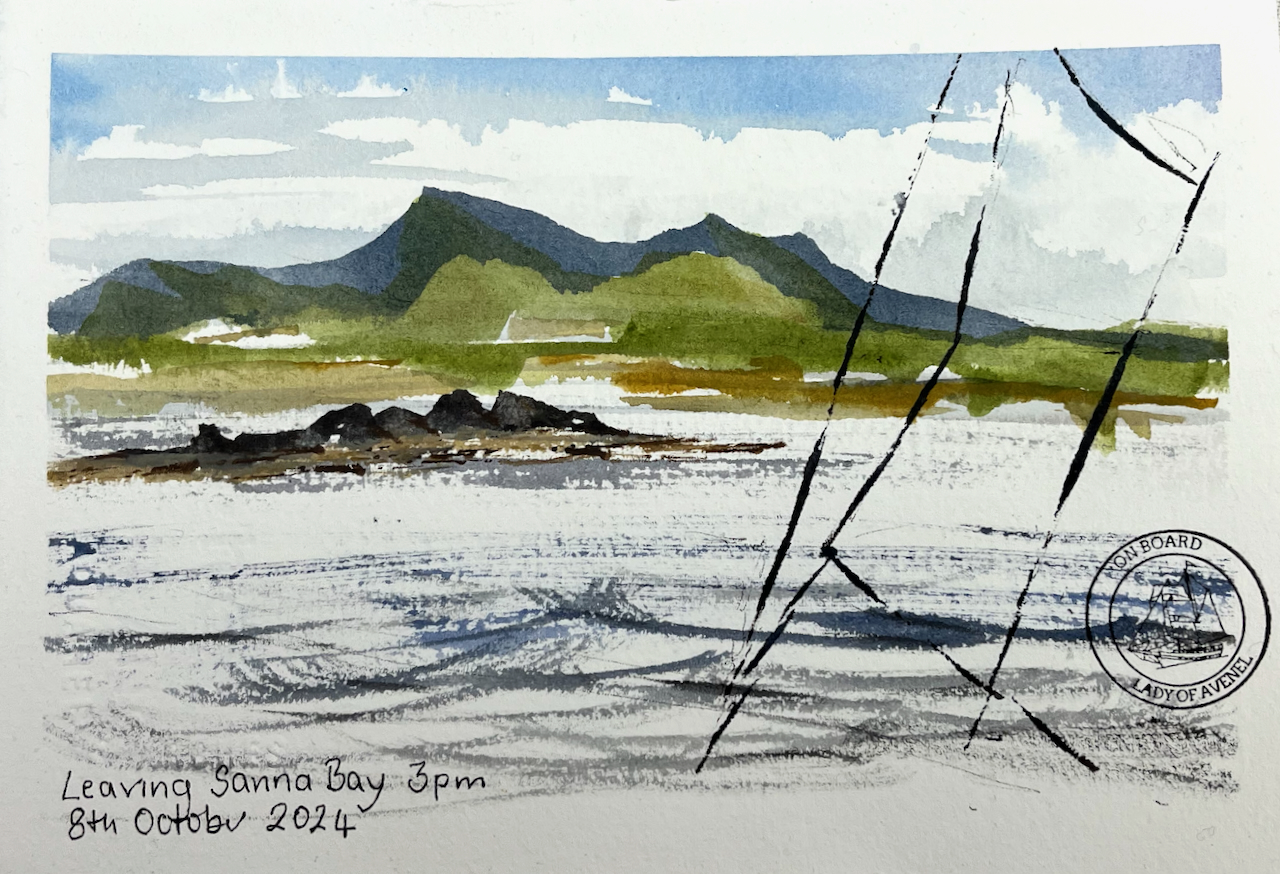
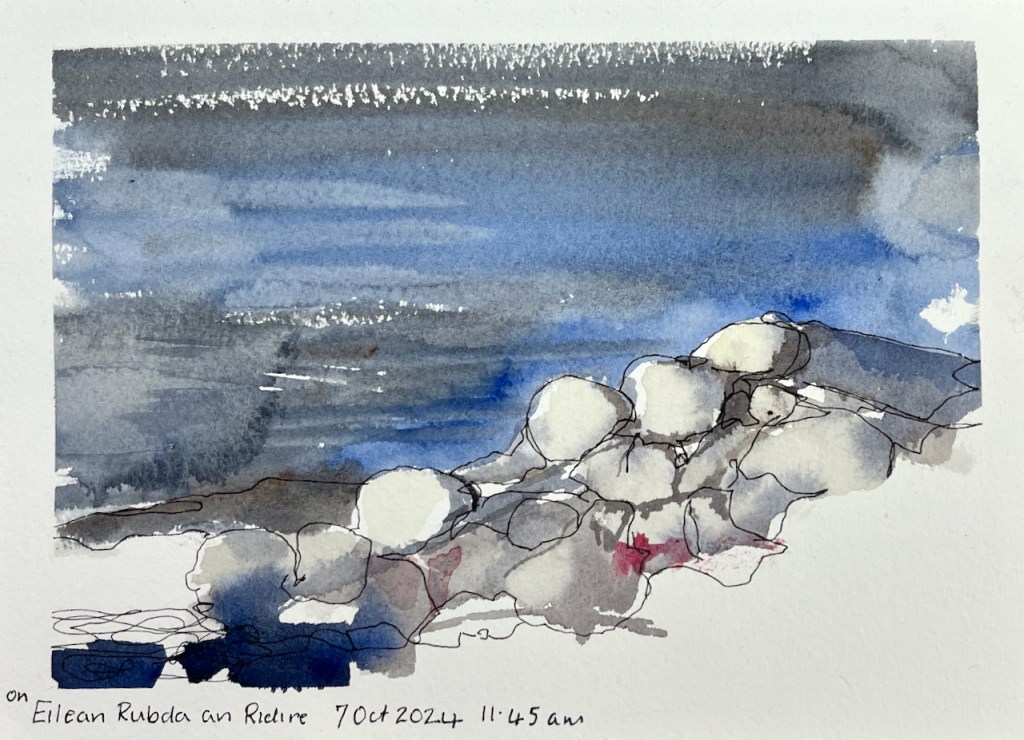
Here is a selection of my sketches from the voyage.
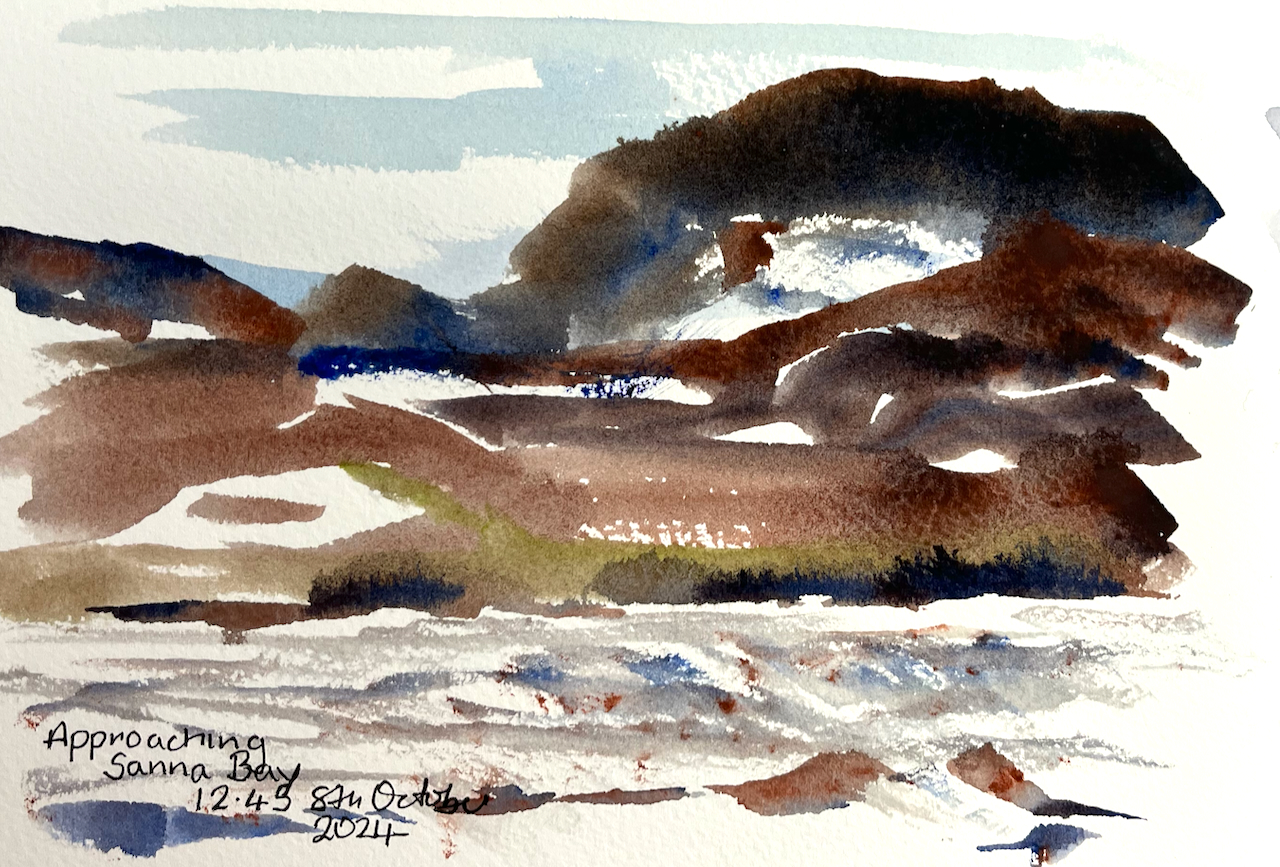
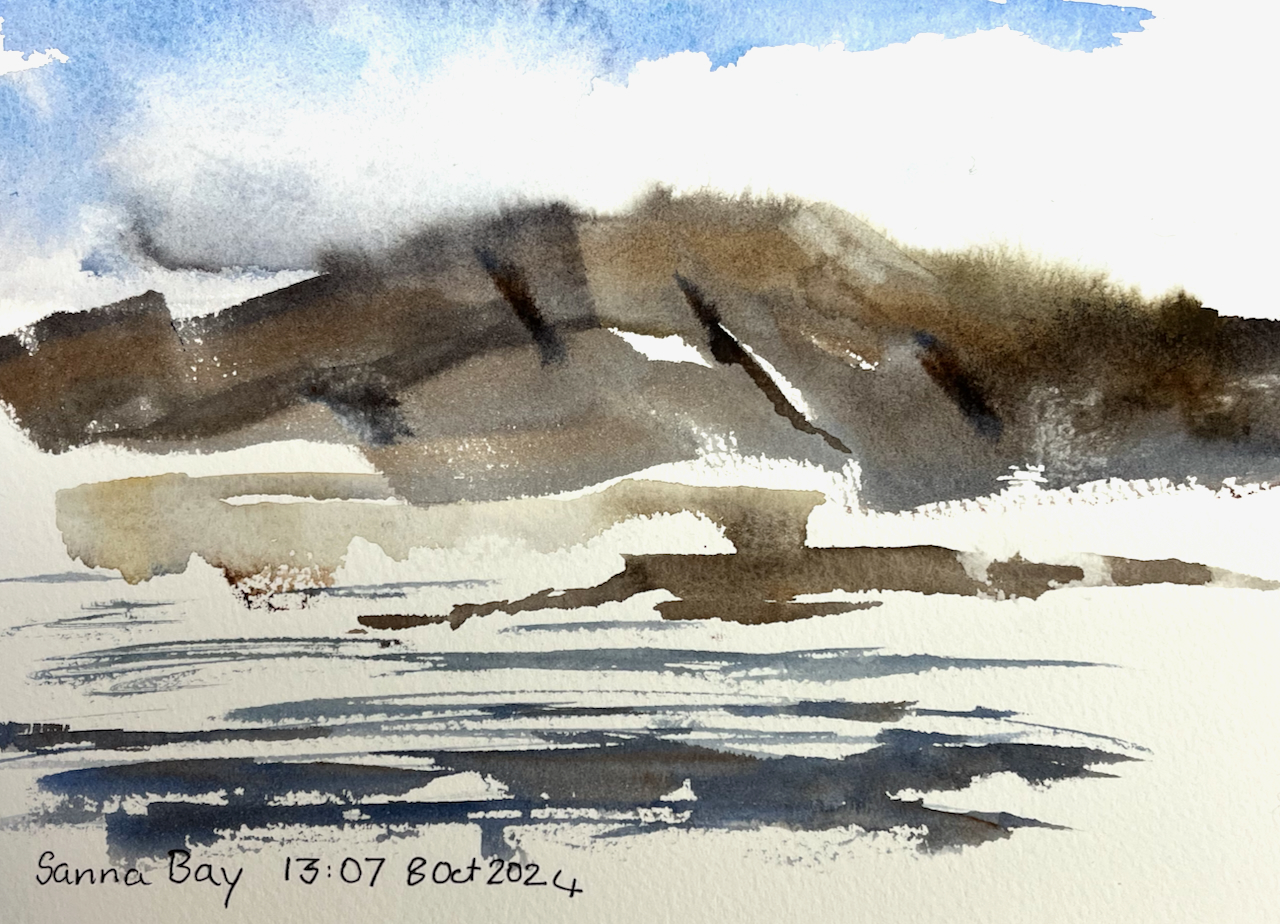
At Sanna Bay there is a large sandy beach, and a settlement of a dozen or so cottages. Here is a sketch made as we approached Sanna Bay:
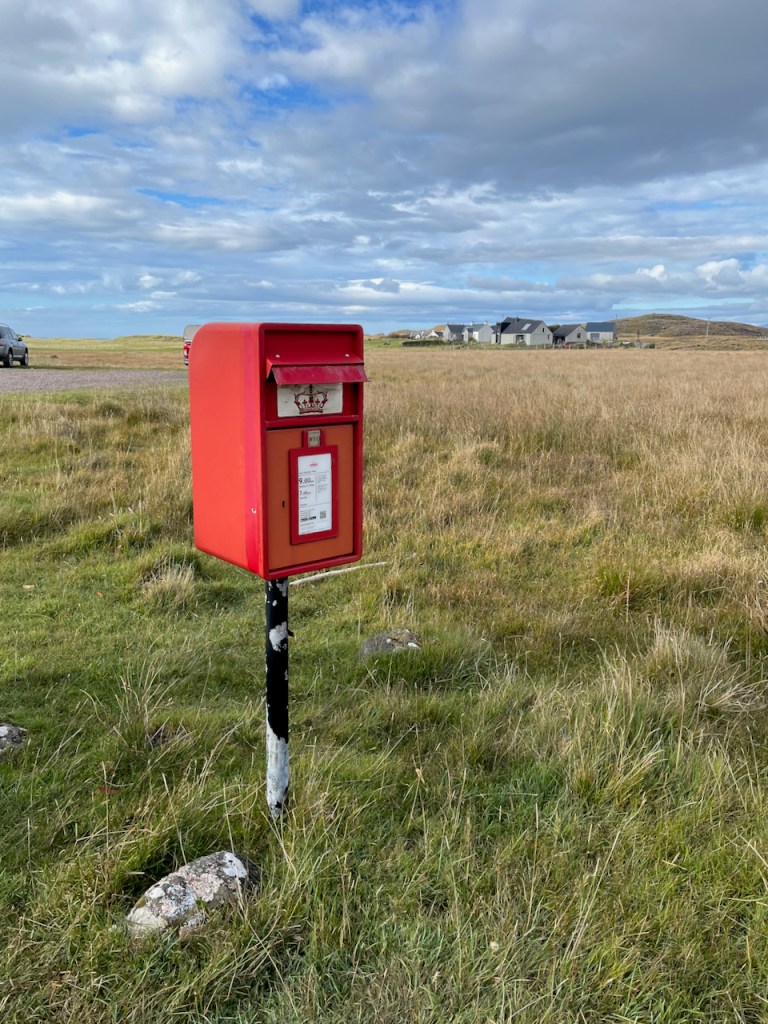
I walked into that scene, through the sand-dunes, in search of a post box. Against all expectations, I found one.
Here is the post box at Sanna Bay. Collections 9am Monday to Friday, and 7am on Saturday.Here is the card I posted, which reached London in two days.
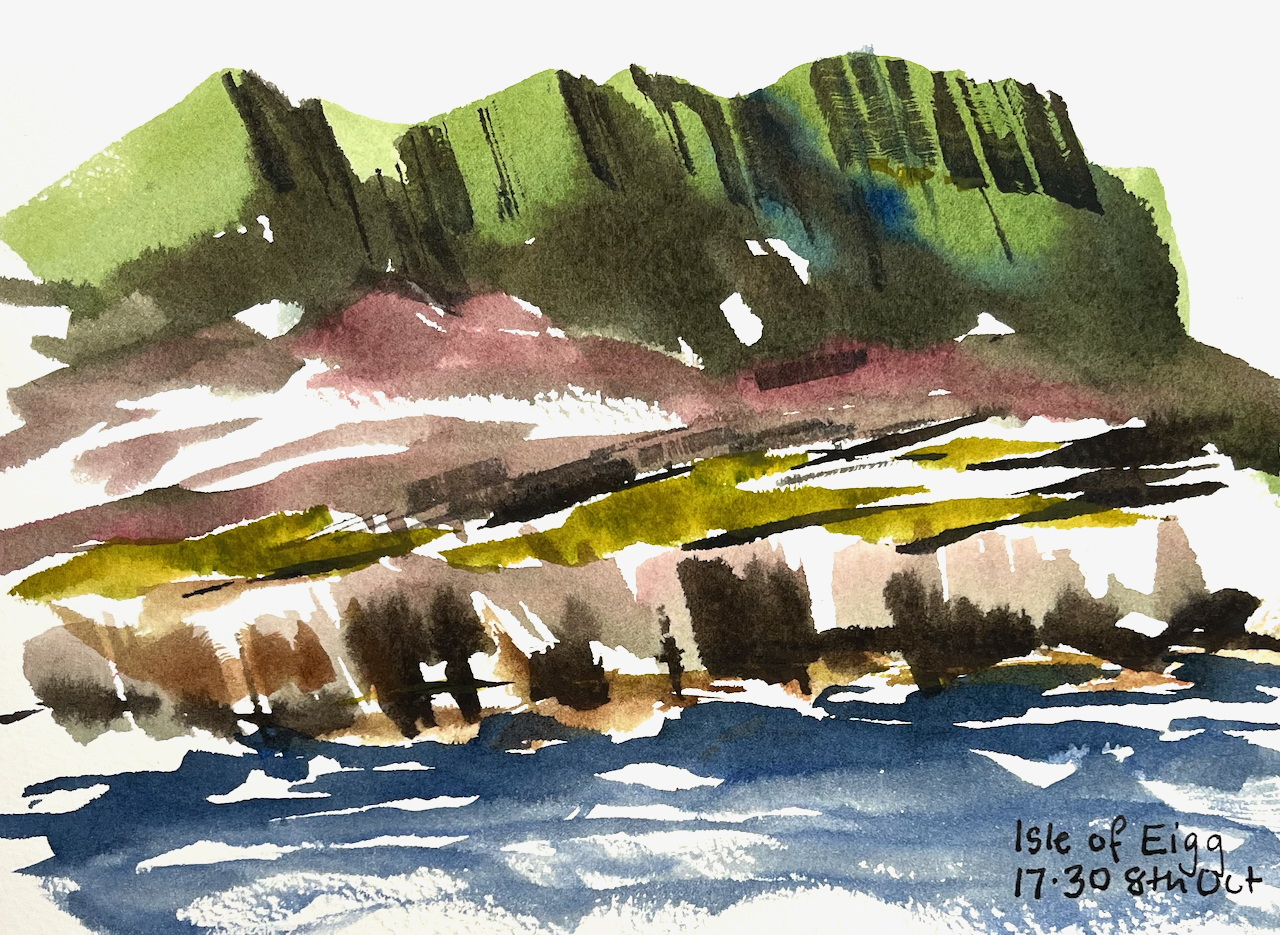
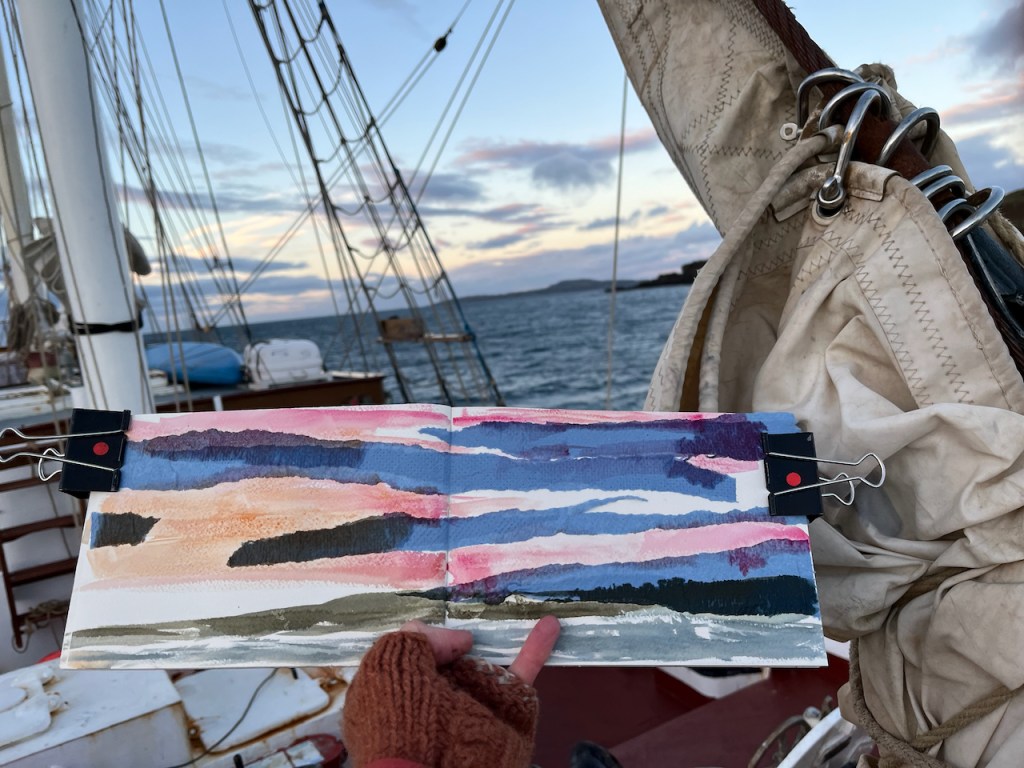
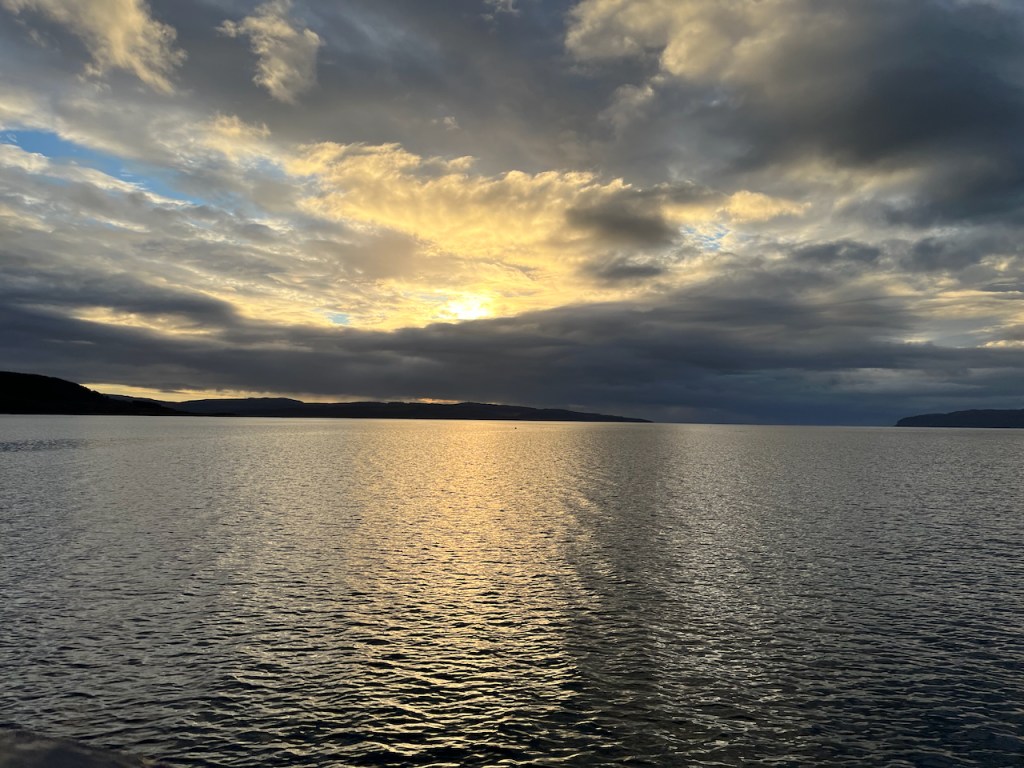
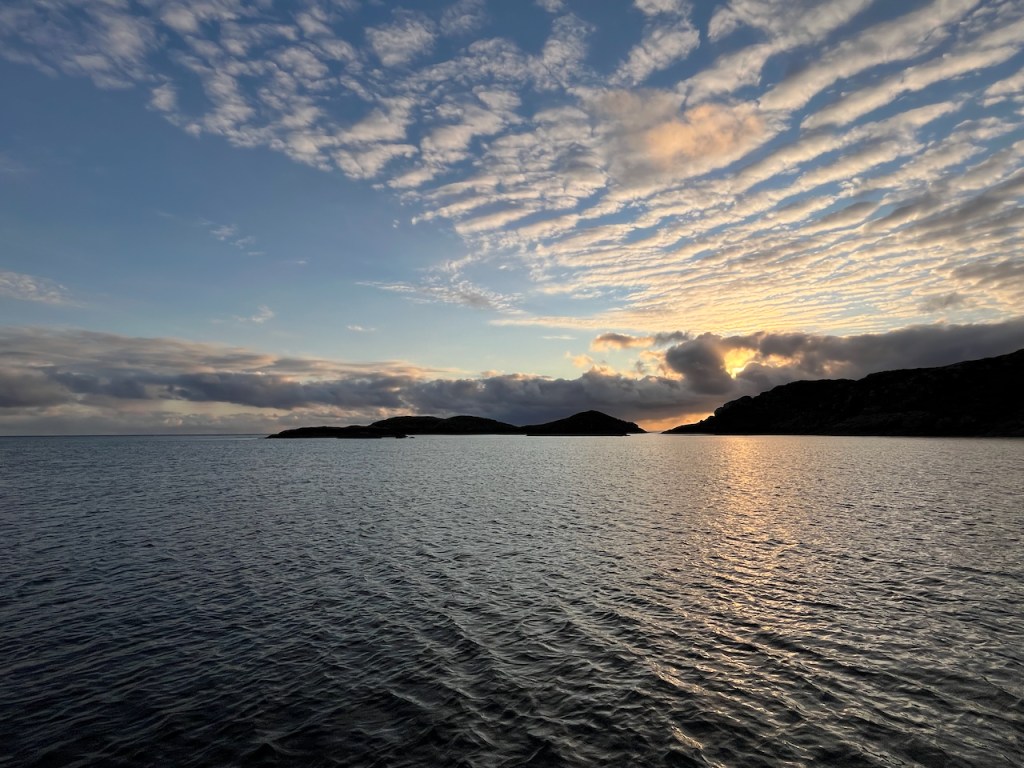
At Eigg there was a spectacular sunrise.
Sunrise over the Isle of Eigg, watercolour and collage.
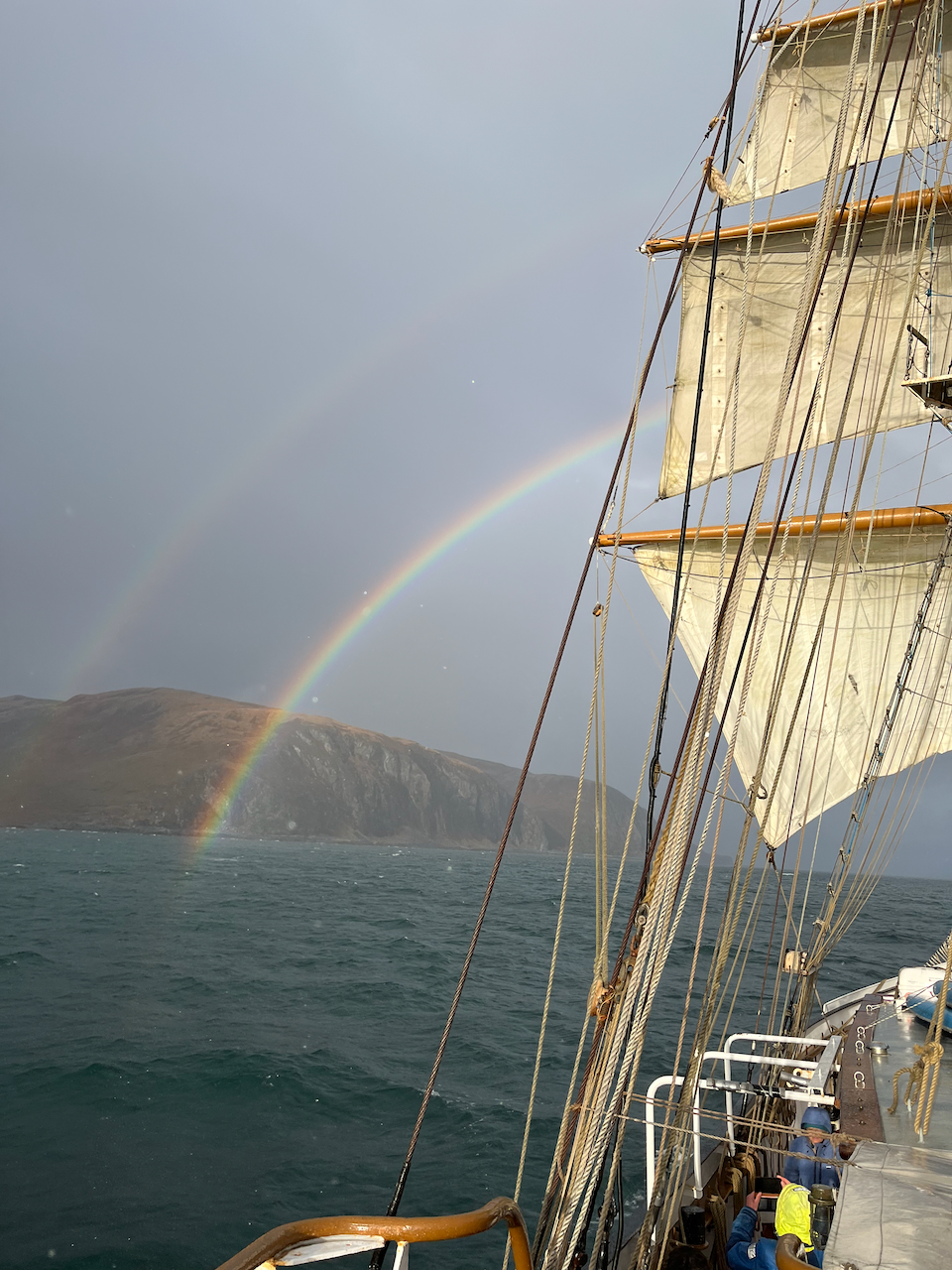
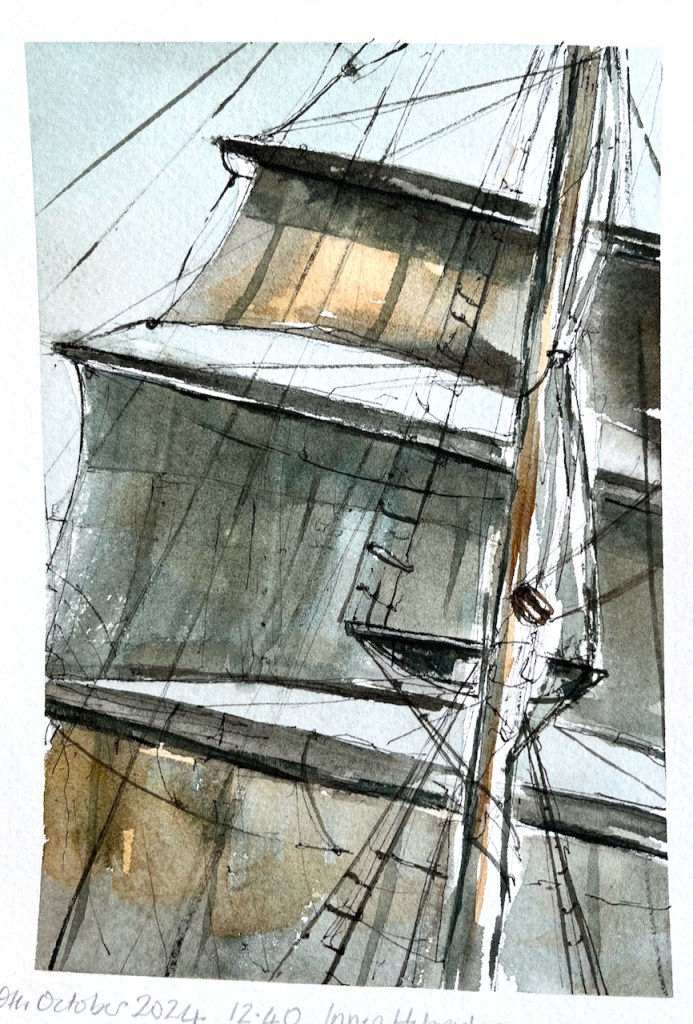
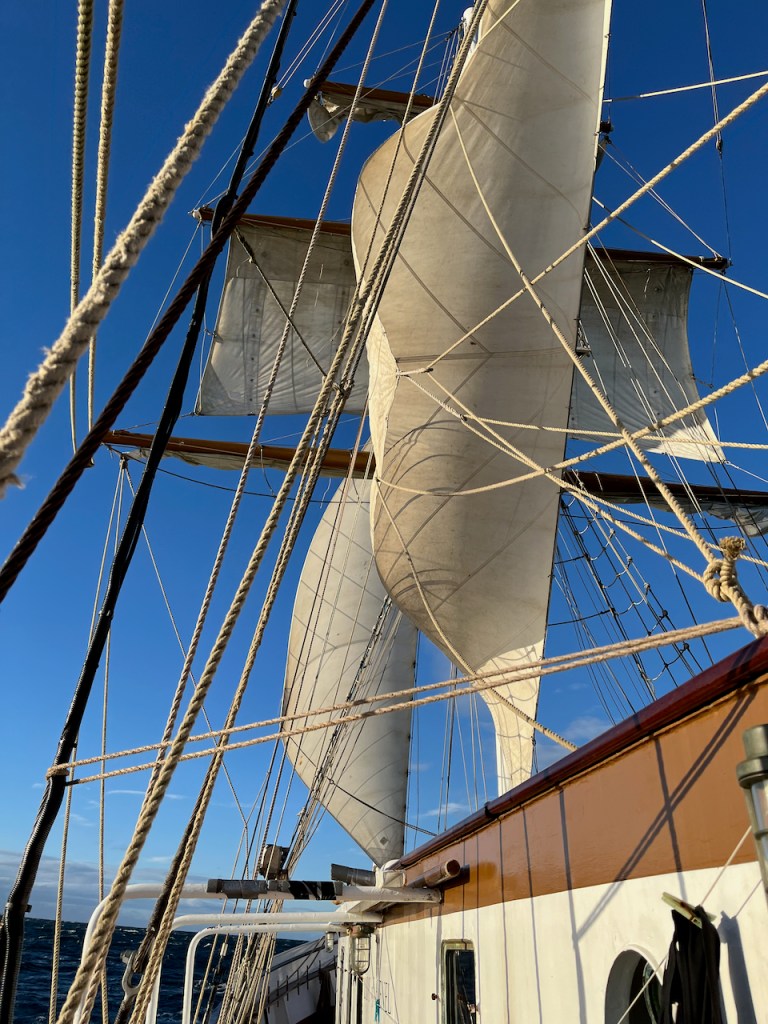
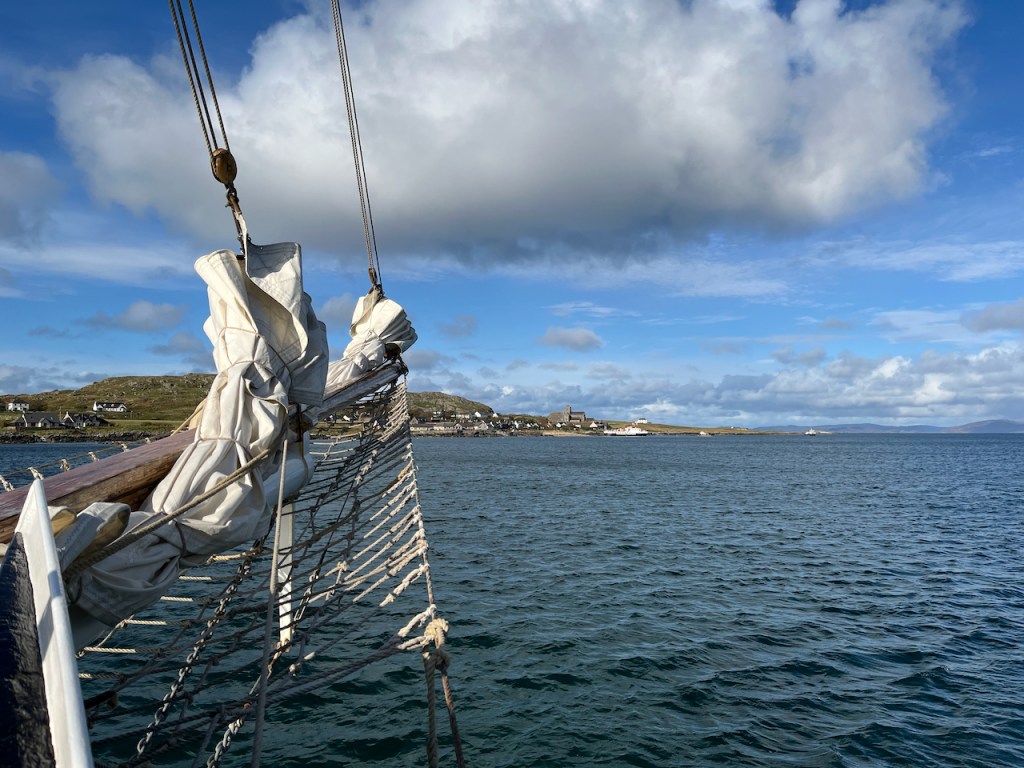
With a strong wind in our sails we reached 8 knots on the journey south from Eigg to Iona.
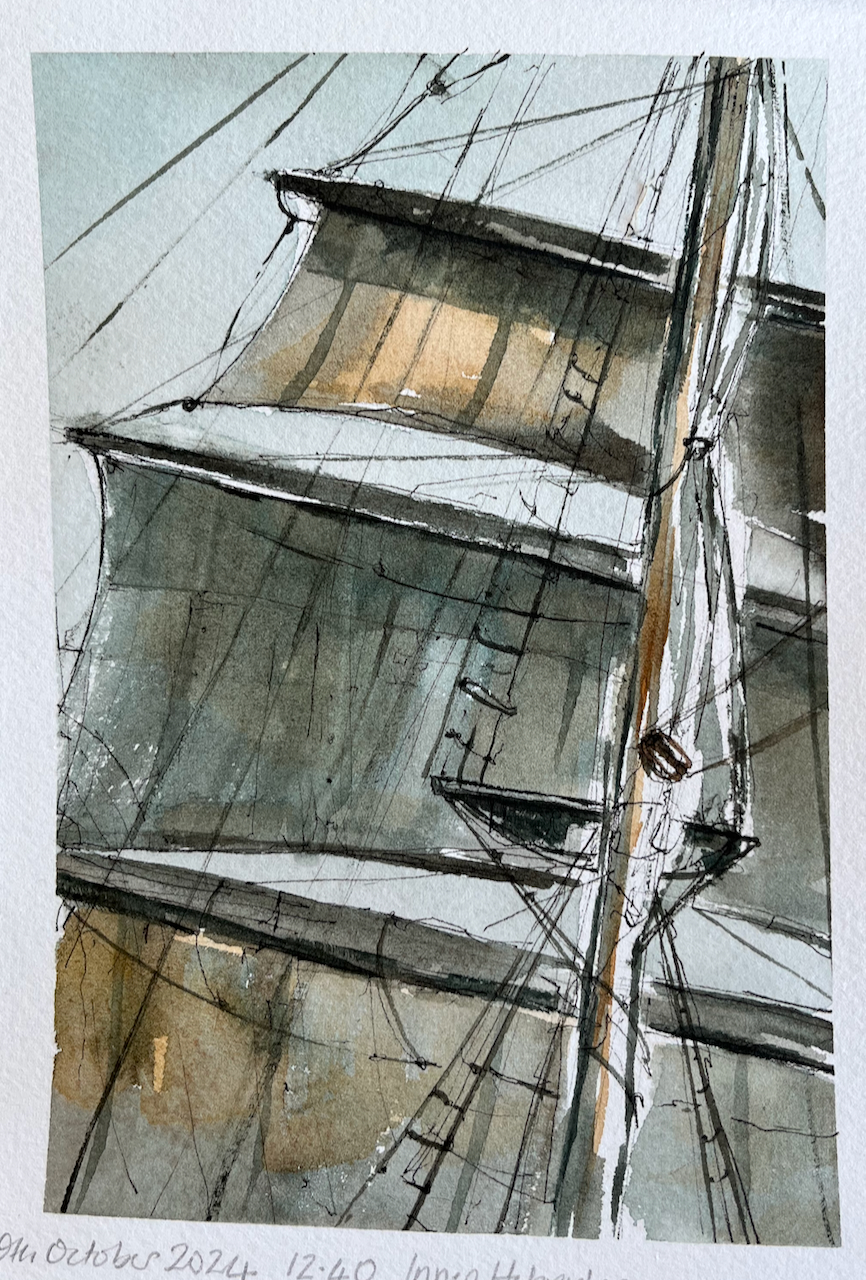
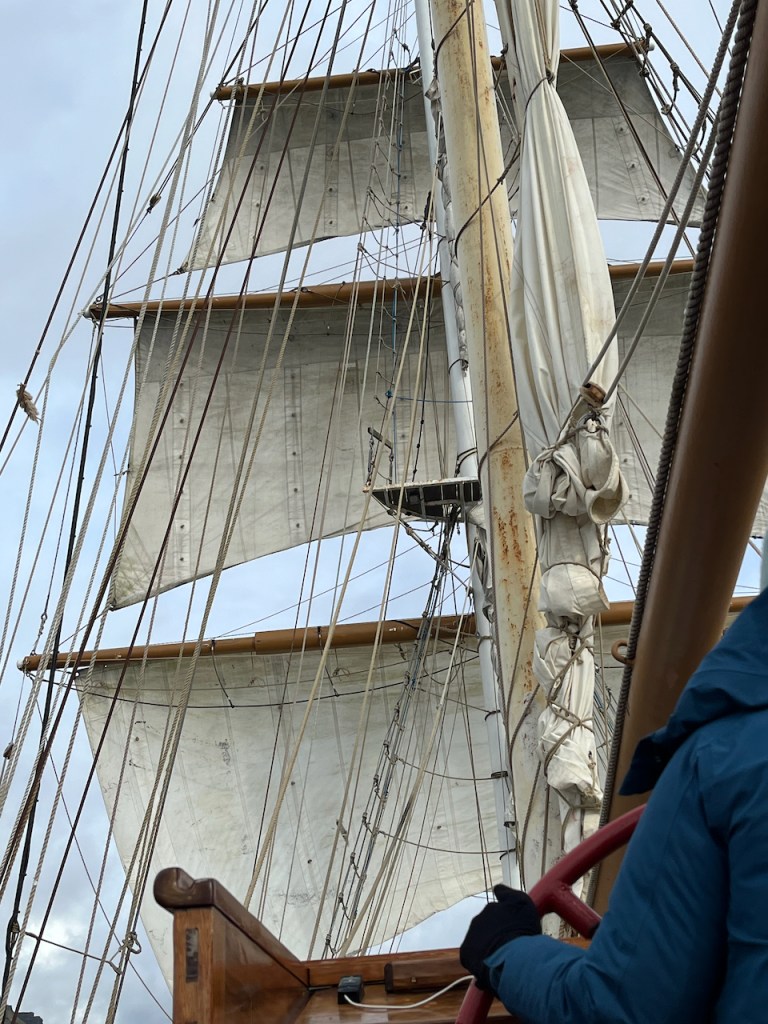
The sails are full on the journey from Eigg to Iona.
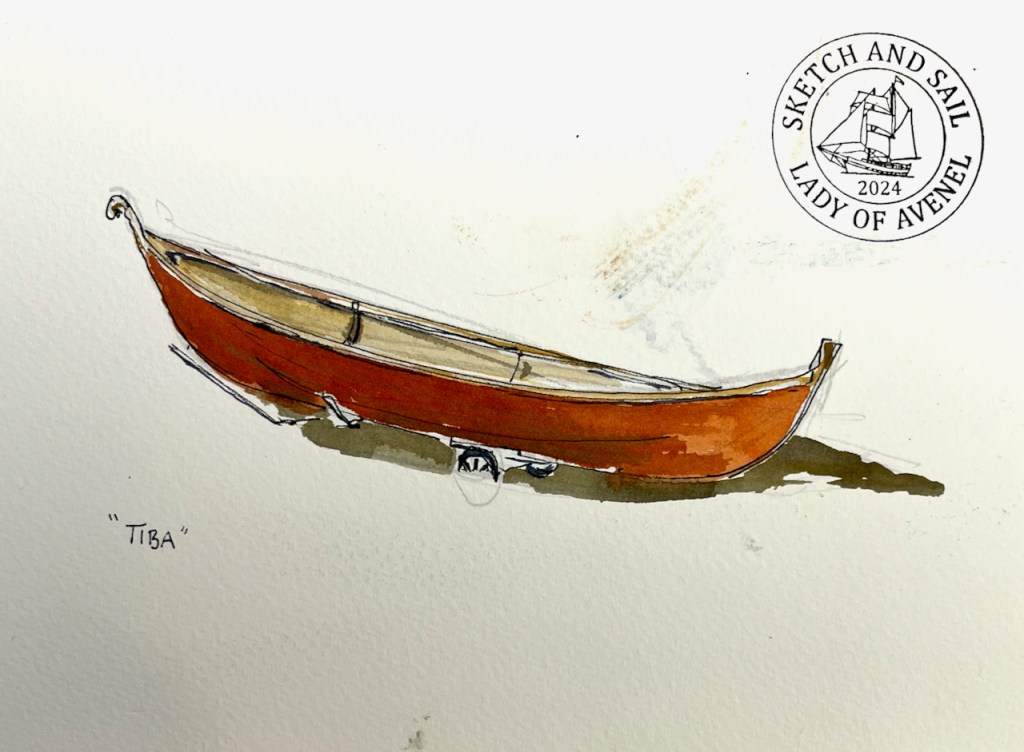
On the island of Iona, I sketched a boat on the beach.
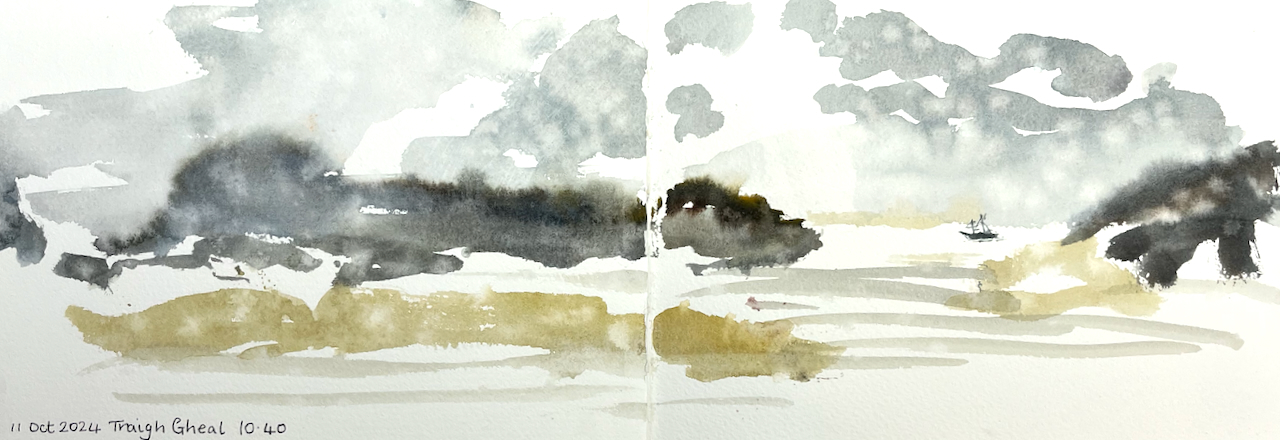
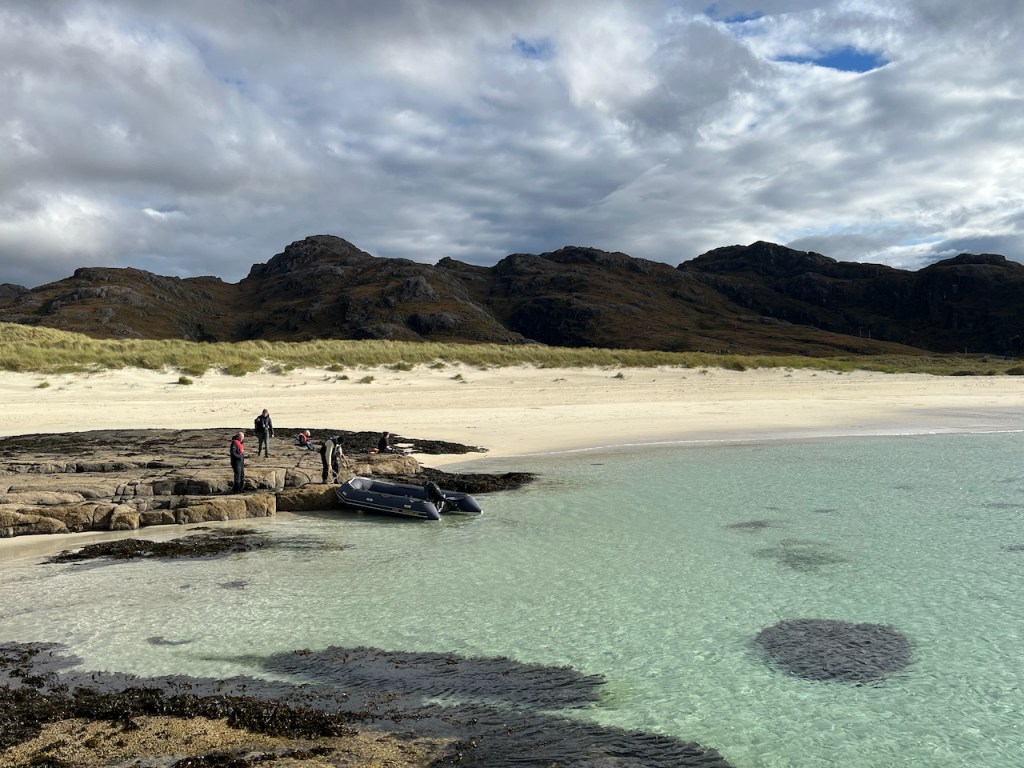
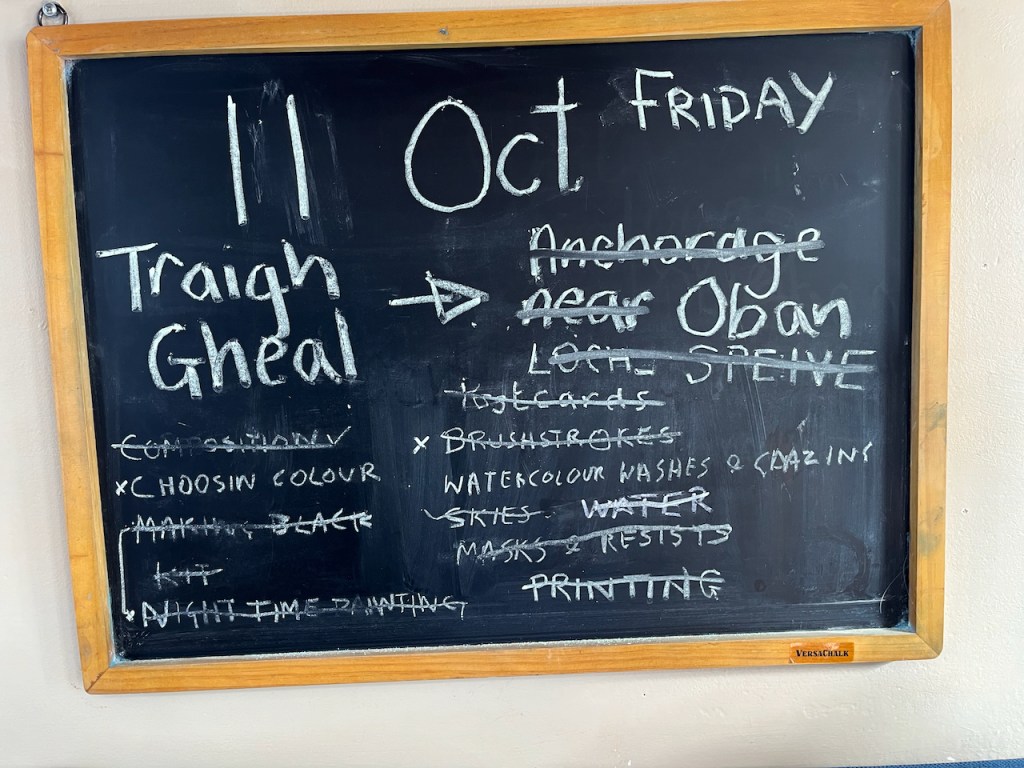
On the way back to Oban from Iona we landed at a vast sandy beach called Tràigh Gheal. There were showers of rain.
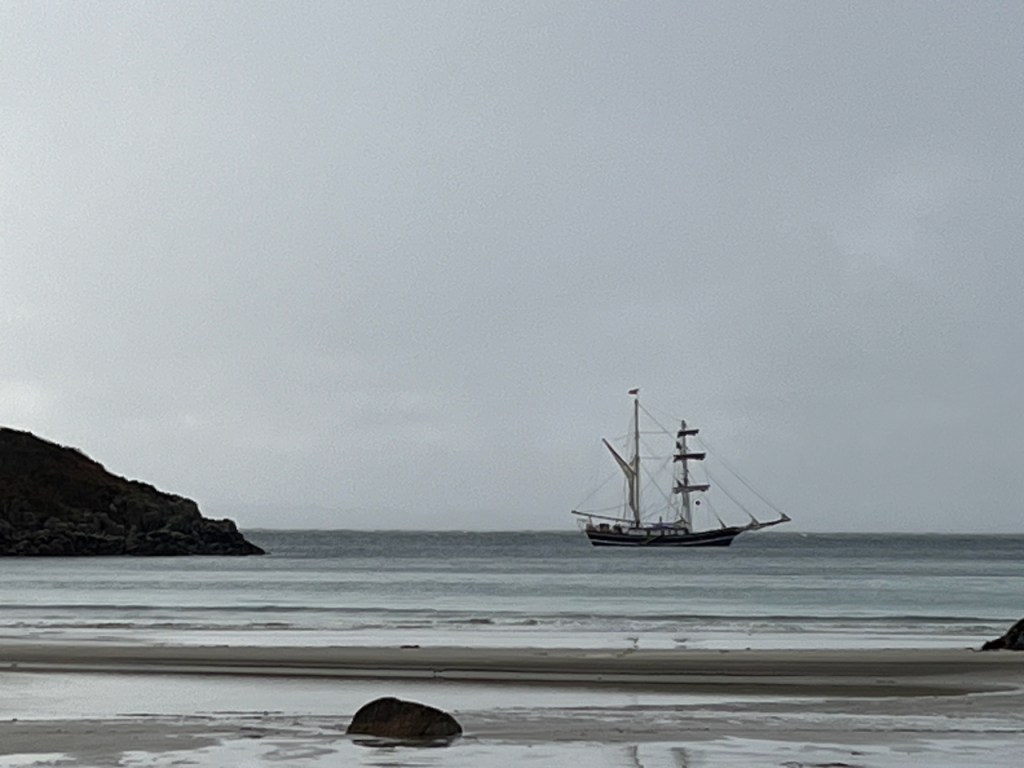
Here’s a photo, showing the Lady of Avenel at the anchorage at Tràigh Gheal. We reached the beach by rubber dinghy.
Lady of Avenel at Tràigh Gheal
I used a JP Purcell sketchbook. Here’s a quick flick-through:
Sketchbook flick-through
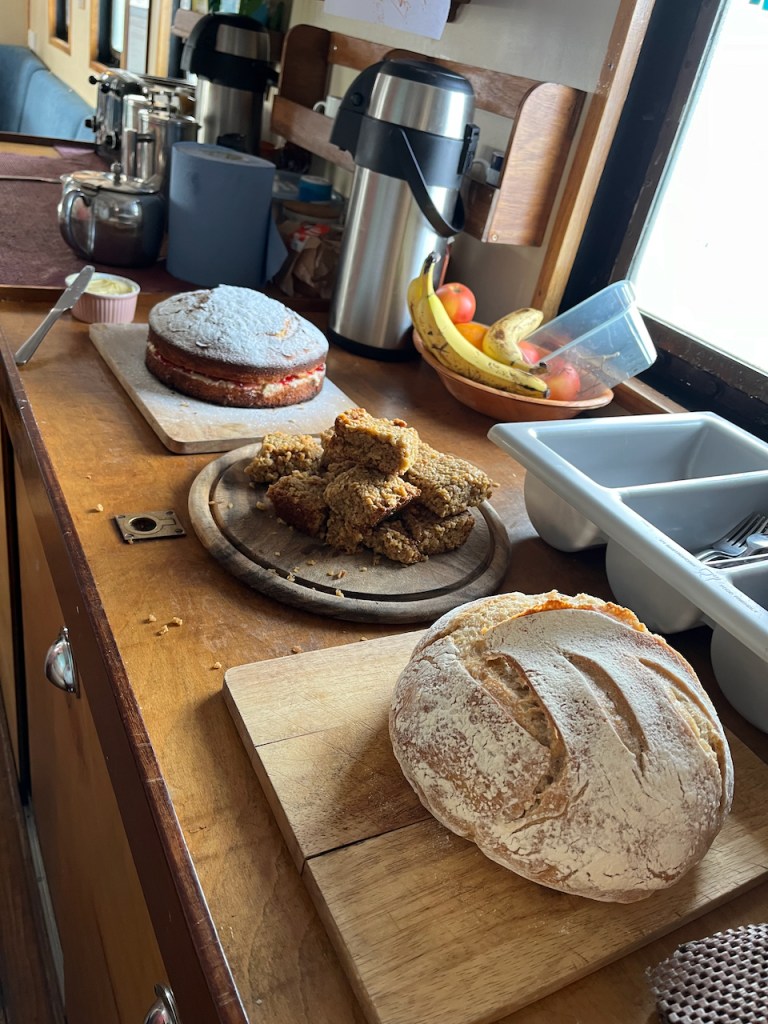
All of this was powered by a strong North Westerly wind, and Tom’s cooking. Tom continued cooking even as the North Westerly gusted Force 7, and produced a hot meal for hungry sailors every evening, soup for lunch and cooked breakfasts. He made the sour dough bread every day in the ship’s galley. I found this hugely impressive.
Tom’s cooking on the ship: cake for hungry sailing sketchers: and sourdough!
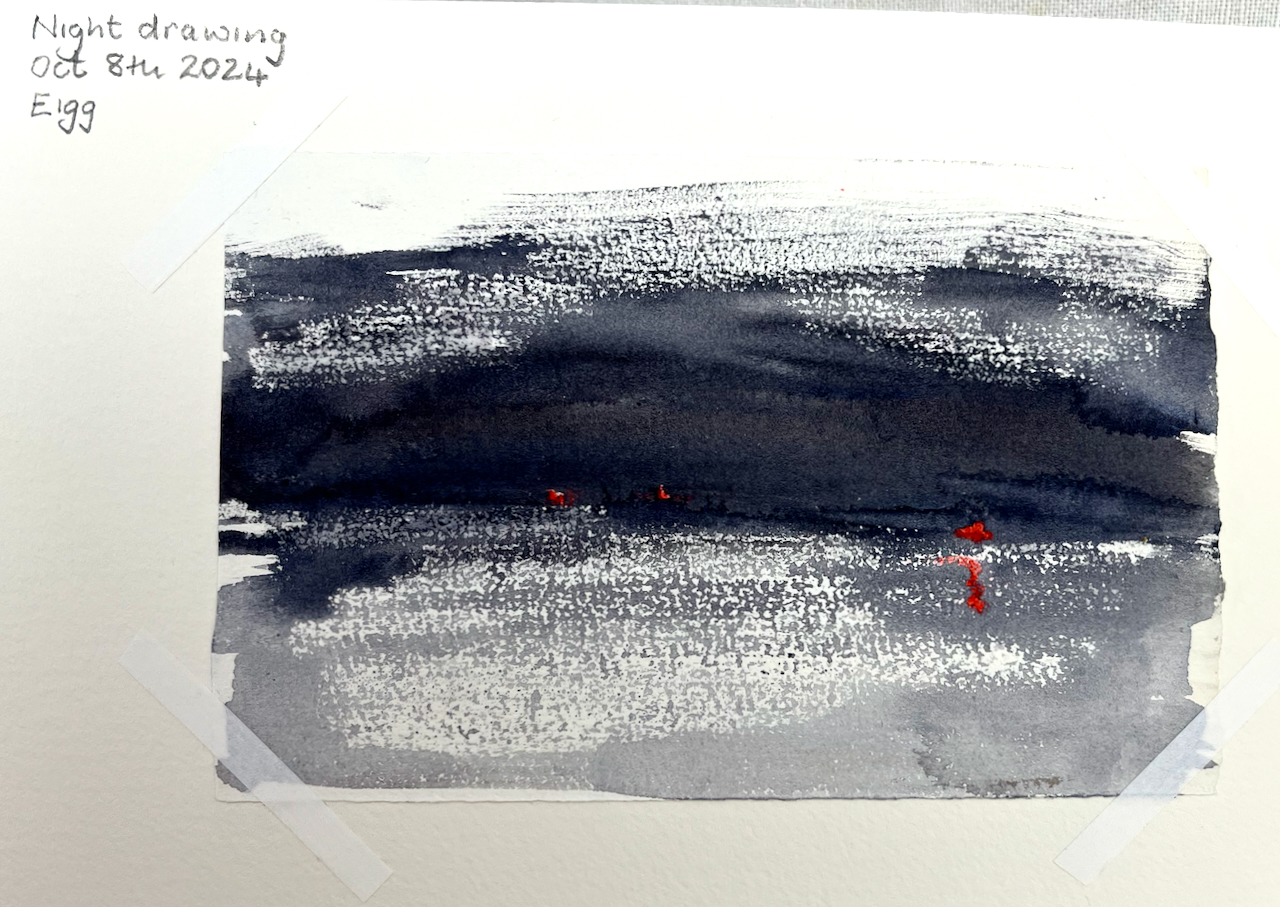
In case you are curious, here are night sketches. The lights are done using wax crayon.
Here are some snapshots from the voyage.
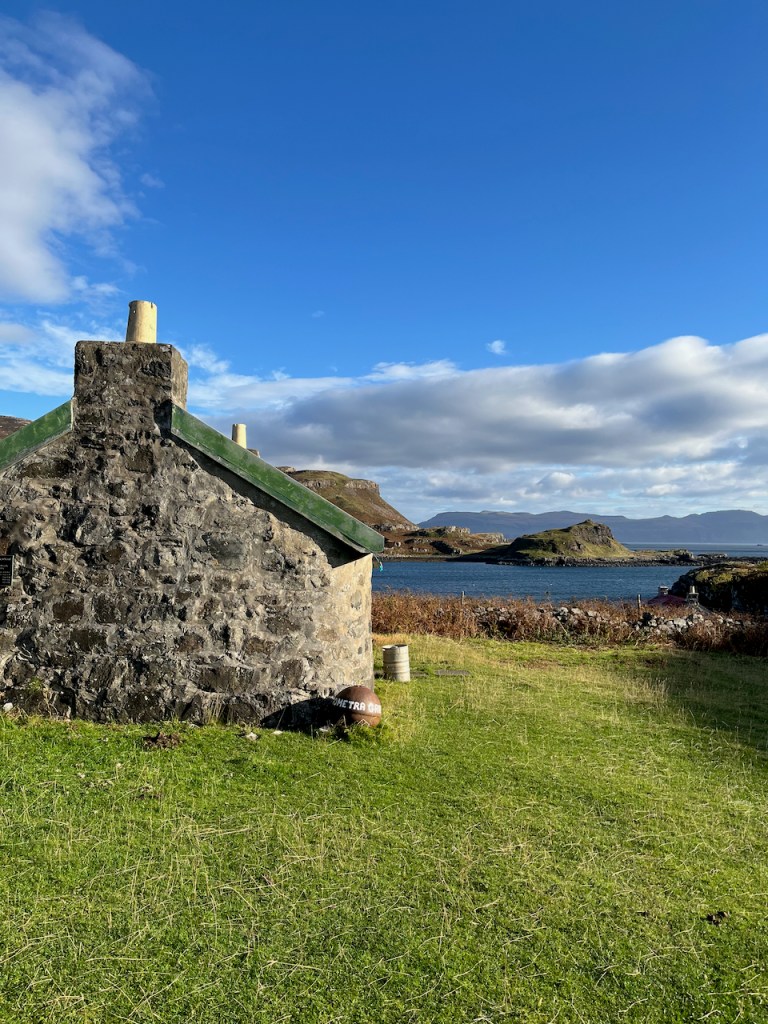
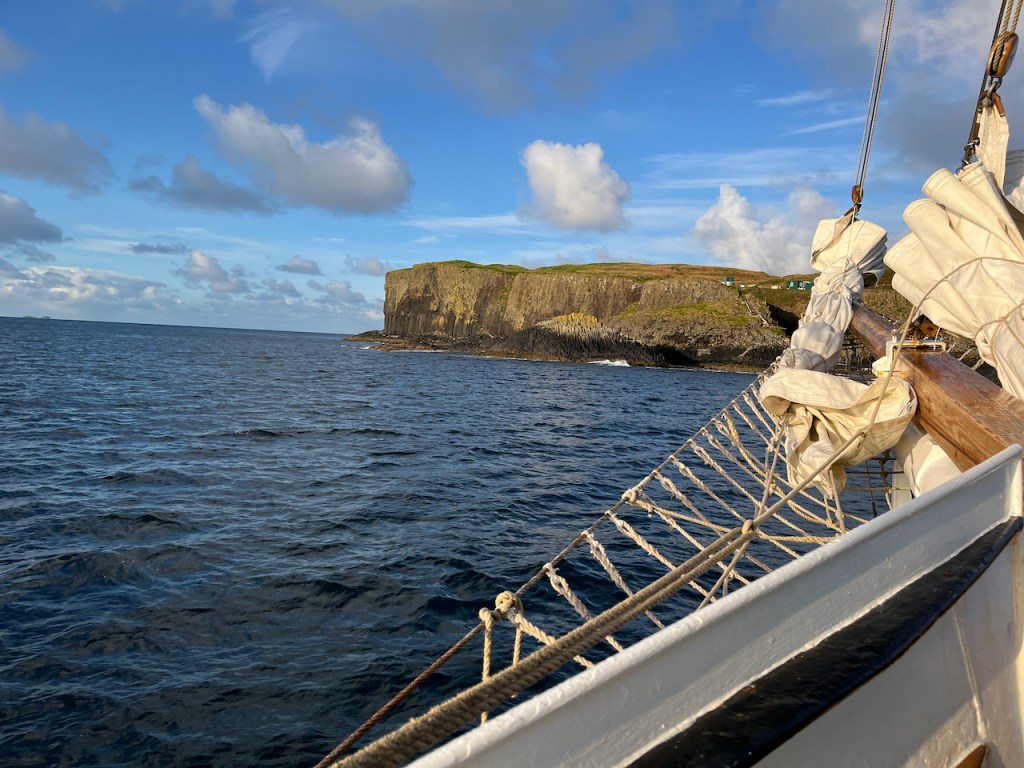
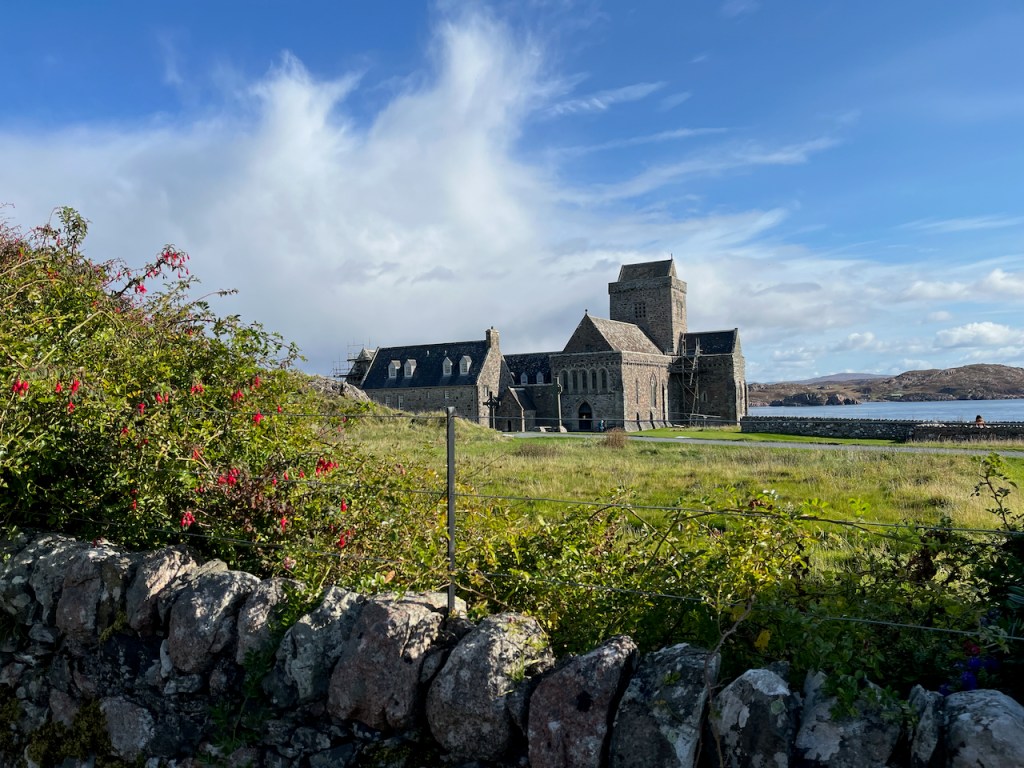
The art gallery on GometraApproaching Staffa, Fingal’s CaveThe abbey on IonaLady of Avenel off Sanna BayWorkshops done and crossed off the list!
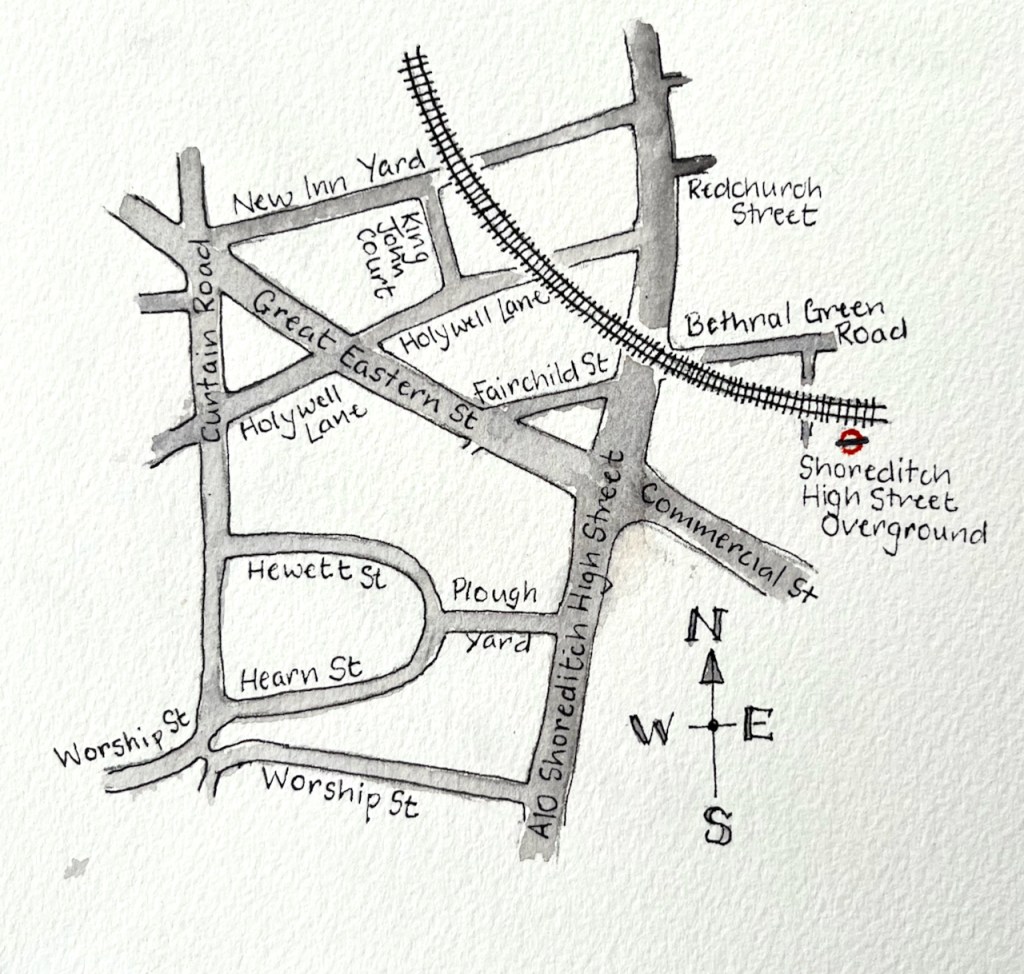
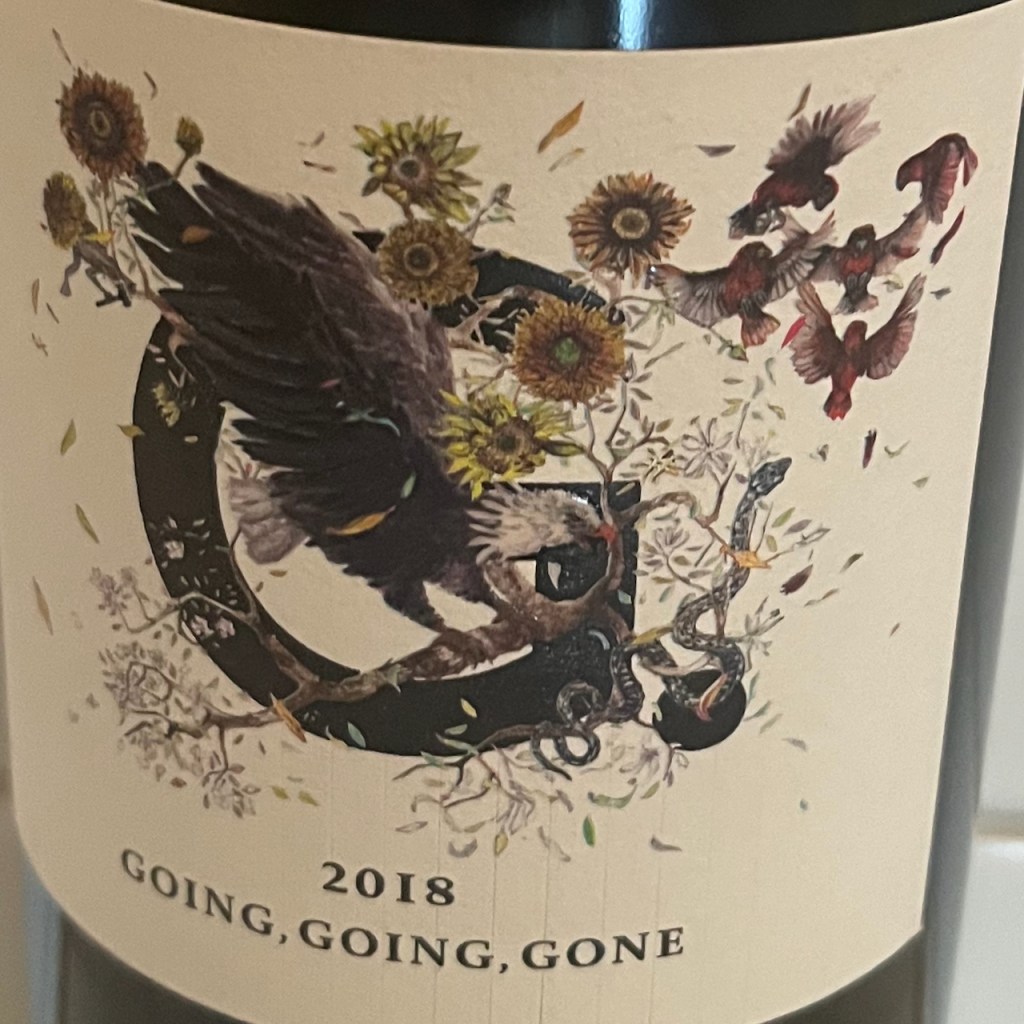
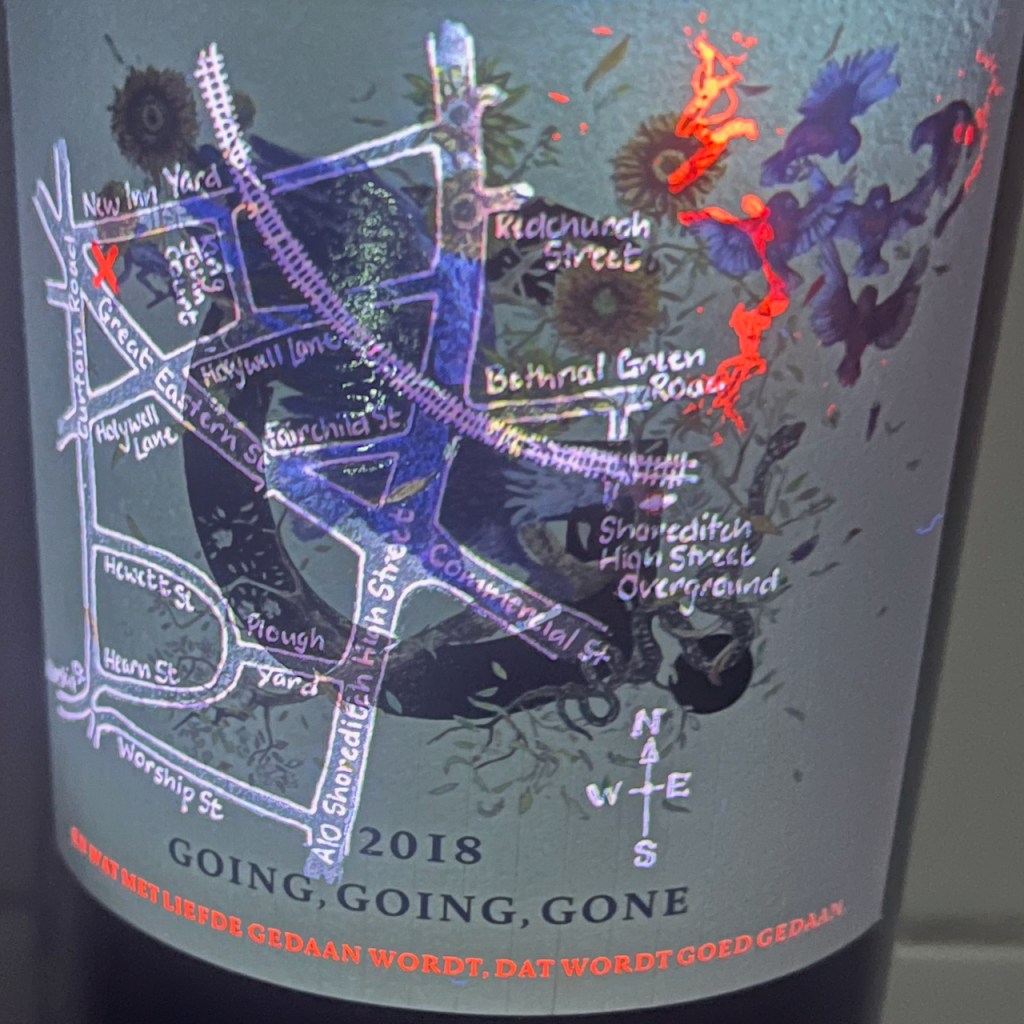
Vanessa from 4G wines saw one of my maps online, and contacted me to ask if I could do a special one for them – for a wine label! I was thrilled at the idea of having my artwork on a wine label, and set to work.
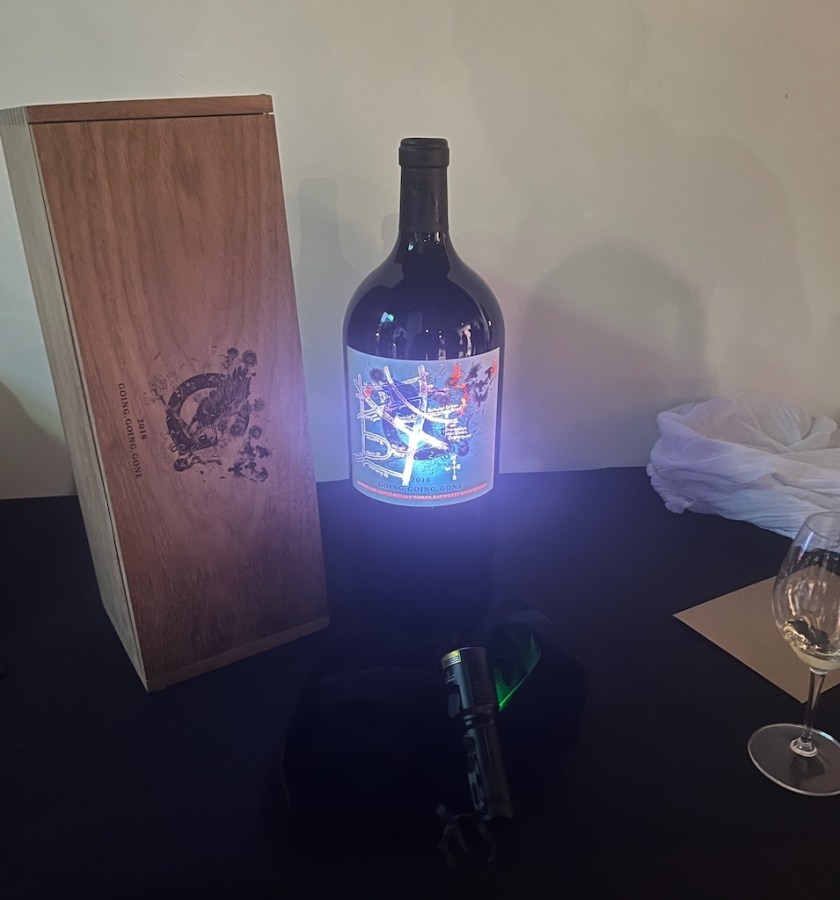
Vanessa was somewhat mysterious about how the map was to be used. I was curious. She invited me to the London launch of their vintage so I could see it in person, when the bottle design was to be unveiled.
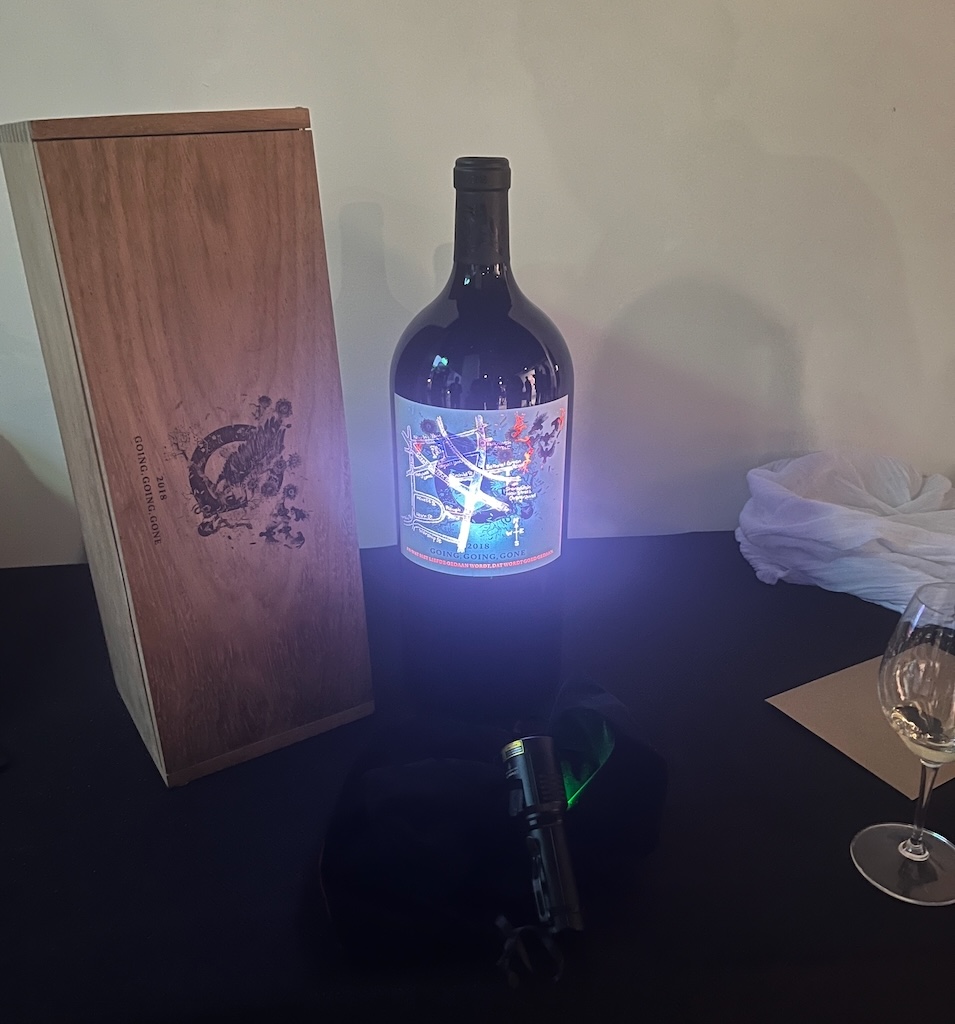
The event was at the Banksy gallery on the Charing Cross Road. On display was the 2018 vintage named “Going, going, gone”. The name is a reference to a 2018 event at an auction house. A Banksy painting, “Girl with a Balloon”, apparently started to self-destruct by feeding itself through a shredder embedded in the picture frame. The shredding process started immediately the auctioneer’s hammer came down to mark the sale of the work, hence “Going, going, gone”.
4G make their bottles into intriguing works of art. The label on the bottle is a beautiful design by the artist Sebastian Blinde, showing elements of South African nature.
label design by Sebastian Blinde
The secret in this vintage is the map – my map! – made visible by shining ultra-violet light onto the label.
Secret map behind the label
It was such fun to see it. There is an X on the map to mark the position of an original Banksy mural “Girl with a Balloon”.
The inscription below the map reads: “EN WAT MET LIEFDE GEDAAN WORDT, DAT WORDT GOED GEDAAN”
This is another subtle artistic reference. It is a quote from a letter of Vincent van Gogh written on 3 April 1878, according to the website of the Vincent Van Gogh Museum in Amsterdam on this page of his letters.
“And what is done with love, is done well.”
An excellent motto, for both wine and art.
Click a button below to share this post online, email it, or print it:
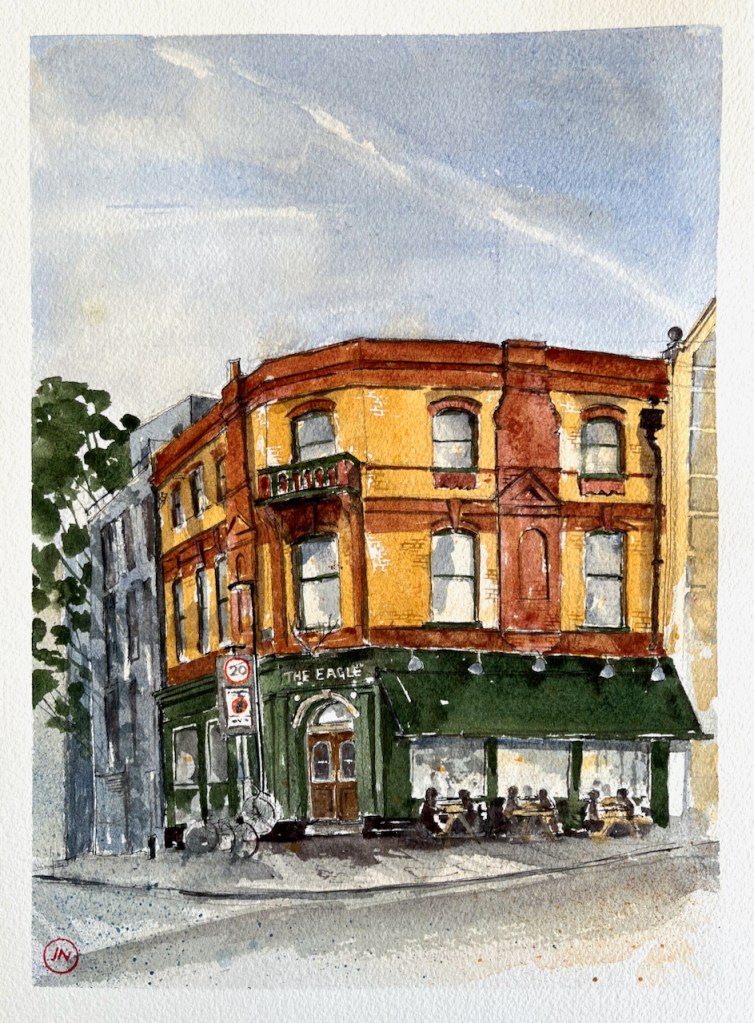
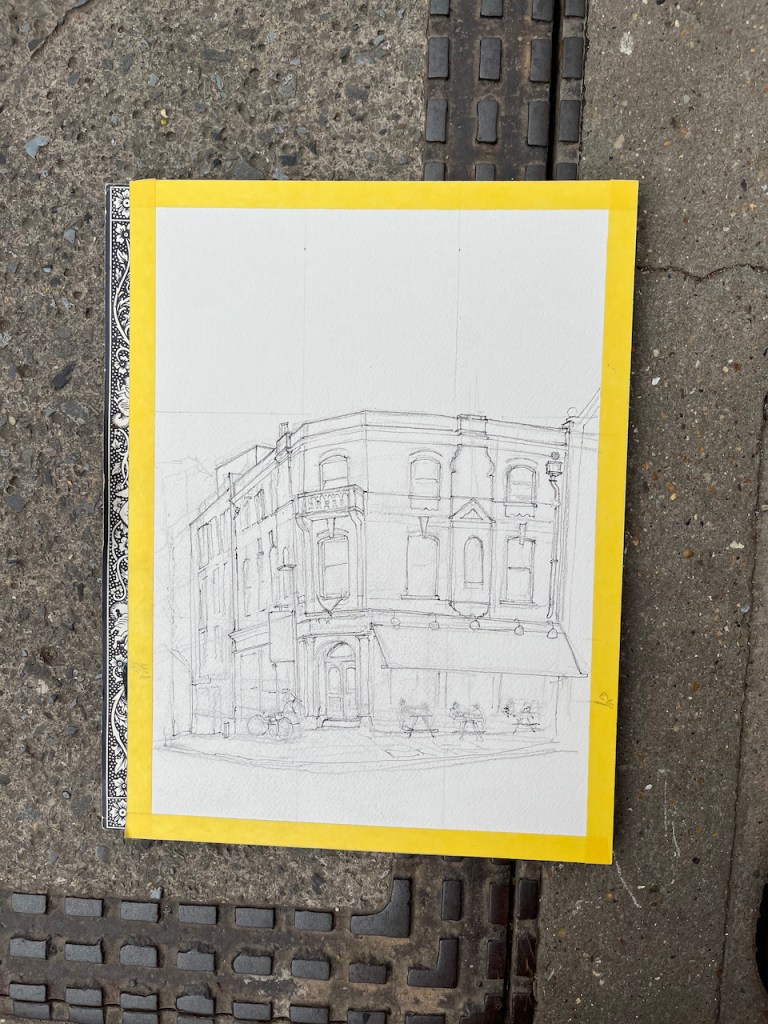
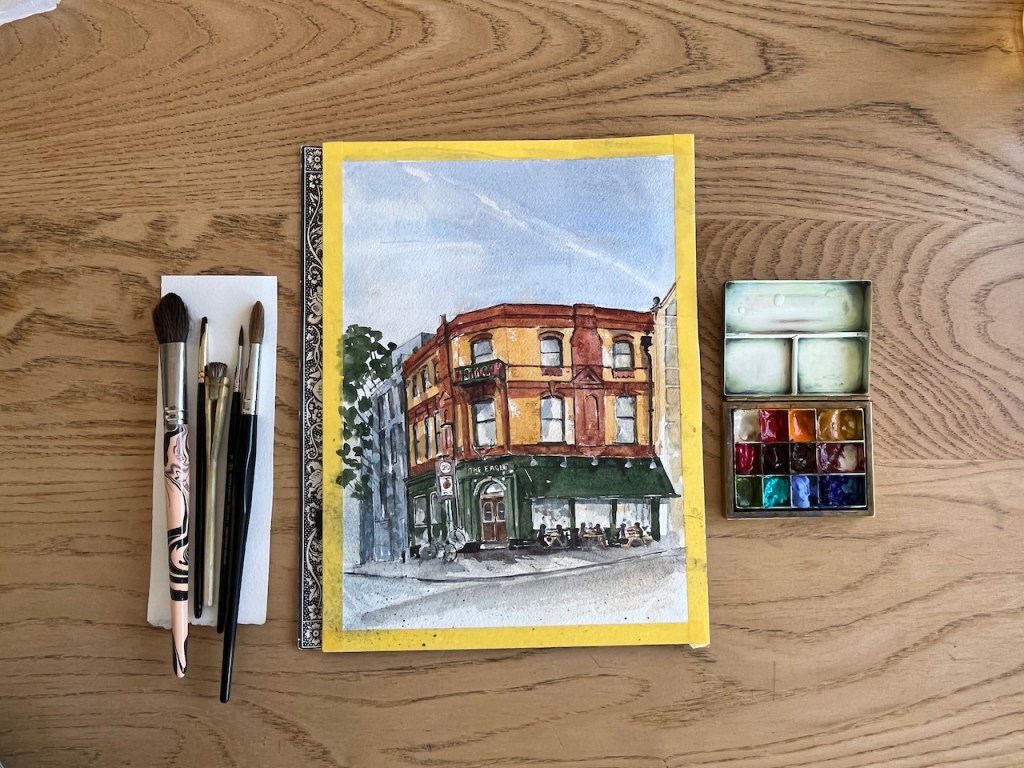
Here is “The Eagle” 159 Farringdon Road, London, EC1.
The Eagle, Farringdon Road, October 2022, 12″ x 9″ [sold]
I painted this as a commission. My client liked the pub and asked for a picture which showed the liveliness of the place. I sketched it from the other side of the Farringdon Road.
There was certainly a lot of activity in the pub. As you see in the picture, people arrived and occupied at the tables in the street, even though this was October, and quite chilly. The lamppost by the door was soon adorned with a collection of bikes.
Here are some details from the picture:
Here is work in progress:
Preliminary sketchPencil underdrawingPen on Arches Watercolour blockPen (Safari Lamy, shown in my hand)Pen complete
I completed the pen drawing on location and added the colour later:
Thank you to my client for this commission, and for allowing me to post the picture here.
I have also sketched The Eagle, 2 Shepherdess Walk. See this post:
On the way back from a visit to the West End, I passed St-Martin-in-the-Fields, standing out against the cold sky.
St Martin-in-the-Fields, Trafalgar Square. Sketched 2nd Dec 2022, in sketchbook 12
The statue in the foreground, left, is the Edith Cavell Memorial, seen from the back. Edith Cavell (1865-1915) was a British nurse. In German-occupied Belgium, guided by her principles of humanity and her Christian faith, she provided medical care to soldiers irrespective of which side they were on. She was executed by a German firing squad 1915, because she had helped Belgian, British and French soldiers to escape the German occupation and reach Britain. Her grave is in Norwich Cathedral.
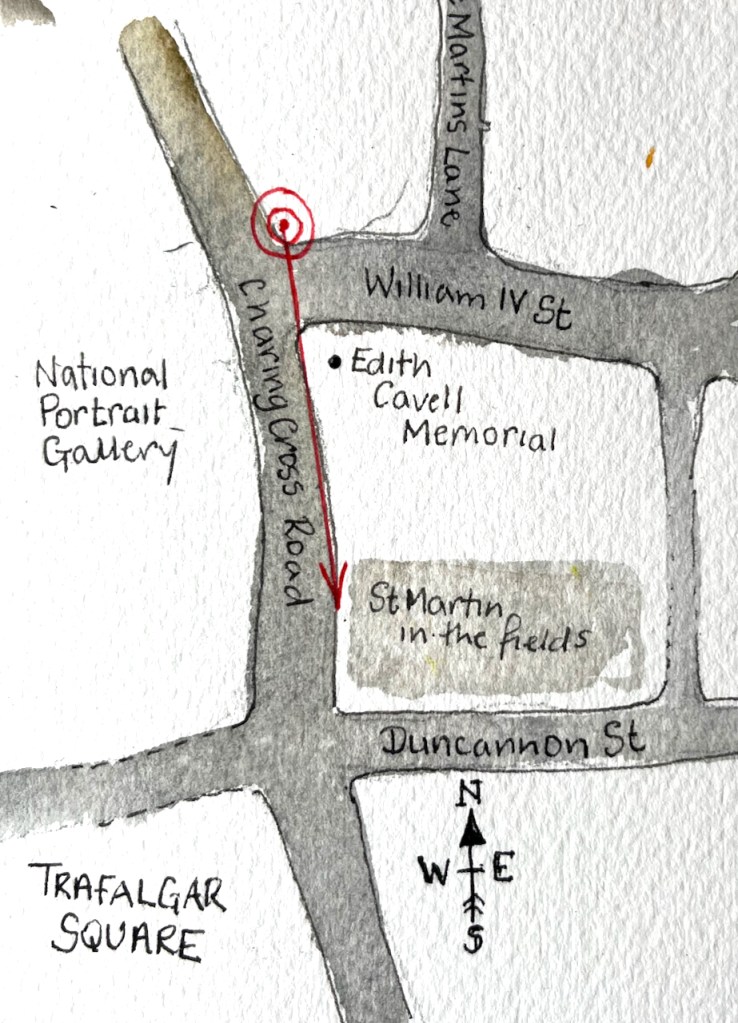
I sketched standing on a corner of the Charing Cross road, see map above. This turned out to be a very noisy location. The National Portrait Gallery is being refurbished and there was continuous drilling and banging. Buses and cars ground their gears, and thundered past, rushing through the traffic lights to shriek to a halt at the next junction.
But St-Martin-in-the-Fields rose above it all. The inscriptions which faced me on the Edith Cavell Memorial were: “Determination”, “Fortitude”.
Click a button below to share this post online, email it, or print it:













 Jane Sketching