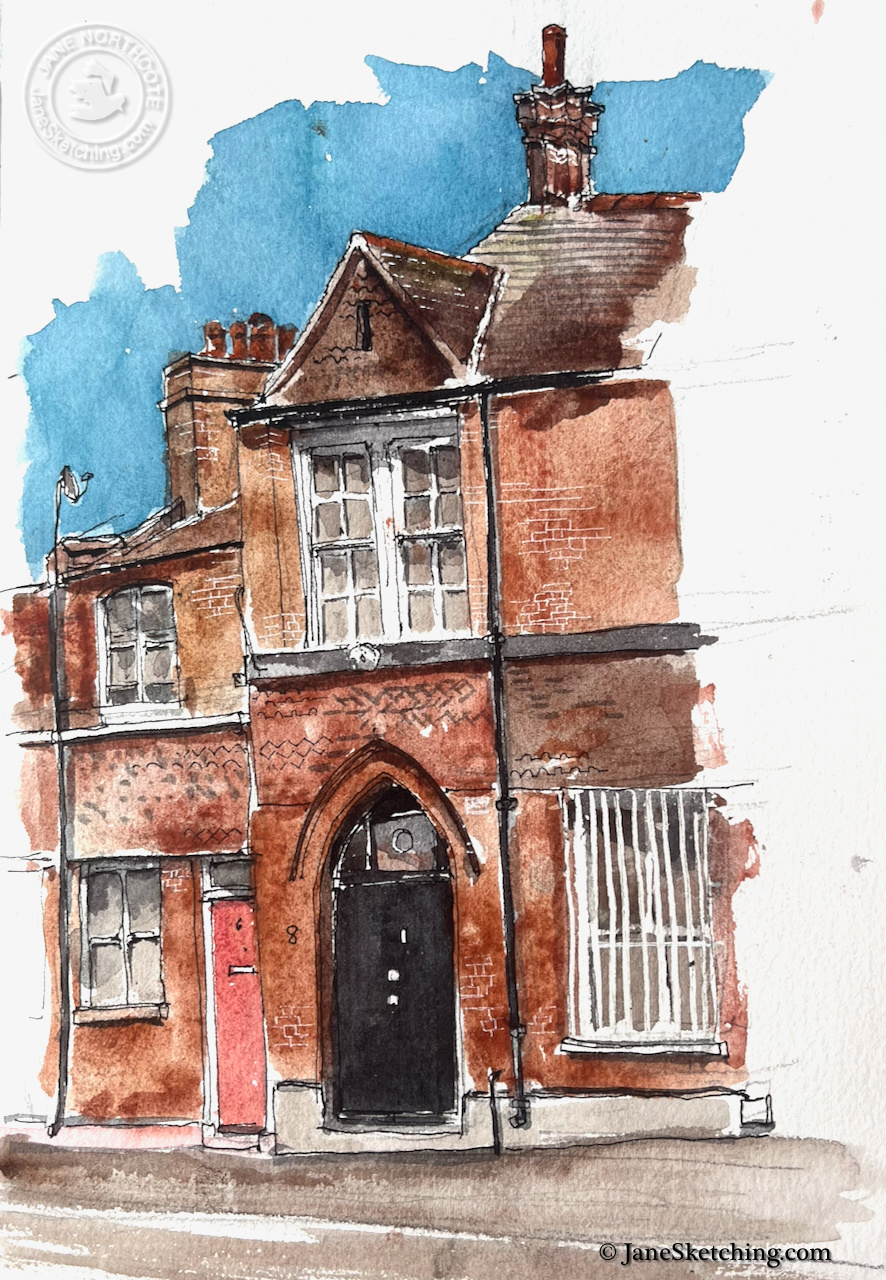
Bishops Hall, 8 Ayres Street SE1

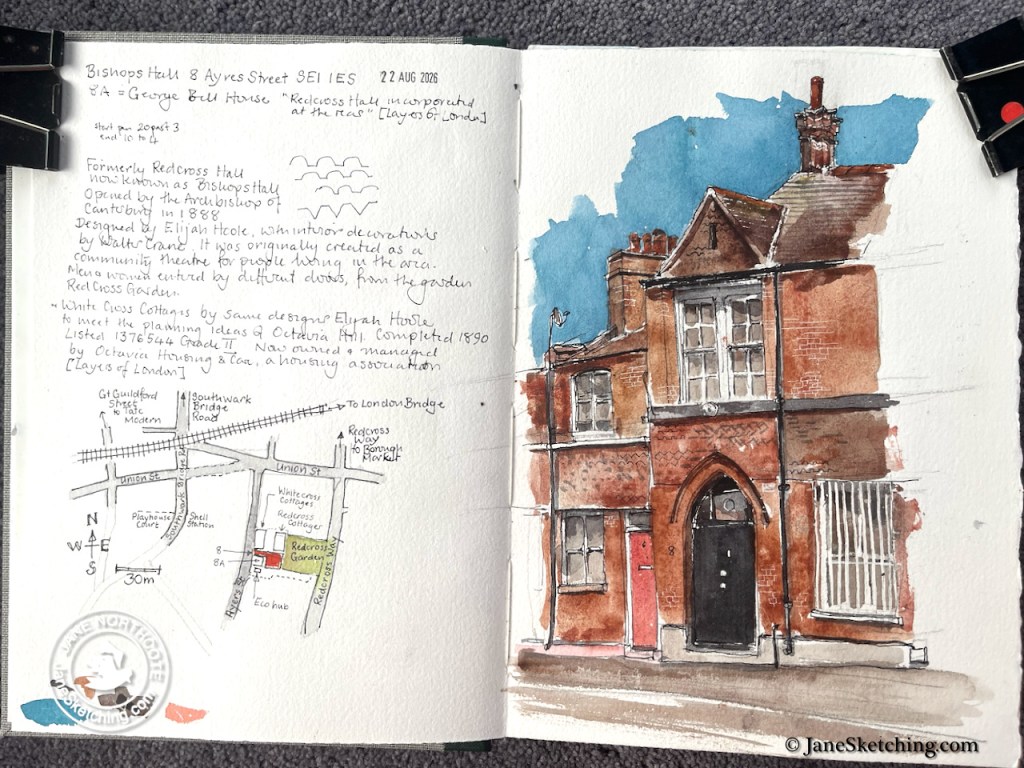
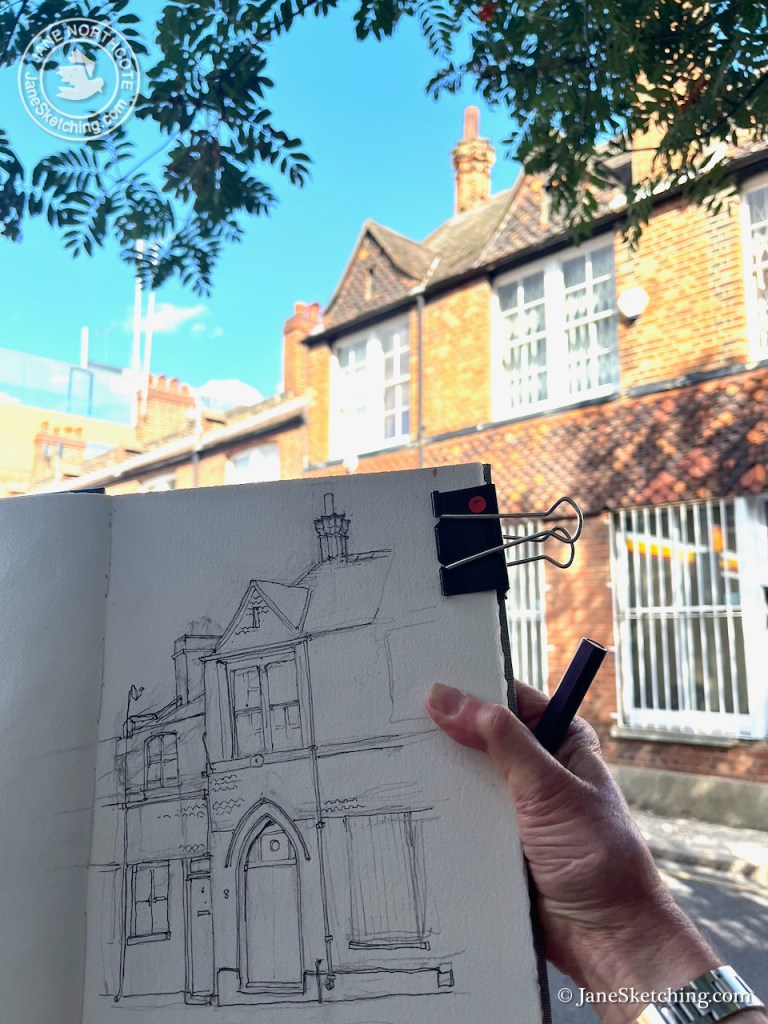
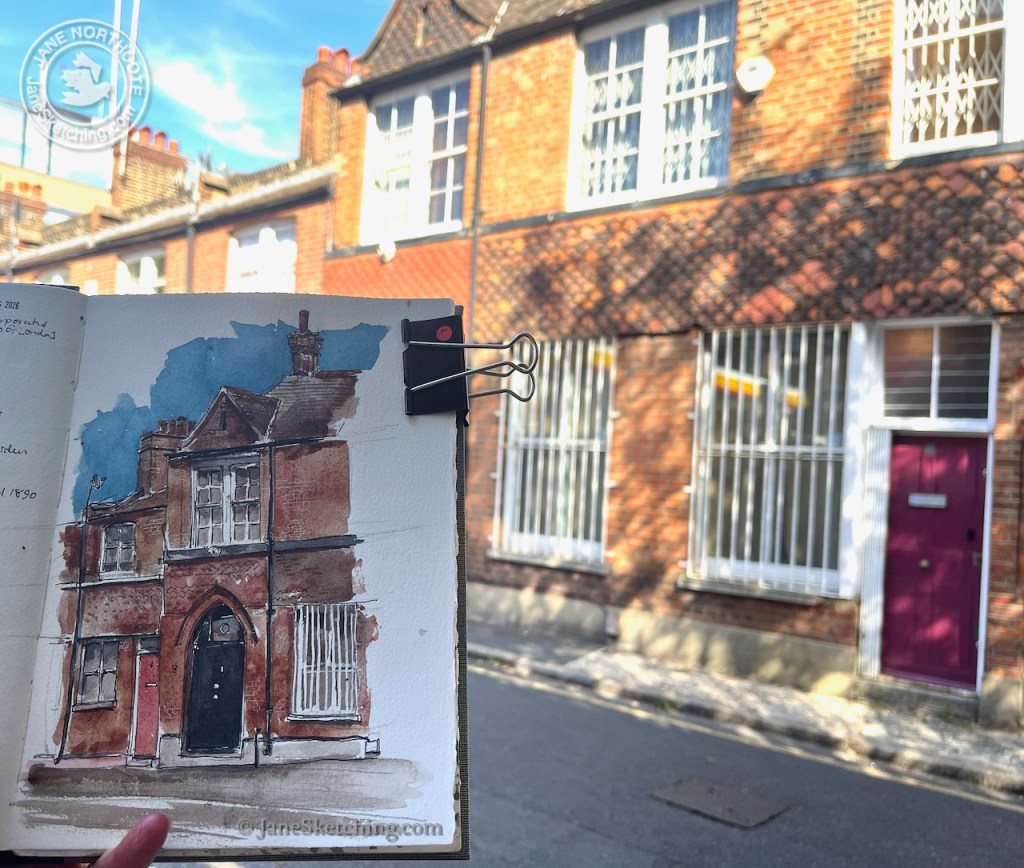
This unassuming door leads to a spectacular hall. This is 8 Ayres Street, the entrance to Bishops Hall, formerly known as Redcross Hall.
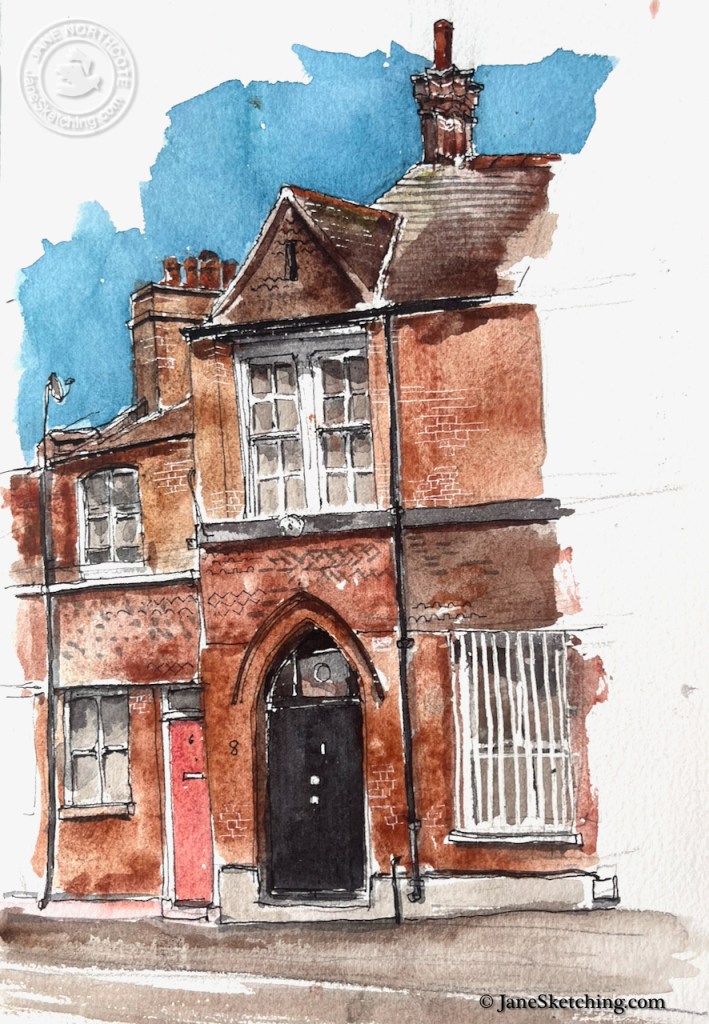
The Ayres Street entrance to Bishops Hall, 8 Ayres Street, sketched 22 August 2026, in Sketchbook 17

When I sketched this door I didn’t know about the surprising building behind it. I had just walked past the tiled frontage, and the pointed doors, and thought it dignified and unusual. I had seen the view from Redcross Gardens, but hadn’t connected the front to the back.
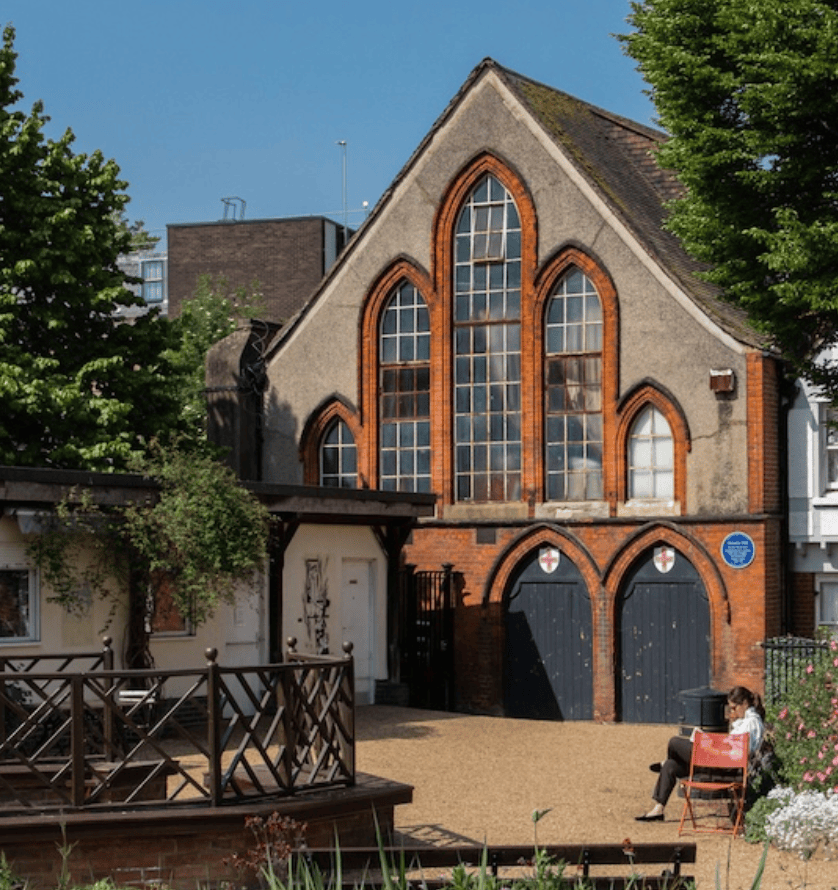
View of Bishops Hall from Redcross Gardens, photo credit unique property company

There is an informative estate agents description online, undated. This praises the “brick arched windows, tiling, historically distressed herringbone parquet floor and the ingenious hammer-beamed roof joists that reach the apex of the internal roof line”. It sounds amazing.

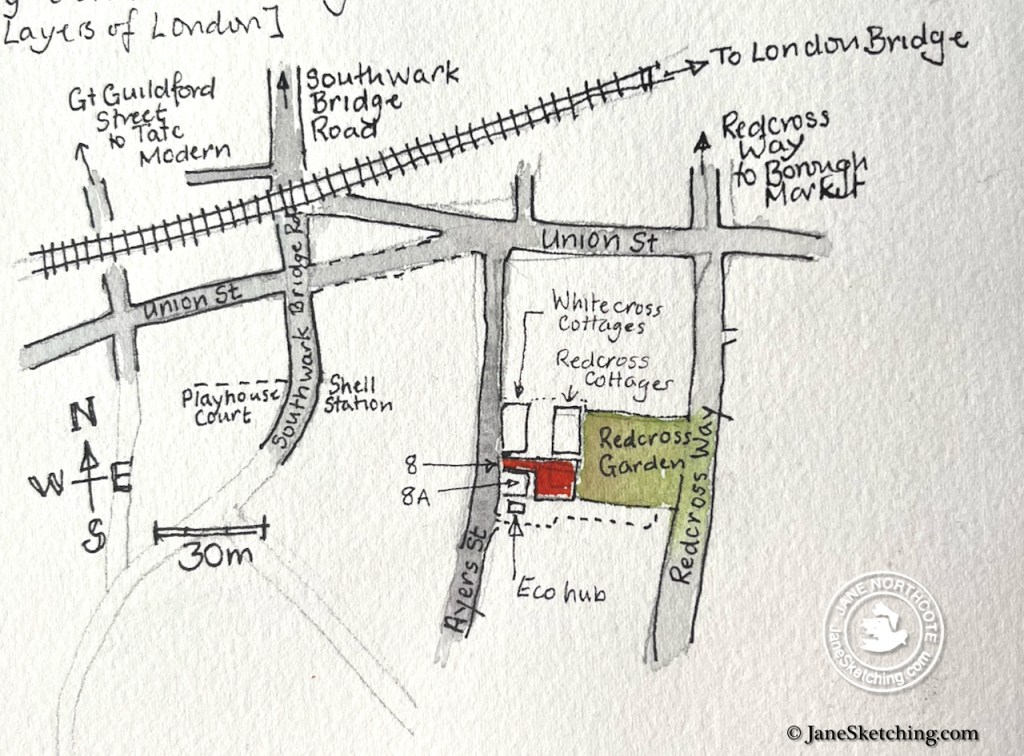
The black door in my drawing threads through a passage into Bishops Hall at the back. In the front is a different building, number 8A Ayres Street, which is called “George Bell House”. Both are listed Grade II.1
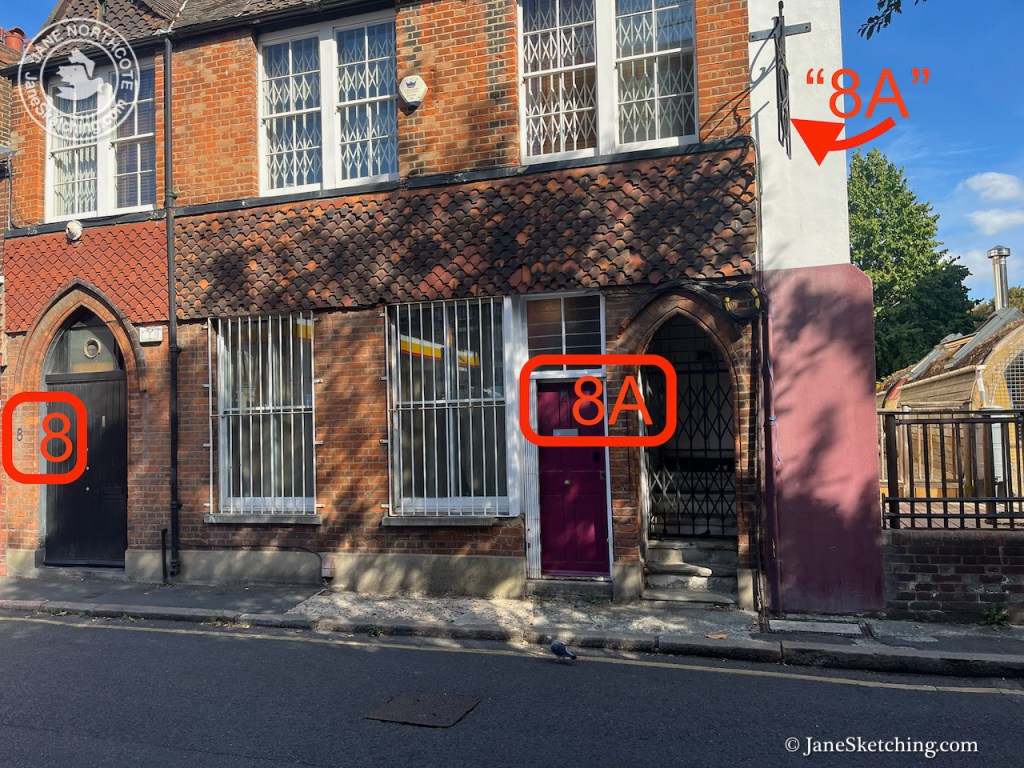
Ayers Street numbers 8 and 8A

Redcross Hall was opened by the Archbishop of Canterbury in 1888. It was designed by Elijah Hoole, with interior decorations by Walter Crane. 2
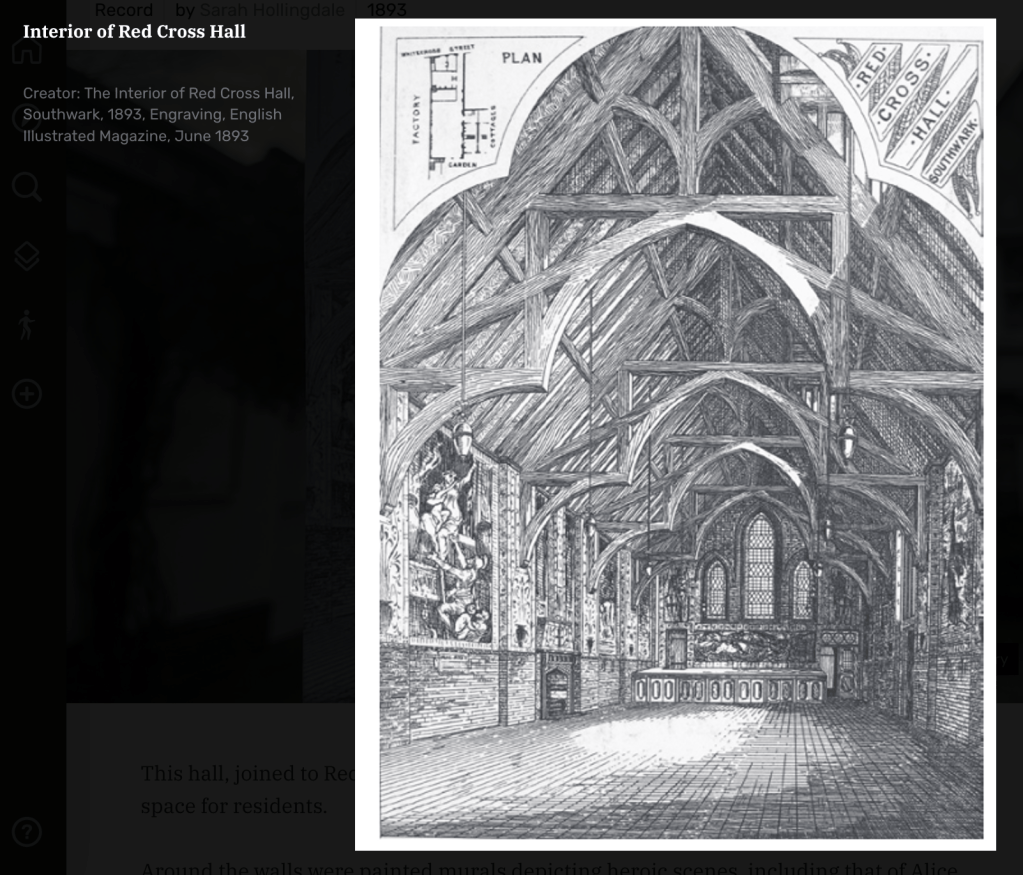
Interior of Redcross Hall as designed, image from English Illustrated Magazine 1893 via Layers of London. You can see the pointed windows at the back, which give onto Redcross Garden. Ayres Street was called “Whitecross Street” at that time.

The development was influenced by the ideas of social reformer Octavia Hill. The hall was created as a community theatre and “living room” for people of the area, in conjunction with Redcross Gardens which adjoin. The cottages further north along Ayres Street, to the left of my drawing, were built at the same time. This was 19th century philanthropy in action.2

Redcross Gardens are still there: beautiful, tranquil and a community resource. Bishops Hall is now privately owned.

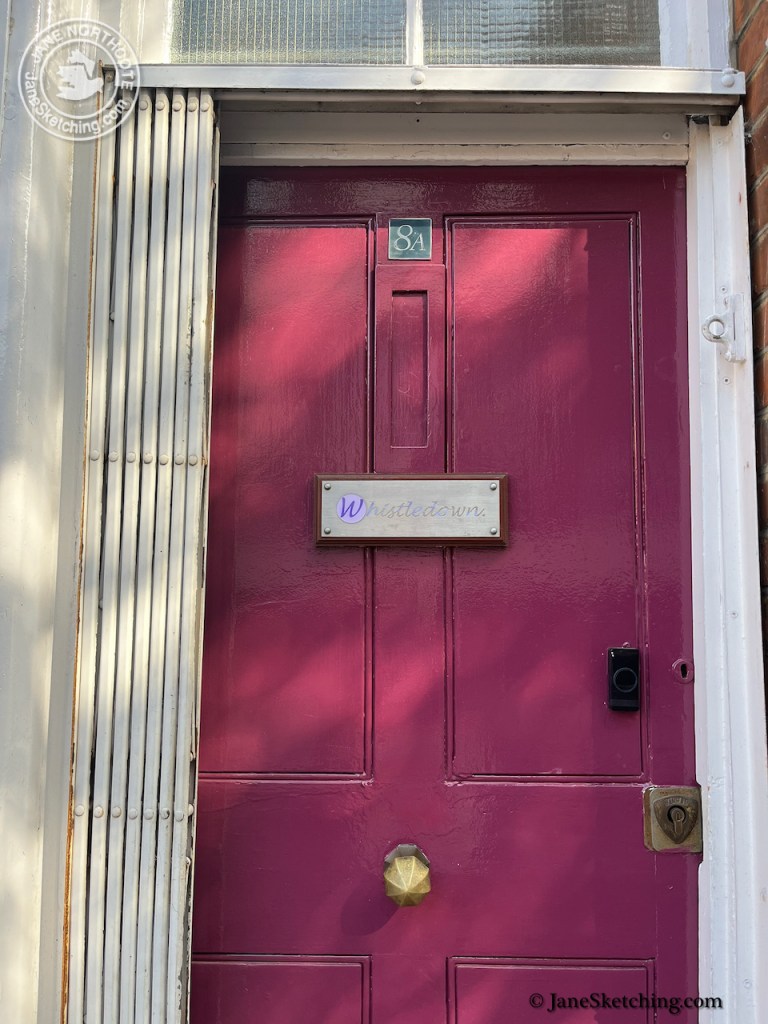
Number 8A, George Bell house, is a separate building from number 8. It is the studio for Whistledown Productions who make podcasts, and programmes for Radio 4.

This is a striking example of the surprises that abound in London. It’s amazing what you find simply by strolling about.
  1. Historic England listing entry is here: https://historicengland.org.uk/listing/the-list/list-entry/1376545?section=official-list-entry ↩︎
  2. Additional information from Layers of London: https://www.layersoflondon.org/map/records/red-cross-hall ↩︎
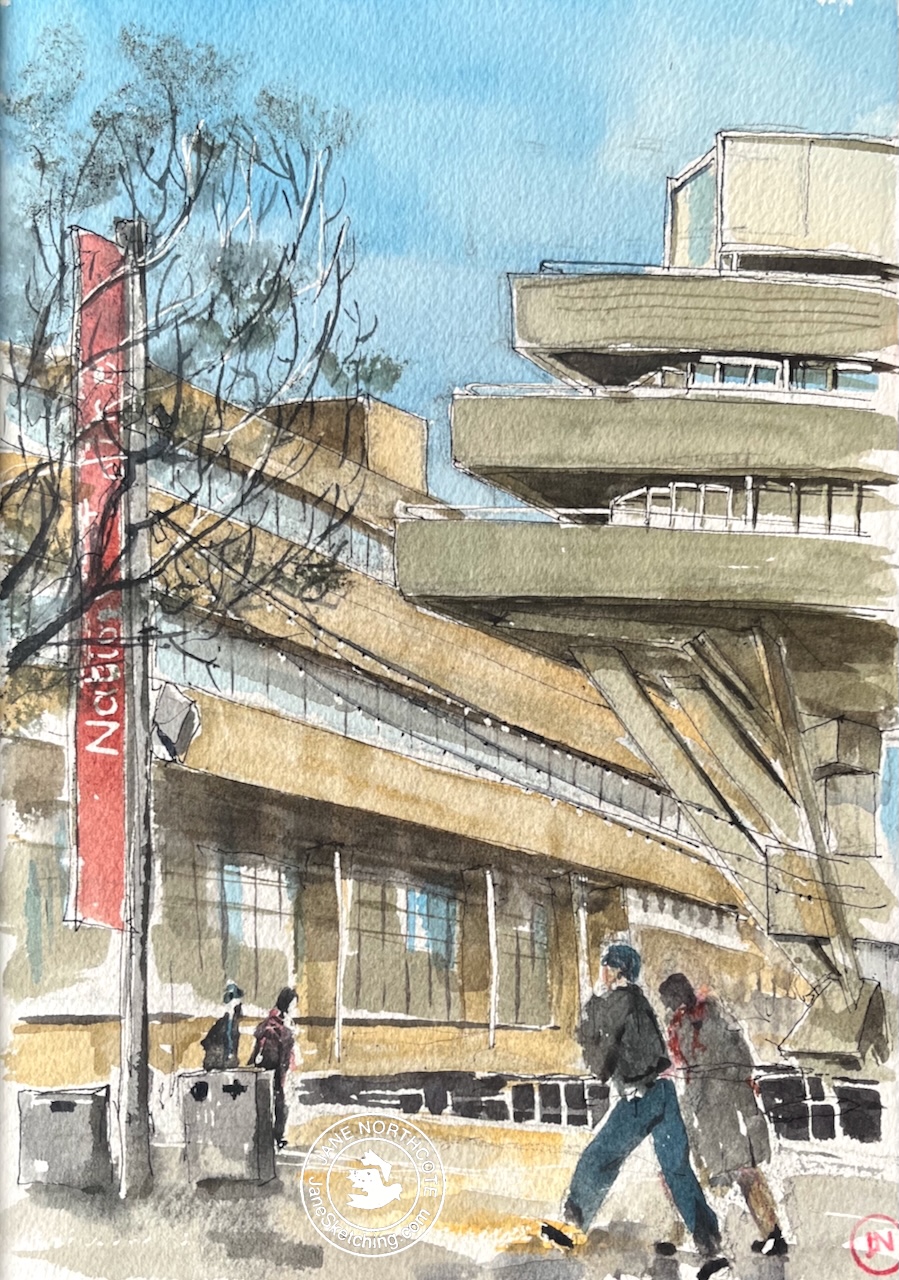
National Theatre and 76 South Bank

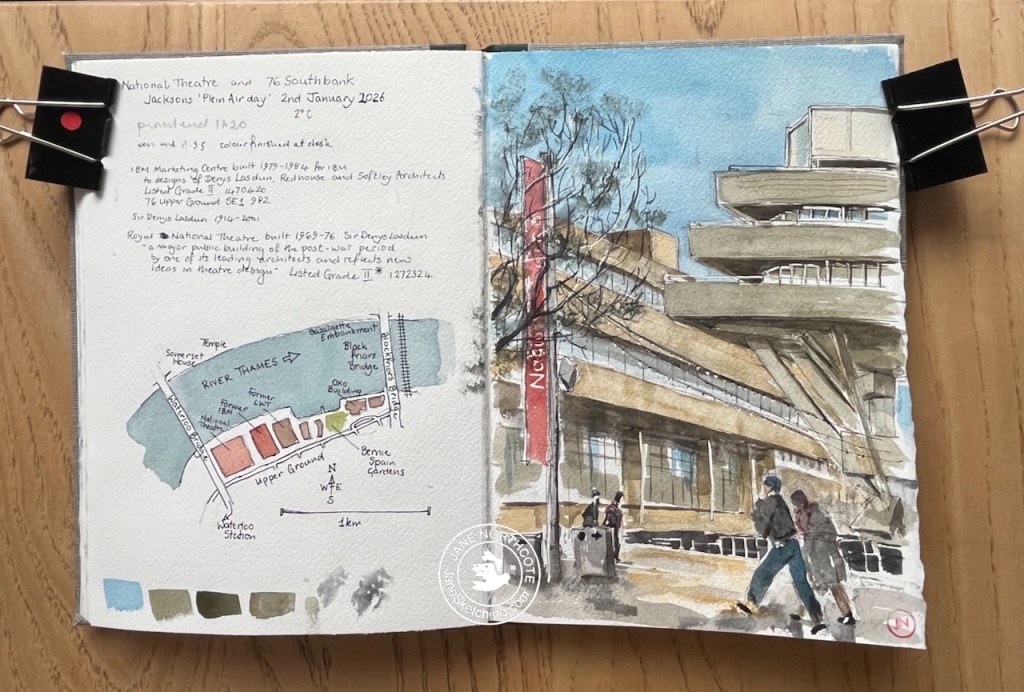
On the 2nd January I joined a group of other artists sketching on London’s South Bank. This was an event organised by Jackson’s Art Supplies of Dalston.

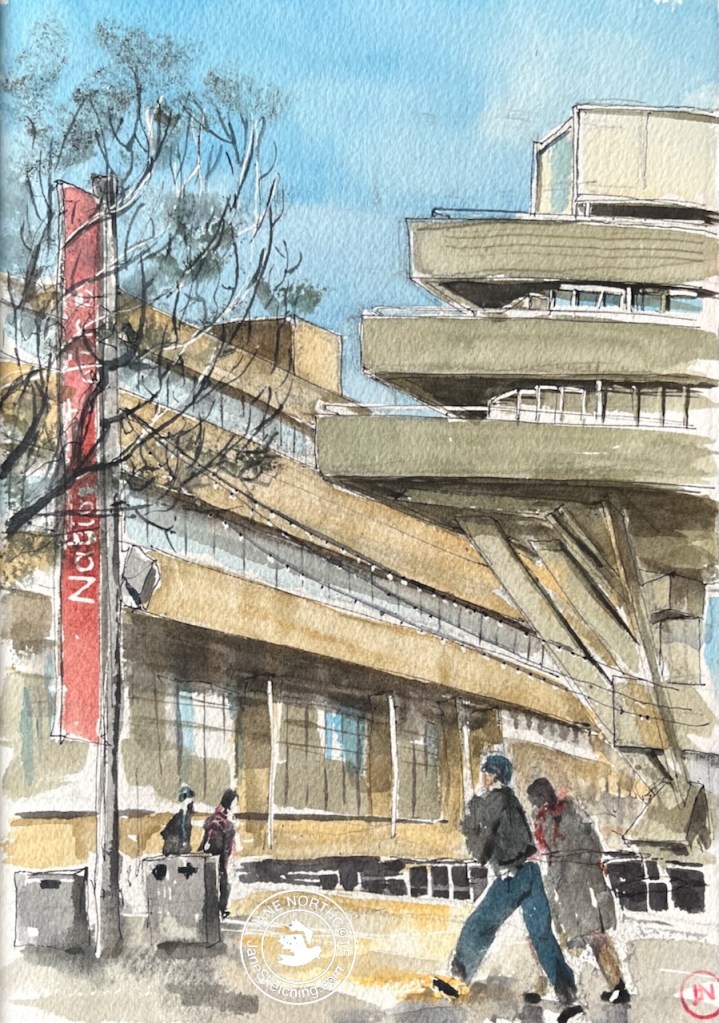
The first picture I attempted was of the National Theatre.

Sketching the National Theatre – 2nd January 2026

It was extremely cold and there was an unforgiving wind.

I managed to finish the pen-and-ink but at this point I abandoned the idea of putting the watercolour on the picture, and hurried into the National Theatre to thaw out. The staff there patiently inspected my bag of art equipment. In the café I found a group of other artists from the event, drinking coffee, testing the operation of their fingers and talking about art materials.

Coffee and company warmed me up. I decided to try simpler drawings using big crayons that I could wield in gloves. Here’s a flick through the sketchbook:

South Bank sketchbook flick-through

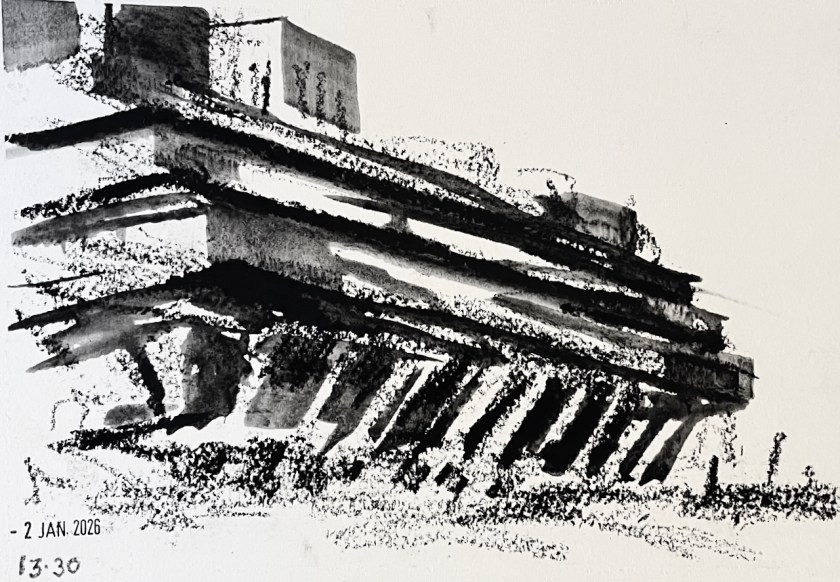
The black marks are made with a Derwent “inktense” stick. These sticks make charcoal-like marks, which you can then darken or spread out with water.

The National Theatre – inktense stick on Arches cold-pressed paper

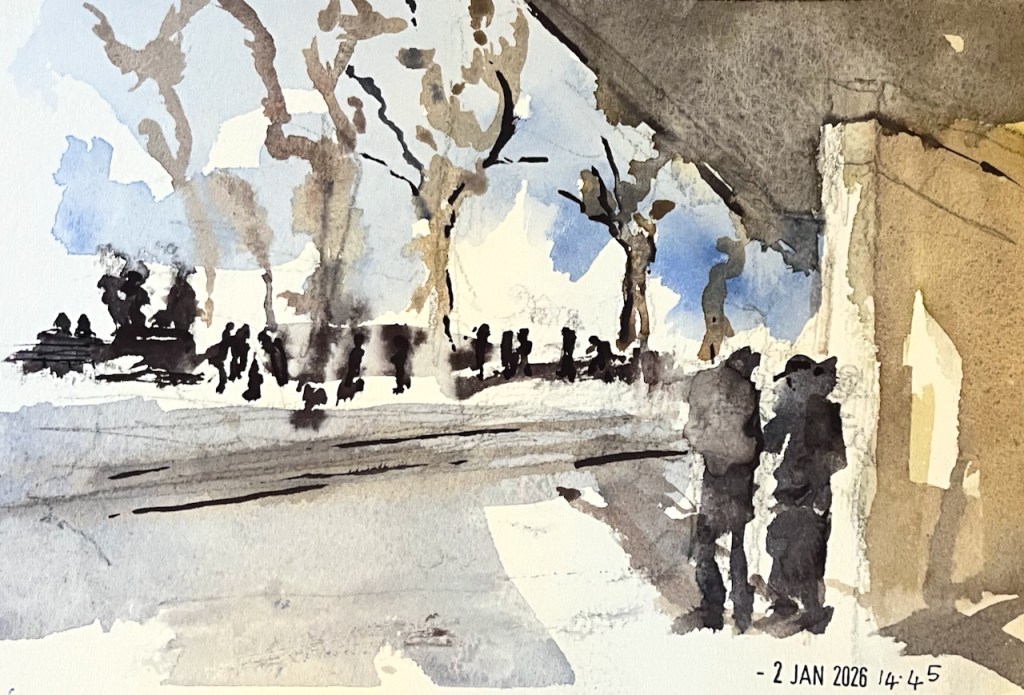
Here’s my last picture of the day. I was determined to use the watercolours, and found a spot where the wind was attenuated by a concrete wall.

At 3pm we all congregated and shared our pictures. I was really impressed at how many of us had persisted, in the cold, right to the end of the event, and at the wonderful work everyone had done. I mean, doing anything at that temperature was an achievement, I thought. You can see a picture of the assembled participants in the Jackson’s newsletter on this link.

Later, at home in the warm, I added the watercolour to my initial sketch of the National Theatre.

It was an inspiring day out. Thank you to the Jackson’s team for the initiative and the organisation. And thanks to the wonderful National Theatre for the warm and welcoming spaces, the café, and the toilets…..!

Vauxhall Tea House Theatre, SE11

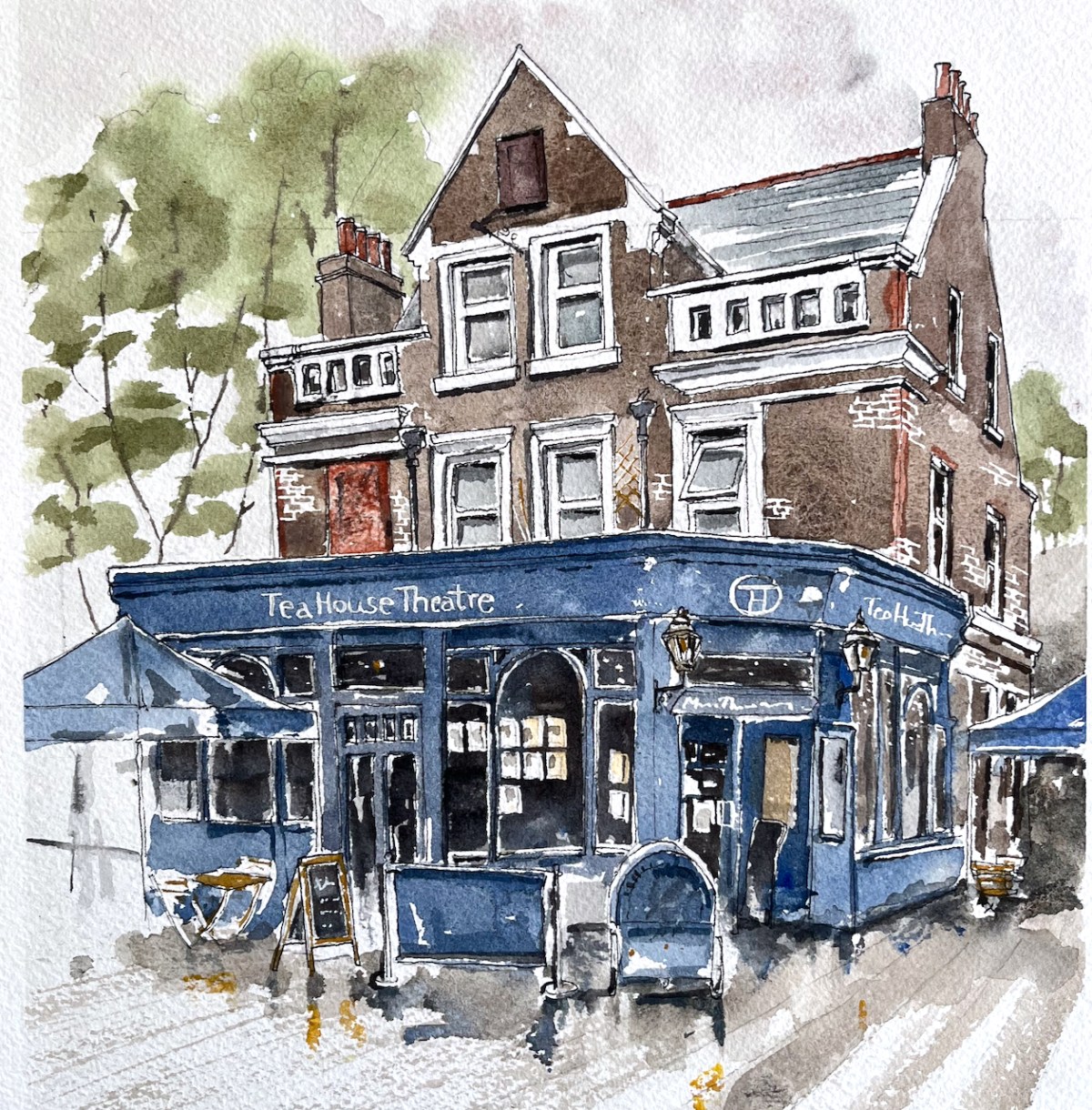
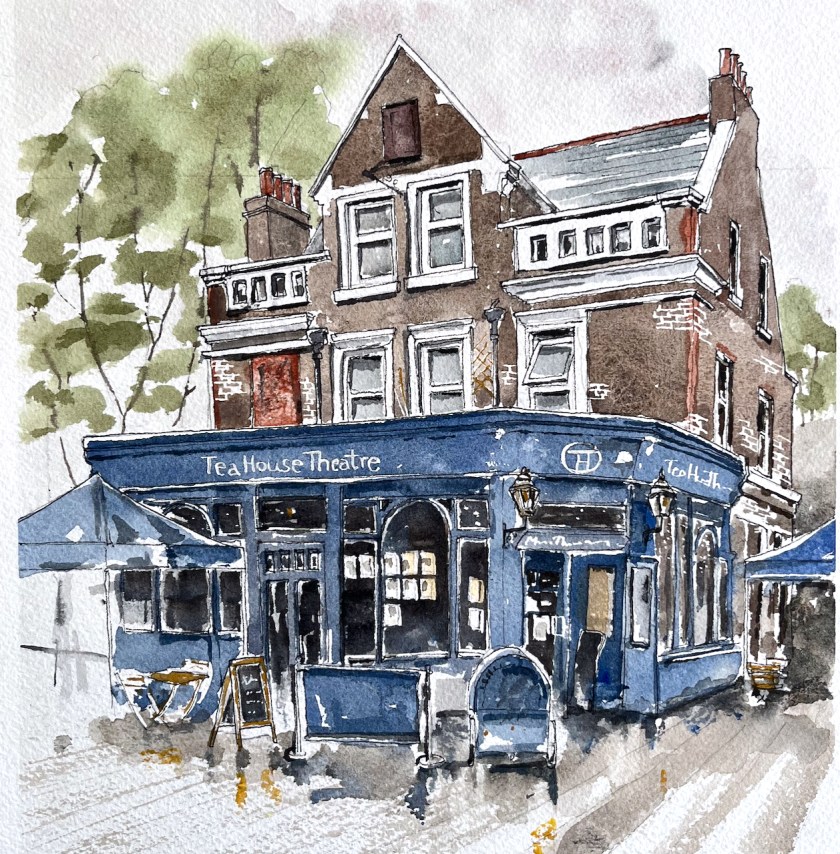
The Vauxhall Tea House Theatre is one on my favourite places. It is a “tea house by day, theatre by night”. Here is a sketch of the outside:

Vauxhall Tea House Theatre, 12″ x 9″ pen and wash original. [sold]

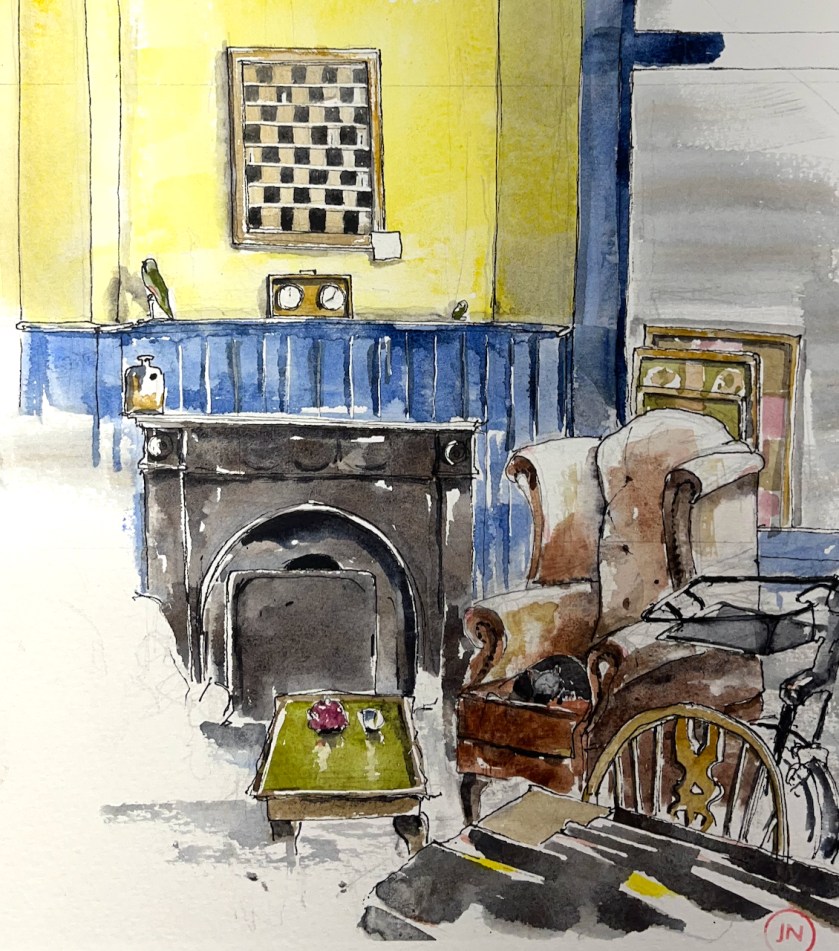
Here is a sketch of the interior by day:

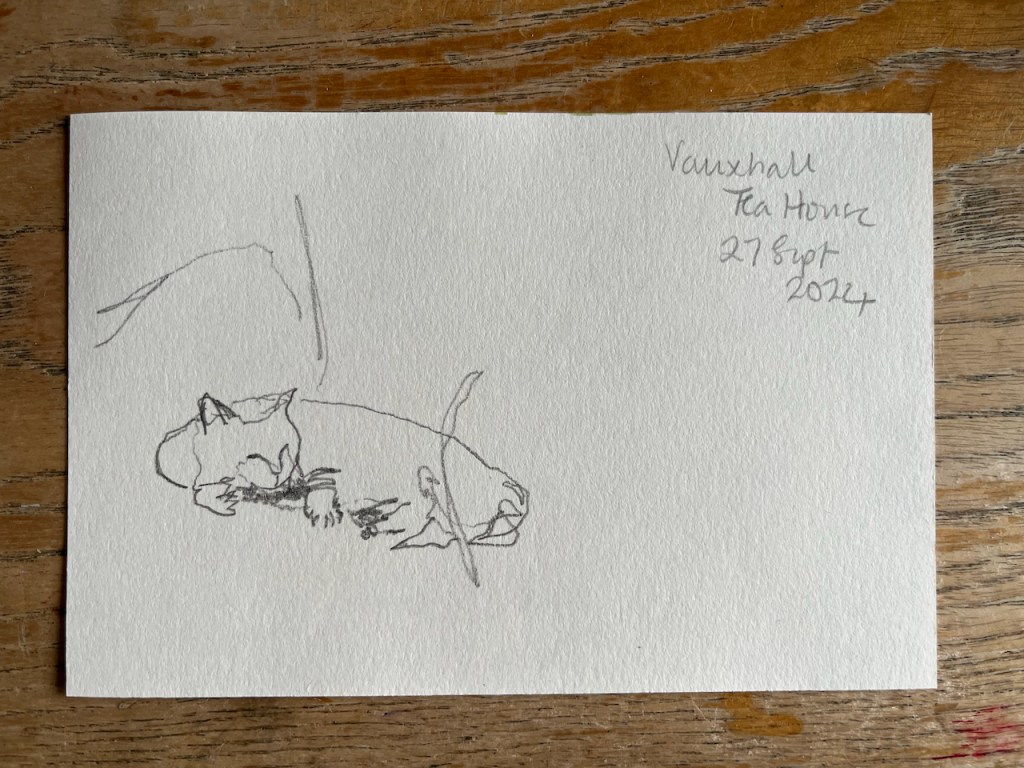
Vauxhall Tea House Theatre, interior with cat. 12″ x 9″ pen and wash original. [Sold]

There are winged chairs you can sink into, wooden tables you can work at, magazines and newspapers you can read. There is tea. There is cake. There is at least one cat.

It’s a short walk from Vauxhall station. Definitely worth a visit.

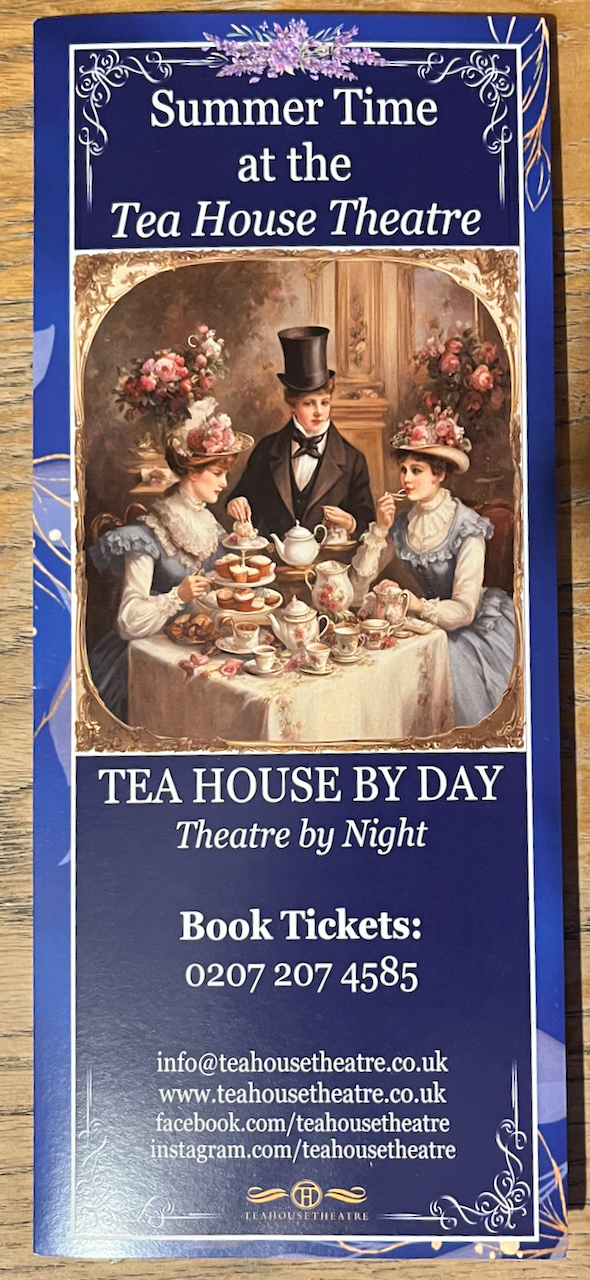
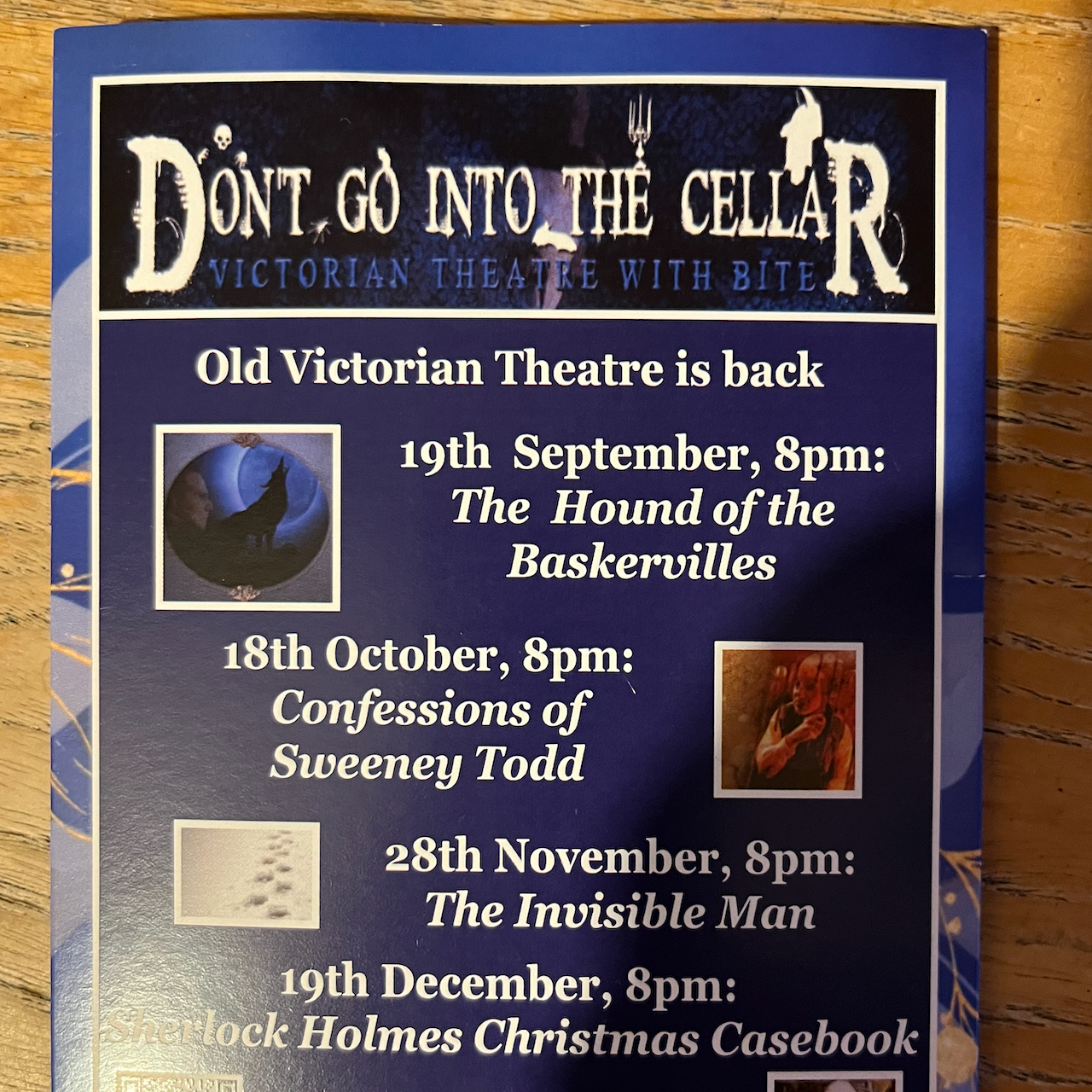
Above is from their Summer 2024 programme.

From the Tea House Theatre website:

“We are trying to be different. We will not hurry you. If you visit us on your lunch break, then have one, you will be more productive in the afternoon. If you want to have a meeting, we will not disturb you. If you are ‘working from home’, we have wifi. If you have children, we have highchairs, a chest of toys, and milkshakes. We always have the daily papers, so please, relax, and share in what we are trying to create, take a load off, and have a cuppa.”

Magnificent!