Sketching in Kennington and Vauxhall

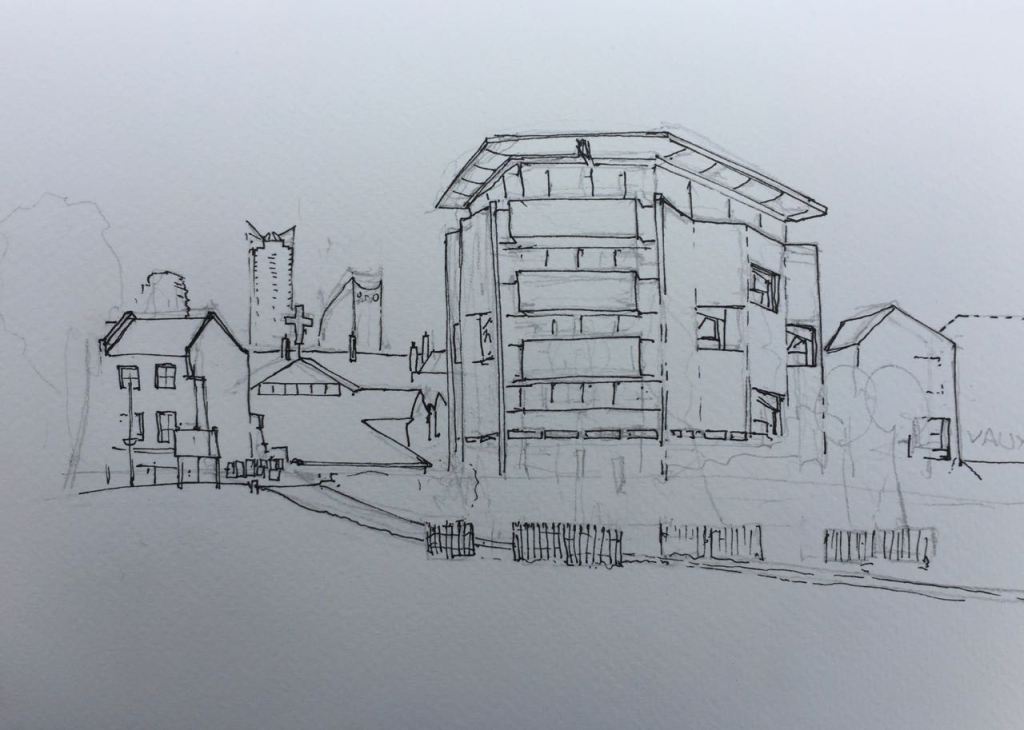
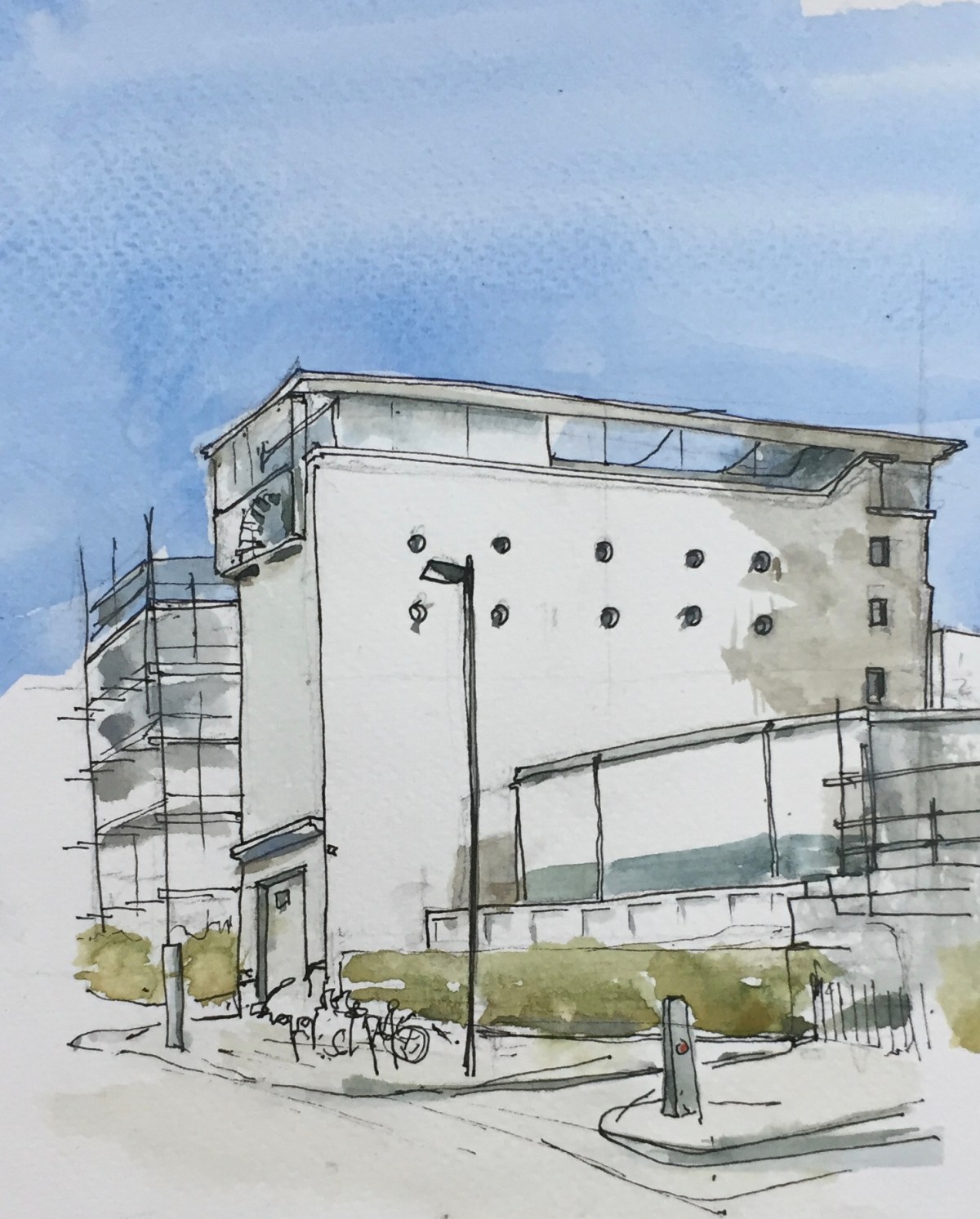
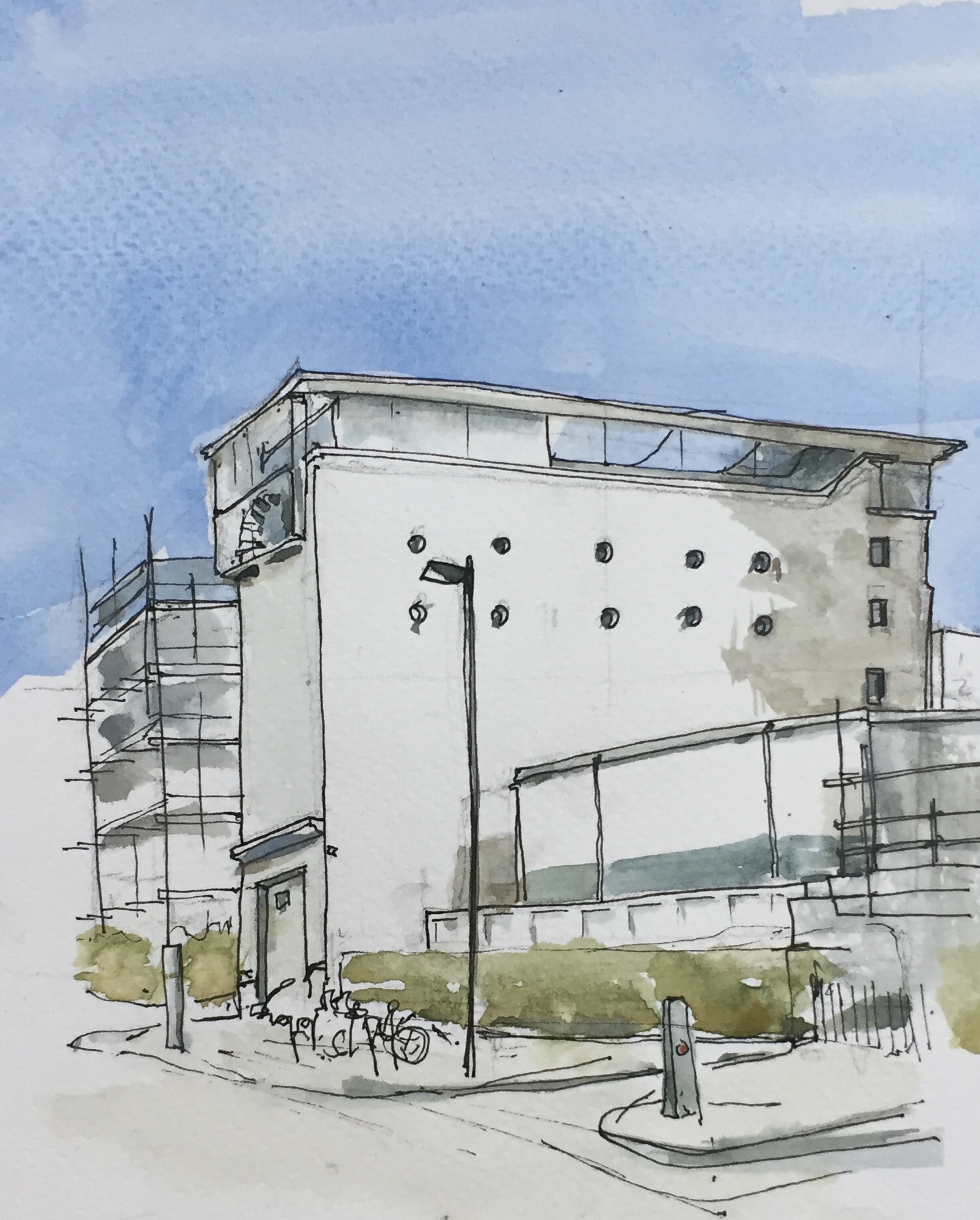
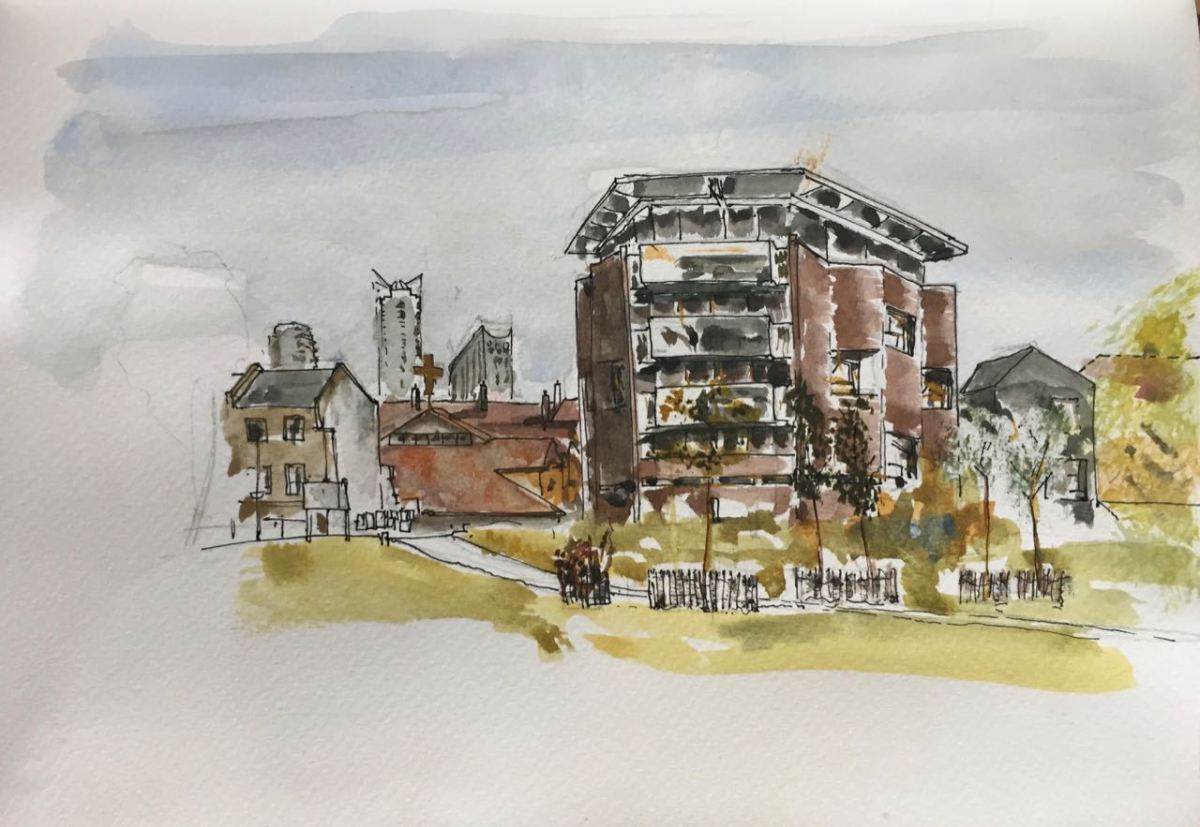
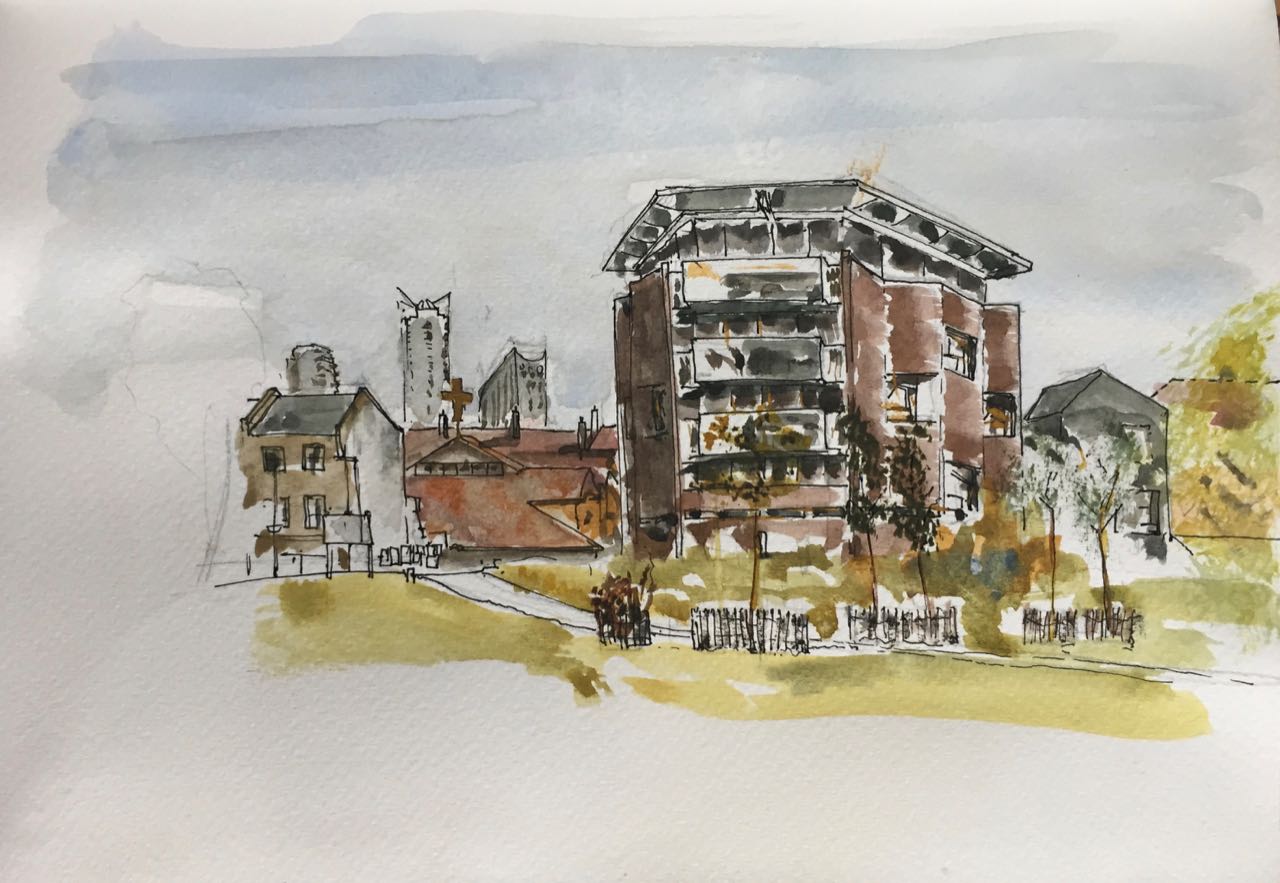
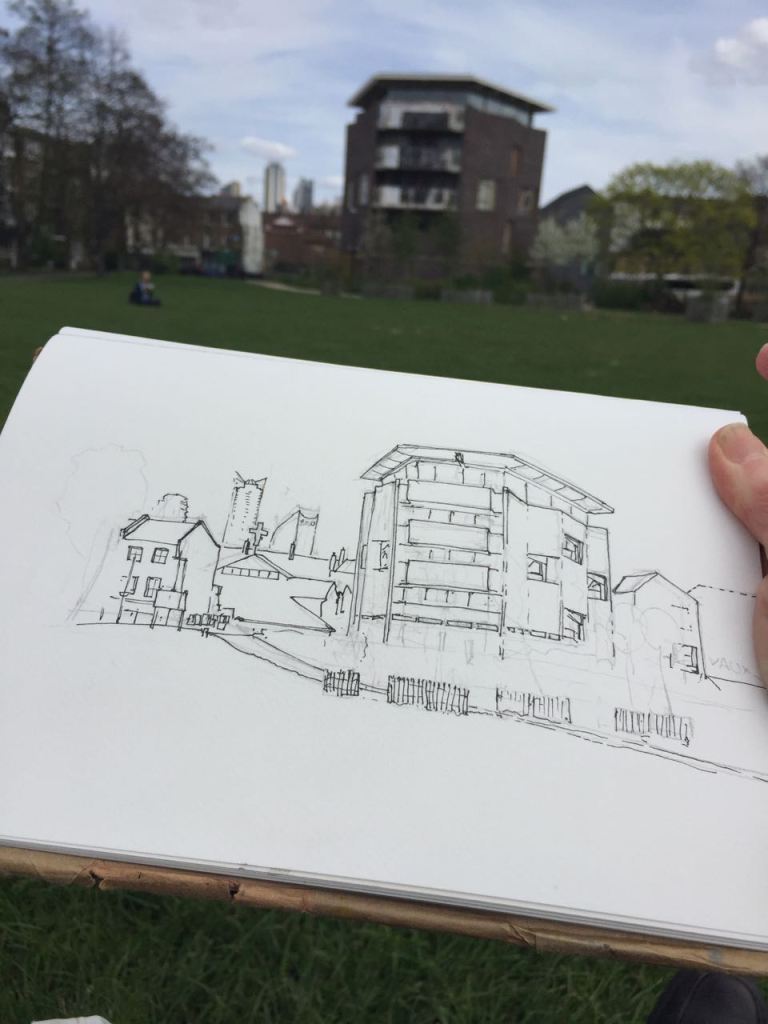
In Vauxhall Pleasure Gardens there is a strange geometric building. I drew it, sitting on the grass.
IMG_1863

There is a tiny sign on the Tyers Street side of the building which says “Cabinet”. We saw someone come out. They said, “It’s an art gallery, you should check it out!” We pushed the door and went inside. There is indeed an art gallery on the ground floor. Currently it is showing an exhibition of the notebooks and sketches of Antonin Artaud: “Cahiers de Rodez at d’Ivey 1945-48”. Rodez was or is a mental asylum.

“An unclassifiable volume of writing and drawing. Portraits, names, calculations, glossolalia, sigils, lists and drugs and foodstuffs, formulae, totems, lexicons, anatomies, objects, […] machines and implements of obscure purpose” (curation, 132 Tyers Street SE11 5HS)

We asked the receptionist what the building was. It was designed by Trevor Horne Architects. It is financed by Charles Asprey. There is a gallery on the ground floor. On the top floor there is a “project space”. In between there are two “residential floors”. The tiles on ground floor were identical to the tiles on the Barbican Podium, but newer. The walls were unfinished concrete inside, with pleasing concave curves.

Charles Asprey has many interests.

“CHARLES ASPREY is a publisher and arts patron. He runs an exhibition space in an award-winning building he commissioned on the Vauxhall Pleasure Gardens in London. He is co-editor of the arts quarterly PICPUS and Chair of the Grants Committee of the Henry Moore Foundation. “

He is also an initiator of the “London Fountain Co.” which aims to provide fresh drinking water in London “helping to provide the infrastructure needed to move away from plastic bottled water”. The quote about Charles Asprey, above, comes from the London Fountain Co. website.

The windows of the building have “A” shaped frames:
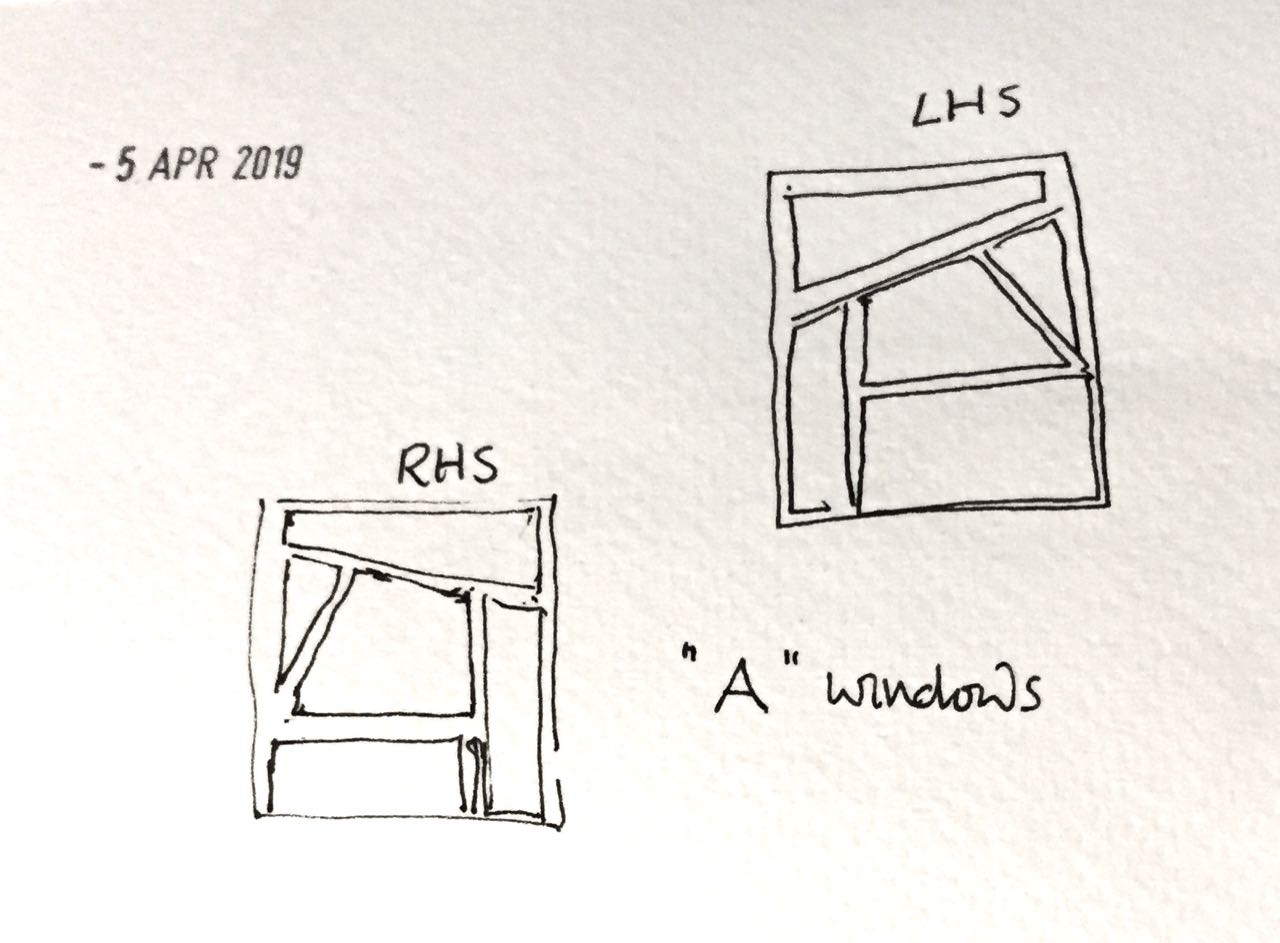
A for Asprey.

Off to the right of the picture is Vauxhall City Farm. The Christian cross you see to the left of Asprey’s building is on top of the “All Nations Apostolic Church” on Tyers Terrace. The neat house on the far left is 127 Tyers Street. It is now residential, a fine conversion of a row of shops.

In the far distance you see the tower blocks round Elephant and Castle.

Here is work in progress on the picture. It took about 1hr45min.
Then I walked along Tyers Street and towards Waterloo.
IMG_1862

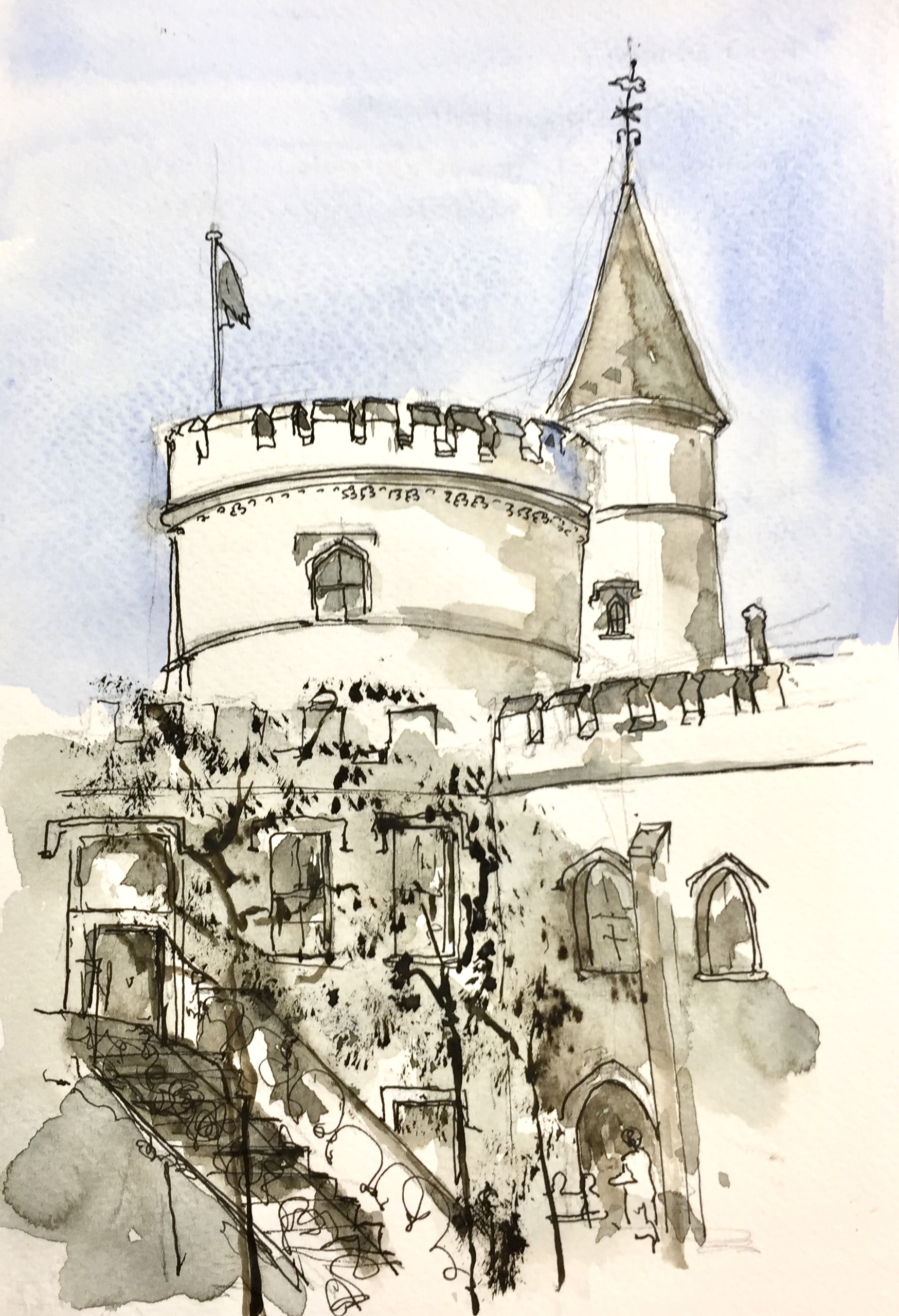
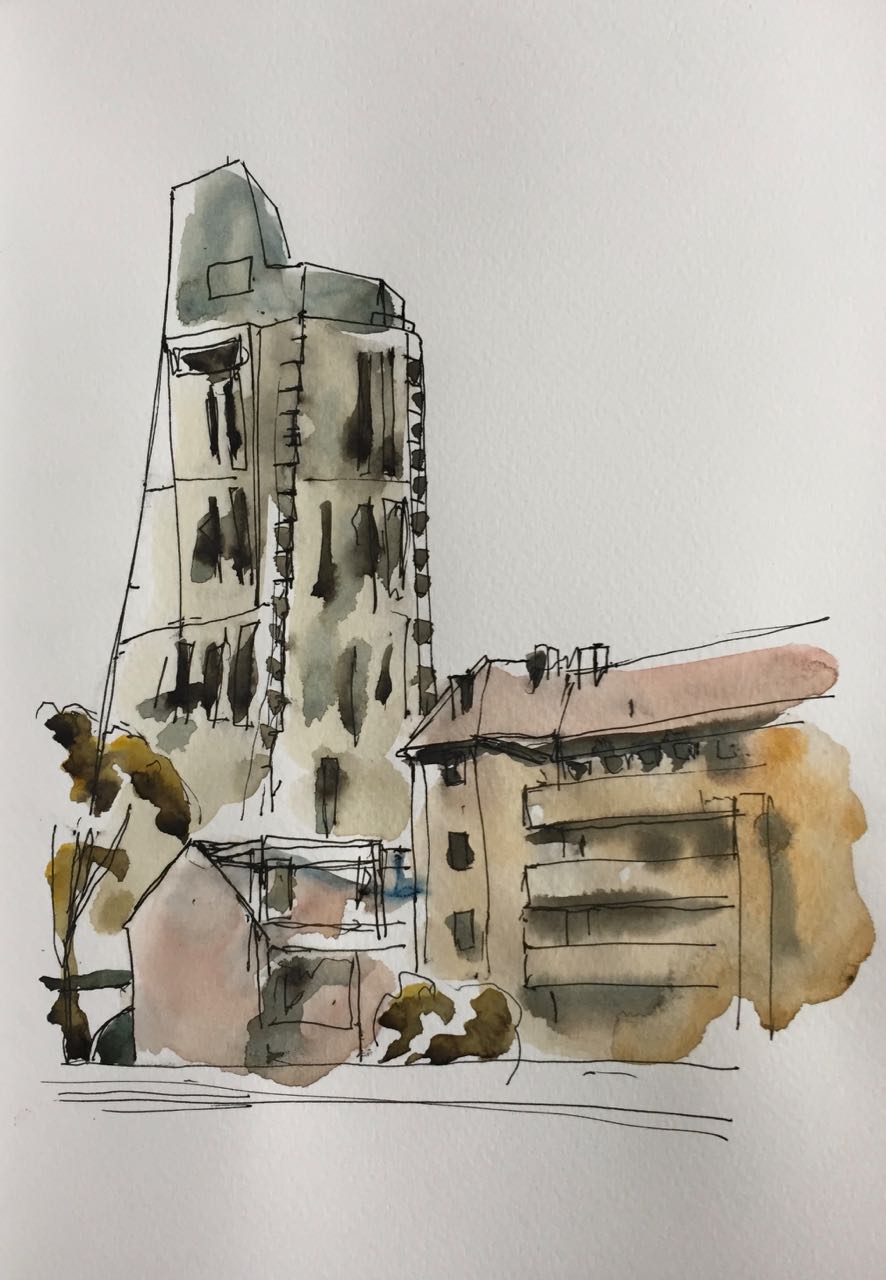
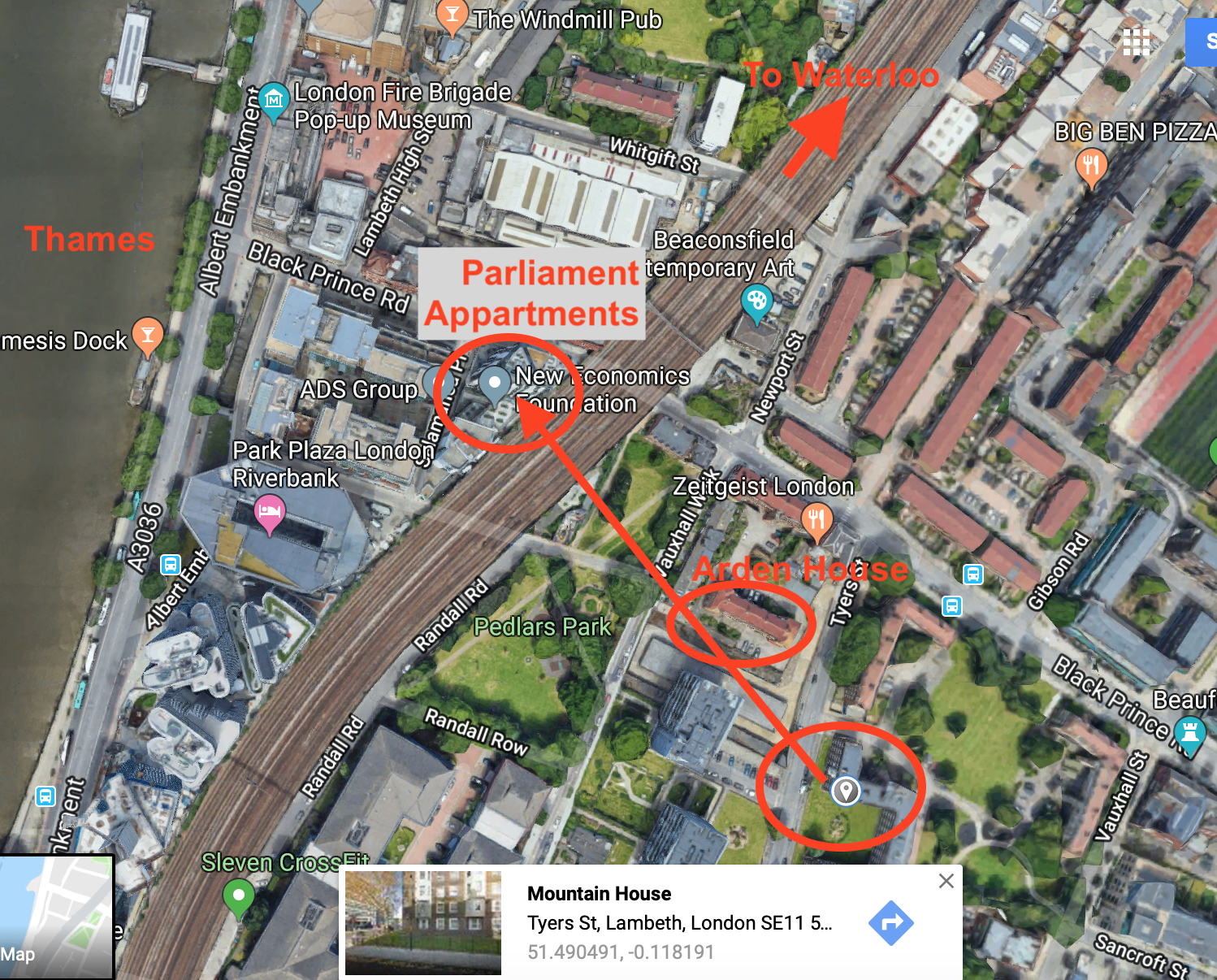
This is a view from outside “Mountain House”, a 1930’s block on Tyers Street.

You see Arden House on the right. The huge modern block is “Parliament House Apartments”, which is on Black Prince Road on the North side of the railway tracks. In the middle is a row of 1970s houses, odd numbers 1-21 Vauxhall Walk.

This was a really quick sketch: about 15 mins, drawn and coloured on the narrow pavement outside Mountain House.
Screen Shot 2019-04-05 at 20.46.53

From Lauderdale Place: Eastern Cluster

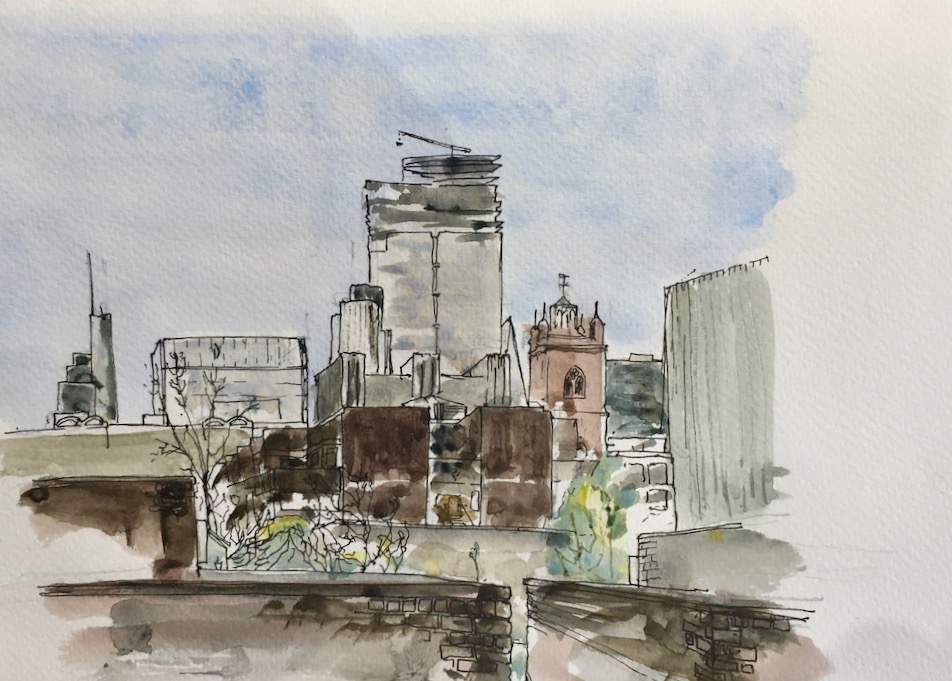
It is amazing how many buildings you can see from Lauderdale Place. Lauderdale is the Westernmost of the three Barbican Towers. I am standing beside it, looking South-East, over Lambert Jones Mews.

IMG_1755

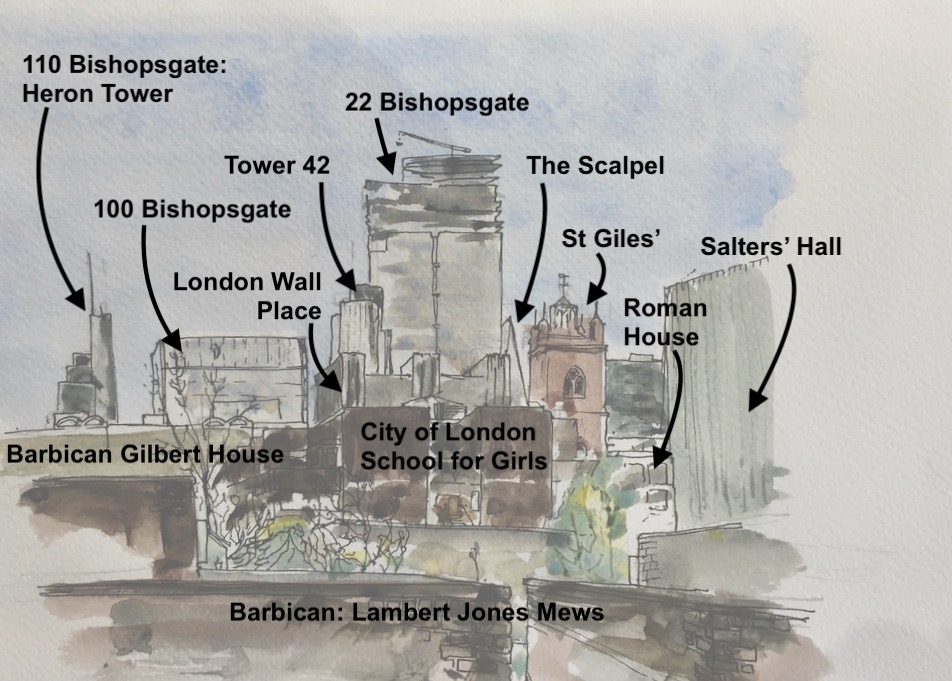
The towers are members of the so-called “Eastern Cluster”. The new building, 22 Bishopsgate, with its 60 floors, makes the former “NatWest Tower” look small. The NatWest Tower used to be the tallest tower block in the City. It is a mere 42 floors, and is now called “Tower 42”. Perhaps that is because of the number of floors. I never thought of that before.

You can just glimpse “the Scalpel”, the pointed crystalline building on Lime St, near the Lloyds building. In the picture it is between 22 Bishopsgate and St Giles’ Church.

I have annotated all the buildings here:

IMG_1755 copy

Here is work in progress:

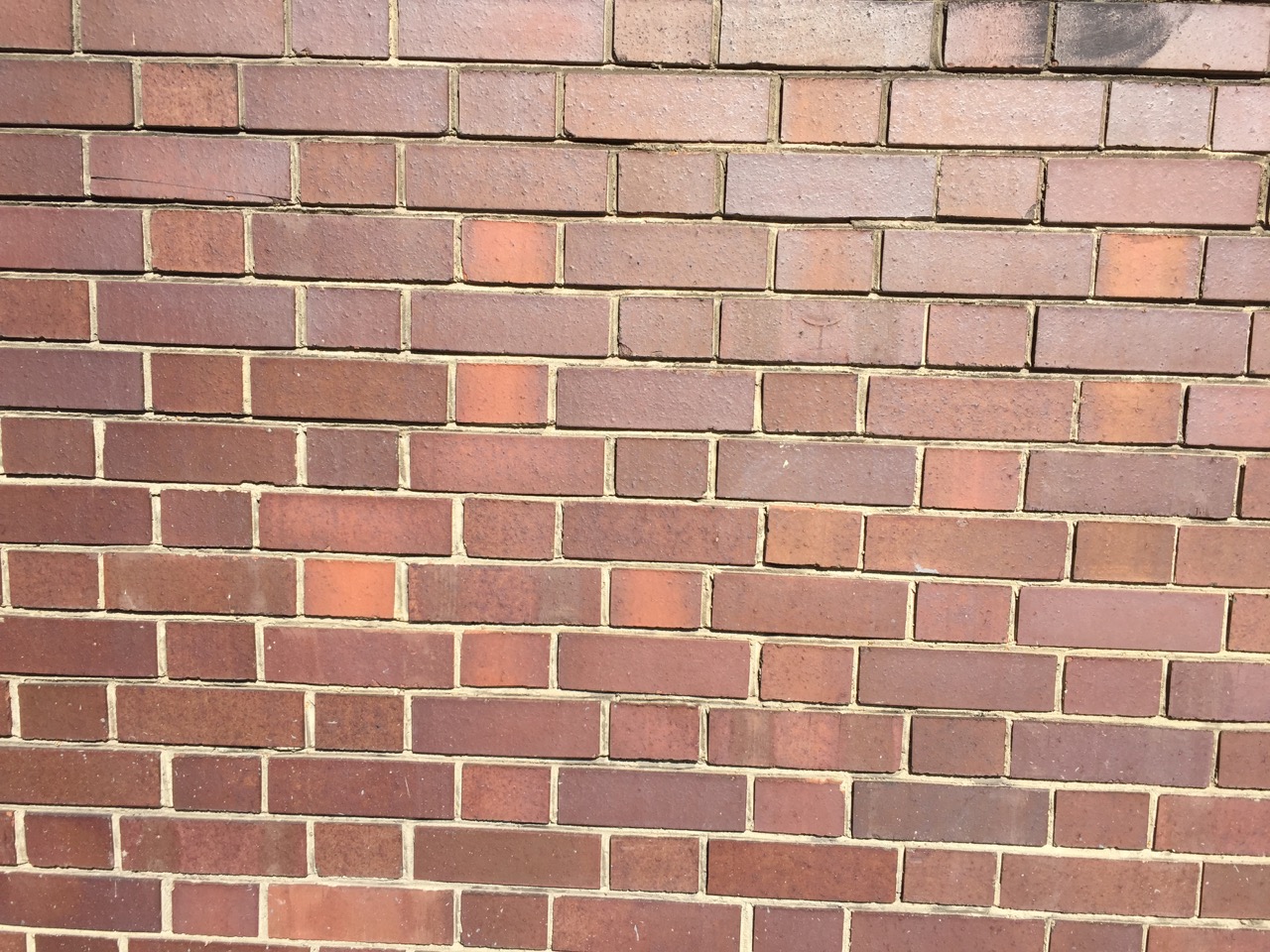
We think of the Barbican as concrete, but in fact there is quite a lot of brick. I studied the brickwork on Lambert Jones Mews carefully, and then found it was more difficult to draw than I expected. The pattern is very particular: long-short-long-short.

IMG_1763

The drawing took 1hr45min, drawn in bright sunlight and a light breeze. I finished it at 12:15pm. Then I went home and had a Hot Cross Bun which I had bought from St John’s Bakery. The bag was standing beside me while I was drawing, smelling spicy.


A walk to Wapping

Today was a beautiful day. It was a day to go for a walk.

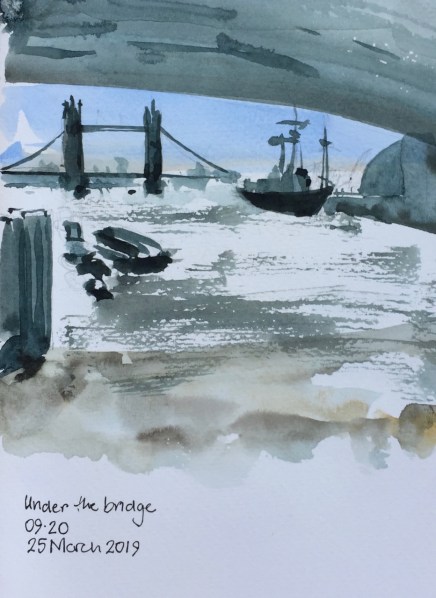
I went to the river. Near Old Billingsgate I looked under London Bridge and saw Tower Bridge and HMS Belfast. This is a 15 minute sketch, watercolour-only, no pen.

IMG_1730

Onwards towards the East, I stood on Sugar Quay, which has only just re-opened after years of being closed while the nearby hotel is built.

Here is the Shard, in context,  from a wooden bench on Sugar Quay.

IMG_1729

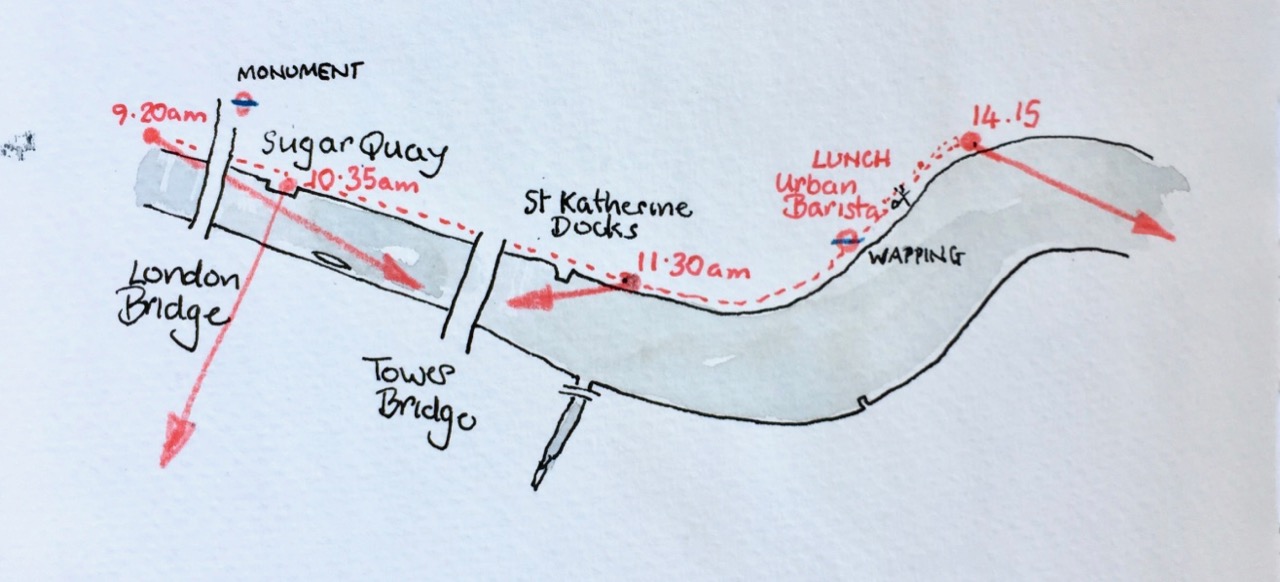
This map shows my walk:

IMG_1731

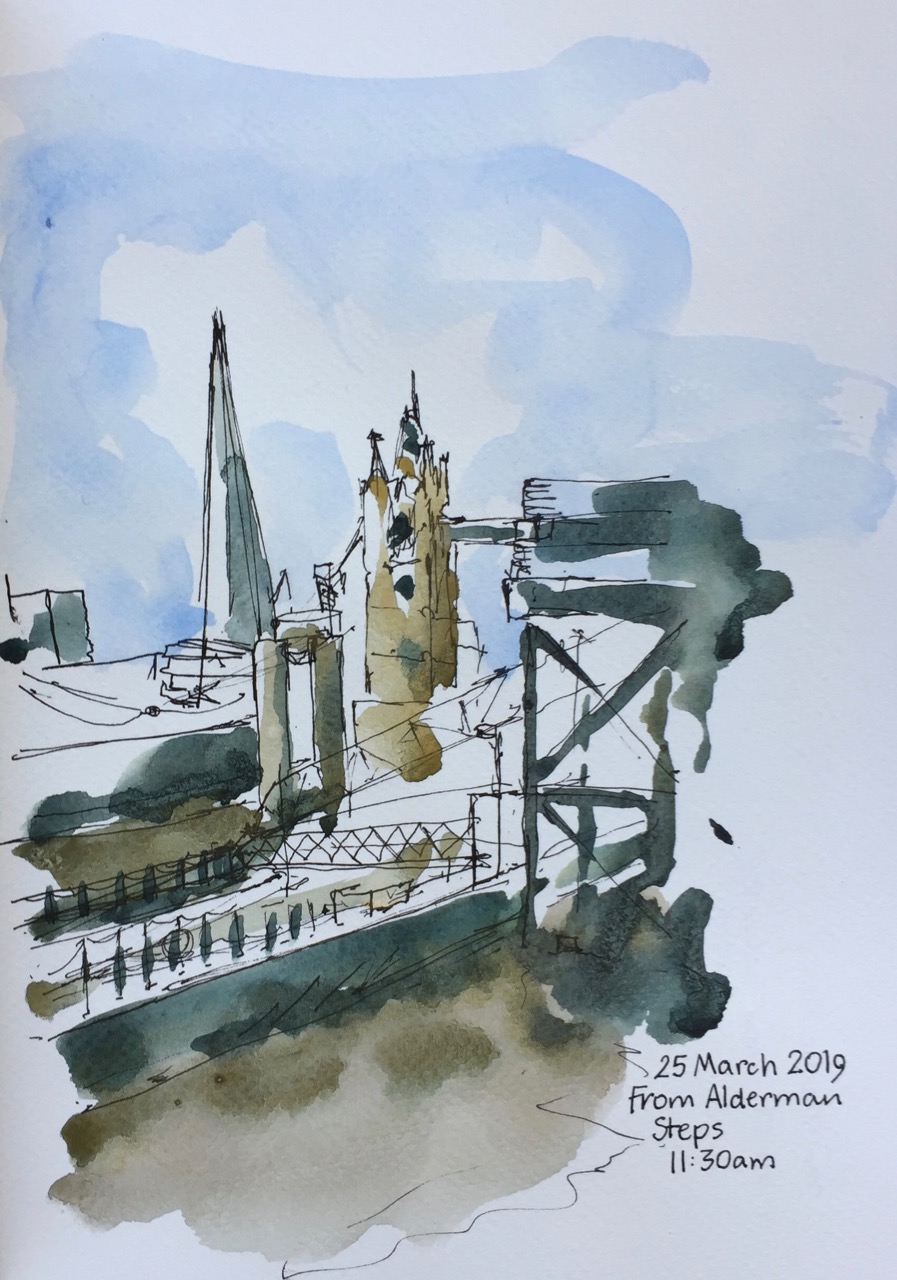
Tourists congregate around Tower Bridge. East of Tower Bridge, after St Katherines Dock, there are no tourists at all. It was suddenly very quiet. I went down “Alderman Steps”. There was this great view. The wind was fierce, and my eyes were streaming. I had a go anyway. Two mallards bobbed around amongst the floating quays, chatting away, looking around as if searching for something lost.

IMG_1728

Then I went on East. I had lunch in a hipster café called “Urban Baristas” on Wapping High Street.

IMG_1677
Lunch at the hipster café “Urban Baristas”

A man at the next table discussed flats on his mobile phone. He said Shoreditch was too expensive, so he was looking in Wapping. He’d found a good place, a view of the river, open plan, lots of space. Maybe it was offices he was describing, not flats.

Then I went on East. The river opens out here, it starts to feel more like an estuary. There are 1980s flats, brick-built, but in the river shores are the remains of the old trade: the old chains, the stanchions, huge shafts of timber, rotting piers.

Then the river bends again, and there’s a magnificent view of Canary Wharf.

IMG_1727

I drew this in about an hour, sitting in sunlight spiked with the smell of someone else’s fish and chips.

Here is work in progress:

Here is me drawing:

IMG_1715

St Alphege Gardens, flowering tree

This tree is in blossom. It’s by the old London Wall.

fullsizeoutput_3318

I cannot do it justice. You should go and look at it. Everyone should. It’s a miracle, in amongst the buildings.

fullsizeoutput_3319

The Shard from Borough Market

fullsizeoutput_3317

Walking back from Intaglio Printmaker in Southwark, I thought it would be a good idea to walk through Borough Market. It was not. The crowds were so closely pressed together, and walking and stopping, that I could make no headway through the main part of the market. So I went round the edge, and glimpsed the Shard, high above the roofs.

The roofs, and the lights, look old but they are not really old. The lights, the nearest ones, are gas lights, with real gas flames. They are recent. The market was re-created and enlarged in the late 1990s. It’s now easy to believe that it’s always been a thriving London market.  But it hasn’t. The “Blueprint” website from developers CBRE says:

In the 1980s, the surrounding area of Borough Market had undergone severe decline. The market’s days as a wholesale hub were threatened by the growth of supermarket retailers and the nearby development of the New Covent Garden market in Vauxhall in the 1970s. By 1994, the market had as few as nine traders and an income of less than £400k per year…..

The first “green shoot” for the market emerged … in 1996. The market had hit rock bottom with little left but a few traders and a mobile barber’s stall operating from a caravan. Neil’s Yard Dairy approached the market seeking additional space in damp conditions for the preservation of their expanding cheese business. Damp space, according to [George] Nicholson [market chairman], “was something we had lots of.”


fullsizeoutput_331bI drew this picture standing up in Stoney Street. There was a strong wind. Papers, mostly takeaway food wrappers, rushed along in the air as if they had somewhere to go.
There were huge crowds outside Monmouth coffee. The whole of Stoney Street, to the right of my picture,  was occupied by people.

Astonishingly, cars appeared. This picture took about 45 minutes and in that time I must have seen about 10 cars, one every few minutes. They arrived and stopped, seeing the crowds. Then, no doubt consulting a GPS which said this was indeed a street, they pushed on.

People walked past me, eating food from wrappers or drinking beer from cans. One drinker rolled over to me. “Are you drawing a picture?” he leered, ready to make fun.

“No,” I replied, “I’m riding a bicycle.” In his drink-fuddled haze, he had a problem to process that.

He turned to his fellow drinkers. “She says she’s riding a bicycle,” he announced. His wise companions hurried him on.


Hôtel de France, Vaud

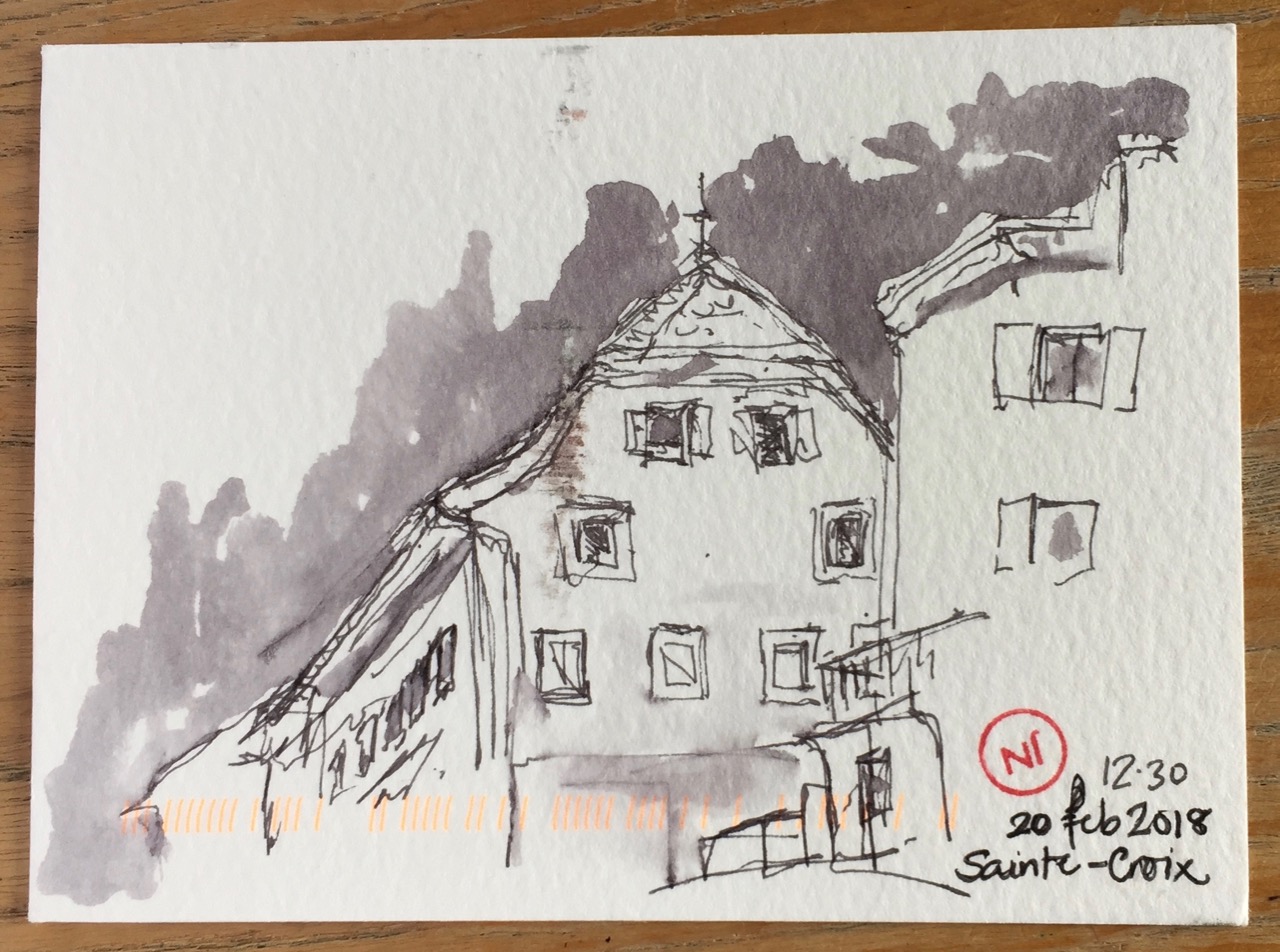
Last week I stayed with my friends at the Hôtel de France in Sainte-Croix.

fullsizeoutput_32ee

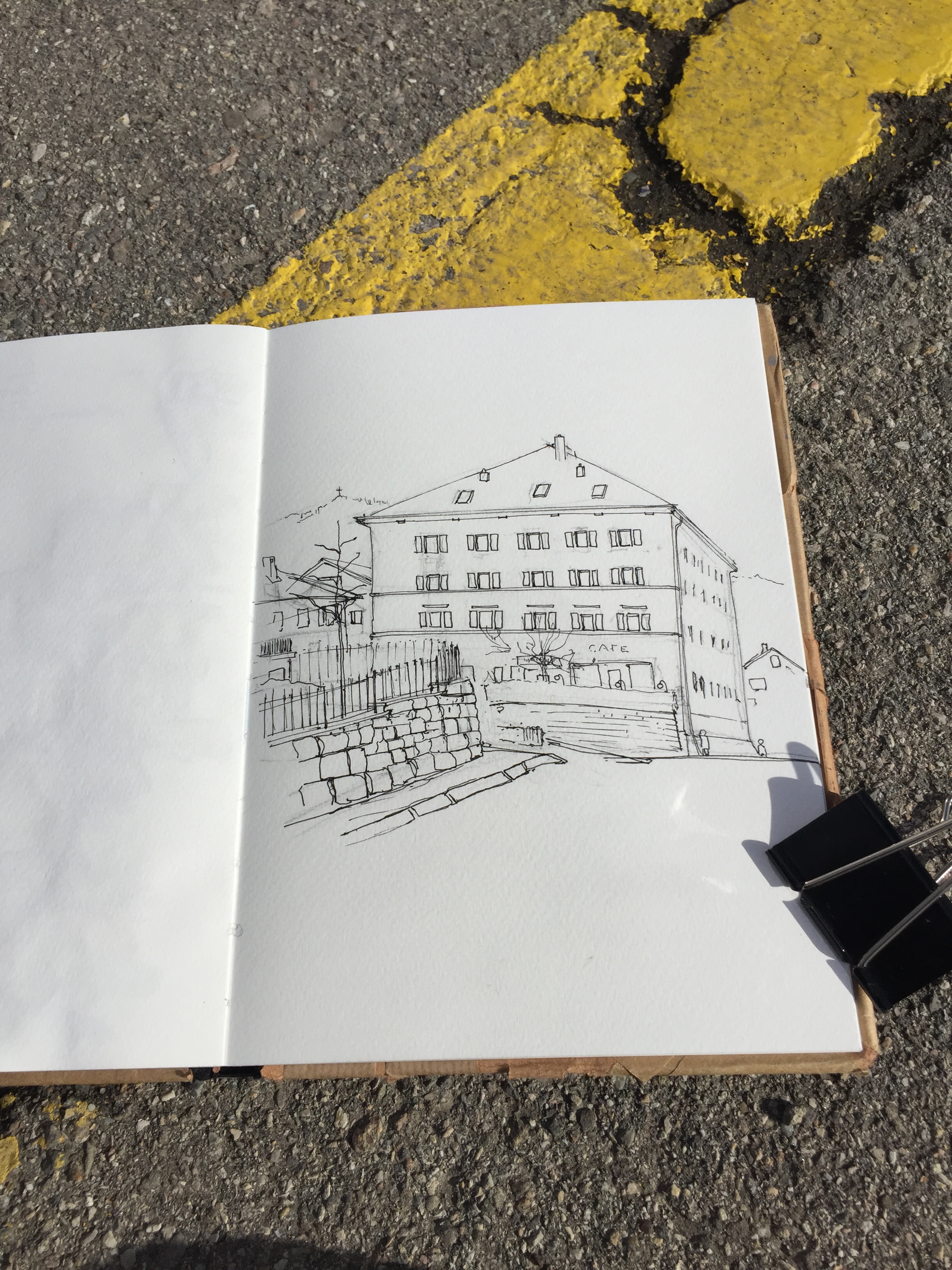
Here is a sketch I made of the hotel from across the road, sitting on a wall by the lay-by. It was really cold, 4 degrees C. One and a half hours, drawn and coloured on location.

A woman parks her car in my line of sight and blocks the view. She is one of a succession of people who parks their car in my line of sight and blocks the view. They all do so unapologetically. I might be just air, sitting there with my sketchbook.

They are collecting items from the hardware shop, which is called “Jaccard”. They all return quite quickly and drive off. So I have become used to the rhythm, and it no longer bothers me. I draw the chimneys, over the top of the car, and the distant mountain, which is called Covatannaz.

This particular woman, on returning to her car, called out “Hélène!”. Her car was empty. I assumed she was calling to someone round the corner. “Hélène,” she said again. I realised she was talking to me. None of my names is Hélène, although I quite like the name. I ran through the options in my head. Was “Hélène” a kind of French form of “Fore!”, which golfers shout? Was this a warning of some kind? No. She and I were looking at each other, she with an open face of greeting, me no doubt with a puzzled frown, which after a little while influenced her open greeting, and she frowned too.

“Bonjour!” I said brightly, hoping to lighten the mood.

“Ah,” she said, and her expression altered again. Perhaps my voice was wrong. Even with one word, my English accent must have been apparent. “Excusez-moi,” she continued,  “Je vous avez prise pour Hélène Jumeaux*.” She continued to look at me as though I might change my mind and confess to being Hélène Jumeaux, despite the accent. When I didn’t, she hid her confusion by examining my picture, which she genuinely seemed to like, and she complimented me.

Prosopagnosia, face blindness, affects maybe 1 in 50 people, according to “faceblind.org“. It is an inability to recognise faces, not an inability to remember names. That is also a problem, but a different one. I know this, because, as I’ve got older, face blindness has become more and more of a problem for me. I felt sympathy for the woman. Neither my limited mastery of French, nor the situation, enabled me to express this connection. But we managed. We smiled, and talked about the picture.

Forgive me if I pass you on the street without recognising you, even if we’ve seen each other only a few hours before. Please say hello. And say your name.  As I’ve got older I’ve realised that many mental and physical defects, such as deafness, visual impairment, prosopagnosia, encroaching memory loss, can all be interpreted, by people who are young and fully functional, as rudeness. It’s made me more forgiving of other people’s weaknesses, other people’s apparent rudeness.

Here is the line drawing, the same picture as above, before the colour went on.

IMG_1548

Here are a couple more drawings from the same trip, and a photo of this drawing on location, just after I finished it.

I have made pictures at the Hôtel de France before:

Sainte-Croix, Vaud, Switzerland

Sainte-Croix, Vaud

View from a Swiss Hotel

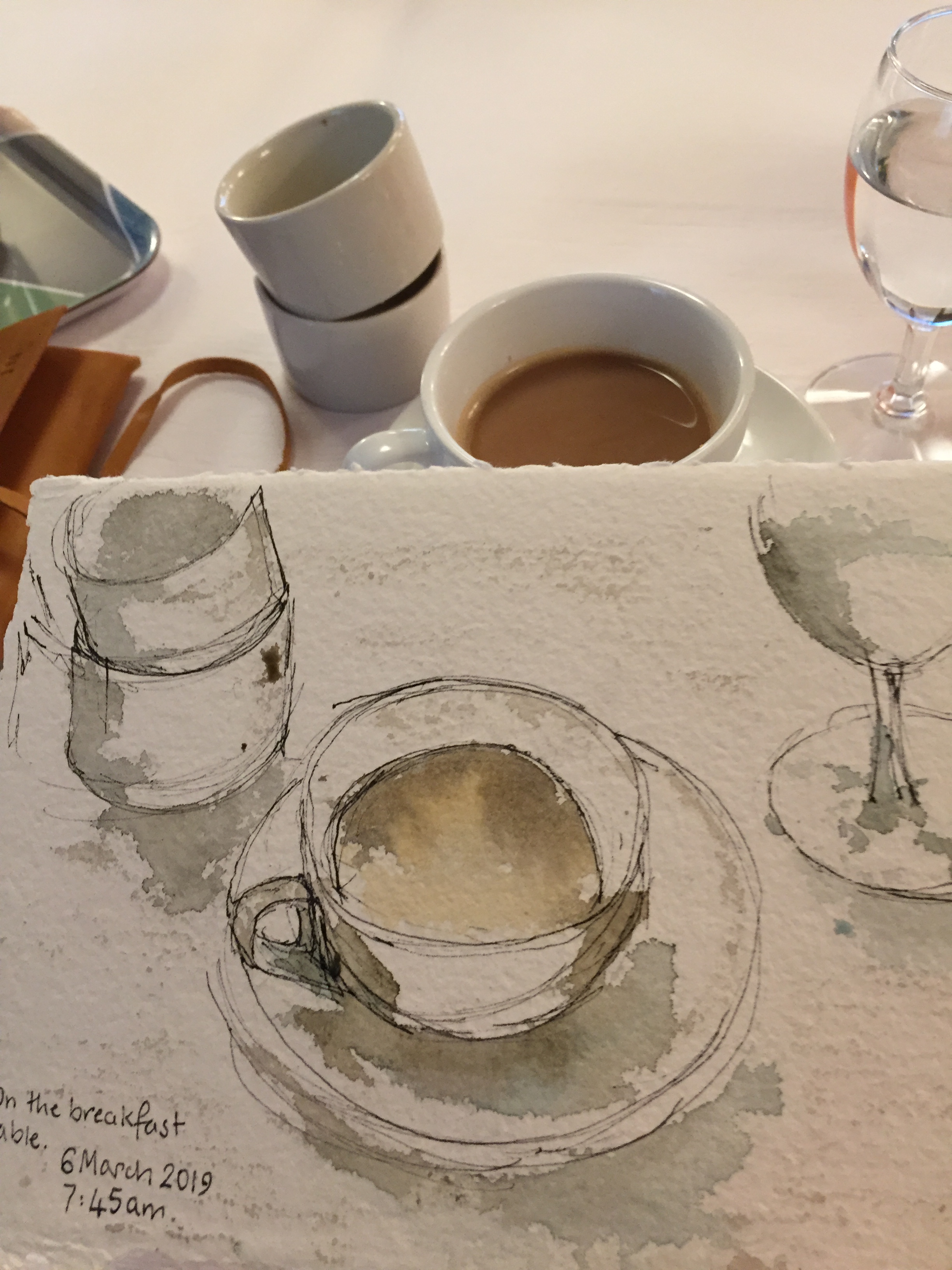
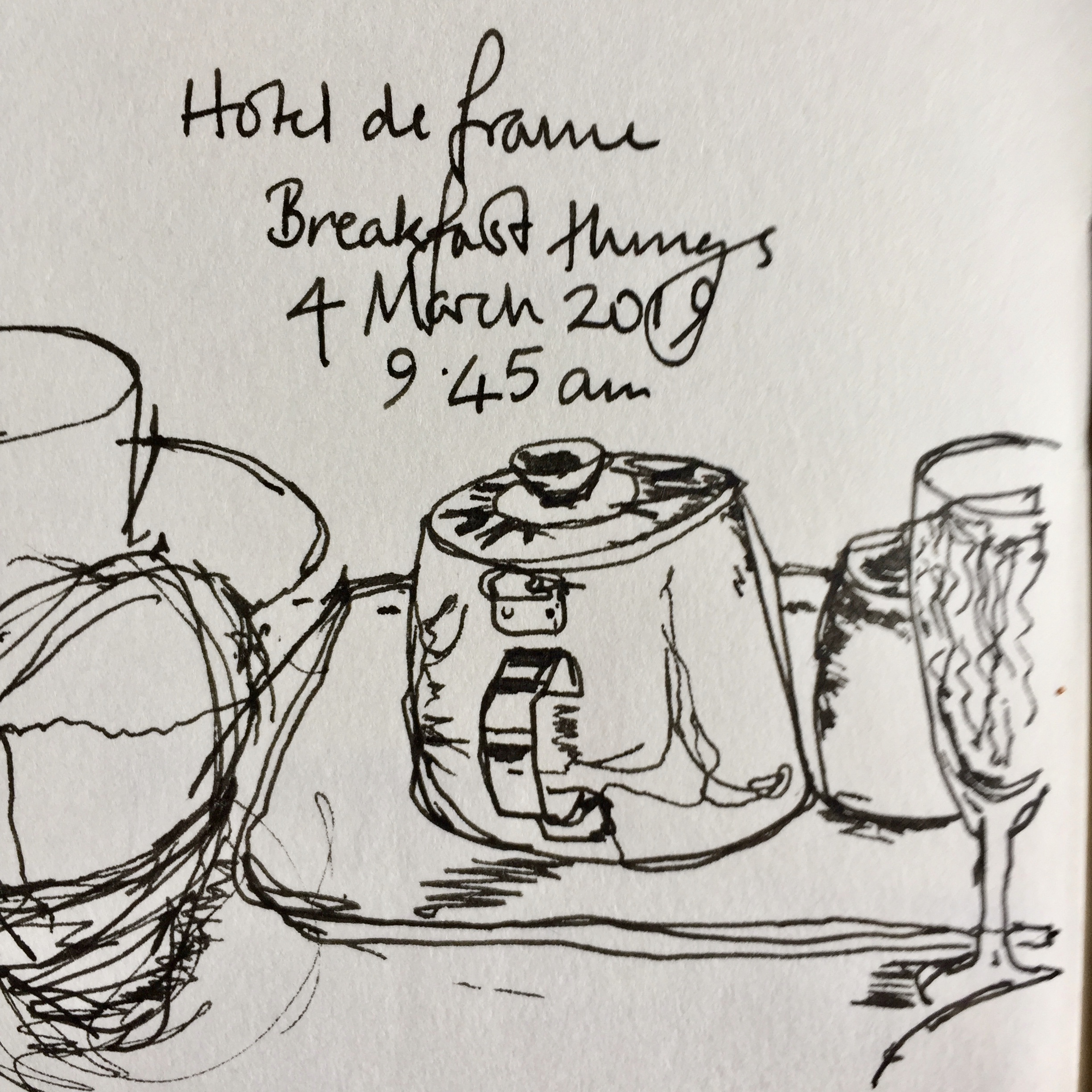
Some sketches of hotel tableware

Here is a gallery of archive sketches from Vaud and Sainte-Croix.

*names in this story have been changed

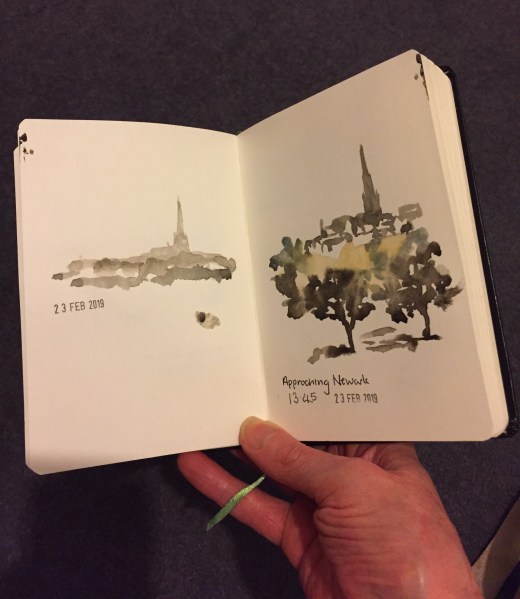
Sketches from a train

fullsizeoutput_32d7

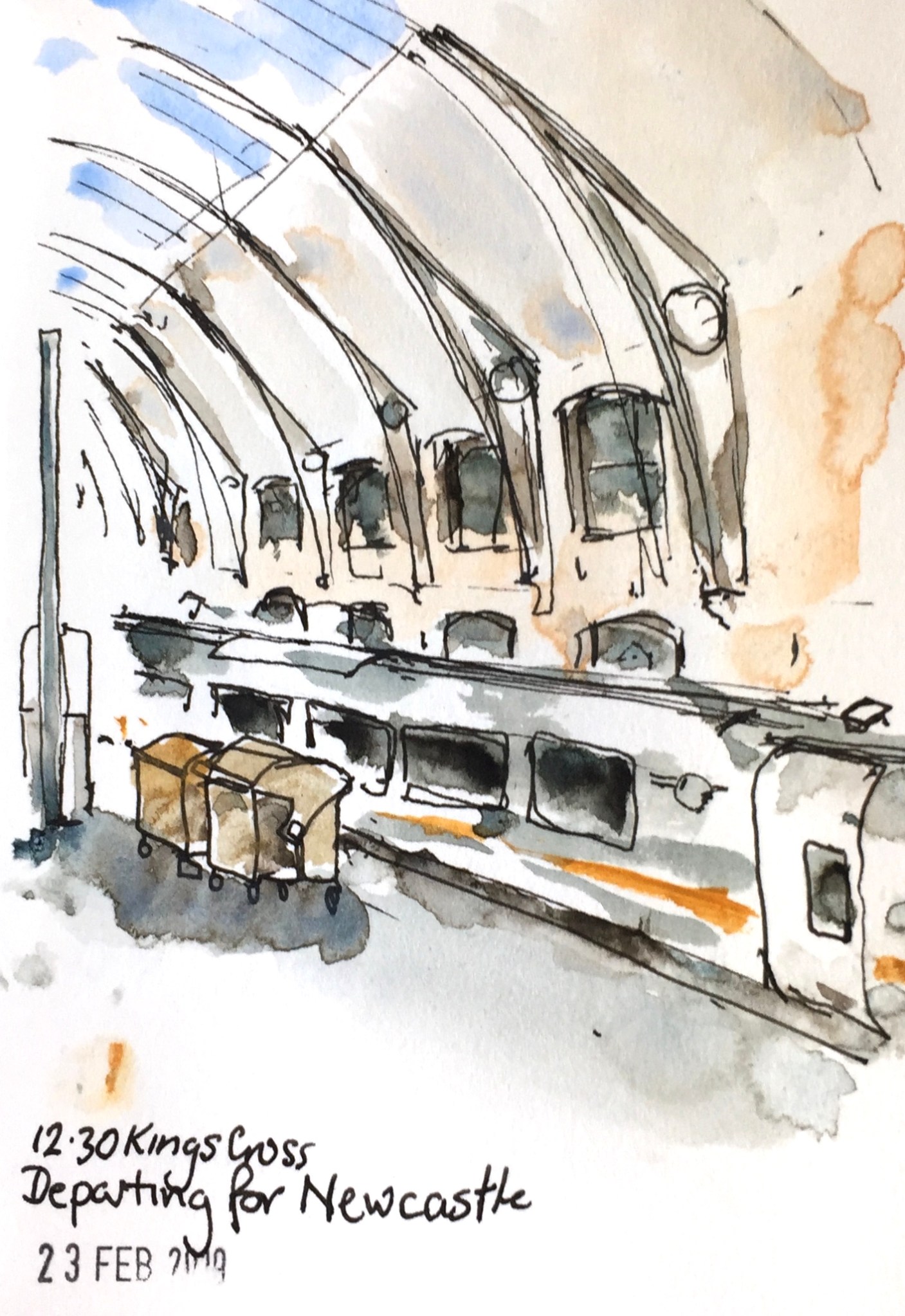
I drew a sketch at Kings Cross.

Then some drawings from the moving train:


All very small sketches in a notebook 6 inches by 4 inches.

IMG_1434
Sketches in A6 notebook.

Strawberry Hill House

Strawberry Hill is about 40 minutes out of Waterloo, towards Twickenham.

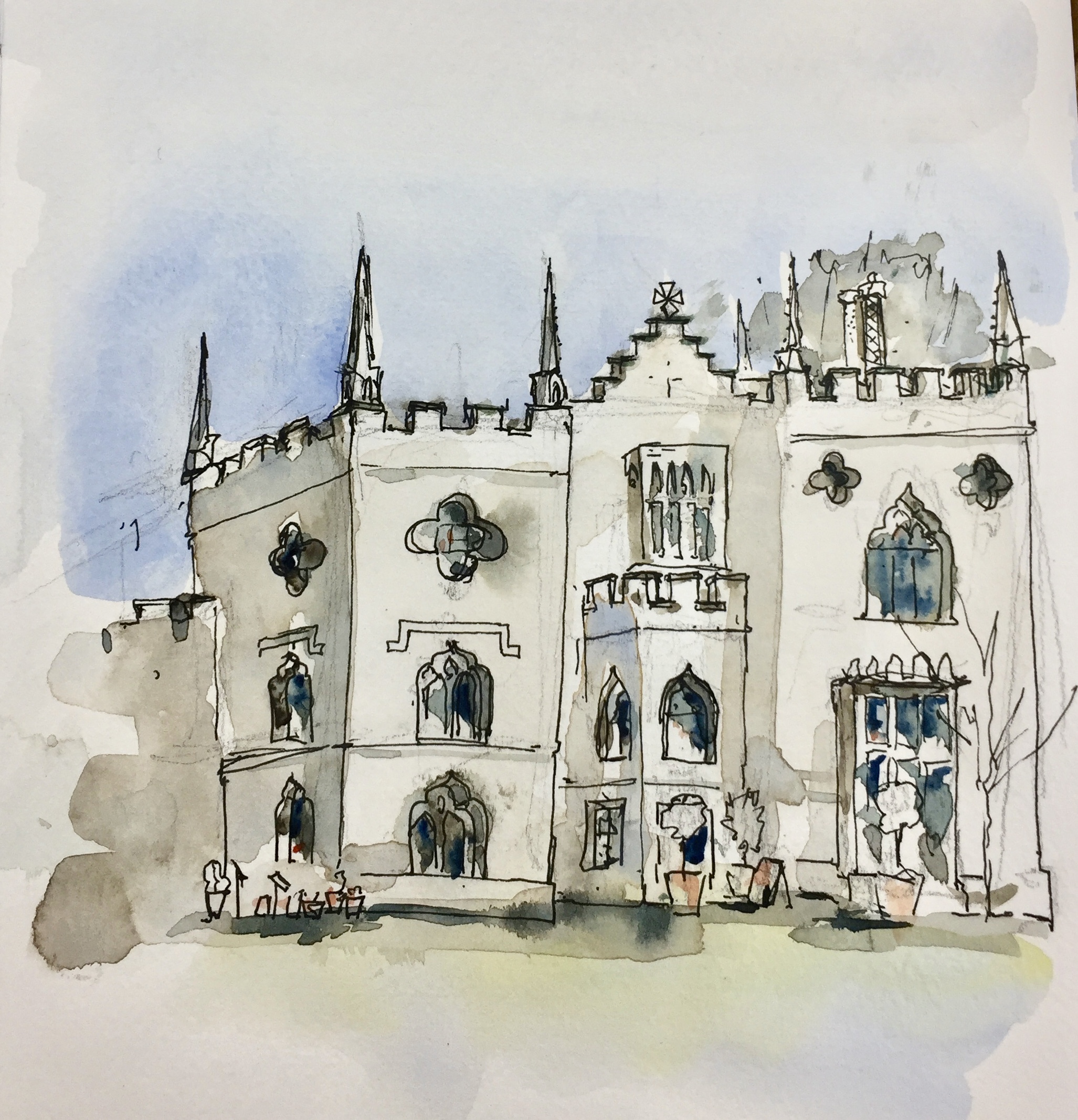
Here is the summer villa of Horace Walpole (1717-97) son of Sir Robert Walpole, the “first British Prime Minister” according to the leaflet.

fullsizeoutput_32bf

Amazing what you find, and this was still only in Zone 5. This is “Gothic Revival” style. Out of the picture, to the right, was a hospitality tent, where an event was bring held. The tent was 21st Century basic style, not at all Gothic.

Here is a picture I drew after we had toured the house, which is like a stage set of rooms leading off rooms, and pictures which look at you from ornate frames. It would make a good set for an episode of “the Avengers”*. It was very stuffy indoors, and the rooms were surprisingly small, or perhaps surprisingly crowded. I came outside and found a bench in the garden. There was birdsong, and a distinct smell of marijuana.

fullsizeoutput_32be

Pictures took about 40 min each.

*The Avengers: British TV series, 1961-69, espionage and thriller, featuring John Steed played by Patrick McNee and a series of his assistants, notably Emma Peel played by Diana Rigg (1965). A formative part of my education.

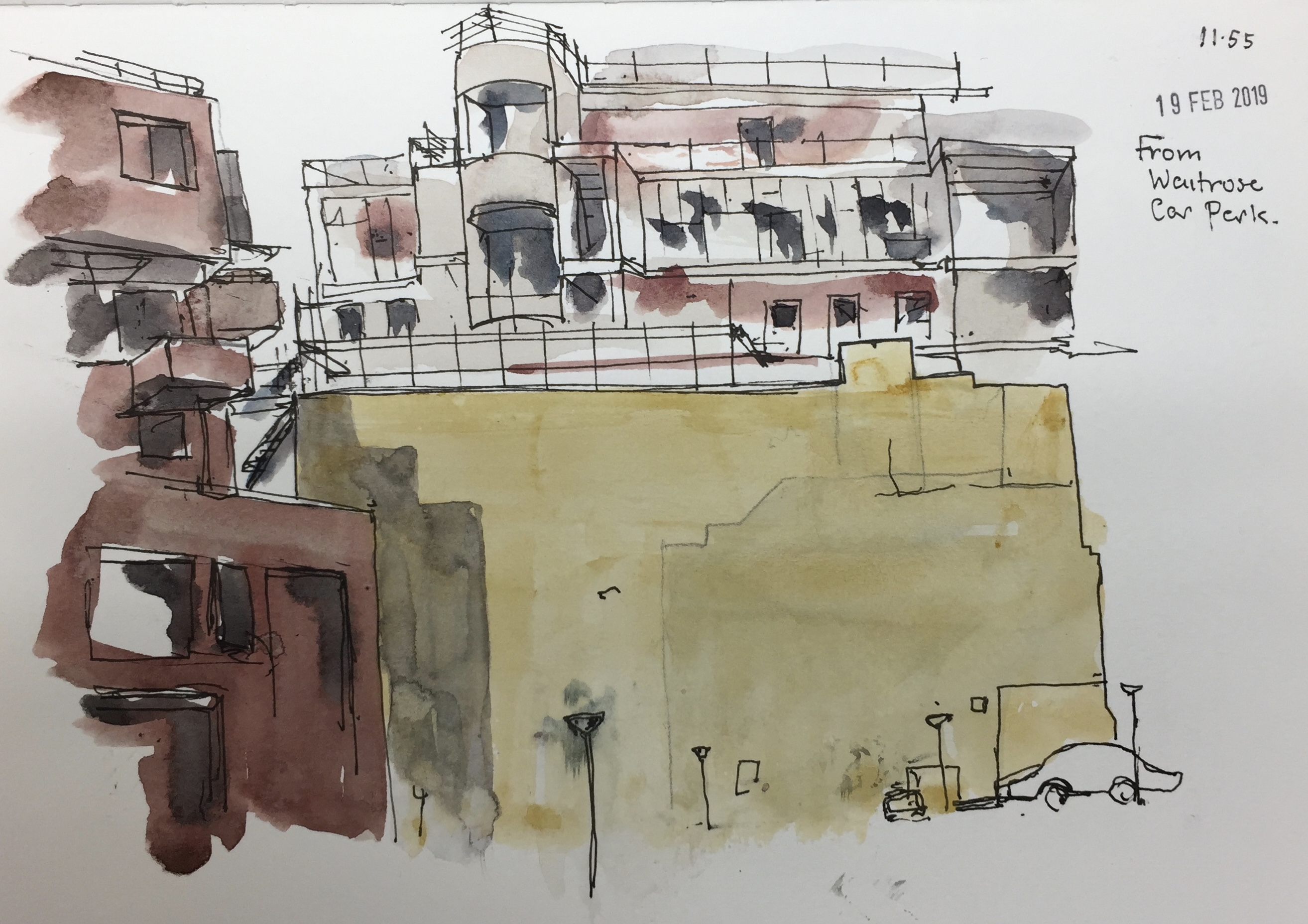
A wall in Waitrose Car Park

fullsizeoutput_331a

I like pictures of walls. It seems to me they have much to say. This one, for example, talks of the house that it once supported, of the concrete small bunkers that were at its base. It has been there longer than the development called “Cherry Tree Walk” which is above Waitrose, to the left. And now, behind and above, is the new YMCA hostel.

This wall is brick. It must have taken a long time to build. And it’s still there.

I drew the YMCA hostel from the other side, in December 2017:

YMCA site, Errol St EC1

88 Golden Lane

Today was a glorious sunny day. I walked out into the sun and everywhere was worthy of a sketch.

Here is 88 Golden Lane, a strange thin building. It is an architects’ practice: Blair Architecture.

fullsizeoutput_32af

I sketched this standing on the side of the road in the sun, then retreated to sit on my case by a nearby wall to add the colour.

It must have looked as though I was sitting on the pavement. An elderly woman, pushing a shopping basket on wheels, stopped and asked me if I was alright. I said I was, and explained that I was drawing a picture. “Oh,” she said, “because I was going to say that if you needed a sit down, there a bench just around the corner here.”

I gestured to the building I was drawing. “Ah yes, you wouldn’t be able to see that if you went round the corner.” She told me she had wanted to be an artist. She always got the art prize at school. But then the schools closed. “We were blocked,” she said. I didn’t know what she meant. “I’m old,” she said, smiling at my blank expression, “the war.”

Because the school closed, she left at 14. “I wanted to go to the art school, St Martins, but that was closed because of the war.” So, she said she’d be a typist. Then the firm she worked for closed down because of the war. “So I went on War Work,” she declared. “Oh, I’ve had a good life. I’m 93. Although people say I don’t look it.” She certainly didn’t look it.

I suggested she take up art now.

“I can’t,” she said, “it’s the hands.” She held up her arms. Her hands were balls, in gloves. “Arthritis,” she said. “But I’m alright. I was ill. And I recovered. So now I think, well, I’ve got a new life. Get on with it.”

She waved her balled hands cheerfully and pushed her trolley on. She turned round. “I hope to see you again,” she said.