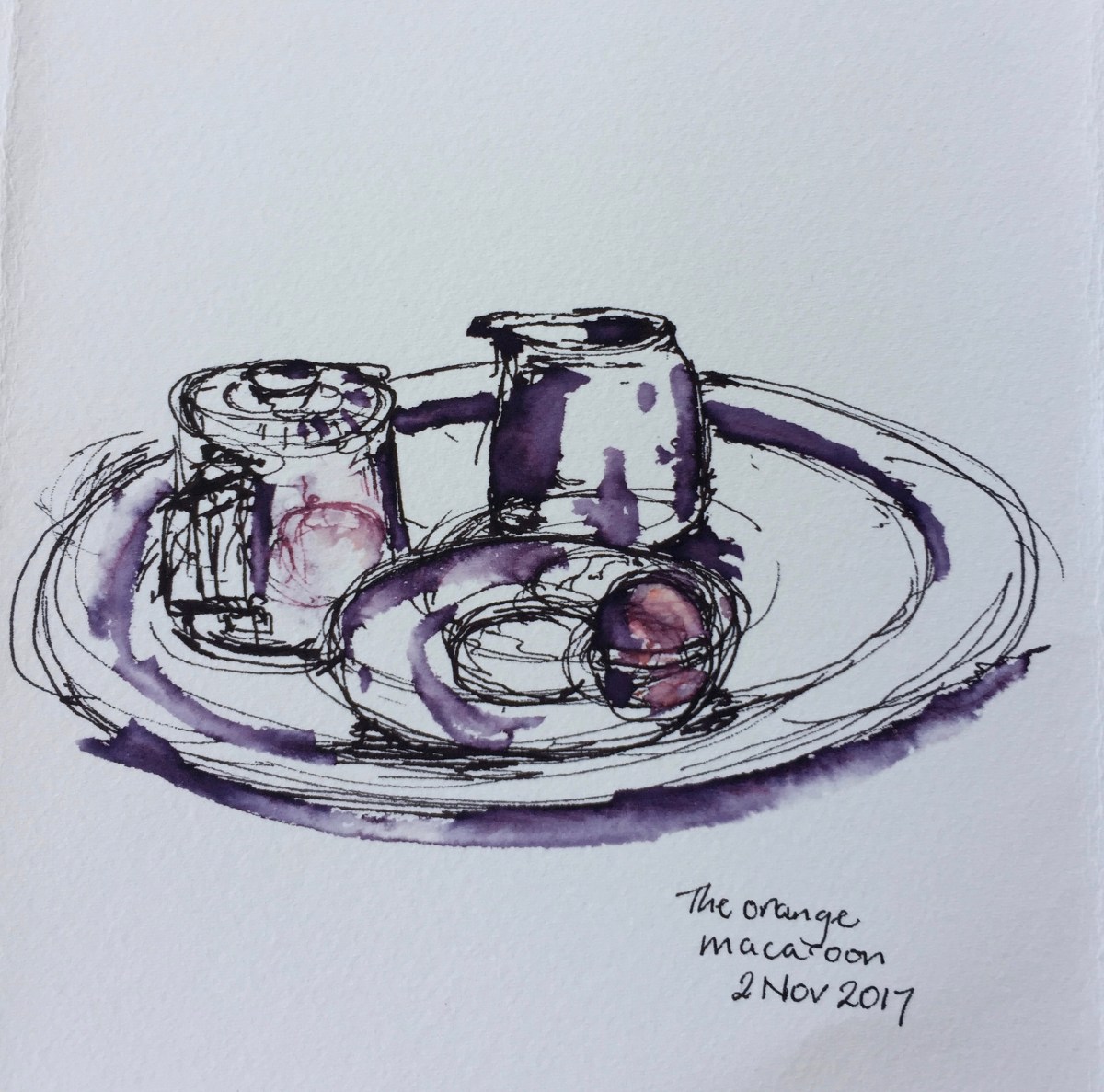
Some sketches of hotel tableware

I have been experimenting with pen and ink. Previously, I have used waterproof ink, with watercolour on top. This “pen and wash” technique depends on the ink staying where it’s put. See, for example, the urban sketch on this link.

Recently, inspired by the work of Nick Stewart  https://quinkandbleach.wordpress.com, I have been trying non-waterproof ink.

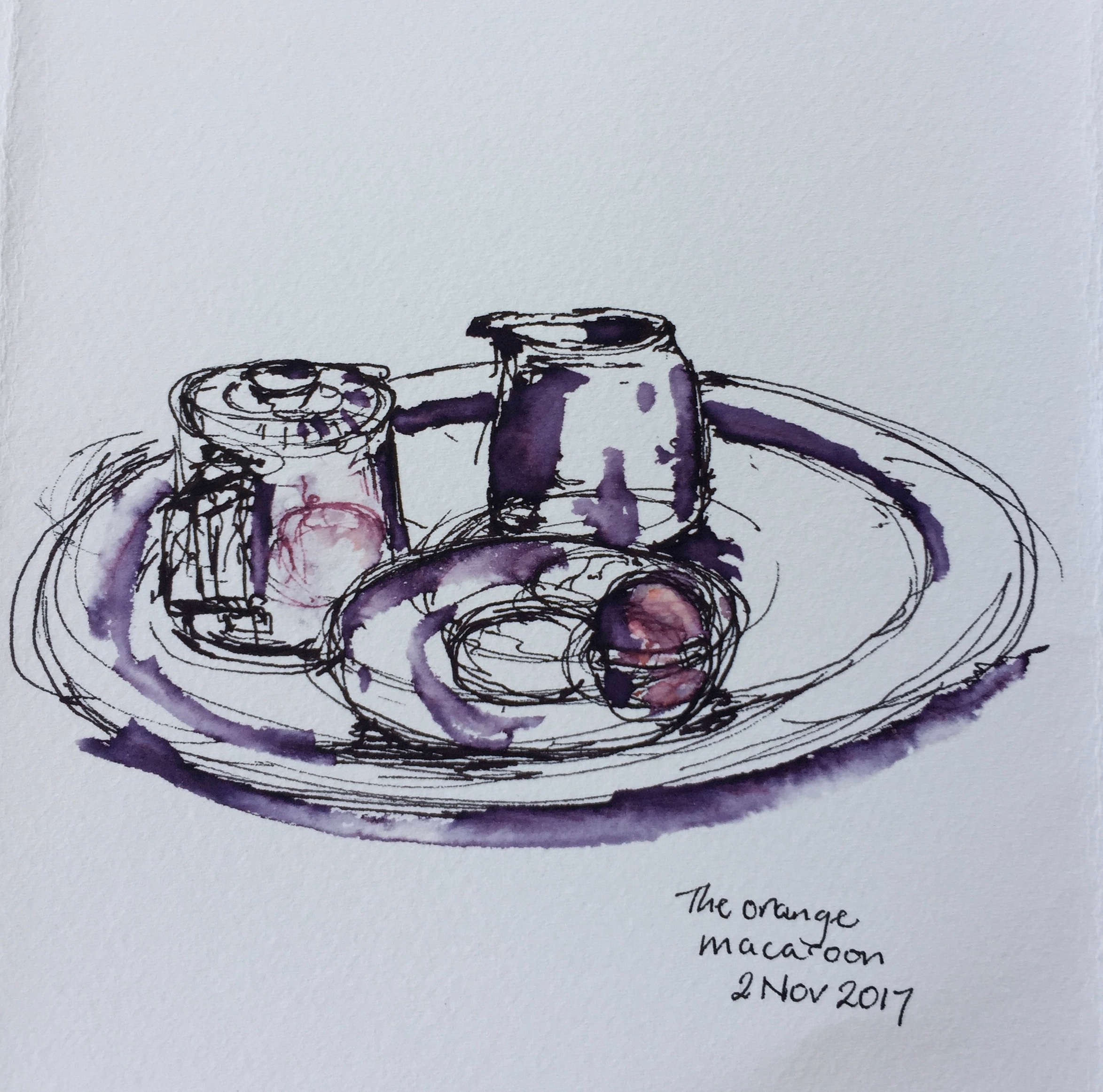
Here are four sketches, done in the Hôtel de France, Sainte-Croix, Switzerland. Click an image to enlarge.

They are all done using only Robert Oster Signature Fountain Pen Ink, colour: Black Velvet. This ink has the property that is produces a chromatograph effect, blue and pink, as it runs and dilutes with water. See, for example, the left hand side of the “wineglass” drawing, where you see black, blue and pink.

I’m using a dip pen: the Pensive Pens Serendipity dip pen.

All of this is quite a challenge to accomplish, especially as the pictures were done in a Swiss dining room, on white tablecloths. No ink drops contaminated the pristine environment. But I had to be very careful.

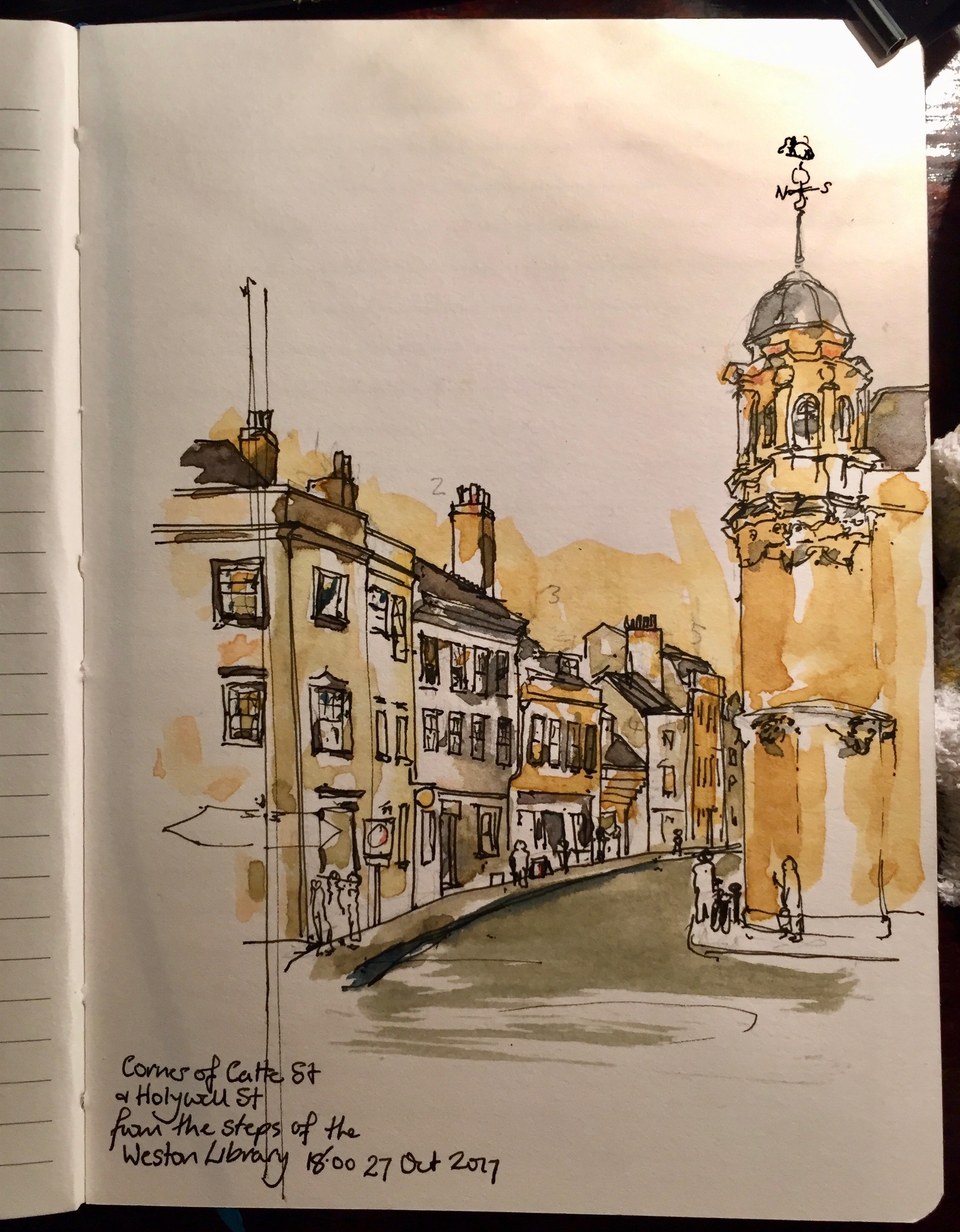
Two sketches in Oxford

Here is the corner of Catte Street. On the left is the Kings Arms, a Youngs pub. The marvellous turret on the right is part of the Oxford Martin School. This building was originally the “Indian Institute”. It was designed by Basil Champneys in 1884. The weathercock is an elephant.

It now houses the Oxford Martin School.

“The School is a unique, interdisciplinary research initiative addressing key global future challenges….A key aim of the School is to mitigate the most pressing risks and realise exciting new opportunities of the 21st century. With interdisciplinary teams of researchers from across the university, the School is working on the frontiers of knowledge in four broad areas: health and medicine; energy and environment; technology and society; and ethics and governance. Aiming to have an impact beyond academia, the School also develops wide-ranging initiatives, intellectual programmes and public events to engage with national and international policymakers, business, students and the general public.”[LinkedIn]

IMG_1878

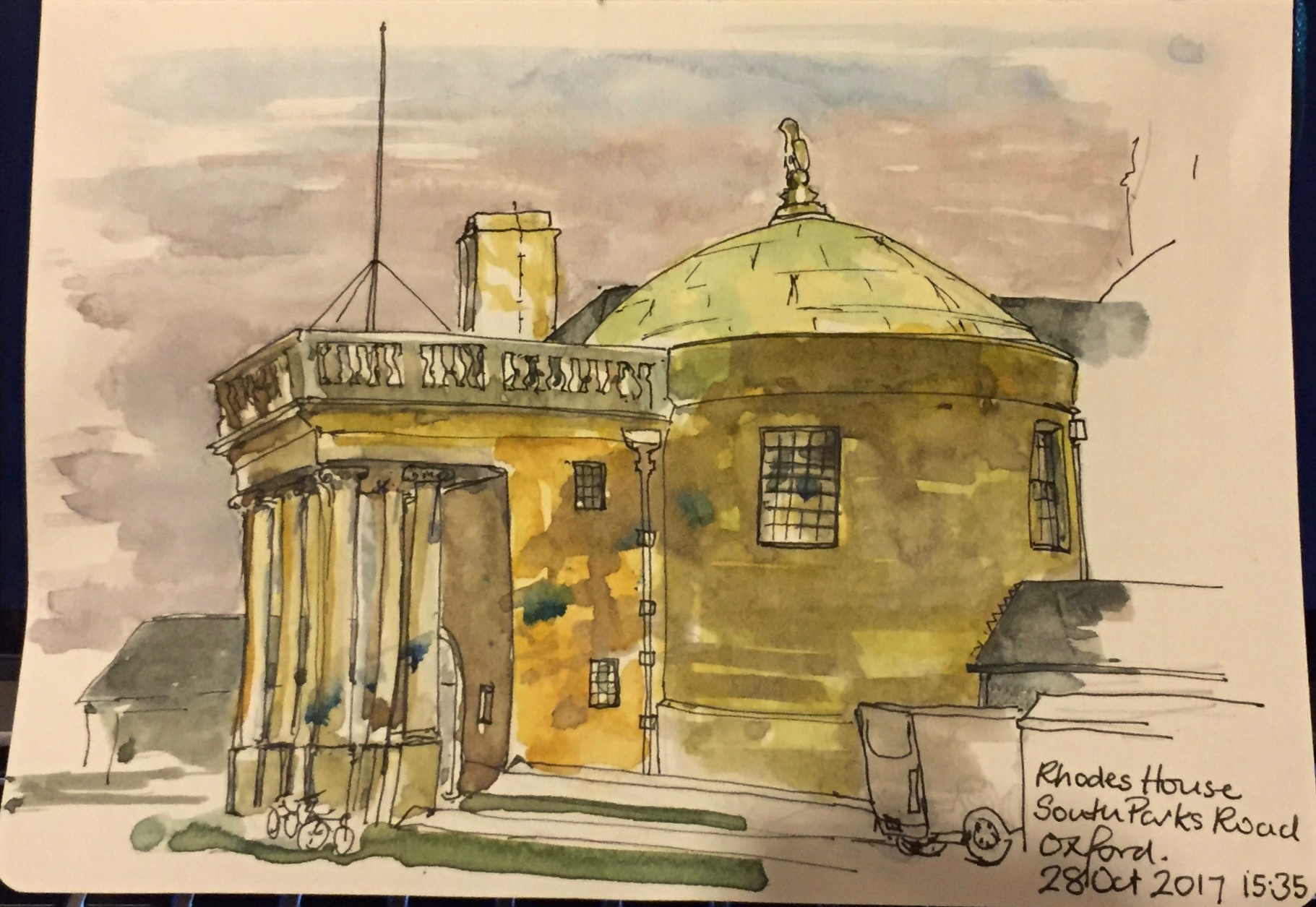
On the way back from the lecture I sketched this domed building.

IMG_1882 (1)

This is Rhodes House. It houses the Rhodes Trust, The Mandela Rhodes Foundation, and the Atlantic Institute, according to the notice on the door.

Both pictures took about an hour. The first one was sketched from the steps of the Weston Library, about 50 mins. By the time I’d finished the pen sketch, the light had gone. So I finished the colouring in my room in LMH that evening. The light in the top right hand corner is not some amazing watercolour technique, but the light from the small and very bright desk light.

The one of Rhodes House I sketched standing up leaning on Inorganic Chemistry. I coloured it sitting down on the tiled pavement, on a copy of the Economist.

Lady of Avenel at Heybridge Basin

Here is Lady of Avenel, 102ft Brigantine.

fullsizeoutput_198b

This was the third of three sketches. Here are the first two.

I have drawn Lady of Avenel previously: Outer Hebrides 2017

See also these pages for pictures of and from Lady of Avenel:
Outer Hebrides 2017
Outer Hebrides 2016
Sketch notes from maritime Holland

The Charterhouse, Pensioners’ Court, South West Corner

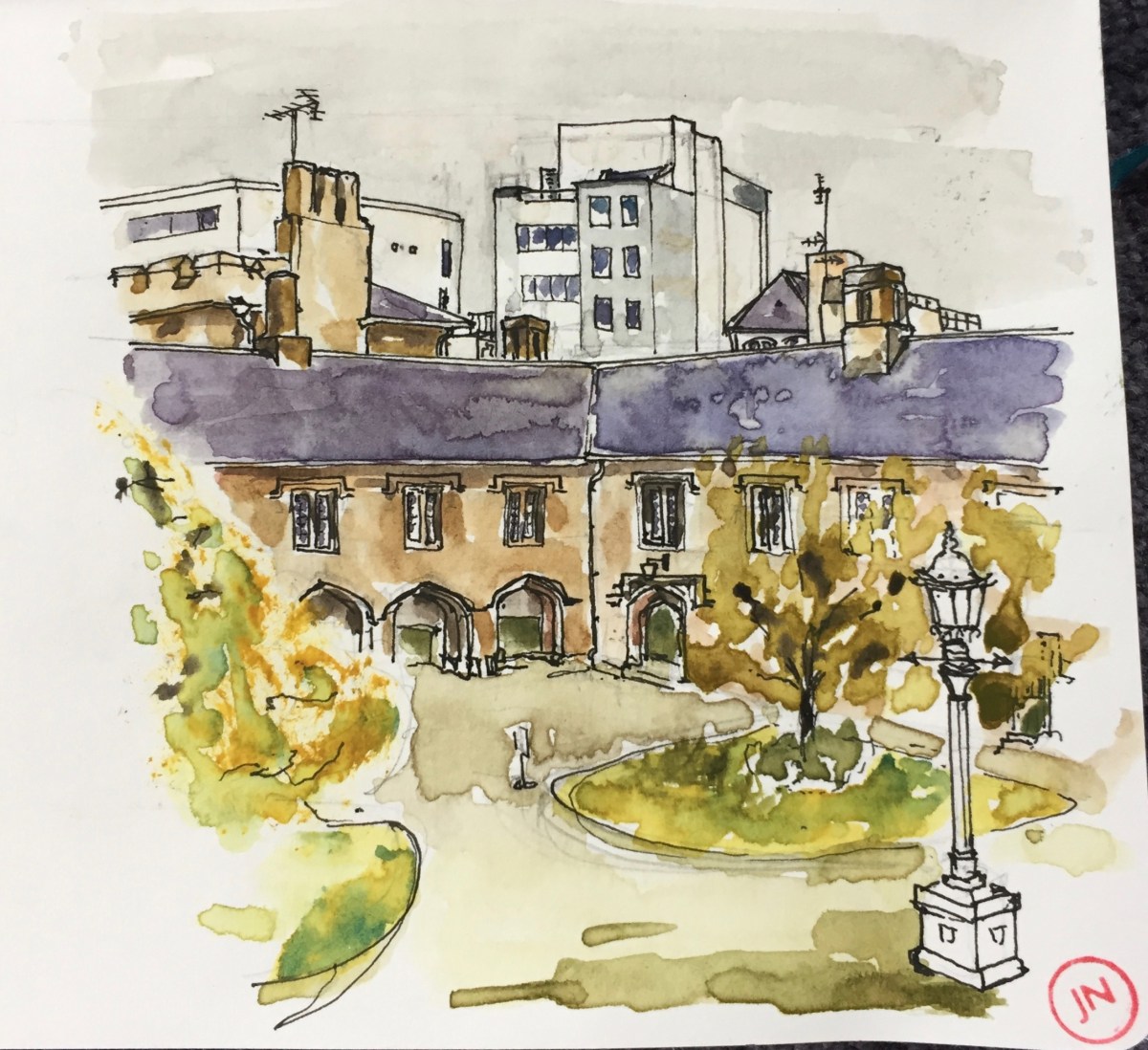
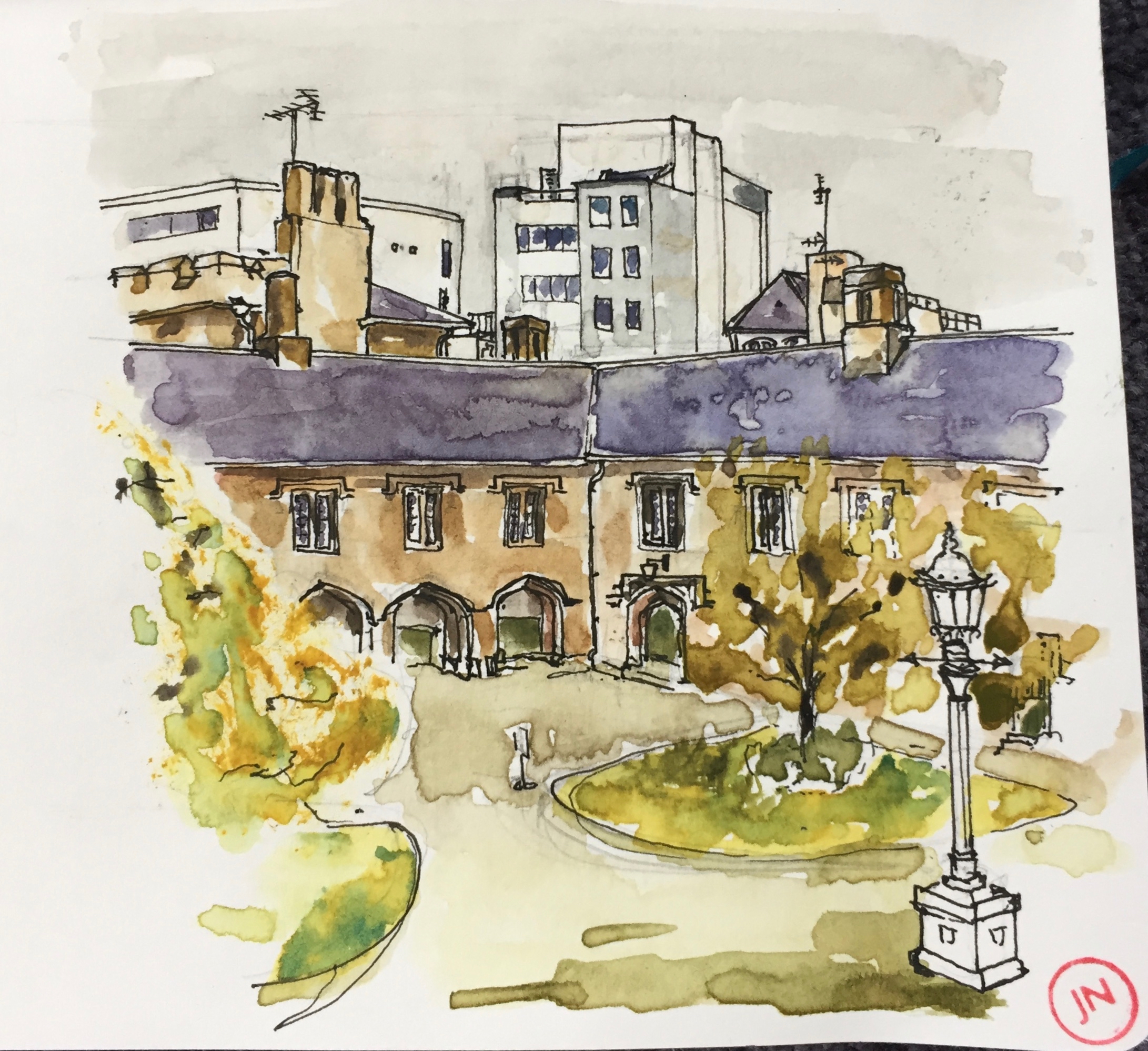
Here is a sketch from the first floor windows of manasian and co, a strategic brand consultancy with offices in Pensioners’ Court.

October 23rd 2017

I like the way the newer buildings are visible above the old ones, placing The Charterhouse in its 21st Century context. Behind me in the office, people worked on large screens, making pictures, and talking gently with each other across the desks. Outside, a gardener in a red raincoat clipped at the plants, dragging a large basket behind her, for the clippings.

Sketch notes from maritime Holland

IMG_1815

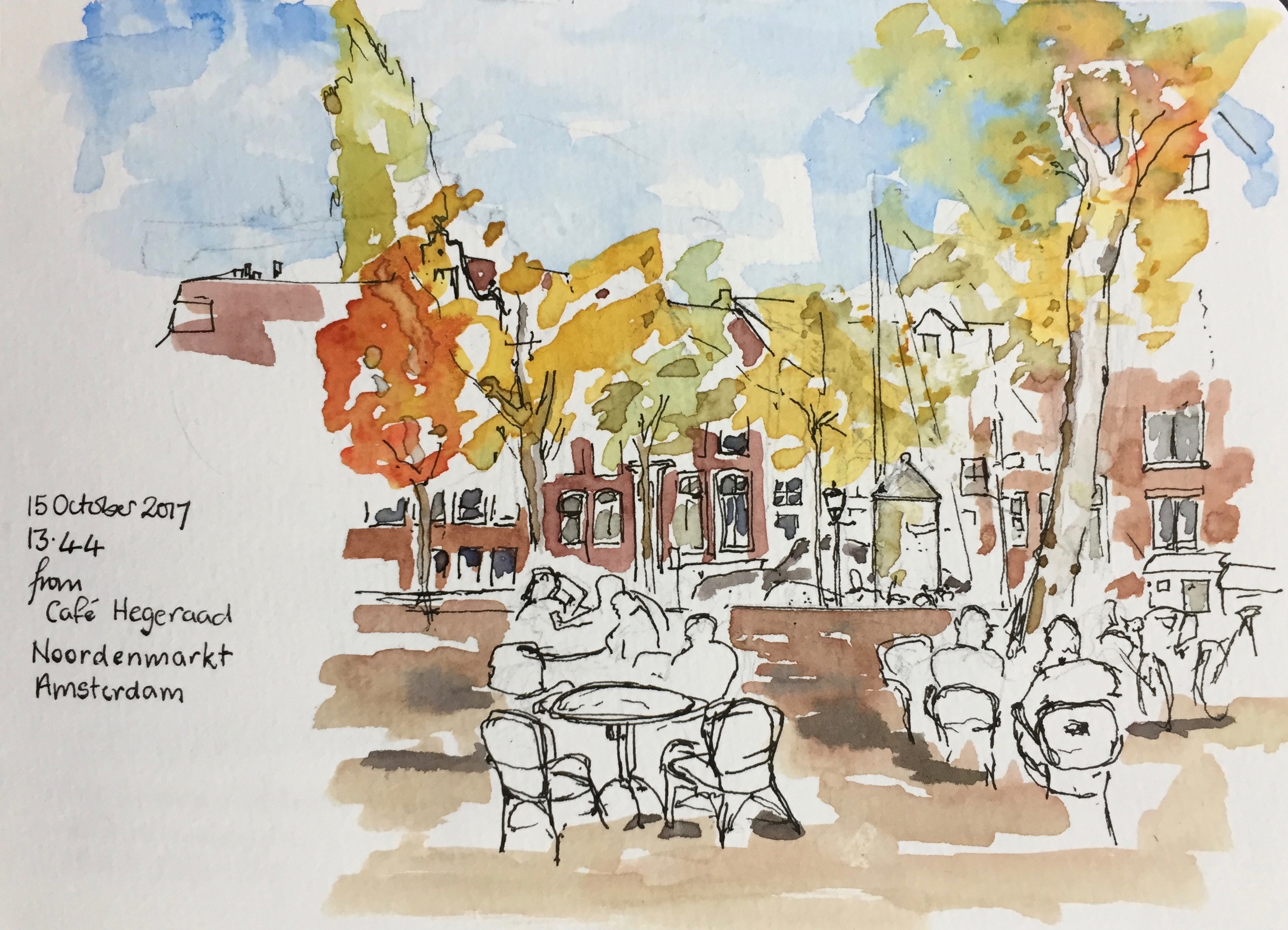
This is Noordermarkt, as seen from Café Hegeraad, in the Jordaan district of Amsterdam. It was a lovely autumn day, warm with a light breeze. I had the apple cake and a coffee. I had arrived from the overnight Stena Line ferry, then a sequence of trains from the Hook of Holland.

My destination was Surinamekade, to meet the boat “Lady of Avenel”. I walked through the renewed Central Station where I retrieved my bag from the luggage lockers. Here is a picture from the boat.

IMG_1817

The “Race of the Classics” had just taken place, and they were saying goodbye to the last of the participants. The captain and crew went off to an award ceremony. On my own on the boat I drew a picture of three of the other classic boats moored up behind us.

IMG_1816

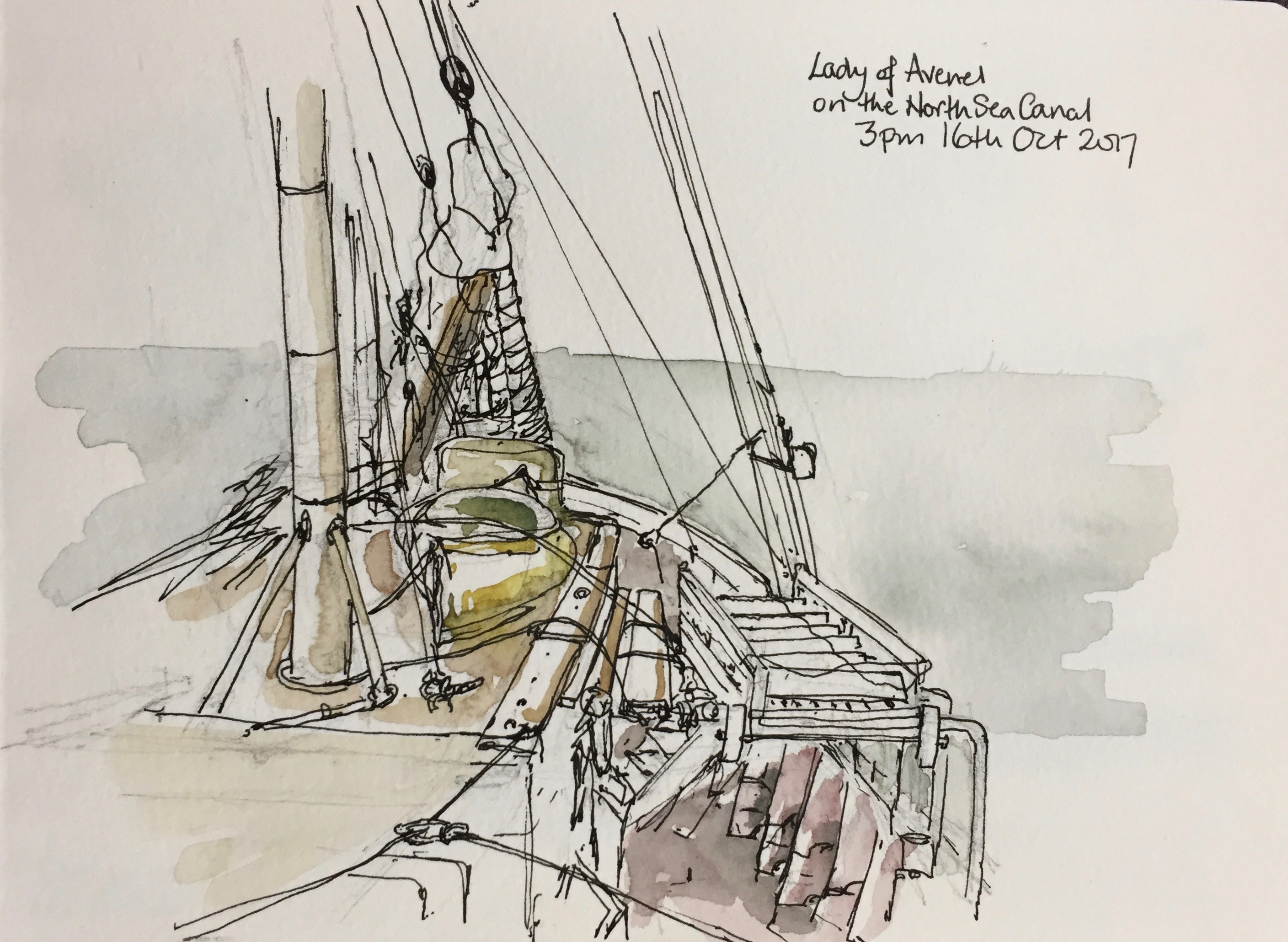
In the morning, we set off along the “North Sea Canal”. I drew a complicated picture of “Lady of Avenel” from the quarterdeck, which took a long time.

IMG_1818

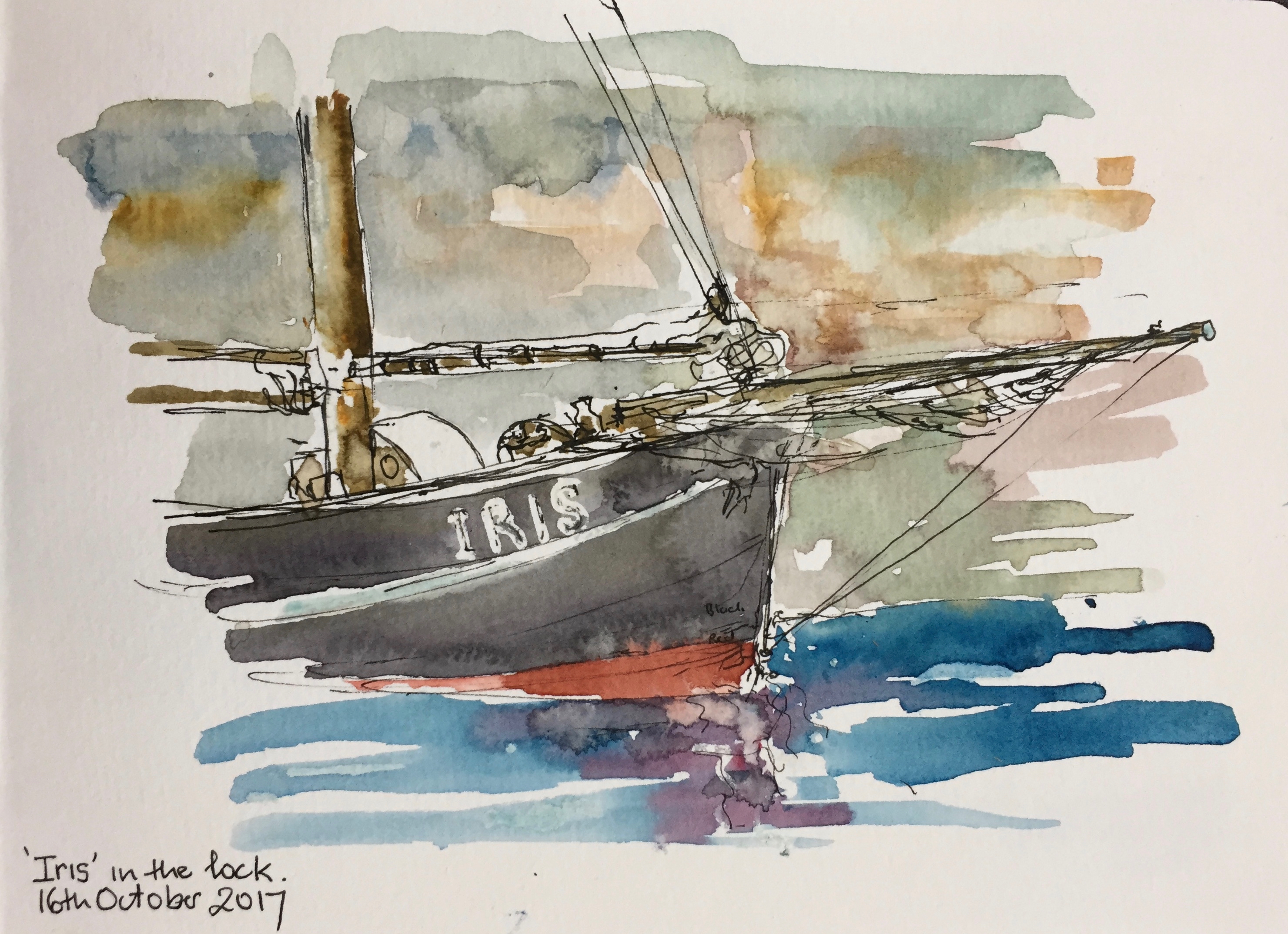
Then, in a lock, I drew a quick picture of “Iris” who followed us in. This was much more successful.
IMG_1819

We reached Scheveningen.

IMG_1820

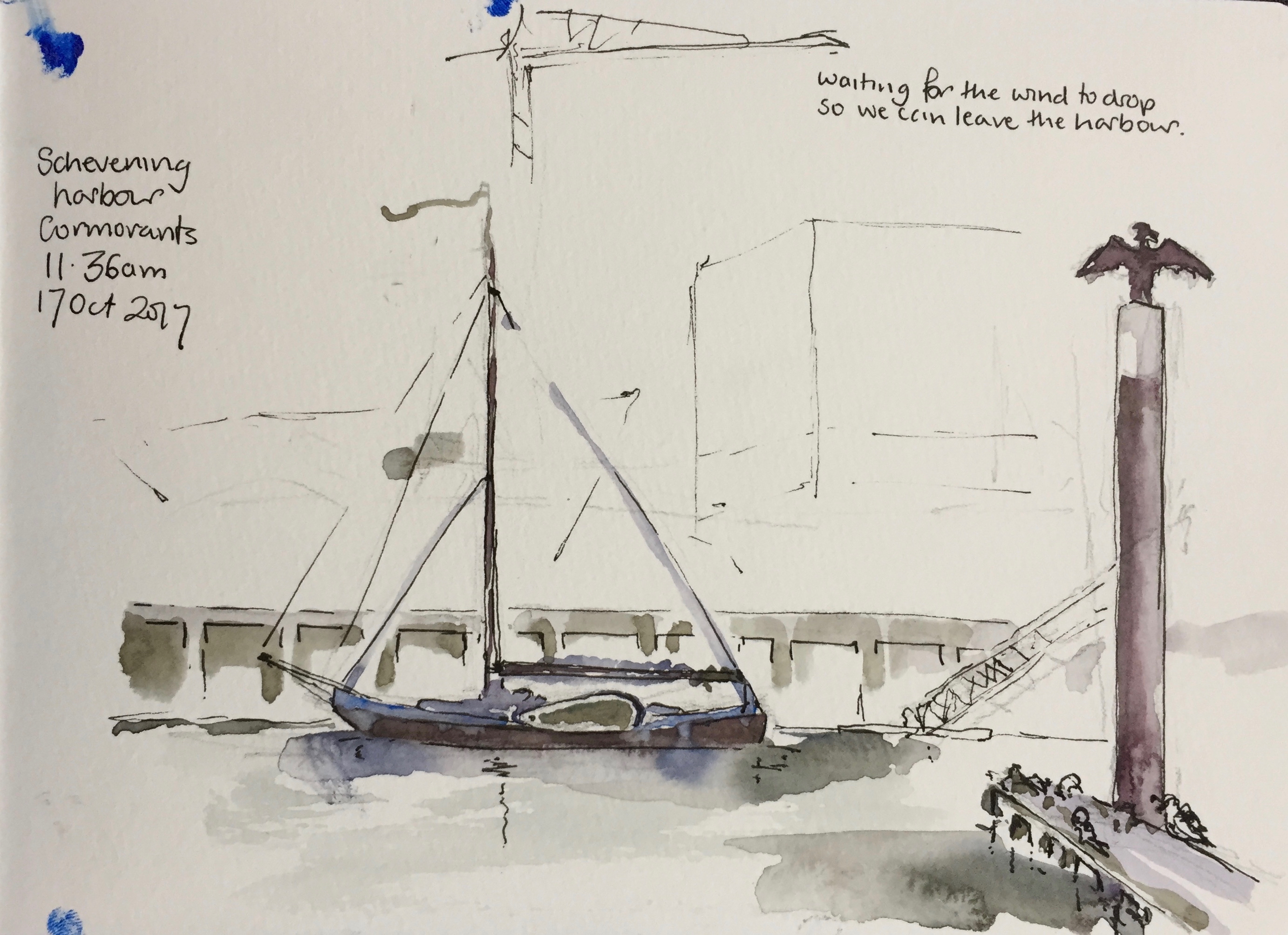
There was a long wait in the morning, while the storm of the previous night departed.

IMG_1821

Then we left harbour, for the 36 hour trip across the North Sea.

We were taking ‘Lady of Avenel’ to her winter mooring at Heybridge, Maldon. See the blog post on this link, for pictures of her there.

A peregrination in De Beauvoir Town

I went for a long walk North.

De Beauvoir Town and De Beauvoir Estate are next to each other.

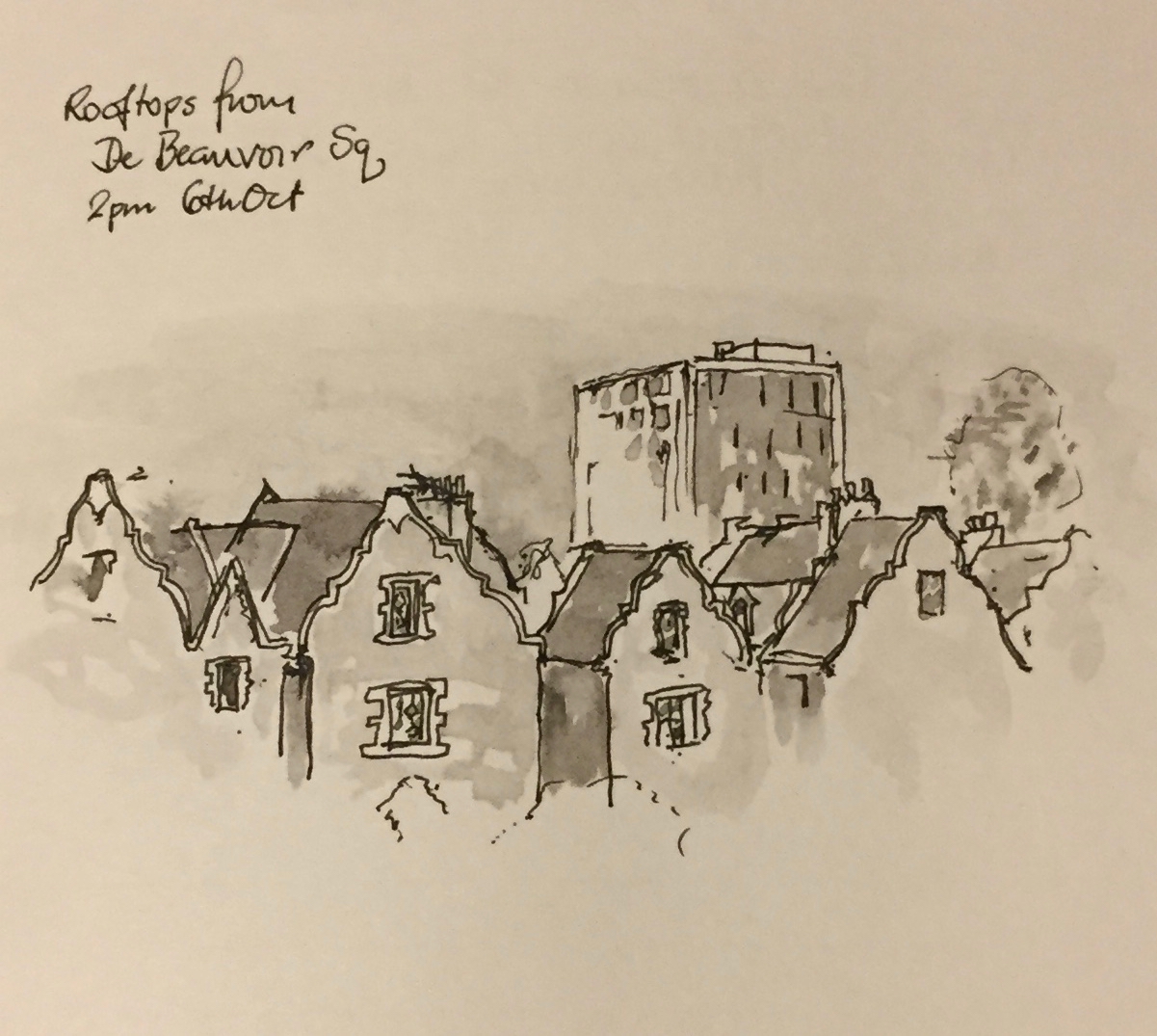
Here is a quick sketch of the very pretty houses on De Beauvoir Square, De Beauvoir Town. A tower block near Dalston Junction is just visible.

IMG_1696

Just around the corner is the lovely St Peter’s Church, designed by WC Lockner, 1830s. In the basement of the Church, they serve lunch every Friday.

Then I walked back South, along De Beauvoir Road.

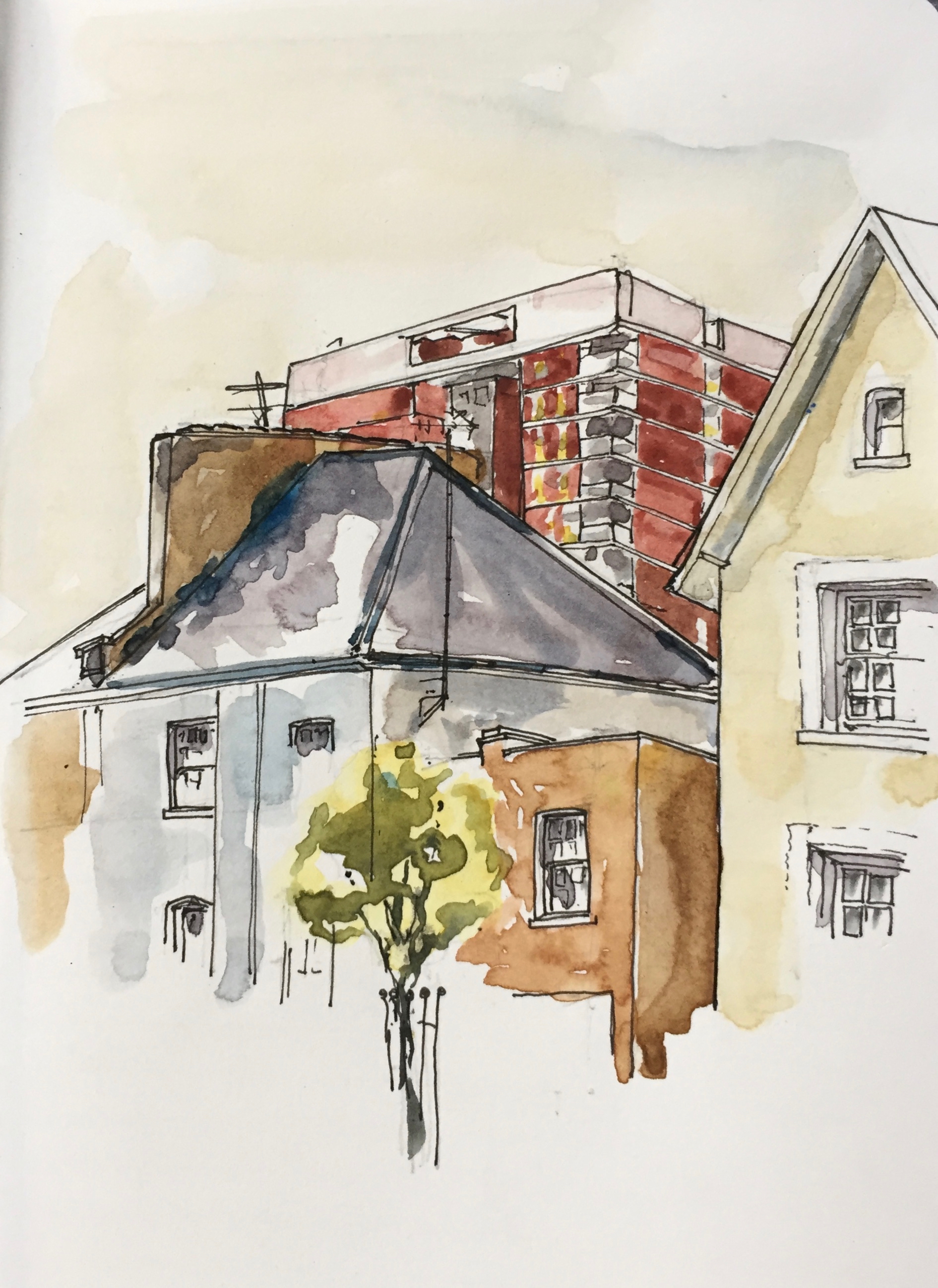
Here is a view looking West. The houses in the foreground are on De Beauvoir Road. In the background is Portelet Court, part of the De Beauvoir Estate, 1960s, Hackney Homes.

I drew Portelet Court as reddish. When I went into the estate to find the name of the block, I saw that the cladding is a dark grey. It only looked red because the sun was setting.

IMG_1679
Portelet Court, over the rooves of houses on De Beauvoir Road.

I drew this picture sitting on the pavement on De Beauvoir Road. About an hour. As I was getting up a cyclist stopped. I must have looked a bit awkward. He asked if I was ok. I said yes, puzzled. “I thought you had fallen over” said the cyclist, “you don’t often see people sitting on the pavement.”

I guess you don’t.

Newcastle Sketchbook

IMG_1676
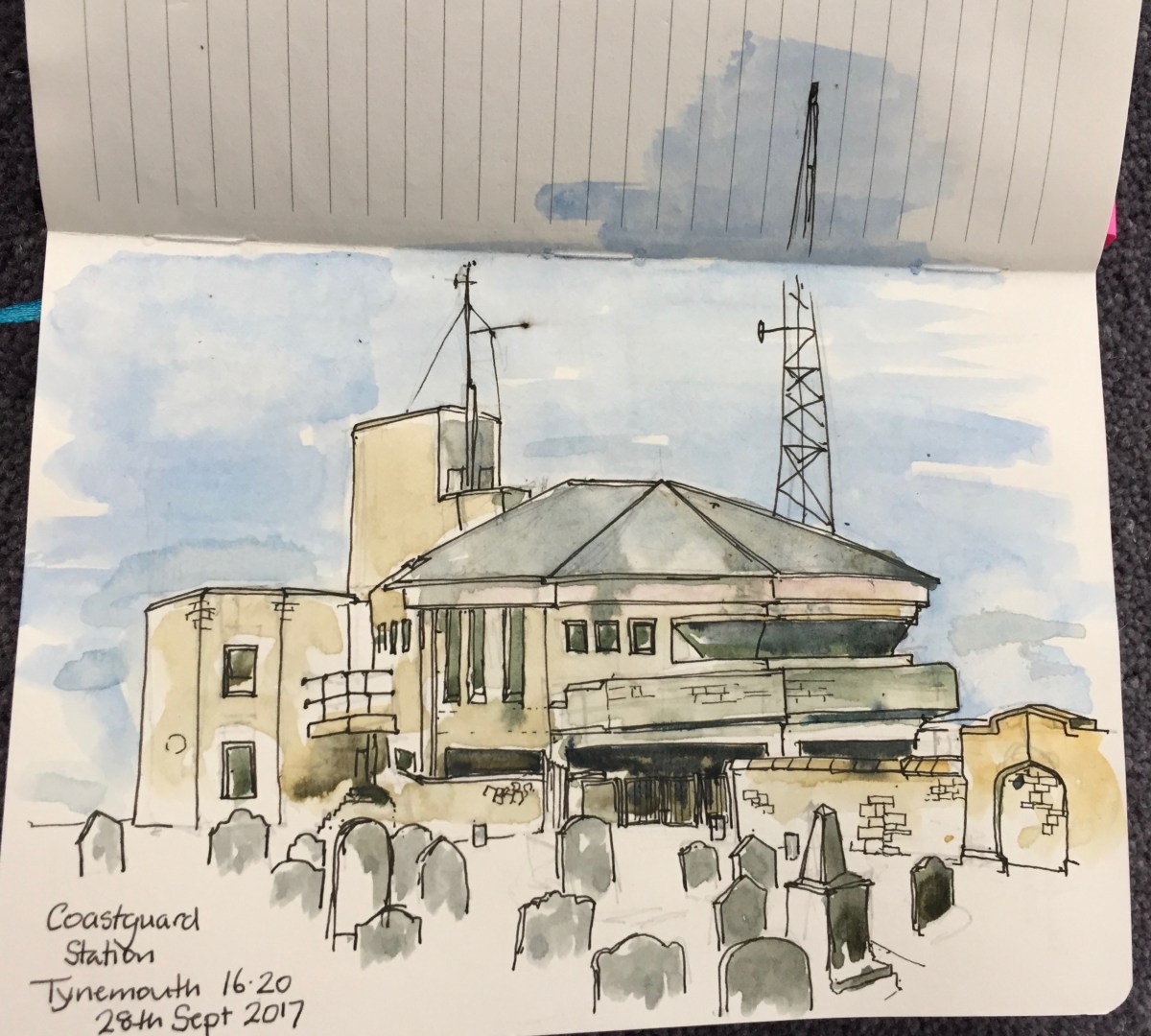
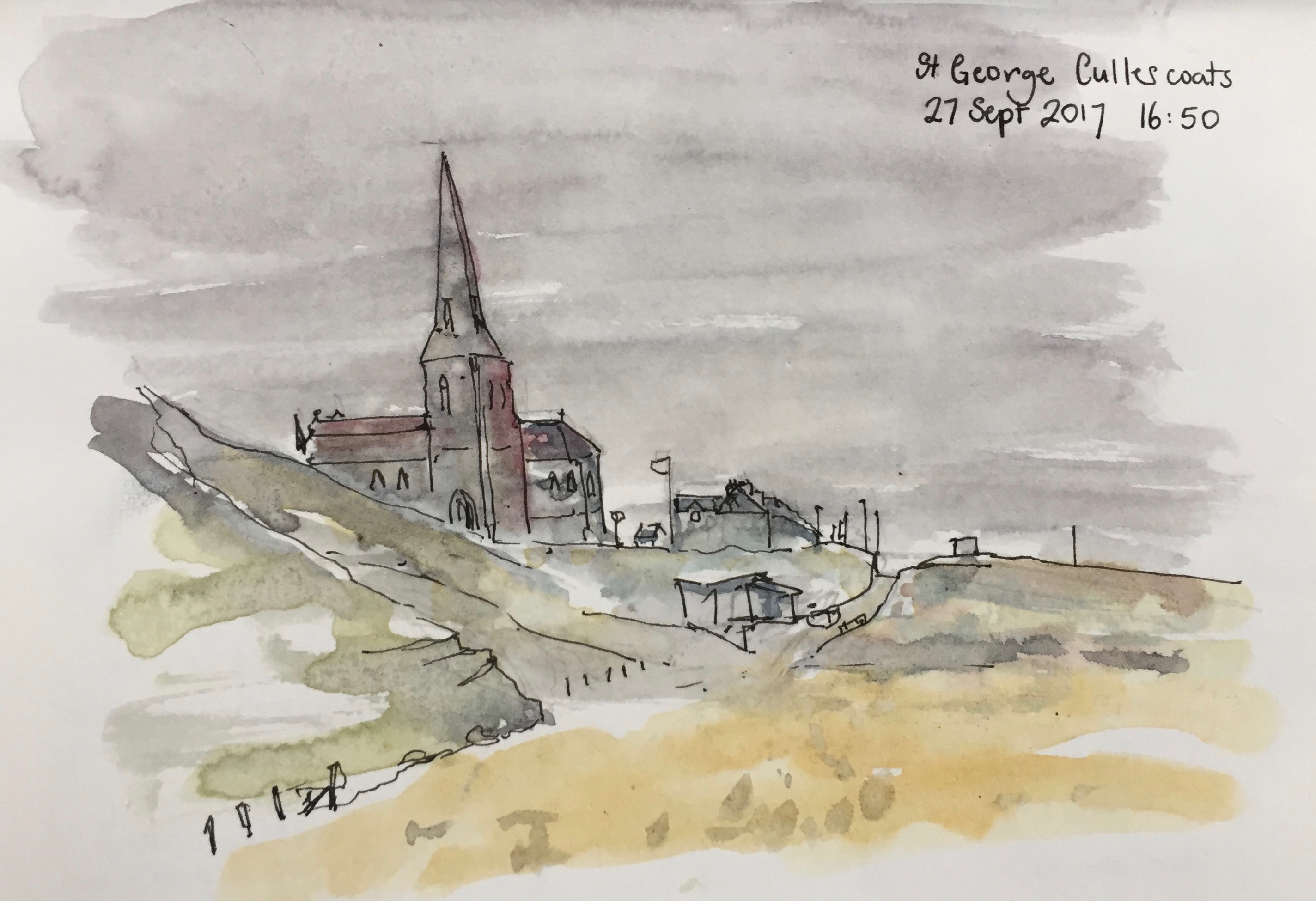
View looking North from Long Sands beach.

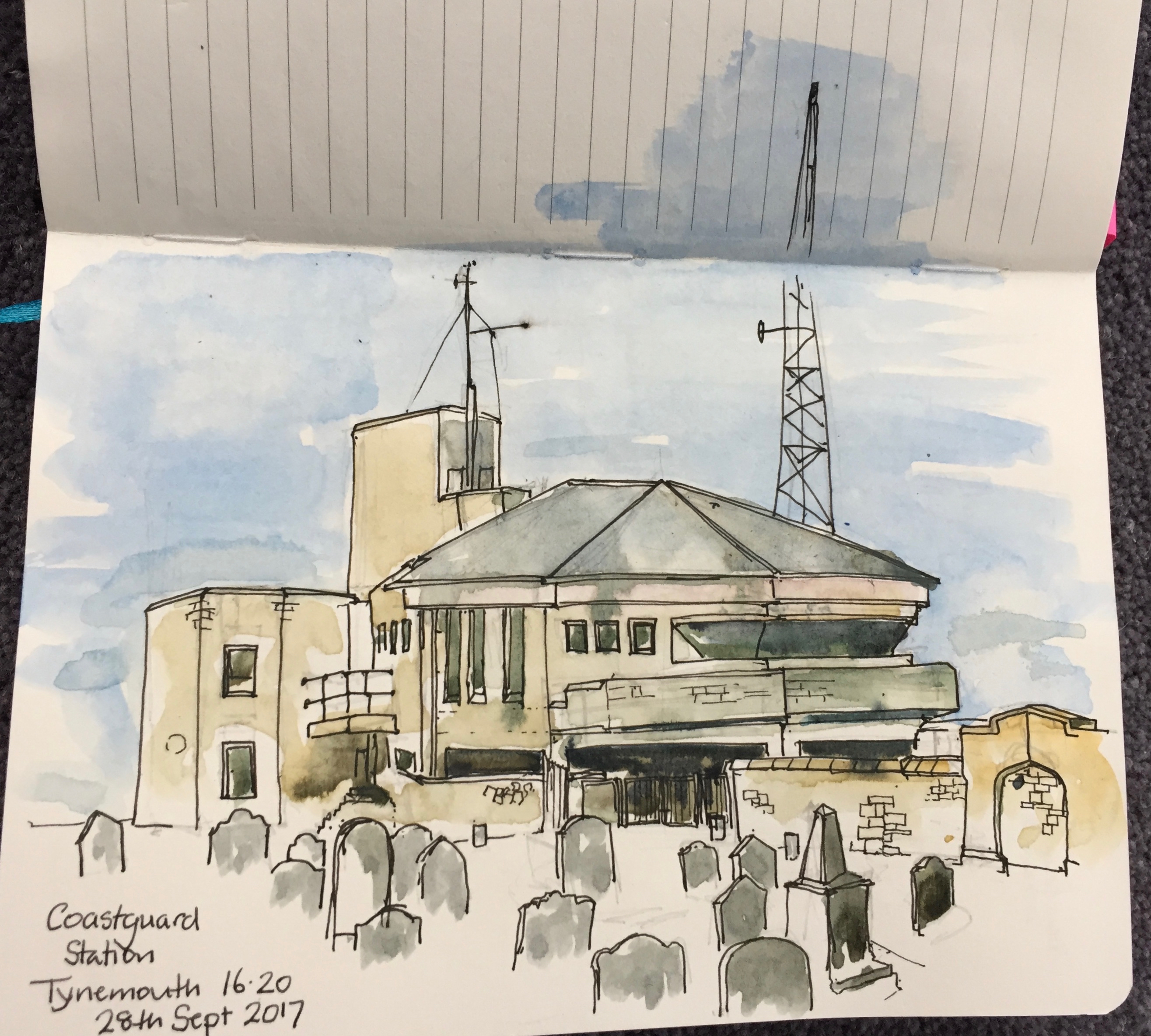
The Coastguard Station was completed in 1980 and closed in 2002. It is in the same enclosure as the very ancient Priory, which is managed by English Heritage. I asked in the English Heritage office about the Coastguard Station. She asked what did I want to know. “Who designed it, for example,” I said. She didn’t know.
“I’ve never been asked that question before,” she said.

IMG_1677
The Coastguard station on the land of Tynemouth Priory.
IMG_1695
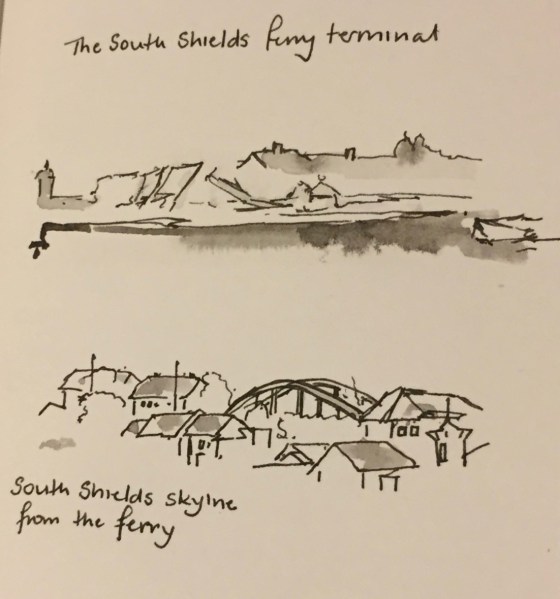
We went across the Tyne on a ferry, I tried to do a few quick sketches on the move. 1st October 2017
IMG_1675

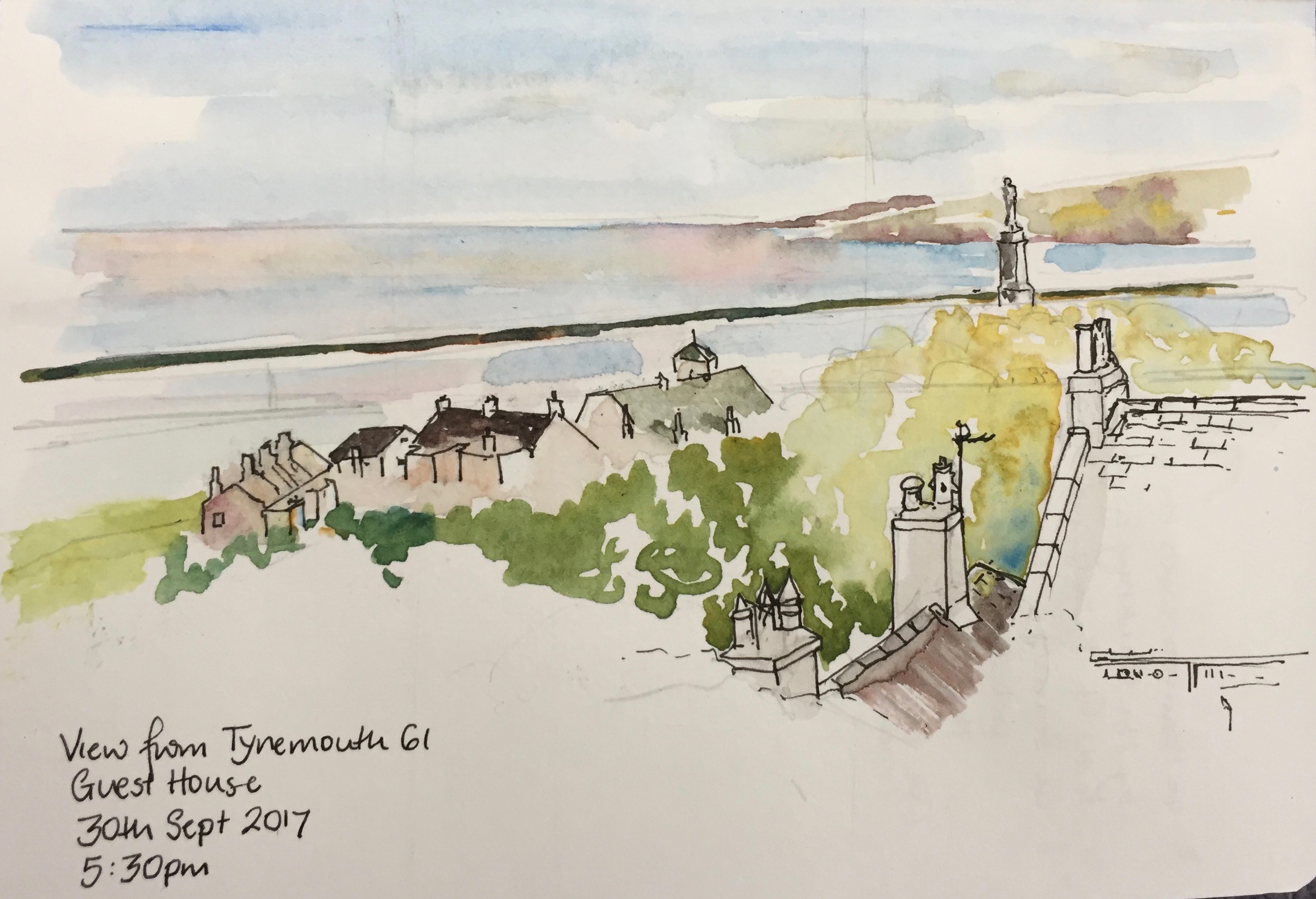
We stayed at “Tynemouth 61”. Here is the view from the Dickens Room.

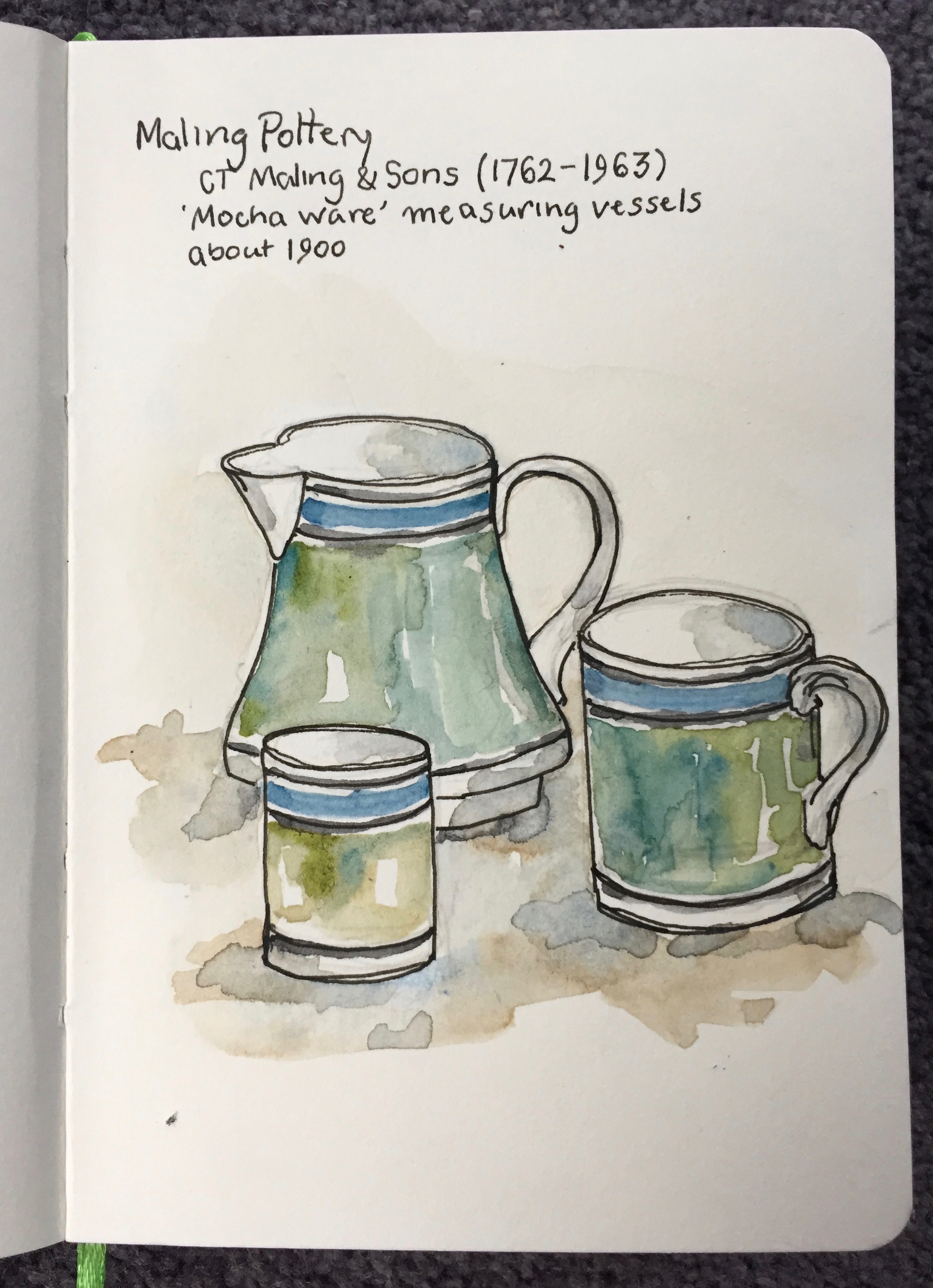
In the Laing Gallery I drew some measuring vessels. Quart, pint, half-pint. The pots are painted with dark green and brown paint, very highly glazed. A black line and blue stripe at the top.

IMG_1680
From the Laing Gallery “Northern Spirit” collection, 2pm 30th Sept 2017

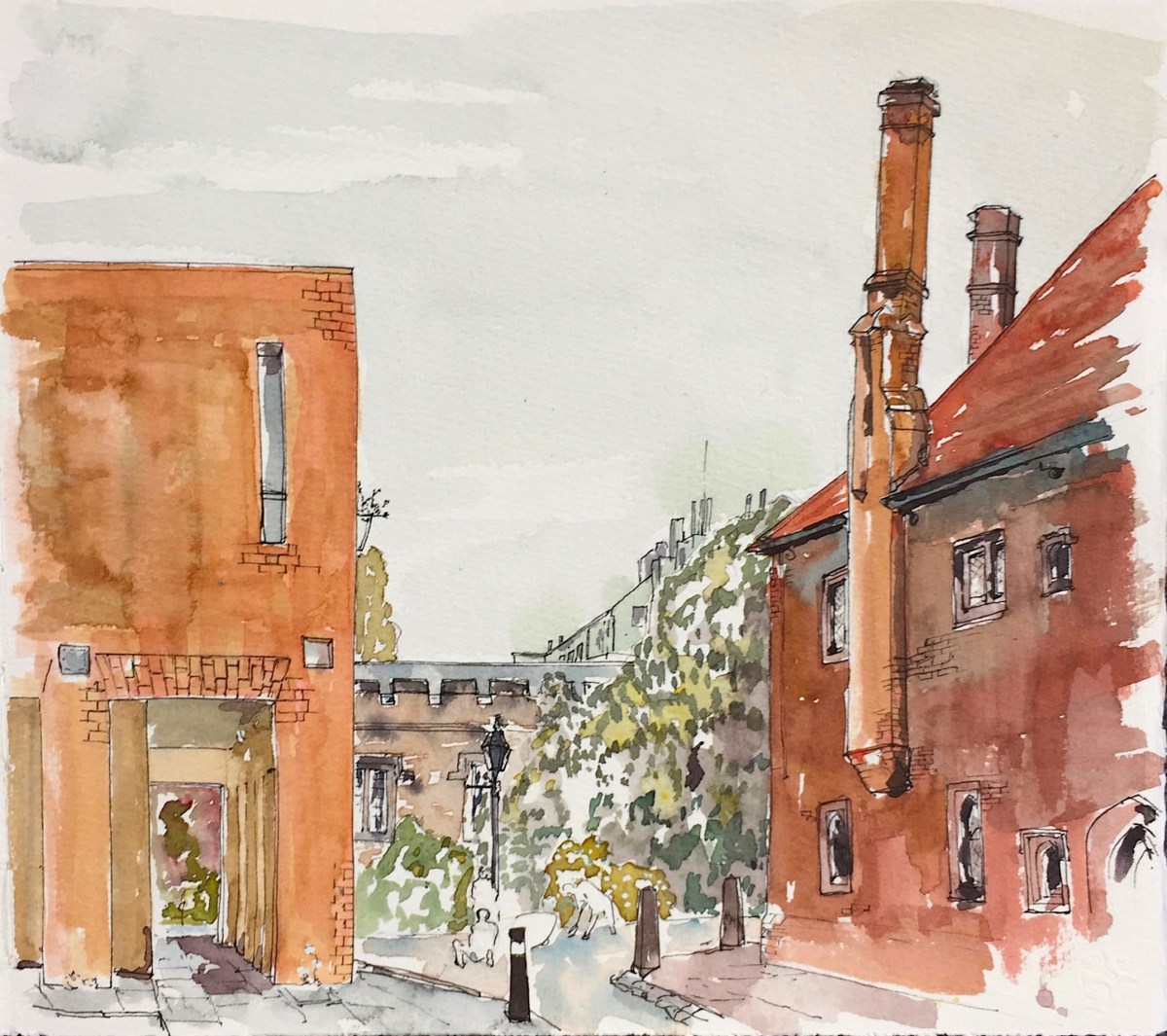
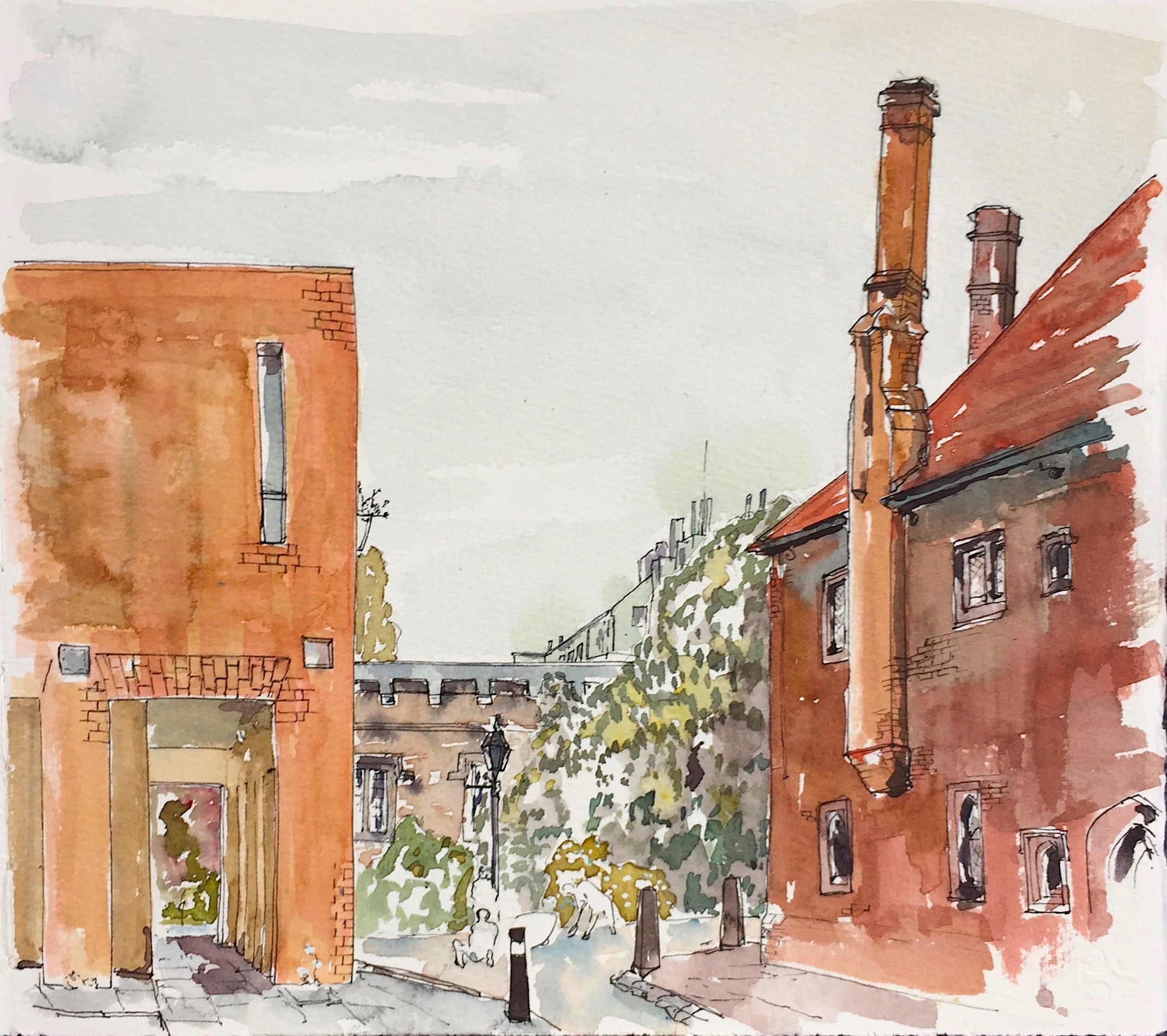
The Charterhouse: entrance to Preachers’ Court

Here is the entrance to Preachers’ Court in The Charterhouse. The Admiral Ashmore Building is on the left.

While I was drawing this, Stanley Underhill, a Brother, came to chat. He has catalogued the Charterhouse art collection, he told me. It took him seven years. He wrote a book “Charterhouse Art” which is in the shop.

He told me the dates on the buildings. The Admiral Ashmore Building – 2000. In the background, the building with the castellations, 1840, and the ancient building on the right, 1530.

September 20th 2017

I drew this picture in a new book, which is 10 inches by 11inches.


The larger size meant that the picture took longer.

3 hours, drawn and coloured on location.

Bastion House from Podium Level

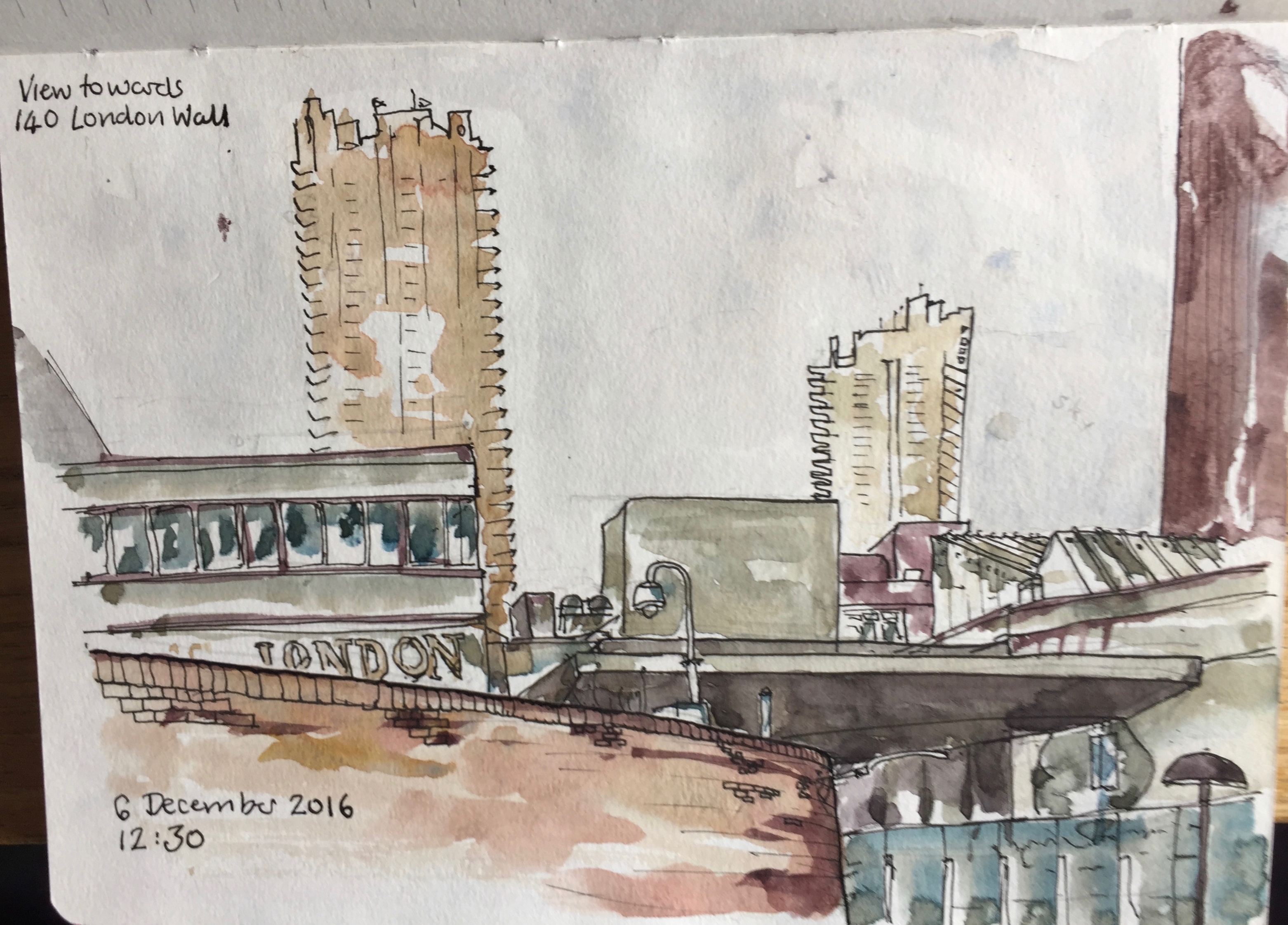
Bastion House aka 140 London Wall is a huge modernist monolith, reminiscent of the monolith in “2001 – A Space Odyssey”. I couldn’t find a site to draw the monolith part today, so here is a view at Podium Level, looking West towards the Museum of London.

IMG_1348

You see the dark undercroft, walkways and a road to a car park. Also you see the bridge that crosses London Wall.

http://postwarbuildings.com describes it thus:

“London Wall was part of a movement of amazing optimism and faith in the ideology of architectural modernism and its promise of a new built form for the city following the devastation of the blitz. It demonstrates what was possible within the breadth of vision following the Second World War and the new powers of centralised planning control. The London that emerged from the ruins of war was to be the remedy to the haphazard milieu of previous. London Wall emerged as a segment of architectural clarity, symbolic of the efforts of the public body to exercise control over the built environment and crucially attempts on the private sector.”

Architects: Powell and Moya, 1972

Here are some images of the monolith in the film “2001 – A Space Odyssey” (1968) which surely influenced, or was influenced by, architecture of the period.


I recently learned that Bastion House is going to be demolished, along with the Museum of London which is adjacent. That’s why I rushed out to draw it. The building is not listed. Here is the “immunity” listing, which is the reverse of a listing:

Screen Shot 2017-09-19 at 16.32.36
downloaded from: https://historicengland.org.uk/listing/the-list/list-entry/1427161

I drew Bastion House from a very convenient ledge behind an iron gate. About an hour and 20mins.

Here is a drawing of the Museum of London which I did last year:

IMG_1349

Bastion House is just off to the right.

London Wall Place from Salters Hall Garden

I sketched this after a visit to Salters Hall as part of “Open House London”.
Salters Hall is one of the London Livery companies, very ancient. The building was completed in 1976 to the designs of Sir Basil Spence. It was refurbished, with substantial alterations, in 2014. The architects for the alterations were de Metz Forbes Knight. There is a new entrance pavilion added on the East side, and they filled in the “undercroft” or open area that had been created by the 1970s architect. The Hall is off the drawing, to the left. I shall return to draw it.

The garden is open to the public. It will be even more accessible and obvious once the London Wall Place development is done.

No. 1 London Wall Place is in the back of the drawing. It is a development by Brookfields, The original Roman London wall is on the right, partly covered in scaffolding and plastic sheeting.
“London Wall Place is a 500,000 sq ft scheme designed by MAKE” says the website.

I have previously drawn the new bridge across Wood Street, which is part of this development.