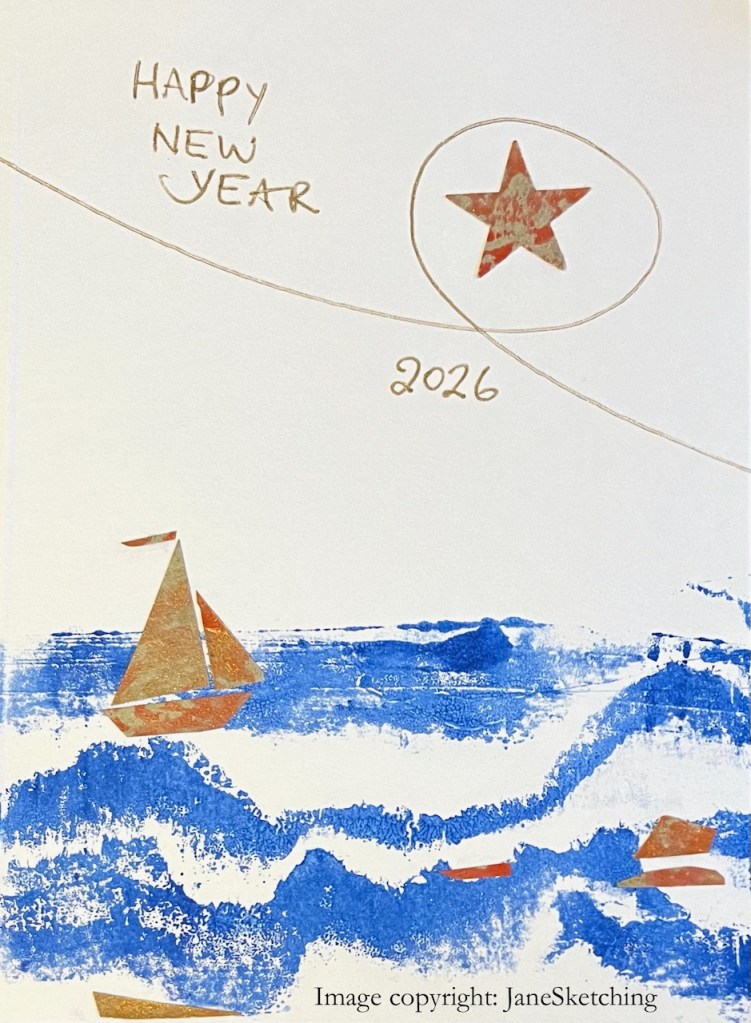
And for those interested in technique: the blue background of this card is made by printing. The printing “plate” was torn cardboard, stuck onto cardboard. Here’s an example. Each “plate” made about a dozen cards, before it became too deteriorated to work properly.
The boat and the star are cut from wrapping paper.
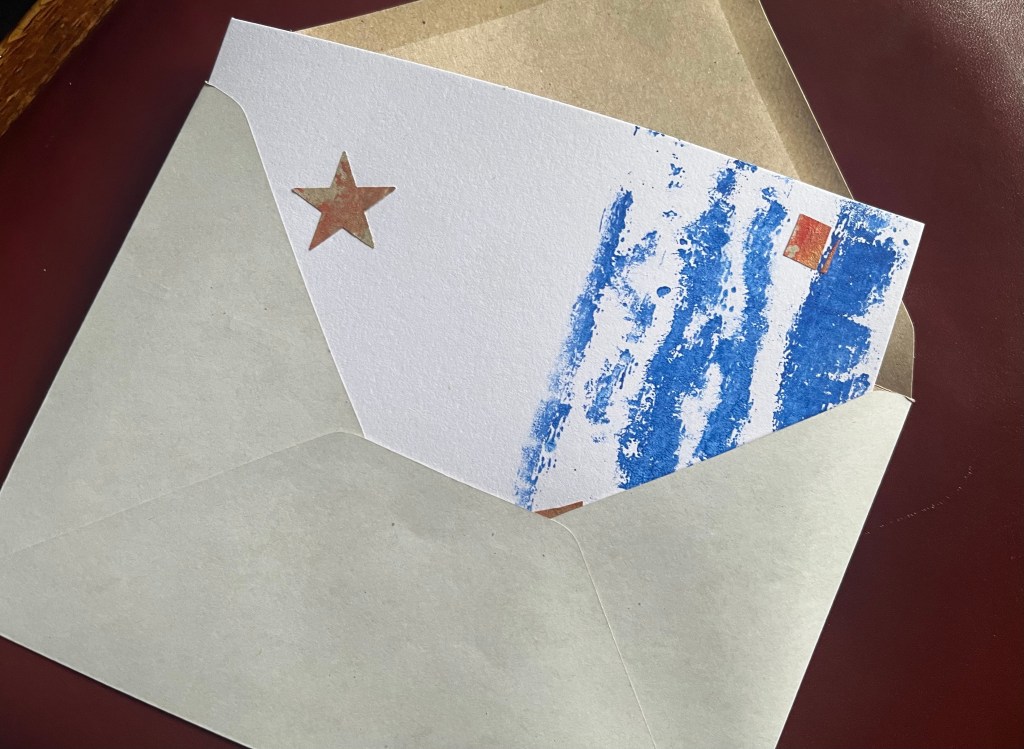
This is a card, sent by post to people, snail mail, in an envelope with a postage stamp. Why? Because it seems to me that material connection matters. I make real objects in the real world, and spend real time making material things. Even if only out of paper and cardboard. Even in 2026……
Click a button below to share this post online, email it, or print it:
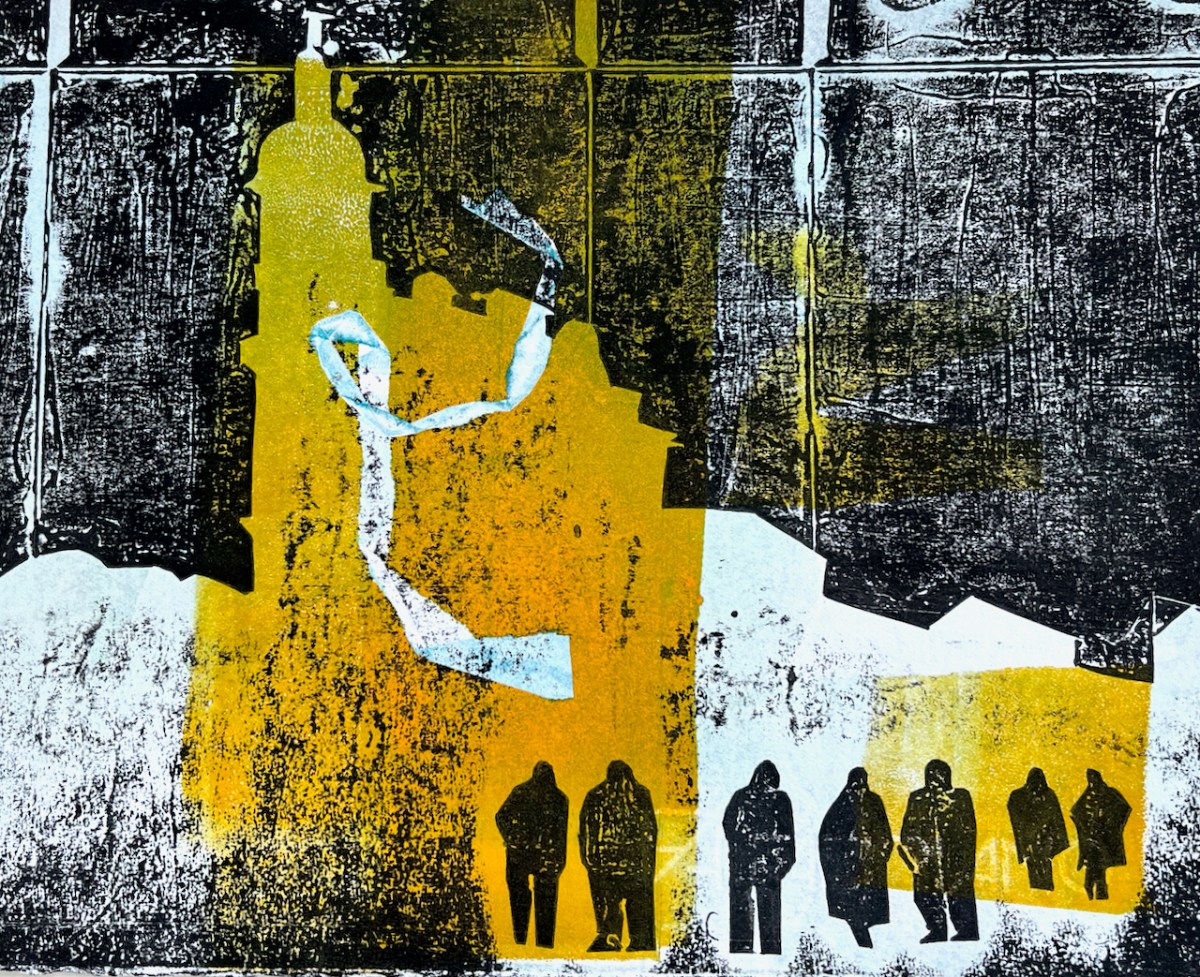
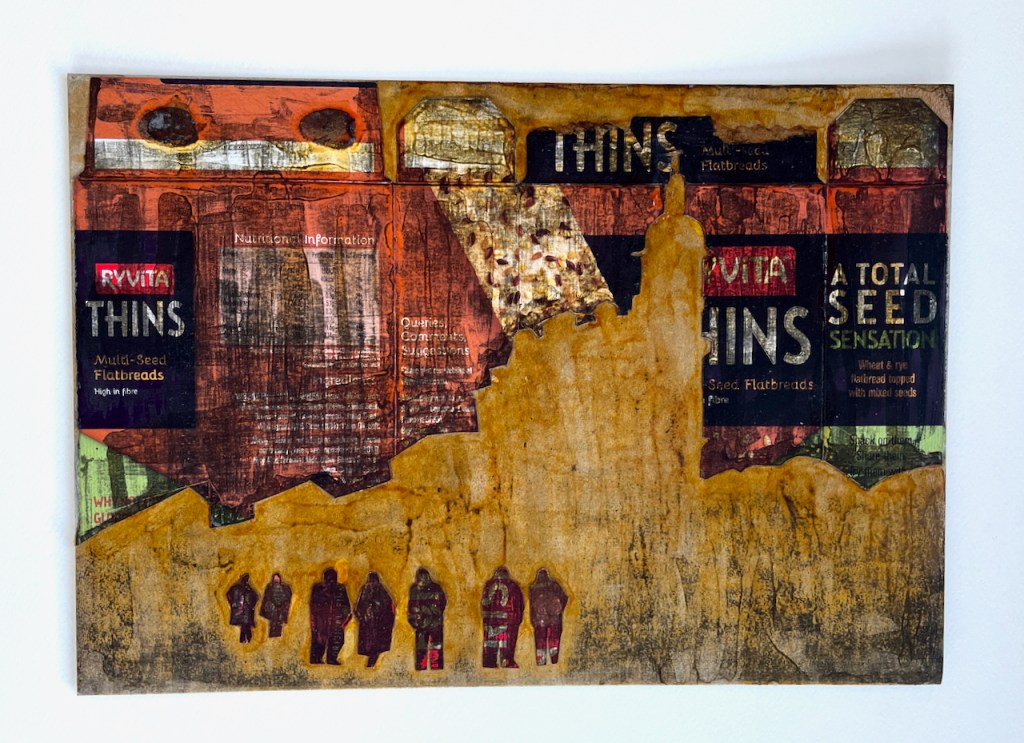
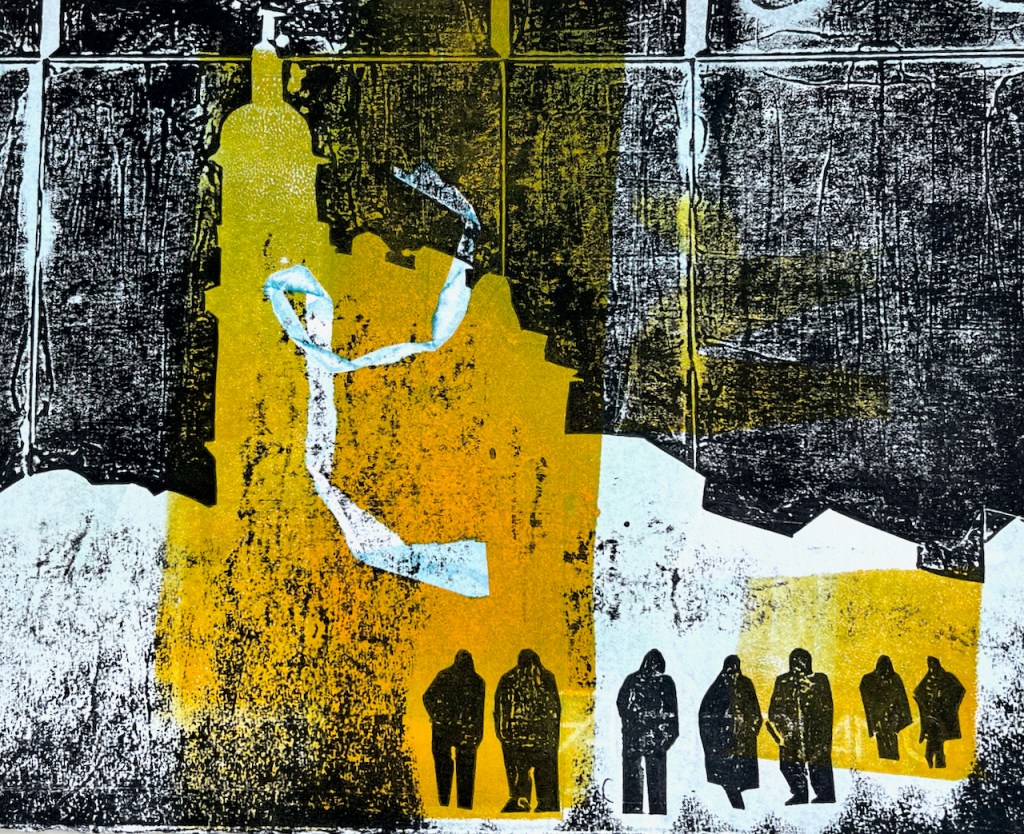
After I had cut out the packaging print plate of the Boston Arms, I was left with the “negative”: the top part of the plate. As it was on its way to the bin, I realised that I could use this to make another picture. So I retrieved it, and made this plate:
Relief plate*: top half is made of a biscuit packet. The bottom half of the biscuit packet was used to make the packaging print – see this post
I added a few people. This is a pub, so these are some people on their way to the pub.
I used this cardboard plate to make some prints. I painted it with shellac, to make it stronger.
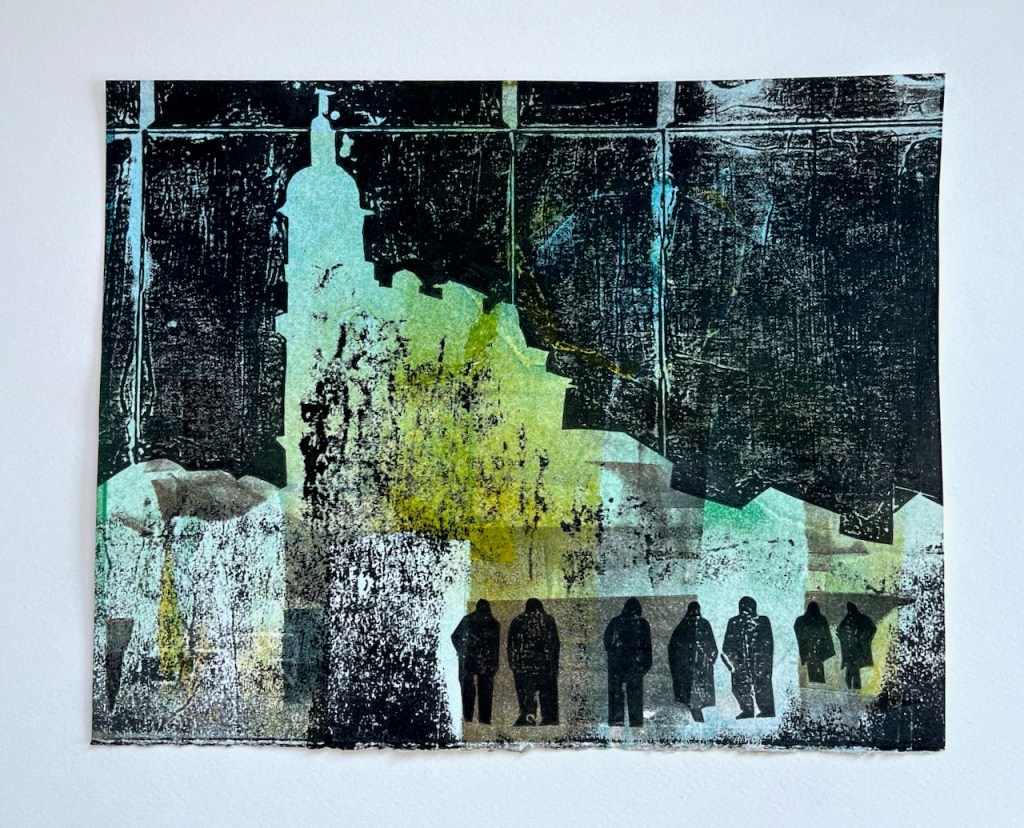
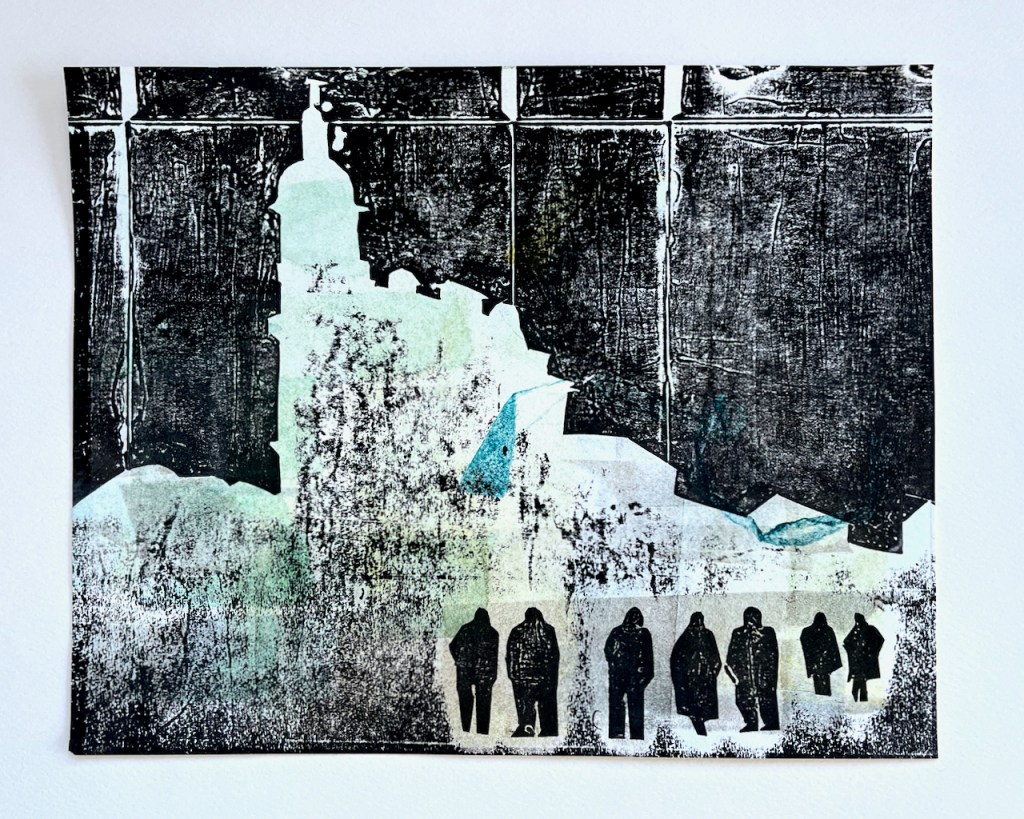
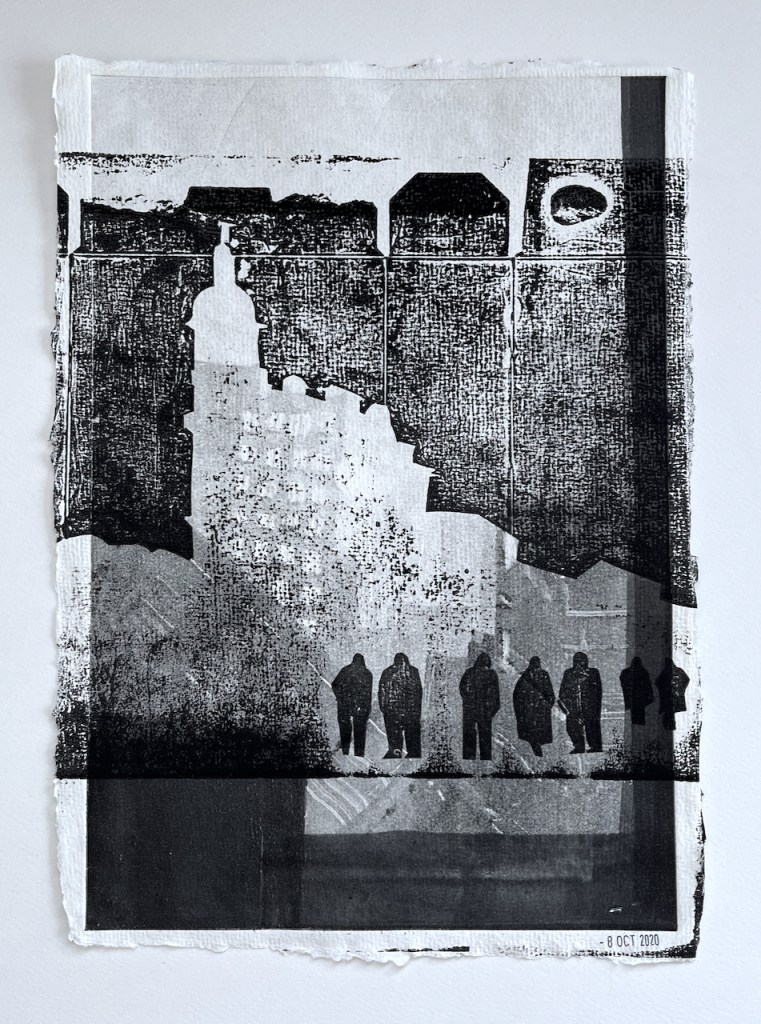
Here are the prints, made on the Albion press at East London Printmakers. The prints are”collographs”: relief* prints.
I made the prints on top of some experimental monoprints made last year.
*A “relief” plate is one in which the ink is rolled onto the raised part of the plate. The raised parts print dark. A potato print, a lino print, woodcut or an ordinary rubber stamp is a relief print. This is by contrast to an “intaglio” print, in which the ink is wiped into the indentations and into engraved lines on the plate. The raised parts print light, and the lower parts print dark. My etchings and packaging prints are intaglio prints.
Click a button below to share this post online, email it, or print it:
I thought the background was a bit bright, so I chose more muted colours for the next attempt.
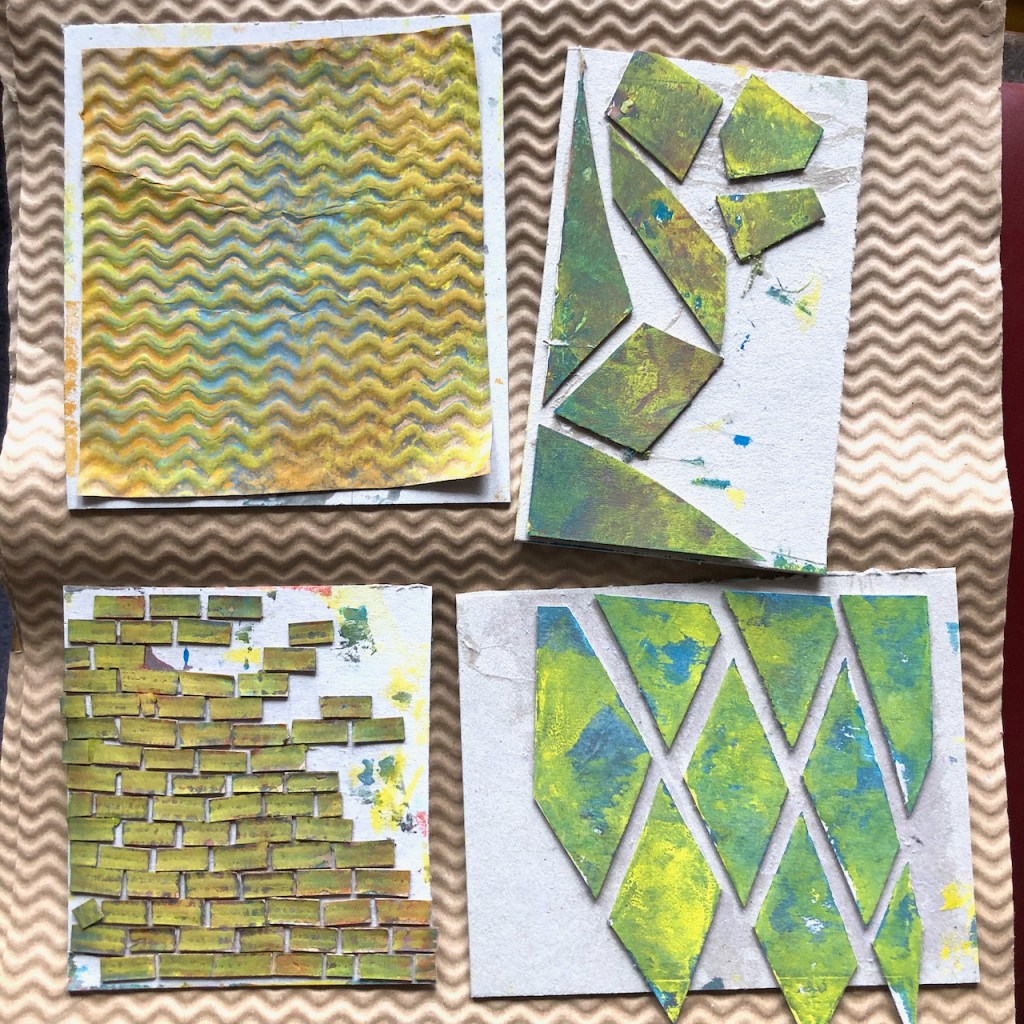
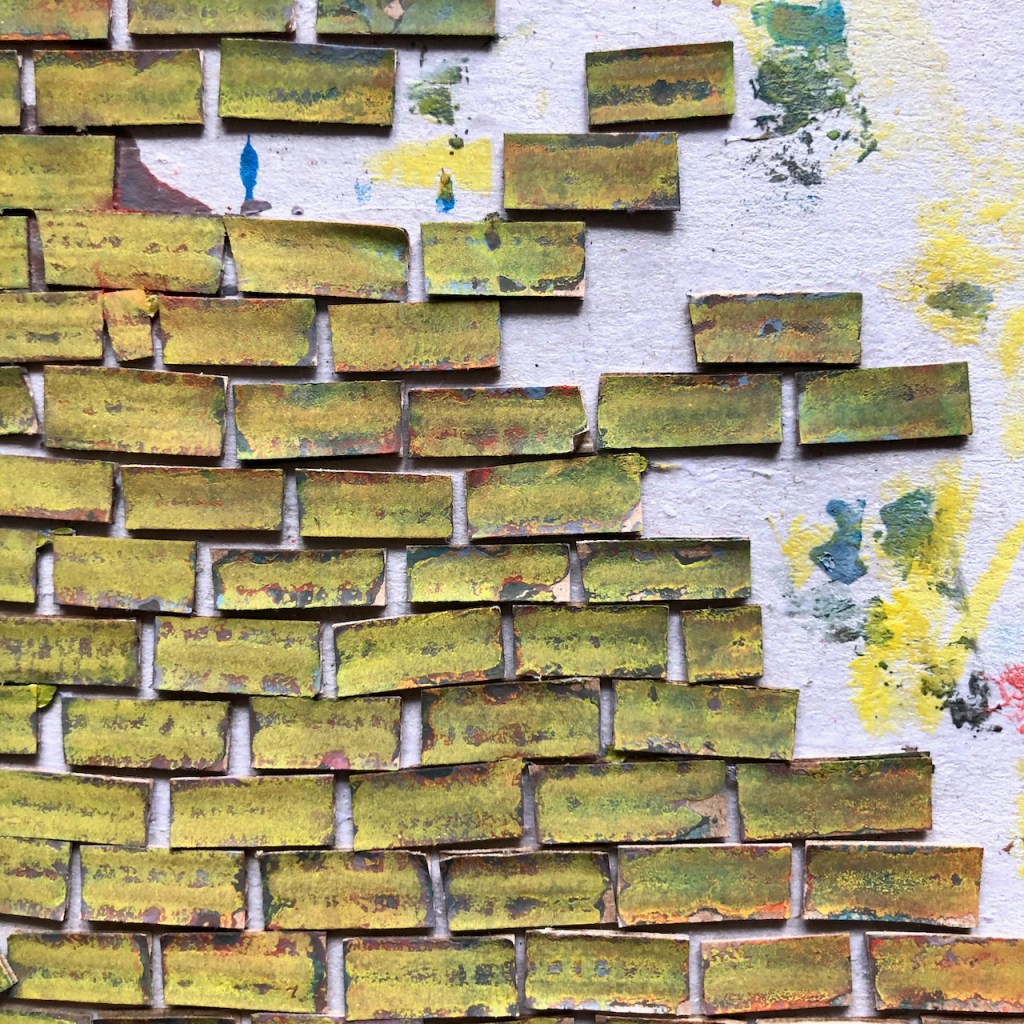
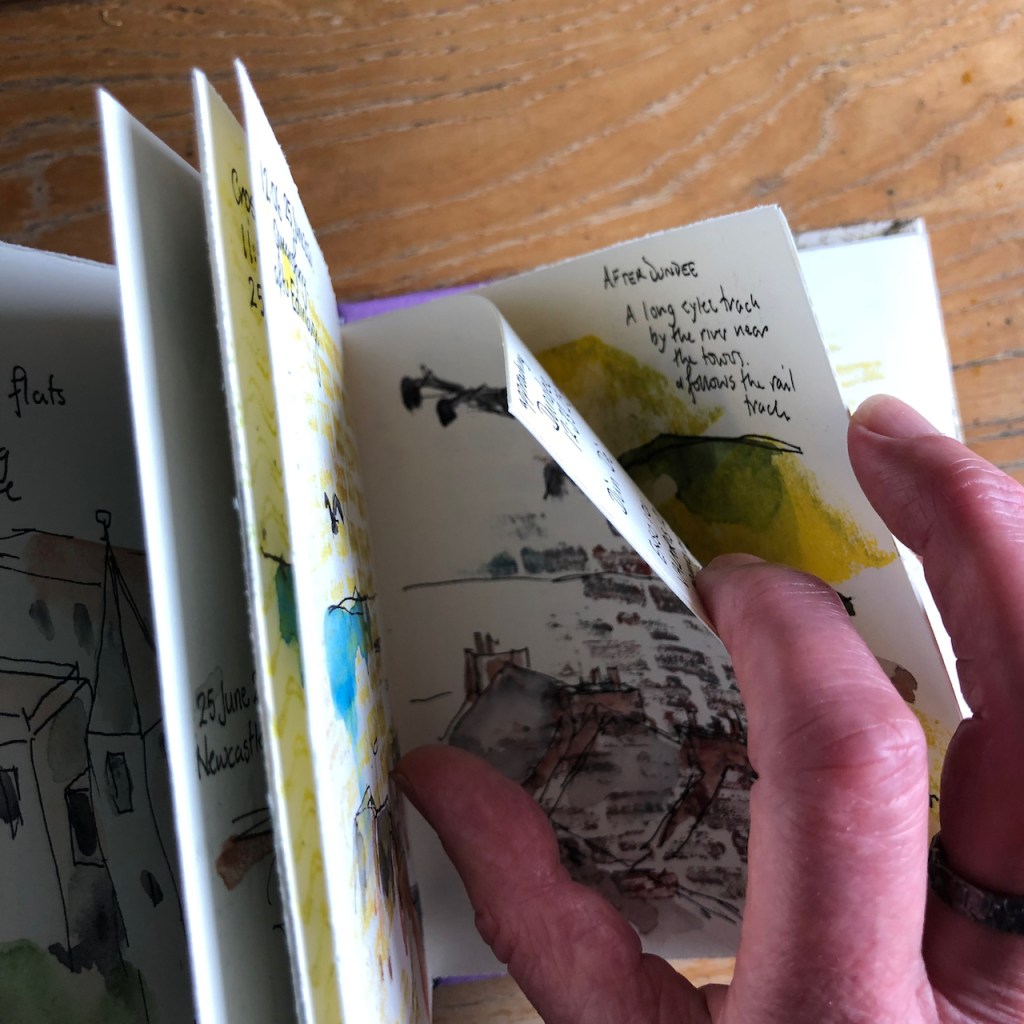
Here are the cardboard cutouts I used for making the relief prints. I used a small square sketchbook made by “PrintUrchin” and pre-printed the pages using relief printing ink, diluted with extender and water so it wasn’t too bright (learning from last time). It still came out quite bright. Those printing inks are heavily pigmented.
Cardboard cutouts
Cutout – close-up
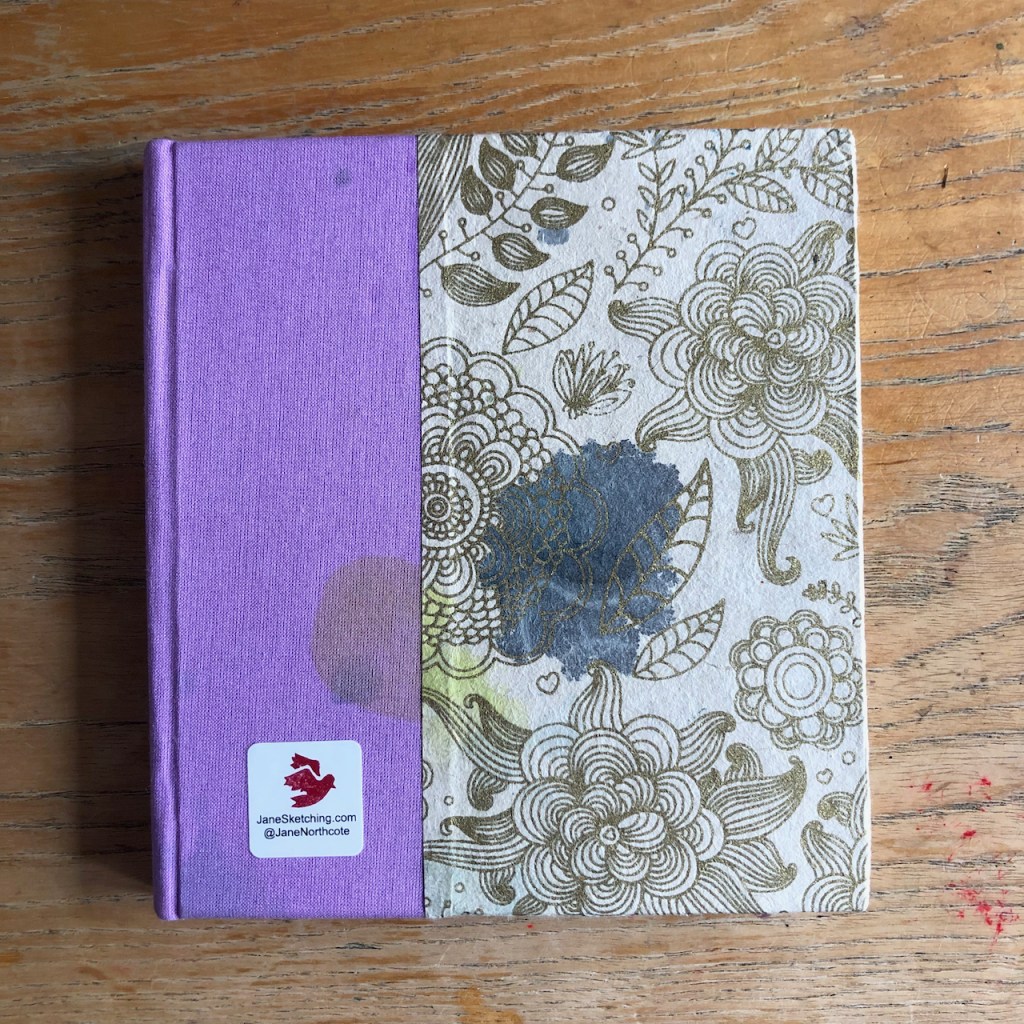
PrintUrchin sketchbook
Sketchbook pages
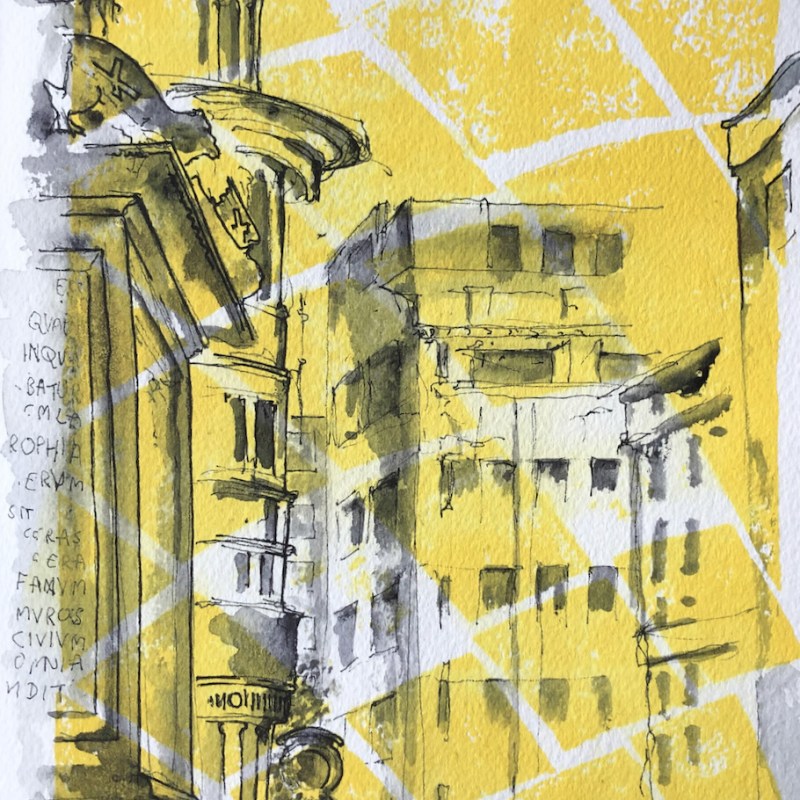
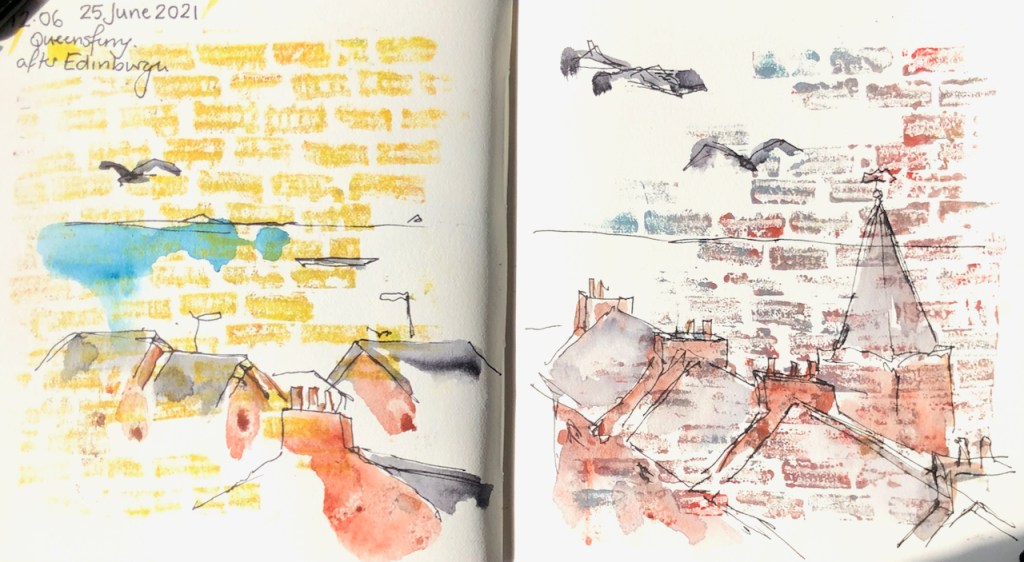
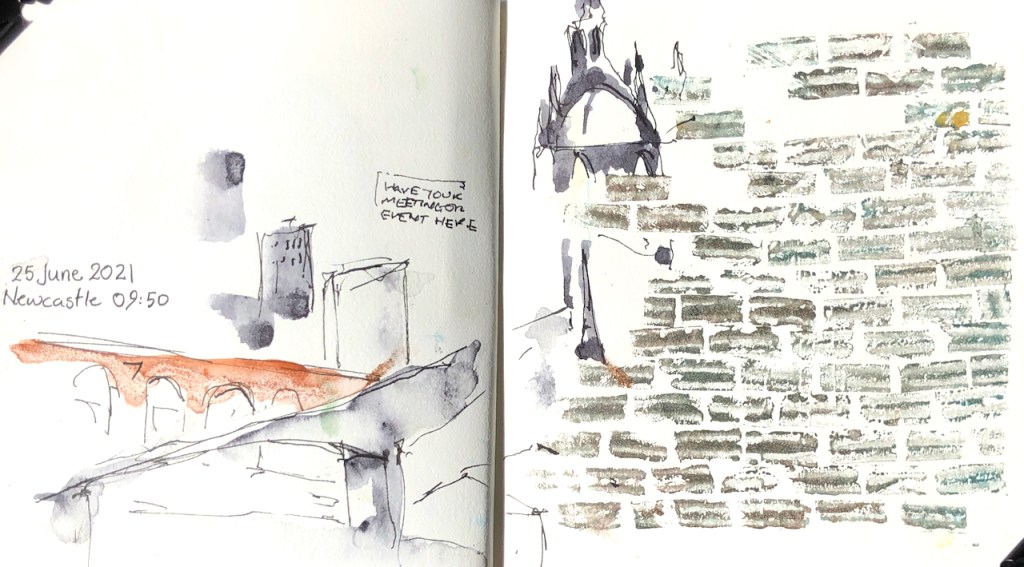
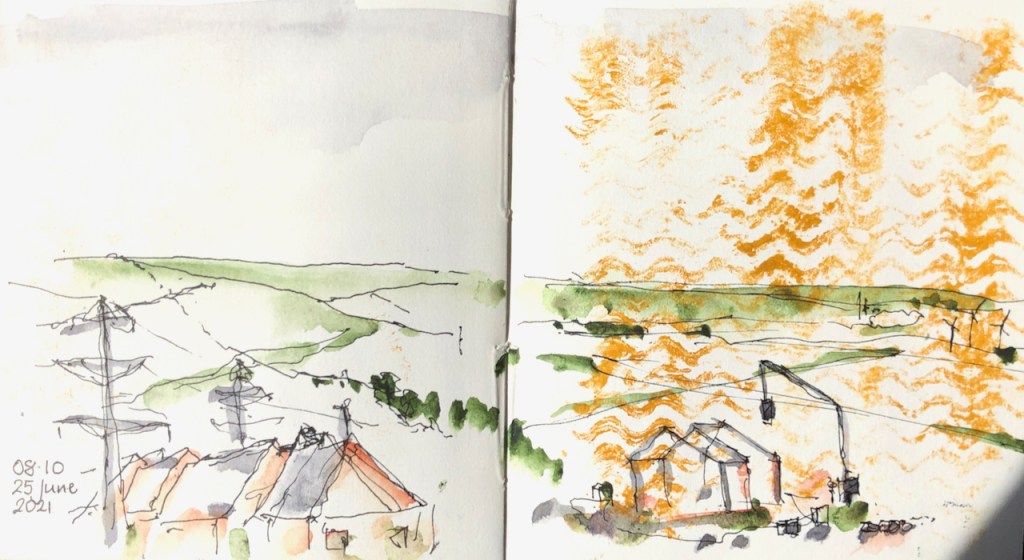
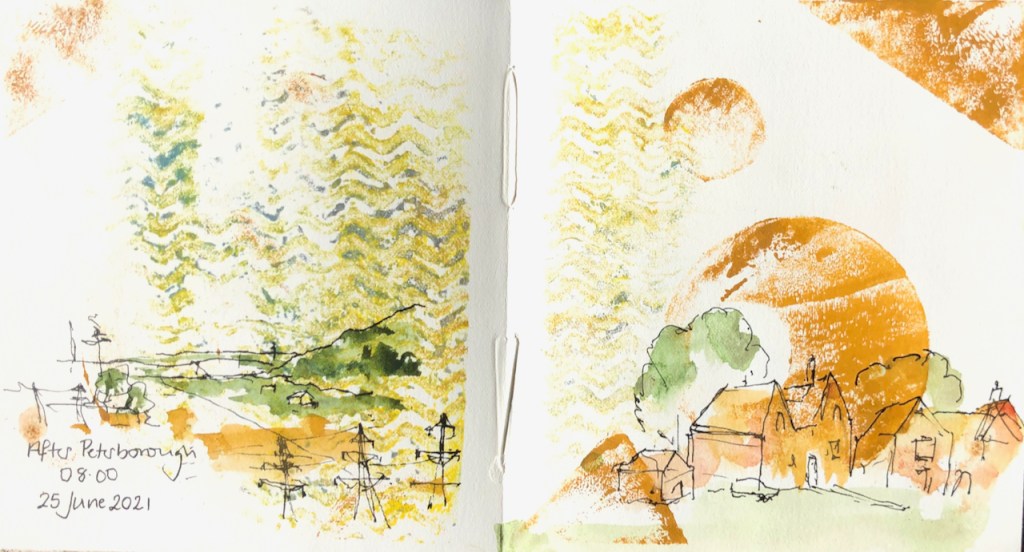
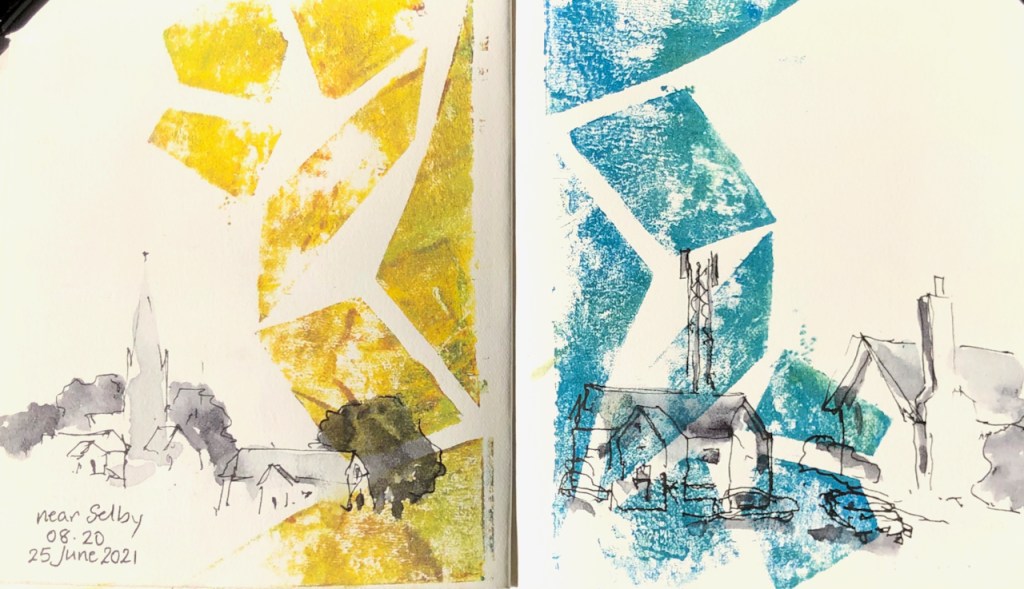
I printed the pages first, then took the sketchbook with me on my journey, and made sketches on top of the prints.
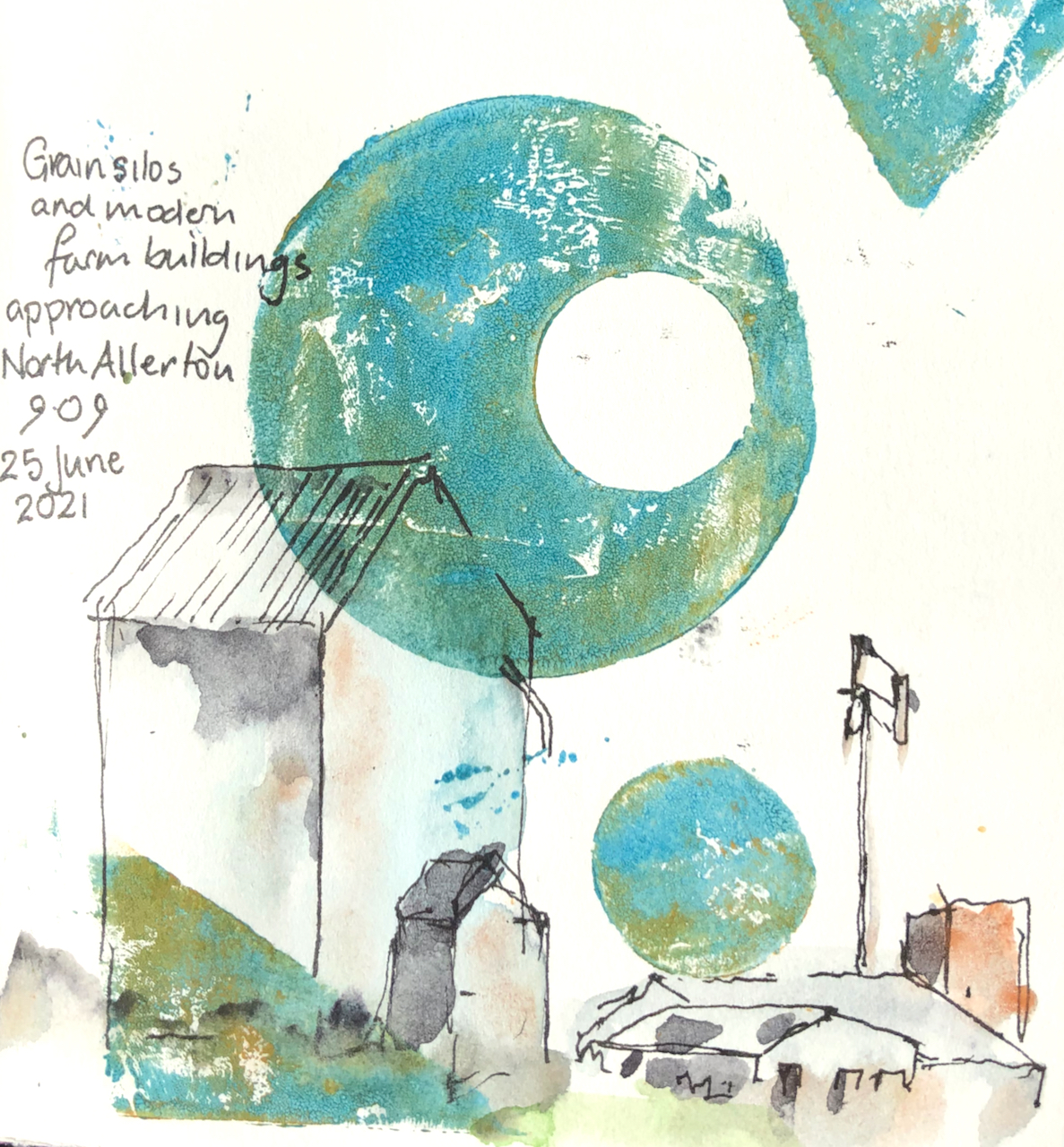
Here are some of the sketches. They are done on the train, hence the rather shaky lines. It’s amazing how the printing, done in advance, seems to fit the subject.
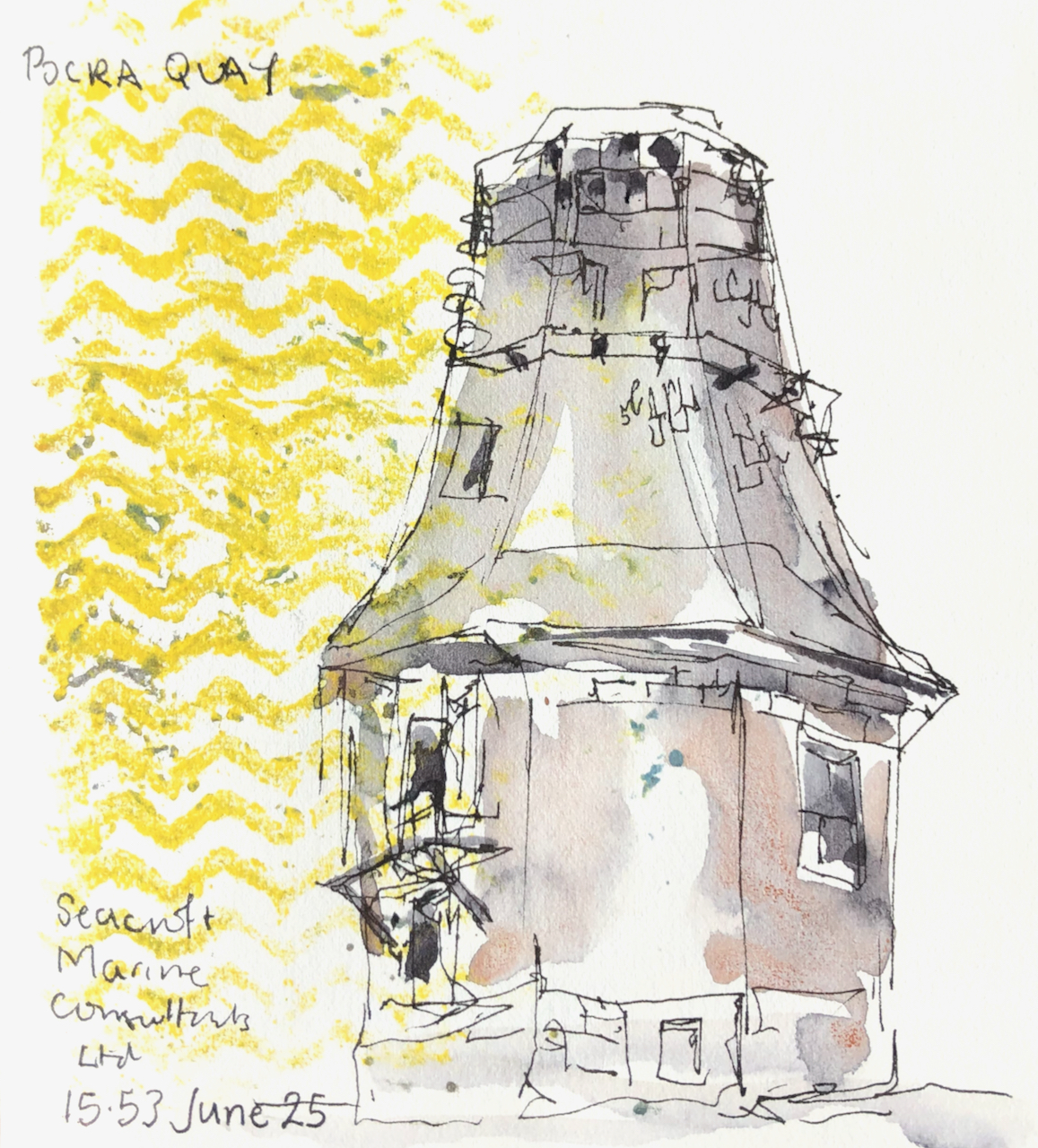
Here is the octagonal building at Pocra Quay, drawn while on a walk round Aberdeen waiting for the ferry.
Octagonal building at Pocra Quay, Aberdeen, 25th June 2021, printed background, 20th June 2021.
This octagonal building was a Navigation Control Centre, operating up until 1966. It was built in around 1797-8, according to the leaflet from the Aberdeen Heritage trail. I sketched it from the shelter of the doorway to the “Silver Herring” restaurant, on a cold, windy and rainy day.
Grain silos at North Allerton, 25th June 2021
This is a really fun technique. I shall use it again.
Click a button below to share this post online, email it, or print it:




 Jane Sketching