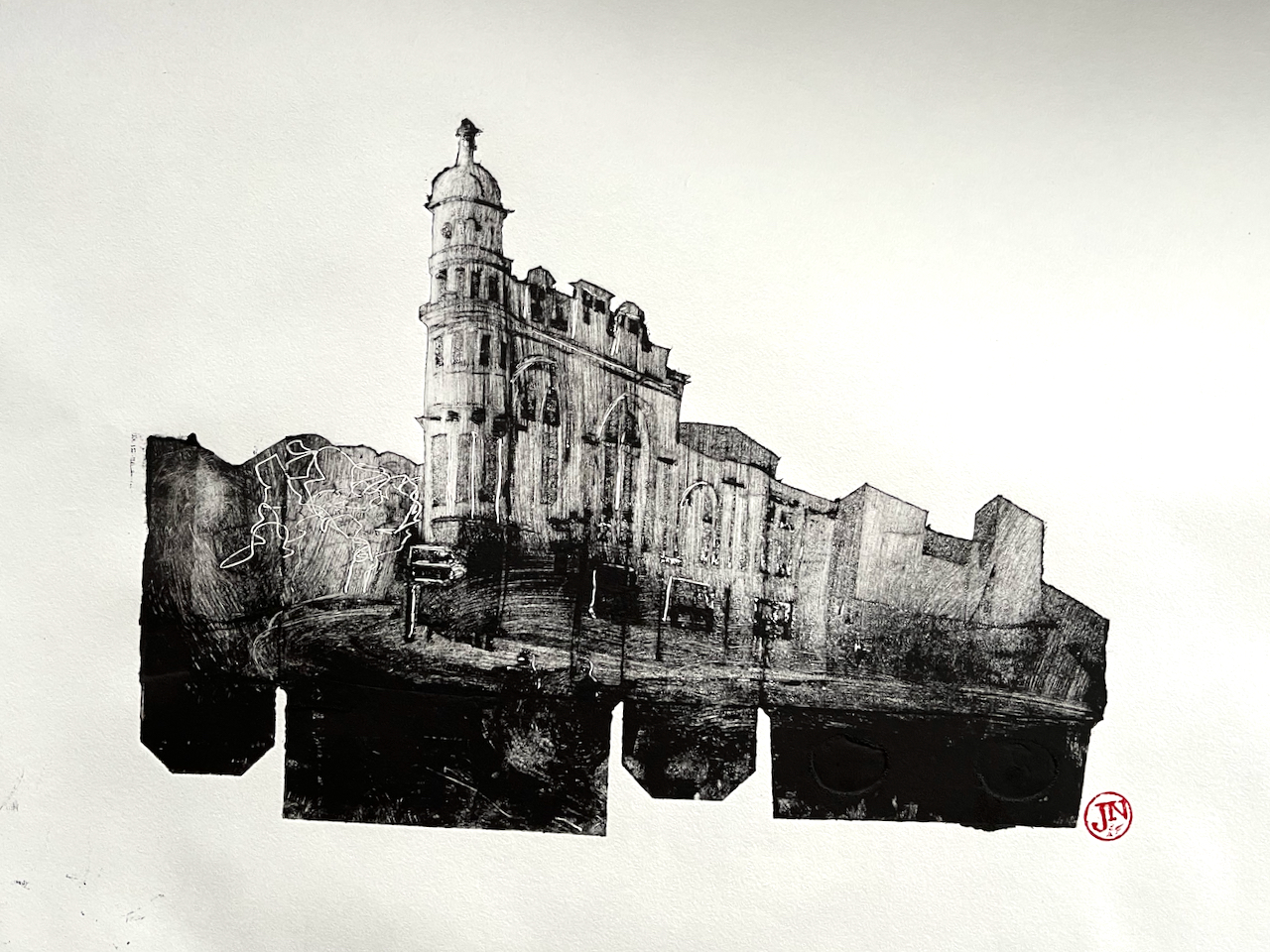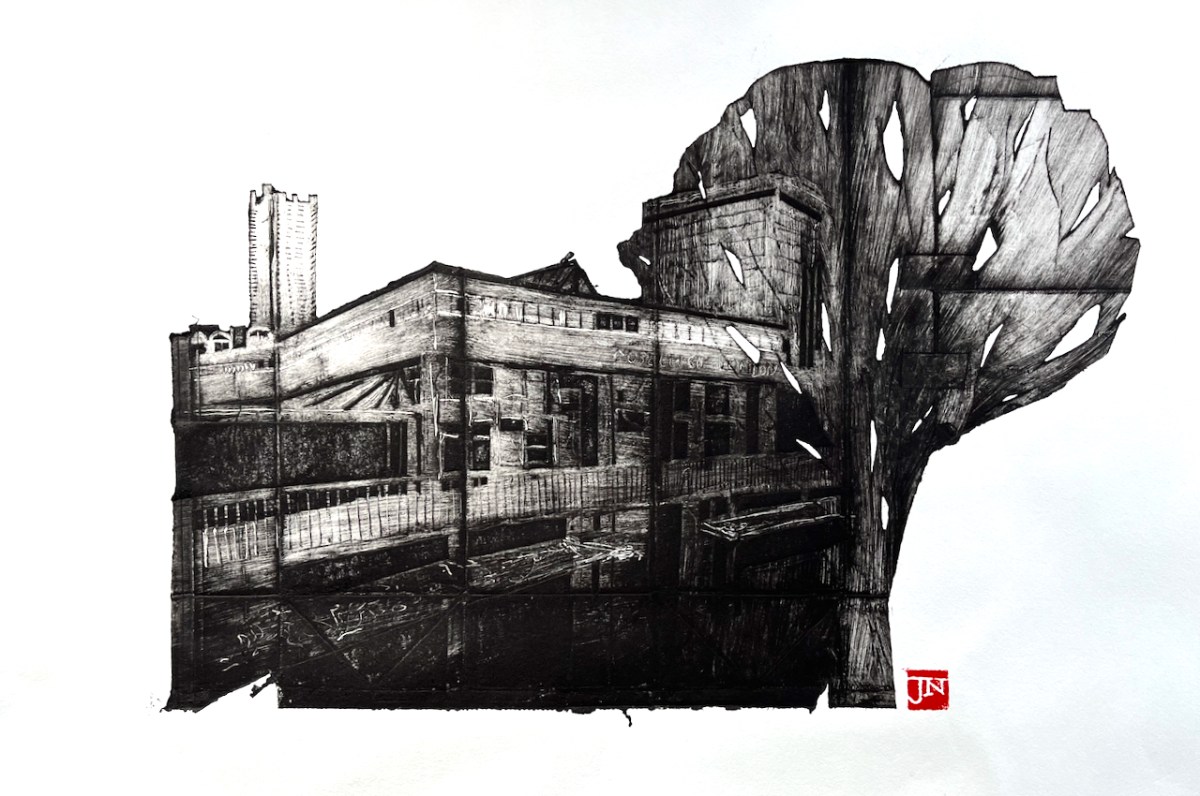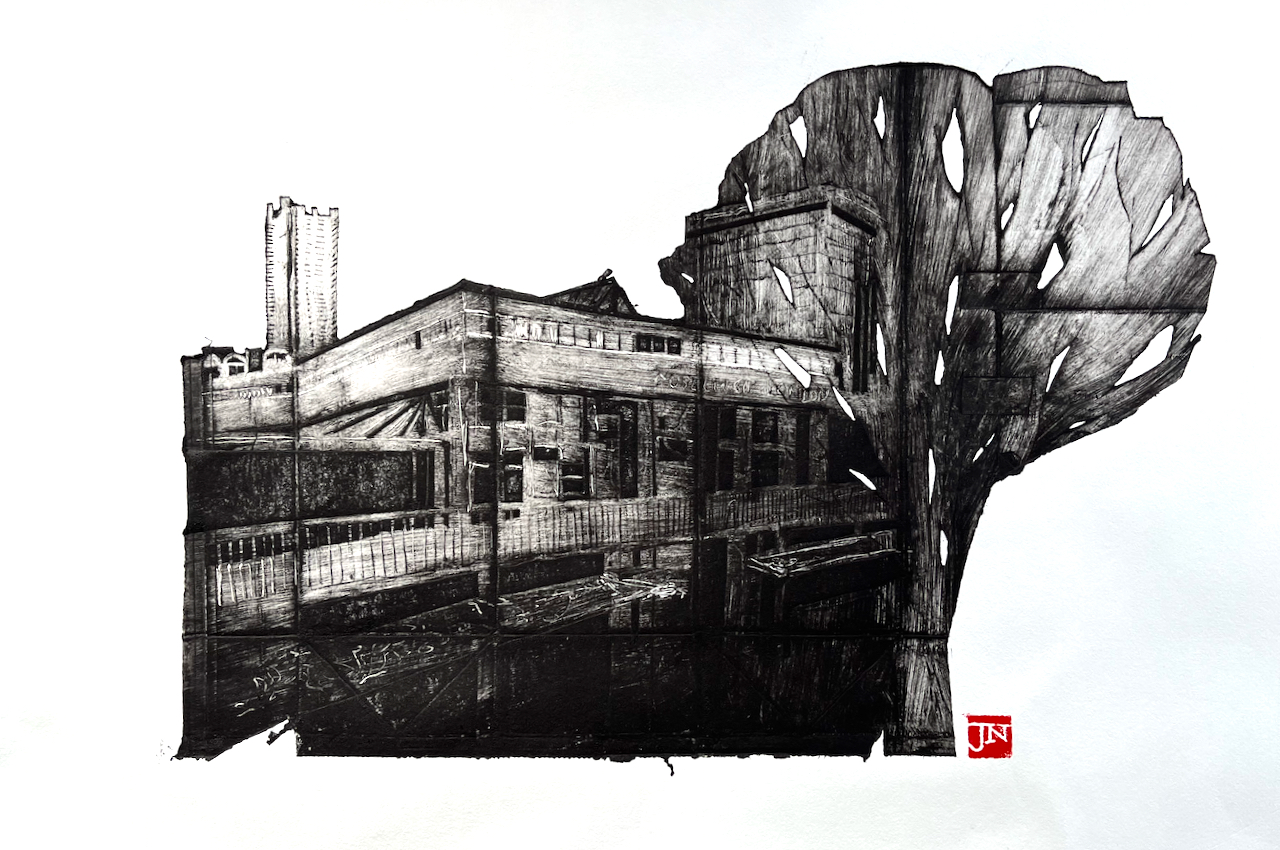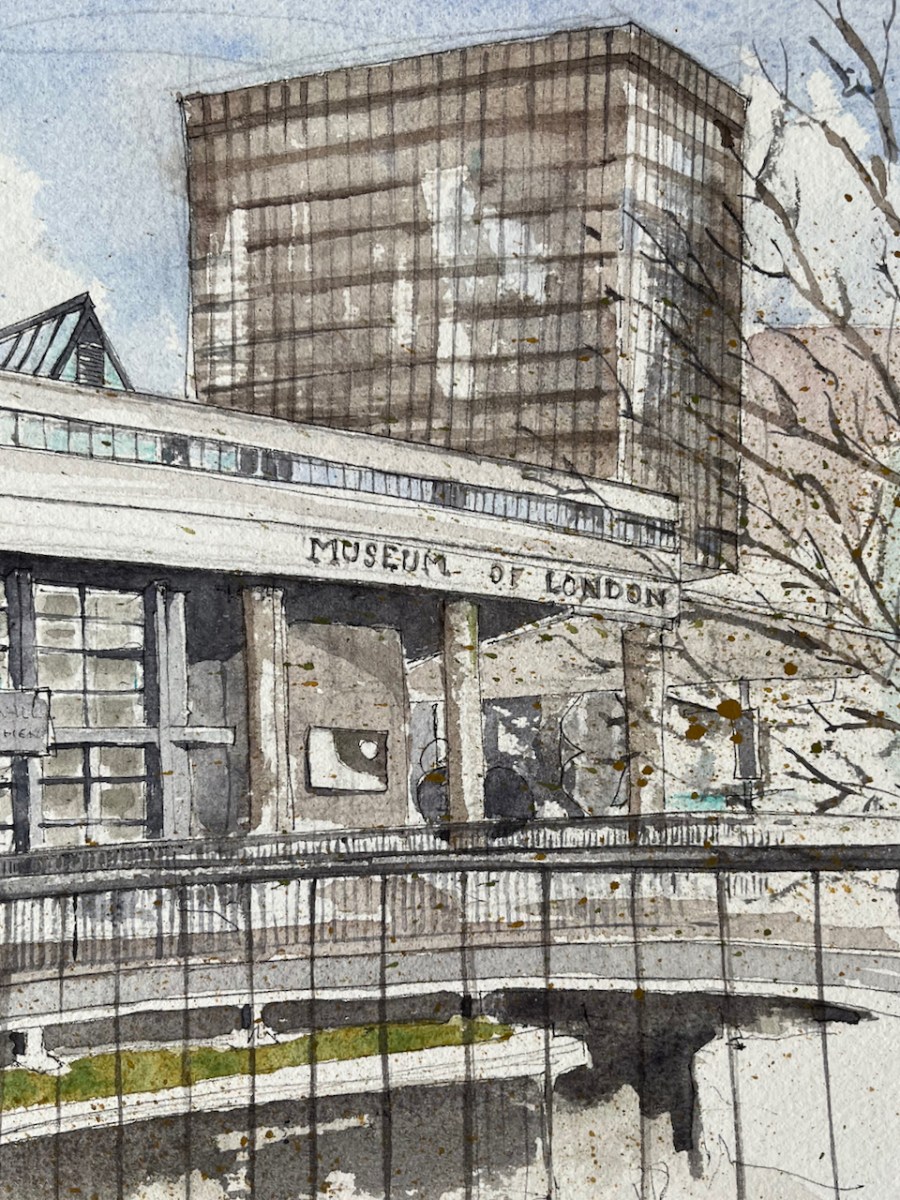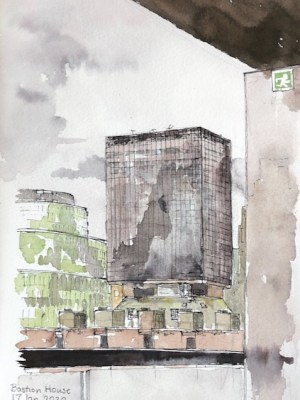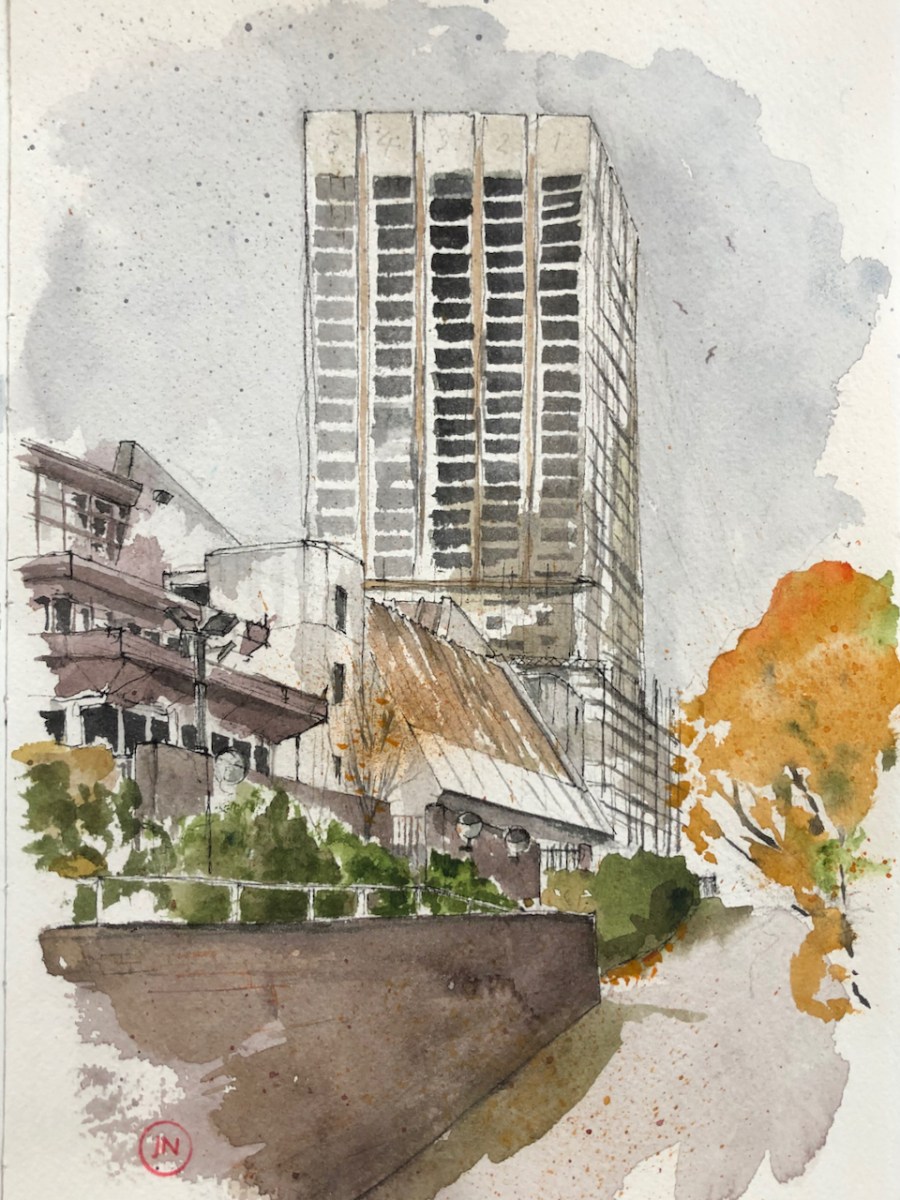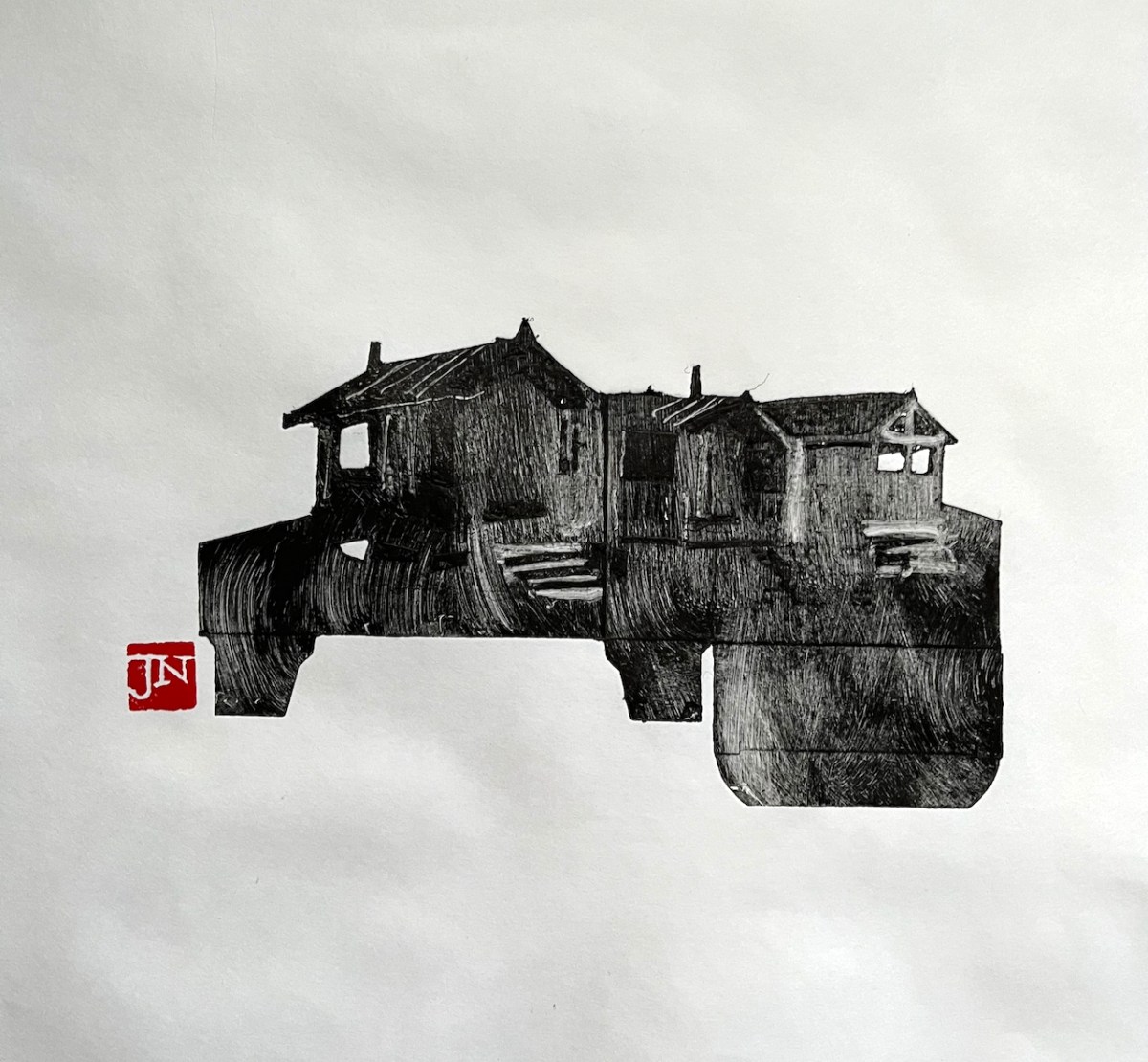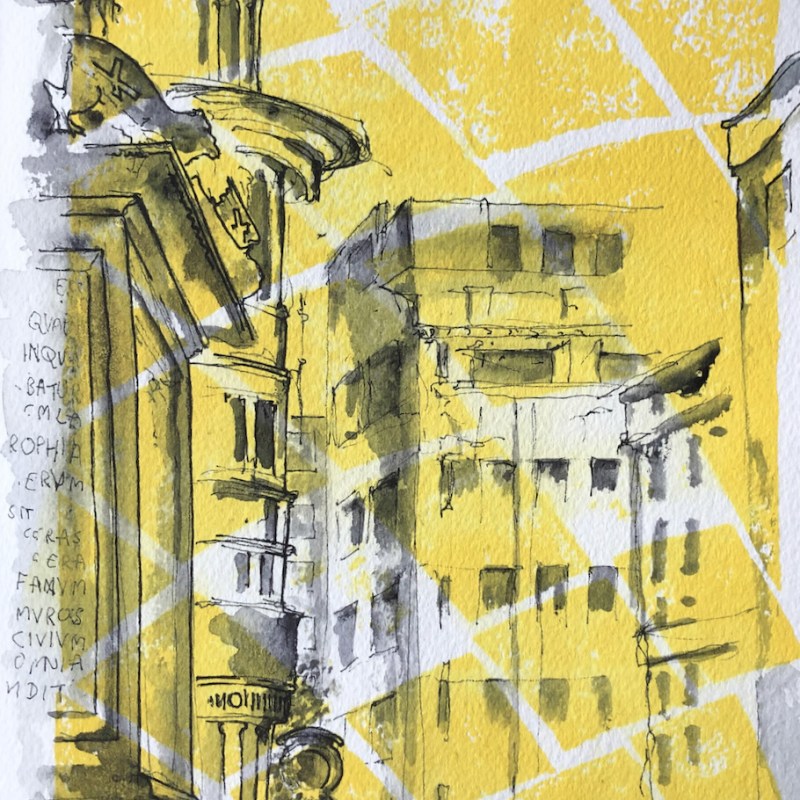
From the highwalk on the Rotunda there is a really amazing view of the Museum of London and Bastion House. This whole view going to change radically, if the City of…
I hastened to draw the magnificent Bastion House, on London Wall. It is due for demolition. In the foreground you see the balcony and privacy screen of the flat in Andrewes,…
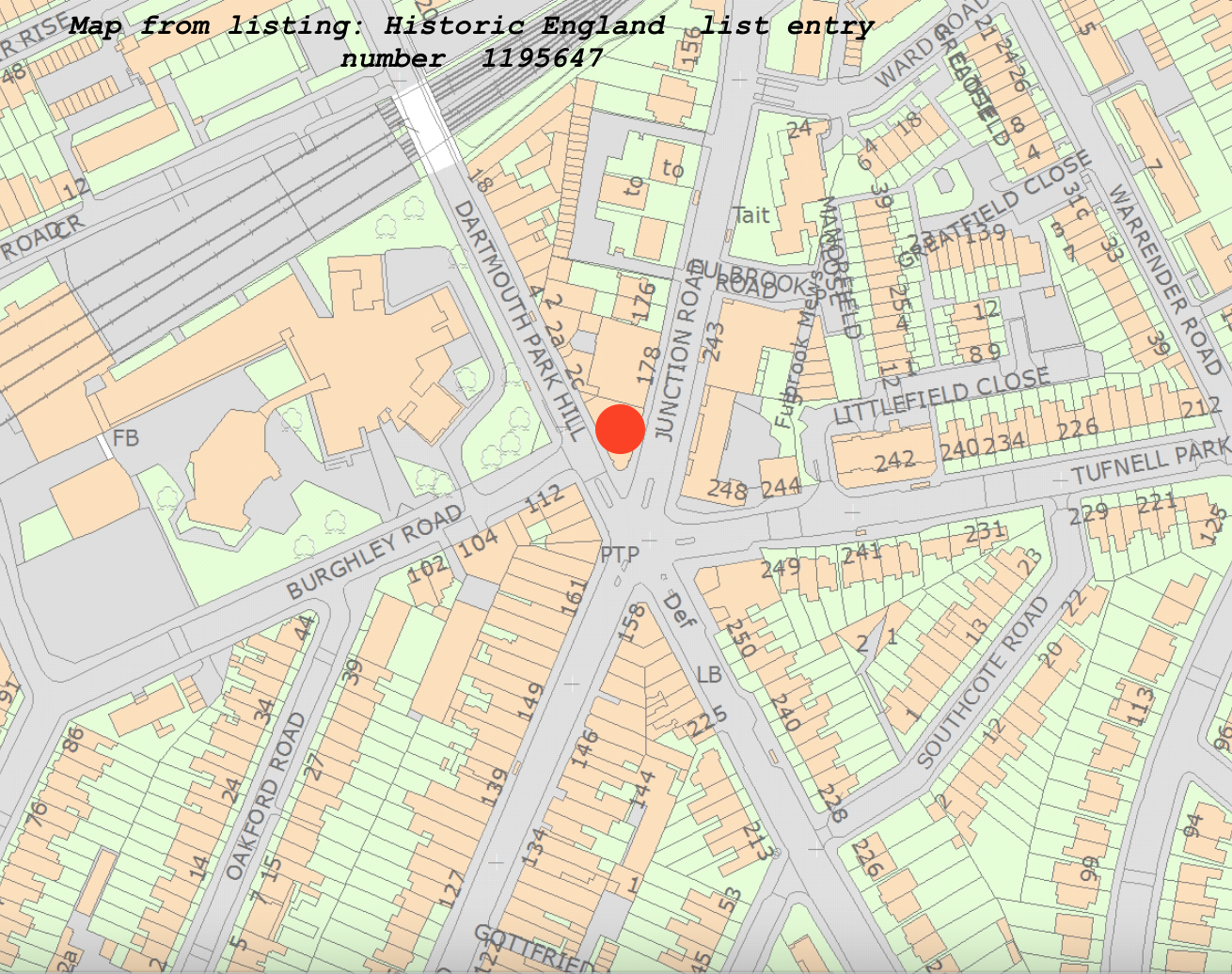
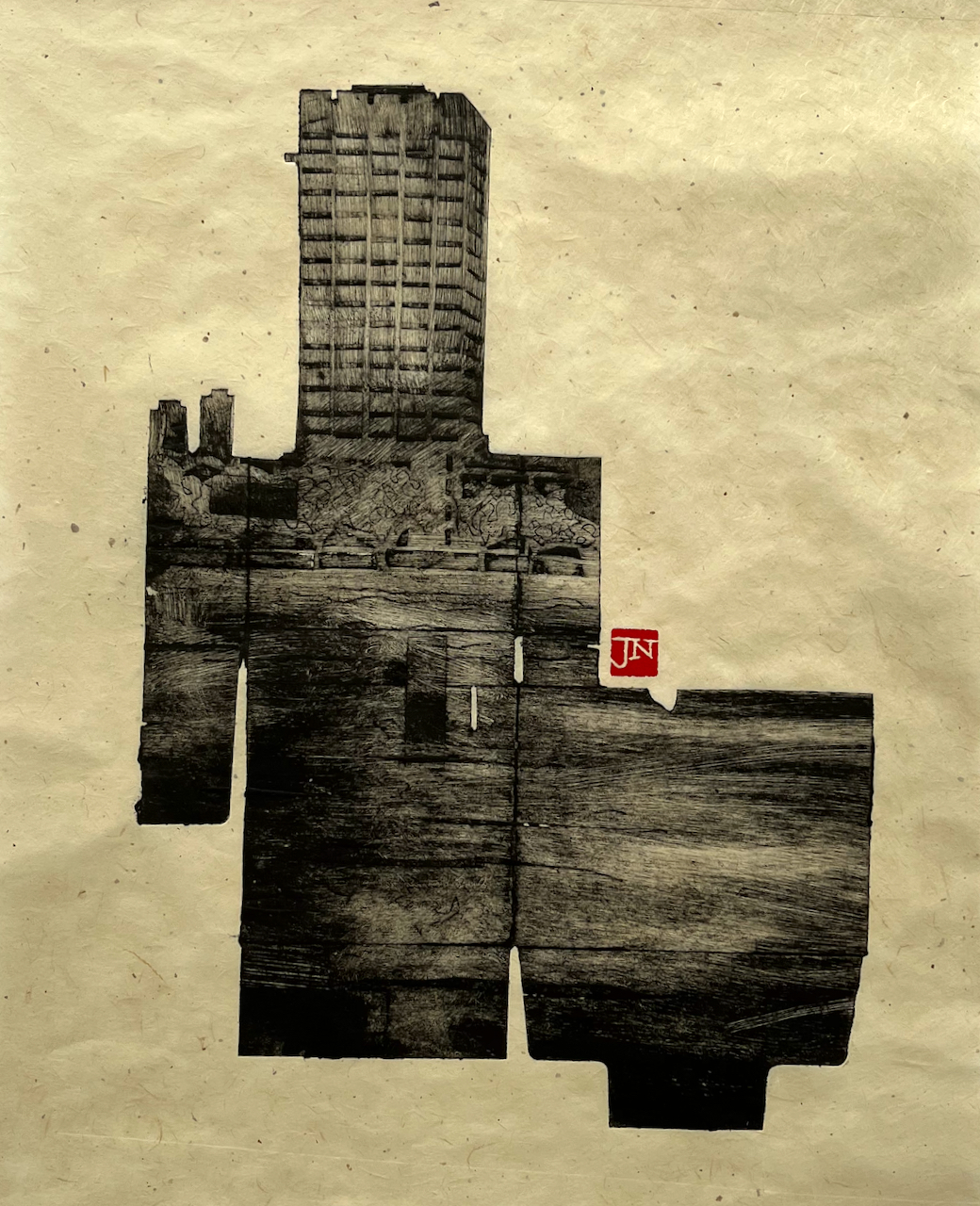
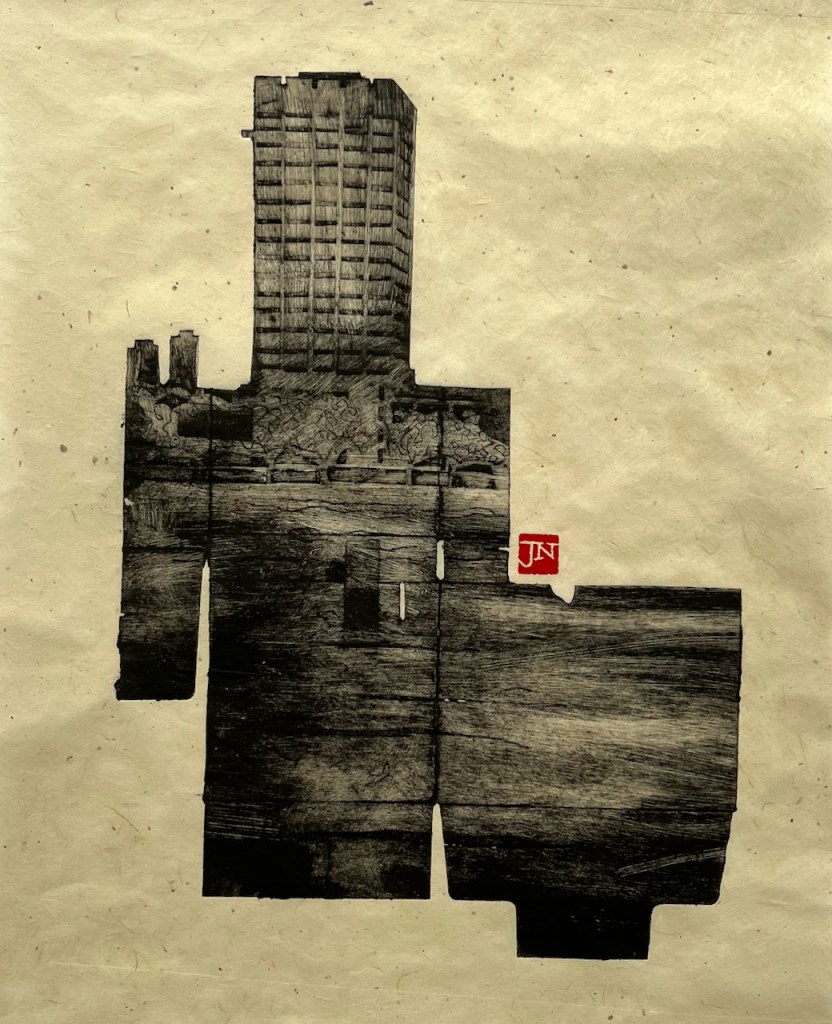
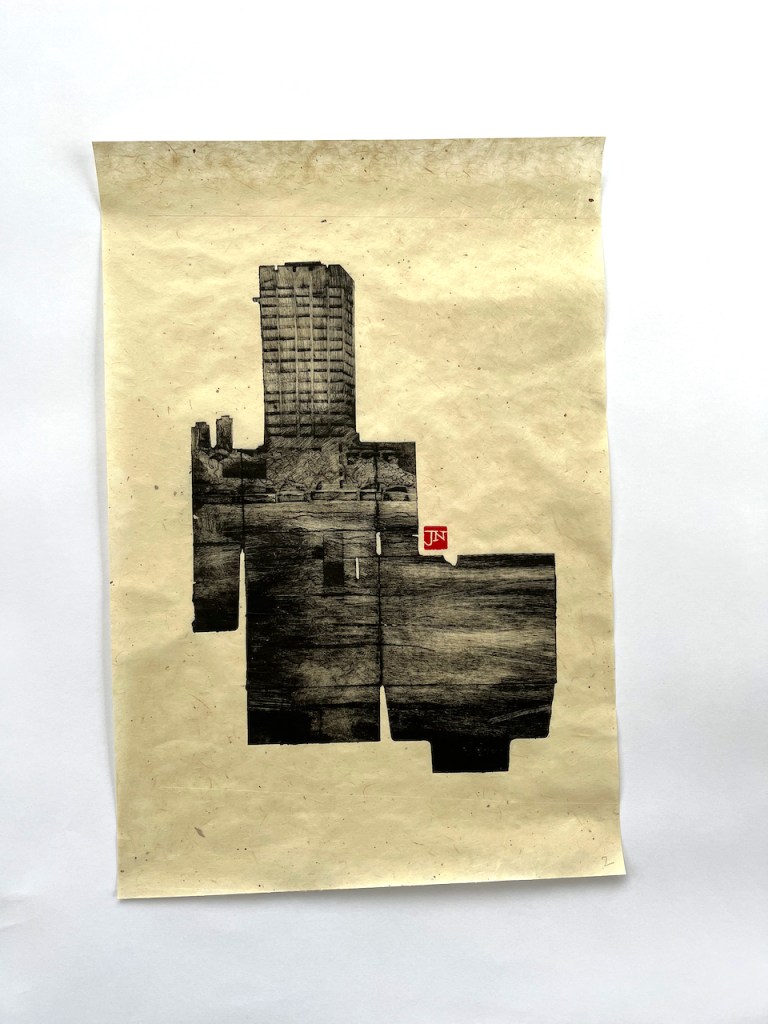
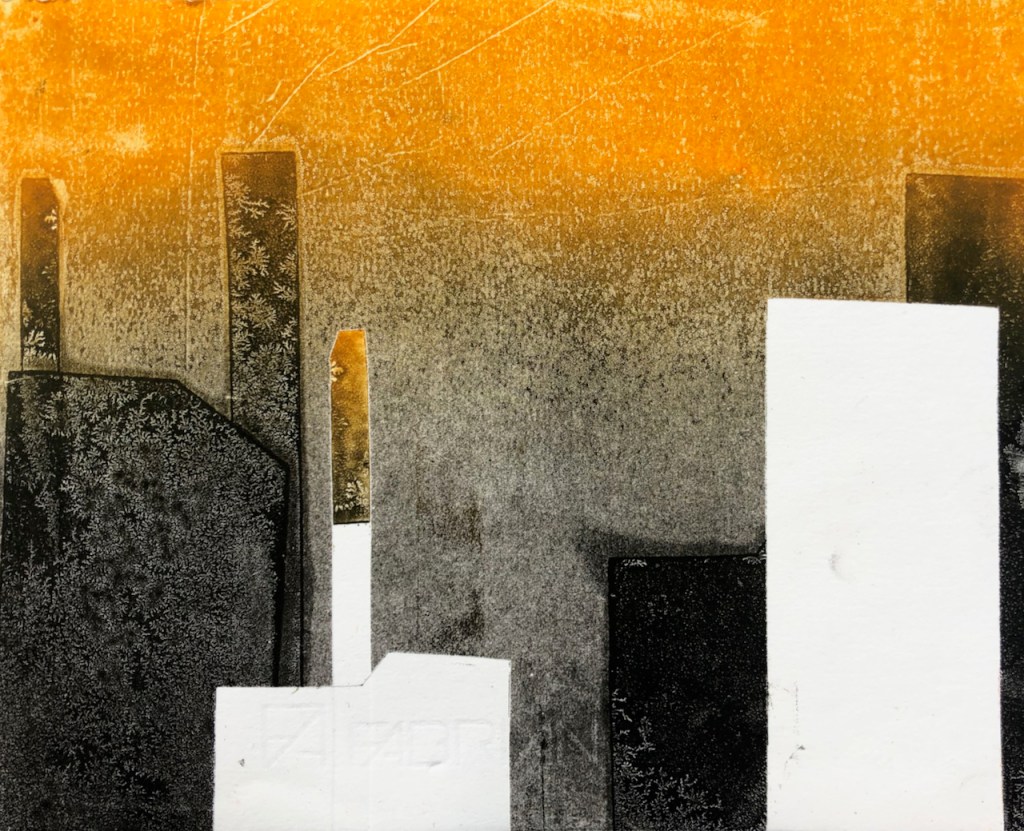
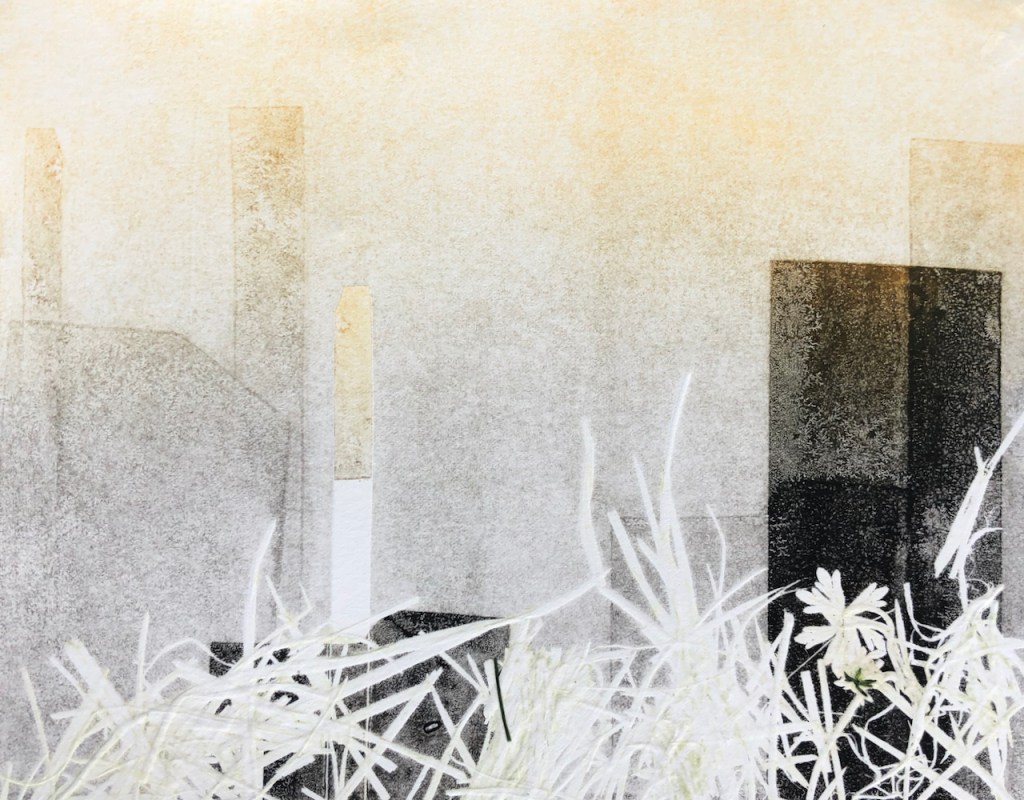
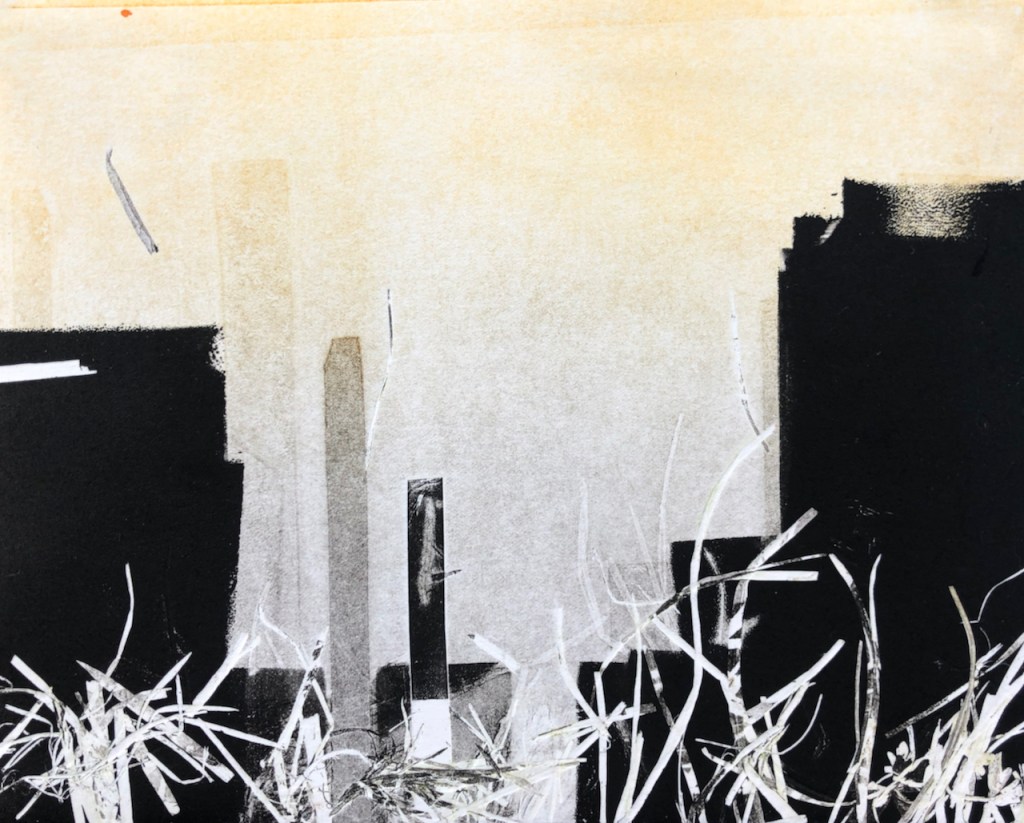
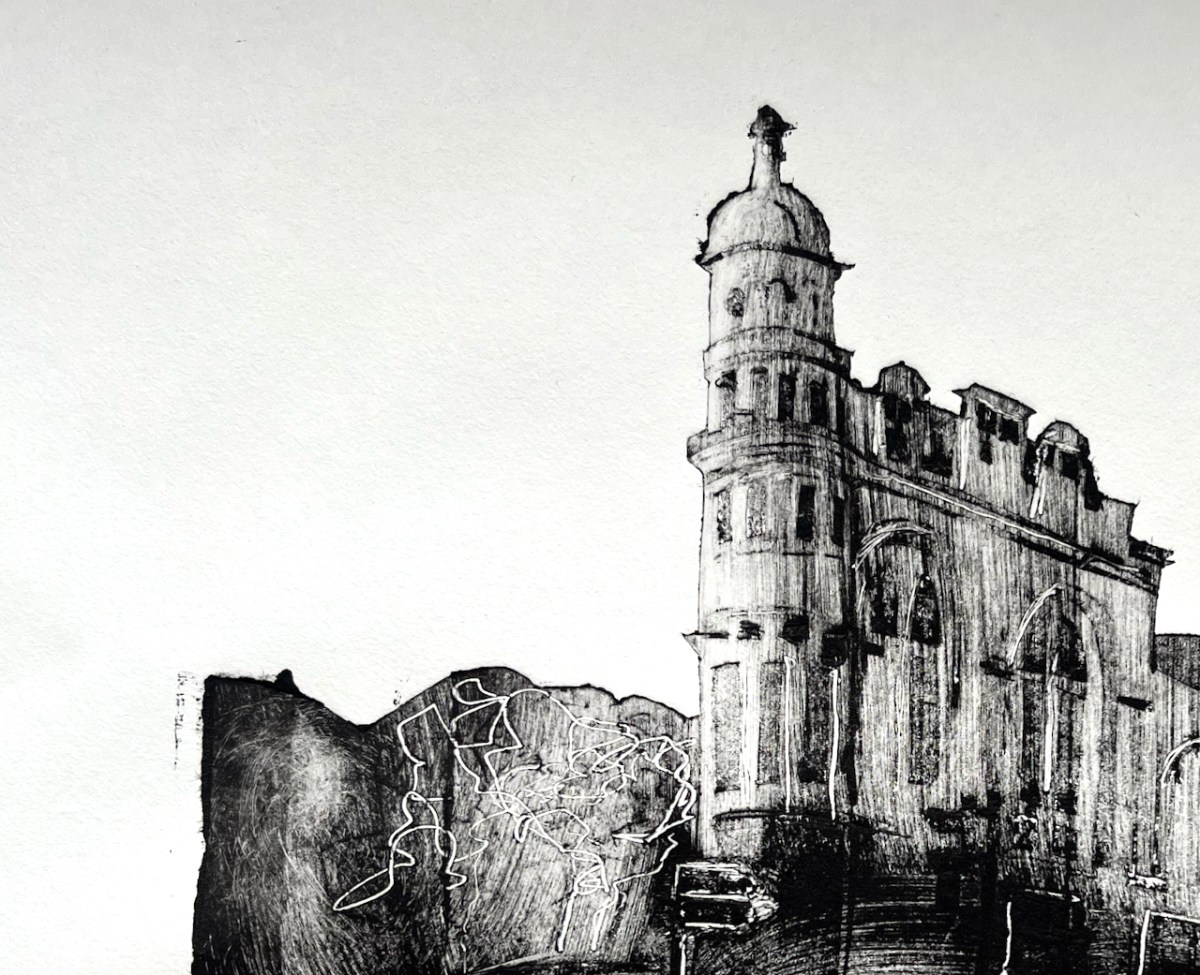
Here is a view of the tower of former London Television Centre building, seen from Windmill Walk, off Roupell Street near Waterloo Station. I…
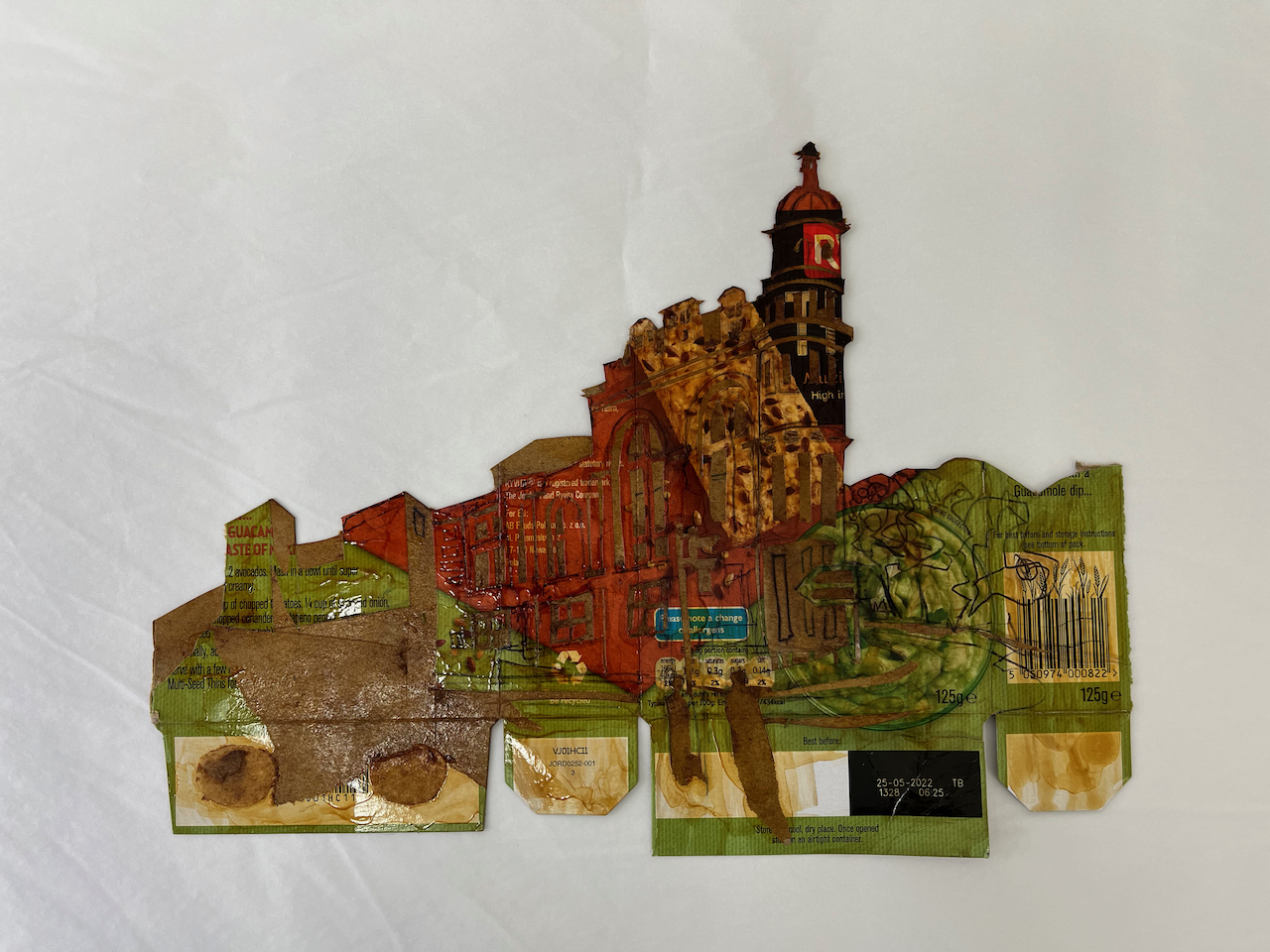
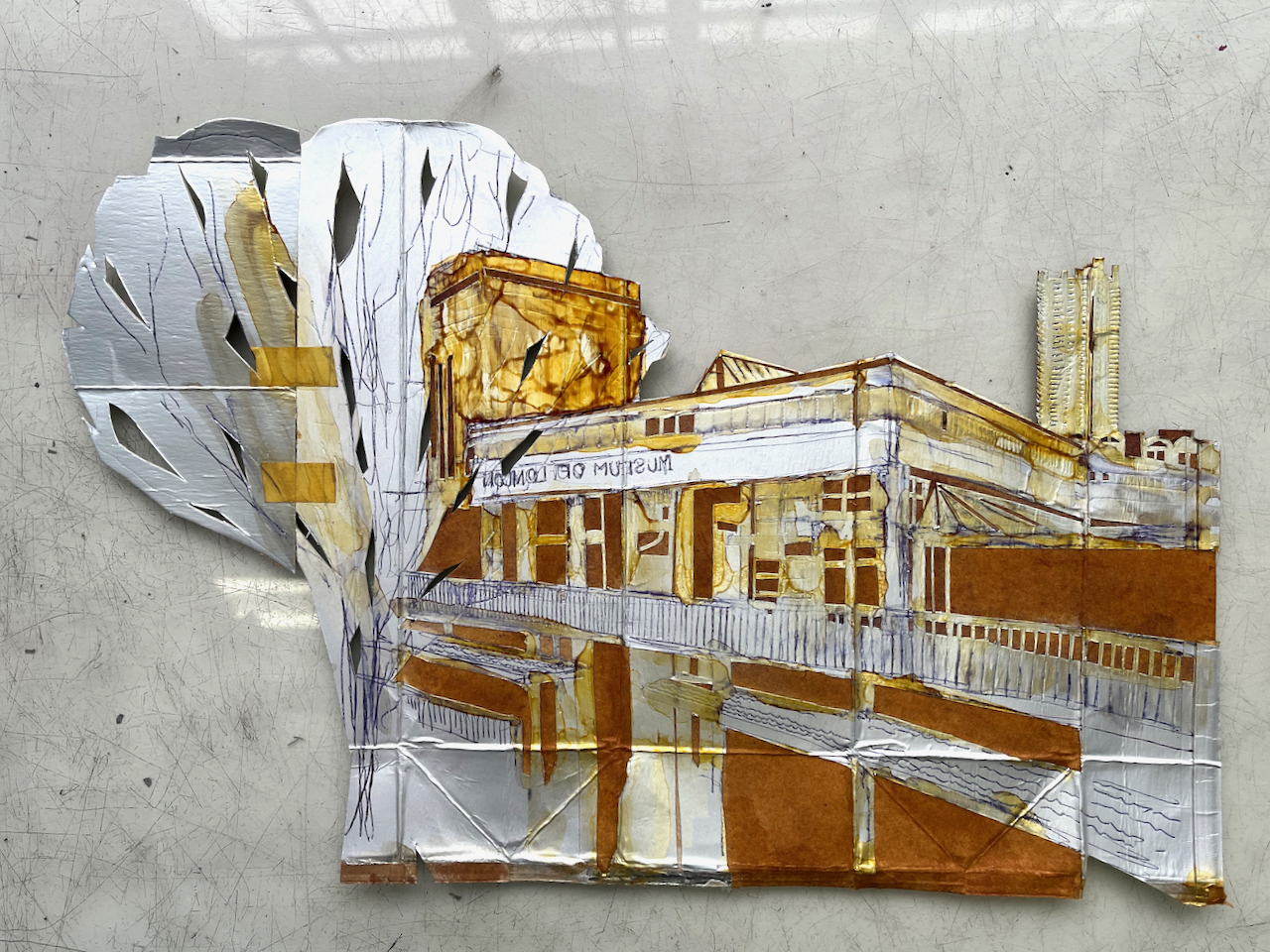
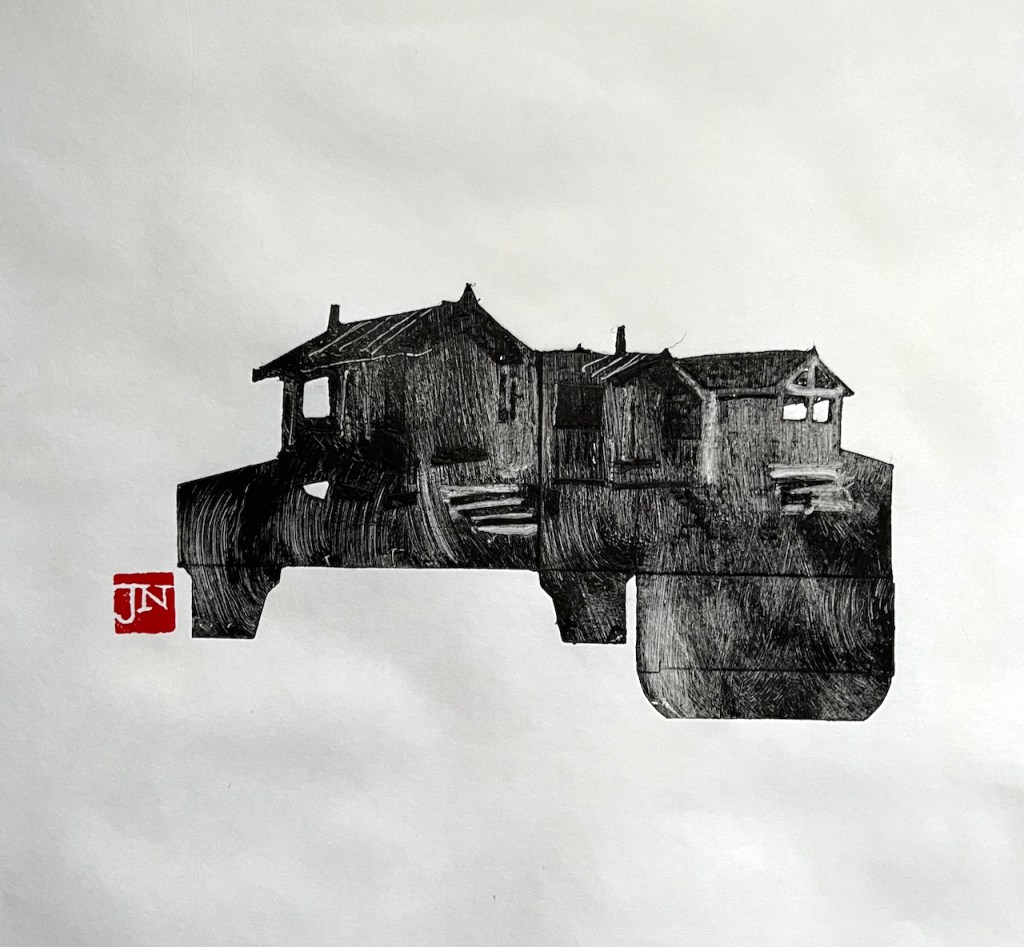
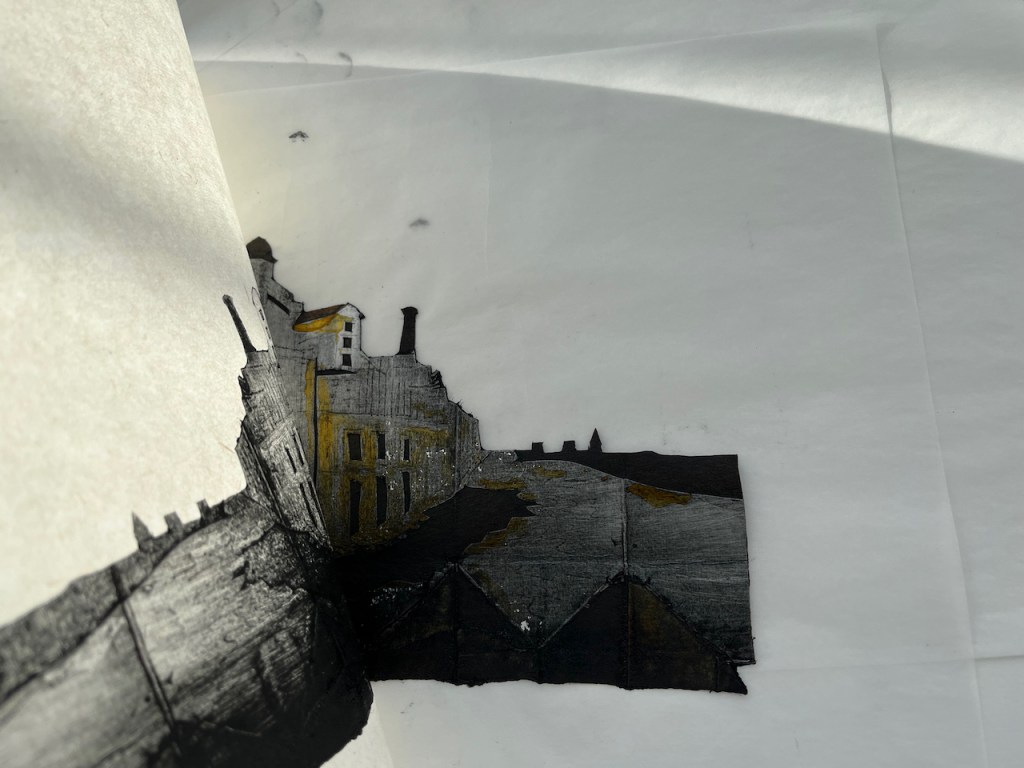
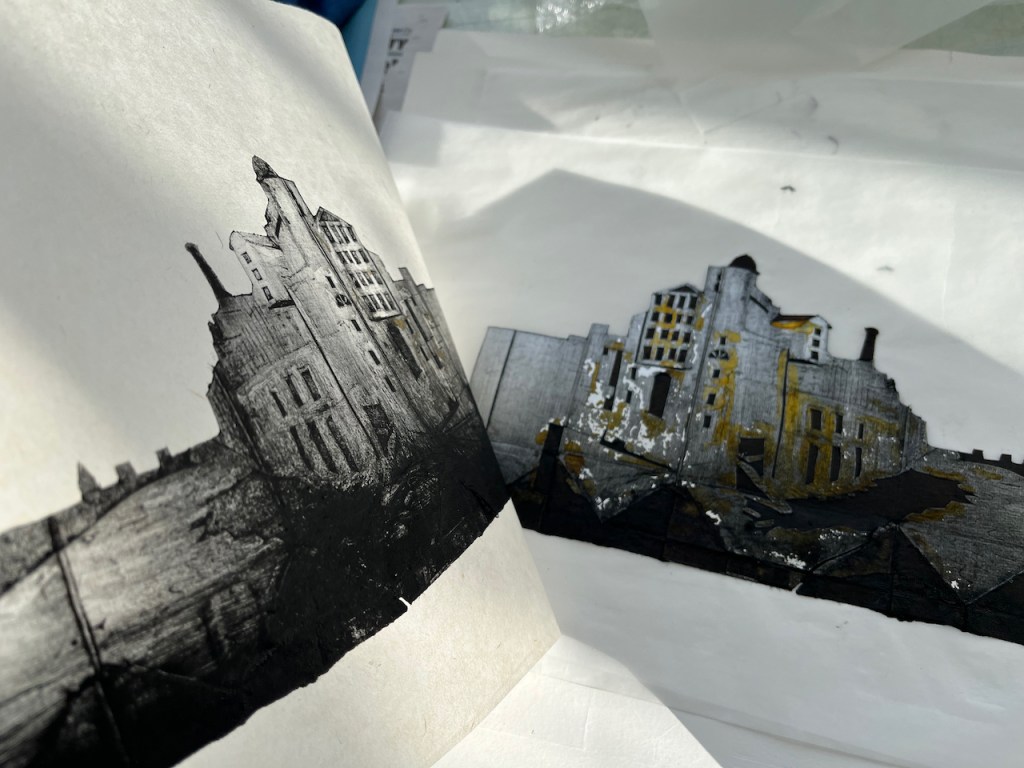
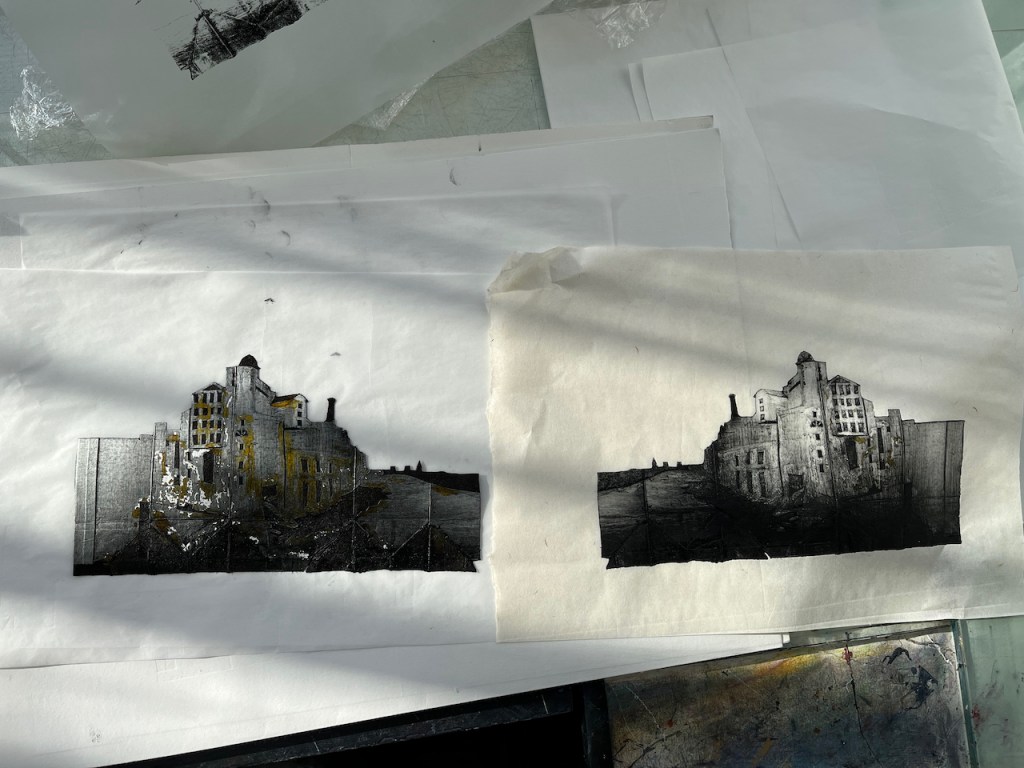
It’s due for demolition. So using discarded packaging to make an image of this building seemed to be appropriate. The building, though made of concrete and steel, is yet ephemeral, like my fragile plate.
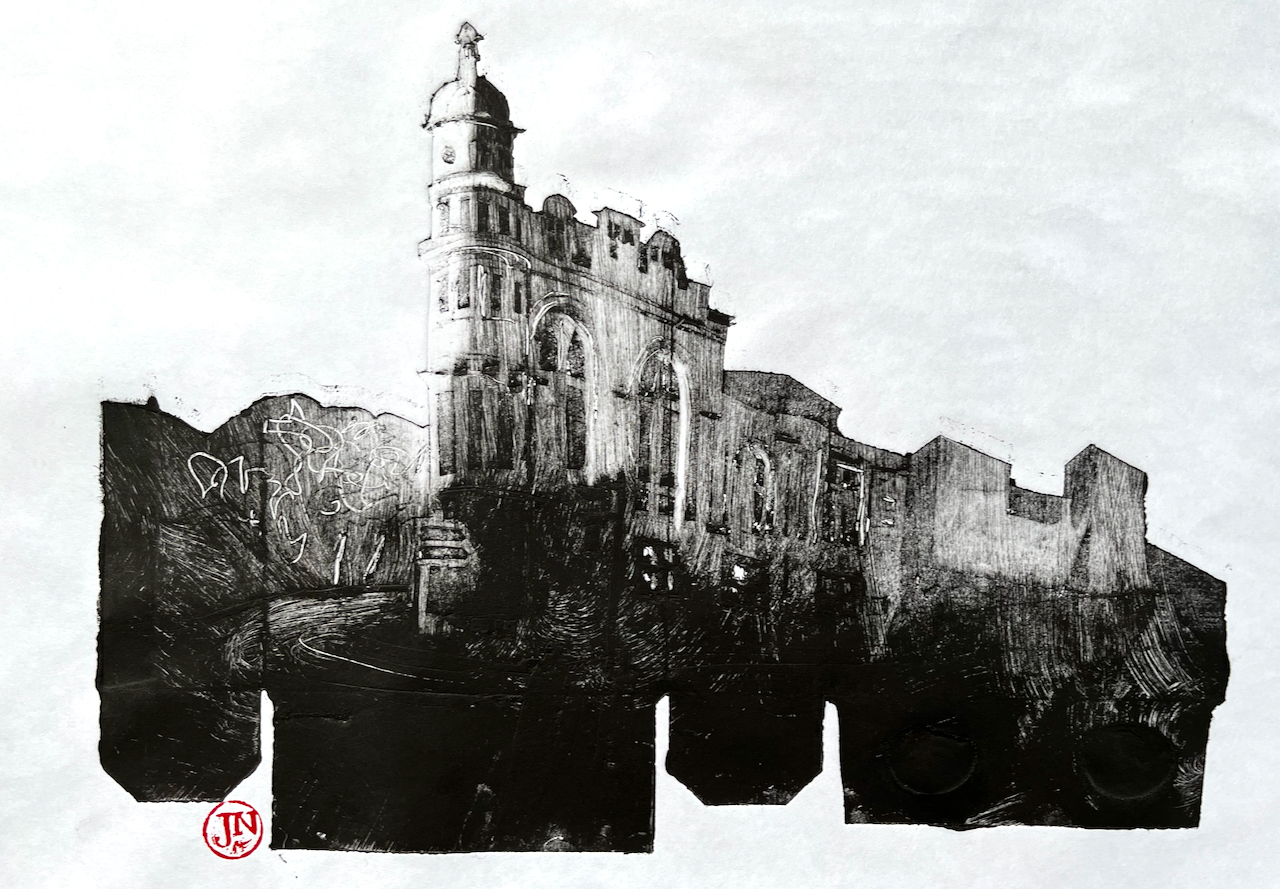
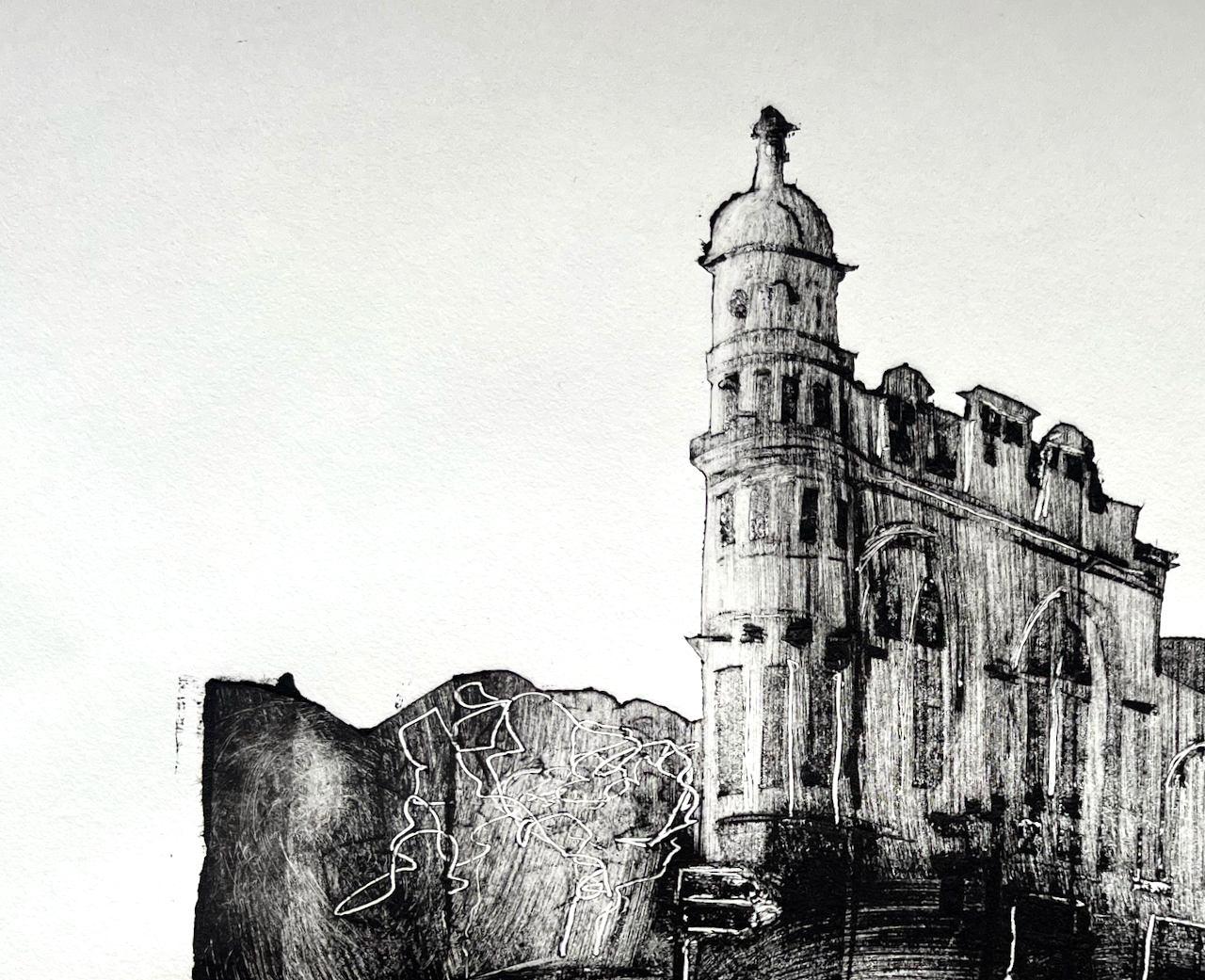
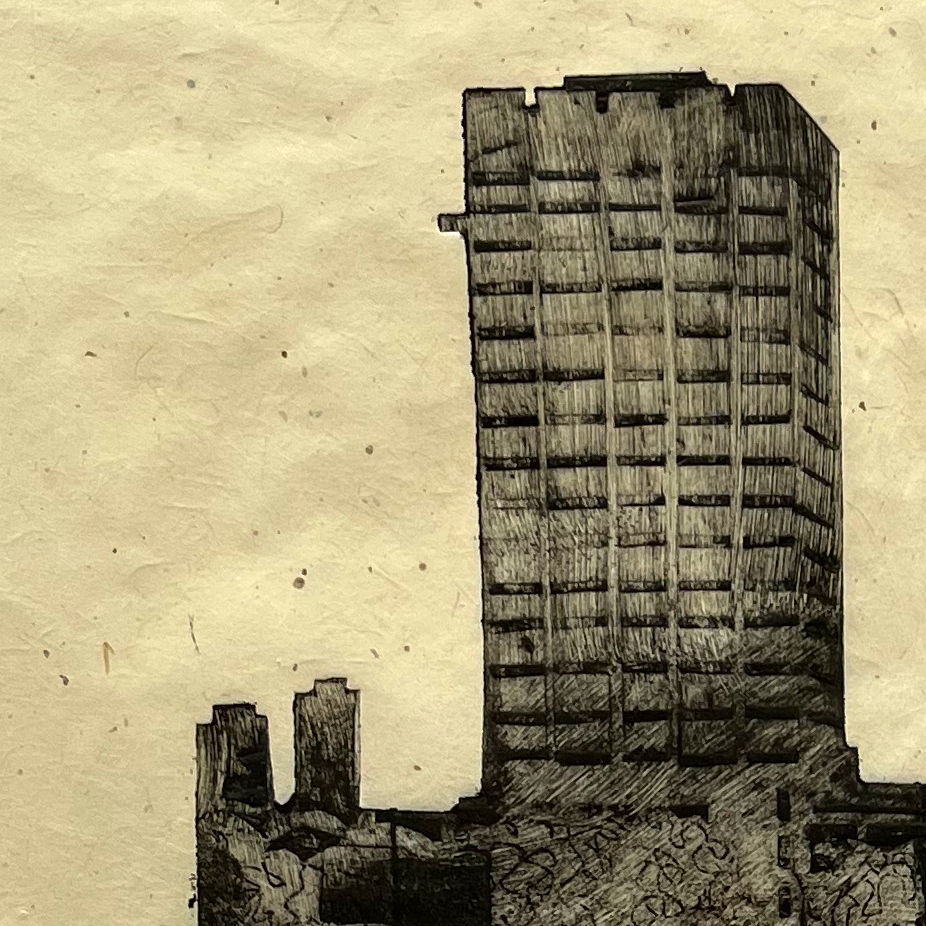
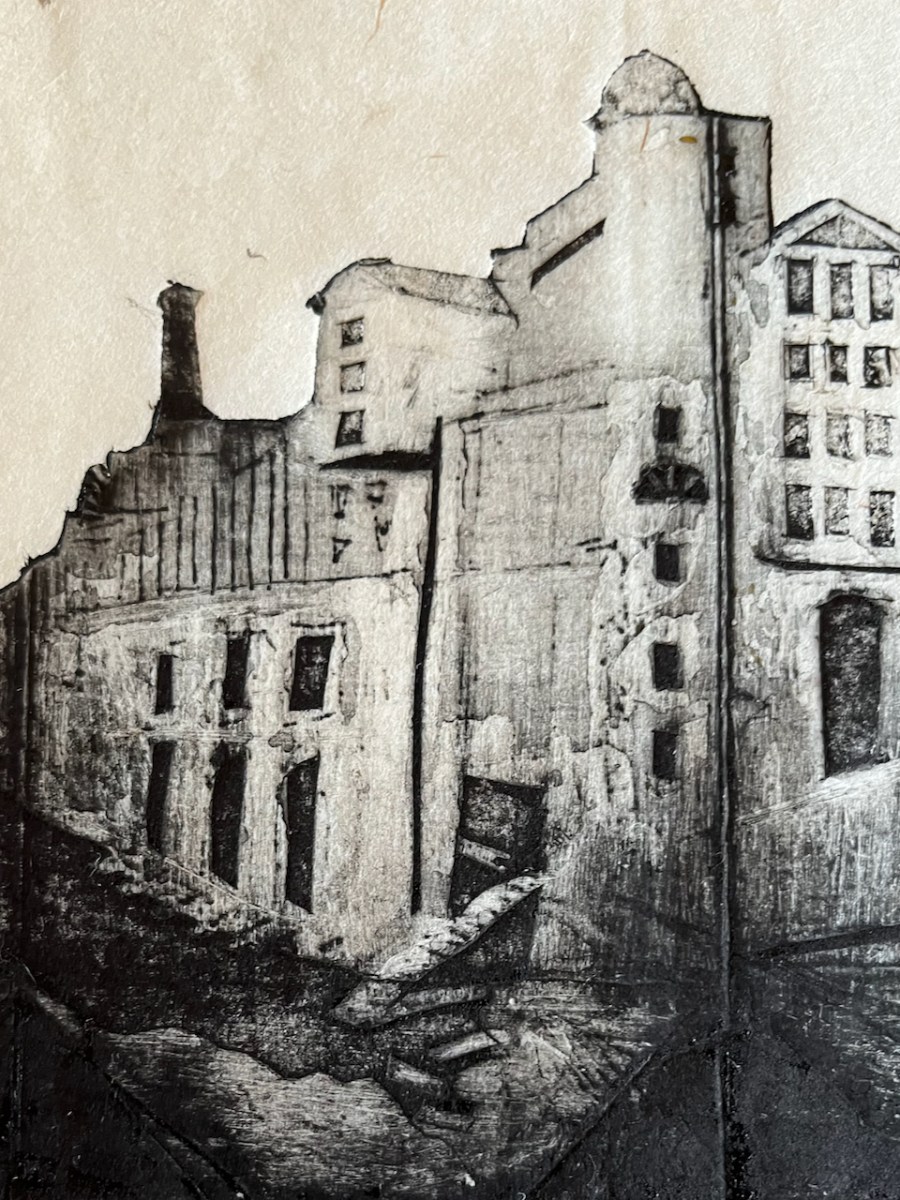
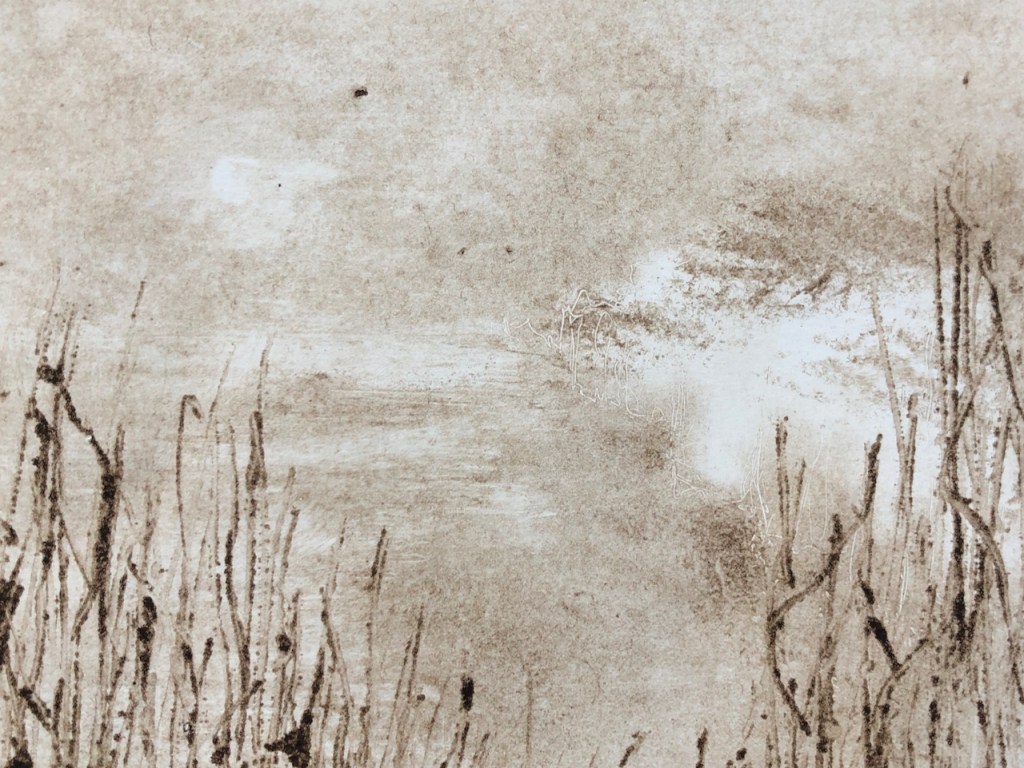
I made the print on “Gampi smooth” paper from Shepherds of London. This handmade paper is thin, translucent, and has small inclusions and imperfections as you see on this detail photo:
The sky in this part of London is never empty. There are always seagulls, falling leaves, windswept paper, aeroplanes, police helicopters. And rain.
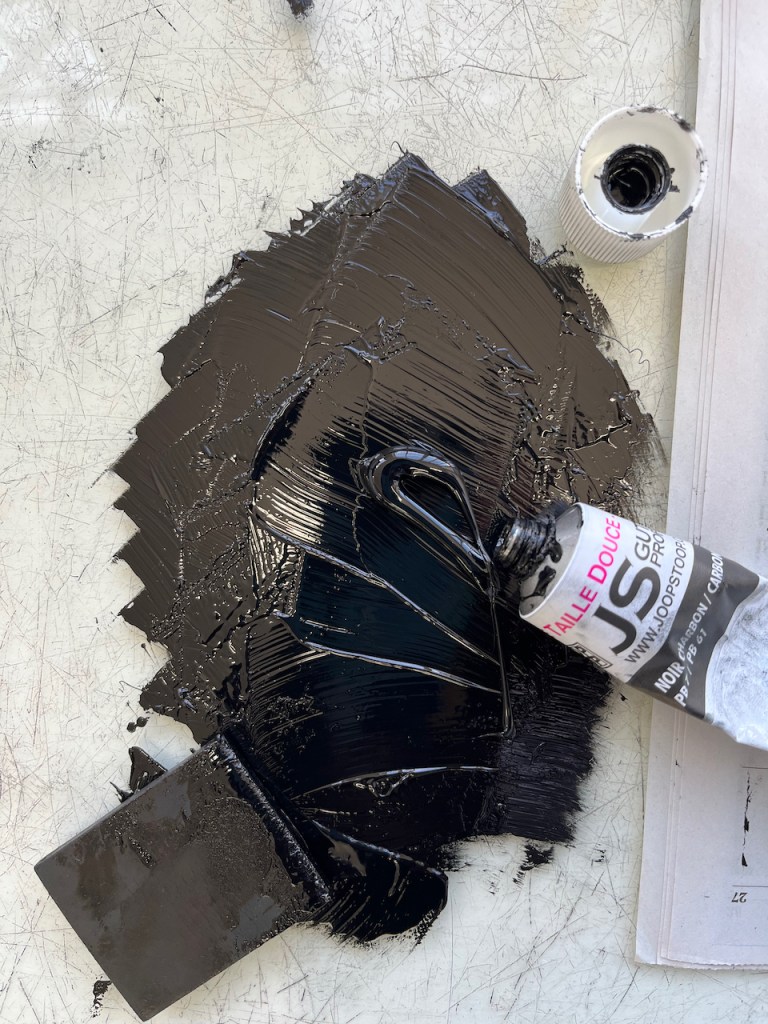
The ink for this print is Charbonnel F66 Black traditional etching ink from Intaglio Printmakers. I made the print at East London Printmakers on the Henderson etching press.
London Weekend Television, London South Bank. Paper is a bit over A3 size.
Here are some other prints made using the same technique:
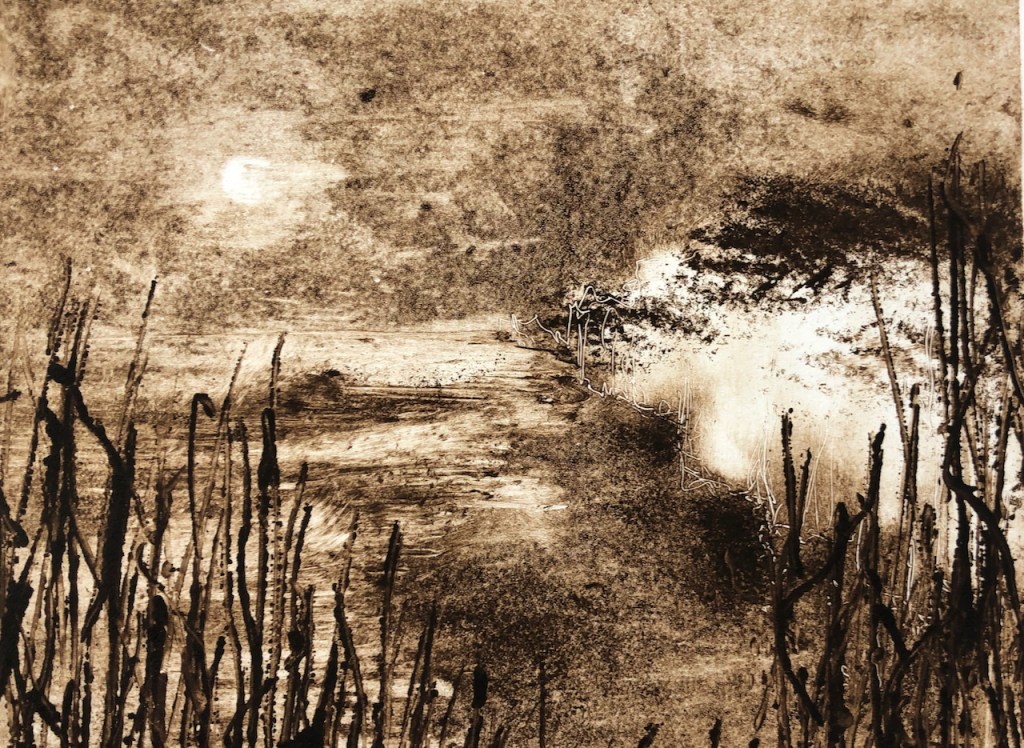
Here is a “packaging” monoprint I made of the huts in Walberswick.
Walberswick huts, monoprint, image size 8″ x 5″ [Available]
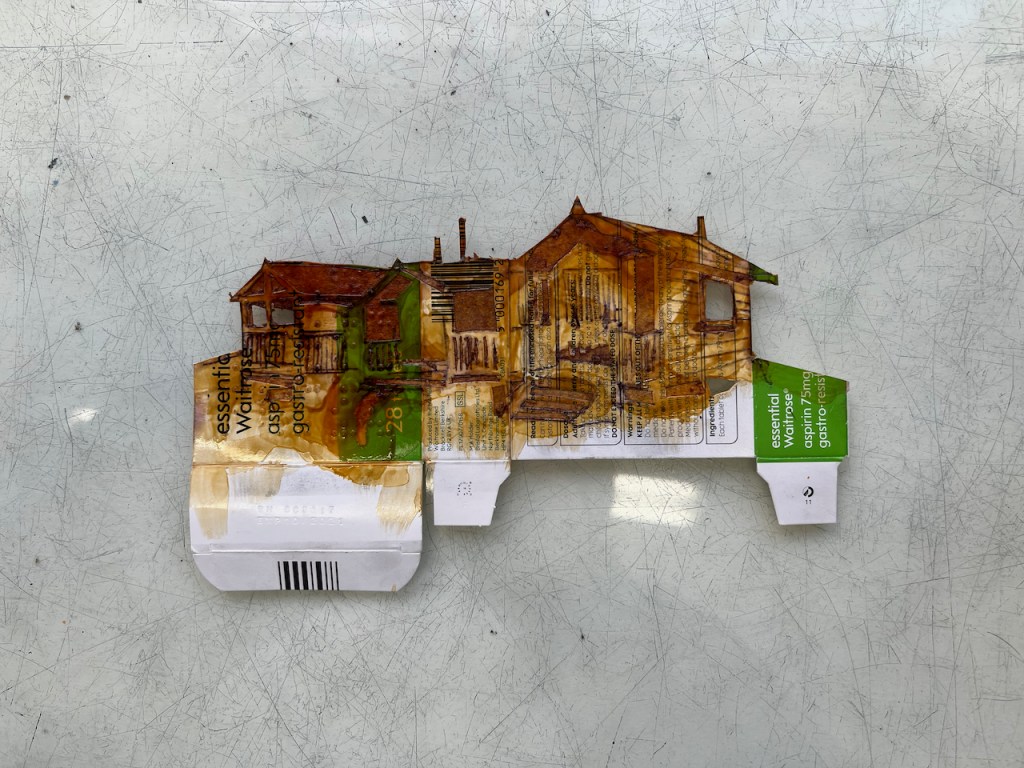
The print is made using a discarded carton from a box of aspirin. It looks like this:
Walberswick huts, plate made from aspirin carton.
The brown colour is shellac, a varnish which helps make the plate last a little longer. I make the picture on the shiny side of the medicine packaging, by cutting off the shiny surface to reveal the rougher cardboard underneath. The plate is very thin and fragile. This plate made 5 prints. I lost one of the chimneys during the process.
Here is an 11-second video showing the print coming off the plate:
The ink is JS Gutenberg Carbon Black etching ink from Intaglio Printmaker in Southwark. The paper is Gampi smooth from Shepherds of London, in Gillingham Street.
I made the print at East London Printmakers in Stepney, on their Henderson etching press.
Thank you to Karen Wicks @iacartroom for sharing her technique and her wonderfully inspiring work.
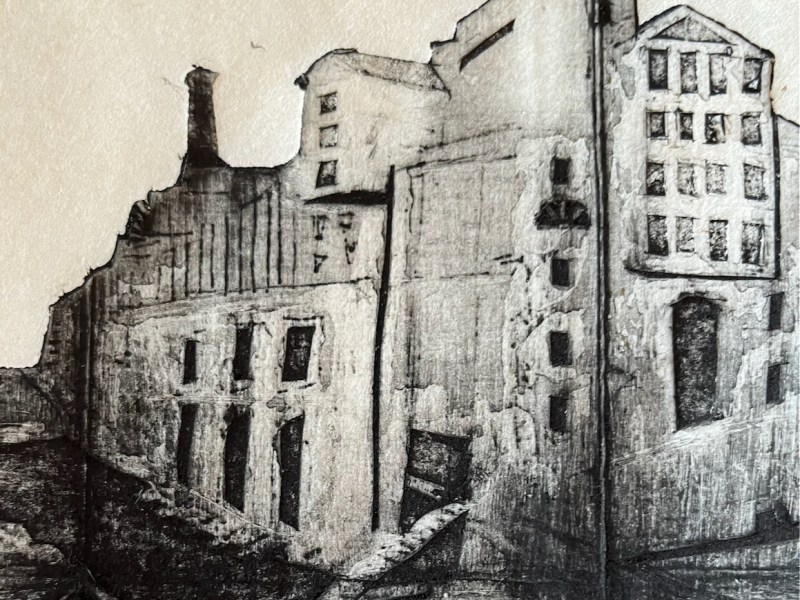
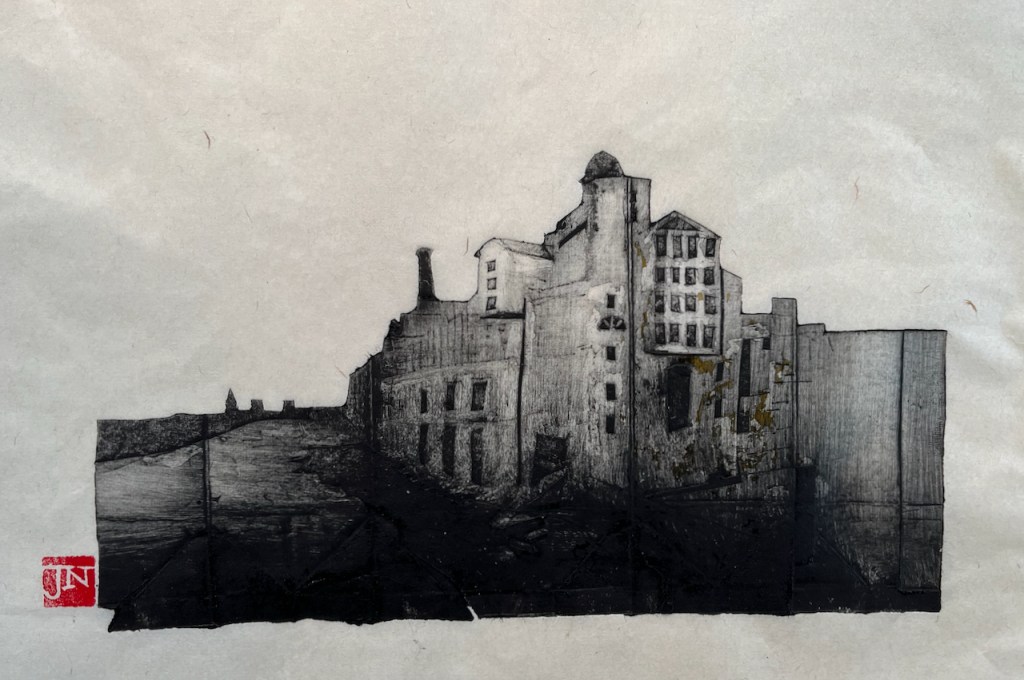
I am trying an experimental monoprint technique. The idea is to use packaging material to make intaglio “plates” which are then printed using an etching press. This is the first one. I printed it yesterday on the Henderson Press at East London Printmakers. This is a real building, a former brewery, just to the South and East of Tower Bridge. That’s the river Thames you see on the left of…
Click a button below to share this post online, email it, or print it:
I am trying an experimental monoprint technique. The idea is to use packaging material to make intaglio “plates” which are then printed using an etching press. This is the first one. I printed it yesterday on the Henderson Press at East London Printmakers.
Anchor Brewhouse and Horselydown Old Steps, Monoprint. Image size 10″ x 6″
This is a real building, a former brewery, just to the South and East of Tower Bridge. That’s the river Thames you see on the left of the picture.
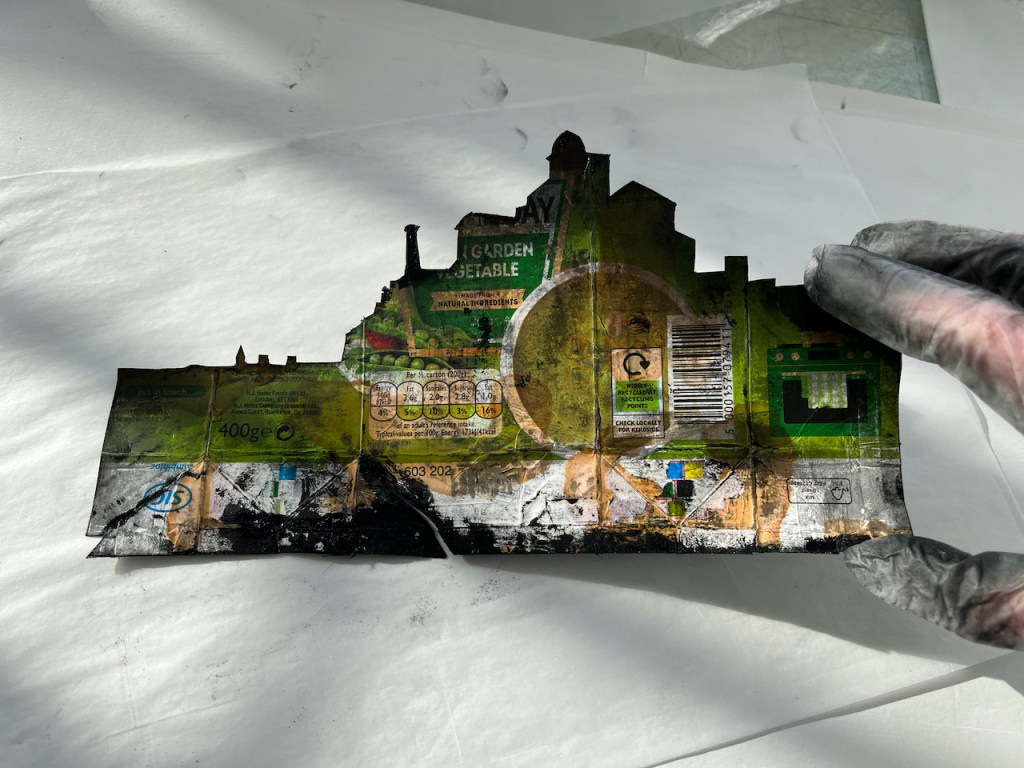
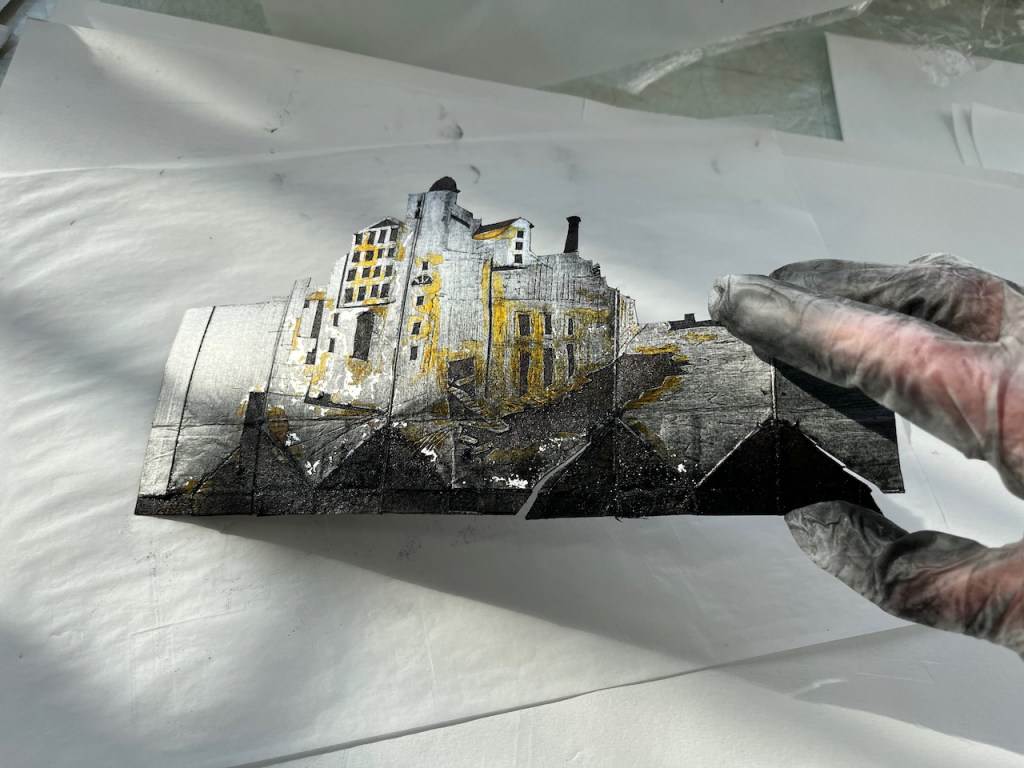
The “plates” are fragile, so I could only make 6 prints before the plate started deteriorating and the contrast started to go. Here is a picture of the plate, front and back. It is made out of a box of soup. I made the picture on the shiny, metallic-looking side, which is the former inside of the soup box.
Back of the plateFront (print side) of the plate, after inking and printing
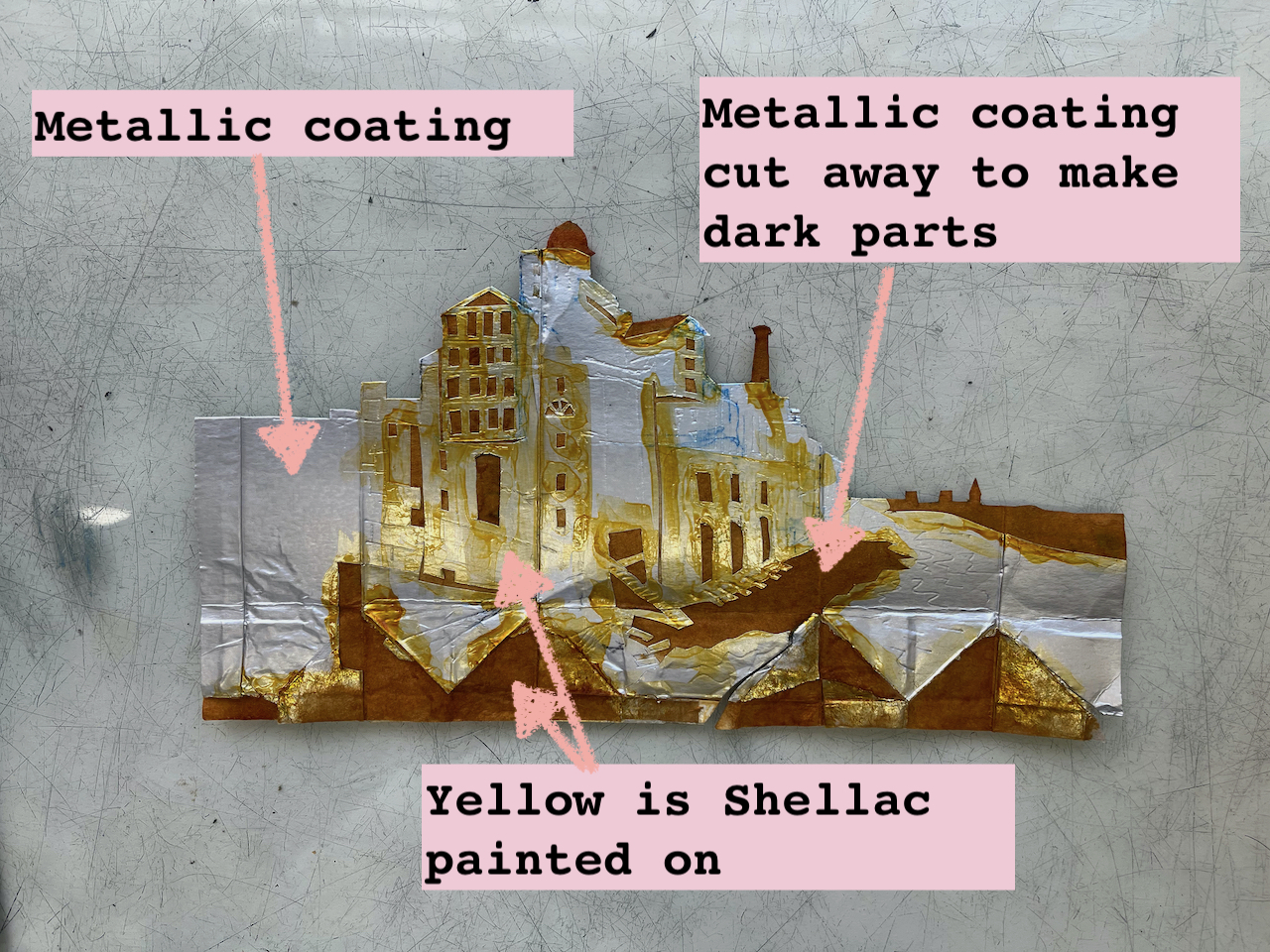
The parts which print dark are made by cutting out the metallic coating of the soup box, leaving the rough cardboard underneath. I painted the plate with button varnish (shellac in alcohol) to make it a bit stiffer and more durable. Here’s what the plate looked like before printing:
Plate before printing, with annotations
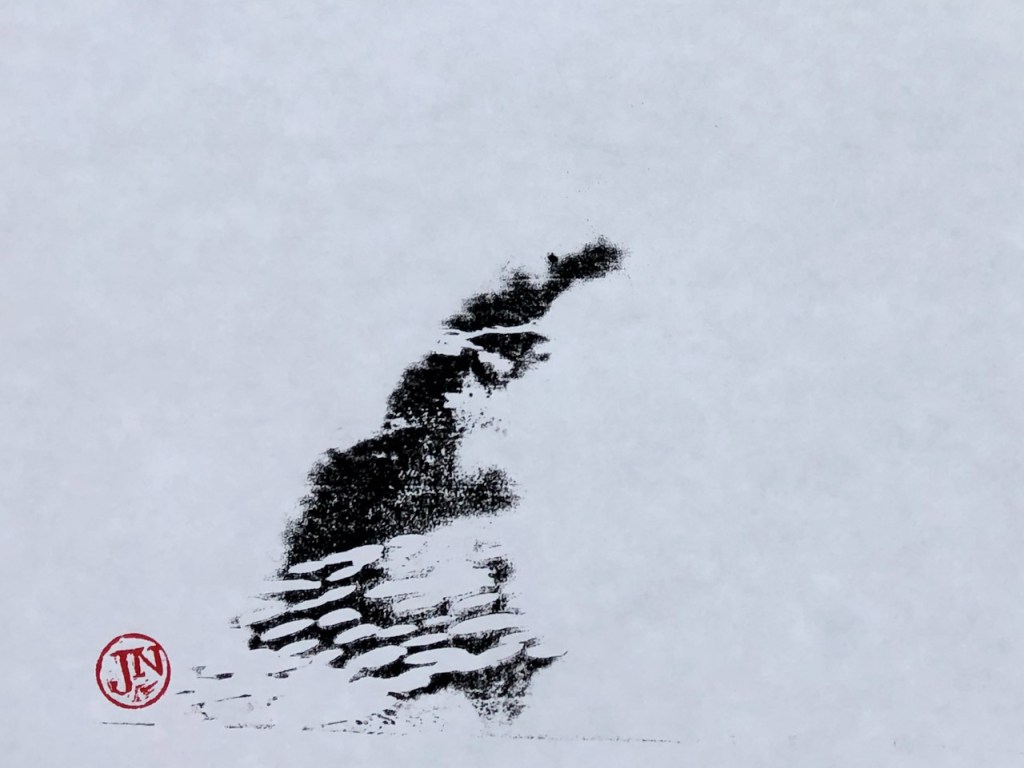
Here is one of the prints peeling off the plate:
Plate (left) and print (right)
I tried making a video, but it was too difficult to hold the plate, the paper and the phone all at once. And there’s ink everywhere which I was trying to avoid getting on my phone. Next time I’ll see if I can get a fellow printmaker to hold the phone.
Ink: “JS”carbon black
The ink is traditional black etching ink from Intaglio Printmaker in Southwark. The paper is Zhao Zhe Chinese paper ref 11369 from Great Art on the Kingsland Road. The red seal on the finished print is made with a Japanese stone seal with red ink gifted to me by my friend and mentor Katsuhisa Toda 戸田勝久.
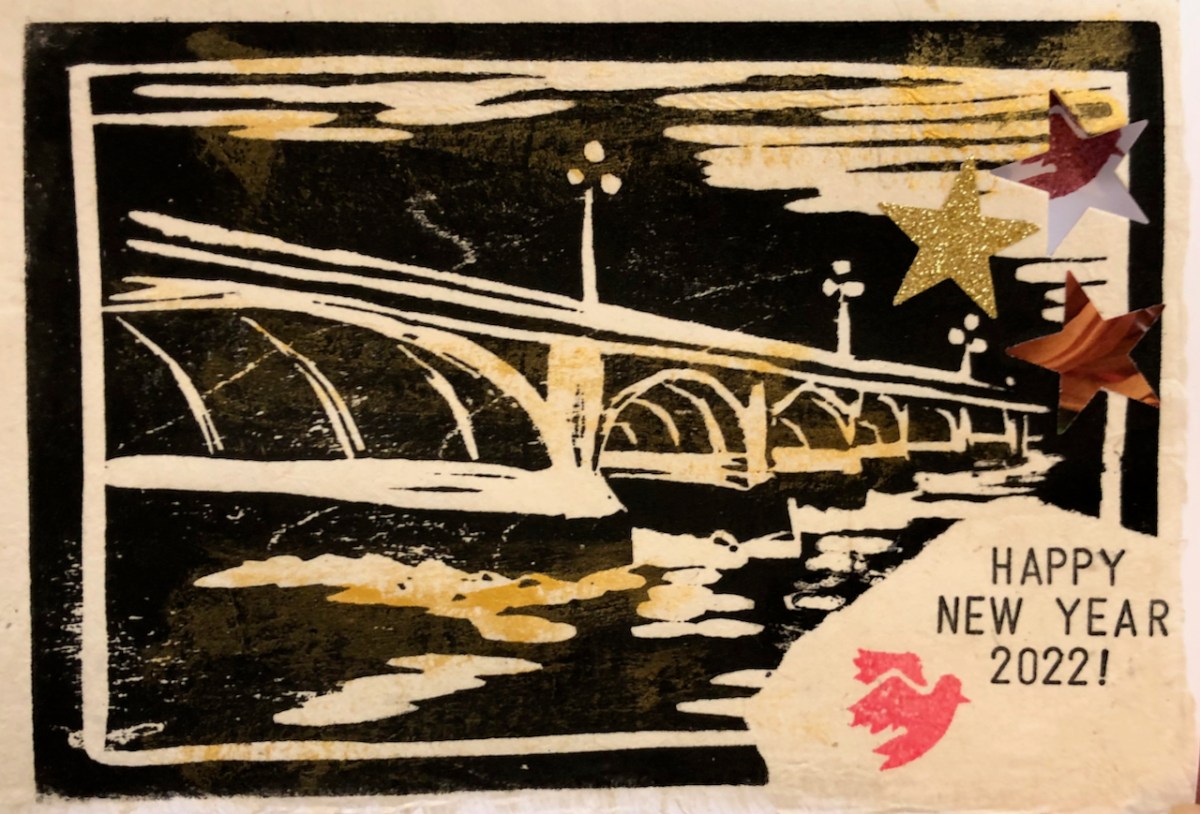
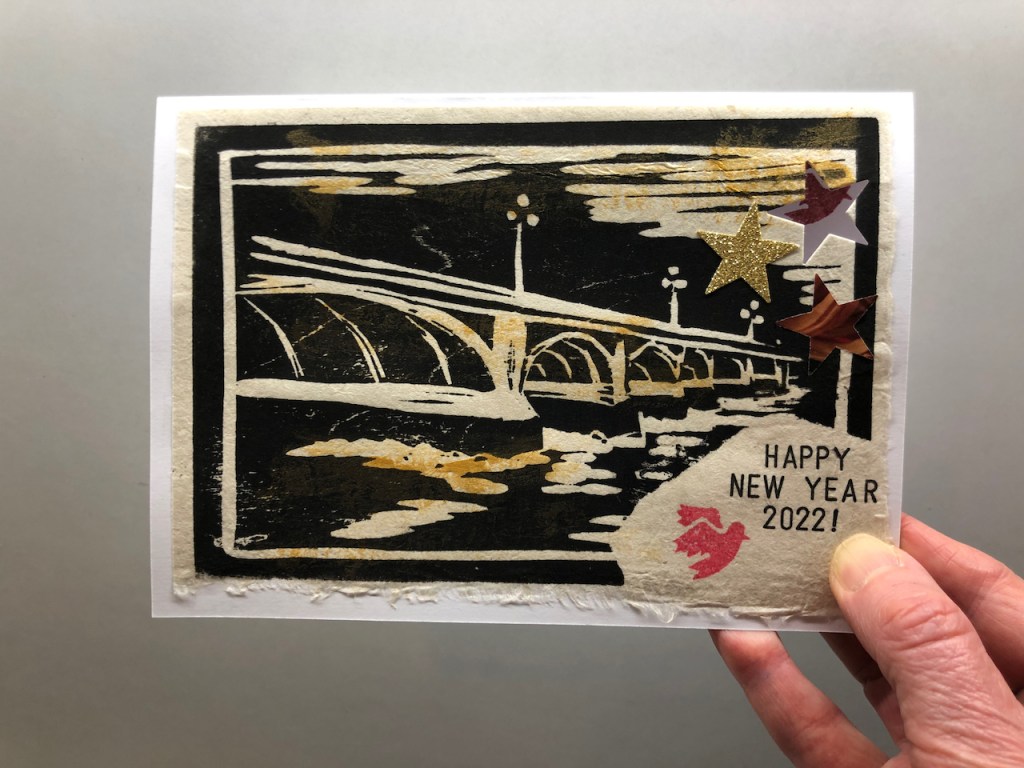
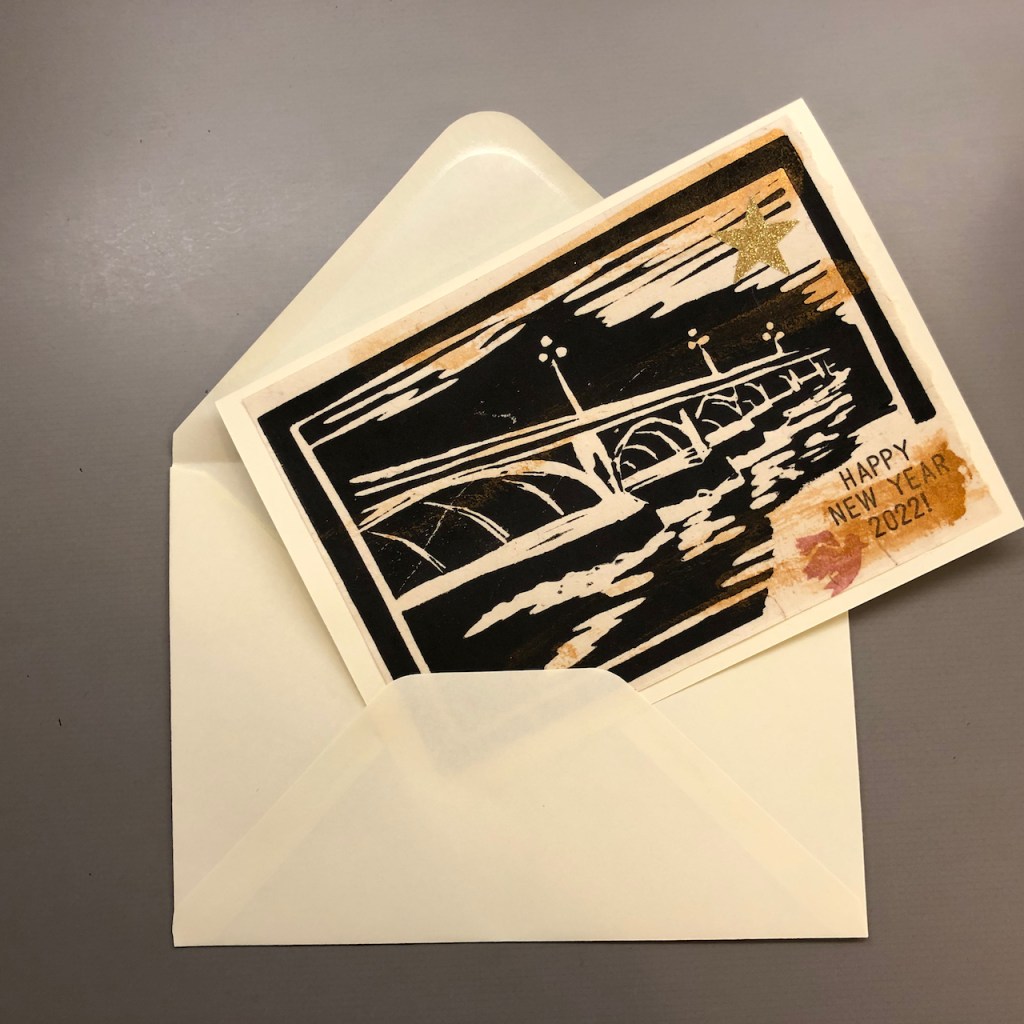
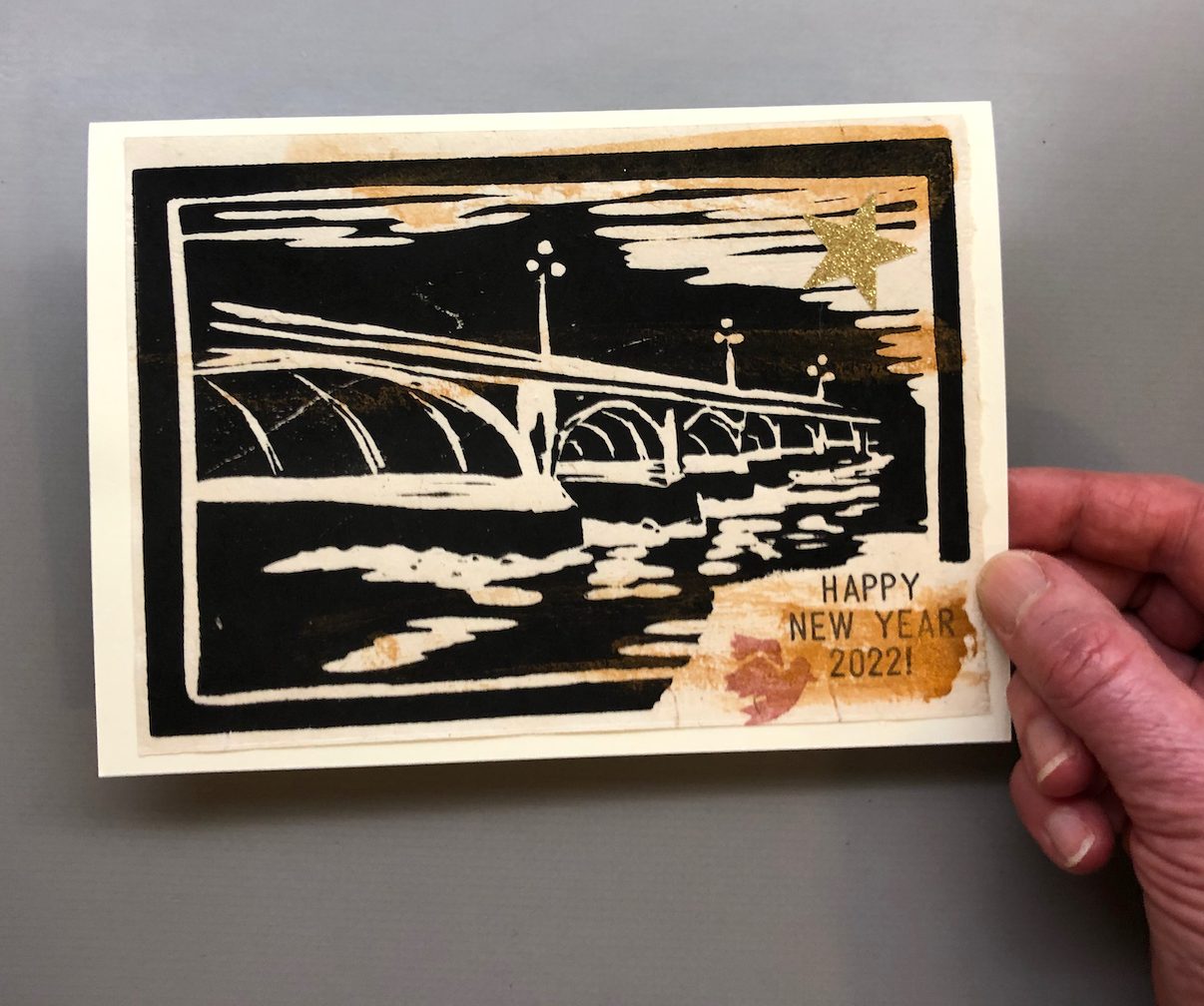
Happy New Year! Here is my New Year Card for 2022.
“Bridges” – woodcut + watercolour, collage and printing
May 2022 be kind to us all.
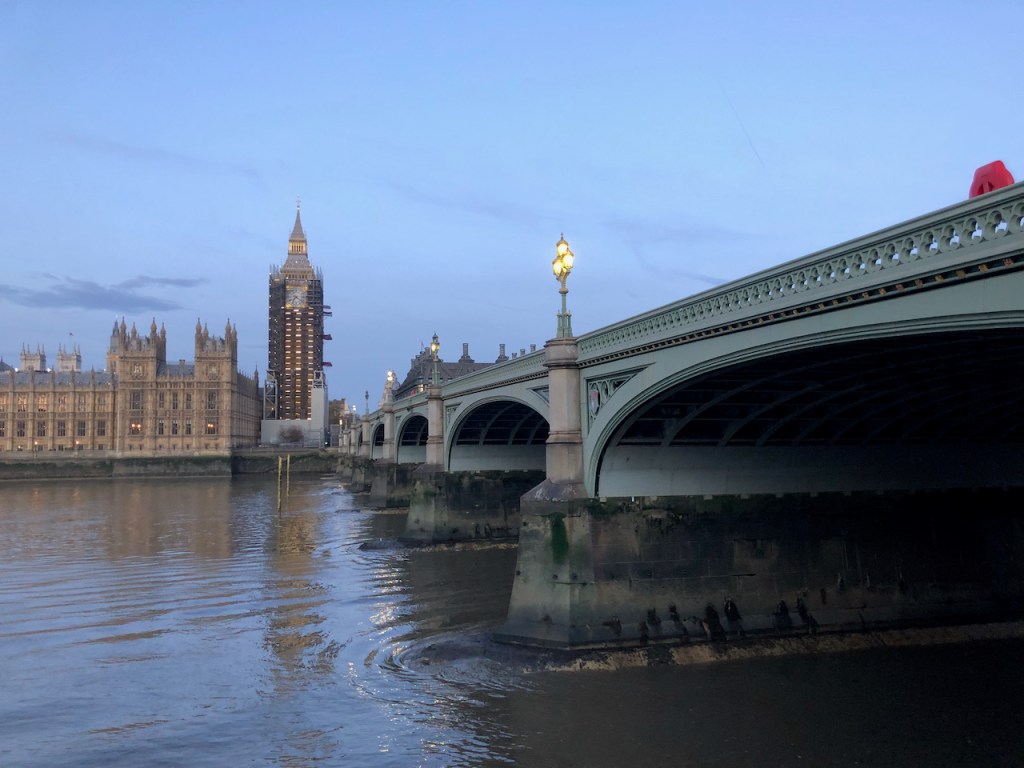
In London there are many beautiful bridges.
Regents CanalTower bridgeWestminster Bridge
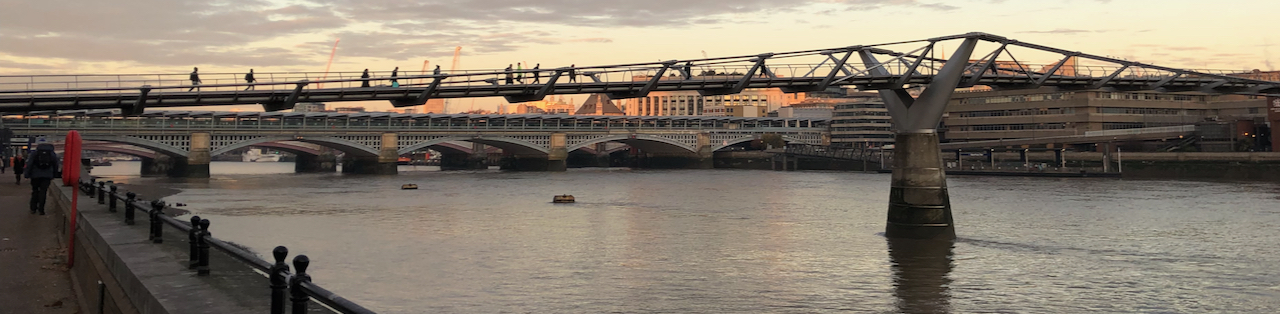
One early morning I saw them all ranged out.
London Bridges at dawn, from the South Bank, looking West
I thought of them as images of hope: so many connections, so many different ways to get across, and that glow of the sunrise on the buildings beyond!.
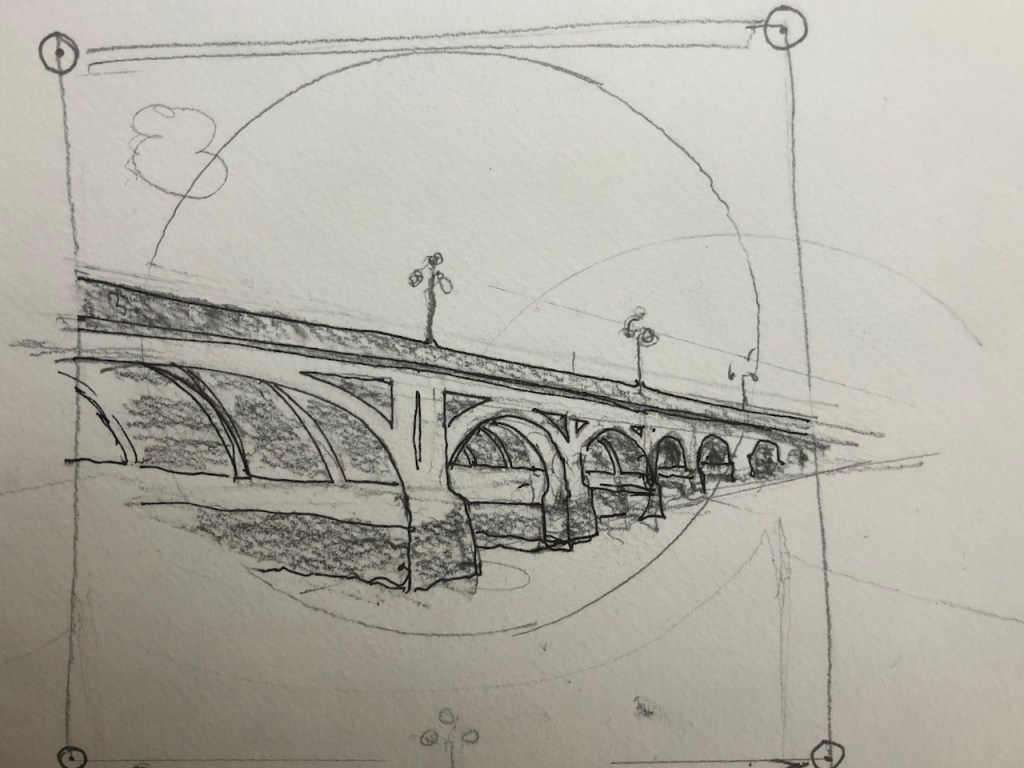
Westminster Bridge was my model. It took many efforts to get the design to work as a woodcut.
Design attempts
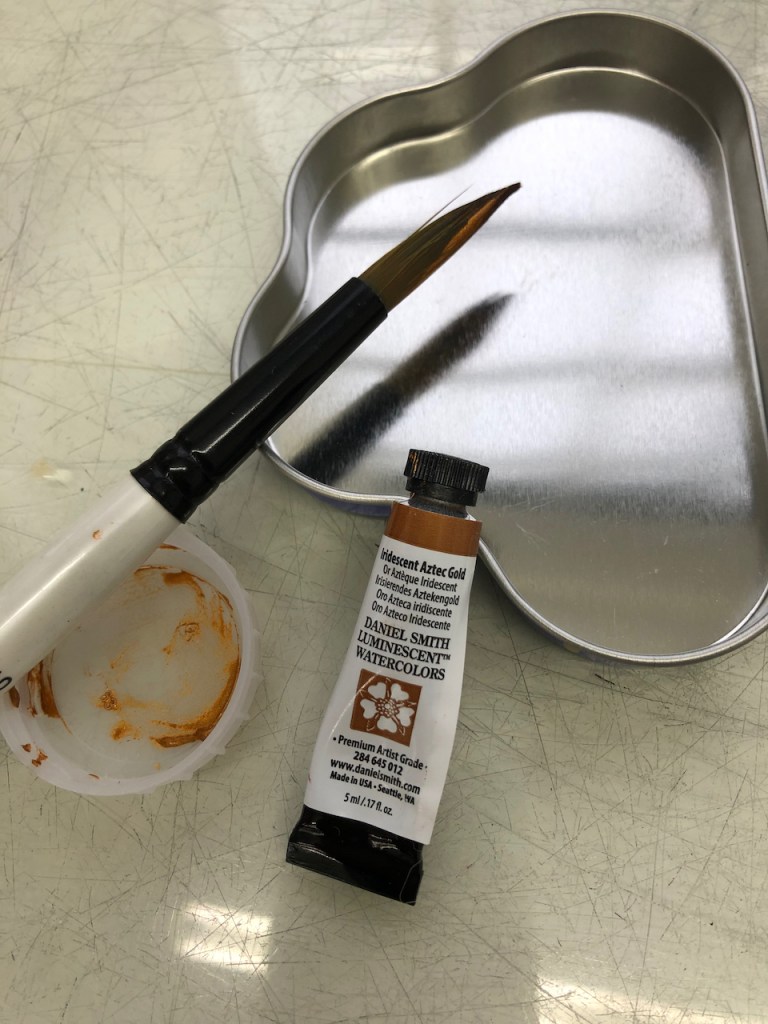
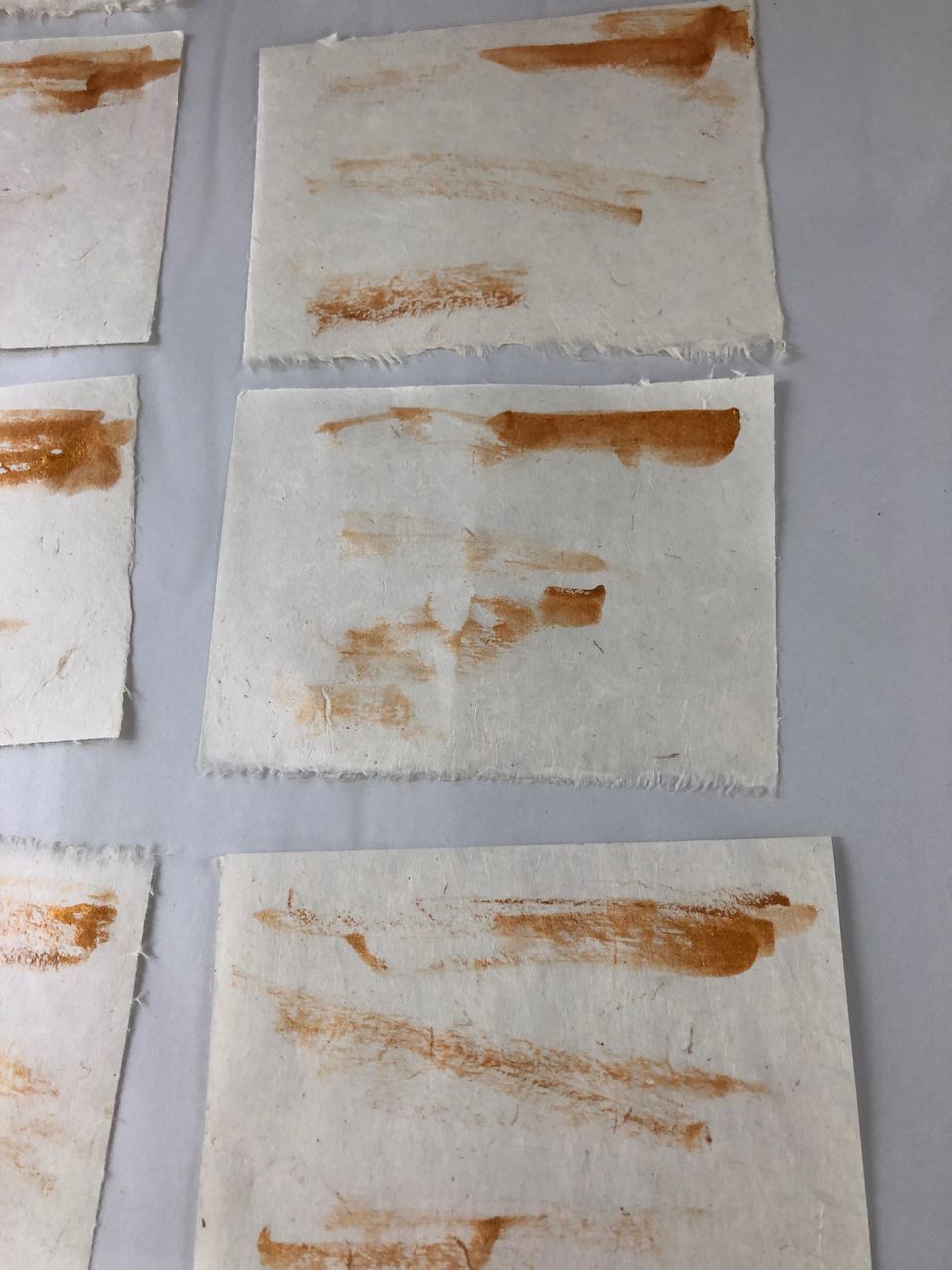
It needed a bit of glow, to echo what I had seen in the sunrise. So I used iridescent watercolour, put on before the paper was printed.
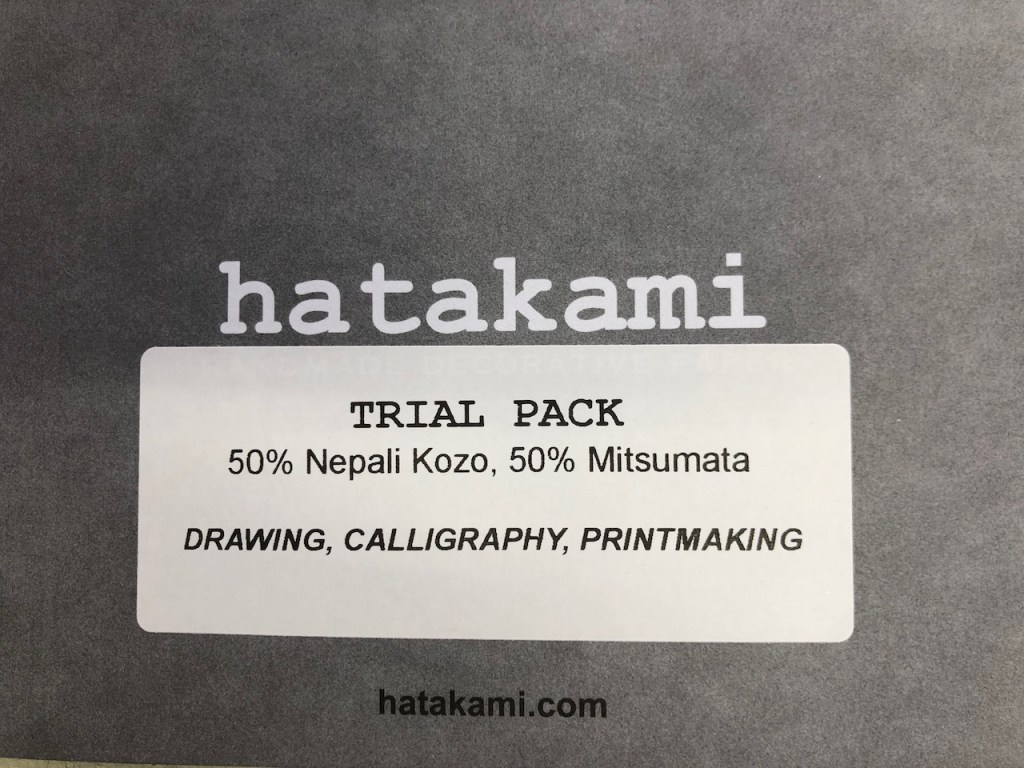
Daniel Smith iridescent watercolourWatercolour on paperPaper is “Hatakami” from Nepal via the Vintage Paper CompanyIridescent watercolour on Nepali paper
Here is the wood block:
“Bridge” woodblock 10cm x 15cm
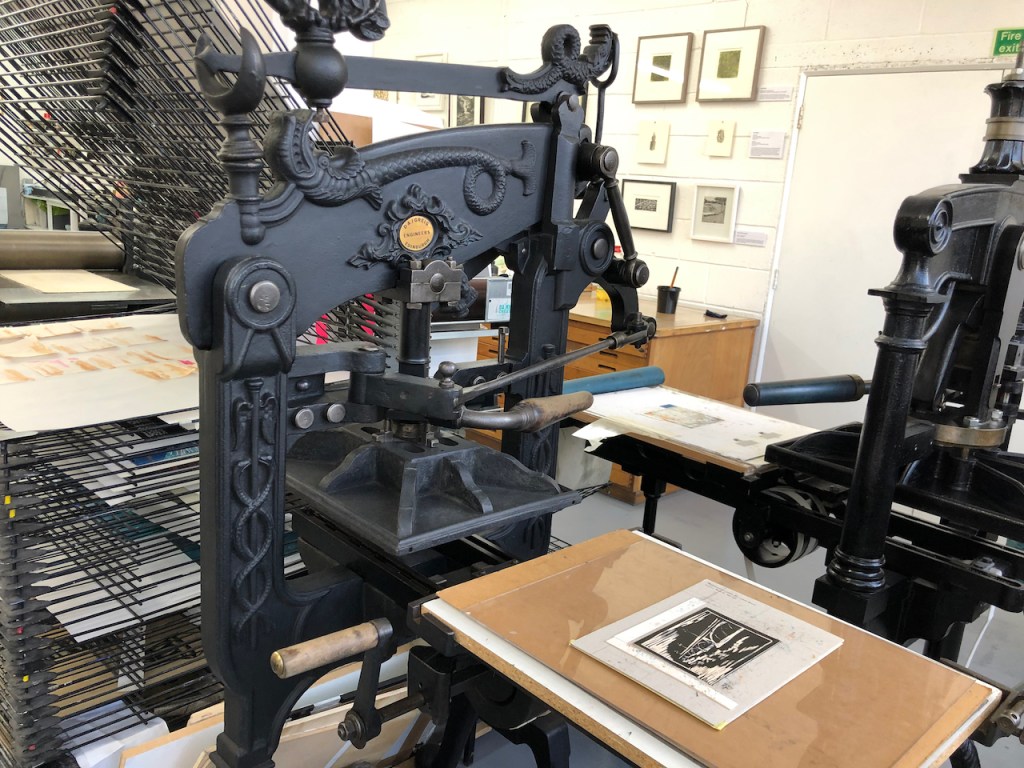
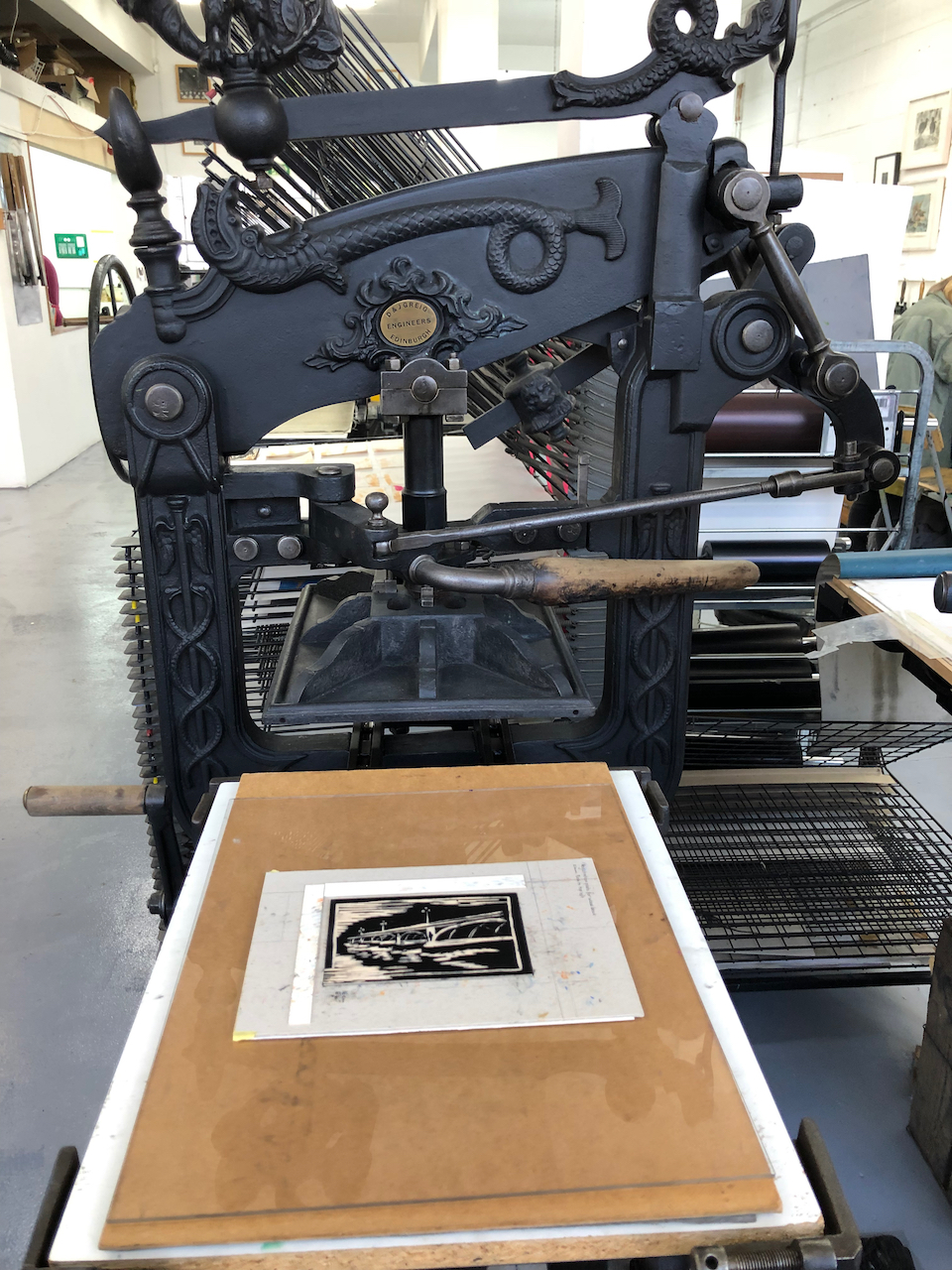
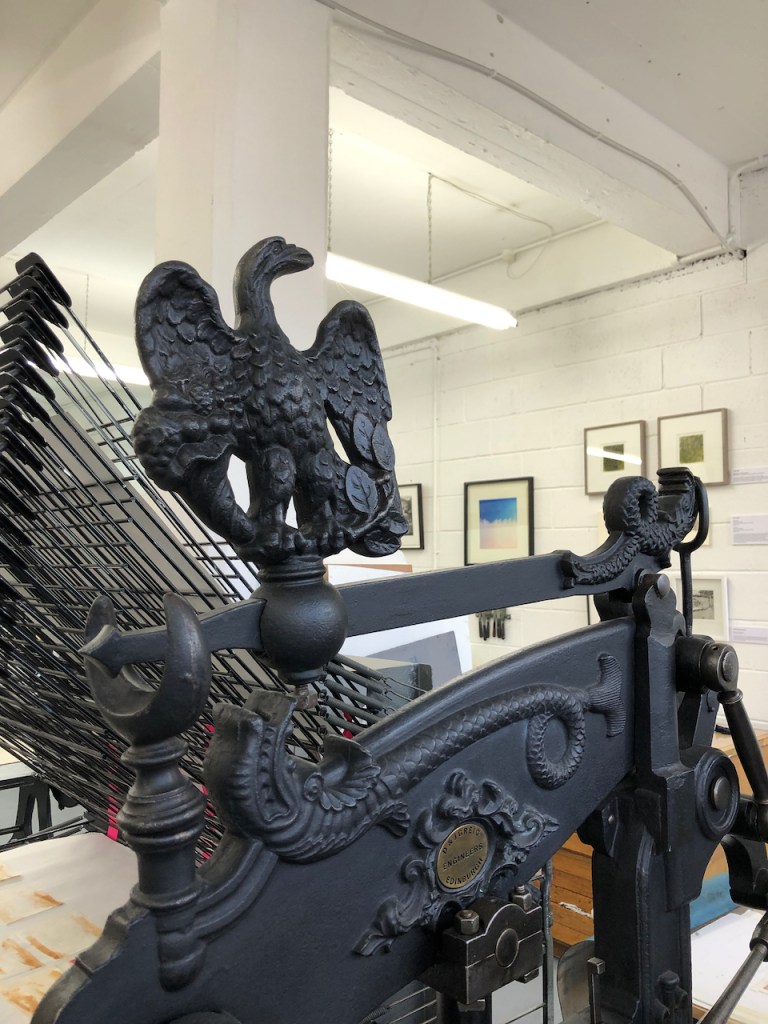
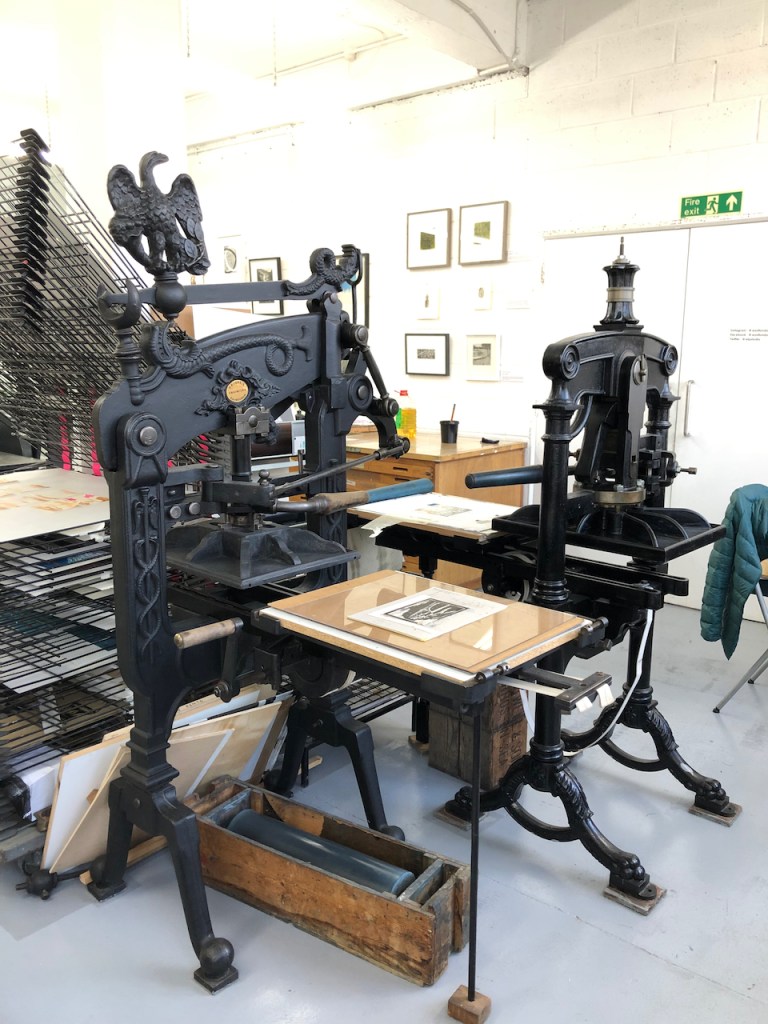
I did the printing at East London Printmakers, on a cast-iron press.
The press at East London Printmakers
Then back at my desk I assembled the cards and sent them off.
"Composed on Westminster Bridge September 3, 1802 " by William WordsworthEarth has not anything to show more fair:
Dull would he be of soul who could pass by
A sight so touching in its majesty:
This City now doth, like a garment, wear
The beauty of the morning; silent, bare,
Ships, towers, domes, theatres and temples lie
Open unto the fields, and to the sky;
All bright and glittering in the smokeless air.
Never did sun more beautifully steep
In his first splendor, valley, rock, or hill;
Ne’er saw I, never felt, a calm so deep!
The river glideth at his own sweet will:
Dear God! The very houses seem asleep;
And all that mighty heart is lying still!
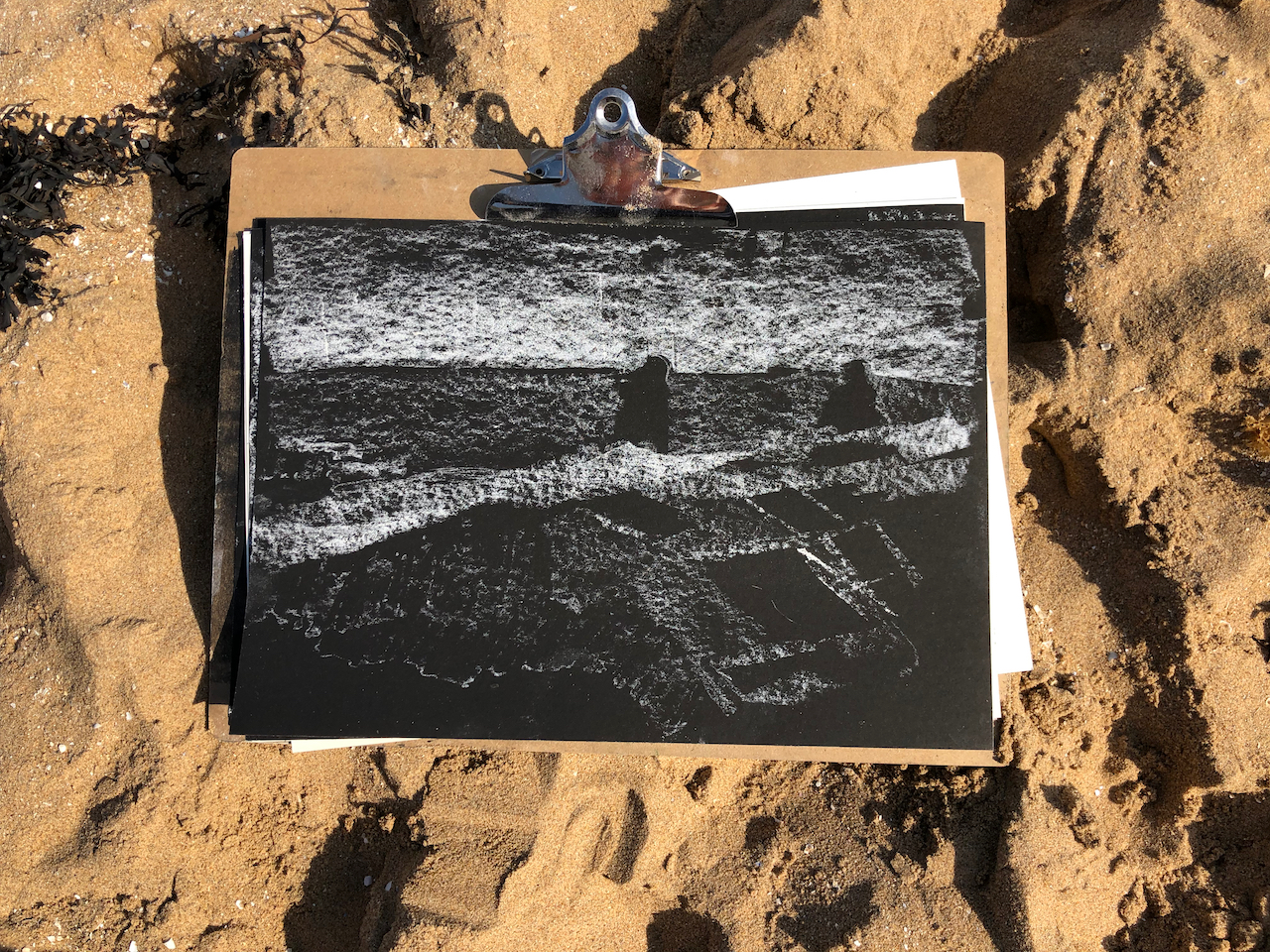
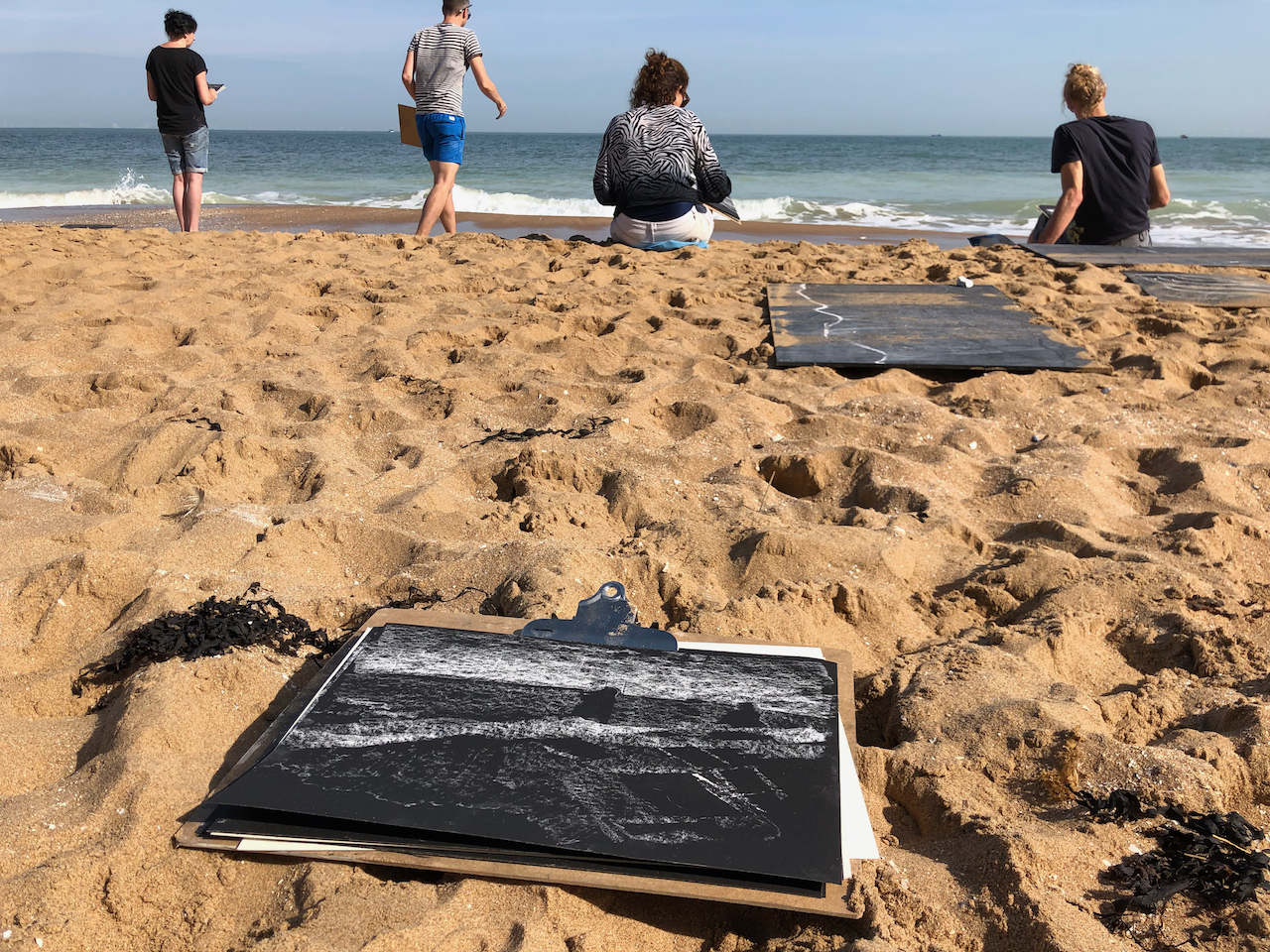
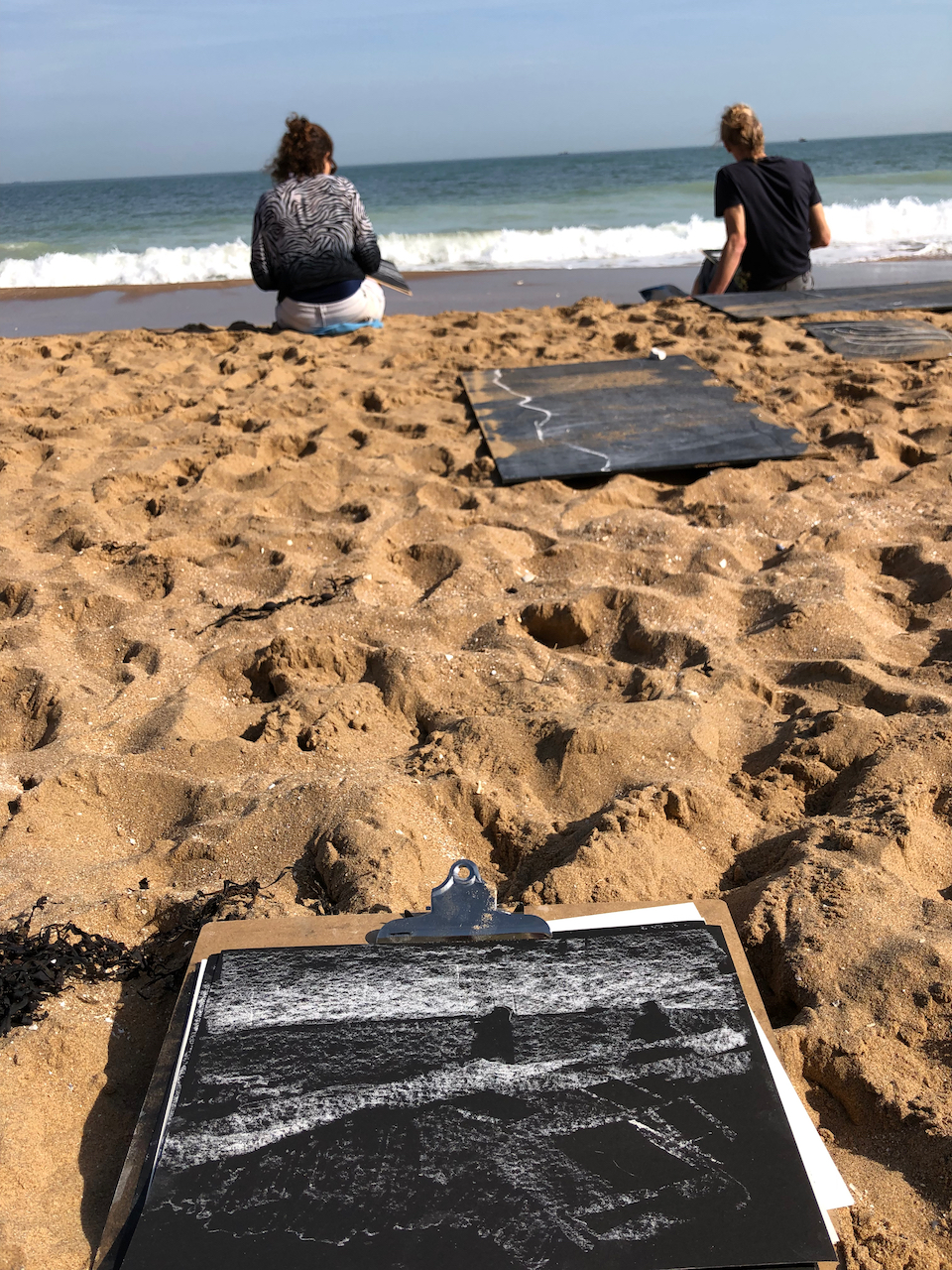
Last weekend I participated in a workshop led by the artist and printmaker Fiona Fouhy. We worked on the beach and cliffs around Botany Bay, between Margate and Broadstairs in Kent, UK
Here is a selection of the pictures I made during the workshop.
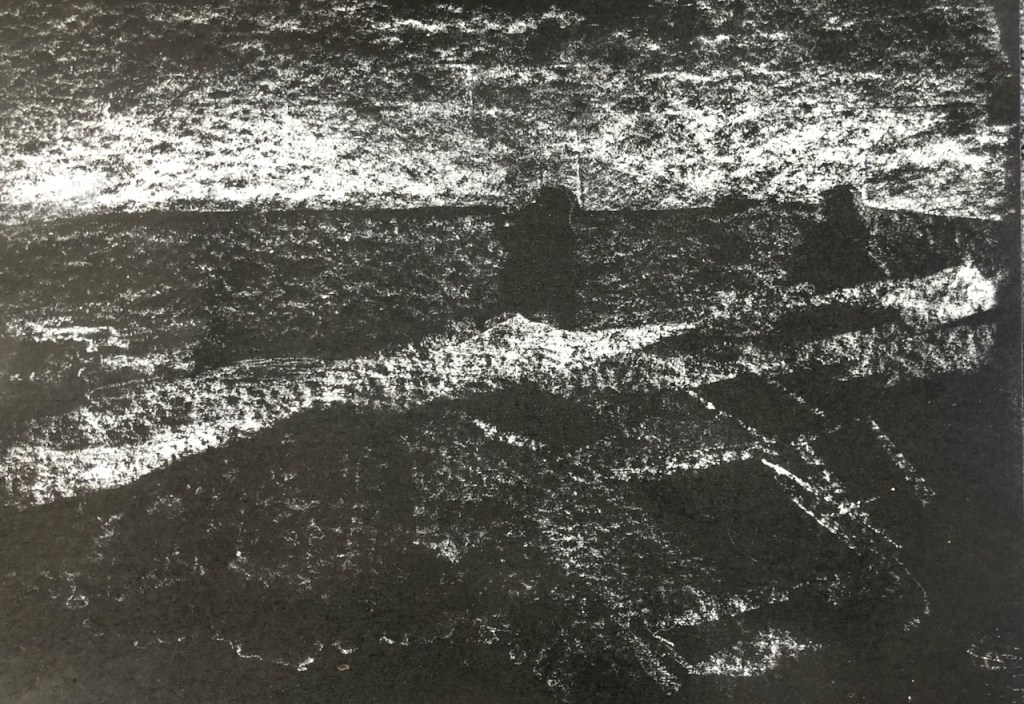
This a drawing done using a piece of white chalk from the cliffs, plus some work-in-progress pictures.
Sketchers on the shore, Kent chalk on black paper, A3
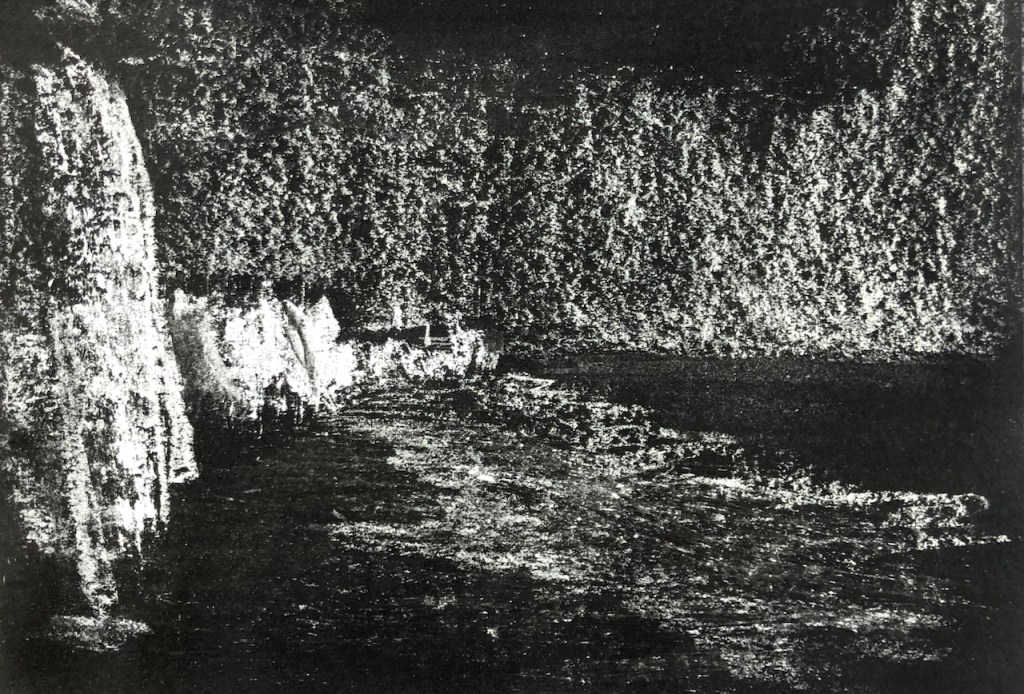
Here is a drawing of the white cliffs, done in white cliff chalk.
White cliffs near Margate, Kent Chalk on black paper, A3
We made some monoprints, using a portable printing press, perched outdoors on the cliff top at Botany Bay.
Monoprints, made outdoors on the cliff top, using a portable press.
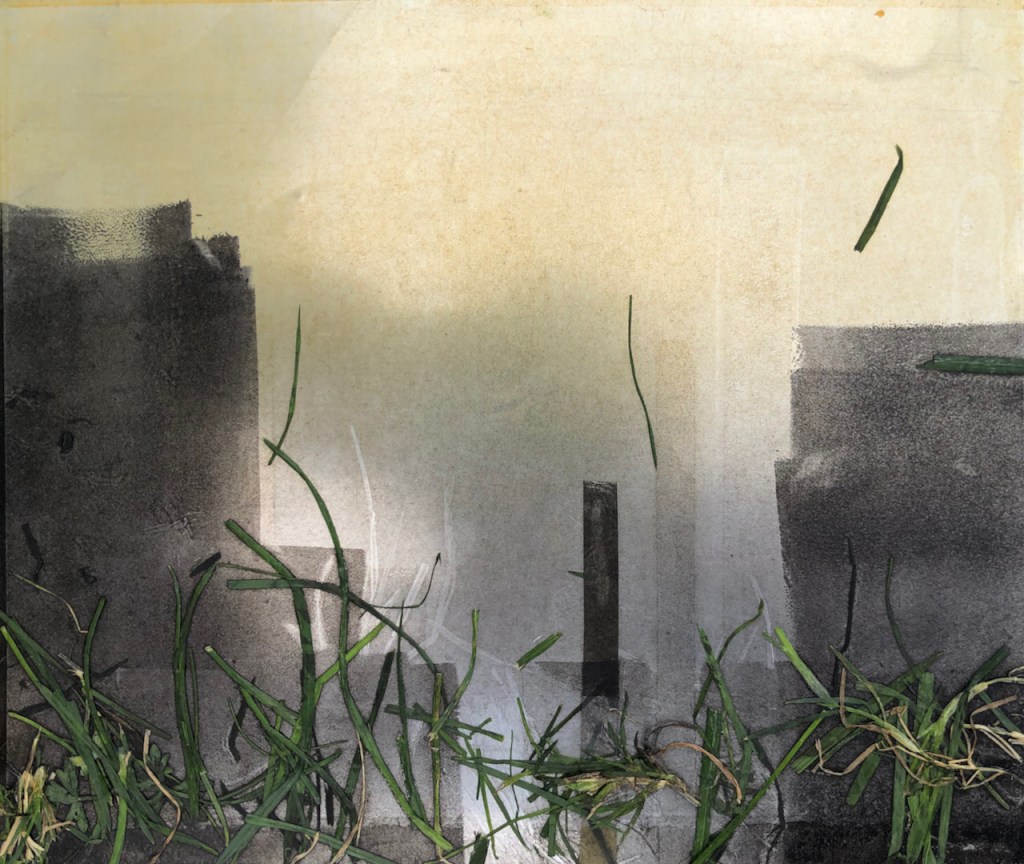
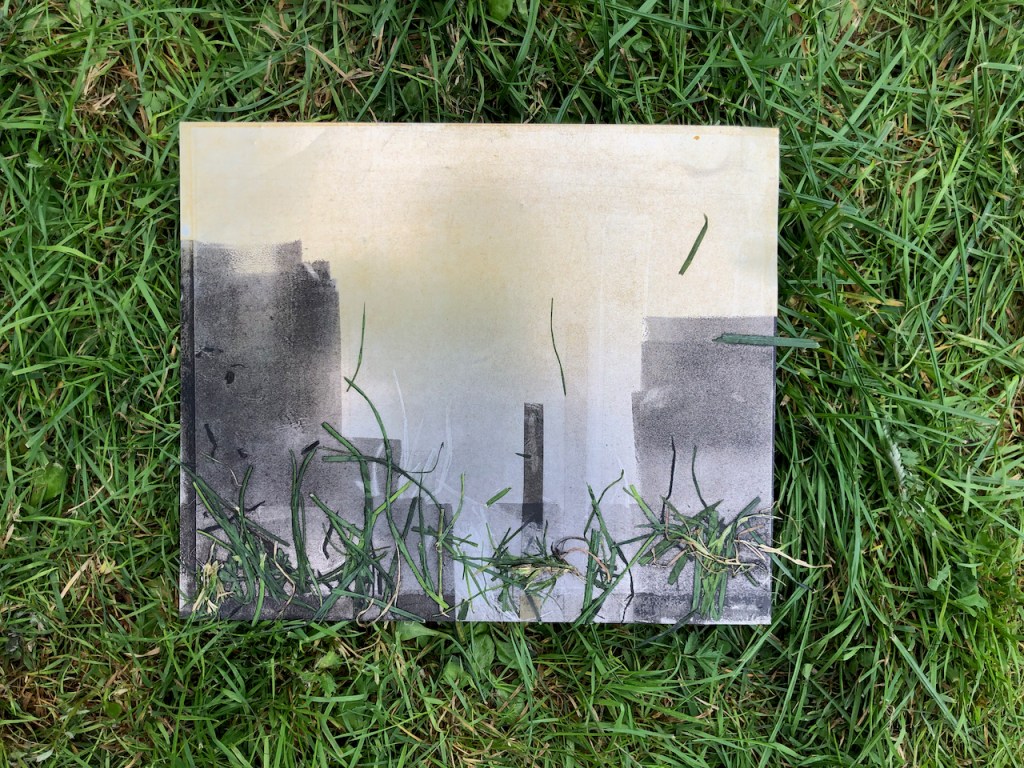
Back in the garden, we made more monoprints, this time using colour. Here is my series called “The grass will grow over your cities”.
“the grass will grow over your cities”, monoprints and plate
A long time ago I first heard this expression in an exhibition in Berlin. “Over your cities the grass will grow”is the title of a 2010 documentary film by Sophie Fiennes about the artist Anselm Keifer. At the end of the film the artist says “Over your cities grass will grow”.
My St James’ Bible has it as “And thorns shall come up in her palaces, nettles and thistles in the fortresses thereof: and it shall be a habitation of jackals, a court for ostriches.” This is by way of a description of the “day of the Lord’s vengeance”.
My late father, the plant biochemist Prof. Don H Northcote, had a more positive view. He looked at paving stones and saw the plants growing in the cracks. “The plants will win in the end,” he asserted. I think he meant that as a good thing.
Click a button below to share this post online, email it, or print it:
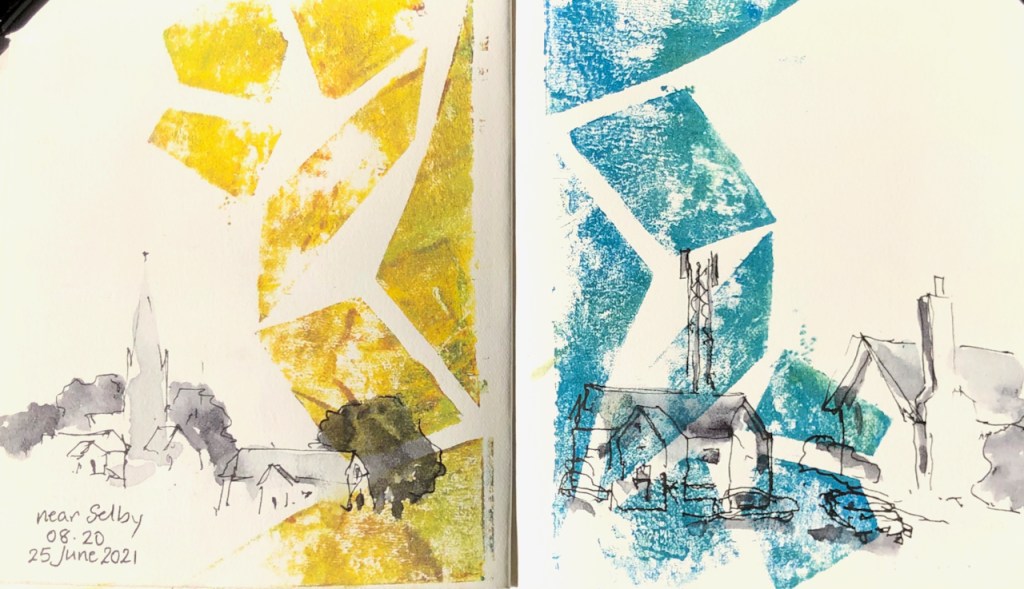
I thought the background was a bit bright, so I chose more muted colours for the next attempt.
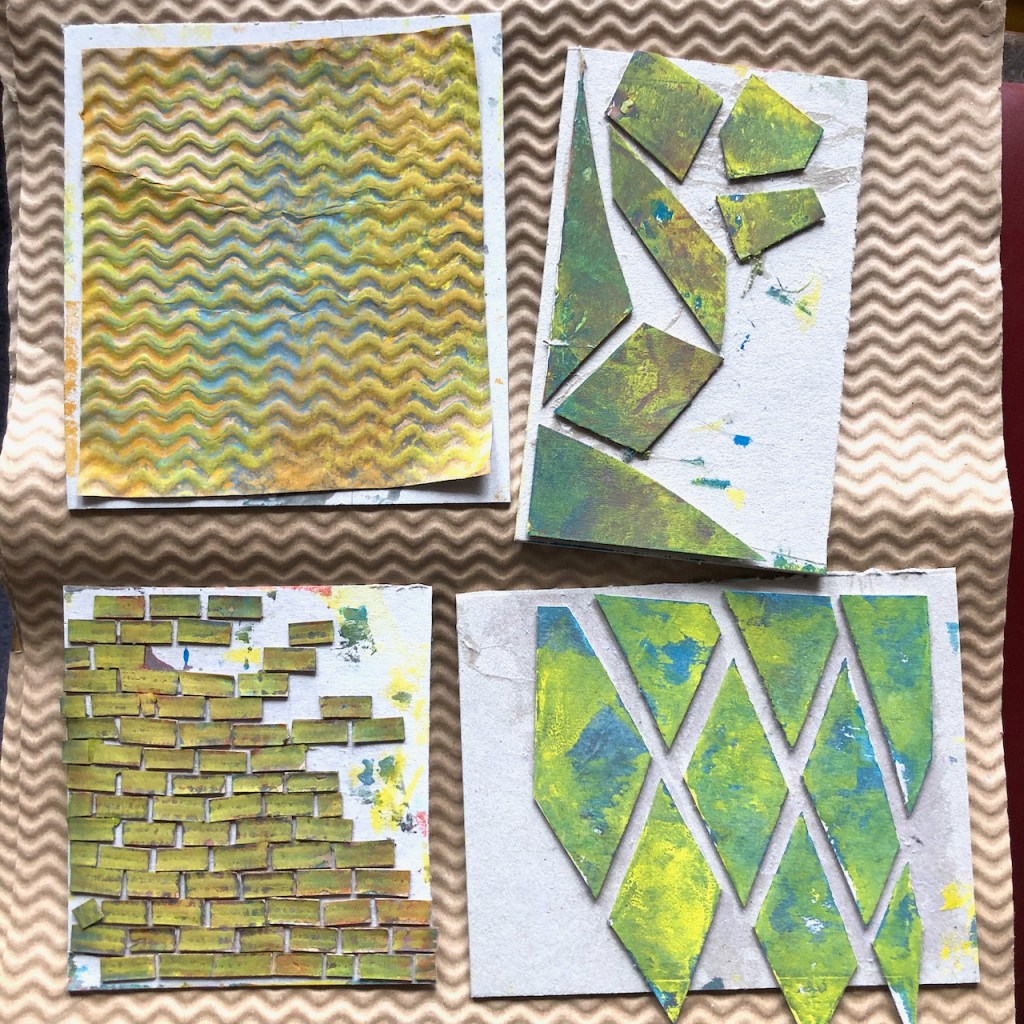
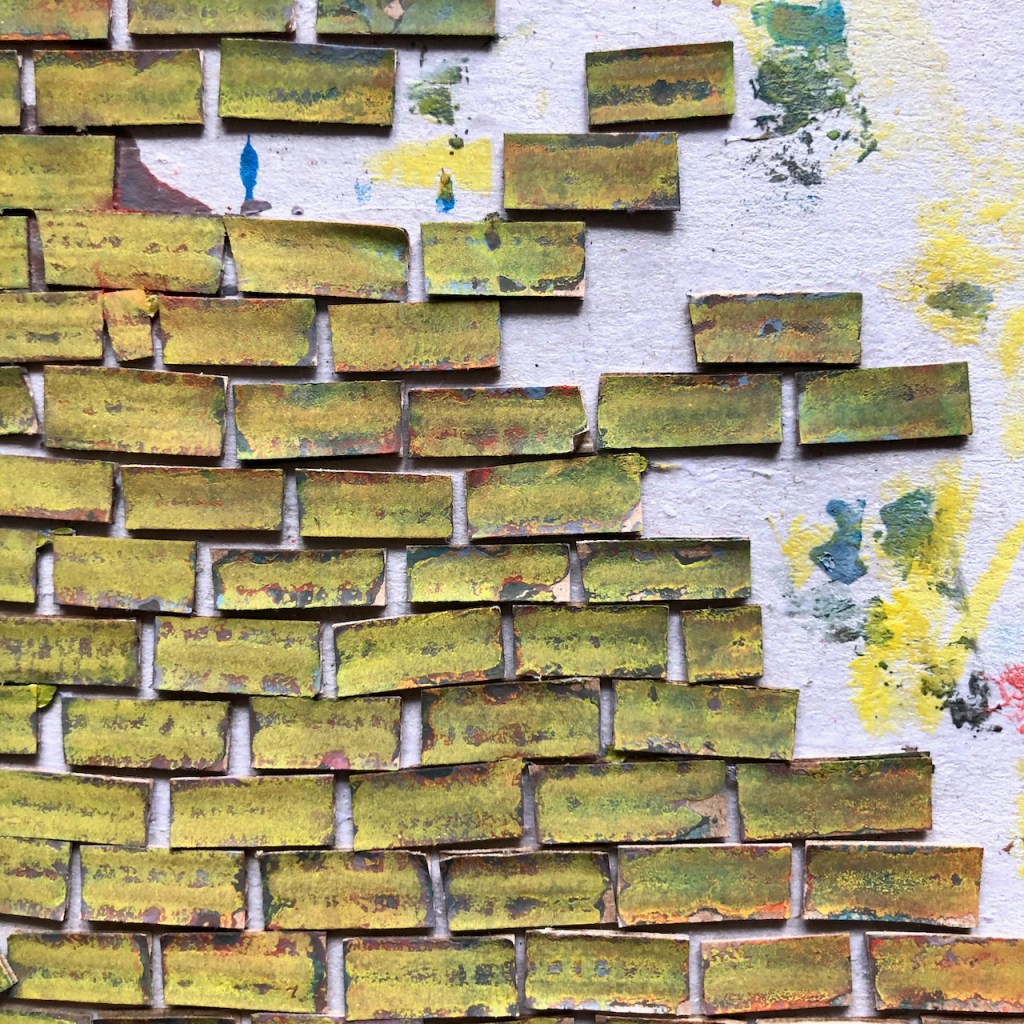
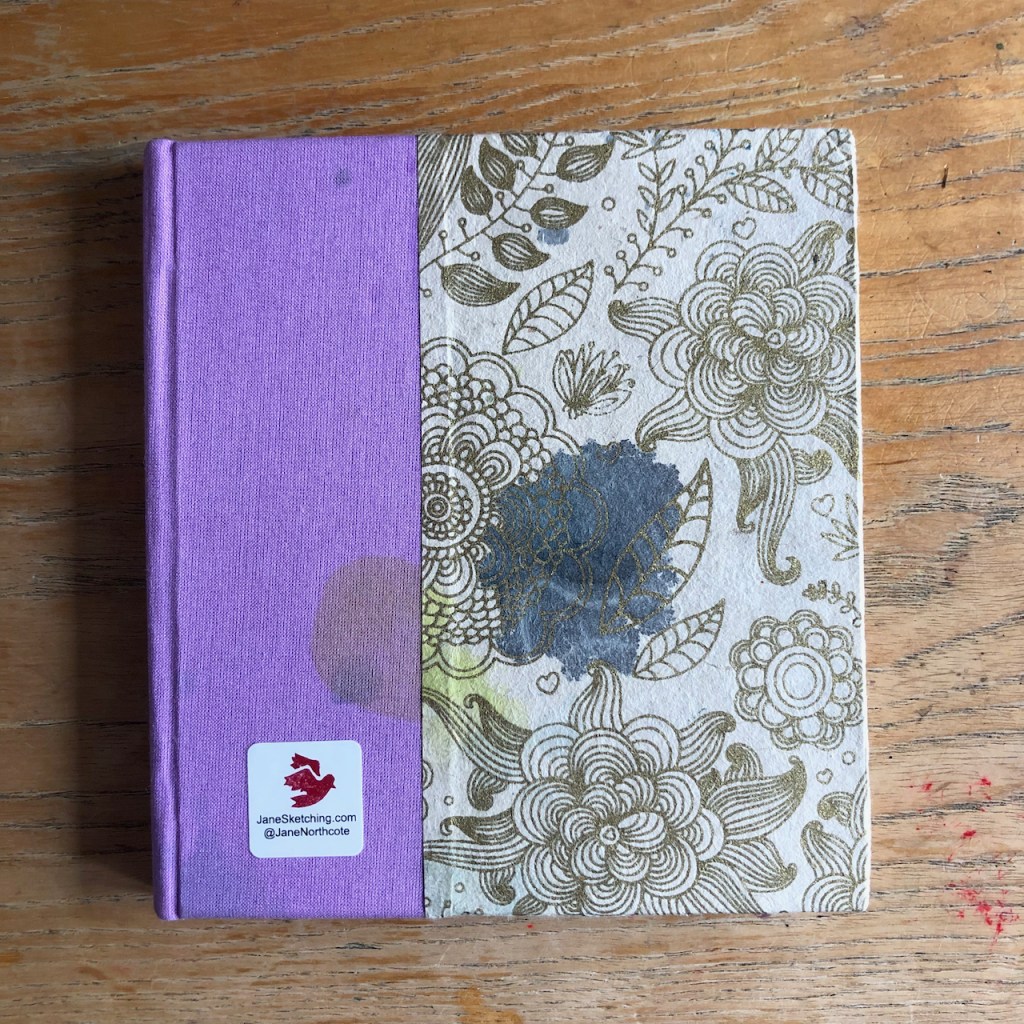
Here are the cardboard cutouts I used for making the relief prints. I used a small square sketchbook made by “PrintUrchin” and pre-printed the pages using relief printing ink, diluted with extender and water so it wasn’t too bright (learning from last time). It still came out quite bright. Those printing inks are heavily pigmented.
Cardboard cutouts
Cutout – close-up
PrintUrchin sketchbook
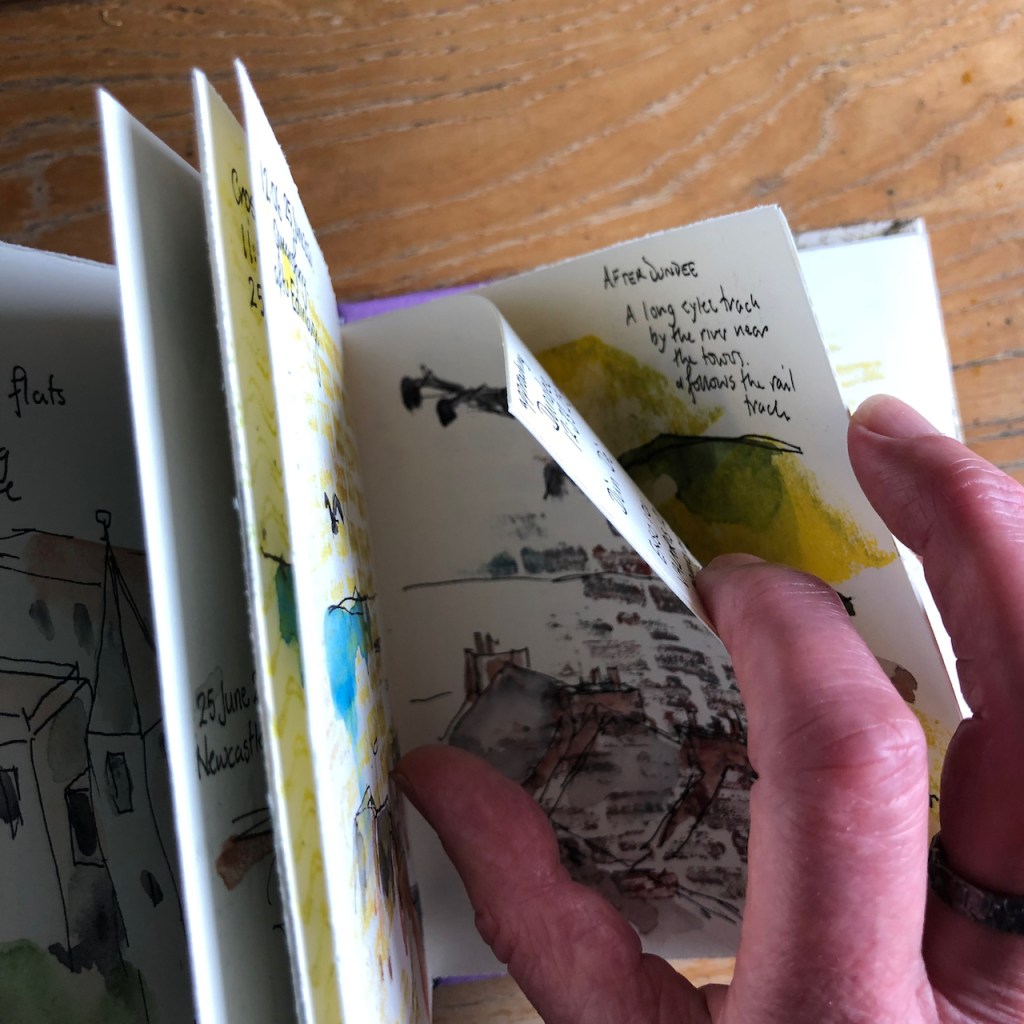
Sketchbook pages
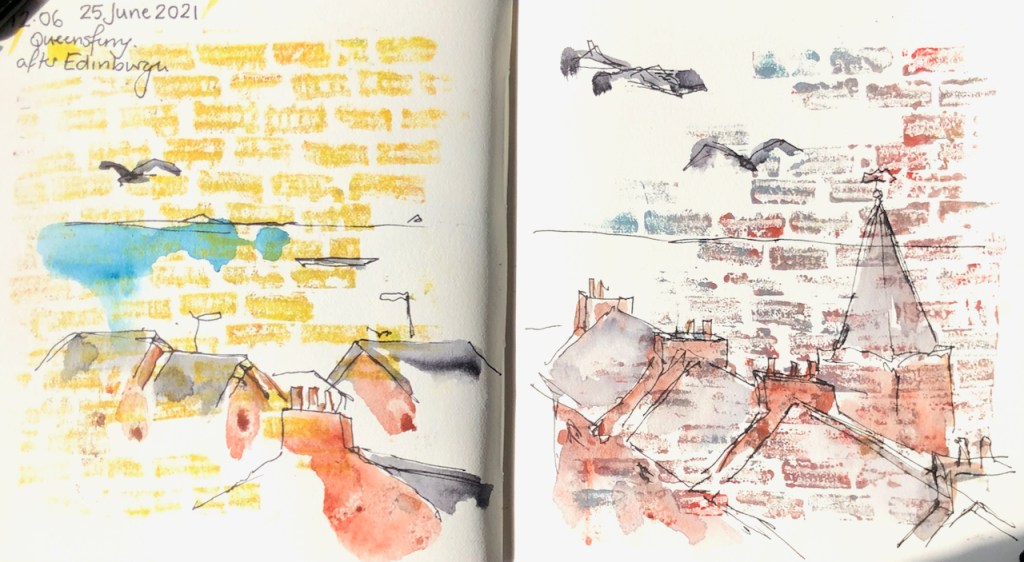
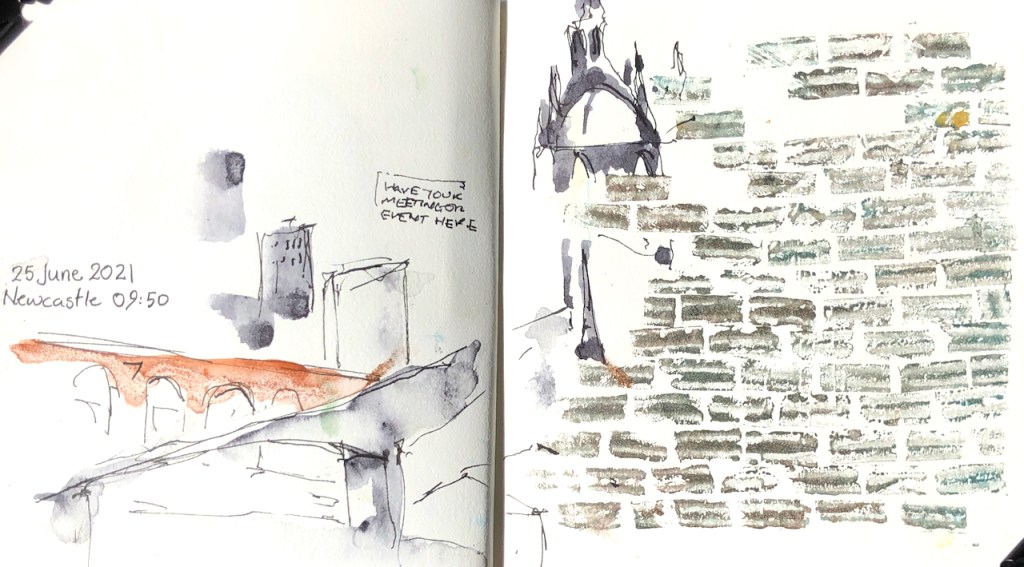
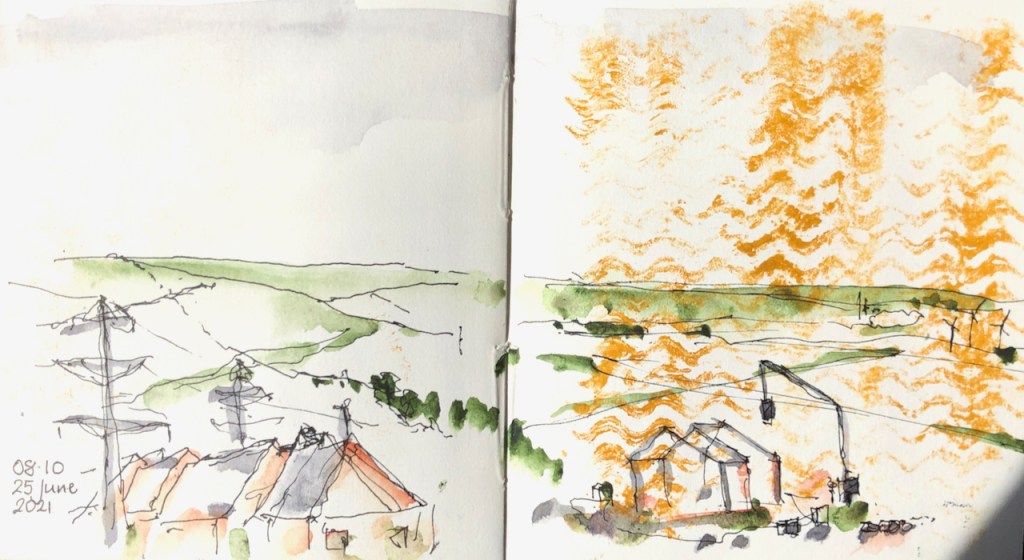
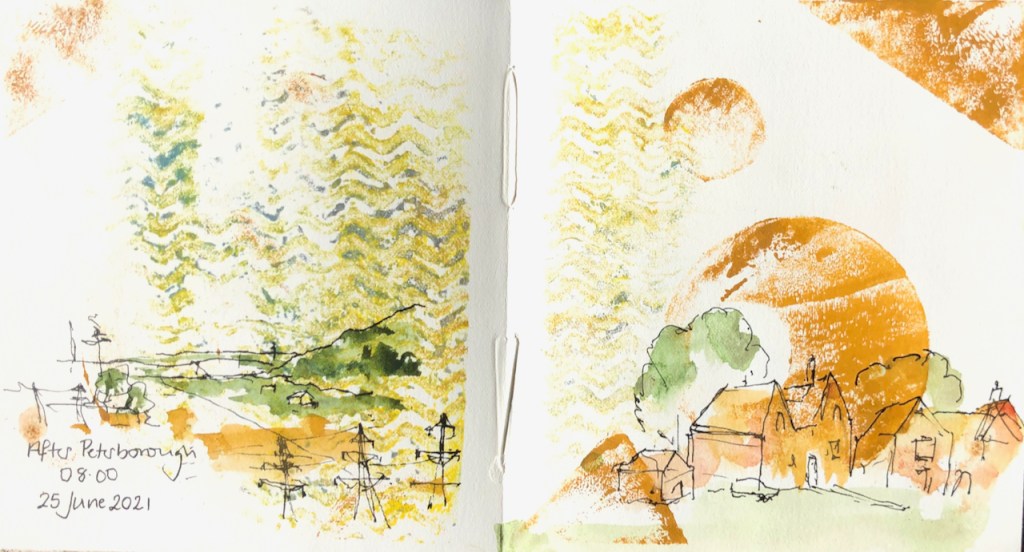
I printed the pages first, then took the sketchbook with me on my journey, and made sketches on top of the prints.
Here are some of the sketches. They are done on the train, hence the rather shaky lines. It’s amazing how the printing, done in advance, seems to fit the subject.
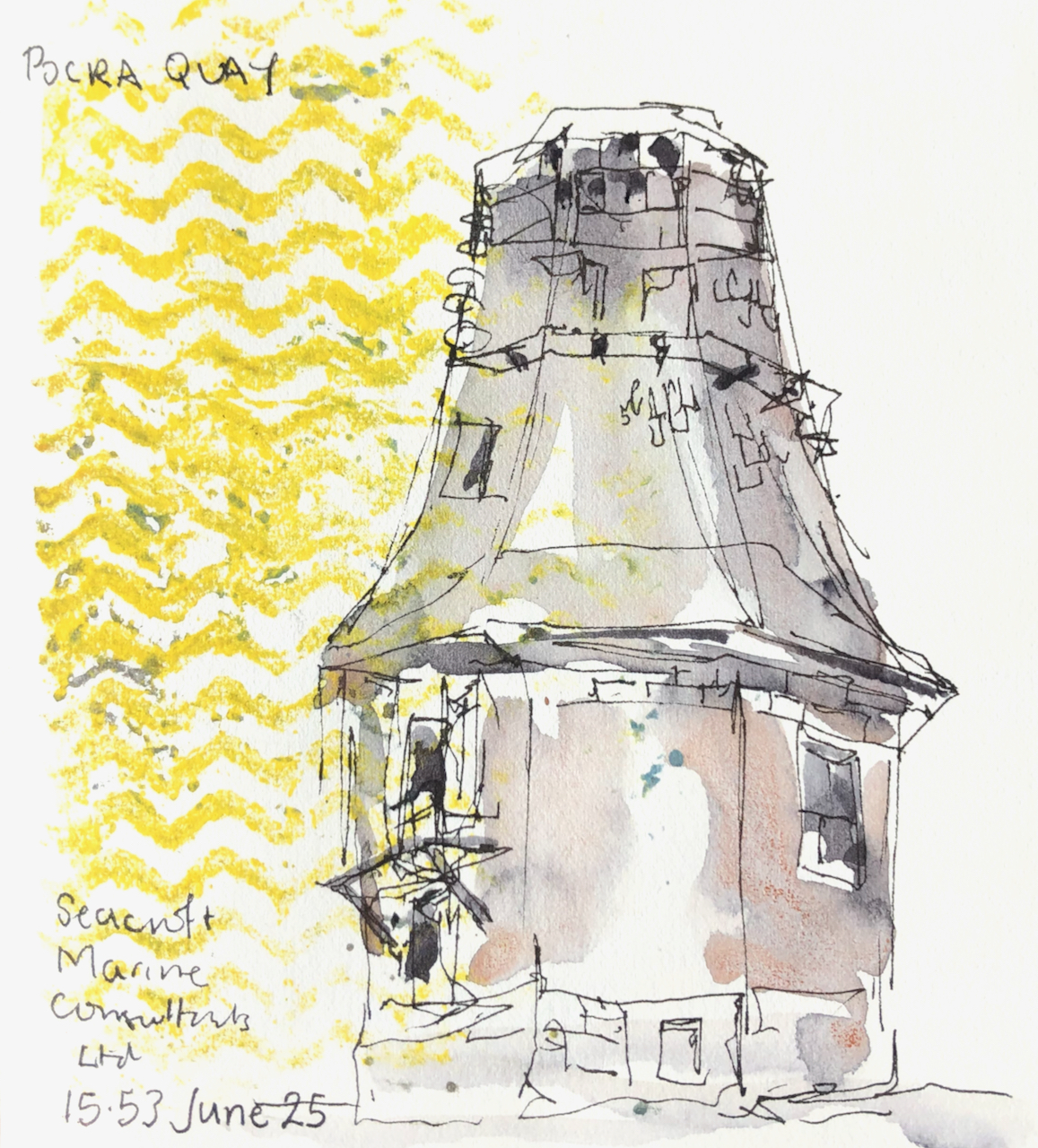
Here is the octagonal building at Pocra Quay, drawn while on a walk round Aberdeen waiting for the ferry.
Octagonal building at Pocra Quay, Aberdeen, 25th June 2021, printed background, 20th June 2021.
This octagonal building was a Navigation Control Centre, operating up until 1966. It was built in around 1797-8, according to the leaflet from the Aberdeen Heritage trail. I sketched it from the shelter of the doorway to the “Silver Herring” restaurant, on a cold, windy and rainy day.
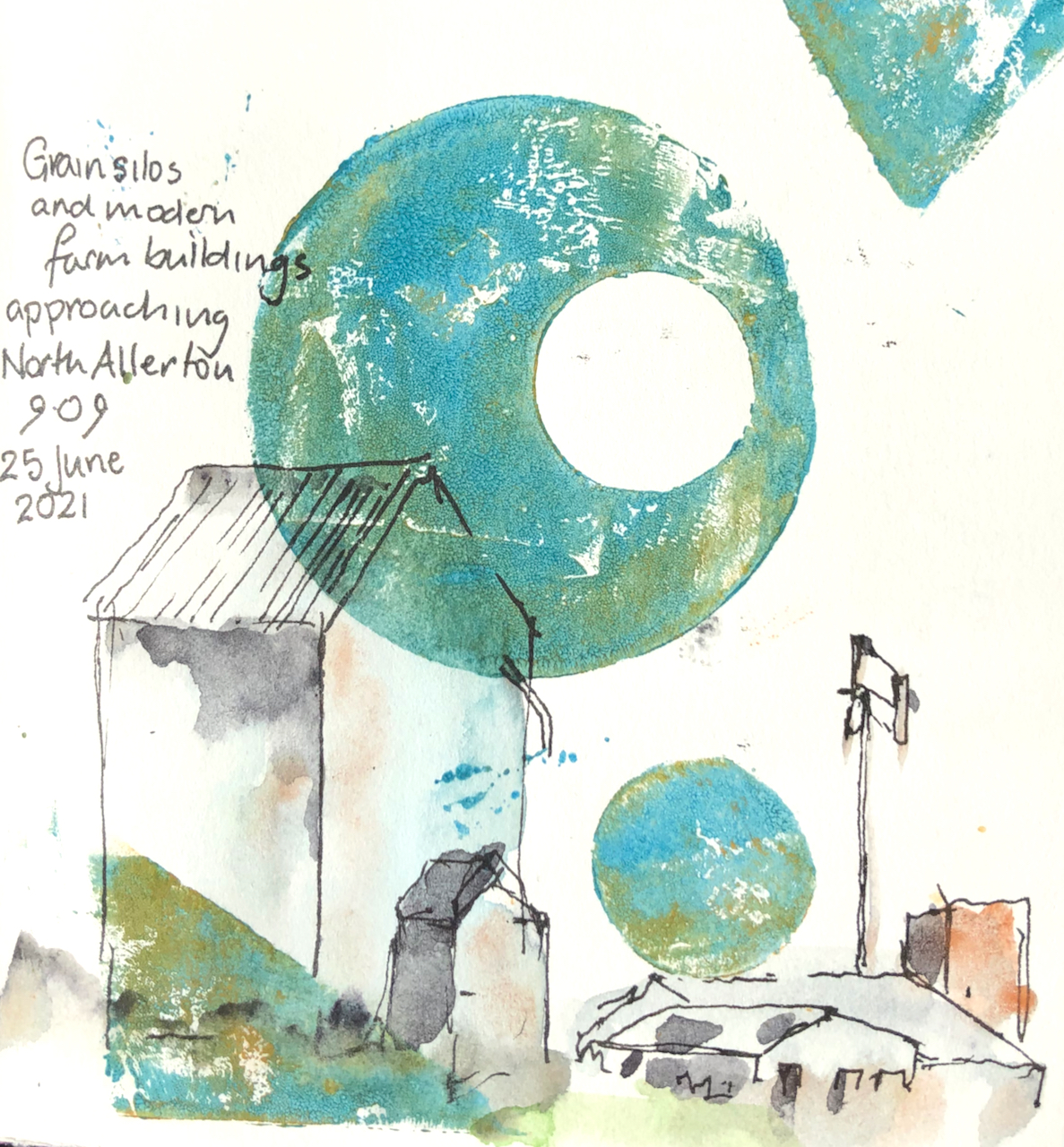
Grain silos at North Allerton, 25th June 2021
This is a really fun technique. I shall use it again.
Click a button below to share this post online, email it, or print it:
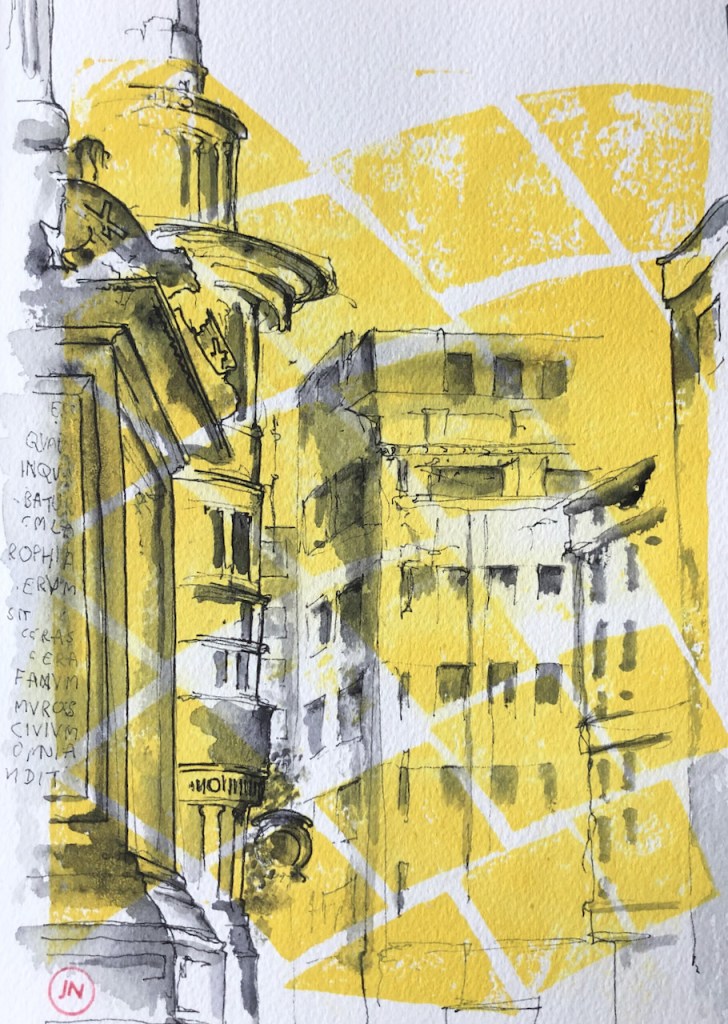
Le Pain Quotidien at Monument was open on Sunday. I found a table in the shade and sketched.
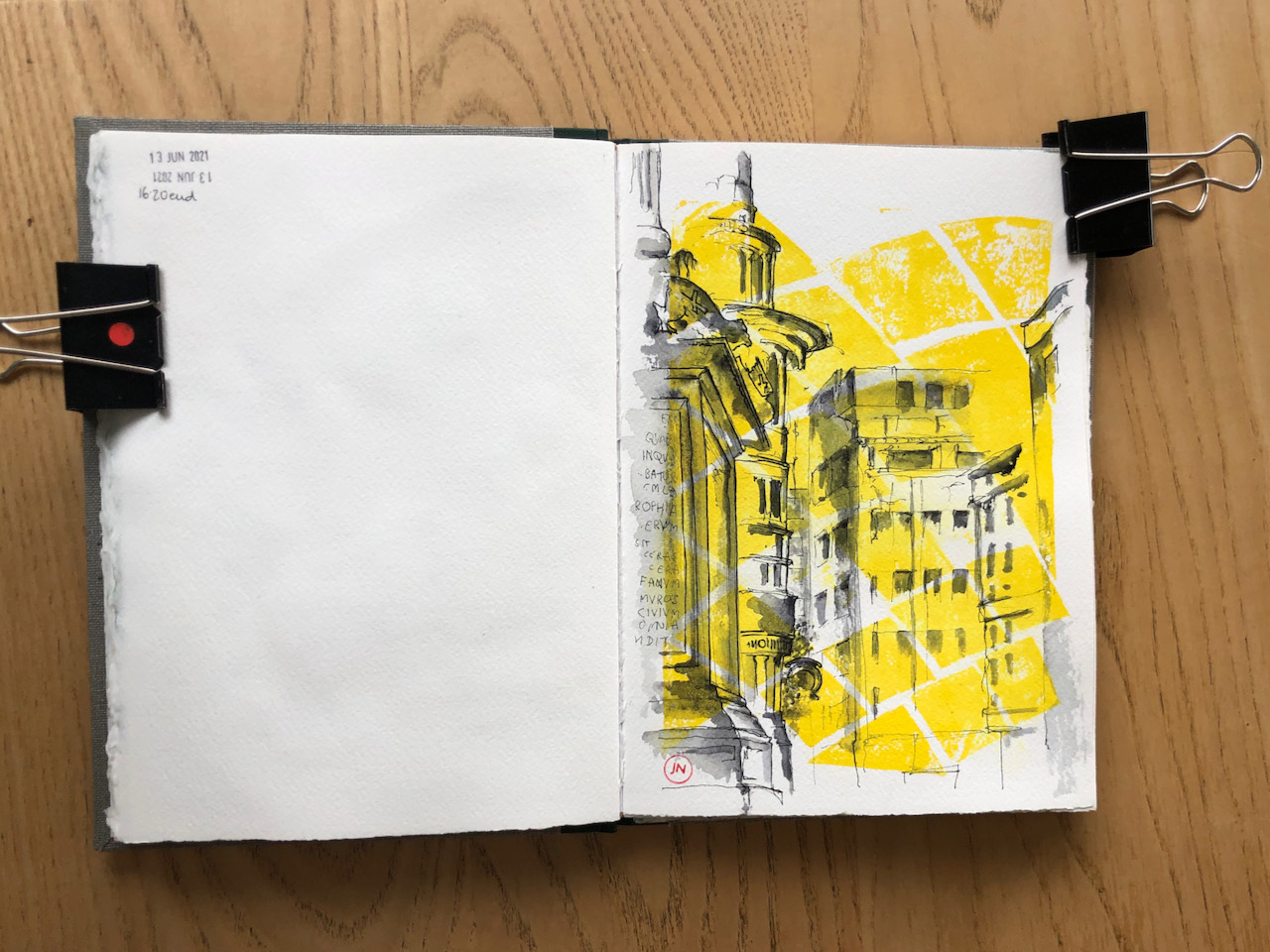
Back at home I added tone and an experimental print background. What do you think?
Drawing with experimental print overlay
Printing plate from cut cardboard
Drawing: waterproof ink and watercolour Neutral Tint.
Print: Plate made from cut cardboard. Printed using Schmincke relief ink: “Aqua Linodruck #19210 permanent yellow”. Printed directly into the sketchbook.
Click a button below to share this post online, email it, or print it:
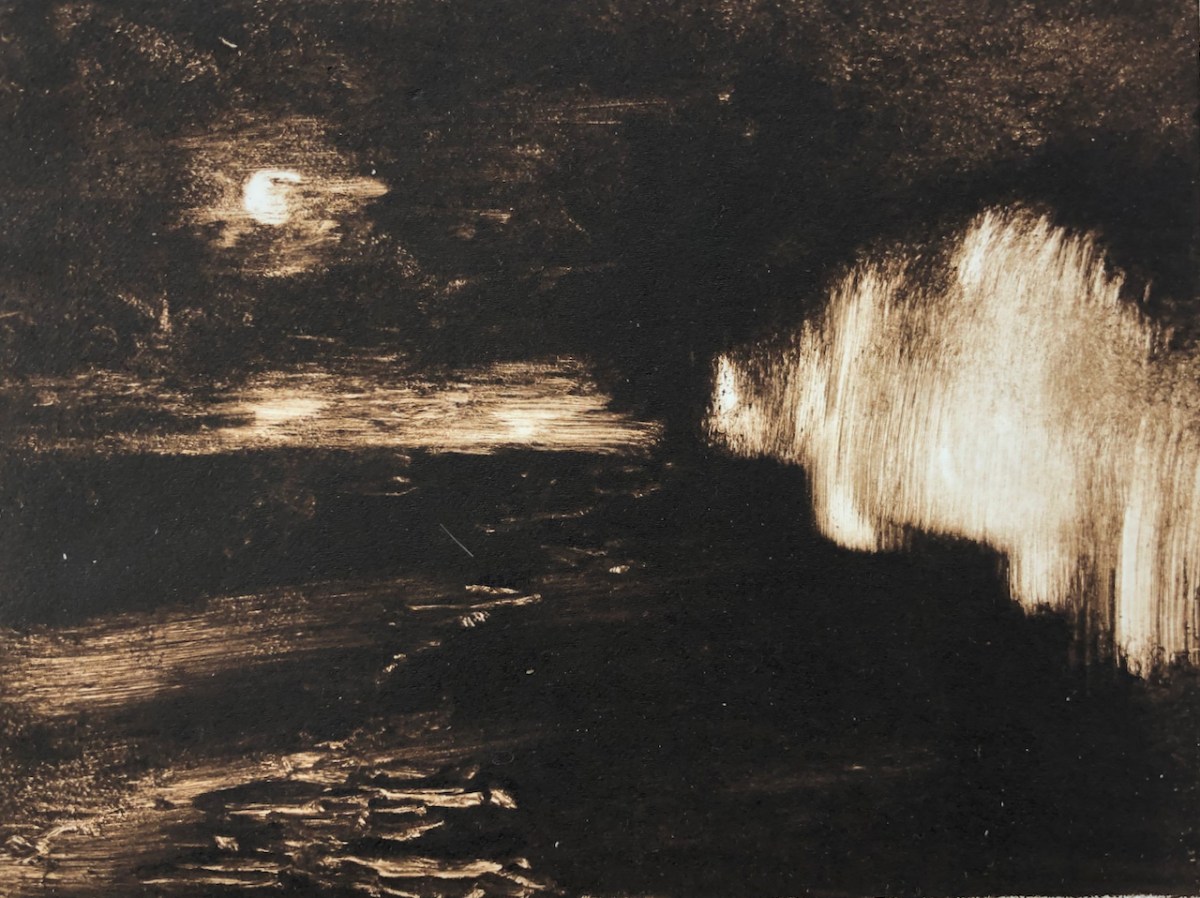
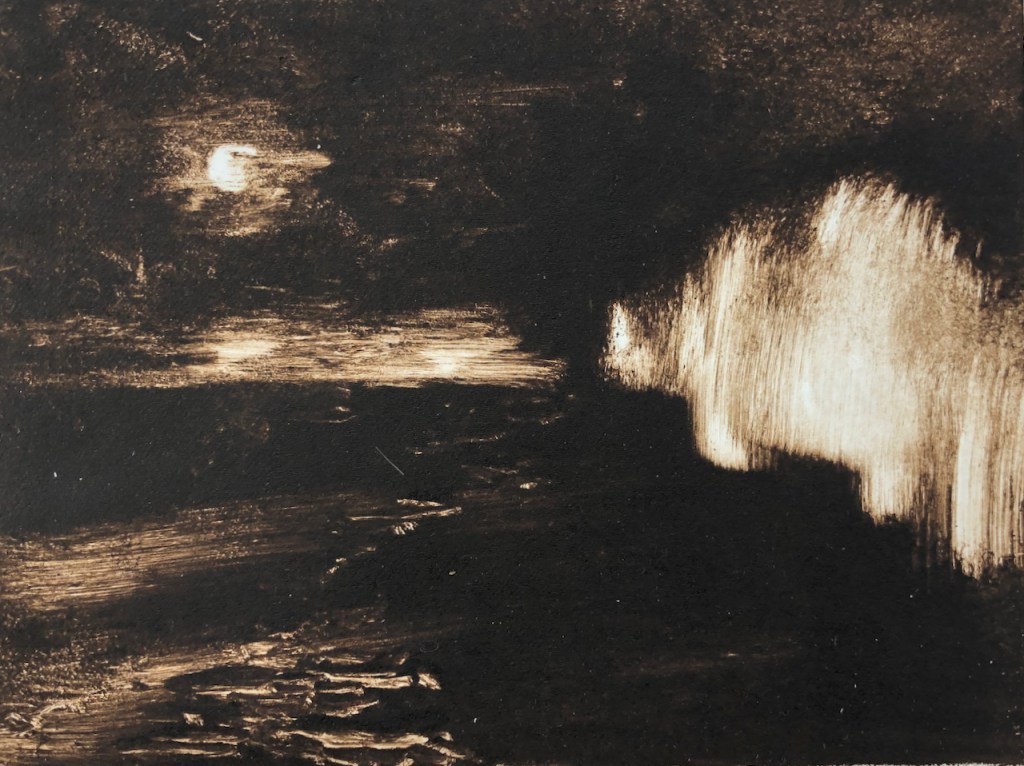
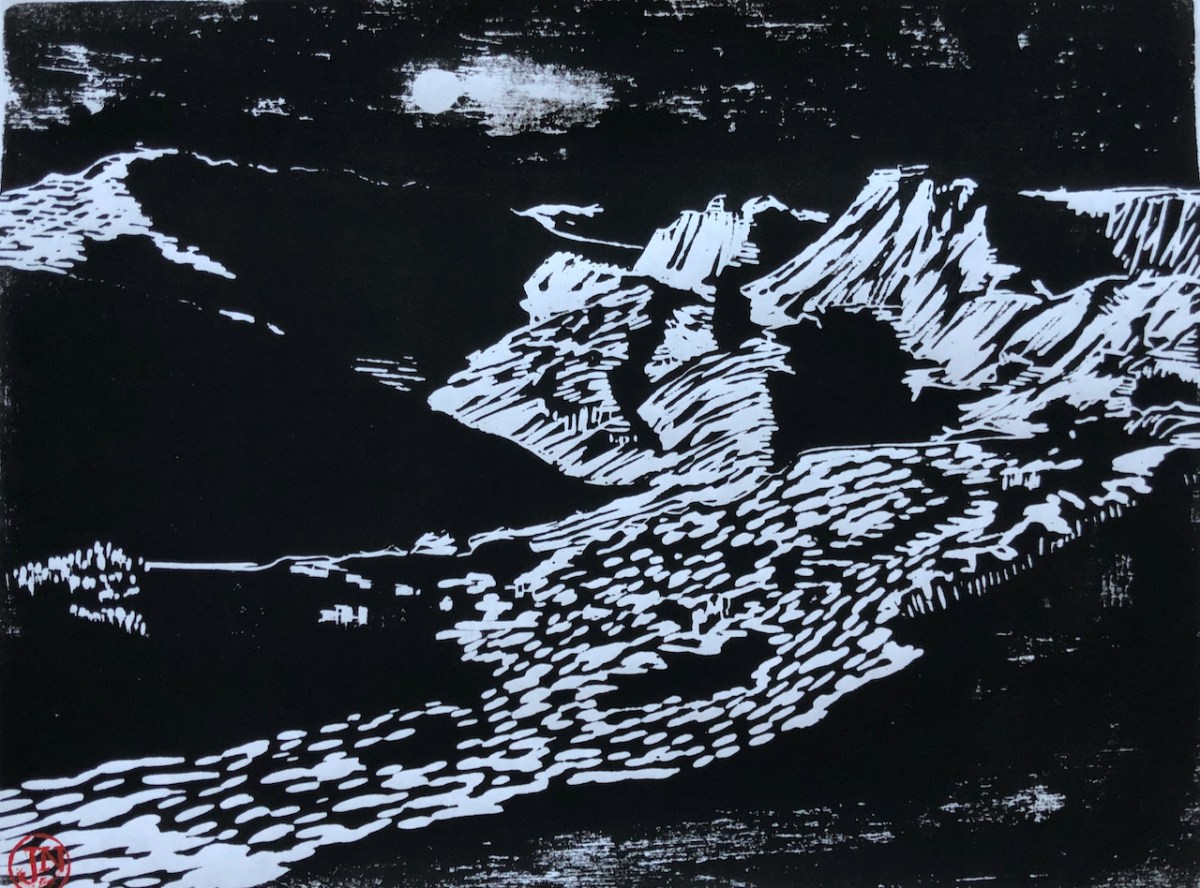
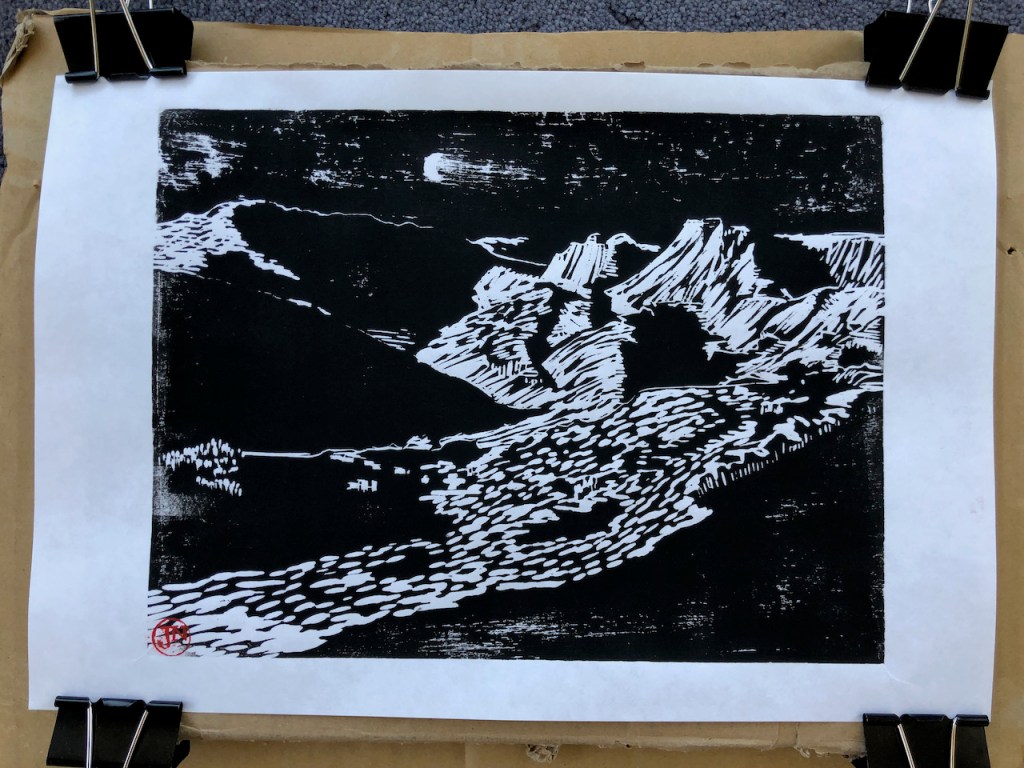
I made a woodcut of a valley in the Lake District in the moonlight. The hills on the skyline, right of centre, are the Langdale Pikes.
Langdale Pikes, Lake District, print from woodcut, image size 12″ x 9″
This was was made at the request of a friend, who has a house in the valley. Their house is one of those small rectangles you see, centre left, under the shadow of the hill.
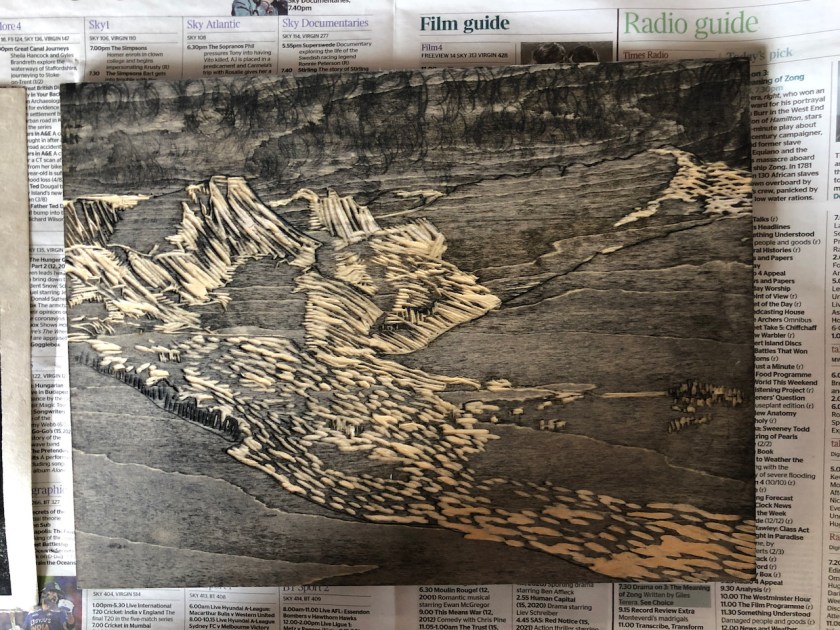
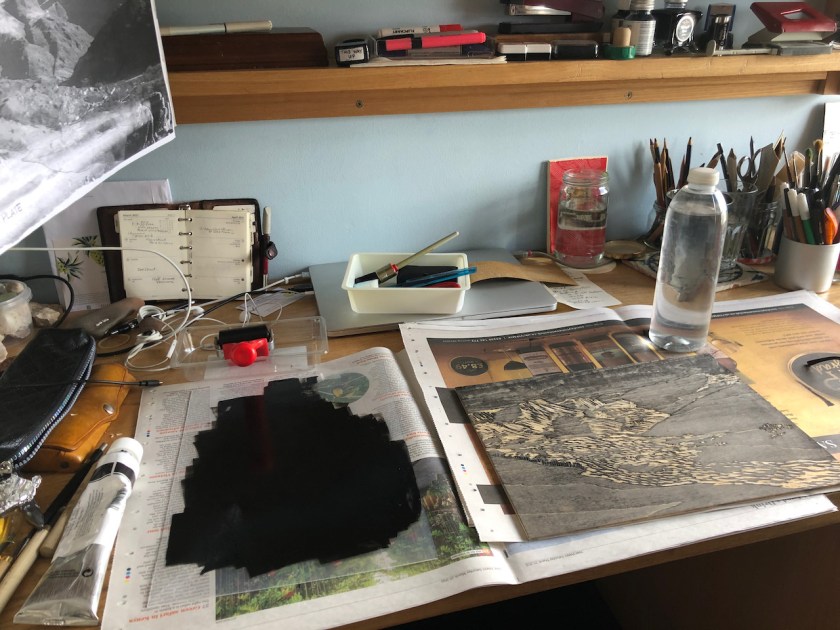
Here is work in progress on the woodcut. Click to enlarge the picture.
Carving the houses
Woodblock ready to ink
Work area: ink ready to apply
Inked plate with moon
Applying the seal to the print
The wood is Japanese plywood, 12″ x 9″. The ink is Schmincke Aqua Linoldruck relief printing ink, ivory black. It can be cleaned off with water. The seal is a hand-carved stone seal made my friend and mentor in Japan, who also supplied the special red seal ink, and instructions for its use.
I used “Masa small sheets” Agawami Japanese paper from Intaglio Printmaker. This is thin enough to use for hand-printing but strong enough not to tear when you pull it off the woodcut. It is pure white and very even, which seemed to be apt for the moonlit scene. One side is shiny-smooth and the other is more textured. I printed on the shiny side.
Here is another print, with a crescent moon:
And here is an outtake, a mistake, which I rather like:
Click a button below to share this post online, email it, or print it:
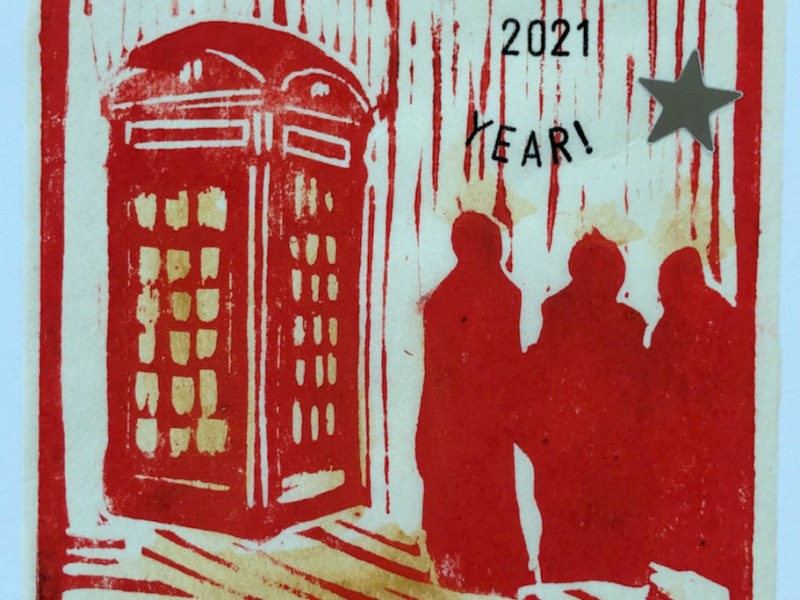
My New Year card for 2021 shows a telephone kiosk.
New Year, 2021, “Connection”, woodcut 6″ x4″, on Japanese Kozo paper
I am of a generation for whom the telephone kiosk was, at one time in my life, an important feature of communications. You looked for them. You found them. They were either working or not. The inside smelt of old metal, coinage, leaves and urine. The phone was heavy and cold. The thick cord was twisted. You had to have the right coins. Sometimes coins jammed in the slot, or went straight through the mechanism without registering. So if you were experienced, and organised, you had a whole series of coins of different denominations ready to put in, in case the first one didn’t work. If your call was important, or if you needed to write something down, it was helpful to have a friend with you in the telephone kiosk, standing by with the coins, poised to enter them rapidly as the pips went. There was a risk-based calculation about what denomination of coin to enter, and in what order. You might enter small change first, while you worked out if the person you wanted was in, then drop in the big money for the important conversation, so that the pips did not cut you off at a critical point. You might enter a variety of change at the beginning in the hope that some of it would be returned if the call was shorter than you expected. But your money was not always returned.
Above all, a telephone kiosk represented hope: the hope of connection. That’s my hope for 2021.
Also in the woodcut I put some people. These might be the three wise men, looking for hope and salvation in a humble building.
I based my woodcut on phone boxes I have encountered recently. It is a K2 phone box, like the one at Lower Marsh, Waterloo. You can tell, because it has six rows of windows.
Lower Marsh, Waterloo
Lera Voe, Shetland
Royal Courts of Justice
Aldermanbury
Walberswick
Here is work in progress:
Sketch
Wood carving
Inking
Watercolour gold
Relief ink
Prints drying
Inking
The background gold colour is, amazingly, watercolour: Daniel Smith Iridescent Gold. The red is Schmincke relief printing ink. The paper came, via friends, from “Paper Nao” in Tokyo. It is kozo paper, I think K-148, and brilliant for hand-printing. It doesn’t crinkle, it takes the colour well, and it’s really strong so it doesn’t tear when you pull it off the plate.
I like phone boxes. They appear in various of my drawings, see for example, these posts:
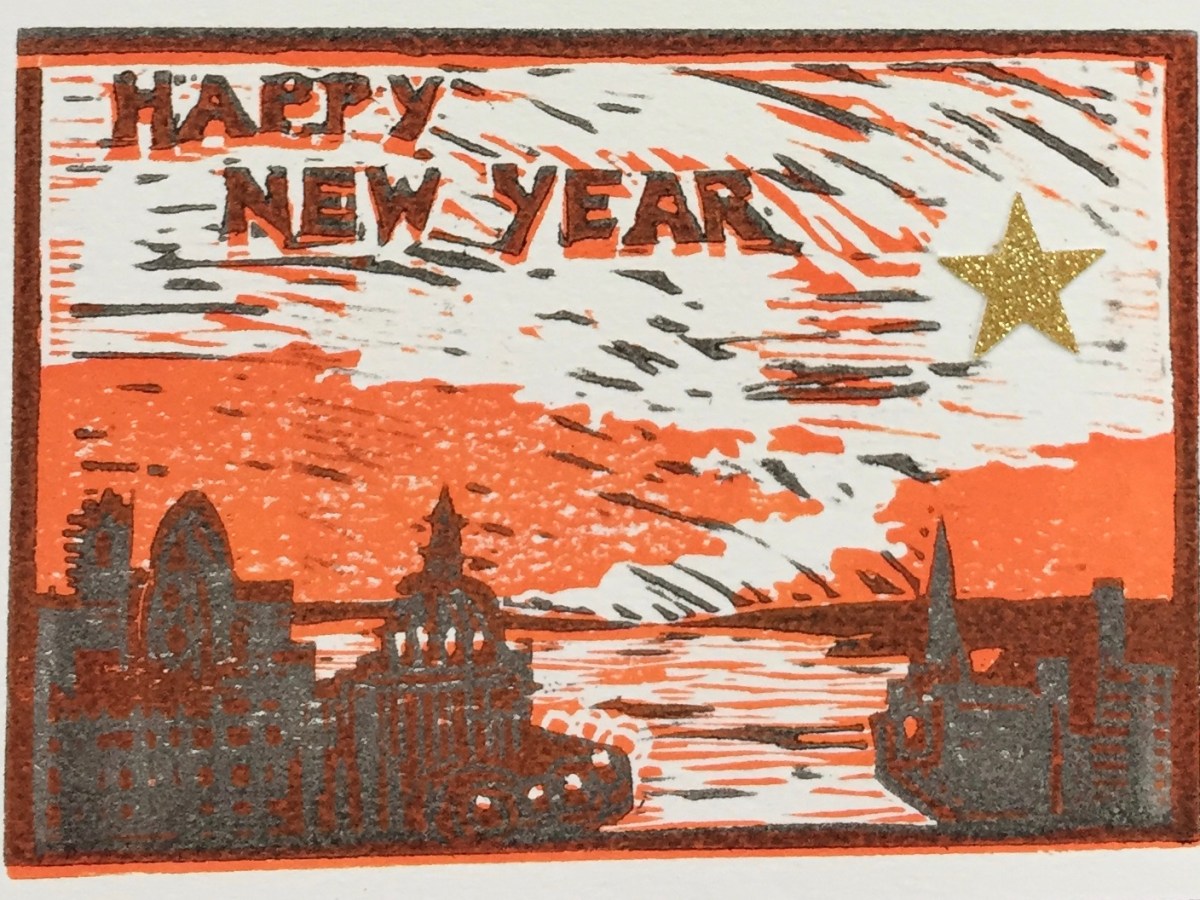
Here are my greetings for the New Year, sent as cards. They are woodcuts, two plates. The orange/red colour was printed first. The black colour is the Schminke “Aquadruck” black relief ink diluted with extender kindly lent to me by Connie at East London Printmakers. Her extender was from the Caligo range, and was slightly…
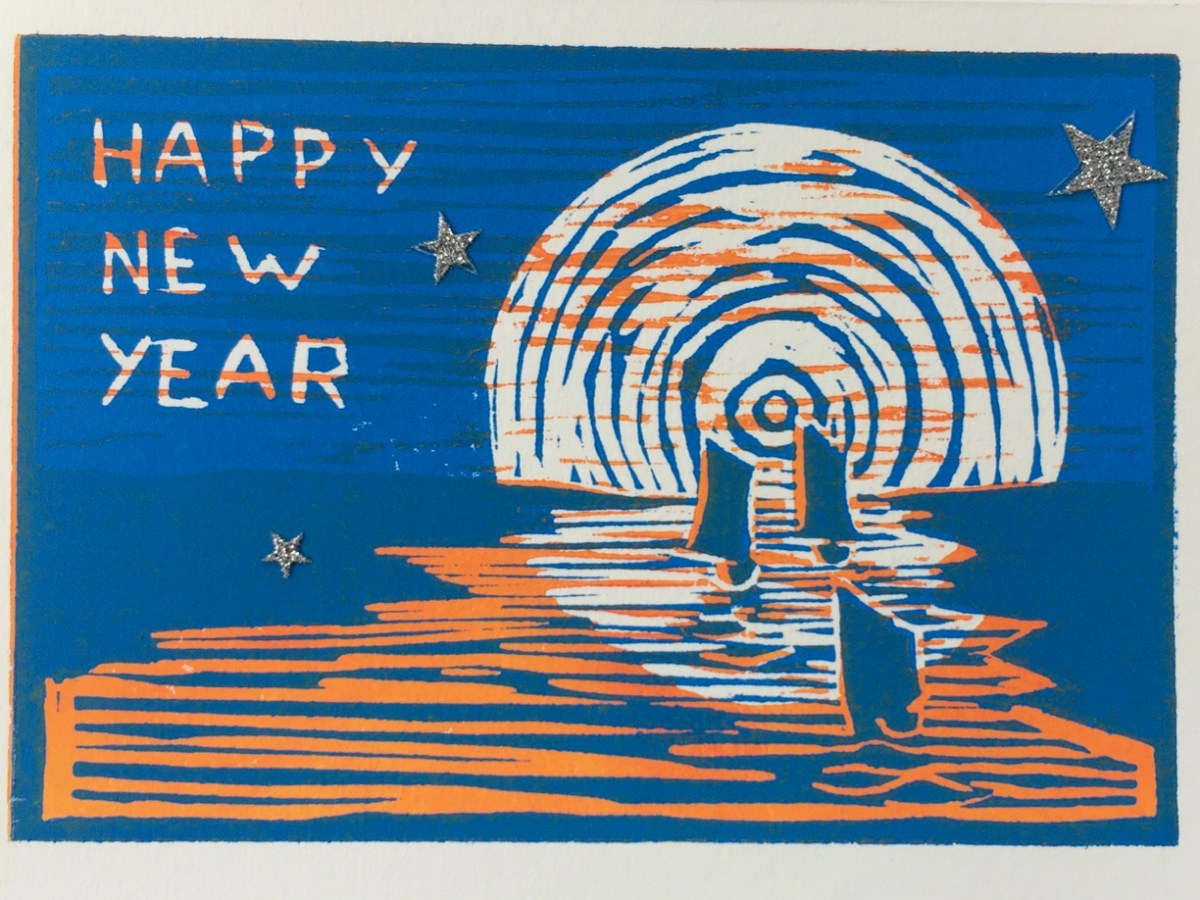
Happy New Year! I made a woodcut. This is a greetings card, about 7″x5″. It is from two woodblocks, one orange and one blue. Here is work in progress at East London Printmakers: In the background you see the Albion press I used for printing. It is a wonderful cast-iron machine. As well as the…
Click a button below to share this post online, email it, or print it: