This is a post-card sized etching on copper plate, printed by the technique called Chine collé. Japanese paper is the coloured background, and is printed and glued to Fabriano Unica, all in one process. It’s a bit tricky, but gives a good result, I think. The Japanese paper takes the ink very well, and provides the coloured background.
The plate is made using a hard-ground etch, then aquatint. Hard-ground etch means I put a varnish on the plate, then draw the picture in the varnish, so revealing lines of bare copper. Then I dip the plate in acid for 20 minutes. The acid attacks the bare copper and makes lines. Then if I print it, it looks like this:
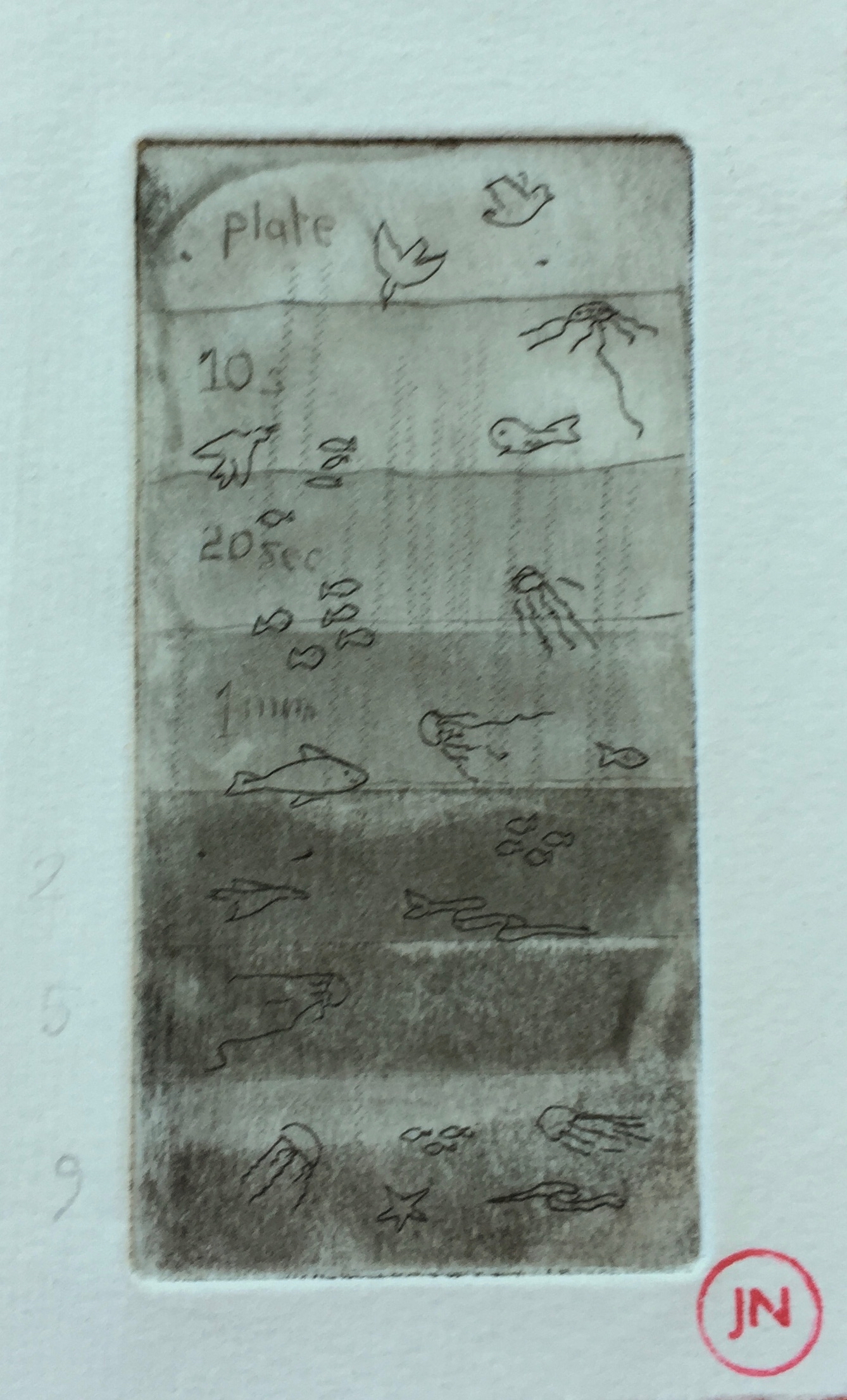
The next stage is aquatint, to make the tones. Aquatint is nothing to do with water, and nothing to do with colour. The name is misleading. The plate goes in a box, where I’ve turned a handle to make clouds of fine rosin. The rosin drops on the plate like rain. Then it’s annealed with a gas burner. Now there are lots of tiny dots in a random pattern on the plate. The skill now is to paint and dip the plate, so as to get the tones. The longer the plate stays in the acid, the blacker the tone. But if you leave it too long the acid bites off all the dots and the tone is light again.
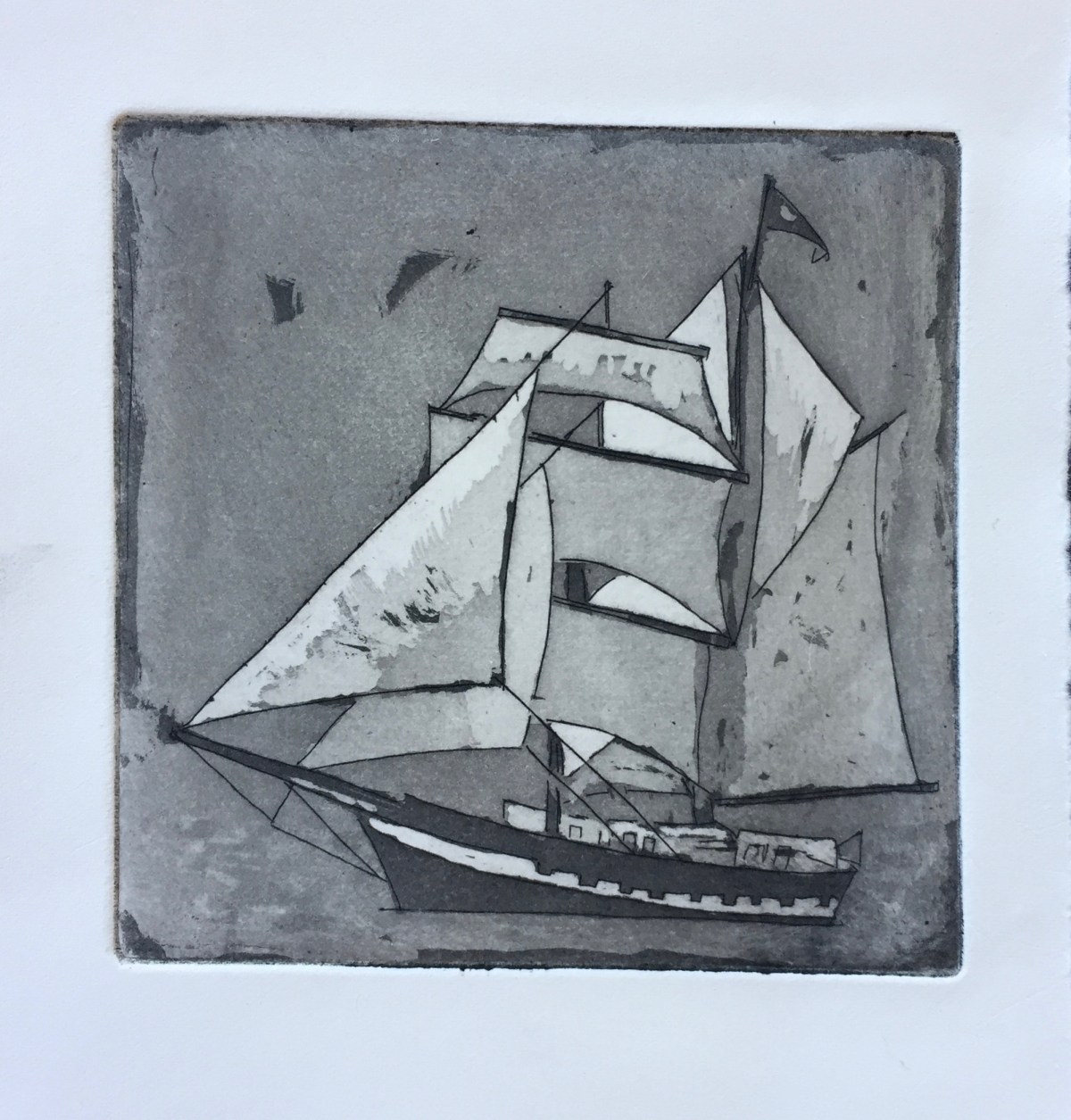
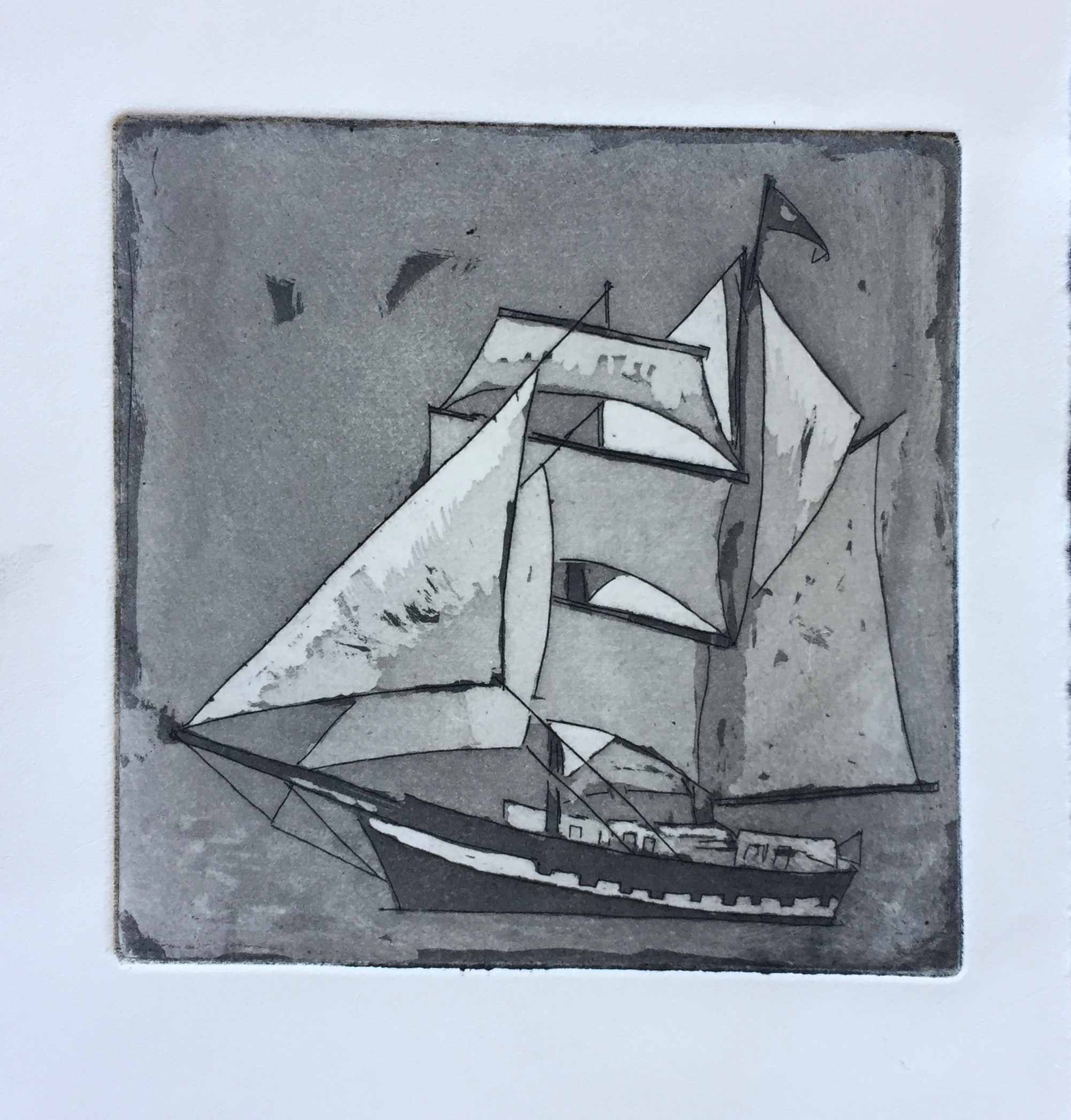
The picture has 5 tones and plate tone. The darkest tone was in the acid for 4 minutes.
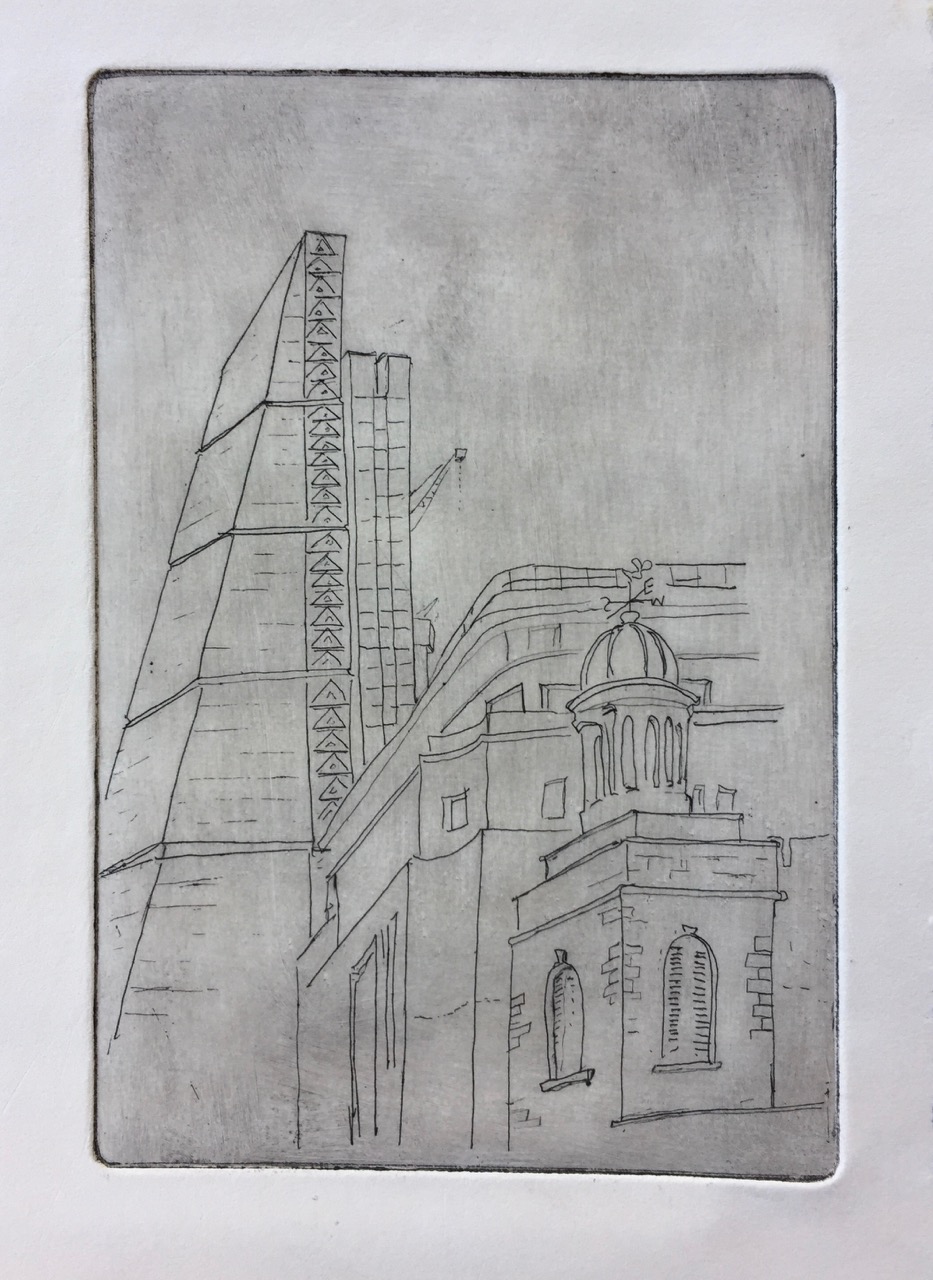
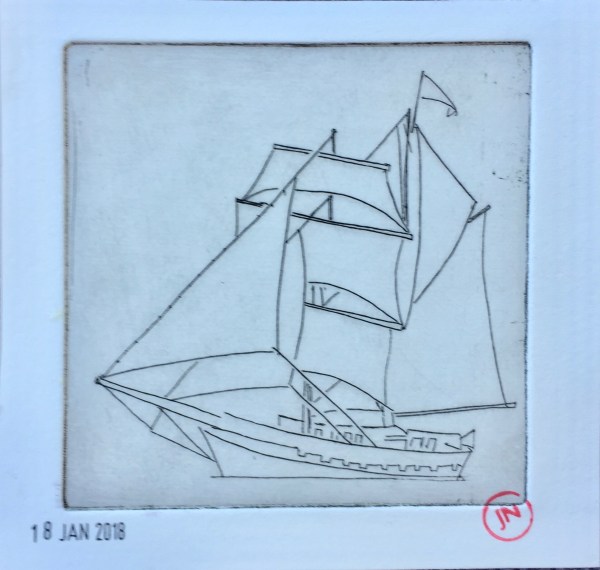
Here is the hard ground, before the aquatint went on:
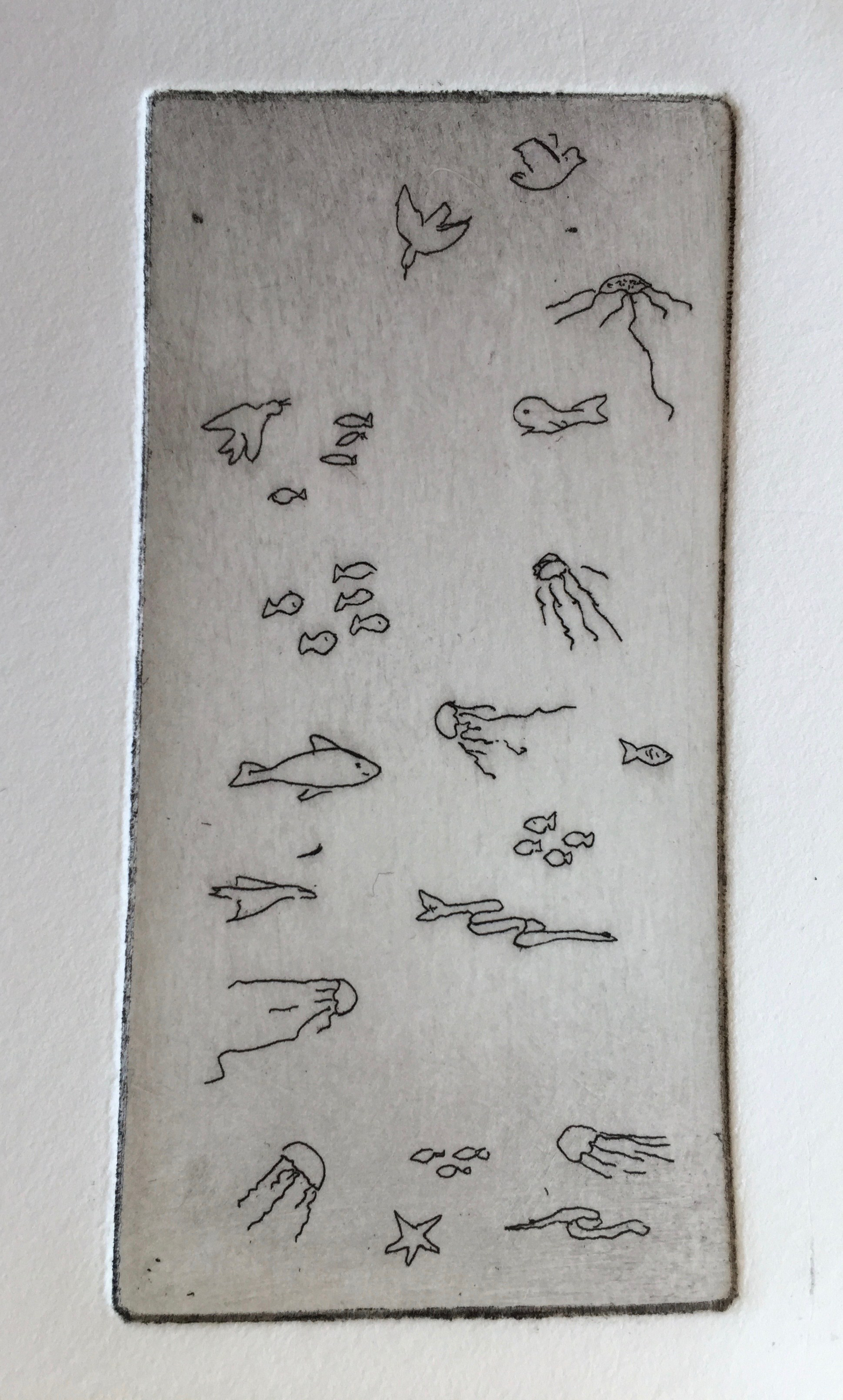
To help with the aquatint, I made a small test plate. It seemed a pity to leave it blank, so I put some sea life:
Lady of Avenel is an 102ft brigantine square rigger. I sailed on her for the swimming expeditions in the Hebrides in 2017. This is why the sea life is relevant, and realistic. Especially the jellyfish.
I drew the Lady of Avenel in Heybridge basin, see this post:
Last Thursday I made more prints for my “Towers” project.
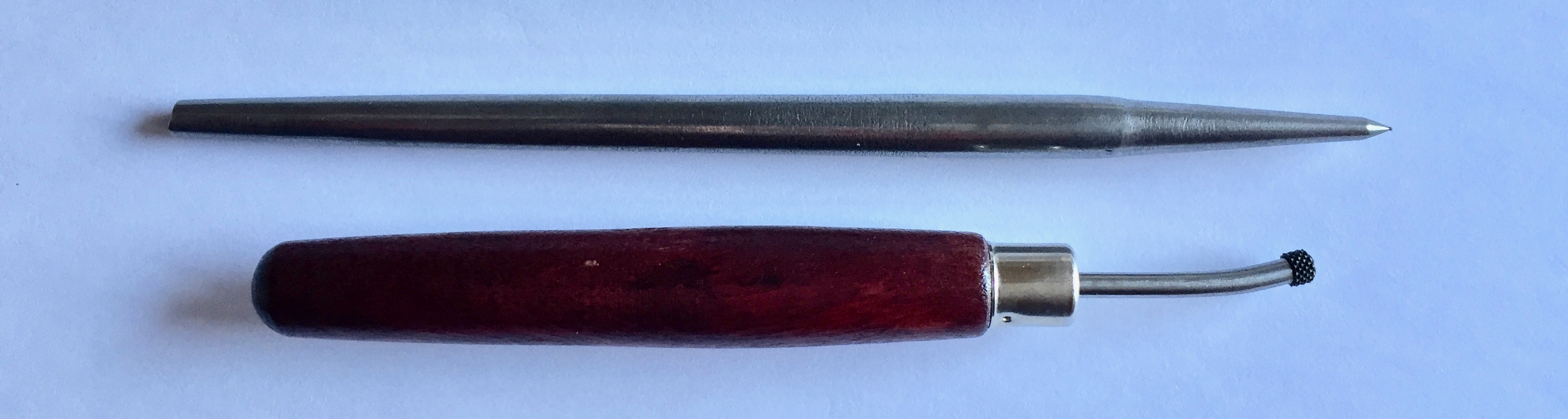
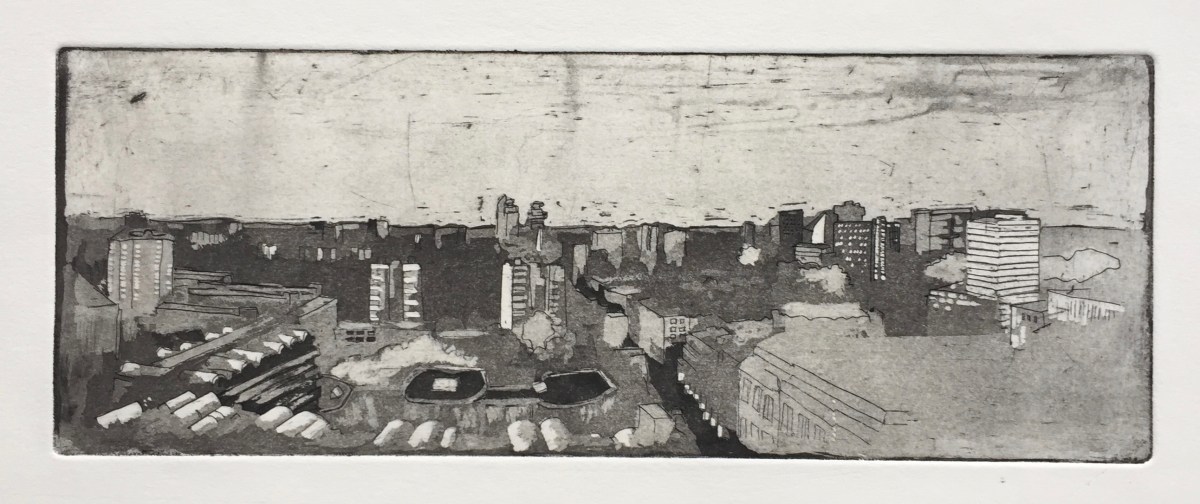
I improved a plate I made last September, “Skyline”, using a dry point tool, and a marvellous rolling tool called a roulette. The idea was to add more detail.
The drypoint tool, above, and the roulette, below.
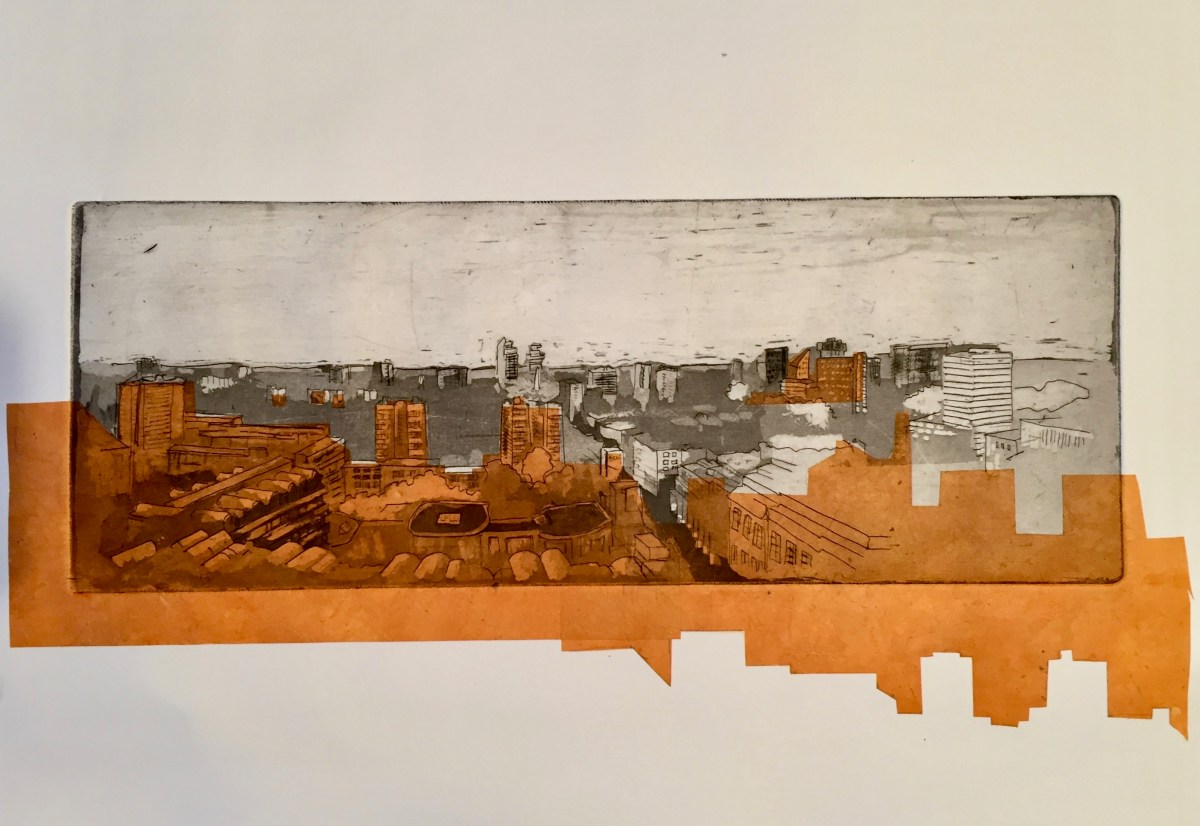
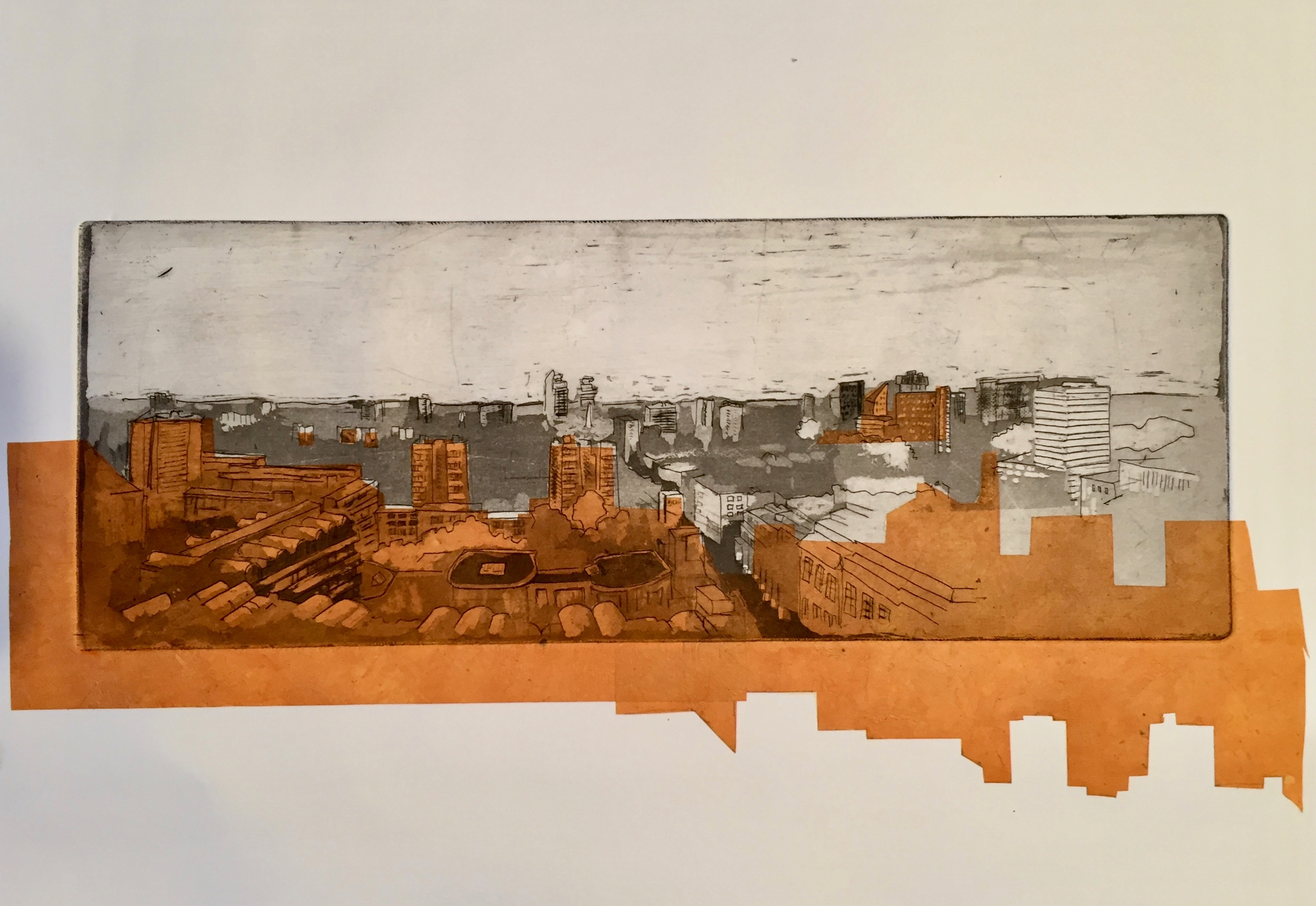
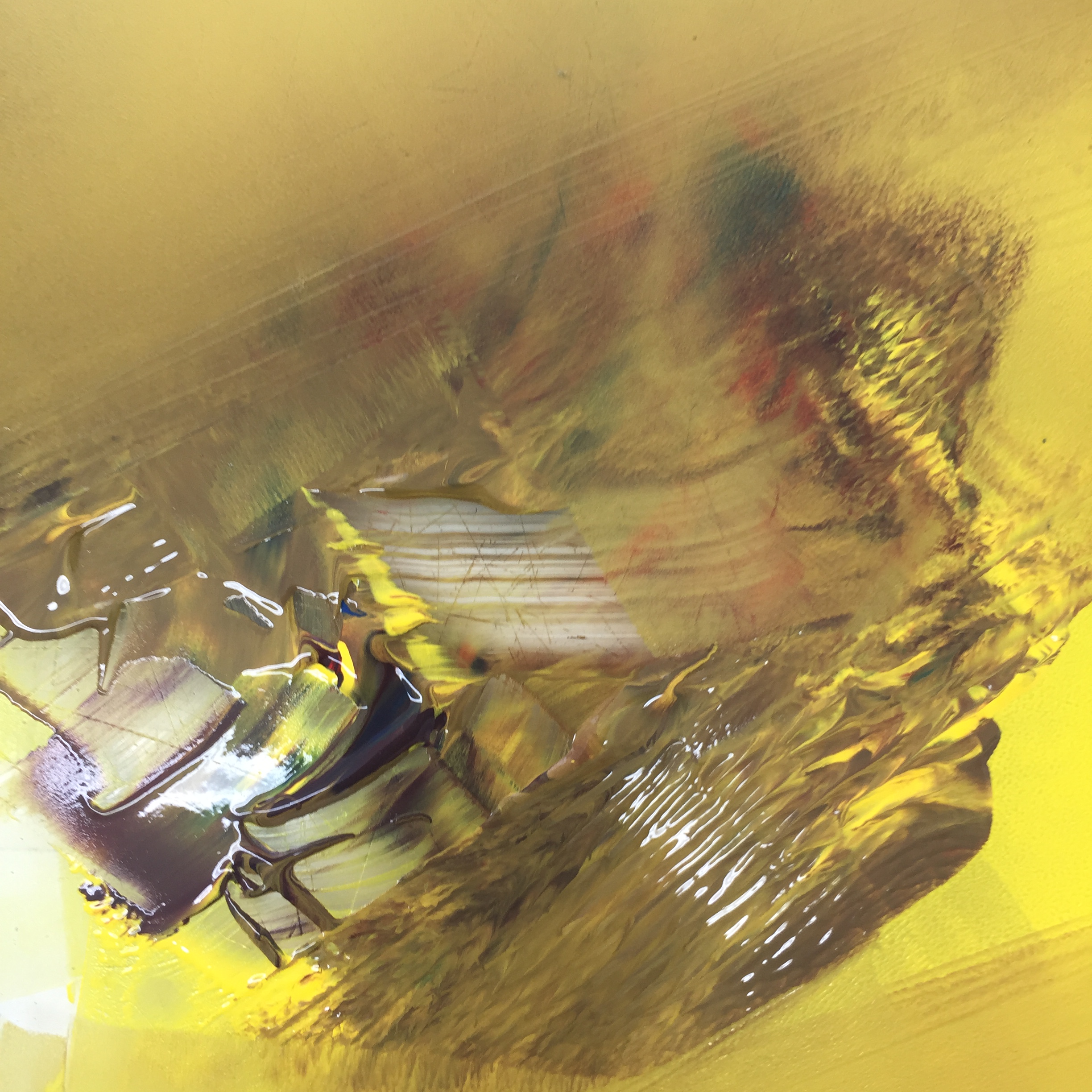
I used chine collé to make a yellow shape. Chine collé is paper. It is put on the inked plate, glue side up, which as you can imagine is quite tricky. Then I carry the whole lot to the press, trying not to let the sticky yellow bits float away. The print paper goes on top, then tracing paper to protect the blankets, then the blanket which the press needs, and then I roll it through the press.
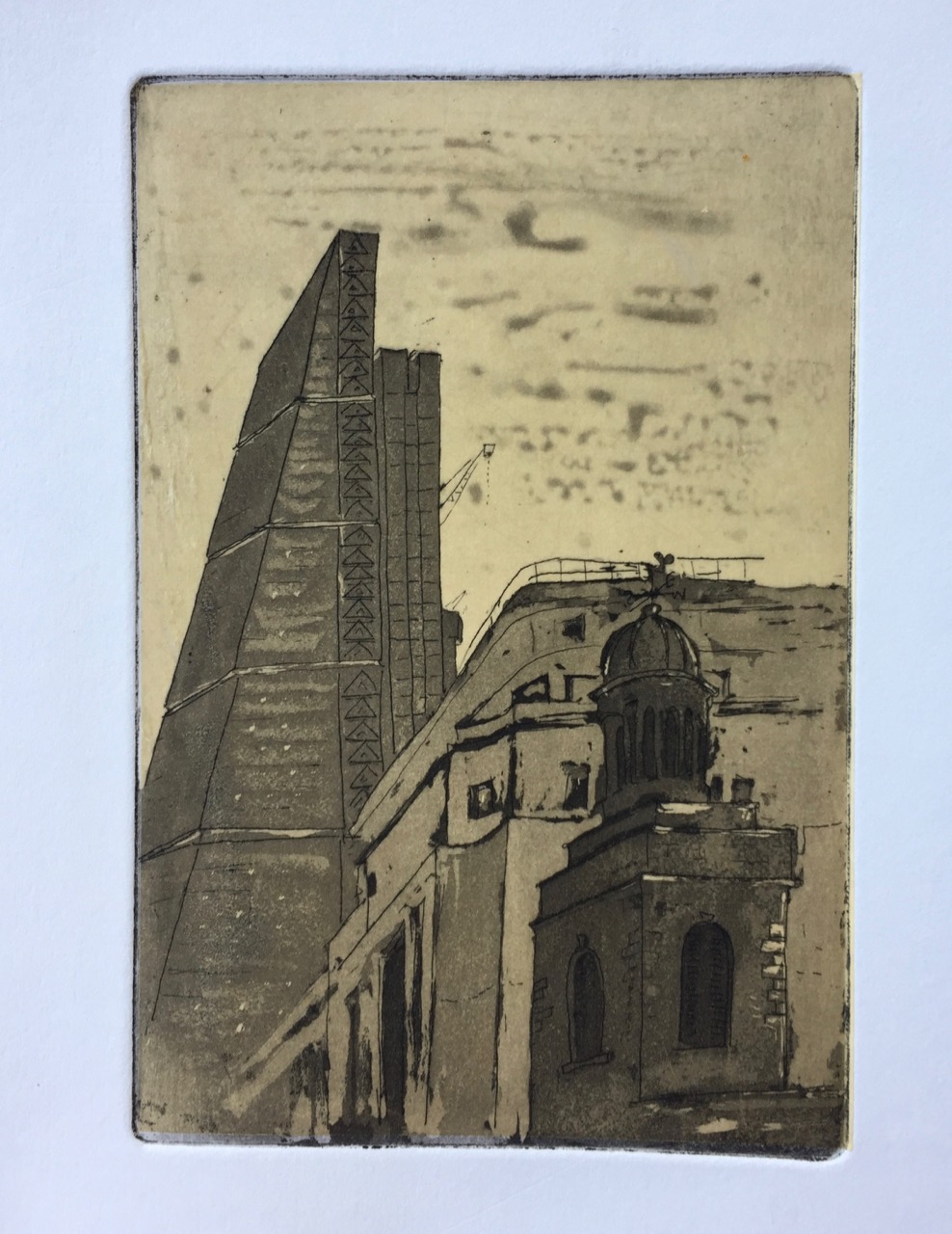
Here’s the result:
Skyline, Chine collé, 4th January 2018
This is the view out of my window. When I look out, I can see shadow of my building and other buildings. The yellow outline reminds me of this effect, and of all the other buildings whose metaphorical shadow is here: the buildings demolished or bombed down, and the buildings to come.
I also made Chine collé prints of Towers East and Towers West.
Here are my greetings for the New Year, sent as cards.
They are woodcuts, two plates. The orange/red colour was printed first. The black colour is the Schminke “Aquadruck” black relief ink diluted with extender kindly lent to me by Connie at East London Printmakers. Her extender was from the Caligo range, and was slightly whitish. It seemed to work better than the Schminke version.
The gold star is punched out of some golden wrapping paper I received last year.
The paper is Fabriano Unica, cut to size on the marvellous electrical guillotine.
Happy New Year!
Click a button below to share this post online, email it, or print it:
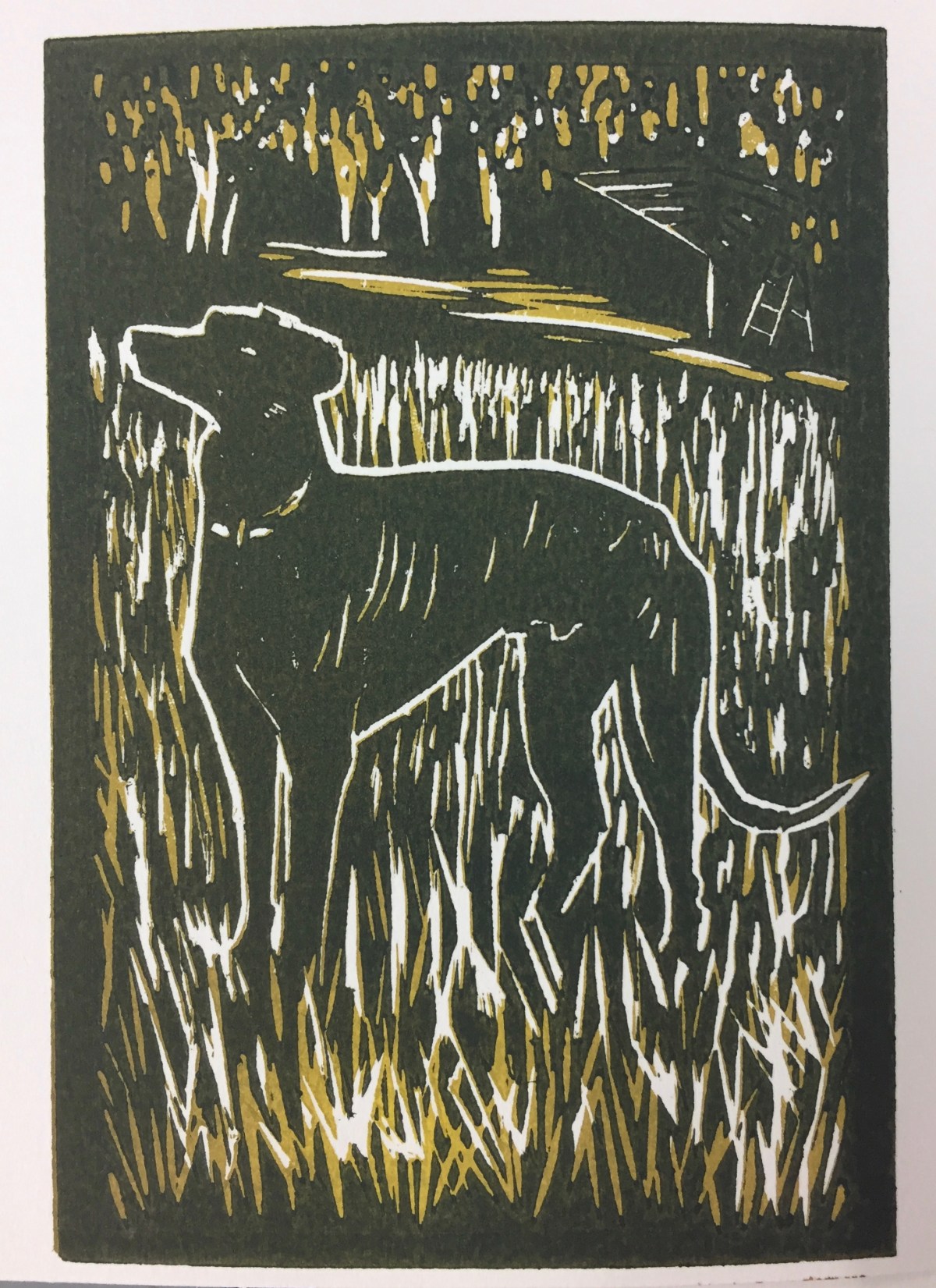
Here is a woodcut of my sister’s greyhound, Tiara.
Tiara in the Garden
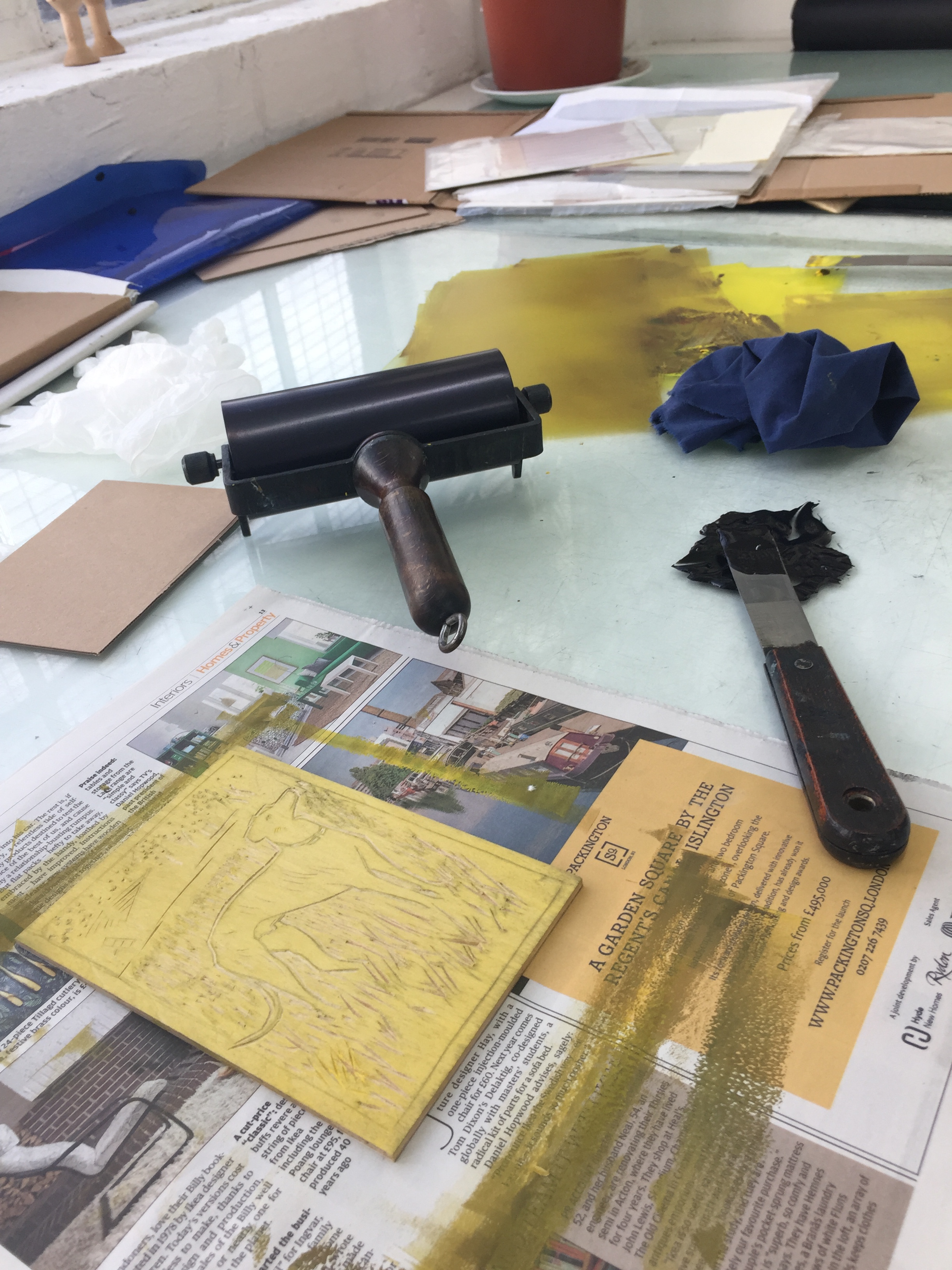
This is a reduction woodcut. That means I cut the woodblock, and made a number of prints in the yellow colour, then I cut it further, and printed the grey/brown colour.
Printing the first colour
Prints from the first colour
First colour
Here is work in progress on the second colour.
Prints drying
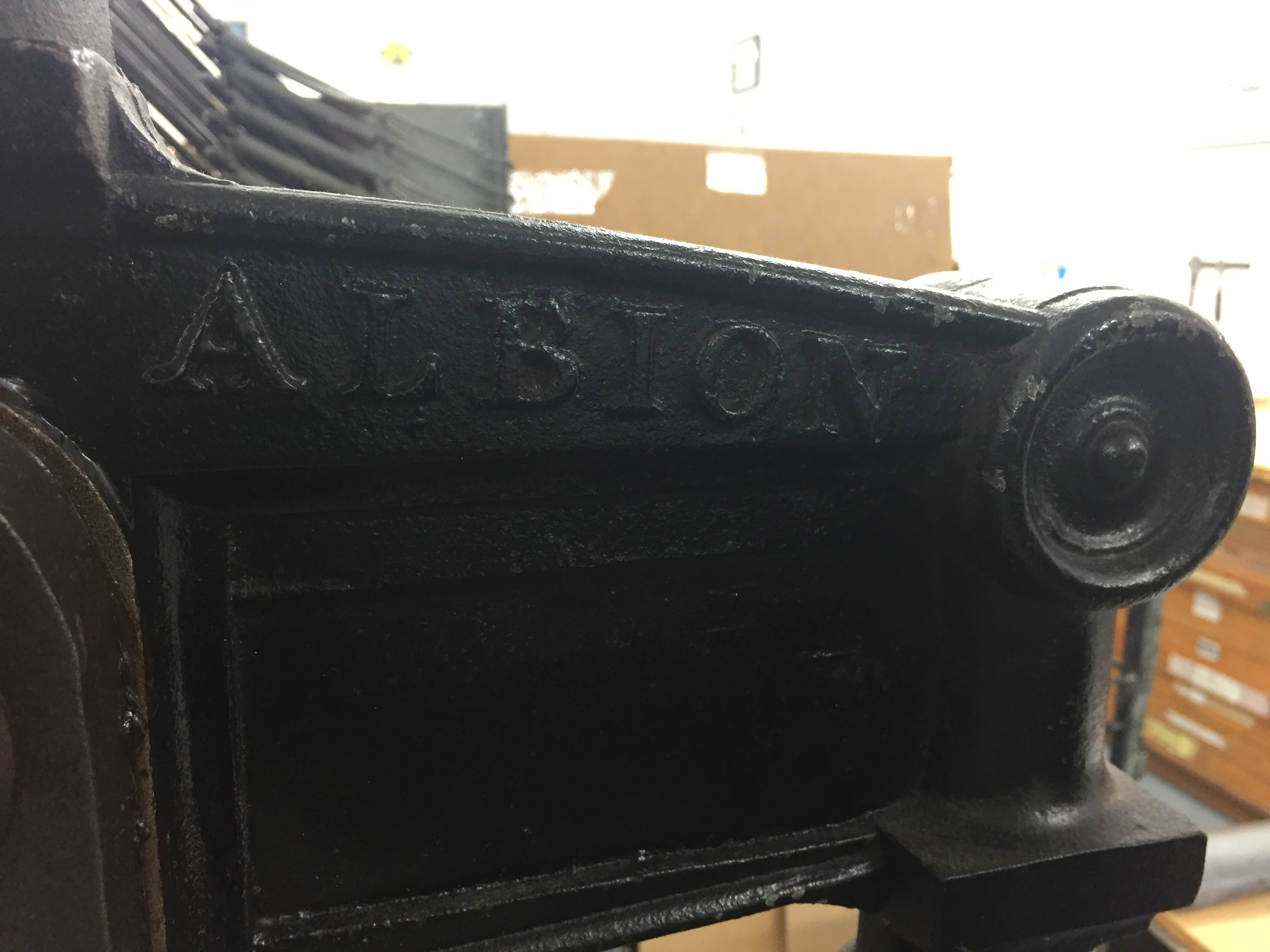
Woodblock on the Albion Press
Prints drying
These are printed on the Albion press at East London Printmakers:
Albion Press, at East London Printmakers
I mixed the colours.
Here is the finished card:
Click a button below to share this post online, email it, or print it:
I continue to work on my “Towers Project”. The idea is to document the towers of Finsbury, Islington and Camden, or at least the ones I can see from my window.
I did a “Skyline” previously which you can see on this link.
Here are two smaller etchings, Towers East and Towers West, both 10.5cm by 15cm. I finished Towers West yesterday.
Towers West
Towers East
These two together form a panorama. I used Towers East in a Chine Collé course. See this link.
The two prominent towers at the front are part of a Peabody Estate, the “Roscoe Estate” on Roscoe Street. The one on the left is “Peabody Tower” and the one on the right is “St Mary’s Tower”. The low house at the very front on the left is Fortune House, on Fortune Street. I have drawn Peabody Tower in an urban sketch, see this link.
These etchings are aquatint on copper. Here is work in progress on “Towers West”.
Drawing “Towers West” on hard ground using an etching spike.
“Towers West” print: hard ground etching
I drew the picture in hard ground using an etching spike, then etched it in acid called “Edinburgh Etch” for 20minutes. The resulting print is shown above on the right.
Then I put resin dust, called Aquatint, on the plate, and set it with a gas burner. I paint varnish on top of the Aquatint, to make the shapes, then dip in acid, then paint more, then dip. Towers West is 6 dips. The sky is a technique called “spit bite”: I just paint the acid on, wait 20 seconds, and wash it off.
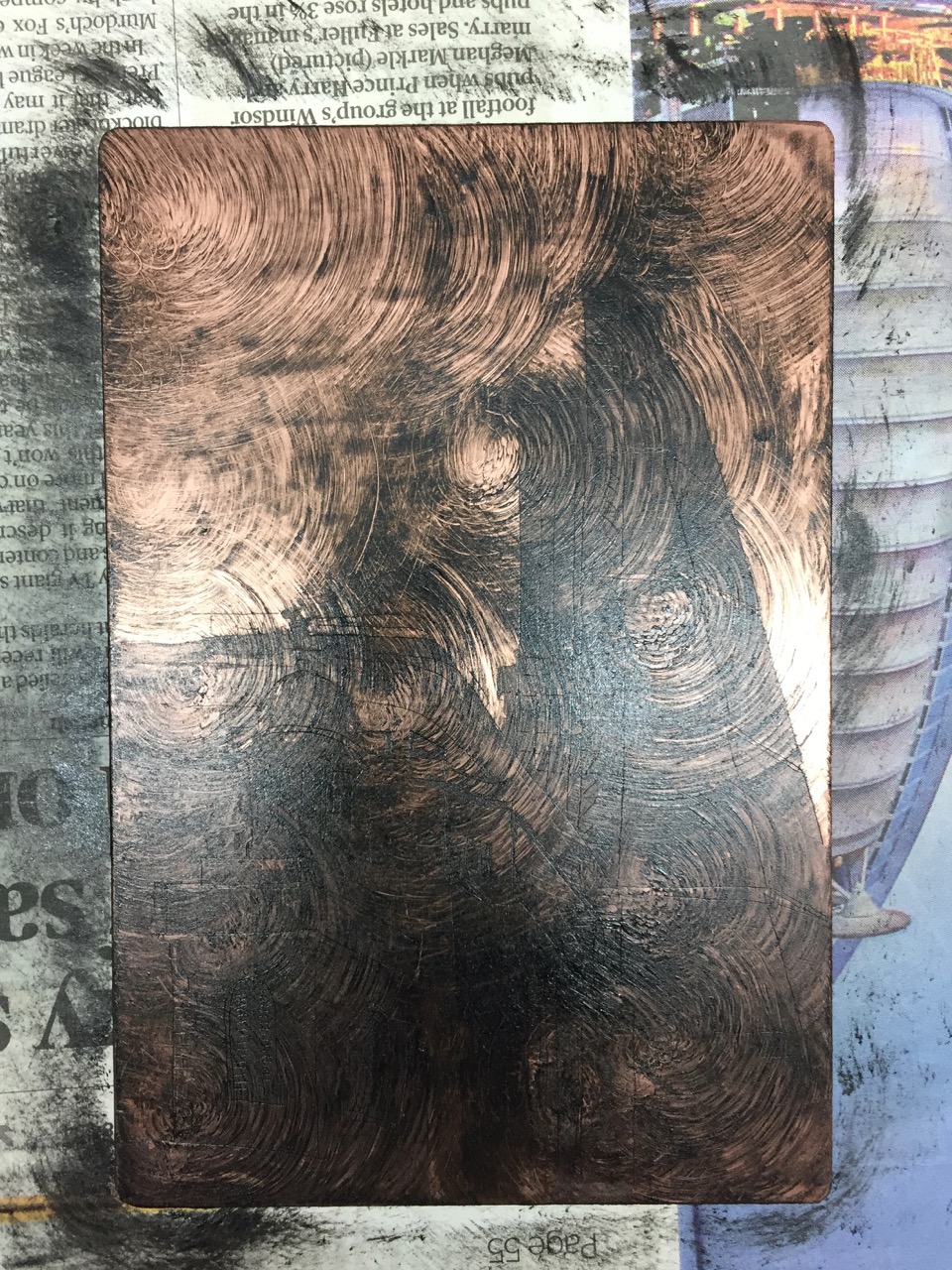
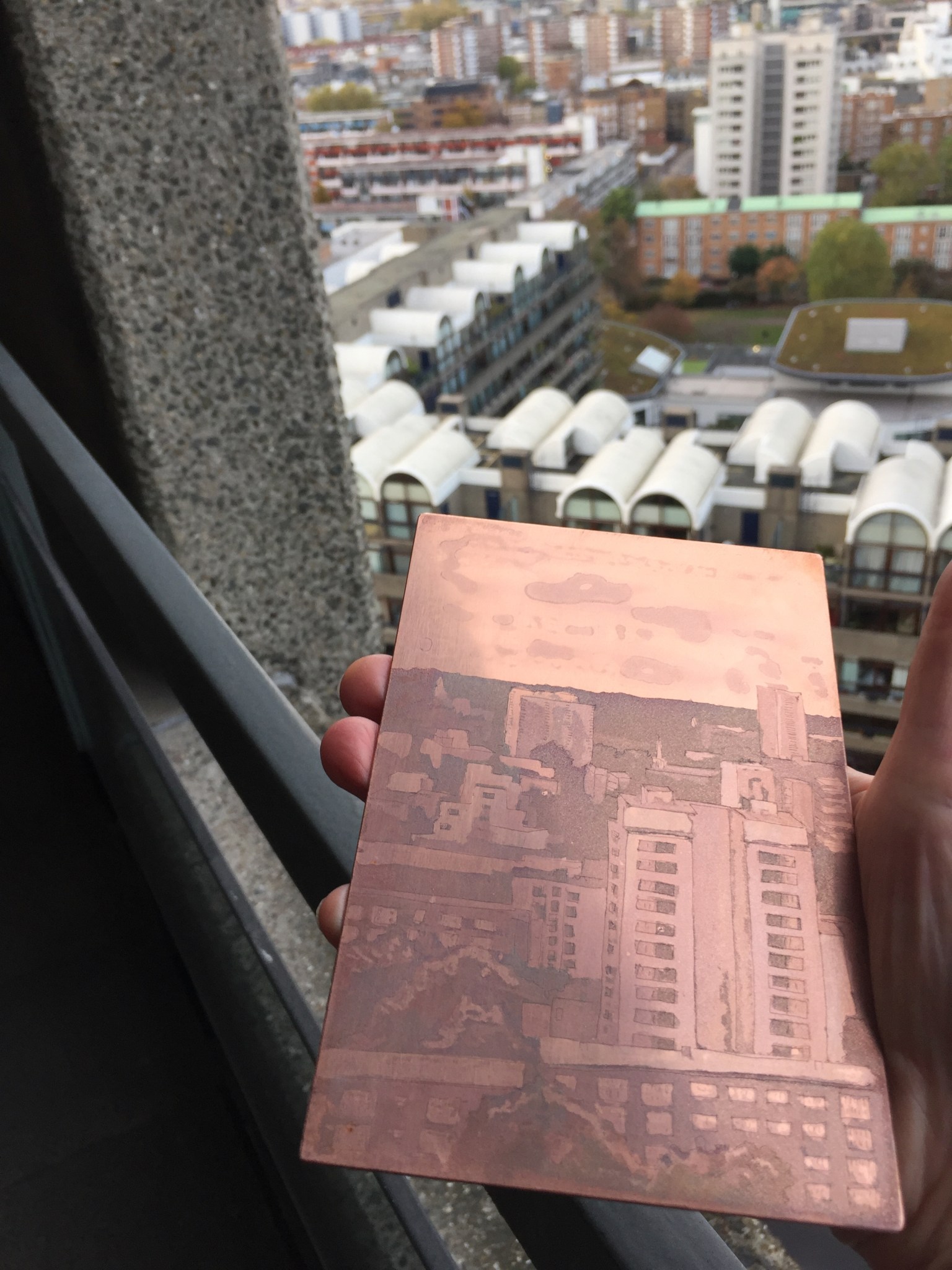
Here’s the copper plate for Towers West:
Towers West, copper plate
Click a button below to share this post online, email it, or print it:
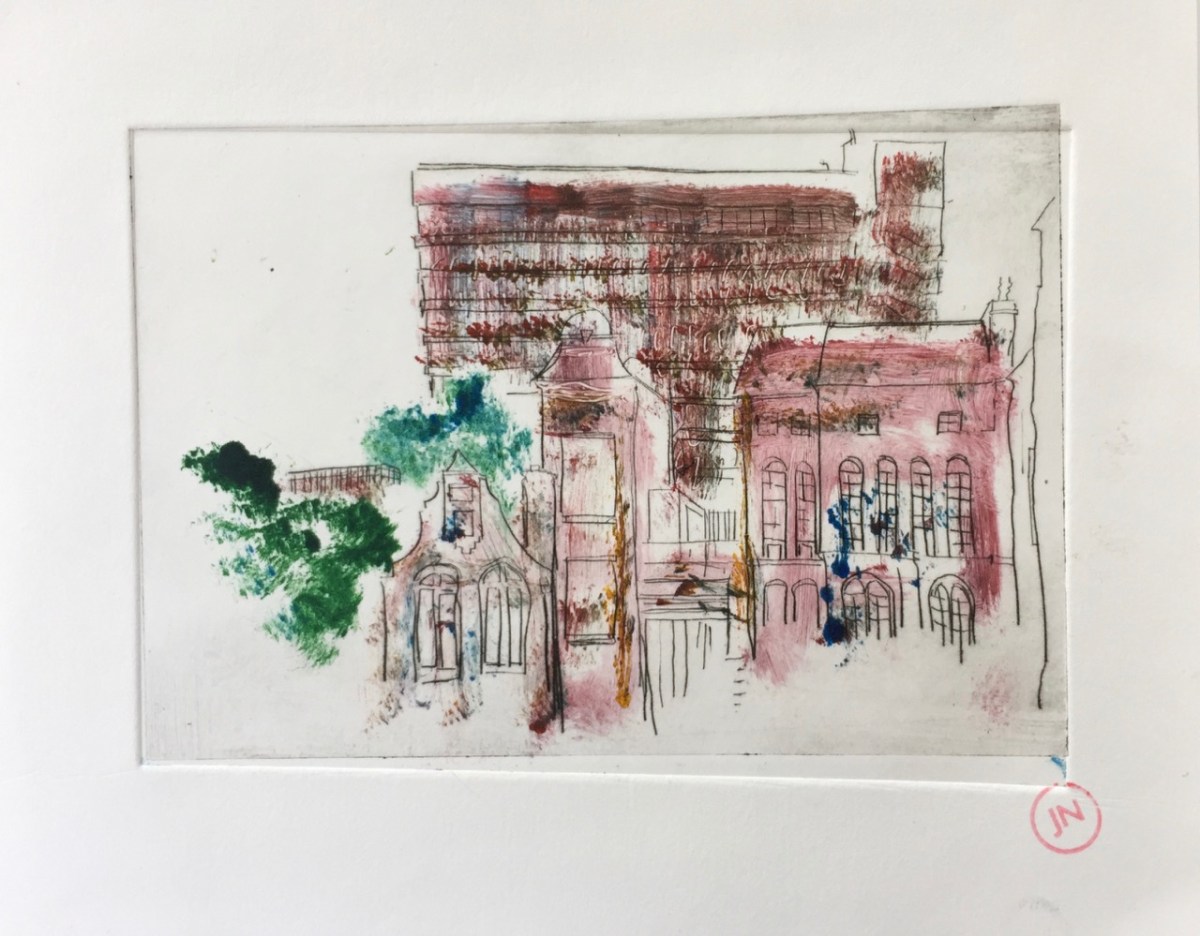
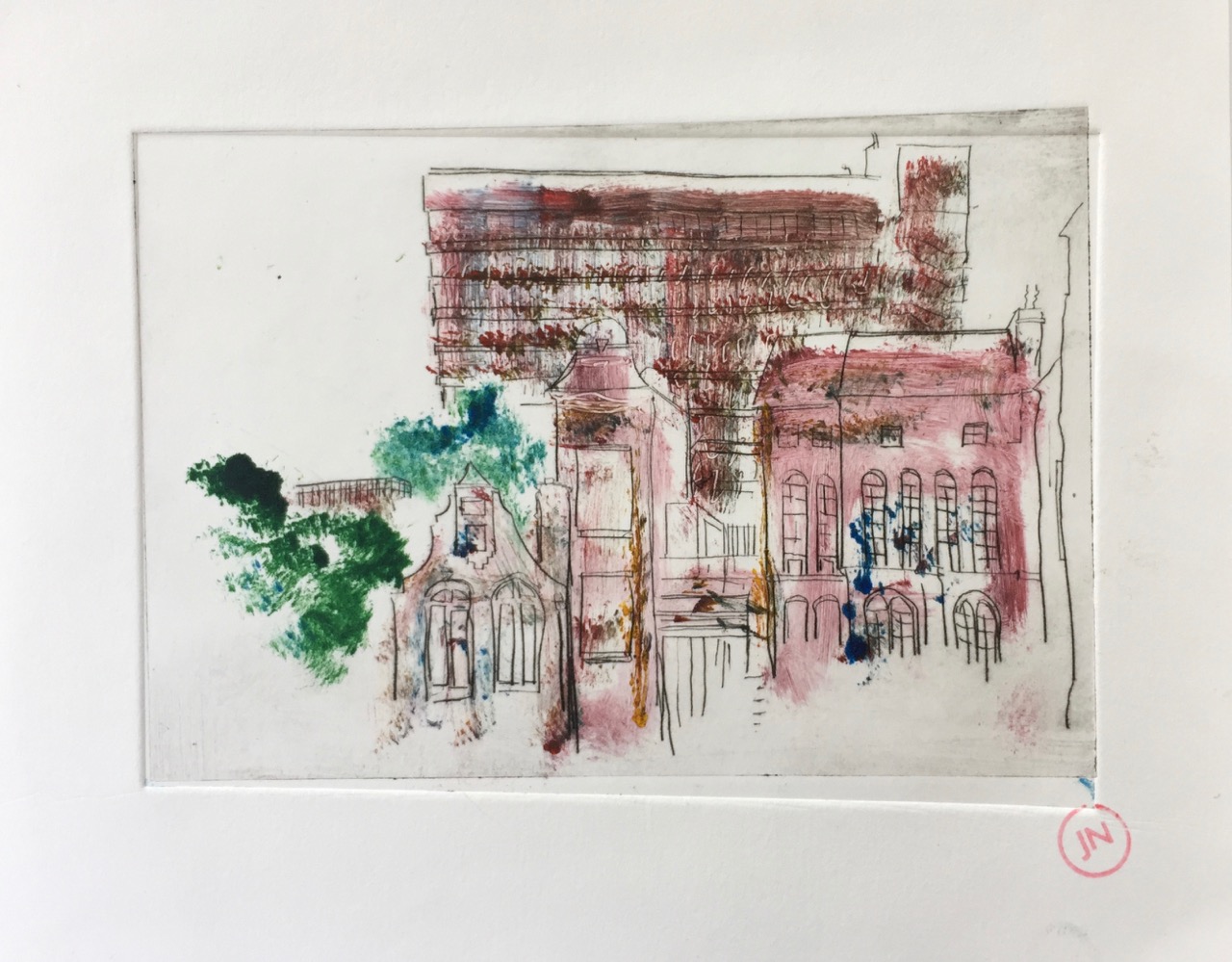
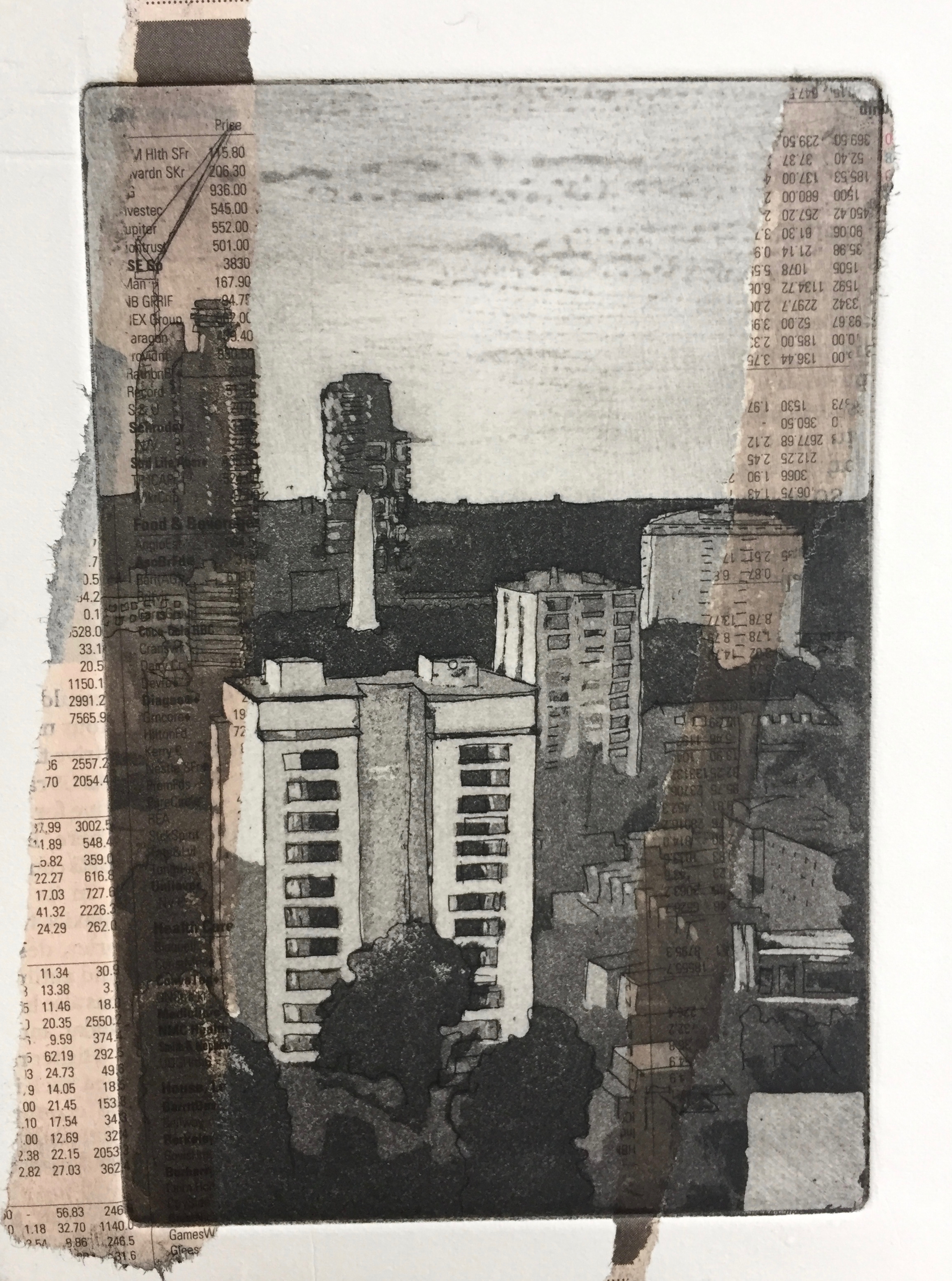
Here is a gallery of prints I made yesterday, experimenting with a technique called “Chine Collé” – thin paper glued. The idea is to introduce colour, by using a thin piece of paper which is sandwiched between the printing paper (white) and the inked copper plate.
This was a workshop led by Damien Grist at East London Printmakers. I used plates I’d made previously.
My favourite print is this one, based on my “Towers East” plate:
“Edge of the City” – chine collé
Here are other examples. Each print is unique.
Towers East
Here’s what I learned:
The glue that’s used to fasten the thin paper is wallpaper paste. This is wet, and allows the thin paper to shrink as the assembly dries. It also contains fungicides. Traditionally, Japanese printmakers use rice glue.
The thin paper doesn’t take the ink as well as the white print paper. So sometimes the image is disrupted.
This is a fast technique for adding colour. And it’s fun: the result is a bit of a surprise.
Japanese printmakers use “Gampi” paper for Chine Collé. Tissue paper is an alternative. Newsprint works quite well, and also takes the black ink well.
See this page for more information on how I use chine collé.
Click a button below to share this post online, email it, or print it:














 Jane Sketching