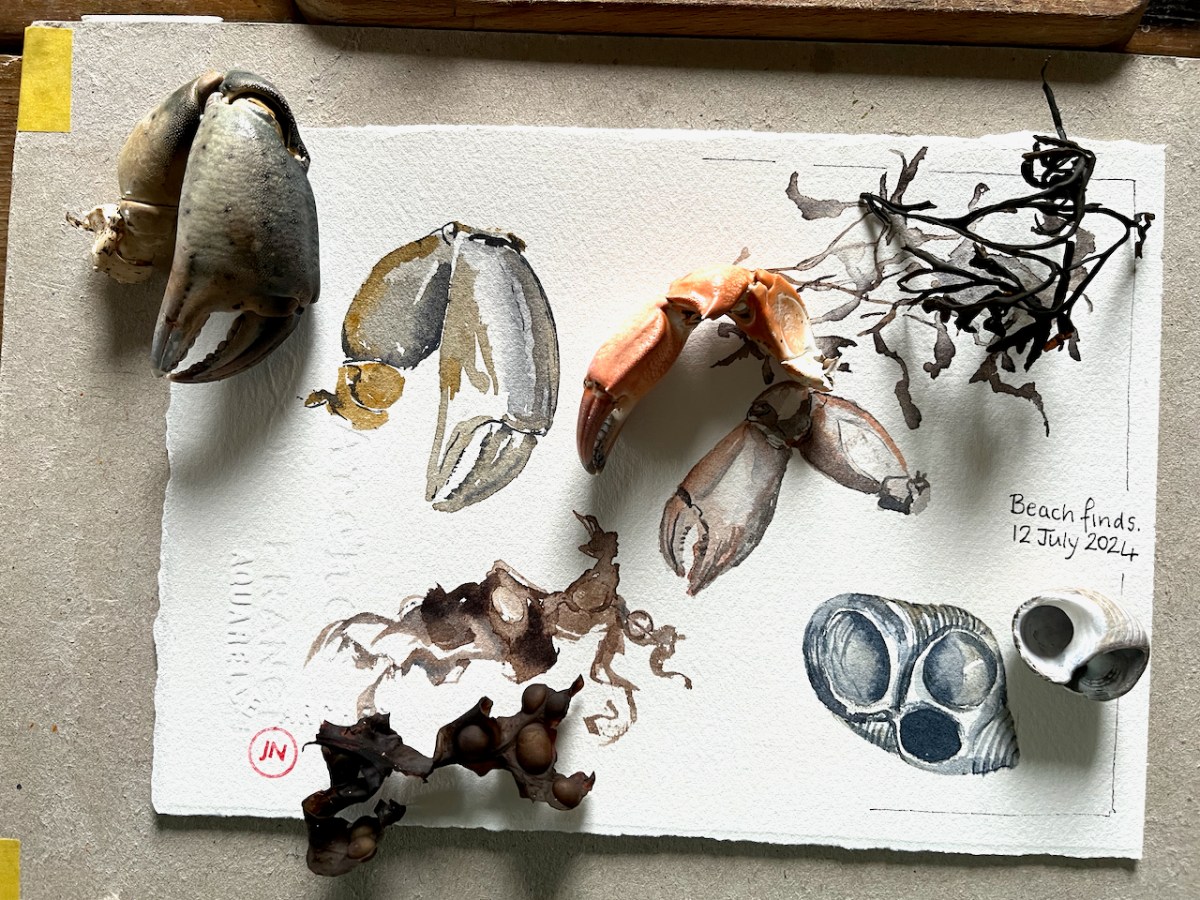
"Stoop and discover
the great in the small"
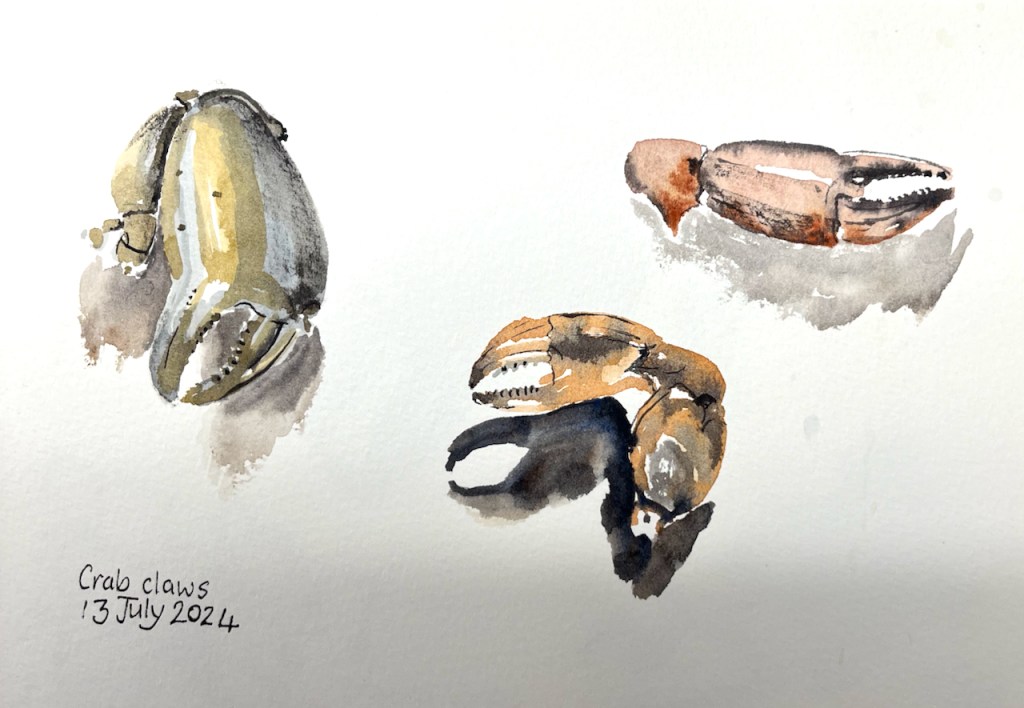
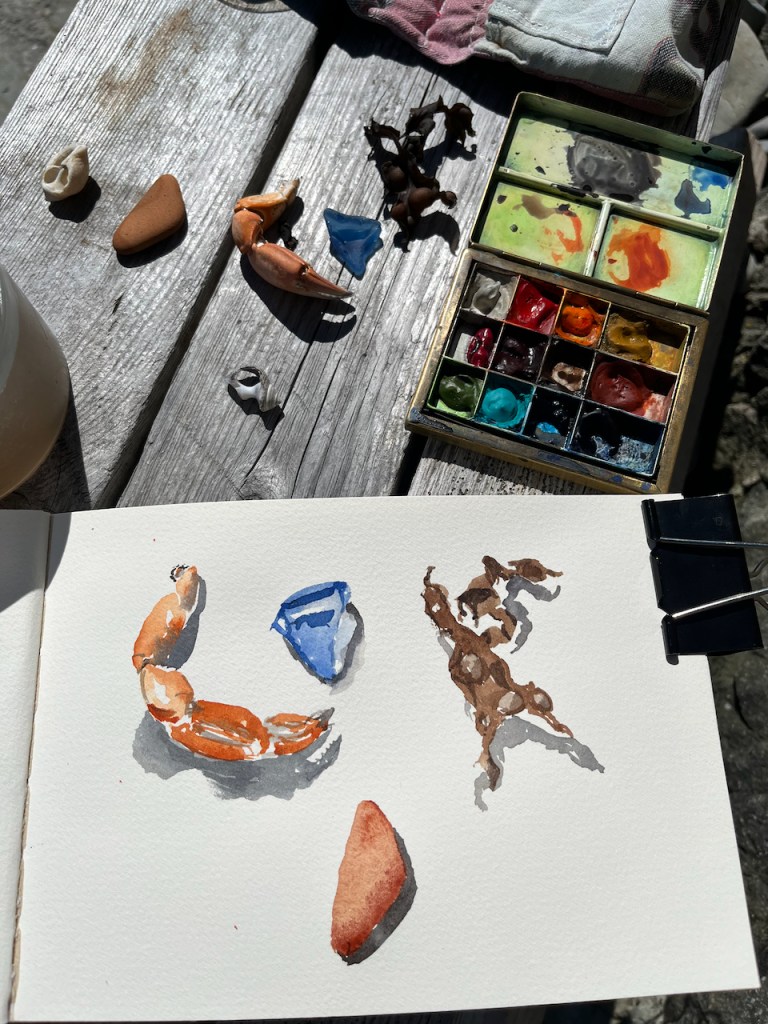
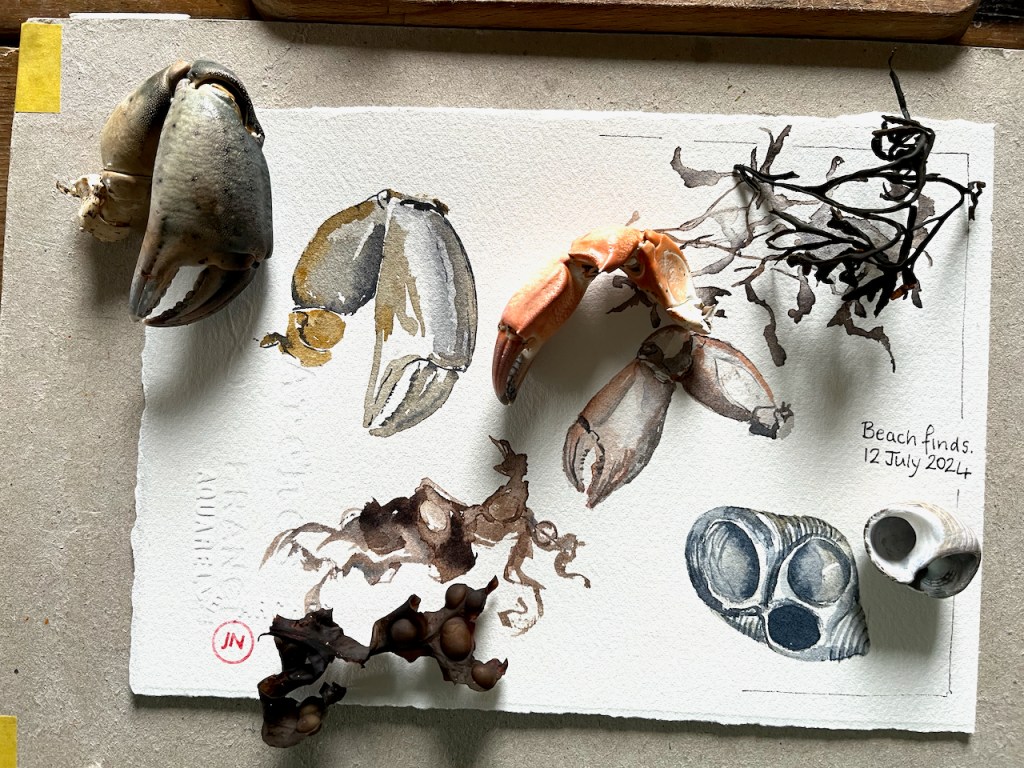
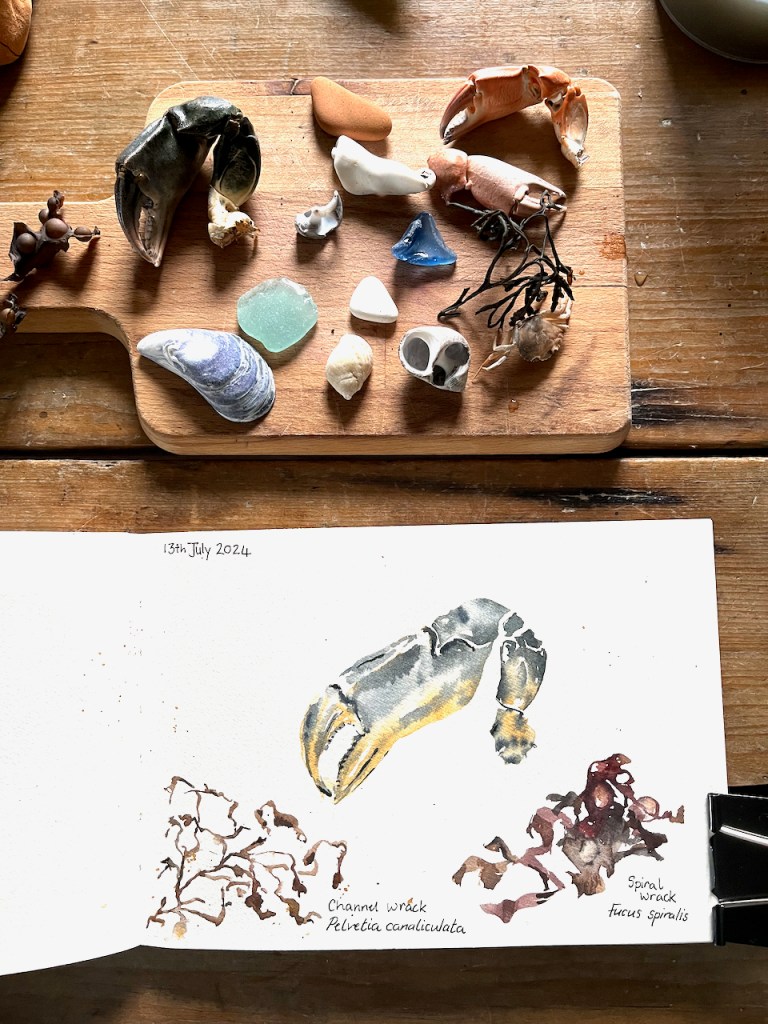
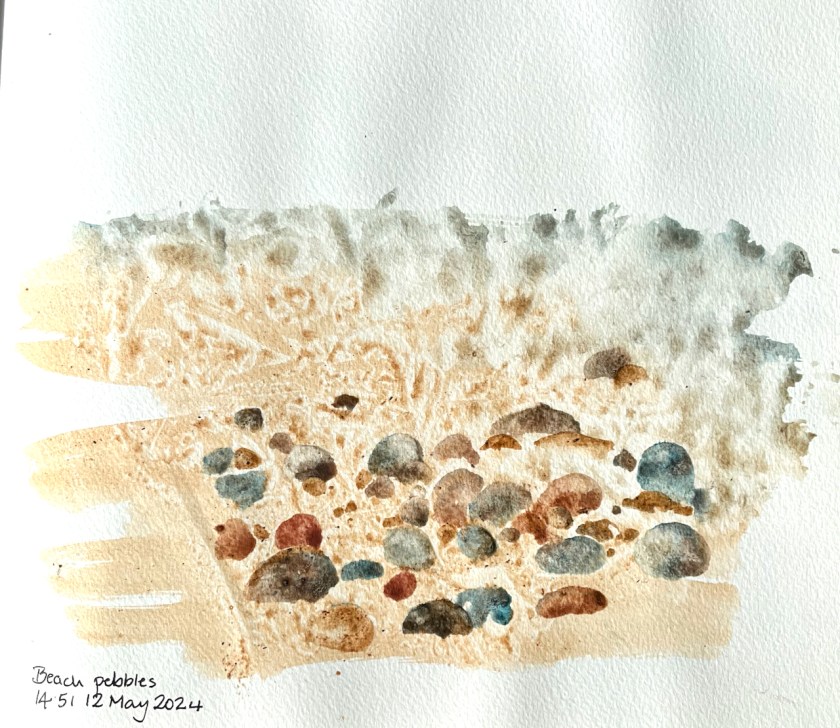
Here are beach finds.
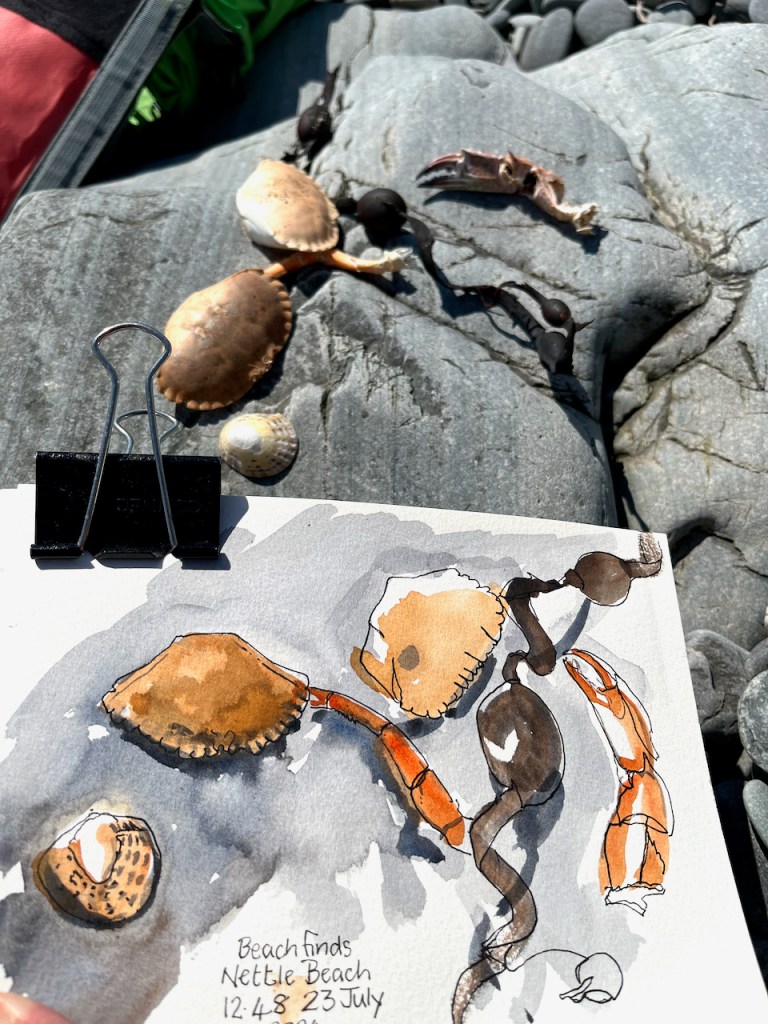

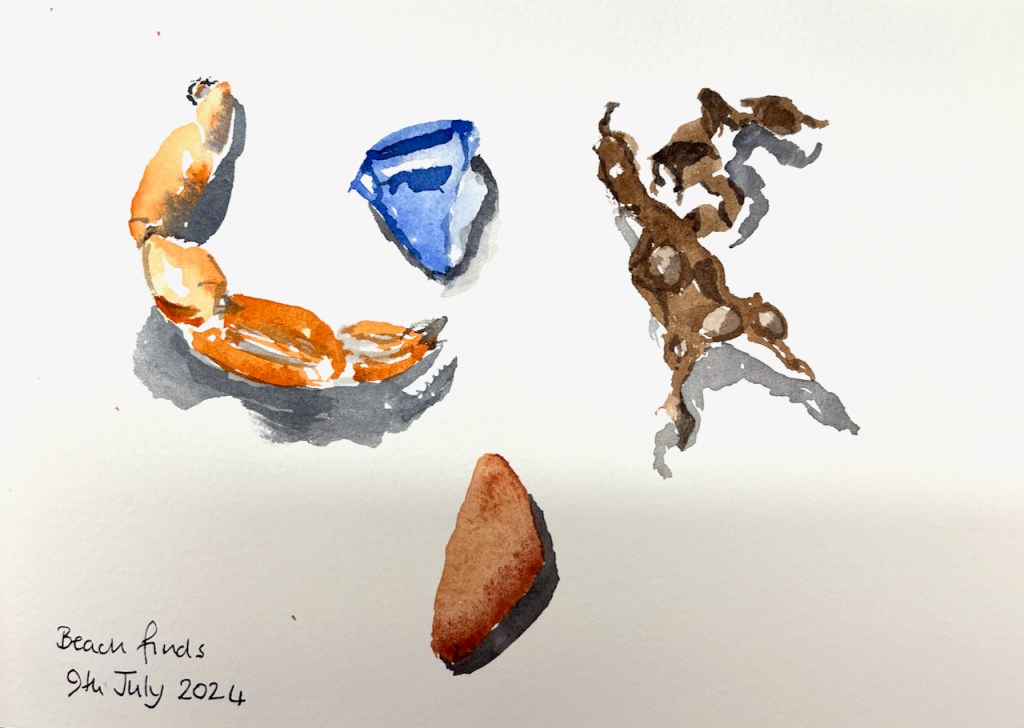

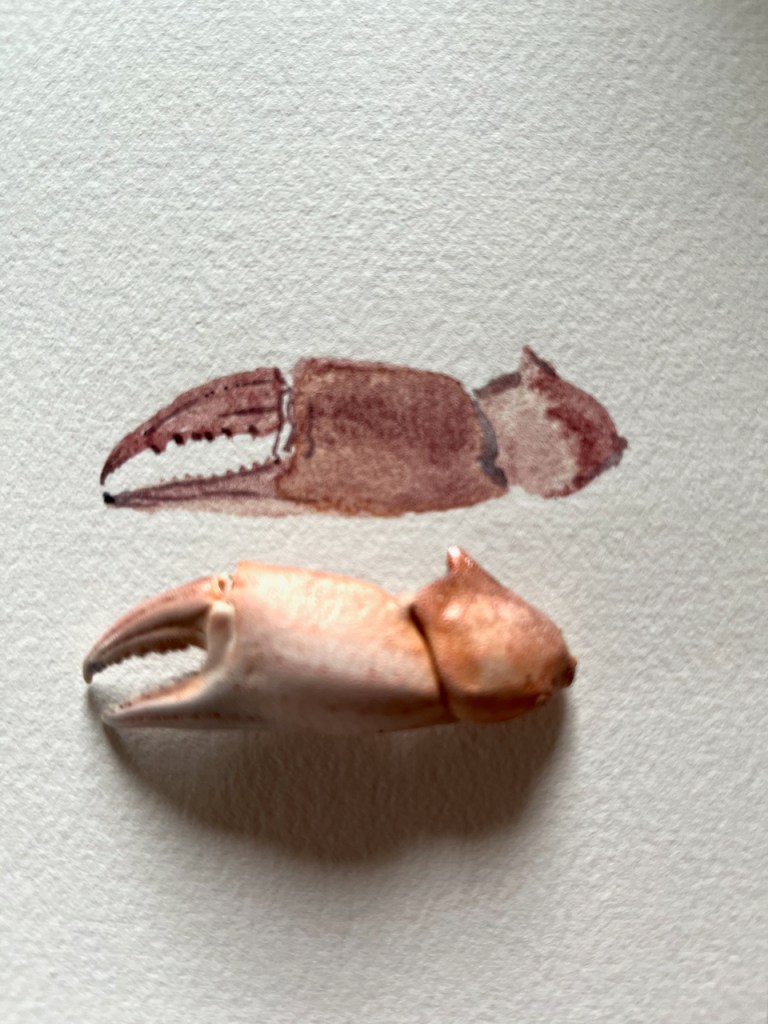

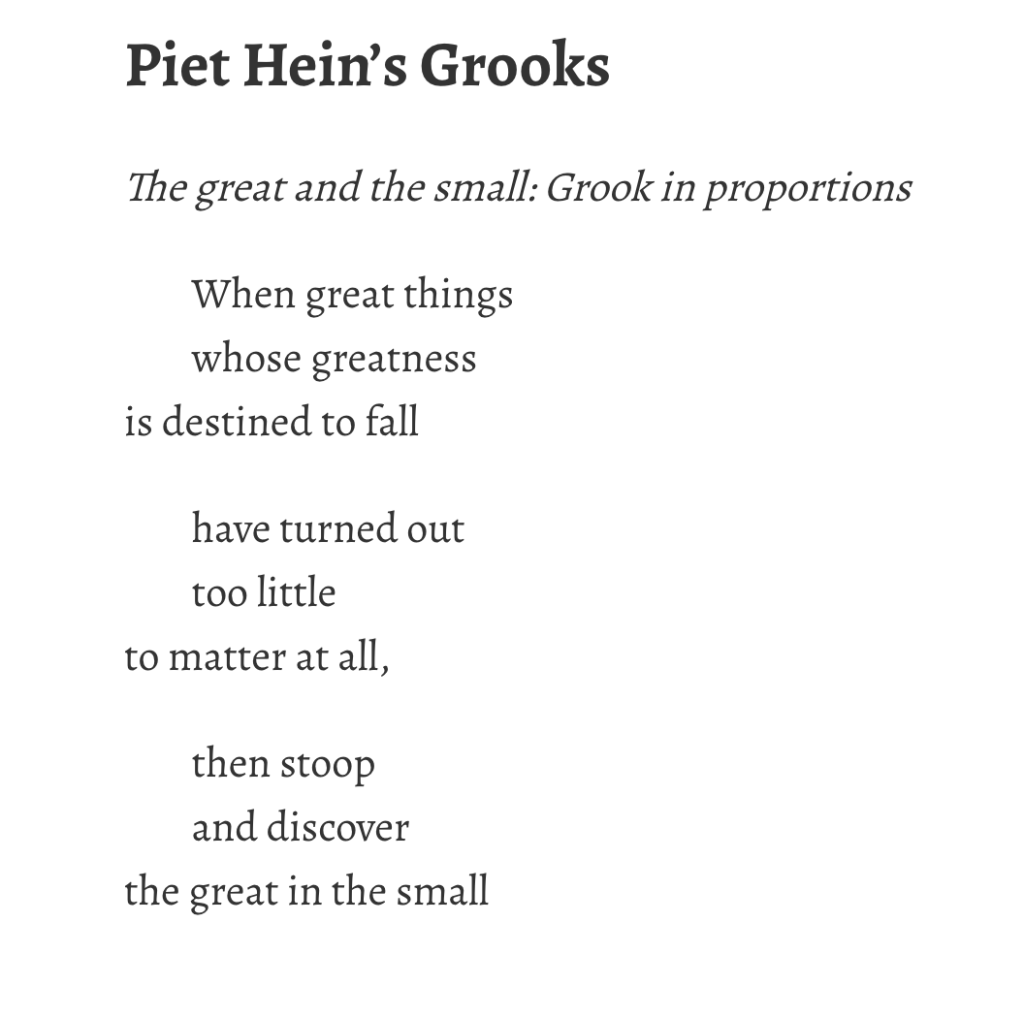

"Stoop and discover
the great in the small"
Here are beach finds.
It was foggy and cold. I practised drawing clouds.
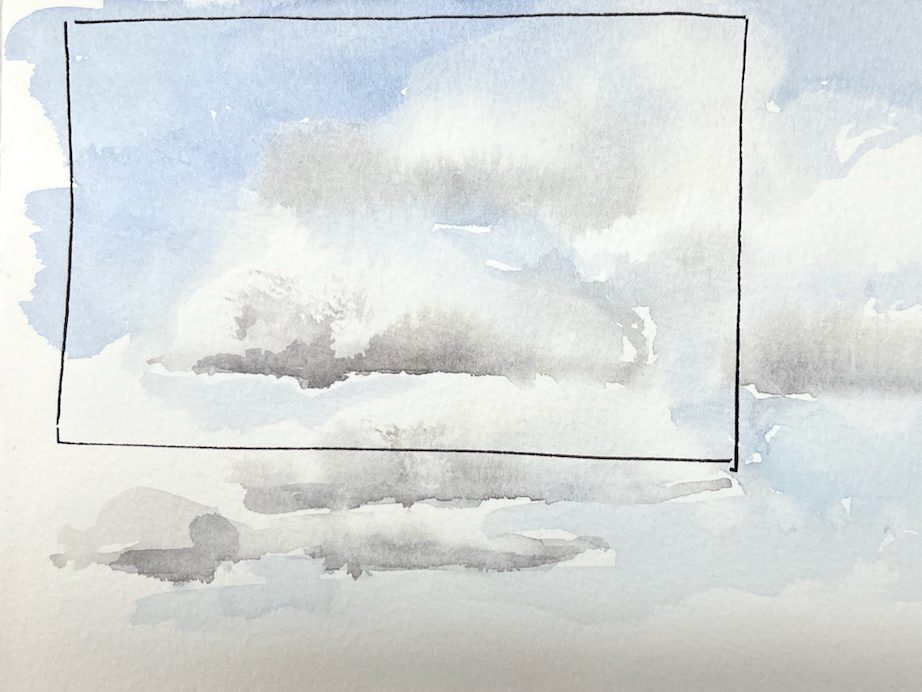
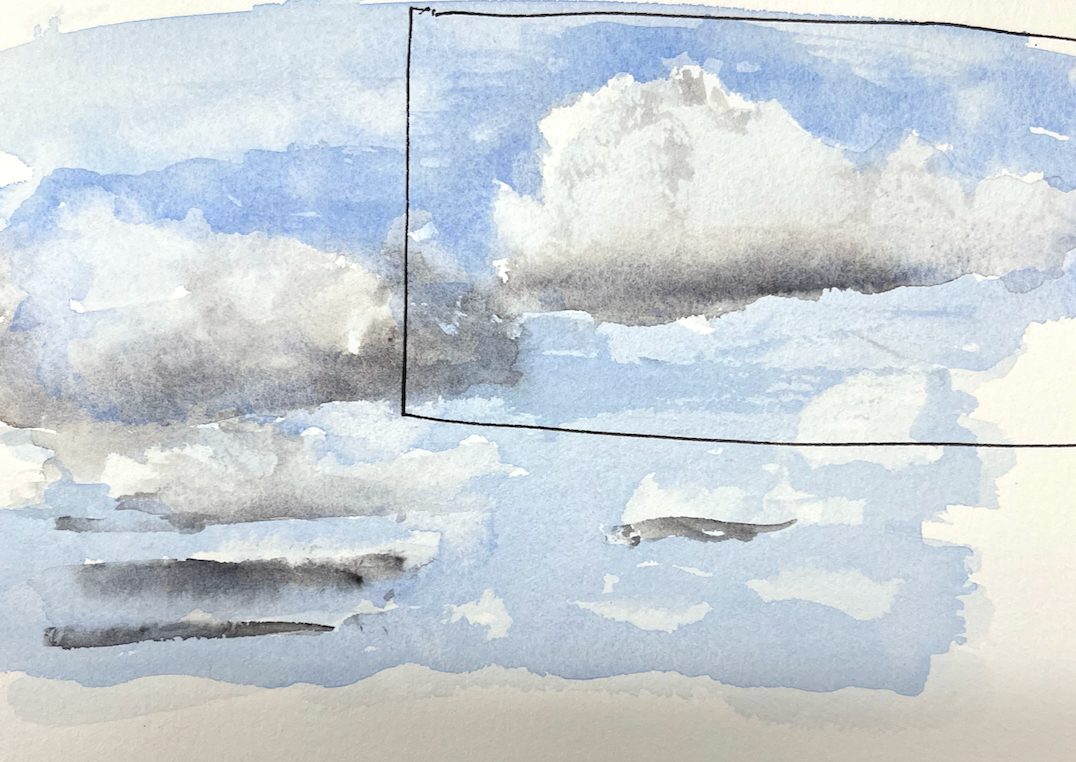
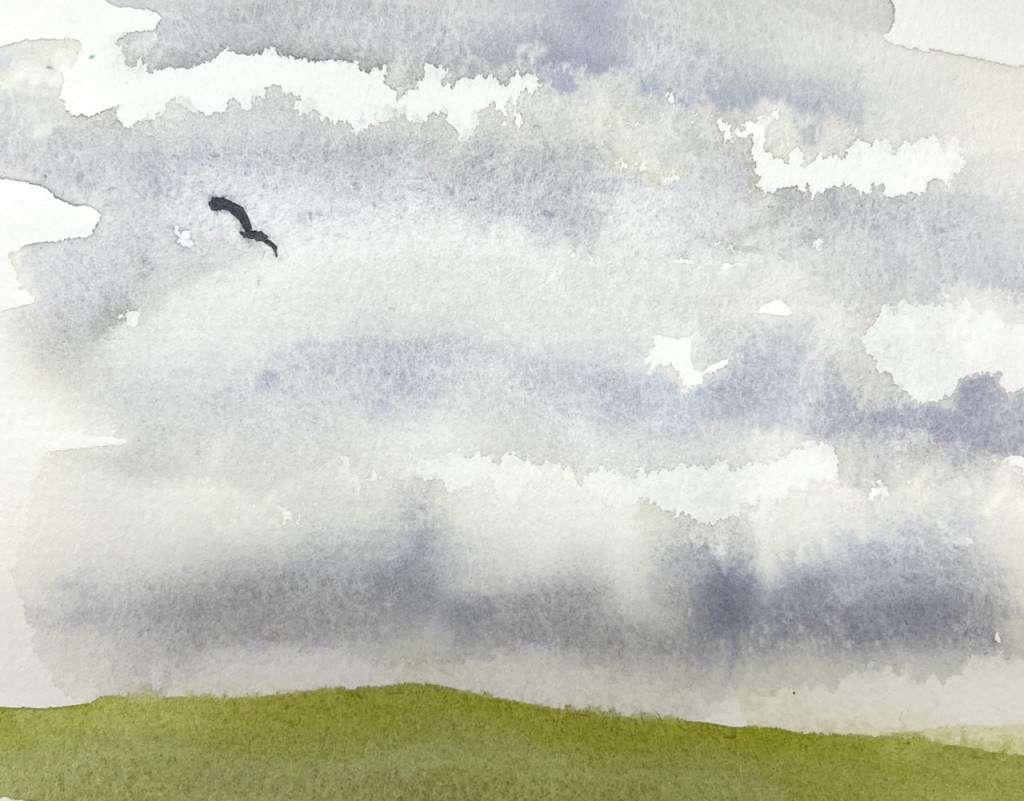
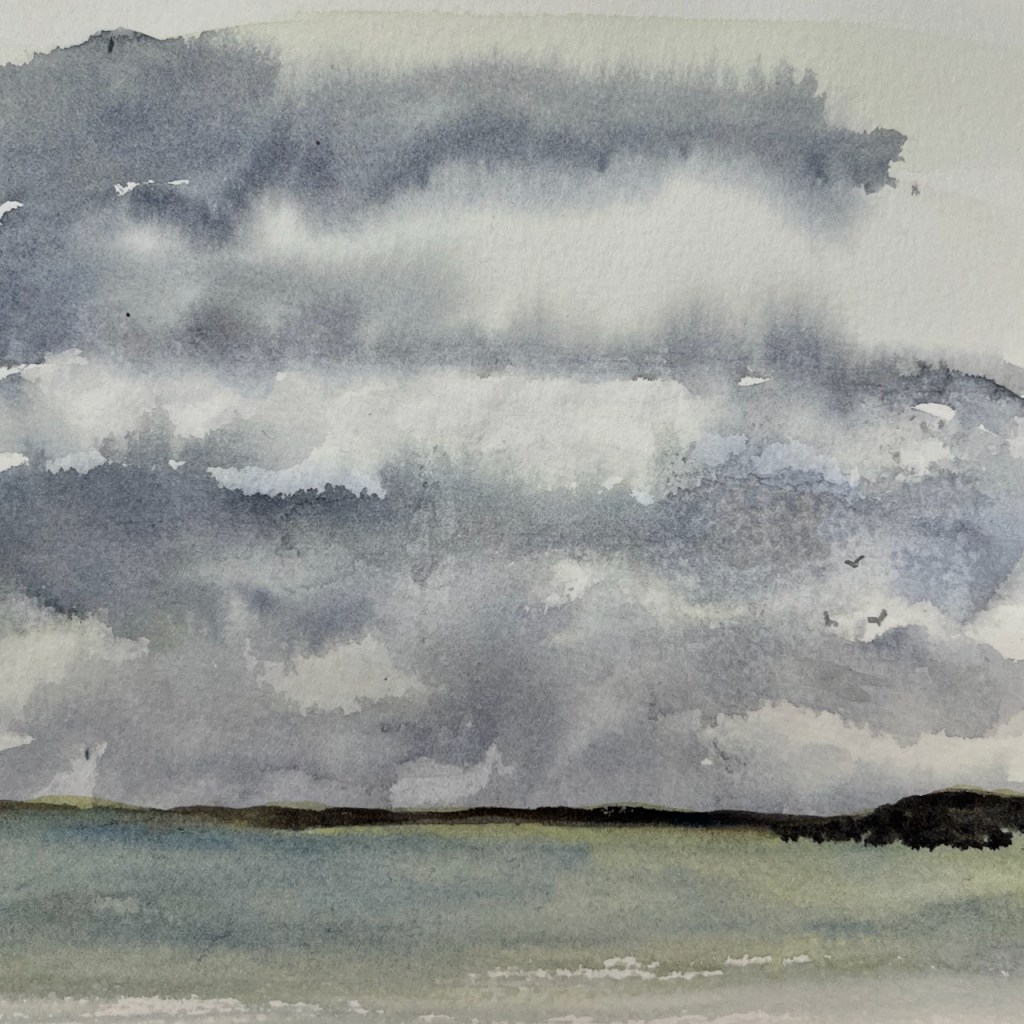
Islands in clouds

I went for a walk.

In the distance on the left is the island of Vaila. Here is Vaila in the fog.
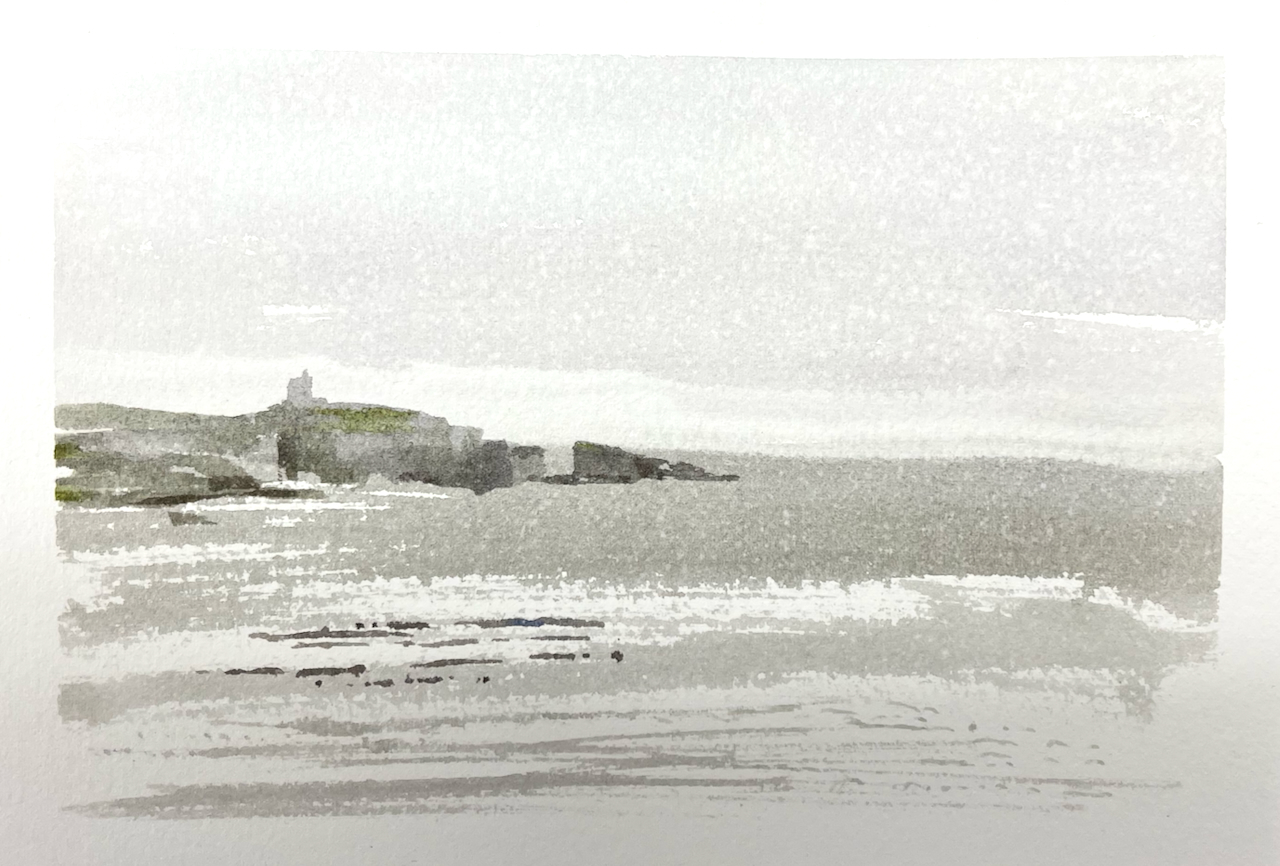
The speckled effect is the result of fine rain on watercolour.
When the sun shines in Shetland, it is magical. Part of the magic is that you know it is ephemeral. When the sun shines in Shetland, you have to get out there, right now. The clouds come quickly. But while the sun shines, enjoy it.

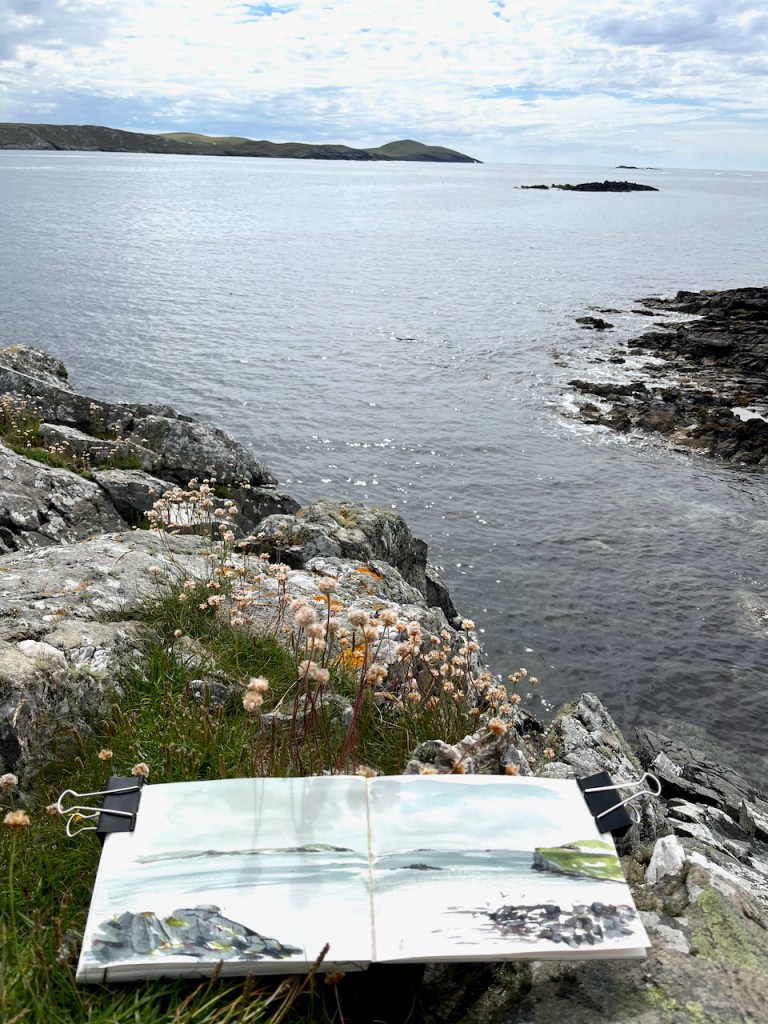
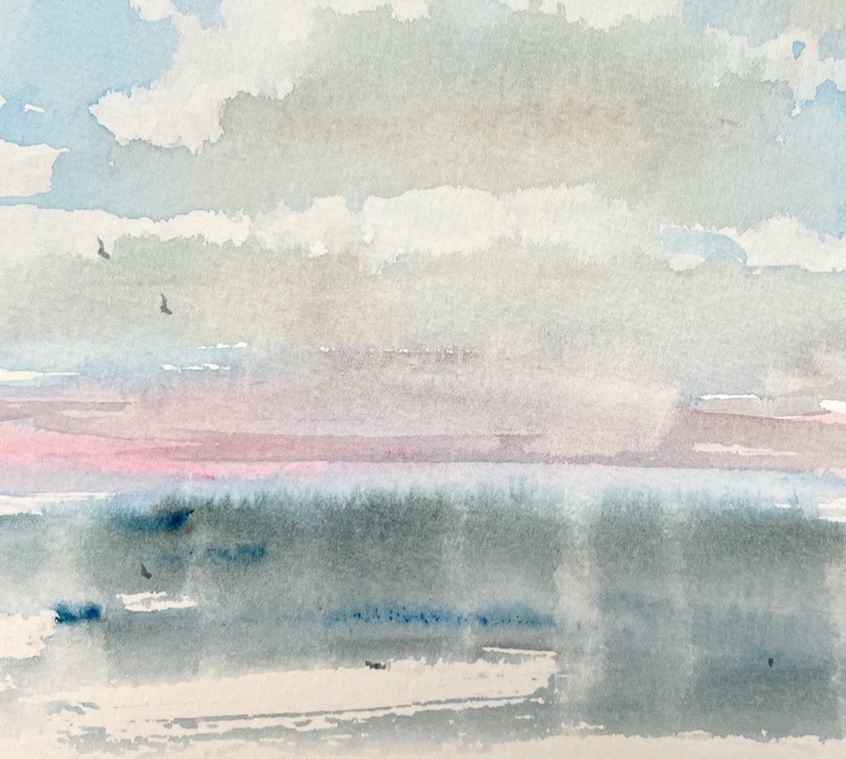


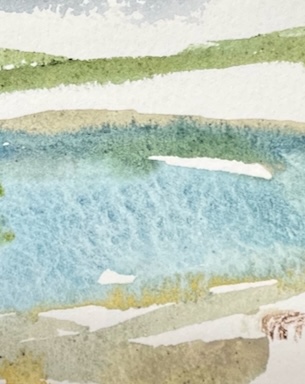
The sun shone on a visit to Hamnavoe. There is a nearby beach called “Minn Beach”. The water is clear and the sand is white.
The light was dazzling. The water was cold: just over 10 degrees C. Swimming, I could see the grains of sand on the sea bed, perfectly clearly. As I swam on the surface of the water, it was as if I was flying over the sand. Except for the cold.
Minn Beach is on West Burra. See map below.
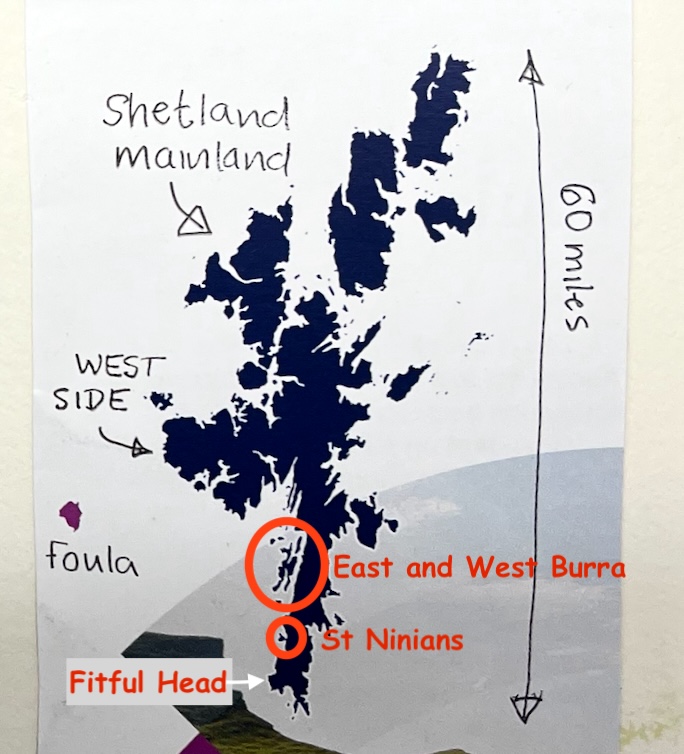
Further south is St Ninians, an island at the end of a long sand tombolo (sand bridge).
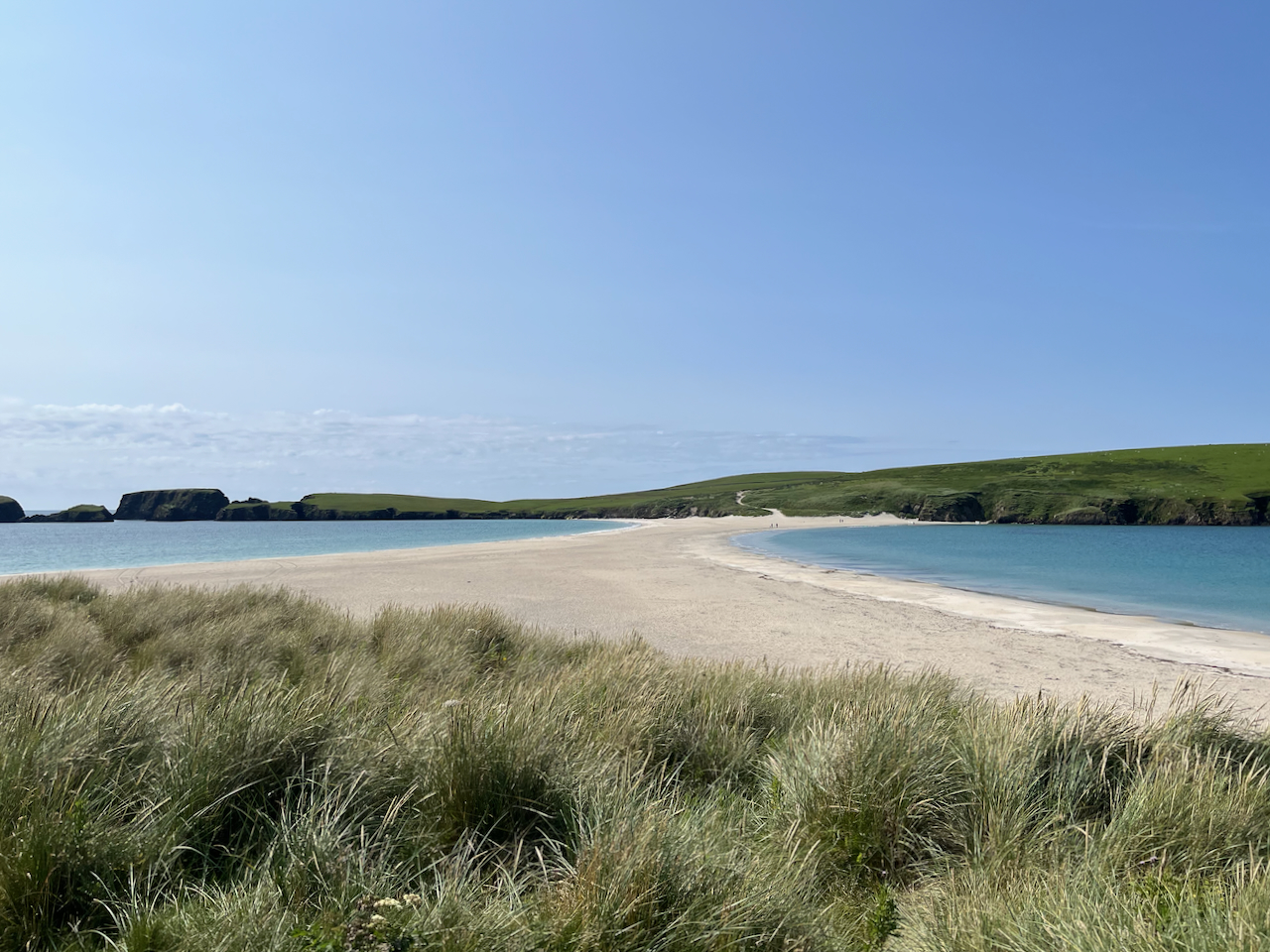
From the island, sheltering from the wind in the lee of a wall, I sketched Fitful Head.
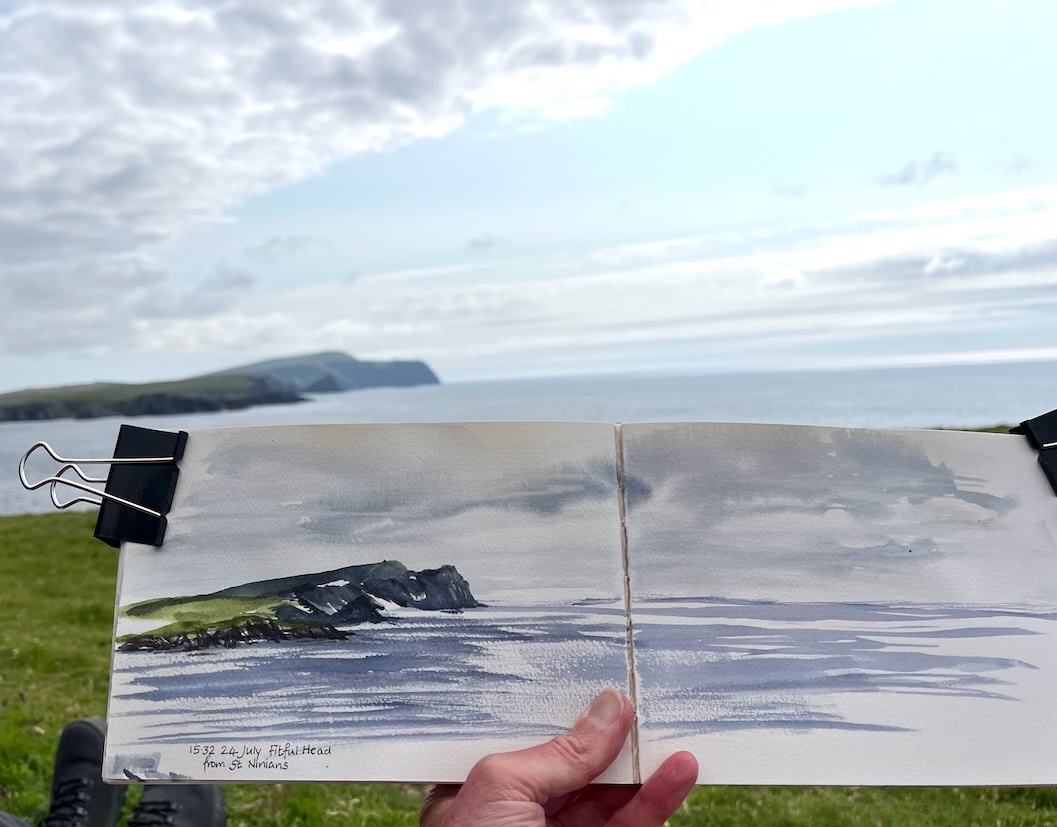
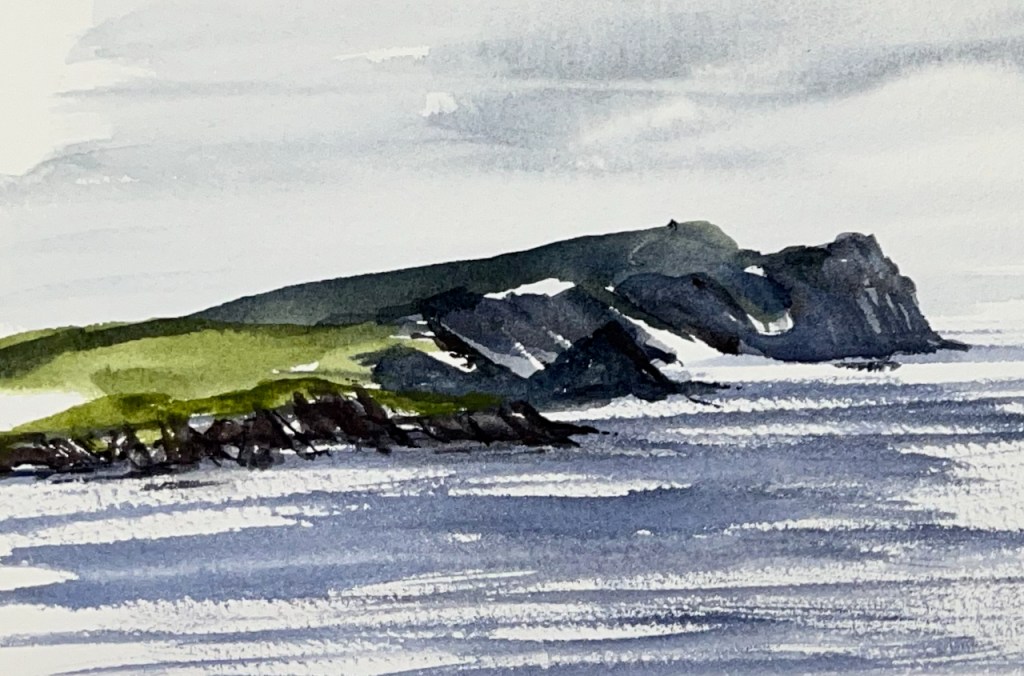
Even though the wind shifts the pages and disrupts my lines, even when the rain speckles my colours and blurs the clean edges I drew, even though the view changes by the minute and I find it impossible to catch the glory of the light and the magnificent shape of the land, even though my sketchbook is small and my skills are limited, despite all those things, I think it’s always worth having a go at drawing. The pictures I draw remind me of being there. Of the wind, the rain, the changing clouds, the glorious light and the vast, curving headland.
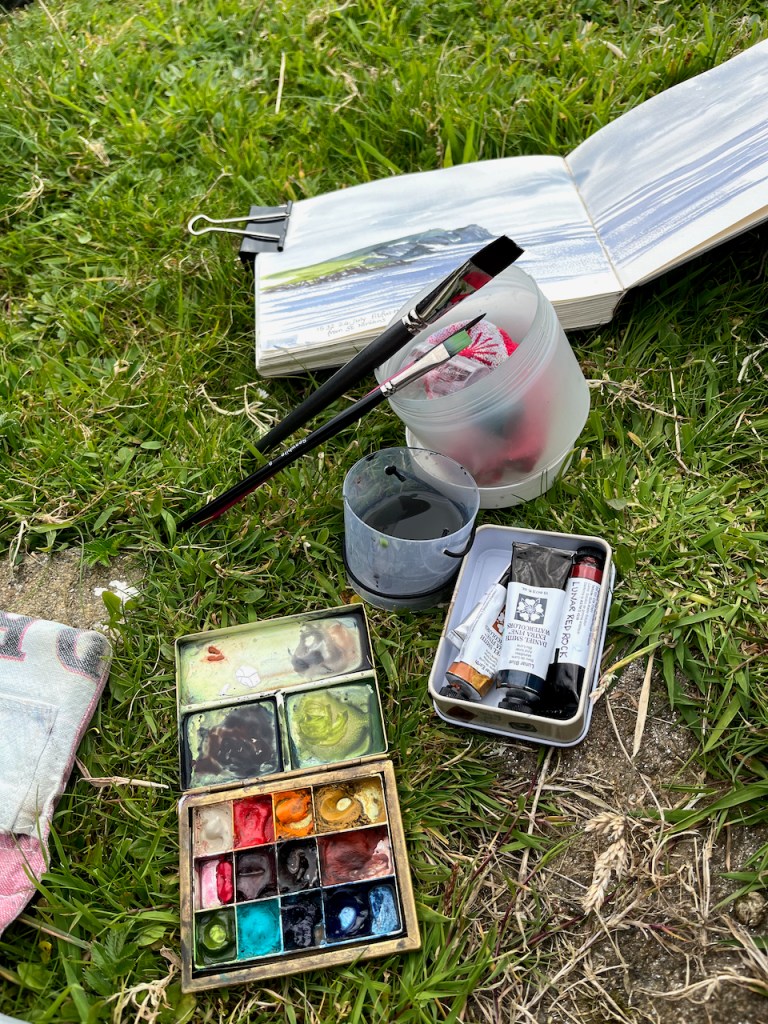
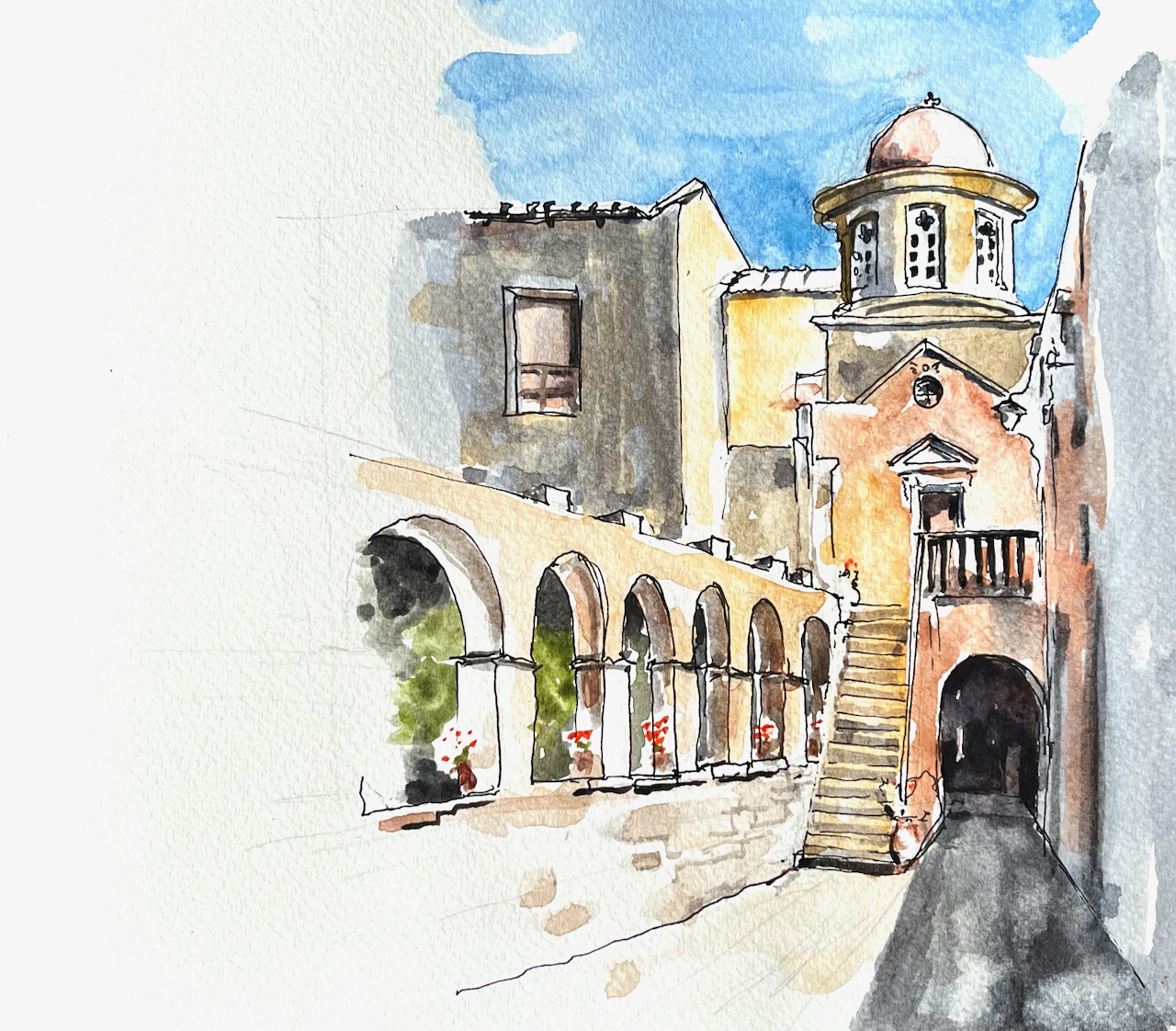
Here are a selection of sketches made in Crete. The sketchbook is Jackson’s Art Supplies’ own brand, 160gsm watercolour paper, cotton blend, about 8″ x 9″.
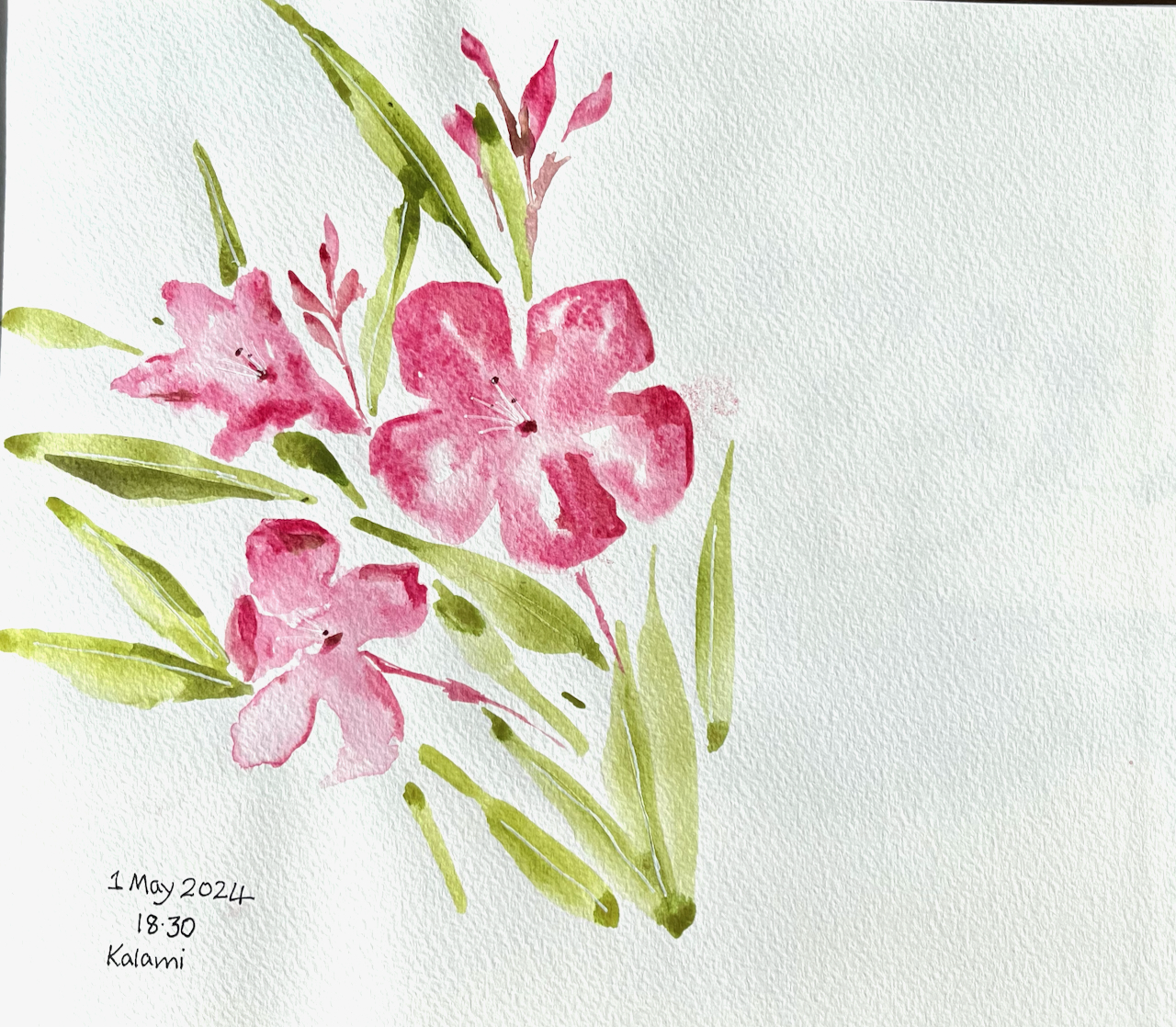
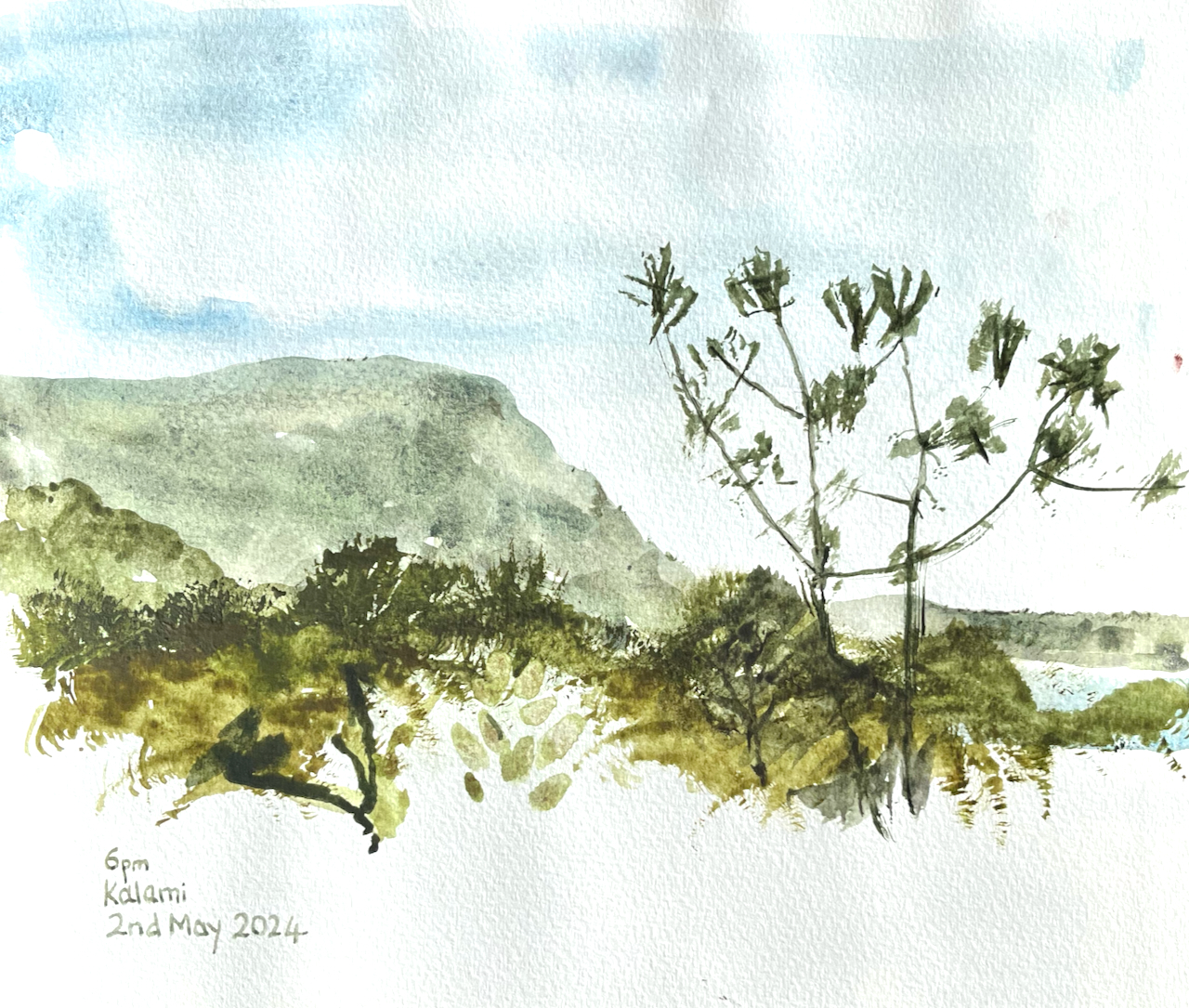
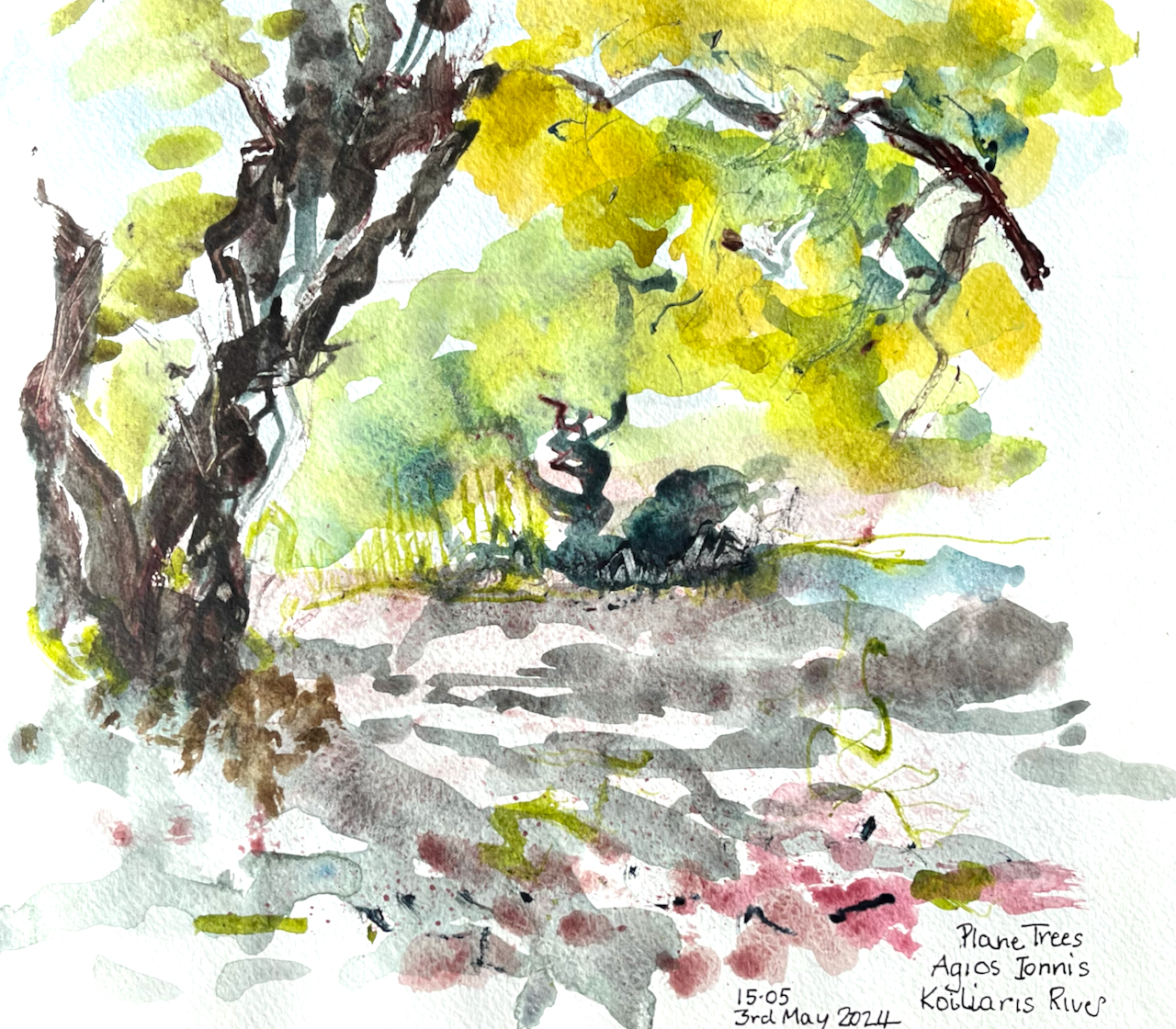
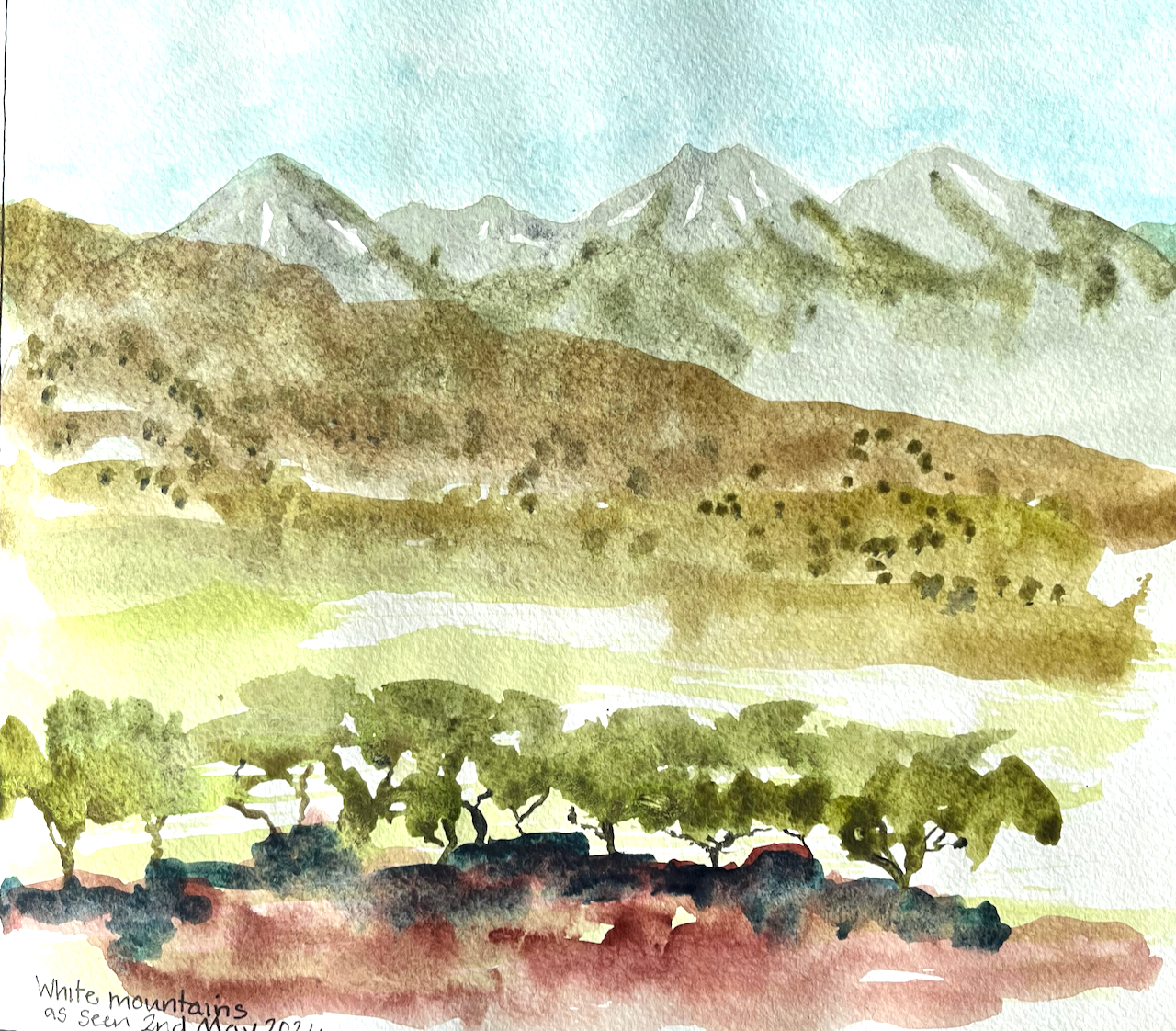
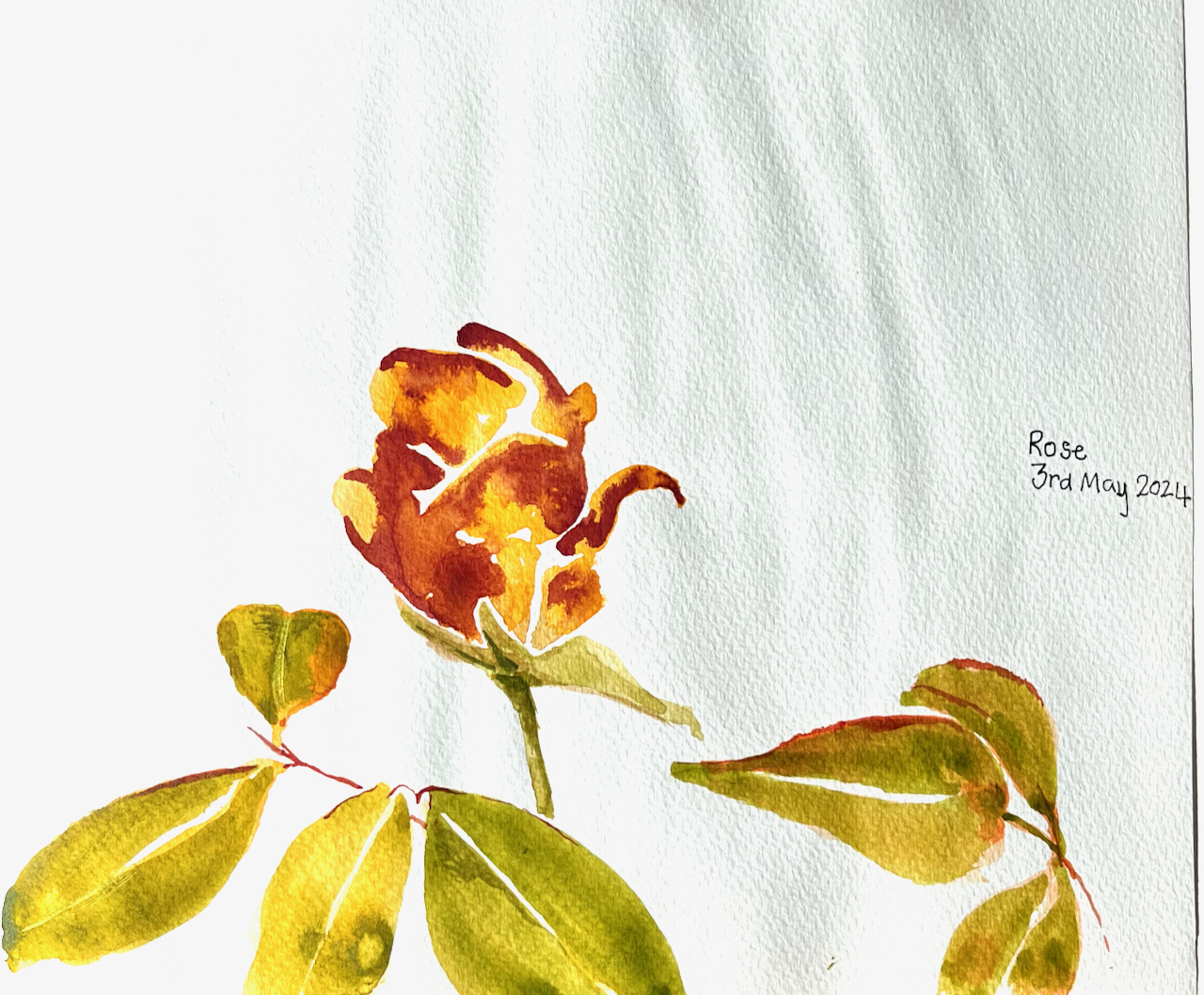
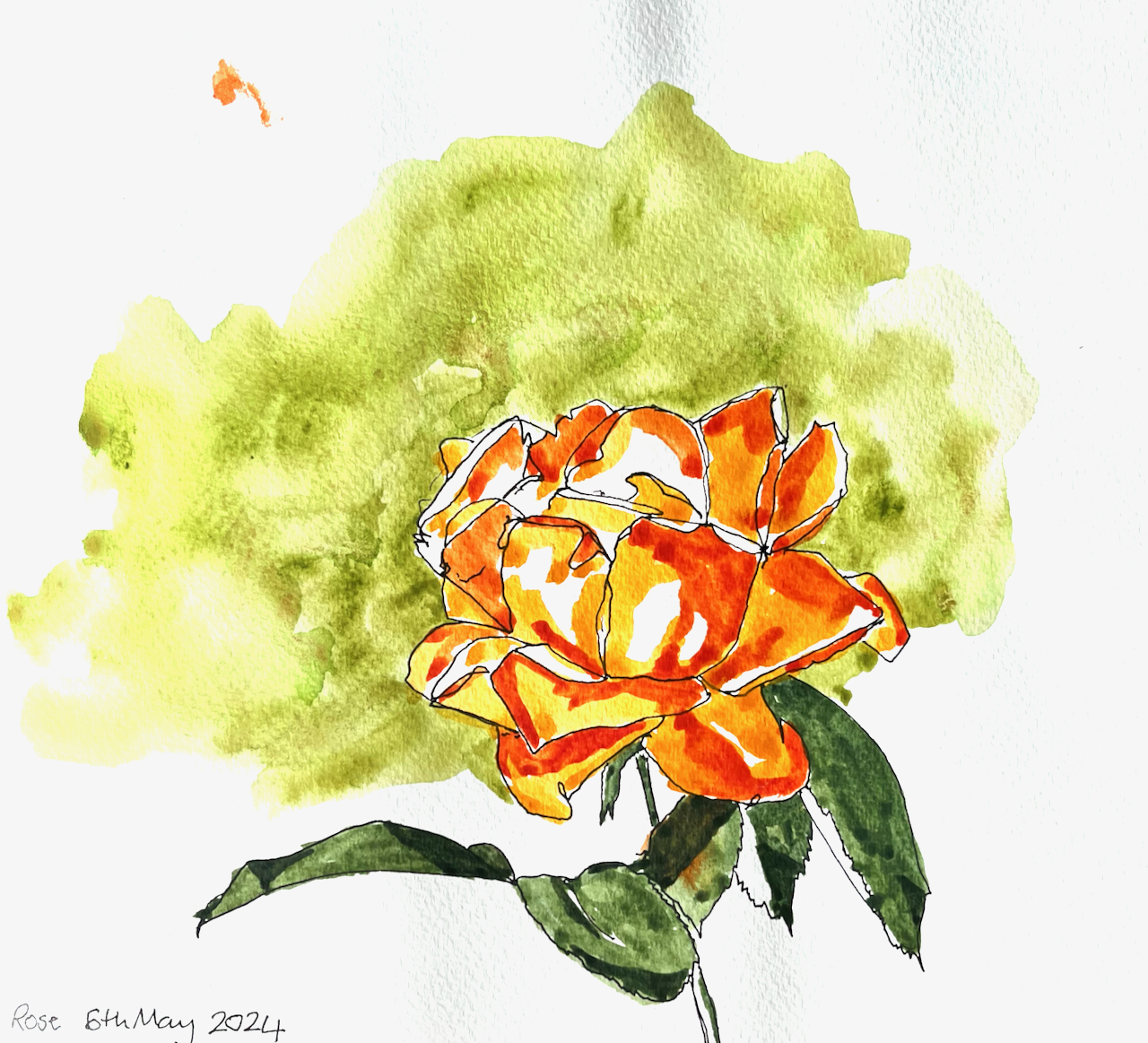
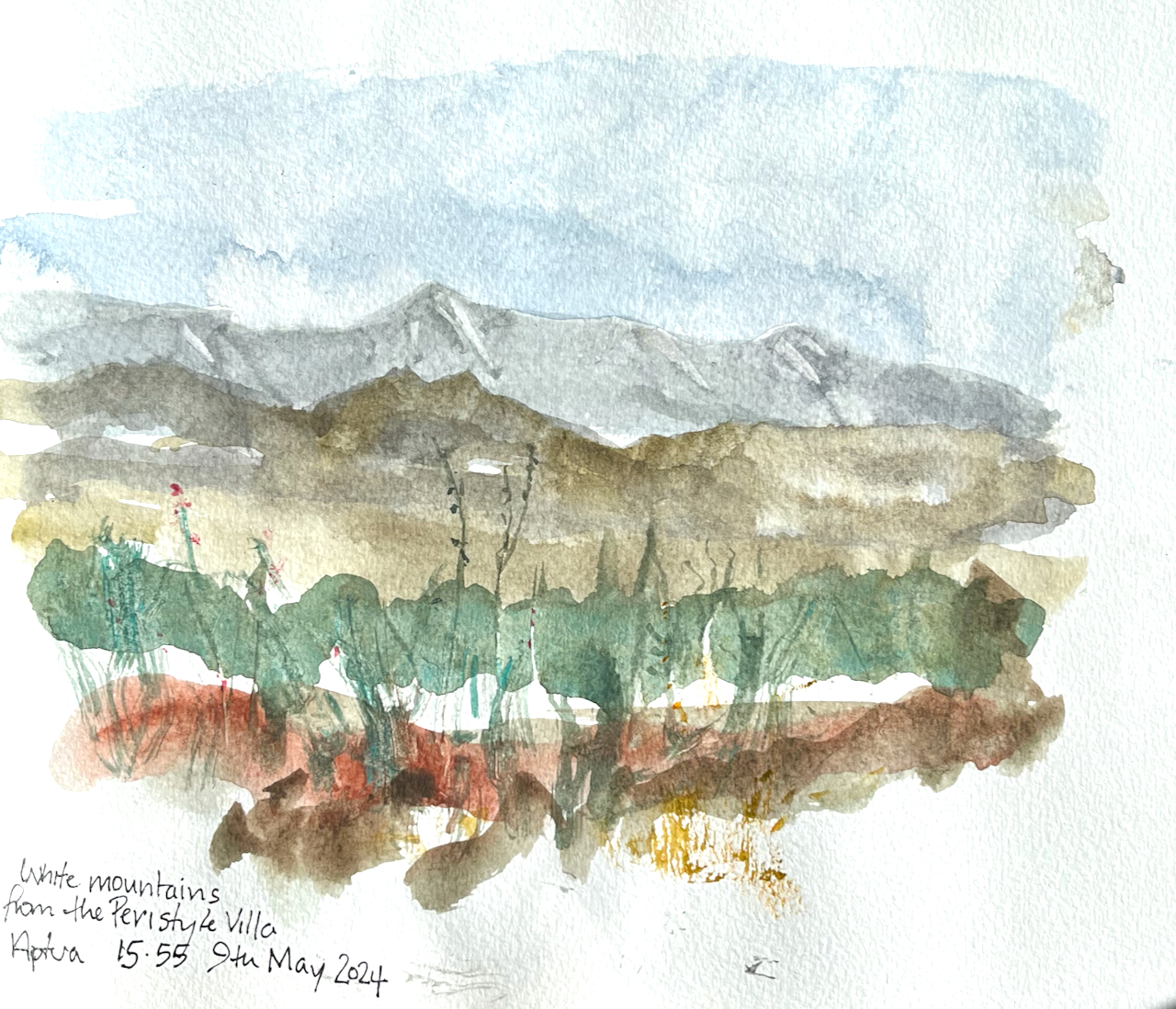
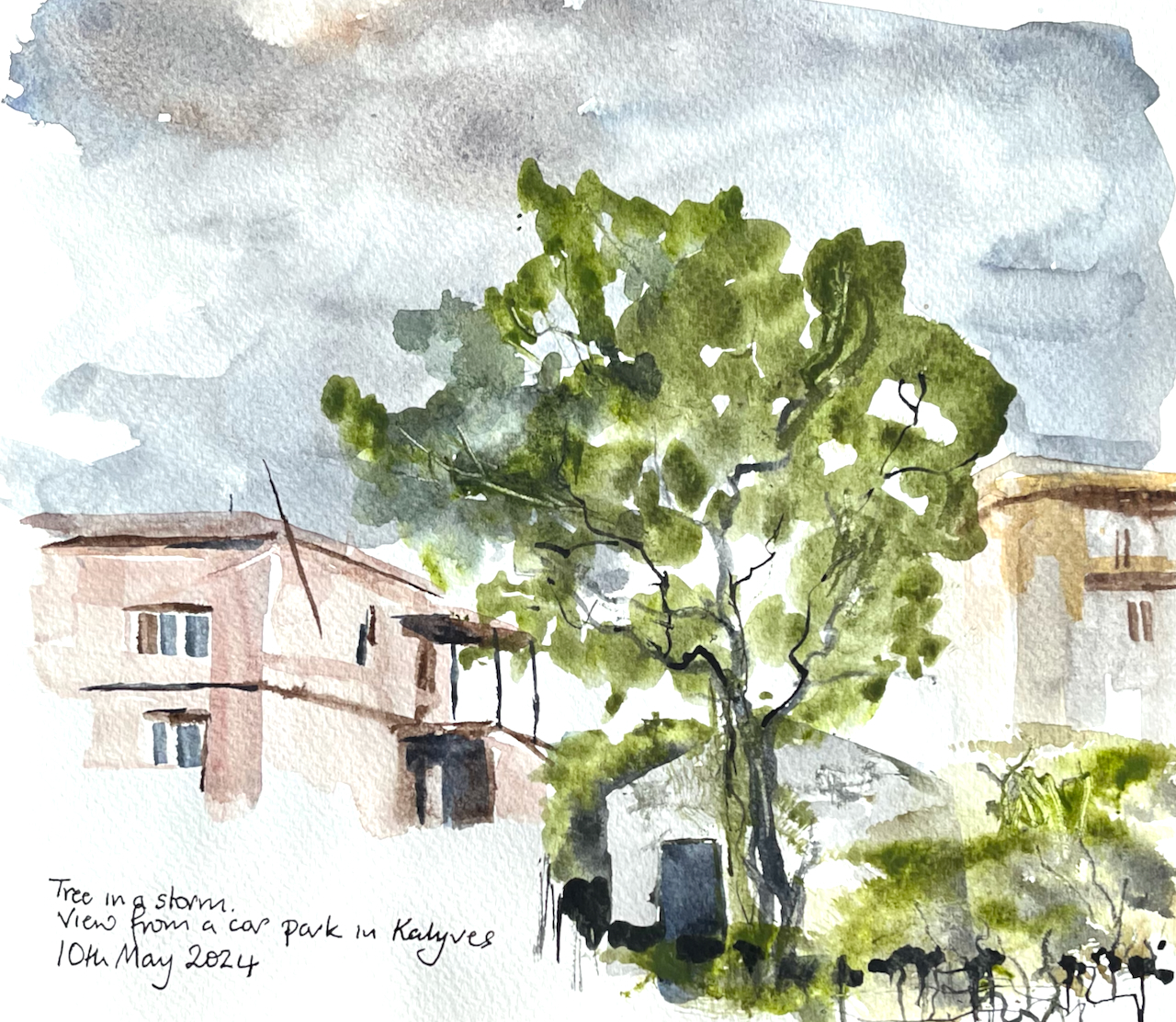
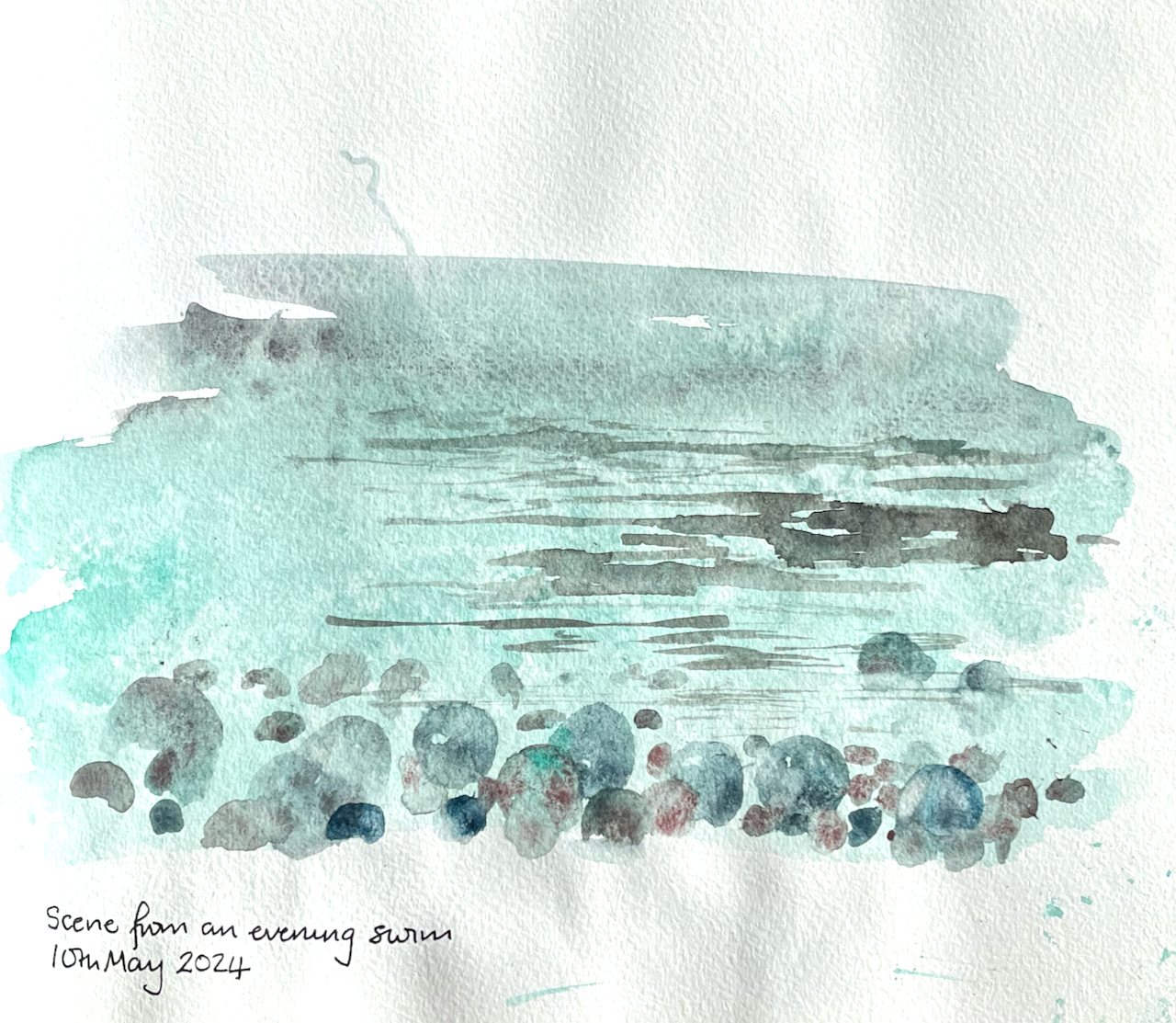
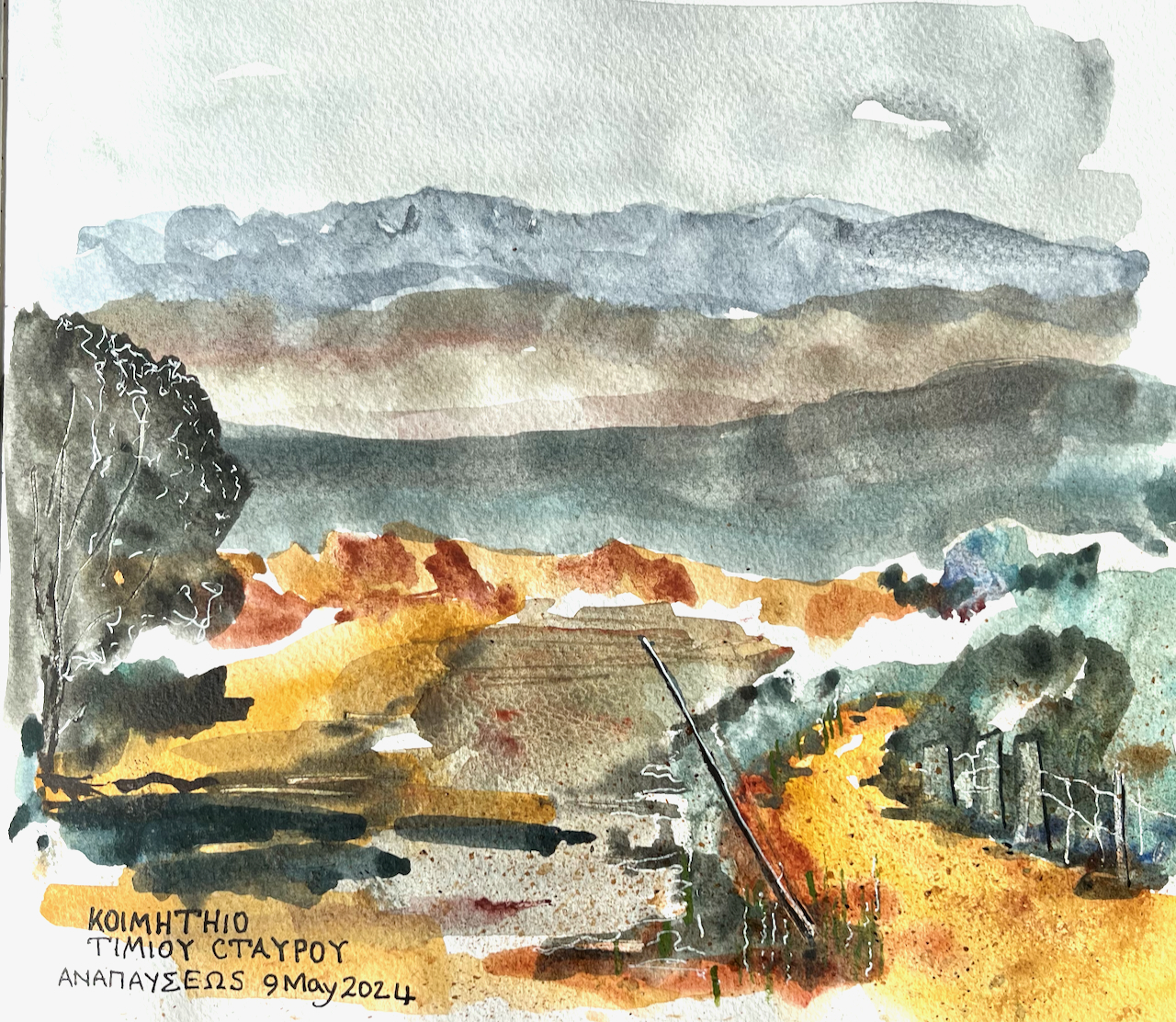
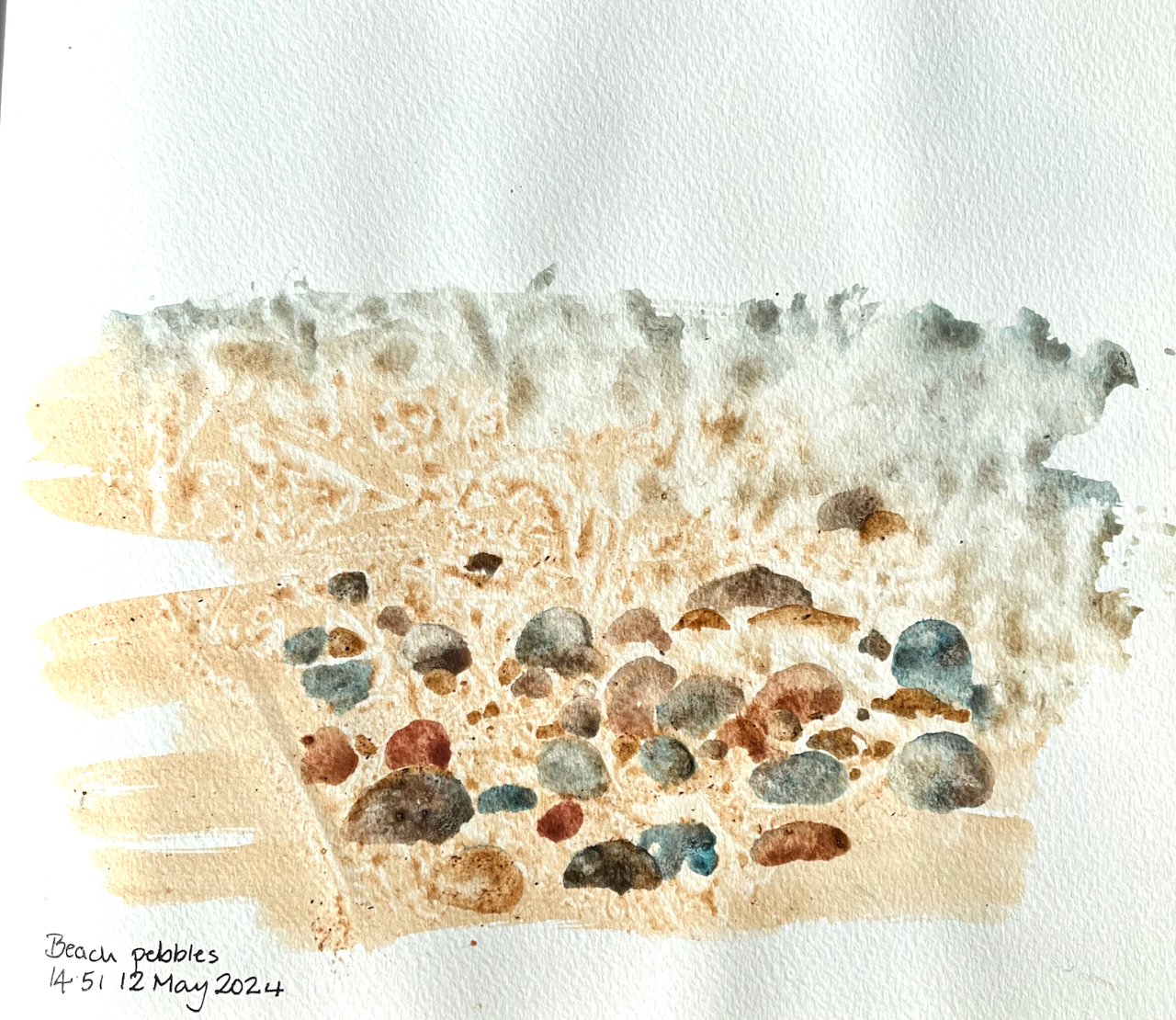
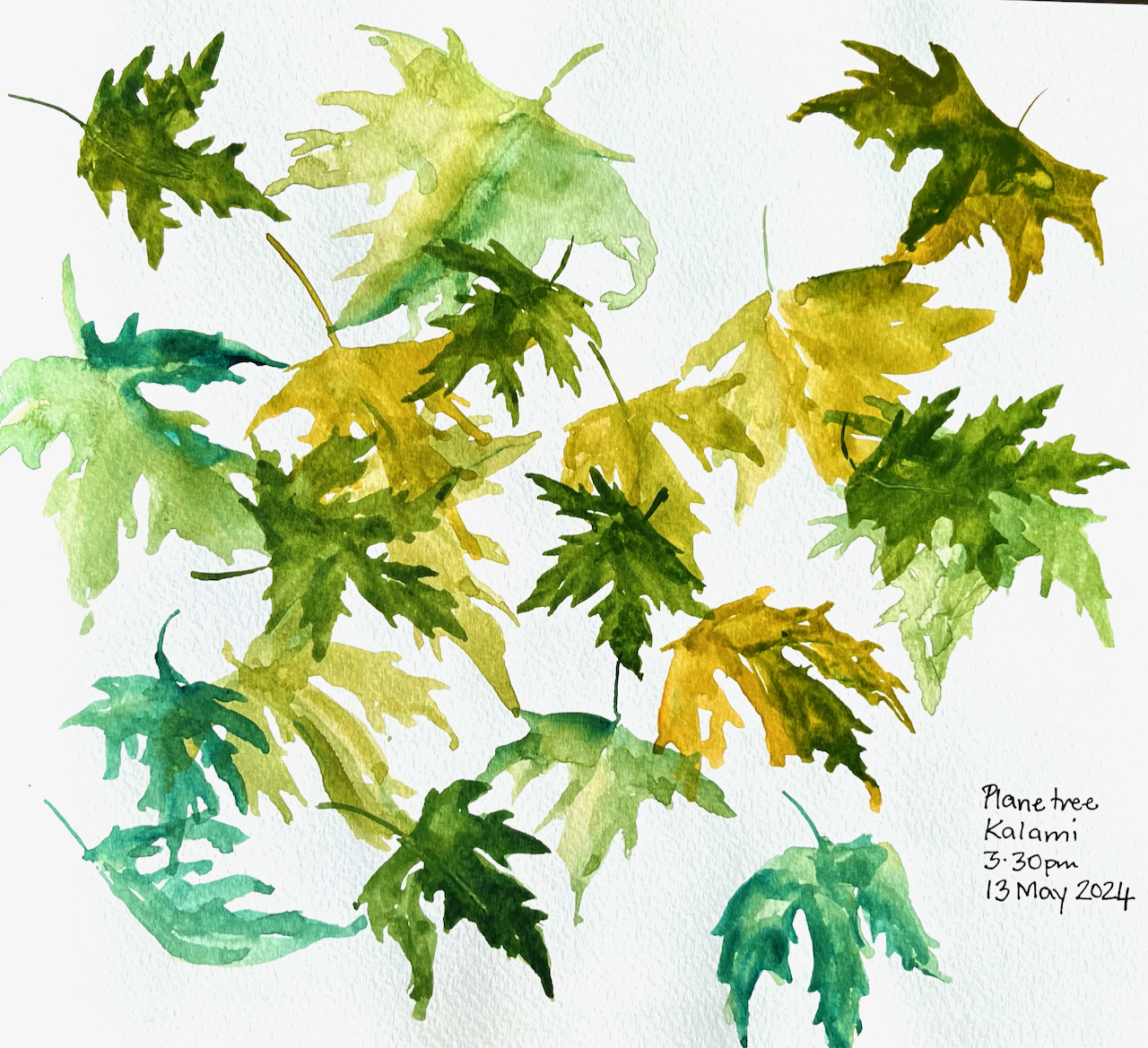
I used some of the local earth as pigment, to make a watercolour, using Schmincke watercolour binder.
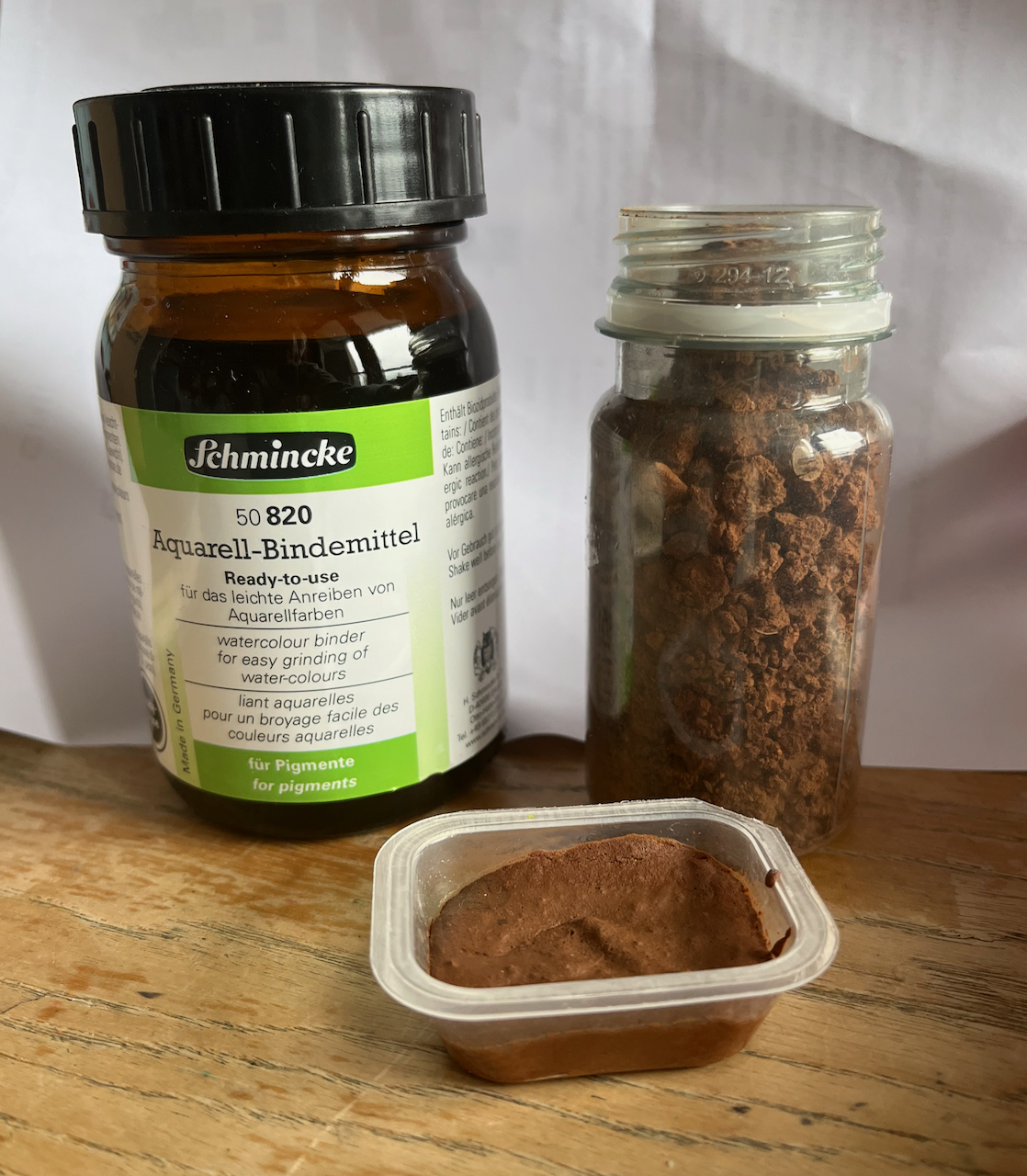
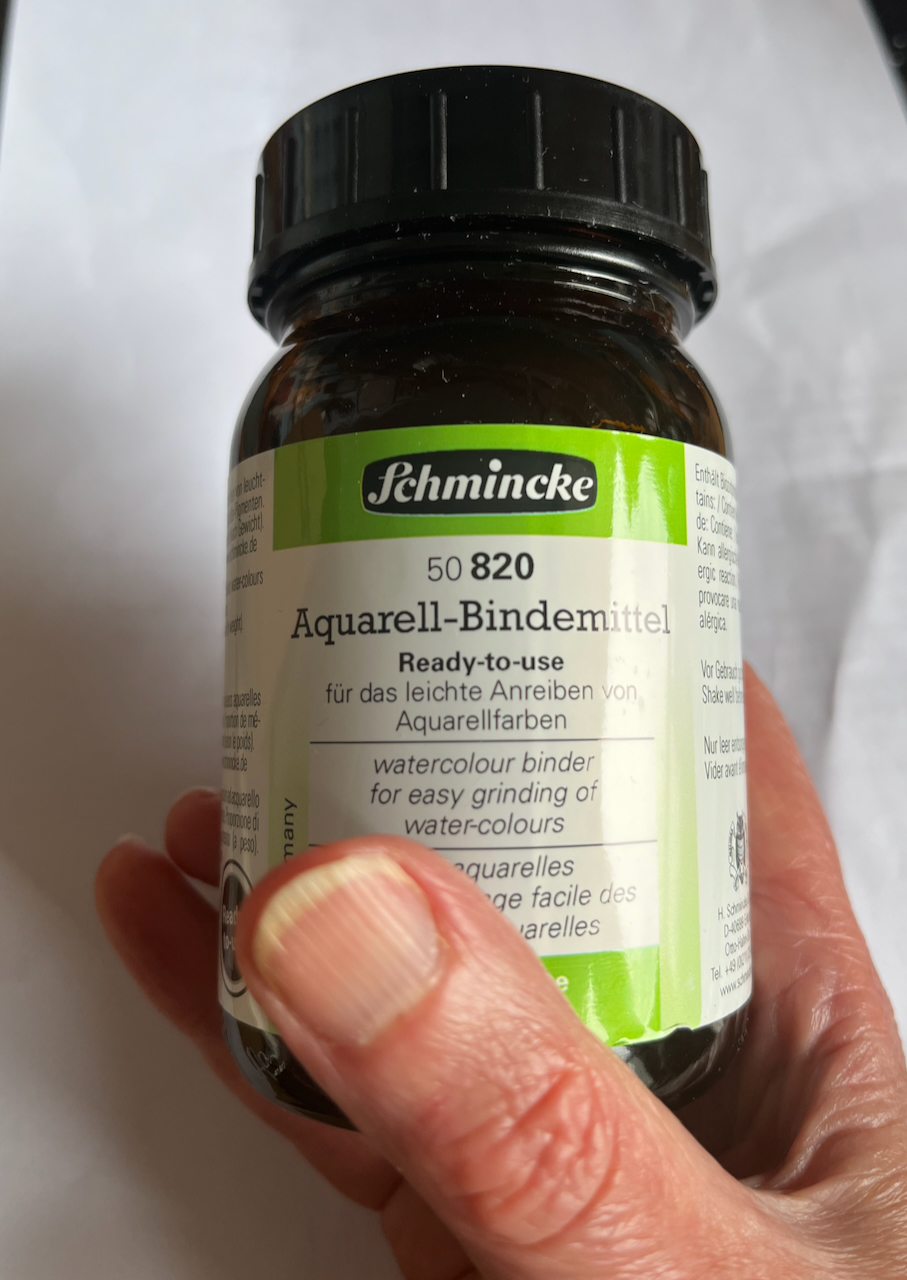
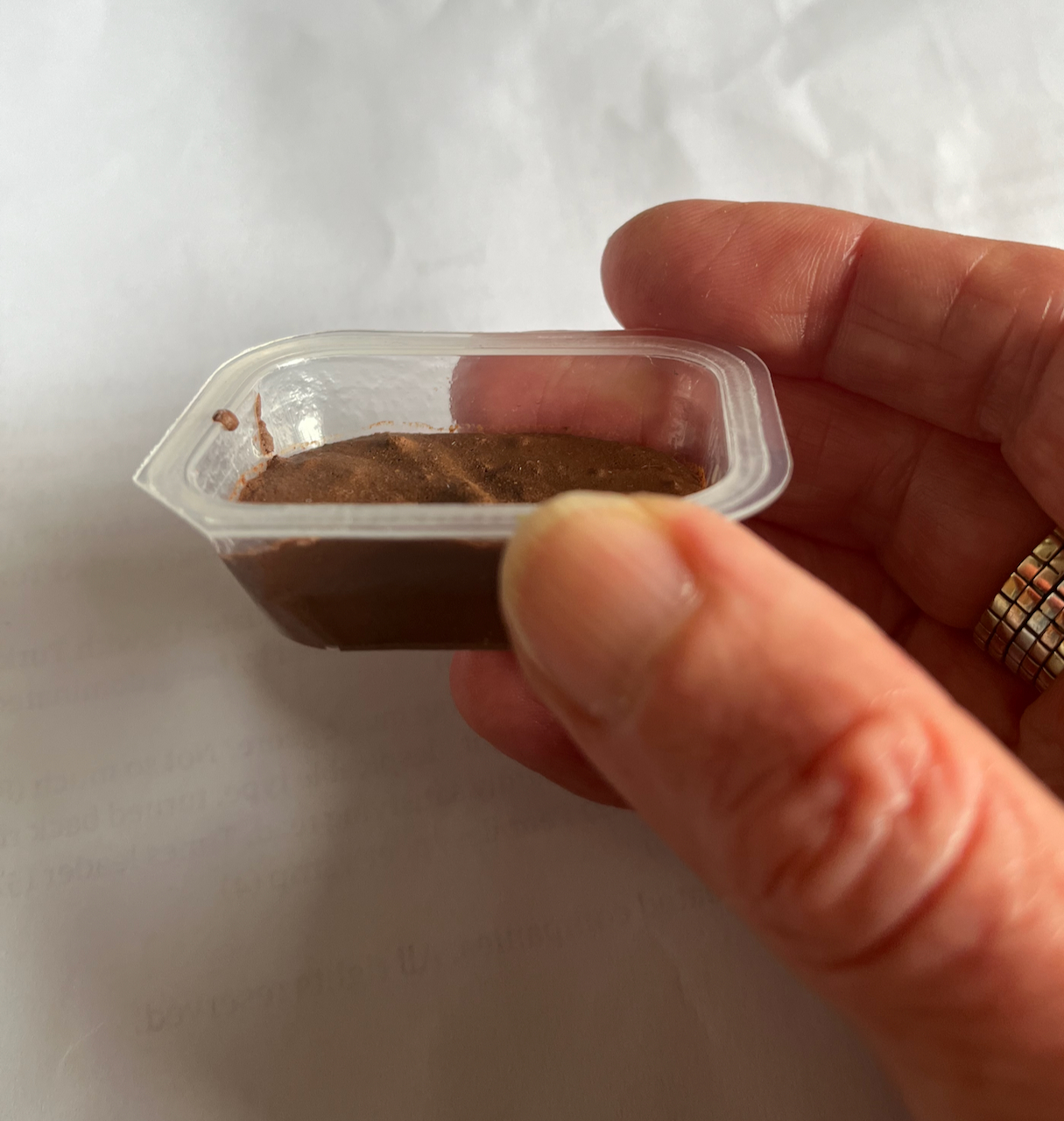
I ground the earth using a stone, breaking it up to make a powder like talcum powder. It still had bits in, but I managed to separate it by shaking, and scooped most of the bits off the top with a teaspoon. Then add an equal quantity, by volume, of the binder, and scoop into a suitable receptacle. It can be used immediately: it has the consistency of paint from a tube. Or. leave it to dry, then it’s like a watercolour pan. The “suitable receptacle” here is an empty butter portion container.
The watercolour works amazing well. It is a rich red-brown colour. Ideal for painting the surrounding scenery.
You can see it, for example, in this picture:
Here is a flick through the sketchbook:

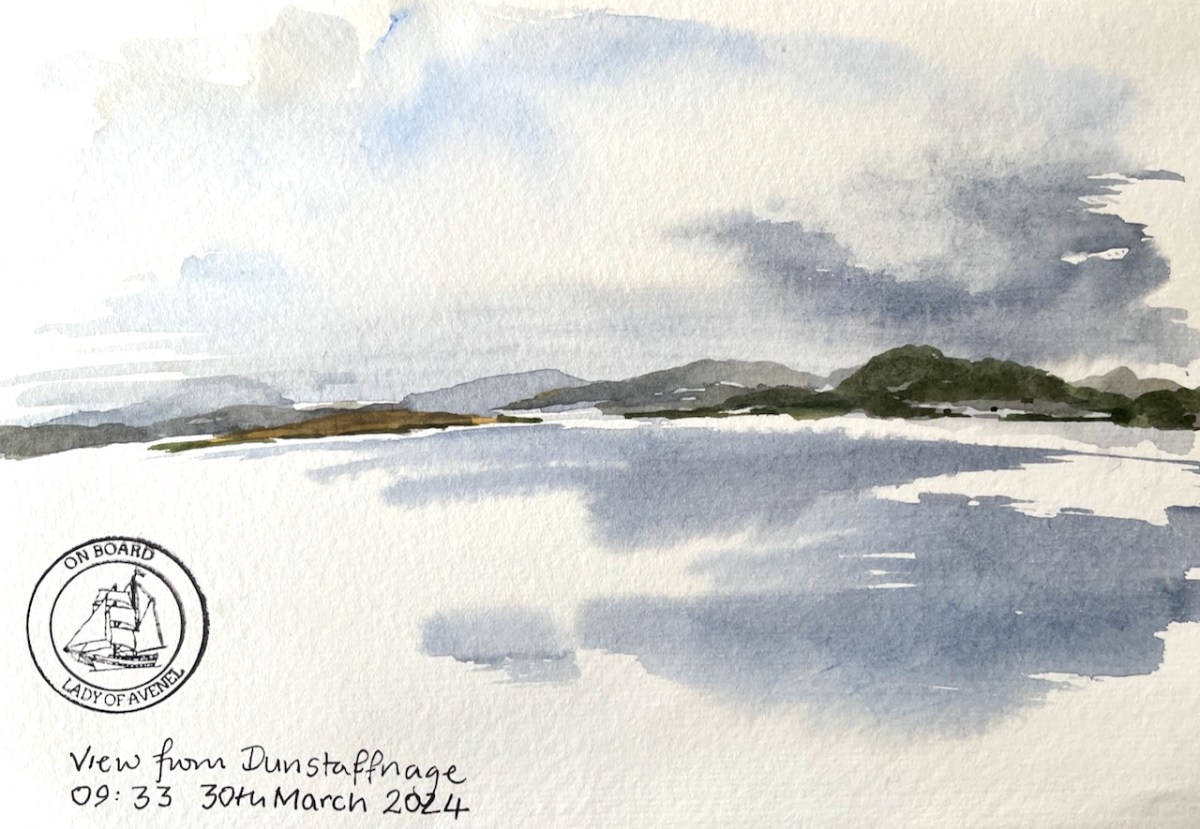
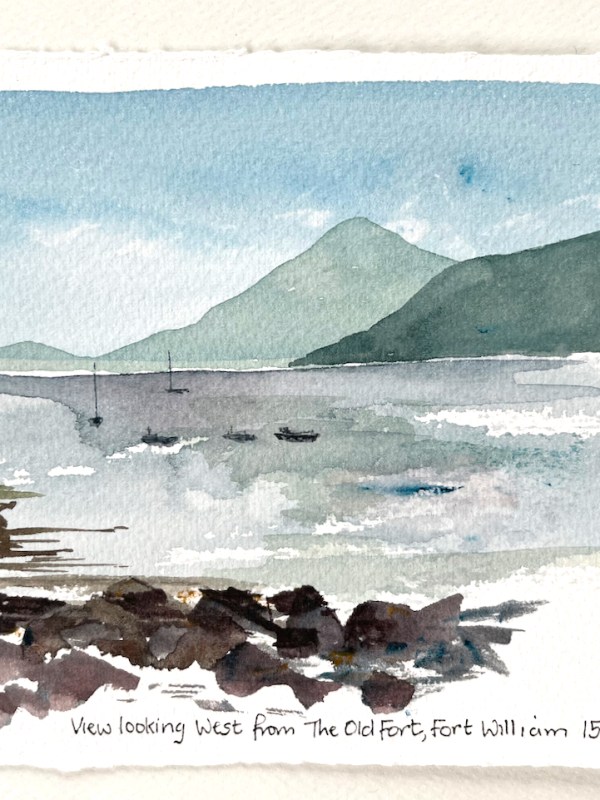
Here’s a view from the ship”Lady of Avenel”. She which was at the Dunstaffnage Marina, Oban, at the time. This is a quick sketch done on thin “Amatruda” watercolour paper, sent as a postcard. It is the view looking north, towards Fort William. See the rain clouds coming!

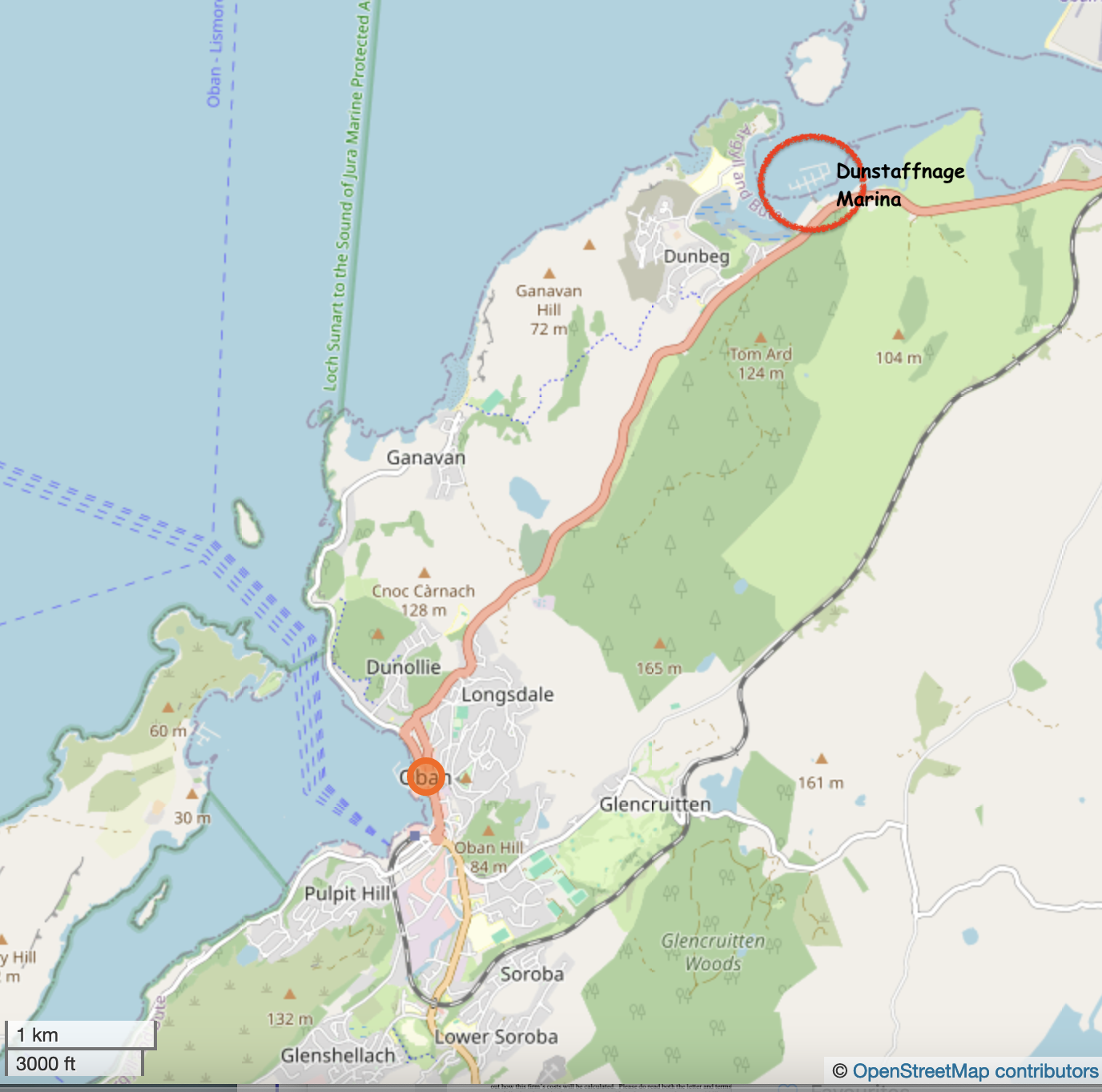
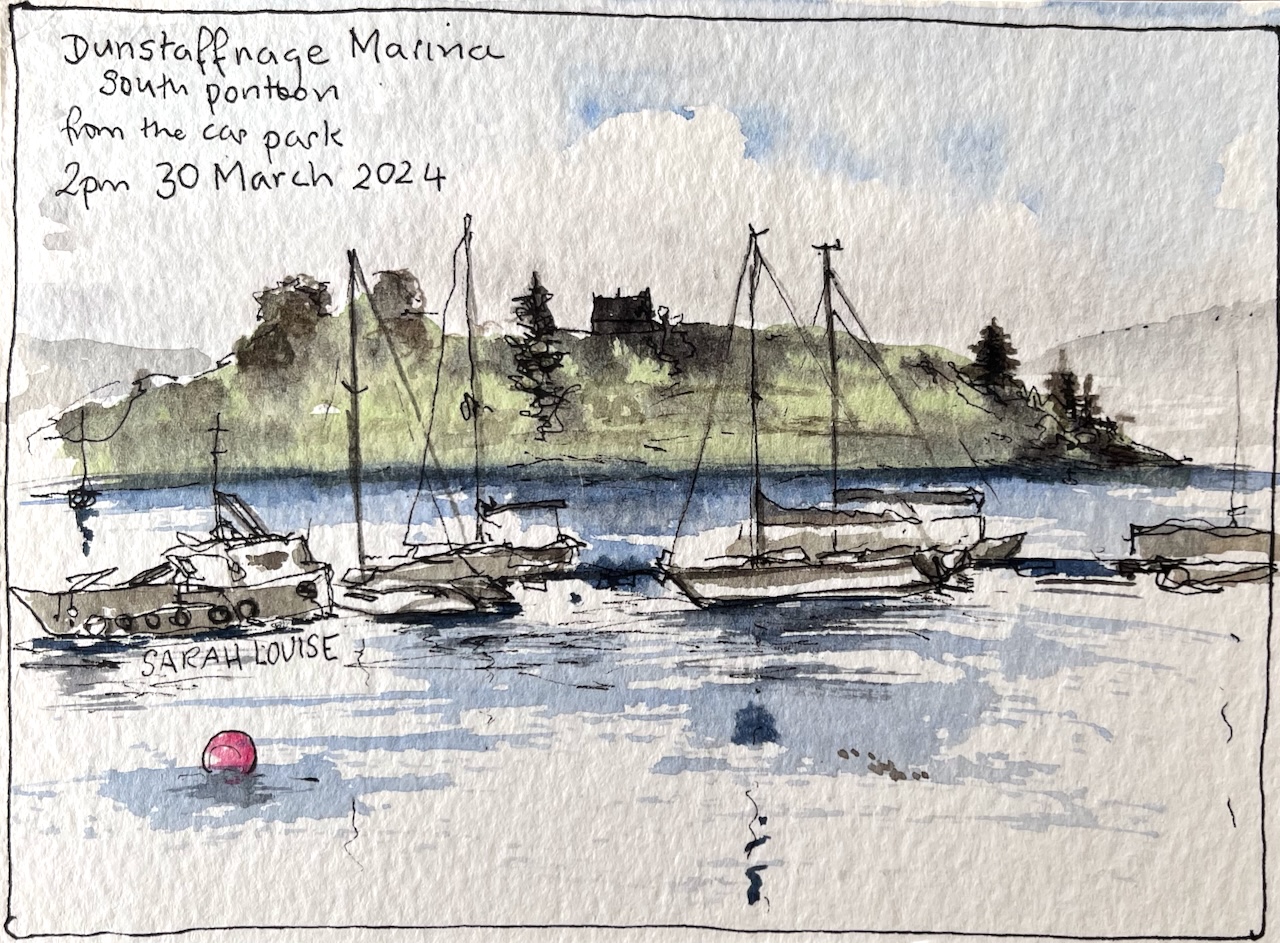
Here’s a quick sketch of the marina.
Later I visited the lovely island of Kerrera.
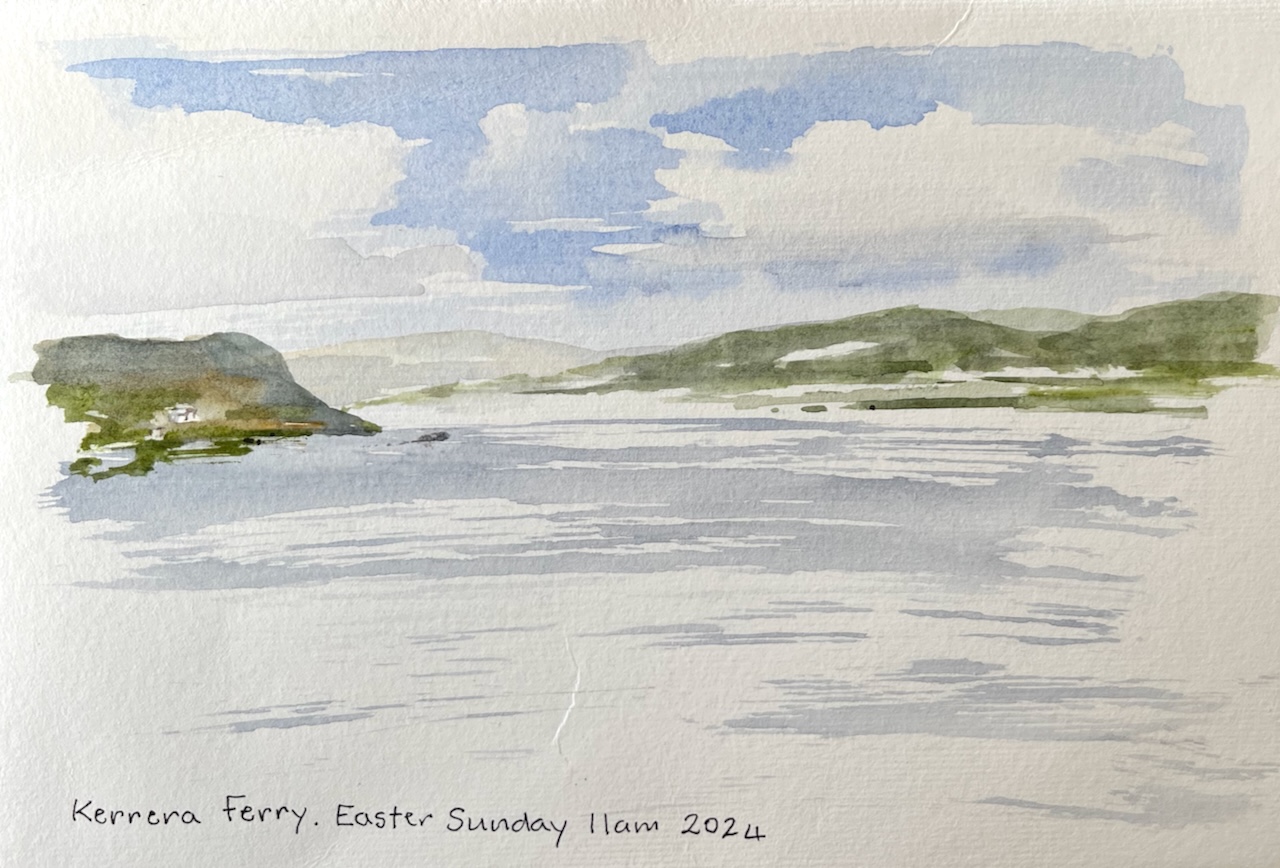
These landscapes are so inspiring! I’ll be leading a “Sketch and Sail” adventure on the Lady of Avenel in October 2024, together with Alice Angus. We’ll start and finish in Oban. Would you like to join us? Have a look at this page and get in touch!
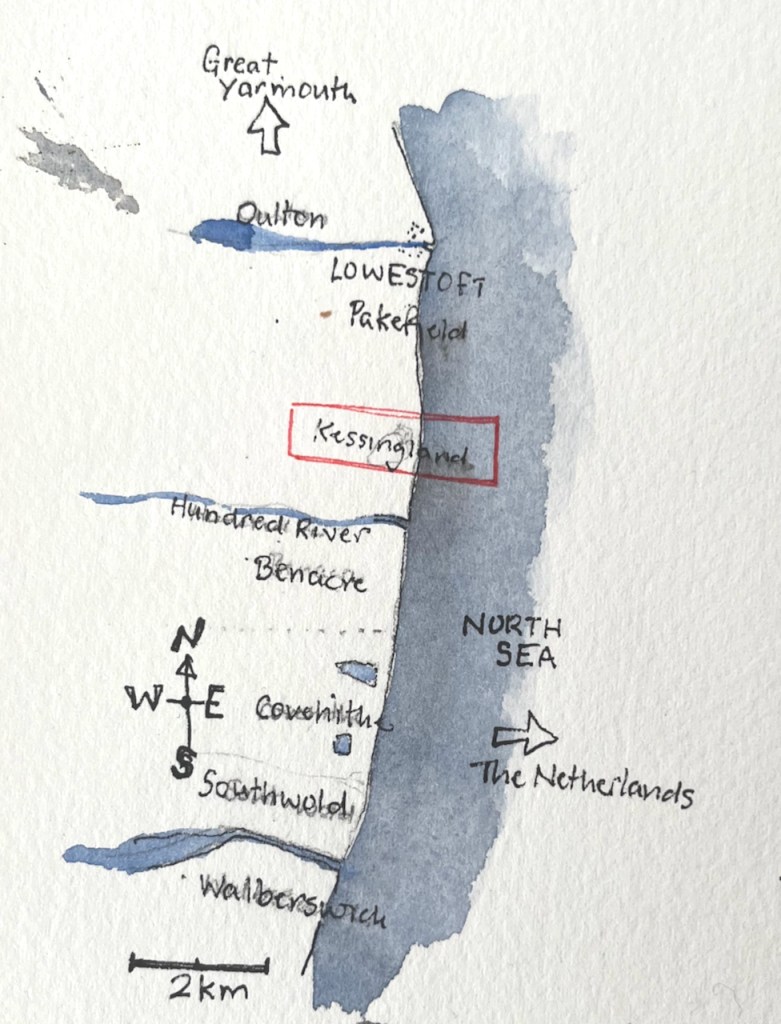
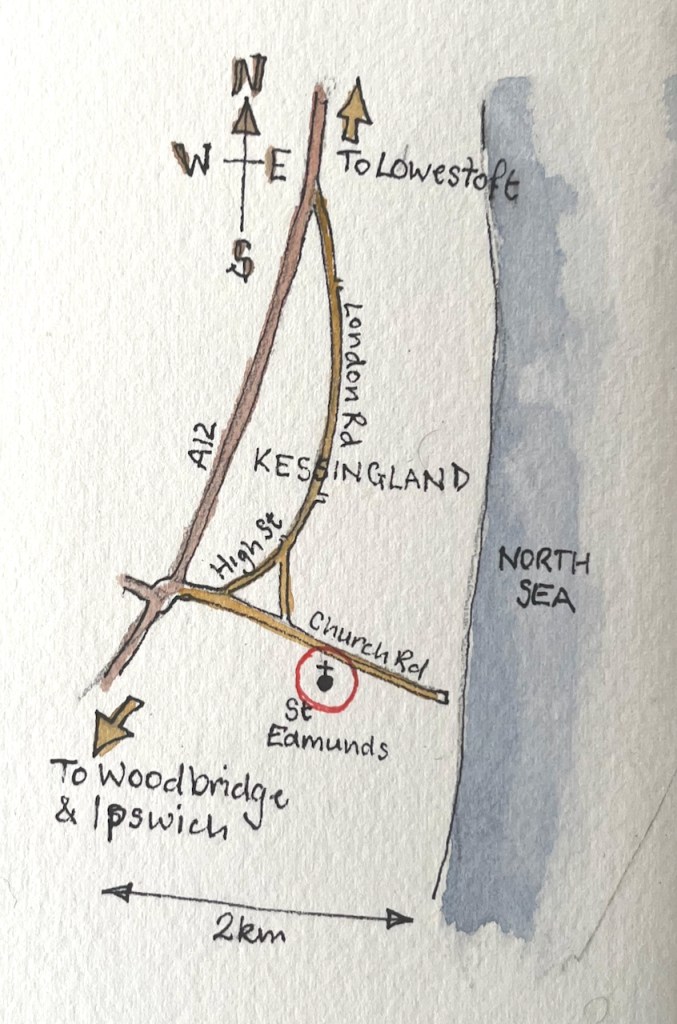
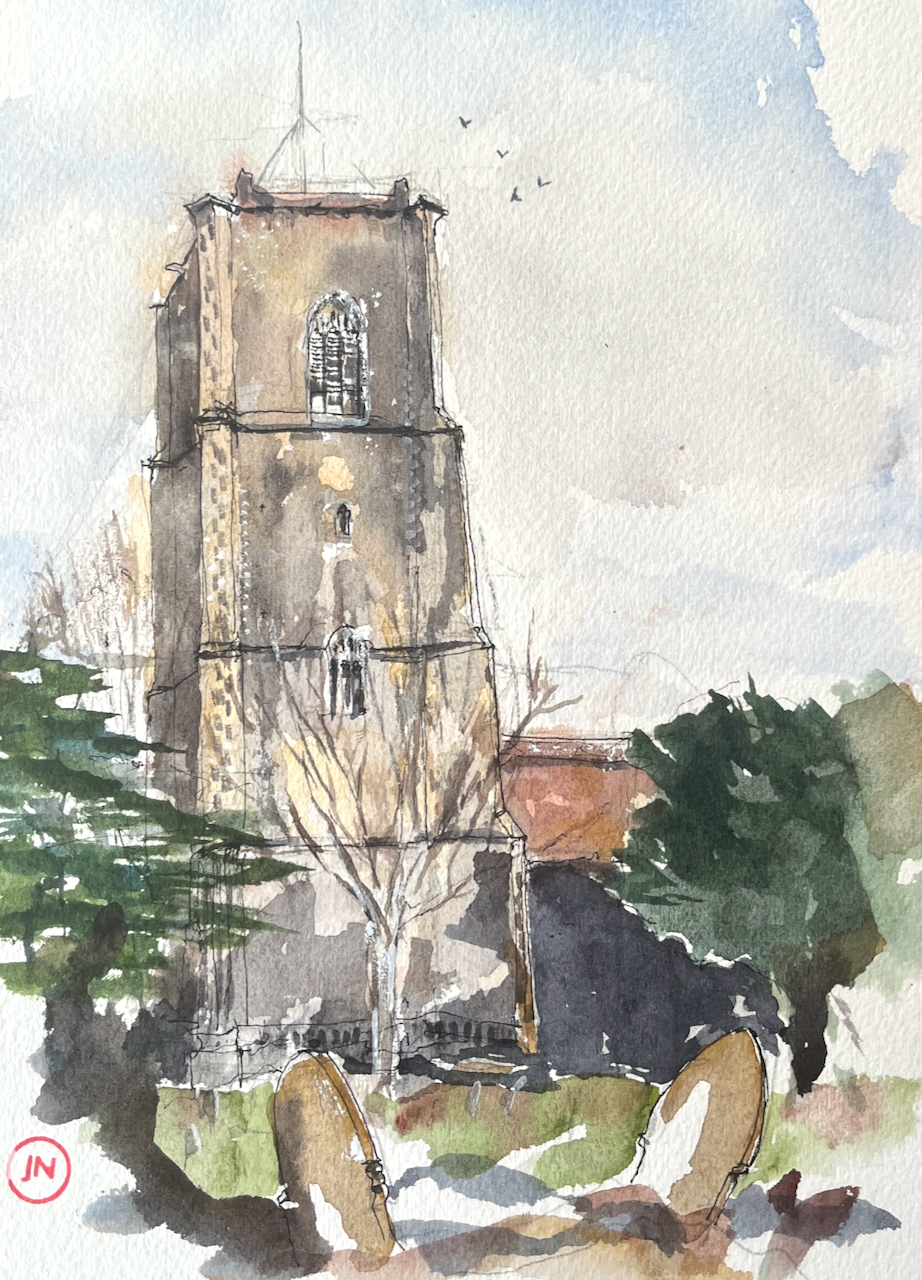
Here is the church of St Edmund, Kessingland, seen from the south.

I was a guest of the bell ringers, who kindly invited me to their loft. There are six bells. I witnessed their splendid peals, which made the tower shake slightly under my feet. This was a surprise to me, as the walls of the tower are about three foot thick. But apparently it’s perfectly normal. Then I went outside and sketched the church from the south.
It was a beautiful place to stand and sketch: a peaceful country churchyard. The gravestone in front of me, in the foreground in the picture, carried stone carved flowers, and cushions of moss.
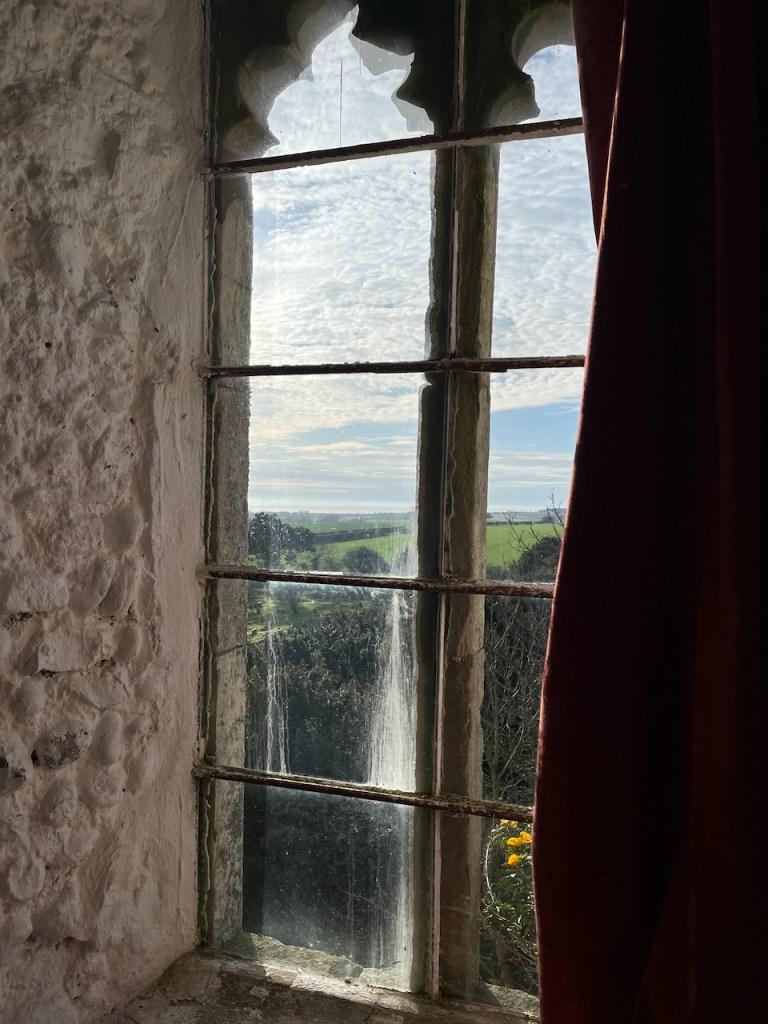
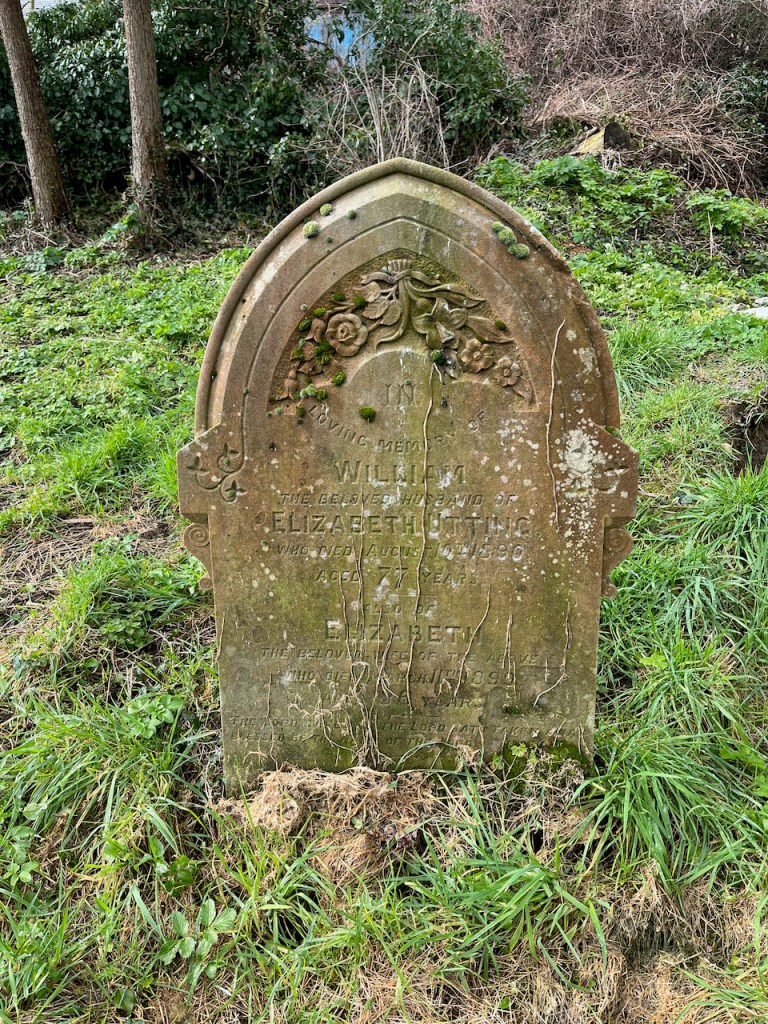
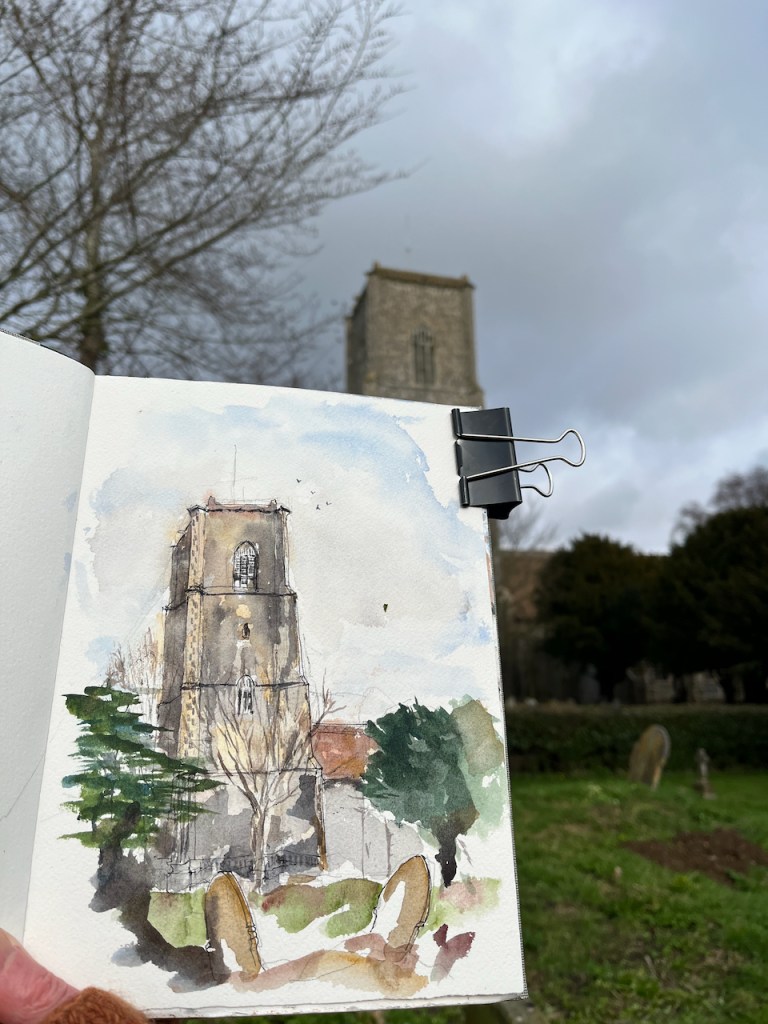
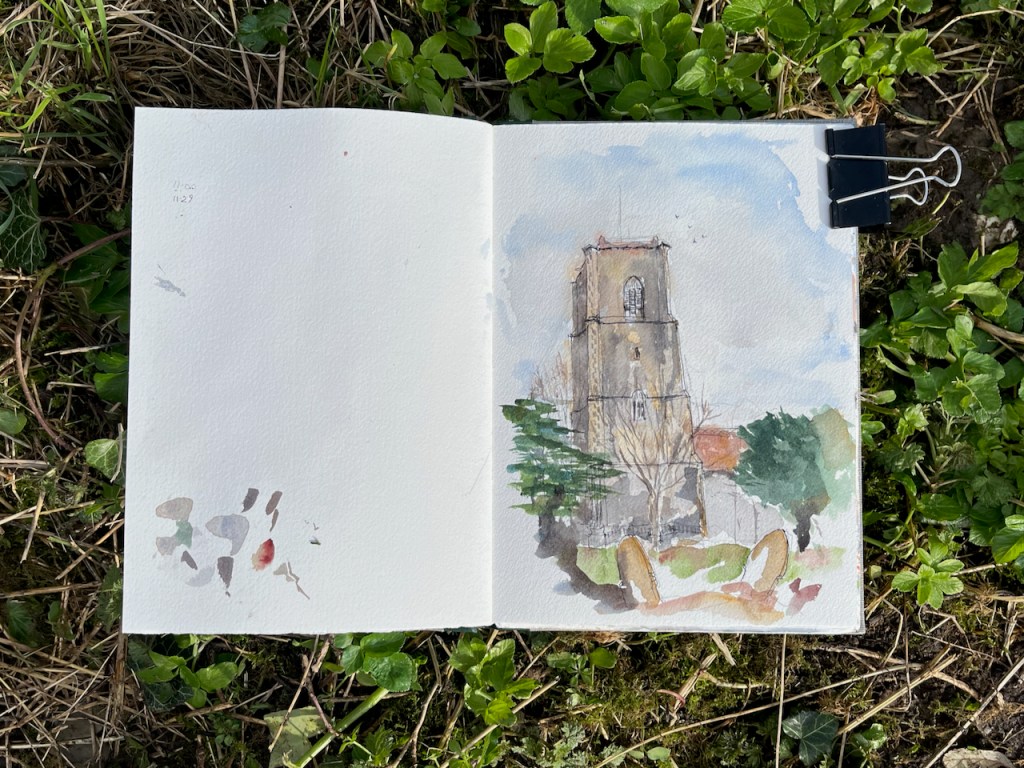
This tower is very old. According to the Historic England listing, the tower is from the 15th century and Grade I listed. There is neat flint work, in a chequerboard pattern higher up and in vertical lines lower down, with a horizontal border at ground level. The nave is thatched! It has recently received new thatch, in a glowing russet colour which you can just see to the right of the tower.
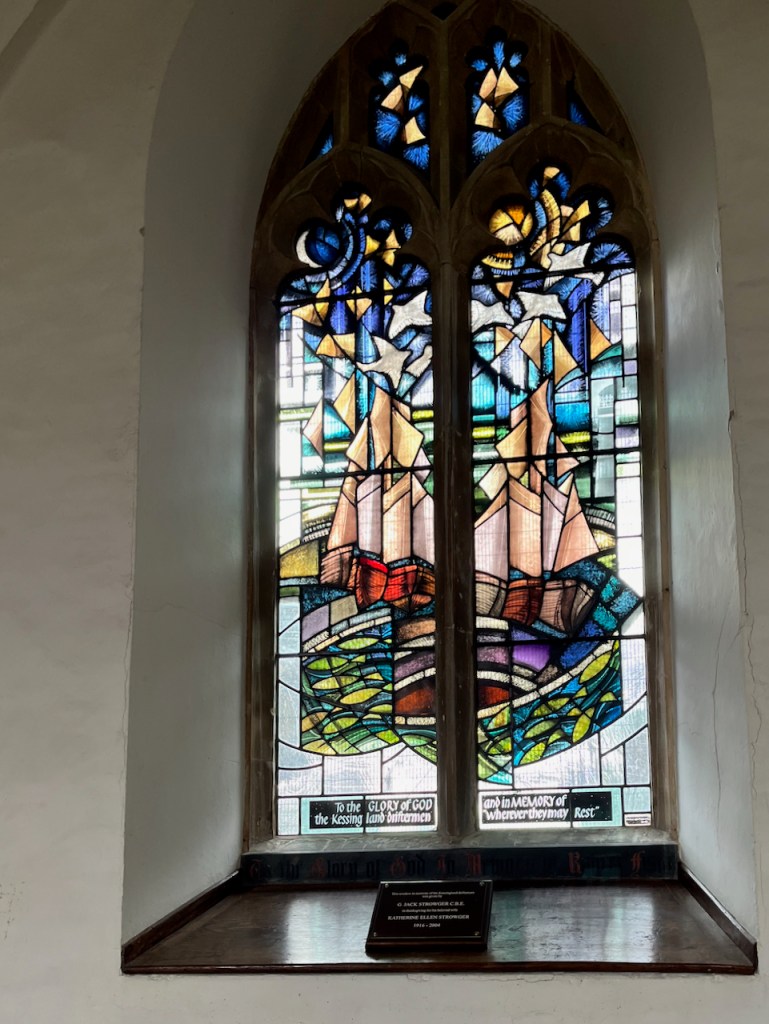
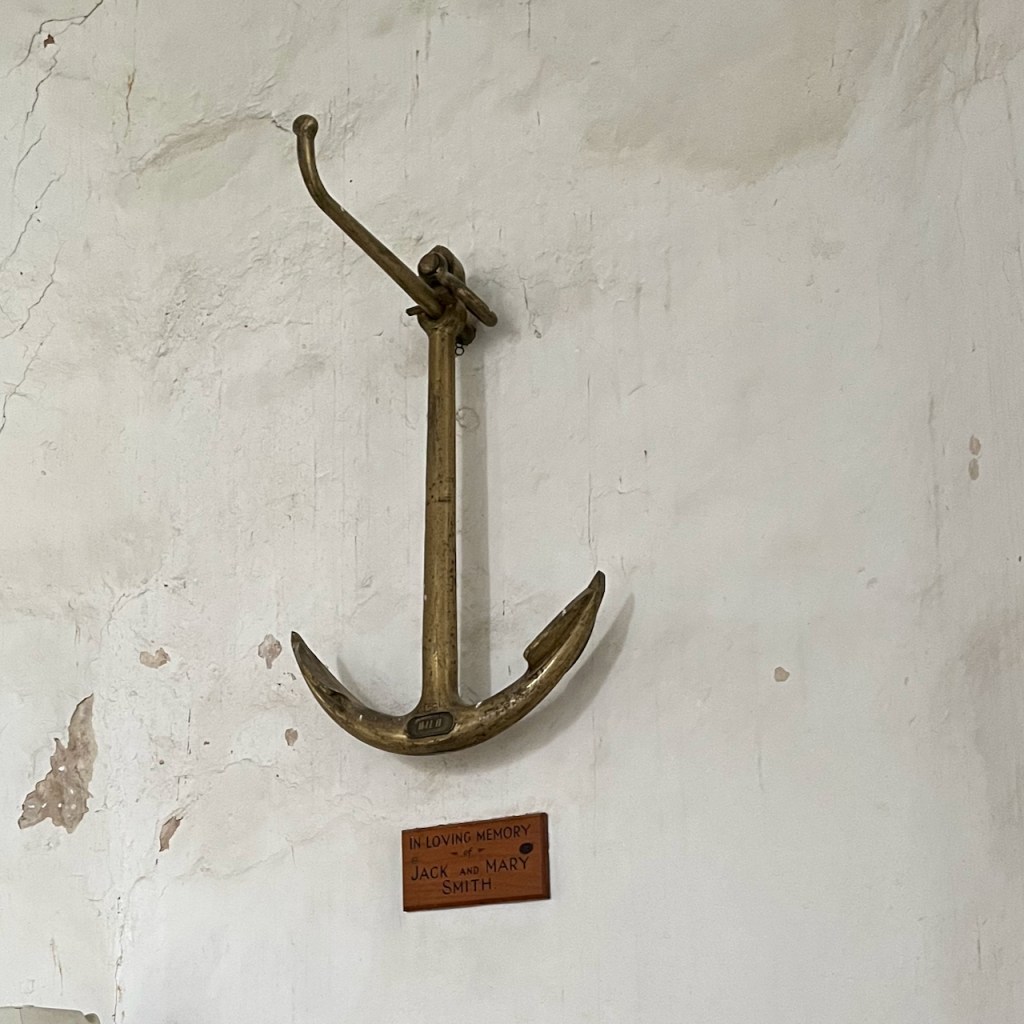
The church is about half a mile from the sea. There is a stained glass window, dated 2007, by Nicola Kantorowicz, dedicated to the “Glory of God and the memory of Kessingland driftermen, ‘where ever they may rest'”. It was given by G. Jack Strowger in memory of his wife Katherine. There is a ship’s wheel on the wall, and another on a low pulpit. An anchor hangs from the wall, “in loving memory of Jack and Mary Smith”.


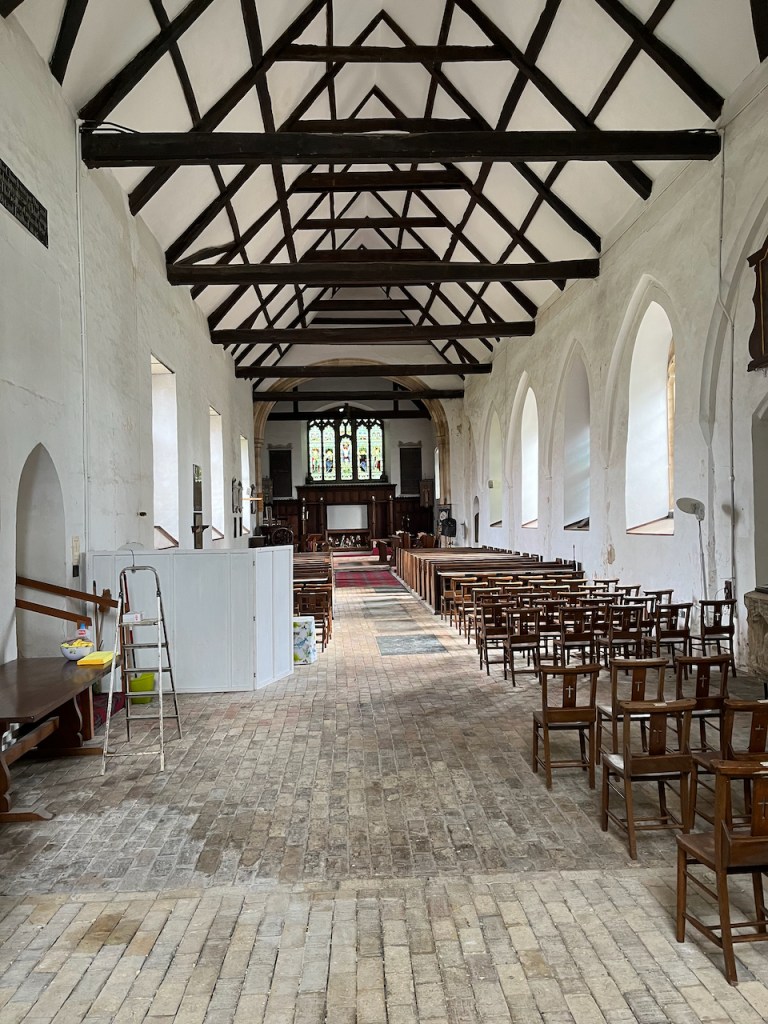
It’s well worth a visit if you are in the area.
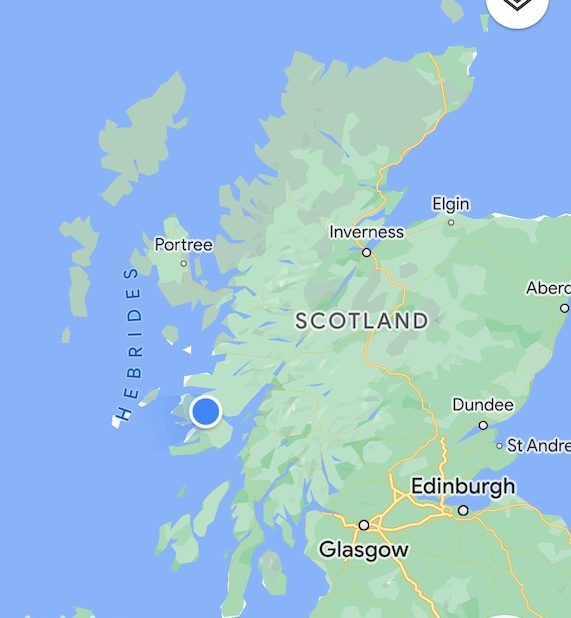
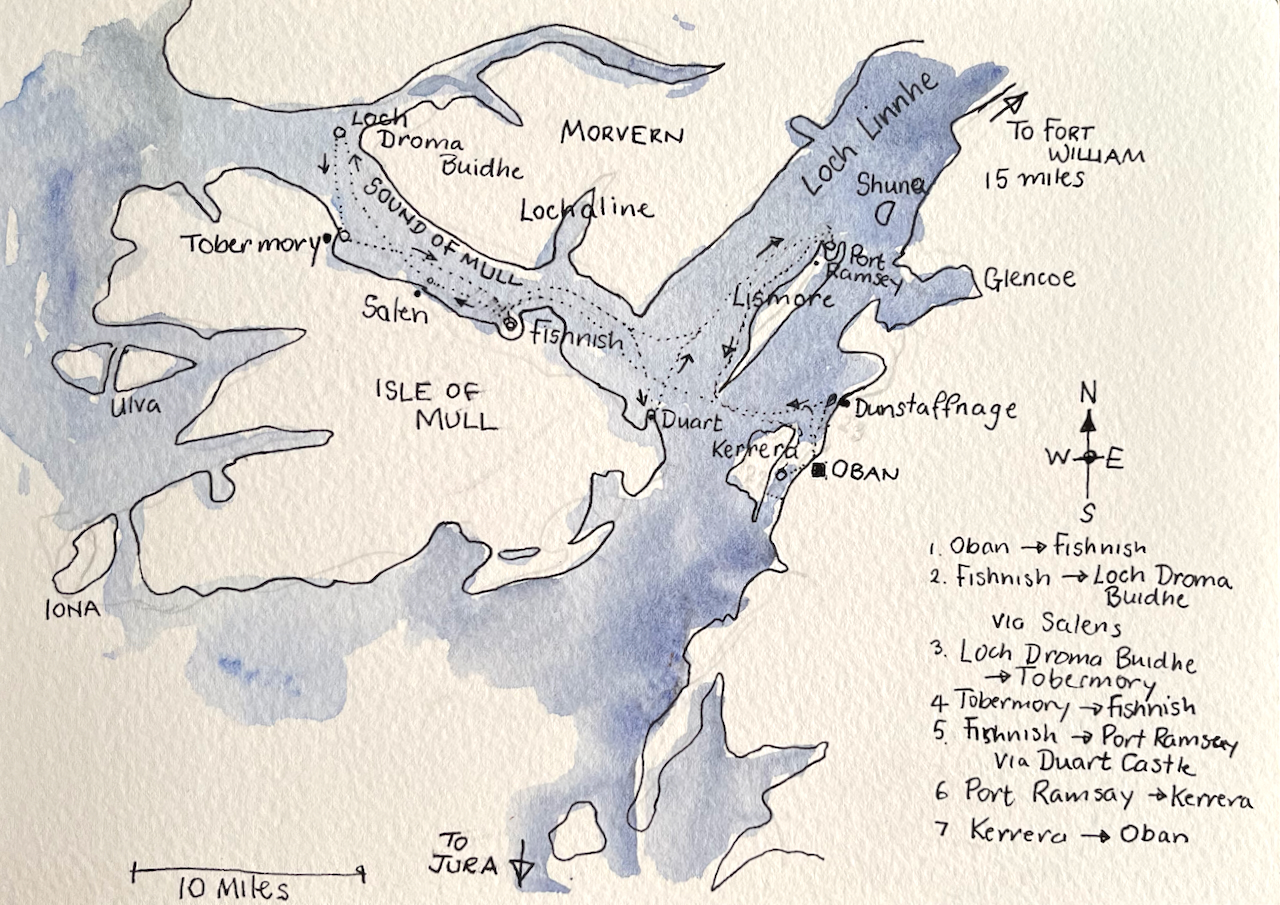
I’m just back from a “Sketch and Sail” adventure on the Lady of Avenel, a square rigged brigantine. I was one of the art tutors, together with Claudia Myatt. We spent a week sailing around the Inner Hebrides with a group of other sketchers: sketching the boat, the sea and the landscapes. The drawings which follow are ones I made. Participants’ drawings, with permission and attribution, will appear on the Lady of Avenel website.

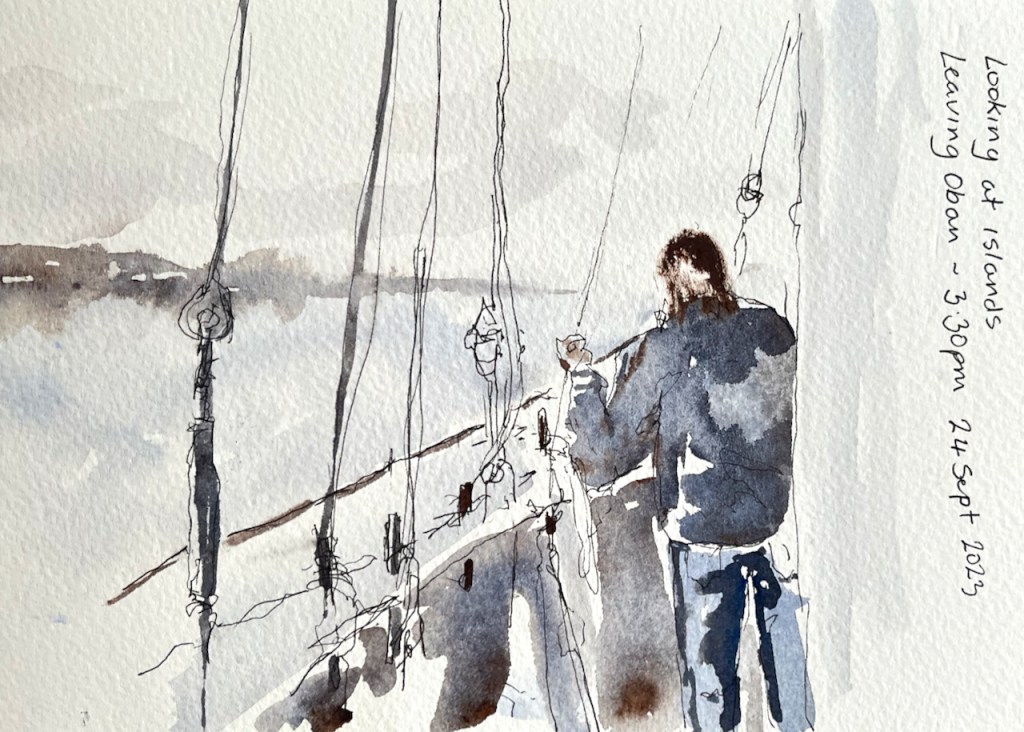
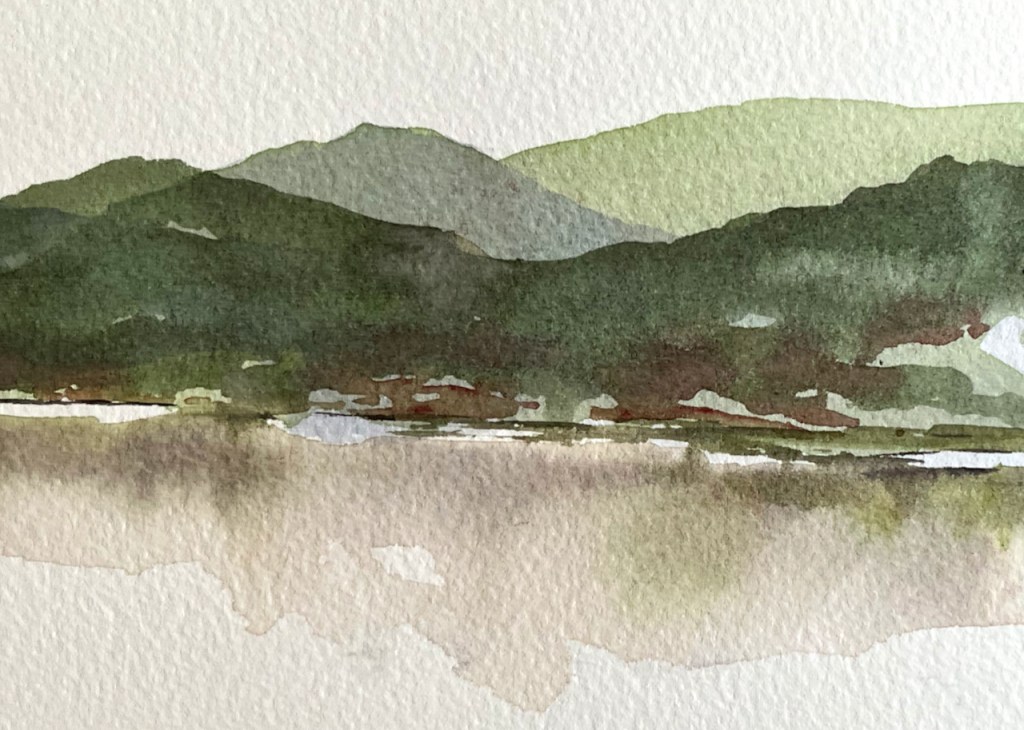
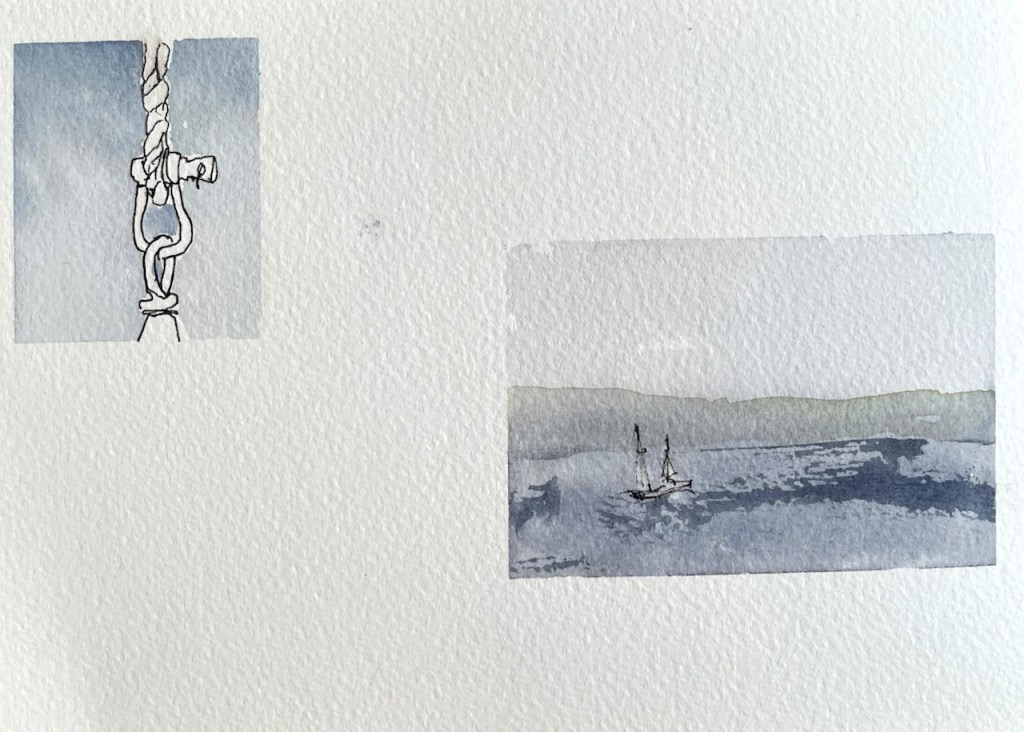
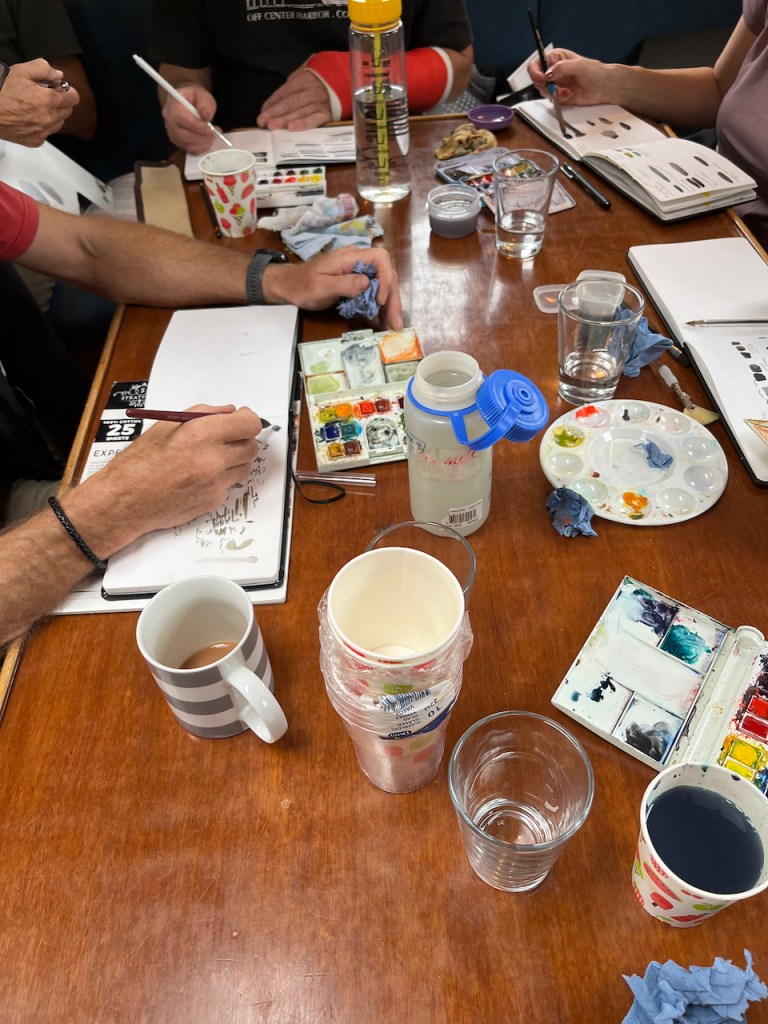
This was September in Scotland. There was wind and rain. Two storms passed over: “Nigel” and “Agnes”. But somehow, in between it all, we all did a lot of sketching. Our Skipper, Stefan Fritz, was skilled at finding sheltered anchorages. Claudia and I worked with him to plan the days so there was always something interesting to sketch.
There were days when we went ashore. Here are the boats at Salen on the Isle of Mull. Two hulks of fishing boats are in their final resting place on the beach. They lean on each other. Their grand forms are still majestic, and their paint has now flaked to reveal multi-coloured undercoats and timbers.

We visited Castle Duart. Some people went inside, others sat outside on the grass and had a go at sketching the castle’s complicated shape.
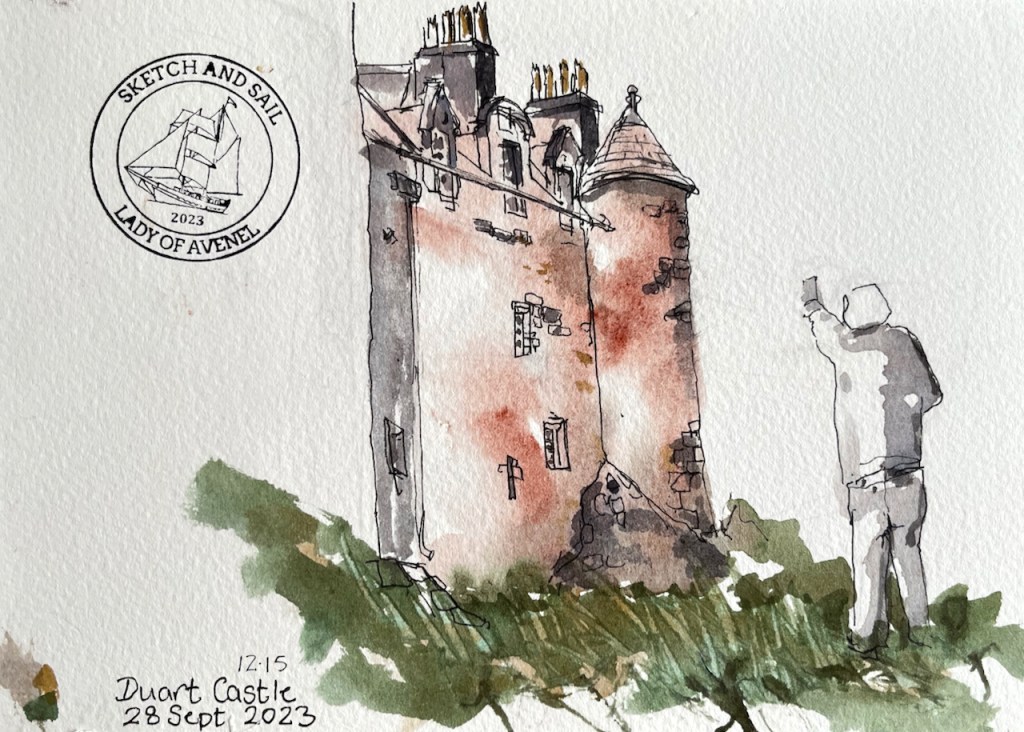
Those chimneys had multiple points, like crowns. One of the participants did a careful study of them. In the grounds of the castle there were porcini mushrooms. These were confidently identified by one of our number, a horticulture expert. We left the mushrooms exactly where they were. We didn’t touch them or eat them. But we did draw them. My drawing does not give the scale: they were about 3 inches across.

We sketched the land from the sea.

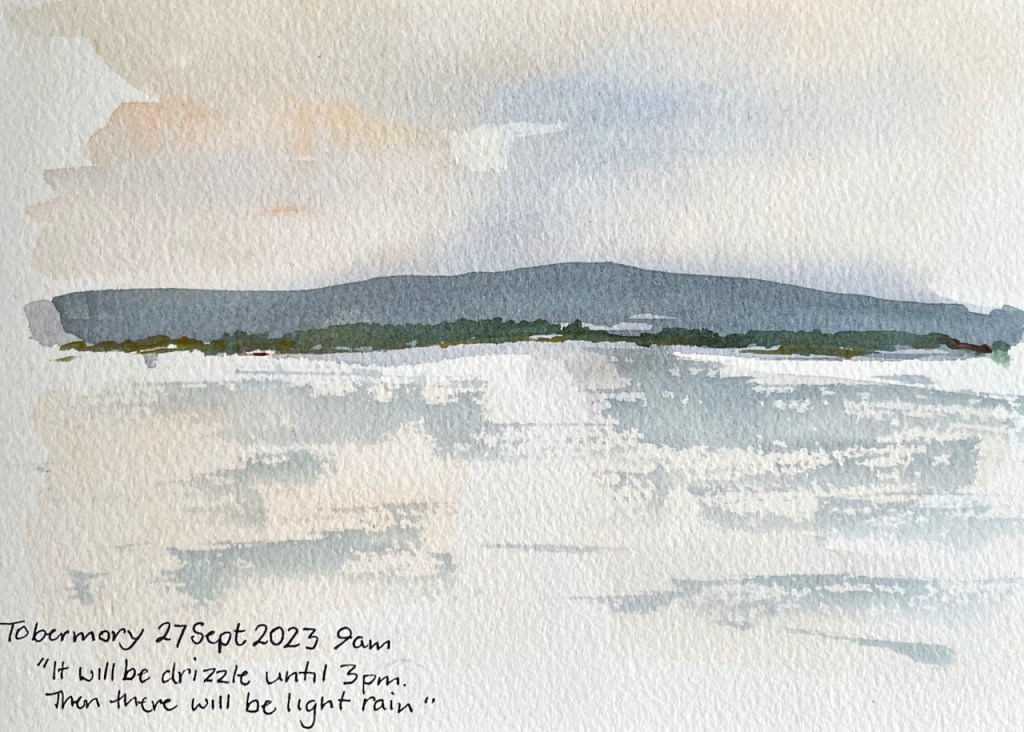


There were inspiring atmospheric effects. Here is a glimpse of the sun near the isle of Lismore.

That neat round sun is made using a drop of melted candlewax from a nightlight which a member of the crew, Nessie, found for me. Nessie, a.k.a Carol Anderson, is an astonishing fiddle player. She played tunes for us on some evenings. We were all impressed by her skill. She maintained several melodies at once, all on just one fiddle. Other people played the harp and the recorder, and we sang sea shanties: half-remembered but rendered with gusto, and accompanied by assorted musical instruments and improvised percussion.
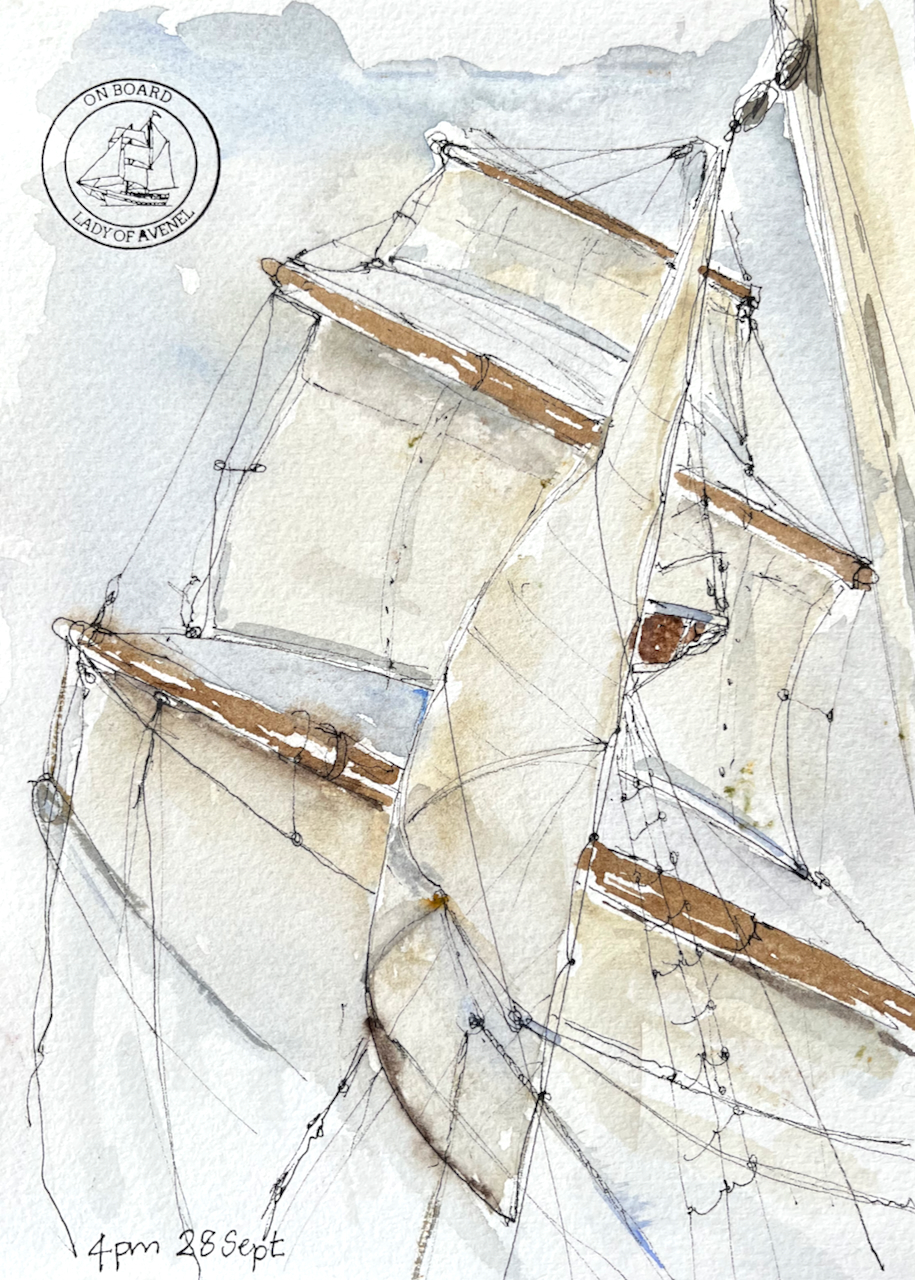
Nessie was our cook for this expedition. We also had a mate, the mate’s mate, and a ship hand, to help the skipper manage the boat. They were out there even in the pouring rain, getting us to the next safe harbour, piloting us past landmarks and between islands, and managing the engine and sails. Thanks to this crew, we had a productive and inspiring voyage: always something to see or do. The sails are beautiful, although quite hard to sketch.


Some people took time off sketching to enjoy working the boat: hauling on ropes or taking the wheel. A brave few elected to climb the rigging. One person even did a sketch from up there.
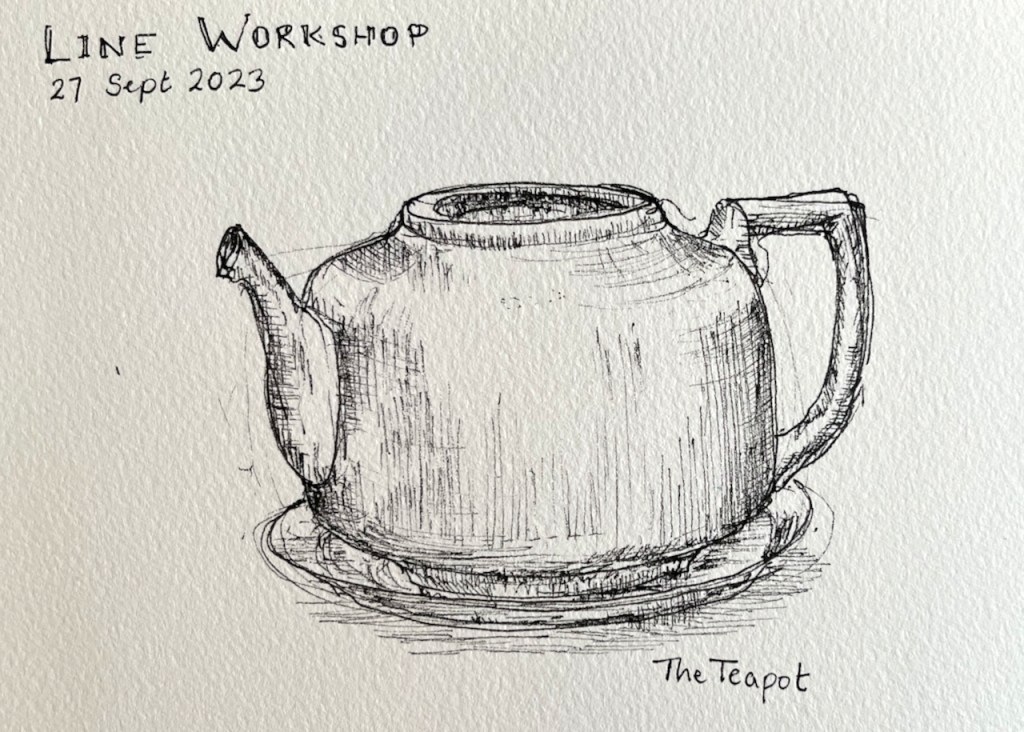
In the intervals between other activities, and when it rained, Claudia and I ran various workshops, so that people could learn new techniques, share skills, or get started: depending on skill level.
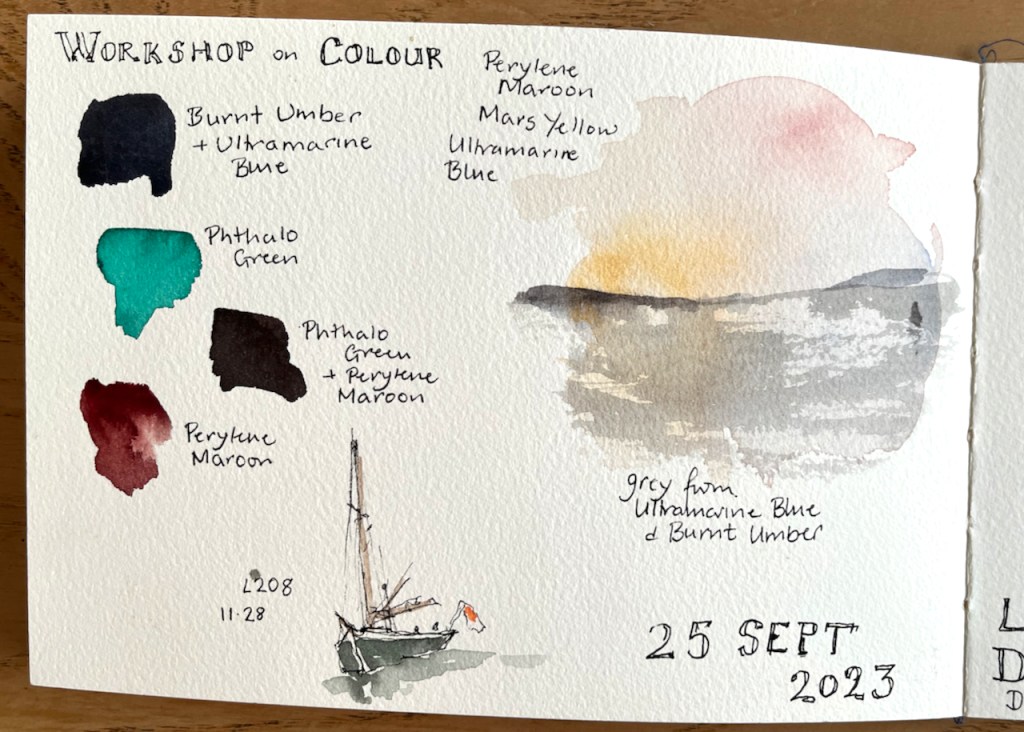

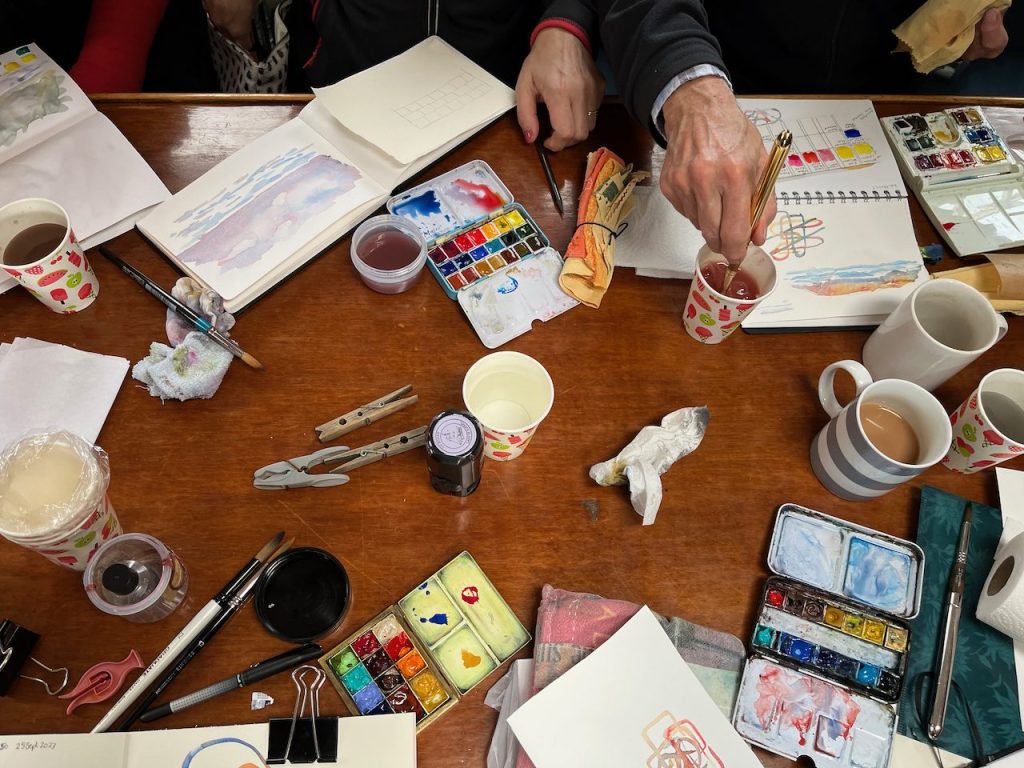
The expedition was great fun, and highly productive. Sketchbooks were filled, postcards painted and sent, maps examined and weather apps compared.
We intend to run it again in 2024 and 2025. If you’re tempted to come, you can register your interest now by contacting me, or Claudia Myatt, or the Lady of Avenel direct. You don’t need any experience of sketching or sailing!
Here’s a page-turn of my sketchbook (about a minute, silent video). The sketchbook is from JP Purcell, A5, watercolour paper 300gsm. I use Daniel Smith watercolours: you can see the colour palette at the beginning of the video. (The video plays on tablets and desktops. It does not play on email or on mobile phones. Try looking at this post via the web on this link)
I’ve sketched on the Lady of Avenel before:
The Lady of Avenel is an 102ft square rigged brigantine. She was on the East coast of Scotland, and needed to be on the West Coast. So a group of us assembled to take her through the Caledonian Canal, from the North Sea to the Atlantic. This whole journey was about 190km or 120miles. I…
I took my sketching things on a swimming expedition to the Outer Hebrides with Swimtrek. We were on the wonderful Lady of Avenel 102ft square rigged brigantine. We started in Oban. It was raining when I drew this picture, as you can see from the way the pen has drifted a bit, round the chimneys.…
The Lady of Avenel is an 102ft square rigged brigantine, currently based near Oban, on the west coast of Scotland. Every year the Lady of Avenel needs a refit to prepare her for her working season. This year I went up there to join the working party for the refit. I travelled by overnight train…
Here is Lady of Avenel, 102ft Brigantine. This was the third of three sketches. Here are the first two. I have drawn Lady of Avenel previously: Outer Hebrides 2017 See also these pages for pictures of and from Lady of Avenel: Outer Hebrides 2017 Outer Hebrides 2016 Sketch notes from maritime Holland
Here is the Lady of Avenel in aquatint. Here is the hard ground, before the aquatint went on: To help with the aquatint, I made a small test plate. It seemed a pity to leave it blank, so I put some sea life: Lady of Avenel is an 102ft brigantine square rigger. I sailed on…
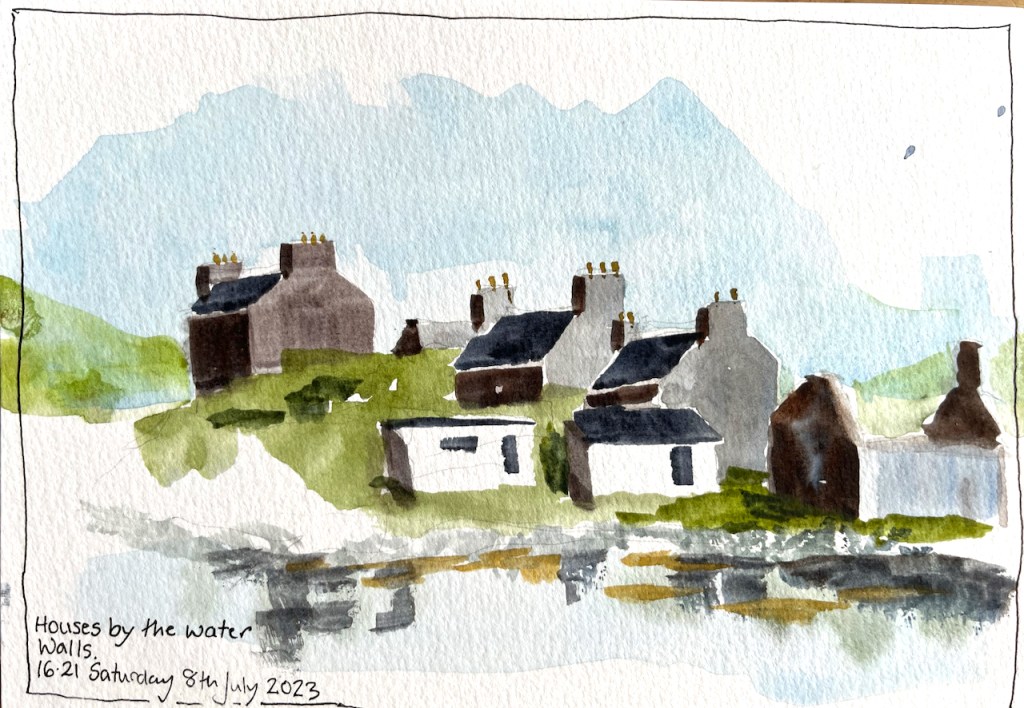
Here is a postcard which I made at the end of a long hot walk. It shows the houses in Walls, on Shetland West Side.
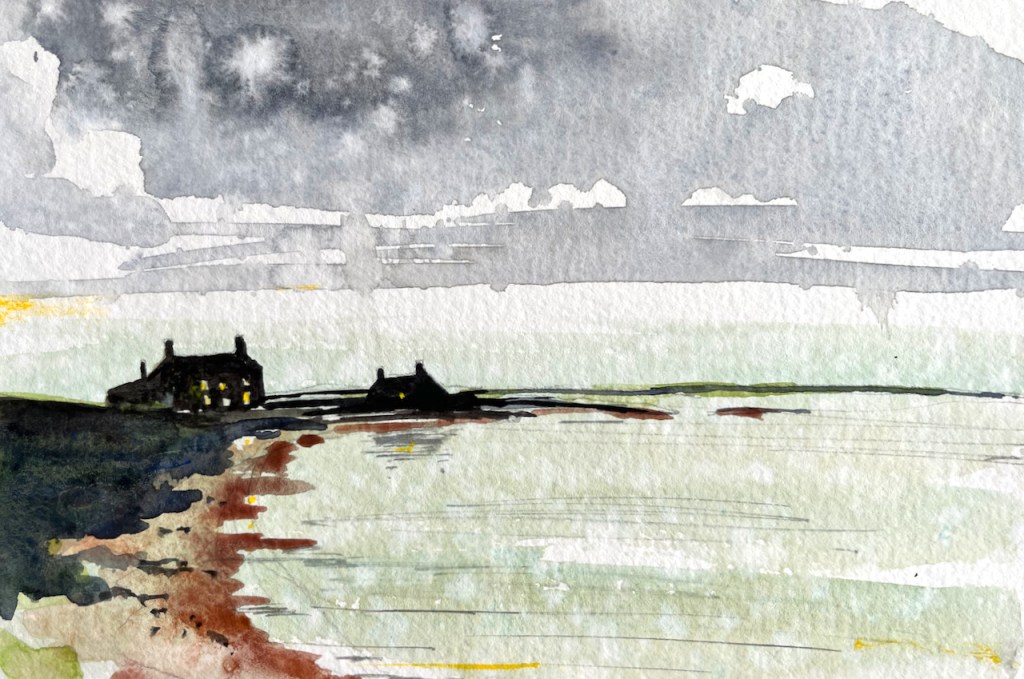
Here is Burrastow House and Burrastow Cottage, an evening view. I sketched this on top of a sky view I’d sketched earlier, but which had been spotted by rain, as you see.
This is a restaurant in Lerwick: “C’est la vie”.
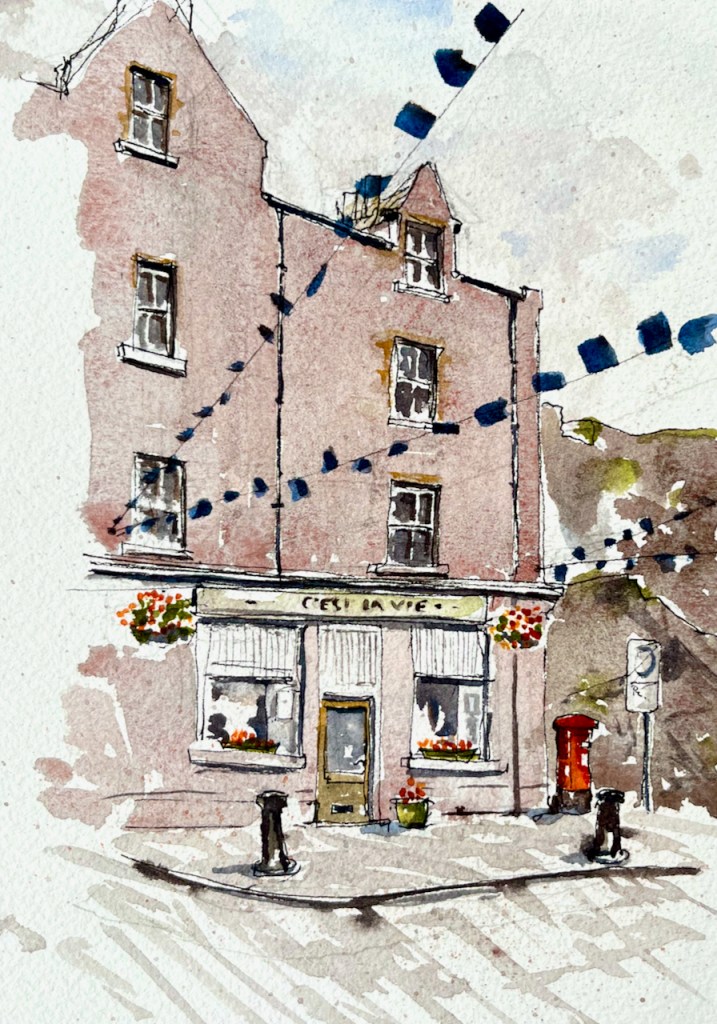
The flags are to welcome the “Tall Ships” which came to Lerwick earlier in the week. The restaurant was closed, I was waiting to see if it opened. Then the rain started. Then the restaurant opened and I finished the sketch inside. Then I walked to the Ferry Terminal.
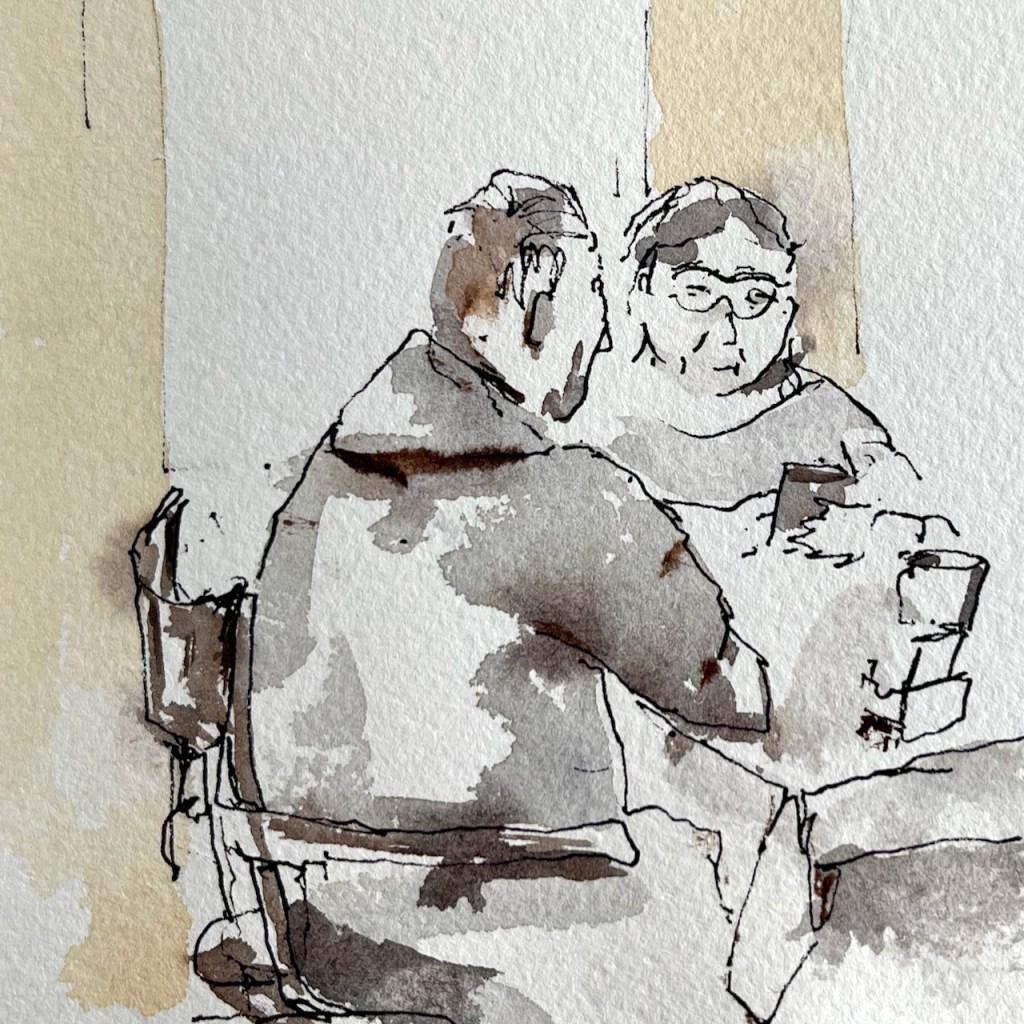
On the ferry, I made quick sketch of people at breakfast.
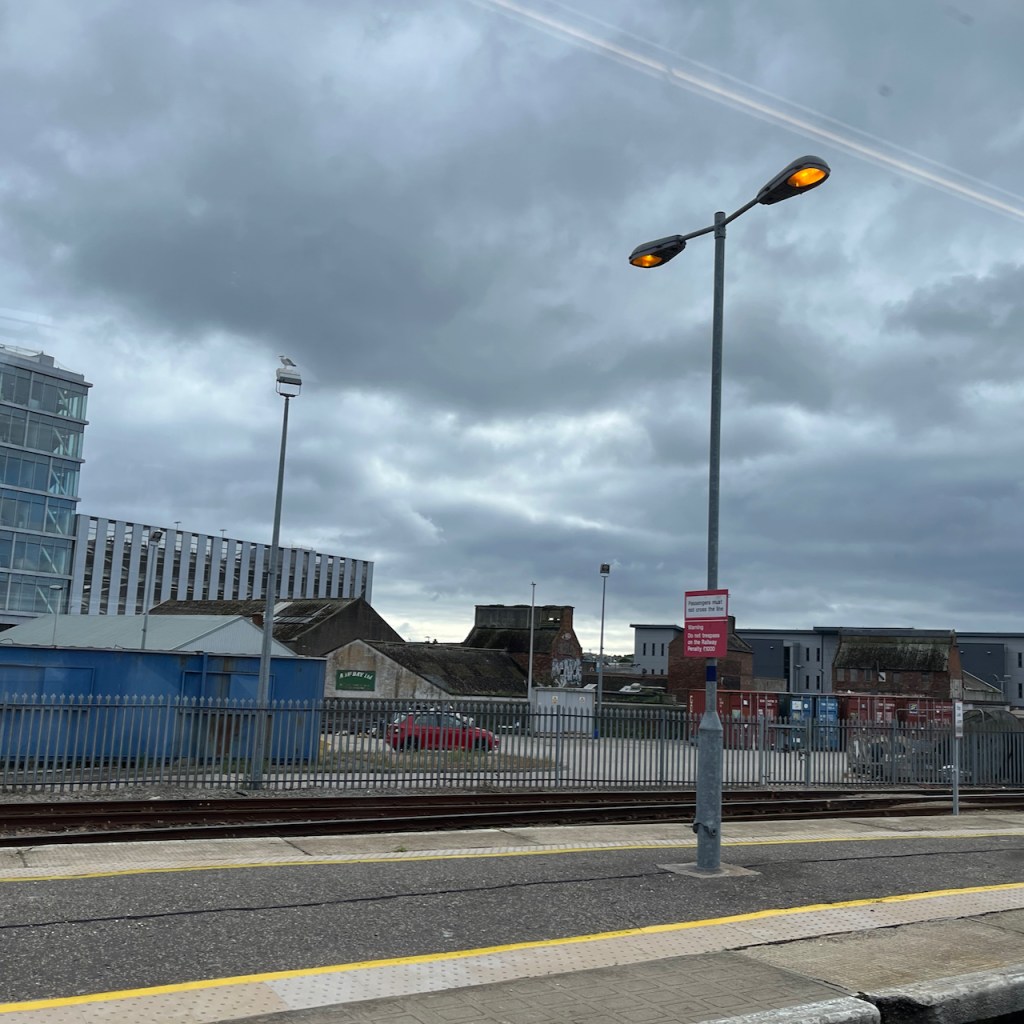
Here is my final sketch of the expedition. On the train at Aberdeen, I looked out of the window.

I have a sketchbook full of images. Here’s a quick flip through showing random glimpses of the visit: (19 second silent video)
Fair Isle is a small island some 28 miles south of Shetland, between Orkney and Shetland. It is 3 miles long and 1 mile wide.


I travelled there by the boat “Good Shepherd IV”.
The ferry leaves from the pier at Grutness which is close to Sumburgh airport at the southern tip of Shetland mainland.
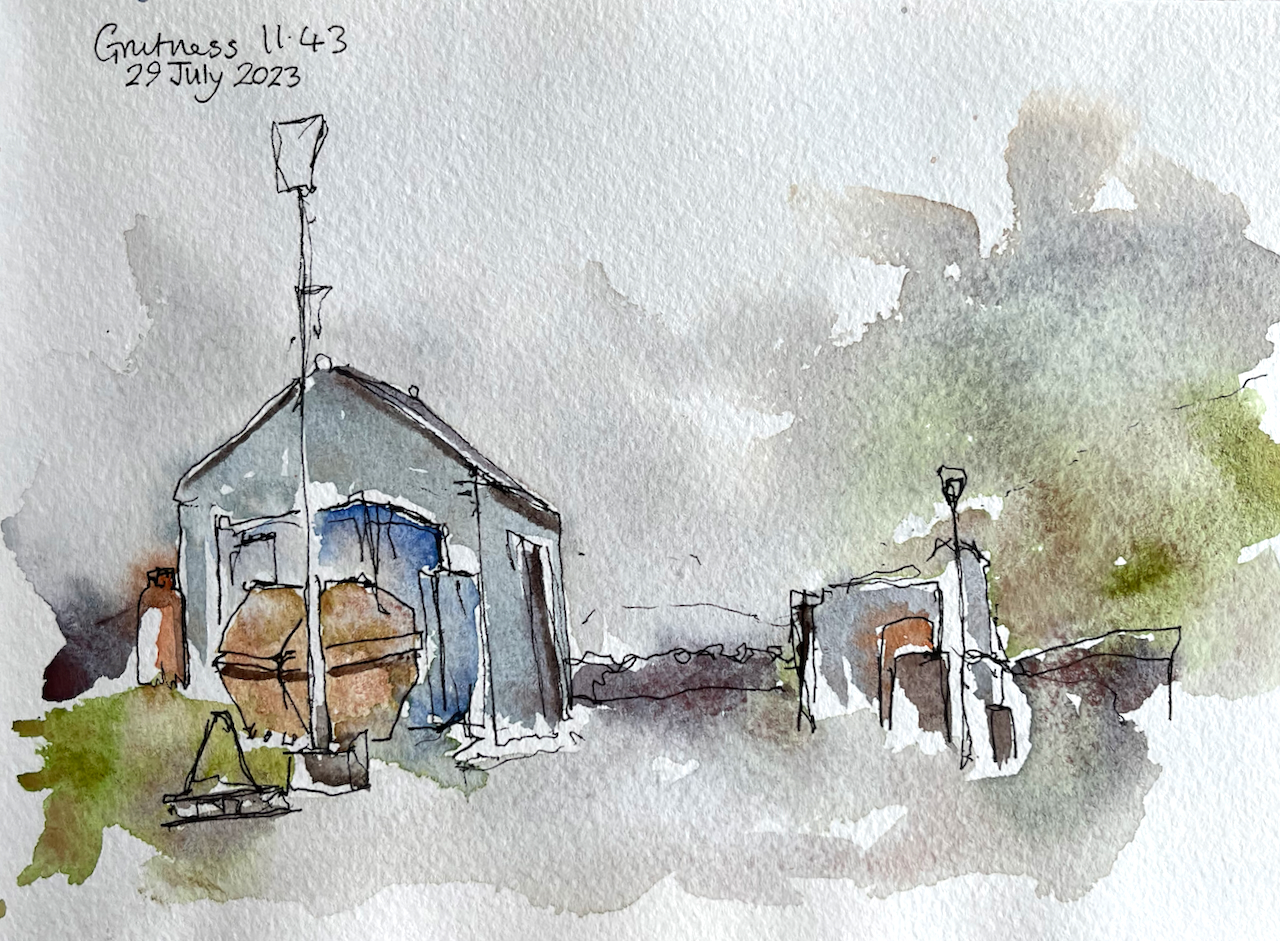
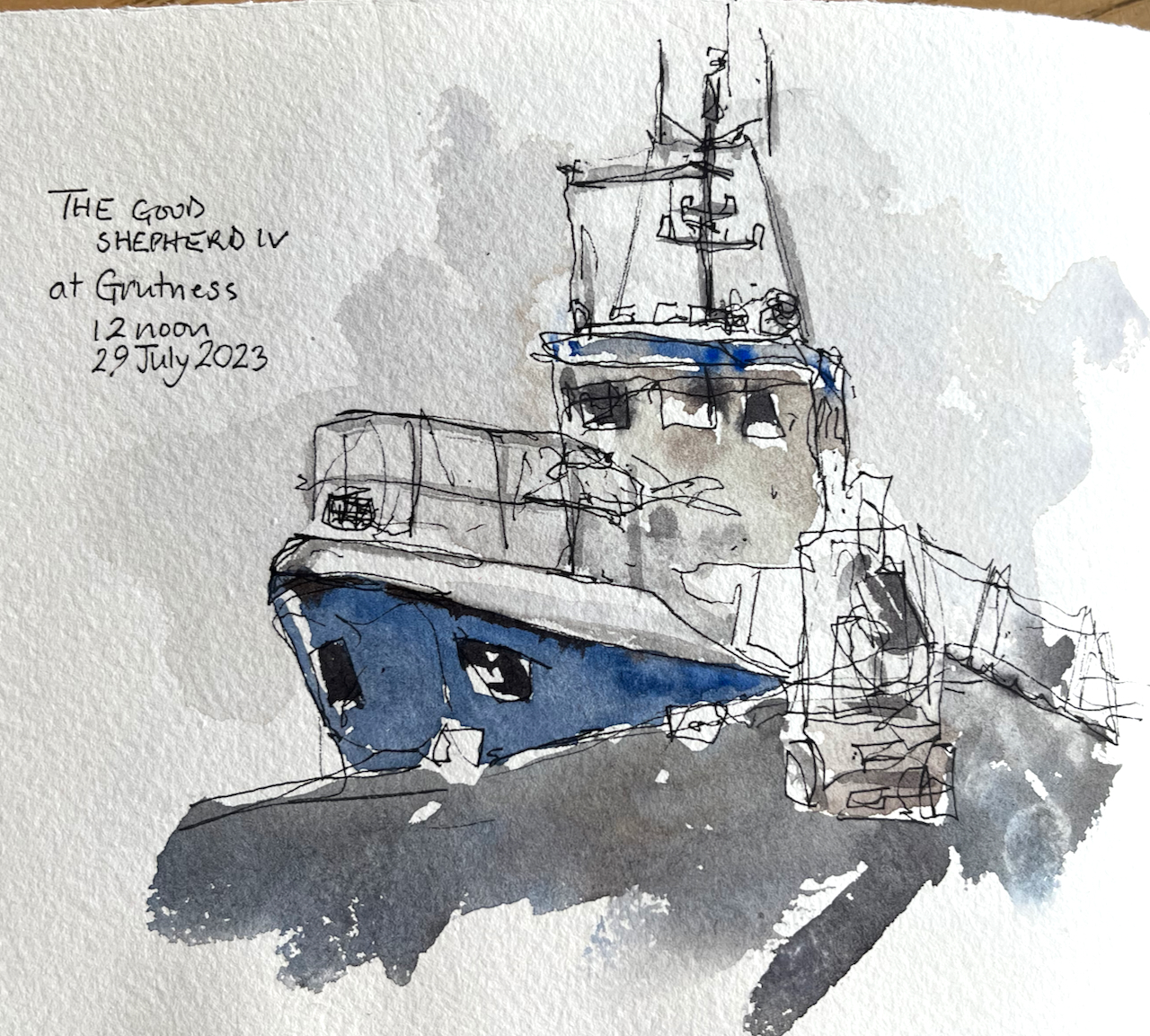
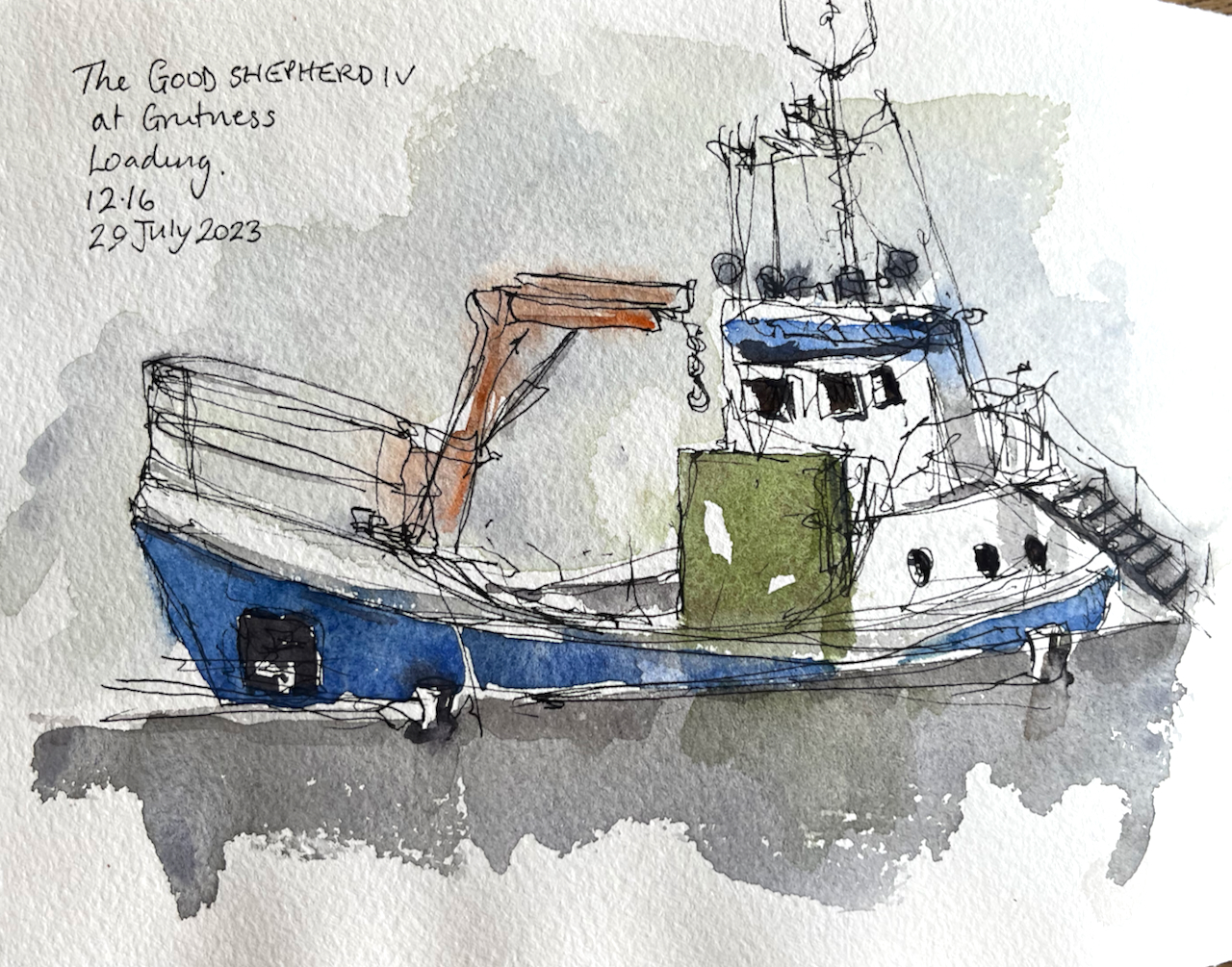
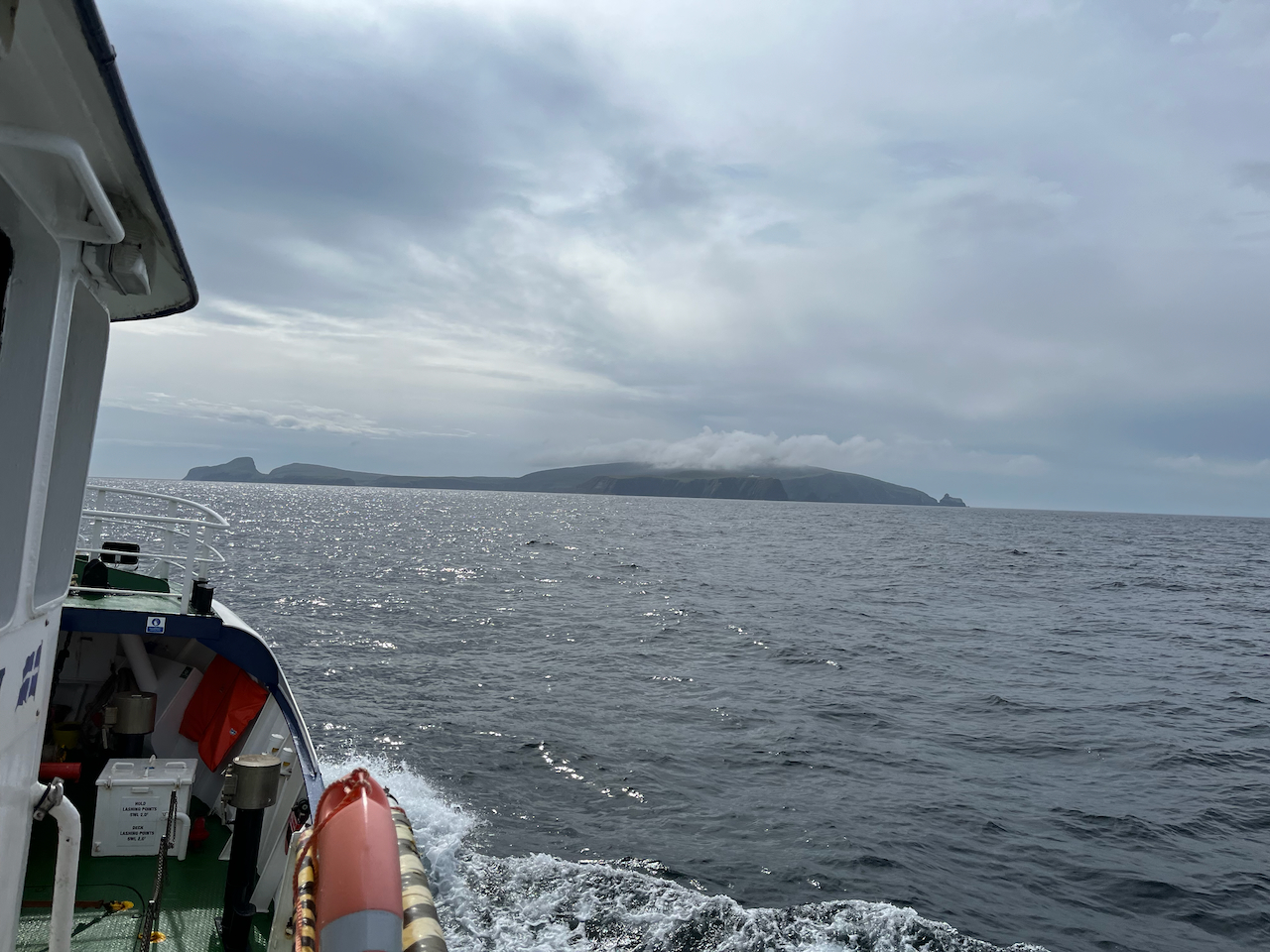
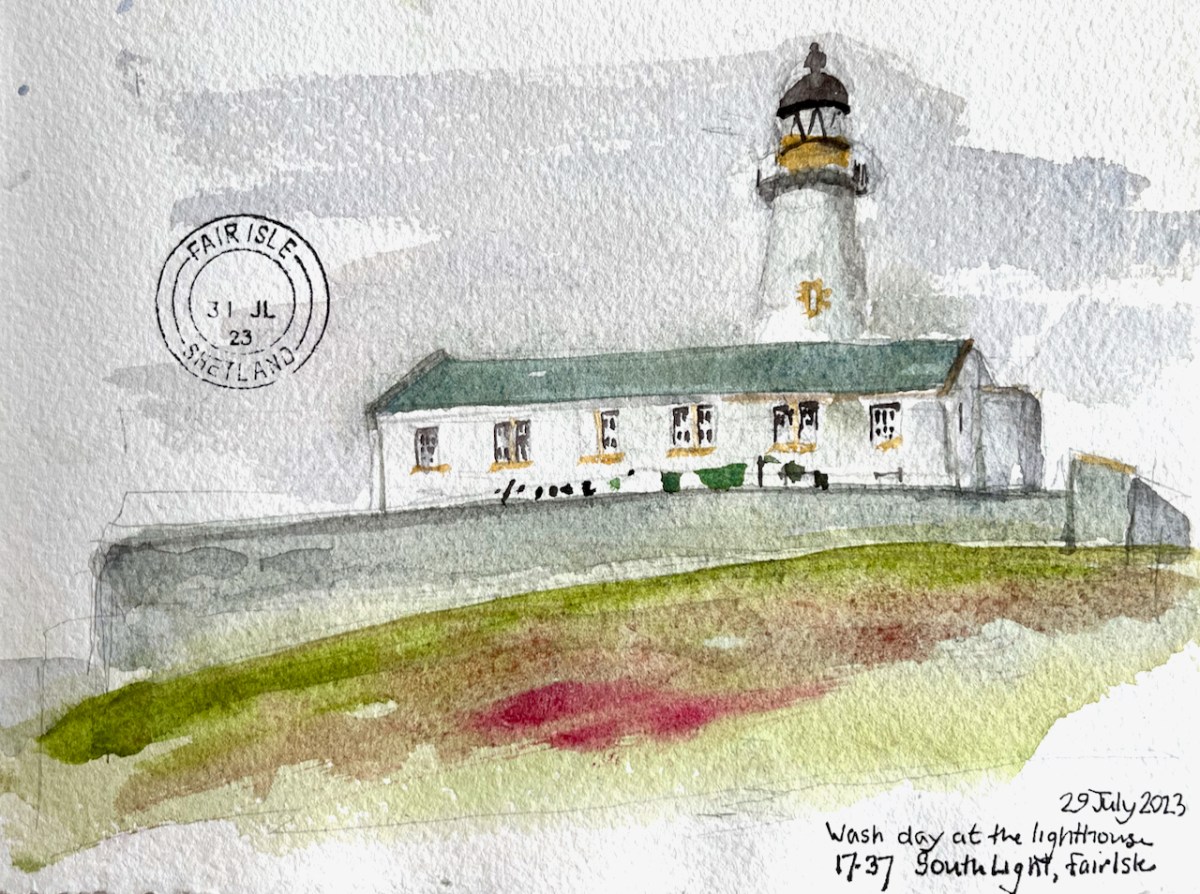
Fair Isle has two lighthouses: the North Lighthouse and the South Lighthouse. I sketched the South Lighthouse:
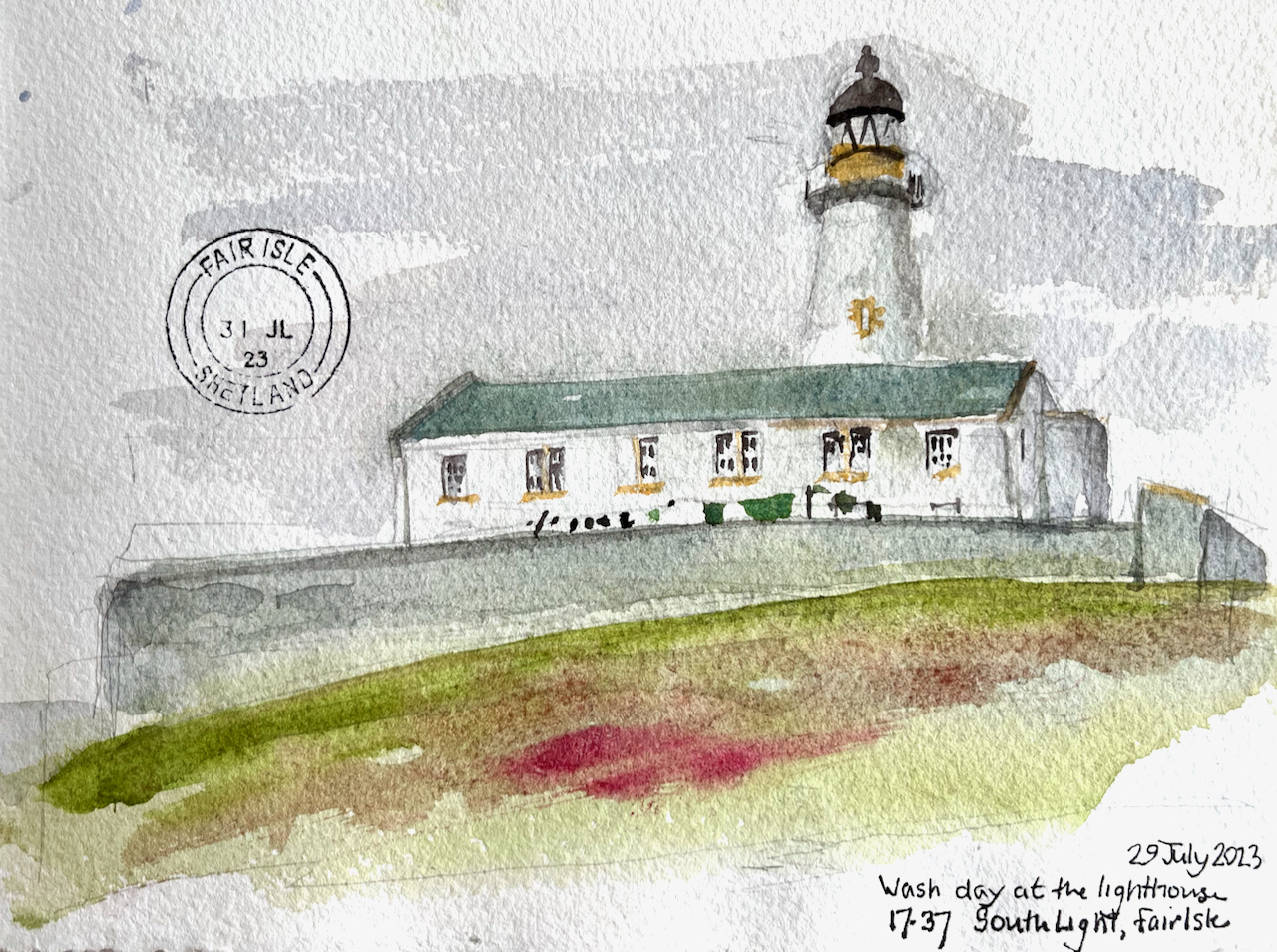
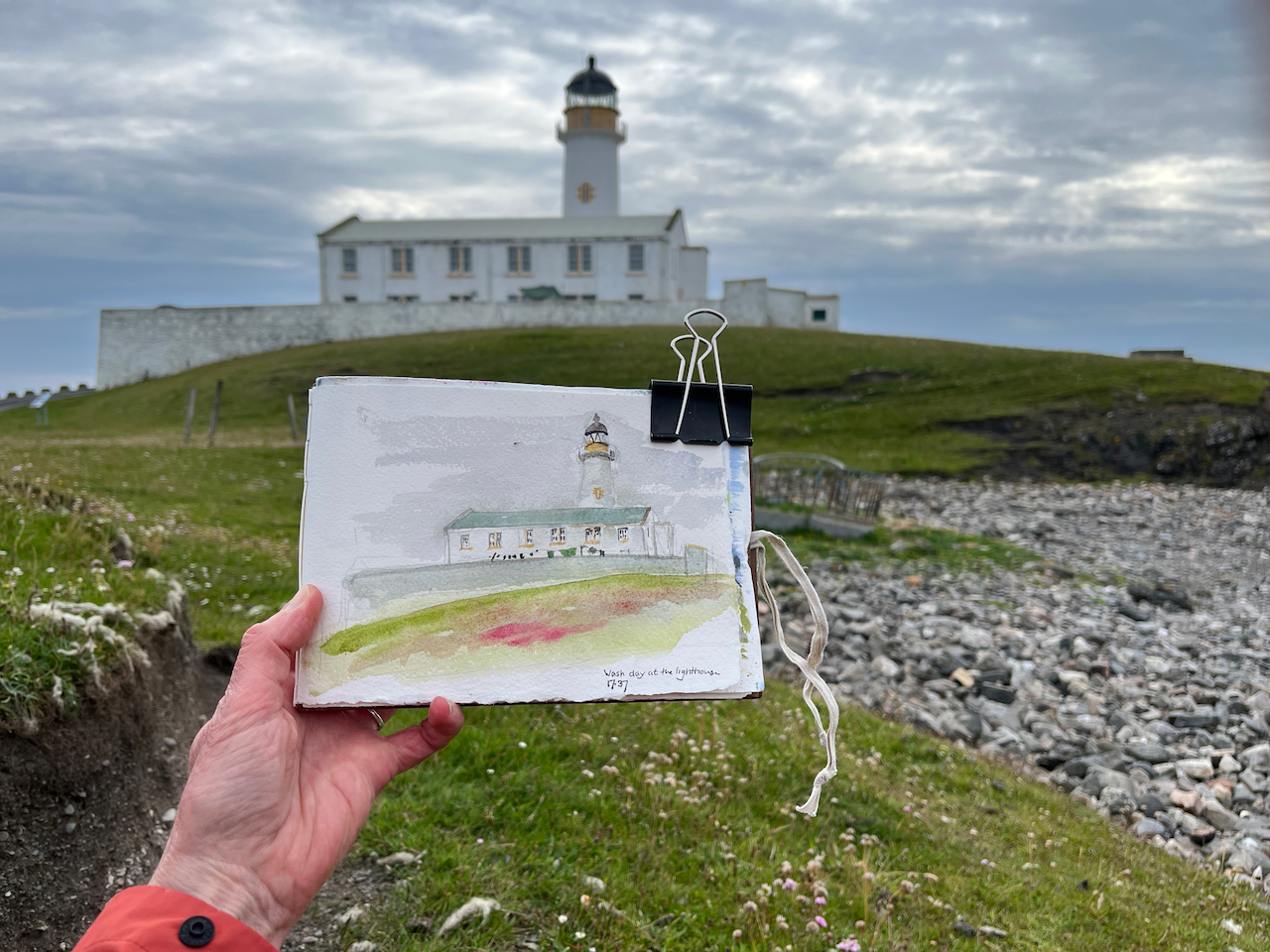

Both lighthouses were designed by David A Stevenson and built in 1892. Both are still functional, now automated. The South Lighthouse light is “Fl (4) W 30 seconds” : a group of 4 flashes of white light every 30 seconds. The North Lighthouse flashes white twice every 30 seconds.
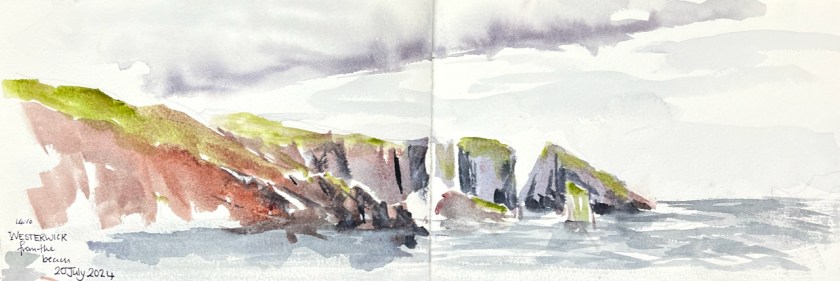
Here is a view of the cliffs called Mathers Head. It’s the view from the same spot where sketched the South Lighthouse, but looking out towards the west.
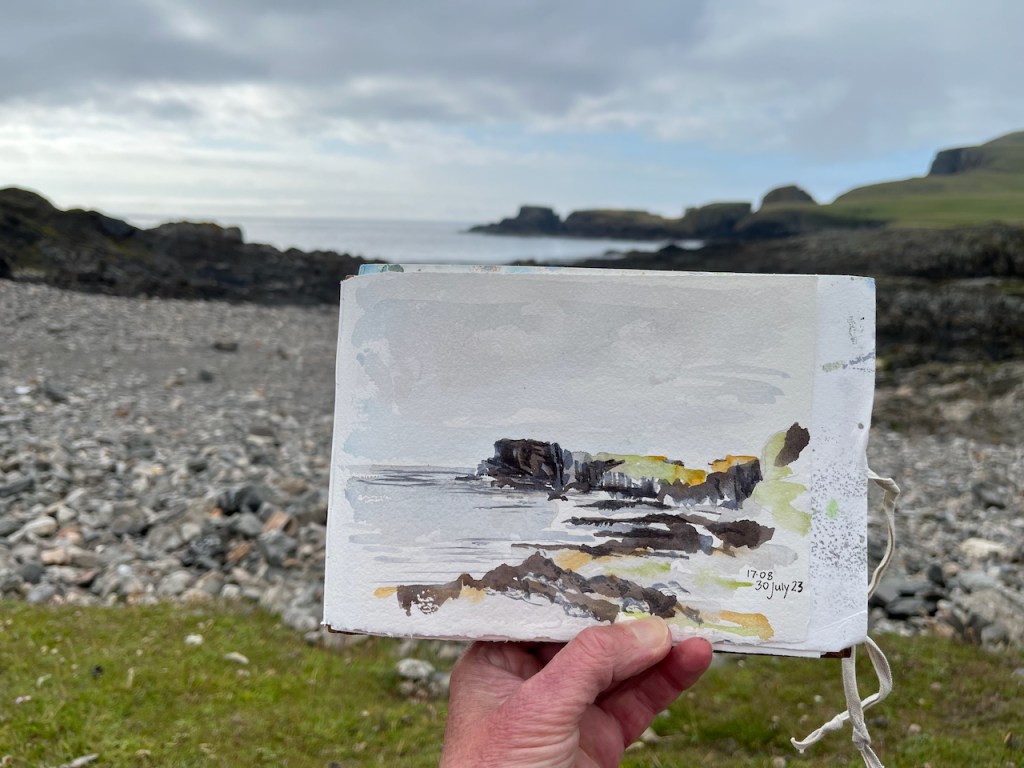
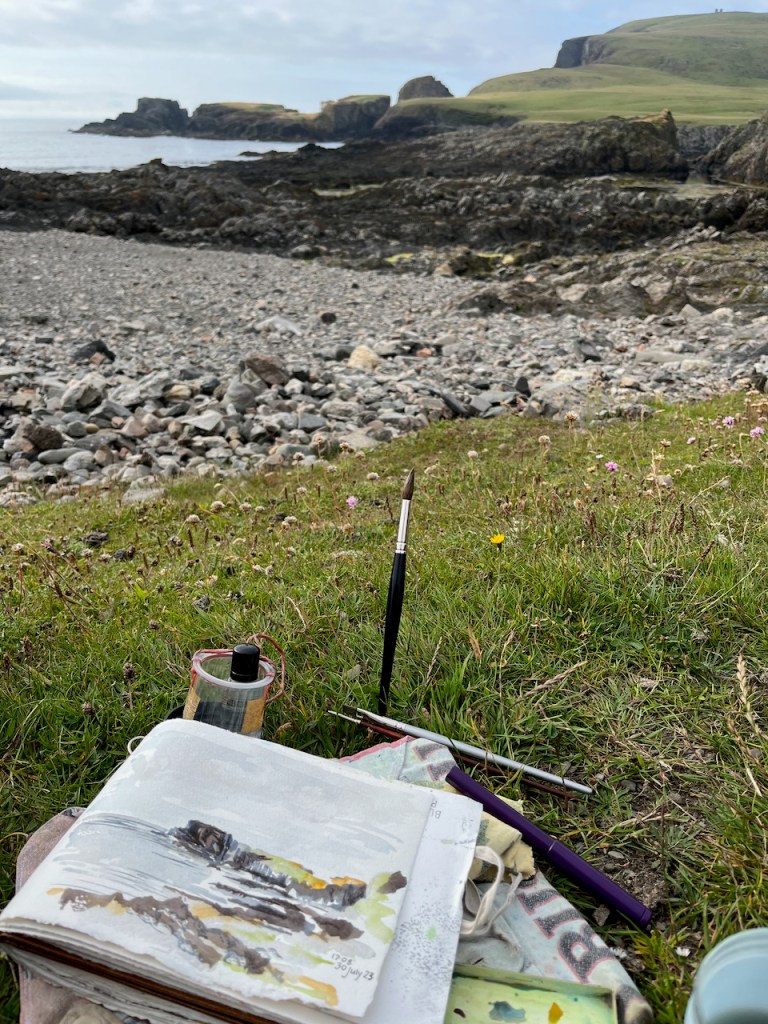

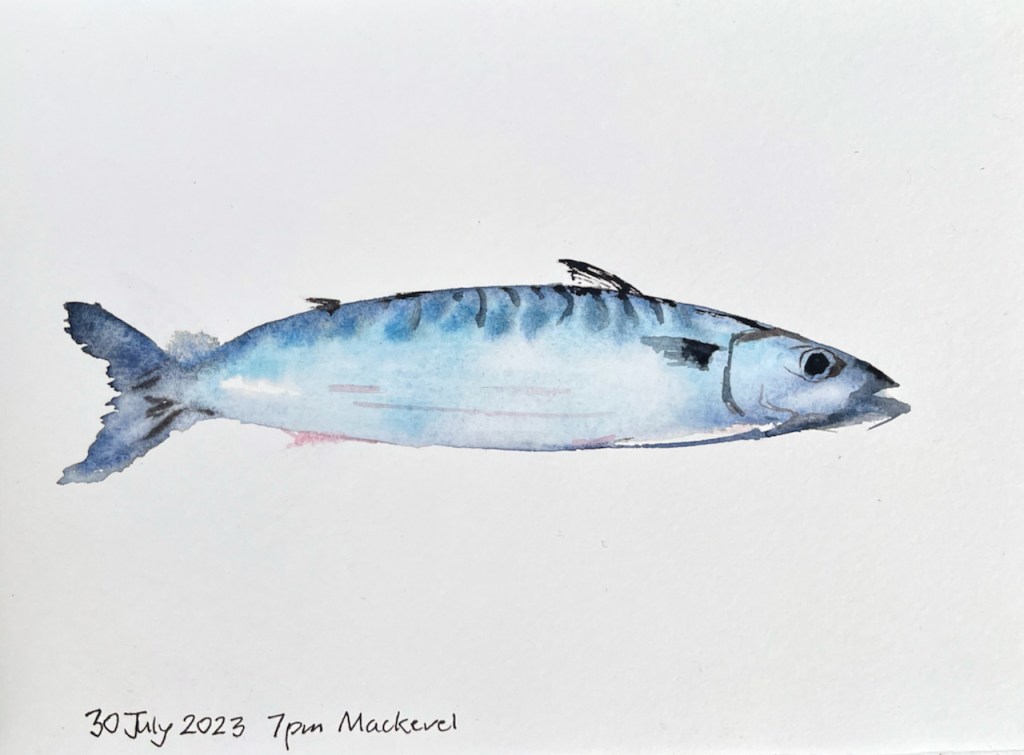
I was staying at “The Auld Haa” which is just a few hundred yards from the lighthouse. When I returned from drawing this scene, Tommy, who runs the guest house, called out, “Come and choose a fish!”. There was me and two other women staying at the guest house at that point. Bemused, we all made our way round the side of the house to find a cheerful fisherman standing by his car trailer on the small road. The trailer was laden with fish. The fish were in buckets. There were cod about two feet long, and mackerel, and a whole bucket of lobsters. The fisherman was Stephen, who I recognised as one of the ferry crew.
With suggestions and promptings from his three guests, Tommy made his selections. I was keen on the mackerel. Others opted for white fish. Tommy carried the bucket back to the house.
After this excitement I was resting on the bench outside the house when Tommy called out to me, “Would you like to do a painting of the mackerel?”.
Yes, I would like to do a painting of the mackerel, even though I was tired, even though it was evening, even though I’d already done a long walk, a dip in a rockpool, and several paintings of headlands. How often do you get invited to paint a mackerel? Seize the moment. Tommy brought out the mackerel on a plate, and I settled down to drew, while the hens scraped around on the grass, and small birds scuttled in the hedge.
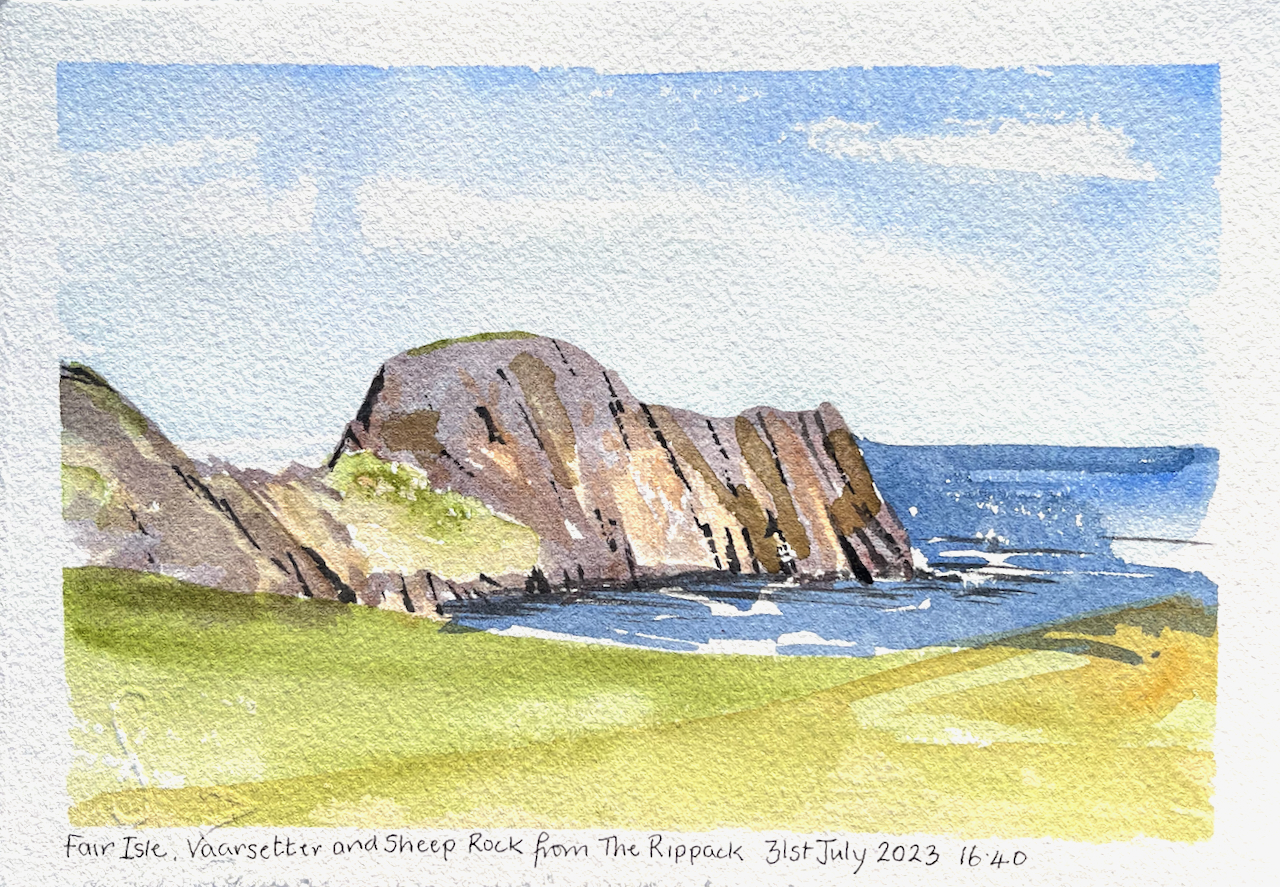
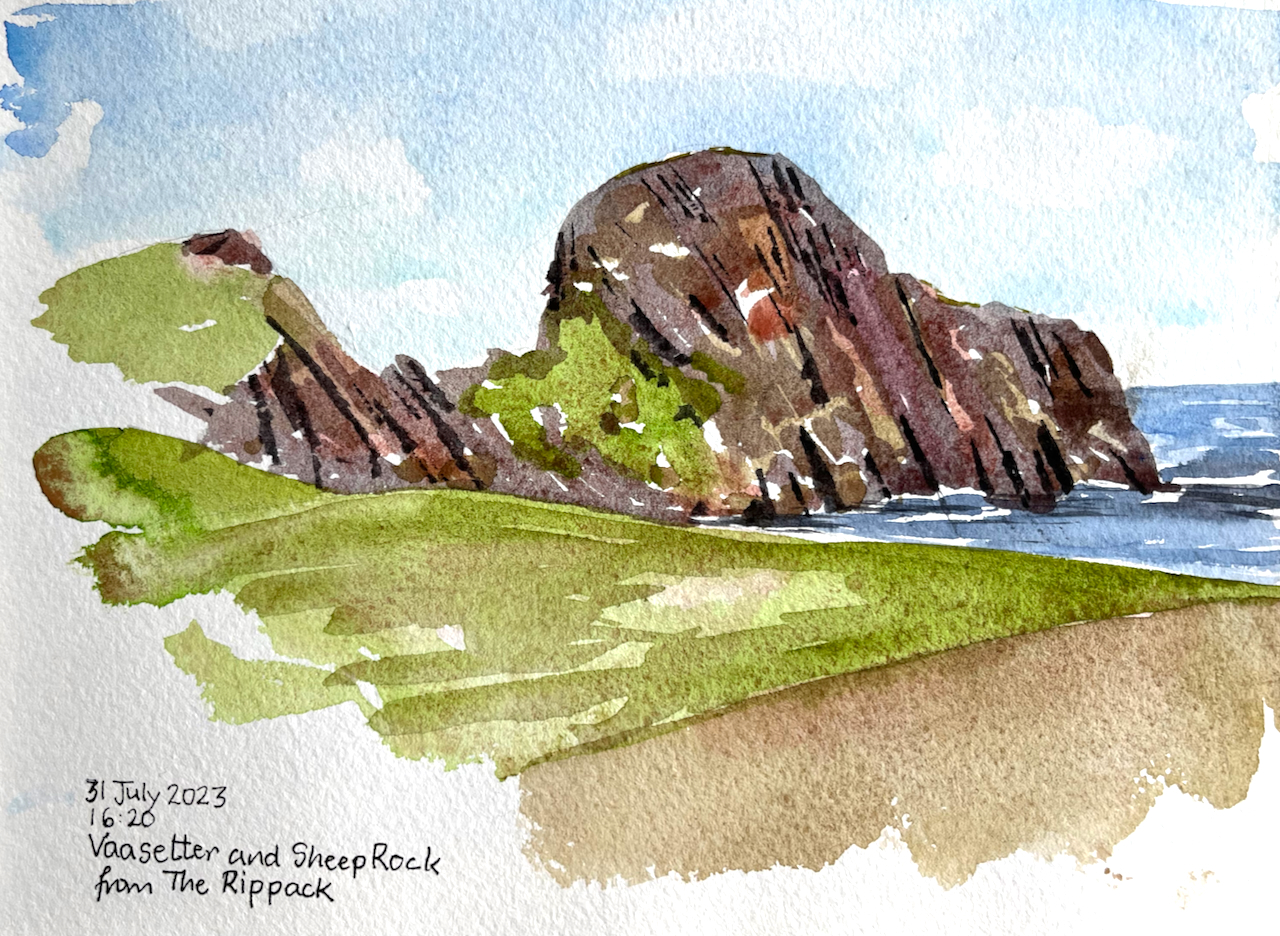
On another day I sketched the huge headland called “Sheep Rock”.
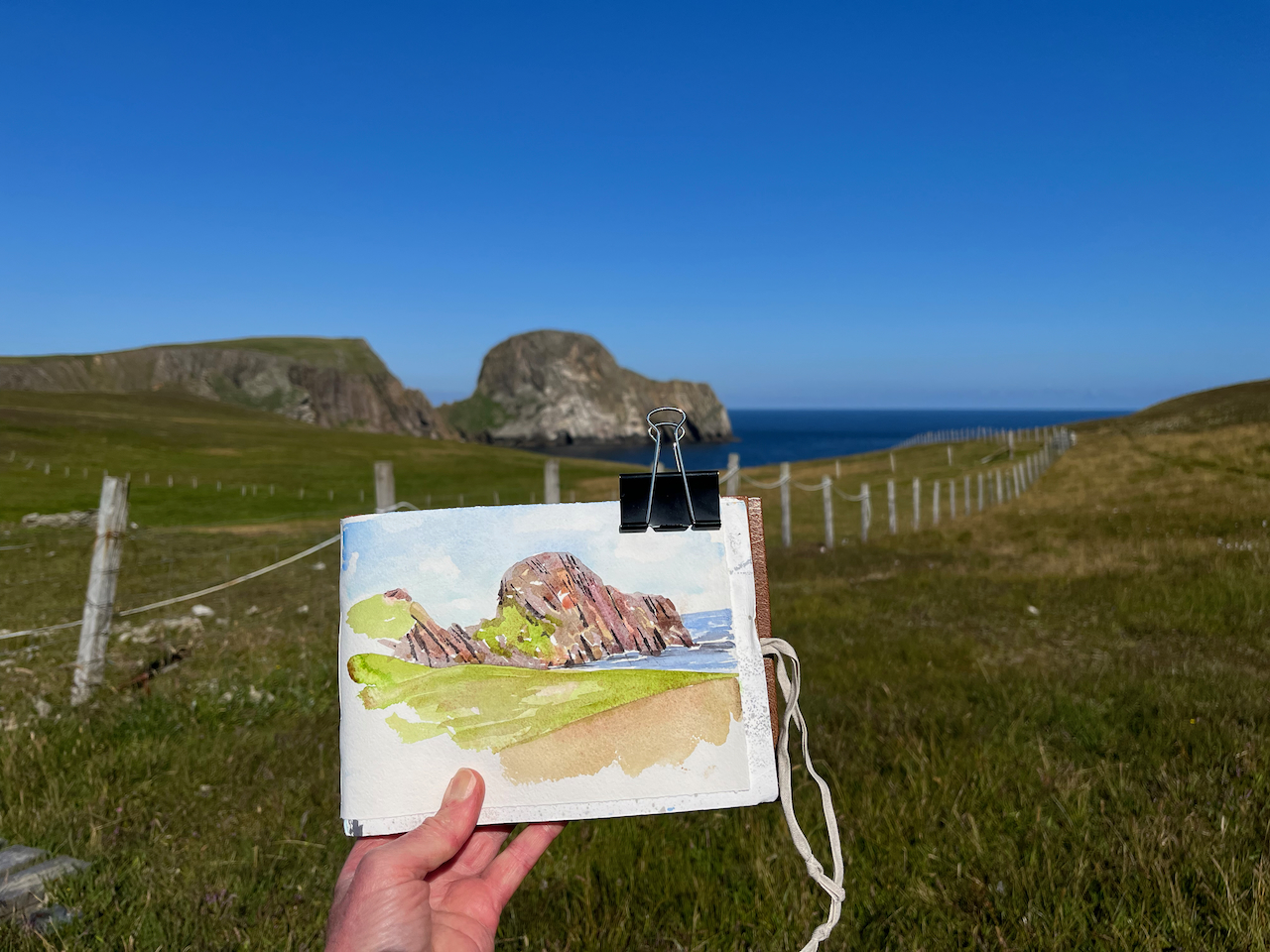
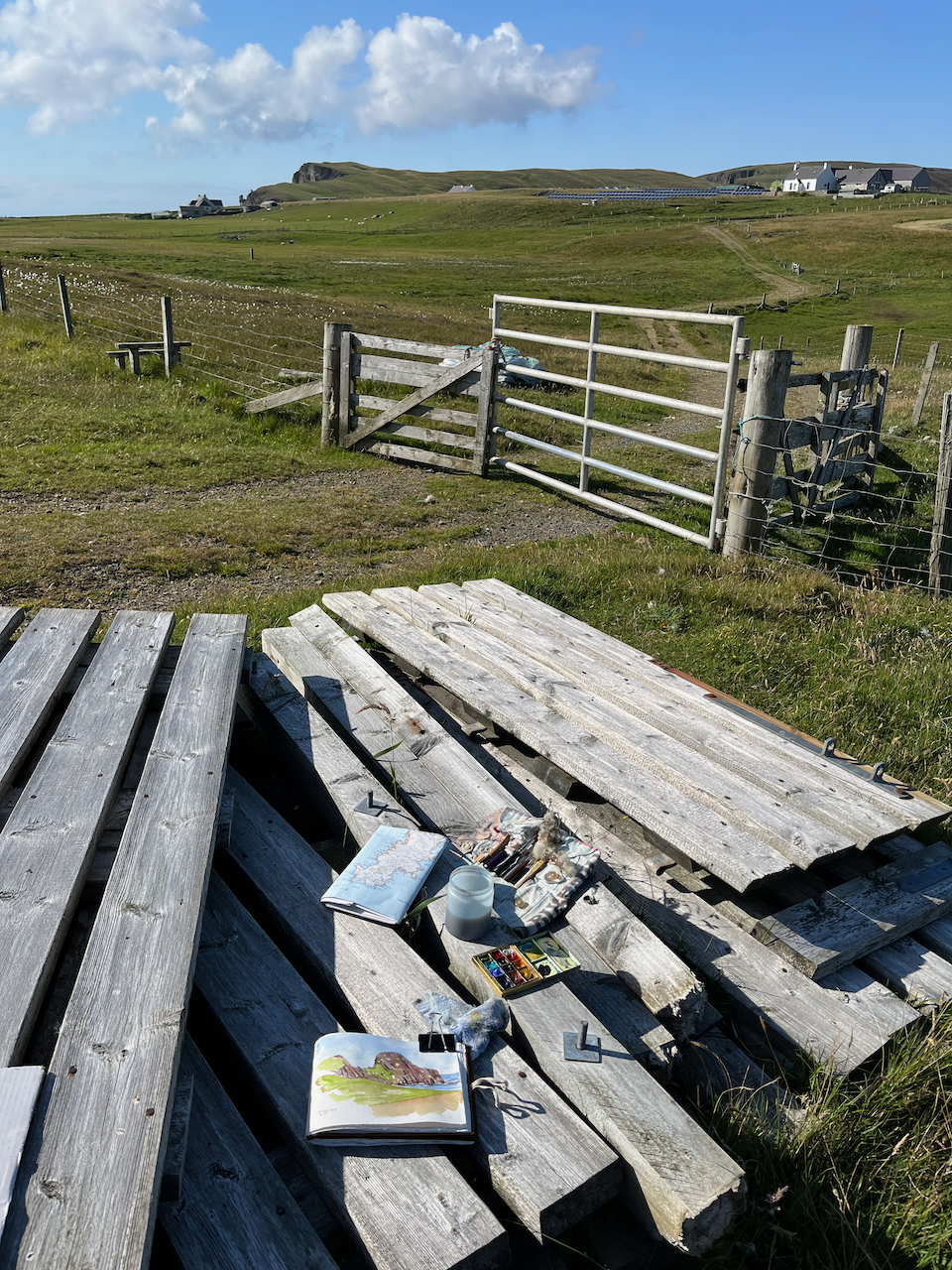
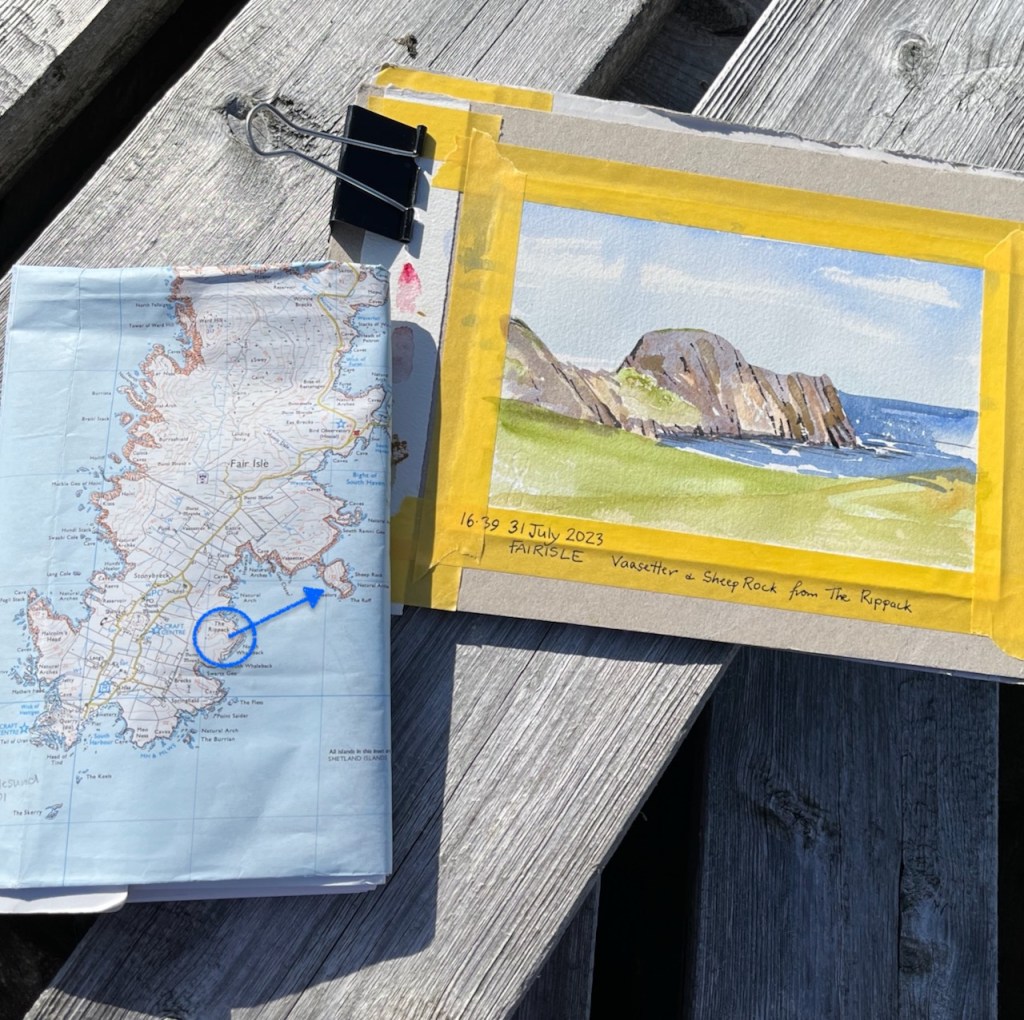
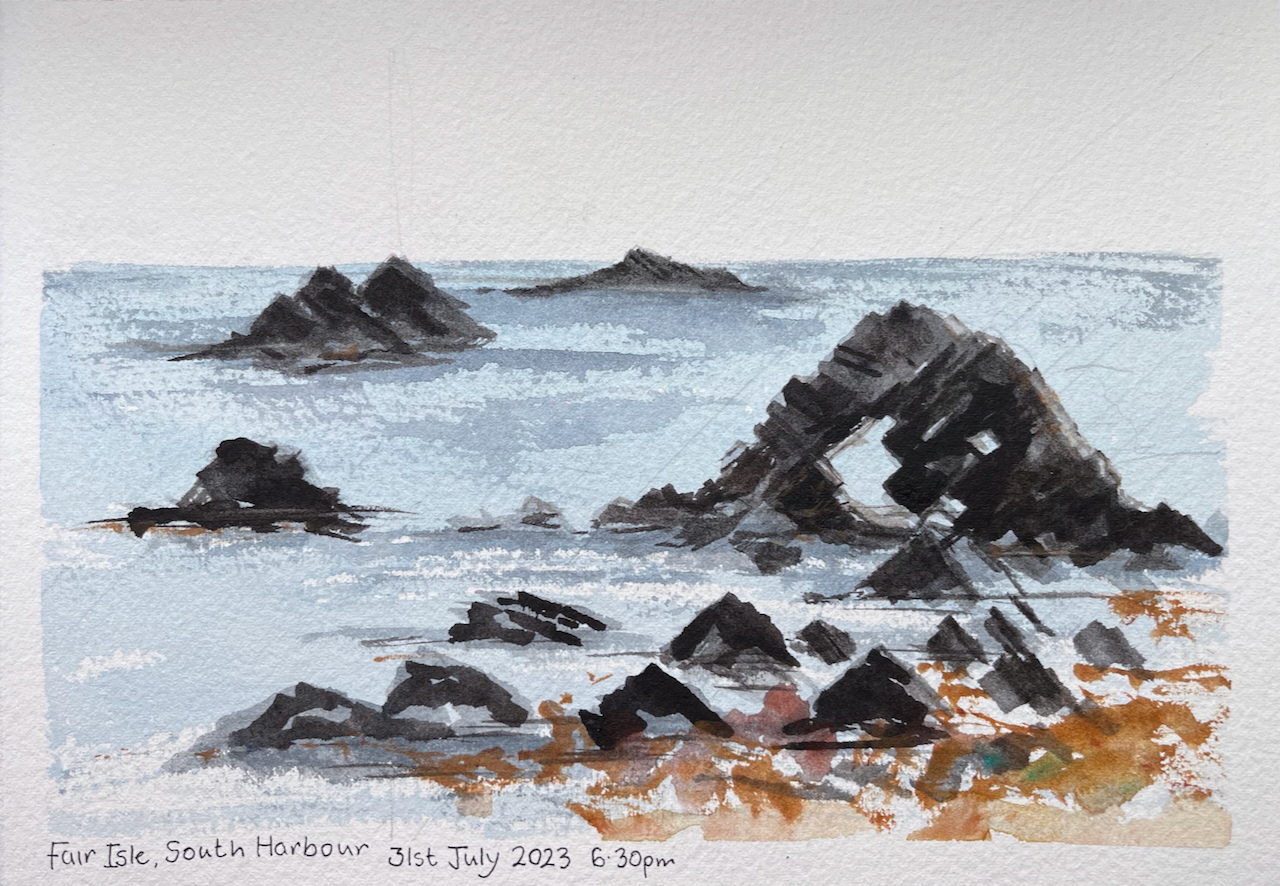
Here is the spectacular rock arch on South Beach, which is near the Auld Haa.

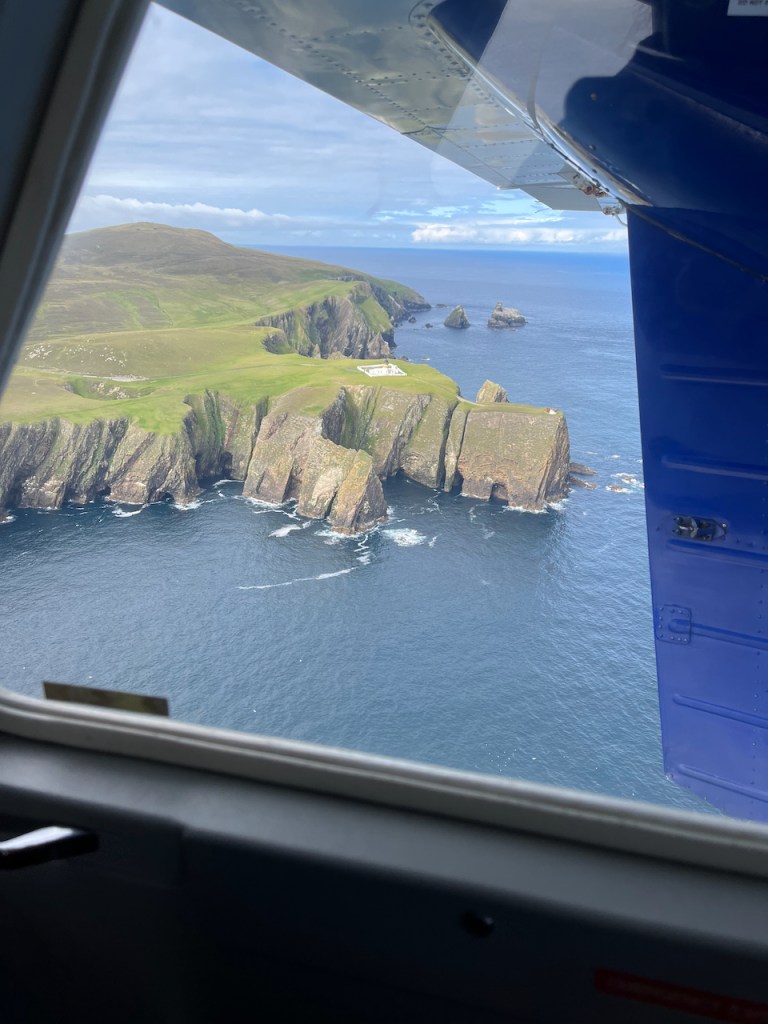
I was only on Fair Isle for three days. It’s an extraordinary place. Here was my final view of the island as I left on the tiny plane. The small square is the North Lighthouse, high up on its cliff.
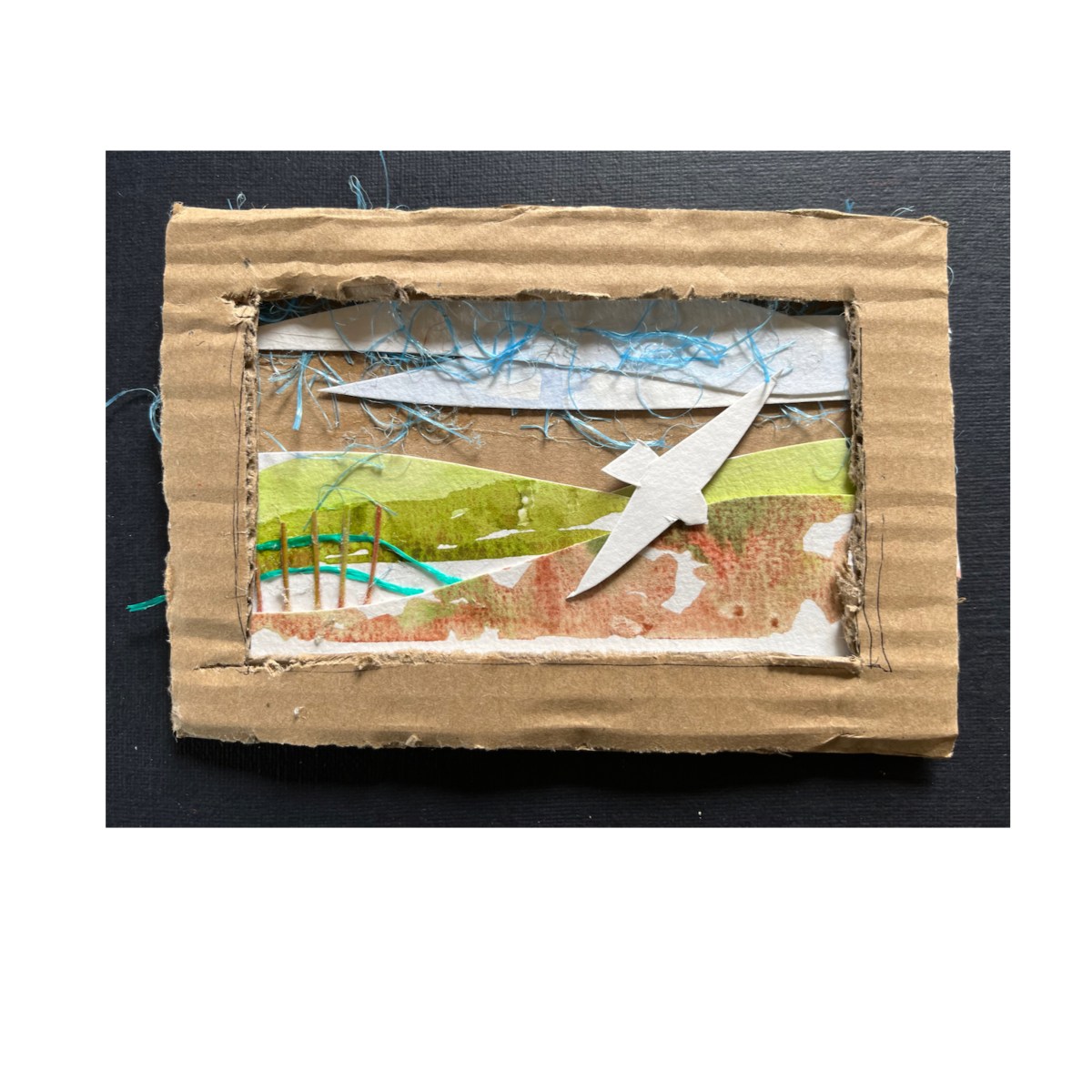
Here is a collage postcard I made, inspired by the work of Martin Hicklin.

As you see, it shows a seabird, probably a fulmar, soaring over the coast, with the green hills beyond, and a characteristic Shetland fence. The fine blue sky is made from rope waste found on the beach.
I managed to arrange for the seabird to move, sliding along a fine thread, and hover above the background.


This went through the international post. I don’t yet know if it arrived…..
I made a postcard for friends in Basel. It shows the insect life in Crete. Here are some details, and the work under construction. The idea was that the flies…
Another collage postcard. I posted this one in London 18th May. It looks a bit crinkled because the cardboard was damp with PVA glue, and then dried. The white shape on the…
Here is a postcard collage I sent to my friends in another city. It is inspired by the website: sendmeapostcart.com, and shows the connections we make, the lines which bind us, the…
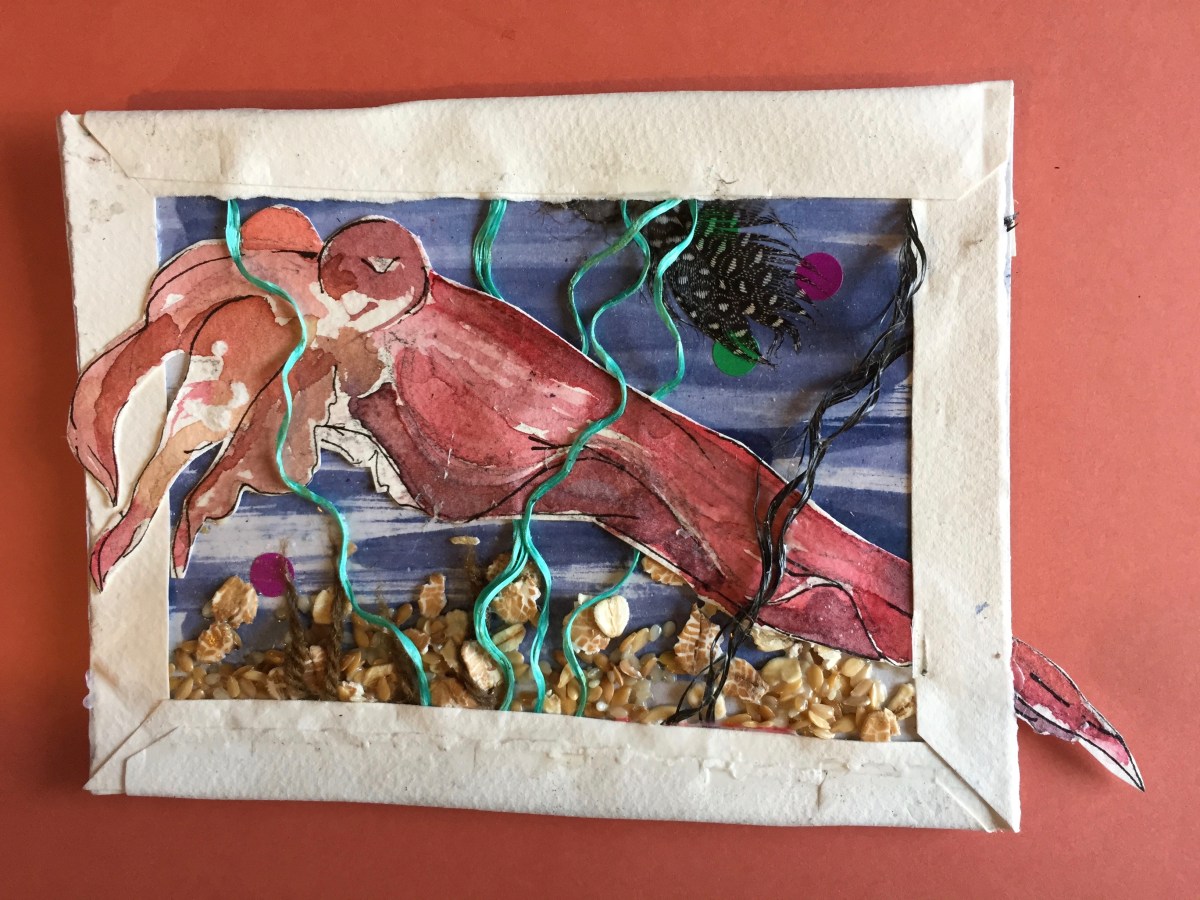
I made a collage postcard inspired by “the Blue Planet” series on BBC2. This is the cuttlefish. The sea bed is made of breakfast cereal, and the seaweed is strands of unraveled…
Here is a collage made for friends in Switzerland. I posted it at the Post Office in Kalami on 8th May. The official there did not seem to be concentrating very hard.…
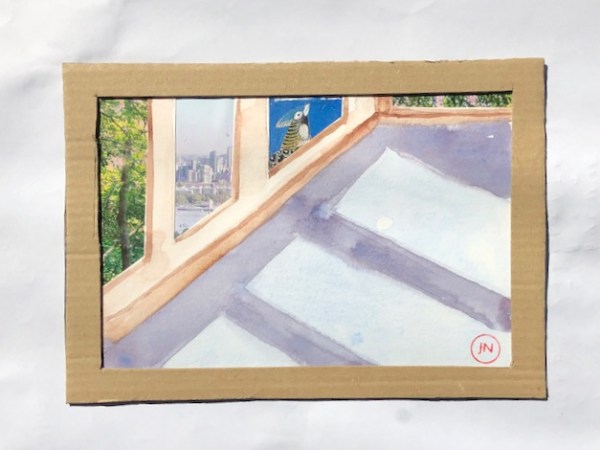
Here is a postcard from indoors: It shows a corner of the flat. You see the sun outside, and birds, and the city. You see parks, rivers and the great outdoors. But…
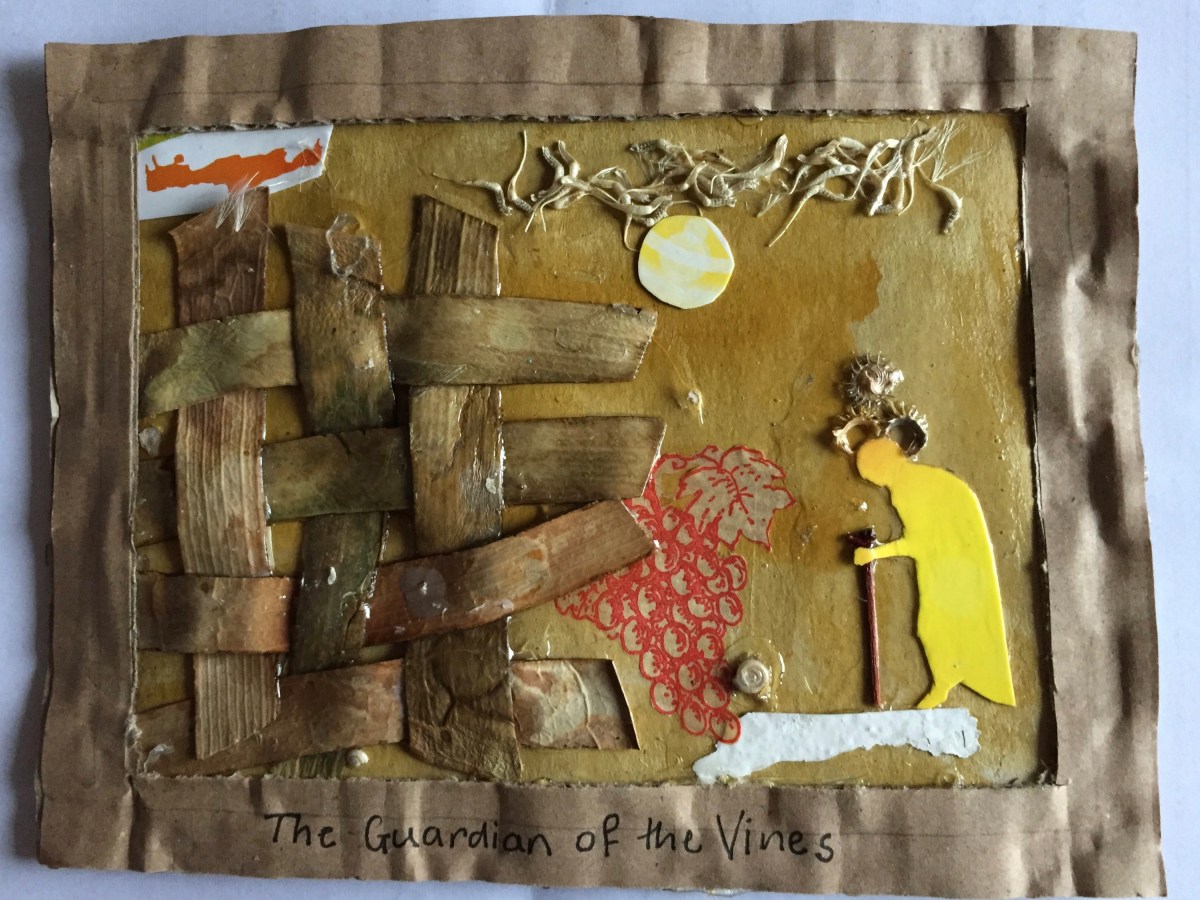
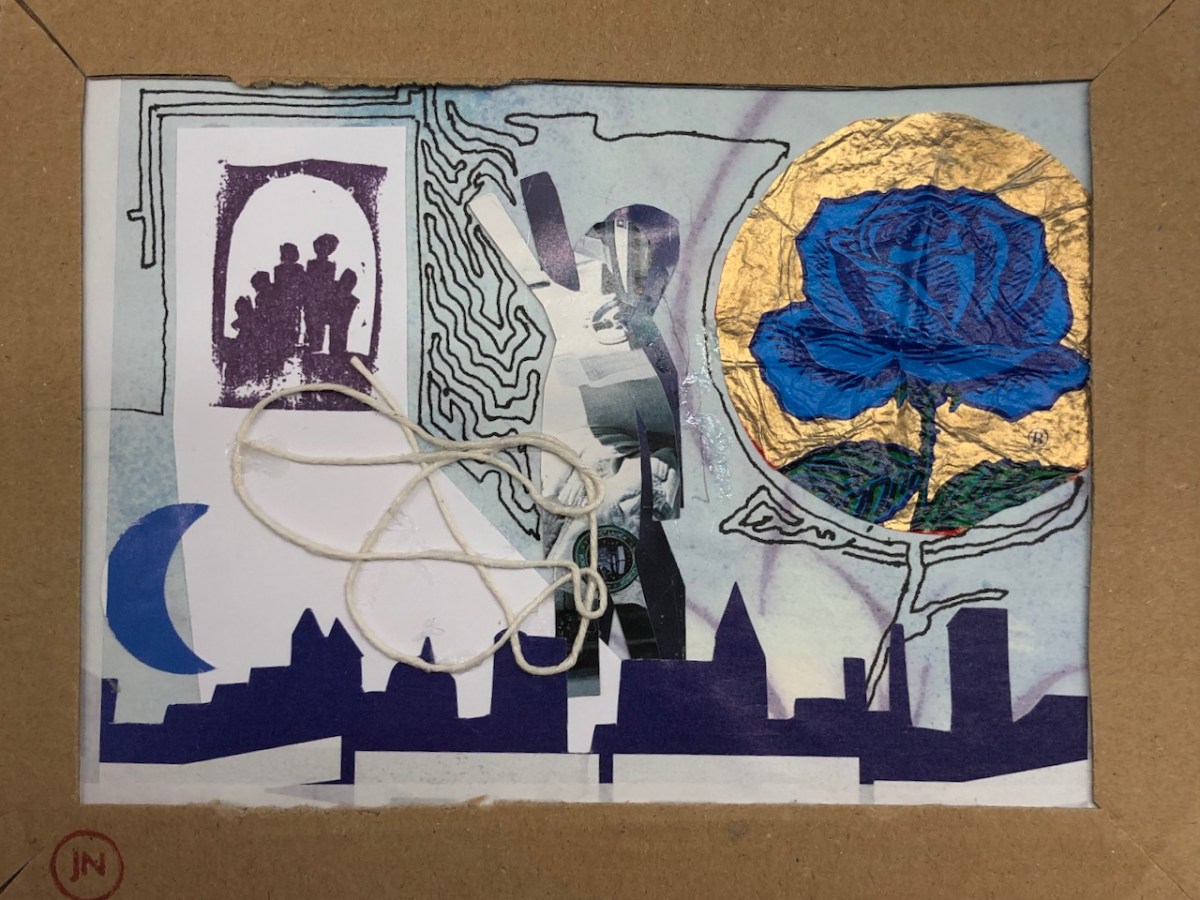
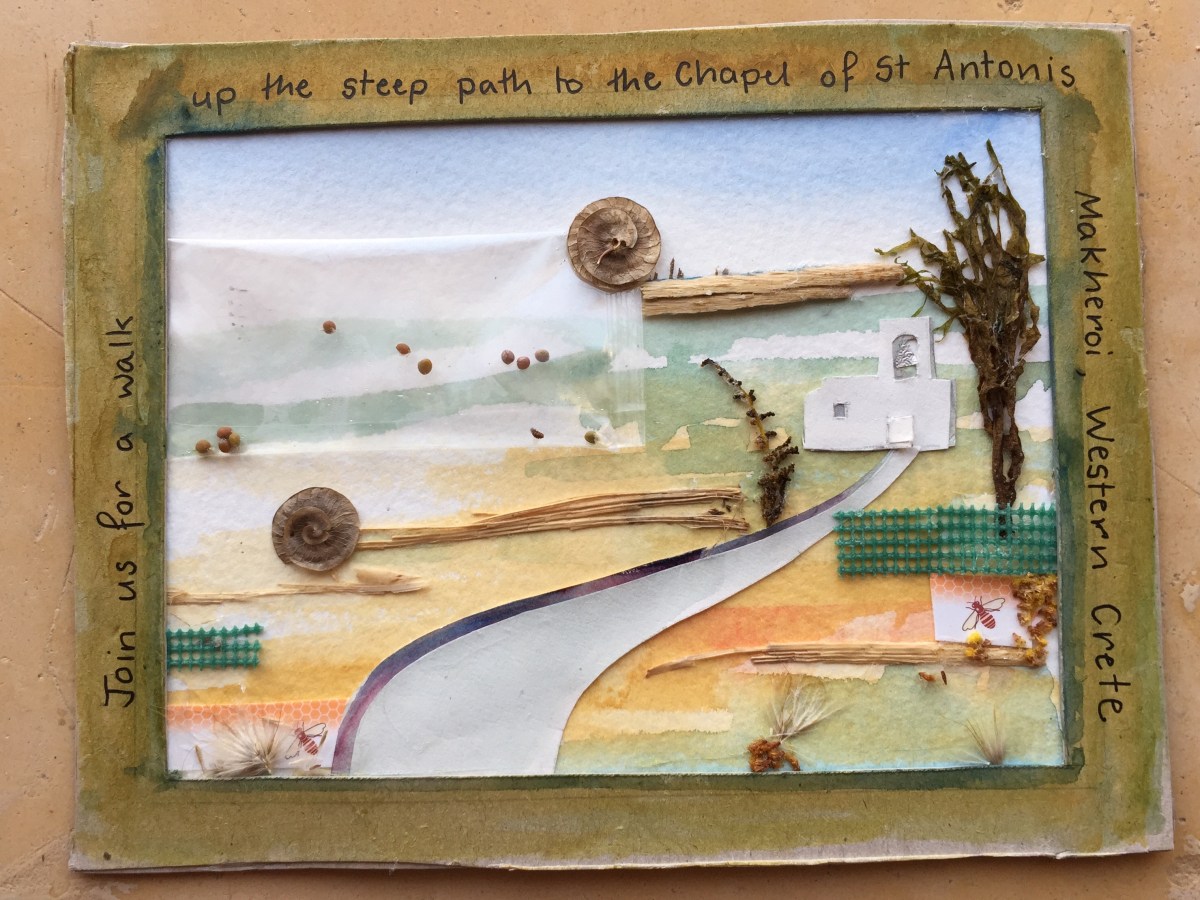
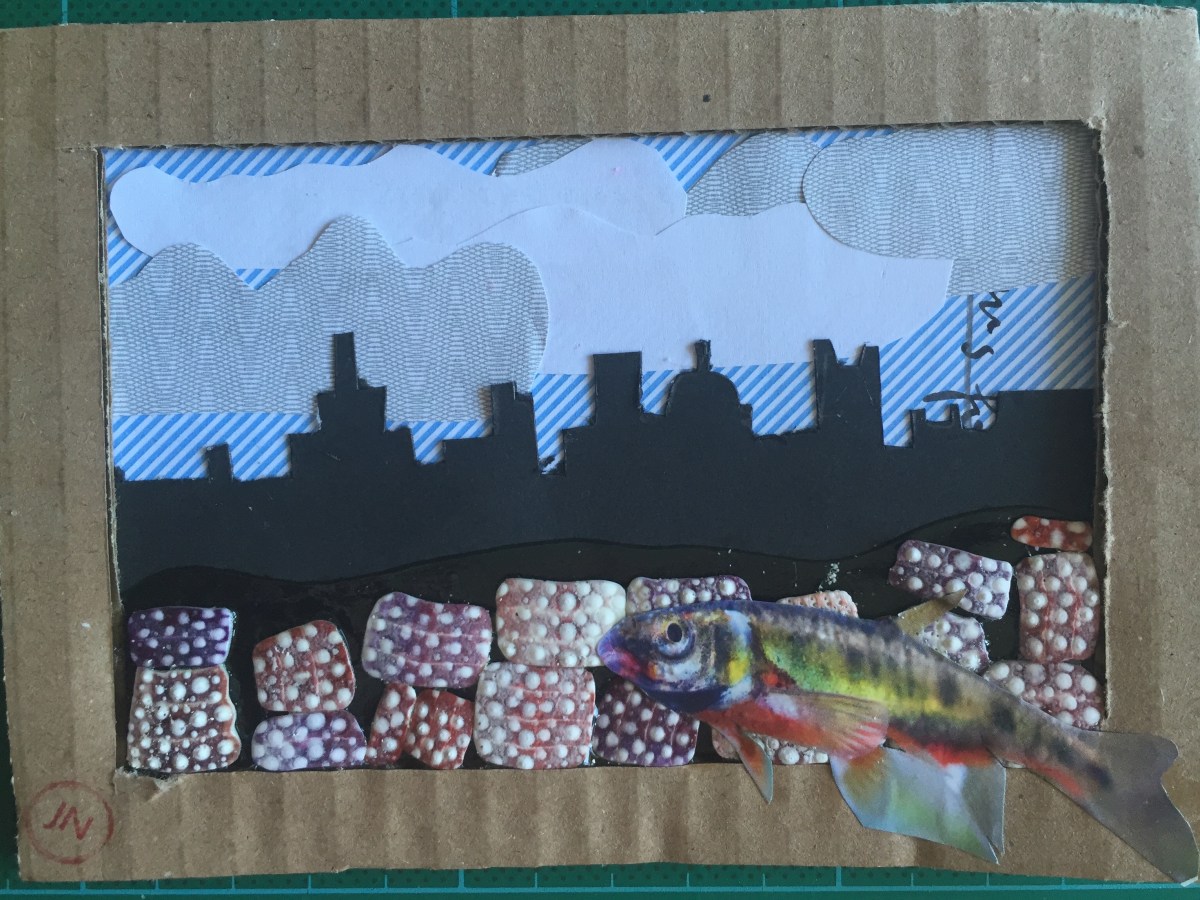
Here are some of the collage postcards I have made. The constraints I set myself are: the postcard must go in the post by itself: no envelope it is made of found…
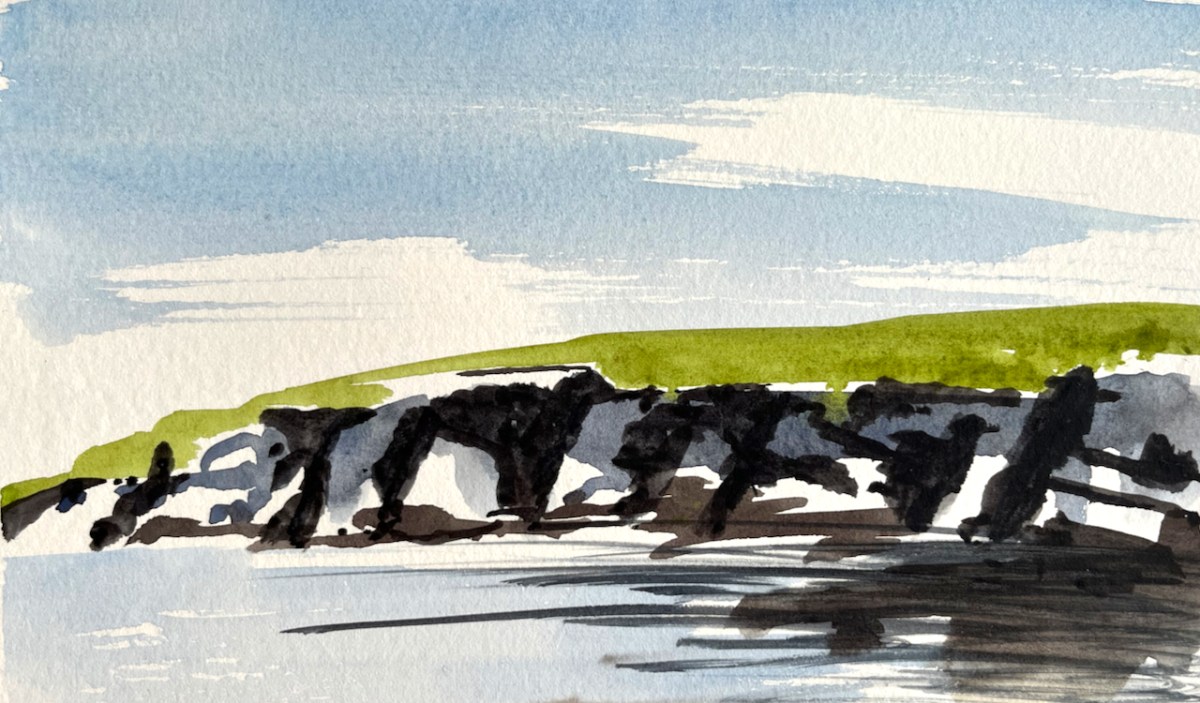
While I was drawing this picture, I was startled by a loud sneeze. Since I was totally alone on the hillside, it was uncanny. Then I realised that the sneeze came from across the water, from the seal colony at the base of the dark rocks.
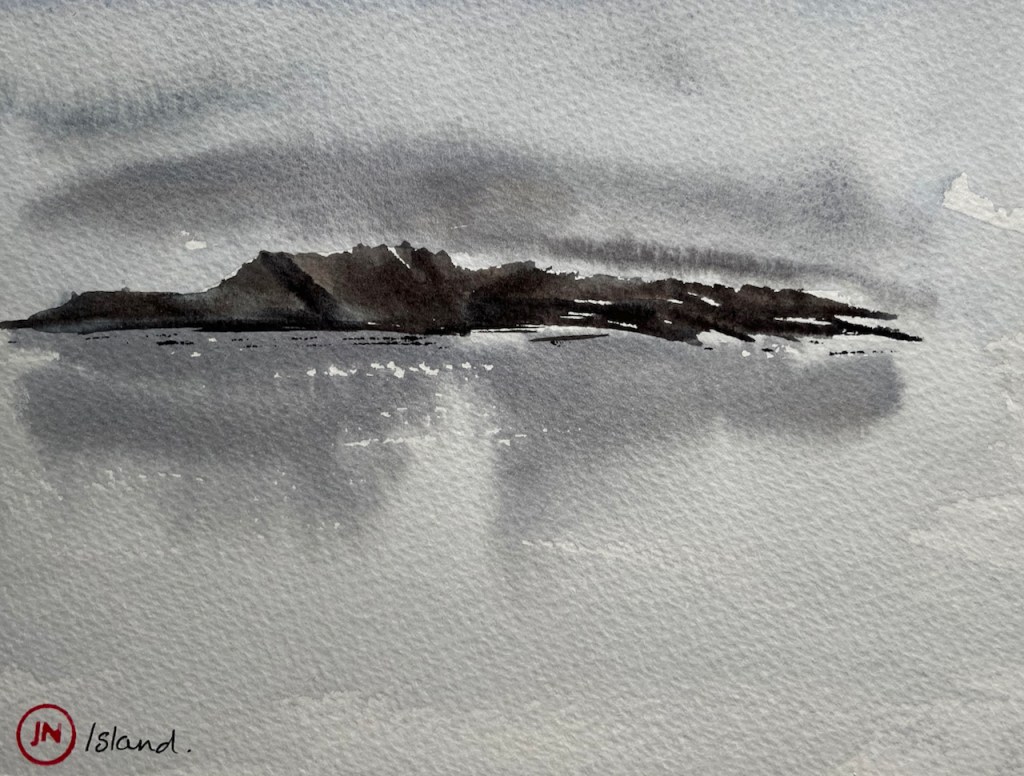
Soon several seals were in the water, swimming over to see what I was doing. They stayed a little offshore, bobbing about. Seals look into your eyes, as dogs do, and seem to want to communicate. They said “who are you?” and “come and play!”. They seemed disappointed when I walked off, without having accepted their invitation to swim with them in their chilly waters.

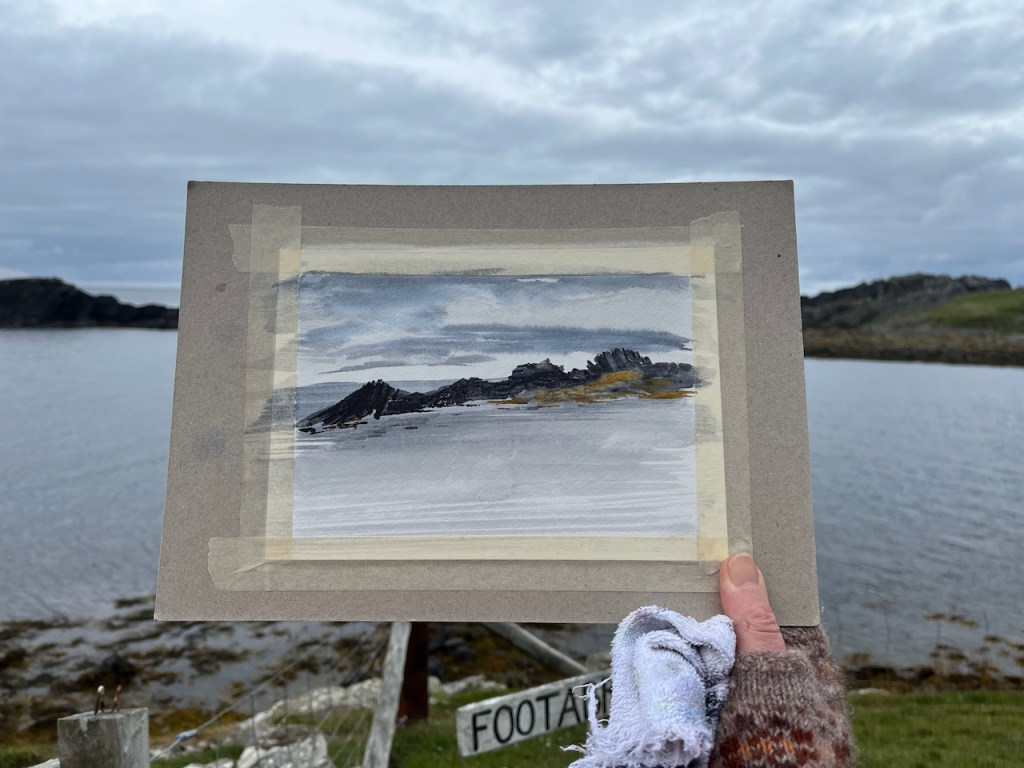
There are also seals on the beach where a stream from the Loch of Quinnigeo arrives at the sea. Nettles grow, sheltered from the wind by the deep ravine, and watered by the freshwater stream. I’ve swum there, and sketched the cliffs.

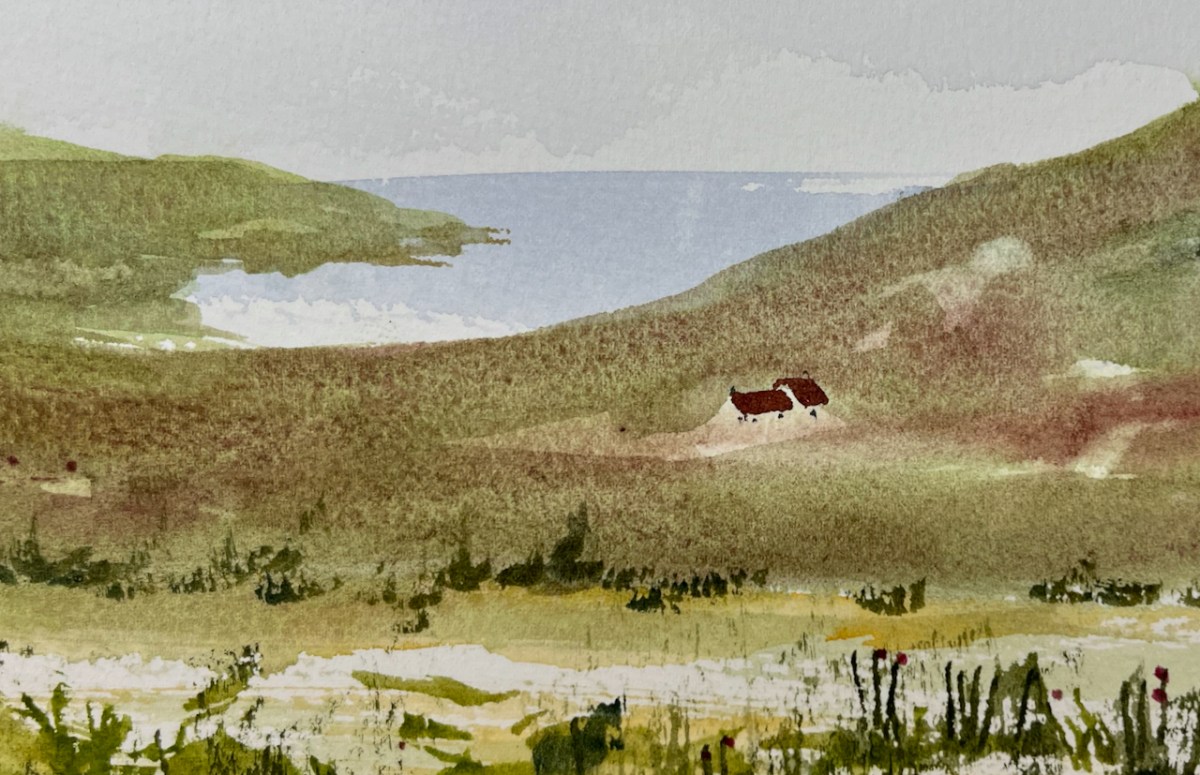
The loch of Quinnigeo is surrounded by smooth hills.

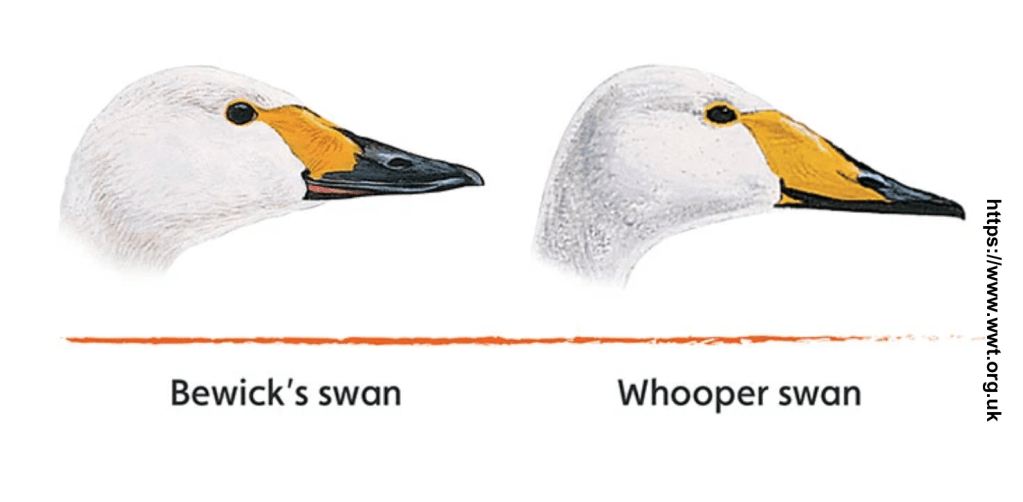
I’ve seen swans on the loch (off the picture to the right). They are not the ordinary urban type of swans I’ve seen in parks, which are called mute swans. Mute swans have pink beaks and these ones had yellow beaks. They drifted calmly in the middle of the loch with their cygnet, honking in a conversational kind of a way. Whooper swans or Bewicks? I couldn’t distinguish at that distance.
Here is another attempt to show the solid landscape round the loch and the way the hill casts darkness onto the still water.







 Jane Sketching