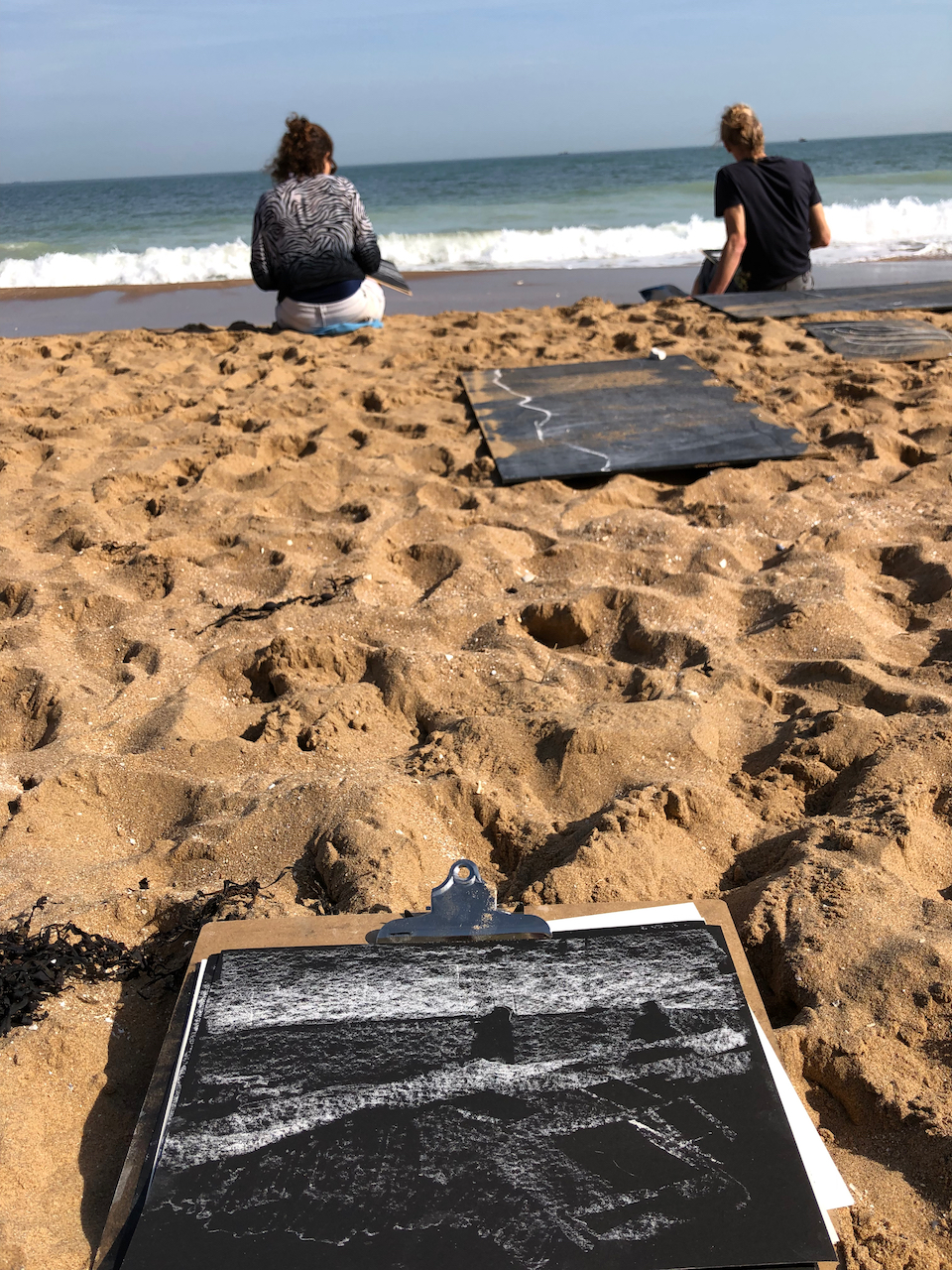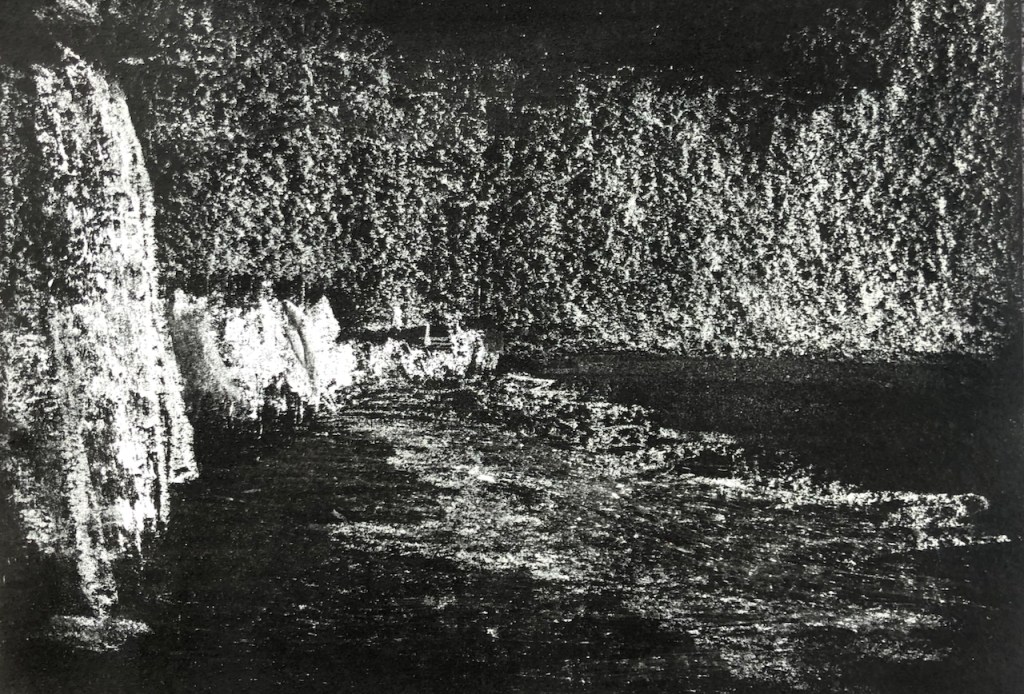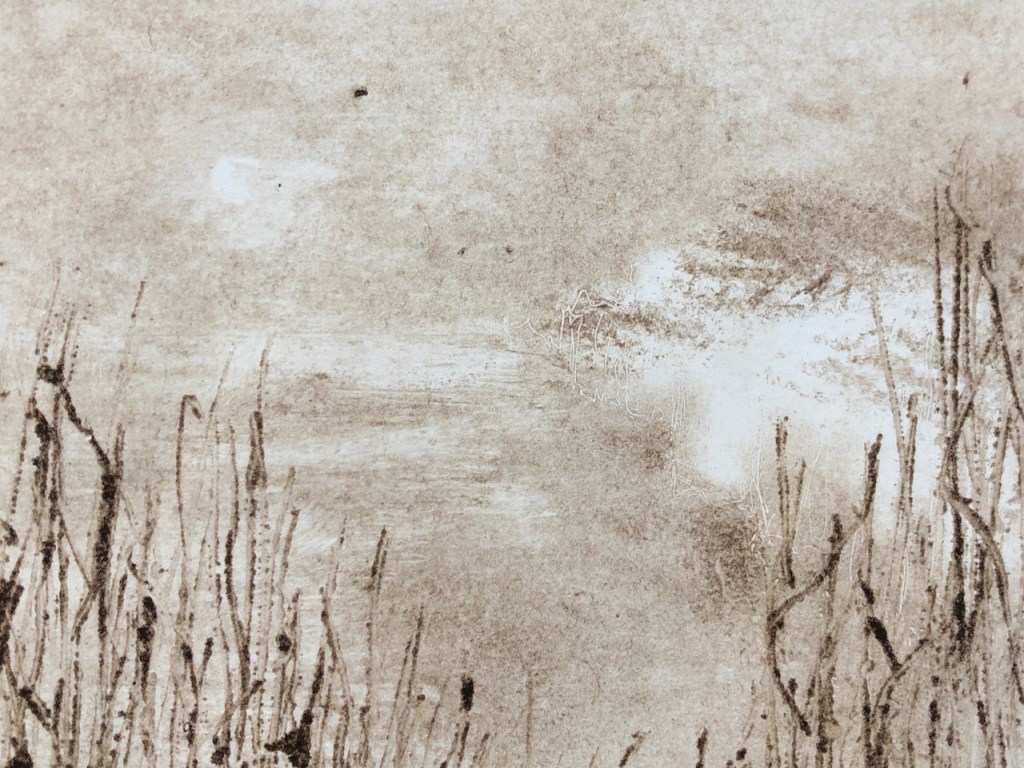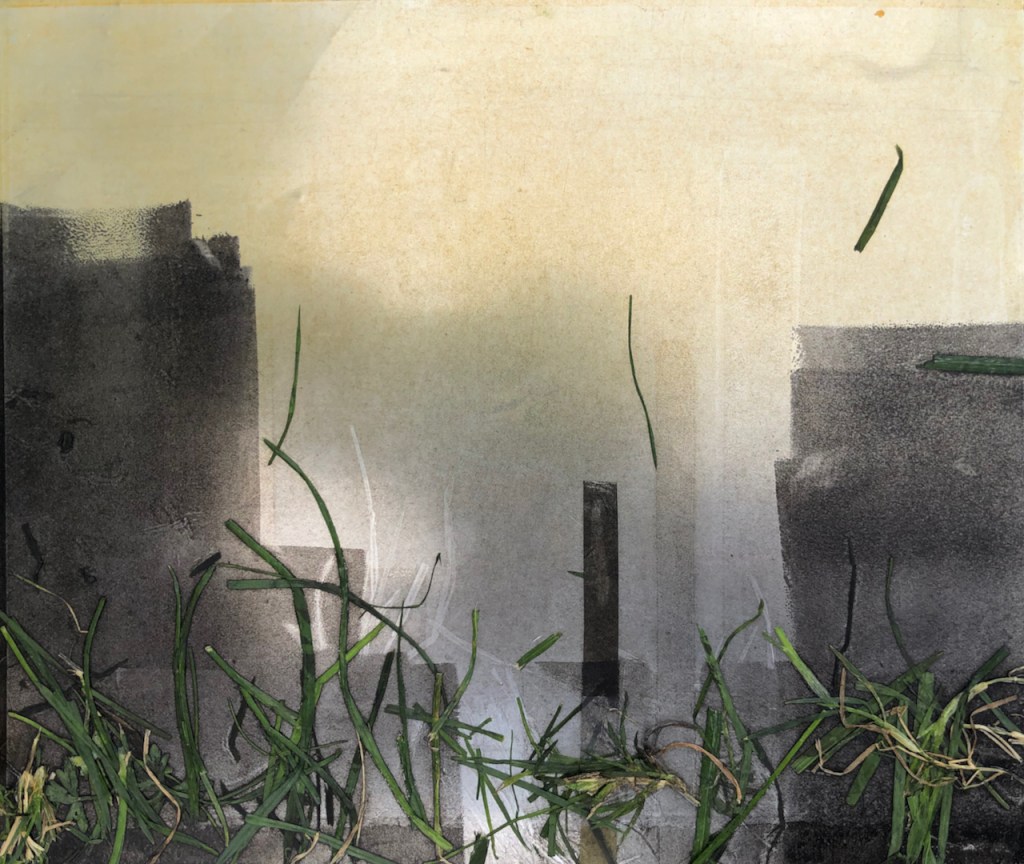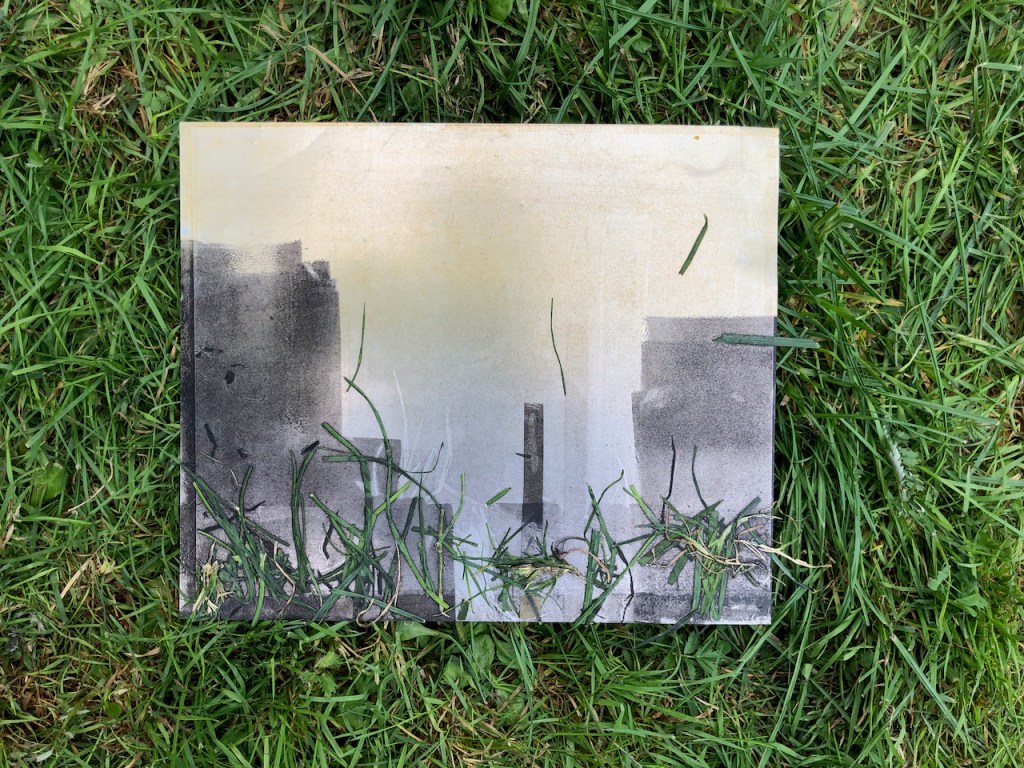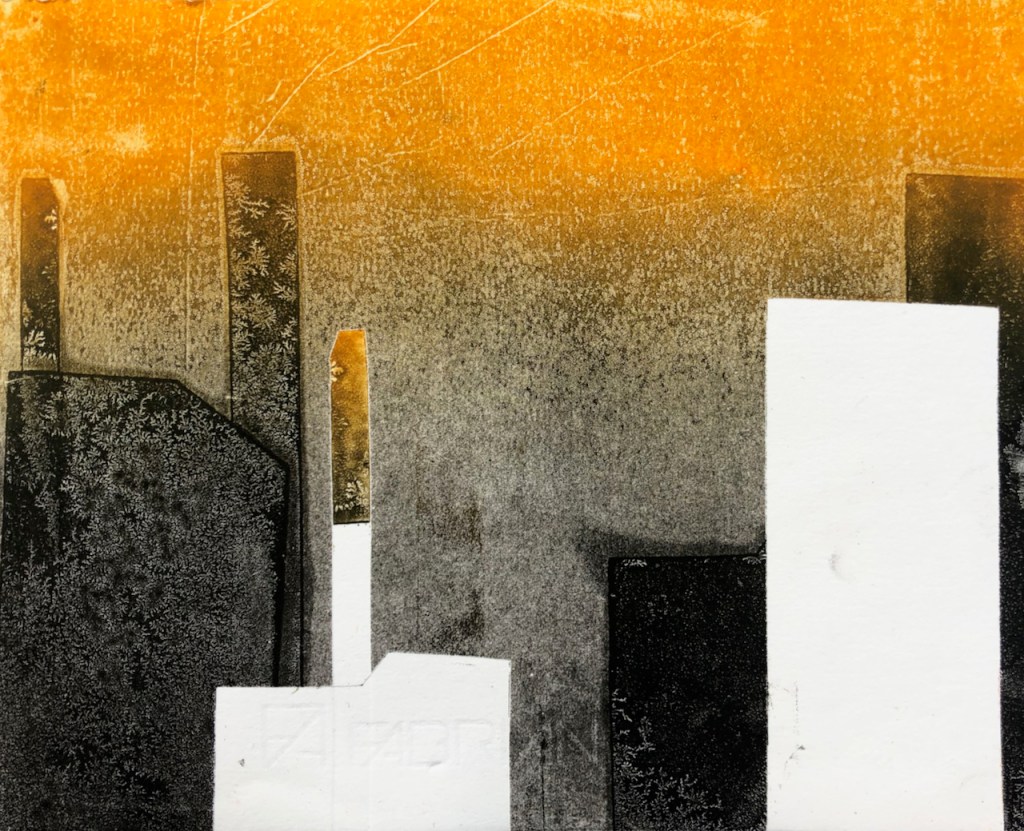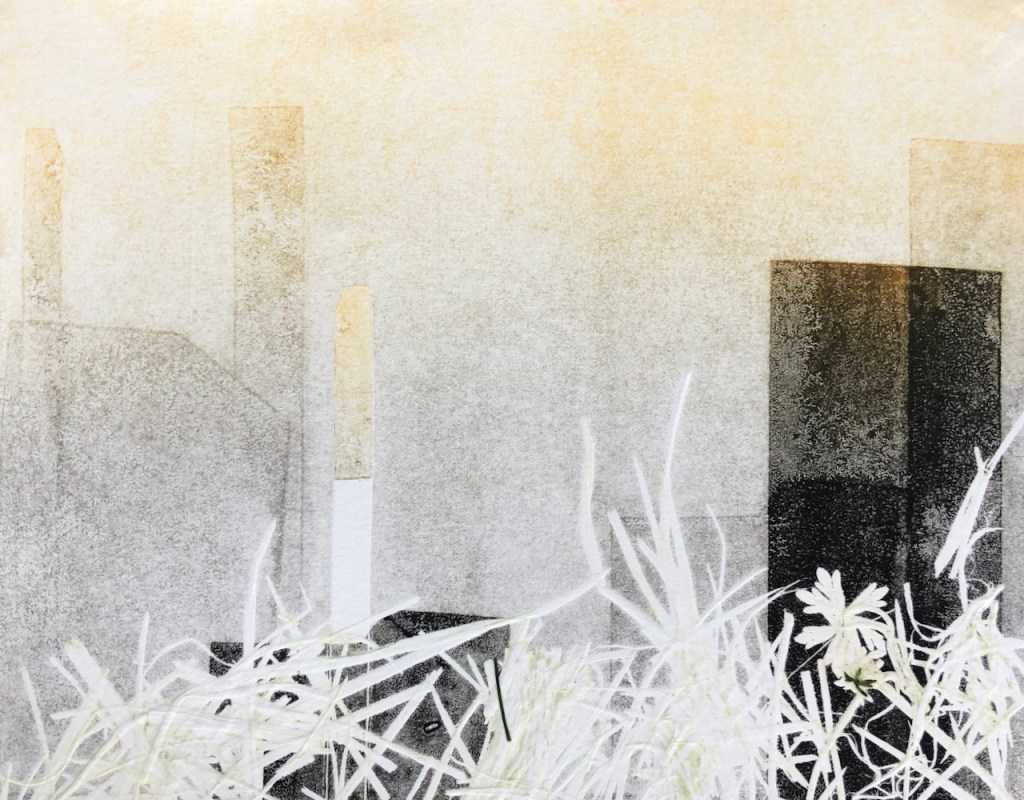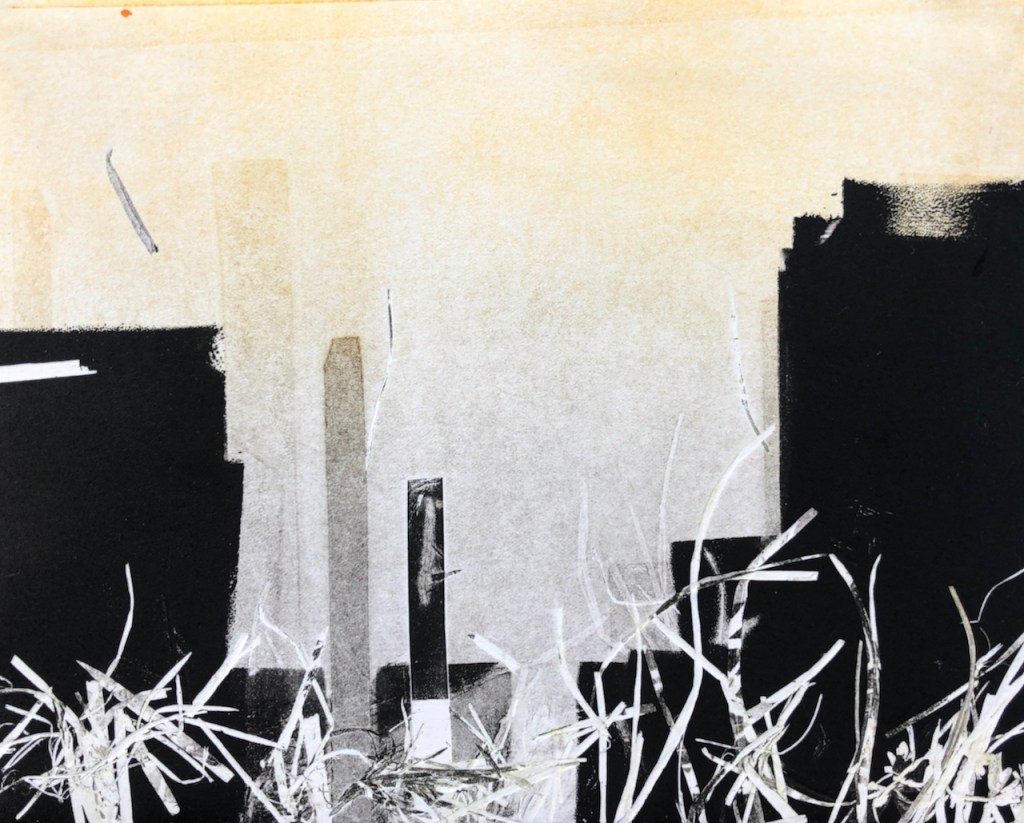
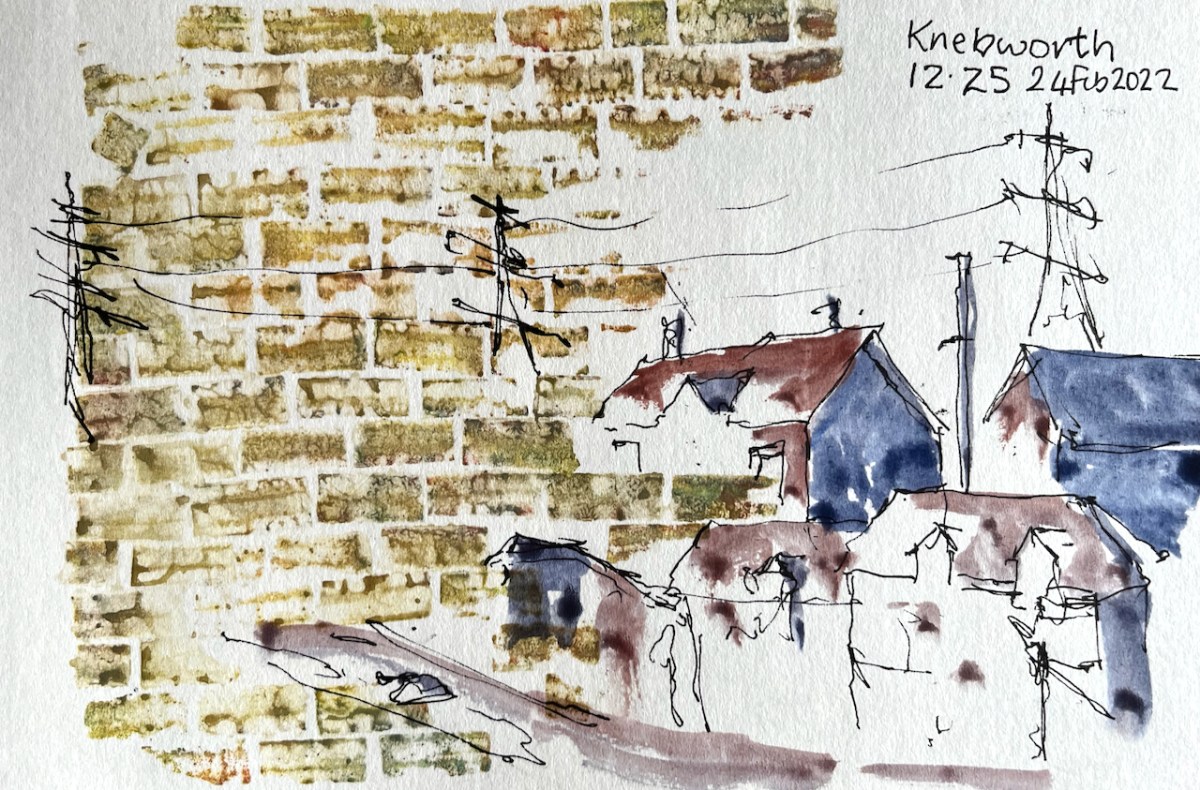
Before the journey, I printed patterns on the pages. Many of these drawings are done on the train.
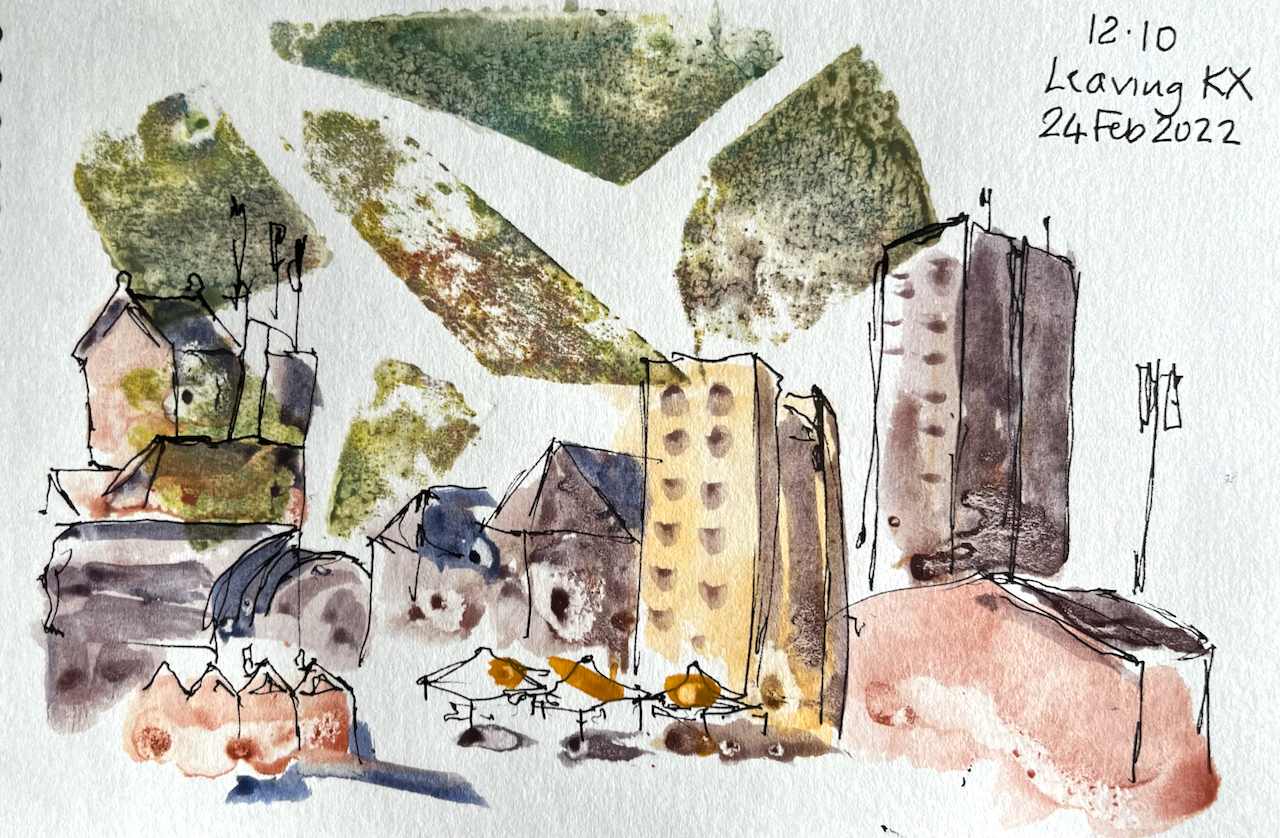
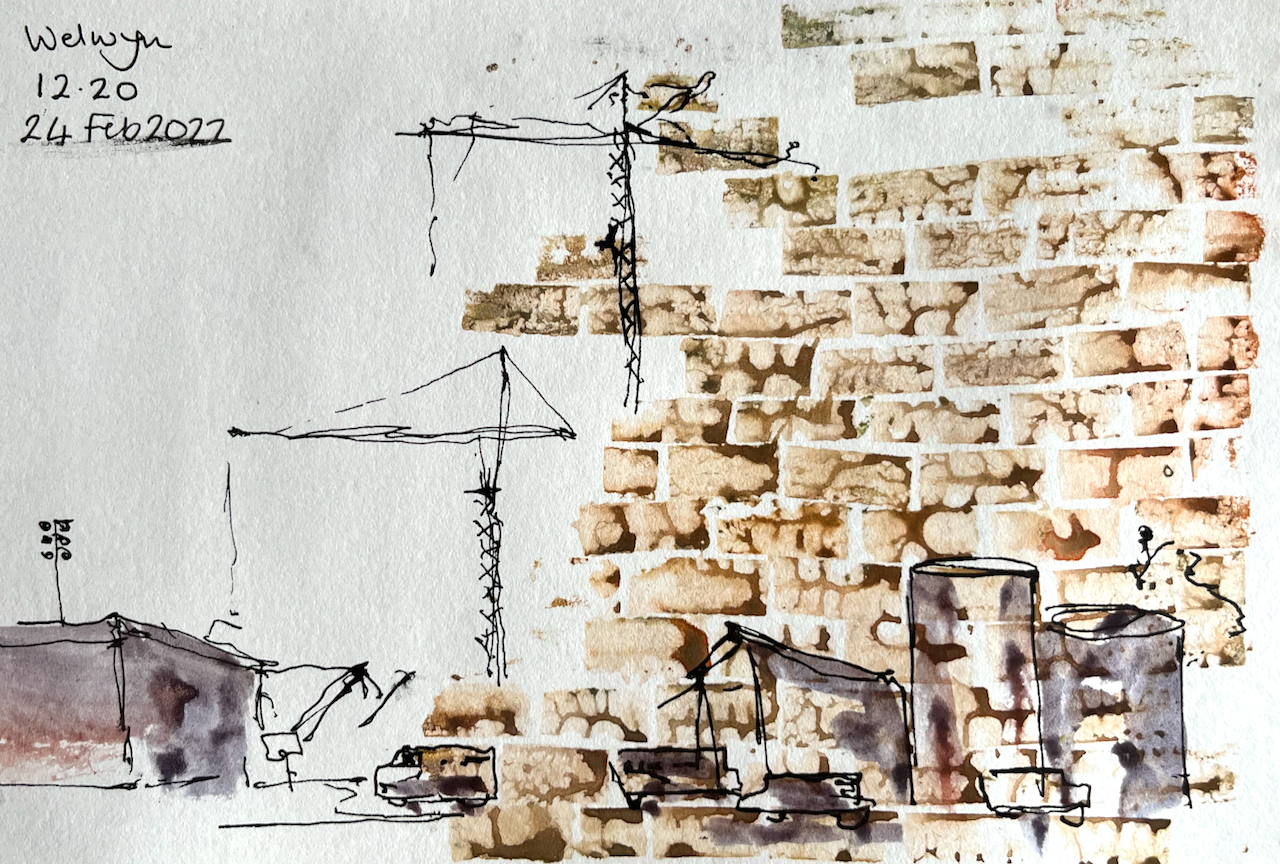
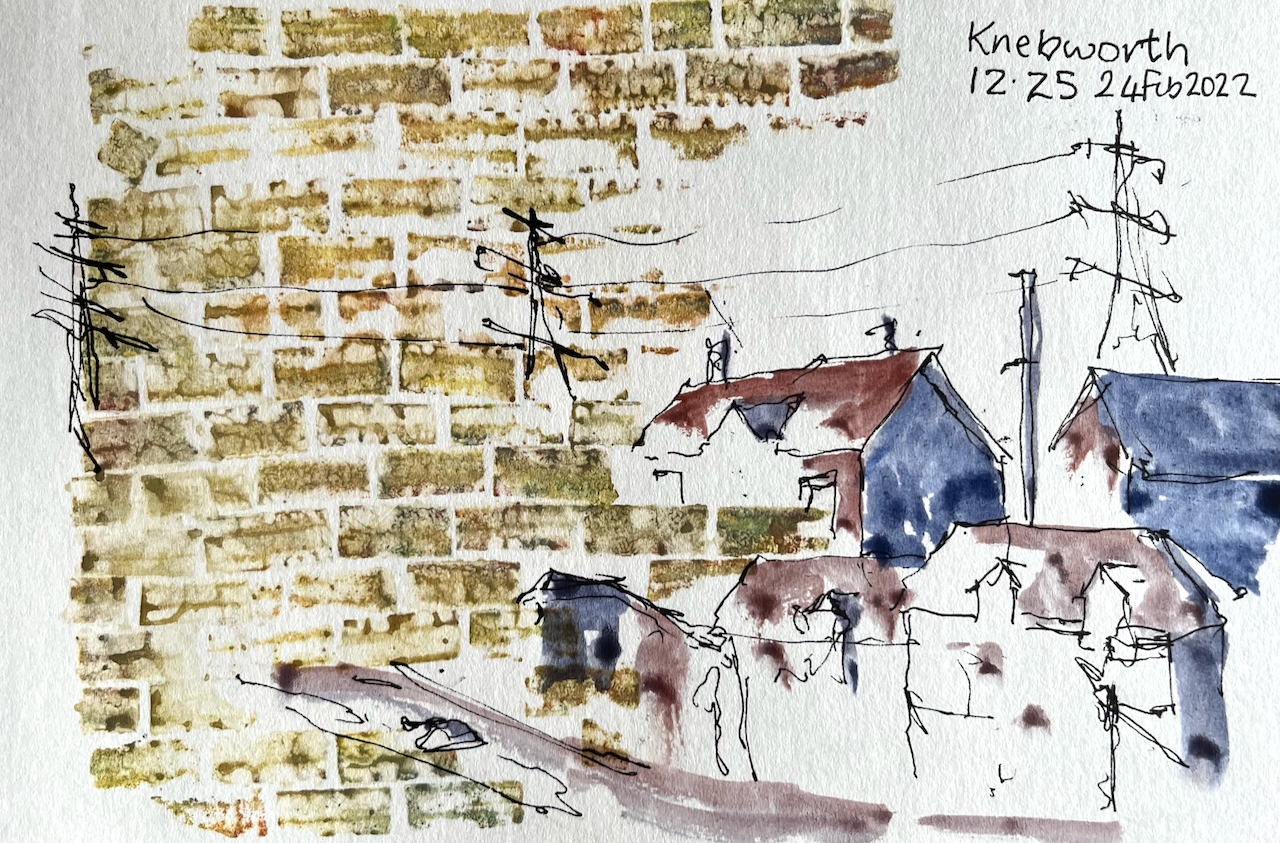
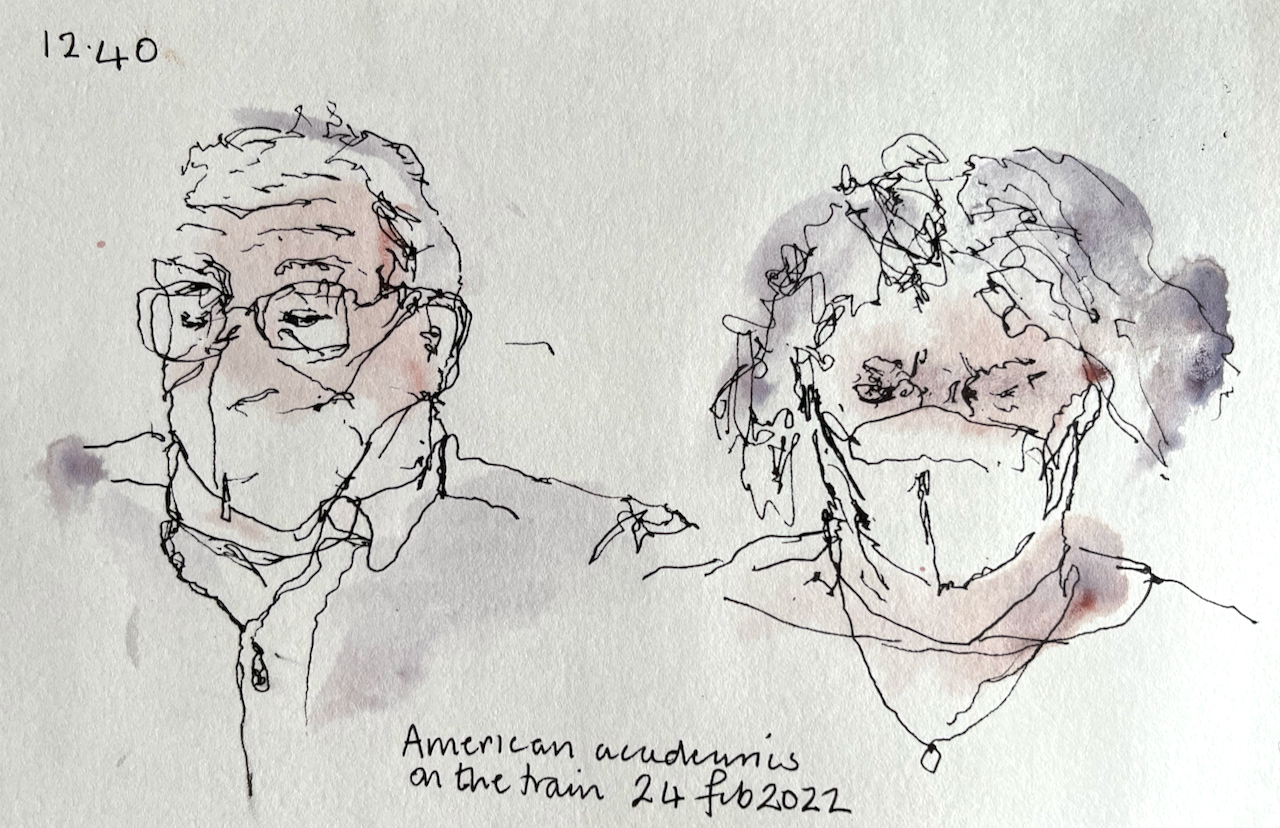
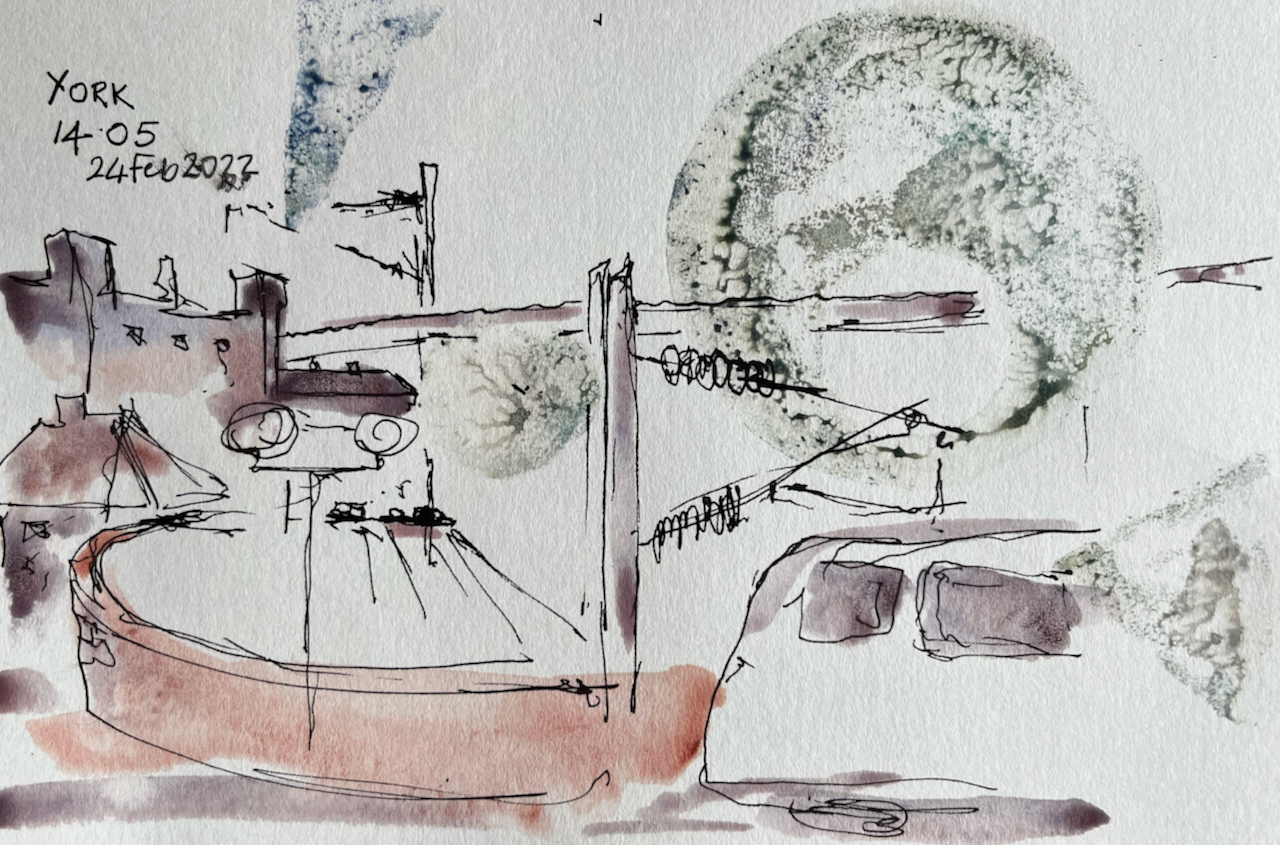
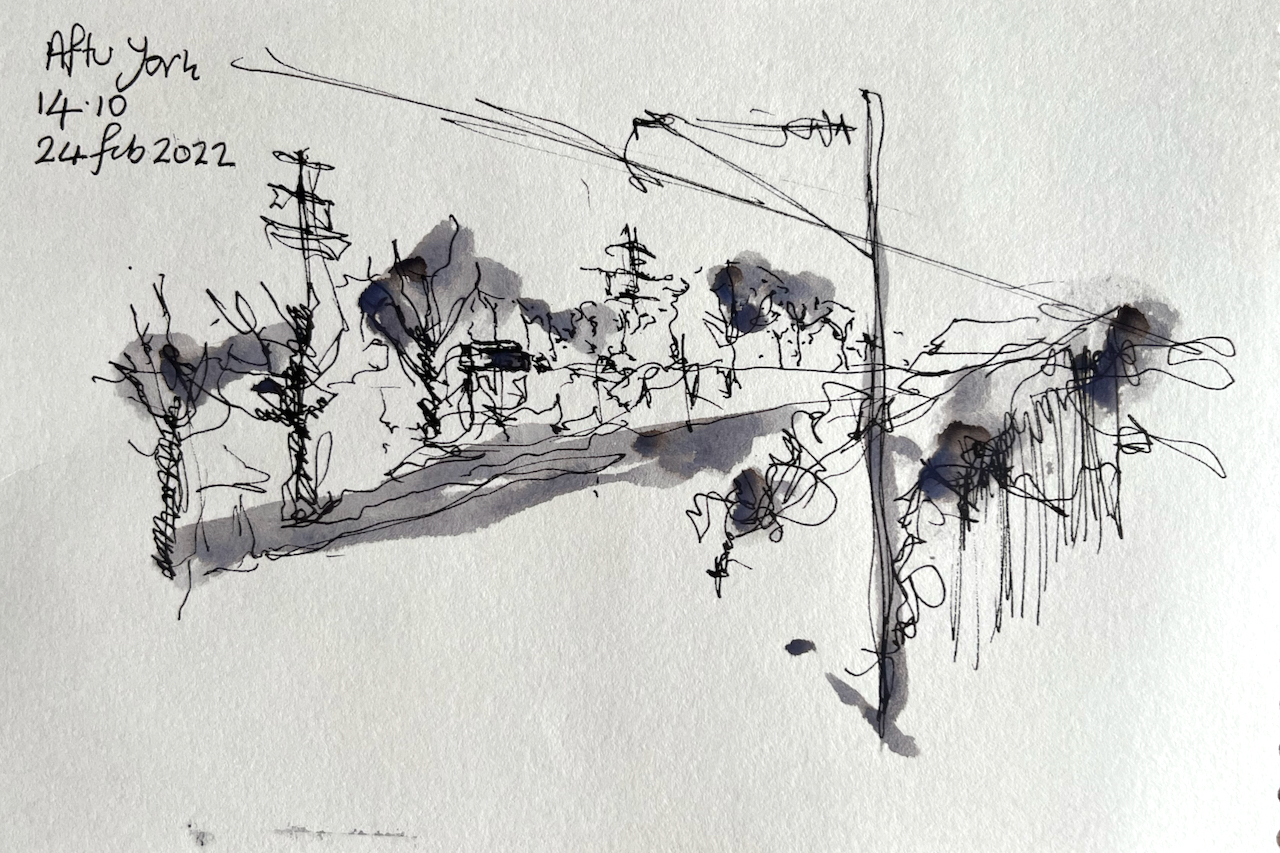
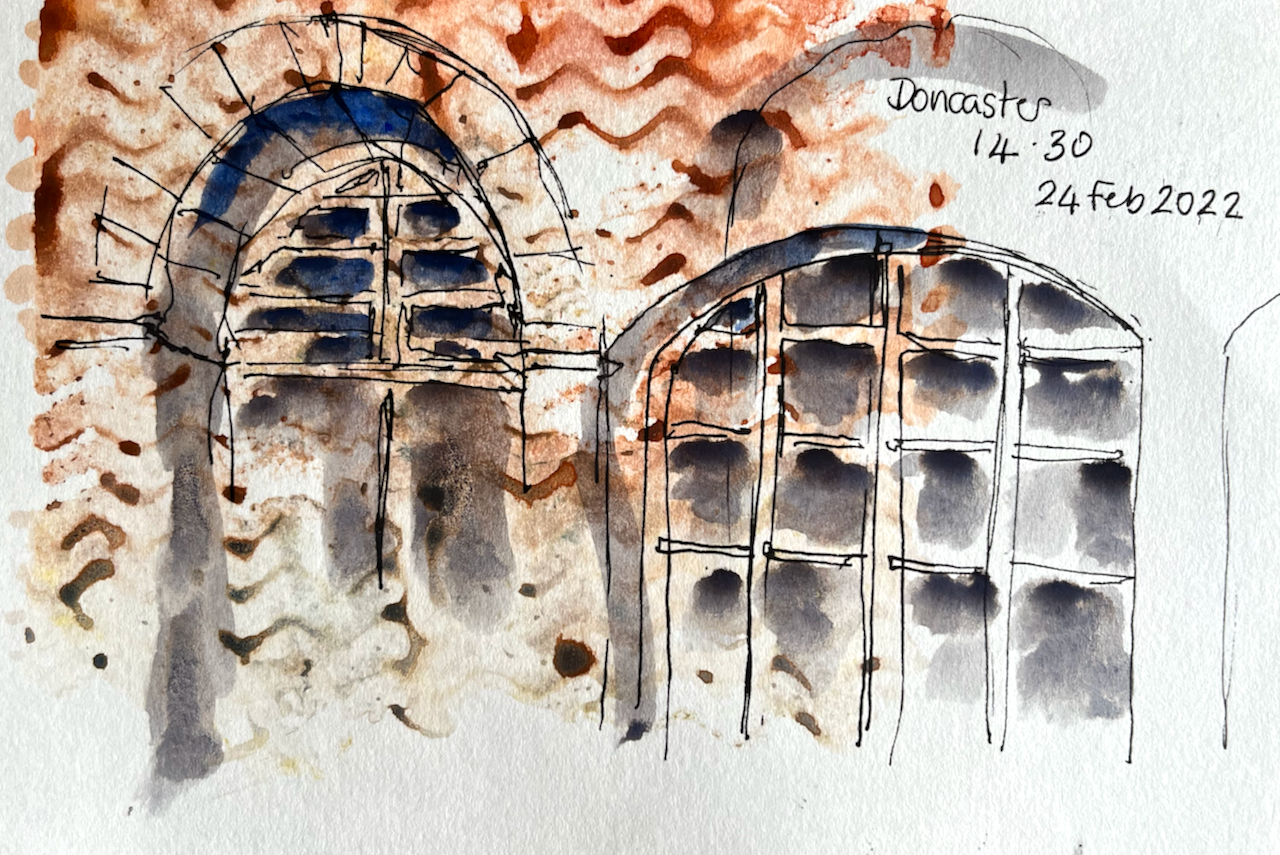
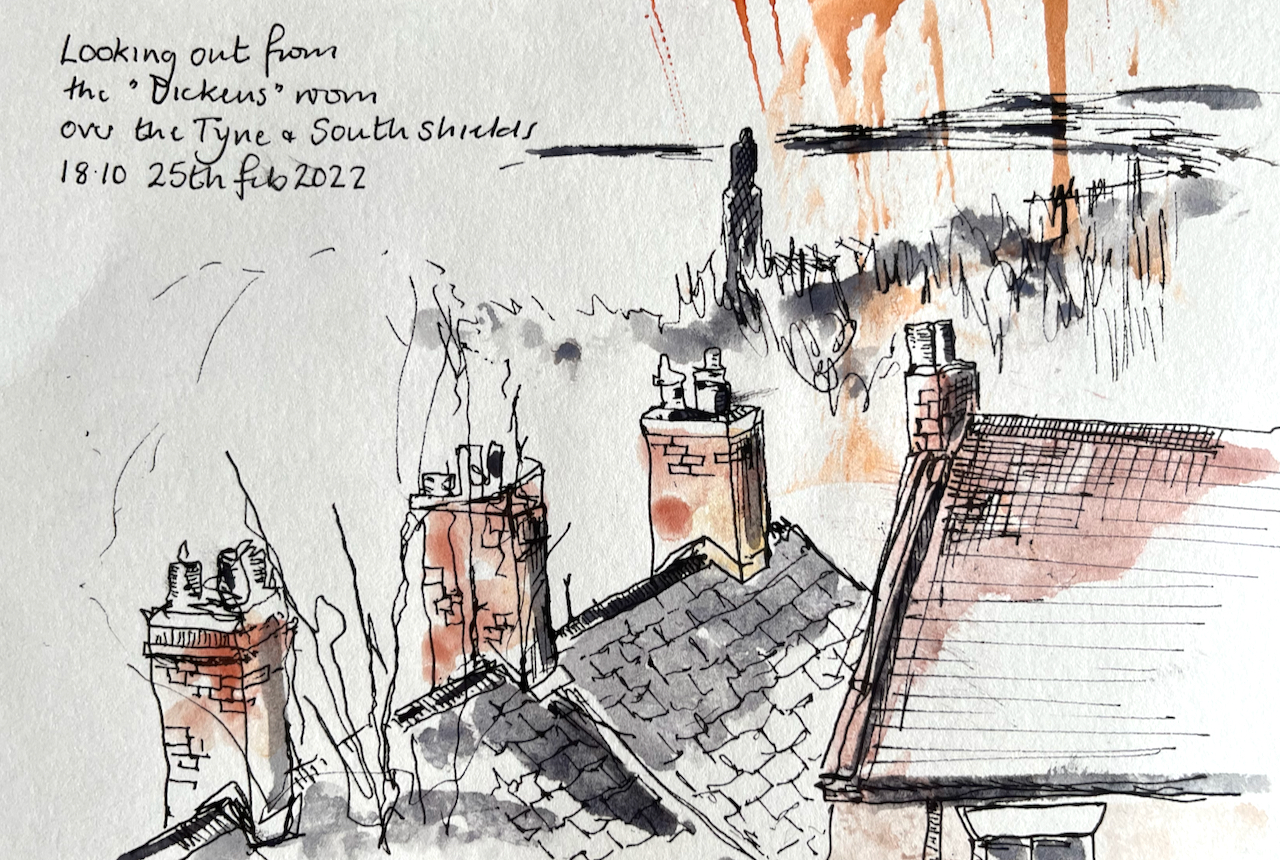
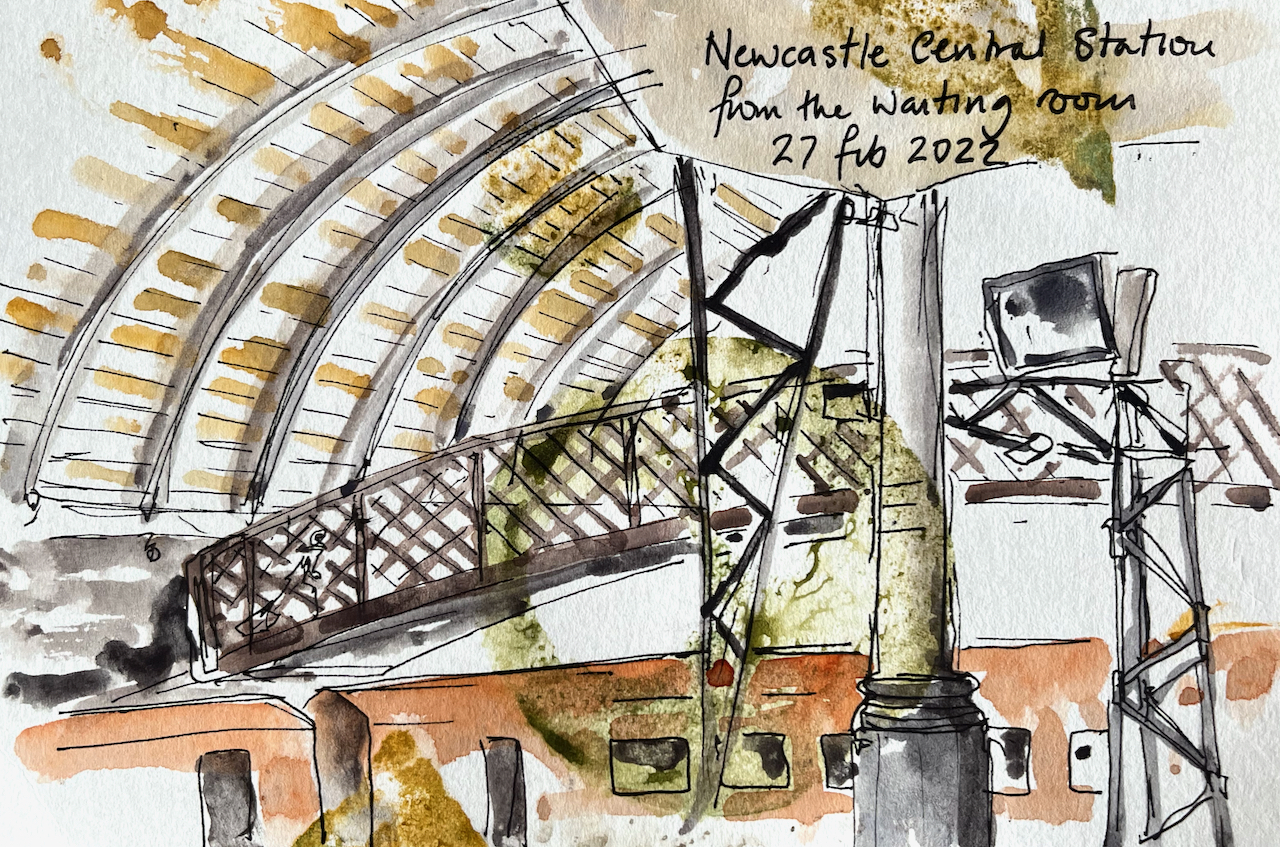
I did drawings in a “Traveler’s Company” spiral bound notebook.
Before the journey, I printed patterns on the pages. Many of these drawings are done on the train.
I did drawings in a “Traveler’s Company” spiral bound notebook.
We travelled to Orkney by train via Edinburgh and Aberdeen.
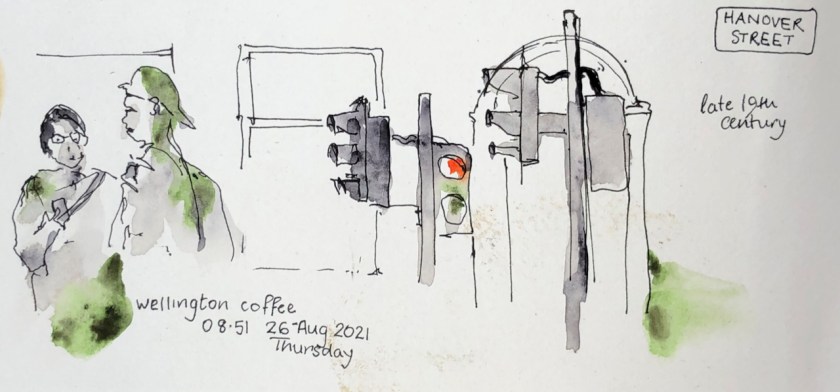
I carried a long thin sketchbook and made drawings along the way.


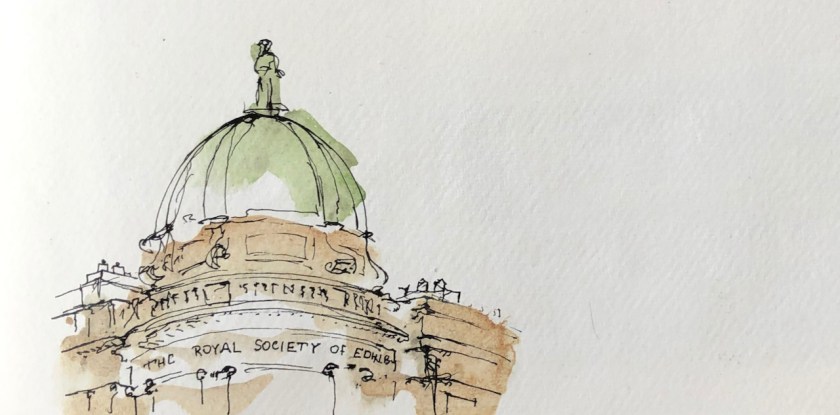
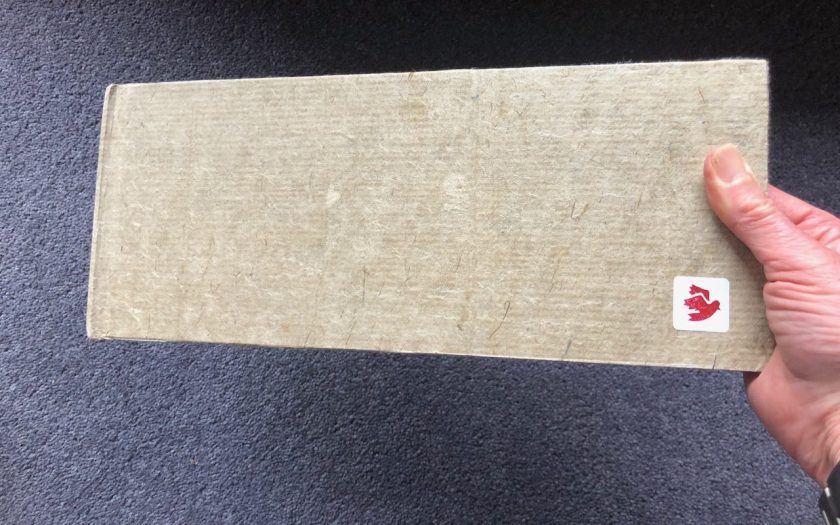
Here is my very long sketchbook, 12″ x 5″ made by Khadi Paper, and bought at Atlantis in Hackney, London.
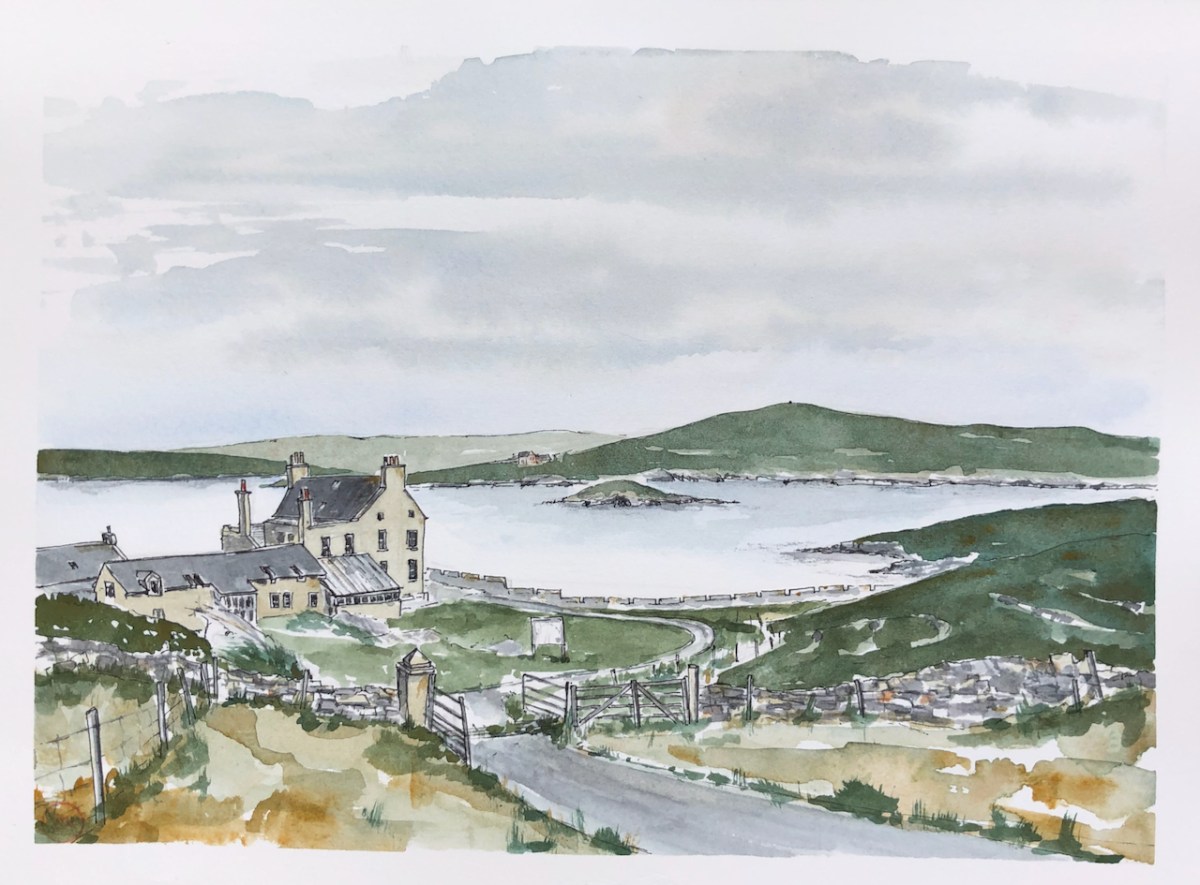
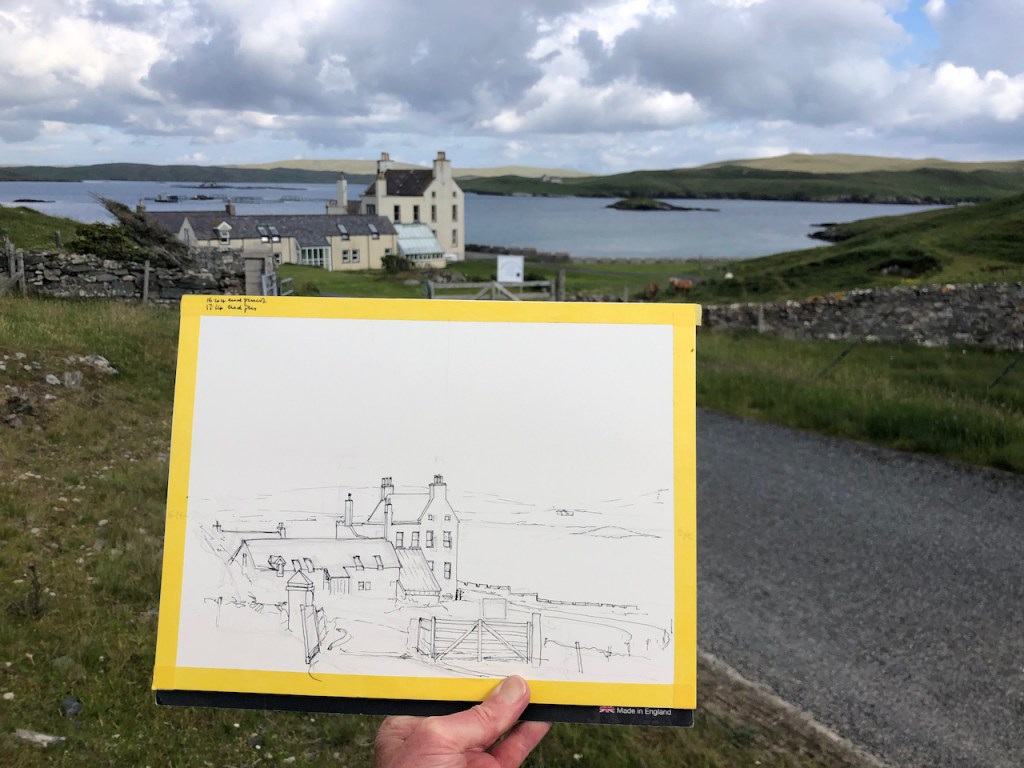
Here’s a view of Burrastow House, Walls, Shetland, as you enter the drive.

There was a lively wind. Those clouds looked like that, and kept changing. The small island on the right is the Holm of Burrastow. The hills behind it are the island of Vaila. Here is work in progress.
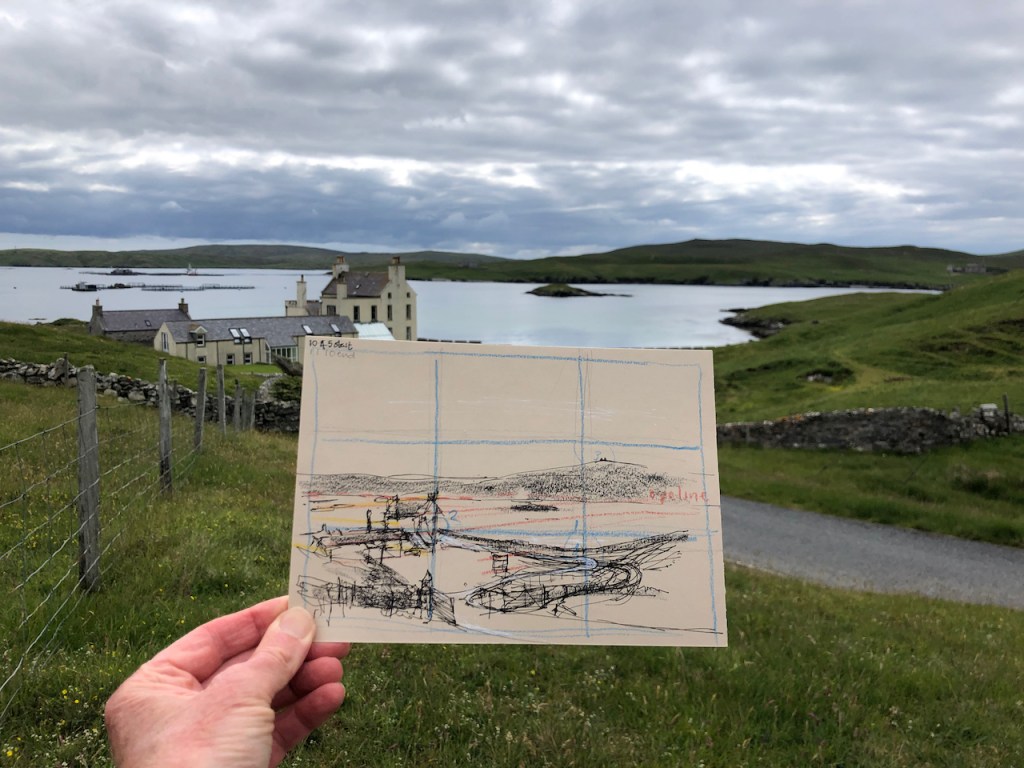
Then I drew another view, from higher up, on a mound above the road.

Here is work in progress and a view of my sketching location for picture 2: a chair perched on a hill.


Both pictures on a block of Saunders Waterford 300gsm watercolour paper, “hot pressed”, 12 inches by 9inches. The yellow edging you see on the work-in-progress is masking tape. I put it round the edges for several reasons:
To see the comparison between the pen-and-ink and the colour, use the slider in the image below:


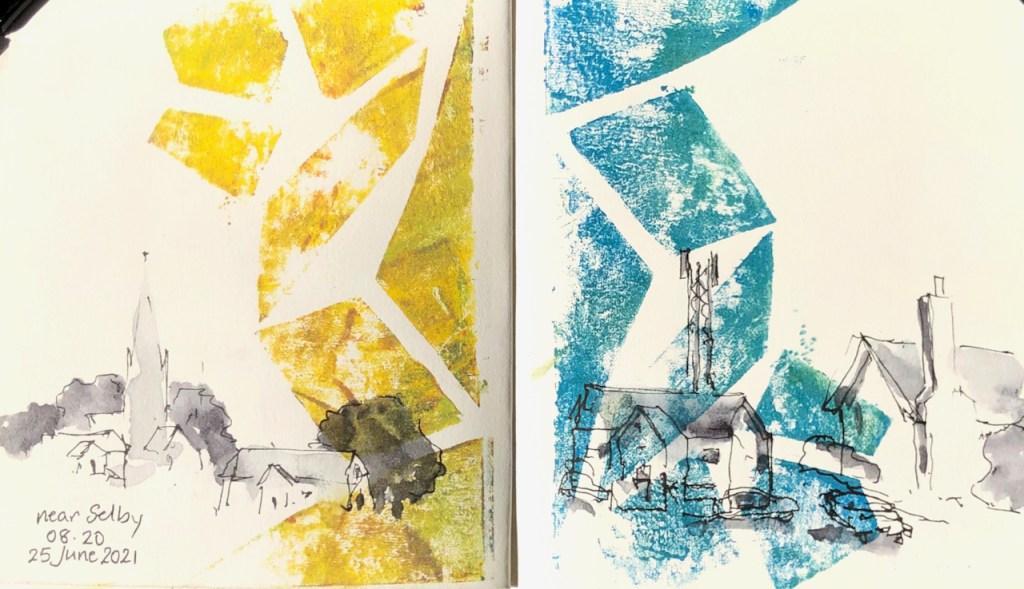
Here is another experiment with printed backgrounds. My first experiment was this drawing at Monument.
I thought the background was a bit bright, so I chose more muted colours for the next attempt.
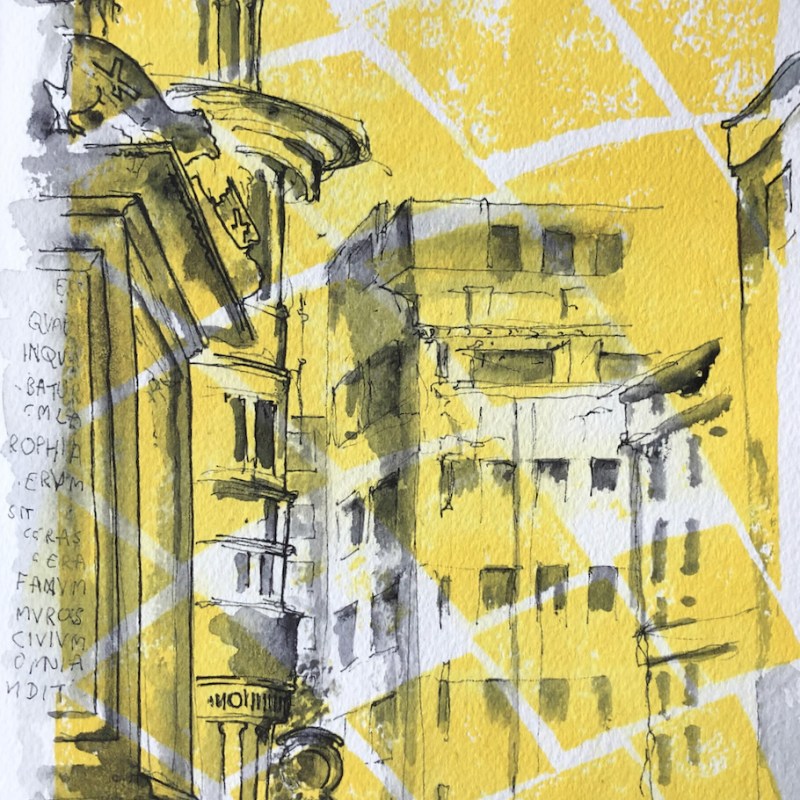
Here are the cardboard cutouts I used for making the relief prints. I used a small square sketchbook made by “PrintUrchin” and pre-printed the pages using relief printing ink, diluted with extender and water so it wasn’t too bright (learning from last time). It still came out quite bright. Those printing inks are heavily pigmented.
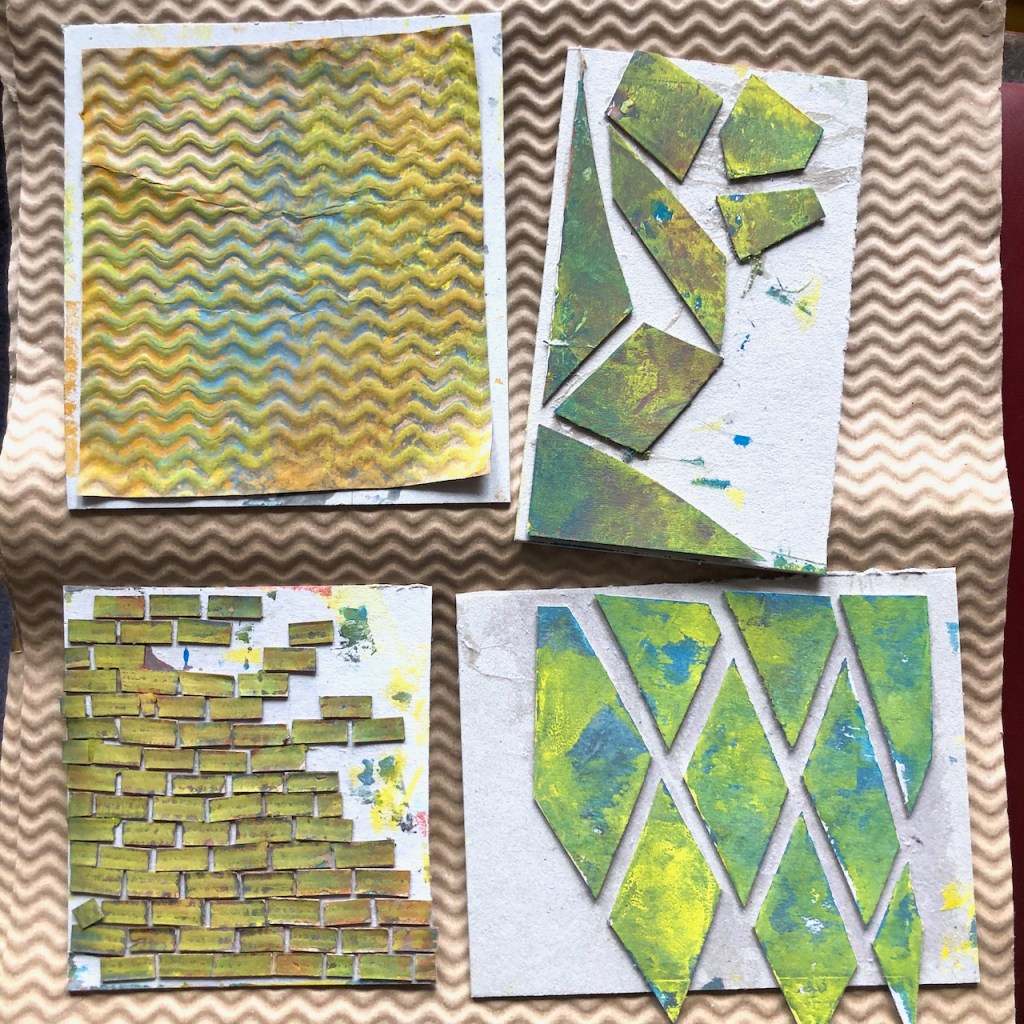
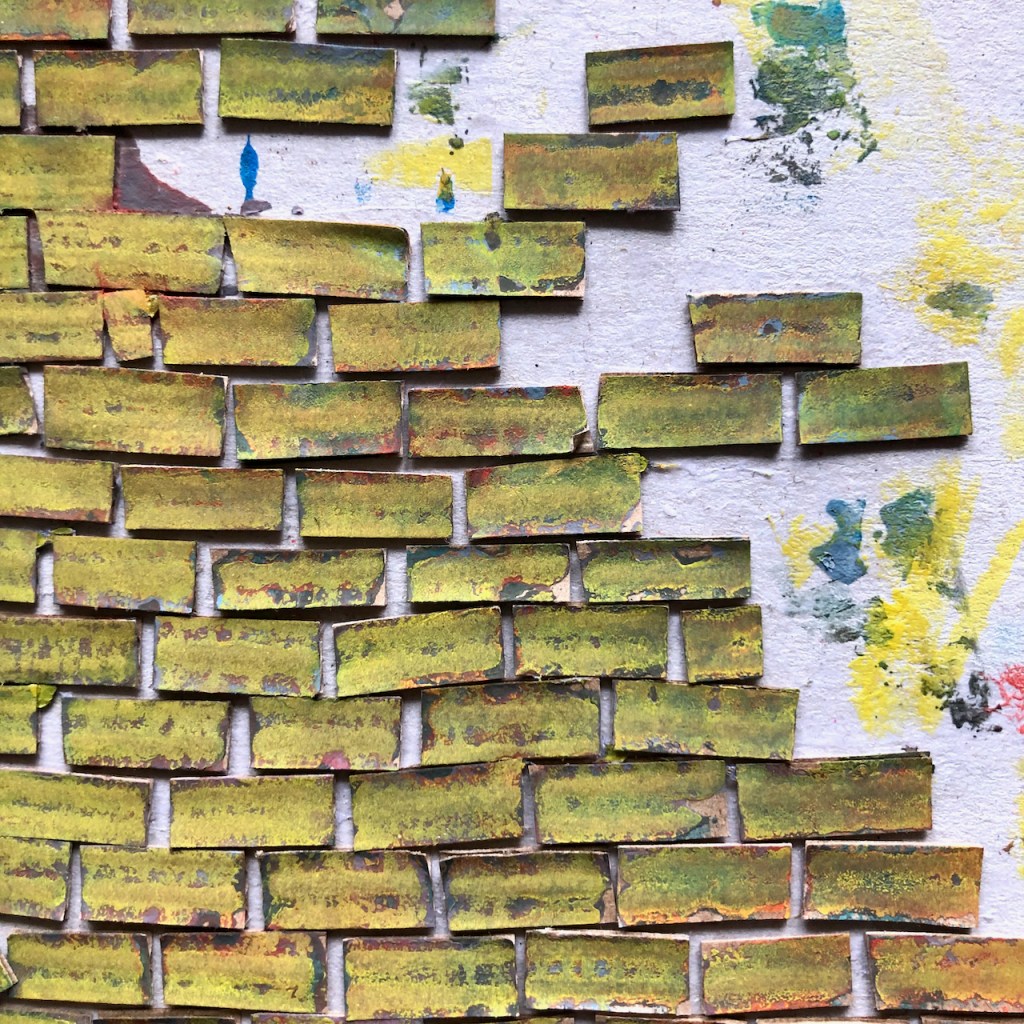
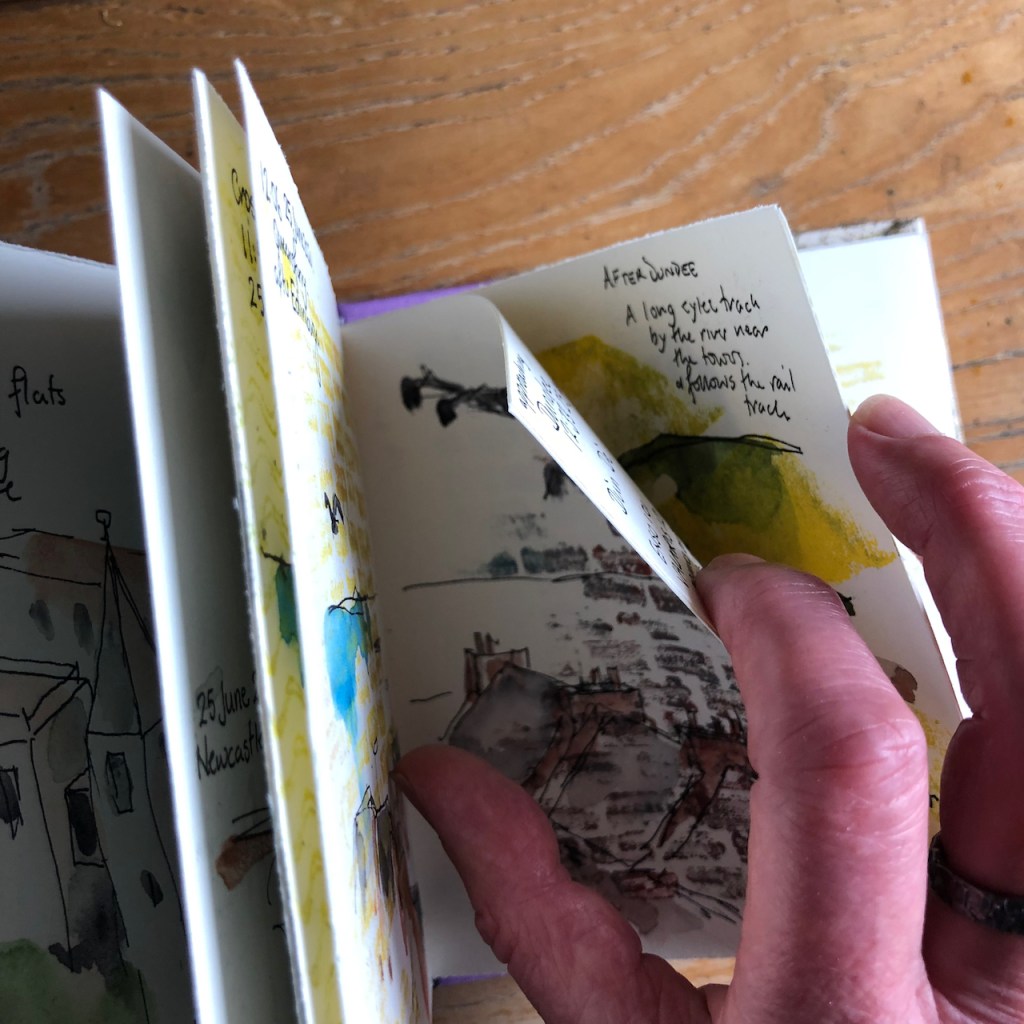
I printed the pages first, then took the sketchbook with me on my journey, and made sketches on top of the prints.
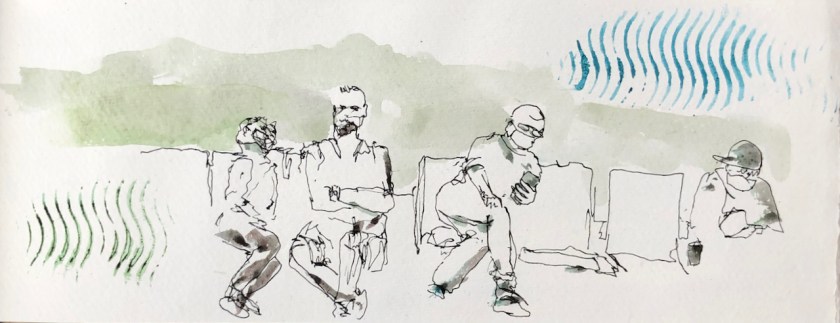
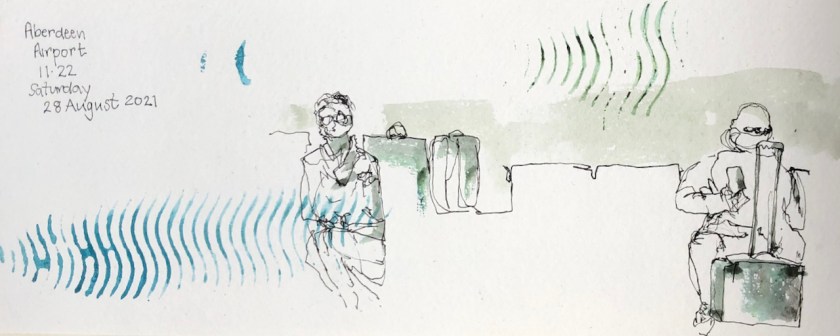
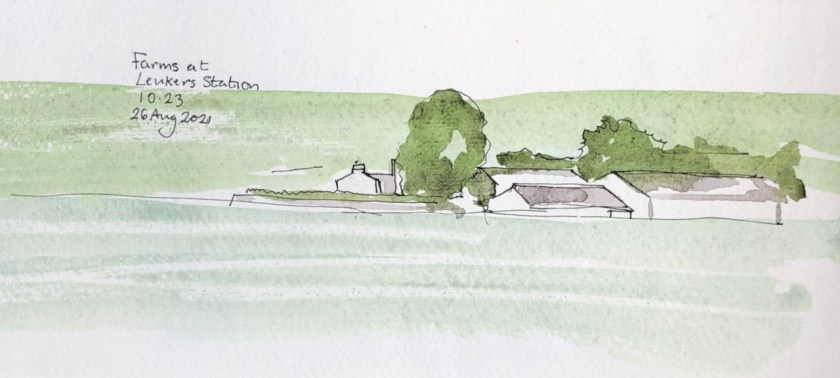
Here are some of the sketches. They are done on the train, hence the rather shaky lines. It’s amazing how the printing, done in advance, seems to fit the subject.
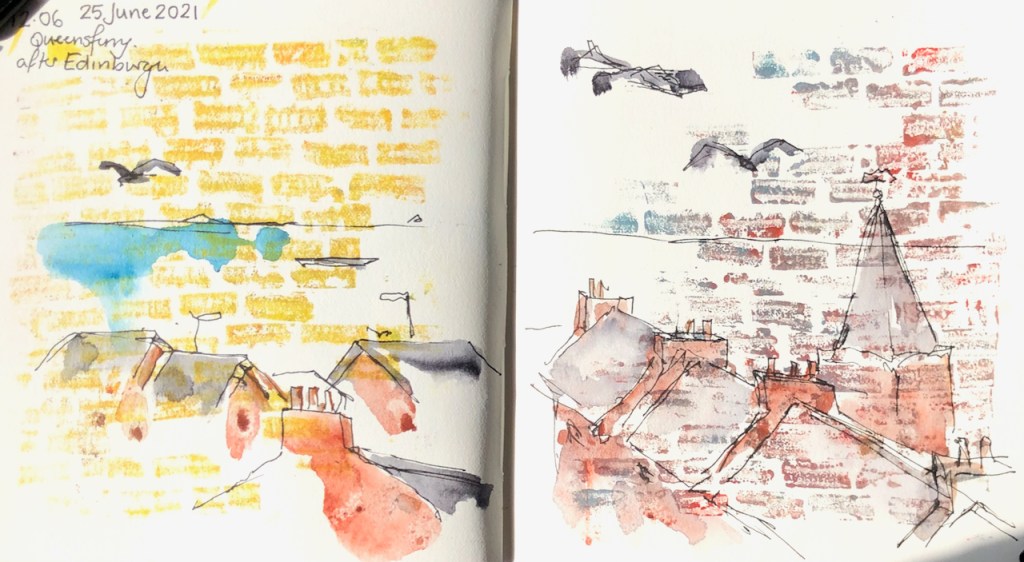
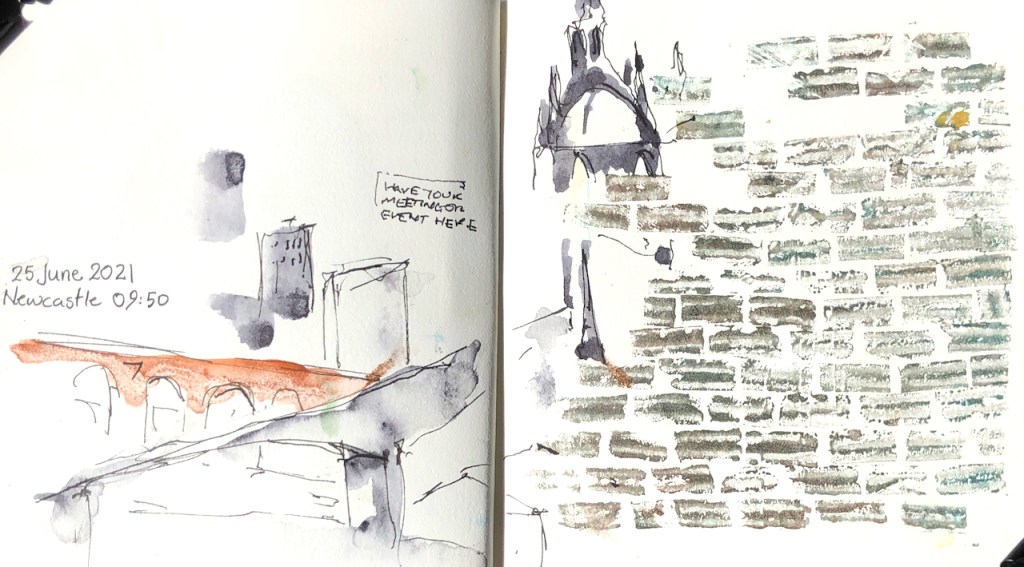
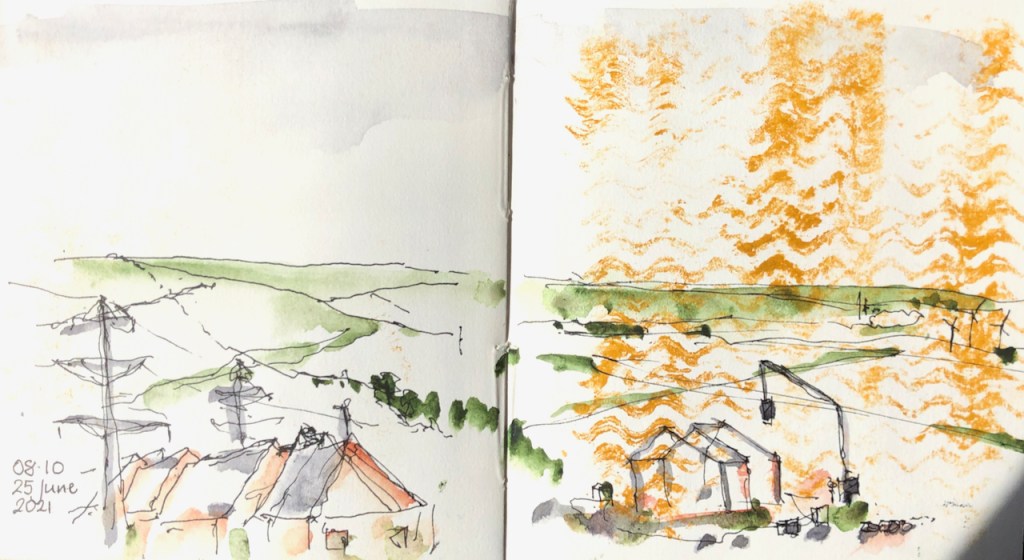
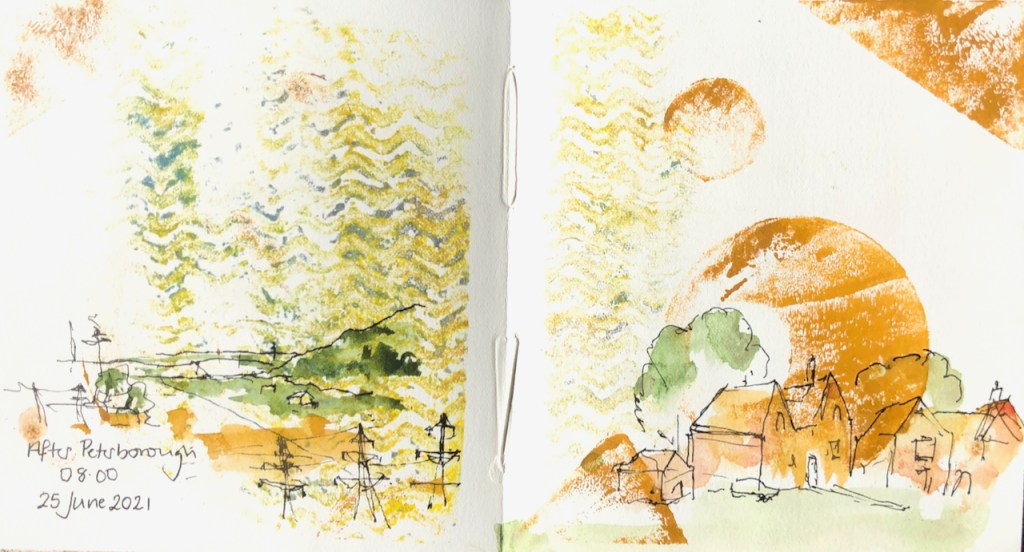
Here is the octagonal building at Pocra Quay, drawn while on a walk round Aberdeen waiting for the ferry.
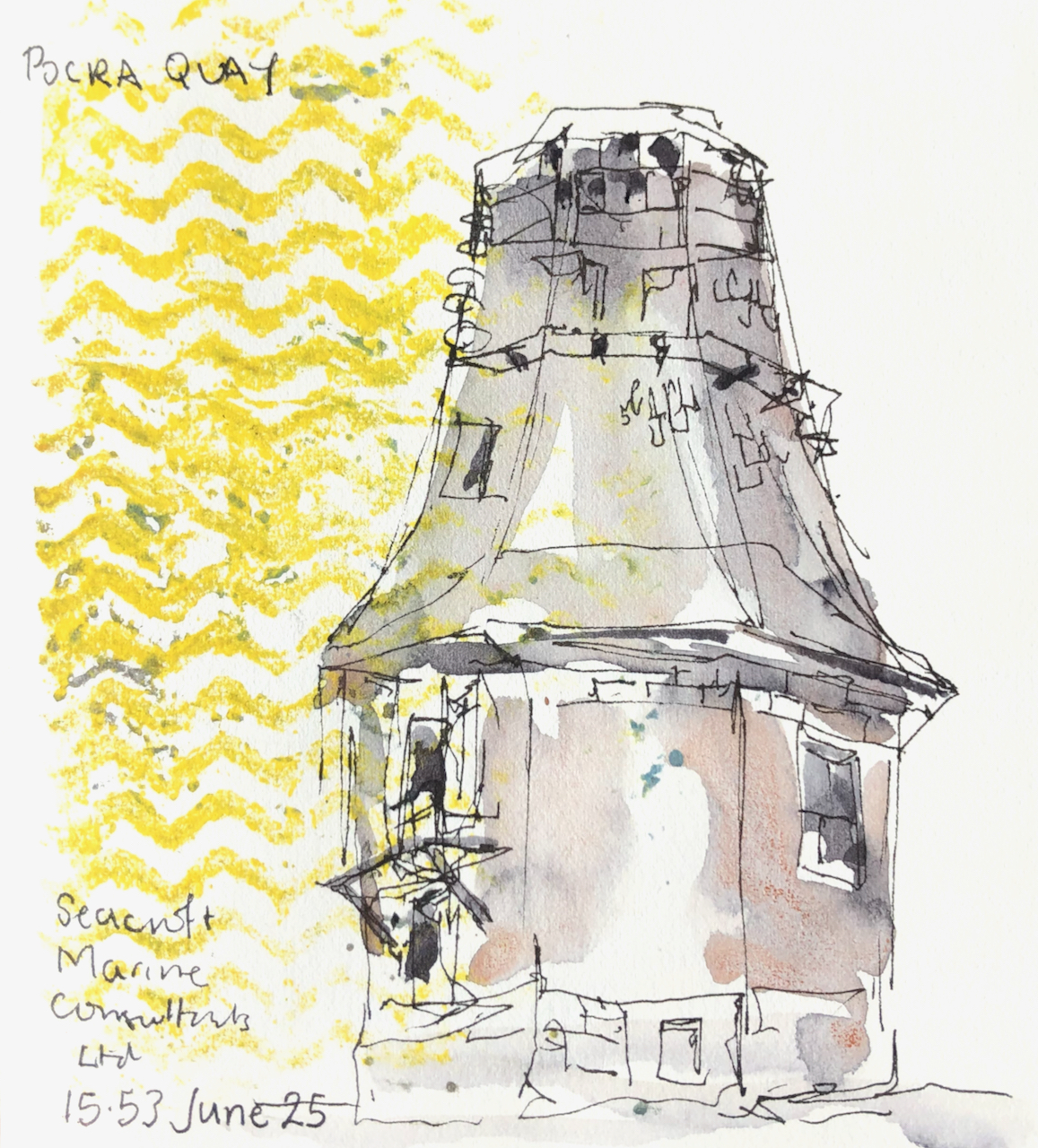
This octagonal building was a Navigation Control Centre, operating up until 1966. It was built in around 1797-8, according to the leaflet from the Aberdeen Heritage trail. I sketched it from the shelter of the doorway to the “Silver Herring” restaurant, on a cold, windy and rainy day.
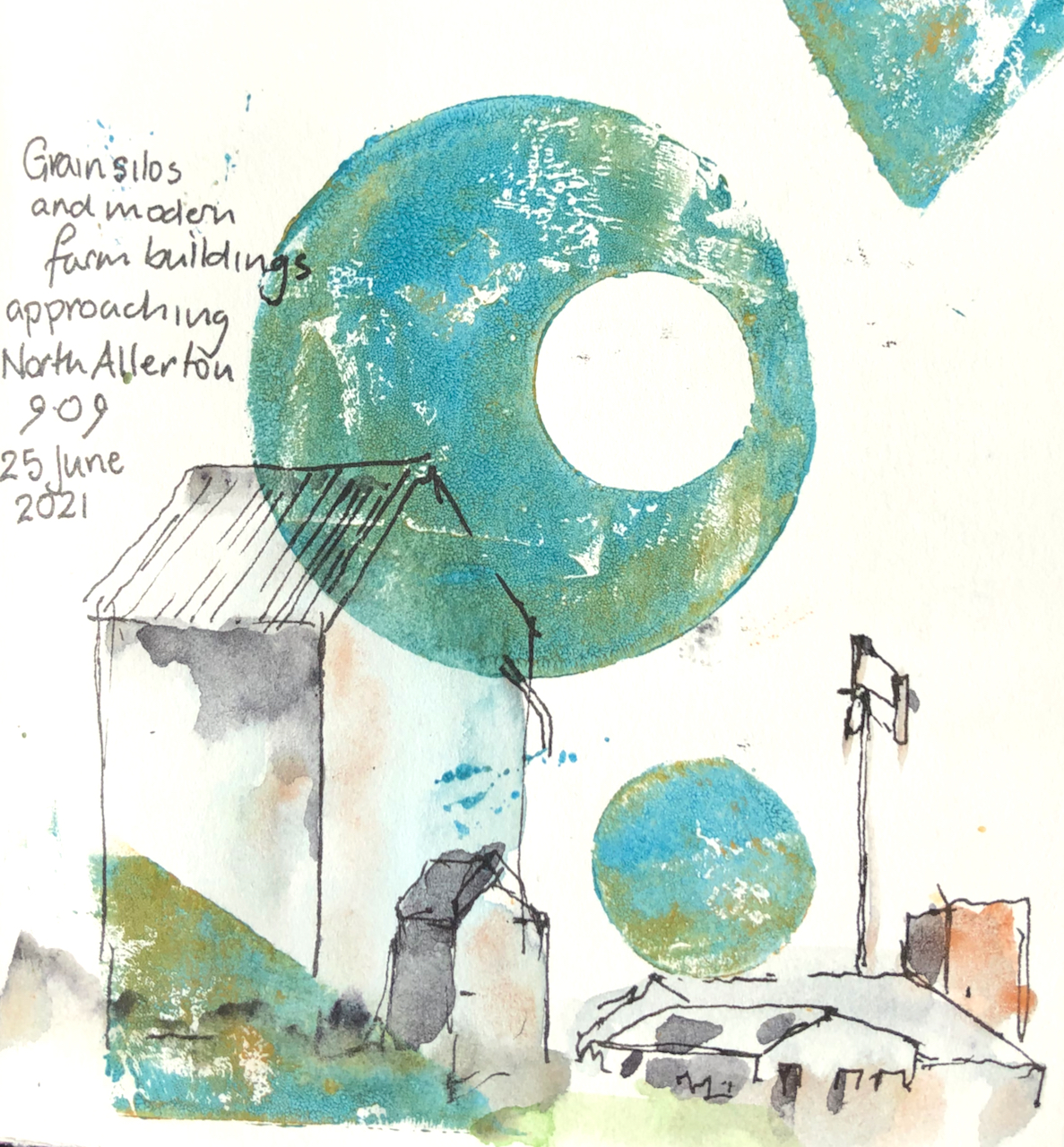
This is a really fun technique. I shall use it again.
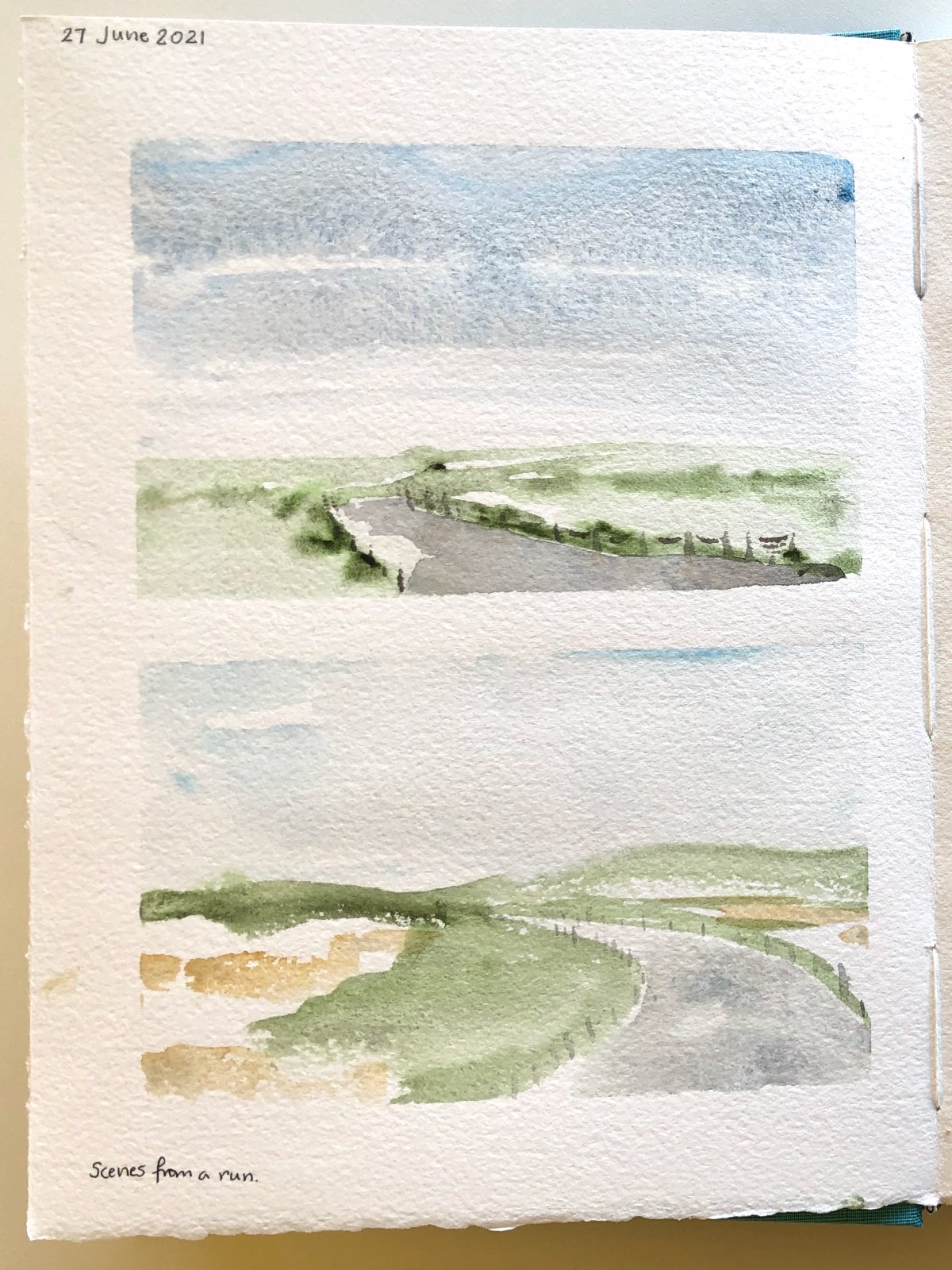
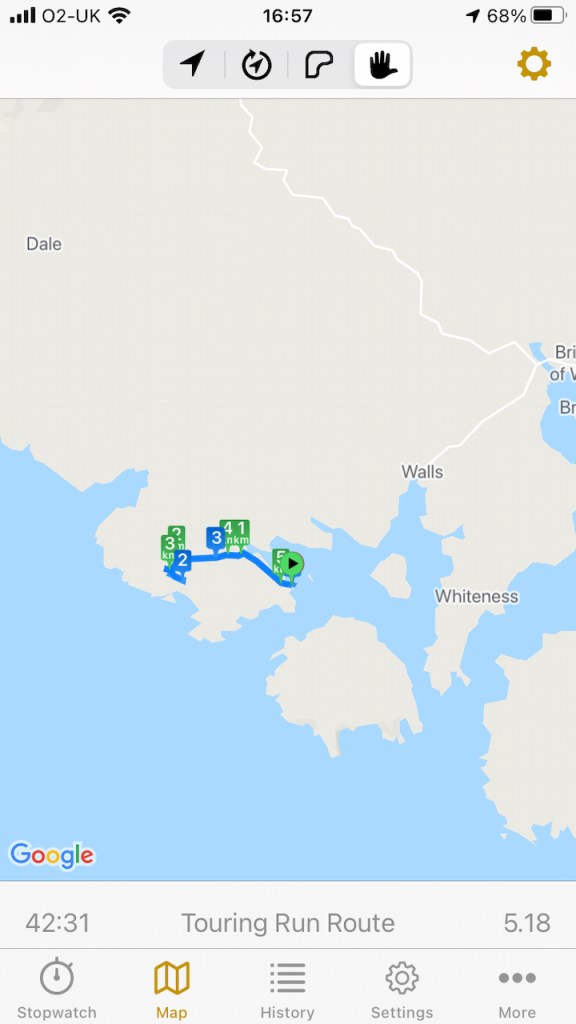
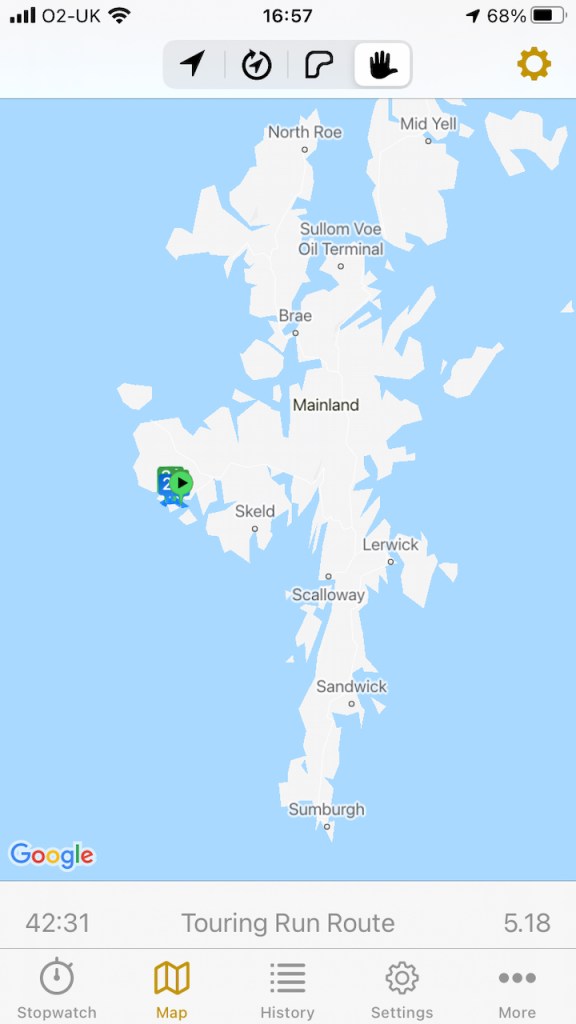
I came back from a run with my head full of images. I put them into pictures.
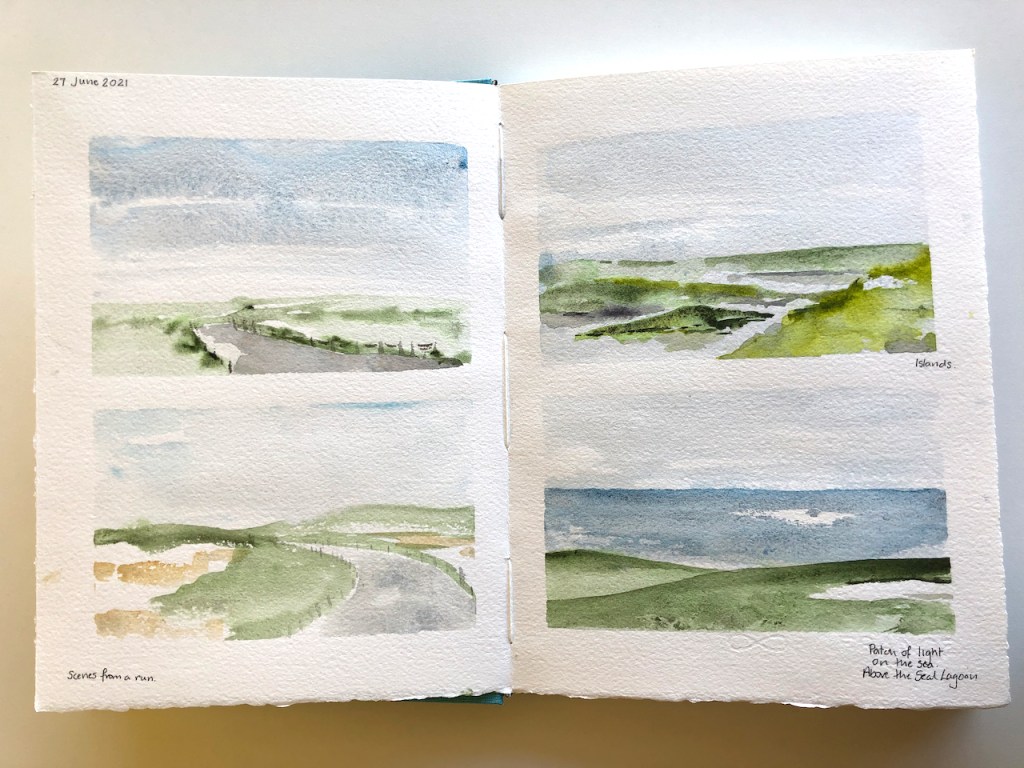
I enjoyed using a new colour: Lunar Blue from Daniel Smith. This is a highly granulating blue. You can see its effect here in the sky:
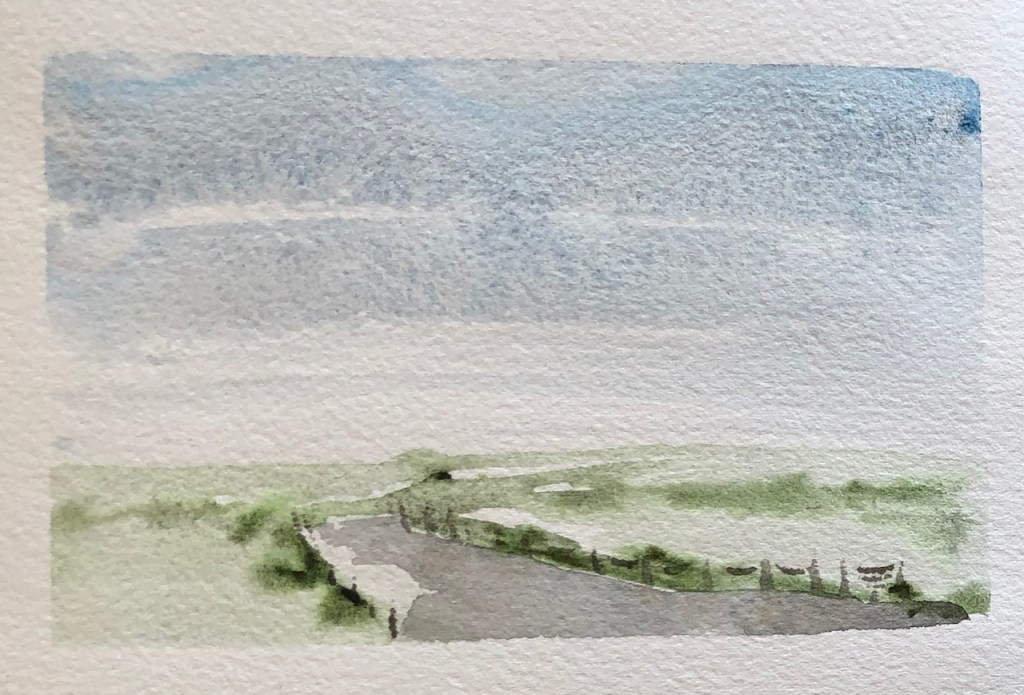
And here is Lunar Blue the sea:
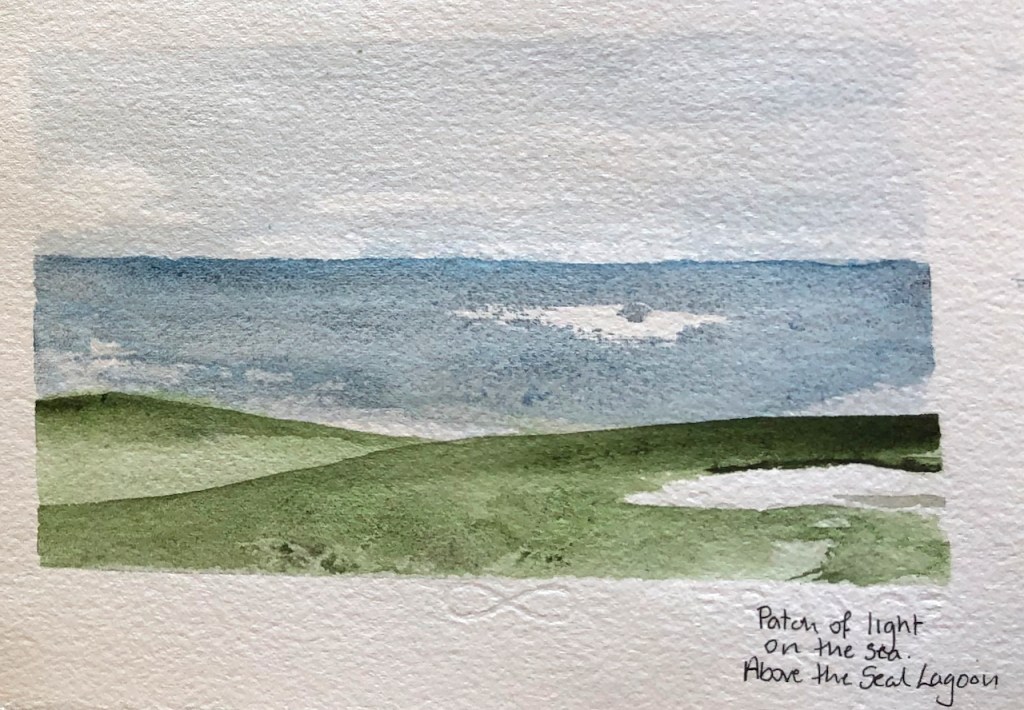
A feature of the landscape round Littleure is the inland lakes, high up on the cliffs, as shown here on the right. On the sea, the sun shines through the clouds like a spotlight, which enchants me. In that picture you also see the granulating colour in the land: this is Green Apatite Genuine.
It was a misty day.
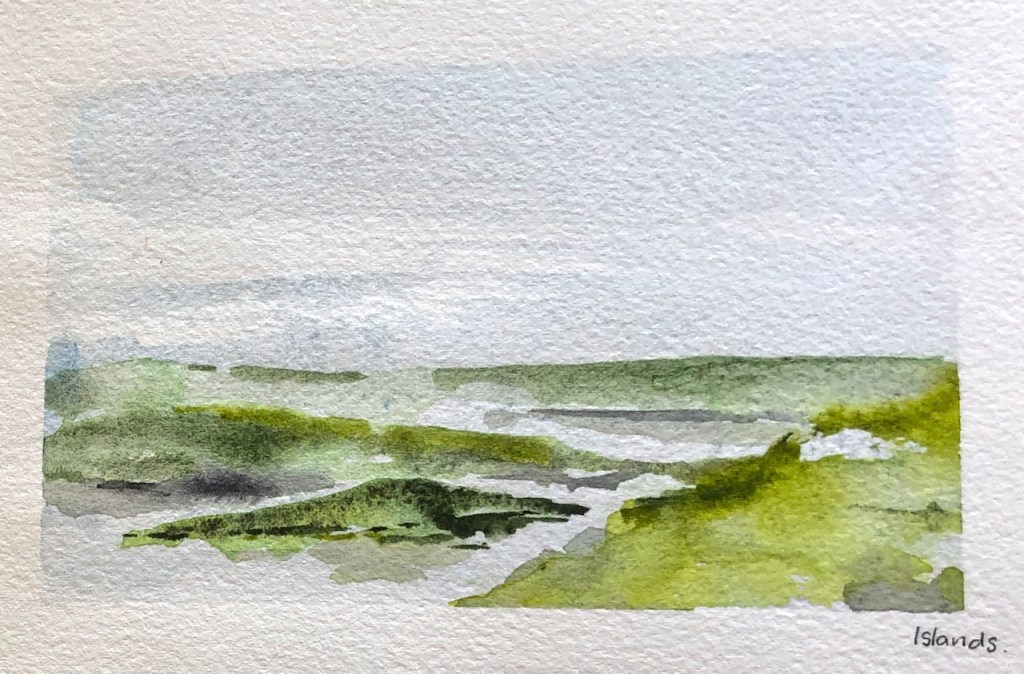
Over the brow of a hill, I see islands. It’s the end of the run. Time for a dip, and breakfast.
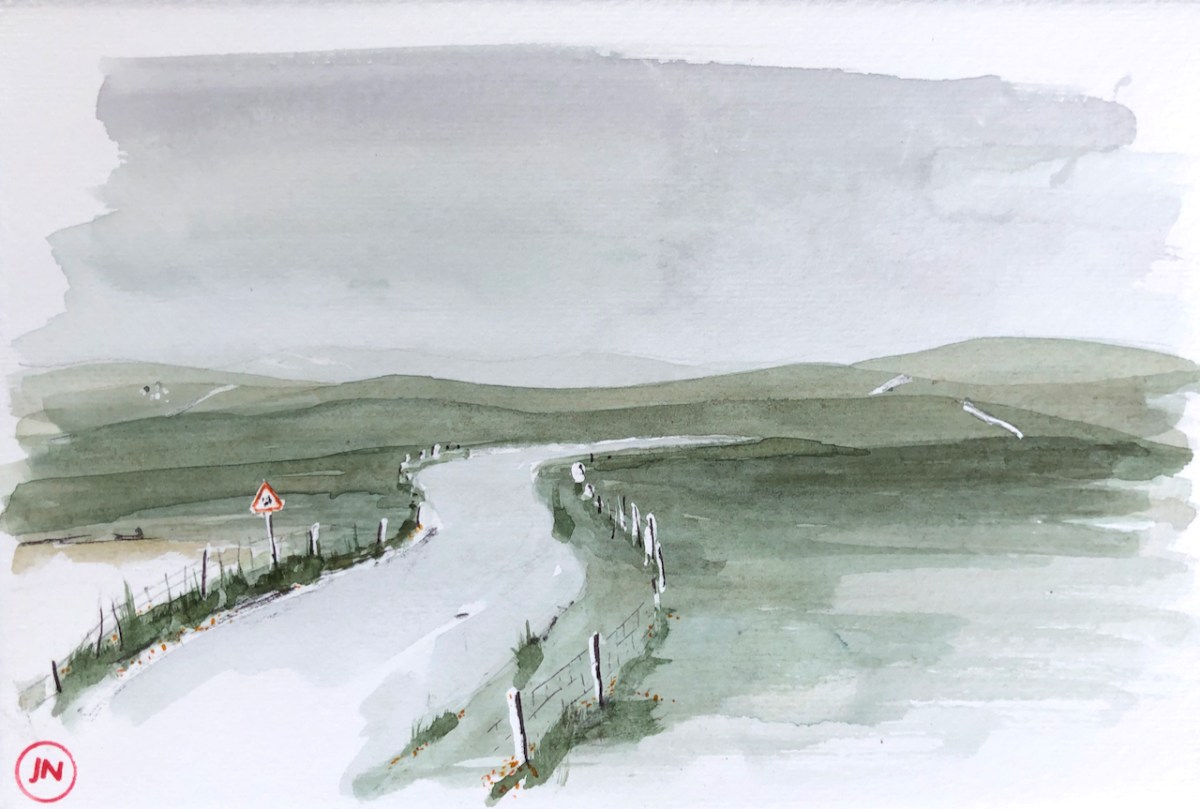
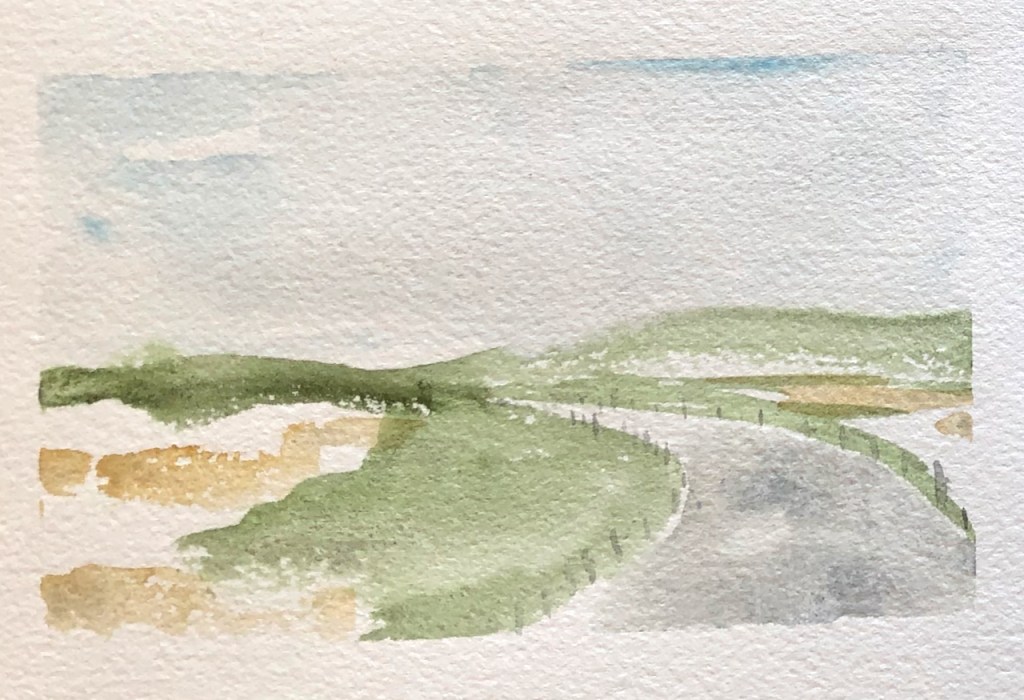
Shetland roads sweep across the landscape. I enjoy the calligraphic sweep of their curves and the simplicity of the lines they make.
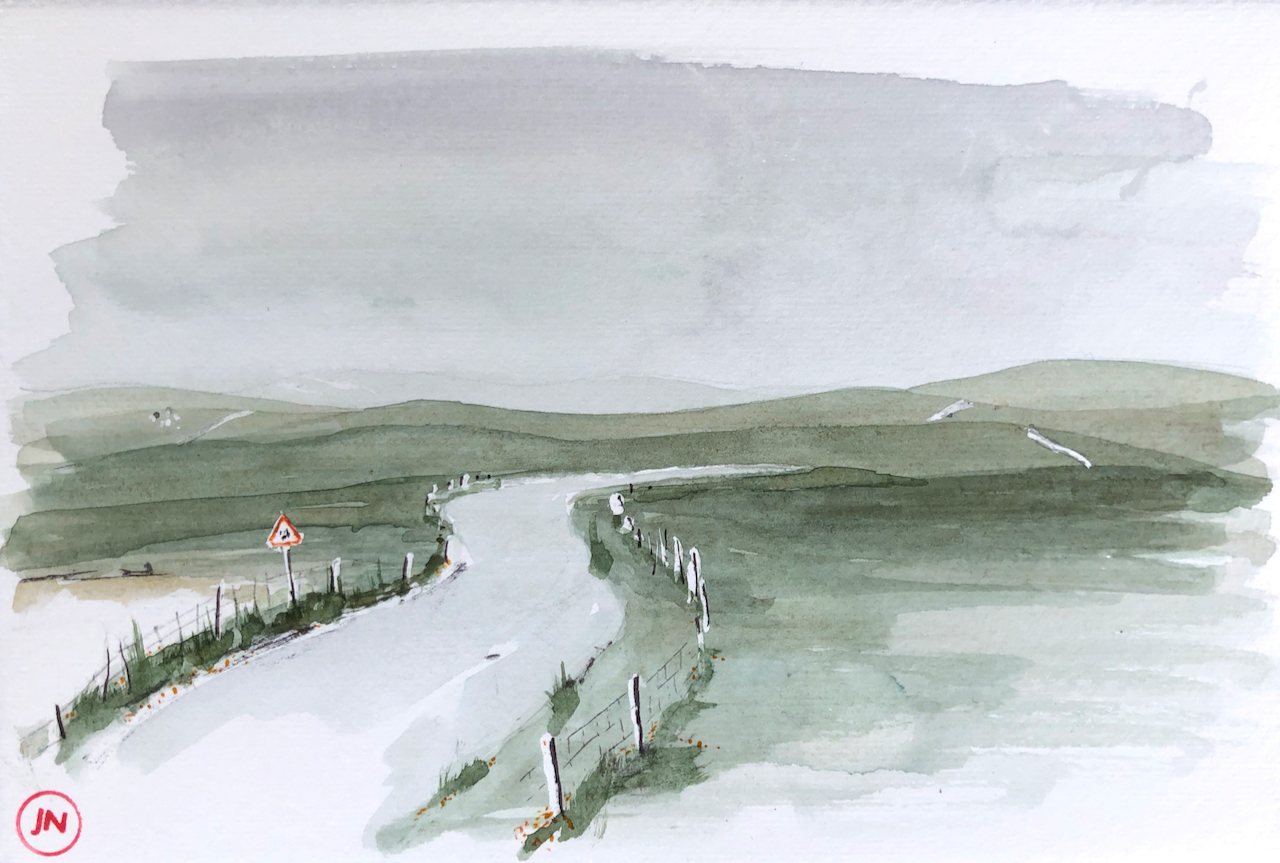

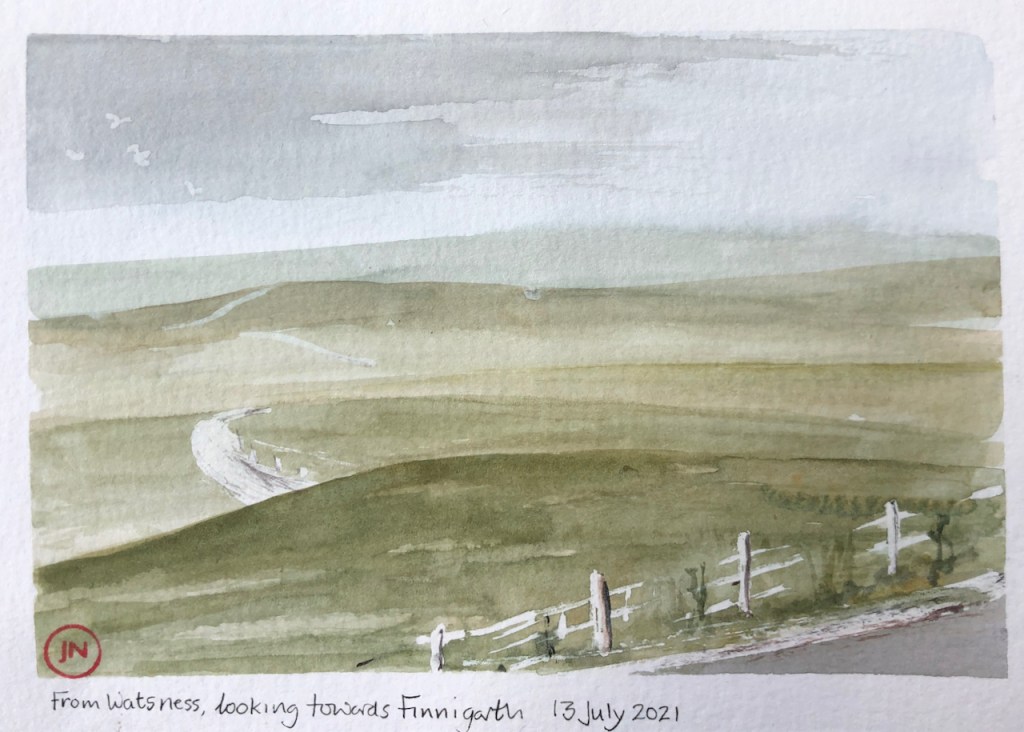
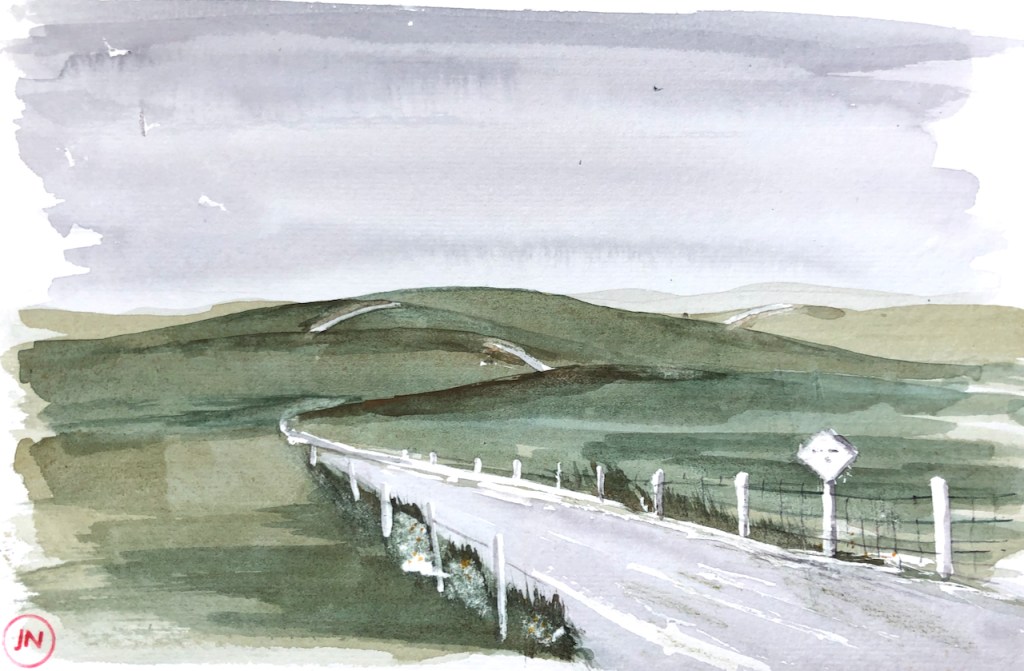
These pictures are sketched on A5 sheets of F Amatruda Amalfi paper from The Vintage Paper Company in Orkney. These are lovely soft sheets with 4 deckle edge. They take the watercolour well.


Watercolours are Daniel Smith. Some of the white lines are achieved using a rubber resist, called “frisket”, panted on before the watercolour, and rubbed off afterwards.
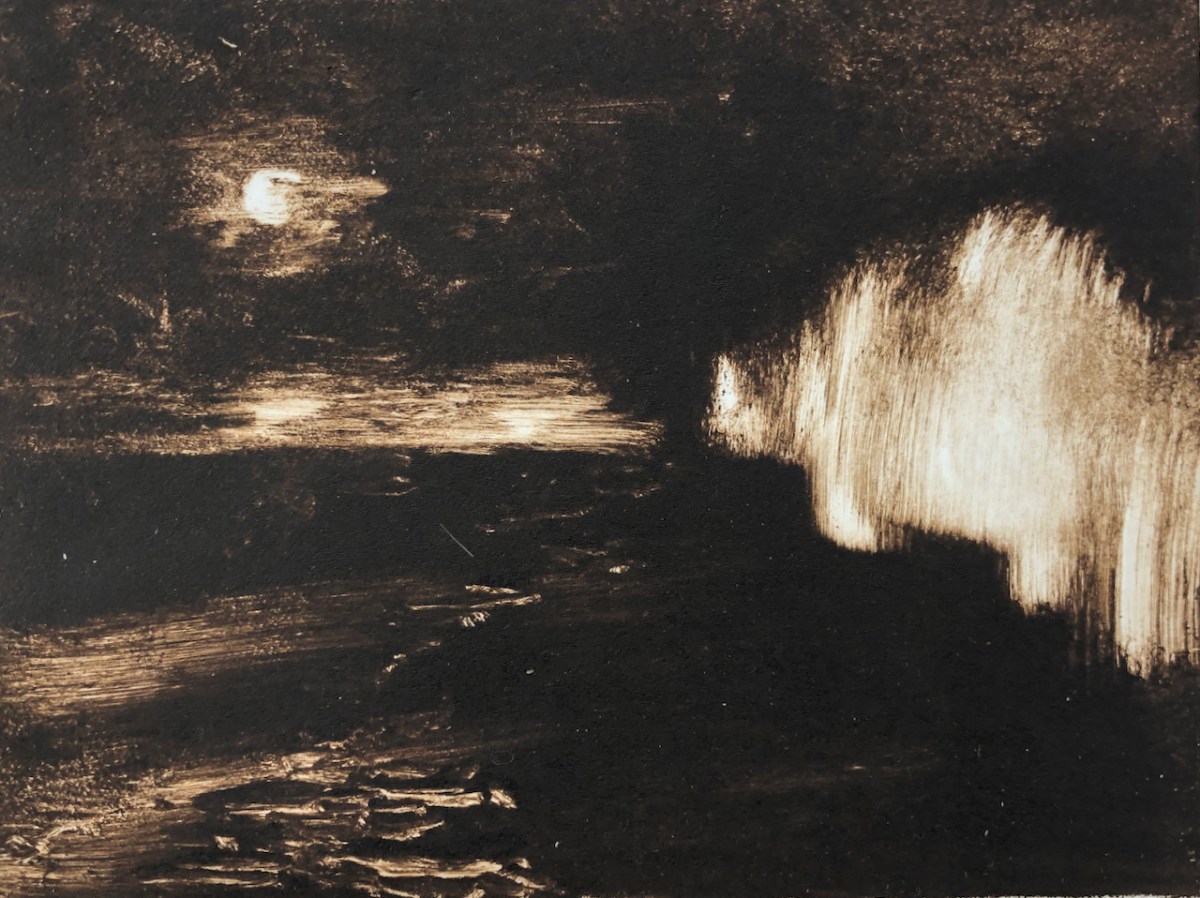
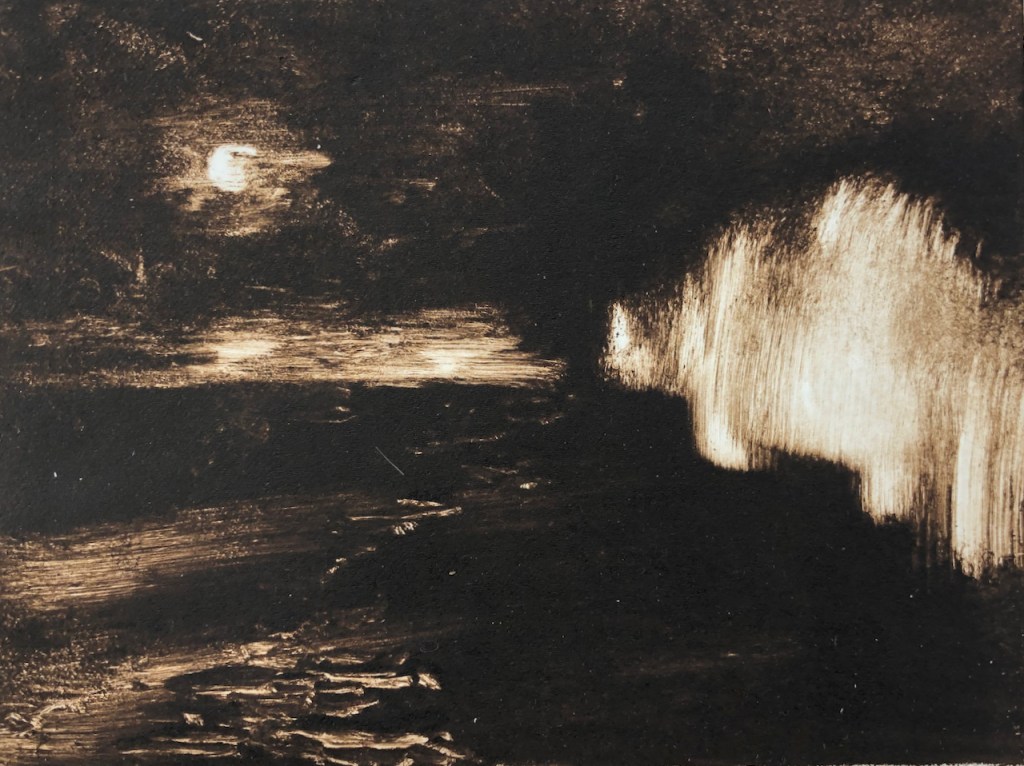
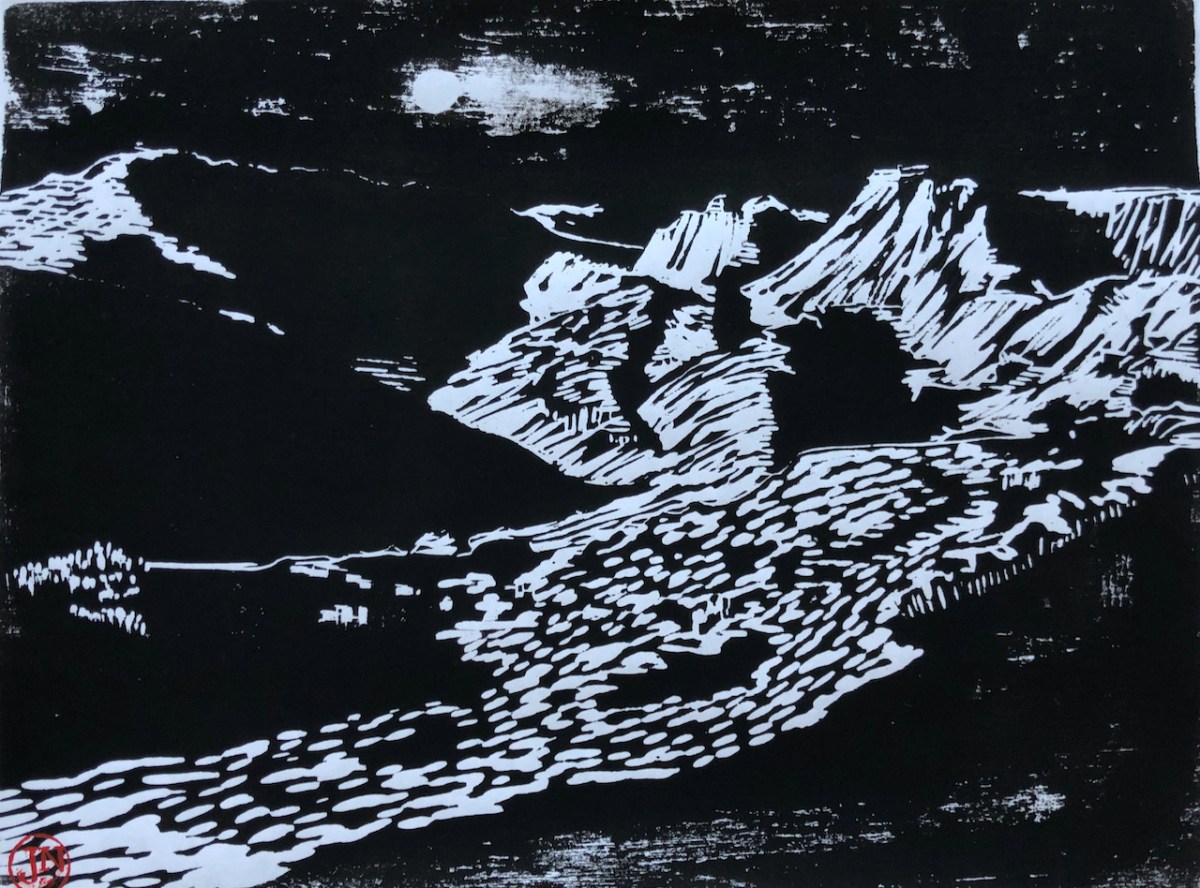
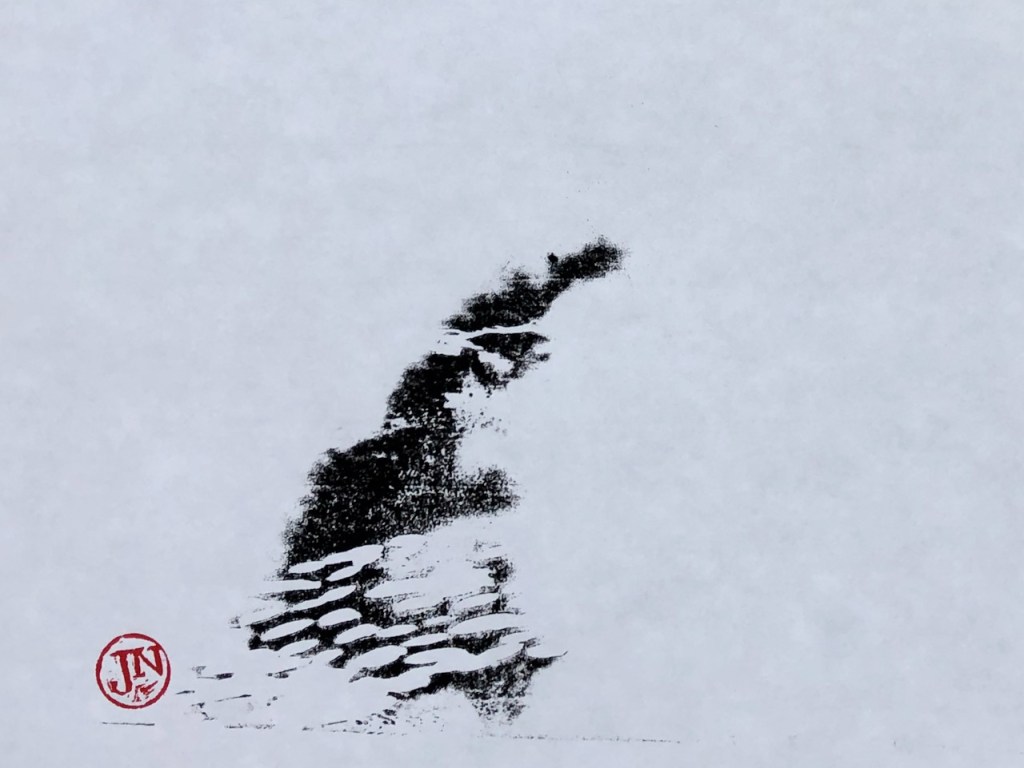
I made a woodcut of a valley in the Lake District in the moonlight. The hills on the skyline, right of centre, are the Langdale Pikes.

This was was made at the request of a friend, who has a house in the valley. Their house is one of those small rectangles you see, centre left, under the shadow of the hill.
Here is work in progress on the woodcut. Click to enlarge the picture.

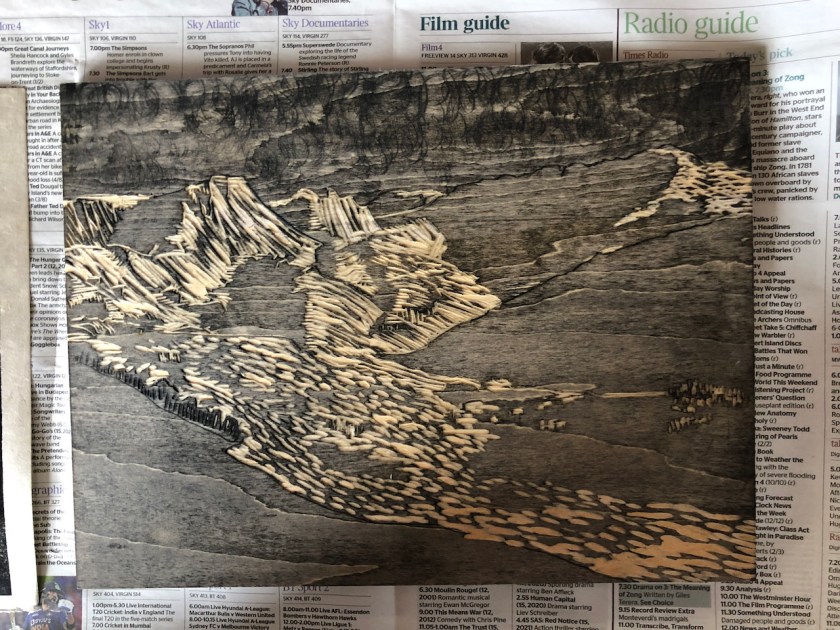
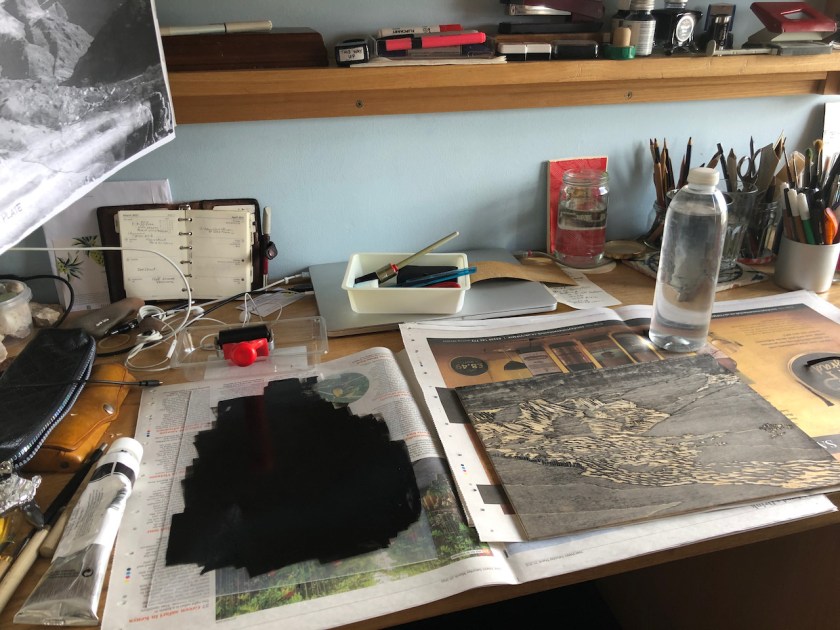


The wood is Japanese plywood, 12″ x 9″. The ink is Schmincke Aqua Linoldruck relief printing ink, ivory black. It can be cleaned off with water. The seal is a hand-carved stone seal made my friend and mentor in Japan, who also supplied the special red seal ink, and instructions for its use.
I used “Masa small sheets” Agawami Japanese paper from Intaglio Printmaker. This is thin enough to use for hand-printing but strong enough not to tear when you pull it off the woodcut. It is pure white and very even, which seemed to be apt for the moonlit scene. One side is shiny-smooth and the other is more textured. I printed on the shiny side.
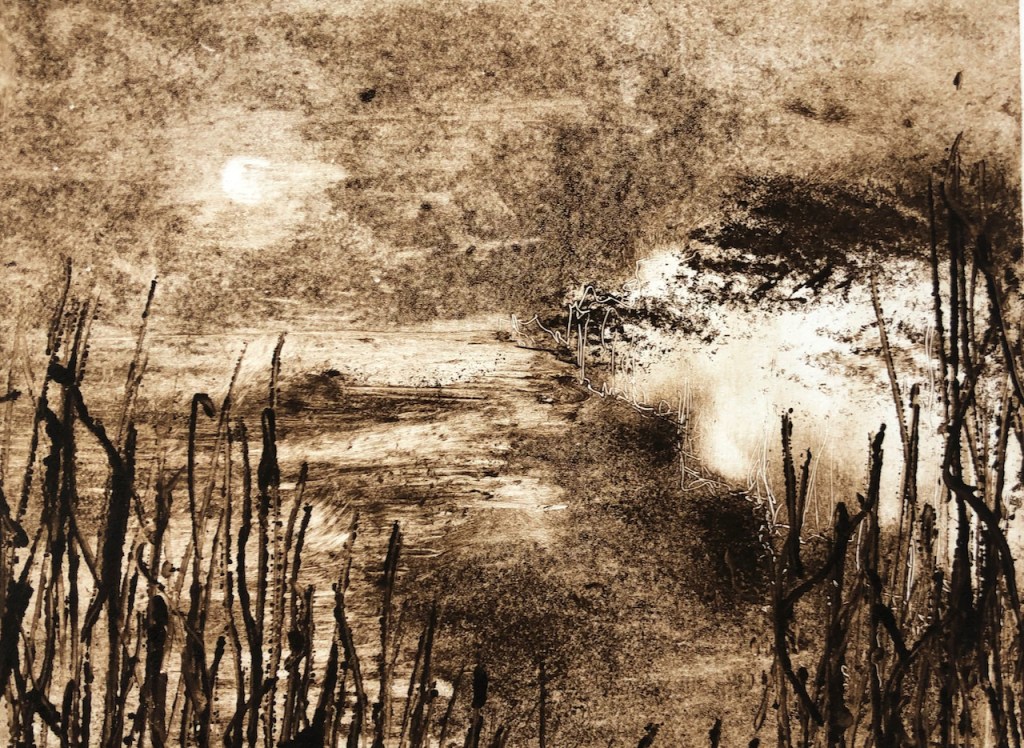
Here is another print, with a crescent moon:
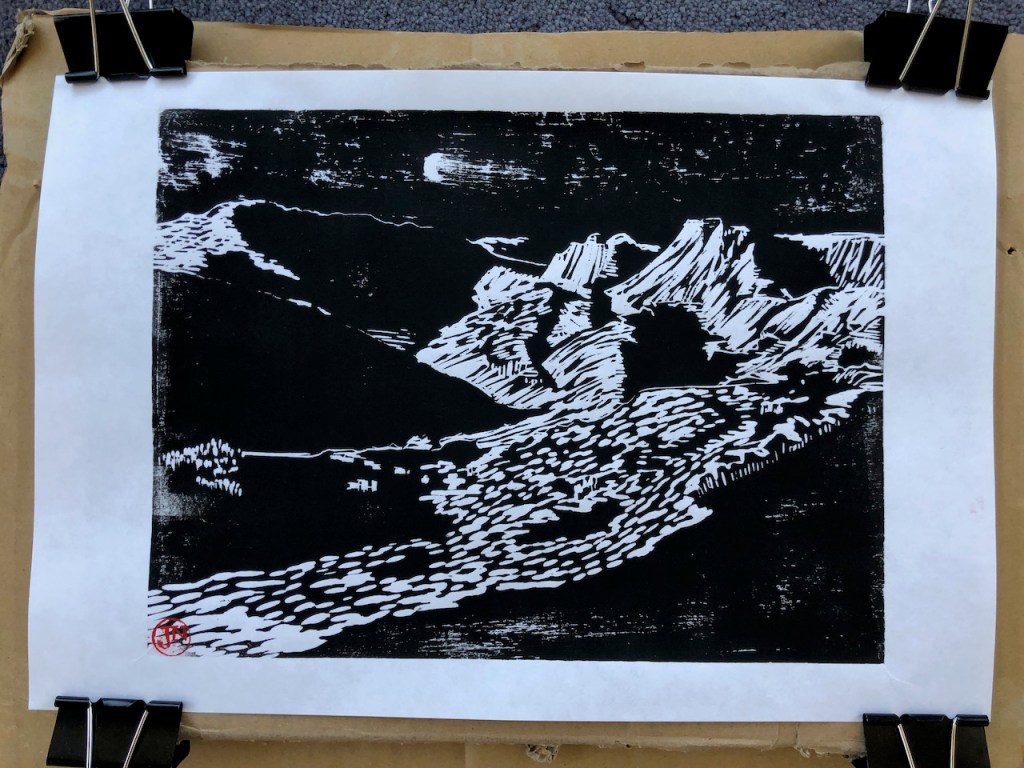
And here is an outtake, a mistake, which I rather like:
“I’ve looked at clouds..”
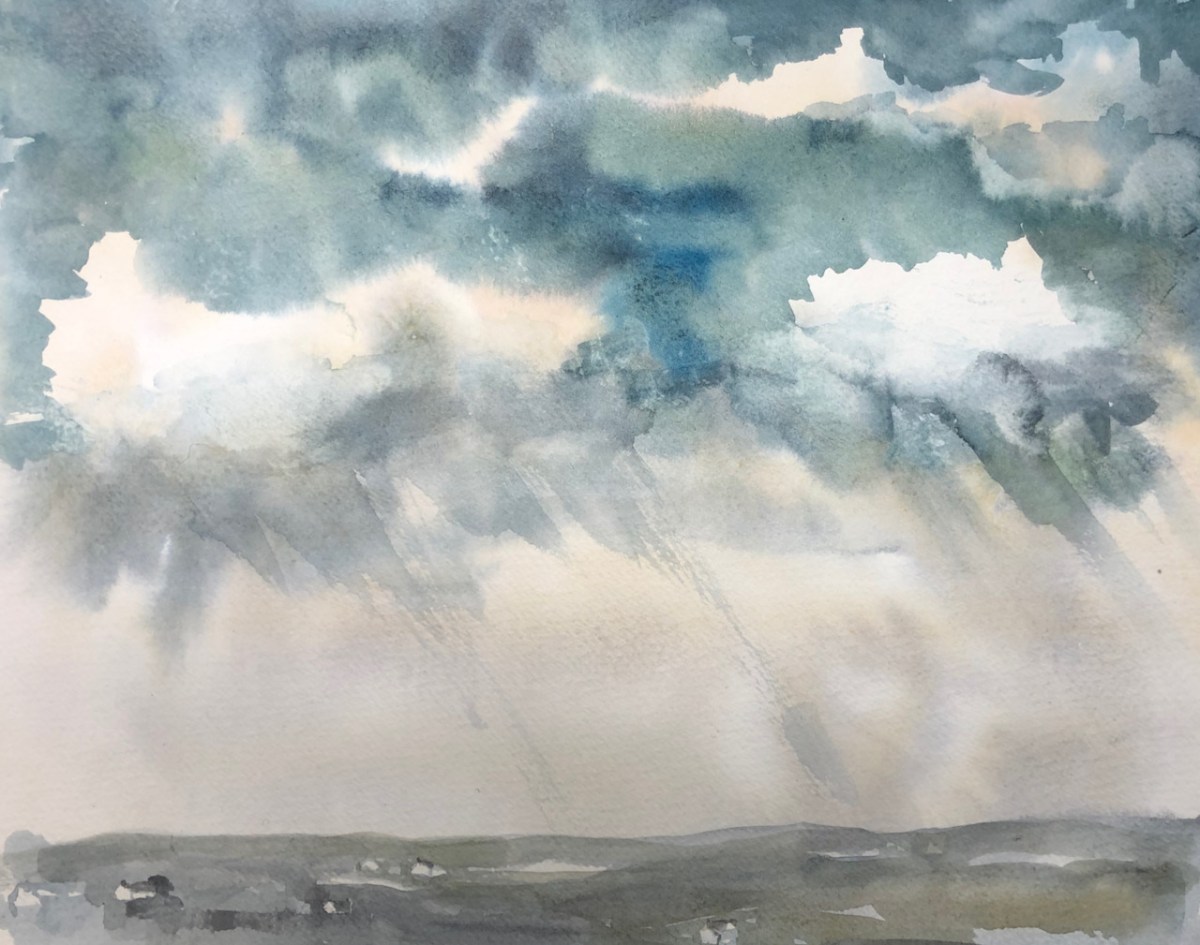
Here is a collection of cloud studies. This is me experimenting with “wet on wet” watercolour technique, from my desk. Click the image to see it bigger.
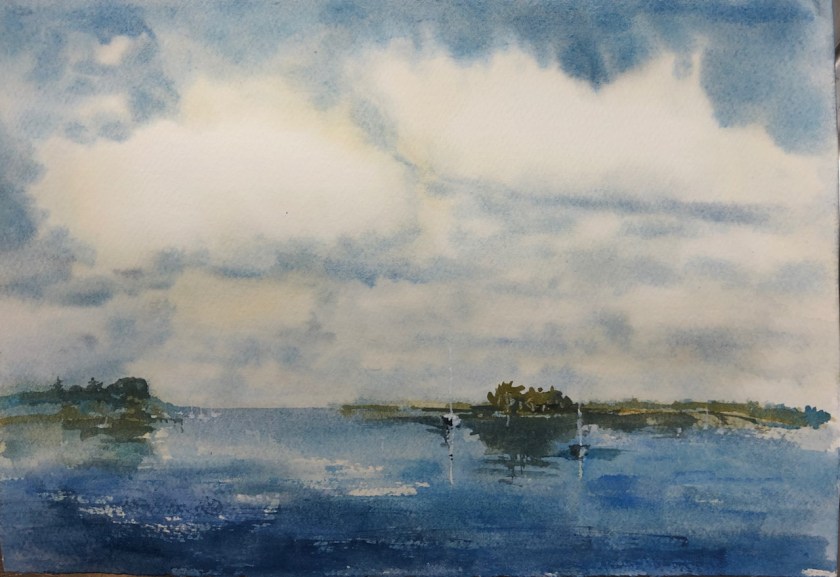
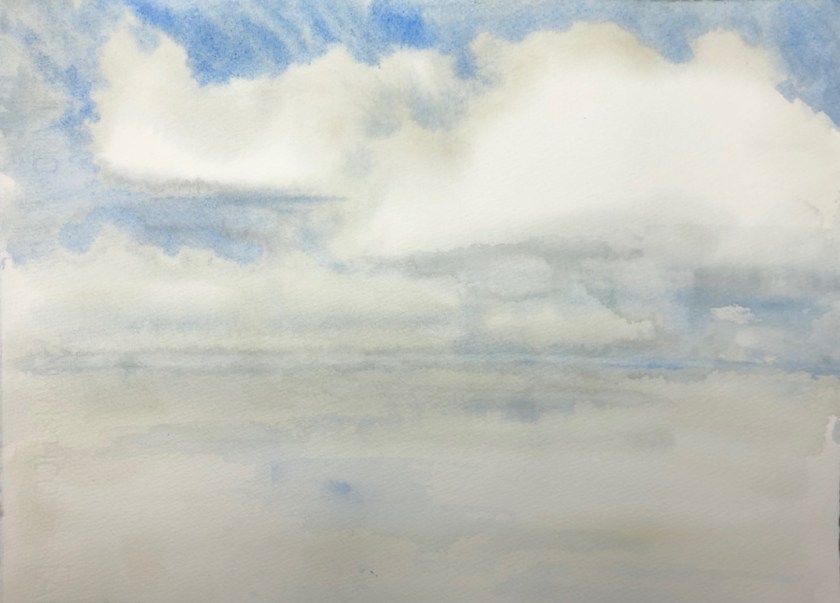
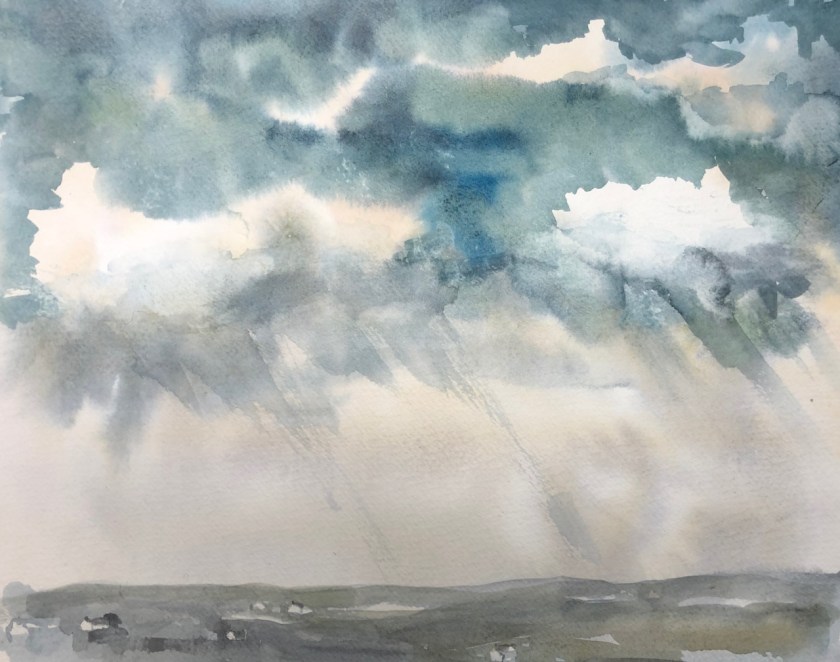
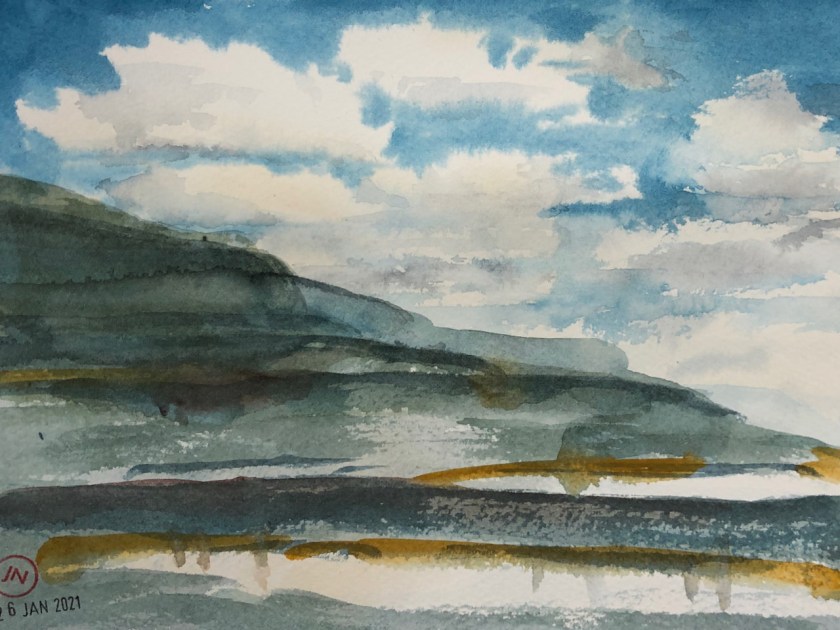
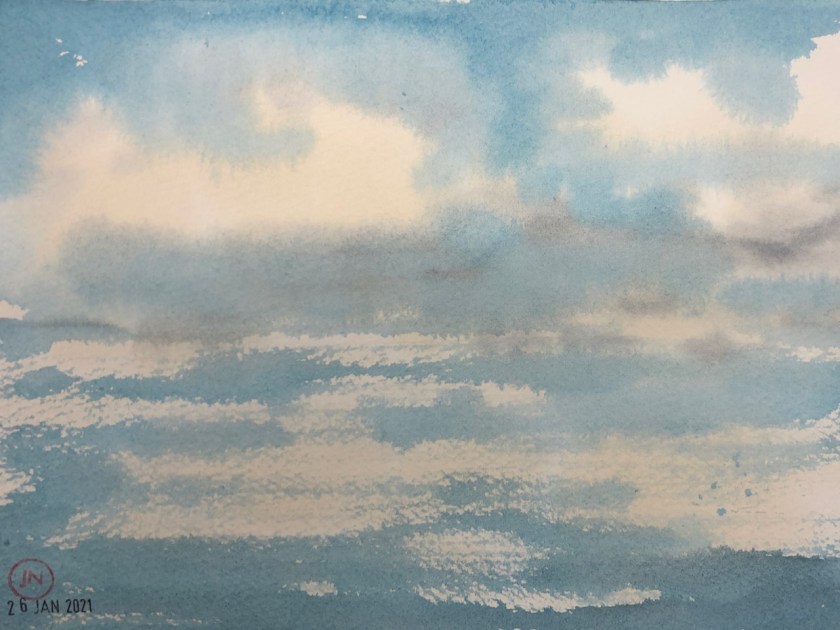
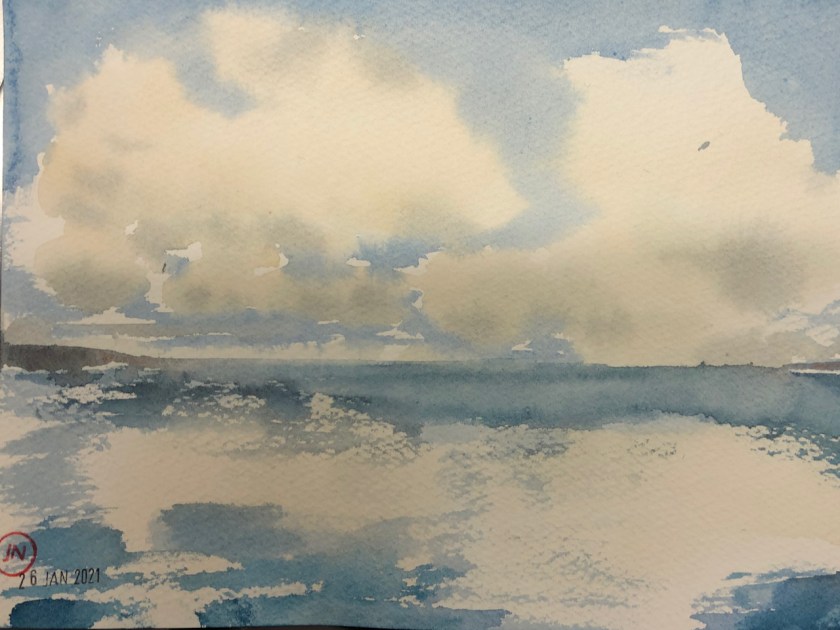
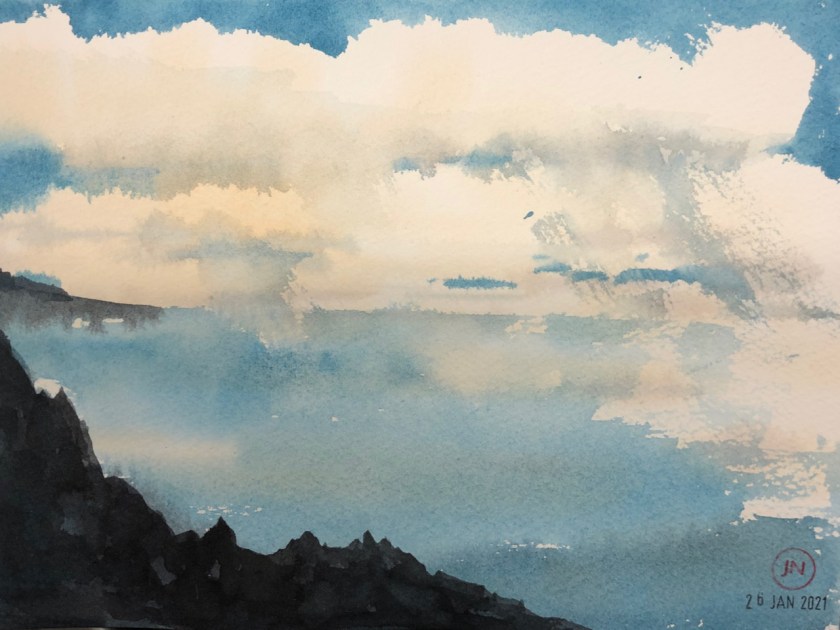
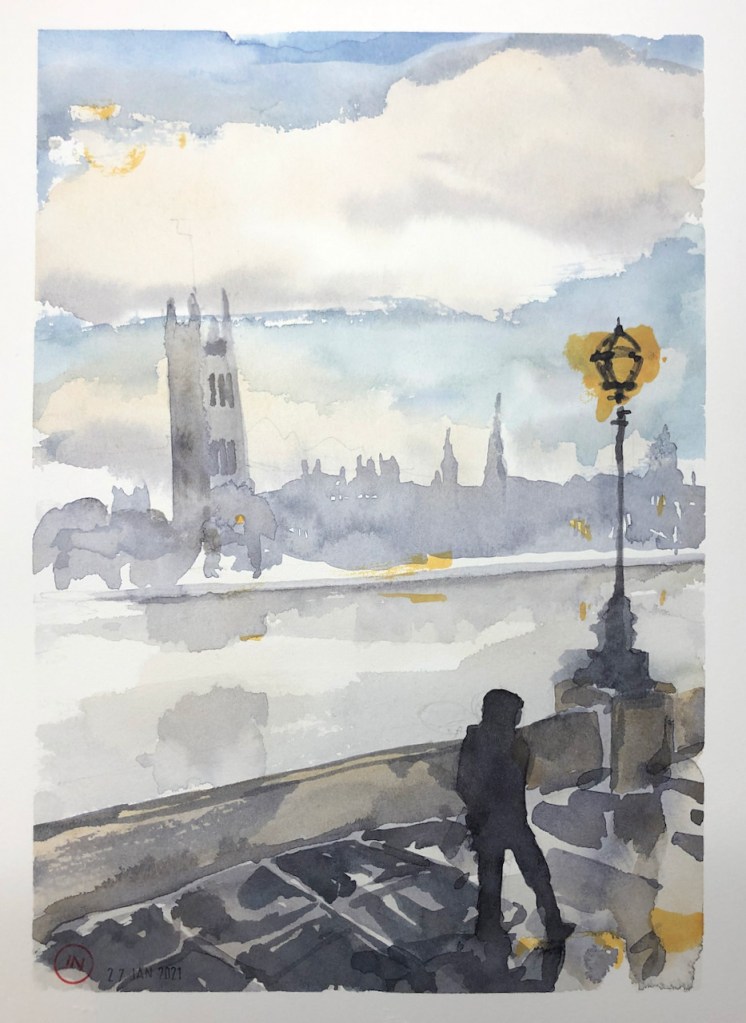
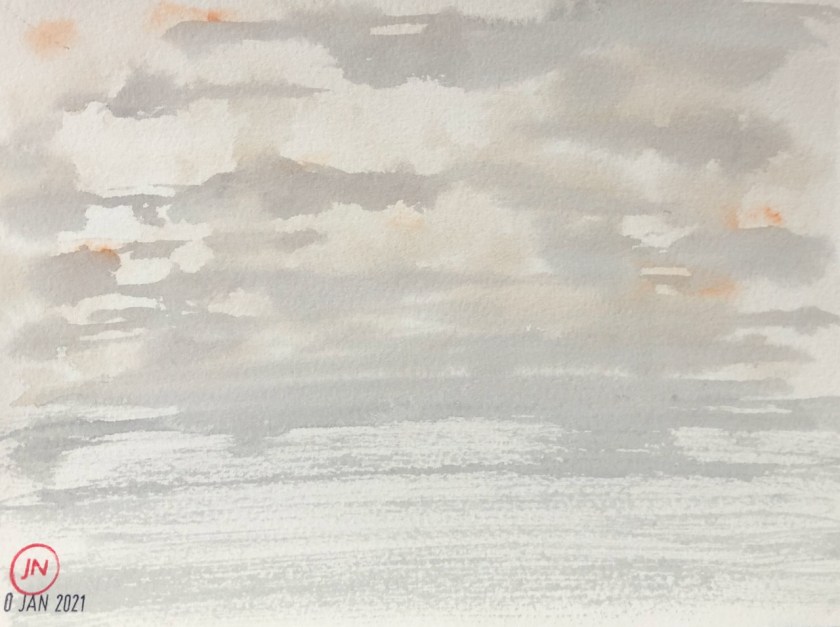
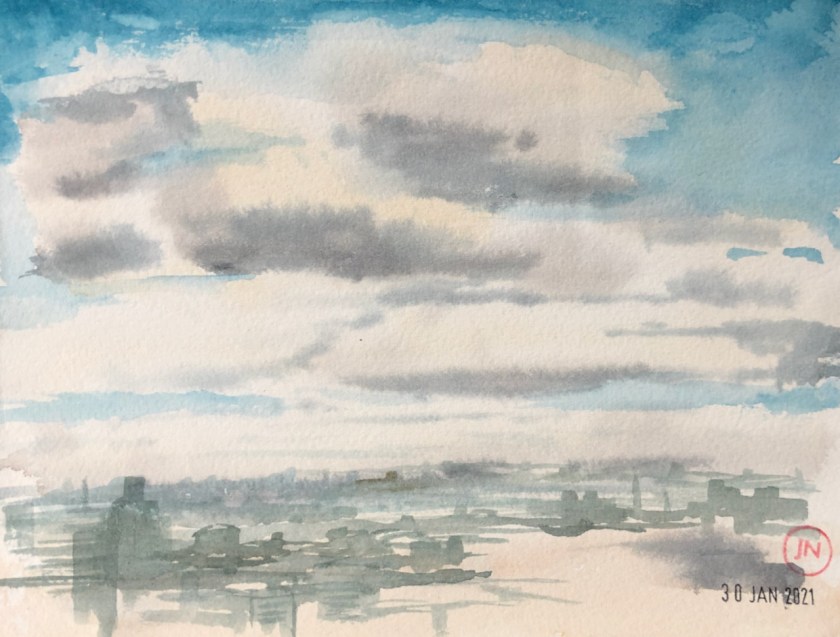
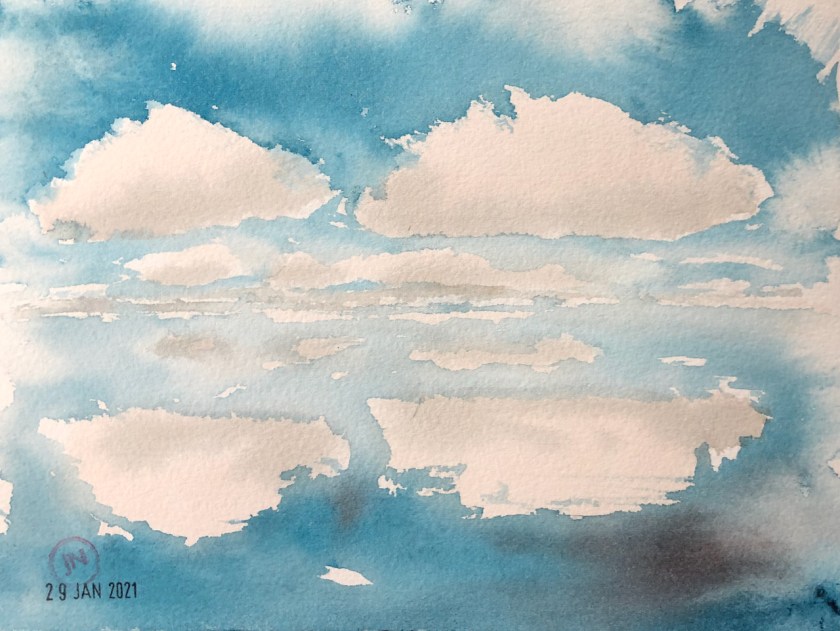
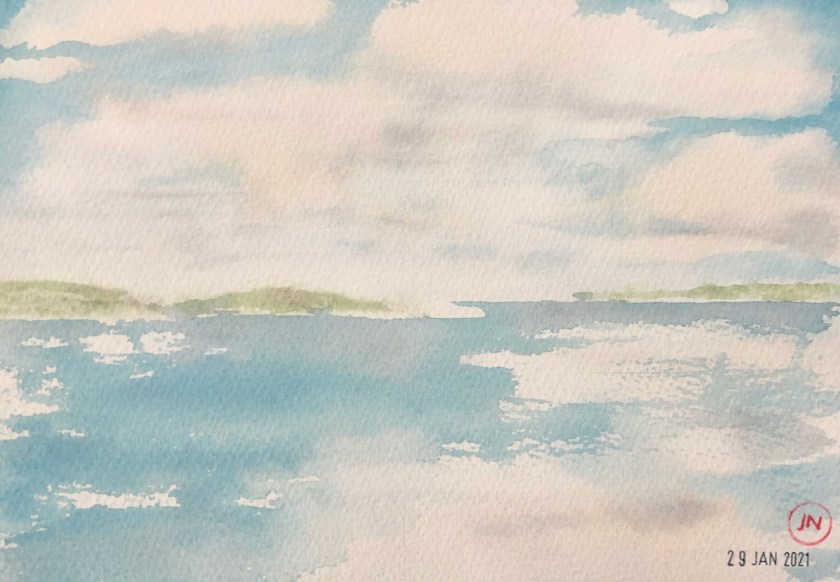
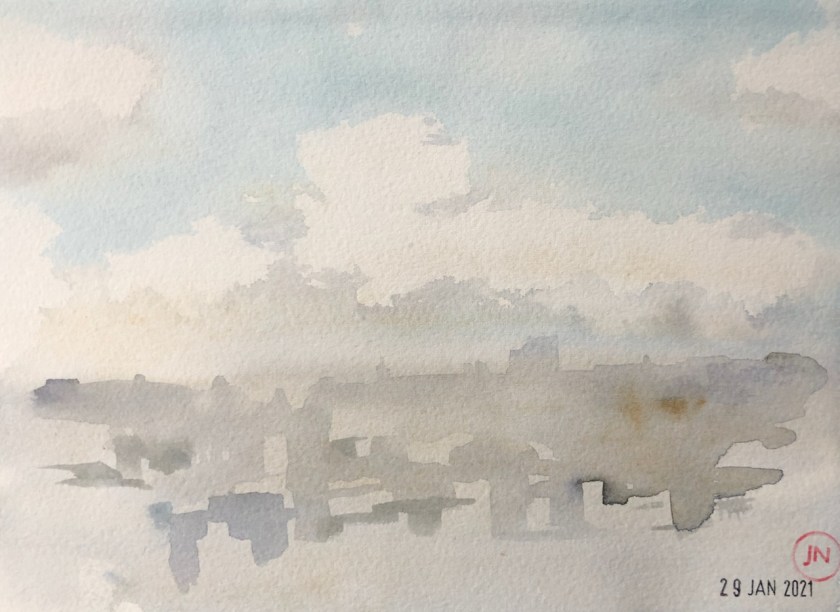
This wet-on-wet technique is a learning curve. For one thing, it makes my desk where I’m working all wet. I’m not yet sure how I’m going to translate this technique into a method I can use on location. I’m working on it. It’s certainly fun to see how the watercolour flows. The technique is a bit unpredictable, like tie-dying, or sourdough baking or surfing. One has to learn to guide rather than control.
I’m learning this wet-on-wet technique from the talented watercolour artist Matthew White in a video I’ve been watching.
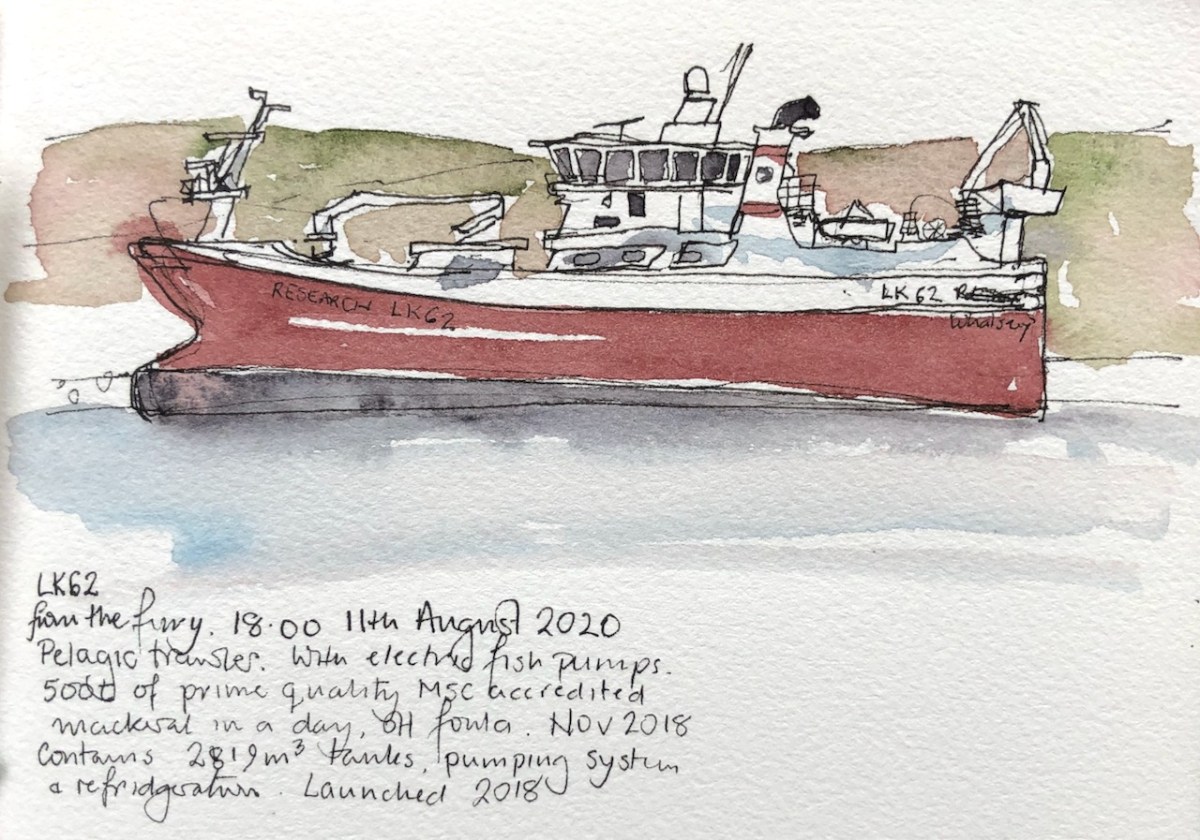
On the ferry from Lerwick to Aberdeen I had an “outside” cabin with a window. From there, I had a view of LK62, named “Research”.


Despite the name, this is not a research vessel, but a trawler. It was launched in November 2018, according to a very informative article in Fishing News.
Aboard a quite different vessel, the Northlink Ferry, I arrived in Aberdeen the next morning. Aberdeen was in lockdown, and I planned to spend as little time there as possible, just two hours, before my train left for the South. My idea was to sit in the sun outside the ferry terminal, eating my packed breakfast, before a gentle stroll to the railway station. Ha! I arrived in Aberdeen in the middle of a rainstorm. Roads had become rivers. On the periphery of my vision, a drain cover had lifted, and the water rose from it in a translucent pillar. I struggled towards the station through floods and wind.
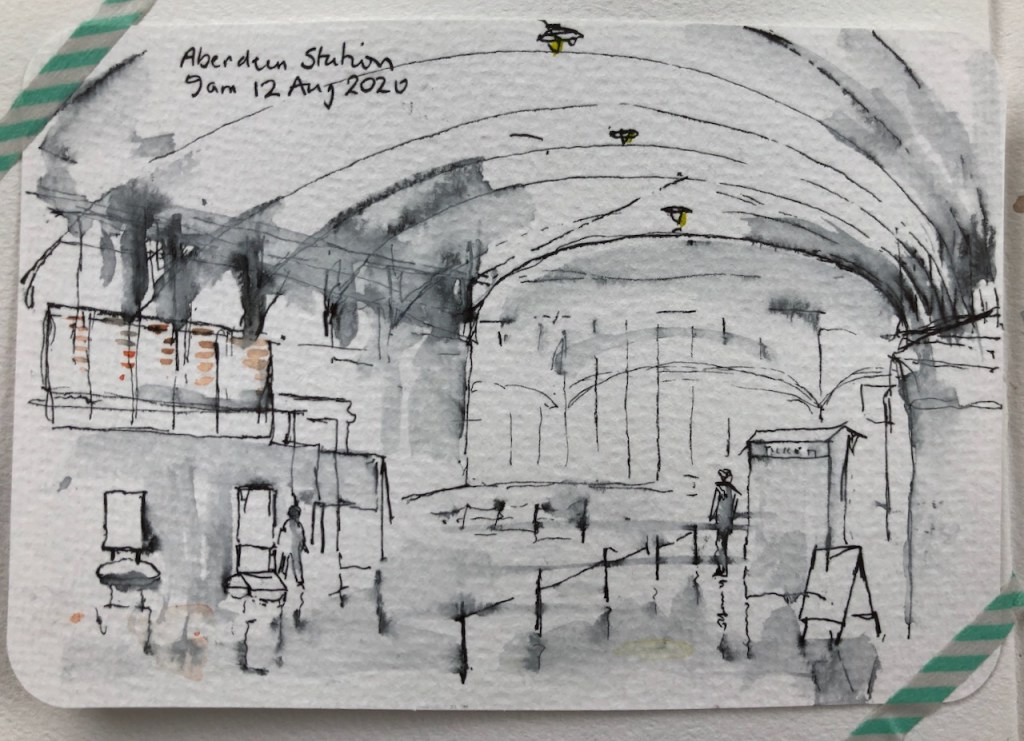
Aberdeen station was a huge glass tent, with the rain battering, and lightning visible, dimly, through the roof covering. It also resembled all the tents I have ever known in that the floor was covered in a thin layer of water. I sat down damply on a damp metal bench. All the trains were cancelled. Fortunately, I had some banana cake. I drew a picture. Then I found a helpful official and a bus.
The bus was going to Edinburgh. I drew a picture on the bus. After having been in Shetland for three weeks, I noticed that there were huge trees, everywhere. The sun came out.