My neighbour sent me a video of an iris he is cultivating on his balcony. It is a very special iris, a Benton Deirdre. He describes it as “bred by artist and plantsman Sir Cedric Morris in 1945. Rose pink standards and ivory falls with lilac red margins.”
It is special also because it managed to bloom on the windy balcony high up on this tower block. He posted pictures on instagram, and then at my request, sent more pictures which I used as inspiration for a number of pictures. Here are some monoprints I made this morning.
Cedric Morris iris, monoprints, superimposed views, drawn from video sent by @kipsge.
Click a button below to share this post online, email it, or print it:
Since I live in a flat, “stay at home” means “stay indoors”.
I started drawing the scenes around the flat.
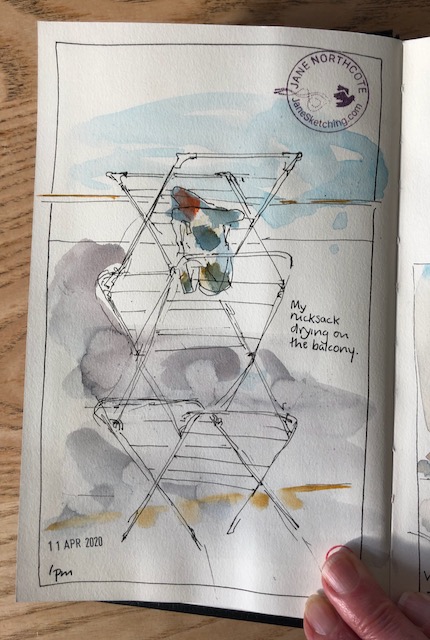
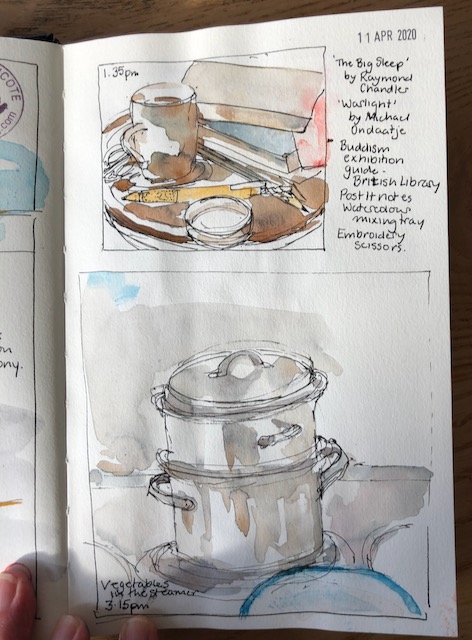
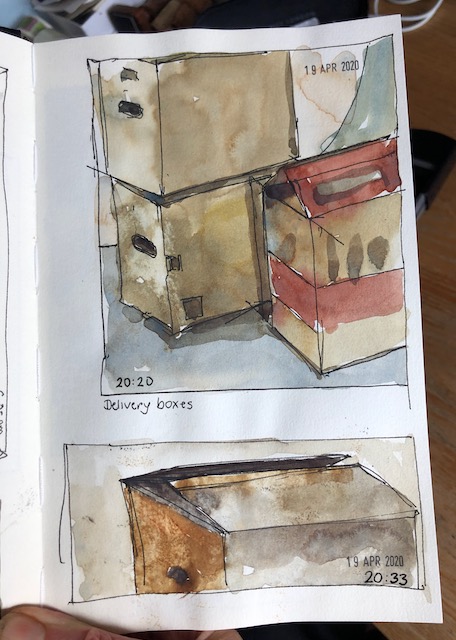
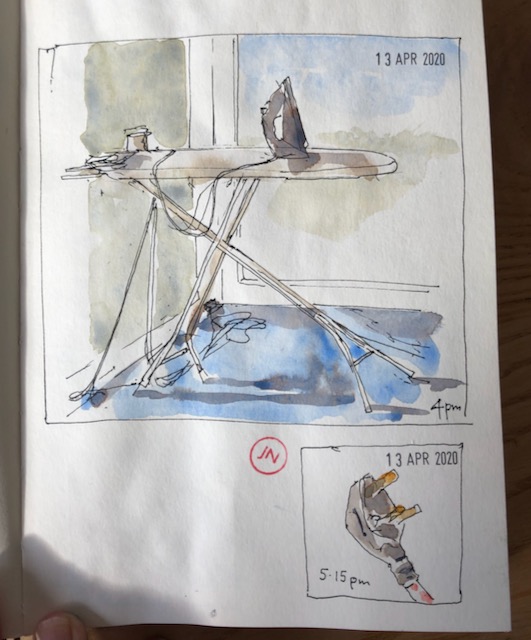
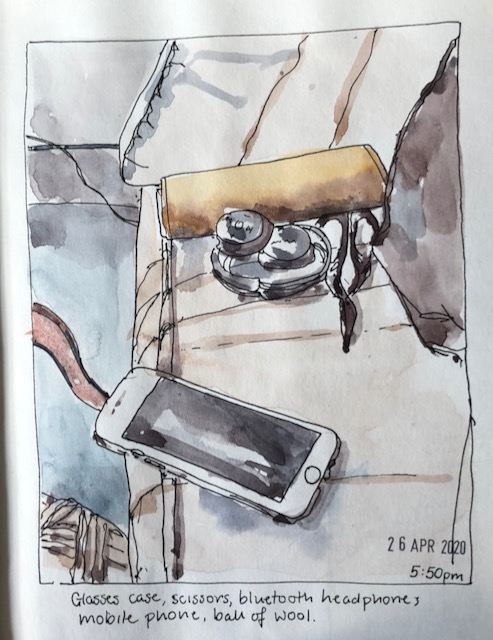
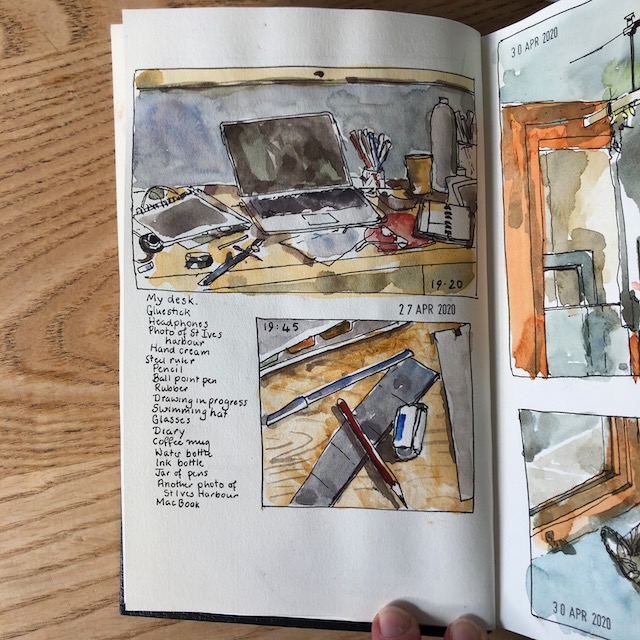
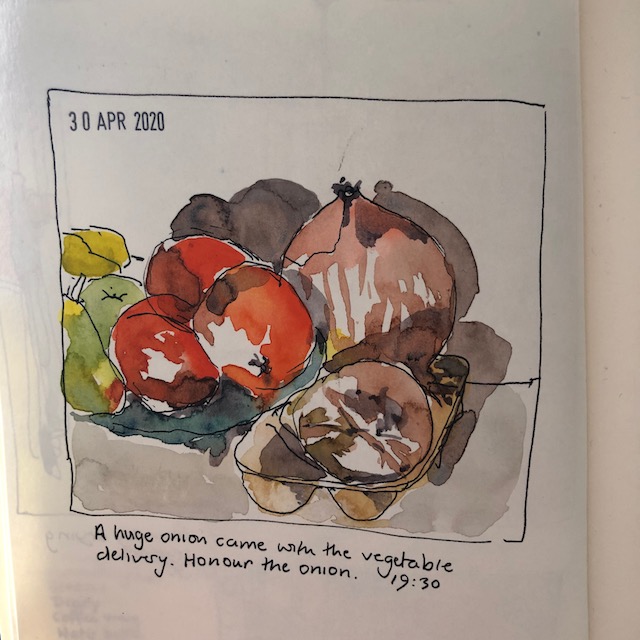
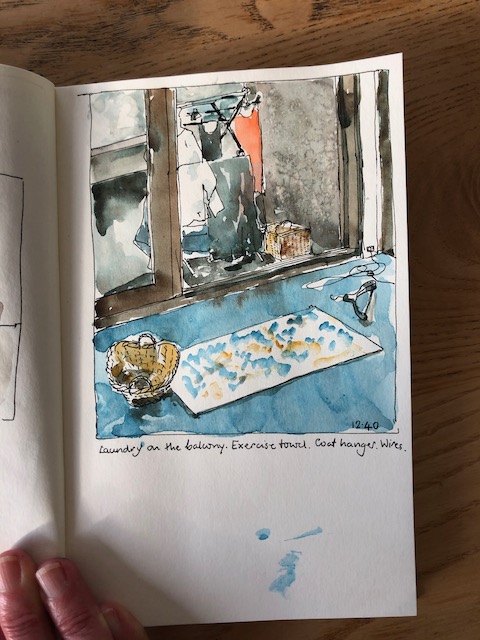
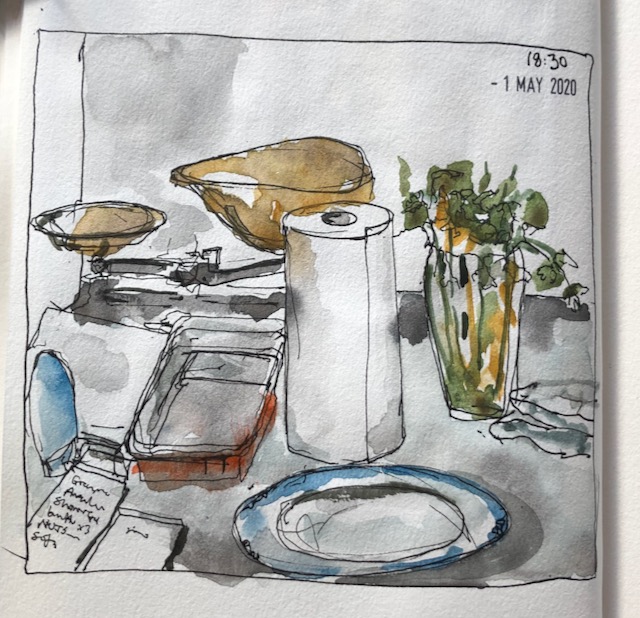
I can look outdoors. We have a balcony which is just big enough for the drying rack. I have mended my rucksack. Then I washed it. After all, I won’t be needing a rucksack for a while.My principle is to draw things as I find them. I don’t move or adjust them. These are vernacular still lives: the way things are.In a corner the delivery boxes accumulate. There are a lot of delivery boxes.Here is the ironing board.Here are the things which accumulate at the end of the sofa.A scene by the kitchen sink.An apple from the vegetable delivery.Evening scenesThe important HDMI connector. I learned to make the TV work from my laptop. This was for the online life-drawing sessions.Miscellaneous objects get thrown together. Here, some knitting items meet the mobile phone technology.My desk. How can I work in such chaos? I am making a design for a swimming hat. A sample swimming hat is the red thing on the right.The huge onion.Laundry on the balcony, exercise towel, coat hanger. Before I finishd this picture, the rain came down, and I had to go out and get the washing in.Items form social groups: the weighing machine, the kitchen roll, a food container, the enamel plate, two shopping lists, the hand cream, a beer glass with the parsely in.
These are the drawings up to today, 1st May.
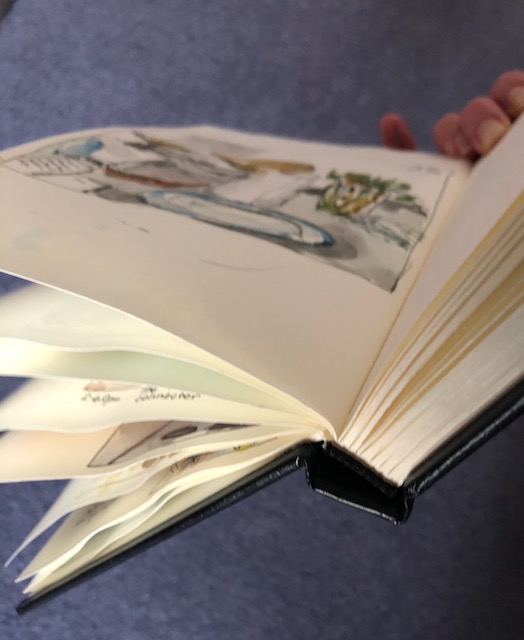
Stillman+Bern, Gamma series sketchbook. Still a lot of pages left to fill.
Click a button below to share this post online, email it, or print it:
On the left is the fire door, and on the right you see the carpet sweep up in a glorious curve to the underside of the window. This is a Barbican Feature, which is a challenge to carpet fitters.
At the bottom of the far wall, to the right, is the important box fastened into a power socket. This is the power line device which extends the WiFi internet through the re-inforced concrete walls of the brutalist building.
The chairs are “utility furniture” made in the 1940s and 50s, to standard designs making the most of scarce timber. New furniture was rationed at that time. I bought them in about 1998 from a shop in Brighton, and they’ve travelled with me.
Here is another view from the sofa, looking the other way.
Here you see my knitting, together with associated paraphernalia: instruction books, a bag, scissors and bits on the table.
That little table came from my parents’ house. The knitting wool came from Shetland.
The sofa came from the shop on the Tottenham Court Road that used to be called Habitat, and perhaps still is. It is long enough to lie on, full length. That was my criterion.
Click a button below to share this post online, email it, or print it:
Just before Christmas 2018, our neighbour arrived at our door with an orchid. He was going away, and didn’t want to discard the plant. He told us he didn’t need to have it back, and we shouldn’t worry if it died. It came from M&S. We took it in.
We are not great gardeners. We just left it and it grew. Our neighbour returned from his holiday and said no, he did not want it back. And it kept on growing. Now it is a flourishing plant with several stems and multiple leaves. It lives in a tiny flower pot, with hardly any soil.
It threw out various extra stems and strange root-like protuberances, which seemed to be seeking new lands. I’ve been meaning to see if it would propagate. So last week I carefully embedded these extra stems in soil, as you see.
Rooting one of the stems
Rooting one of the root-like protuberances.
Indoor orchid propagation attempts.
When I say “embedded in soil”, I am not strictly accurate. We live in a flat in a tower block, and there is no soil up here. So the orchid is rooted in coffee grounds.
If anyone knows anything about orchids, and can provide advice, I would be glad to hear it. This seems to be a particularly robust specimen, and produces flowers all the time. It is a delight.
Here is work in progress on the drawing.
Sketching the orchid.
I’m drawing in a large Saunders Waterford sketchbook. I originally bought it for urban sketching, but it was too heavy to carry about. I also found the huge pages, 11″ by 10″, meant I did huge pictures, which took a long time, standing outdoors in the cold. The paper is also more absorbent than I am used to, which means that my washes don’t go very far and I have to keep refilling the brush. So now, being at home, I am using it to make sketches in the flat, where I can sit down and be warm.
This sketch took about 2 hours, including hanging up the laundry while paint dried (another advantage of working indoors).
Colours: Prussian Blue (DS), Perylene Maroon (DS), Mars Yellow (DS), Burnt Umber (Jacksons).
Click a button below to share this post online, email it, or print it:
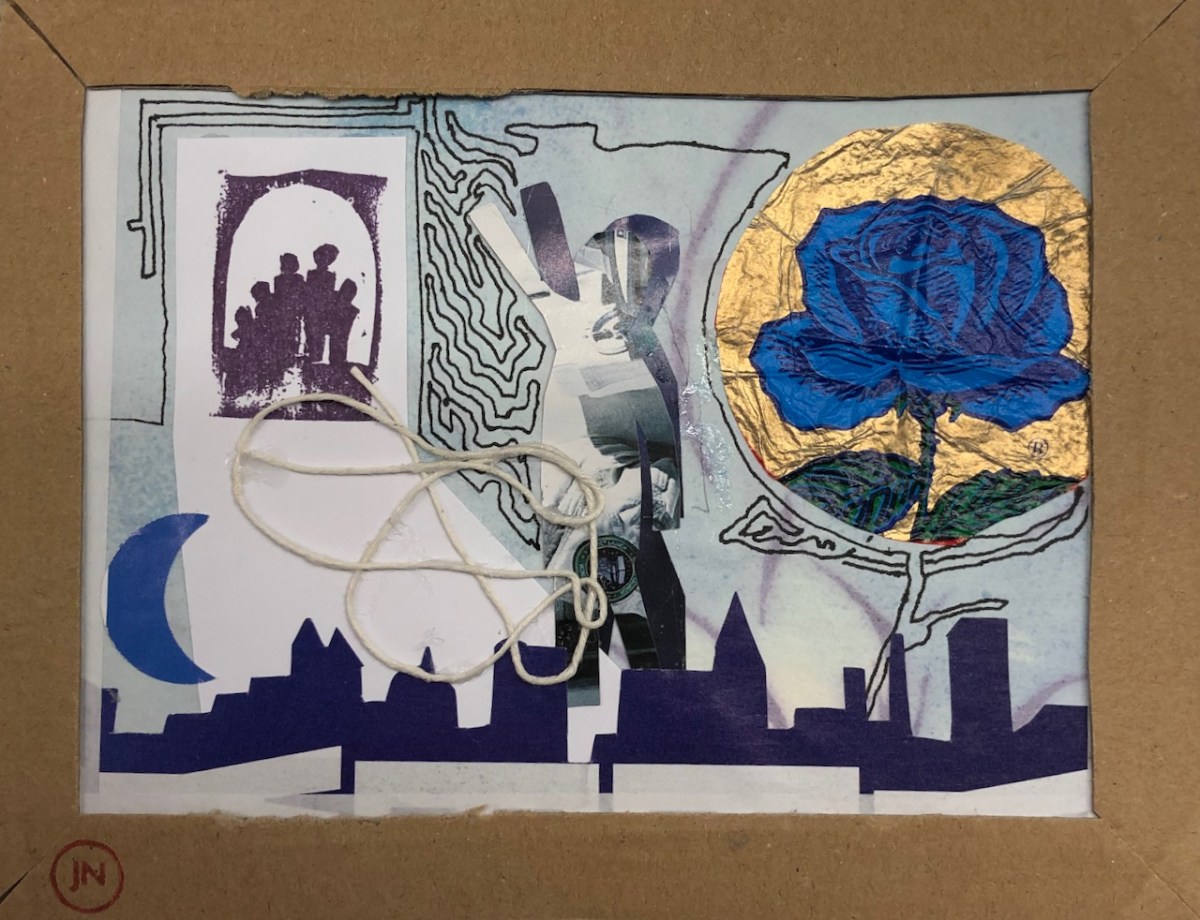
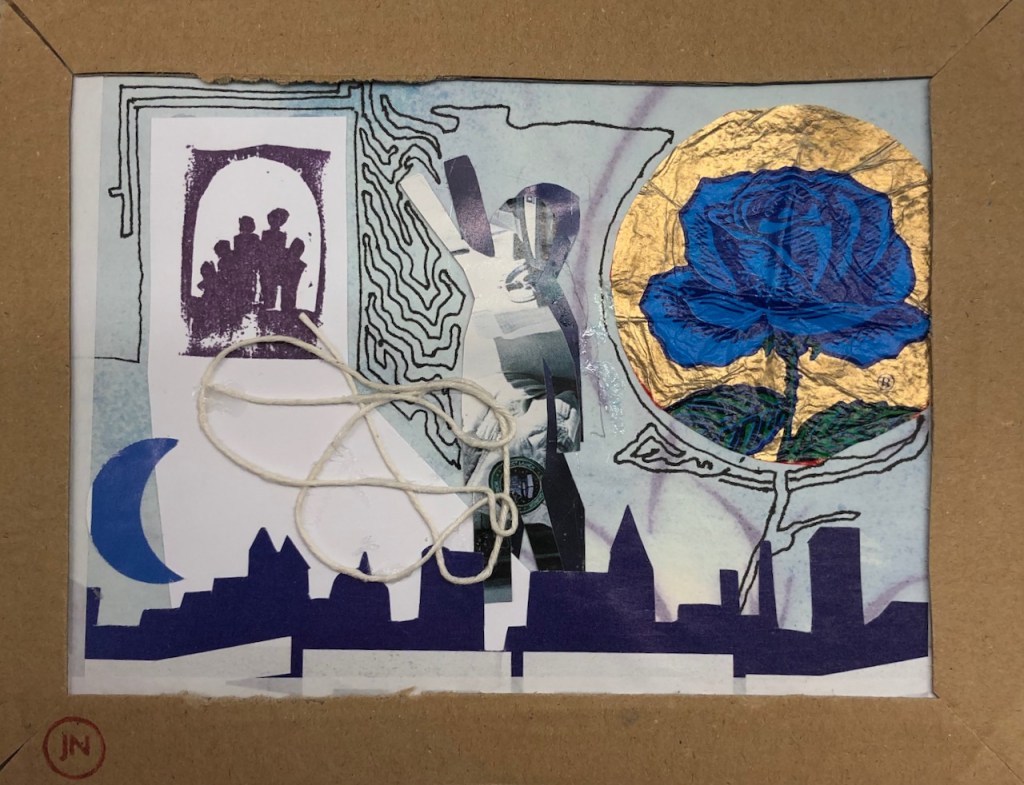
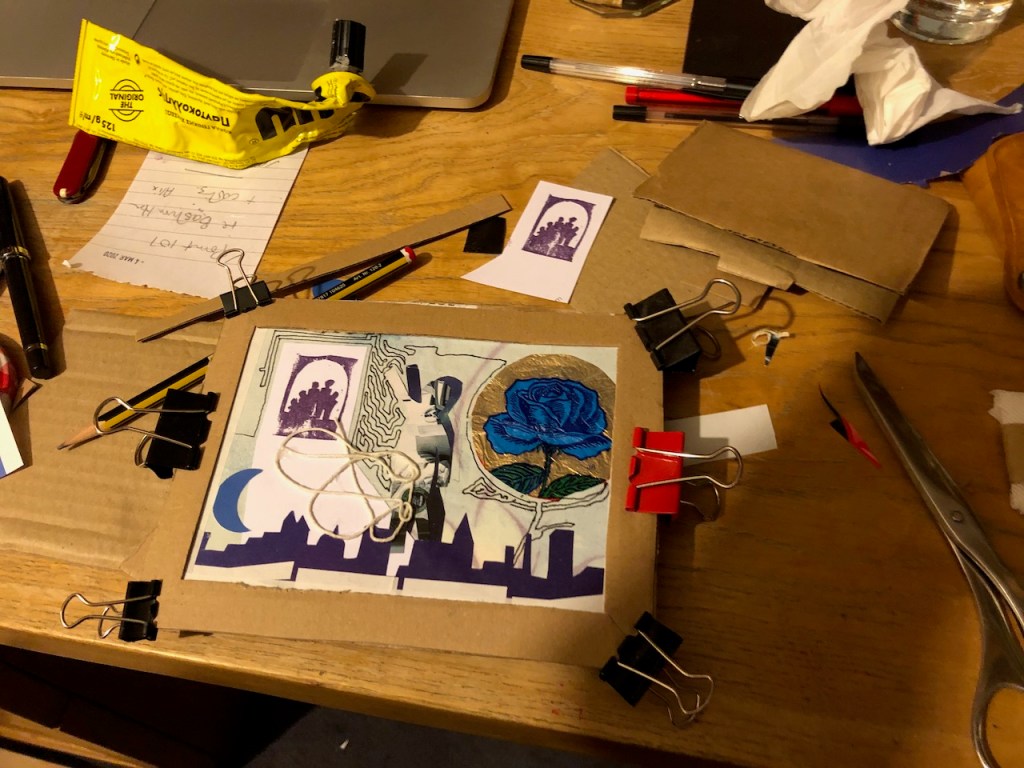
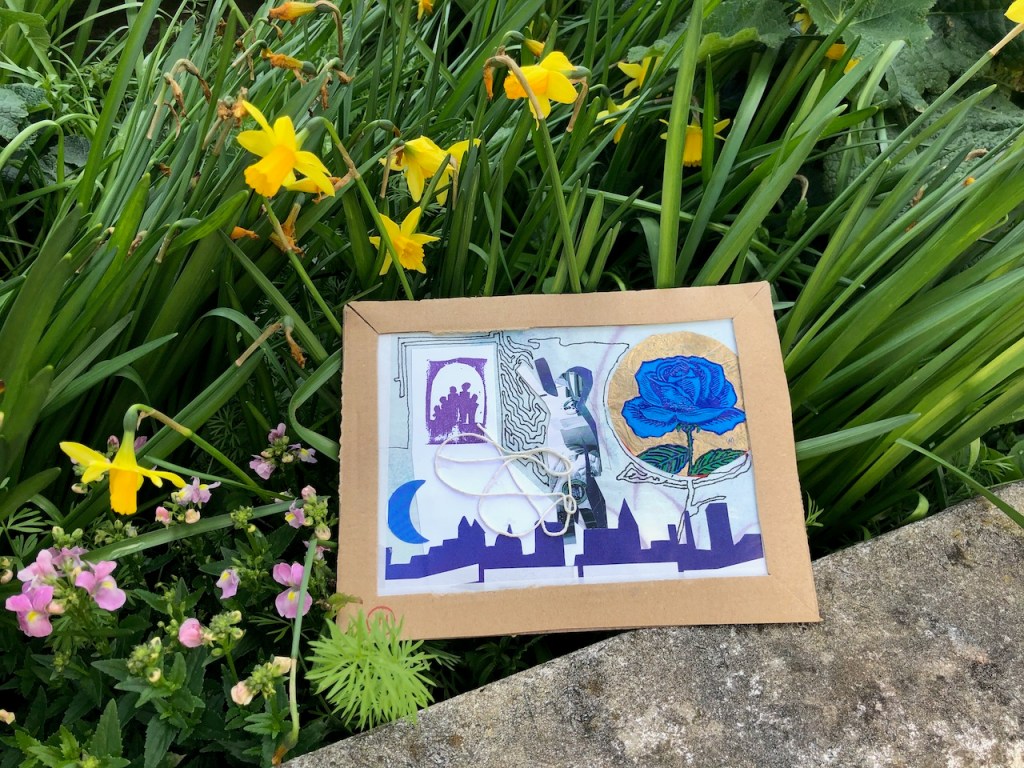
Here is a postcard collage I sent to my friends in another city.
It is inspired by the website: sendmeapostcart.com, and shows the connections we make, the lines which bind us, the distances which separate us, and the pleasure I found in meeting this family again after many years.
Work in progress.
On the way to the post office
Click a button below to share this post online, email it, or print it:
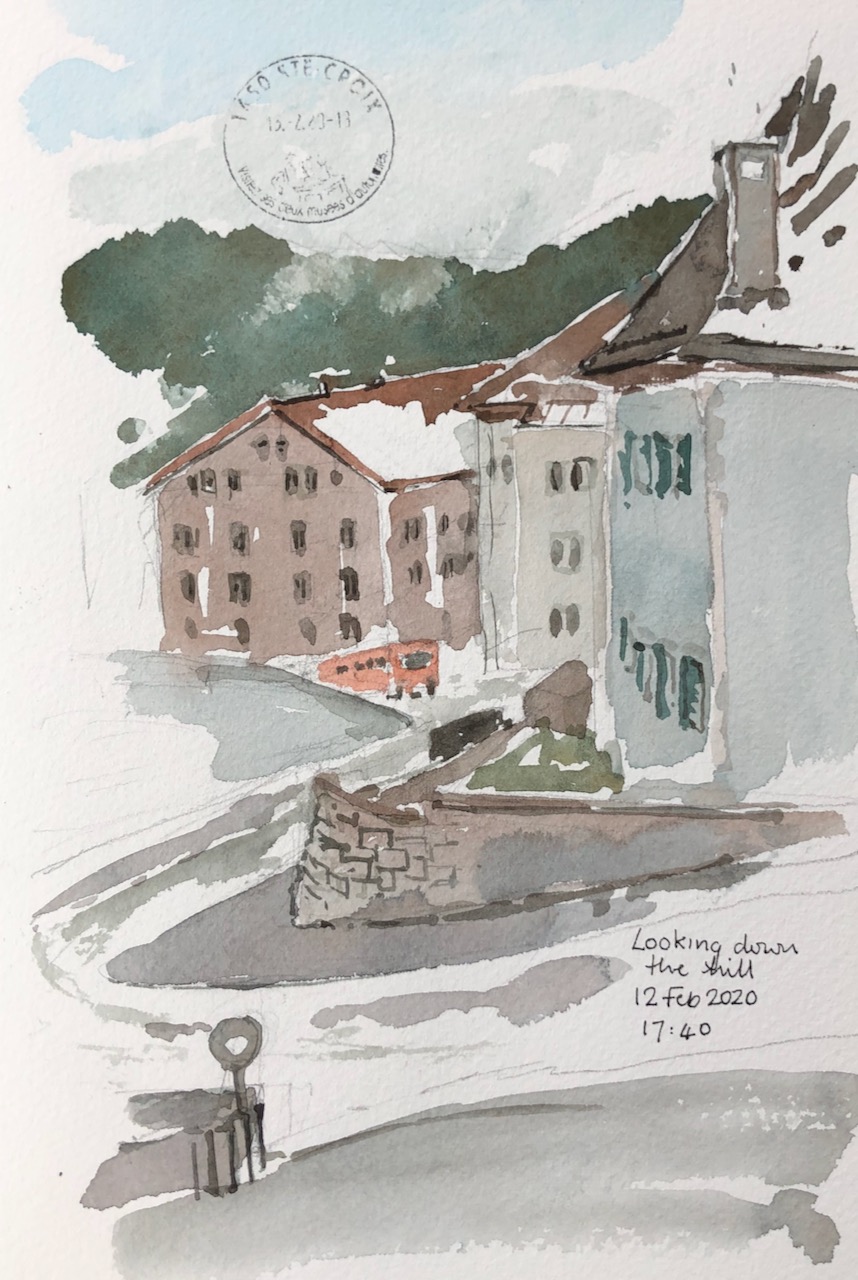
The weather in the Jura mountains is changing. This is climate change, the residents tell me. Once, the snow came reliably every year, bringing skiers. Now, the snow is unreliable. “It shouldn’t be like this,” they said, looking out at the slushy rain. This is February: high skiing season. “It should not be like this,” they say again, sadly.
Here is a sketch made looking out of the window into the rain and melting snow. The lady at the Post Office added the stamp.
Sainte-Croix, February 12th 2020, looking down the hill towards the station.
I made that picture with just watercolour: no pen.
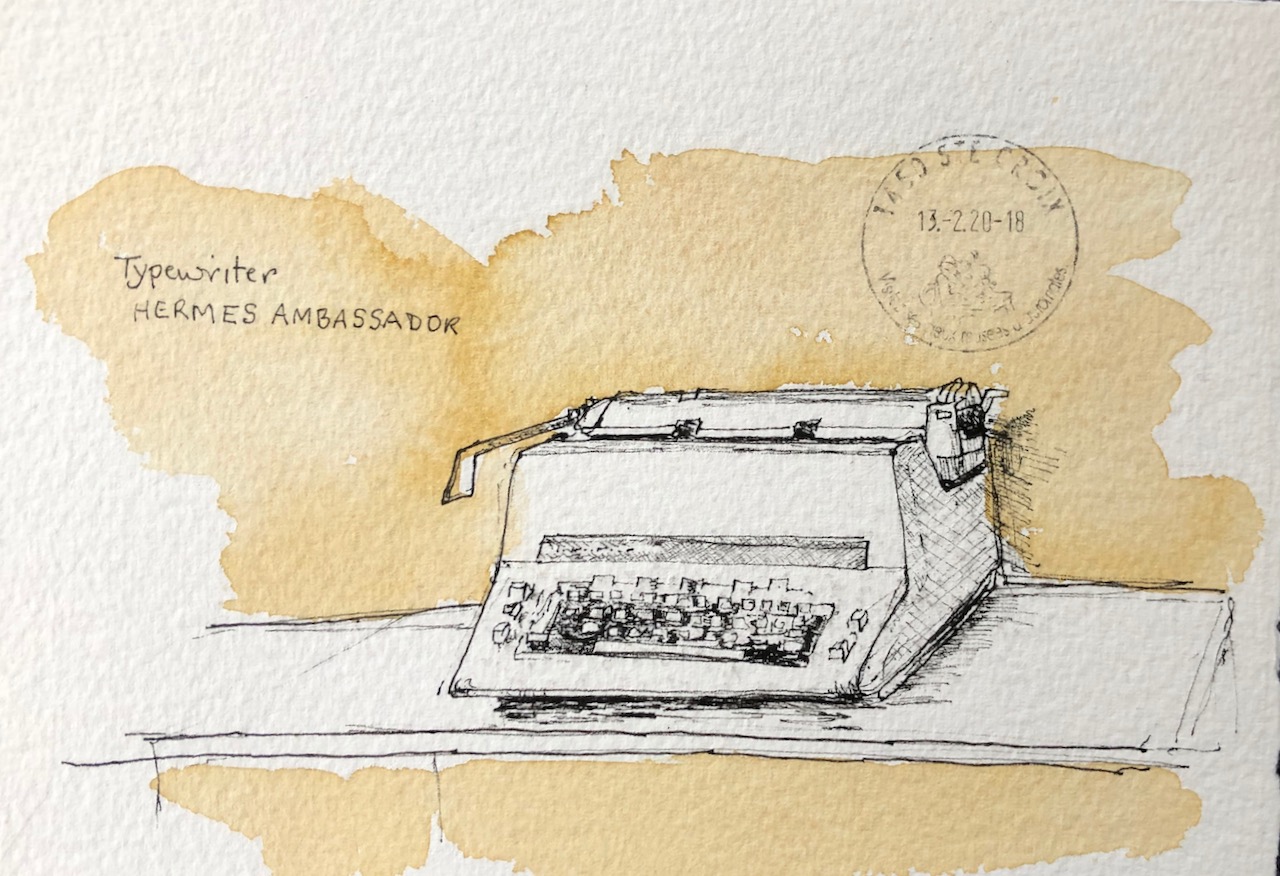
The Hôtel de France celebrates the fine engineering expertise of the area with a collection of typewriters. There were several in the meeting room where we worked. Here is one of them.
Typewriter. The Post Office lady obliged with the stamp.
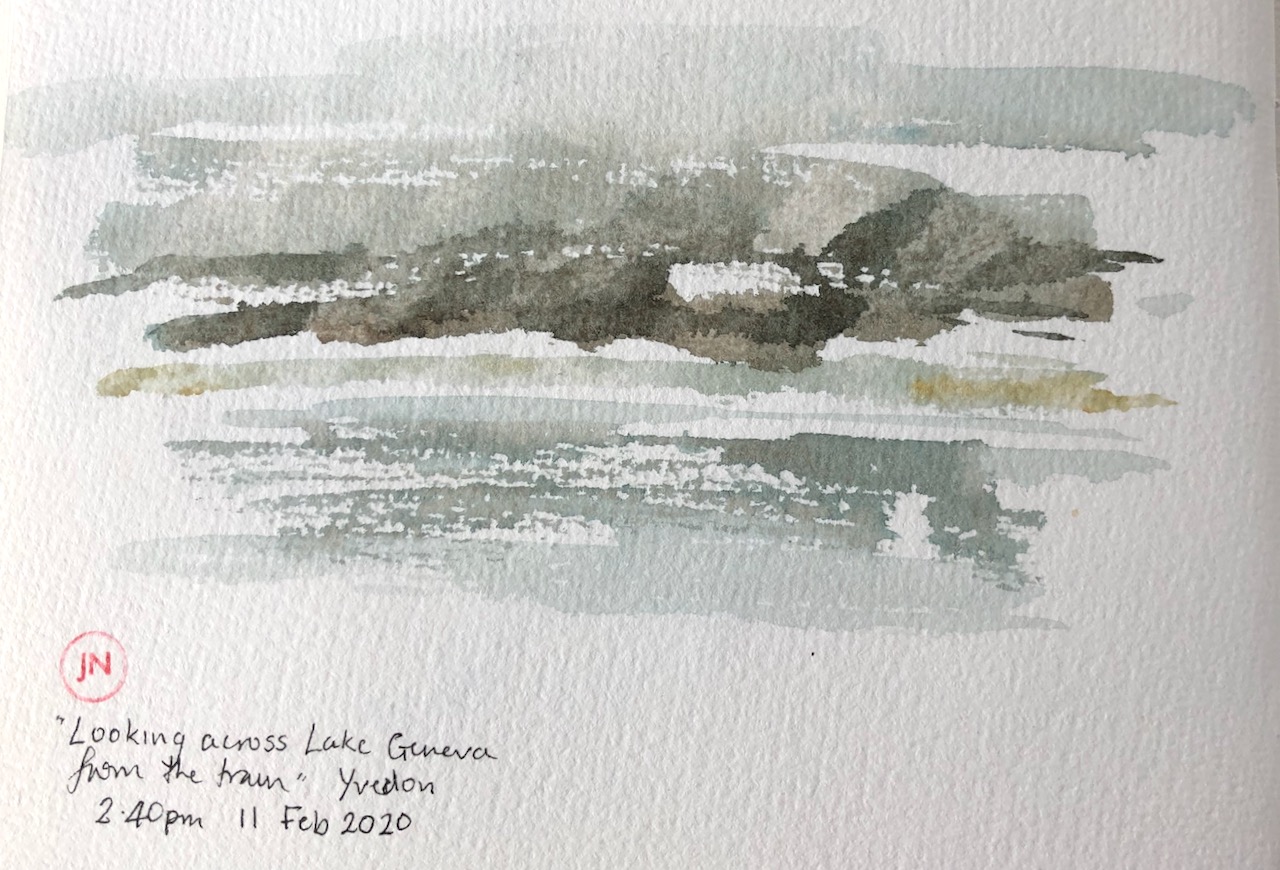
This was a busy visit. My arrival had been delayed by a storm, and so work was compressed into a few hours. My next sketching opportunity was while I waited for a lift to the station.
Here’s a view across Lake Geneva in the rain.
Click a button below to share this post online, email it, or print it:
Here is a machine that was used to make music boxes:
The machine is about 100 years old. It still works. It sits with its colleagues and companion machines in the workshop of Dr Wyss, in Sainte-Croix. Dr Wyss collected the ancient machines, as the music box industry declined in the region. They are now looked after in a dim and oily machine shop, in a semi-basement of an unremarkable building. Mr Théodore Hatt is their carer, curator and operator. I had the great privilege of spending some time in the workshop, quietly drawing, while Mr Hatt showed the collection to a visiting engineer from Germany.
The machines operate from huge and very dangerous-looking belts in the ceiling. At a certain point in his presentation, Mr Hatt sets all these belts in motion. They create a gentle rhythmic noise, rumbling down the length of the workshop. He connects different machines, driven by the belts. Each machine changes the noise slightly. His explanations, in German, come to me in harmony with the machine beats.
I drew the electroplating machine, and the drill:
Here are some work-in-progress photos, and a close-up of the cogwheel in the first picture:
On the way home, in Geneva airport, I drew the view:
From gate B32 Geneva airport
Birds
“Amidst runway fog a hawk circles and plummets. The crows are annoyed.”
Click a button below to share this post online, email it, or print it:
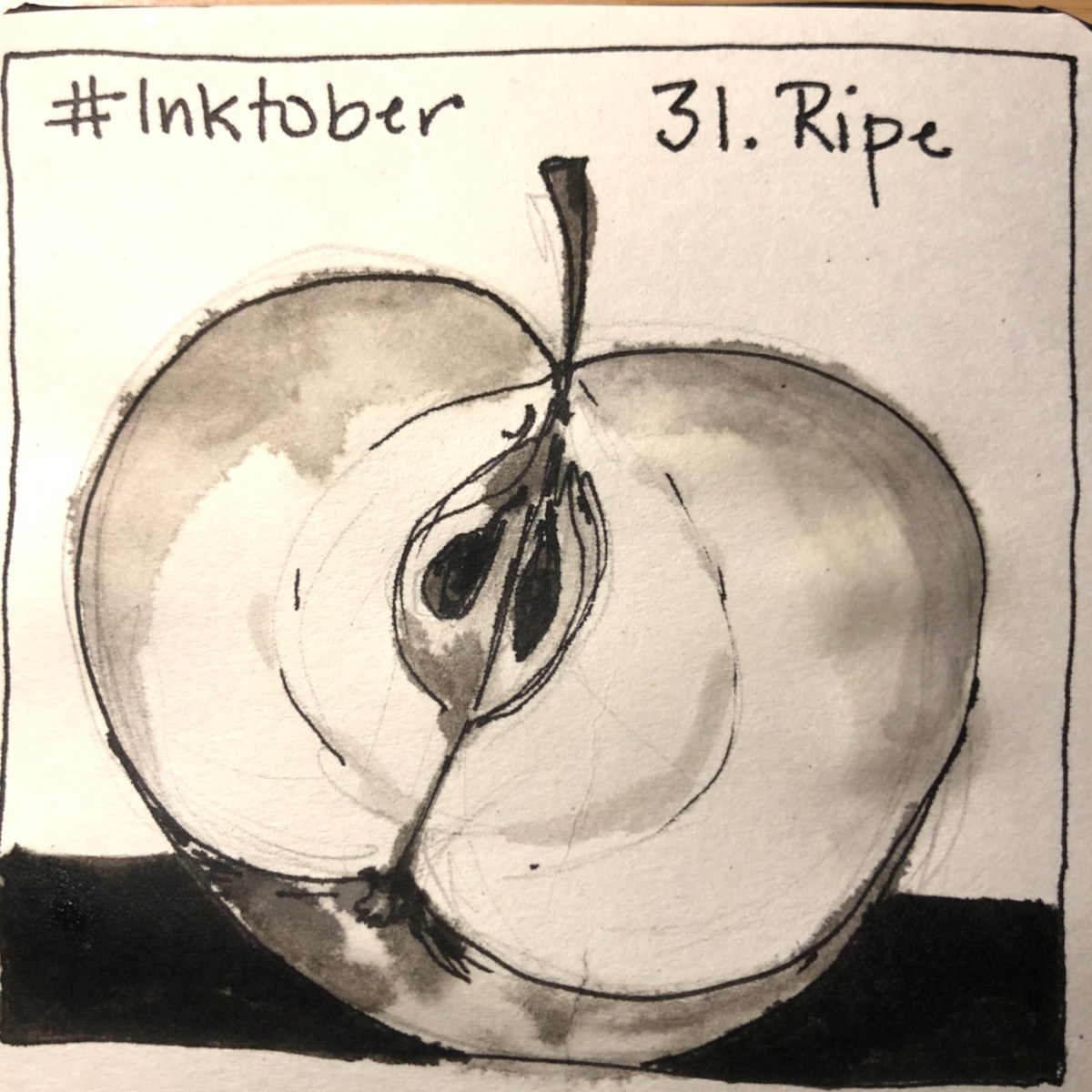
I did Inktober for the first time this year. This is a drawing challenge, described on the Inktober web page. The idea is to draw a picture, in ink, each day of October.
“Inktober is about the constraint of medium. You must draw with ink. When you sit down to do the challenge you don’t have to decide what colors you’re going to use, whether you’ll be rendering in pencil or watercolor. The challenge has stripped away all of these variables that can get you sidetracked or frustrated, allowing your creative energy to be focused straight into your drawing.” Jake Parker
I followed the official prompts:
Here are my pictures. They are all done in black ink on white paper. The reason they appear in different tints and tones is that they were photographed in different light, depending on where I was at the time.
“Ring”. This is a ring from Fred Rich.
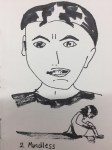
“Mindless”. I’m not quite sure what this picture means. Sadness, lack of thought.
“Bait”. Here are people digging for bait on the Isle of Grain.
“Freeze”. This is a scene from an action movie.
This is inspired by a young person I know.
A voice made in smoke and hardship.
In this strange forest, you need a dog companion.
He contemplates his condition.
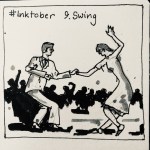
Dancing at the 100 Club.
All the people are left handed, I noticed, after I drew it.
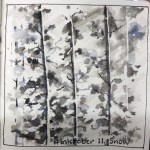
Snow in the forest.
In the October rain, I wish for a dragon to warm my hands.
This is the shape of the ash tree.
Growing up is a puzzle.
The orator.
The open sea.
A former bank building on the Goswell Road.
It’s hard to fit in.
Bloodied but not bowed.
Tough on the knees.
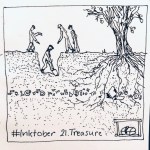
One person digging and three people issuing instructions.
Who is the real person and who is the ghost?
Iron Age fort, Britain.
London office block.
“Tasty” means “skilled” in the context of martial arts such as boxing.
Am I sufficiently hidden?
A tribute to my sister.
Fun to ride in a cart.
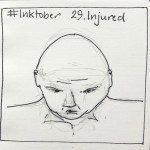
Injuries are not always physical.
The crab
Ready to eat.
I used De Atramentis document ink (waterproof) and a Sailor Fountain pen with EF nib. For the tones, I diluted the ink with water.
Here’s what I learned from Inktober:
I could do it. It was fun to do, and an achievement.
The drawings are mostly small, 2½” square. “15” and “16” are 8″ square. If I do it again, I’ll use a bigger sketchbook.
I used a sketchbook with quite soft, low quality paper. Next time: use smooth watercolour-quality paper, which will take the ink better and not buckle.
I started doing drawings of any size. These get cut to a square when posted on Instagram. If I do it again, I’ll do all square drawings.
It was a good idea to write “#inktober” and the day on the drawing.
Click a button below to share this post online, email it, or print it:
At the Wellcome Collection there was a special exhibition on colour. It was called “The Pharmacy of Colour”. A short film pointed out that certain substances used as pigments were also used as medicine. A red pigment called lac, produced from grinding up lac insects, was also used as a medicine. Saffron is both a dye and a medicine. And the terribly poisonous Red Lead was also cheerfully described as a red paint on medieval manuscripts, mixed with egg yolk. Don’t lick the pages. It was also, alarmingly, used for treating intestinal disorders. A cabinet held jars of bright pigment, well protected behind glass. Yellow Ochre was there, and Ultramarine Blue, both of which I use. I’ve often wondered about the colours in my box, and the real chemistry behind the names.
Interesting though this was, it didn’t take long to look at, and it had been a long walk to the Wellcome Collection. So I went to their other current exhibition “Teeth”. This was mainly about dentistry through the ages. The images were alarming and I was unprepared. I found some of the exhibits calming though. Here is “Junior Dental Chair” from the 1950s. It reminds me of my very first dentist, Mr Gant. He must have had one of these. I can almost smell it, the leather at the back, and that hard, sculpted, bow in which you rested your head.
There were many people drawing in there. An art class, perhaps.
The equipment was strangely humanoid.
I read that “Patients from the 1960s and 1970s, when amalgam filling use peaked, are known to dentists as the “heavy metal generation”. That would be me then. Amalgam is mercury, silver, tin and copper.
I also read that “Tooth decay is the number one reason for child admissions to hospital.” I paused at that statistic. The woman next to me was reading it too. I commented that I found it surprising. She said it was because “People can’t afford to take their children to the dentist.” She spoke with authority. Dental charges have gone up, she explained. The hospital is part of the NHS and so is free of charge at the point of use. “So people wait until it’s really bad, and then take the child to A&E,” she said, speaking as though a practitioner. She smiled grimly and walked away. A strong woman, upright, informed, articulate, opinionated, caring. A dentist herself, perhaps, or an NHS administrator, or medical person, I thought.
Click a button below to share this post online, email it, or print it:
I’m just back from another visit to Sainte-Croix in Vaud, Switzerland. Mostly I was working, but I managed to do a few sketches.
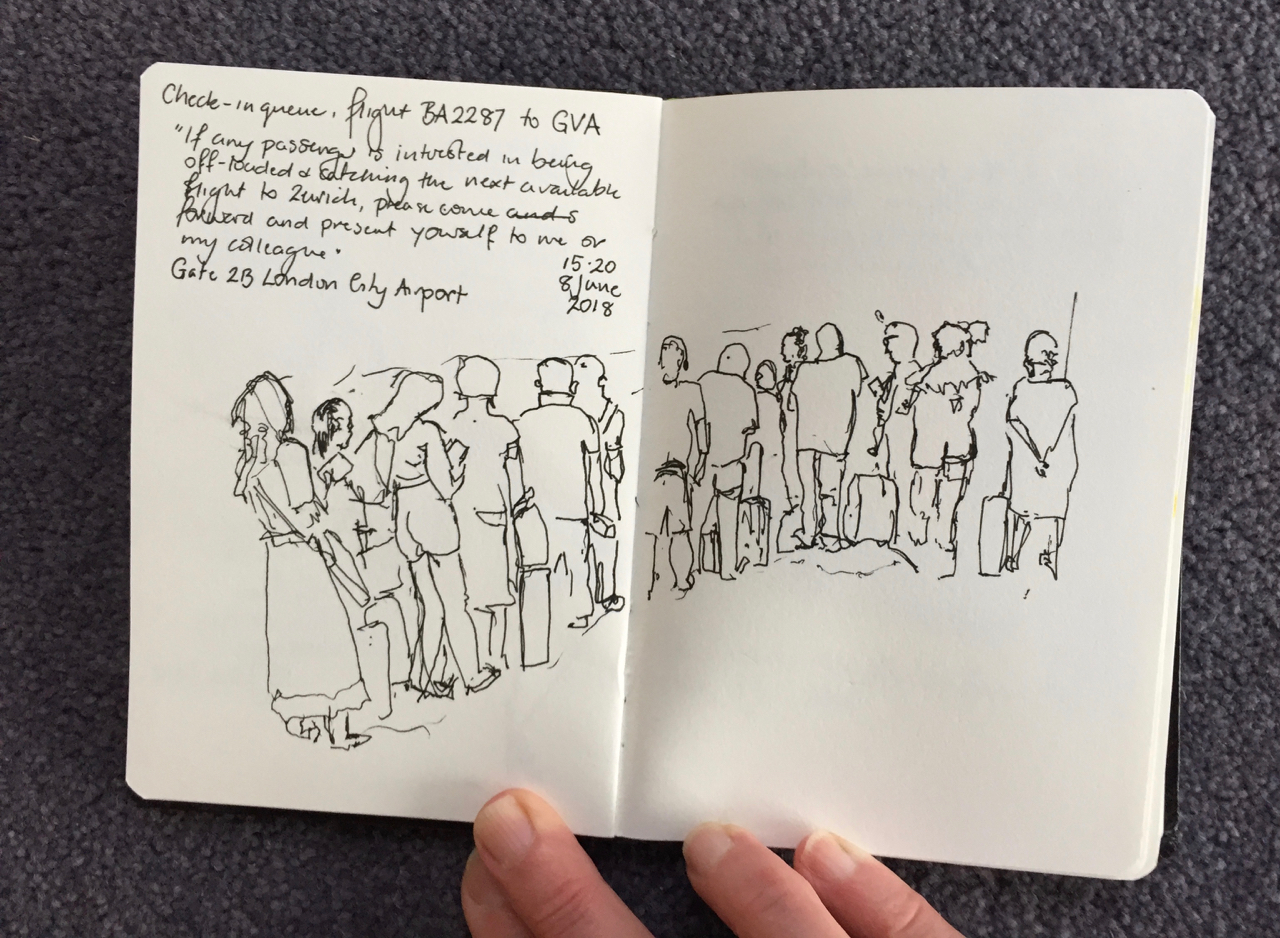
I started sketching at the airport. The flight was full.
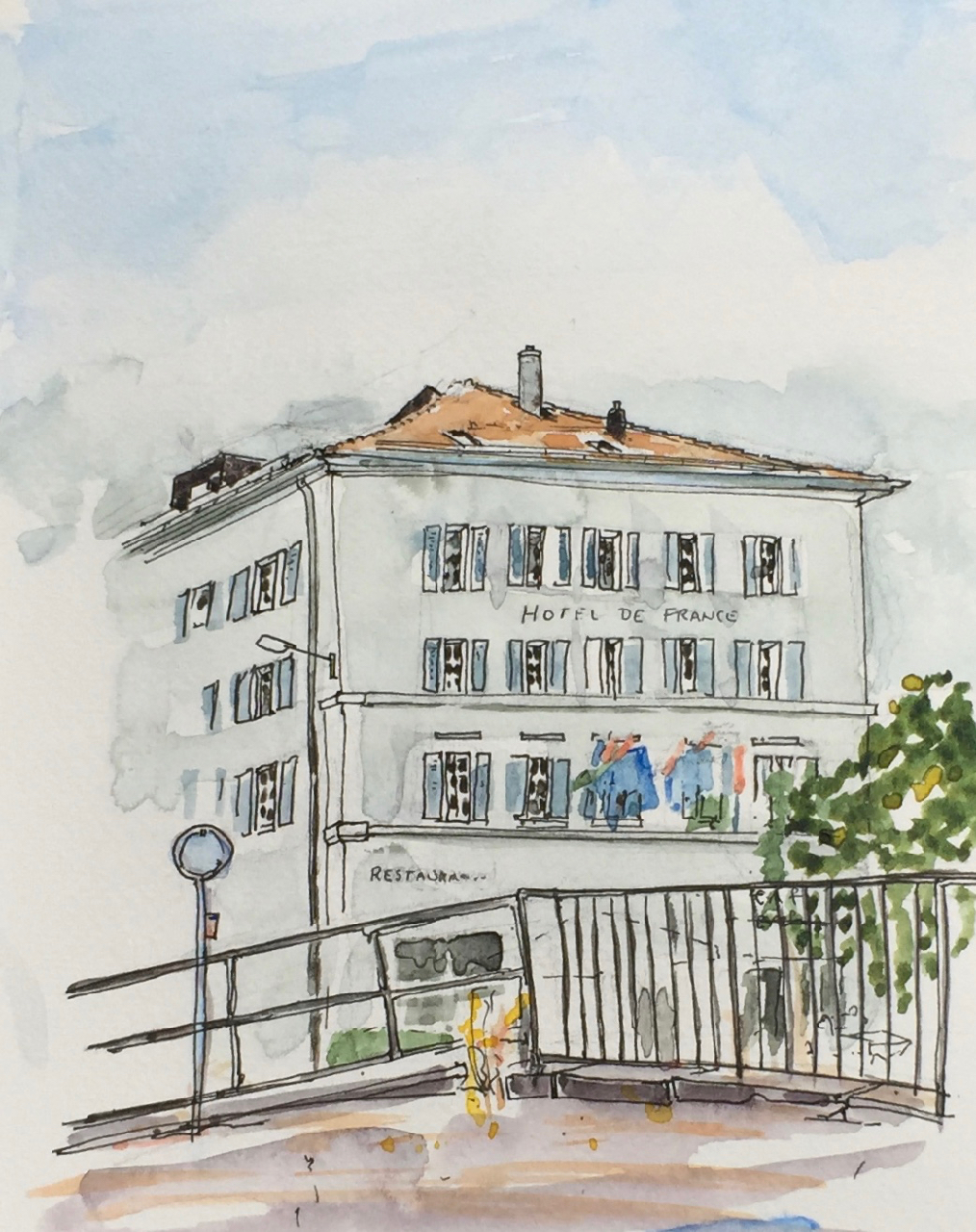
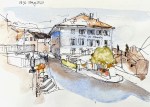
Here’s one of the outside of the hotel, done in 1 hour and 50 minutes, sitting on the pavement in the sun.
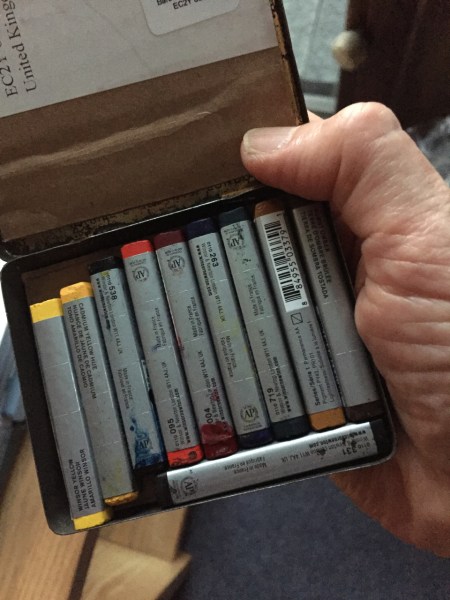
In between work on the computer and discussions, I made small quick sketches of what was in front of me. I experimented with watercolour sticks, which are very messy, but deliver strong bright colour.
Breakfast: Ovomaltine container and cup, done with watercolour sticks.
Tea tray
Experimental study of breakfast items, using watercolour sticks.
Flags on the outside of the hotel.
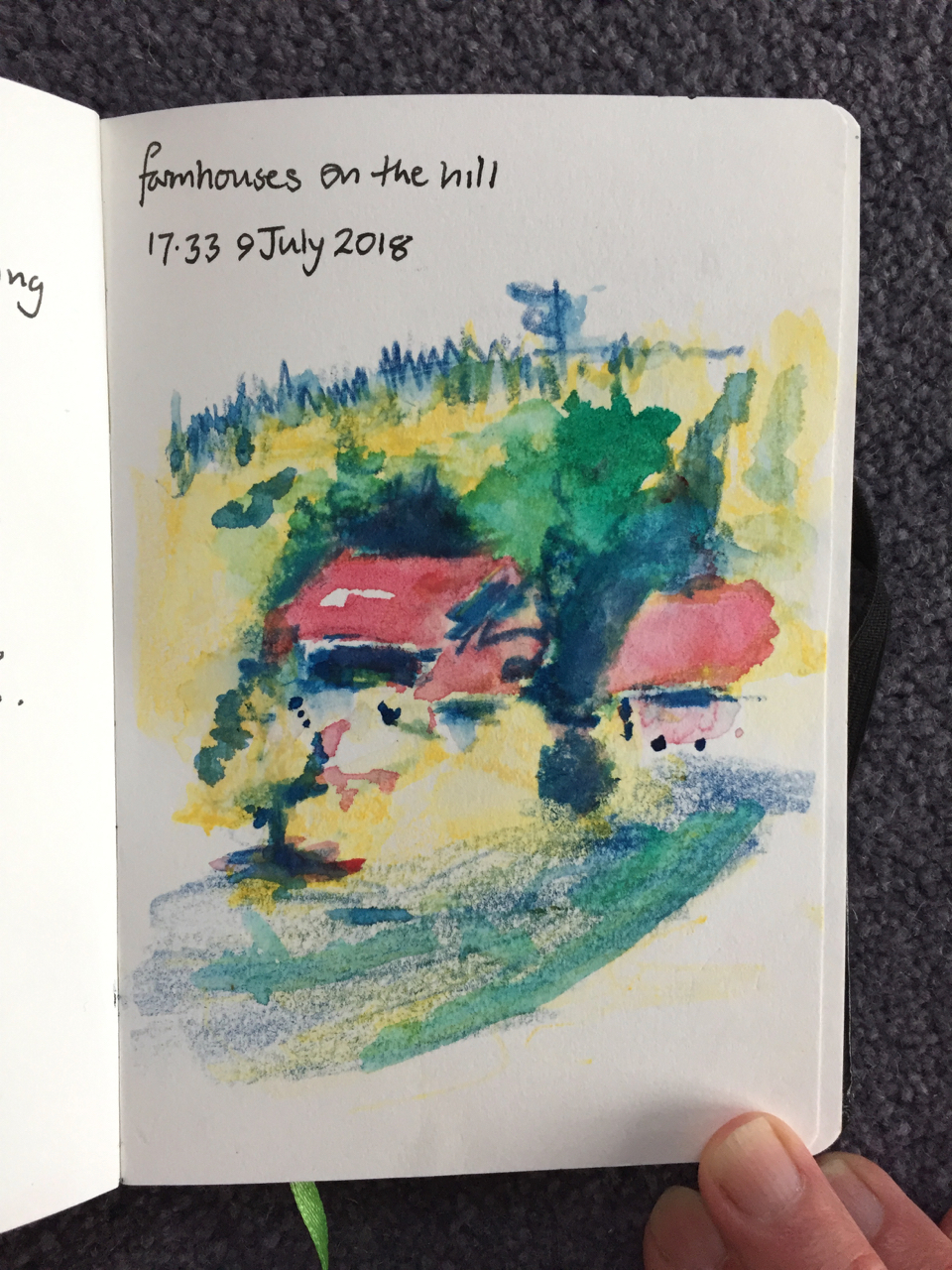
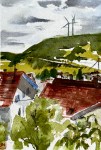
Here’s another experiment with the watercolour sticks. I was walking back from the swimming pool, and saw this sweep of land and the farmhouse sheltered by trees. I was shortly due back at the hotel, so I made this sketch in about 10 minutes, sitting on the road. The watercolour sticks throw the colour on very quickly, and don’t allow me to fuss.
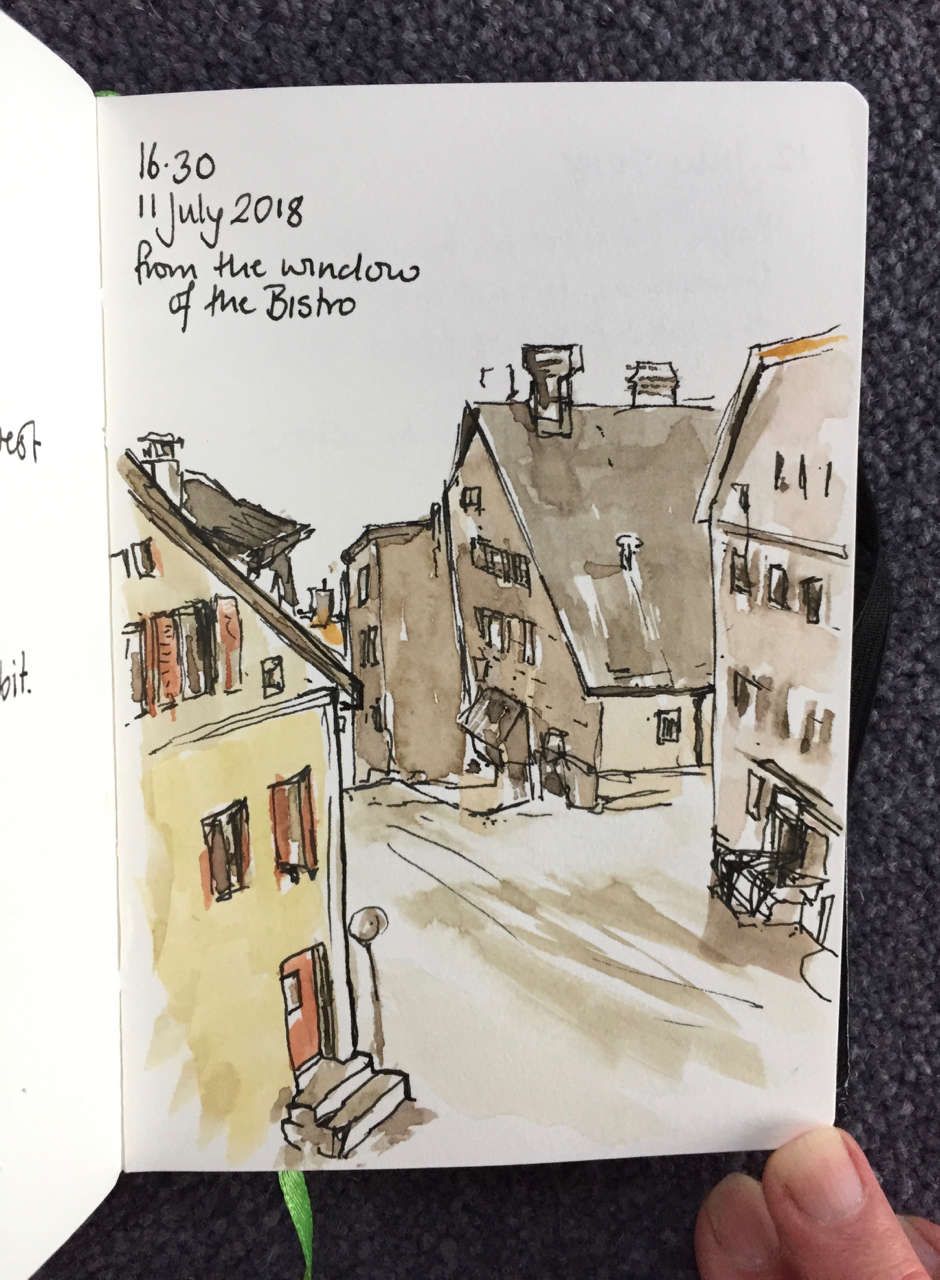
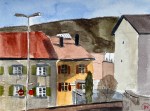
Here is a sketch made in about 20 minutes, while waiting for a meeting to start. I was looking out of the window…..
At the end of my visit I sat at a table on the terrace and looked across to the Mont de Baulmes.
Pen and wash, 20 minutes plus 20 minutes later.
Here are the watercolour sticks in their new/old box. It’s an old cigarette box. I just discovered they all fit into it nicely.
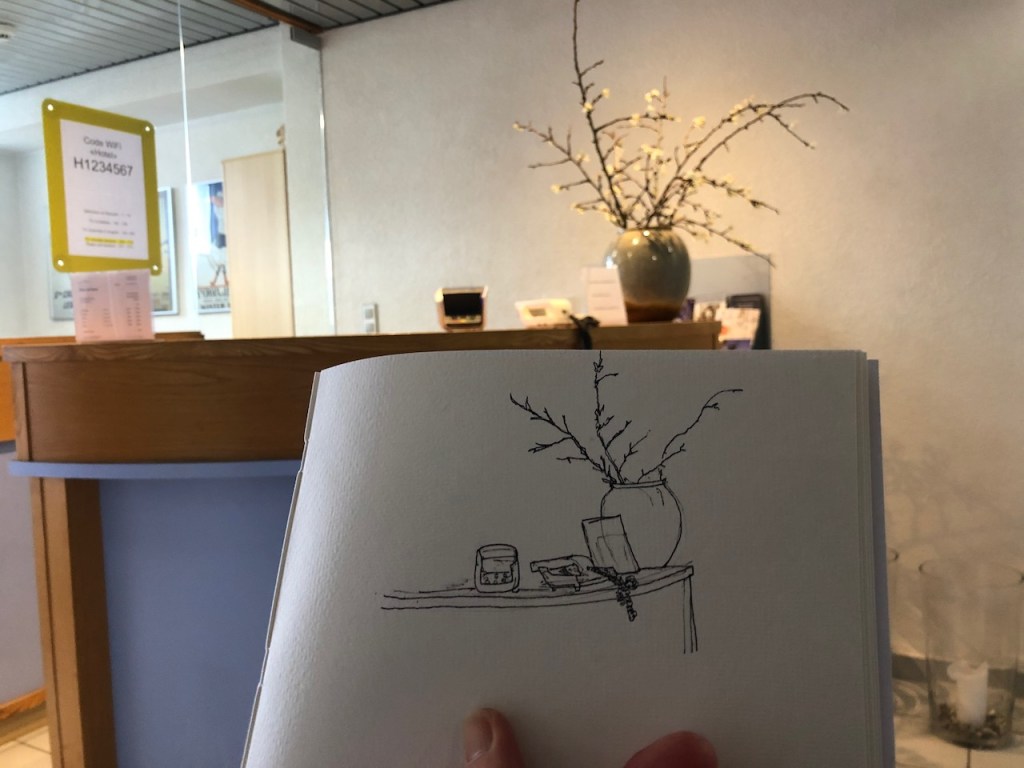
Here’s a drawing on location:
With thanks to Marina and Rolf, proprietors of the Hôtel de France, 25 rue Centrale, Sainte-Croix, Vaud, Switzerland. www.hotelfrance.ch






























 Jane Sketching