Oxford Nuclear Physics Building

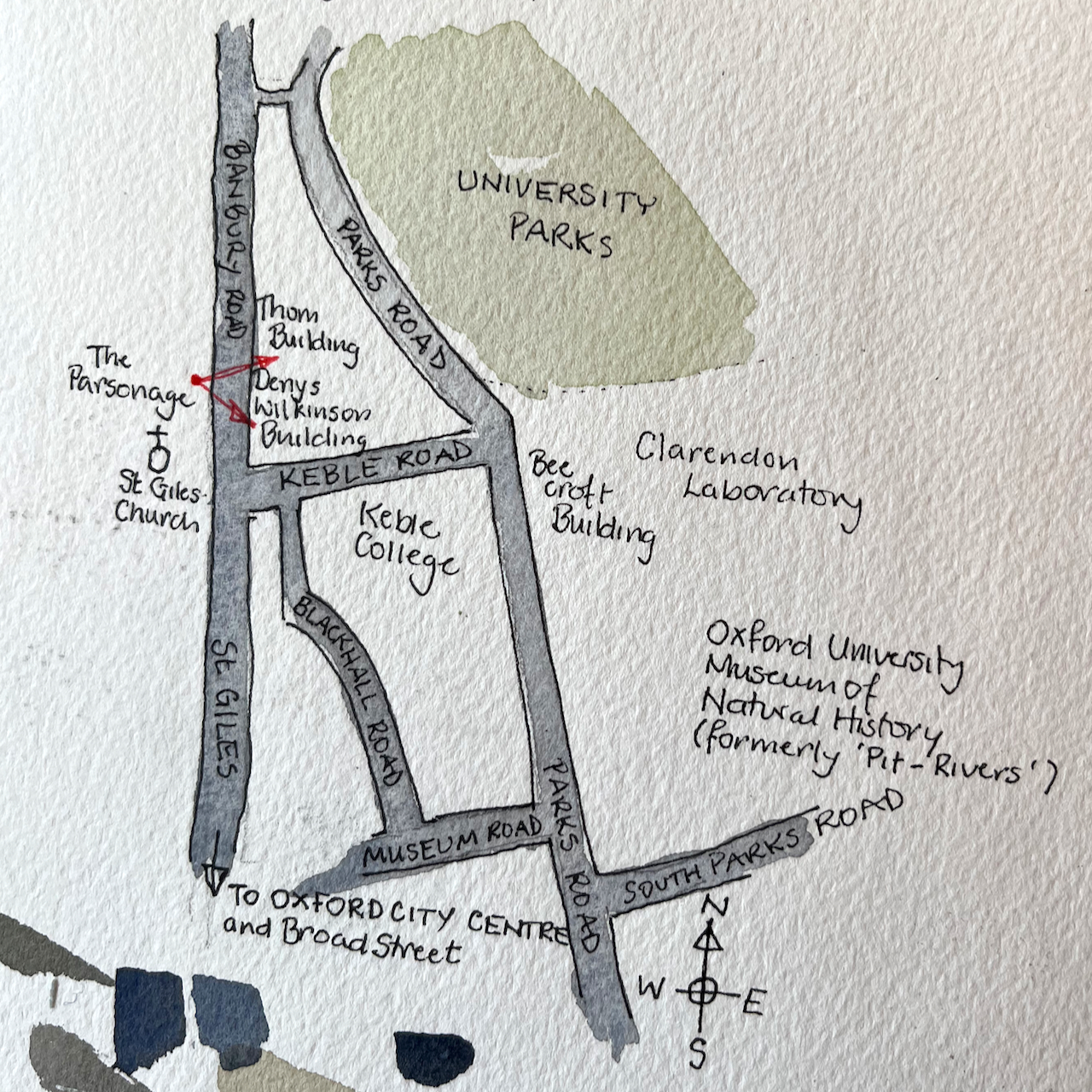
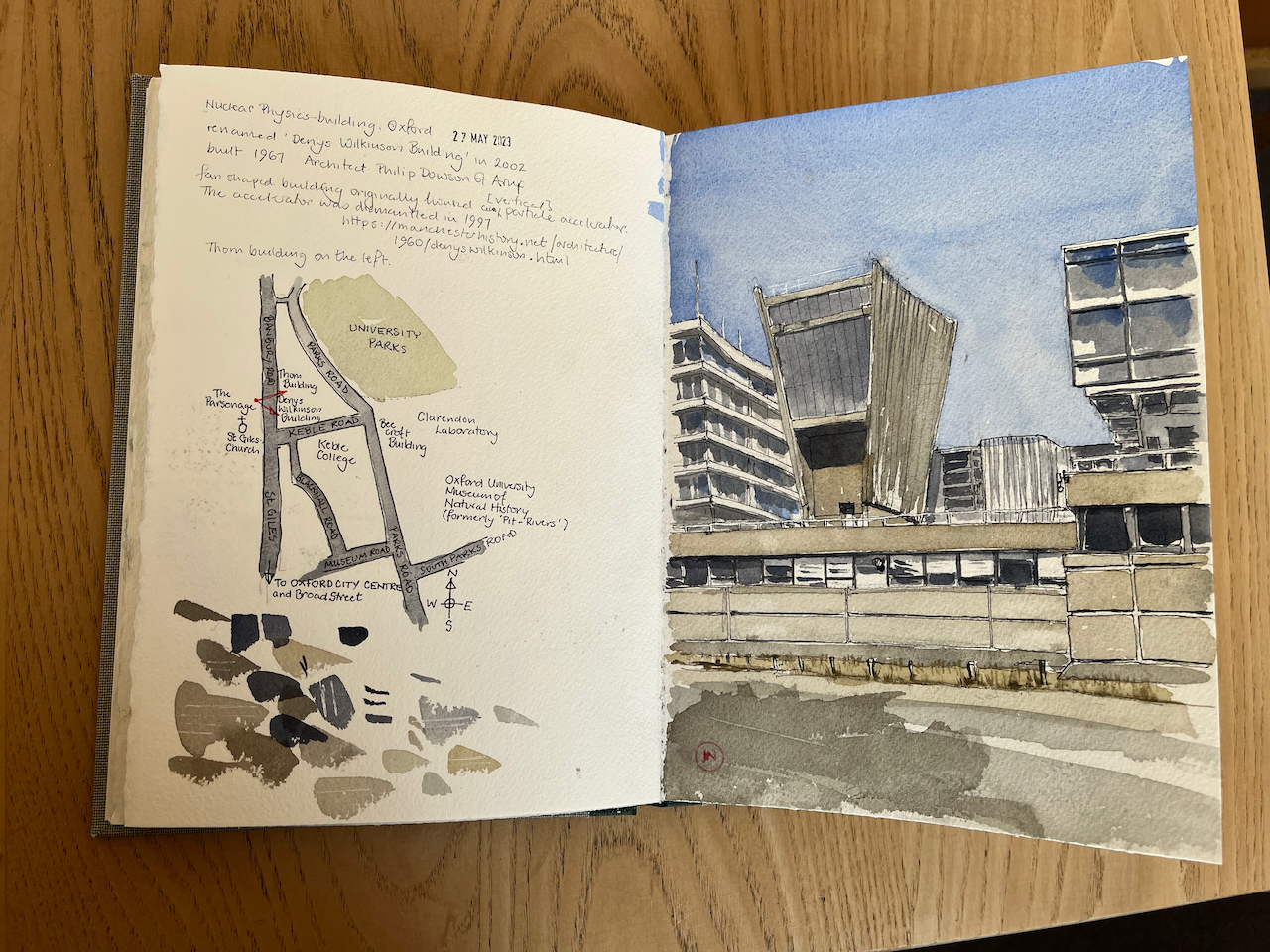
Here is the University of Oxford Nuclear Physics building, seen from the Banbury Road.

The Nuclear Physics building, now the Denys Wilkinson building, University of Oxford. Sketched 27 May 2023, in Sketchbook 13

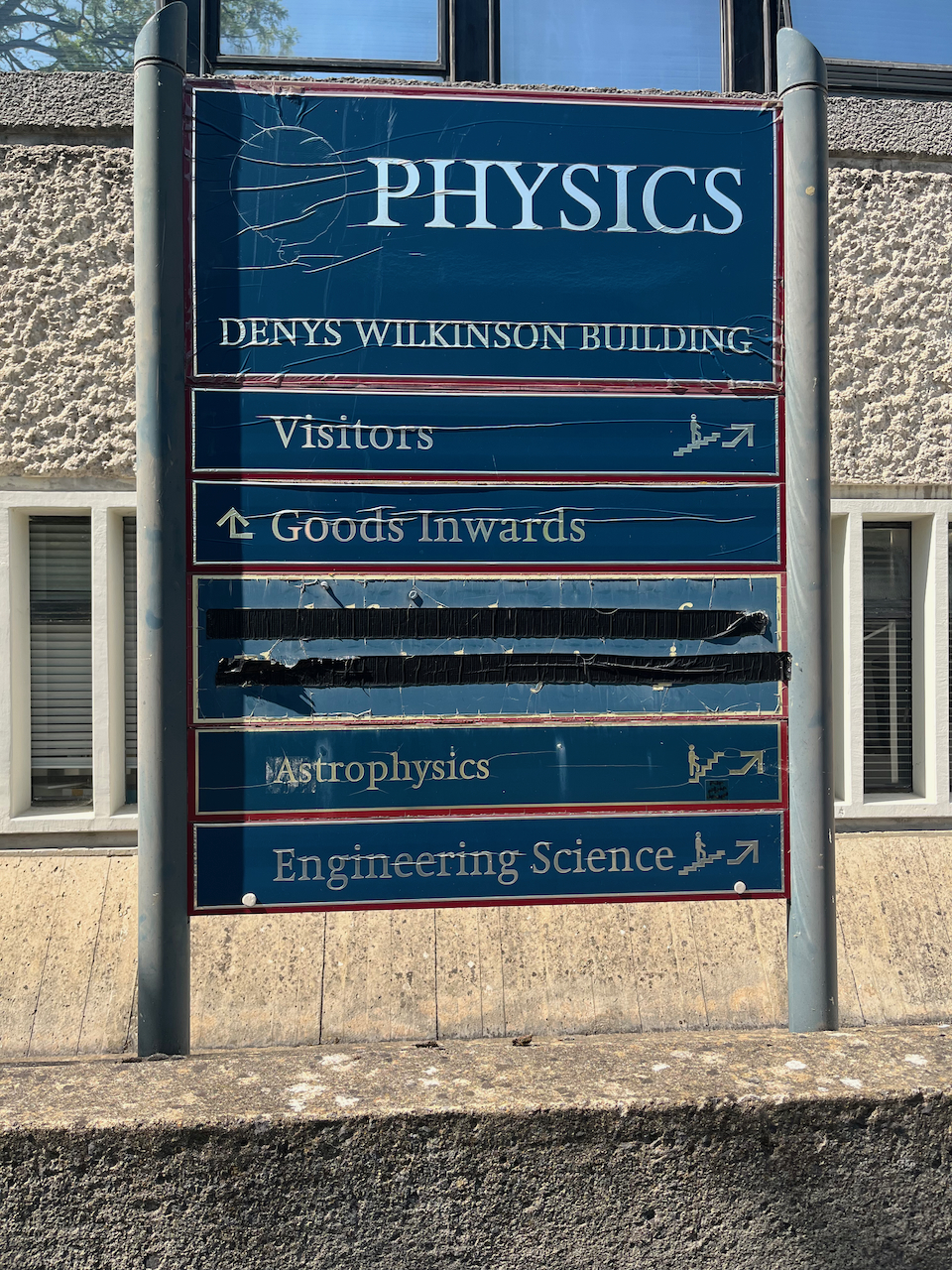
The building was renamed the “Denys Wilkinson Building” in 2002. It was built in 1967 to the designs of architect Philip Dowson of Arup. The fan-shaped structure originally housed a Van der Graff particle accelerator, now dismantled. [https://manchesterhistory.net/architecture/1960/denyswilkinson.html]

Professor Wilkinson (1922-2016) was the Head of the Nuclear Physics Department from 1962-1976.

The building on the left is the “Thom Building” which houses the Engineering Department. This building had a marvellous “paternoster” lift in the 1970s. (Note 1). This is a lift with single compartments, which operates in a continuous loop, like rosary beads, hence the name. You simply stepped into one of the slowly moving compartments and were carried up or down.

Here is work in progress on the drawing:
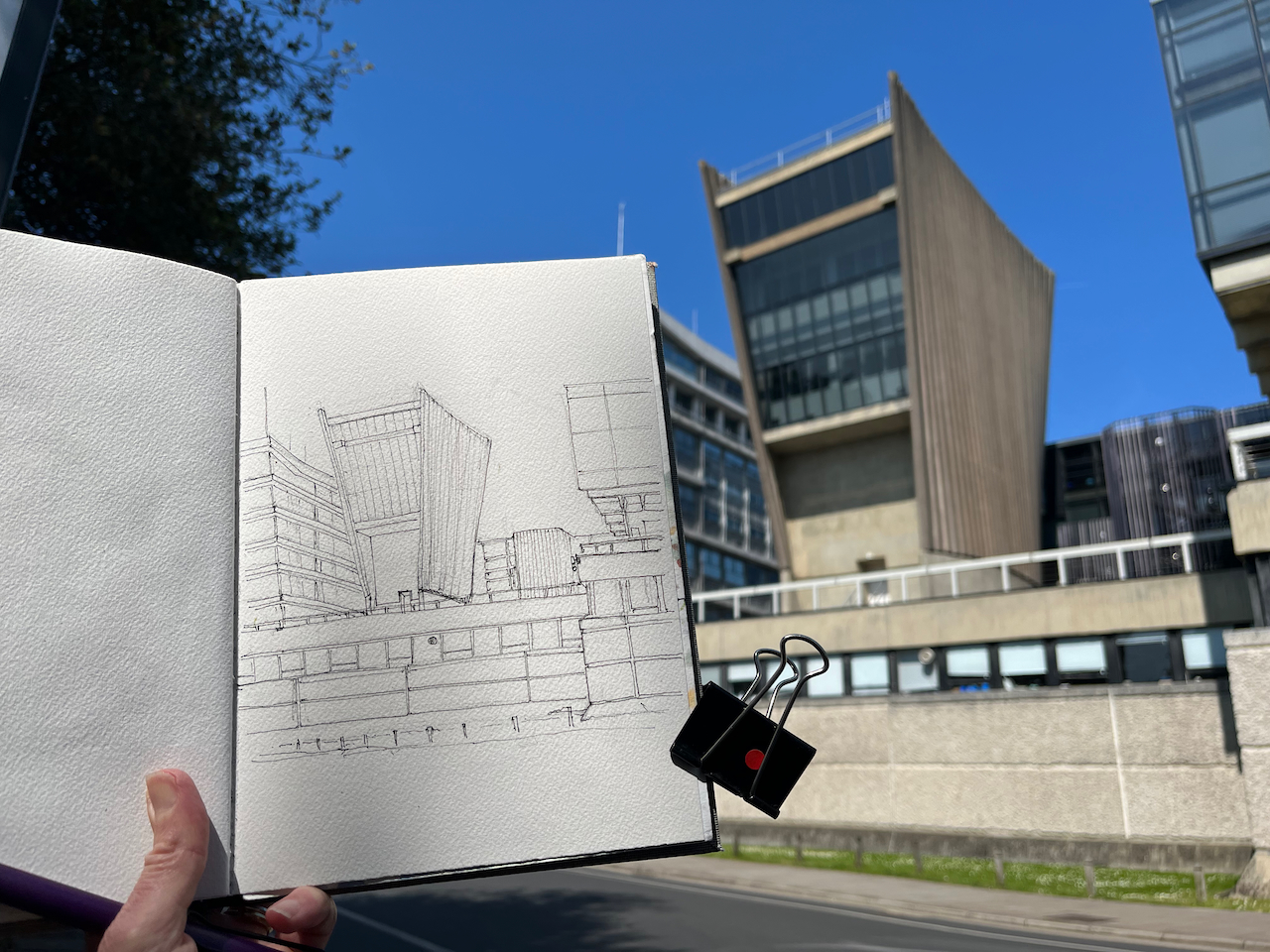
The fan-shaped structure is a rare example of brutalism in Oxford. St Catherine’s College is another example.

Ought we to treat the Denys Wilkinson building and St. Catherine’s College as a celebrated chapter in Oxford’s aesthetic history, or as evidence of a period better forgotten?

Caitriona Dowden -writing in the Cherwell, 26th October 2020 [https://cherwell.org/2020/10/26/oxfords-eyesores-brutalisms-place-among-the-dreaming-spires/]

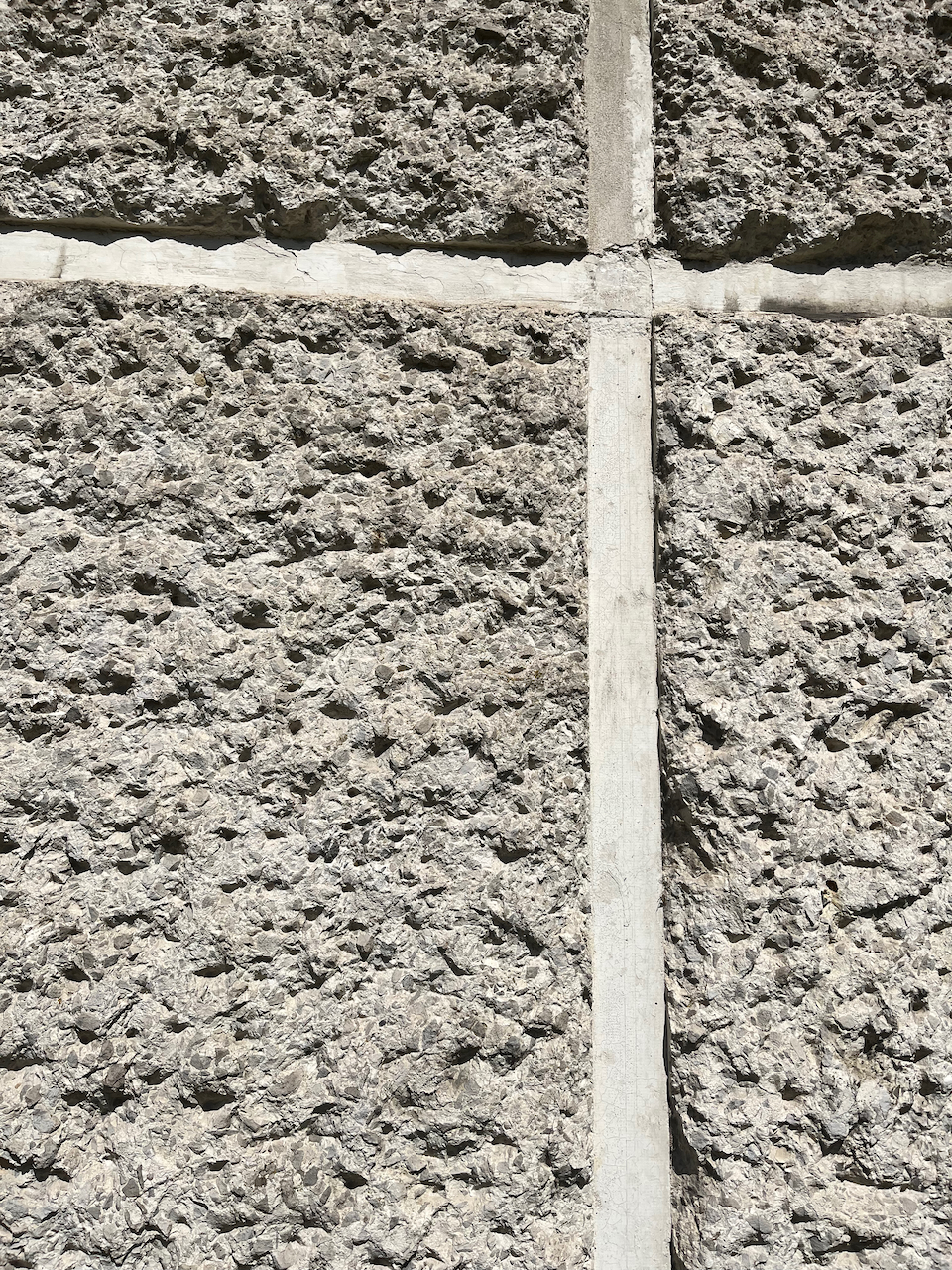
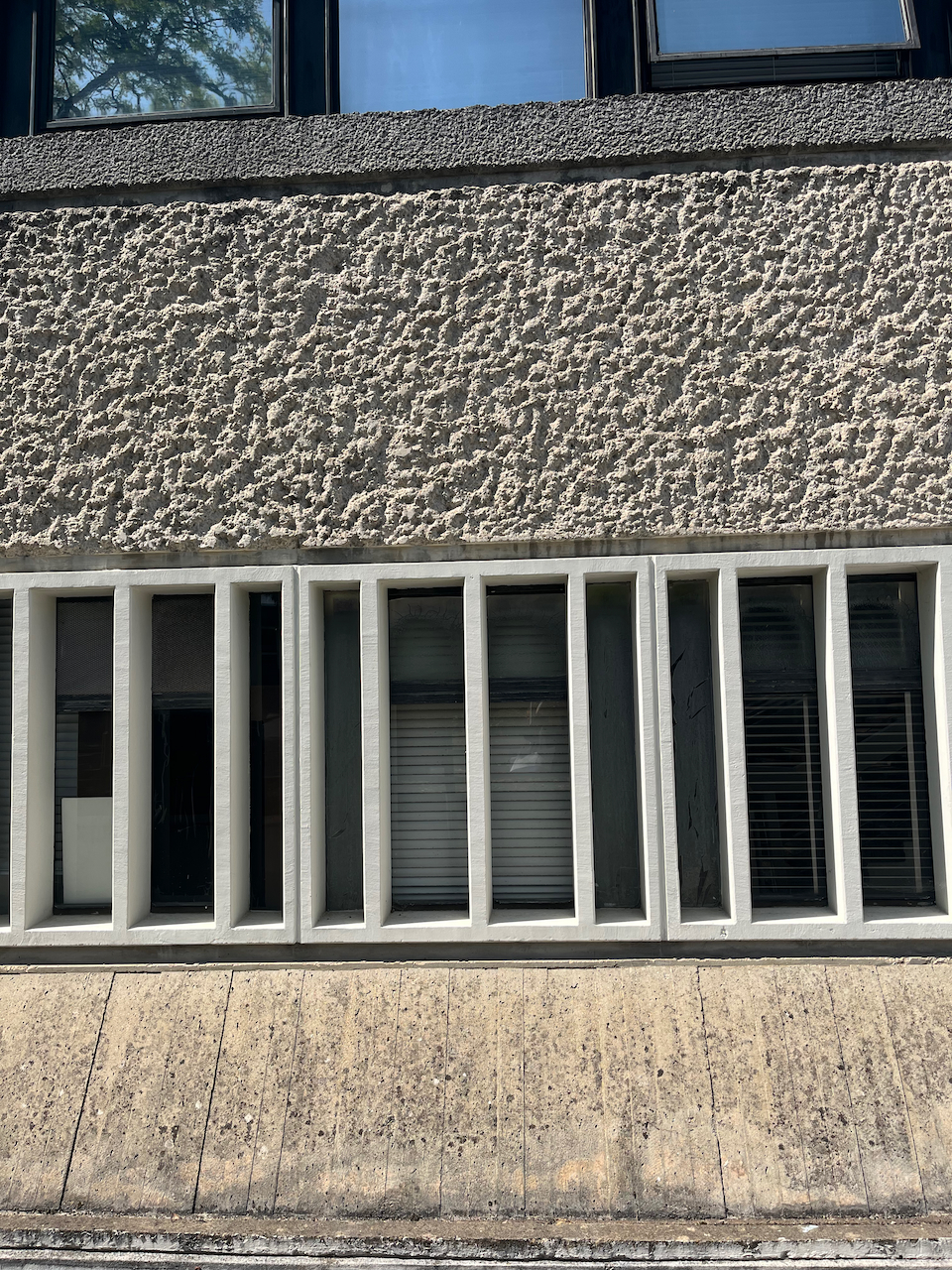
A celebrated chapter in Oxford’s aesthetic history, I think. here are some details of the design, for brutalism enthusiasts like me:

Note 1: Alan Knight writing of his memories of the department confirms my recollection: https://www.soue.org.uk/souenews/issue2/jottings.html. The paternoster was replaced by two ordinary lifts in the 1980s.

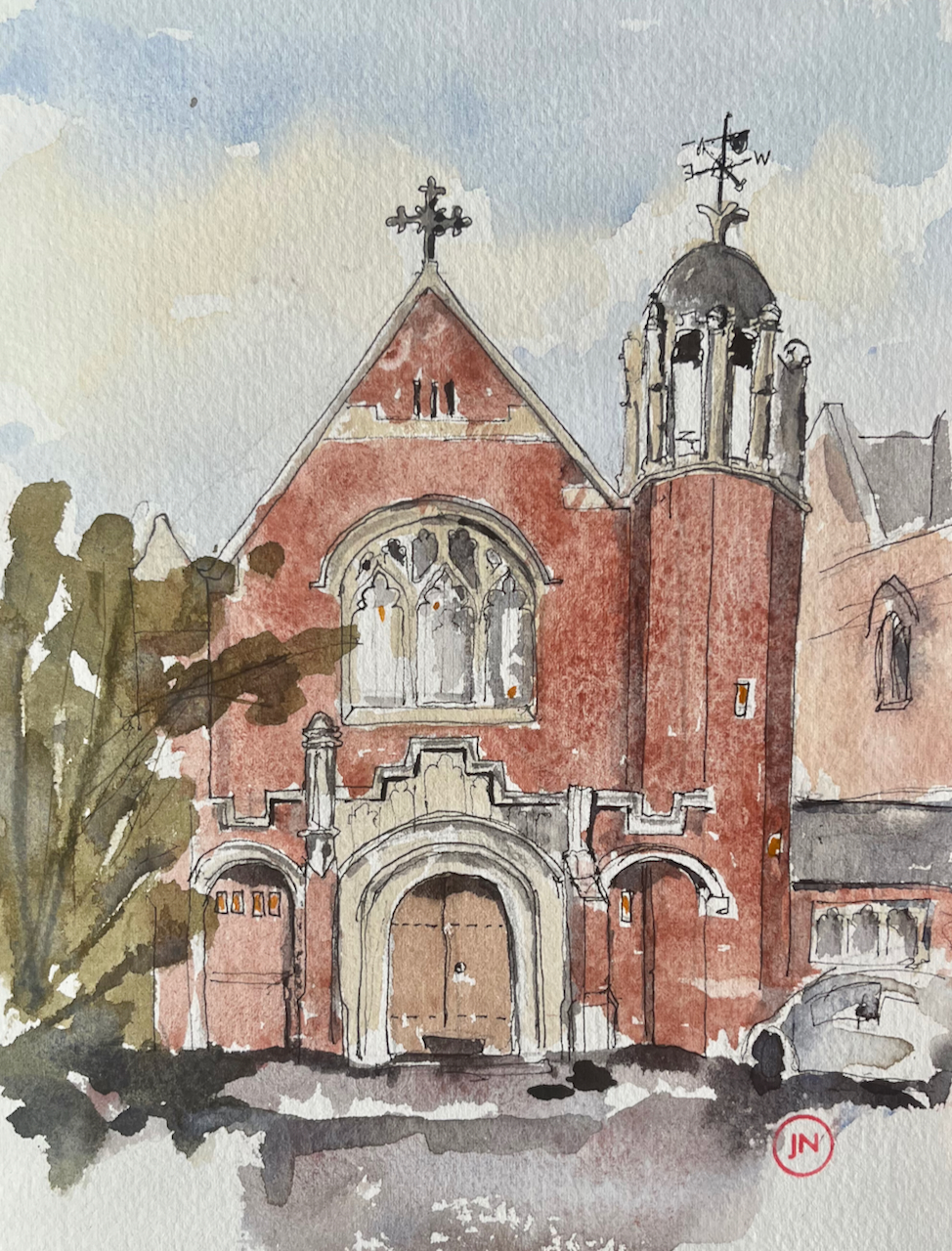
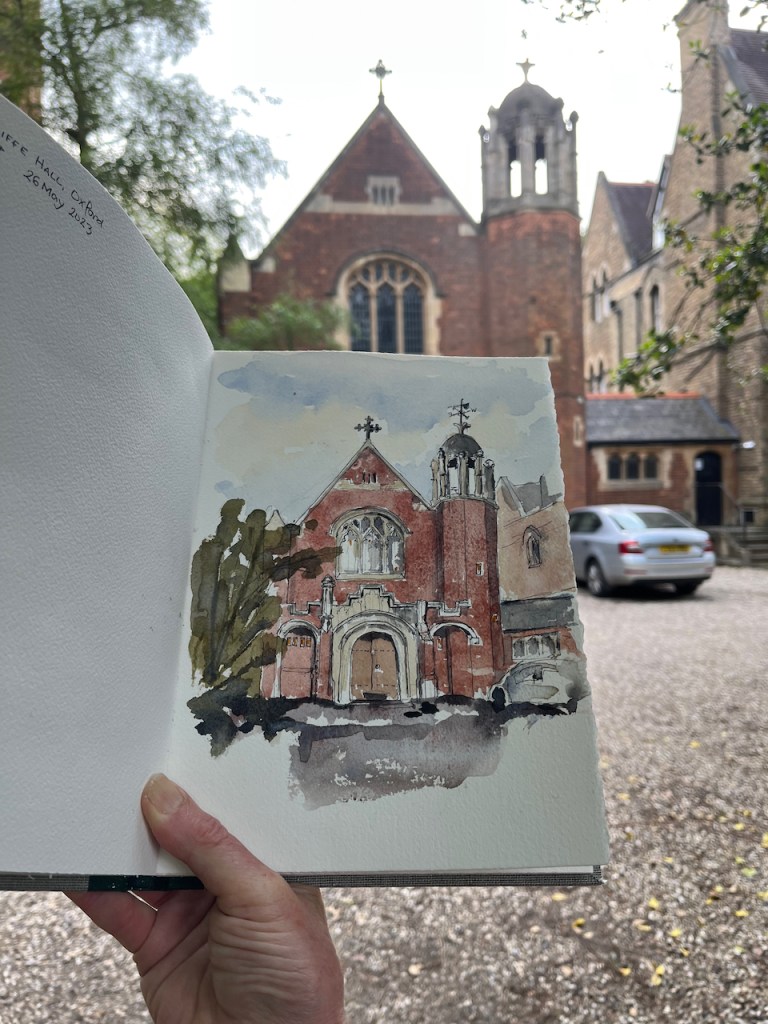
Wycliffe Hall Chapel, Oxford OX2

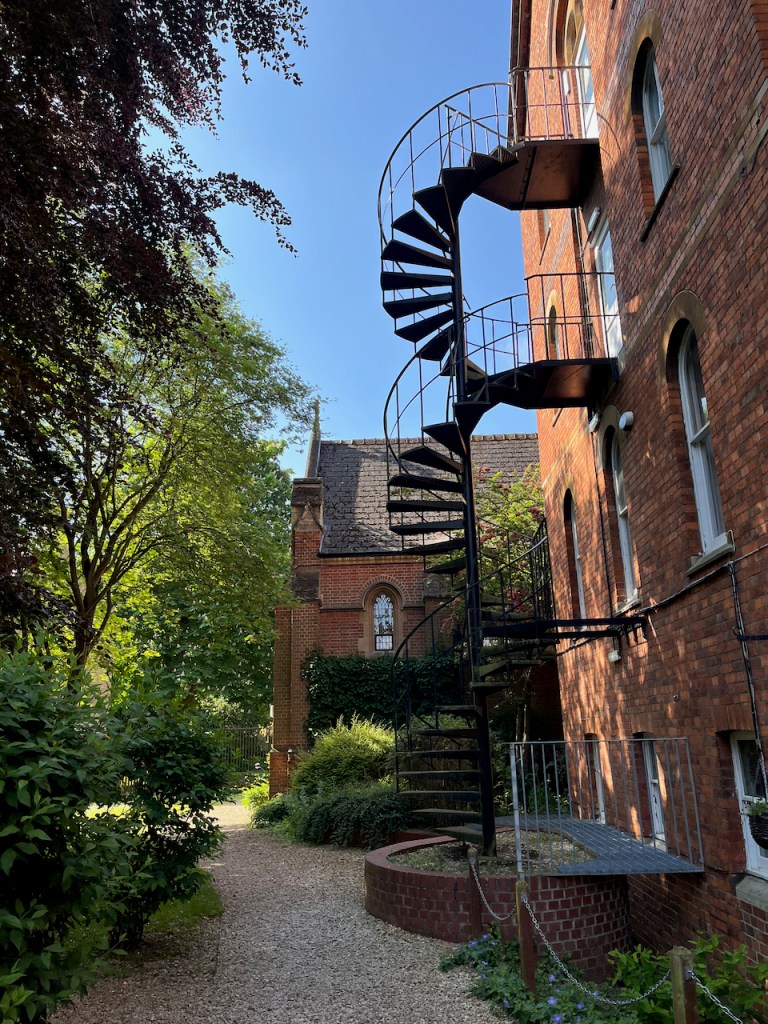
On a visit to Oxford recently, I stayed at Wycliffe Hall as a Bed and Breakfast guest. Wycliffe Hall is on the Banbury Road in North Oxford. It offers theological training to women and men who wish to become ordained or lay ministers in the Church of England. The hall was established in 1877, on the current site, and is named for John Wycliffe, bible translator and master of Balliol College in the 14th century.

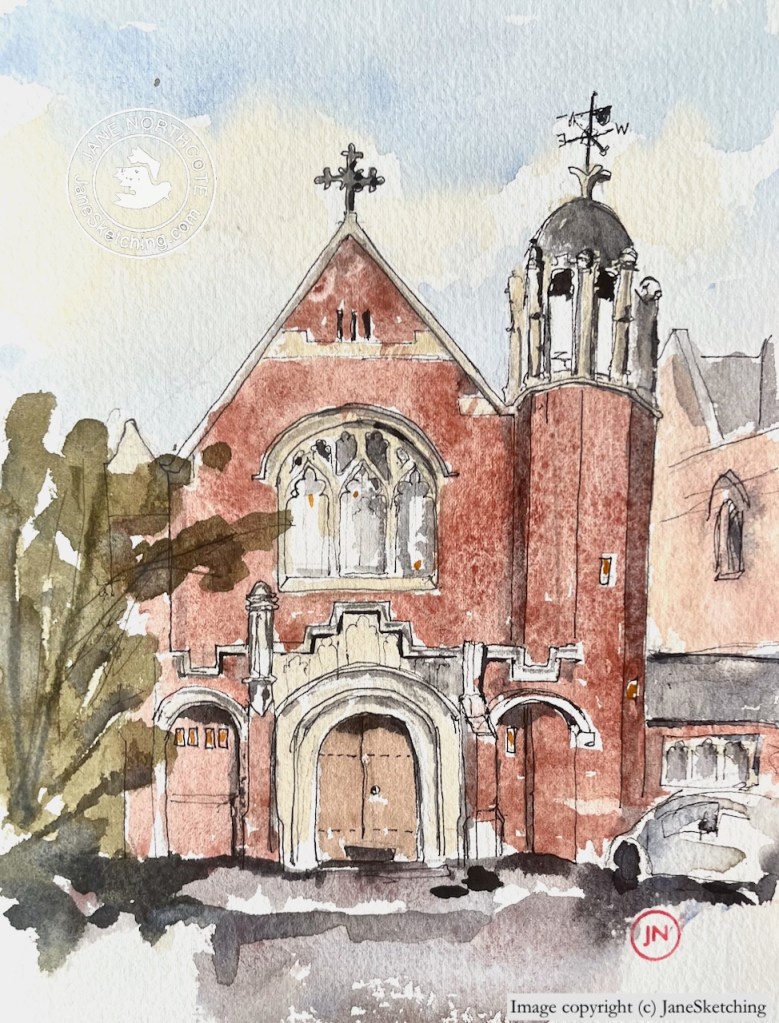
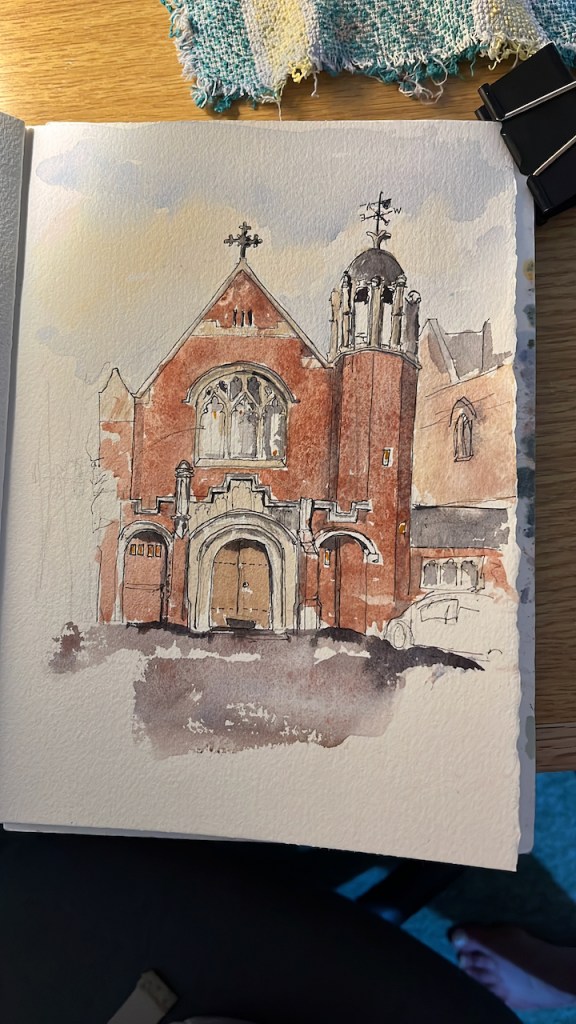
I sketched the chapel which was added in 1896, designed by architect George Wallace.

Wycliffe Hall Chapel, 54 Banbury Road, Oxford, sketched 26 May 2023, in Sketchbook 13

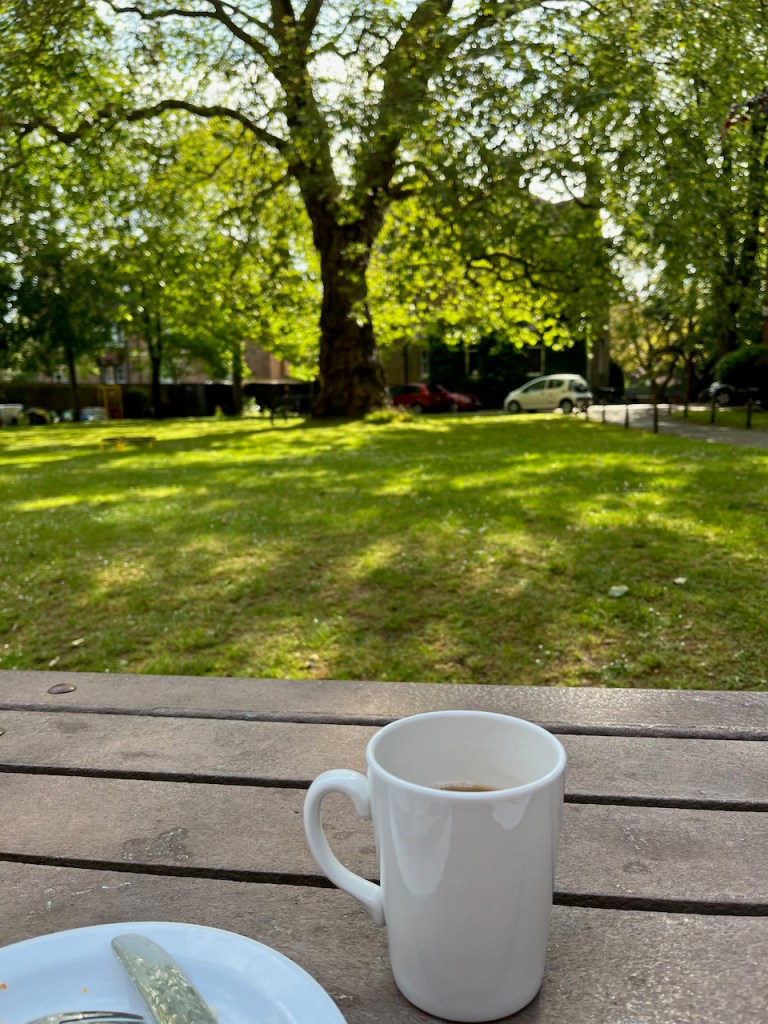
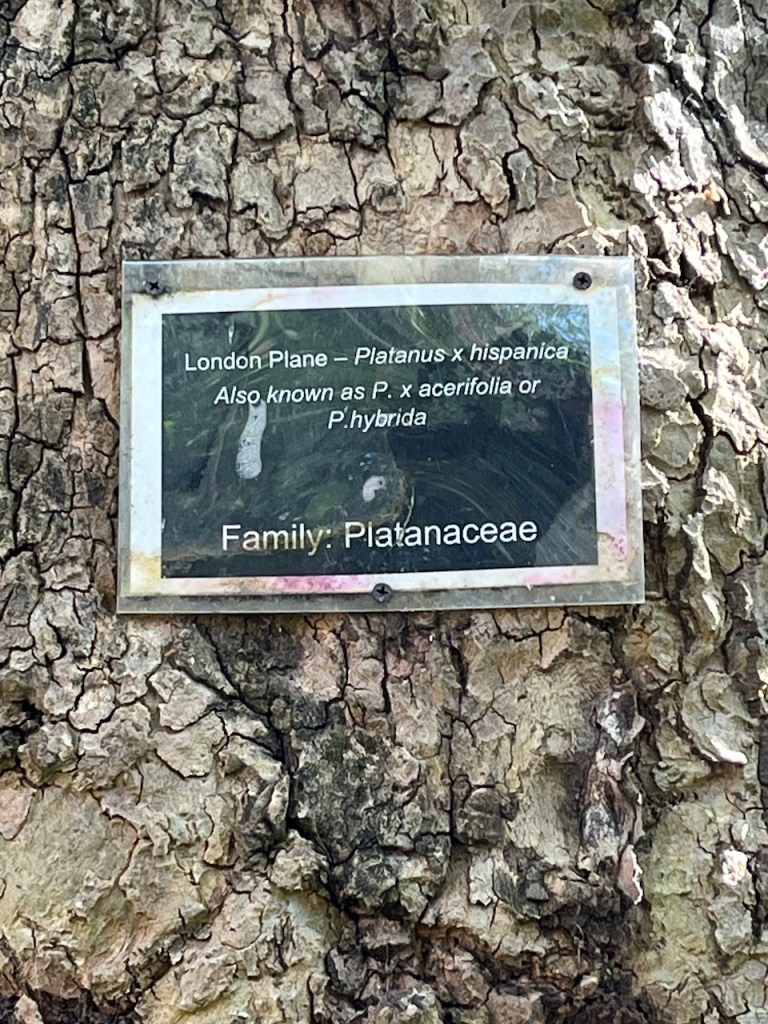
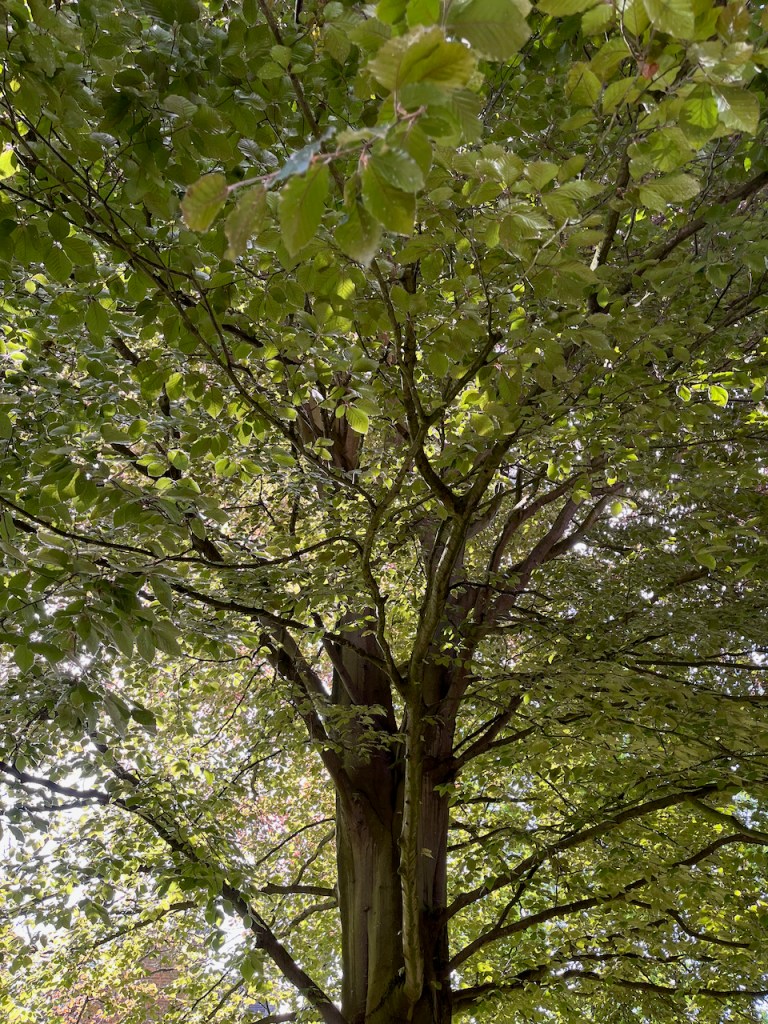
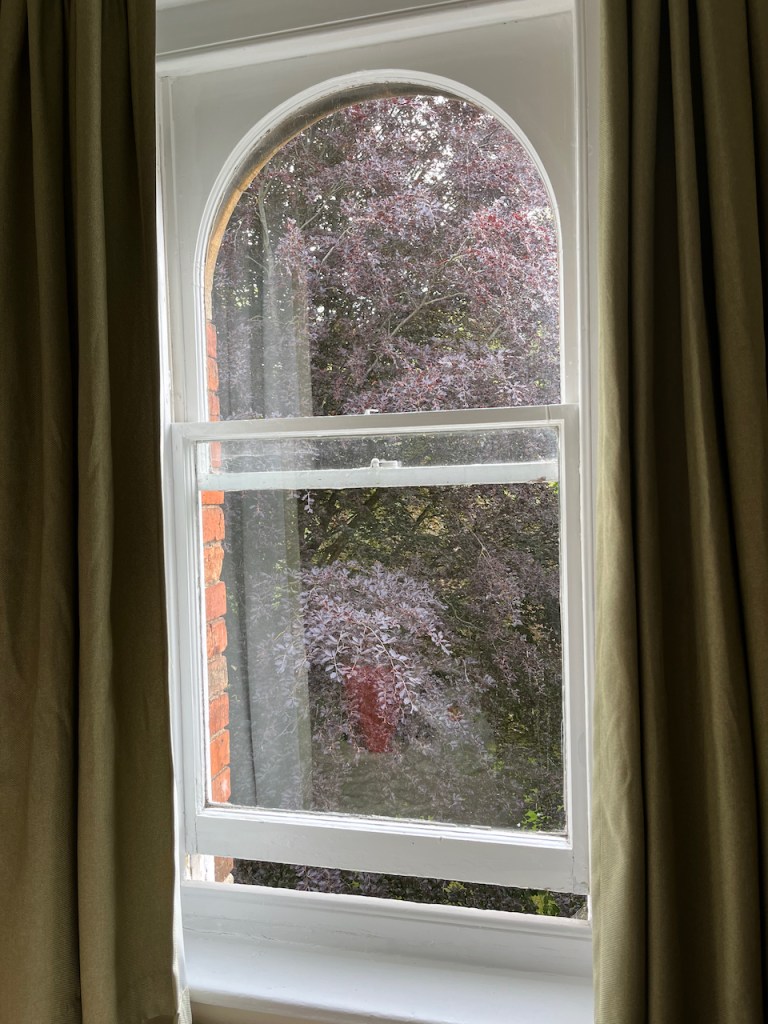
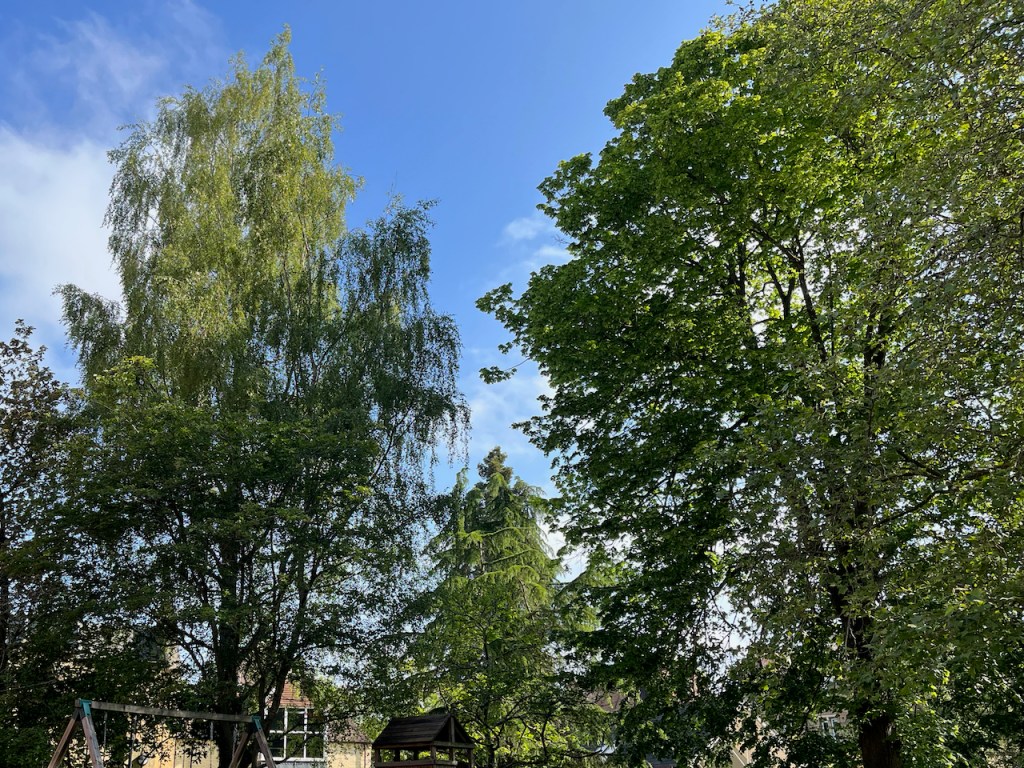
There are amazing trees in this part of Oxford. The houses are large, but the trees are larger. I had my breakfast outdoors in the garden at Wycliffe Hall, looking at a gigantic London Plane. The view from my bedroom was filled with beech tree.

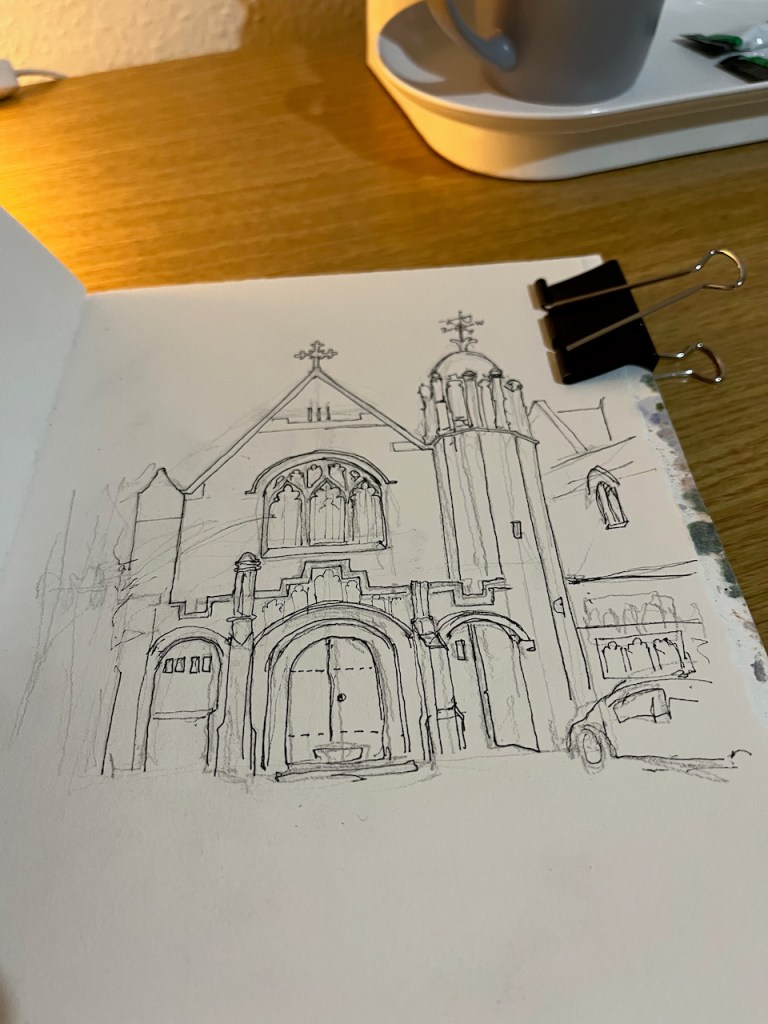
I sketched the chapel in the evening and finished the sketch the next morning.


For a sketch of the west side of the Hall, see this post.

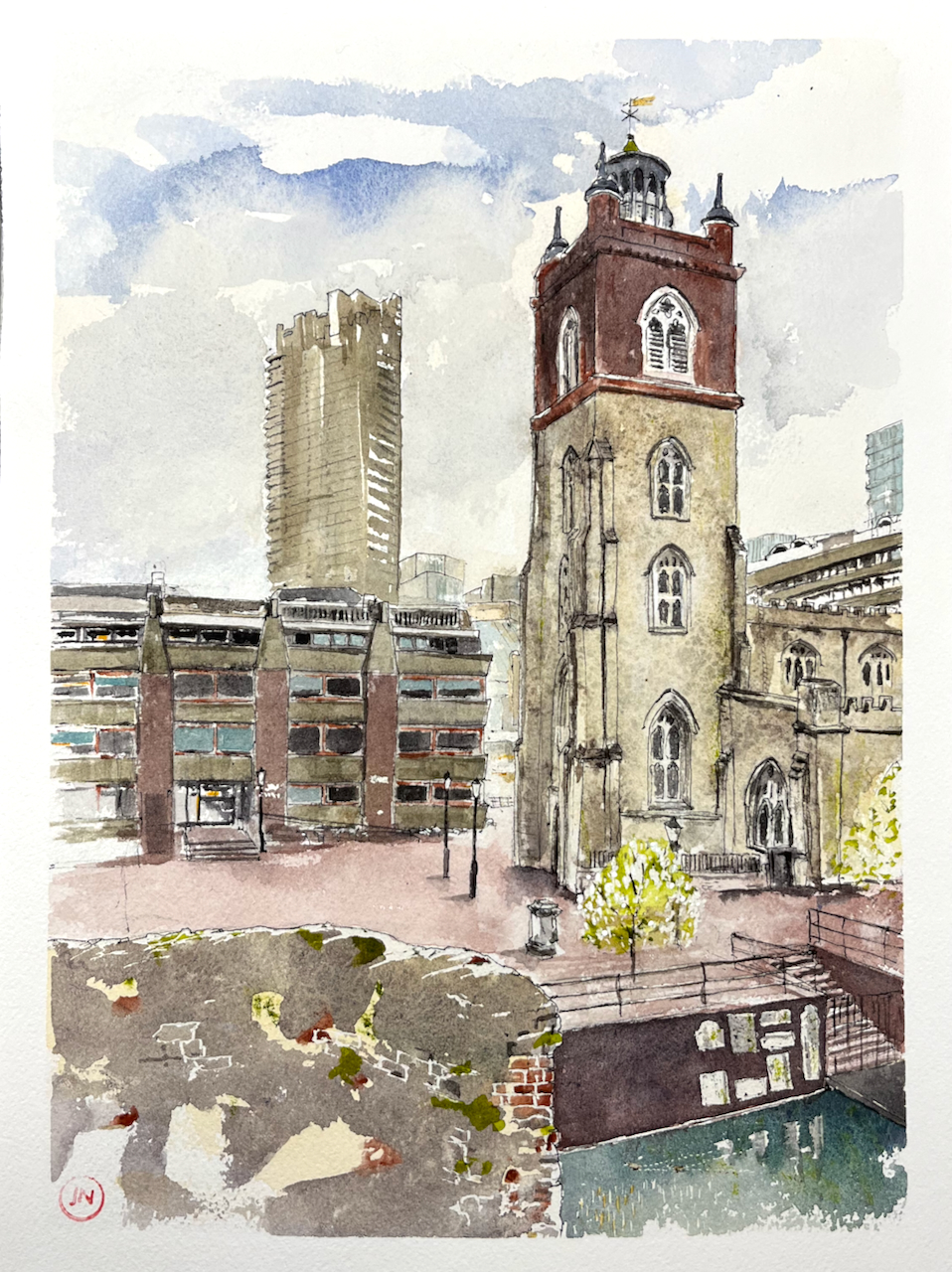
St Giles from Wallside, Barbican EC2

Here is St Giles’ Church, Cripplegate, seen from the public walkway at Wallside. The church is surrounded by the Barbican Estate. Cromwell Tower is in the background. The City of London School for Girls is the lower building, centre and left. Through the gap between the church and the school, you can just glimpse the Barbican Centre.

The magnolia was in bloom!

St Giles from Wallside, Barbican, 1 April 2023 12″ x 9″ [Commission]

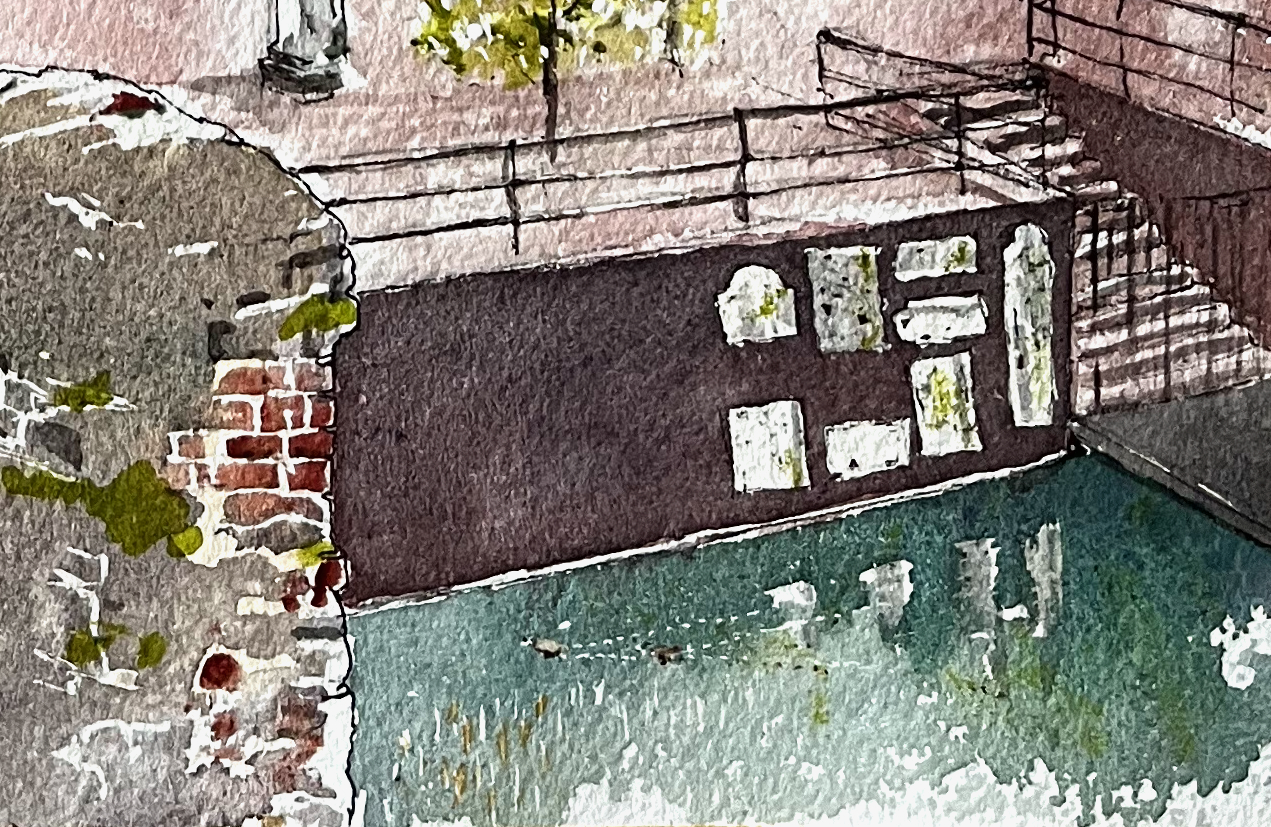
I painted this as a commission, for some clients who wanted this particular view. A special request for this commission was that I showed two ducks. These are small, but they are there!

Ducks on the lake.

The white shapes on the lakeside wall are gravestones.

Old London Wall is on the left: part stone, part brick. This is the old Roman wall round the City of London.

Thank you to my clients for this commission and for their permission to post the picture here online. It was a real pleasure to do.

The colours I used are:

For the sky: a pale yellow wash of permanent yellow deep, followed by a grey made from ultramarine blue and burnt umber, with some ultramarine blue for the blue bits.

For the church: the stone is a pale yellow wash of permanent yellow deep, then a dilute buff titanium wash. I put salt on it to get some texture. Then the dark areas are a grey made from ultramarine blue and burnt umber.

The top part of the church, St Giles Terrace and all the reddish/purple brickwork is a combination of perylene maroon, burnt umber, fired gold ochre, and a bit of ultramarine blue for the dark areas.

The lake, which really is that green colour, is ultramarine blue, plus some serpentine genuine which makes it granulate.

All concrete is the same mix of burnt umber and ultramarine blue with some mars yellow.

Old London wall is the pale yellow wash of permanent yellow deep, with a second wash of lunar blue with burnt umber. Lunar blue is highly granulating, which gives a wonderful stone effect. The bricks are fired gold ochre.

All green plants are green gold, and there’s also some green gold on the stonework of the church, to show the lichen.

The weathervane is Liquitex gold ink, applied with a fine brush.

The line drawing is done with a Lamy Safari fountain pen, using De Atramentis Black ink, which is waterproof.

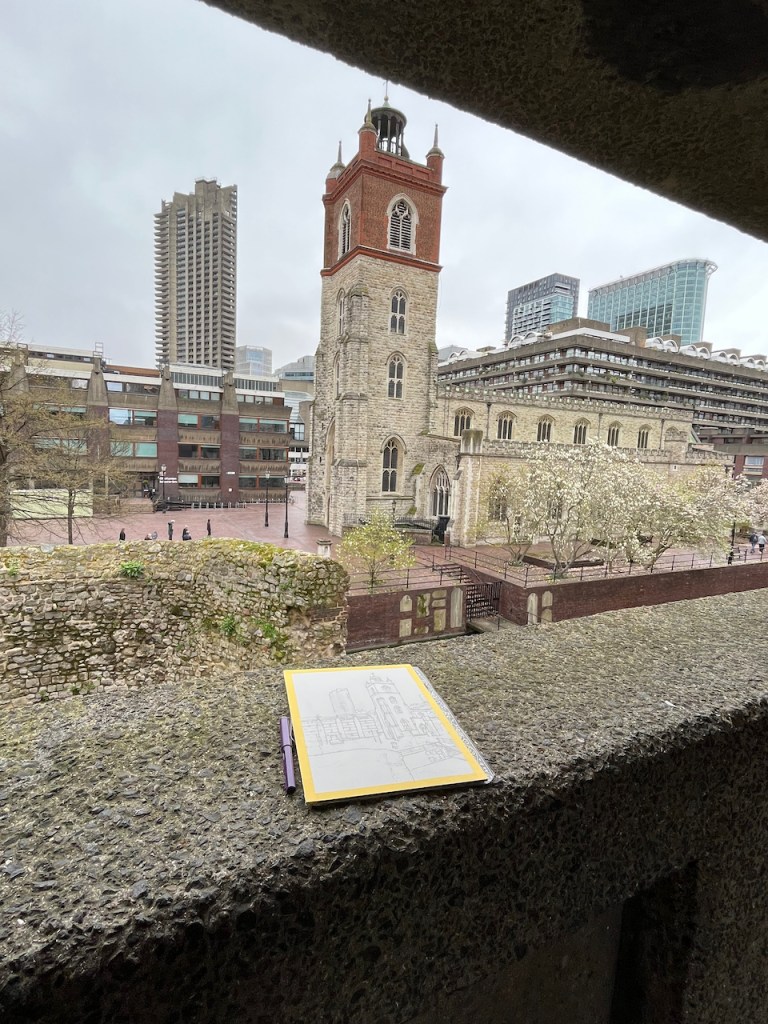
The white parts of the picture, for example the lines between the bricks on Old London Wall, (and the ducks) are done using a resist. This is a rubbery substance, applied before putting on any paint. The resist I use is called Pebeo Drawing Gum. I put it on using a dip pen to get the fine lines. After the paint is dry, I rub it off, and the parts where it was show up white. There are also a few tiny dots of white gouache paint on the magnolia tree.

The paper is Arches Aquarelle 300gsm 12″ x 9″ in a block.

Work in progress. Arches Aquarelle block, Lamy Safari pen. The yellow is masking tape, which I put round to make the picture easier to handle and to give a crisp edge to the work. The people on St Giles Terrace were practising Tai Chi. It was very relaxing to watch them. See the green lichen on the concrete. And the magnolia.

Roof of the “Museum of the Home”, Geffrye Street, E2

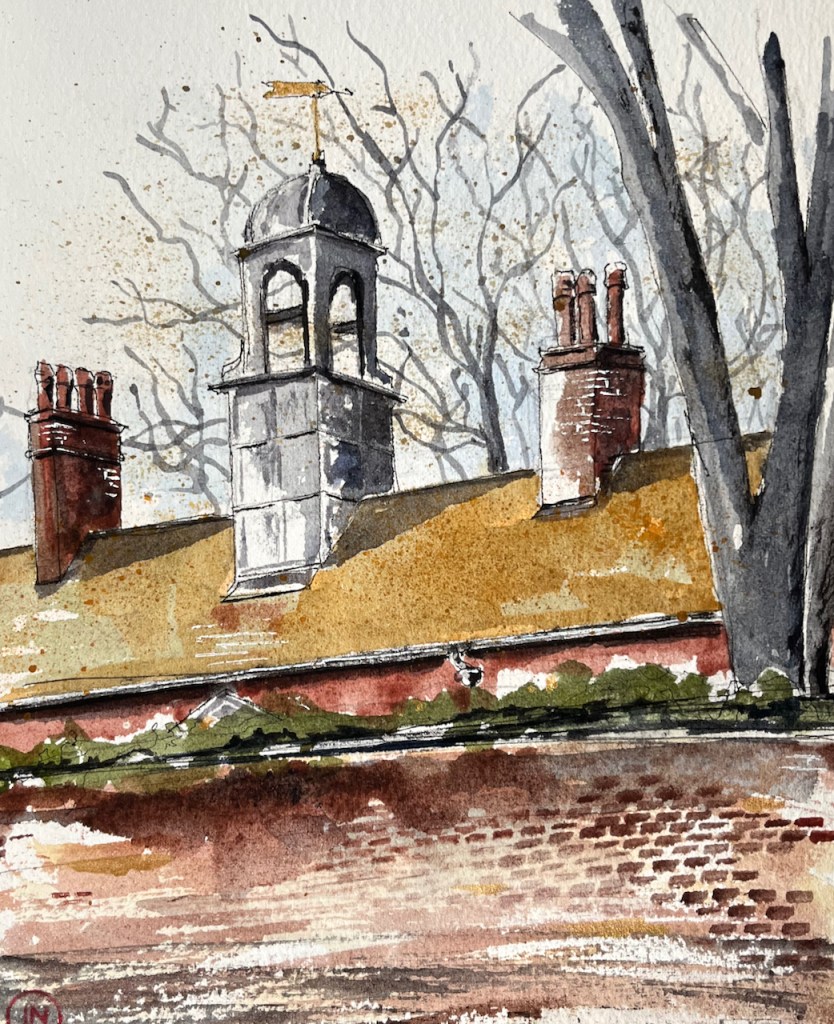
On Geffrye Street near Hoxton Overground station, is the marvellous bakery “Fabrique”. My feet somehow took me there on a sunny day, after I had done my errands in the nearby area. Well, perhaps my errands were not quite nearby. But those cinnamon buns exude an aroma detectable at a considerable distance, like pheromones. So there I was sitting at a table on a sunny pavement and looking for something to sketch. Here’s what I saw.

Roof of the “Museum of the Home” 136 Kingsland Road
London E2 8EA, 3rd February 2023, around noon, in Sketchbook 12

The “Museum of the Home” used to be called the “Geffrye Museum”.

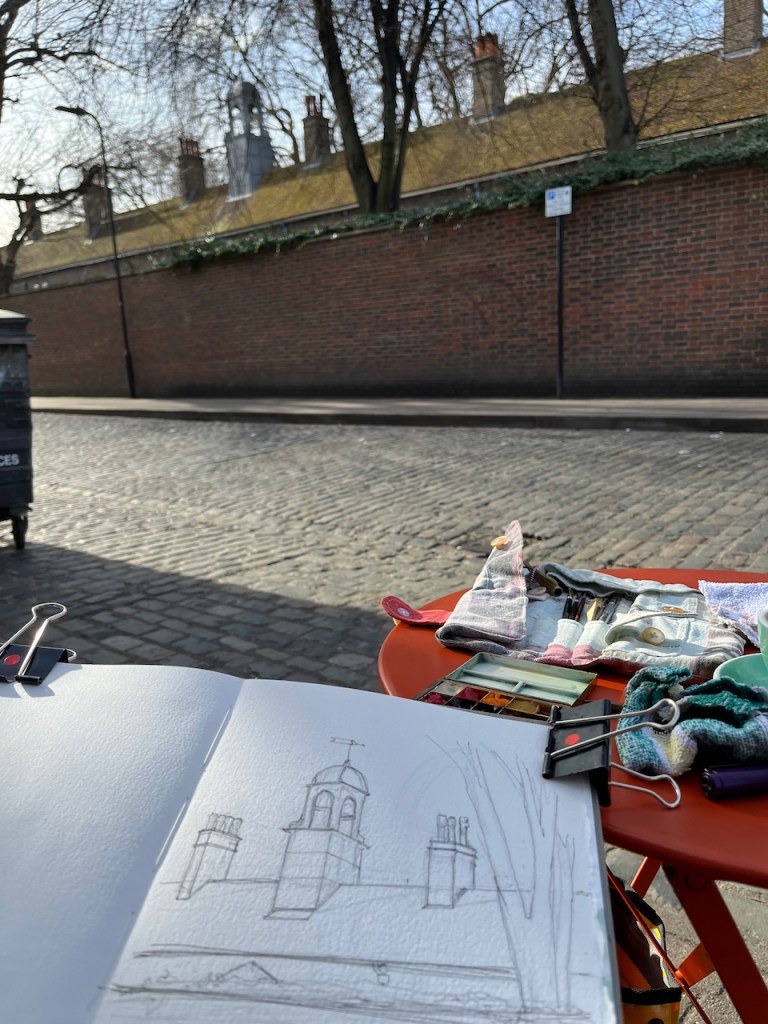
Here is work in progress on the drawing:

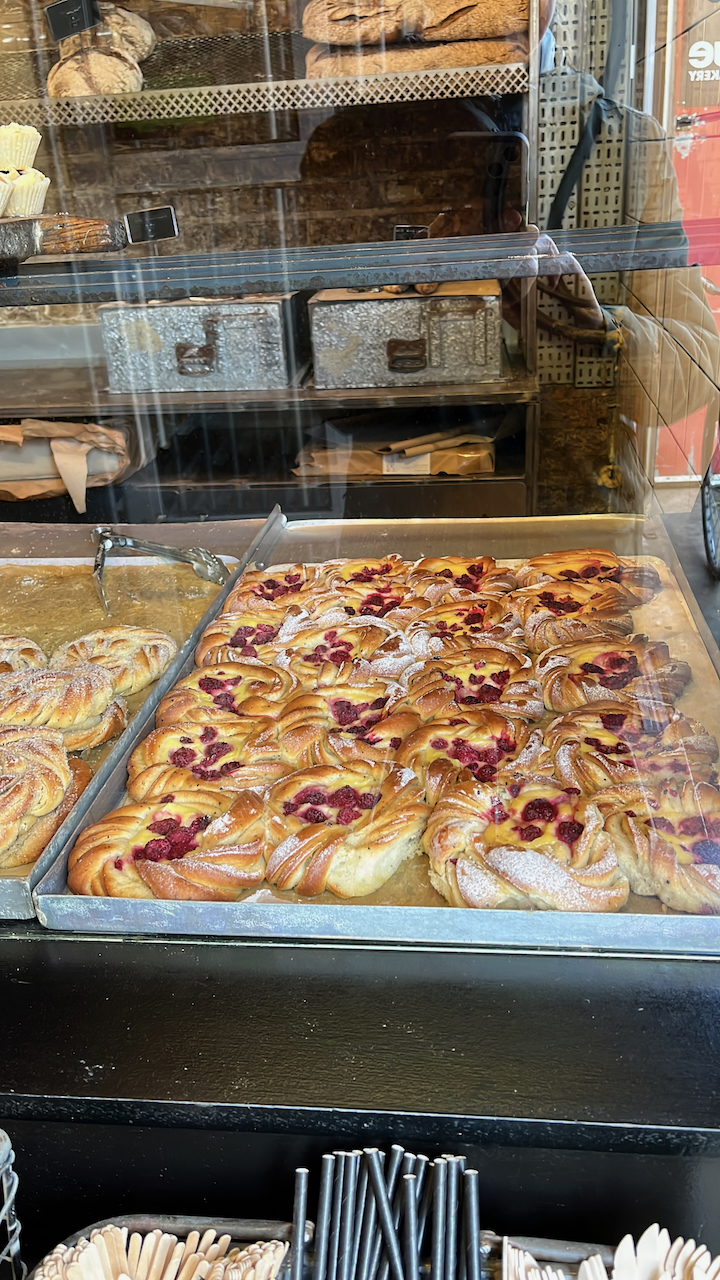
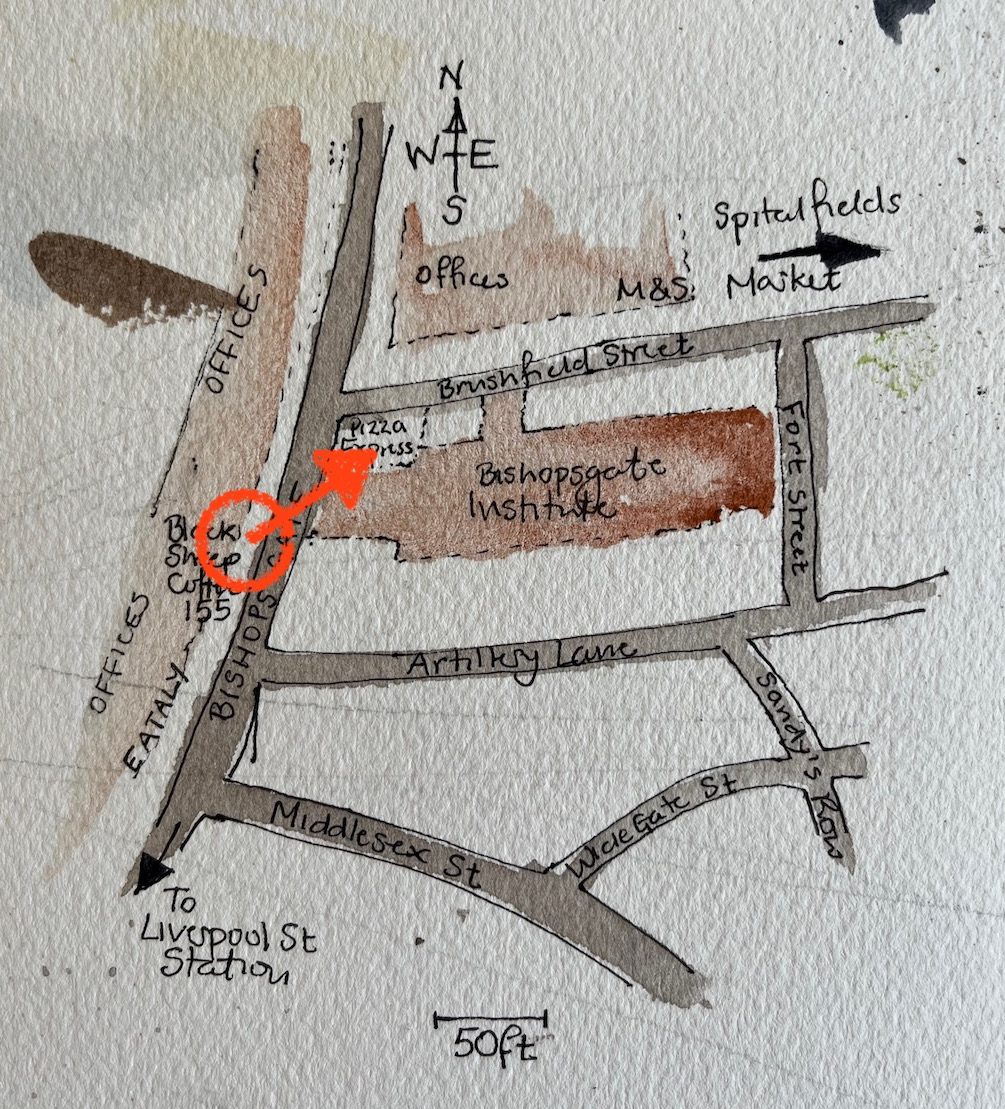
Here are the raspberry buns at Fabrique, and a map so you can find them:

Bishopsgate Institute EC2

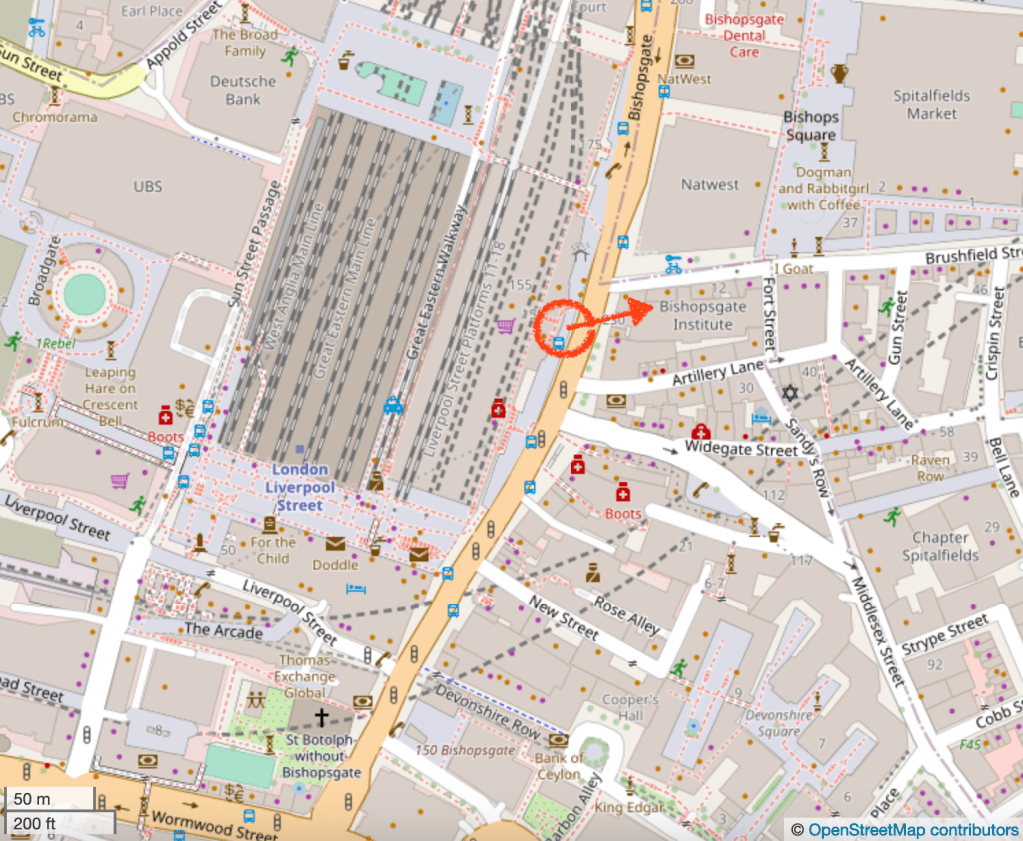
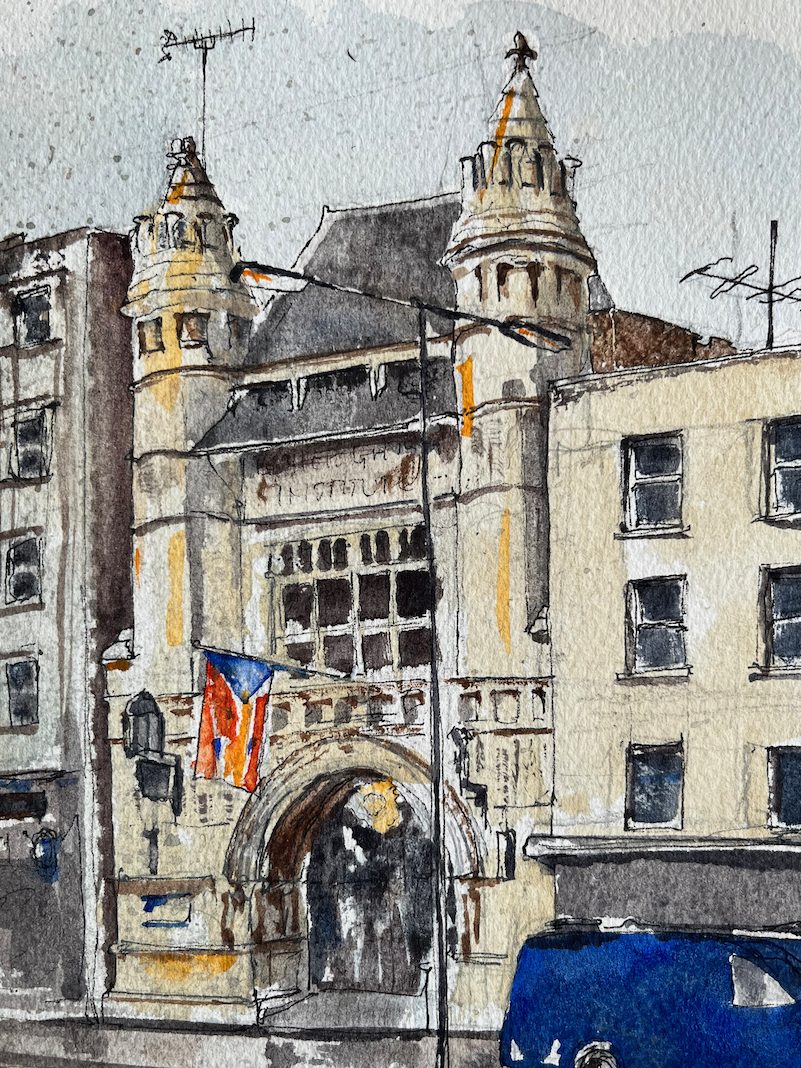
Here is the Bishopsgate Institute entrance, seen from the other side of the road.

Bishopsgate Institute, west entrance, 28th Dec 2022 in Sketchbook 12

The Bishopsgate Institute opened in 1895, as a centre for adult learning. Amazingly, it continues this mission to this day, with a huge range of courses and classes, as well as a library and an event programme: https://www.bishopsgate.org.uk/

The Institute was founded by Reverend William Rogers (1819-1896), a clergyman who took action to improve the lot of London’s poor and provide educational opportunities for people of all backgrounds. He secured funding for his educational initiative by using charitable funds from the City of London:

On arriving at St Botolph’s, Rogers discovered that a pot of charitable donations had been accumulating in the City for over five hundred years. These donations were often death bed bequests, with the donor hoping to secure his or her place in heaven by making a gift of money to the poor.

In Rogers’ view, these funds were no longer being fairly distributed. Rather than going towards “jollies” for the local great and the good (one purpose to which he suggested they were being used by the nineteenth century) he believed the bequests should be redirected towards his proposed polytechnics of the people scheme.

William Rogers began exploiting personal connections established at school and university to petition his friends in high places to introduce a change in the law that would make it possible to divert the City’s charitable income towards educational initiatives. He was successful in this.

The terms of the City of London Parochial Charities Act (1883) allowed Rogers to work with like-minded educationalists to draw up a visionary plan of action. According to this plan, three new learning institutions would be built in the City: the Cripplegate Institute, the St Bride Institute, and our own Bishopsgate Institute.

https://www.bishopsgate.org.uk/our-history/william-rogers (downloaded 29 Dec 2022)

The building was designed by the architect Charles Harrison Townsend. I particularly enjoy those complicated spires, which Pevsner describes as “sturdy, oddly detailed spires” [Nicolas Pevsner, City of London, p288]

The blue van is a police vehicle. There is a police station just south of Middlesex Street, so the police vehicles park on Bishopsgate.

Here is work in progress on the drawing:

It was cold and raining, so I completed the pen on location and then did the colour at my desk.