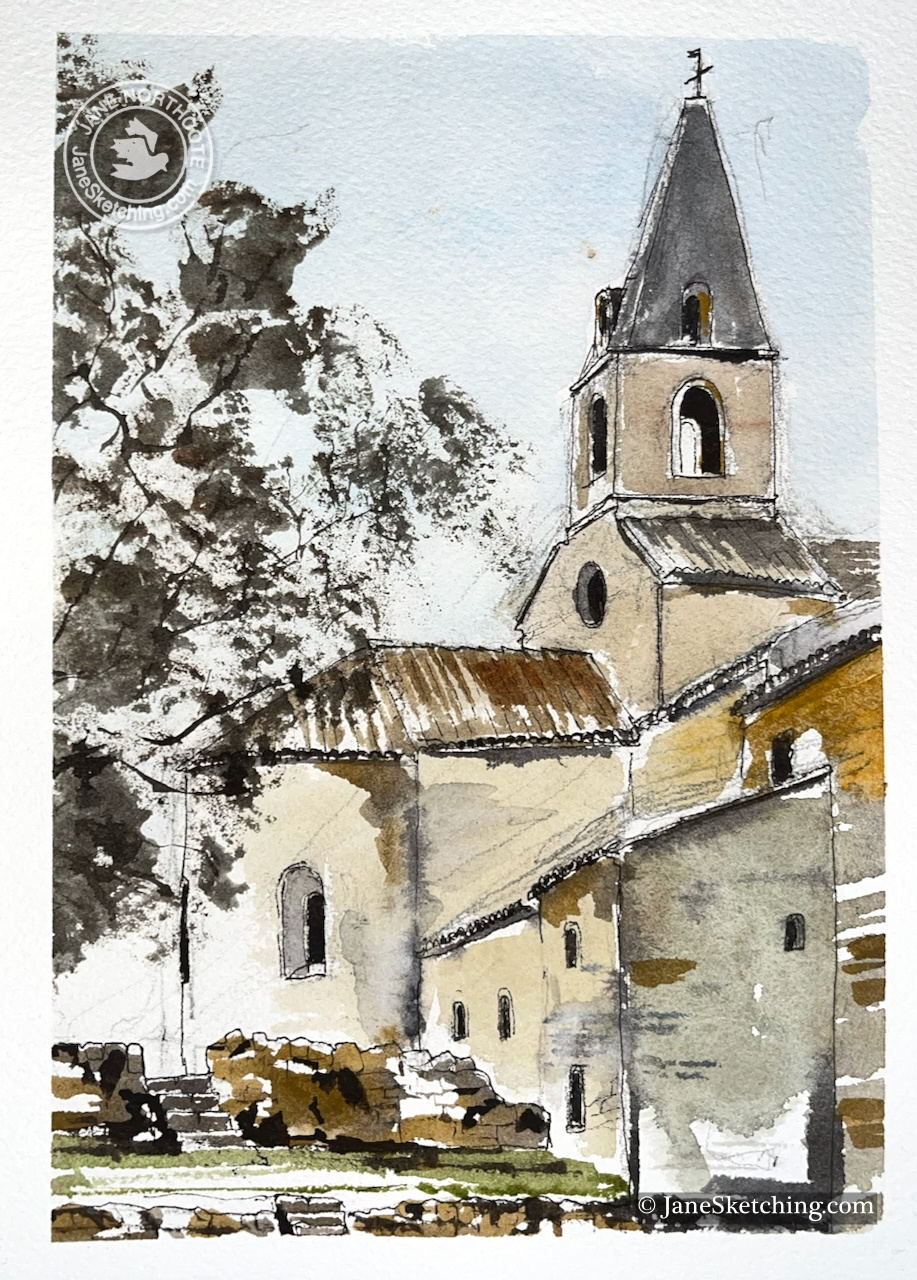
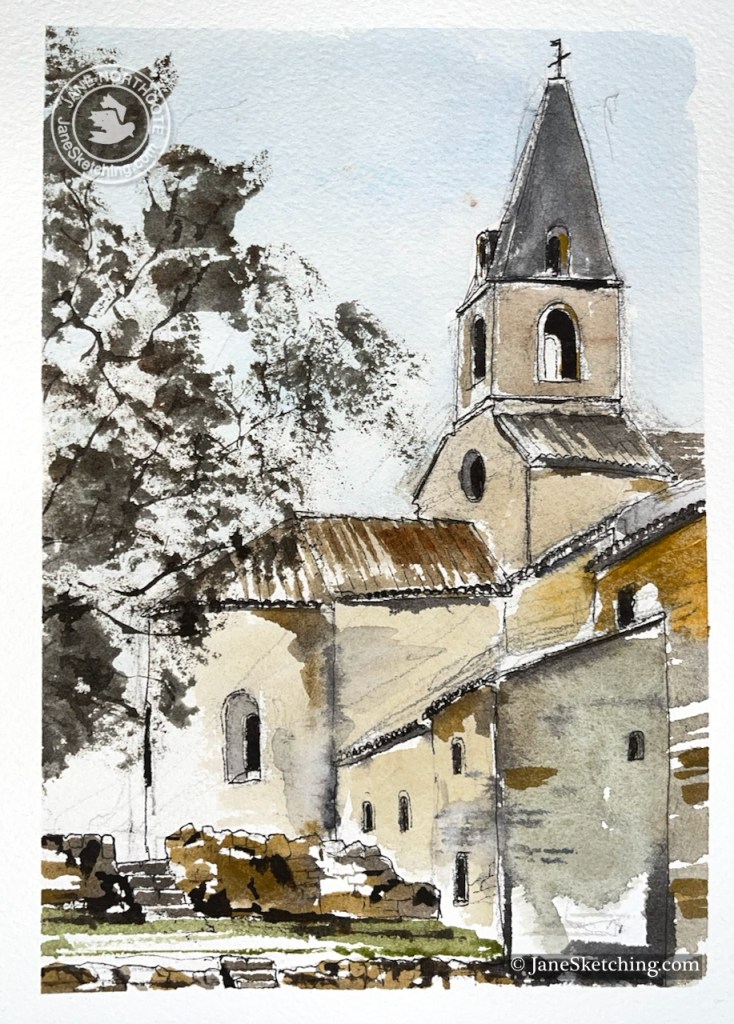
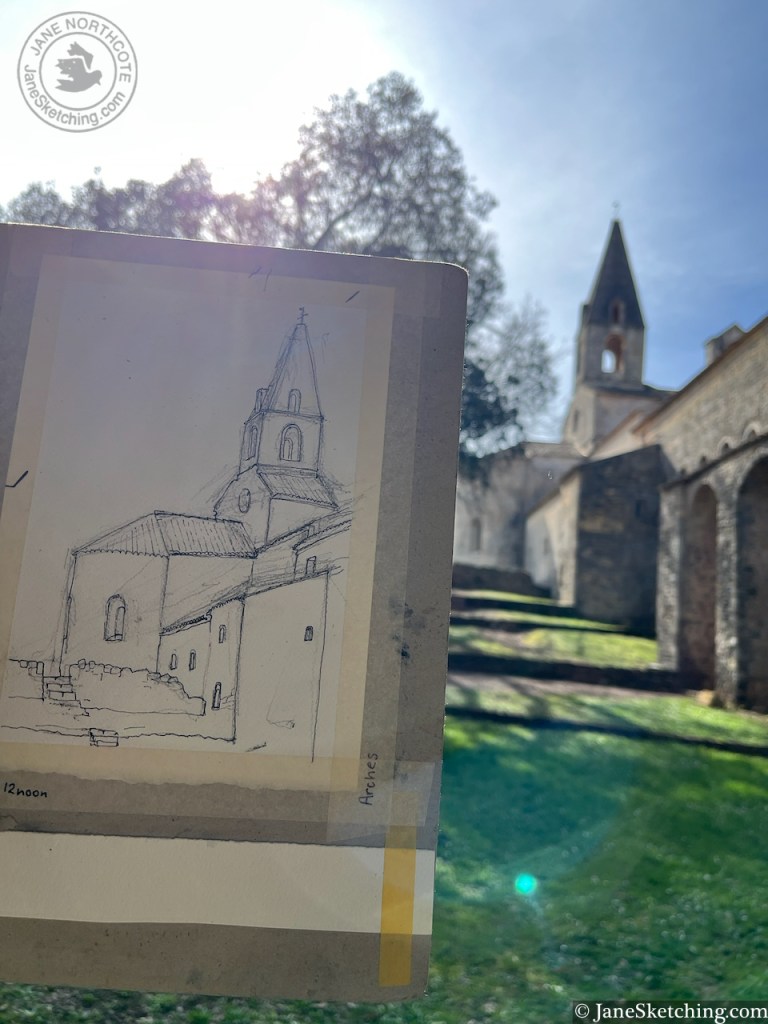
On a perfect day in Provence, I leaned against a wall and sketched a view of Le Thoronet.
Le Thoronet Abbey, Var, Provence, 83340 France sketched 15th February 2026 on Arches 300gsm watercolour paper, size A5
I loved this place because of its mathematical precision. As I sketched, I noticed that the tower is an isosceles triangle on top of a square. The windows are semicircles on top of rectangles. Some of the windows are circular.
The whole building has similar satisfying geometry.
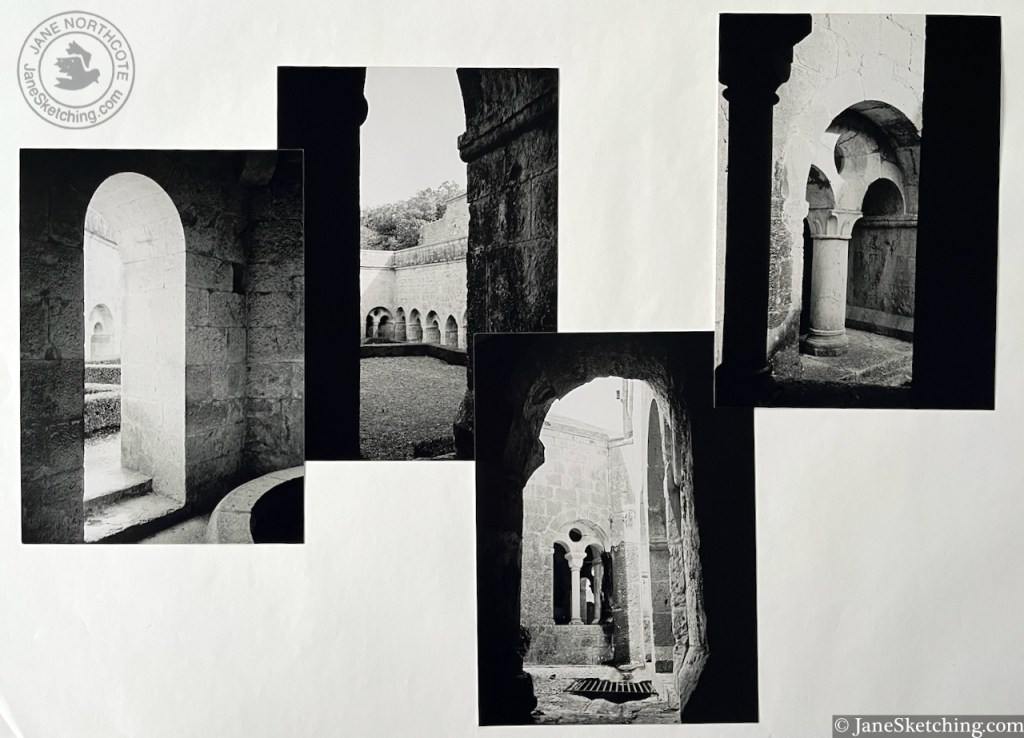
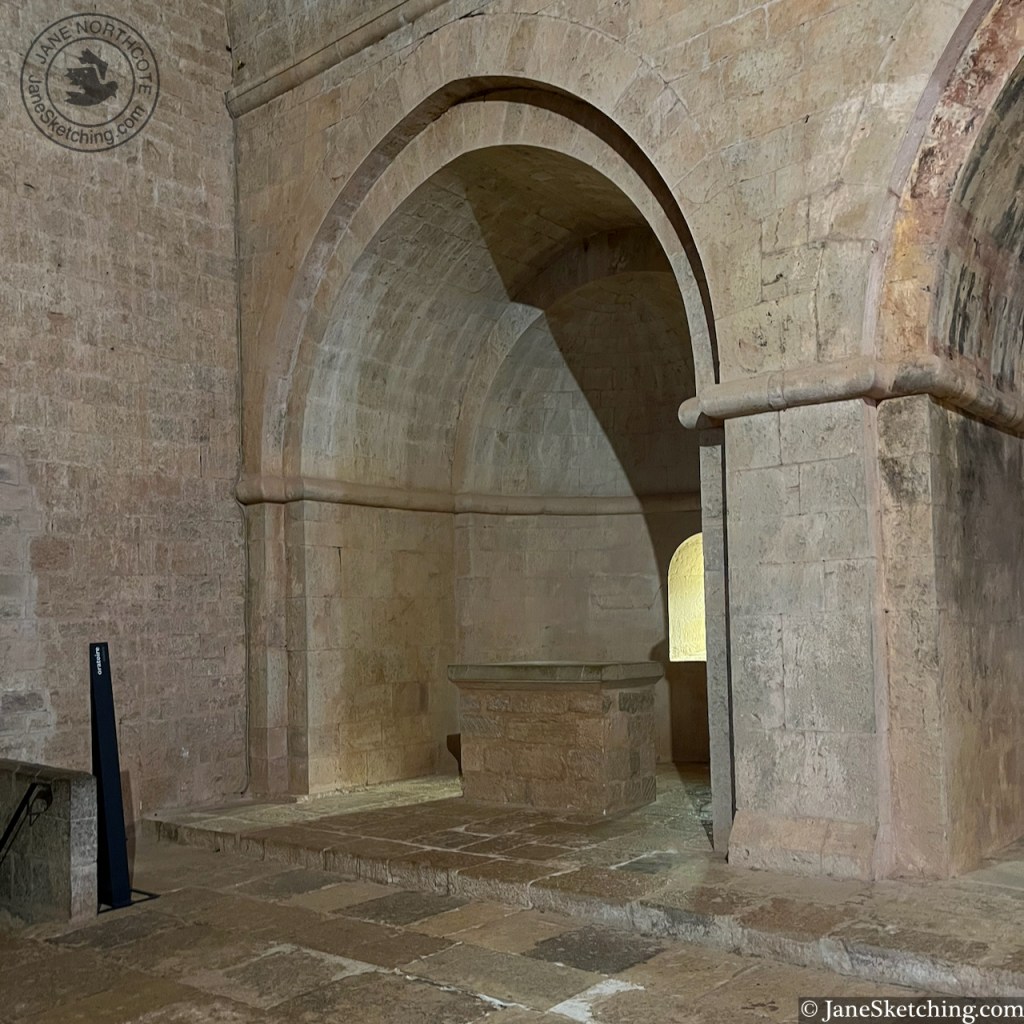
Le Thoronet Abbey, 7×5 photographs on Ilford XP2 film with an Olympus XA2 point-and-shoot camera, film developed by filmprocessing.co.uk. Film reference 201.
This is a Cistercian abbey, founded in 1136. It was built between 1160 and 1230. “restoration work began in 1841 and continues today” says the leaflet. The building is now State-owned. While we were there, a service was taking place in its austere geometric chapel.
Le Corbusier visited the Abbey in 1953.
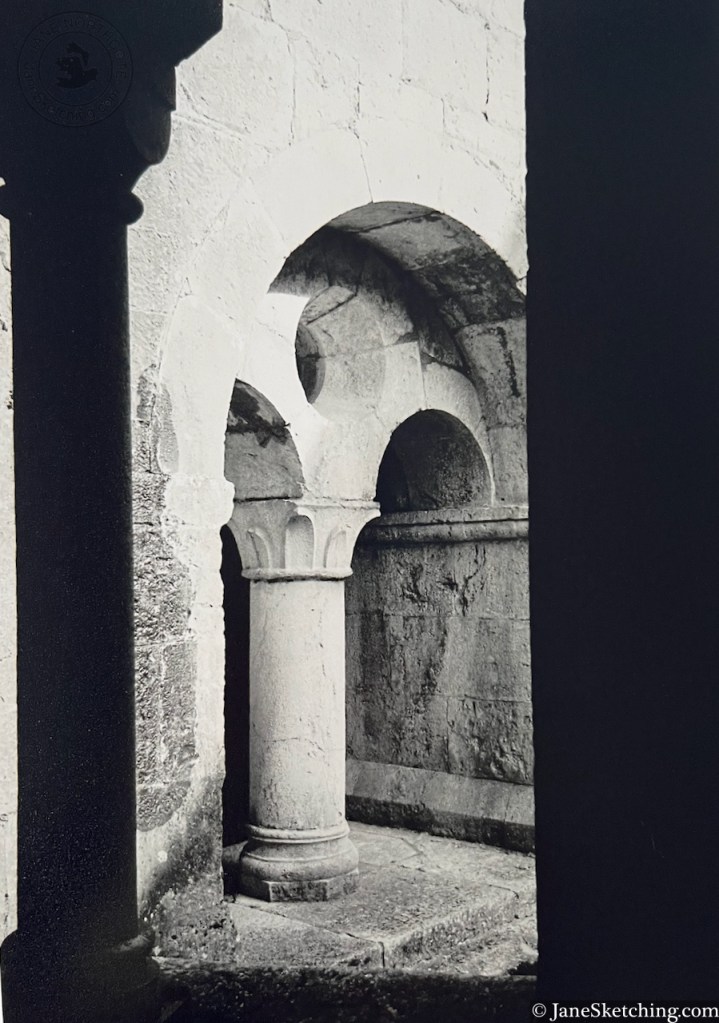
He wrote of the Abbey of Le Thoronet: ” Light and shadow are the loudspeakers of this architecture of truth, calm and strength “.
Le Thoronet Abbey, photograph on Ilford XP2 film with an Olympus XA2 point-and-shoot camera, film developed by filmprocessing.co.uk. Film reference 201.
References and links:
Novel, by Fernand Pouillon (1912-1986), about the building of the Abbey, and the struggles faced by the construction workers: “Les Pierres Sauvages” (1960)
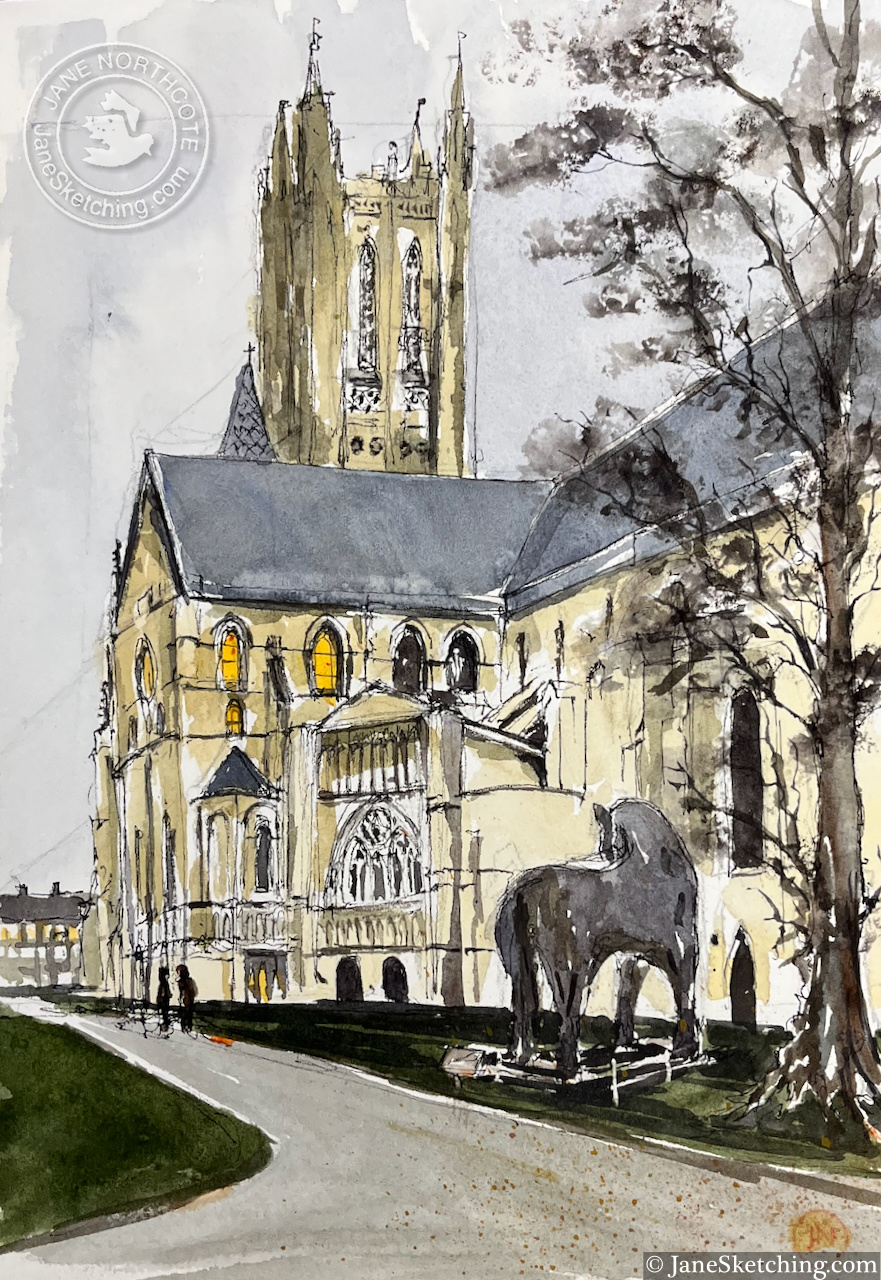
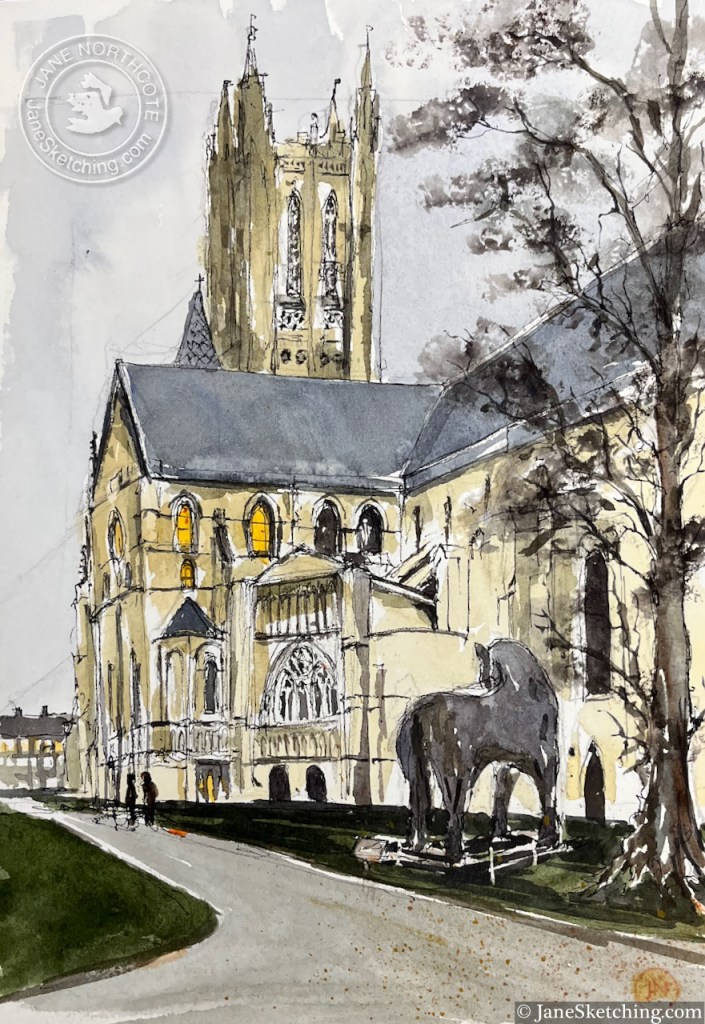
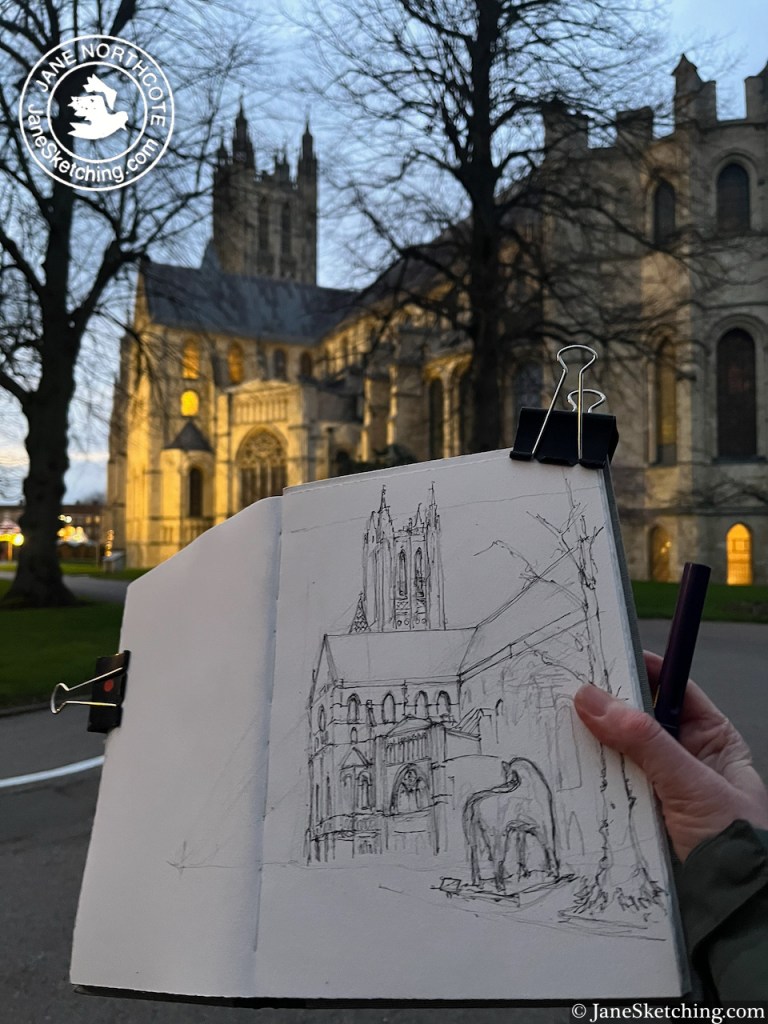
Canterbury Cathedral, sketched 16th December 2025 in Sketchbook 16
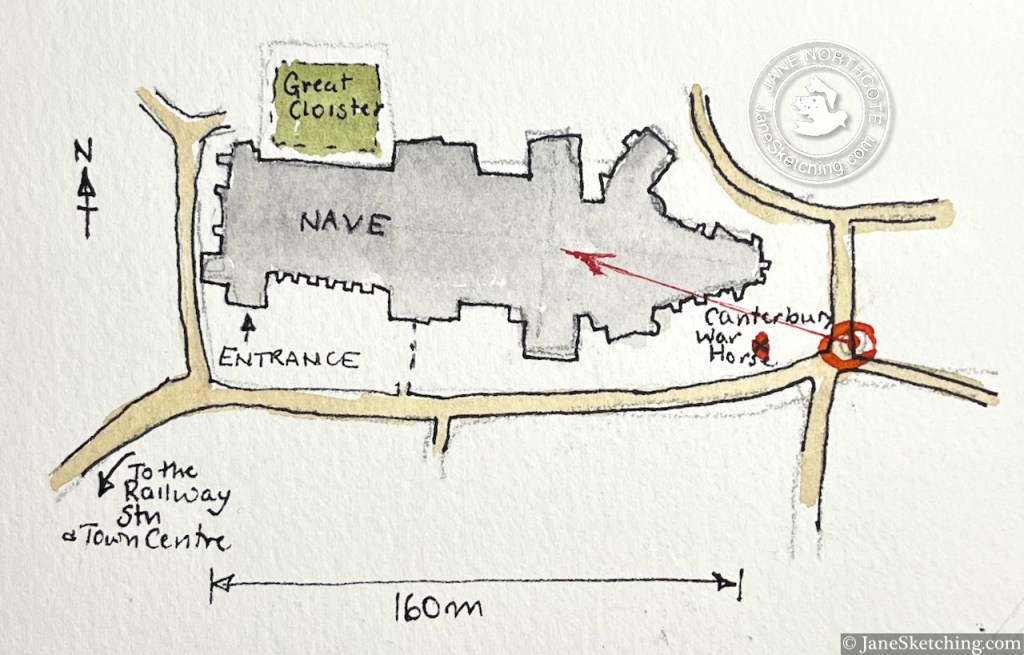
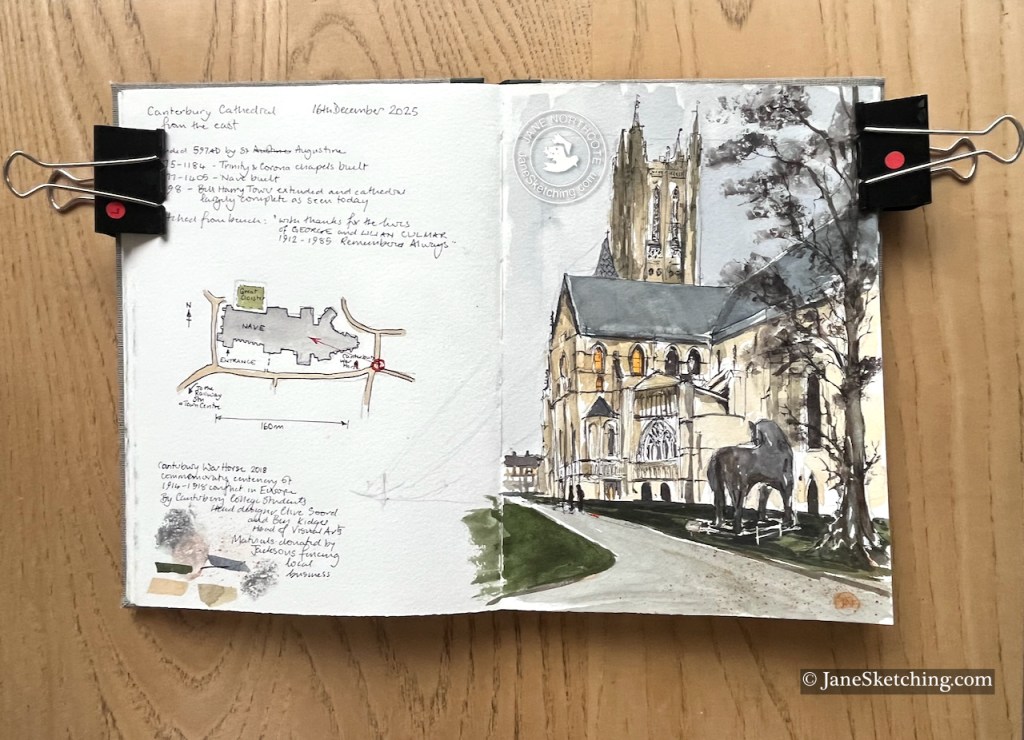
I was sketching the cathedral from the south west. The Tower in the centre of my sketch dates from 1478. The Trinity and Corona chapels on the right of the picture were built in 1175 and 1184. The magnificent nave, under the grey roof in the centre of my sketch, was built in 1377-1405. The cathedral was founded in 597 by St Augustine.
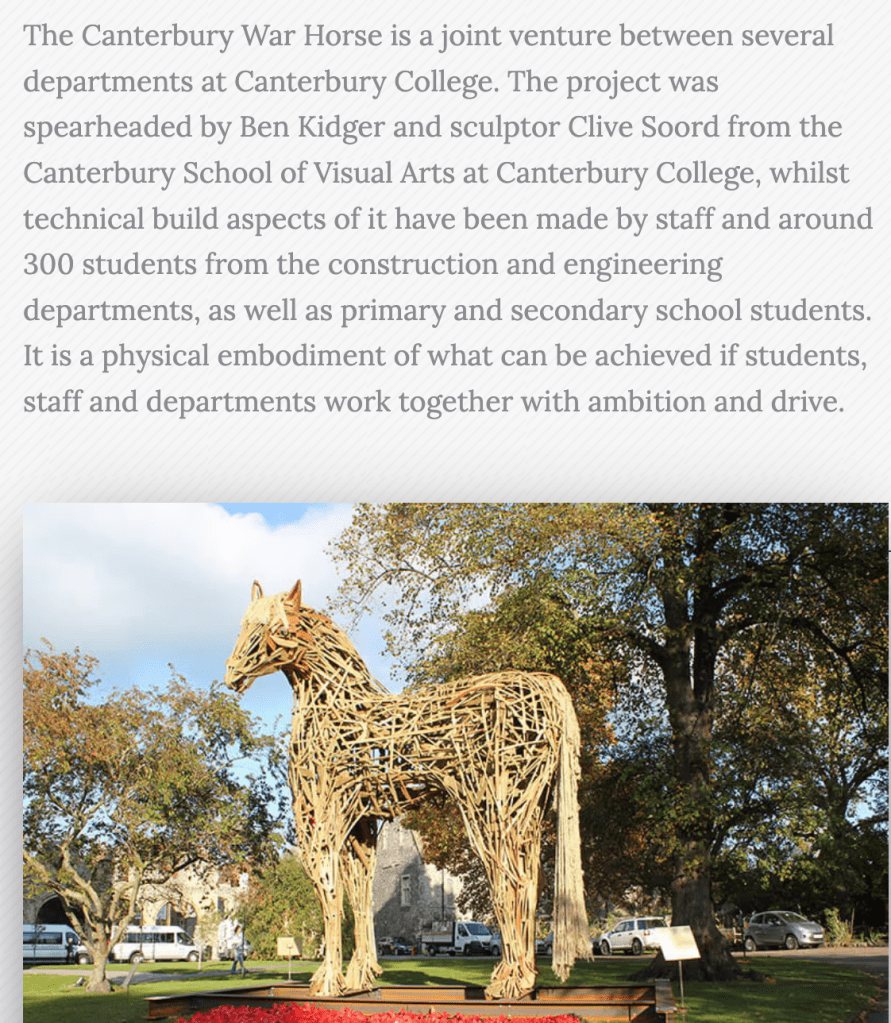
The horse in the foreground of my drawing is the “Canterbury War Horse”. It is made of pieces of wood, offcuts donated by the local fencing business, Jacksons. It was created in November 2018, marking Armistice Day, and the centenary of the end of the 1914-18 conflict.
Image and text from the website of Jacksons Fencing, Kent
The days are short in December and the light was fading while I was sketching.
I managed to get the pen and ink done sitting on the bench outdoors, and added the colour at my desk.
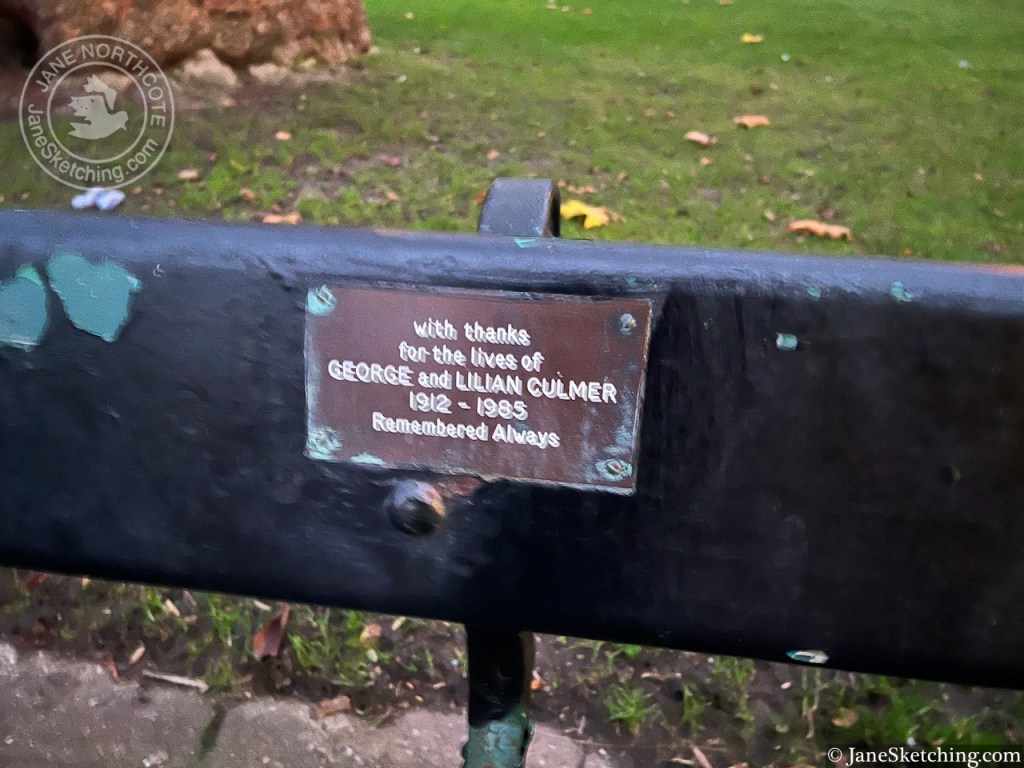
The bench commemorated the lives of George and Lilian Culmar, 1912 -1985.
It was a wonderful experience to sit calmly on this bench and contemplate the cathedral, as night fell.
Sketchbook 16
Click a button below to share this post online, email it, or print it:
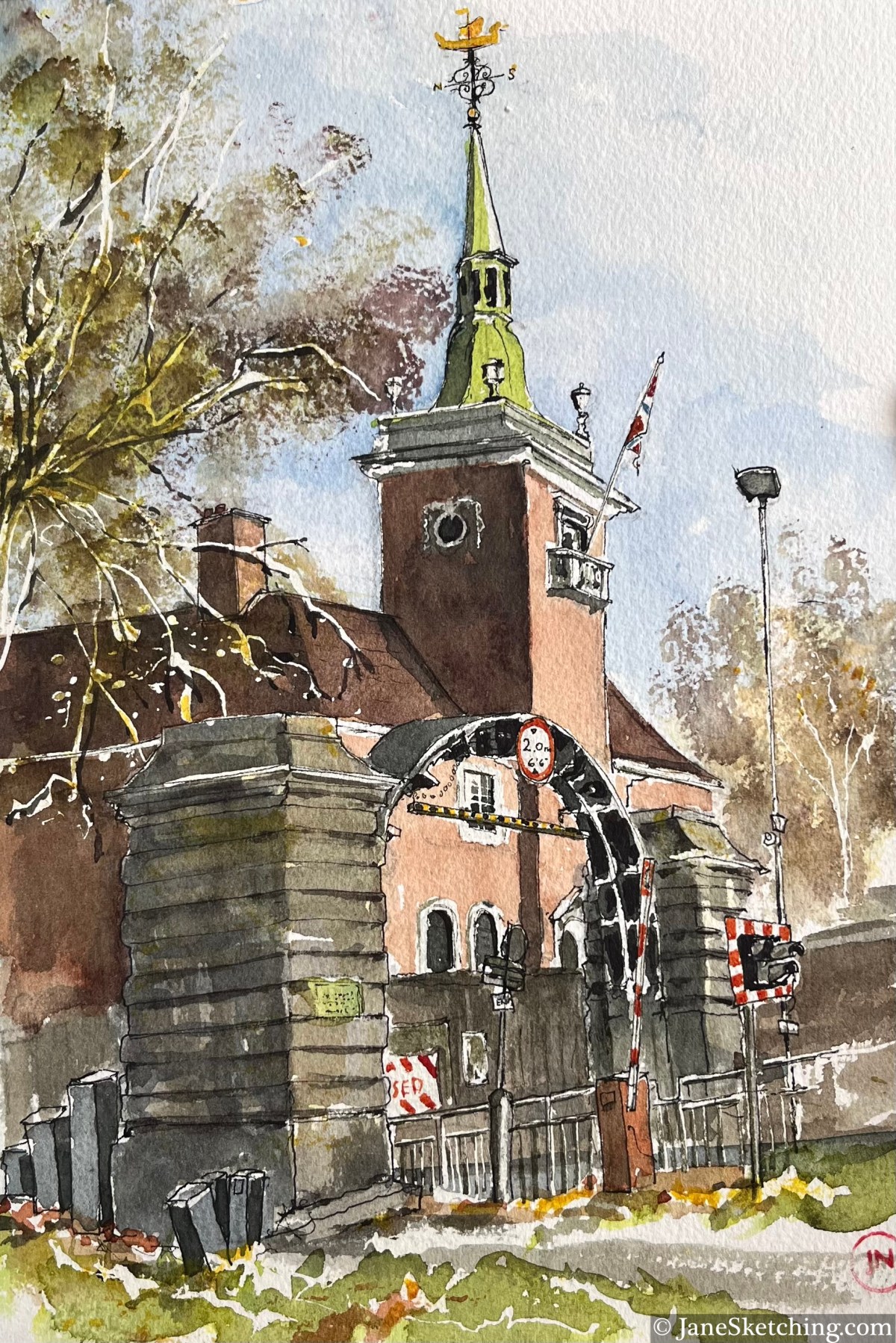
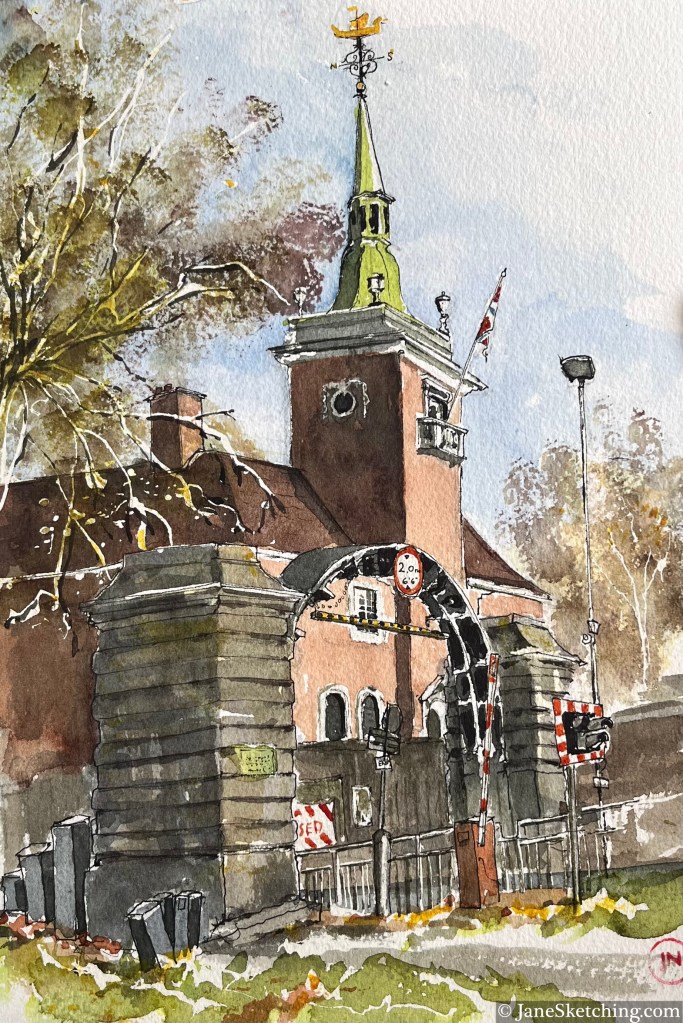
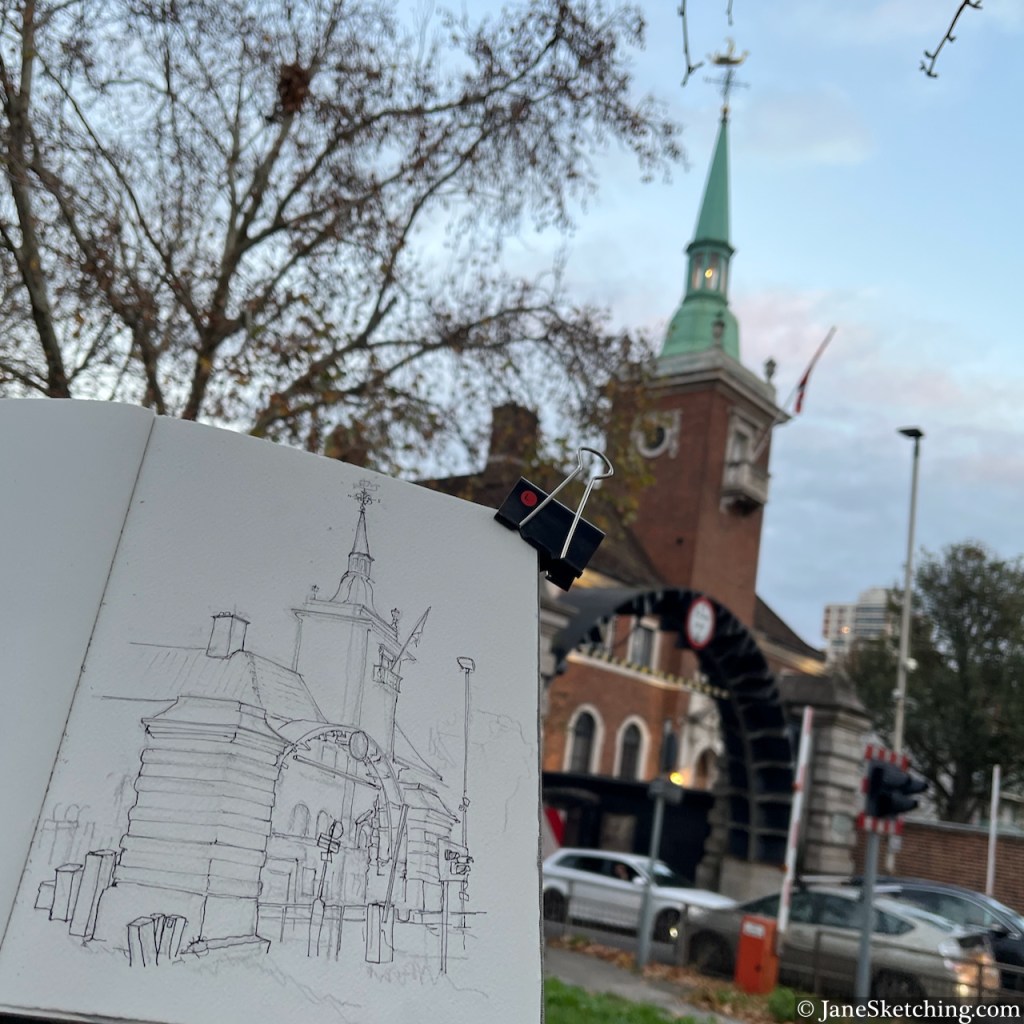
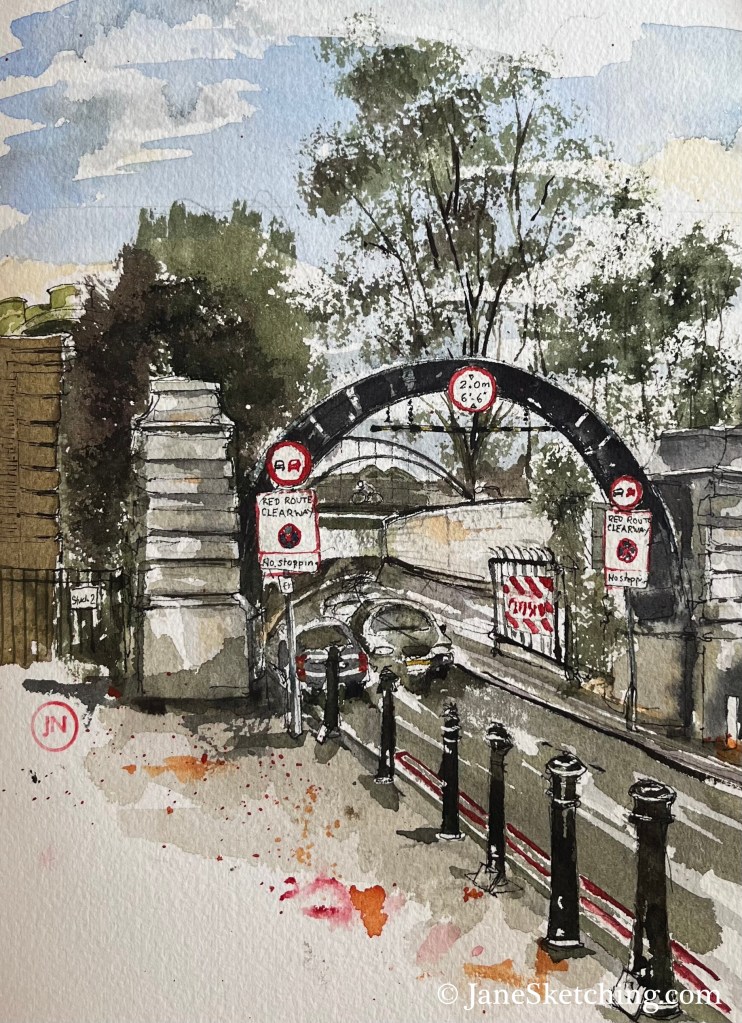
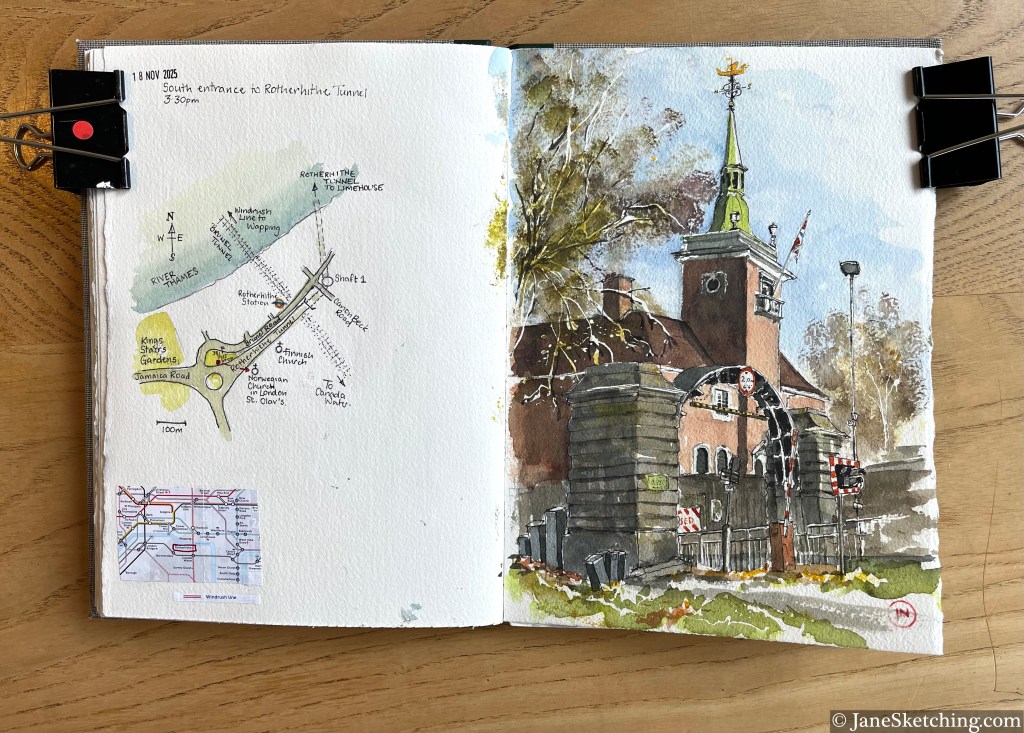
Rotherhithe Tunnel South Entrance, and St Olav’s Church, Rotherhithe, London SE 16 7JB, sketched 18th November 2025
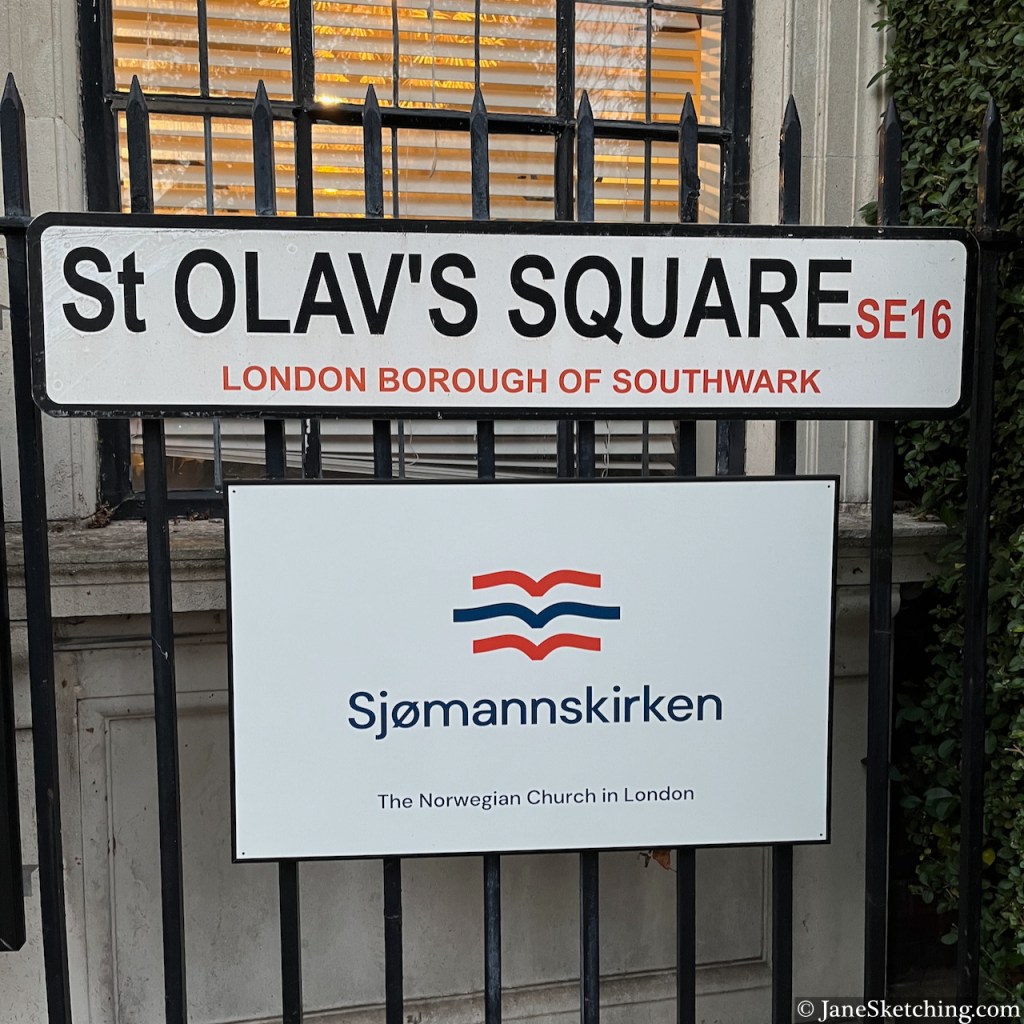
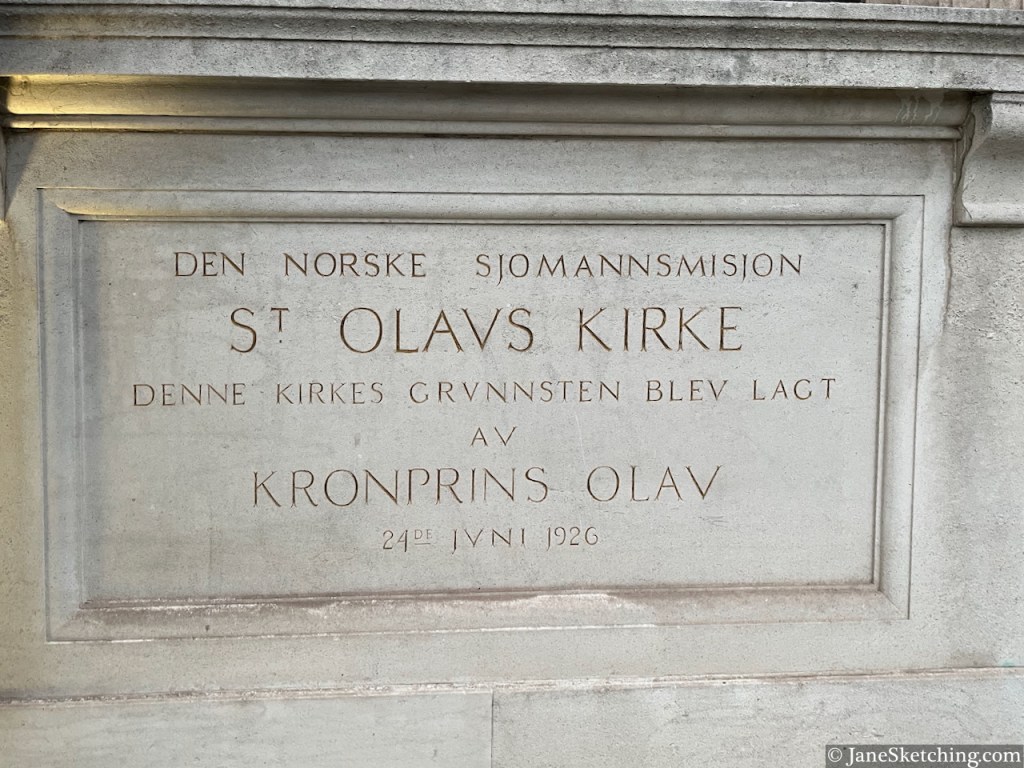
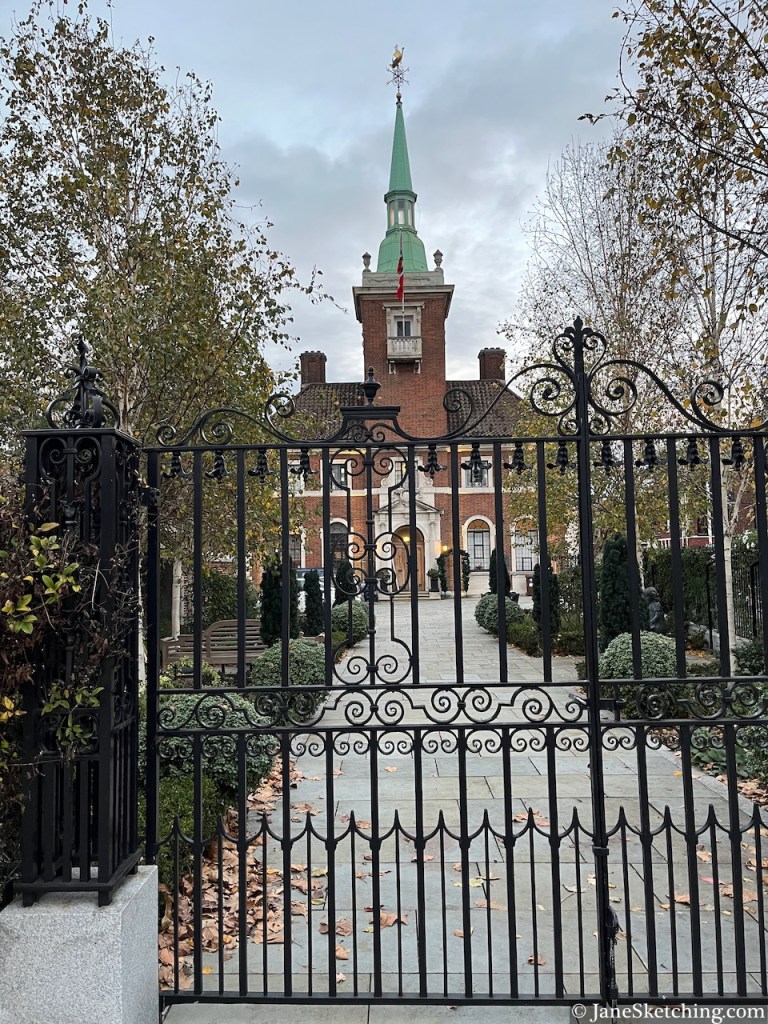
The church is St Olav’s, the Norwegian Church in London. It was designed by John Love Seaton Dahl, and the foundation stone was laid in 1926 by Prince Olav, later King Olav V, of Norway.
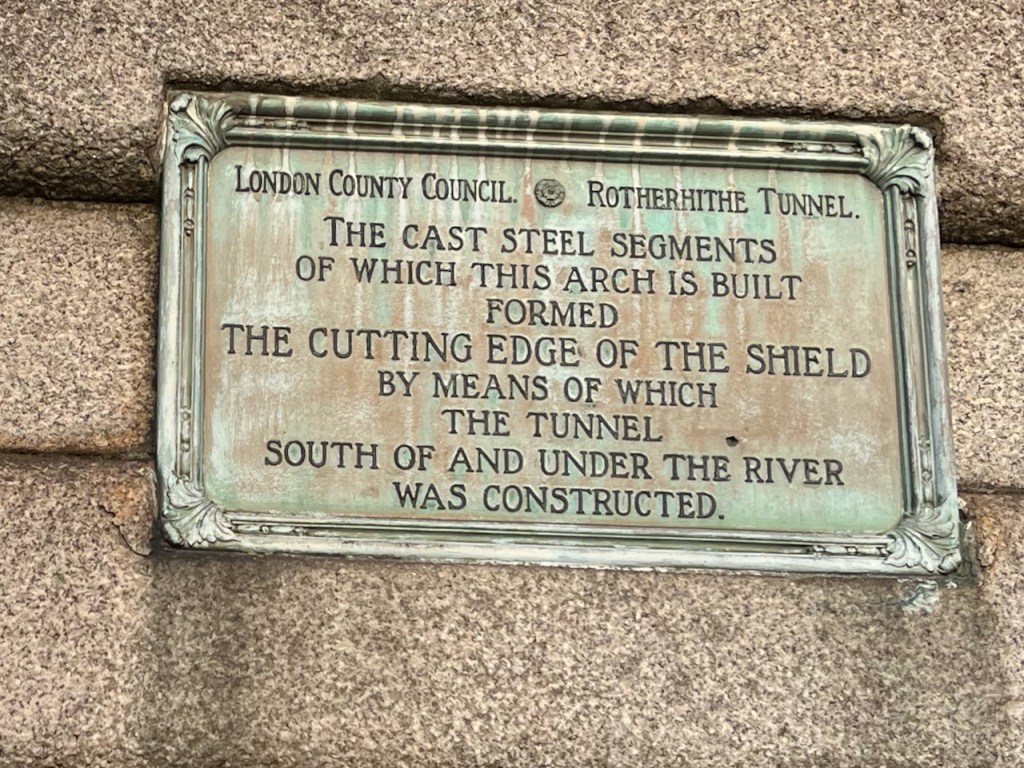
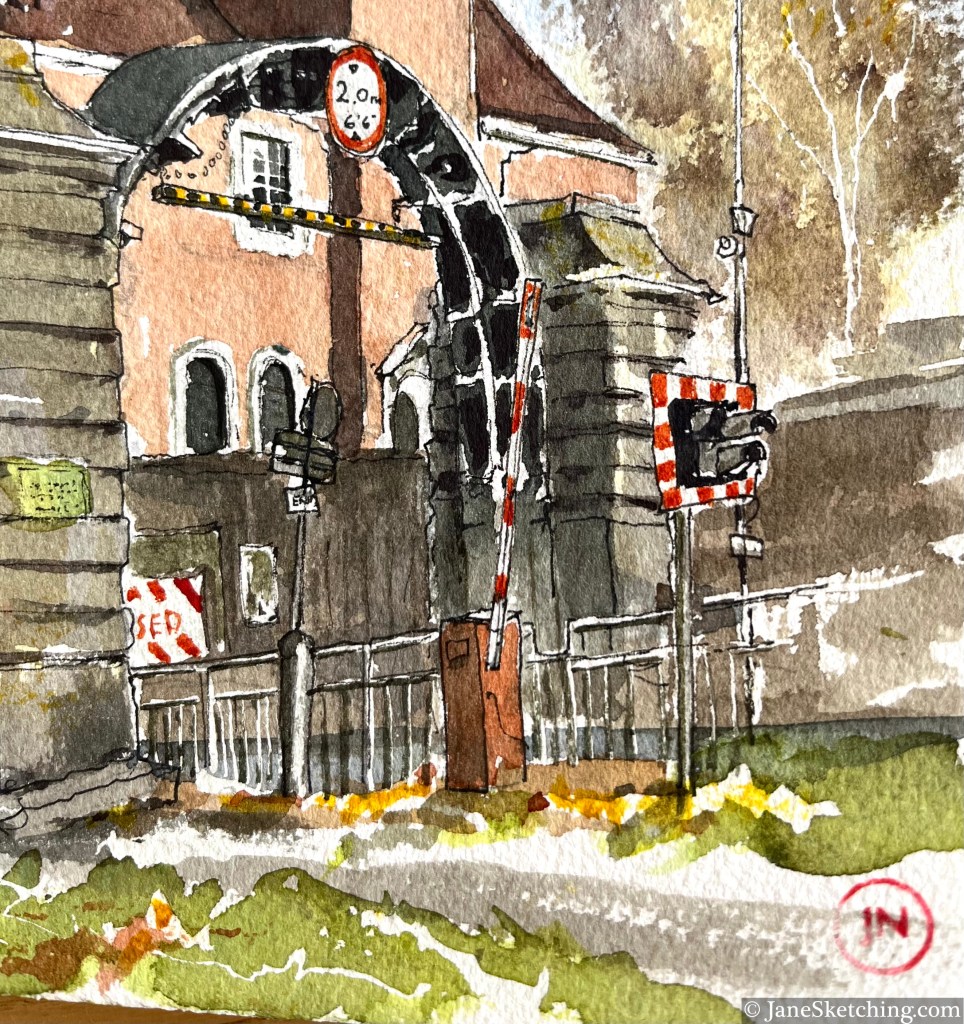
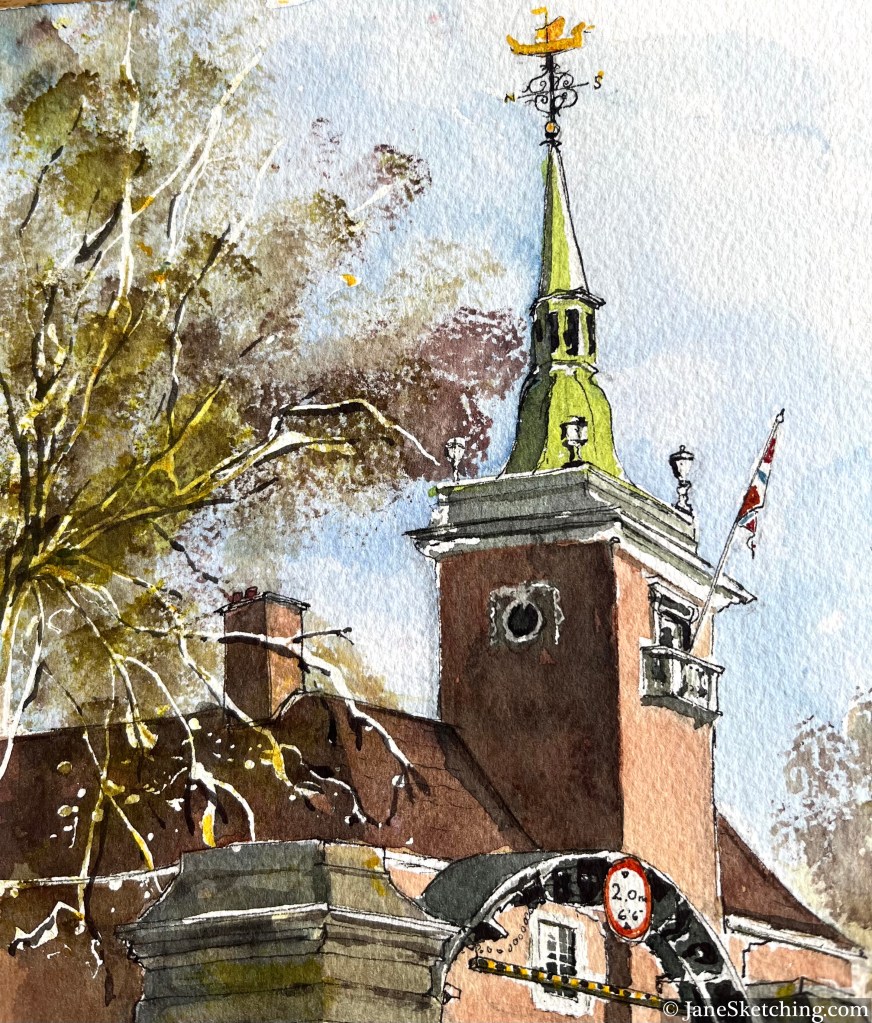
The steel arch over the tunnel approach road is part of the equipment used to cut the tunnel, as on the North side.
Sketch detail showing the steel arch.
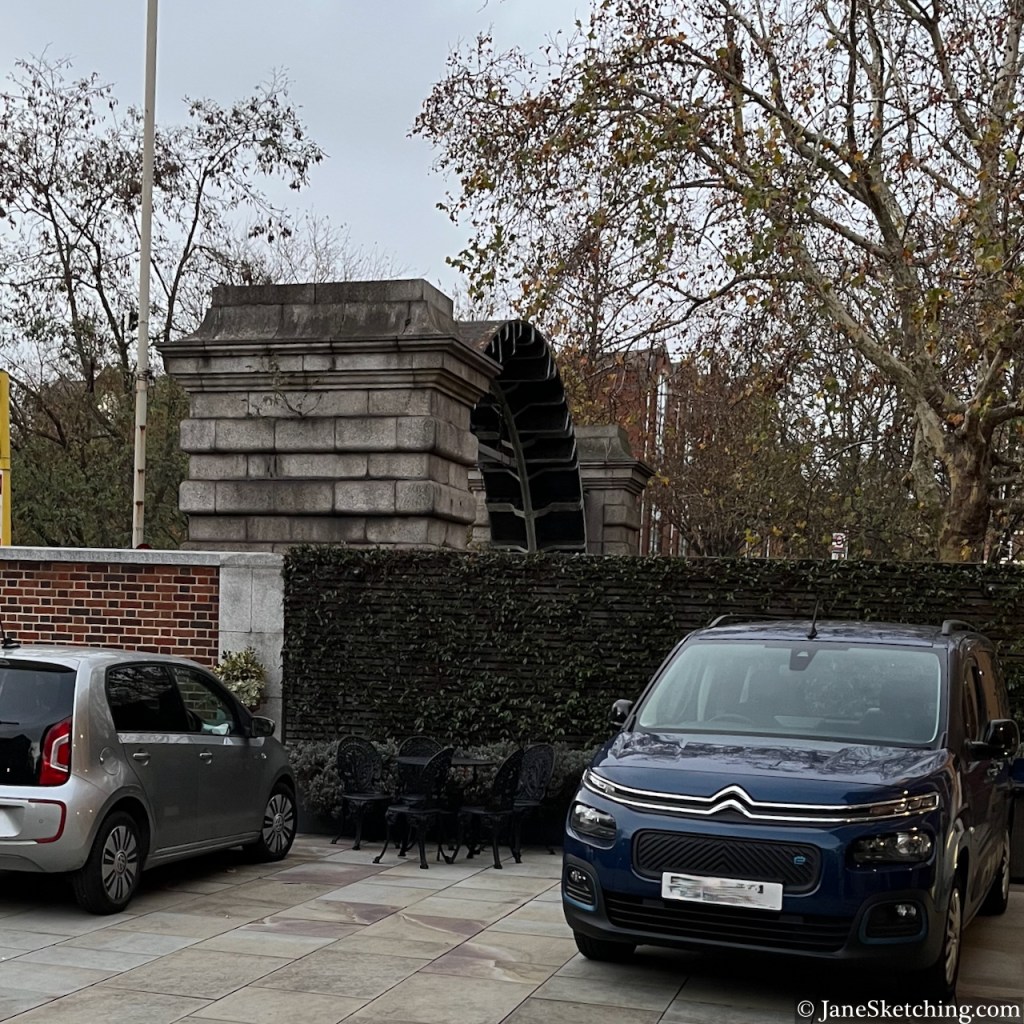
Below is a photo taken from the front courtyard of the church, looking back towards my sketching location. You can see the steel arch above the wall of the Church courtyard.
View of the arch above the Rotherhithe Tunnel Approach road, from the front courtyard of St Olave’s church
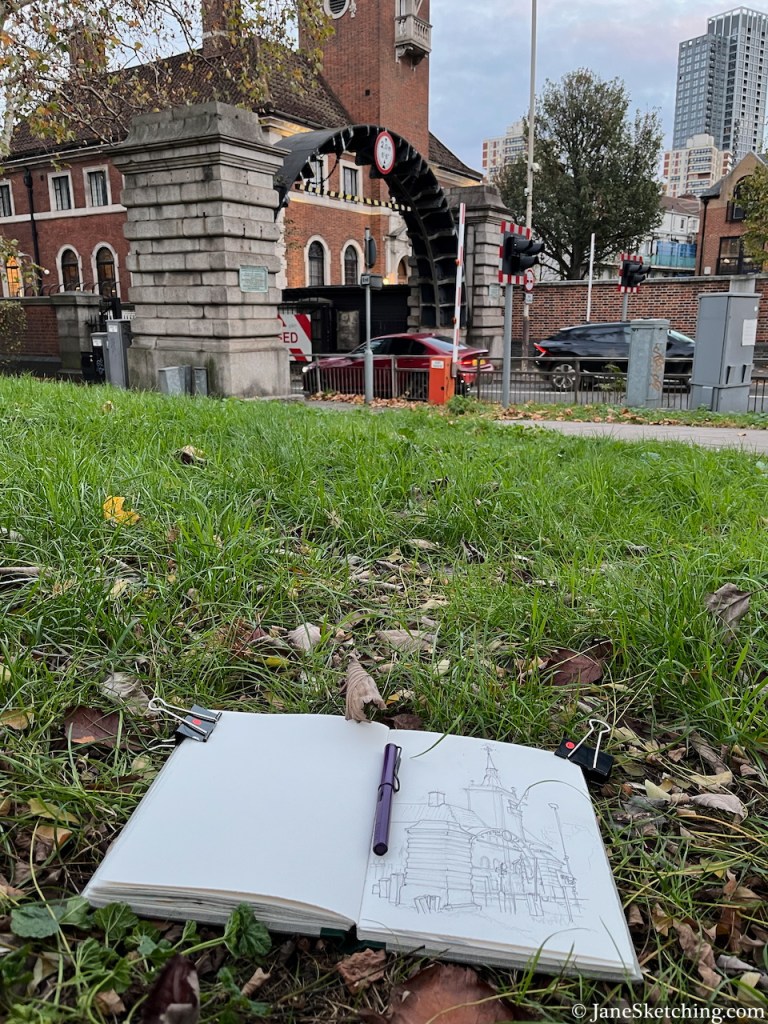
As you see, there were many trees. I was sketching from a traffic island, between major roads.
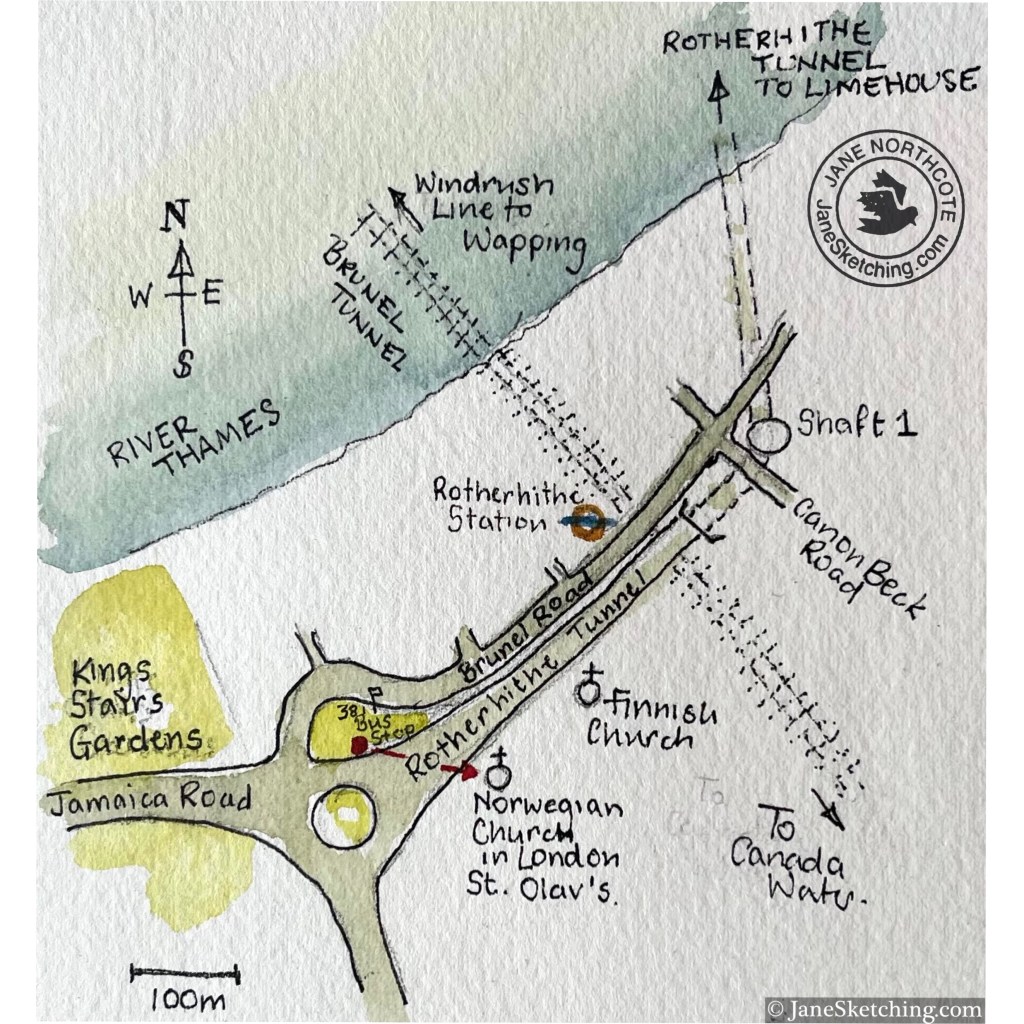
Map showing my sketching location (red dot and arrow)
Above me there were parakeets, the green ones. I think this is the furthest east I have heard parakeets. They seem to be migrating slowly across London, West to East, and North to South.
Sketching amongst greenery, Rotherhithe Tunnel South entrance
I enjoyed the weathervane on the church: a viking boat.
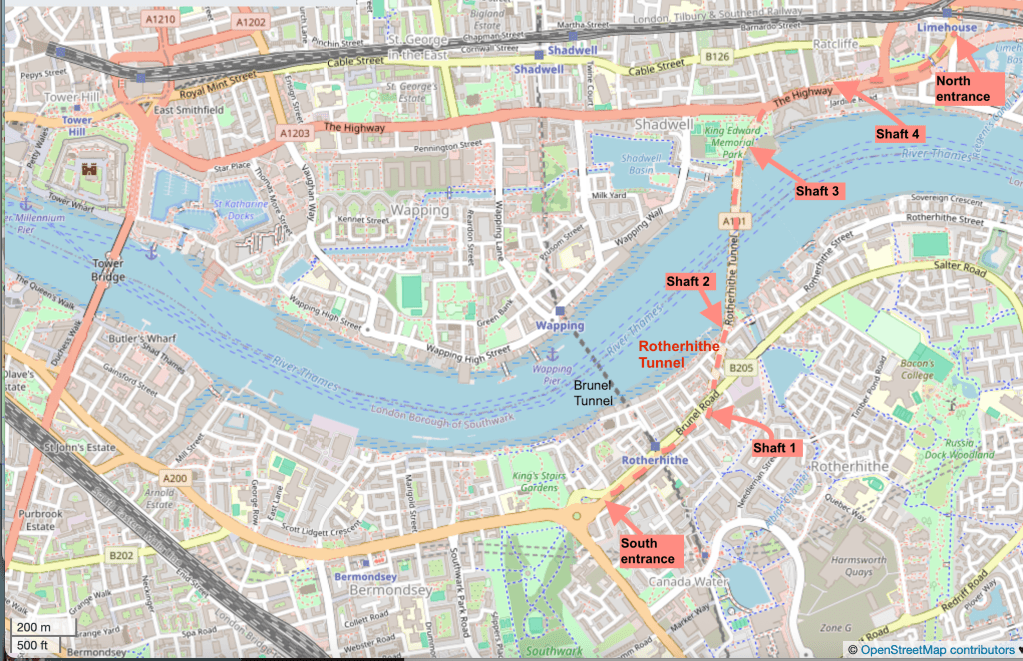
For completeness, here is a map showing the entire route of the Rotherhithe tunnel.
Background map (c) OpenStreetMap contributors
I reached the South entrance via the “Brunel Tunnel”, which is now used by the Windrush Line.
I’ve now sketched both entrances and two of the shafts. Here are the other posts. Click on the image to go to my article about it on this website.
North EntranceShaft 3Shaft 2
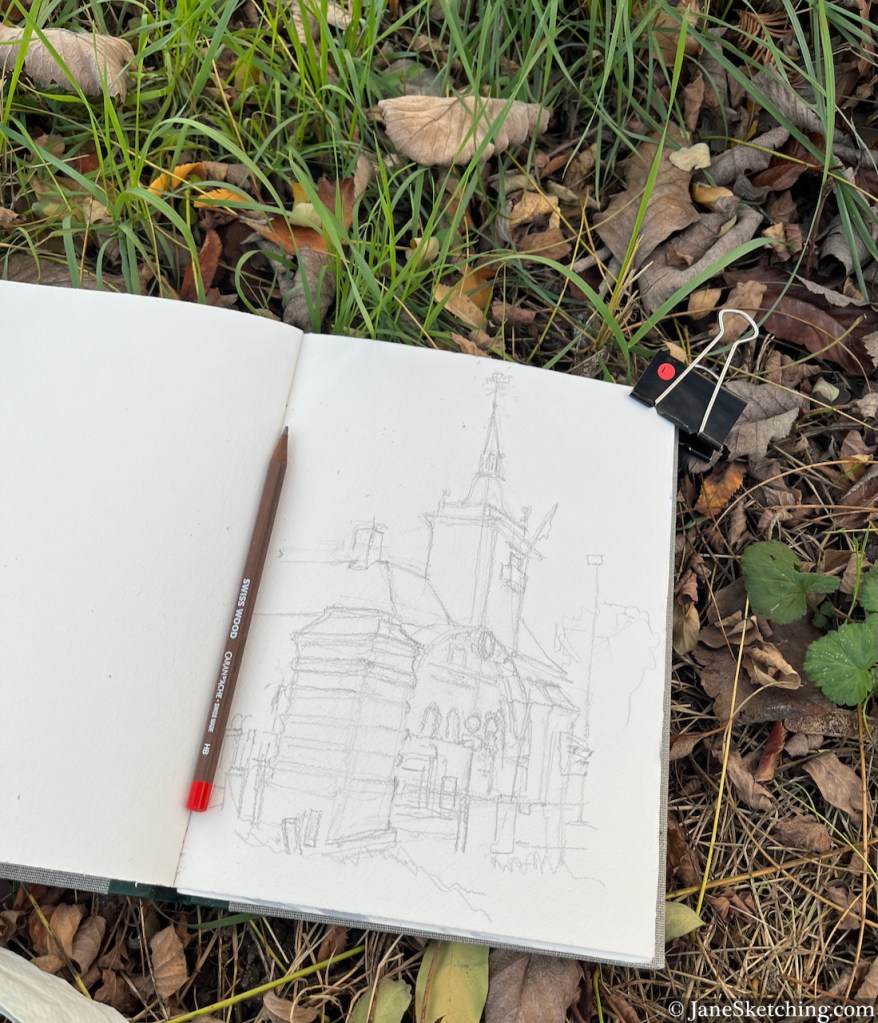
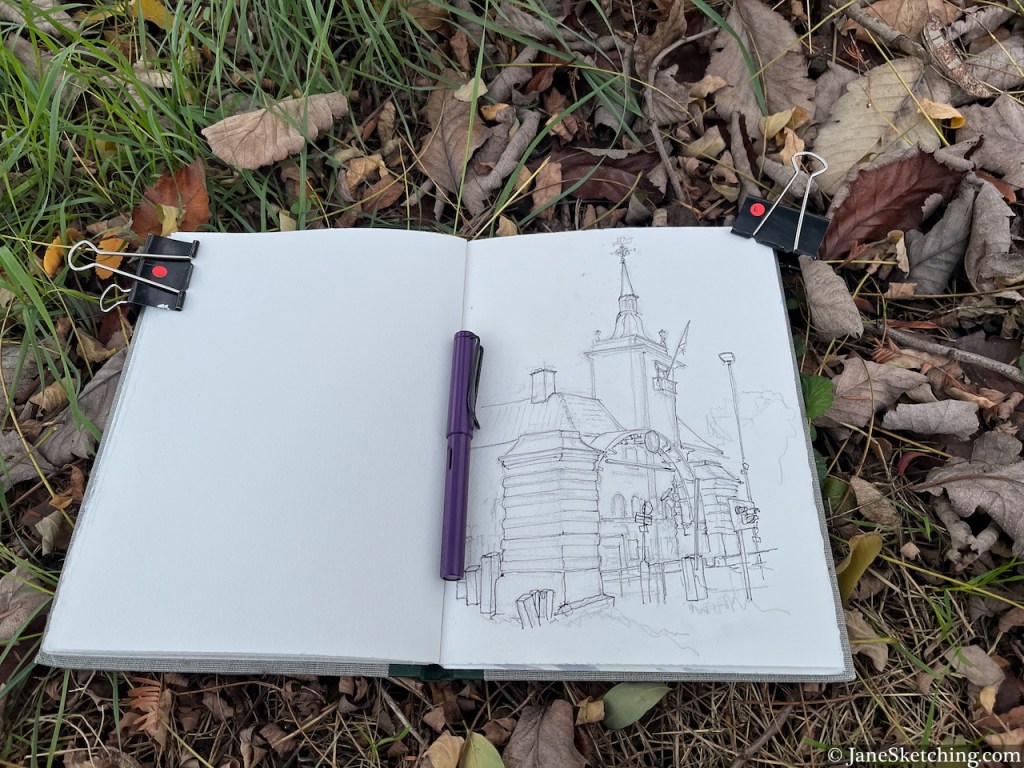
Here’s my sketchbook with this sketch:
Sketchbook 16 page spread
Sketchbook: Arches Aquarelle 300gsm, book made by Wyvern Bindery
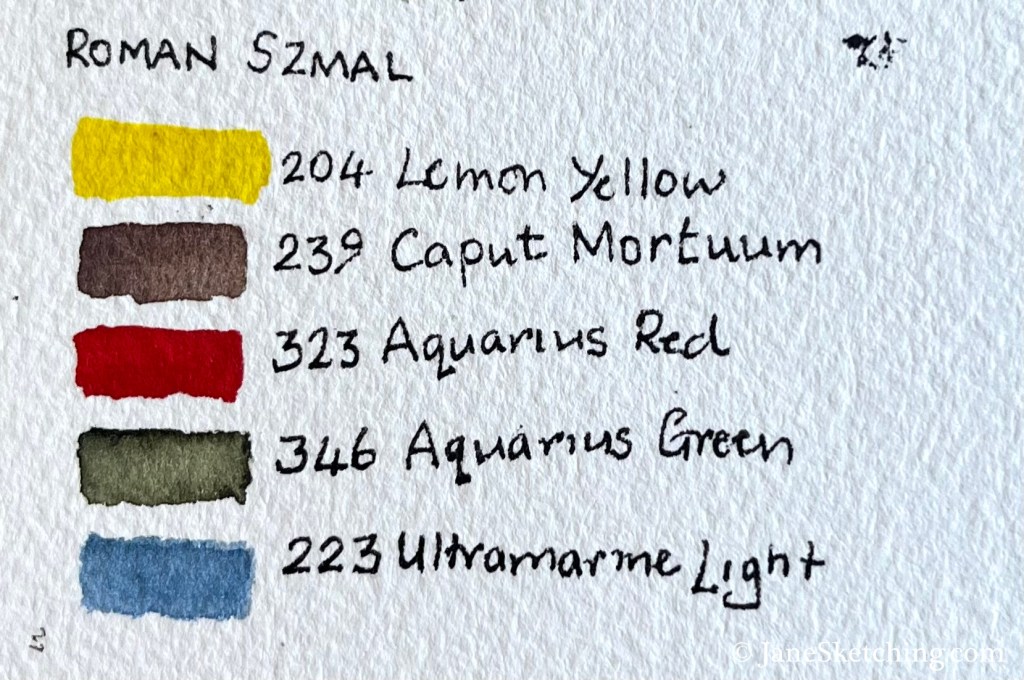
Paints: Roman Szmal
Pen and ink: De Atramentis Document Ink, Black, in a Lamy Safari fountain pen with Extra-Fine nib.
Click a button below to share this post online, email it, or print it:
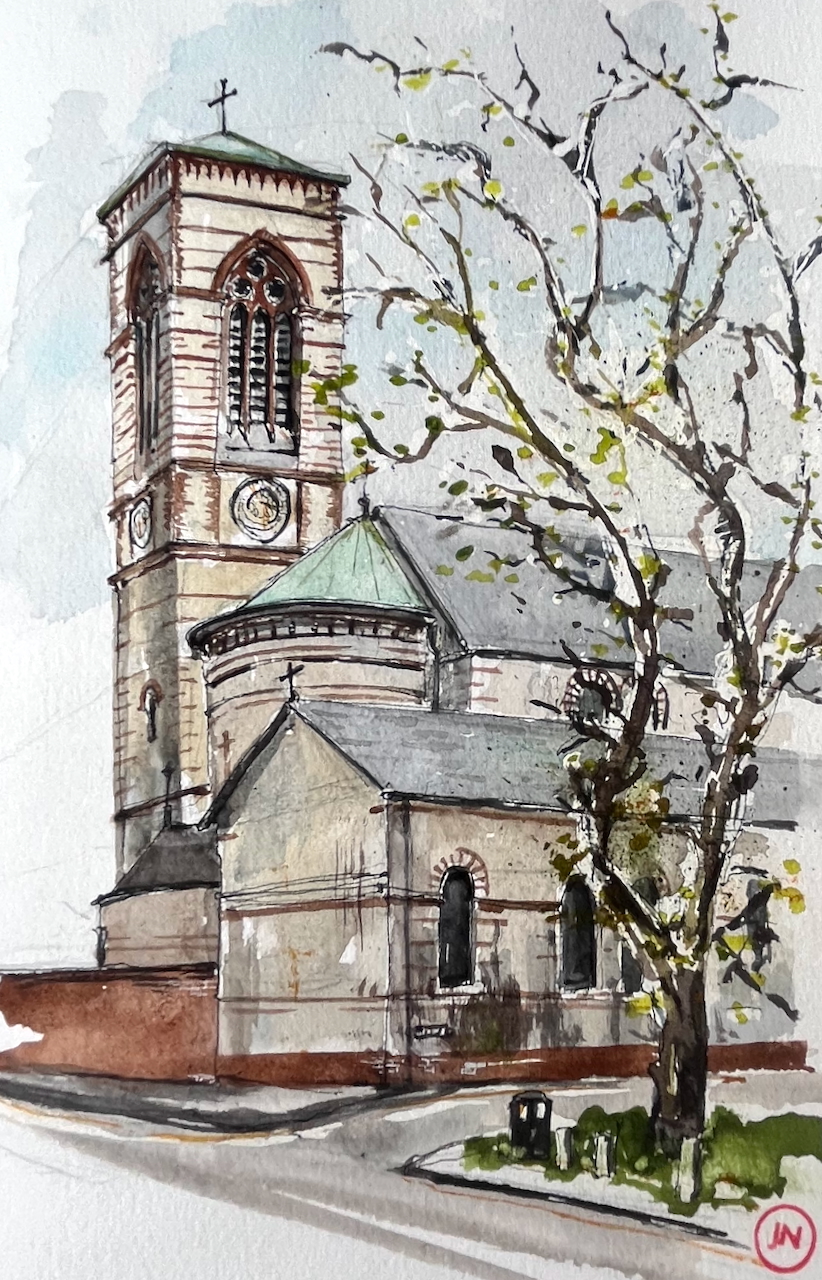
Walking through Jericho on my way to the station, I glimpsed this church tower, and heard its bells. I wove through the small streets until I found it.
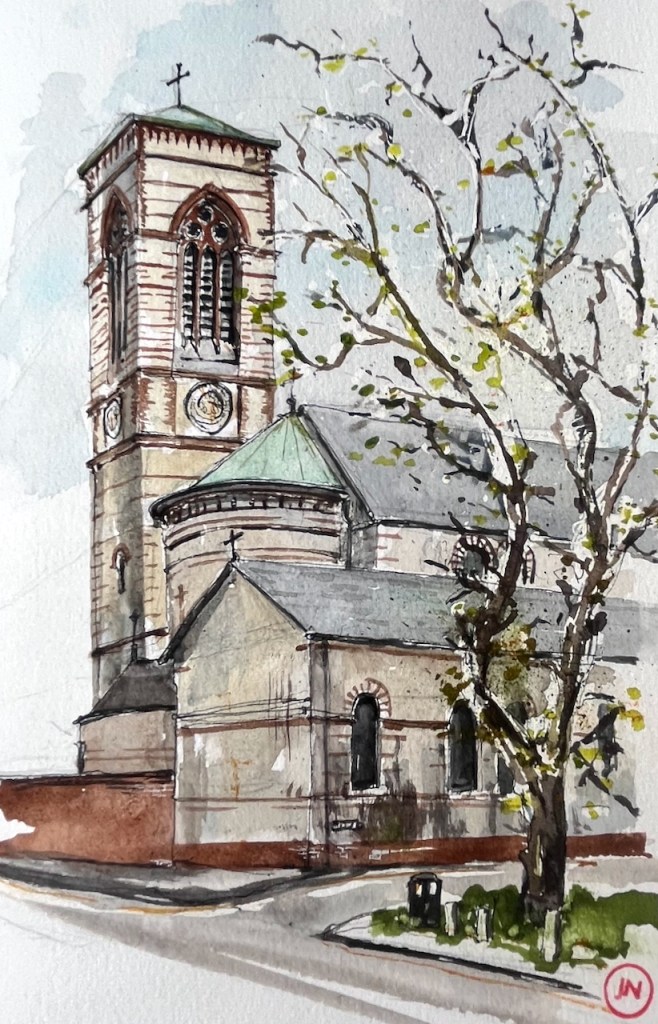
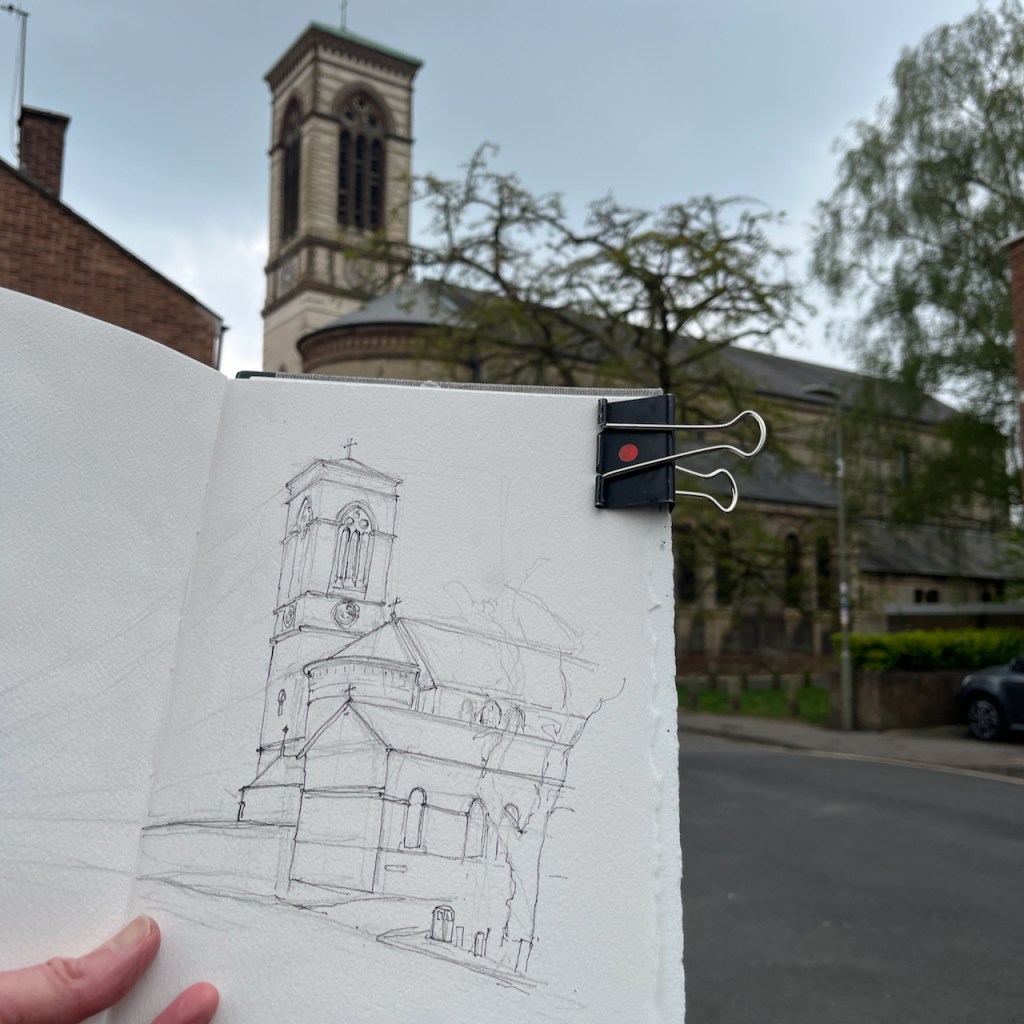
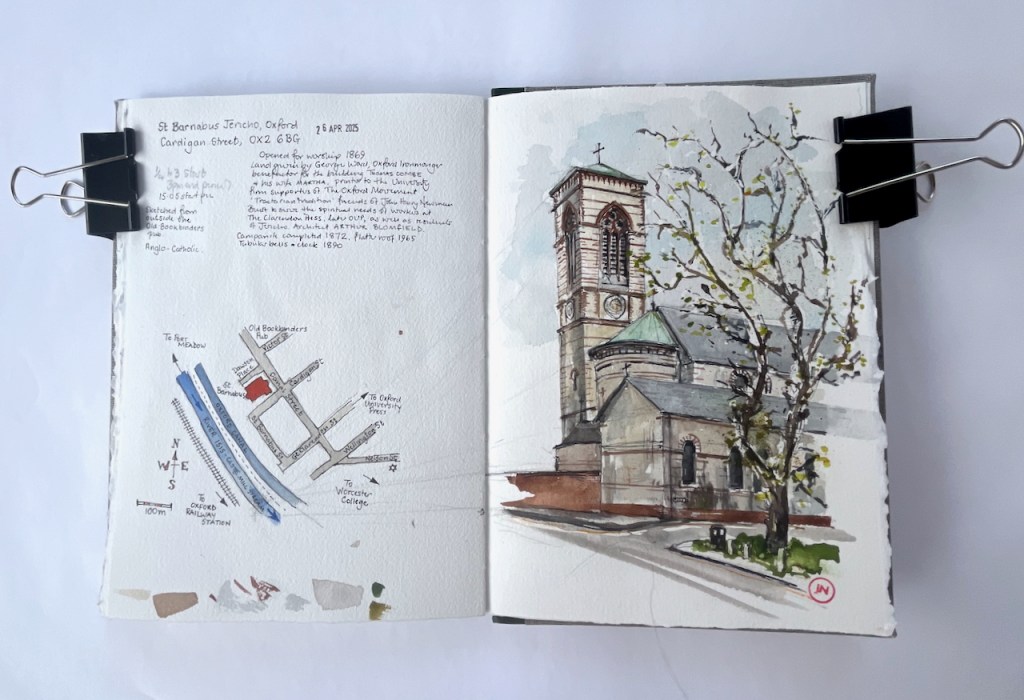
St Barnabus Jericho, OX2 6BG, sketched 26 April 2025 in Sketchbook 15.
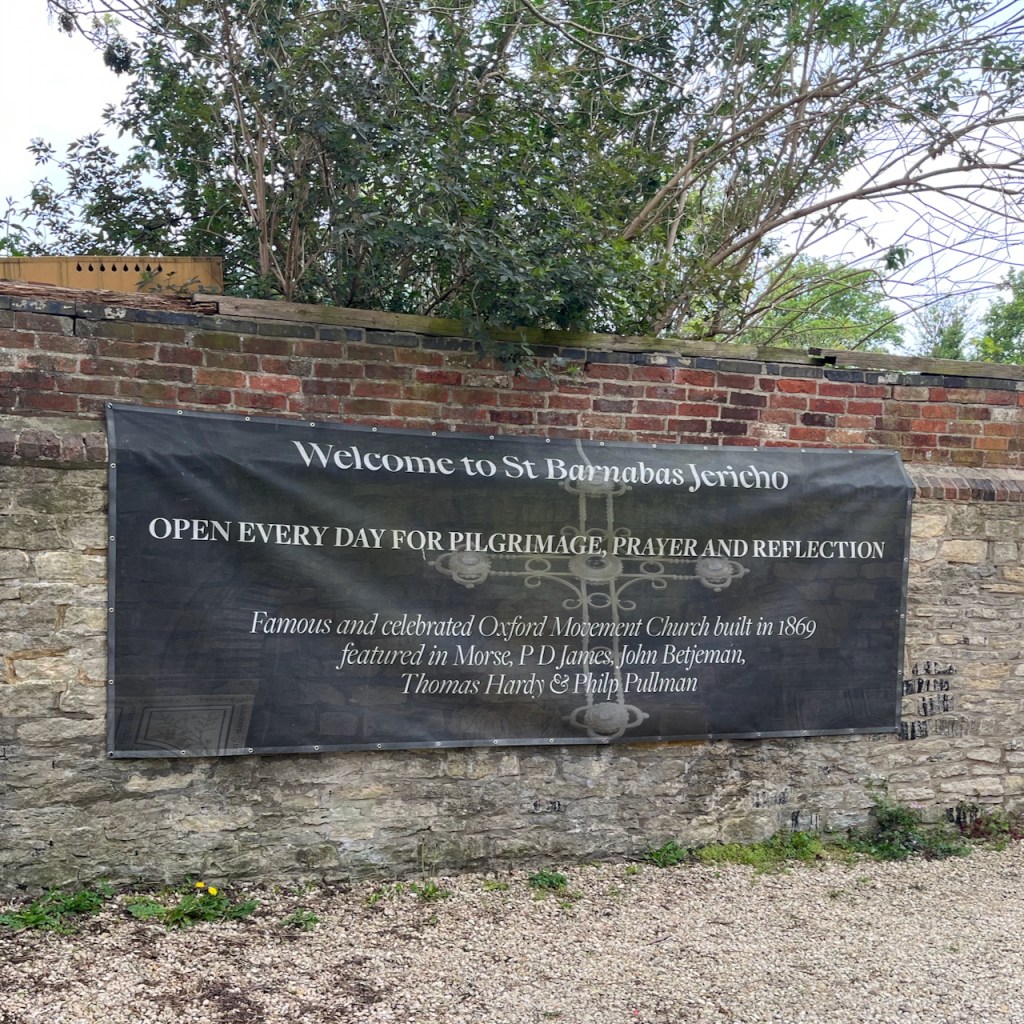
This is St Barnabus Jericho. Its website says that it is also known as “Oxford Basilica”. It was built as the daughter church of St Paul’s, which is the Grecian-style building on Walton Street, now no longer a church1.
St Paul’s is not far away, just the other side of The Oxford University Press. It was opened in 1836, and became part of the “Oxford Movement”. The Oxford Movement was campaign within the Church of England, led by influential clergymen and theologians in the 1830s. They challenged the contemporary way of thinking in the Church, saying that services were too plain, and that much of value from the Catholic tradition had been left behind. They sought to re-instate some of the theology, pageantry and ritual from the Catholic tradition, and they put it into their services. They also had a social calling, drawn to help working people and the disadvantaged.2
As you can imagine, this was contentious: popular with some people, and regarded as suspicious and un-English by others. In the 1830s, the movement flourished in this part of Oxford. The services at St Paul’s became so crowded that another church was needed. In addition, Oxford University Press moved into its huge site on Walton Street in 1830, which brought many workers to the area. So an additional church was created, and this was St Barnabus.
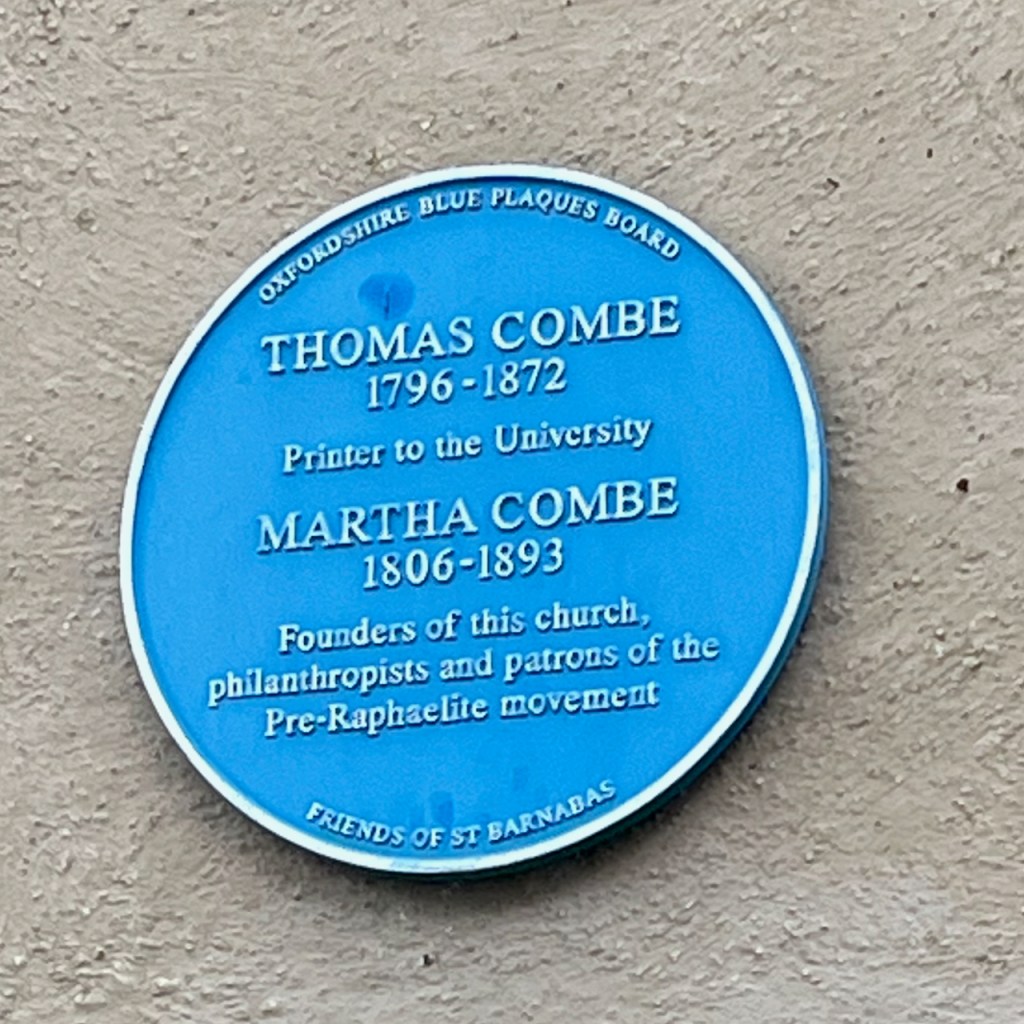
“The land for St Barnabas was given by George Ward who was an Oxford ironmonger, and the benefactor for the Church building was the generous Thomas Combe, Printer to the University, along his wife Martha.” [https://www.sbarnabas.org.uk/history]
St Barnabus opened for worship in 1869, and is flourishing to this day. Inside it is awe-inspiring and uplifting, with its highly decorated walls and vast size.
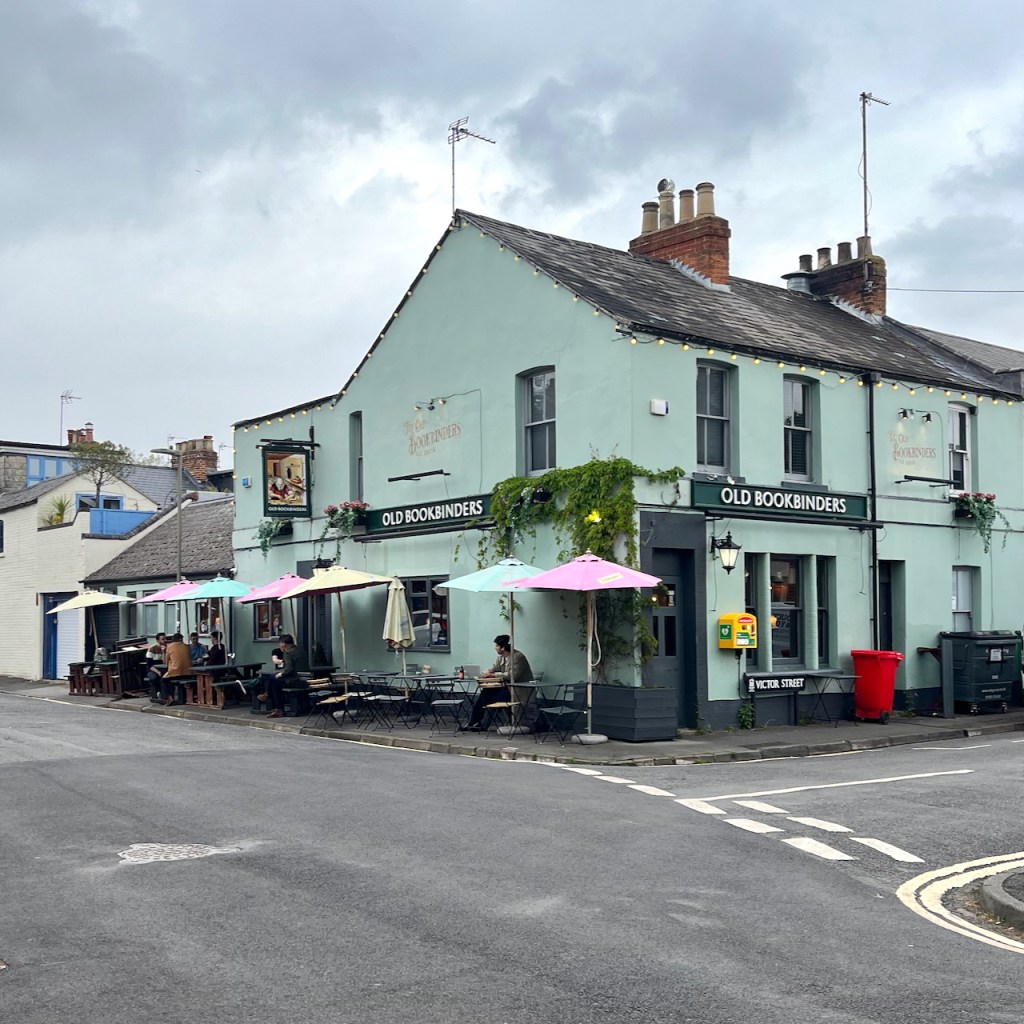
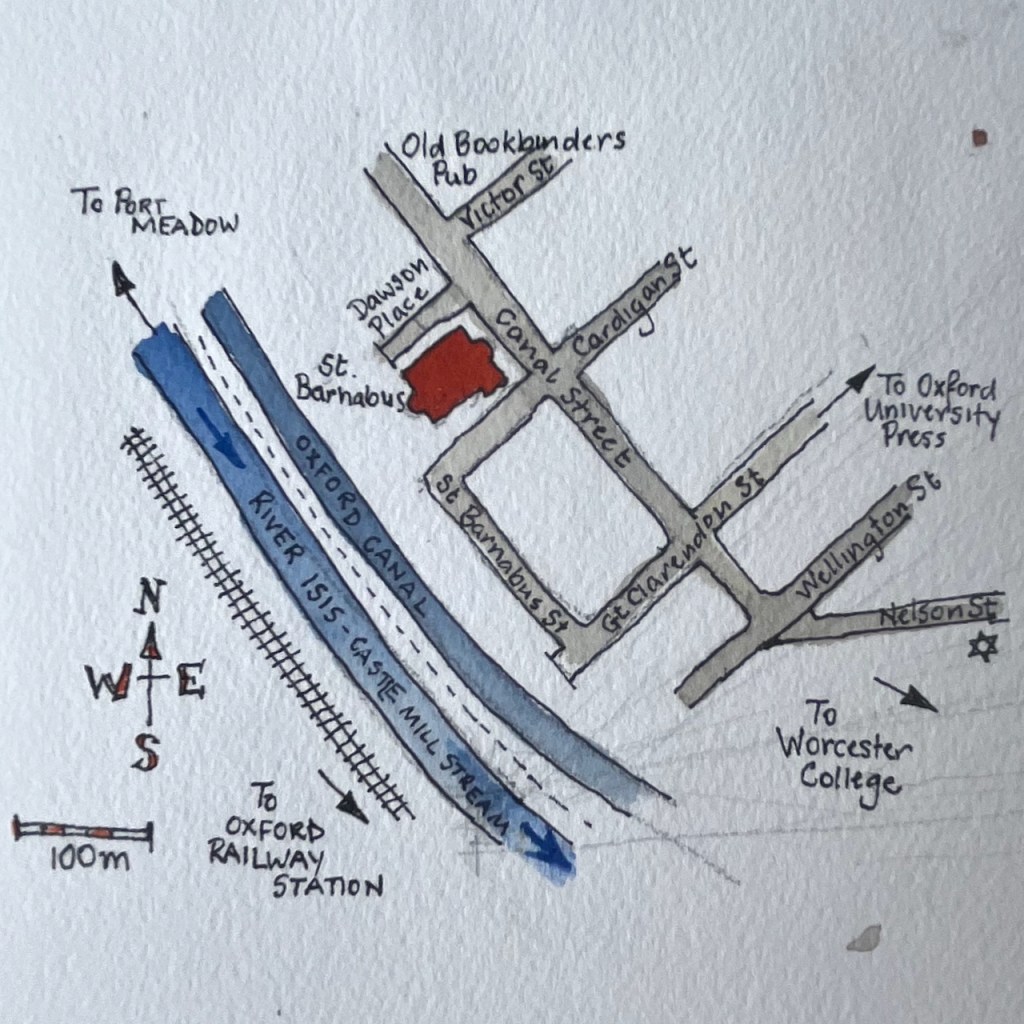
I sketched St Barnabus from outside “The Old Bookbinders” pub, delighted and frustrated in equal measure by the extraordinary detail in that tower. And I was looking at its clock, which informed me of the passing minutes until my train.
I finished the pen-and-ink drawing. Then I walked on, past Worcester College, to the railway station.
Sketchbook spread, St Barnabus Jericho. Sketchbook 15.
Footnotes
St Paul’s: the impressive Grecian temple building on Walton St is no longer a church, but the “St Paul’s” name lives on. I’ve done an earlier sketch which shows St Paul’s Nursery, still very much in operation and part of Somerville College. ↩︎
Oxford Movement: This is my non-specialist summary of a significant and complex theological and social movement. For a proper description see, for example the Wikipedia Article, or this glossary article.↩︎
Click a button below to share this post online, email it, or print it:
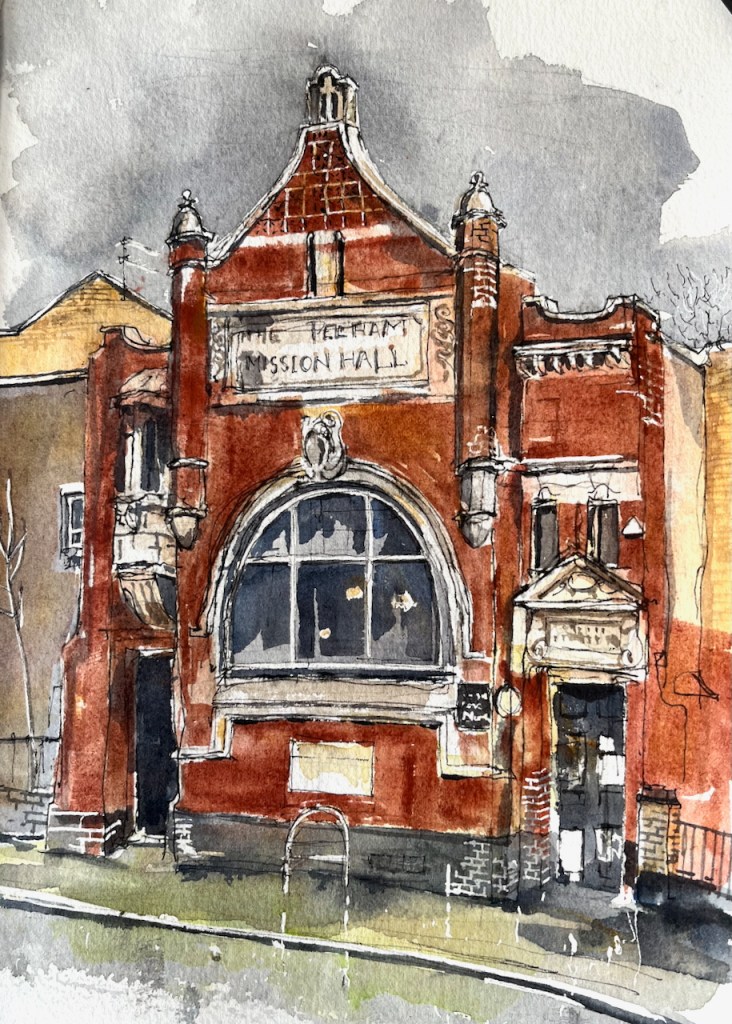
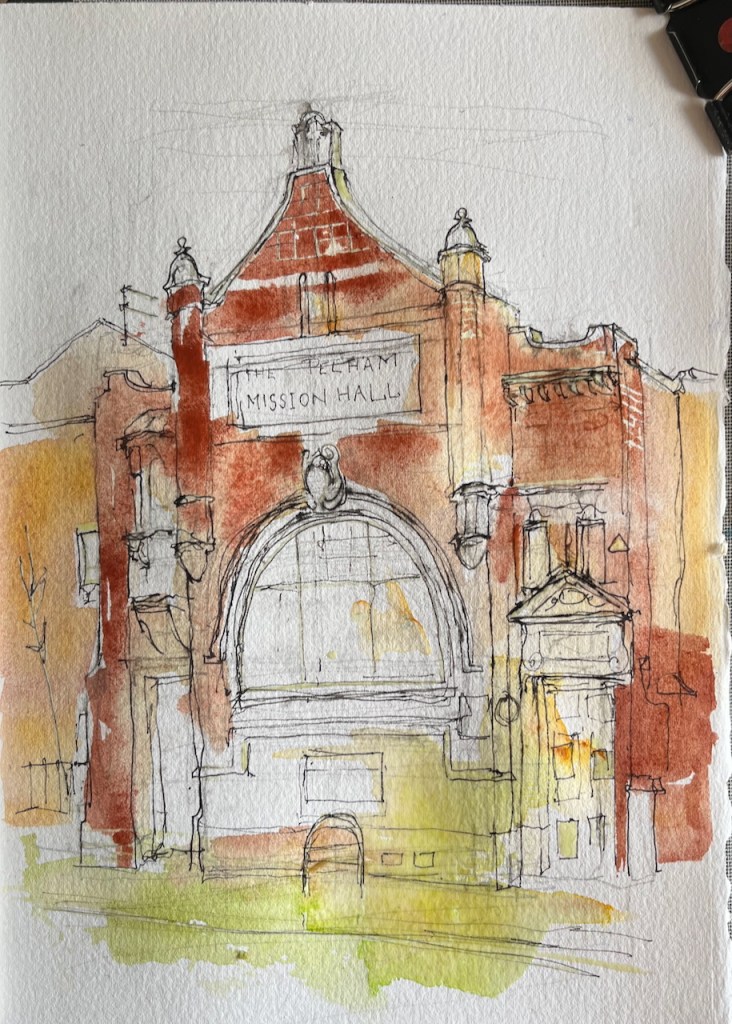
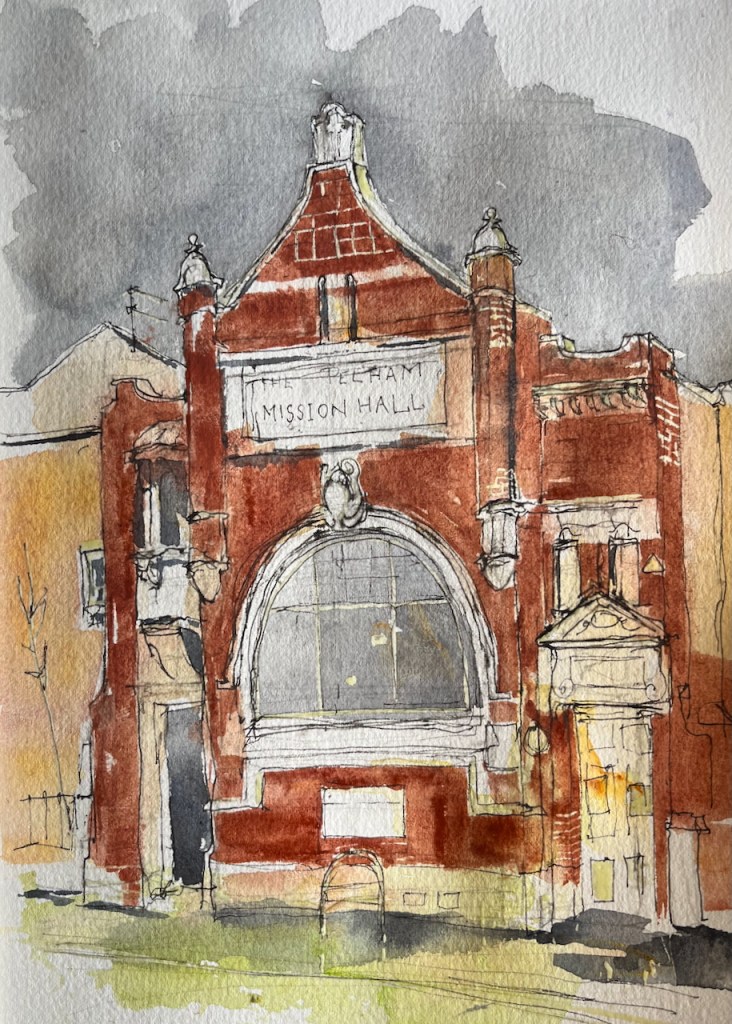
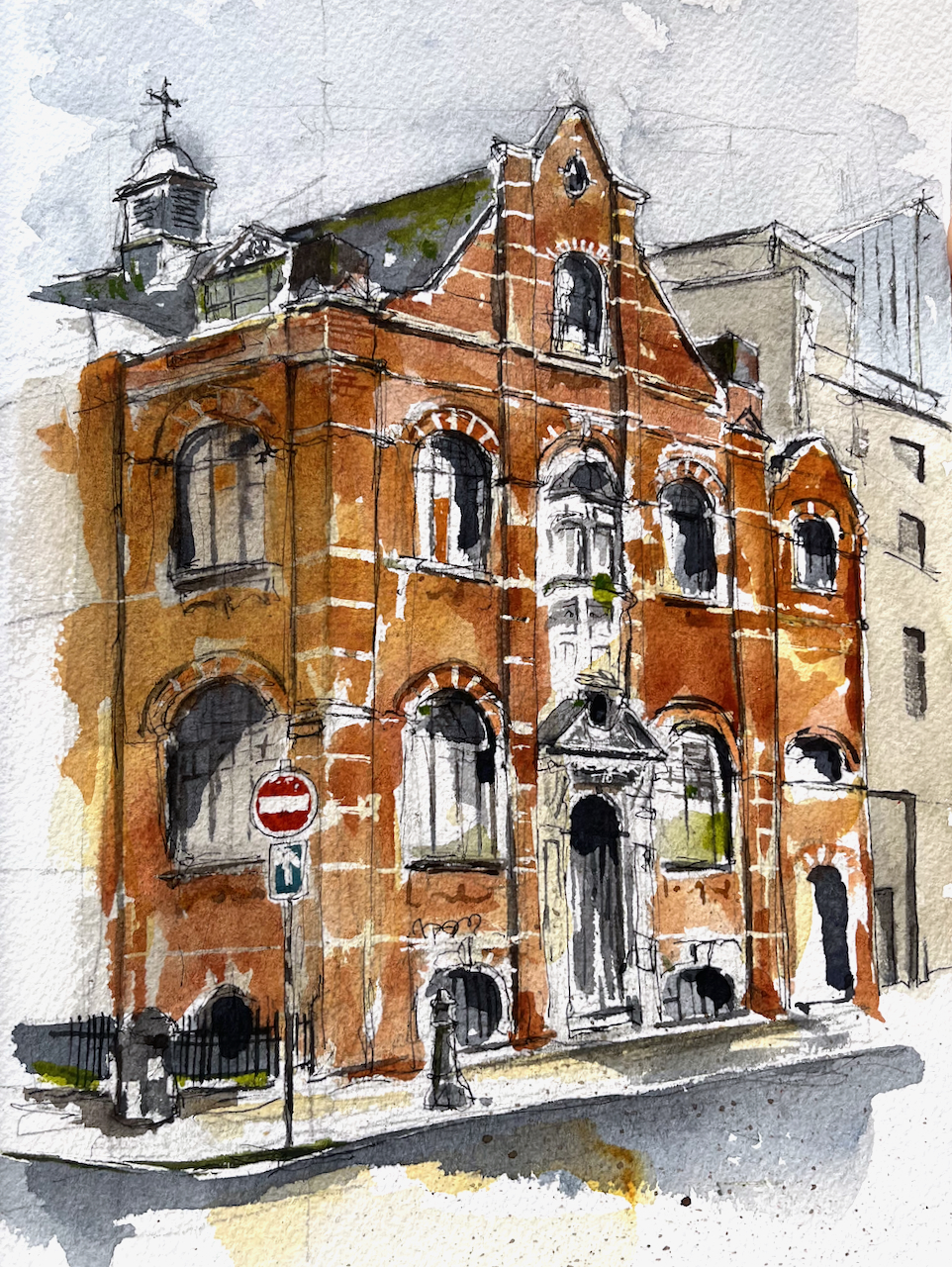
This ornate building stands out amongst the plain and functional housing along Lambeth Walk. I walked past it on my way to the Vauxhall Tea House.
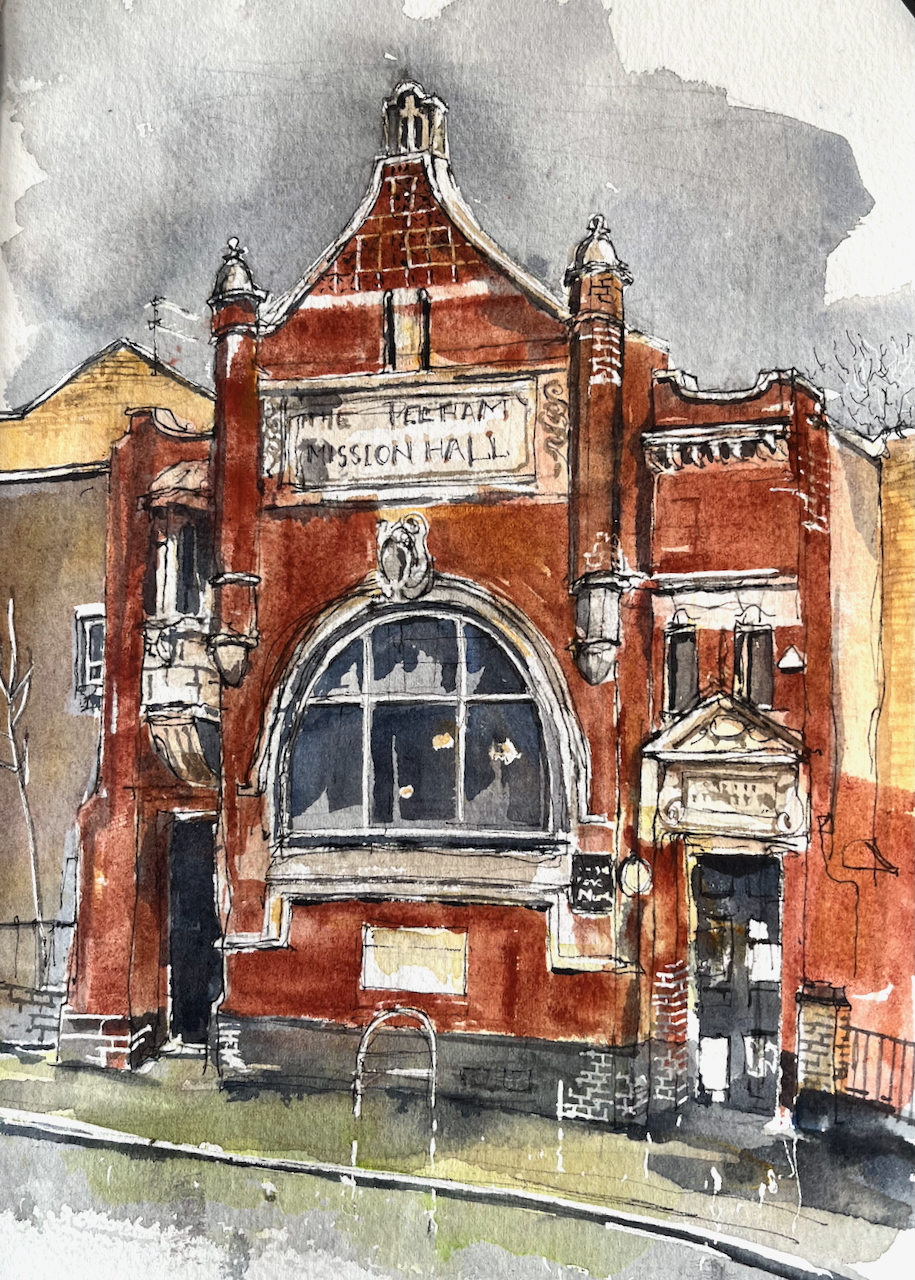
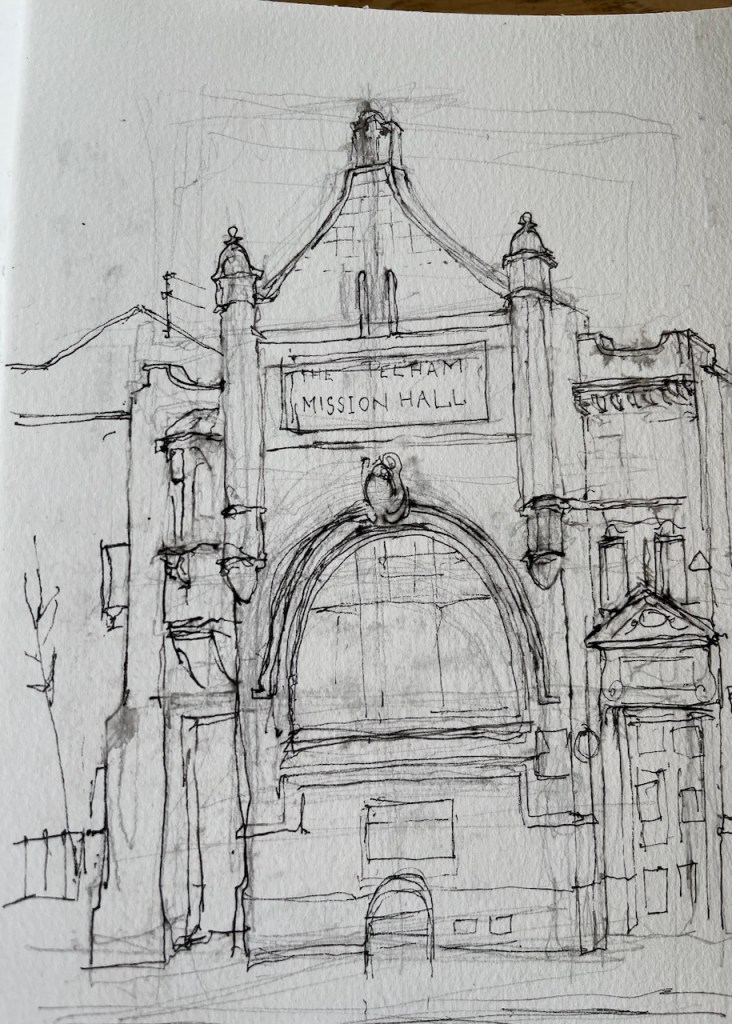
Pelham Mission Hall, Lambeth Walk, Lambeth SE11. in Sketchbook 15, 26 Feb 2025
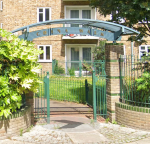
Canopy
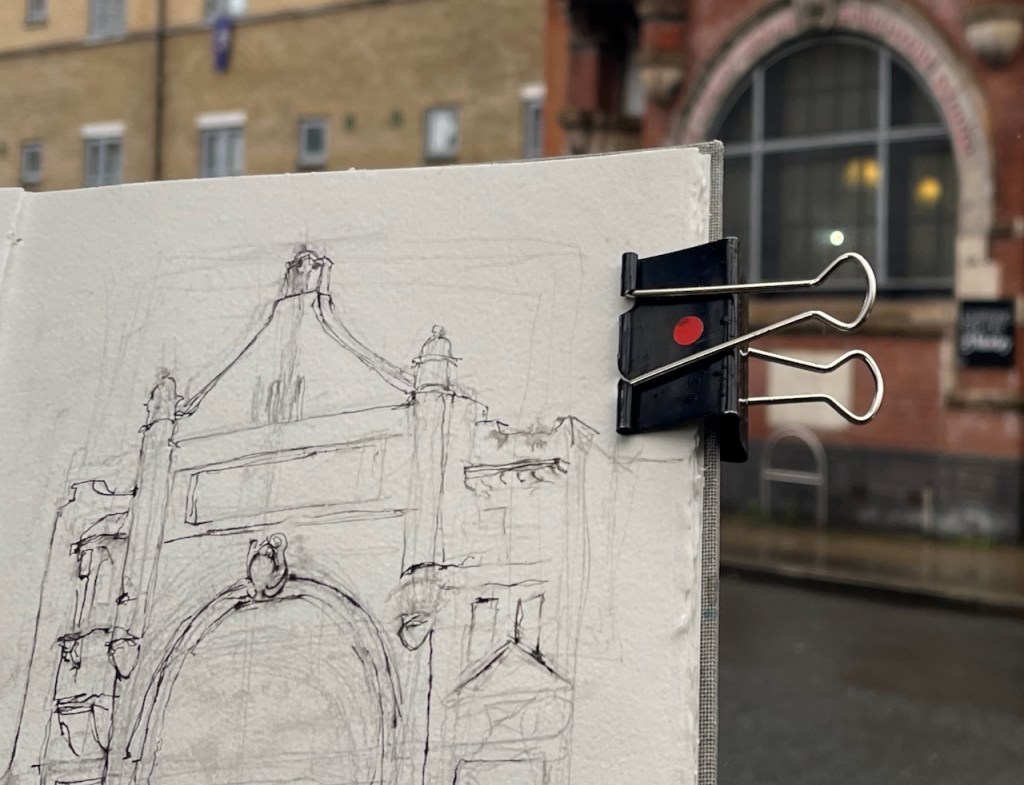
Rain threatened, but I started the sketch anyway. I was sheltering underneath a sort of canopy on the opposite side of the road. This canopy had the significant disadvantage that it was perforated with a pattern of decorative holes.
I sketch using a pen which has waterproof ink. The ink is waterproof once ithas dried. But if I try sketching when the paper is wet, the ink runs. I continued until the pen protested that it couldn’t make marks under these conditions.
The paper I use is Arches Aquarelle. It is “heavily sized”, which means it throws off the water, at least at first. But after sustained drizzle, it starts to become absorbent.
All these things started to happen. The paper became spongy. The pen spluttered. Rain sneaked through the perforated canopy and dripped down the inside of my coat. Water slid off the leaves into my bag. I tried to wrap the sketchbook up and I crammed it into my backpack. I have a waterproof backpack. It was already wet on the outside. Now it was becoming wet on the inside. I stood in the rain and considered. I breathed using a yoga technique. Yoga breathing techniques are quite effective in the rain. There was a rhythm to the drips.
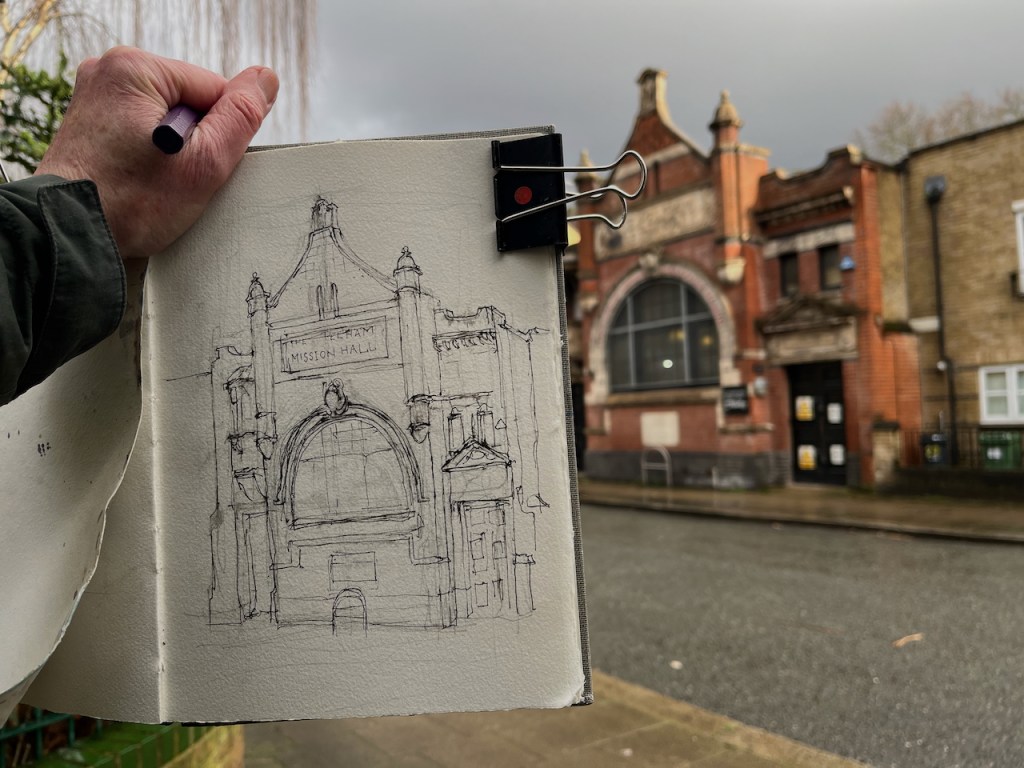
Then the rhythm slowed. Perhaps I could just do a bit more drawing? Slowly, I extracted and unwrapped my book. I flicked the pen to get the ink to flow again. I made each pen stroke count.
The rain eased enough.
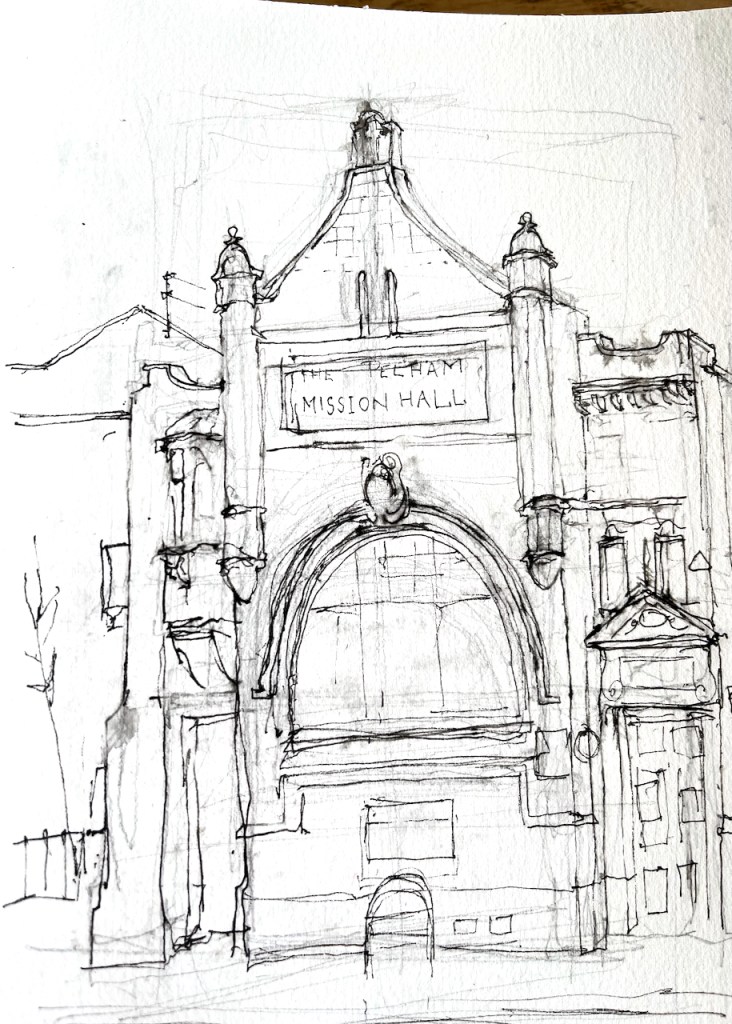
This was as far as I got.
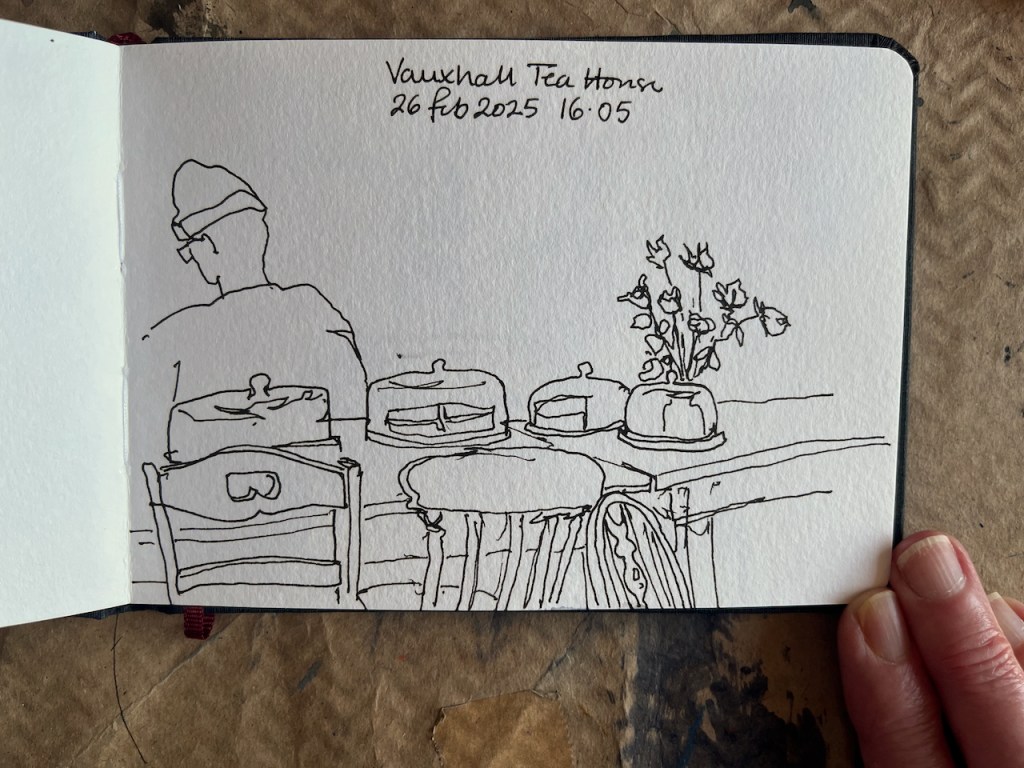
Then I went to the Vauxhall Tea House to warm up.
I finished the drawing of Pelham Mission Hall later at my desk.
1.ink2. Early wash3. More washes4. Final detail
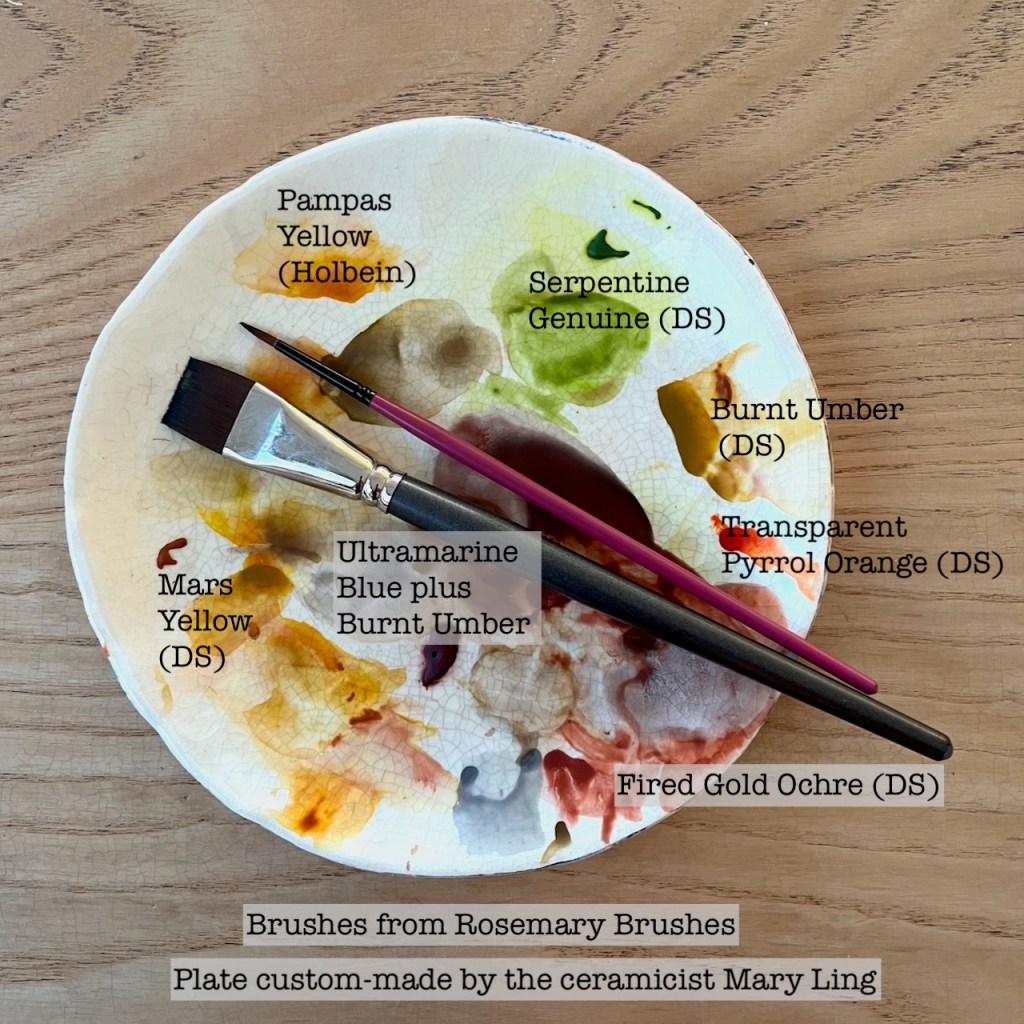
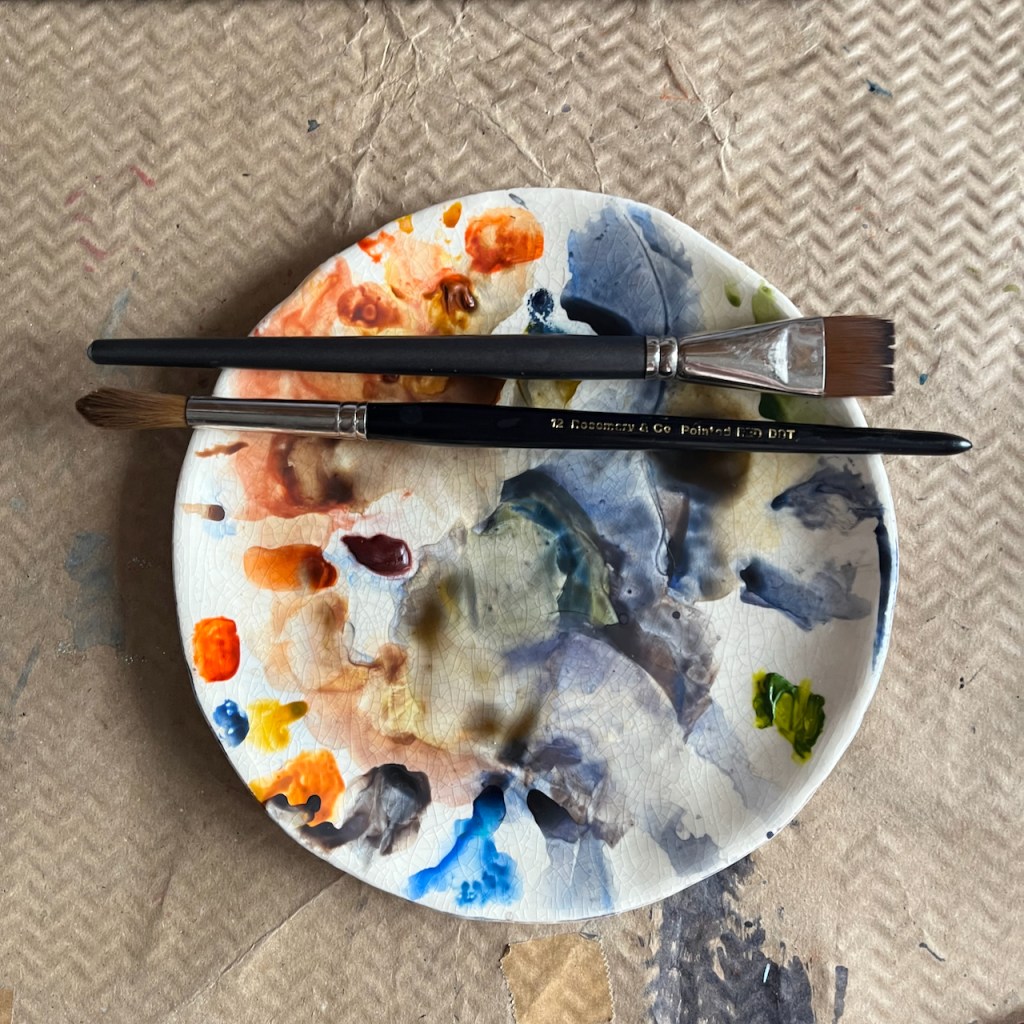
Here are the colours I used:
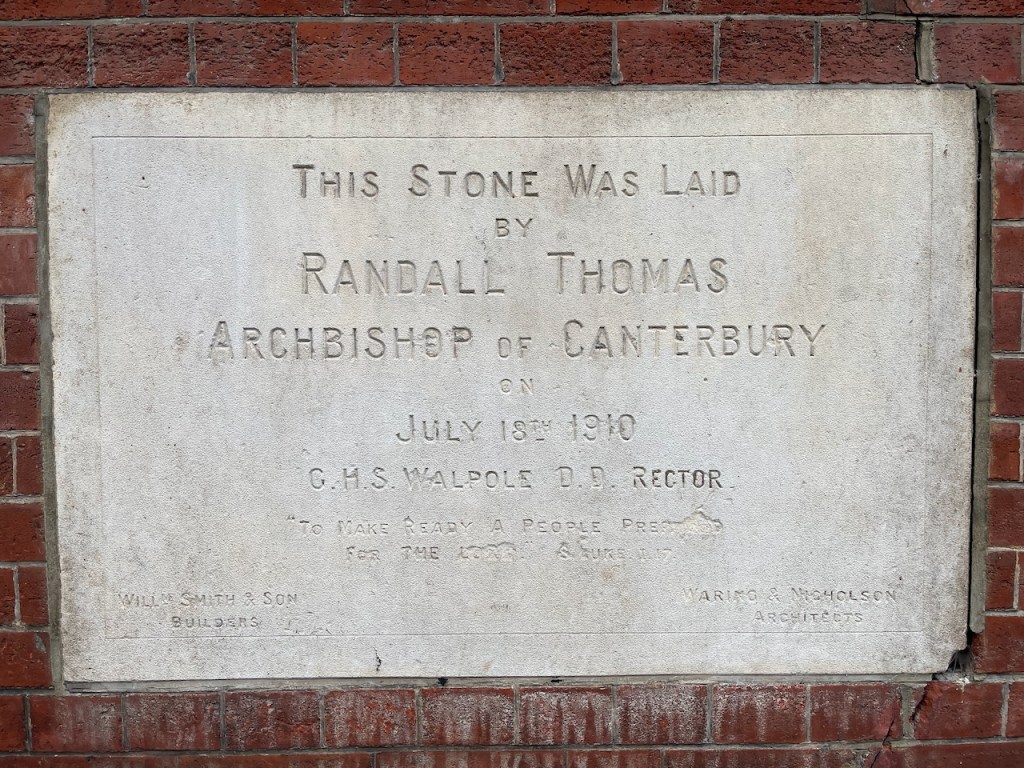
Pelham Mission Hall was completed in 1910. The text on the big stone slab under the window tells me this.
Foundation stone: This stone was laid by Randall Thomas, Archbishop of Canterbury, on July 18th 1910. G.H.S. Walpole D. D. Rector. “To make ready a people for the Lord” Luke 1.17 Waring and Nicholson architects. William Smith and Son Builders.
Buildings often have a foundation stone. Usually they just say who, and when. This one also says why. Its mission, as stated on the stone, was “To make ready a people for the Lord”. This is a line from a verse in St Luke’s gospel in the Christian Bible. The context is this:
And he shall go before him in the spirit and power of Elias, to turn the hearts of the fathers to the children, and the disobedient to the wisdom of the just; to make ready a people prepared for the Lord.
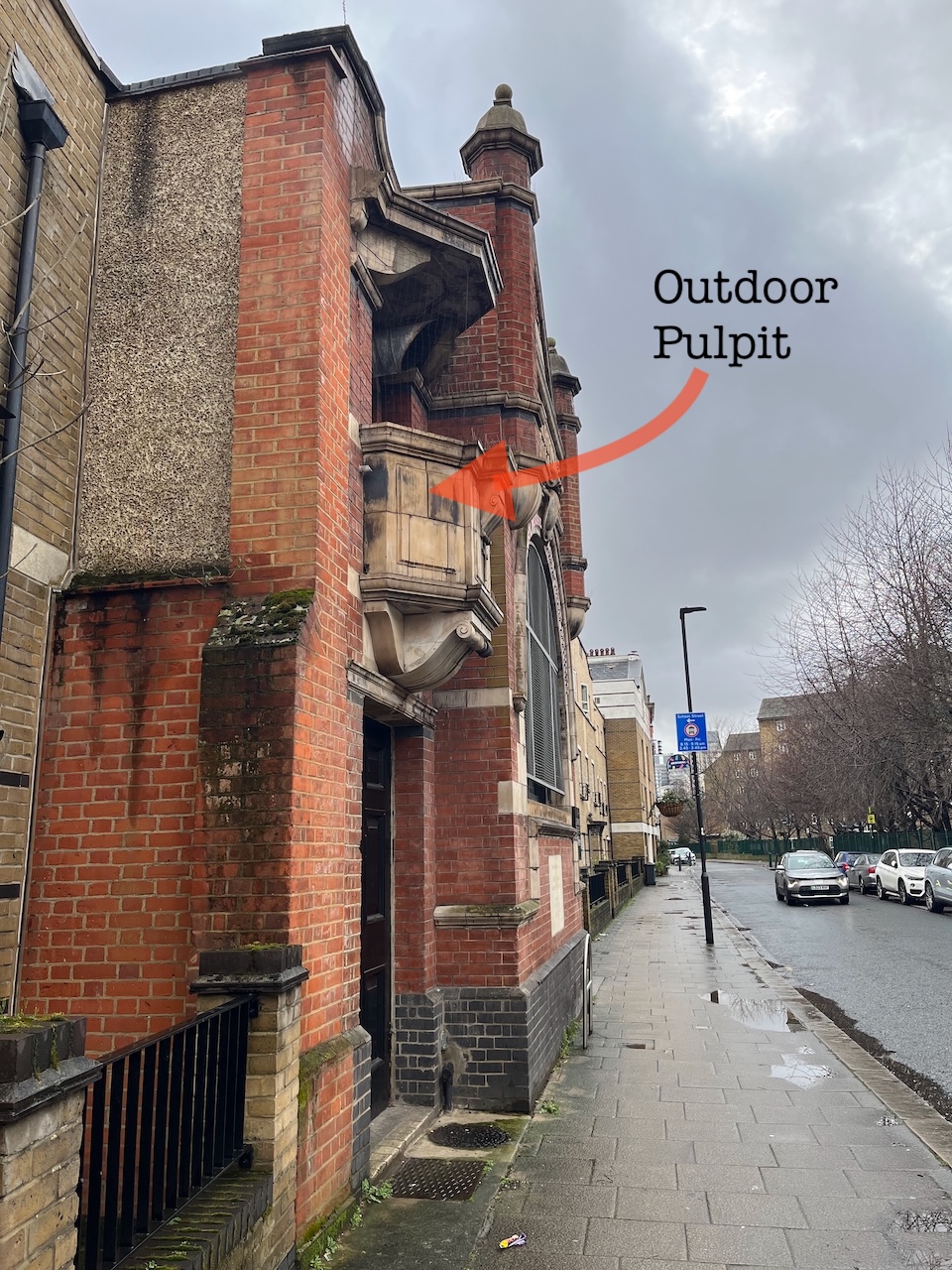
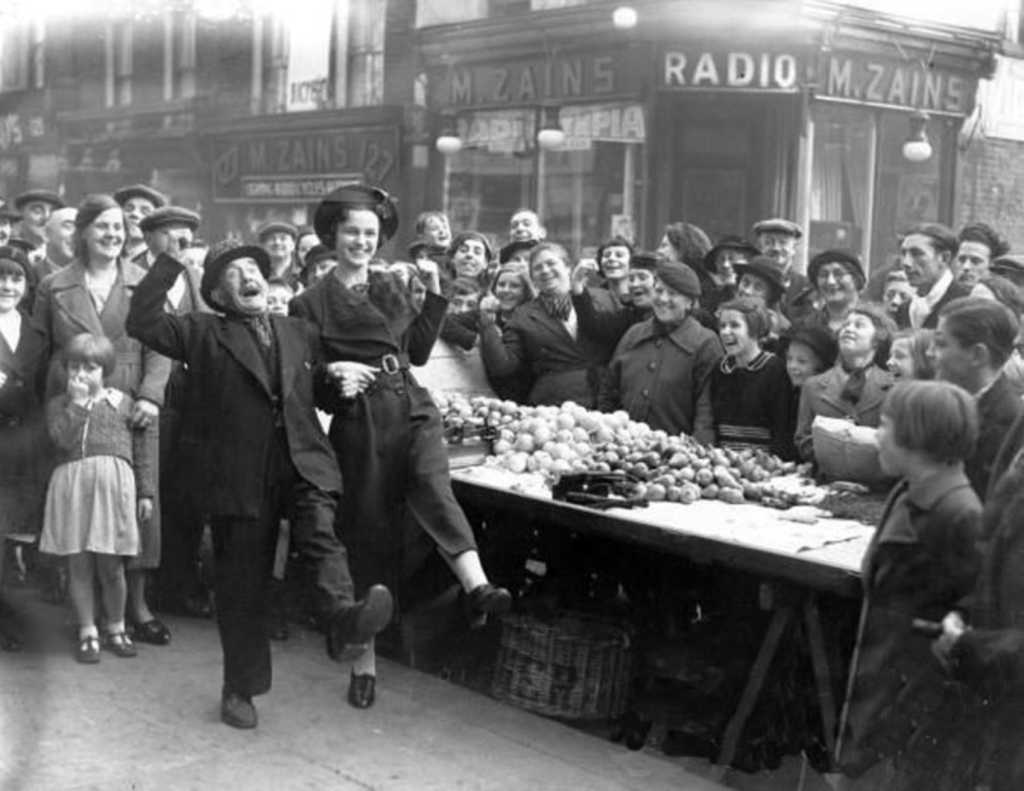
This building was created as an urban missionary post. There was a street market along Lambeth Walk at the time, and up to the 1960s. 2 I imagine the missionaries preaching from their outdoor pulpit to the street traders and their customers. It must have been hard for the preacher to make themselves heard.
View of the Pelham Mission Hall showing the covered outdoor pulpit. Photo (c) JaneSketching, February 2025Picture taken in Lambeth Walk in the 1938, entitled ‘A Crowd Looks on as Miss Dipper Does the Lambeth Walk with Billy Pease the Peanut and Toffee King’. 3
The Hall is named for Francis G. Pelham 1844-1905, 5th Earl of Chichester, educated Eton and Cambridge, who was rector of Lambeth 1884-1894. 4
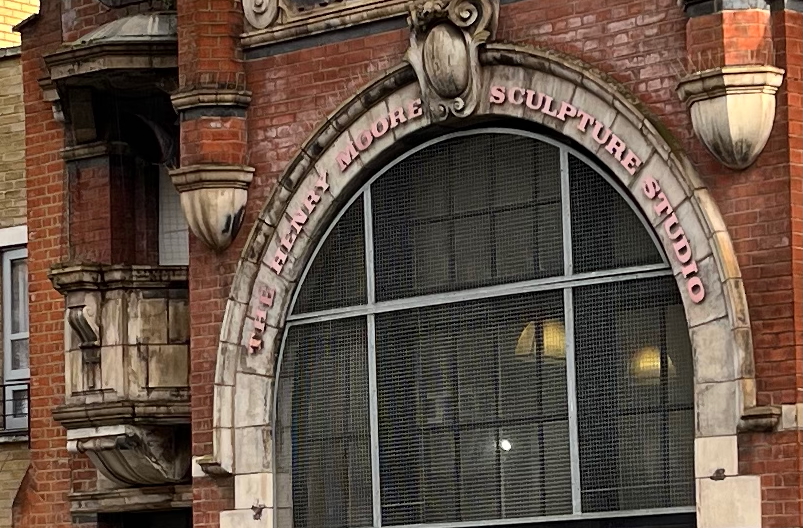
The building is now the “Henry Moore Sculpture Studio at Pelham Hall” part of Morley College. The sculptor Henry Moore donated a small sculpture to Morley College in 1977, which was sold at auction and helped to raise money for the lease of Pelham Hall. In return, the College named the sculpture studio after him, as written on the front of the building5.
Pelham Mission Hall, now The Henry Moore Sculpture Studio. The outdoor pulpit is on the left.
A ventilation pipe from the sculpture studio now exhausts through the outdoor pulpit.
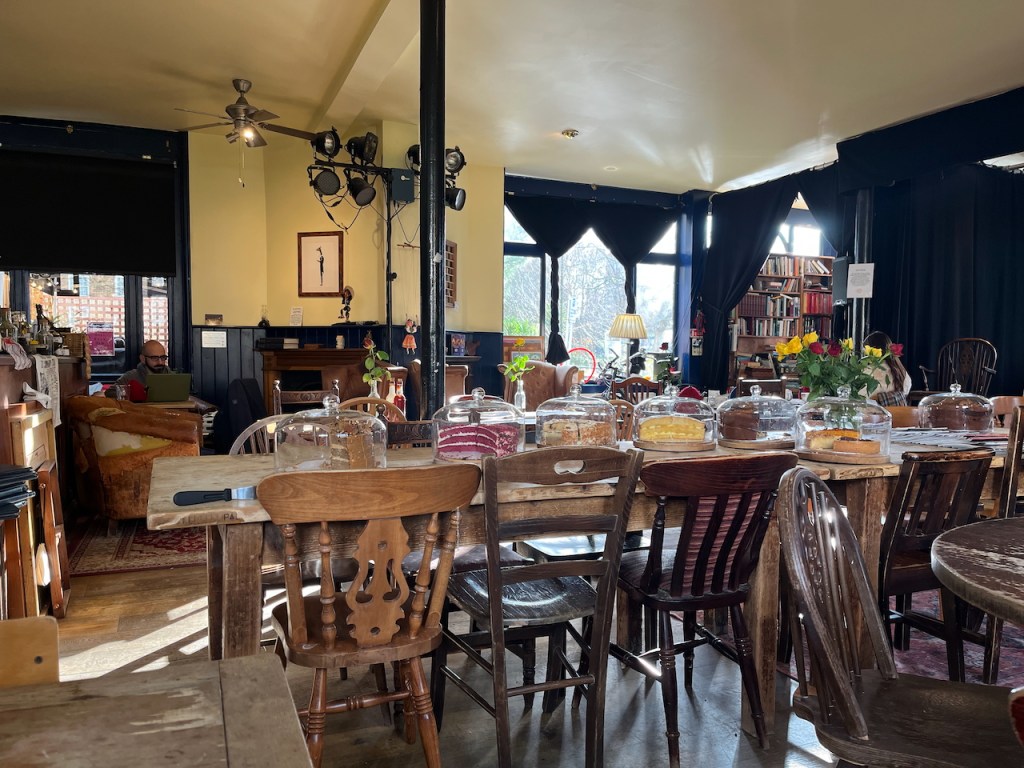
While I was in the Vauxhall Tea House, the sun came out. It was calm in there. A few moments of paradise.
I find the King James’ version here a little ambiguous here in the pronouns. Who is the “he”, who is the “him”? A modern translation: ‘John will prepare the people for the Lord to come to them. The Holy Spirit will lead John as he led Elijah. John will do powerful things as Elijah did. He will help fathers to love their children. He will teach people who do not obey God. Then they will know what things are right. And they will do them. Then they will be ready when the Lord comes.’. Translation: “The Easy Bible”. Thank you to http://www.biblegateway.com for sorting that out. ↩︎
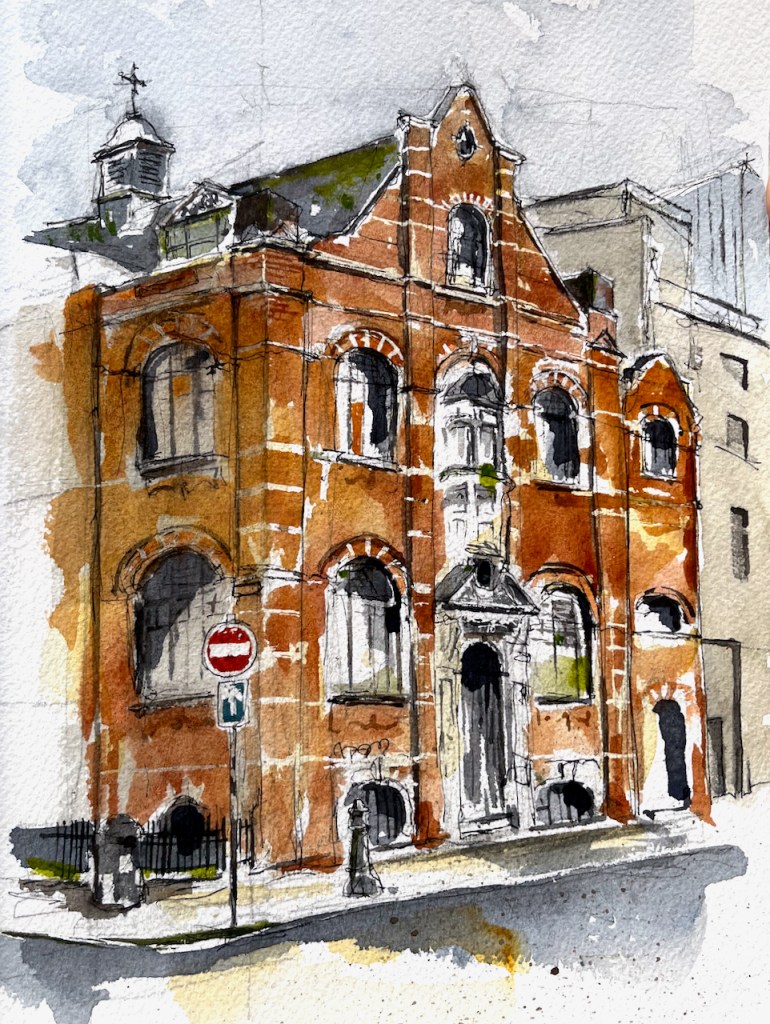
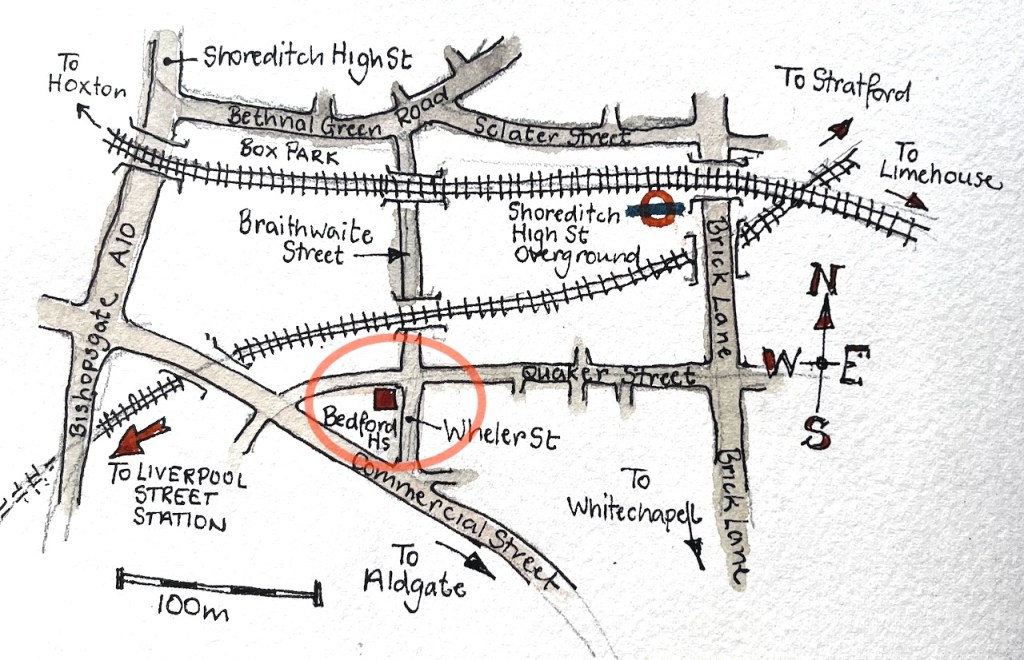
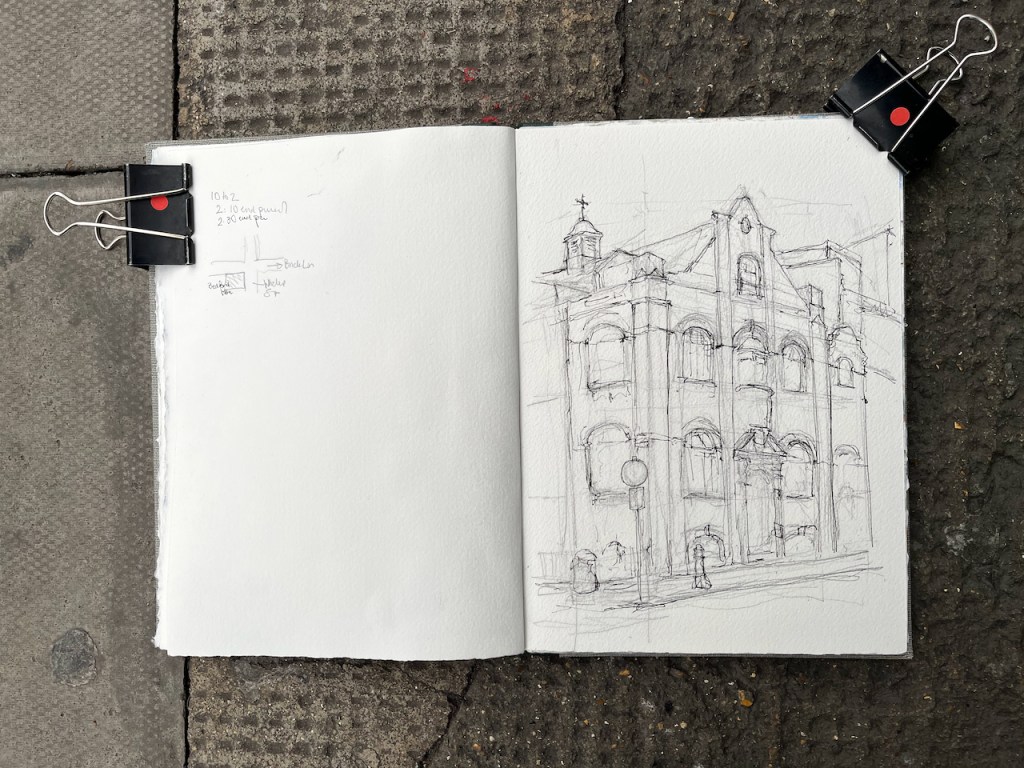
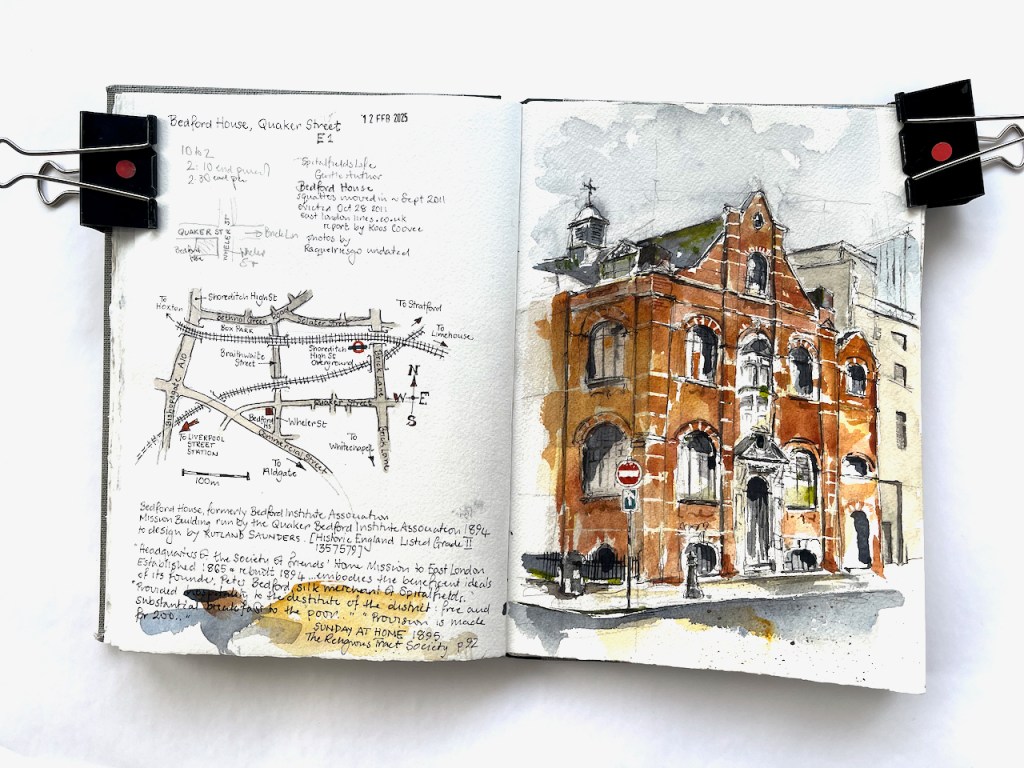
This magnificent building is on the corner of Quaker Street and Wheler Street, in east London, near Liverpool Street Station.
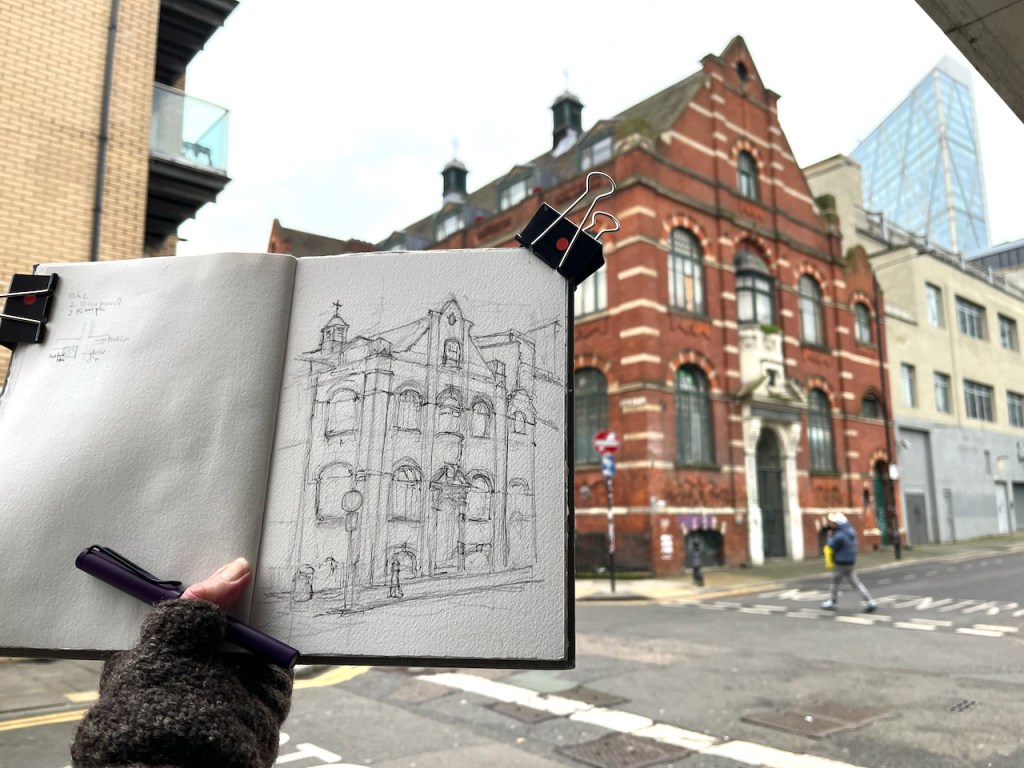
Bedford House, Quaker Street. Sketched 12 February 2025 in Sketchbook 15
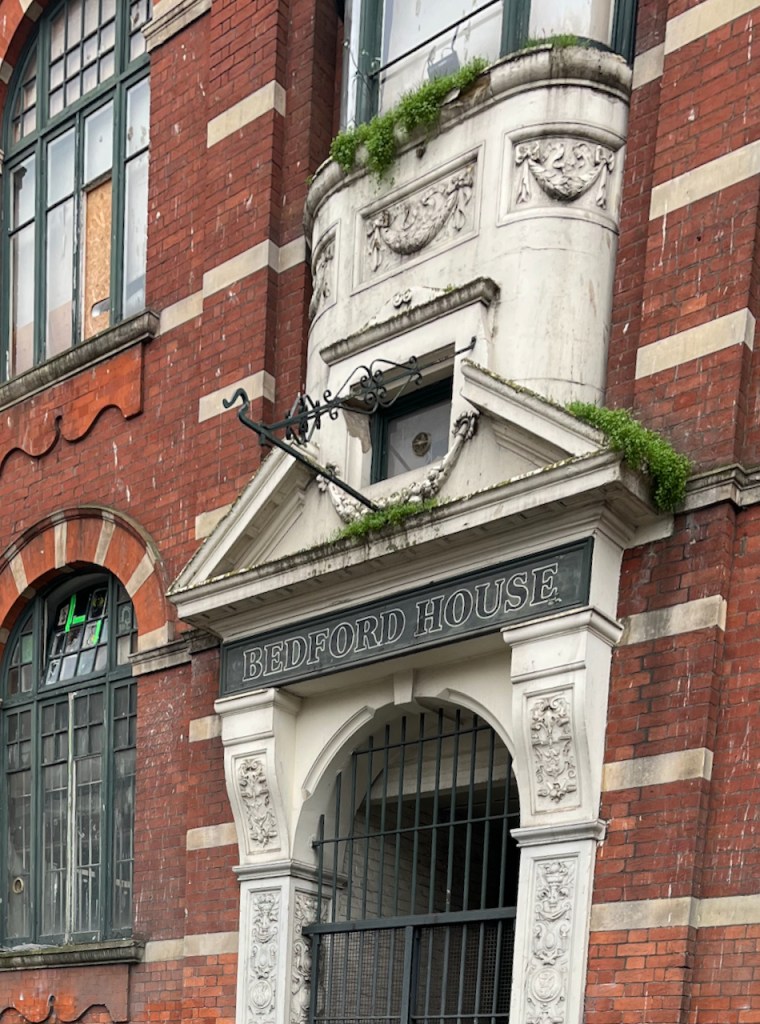
It is intriguing: grand but dilapidated. Grass grows from the ledges, windows are broken and patched. The front door is blocked with a waste bin. But it has style.
At one time it was bright, new, clean and purposeful. This was the headquarters of a Quaker mission in east London: the Bedford Institute Association. It was built in 1894 replacing a previous building.
The lofty, picturesque, red-brick building, with its gables and tall roof, is constructed and equipped with solidity, and liberality and far-sightedness which distinguish all the admirable buildings erected by the trustees.”
“Sunday at Home” published by the Religious Tract Society, 1895, Volume 42, page 92
This issue of “Sunday at Home” published in 1895, goes on to describe the work which was undertaken in the building, which was less than a year old at the time of writing. Its purpose was to provide hospitality and education for the destitute of the locality.
“The Sunday begins with a well-planned hospitality to the destitute of the district – a free and substantial breakfast to the poor whose poverty is nowhere seen in a more aggravated form than in Spitalfields.
Provision is made for two hundred, who are supplied with tickets of admission by those who well know the district […] The large lower room in which they are received and comfortably seated is built for purpose, and is itself a lesson in cleanly living as well as of hospitality. The needful ventilation of a room crowded by two hundred guests, entirely devoid of any resources for personal cleanliness, is supplied by rapidly revolving steam fans placed over the doorways…
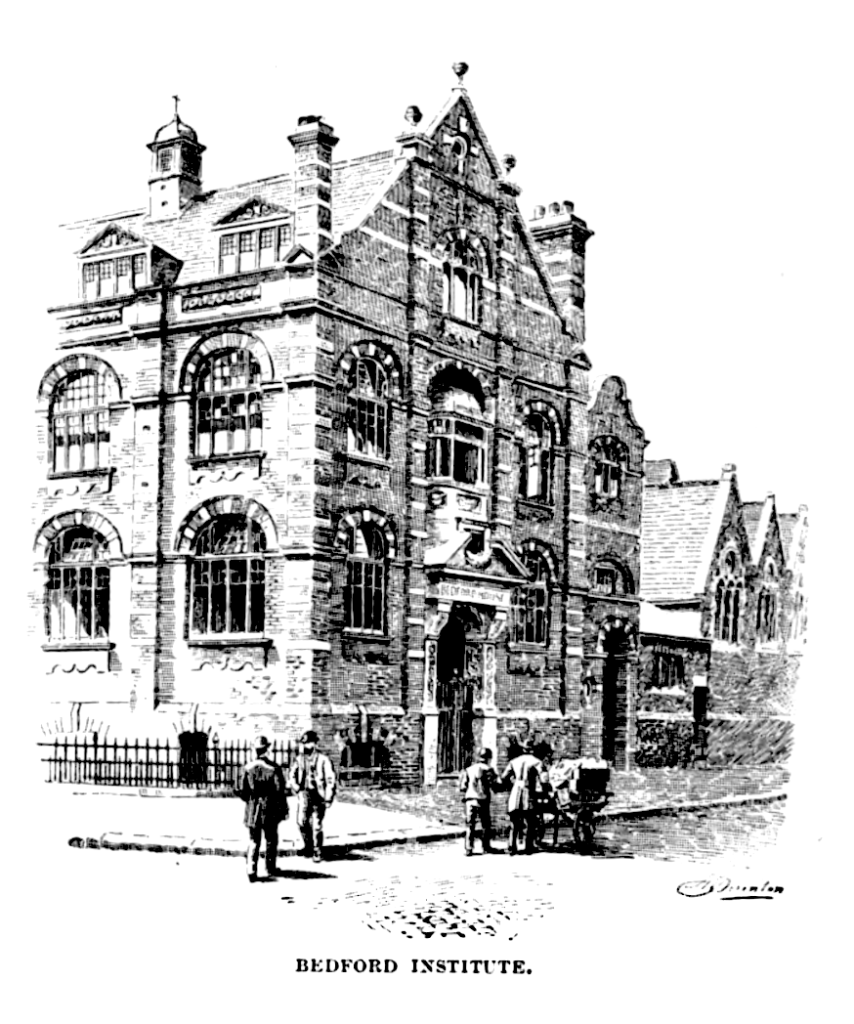
The article contains a picture, drawn from almost exactly the same spot where I was standing:
At that time there were tall chimneys on the front corners of the building, now reduced to stumps, as you see in my picture. Otherwise the building looks unchanged, on the outside at least. Even the cast-iron railings, centre left, are still there. The adjacent buildings on the right, with the ecclesiastical pointed windows, have been replaced by modern buildings, taller and boxier, with rectangular windows.
Although I was able to read in detail about the use of the building in 1895, I have been unable to discover much of its more recent history. In 2011, for a few months, squatters lived there. “The Gentle Author” visited the house during their occupation1 A photographer, Raquel Riesgo, documented her life during the squat. The squatters were evicted on October 28th 2011.
But what happened next? This building was created to serve destitute people in Spitalfields. Does it continue its mission?
If anyone knows what’s happening there now, I’d be really interested. Please comment below or get in touch.
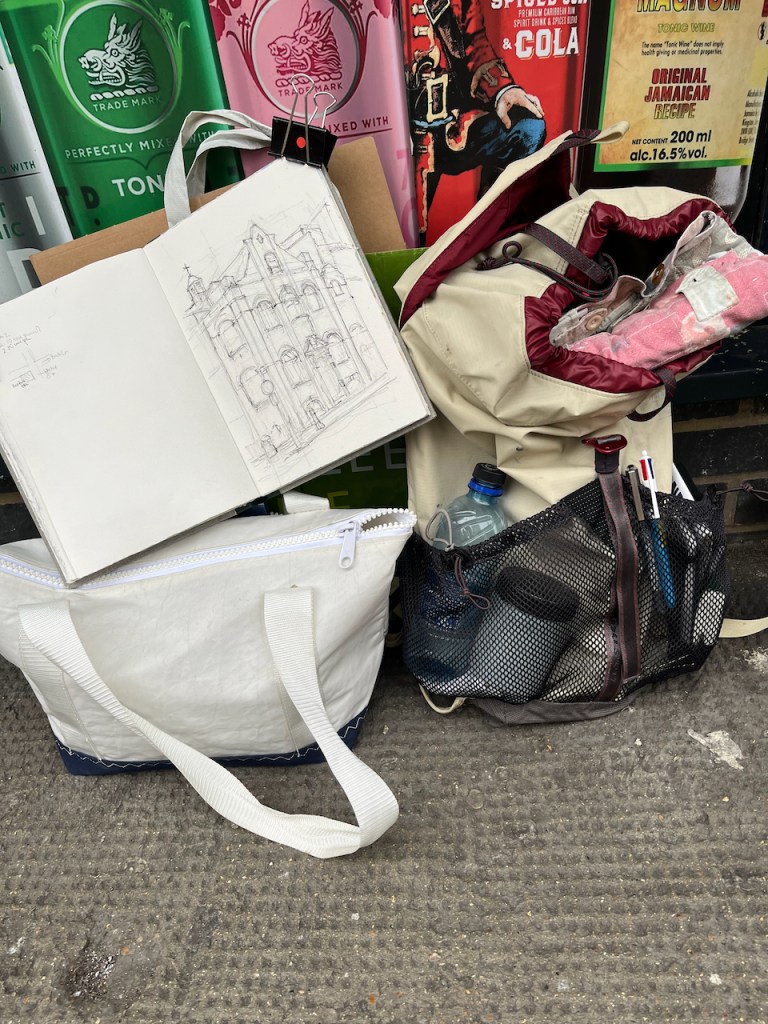
Sketching in Quaker Street, 12th February 2025Adding the colour at my desk.
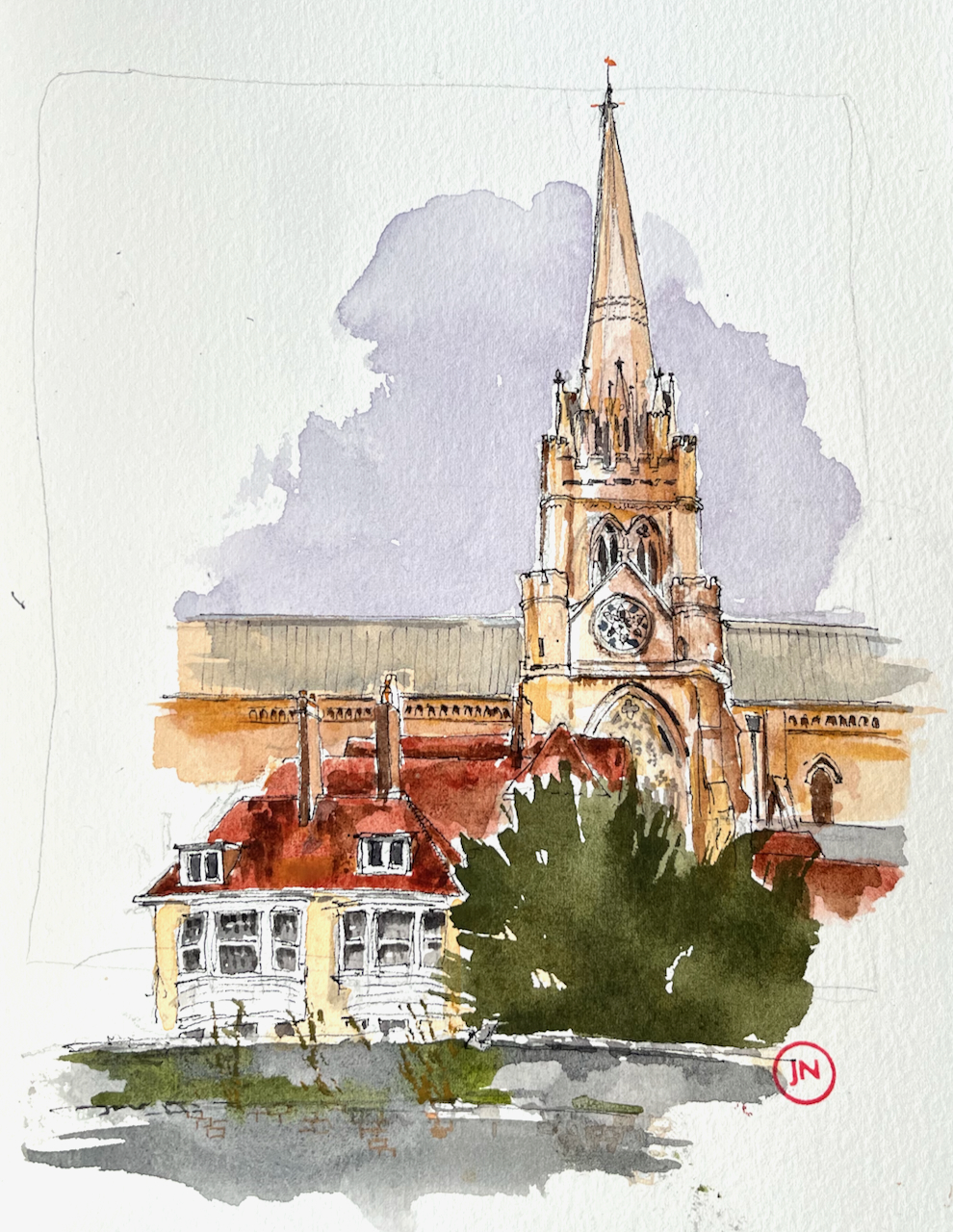
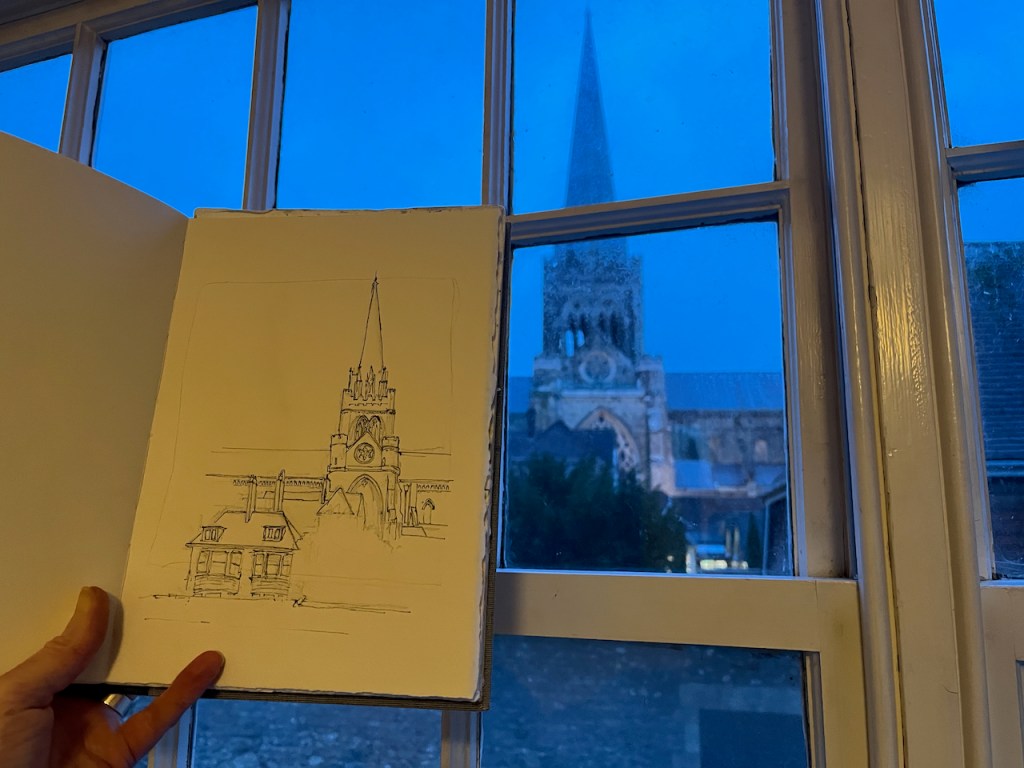
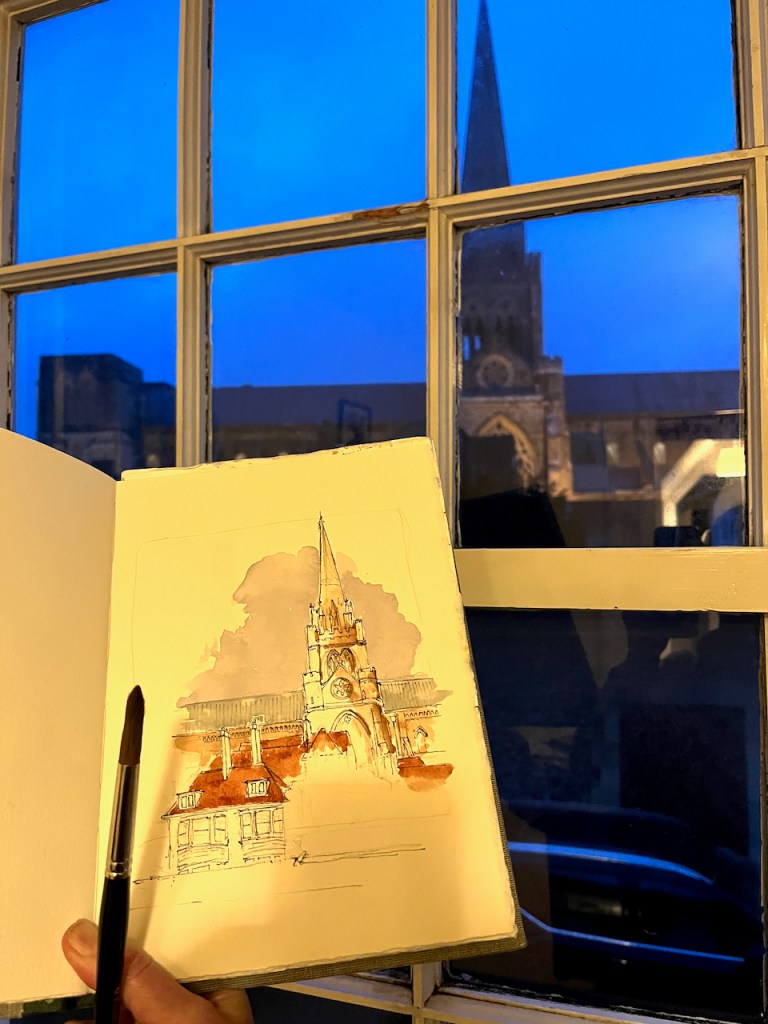
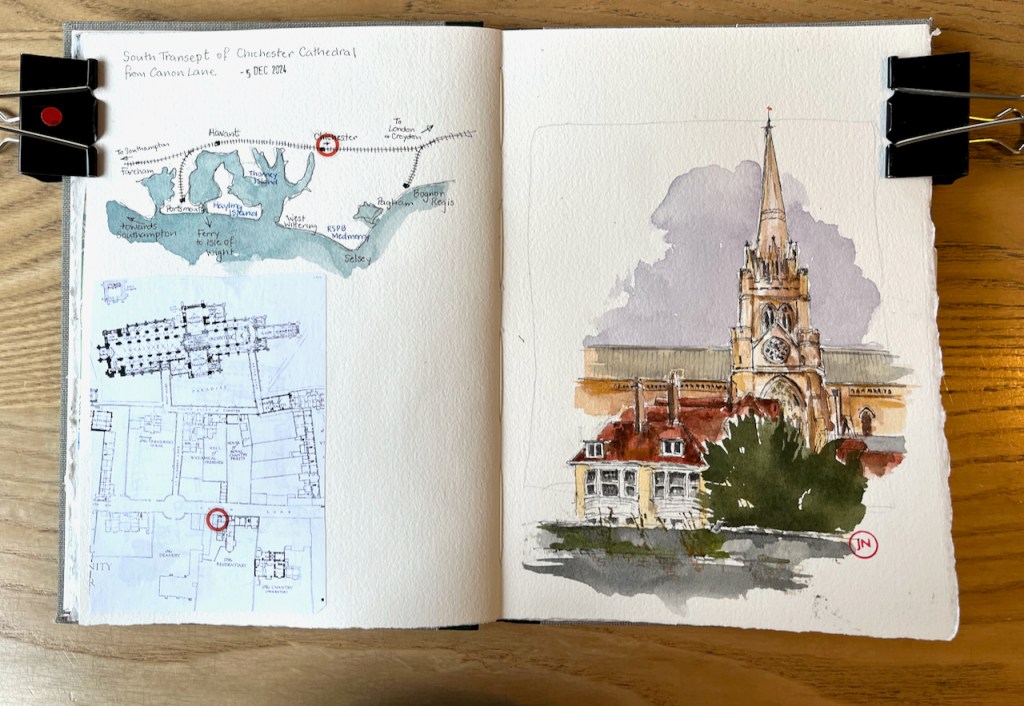
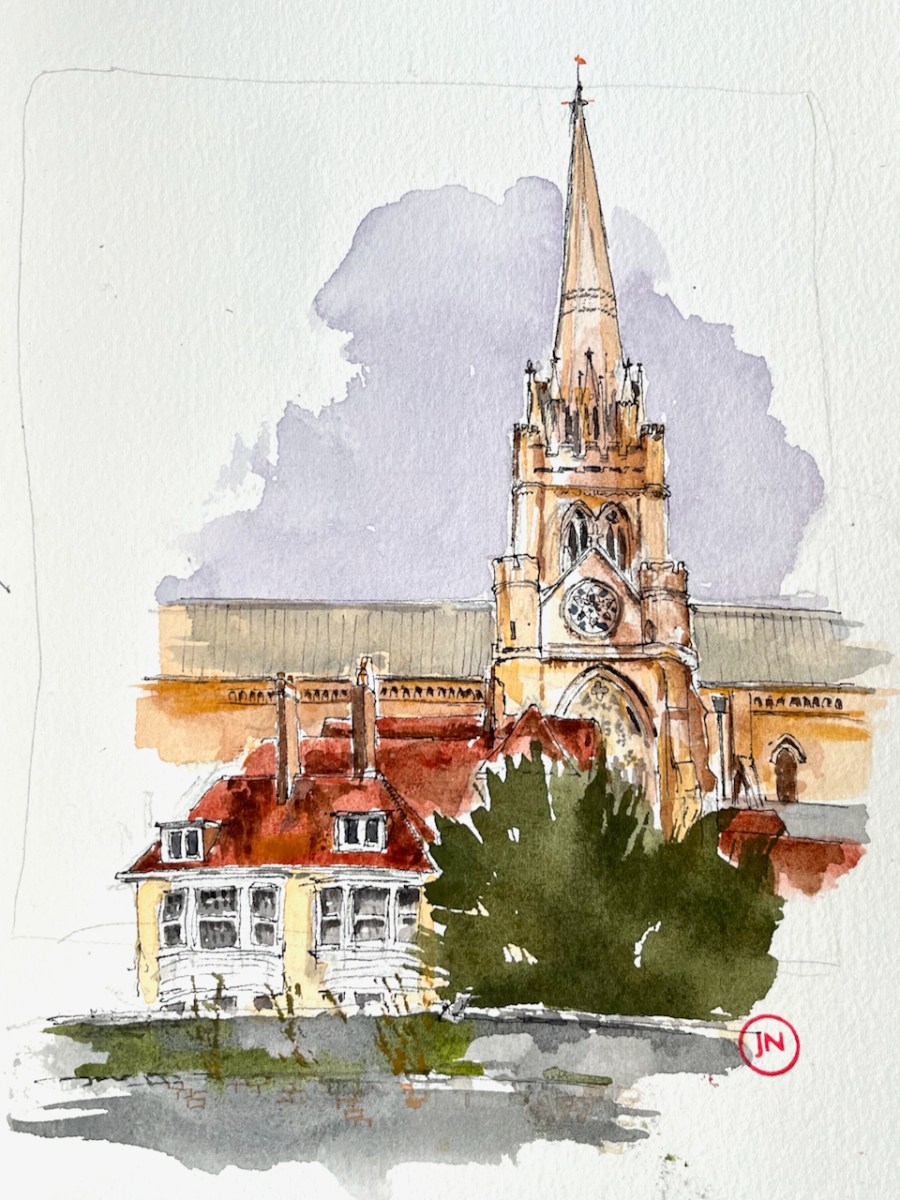
Here is a view of the south transept of Chichester Cathedral.
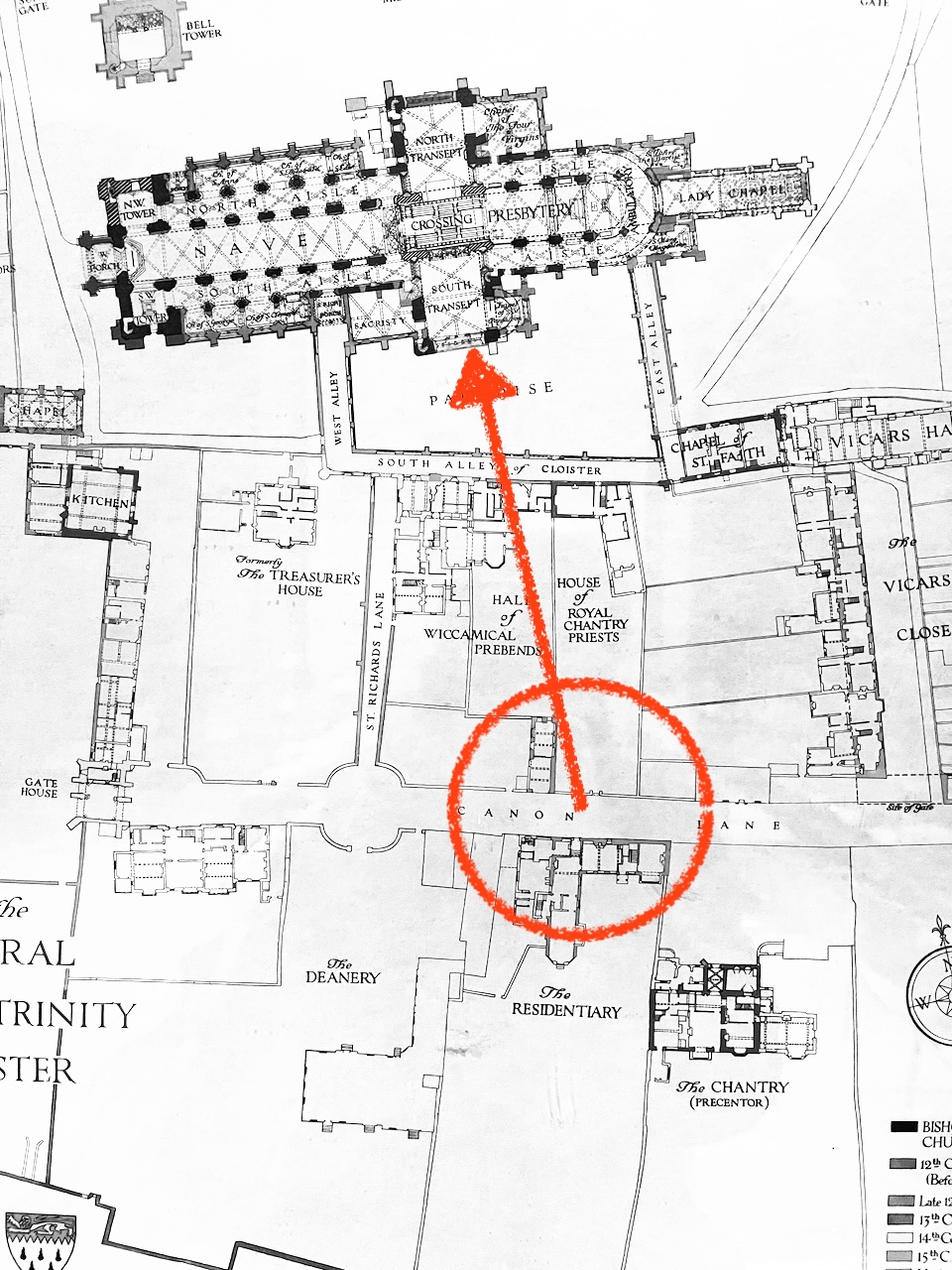
Chichester Cathedral, South transept, sketched 5th December 2024 from Canon Lane, in Sketchbook 15.
The first spire was built around 1500. There are no bells in the spire: the medieval builders put the bells in a separate little building in the cathedral grounds. This was just as well. The spire collapsed in 18611. It was rebuilt to the designs of Sir George Gilbert Scott, and that’s the spire in my drawing.
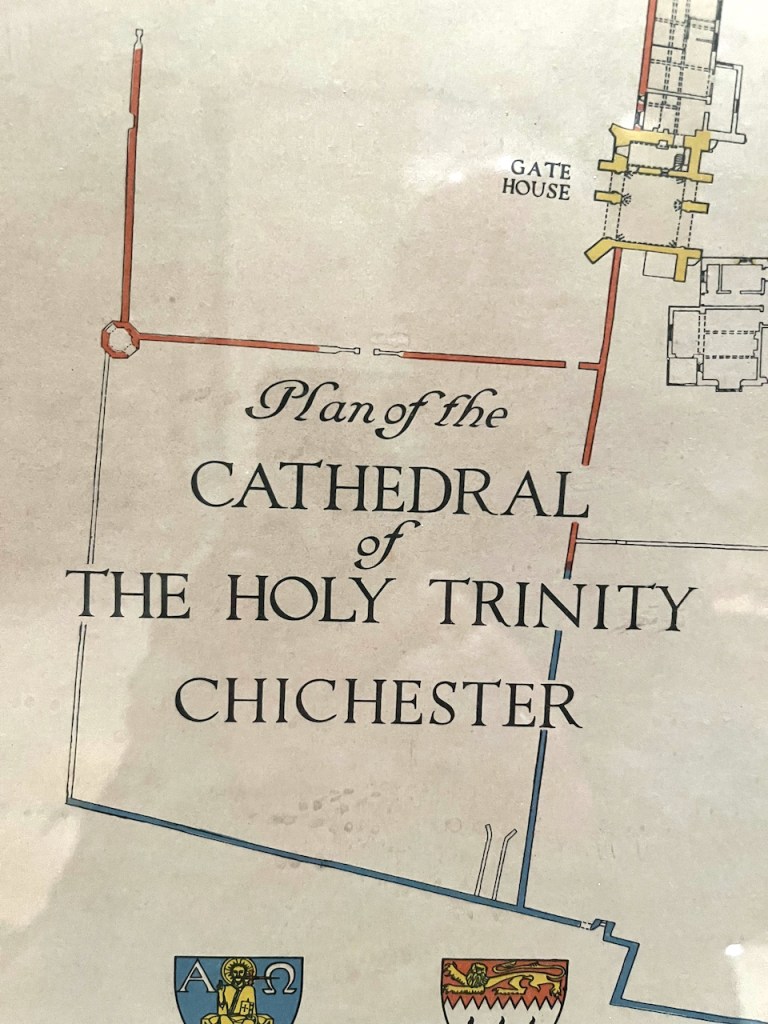
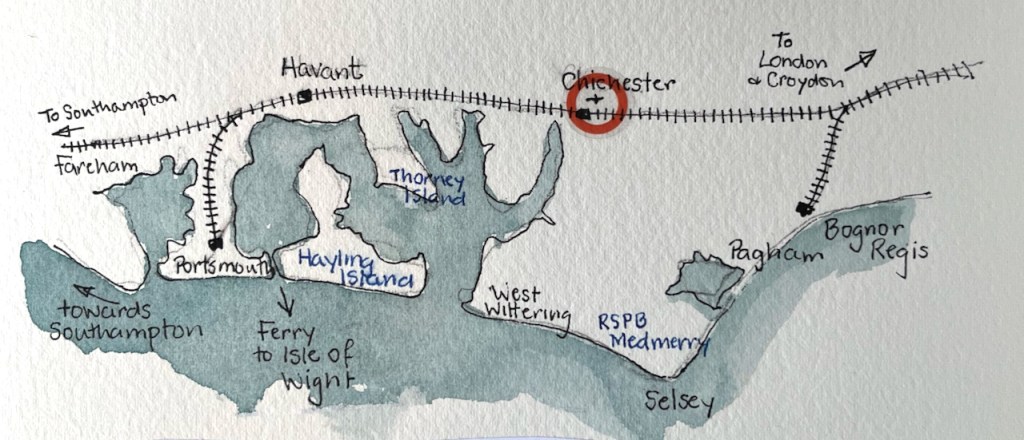
From a beautiful framed plan in the Cathedral, which had no date or artist’s name.Chichester: locationSketchbook 15
George Gilbert Scott was a prolific 19th century architect. I have sketched his work before:
Here is a view of the south transept of Chichester Cathedral. The first spire was built around 1500. There are no bells in the spire: the medieval builders put the…
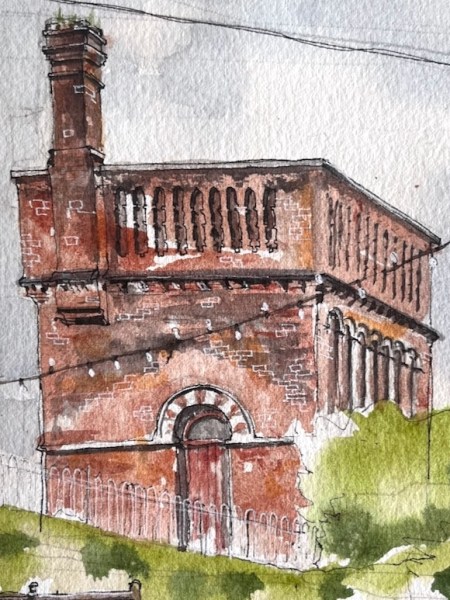
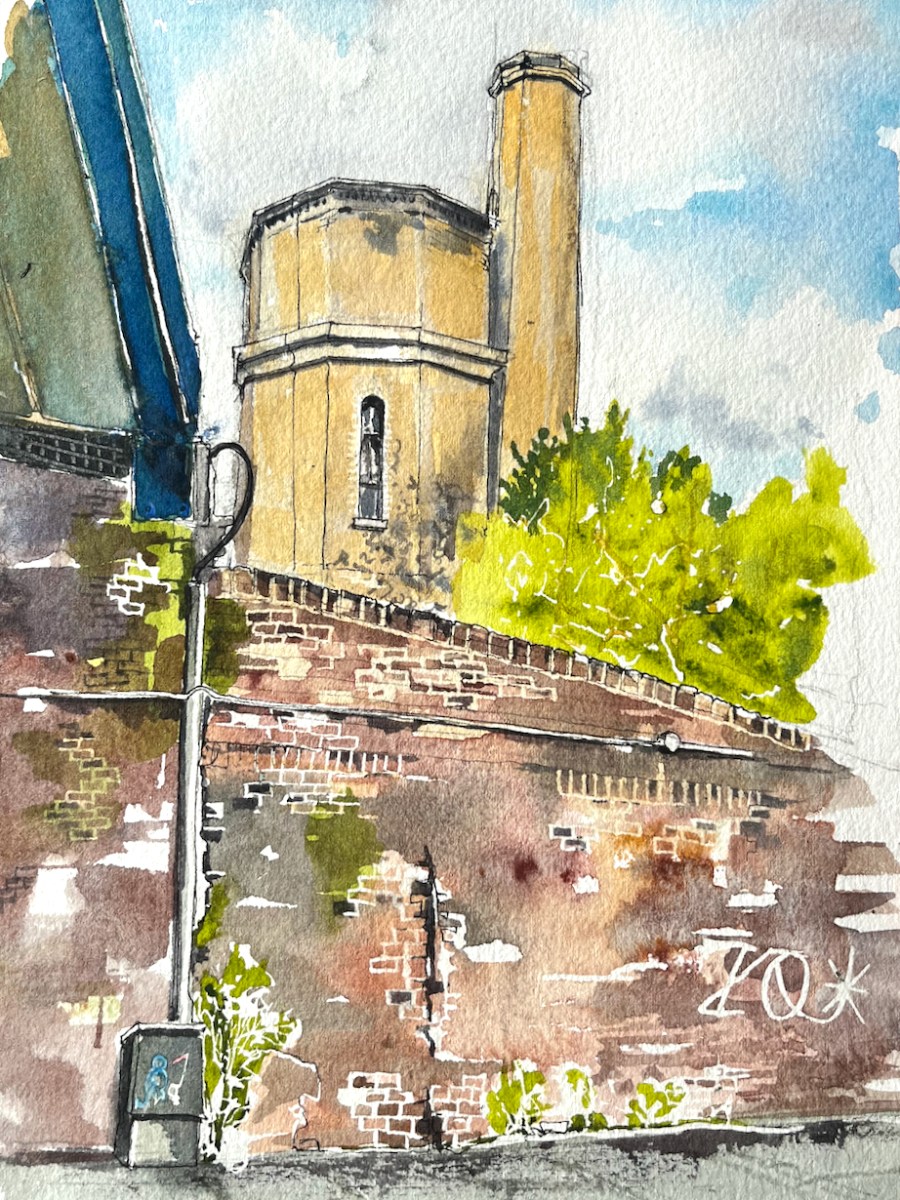
This structure is visible from the North side of the Regents Canal at Coal Drops yard. It was a “water point” for replenishing the boilers of steam engines. The top…
“What is that spire?” It’s just visible, on the horizon between office blocks. Some work with the binoculars and the map established that it must be St Mary Stoke Newington,…
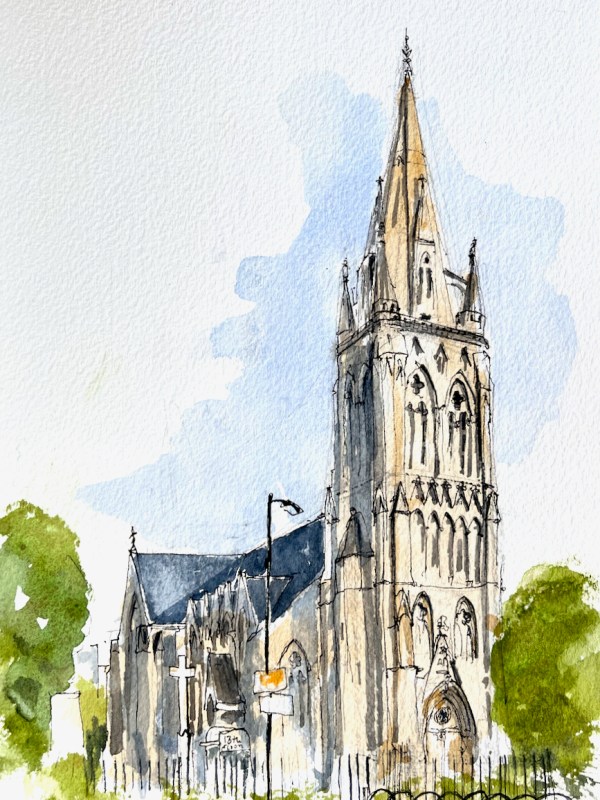
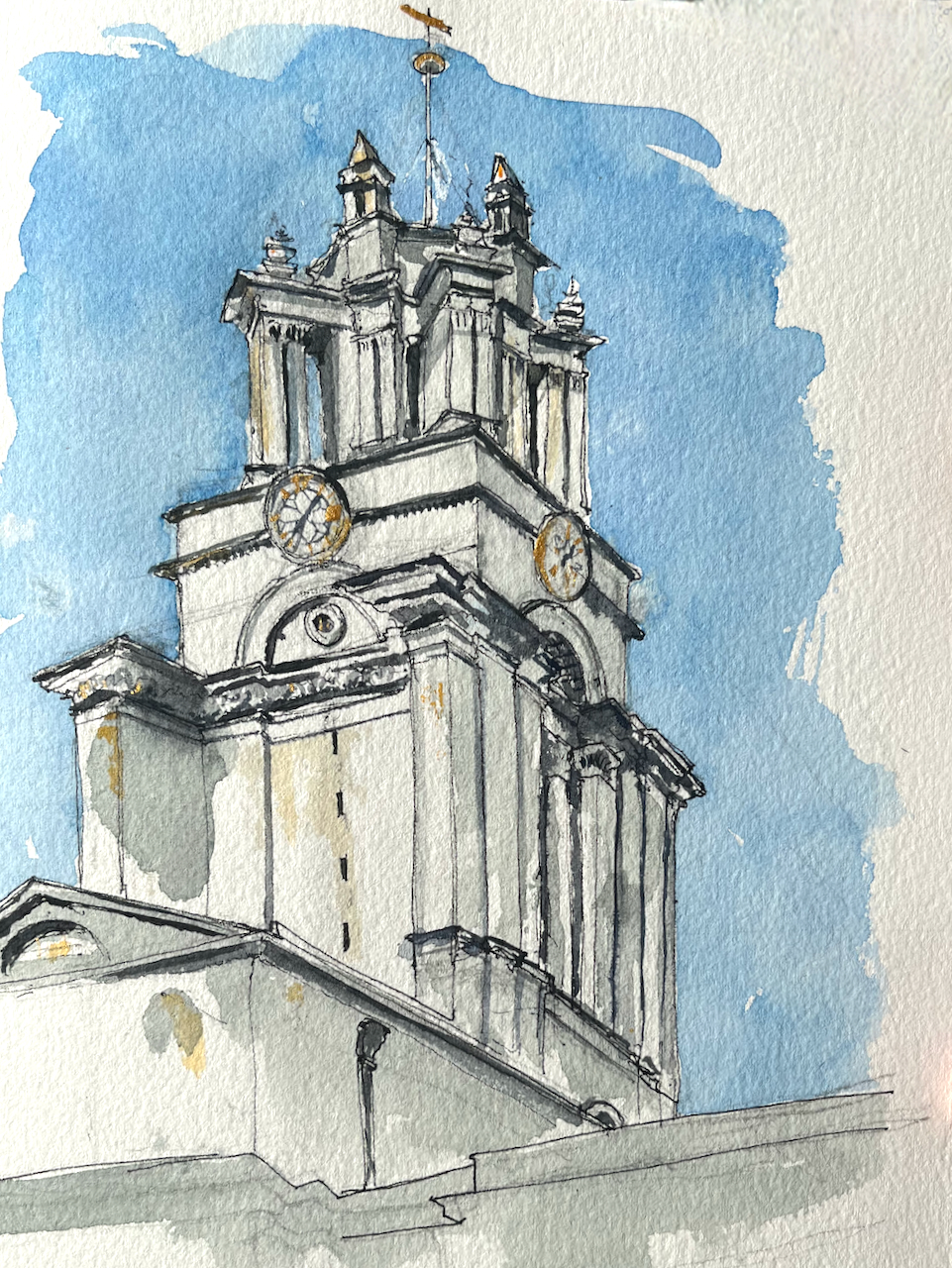
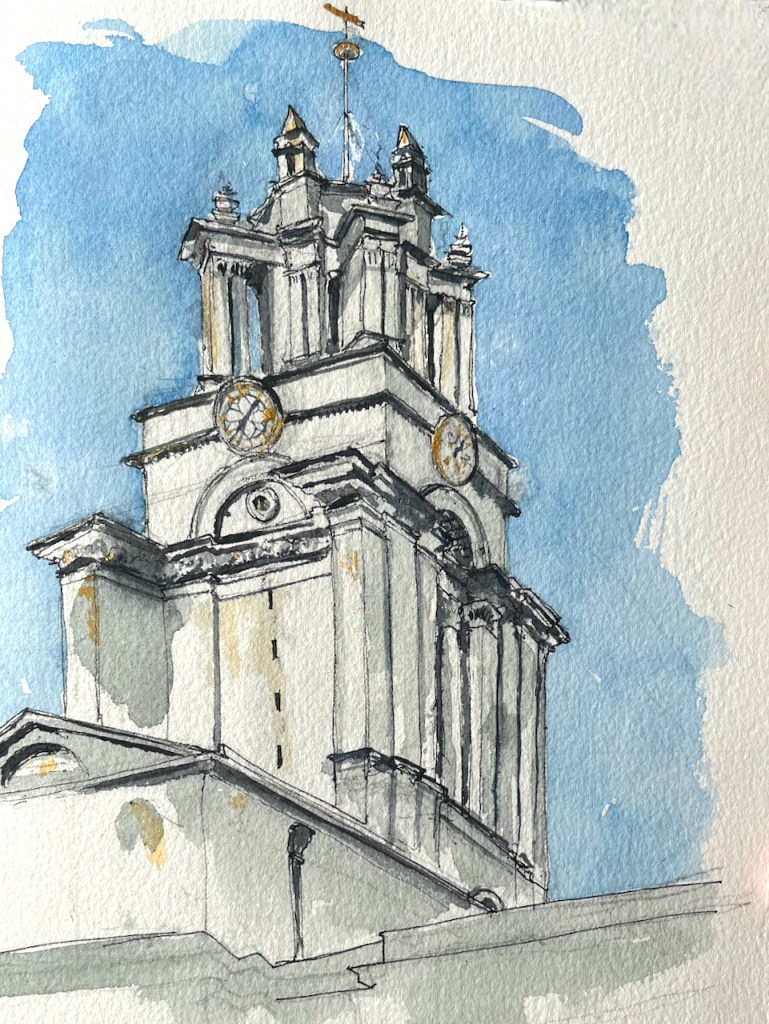
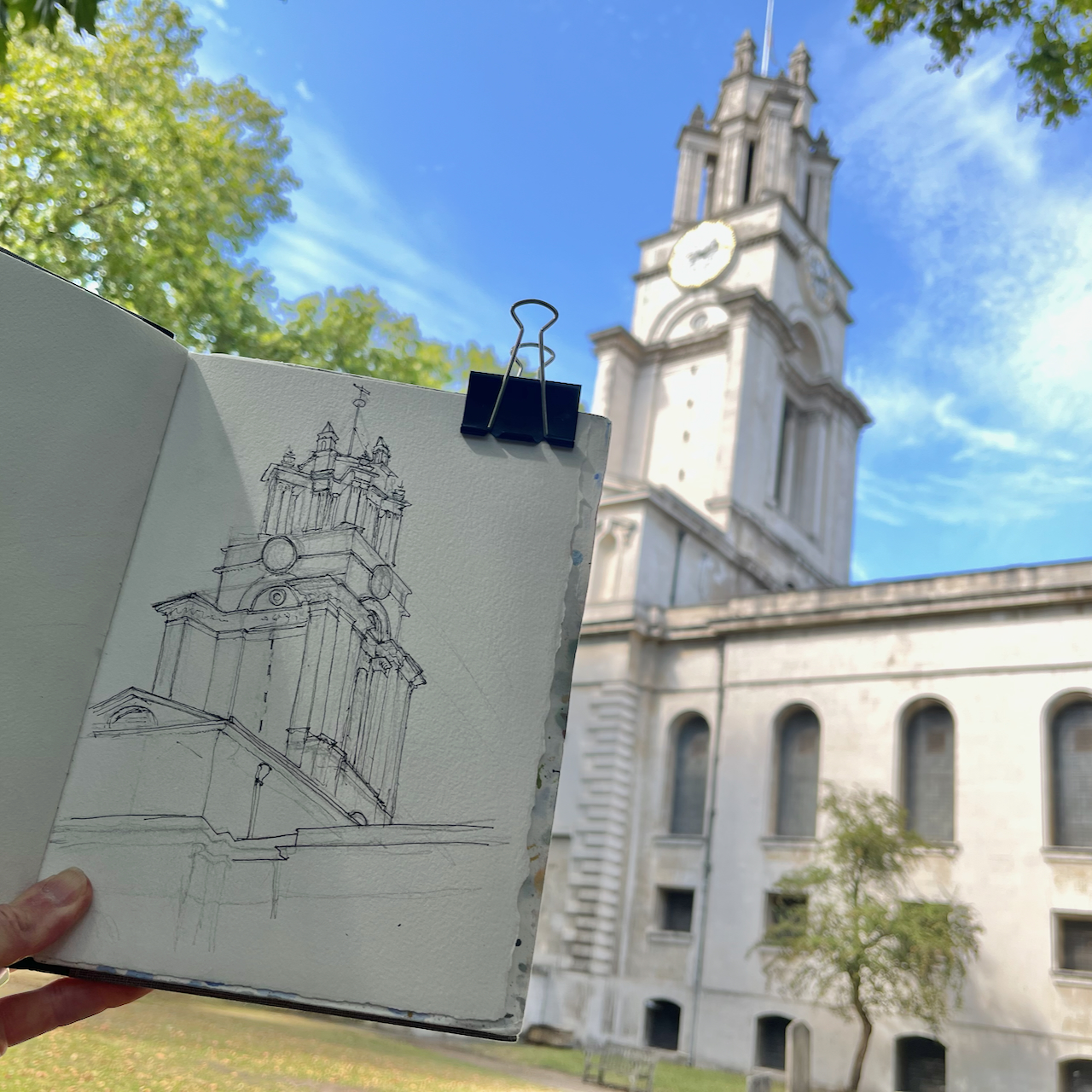
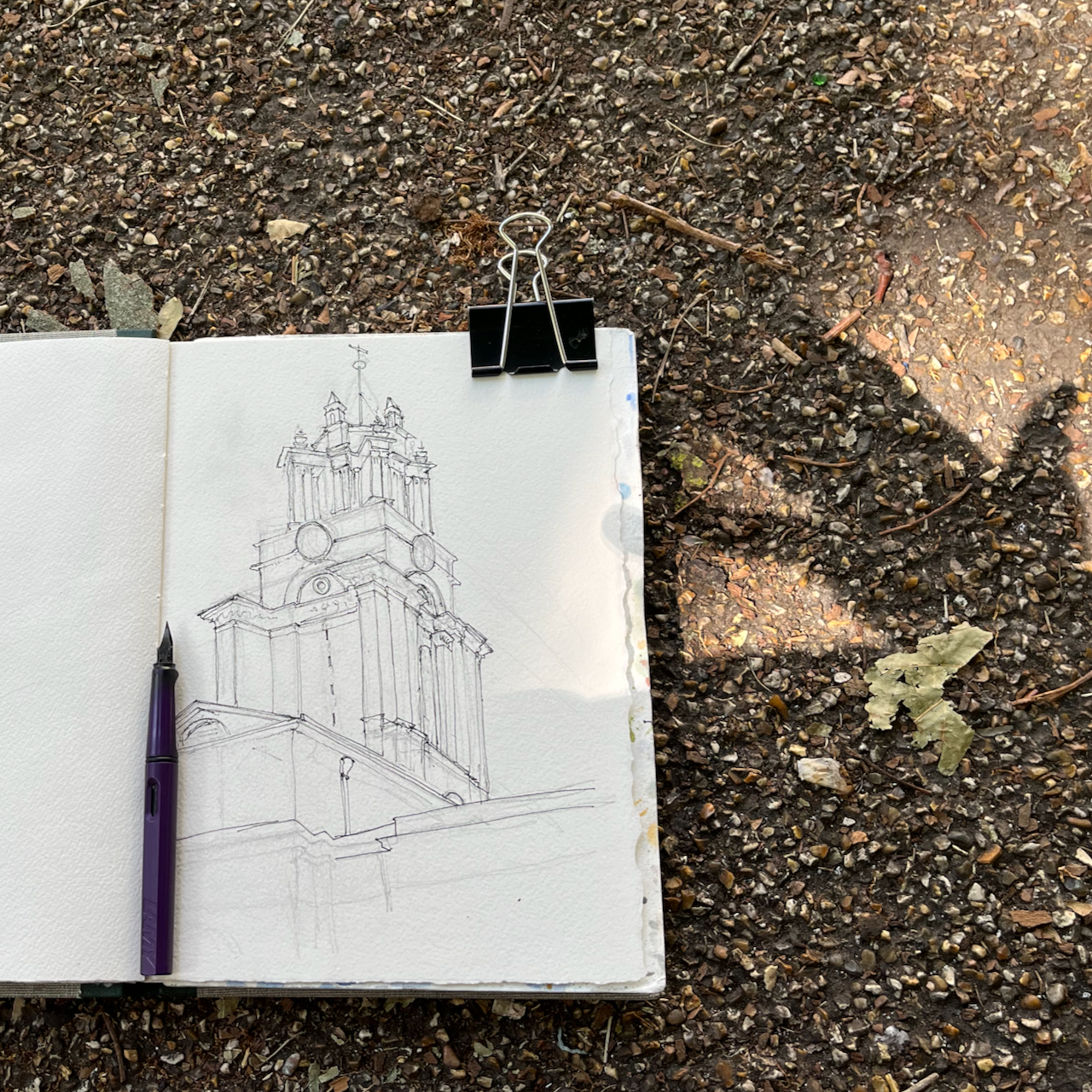
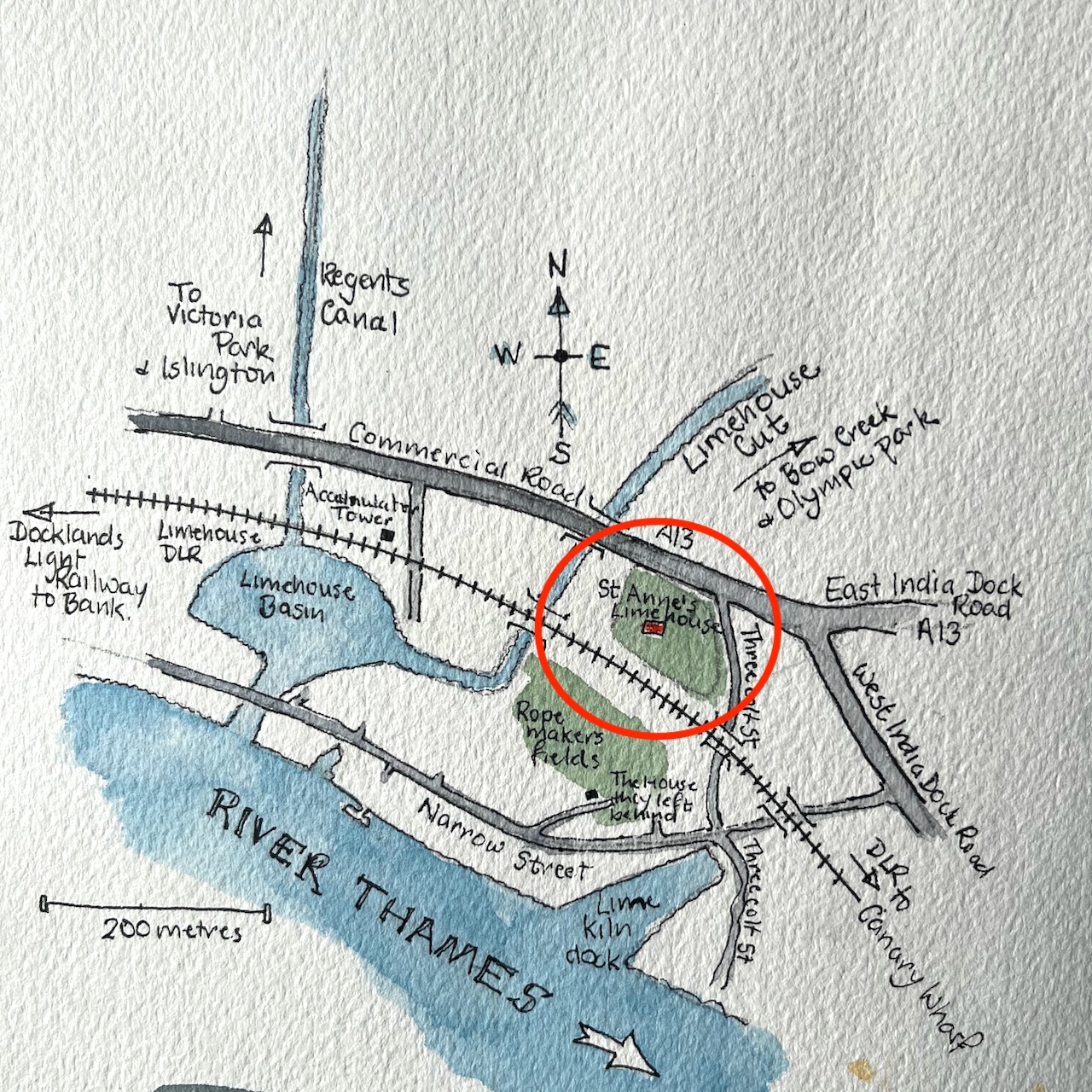
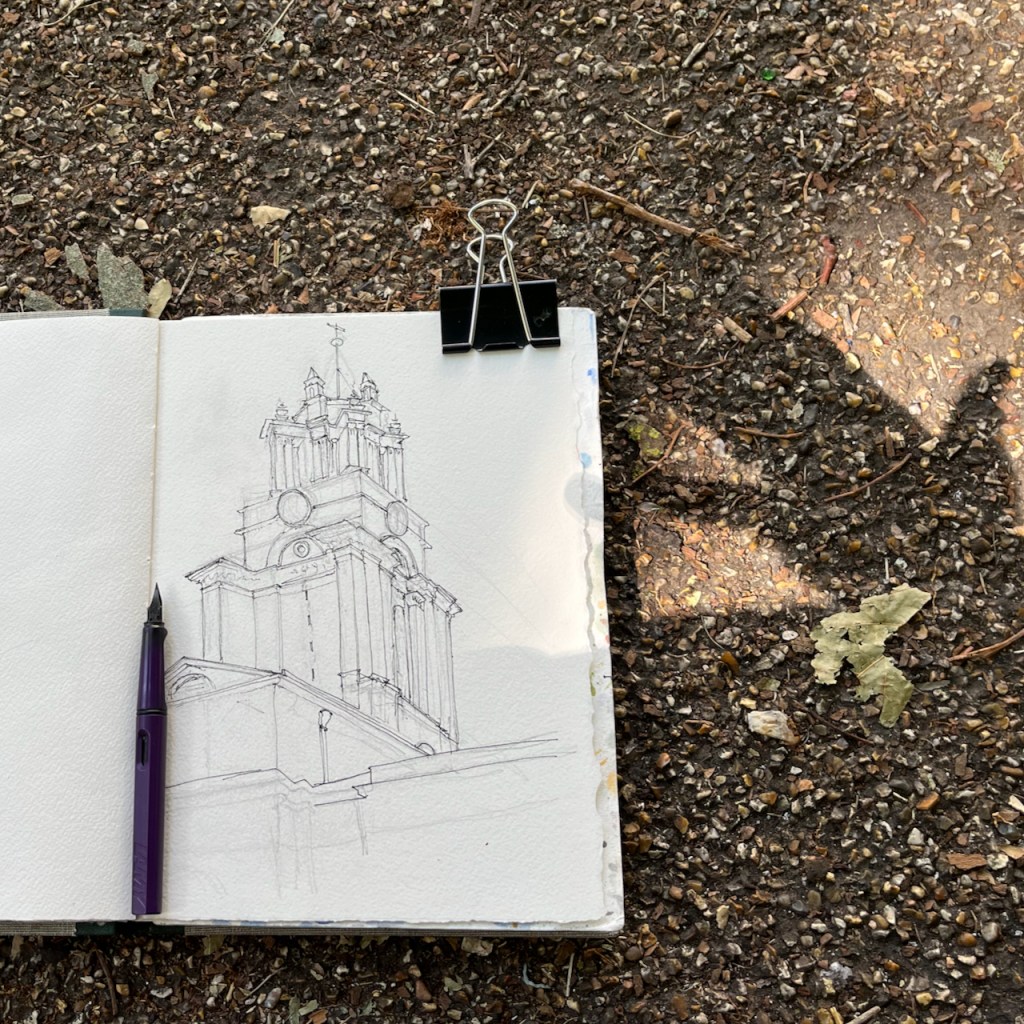
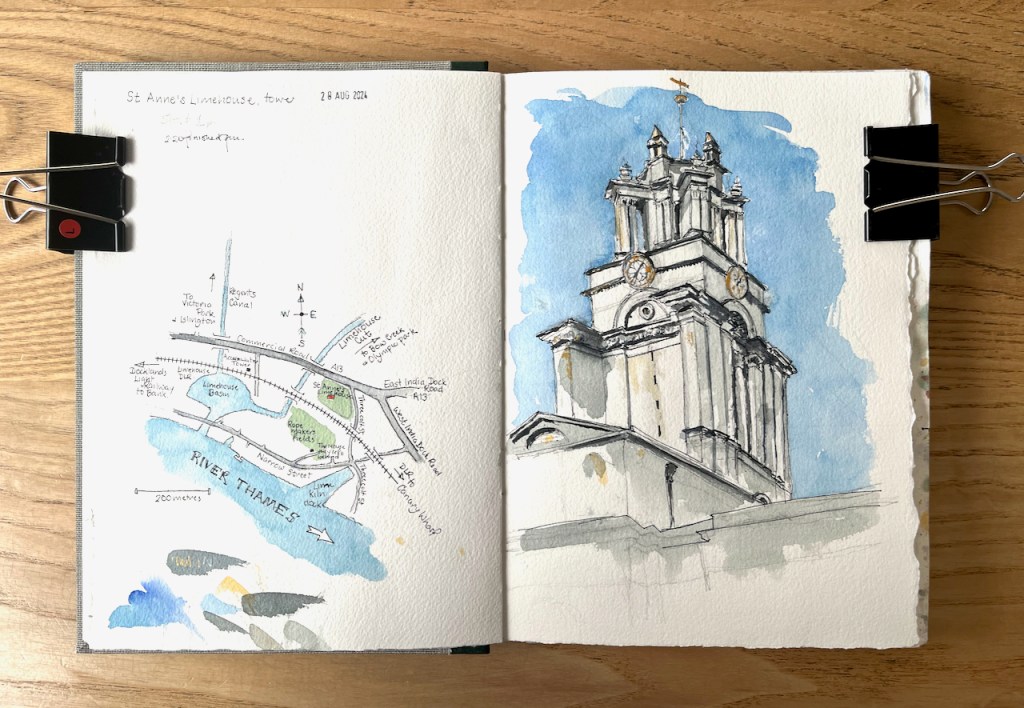
This is the tower of St Anne’s Church Limehouse, seen from the south. St Anne’s is a church designed by Nicholas Hawksmoor, consecrated in 1730.
St Anne’s Church Limehouse tower, sketched 28 August 2024 in sketchbook 15
This tower shows the marine connections of this church:
The prominent tower with its golden ball on the flagpole became a Trinity House “sea mark” on navigational charts and the Queens Regulations still permit St Anne’s Limehouse to display the White Ensign”.
Wikipedia (1 October 2024)
White ensign
The White Ensign is definitely flying. In my drawing the flag is blowing away from me, so you can’t see it well. It is the flag flown by British Navy ships and certain navy-related buildings on land, of which St Anne’s in one.
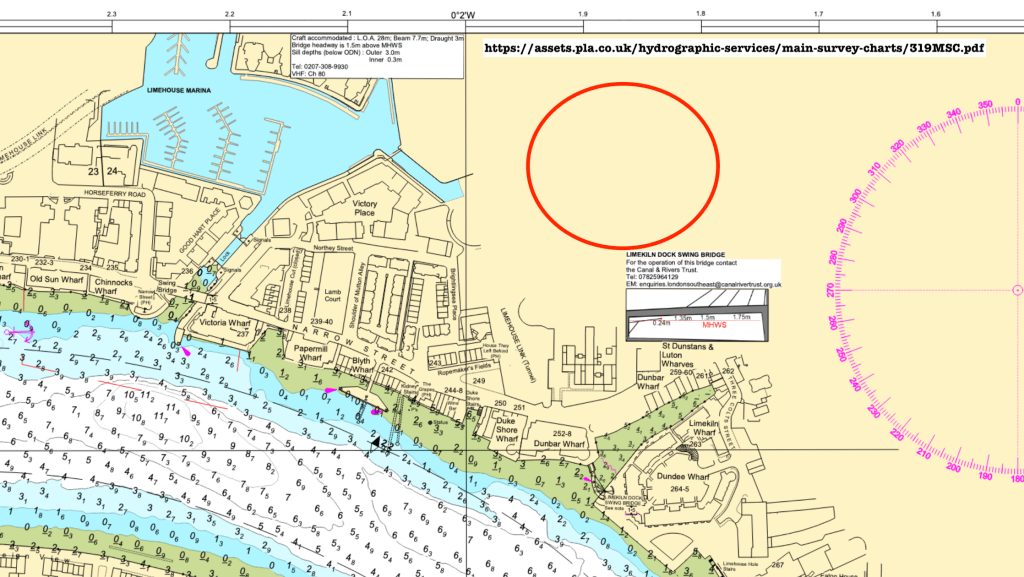
The golden ball is clearly visible on the flagpole, the “sea mark” mentioned in articles about the church. I had a look to see if I could find St Anne’s on a navigational chart. The Port of London Authority offers navigational maps of the Thames – but sadly St Anne’s is not shown as a “sea mark” on any of them.
Detail from Chart 319 from the Port of London Authority. The red circle where St Anne’s is, but it’s not shown as a “sea mark”.
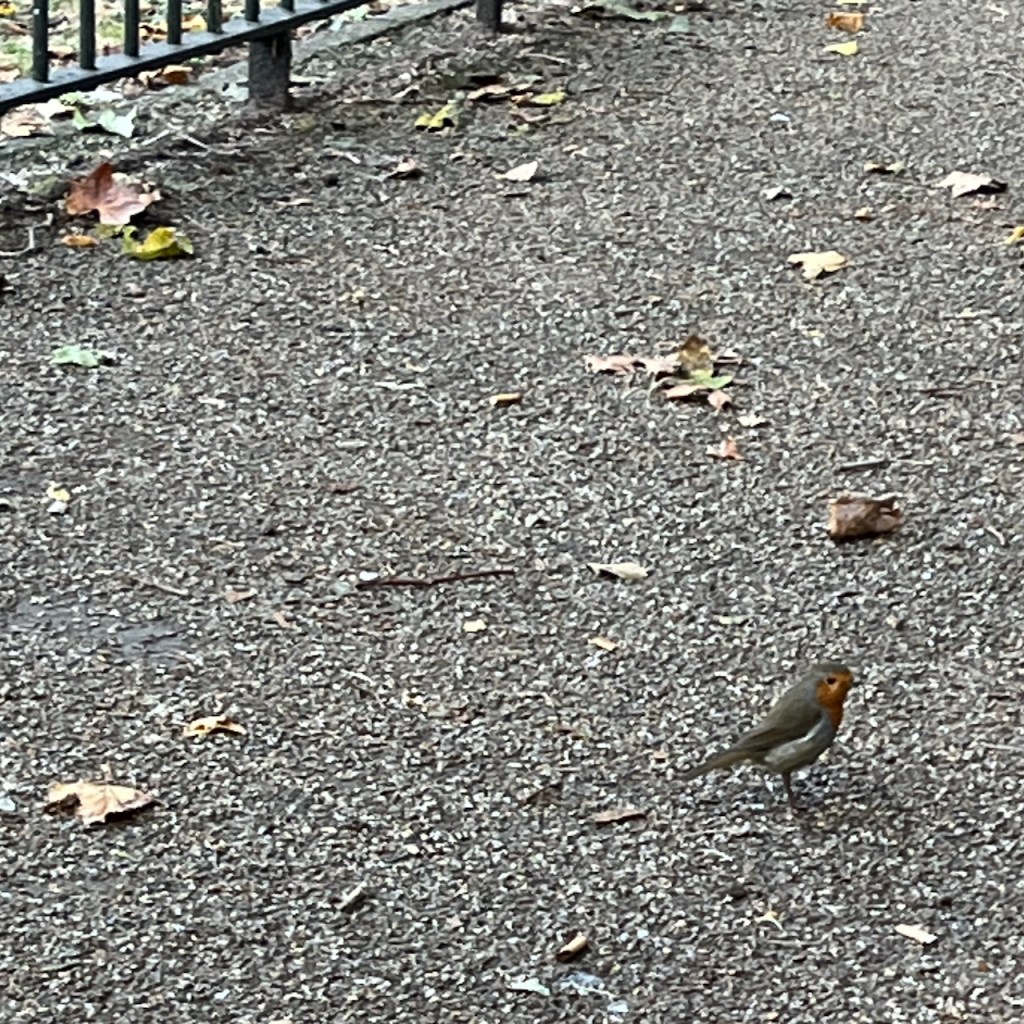
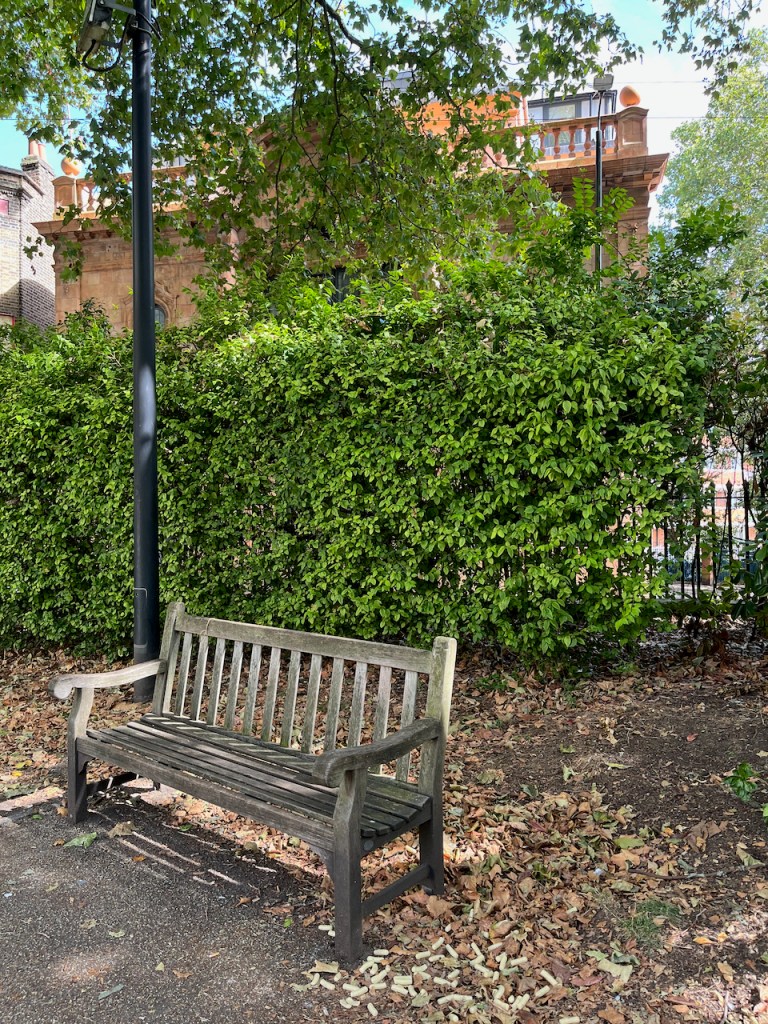
The church has a lovely quiet garden. I sketched from the wooden seat, watched by a robin.
Sketchbook 15
Here are other sketches I’ve done around Limehouse and Wapping, near here:
Christ Church Esher stands on the top of a hill, near the intersection of roads that marks Esher town centre.
Christ Church, Church Street, Esher, Surrey, KT10 8 QS. Sketched 28 May 2024, in Sketchbook 14
The church has a “splayed foot” spire.
SPLAYED-FOOT: variation of the broach form, found in England principally in the south-east, in which the four cardinal faces are splayed out near their bases, to cover the corners, while oblique (or intermediate) faces taper away to a point.
BROACH: starting from a square base, then carried into an octagonal section by means of triangular faces.
– Pevsner’s Architectural Glossary, page 116, under “SPIRE”
This simple and elegant geometry turned out to be rather tricky to draw. I worked hard to get the shape of the spire correct.
Sketching the spire of Christ Church
The church was built in 1853-1854 to the design of Benjamin Ferrey (1810-1880) according to its Historic England listing entry. Ferrey studied under A.W.N. Pugin1, and like Pugin, designed in the style known as “Gothic Revival”. Christ Church was built because the growing congregation could no longer be housed in the smaller St George’s, a little way down the hill.
I sketched the church on location and added the colour later. The colours are:
Mars Yellow
Green Gold
Phthalo Blue Turquoise
I used just three colours, all Daniel Smith. I used gold paint for the clock. The clock is on the roof of the spire, which is remarkable. Usually the clock is on the tower, below the spire. So I wanted to put it in and show its unusual location.
Here is a sketch map of the area.
See this post for my sketch of St George’s, this post for the Tin Tabernacle in West End Esher, and this post for sketches of the council housing in Lower Green.
1A.W.N. Pugin designed, amongst other things, the inside of the Houses of Parliament: https://heritagecollections.parliament.uk/stories/the-architects-barry-pugin-and-scott/. The Houses of Parliament are a classic example of Gothic Revival Style. The Houses of Parliament were designed by a team consisting of Charles Barry, A.W.N. Pugin and later Giles Gilbert Scott.
Click a button below to share this post online, email it, or print it:
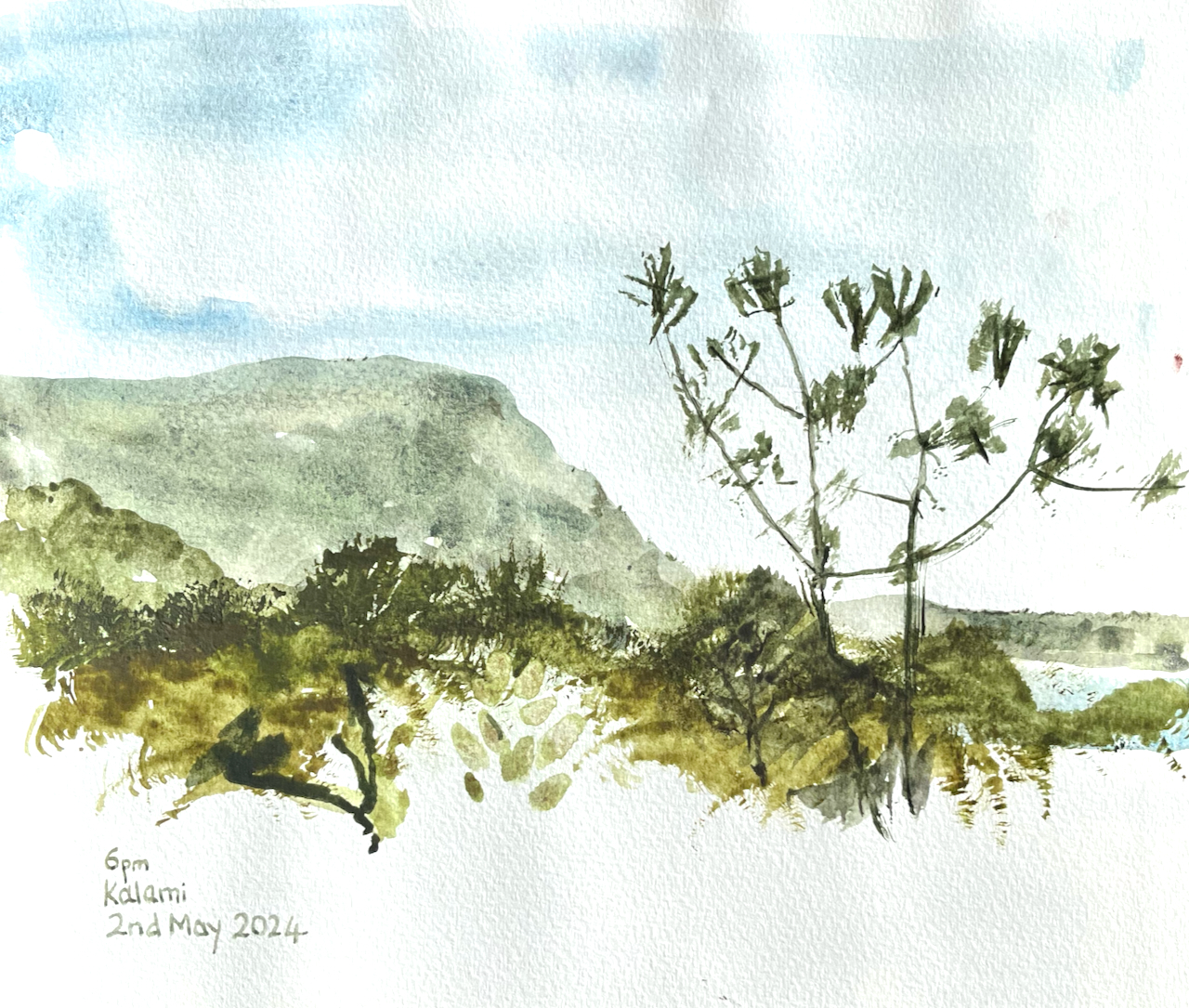
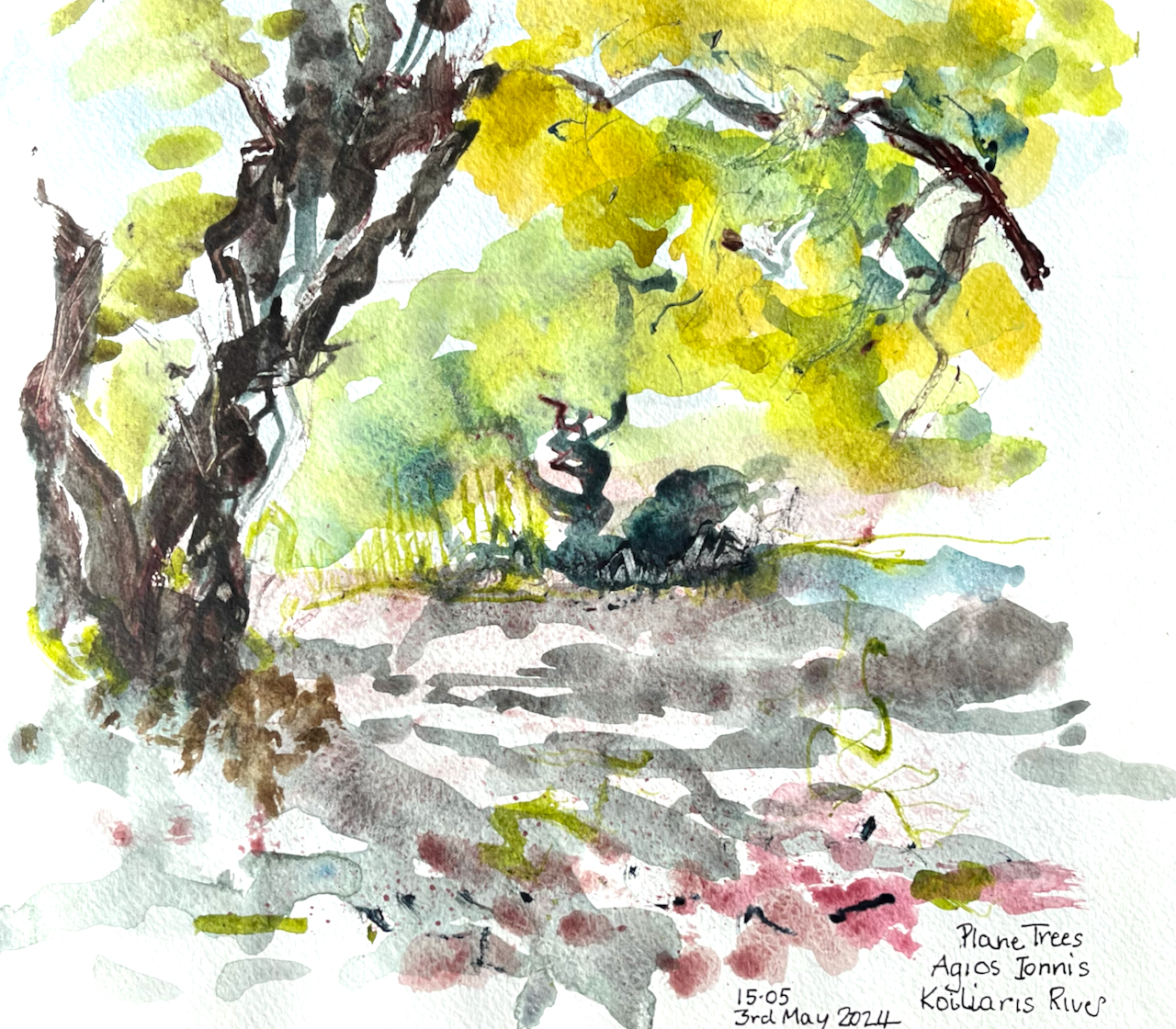
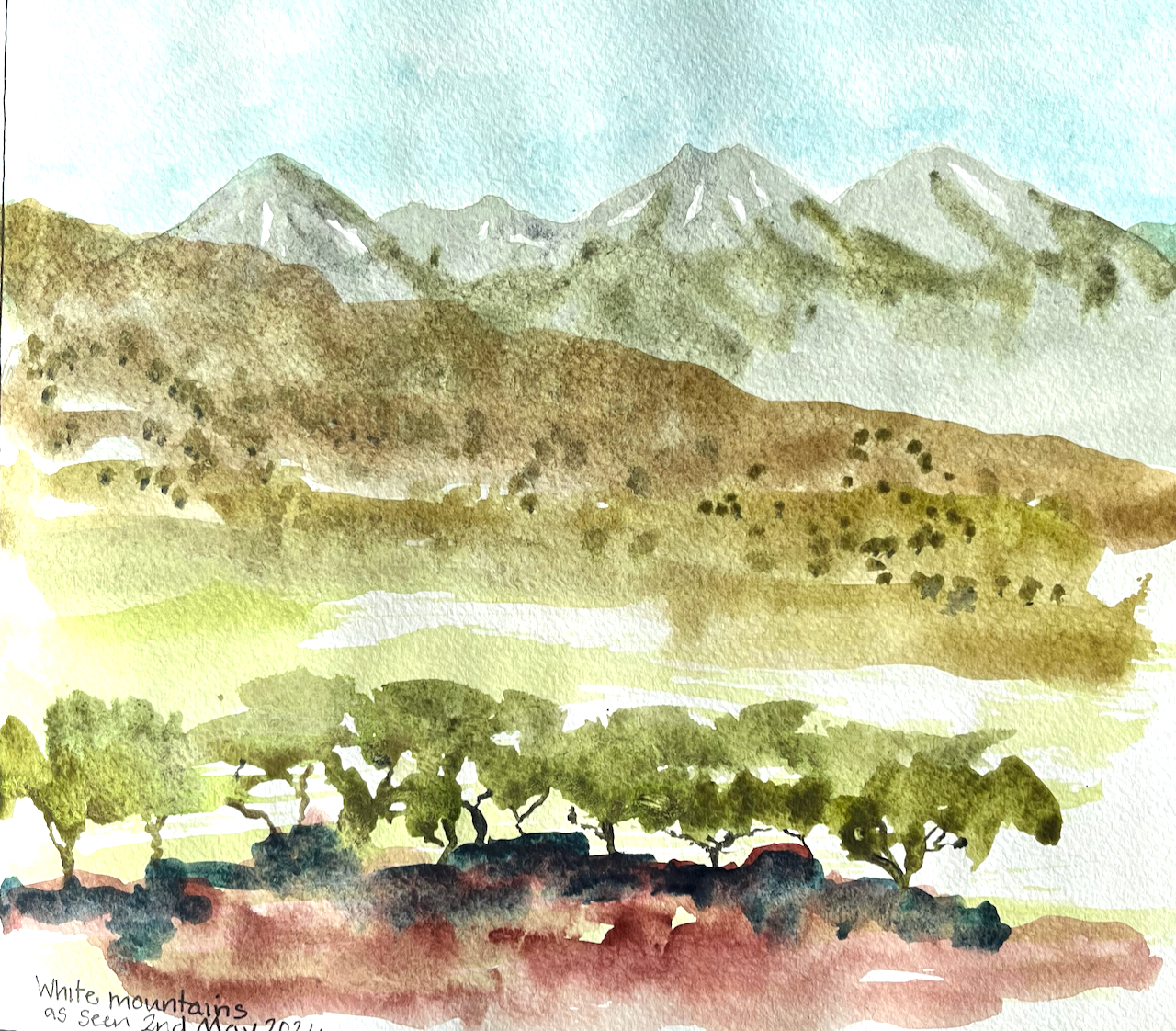
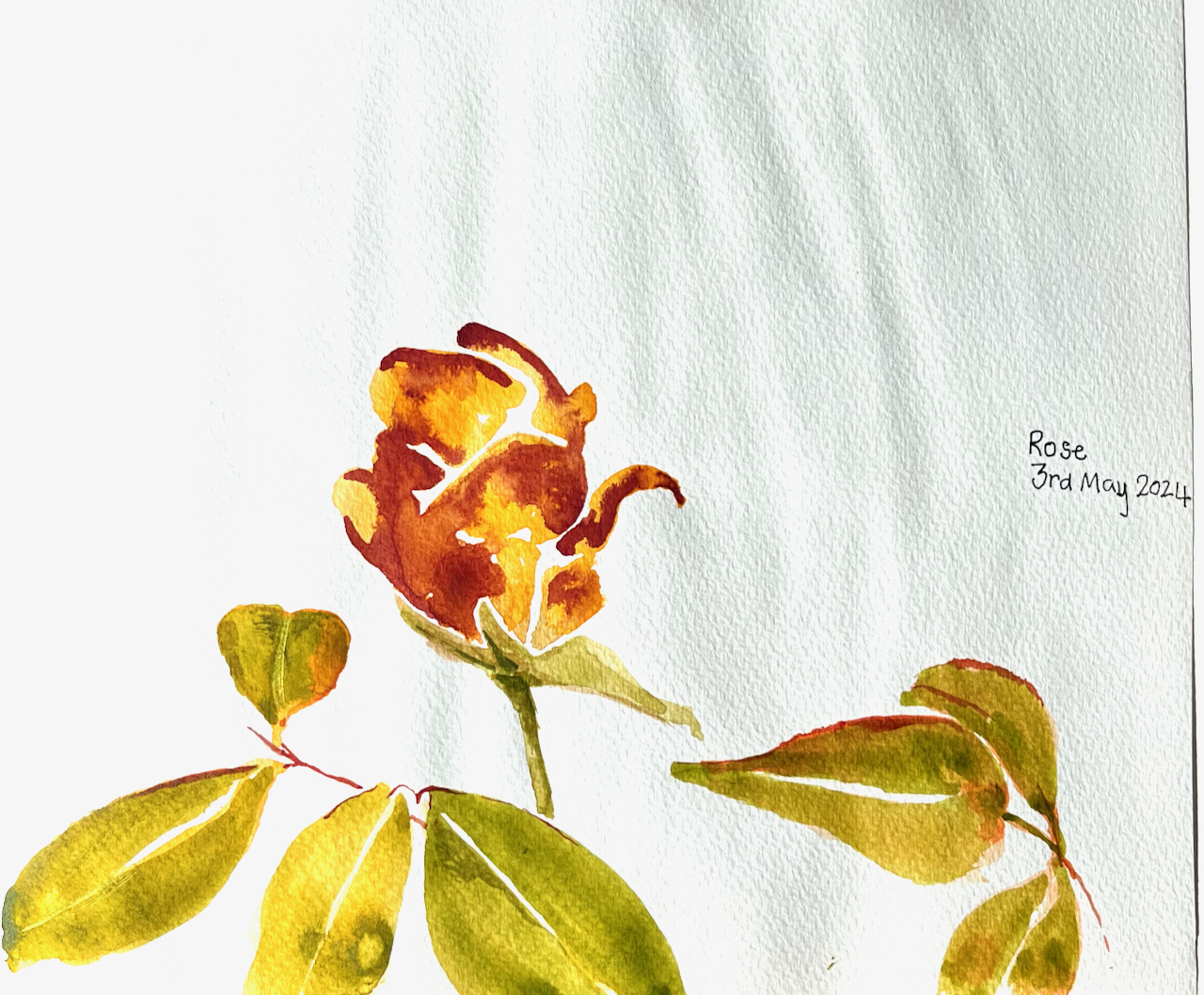
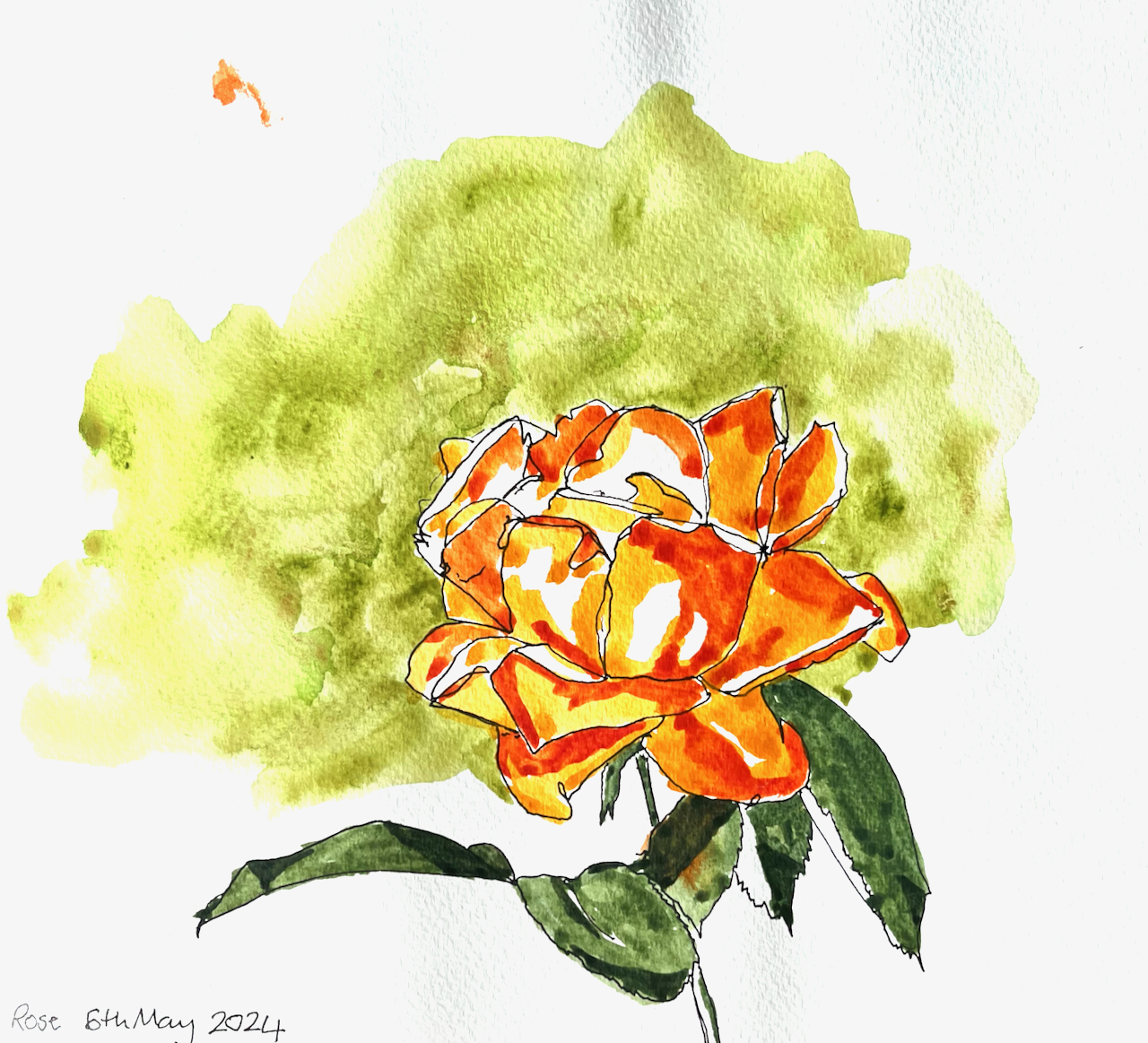
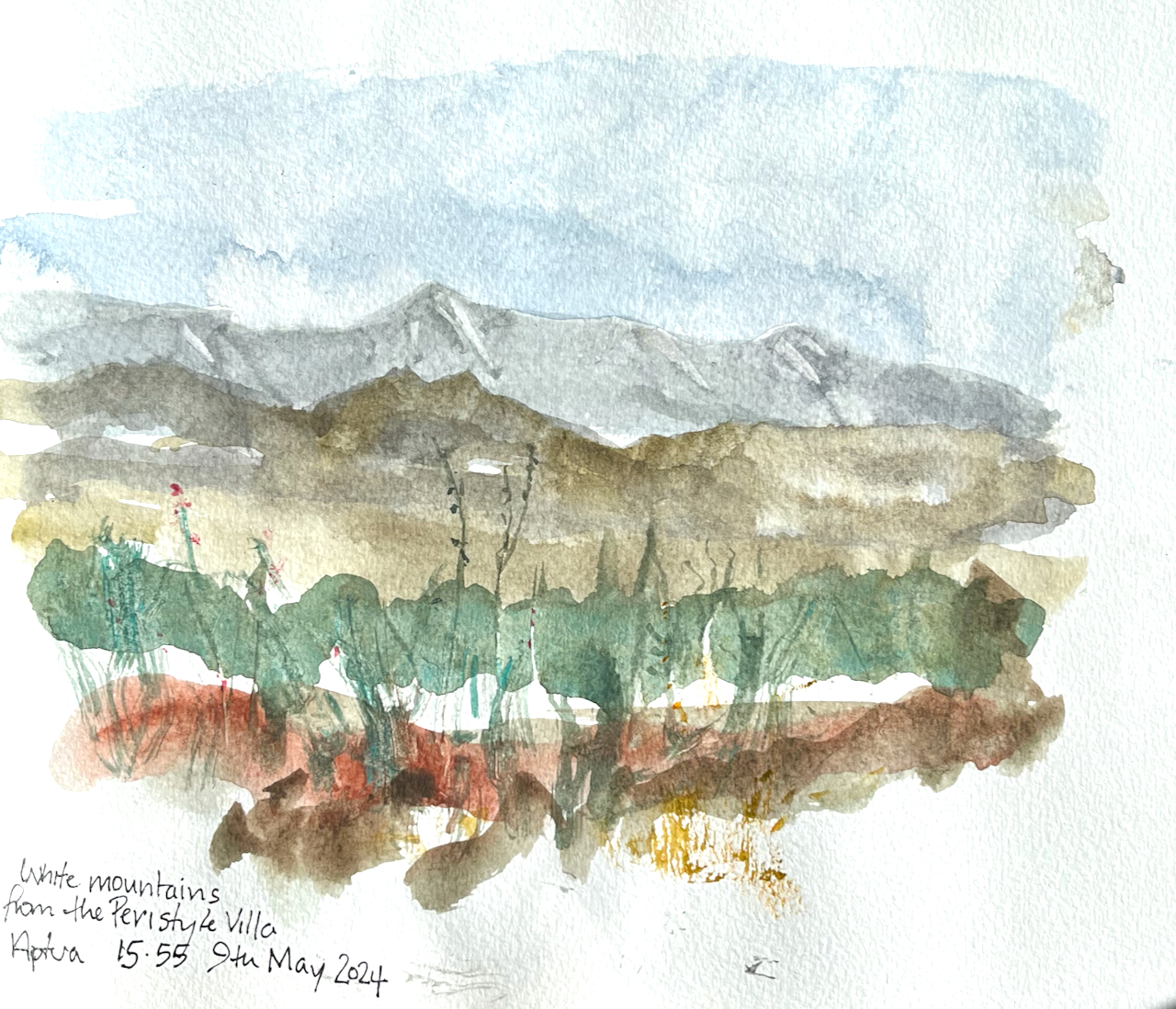
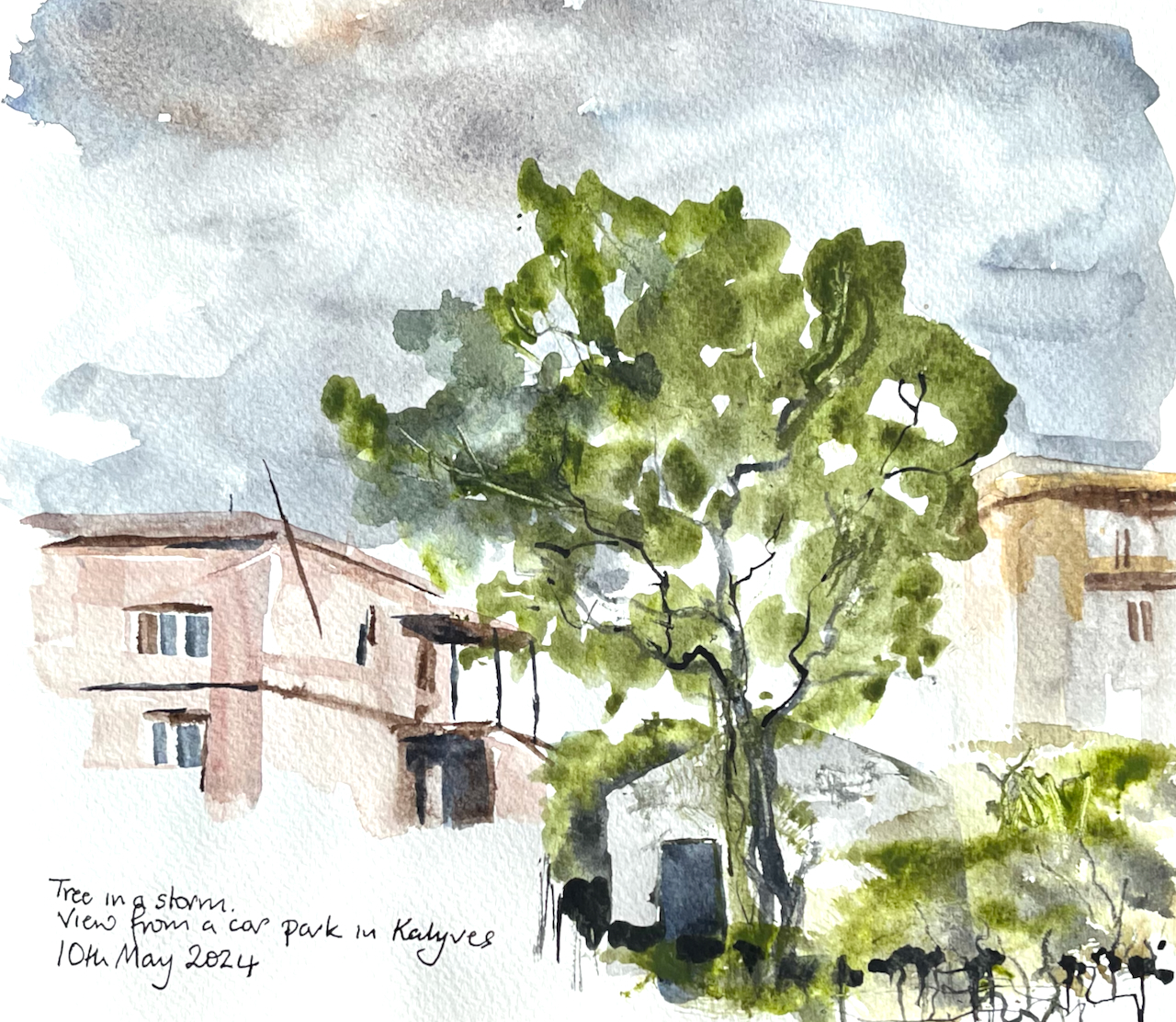
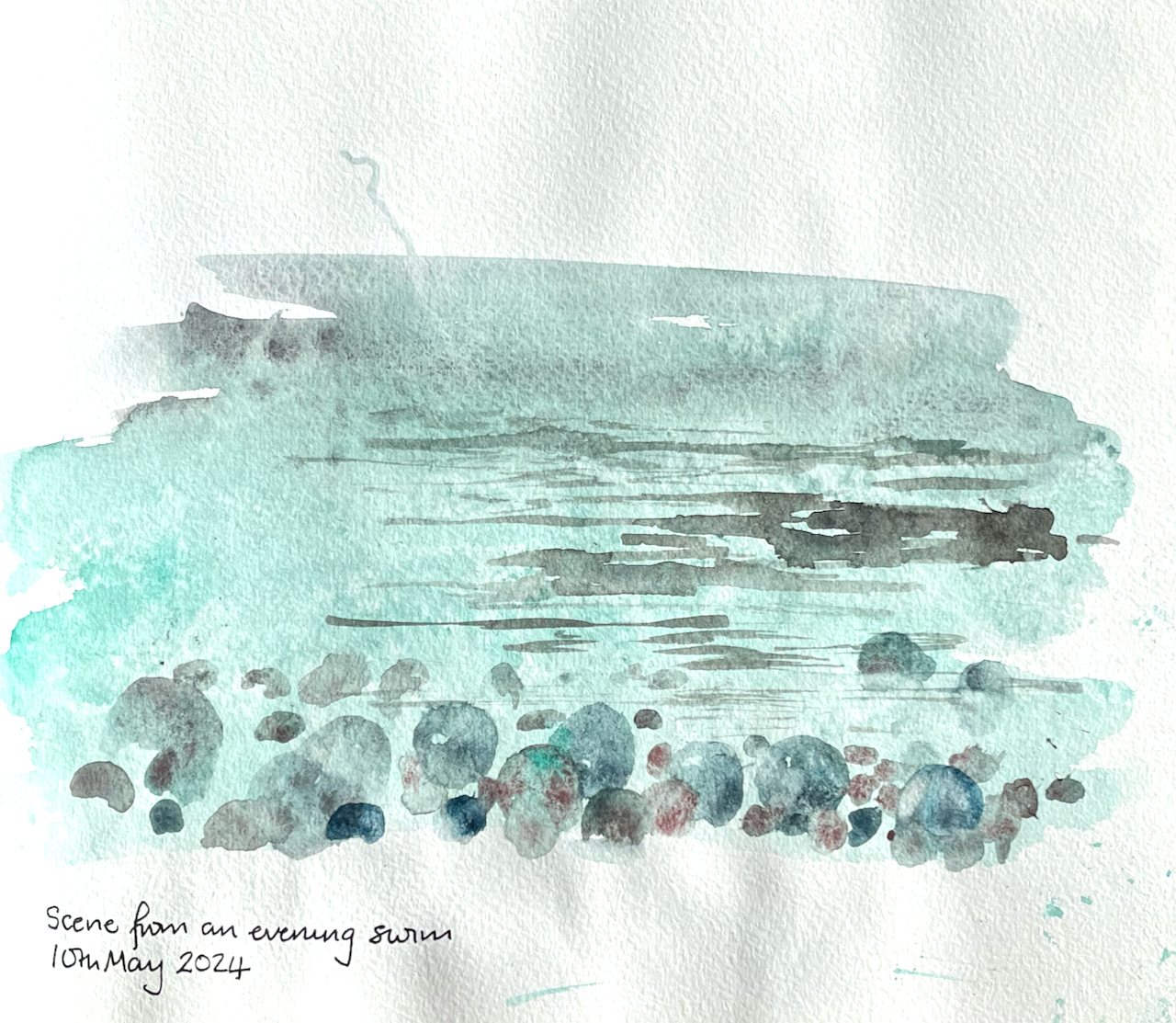
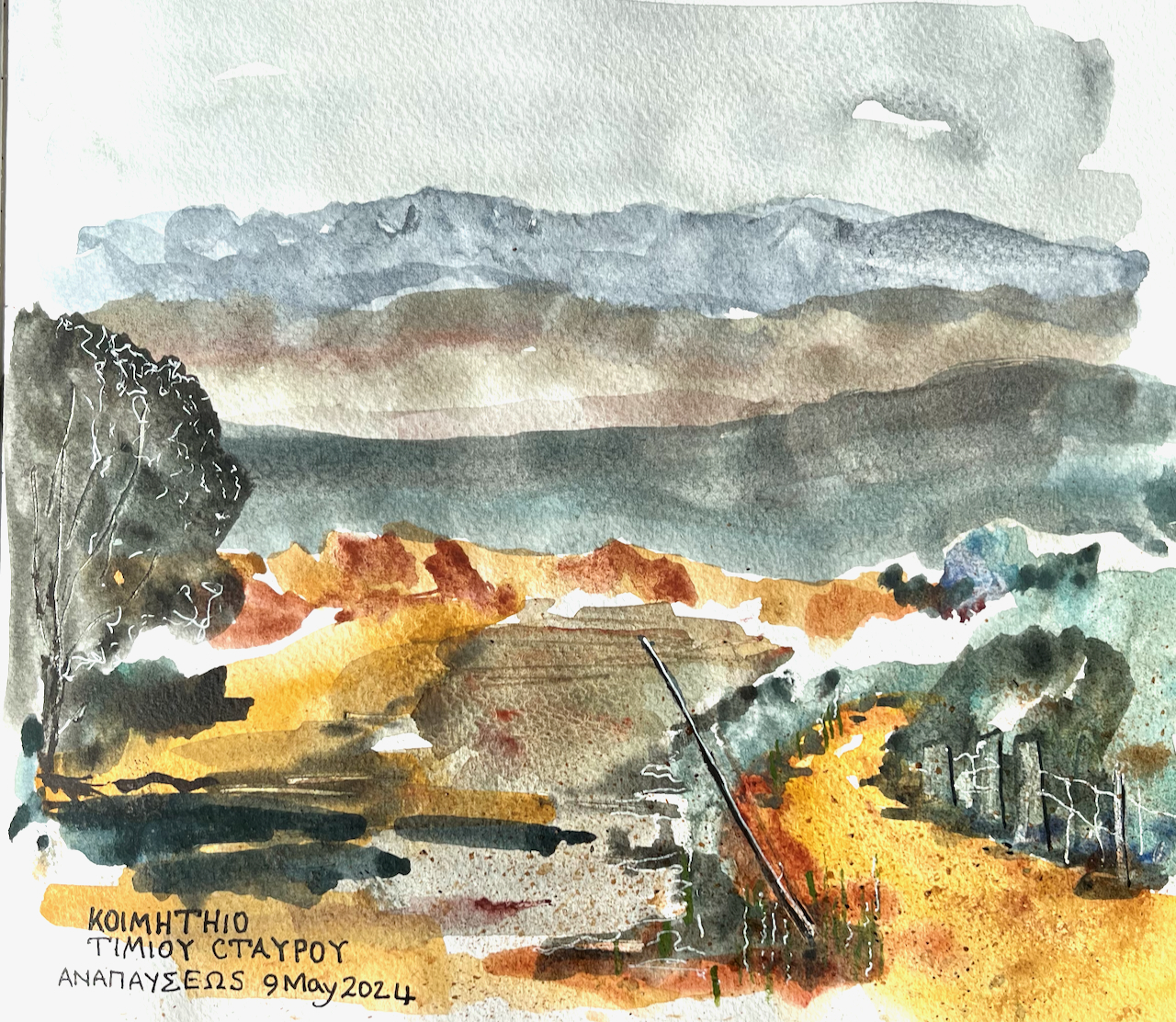
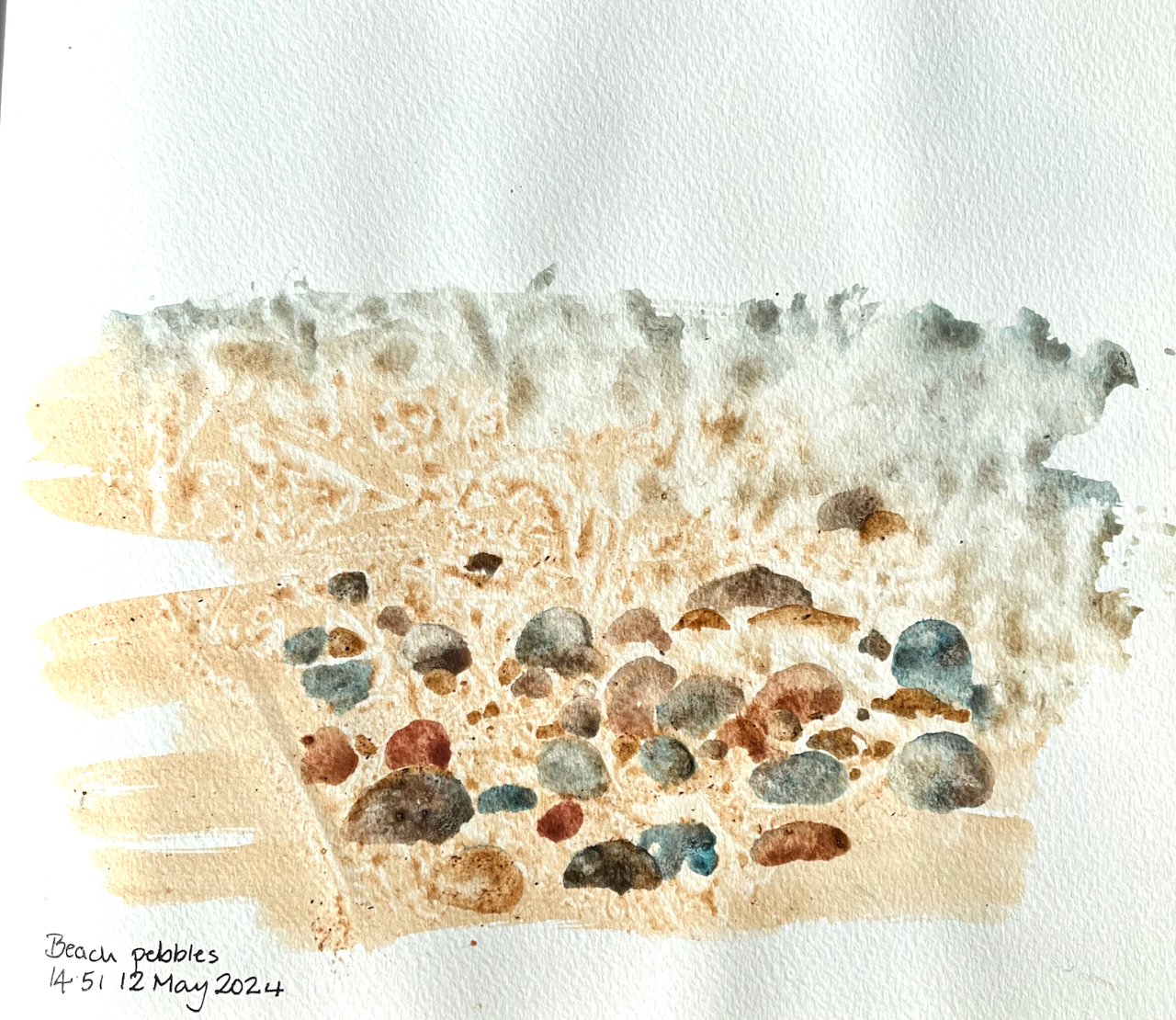
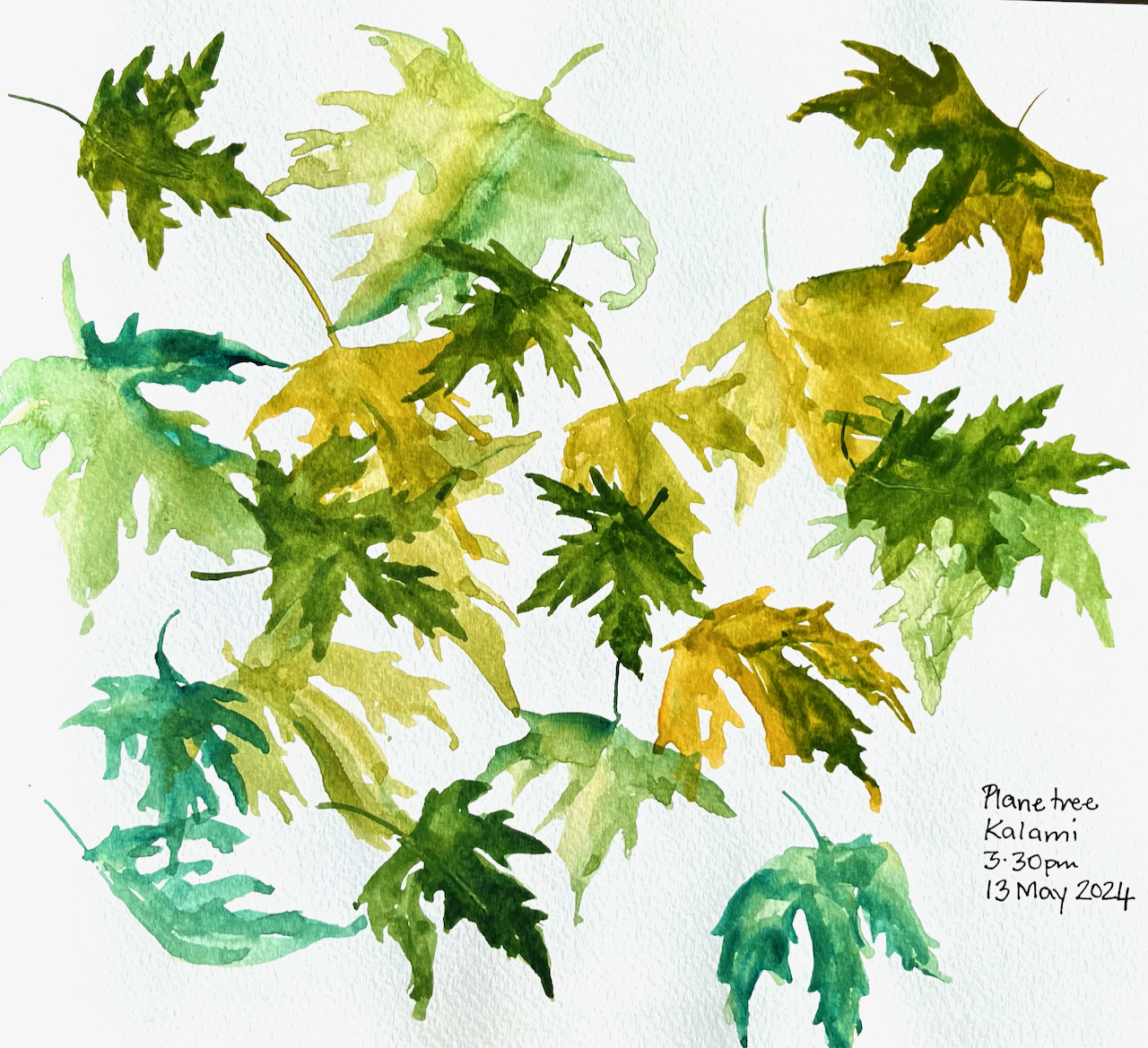
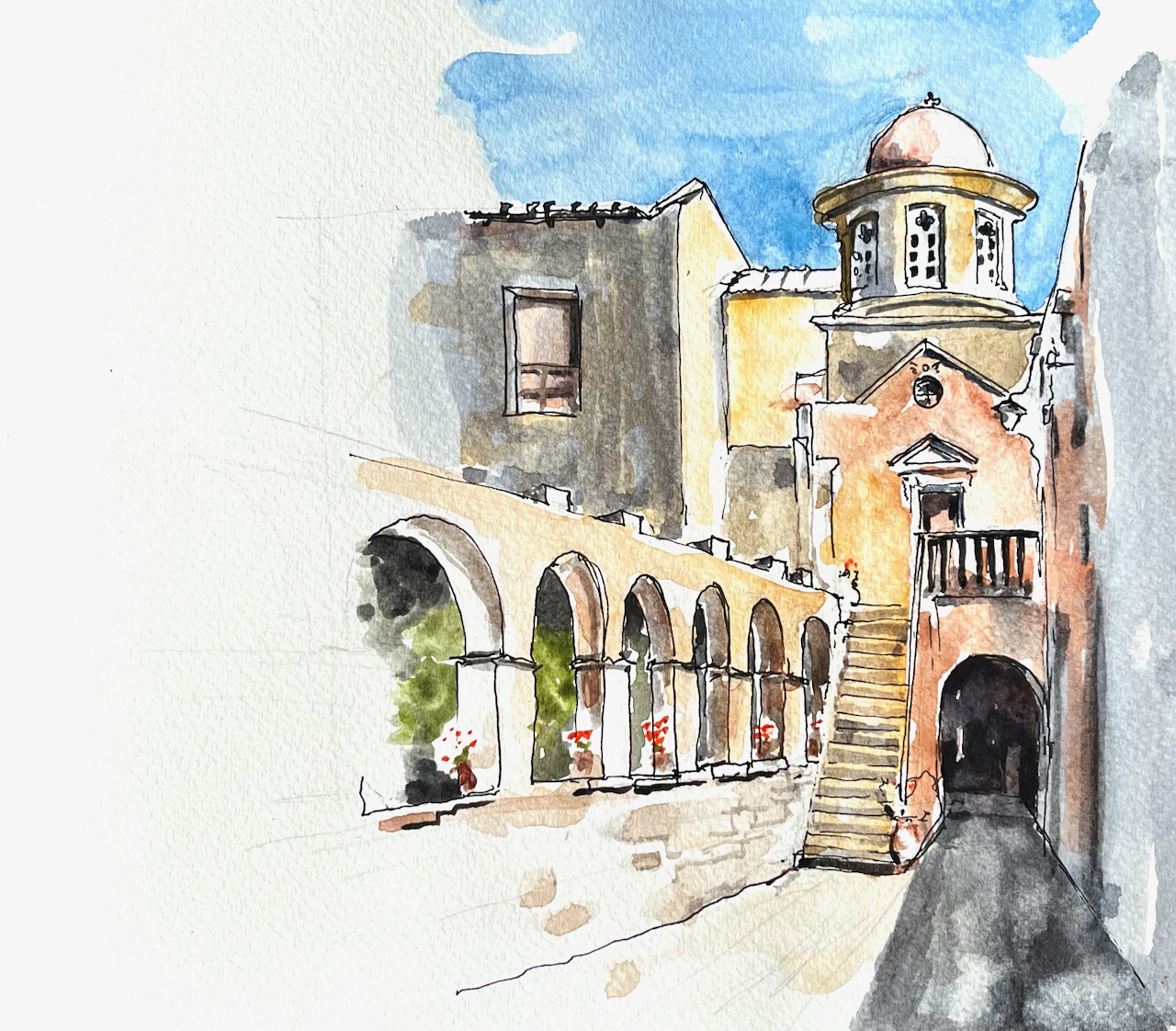
Here are a selection of sketches made in Crete. The sketchbook is Jackson’s Art Supplies’ own brand, 160gsm watercolour paper, cotton blend, about 8″ x 9″.
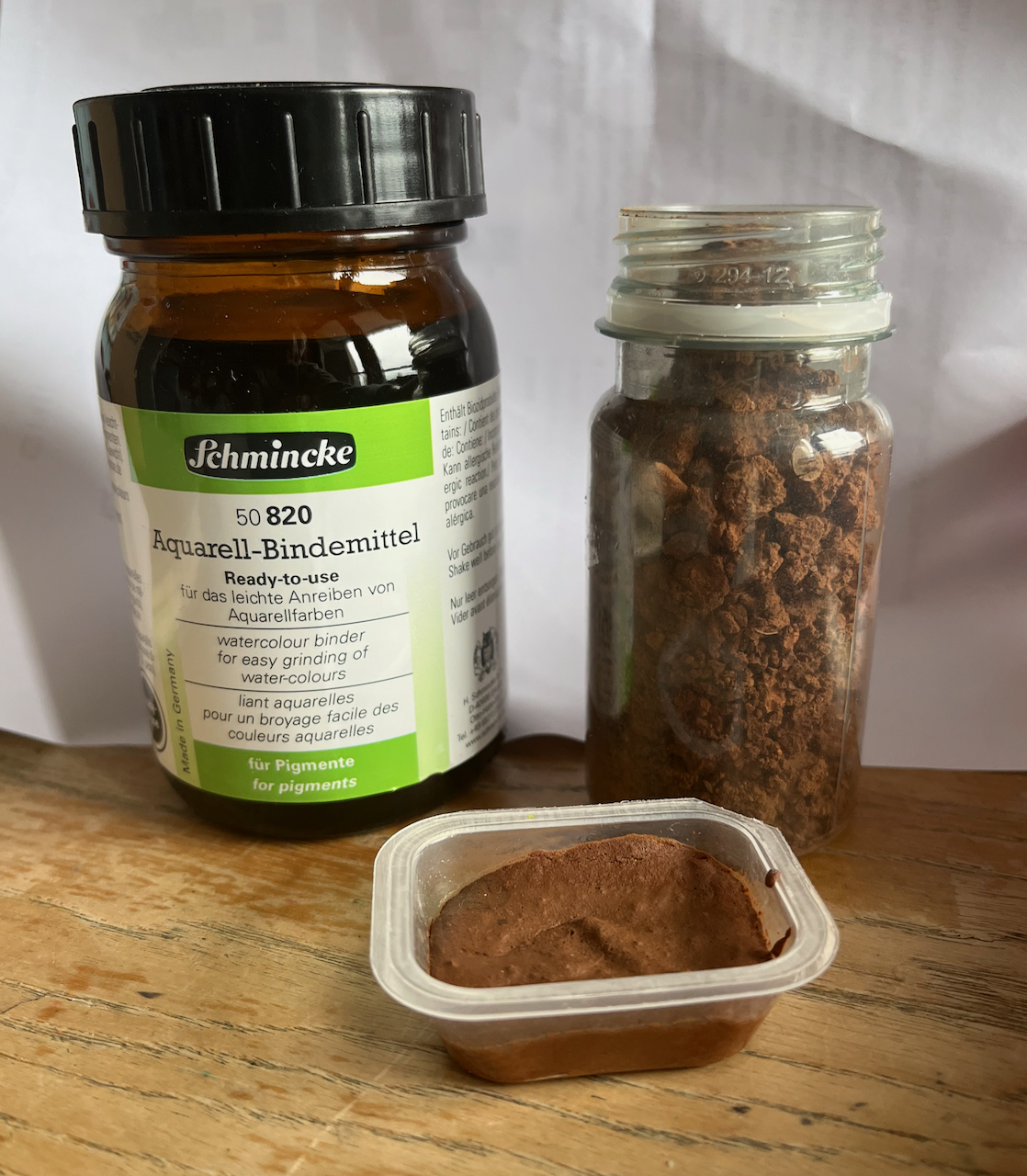
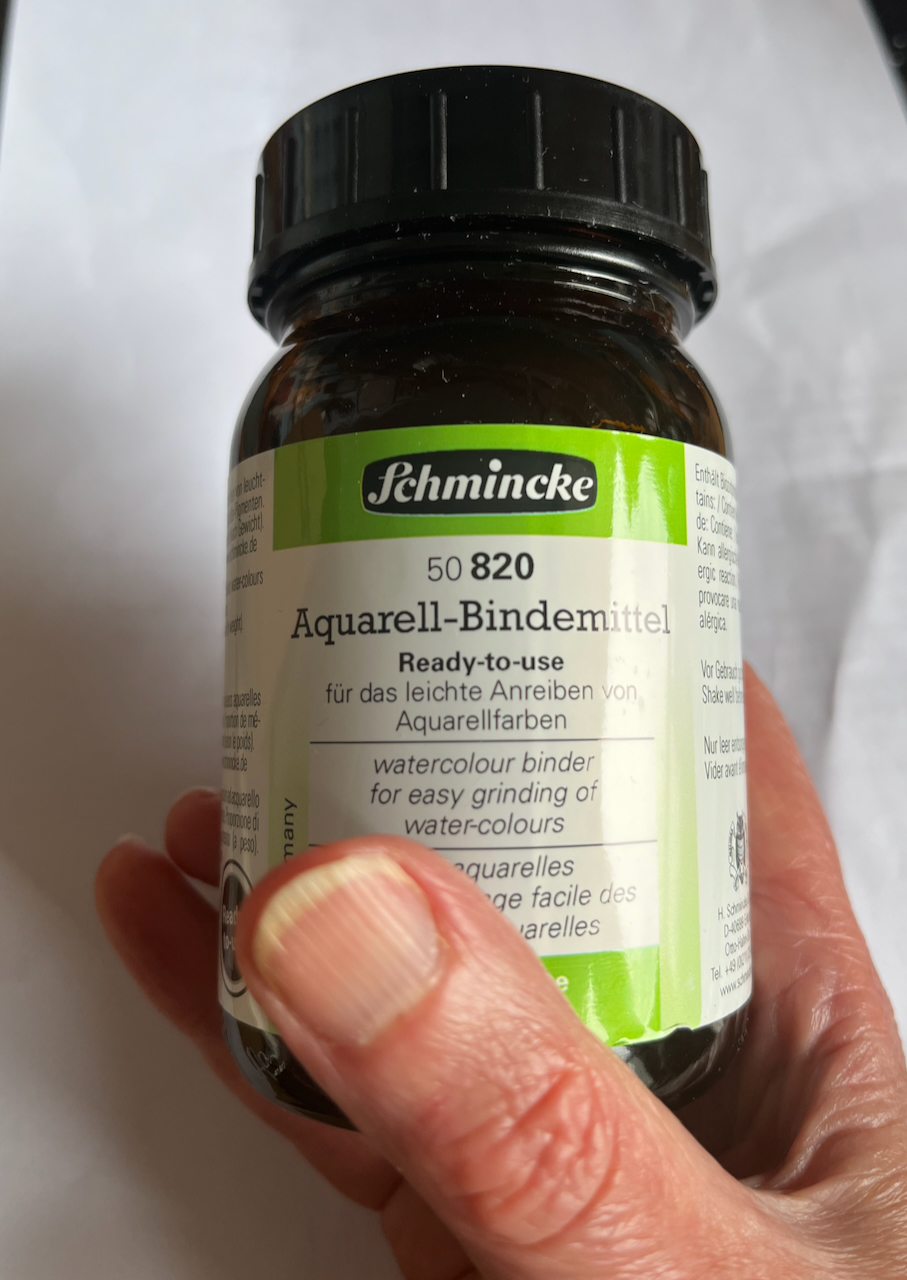
I used some of the local earth as pigment, to make a watercolour, using Schmincke watercolour binder.
Binder + earth = watercolourBinderWatercolour
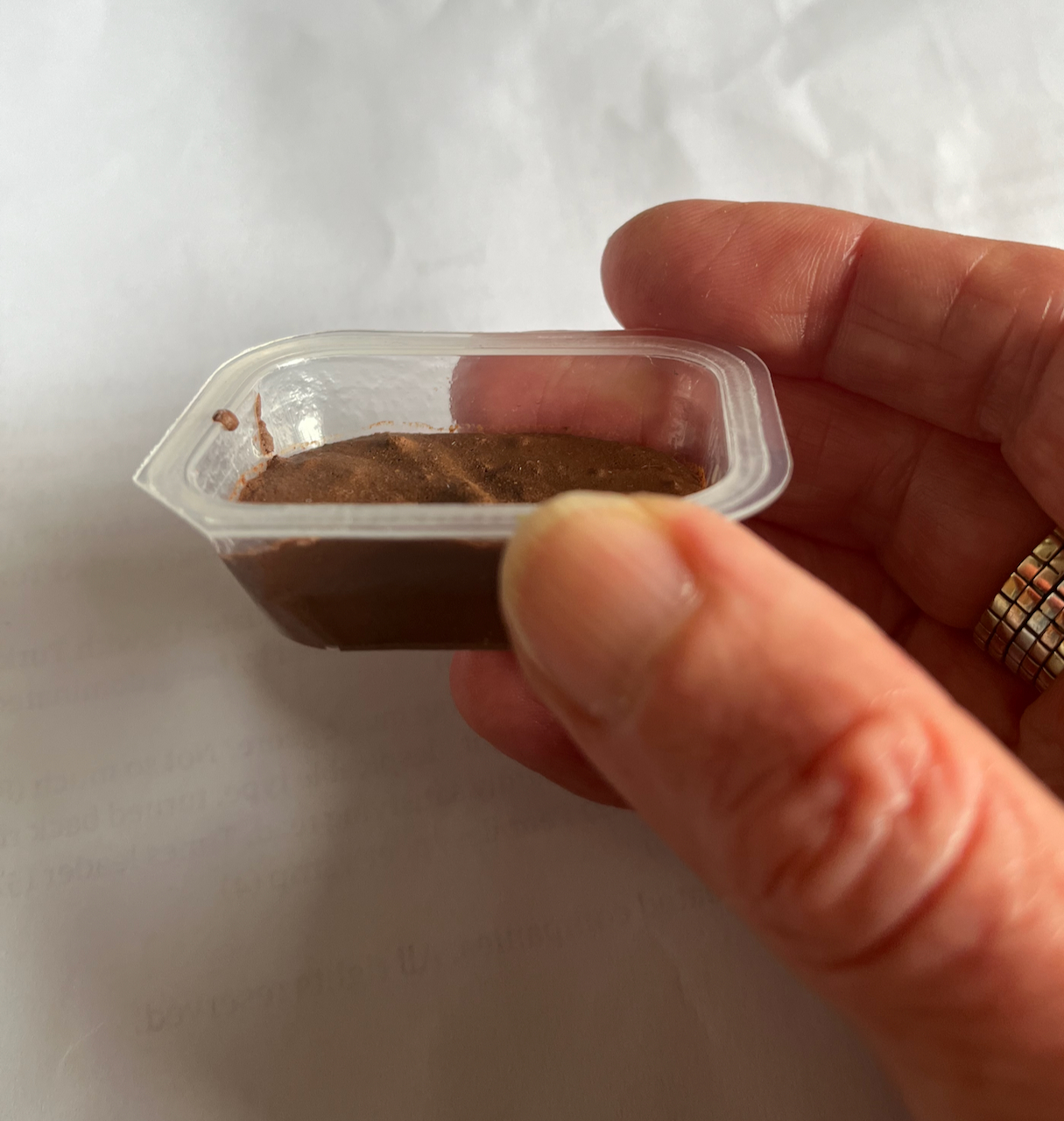
I ground the earth using a stone, breaking it up to make a powder like talcum powder. It still had bits in, but I managed to separate it by shaking, and scooped most of the bits off the top with a teaspoon. Then add an equal quantity, by volume, of the binder, and scoop into a suitable receptacle. It can be used immediately: it has the consistency of paint from a tube. Or. leave it to dry, then it’s like a watercolour pan. The “suitable receptacle” here is an empty butter portion container.
Home-made watercolour pan.
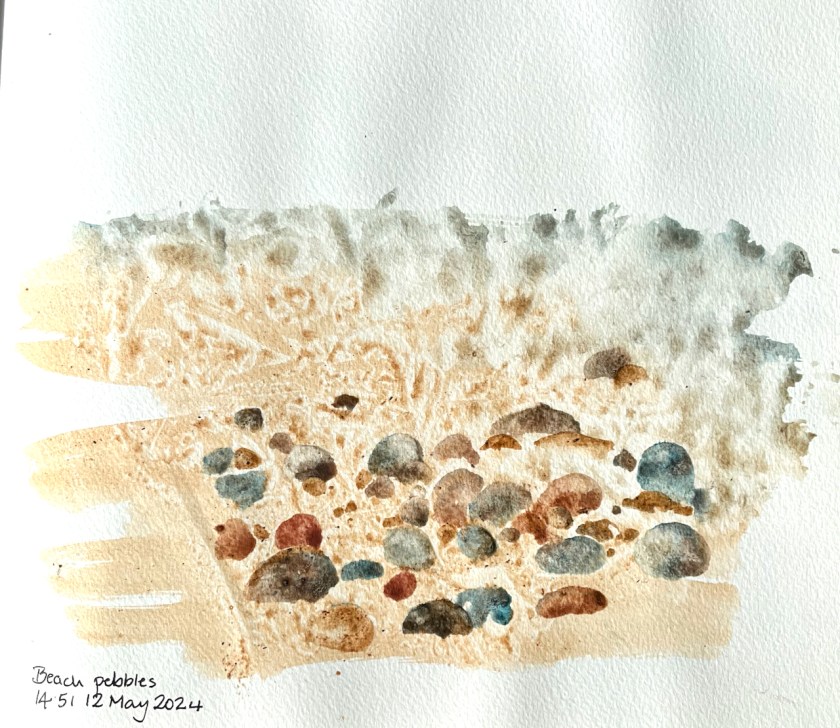
The watercolour works amazing well. It is a rich red-brown colour. Ideal for painting the surrounding scenery.
Painting with home-made watercolour
You can see it, for example, in this picture:
Here is a flick through the sketchbook:
Crete sketchbook flick-through
Click a button below to share this post online, email it, or print it:







 Jane Sketching