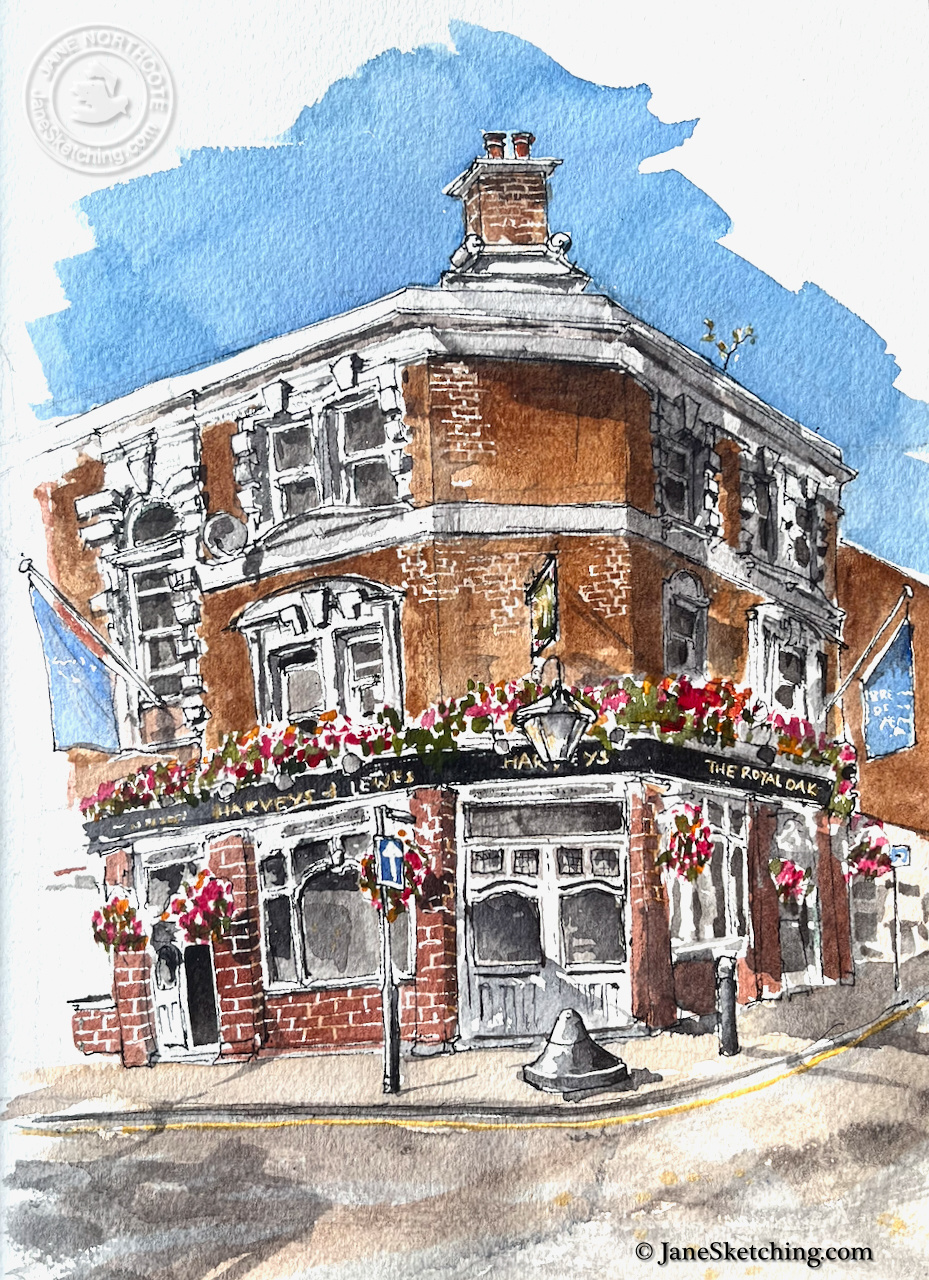
Royal Oak Borough, 44 Tabard Street, SE1

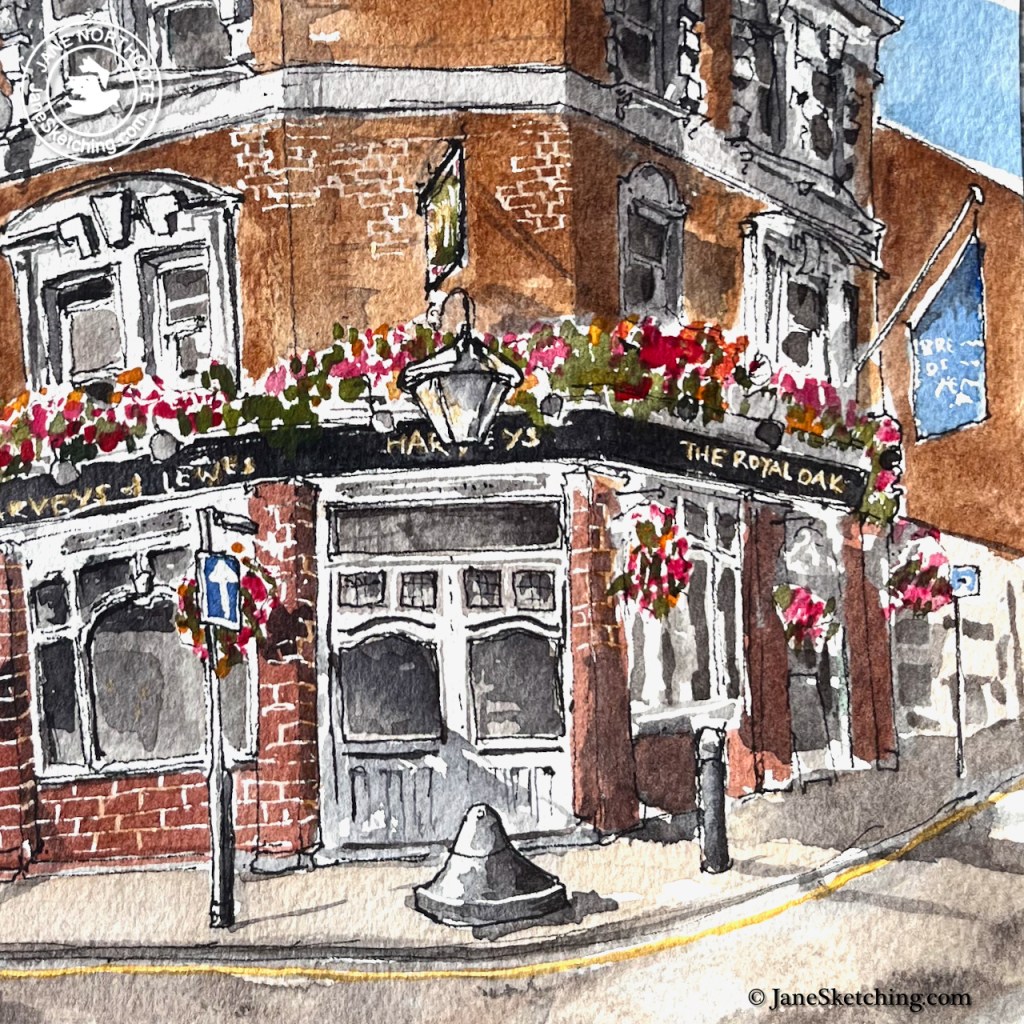
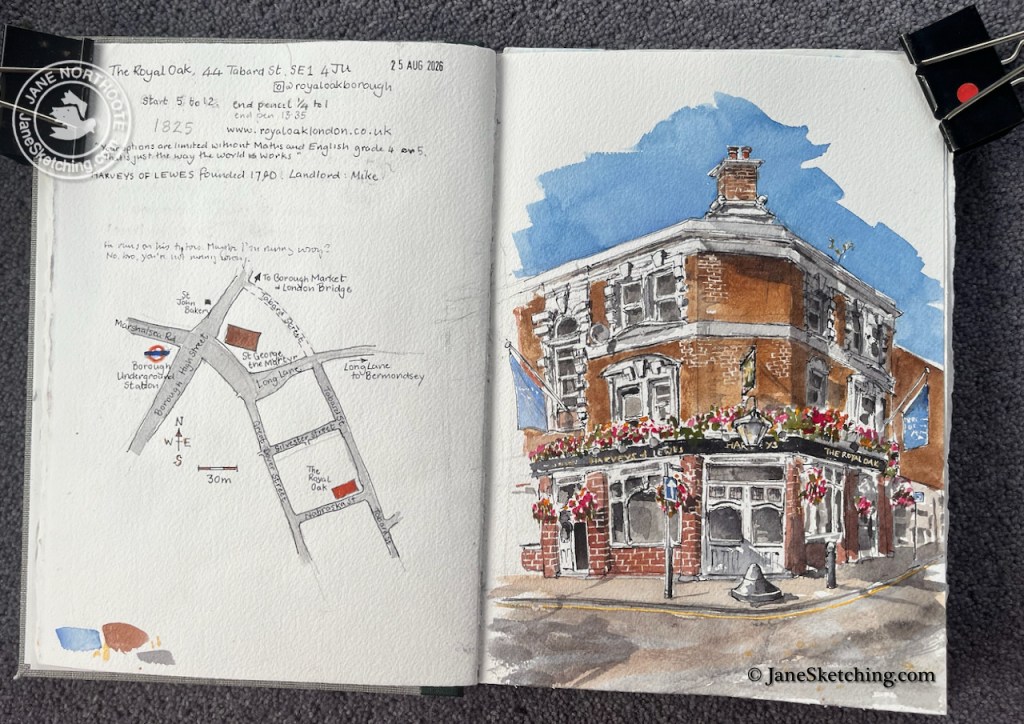
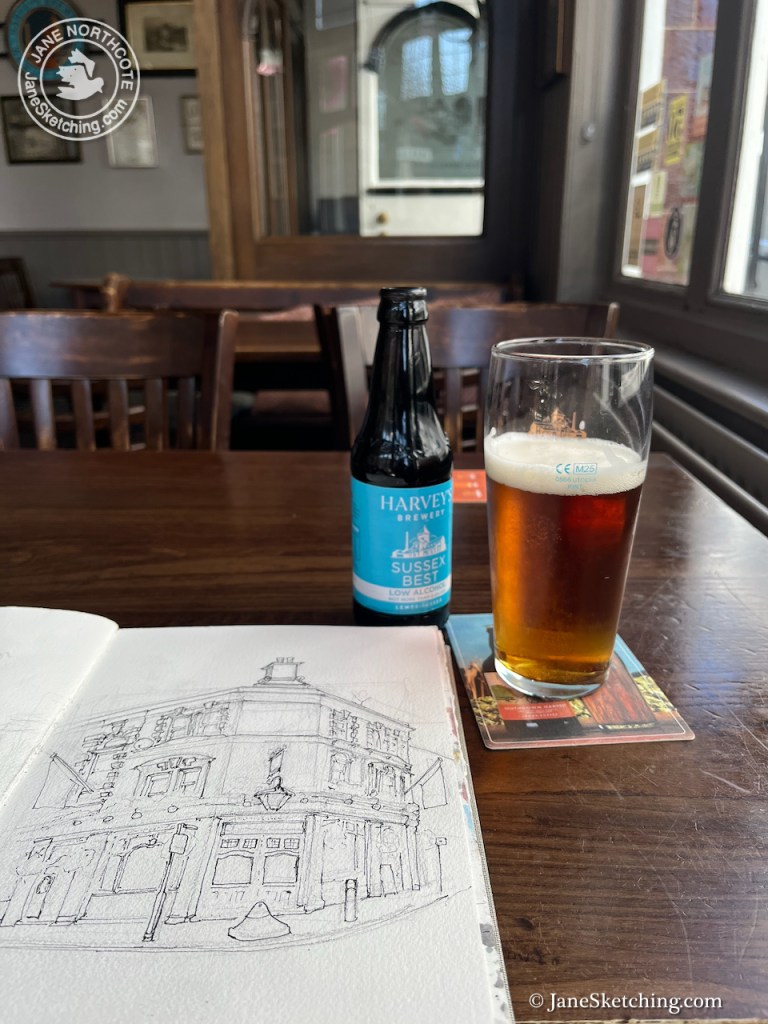
Here is the Royal Oak Borough, sketched on a sunny day in August.
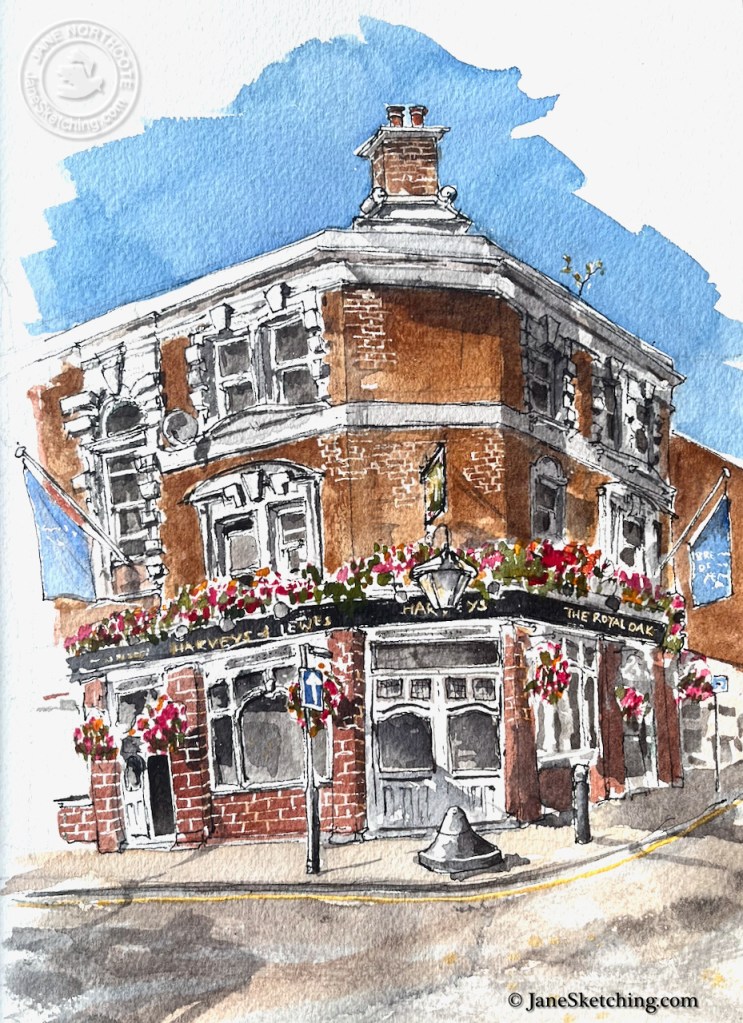
This pub serves Harvey’s beer and is listed in the Campaign for Real Ale (CAMRA) guide.

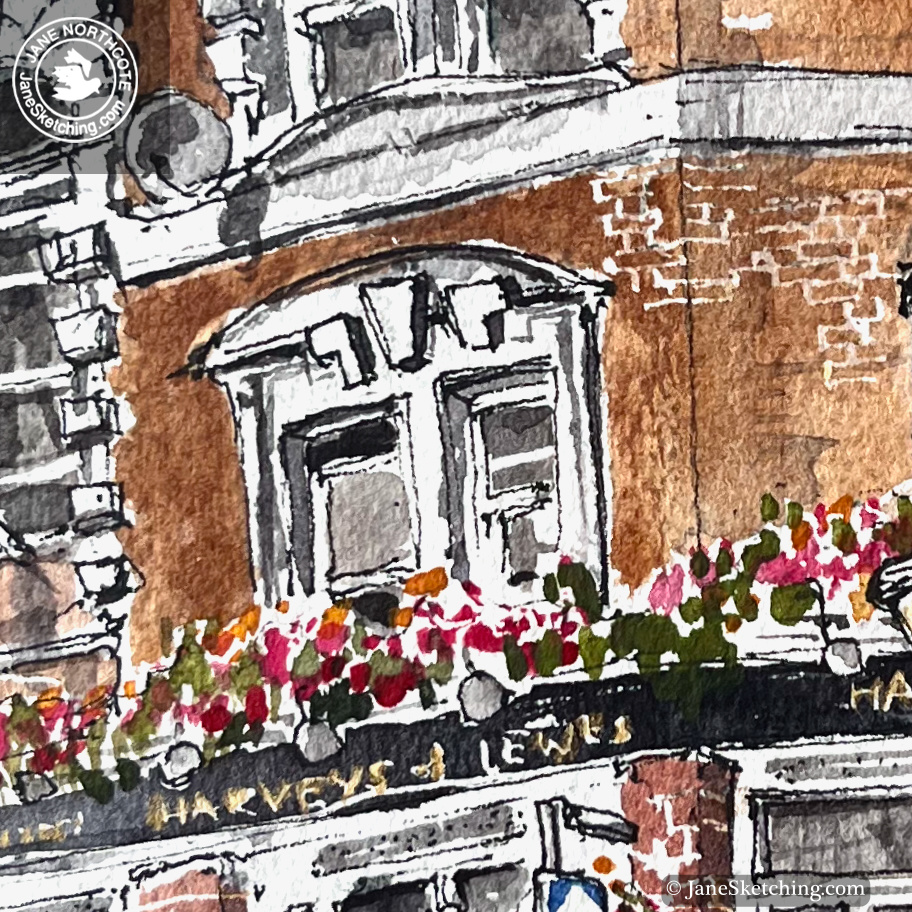
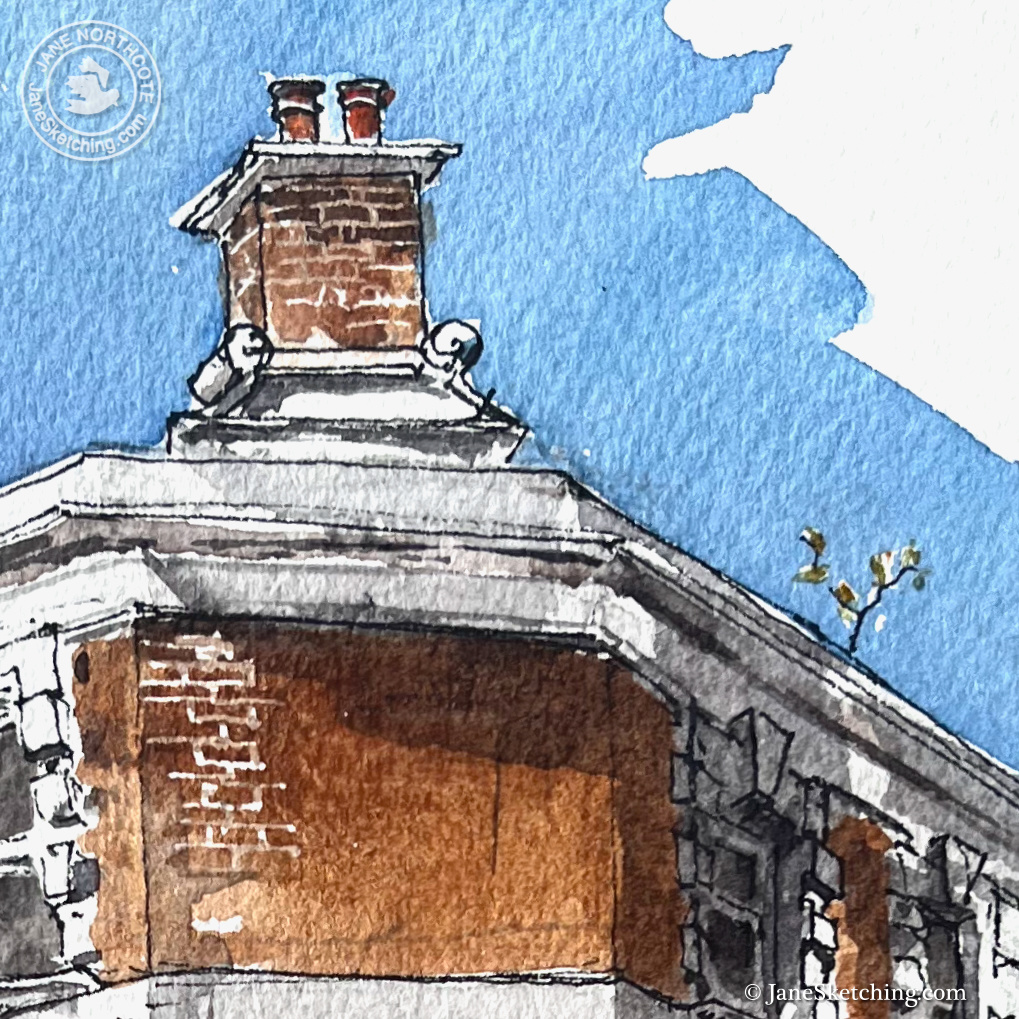
According to the landlord, the pub was built in 1825. The wooden bar inside is newer, but retains the old design. Outside there are fun Victorian architectural features. See the highly original “keystone” arrangement on the first floor window, and the flourishes around the chimney.
https://www.londonpicturearchive.org.uk/view-item?i=117908
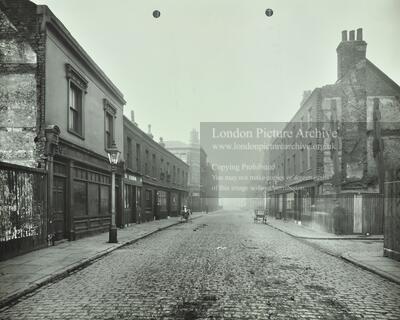
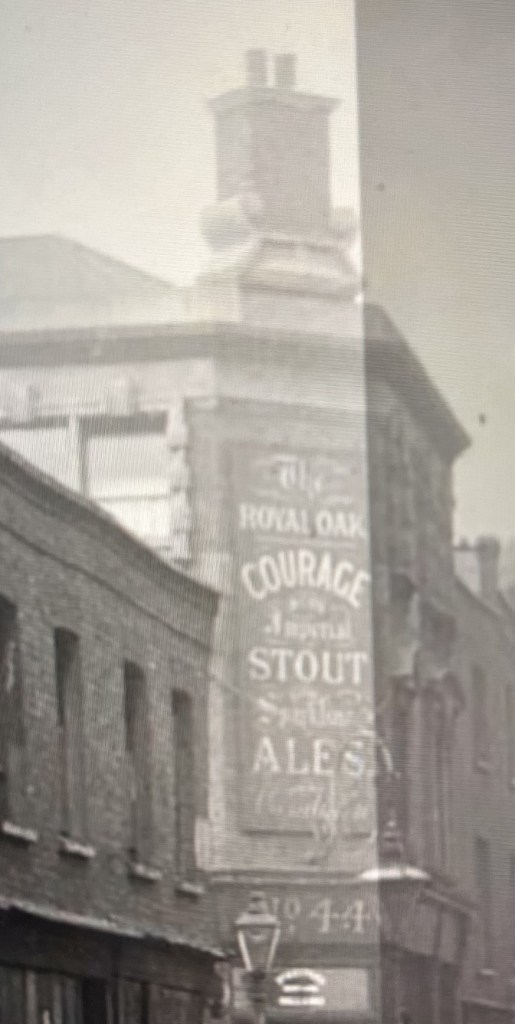
Tabard Street in 1913: Royal Oak just visible in the centre left, on the left of the street.
London Picture Archive Record No 115680

The chimney flourishes are useful because they enable the pub to be easily identified on old photos. See for example this one, which is in the London Picture Archive (click the picture to go to the London Picture Archive). The Royal Oak is the only building surviving from this 1913 view.

In that 1913 picture you can see the huge sign on the angle at the corner of the pub, advertising “Courage” ales. This was a Courage pub up to 19971 when it became the first Harvey’s tied pub in London.
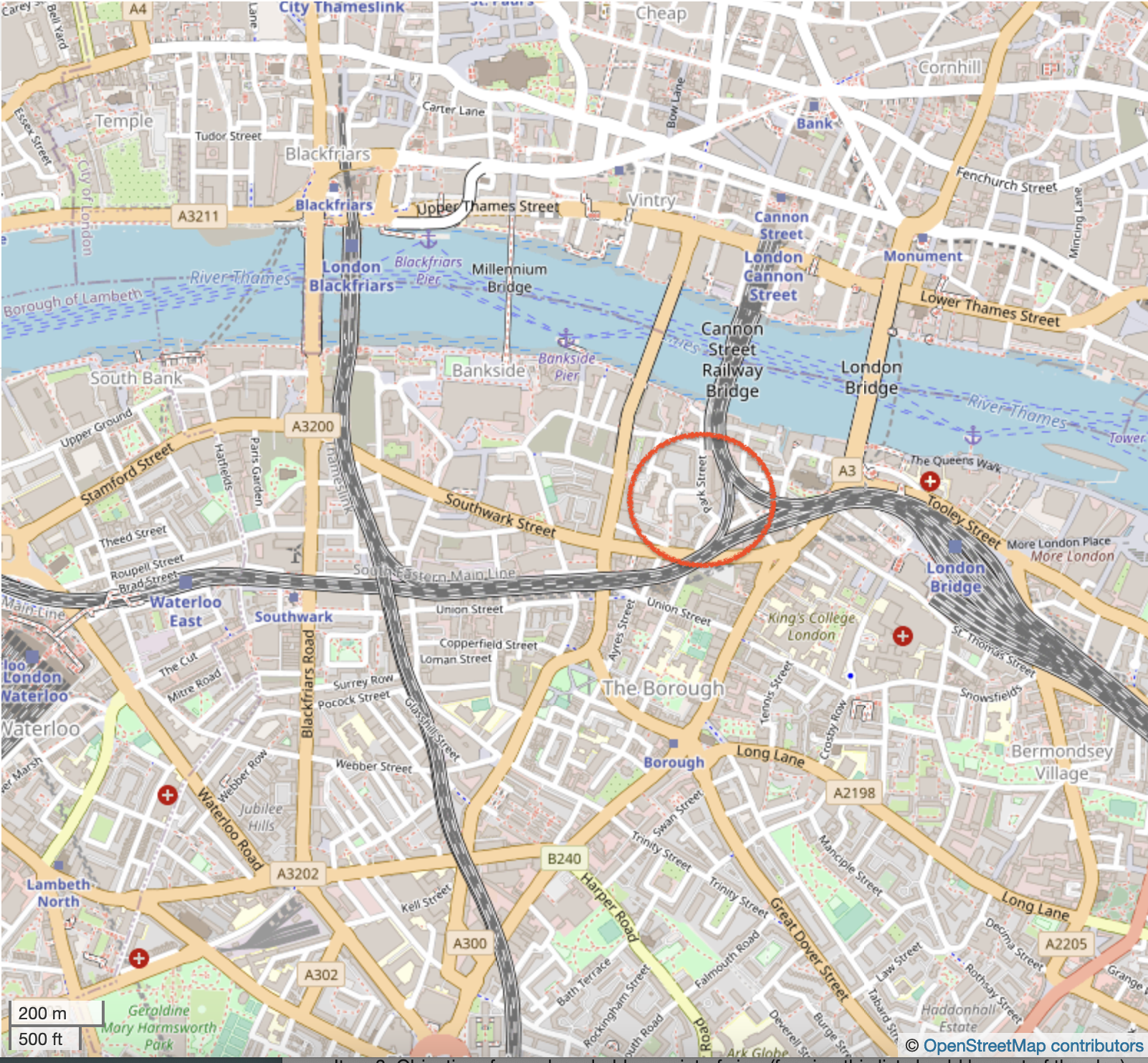
The Royal Oak is near Borough Underground Station.
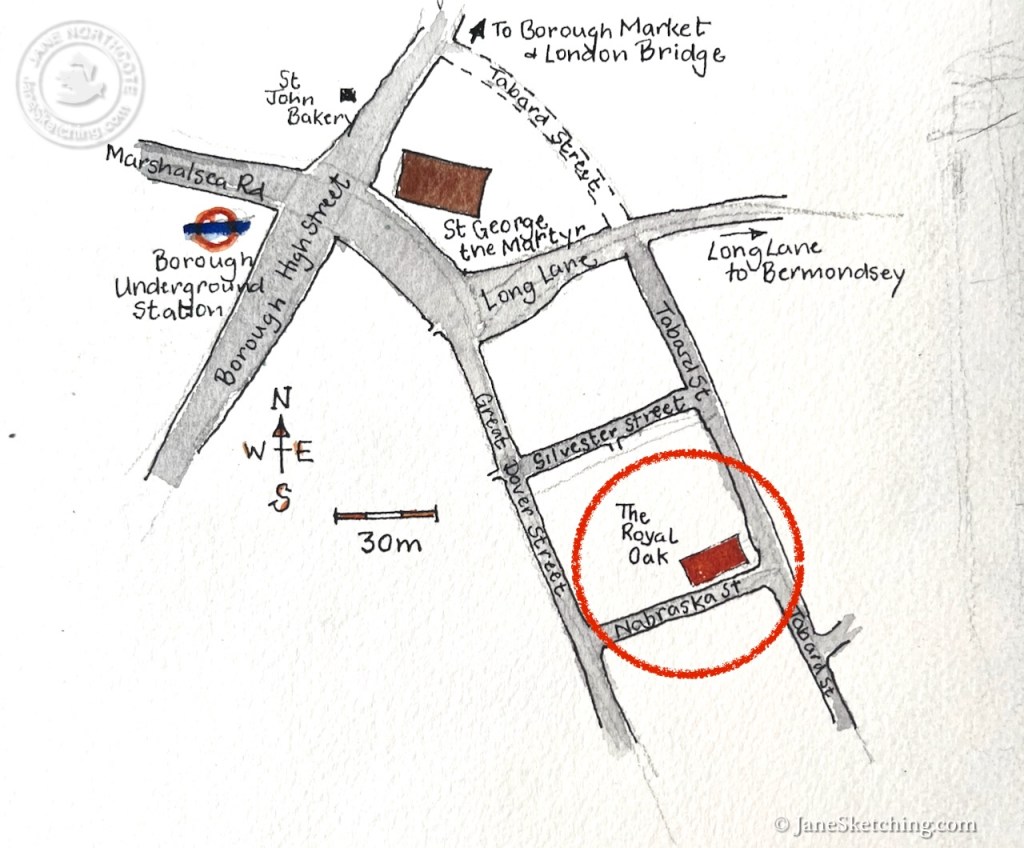
Location of The Royal Oak Borough, near Borough Underground Station (Northern Line, Bank Branch)

As I was sketching, people walked past, deep in conversation.

Worldly wisdom:
“Your options are limited without Maths and English Grade 4 or 5. That’s just the way the world works.”

And running.
“He runs on his toes. Maybe I’m running wrong?”
“No, bro, you’re not running wrong.”

It’s endlessly fascinating, just standing, looking and listening, on London streets.

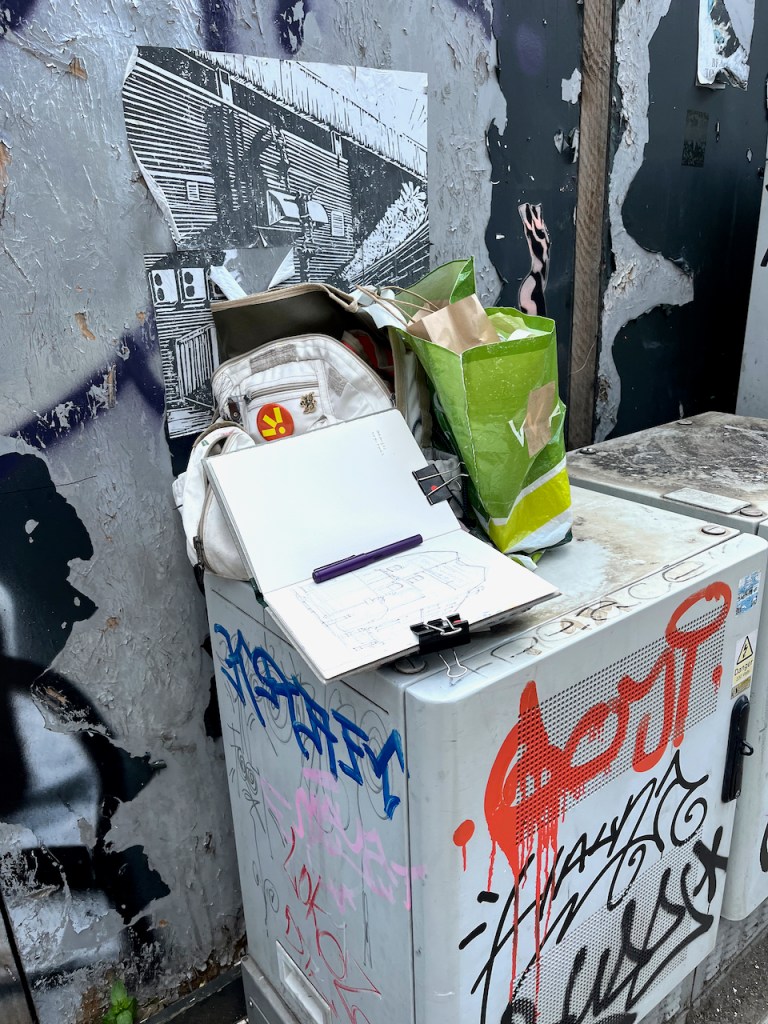
Here are some snapshots from my sketching expedition, Thank you to the landlord Mike, who kindly brought me a chair, and welcomed me into the pub for a very welcome drink on that hot day.
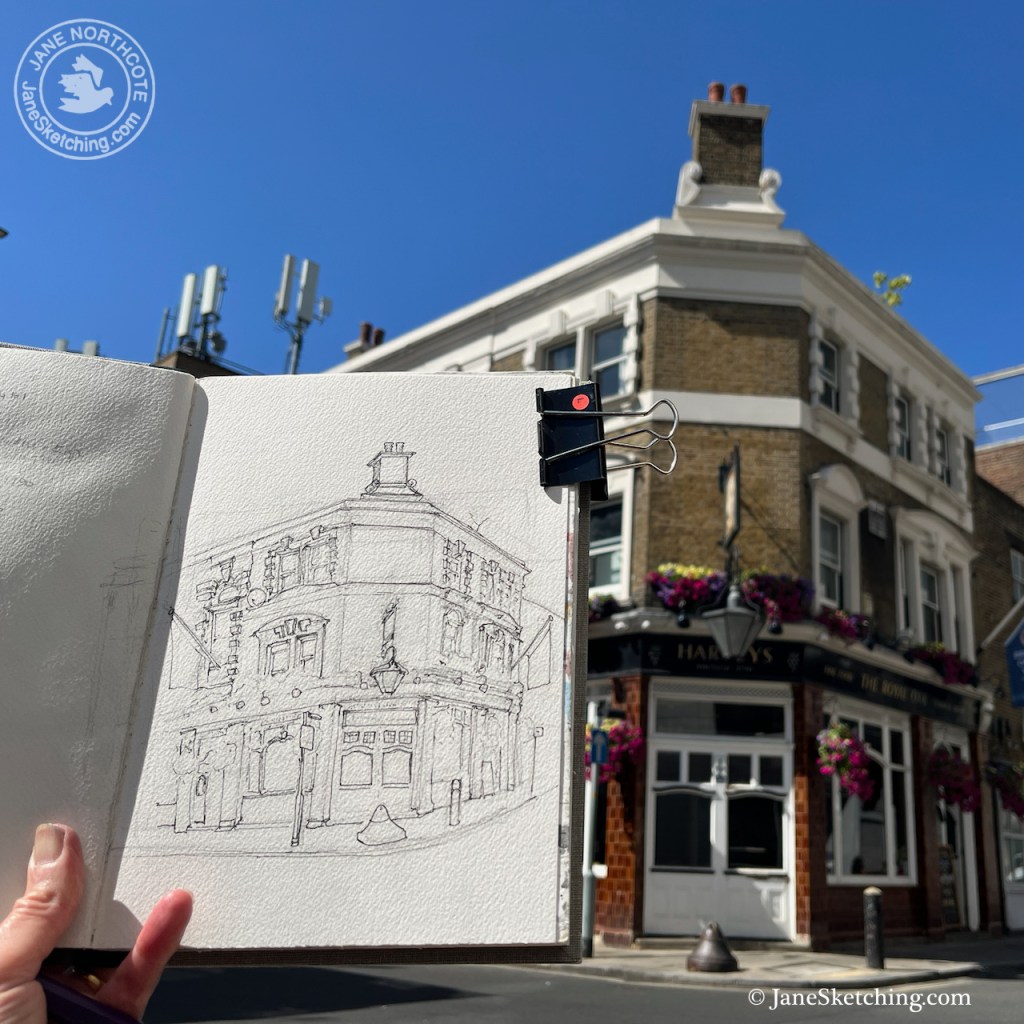
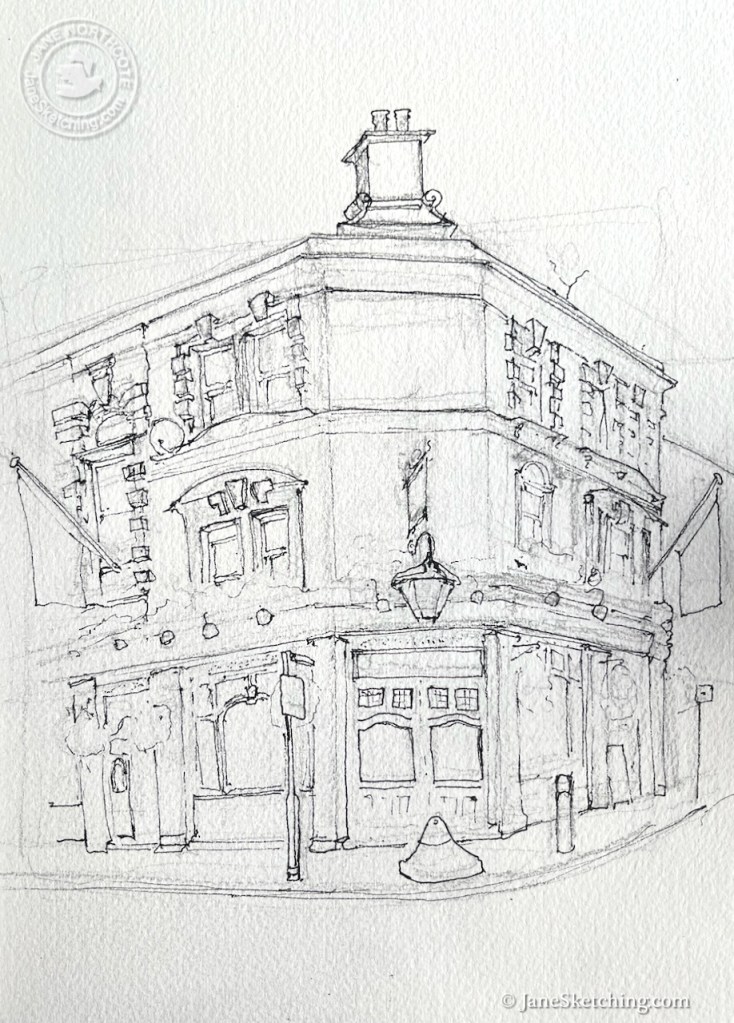
Sketchbook 17 page spread

  1. Harvey’s took over the pub in 1997 according to https://www.spbw.beer/lpoty-2/. The current landlord told me that the Royal Oak was Harvey’s first tied pub in London. ↩︎

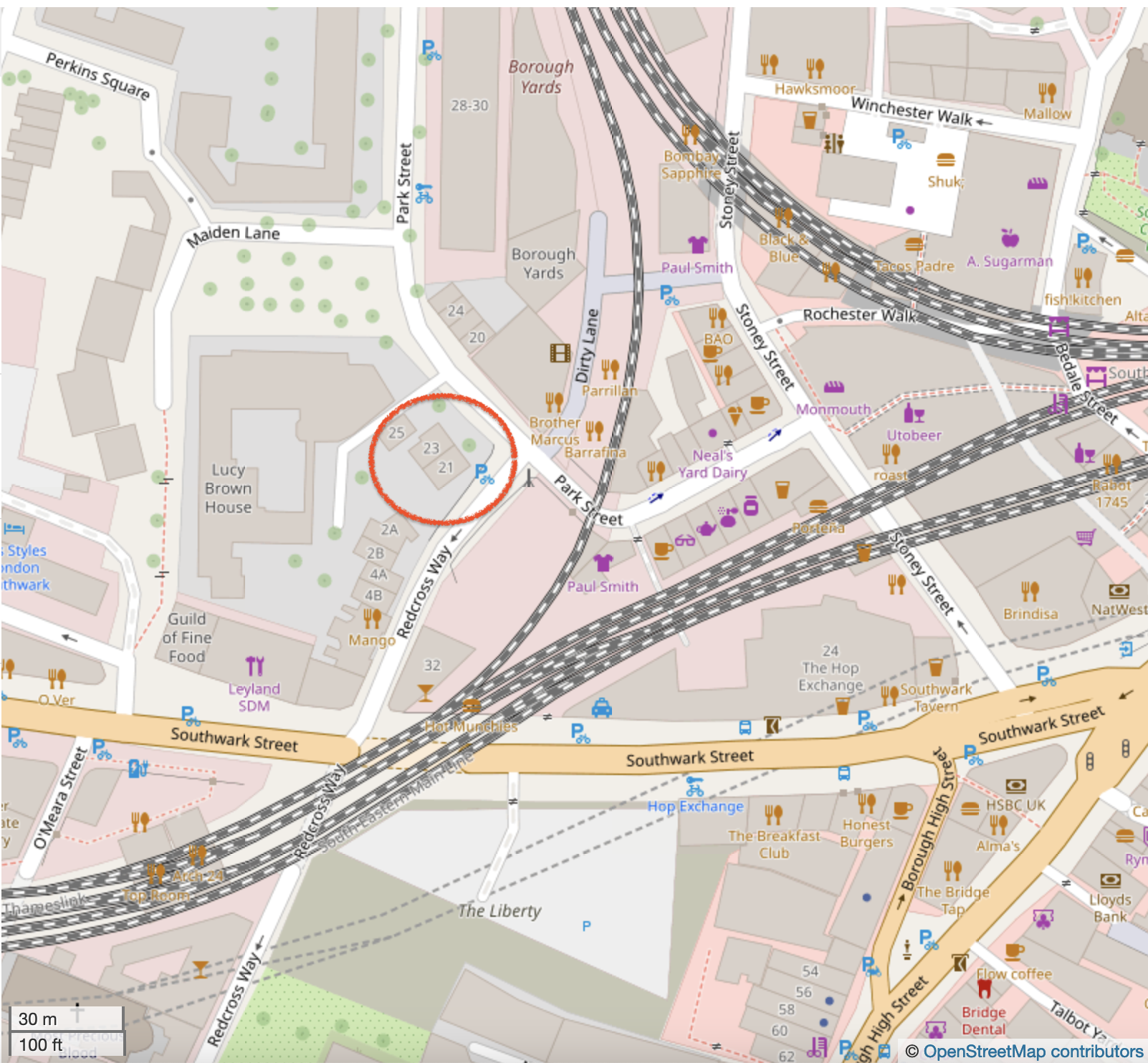
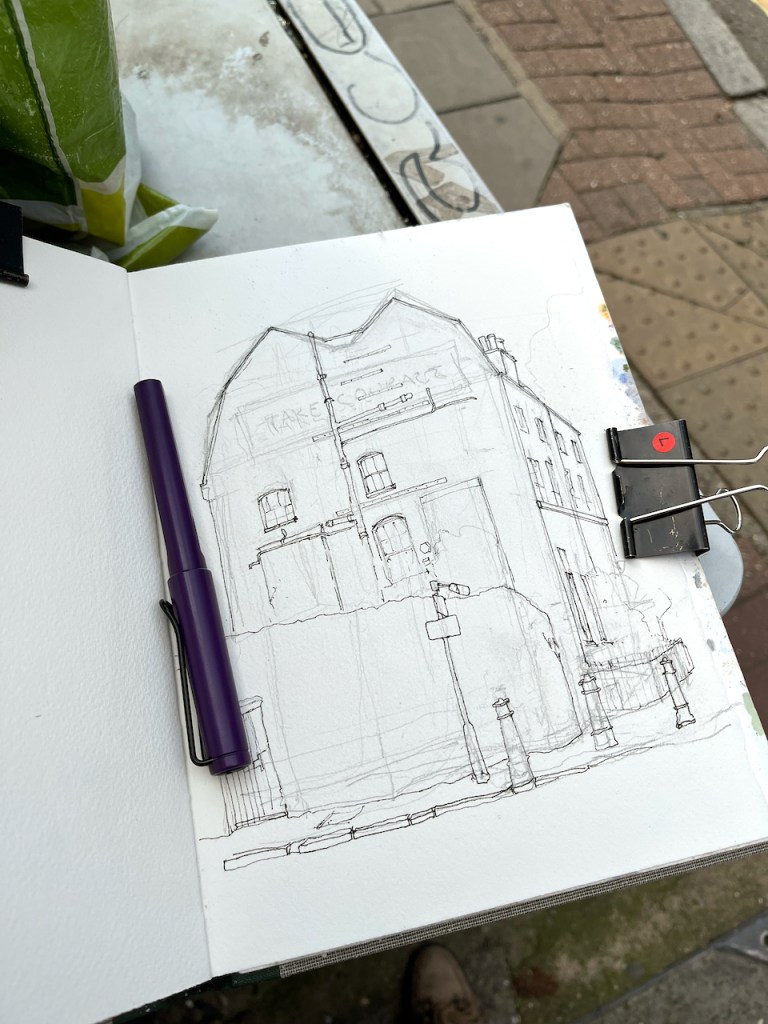
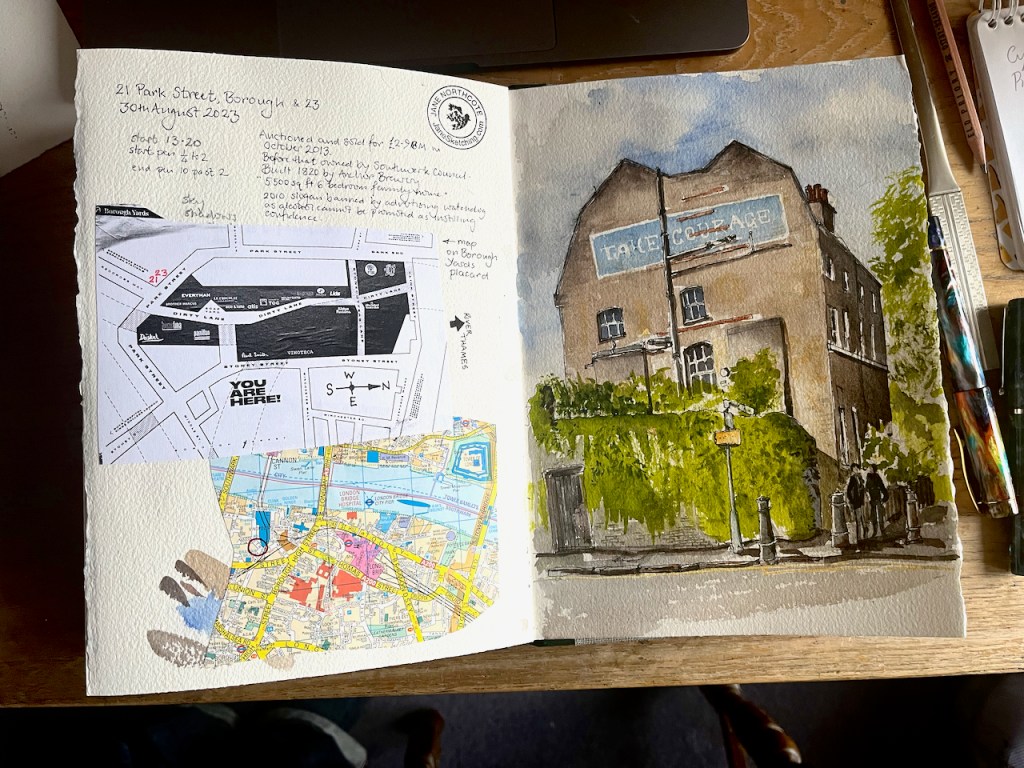
21 and 23 Park Street, Borough SE1 “Take Courage”

I enjoy the marvellous trigonometry of this roof, and the encouraging slogan on the wall.

21 and 23 Park Street, Borough, Southwark, London SE1. Sketched 30th August 2023, 2pm.

The slogan is for a brewery, Courage.
This house was built in 1820 for the managers of the Anchor Brewery, then on this site. The Anchor pub is on the river Thames nearby.

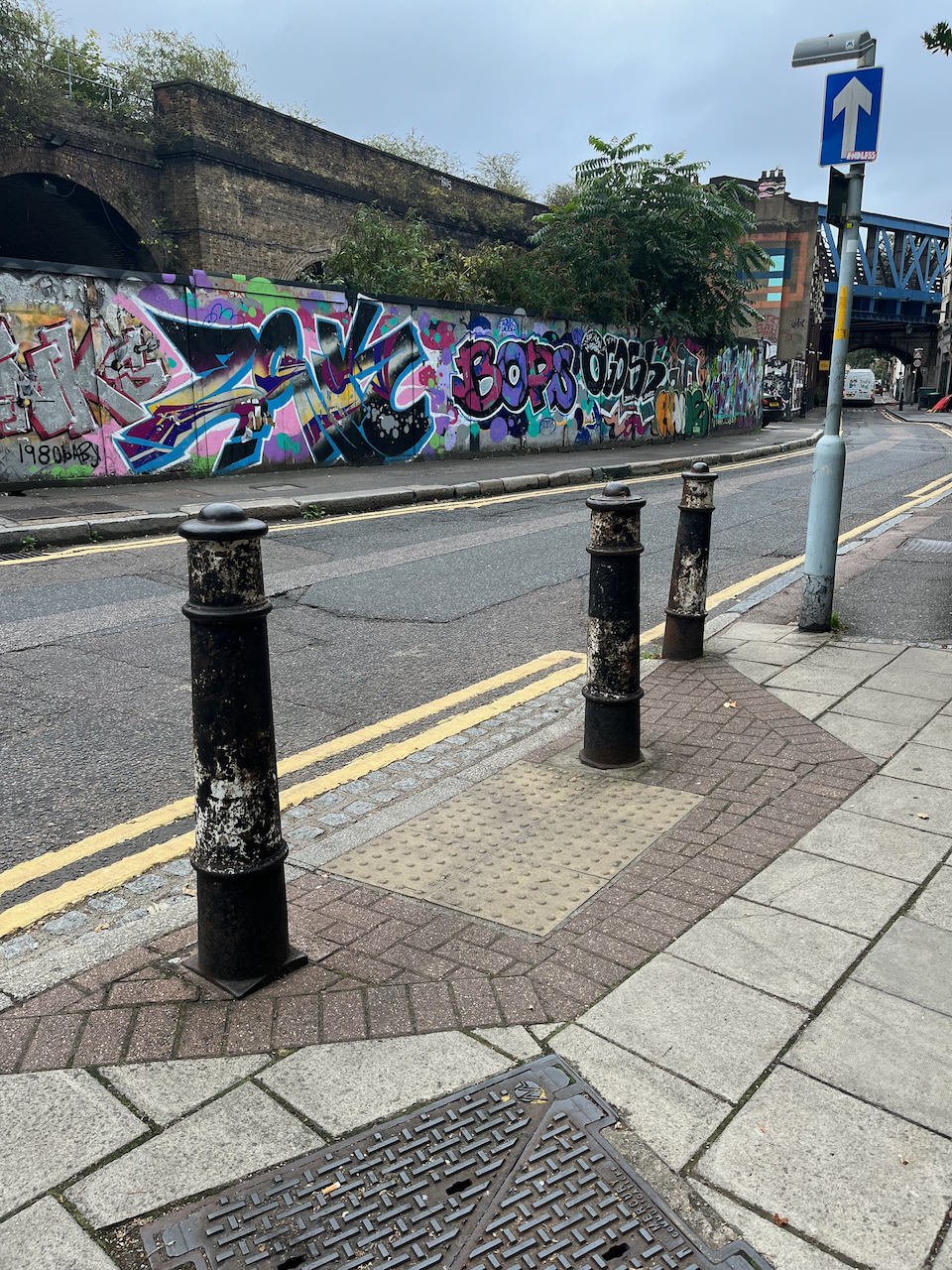
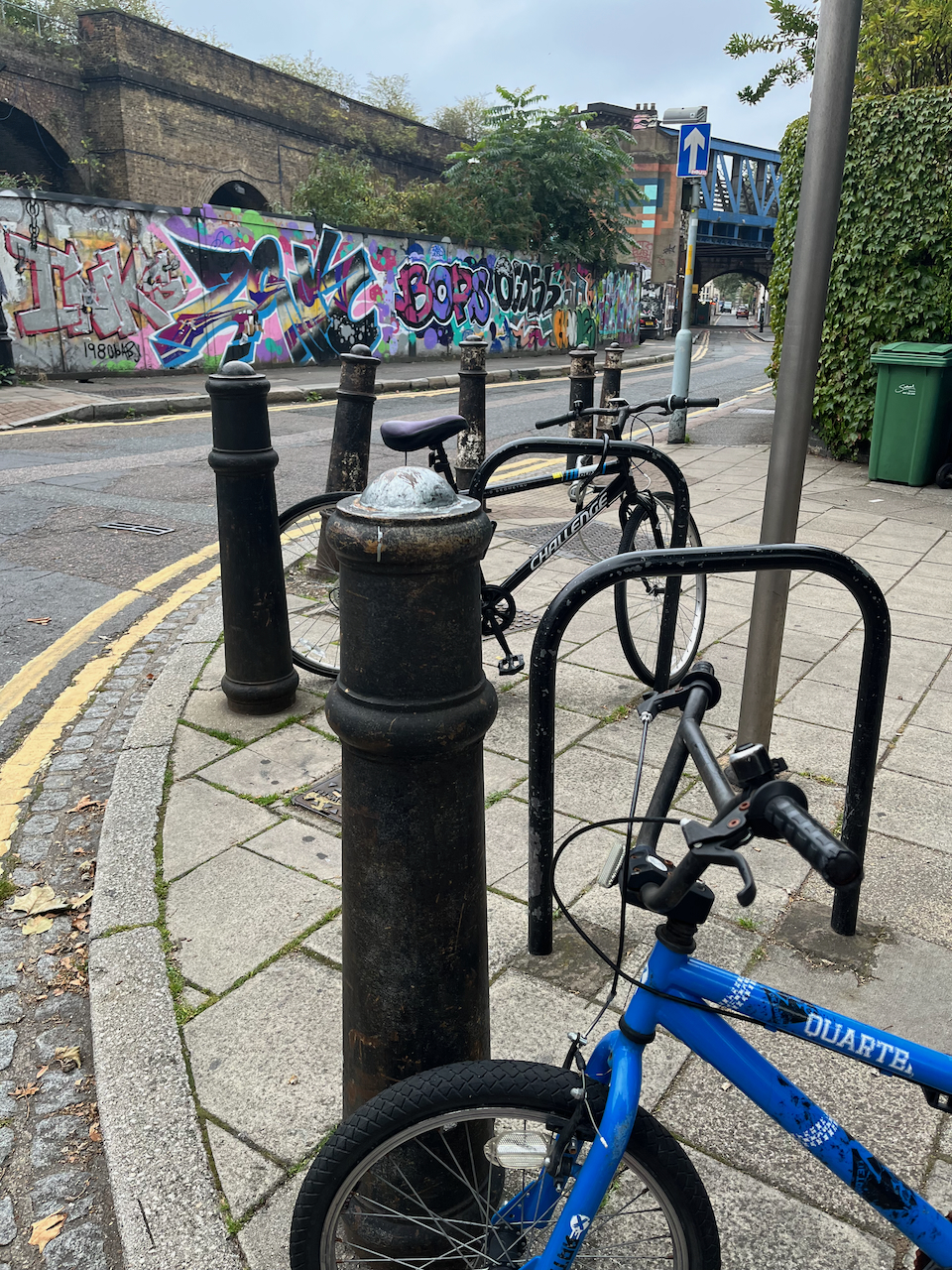
The building, and its cast iron railing, is listed Grade II, number 1385752. When I searched for the list entry in the Historic England register, I found, to my surprise, that the bollards in my picture have their own special listing, number 1385753 “

“5 cast iron Canon posts 1 inscribed “CLINK 1812”

https://historicengland.org.uk/listing/the-list/list-entry/1385753?section=official-list-entry

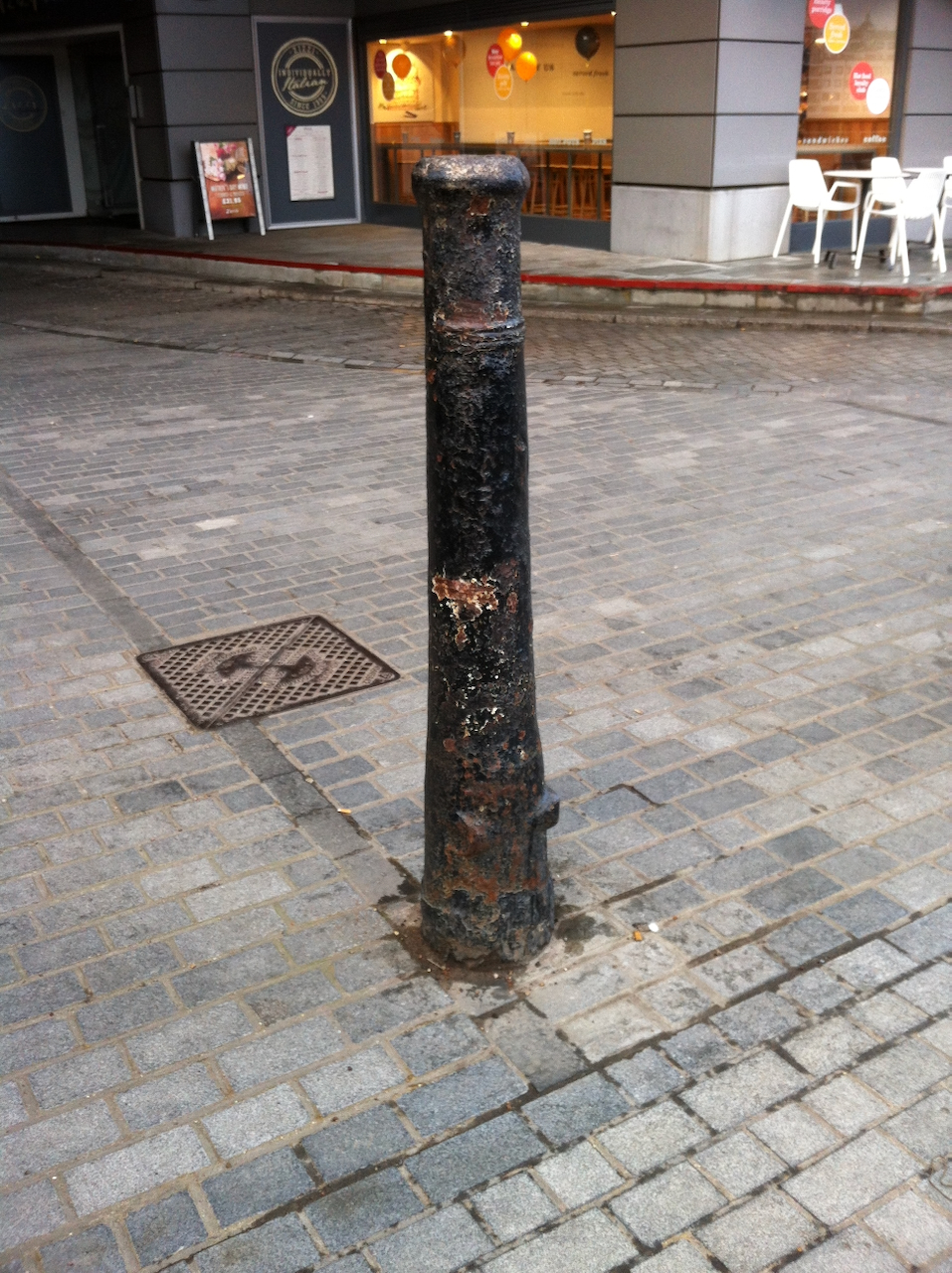
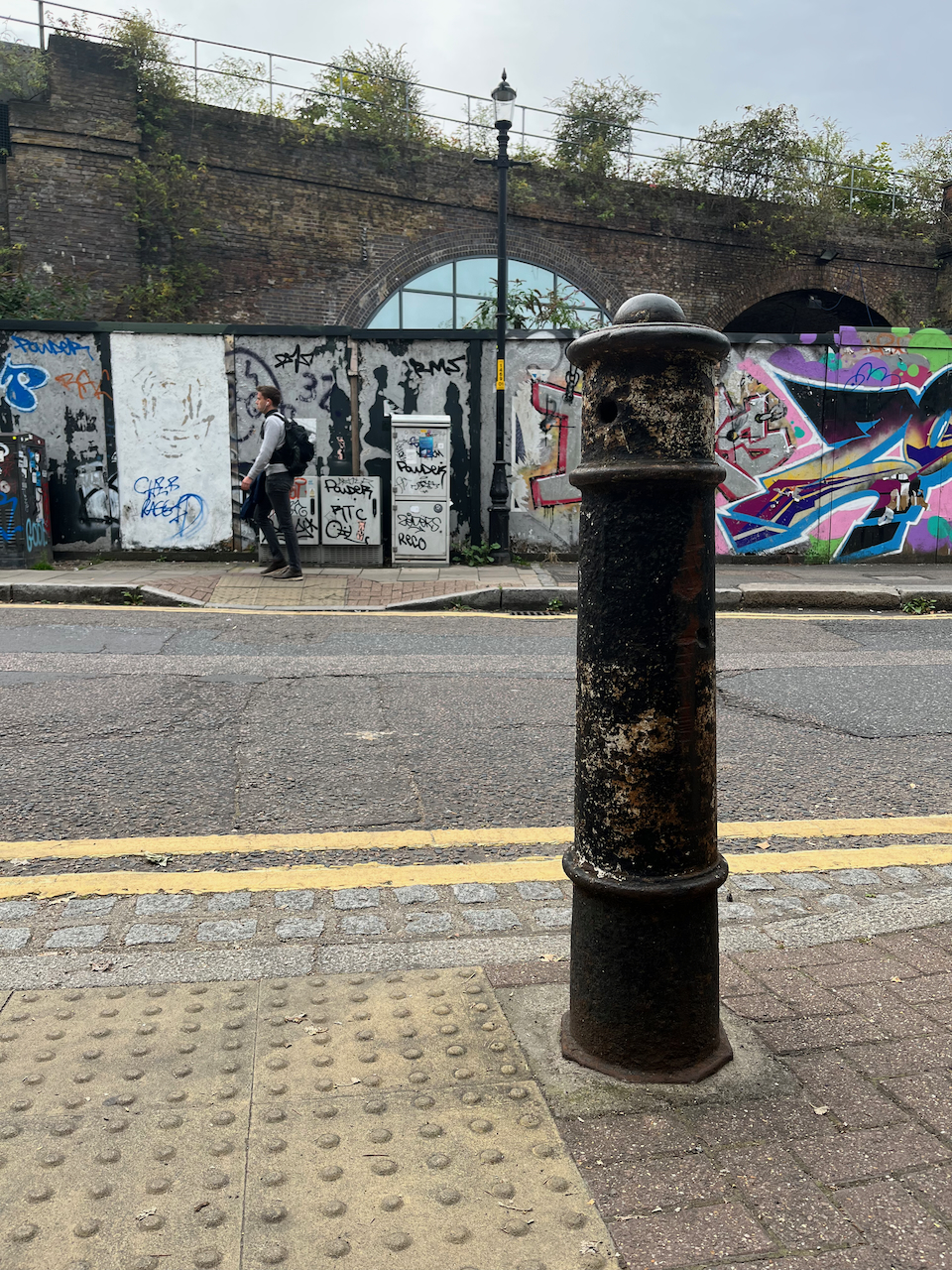
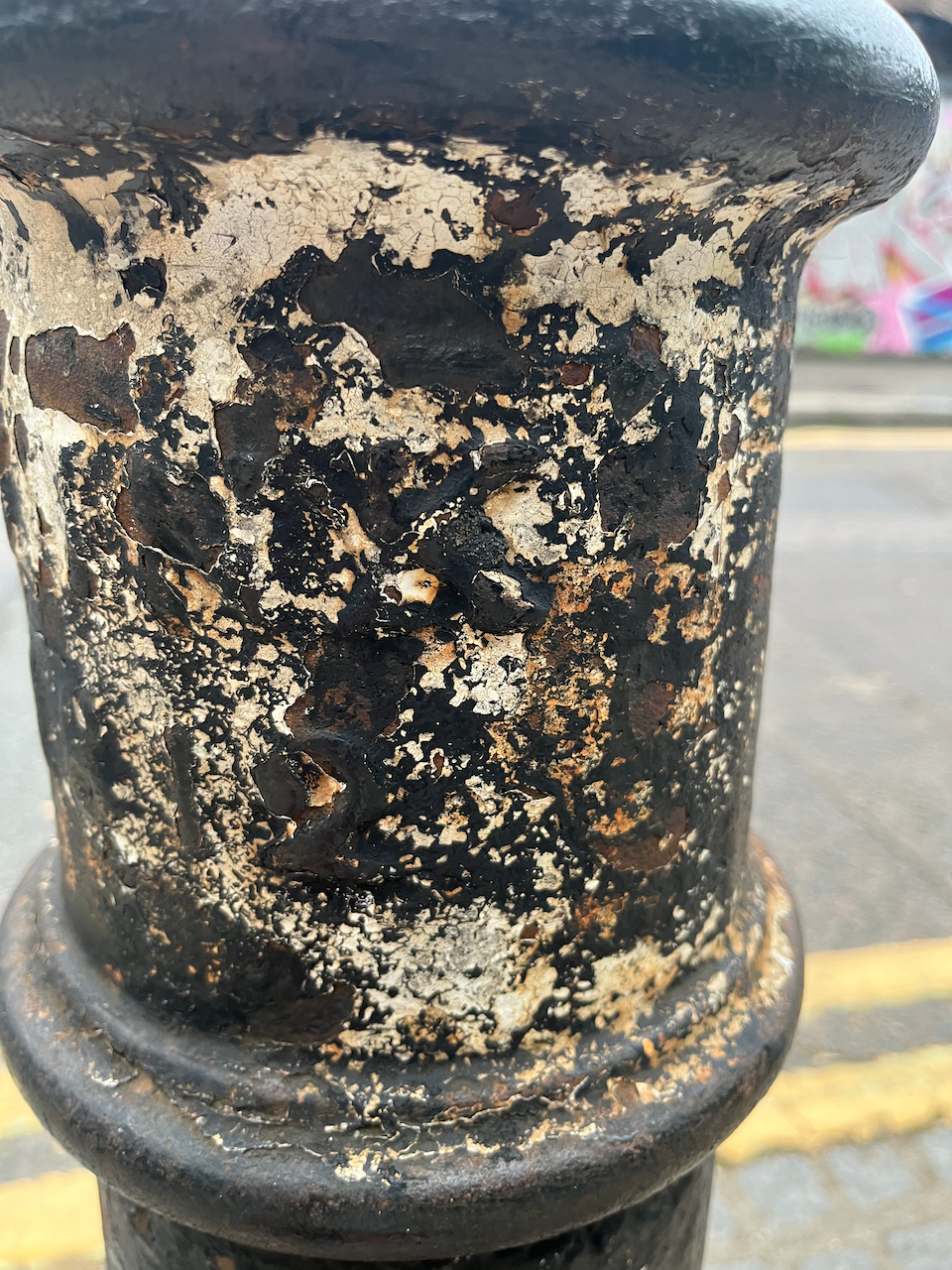
So I had to go back and have a closer look at them. Why were they listed? The list entry does not say. There are some bollards in London which are former cannon. It’s always a delight to discover them. They can be positively identified because you can see the indentation or hole near the base, which is where the gunpowder used to be poured in. Also they sometimes have protrusions about two-thirds down where they used to pivot on their gun-carriage. Sometimes the base is flattened on one side. Here are some examples of cannon (click the image to enlarge and see location):

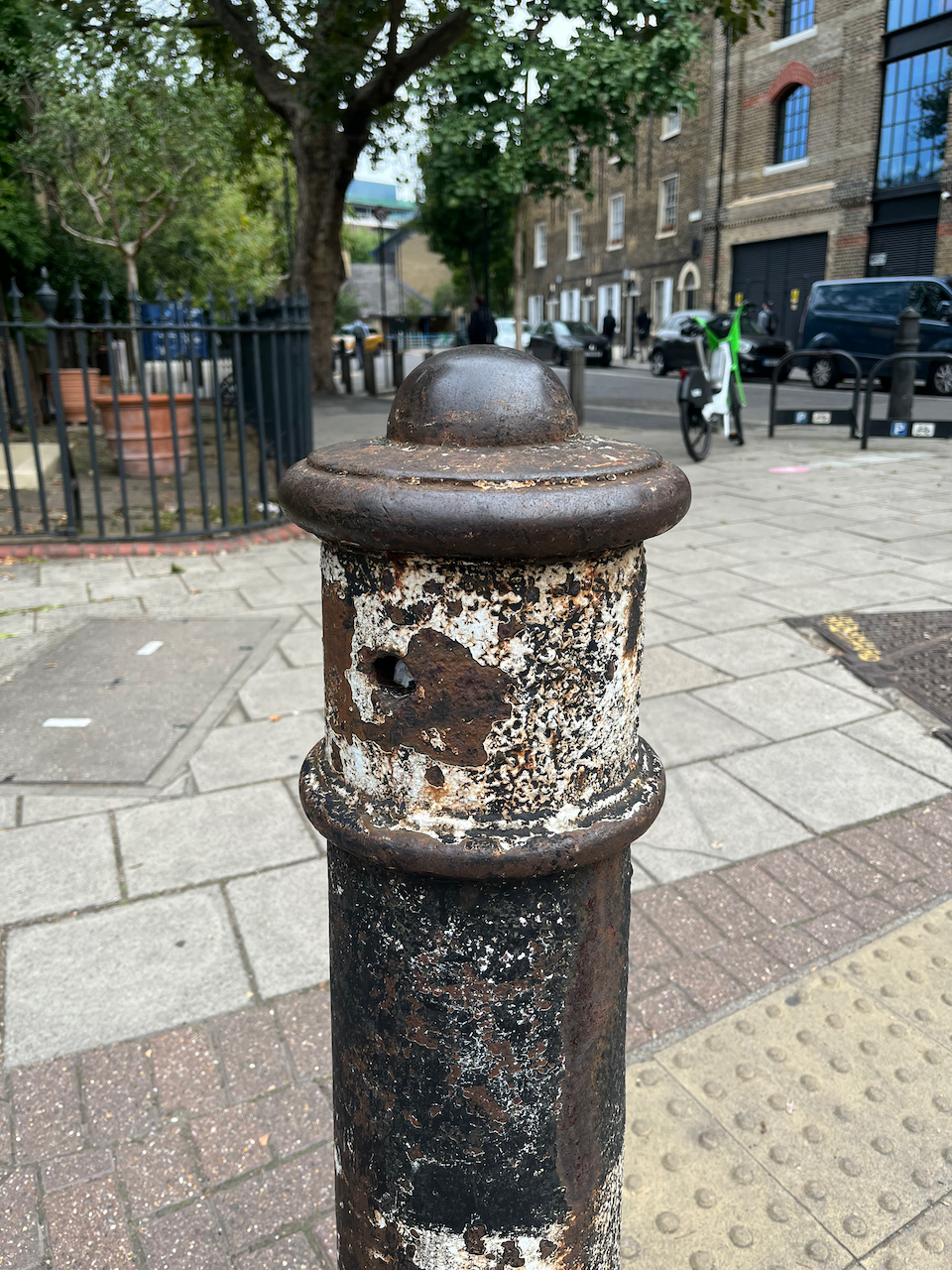
I was unable to find on these 21 Park Street bollards any characteristic which confirmed they might have been cannon. The listing says they are “canon posts” – “canon” spelt like that – not “cannon”. The words “CLINK 1812” were still just about visible on the bollard which is on the right in my drawing. Here are some photos of the posts outside 21 Park Street. Click to enlarge and see captions. Do you think they might be real cannon, or perhaps the word “canon” simply describes a design of post.

“Clink” was the name of the area, from about 1127. It was called the “Liberty of Clink”. The designation “Liberty” implied that it was a civic area under the jurisdiction of the local manor, rather than the King, or the City of London. Famously, certain activities, including theatres, which were forbidden in the City of London were permitted here. The Liberty of Clink was abolished in 1889 and amalgamated into the Southwark in the County of London.

Here are some photos of work in progress on the drawing:


Drawing size 10″ x 8″ on Arches papers 300gsm NOT watercolour paper, in a sketchbook made by Wyvern Bindery.

Watercolours by Daniel Smith:

  • ultramarine blue
  • fired gold ochre
  • green gold
  • burnt umber
  • yellow line is naples yellow
  • All blacks and greys are Ultramarine Blue plus Burnt Umber

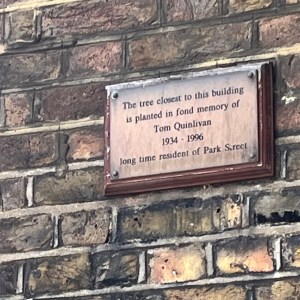
A notice on 21 Park Street reads:

The tree closest to this building
 is planted in fond memory of 
Tom Quinlivan 1934-1996 
long time resident of Park Street.