St Bartholomew the Great: Cloth Fair

Cloth Fair is a small street near Smithfield, EC1.

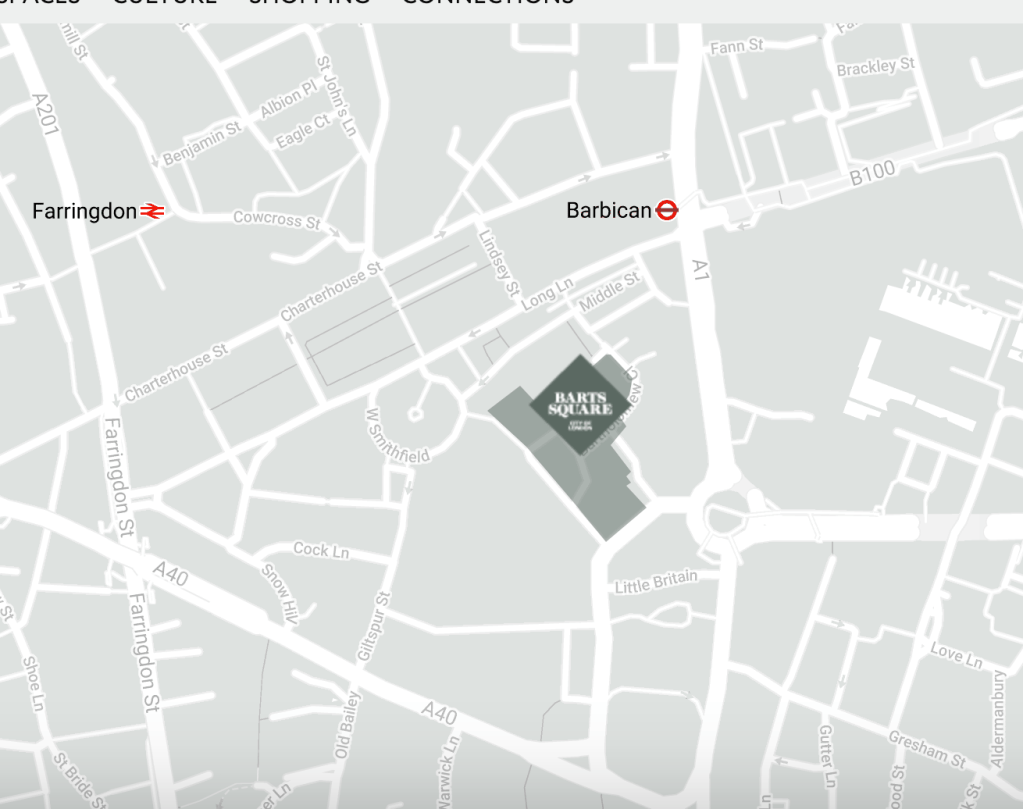
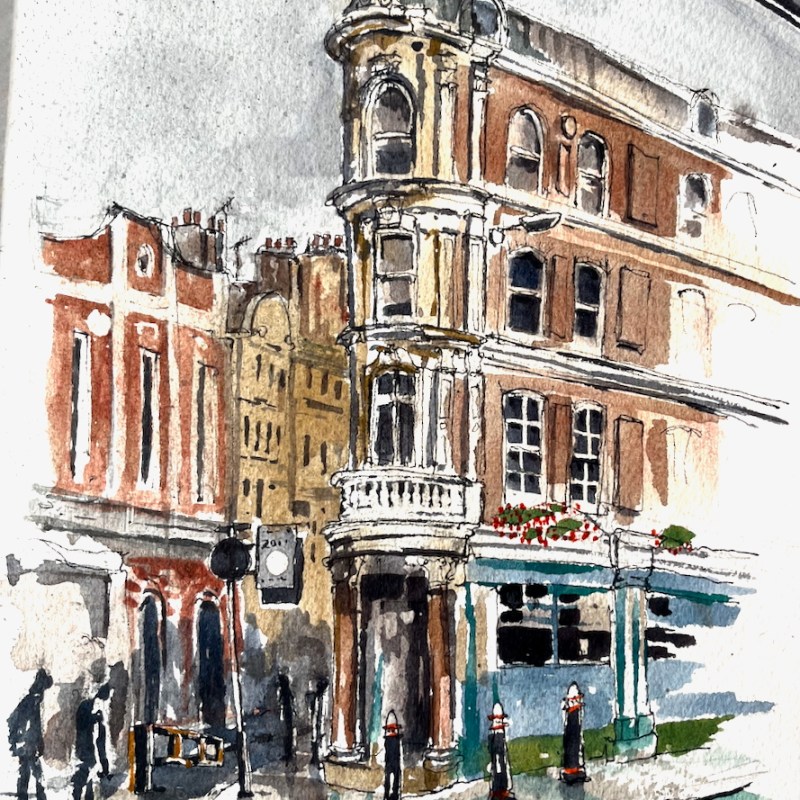
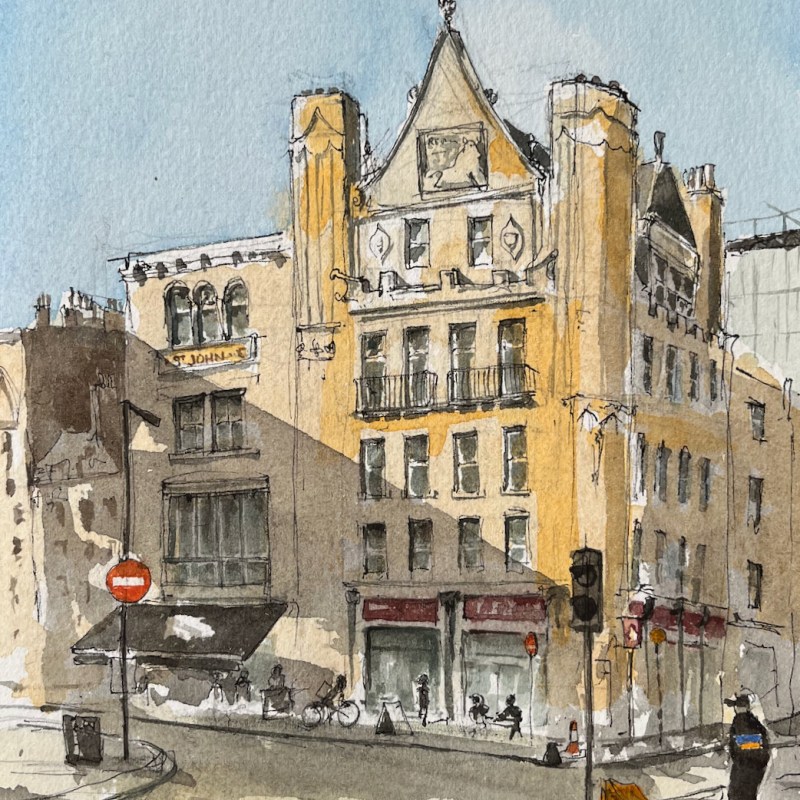
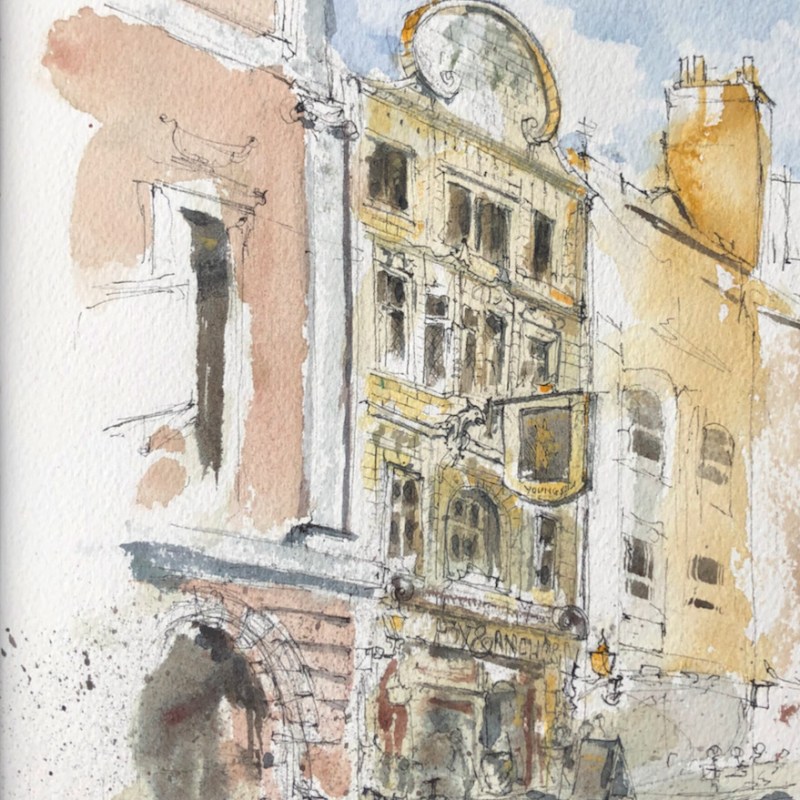
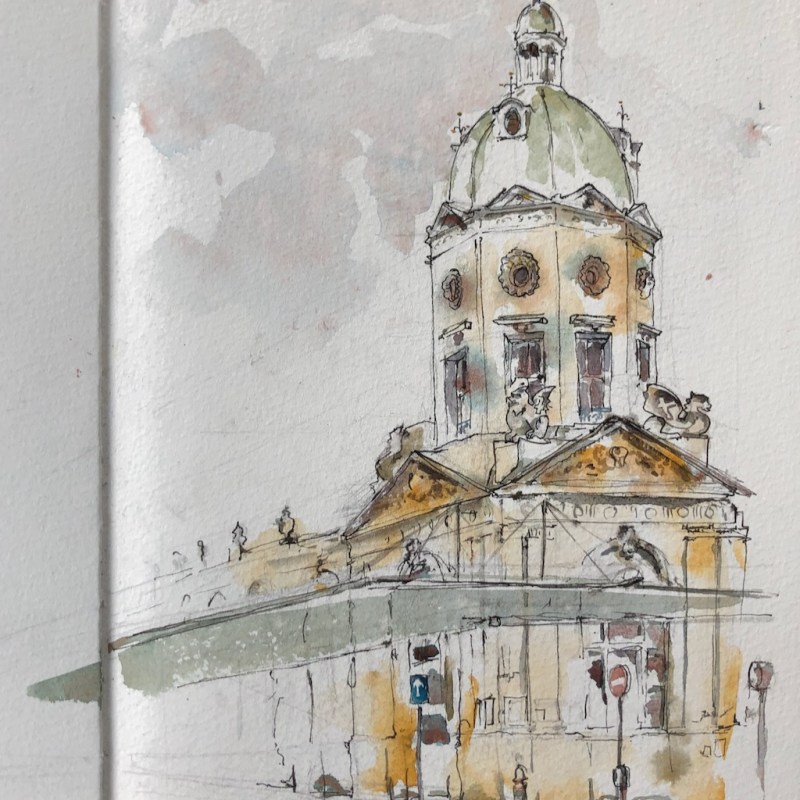
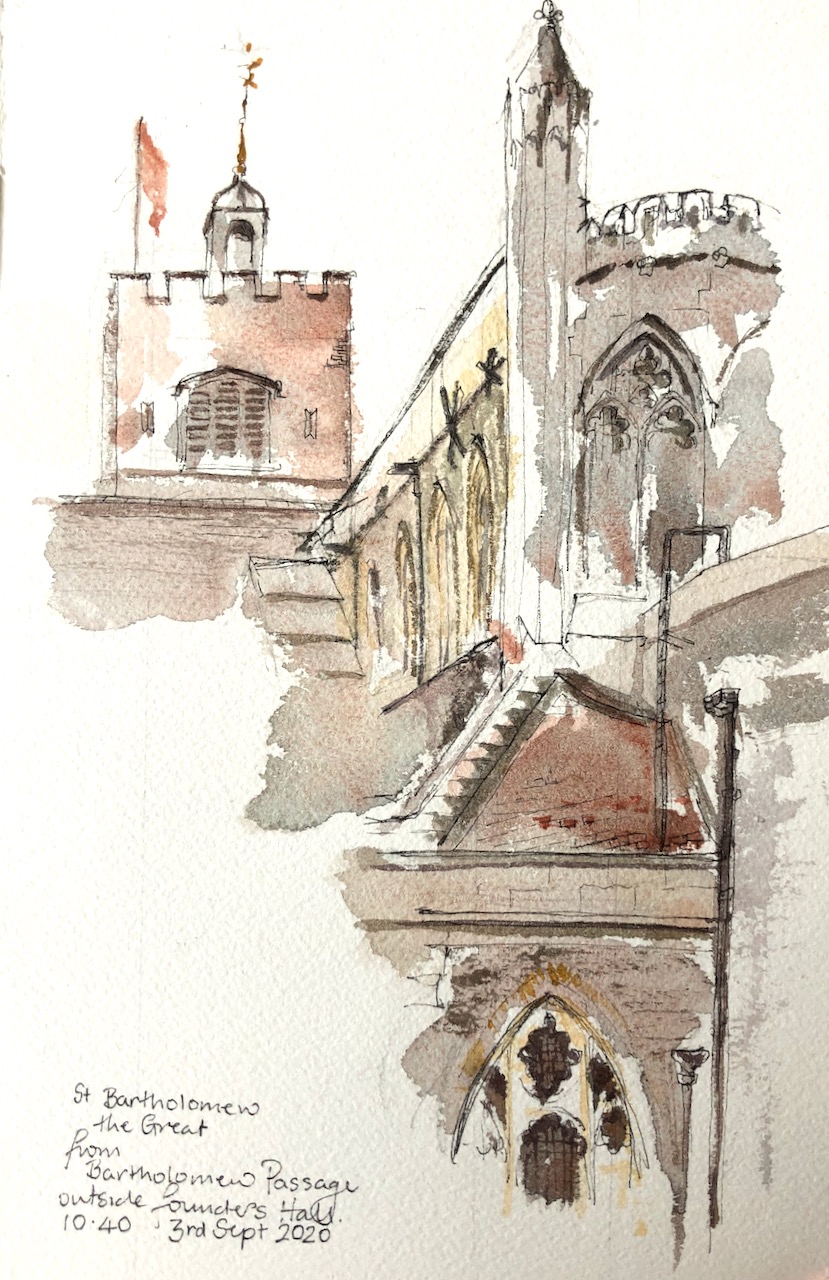
Just South of Cloth Fair is the ancient church of St Bartholomew the Great. I sketched this church from Bartholomew Passage, shown on the map above. Later in the week, I sketched it from the South West side.

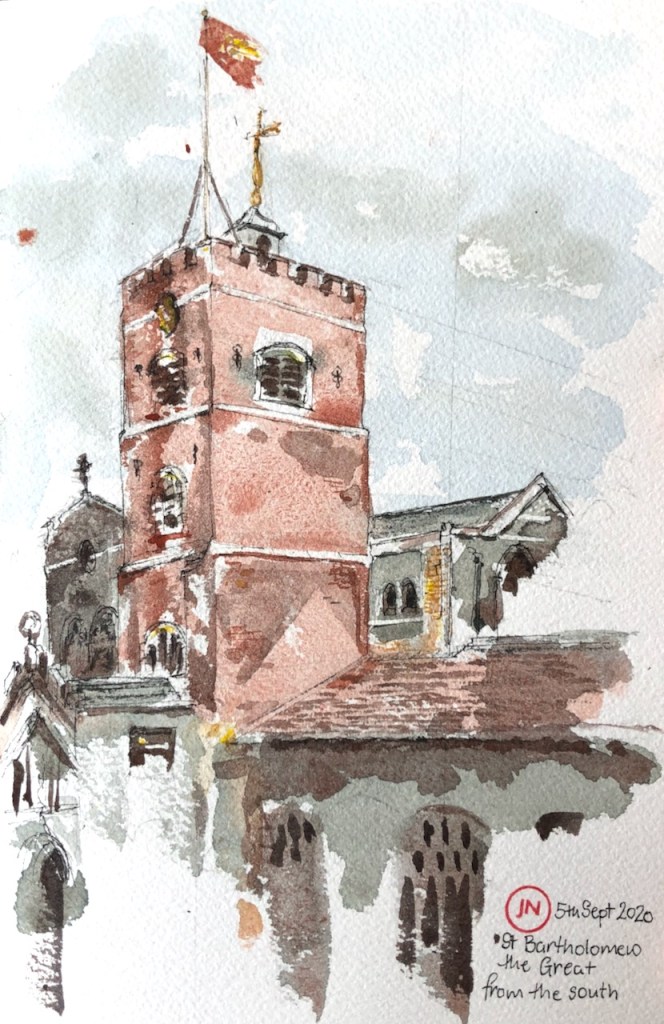
St Bartholomew the Great is an ancient church, founded 1123, along with the nearby hospital of St Bartholomew, now called Barts Health NHS Trust.

There is a labyrinth of alleys in this area. As I was sketching in Bartholomew Alley, a woman reached the North end of the Alley, staring at her phone. She rotated through 36o degrees, still looking at the phone. Anxious and frustrated, she rushed along Bartholomew Alley, passed me and stopped. Her plight was so desperate that she was going to abandon the instructions of the phone, and ask a stranger for directions. She asked me if this was the right way for the hospital. I said that it was, but it was complicated that way. “If you are in a hurry,” I said, “you’d best go back the way you came…”. She was in a hurry. She uttered an expletive, and set off in the direction I’d indicated.

Then she remembered her manners and paused, turned to face me, and said “Thank you for the information”.

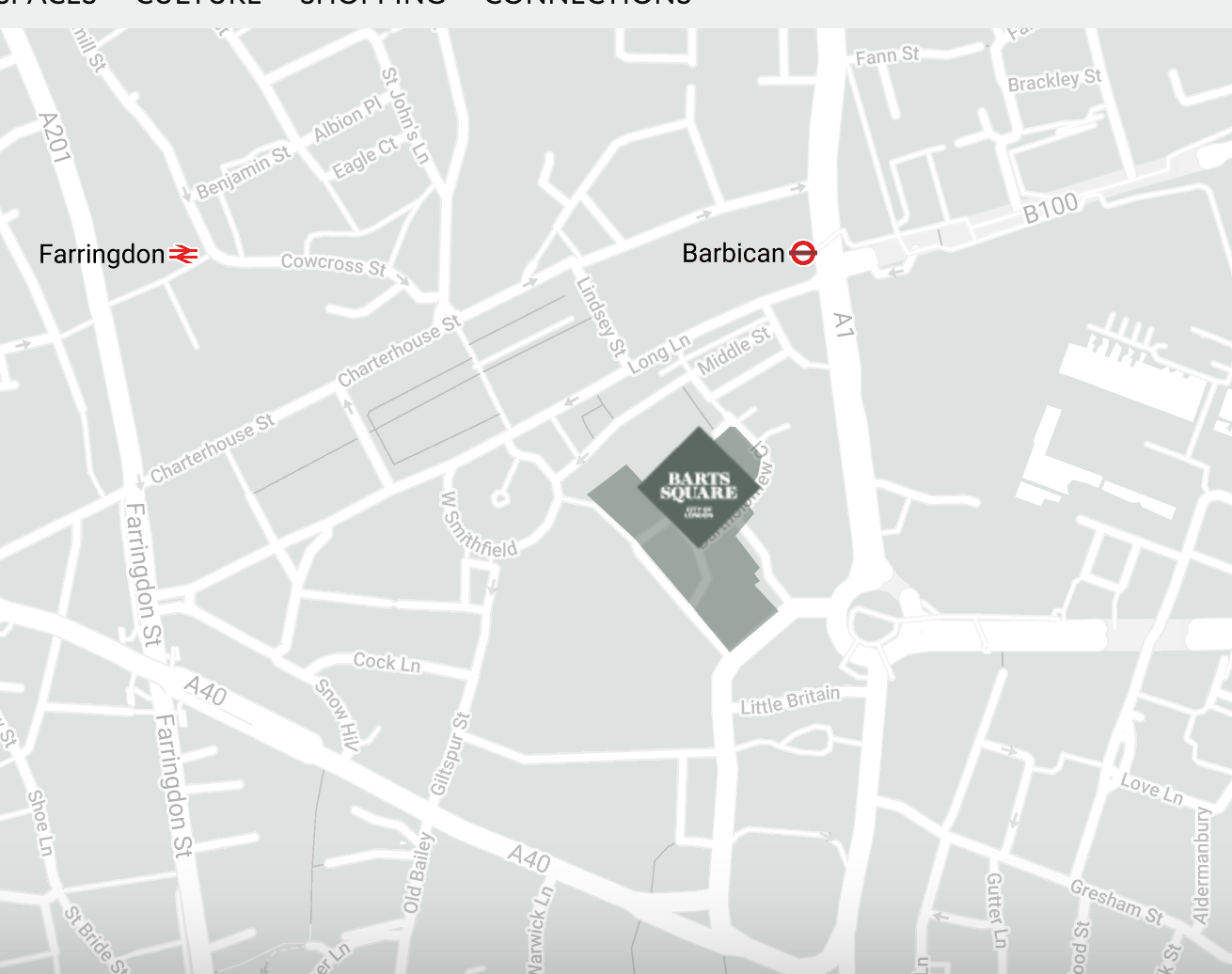
Here are some maps of the new “Barts Square” development, showing the location of the second sketch.

I have sketched often in this area, which is changing rapidly. I am still learning my way around. Here are some of my sketches round here.

Barts Square, West side

Today I went to try out “Halfcup”, a new coffee place which has opened on Bartholomew Close. It’s part of the new “Barts Square” development. These are new buildings in an area that was previously St Bartholomew’s Hospital. Some of the external features of the original hospital buildings have kept, as you see in the…
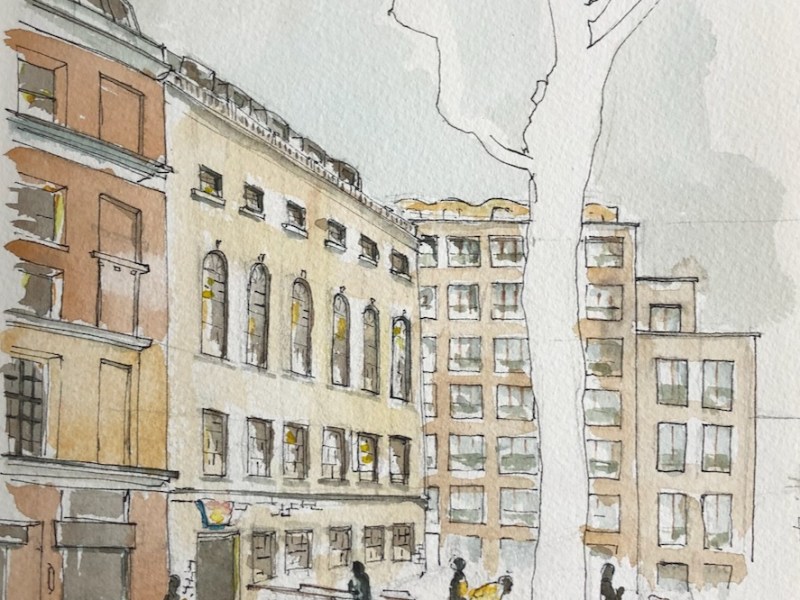
Barts Square, Butchers’ Hall

Continuing my exploration of Barts Square, EC1, today I drew Butchers’ Hall. Butchers’ Hall is the building with the arched windows, in the centre left of the picture. It is the headquarters of The Worshipful Company of Butchers. This livery company is very old, the Arms were granted in 1540 and the charter by James…

A concert at St Bartholomew the Great

Here is a post-card sized sketch of people listening to the concert. It felt as though the stones were listening too. Pen and ink in small Seawhite journal, about 20 mins.
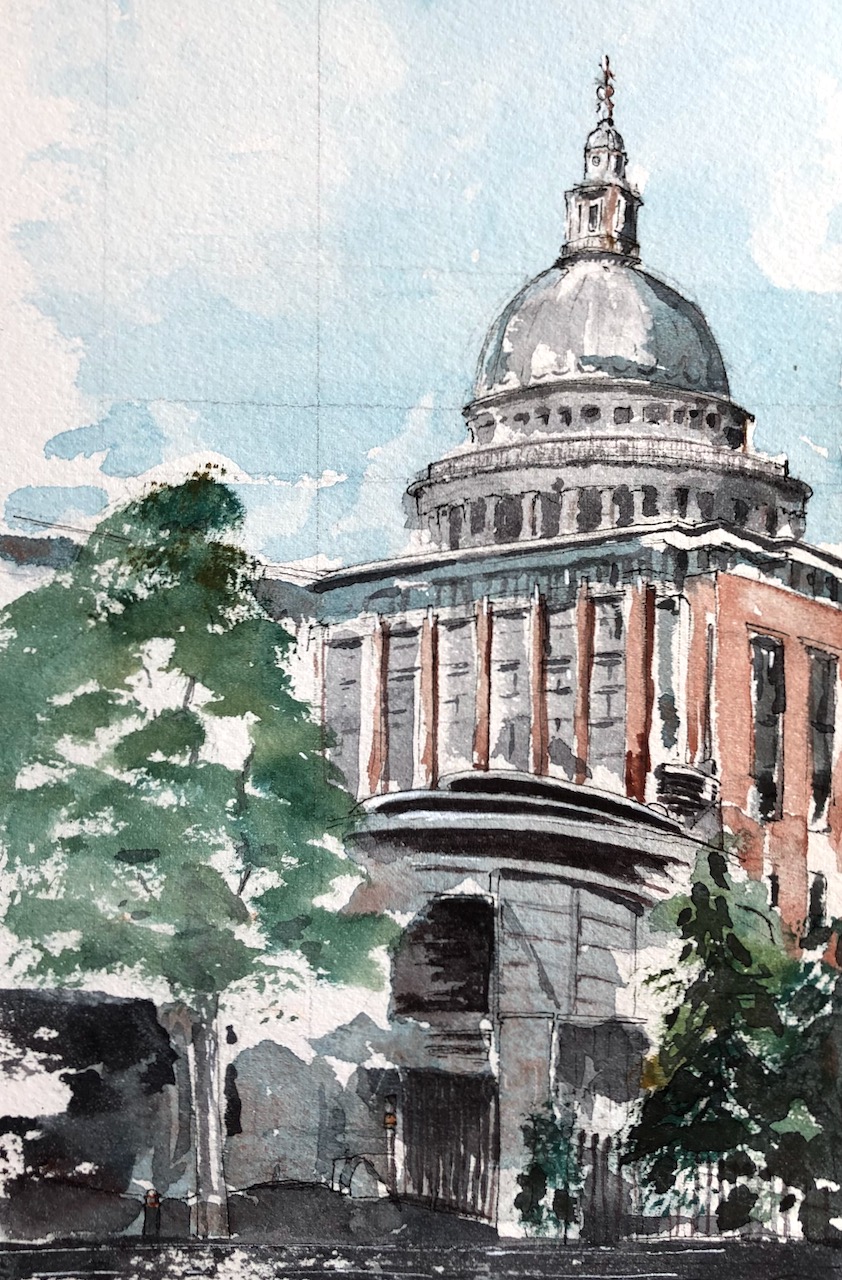
St Paul’s Cathedral from Wren Coffee

Wren Coffee has re-opened! This is a marvellous coffee shop in the Church of St Nicholas Cole Abbey, on Queen Victoria St.

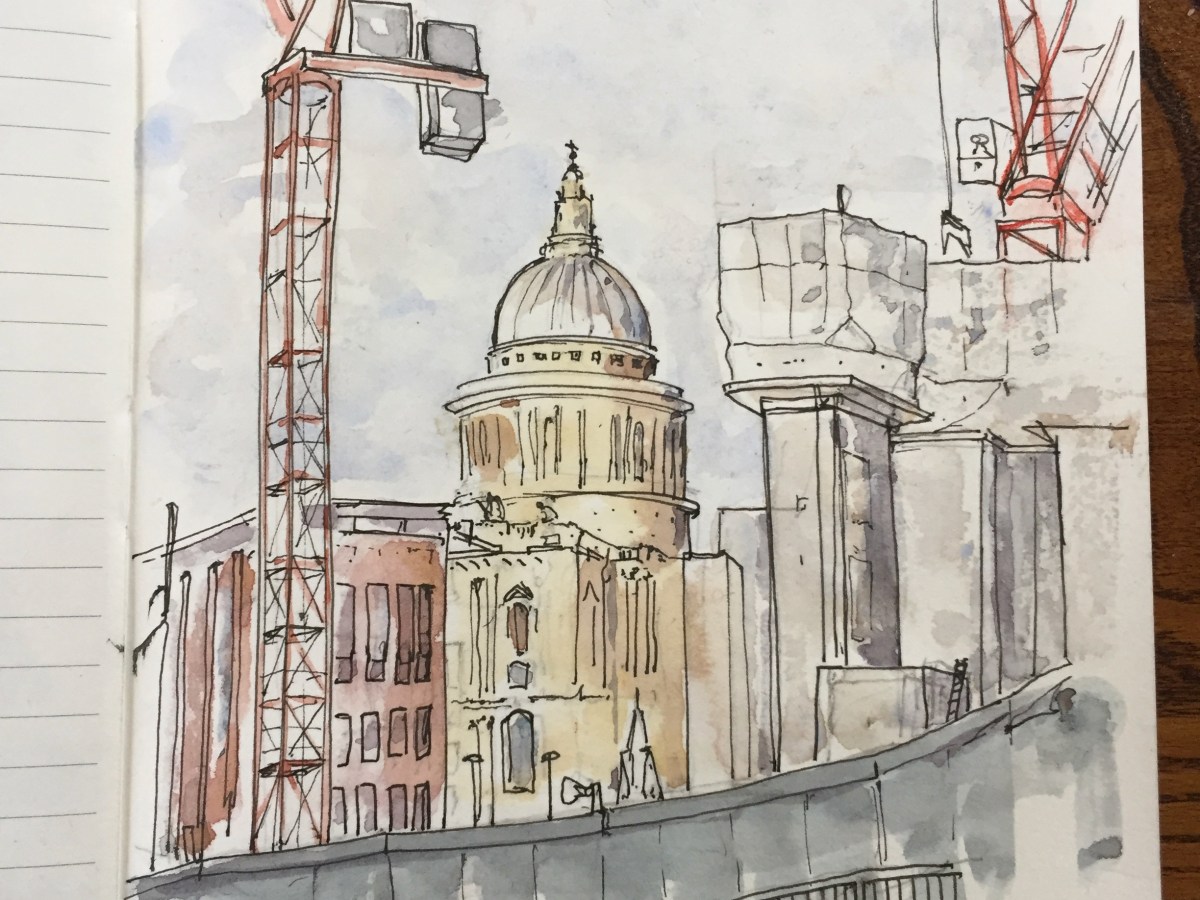
I went there and sat on the raised terrace, sketching the view Northwards towards St Paul’s Cathedral.

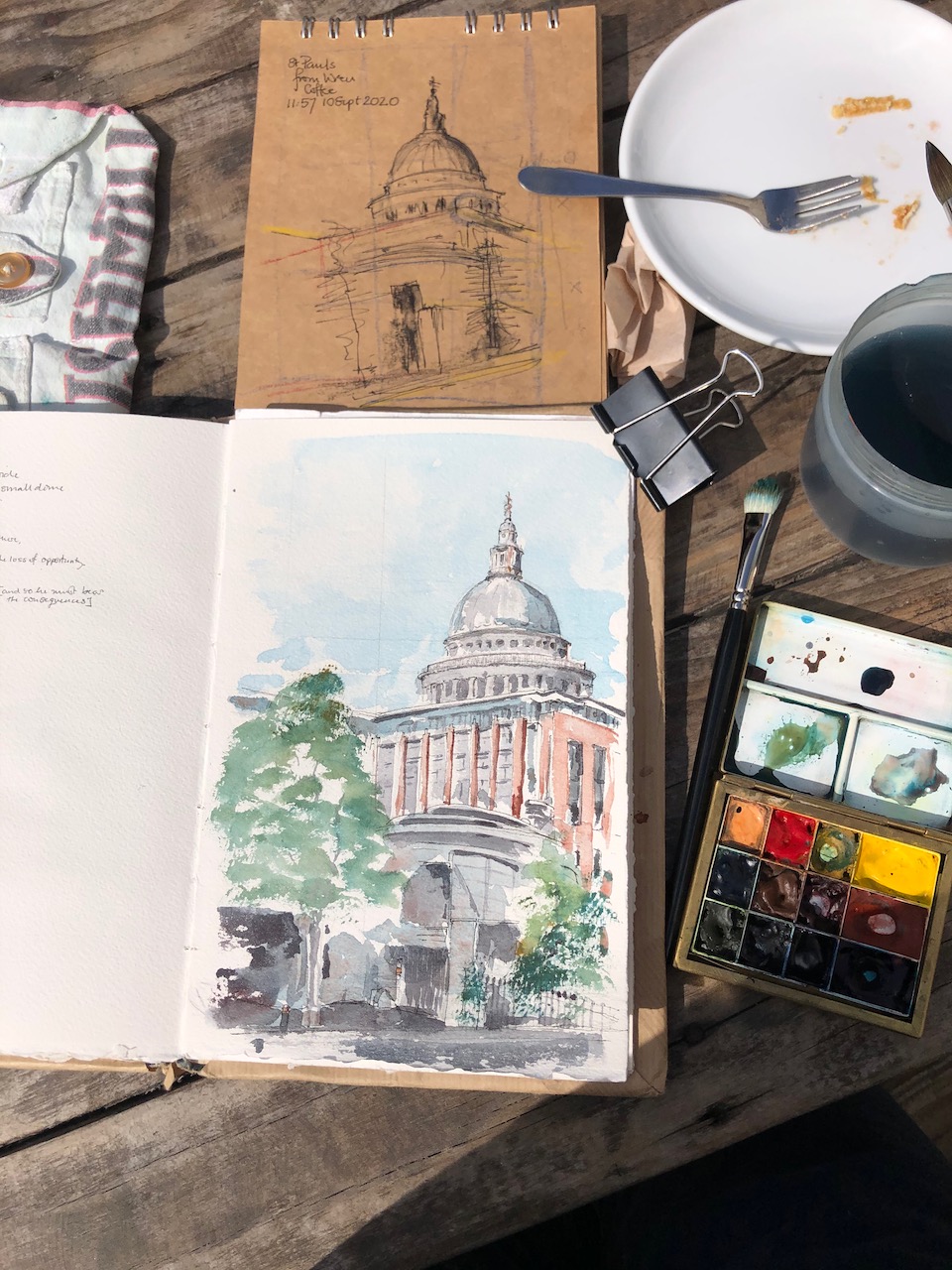
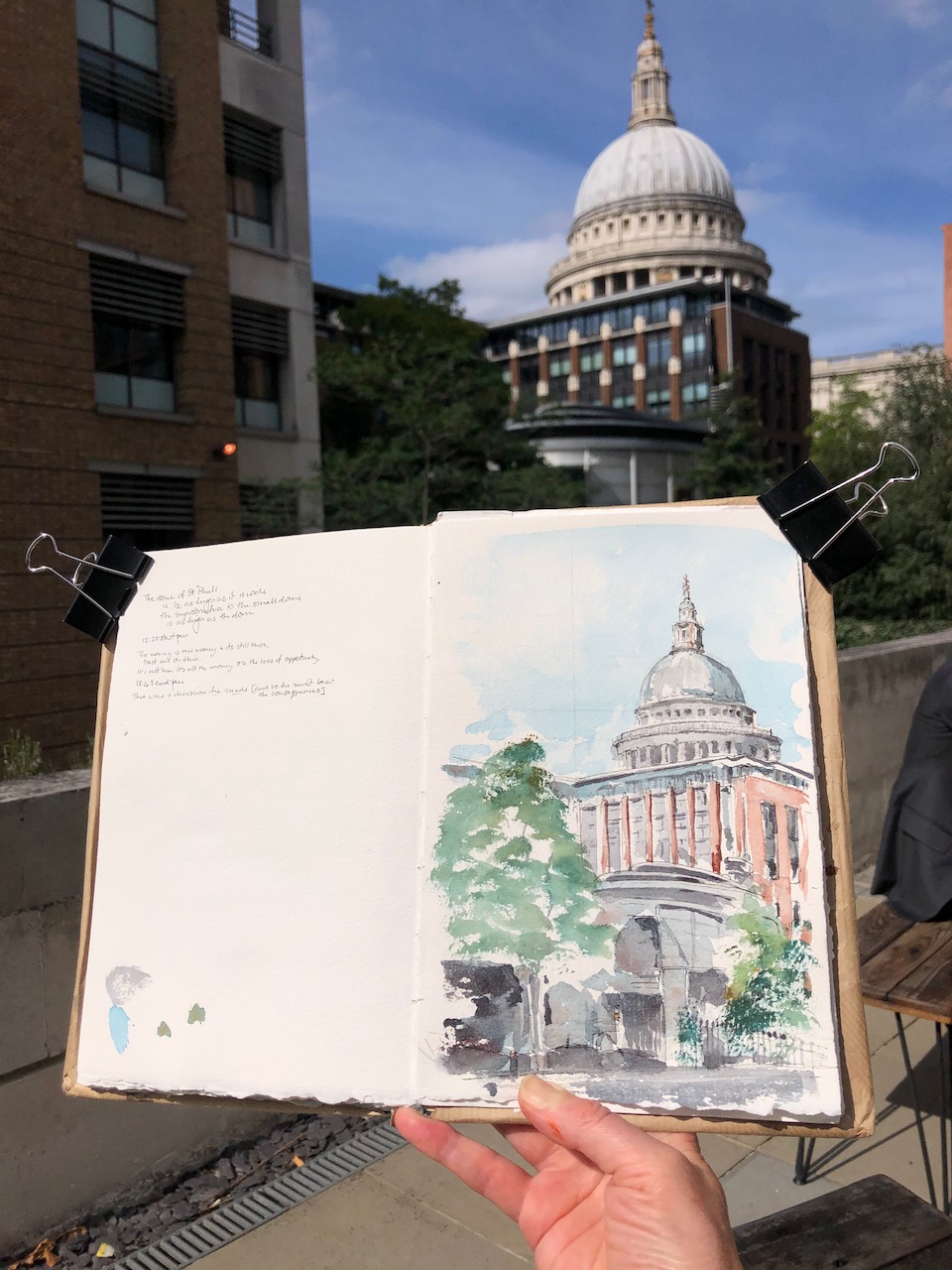
St Paul’s, from Wren Coffee

The grey building in the foreground is a nightclub. It has dark windows, and a barred loading bay.

Raised voices from the table behind me grabbed my attention as I sketched. High drama was in progress. One of them defended himself in a loud voice, “The money is real money, and it’s still there. Trust me on this!”.

When someone declares “Trust me on this!” all sorts of red and amber alert lights come on in my head. Was the money still there? Did I trust him on this? I thought not. The other two men were not convinced either.

I kept my gaze firmly forwards, towards the view I was sketching. I did not observe the participants in this conversation, I did not join the debate. I cannot even be sure there were three men rather than two. Certainly at least three points of view were expressed. It was hard to follow the conversation, especially for someone trying to concentrate on tone differences, perspective lines and the symmetry of domes. And not all of the conversation was conducted in the strident tones of the accused party.

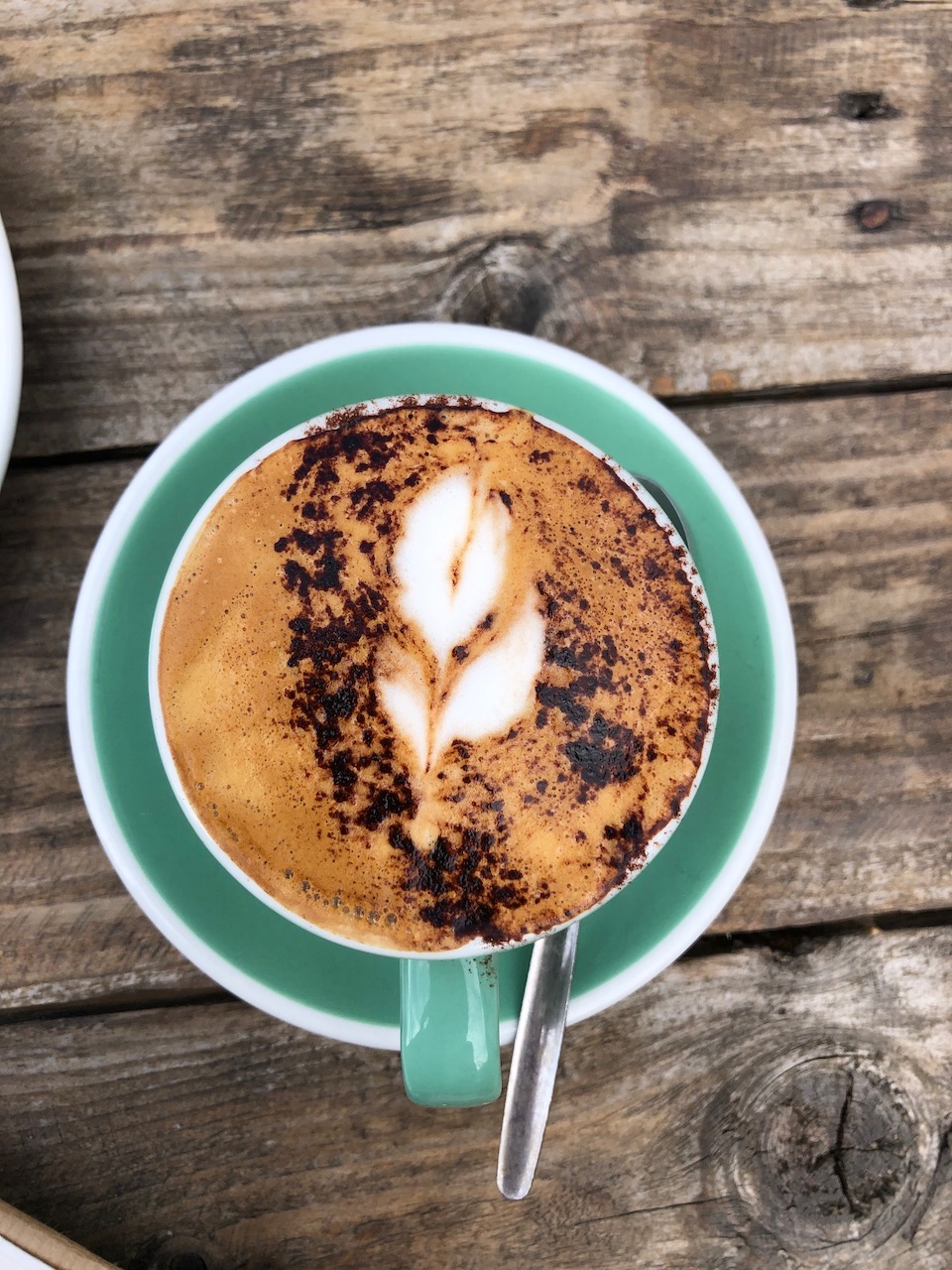
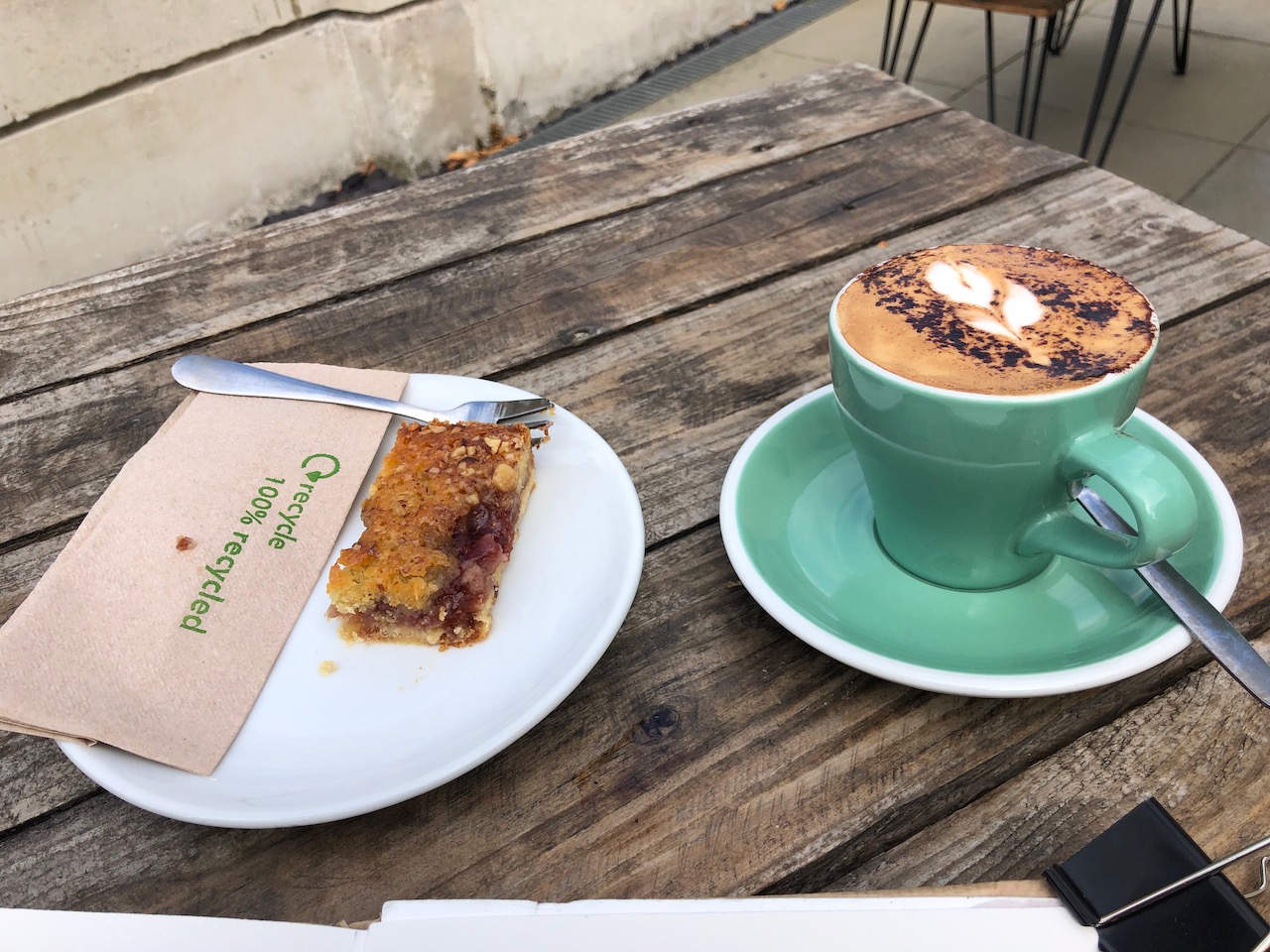
Here are some photos of work-in-progress on the sketch, and a picture of the beautifully crafted capaccino made by the server at Wren Coffee.

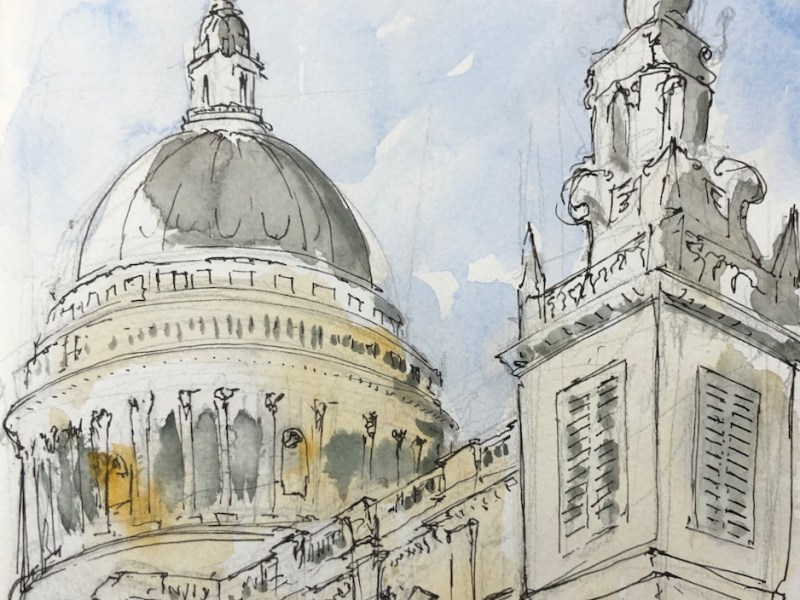
I have sketched St Paul’s before:

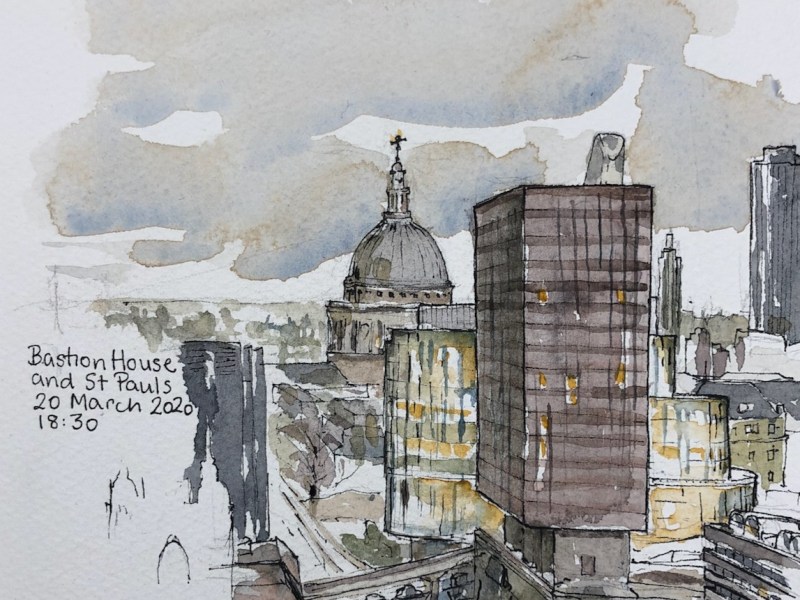
St Pauls and Bastion House

I am sketching the views out of the window. Just visible over the top of Bastion House is the top of “OneBlackfriars”. In the foreground: Mountjoy House, Barbican, on the right. Along the bottom is the Barbican Highwalk which joins Mountjoy House and Wallside. I have drawn Bastion House before: This drawing took rather a…

St Paul’s from Old Fish Street Hill EC4

I was keen to draw this view of St Paul’s before it vanished behind the new building on 2-4 Cannon Street. “PLP’s scheme, for global property firm Pembroke Real Estate, will replace a 1959 modernist office building by Theo Birks called Scandinavian House. The north facade, facing the cathedral, is the most orthogonally formal, with red…

St Vedast-alias-Foster, EC2

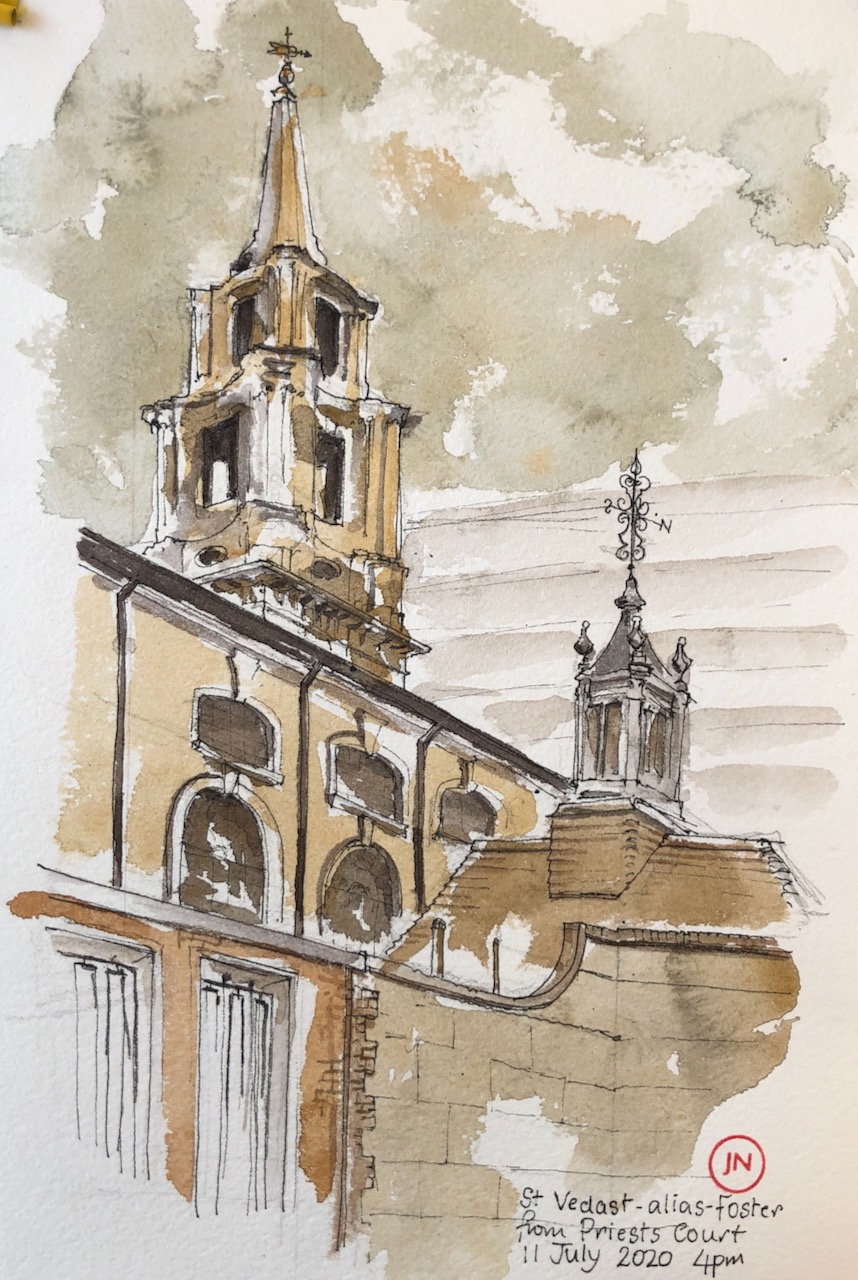
Here is the Anglican Church of St Vedast-alias-Foster, in the City of London, viewed from Priest’s Court.

St Vedast-alias-Foster
Memorial stone to Petro, Major Wladimir Vassilievitch Petropavlovsky

Before I drew this, I paused a while in the Fountain Court, a tranquil courtyard next to the church. In the shadow, there is a monument to “Petro”, Major Wladimir Vassilievitch Petropavlovsky. His friends awarded him the epitaph “This was a Man”. I had a look online to see if I could find out more about this person.

He was a member of the Special Expeditionary Force in the 1939-45 war in Europe. This was an organisation formed for espionage in Nazi occupied areas. I can find the record quoted, but the “National Archives” link is not working at present. There is little online that I can find.

Downloaded from http://www.academia.edu, from a list compiled by Eliah Meyer.

However he did write a book, under the name, “W Petro”. I have it on order, so I shall find out more about this interesting character.

The drawing took an hour and 45 minutes. Here are some photos of work in progress.

Fountain Court, I found out afterwards, is named not after a fountain, for there is none, but after a pub that used to be in the area.

Triangular Building, North West corner

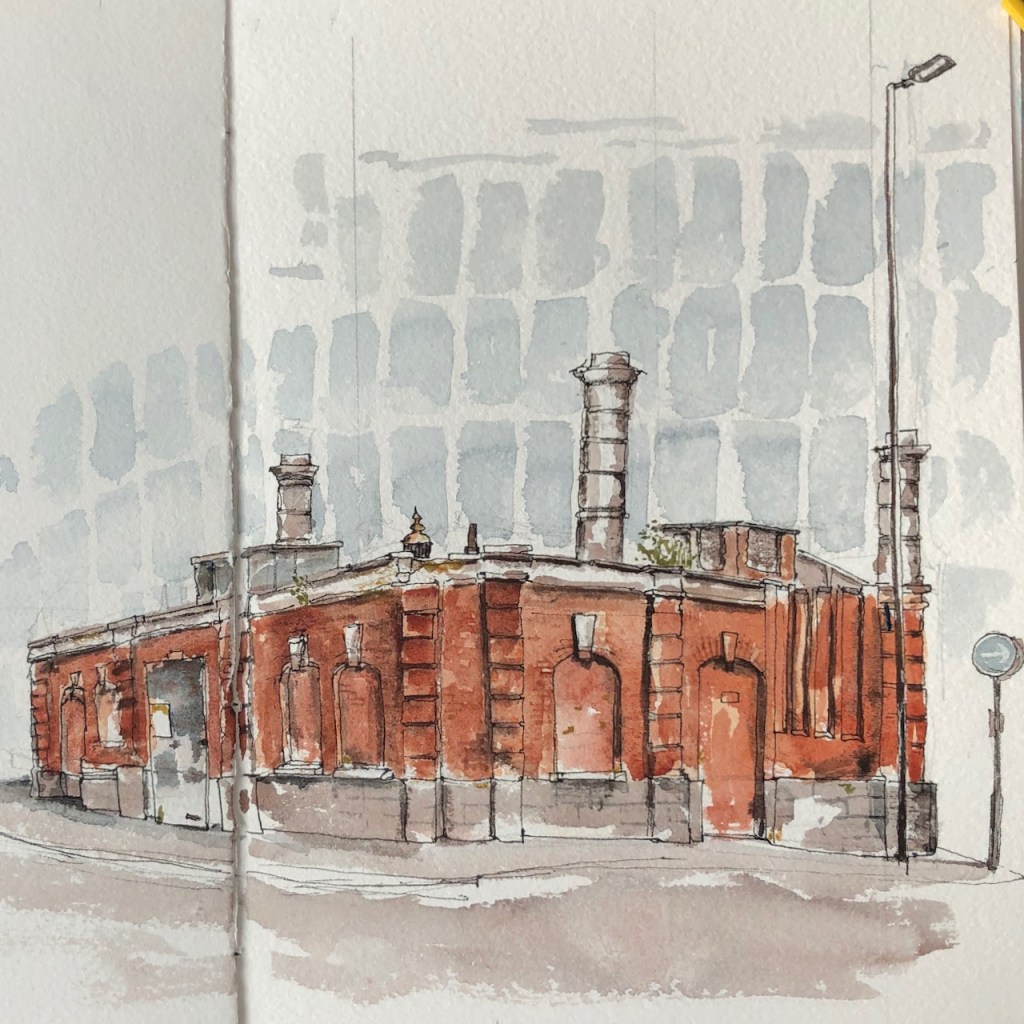
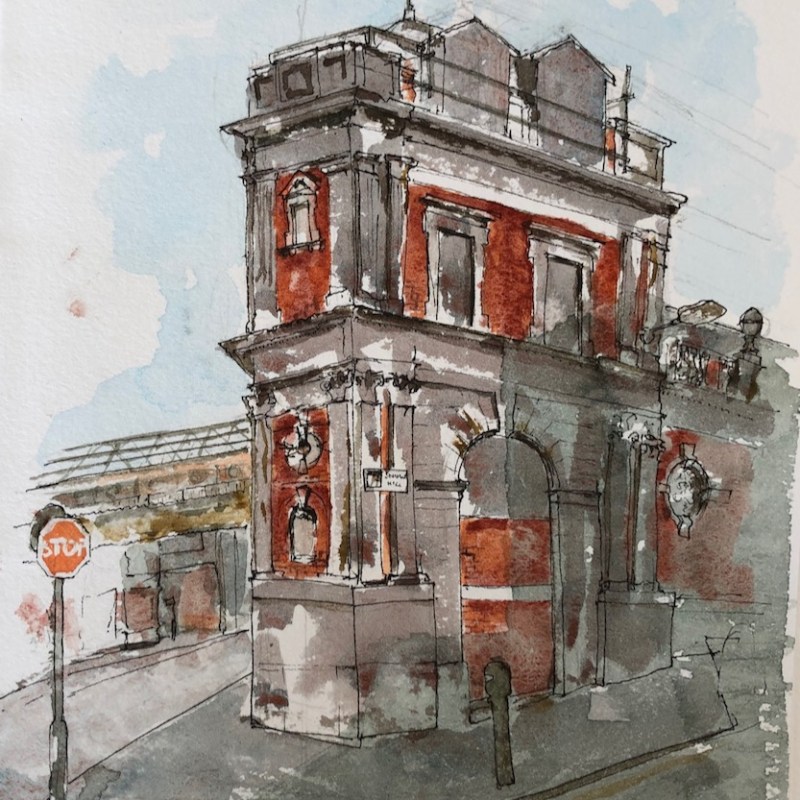
Here is the Triangular Building, West Smithfield, from the North West.

Triangular Building, North West corner.

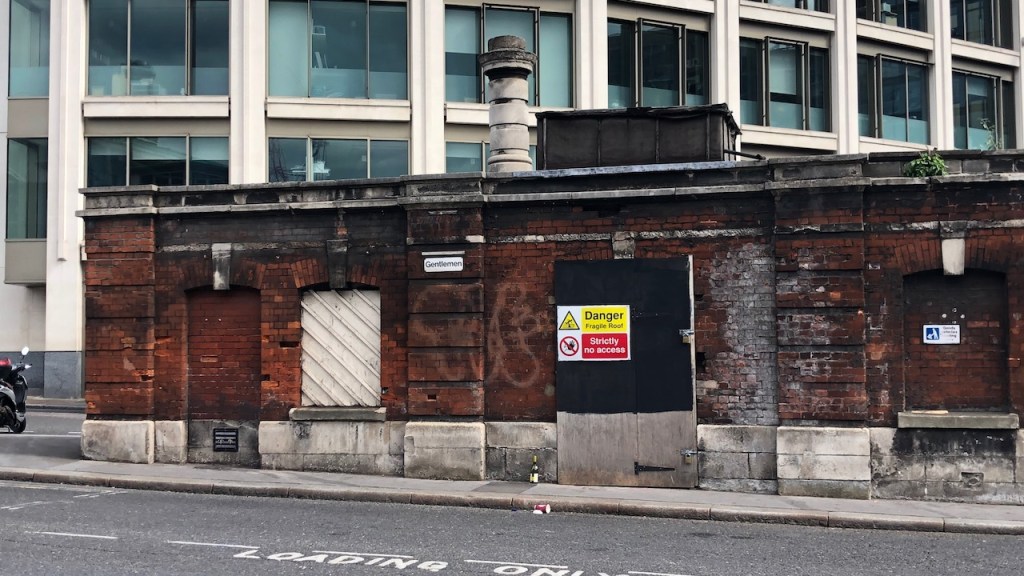
From this view, you can see all 3 chimneys. You can also see a rather exotic metal top on what must be another vent, right in the middle, between chimneys 1 and 2. Beyond the black door, on the left, is a neat sign saying “Gentlemen”.

North face of the Triangular building. The sign in the middle, to the left of the chimney, says “Gentlemen”.

Here is work in progress on the drawing:

I have drawn the Triangular Building before. See these articles for other views, maps and more information:

The Red House and The Triangular Building, Smithfield EC1

Here is another view of The Triangular Building, drawn previously. On this view you can see the magnificent cold storage block, behind. The cold storage block is called “The Red House”. It is now dilapidated, but still magnificent. A discordant rail, carrying cables, goes horizontally across the front, function taking severe precedent over aesthetics. There’s…

The Triangular Building, Smithfield EC1

Here is “The Triangular Building” in West Smithfield. I have sketched it from the South. This is its South West corner. The question is: what is it? It has three vertical columns above, which look like chimney stacks, but might be vents of some sort. One is shown on the left of the drawing and…

Here is a complete list of my drawings of Smithfield:

Entrance to the Fish Market

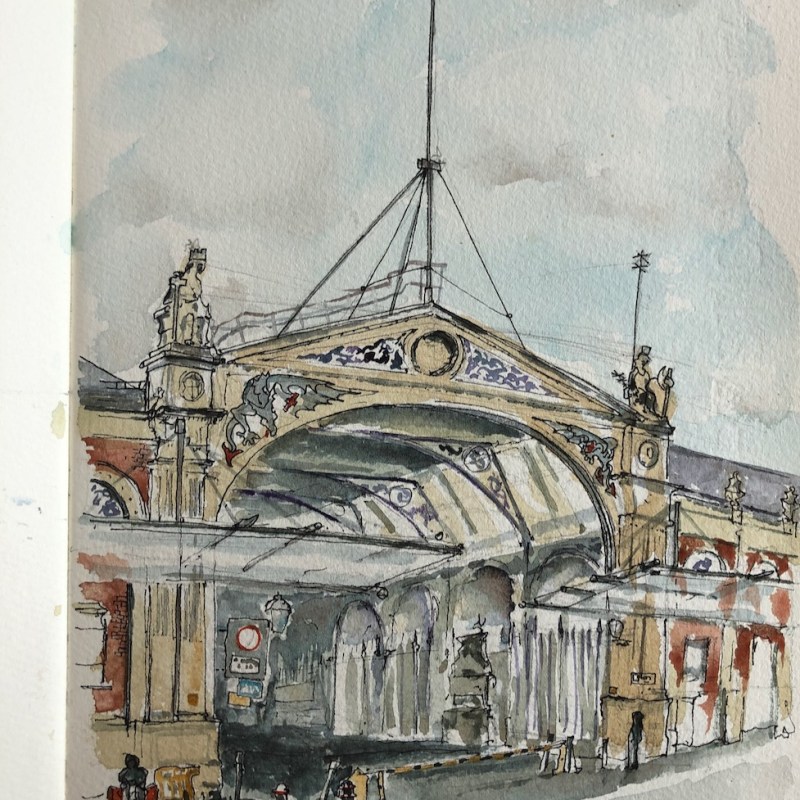
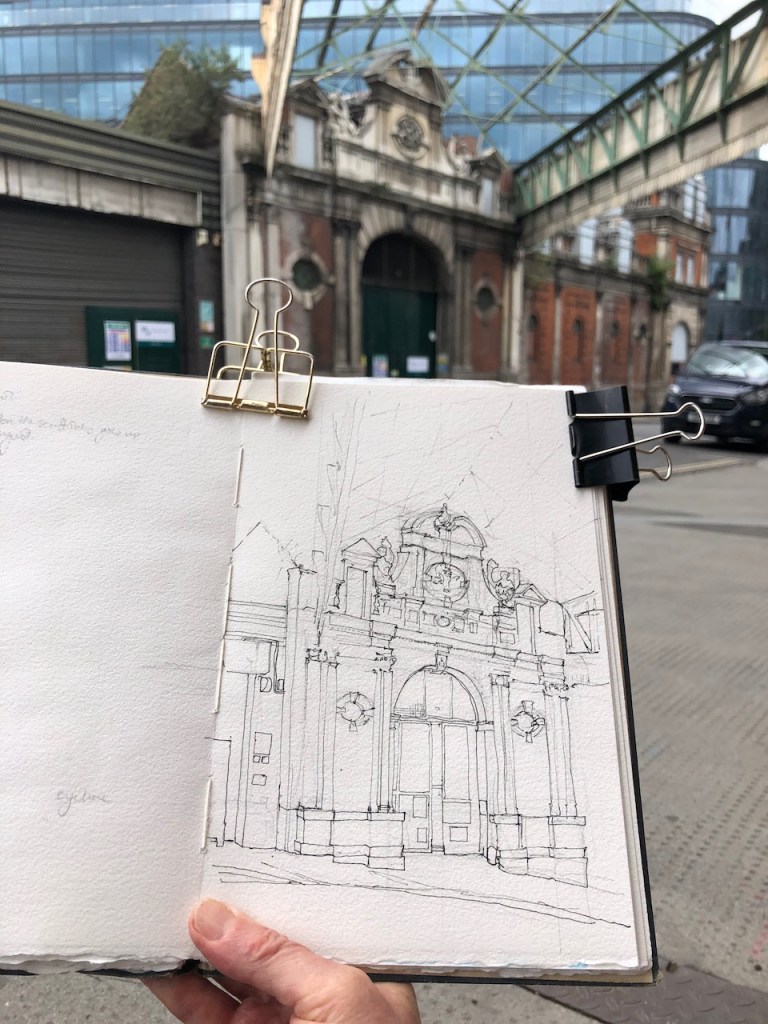
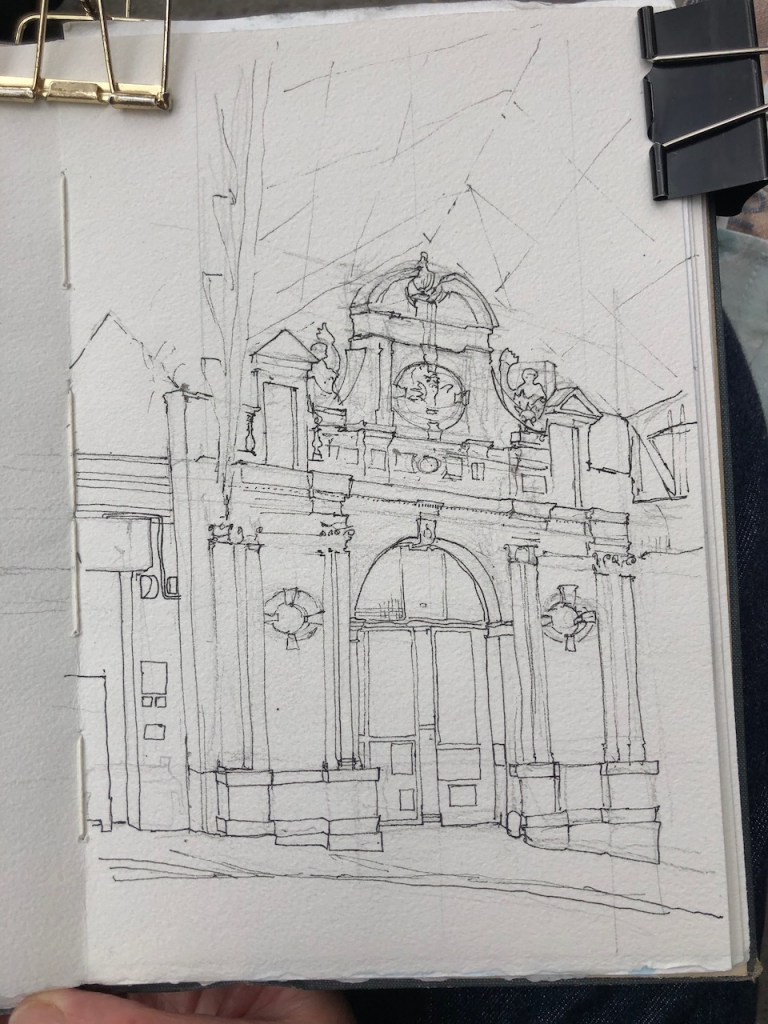
Today I drew the magnificent gate which is the entrance to the Fish Market, Smithfield.

Fish Market, West Smithfield EC1

This gate is adorned with two boys riding huge fish. The fish are equipped with bridles and the boys look as though they are having enormous fun. In the drawing, you can just about make them out at the top of the gate, either side of the central pediment.

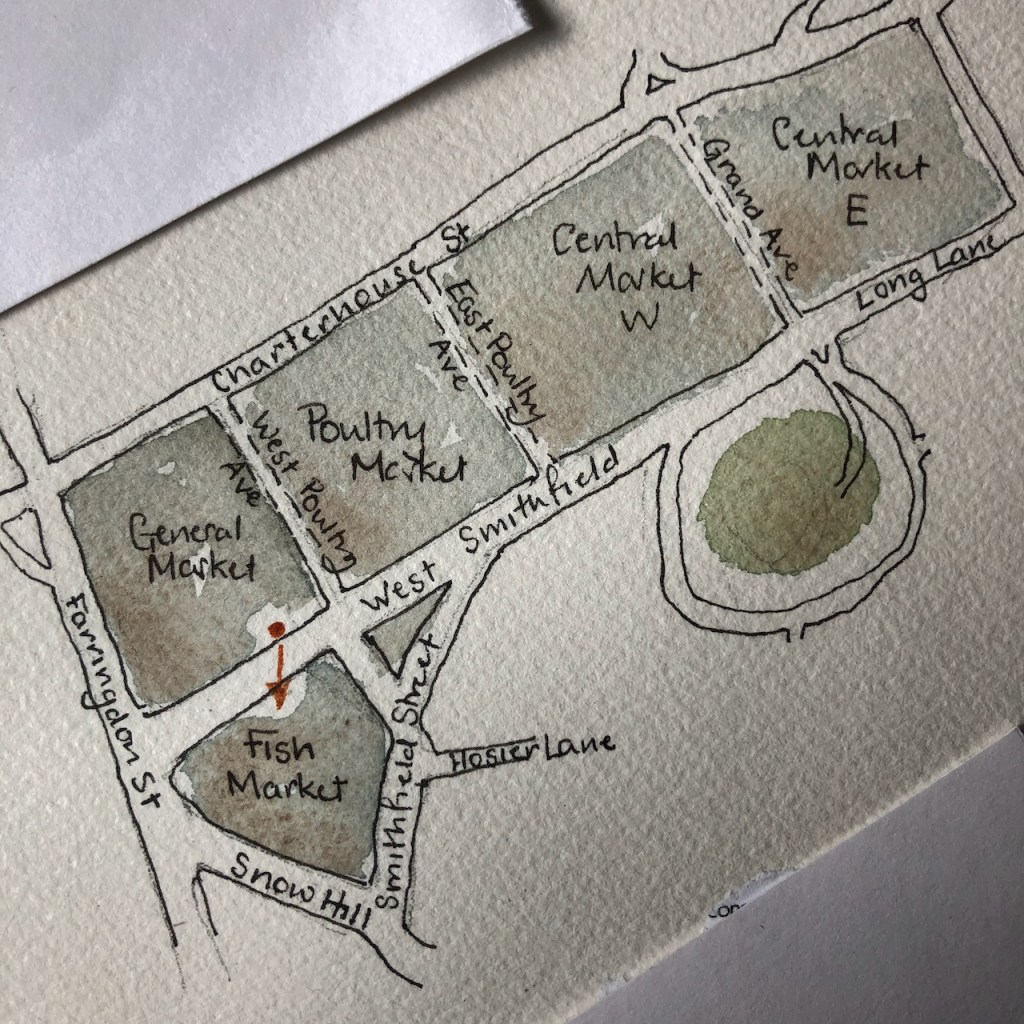
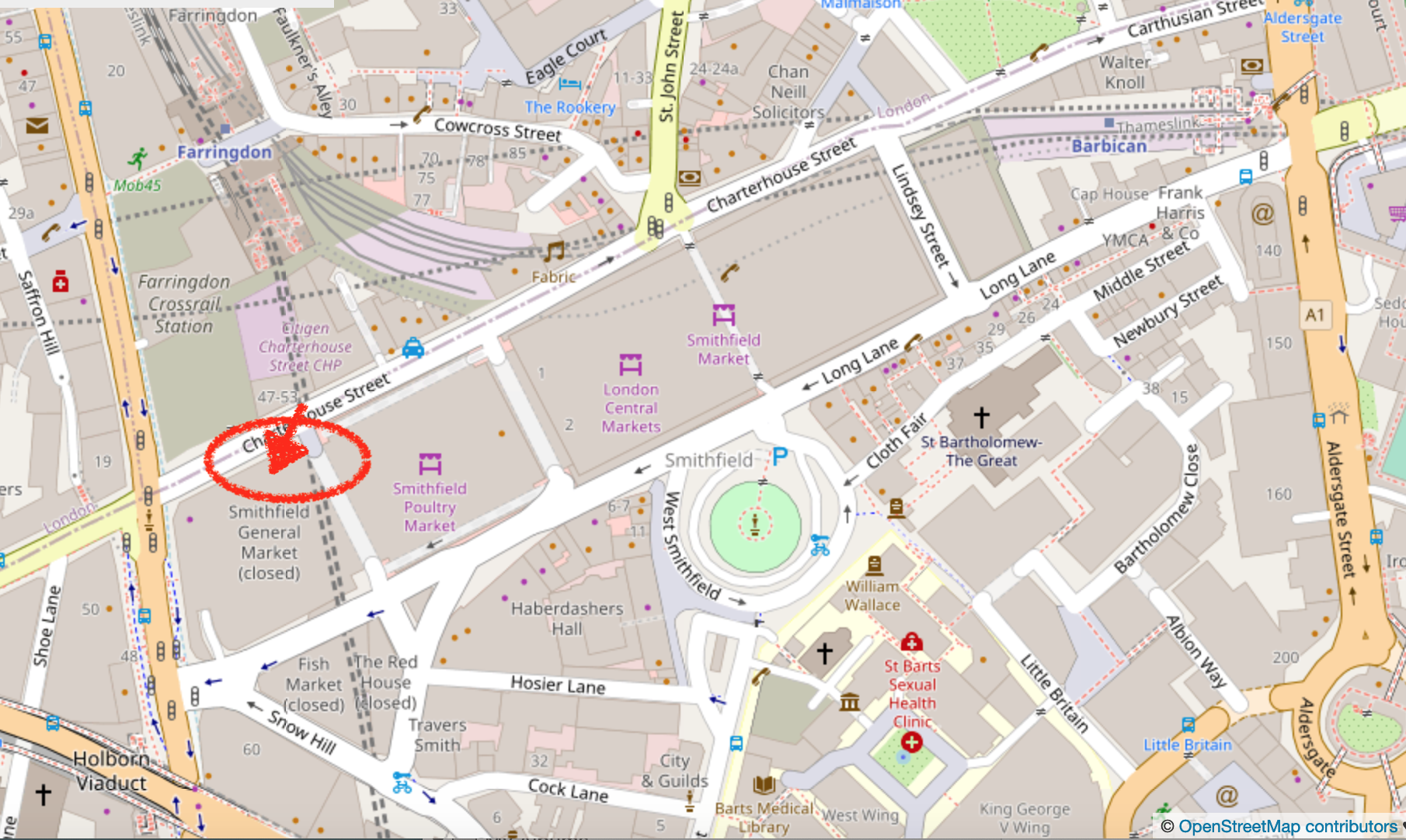
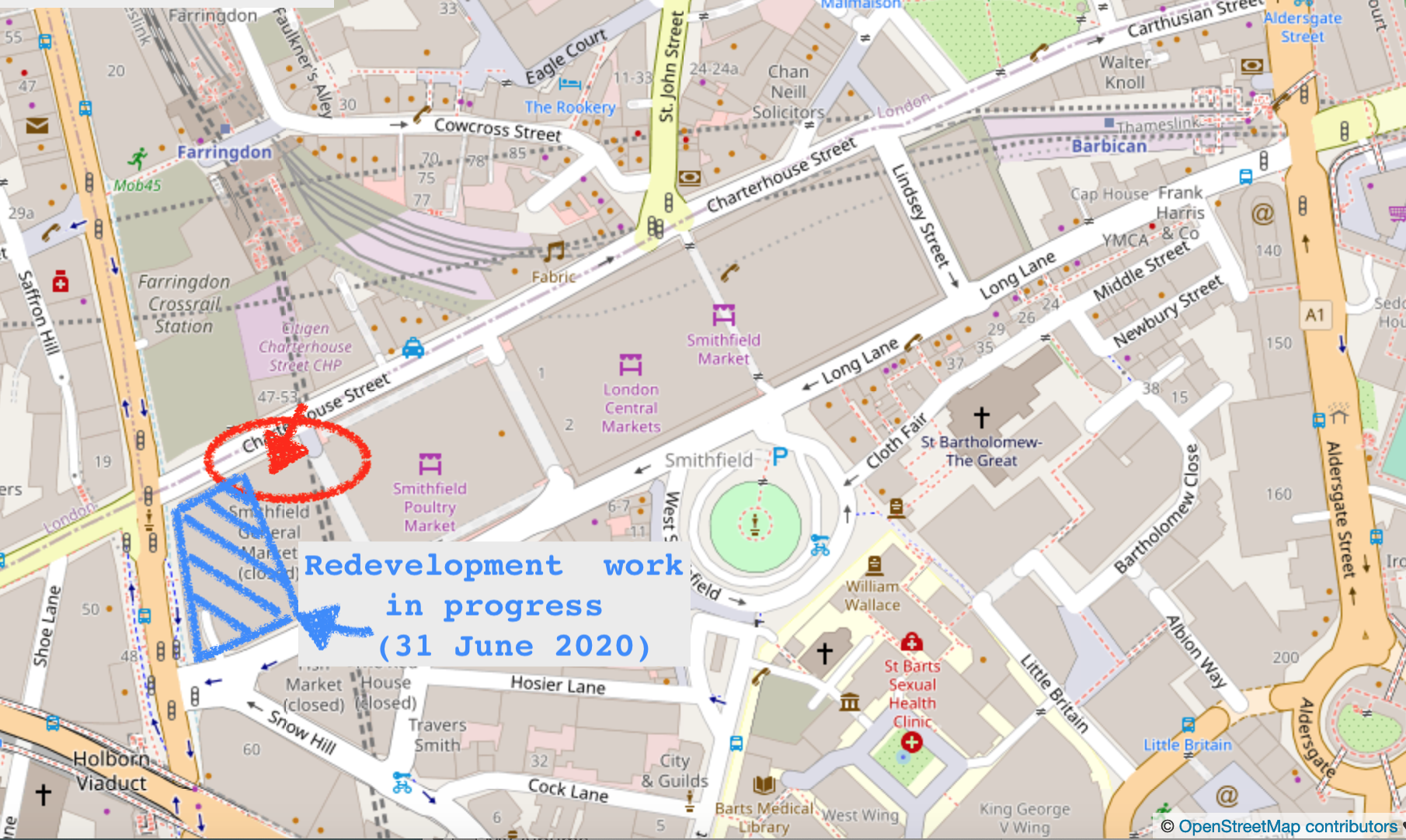
Here is the location of the drawing:

Here is work in progress on the drawing:

Here is a collection of my drawings of Smithfield:

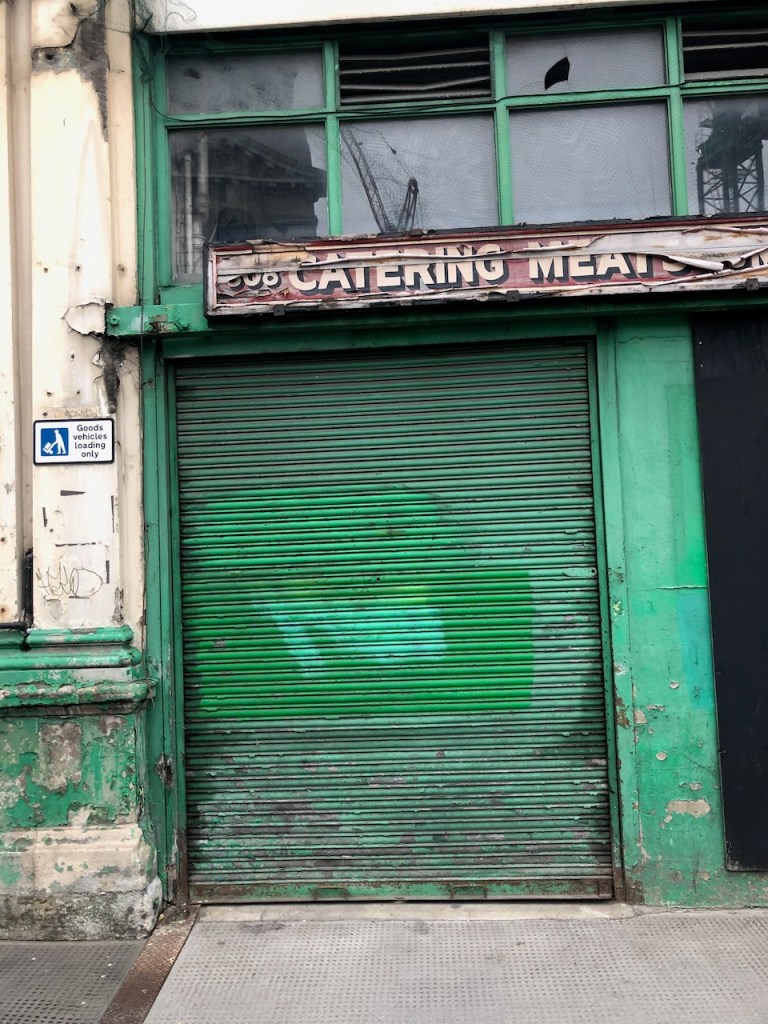
“Catering Meats Smithfield”

Here is a section of West Smithfield, at the North West corner.

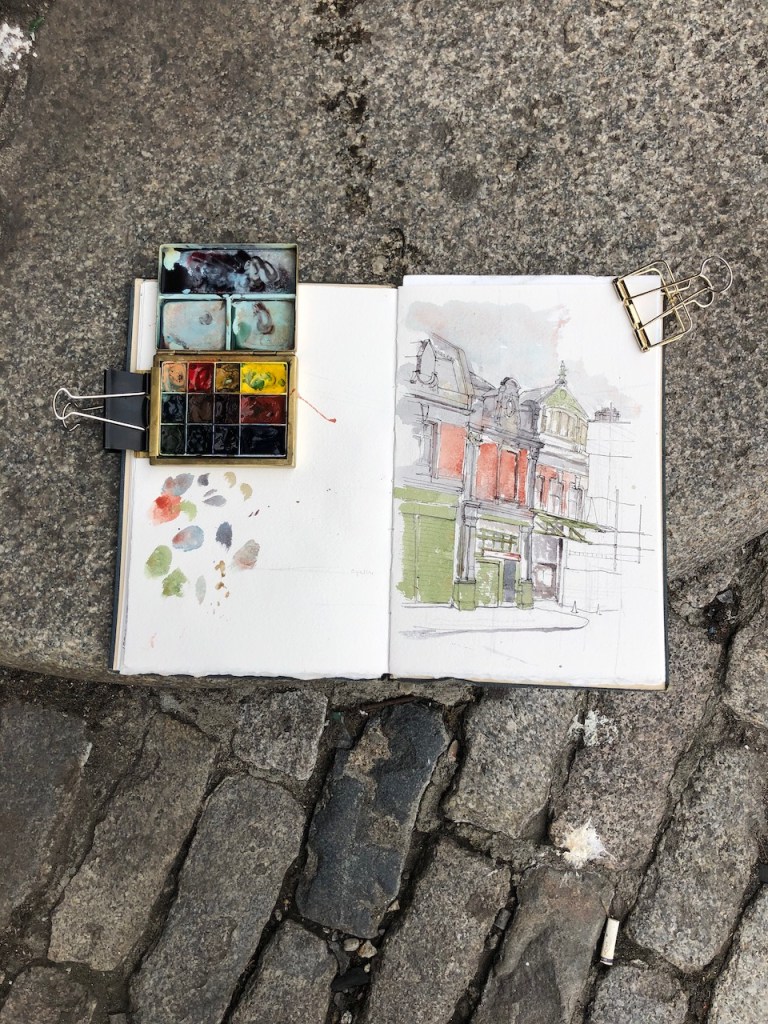
West Smithfield, North side

Work is in progress to redevelop these buildings. You can see the scaffolding on the right. This is the General Market.

I was standing outside the “Citigen CHP”. This is the unlikely location of a power station.

“The large scale community energy system is made up of a central power station and district heating network.  Natural gas fuelled by the CHP plant is located near Smithfield Market and supplies heat and cooling to ten of the City’s properties by an underground pipe network spanning over two miles.” says the website of Edina, a supplier of specialist equipment to such schemes.

It is also above the railway lines. Trains rumbled, and the pavement vibrated. A concrete mixing lorry arrived and skilfully backed into the space vacated by the previous concrete mixing lorry, who, equally skilfully, moved out of the space and departed, while workers in bright red and yellow clothes moved the barriers, in synchronism with the movement of the lorries.

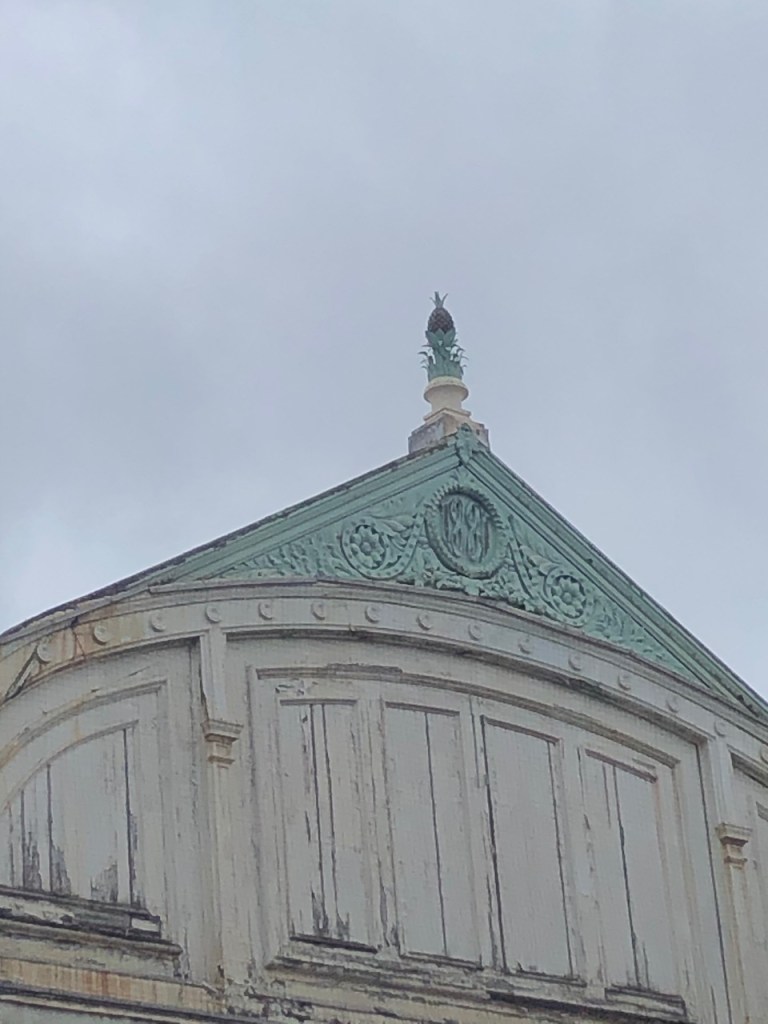
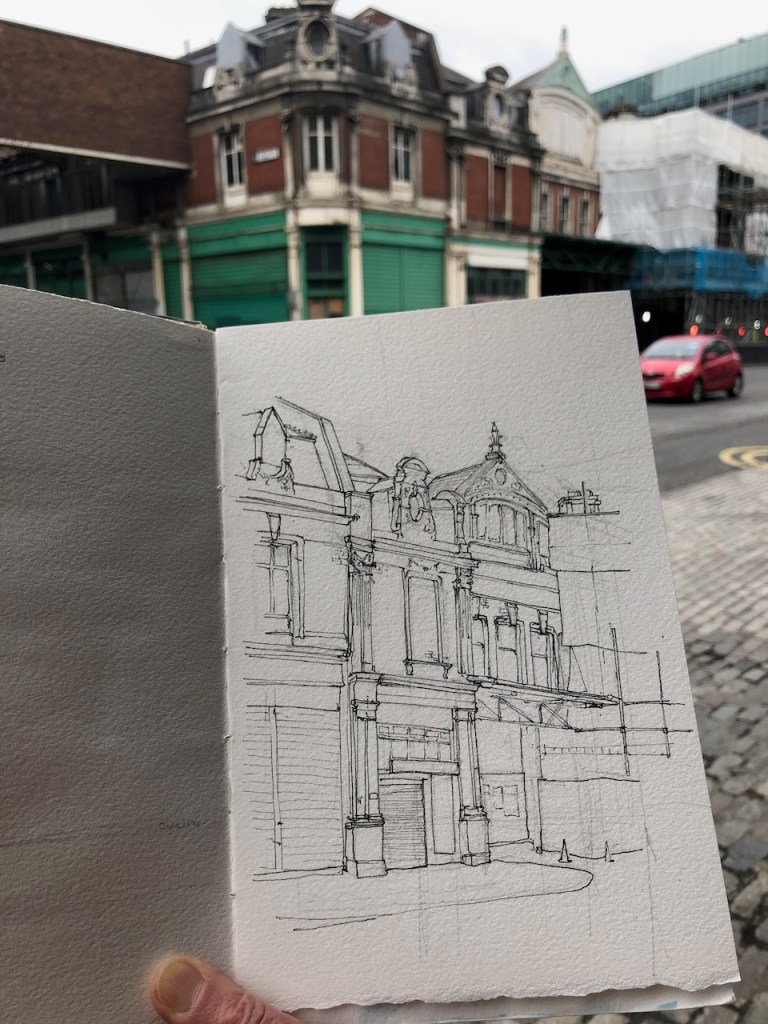
The building in the centre of my drawing is “Catering Meats Smithfield”. The sign is still legible. On the right is a building that looks a bit more like a music hall than a commercial market. It has wood panels and a marvellous pineapple on the roof. The roundel on the gable says “1881”.

Whilst I was sitting on the kerbstone, putting on the colour, a man jogged past, right to left, wearing running kit. He stopped and came back. He said “It makes me happy to see you painting”. He said it very simply, a statement. The emphasis was on the word “happy”. It makes me happy to see you painting. Happy, as opposed to any other emotion.

I said, “Thank you”. Then he ran on, and I continued painting the colours. It made me happy that by being there I’d somehow given something to someone else. It made me happy that he’d said it, that he’d bothered, that he’d paused in his run and came back to utter his simple sentence. But expressing all that was complicated. So I just said, “Thank you”.

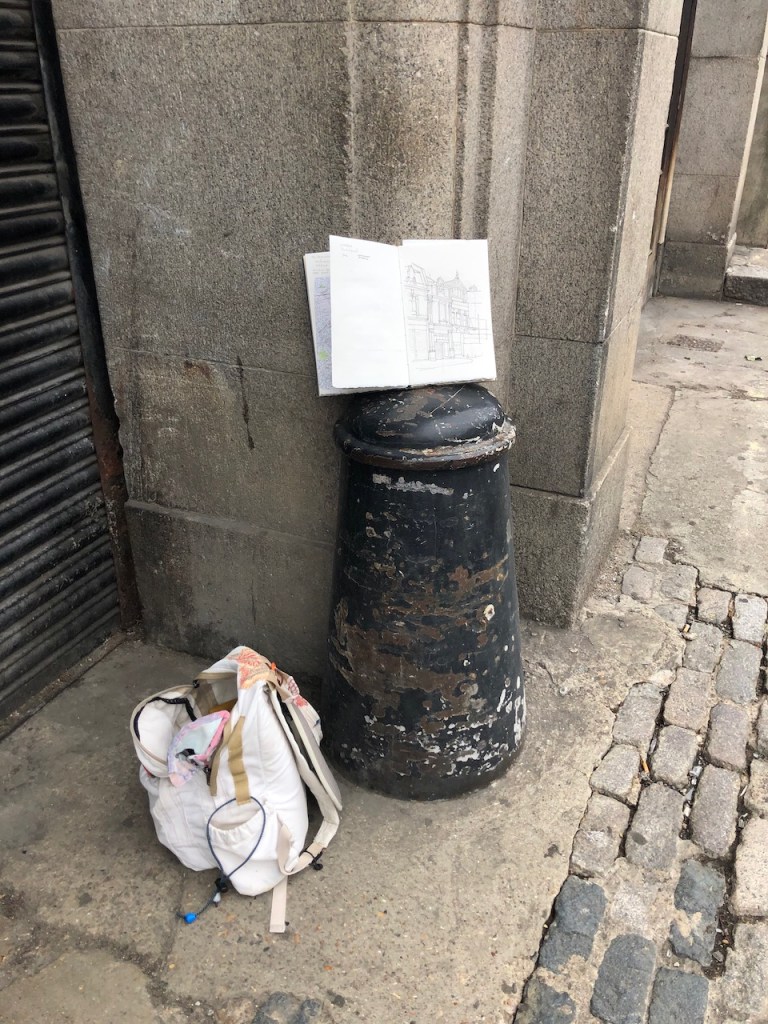
Here is work in progress:

This drawing took just over two hours. 30 min pencil, about an hour pen, and another 30+ min for the colour.

Here is a list of my drawings of Smithfield so far, click the writing to see more information:

Smithfield, North side

Today, approval was given for the redevelopment of the Smithfield site to turn it into the new Museum of London. Whereas some of the architecture will remain on view, the activities of the meat market will cease. So I went out in recent days to try to show some of the activity in the meat market.

Here is the clean-up, in the afternoon.

Grand Avenue, Smithfield. A worker hoses down the floor.

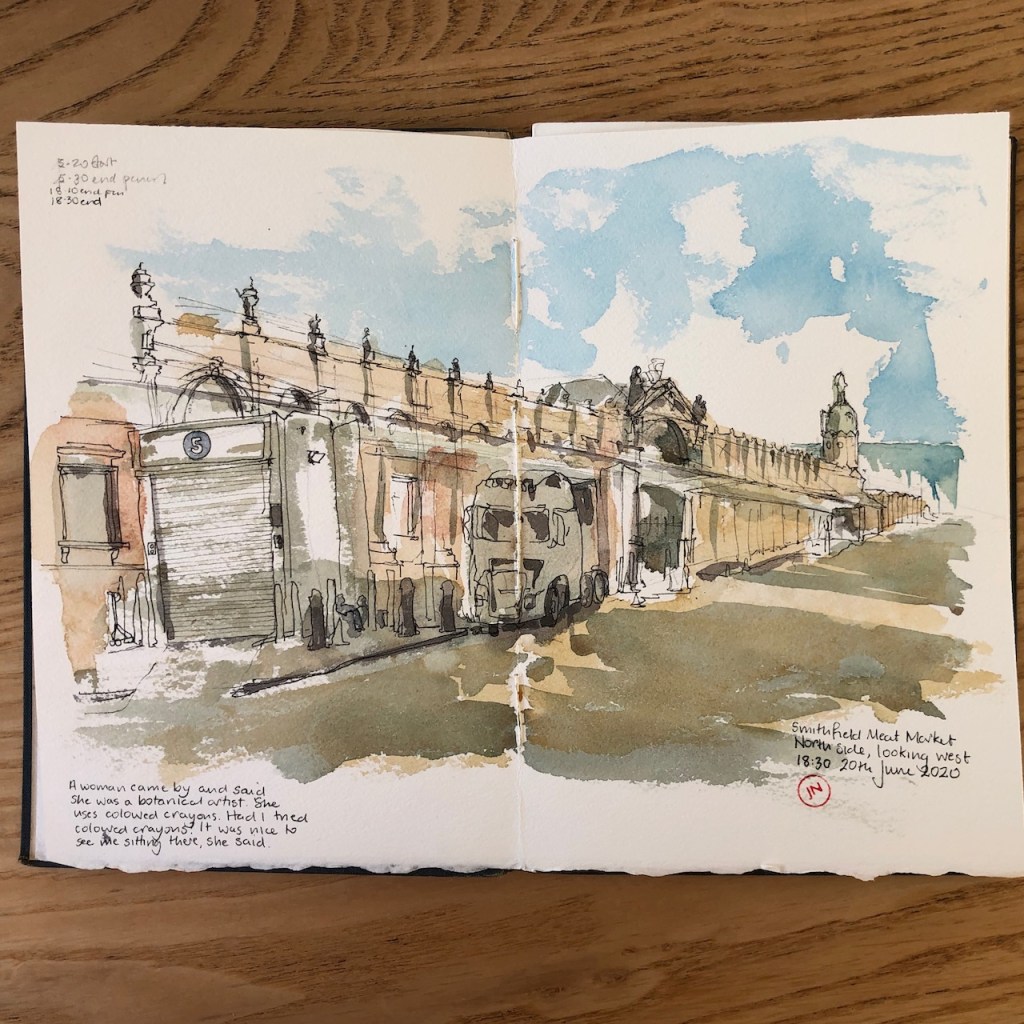
Here is a lorry parked on the North side, ready to deliver meat in the morning. Note the huge meat-loading bays. This one is labelled 5. These loading bays will not be there when it is redeveloped, so I was keen to draw them now.

Meat loading bay 5 and delivery lorry, Smithfield. I forgot my glasses, which is one reason why it is a bit sketchy.

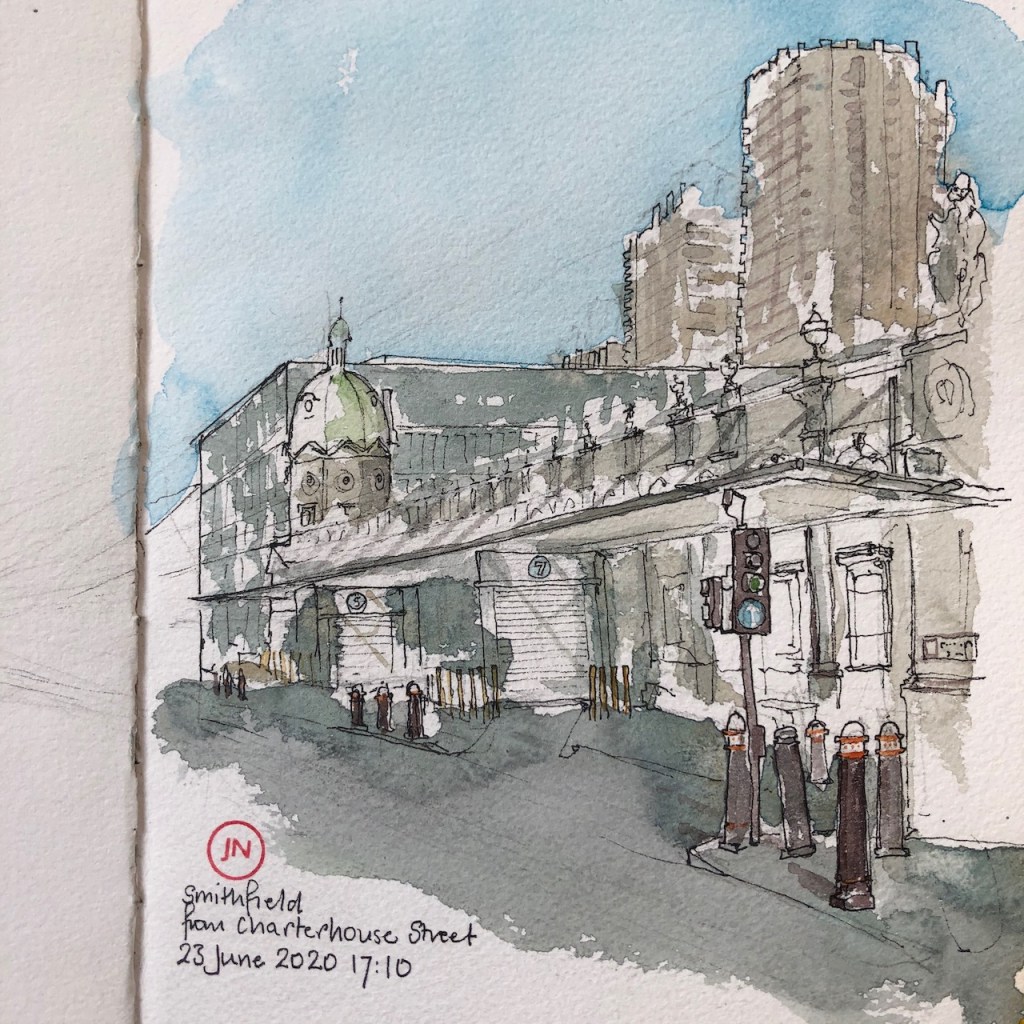
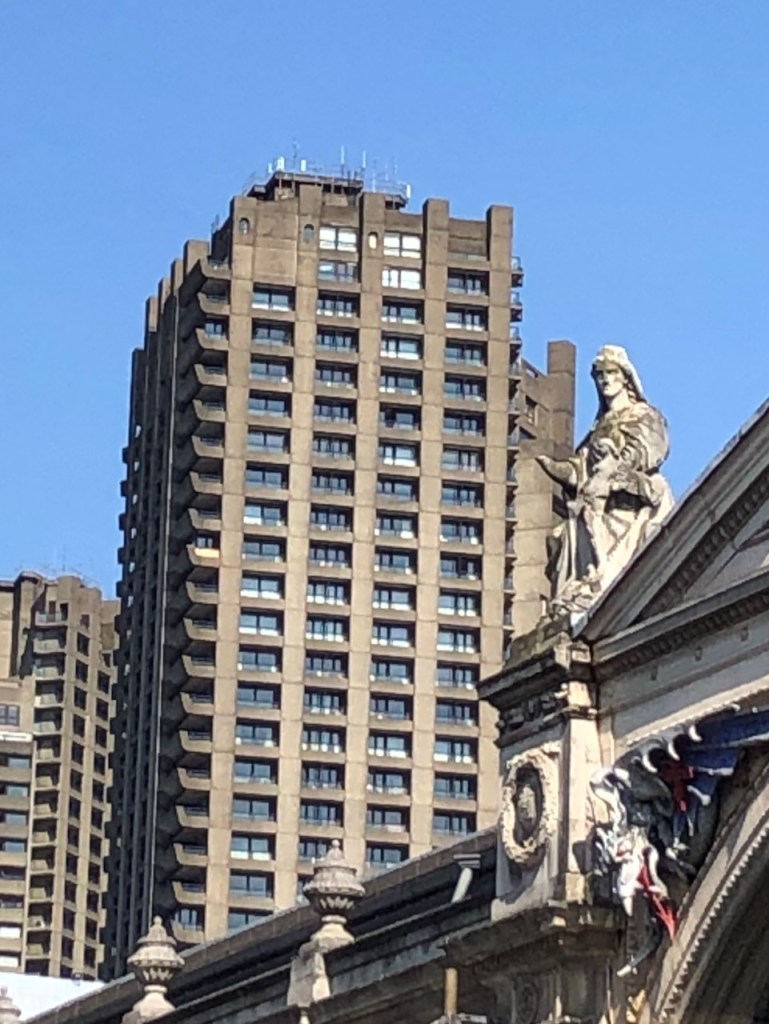
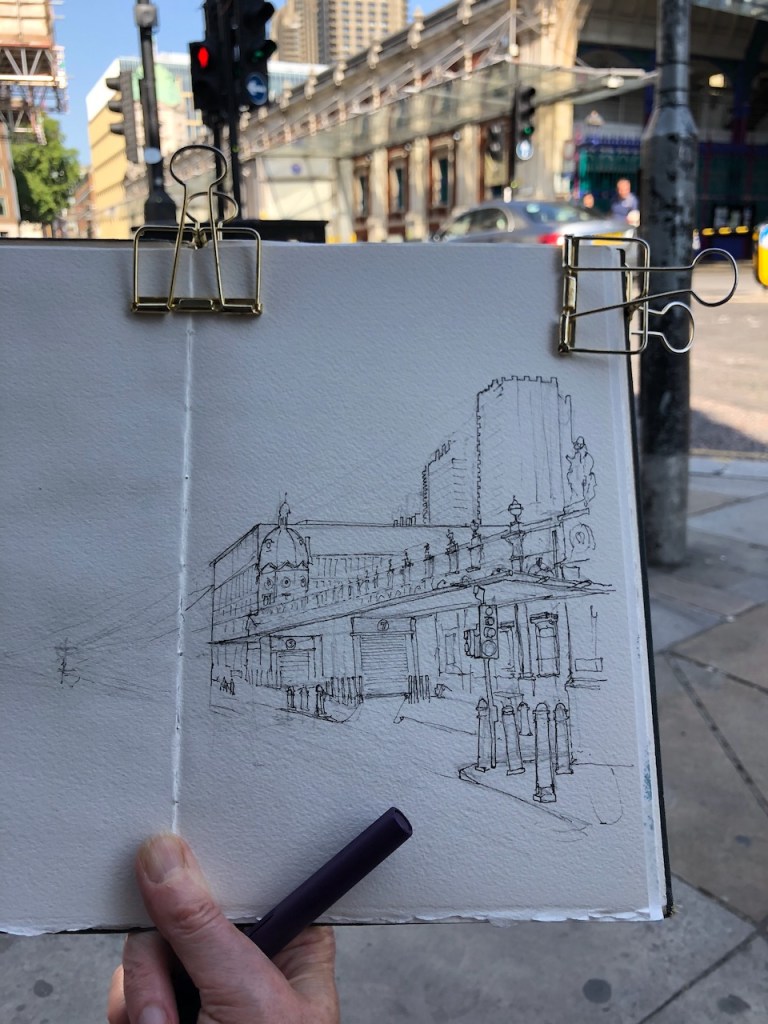
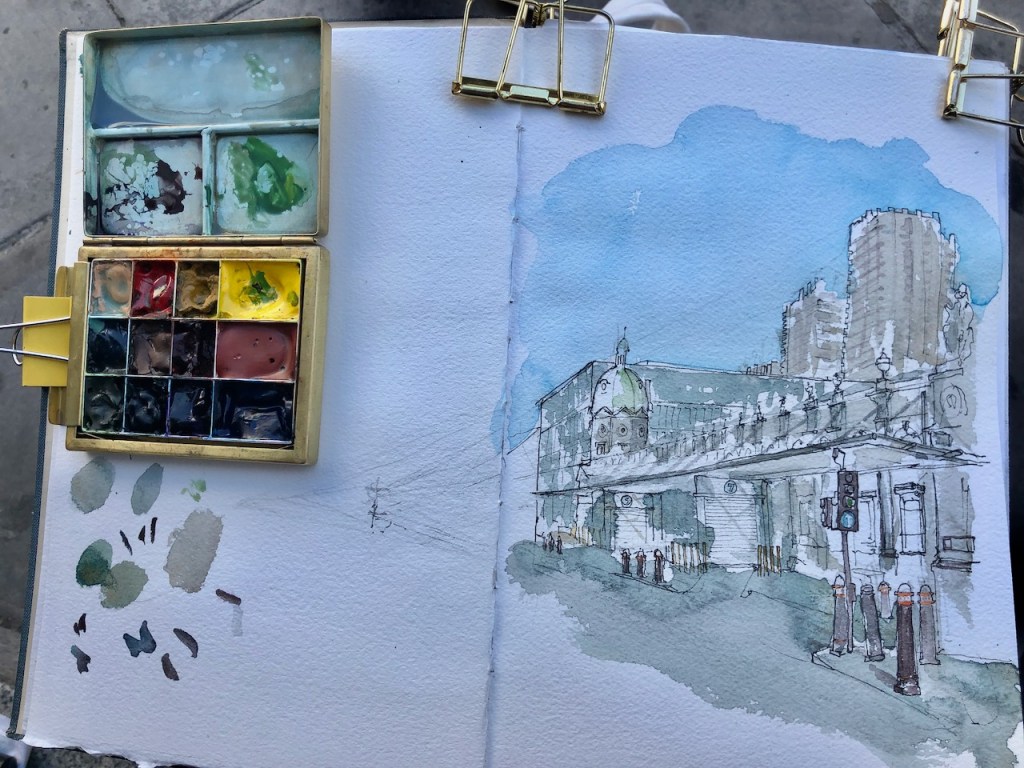
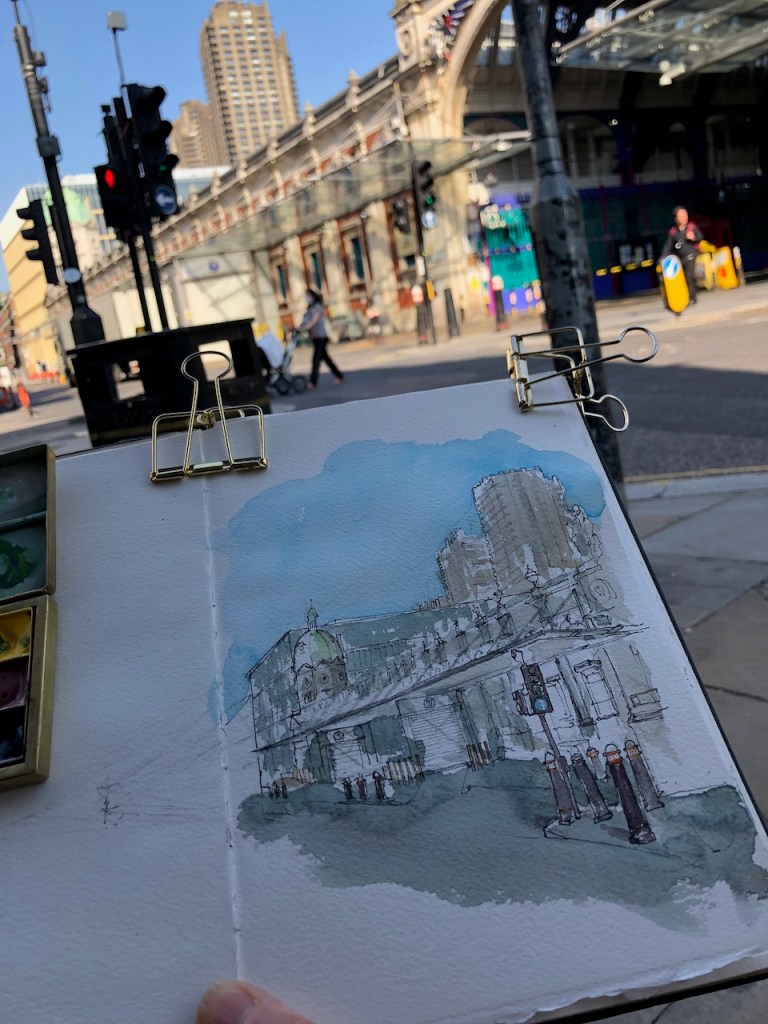
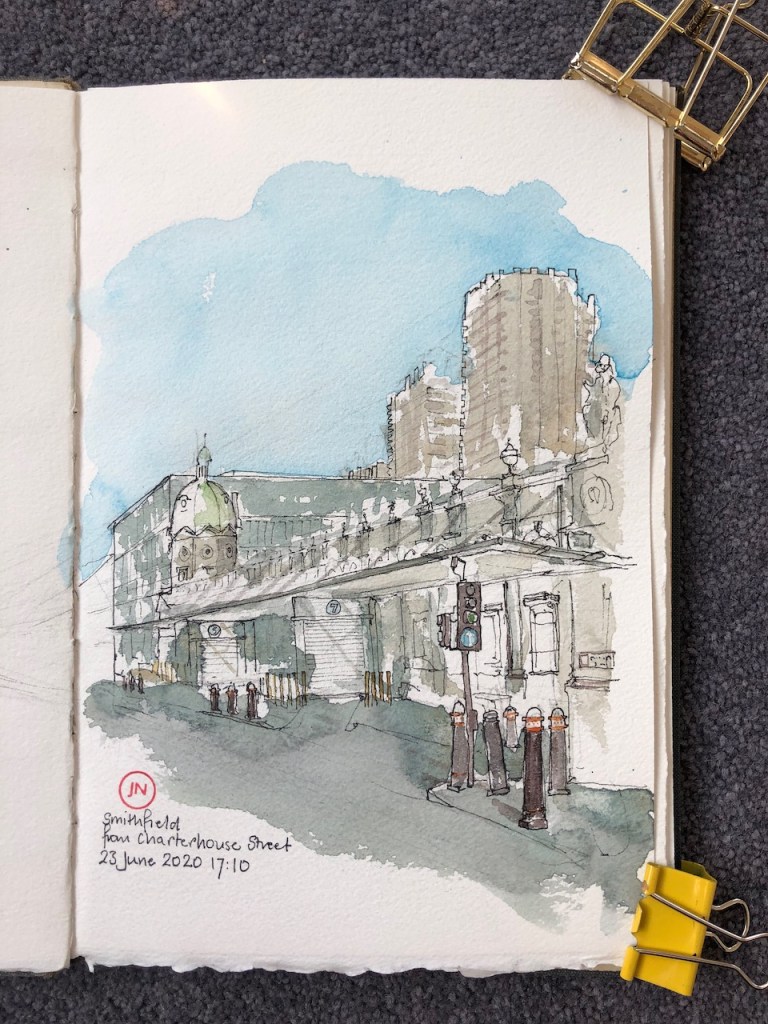
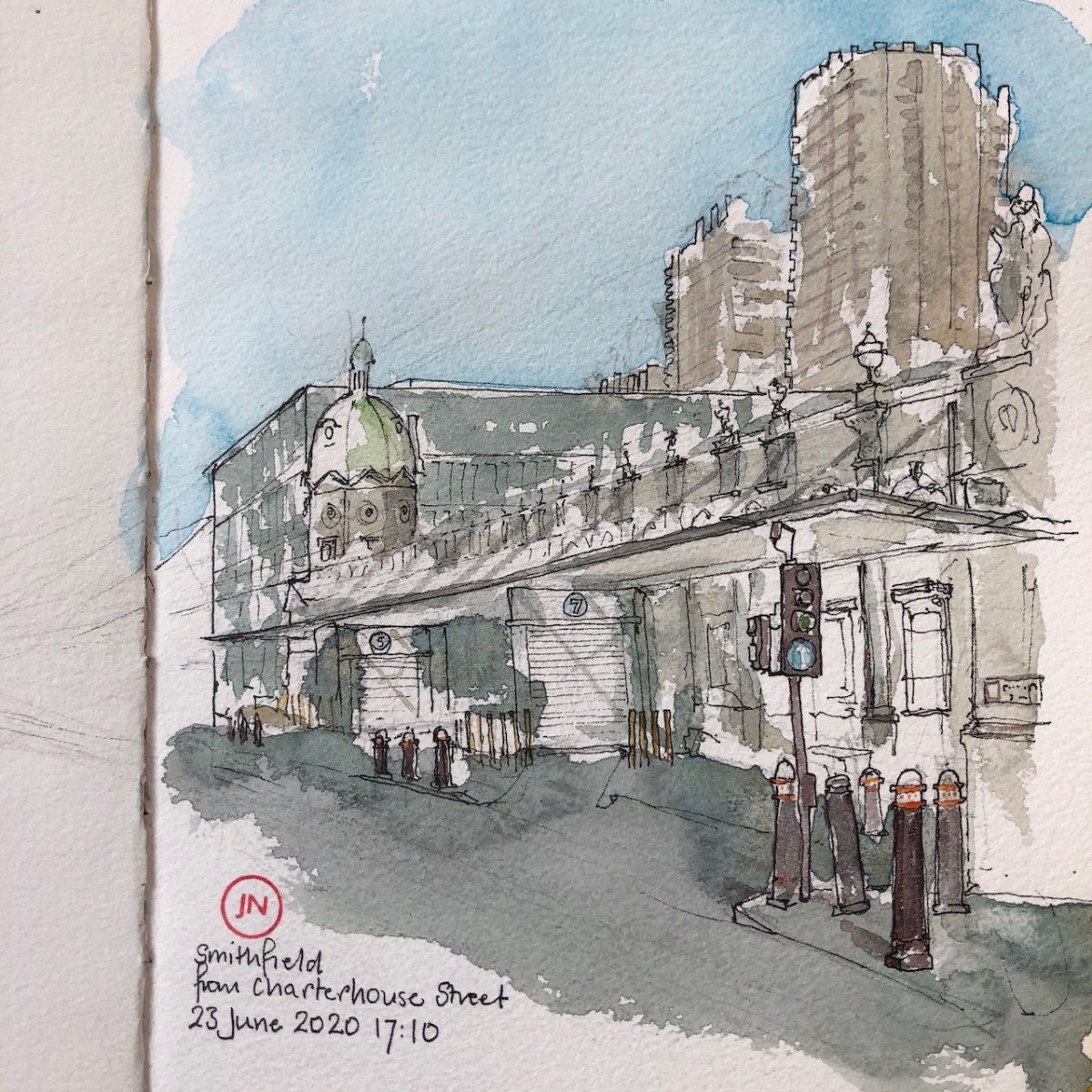
Here is a general view from Charterhouse St, looking East. In this drawing, you can see three eras: the meat market 1880s, the Barbican towers, 1970s, and the new Crossrail station, which is nearly finished, 2020s.

Smithfield, Barbican towers, Crossrail station.

You can see loading bay 5 in the distance, and loading bay 7 nearer.

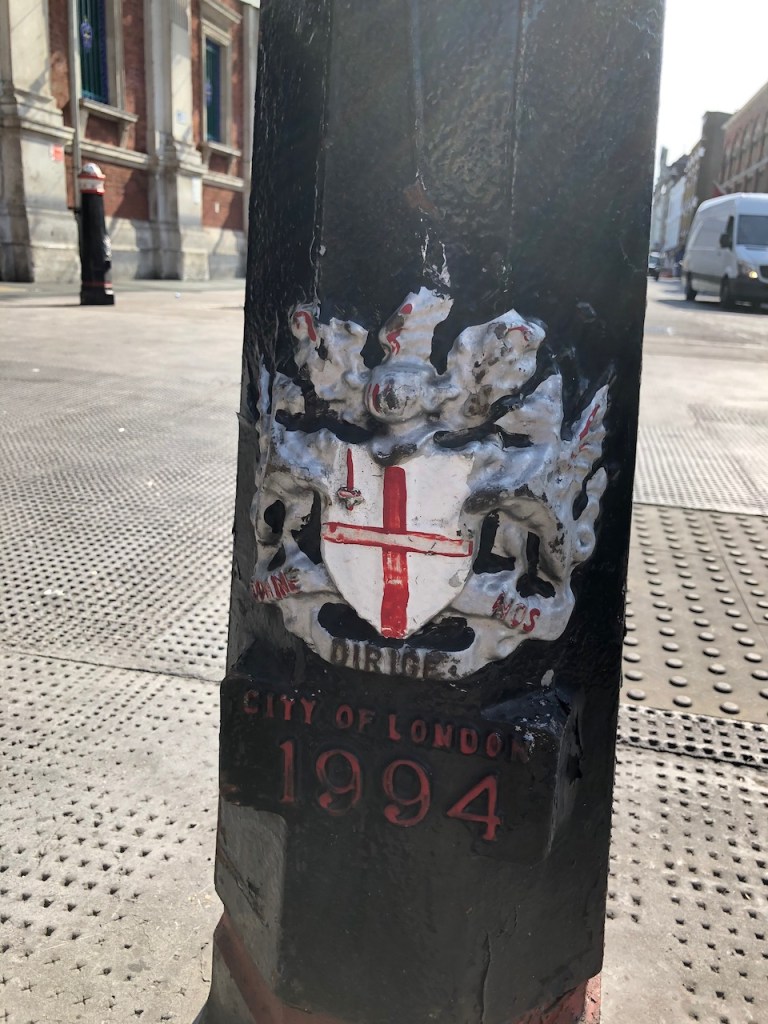
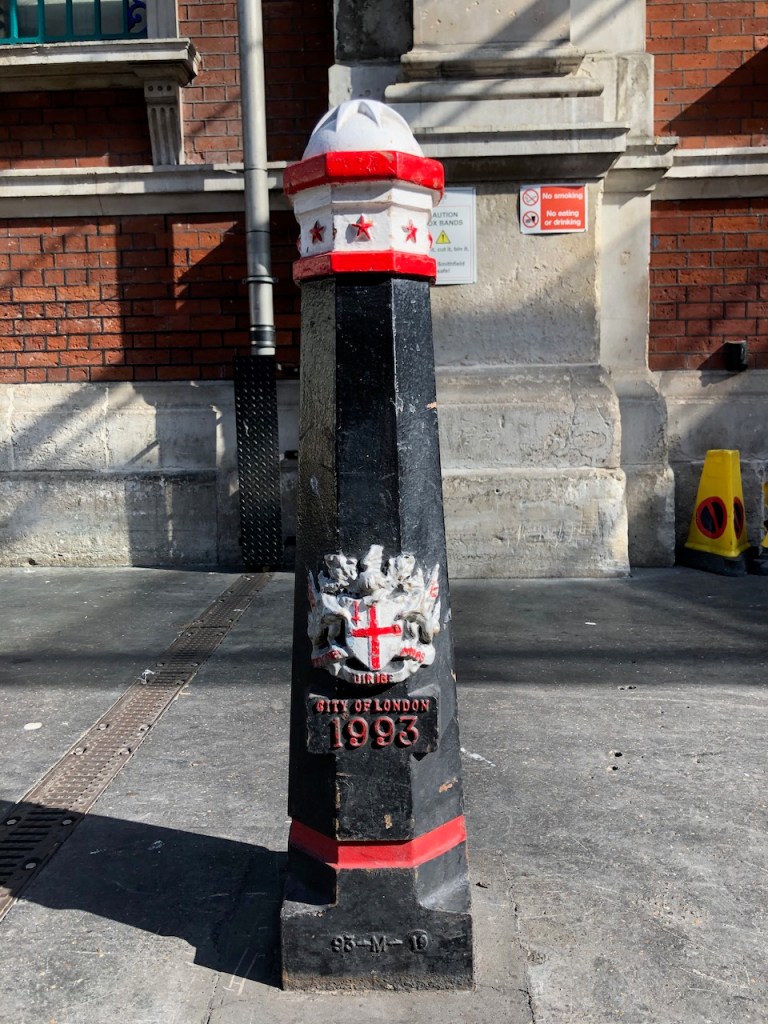
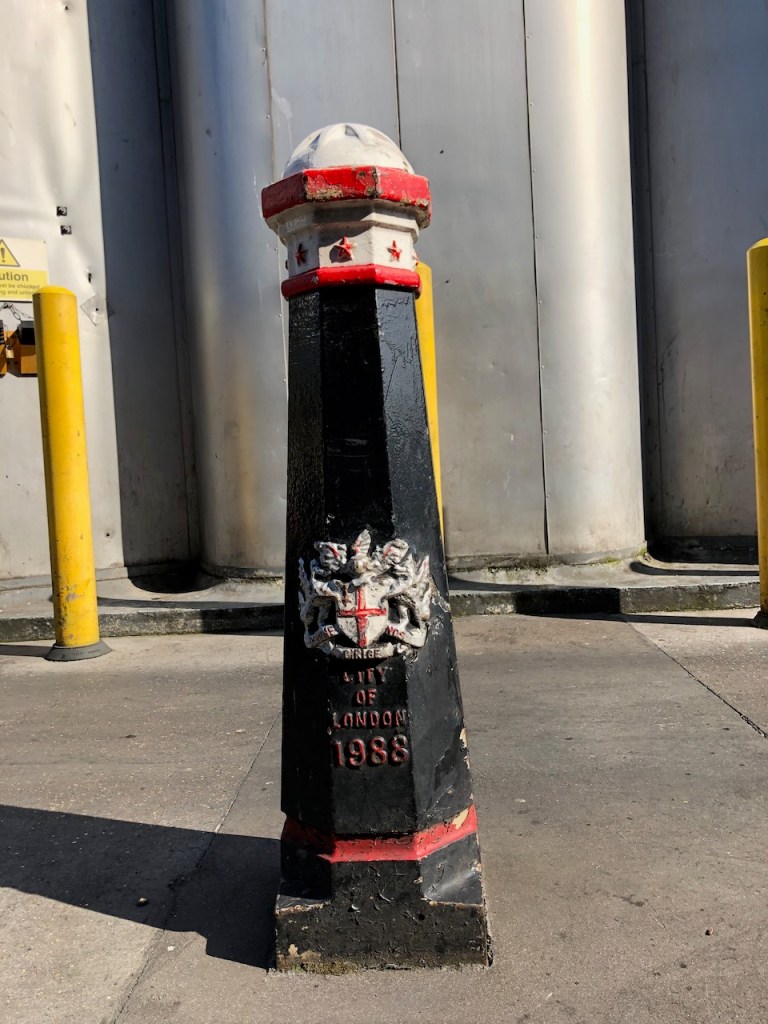
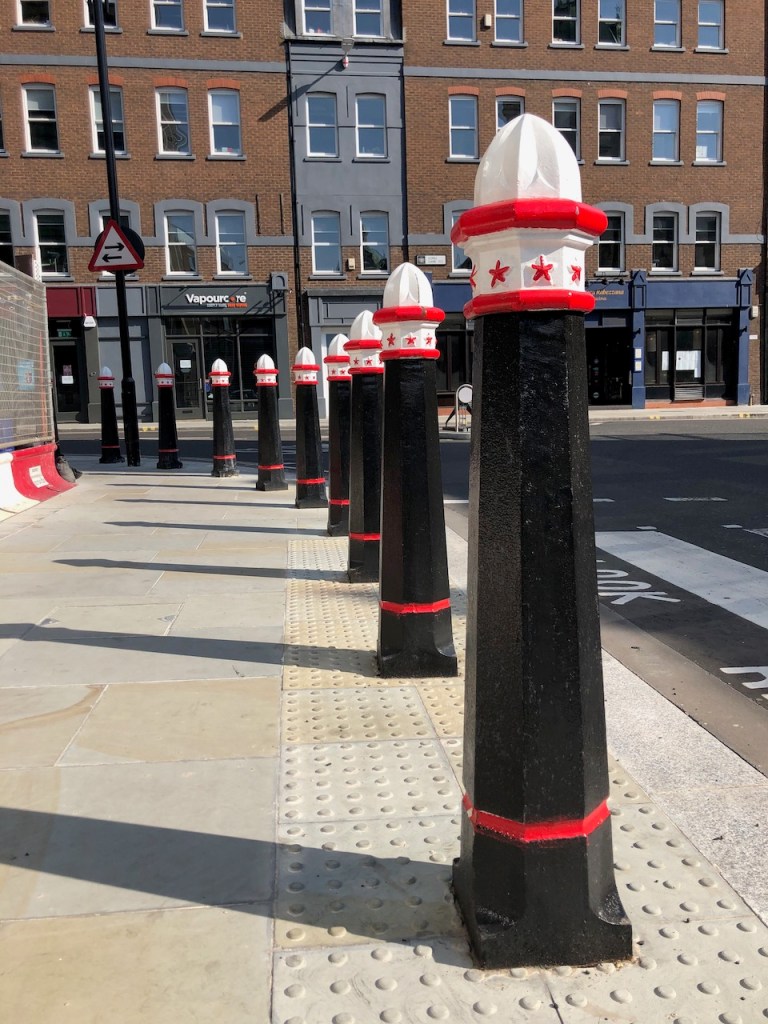
There is a huge collection of bollards in this area, whose job is to keep the heavy goods vehicles from crushing people on the pavement. Many of them have dates on. The one immediately to the right of the traffic lights is not a bollard, but an imposter. It is a thin metal case and encloses some water-control device. It is labelled “Thames Water”. The real bollards are sturdy cast iron. Many of them have clearly been wounded in action, but they stand firm, doing their job. I hope they are retained when the site is redeveloped.

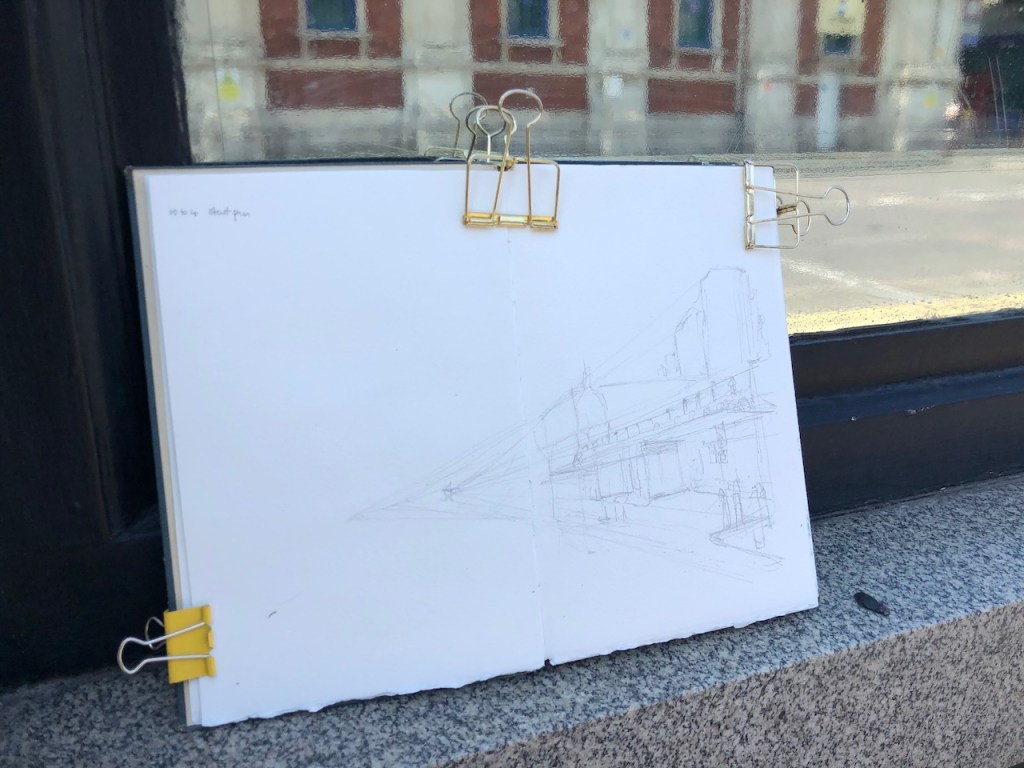
Here is work in progress on the drawing.

A street sweeper came by at the pen stage. He gave his approval. He said he didn’t paint himself, but he liked to look at paintings and drawings.

Here is a list of my drawings in this area:

Poultry Market, Smithfield EC1

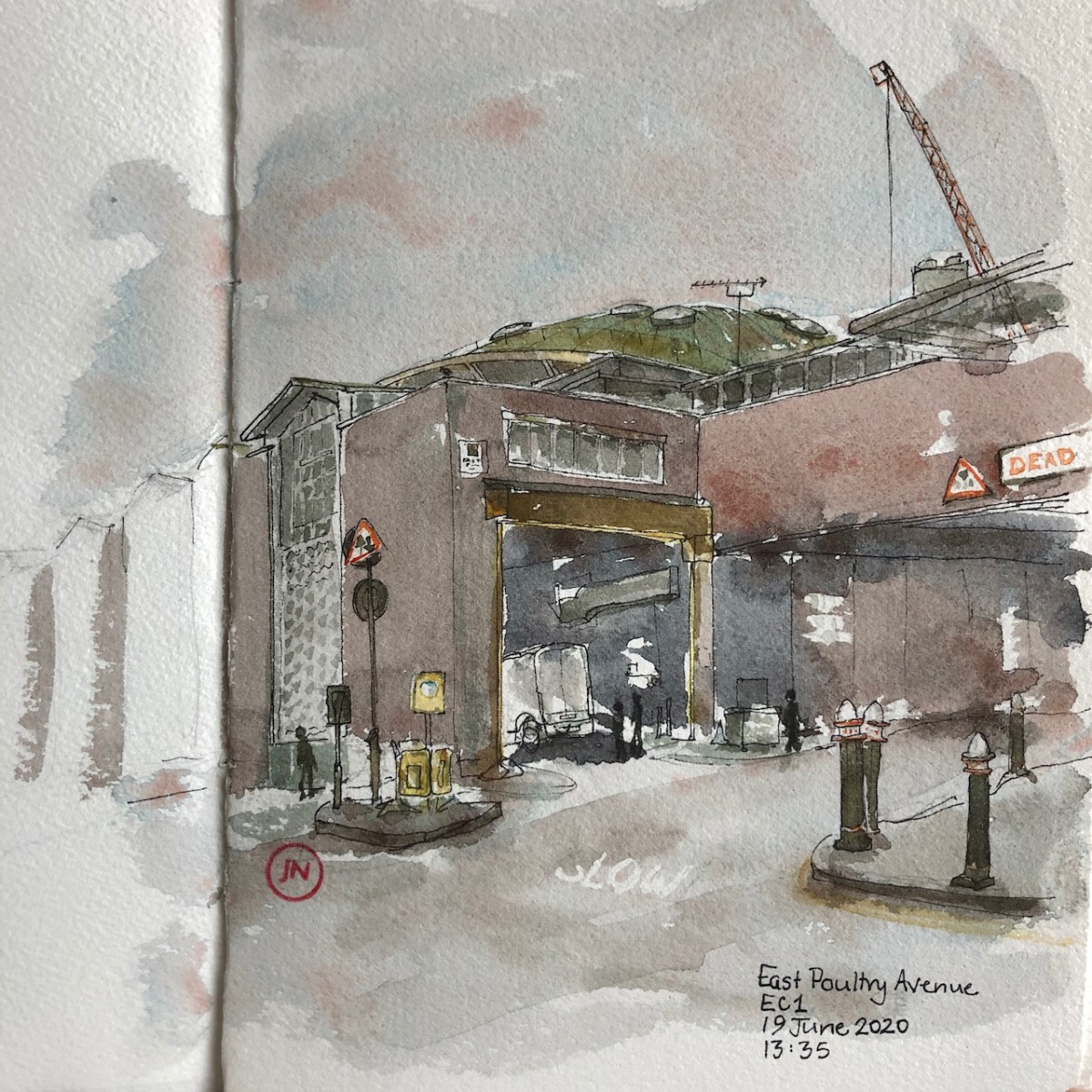
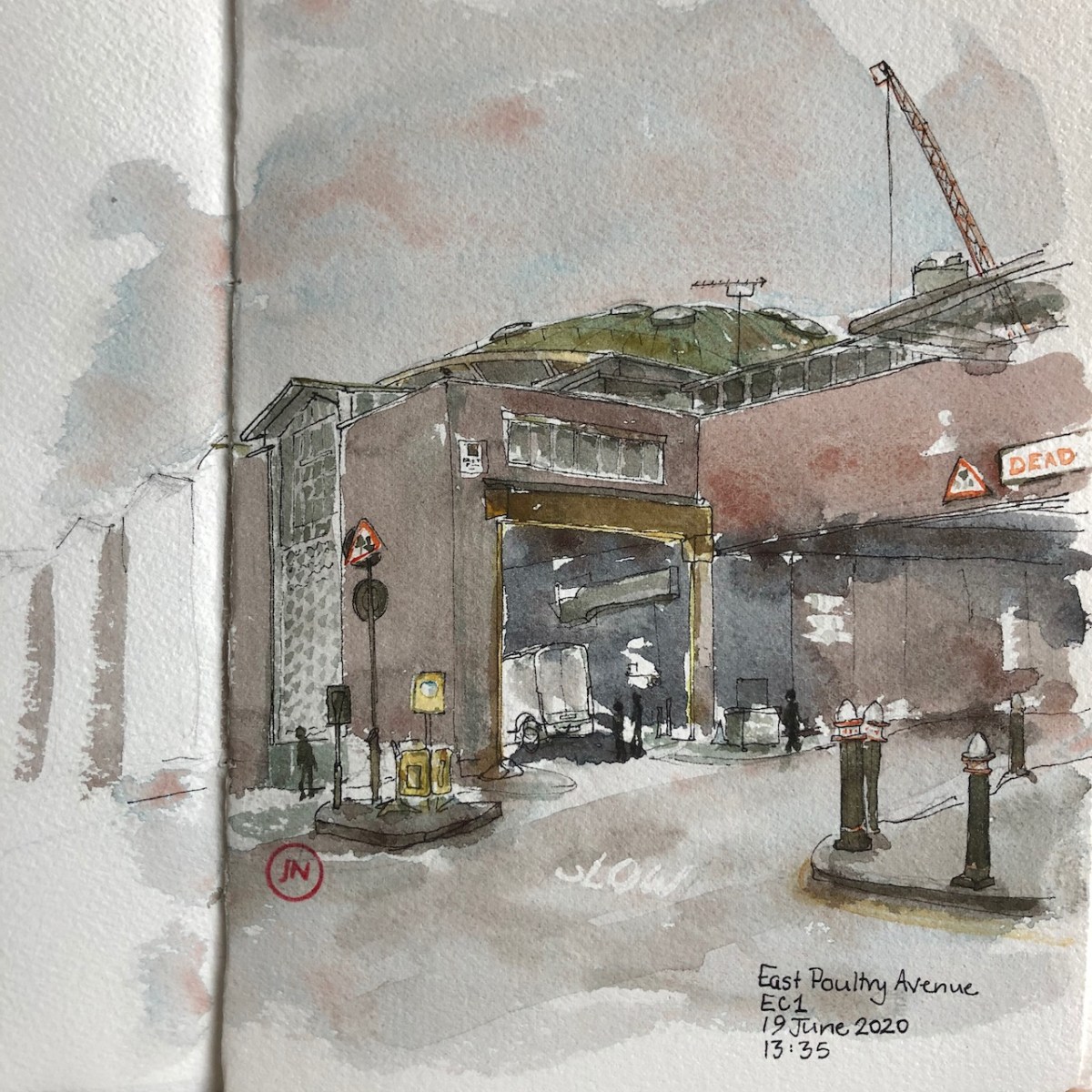
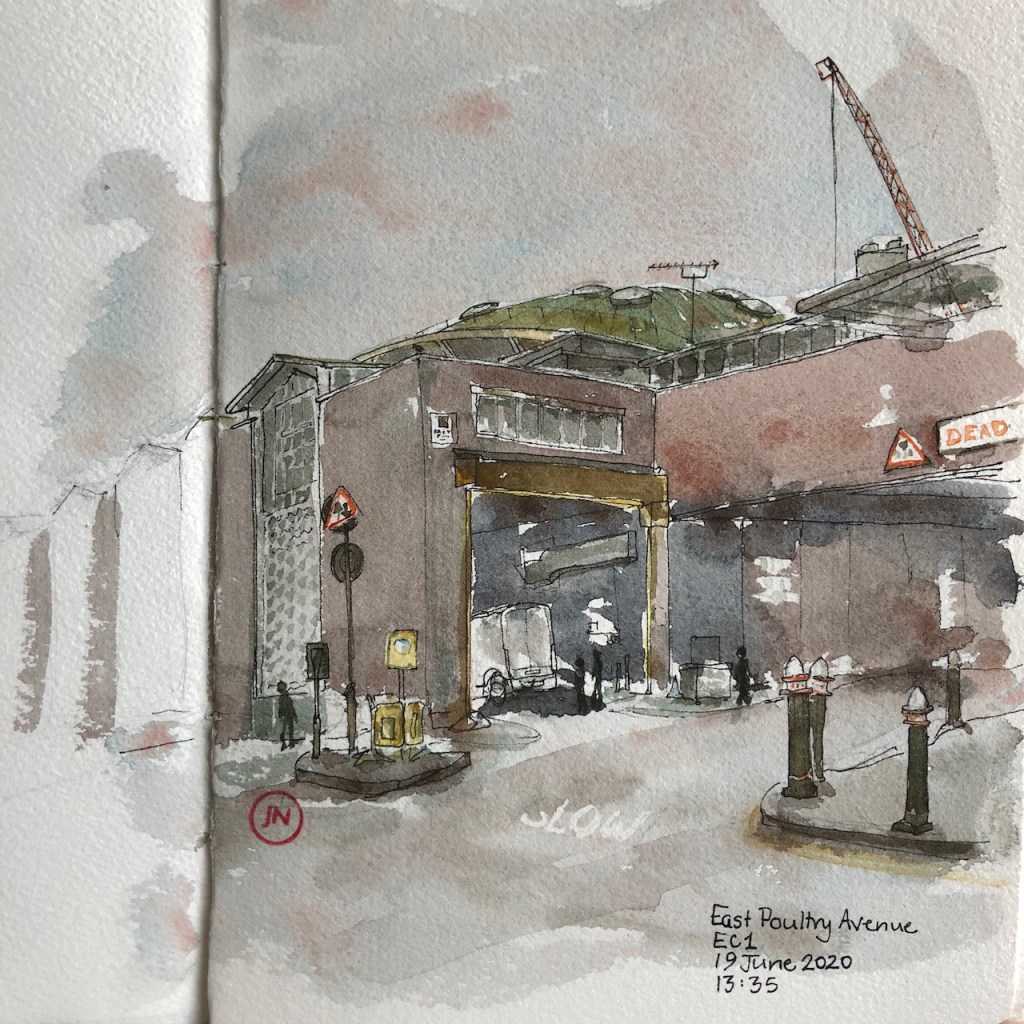
This is a view of the Poultry Market, sketched today from the South side. You see East Poultry Avenue going off to the right.

East Poultry Avenue, Smithfield EC1

This is a working Meat Market. It was completed in 1963 to replace the original 1880s market which had been destroyed by fire in 1958. The “A London Inheritance” site has a moving description of the fire in their article about Smithfield.

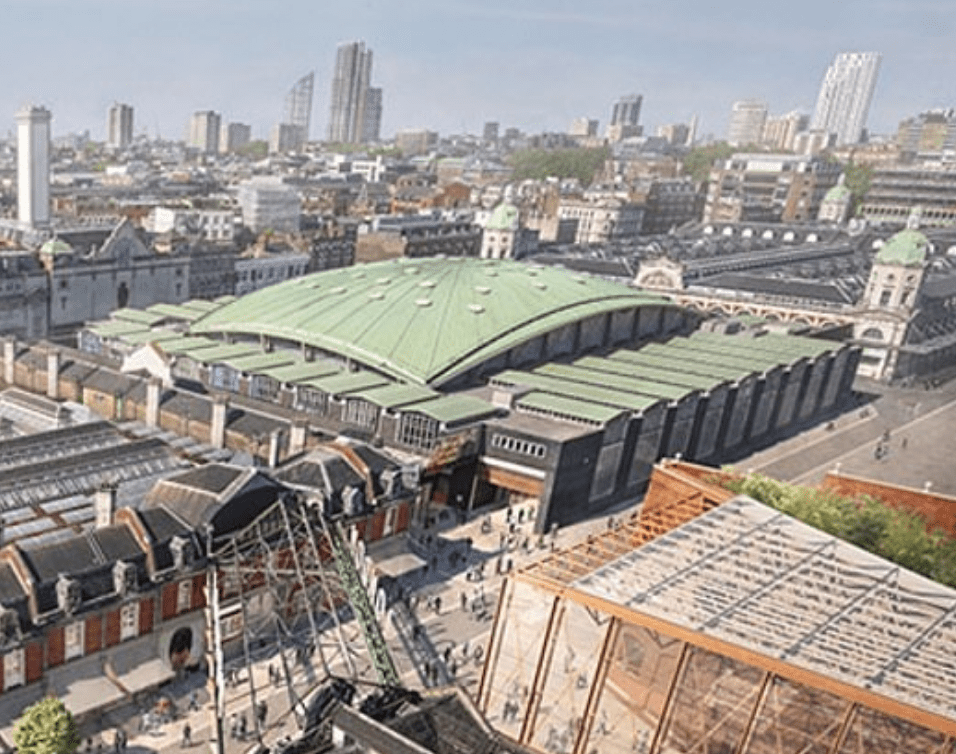
The 1960s dome of the Poultry Market, image (c) City of London. My drawing was done from the centre right edge of the photo, looking left.

There is an amazing dome across this part of the market. I tried to find a place where I could see it. It just shows at the top of the buildings in my drawing. It spans the whole of the market area, and is supported only at its edges. Here is a picture taken from articles about redevelopment of the site.

The 1963 design is by TP Bennett and Son.

This whole structure will be refurbished to make the new Museum of London.

The drawing took about and hour and a half. The colours are Phthalo Turquoise, Fired Red Ochre, and Perylene Maroon, with some Mars Yellow for the dome, and Pyrrol Orange for the traffic signs.

The Foundation Stone of the 1960s part of Smithfield. This stone is inside the loading bay on the North side. You can see the hexagonal glazing reflected in the stone, on the right.

Here are other drawings I have done in the area:

Smithfield East Market EC1 from Long Lane

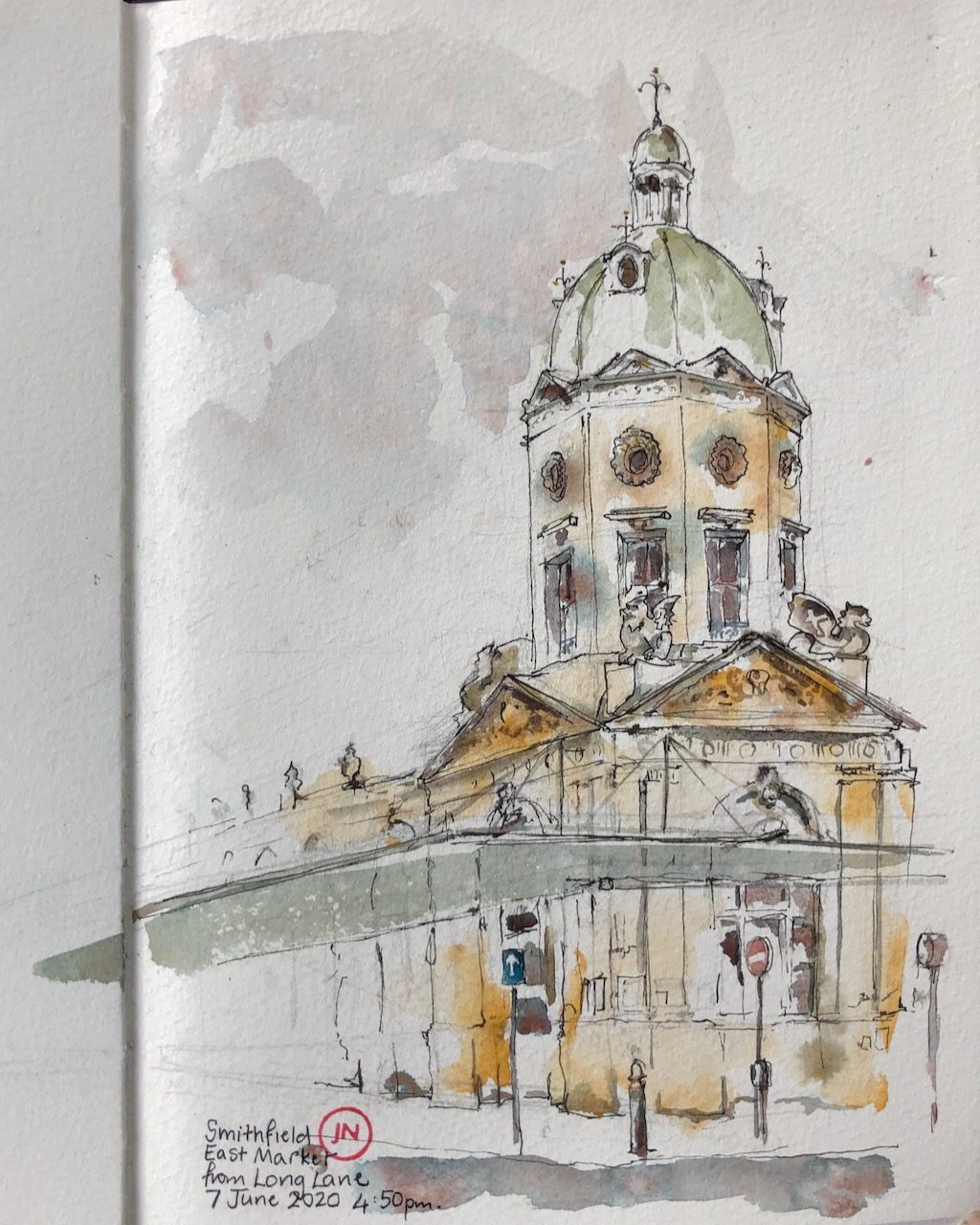
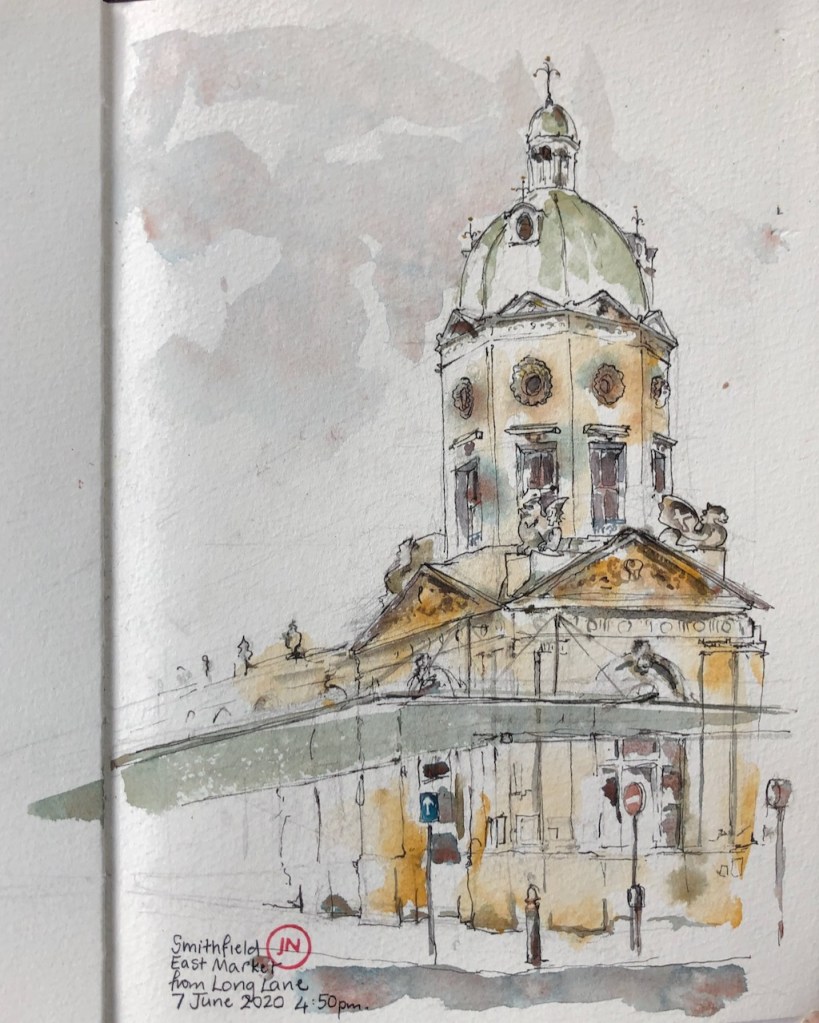
Here is Smithfield East Market on the corner of Lindsey Street and Long Lane.

This is a a wonderful building, with, as you see, paraboloid domes. It was built as a meat market in 1866-68 to the designs of Horace Jones (1819-1897), architect to the City of London. It has been a meat market ever since, and continues to operate, even through the current pandemic.

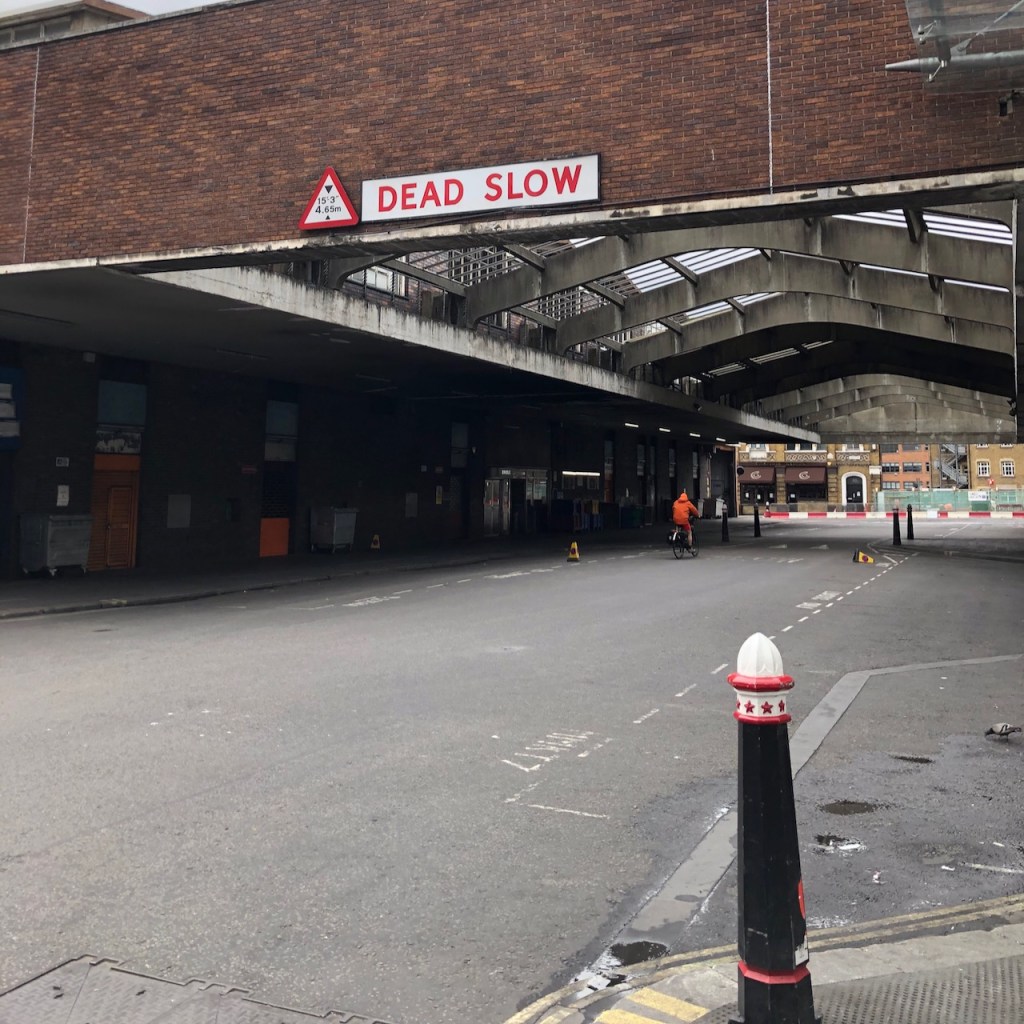
You see the glass canopy which allows goods to be unloaded under cover. Today is Sunday. This view would be impossible on a weekday. There are large refrigerated delivery lorries which arrive, often from Scotland. The driver sleeps in the cab.

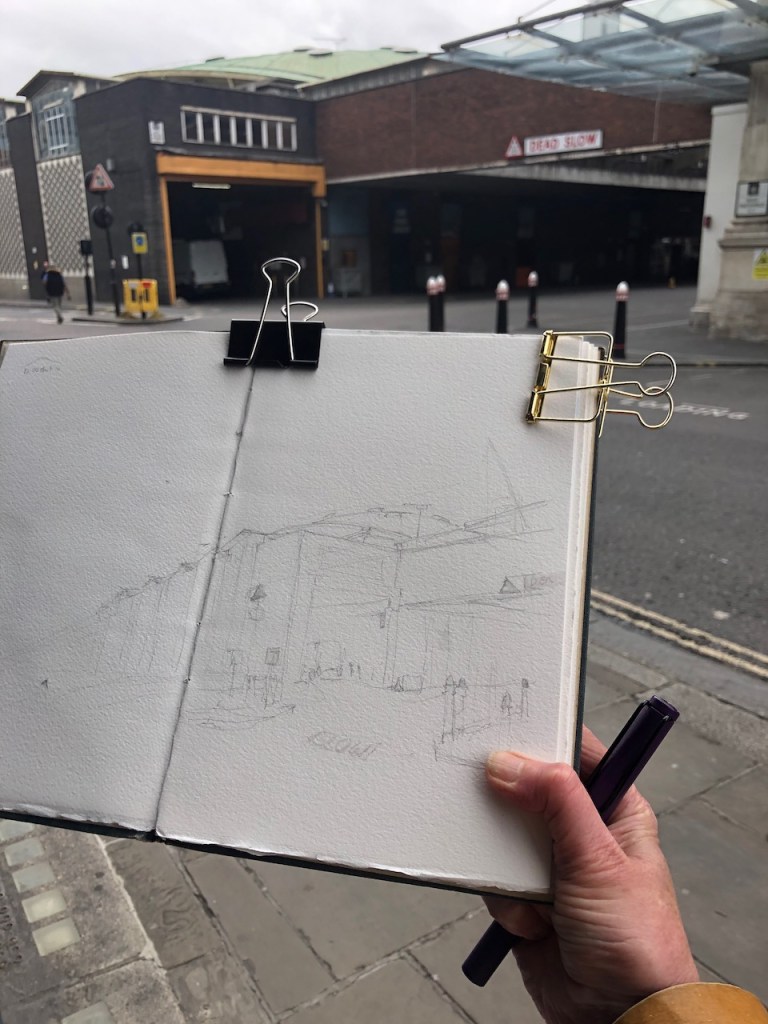
Here is work in progress on the drawing. It took about 1hour30mins. The colours are Mars Yellow, Phthalo Turquoise, and Fired Red Ochre.
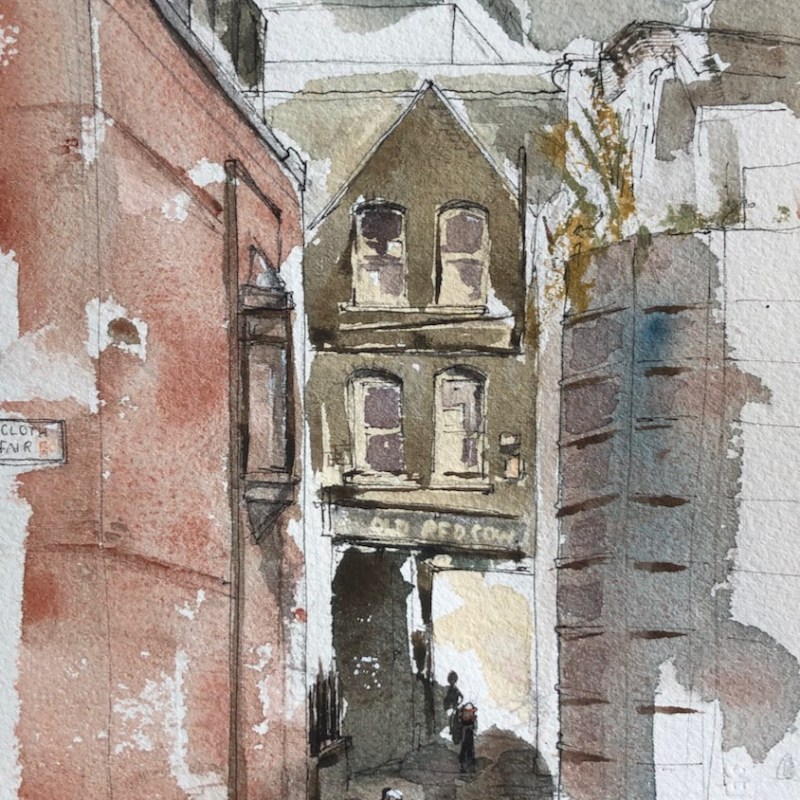
I am making a series of drawings of Smithfield:

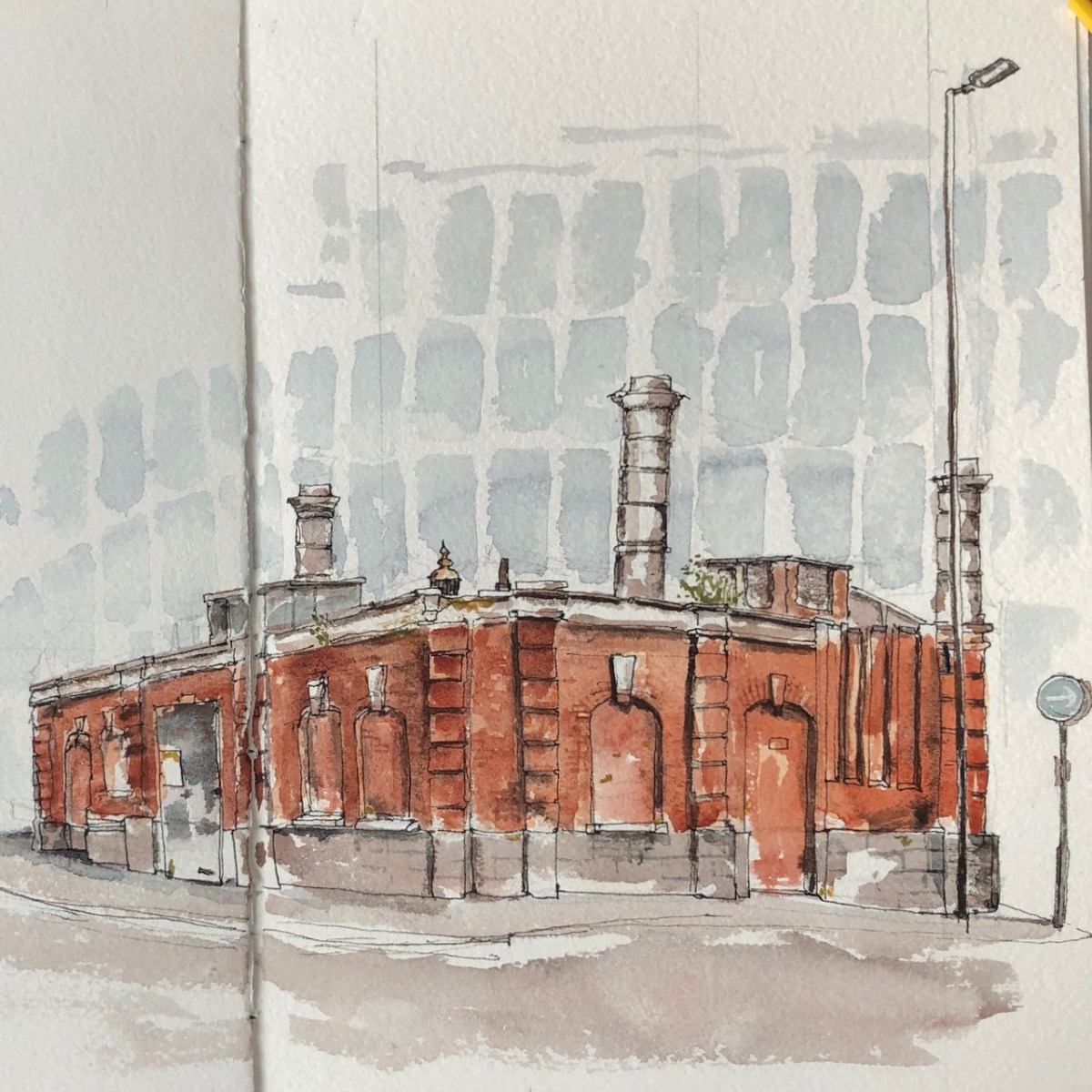
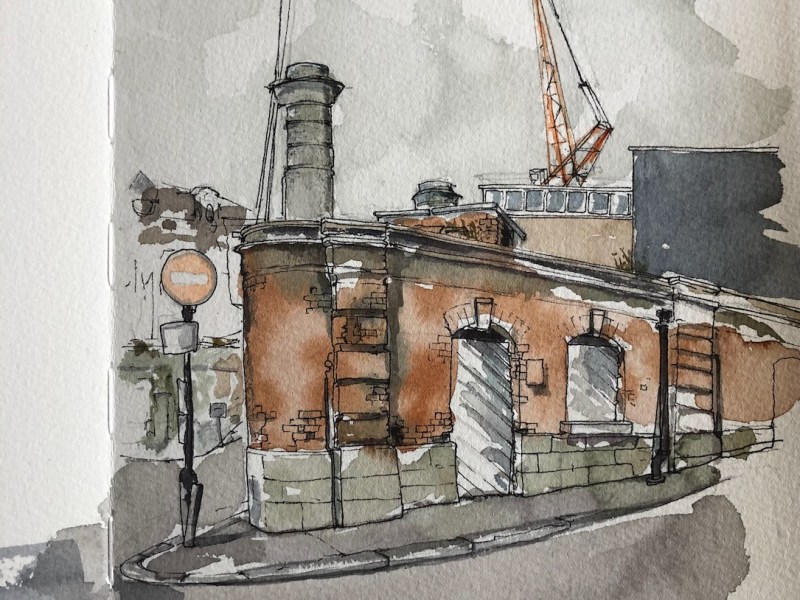
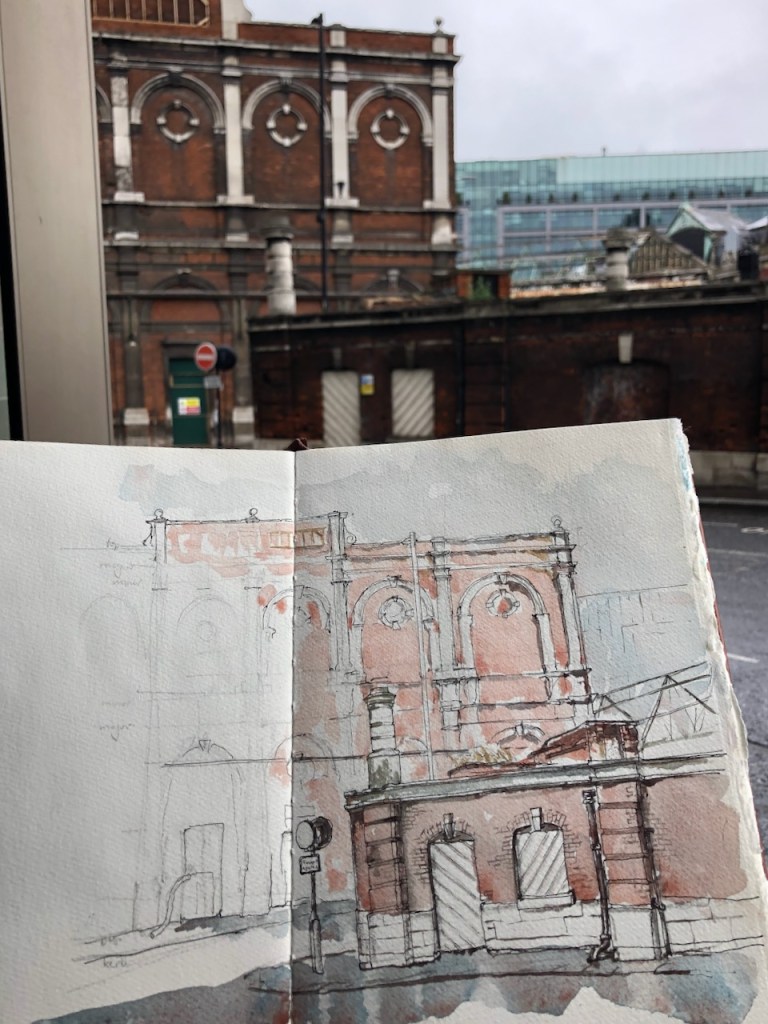
The Red House and The Triangular Building, Smithfield EC1

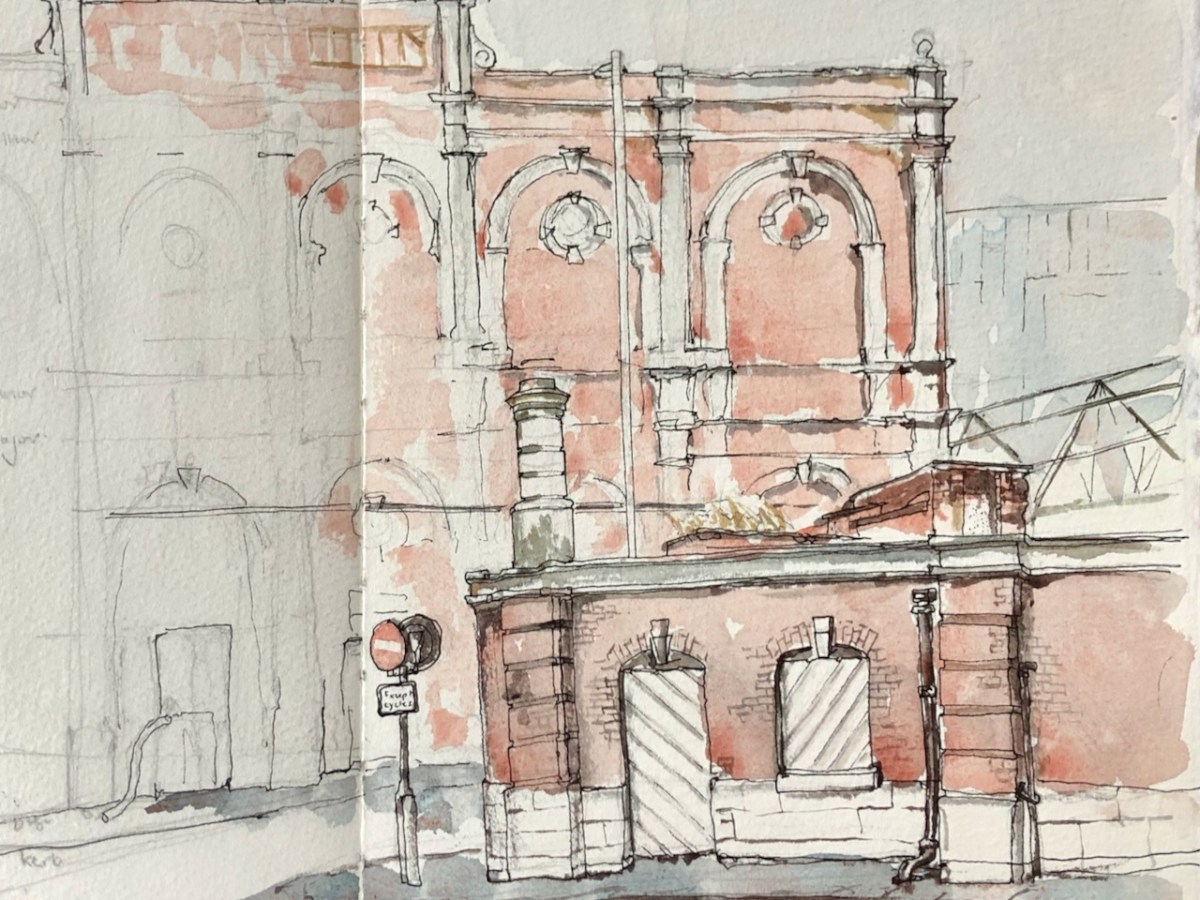
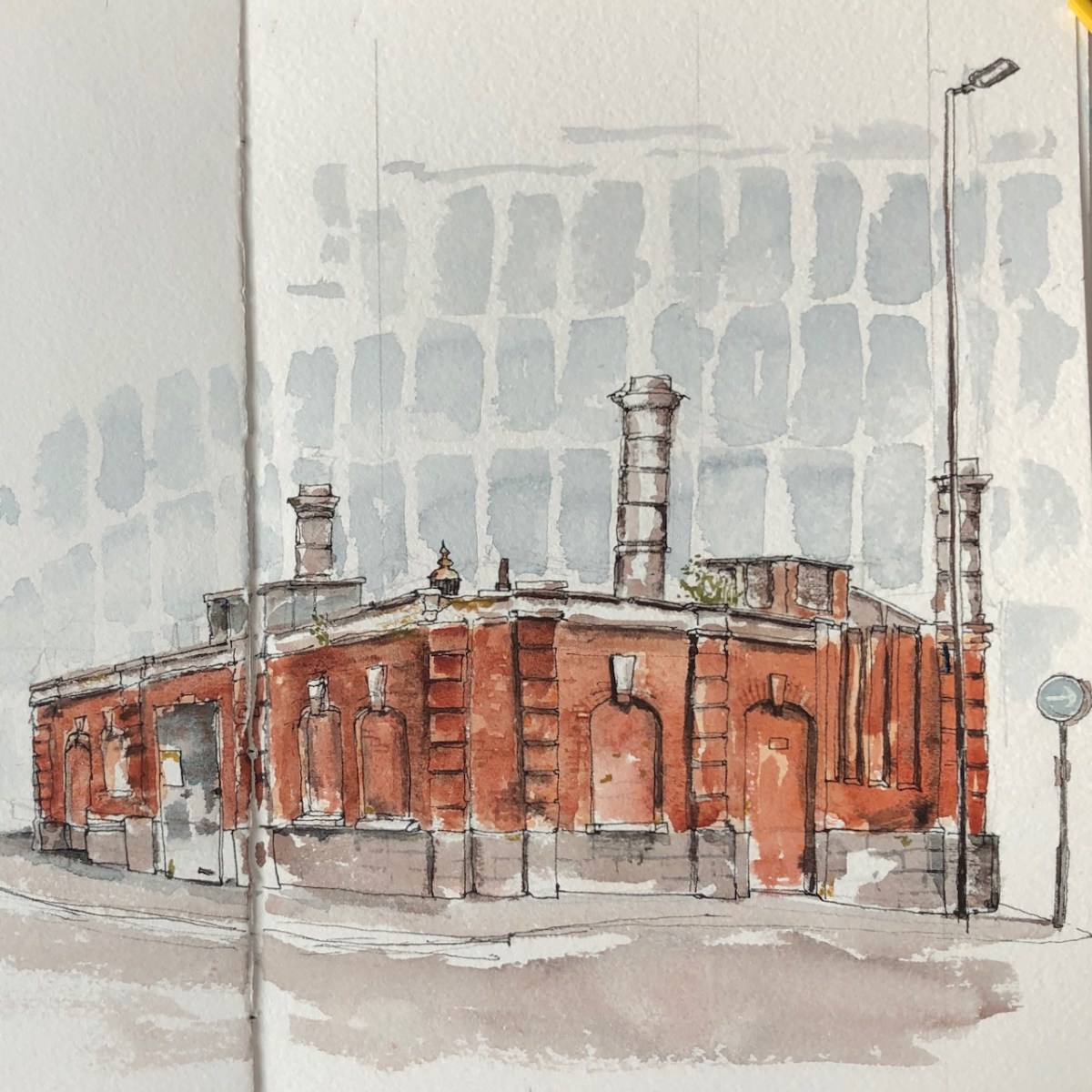
Here is another view of The Triangular Building, drawn previously. On this view you can see the magnificent cold storage block, behind. The cold storage block is called “The Red House”. It is now dilapidated, but still magnificent. A discordant rail, carrying cables, goes horizontally across the front, function taking severe precedent over aesthetics. There’s a weird orange tube coming from one of the boarded-up doors. But still it stands. Come quickly and admire it, before it is covered up, and then transformed into something else.
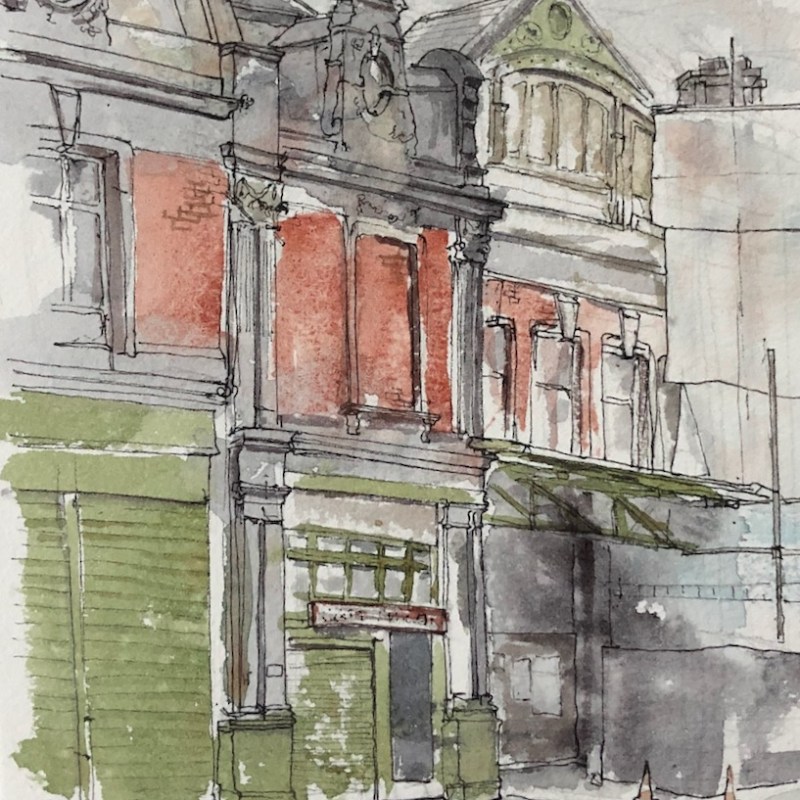
The Triangular Building in front of the Red House, Smithfield, EC1

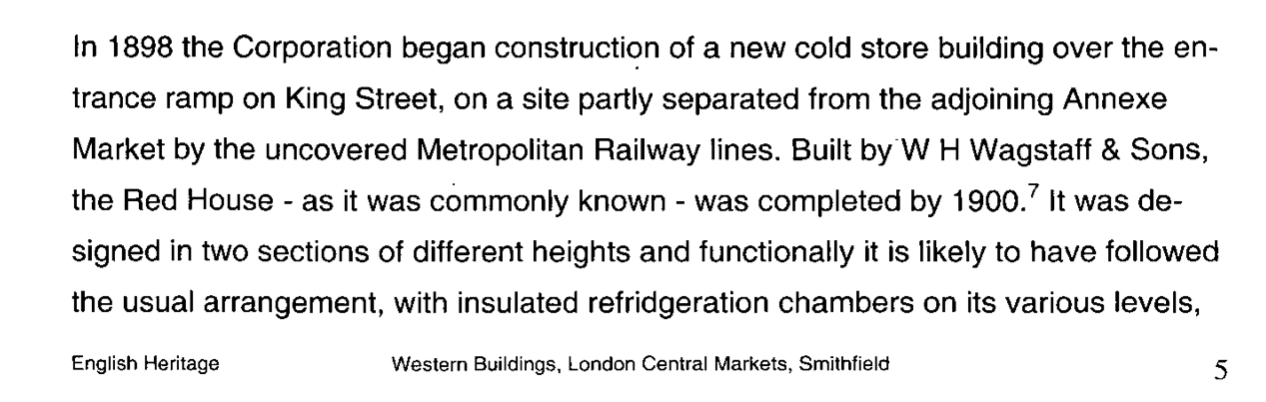
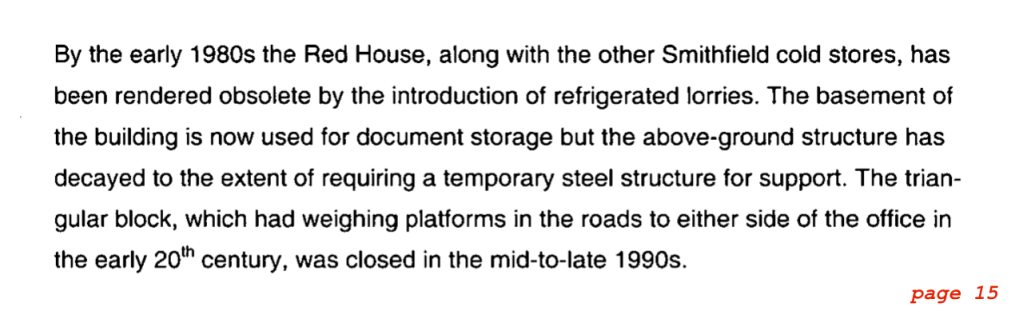
The Red House was completed in 1900. It “was designed by Andrew Murray or the City Engineer, David James Ross” 1.

Extract from a 2003 Report by English Heritage. See footnote 1.

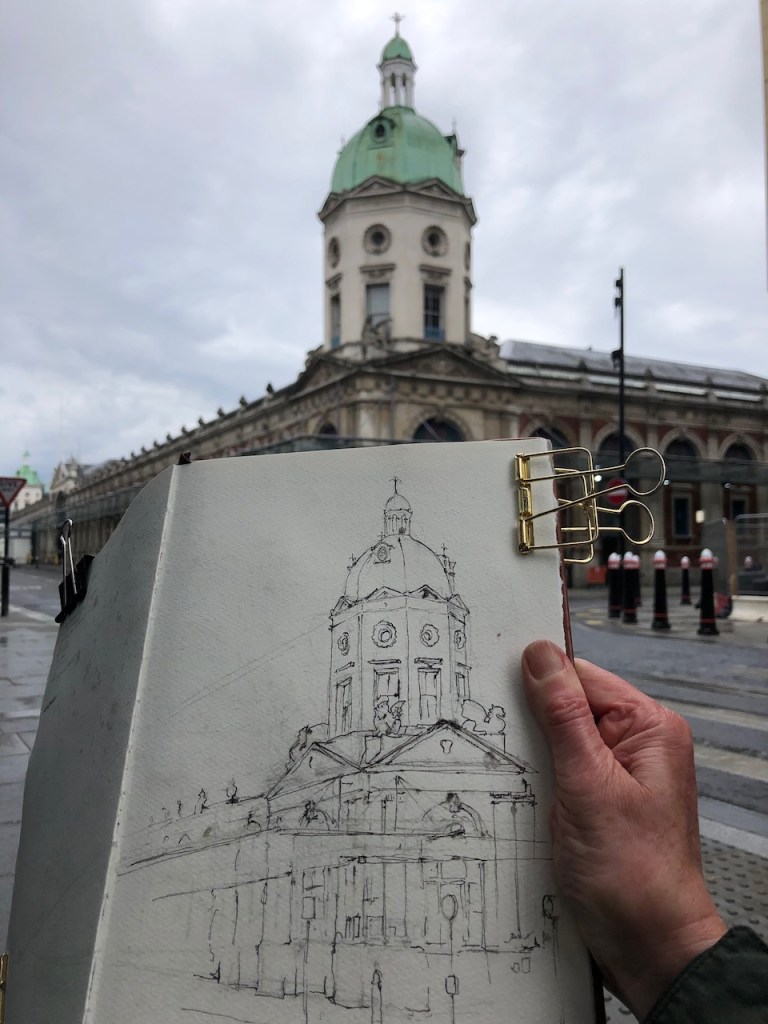
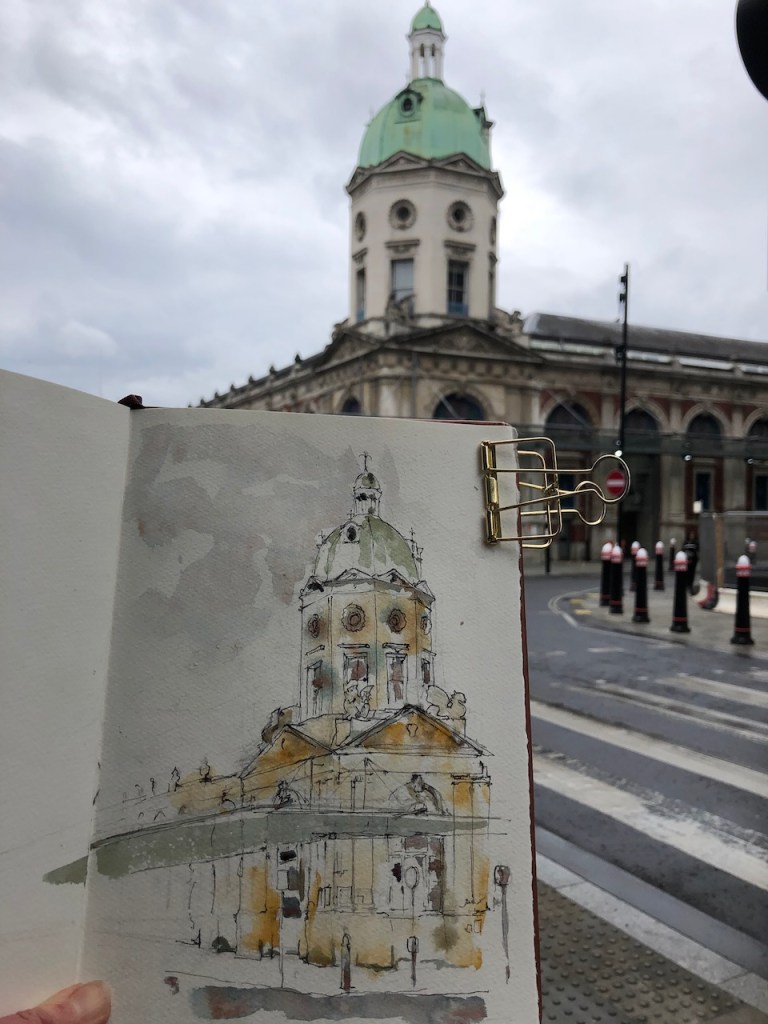
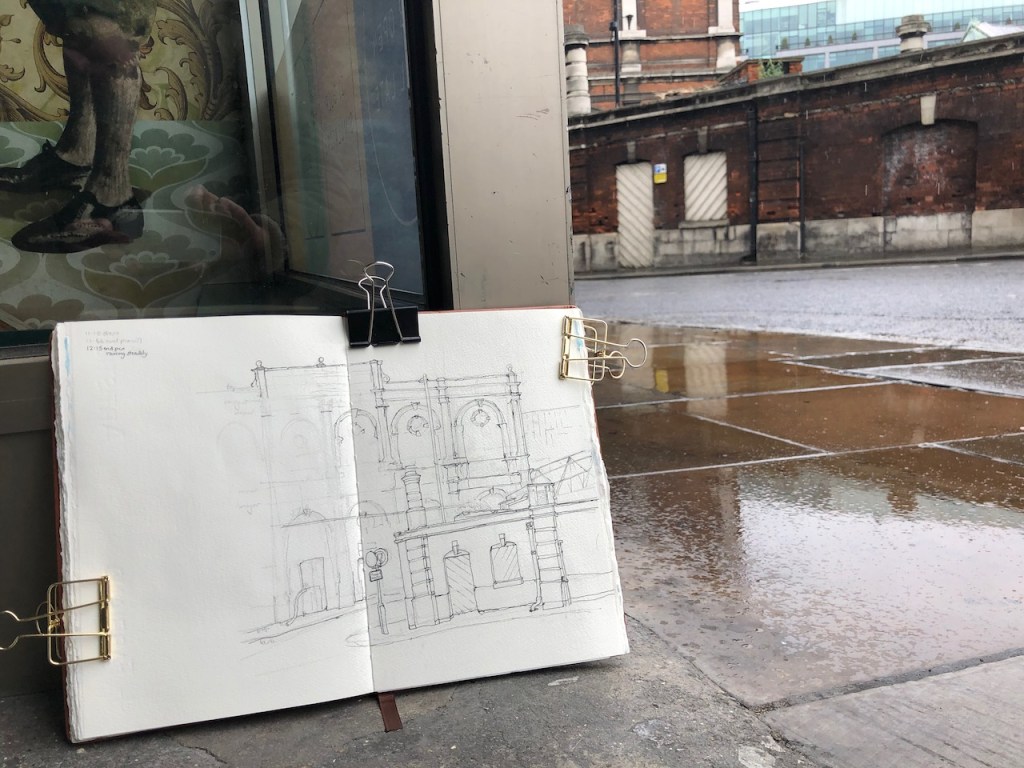
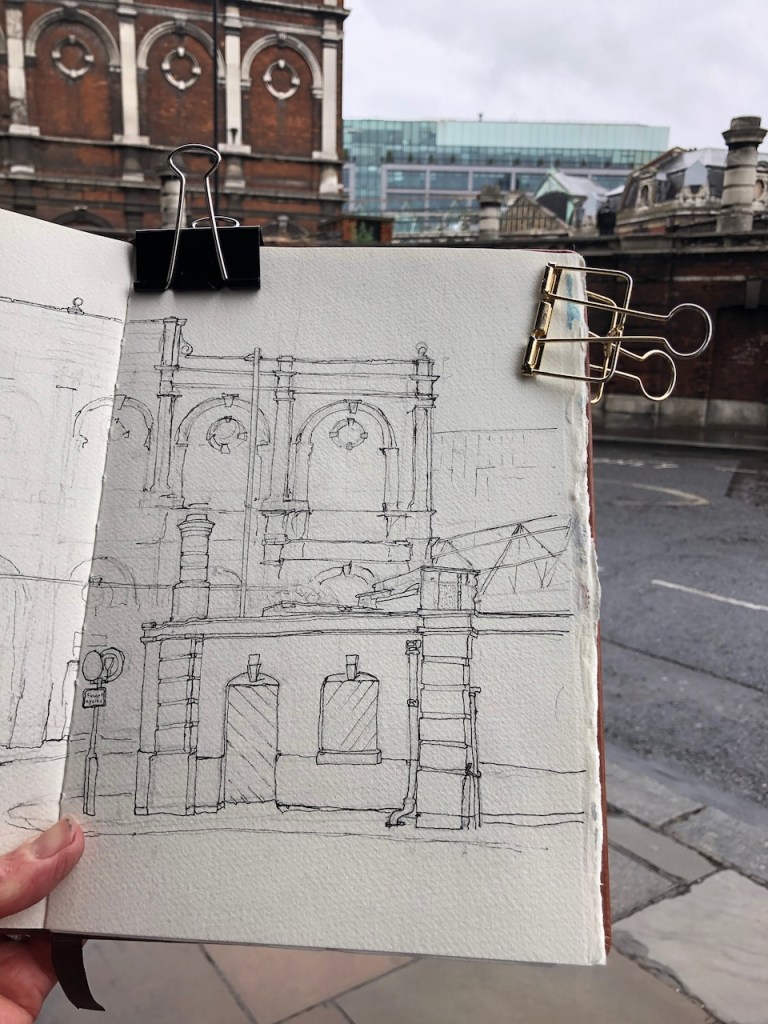
I attempted this drawing on 4th June. However a heavy goods vehicle appeared exactly in my sightline, so I abandoned it and drew a different view. Today I returned to have another go. Being Saturday, there is less traffic today.

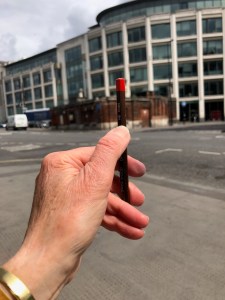
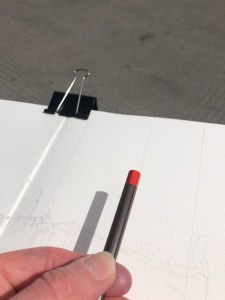
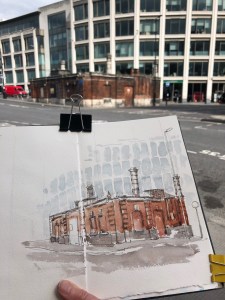
Here is work in progress. As you see, it rained. But I was in a doorway, and so sheltered. The doorway was that of “Urban Golf”, which accounts for the odd pictures you see in the background of the first image.

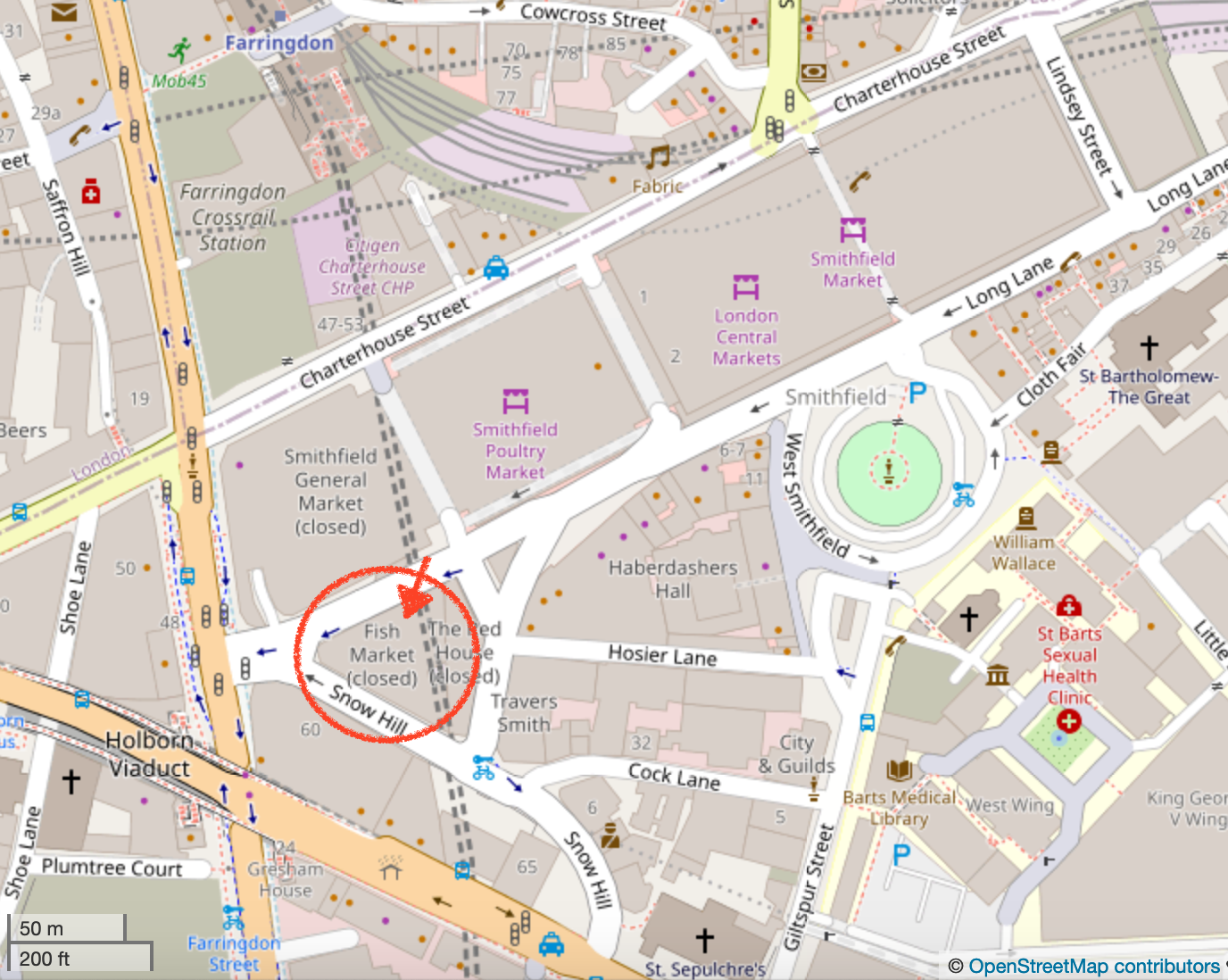
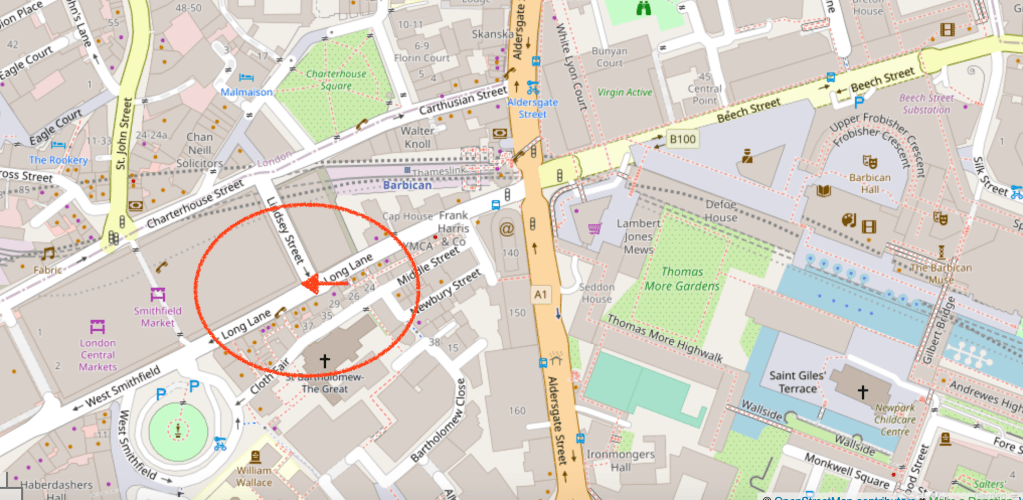
Map showing the location of The Red House. The arrow shows my sightline. Map credit: © OpenStreetMap contributors

Note 1: NBR File no: 92219, NGR: TQ 3161 8163, Reports and Papers B/013/2003, Report by Joanna Smith and Jonathan Clarke, Photographs by Derek Kendall and Nigel Corrie. The document in full is on the following link as a pdf (53 pages).

An extract from the 2003 Report by English Heritage. See footnote 1.