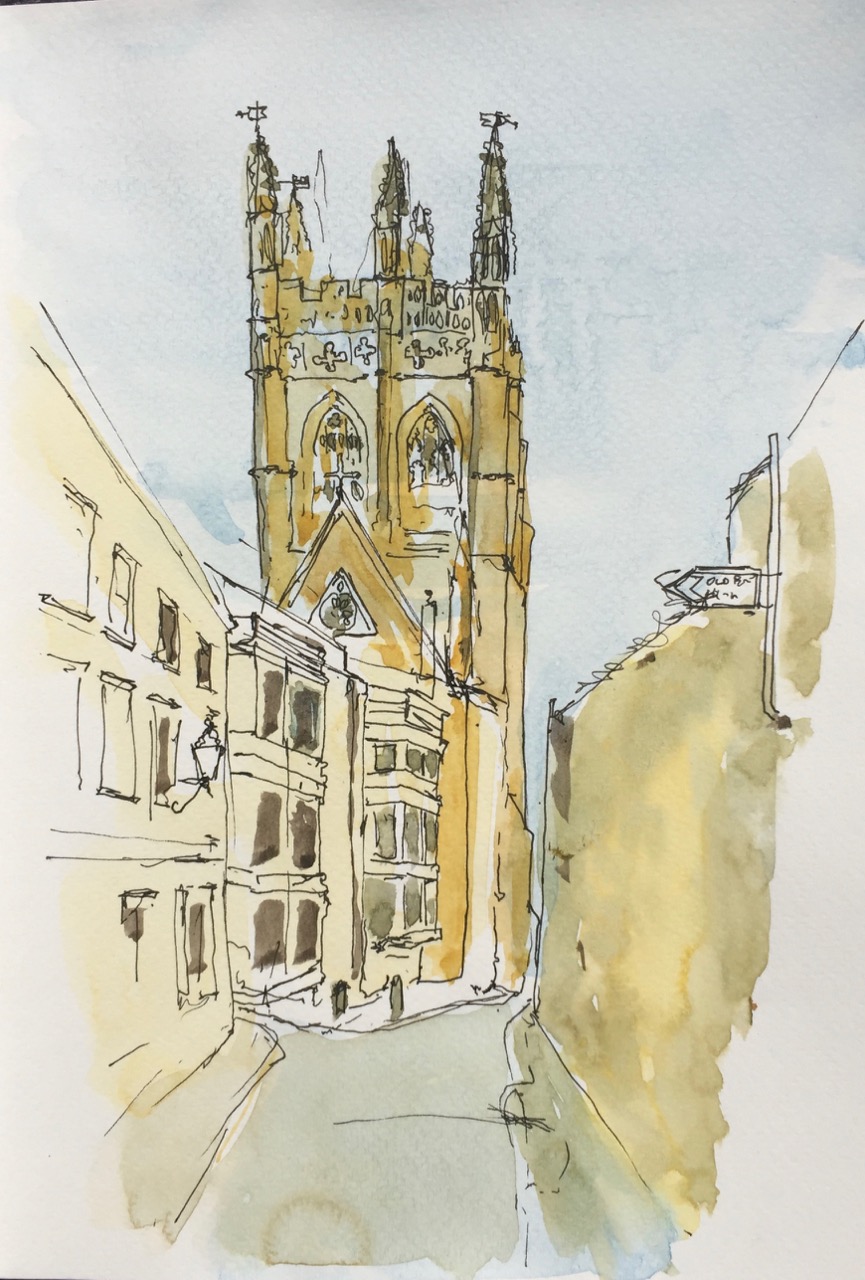
St Barnabus Jericho, Oxford OX2

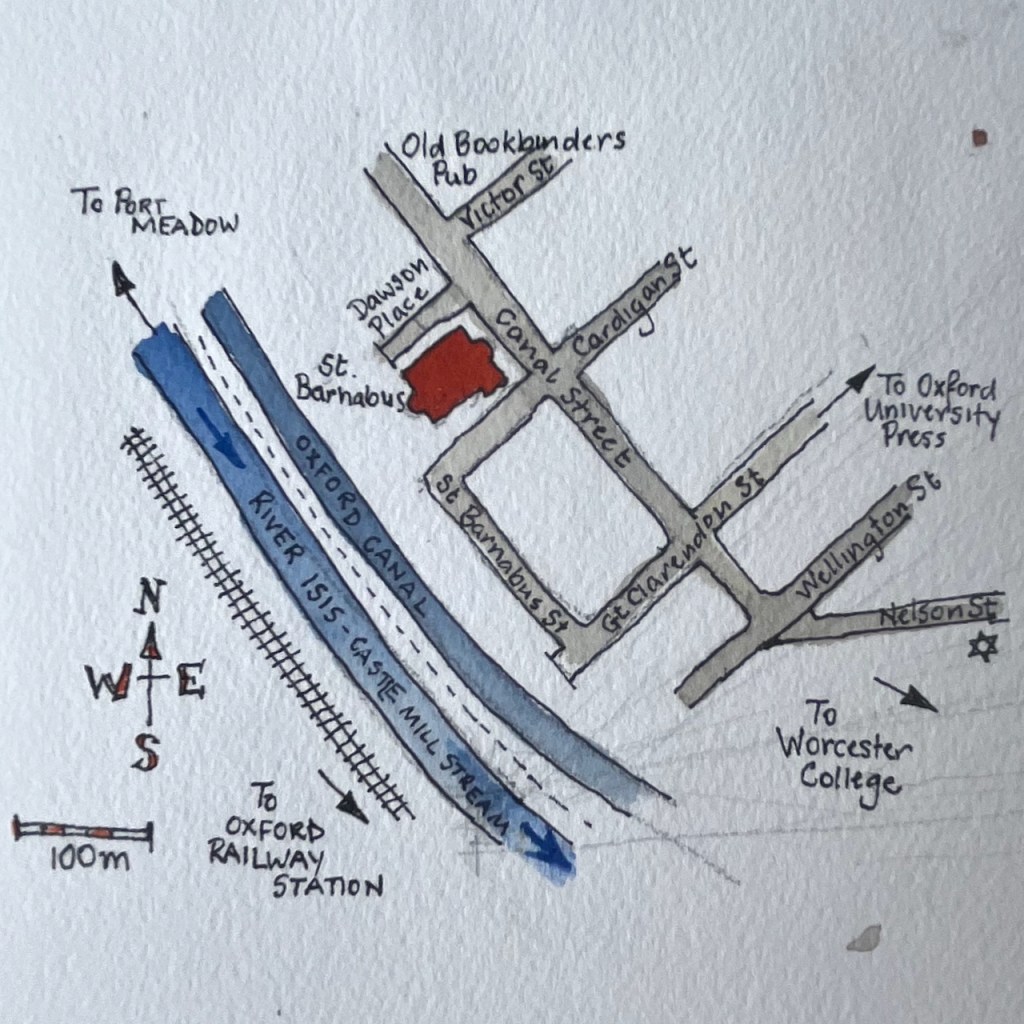
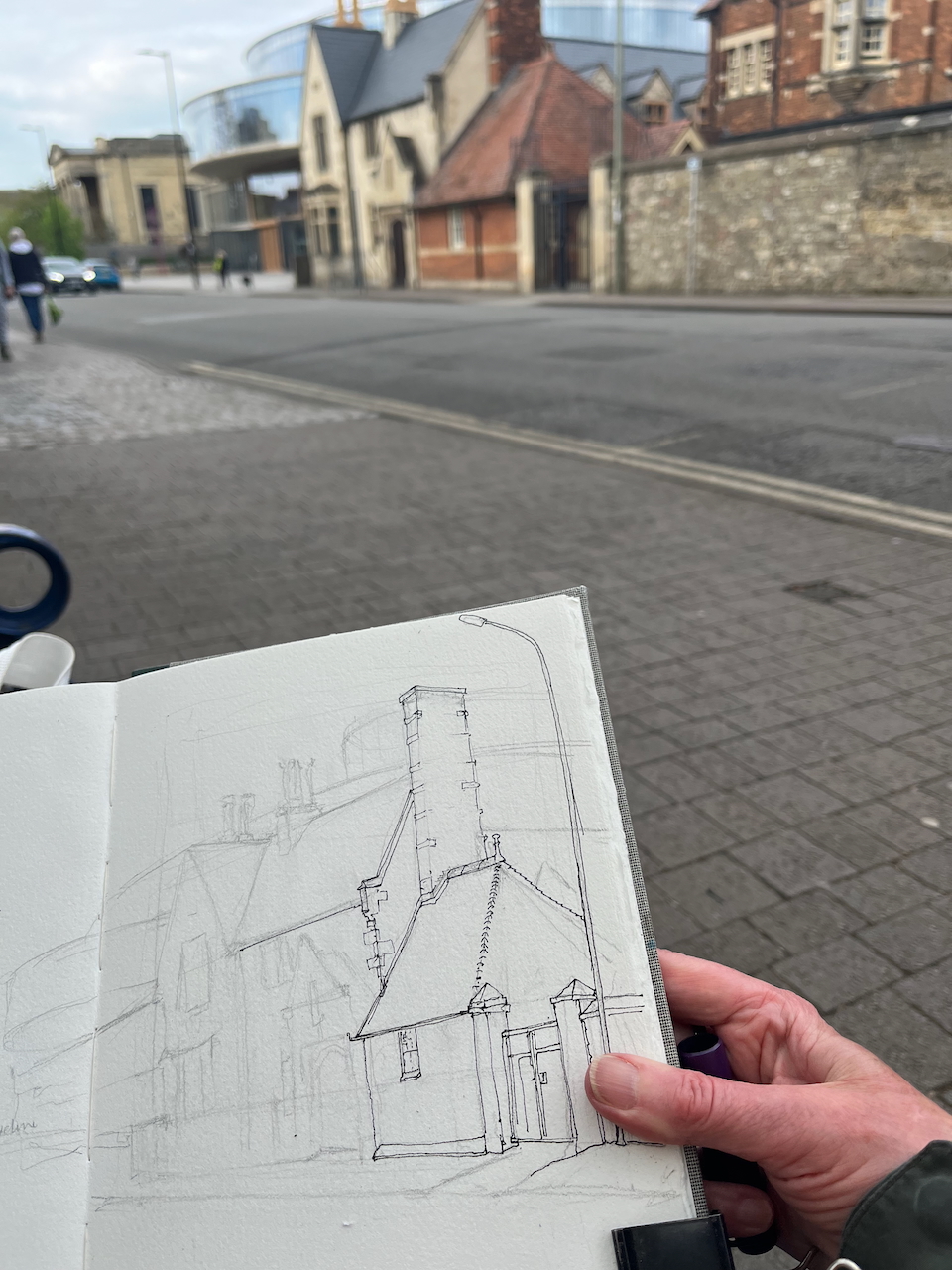
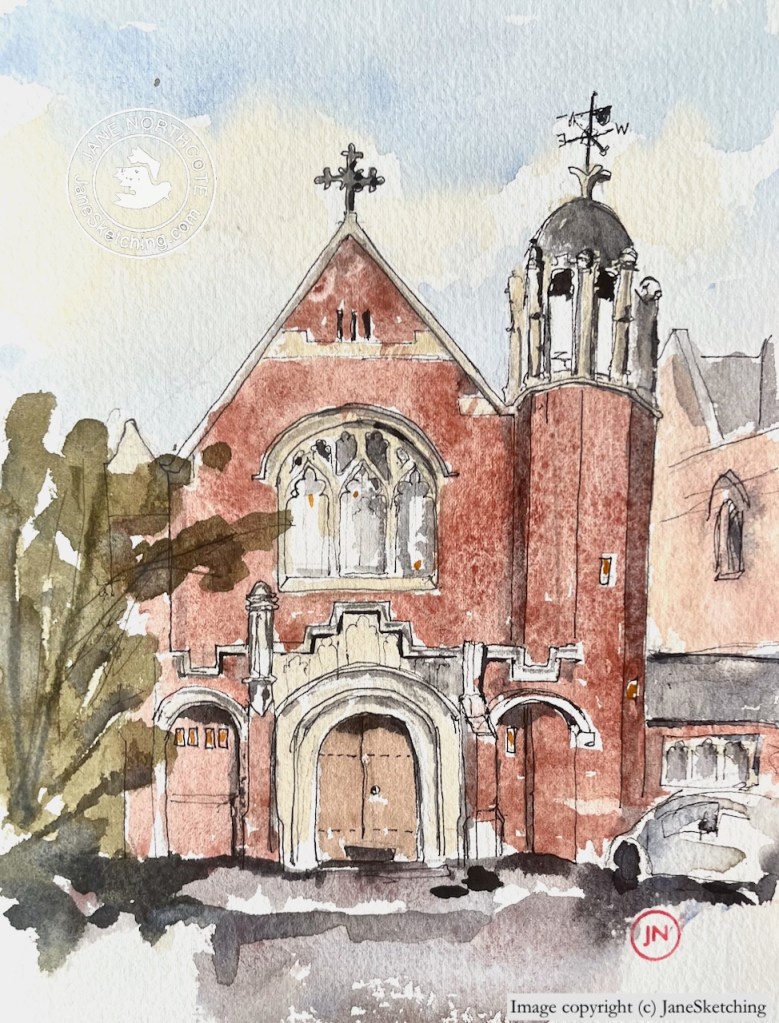
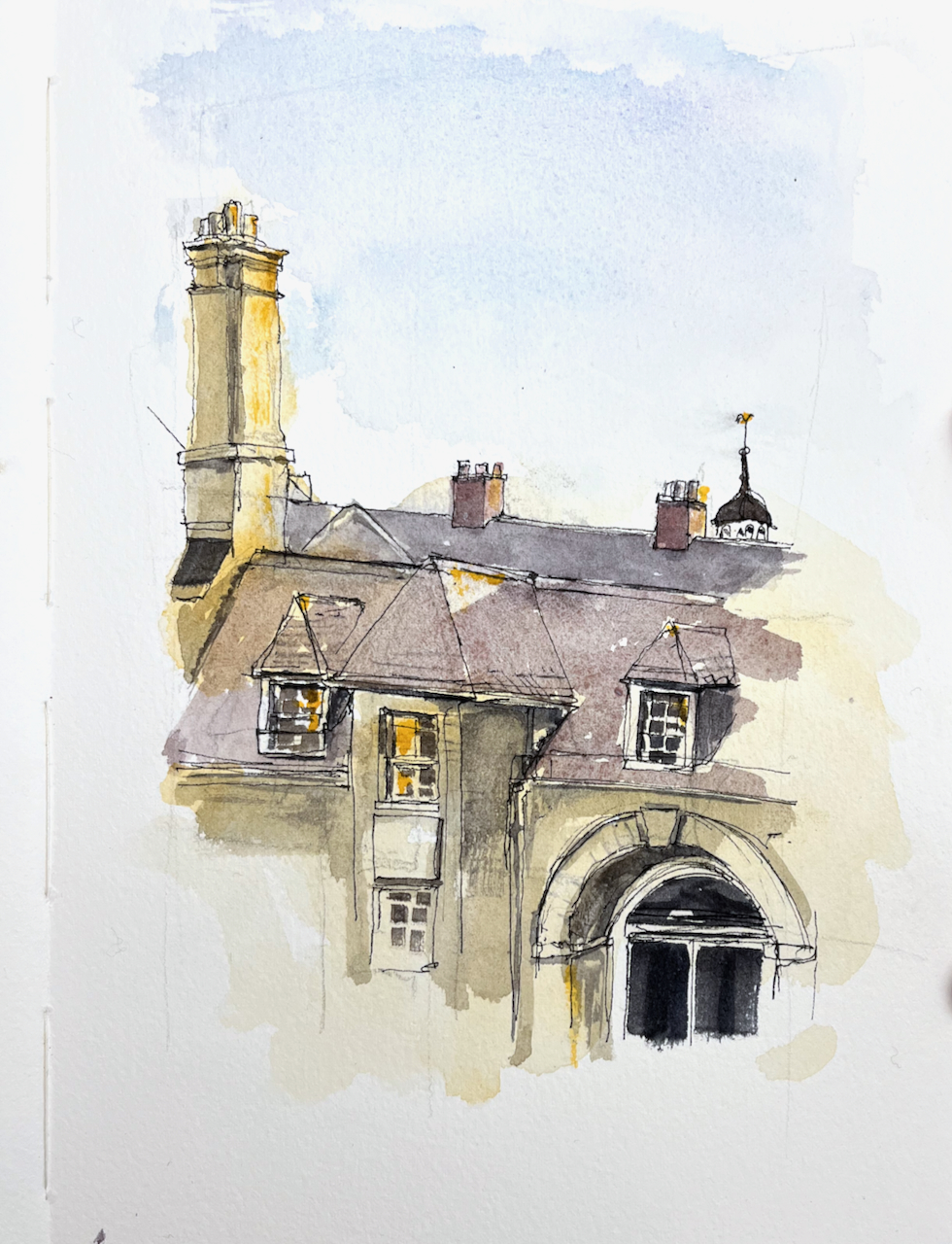
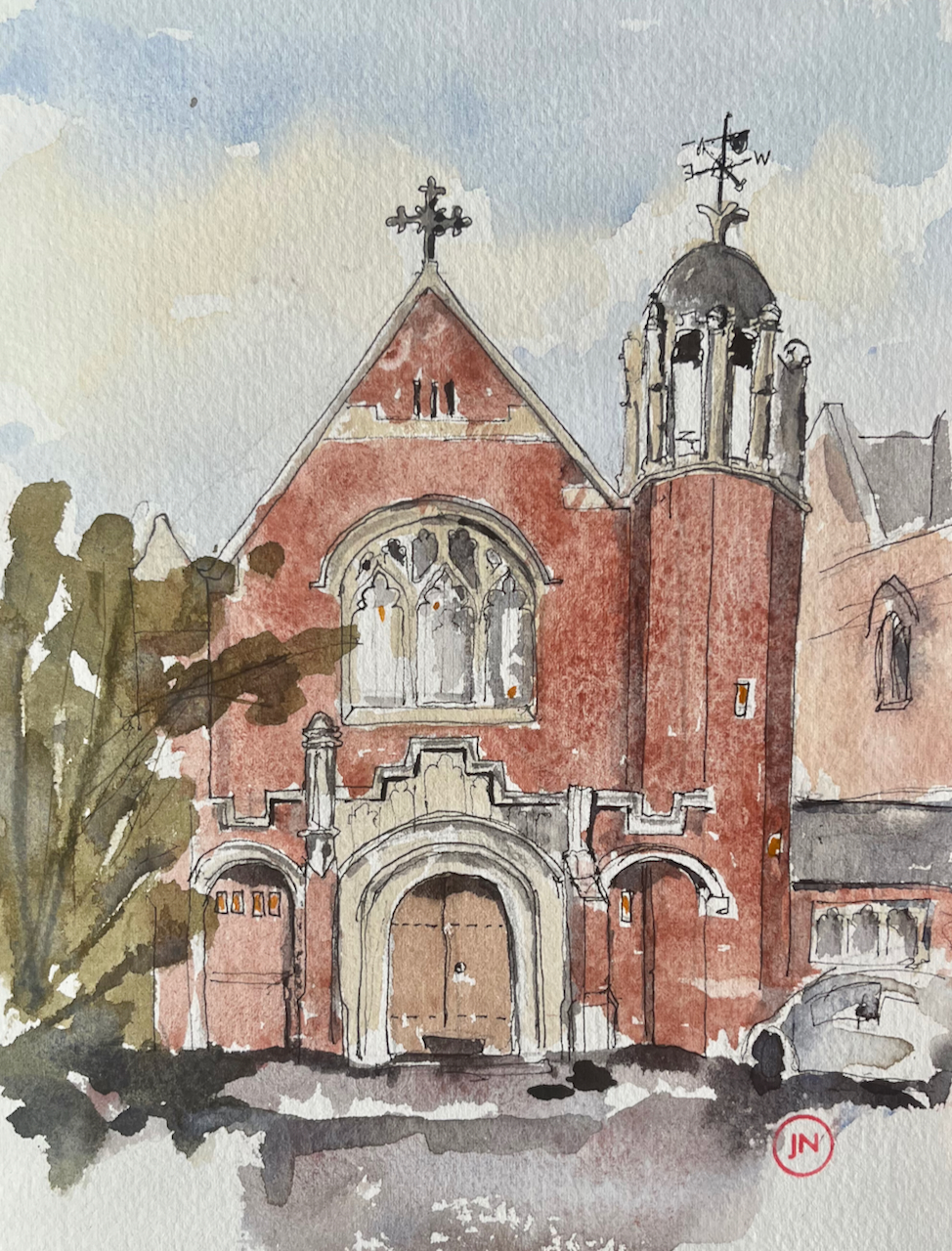
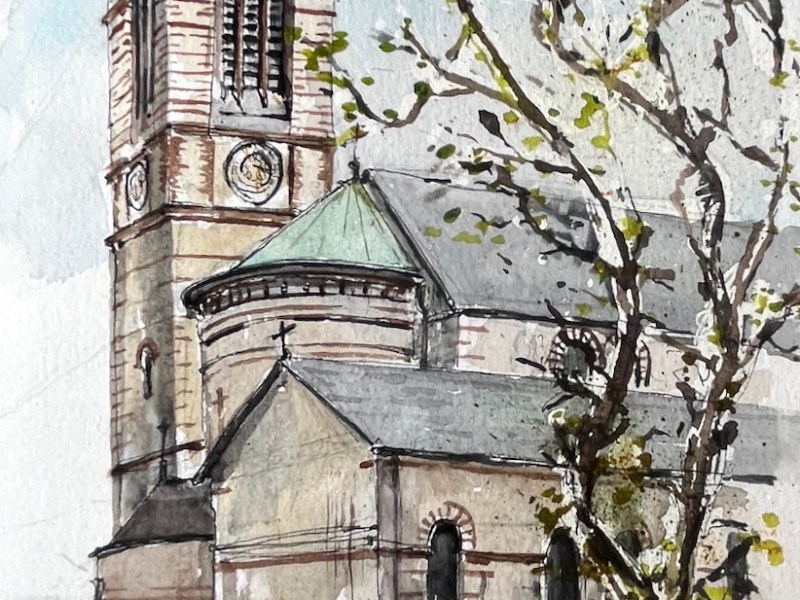
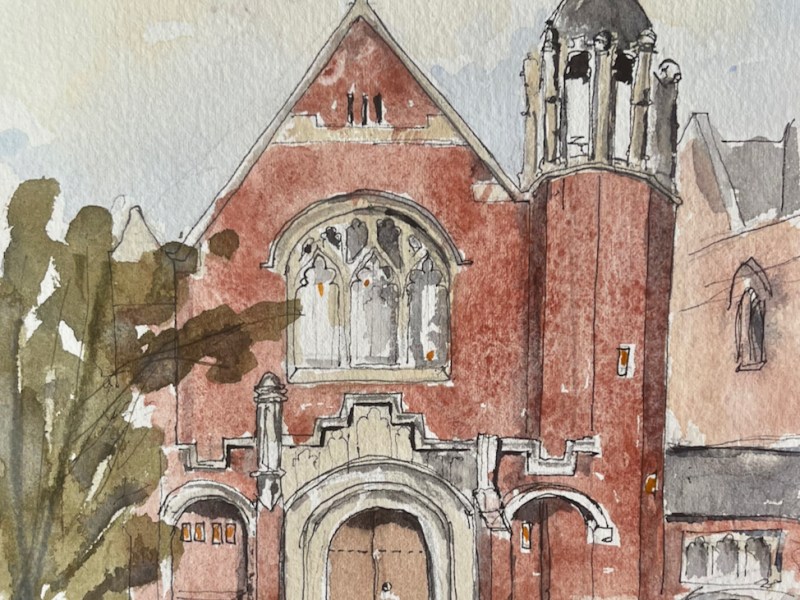
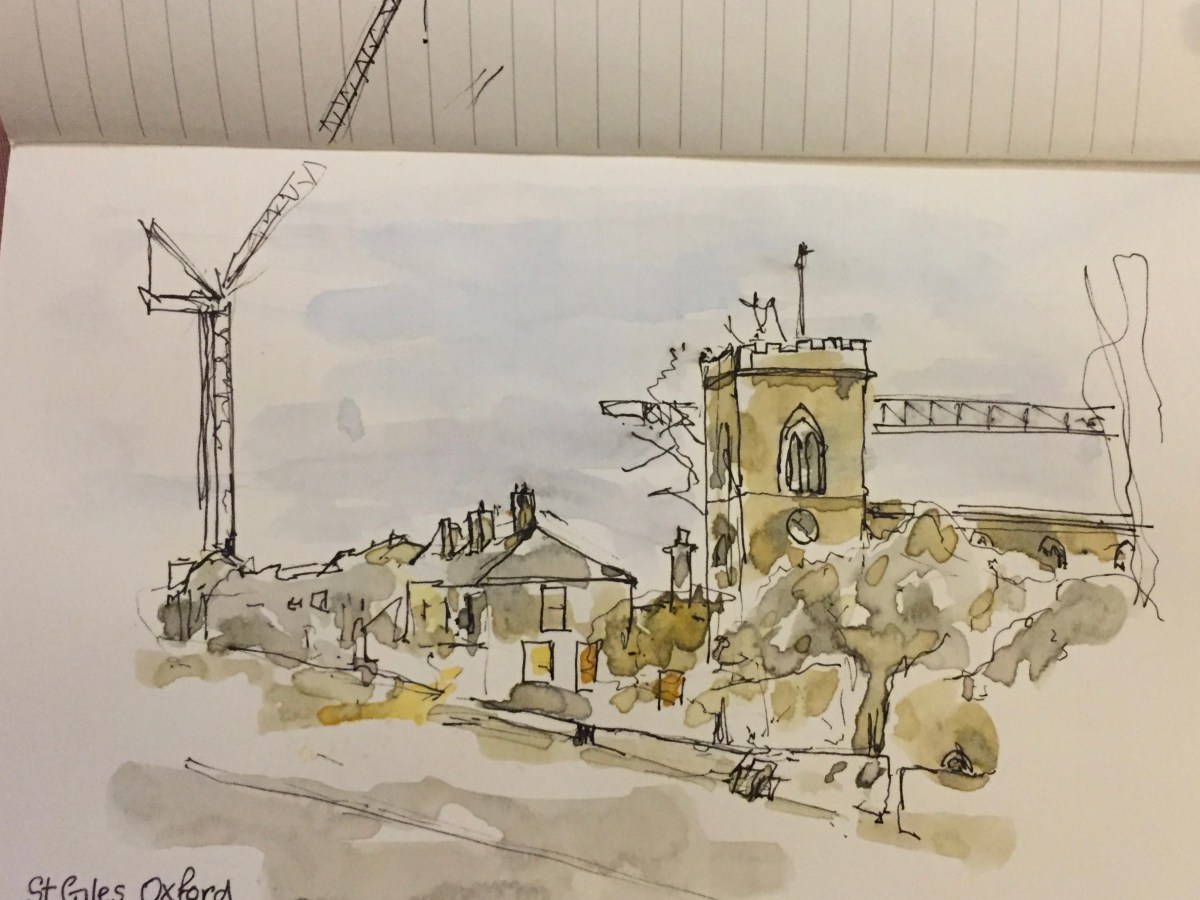
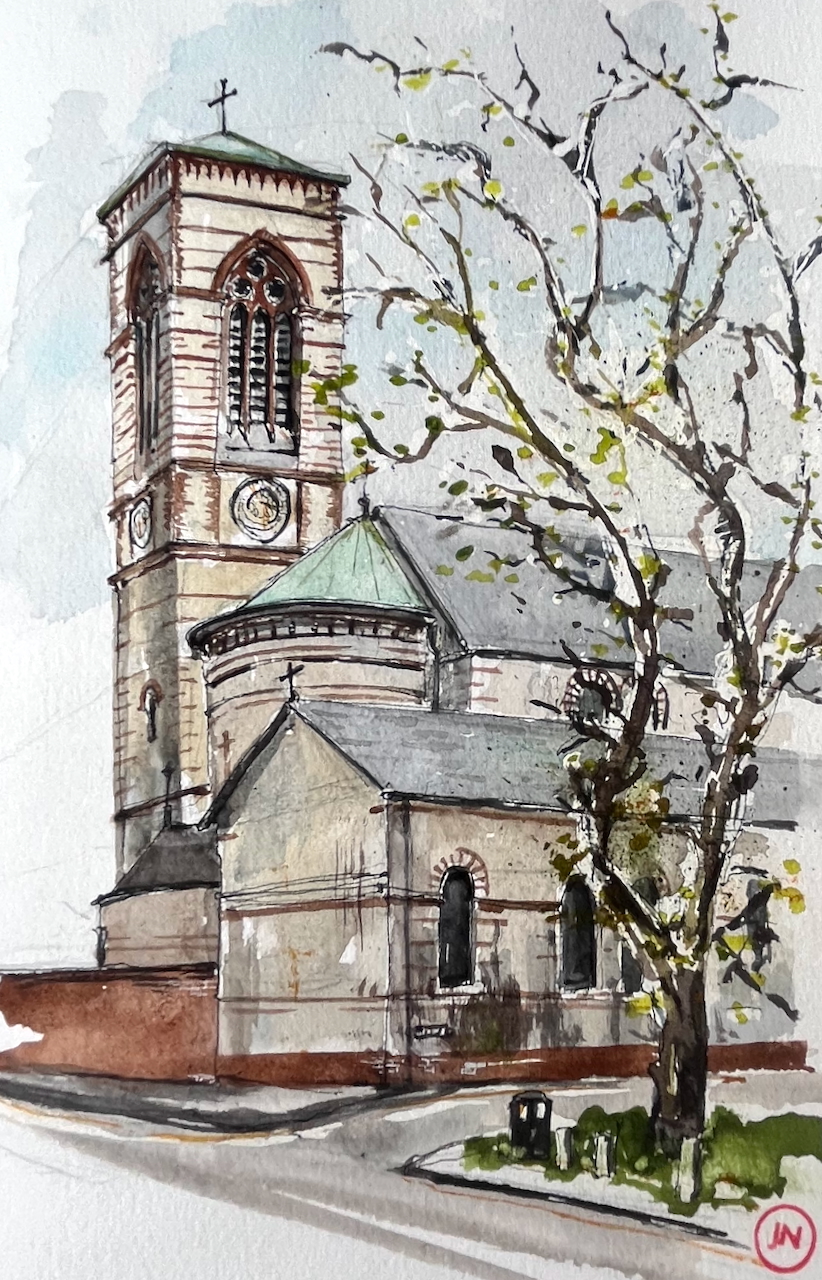
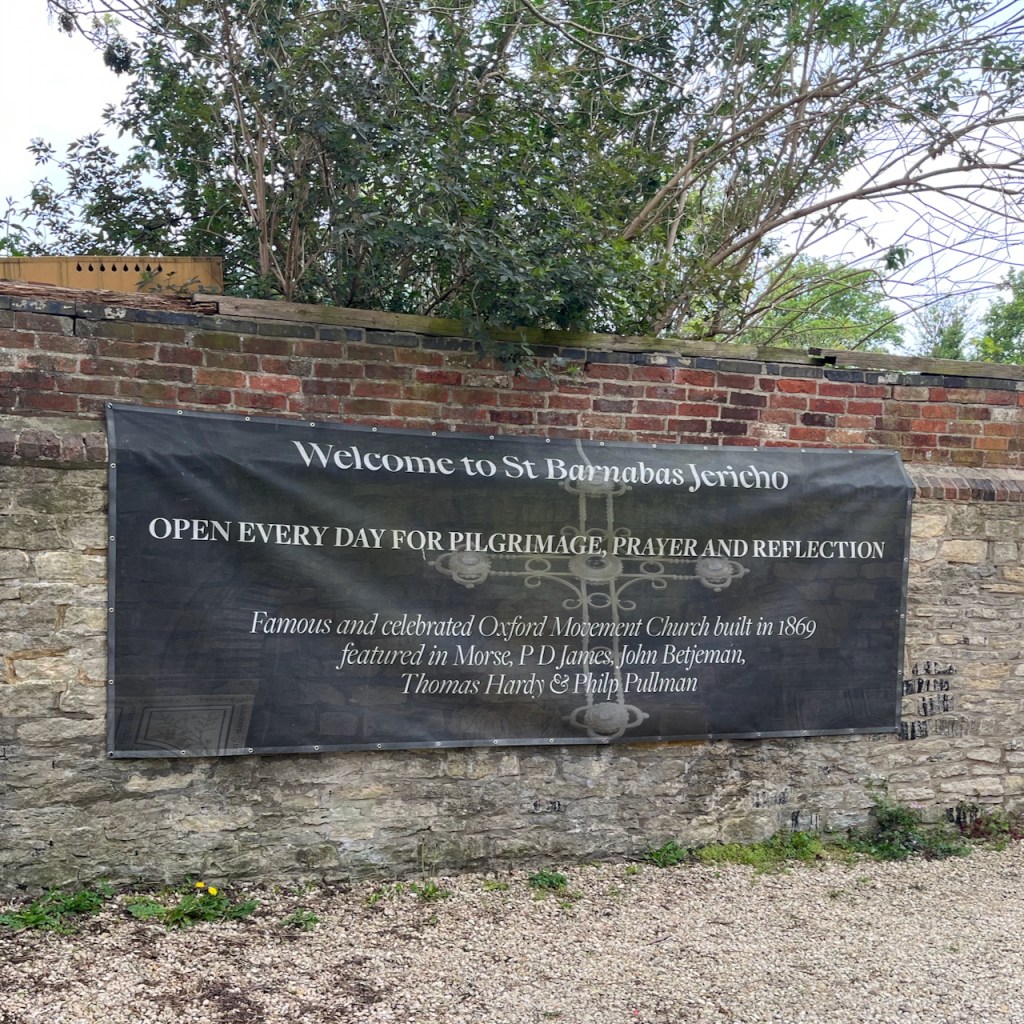
Walking through Jericho on my way to the station, I glimpsed this church tower, and heard its bells. I wove through the small streets until I found it.
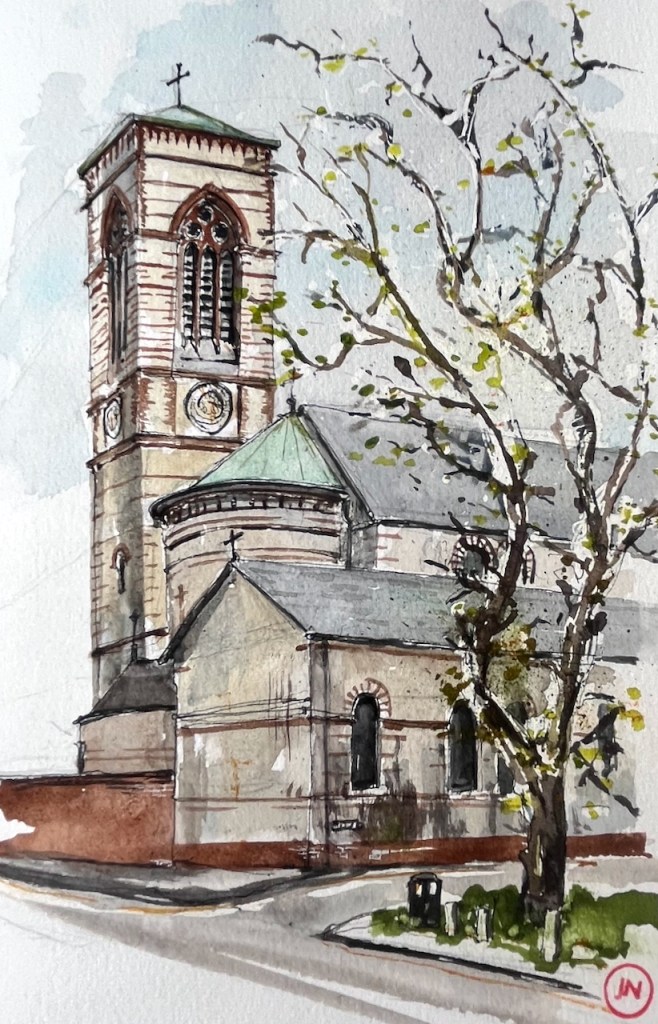
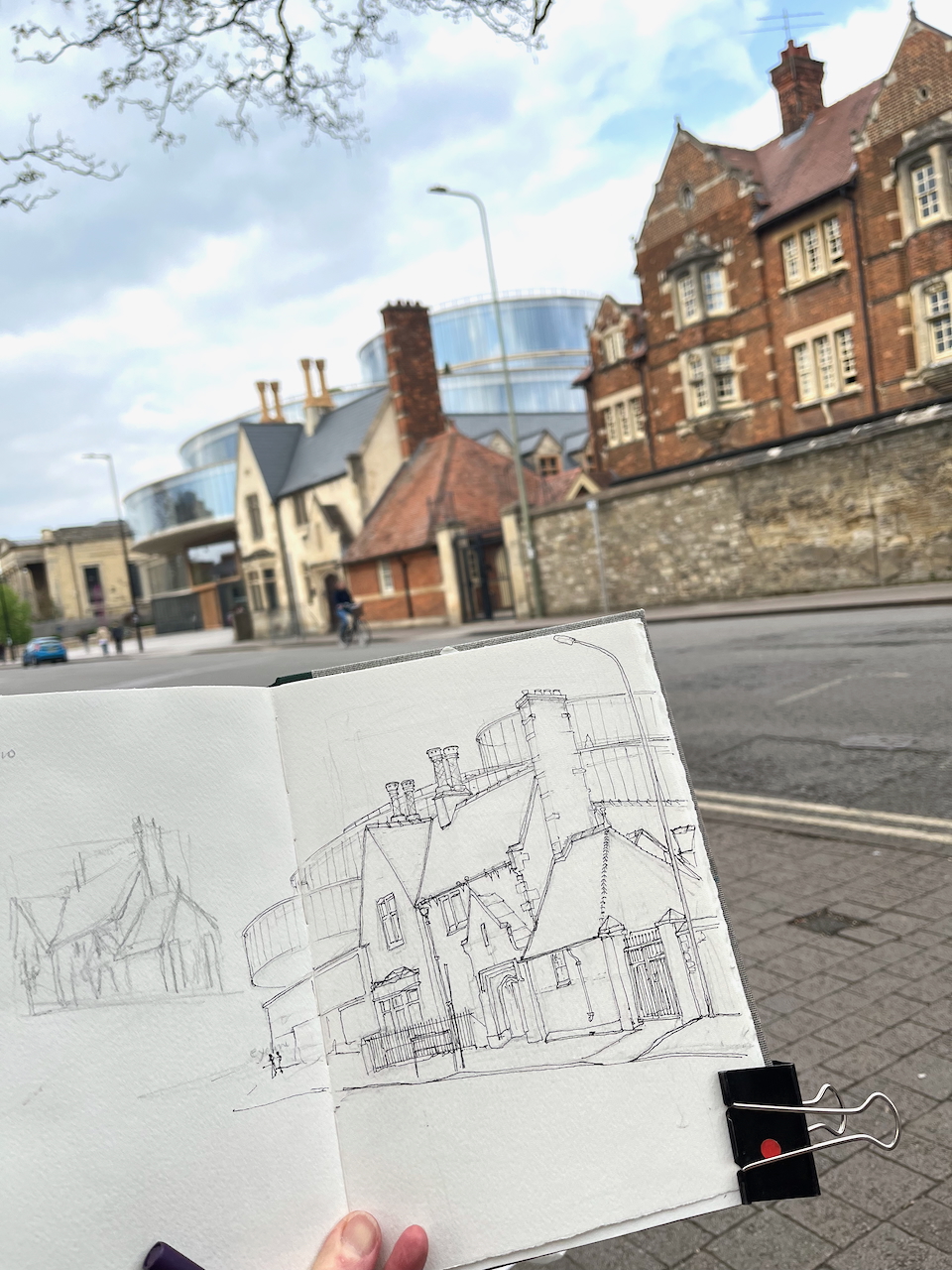
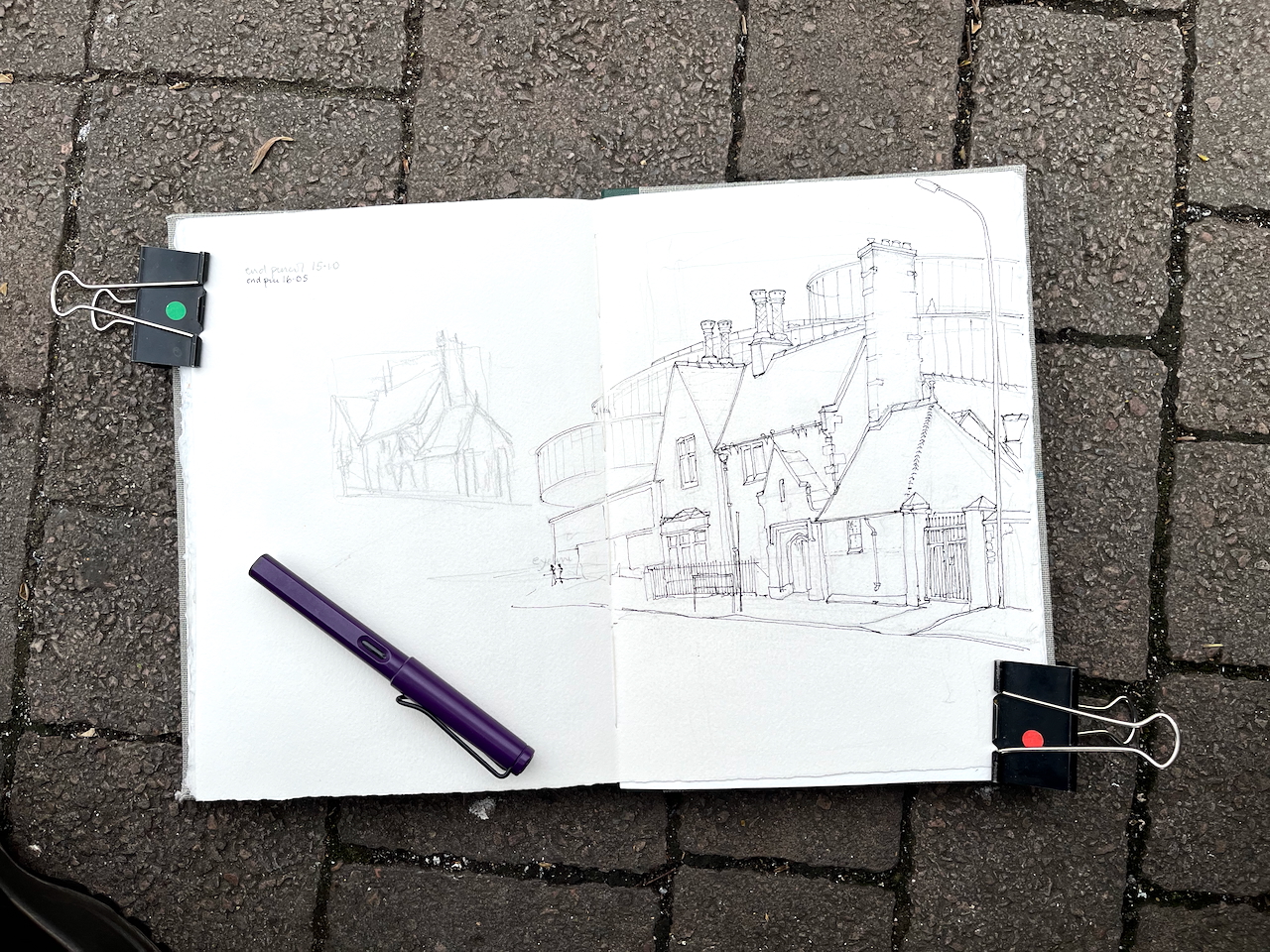
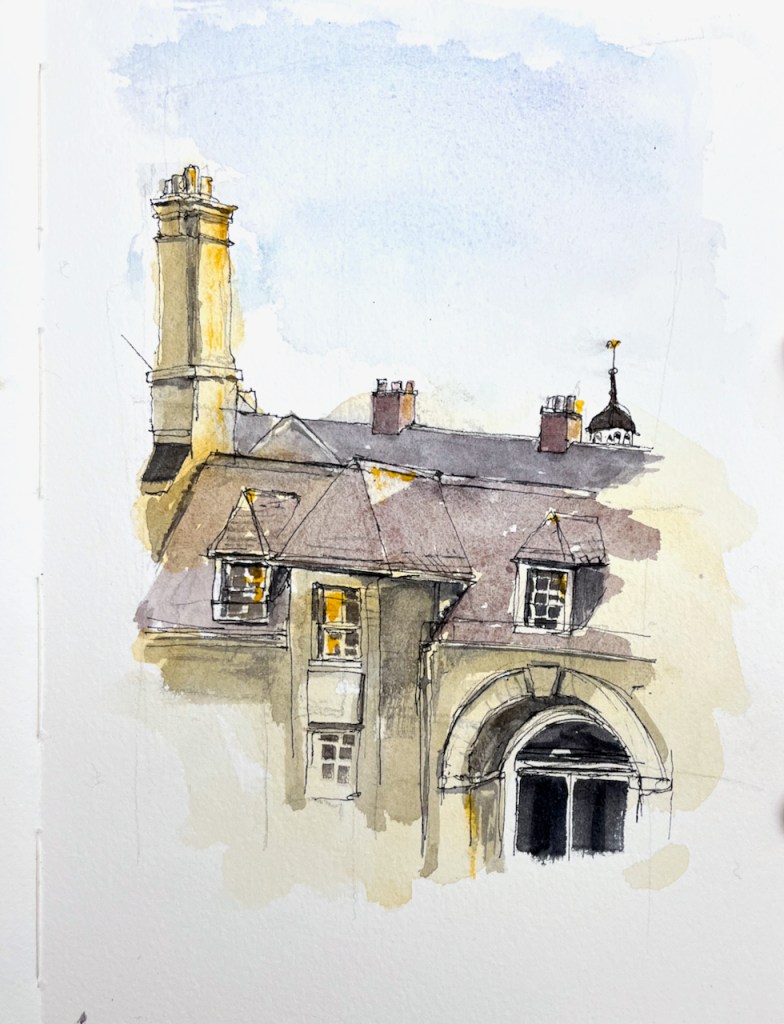
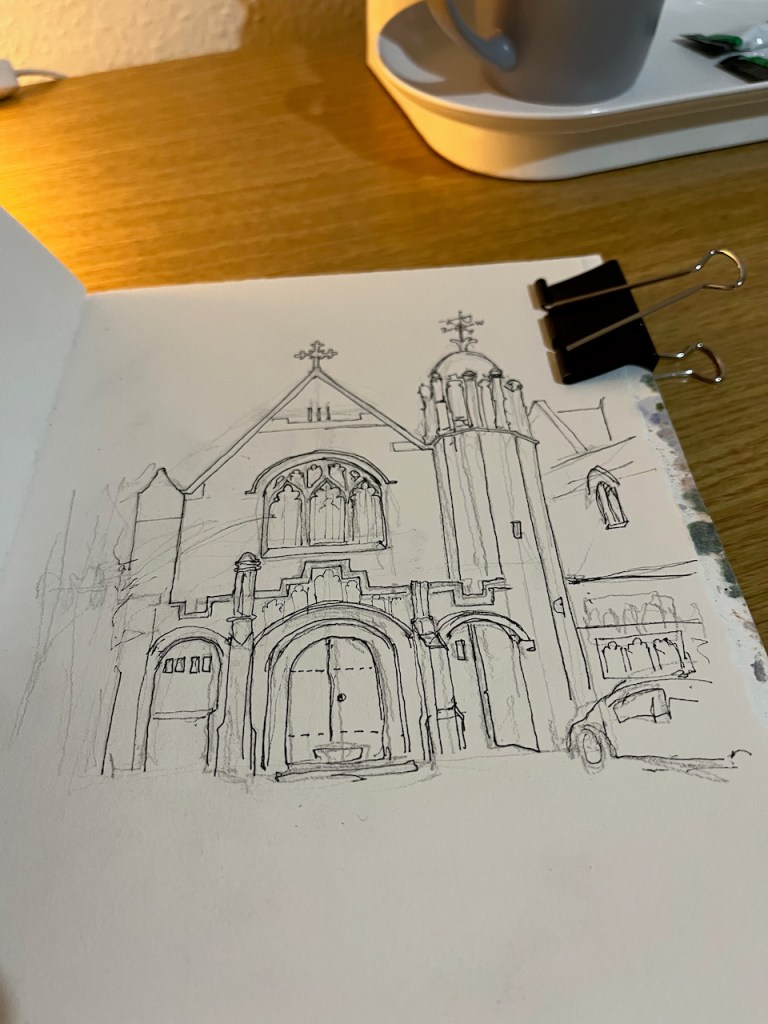
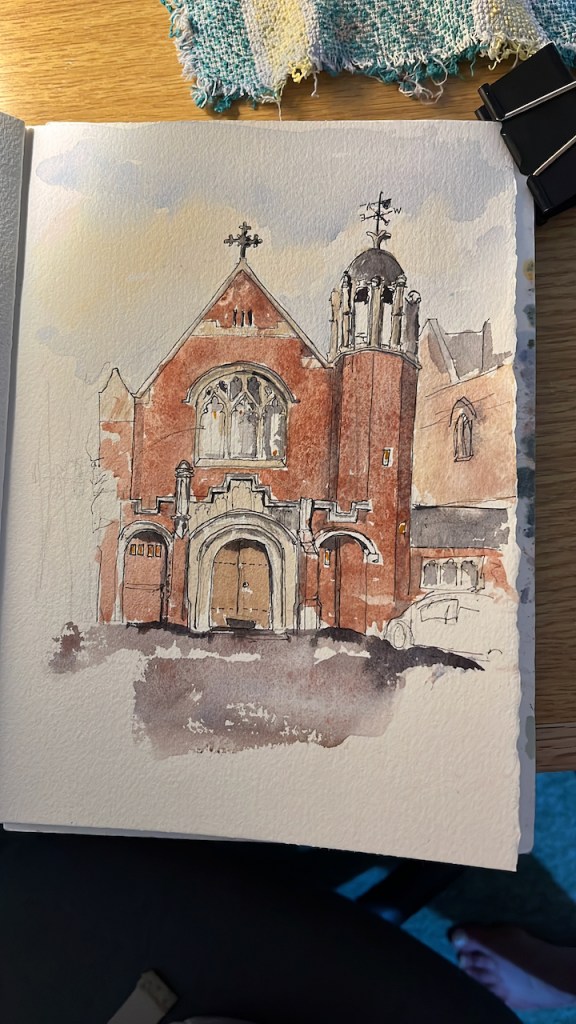
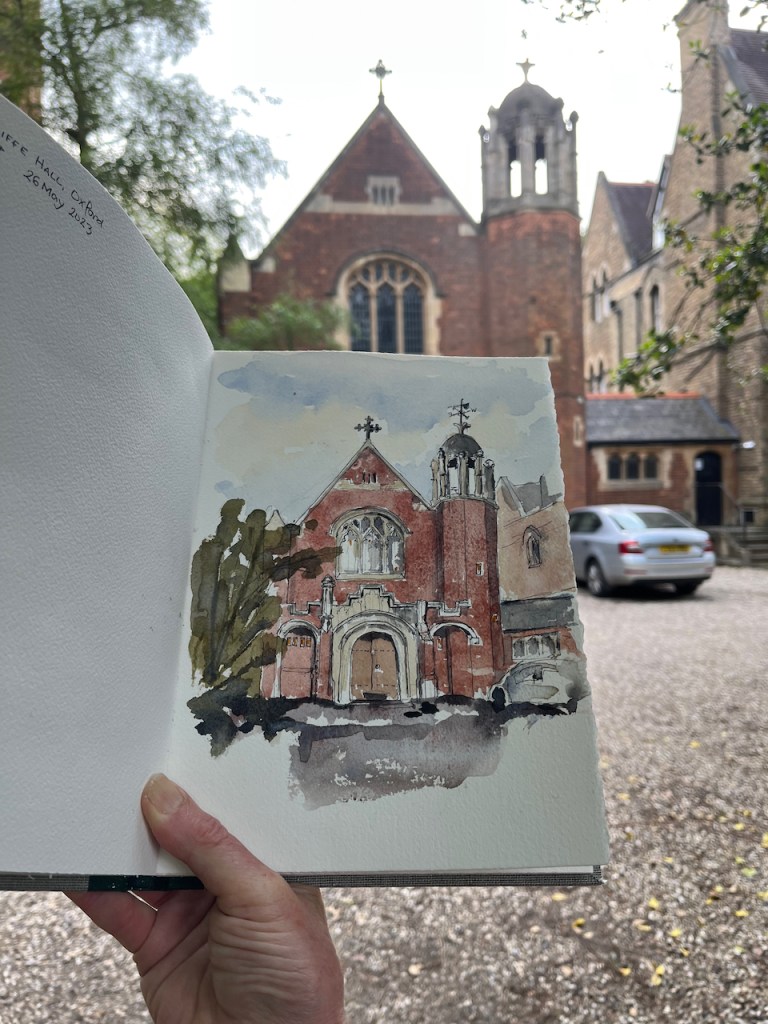
St Barnabus Jericho, OX2 6BG, sketched 26 April 2025 in Sketchbook 15.

This is St Barnabus Jericho. Its website says that it is also known as “Oxford Basilica”. It was built as the daughter church of St Paul’s, which is the Grecian-style building on Walton Street, now no longer a church1.

St Paul’s is not far away, just the other side of The Oxford University Press. It was opened in 1836, and became part of the “Oxford Movement”. The Oxford Movement was campaign within the Church of England, led by influential clergymen and theologians in the 1830s. They challenged the contemporary way of thinking in the Church, saying that services were too plain, and that much of value from the Catholic tradition had been left behind. They sought to re-instate some of the theology, pageantry and ritual from the Catholic tradition, and they put it into their services. They also had a social calling, drawn to help working people and the disadvantaged.2

As you can imagine, this was contentious: popular with some people, and regarded as suspicious and un-English by others. In the 1830s, the movement flourished in this part of Oxford. The services at St Paul’s became so crowded that another church was needed. In addition, Oxford University Press moved into its huge site on Walton Street in 1830, which brought many workers to the area. So an additional church was created, and this was St Barnabus.

“The land for St Barnabas was given by George Ward who was an Oxford ironmonger, and the benefactor for the Church building was the generous Thomas Combe, Printer to the University, along his wife Martha.” [https://www.sbarnabas.org.uk/history]
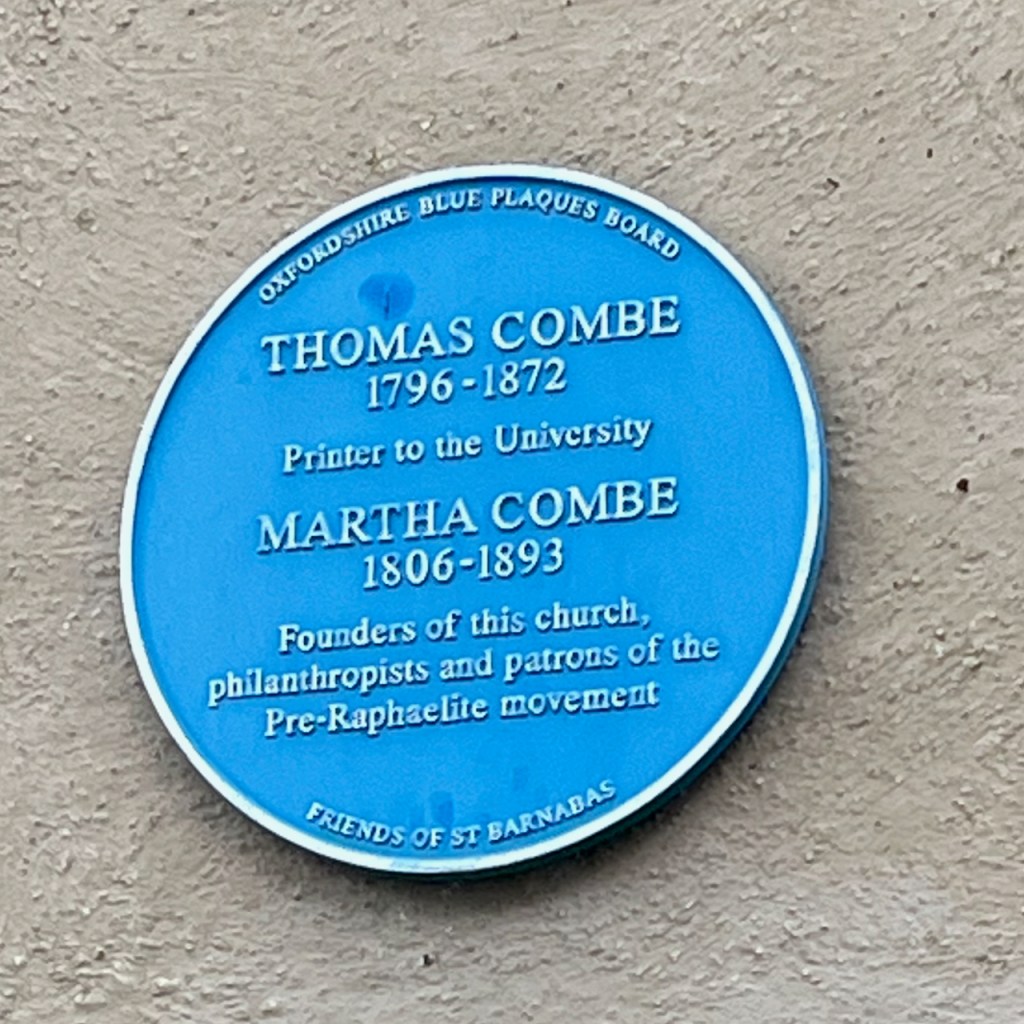
St Barnabus opened for worship in 1869, and is flourishing to this day. Inside it is awe-inspiring and uplifting, with its highly decorated walls and vast size.
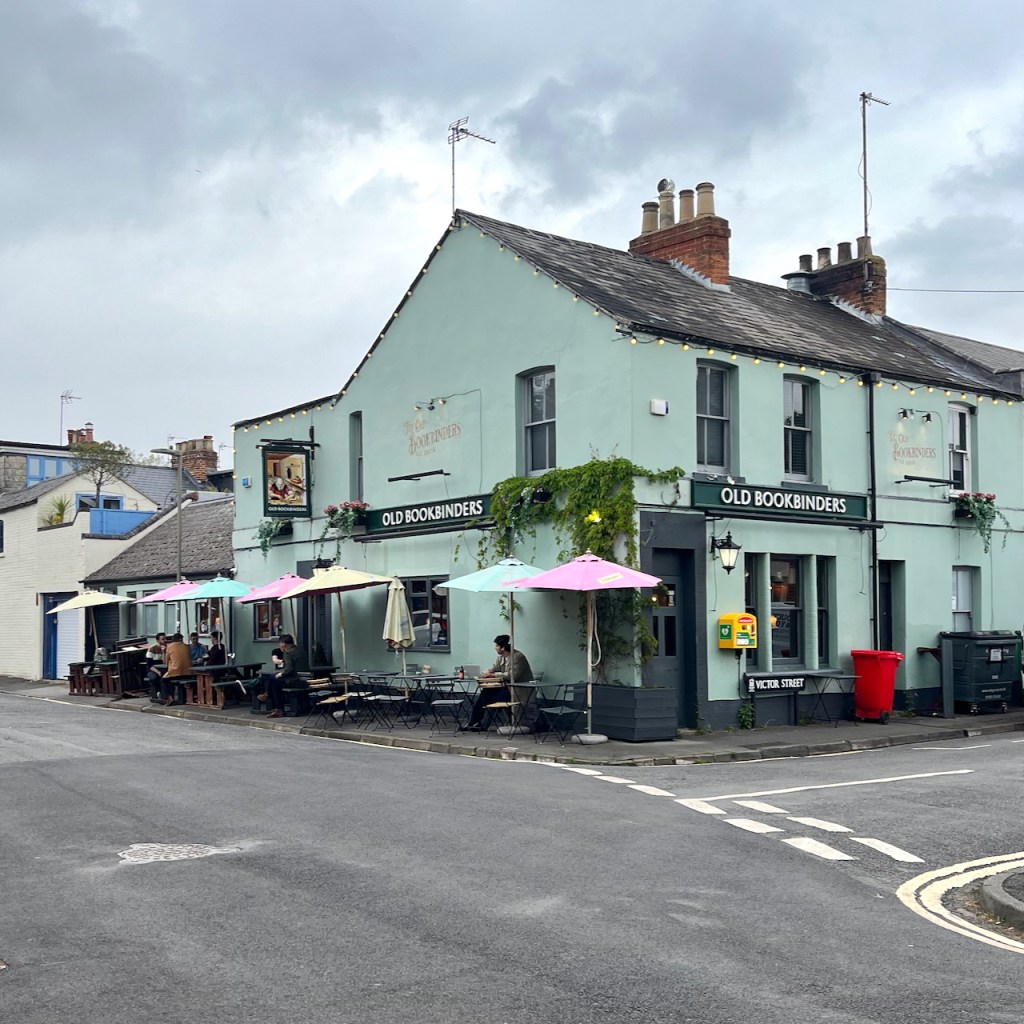
I sketched St Barnabus from outside “The Old Bookbinders” pub, delighted and frustrated in equal measure by the extraordinary detail in that tower. And I was looking at its clock, which informed me of the passing minutes until my train.
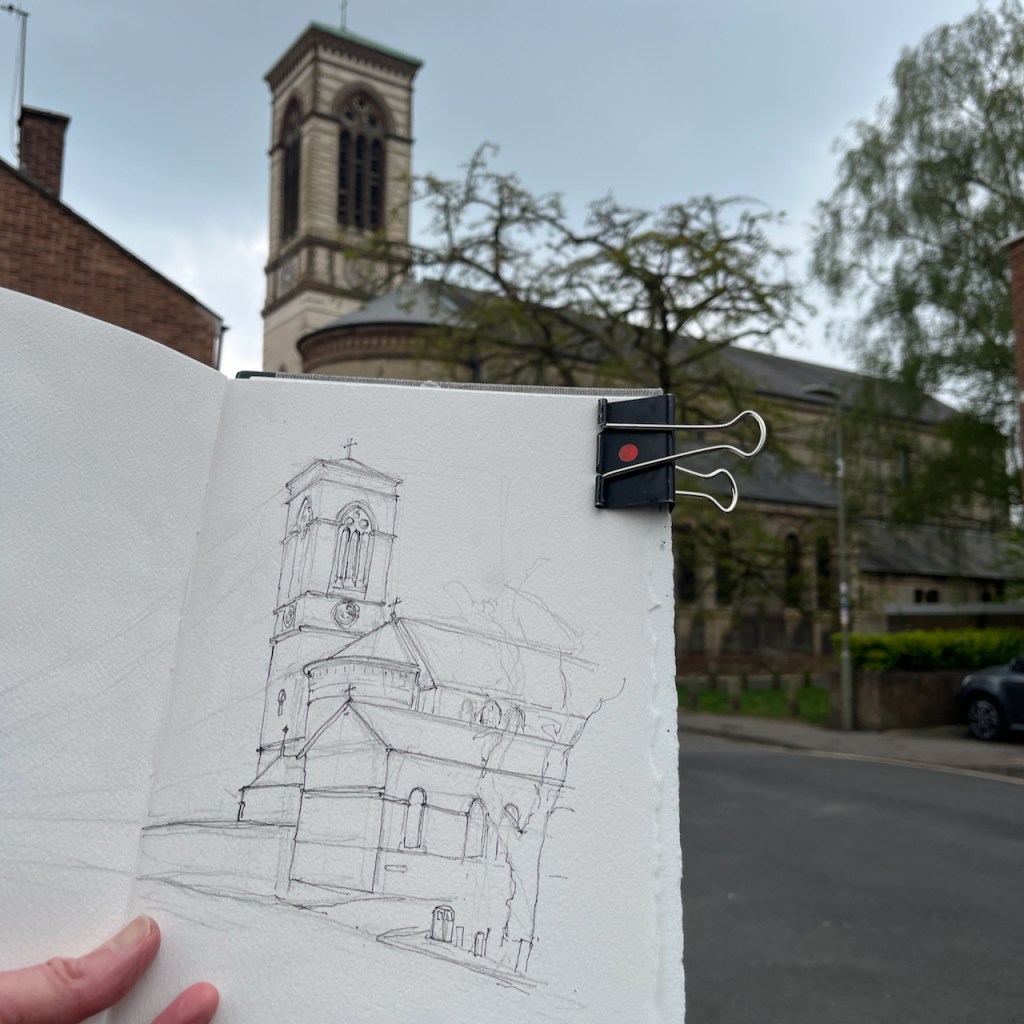
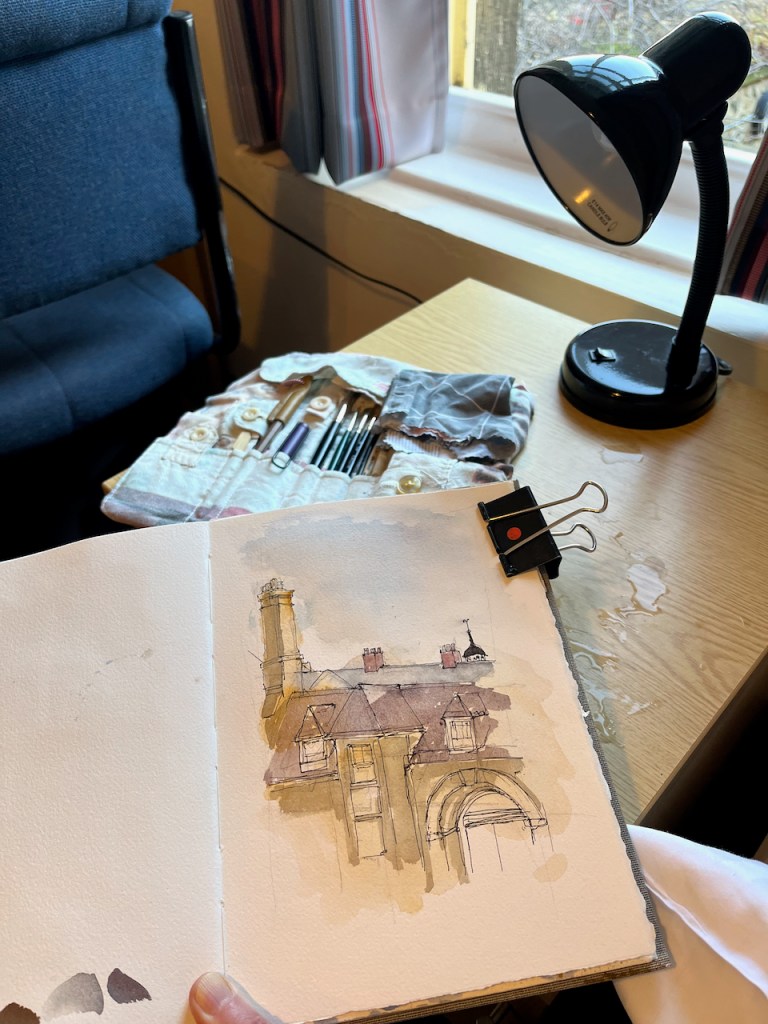
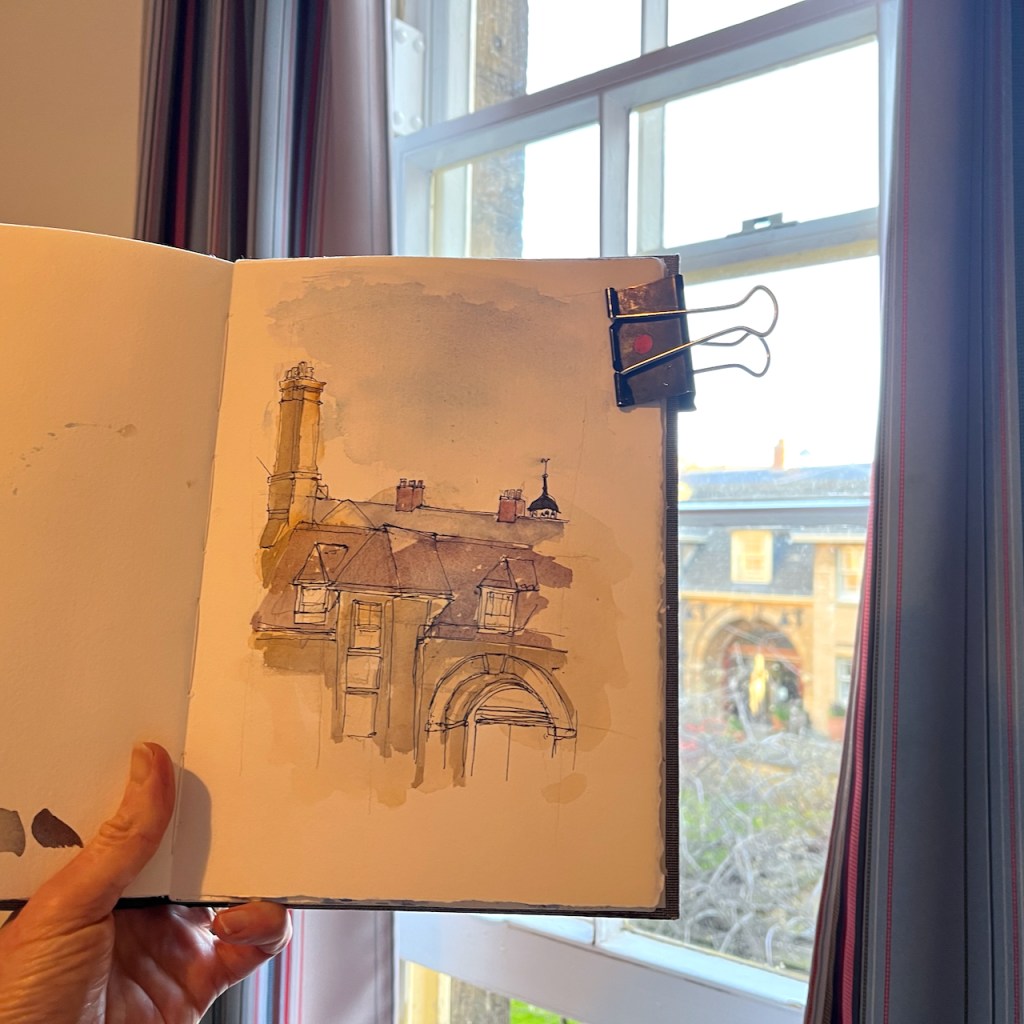
I finished the pen-and-ink drawing. Then I walked on, past Worcester College, to the railway station.
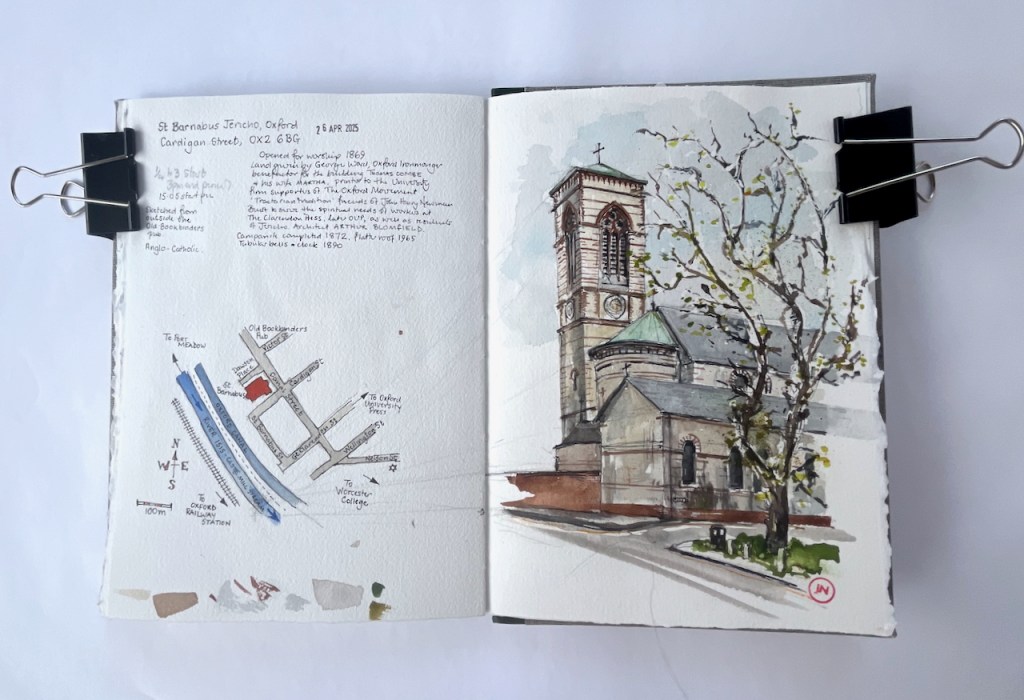
Sketchbook spread, St Barnabus Jericho. Sketchbook 15.

Footnotes

  1. St Paul’s: the impressive Grecian temple building on Walton St is no longer a church, but the “St Paul’s” name lives on. I’ve done an earlier sketch which shows St Paul’s Nursery, still very much in operation and part of Somerville College.
    ↩︎
  2. Oxford Movement: This is my non-specialist summary of a significant and complex theological and social movement. For a proper description see, for example the Wikipedia Article, or this glossary article. ↩︎
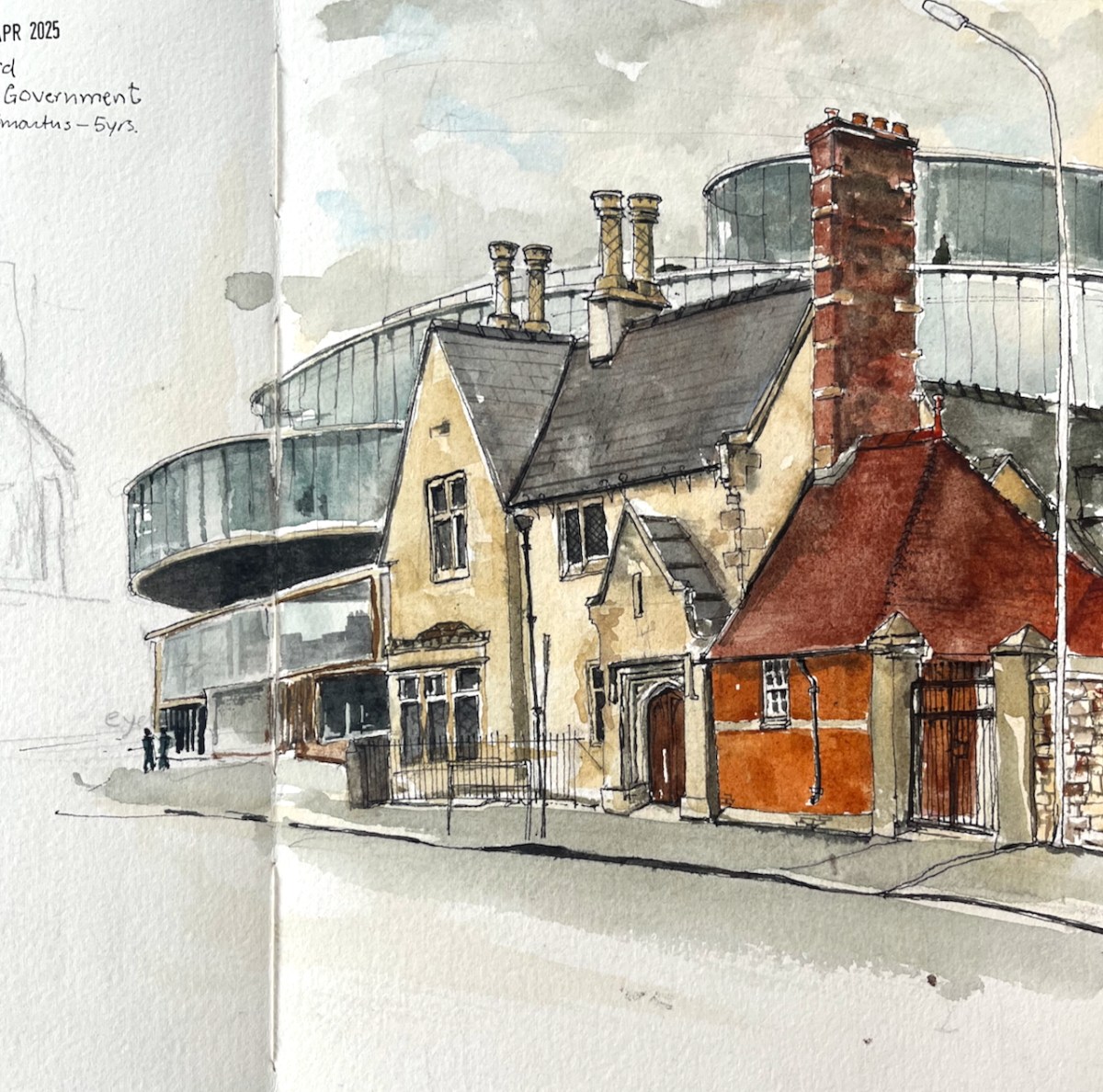
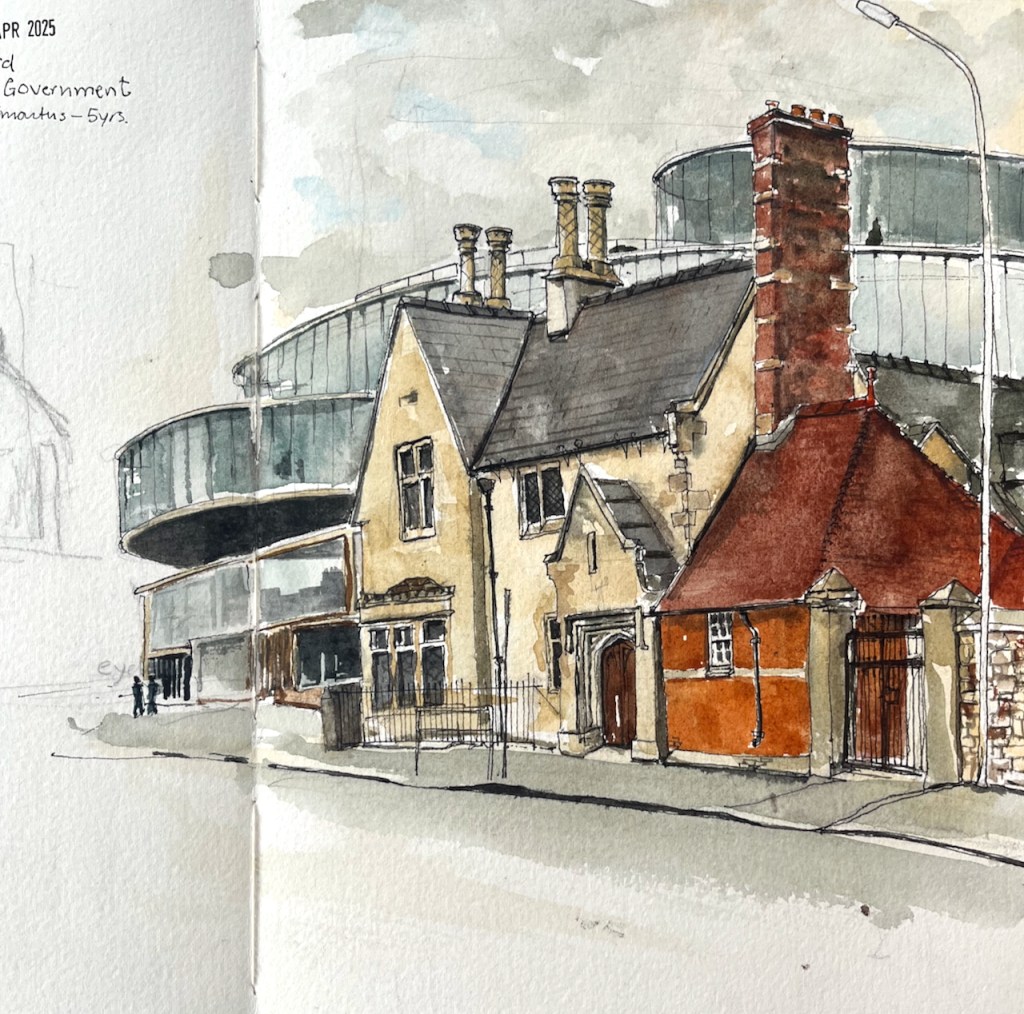
119a Walton Street, Oxford OX2

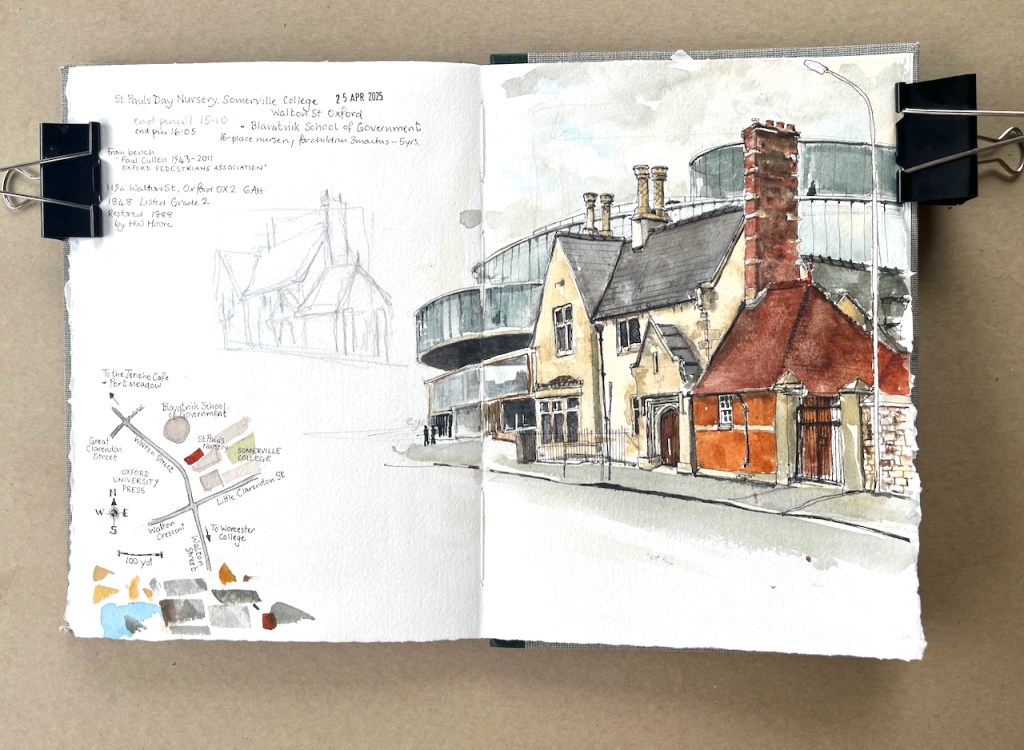
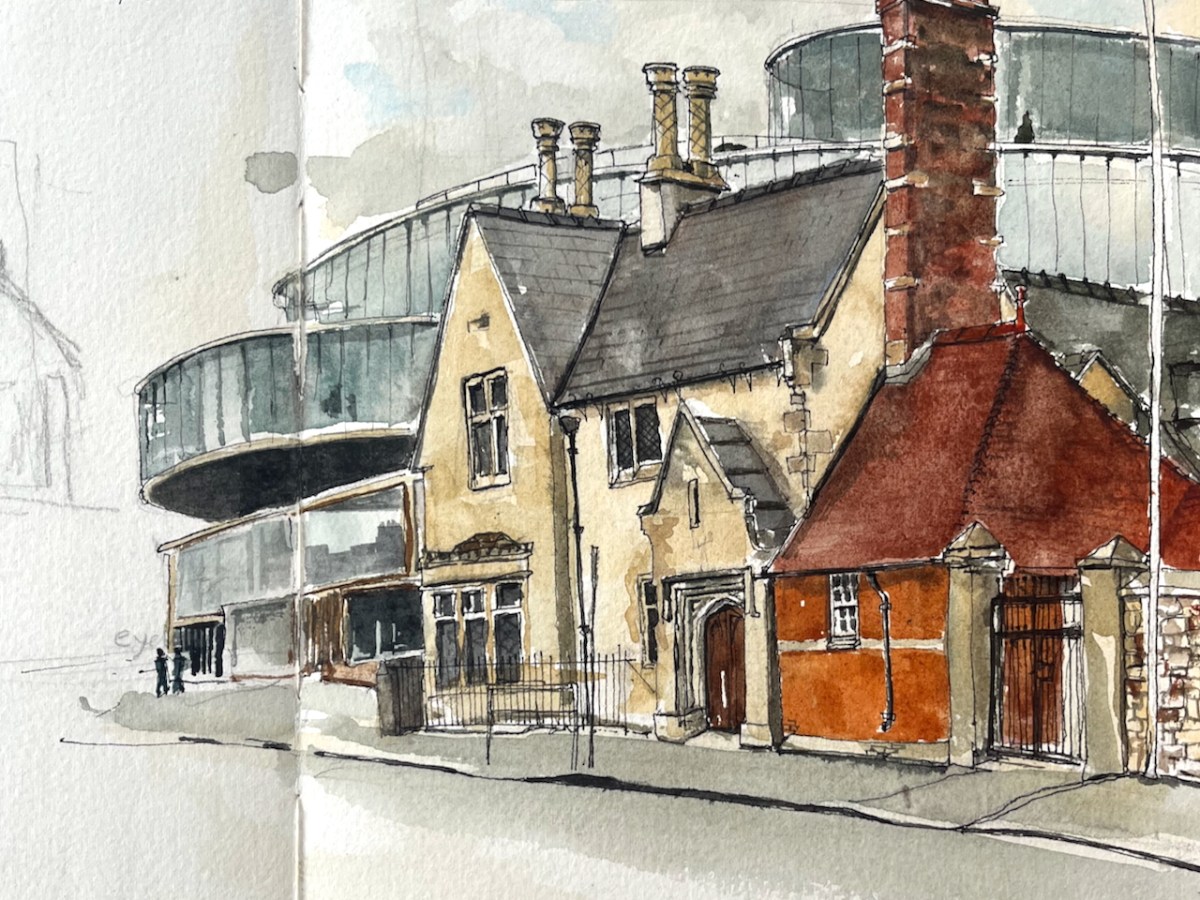
This 19th Century building on Walton Street is a nursery school. It contrasts with the huge sweeping curves of the Blavatnick School of Government behind.

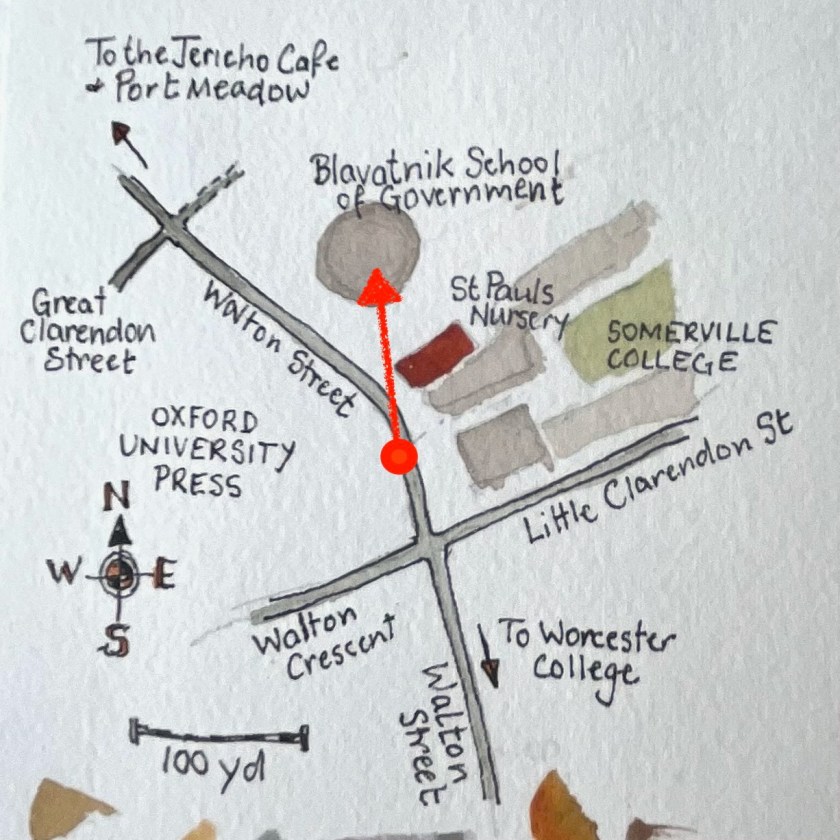
St Paul’s Nursery, 119a Walton Street, Oxford OX2 6AH. Sketched 25 April 2025 in sketchbook 15
Map of the sketching location, showing the sight line of the sketch.

The building now houses a co-ed nursery:
“St Paul’s Nursery is a 16-place day nursery that caters for children between the ages of 3 months and 5 years. The Nursery was established as a work place nursery for the staff of Somerville College, but now opens its doors to children whose parents work elsewhere.” [note 1]

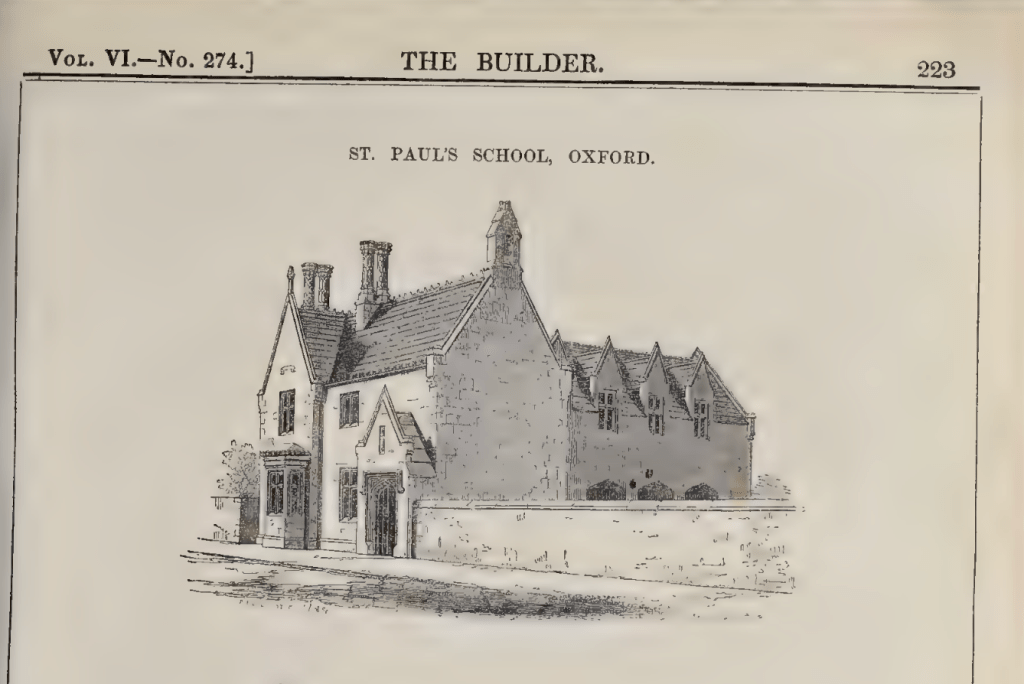
The original building of 1848 is described in “The Builder” magazine of that year. [note2]

Here is what it looked like originally:

According to the (fascinating!) article in The Builder, the school was originally only for girls. Inside the building pictured above was a “dwelling house” for the mistress, a room for the vicar “to conduct his parochial business” , and a school room “55 feet long, 20 feet wide, and 18 feet between the apex and the floor”. Because there was no outdoor playground, the architect placed the school-room on the “second floor” and the lower room became the playground. I take it that by “second floor” the author meant what we now call “first floor”. The author of the article, who seems also to be the architect, describes with pride the construction of the roof:

“In the construction not a particle of wood has been used. The roofs are supported on terra-cotta ribs, with transverse sleepers of the same material, and the floors, arched on geometrical principles, are formed by tiles set in cement ; both are of undoubted strength and durability.” [from “The Builder” article, see note 2]

So the structural elements of the roof are terracotta? Really? If anyone has been inside this excellent building, can they tell me if this is still the case? Did the roof and the floors turn out to be durable, as the article says?

“St Paul’s Nursery” is now part of Somerville College. “St Paul’s Church” is the big building like a Greek temple which is on Walton Street on the other side of the Blavatnik building. It was out-of-use as a church by the early 1970s, and became a wine bar called “Freud”. It now looks sadly dilapidated. Some of its history is on this link.

The Blavatnik School of Government started in 2012. It moved into the new building on Walton Street in 2016. The building is by Herzog and De Meuron. The architects’ drawings of it, and some internal and external photos are on this link.

The Blavatnik School of Government mission statement, as written on the door of the building.

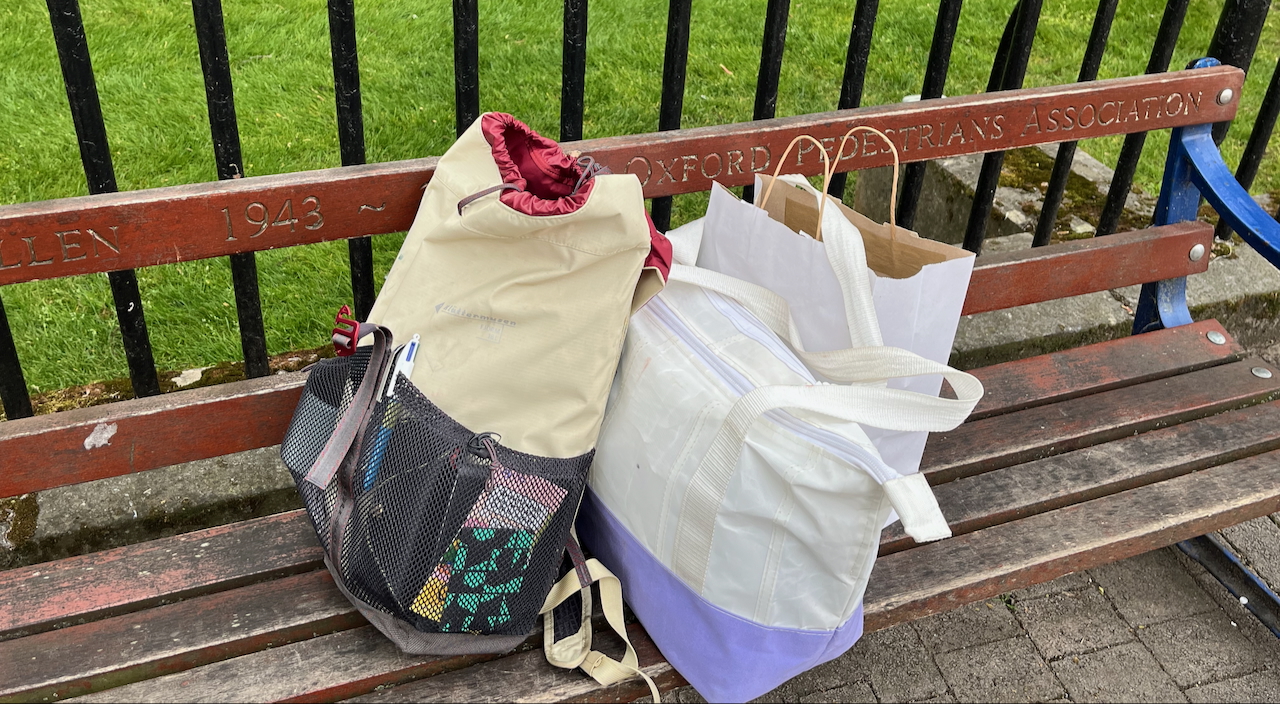
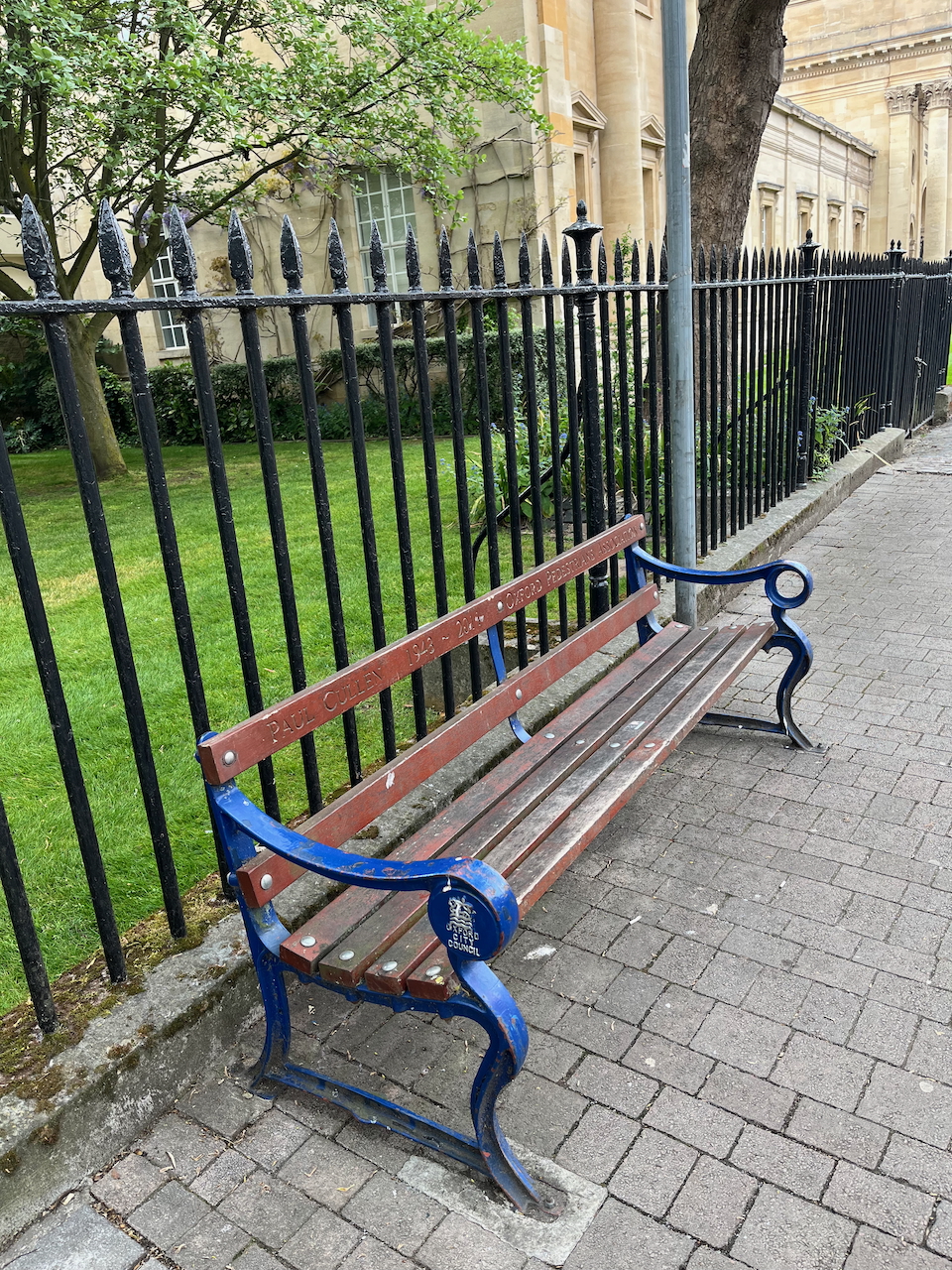
I made the sketch from a convenient bench outside the Oxford University Press. The bench was dedicated to
“Paul Cullen 1943-2011
Oxford Pedestrians Association”.

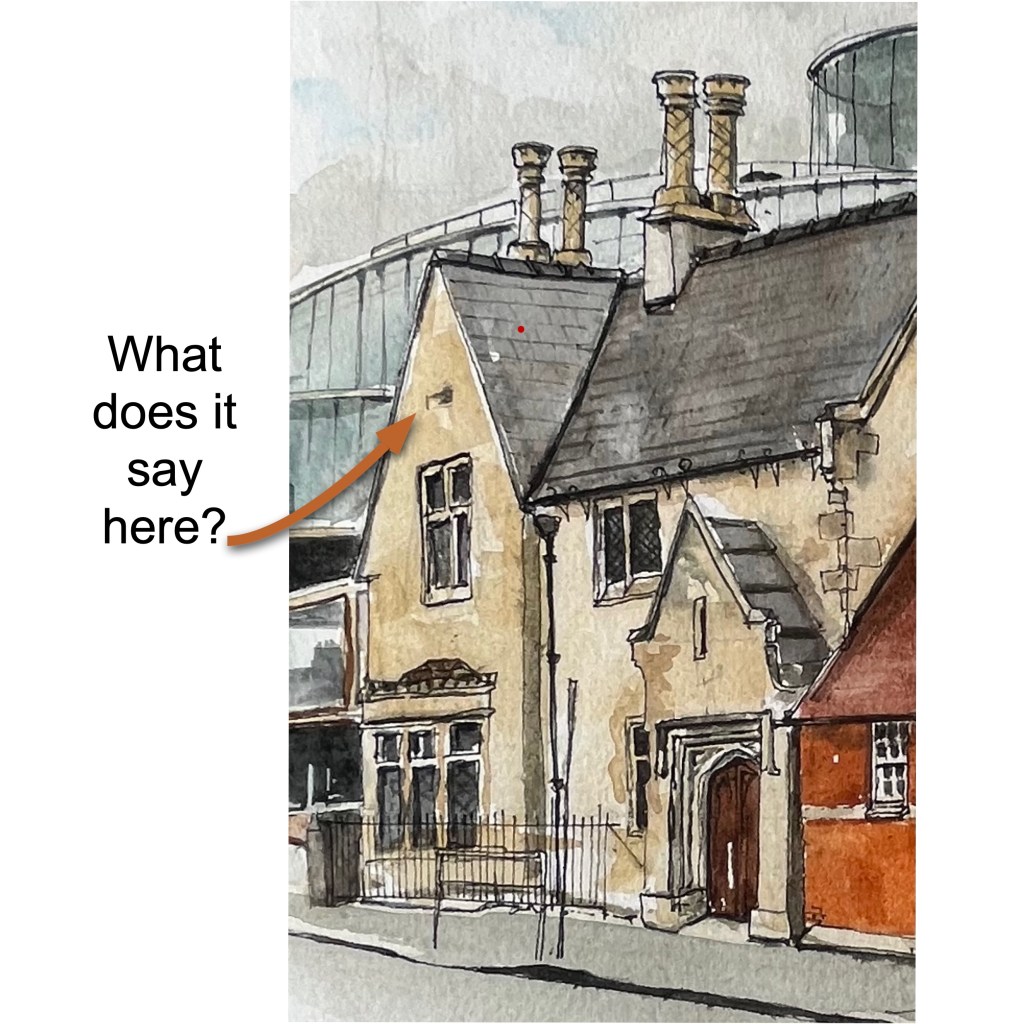
The inscription on the bench was easily read. But there was an inscription on the building I’d been drawing, and I couldn’t read that.

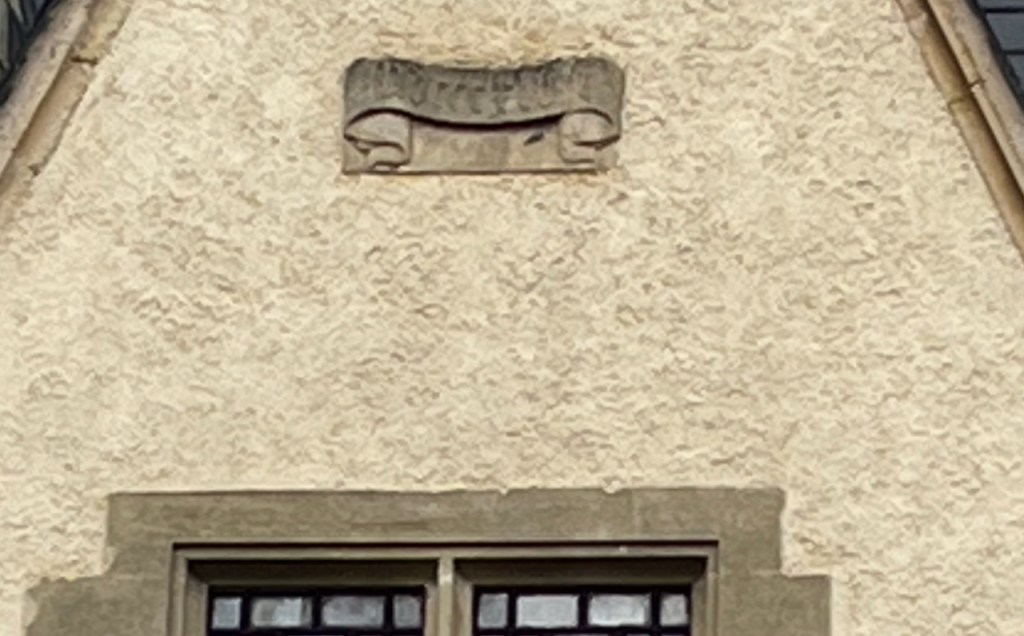
There is a stucco scroll with writing on the gable of the nursery building. Try as I might I could not read it.I assumed my ageing eyes were at fault. So I stopped two young people on the pavement and asked them if they could read it. They took my request seriously, and gave the task their full attention, which was kind of them. However they could not read it either. “Something Something CCC something something” was our joint conclusion. 1848 would be MDCCCXLVIII. Does it say that? If you are walking along Walton Street with a high-powered telescope, or if you have an old photo which shows the building in a less eroded state, then can you tell me what it says?

What does it say? (The iPhone can’t read it either….)

St Pauls Day Nursery and Blavatnik building. Sketchbook 15 page spread.

Note 1: Somerville College Website, Nursery Handbook, on this link:
https://www.some.ox.ac.uk/wp-content/uploads/2021/06/Nursery-Handbook-updated-June-2018.pdf

Note 2: “The Builder” magazine is online. You can find the 1848 volume at this link:

I have transcribed the letter relating to St Paul’s School: (2 pages pdf)

The letter is apparently written by the architect. They say, for example, “we have perhaps rather exceeded the bound of usual practice in ornamental detail” and refers to “our site”. But he or she does not sign their name, simply giving initials: “T.C.”. I have not been able to discover who “T.C.” is.

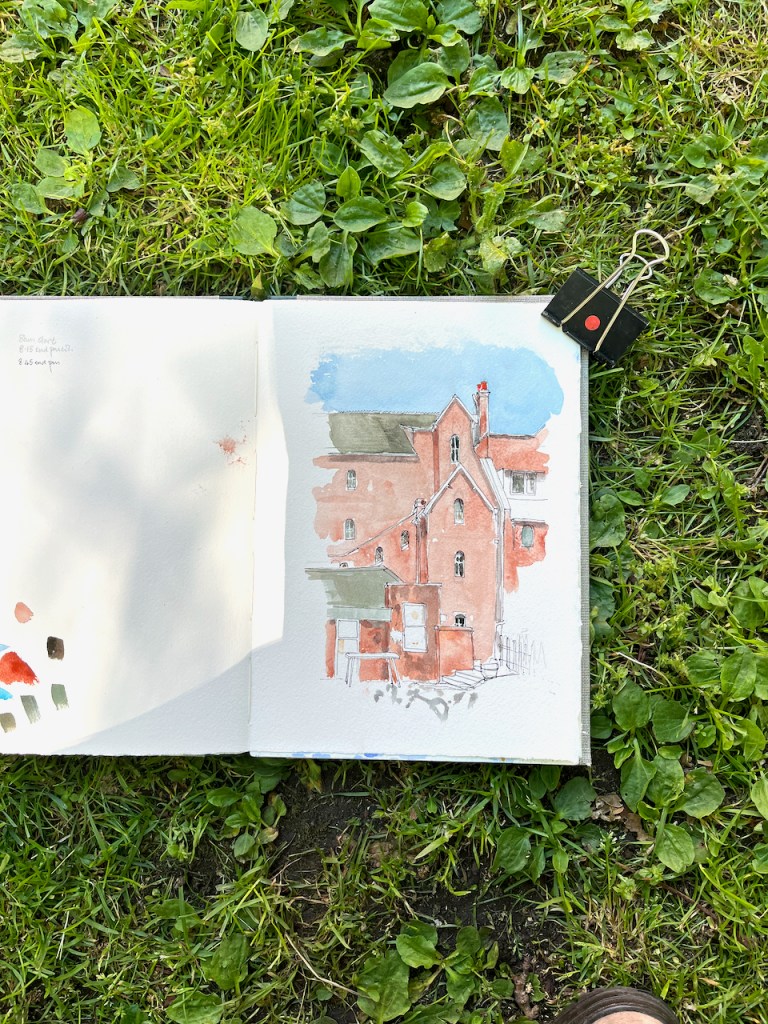
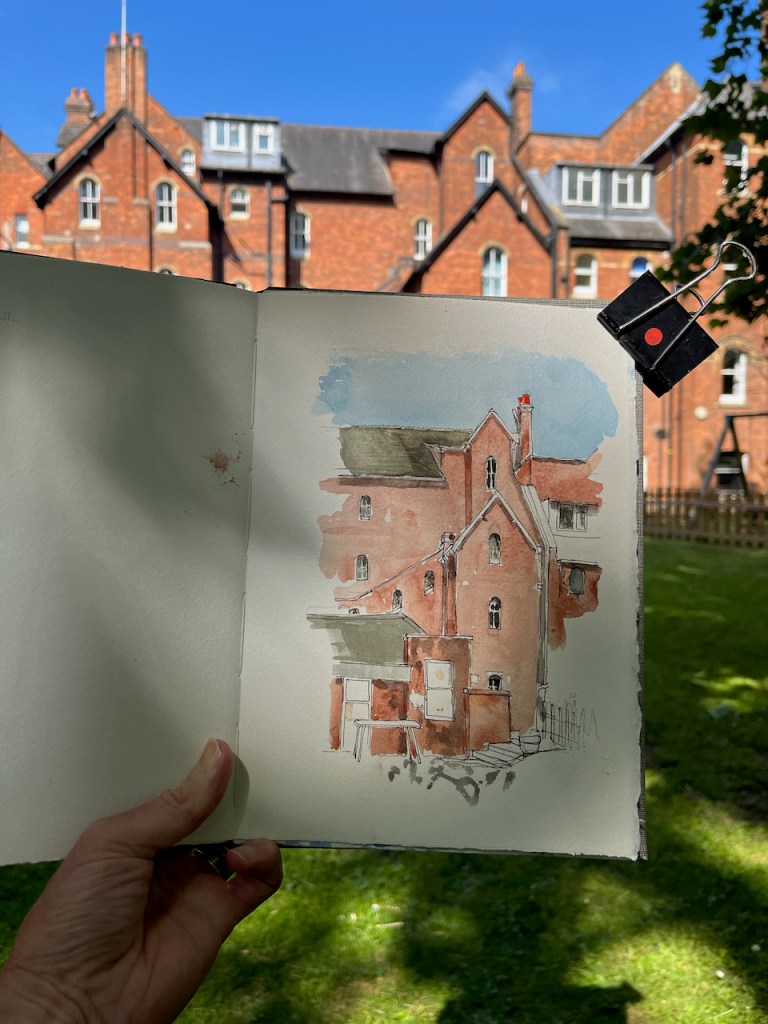
Wycliffe Hall west side, Oxford OX2

Wycliffe Hall is a “permanent private hall” in the University of Oxford. A permanent private hall is like a college, in that it provides accommodation and tuition for its students. The difference is that a college is governed by its Master and Fellows, whereas the Hall is governed, at least in part, by the Church of England. It is an Anglican theological college, offering courses in philosophy and theology, and preparing people for ordination into the Church of England. John Wycliffe was a 14th century Bible translator, scholar and churchman.

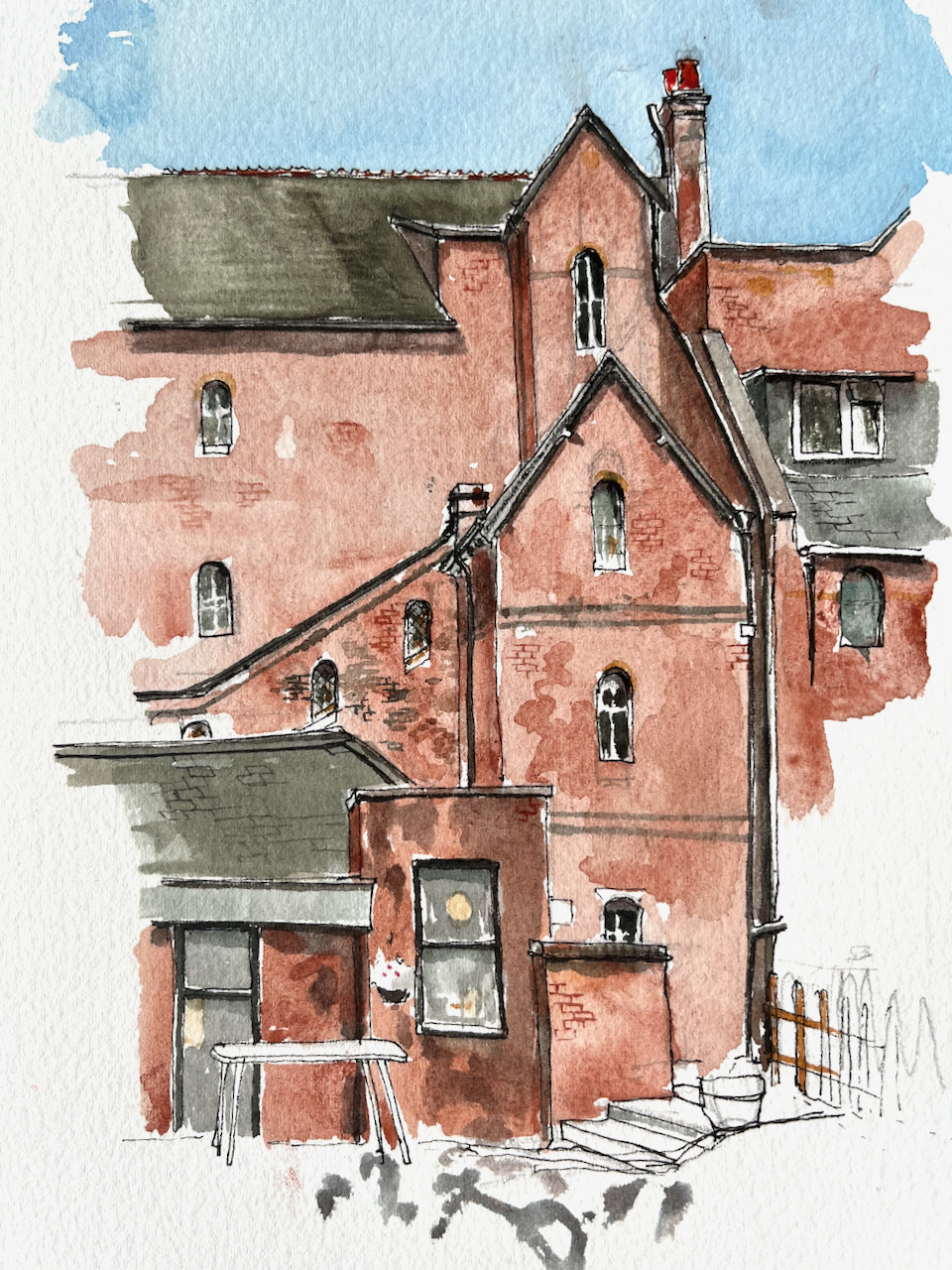
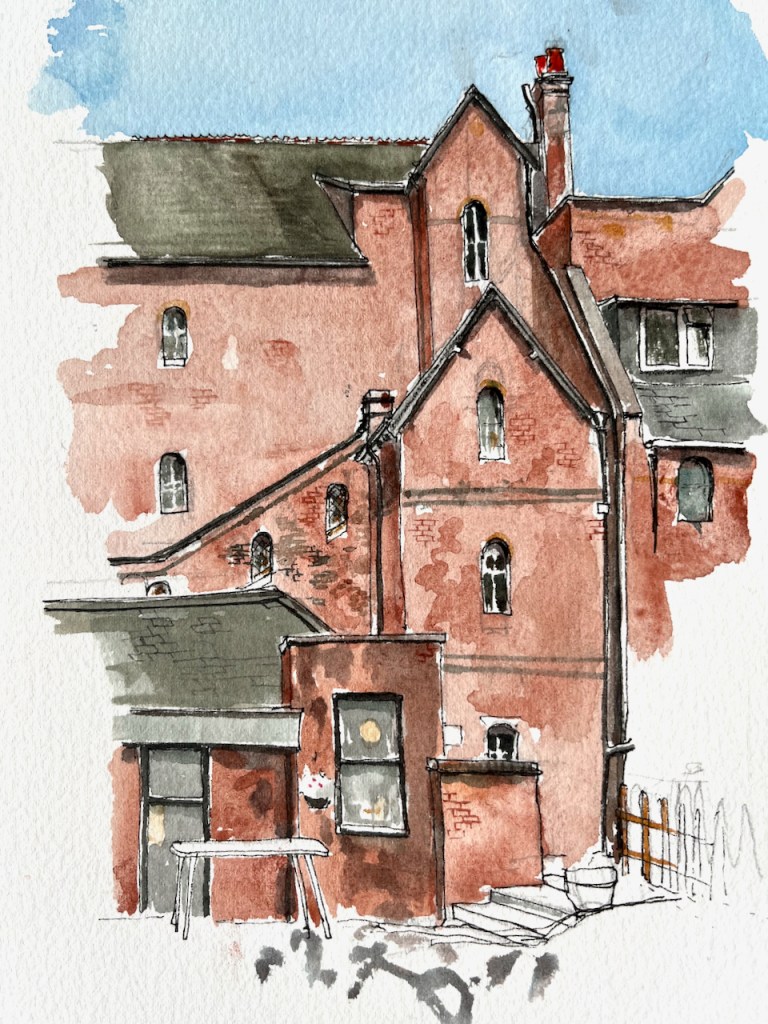
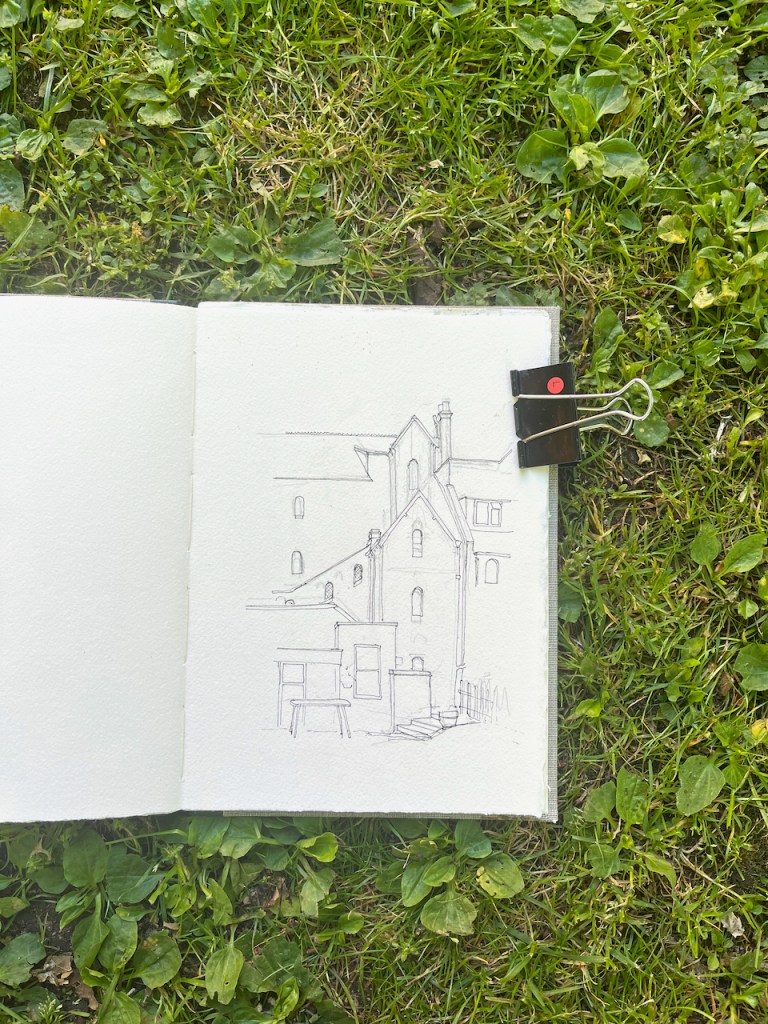
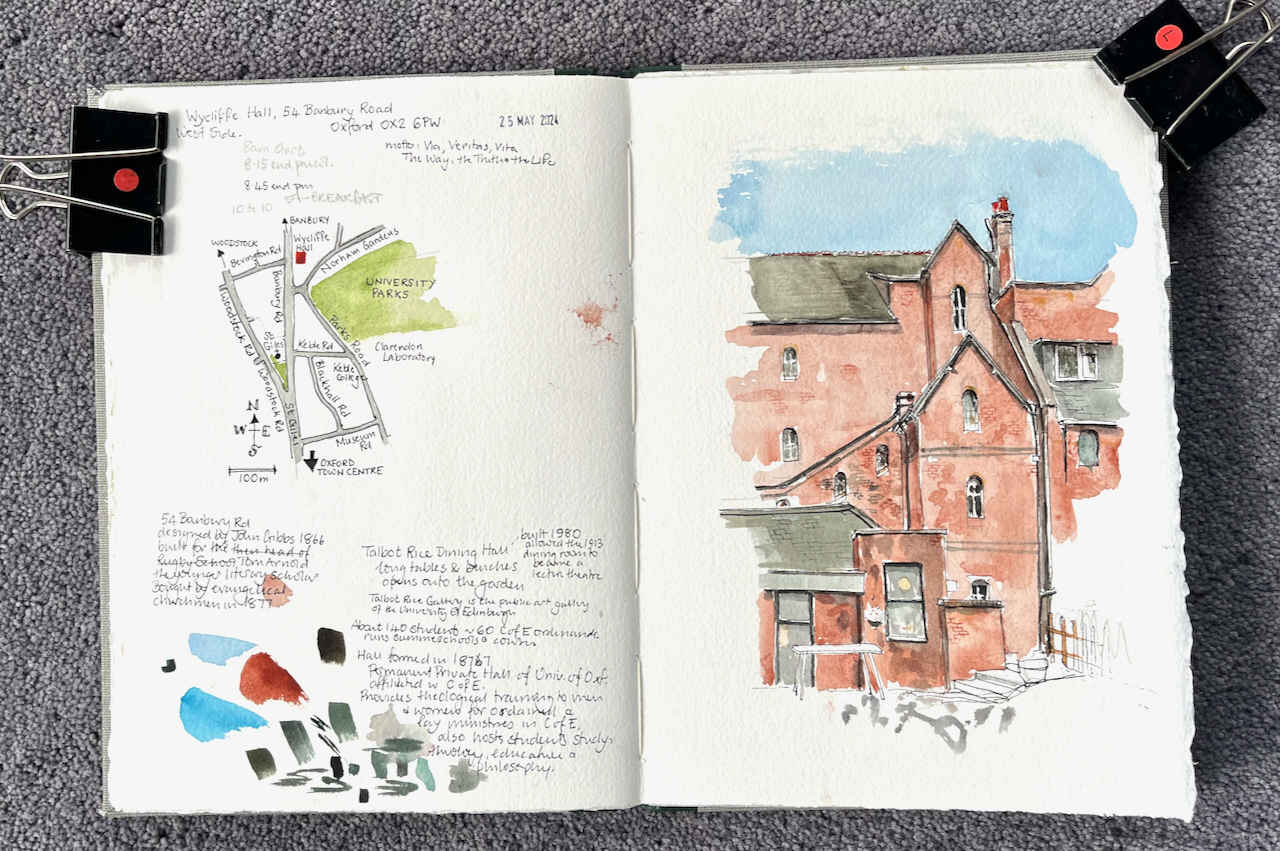
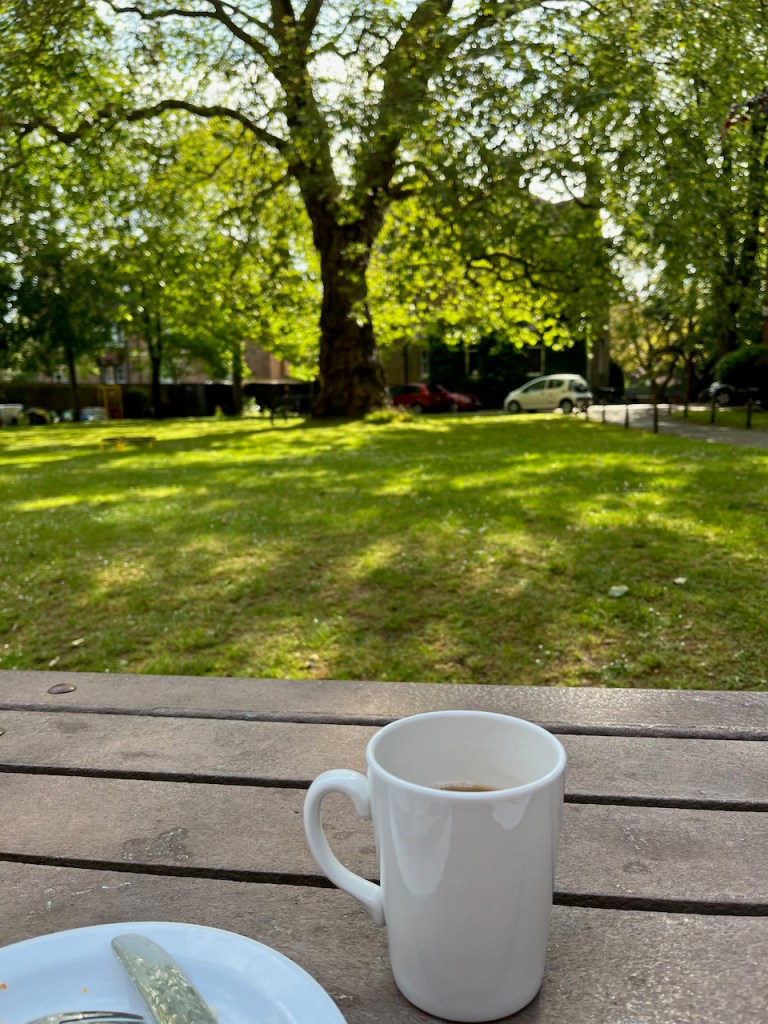
I stayed there as a bed-and-breakfast guest, and sketched this picture from a bench beneath the branches of the plane tree in the gardens. Breakfast is served in the Talbot Rice Dining Room, shown on the bottom left of the picture. I was waiting for it to open.

Wycliffe Hall, West side, 09:40. In Sketchbook 14, 25 May 2024.

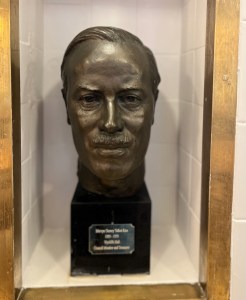
The “Talbot Rice Dining Hall” was built in 1980. The “Bulletin of the Association of British Theological and Philosophical Libraries” volume 16 number 2 dated June 2009*, contains a history of Wycliffe Hall, which informs me that this dining hall is named after Mervyn Talbot Rice (1899-1979), a “friend of Wycliffe”.

Sculpture portrait of Mervyn Gurney Talbot-Rice, in the dining room at Wycliffe Hall (Photo: Feb 2025)

When they say “friend of Wycliffe”, they must mean a friend of the the Hall, as John Wycliffe died 600 years ago. The Talbot Rice art gallery in Edinburgh is named after David Talbot Rice, one of Mervyn’s sons.

The breakfast room opened, and I took my place at one of the long tables. Behind me, three, or possibly four, men were already engaged in a serious conversation about Middle Eastern politics. Judging by the various accents, at least one of them was American. They took different points of view, and argued from personal experience, with courtesy. At another table, a group of young men and women were working out complicated logistics to do with rowing. Who was to be cox? Who was rowing? When? Where? Another man engaged the member of staff in a lively conversation on management techniques prevalent in a particular football team and how this may or may not affect their chances.

Between them all, I finished my porridge and headed back out to the plane tree to continue my picture.

I’ve sketched at Wycliffe Hall before. Click the image below to go to the post.

Wycliffe Hall Chapel

*The link to the Bulletin is here. Or if that doesn’t work, the pdf is below. The history of Wycliffe Hall starts on page 19.

Somerville College, Oxford: Porters’ Lodge

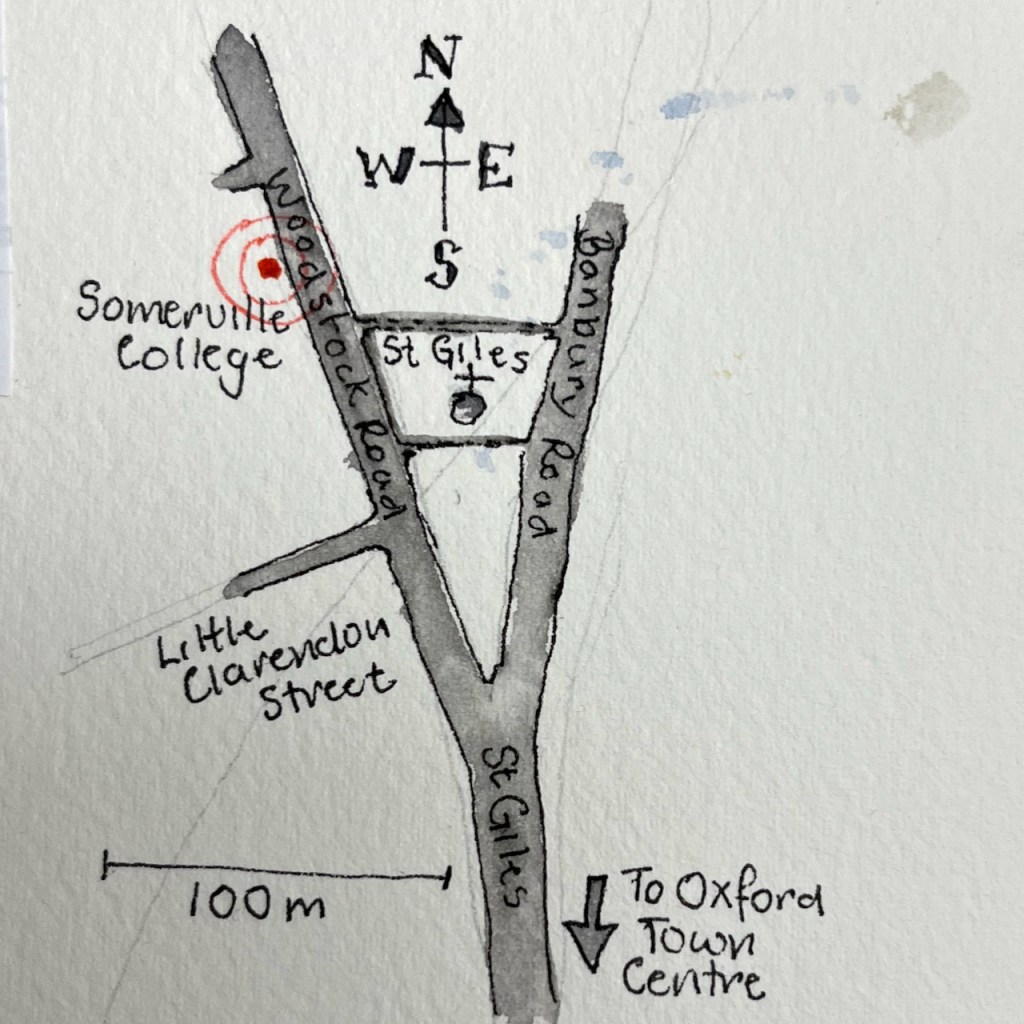
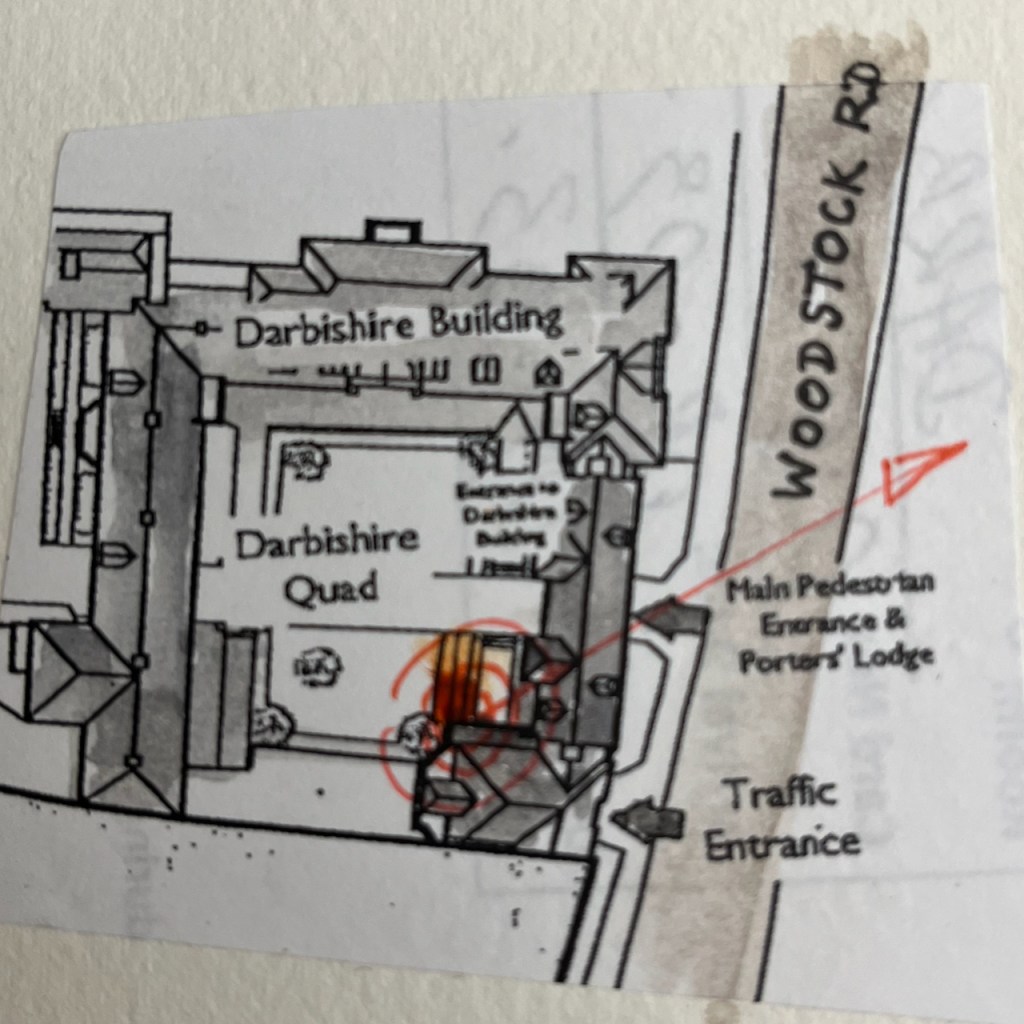
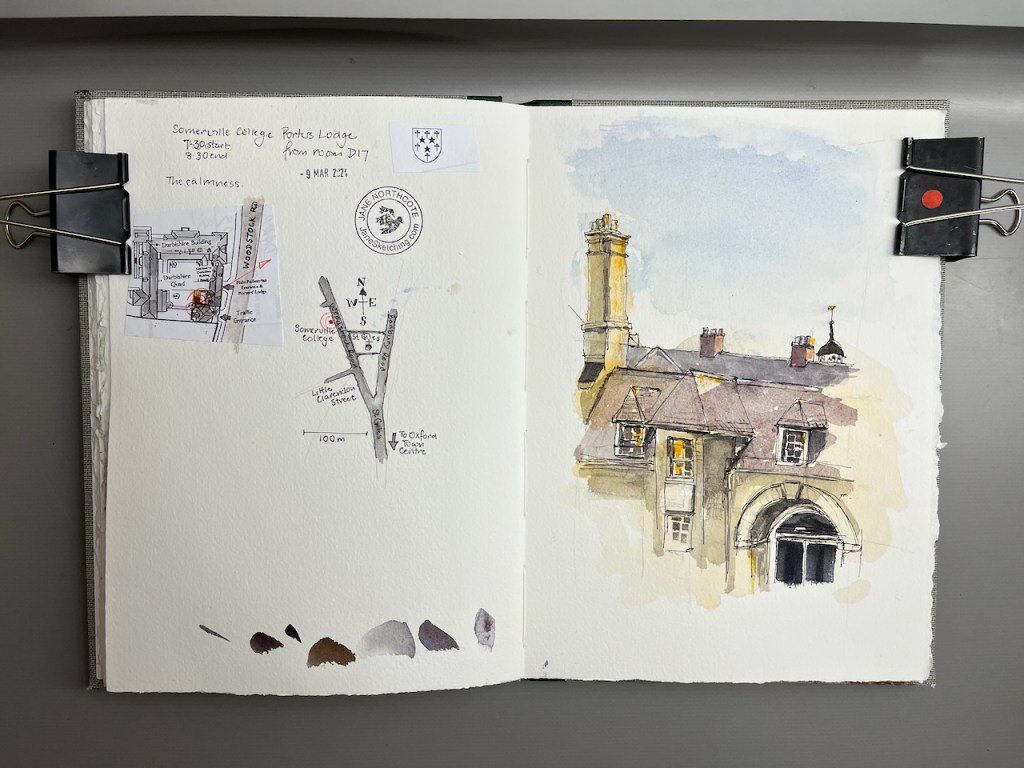
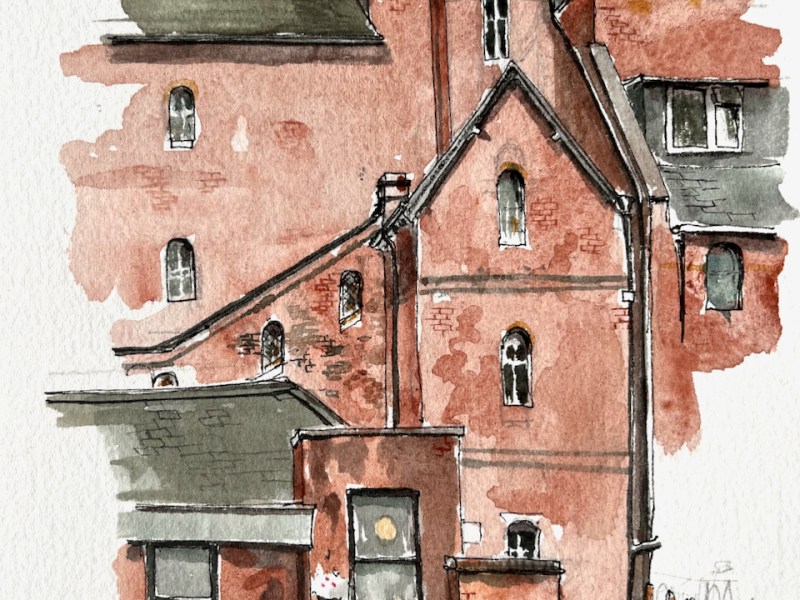
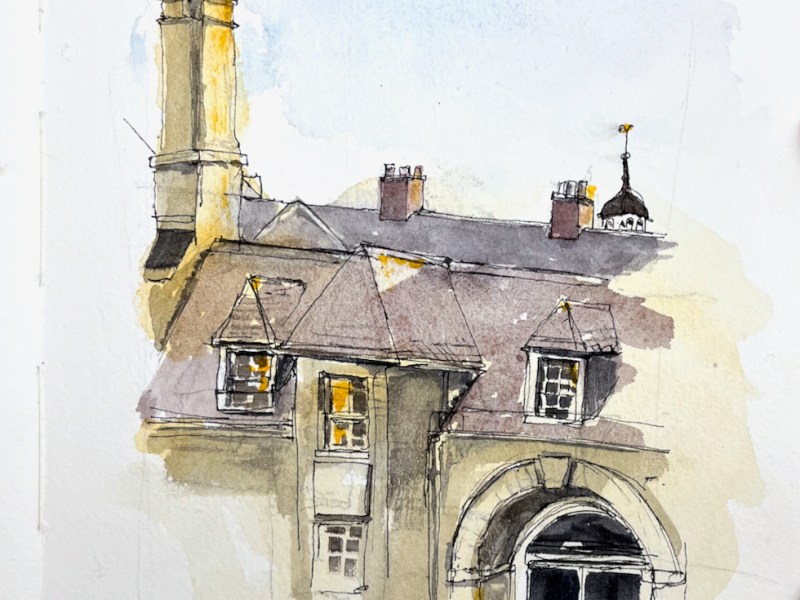
Here is the view from room D17 in Somerville College, OX2 6HD.

View from D17, Somerville College Porters’ Lodge. 9th March 2024, 07:30am, in Sketchbook 14

I sketched it quickly, before leaving, just as the sun was coming up.

Somerville College was women-only for the first 115 years of its existence. It started to admit men in 1994.

Oxford Nuclear Physics Building

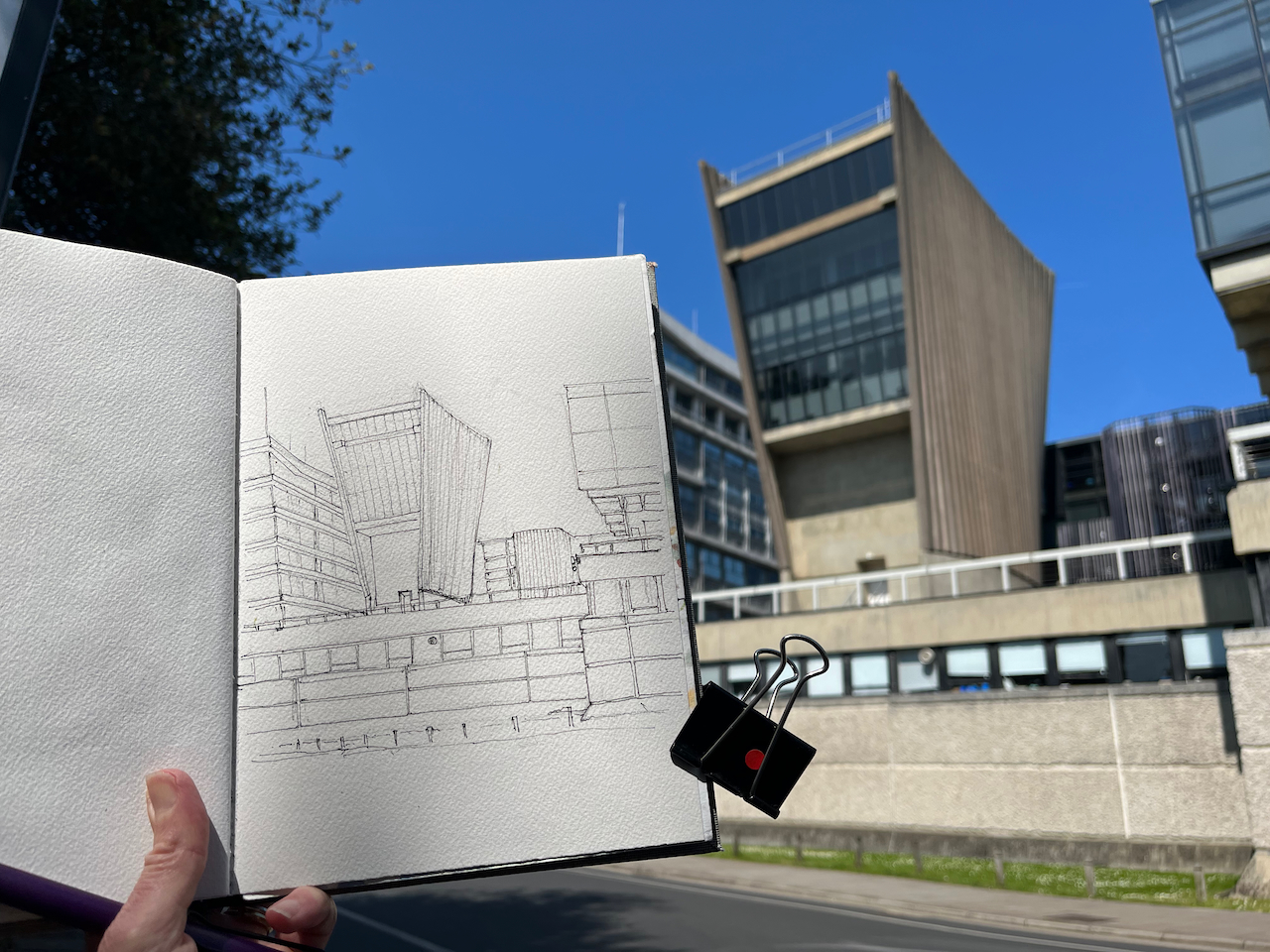
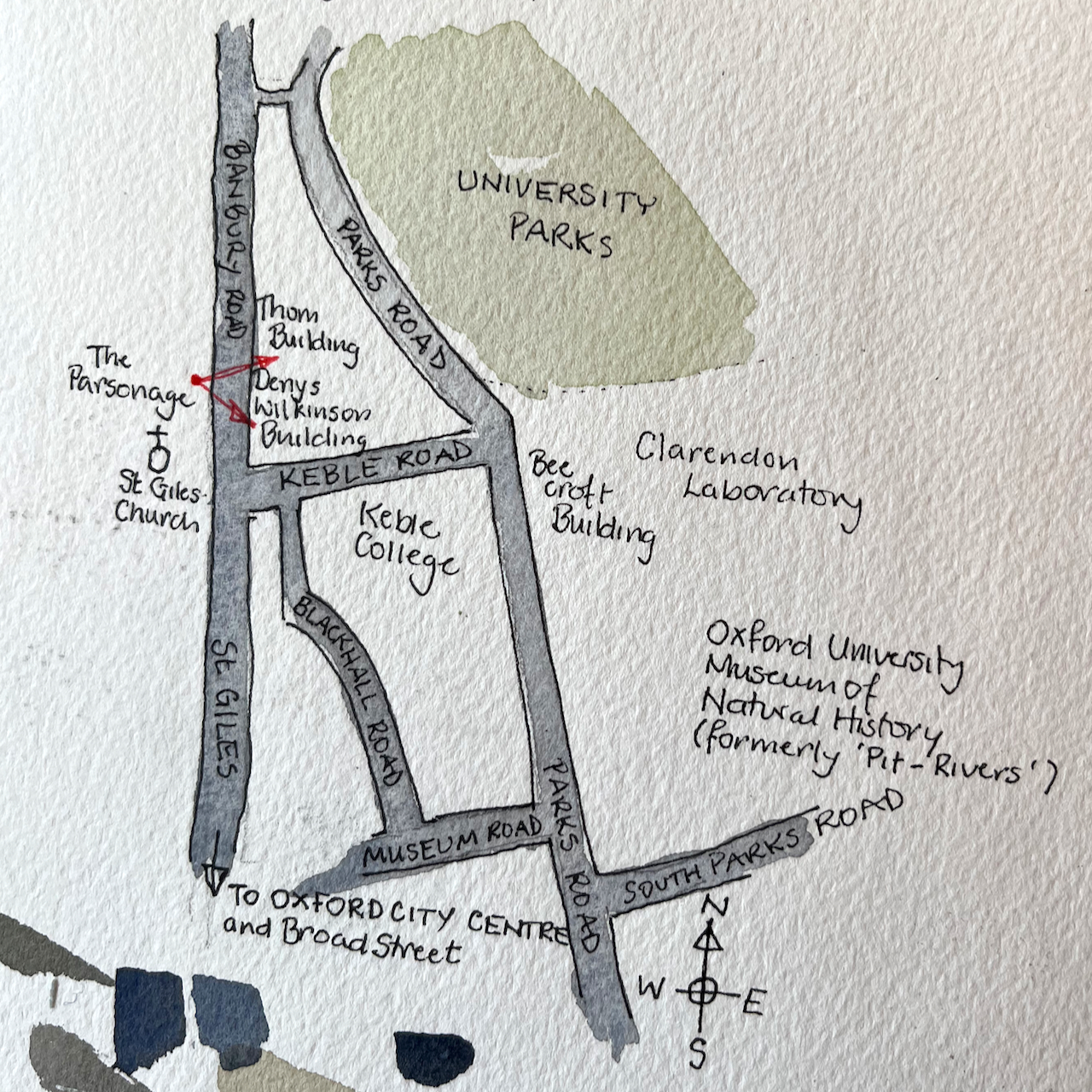
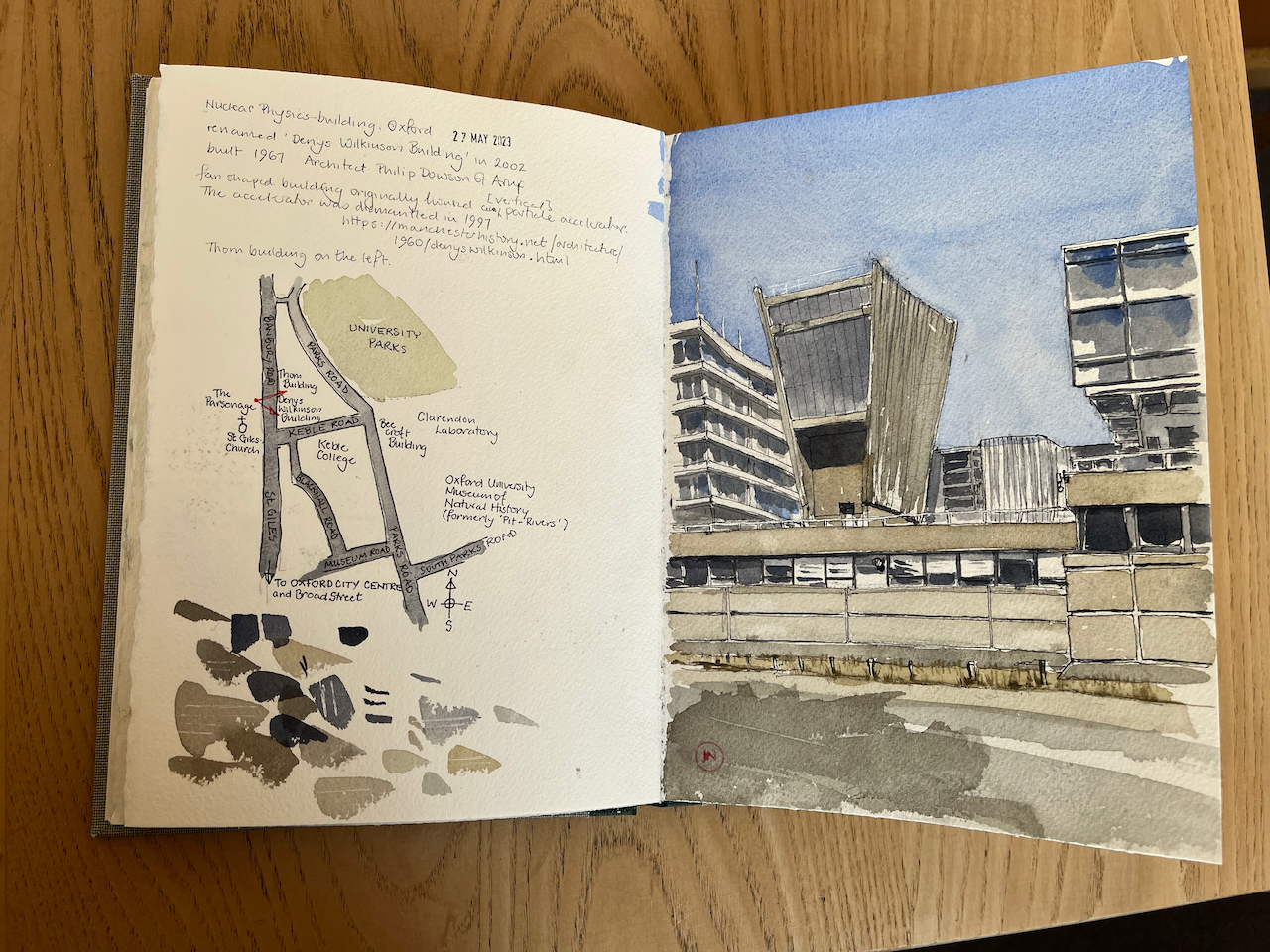
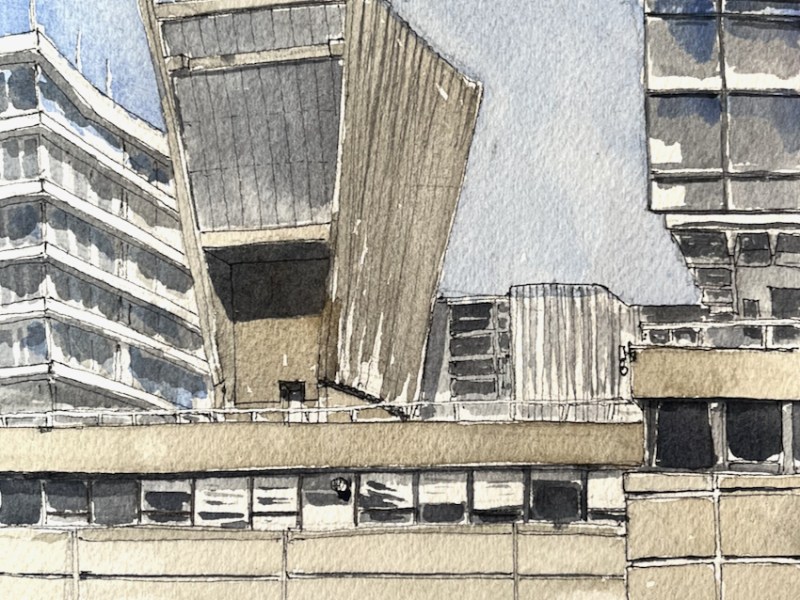
Here is the University of Oxford Nuclear Physics building, seen from the Banbury Road.

The Nuclear Physics building, now the Denys Wilkinson building, University of Oxford. Sketched 27 May 2023, in Sketchbook 13

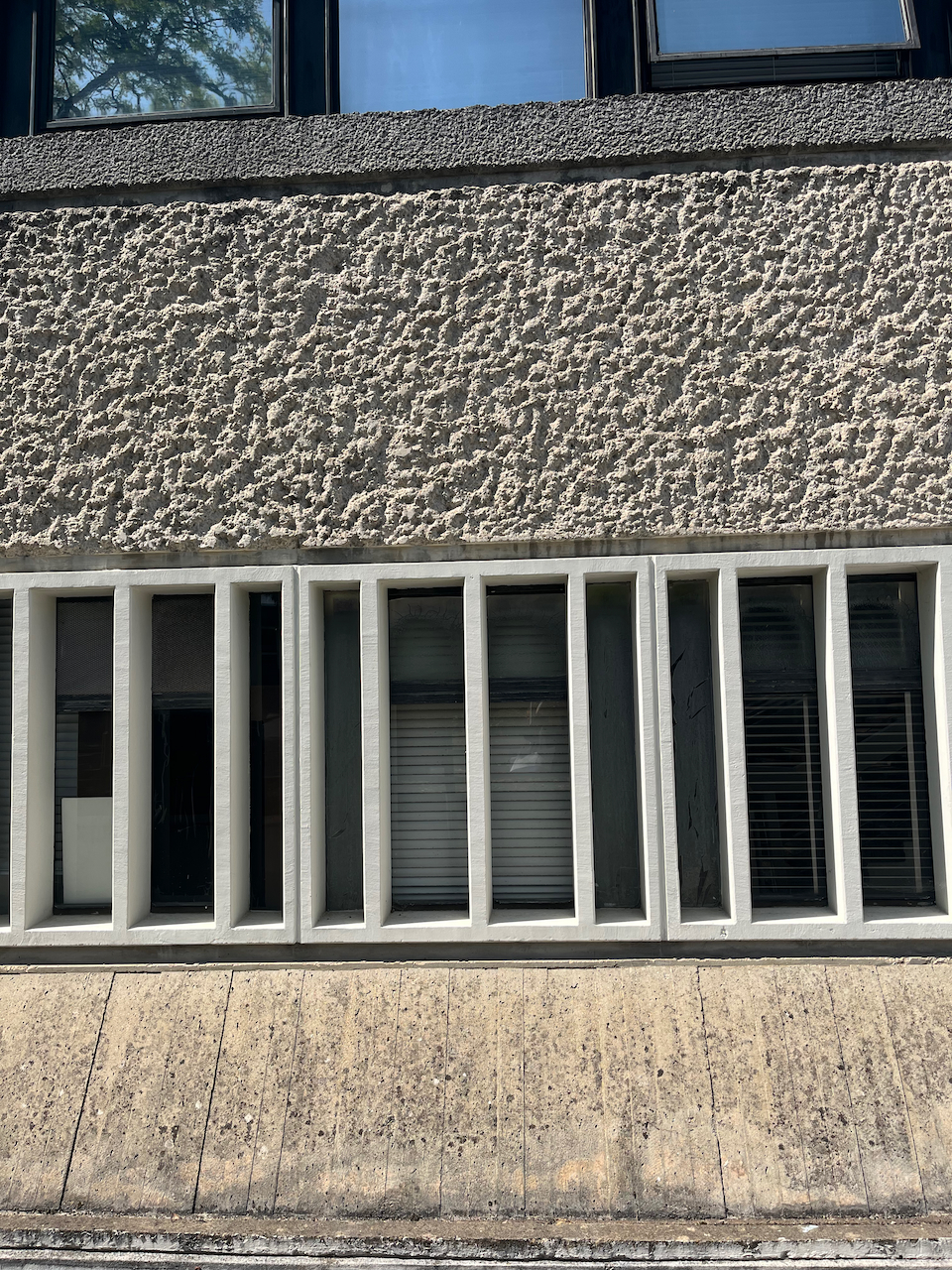
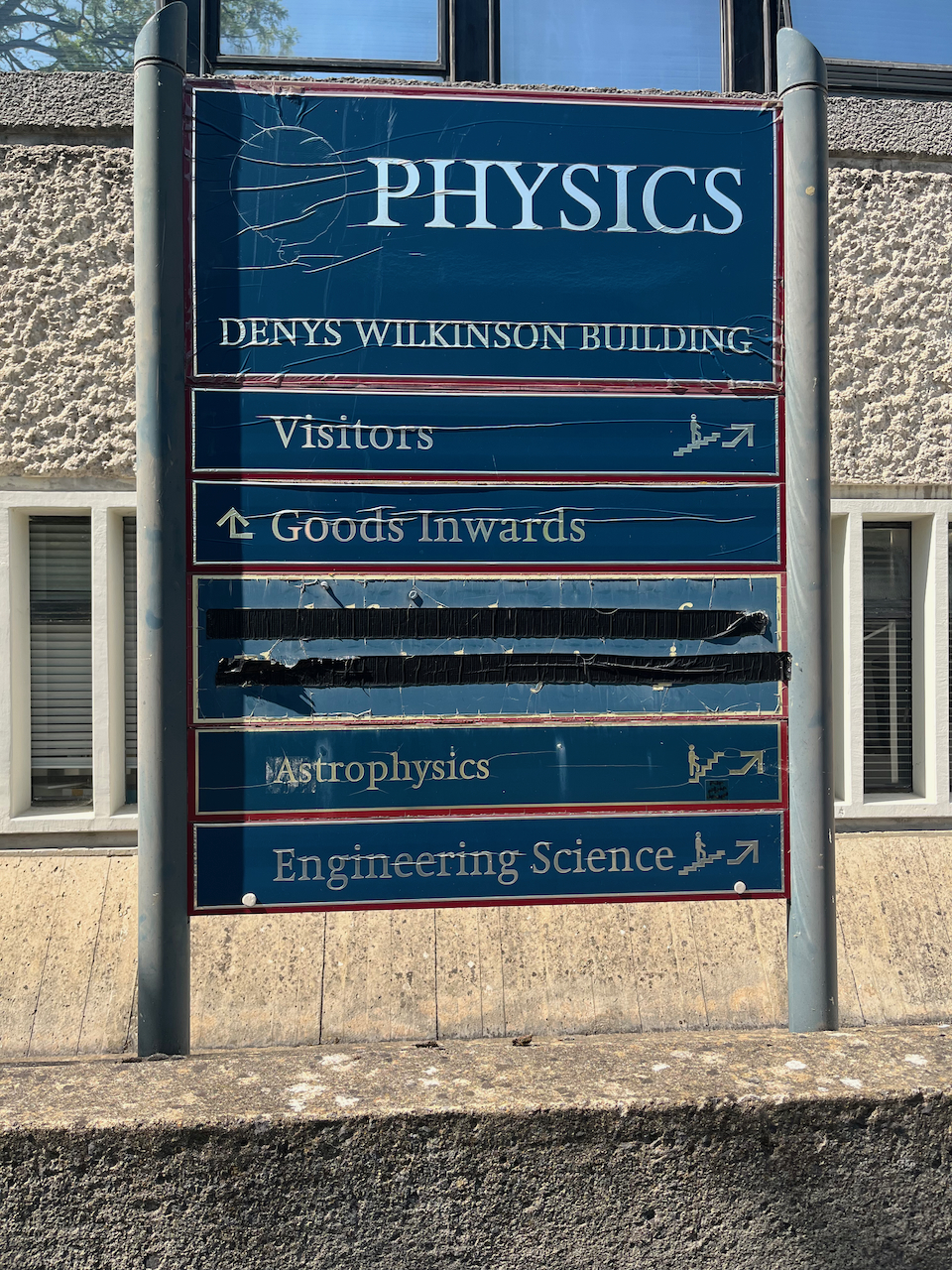
The building was renamed the “Denys Wilkinson Building” in 2002. It was built in 1967 to the designs of architect Philip Dowson of Arup. The fan-shaped structure originally housed a Van der Graff particle accelerator, now dismantled. [https://manchesterhistory.net/architecture/1960/denyswilkinson.html]

Professor Wilkinson (1922-2016) was the Head of the Nuclear Physics Department from 1962-1976.

The building on the left is the “Thom Building” which houses the Engineering Department. This building had a marvellous “paternoster” lift in the 1970s. (Note 1). This is a lift with single compartments, which operates in a continuous loop, like rosary beads, hence the name. You simply stepped into one of the slowly moving compartments and were carried up or down.

Here is work in progress on the drawing:

The fan-shaped structure is a rare example of brutalism in Oxford. St Catherine’s College is another example.

Ought we to treat the Denys Wilkinson building and St. Catherine’s College as a celebrated chapter in Oxford’s aesthetic history, or as evidence of a period better forgotten?

Caitriona Dowden -writing in the Cherwell, 26th October 2020 [https://cherwell.org/2020/10/26/oxfords-eyesores-brutalisms-place-among-the-dreaming-spires/]

A celebrated chapter in Oxford’s aesthetic history, I think. here are some details of the design, for brutalism enthusiasts like me:

Note 1: Alan Knight writing of his memories of the department confirms my recollection: https://www.soue.org.uk/souenews/issue2/jottings.html. The paternoster was replaced by two ordinary lifts in the 1980s.

Wycliffe Hall Chapel, Oxford OX2

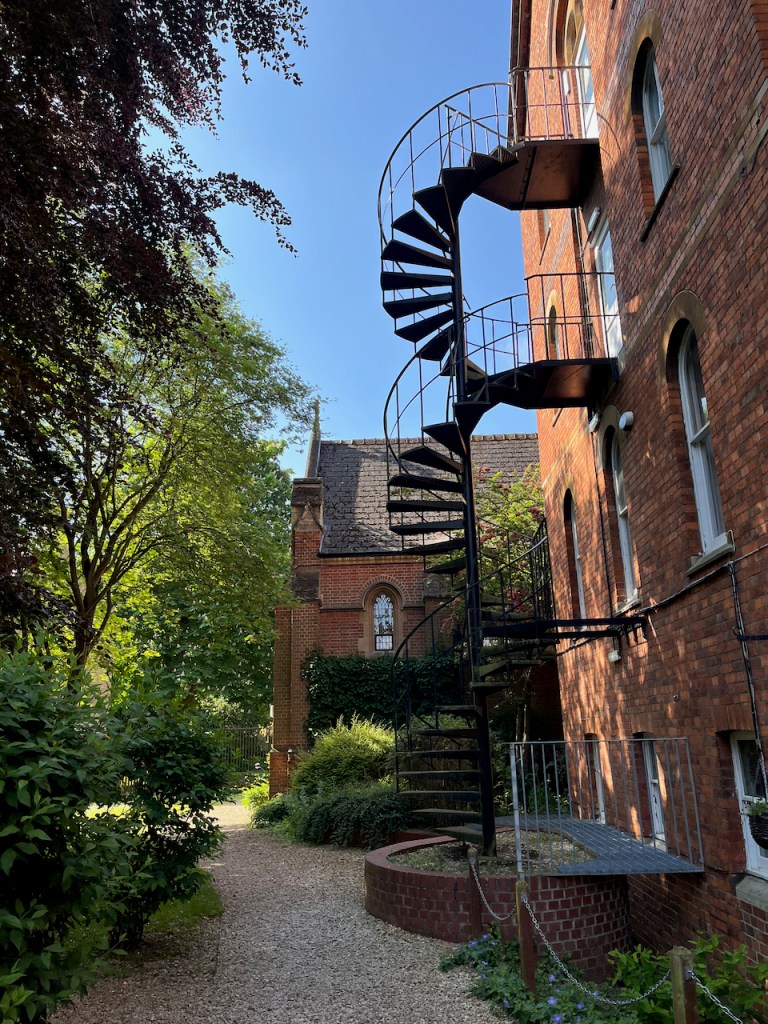
On a visit to Oxford recently, I stayed at Wycliffe Hall as a Bed and Breakfast guest. Wycliffe Hall is on the Banbury Road in North Oxford. It offers theological training to women and men who wish to become ordained or lay ministers in the Church of England. The hall was established in 1877, on the current site, and is named for John Wycliffe, bible translator and master of Balliol College in the 14th century.

I sketched the chapel which was added in 1896, designed by architect George Wallace.

Wycliffe Hall Chapel, 54 Banbury Road, Oxford, sketched 26 May 2023, in Sketchbook 13

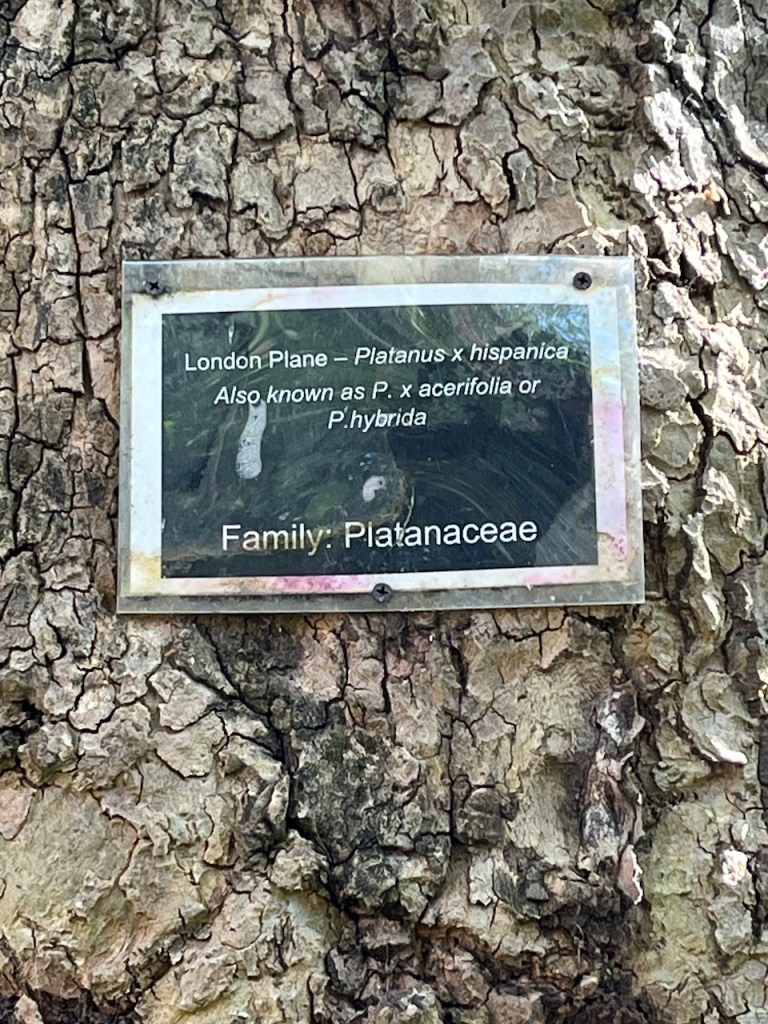
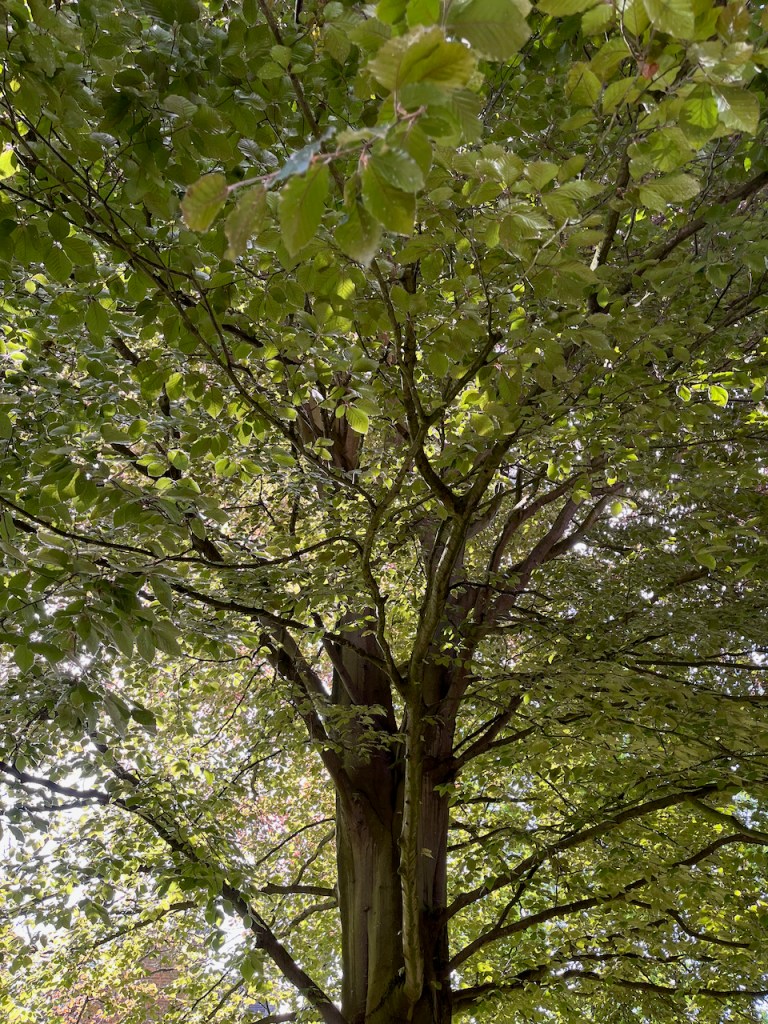
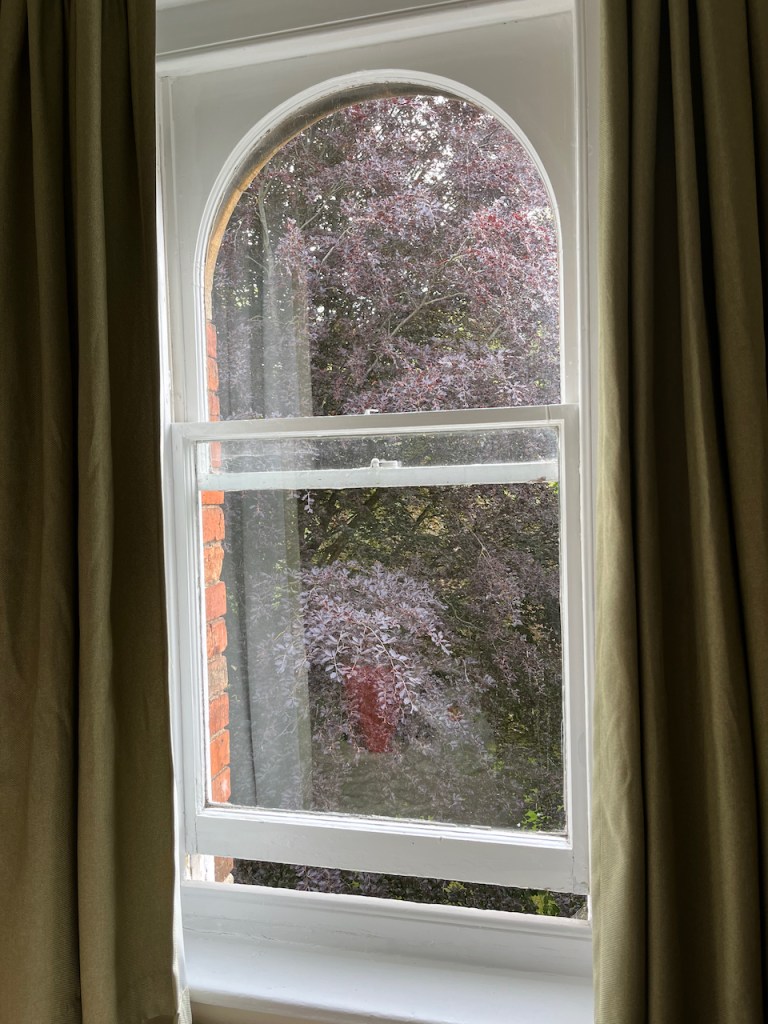
There are amazing trees in this part of Oxford. The houses are large, but the trees are larger. I had my breakfast outdoors in the garden at Wycliffe Hall, looking at a gigantic London Plane. The view from my bedroom was filled with beech tree.

I sketched the chapel in the evening and finished the sketch the next morning.


For a sketch of the west side of the Hall, see this post.

St Giles, Oxford

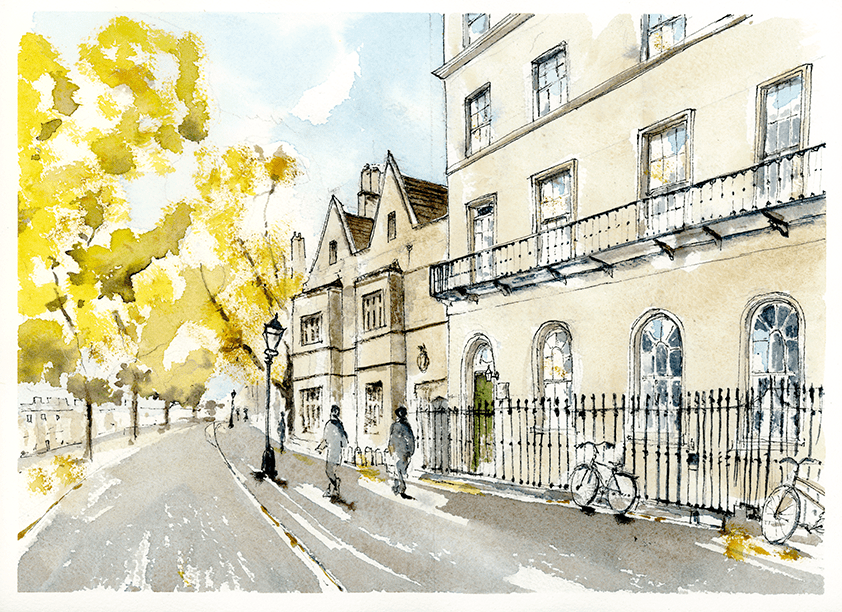
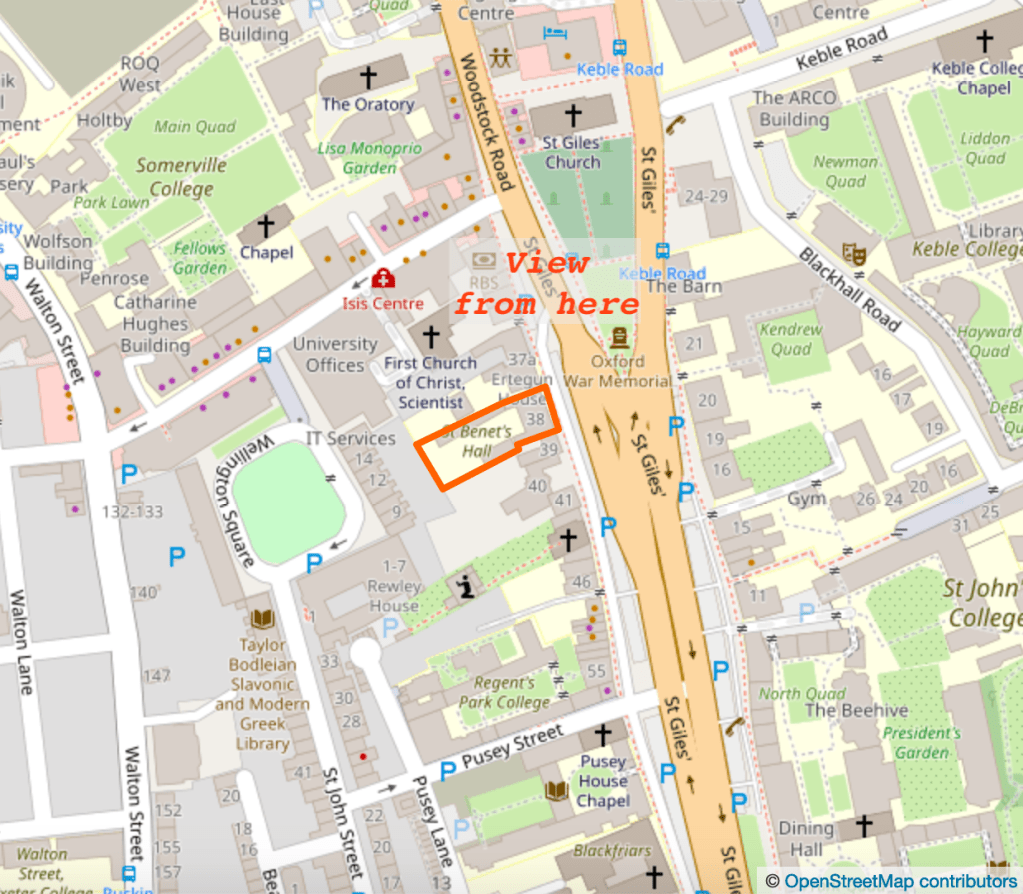
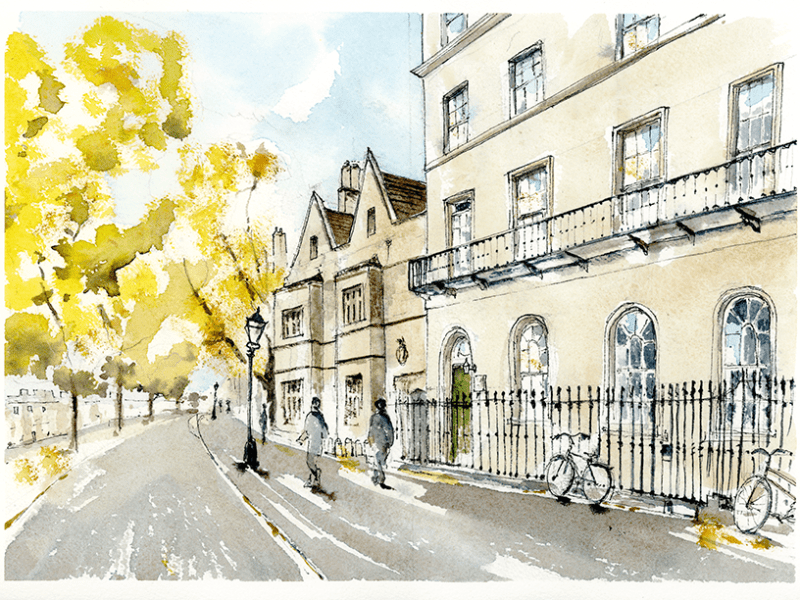
This is a view of the front of St Benet’s Hall, in St Giles, Oxford, looking South.

St Giles, Oxford.

I drew this as a commission, for Ken Craig of Canongate Design. It will form the front cover of a publication.

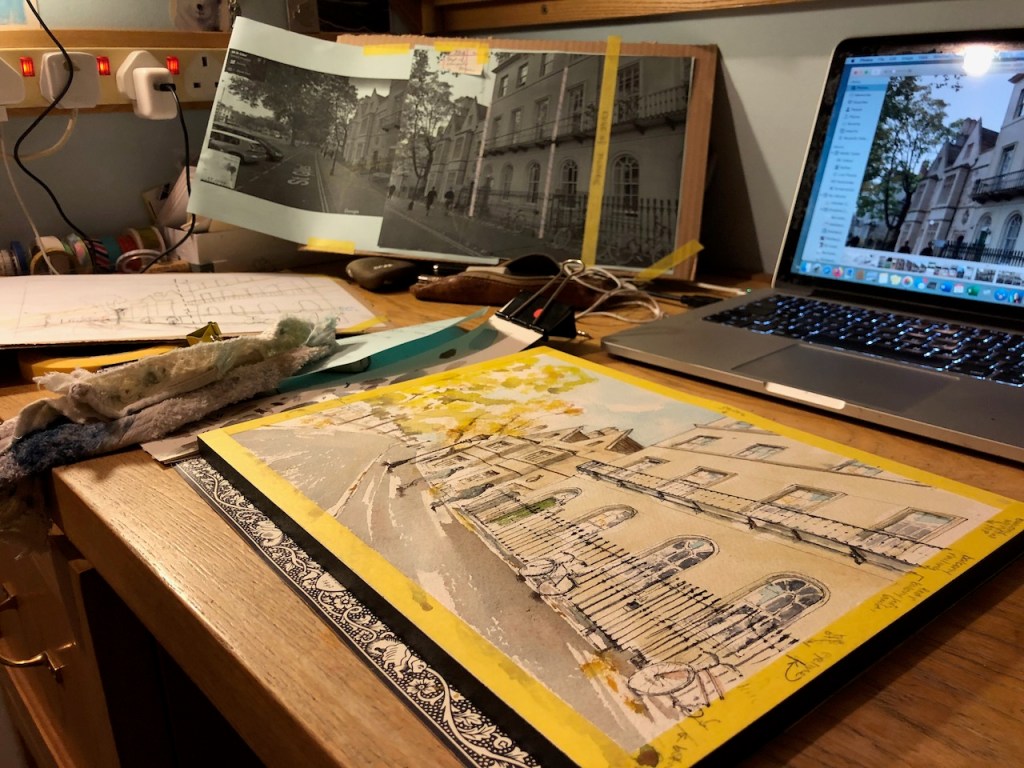
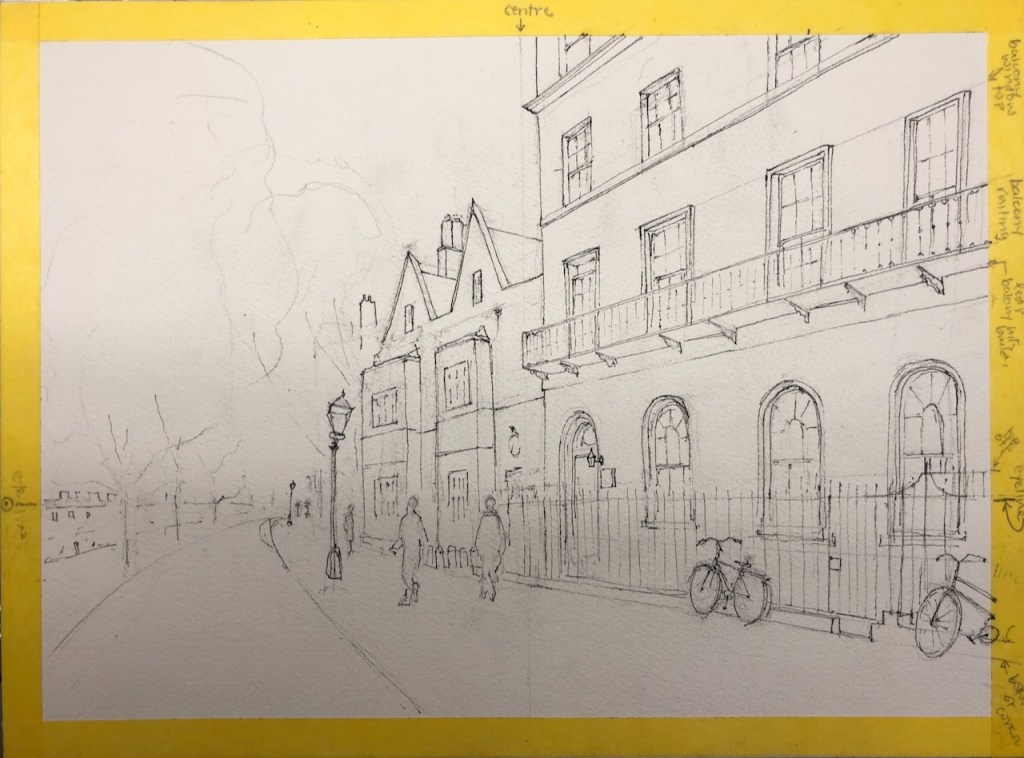
The challenge was to fit the view onto a sheet with A4 aspect ratio, in such a way that the façade of St Benet’s Hall is on the right. The front door had to be to the right of the centre line. Because the timescales were short, and the country was in Covid-related restrictions, I worked from photos, memory and imagination.

Janet Smart kindly provided photo references, including pictures of the architectural details.

Thankyou to Ken Craig for the commission, and for providing the scanned image of my drawing at the head of this post.

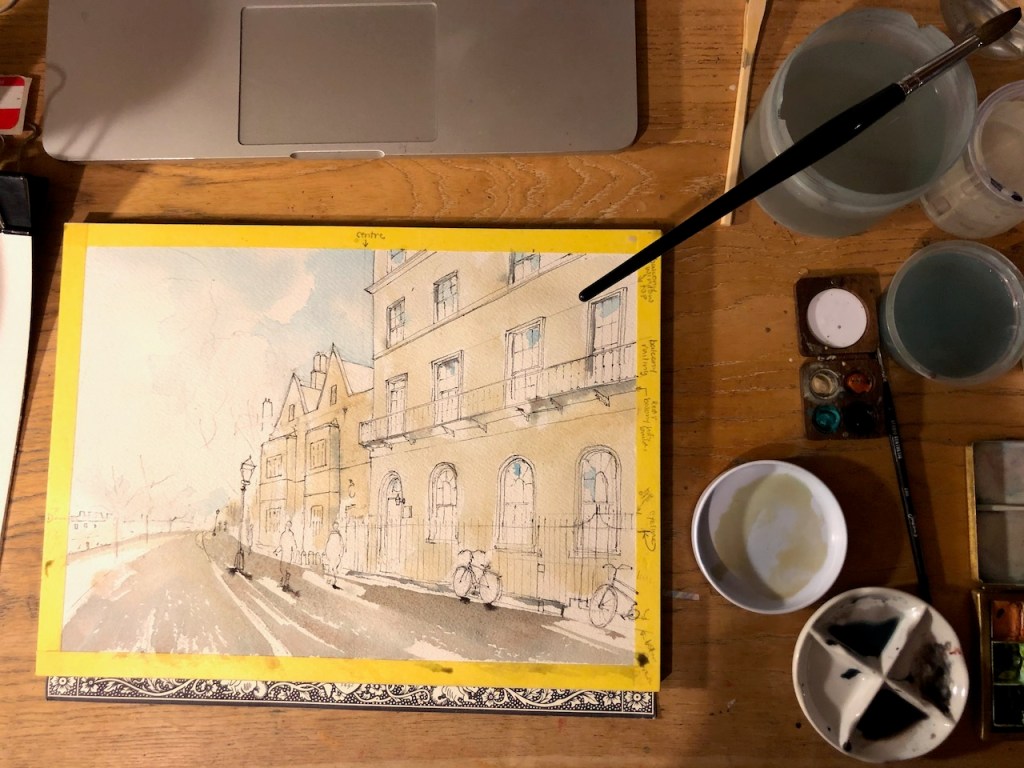
The colours are Buff Titanium, Green Gold, Phthalo Turquoise, Mars Yellow, Burnt Umber and some Perylene Maroon to make the greys. I drew it on a paper block of Arches 300gsm NOT watercolour paper, 9″ x 12″.

Work in progress.

I’ve done quite a few sketches in Oxford.

St Barnabus Jericho, Oxford OX2

Walking through Jericho on my way to the station, I glimpsed this church tower, and heard its bells. I wove through the small streets until I found it. This is St Barnabus Jericho. Its website says that it is also known as “Oxford Basilica”. It was built as the daughter church of St Paul’s, which…

119a Walton Street, Oxford OX2

This 19th Century building on Walton Street is a nursery school. It contrasts with the huge sweeping curves of the Blavatnick School of Government behind. The building now houses a co-ed nursery: “St Paul’s Nursery is a 16-place day nursery that caters for children between the ages of 3 months and 5 years. The Nursery…

Wycliffe Hall west side, Oxford OX2

Wycliffe Hall is a “permanent private hall” in the University of Oxford. A permanent private hall is like a college, in that it provides accommodation and tuition for its students. The difference is that a college is governed by its Master and Fellows, whereas the Hall is governed, at least in part, by the Church…

Somerville College, Oxford: Porters’ Lodge

Here is the view from room D17 in Somerville College, OX2 6HD. I sketched it quickly, before leaving, just as the sun was coming up. Somerville College was women-only for the first 115 years of its existence. It started to admit men in 1994.

Oxford Nuclear Physics Building

Here is the University of Oxford Nuclear Physics building, seen from the Banbury Road. The building was renamed the “Denys Wilkinson Building” in 2002. It was built in 1967 to the designs of architect Philip Dowson of Arup. The fan-shaped structure originally housed a Van der Graff particle accelerator, now dismantled. [https://manchesterhistory.net/architecture/1960/denyswilkinson.html] Professor Wilkinson (1922-2016)…

Wycliffe Hall Chapel, Oxford OX2

On a visit to Oxford recently, I stayed at Wycliffe Hall as a Bed and Breakfast guest. Wycliffe Hall is on the Banbury Road in North Oxford. It offers theological training to women and men who wish to become ordained or lay ministers in the Church of England. The hall was established in 1877, on…

St Giles, Oxford

This is a view of the front of St Benet’s Hall, in St Giles, Oxford, looking South. I drew this as a commission, for Ken Craig of Canongate Design. It will form the front cover of a publication. The challenge was to fit the view onto a sheet with A4 aspect ratio, in such a…

Phoenix Picture House, Oxford

Here is a view looking south down Walton Street, from The Jericho Café, Oxford. It was raining outside. People peered in through the windows. One person actually came inside the café to look at my picture. Or maybe it was to escape temporarily from the rain. They looked at the picture, in any case, and…

Sketching in the Ashmolean Museum

What is the purpose of a museum? The previous evening, I’d been to a lecture by Tim Reeve, Deputy Director of the V&A. He had described, with great conviction, a new building they plan for East London, in “Here East” on the former Olympic Park. It will open up the V&A storage and logistics centre…

Oxford: Pitt Rivers annex and Merton Chapel

This little building to the right (South) of the Pitt Rivers Museum has often intrigued me. It has four chimneys. one in each corner. After I’d drawn it, I went to try to find out what it is. It appears to be connected to the Pitt Rivers Museum, but has no special name itself, and…

Oxford, St Giles

As the daylight faded, I made this sketch from outside 37 St Giles, Estagun House. St Giles is the name of the road going North out of Oxford, and also of the Church, which where the road starts. There has been a “St Giles” church near Oxford from at least 1120. “St Giles is supposed…

Two sketches in Oxford

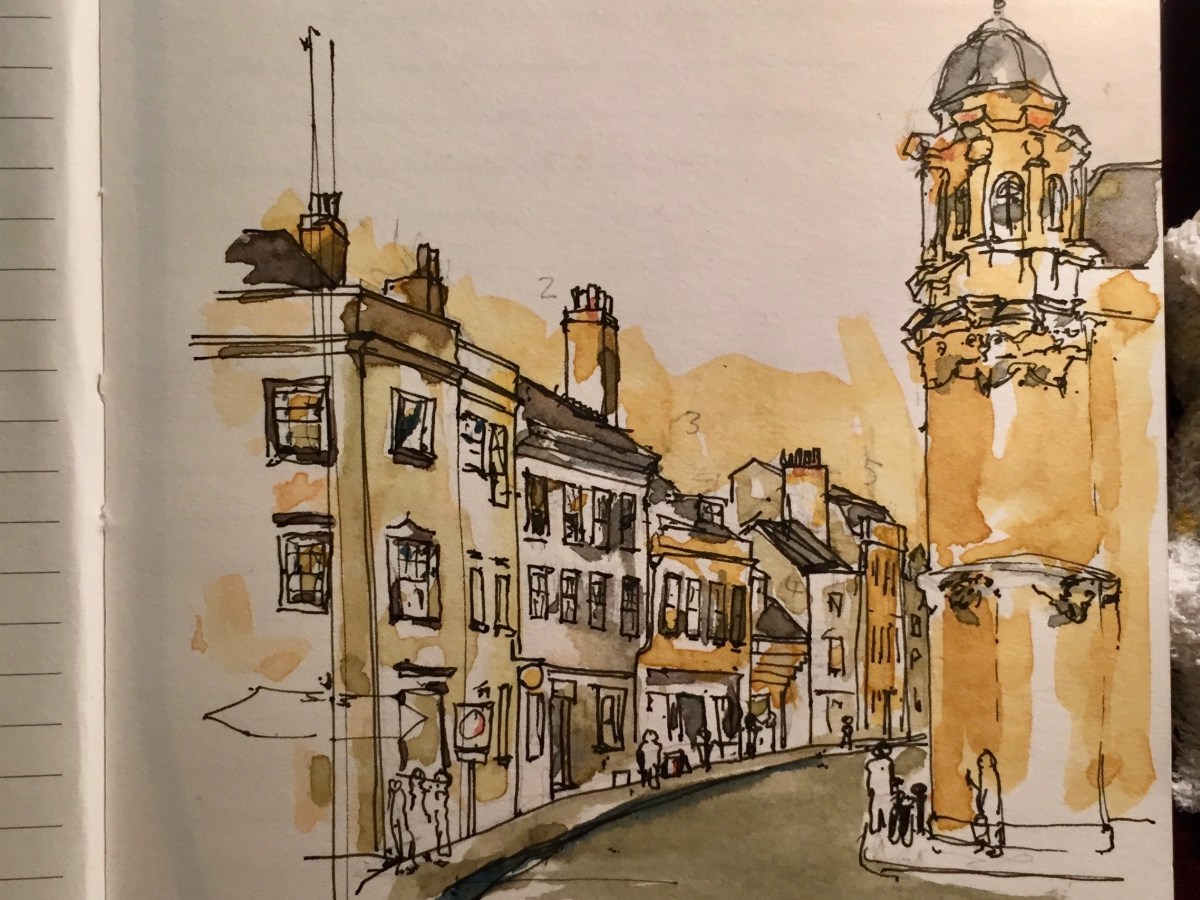
Here is the corner of Catte Street. On the left is the Kings Arms, a Youngs pub. The marvellous turret on the right is part of the Oxford Martin School. This building was originally the “Indian Institute”. It was designed by Basil Champneys in 1884. The weathercock is an elephant. It now houses the Oxford…

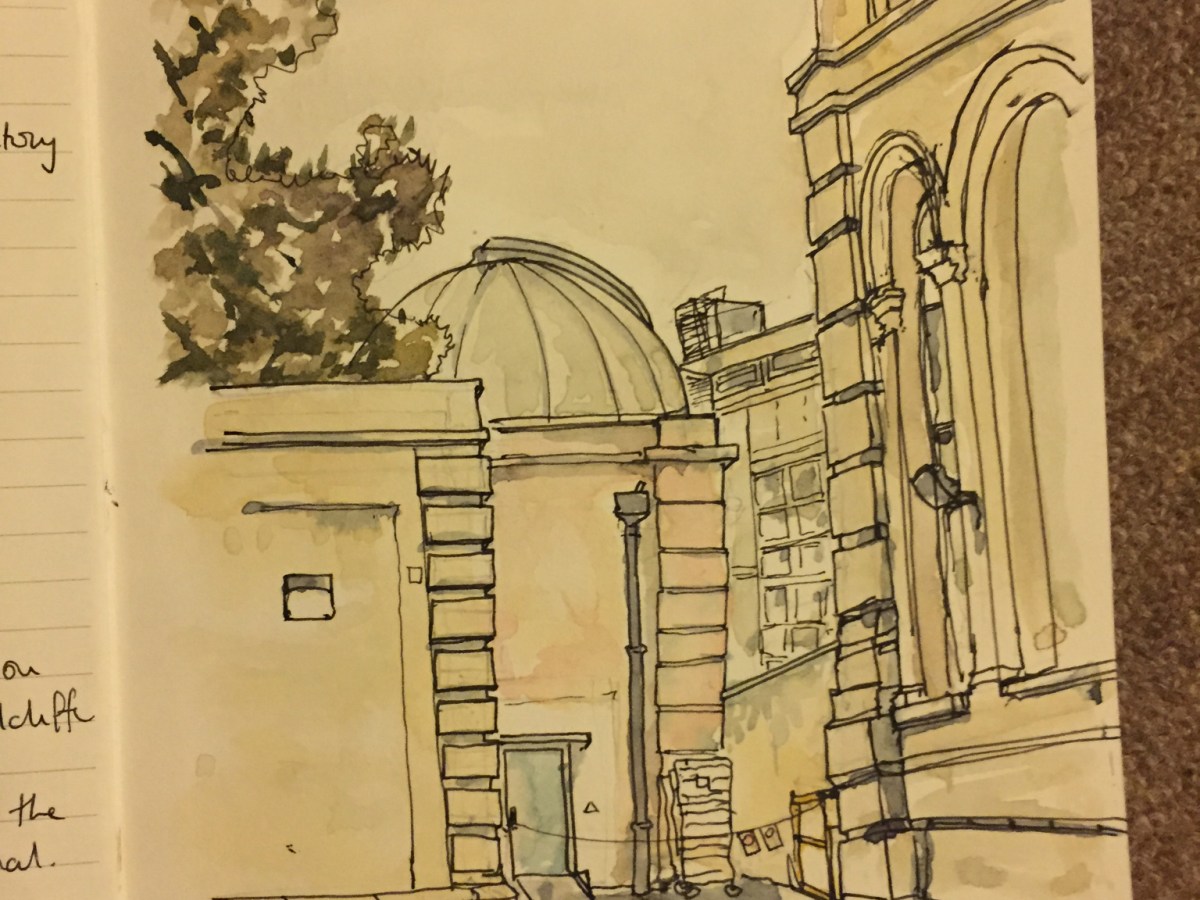
Old Observatory, Oxford

A sketch done in the Science Park. Here’s a sketch showing the Nuclear Physics building.

Phoenix Picture House, Oxford

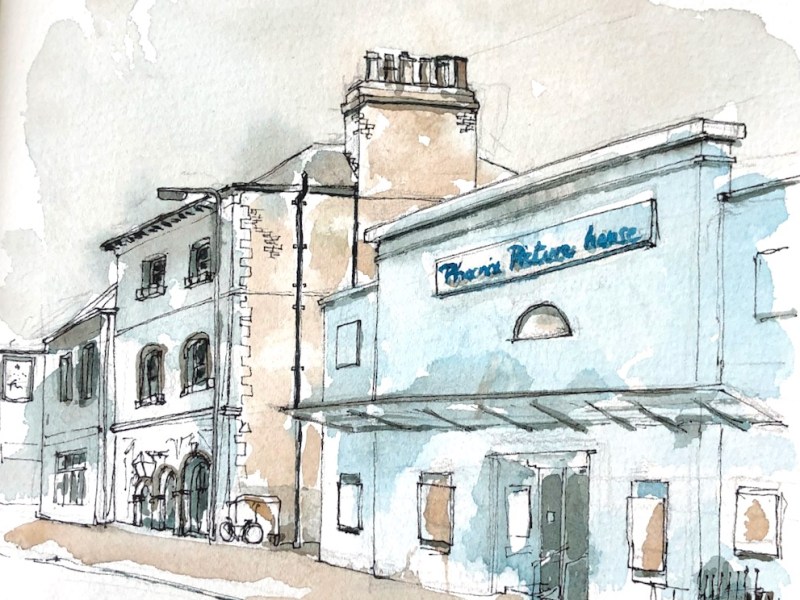
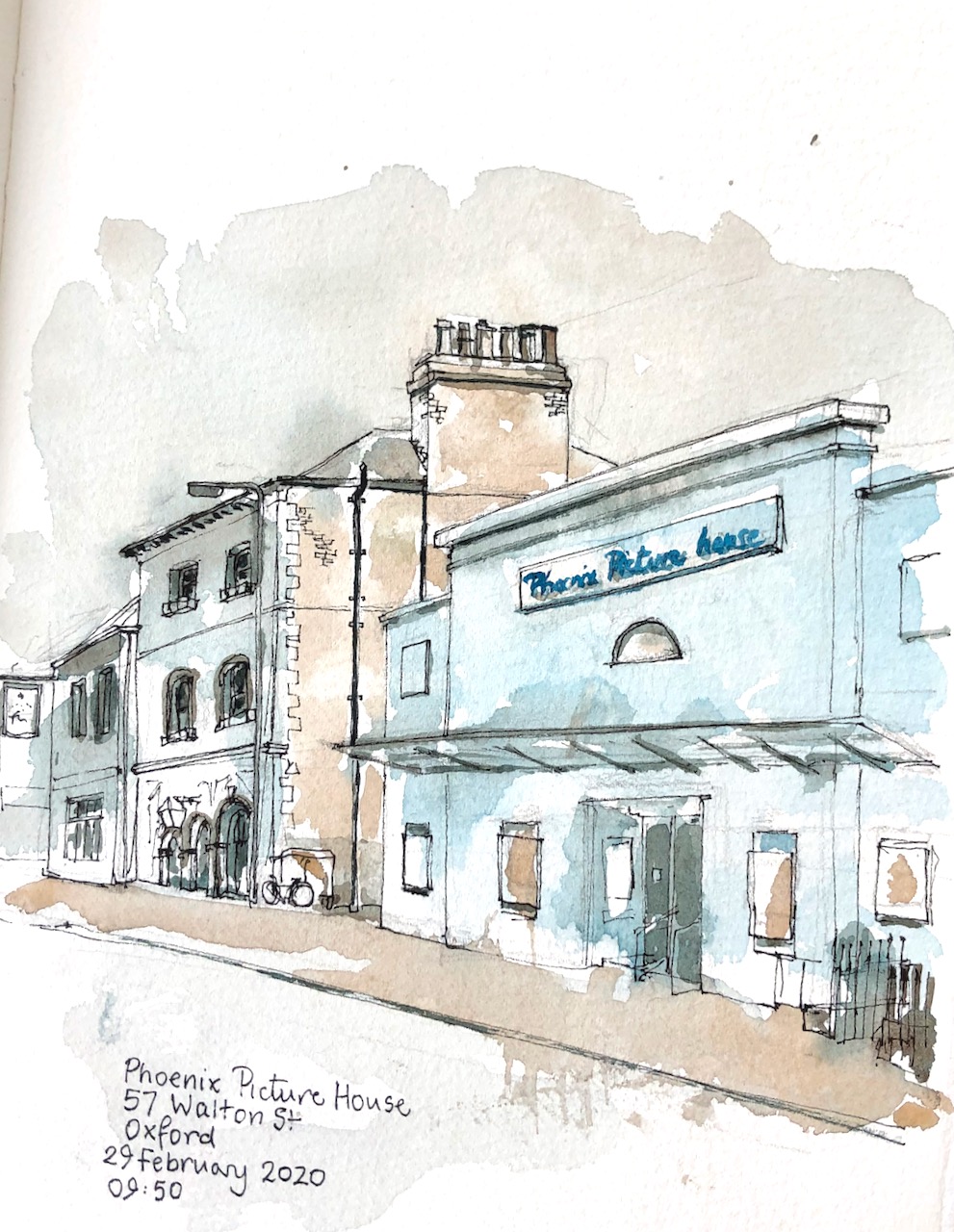
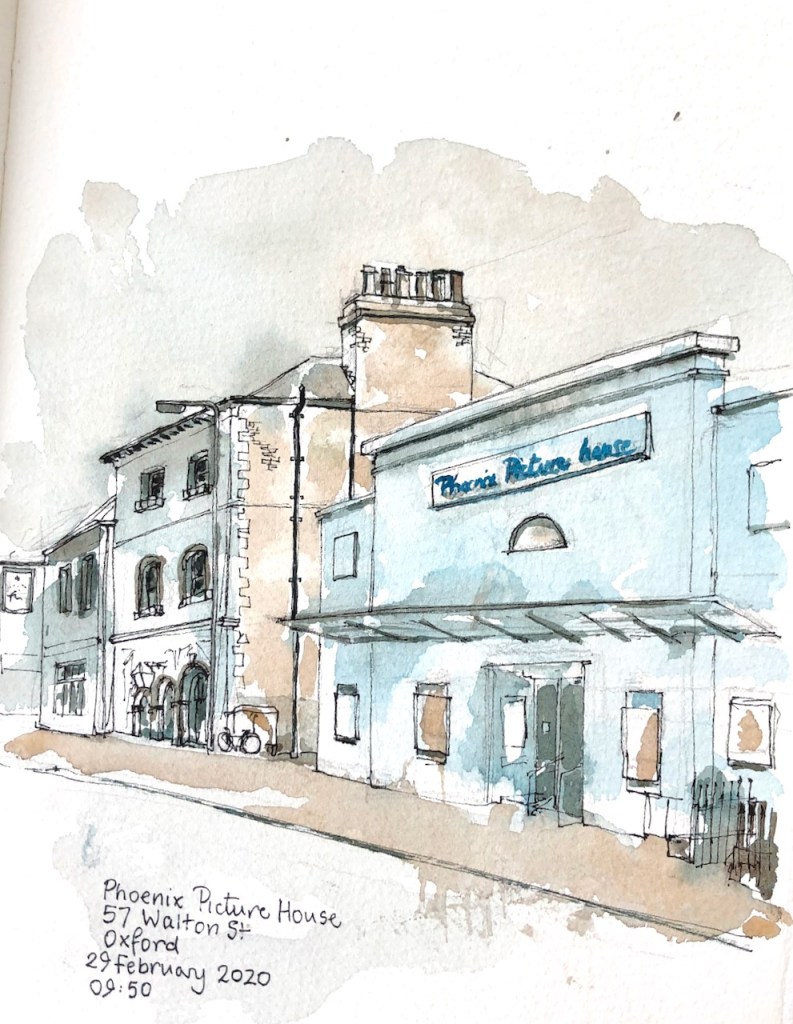
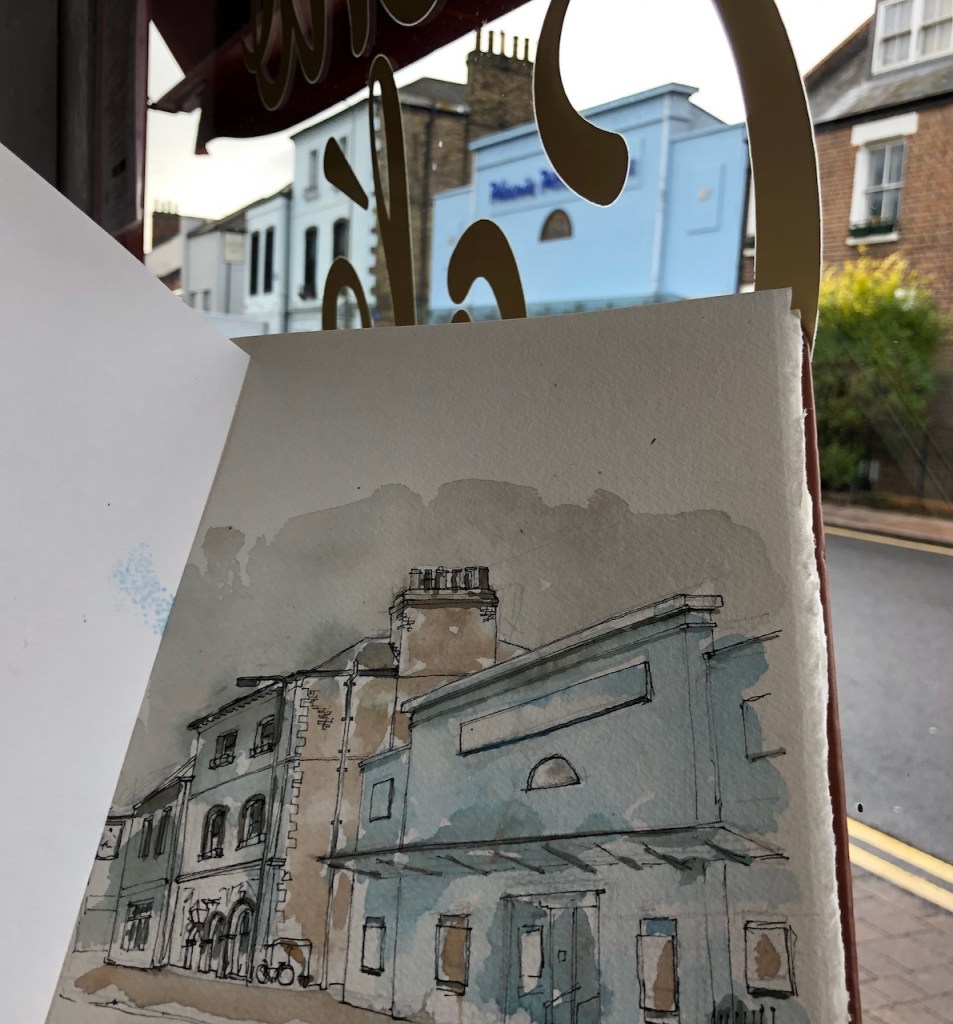
Here is a view looking south down Walton Street, from The Jericho Café, Oxford.

Phoenix Picture house, from The Jericho Café

It was raining outside. People peered in through the windows. One person actually came inside the café to look at my picture. Or maybe it was to escape temporarily from the rain. They looked at the picture, in any case, and made cheerful and encouraging comments. Then they went out in the rain again.

The Phoenix Picture house is a cinema. On the left is The Jericho Tavern, a pub and music venue.

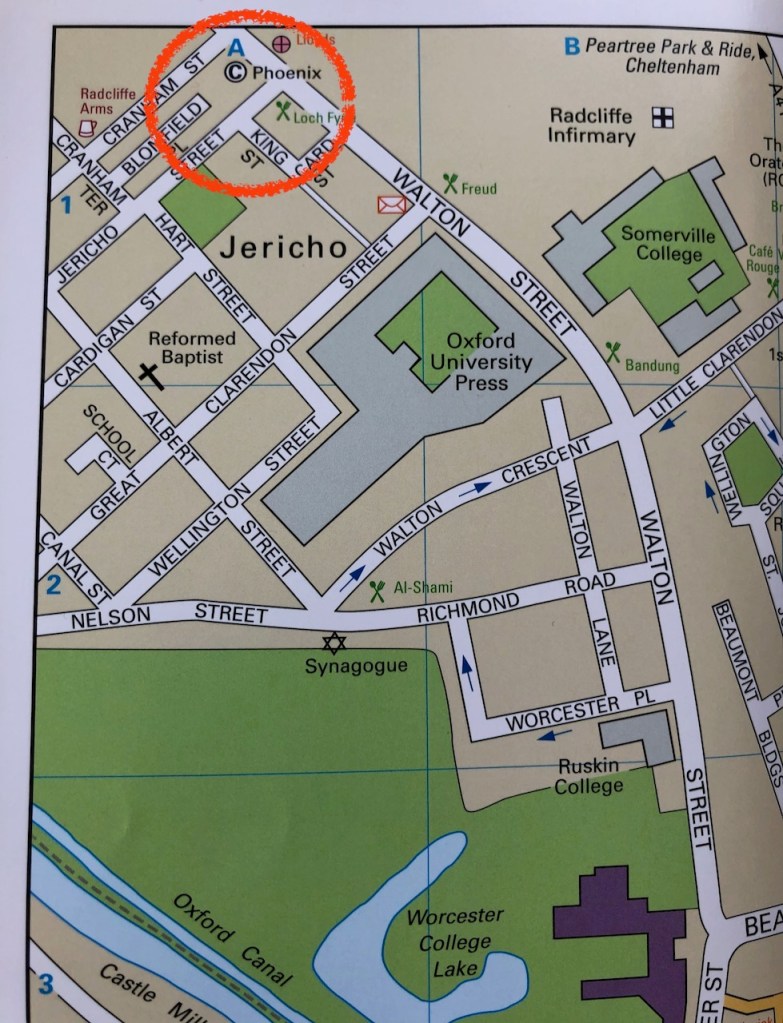
Here is work in progress on the picture, and a map. As you see, Jericho is on the fringes of the map. The Jericho Cafe is at the junction of Observatory Street (off the top of the map) and Walton Street. This map is out of date. The place labelled “Radcliffe Infirmery” (top left) has now been redeveloped as the Radcliffe Observatory Quarter. On this site are the Mathematical Institute (opened in 2013) and the Blavatnik School of Government (opened in 2015). You can walk through the site to the Woodstock Road, past the Radcliffe Observatory which has the signs of the zodiac carved around it, including a realistic large-size crab.

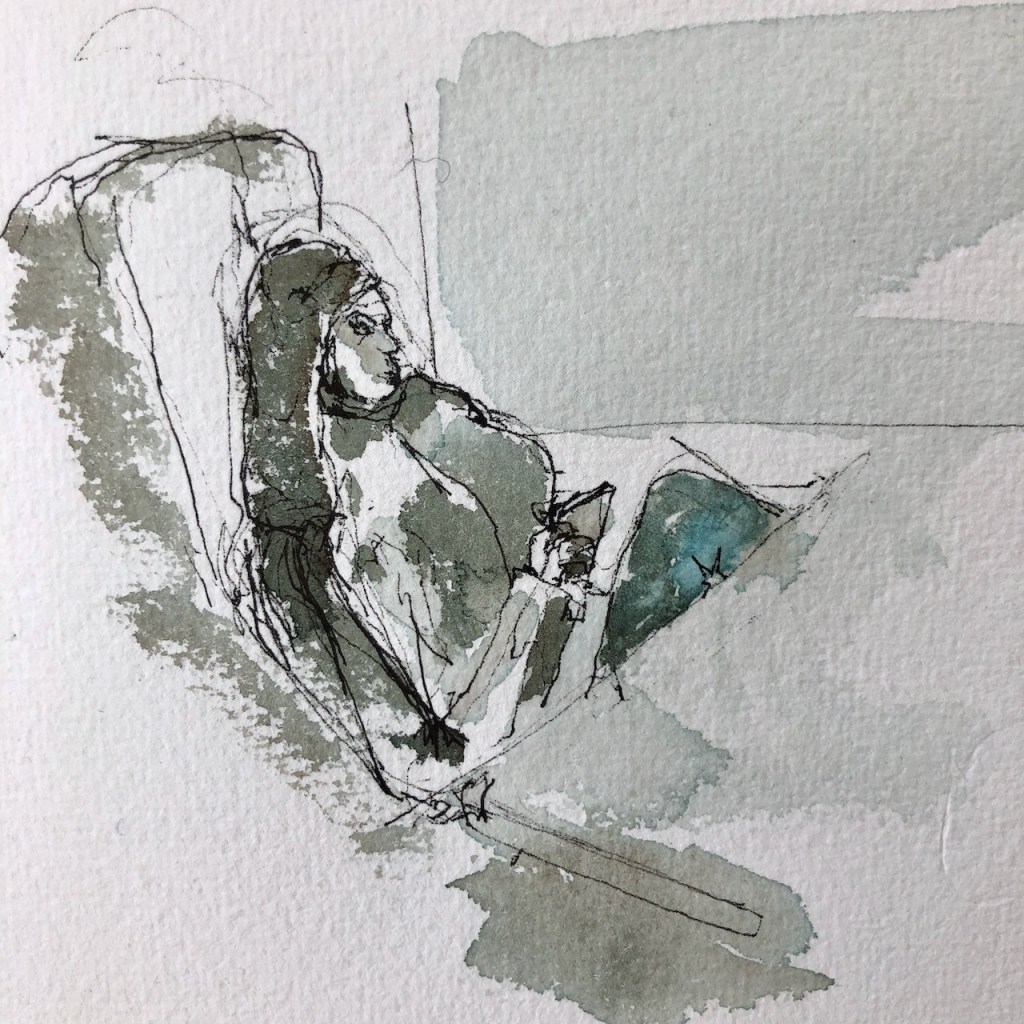
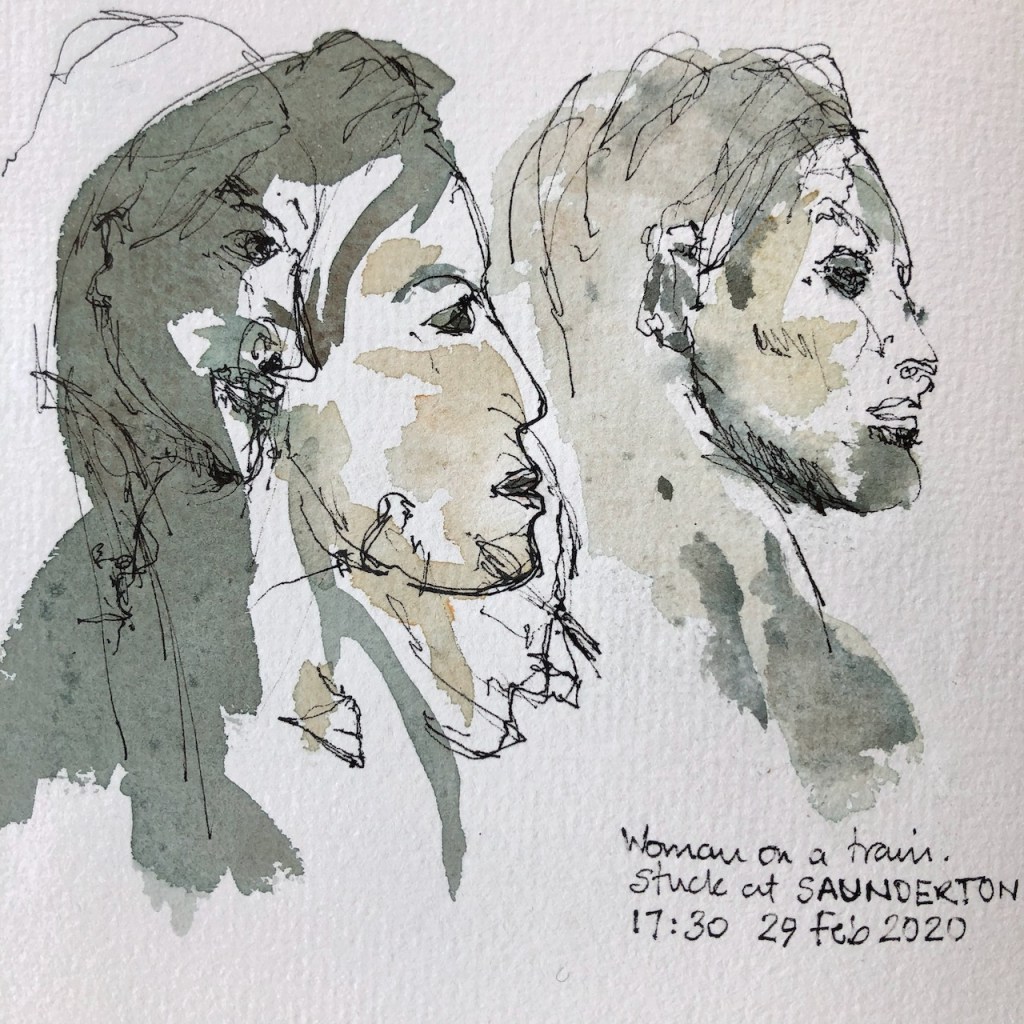
I was also practising drawing people.

Sketching in the Ashmolean Museum

What is the purpose of a museum? The previous evening, I’d been to a lecture by Tim Reeve, Deputy Director of the V&A. He had described, with great conviction, a new building they plan for East London, in “Here East” on the former Olympic Park. It will open up the V&A storage and logistics centre to public view. People will be able to work there, and be inspired by the objects. The idea is to generate “creative career opportunities in East London”. I could see how the proposed building, its architecture and the way it will be used are oriented firmly towards that clear aim. Well done V&A.

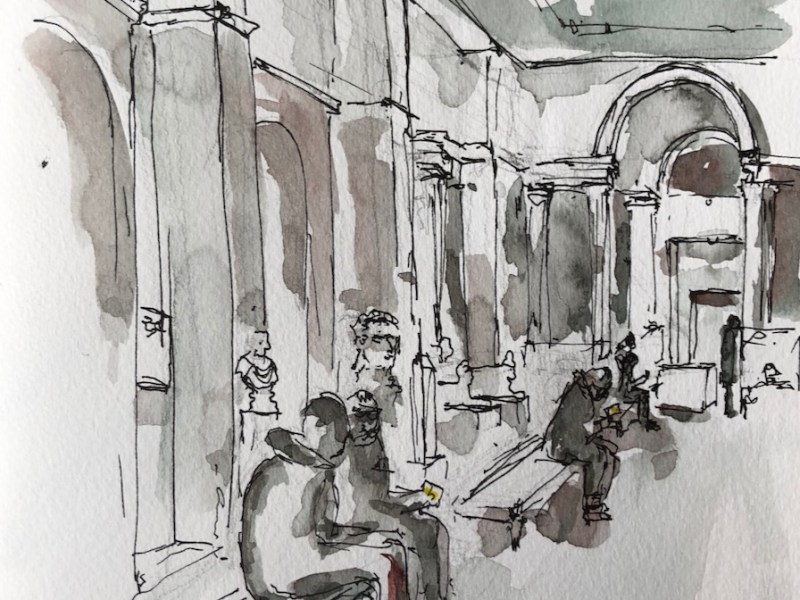
So, sitting in the Ashmolean Museum of Art and Archeology in Oxford, I wondered what was the purpose of this museum. I was in the Randolph Sculpture Gallery, which contains a collection of Greek and Roman marble statues, collected in the 17th century.

The main use of the gallery, at that point in the day, was for people to sit on the upholstered seats, and chat, and use their mobile phones. In my sketch, I drew the three benches I could see, each of which is occupied by someone staring at their mobile phone. In the background, a monumental head of Apollo looks on.

This part of the gallery seemed to be serving as a public living room, which is perhaps as fine a purpose for a museum as any.

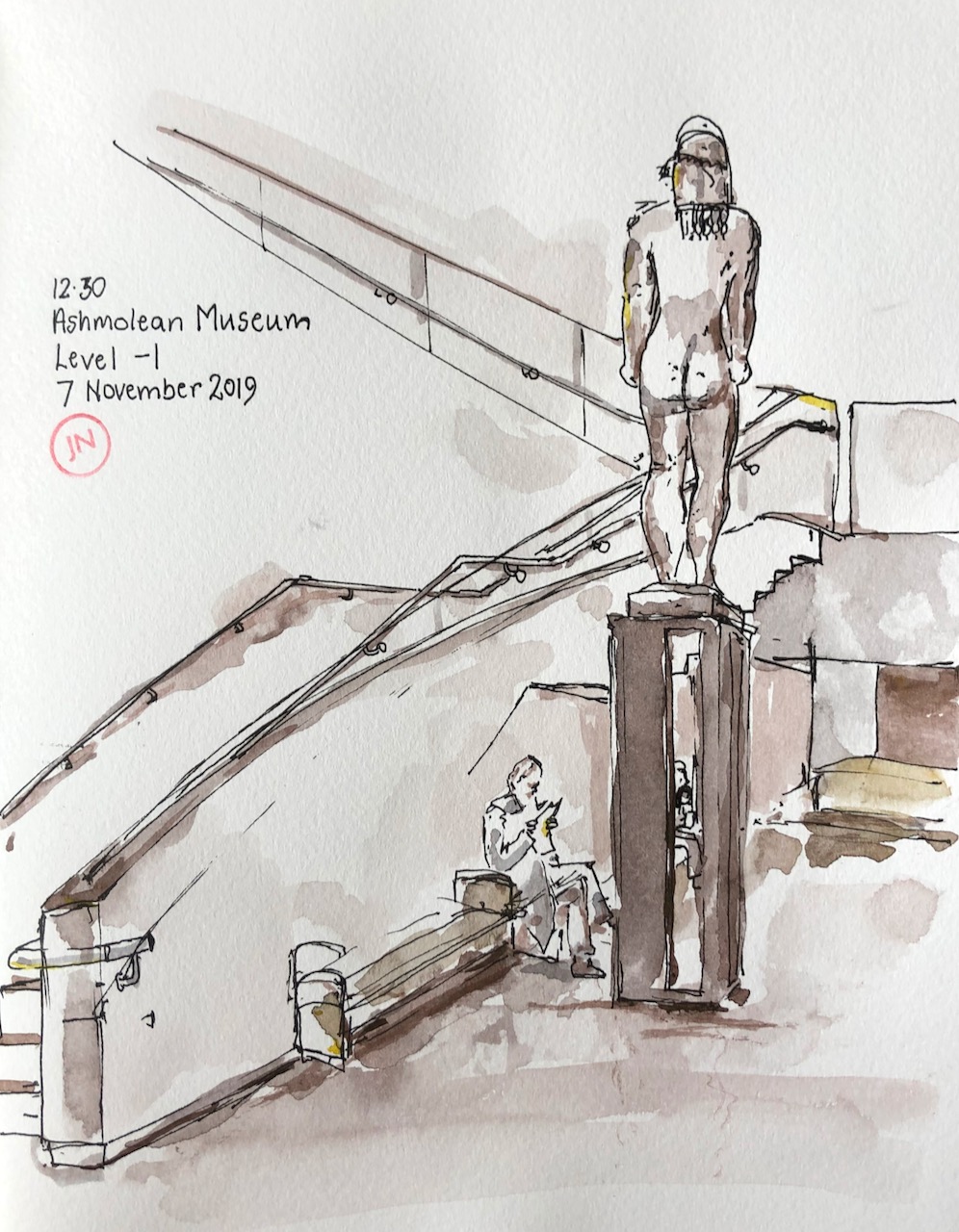
On the lower level there is a large Egyptian statue on a tall plinth.

IMG_0277

An elderly gentleman chose this place to read his paper. Through the plinth, I could just see a woman chatting to someone via her screen.

There are many ways to enjoy a museum.

I walked about sketching things.

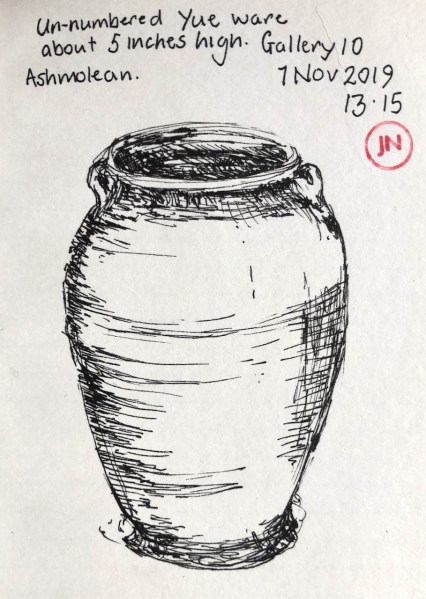
Here is an object from one of my favourite parts of the museum. It is a Yue ware pot, about a thousand years old. It’s small, only about 5 inches tall, and a gleaming green colour. It’s lovely to draw these things, as it in only by looking for a long time that I gradually become aware of the marks of the fingers of the maker, and of the slight irregularities in the shape.

IMG_0275


Oxford: Pitt Rivers annex and Merton Chapel

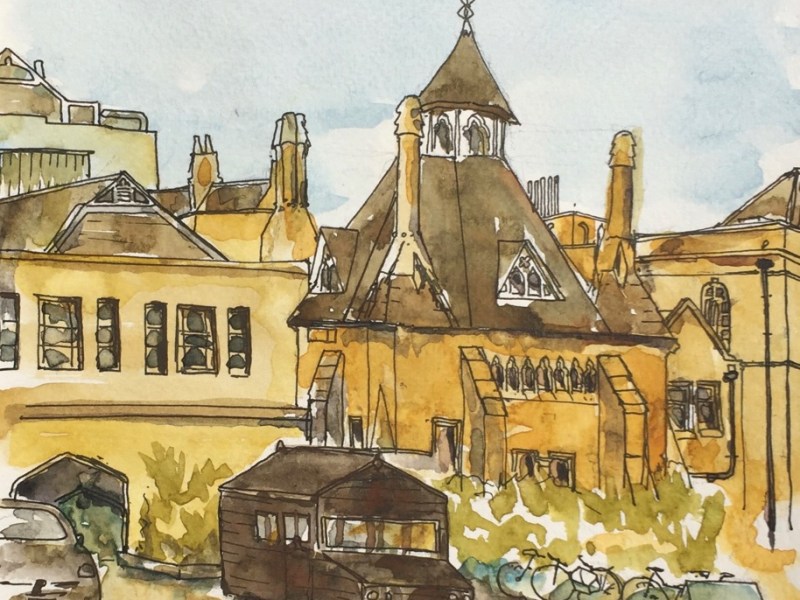
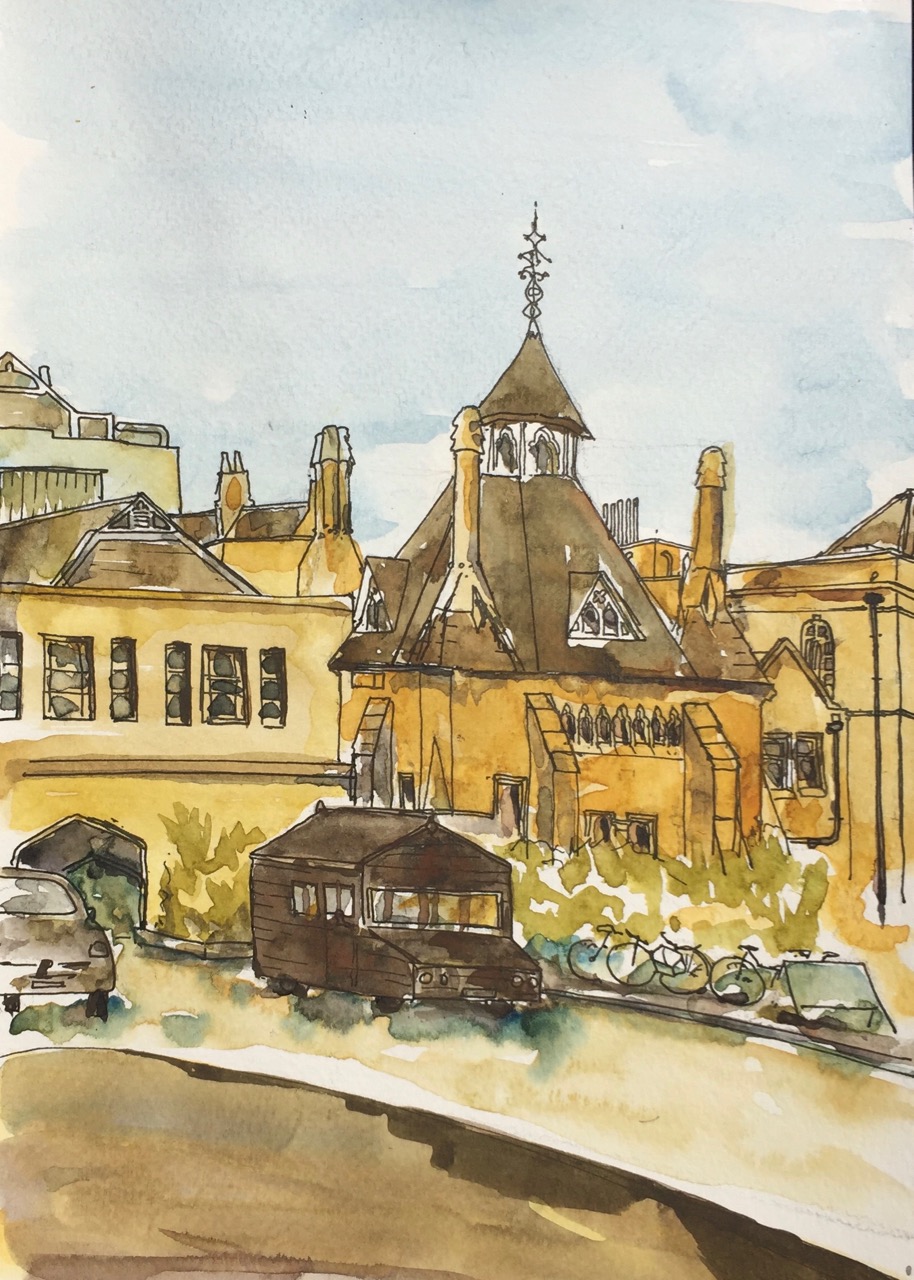
This little building to the right (South) of the Pitt Rivers Museum has often intrigued me. It has four chimneys. one in each corner.

After I’d drawn it, I went to try to find out what it is. It appears to be connected to the Pitt Rivers Museum, but has no special name itself, and its purpose was not stated.  Since I finished the drawing at about half past seven in the evening, the door was closed and locked and no-one was about. It is in the same style as the main Pitt Rivers Museum.

“The new Museum building was structurally completed in 1860, and is now considered a gem of middle Victorian neo-Gothic architecture”

says the museum’s website.* In the background you can see the roofs and pipework of the science site. On the right is the Radcliffe Science library.

The strange vehicle in the foreground trundled in while I was drawing. It looks like a garden shed on wheels. The registration number is: Q710 LBW.

IMG_4436

On my way home after the lecture I drew this quick sketch of Merton Chapel looking down the marvellously named “Magpie Lane” off the High Street.

IMG_4435

Pitt-Rivers Annex: 1 hour 40mins

Merton Chapel: 40 mins

Both in Jacksons Watercolour Sketchbook. Pen and wash.

I have drawn pictures in Oxford before:

Oxford, St Giles , 

Two sketches in Oxford,

Old Observatory, Oxford


*The Pitt Rivers Museum Website contains a document on its history (consulted July 1st 2018) http://web.prm.ox.ac.uk/sma/index.php/articles/article-index/436-prehistory-of-the-pitt-rivers-museum.html