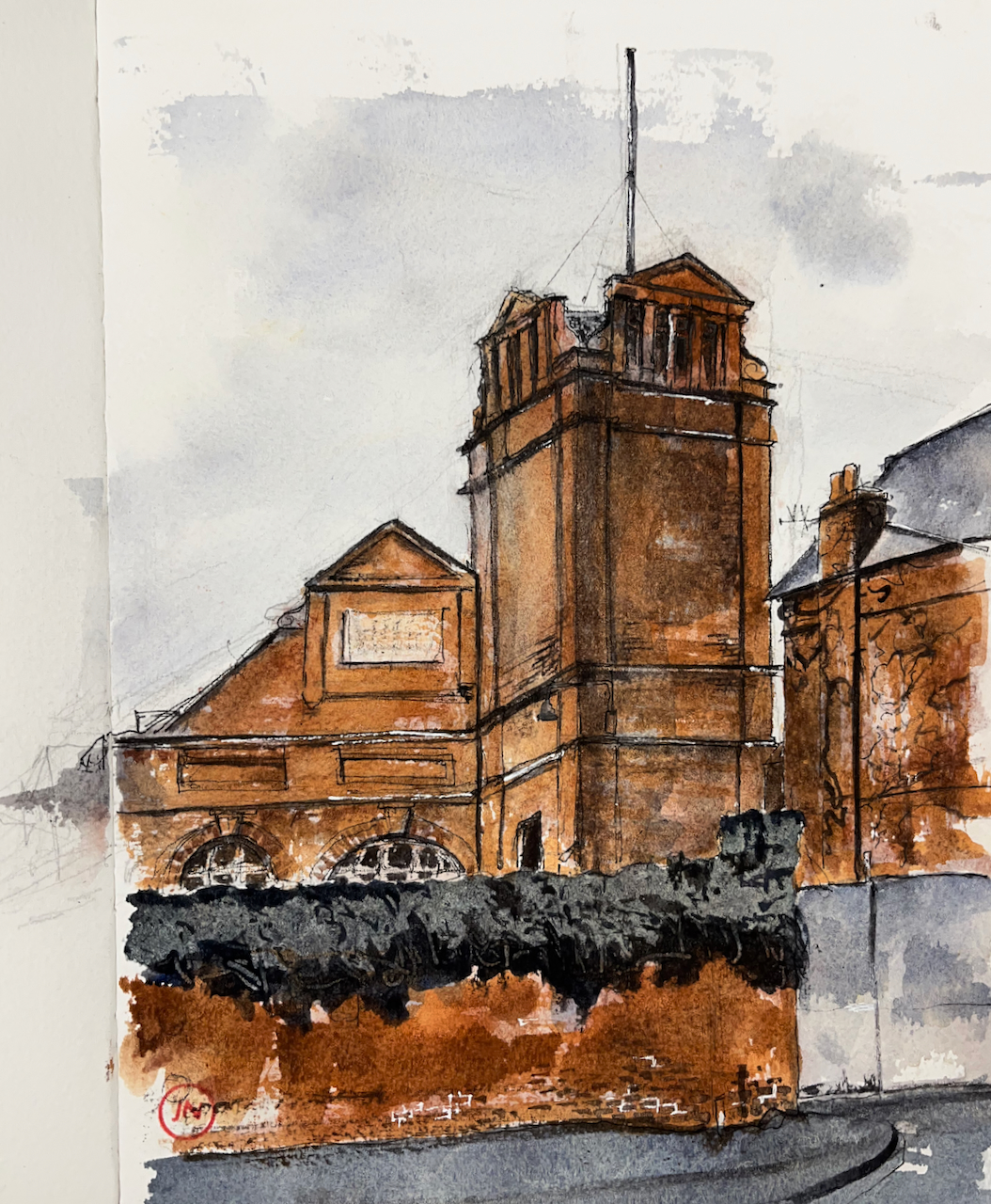
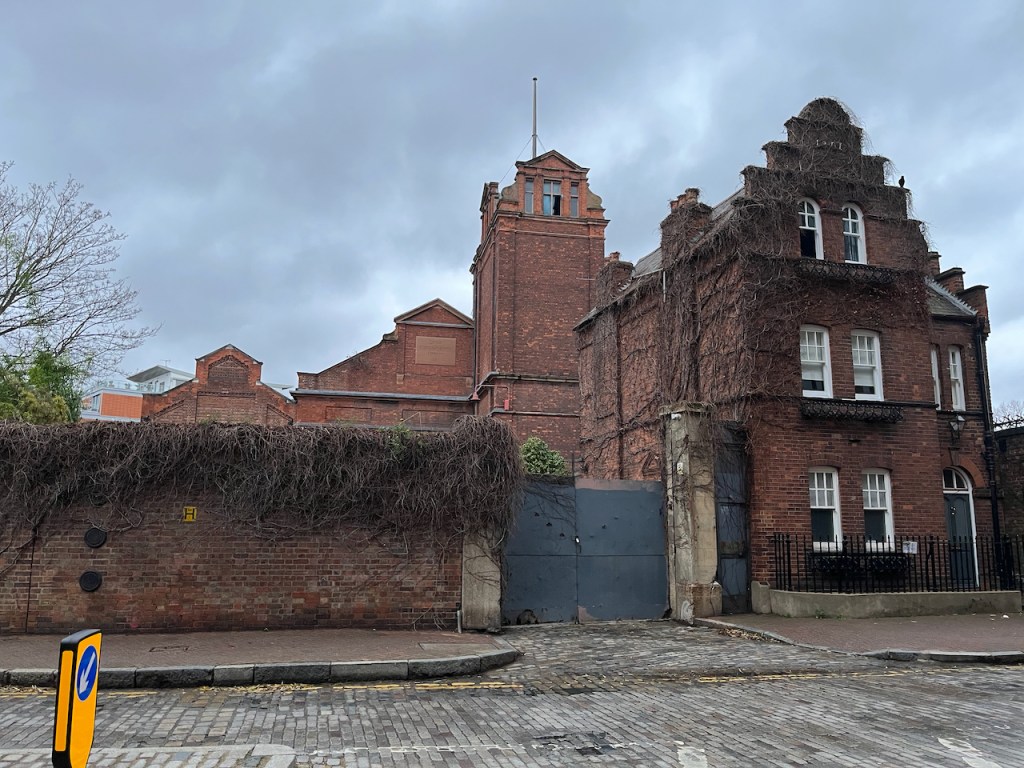
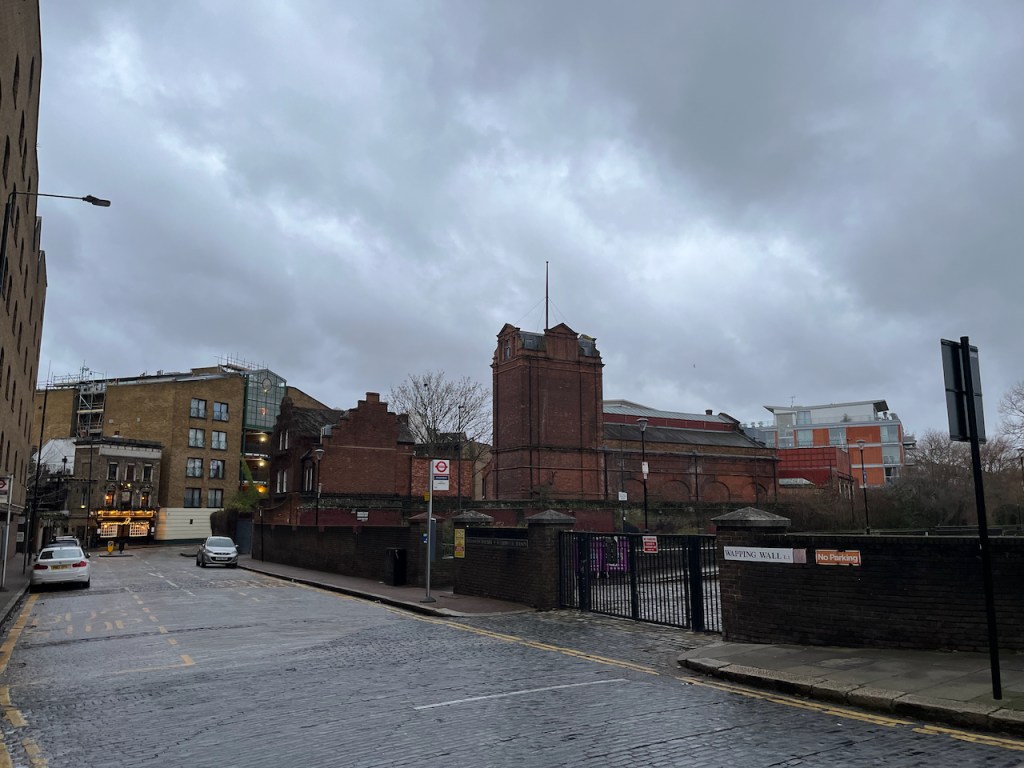
What an amazing building! It presides over a corner of Shadwell Basin, surrounded by a high wall. I spotted it on a long weekend run, and went back later to sketch it.
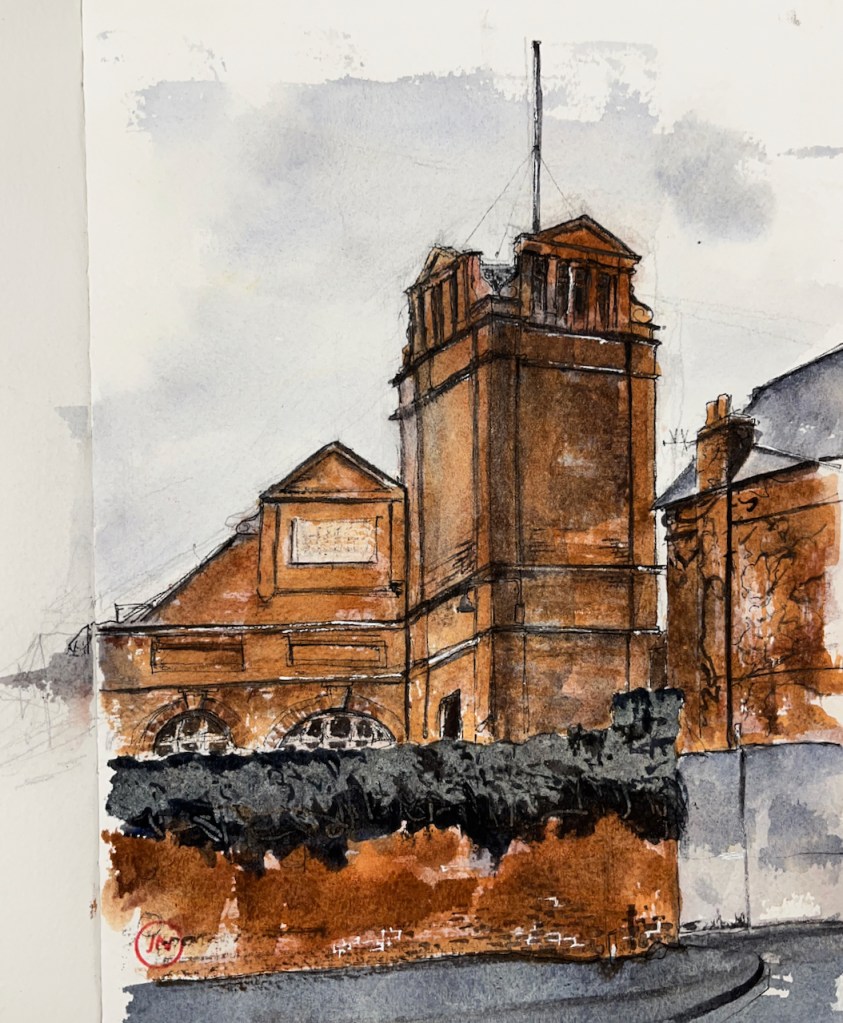
What’s a Hydraulic Power Station? Well, in the late nineteenth century, London’s industry needed a way to exert mechanical force: to operate a printing press for example, or to raise heavy weights, for cranes and metal forming. Also, passenger lifts had been invented, and building engineers needed a way to exert force to operate the lift. One way would be to have a steam engine on site. This wasn’t always practical. Steam engines are noisy and dirty and you don’t want one next to your desirable residence, or even cluttering up your dockyard. So here’s the next idea: instead of lots of little steam engines all over the place, we’ll have a big steam engines in just a few places, and we transmit the power from them by using water. Water? Yes. The big steam engines push water at high pressure down strong cast iron pipes, and the lift engineer at the far end effectively turns on a tap and the force of the water pushes the lift up. That’s the principle.
This sounds utterly implausible, but it worked. At the end of the nineteenth century, there was a great network of pipes all over London, holding water at high pressure. This water was used to raise passenger lifts, operate curtains at theatres, and to drive printing presses. It was used for cranes and other static machinery which required a strong, steady force. It’s a steampunk dream. Here’s a map. These pipes were everywhere.
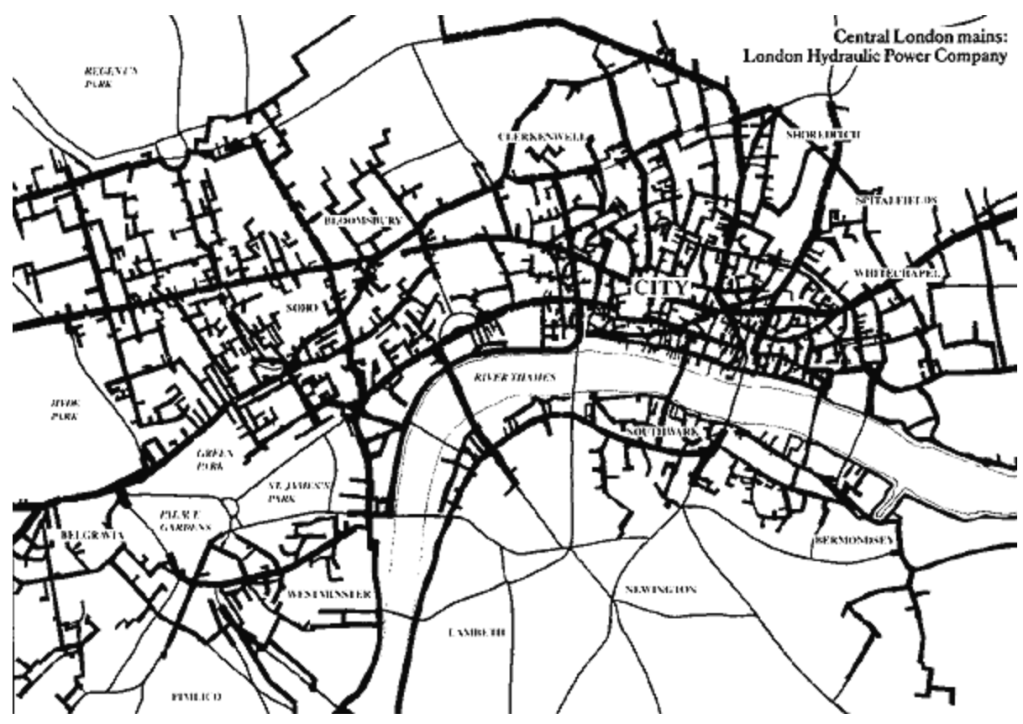
Map from https://www.subbrit.org.uk/features/hydraulic-power-in-london/
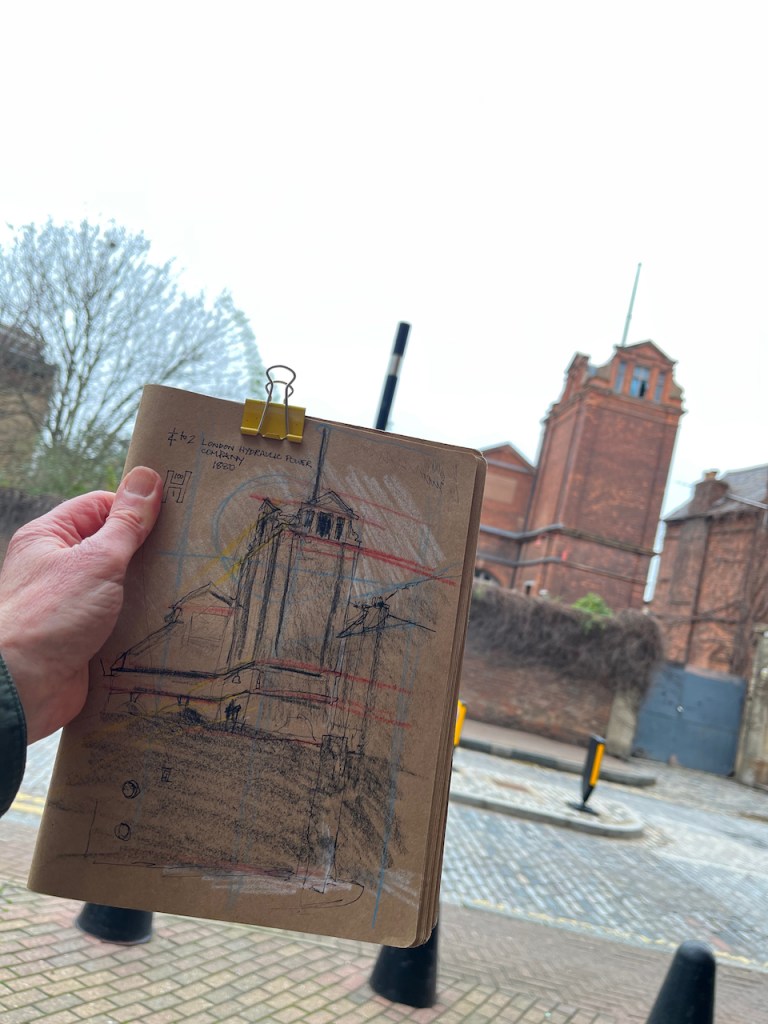
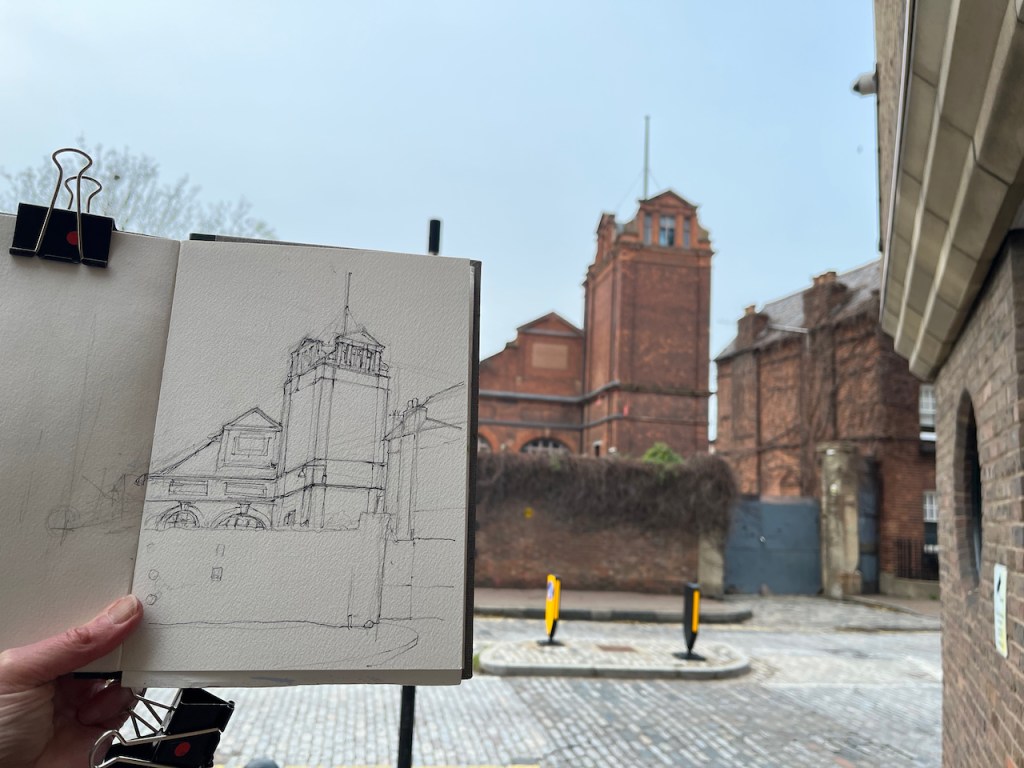
The plaque you can see in the centre of my drawing says “London Hydraulic Power Company 1890”. This was one of the big power stations driving the water along the pipes. The power came from a coal-fired steam engine.
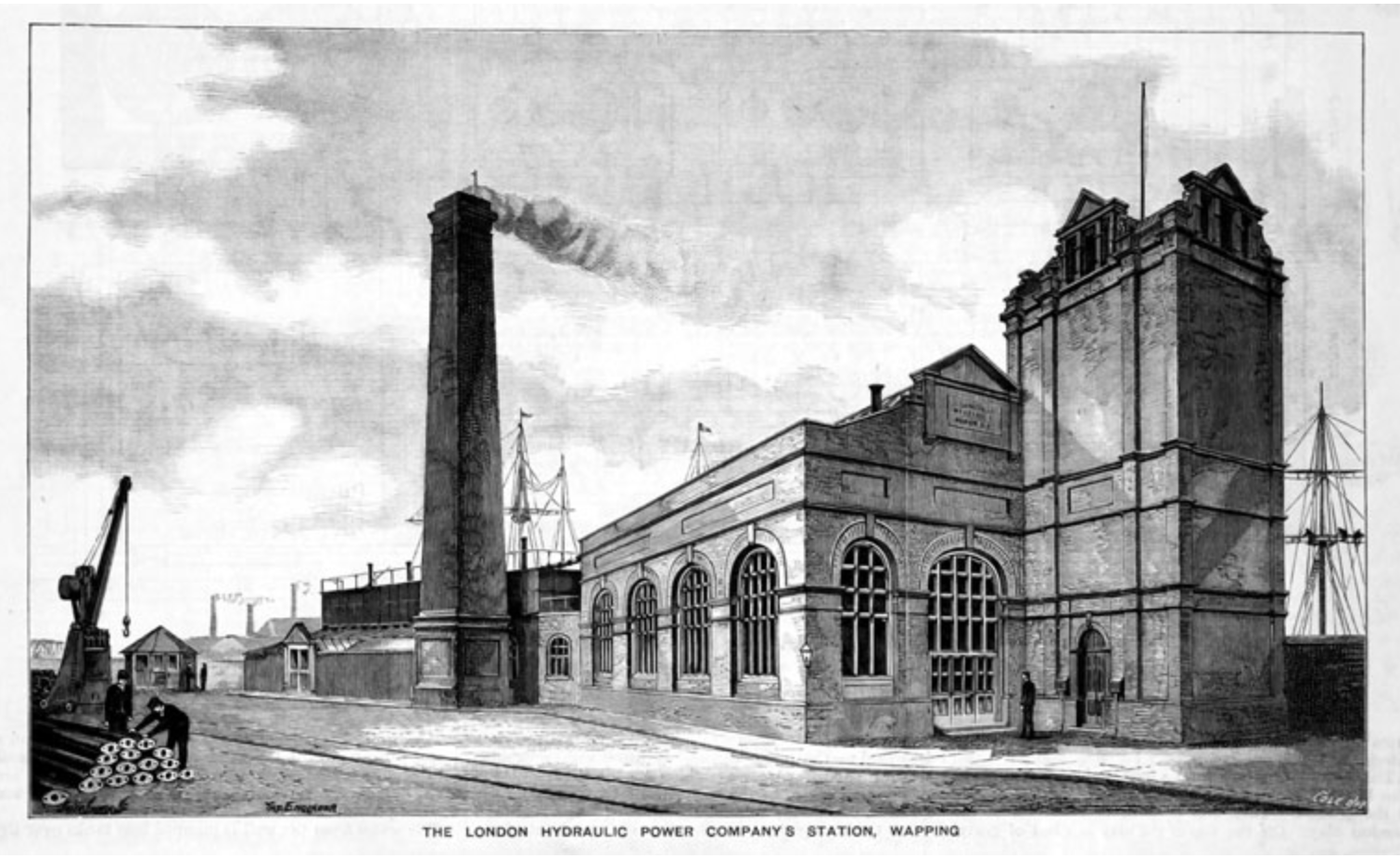
This drawing is from roughly the same place where I did my drawing. Note the sailing boats in Shadwell basin, to the right and in the background. The Thames is off the picture, to the left. Picture from: https://www.gracesguide.co.uk/File:Im1893EnV75-p43.jpg#file (creative commons)
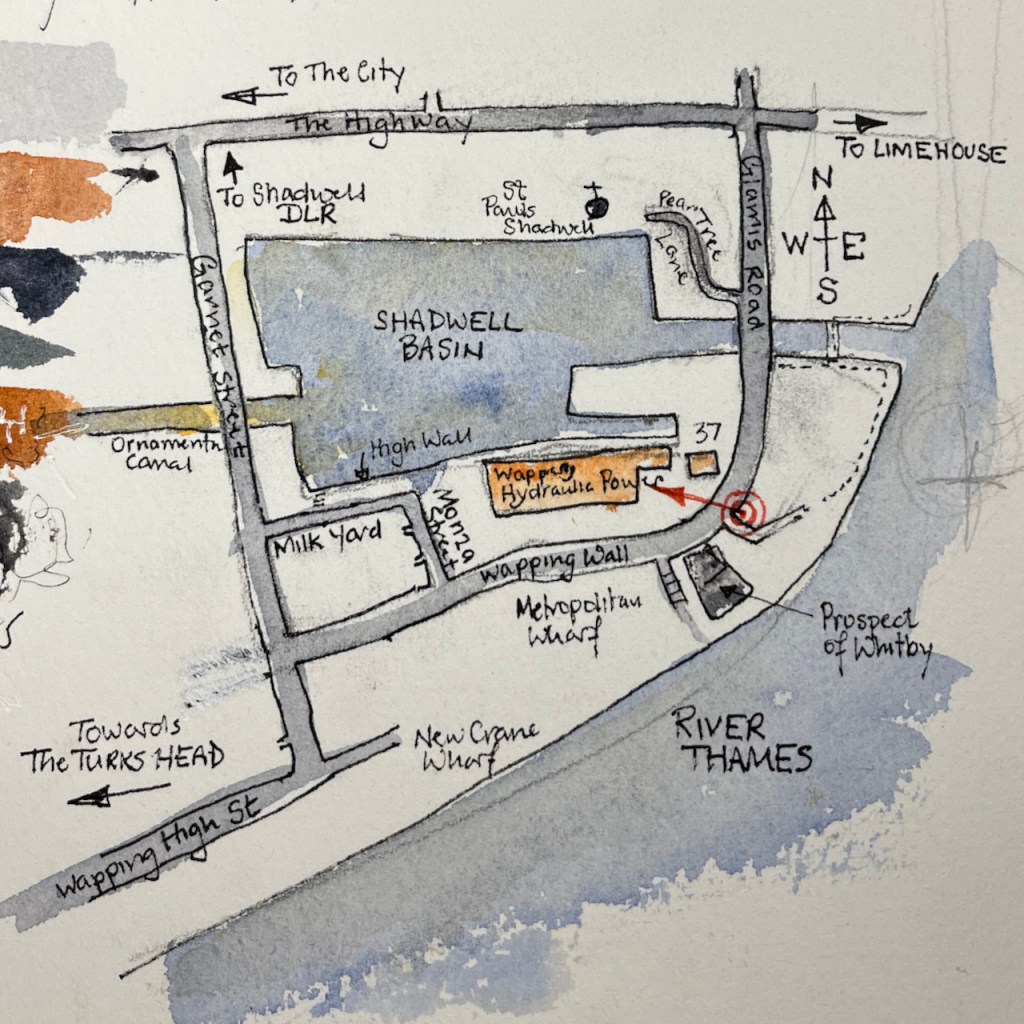
Here is a summary of the history of the building, gleaned from various web searches:
- 1890: completed and started working. In use until 1977.
- September 1973: first listing
- June 1977: use discontinued
- December 1977: Grade II* listed, including the machinery (listing ref 1242419)
- 1993-2013 – owned and operated by Jules Wright as “The Wapping Project”: an art and entertainment venue.
- 2013: Sold to UK Real Estate Limited
- March 2019: planning application for an office building in the courtyard, retail and restaurant space and changes to the interior
- October 2020: planning permission approved (ref PA/19/00564/NC and PA/19/00571/A1), despite objections from The Victorian Society and the Turks Head Charity.
- Meanwhile – it’s an event space.
The Wapping building still has its machinery inside. It’s awaiting redevelopment. You can hire it for your fashion shoot, Christmas Party or product launch. The photos below are from the agencies advertising the use of the space: Canvas Events, and JJ Media It looks totally amazing! If you book your event there, please can I come and sketch?
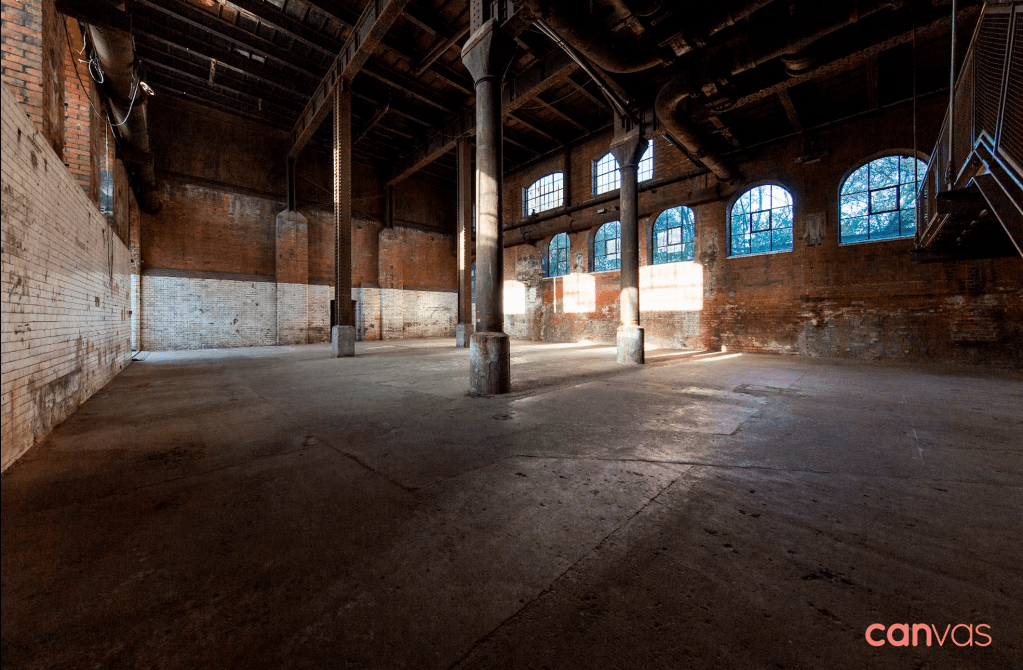
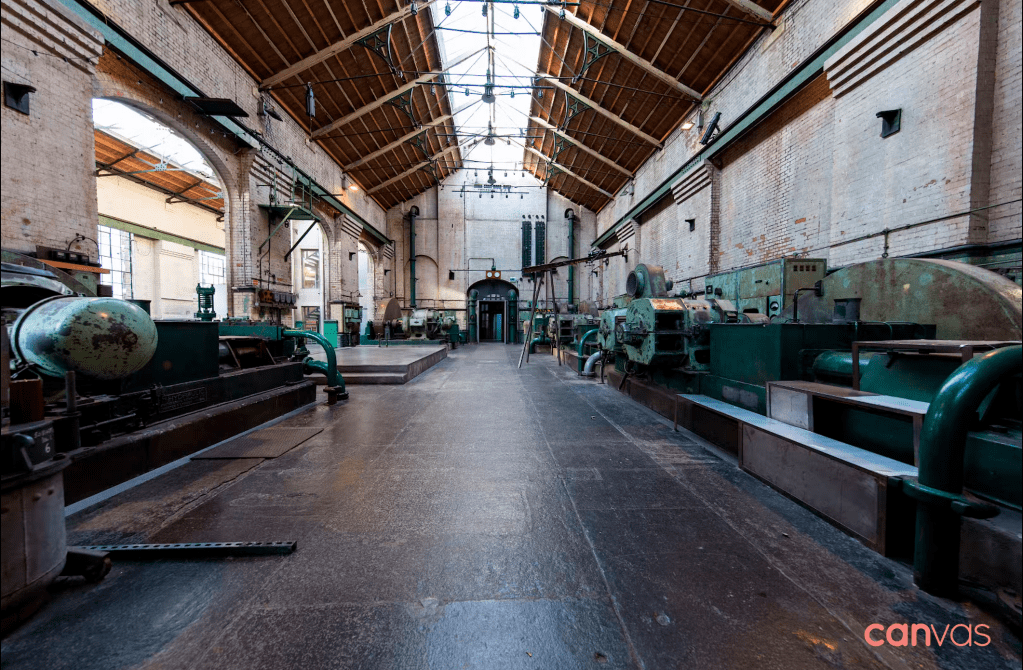
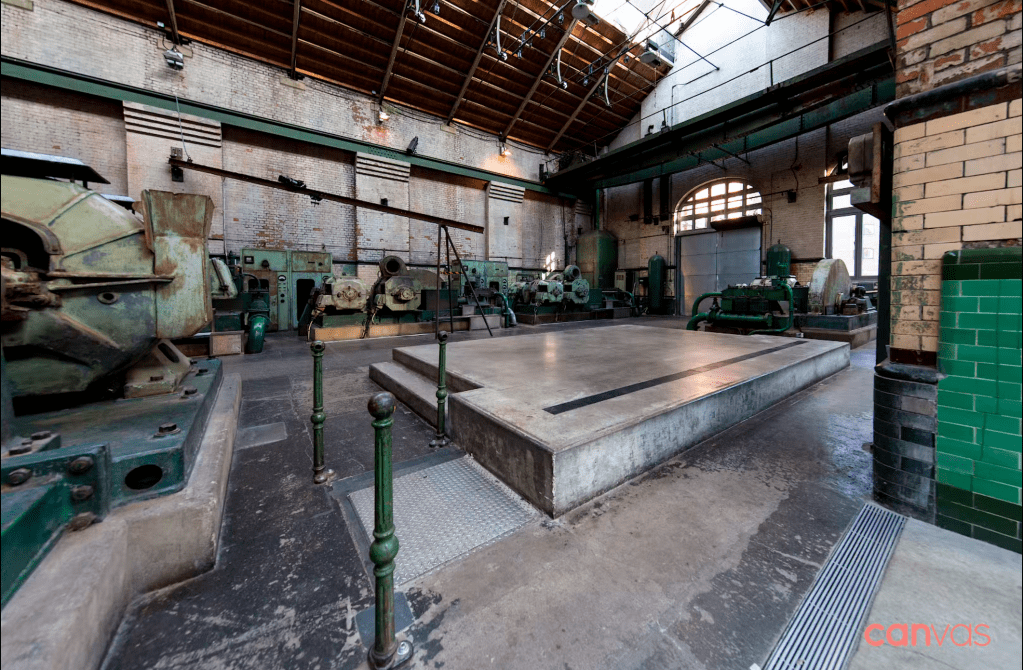
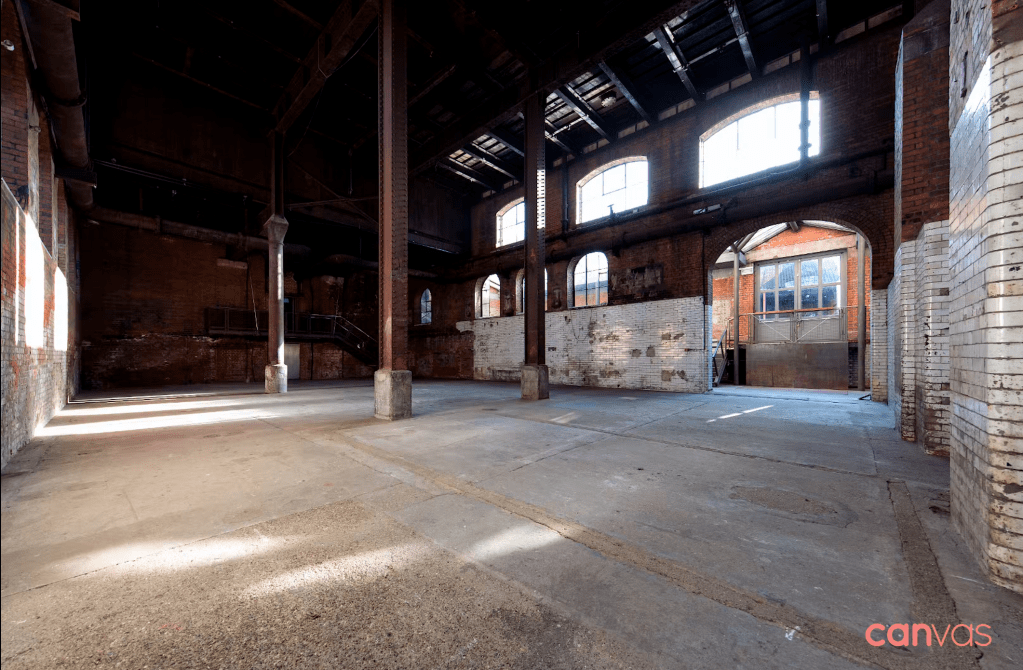
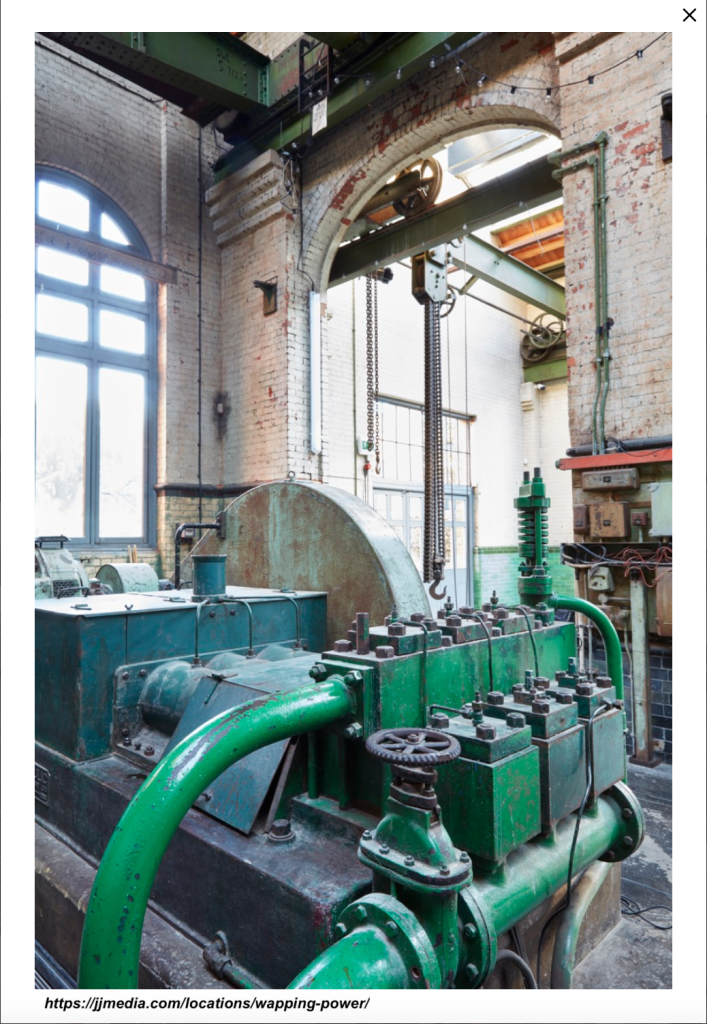
The project sheet for the planning application is here: https://www.cma-planning.co.uk//images/projects/wapping_hydraulic_pumping_station/Wapping_Hydraulic_Pumping_Station_Project_Sheet.pdf
If that doesn’t work, here’s the file:
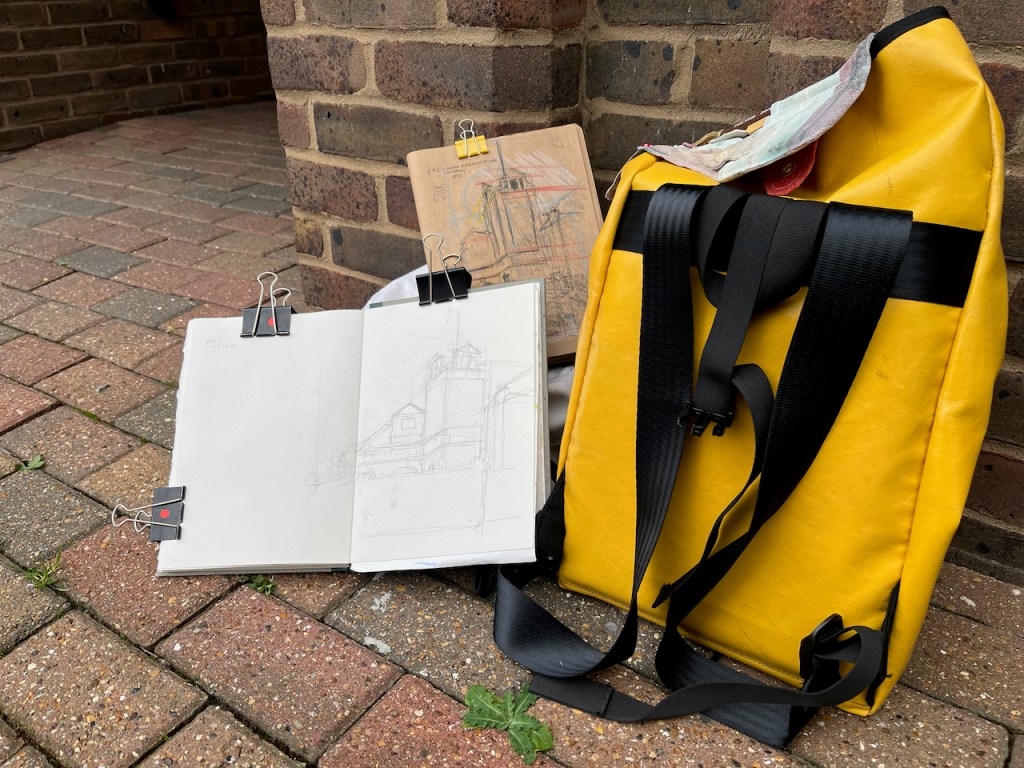
Here are some snapshots taken while I was drawing. The chimney shown in the early twentieth century drawing has vanished.
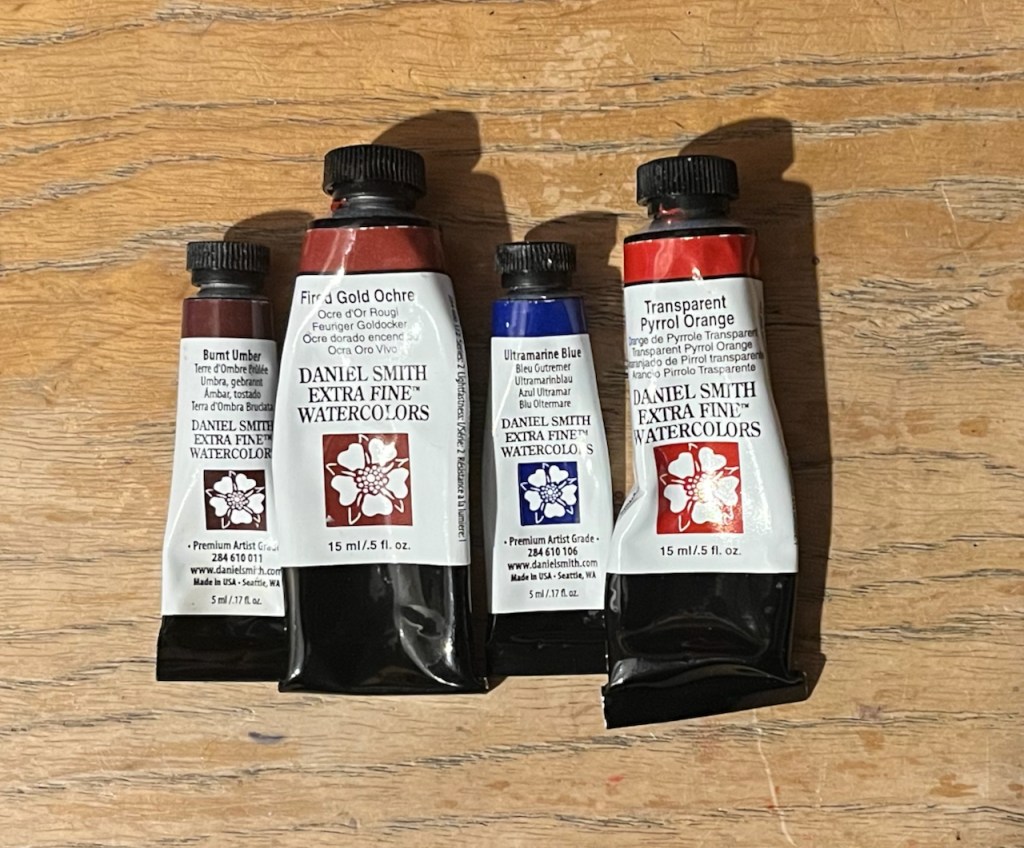
Colours used in the drawing:
- Fired Gold Ochre
- Ultramarine Blue
- Burnt Umber
- Some Transparent Pyrrol Orange, but not much.
Additional references:
https://www.rbhistory.org.uk/post/london-hydraulic-and-power-company

 Jane Sketching
Only just heard about this place and the history of hydraulic power distribution (and I am, I thought, fairly knowledgable of industrial things). I think the plans to develop it are an unfortunate imposition on something so interesting that has survived relatively untouched until now, but that’s how things are nowadays. Next time I’m in London I will try to go and see it. It’s the same all over the country, industrial heritage is being swept away without a thought.
Maybe it will turn out to be ok, but the addition of the obligatory multi-story block on any available open space for the most profit tells me a lot about the developers intentions –
LikeLike
Hello Bob – Thank you for your comment. It is a remarkable example of industrial heritage. Interestingly, the heritage is spread across London. When you next visit London, watch out for for “LHP” covers in the roads. Once you get your eye in, you can spot them on the older streets of the City and the West End. They are usually on or near the pavement.

I love to think of the printing presses, lifts, and heavy machinery fastened to them. Some are in surprising places: there are quite a few just north of St Paul’s Cathedral, amongst the cobblestones. What were they for? A fairground, I wonder? Construction machinery? Also I found one in Lincoln’s Inn Fields, in the legal area. For a printing press, perhaps?
Here’s one of the covers at St Pauls:
LikeLike
Hi Jane,
My friend, penwithlit, sent me details of your website, including your visit to Wapping Hydraulic Power Station. Last Friday, 6th, my friend, Merlyn and I did a walk from Limehouse to Tower bridge, armed with a print- out of your details about the power station. We found the power station and read your print-out – v. interesting. We meant to do a selfie but we forgot so I did a fake one, which you might be able to see on https://photos.google.com/album/AF1QipNz0rR1jej_Fi5dbbWBXJGigD3BTzynHPSxIVXz/photo/AF1QipPFZRDrWQkJUNrYVrCW8Ut4pq0TF40e8p9n-2L_
We liked your paintings and we will look at some more. Chris
LikeLiked by 1 person
Reblogged this on penwithlit and commented:
A fascinating piece of industrial archaeology as well as a great map and sketch. Impressive!
LikeLiked by 1 person
Thank you @penwithlit. I found it fascinating too. All those high pressure water mains under the London streets! I wonder if it’s a technology that will return. Hydraulics is everywhere: brake pedals in cars, chairs that rise and fall, diggers and cranes. It’s just that we don’t pipe high pressure liquid around the city any more.
Happy New Year to you. I hope this New Year brings you yet more inspiration, stories and beauty for you to curate, create and transmit.
LikeLike