Scenes from Switzerland – August 2023 sketchbook

Sketching is a way to fill those “waiting” times with creative activity.
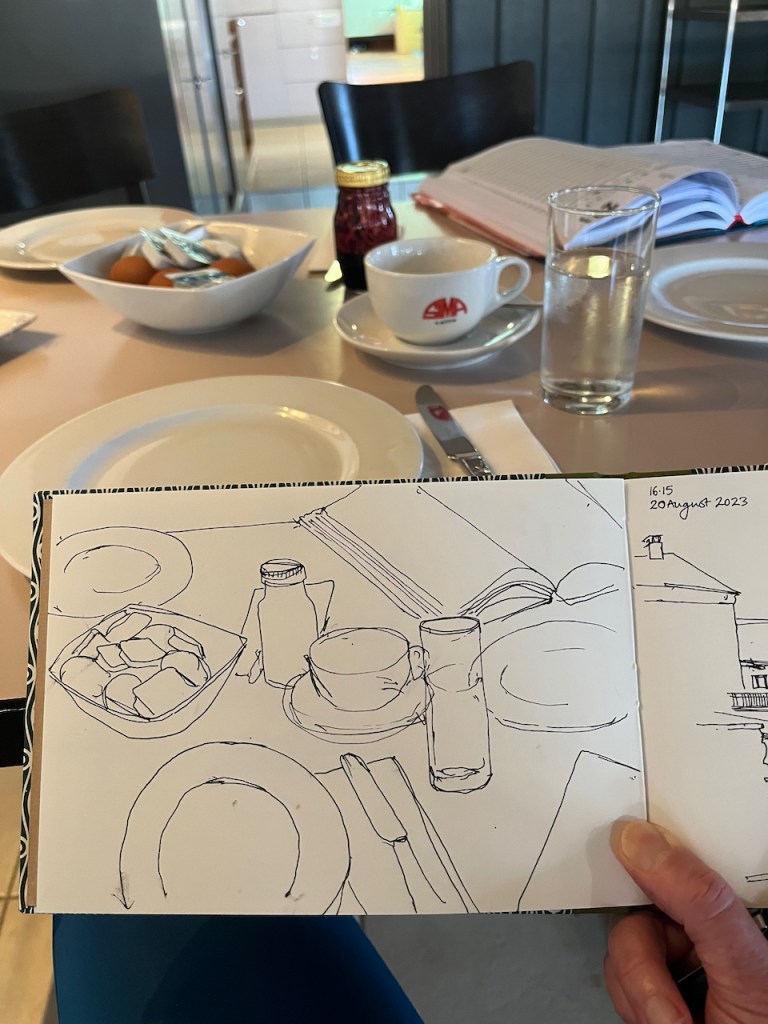
I had an A5 sketchbook with cartridge paper. This cartridge paper behaved differently from the watercolour paper I am used to. It was more suited to quick sketches.
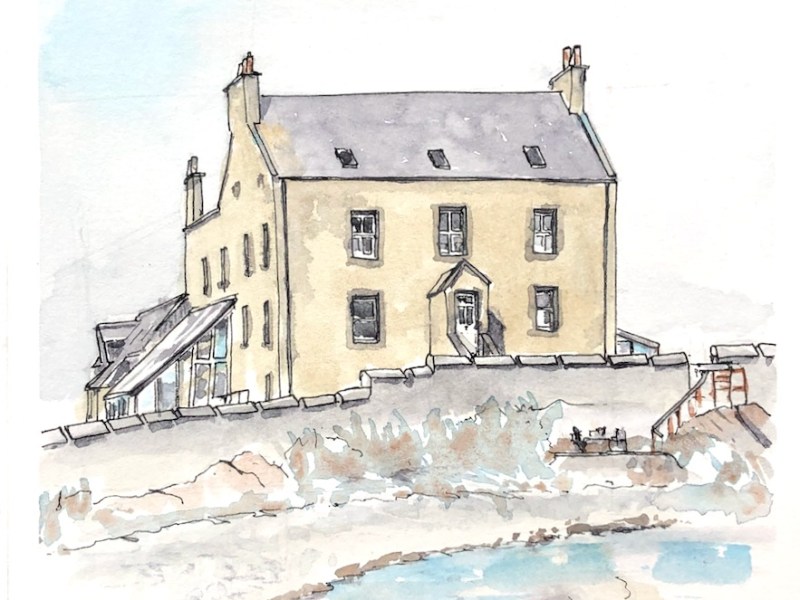
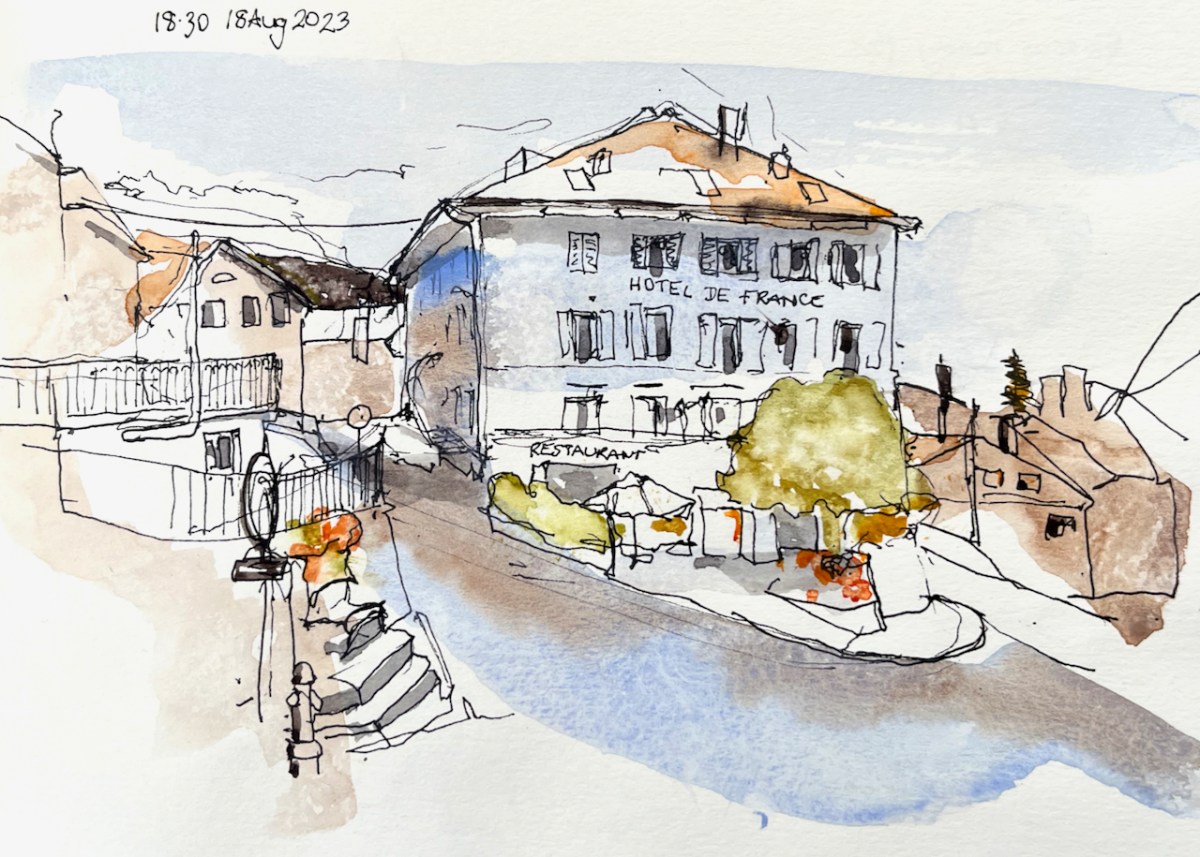
It was hot weather. Outdoors the paint dried quickly. Here’s the hotel from the other side of the road, drawn very quickly, about 20 minutes.
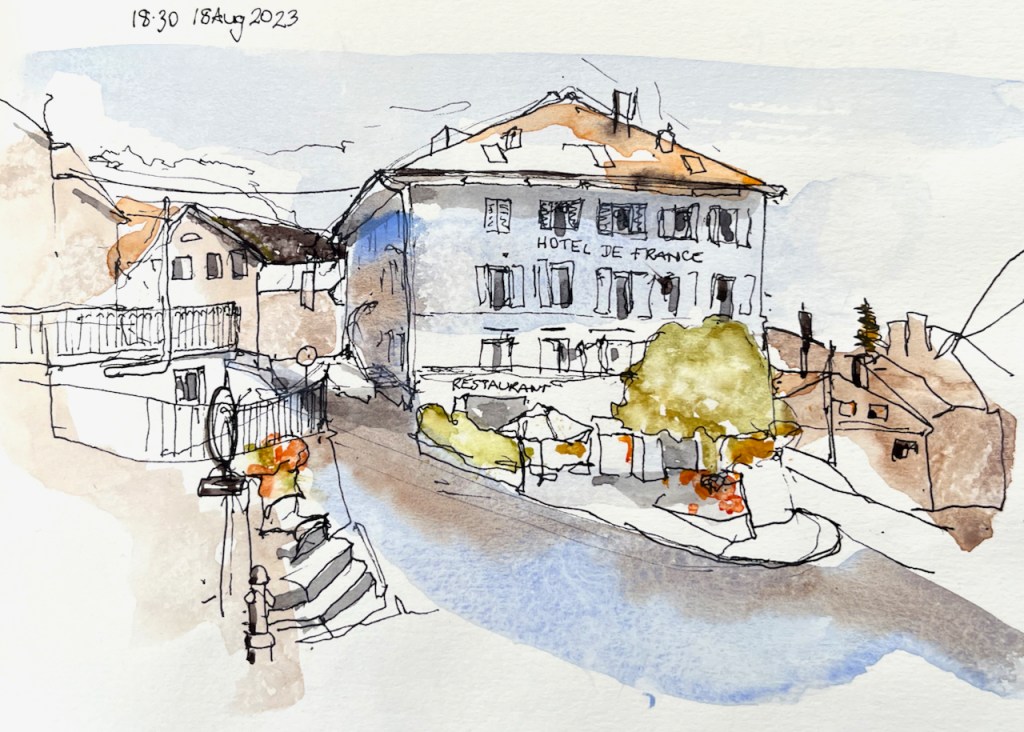
Hôtel de France, Sainte-Croix 18 August 2023

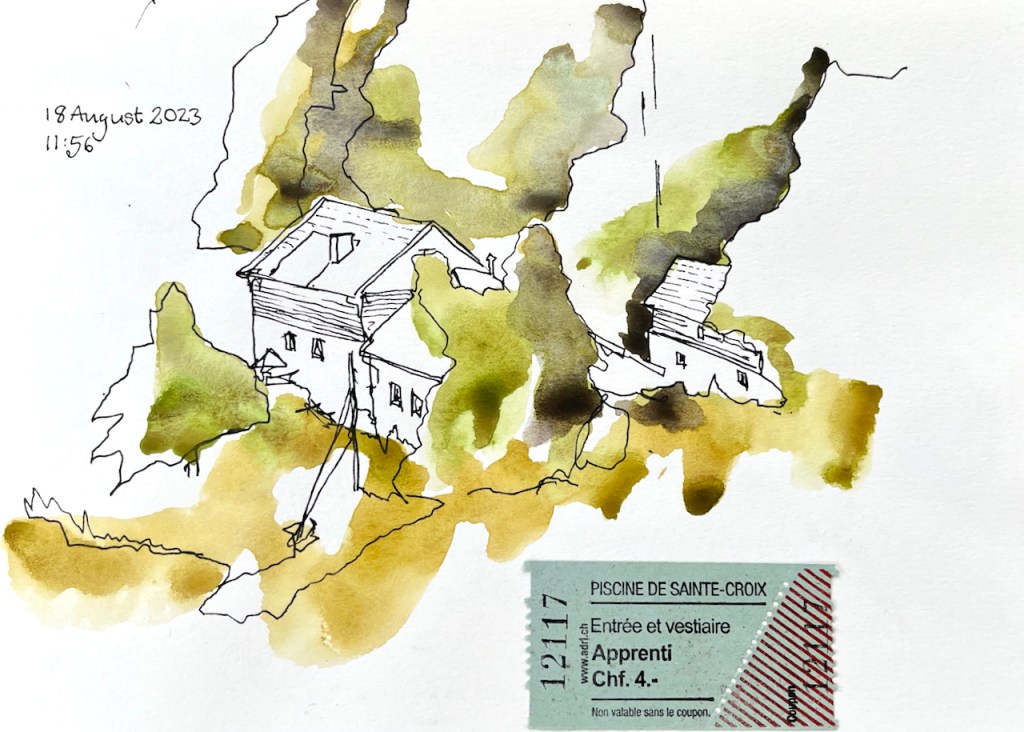
I went to the swimming pool. On the way back I stopped to sketch the sloping hill and a house in the trees.
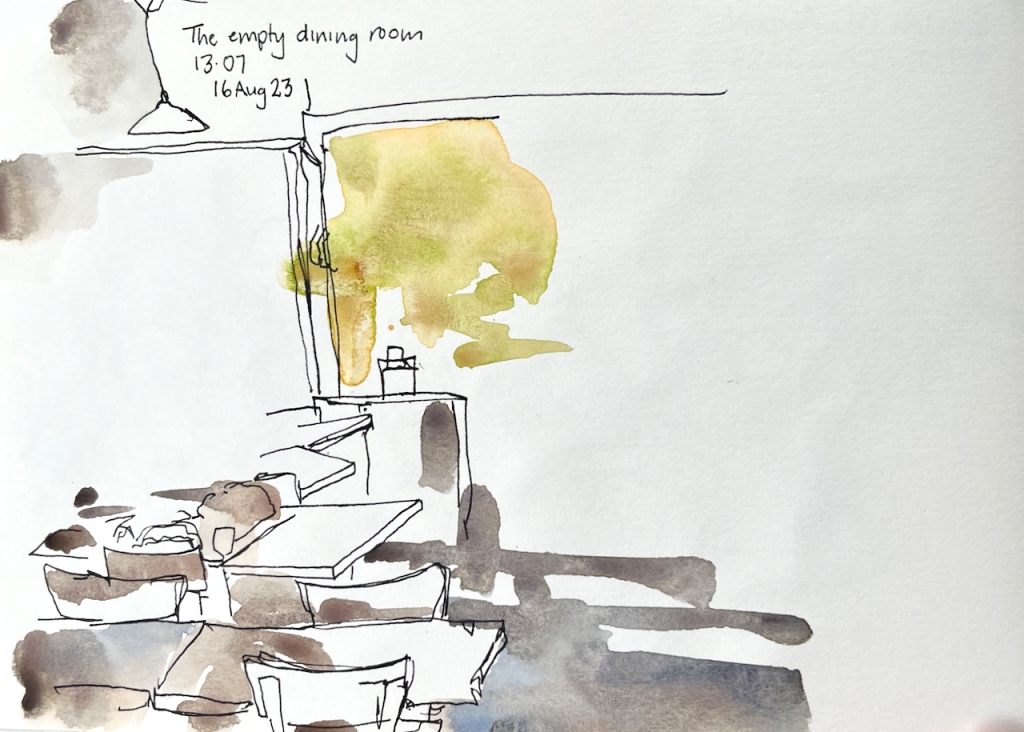
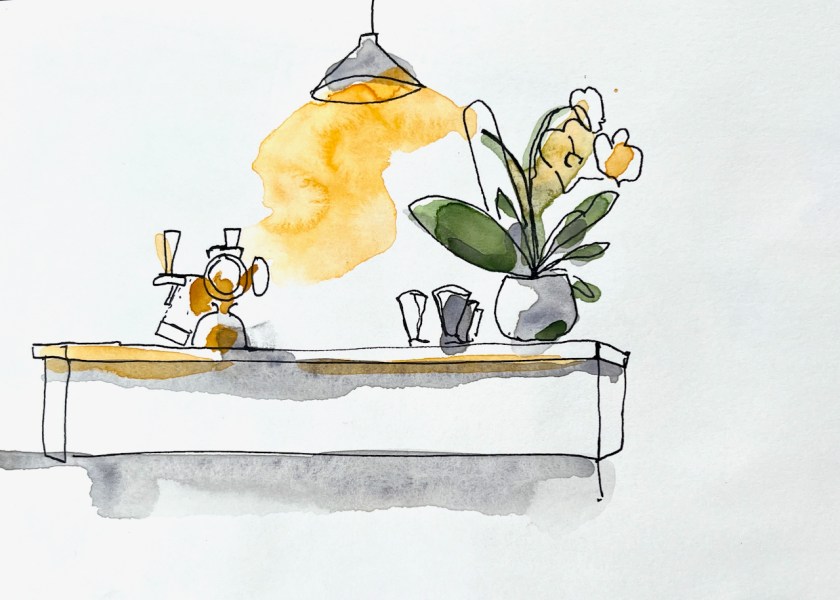
Here’s a view of the bar at the hotel.
Here’s a flip-through of the sketchbook. 20 seconds of silent video. [This video and the gallery beneath may not show on email or phones so if there’s a problem please see the web version of this post]

Sketchbook flip-through. Sketchbook from the Vintage Paper Company.

I’ve sketched in Switzerland before. Here are some other other drawings I’ve done in the same location:
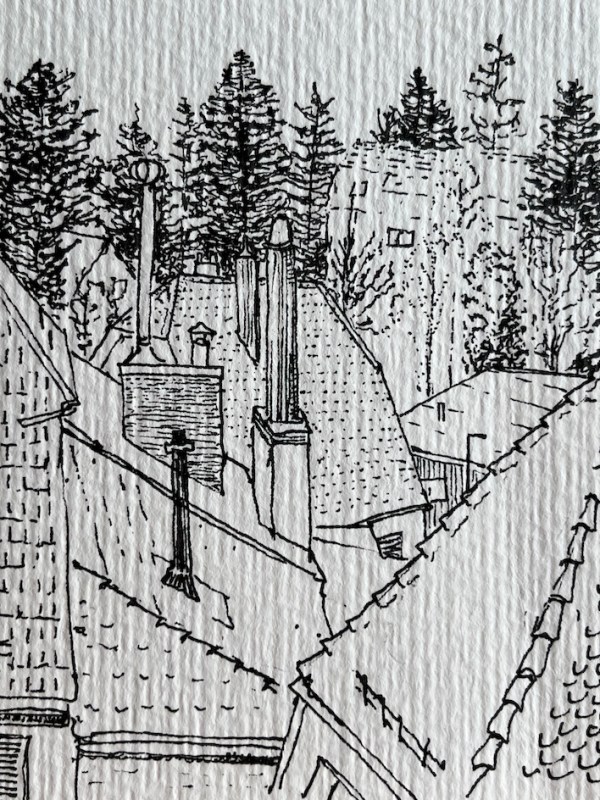
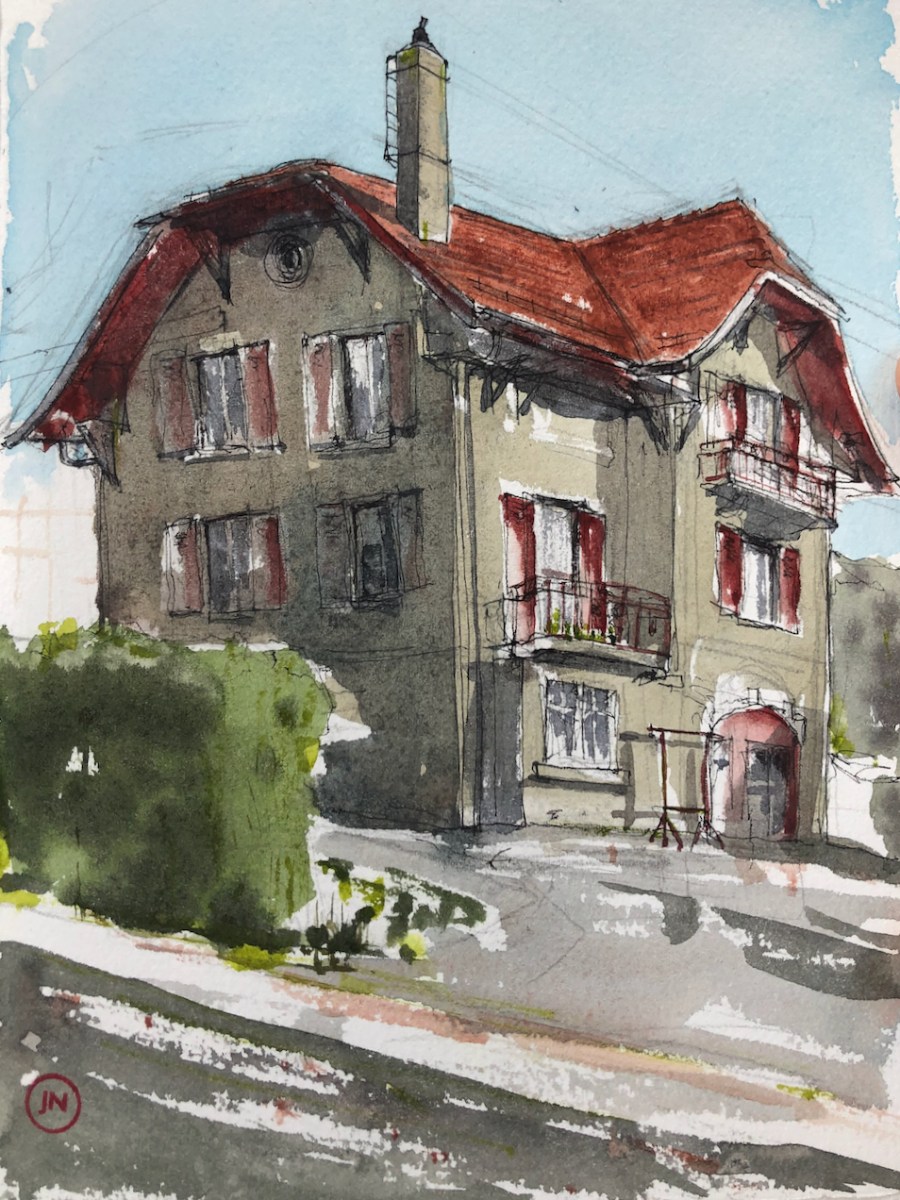
Swiss house on a hill

Here is 23 rue du Petit-Montreux, Sainte-Croix, Vaud. I sketched this house after breakfast. The sun was bright and I rushed out into the crisp morning. It took me…

read this post…

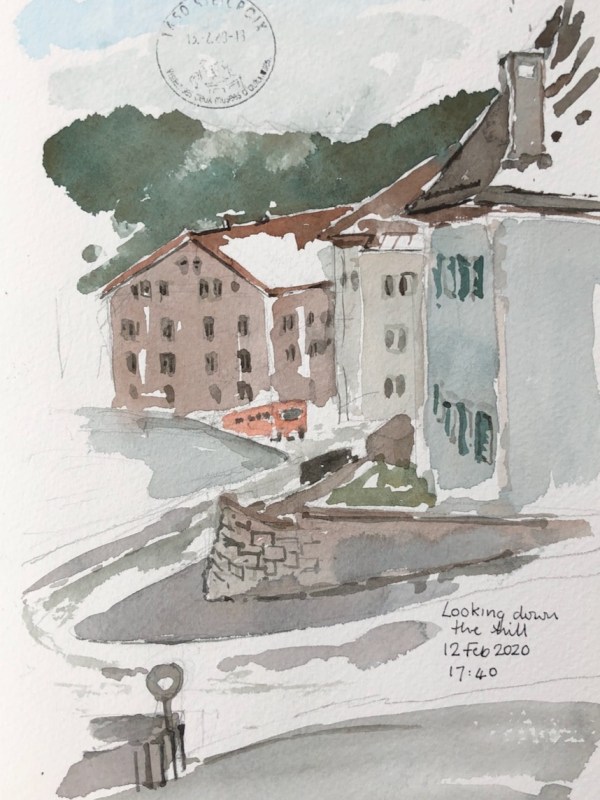
View from a Swiss Hotel

It was raining in Switzerland. Here is a sketch I did looking out of the window of the Hôtel de France, Sainte-Croix, Vaud. The building with the flags is…

read this post…
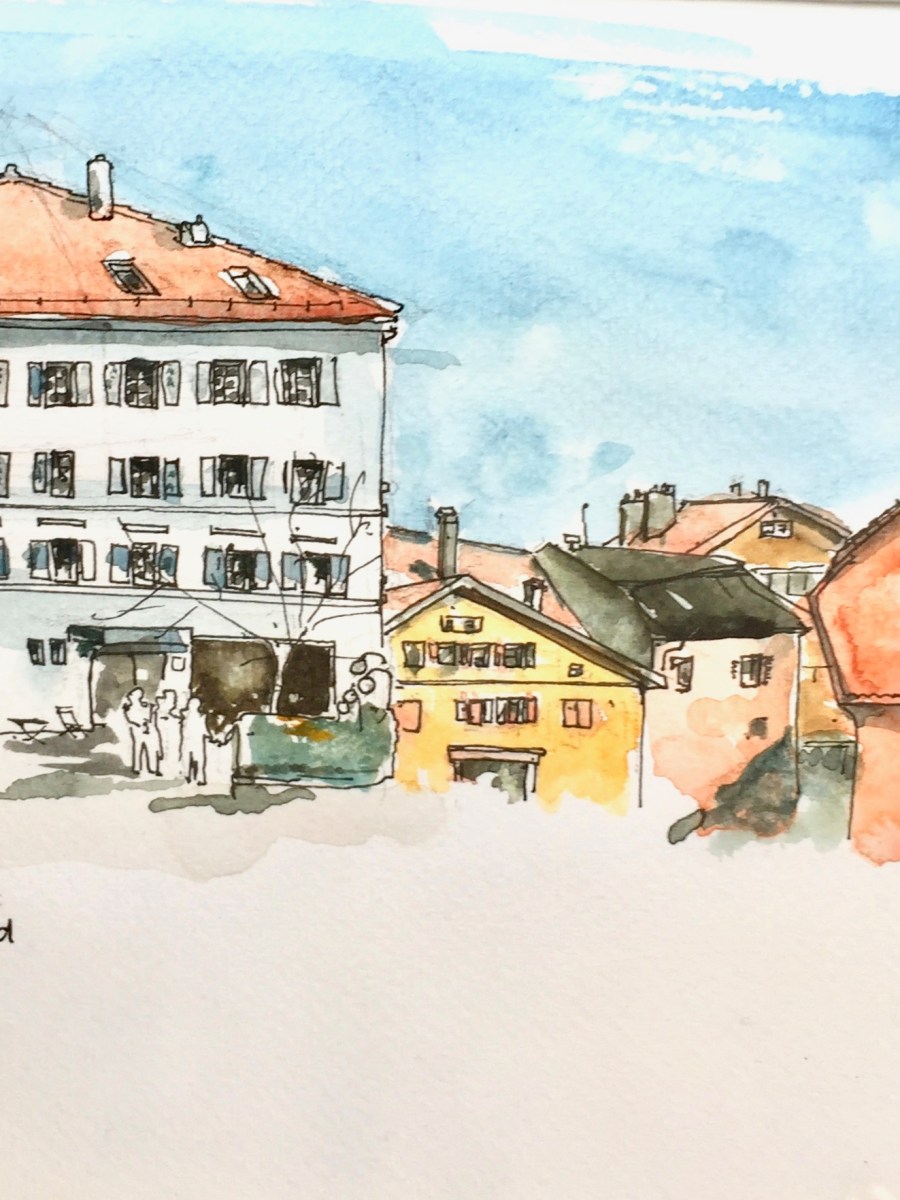
Sainte-Croix, February 2020

The weather in the Jura mountains is changing. This is climate change, the residents tell me. Once, the snow came reliably every year, bringing skiers. Now, the snow is…

read this post…
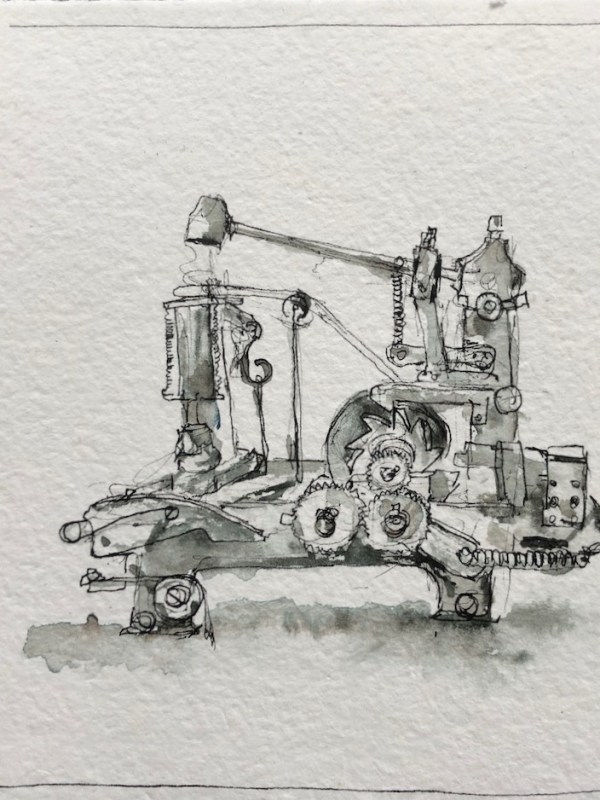
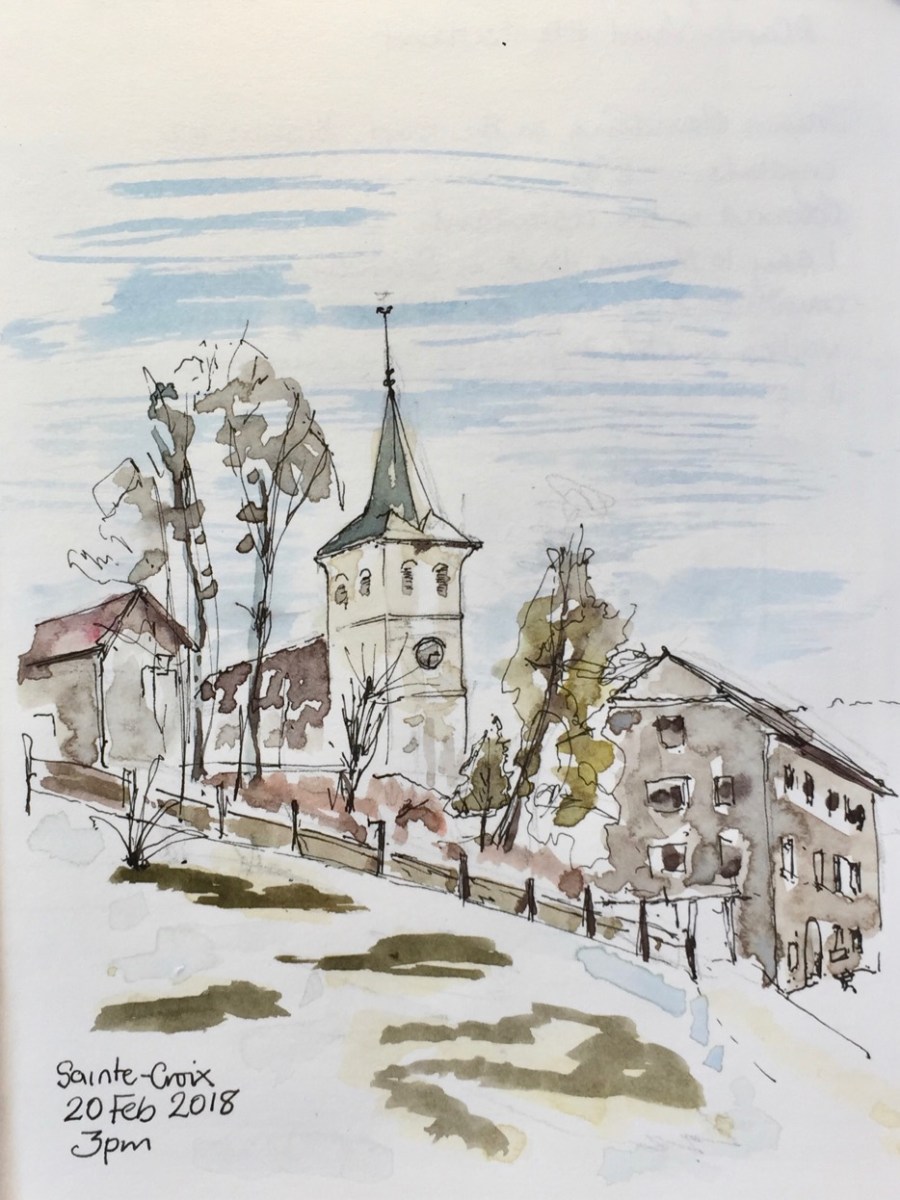
Sainte-Croix, Vaud

This is the church. Drawn and coloured on location, about 1 degree C. That’s snow in the foreground. Then later, it was colder. Hotel de France, drawn from the…

read this post…

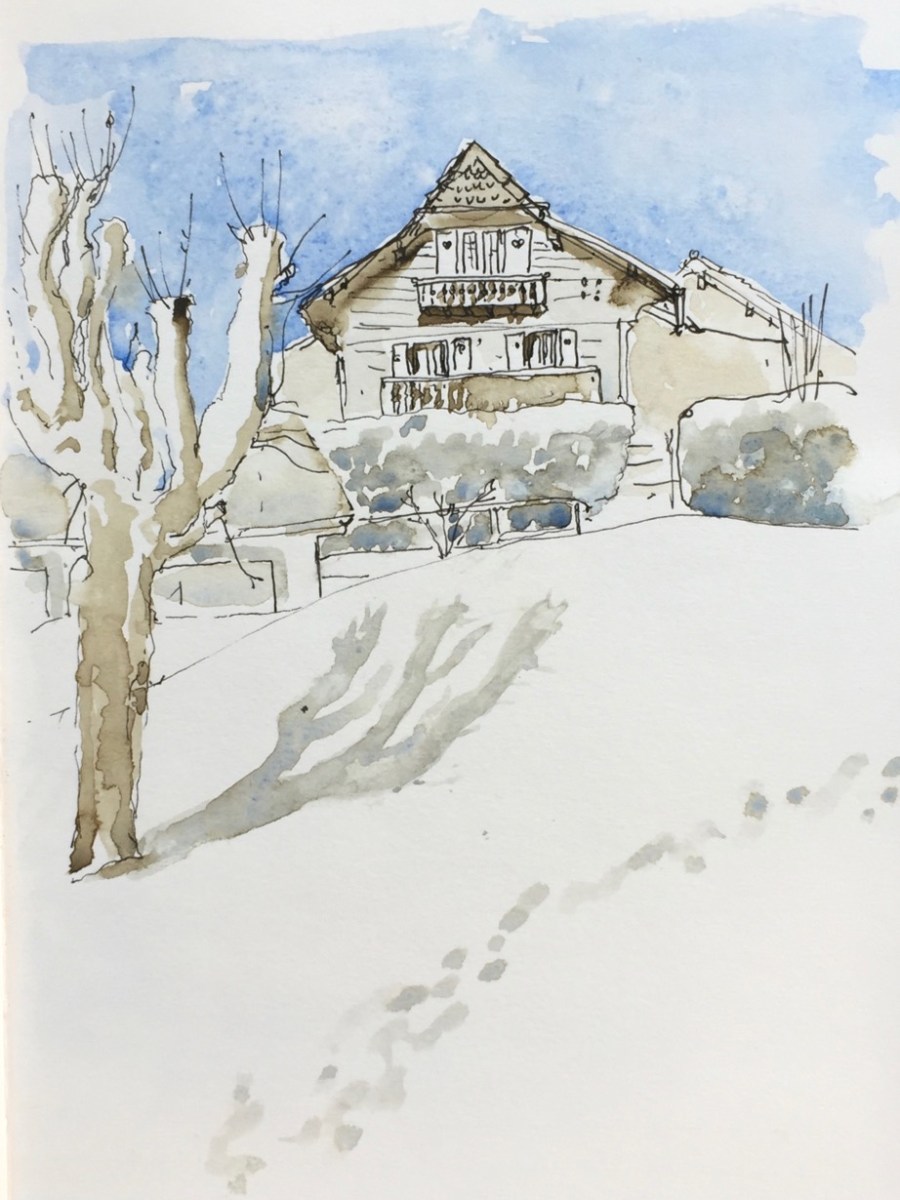
Snow in Sainte-Croix

Snowfield behind the church. Painted with melted snow as I forgot to bring water. All done standing up as everything was wet and cold. Snow blew from the roof…

read this post…
Urban sketching, Shetland and the journey south 2023

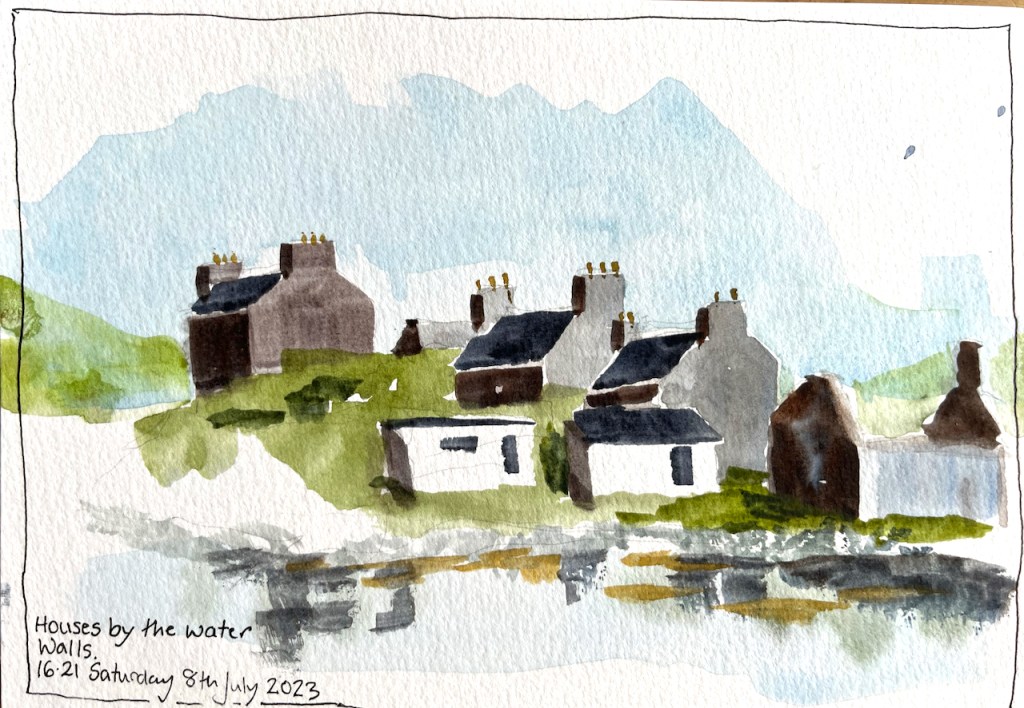
Here is a postcard which I made at the end of a long hot walk. It shows the houses in Walls, on Shetland West Side.

Houses by the water, Walls, Shetland. Postcard sketch A5, 8th July 2023

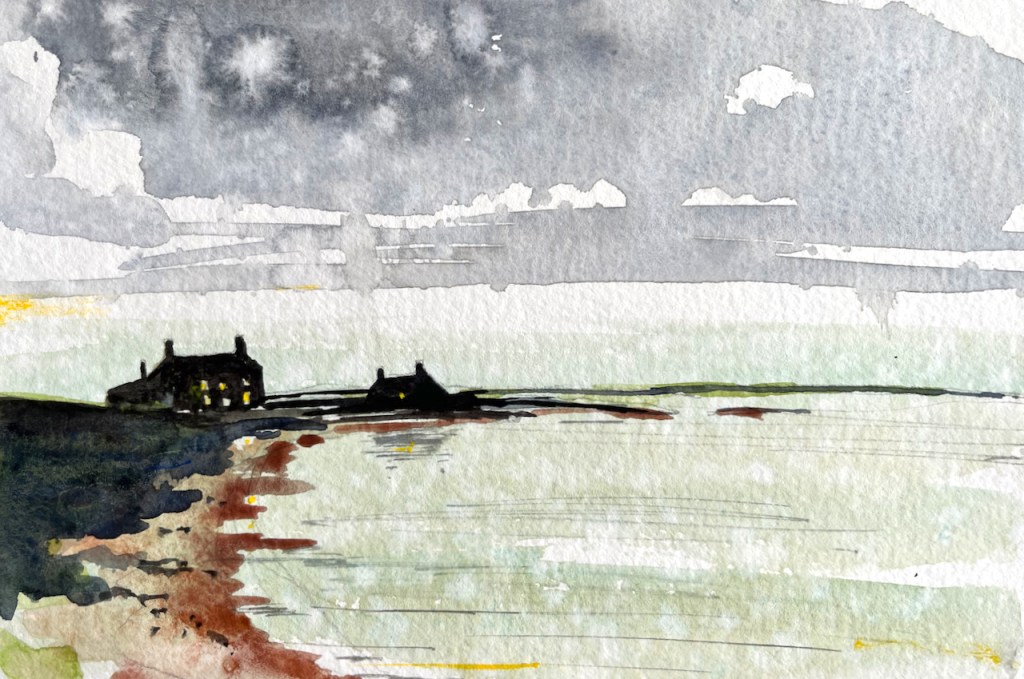
Here is Burrastow House and Burrastow Cottage, an evening view. I sketched this on top of a sky view I’d sketched earlier, but which had been spotted by rain, as you see.

Burrastow House and cottage, evening view. A5 postcard.

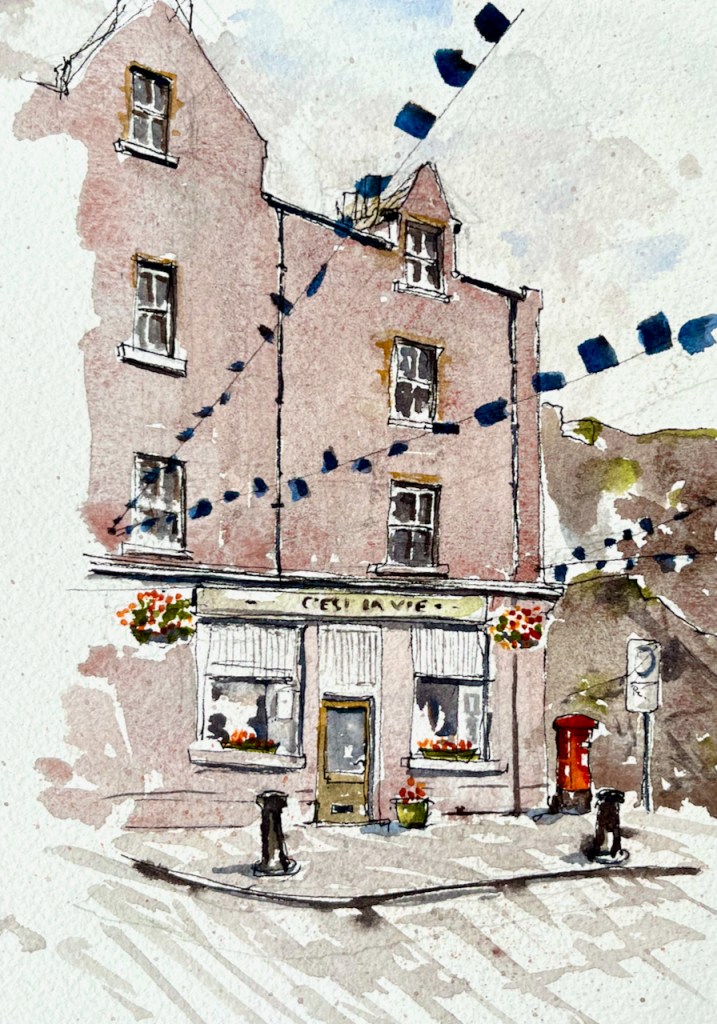
This is a restaurant in Lerwick: “C’est la vie”.

“C’est la vie” French restaurant, Lerwick, postcard sketch A5, August 3rd 2023

The flags are to welcome the “Tall Ships” which came to Lerwick earlier in the week. The restaurant was closed, I was waiting to see if it opened. Then the rain started. Then the restaurant opened and I finished the sketch inside. Then I walked to the Ferry Terminal.

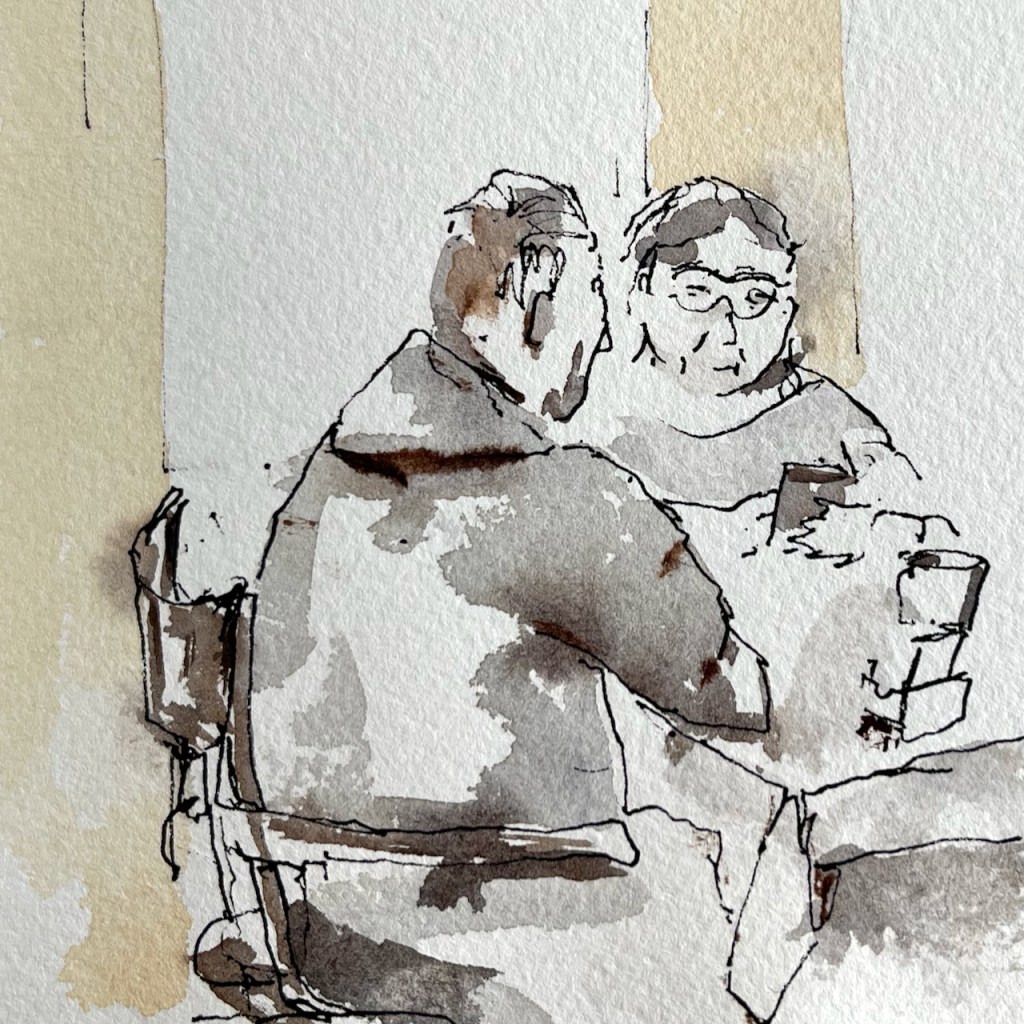
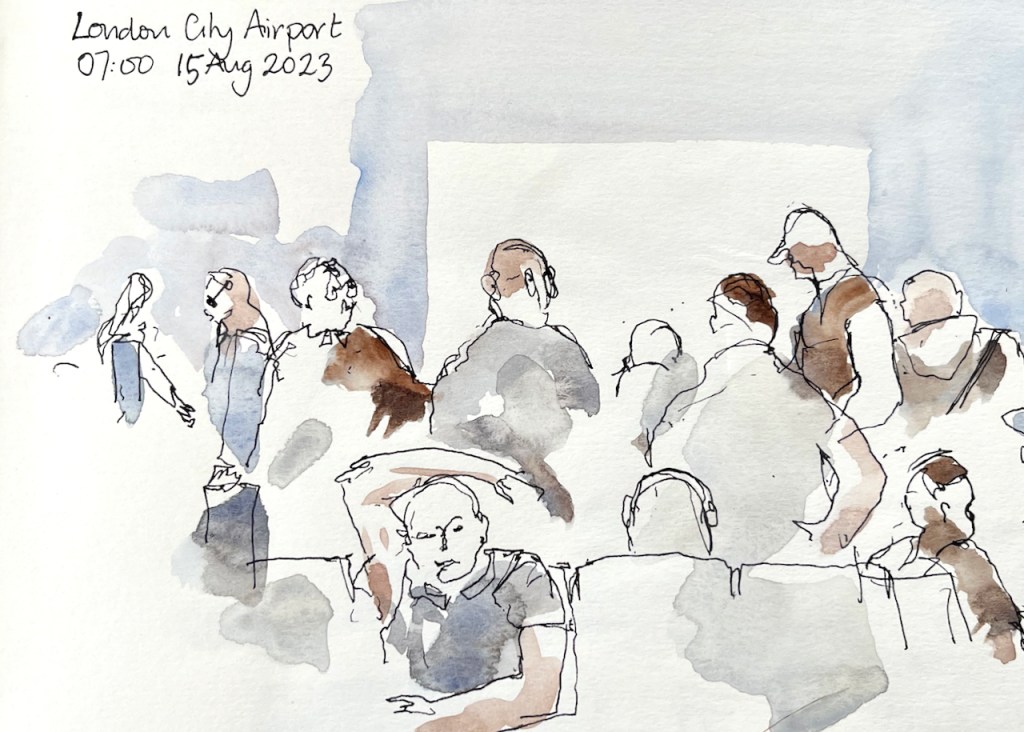
On the ferry, I made quick sketch of people at breakfast.

On board MV Hrossey, approaching Aberdeen. Breakfasters in the lounge. August 4th 2023. Vintage paper company sketchbook, A5

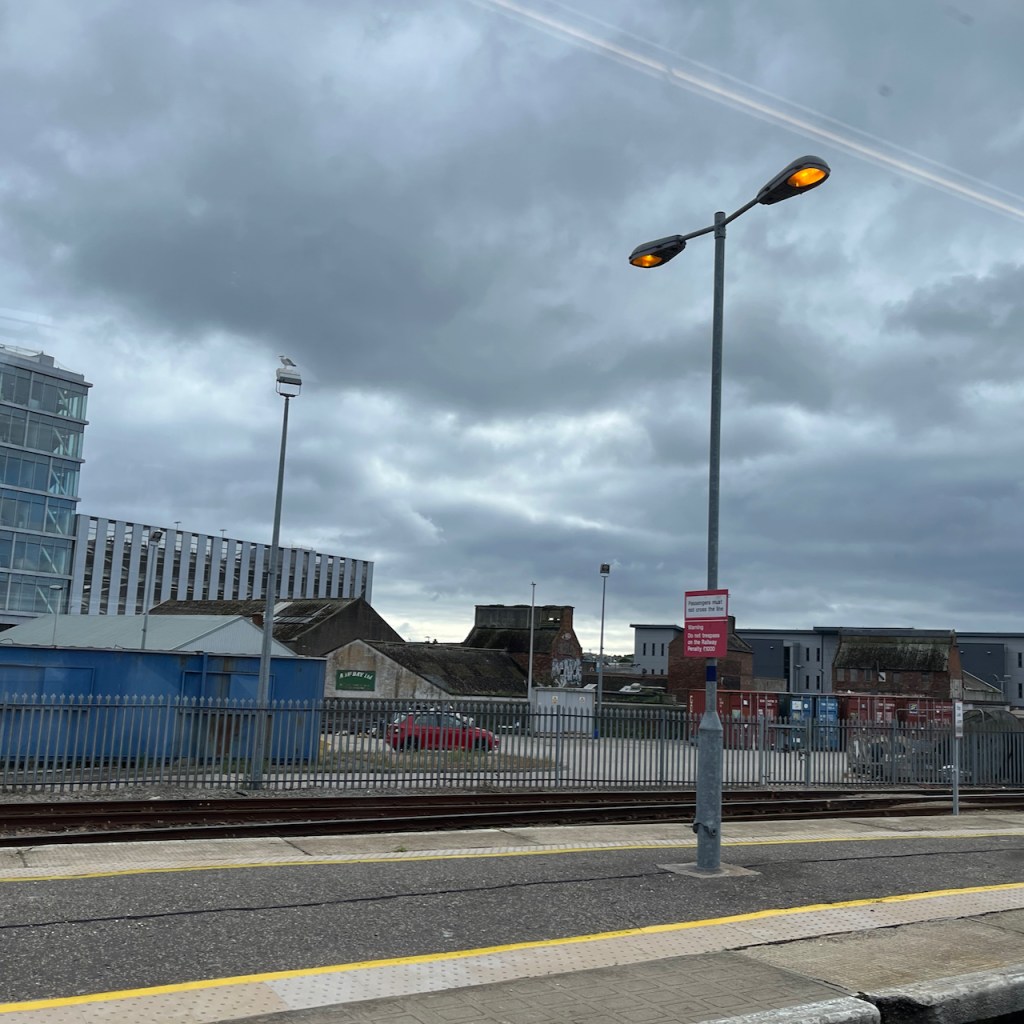
Here is my final sketch of the expedition. On the train at Aberdeen, I looked out of the window.


I have a sketchbook full of images. Here’s a quick flip through showing random glimpses of the visit: (19 second silent video)

Sketches in Fair Isle 2023

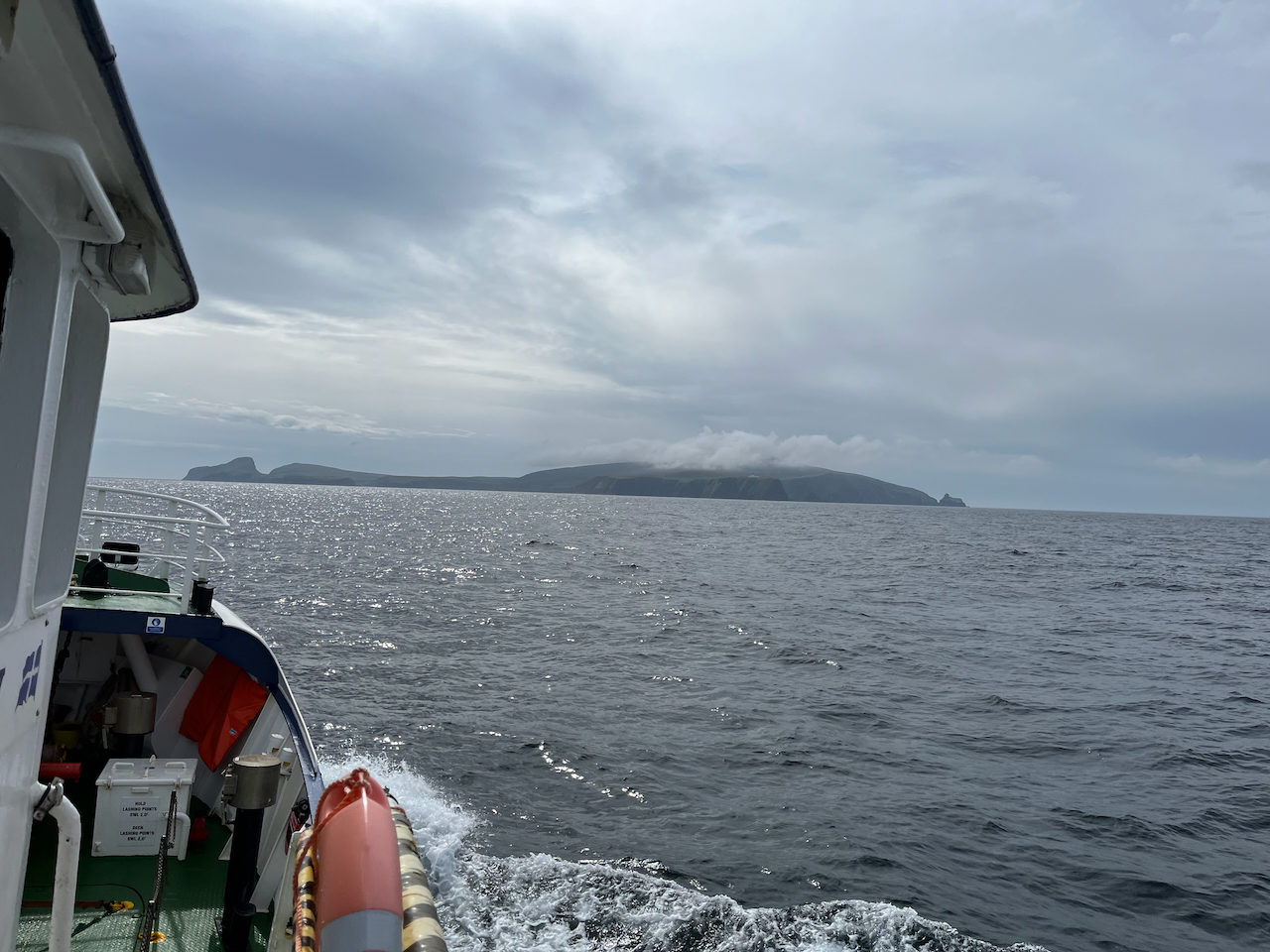
Fair Isle is a small island some 28 miles south of Shetland, between Orkney and Shetland. It is 3 miles long and 1 mile wide.

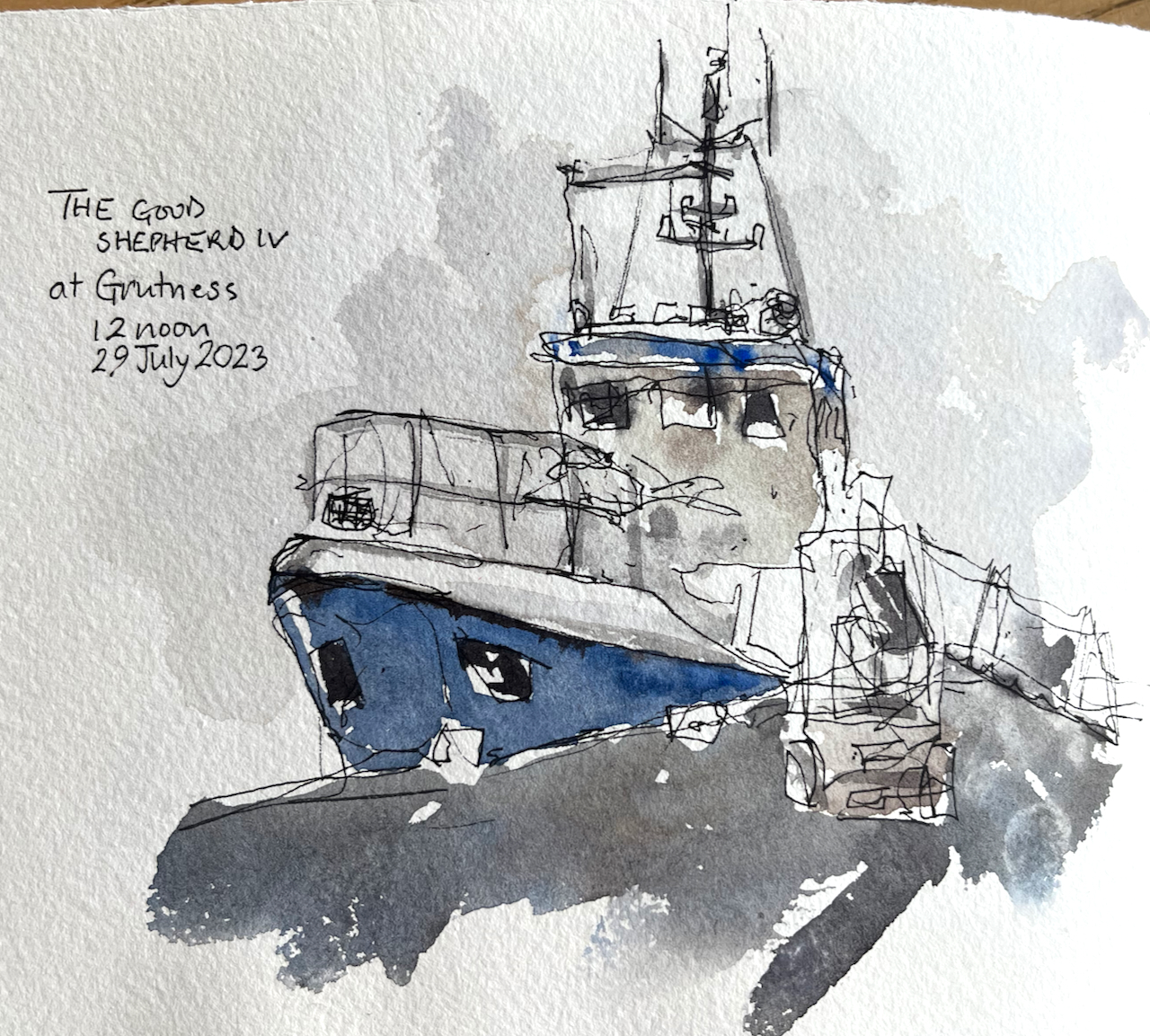
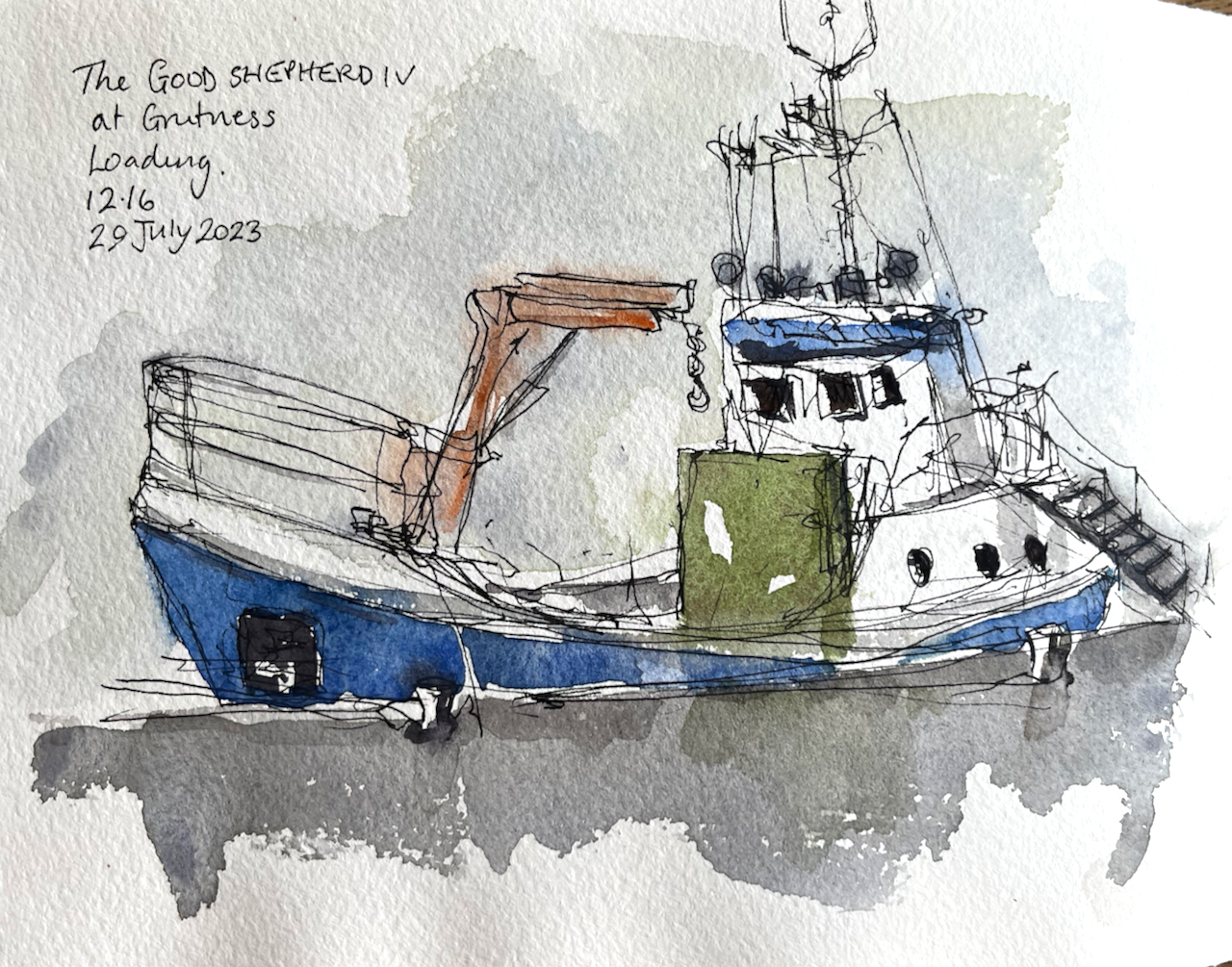
I travelled there by the boat “Good Shepherd IV”.

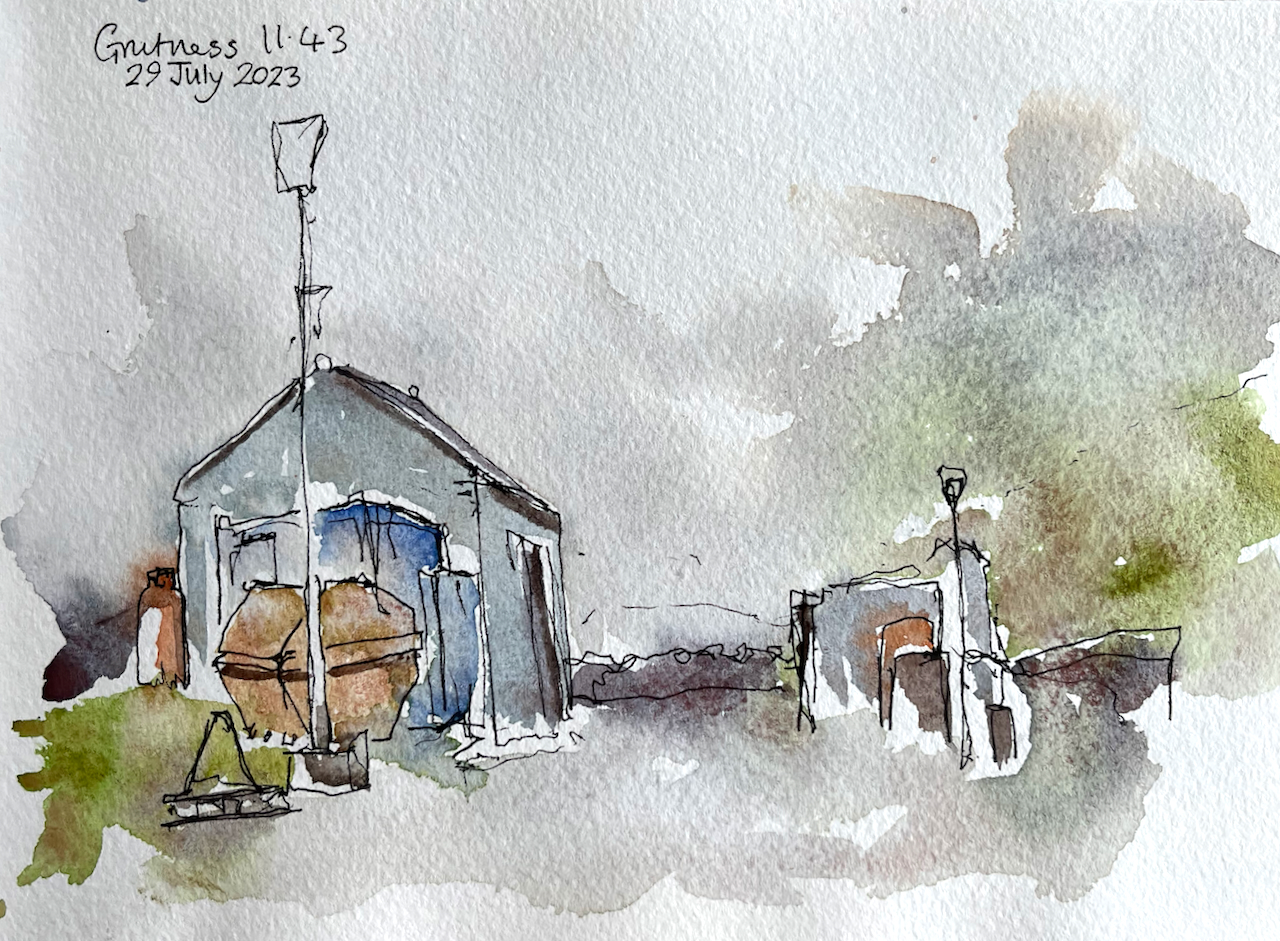
The ferry leaves from the pier at Grutness which is close to Sumburgh airport at the southern tip of Shetland mainland.

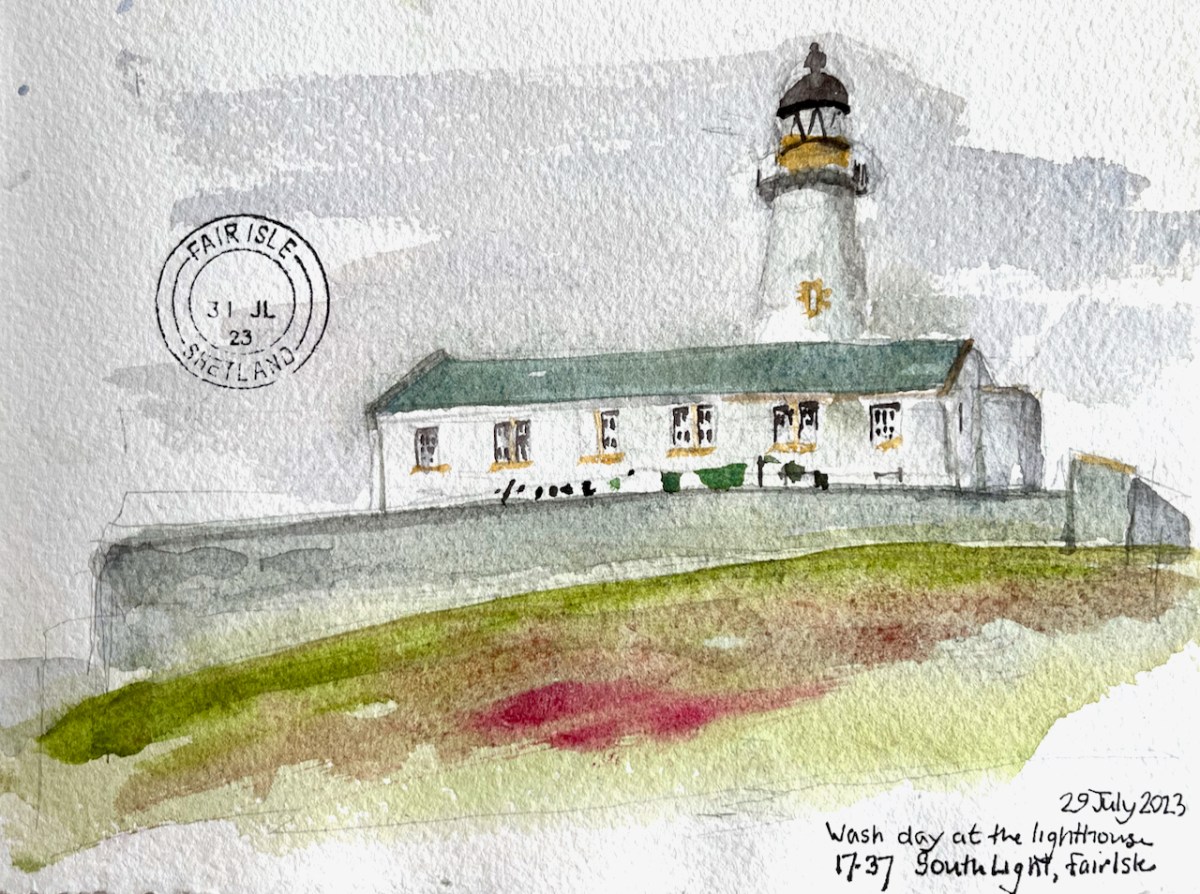
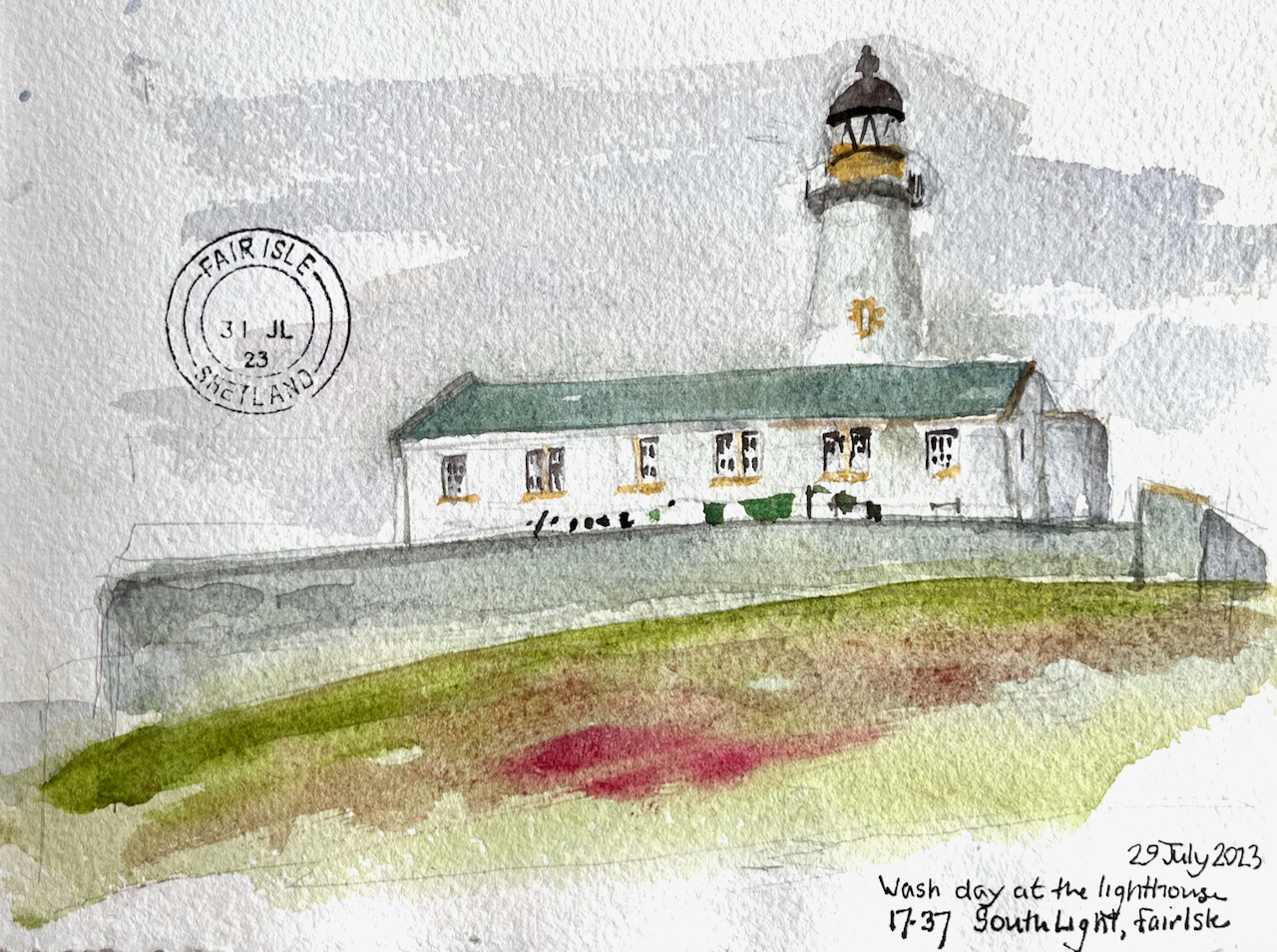
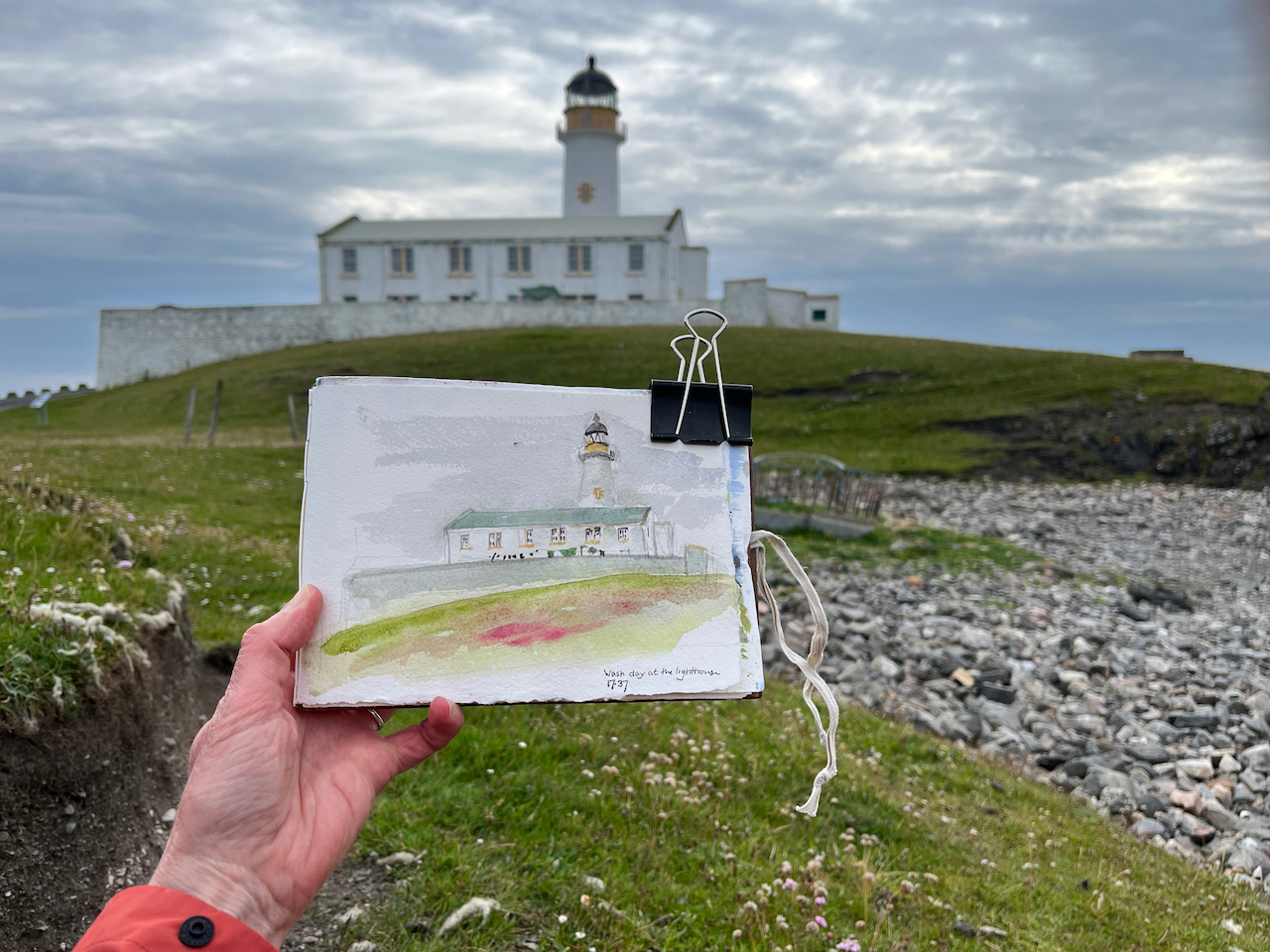
Fair Isle has two lighthouses: the North Lighthouse and the South Lighthouse. I sketched the South Lighthouse:

The postmaster at the Fair Isle Post Office kindly put their special postmark on my sketch for me.

Both lighthouses were designed by David A Stevenson and built in 1892. Both are still functional, now automated. The South Lighthouse light is “Fl (4) W 30 seconds” : a group of 4 flashes of white light every 30 seconds. The North Lighthouse flashes white twice every 30 seconds.

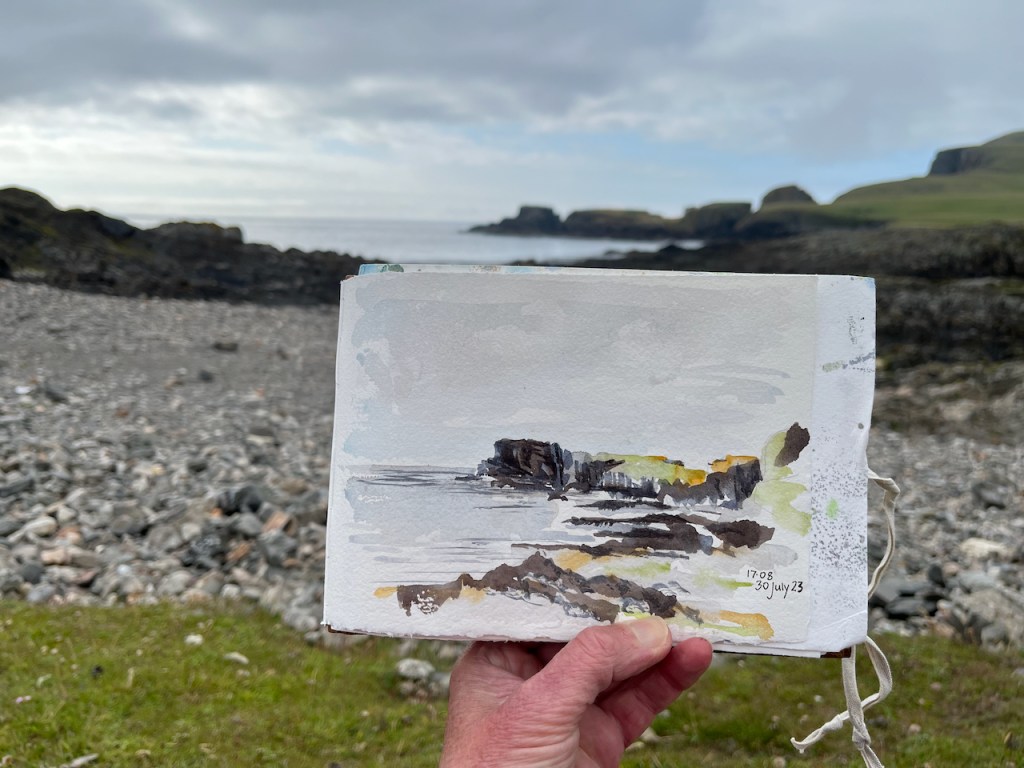
Here is a view of the cliffs called Mathers Head. It’s the view from the same spot where sketched the South Lighthouse, but looking out towards the west.

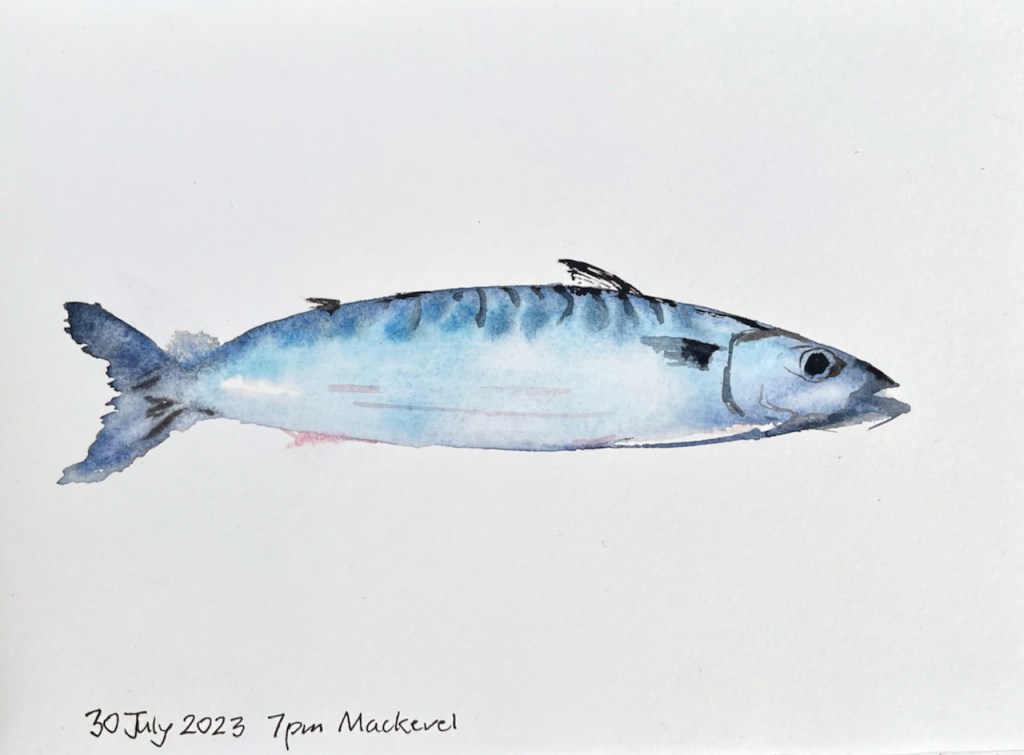
I was staying at “The Auld Haa” which is just a few hundred yards from the lighthouse. When I returned from drawing this scene, Tommy, who runs the guest house, called out, “Come and choose a fish!”. There was me and two other women staying at the guest house at that point. Bemused, we all made our way round the side of the house to find a cheerful fisherman standing by his car trailer on the small road. The trailer was laden with fish. The fish were in buckets. There were cod about two feet long, and mackerel, and a whole bucket of lobsters. The fisherman was Stephen, who I recognised as one of the ferry crew.

With suggestions and promptings from his three guests, Tommy made his selections. I was keen on the mackerel. Others opted for white fish. Tommy carried the bucket back to the house.

After this excitement I was resting on the bench outside the house when Tommy called out to me, “Would you like to do a painting of the mackerel?”.

Yes, I would like to do a painting of the mackerel, even though I was tired, even though it was evening, even though I’d already done a long walk, a dip in a rockpool, and several paintings of headlands. How often do you get invited to paint a mackerel? Seize the moment. Tommy brought out the mackerel on a plate, and I settled down to drew, while the hens scraped around on the grass, and small birds scuttled in the hedge.

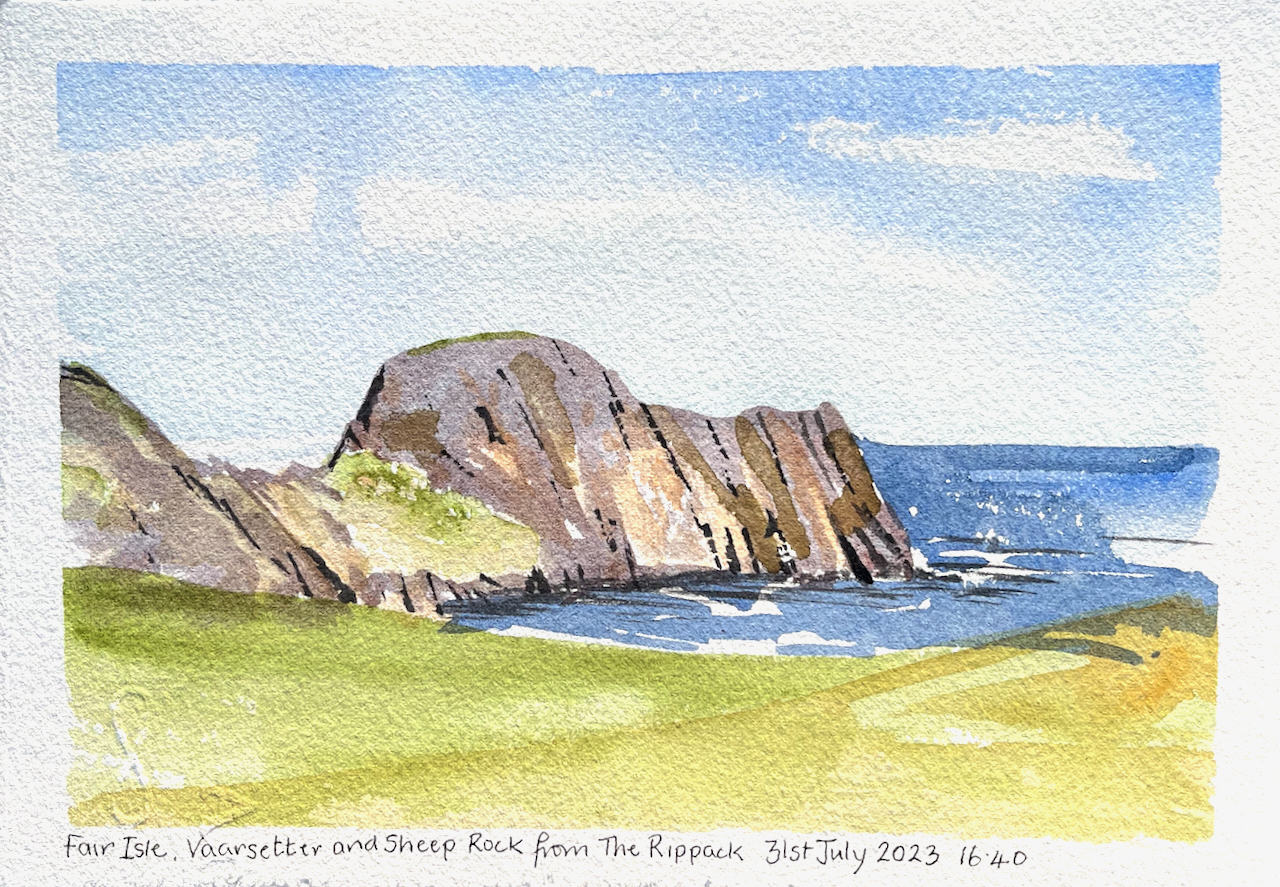
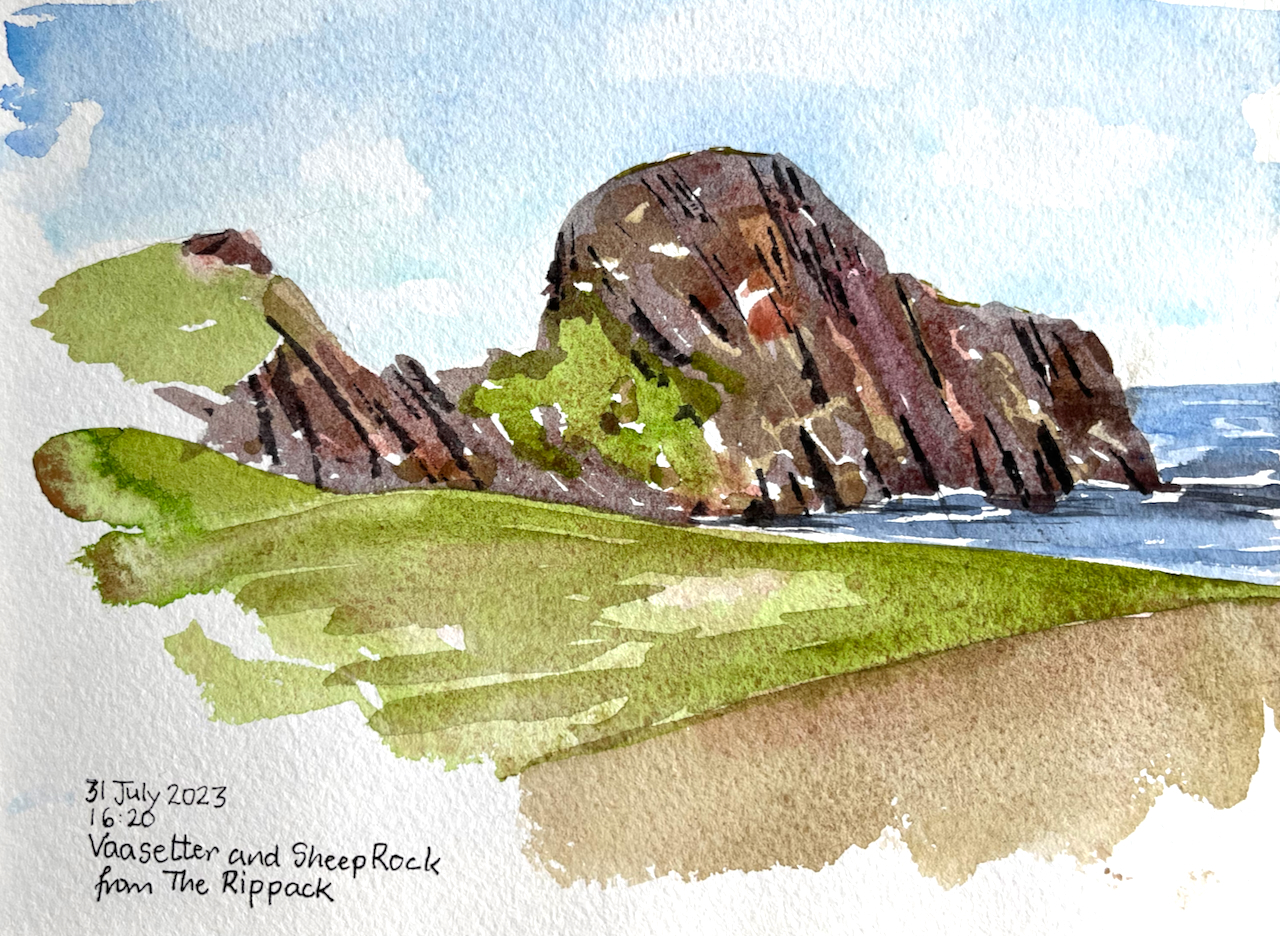
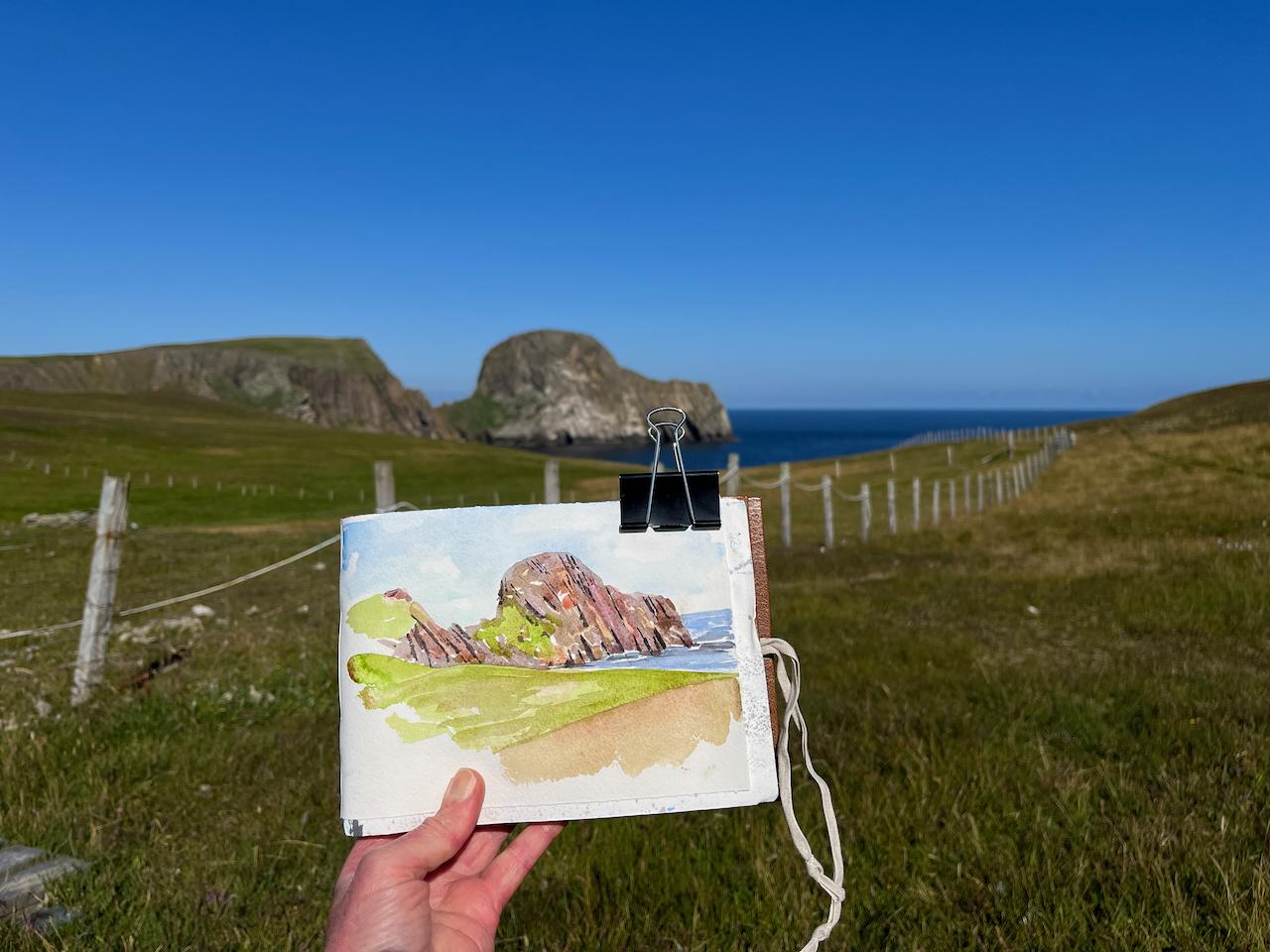
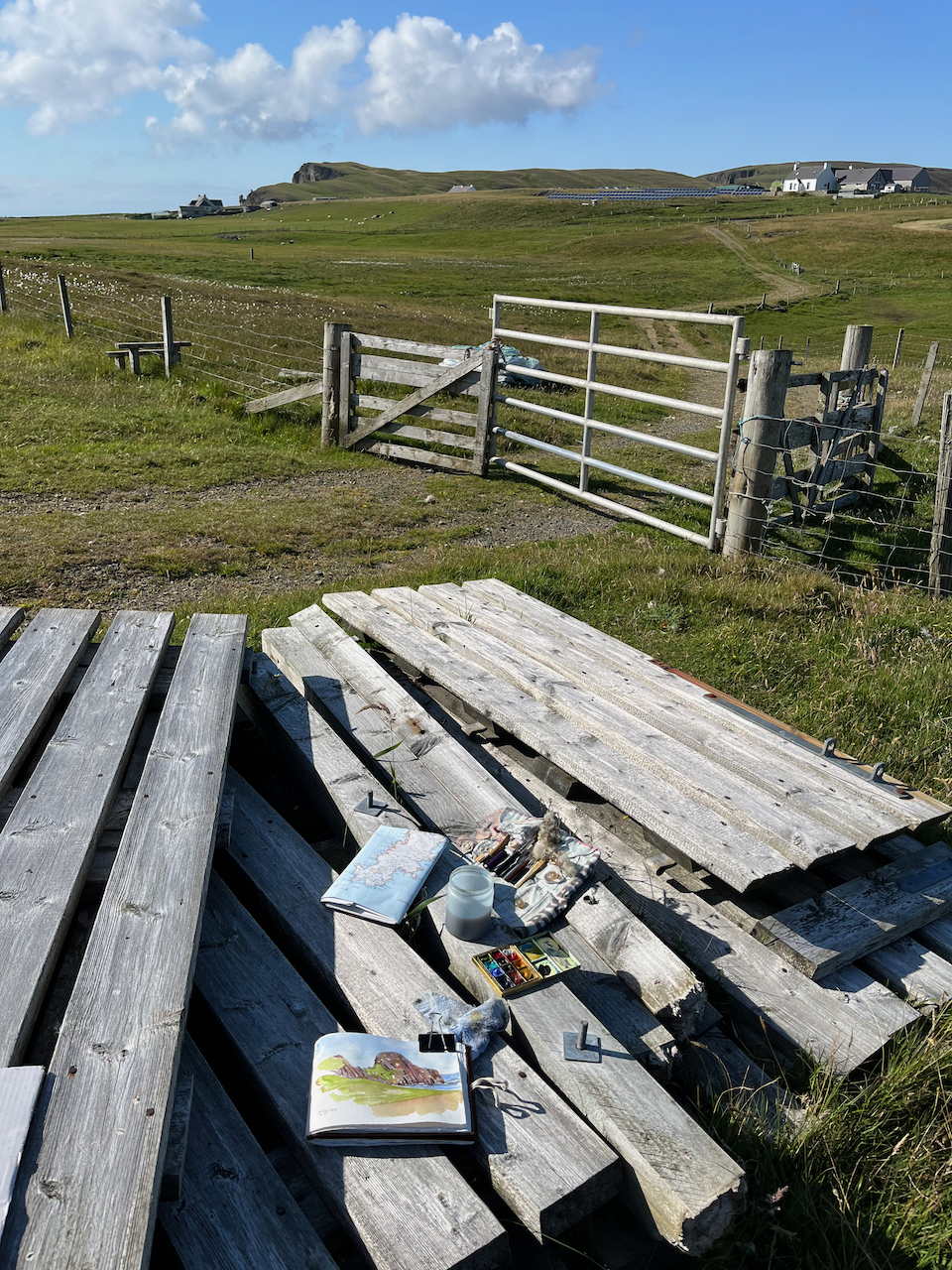
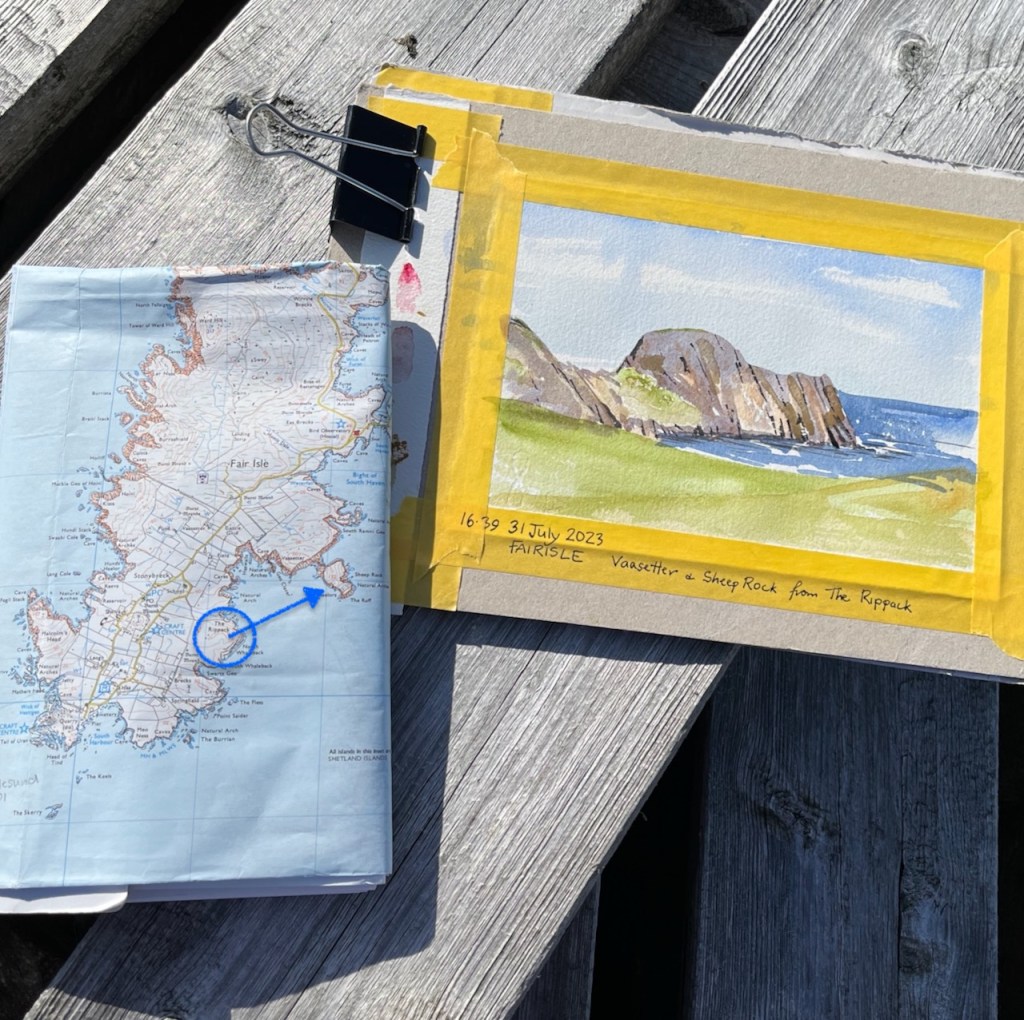
On another day I sketched the huge headland called “Sheep Rock”.

Postcard drawing of the Sheep Rock.

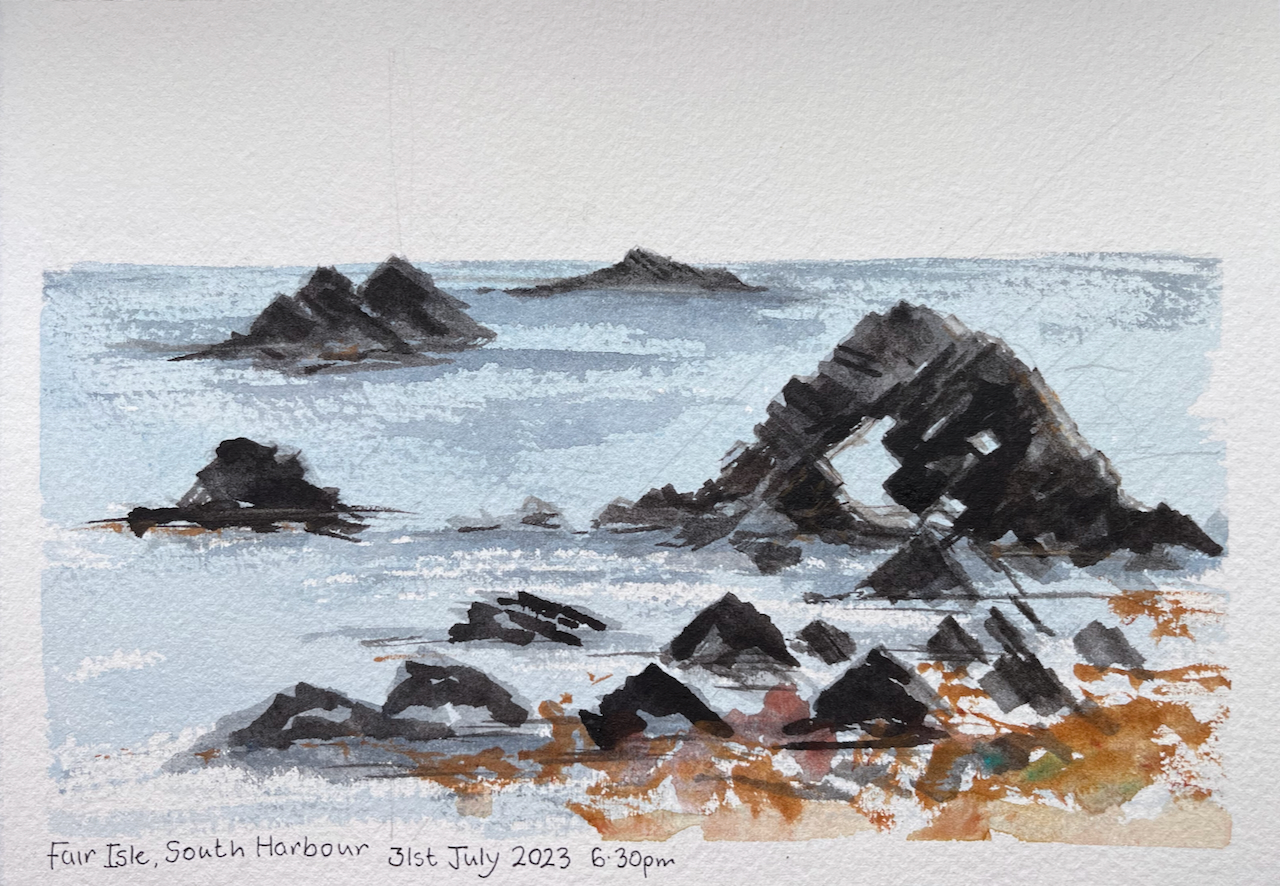
Here is the spectacular rock arch on South Beach, which is near the Auld Haa.

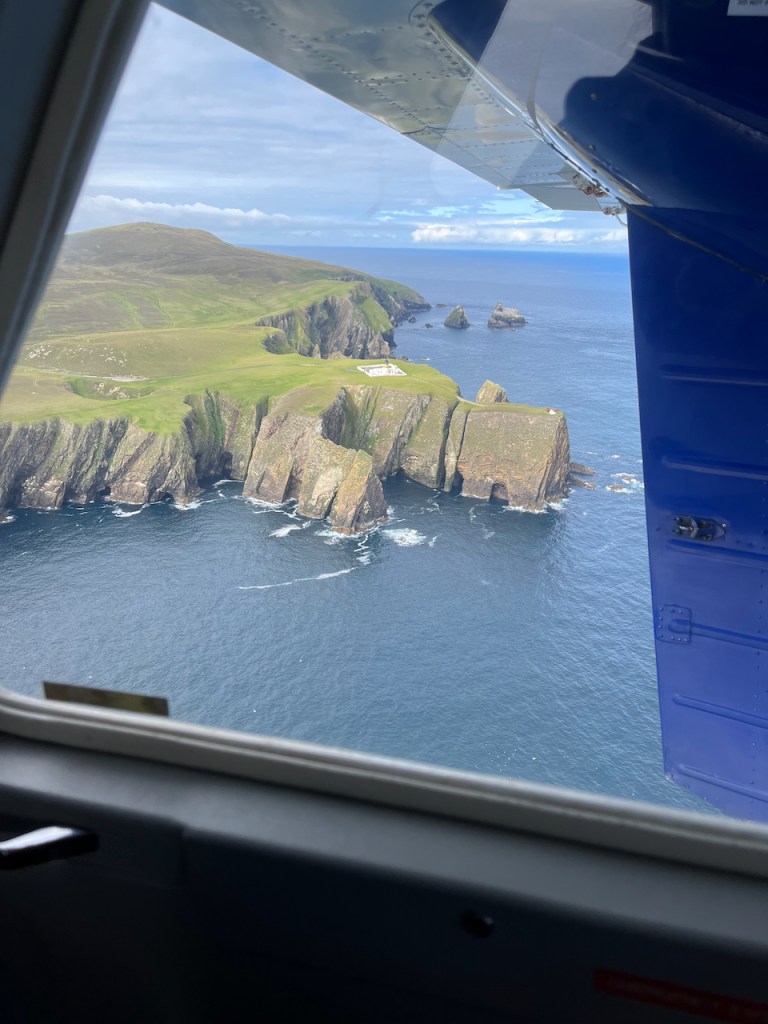
I was only on Fair Isle for three days. It’s an extraordinary place. Here was my final view of the island as I left on the tiny plane. The small square is the North Lighthouse, high up on its cliff.

View from the window of the plane: North Lighthouse.

Shetland collage postcard

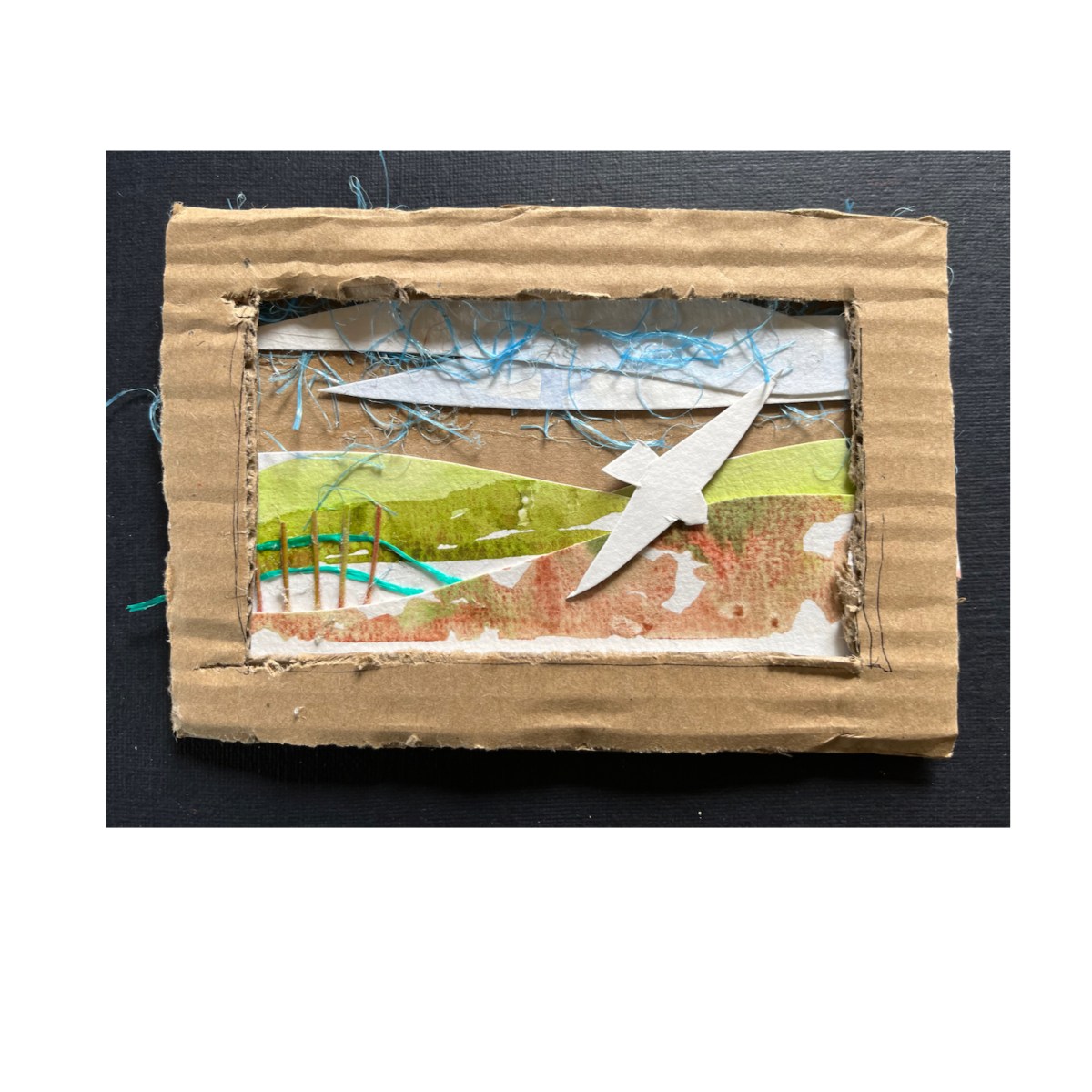
Here is a collage postcard I made, inspired by the work of Martin Hicklin.

As you see, it shows a seabird, probably a fulmar, soaring over the coast, with the green hills beyond, and a characteristic Shetland fence. The fine blue sky is made from rope waste found on the beach.

I managed to arrange for the seabird to move, sliding along a fine thread, and hover above the background.

This went through the international post. I don’t yet know if it arrived…..

Here are some other collage postcards I have made over the years. It’s good fun!

Insects Collage

I made a postcard for friends in Basel. It shows the insect life in Crete. Here are some details, and the work under construction.     The idea was that the flies…

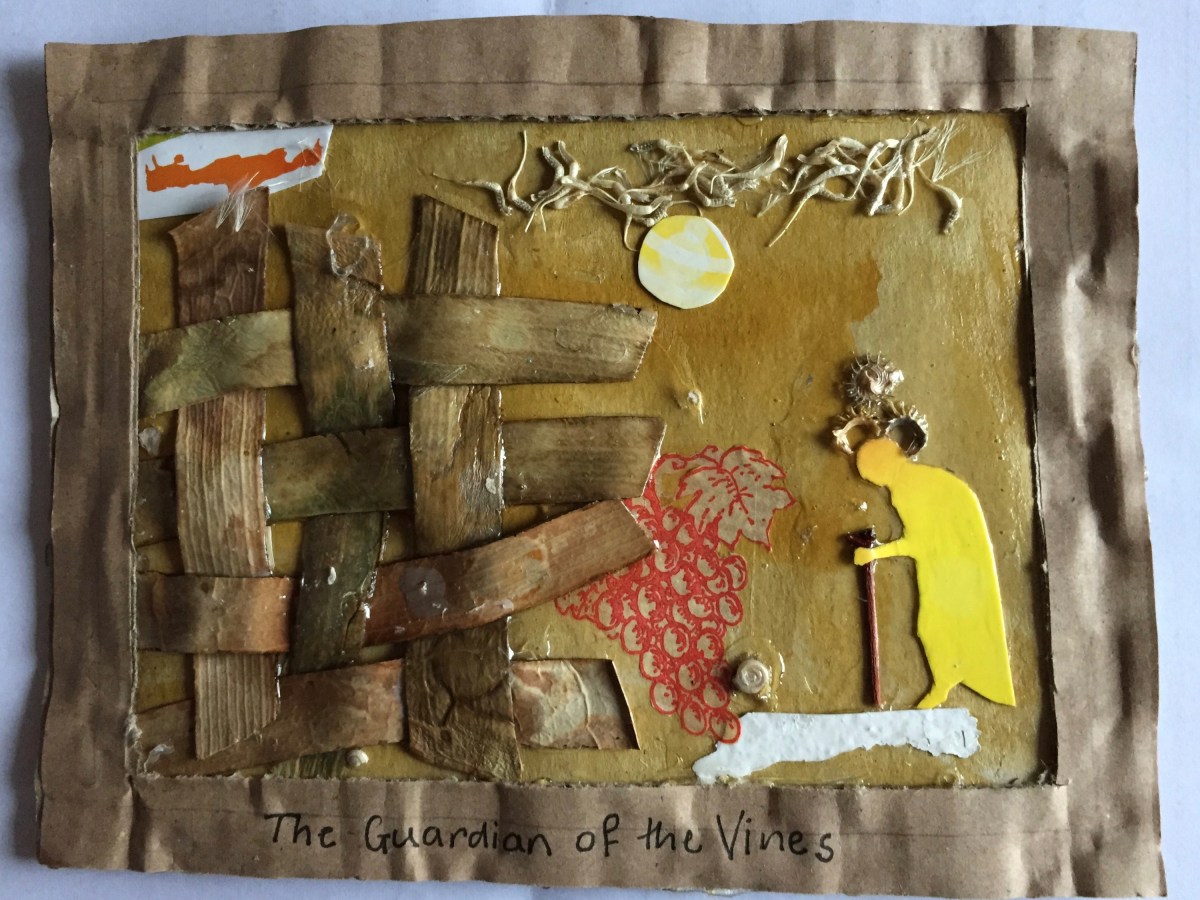
The Guardian of the Vines

Another collage postcard. I posted this one in London 18th May. It looks a bit crinkled because the cardboard was damp with PVA glue, and then dried. The white shape on the…

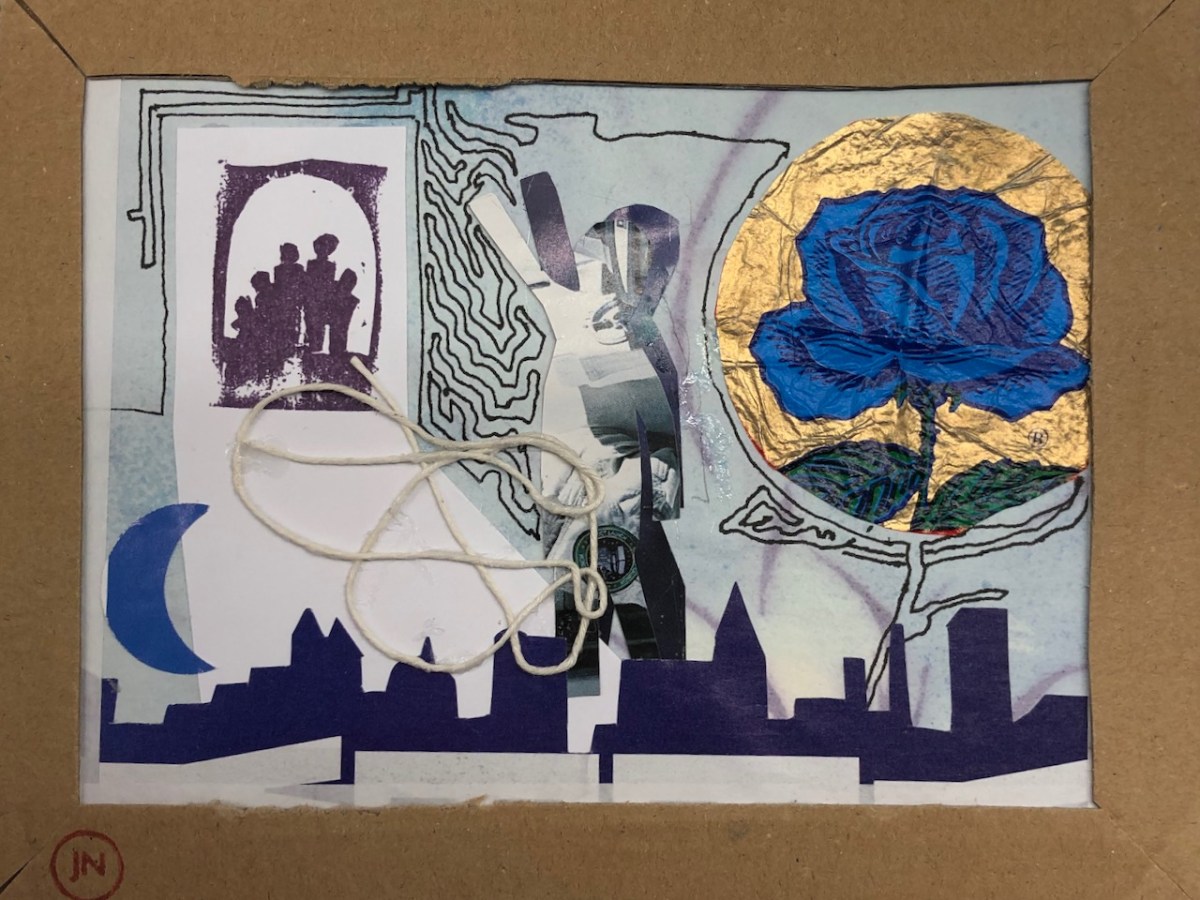
Connection to friends in another city

Here is a postcard collage I sent to my friends in another city. It is inspired by the website: sendmeapostcart.com, and shows the connections we make, the lines which bind us, the…

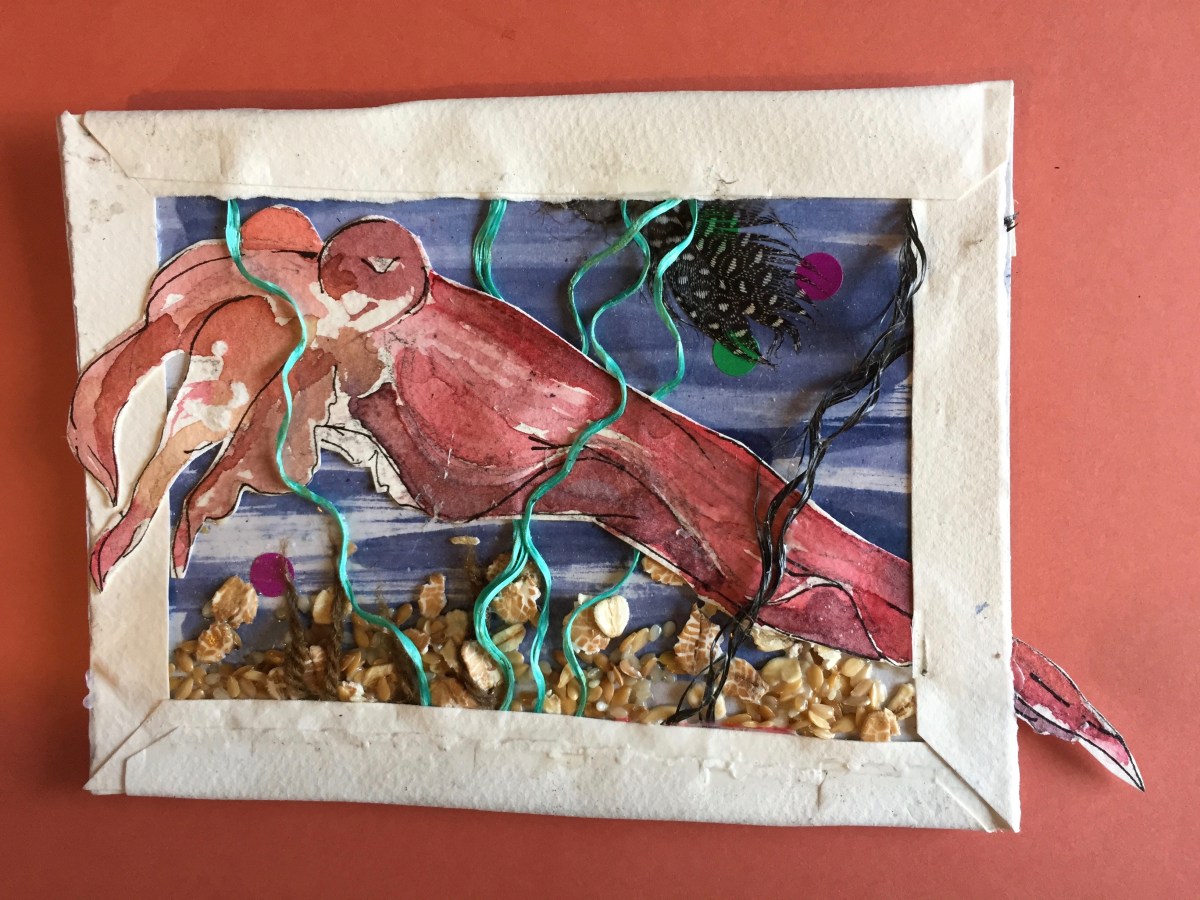
The Cuttlefish

I made a collage postcard inspired by “the Blue Planet” series on BBC2. This is the cuttlefish. The sea bed is made of breakfast cereal, and the seaweed is strands of unraveled…

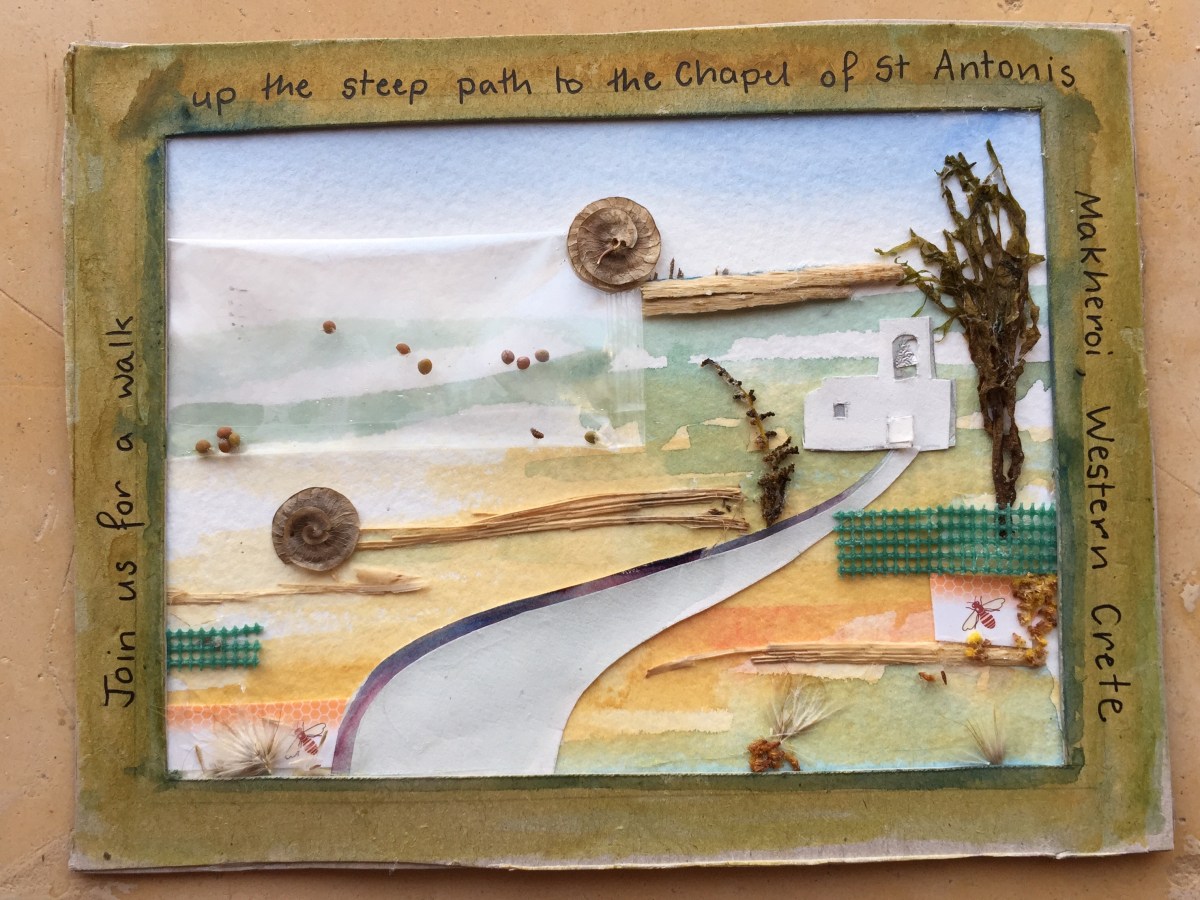
The journey to the chapel of St Antonis

Here is a collage made for friends in Switzerland. I posted it at the Post Office in Kalami on 8th May. The official there did not seem to be concentrating very hard.…

Collage/postcard: a corner of the flat

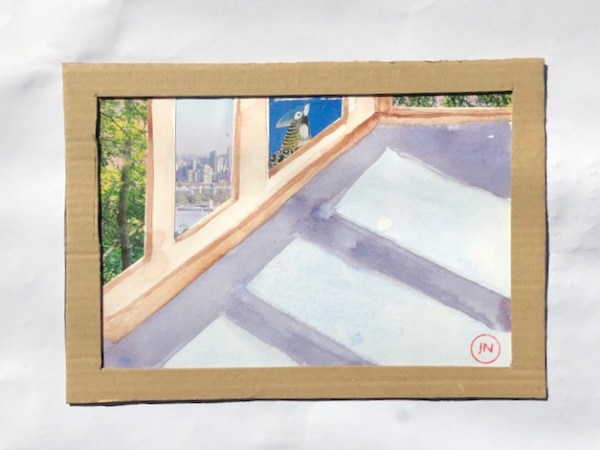
Here is a postcard from indoors: It shows a corner of the flat. You see the sun outside, and birds, and the city. You see parks, rivers and the great outdoors. But…
Collage Postcards: archive

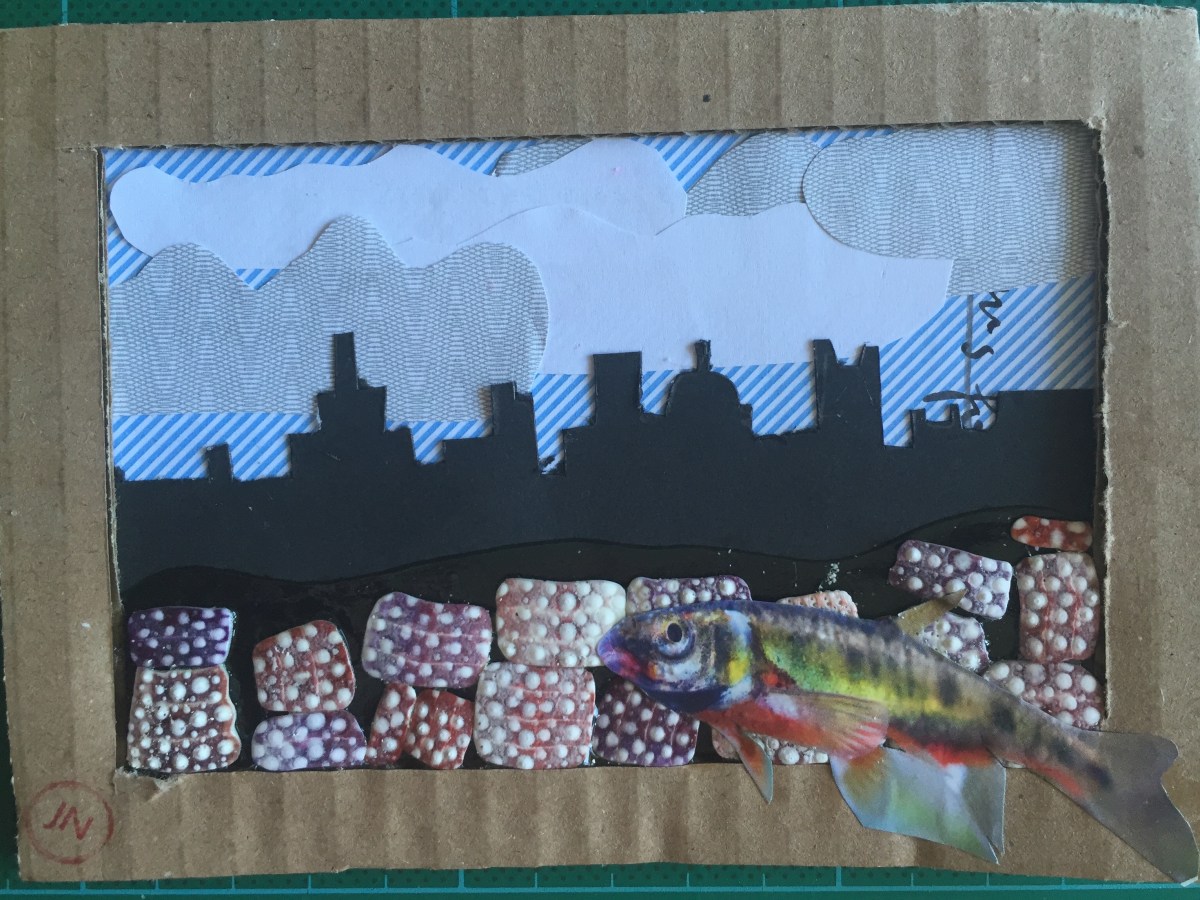
Here are some of the collage postcards I have made. The constraints I set myself are: the postcard must go in the post by itself: no envelope it is made of found…
Sketching in Shetland 2023 – Seal lagoon and swan loch

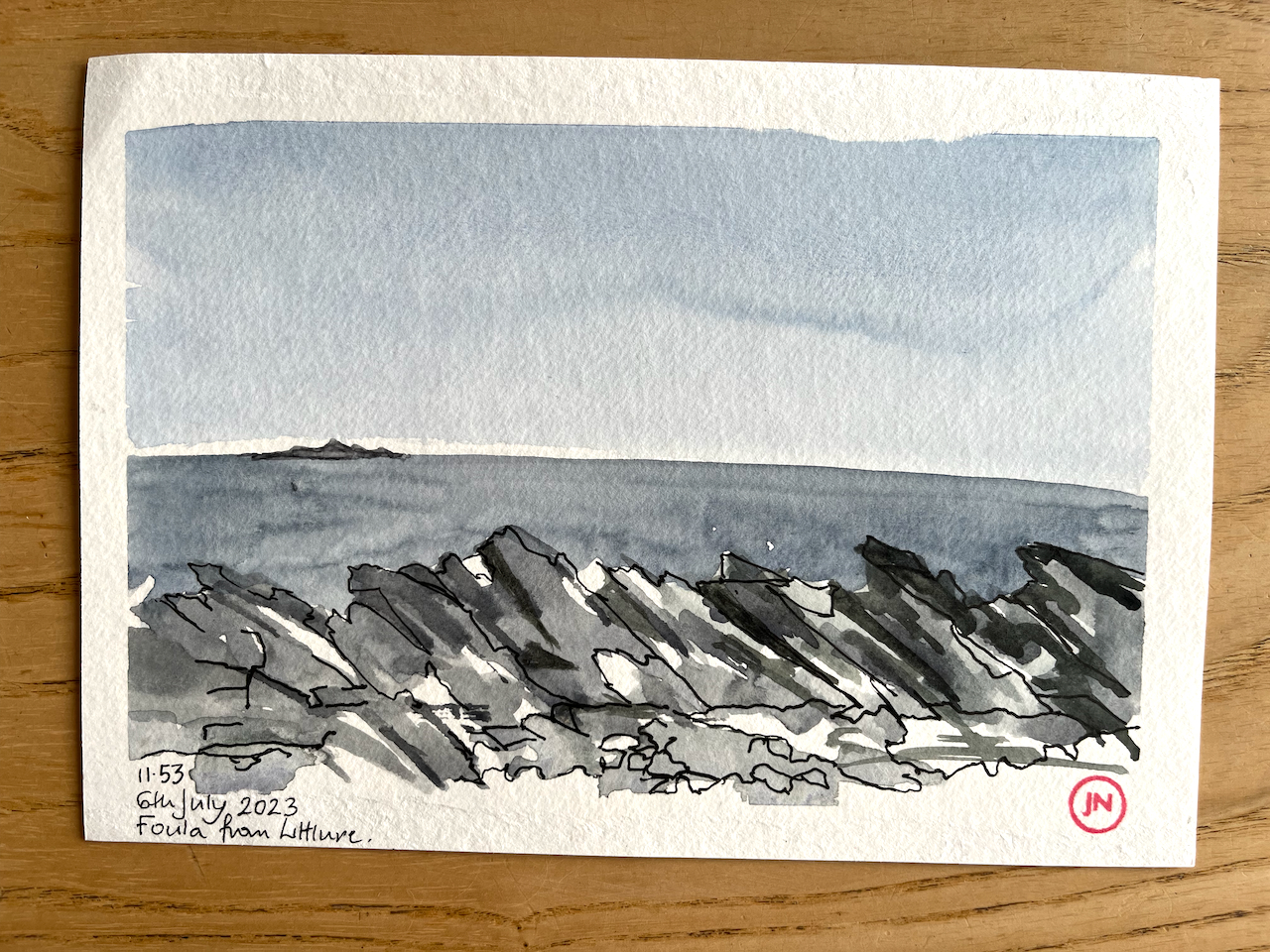
While I was drawing this picture, I was startled by a loud sneeze. Since I was totally alone on the hillside, it was uncanny. Then I realised that the sneeze came from across the water, from the seal colony at the base of the dark rocks.

Across the seal lagoon, Littlure

Soon several seals were in the water, swimming over to see what I was doing. They stayed a little offshore, bobbing about. Seals look into your eyes, as dogs do, and seem to want to communicate. They said “who are you?” and “come and play!”. They seemed disappointed when I walked off, without having accepted their invitation to swim with them in their chilly waters.

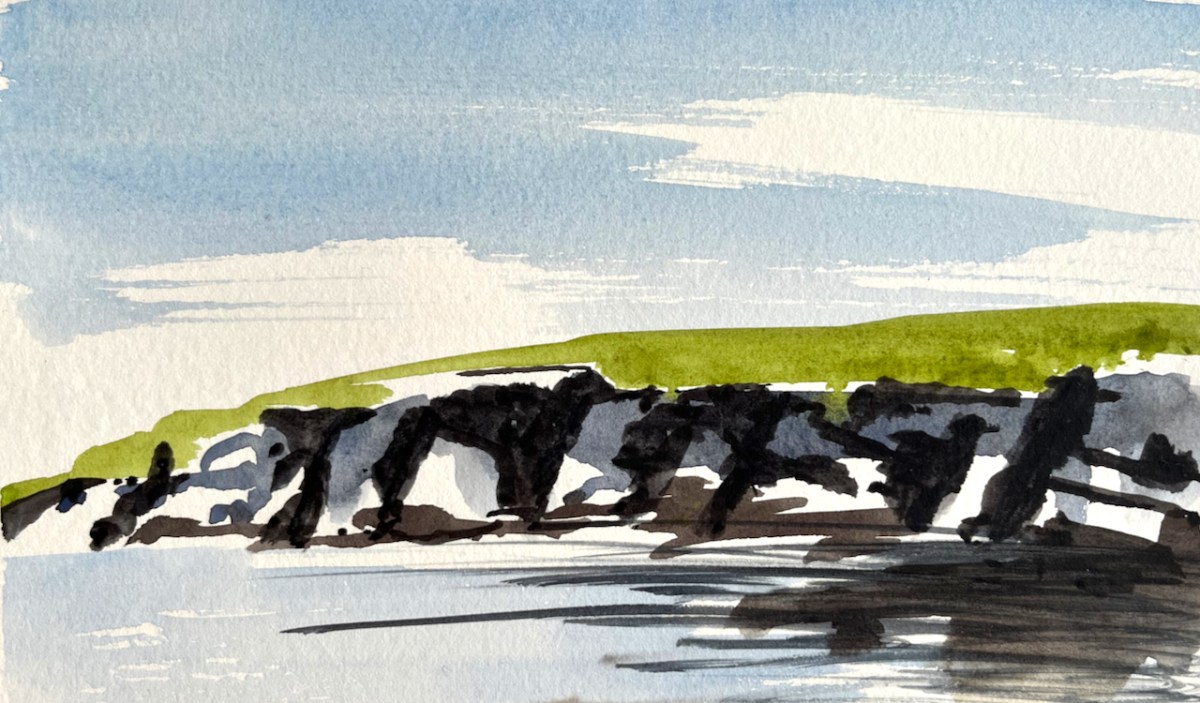
There are also seals on the beach where a stream from the Loch of Quinnigeo arrives at the sea. Nettles grow, sheltered from the wind by the deep ravine, and watered by the freshwater stream. I’ve swum there, and sketched the cliffs.

Nettle beach cliffs, July 2023

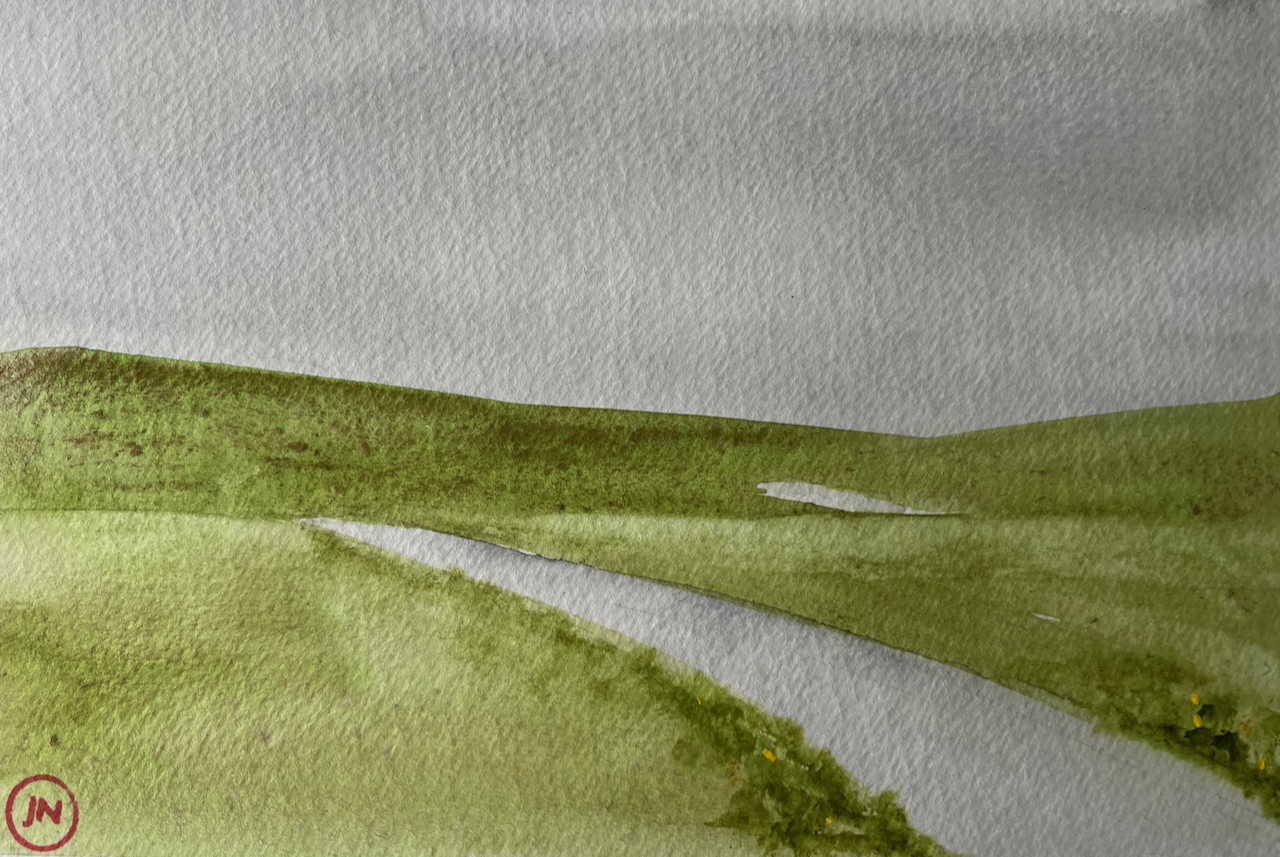
The loch of Quinnigeo is surrounded by smooth hills.

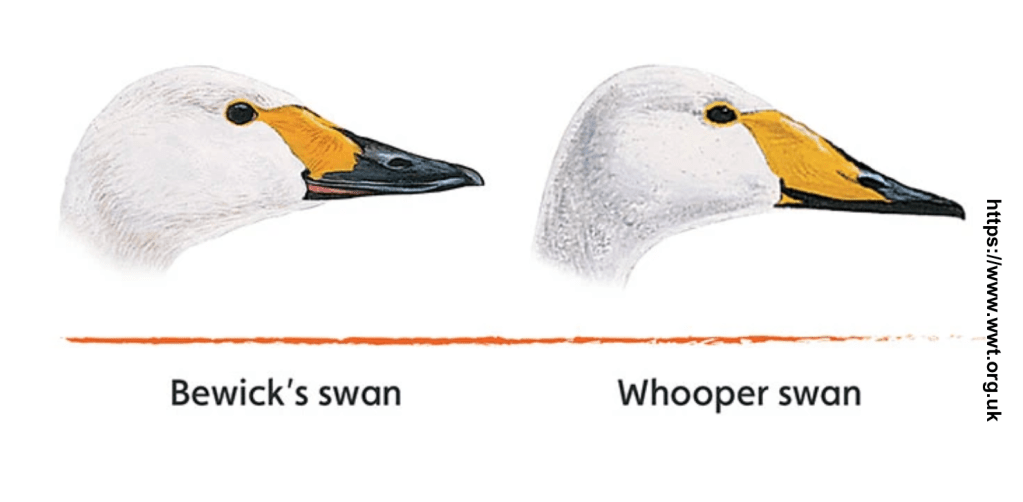
I’ve seen swans on the loch (off the picture to the right). They are not the ordinary urban type of swans I’ve seen in parks, which are called mute swans. Mute swans have pink beaks and these ones had yellow beaks. They drifted calmly in the middle of the loch with their cygnet, honking in a conversational kind of a way. Whooper swans or Bewicks? I couldn’t distinguish at that distance.

Here is another attempt to show the solid landscape round the loch and the way the hill casts darkness onto the still water.

Loch of Quinnigeo, Littlure, near Walls, Shetland

Sketching in Shetland 2023

Here is my Shetland sketchbook:

A5 sketchbook from the Vintage Paper Company

This sketchbook was brilliant because it could fold back onto itself, and I could hold it with one hand.

I often worked on two sketches at once. I worked on a drawing on a sheet, alongside the drawing in the sketchbook. One drawing dried while I worked on the other one. Work does not dry quickly in Shetland: there’s a dampness in the air.

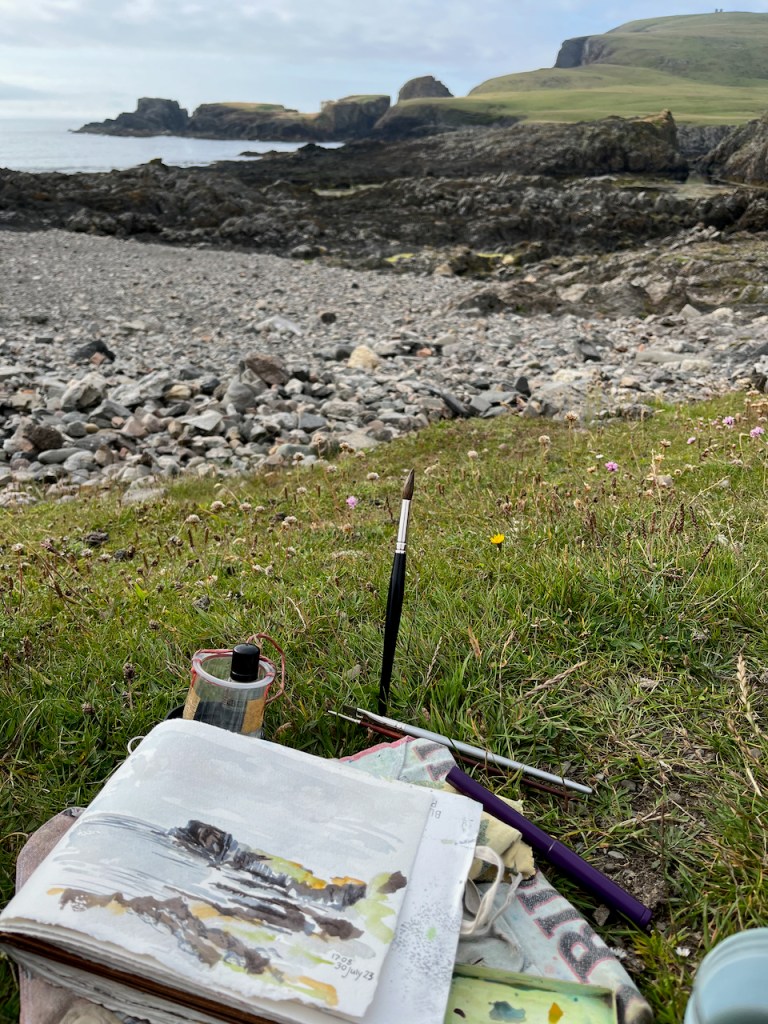
Working on two drawings at once. Top left: a drawing on a single sheet of A5, fastened to a card. Bottom left: Sketchbook. Bottom right: Palette by David Cooper, Classic Paintboxes.

Here are drawings in Aberdeen:

From Aberdeen I take the overnight ferry to Lerwick in Shetland Mainland. Shetland is 100 miles off the north coast of Scotland.

The ferry from Aberdeen takes about 12 hours and travels 200 miles.

I stay on the West side of Shetland. There are smooth hills, few trees and usually a view of water.

Here is a magical place: high up on cliffs near the sea at Littlure is the Barni Loch. My drawing is inspired by the work of Peter Davis an artist based in the Shetland Islands.

Barni Loch, Littlure, 25th July 2023, A5 in sketchbook.

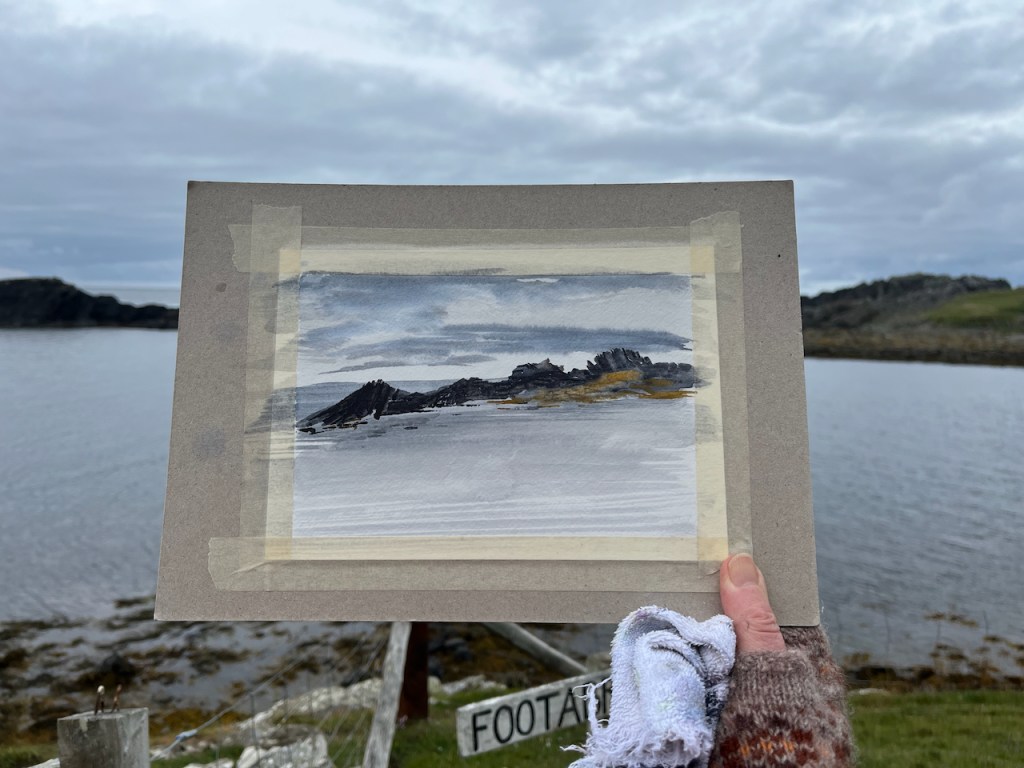
A bit further on is Footabrough.

Footabrough, in the style of Peter Davis. A5 on watercolour paper.

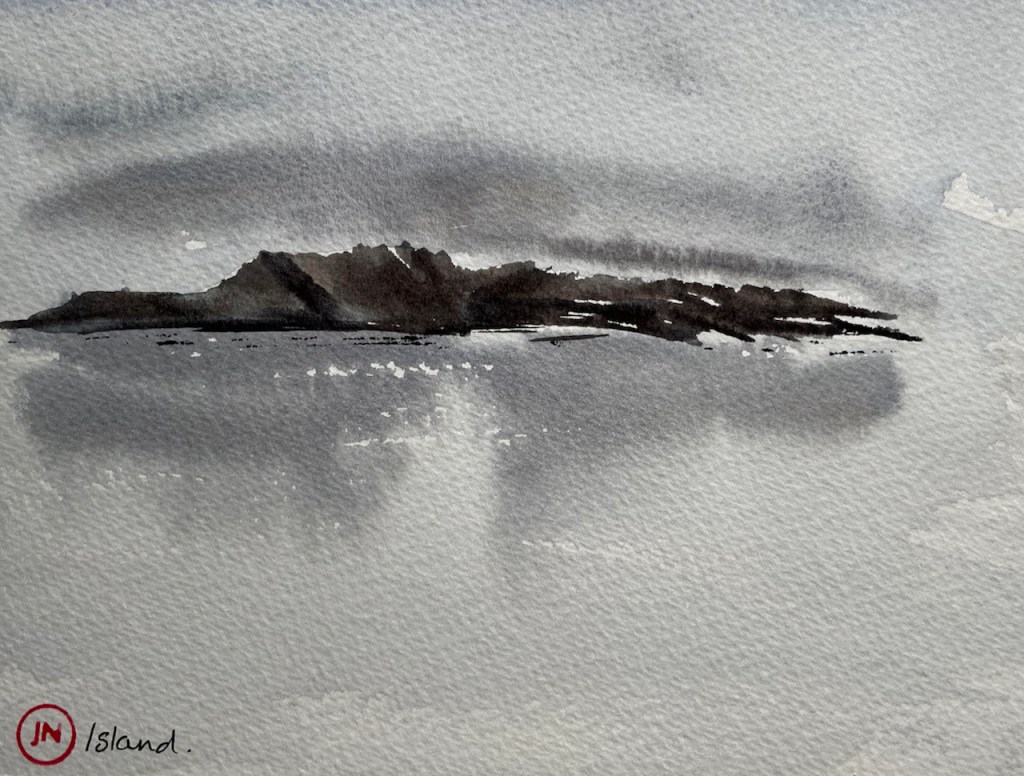
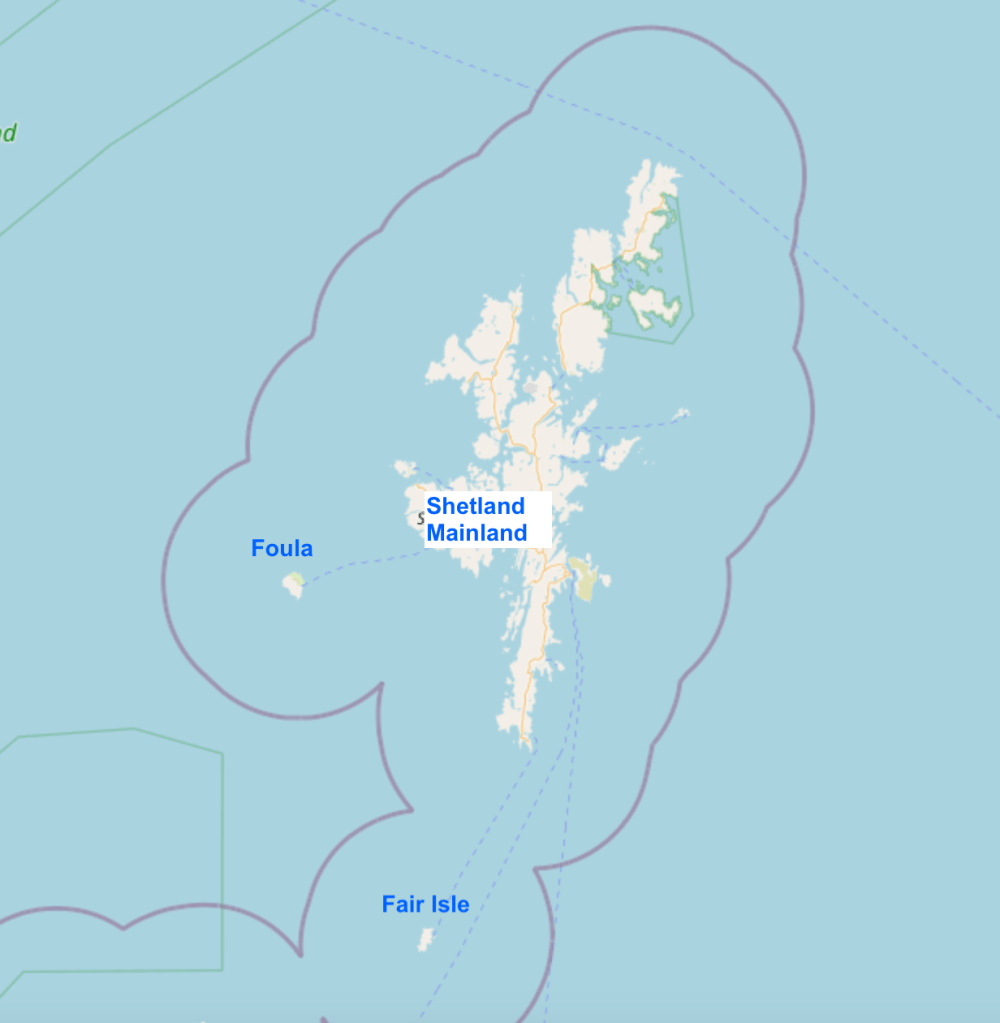
During this walk, the island of Foula floats on the horizon, sometimes visible, sometimes not.

Foula is 20 miles away from the Shetland Mainland.

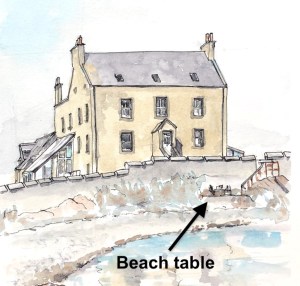
I was staying at Burrastow. There is a table by the beach.

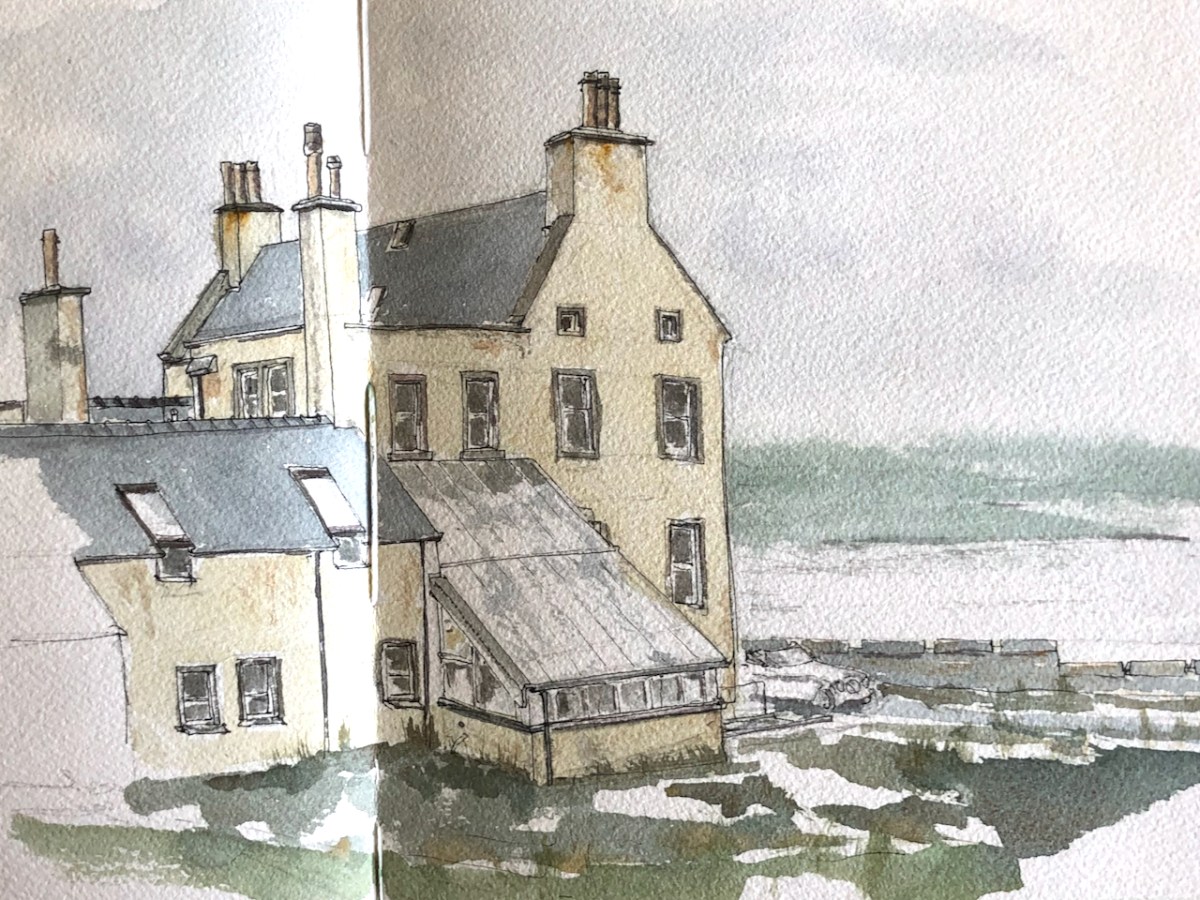
Burrastow House, Walls Shetland, view from the beach

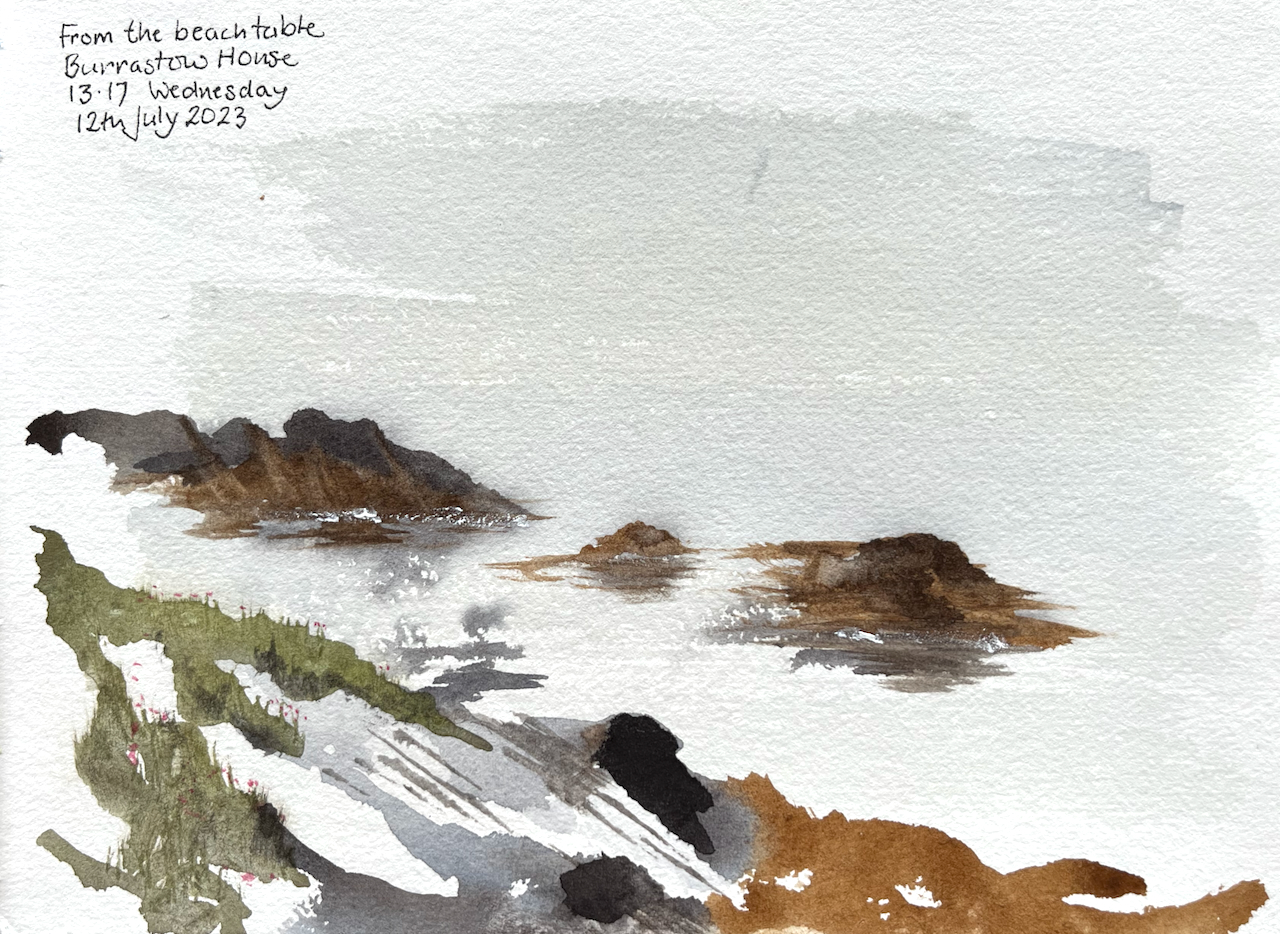
Here is the view from the Beach Table

I’ve drawn Burrastow House on previous visits.

On this visit I drew landscapes. I’ll make a new post to show you those, and also to show pictures from my visit to Fair Isle.

London Liverpool Street, EC2

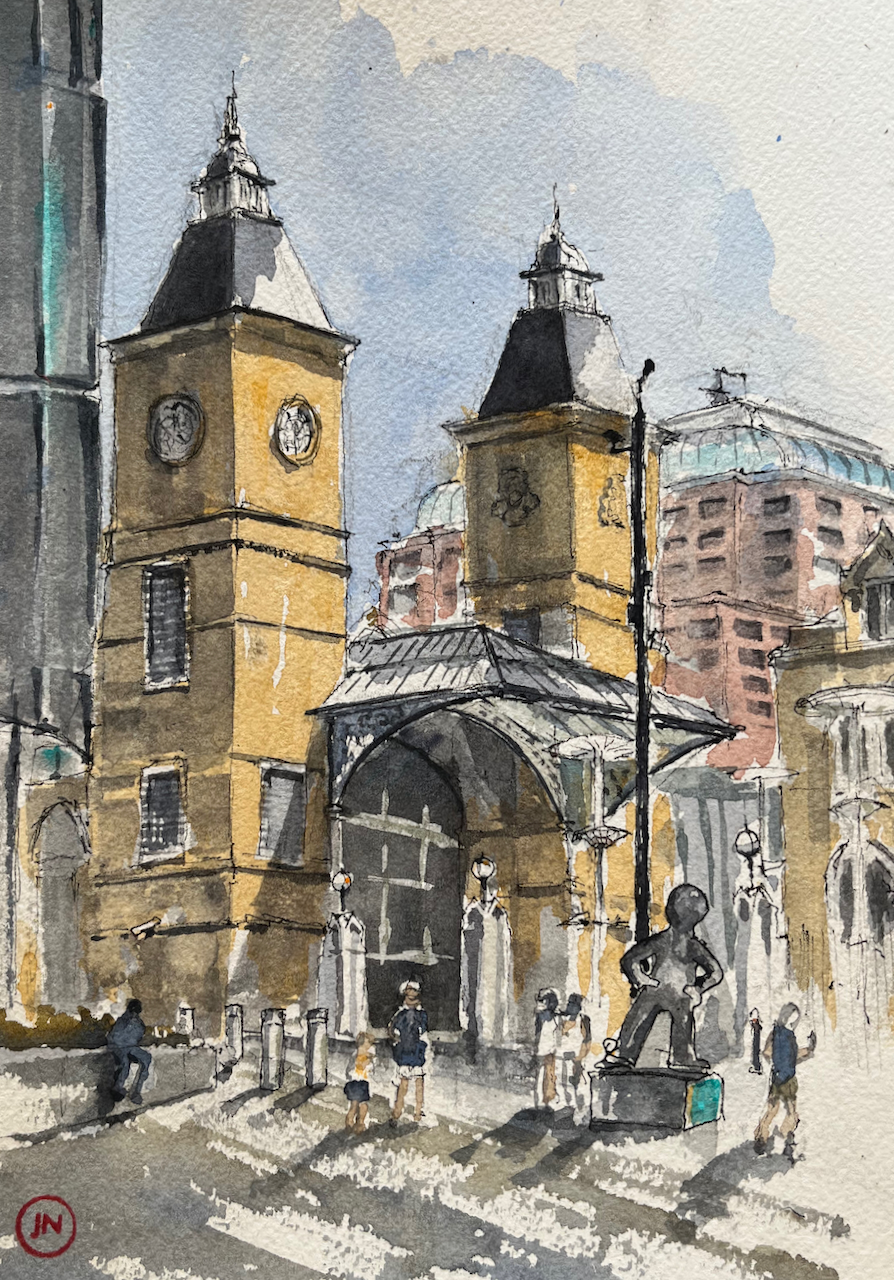
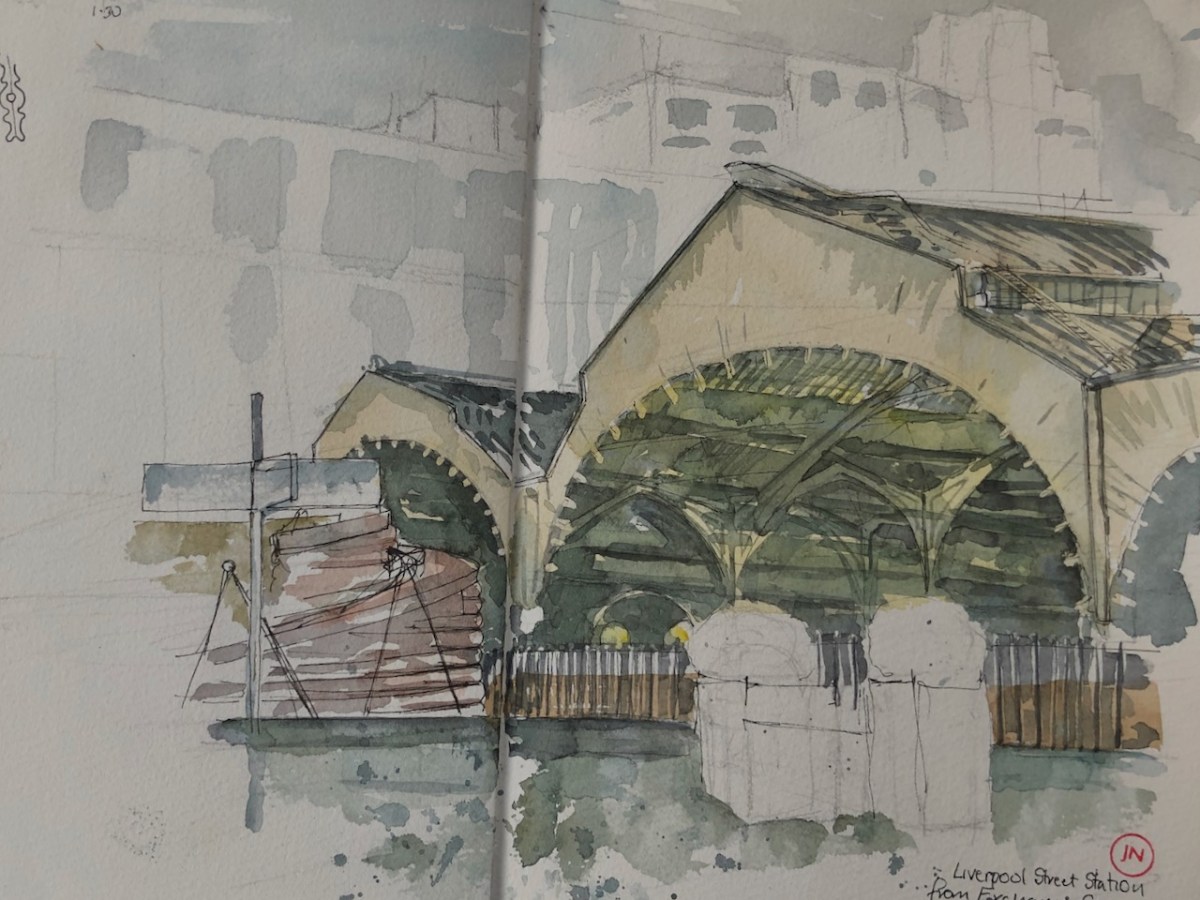
Here is Liverpool Street Station, main entrance, sketched today from outside the “Railway Tavern”.

Liverpool Street Station, 25th June 2023, 1pm. 8″ x 10″ in sketchbook 13.

The humanoid figure on the plinth is Morph, part of a temporary art trail.

The area in front of the main entrance is like an art installation in itself, a collector’s assembly of street furniture: two different types of bollards, long ribbons of fencing, several species of street lamps, and that enormous CCTV stand which is just behind Morph. It’s surprising that people can find their way into the station in amongst the obstacles. I haven’t drawn them all.

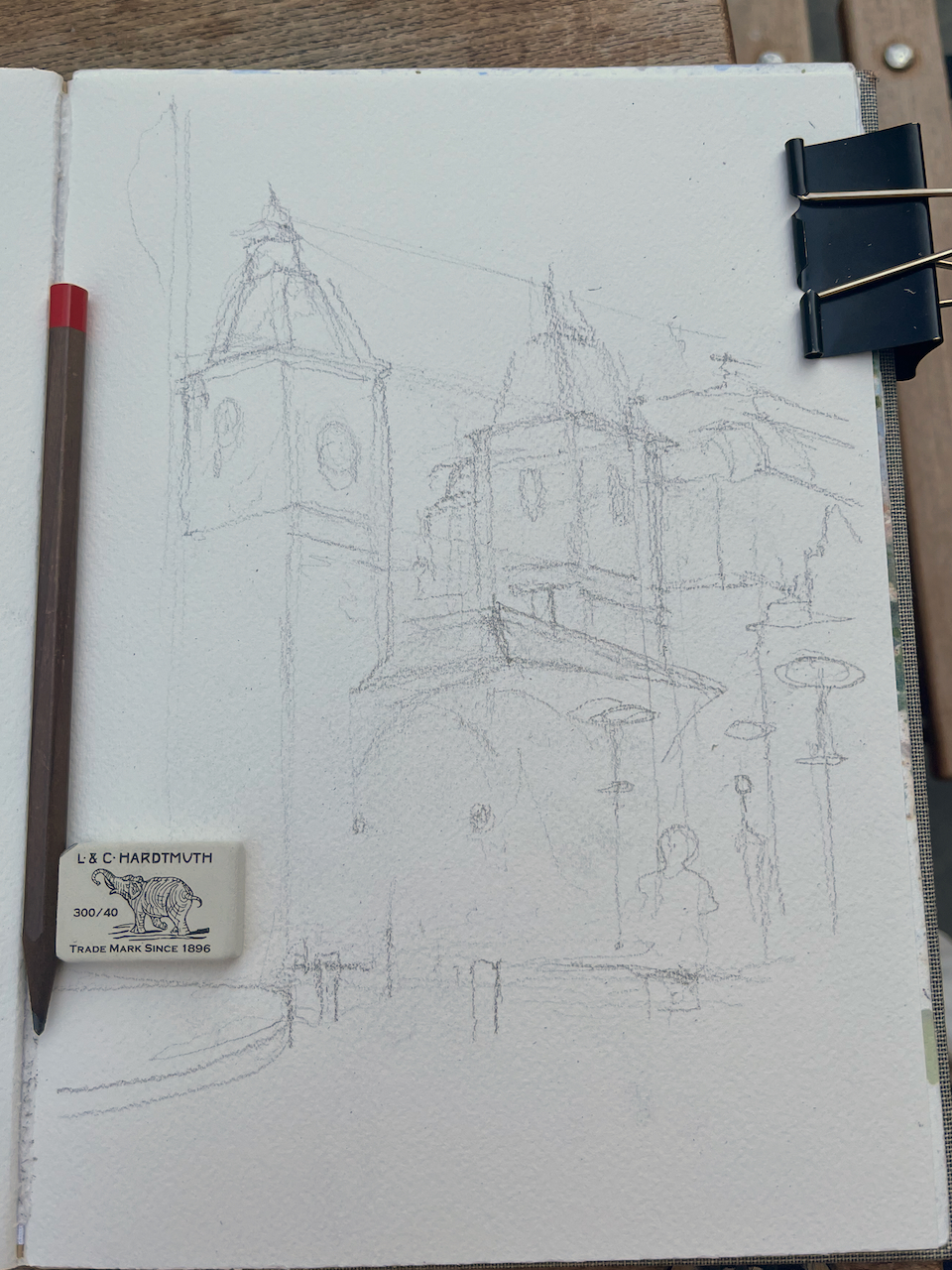
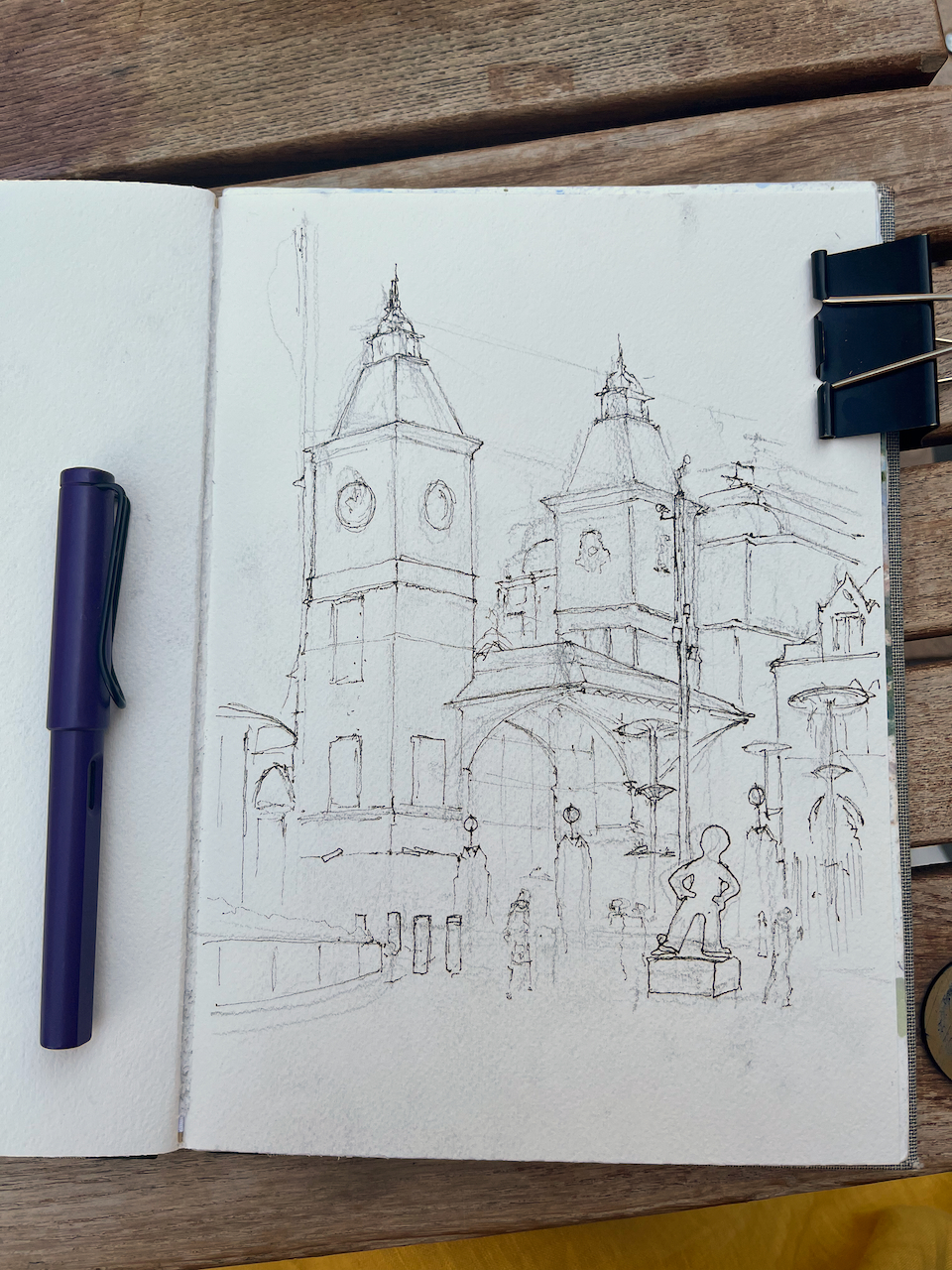
Here’s work in progress on the sketch:

This section of Liverpool Street Station was built in 1875 as the new London terminus of the Great Eastern Railway. The building on the right of my drawing is the edge of the former Great Eastern Hotel (1884), now the Andaz London Liverpool Street. The pink building in the background is an office block on Bishopsgate.

I’ve sketched in this area before. This post contains more information about the history of Liverpool Street:

Liverpool Street Station from Exchange Square

Here are the magnificent 19th Century arches of Liverpool Street Station, seen from Exchange Square. Liverpool Street Station opened in 18751 Now the question is: what curve is that arch? I thought it might be a CYCLOID. A cycloid is the shape made by a dot on the edge of a rolling wheel. I made…

Keep reading

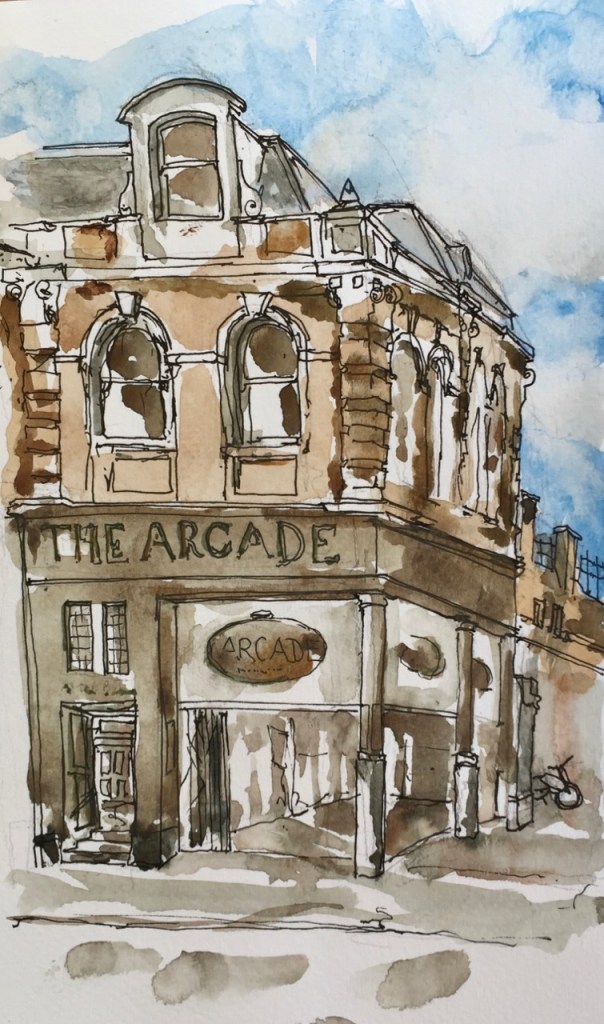
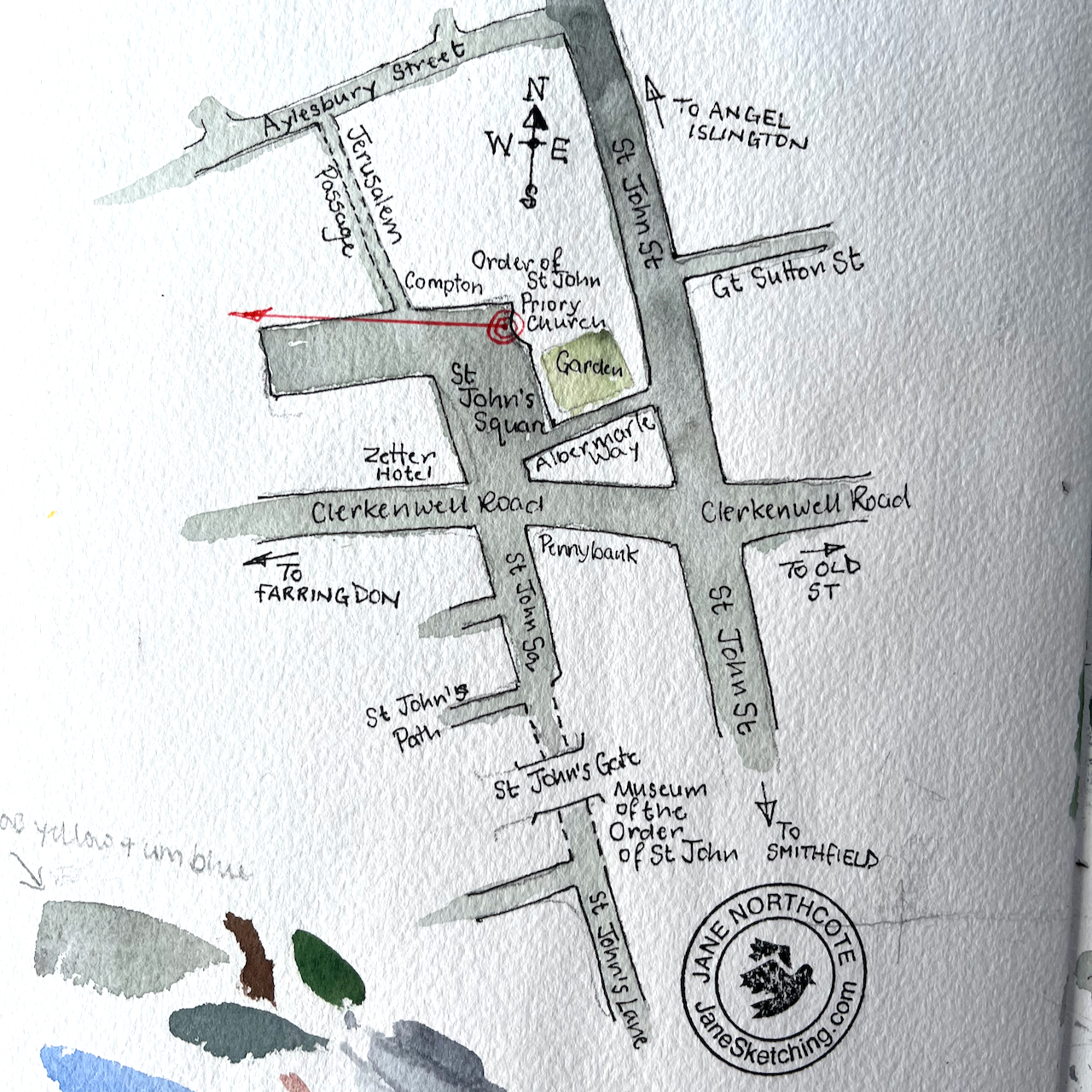
In 2019 I sketched the entrance to “The Arcade” which is shown on my sketch map. See this post for more about this sketch of The Arcade.

Compton, St John’s Square, London EC1

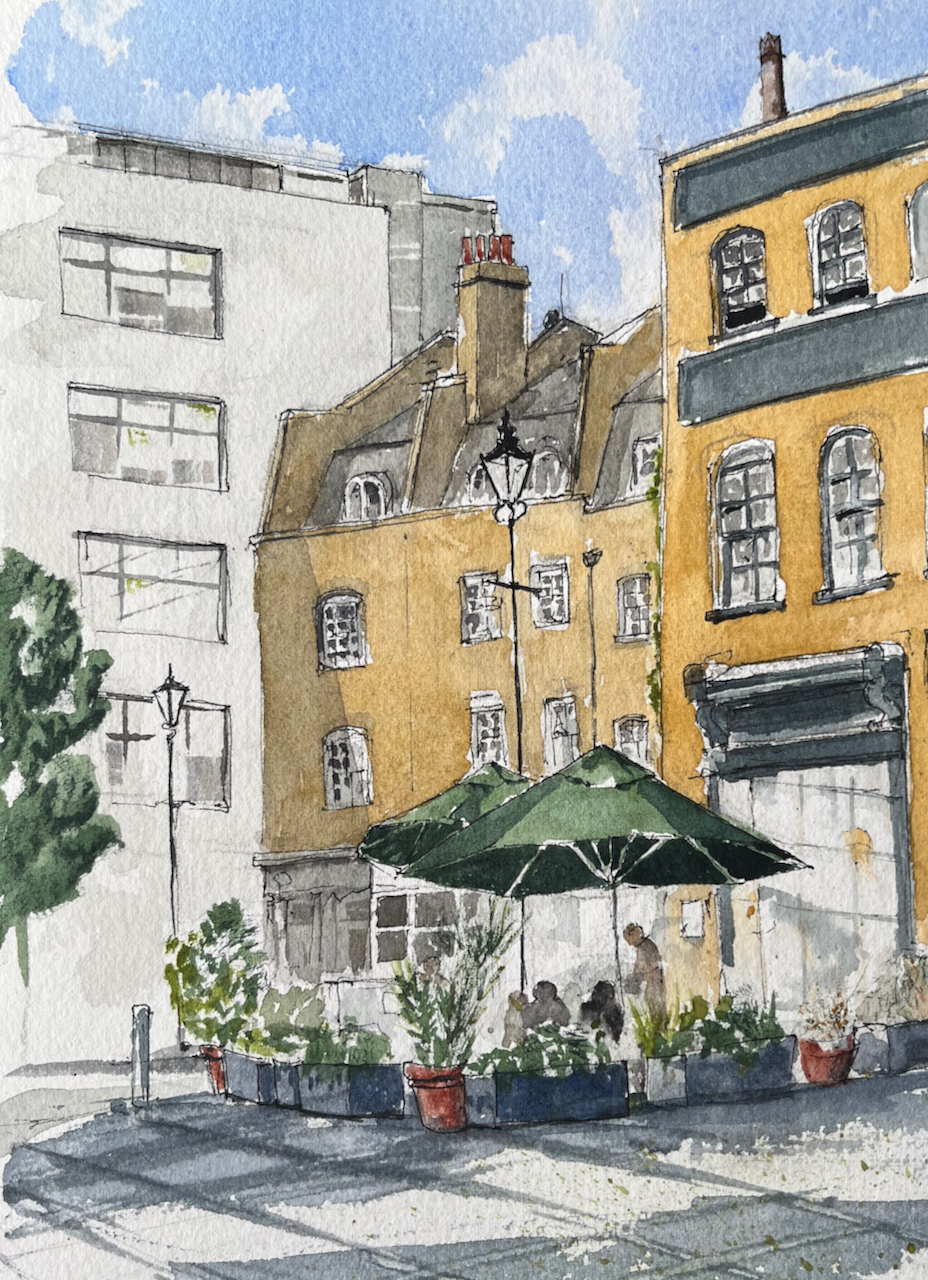
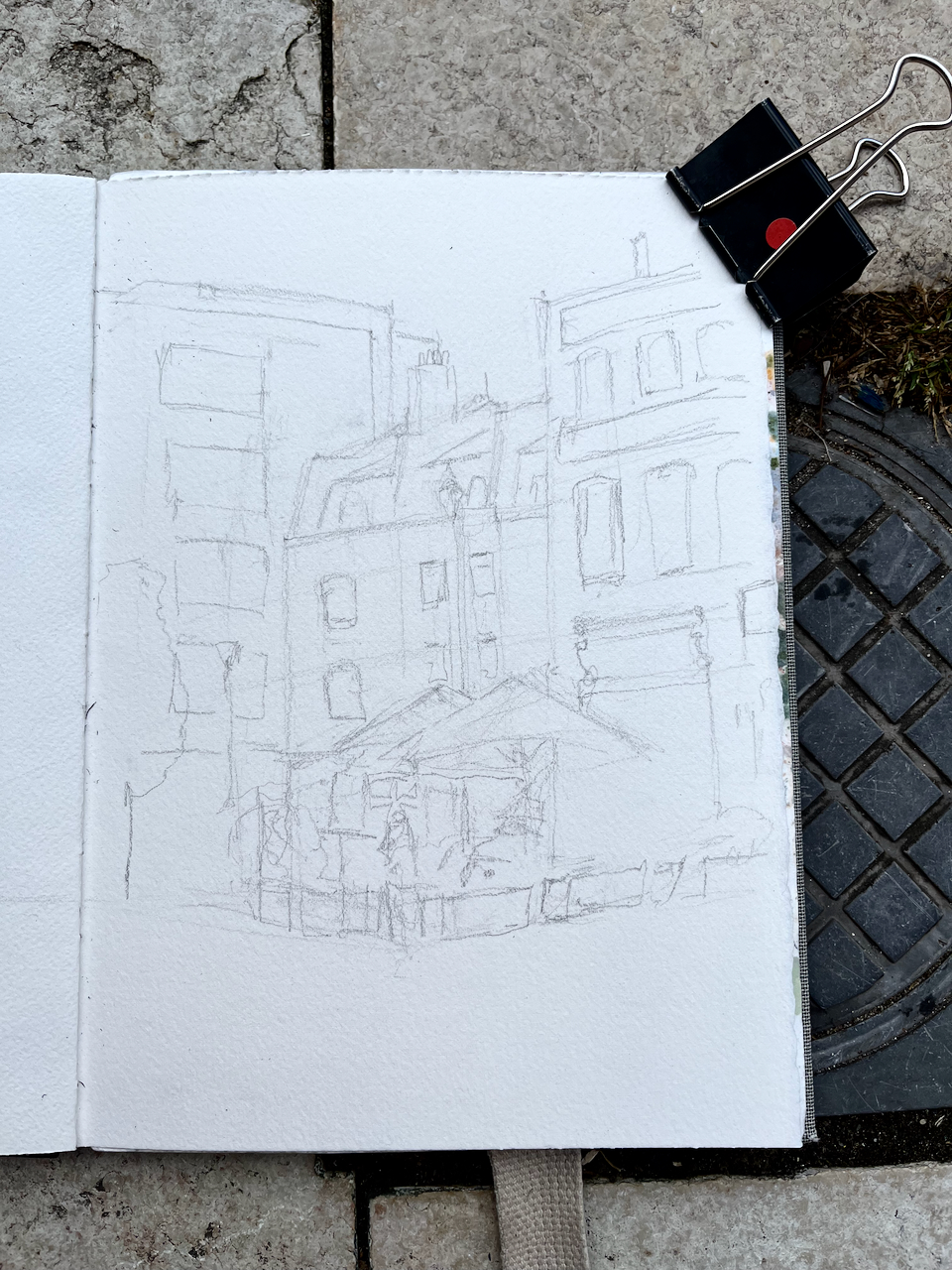
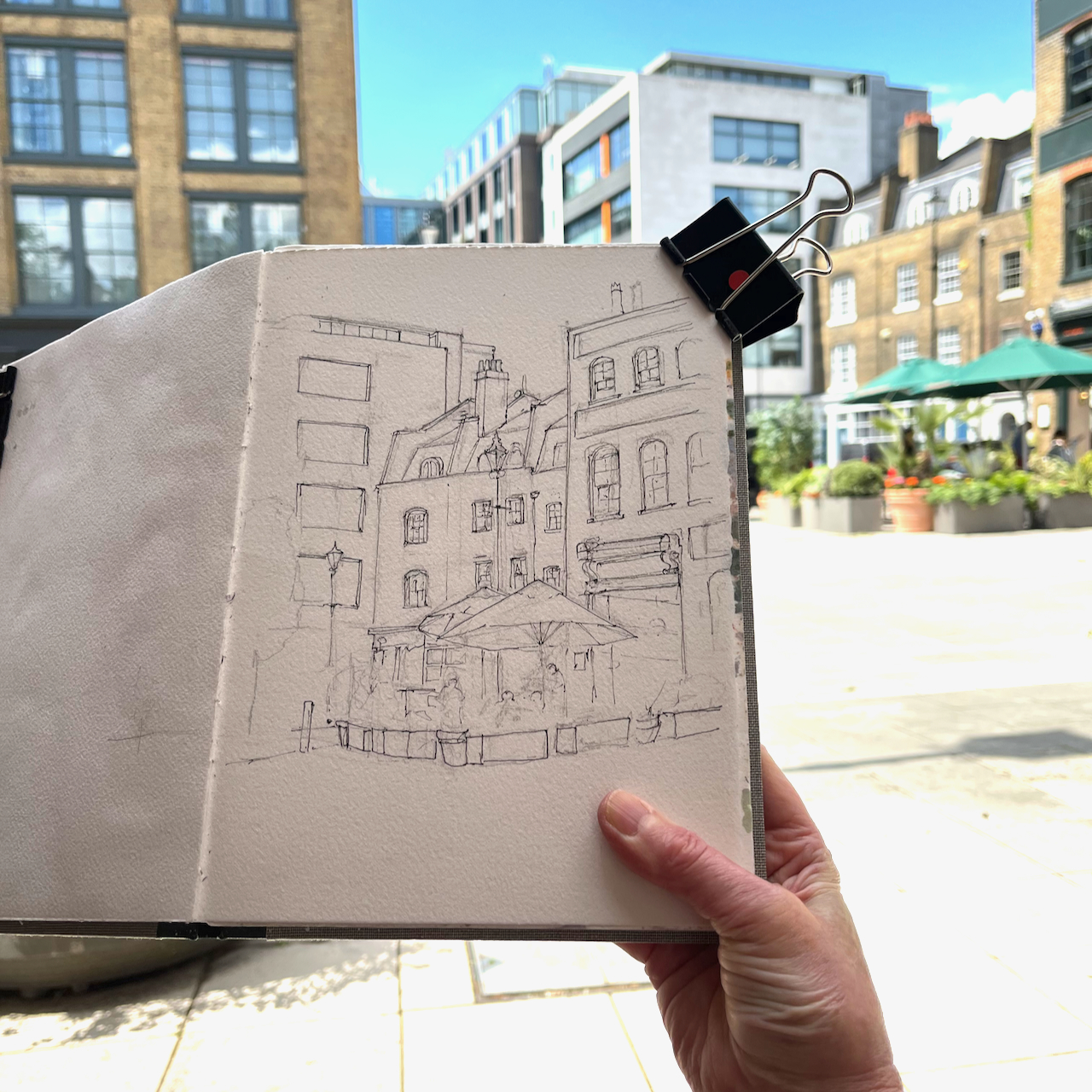
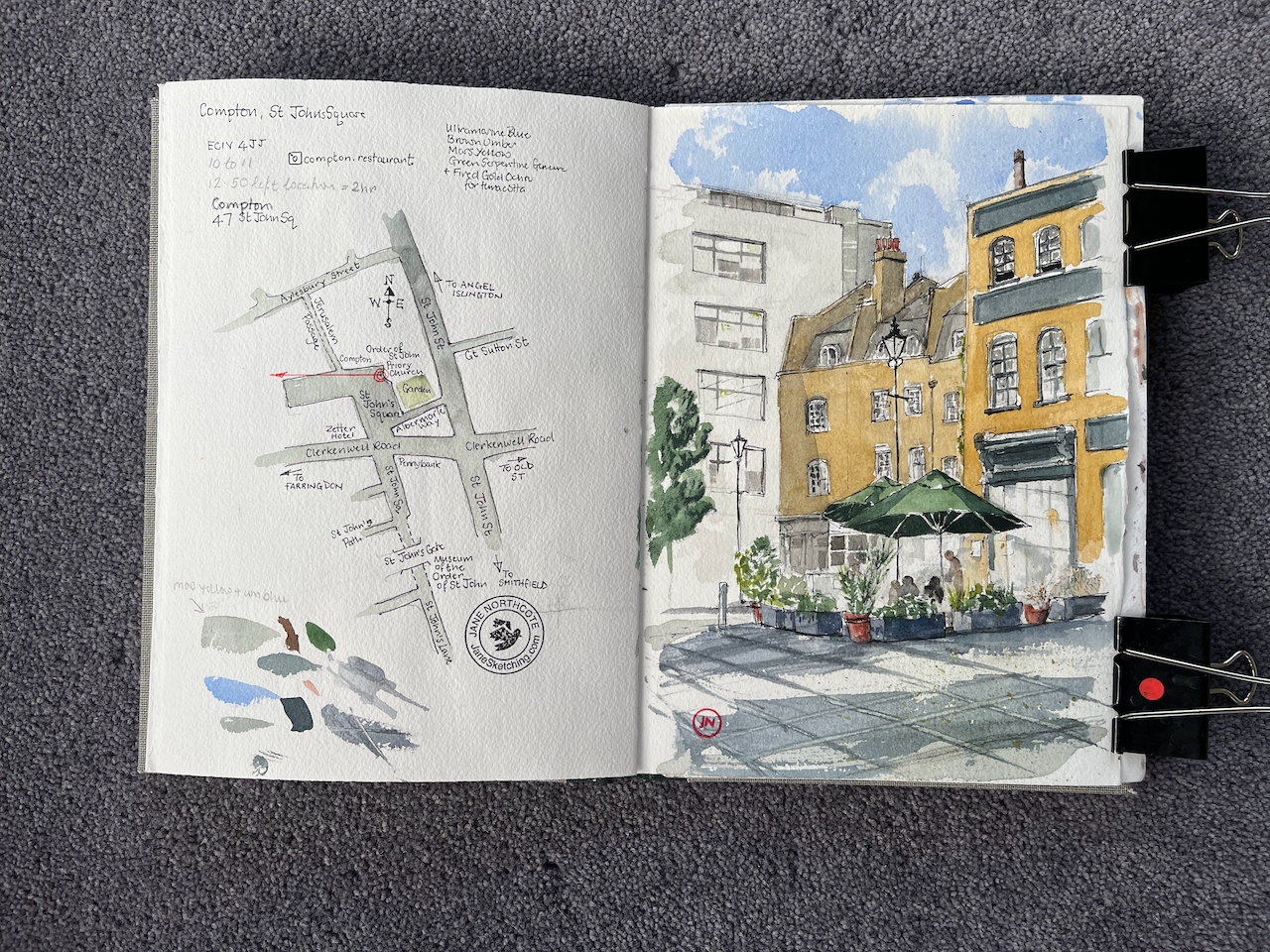
Clerkenwell has many interesting corners. Here is a view across St John’s Square. I sketched it earlier today, sitting on the step of the Priory Church of the Order of St John. The restaurant is called “Compton”.

View across St John’s Square, Compton restaurant, 21 June 2023, in sketchbook 13

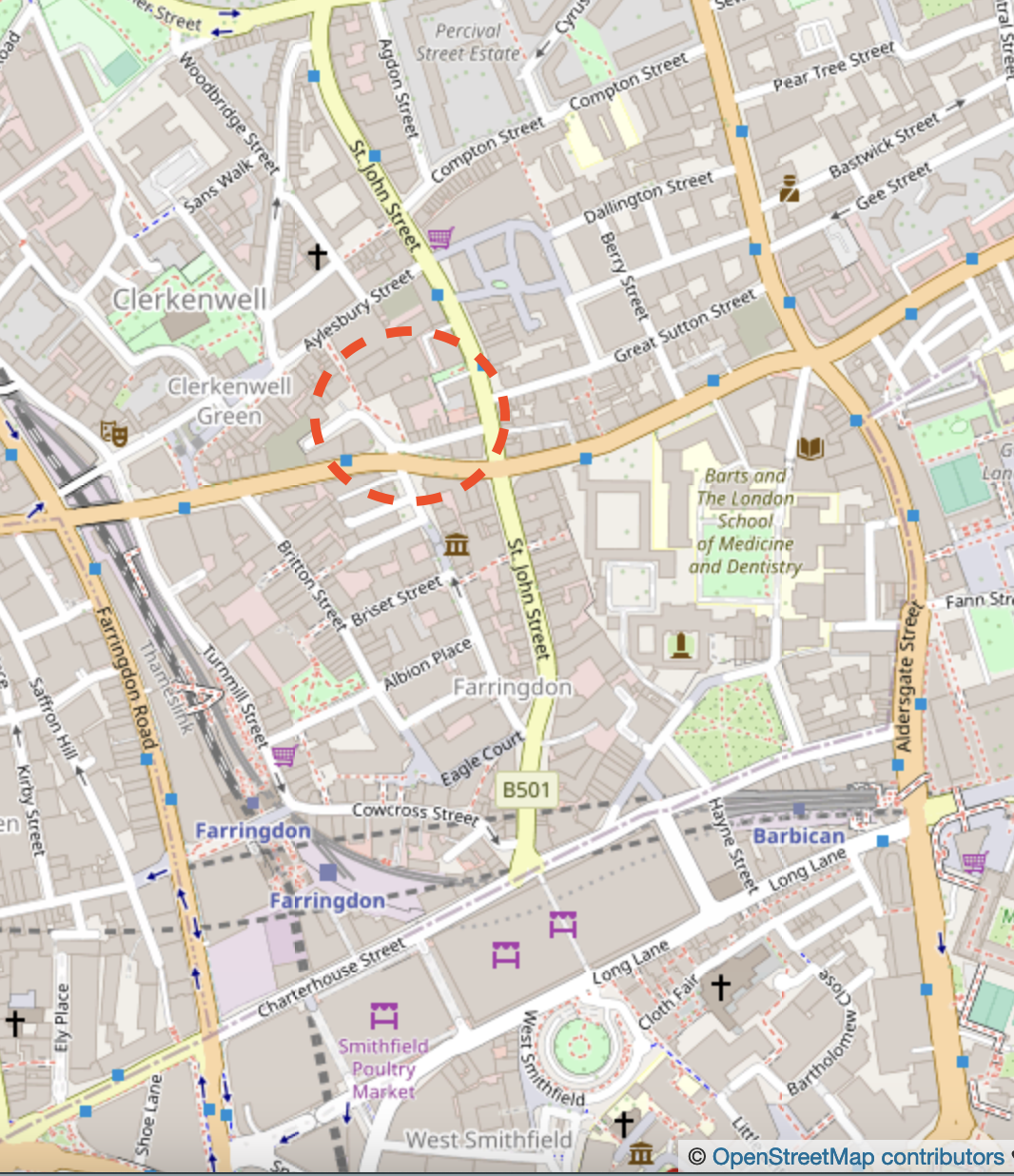
Here’s a map:

Thank you to the kind person from the Priory Church. They emerged from the door behind me. There I was, low down on the step, at the pen-and-ink stage, with my materials laid out neatly on the stone. They obviously had not expected anyone to be sitting on the step. I had not expected anyone to come out of the dark door. It had looked as if it had been closed shut for millennia. After a moment of surprise, politeness prevailed and we both said hello. Thereafter, I grouped my materials into a compact heap, and they came and went, tolerating me amiably, and skirting around me to operate the card key system.

This picture has just four main colours: Ultramarine blue, Brown umber, Mars yellow, and Green Serpentine Genuine. The only other colour is Fired Gold Ochre for the terracotta: the chimneys and the flowerpots. All colours are Daniel Smith watercolours.

Here is work in progress:

Garden of the Museum of the Order of St John, Clerkenwell, London EC1

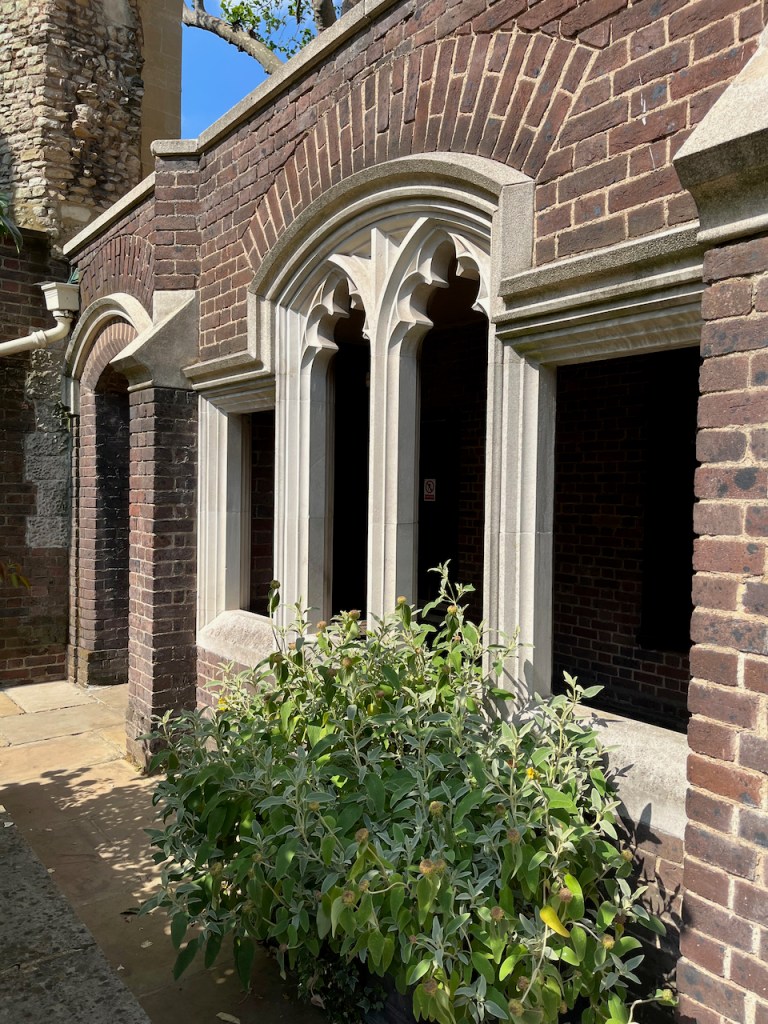
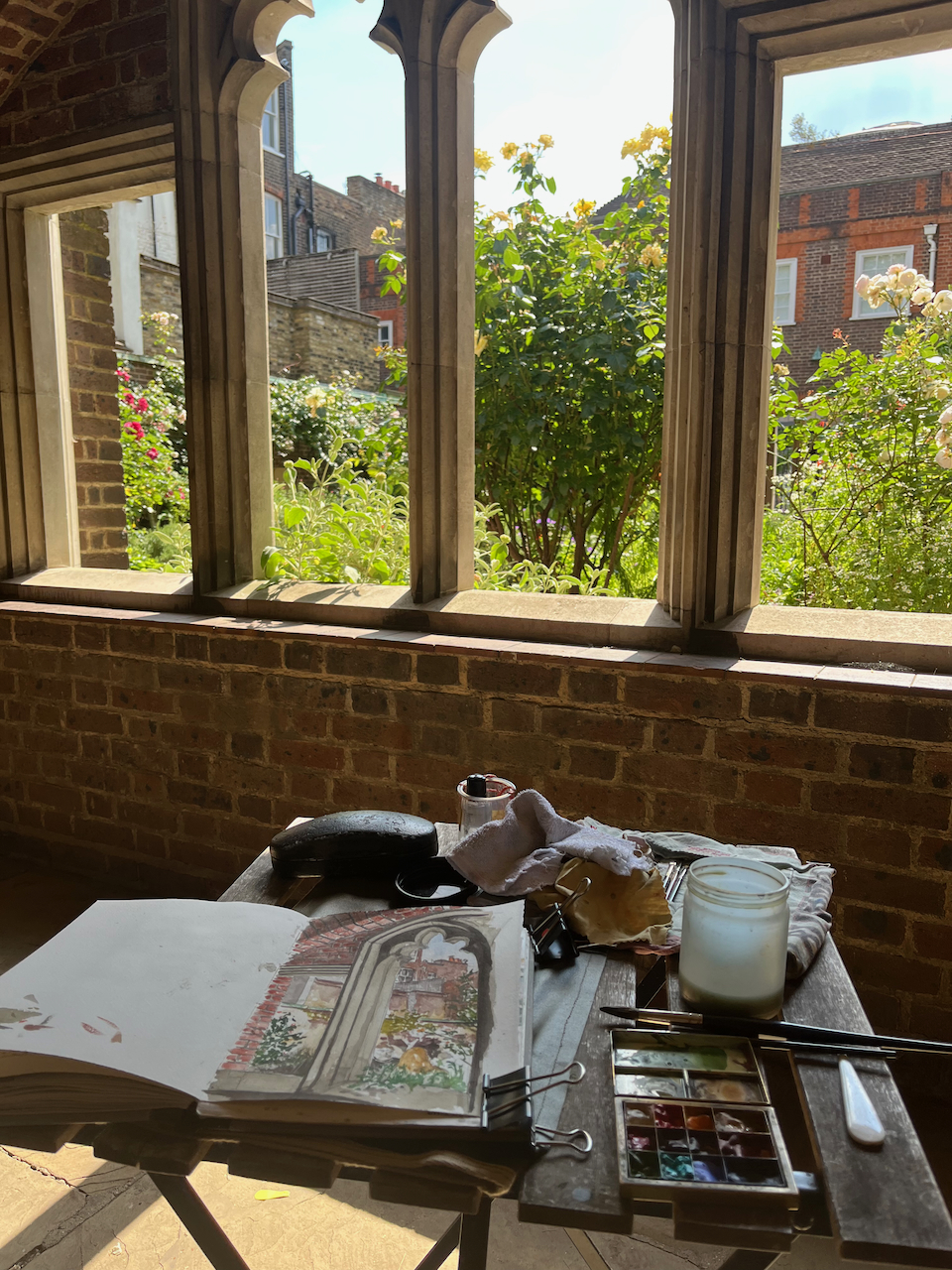
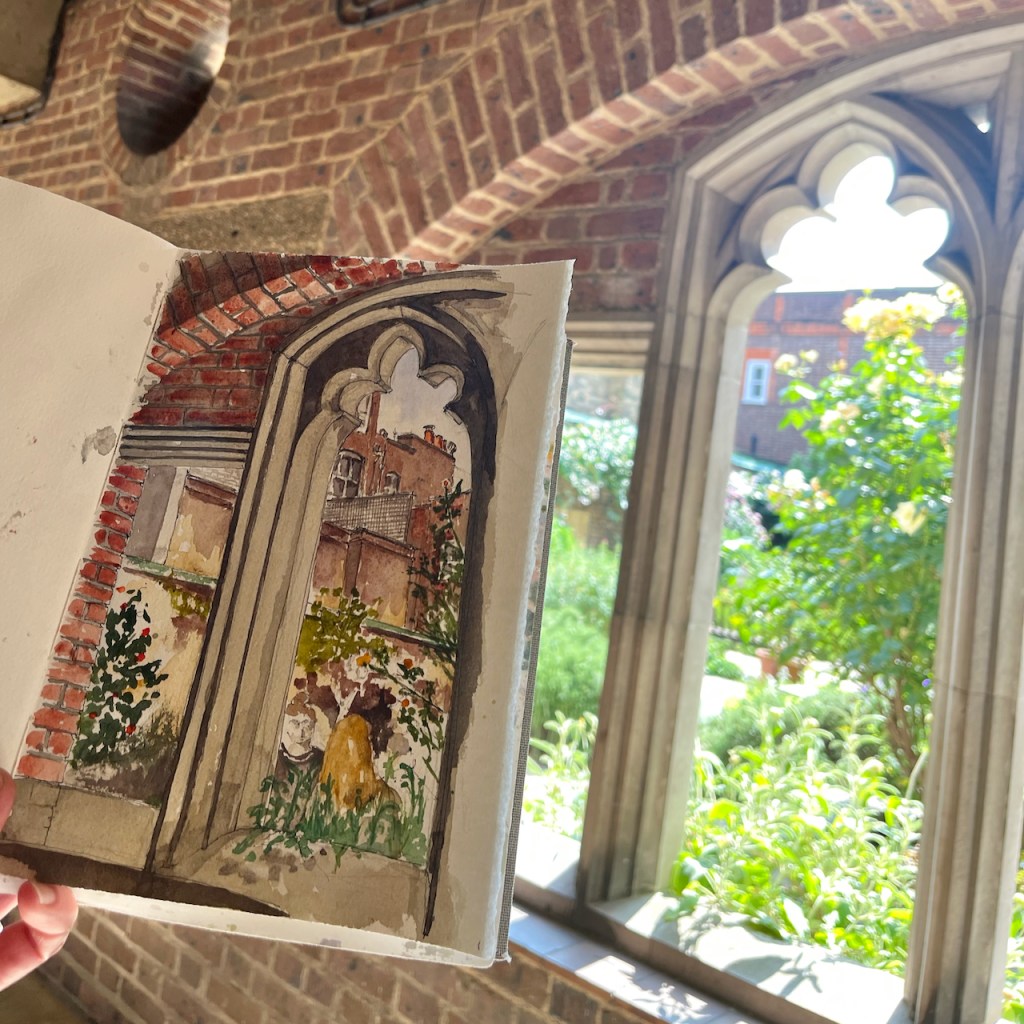
On a hot day, in need of healing, I re-discovered this herb garden. It is hidden away the other side of a gate off St John’s Square in Clerkenwell. The gate is open and you can walk right in. There are benches, and aromatic plants. At the back, there’s.a cloister.

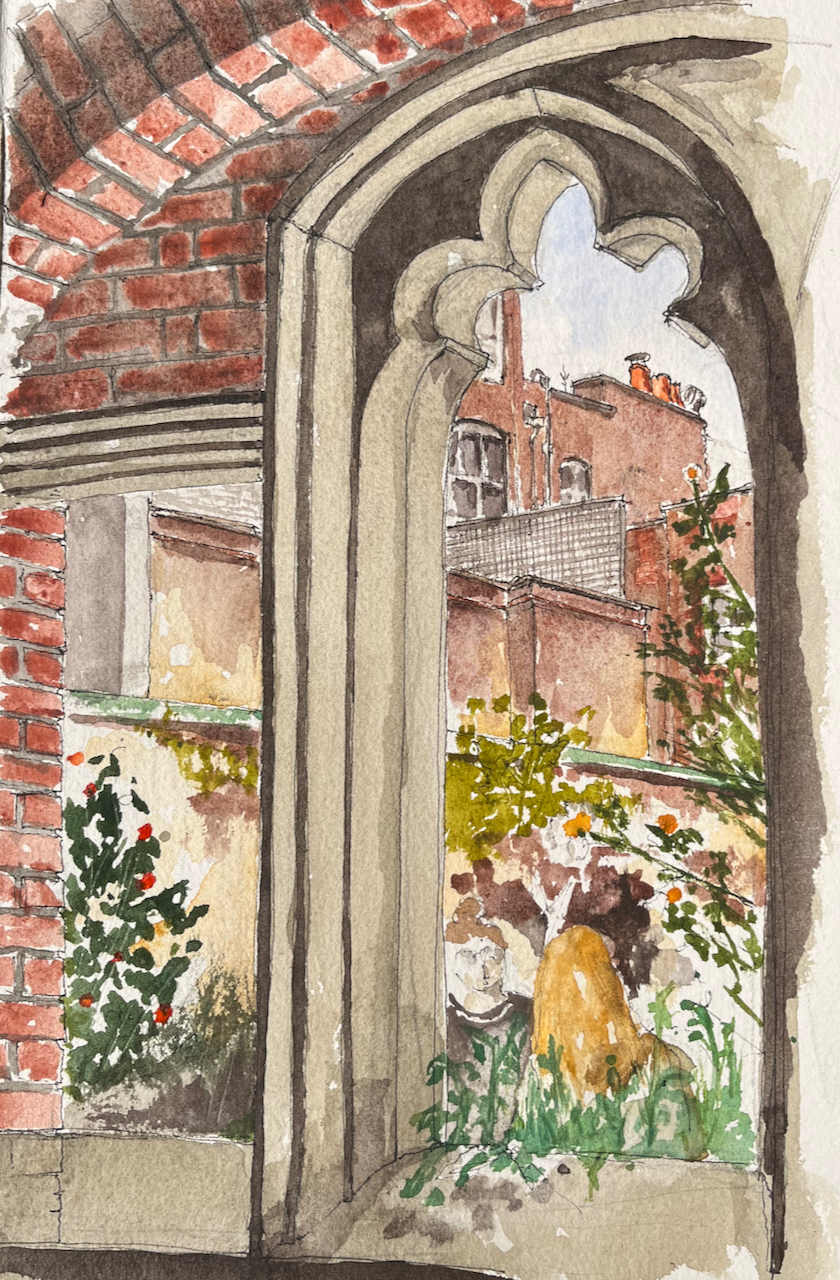
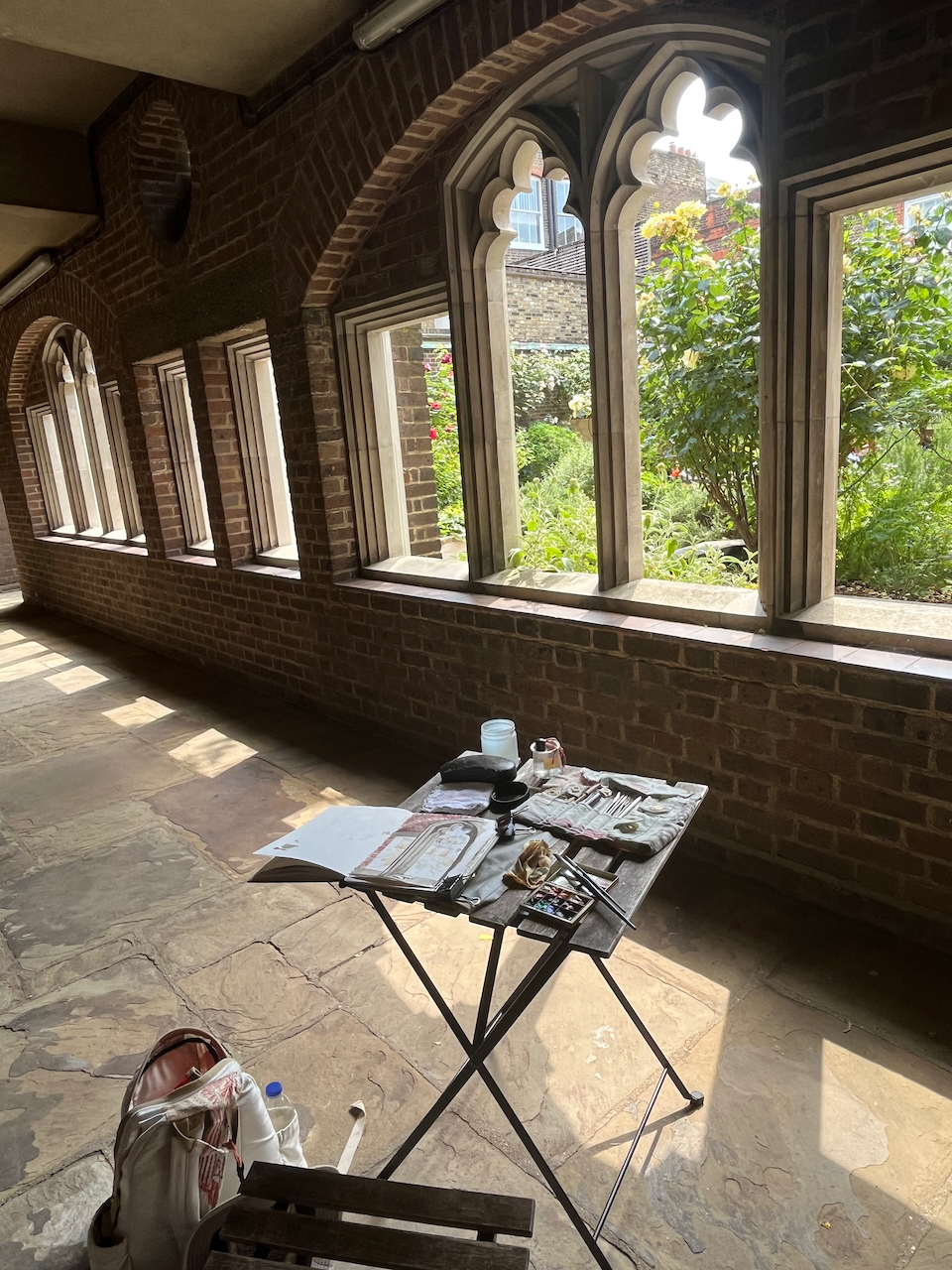
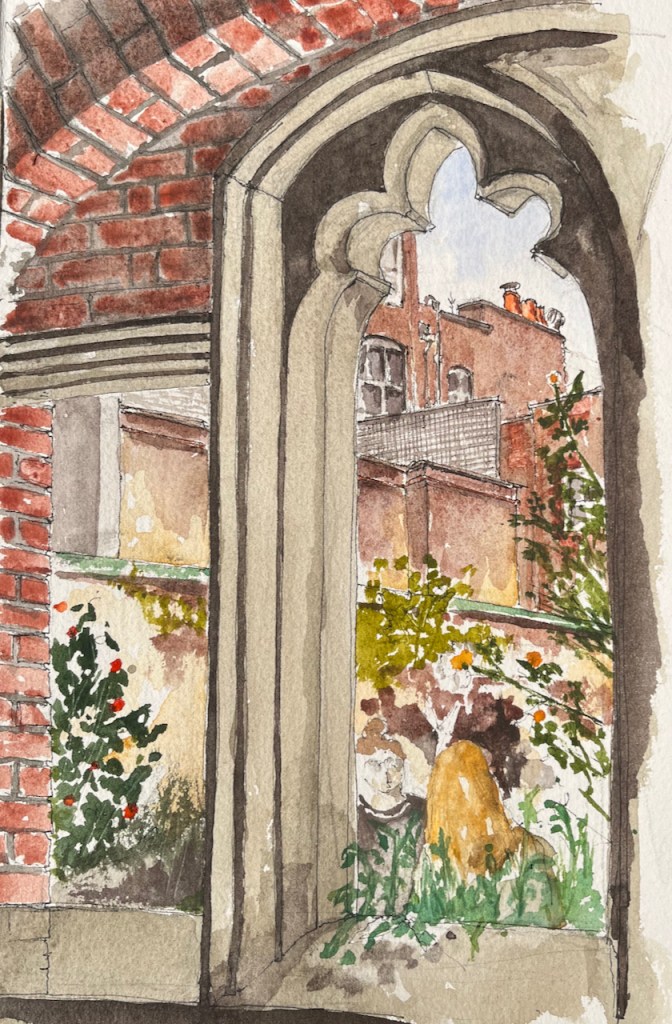
I went in the cloister, and found the ideal place to sketch: cool, still, and quiet, with a view from those windows.

Here’s the view:

From the Cloister, looking into the garden, 15th June 2023, 10″ x 8″ in Sketchbook 13

The Order of St John has a long history.

By 1080, a hospital had been established in Jerusalem by a group of monks under the guidance of Brother Gerard. Its purpose was to care for the many pilgrims who had become ill on their travels to the Holy Land. The men and women who worked there were members of a new religious order, officially recognised by the Church in 1113. Known as the Hospitallers, they cared for anyone, without distinction of race or faith.

website of the Museum of the Order of St John [https://museumstjohn.org.uk/our-story/history-of-the-order/]

These days, this is the organisation behind St John Ambulance.

The garden is wonderful. A place of solace. People from the offices around go there to eat their lunches and also to discuss office politics I realised. But also to read books, dream, doze, and of course, to sketch. There is a book stand by the gate as you go in, with secondhand books you can borrow or buy.

I’ve sketched in this garden a few years ago, from a slightly different viewpoint:

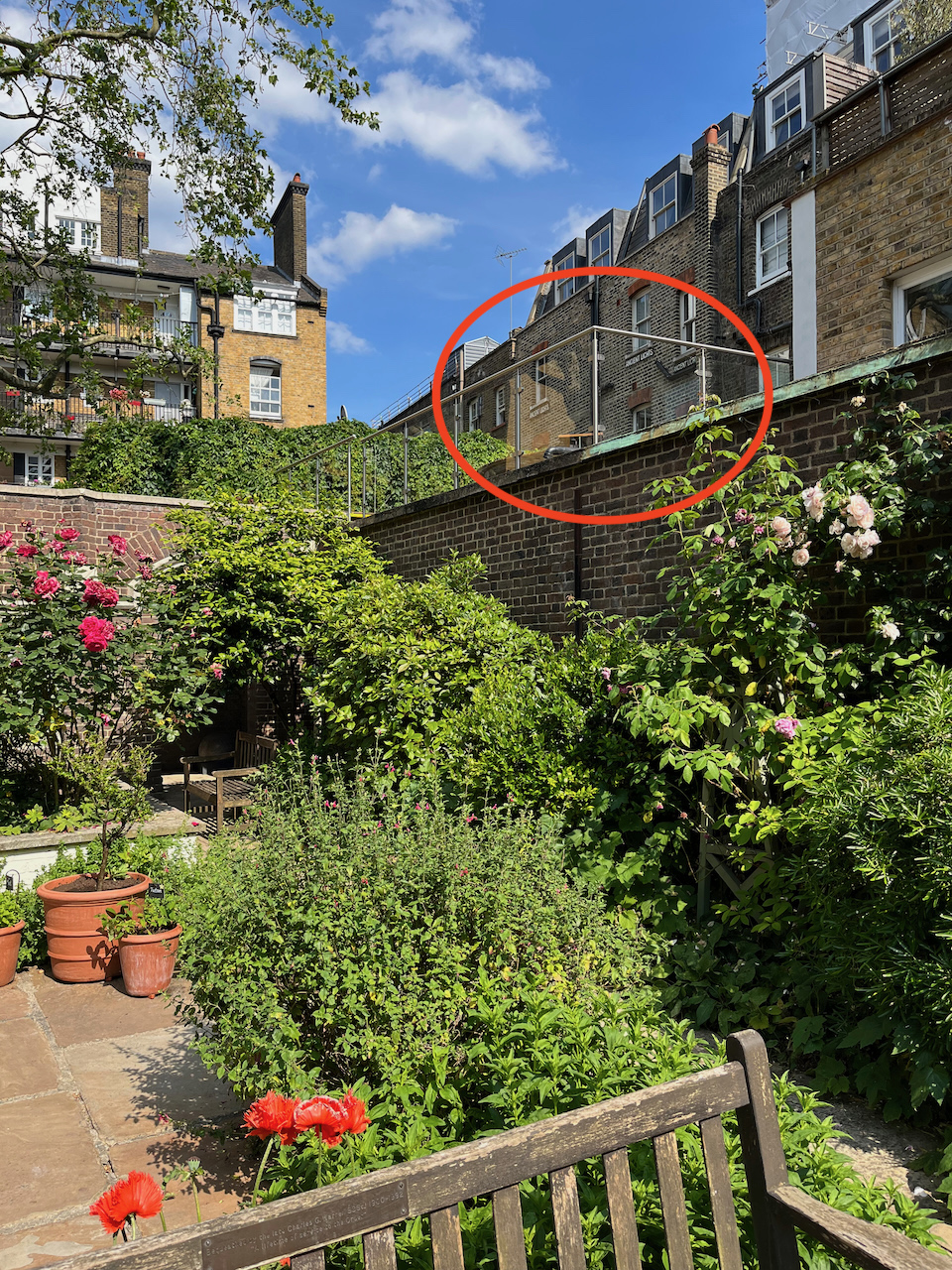
My sketch shows the backs of houses on Albemarle Way. This street and others nearby feature in the novel “Troubled Blood” by Robert Galbraith.

I looked back at the houses as I walked through the garden on my way out. I saw that one of them claims “Ancient Lights”. That’s asserting the right to light, and was a way in law to prevent anyone constructing a tall building which obstructed your windows. It’s “ancient” because you had to have enjoyed the benefit of the light for 20 years or more before you could assert “Ancient Lights”. This has now been superseded by “modern planning laws” I read. But maybe we should put some “ancient lights” notices on the windows of our flat, just to be sure.

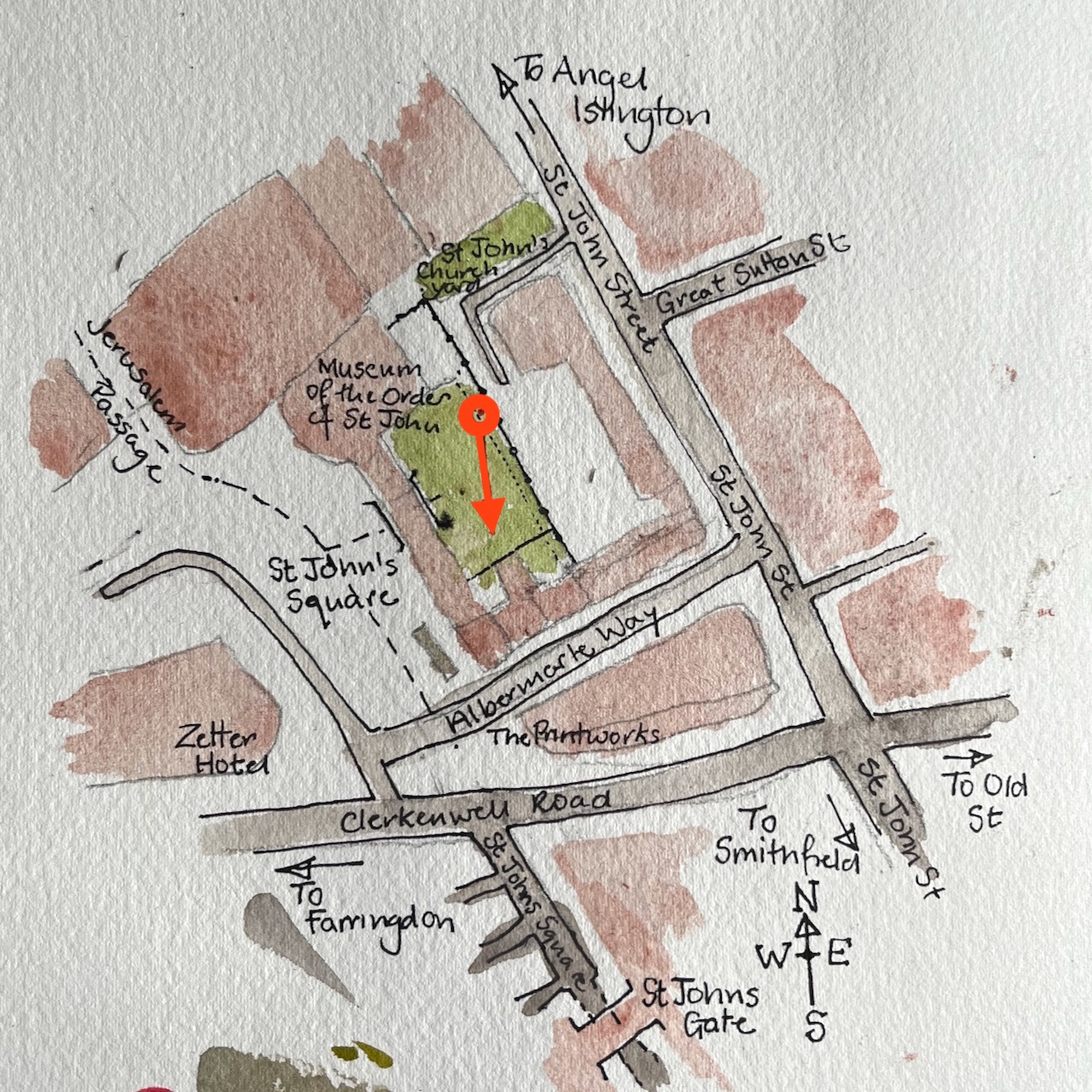
Here are maps:

The drawing took three hours. By the end of that time, my mood had transformed itself, and I walked out healthier than I walked in.

Oxford Nuclear Physics Building

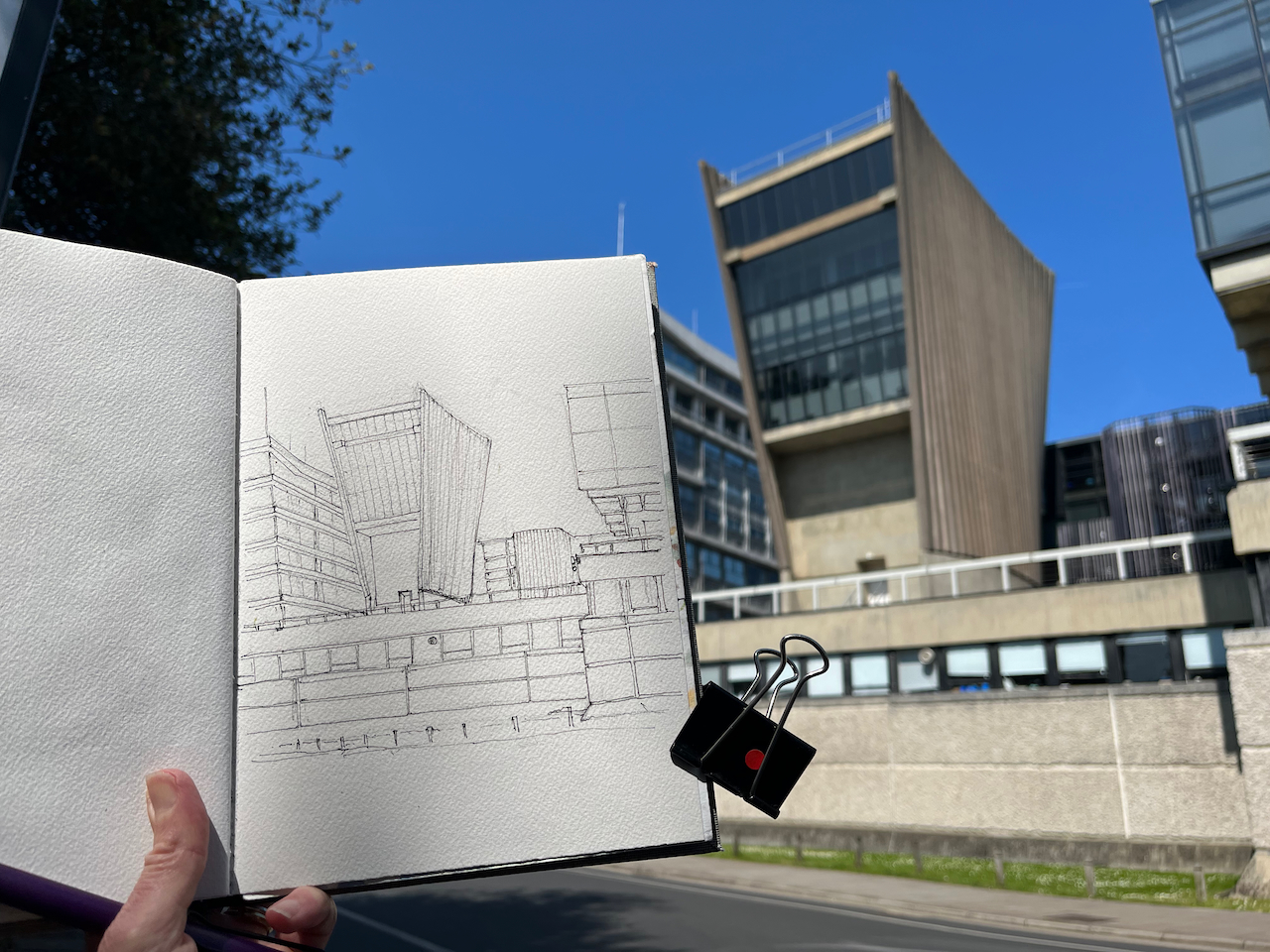
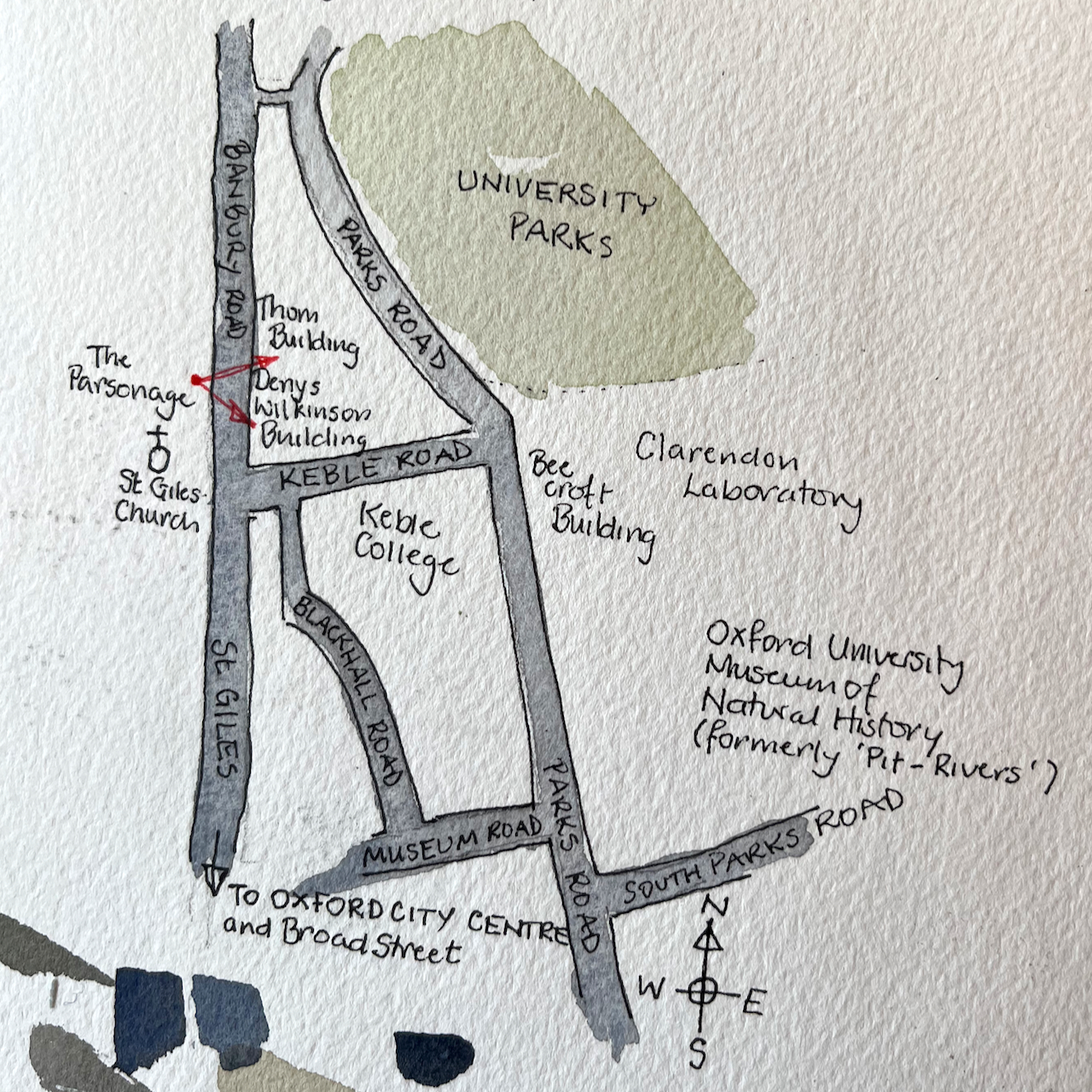
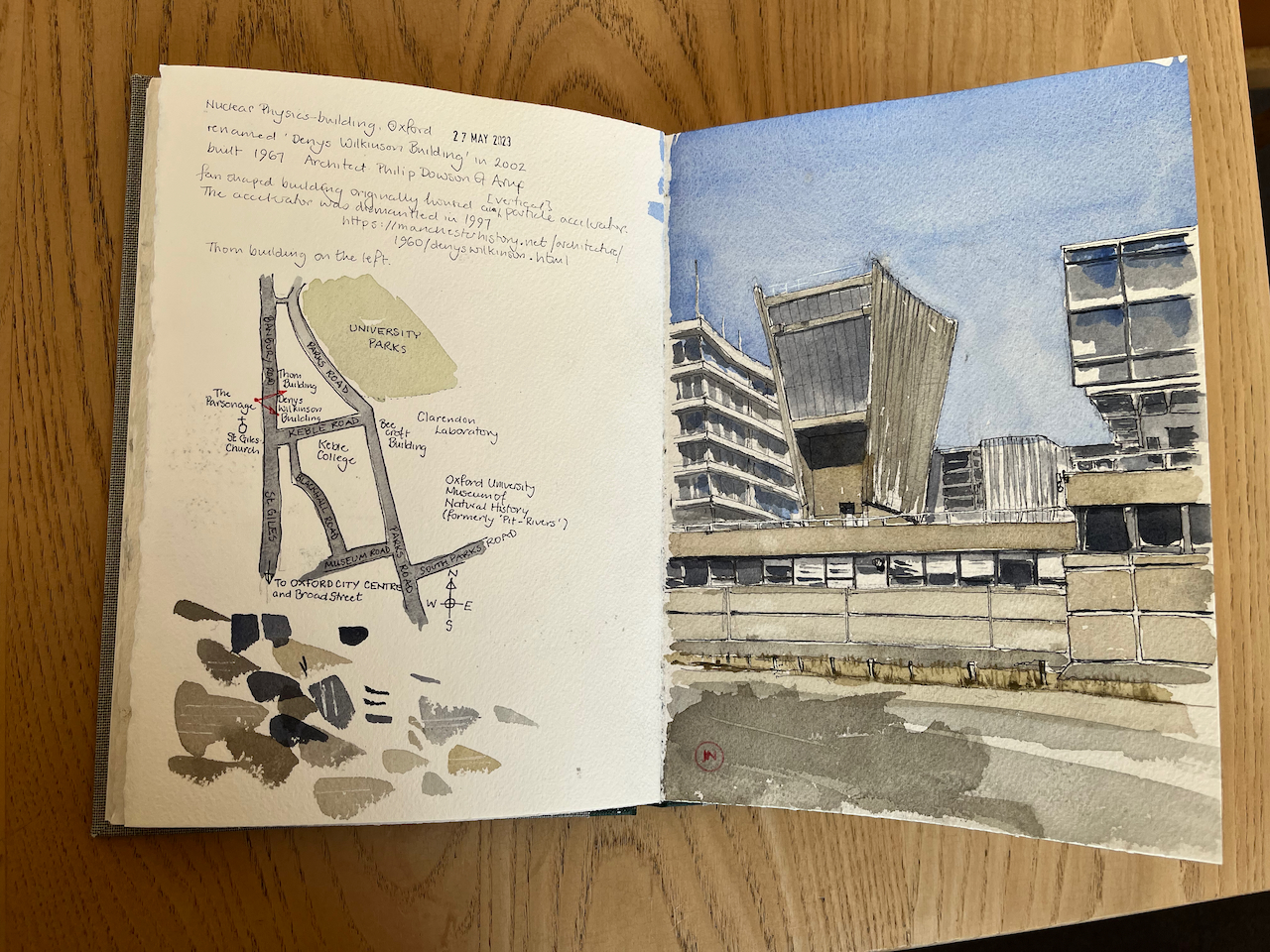
Here is the University of Oxford Nuclear Physics building, seen from the Banbury Road.

The Nuclear Physics building, now the Denys Wilkinson building, University of Oxford. Sketched 27 May 2023, in Sketchbook 13

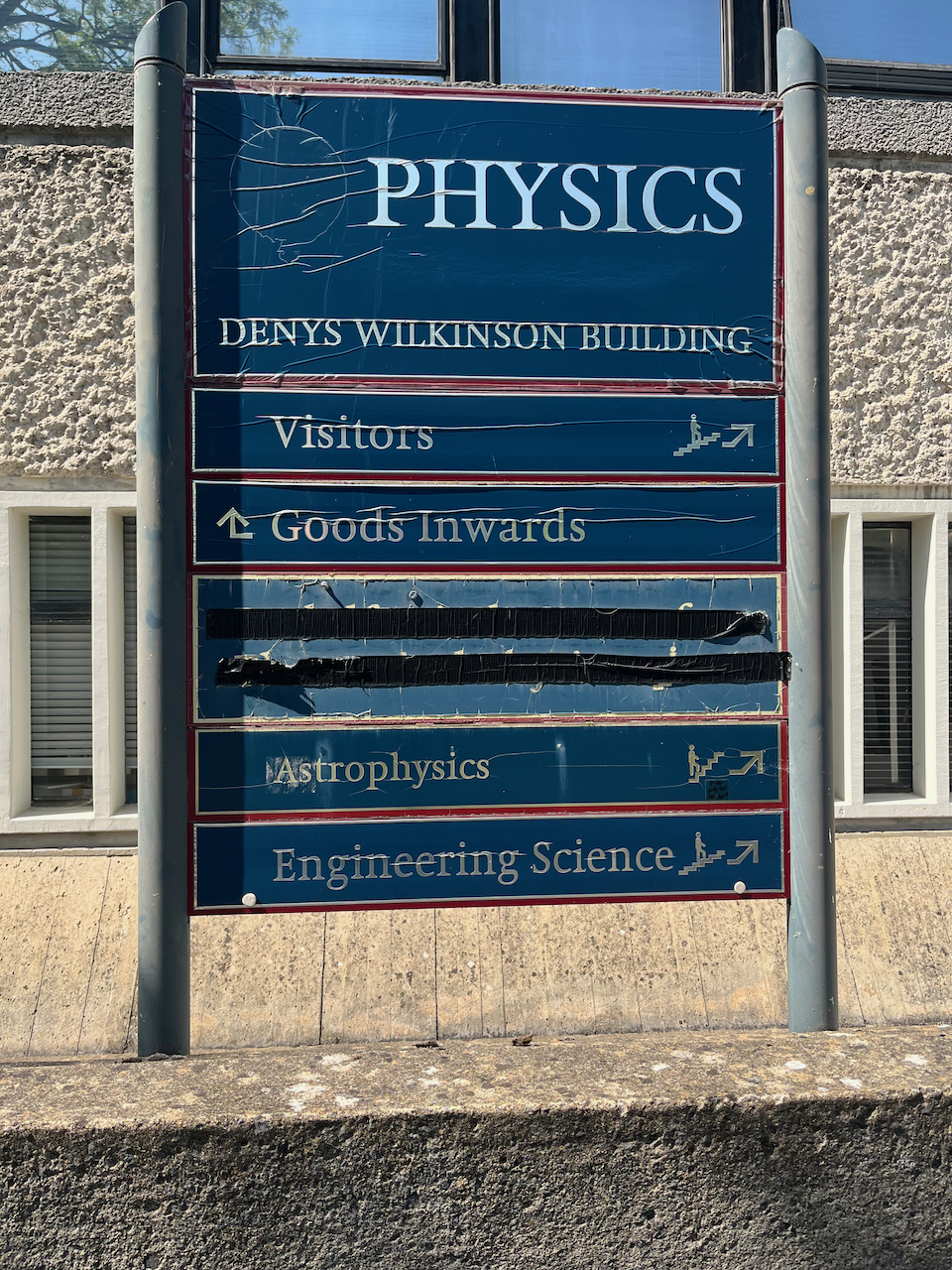
The building was renamed the “Denys Wilkinson Building” in 2002. It was built in 1967 to the designs of architect Philip Dowson of Arup. The fan-shaped structure originally housed a Van der Graff particle accelerator, now dismantled. [https://manchesterhistory.net/architecture/1960/denyswilkinson.html]

Professor Wilkinson (1922-2016) was the Head of the Nuclear Physics Department from 1962-1976.

The building on the left is the “Thom Building” which houses the Engineering Department. This building had a marvellous “paternoster” lift in the 1970s. (Note 1). This is a lift with single compartments, which operates in a continuous loop, like rosary beads, hence the name. You simply stepped into one of the slowly moving compartments and were carried up or down.

Here is work in progress on the drawing:

The fan-shaped structure is a rare example of brutalism in Oxford. St Catherine’s College is another example.

Ought we to treat the Denys Wilkinson building and St. Catherine’s College as a celebrated chapter in Oxford’s aesthetic history, or as evidence of a period better forgotten?

Caitriona Dowden -writing in the Cherwell, 26th October 2020 [https://cherwell.org/2020/10/26/oxfords-eyesores-brutalisms-place-among-the-dreaming-spires/]

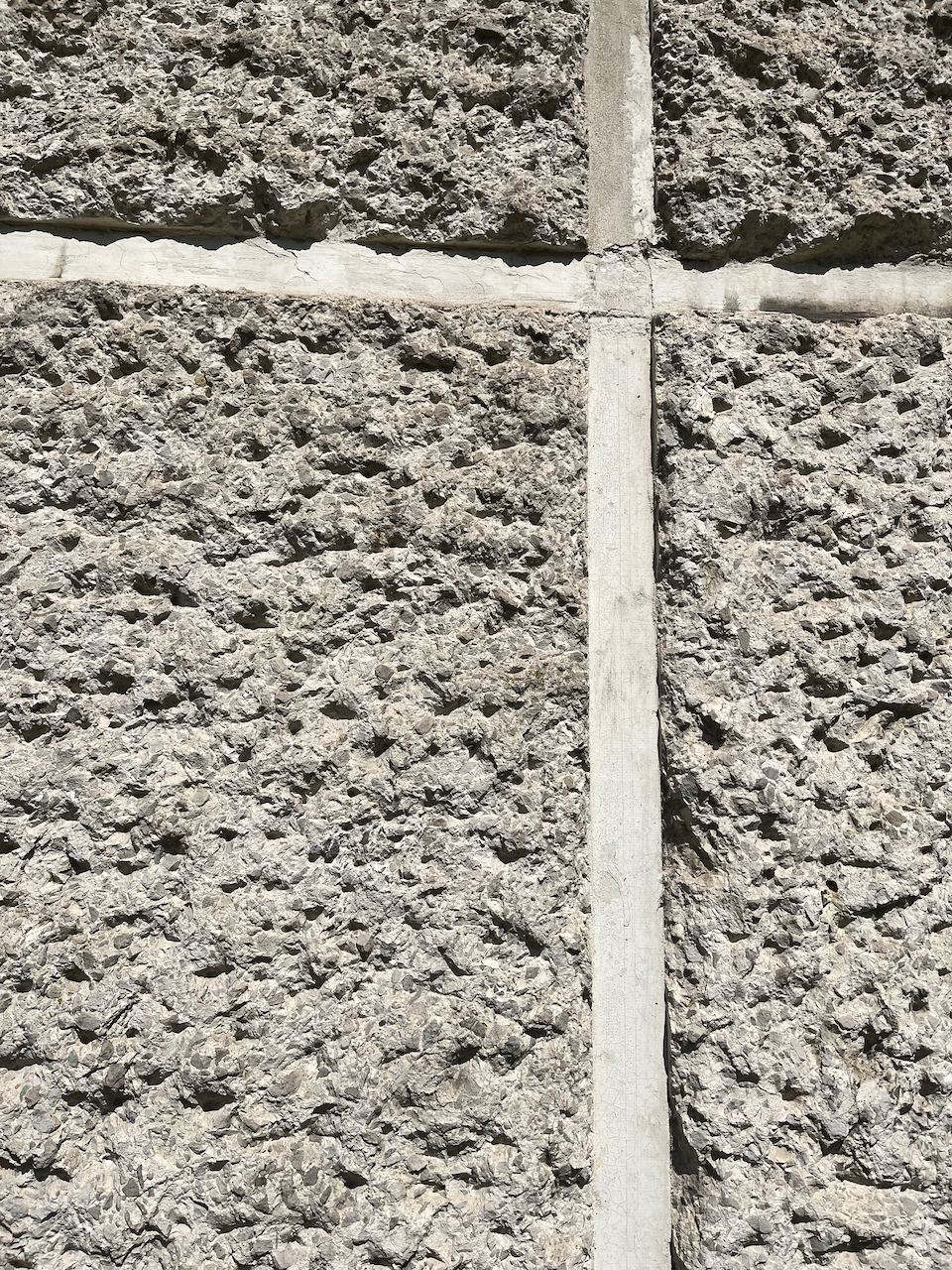
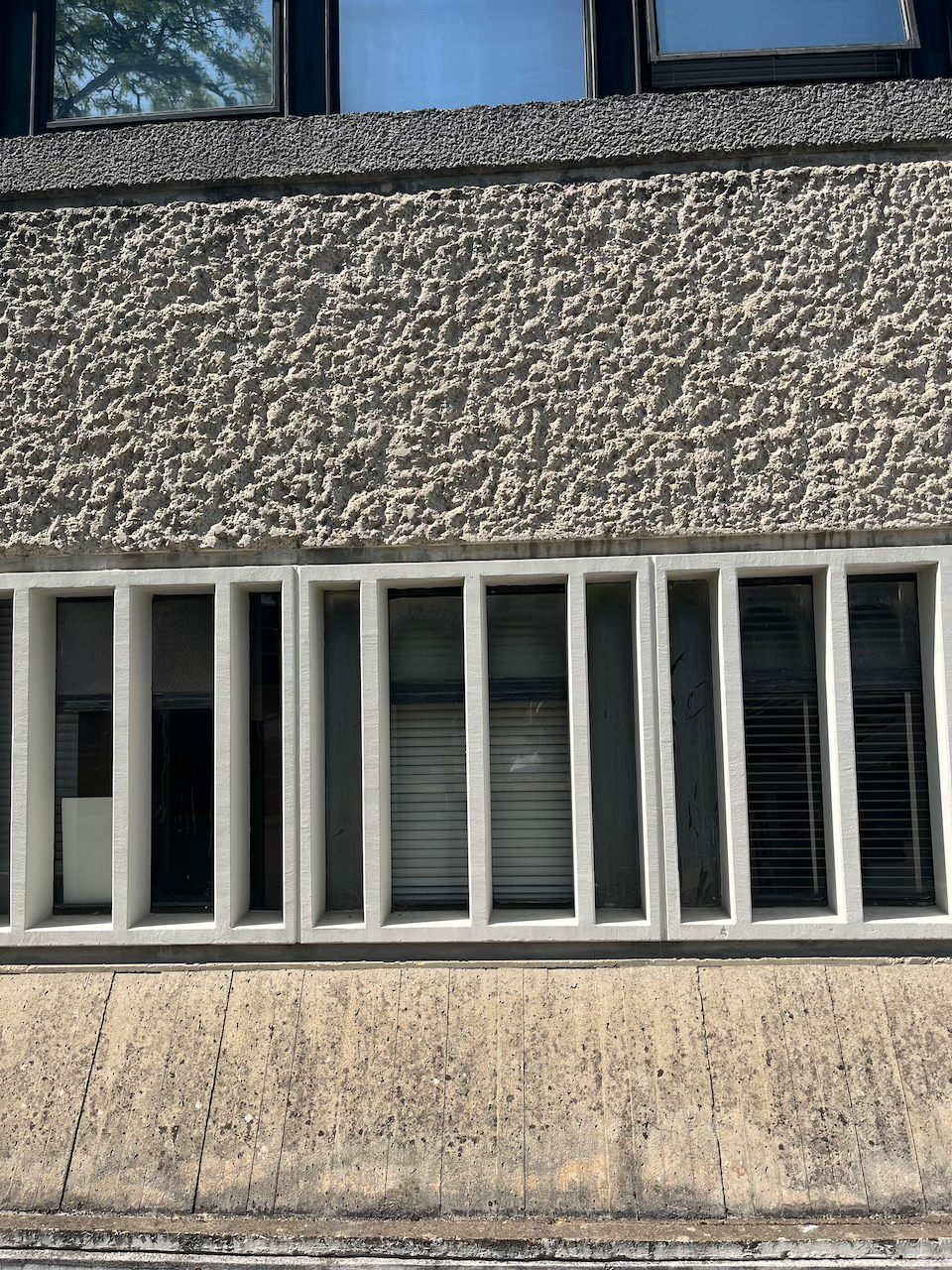
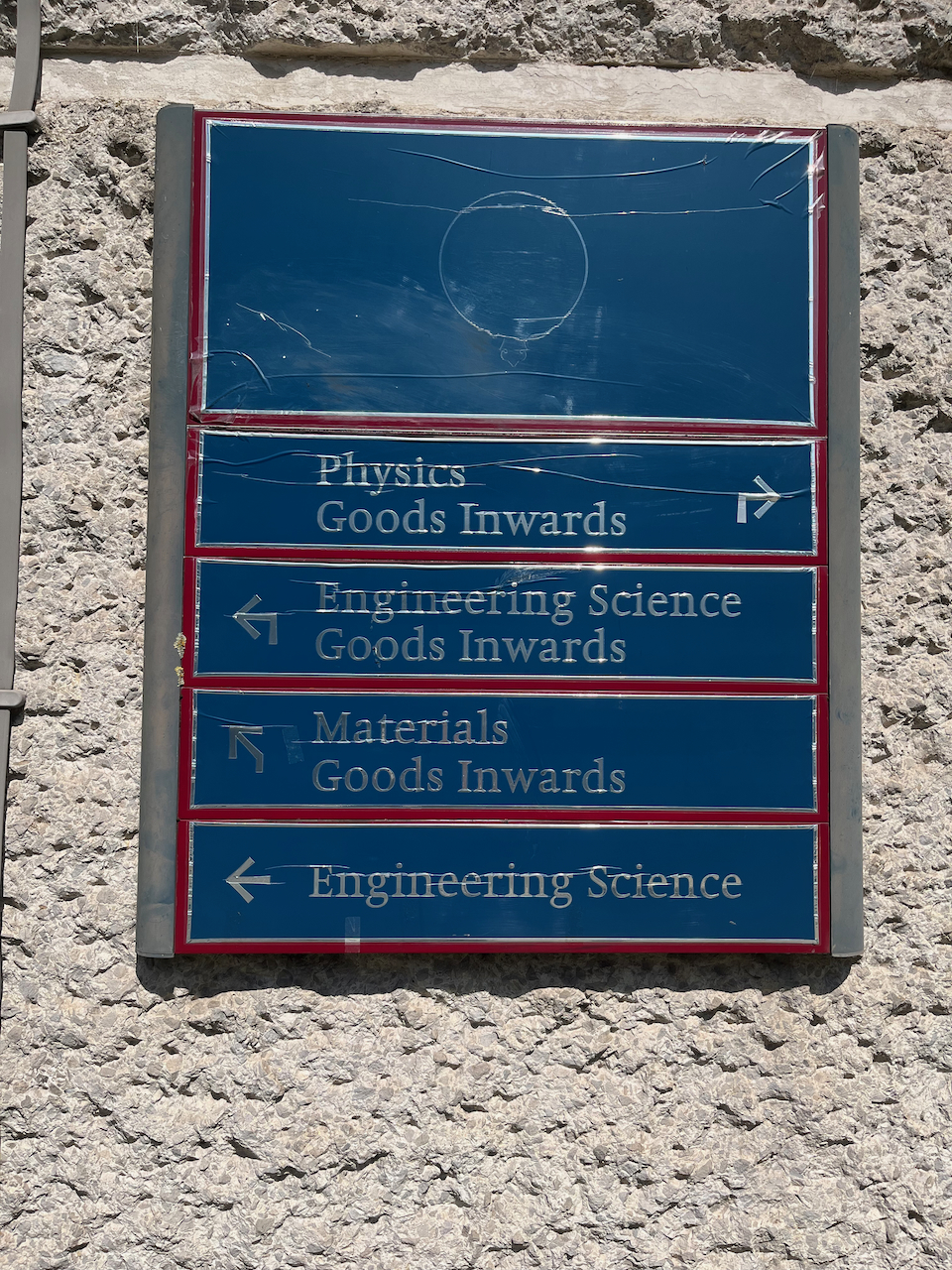
A celebrated chapter in Oxford’s aesthetic history, I think. here are some details of the design, for brutalism enthusiasts like me:

Note 1: Alan Knight writing of his memories of the department confirms my recollection: https://www.soue.org.uk/souenews/issue2/jottings.html. The paternoster was replaced by two ordinary lifts in the 1980s.