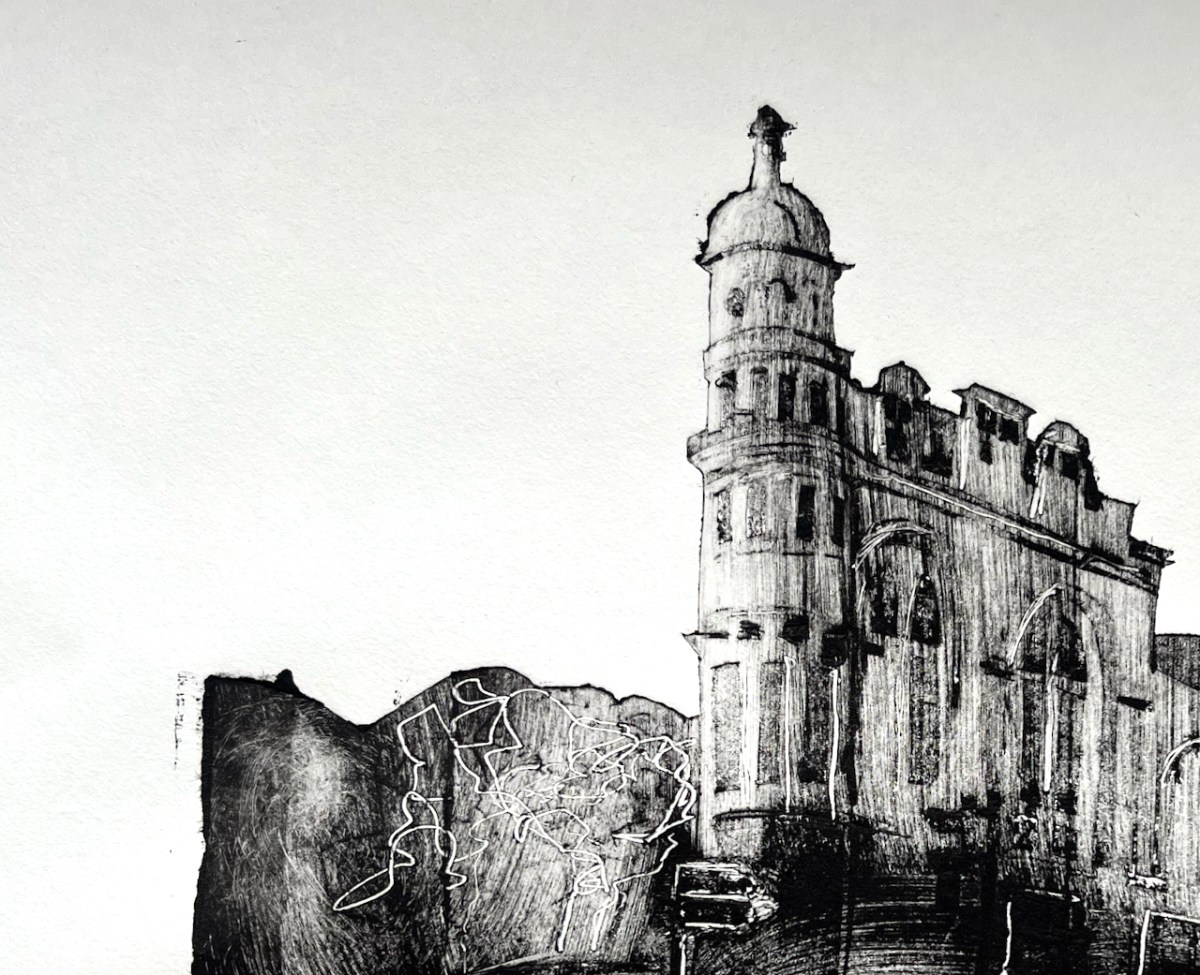
The Boston Arms – monoprint

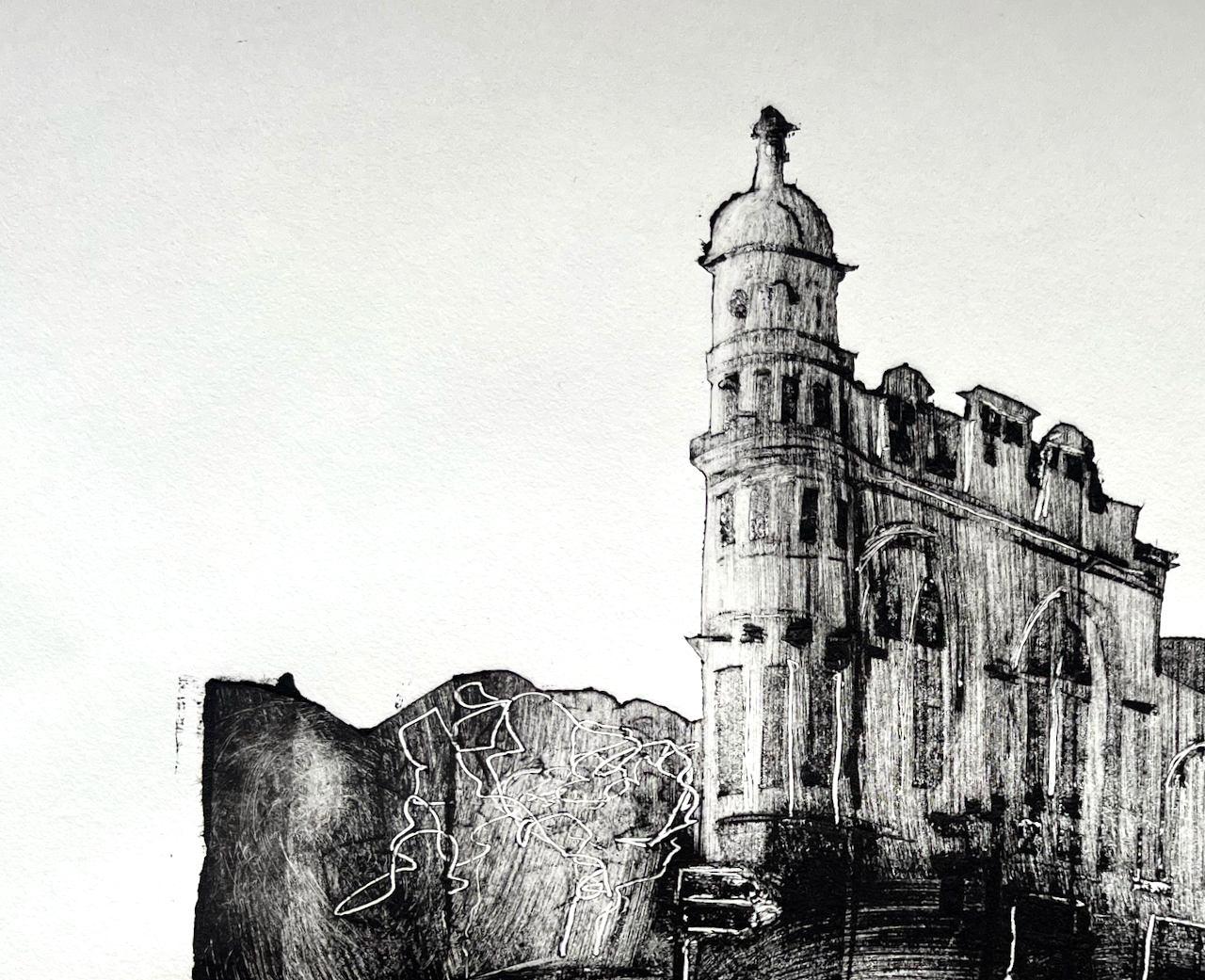
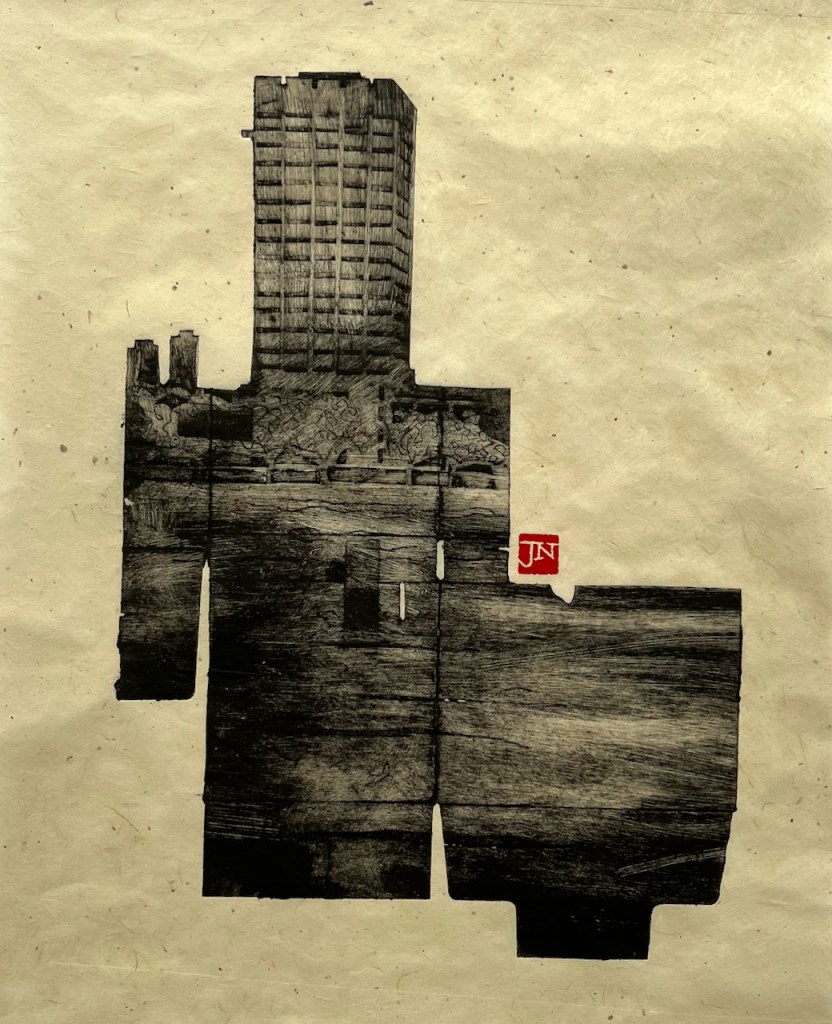
The Boston Arms is in Tufnell Park, London, 178 Junction Road N19. I love the way this building presides over the junction.
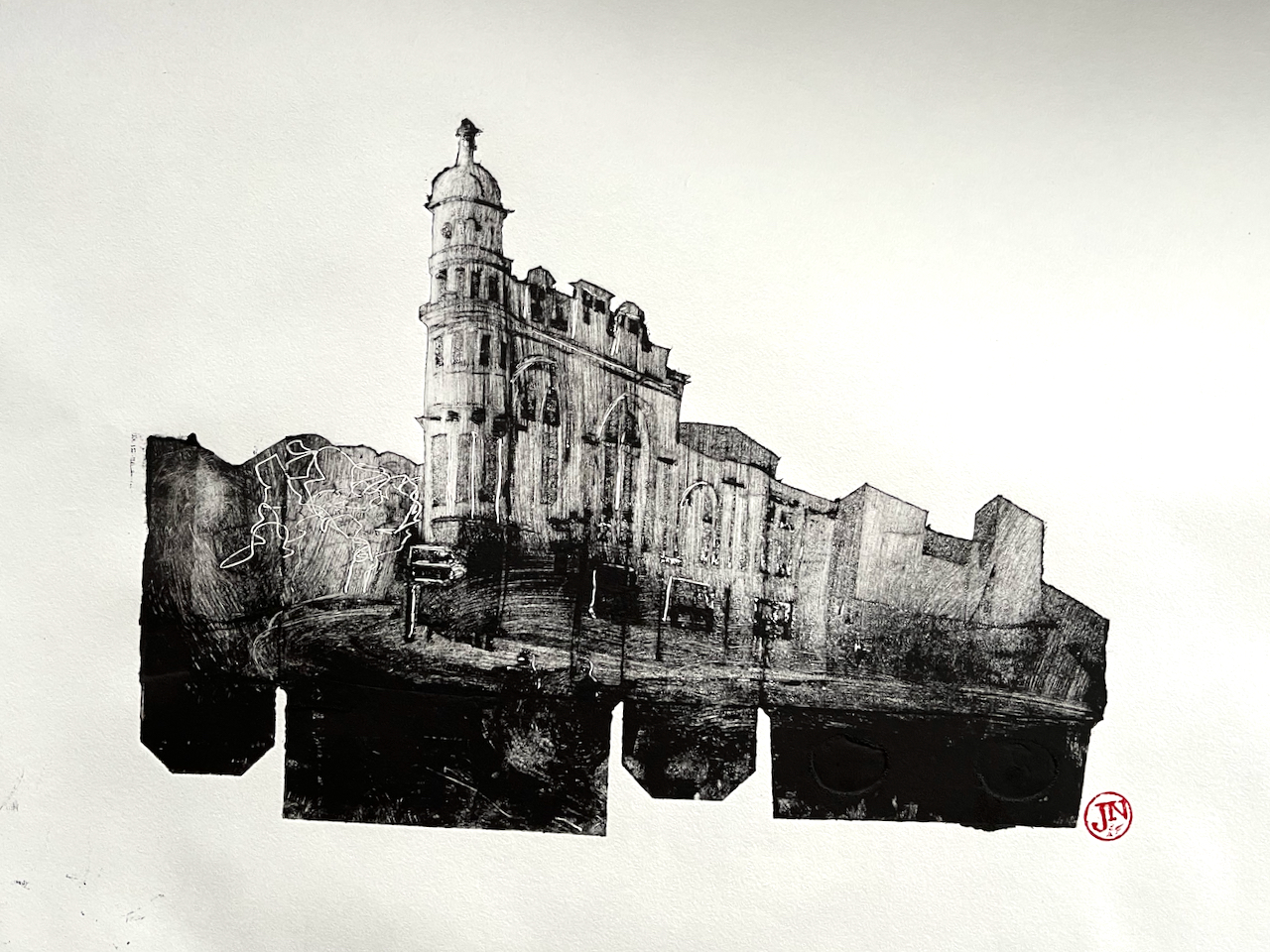
Boston Arms monoprint 1, packaging print, paper size 21″ x 17″, on Shiramine Select Japanese paper

This is one of five prints I made with this plate made from a cardboard box of biscuits, experimenting with the “packaging print” technique.

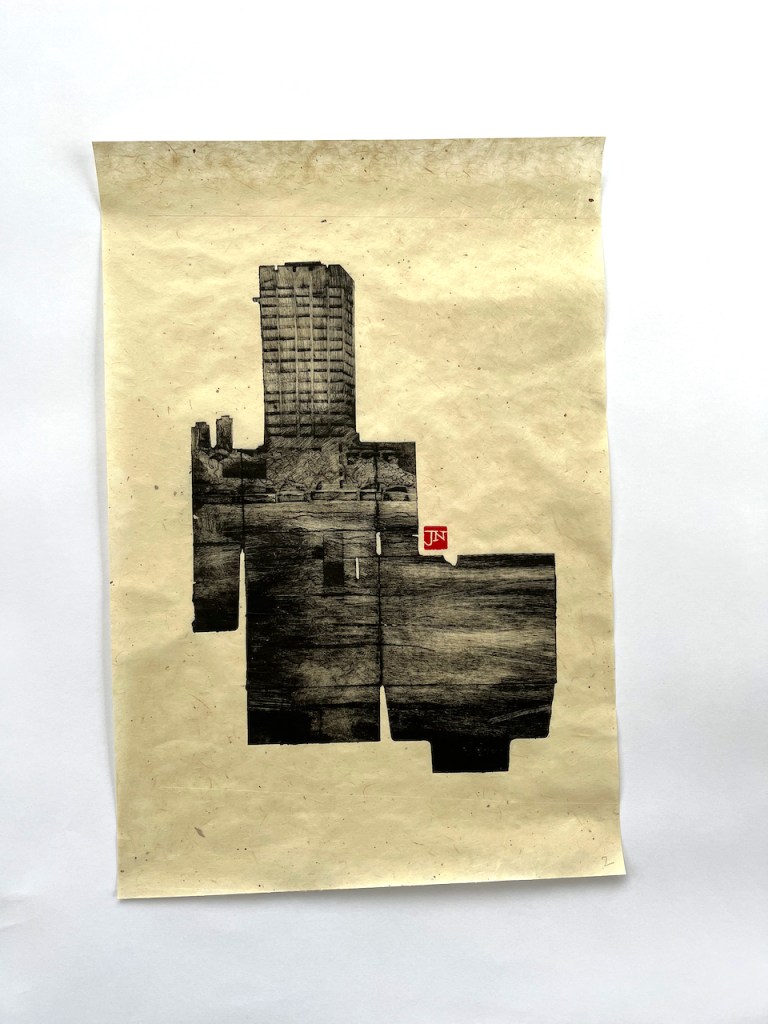
The technique produces a twilight atmosphere, which I like very much, and seems suitable for a pub in winter. Here is a different print using the same plate.
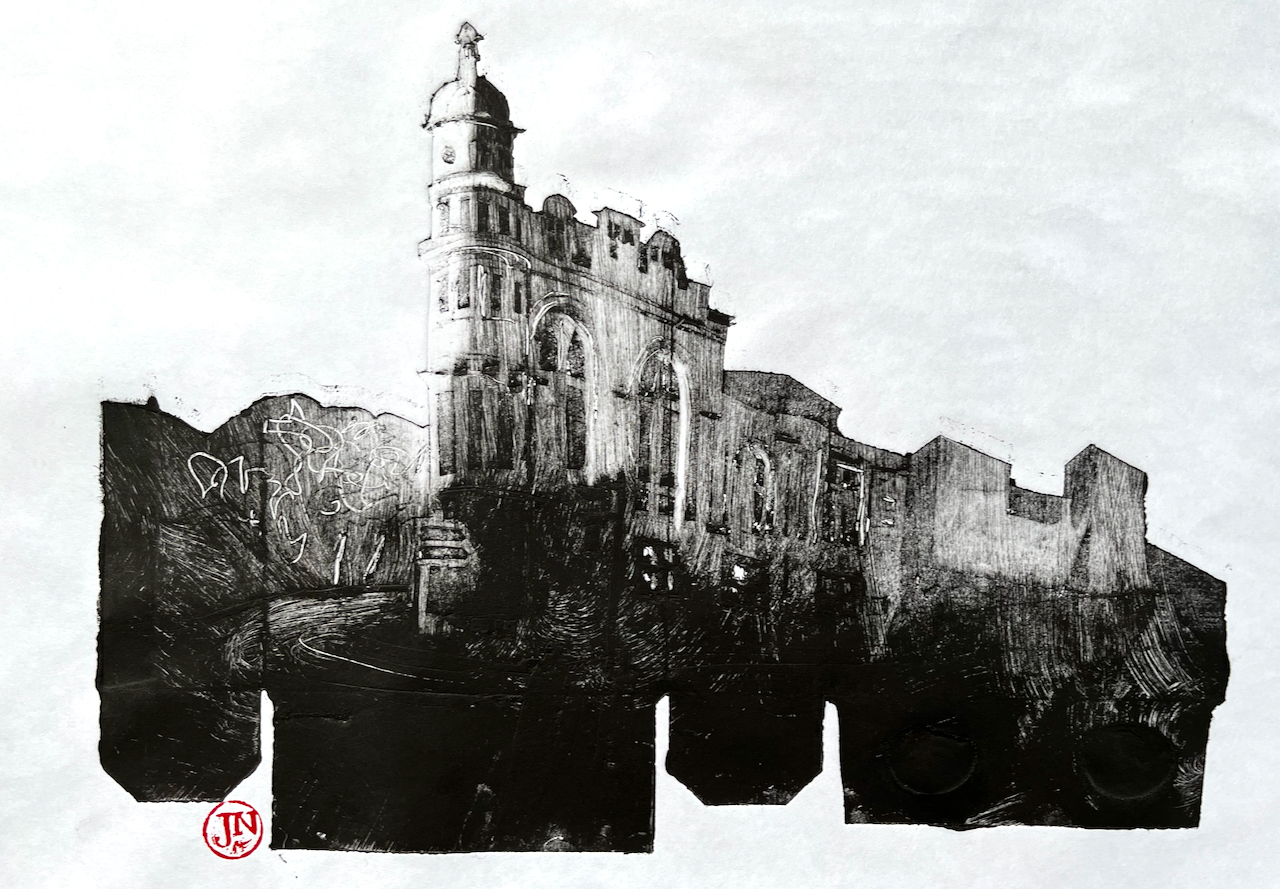
Boston Arms monoprint 2, packaging print, paper size 14″ x 10″ Awagami Washi Masa Japanese paper

The Boston Arms is a Grade II listed building. The listing says “Dated 1899 in a panel on the Junction Road front. Designed by Thorpe and Furniss”, and goes on to describe its “Corinthian pilasters to the flat frontages, engaged Corinthian columns to the bow, all of black polished granite, supporting a fascia; scrolled pediments over former entrances with subsidiary pedimented panels between the scrolls,…”. It concludes on rather a flat note: “The interior has no original features of interest.”

It looks like a good pub. I’ve passed it lots of times, usually on an early-morning run, but I’ve never been inside.

Here is the map from the listing, showing the location:
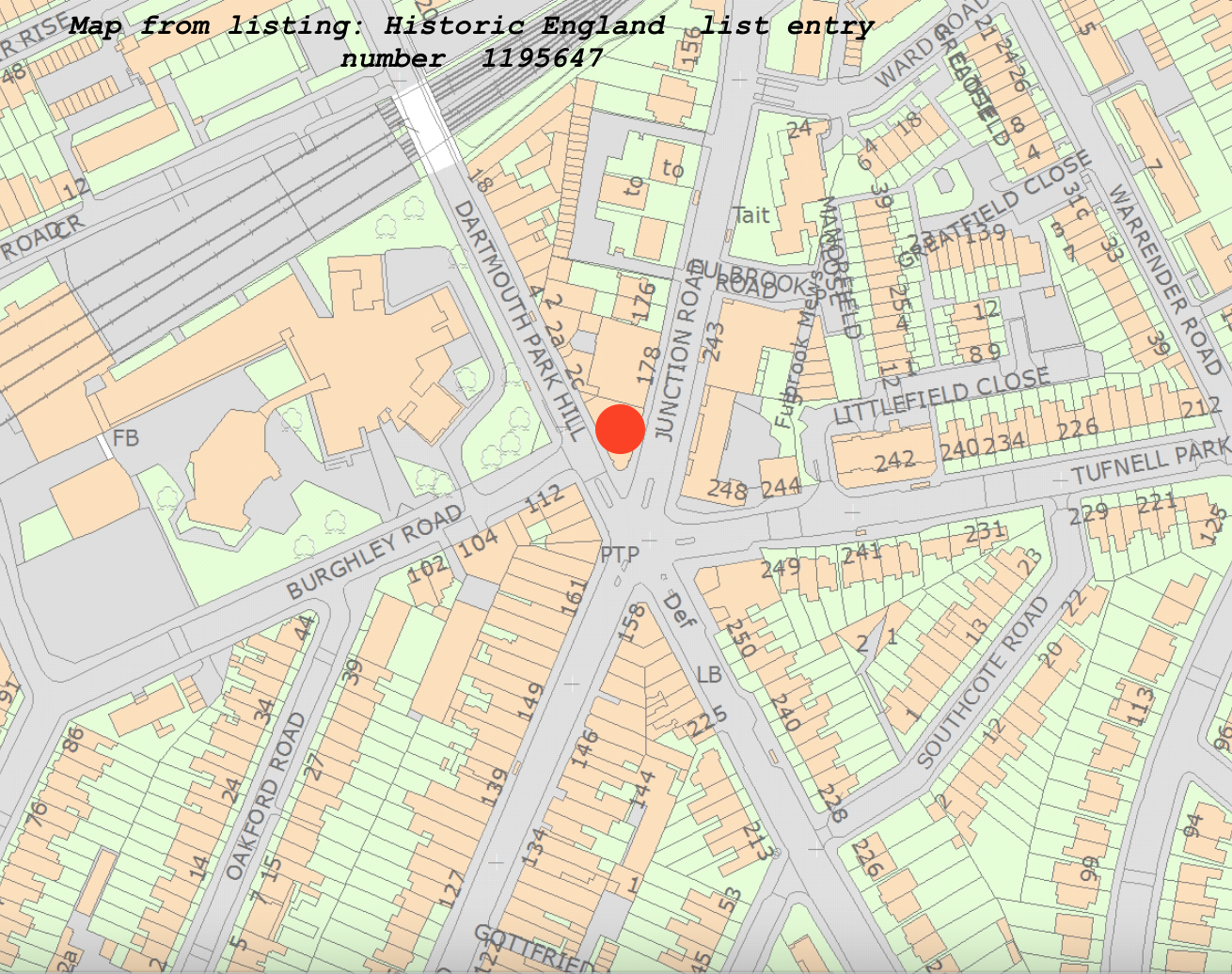
Location of the Boston Arms (Historic England, listing)

Here is the plate from which I made the prints:
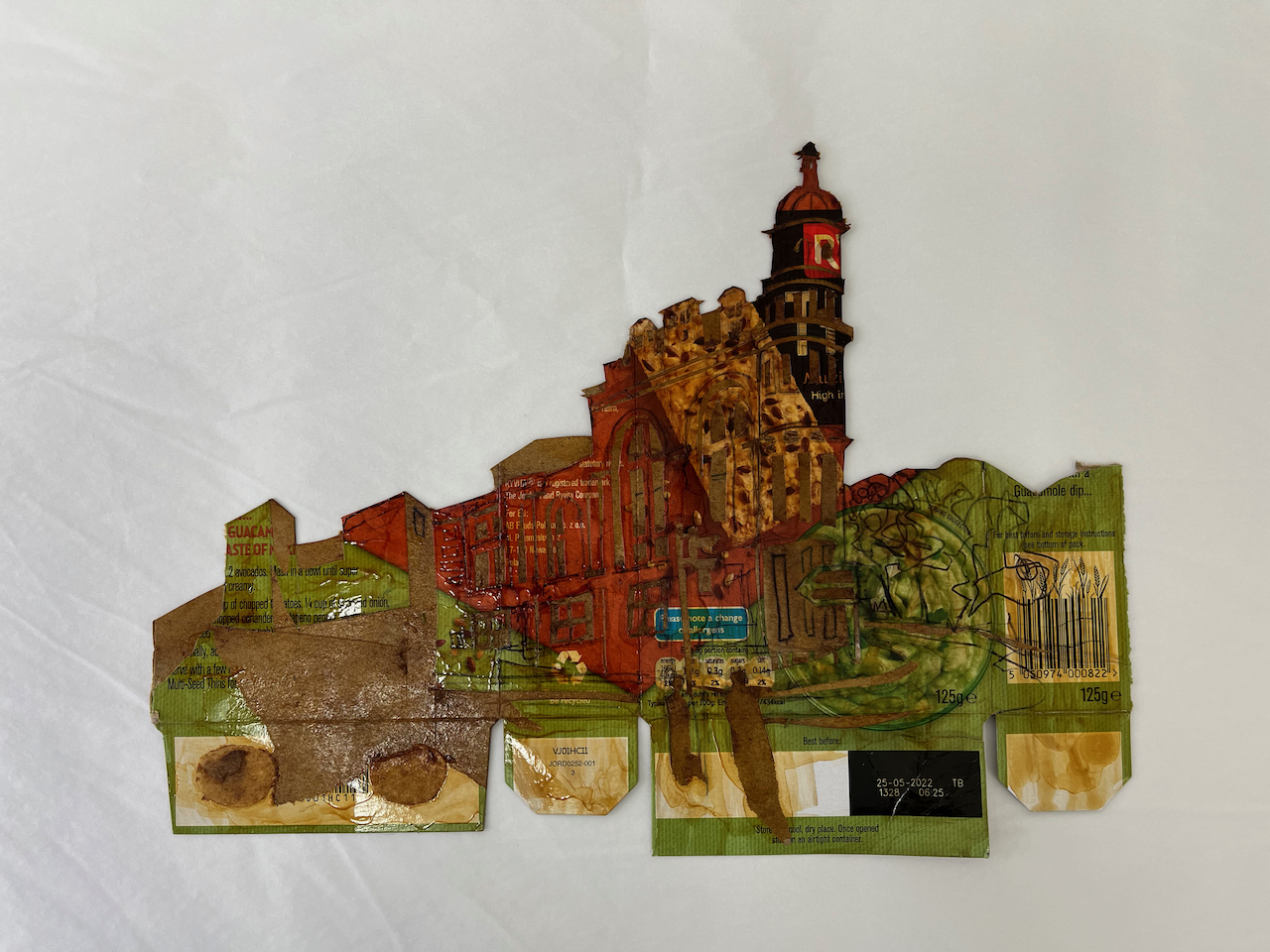
Print plate made from a soup carton
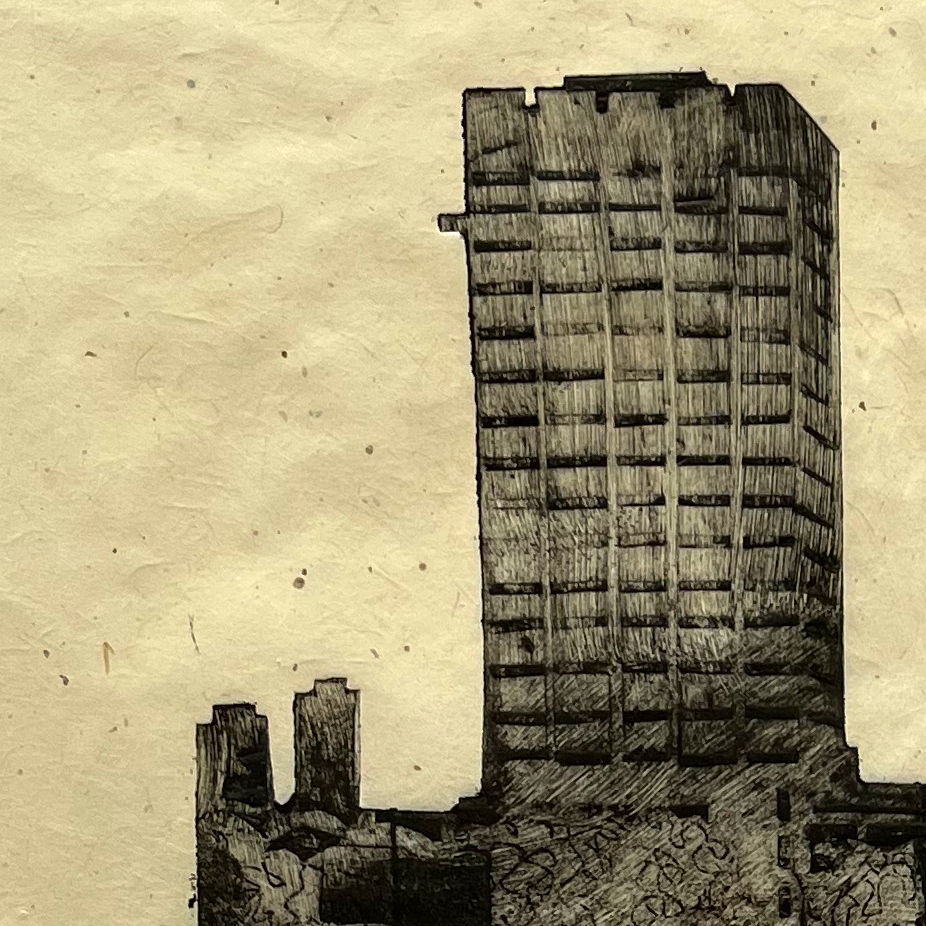
Boston Arms print, detail

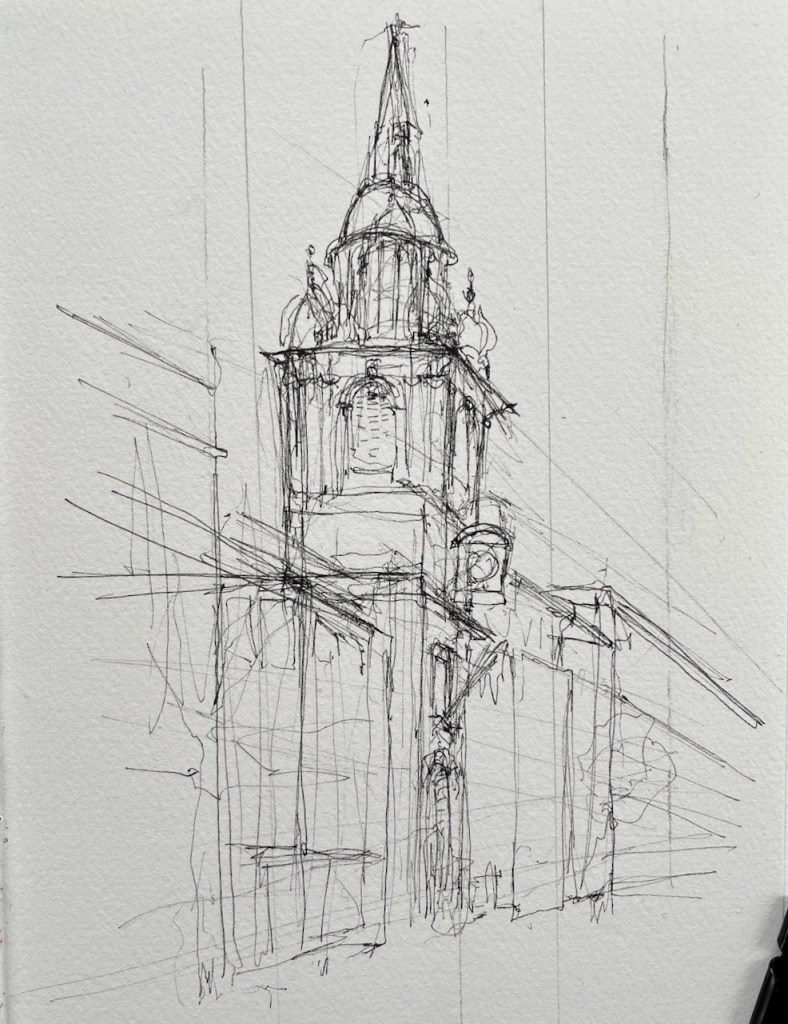
St Mary Le Strand, WC2

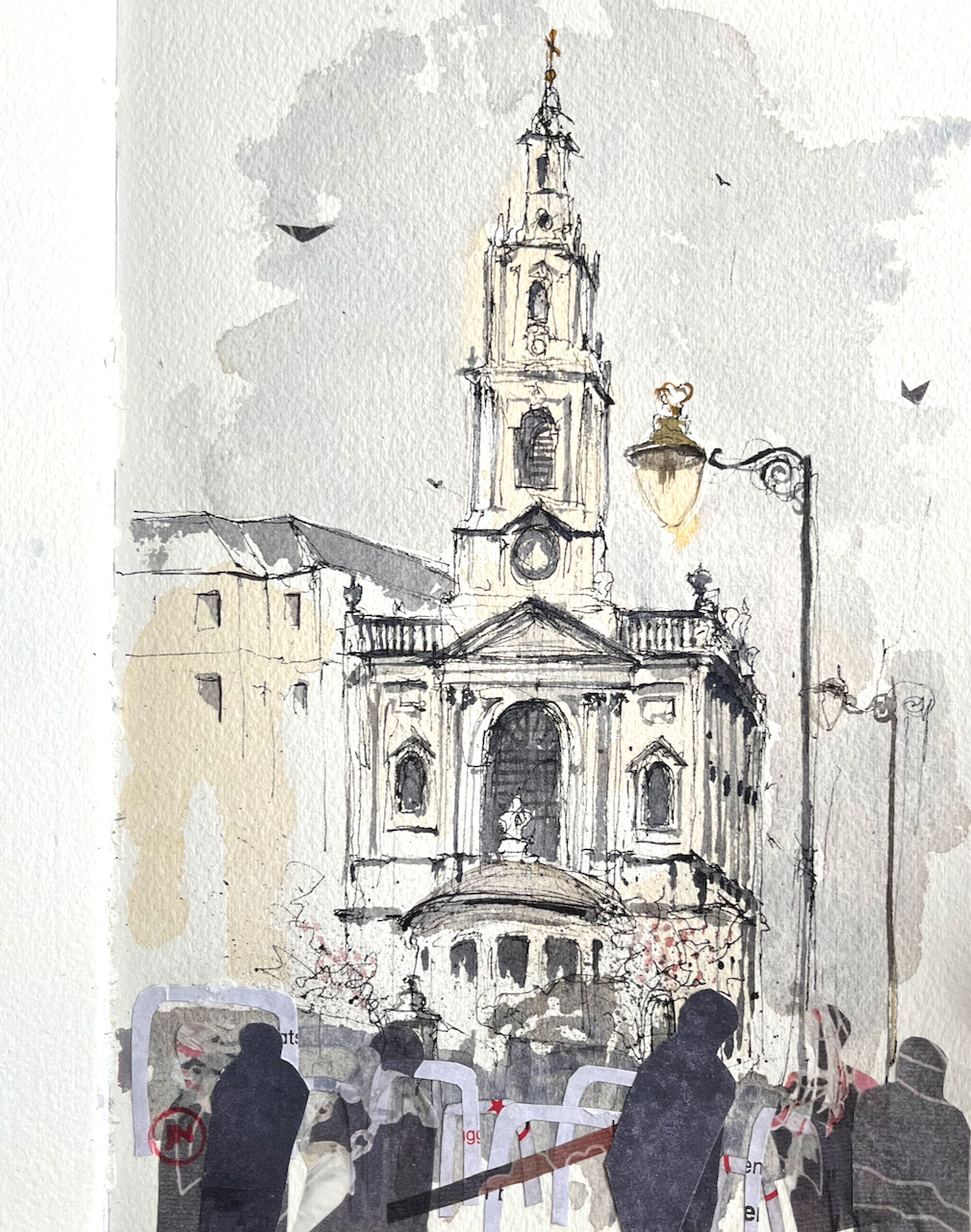
Here is a sketch of St Mary Le Strand, which is the church in the middle of the Strand at Aldwych. I sketched this from outside Somerset House. As you see it was really busy there. The south part of Aldwych is being closed off to motor traffic and made a pedestrian-only route. It will be great when it’s finished, but right now it means that the busy pavements are narrowed with barriers and there are many types of confusion.

St Mary Le Strand WC2, 1st March 2022, 10″ x 7″ in Sketchbook 11

The foreground is collage, added after the drawing.

Here is work in progress and a map.

Museum of London EC2 – monoprint

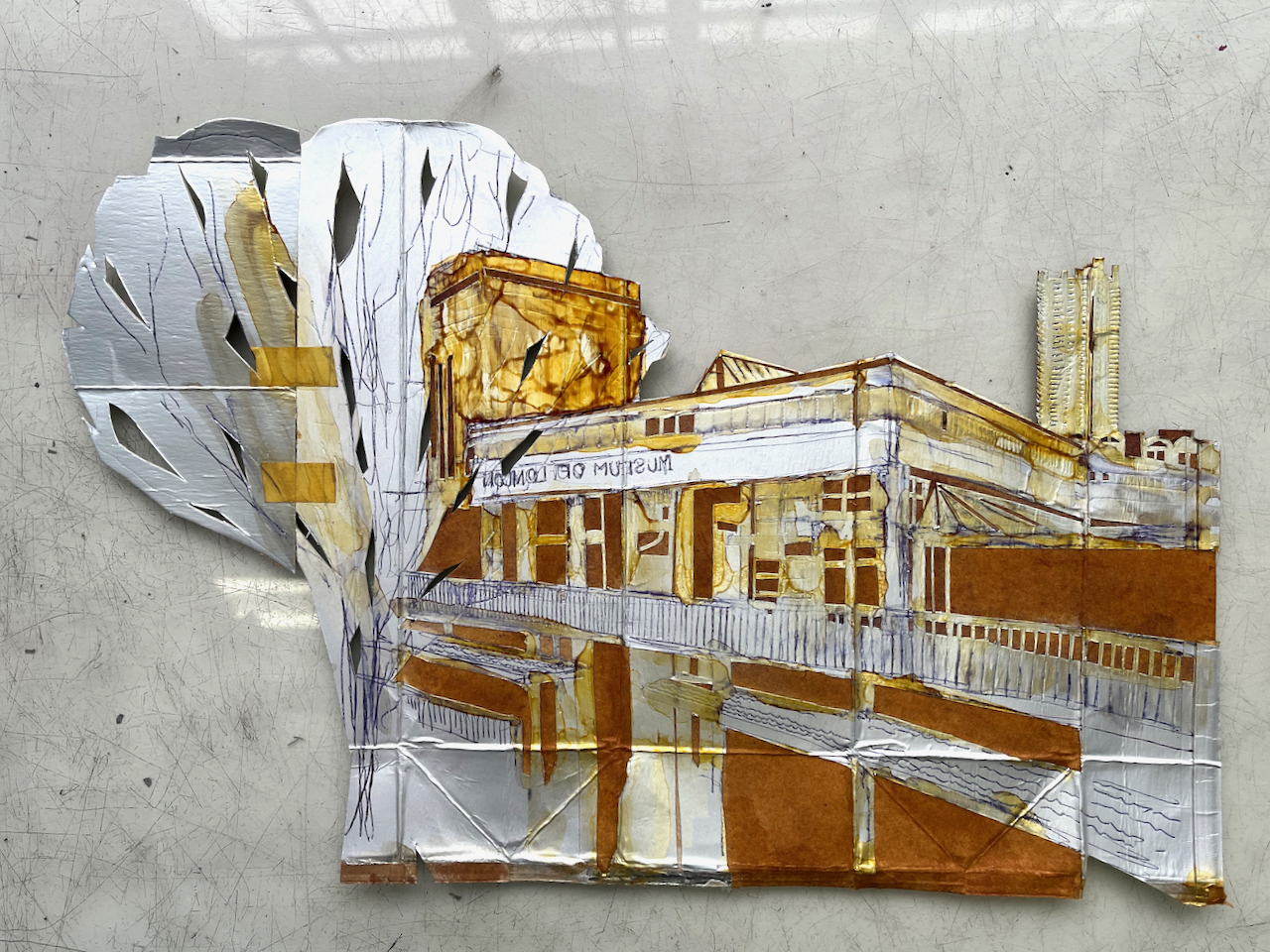
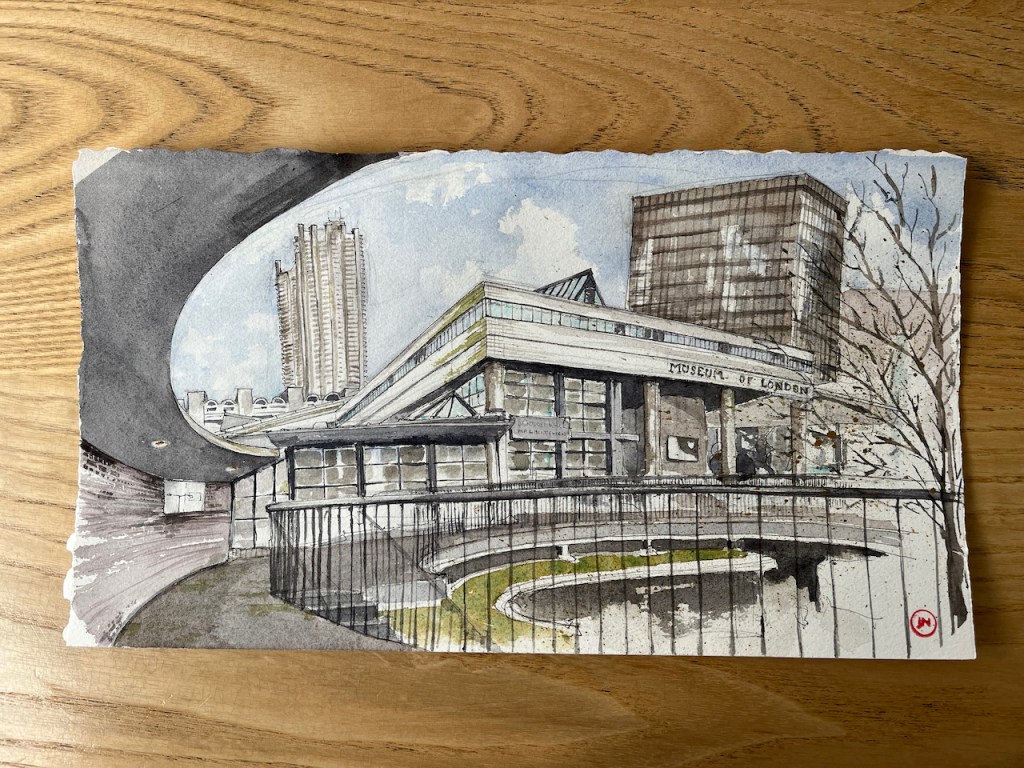
Here is an image of The Museum of London, in the south west corner of the Barbican:

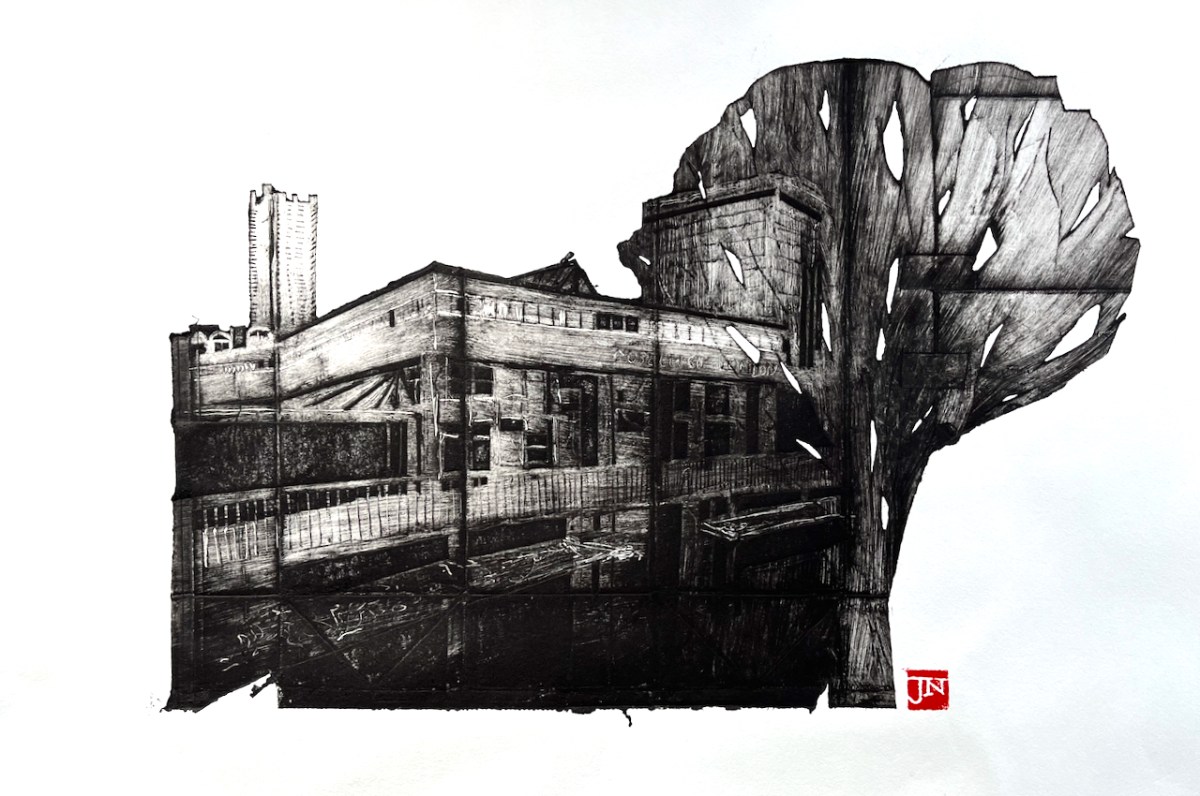
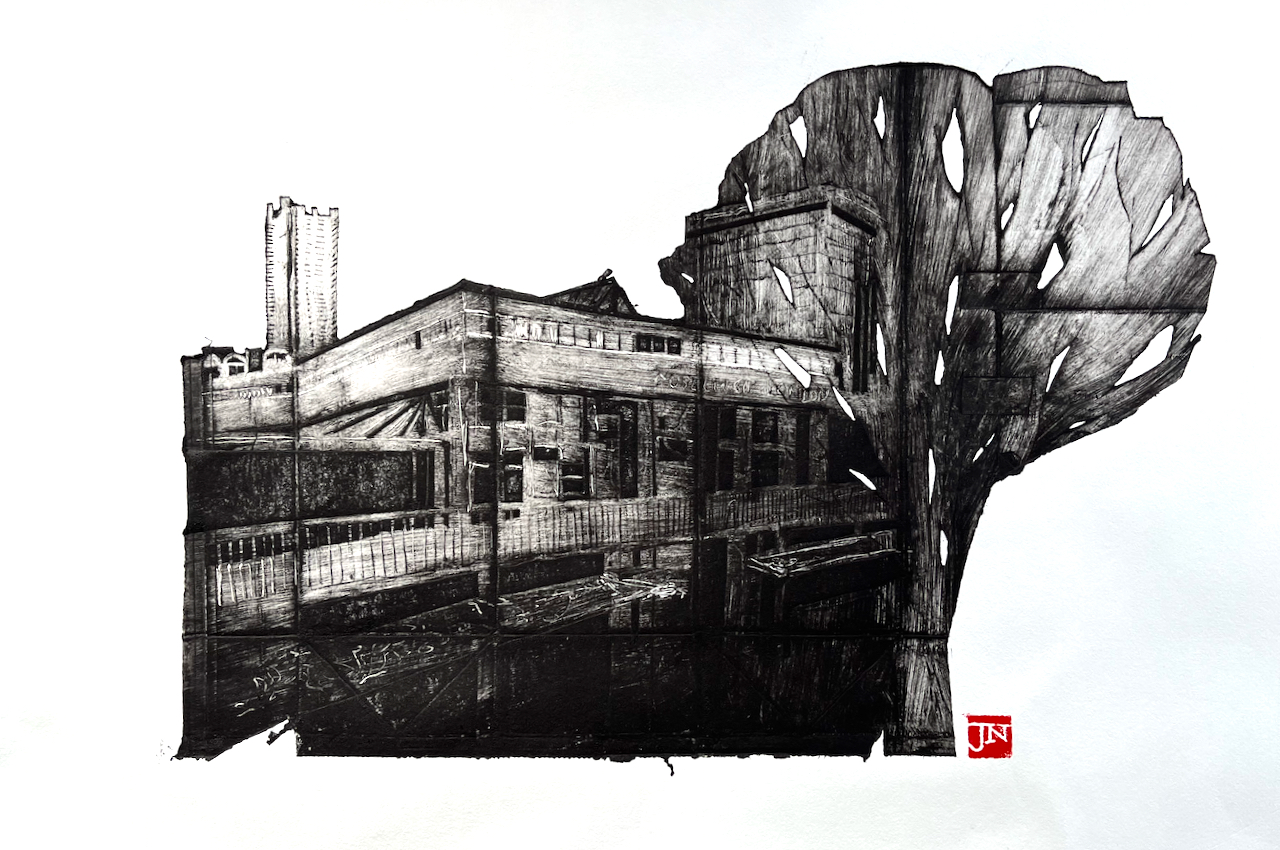
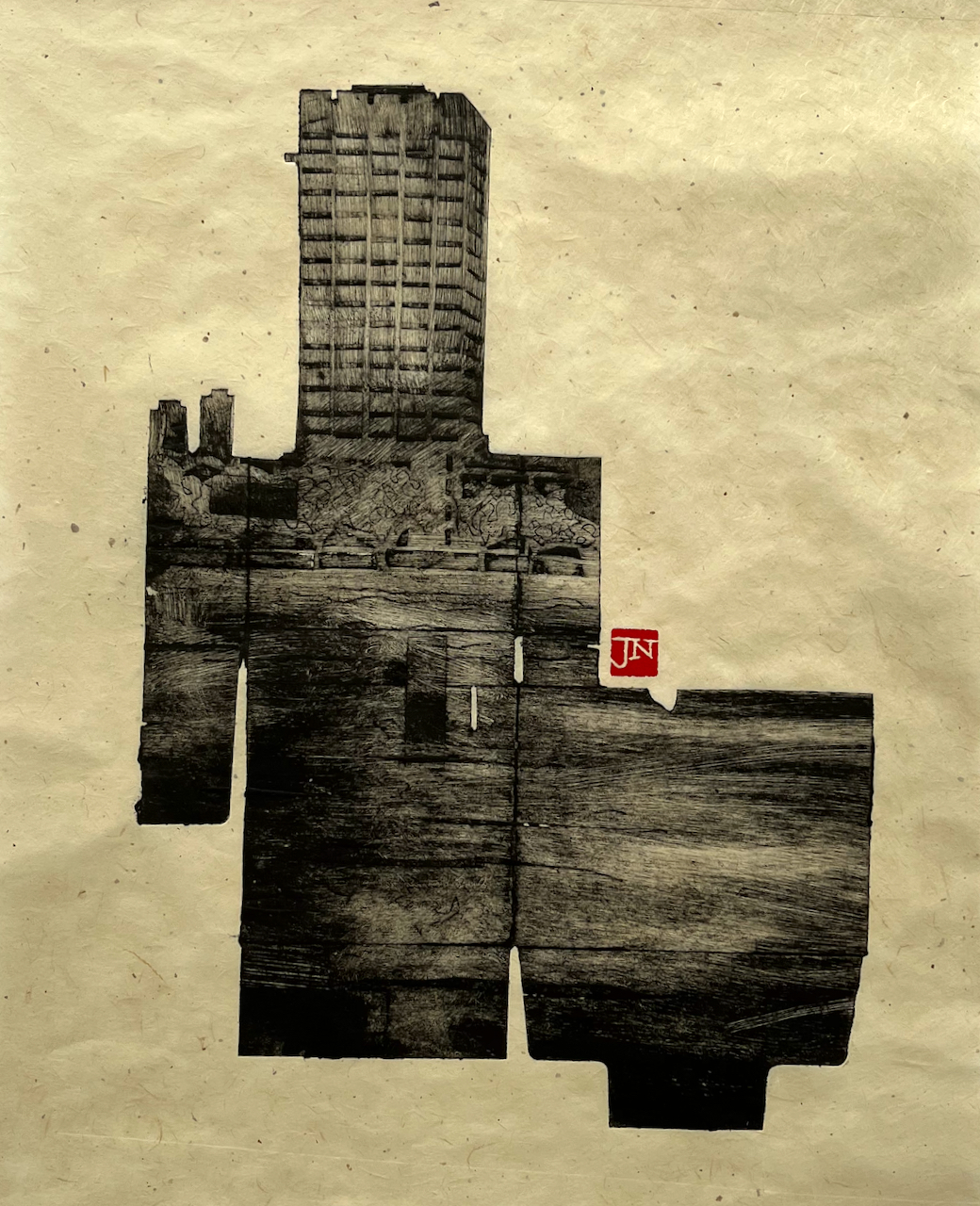
Museum of London, packaging etching, paper size 21″ x 17″, on Shiramine Select Japanese paper.

The “plate” is made from a UHT milk carton. Here is the back of the used plate:

Back (unprinted) side of the plate.

Here is the front (print side) of the plate, before inking:

Front (print side) of the plate

To find out more about this technique, have a look at this page on my website (click link):

Print plates made of packaging

I have also sketched the Museum of London area:

The Museum of London EC2

From the highwalk on the Rotunda there is a really amazing view of the Museum of London and Bastion House. This whole view going to change radically, if the City of…

Read more…

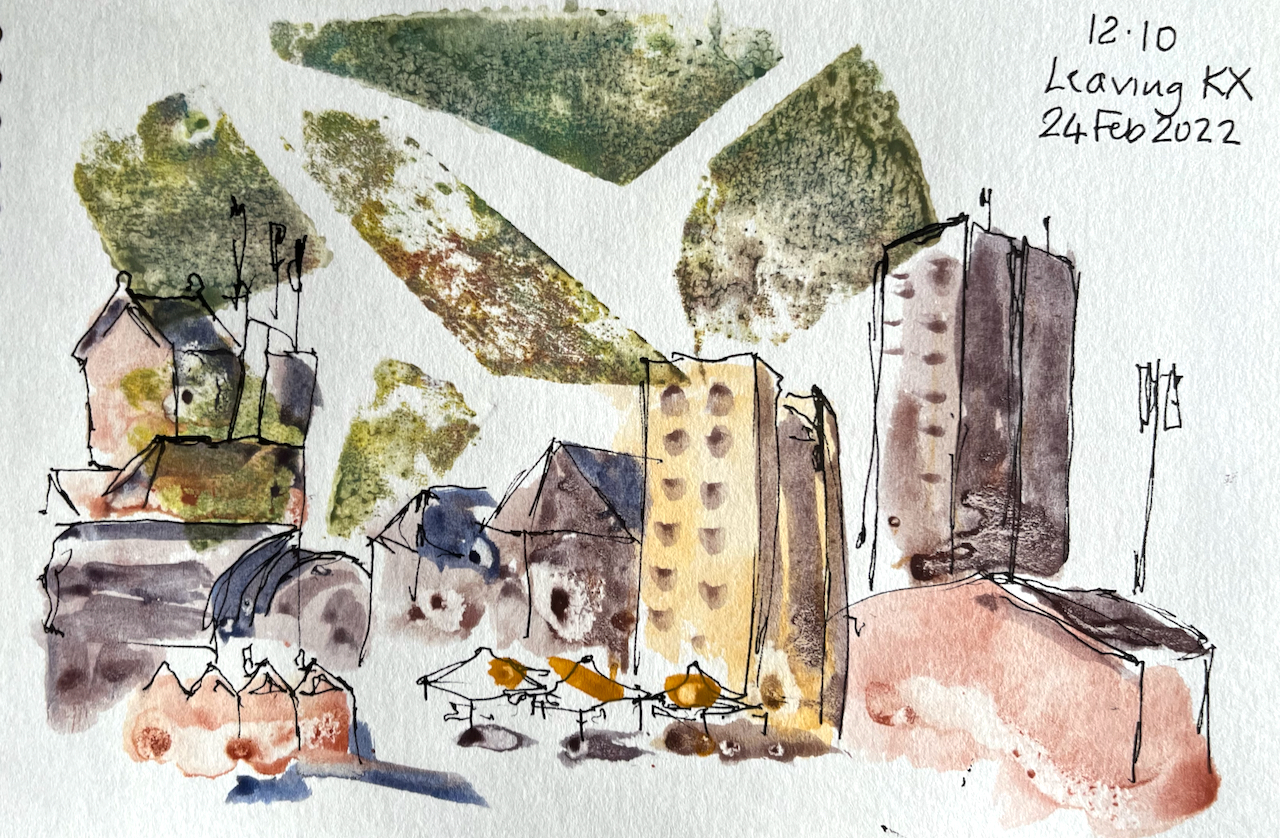
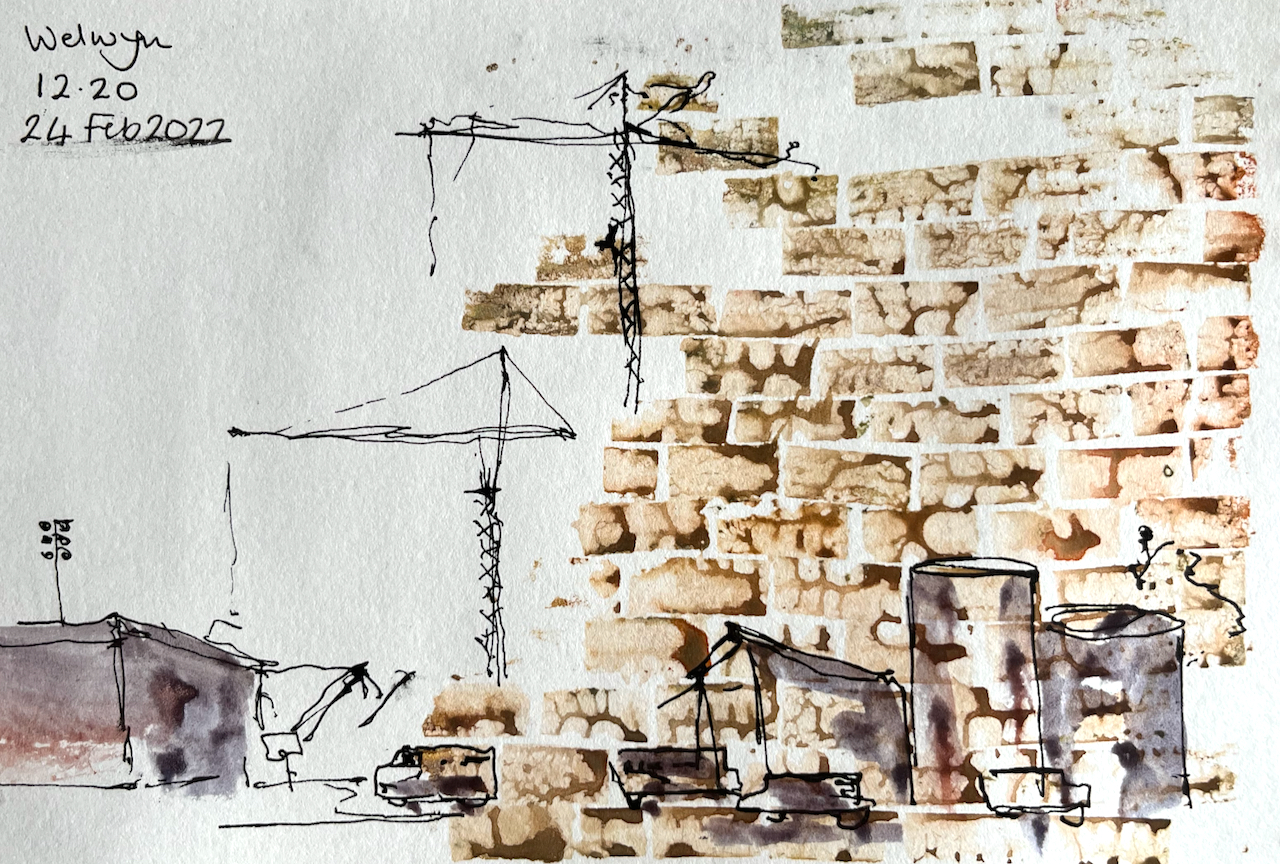
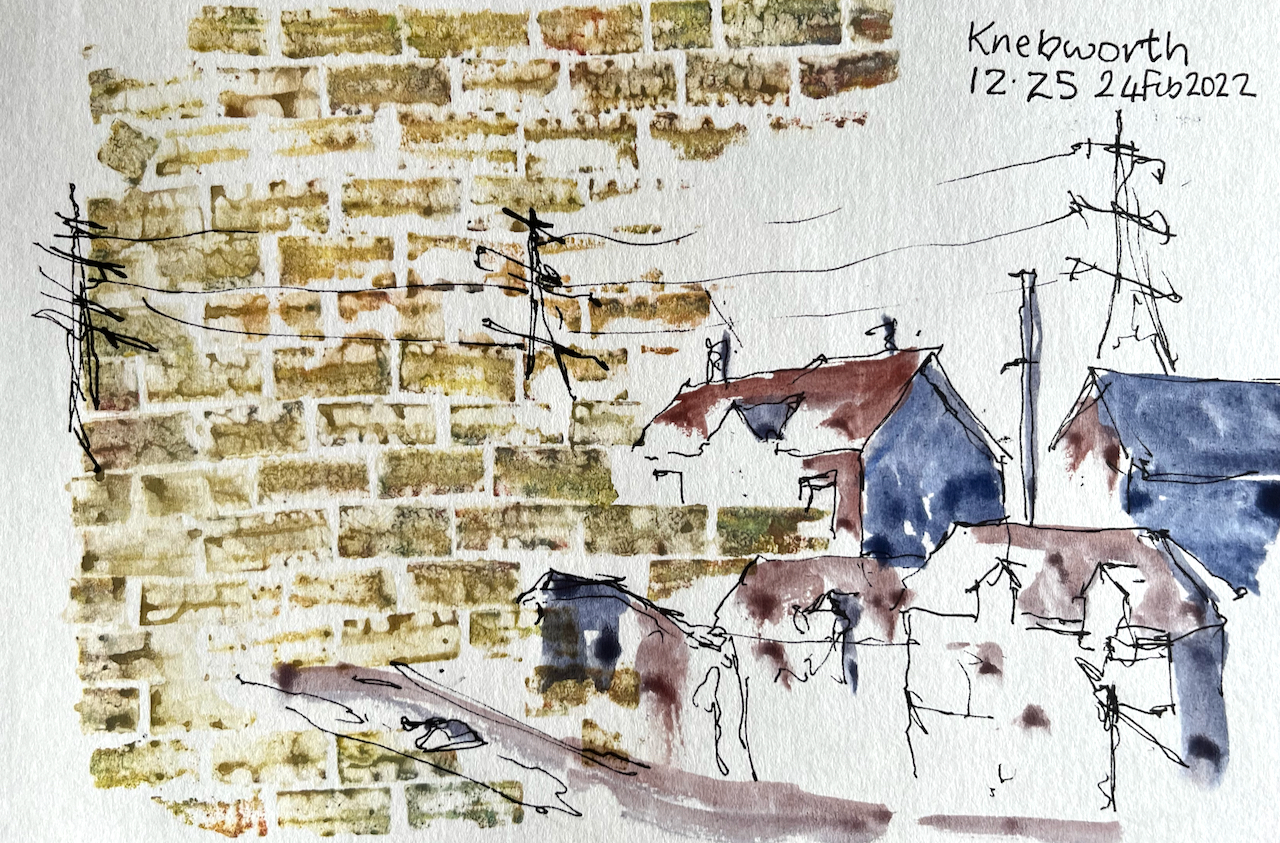
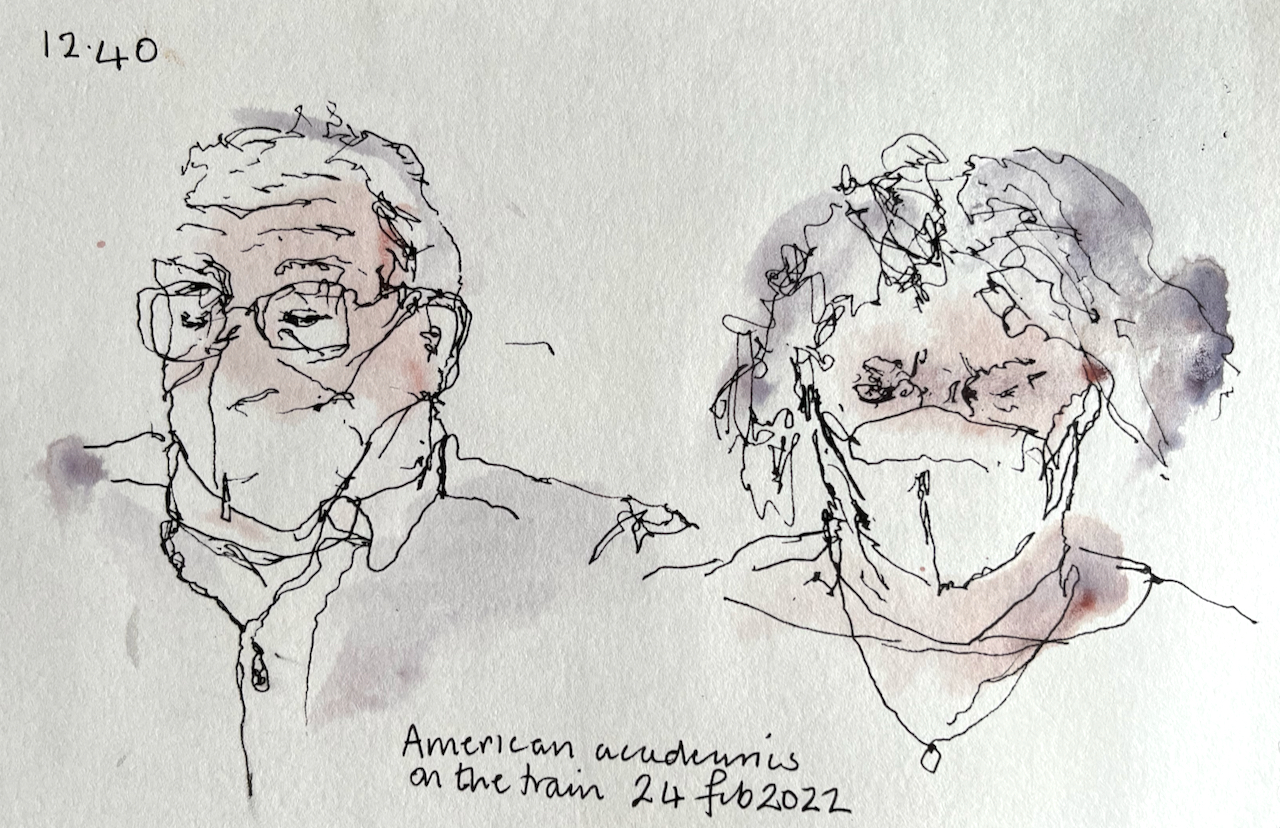
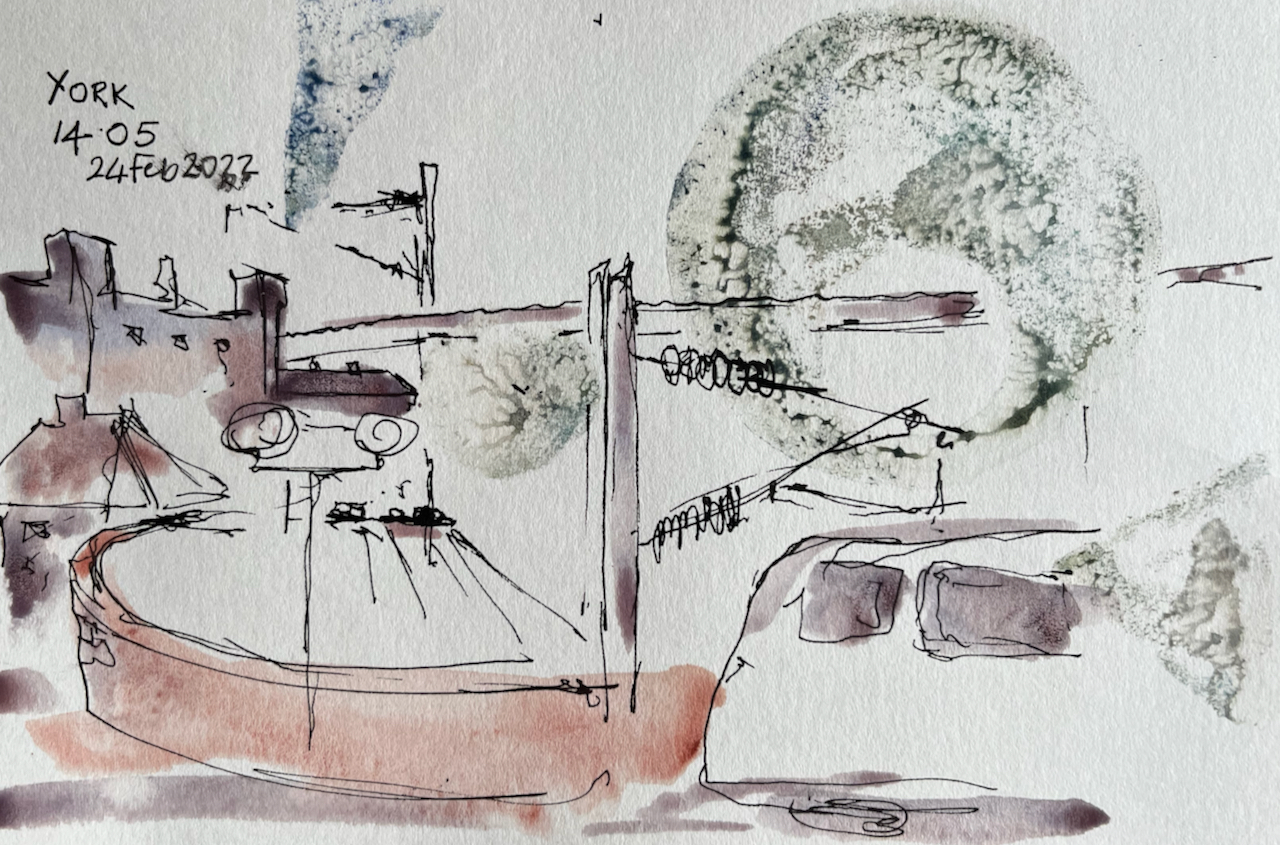
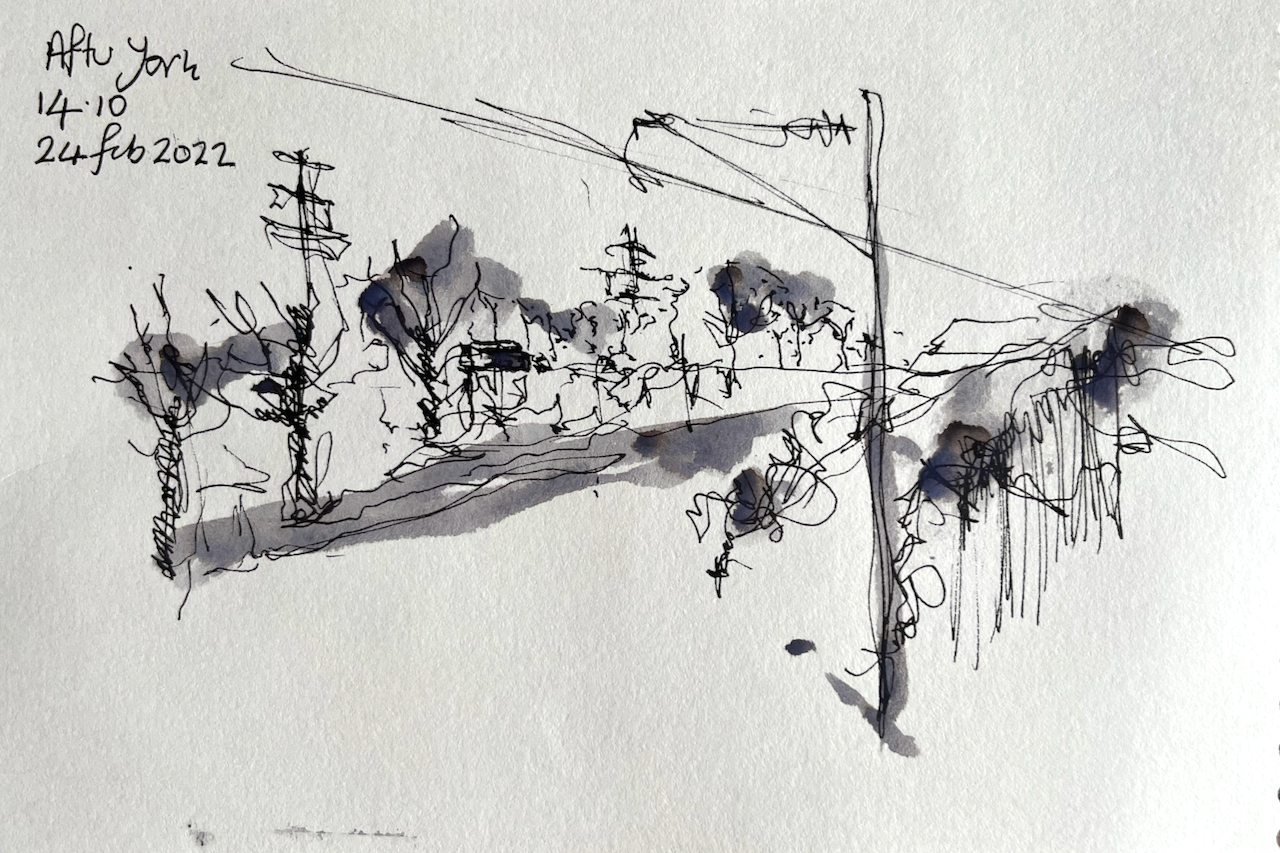
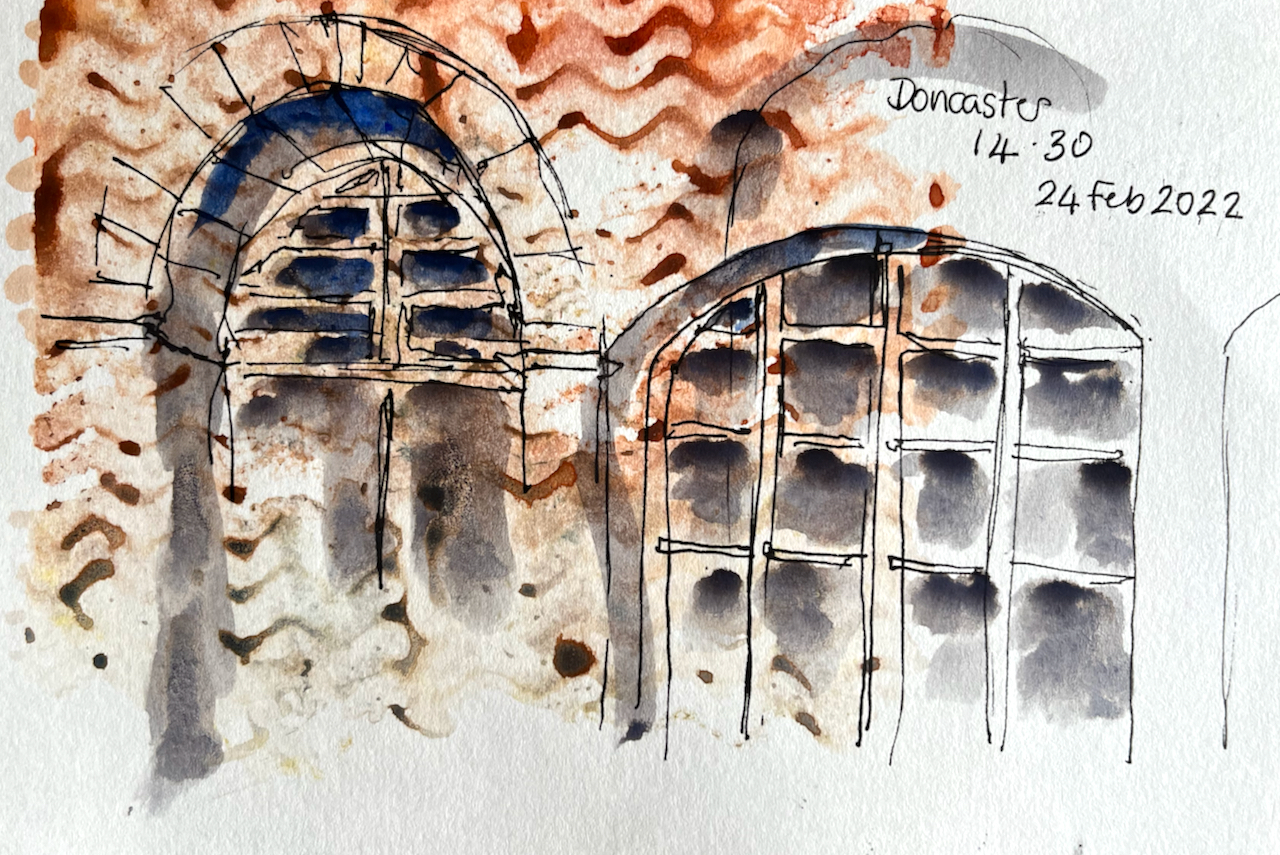
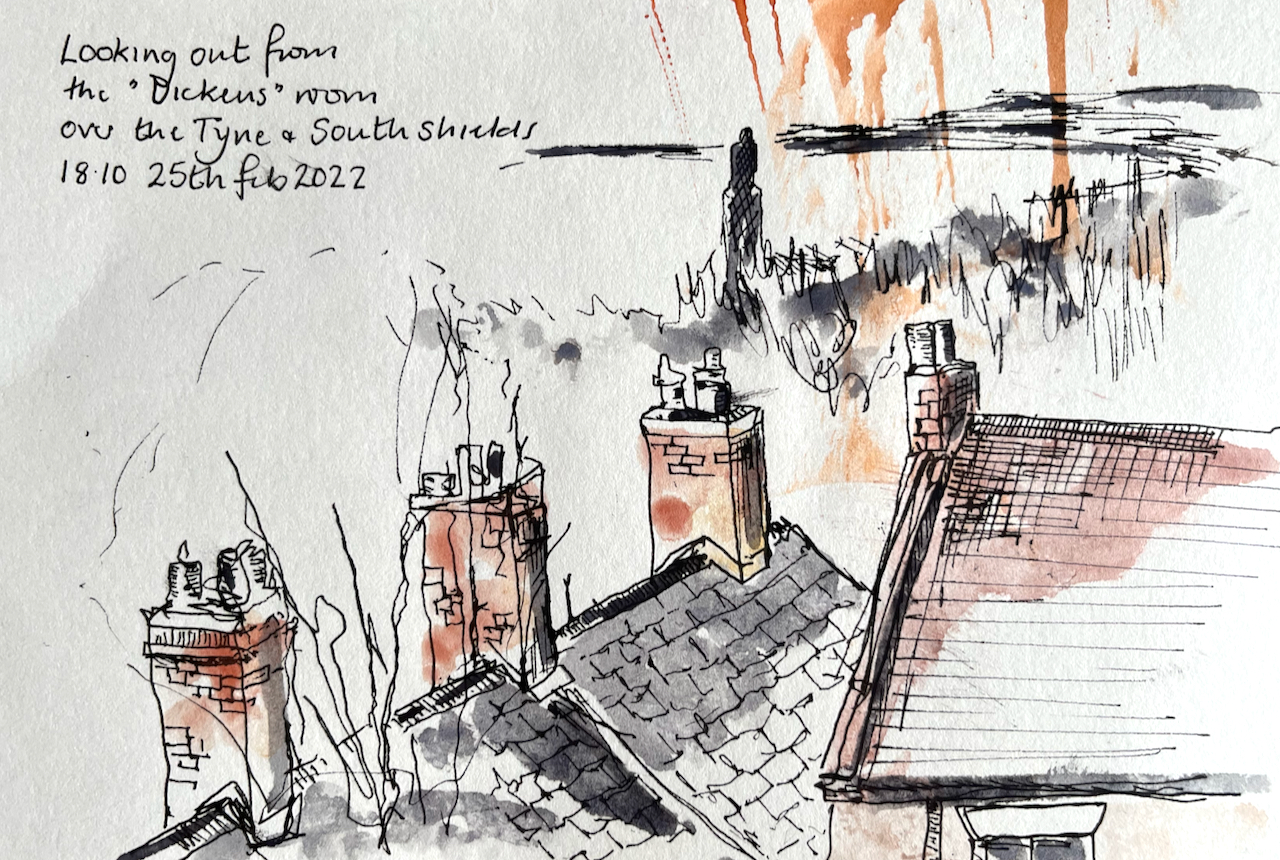
Train journey to Newcastle

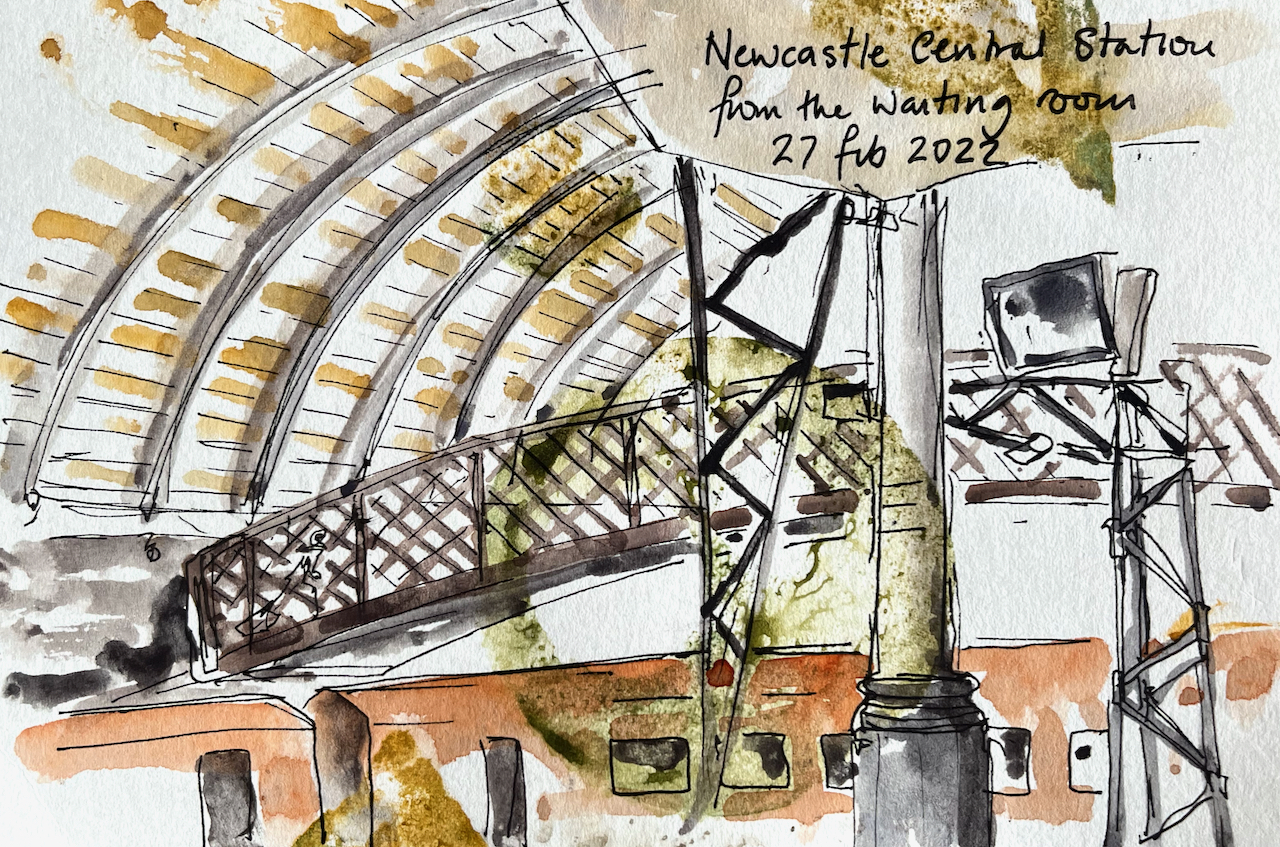
Before the journey, I printed patterns on the pages. Many of these drawings are done on the train.

I did drawings in a “Traveler’s Company” spiral bound notebook.

St Mary Le Bow

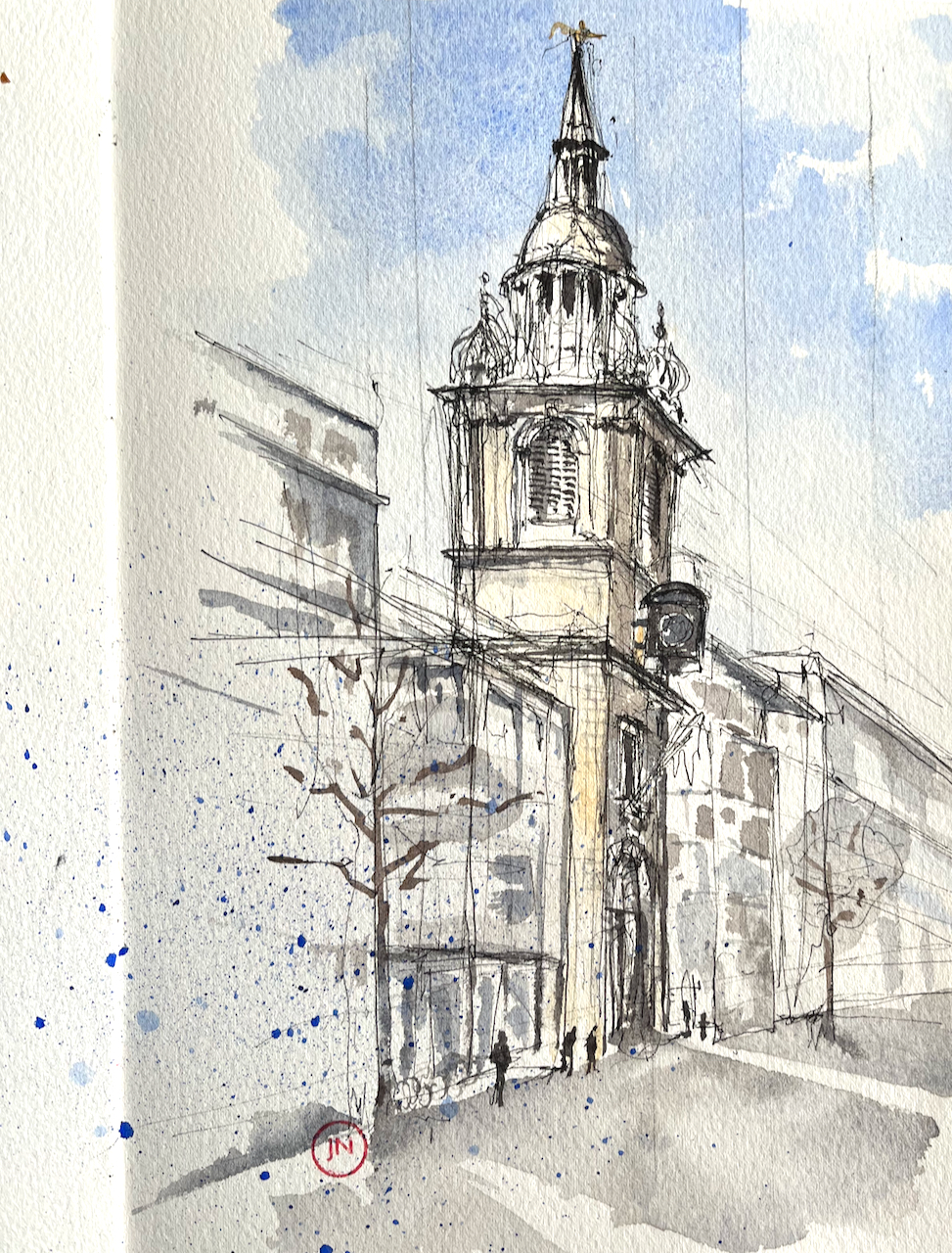
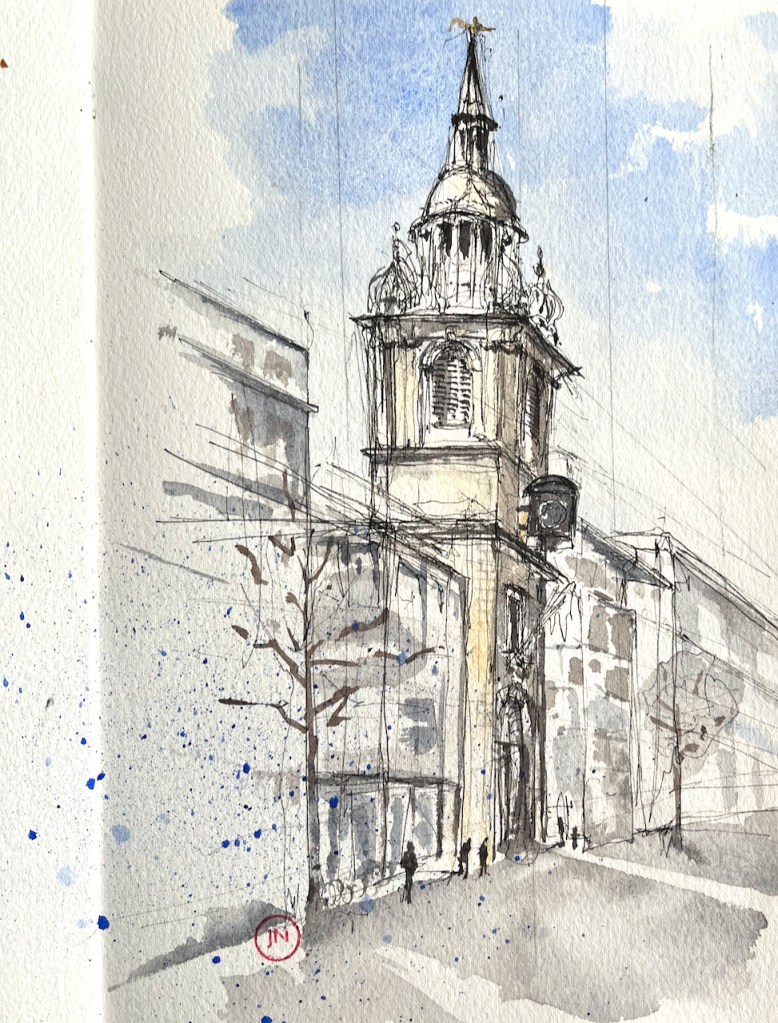
A quick sketch of St Mary Le Bow on Cheapside, London EC2

St Mary Le Bow, from Cheapside 23 Feb 2022 10″ x 7″ in Sketchbook 11

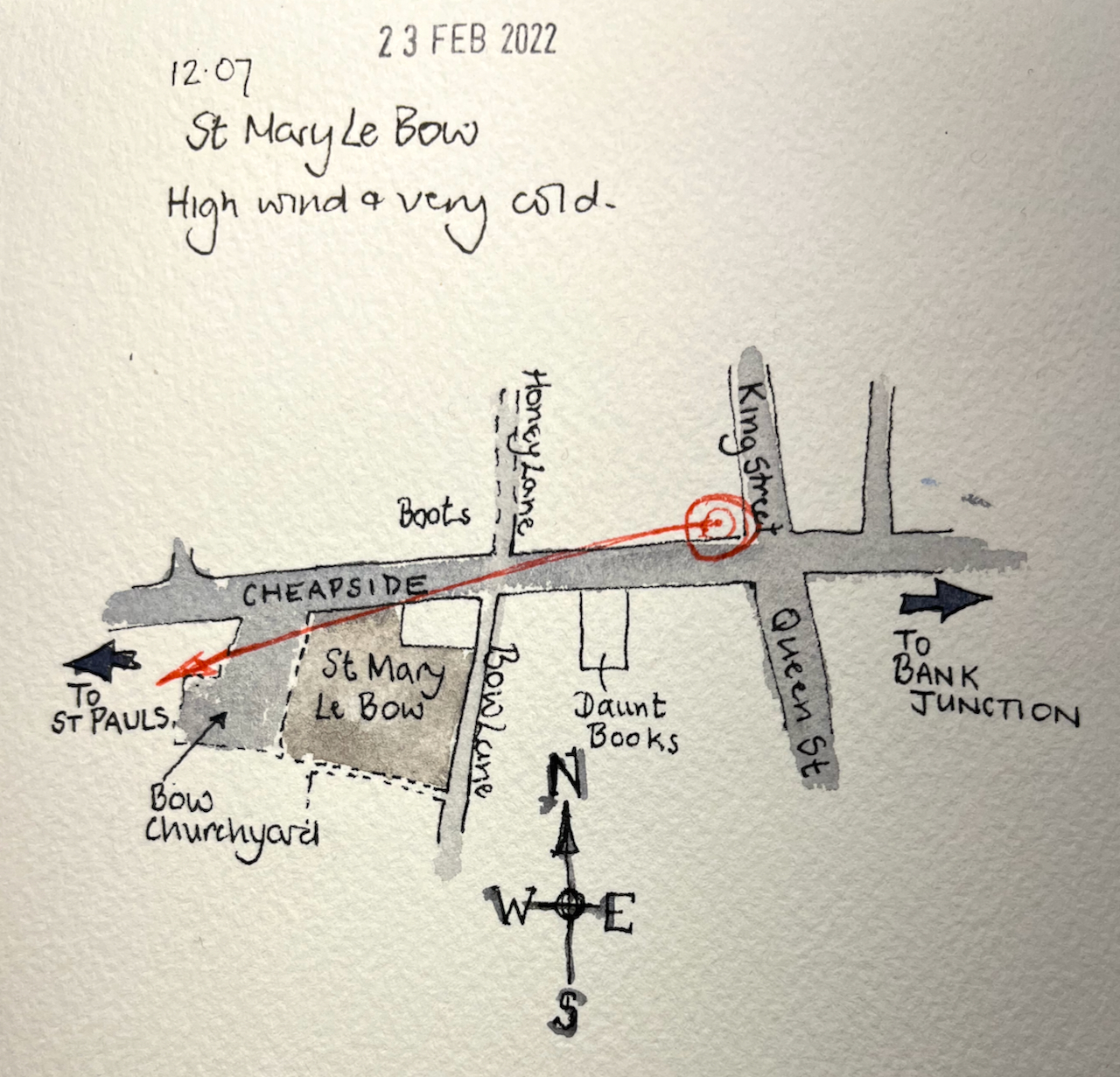
I drew this from the corner of Cheapside and King Street. This seemed like a really good place to stand, since there was a tall junction box next to me, and I could fit myself into a corner of a window. It rapidly became apparent that I chosen the windiest corner in London. My eyes streamed. Everyone coming round the corner took a short cut my side of the junction box, and funnelled past me, their heads down, phones in hand. I felt in the way.

But I persisted. I finished the pen. I did not put the colour on using the convenient top of the junction box, as I had planned, since no paper was going to stay still for a moment in that wind. I retreated, and coloured it at my desk.

The Museum of London EC2

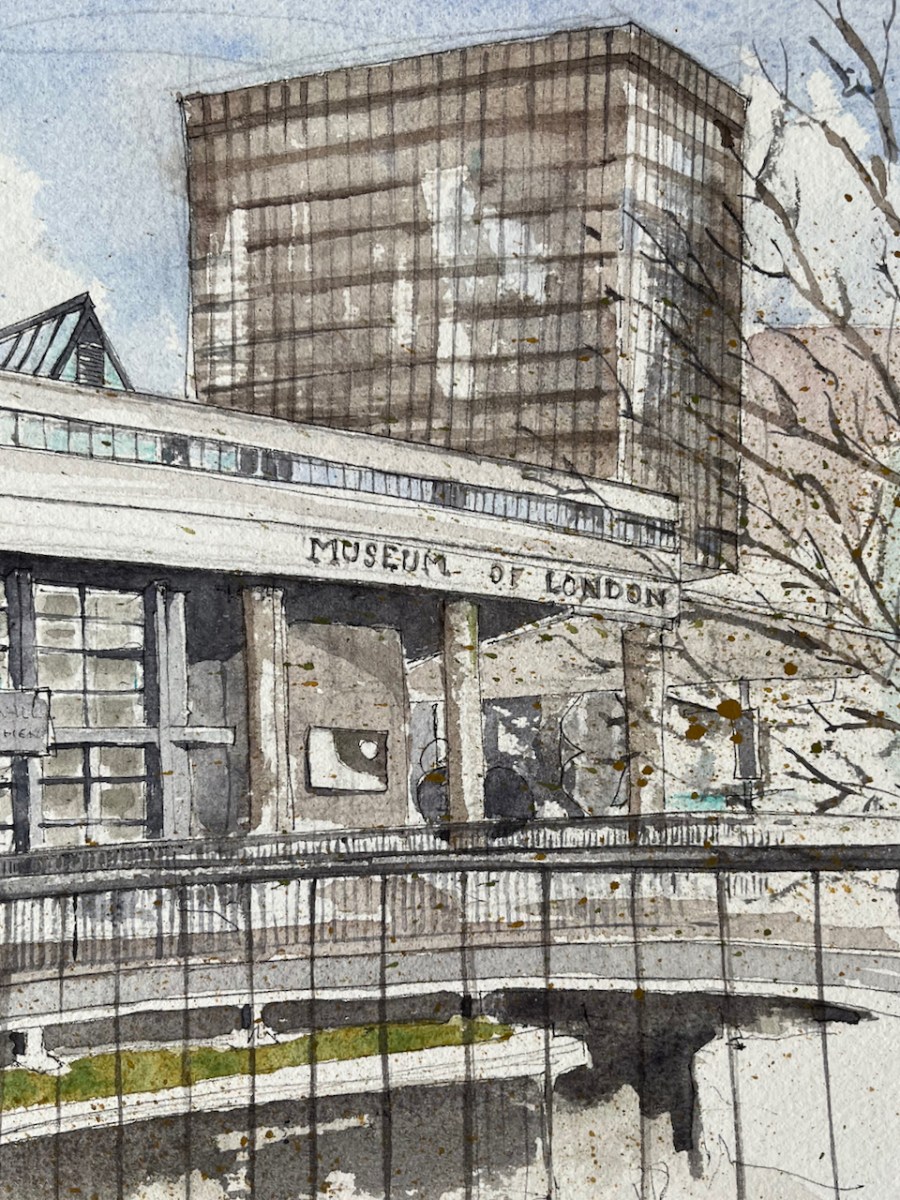
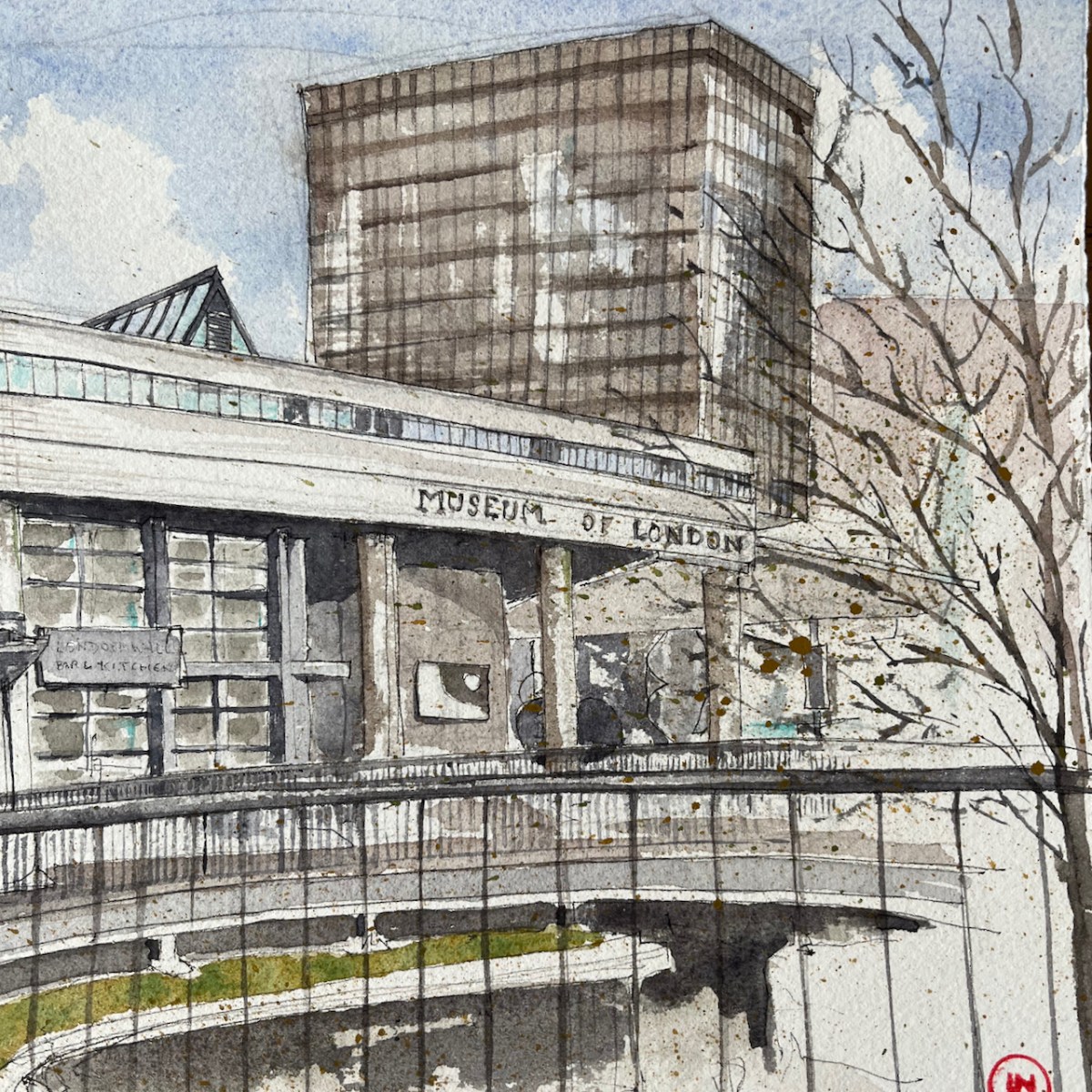
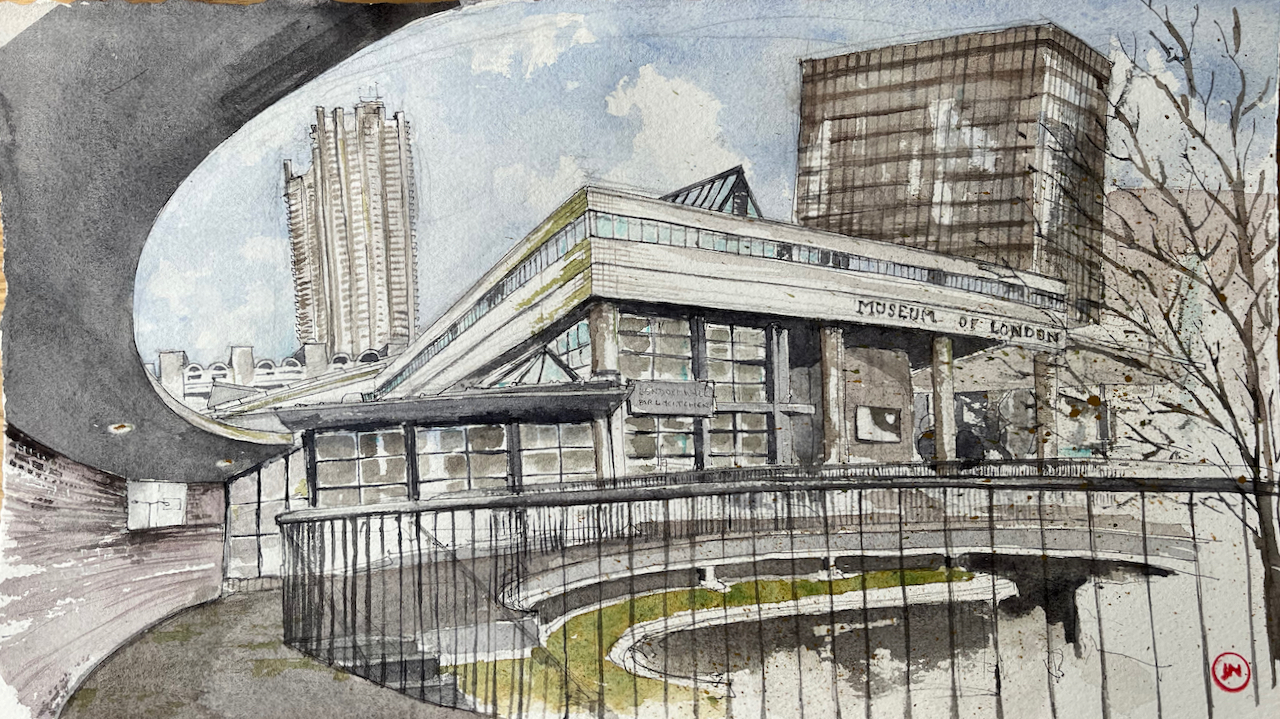
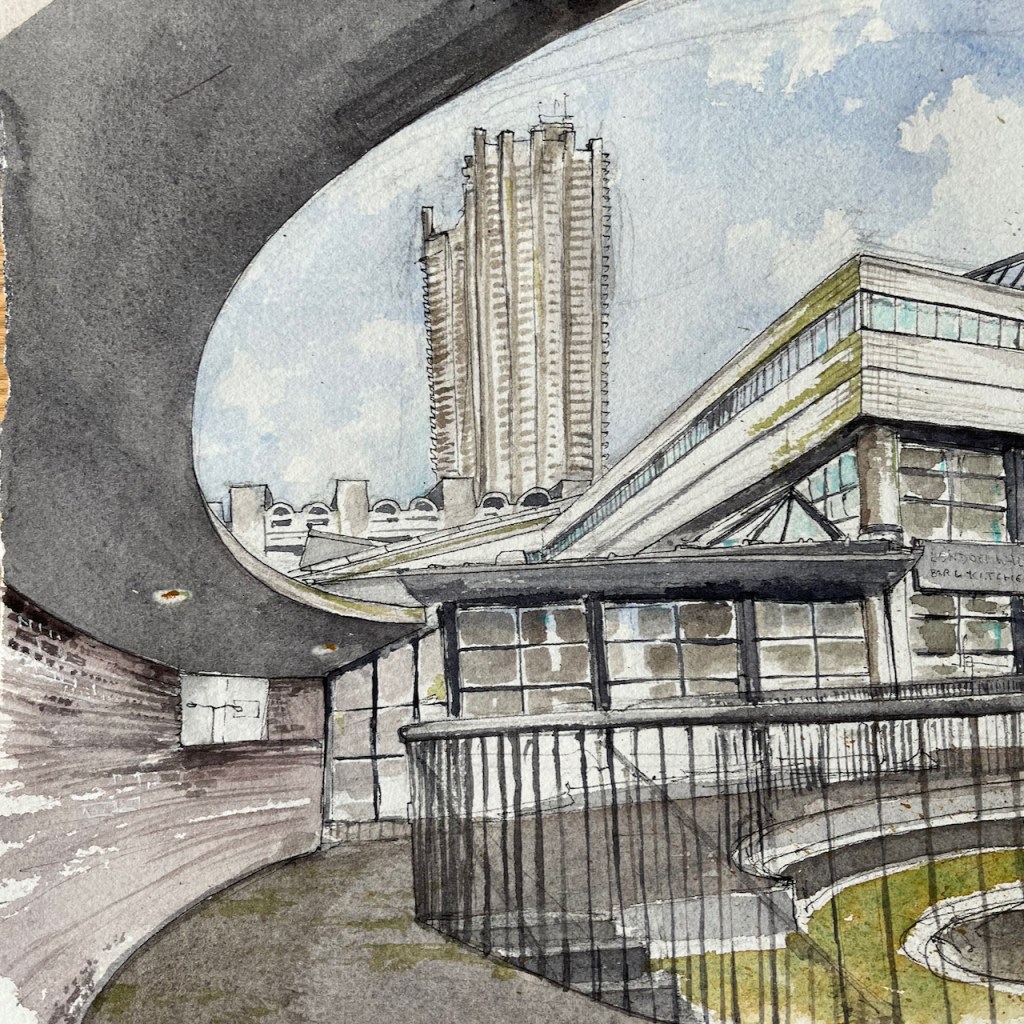
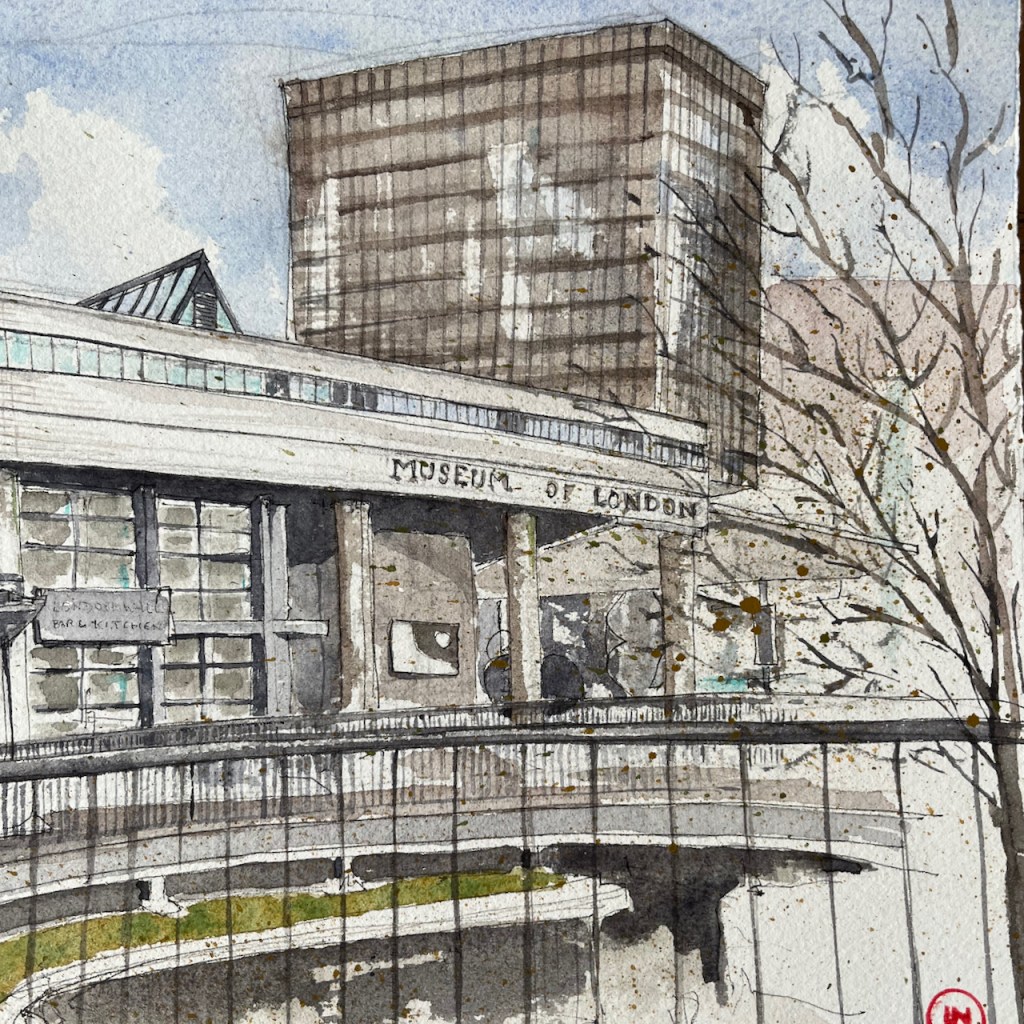
From the highwalk on the Rotunda there is a really amazing view of the Museum of London and Bastion House. This whole view going to change radically, if the City of London plans are approved.

Museum of London from the Rotunda, 15″ x 8.5″ on Arches watercolour paper

The Museum of London is in the South West corner of the Barbican. It was designed by Philip Powell and Hidalgo Moya.

The Museum opened in 1976. The City of London plan to close it in December this year (2022), and then to demolish it, along with the surrounding highwalks and pedestrian bridges over London Wall.

The dark-coloured block in the background on the right is Bastion House. This 17 storey tower block was built to the designs of architects Powell & Moya between 1972 and 1977 as part of the Barbican development. It is on top of part of the Museum of London’s display space.

The City of London now plan to demolish it.

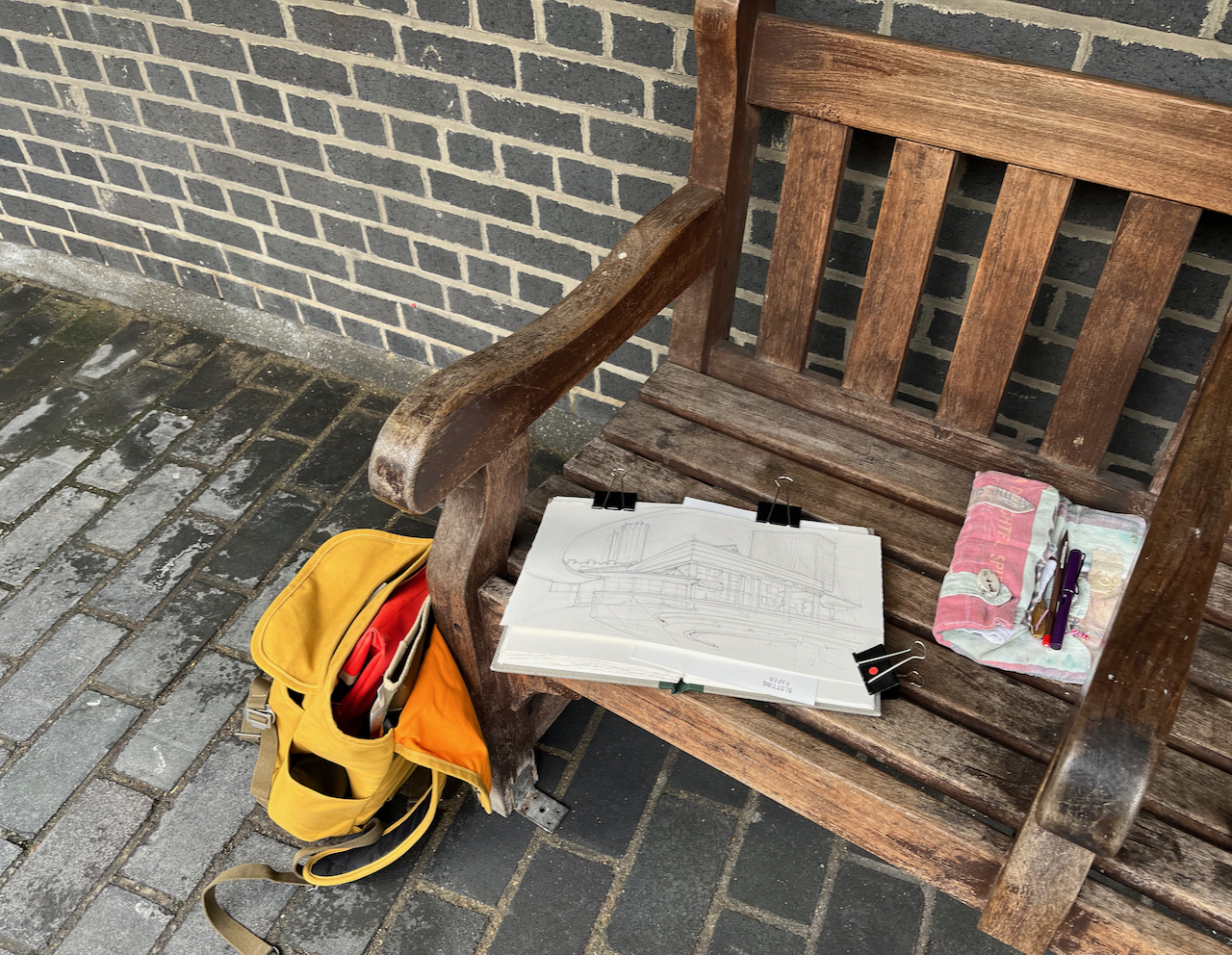
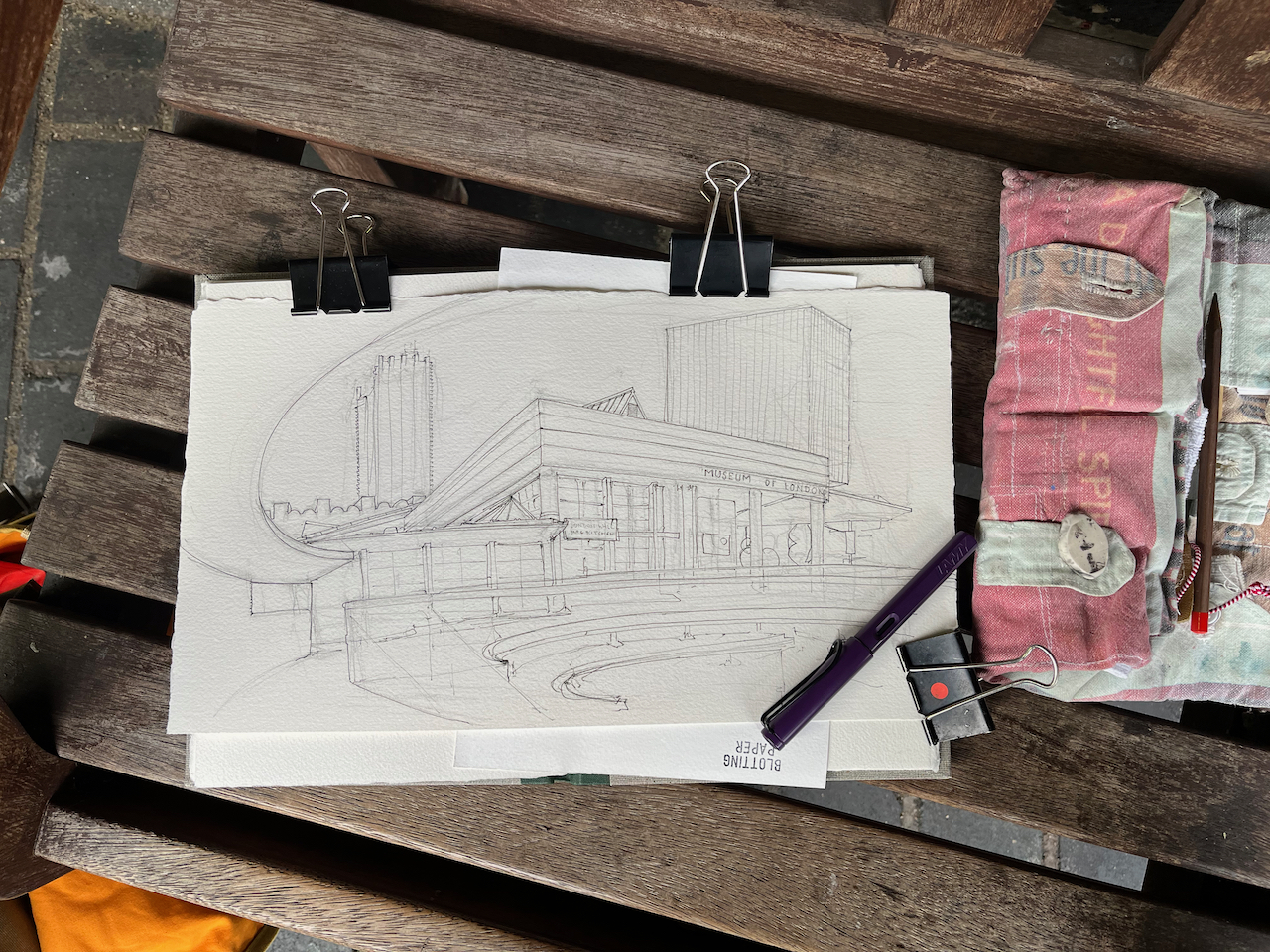
So if the plans go ahead, this view will no longer exist. I rushed to sketch it.

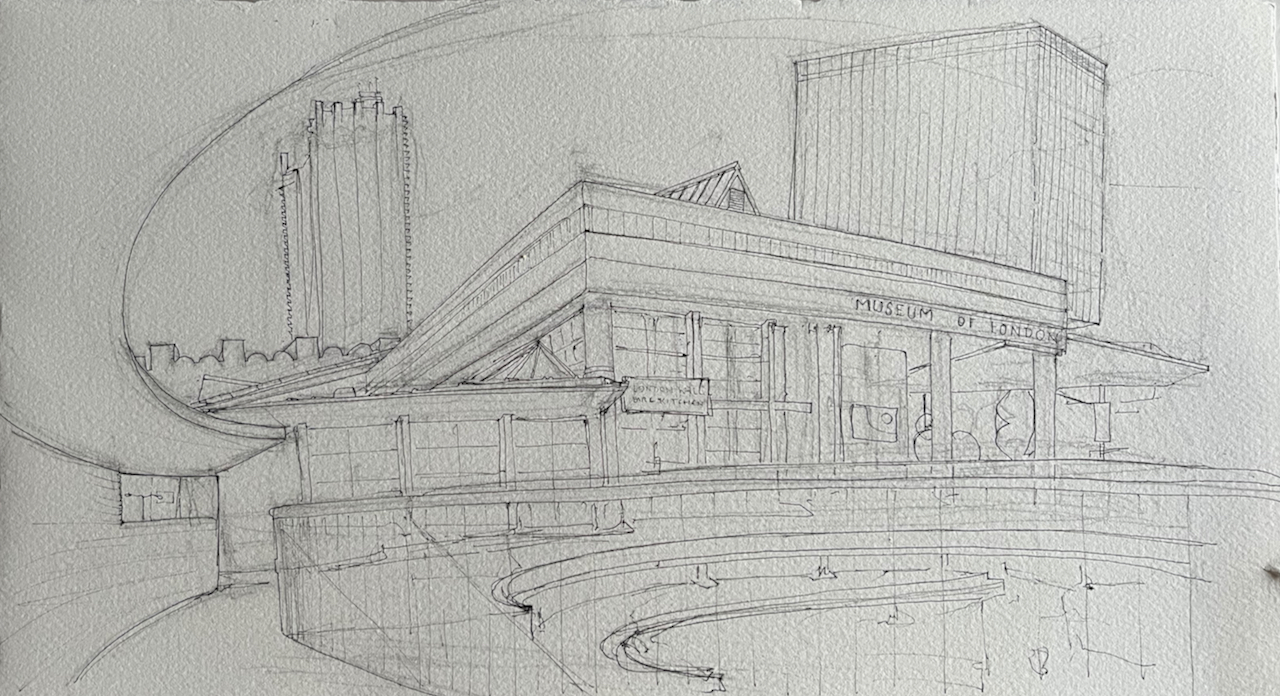
This drawing is in an aspect ratio new to me: 15″ x 8.5″ or 38cm x 22cm. I wanted to get the whole of the front of the museum in the picture.

Here is comparison of the pen and ink and the the colour versions:
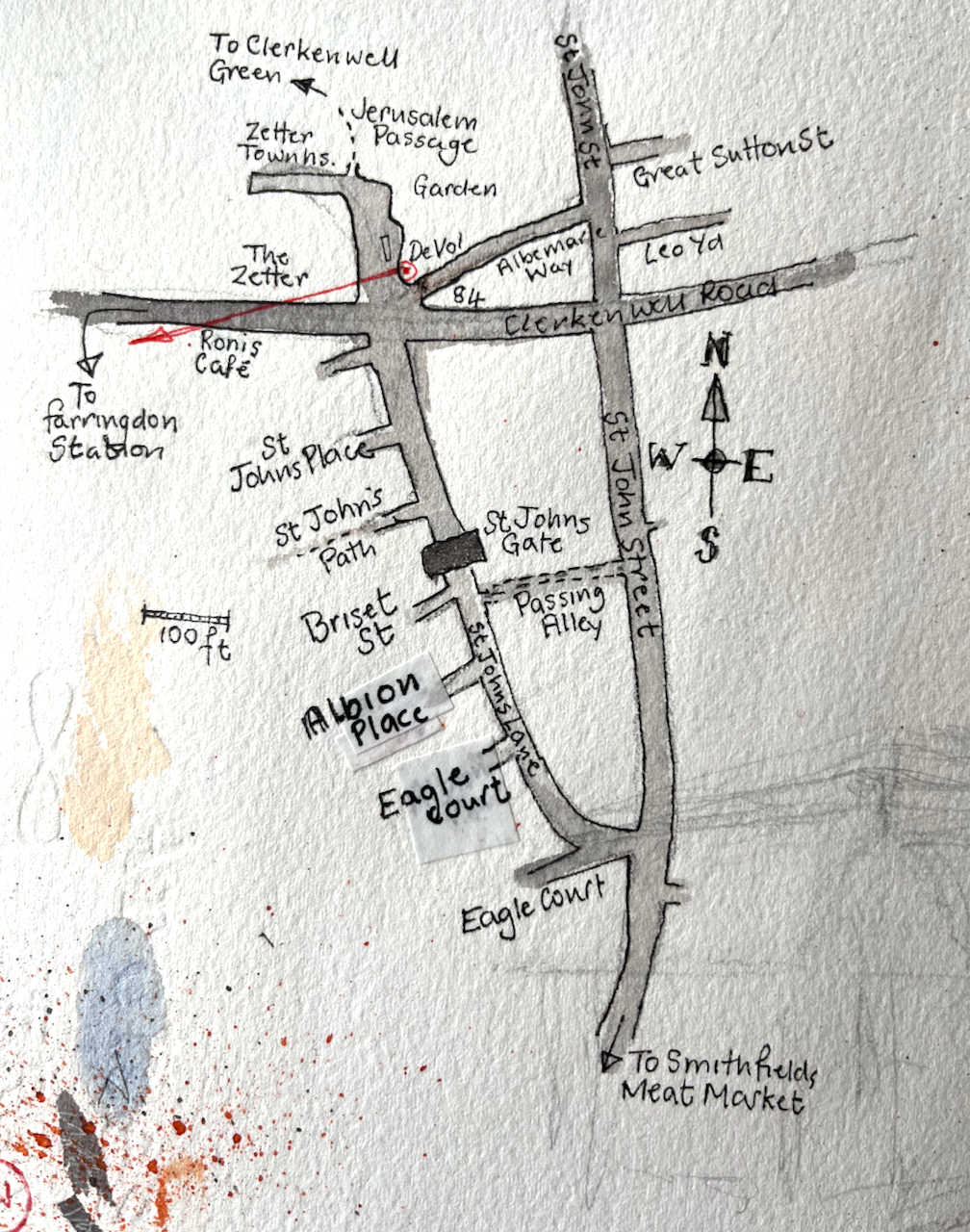
With and without colour

The City of London plans for the replacement buildings are on this site: https://londonwallwest.co.uk/
Residents are organising their response via the Barbican Association and this site: https://www.londonstartshere.co.uk/

Philip Powell and Geoffry Powell

The architecture practice which designed The Barbican is “Chamberlain, Powell and Bon”. This “Powell” is Geoffrey Powell and not the Philip Powell of the Museum of London. The architects involved in designing the Barbican were: Geoffry Powell, Peter “Joe” Chamberlin, Christoph Bon, and Charles Greenberg.

The architects who designed the Museum of London and Bastion House are Philip Powell and Hidalgo Moya of the architecture practice “Powell and Moya”.

Thank you to the reader who clarified this for me.

39 Clerkenwell Road, EC1

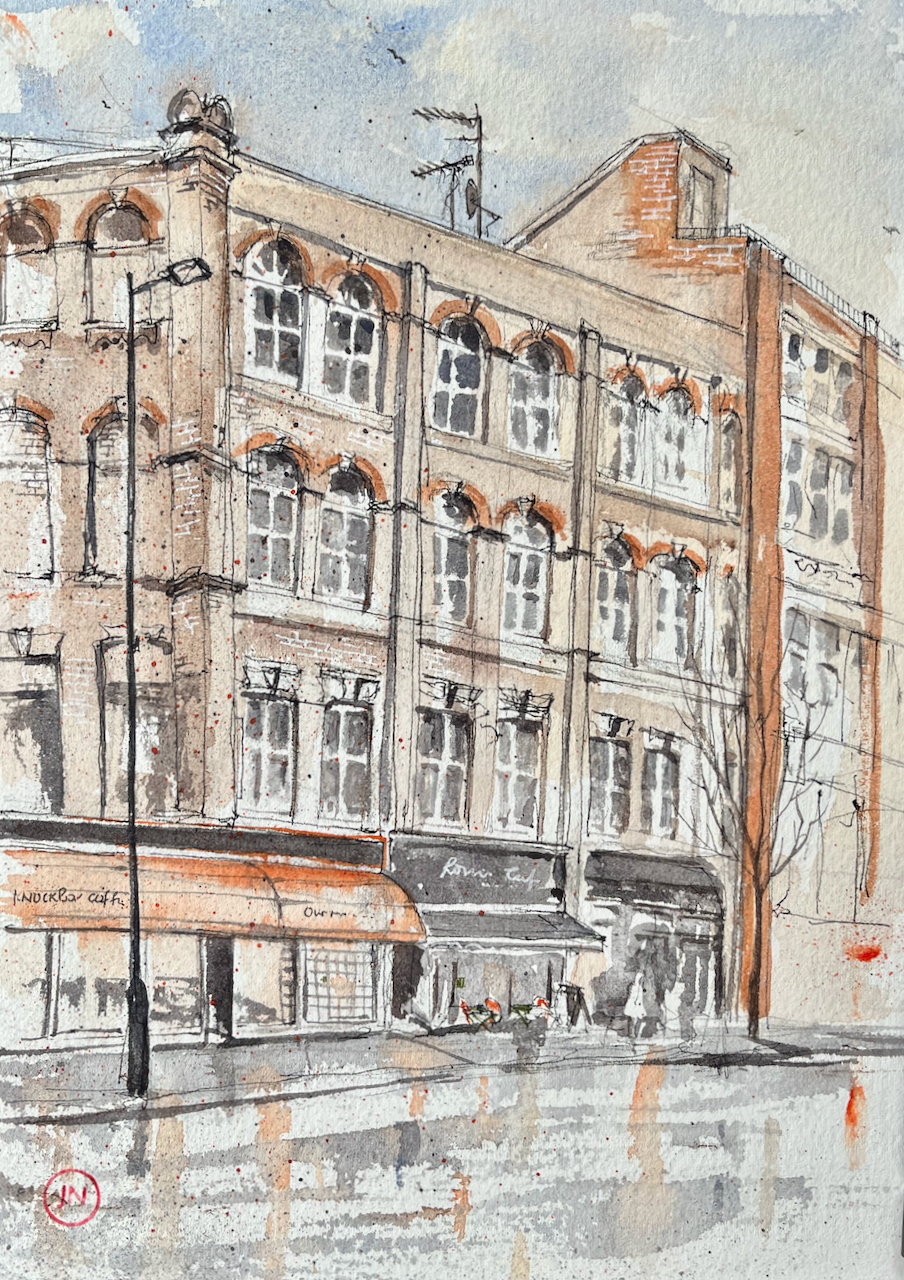
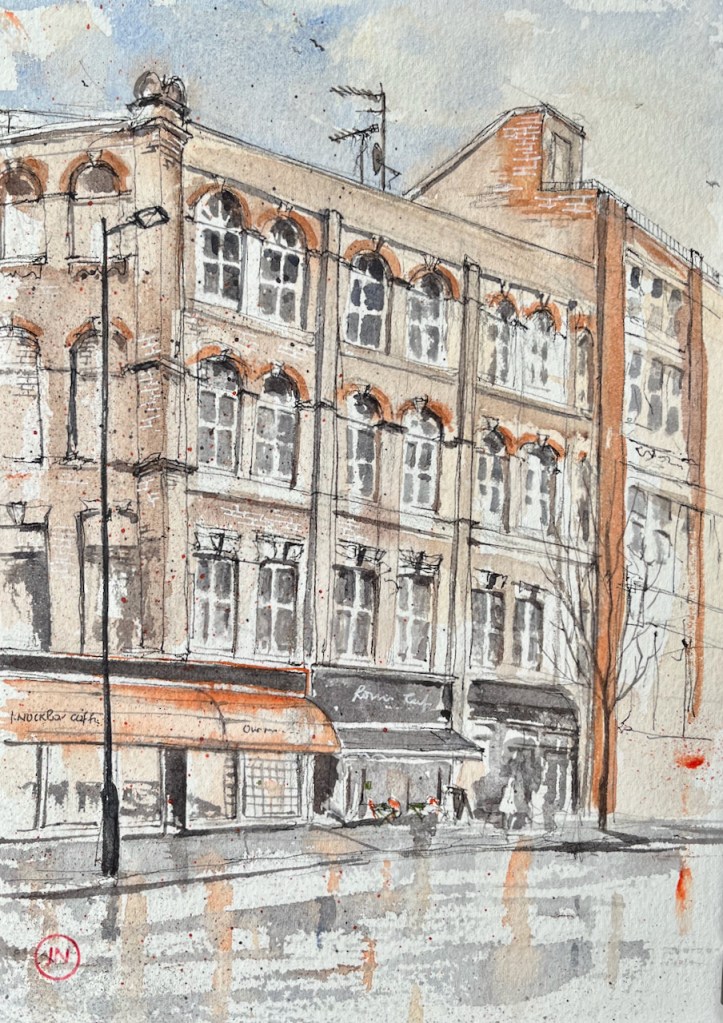
Here is a row of shops on the Clerkenwell Road.

Roni’s Café, 39 Clerkenwell Road, 15th Feb 2022, 10″ x 8″ in Sketchbook 11

In the centre of the picture is Roni’s Café, where I sheltered to finish my drawing of 84 Clerkenwell Road.

My idea was to draw the view looking West along the Clerkenwell Road, from number 84. By the time I reached the spot, the rain was falling heavily. I spotted a large window. The people inside kindly agreed to host me for 45 minutes while I sketched my lines. Then I went out into the rain. I finished the picture at my desk.

Colours are: Ultramarine Blue, Burnt Umber, Transparent Pyrrol Orange.

London Television Centre – monoprint

Here’s another “packaging” monoprint. This was made using an empty box of tissues.

London Television Centre, monoprint from packaging, image size 14″ x 10″ [Available]

This is a tower block on the South bank of the river Thames, seen from the North bank. That’s the river in the foreground.

Here is the “plate”, before printing:

I have sketched this tower block here:

London Television Centre SE1

Here is a view of the London Television Centre, 60-72 Upper Ground, SE1. It is on the South Bank of the river Thames, a…

Windmill Walk, SE1

Here is a view of the tower of former London Television Centre building, seen from Windmill Walk, off Roupell Street near Waterloo Station. I…

It’s due for demolition. So using discarded packaging to make an image of this building seemed to be appropriate. The building, though made of concrete and steel, is yet ephemeral, like my fragile plate.

I made the print on “Gampi smooth” paper from Shepherds of London. This handmade paper is thin, translucent, and has small inclusions and imperfections as you see on this detail photo:

The sky in this part of London is never empty. There are always seagulls, falling leaves, windswept paper, aeroplanes, police helicopters. And rain.

The ink for this print is Charbonnel F66 Black traditional etching ink from Intaglio Printmakers. I made the print at East London Printmakers on the Henderson etching press.

London Weekend Television, London South Bank. Paper is a bit over A3 size.

Here are some other prints made using the same technique:

Packaging monoprints

Walberswick Huts – monoprint

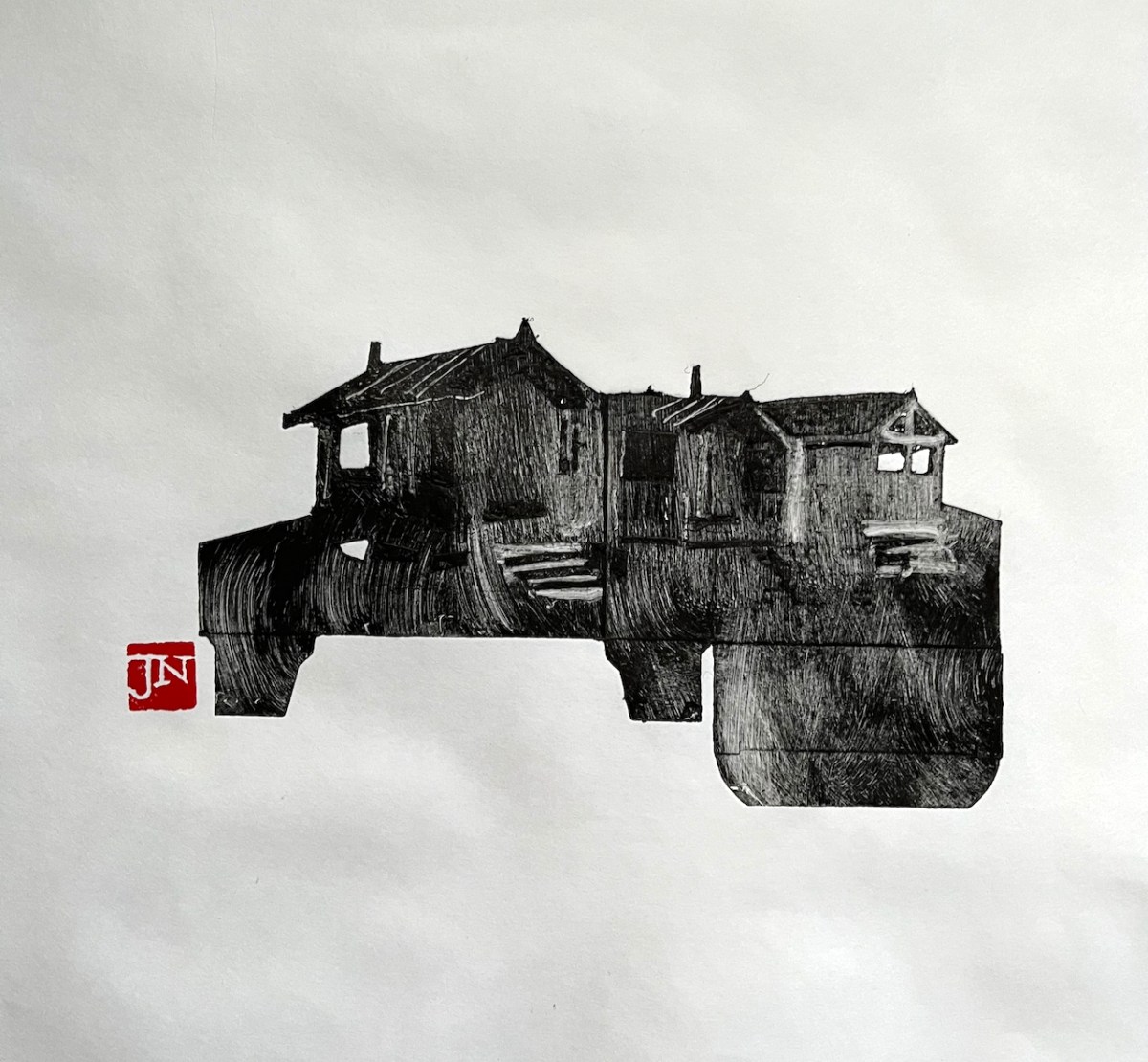
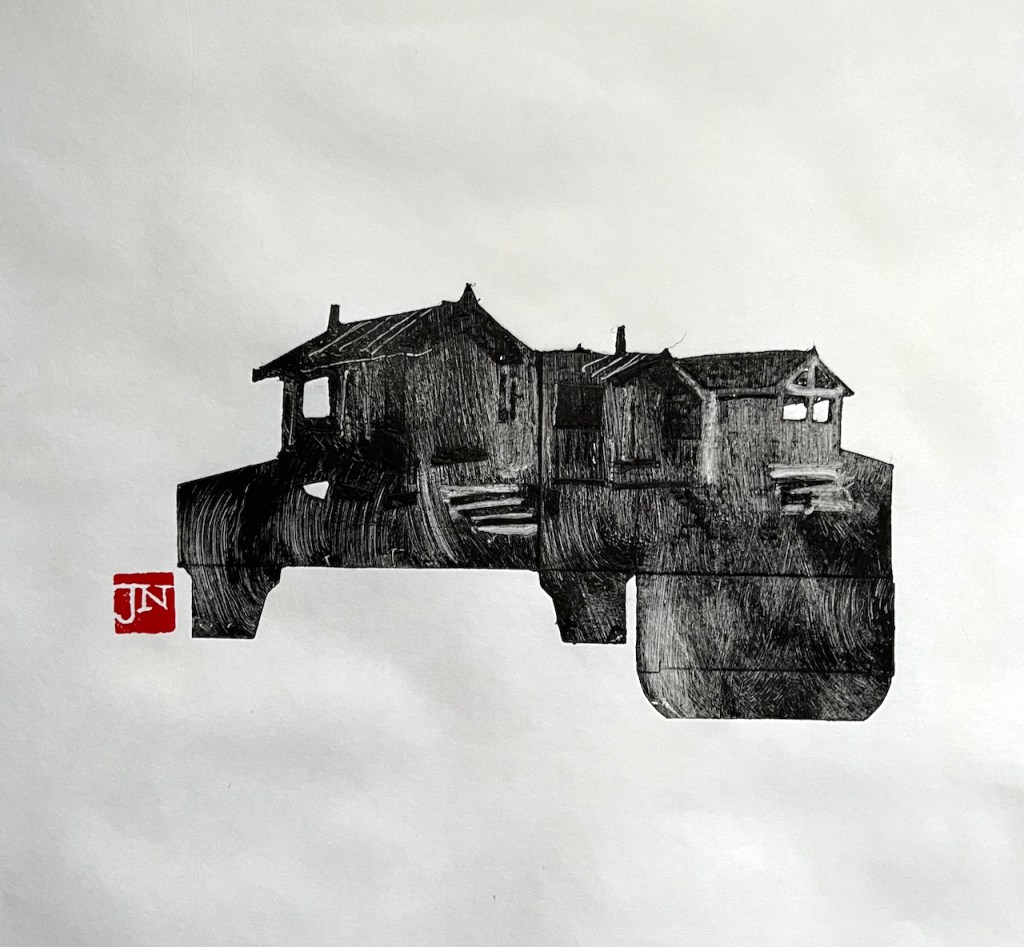
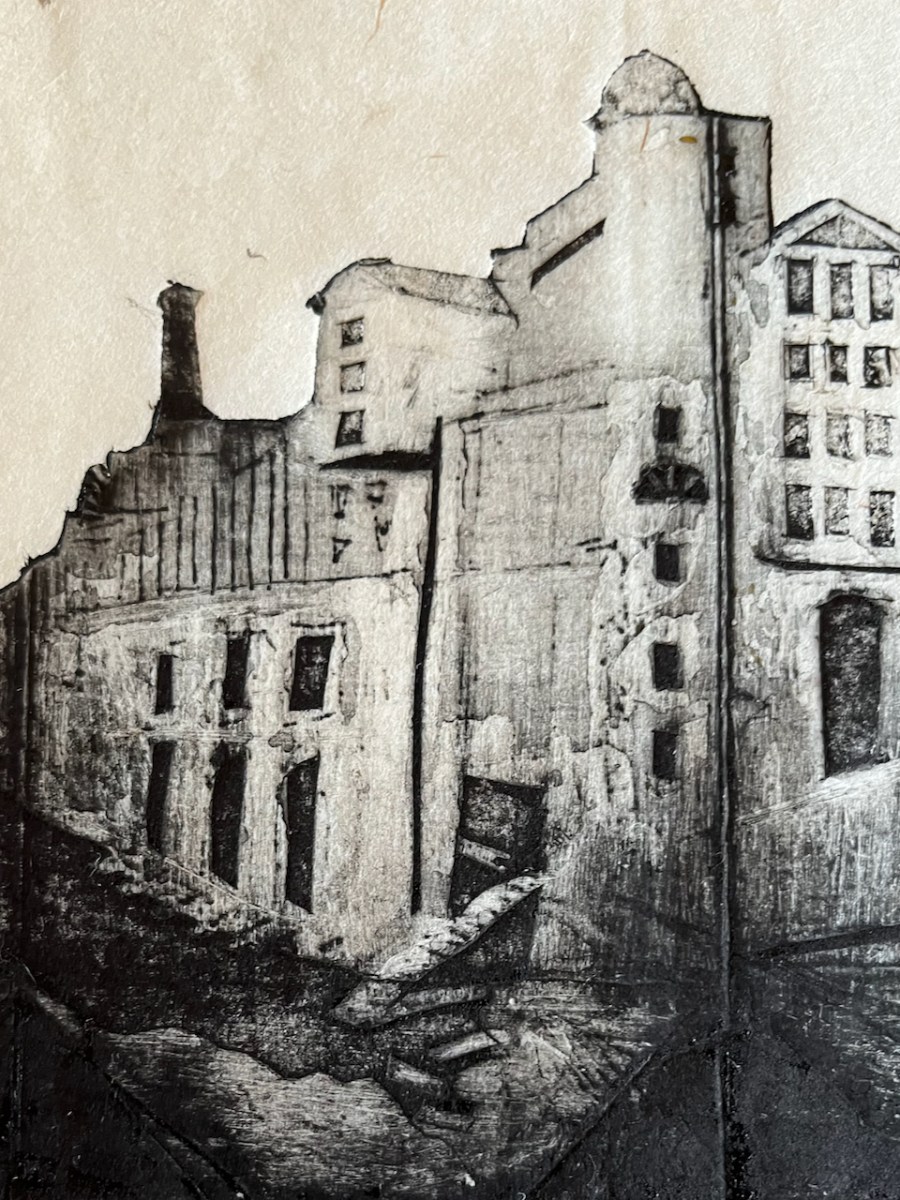
Here is a “packaging” monoprint I made of the huts in Walberswick.

Walberswick huts, monoprint, image size 8″ x 5″ [Available]

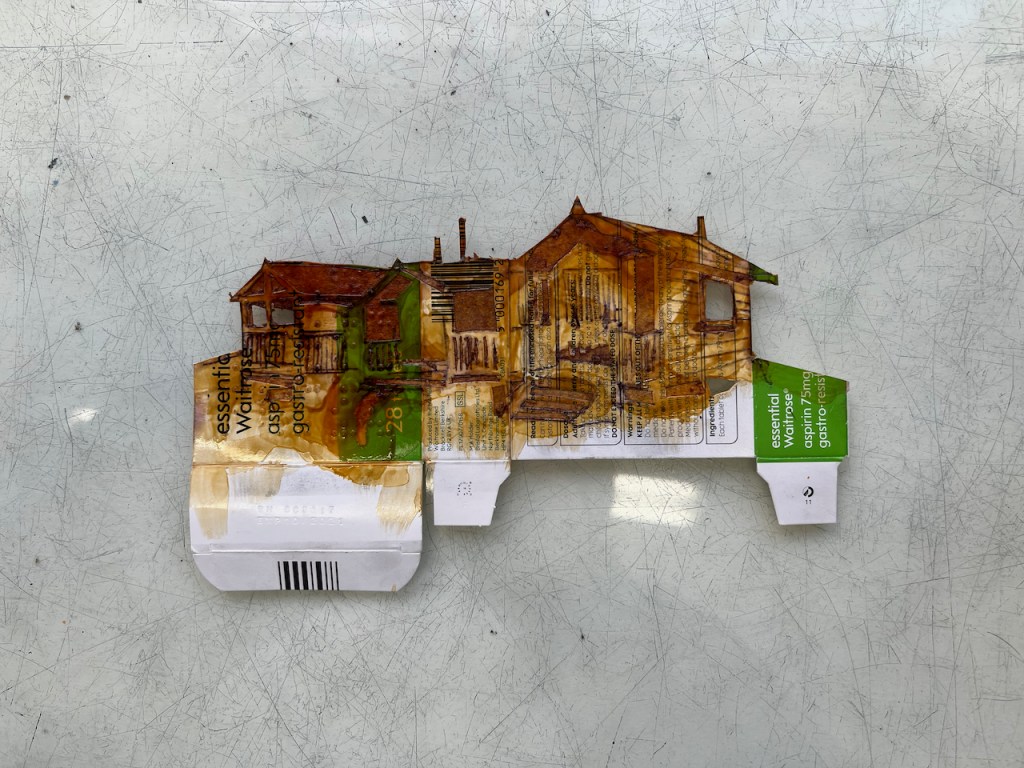
The print is made using a discarded carton from a box of aspirin. It looks like this:

Walberswick huts, plate made from aspirin carton.

The brown colour is shellac, a varnish which helps make the plate last a little longer. I make the picture on the shiny side of the medicine packaging, by cutting off the shiny surface to reveal the rougher cardboard underneath. The plate is very thin and fragile. This plate made 5 prints. I lost one of the chimneys during the process.

Here is an 11-second video showing the print coming off the plate:

The ink is JS Gutenberg Carbon Black etching ink from Intaglio Printmaker in Southwark. The paper is Gampi smooth from Shepherds of London, in Gillingham Street.

I made the print at East London Printmakers in Stepney, on their Henderson etching press.

Thank you to Karen Wicks @iacartroom for sharing her technique and her wonderfully inspiring work.

Here is another post using the same process:

Anchor Brewhouse, Horselydown Old Stairs, SE1

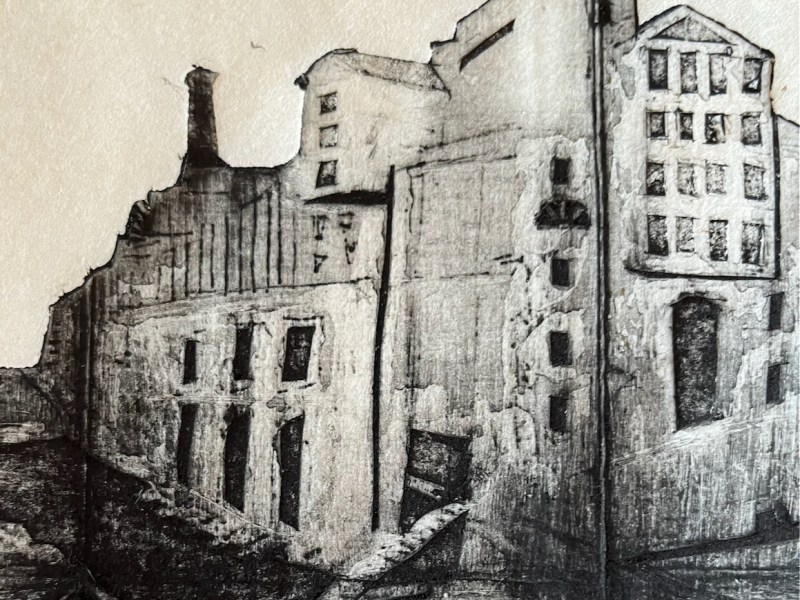
I am trying an experimental monoprint technique. The idea is to use packaging material to make intaglio “plates” which are then printed using an etching press. This is the first one. I printed it yesterday on the Henderson Press at East London Printmakers. This is a real building, a former brewery, just to the South and East of Tower Bridge. That’s the river Thames you see on the left of…

Windmill Walk, SE1

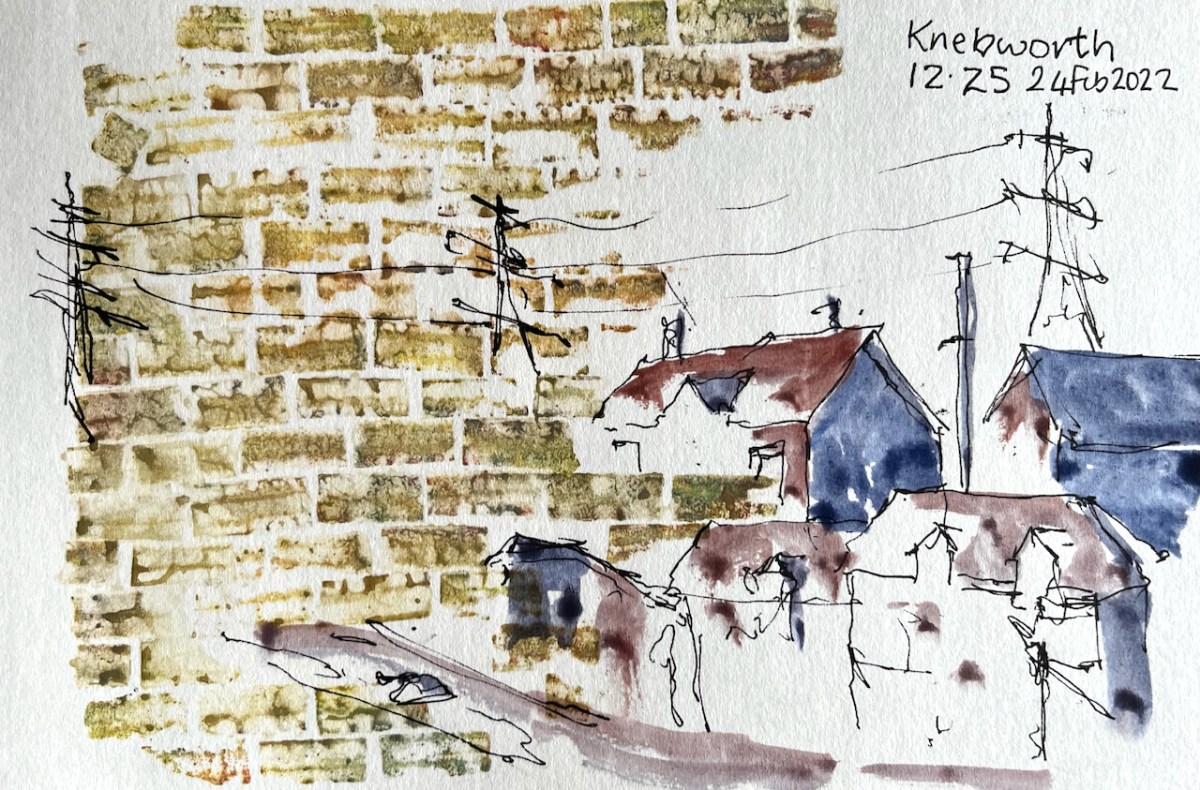
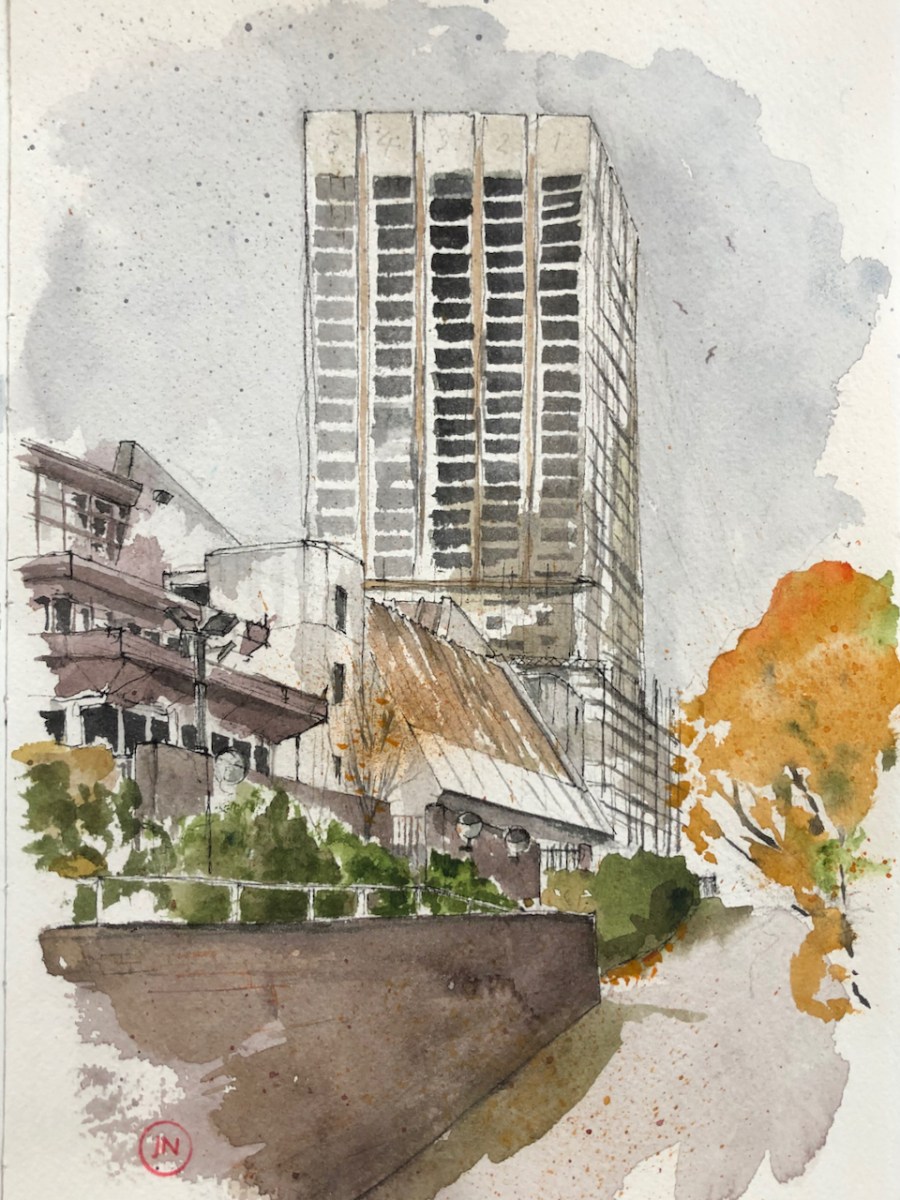
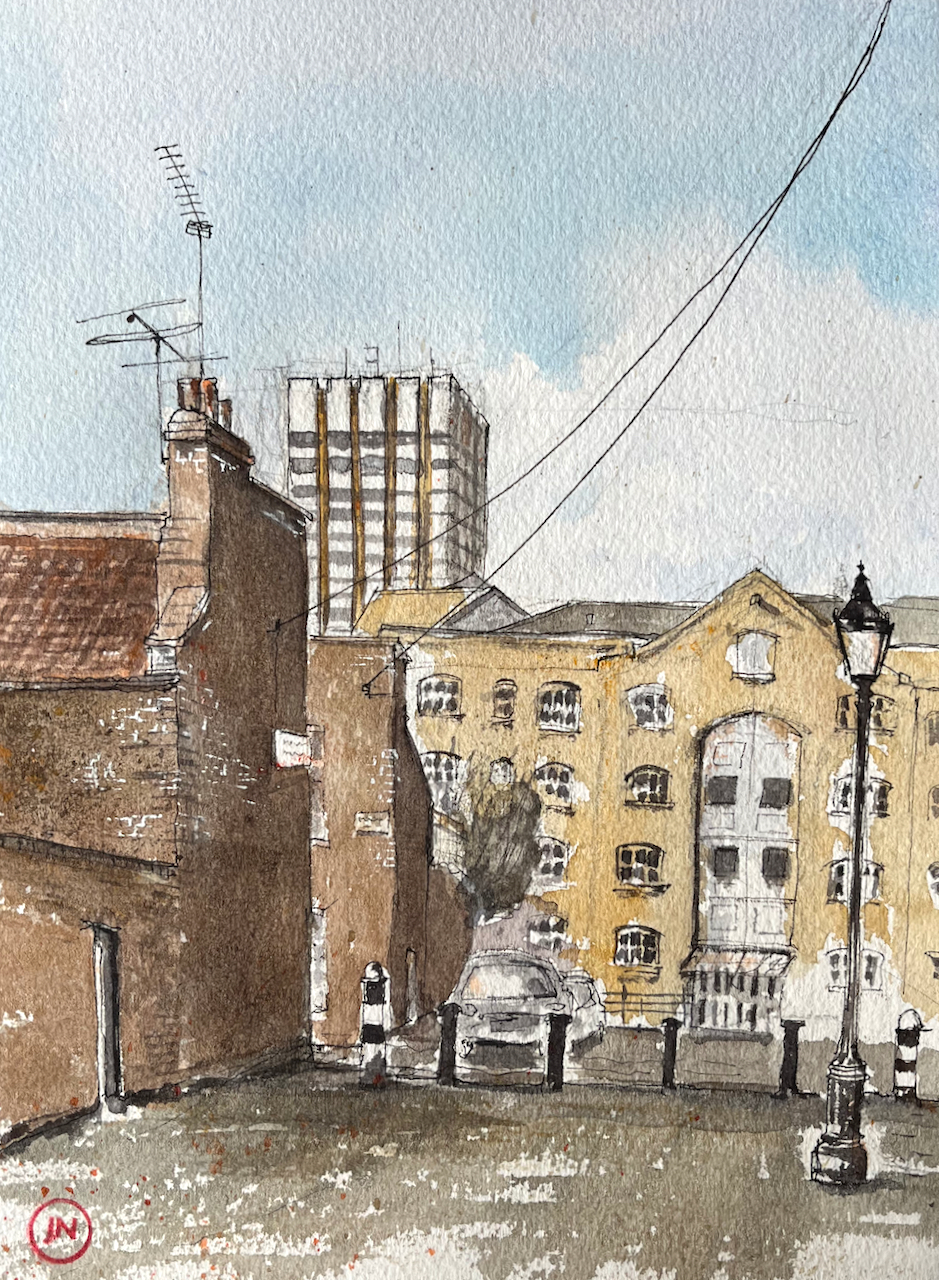
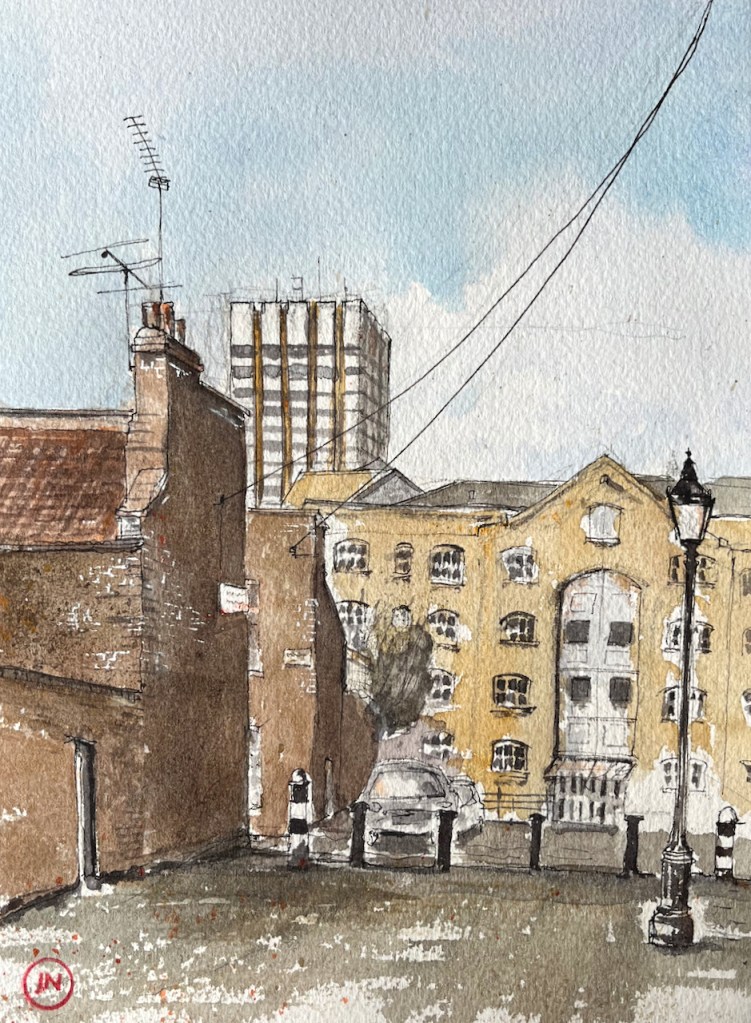
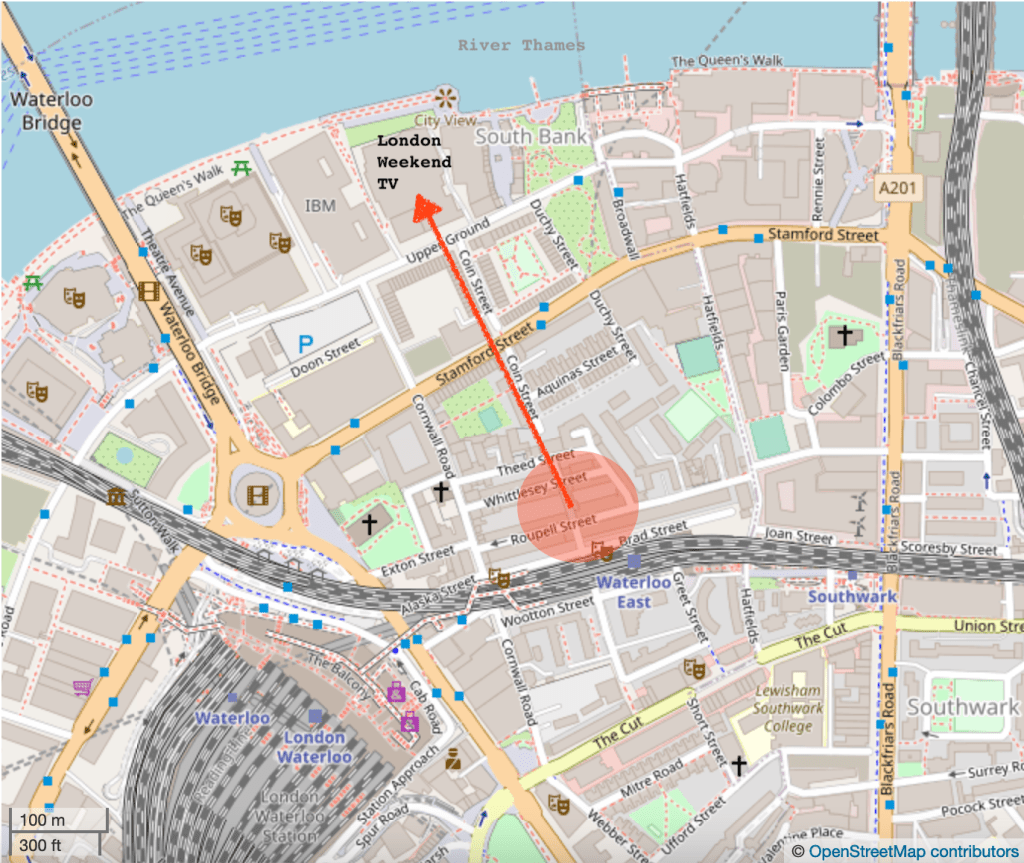
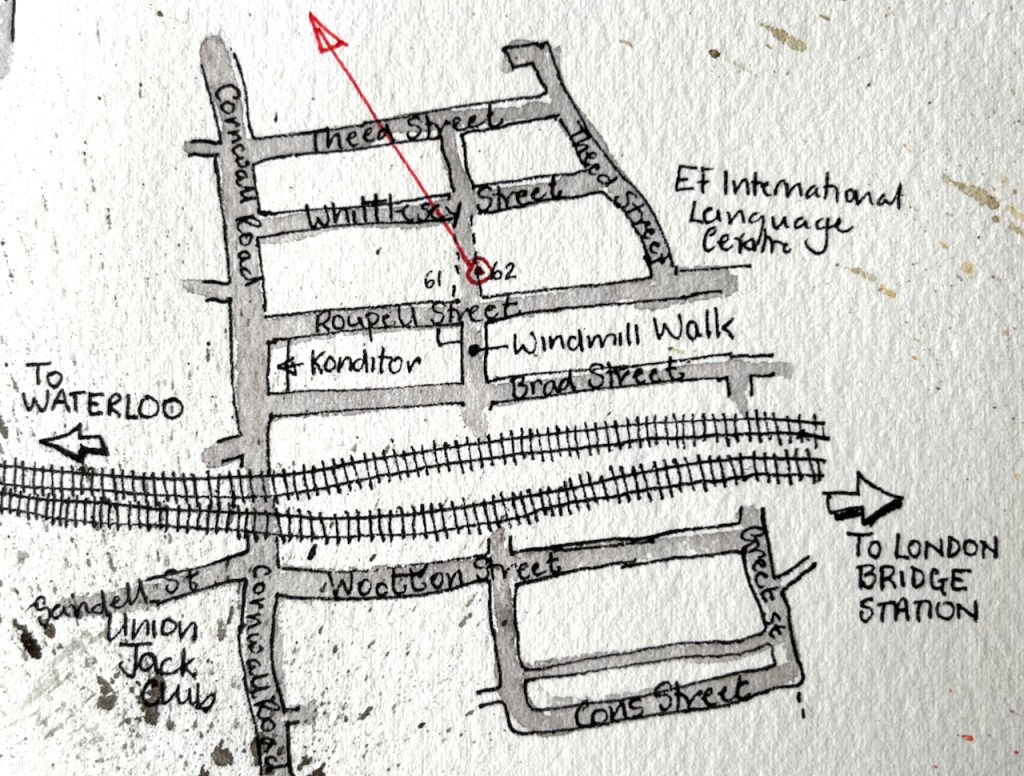
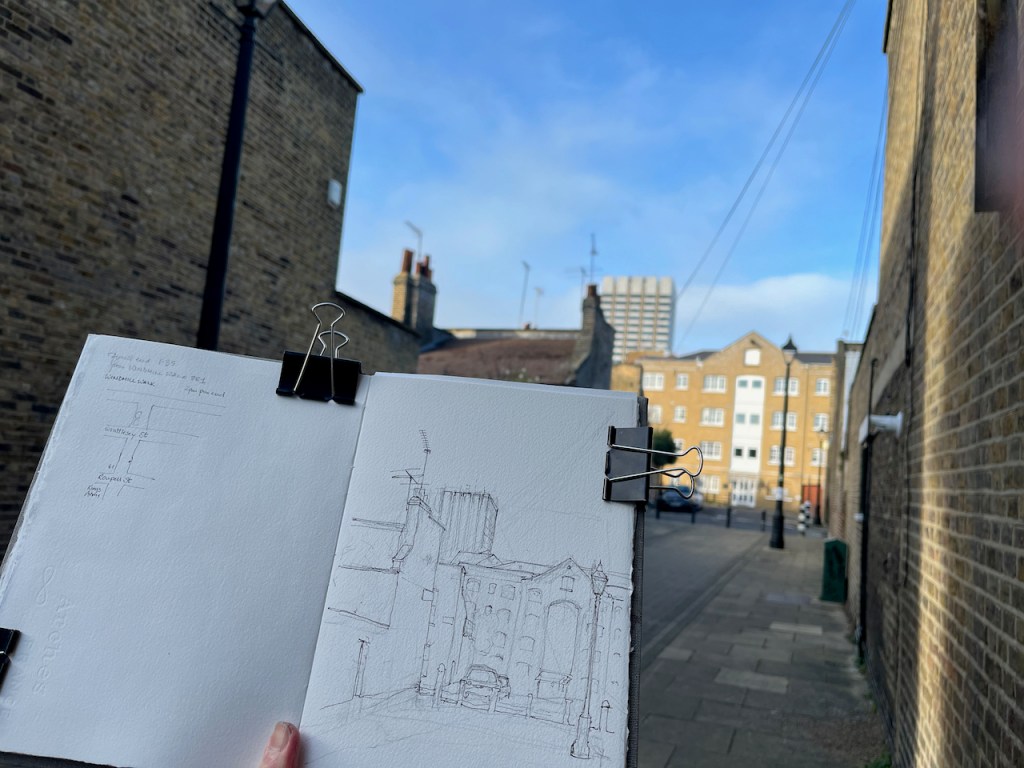
Here is a view of the tower of former London Television Centre building, seen from Windmill Walk, off Roupell Street near Waterloo Station.

LWT Building from Windmill Walk, 7th Feb 2022, in sketchbook 11
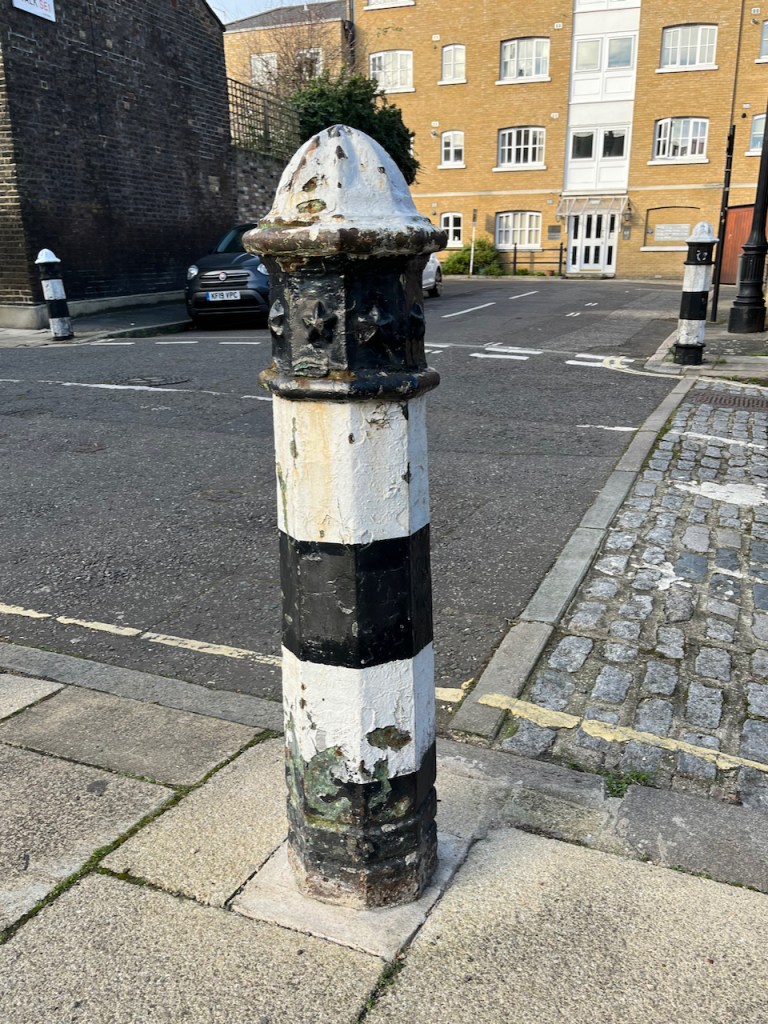
Bollard with stars.

I enjoyed all the wires and aerials! The swooping wire from the top right is a telephone wire or electrical cable. It’s unusual to see them above ground in London. Note also the marvellous bollards, which are mentioned in the Conservation Area Statement (Note 1).

Here you see layers of London development. In the foreground is Windmill Walk, part of the Roupell Street residential area built around 1824, and still residential. The paler building in the mid-distance is on Theed Street. It is a converted factory. It now contains some residential properties which I found listed on a holiday lettings site, and some offices listed on an estate agents’ site. Different accounts list it as a Violin Factory and/or a “Komptulicon Works”. Komptulicon was a sort of floor covering made of cork and rubber.

On the skyline is the London Television Centre, 1972, which I have drawn previously:

London Television Centre SE1

Here is a view of the London Television Centre, 60-72 Upper Ground, SE1. It is on the South Bank of the river Thames, a little to the East of the National Theatre and the Royal Festival Hall. It was completed in 1972 to the design of…

Click to read more

Here are some maps and work in progress on the drawing:

A London Inheritance article provides a carefully researched and fascinating history of the area:

[Roupell] street was laid out and construction started around 1824….. Roupell had built the street for what were described as “artisan workers” and the 1841 census provides a view of the professions of what must have been some of the first people living in the street. This included; painters, labourers, clerks, printers, bakers, carpenters, bricklayers, compositors, paper hanger, hatter, an excise officer, lighterman, warehouseman – all the typical jobs that you expect to find in such a street in 1840s London.(A London Inheritance)

Note 1: Conservation Area Statement

“Roupell Street Conservation Area” statement by Lambeth Council, 2007, describes the streets and details what can and cannot be done in modifications to the houses. It also mentions the “Komptulicon Works”, north of Windmill Walk.