Waterpoint, St Pancras, London N1

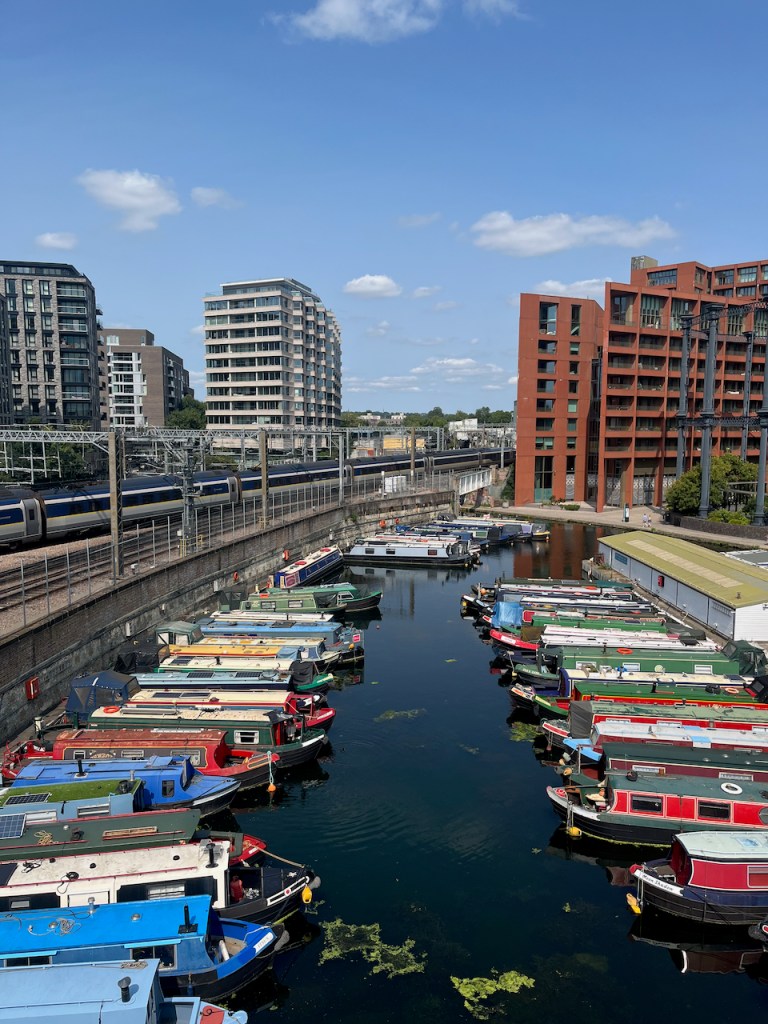
This structure is visible from the North side of the Regents Canal at Coal Drops yard. It was a “water point” for replenishing the boilers of steam engines. The top housed a water tank.
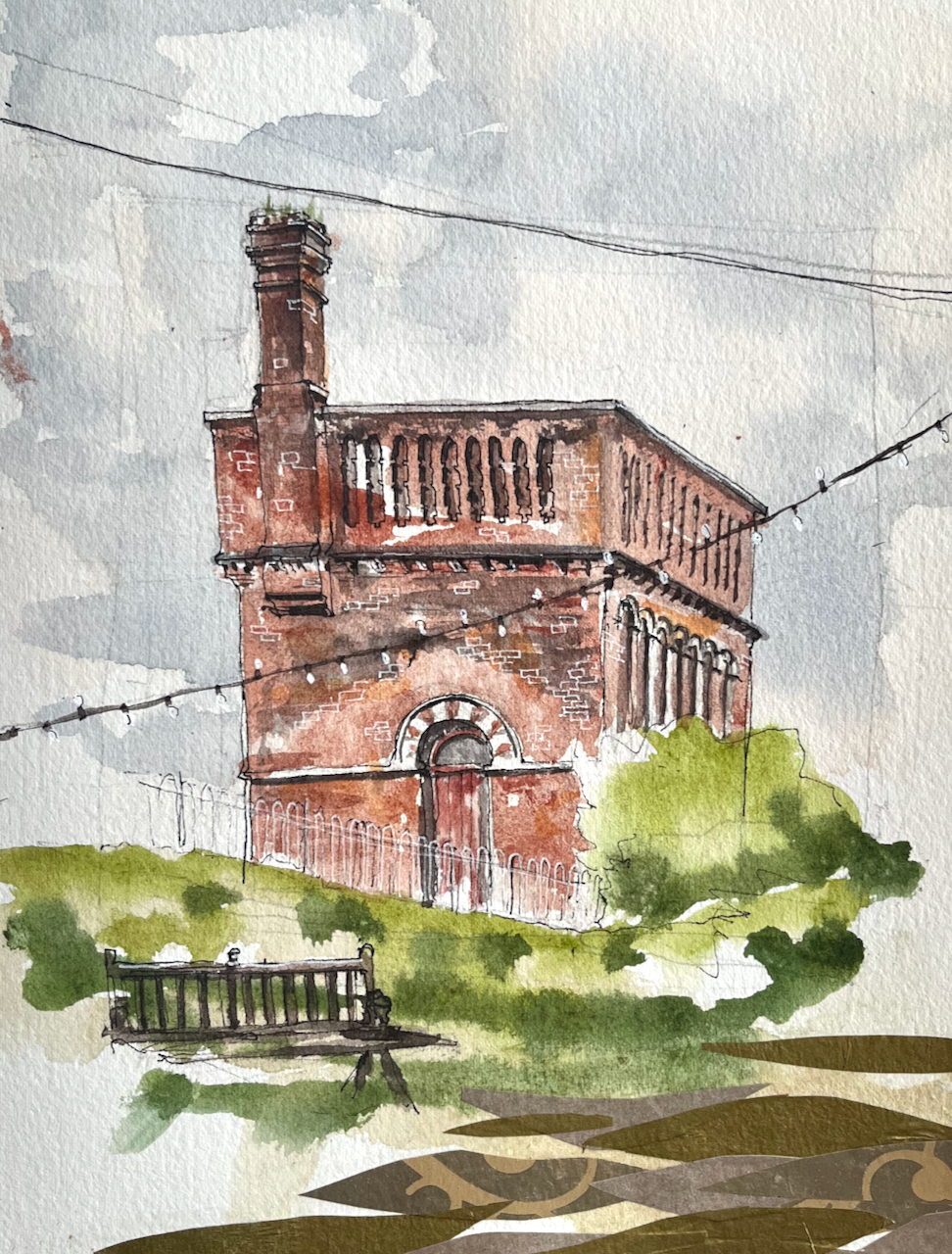
Waterpoint, seen from the Regents Canal towpath at Coal Drops. August 14th 2024, in sketch book 14

Here’s a map to show where it is. I’ve seen this structure often when walking along the canal, and it’s been on my “sketch-list” for a while, so I was glad that a co-incidence of weather and time gave me the opportunity to sketch it.
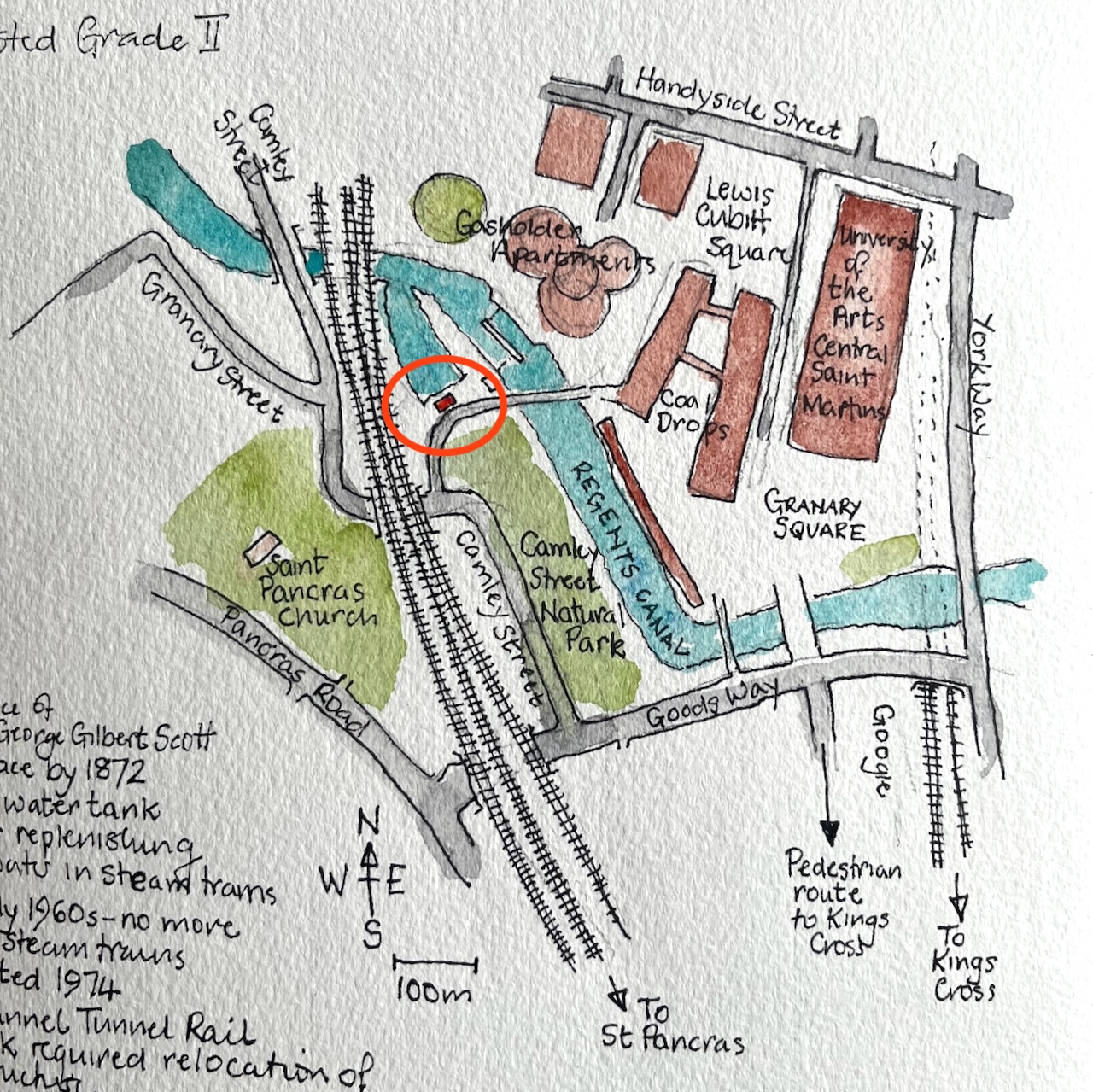
Waterpoint, circled.

I was sketching from the Regents Canal towpath right next to St Pancras Lock.
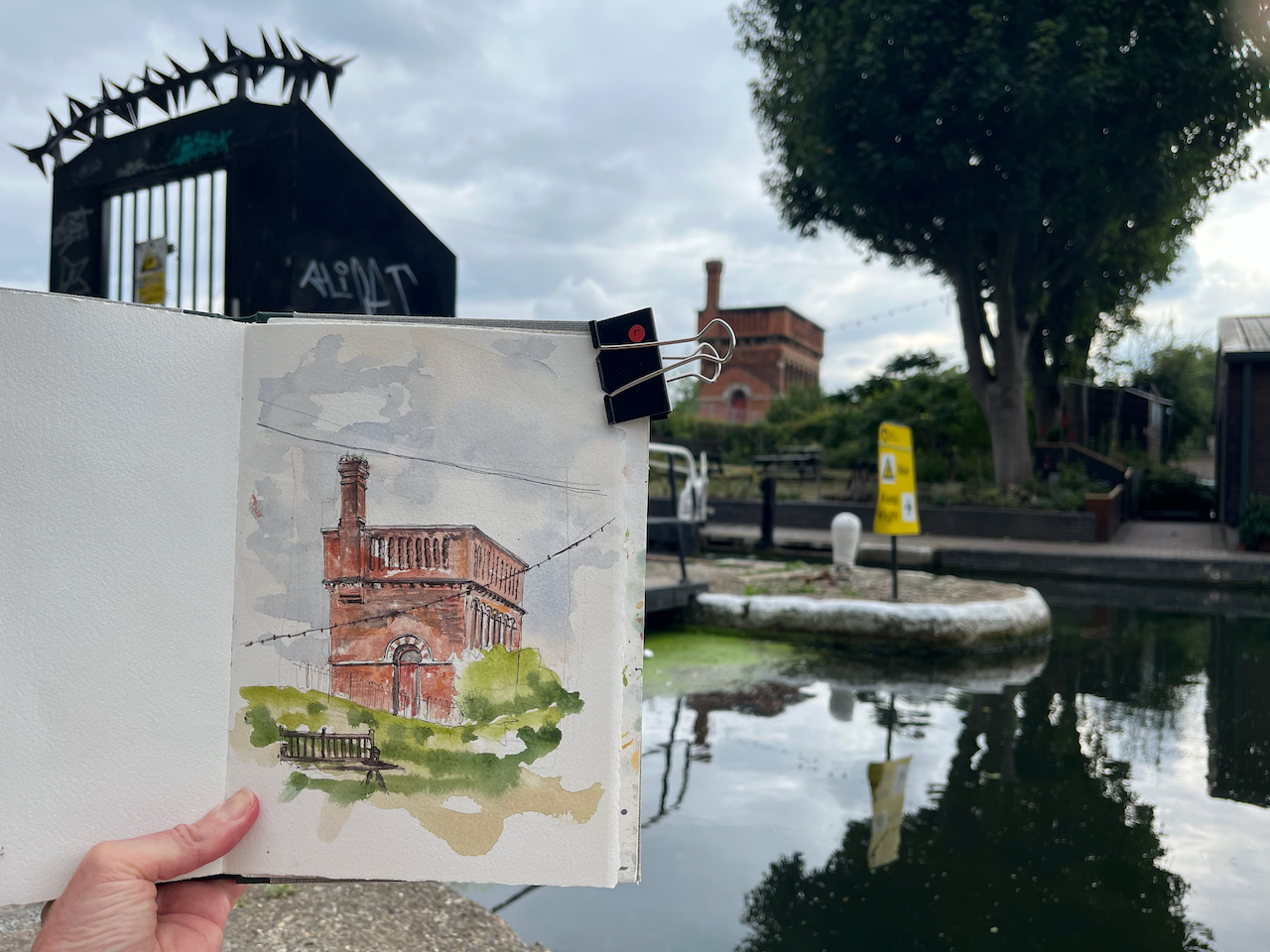
Sketching Waterpoint, looking south across St Pancras Lock.

It turns out that this structure is open to visitors from time to time. By an amazing co-incidence, one of the visiting days was the weekend after I did my sketch. The kind and informative guides there patiently answered the many questions I had, and allowed me to photograph their video and their display boards.

For me, the really fascinating thing about this structure is that it has moved. It was not always in this location. It used to be next to St Pancras Station. It was built around the same time as the station, 1870. In 2001 it was moved North, to its current location.

It was designed by team of Sir George Gilbert Scott, who designed the St Pancras Hotel. Since its purpose was to fill the tanks of steam trains, it was right next to the railway lines. You can see it here:
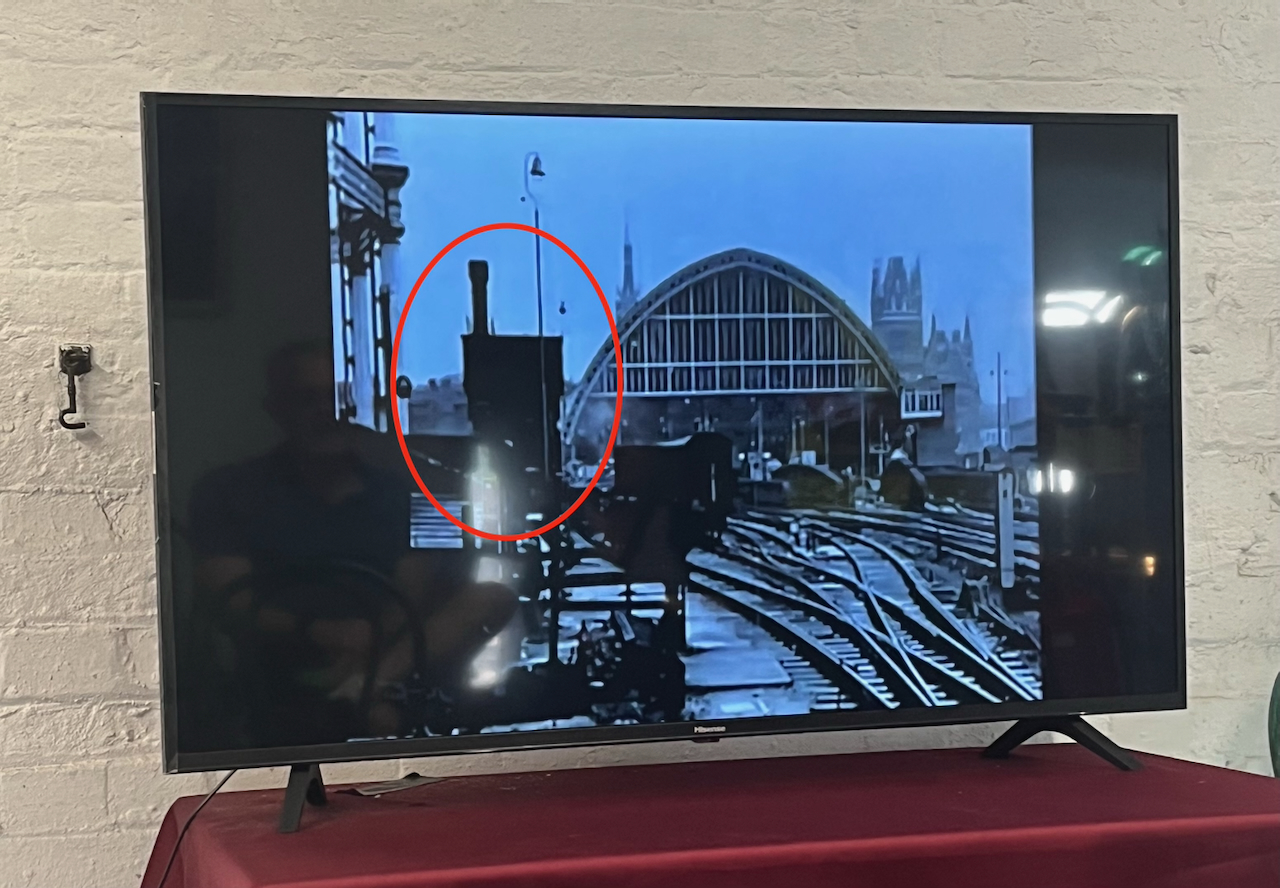
Photo of a video shown at the Waterpoint.

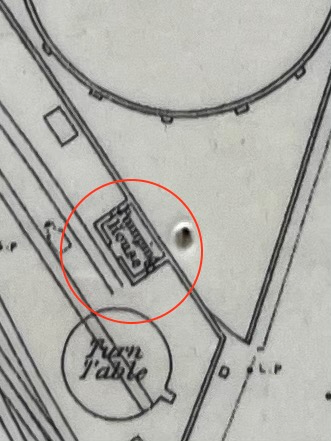
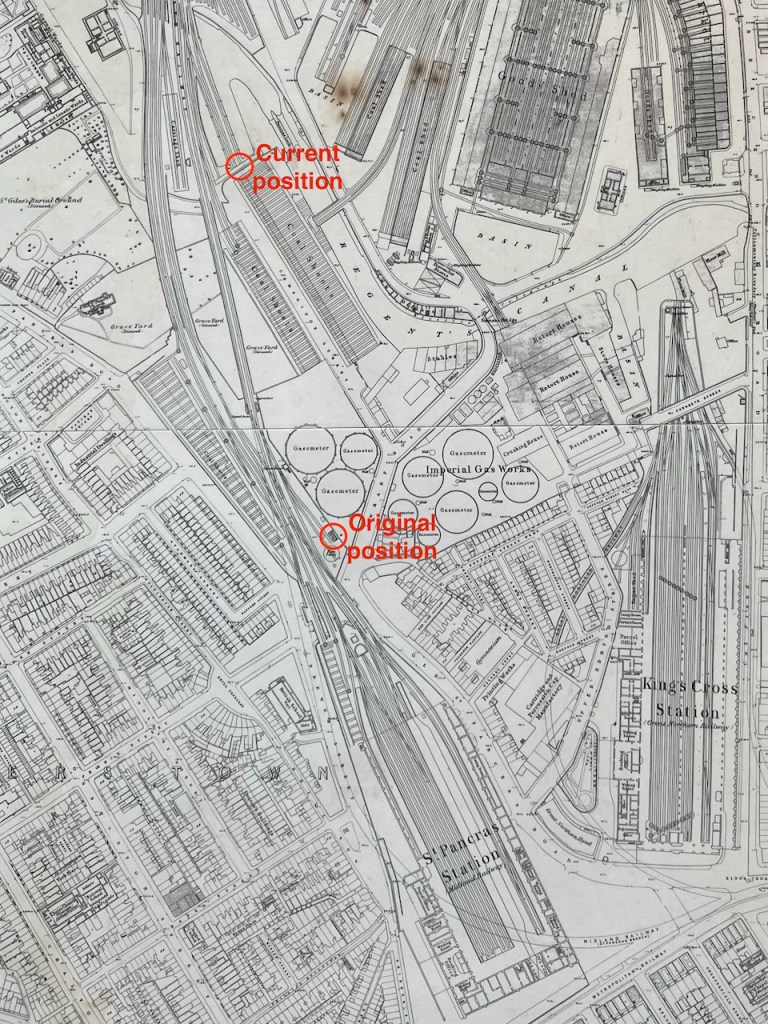
Here it is on an 1871 map: (click to enlarge)
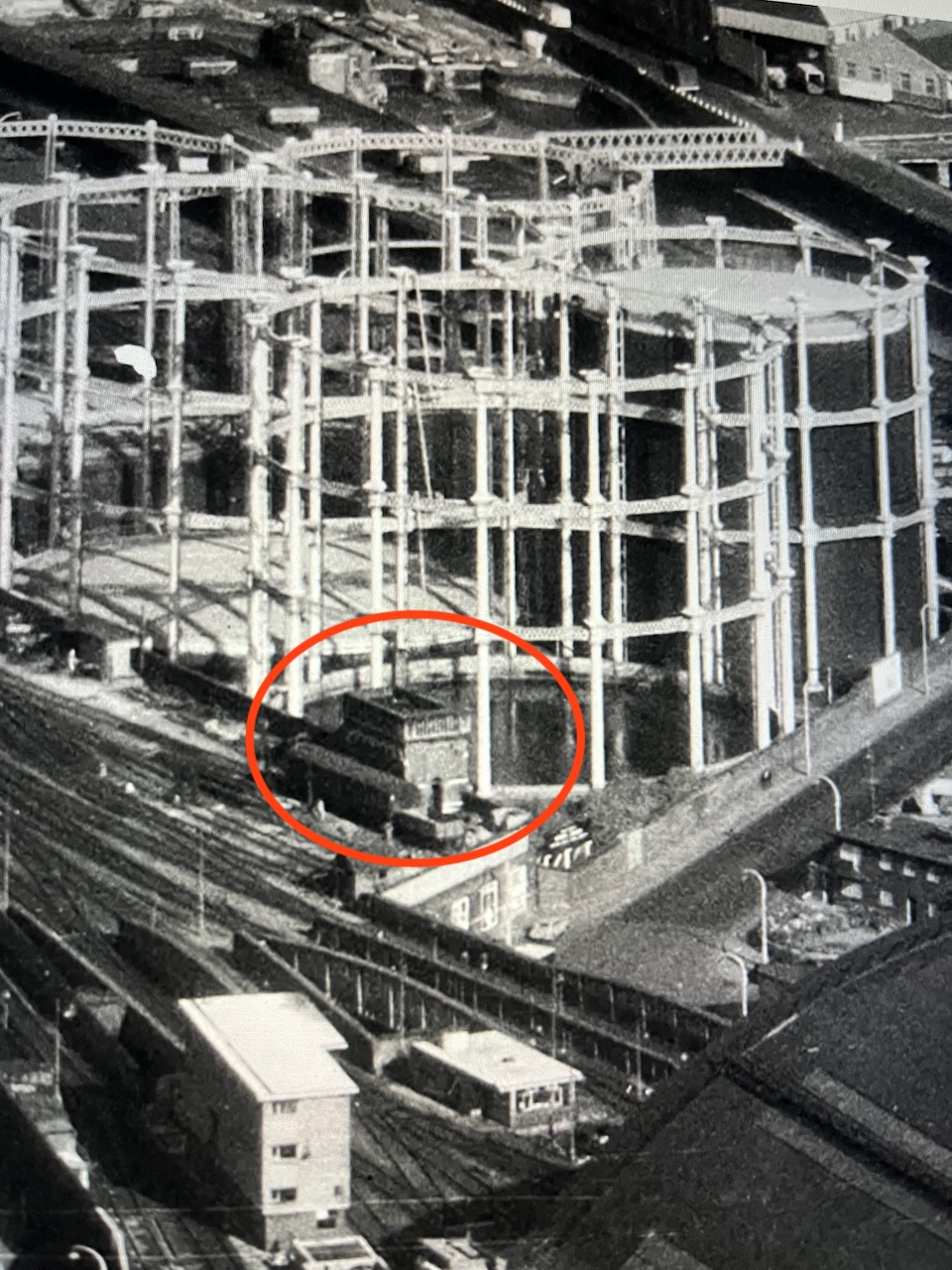
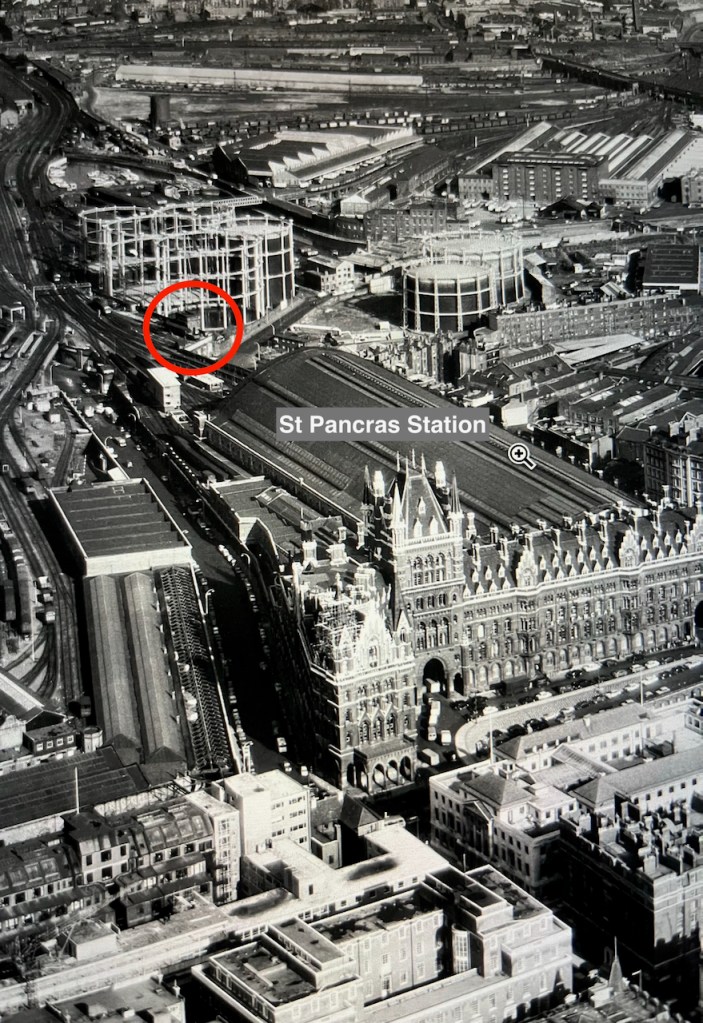
I think I can spot it on this archive aerial photo from 1964. Here is the link to the picture:

https://historicengland.org.uk/images-books/archive/collections/aerial-photos/record/eaw143766#

The water point is just beyond the far right hand edge of the St Pancras train shed, in the centre left of the photo on the link above.

Here are some low resolution images to help you find it.
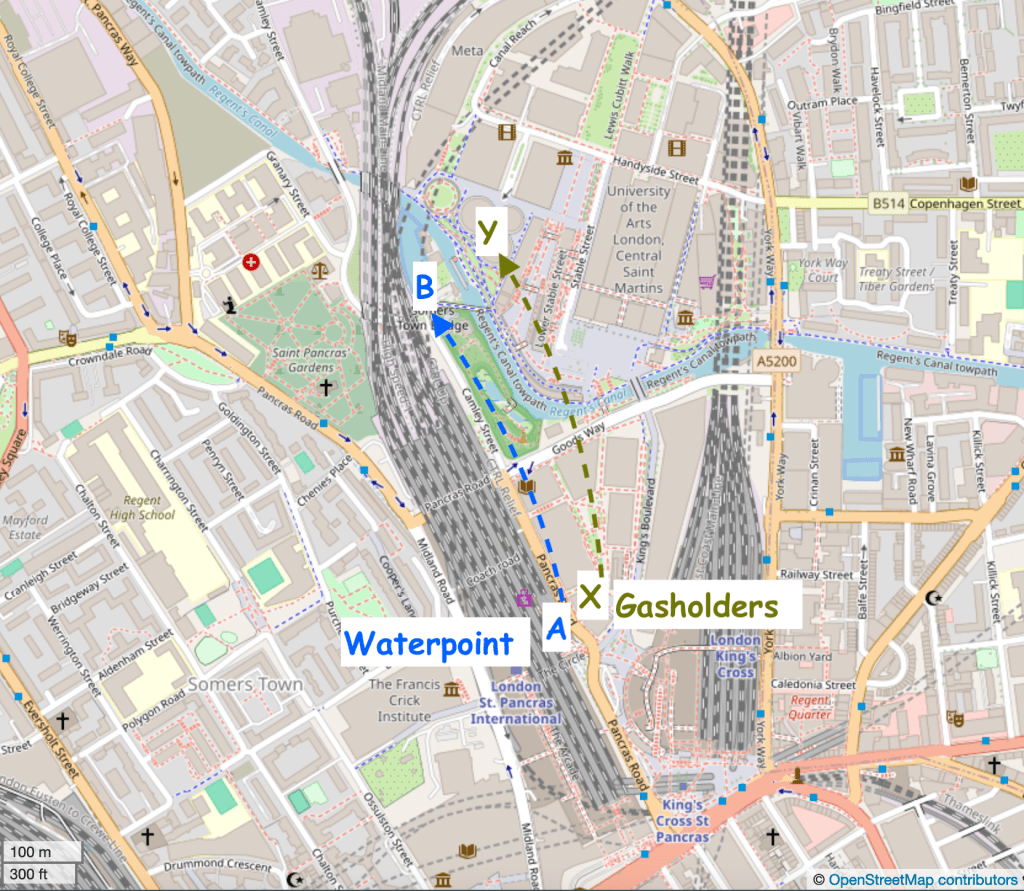
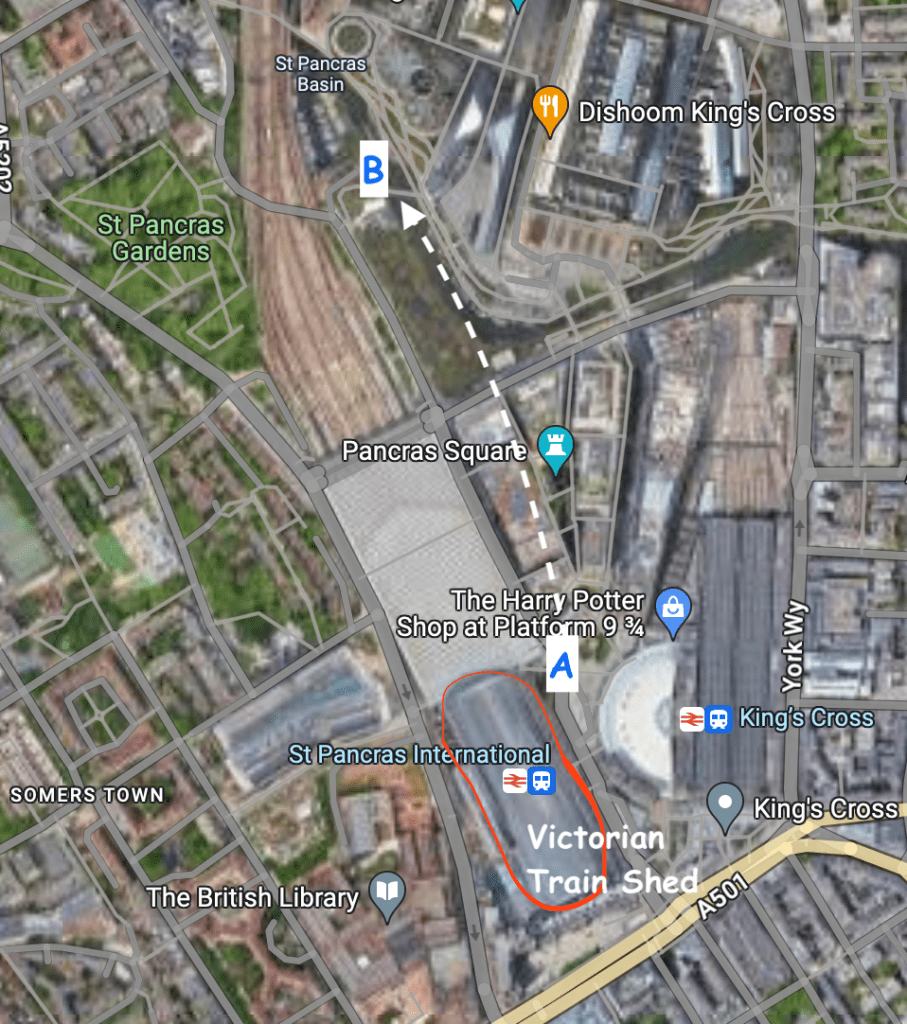
Here are modern maps annotated to show the original position and the current position:
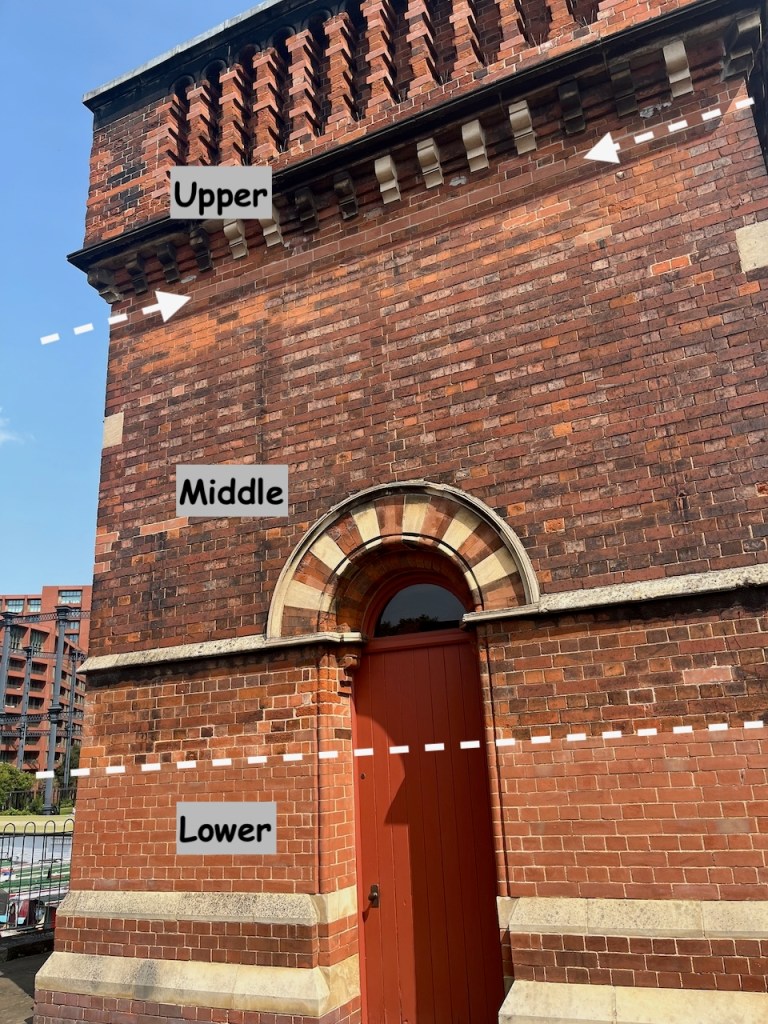
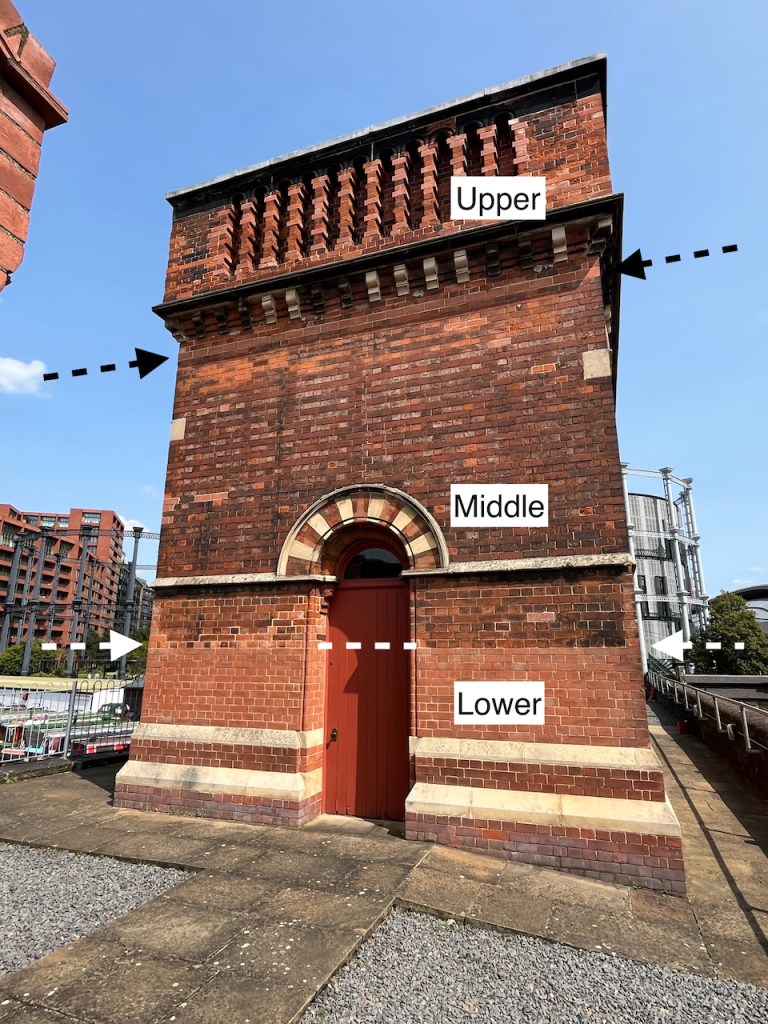
To move it, the original Water Point was cut horizontally into three sections. The lower section was left behind. A new lower section was built in the new location. The middle and upper sections went by road to the new location and were stacked on top of the newly built lower section. You can see, by changes in the bricks, the joins between the sections.
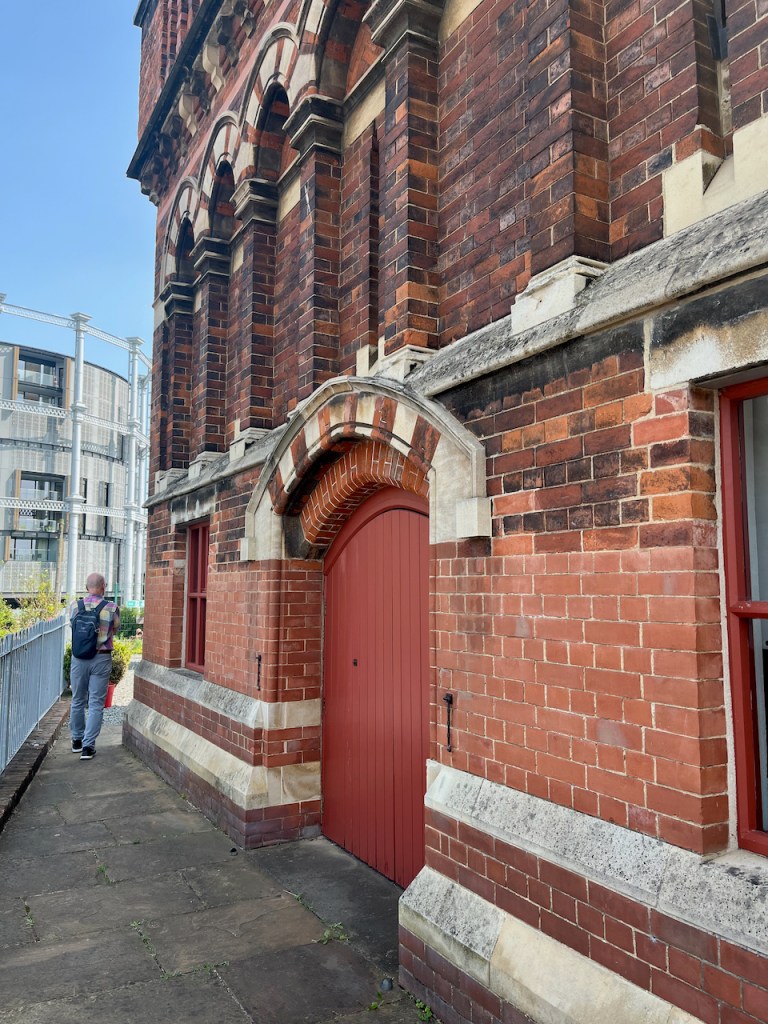
On the side of the Waterpoint visible from the canal, there is a clear “roof” pattern in the bricks, which I noticed when sketching it.
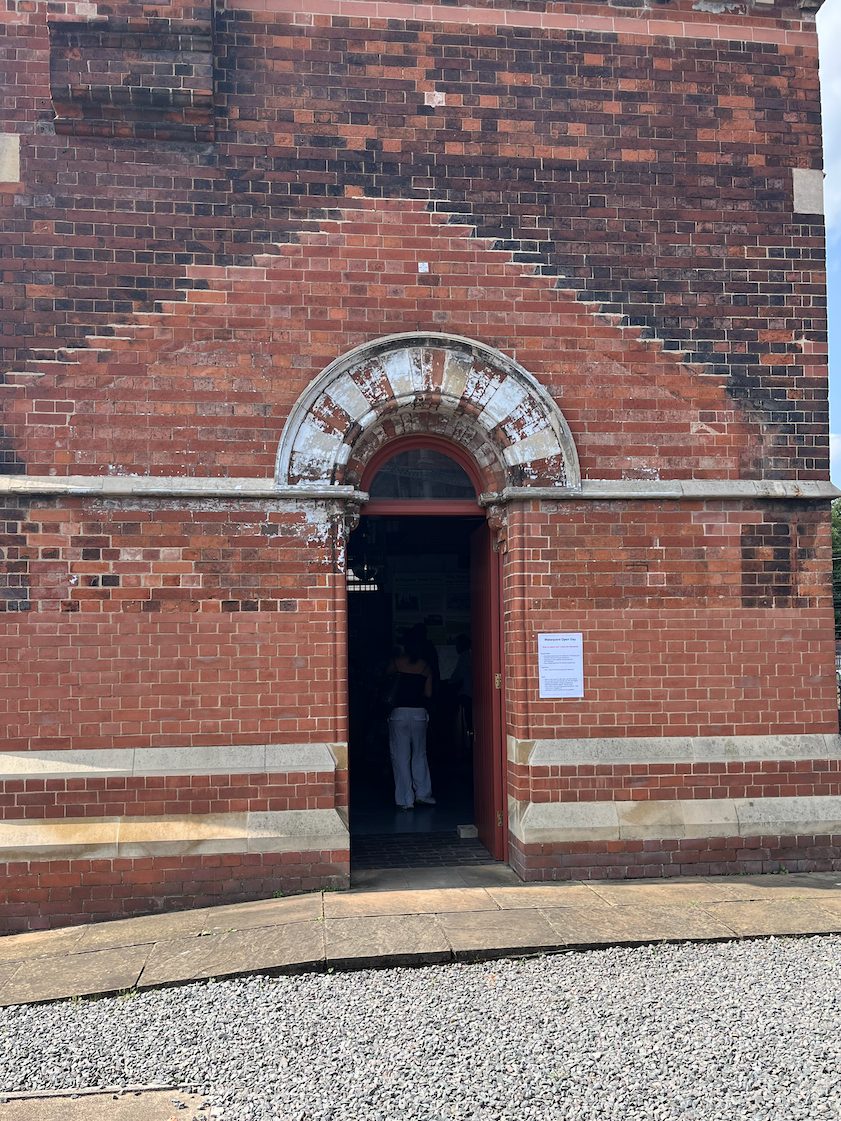
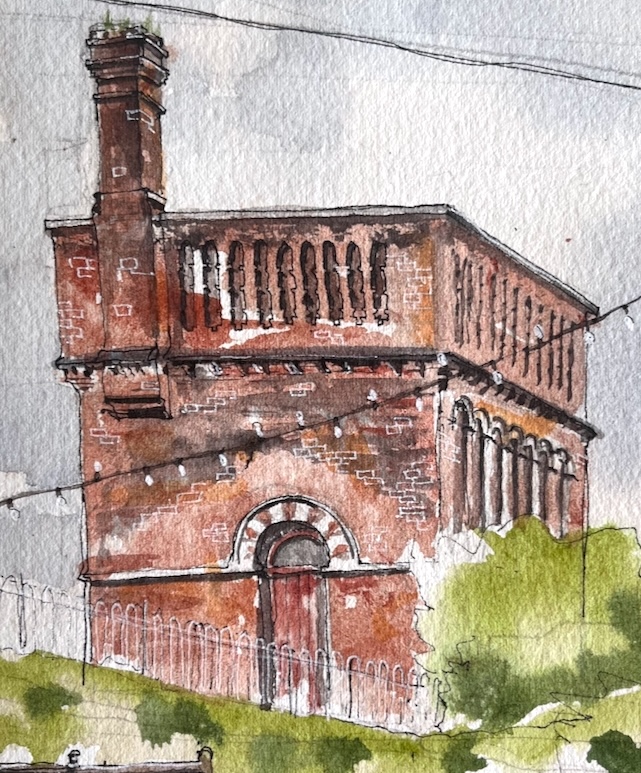
This marks the position of a shed that was fastened to the structure in its original position. See the pictures below.
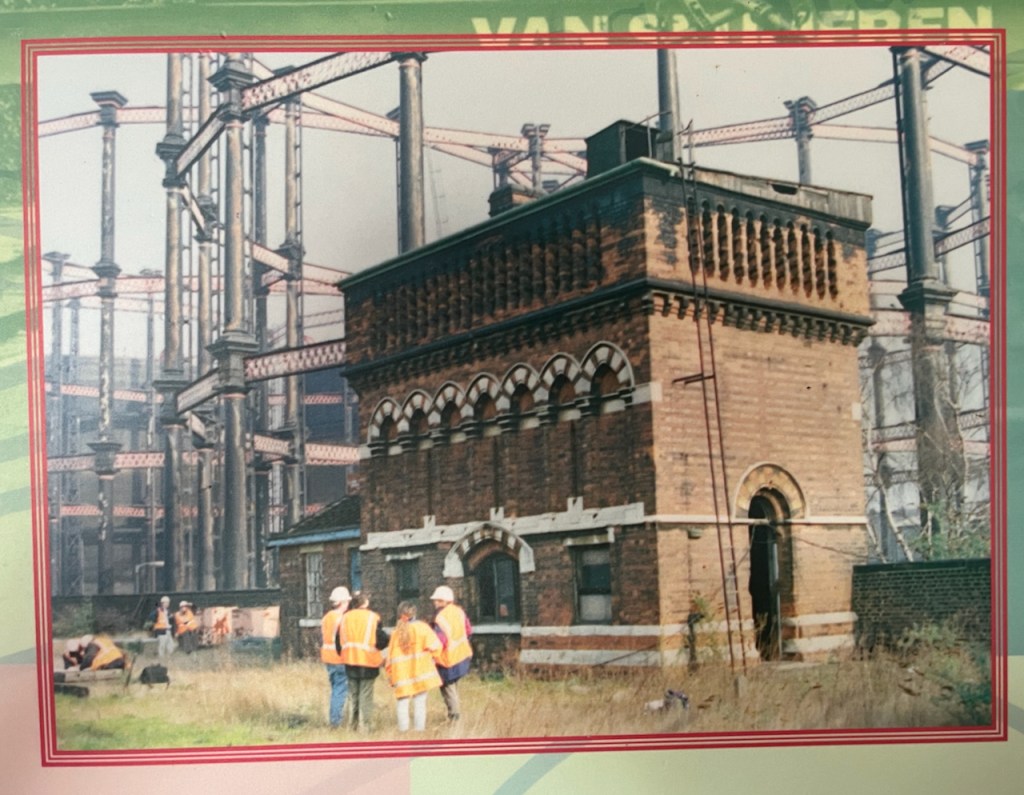
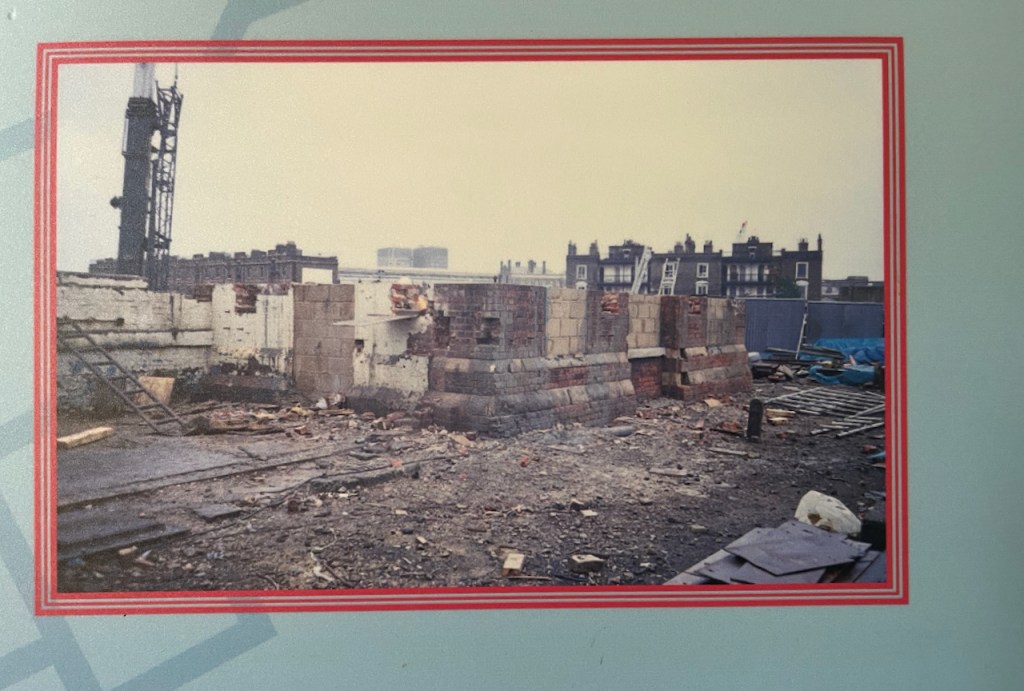
These photos and maps show how much the area has changed. See all the gas holders! They were constructed on the south side of the Regents Canal, because that’s where the gas works was. They originally held coal gas, which is carbon monoxide and hydrogen, manufactured from coal. Until 2010 they were a landmark for anyone who made this journey into Kings Cross regularly.

Here’s a frame from the 1963 film “Alfie” captured by @runningthenorthernheights, showing the gasholders in their original position.
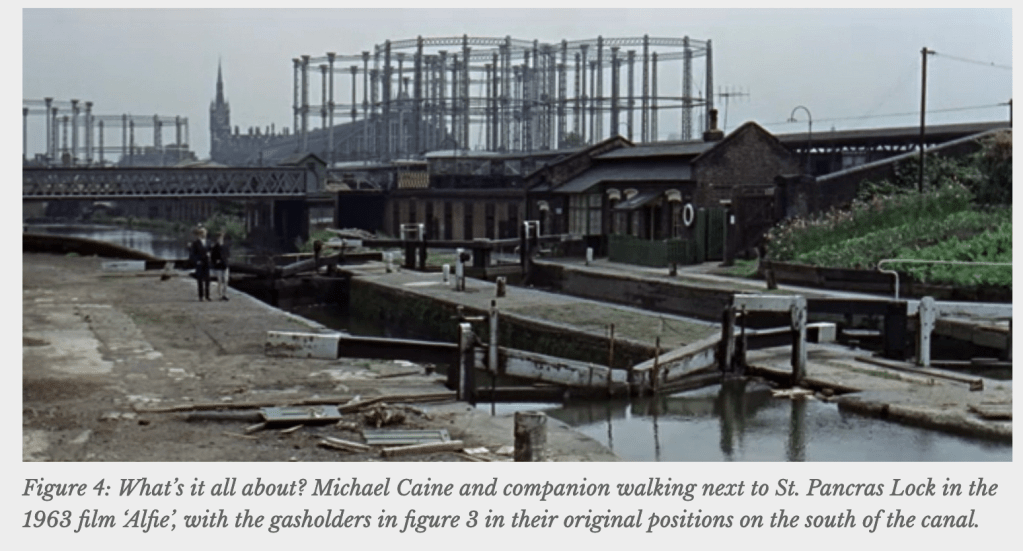
Thanks to @runningthenorthernheights

The gasholders were decommissioned in 2000, but several of them couldn’t be destroyed because they were listed, so they just stood there for ten years. Then they were dismantled, stored, preserved and reconstructed in the years 2010-2015. They are now on the north side of the Regents Canal. Gas holder No. 8 was the first to be reconstructed, in 2015. It surrounds a small park. Gas holders 10, 11 and 12 followed, surrounding luxury apartments, part of the Kings Cross development. (https://www.kingscross.co.uk/gasholder-park)
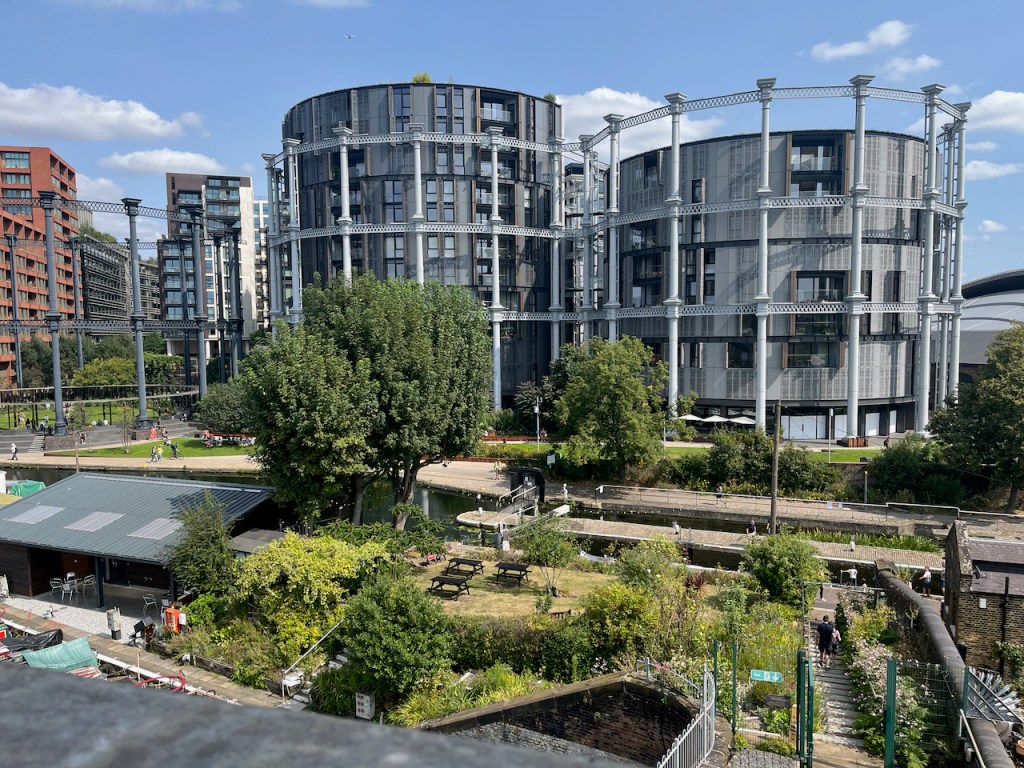
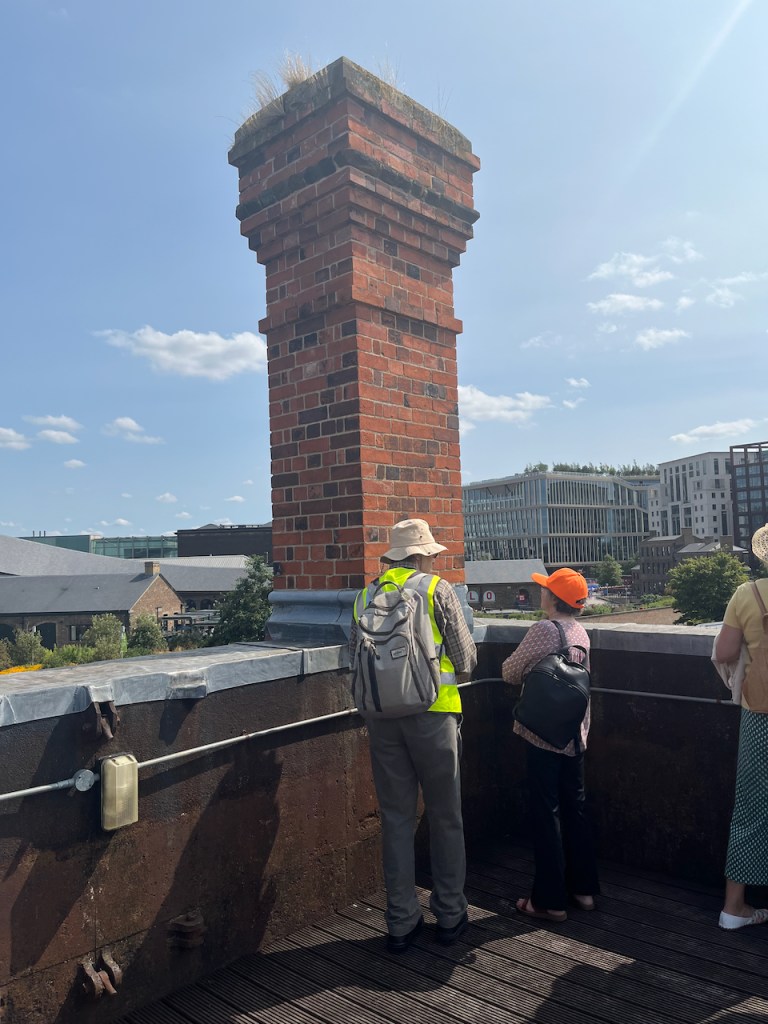
Gasholders seen from the top of the Waterpoint, August 2024. I did the sketch from the far side of the canal.

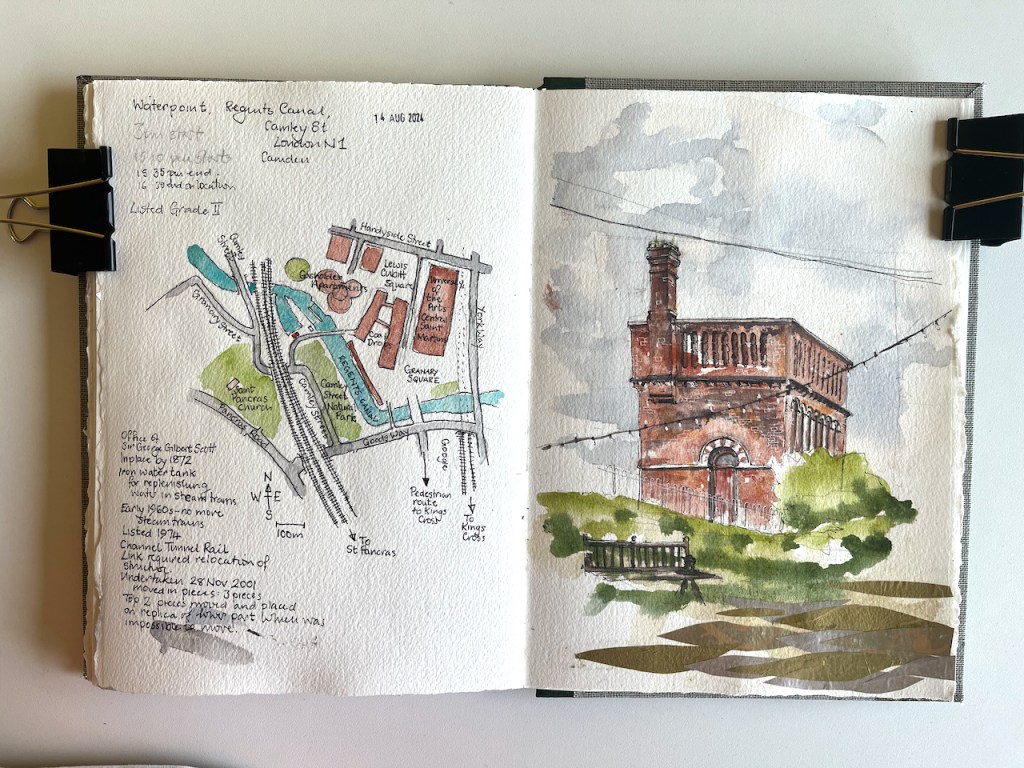
Here are more photos from my visit to Waterpoint in August 2024.
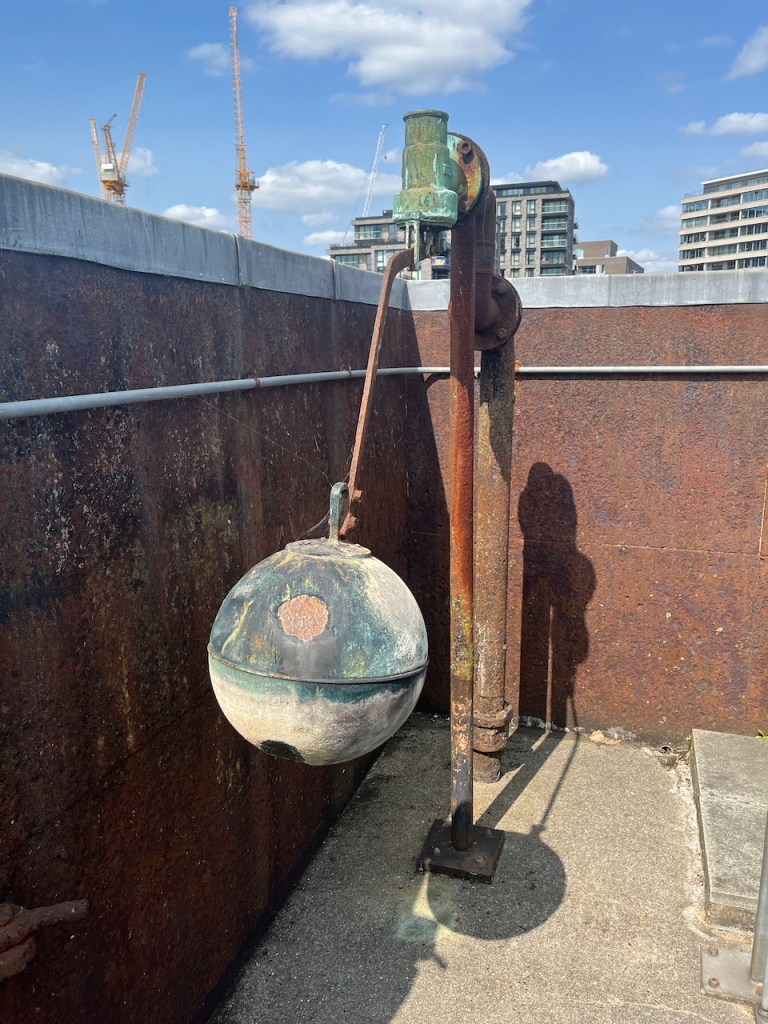
I was very glad to have the opportunity to visit this quirky building. Recommended!
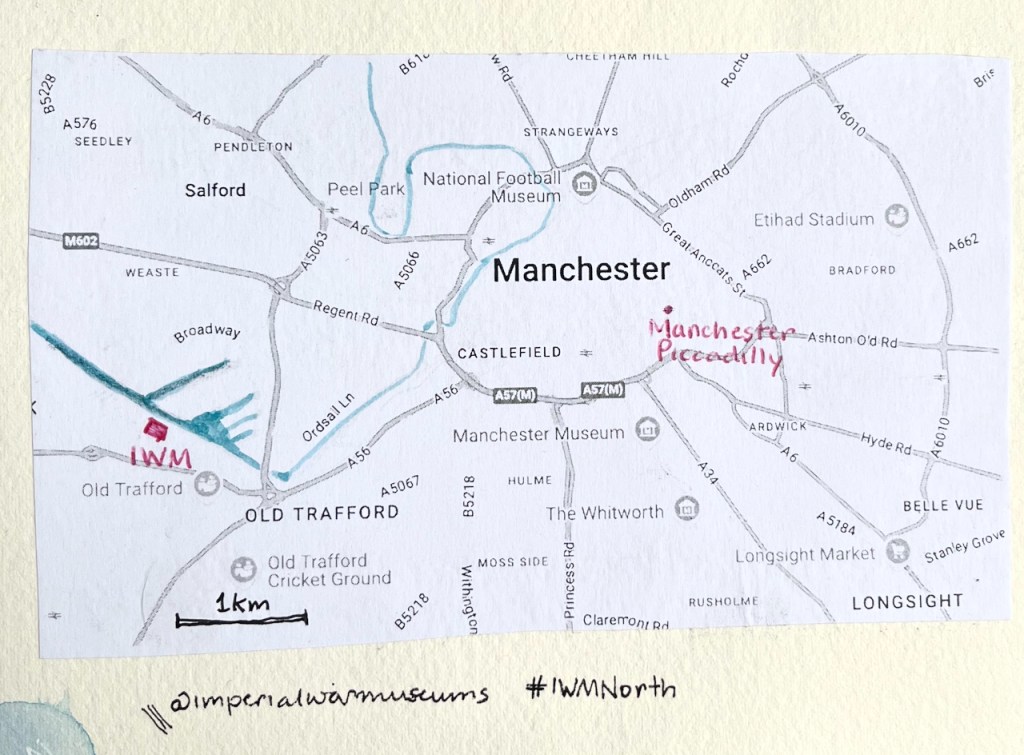
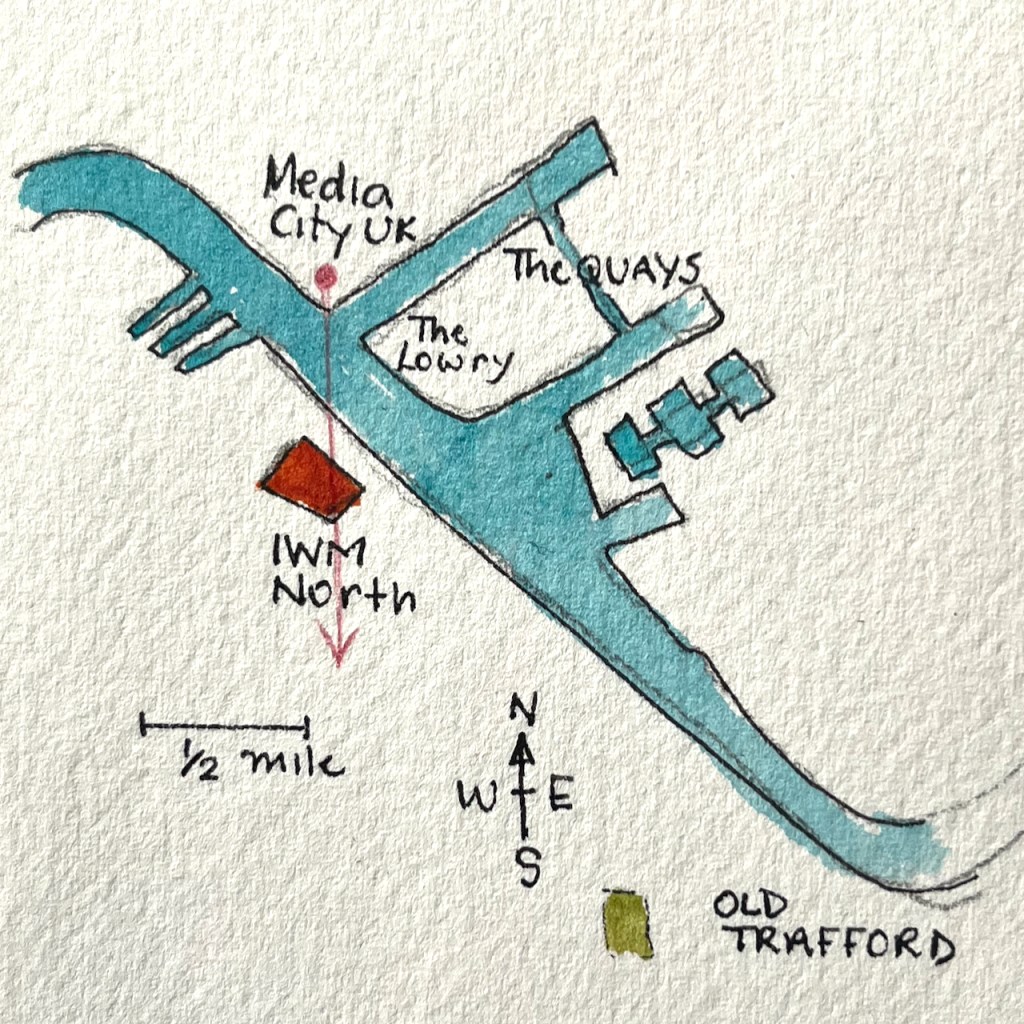
Imperial War Museum North, Manchester, M17

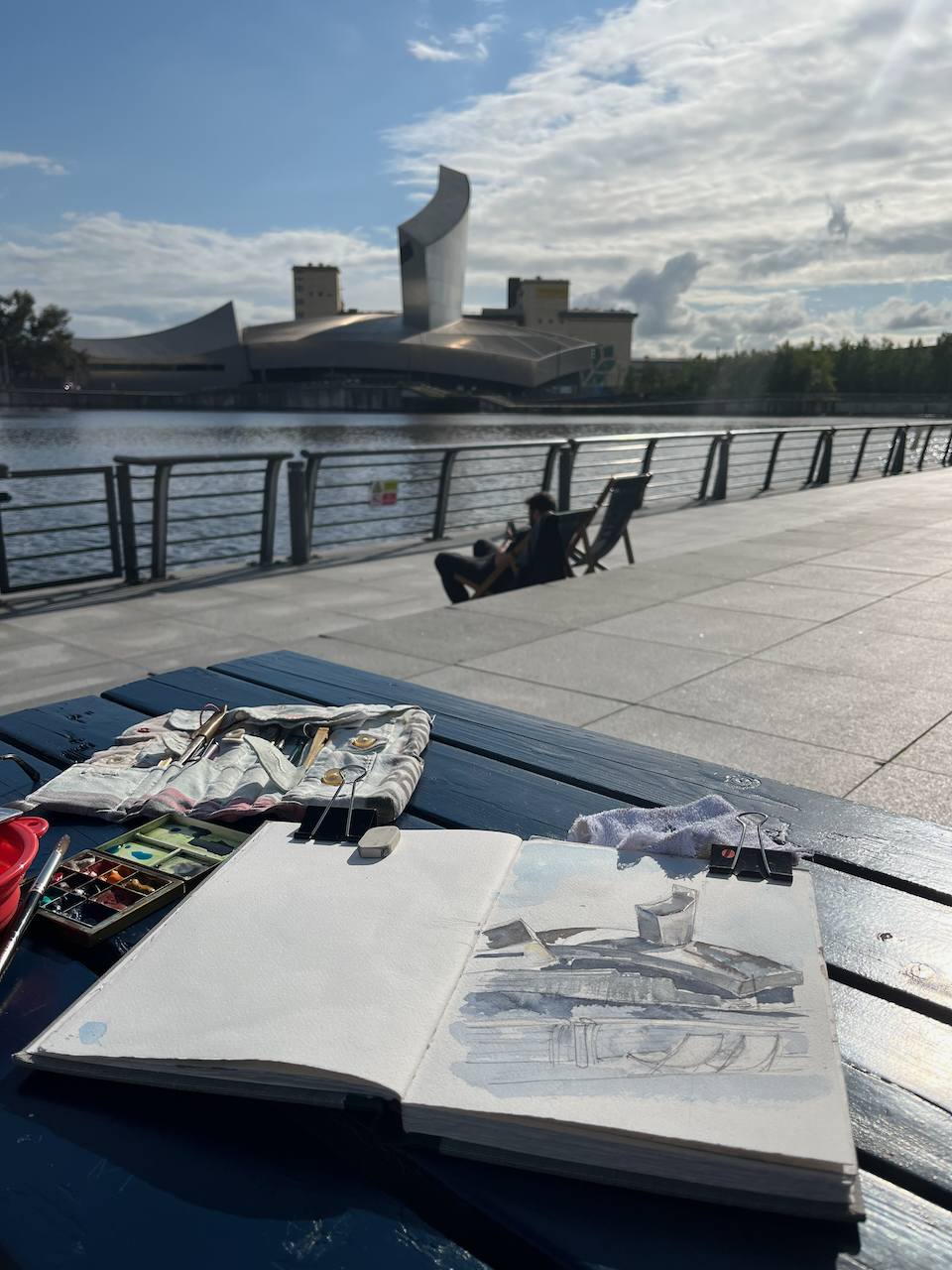
Across the water from Media City UK, is this striking building.

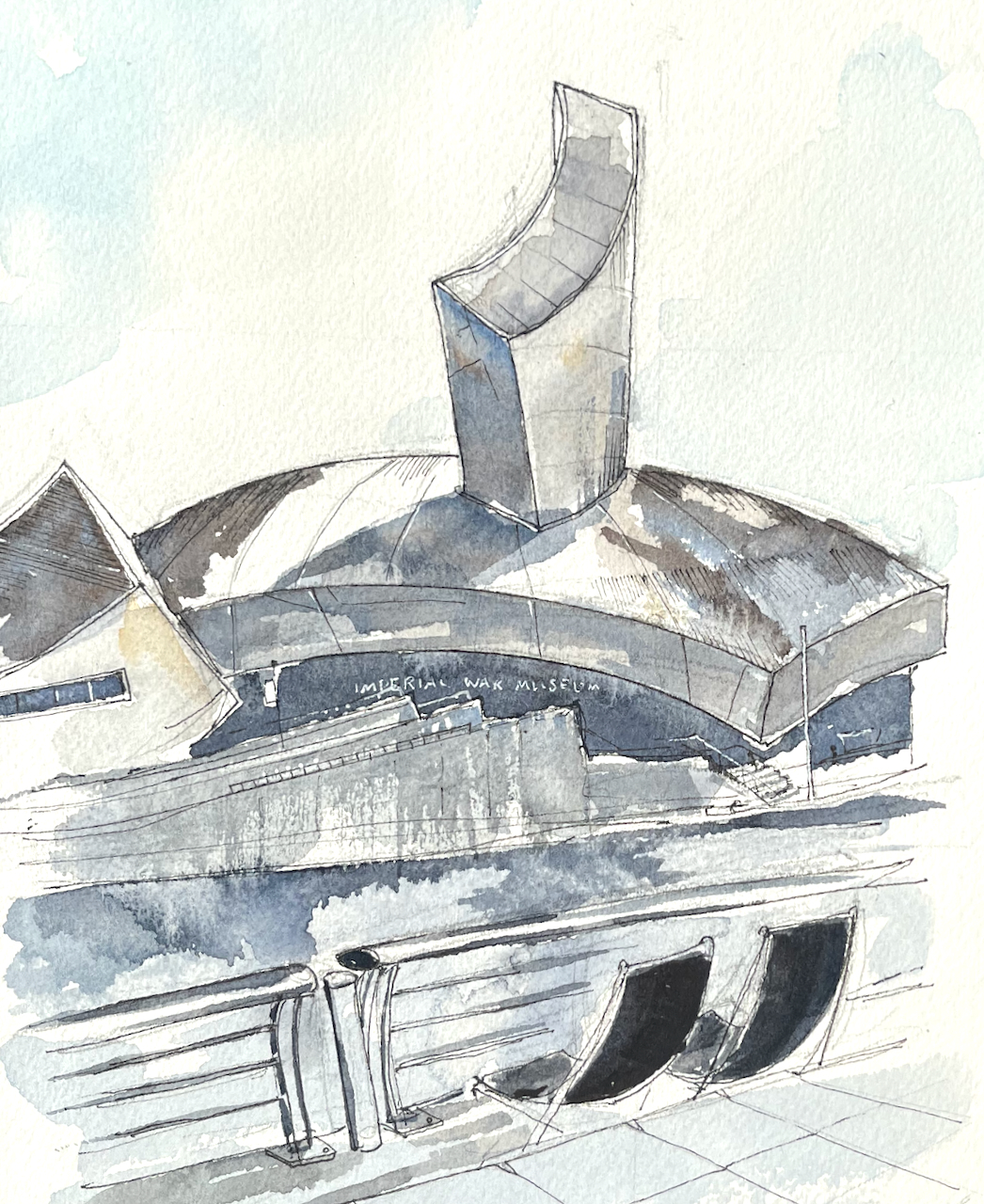
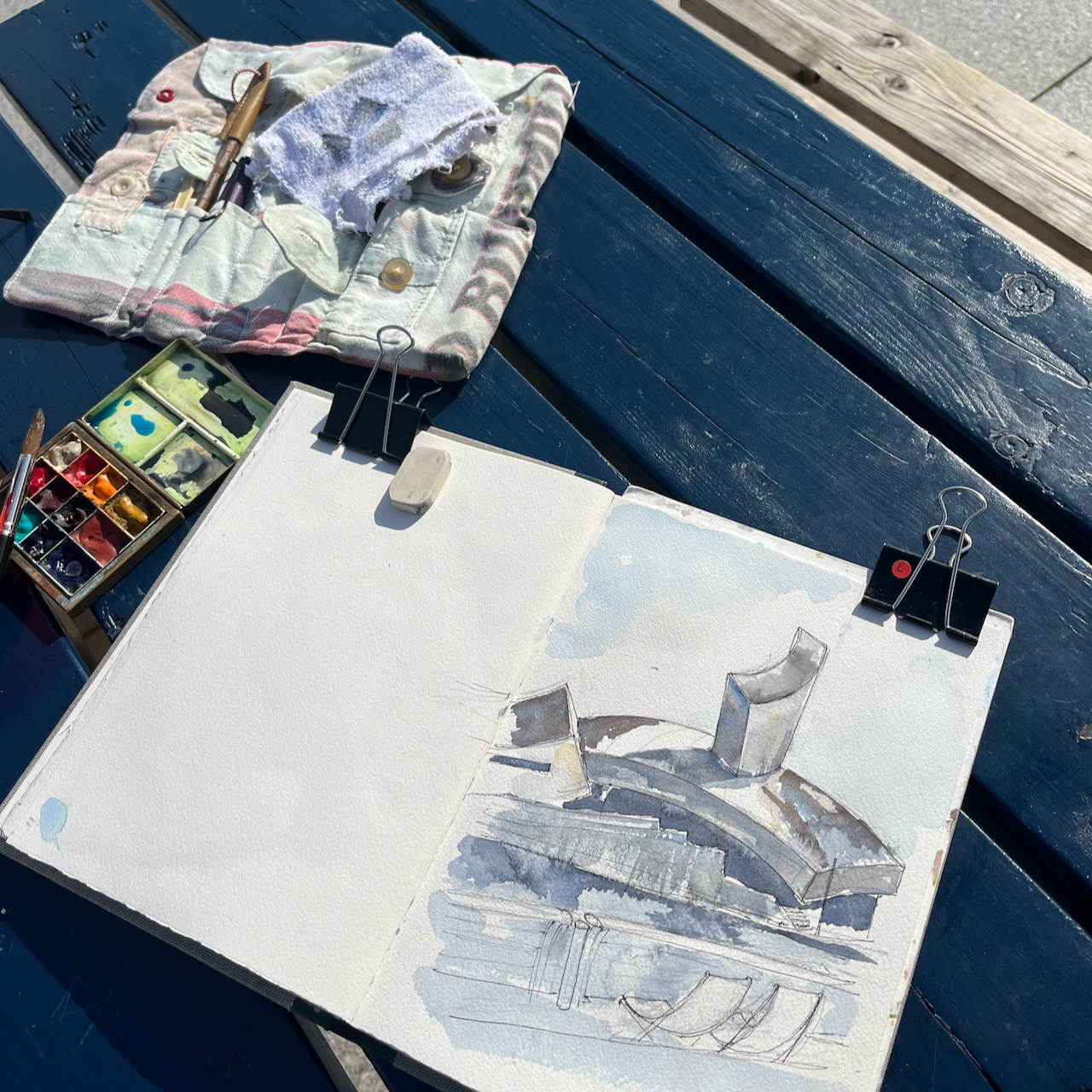
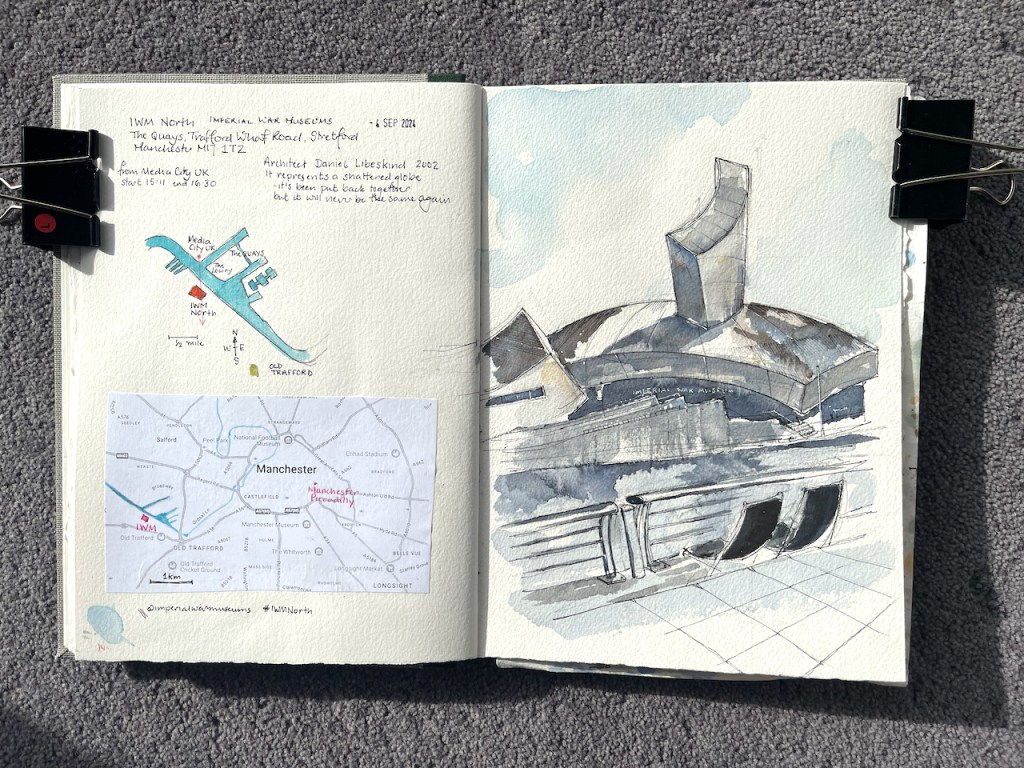
IWM North, sketched from Media City UK in Sketchbook 15

This is “IWM North“. I enjoyed the way the vast curves of the building were echoed in the humble shape of the deckchairs.

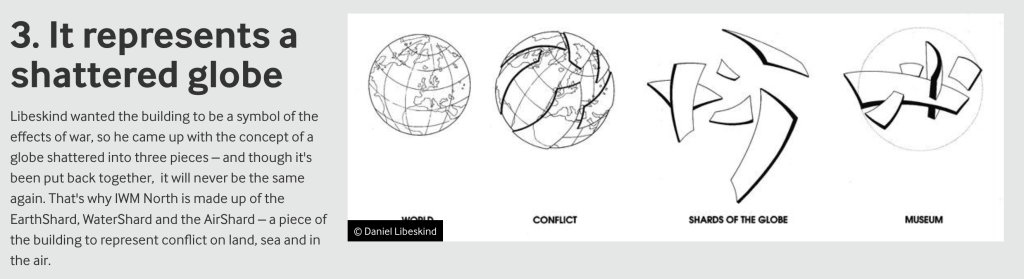
The architect is Daniel Libeskind. It was his first UK building, constructed in 2002. It represents a shattered globe: it’s been put back together, but it will never be the same again.

From the IWM North website

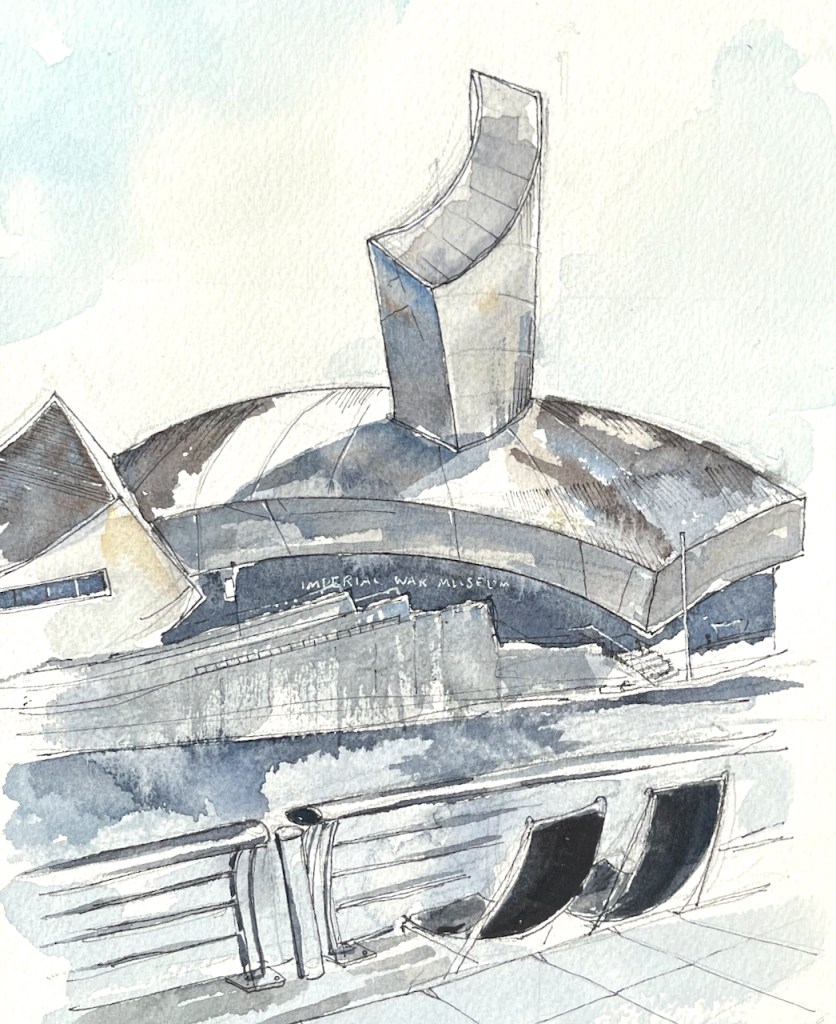
Here is work in progress on the sketch, the view across the water:

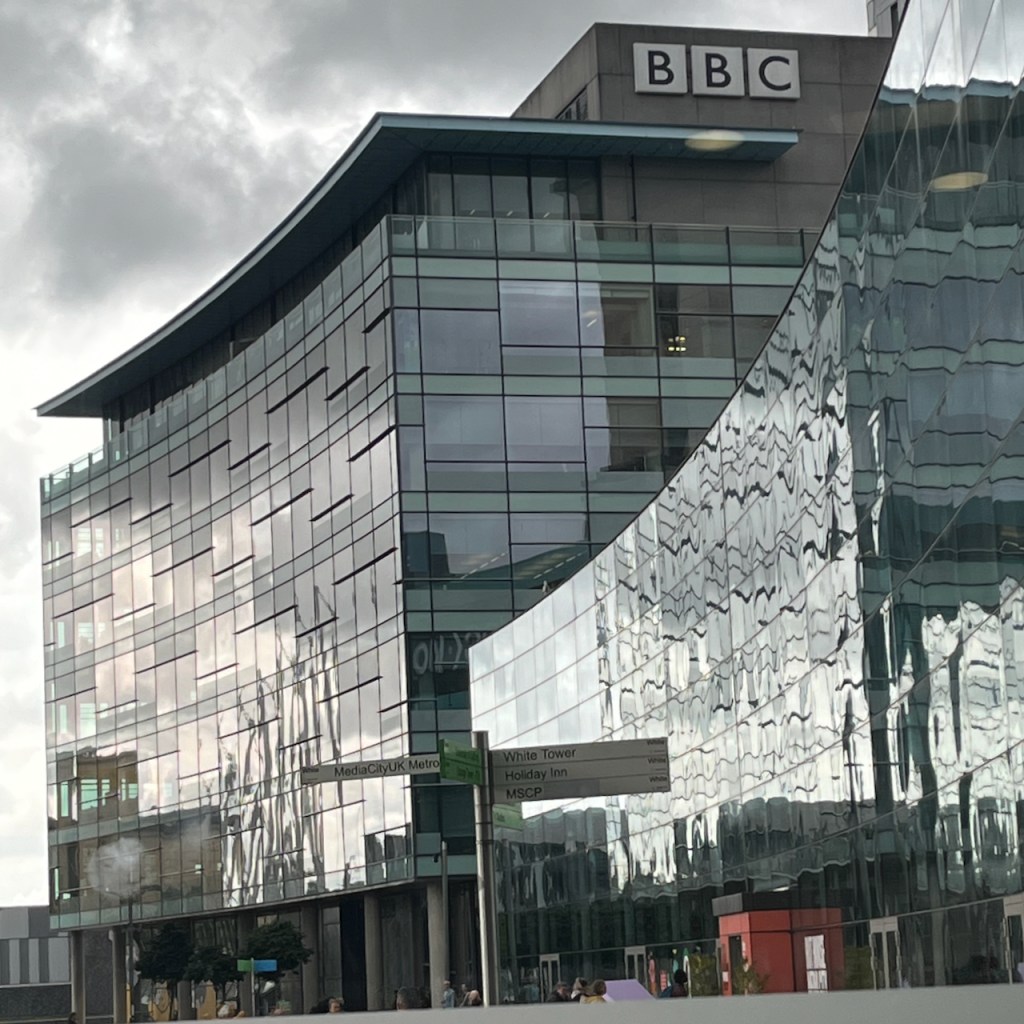
The marvellous curves of Media City UK

On the radio many years ago, I heard a director of the Imperial War Museum say that he was director of an establishment whose name contained three words each with negative connotations: “Imperial” “War” and “Museum”.
I note with interest, therefore, that it is now branded “IWM”.
“Imperial War Museums” has 5 sites: IWM London (in Lambeth), HMS Belfast on the Thames, the aircraft museum in Duxford, The Churchill War Rooms in Whitehall, and this one, the IWM North.

Sketchbook 15

Tragedy, for me, is not a conflict between right and wrong, but between two different kinds of right.

Peter Shaffer, playwright.

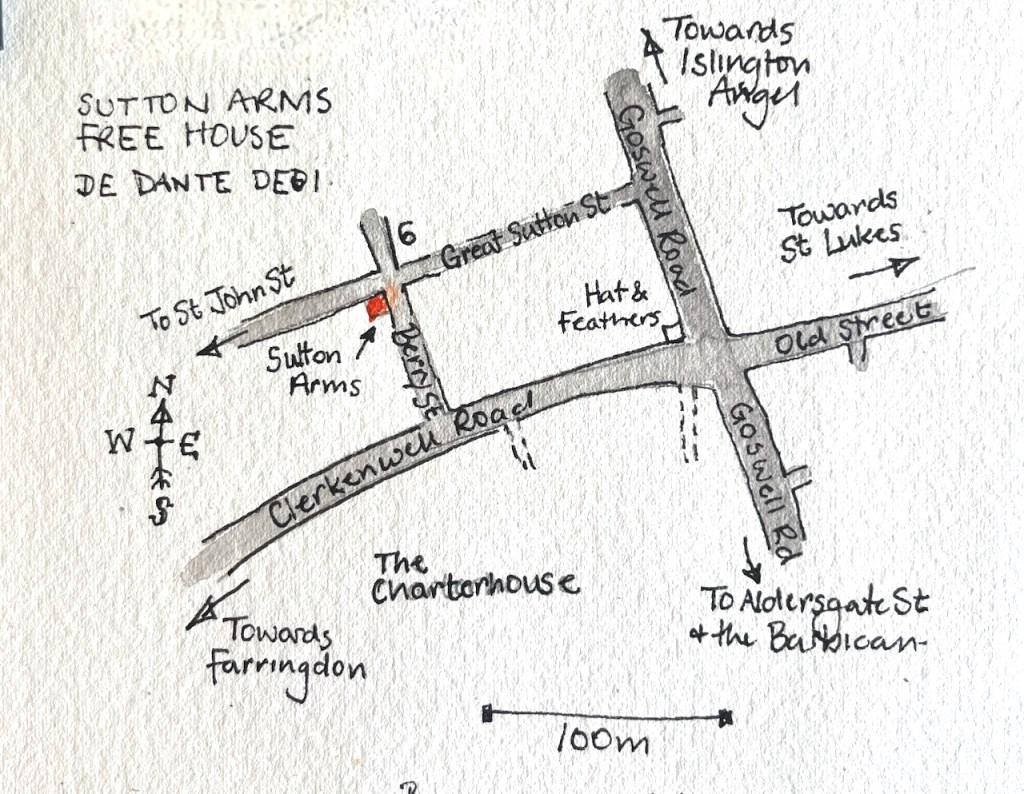
Sutton Arms, Great Sutton St, EC1

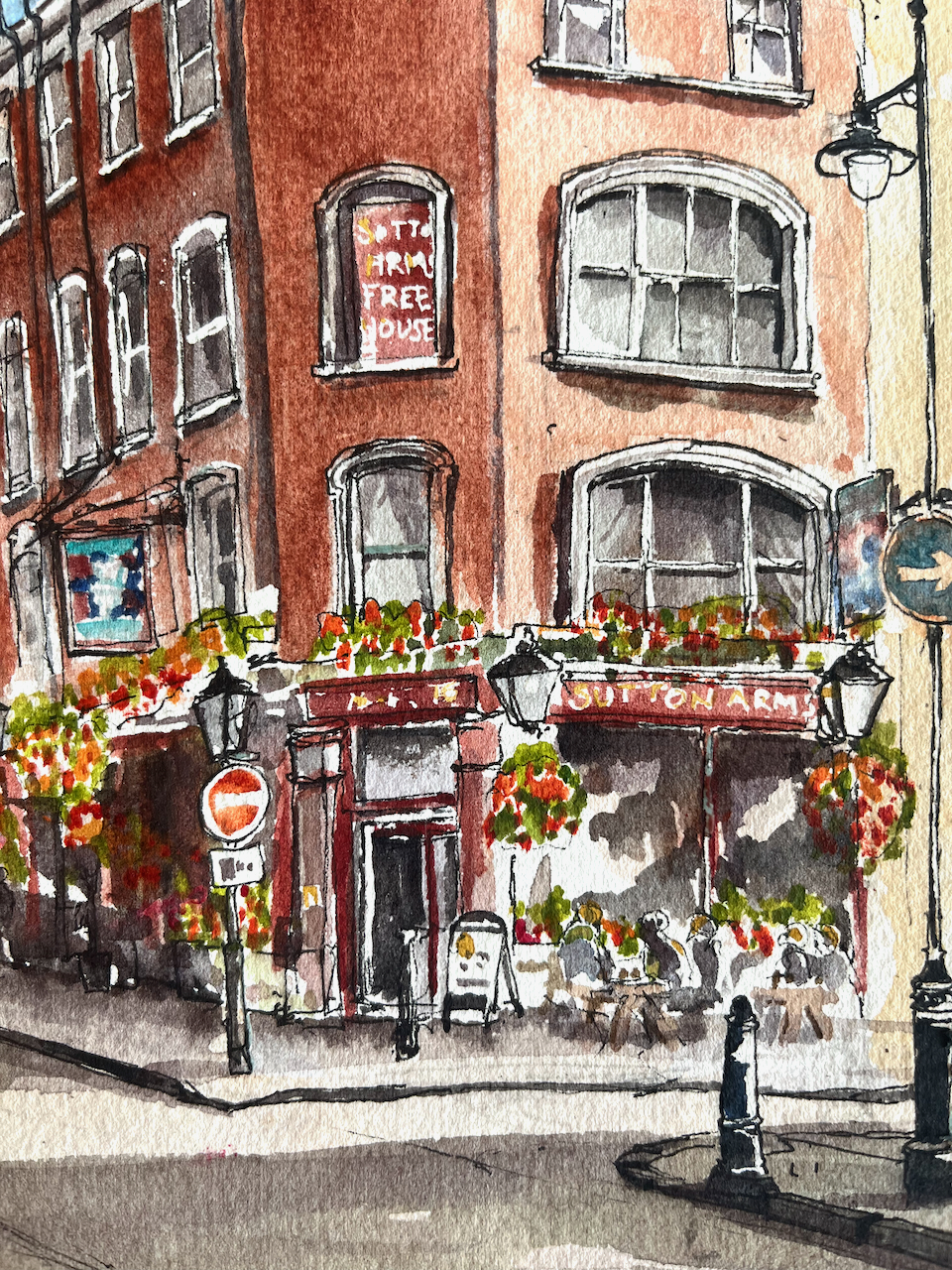
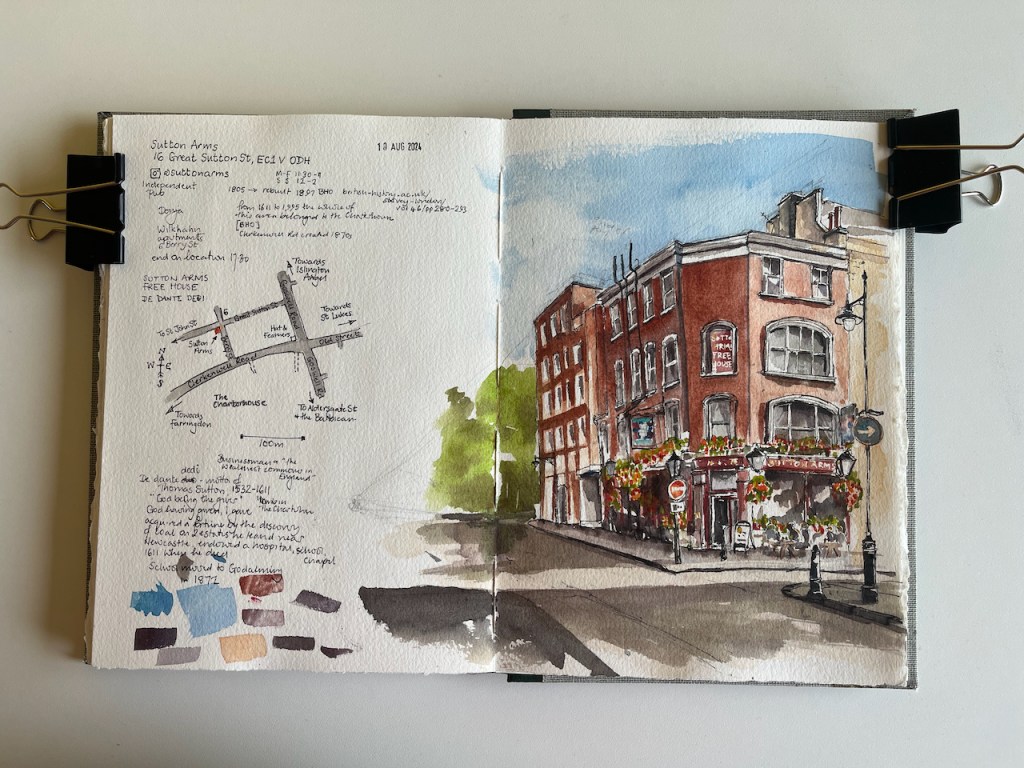
This is the Sutton Arms in Clerkenwell, 16 Great Sutton Street, EC1.

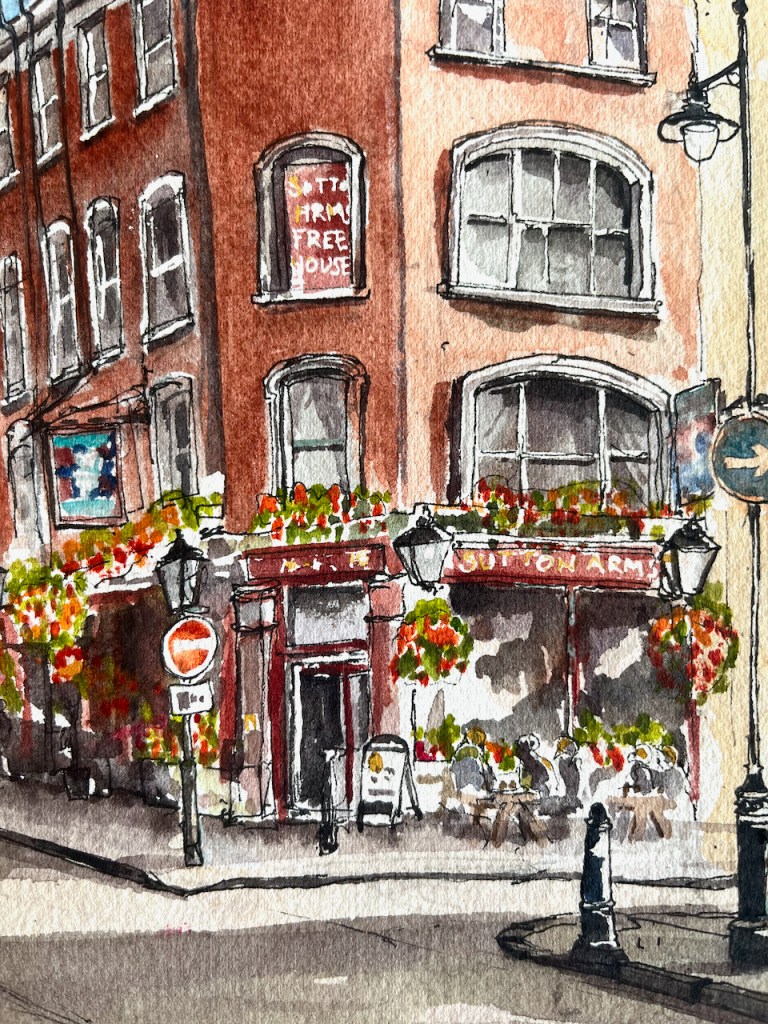
Sutton Arms, 16 Great Sutton Street, EC1V 0DH, sketched 10 August 2024 in Sketchbook 14

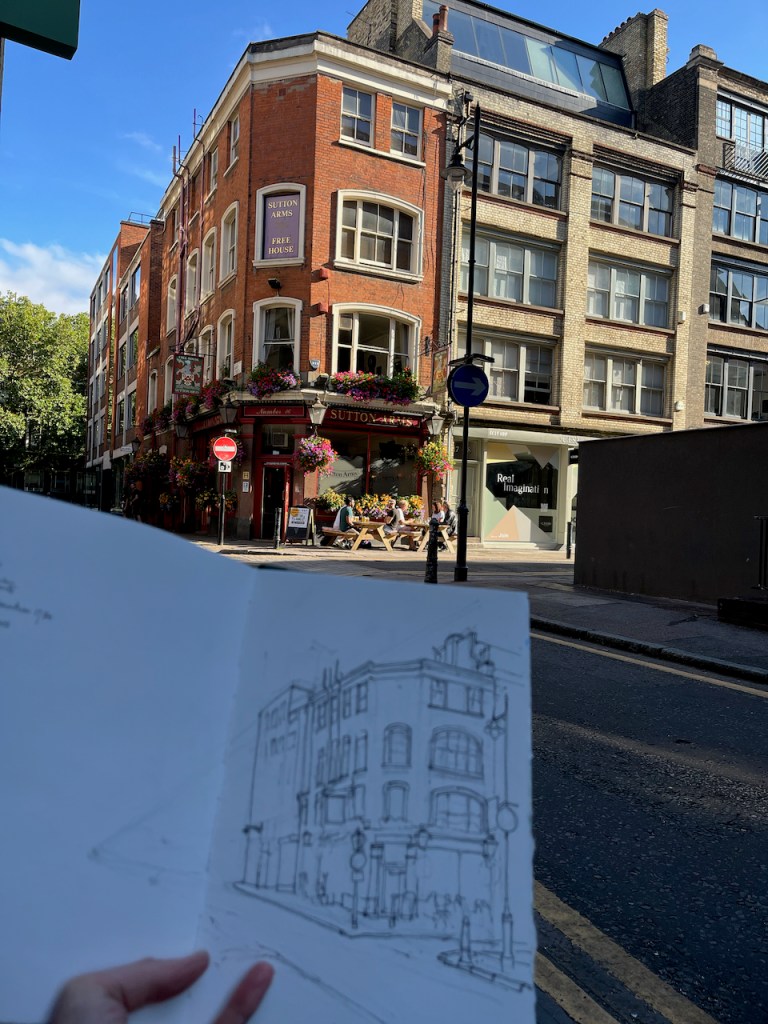
I sketched it towards the end of a sunny afternoon in August, sitting on steps outside number 6 Berry Street. As you see, the sun streamed in from the west. The trees in the distance, on the left of the drawing, are on Clerkenwell Road. Behind them is The Charterhouse, fulfilling its ancient tradition as an arms house and sanctuary for the elderly and frail.

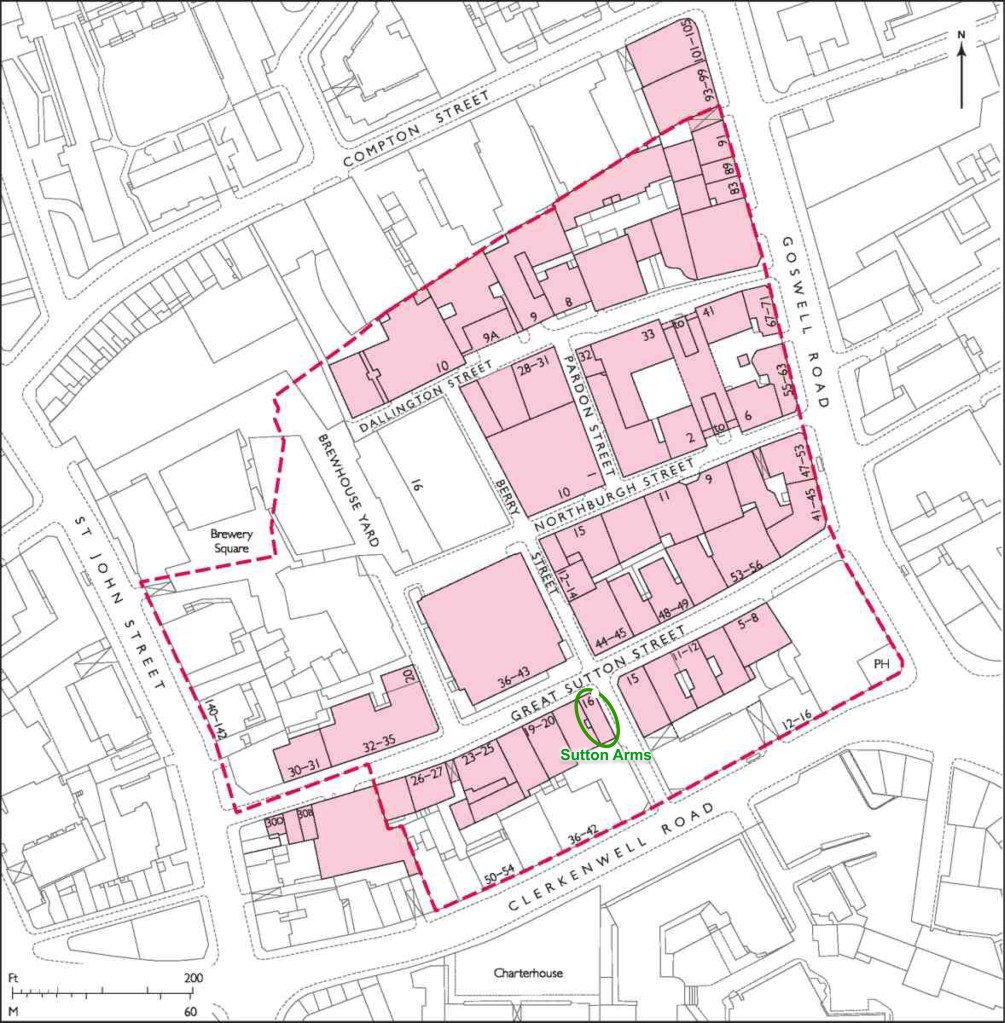
From 1611 to 1995, The Charterhouse owned the whole of this area.

Great Sutton Street area. The broken red line indicates the extent of the former Charterhouse estate. Image from British History Online [reference 2] annotated.

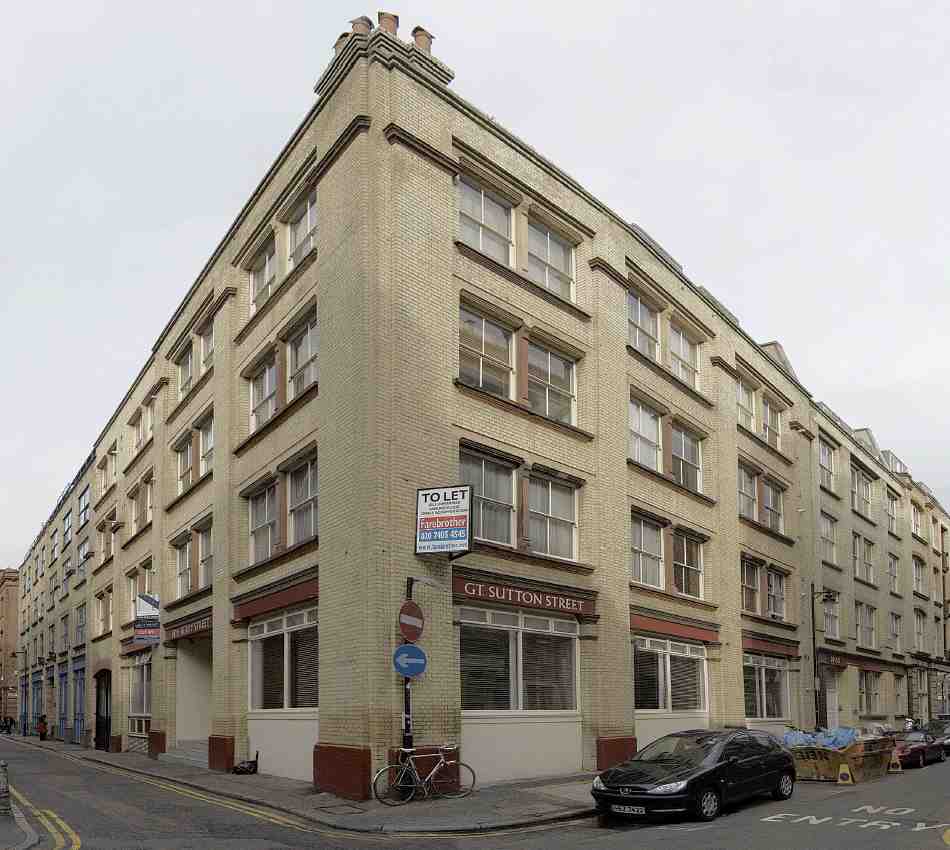
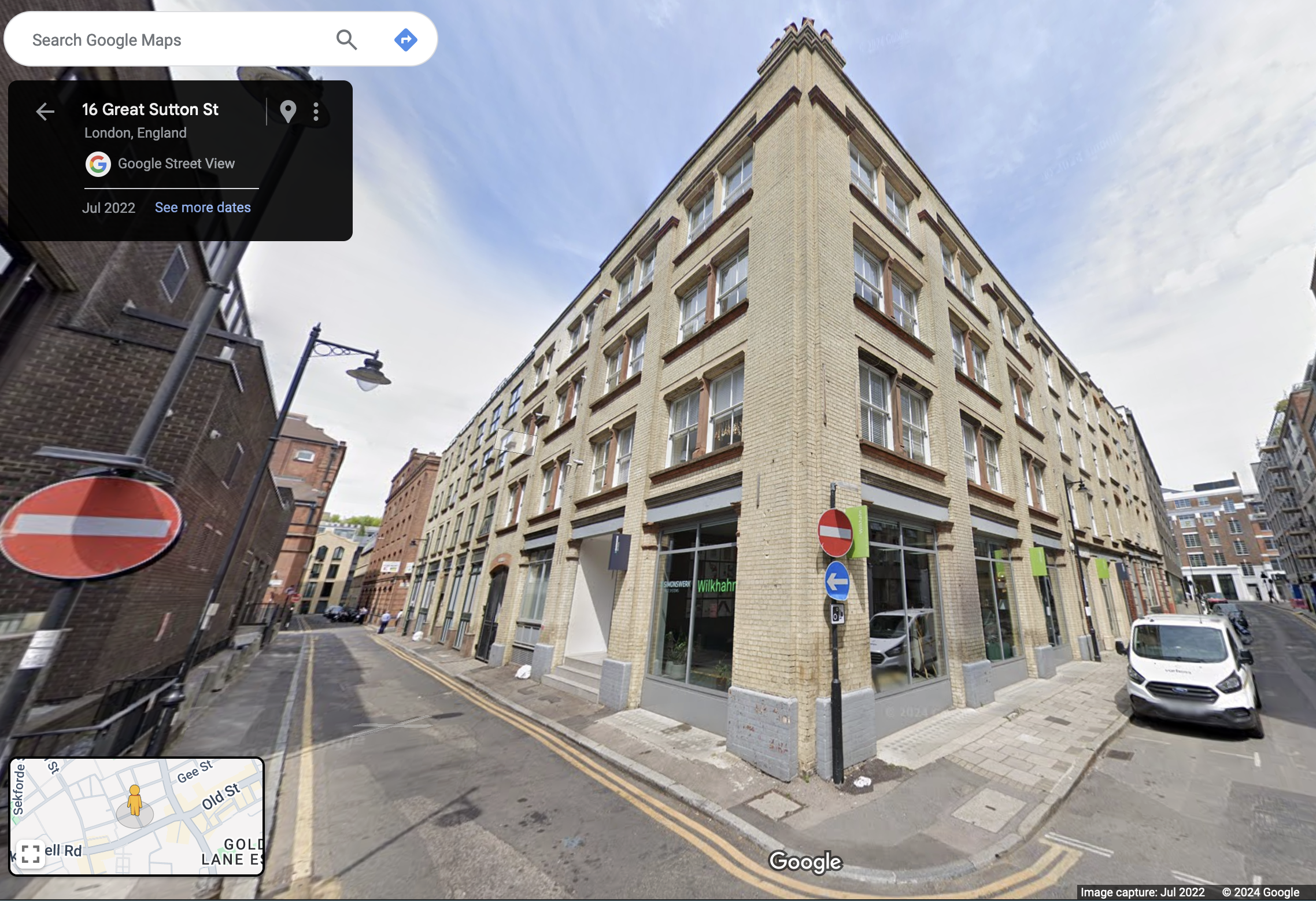
The Charterhouse sold this land in 1995. A developer bought up the land and built factories and warehouses. In the 21st century a new wave of developers transformed former warehouse blocks into apartments and offices. I sketched sitting outside one such: 6 Berry Street is residential apartments. This is now an area for architects and interior designers.

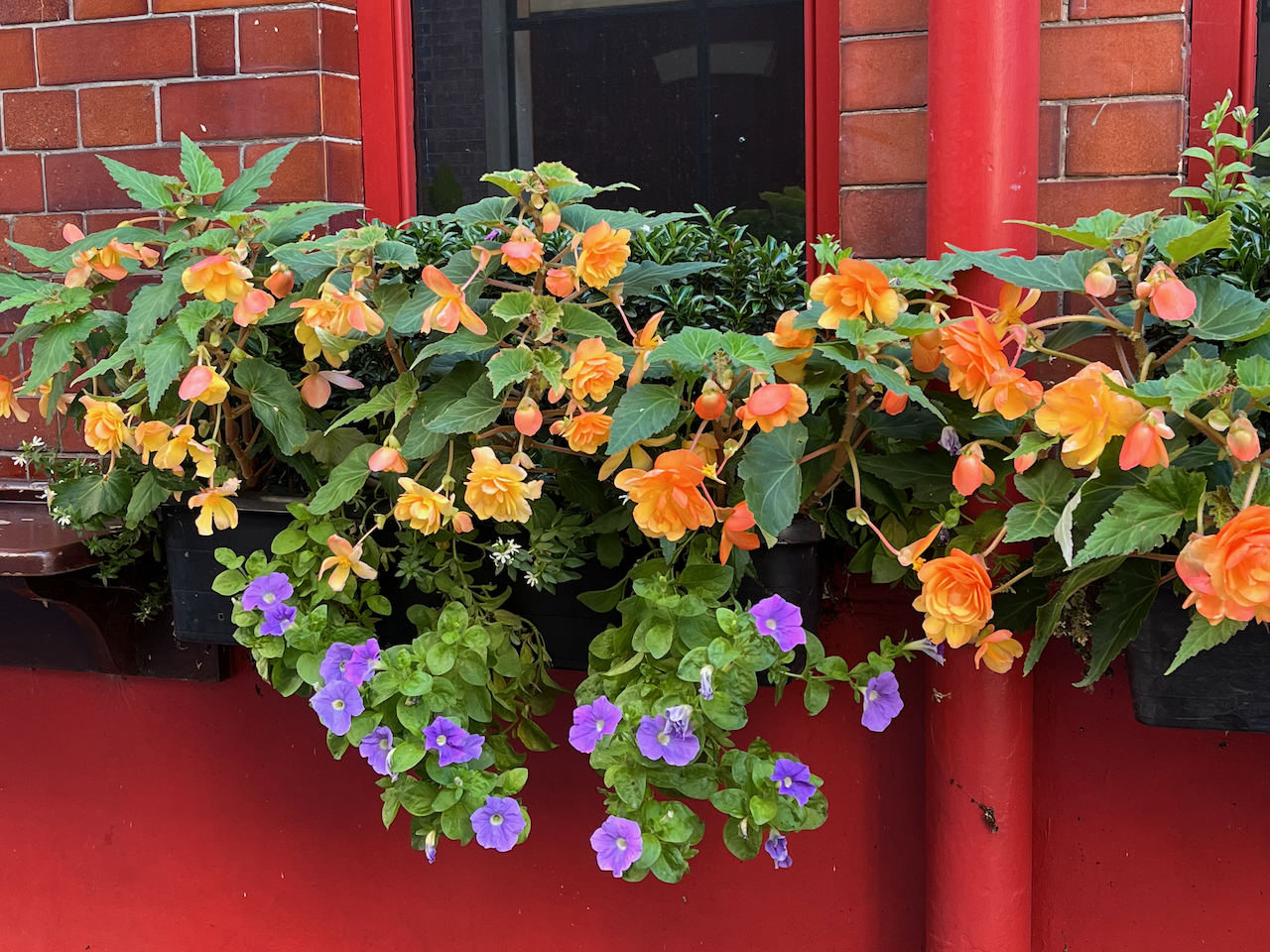
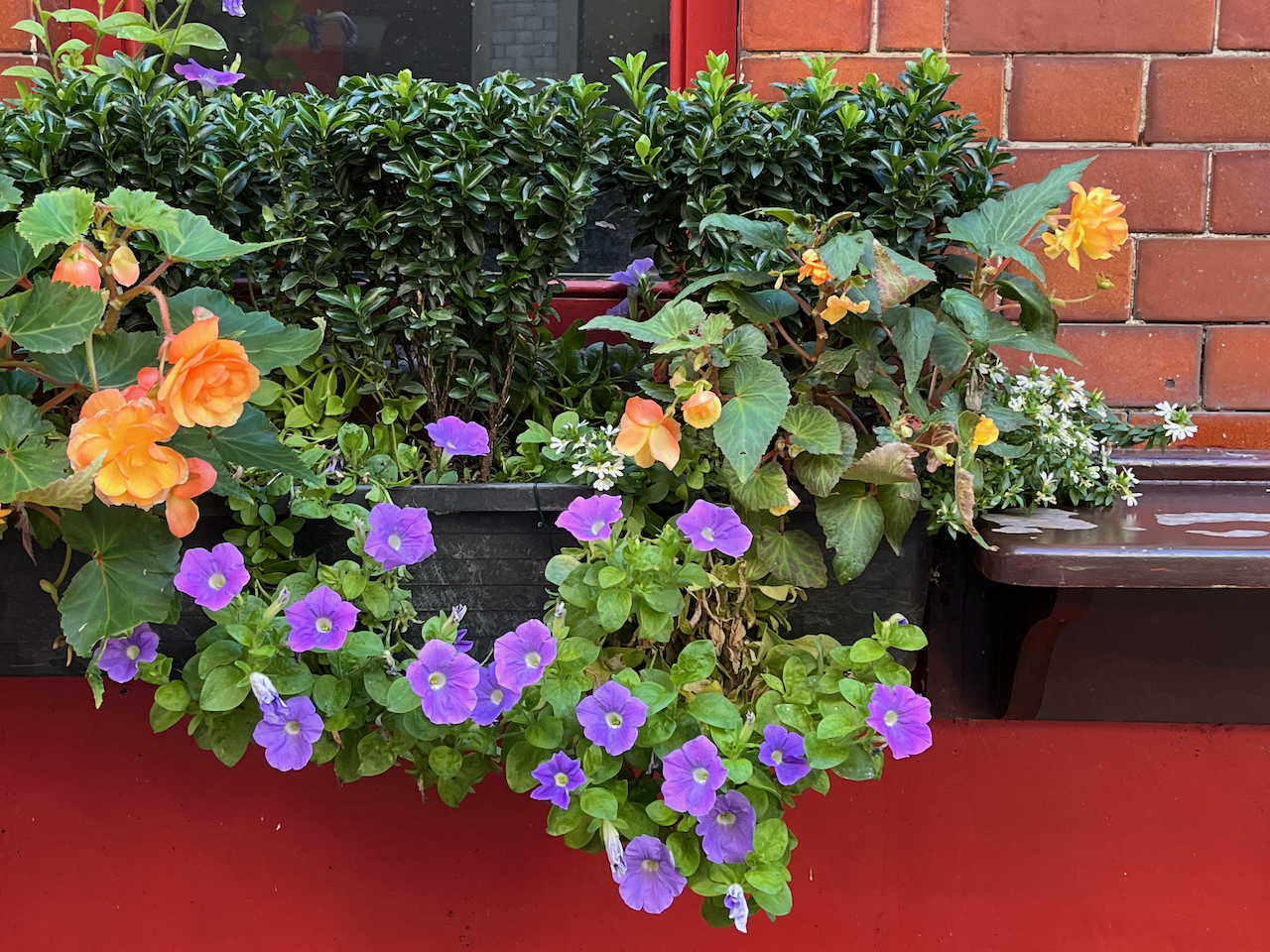
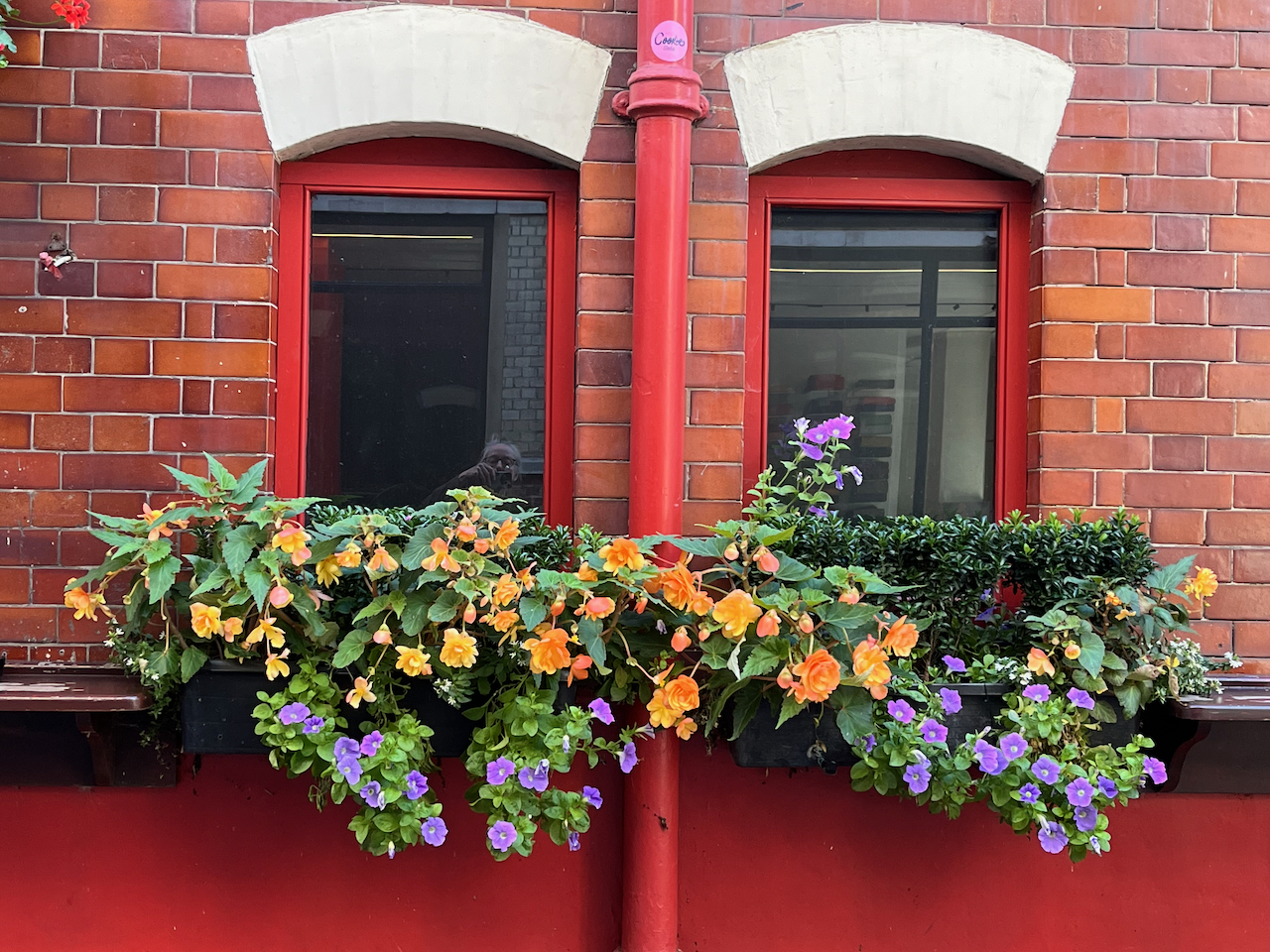
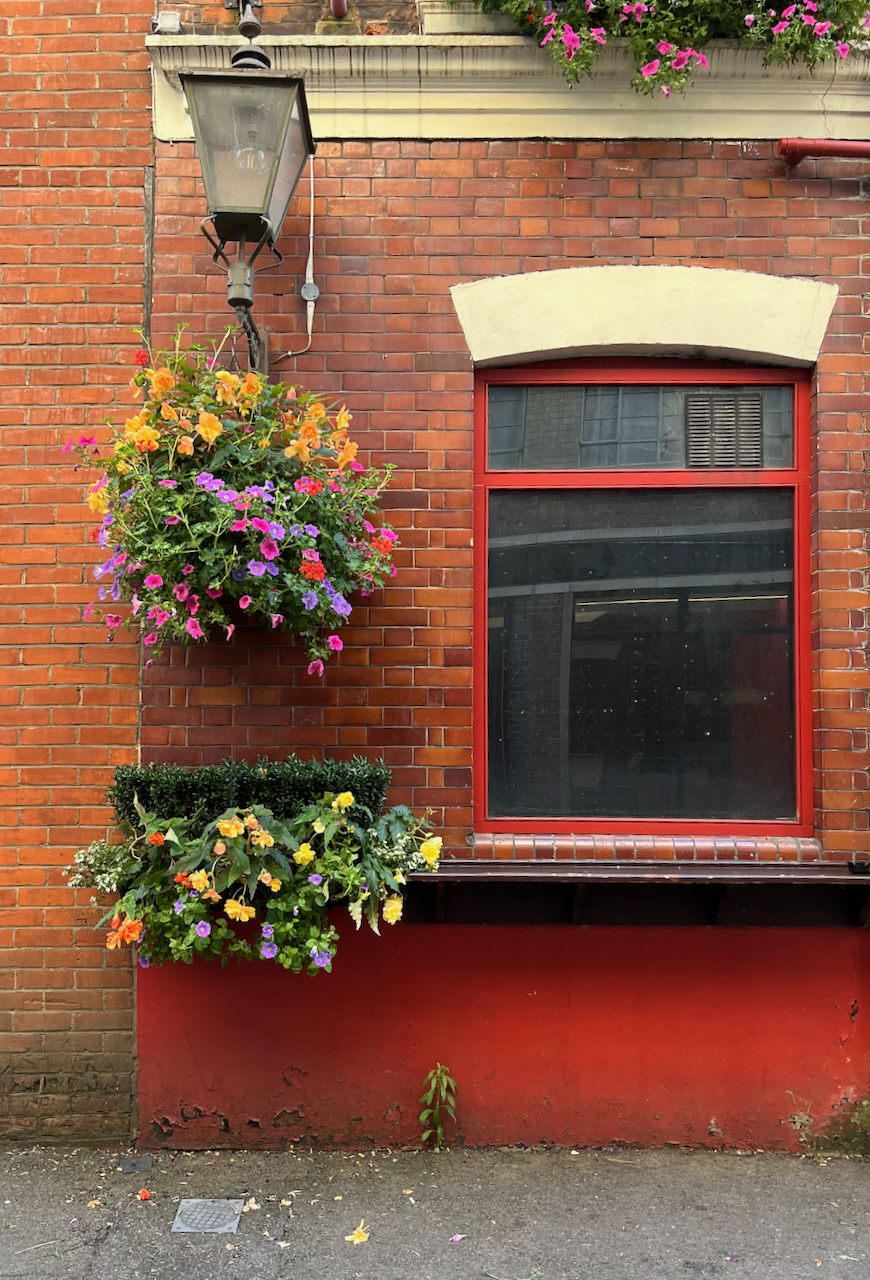
There was a pub here by 1825 [1]. It was rebuilt in 1897 [2]. It’s now a Free House. It’s clearly well looked after and well patronised. Definitely to be visited! The flowers are spectacular.
Thomas Sutton (1532-1611) was the founder of the Charterhouse, hence the name of the road and the name of the pub. This is the Sutton Arms in Clerkenwell, north of The Charterhouse. There is also a Sutton Arms south of The Charterhouse, in Carthusian Street, near Barbican tube.

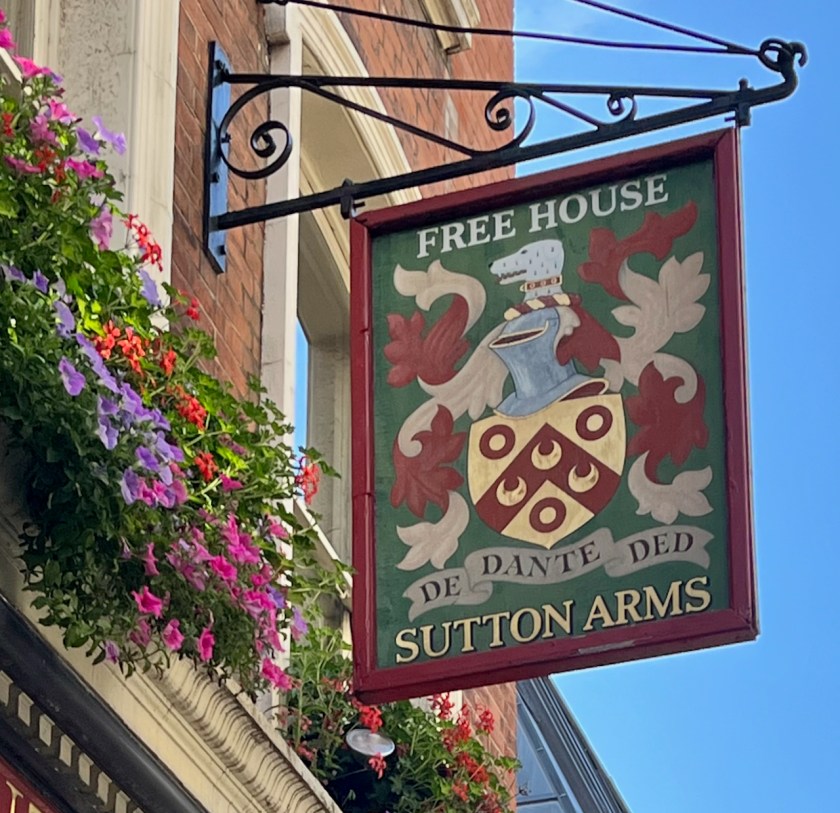
The pub sign is Sutton’s coat of arms. His motto is:

DEO DANTE DEDI

The translation is “God having given, I give”, or
“As God has given to me, so I give in my turn”,
a good motto for the benefactor that he was. The pub sign misses off the “O” in DEO and the “I” in DEDI.

Sutton Arms pub sign: “DE[o] DANTE DED[i]”
Thomas Sutton’s Coat of Arms. See the greyhound. Source: Charterhouse School on Wikipedia

The “Survey of London ” [2] gives a detailed history of this area, which has alternately flourished and decayed over the centuries. It is currently flourishing.

I completed the ink on location and finished the colour at my desk. The colours are:

  • Fired Gold Ochre (bricks)
  • Ultramarine Blue and Phthalo Blu (Green shade) (sky)
  • Serpentine Genuine (trees)
  • Mars Yellow (road and bricks)
  • Ultramarine Blue plus Burnt Umber (blacks and greys)
  • Transparent Pyrrole Orange (flowers, street signs)

The changing fortunes of the Great Sutton Street area.


In the 14th century this area was fields, owned by a Carthusian Priory. There was a mortuary chapel, called “Pardon Chapel” for saying the last rites for criminals and suicides.
Henry VIII eradicated the Carthusian Priory in 1538 (“Dissolution of the Monasteries”) and it passed into private hands, along with the land. It became known at “The Charterhouse”.
Thomas Sutton, a wealthy businessman, bought the Charterhouse in 1611. He died that year. His will provided for the hospital and almshouse that are still there. The Charterhouse leased the land outside its walls to developers, who built houses.
“By 1687, when the Charterhouse estate was thoroughly mapped by William Mar, almost the whole had been laid out in streets of small terrace houses—242 houses in all, with yards, gardens and sheds.” [2] These terraces set the street pattern for the small streets that are there today. The lattice continued to the walls of The Charterhouse. Clerkenwell Road was cut through much later, in the 1870s.
Then commerce moved in and a hundred years passed. By the 1700s, the area was a mix of residences and industries: “In 1731 Philip Humphreys, the Charterhouse gardener [..]complained of the adverse effect on his crops of smoke ‘from so many neighbouring Brewhouses, Distillers and Pipe-makers lately set up’ in the vicinity.” Thus we see that NIMBYism is not a new phenomenon.
A new developer (Pullin) came in and rebuilt, and more and larger factories were built. Again, the neighbours complained: “Already by the 1820s some houses were giving way to further industrial developments, including slaughterhouses, a dye-house, breweries, and vinegar, vitriol and gas works. Complaints were made to the Charterhouse in 1832 about the nuisance of these works and their steam engines, and to the Vestry in the 1850s about the ‘boiling of putrid meat and other offal’ and blood running into the drains.”
Building continued.
Eventually government intervened: “Extensive redevelopment of the Charterhouse estate followed remarks in 1884–5 by the Royal Commission on the Housing of the Working Classes as to the badness of the houses there. […] Charterhouse was criticized for allowing [..]the incidence of house-farmers, severe overcrowding and badly constructed, poorly ventilated housing to continue on its property. One house in Allen Street was found to be occupied by thirty-eight people, eleven of them in one small room; similar conditions were found in the cottages of Slade’s Place. Many of these properties were occupied by costermongers with ‘very precarious’ earnings (whom the Commission felt would do better ‘if they kept from drink’).[2]”
The Charterhouse governors eventually took action. The small houses were demolished, and replaced by factories and warehouses. This time the trades were less polluting: “Among early occupants were clothing manufacturers: milliners, mantle-makers and collar-makers, leather manufacturers, glove-makers and furriers. The printing trade was also well represented, along with book-binding, engraving and stationery manufacture. Continuing a long-standing tradition were several butchers and tripedressers.” By now we are in the early 1900s.
About a dozen buildings were destroyed by bombing in the 1939-45 conflict, and replaced in the 1950 and 1960s by factories and warehouses.
The Survey of London [2] reports that the area was “considerably run down” in 1995 when the Charterhouse sold it to developers. The developers started a programme of warehouse conversions, to apartments and offices, which transformed the area, and moved it back upmarket. And that’s where we are today.
(The above is my summary of the more detailed description in reference [2])

[1] List of licensees in
https://londonwiki.co.uk/LondonPubs/Aldersgate/SuttonArms.shtml
First licensee recorded in their list is 1825.

[2] British History Online: ‘Great Sutton Street area’, in Survey of London: Volume 46, South and East Clerkenwell, ed. Philip Temple( London, 2008), British History Online https://www.british-history.ac.uk/survey-london/vol46/pp280-293 [accessed 2 September 2024].

[3] History of The Charterhouse https://thecharterhouse.org/explore-the-charterhouse/history/

“The Roundhouse”, Pocra Quay, Aberdeen

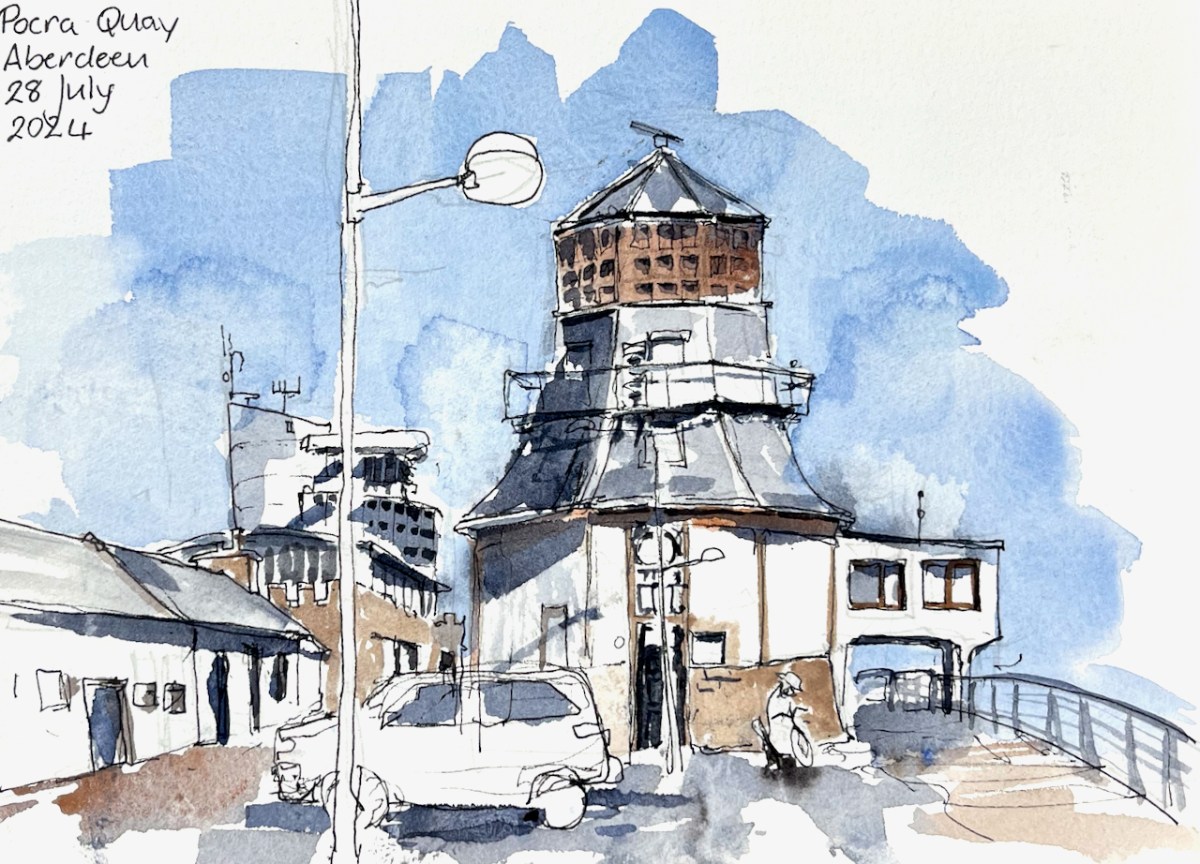
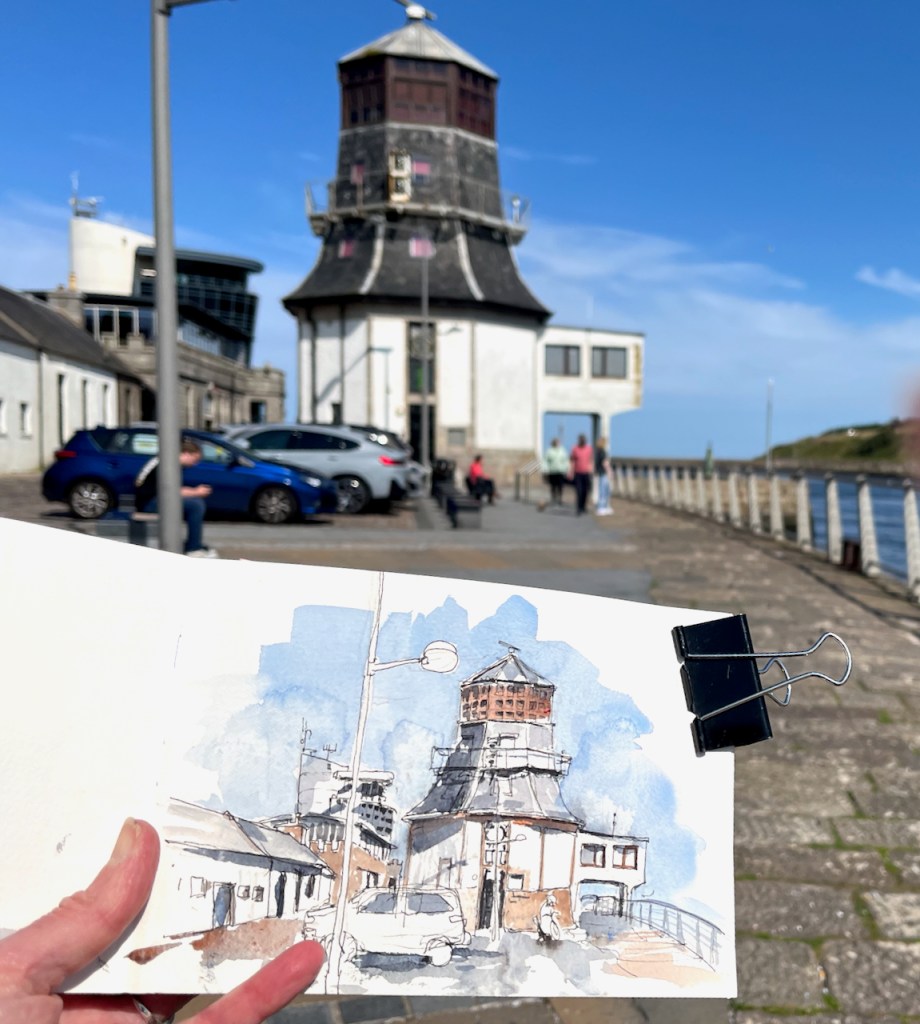
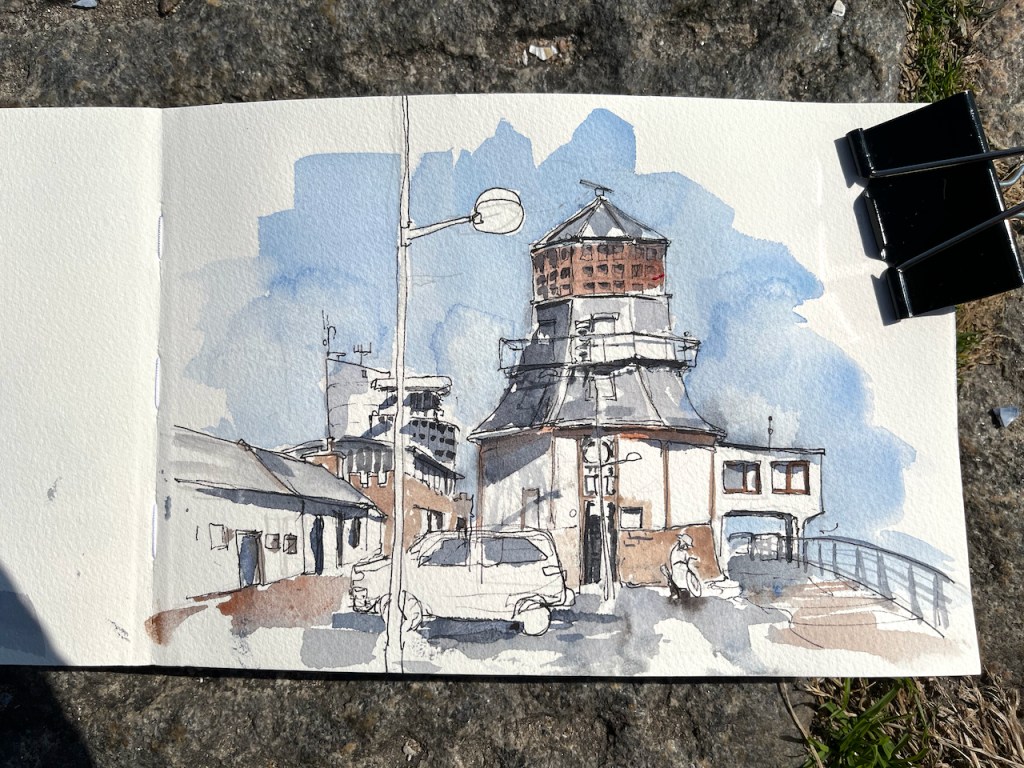
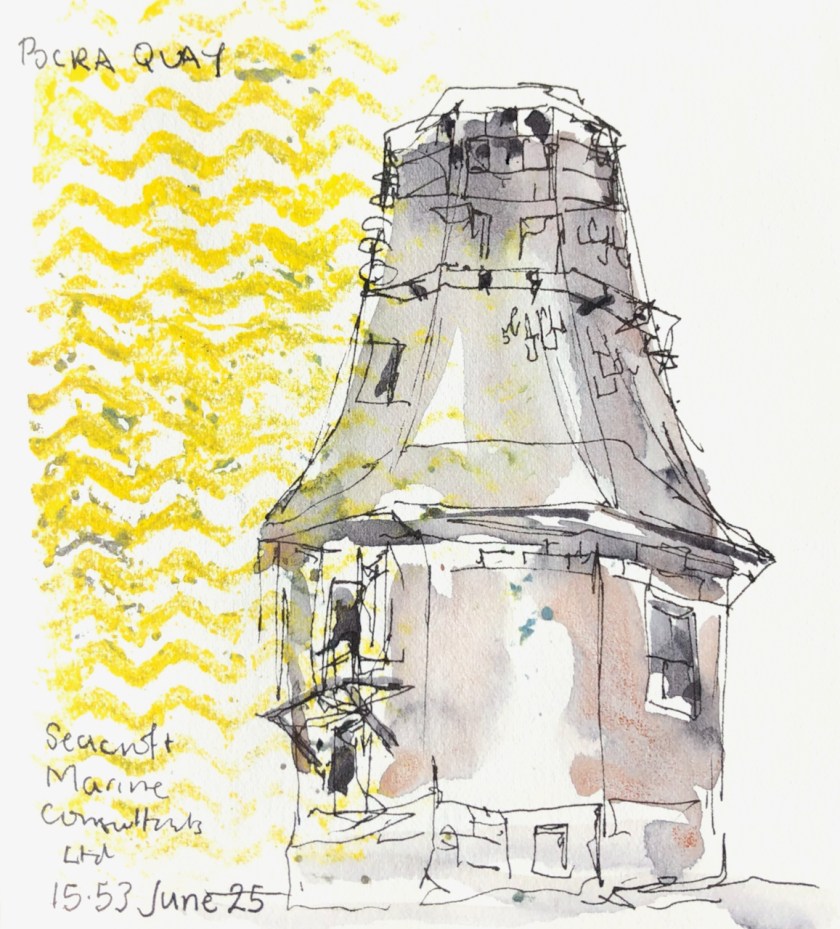
This is the watchtower near the entrance to the harbour of Aberdeen, known as “the Roundhouse”.

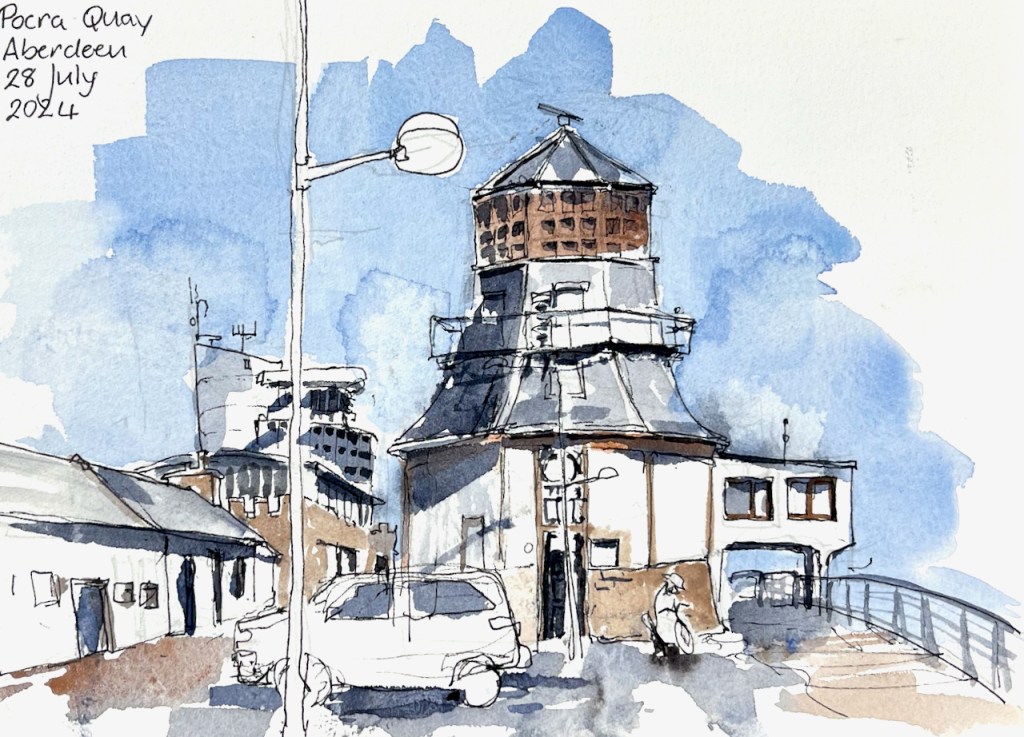
The Roundhouse, Pocra Quay, 28 July 2024, A5 in JP Purcell Sketchbook

It is octagonal. According to the listing on the Historic Environment Scotland site it was:

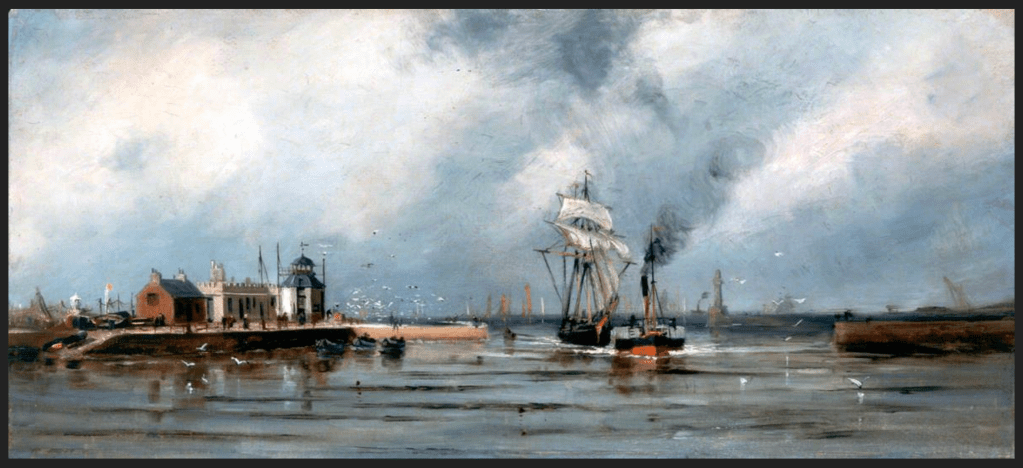
“[built] to guide vessels to port, this was originally carried out by the harbour pilots via loudhailer from a platform built into the roof of the original 2-storey structure, or by a system of wicker balls suspended from a pole rising from the platform.” [1]

“Entrance to Aberdeen Harbour” by James Cassie (1819–1879)
image copyright: Aberdeen Maritime Museum


“The control tower was added in 1966 and a radar system was introduced in 1974. The structure was further updated in 1986 at which time the Queen unveiled a plaque, situated to the right of the main entrance to the tower, commemorating ‘850 years of Harbour History’.” [1]

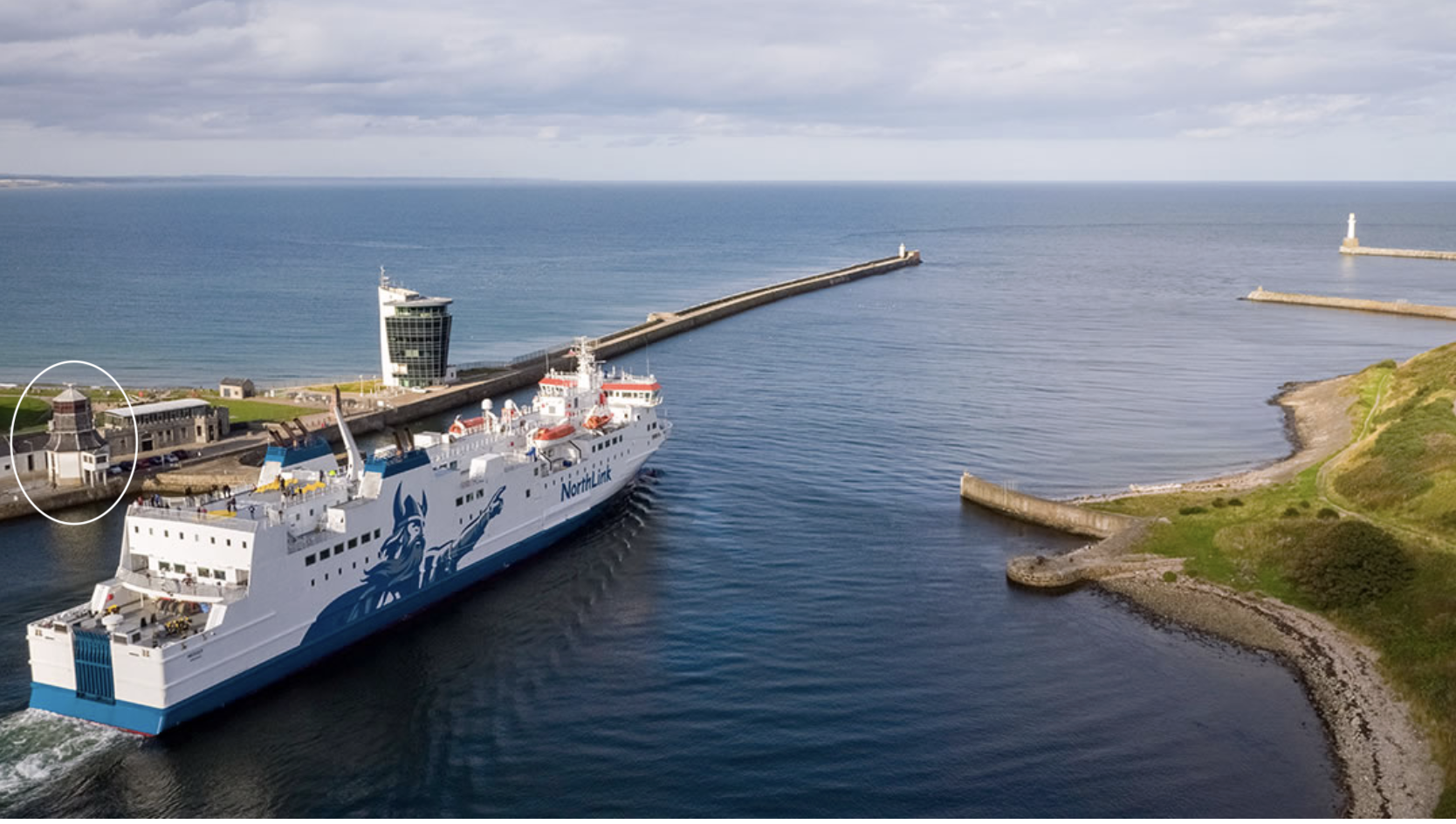
It was in use until the Marine Operations Centre opened in 2006 [4]. This is nearer the sea, just visible behind the lamp-post in my drawing. It handles about 25000 boat movements a year, which averages at 60 a day [2]. For comparison, Heathrow air traffic control centre handles abut 200000 aircraft movements a year or 500 a day [3]. The area managed by the Marine Control Centre extends 2.3 nautical miles around the headland to the South of the harbour [5]. So the Operations Centre handles not just boats going in and out, but boats moving around inside and outside the harbour as well.

MV Hrossey leaving the port of Aberdeen, photo copyright southspear media, used with permission [6]
The Roundhouse, circled, is on the left, and the Marine Operations Centre is above the centre of the ship. This is the Northlink ferry, sailing to the Northern Isles.

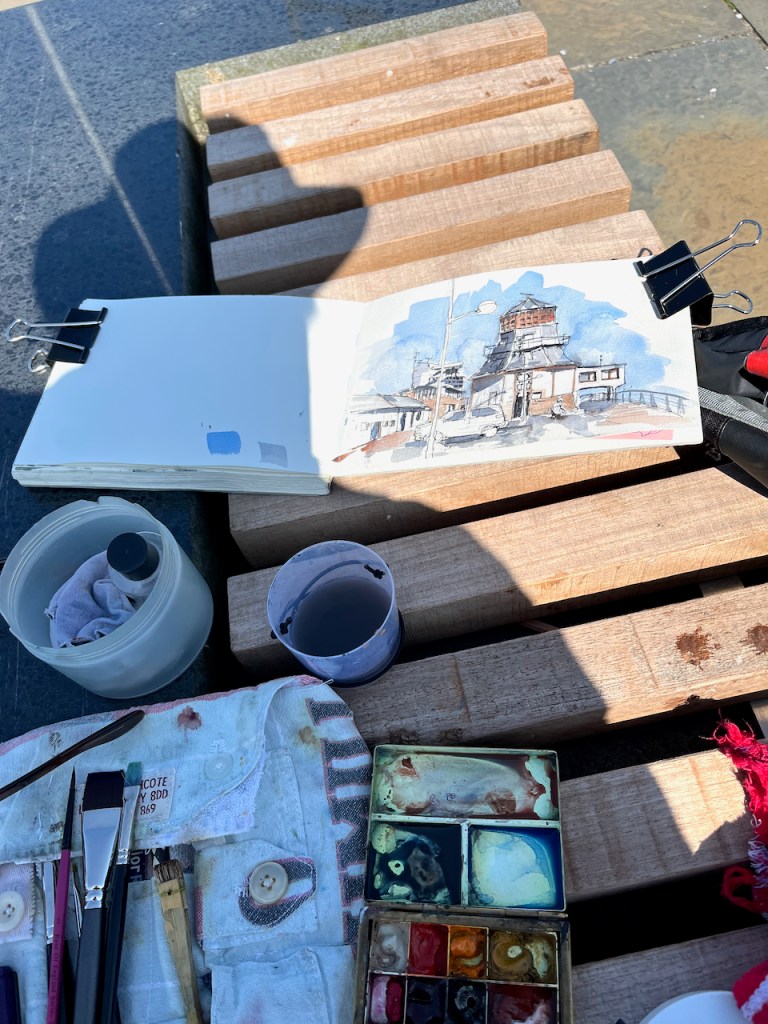
I sketched this on a stunning hot day, sitting on a bench by the quay.

The Roundhouse. The modern Marine Operations Centre is the tall white building behind and to the left. In front of it, and lower down behind the cars, is the restaurant “The Silver Darling”.

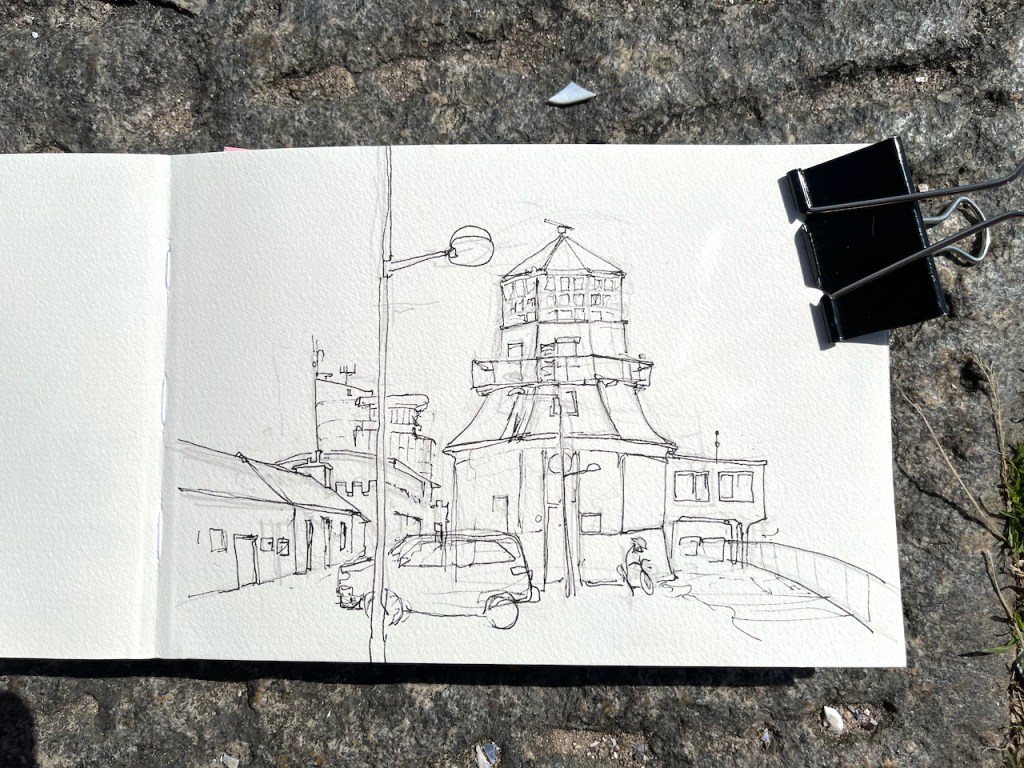
Three years ago, on a very different day, I made a much quicker sketch:

A quick sketch on a stormy rainy day, sketching from the shelter of a doorway. June 25th 2021.

References:

(1) Historic Environment Scotland listing: http://portal.historicenvironment.scot/designation/LB50941 FOOTDEE, POCRA QUAY, NAVIGATION CONTROL CENTRE (FORMER PILOT HOUSE)LB50941 downloaded 30 August 2024

(2) Aberdeen Maritime Trail leaflet, Aberdeen City Council – 100023401 – 2019: https://www.aberdeencity.gov.uk/sites/default/files/2020-09/Maritime%20Heritage%20Trail.pdf

[3] Heathrow Aircraft movement 2021 numbers from Heathrow facts and figures: https://www.heathrow.com/company/about-heathrow/facts-and-figures

[4] Gazetteer of Scotland https://www.scottish-places.info/features/featurefirst19543.html

[5] Port of Aberdeen Vessel Traffic Services extent: “All shipping movements within the Aberdeen VTS area (within 2.3nm from Girdleness) are controlled by Aberdeen VTS. Participation with VTS is mandatory, for further details please see ALRS Vol.6.” https://www.portofaberdeen.co.uk/port-information/marine

[6] Thank you to Nick McCaffrey of Southspear media for permission to use his amazing photograph of MV Hrossey leaving the port of Aberdeen.

Shetland – pigments

It was foggy, cold and wet outside. I made pigments.

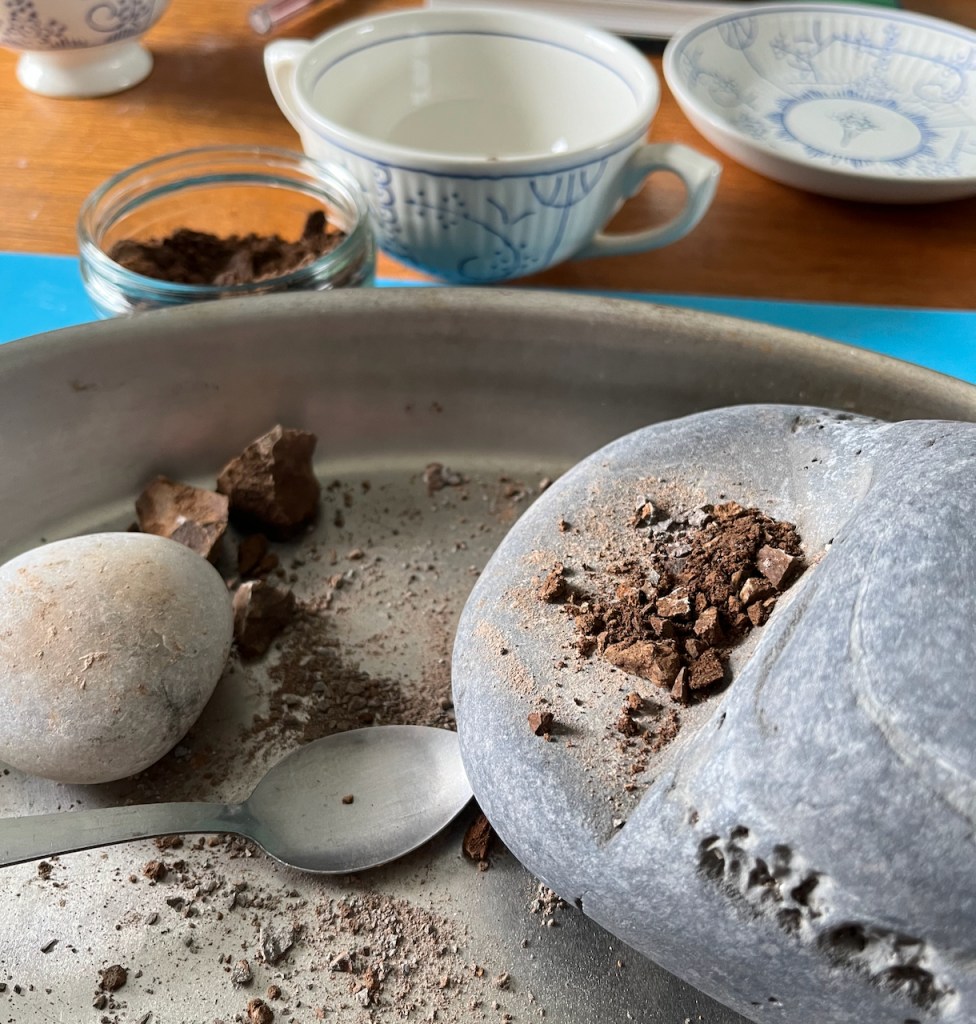
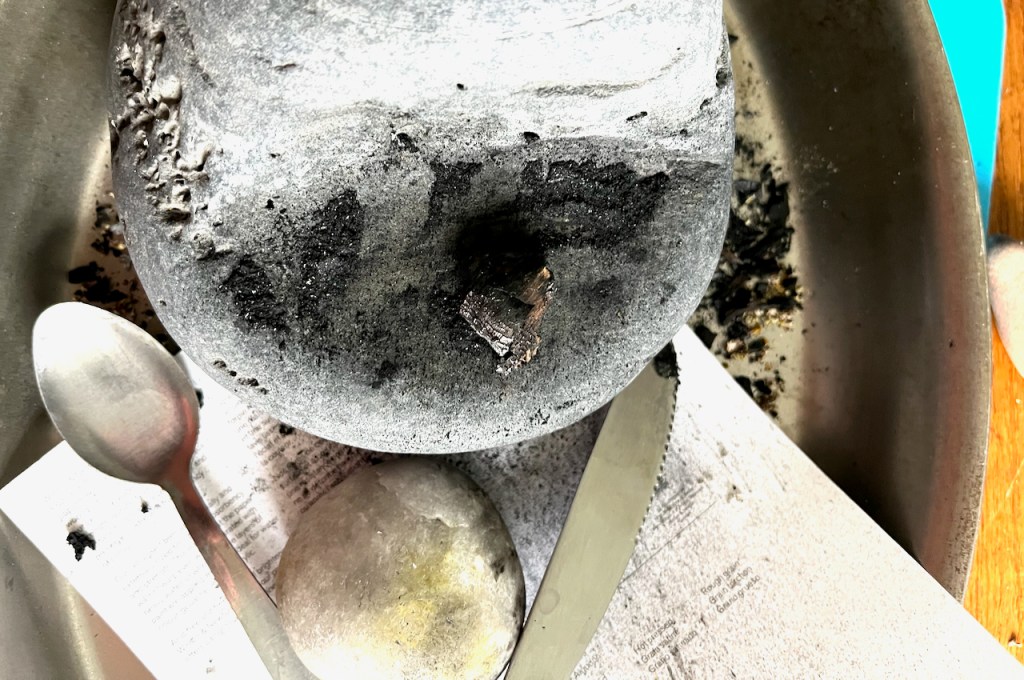
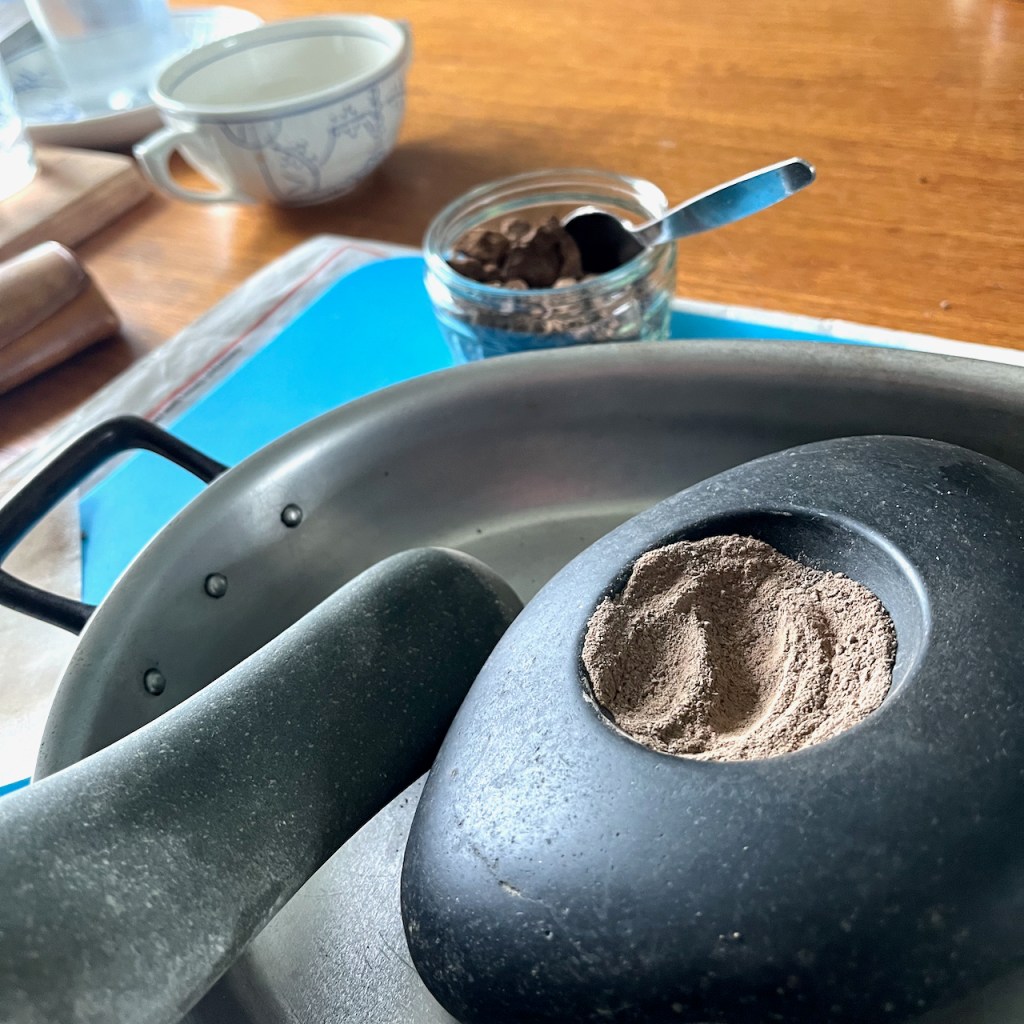
I collected earth from round about. I know from previous attempts that it works best if you have fine earth. So I went up the road in the rain and scooped up the fine silt running off a track. I dried it indoors, and then crushed it to what I hoped was a fine powder.

As you see I had an excellent beach stone for this purpose.

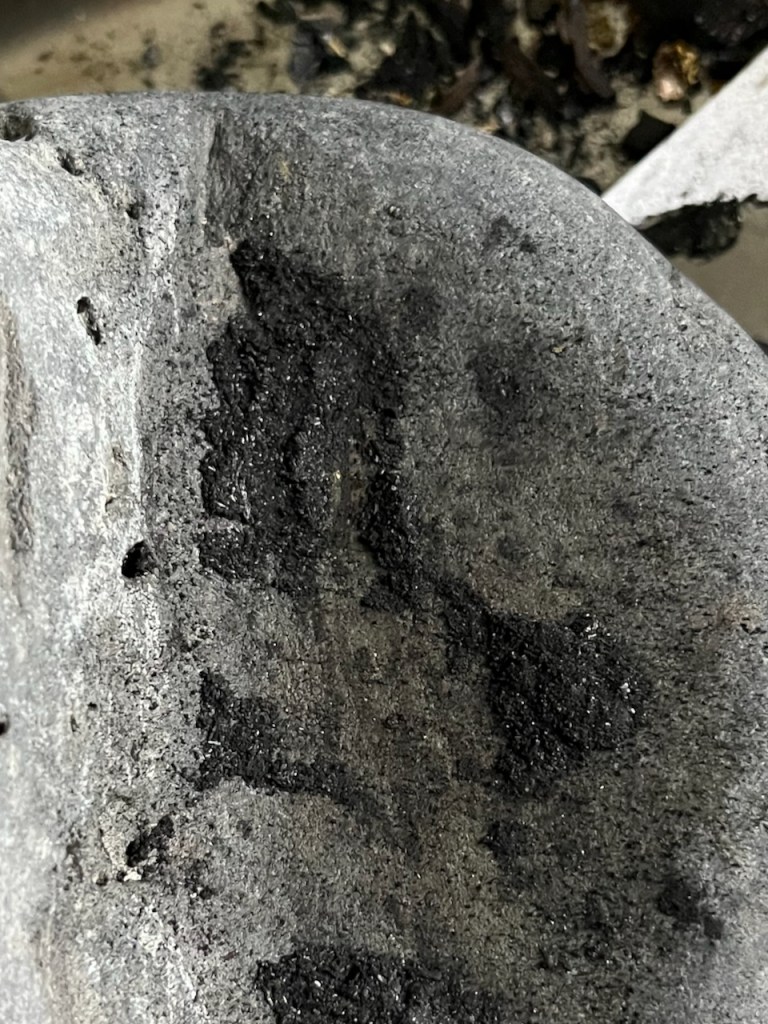
Then to grind it finer I had a pestle and mortar. This is a beautiful home-made item.

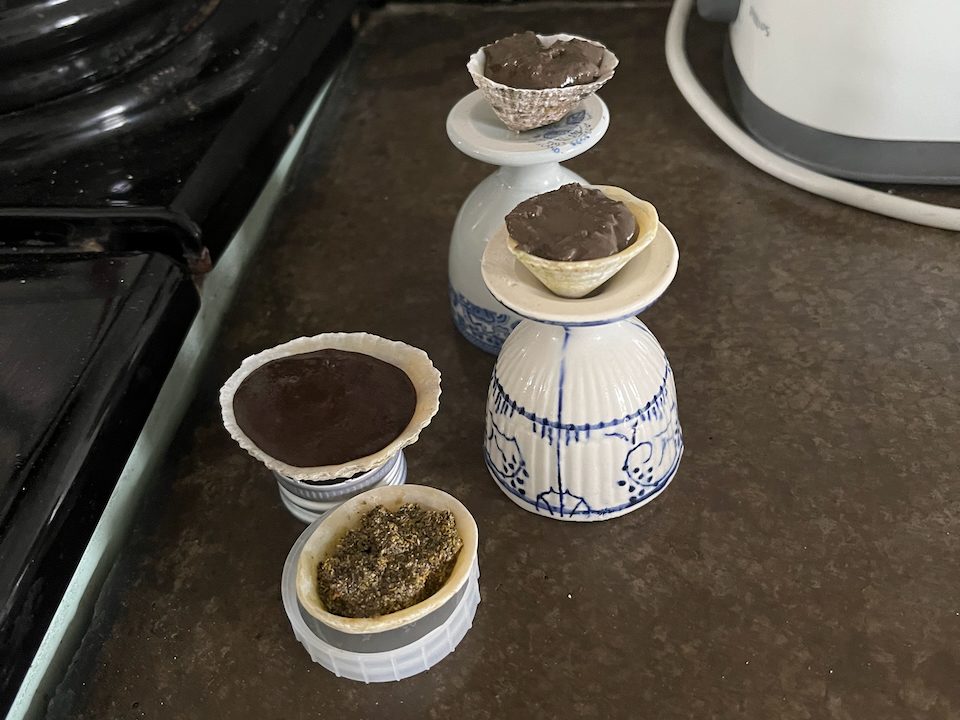
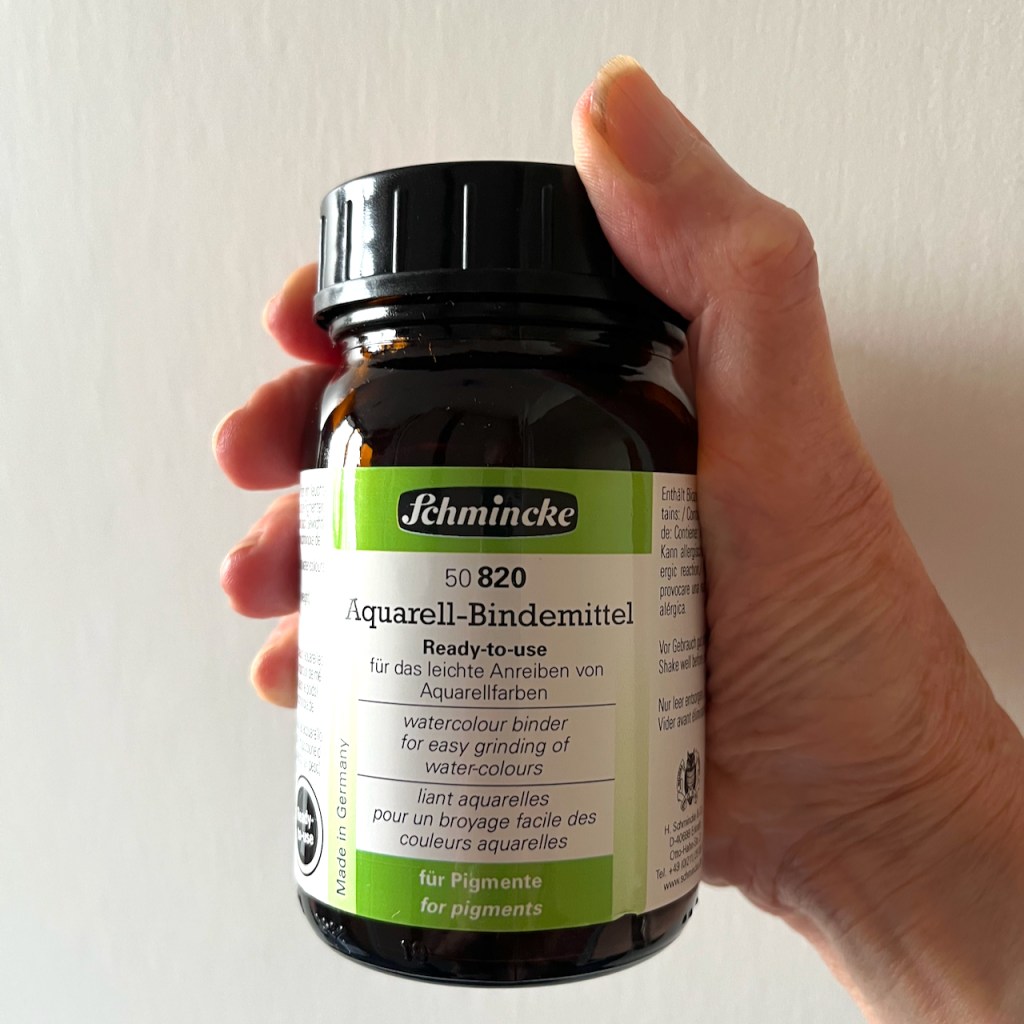
Now I have earth pigment. To make watercolour I add Schmincke Watercolour Binder in the ration of 2 parts binder to 1 part pigment. Mix and put in a limpet shell. It’s ready to use immediately as a paste, or it dries and can be rewetted like normal pan watercolours. Here are the paints drying:

Pigment mixes in limpet shells, drying on eggs cups (to keep them level).

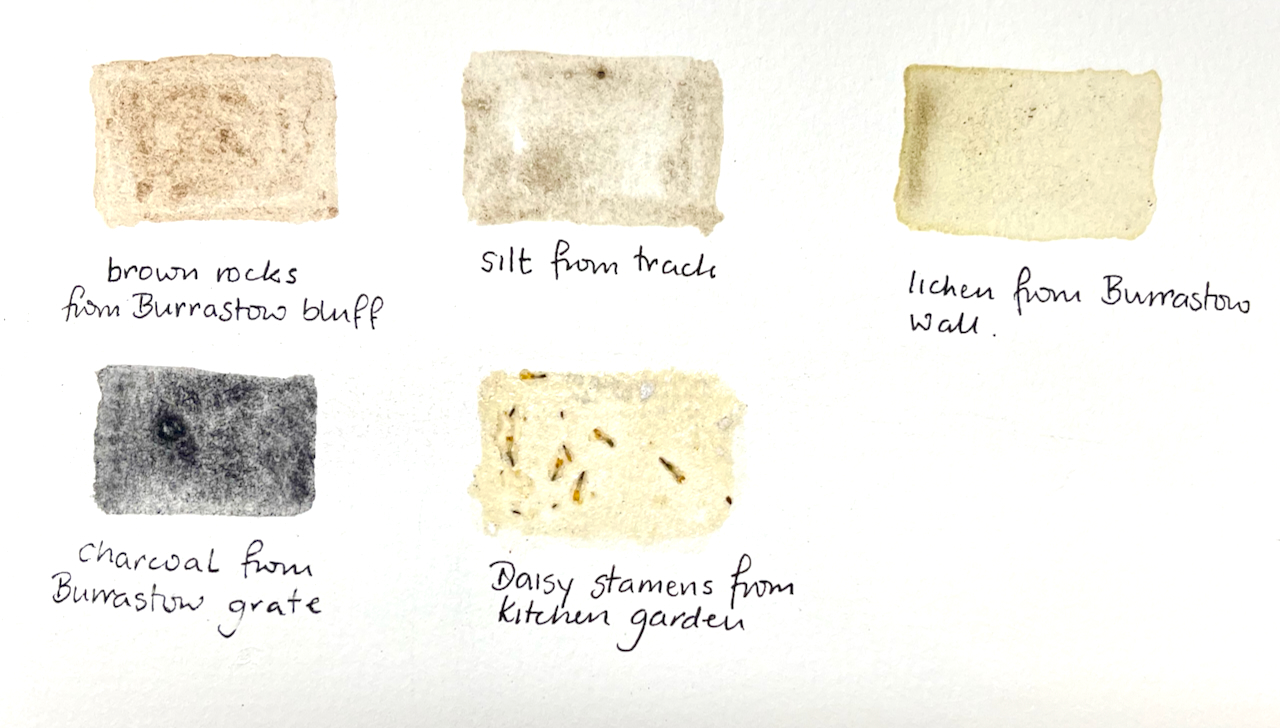
Above you see paints made of earth from different places. At the front is a paint made from yellow lichen. The lichen was bright yellow on the stone wall. I couldn’t find a way to separate out the bright yellow surface from the grey underneath, so the pigment is a grey/yellow mix.

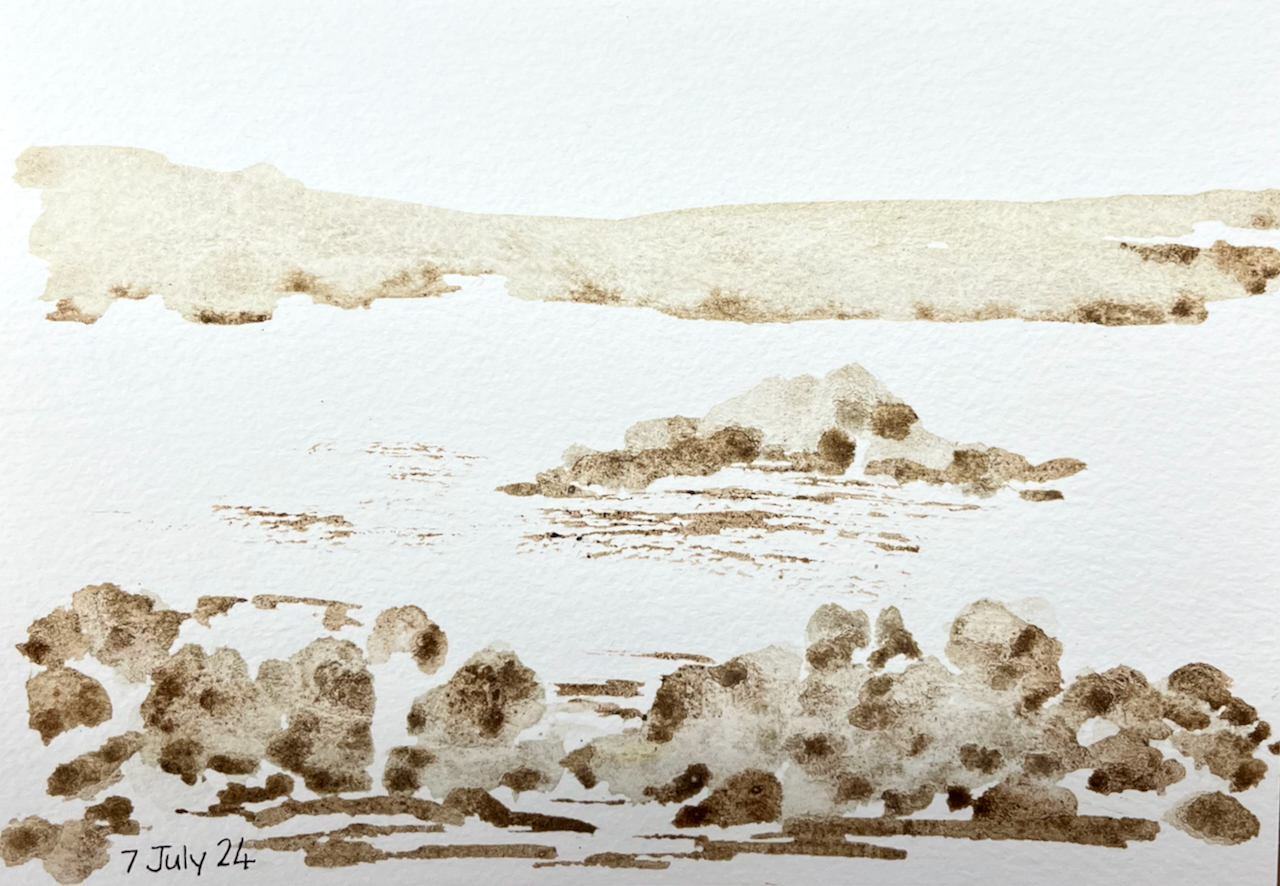
Here is a selection of pigment experiments, to show how they look when painted:

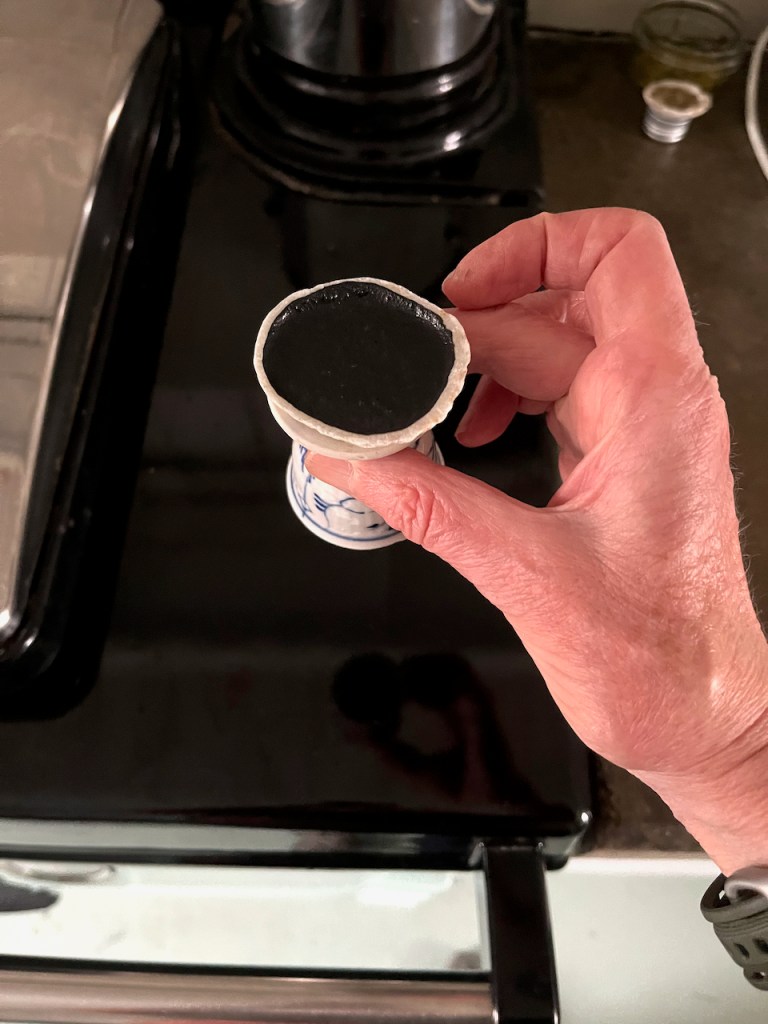
Making the charcoal pigment was not so effective as I thought it would be. I found a small chunk of black charcoal from the grate and proceeded to crush it. This produced skittering fragments and airborne dust which settled everywhere. It did not produce a fine powder in my pestle and mortar. It produced hard, flaky, bits. As you see above, the paint it produced was granular and not very black.

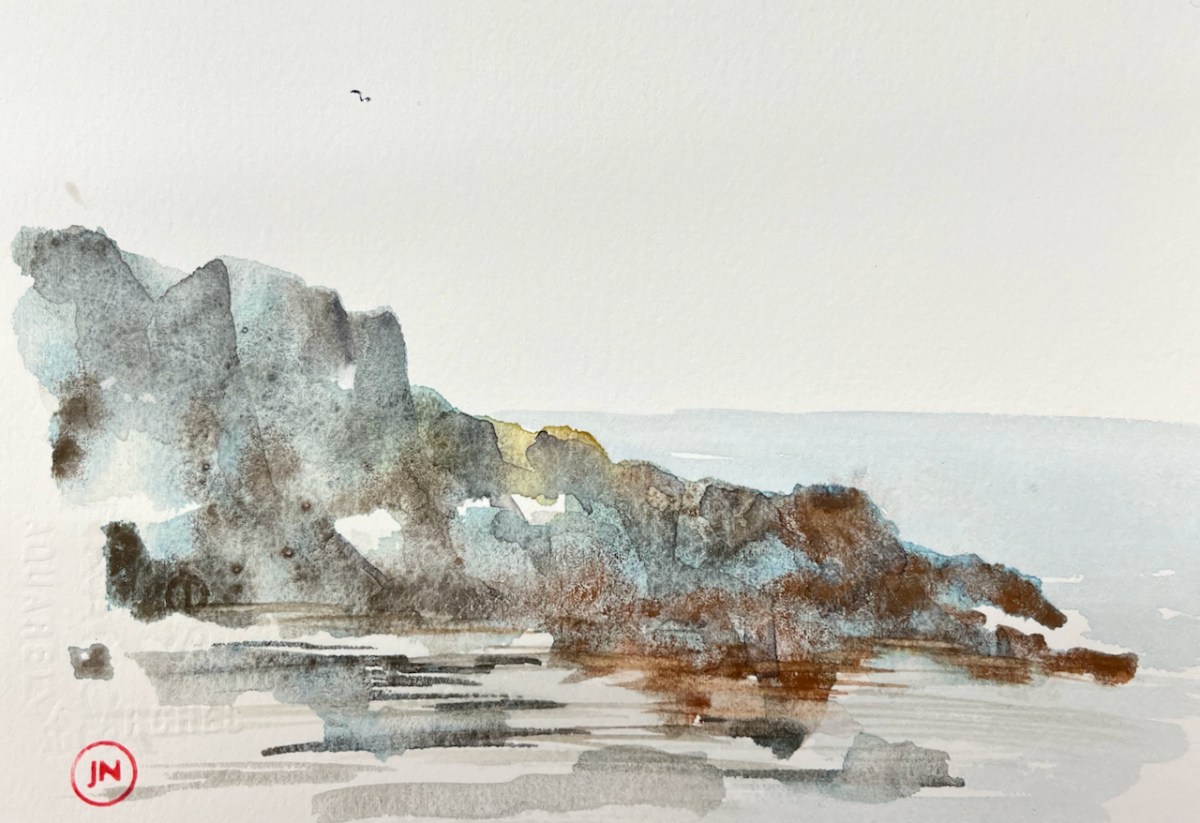
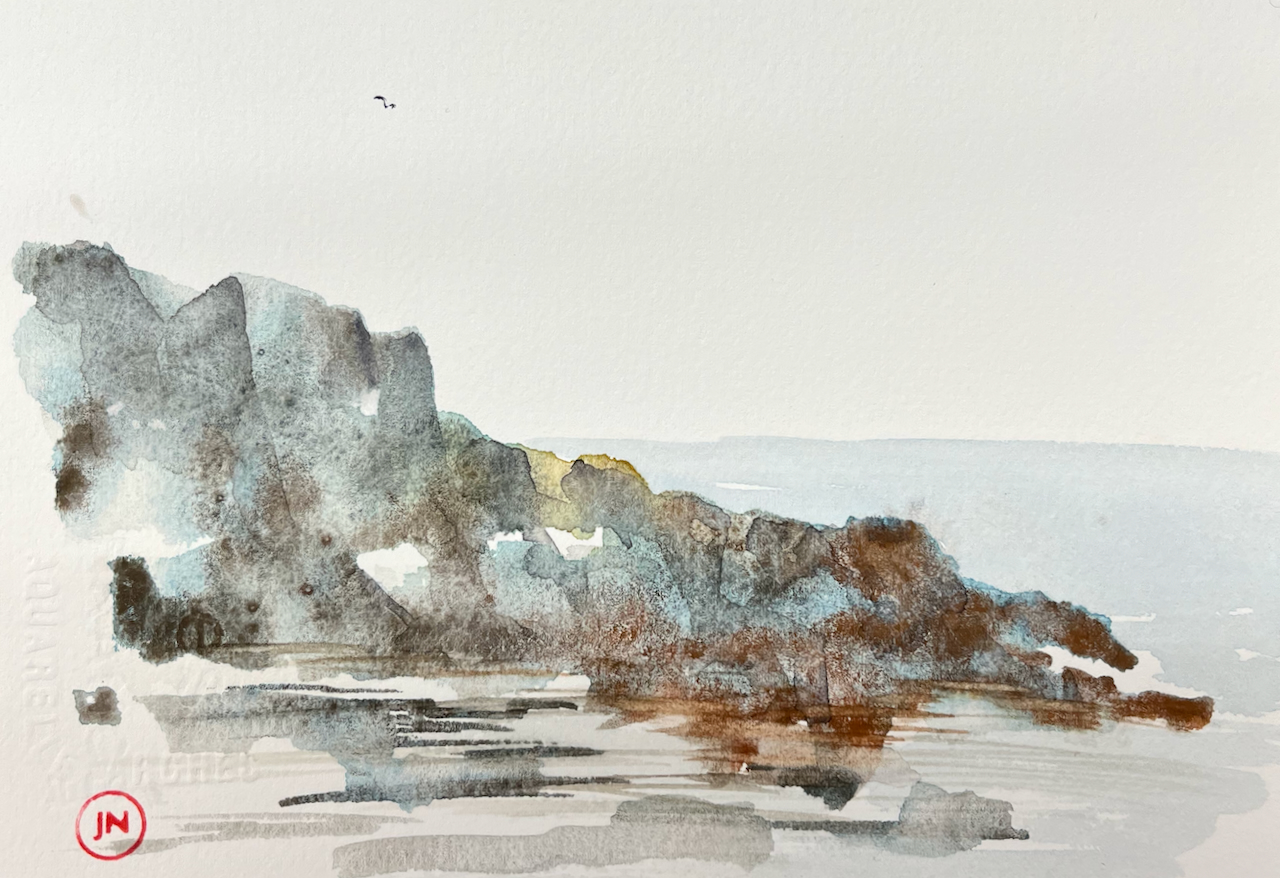
Here is a picture painted entirely with home-made pigments:

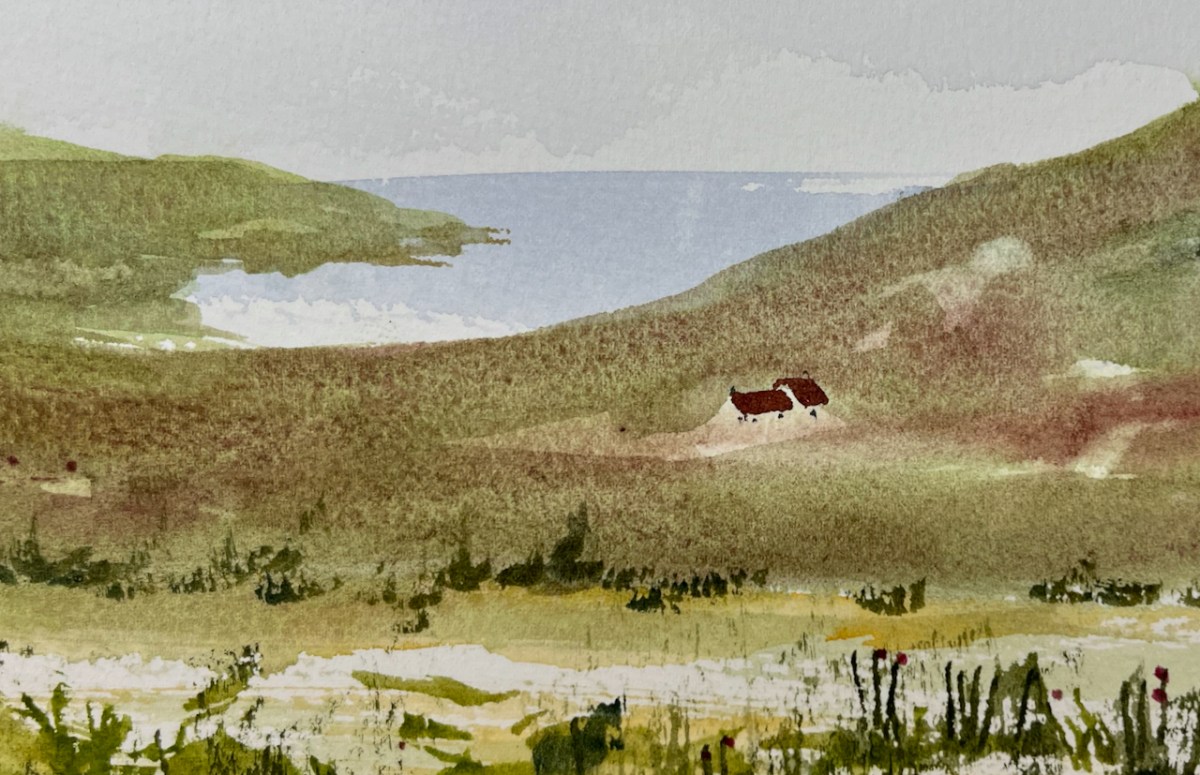
Coastal scene: painted with home-made pigments.

Here is a picture painted with home-made pigments and shop-bought watercolours:

“Promontory”. Painted with home-made watercolours with shop-bought watercolour (blue).

This is the binder I used:

Shetland – beach finds

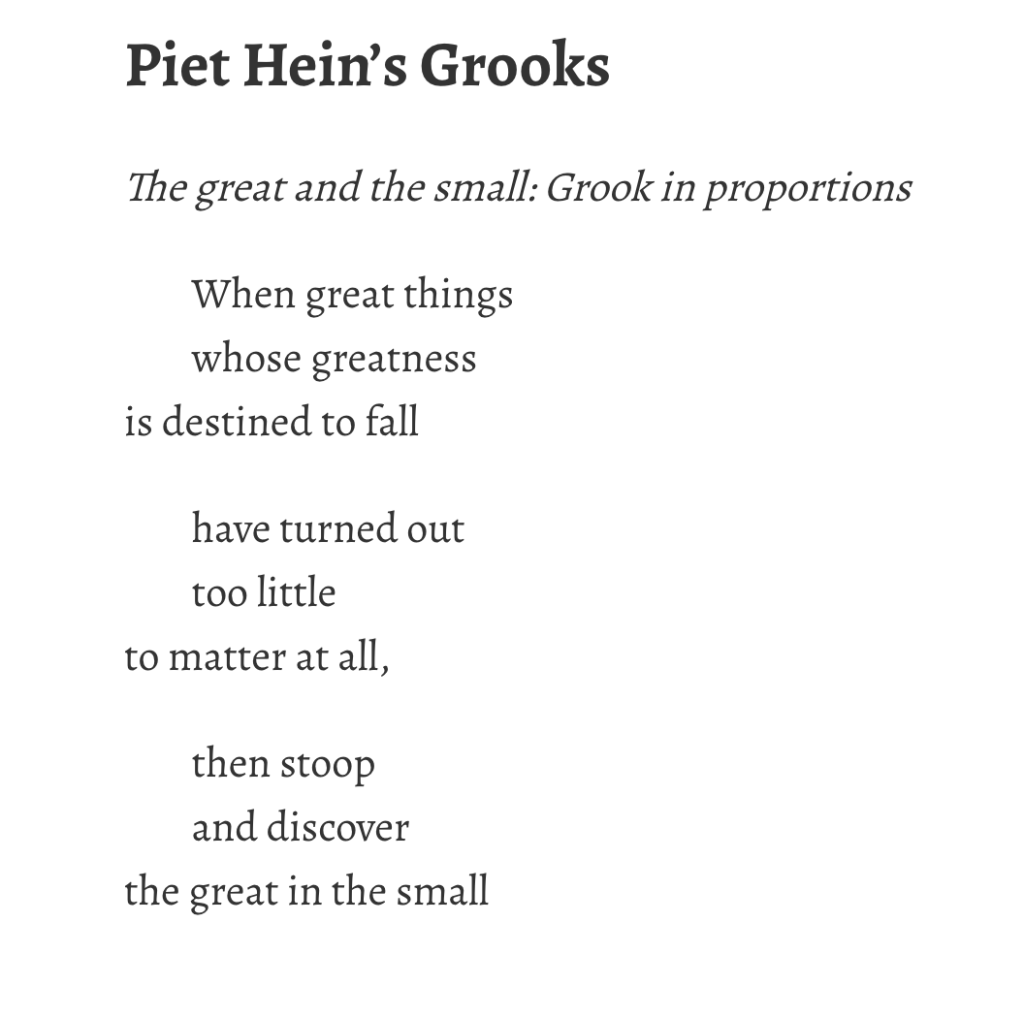
"Stoop and discover 
the great in the small"

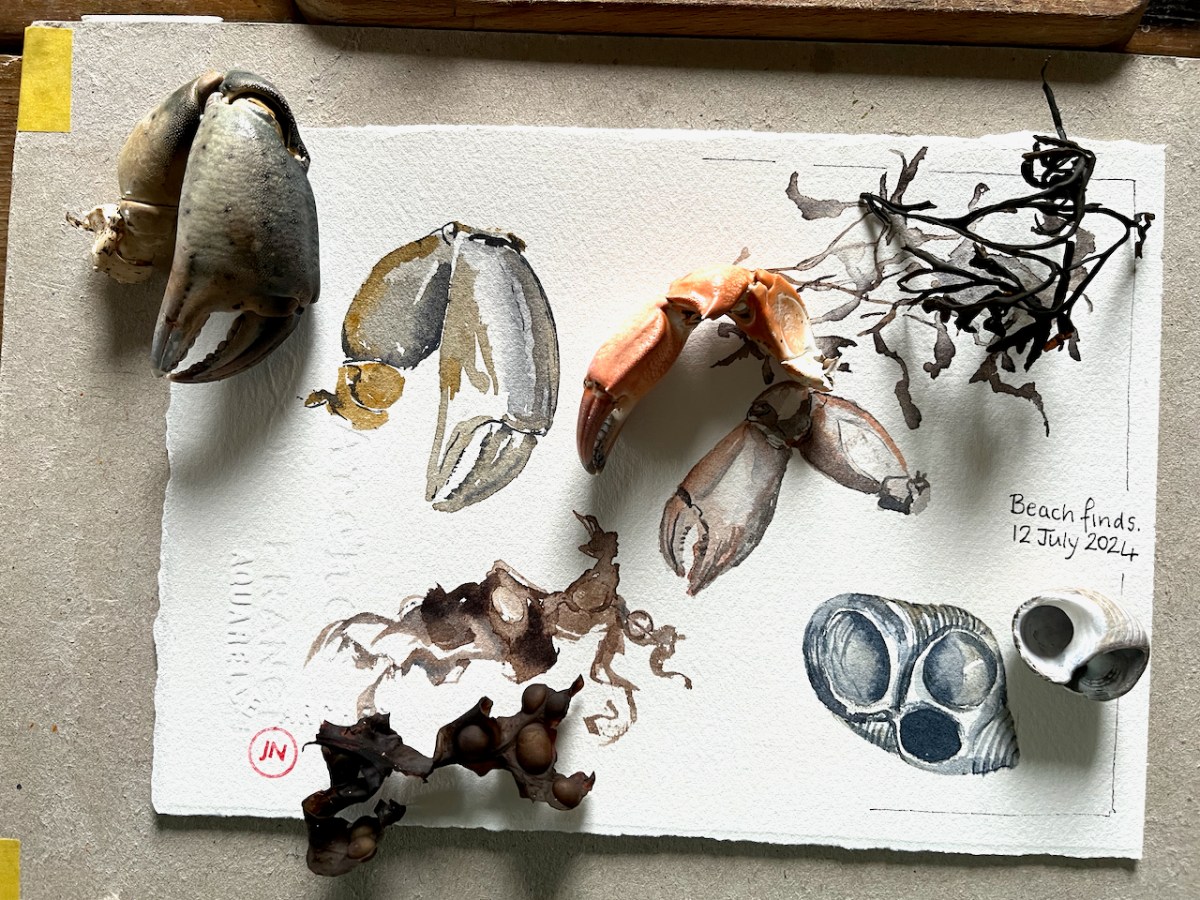
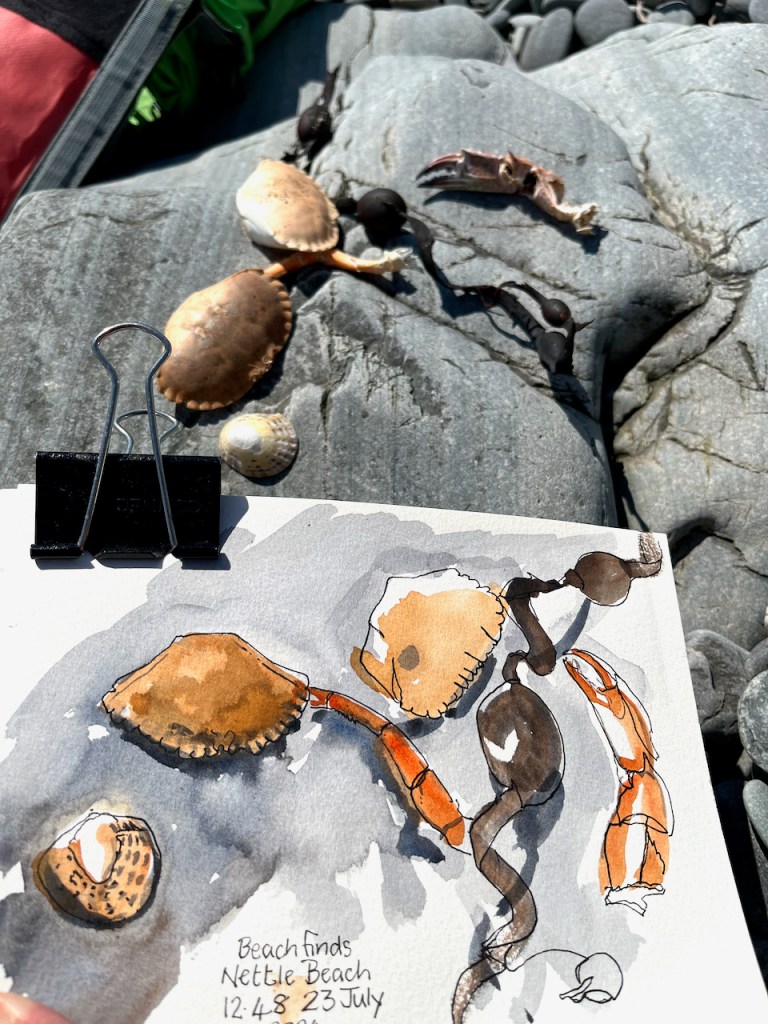
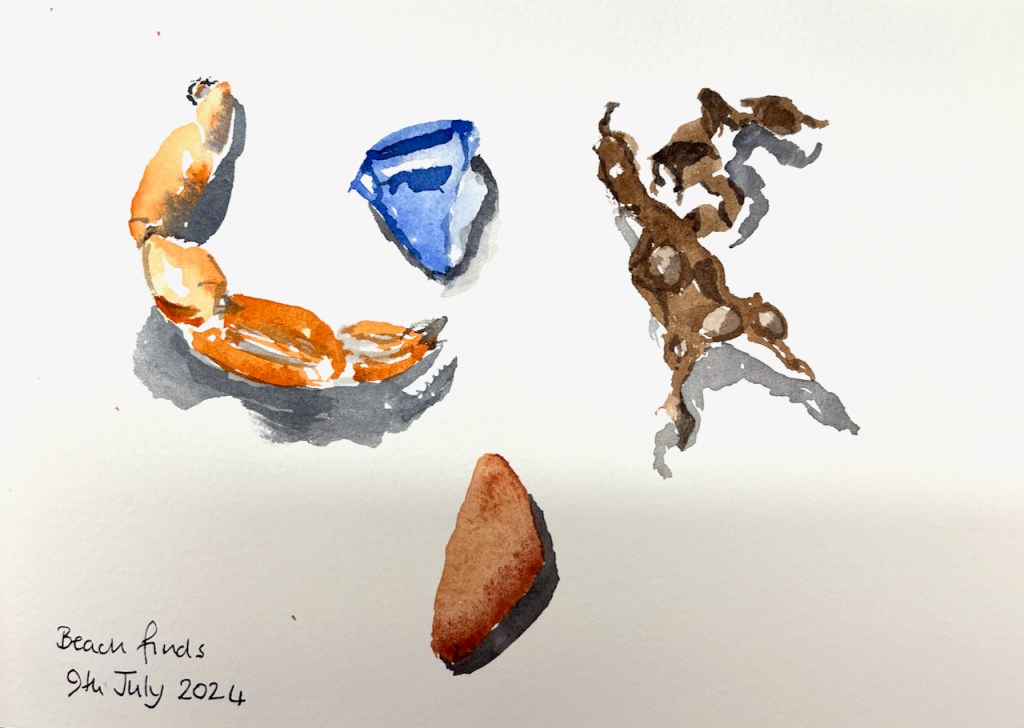
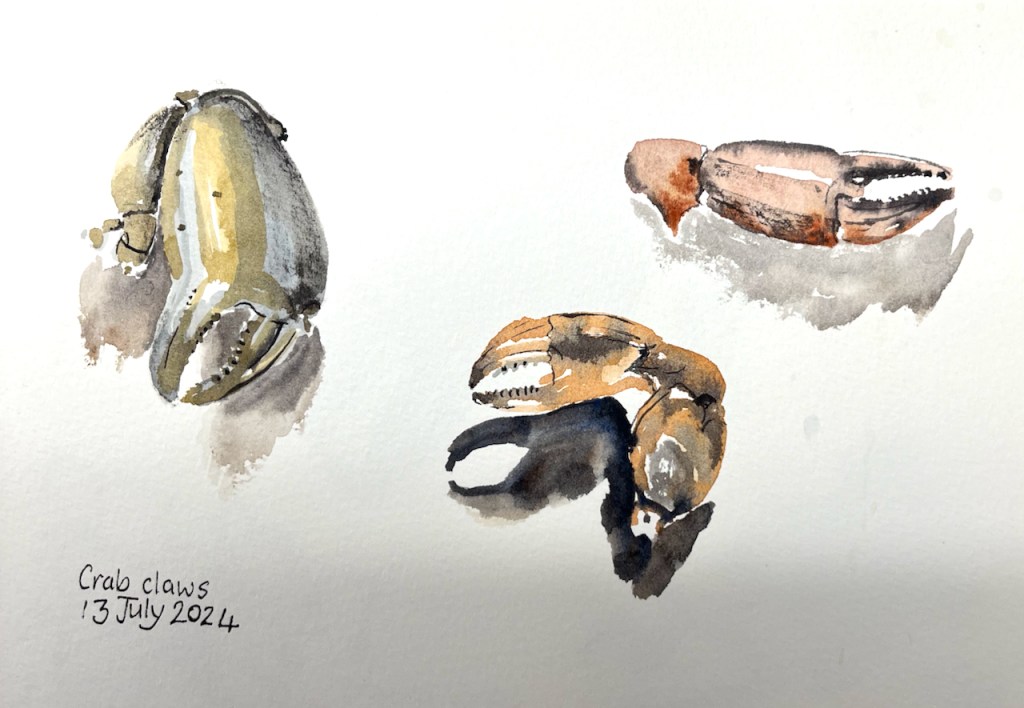
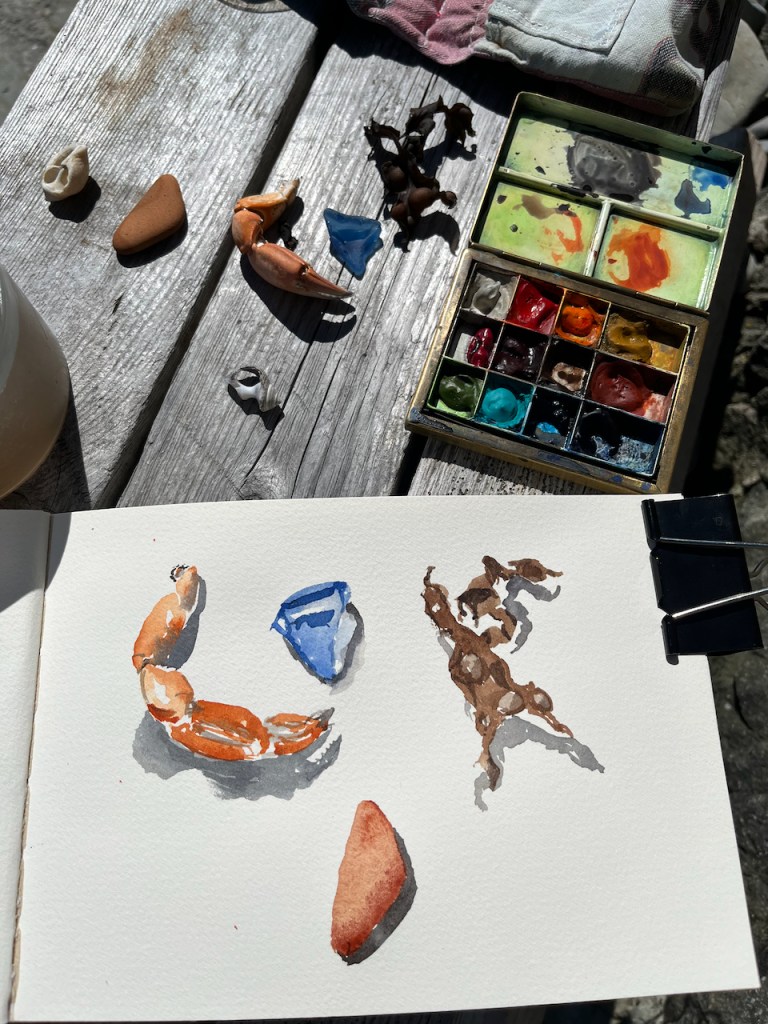
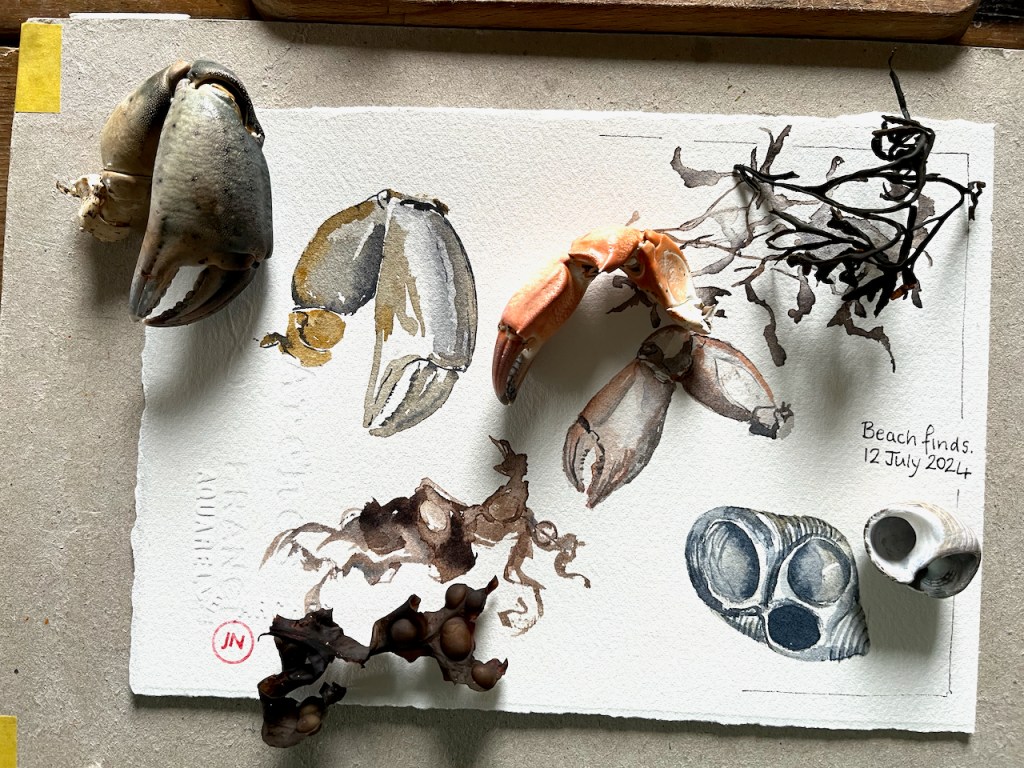
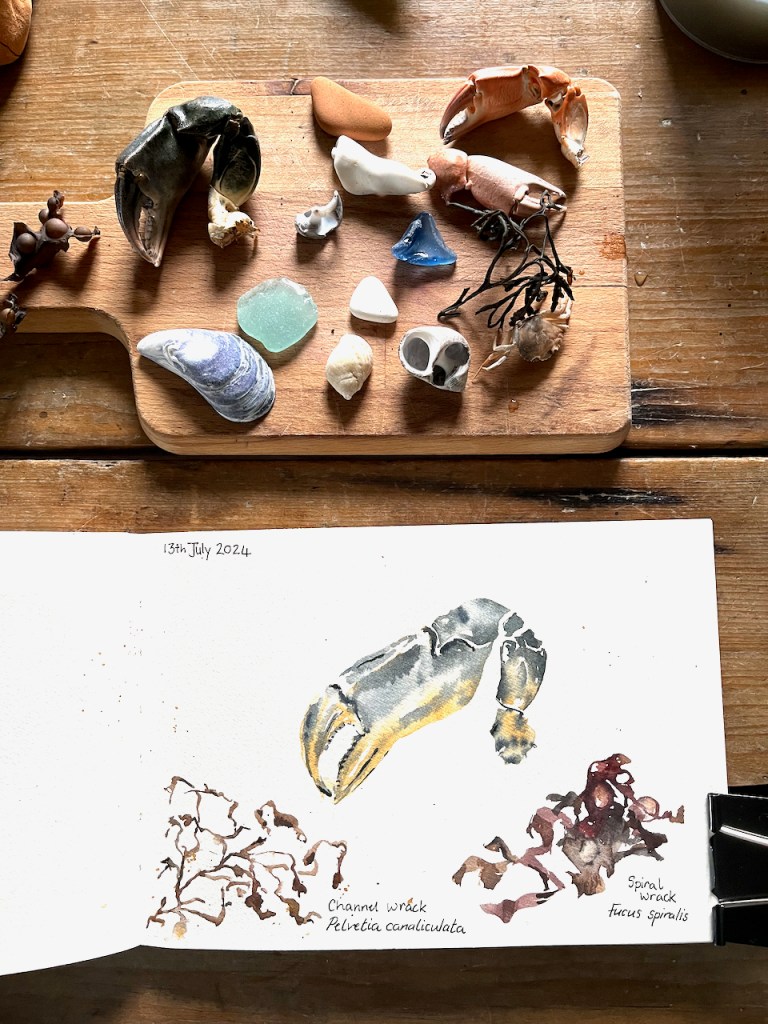
Here are beach finds.

A limpet shell, crab carapace x 2, seaweed, crab claw x 2
Lobster claw and dried seaweed
Crab claw, beach glass, terracotta, dried seaweed.

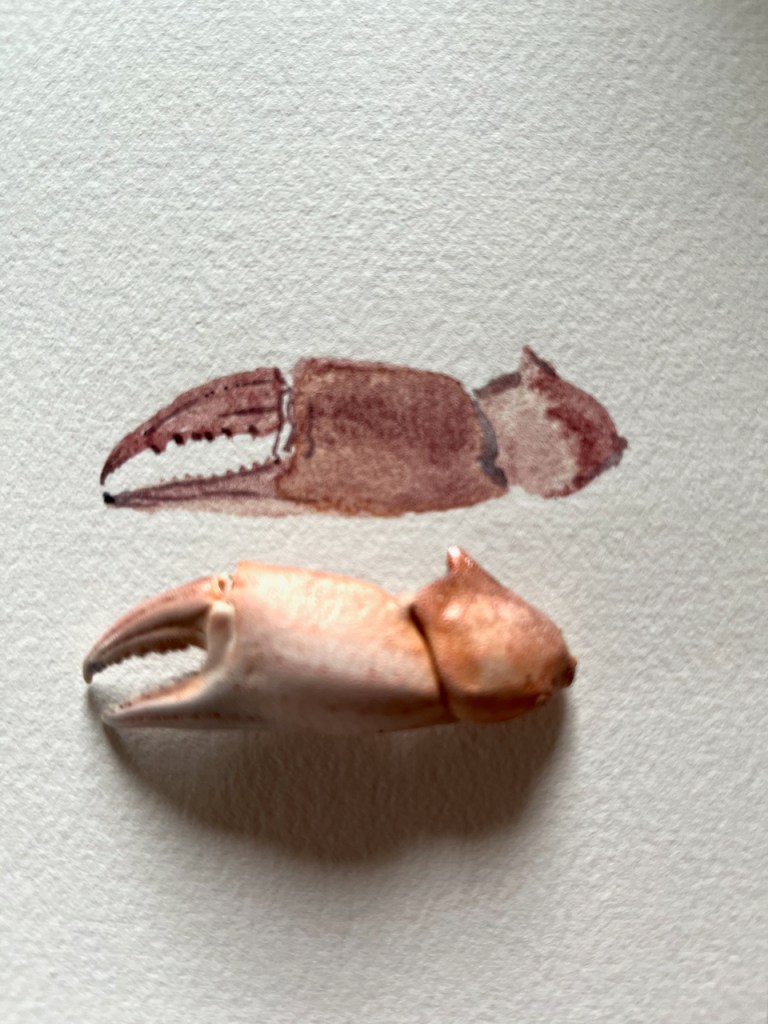
Three crab claws.

Shetland – another vehicle in space

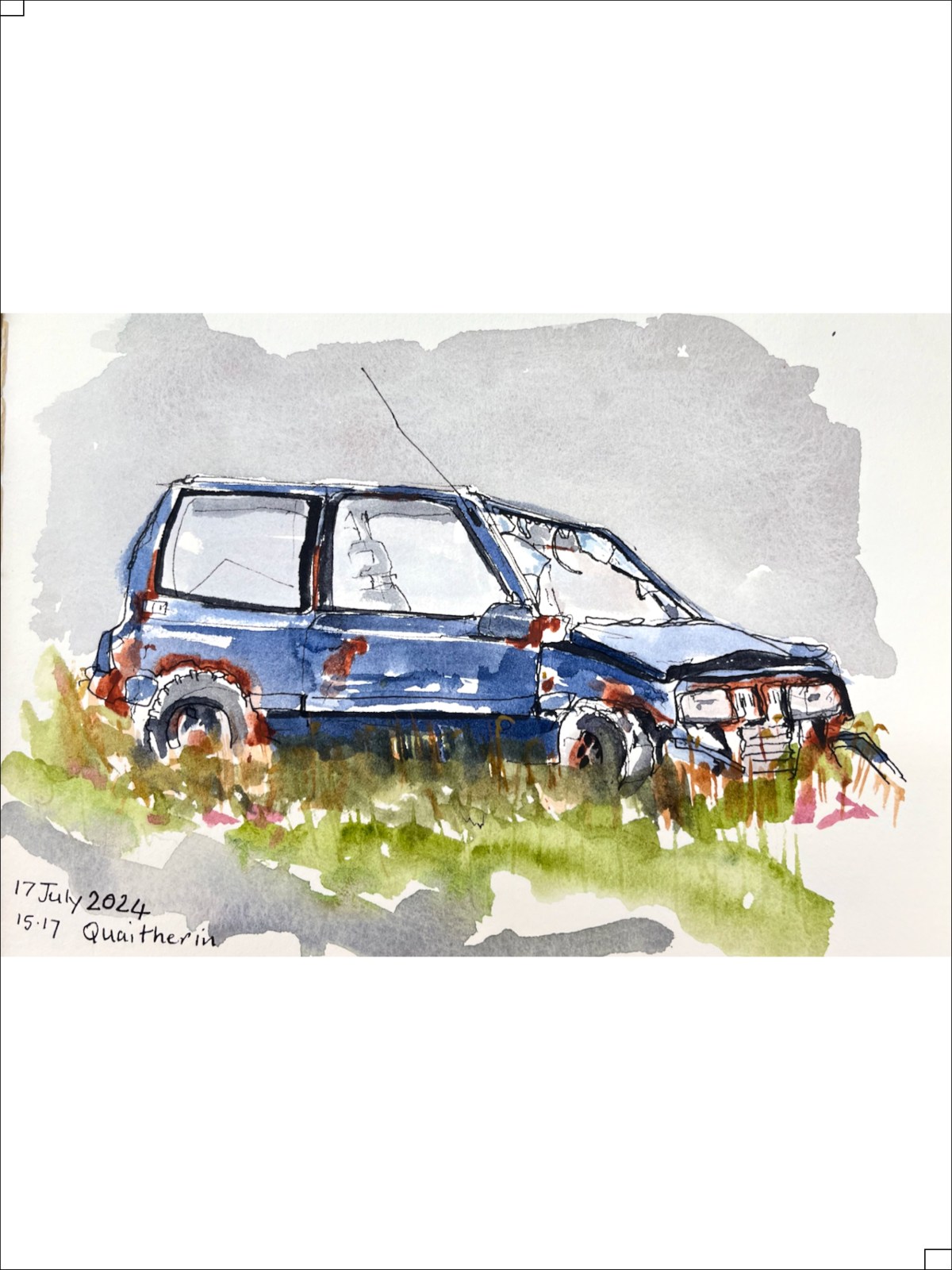
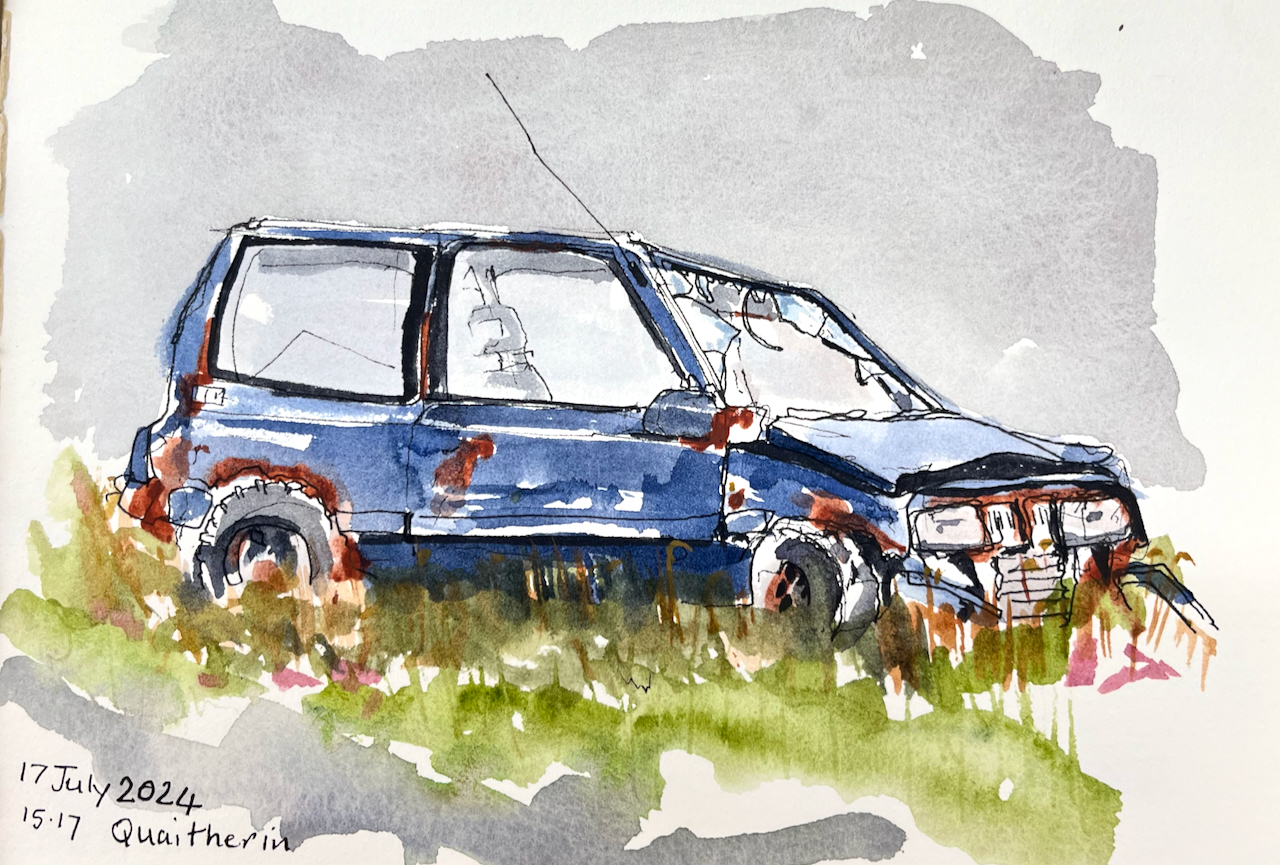
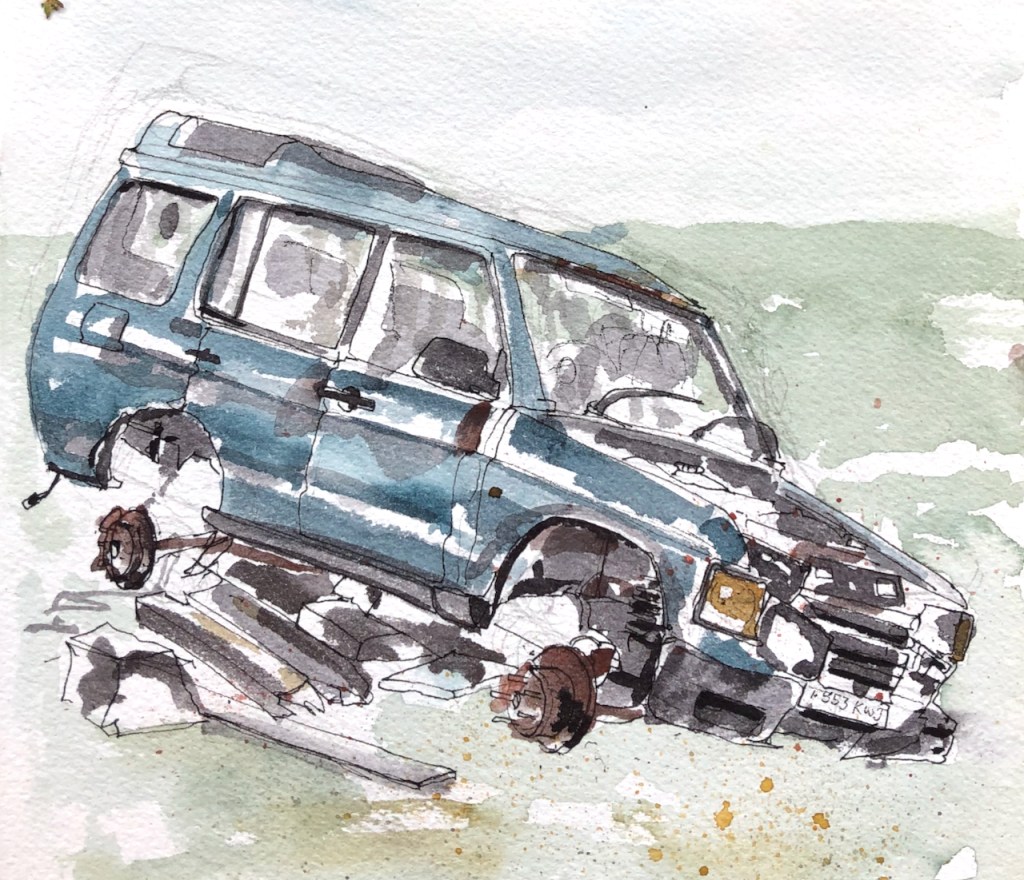
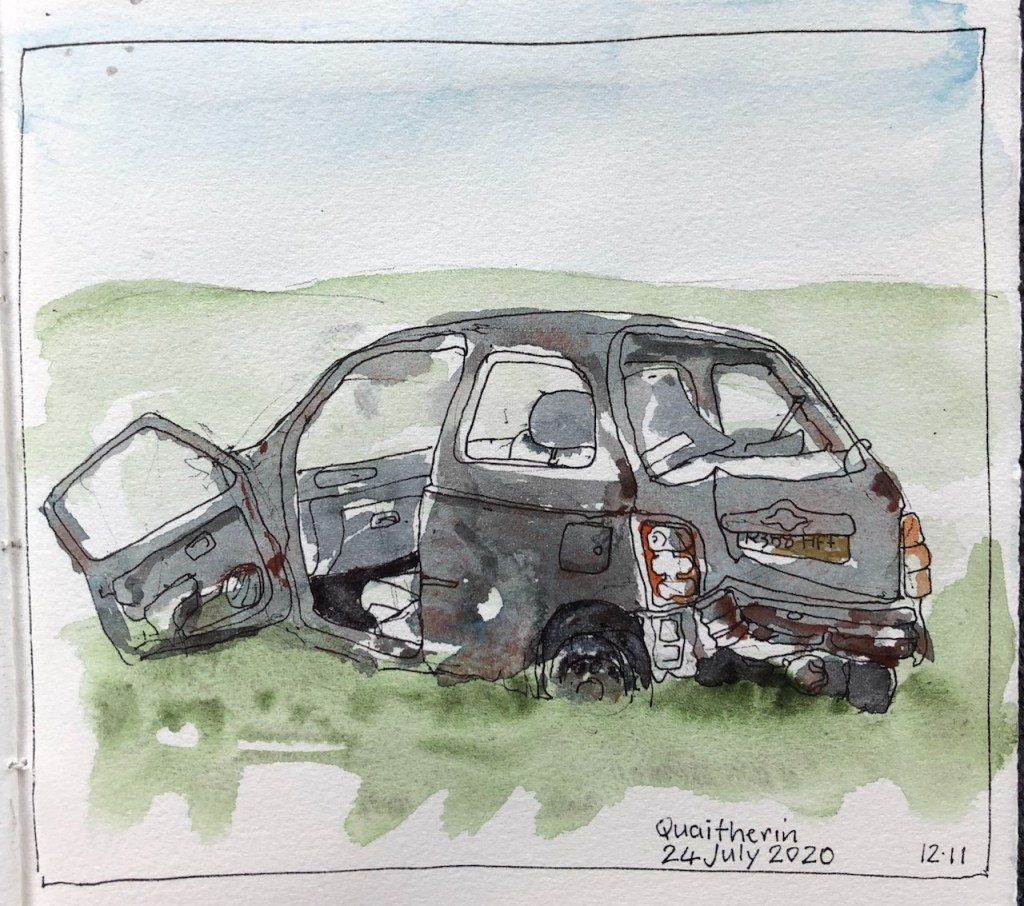
I have posted before about the wrecked cars that I sometimes encounter on my hikes around the Shetland landscape.

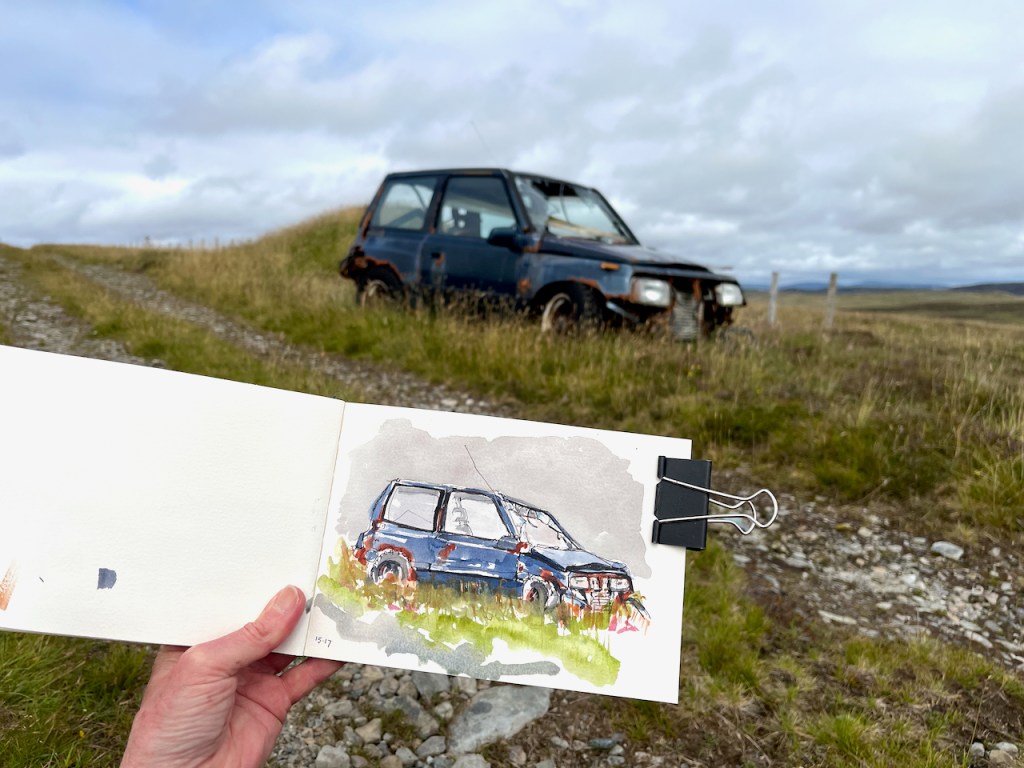
This year I encountered another one.

Wrecked car, Quaitherin, July 2024

Here are the others I have sketched:

I don’t want to give the impression that Shetland is littered with abandoned cars. It’s not. But there are certain hidden areas I’ve discovered which are car graveyards, and I now go there deliberately. I find something vaguely poetic, evocative, about an abandoned car in a wide pristine landscape. It’s as though the landscape frames it: puts a picture frame around it and says look! This twisted metal is art.
“look! this twisted metal is art.”
Shetland landscapes 2024

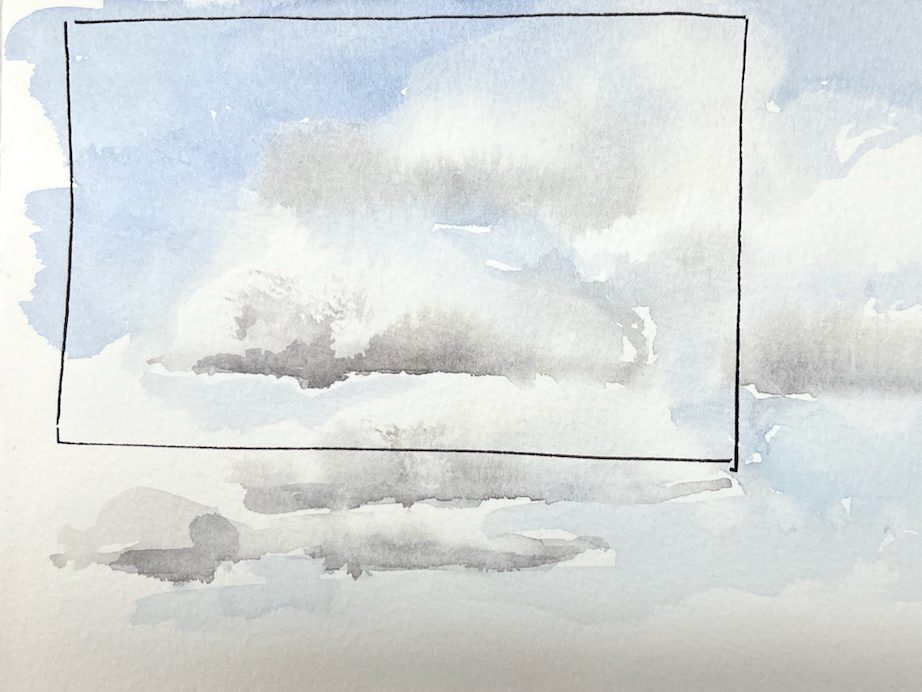
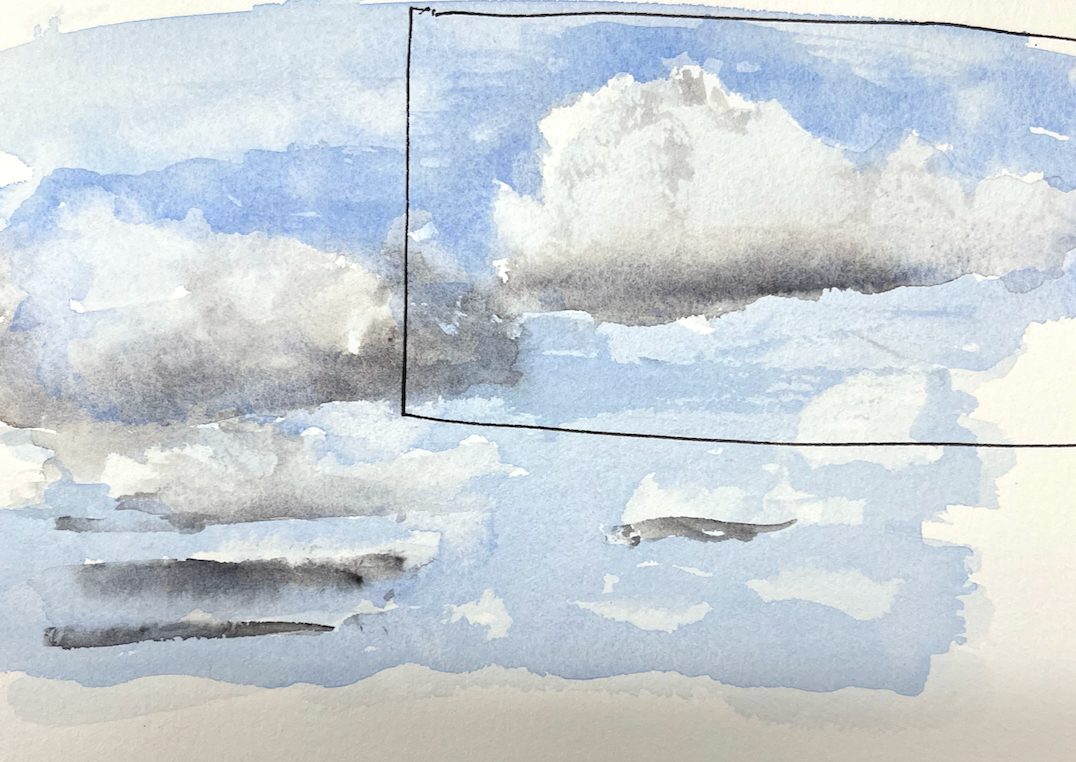
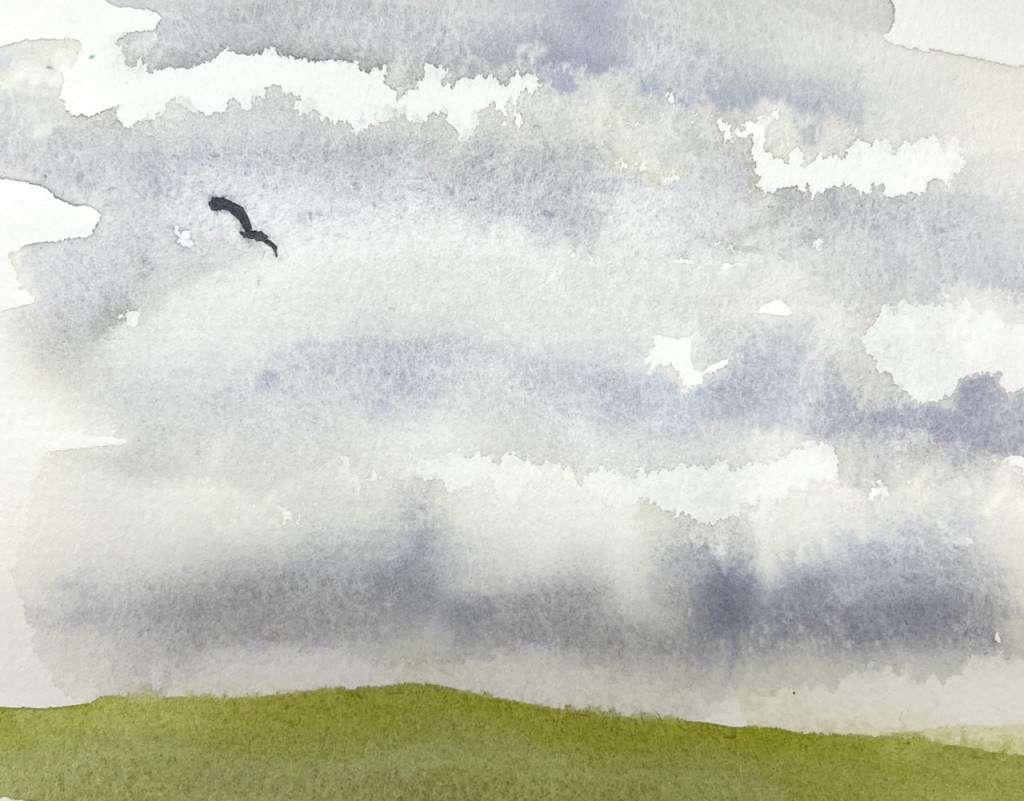
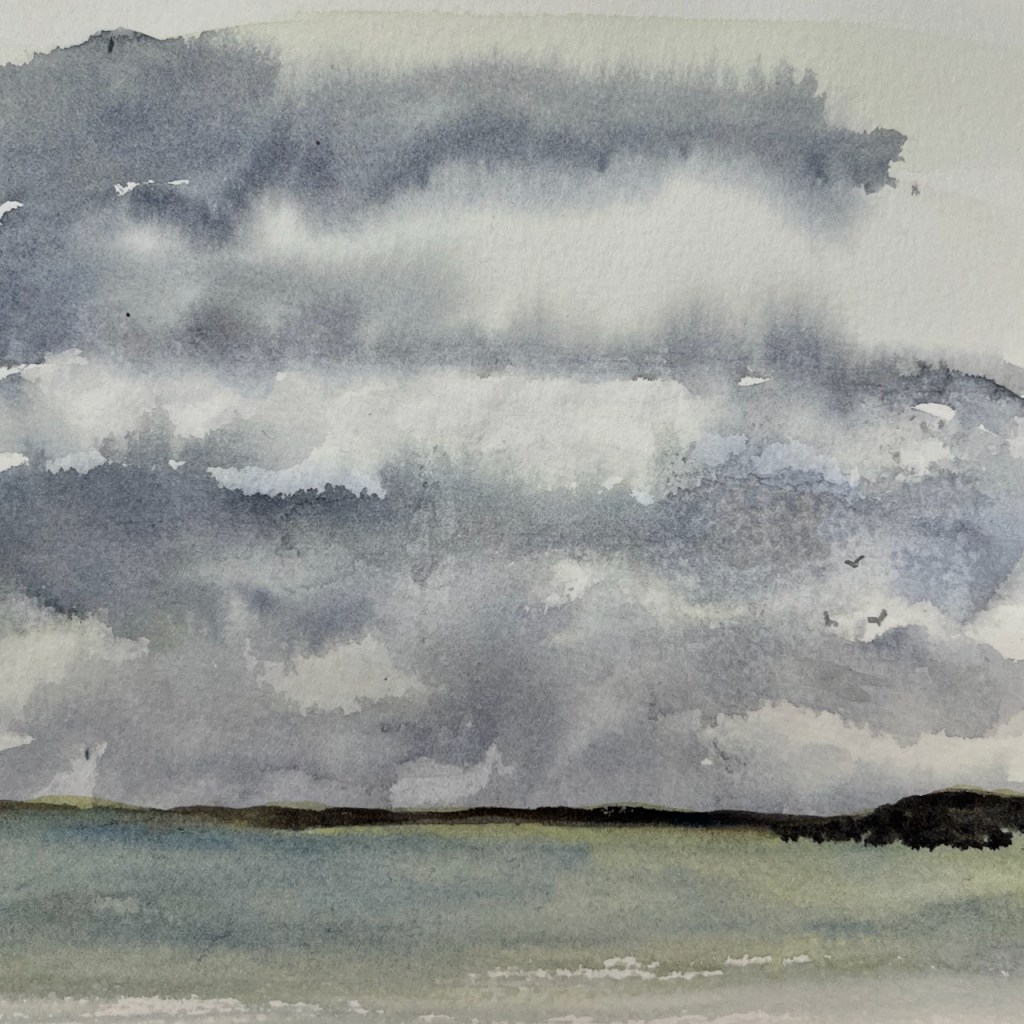
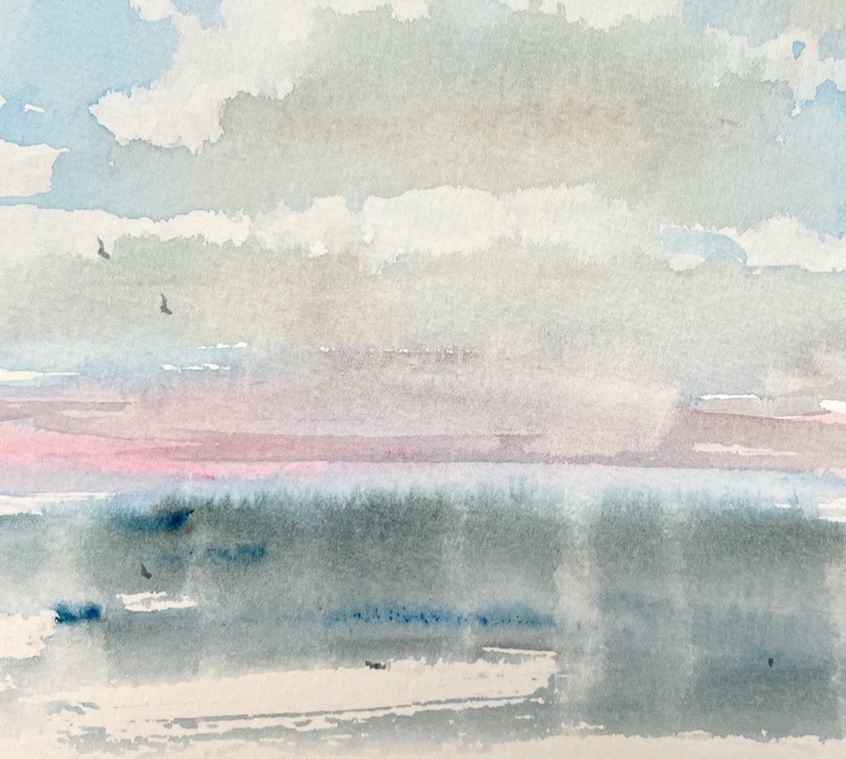
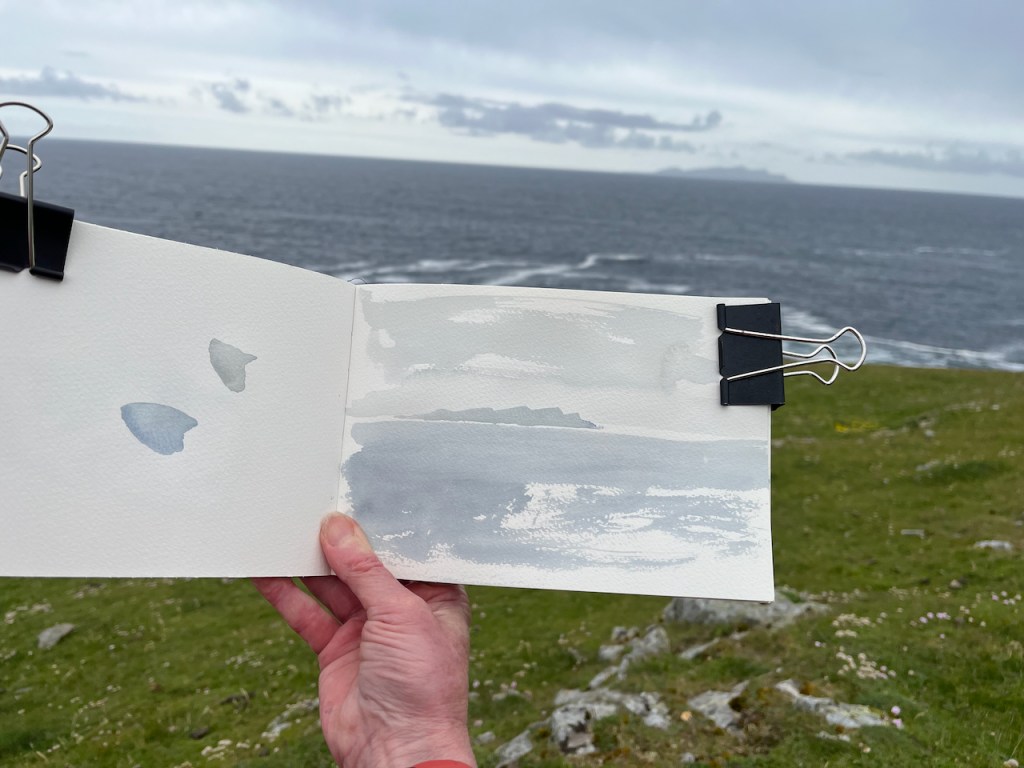
It was foggy and cold. I practised drawing clouds.

Islands in clouds

I went for a walk.

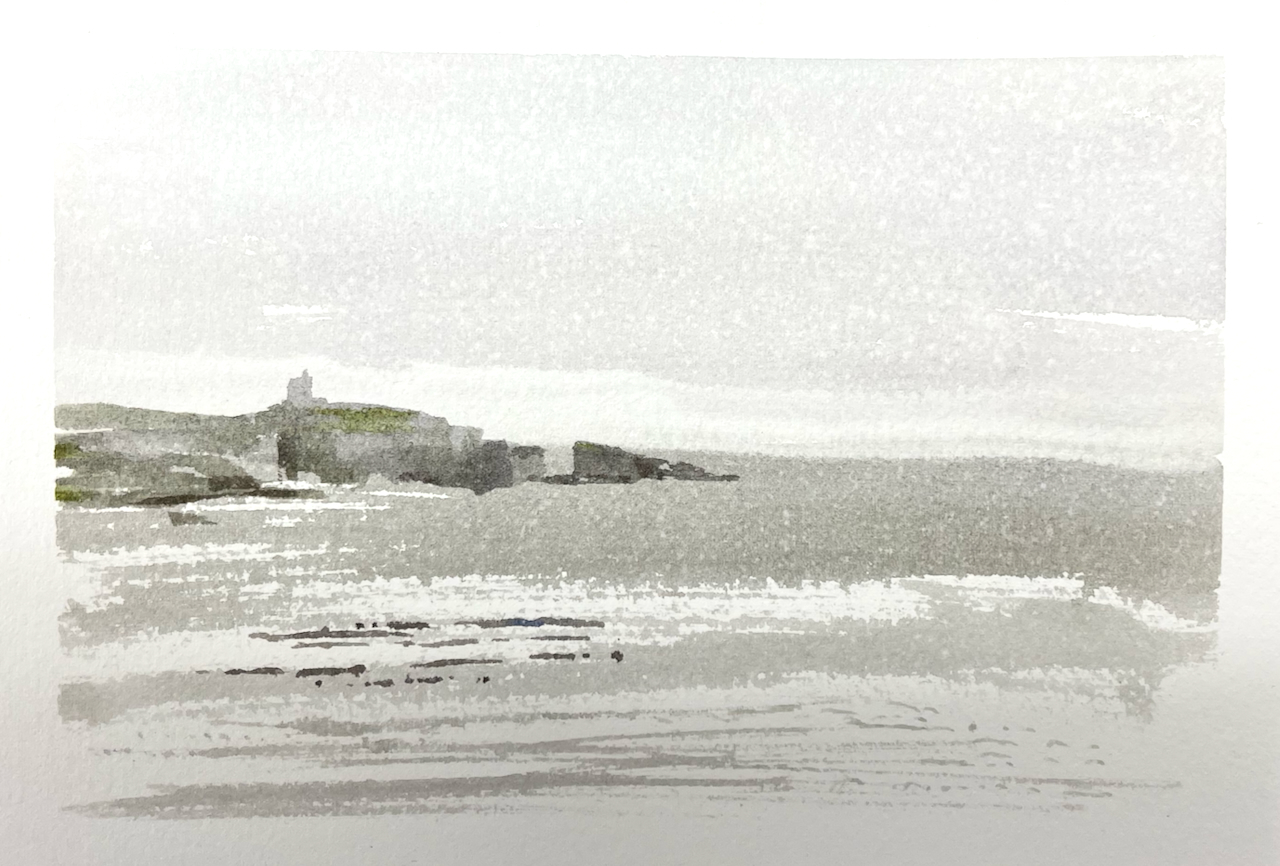
In the distance on the left is the island of Vaila. Here is Vaila in the fog.

Vaila in the fog

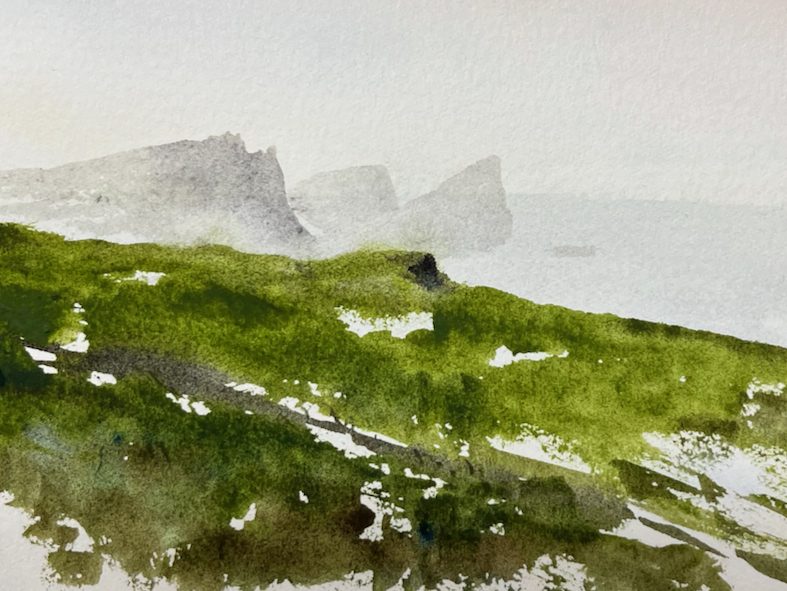
The speckled effect is the result of fine rain on watercolour.

When the sun shines in Shetland, it is magical. Part of the magic is that you know it is ephemeral. When the sun shines in Shetland, you have to get out there, right now. The clouds come quickly. But while the sun shines, enjoy it.

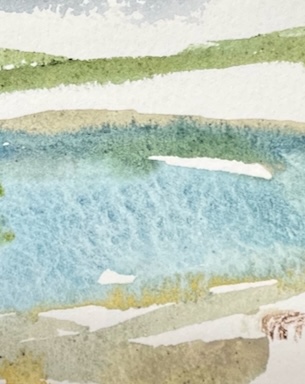
Footabrough, from the path to the Virda Stane, Shetland West side
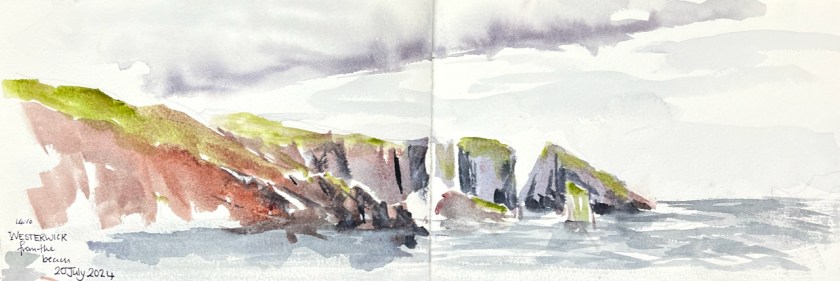
Westerwick
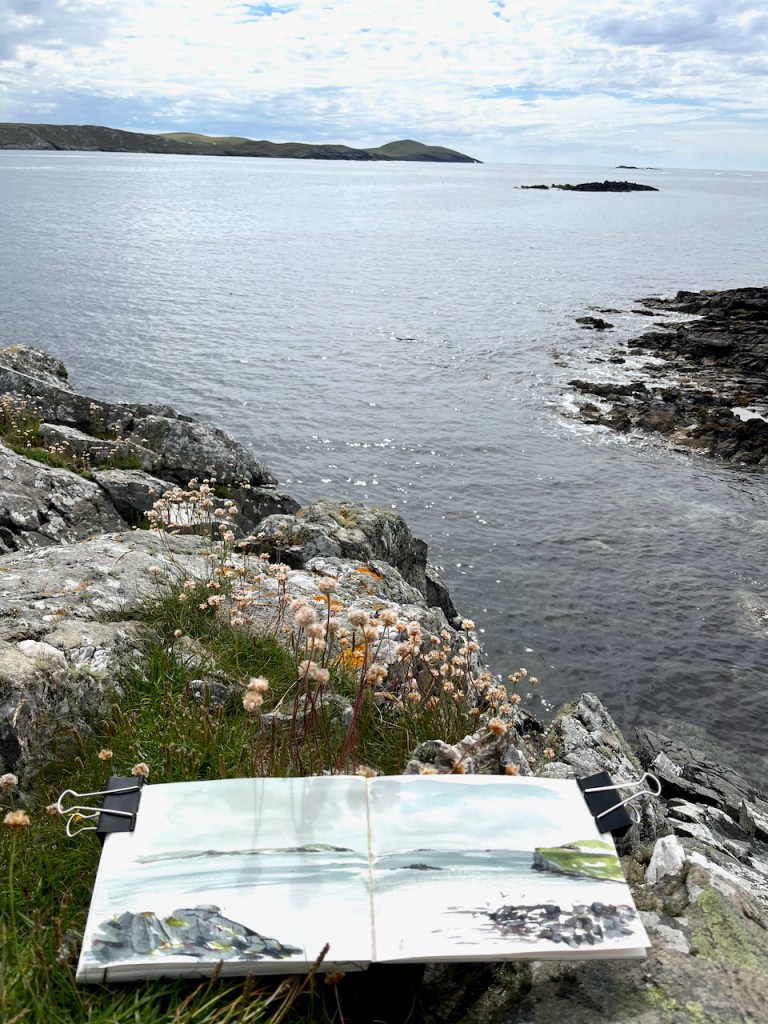
Sketching at Meal Beach, West Burra
Minn beach

The sun shone on a visit to Hamnavoe. There is a nearby beach called “Minn Beach”. The water is clear and the sand is white.

The light was dazzling. The water was cold: just over 10 degrees C. Swimming, I could see the grains of sand on the sea bed, perfectly clearly. As I swam on the surface of the water, it was as if I was flying over the sand. Except for the cold.

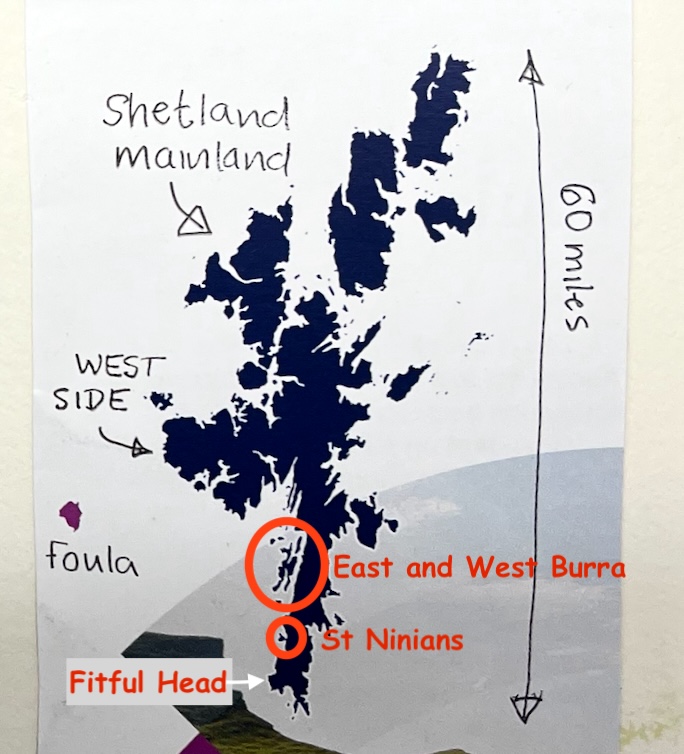
Minn Beach is on West Burra. See map below.

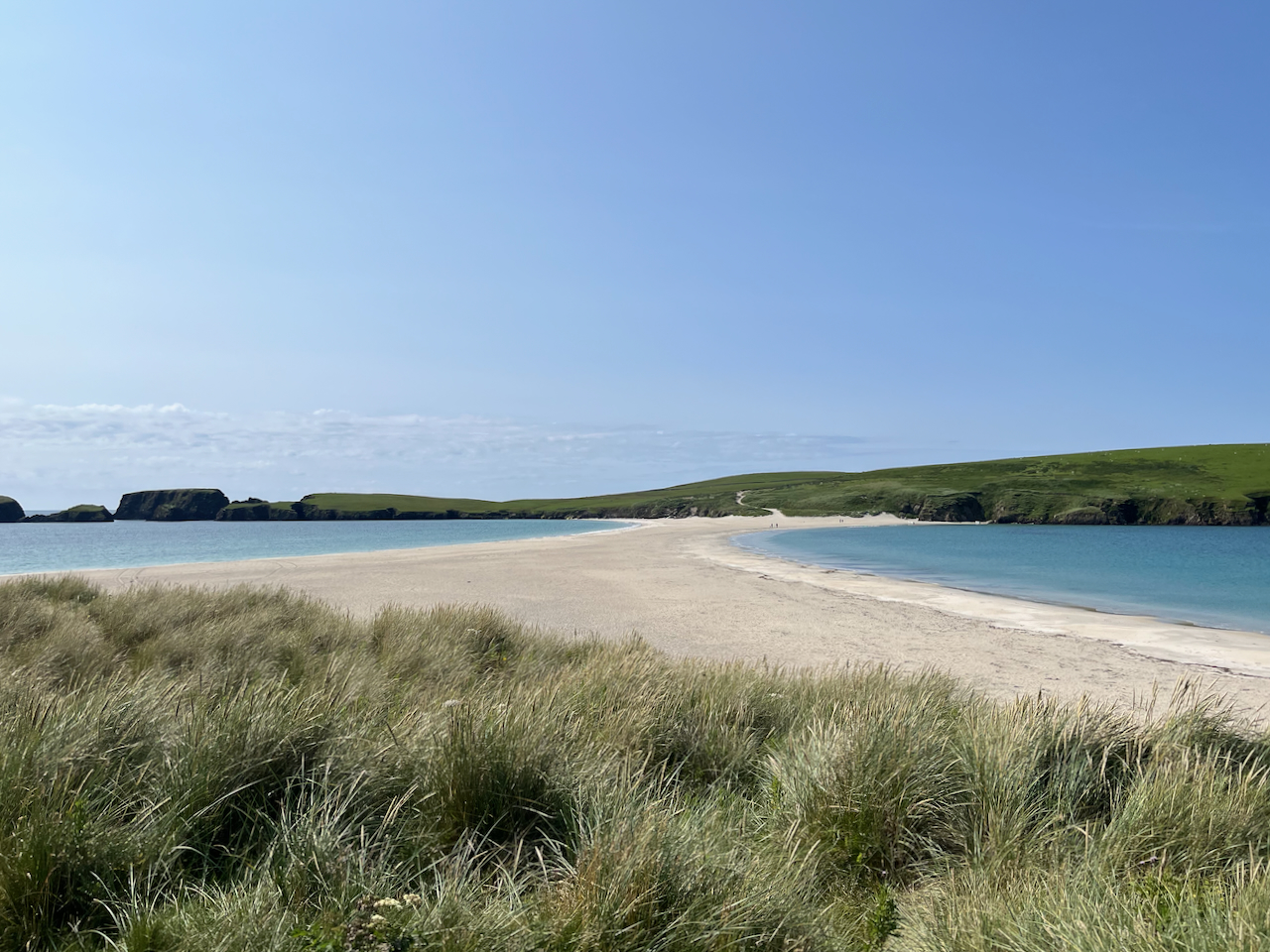
Further south is St Ninians, an island at the end of a long sand tombolo (sand bridge).

photograph looking towards St Ninians. To get an idea of distances, click to enlarge and find the people at the far end of the sand tombolo.

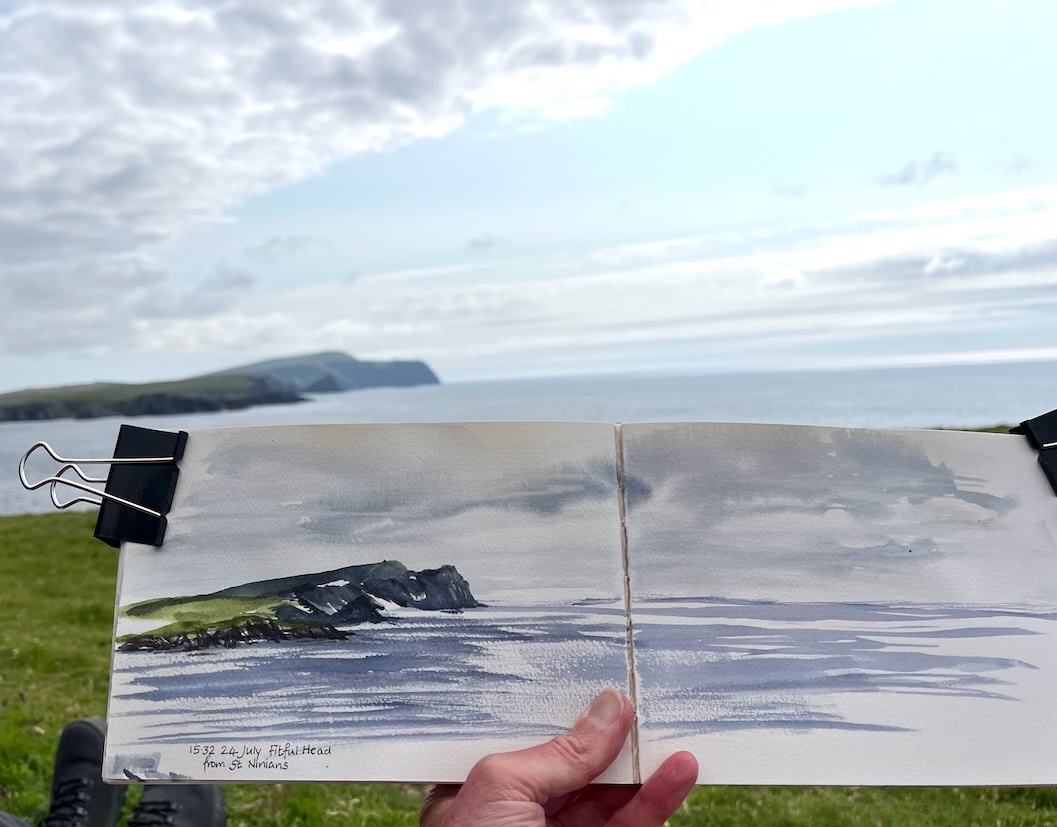
From the island, sheltering from the wind in the lee of a wall, I sketched Fitful Head.

Fitful Head from St Ninians.
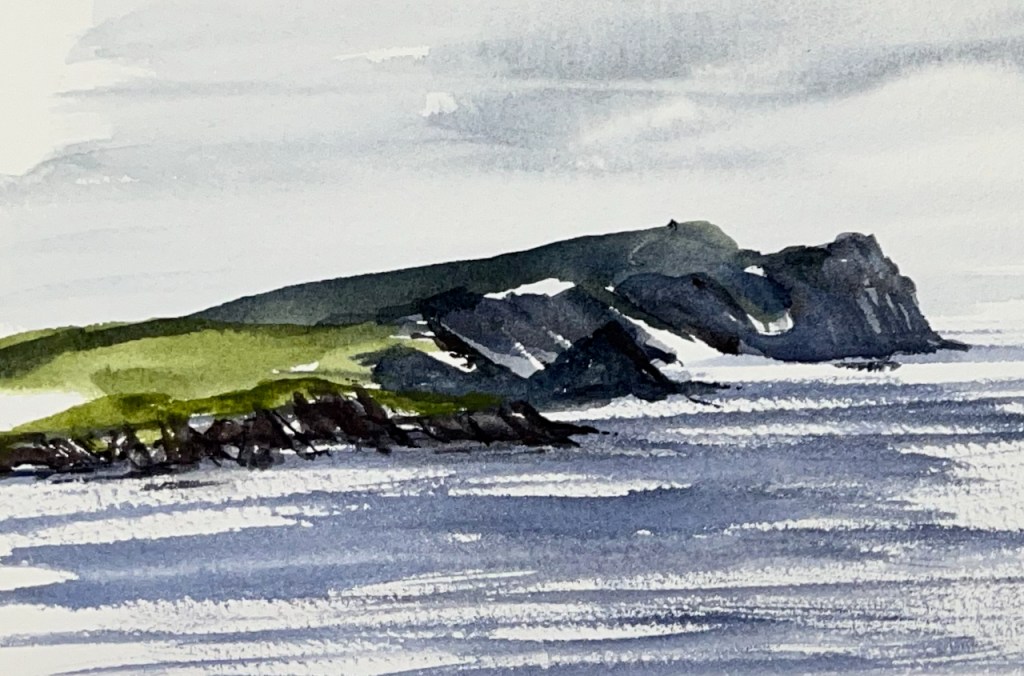
Fitful Head from St Ninians, detail.

Even though the wind shifts the pages and disrupts my lines, even when the rain speckles my colours and blurs the clean edges I drew, even though the view changes by the minute and I find it impossible to catch the glory of the light and the magnificent shape of the land, even though my sketchbook is small and my skills are limited, despite all those things, I think it’s always worth having a go at drawing. The pictures I draw remind me of being there. Of the wind, the rain, the changing clouds, the glorious light and the vast, curving headland.

On St Ninians isle
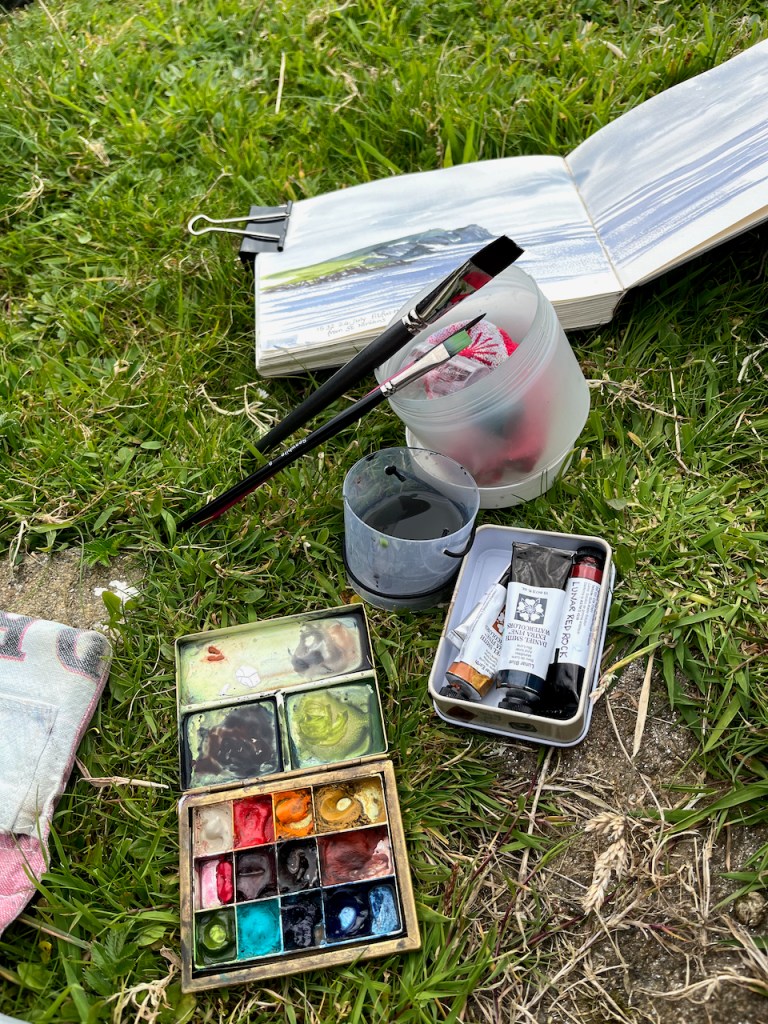
  • Paint palette by Classic Paintboxes
  • Colours by Daniel Smith and Schmincke
  • Paintbrushes by Rosemary brushes and Seawhite
  • Watercolour sketchbook by JP Purcell (190gsm, A5, cold-pressed)

Foula

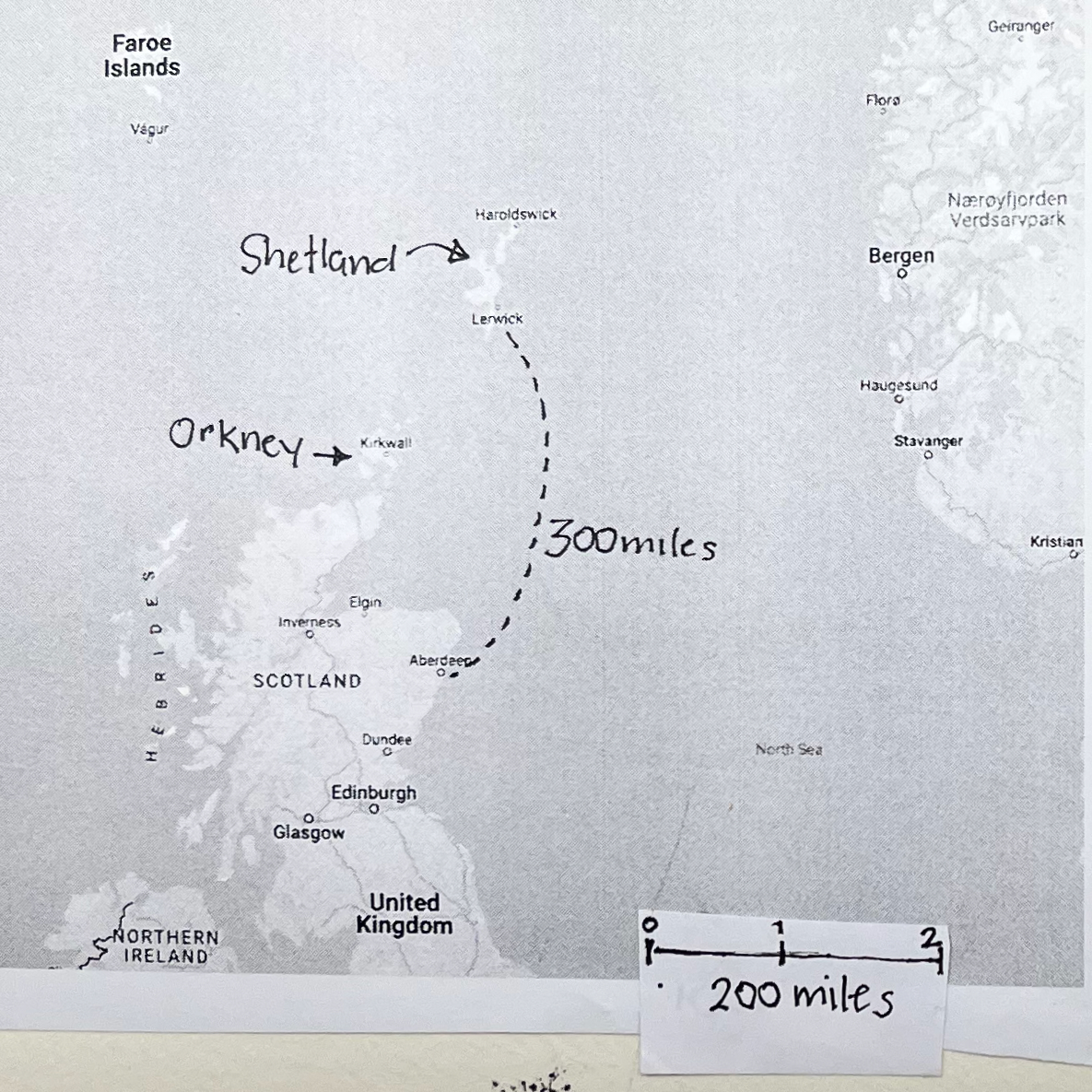
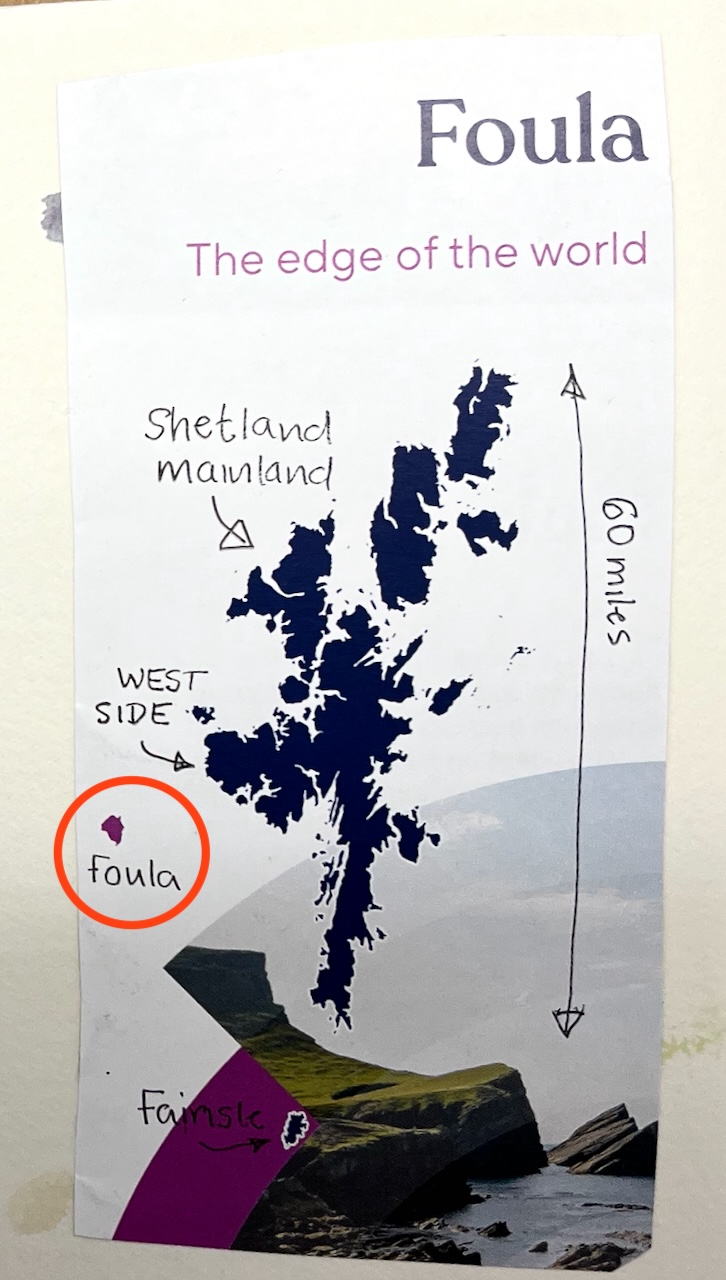
Foula is a small island 20 miles off the west coast of mainland Shetland. Shetland is a group of islands about 200 miles north of Scotland.

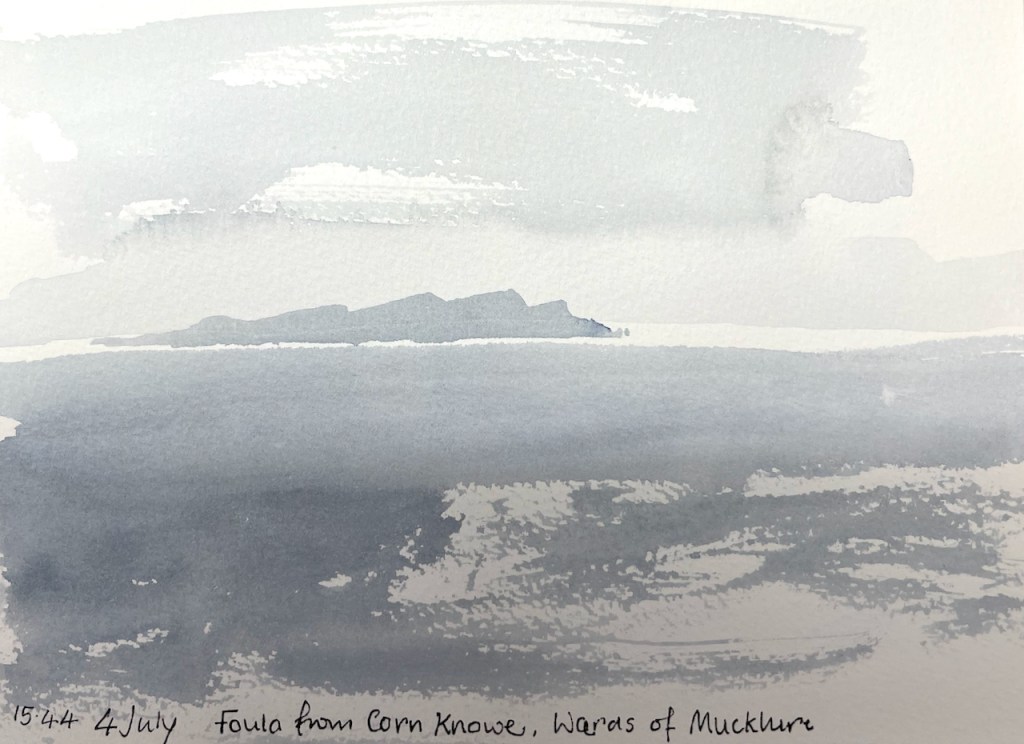
I had seen Foula, from a distance, on previous visits to Shetland. It floats on the horizon, mysterious.

Foula, seen from Mainland Shetland

So I had to visit. What is it like there?

Here is a Foula scene:

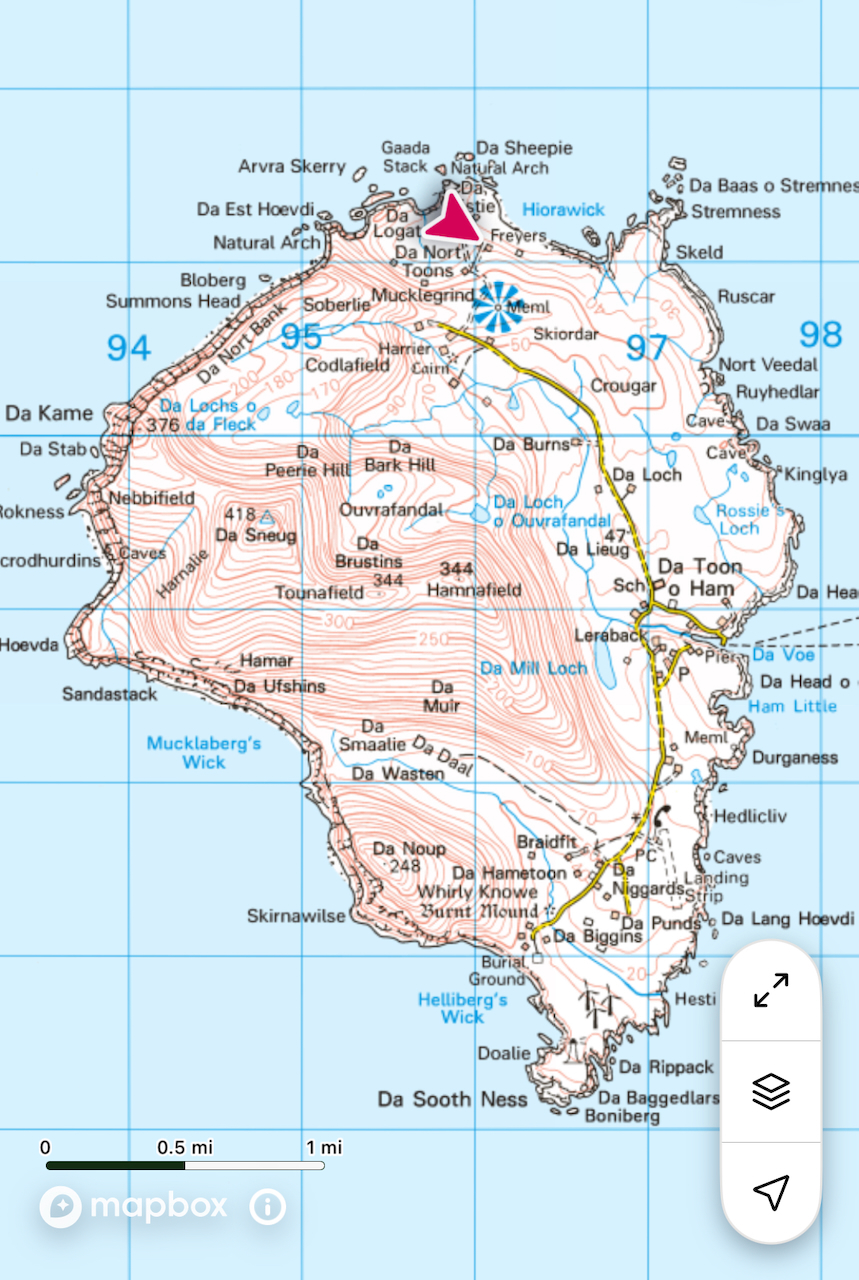
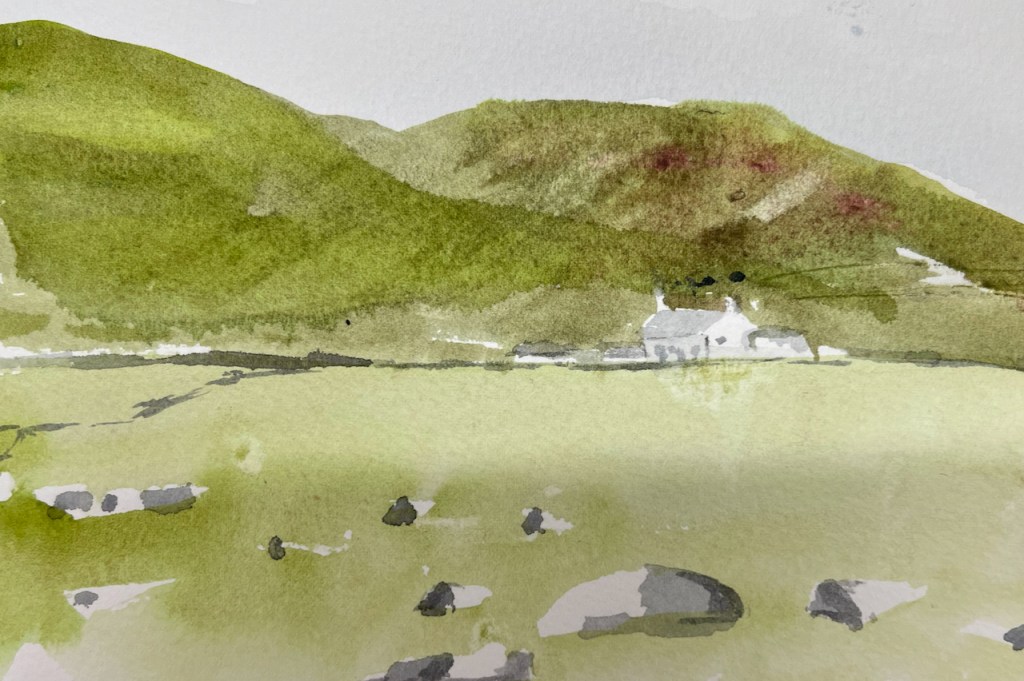
Foula: sketched at Da Punds, between the Wind Turbines and the Airstrip.

I sketched this sitting on one of the stones, on a bit of flat and marshy land towards the south of the island. The road is in front of me, at the foot of those hills.

I had to sketch this in a bit of a rush, because, as I rapidly discovered, this particular area is the province of the Skua. There are Great Skua and Artic Skua: large birds, who do not like sketchers sitting on stones in their neighbourhood. They make their irritation known by aggressive fly-pasts. I could hear the wind in their feathers: it sounded like a chain saw. So I quickly took the hint and made for the road. Locals later told me I should “carry a stick above my head”, to distract the skua. That’s all very well, but finding a stick on Foula is about as likely as finding a branch of Pret. There are no trees atall on this part of the island, so no handy lengths of wood.

Other inhabitants of Foula were more welcoming, including the friendly people. The sheep are unafraid, and came towards me as I walked. The horses too seemed pleased to see me. I met the person who is one of the breeders of these horses on the island. “Pat them, talk to them, but don’t feed them!” she instructed me. Feeding them in the wrong order disrupts their established hierarchy and causes fights, she explained. “And,” she added, with emphasis, “make sure you close the gate!!”. There followed stories of visitors leaving gates open, and the subsequent escapades of the stallion, who visited mares he was not supposed to visit….

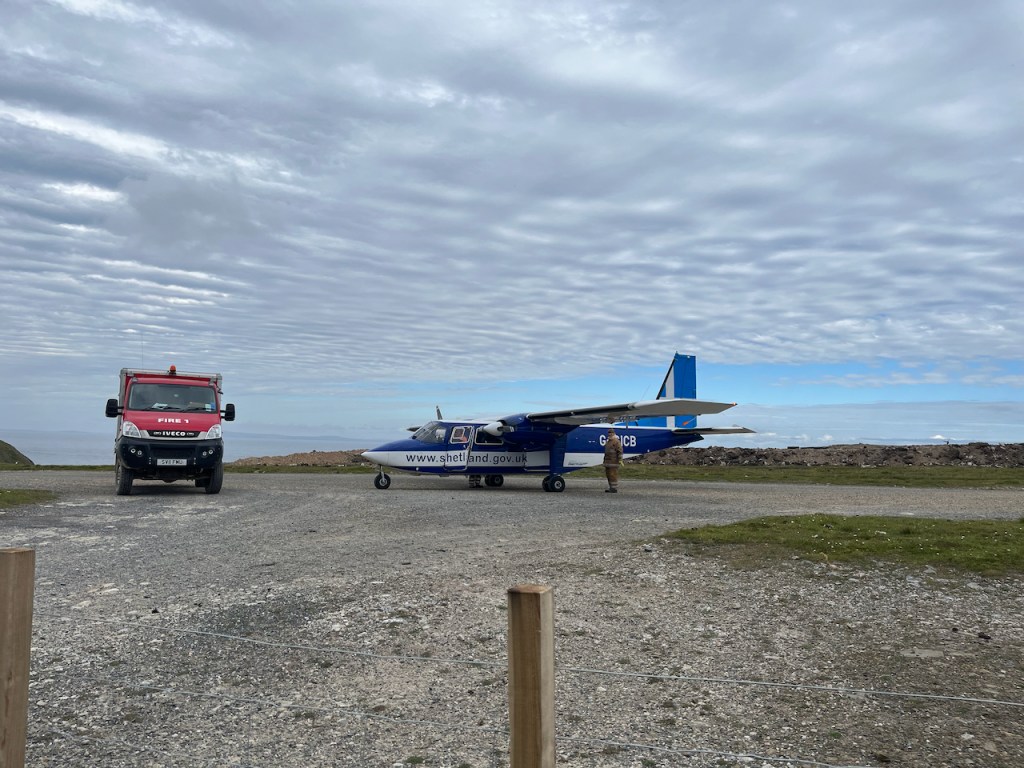
Foula is an industrious place, I discovered. As well as horse breeding, and sheep breeding, there is spinning to produce special Foula Wool, peat cutting, and a lot of horticulture. Also there is a school, a lighthouse, a ferry and an airstrip. The air strip needs a fire crew, as well as pilots. The school has a teacher. There are wind turbines and a very effective 5G mobile signal mast, with big dishes directed at mainland Shetland. This is a lot of activity for a place of only 35 inhabitants, especially as six of those inhabitants are primary school children.

The plane and the fire truck on the airstrip at Foula

Horticulture takes place in polytunnels and inside abandoned cars. As on mainland Shetland, vegetables and flowers will grow, so long as you can shelter them from the wind. I was given local raspberries from a polytunnel at the school.

It was rather foggy when I visited, so I opted for lowland routes and did not climb the formidable mountains shown in the picture above. Had I done so, I would have seen the famous 1000ft sea cliff. But I was wary. I did not want to stumble across the famous cliff in the fog.

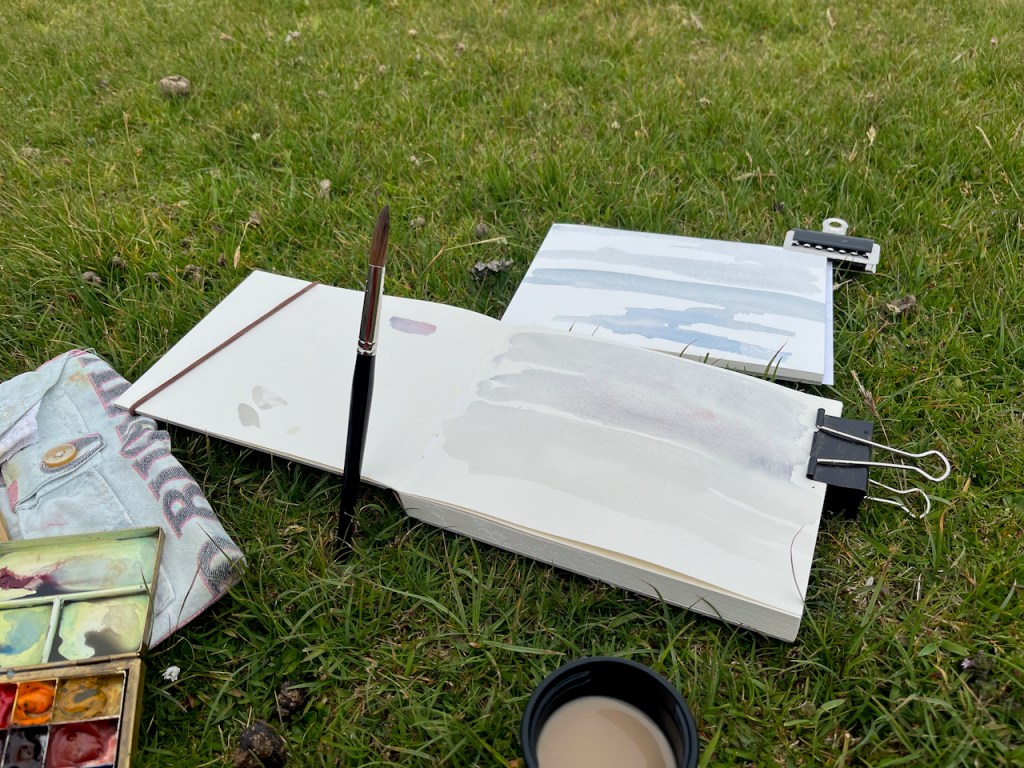
Sketching in the fog

I was staying at “Ristie self-catering”, in the North of the island. Here is the scenery round there.

The edge of the world.

Foula on the horizon

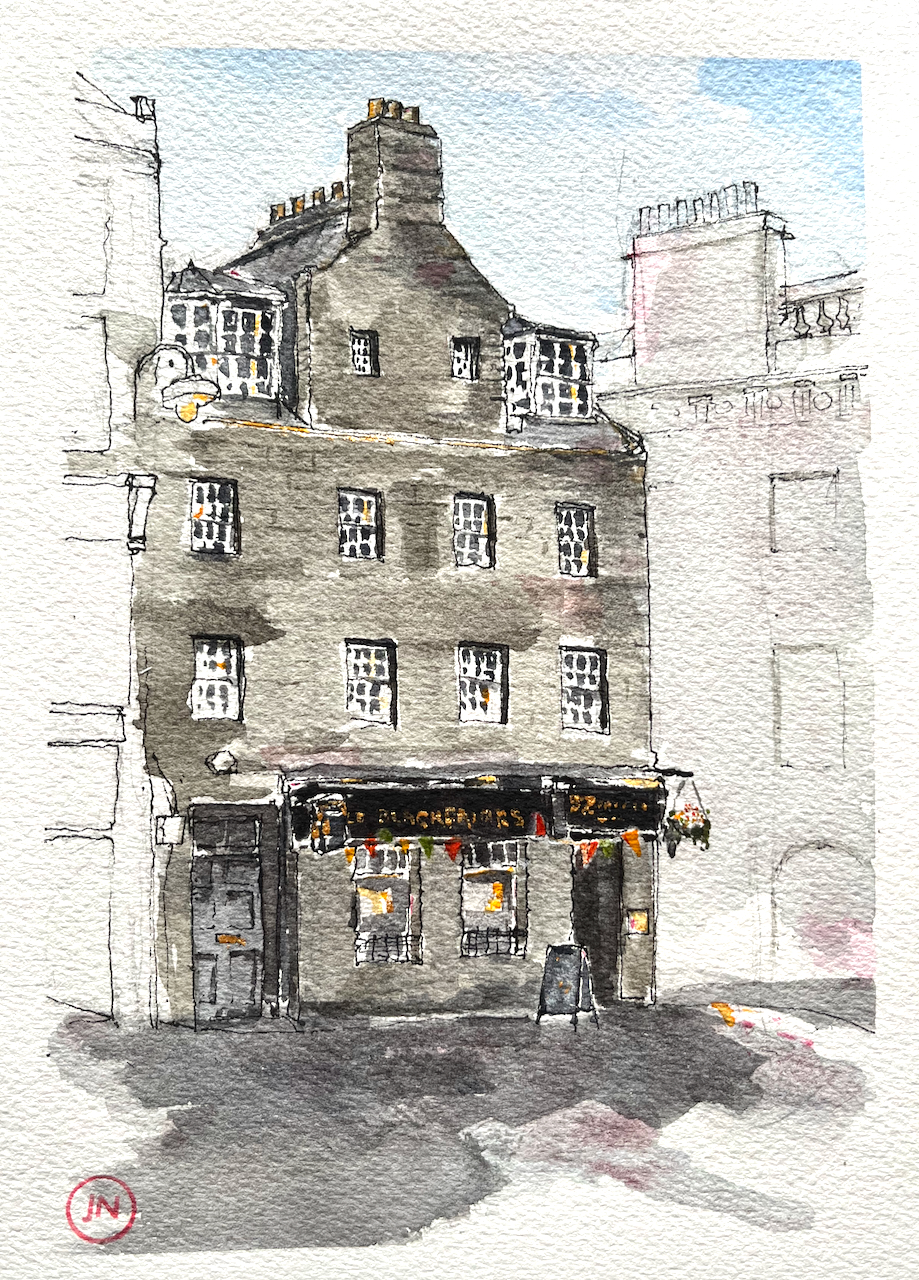
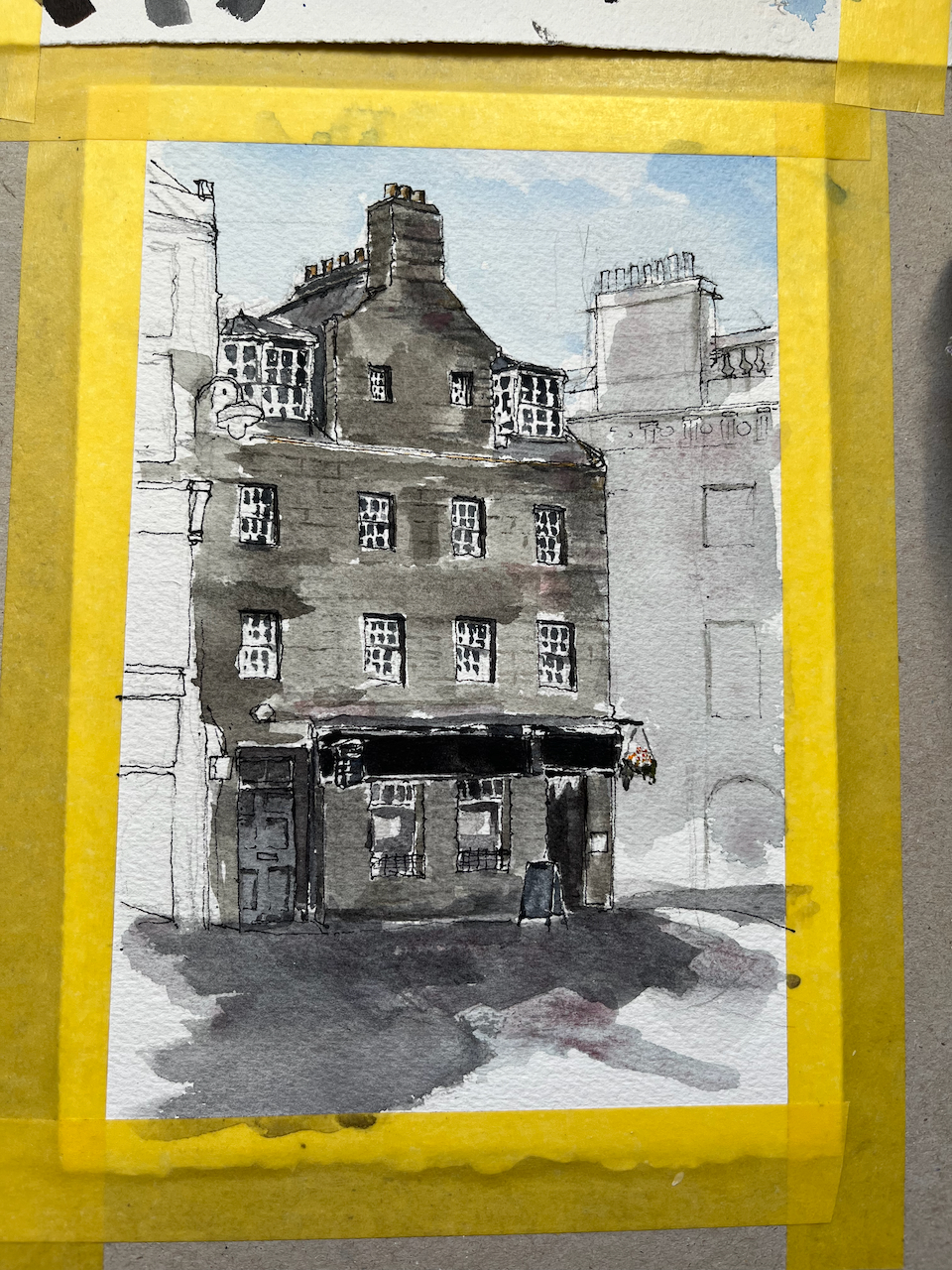
The Old Blackfriars, Aberdeen

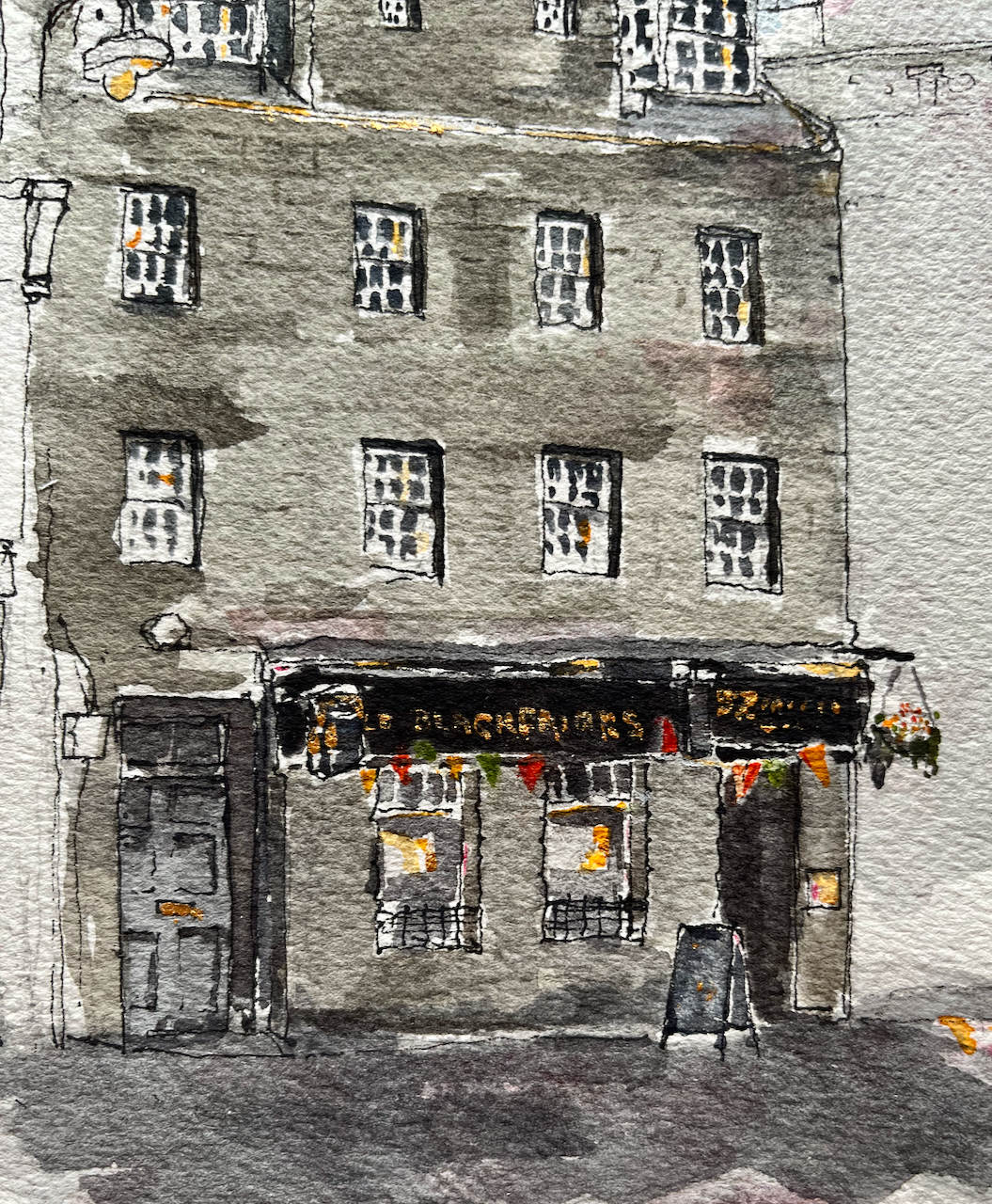
This is the Old Blackfriars, 52 Castle St, Aberdeen.

The Old Blackfriars, Aberdeen AB11 5BB, sketched 24 June 2024, 20cmx14cm (A5), [commission]

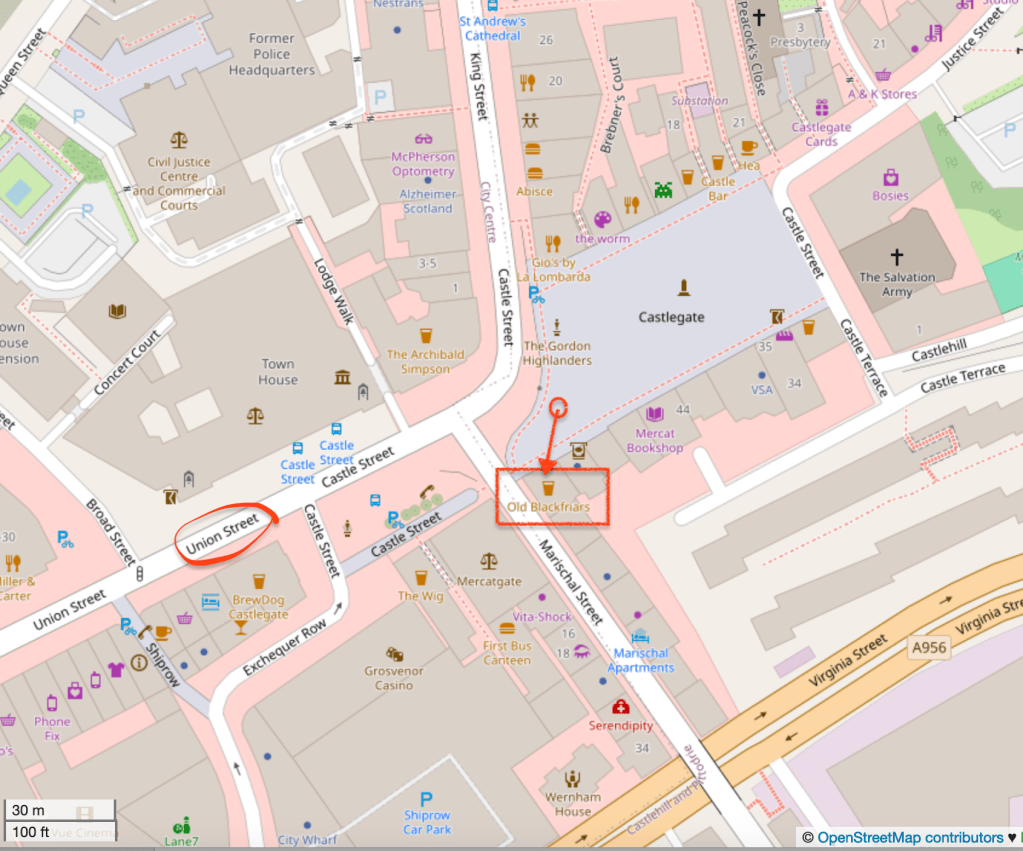
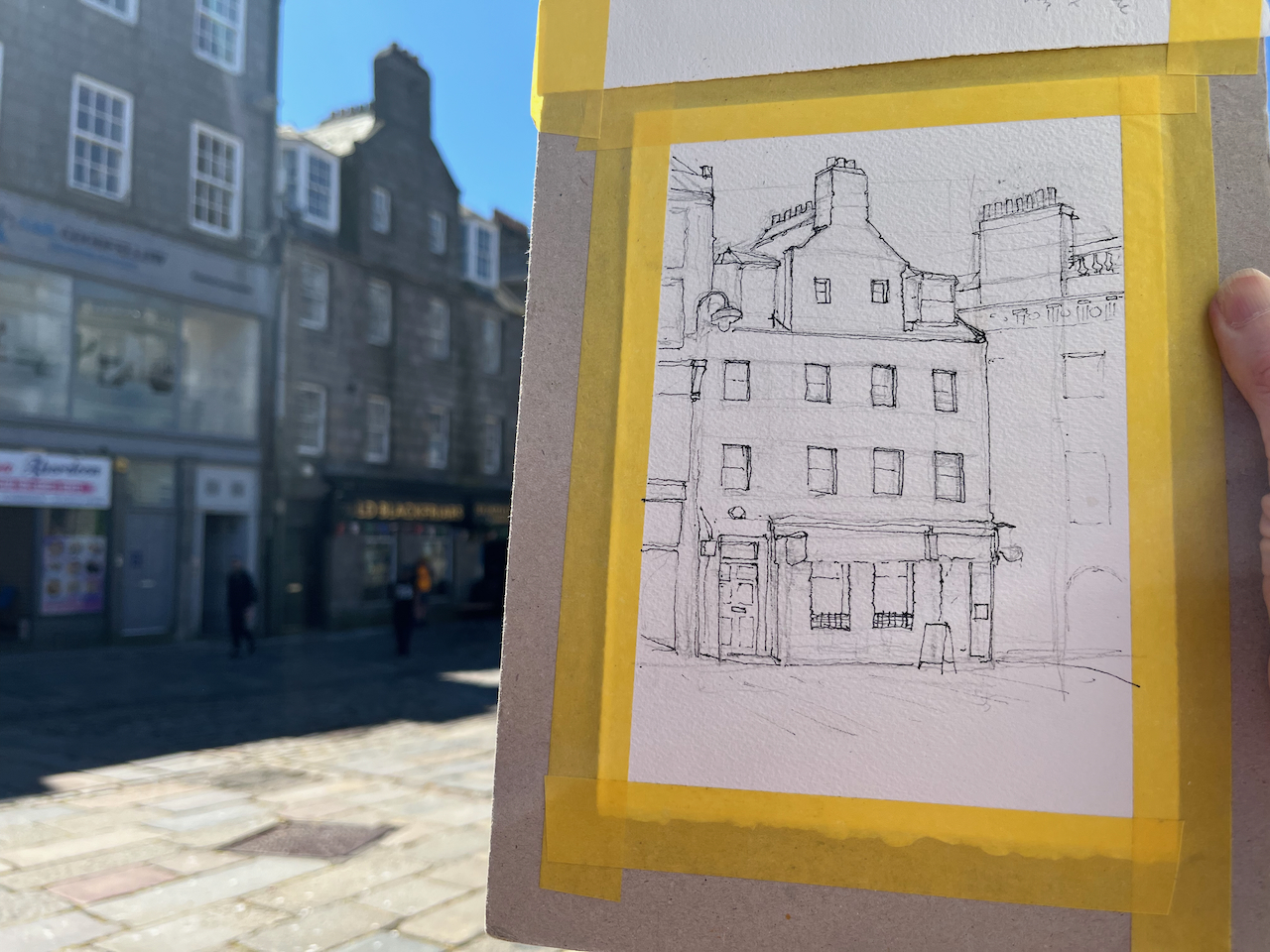
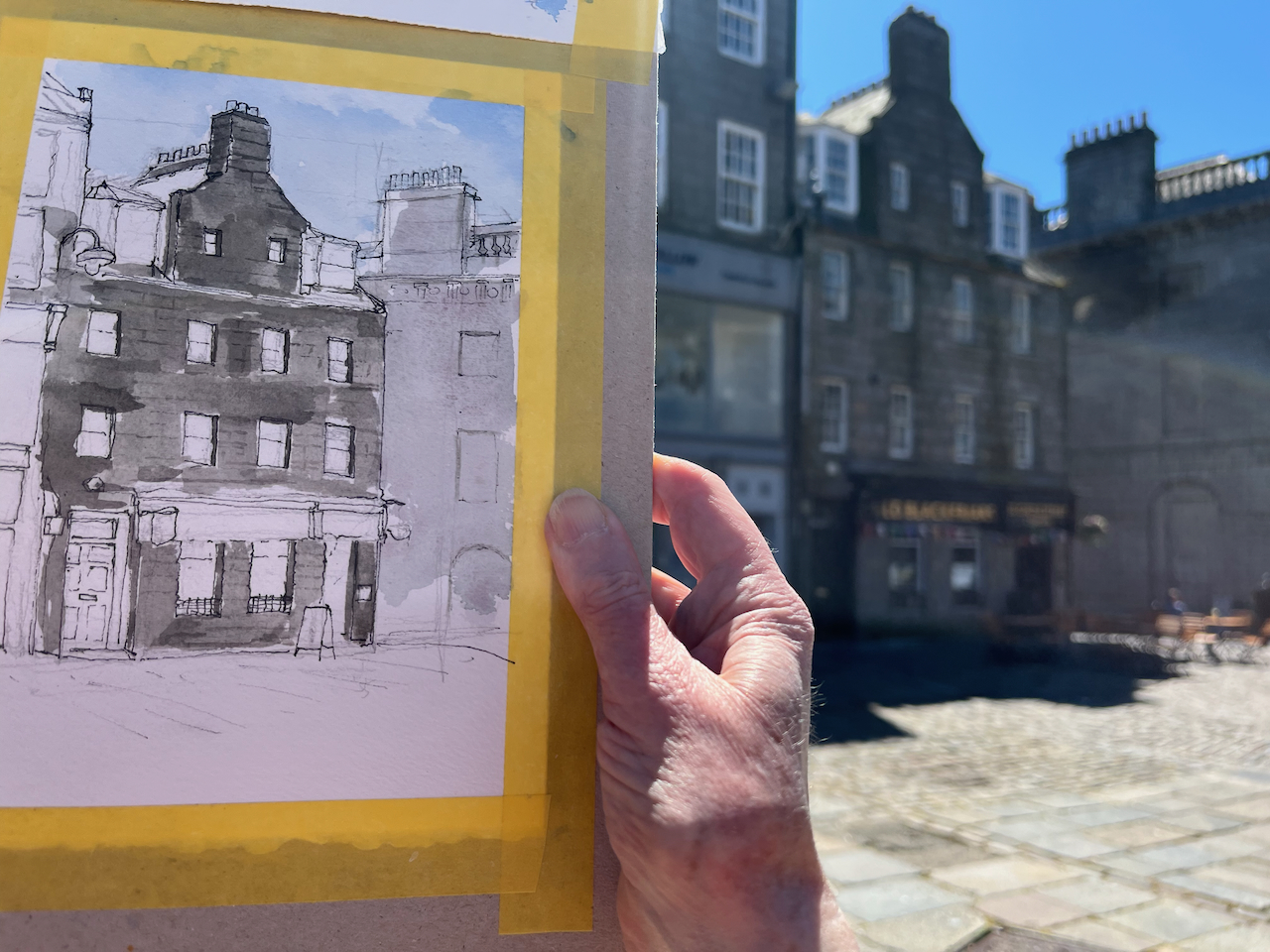
I worked on this drawing standing in the large cobbled square called Castlegate. A passer-by walked up to where I was standing, and took an interest in the picture. I’ll call him Campbell. He had much to tell me, a visitor, about the city of his birth. He had been brought up in what he described as the “tenements” on the dock. “Six of us to a room,” he said. He’d trained as a coppersmith, and found work in the engine rooms of ships and submarines, making “boilers, pipes and flanges”.

I was sketching this pub at the request of a client who had happy memories of their time there. Campbell also had happy memories of his lively times at the pub, although his experiences pre-dated those of my client by some decades. It was a pub for folk working the docks Campbell told me, and “they had a hard life”.

Uncharacteristically for British people, we talked politics. The general election was coming up. My new friend had little time for politicians of any stripe. They don’t know what they are doing, he asserted. “It’s like watching a drunk man trying to walk down Union Street”. He indicated the wide straight street across the cobbles, and with an articulate hand gesture demonstrated the erratic movements of the inebriated.


I enjoyed his entertaining stories as I sketched. He went on his way when I was at the pen-and-ink stage. I hope that some of his stories made it into the finished drawing.


The main colours are: (DS=Daniel Smith watercolour)
– ultramarine blue finest (Schmincke)
– burnt umber (DS)
– haze pink (Schminke) – in the stones
– rose madder permanent (DS) – in the stones
For the details:
– permanent yellow deep
– pyrrole red
– mars yellow
– acrylic gold paint

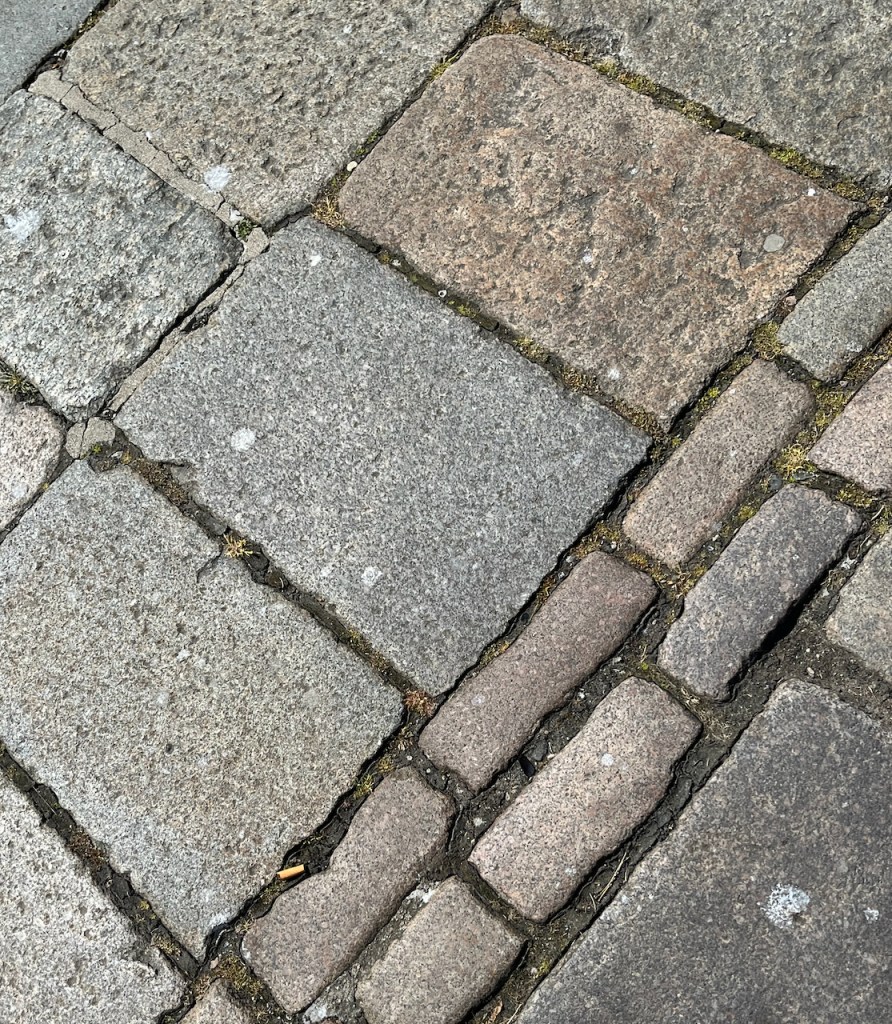
Aberdeen is “The Grey City” for some. But for anyone who doubts that there really is pink in the stone, I include a photo of the cobbles.

Cobbles at my feet


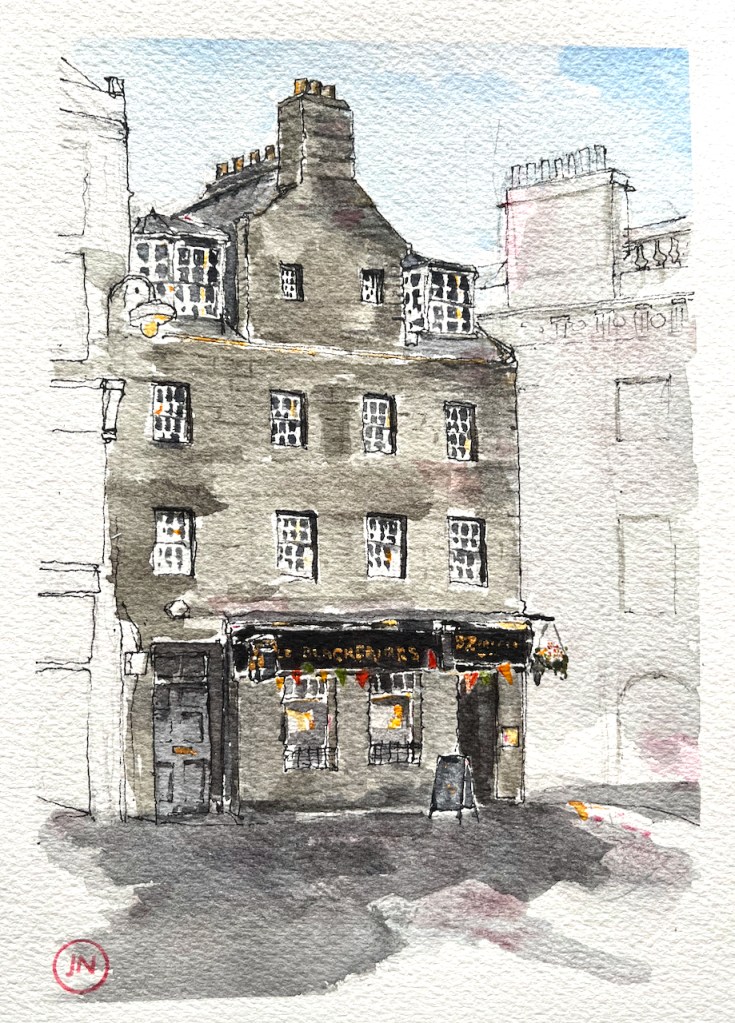
This was a commission. Thank you to my client for inspiring me to draw this historic pub, and for their permission to post the pictures here. They kindly sent me a photo of the picture in its frame:

photo credit: my client G.