E5 Bakehouse, London E8

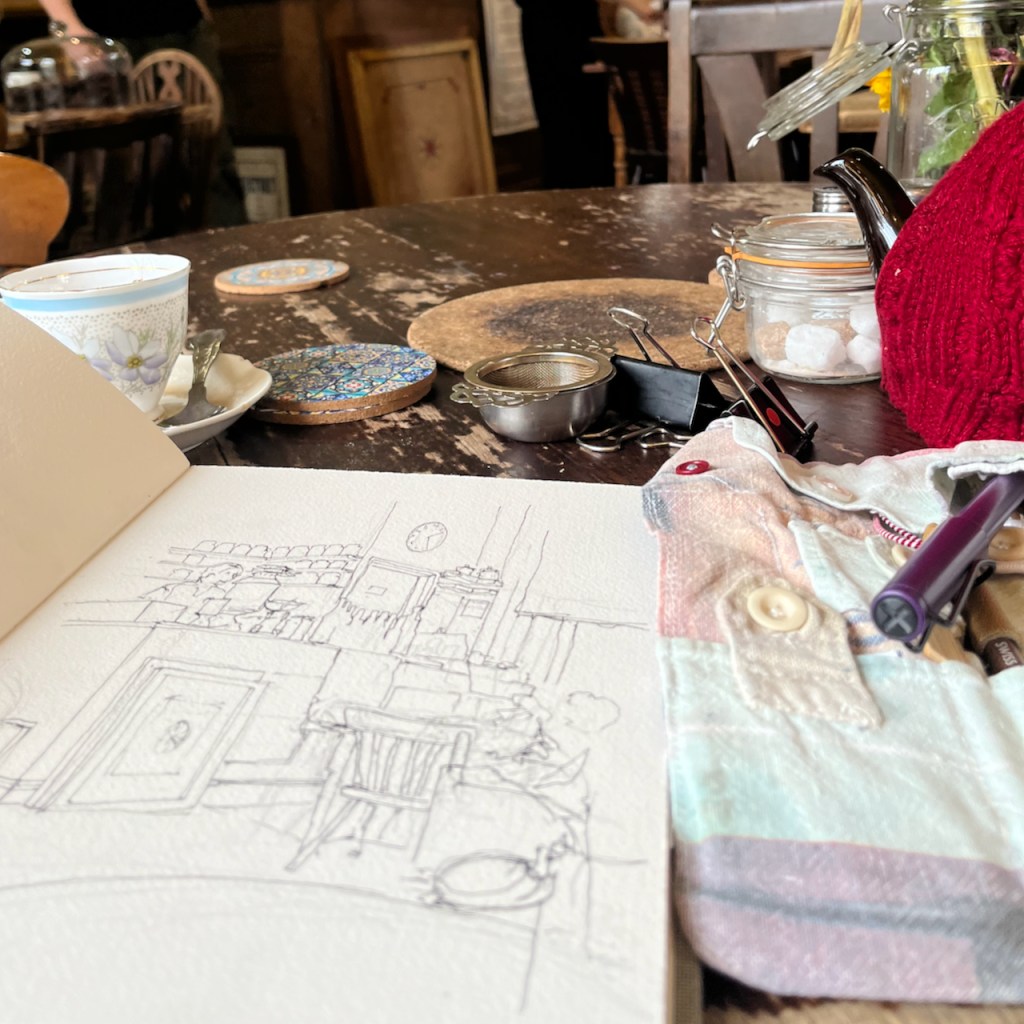
Sometimes I go out and find a view for my sketch. Sometimes the view is determined simply by where I find myself. Here is one of those occasions.

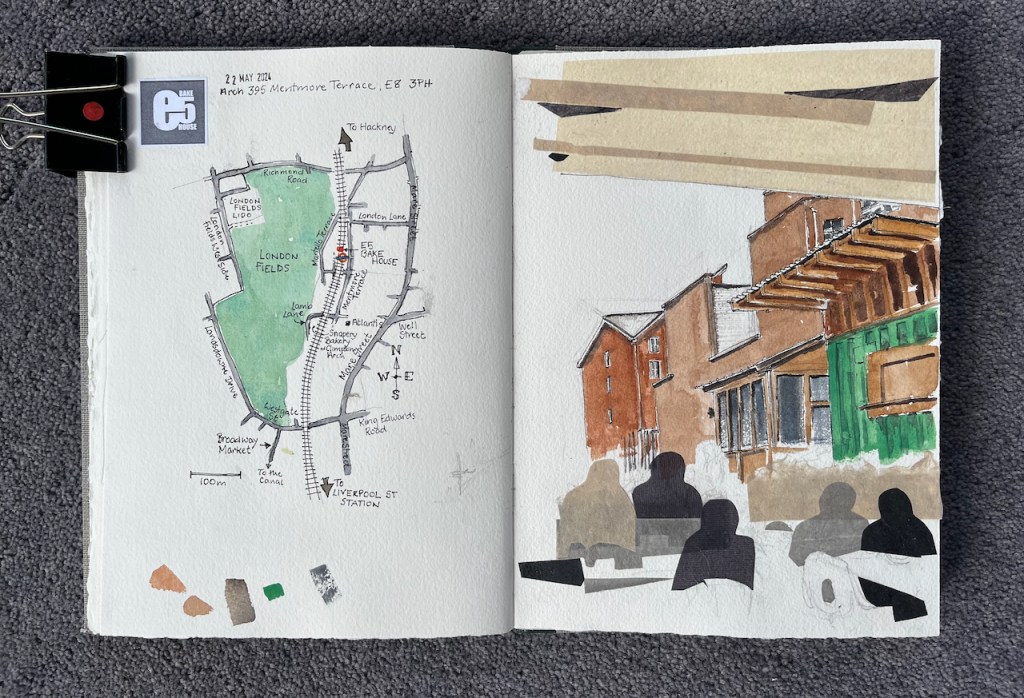
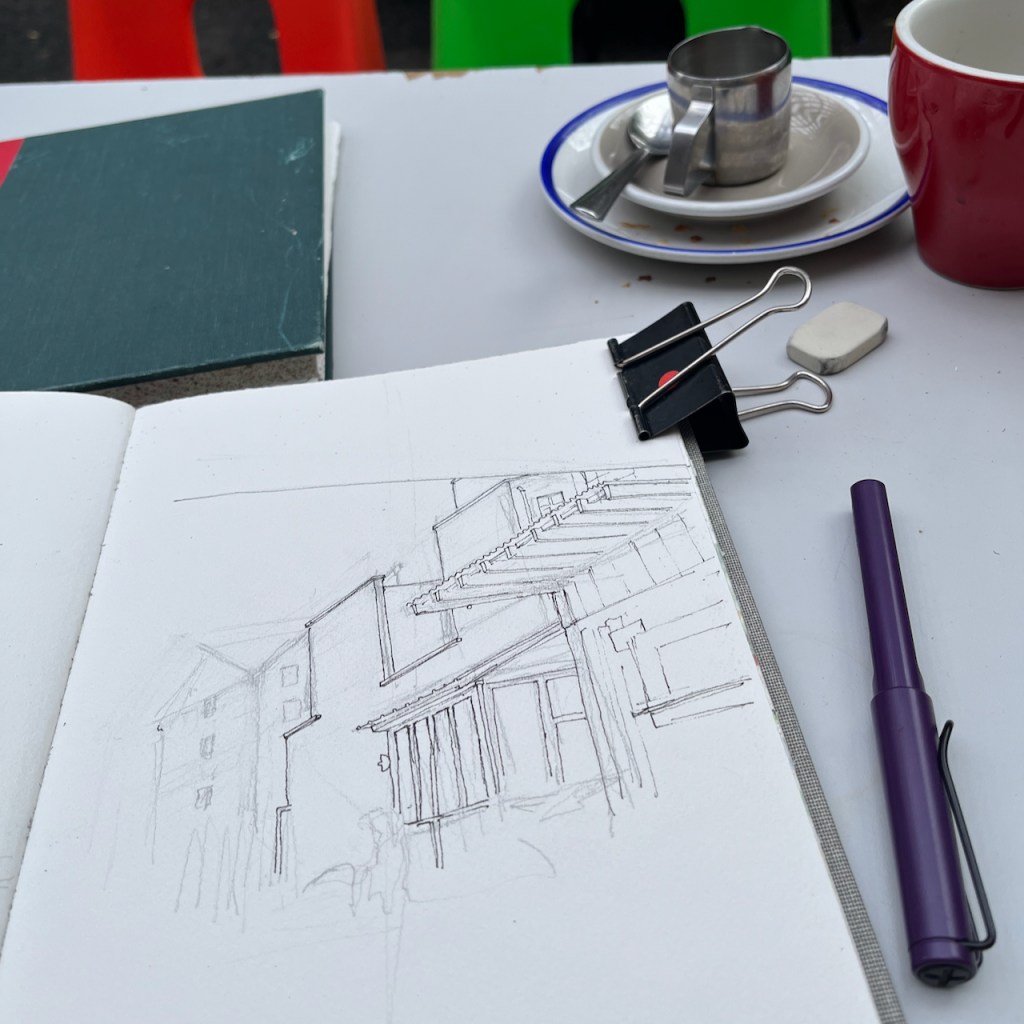
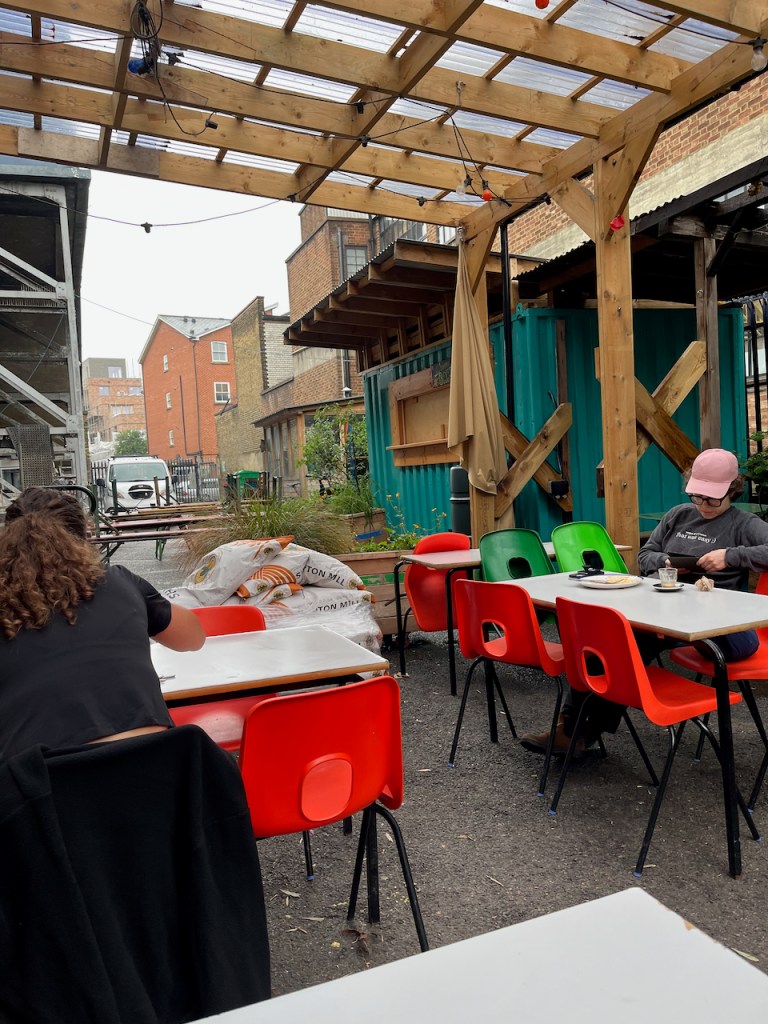
I had breakfast in the seating area at the back of E5 Bakehouse. At 09:15 I was the only person out there. I looked at the view. The various roofs made interesting angles. The cyclist who delivers their bread arrived and loaded up his formidable cargo bike. Customers arrived, and came outdoors. The tables filled up, each new arrival nodding a greeting to those of us already there. People made room for each other. It was quiet, no background music, perfect. I went back to the counter and bought another Gilchester bun. Time to do a sketch.
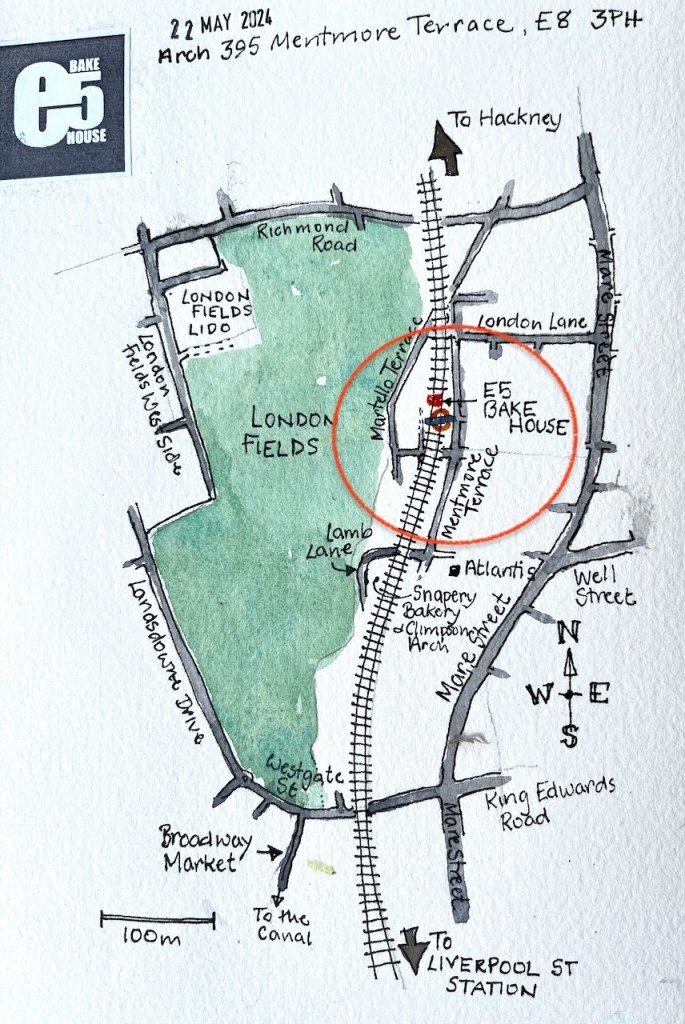
E5 Bakehouse is not in E5 but in E8, right next to London Fields Overground Station, on the line out of Liverpool Street. Their website says

“The name E5 is a nod to our former local postcode and our intention to remain rooted in our community.”
They produce wonderful bread and pastries. My fellow customers were enjoying substantial breakfasts of eggs and all sorts of greens, or a kind of piled up yogurt and fruit dish. My favourite is the Gilchester bun: the archetypal currant bun – “Made using Gilchester’s organic flour , these are so simple and so tasty you can eat them on their own, or toasted even just with butter is all you need!”

A colleague of mine once told me that the way he judged a hotel was to ask for a glass of orange juice. The orange juice told him all he needed to know, he asserted. Was it fresh pressed, or out of a bottle? Was it served in a glass or a paper cup? Did they provide a spoon to stir up the bits?

For me, a currant bun is the test of a bakery. Those at E5 set the standard for currant buns the world over. The currants are numerous, the bread is soft and all the sweetness is from the currants. They are just superb. So that’s why I needed another one.

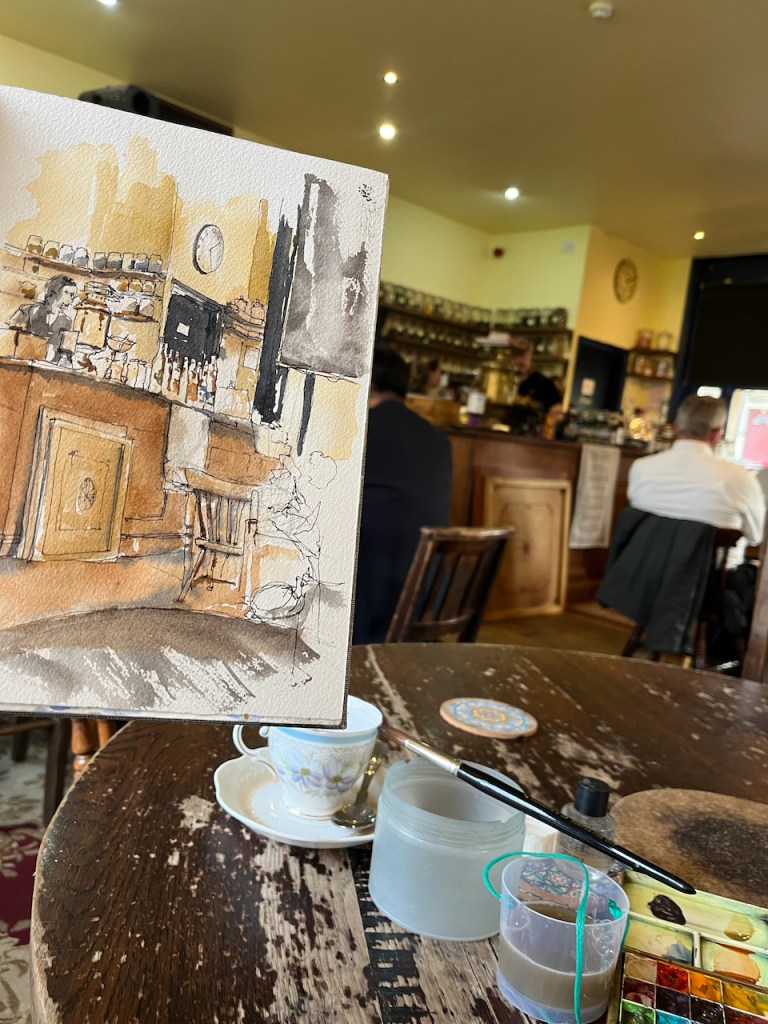
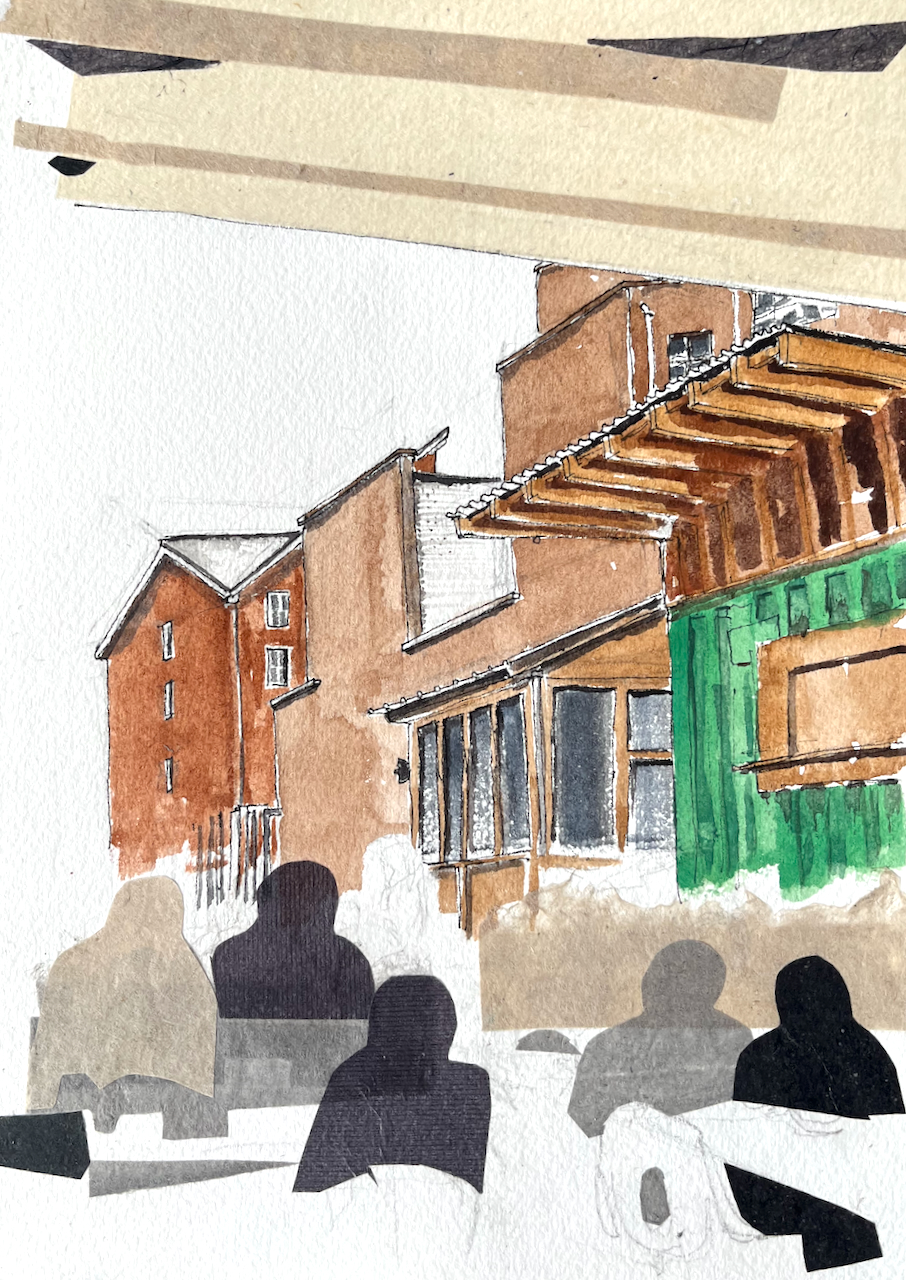
Here’s the finished picture. I added the collage at my desk at home.
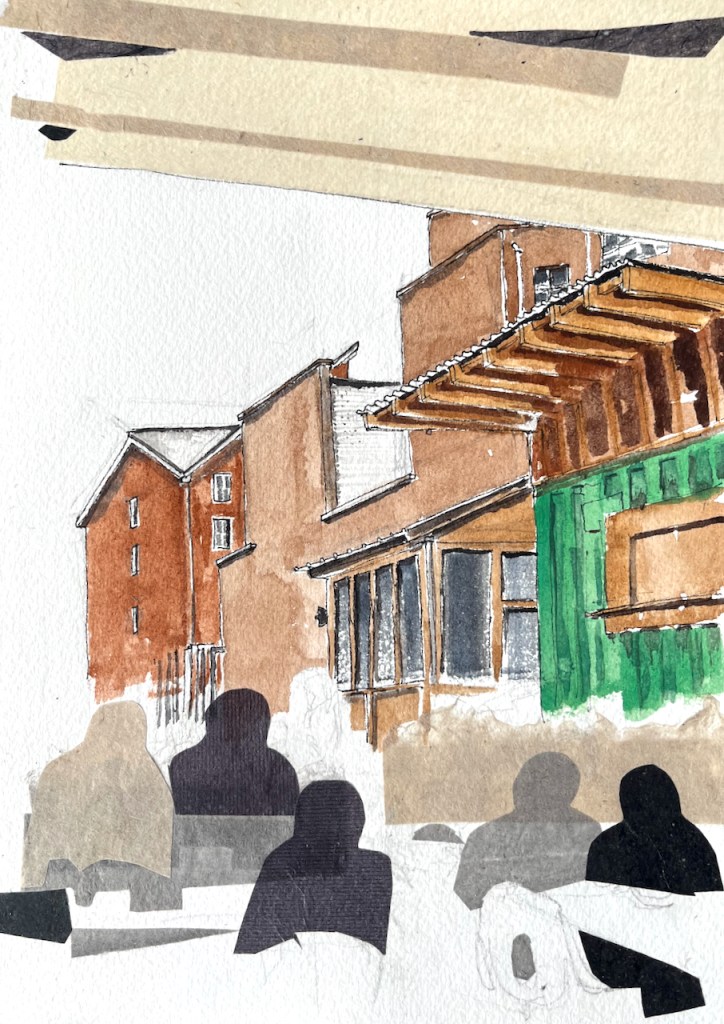
Breakfast at E5 Bakehouse, watercolour and collage, 10″ x 7″ in sketchbook 14.
Page spread: sketchbook 14

City Road 400kV Substation EC1

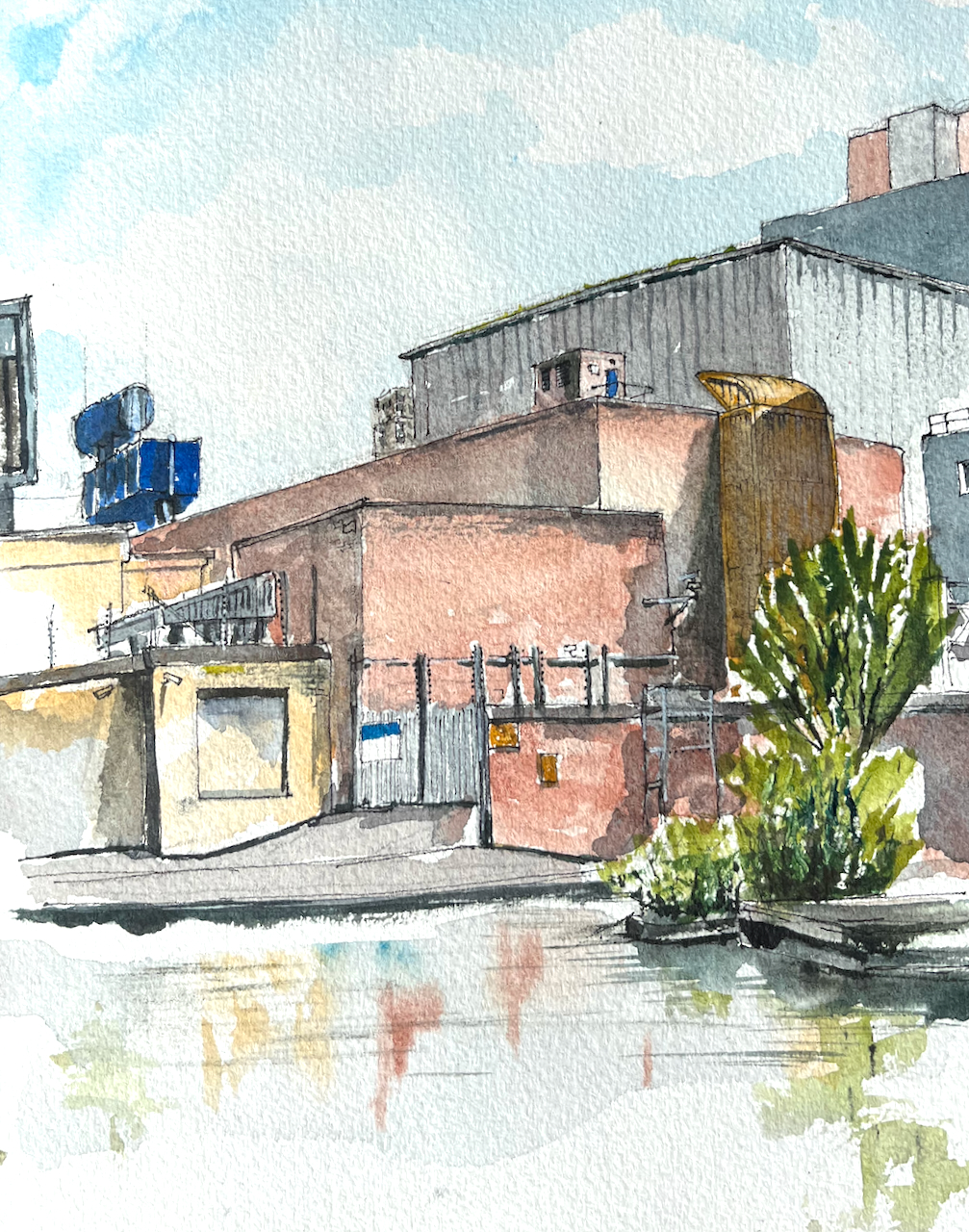
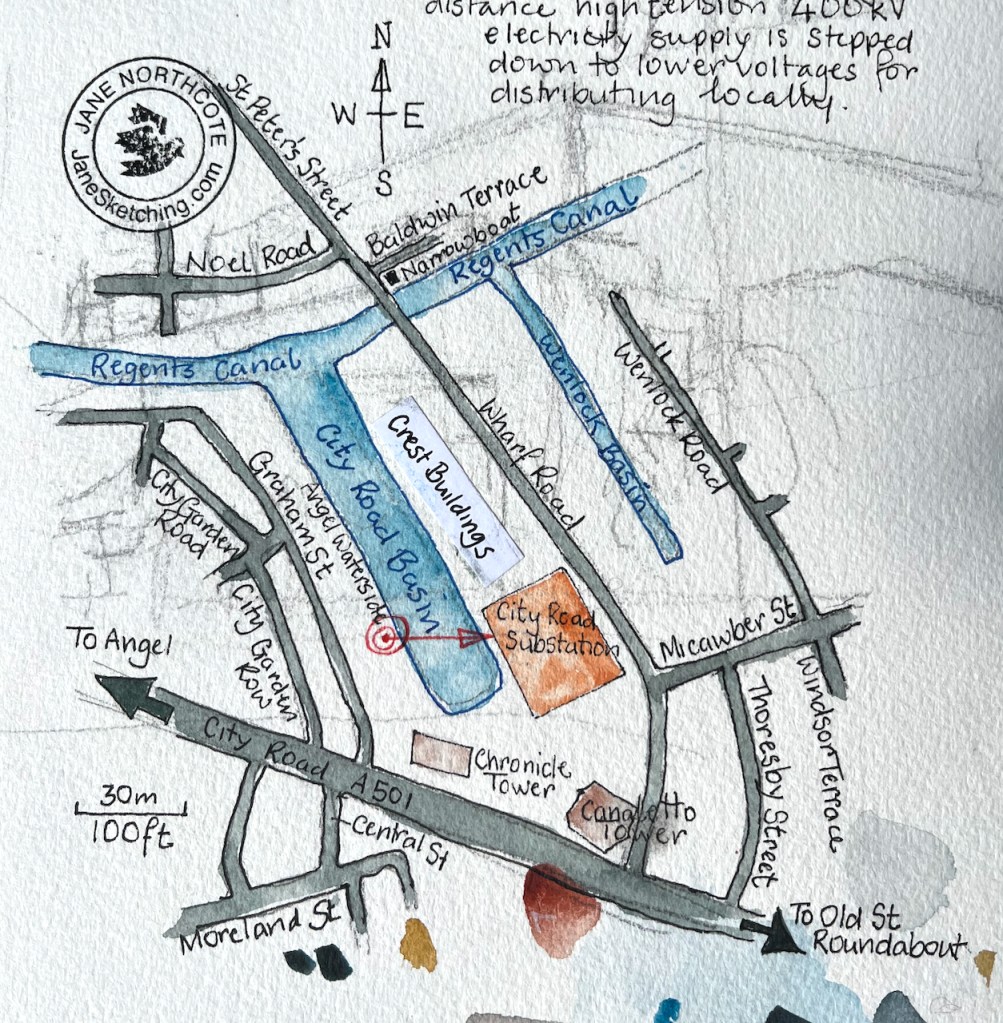
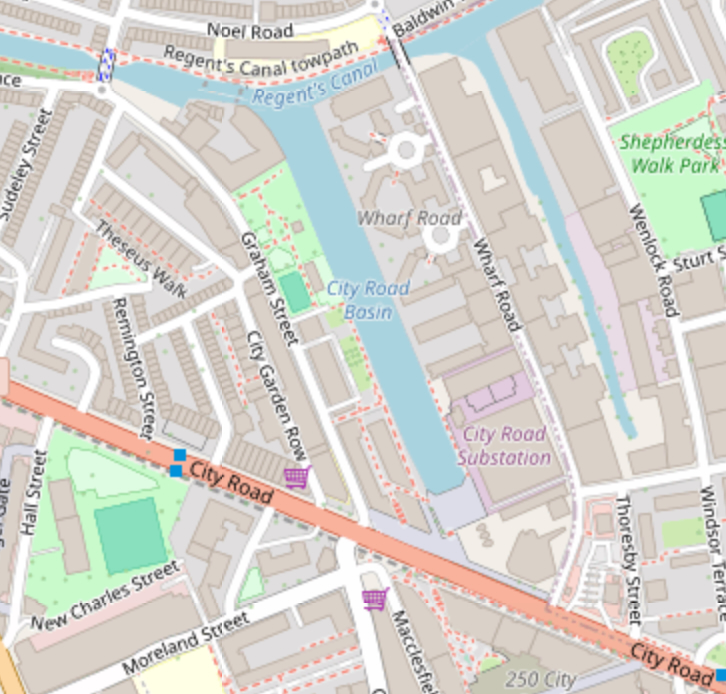
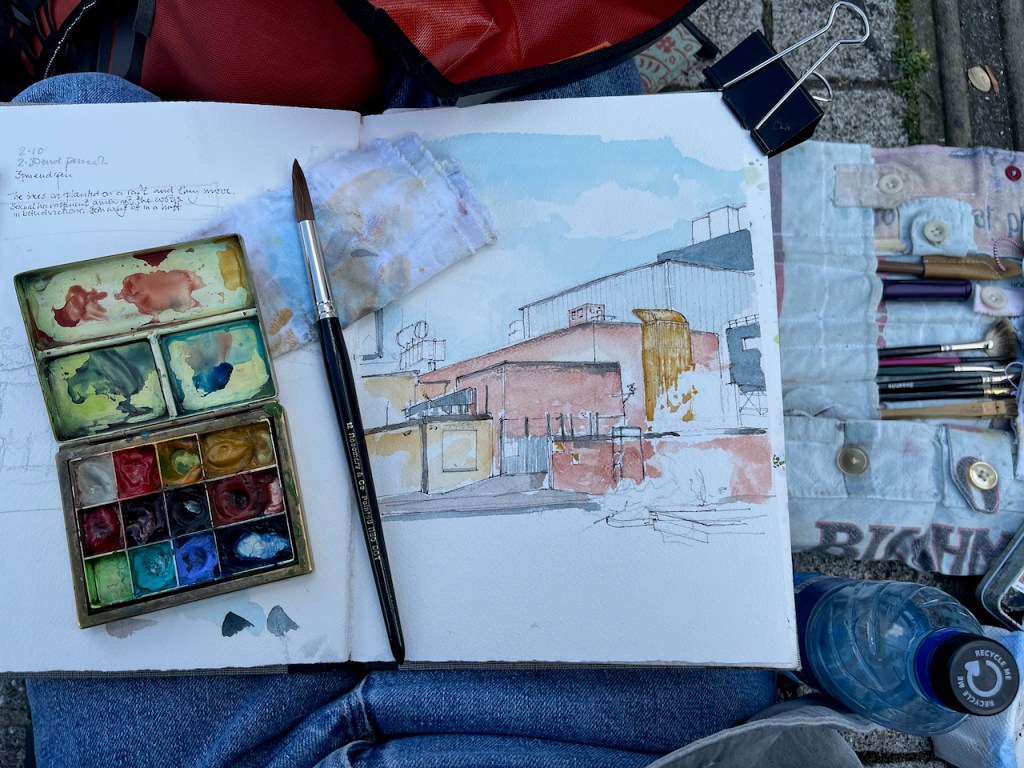
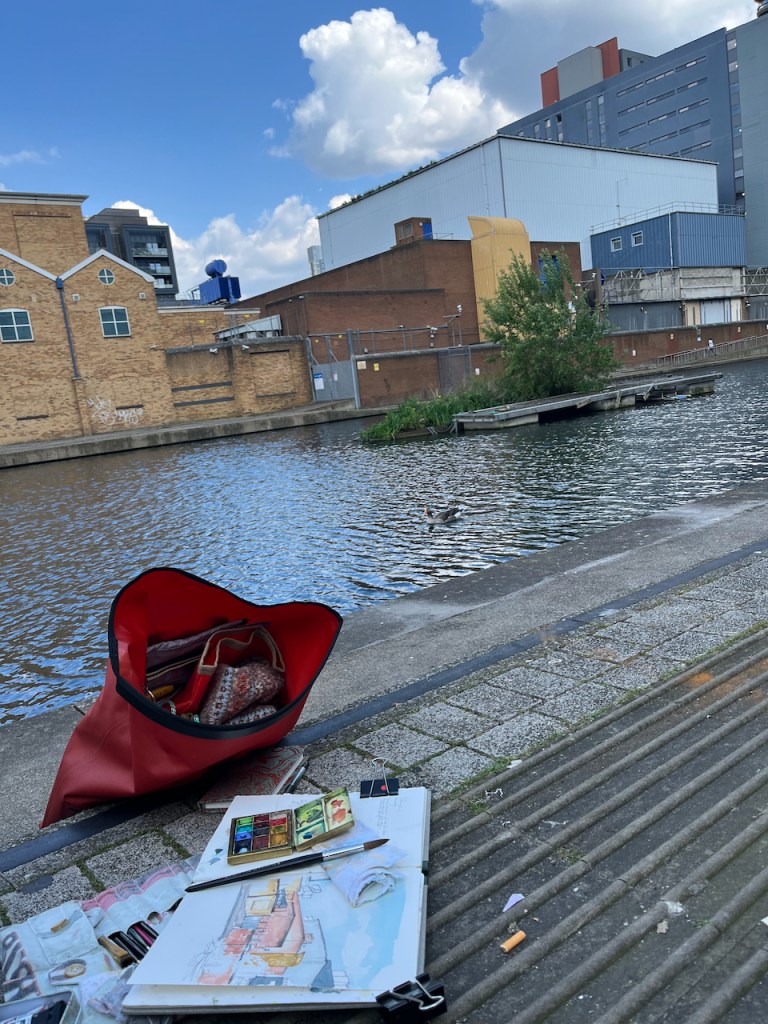
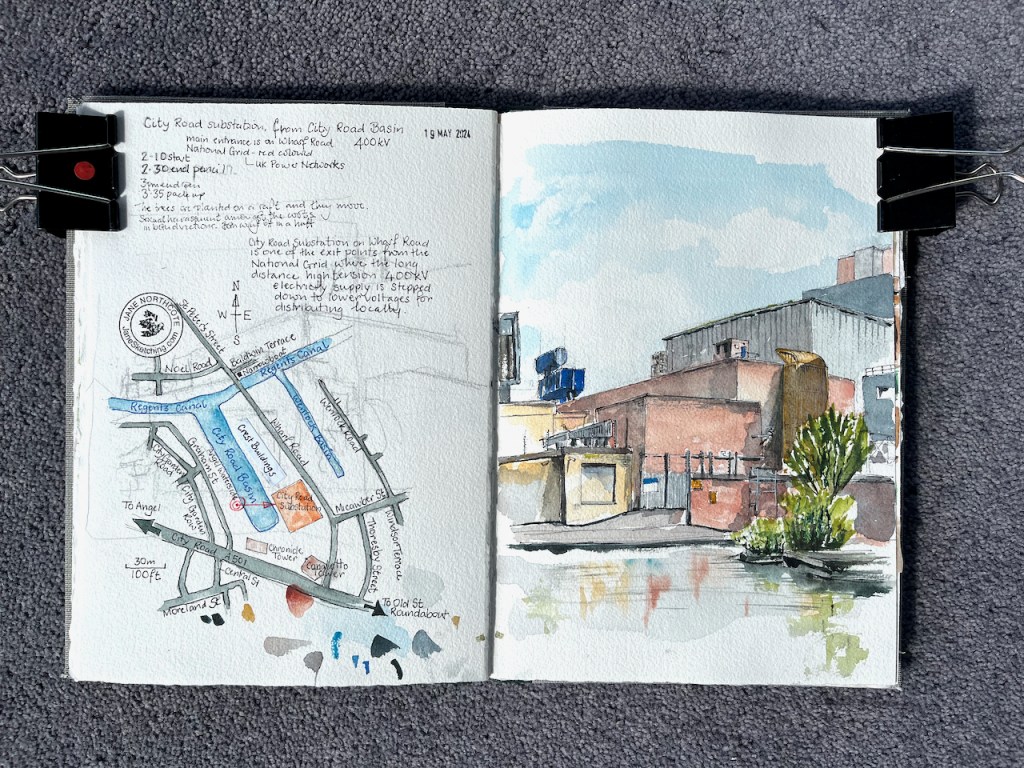
Here is a view of the City Road 400kV Substation, sketched from the other side of City Basin.

City Road 400kV Substation from “Angel Waterside” City Basin, 19th May 2024 in sketchbook 14

This is a monumentally large building, a last remaining representative of heavy industry, in an area now mainly residential. All around are the new tower blocks containing luxury apartments, made of shapes and designs aiming for visual appeal. Chronicle Tower and Canaletto Tower are just off the picture to the right. The sub-station is robustly functional. I enjoyed its forthright no-nonsense appearance.

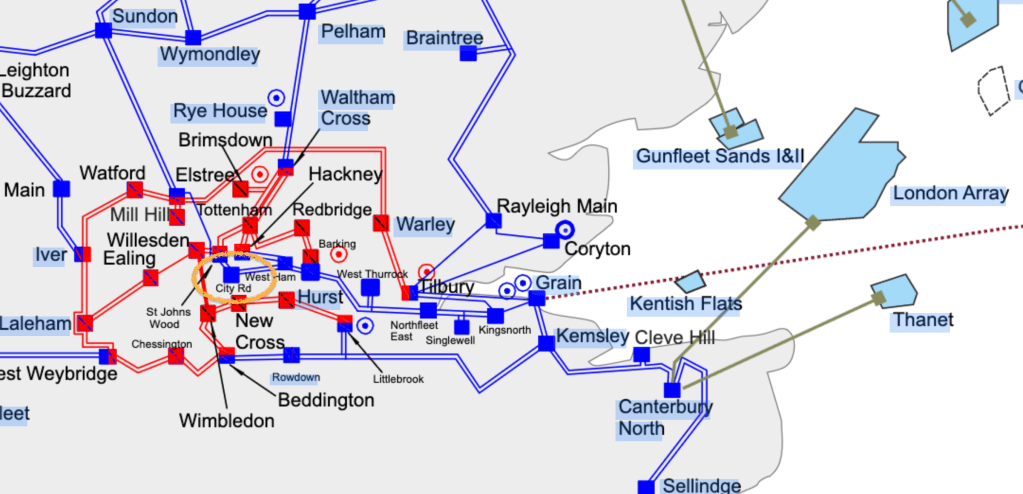
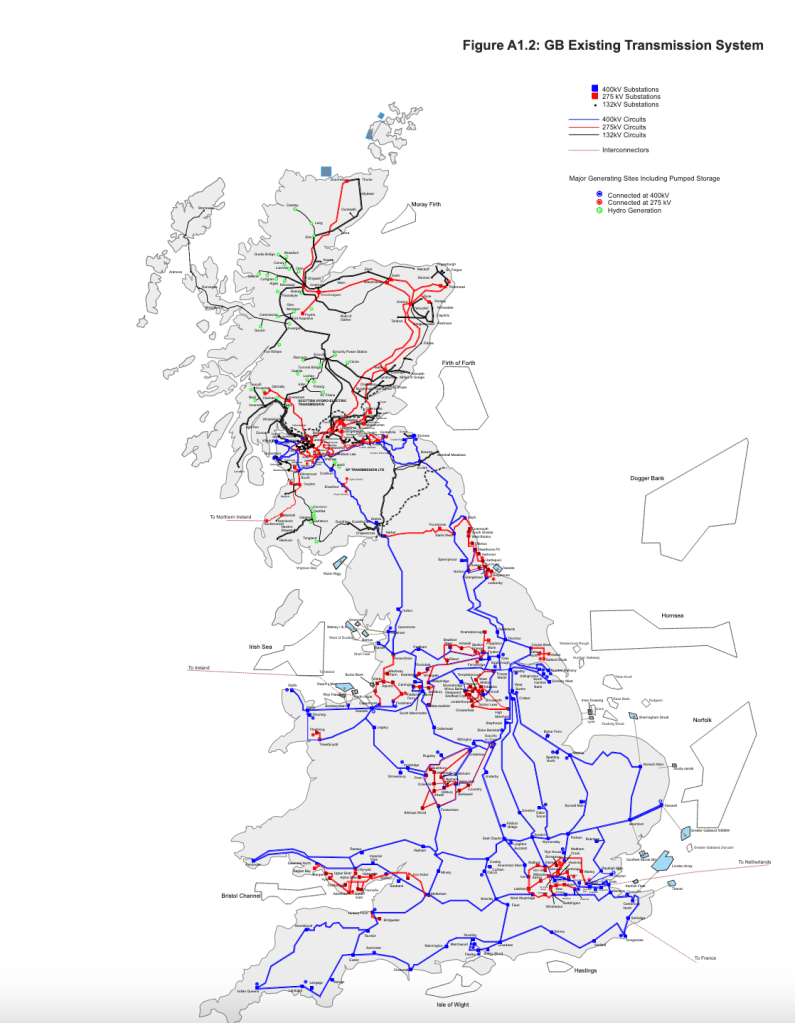
It’s built like a fortress, as well it should be. It is part of the UK power distribution system, connecting us in London to, amongst other power sources, the off-shore windfarms in the North Sea, an interconnector off across to Europe, and power stations on the Isle of Grain.

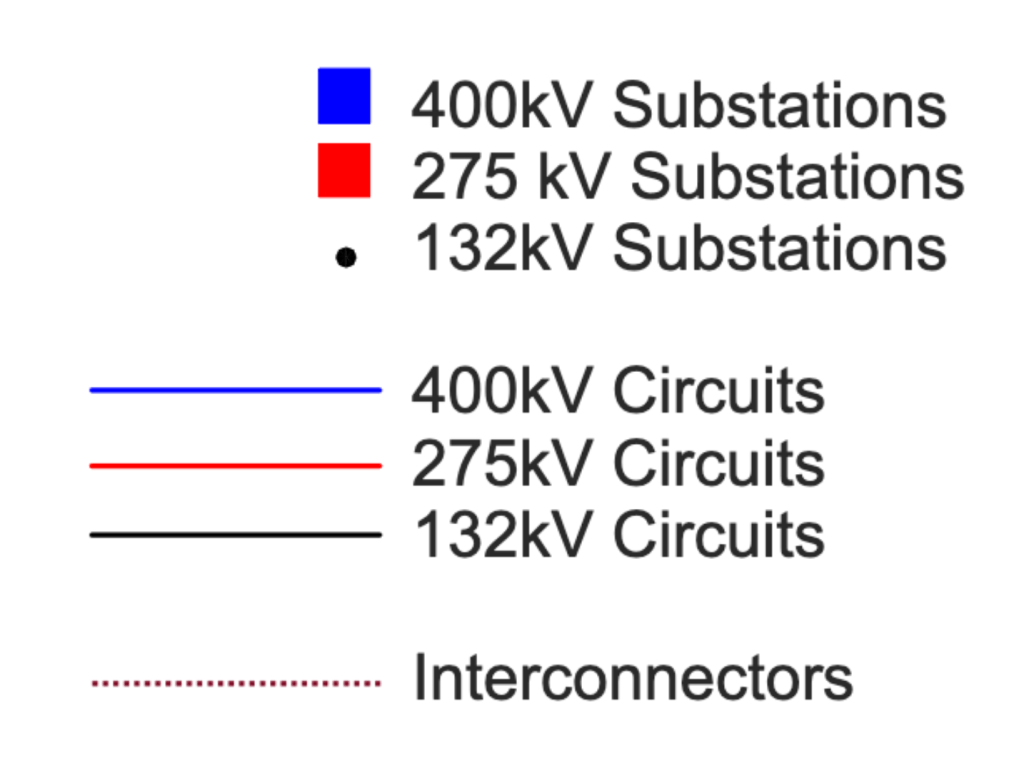
These diagrams come from a National Grid document on this link. The document is “Electricity Ten Year Statement 2012, Appendix A1”. It’s over 12 years old so there may be different connections now.

Despite the uncompromising appearance of the substation, the edge of its higher roof was softened with a subtle fringe of grass. I don’t know if this was a deliberate attempt at a “green roof” or if the grass planted itself there of its own volition.

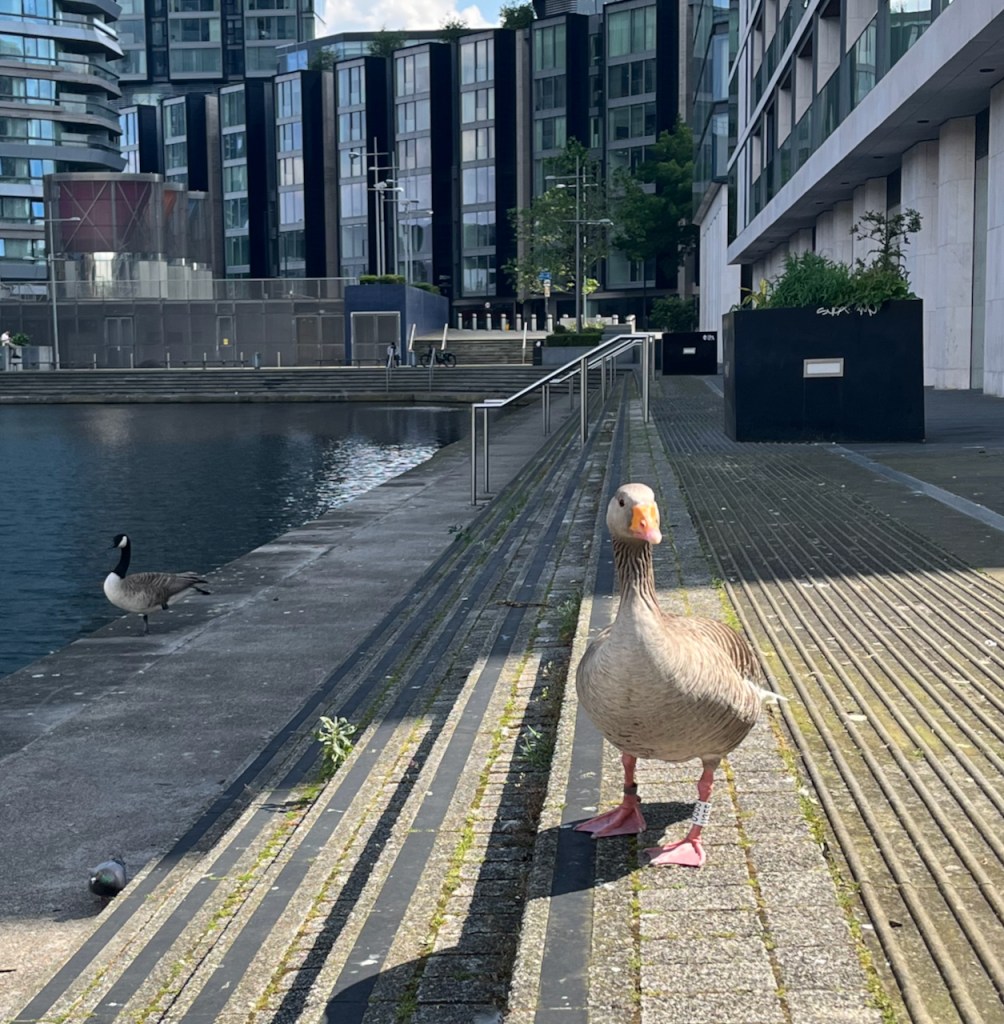
I made this sketch sitting by the water observed by geese. It took me a little while to establish that the tree in the picture was on a raft, and therefore it moved. One does not expect trees to shift around from place to place. I would put it in the sketch, and look up again, and find I had mysteriously got it wrong, again. The geese, obviously, always knew it was a raft, and cackled.

The colours here are:

  • Phthalo Turquoise Blue for the sky (with some Ultramarine Blue)
  • Fired Gold Ochre for the bricks
  • Mars Yellow, with Fired Gold Ochre, for the paler brickwork
  • Ultramarine Blue for the cylindrical construction on the roof (middle left)
  • Serpentine Genuine for the tree
  • All greys and blacks are combinations of the above, plus Burnt Umber.

Colours are all Daniel Smith. The paper is Arches Aquarelle 300gsm in a sketchbook by Wyvern Bindery.

Glasgow Central Station

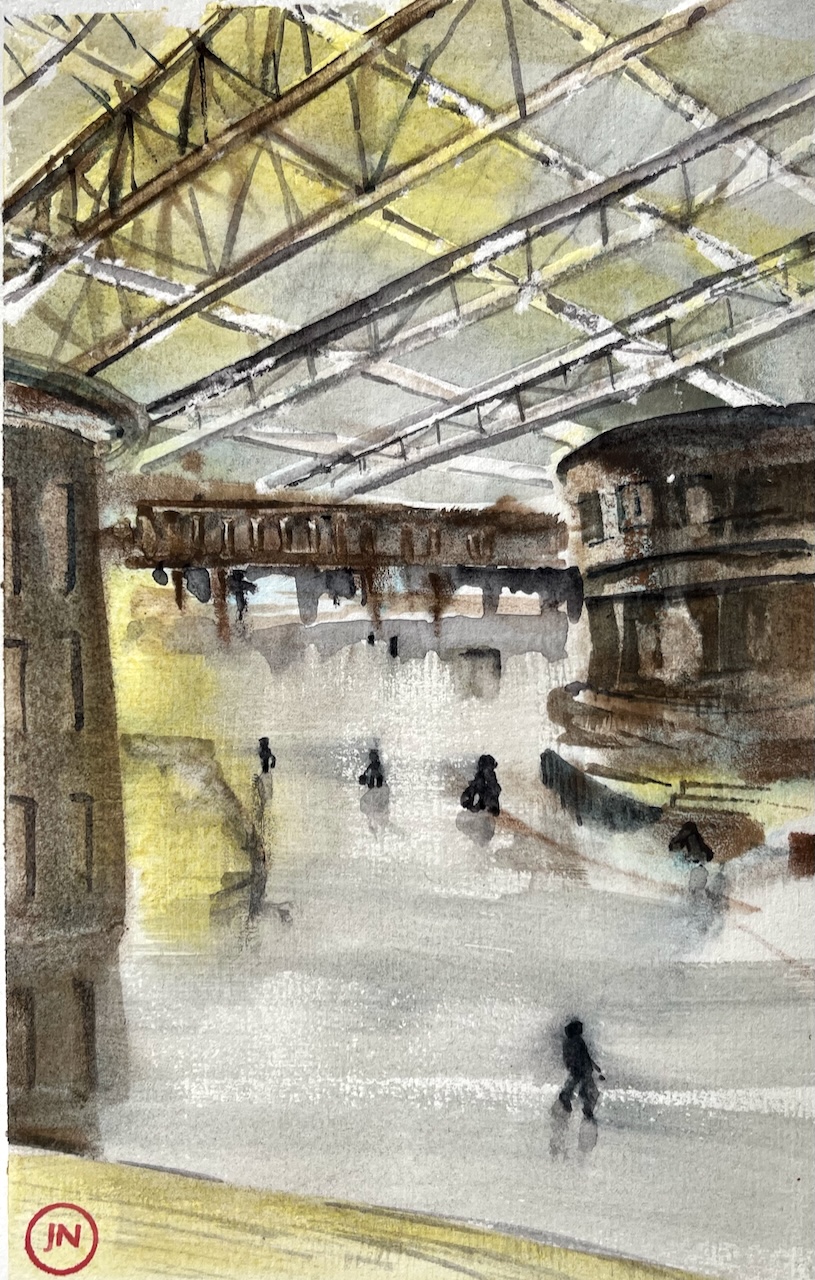
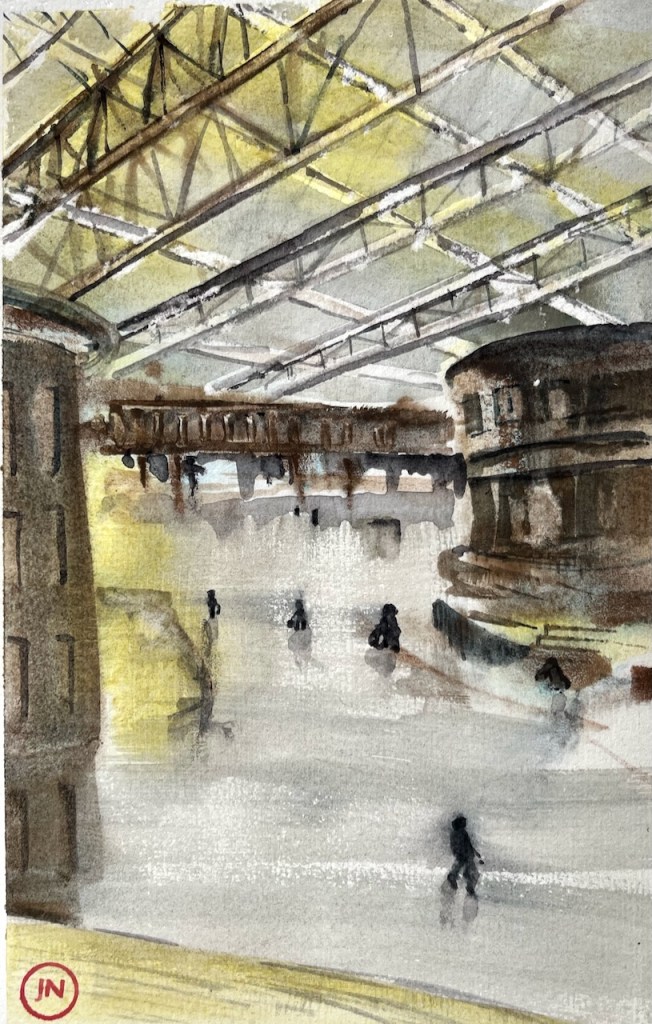
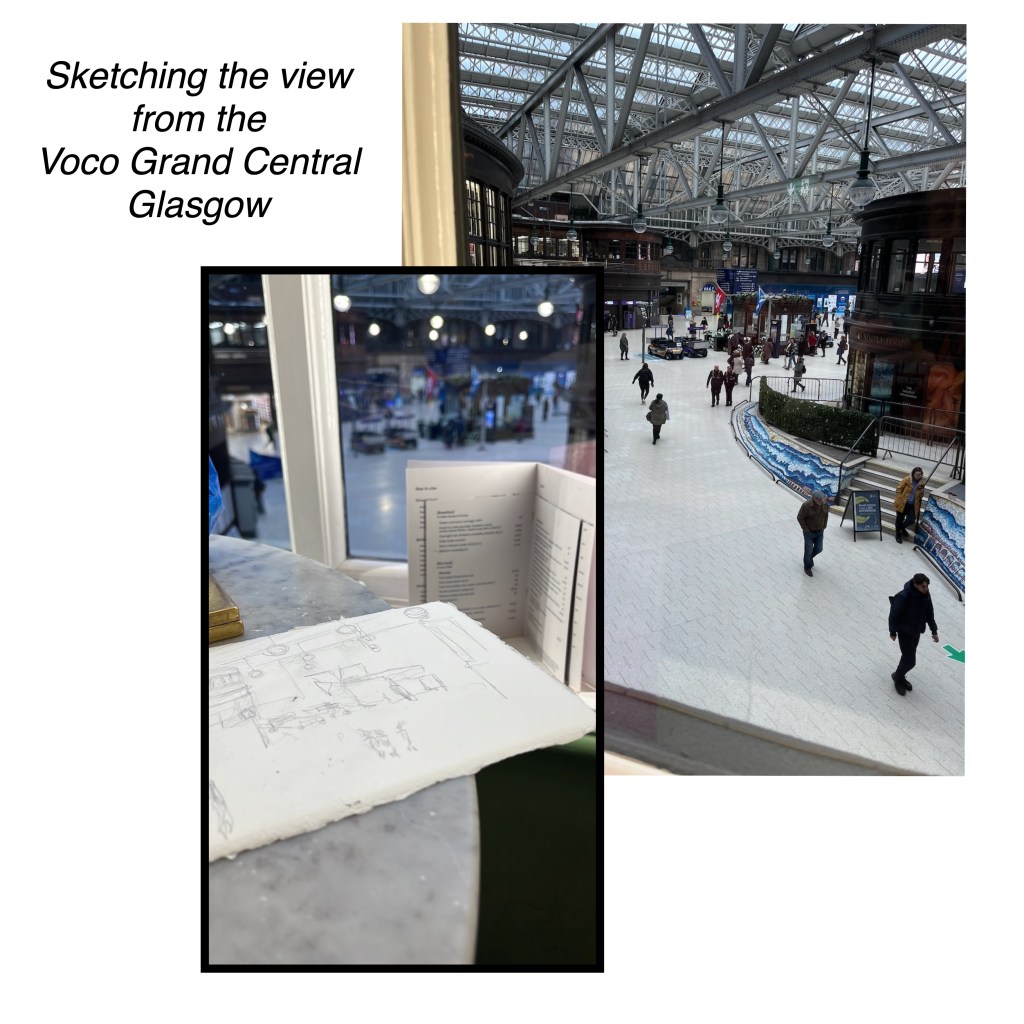
Here is a view of Glasgow Central Station from the window of a winebar which overlooks the concourse.

Glasgow Central Station, A5 sheet of Amatruda watercolour paper

The wine bar is part of the hotel “voco® Grand Central Glasgow”.

Postcards from Oban, Western Scotland

A5 Amatruda watercolour paper

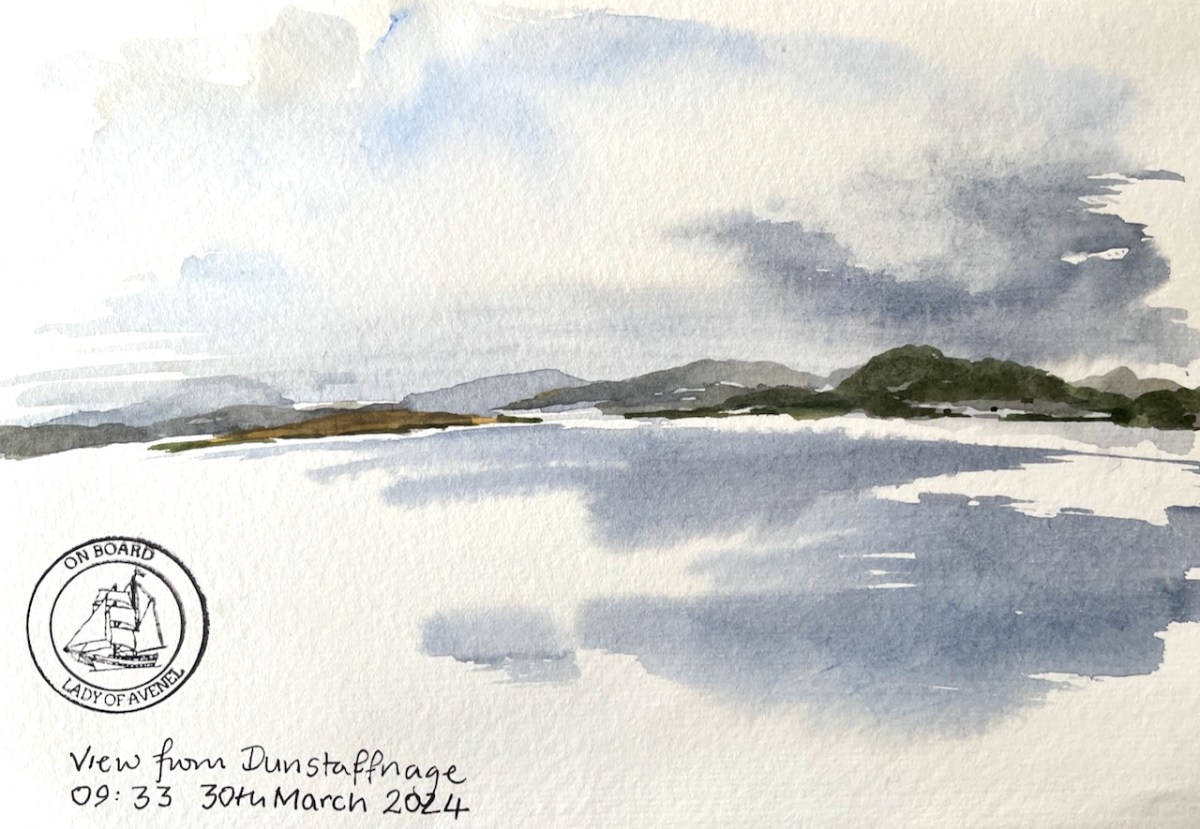
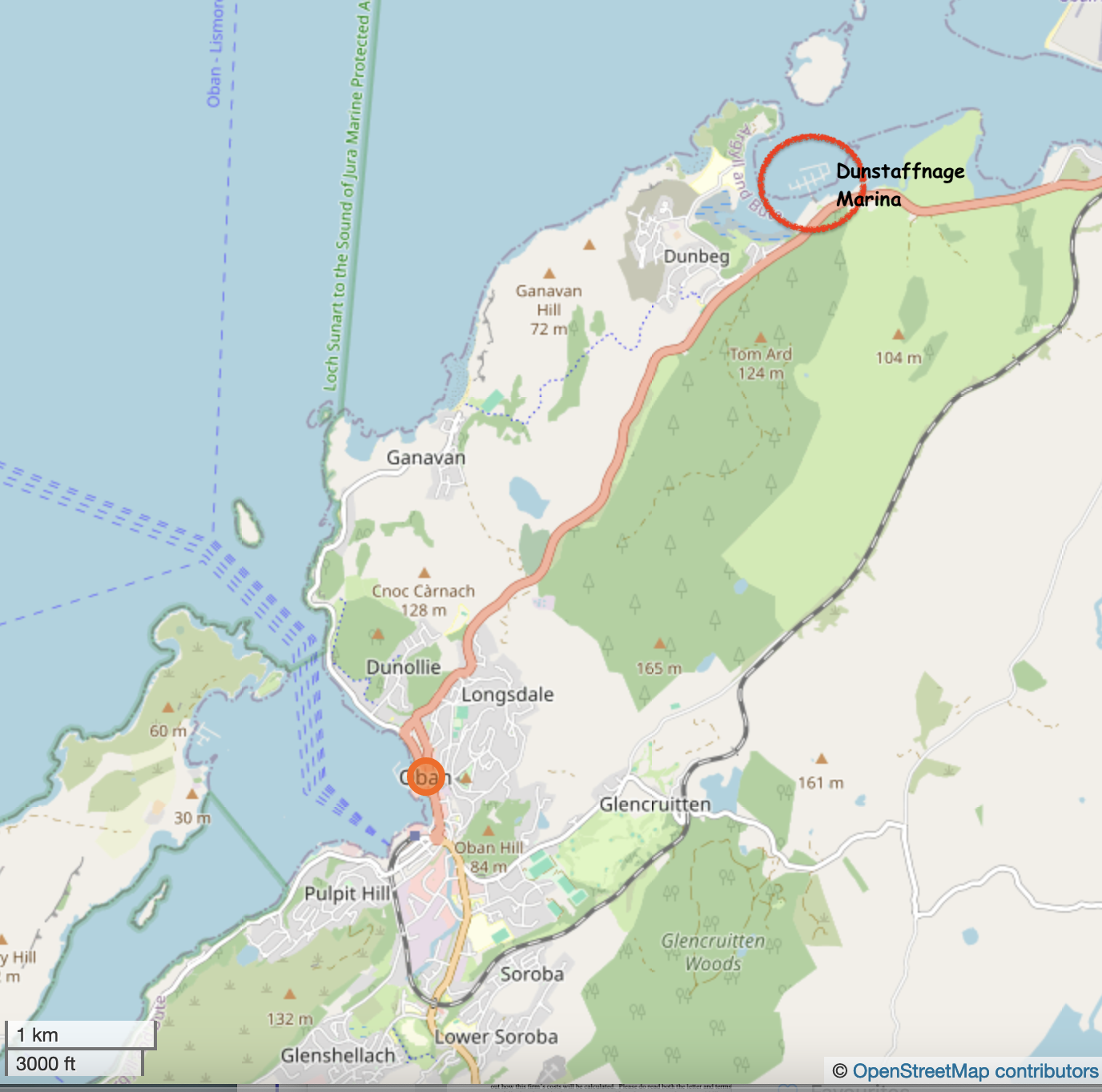
Here’s a view from the ship”Lady of Avenel”. She which was at the Dunstaffnage Marina, Oban, at the time. This is a quick sketch done on thin “Amatruda” watercolour paper, sent as a postcard. It is the view looking north, towards Fort William. See the rain clouds coming!

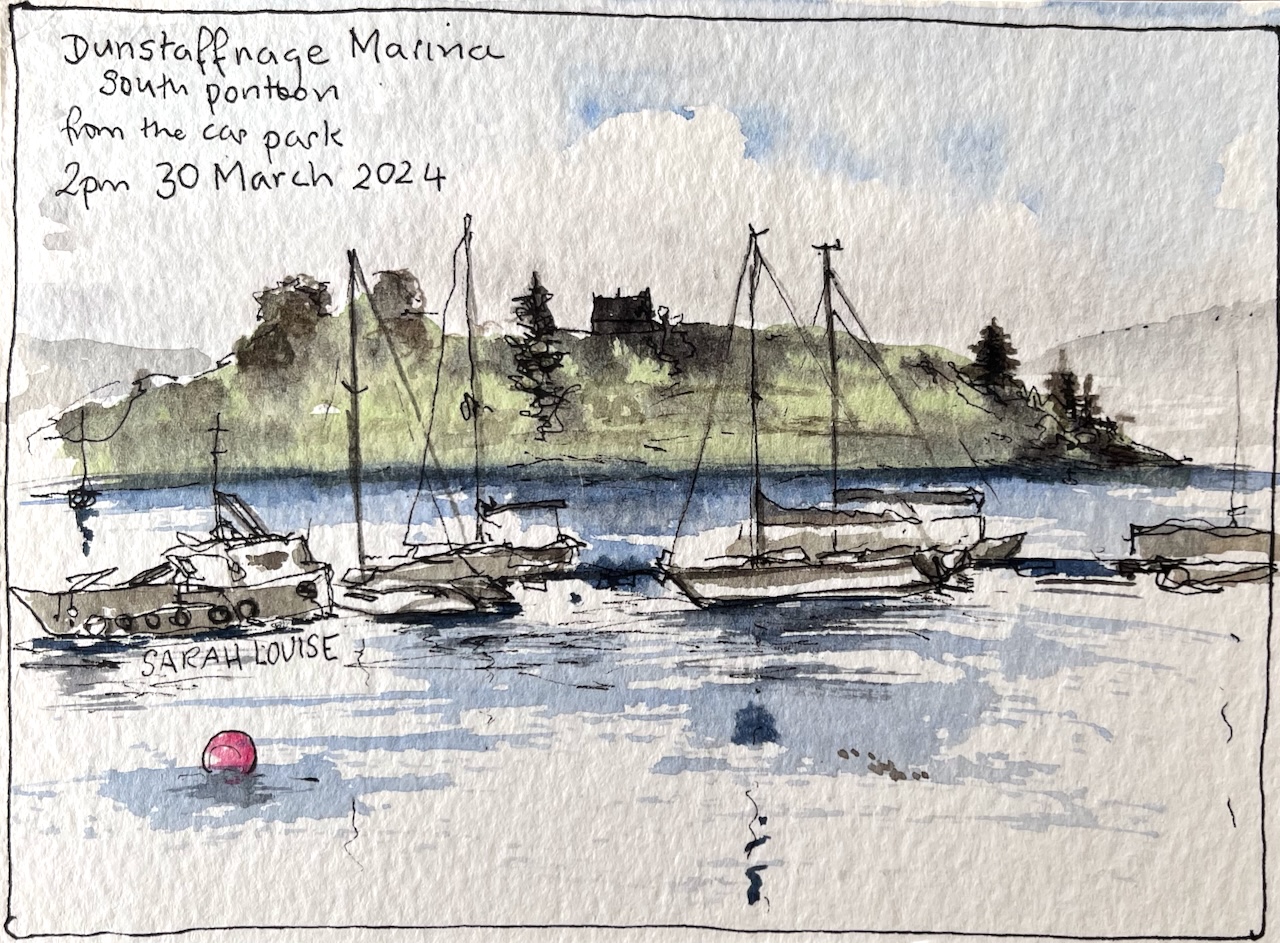
Here’s a quick sketch of the marina.

Quick sketch on a 6″ x 4″ postcard

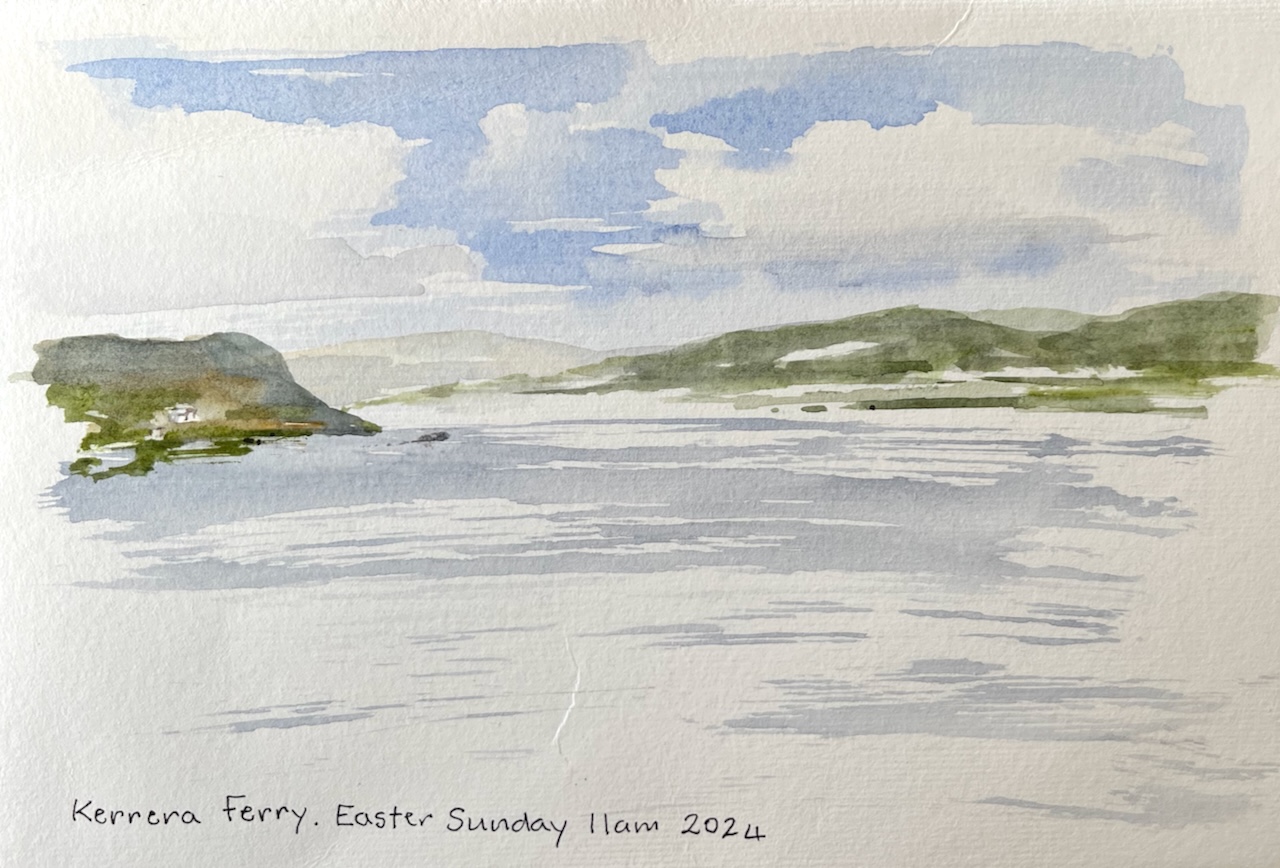
Later I visited the lovely island of Kerrera.

A5 Amatruda watercolour paper.

These landscapes are so inspiring! I’ll be leading a “Sketch and Sail” adventure on the Lady of Avenel in October 2024, together with Alice Angus. We’ll start and finish in Oban. Would you like to join us? Have a look at this page and get in touch!

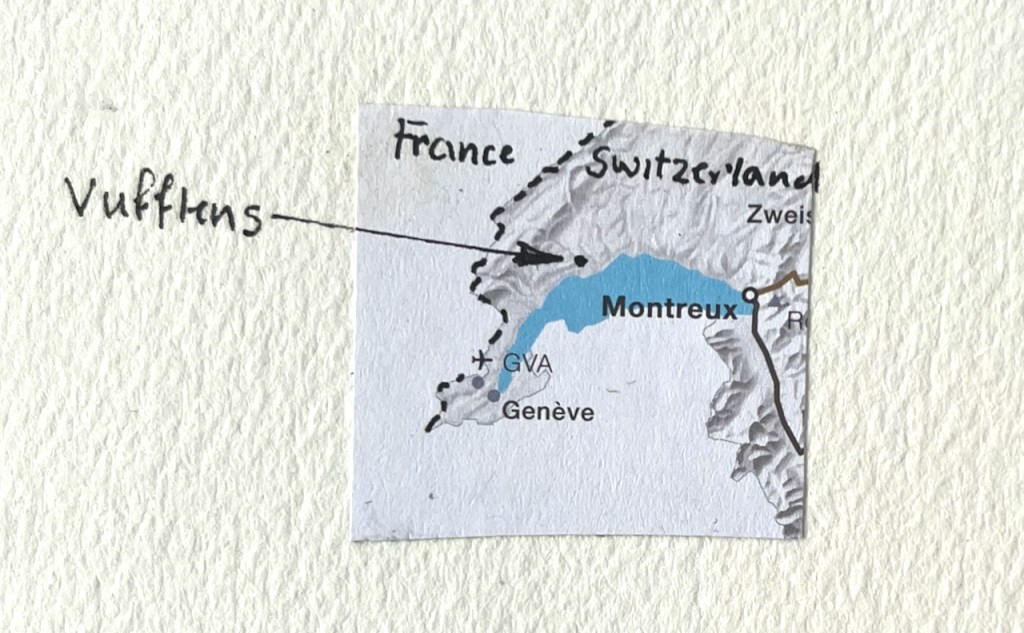
Château de Vufflens, Vaud, Switzerland

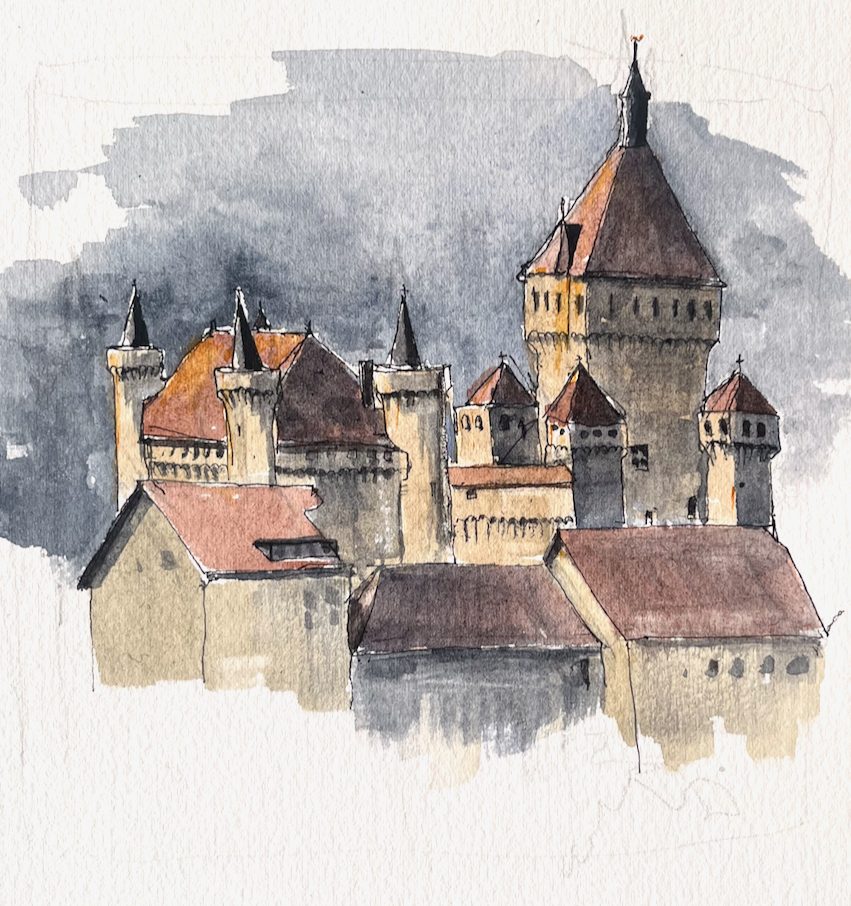
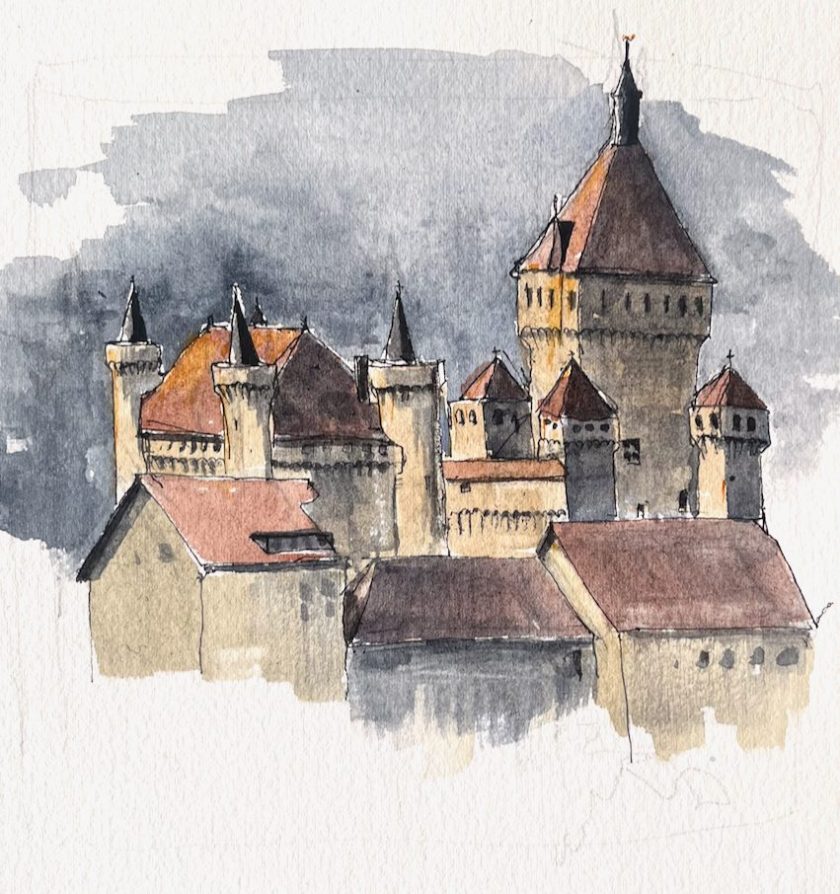
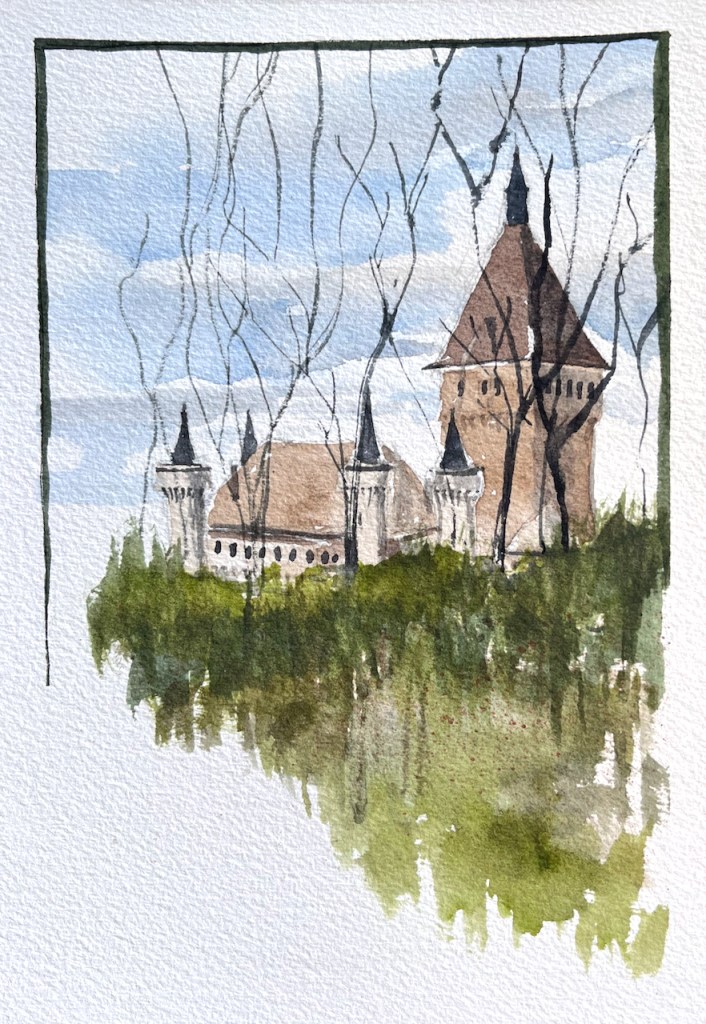
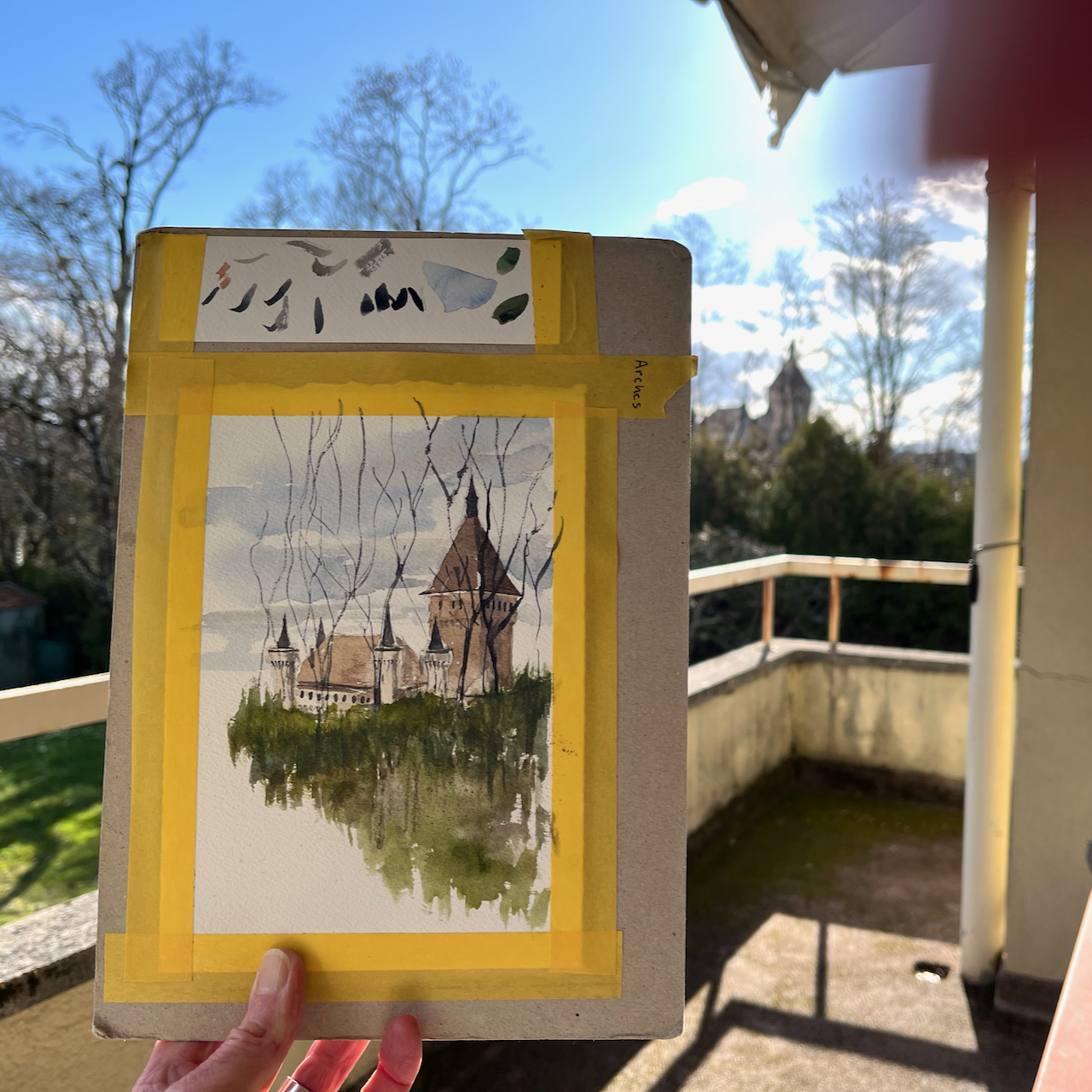
Fine rain started as I sketched the Château de Vufflens. At first I thought I could keep sketching. But then rain arrived in large-size drops, some containing ice. I took refuge under an archway. There was a view of the castle from there, but a different view. Also, standing there, I was, very possibly, in someone’s garden. I am not sure about Swiss laws on trespass. All I was sure of was that there would be laws. I assembled suitable French phrases in my head, to be ready to explain and apologise. And I restarted the sketch from this new angle. Then the rain stopped.
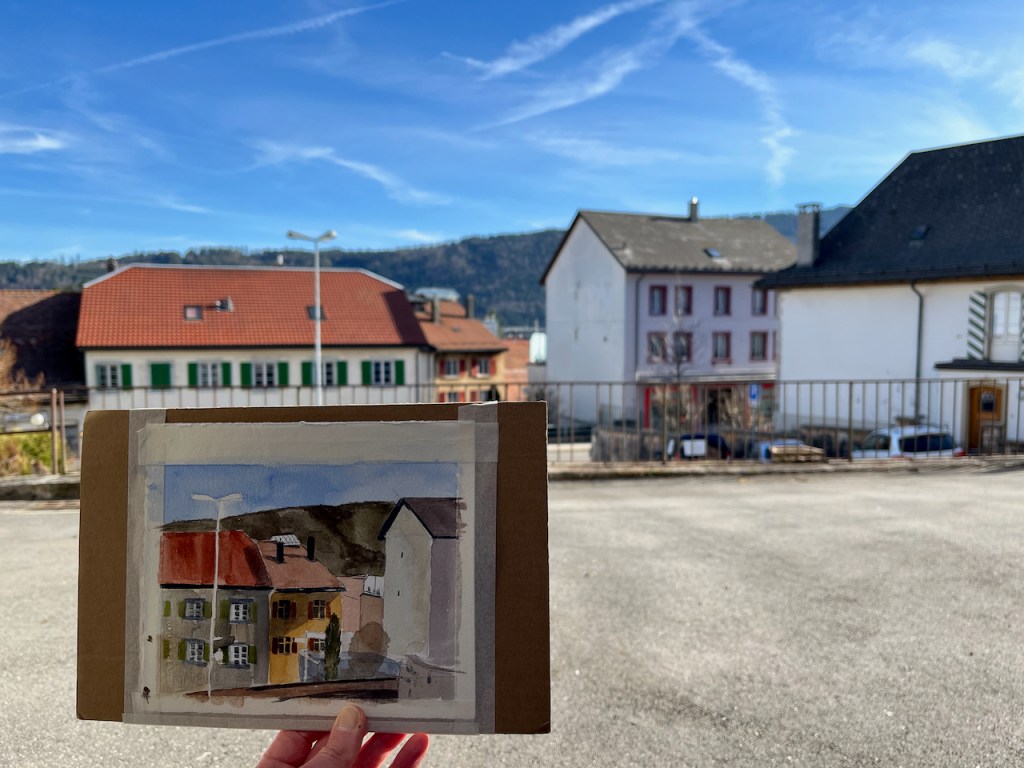
I inspected the sky suspiciously. I watched the cloud movements. Clouds just appear here, over the mountains, as from a volcano. They don’t proceed in an orderly succession as they do over the Atlantic. However all seemed more lightweight and friendly than it did earlier. I exited from the archway, and resumed my place on the public roadway. There are probably laws about sketching on the public roadway too.

But no-one even walked past. Not a car. Not a person. Not a dog. So that was alright. I finished the sketch. And then the rain started again.

Château de Vufflens in the morning, 24 March 2024 11:15 in Sketchbook 14

This castle is privately owned. It is on a rock in the valley, surrounded by high walls. Houses cluster at the bases of the walls. if you know the work of Mervyn Peake, think “Gormenghast”.

It was originally constructed in the middle ages, 1420-1430, for Henri de Colombier, an adviser to Duke Amadeus VIII of Savoy, I was told. It looks well maintained, and vast.

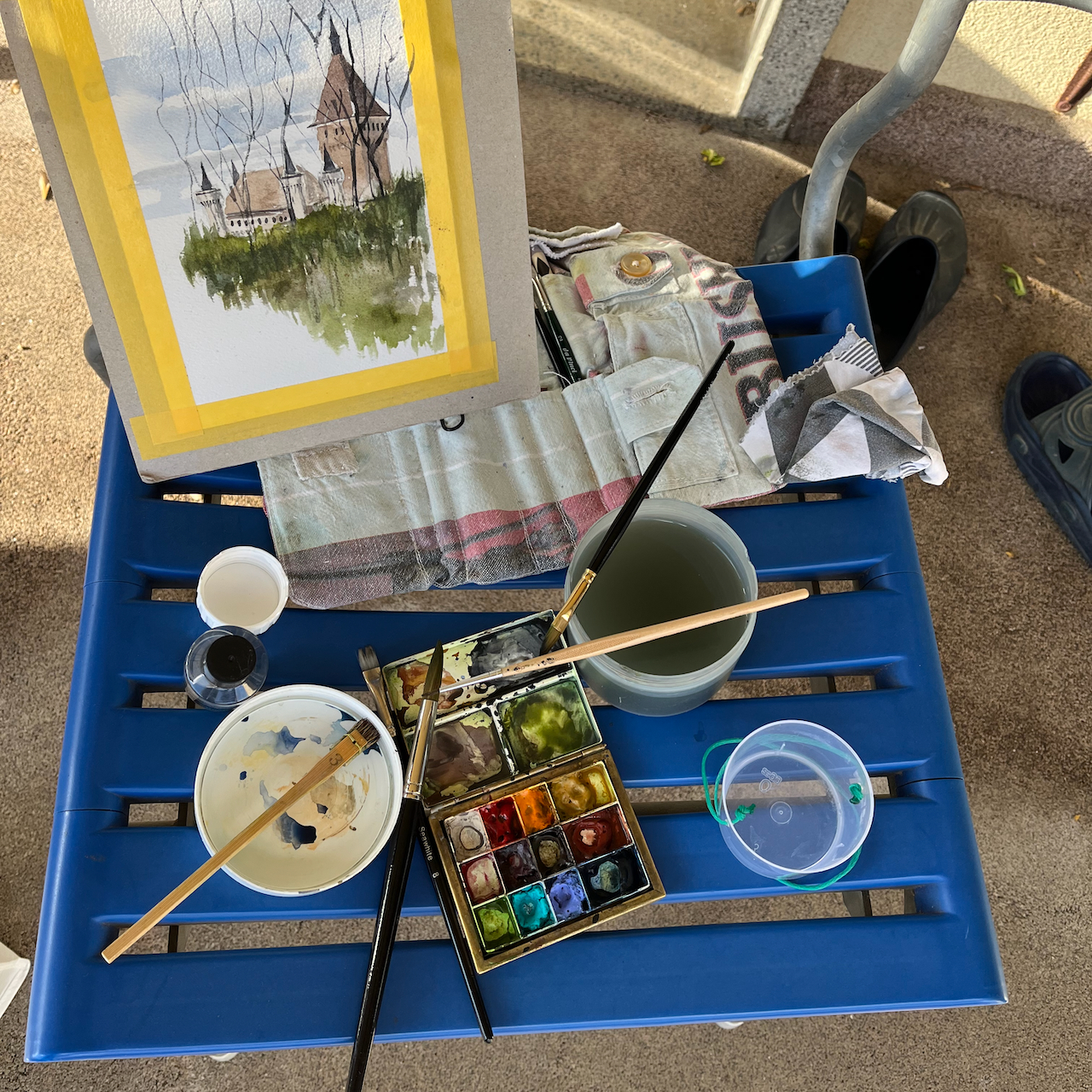
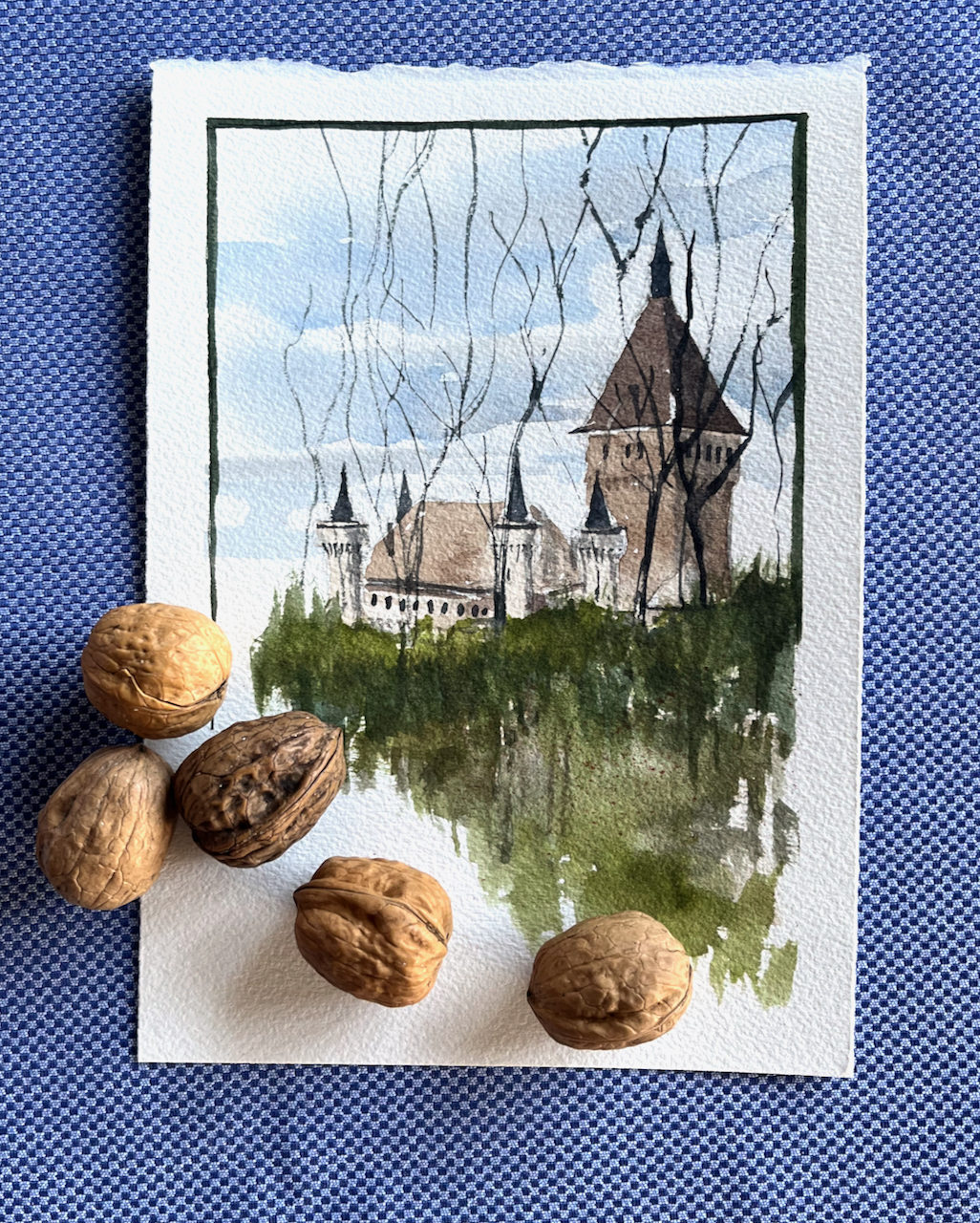
Later that day I made another attempt at drawing the castle, from a different angle. From this new viewpoint I could be under cover, but there were trees. I put the trees in.

Château de Vufflens in the afternoon. 24th March 2024, 4pm. 6″ x 8″ on Arches Aquarelle card

The walnuts came from the trees.

Sainte-Croix houses

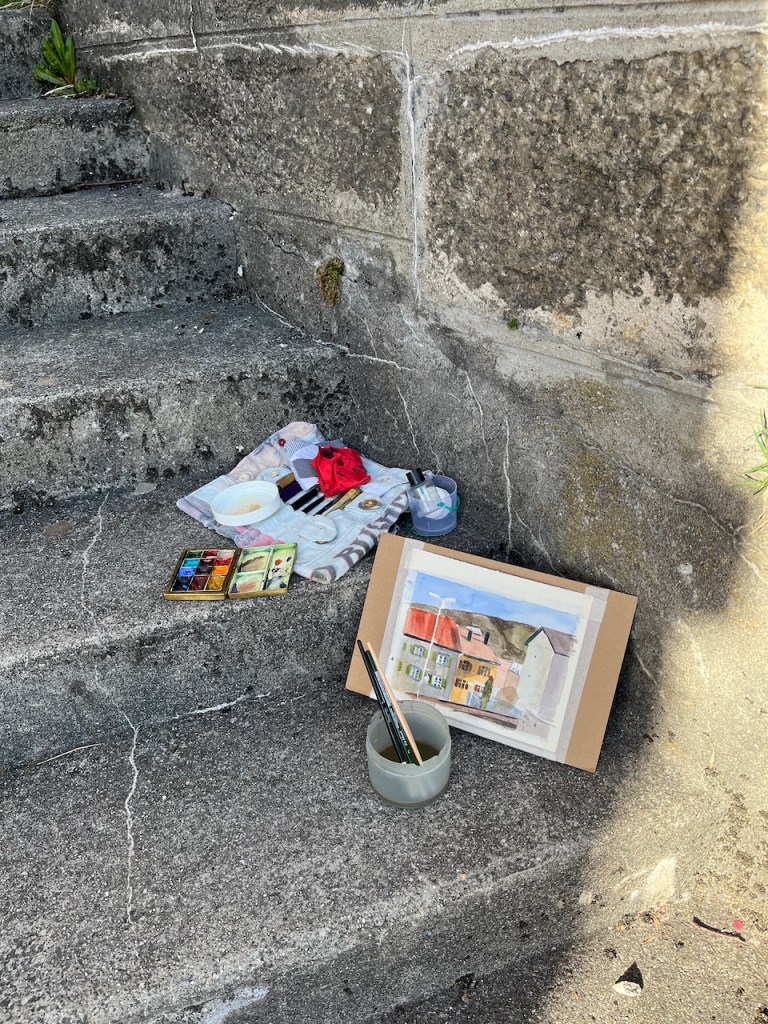
In the afternoon I sat down on the stone steps and sketched the houses that were in front of me.

Sainte-Croix houses, 8″ x 6″ postcard on Arches Aquarelle 300gsm paper. March 2024

I was struck by how the afternoon sun cast shadows on that glass screen, centre left, and illuminated the little greenhouse-type roof on the house in the centre. These are solid Swiss houses, with heavy tiled roofs and properly operational shutters. Some of the metalwork, such as the guttering and the surroundings of the chimney stacks, is in actual copper. Even the downpipes are copper.

One tree was a fir tree and was opaque. The other tree was twigs, and was transparent.

Although it was spring, this is at 1200m, and it was cold. The deciduous trees are still bare. The hill is the background is Mont-de-Baulmes. Many of the trees up there are deciduous larch.

I painted this picture in watercolour-only. Usually I use pen. Here, I did a quick pencil sketch and then straight on with the colour. It was too cold to try to get any details or do any penmanship. The solid plainness of the houses seemed to demand flat colour washes. I deliberately left lines of white between the slabs of colour – the sun always catches edges.

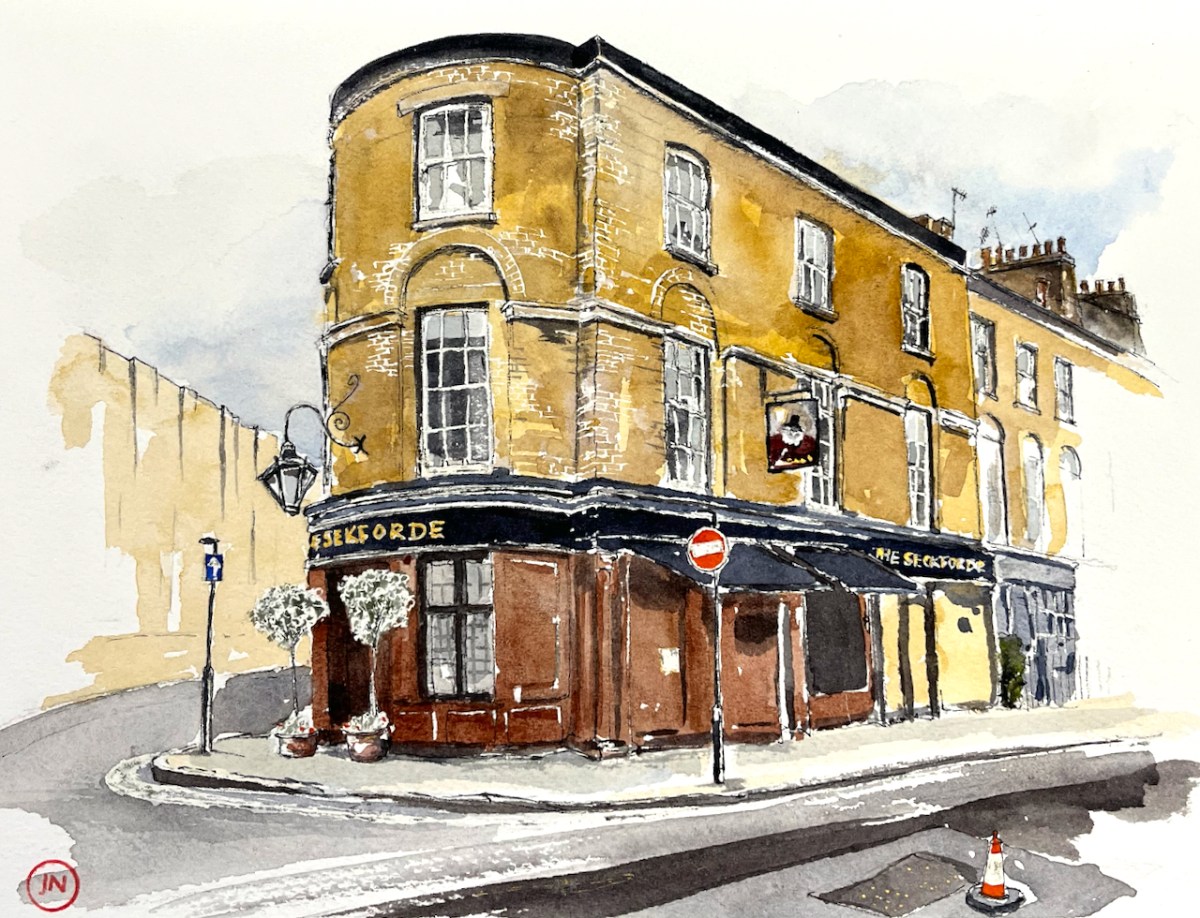
The Sekforde – a commission

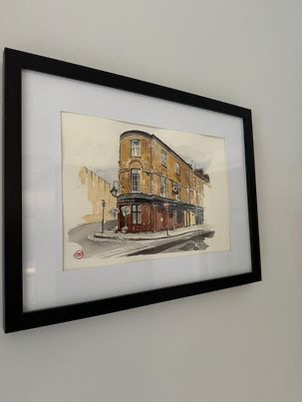
The Sekforde EC1R 0HA, Clerkenwell, sketched March 2024 12″ x 9″ [commission]

This watercolour was specially commissioned to celebrate a happy event.

The colours are:

  • Mars Yellow
  • Fired Gold Ochre
  • Ultramarine Blue
  • Burnt Umber
  • plus some Horadam Random Grey, some Daniel Smith Green Serpentine Genuine, and Pyrrol Red for the street sign and road marker.
  • Gold paint for the lettering.

Admire the bricks! I am very pleased with this effect. It was done by applying a rubber resist, “pebeo drawing gum” to the paper before I did any painting. The paint does not adhere to the rubber resist. When I had done all the colour, I rubbed off the rubber resist and hey presto! bricks.

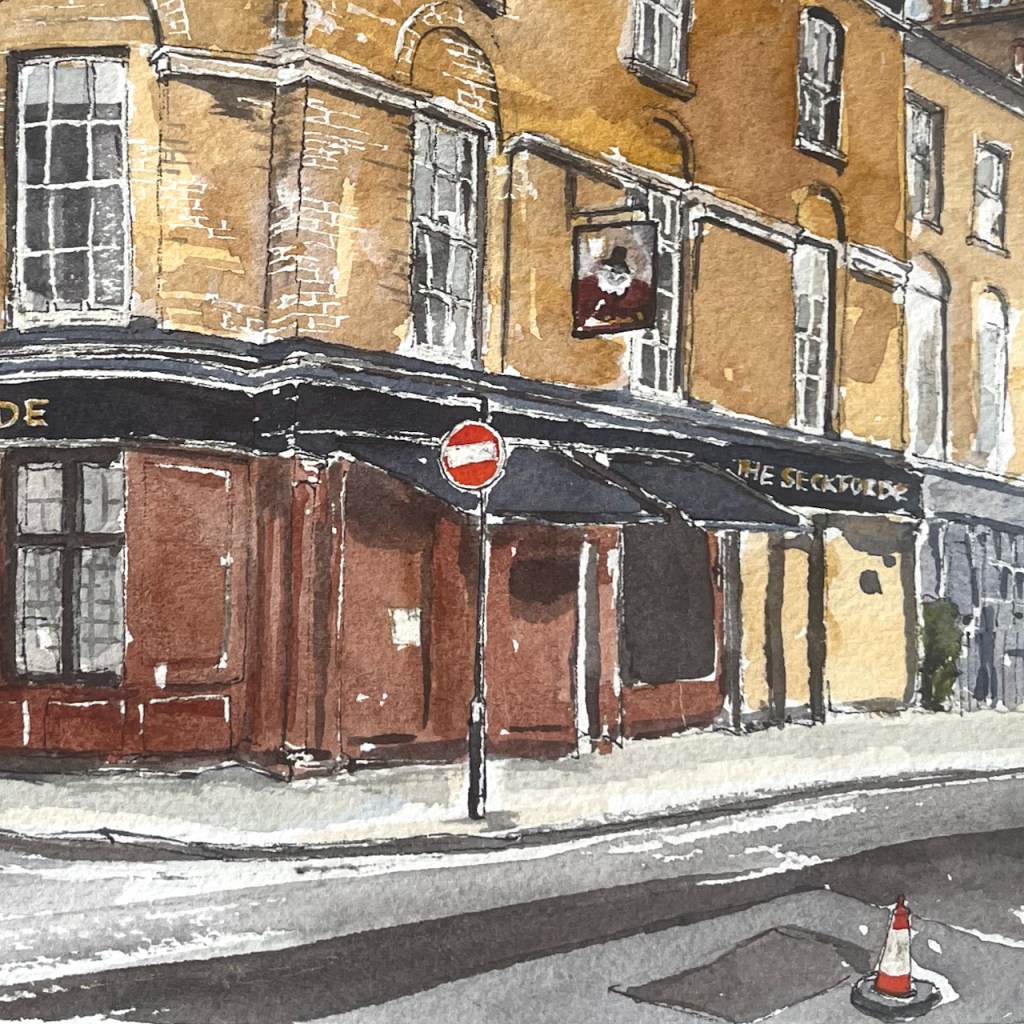
Thank you to my client for their encouraging words and for inspiring me to make this picture of The Sekforde. Here are some details of the drawing.

I have sketched The Sekforde previously, see this link: The Sekforde, Clerkenwell

UPDATE:

My client kindly sent me photos of the framed picture!

Somerville College, Oxford: Porters’ Lodge

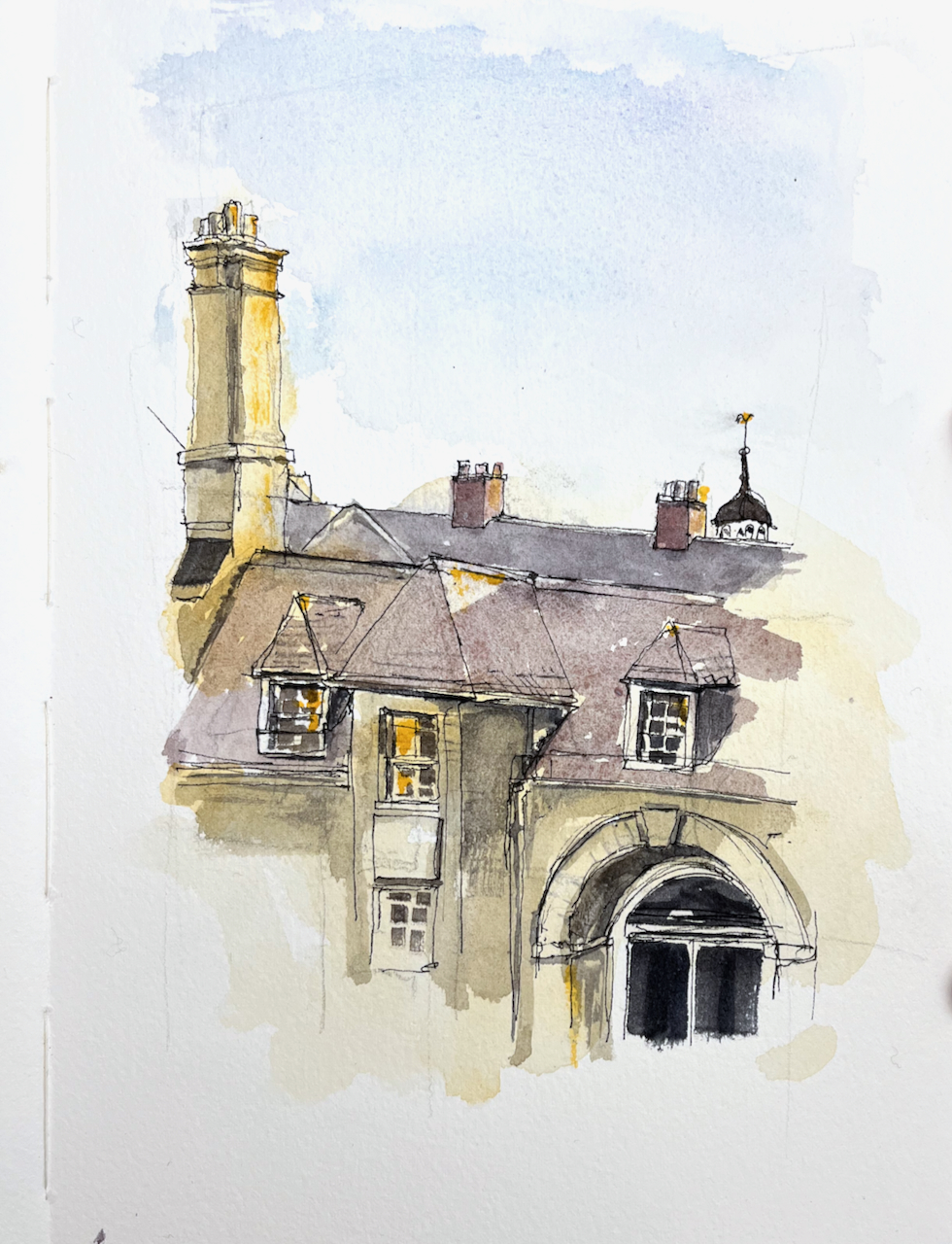
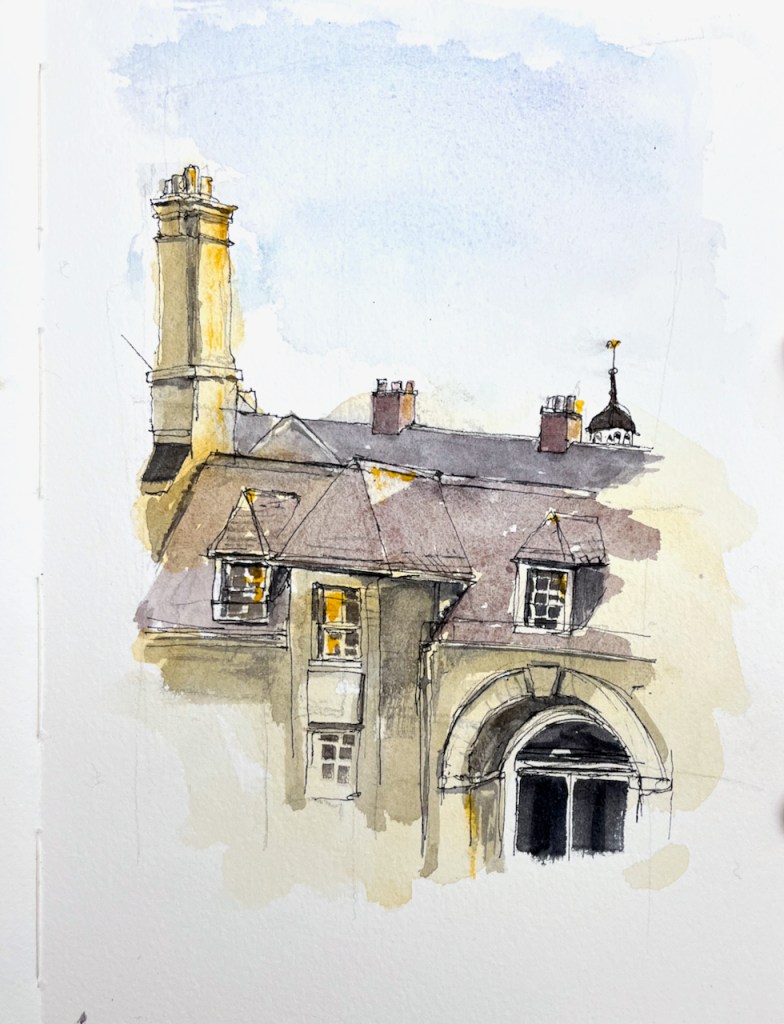
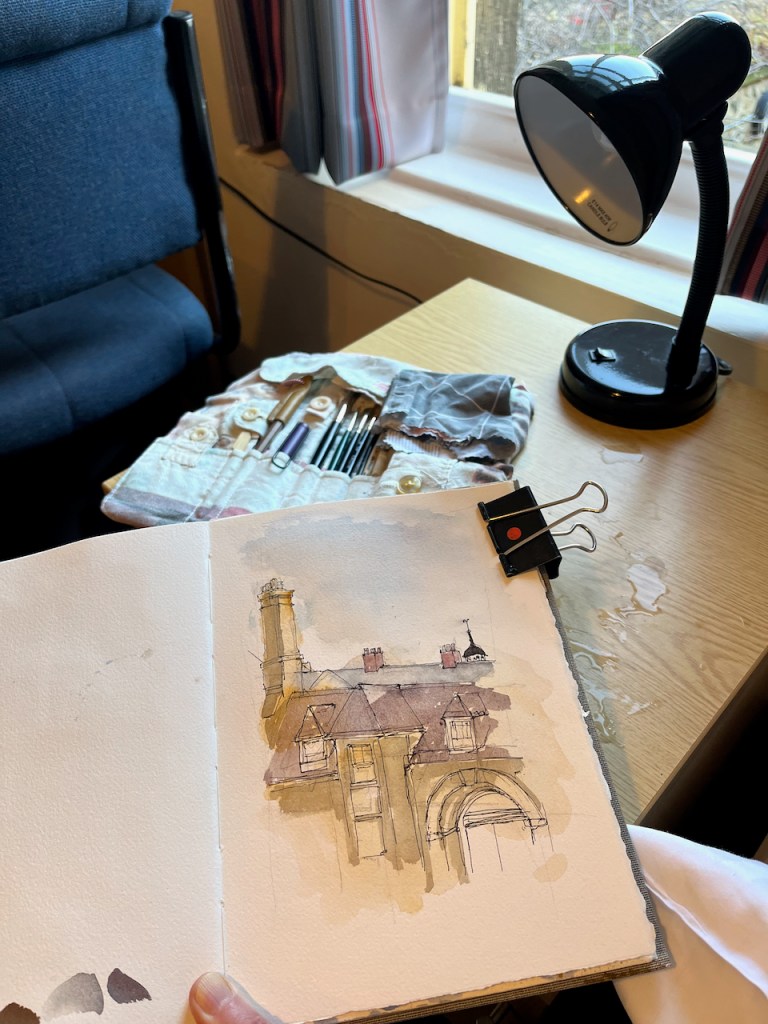
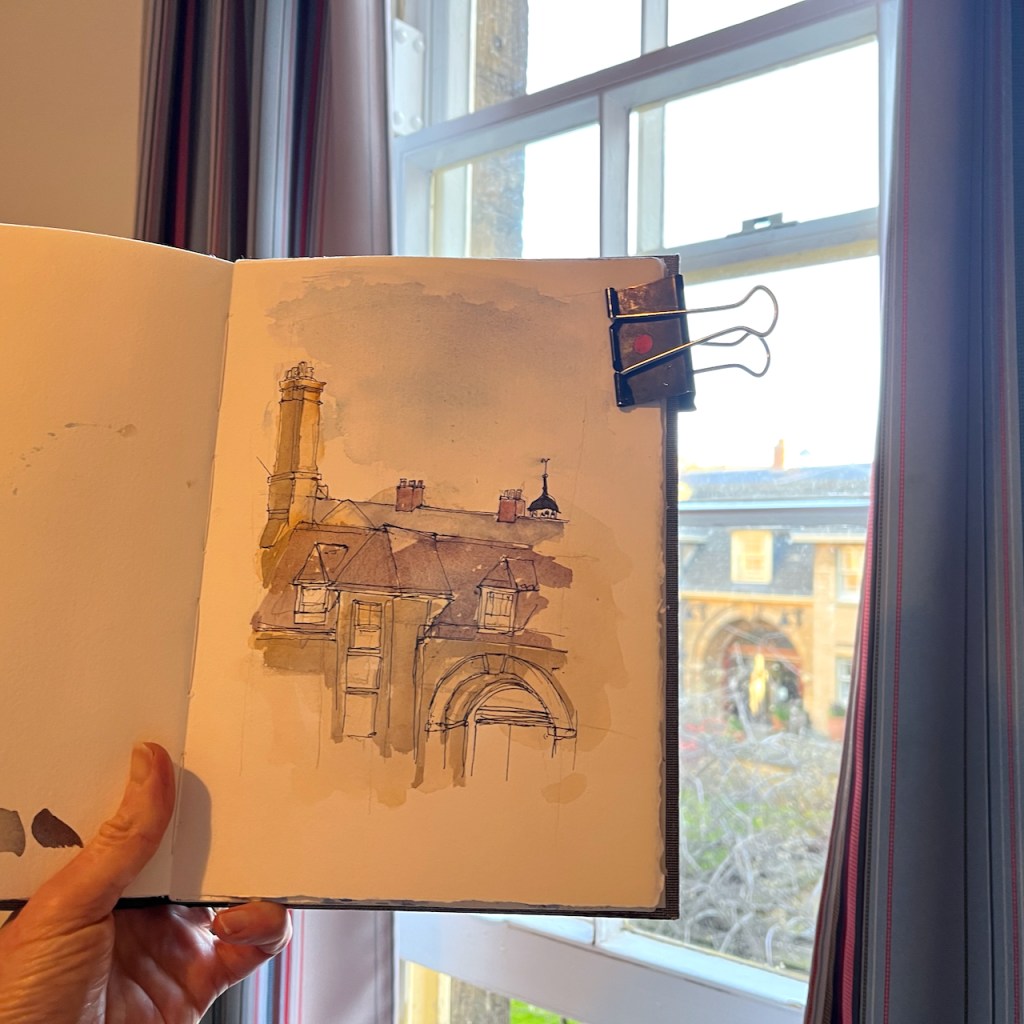
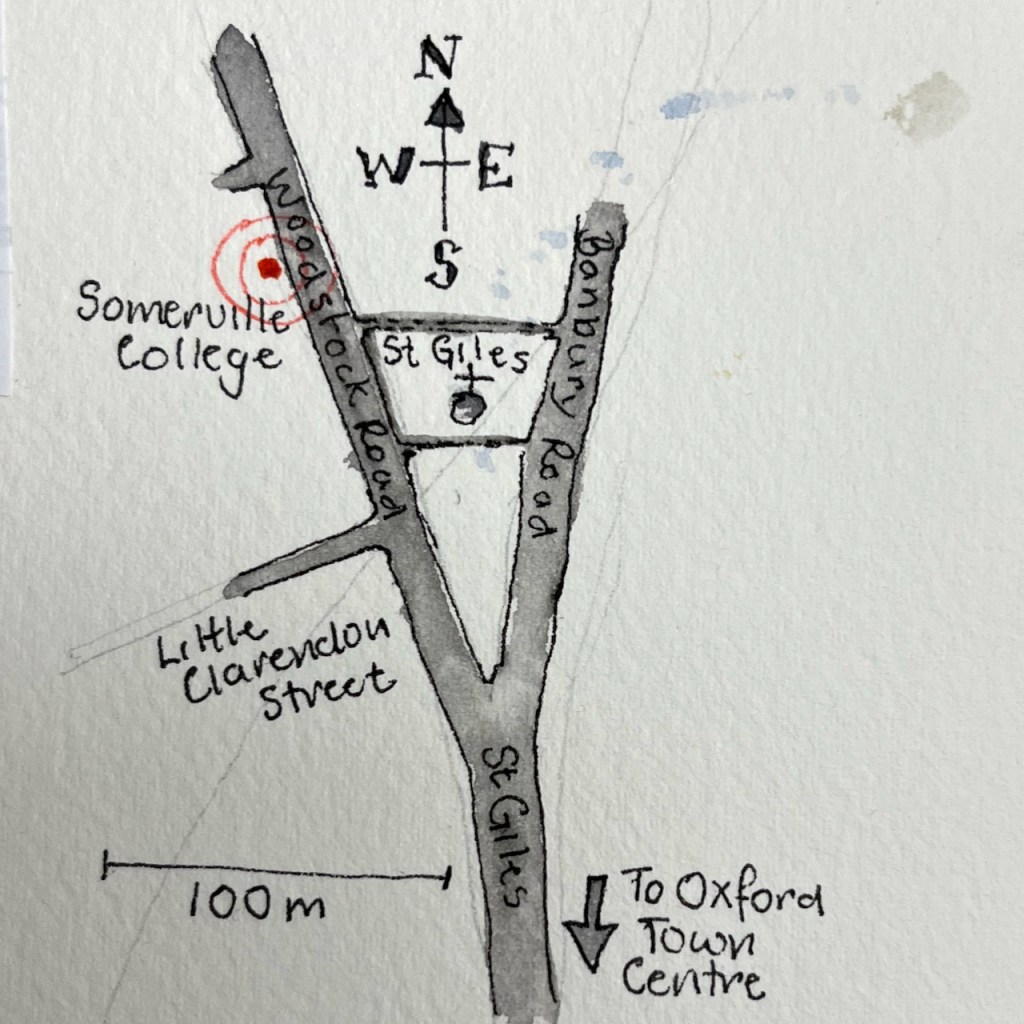
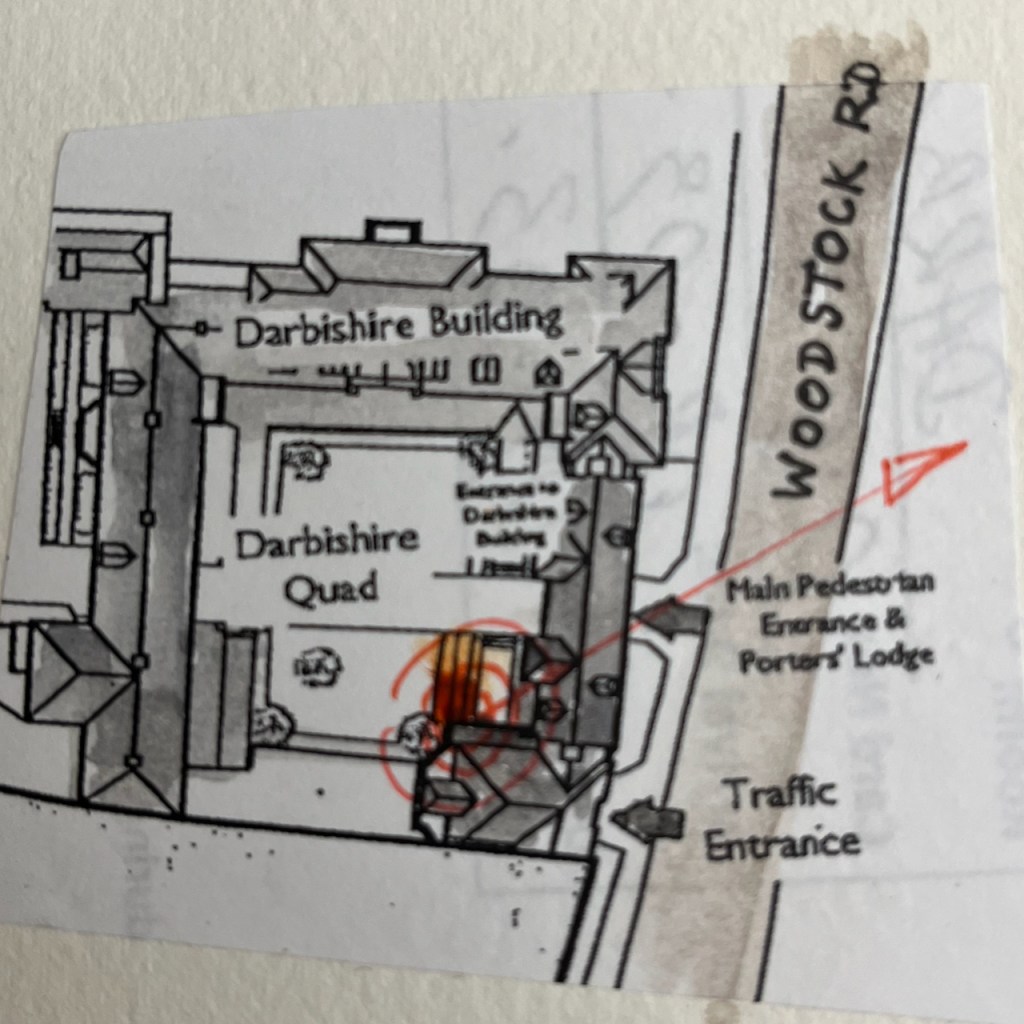
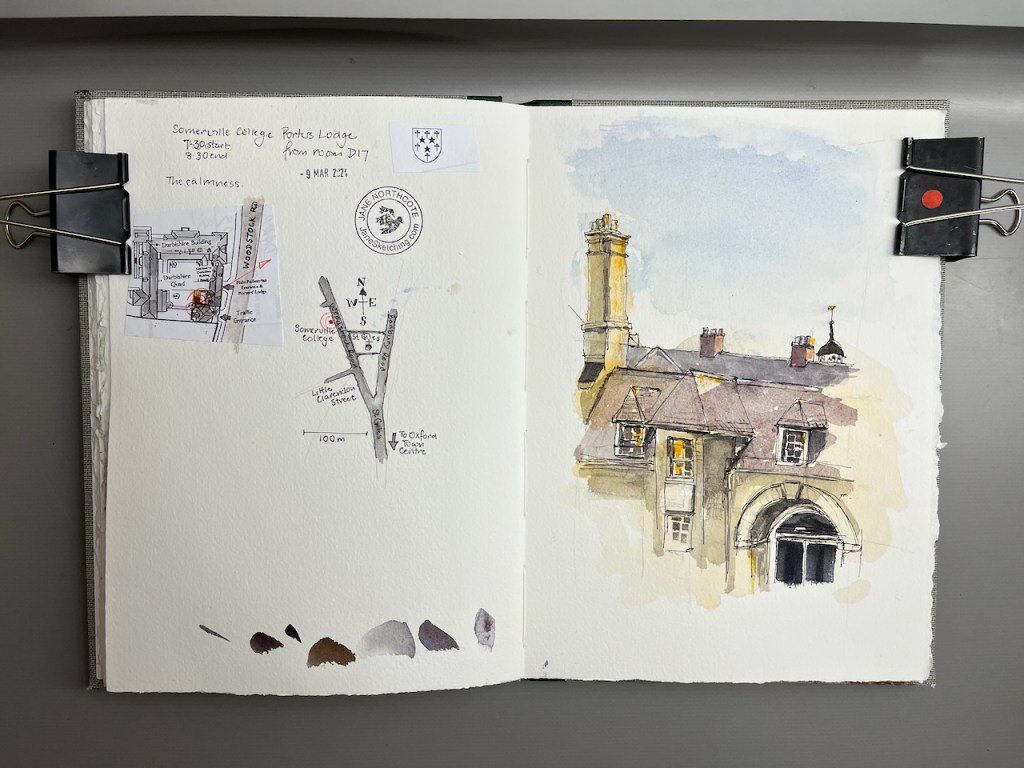
Here is the view from room D17 in Somerville College, OX2 6HD.

View from D17, Somerville College Porters’ Lodge. 9th March 2024, 07:30am, in Sketchbook 14

I sketched it quickly, before leaving, just as the sun was coming up.

Somerville College was women-only for the first 115 years of its existence. It started to admit men in 1994.

Vauxhall Tea House Theatre SE11

Here is a civilised place in London. It’s the Vauxhall Tea House Theatre.

This is a picture I sketched there last week:

Vauxhall Tea House – 2:30pm 7 March 2024, in sketchbook 14

The tea I drank was their “Russian Smoky Tea”.

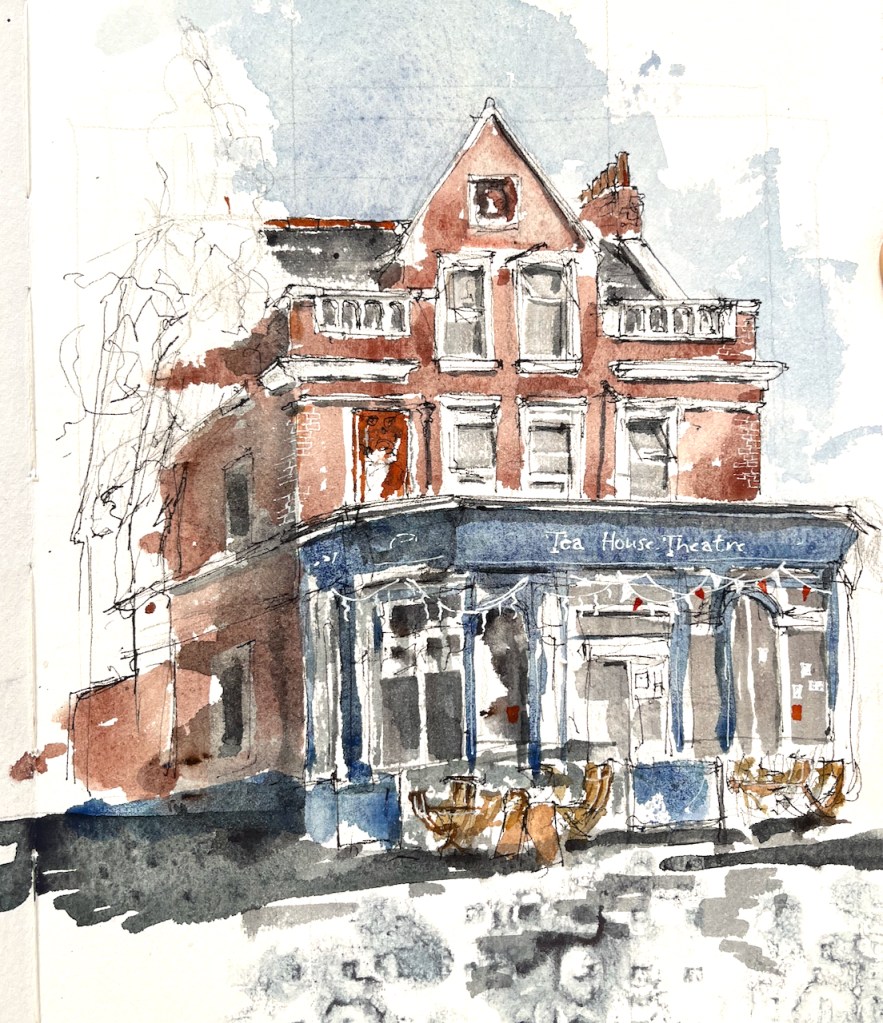
I’ve visited the Tea House many times. Here is an outside view from June 2022

Tea House Theatre, external view, June 2022 in Sketchbook 12

They have all sorts of theatrical events on their tiny stage. I enjoy “Don’t Go Into The Dungeon” where talented actor Jonathan Goodwin plays all of the characters to amazing effect. He specialises in Victorian mysteries. The next one is “The Hound of the Baskervilles”. Dinner is served before the performance. With scones for dessert.

Here’s where it is, just a 5 minute walk from Vauxhall Station.

And in more detail:

Here’s my sketchbook page:

Sketchbook 14

Cambridge Hall, Tin Tabernacle, Kilburn NW6 5BA

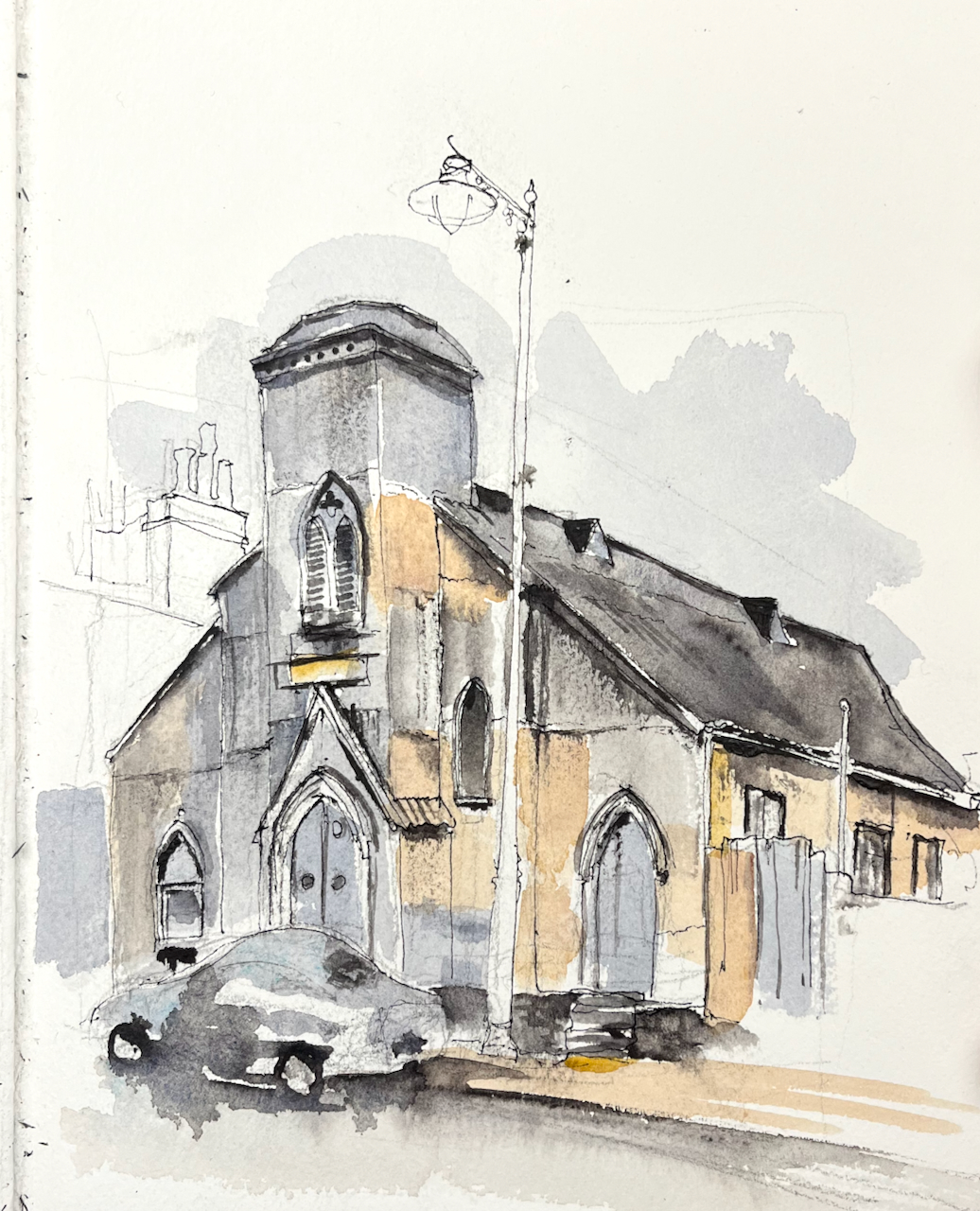
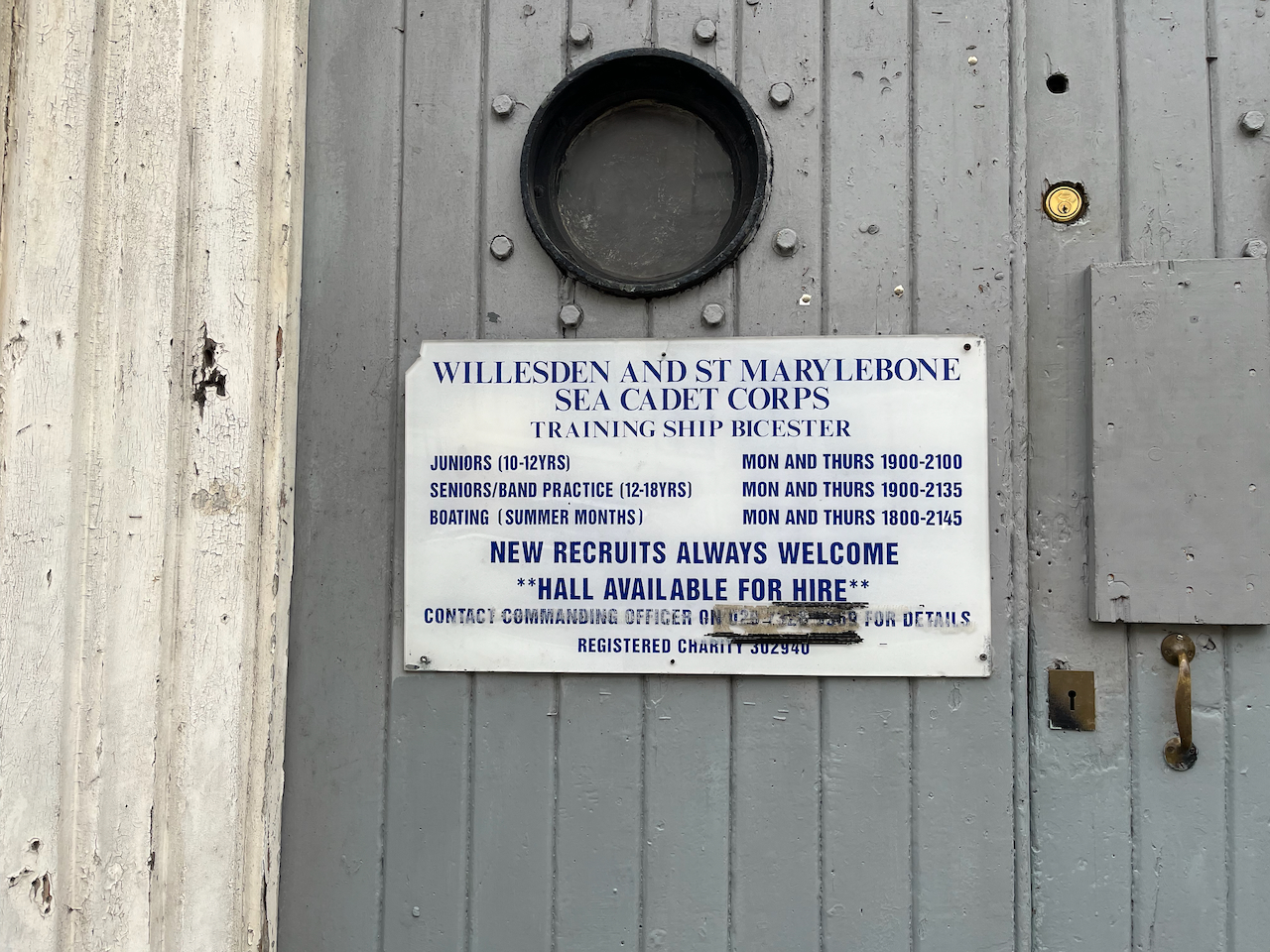
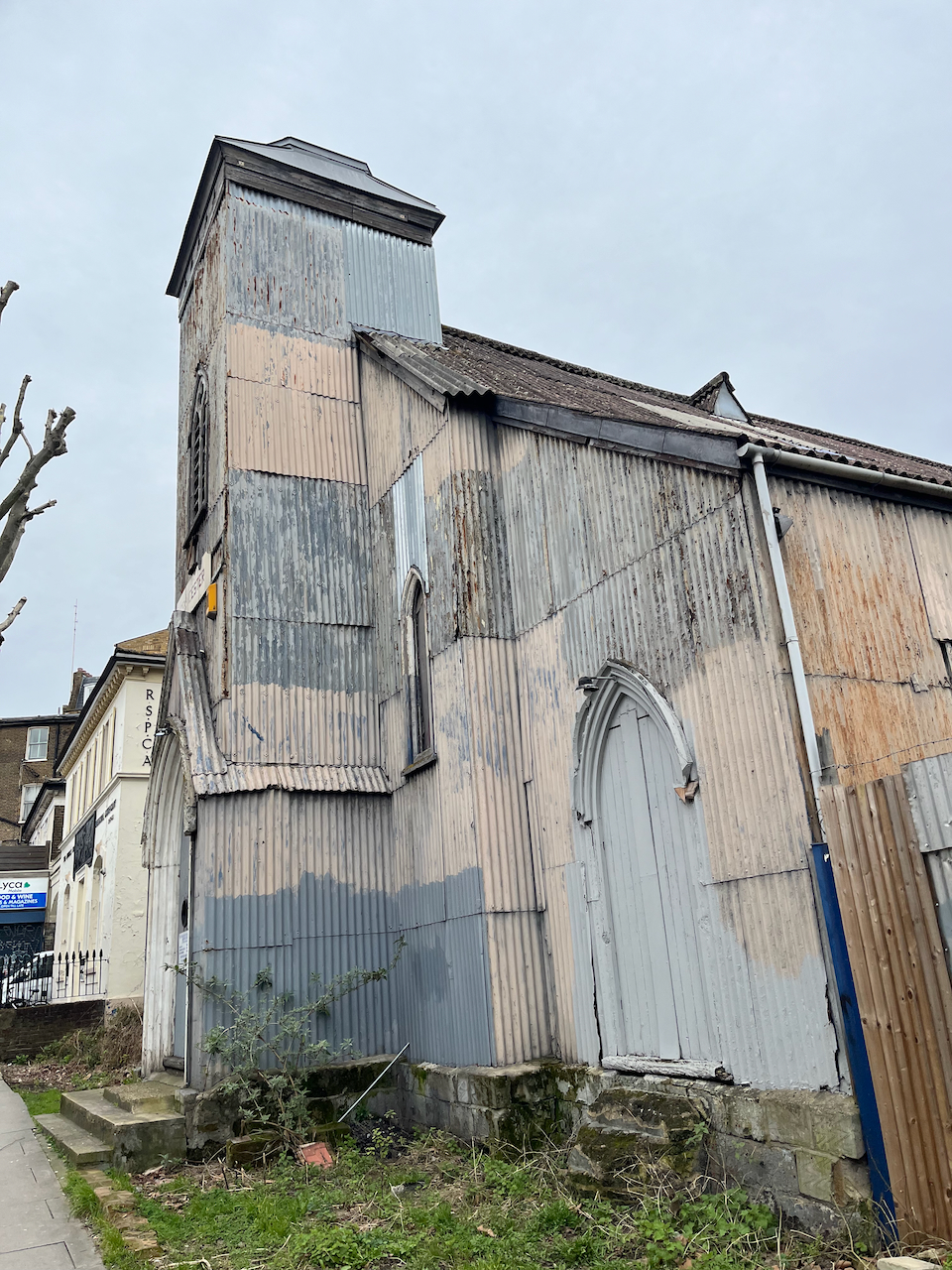
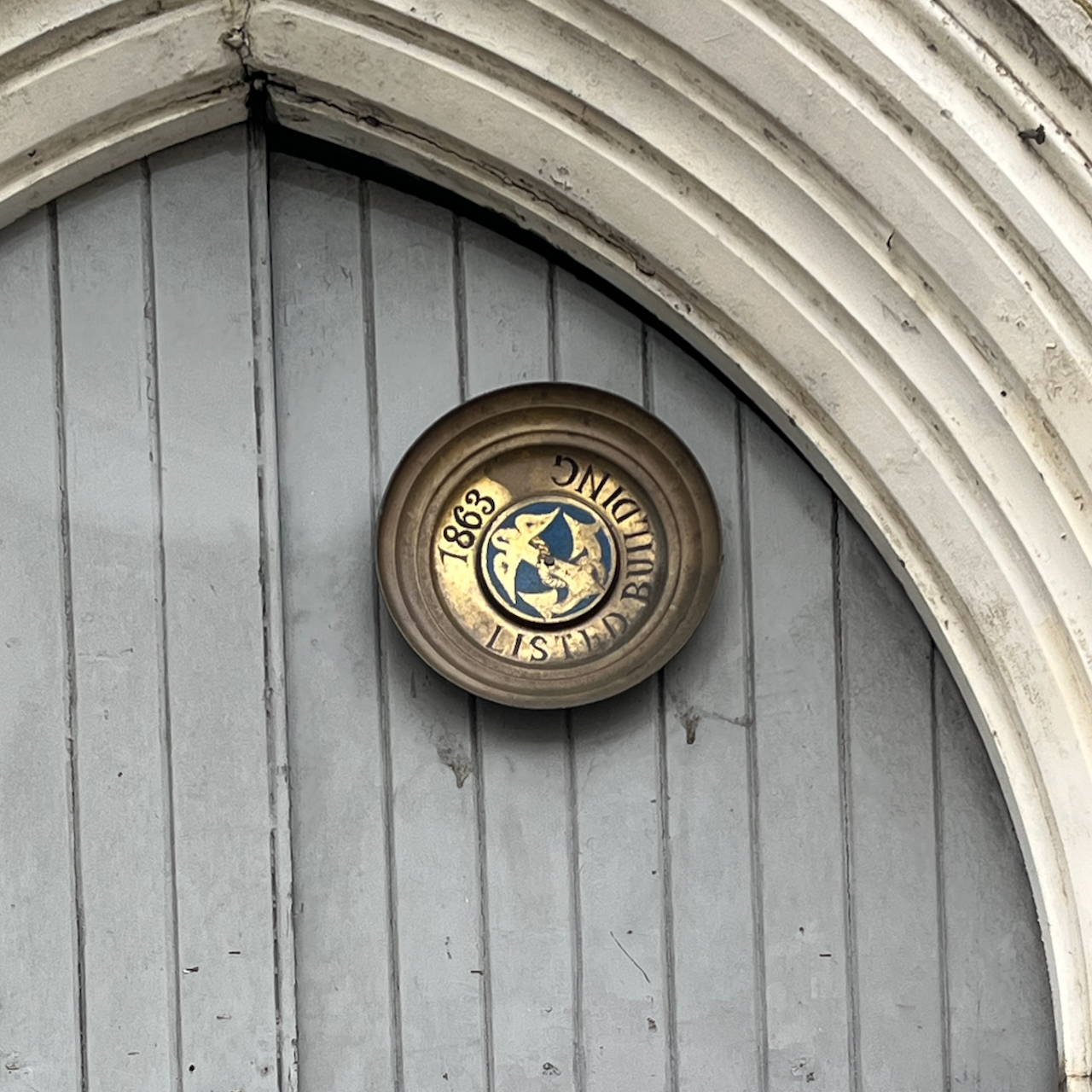
I was reading about “tin tabernacles” having sketched the “Tin Tabernacle” in Esher. I discovered, via a Historic England blog article, that there is a Tin Tabernacle in Kilburn in London. So I went to have a look. It is an “iron church” built of galvanised corrugated iron in 1863. It used to have a steeple, but that has disappeared.

Here it is now:

Cambridge Hall, Cambridge Avenue, Kilburn NW6 5BA, sketched 28 February 2024 3pm in sketchbook 14

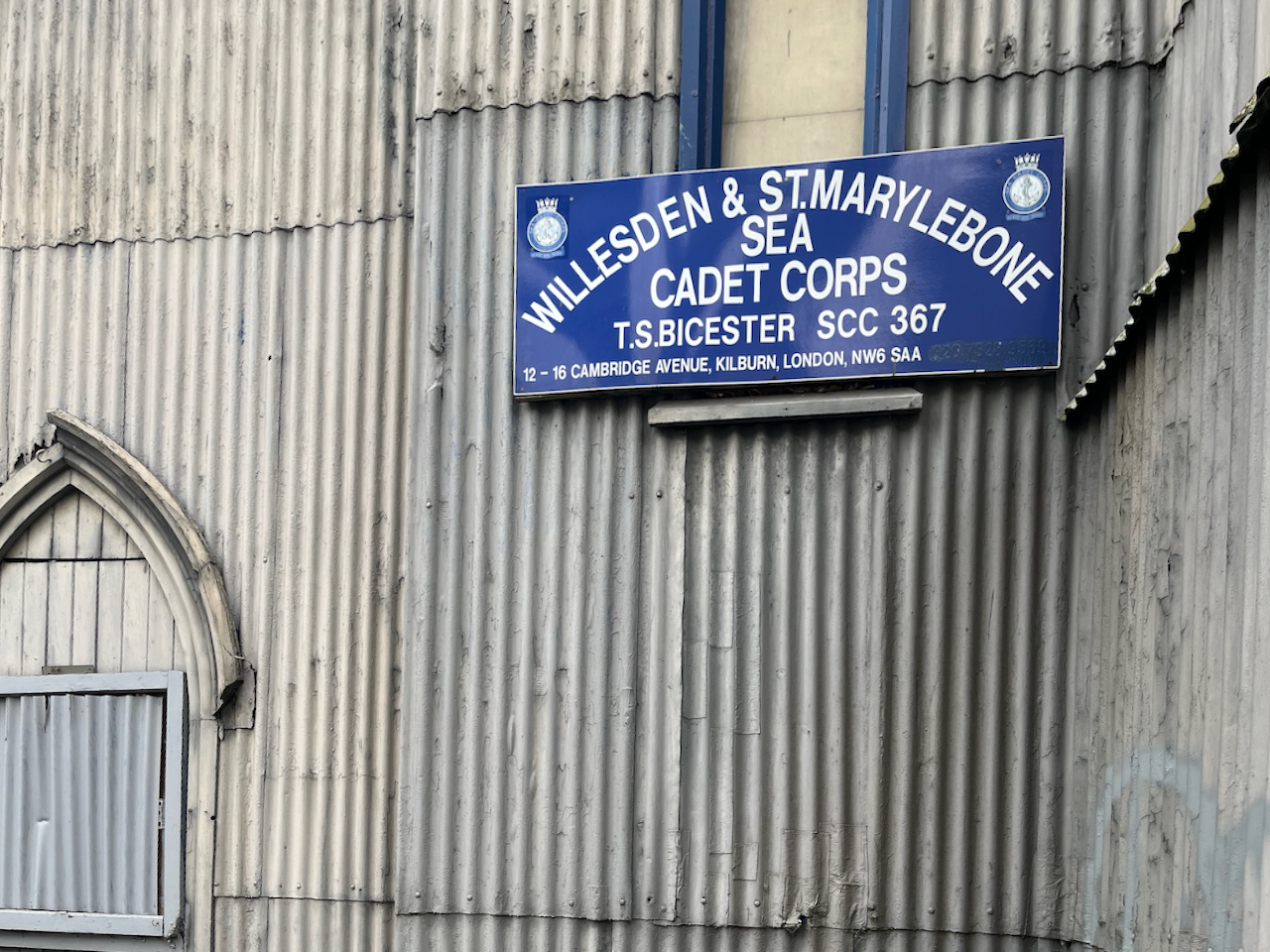
The building was built as a church, and more recently was a centre for Sea Cadets. Its future is under discussion, according to an article on the London Historic Buildings Trust site (LHBT).

The site is owned by Notting Hill Genesis Housing Association (NHG).  LHBT are currently working with NHG and the Sea Cadets, supported by Historic England and the Conservation Officer at Brent Council, to explore how the building can be stabilised and used in the future.

https://londonhistoricbuildings.org.uk/index.php/tin-tabernacle-kilburn/

The latest date mentioned in this article is 2021, so I guess the exploration is still going on. It’s listed as a “current project” on their website. The building was looking a little precarious when I visited this year (February 2024). An alarm was sounding inside.

It is Grade II listed, and on the Heritage at Risk Register. The listing is on this link. It is currently an events venue, the website is:
http://tintabernaclekilburn.org/

Here are some photos of the outside:

The building is about 150m north of Kilburn Park underground station on the Bakerloo Line.

The London Historic Buildings site has a “Virtual Visit” link, so you can see what it looks like inside, and there is a timeline of the building (click below to see it, 2 pages PDF):

It’s a building with a varied history. I wonder what will happen to it?

Sketch and notes in sketchbook 14

UPDATE: 6th March 2026

An article on “Ian Visits” says that the Ministry of Defence is funding the removal of the two training guns inside the church:

Their removal is now expected to make it easier to pursue restoration works and attract the significant external funding needed to repair the building and secure a sustainable future. The London Historic Buildings Trust is leading the restoration work with the aim of opening the Tin Tabernacle as an active community asset for Kilburn.

“Ian Visits” website: https://www.ianvisits.co.uk/articles/the-church-with-anti-aircraft-guns-kilburns-unusual-naval-relics-removed-88029/