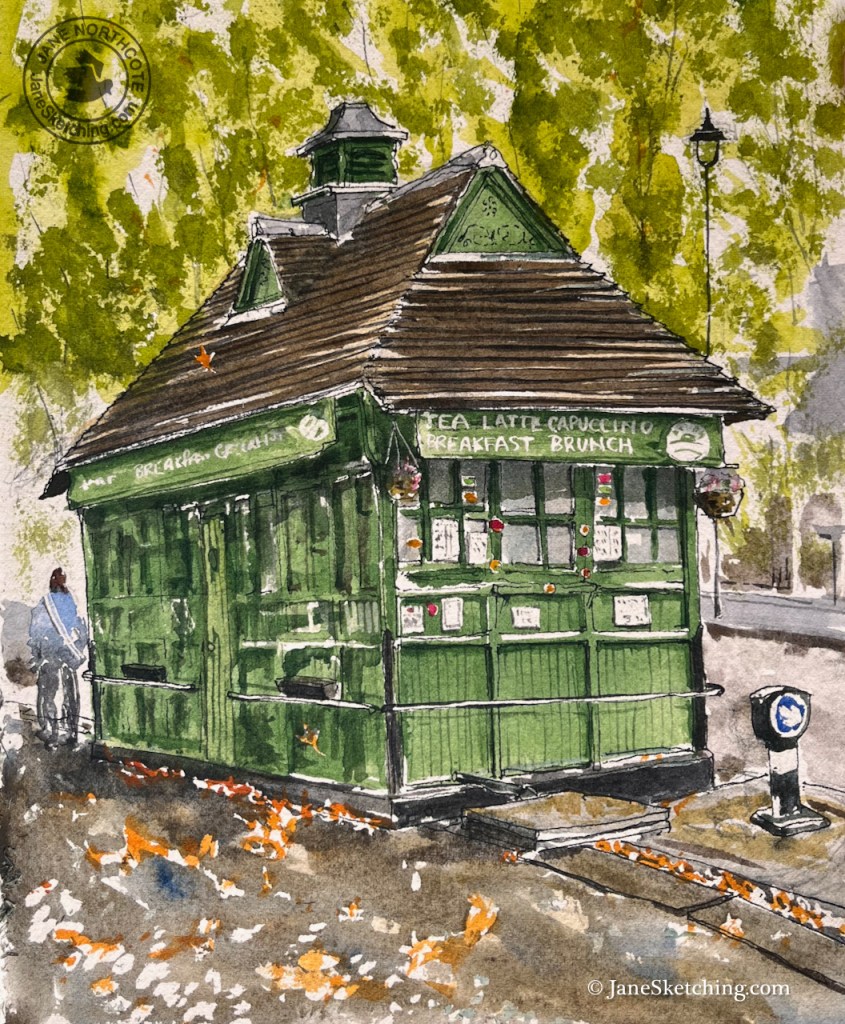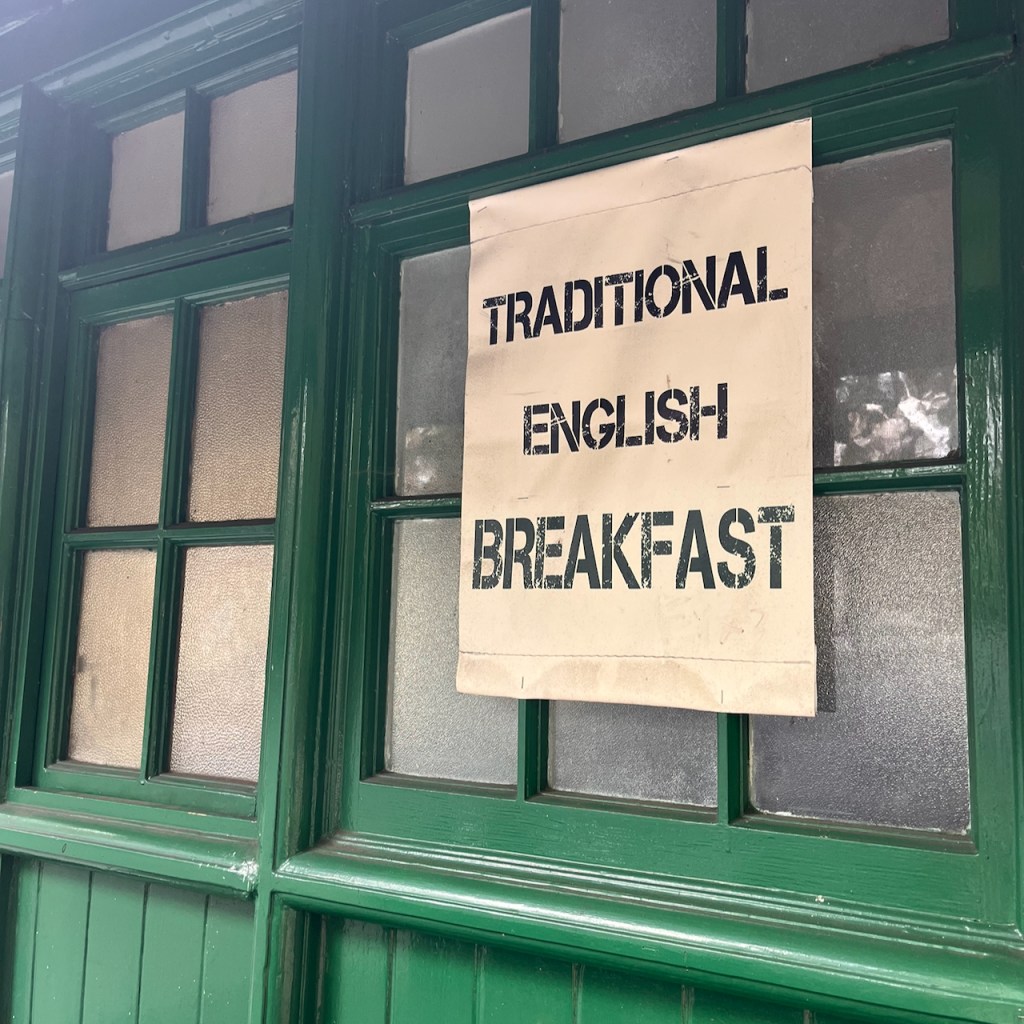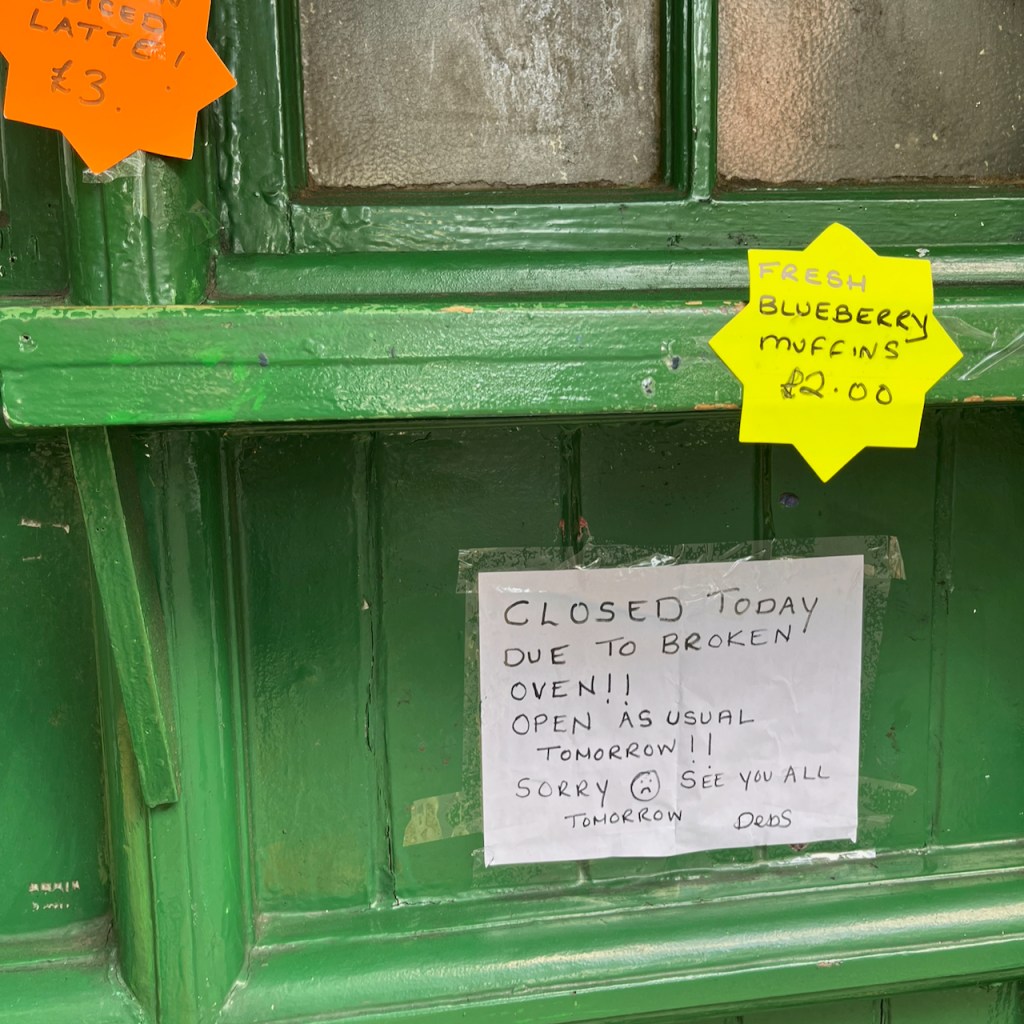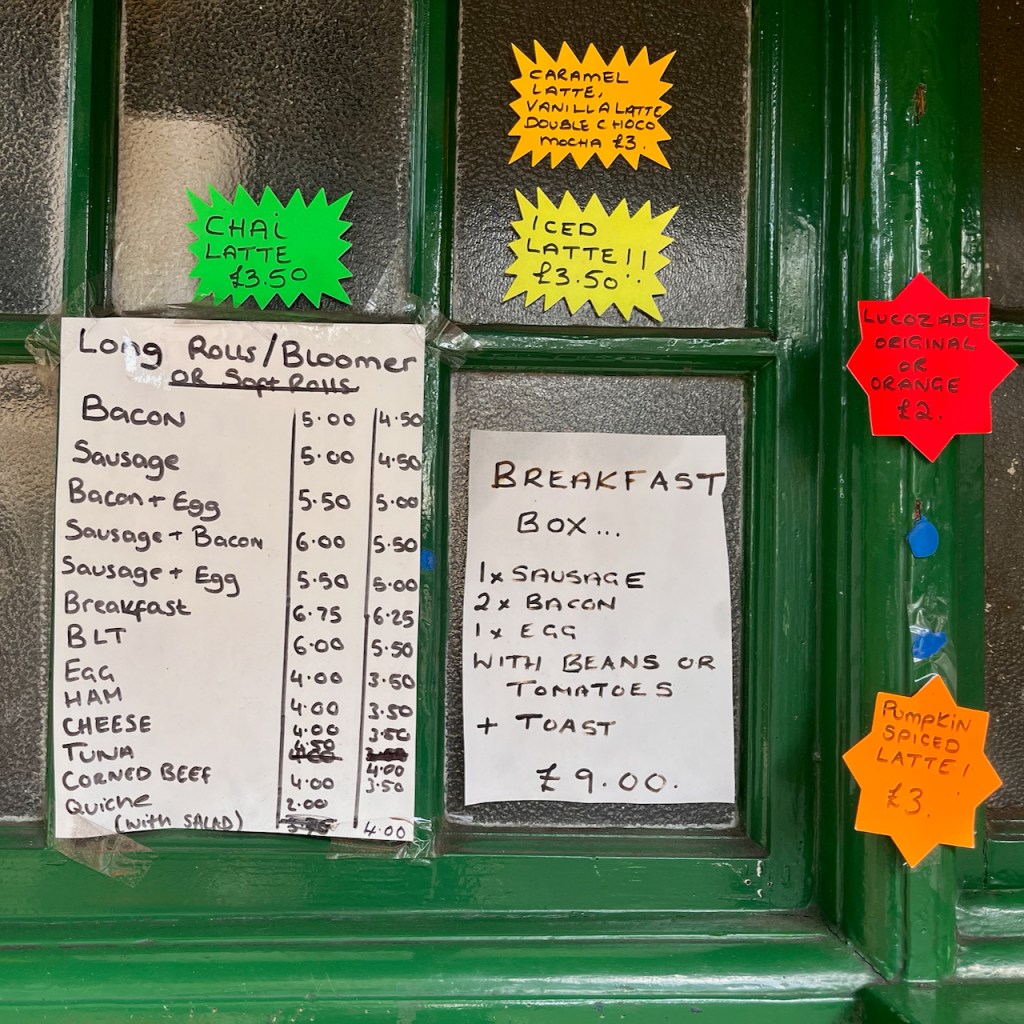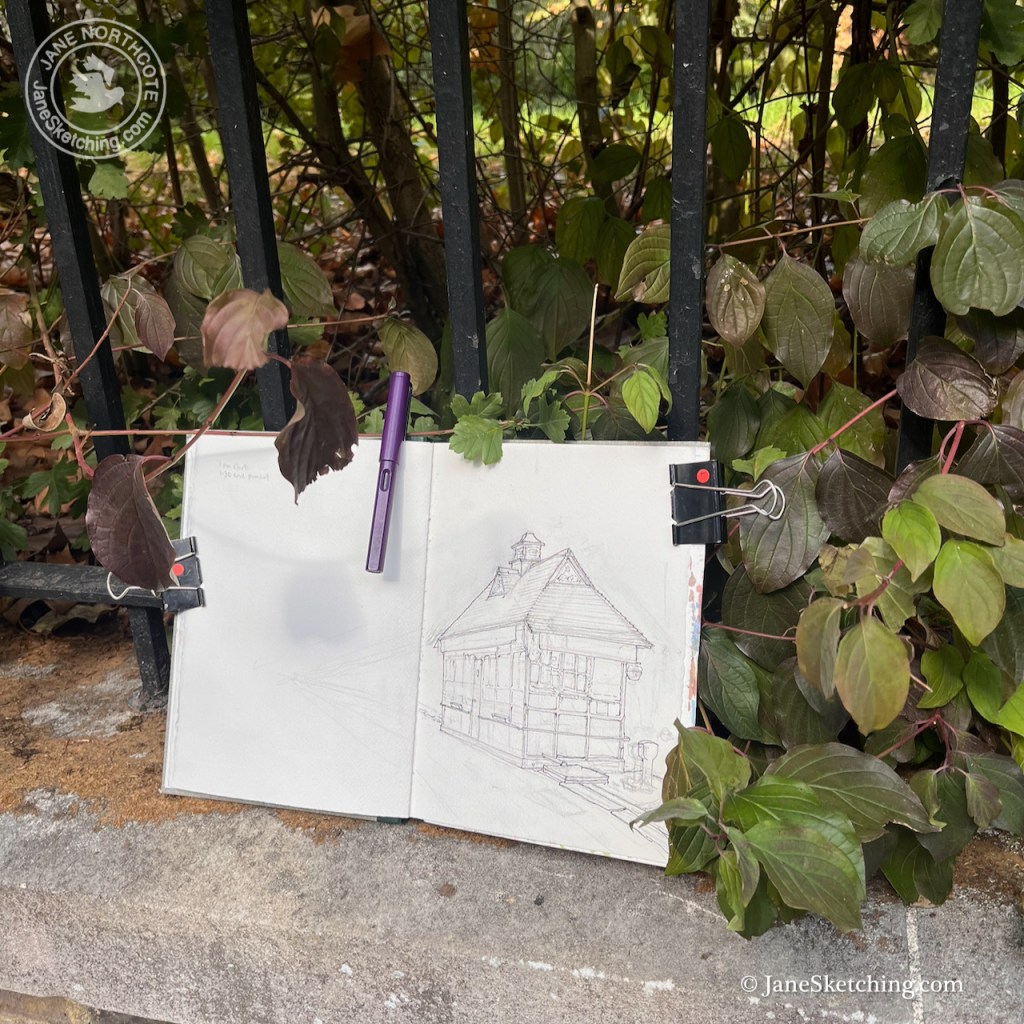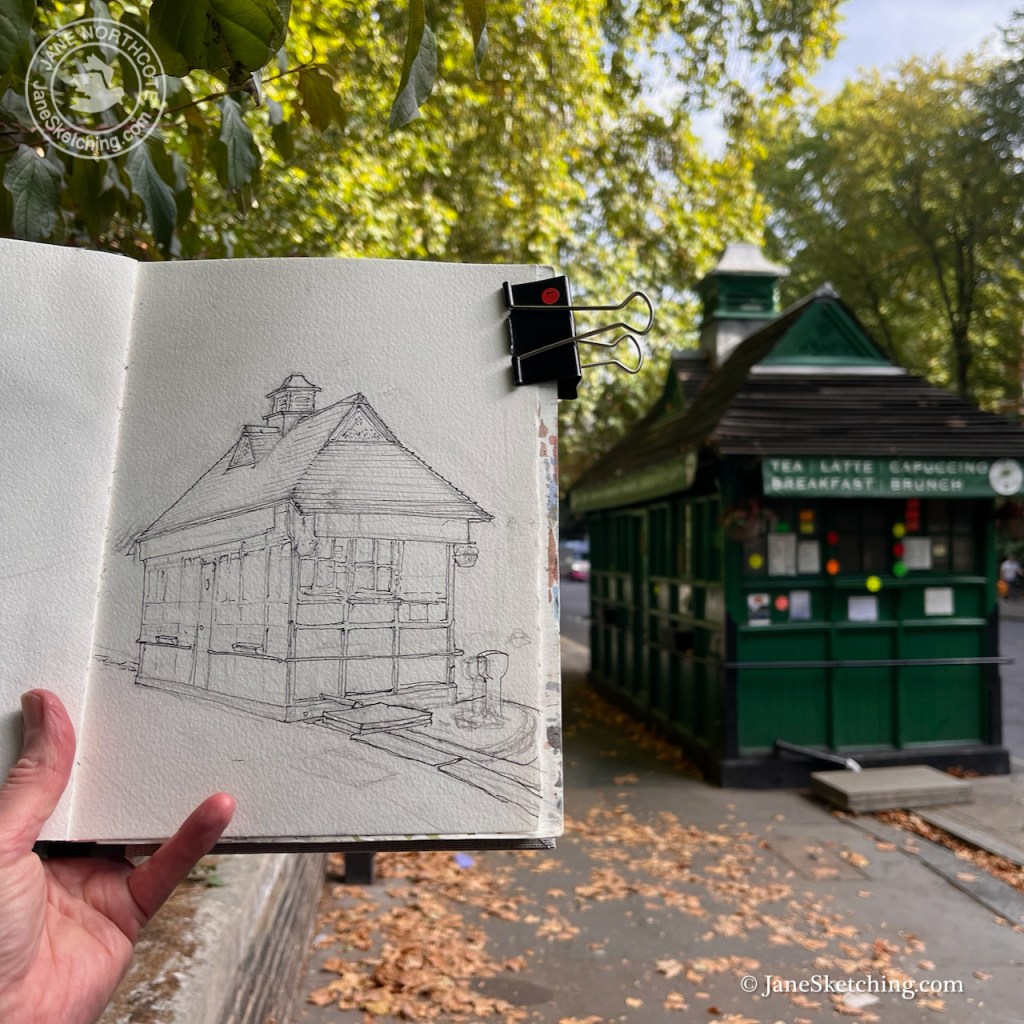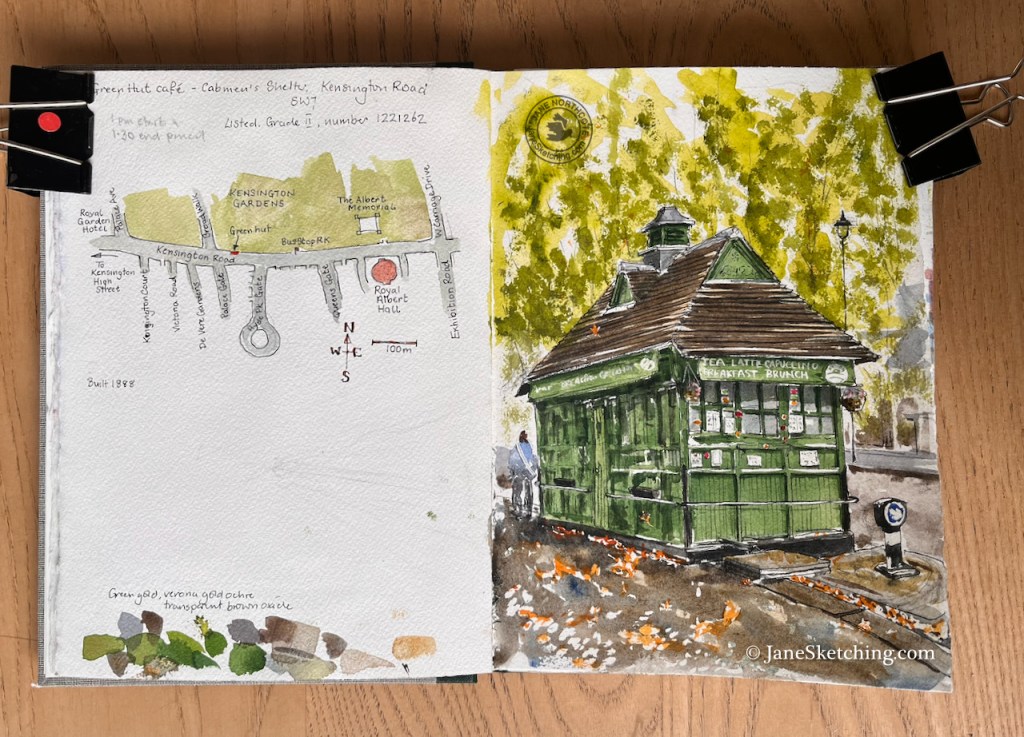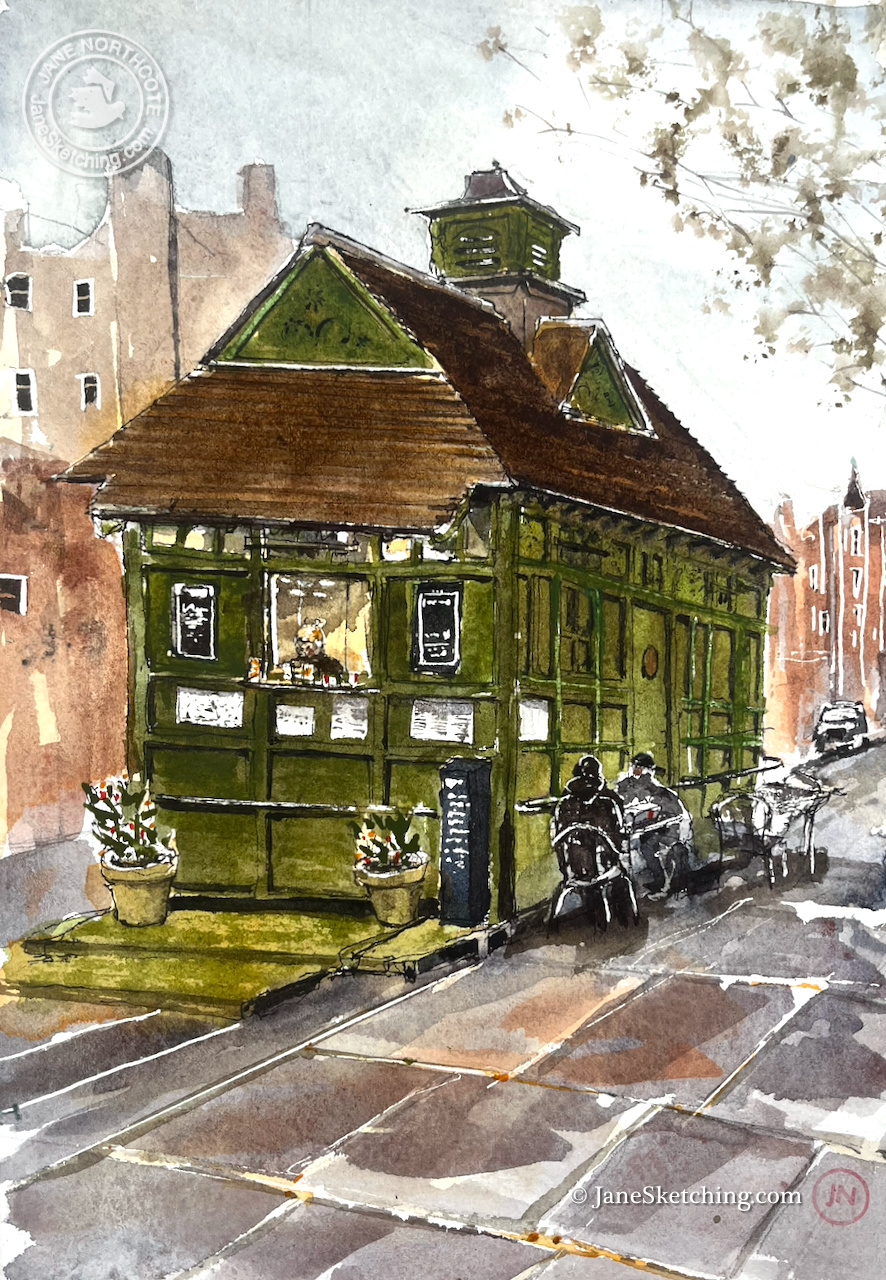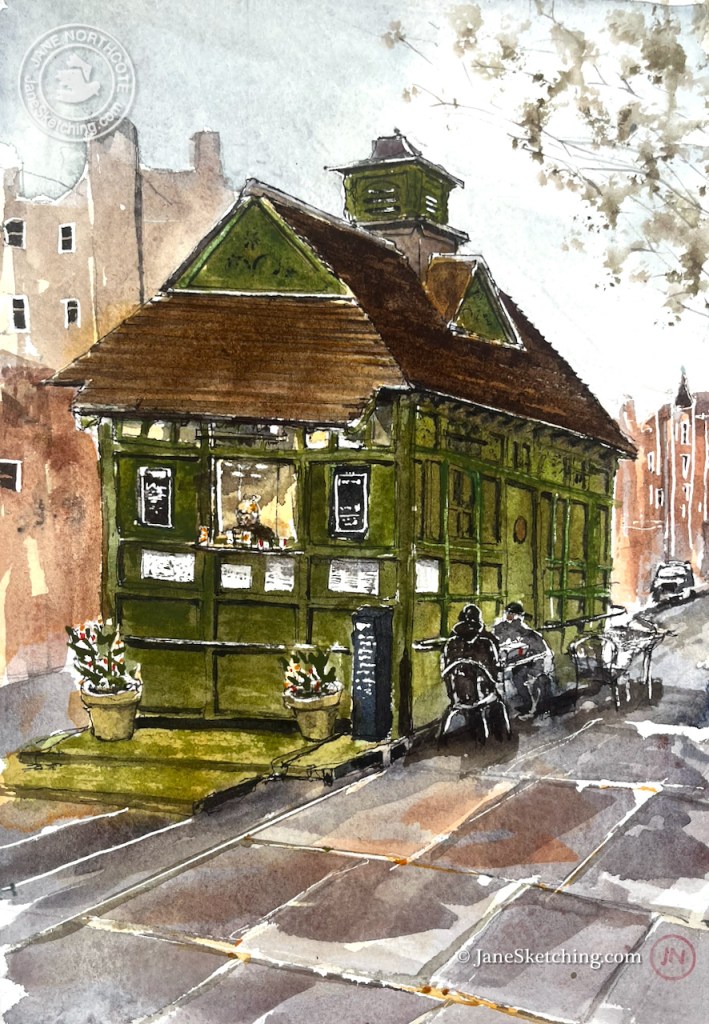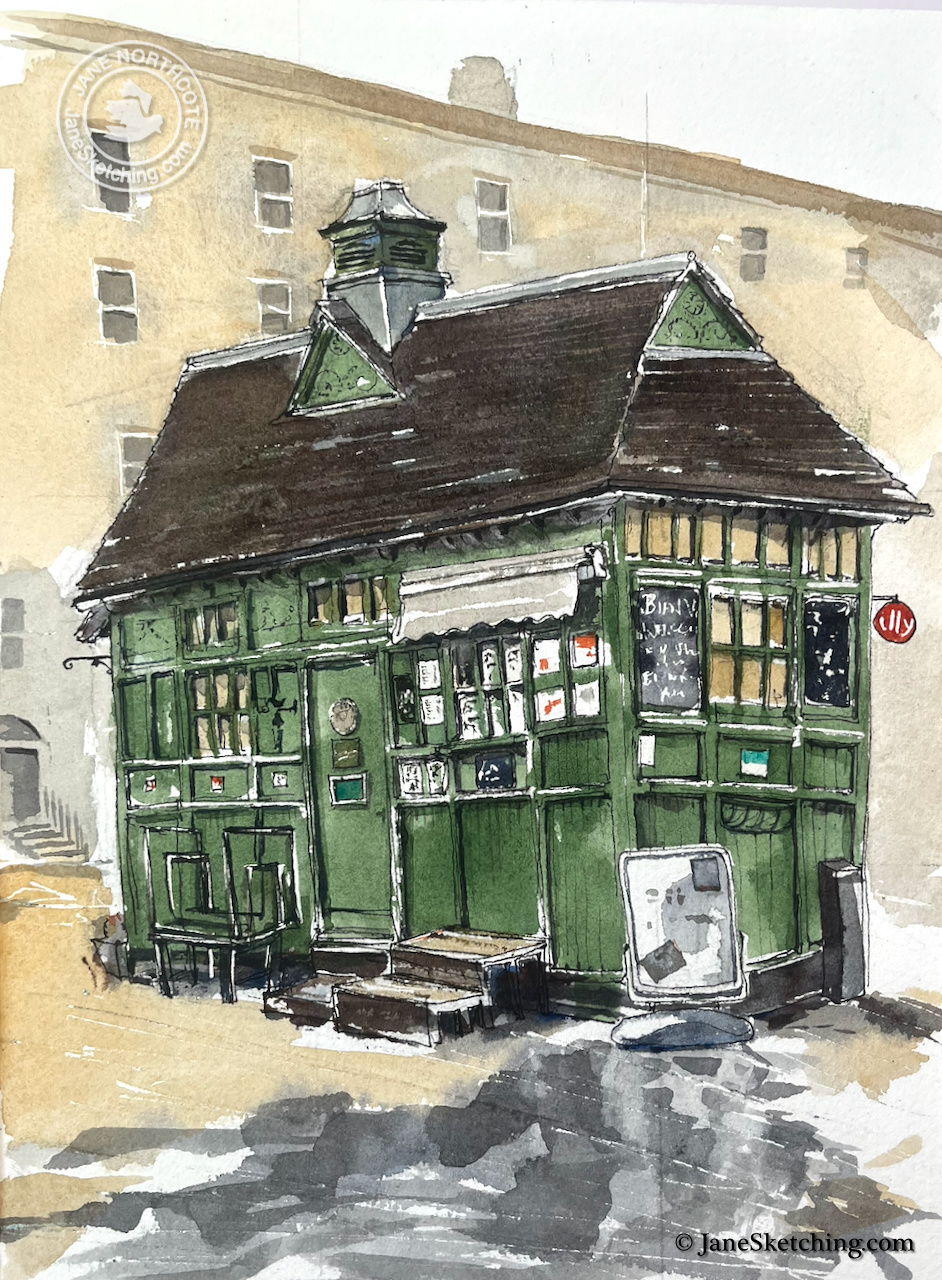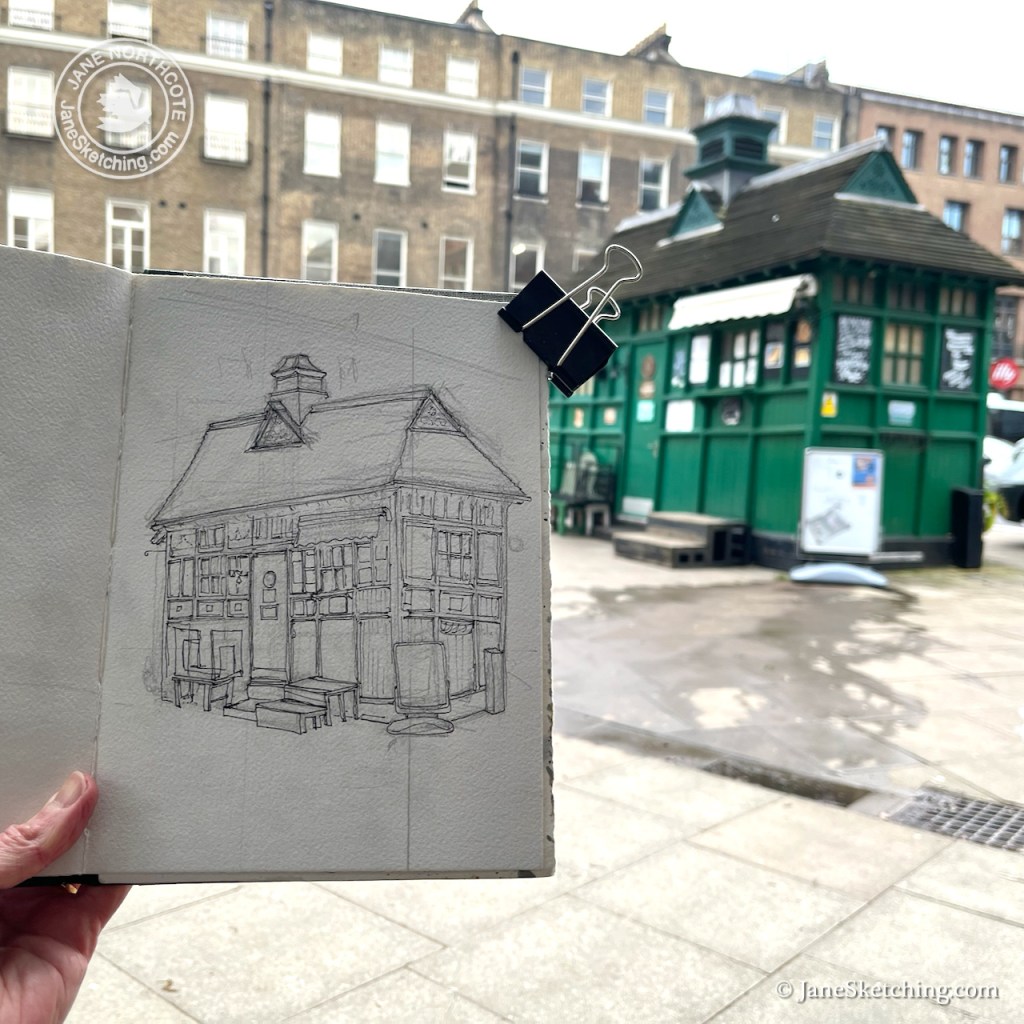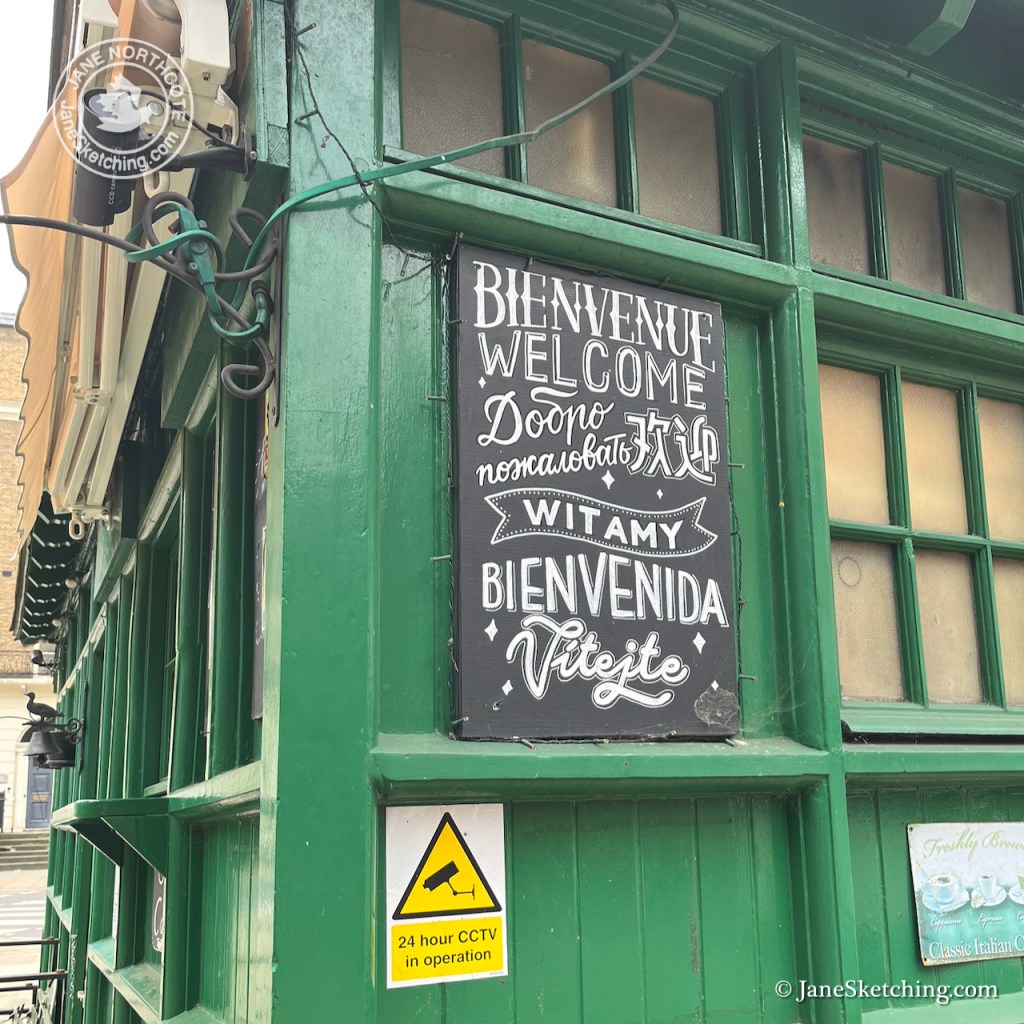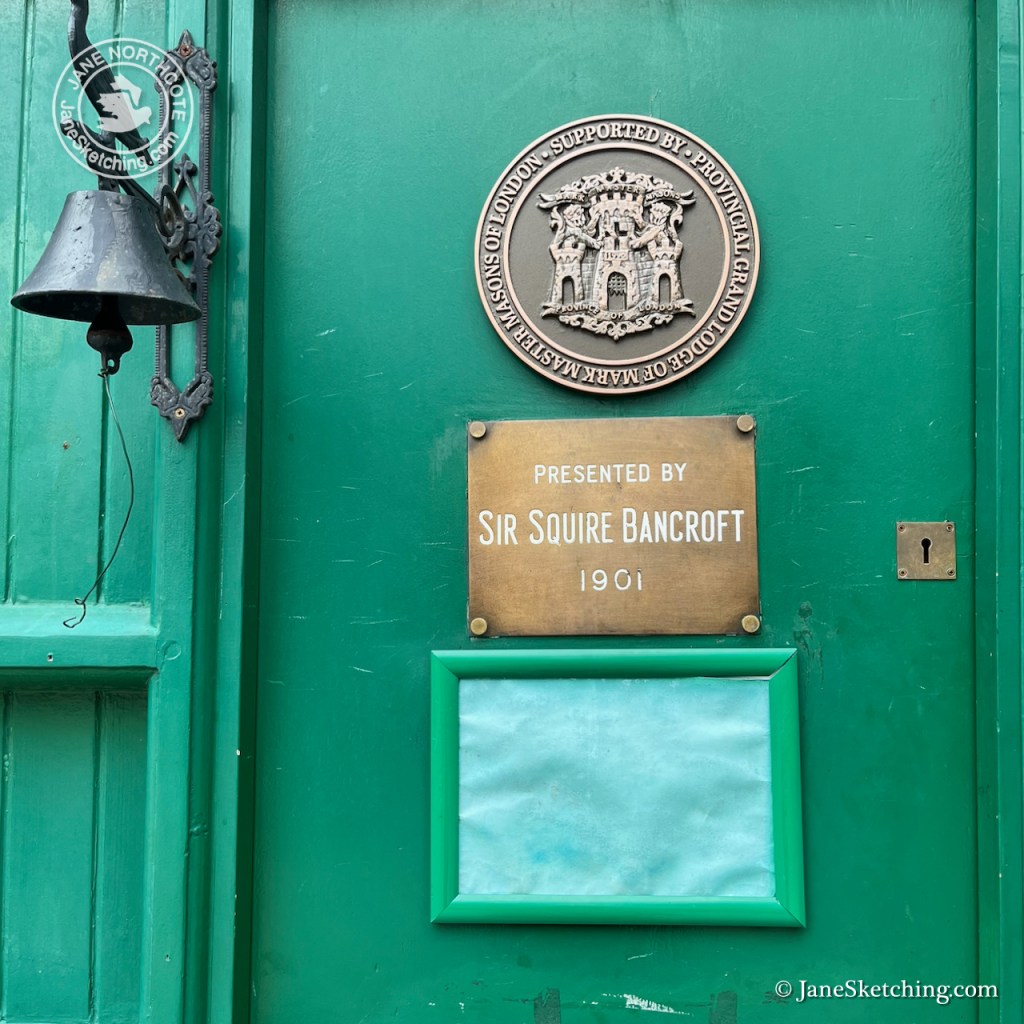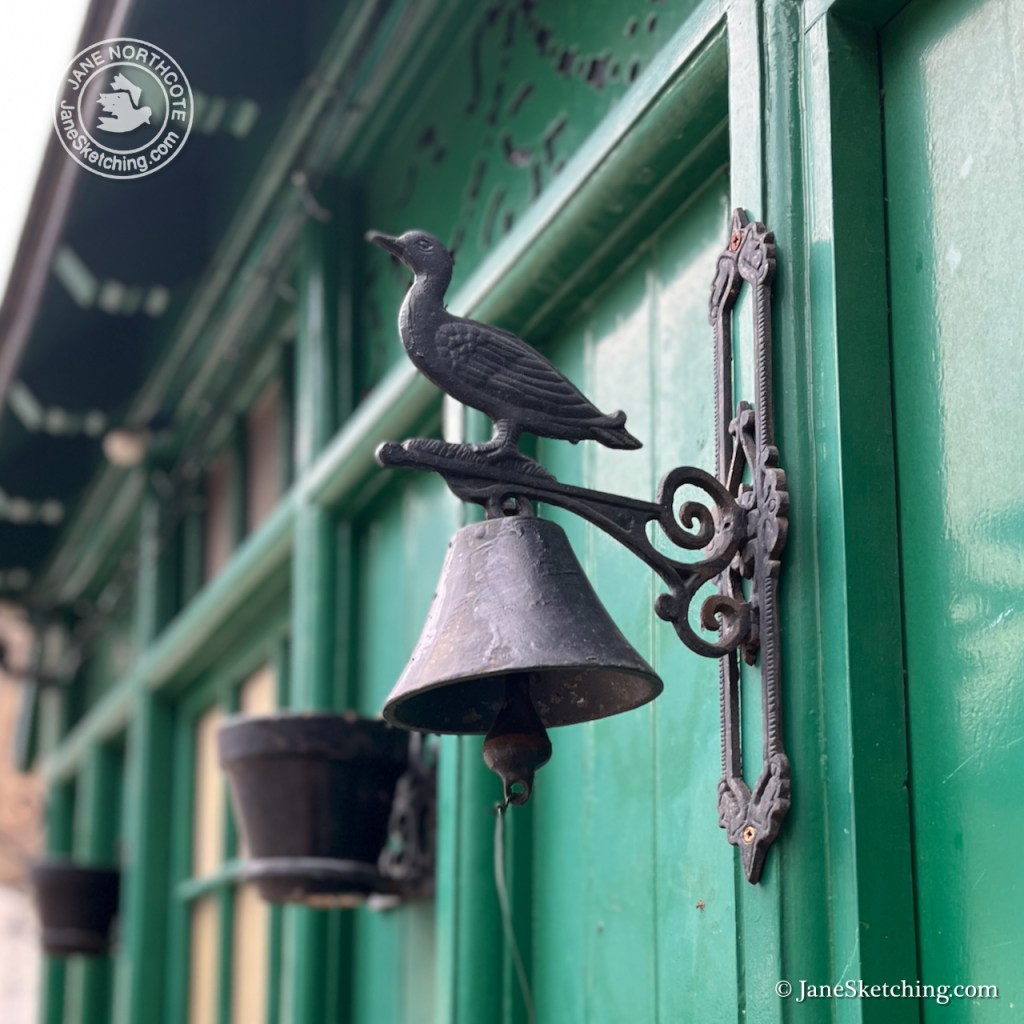
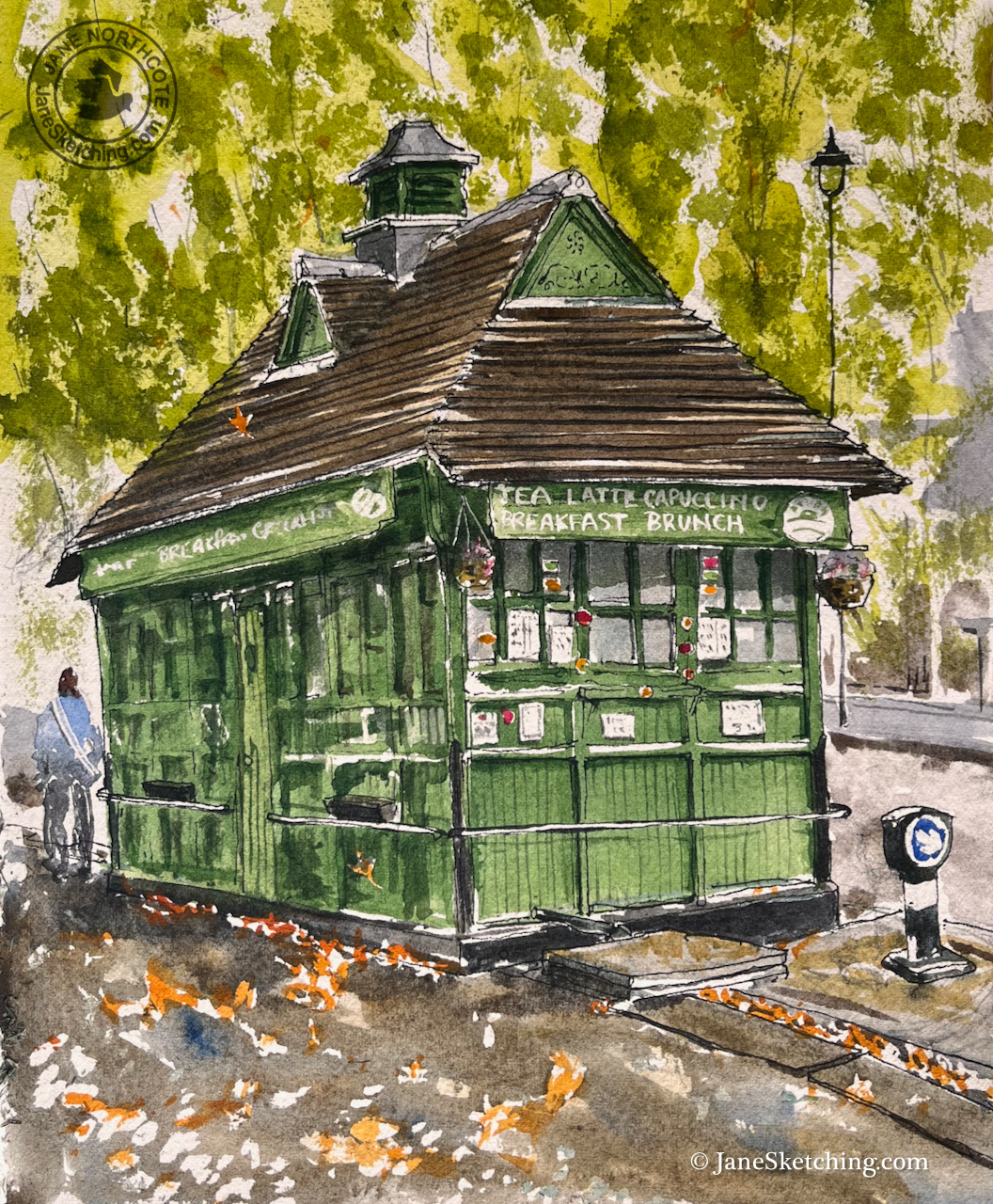
“The Chapel” Cab Drivers’ Shelter, Wellington Place, St John’s Wood, NW8 7PE

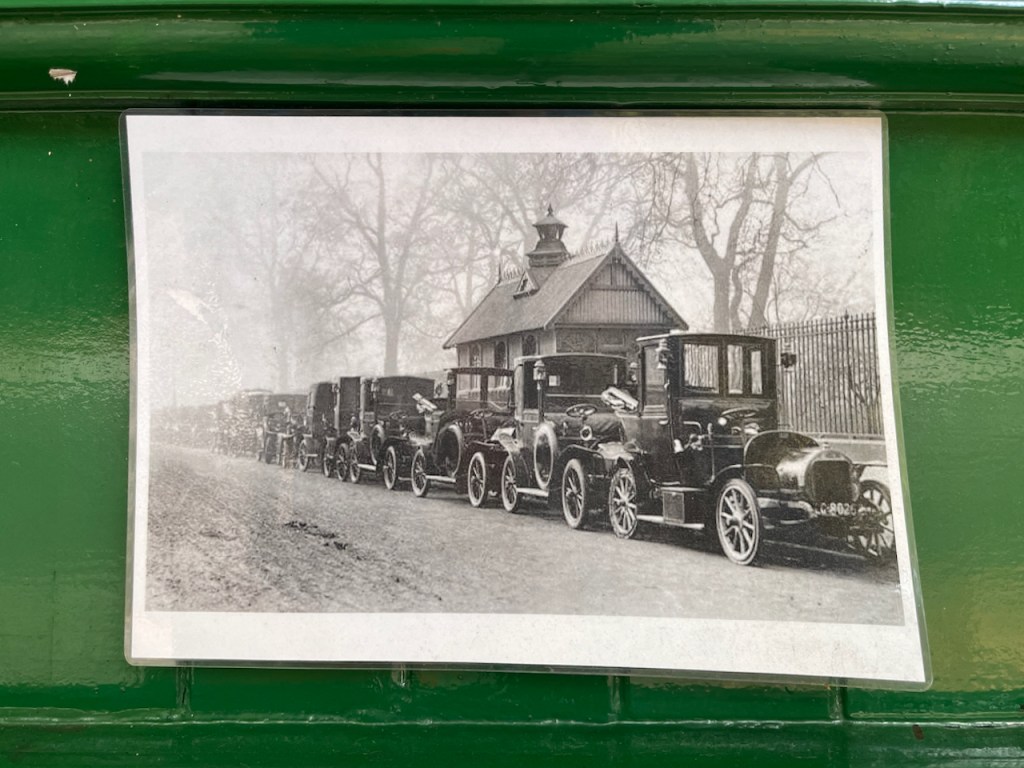
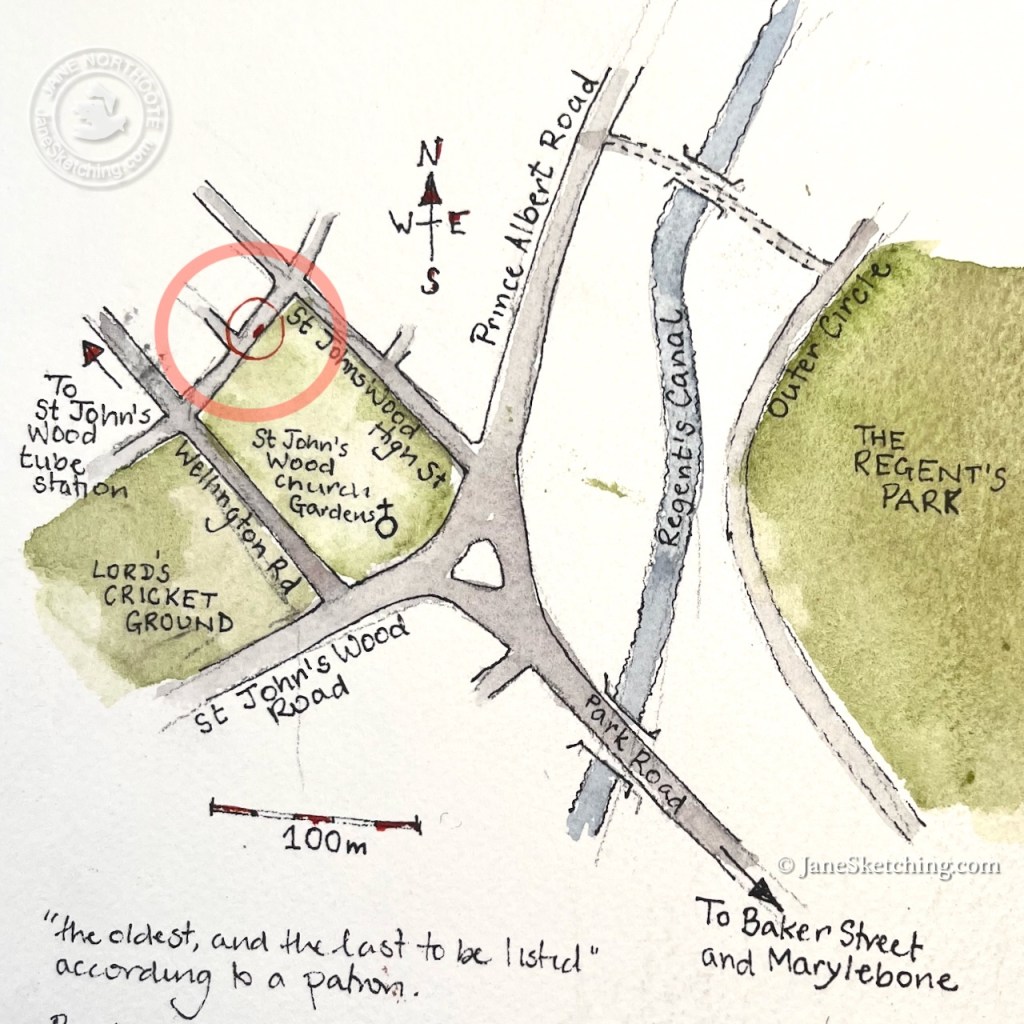
According to the cab driver sitting at one of the tables, this is “the oldest, and the last to be listed”. It was built in 1875, and listed in 2024 (listing ref 1488223).

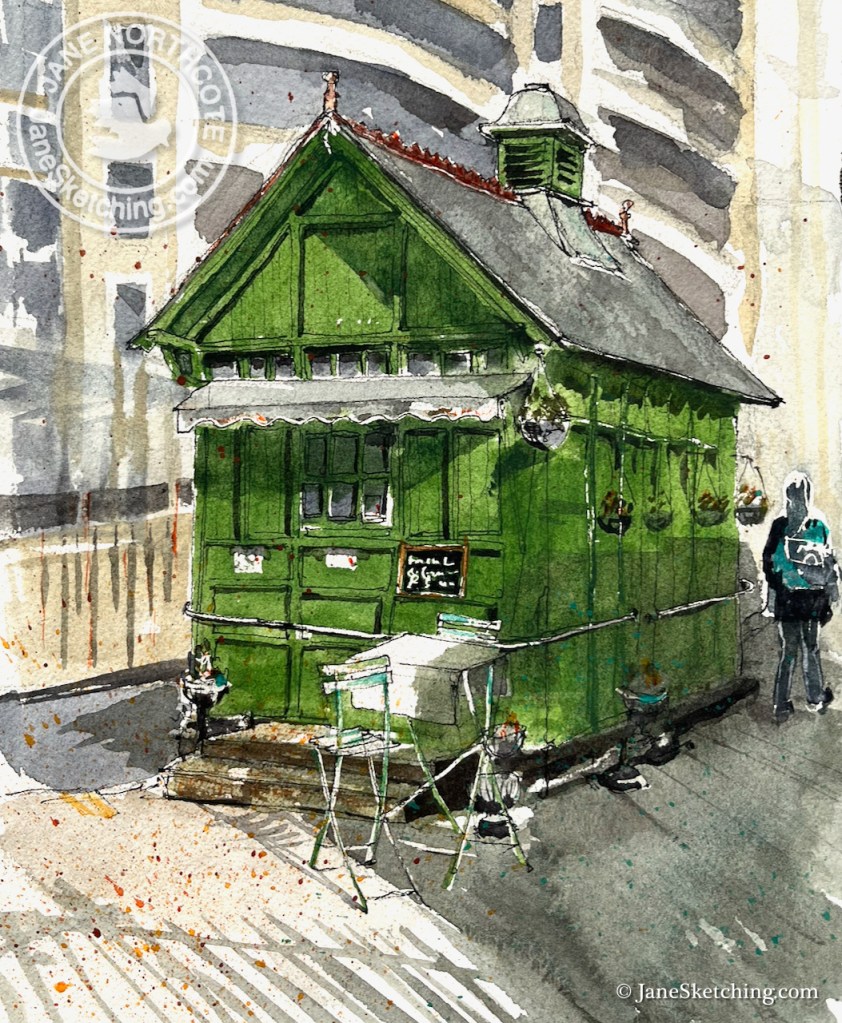
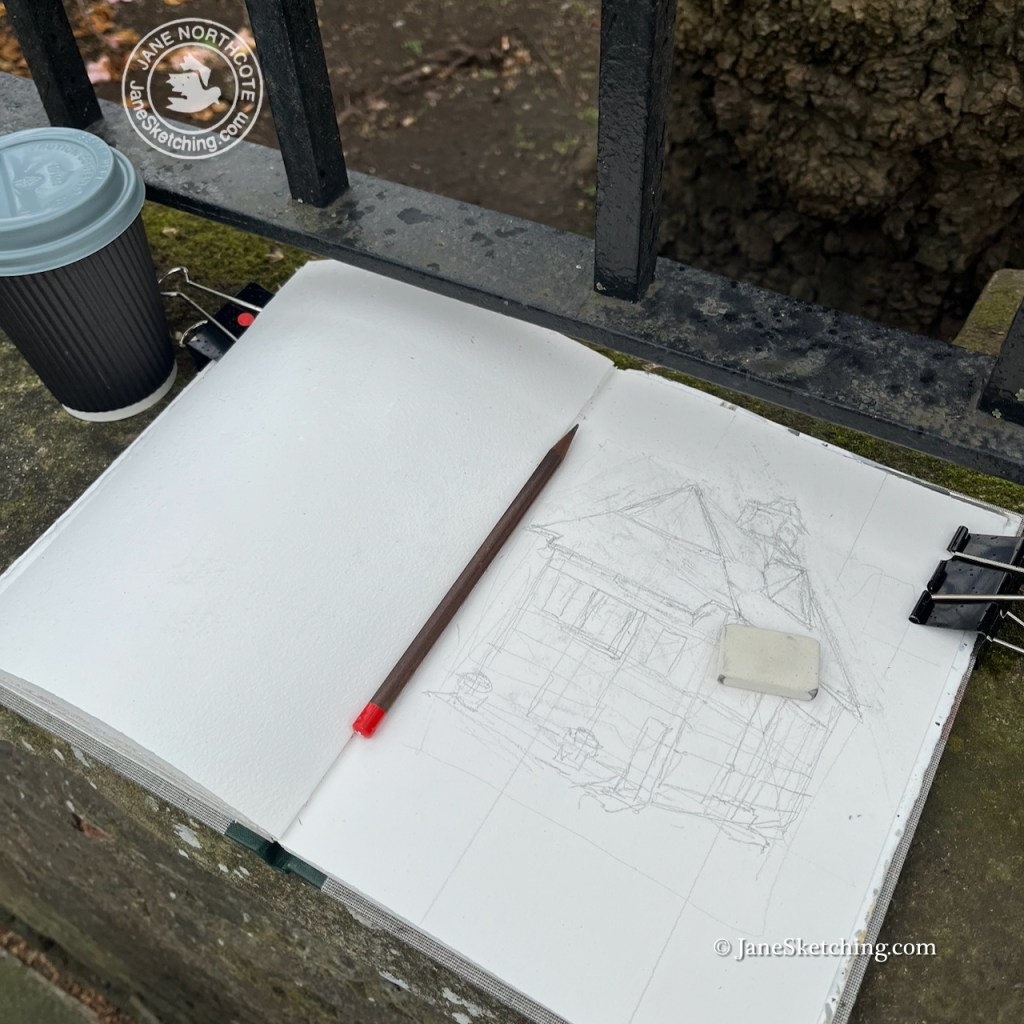
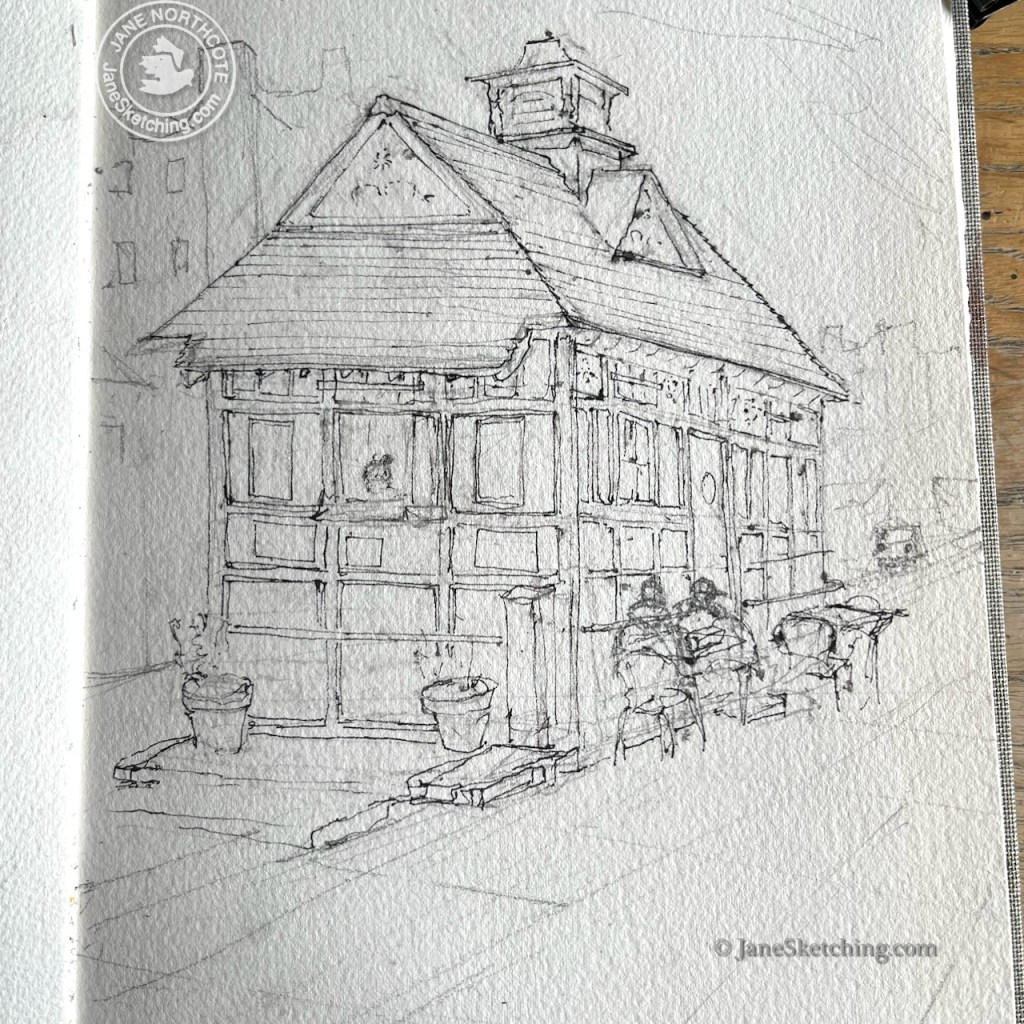
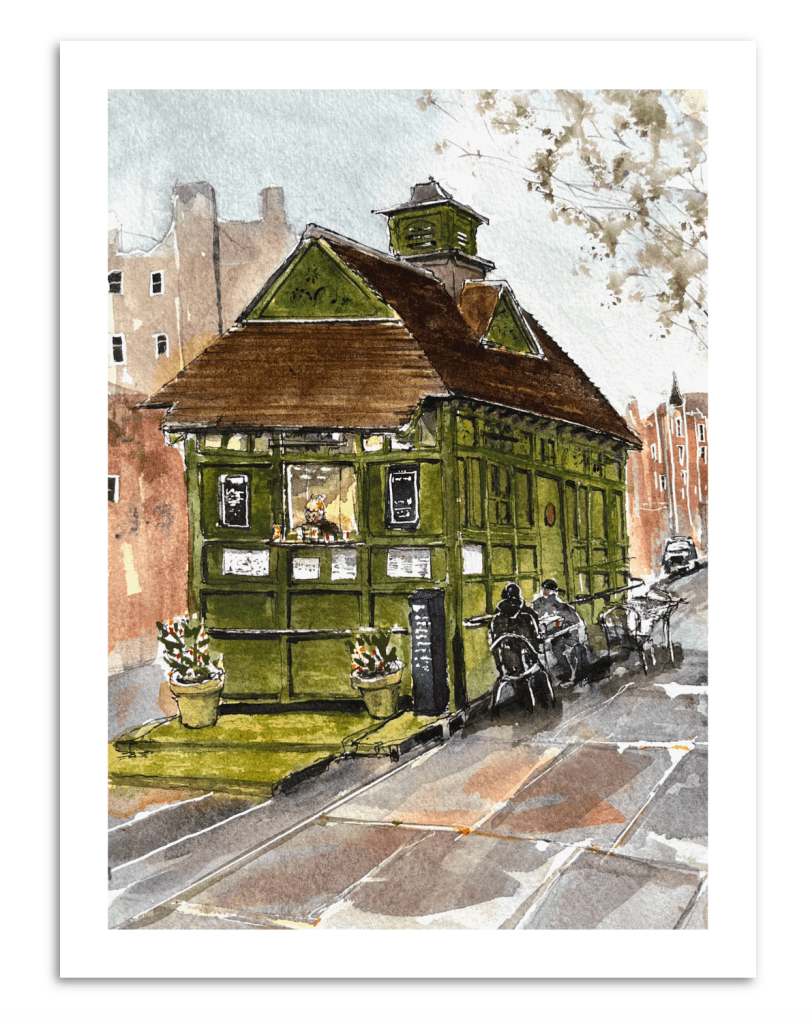
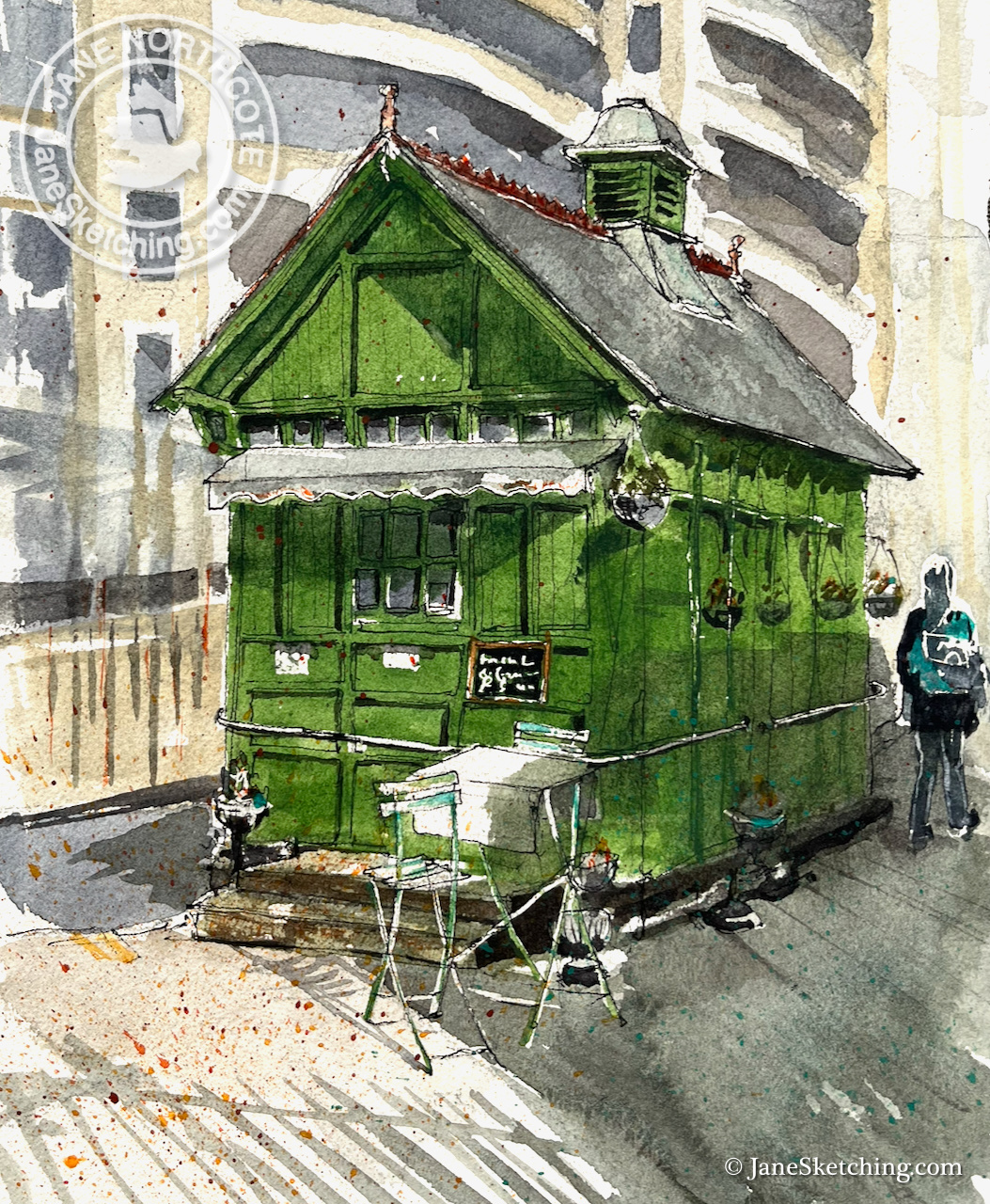
“The Chapel” Cab Drivers’ shelter, Wellington Place, St John’s Wood, NW8 7PE Sketched 27 March 2026, in Sketchbook 16

As I was sketching, the manager of the shelter came out and kindly brought me a cup of tea. She was very welcoming, and interested in the drawing. She told me that the rail running round the shelter, shown in my drawing, was for drivers to tether their horses.

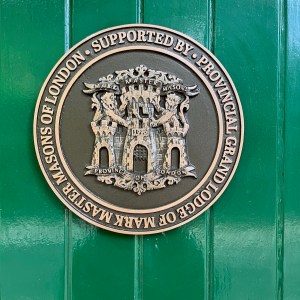
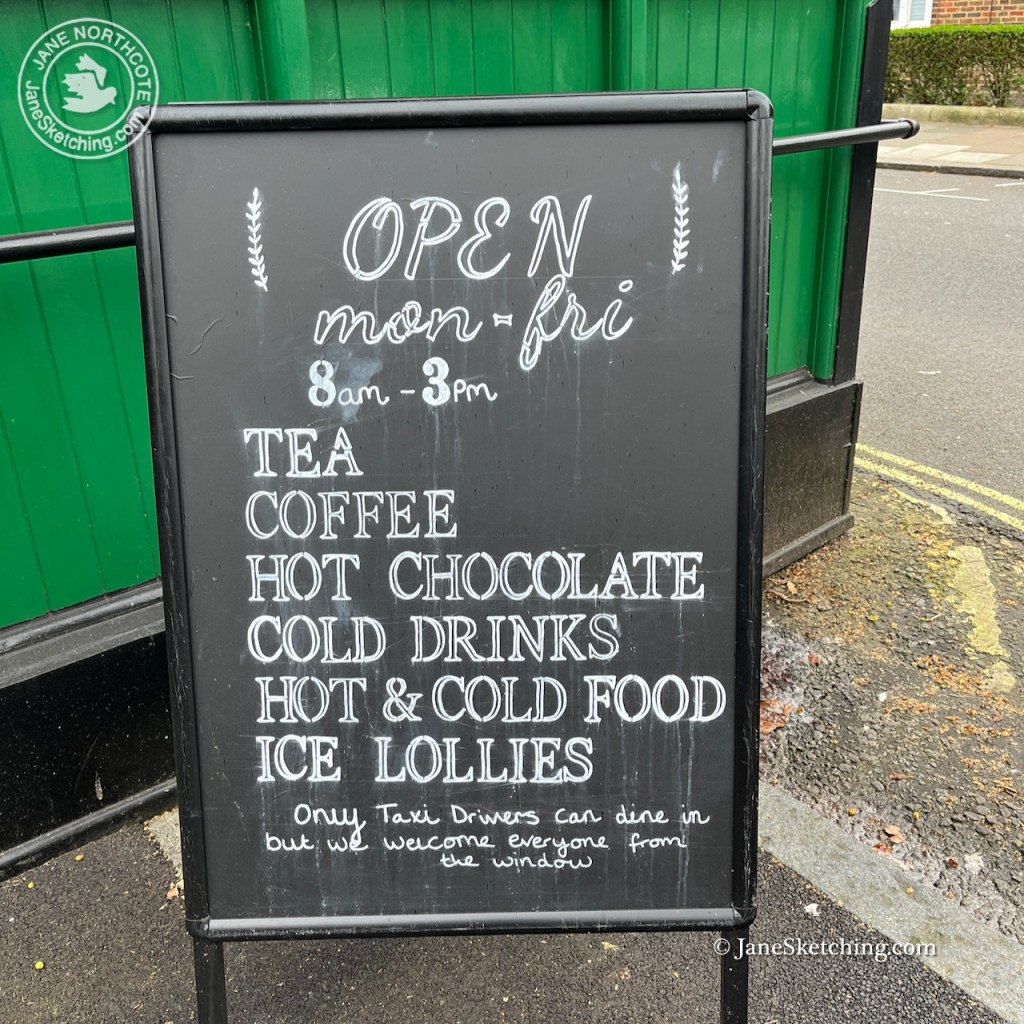
A former cab driver came by in his mobility scooter. He evidently still had dining rights, as he was seated at the tables by the hut. Only cab drivers can sit there, I understood. Cab drivers also went inside the shelter, through the door which you see on the right of the hut, with a circular plate on it. The ex-Cab Driver told me he was a photographer now. “Street Photography”, he said. But he told me he was going to take up birdwatching. This was something it was convenient to do from a mobility scooter. He had no teeth, and it was hard to understand what he said. But nonetheless we enjoyed an extended conversation and listened to the birds we could hear in the park. He went off, waving from his vehicle, steering a confident route along the uneven pavement.

This shelter is called “the Chapel” because it is right next to St John’s Wood Chapel Gardens.

It started to rain and I stopped sketching. I bought a bacon sandwich from the woman in the shelter and went to eat it in the garden.

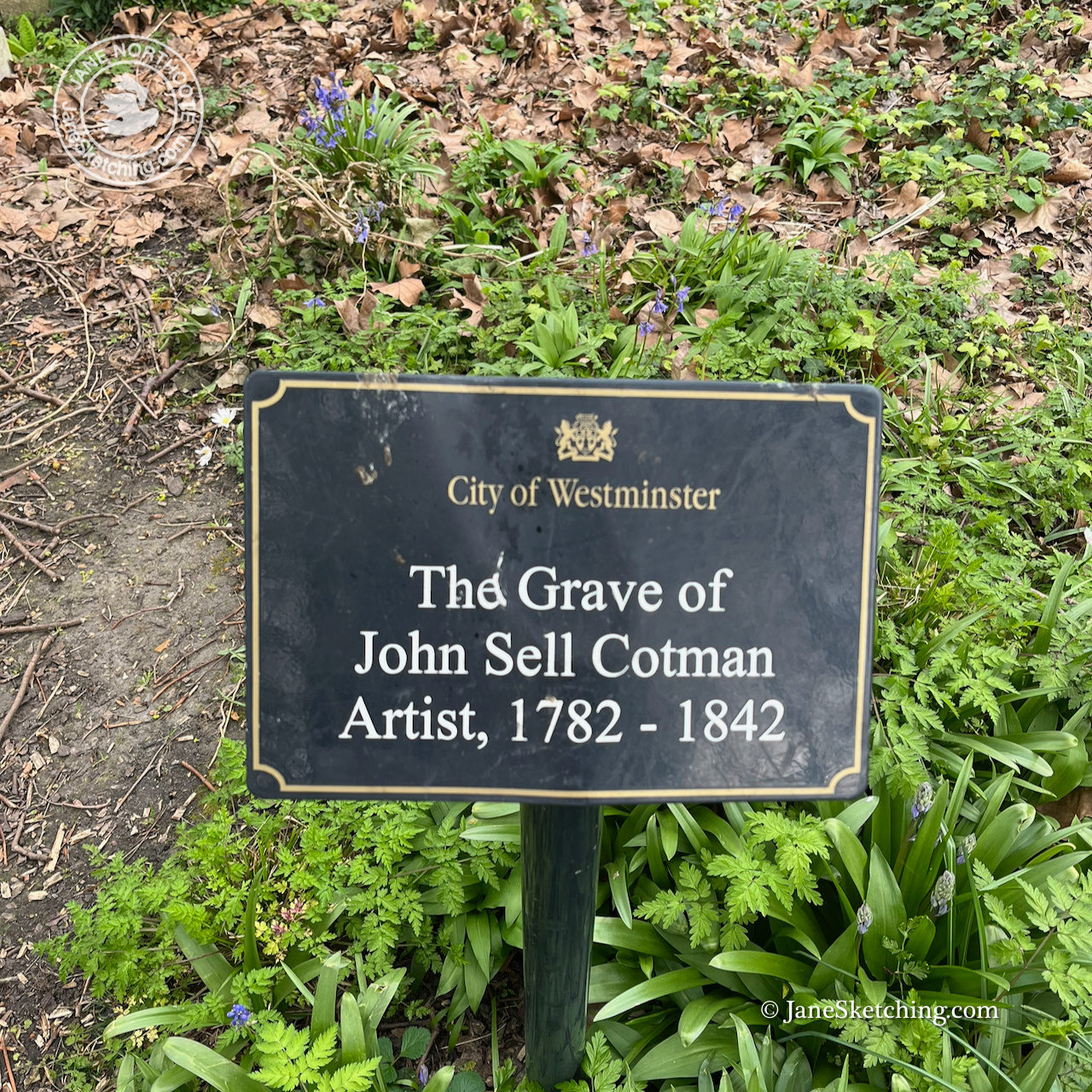
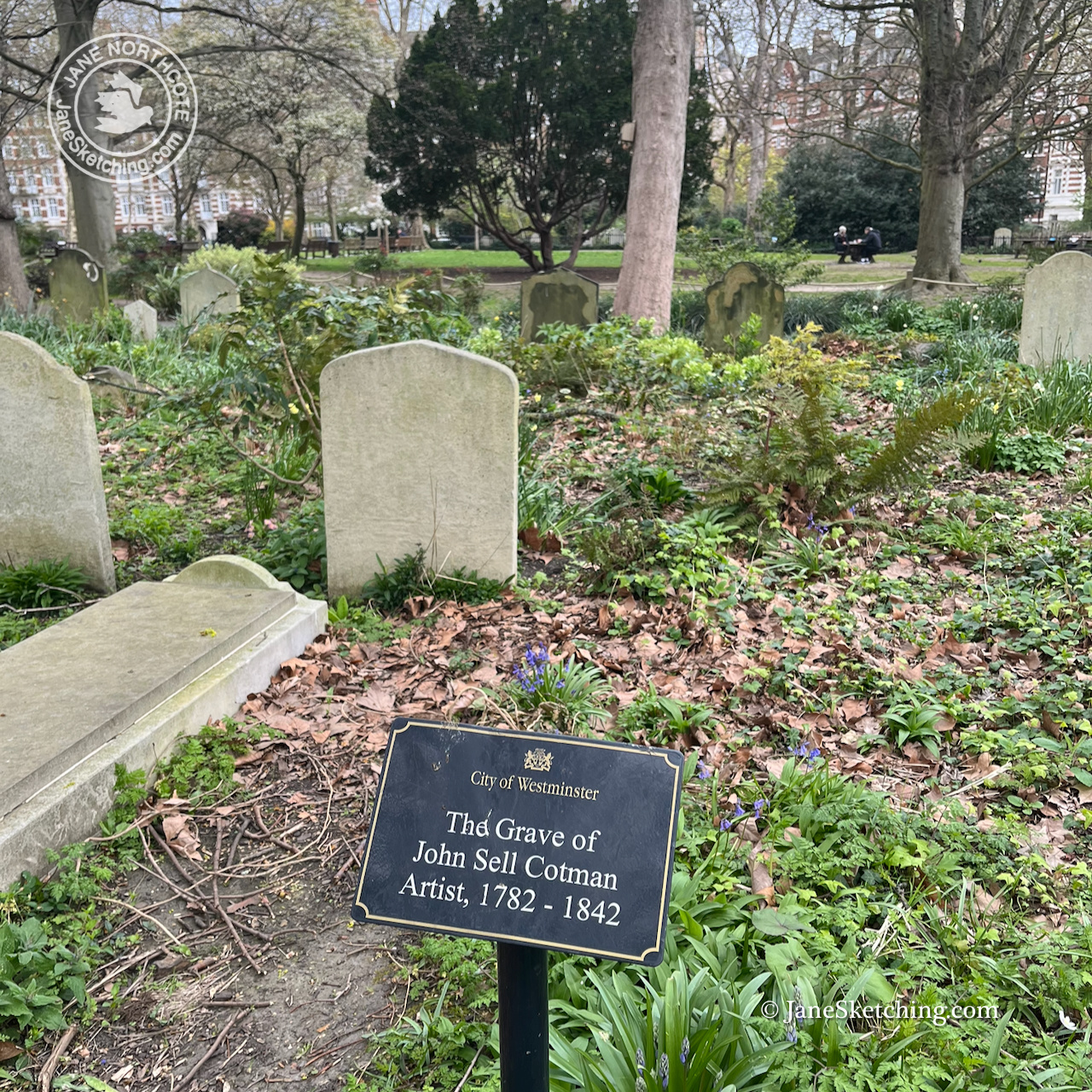
The gardens are the Chapel graveyard. The watercolour artist John Sell Cotman is buried there. I have seen a large exhibition of his work at the British Museum.

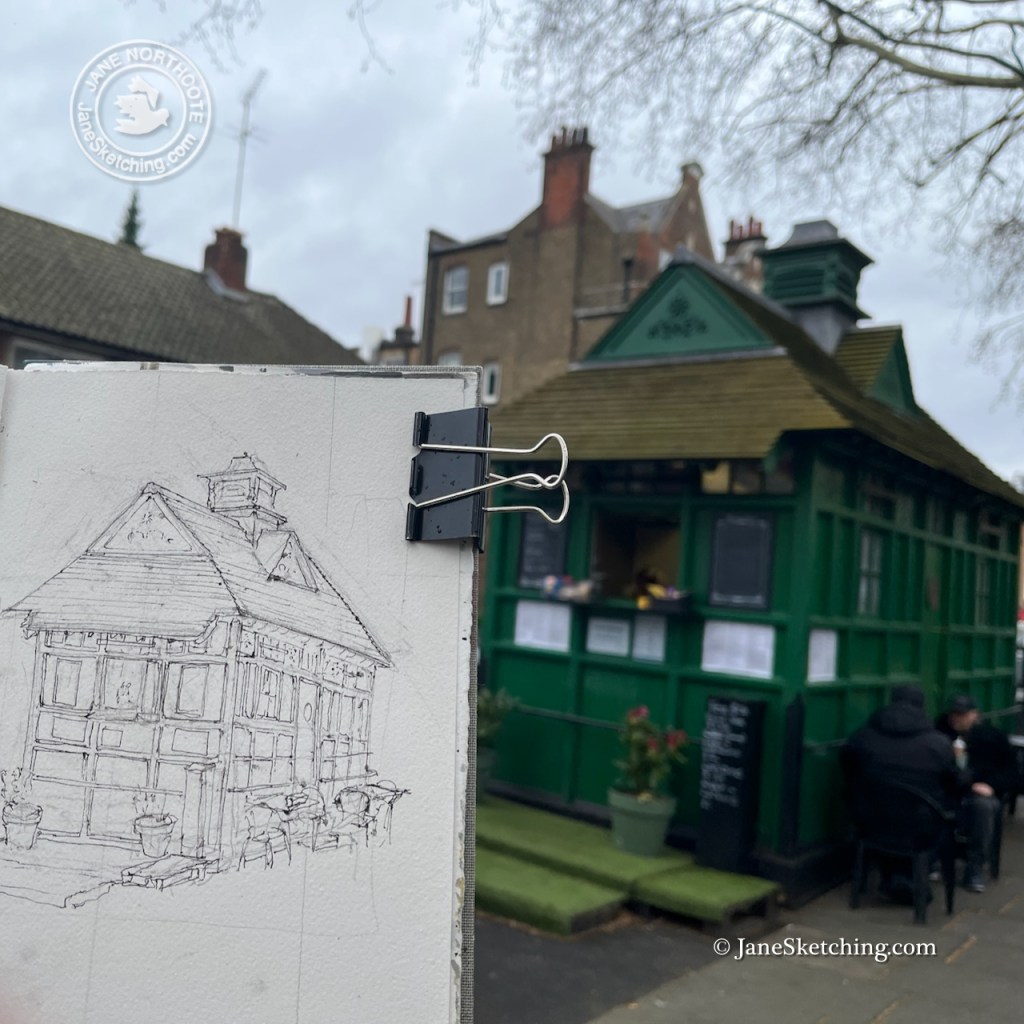
Back at my desk, trying to channel my inner John Sell Cotman, I struggled to match the green colour of the shelter. It is called “Dulux Buckingham Paradise Green I”. 1 It exists in the Dulux Trade Paint range2, but not as a watercolour.

I tried to mix it myself, with partial success. Any colour varies depending on the light conditions, and the surroundings, so I forgive myself for not making an exact technical match. My green is made from Serpentine Genuine (Daniel Smith watercolour ) with touches of Mars Yellow and Ultramarine Blue.

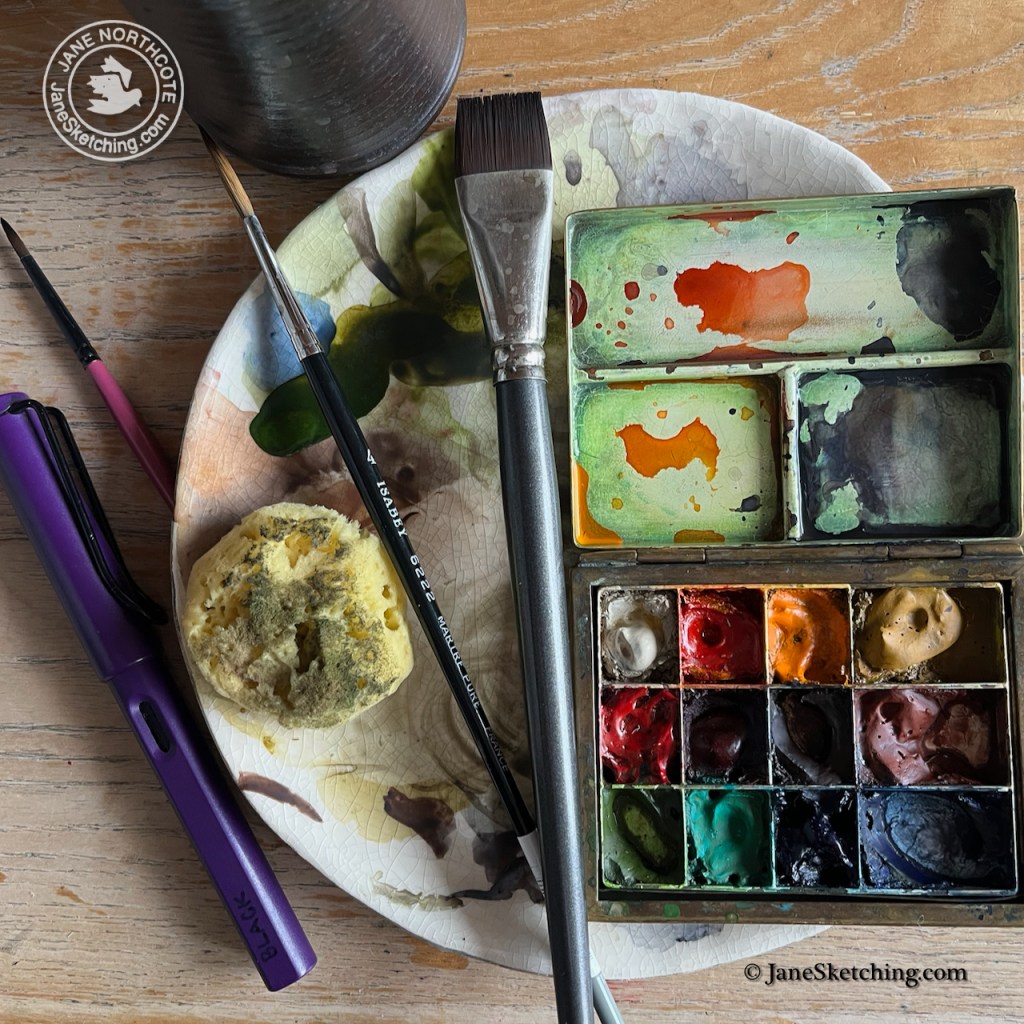
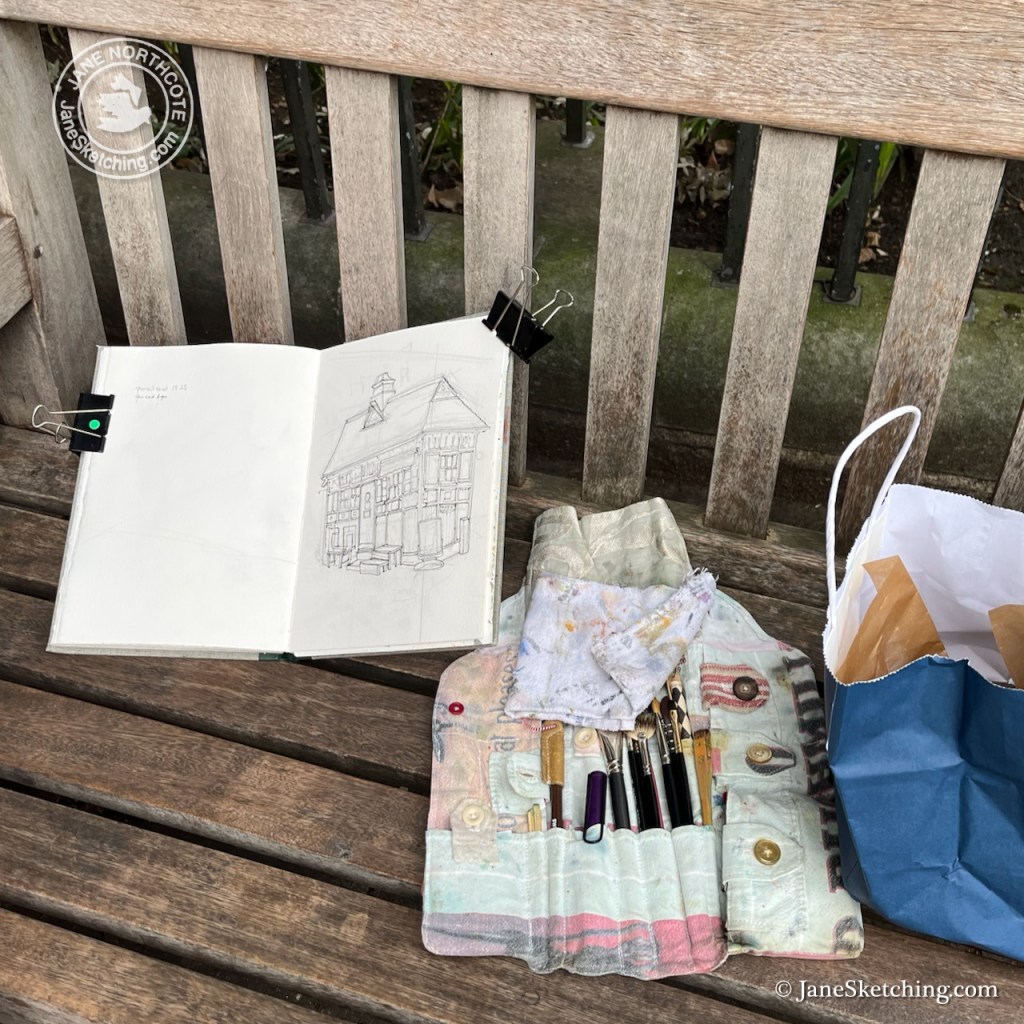
Equipment for this picture. The sponge is for making the tree. Serpentine Genuine is the colour in the palette at the bottom left. It looks quite similar to Dulux Paradise Green I.

When the picture was finished I ordered a digital print of it, and returned to the shelter to gift the print to the manager who had been so kind and welcoming. It will hang inside her shelter.

The St Johns Wood Cab Drivers’ Shelter, digital print
(c) JaneSketching
  1. Historic England has an article about this shelter here: https://historicengland.org.uk/whats-new/news/13th-cabmens-shelter-in-london-listed/
    It names the colour of the shelter as “Dulux Buckingham Paradise Green I” ↩︎
  2. Dulux paint Paradise Green I listed here: https://www.duluxtradepaintexpert.co.uk/en/colours/paradise-green-1-645605 ↩︎

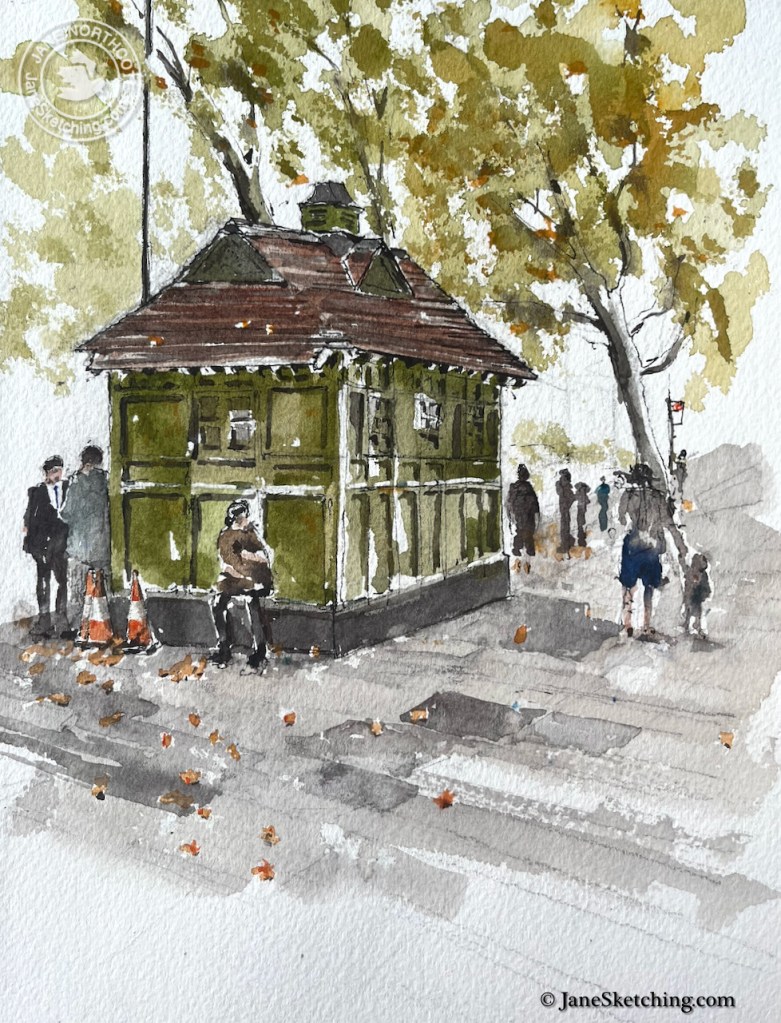
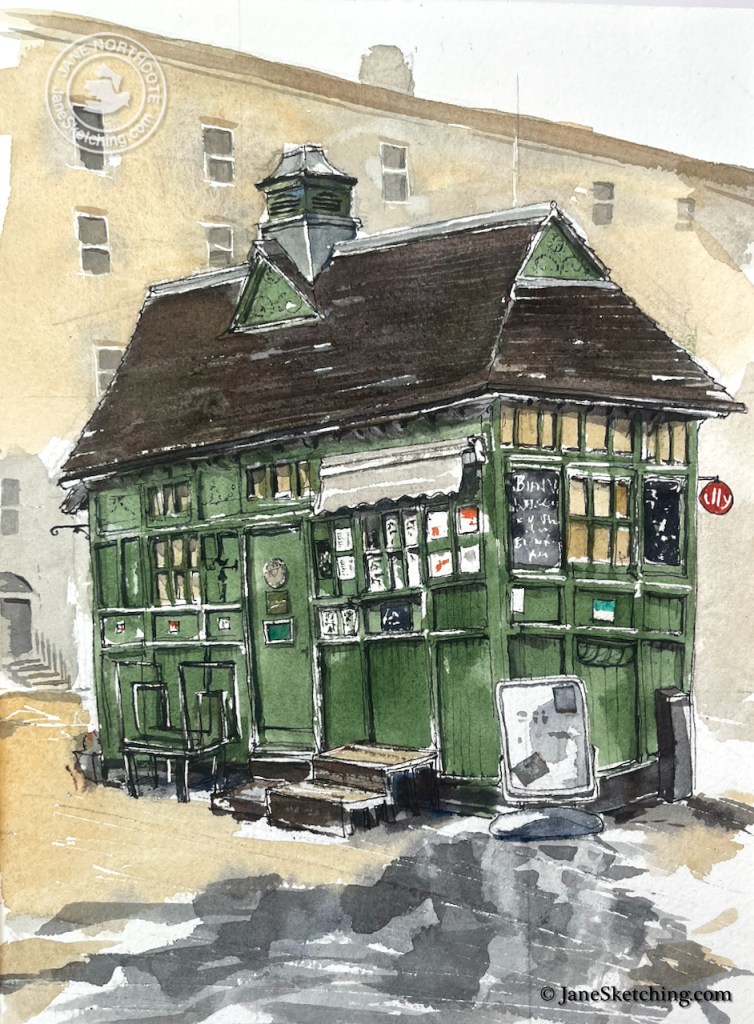
Russell Square Cab Drivers’ Shelter, WC1

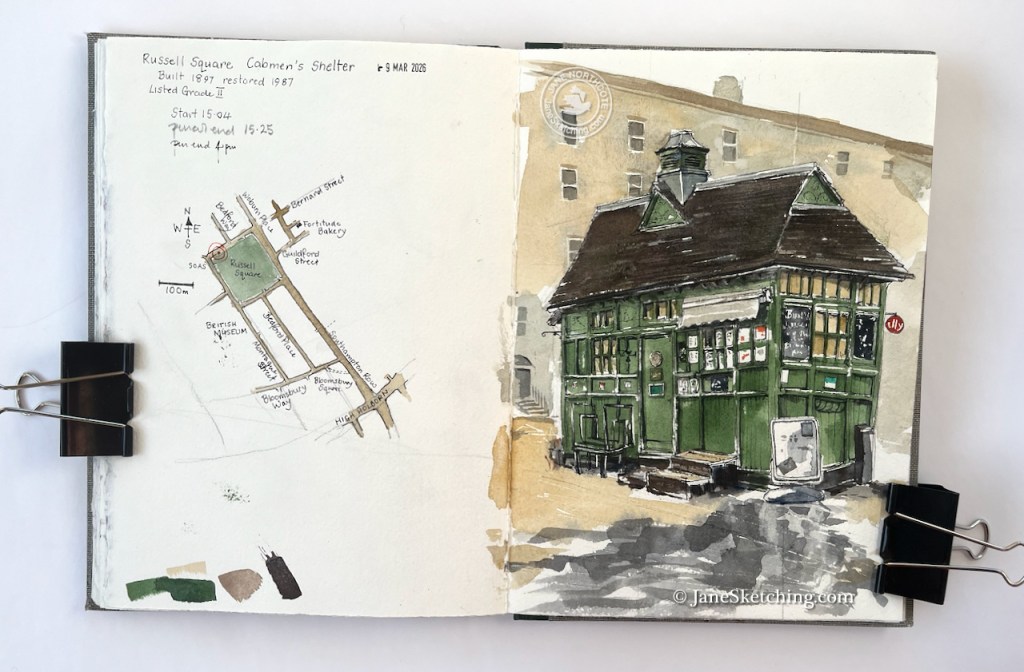
Continuing my series on Cab Drivers’ Shelters, here is the shelter on Russell Square. It was built in 1897, restored in 1987, and listed in 1988.

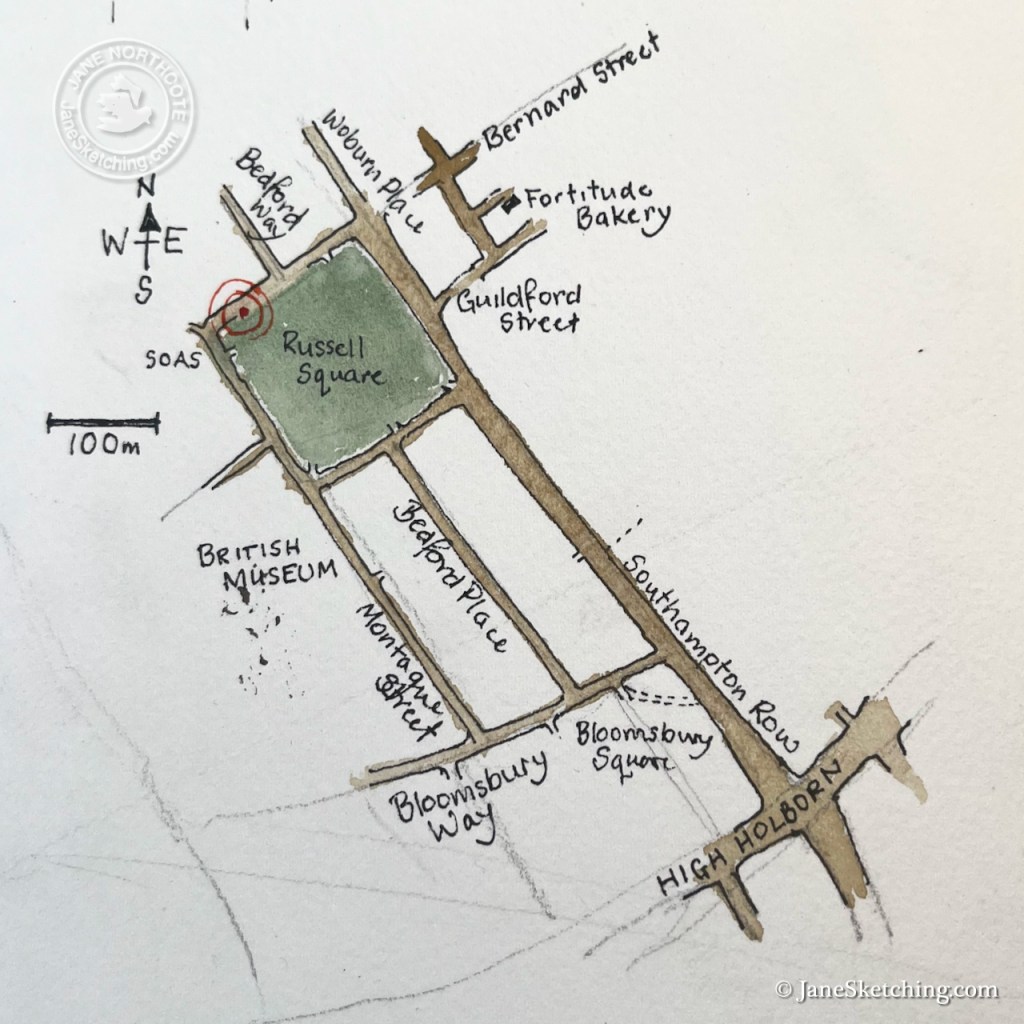
This little building is on the North side of Russell Square, not far from the British Museum.

I sketched from a convenient bench, fortified by a sandwich and cake from the marvellous Fortitude Bakery, just to the east – marked on the map above (and recommended).

On the other side of the road is a school for young children. Adults stood about, ready to collect the school children. Between them flowed a current of workers, students and people of all nations. “SOAS”, the School of Oriental and African Studies, is nearby, as is the London School of Hygiene and Tropical Medicine, and many other academic institutions of the University of London.

A cheerful woman swathed in scarves bustled up to me and examined the picture. She glanced up to to the shelter and looked back down again at my picture, comparing. She then delivered what I took to be a speech of encouragement and admiration. But it may equally have been closely argued constructive criticism. Her words sounded garbled, she had no teeth, and I think she was speaking a language unknown to me. However we smiled at each other, I held up the picture so she could better compare it to the building. She nodded curtly, as though putting a confirmatory flourish at the end of her expressed opinion. We smiled again, she waved, and off she went.

A woman with a large handbag came and sat down right next to me on the bench. She placed the handbag on her lap, and took no interest in my picture whatsoever. After a few minutes she took off again. Perhaps she had spotted the pupil she had come to collect.

I photographed various details of the shelter. Note the bird on top of the bell. I had tried very hard to show it in my drawing, but at that distance it was very small.

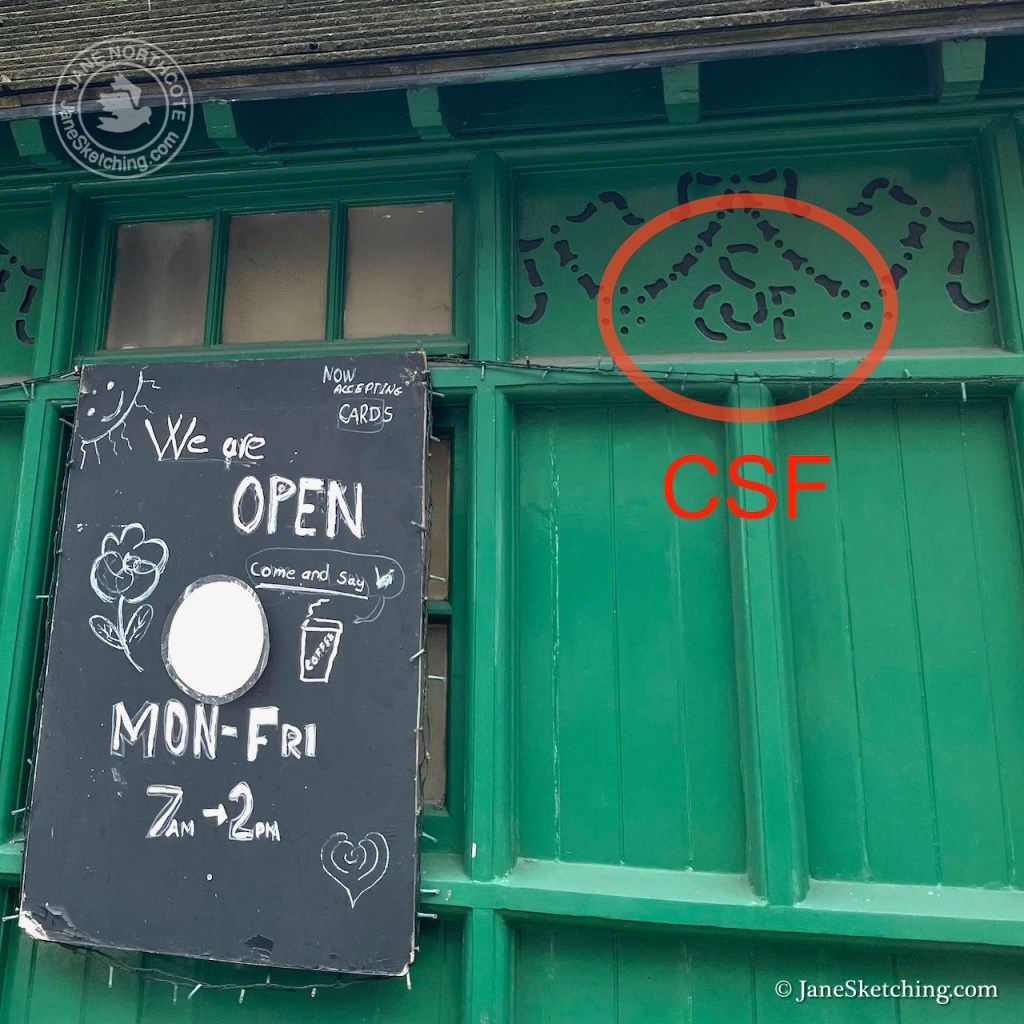
The shelters were built by The Cabmen’s Shelter Fund. Its monogram “CSF” is in the fretwork. This charity set up the shelters in the 19th century, and still exists.

Russell Square Cab Drivers’ Shelter – fretwork showing “CSF” for “Cabmens’ Shelter Fund”

I finished the drawing back at my desk. Here is the sketchbook spread.

Russell Square Cab Drivers’ shelter in Sketchbook 16

Temple Place Cabdrivers’ shelter, WC2

Here is the Cab Drivers Shelter near Temple Station.

Cab drivers’ shelter, Temple Place. Sketched 5th March 2026 2pm in Sketchbook 16

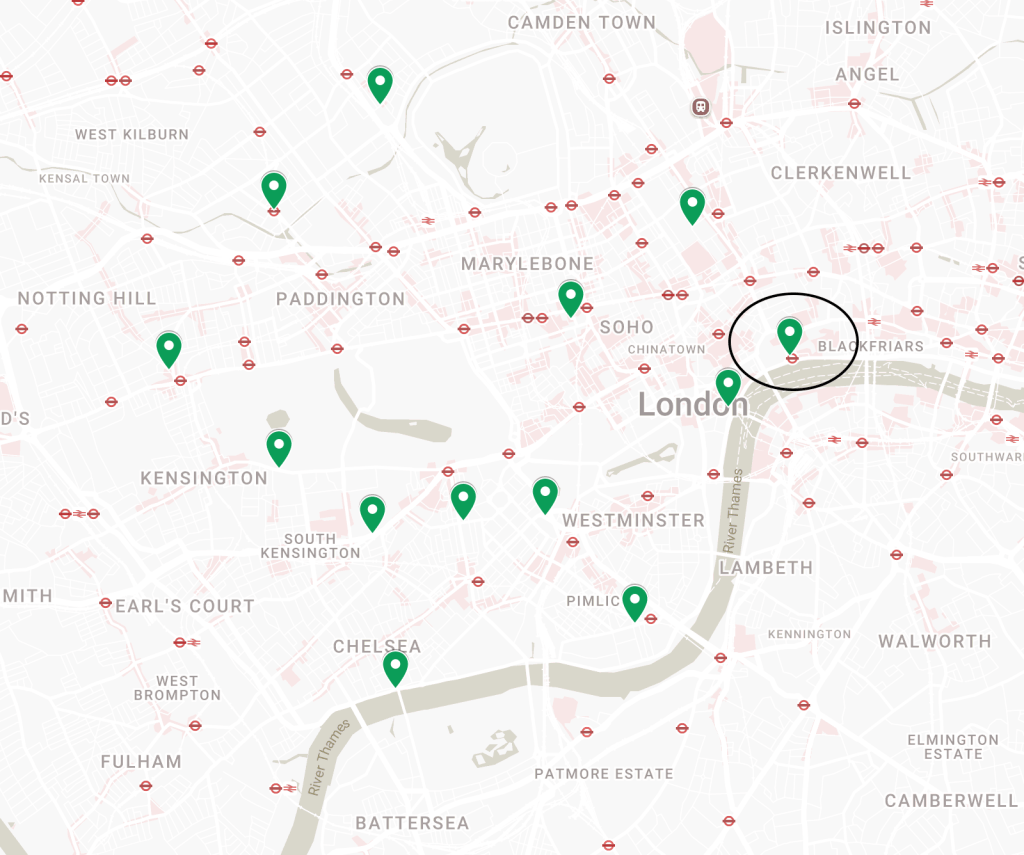
There are 13 of these shelters surviving. All are now listed. This one was built in around 1900 and listed in 19871. Here’s a map from the Historic England site showing the location of all the shelters in London. interestingly they are all to the North of the river.

Map of the 13 listed cab drivers’ shelters. Temple place circled. Map from Google, on https://historicengland.org.uk/whats-new/news/13th-cabmens-shelter-in-london-listed/
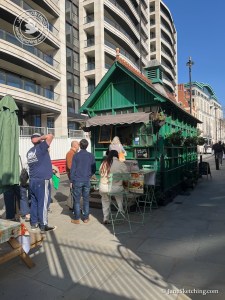
Eager diners queue at the shelter before it closes.

I sketched this one on the first sunny day in spring. I’d arrived there at around 1:30pm. There was a long line of people outside and several tables. While I was doing the sketch, the manager closed the window and the queue dissipated. Then she came out and packed up all the tables. I just managed to sketch one table before they all disappeared. This shelter closes at 2pm.

Two men walked past me, engrossed in a conversation about a colleague. “He has a strong survival component” observed one of them, somewhat ruefully.

Then there was a man pushing a bicycle. “Ah!” he said, noticing me, “ink. Real ink!” I was indeed using real ink. I held up the fountain pen to show him. “I love the sound of ink on paper!” he said. I hadn’t thought about the sound of ink on paper. I noticed it, from that moment on.

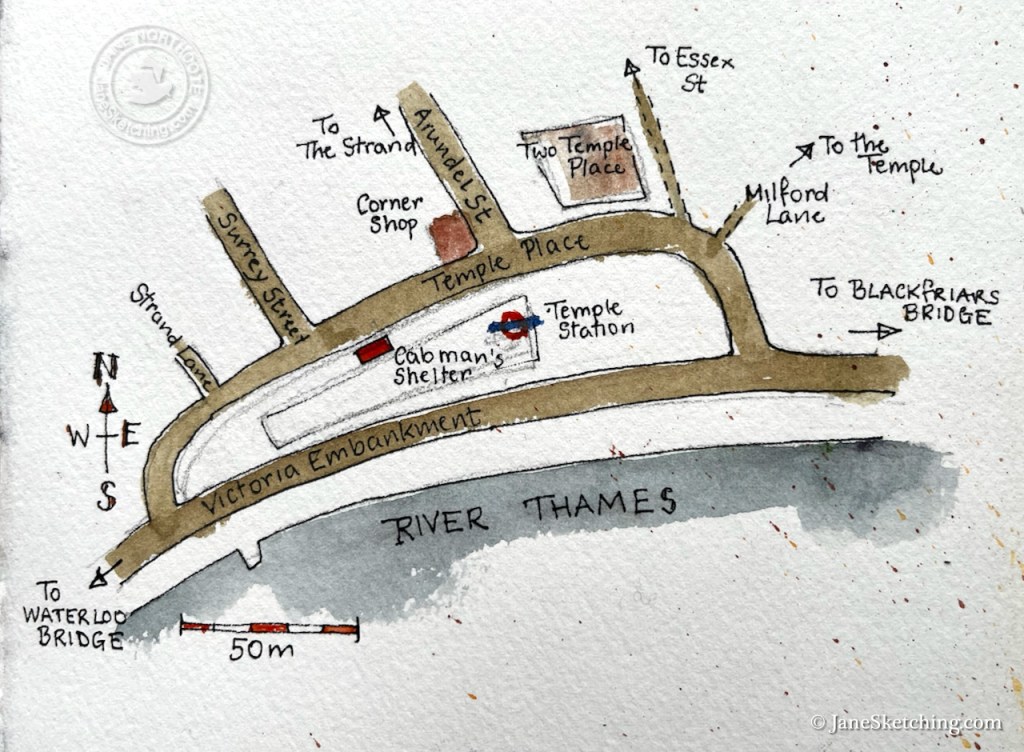
Here’s a map showing the location of the shelter. As you see, it is near Temple Station, which accounts for the flux of people passing.

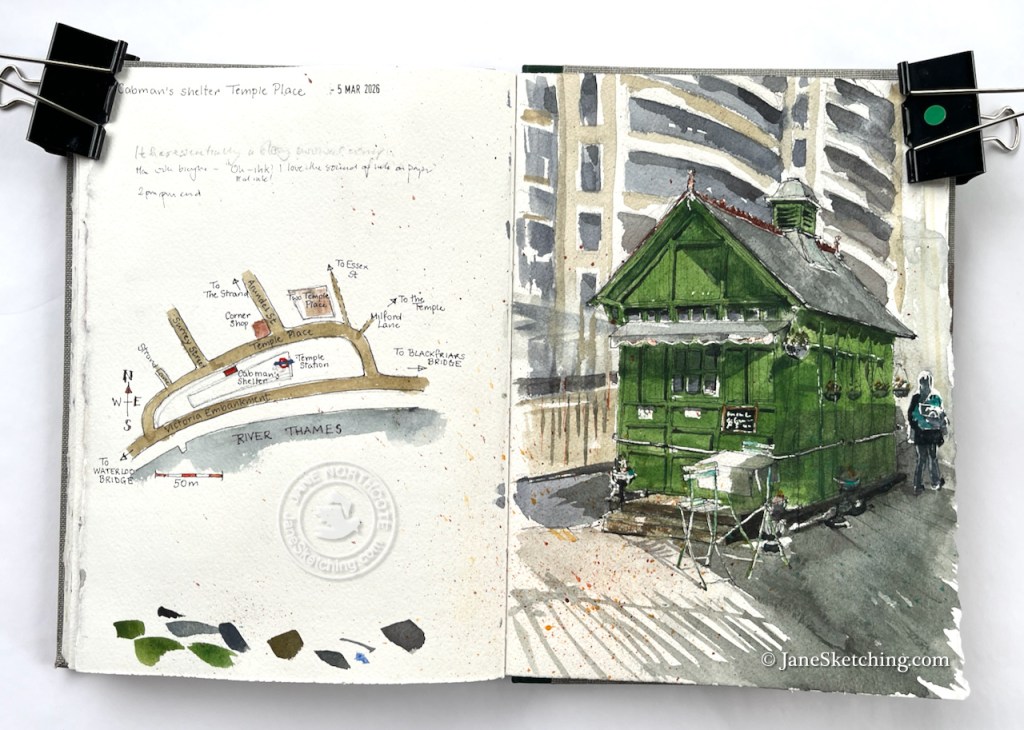
Here is the sketchbook spread. My aim is to sketch more of these shelters – maybe even to sketch all of them.

Sketchbook 16
  1. Historic England listing: https://historicengland.org.uk/listing/the-list/list-entry/1357301?section=official-list-entry ↩︎