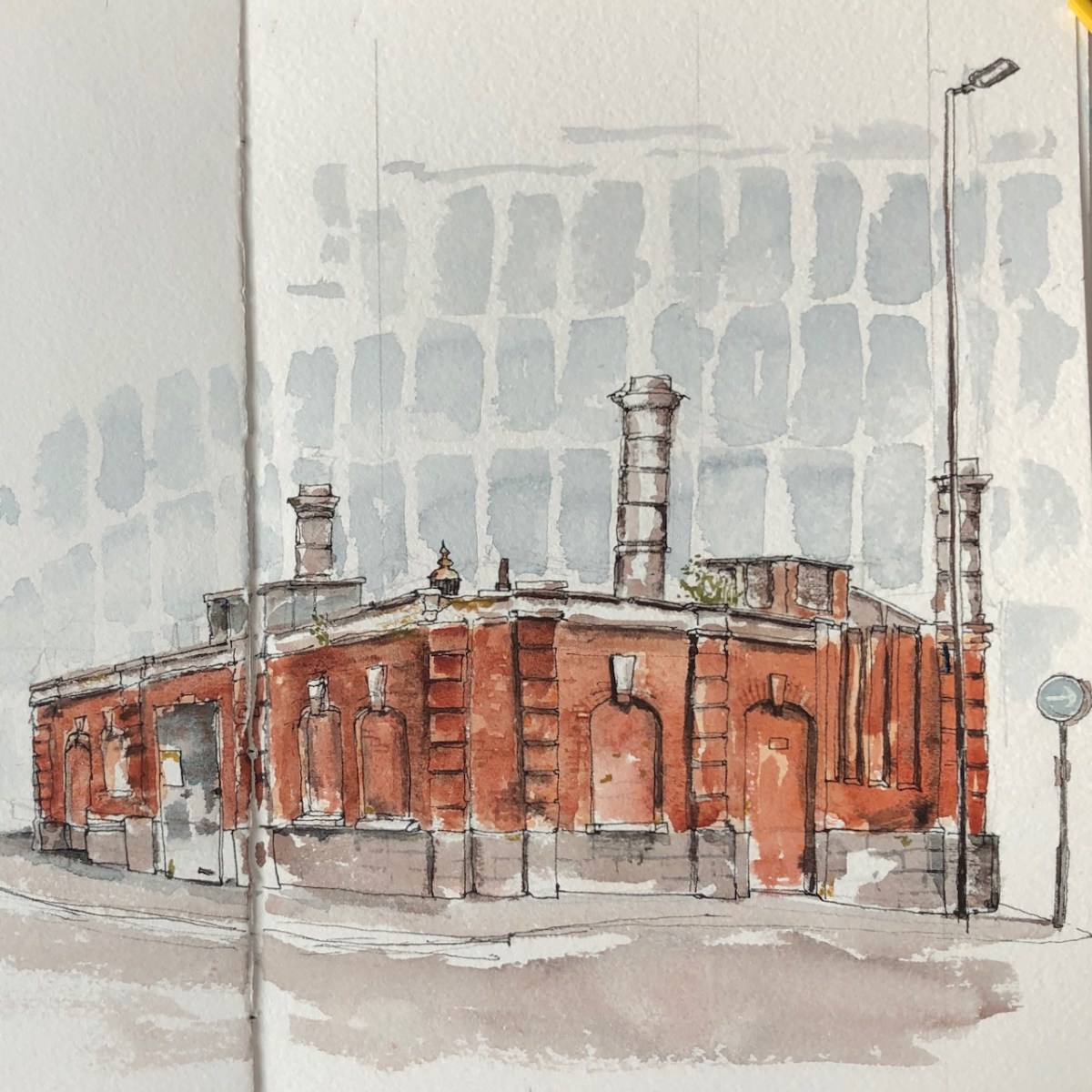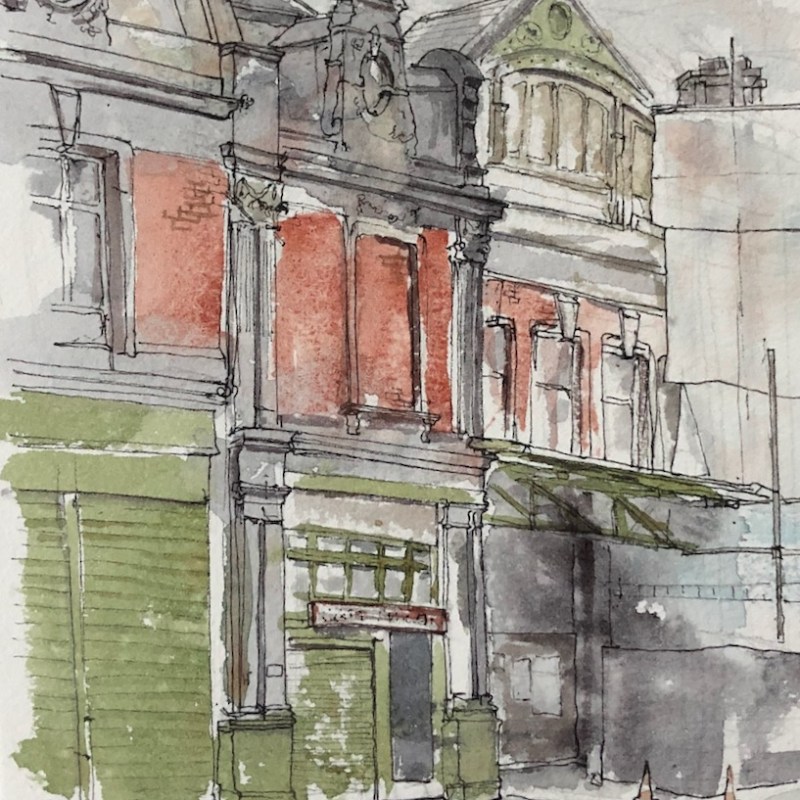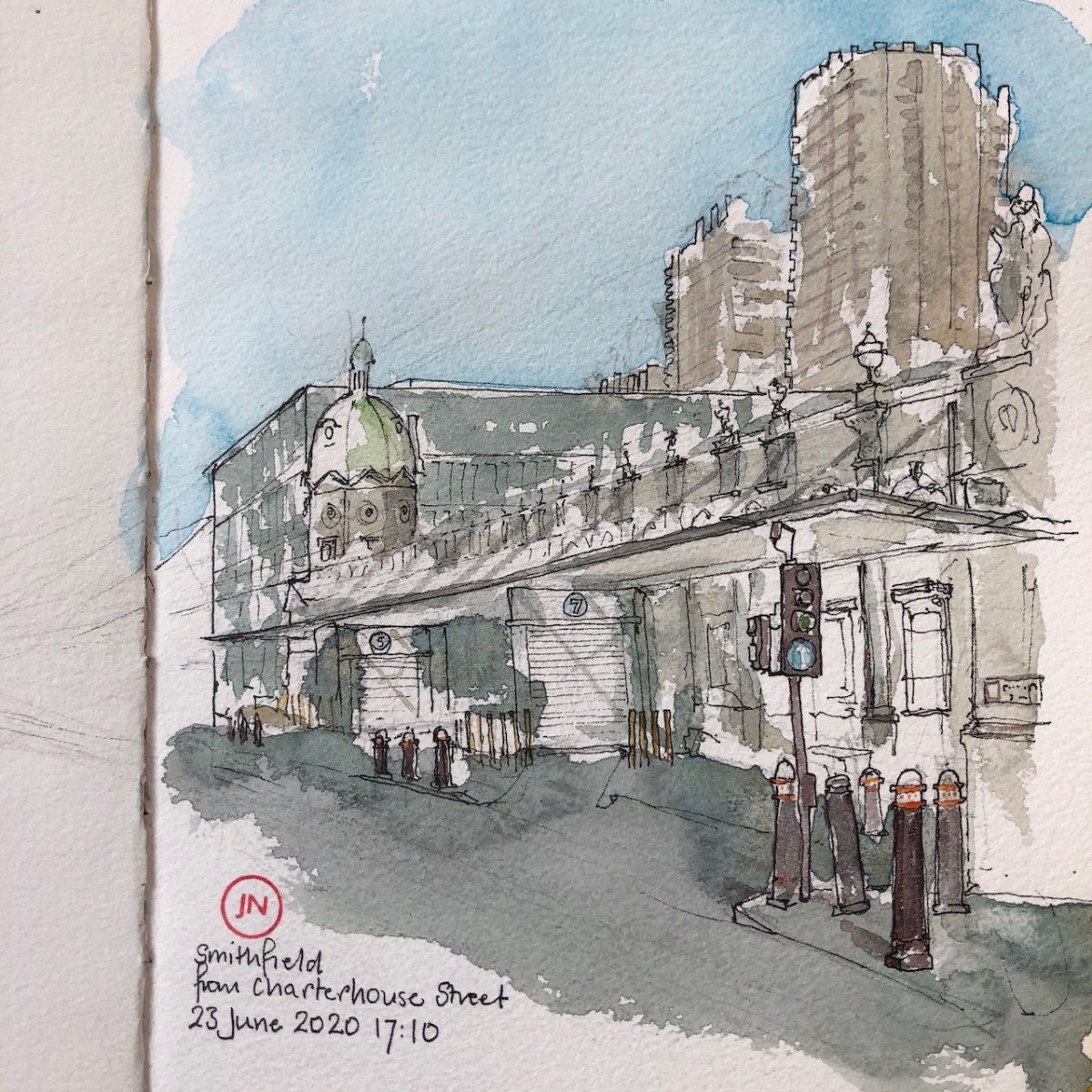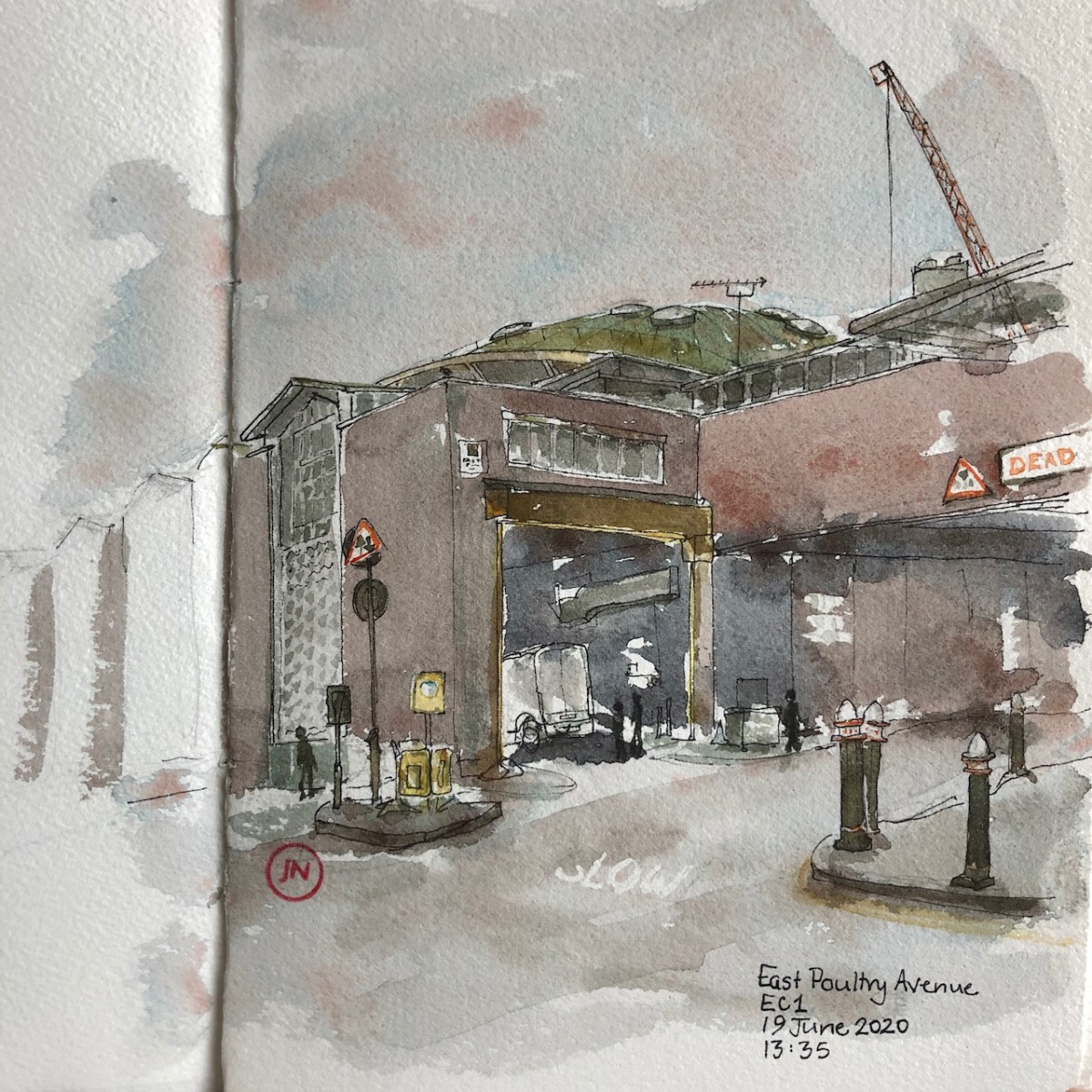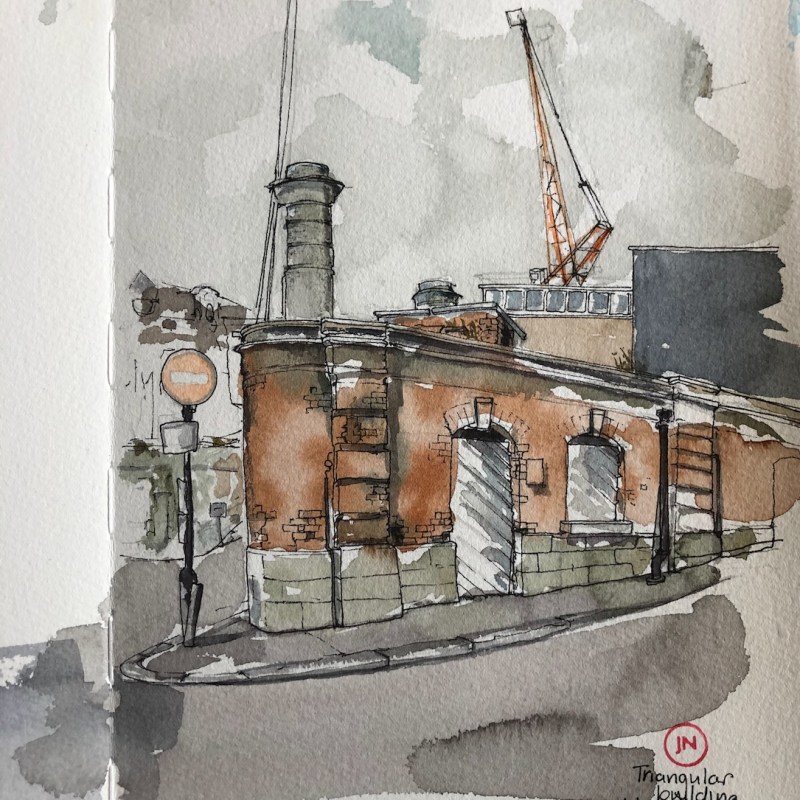
West Poultry Avenue, Smithfield EC1

I set off to go and draw the architecture of the South Bank. Walking through West Smithfield on the way, I thought, The South Bank will always be there, but Smithfield is about to be redeveloped. Draw it Now.
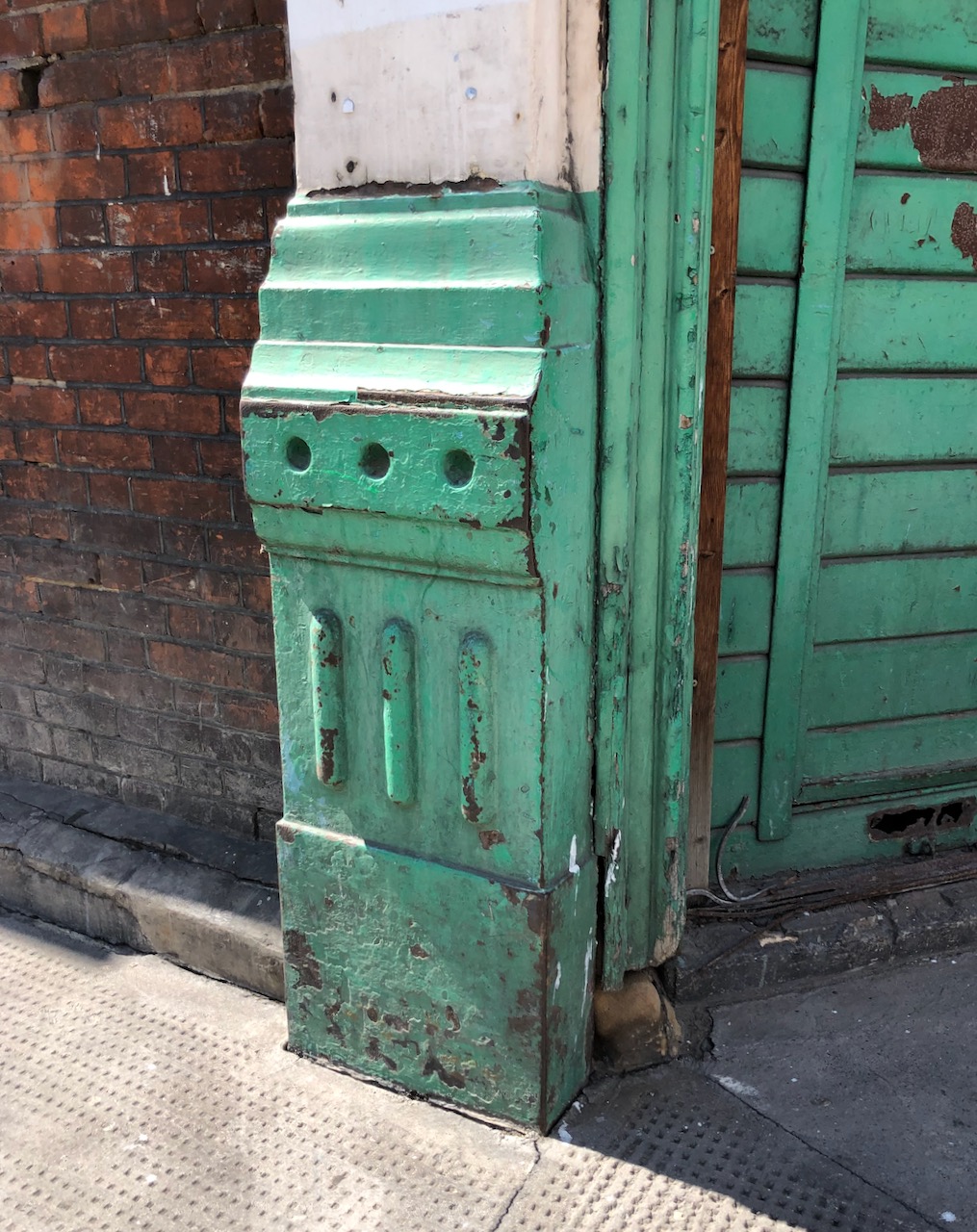
Green painted iron protectors for the door posts.

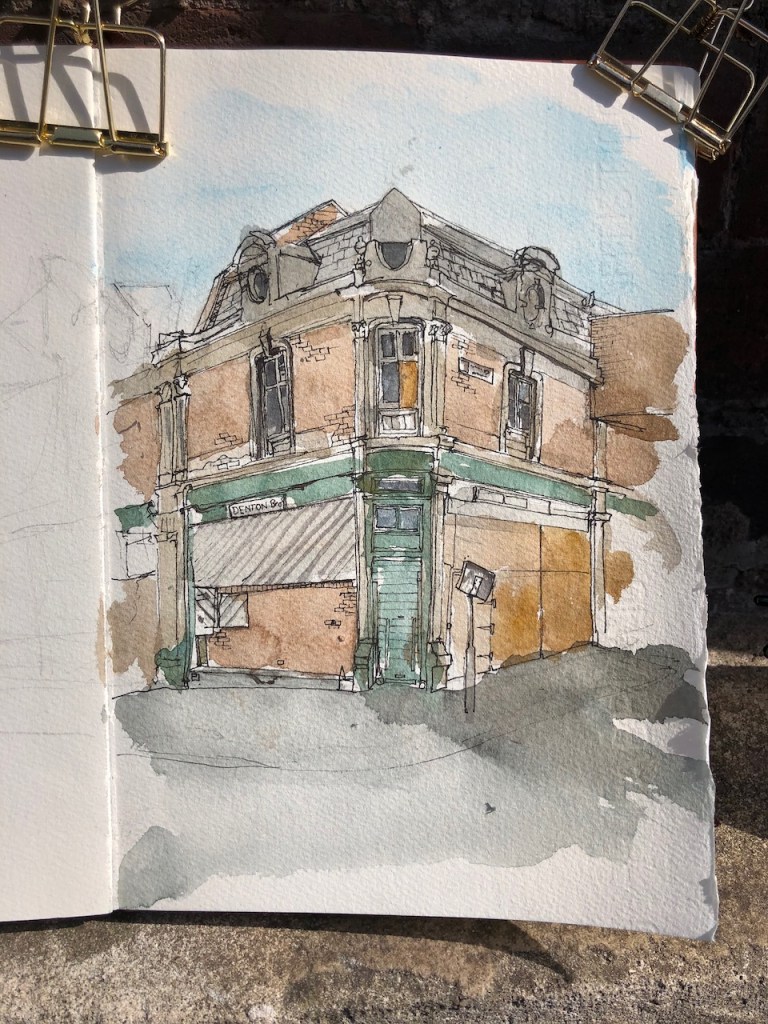
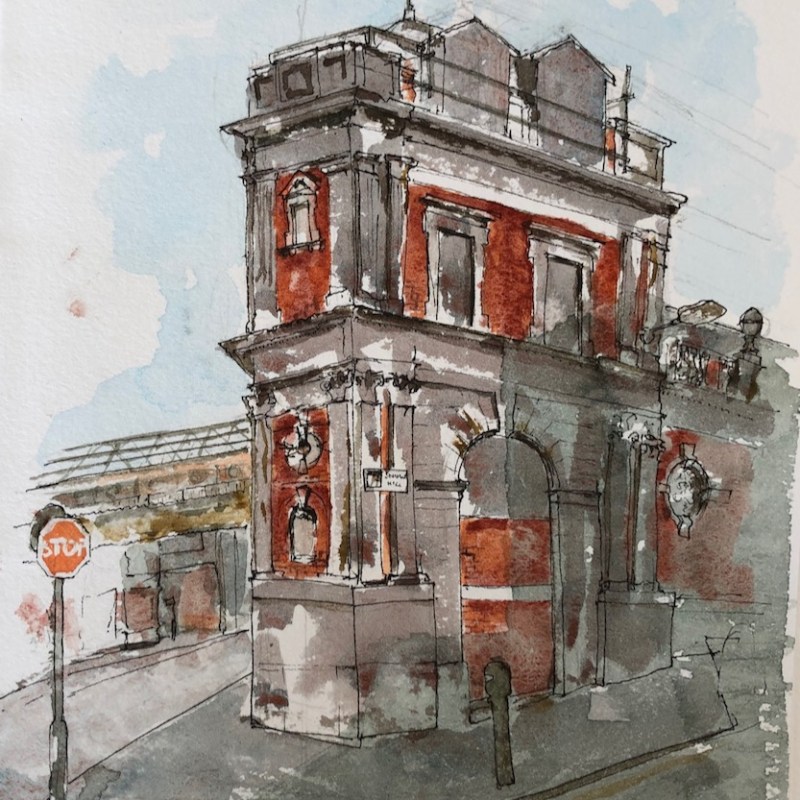
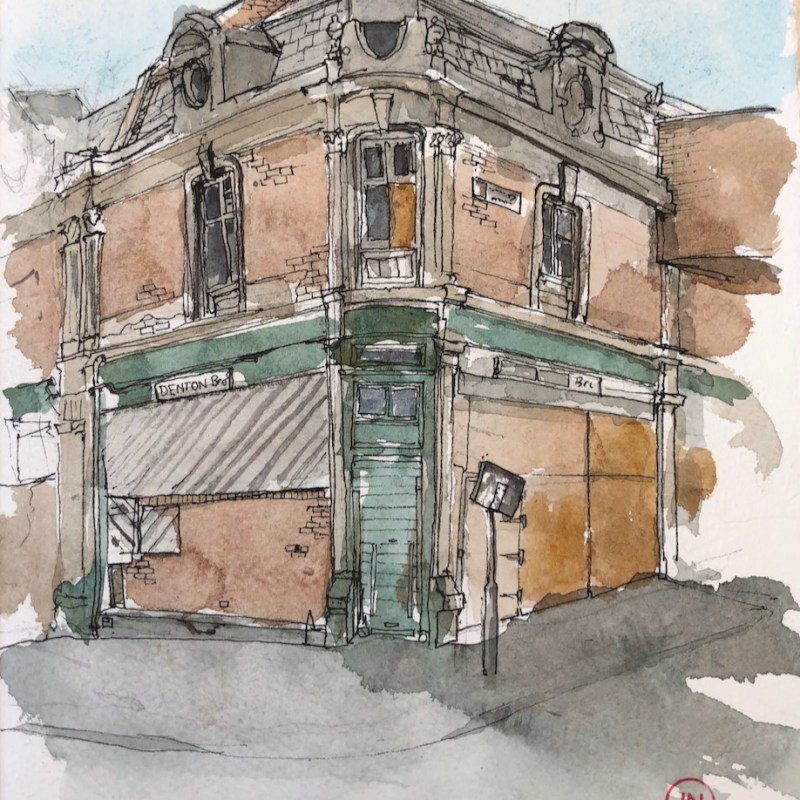
So here is Denton Bros , on the corner of West Poultry Avenue and West Smithfield. I like this building. The green objects at the base of the doorposts are made of iron. I think they must be to protect the brickwork from being bashed by market trolleys. The windows are well made and ornate. The lower panes are wood, which must have been for some specific purpose. I wonder if it is so the supervisors can open a wooden door and lean out to examine proceedings below. Or perhaps it was to stop lowly clerks on the first floor from wasting time looking out of the window.

Denton Bros. West Smithfield.

Smithfield is the main wholesale Meat Market in London. The East part of the Market is fully operational. Opening hours are 2am to about 7am, Monday to Friday. It sells meat to restaurants and butchers, and also to any members of the general public who show up. It has been open right through the pandemic, which has been very useful.

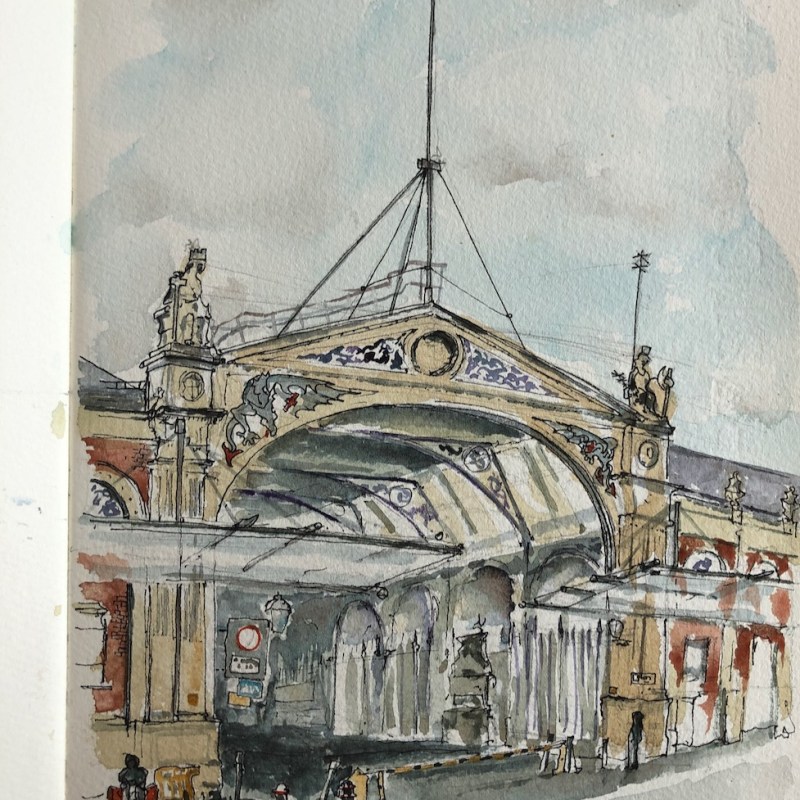
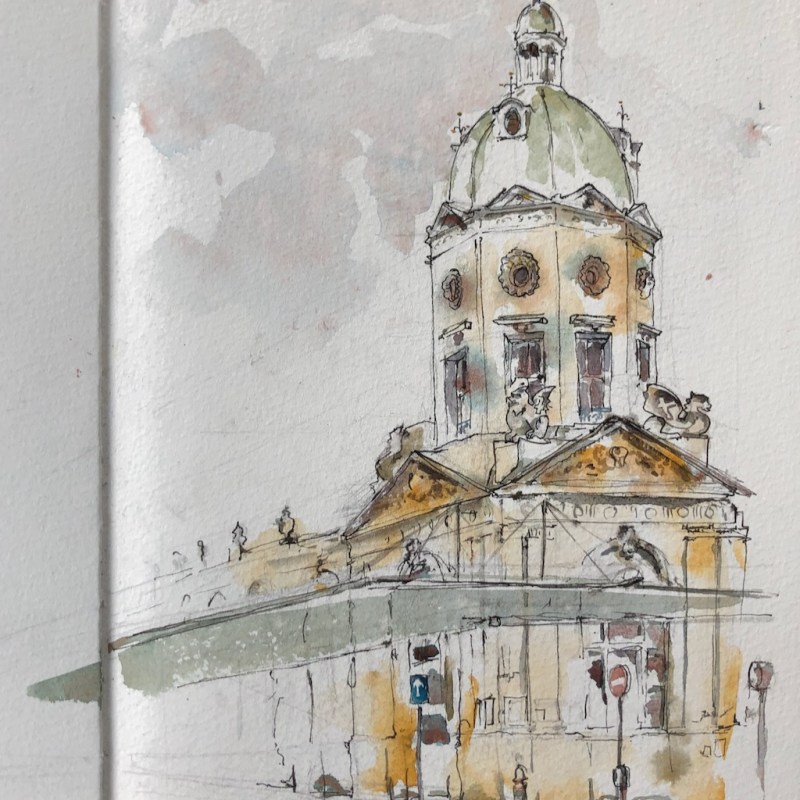
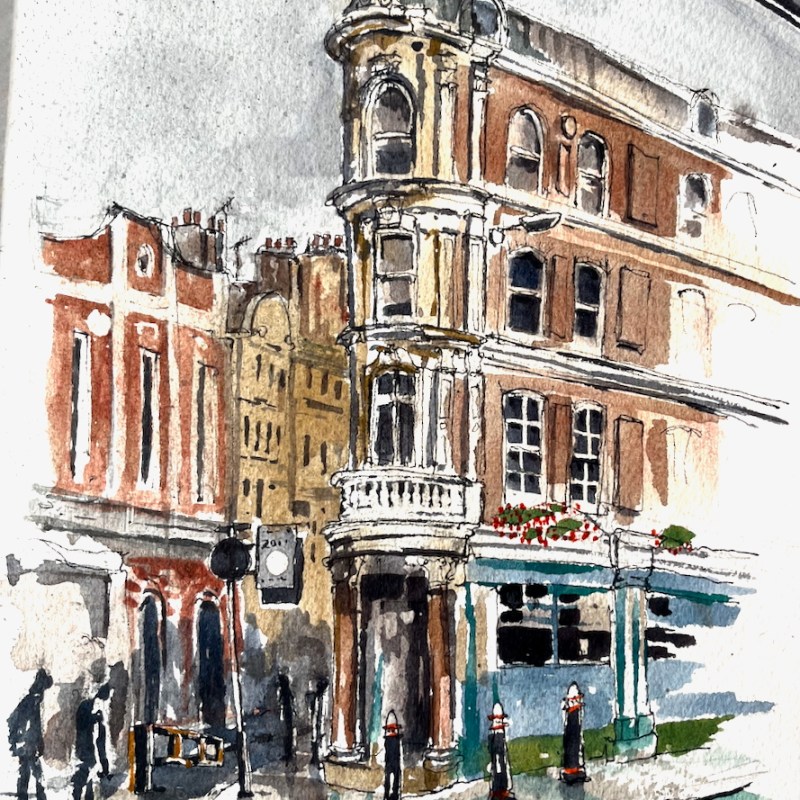
The West part of the market is dilapidated, as you see in the picture. It was due to be demolished in 2012 and replaced by restaurants, offices. The demolition was prevented by campaigning groups, ‘Save Britain’s Heritage’, and others. Now the plan is that the Museum of London will relocate there, from its current site in the Barbican. They will preserve the façade of the existing buildings. See the picture below. The place I drew will be part of the “portal” welcoming visitors in. Here is a an extract from the Museum of London website, downloaded 2nd June.

Visitors will enter through West Poultry Avenue. It will be both part of the city and a portal to the museum, and its character will remain that of a street. It will be a place of arrival, orientation and promise. Our team will welcome visitors and help them to navigate the museum – and, if they need it, the city itself. From here, visitors will move into the General Market or the Poultry Market, or they can stop awhile for a drink in The Cocoa Rooms café. This space will reflect London in real time – the present not the past, the London we experience today, the 24-hour city, constantly on the move. Data visualisations incorporated into the street will reflect London in the moment.

Here is where the new Museum of London will be, and what it will look like. You can recognise the building I drew.

The existing wholesale Meat Market, in the eastern part of the site, will relocate to Barking, that’s the plan. I don’t know what will go where the eastern market is now.

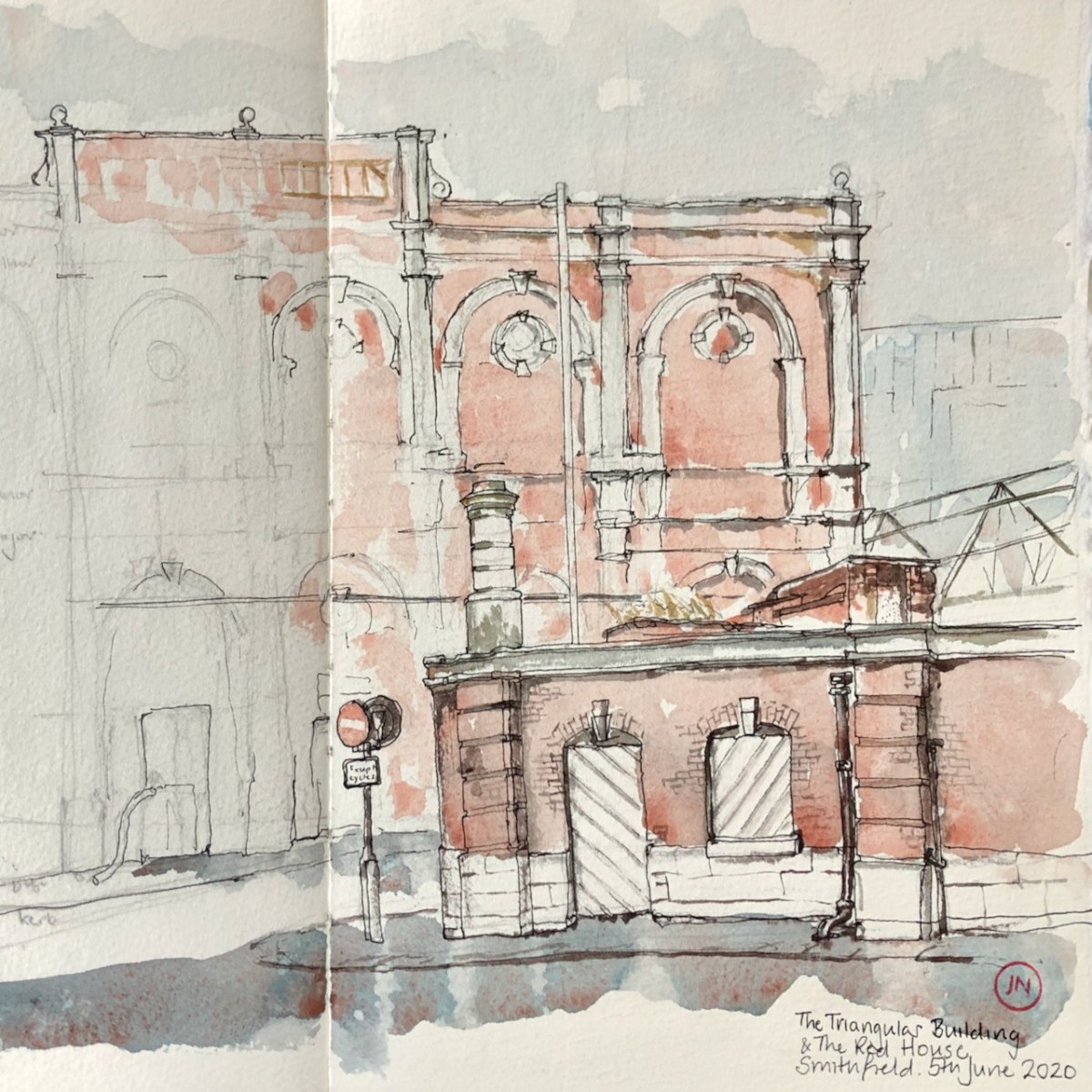
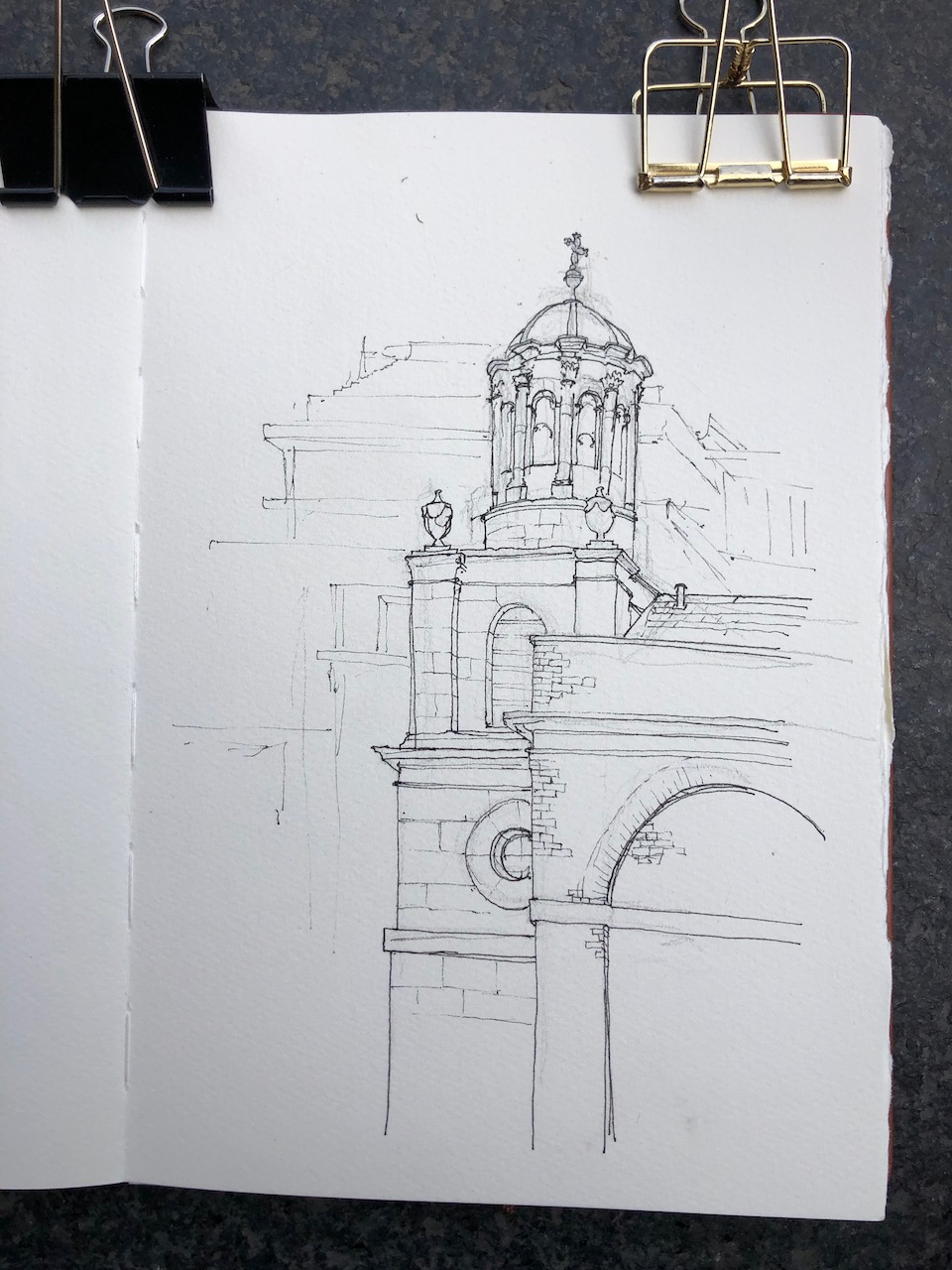
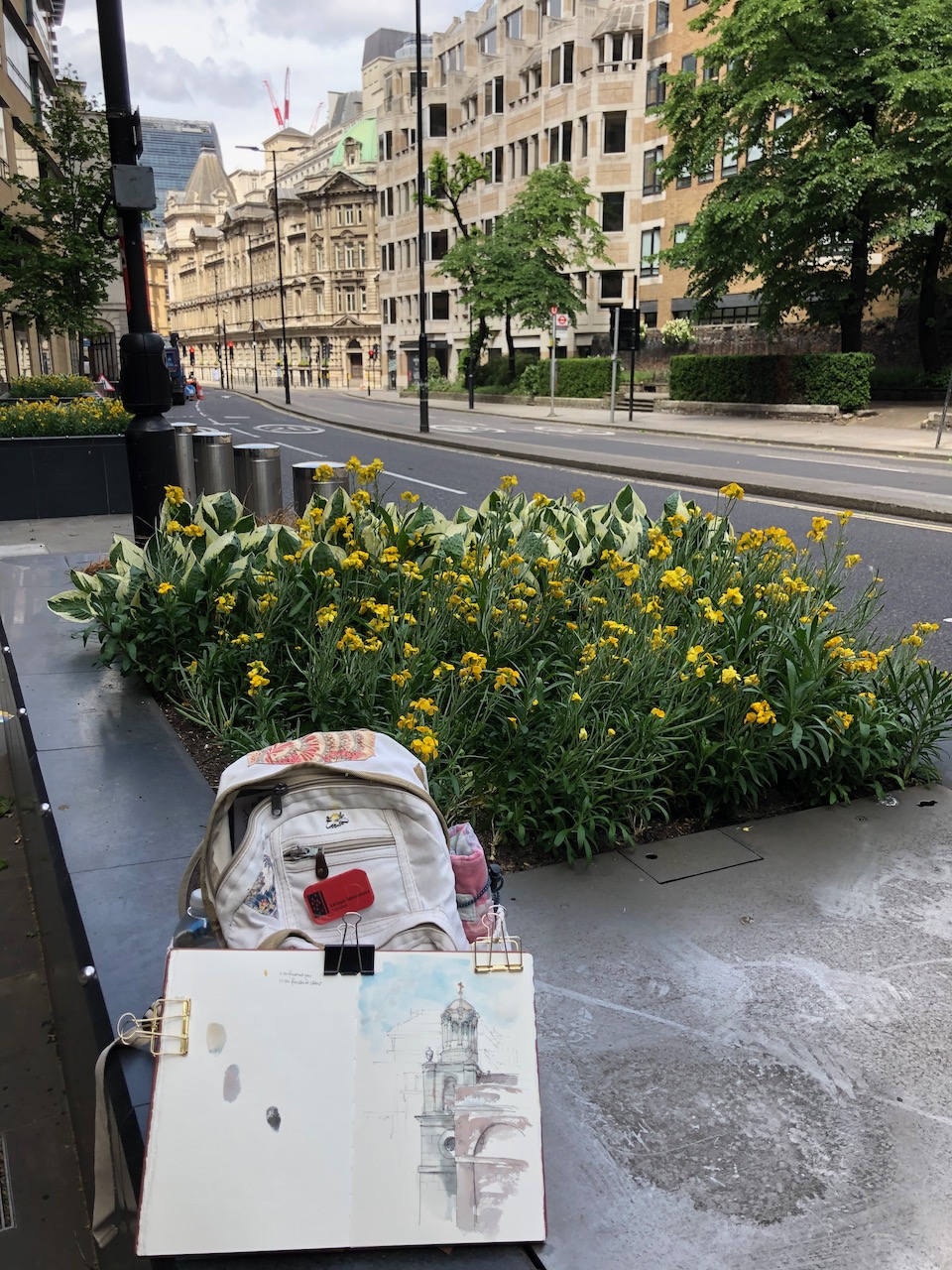
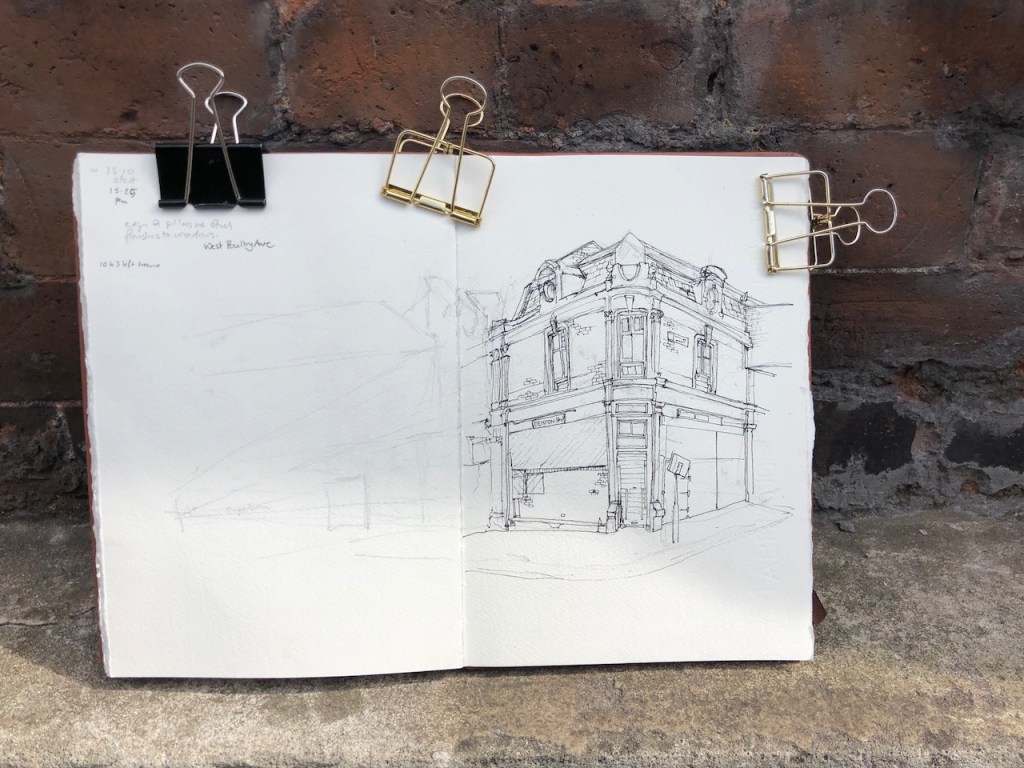
I had better do some more sketching around Smithfield, before the whole thing is swathed in plastic and transformed. Here is work in progress on the sketch. It took one and a half hours. The colours are: Phthalo Turquoise, Mars Yellow, Perylene Maroon and a bit of Transparent Pyrrol Orange.
Here are some maps to show you where it is. Click to enlarge.

Here is a collection of my drawings of Smithfield: click on the words to see more information.
Charcot House, Roehampton

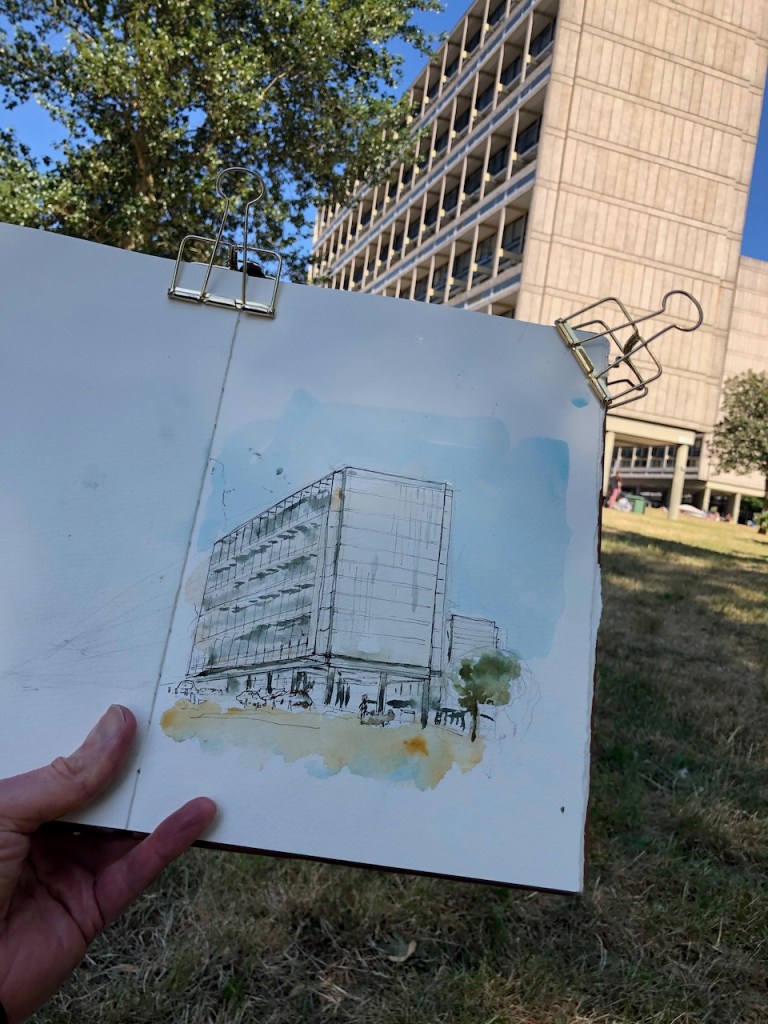
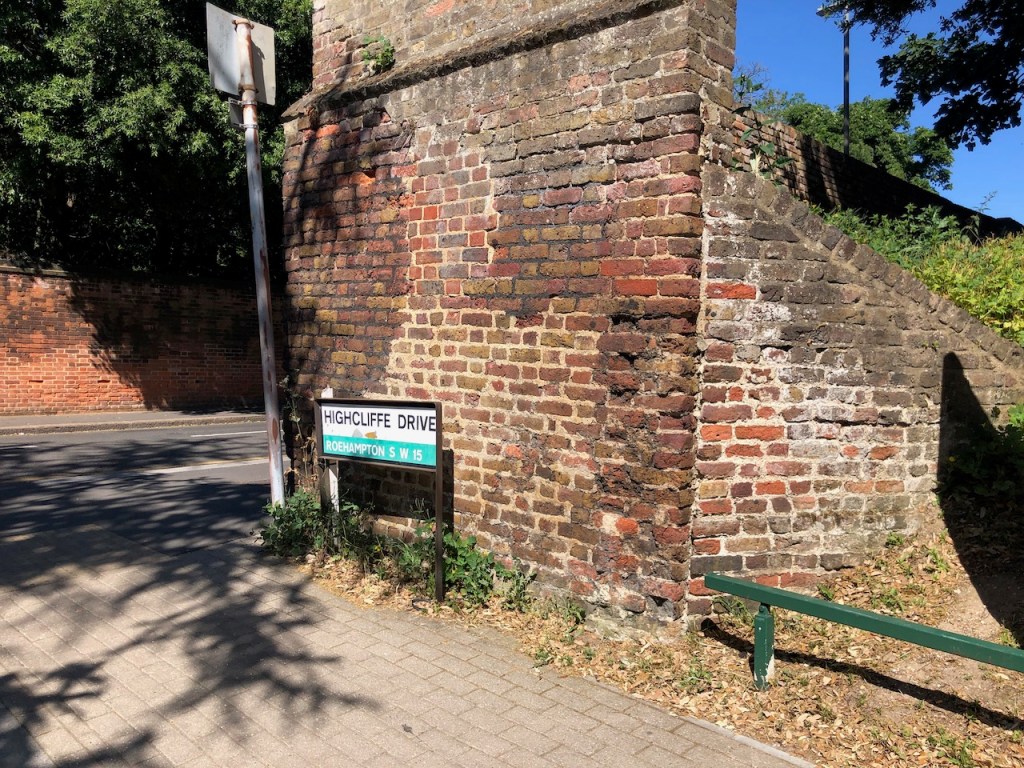
Here is a sketch of Charcot House, one of the five tower blocks in the Alton West Estate, Roehampton, SW15.

The Alton West estate was completed in 1958, as social housing. It was designed by a London County Council team led by Rosemary Stjernstedt (1912-1998).

The five tower blocks stand in a huge green space, on a hill, with many trees. When I visited, people were picnicking on the dry grass. You can see some of them in the centre of the picture.

I went there by bike, it took about two hours, partly because I also went to look at the Dover House Estate, nearby, which was built in 1918. Also it took me a while to find the Alton West estate. There are a number of hills in the area.

Here is a map:

The arrow shows the sightline of the drawing.

Drawing time: 45 min. Colours: Mars Yellow (DS), Phthalo Turquoise (W&N), Burnt Umber (Jacksons).

The O2 from Trinity Buoy Wharf

Here is the view across the river Thames from Trinity Buoy Wharf, E14. The drawing shows “The O2”, which used to be called “The Millenium Dome”. It is an events arena. I have never been inside. In the distance are the towers of Canary Wharf.

I drew this in a lovely peaceful spot sitting on a wooden step next to a shed at Trinity Buoy Wharf. Each person who walked past said hello. A man paused and commented, “Ah, Art is going on!”, which made me laugh, somehow. Perhaps it was the way he said it.

Here is work in progress, and a photo of my art materials and my bike helmet on the step.

The drawing took 1hour30mins. The colours are: Mars Yellow (Daniel Smith), Transparent Pyrrol Orange (Daniel Smith), Phthalo Turquoise (Winsor and Newton).

I have sketched at Trinity Buoy wharf before. See this blog post:

Trinity Buoy Wharf

The headlines in the Evening Standard had described the pollution levels in central London at “Red Alert” levels. So I headed East to the clearer air and big skies of the maritime Thames. Trinity Buoy Wharf is here: I drew a picture of the lighthouse. Above me, four stories of shipping containers contain offices. Words…

Balfron Tower

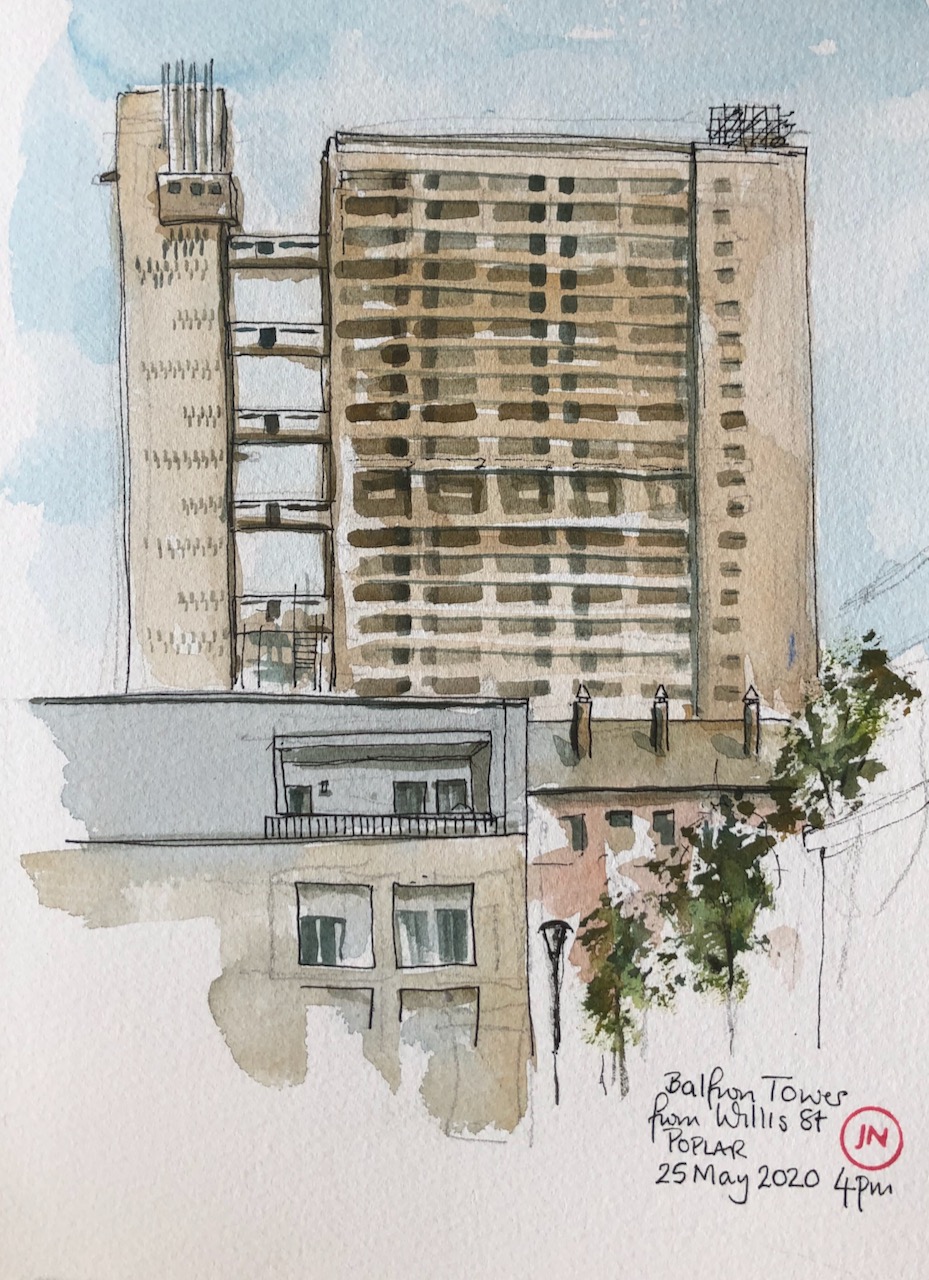
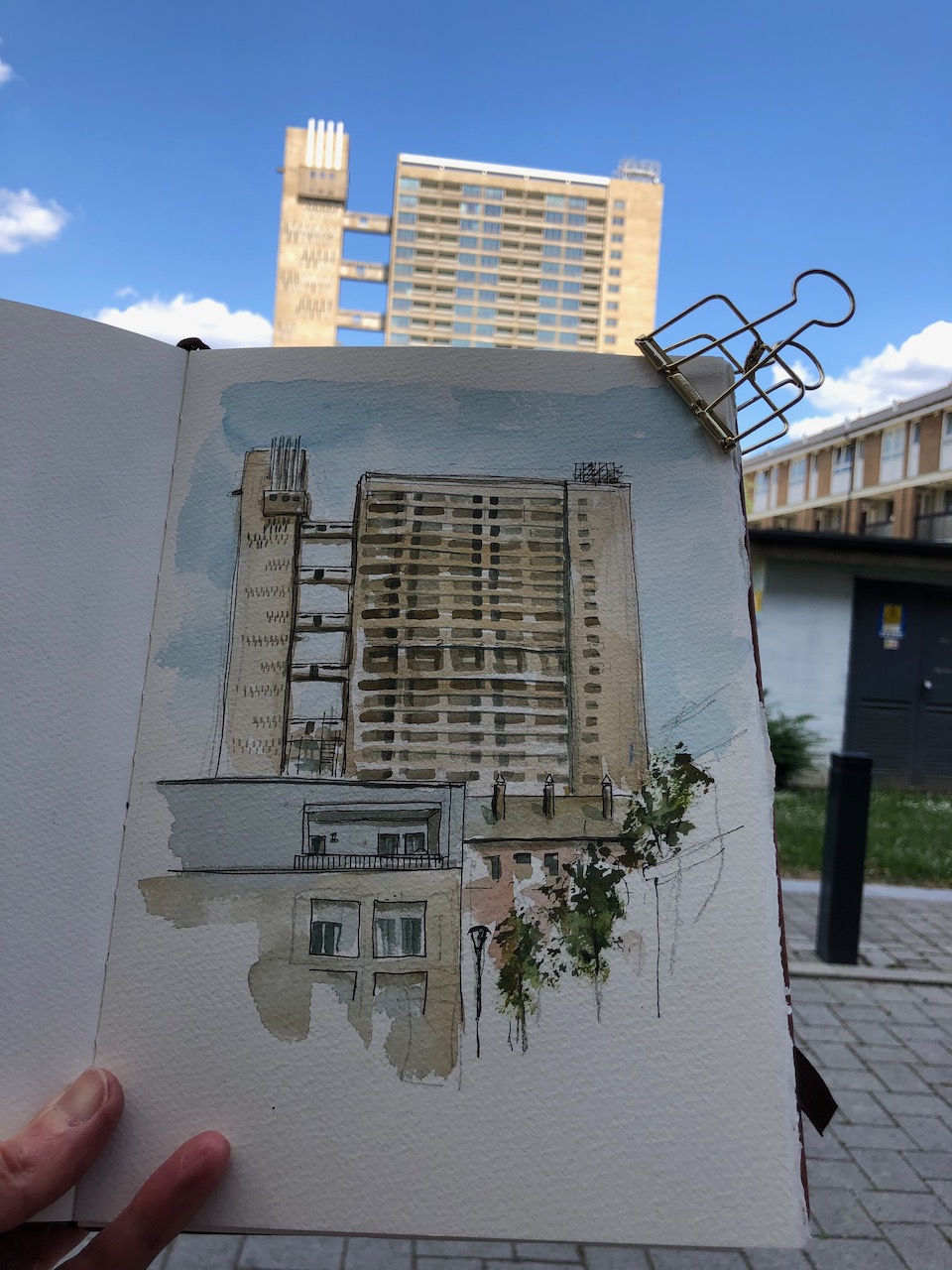
I went on a marvellous cycle ride in East London. The air was clear, the roads were wide and empty. As I came back I spotted this view of the Balfron Tower. I sat on a low wall in a housing estate off Willis Street, and sketched it.

Balfron Tower, Poplar, east London.

This tower is designed by the architect Ernő Goldfinger, and resembles his other famous tower, Trellick Tower, which is in North West London. Balfron Tower was built in 1967 as council housing.

It has recently been sold by Tower Hamlets Council, and redeveloped by the developer LondonNewcastle as luxury flats. You can see some of the scaffolding in the drawing.

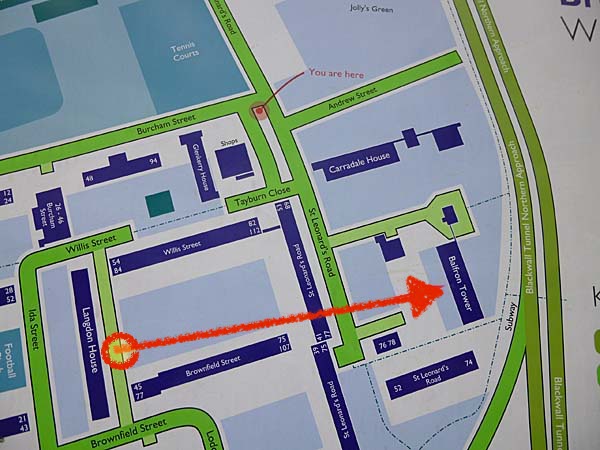
Here is where it is.

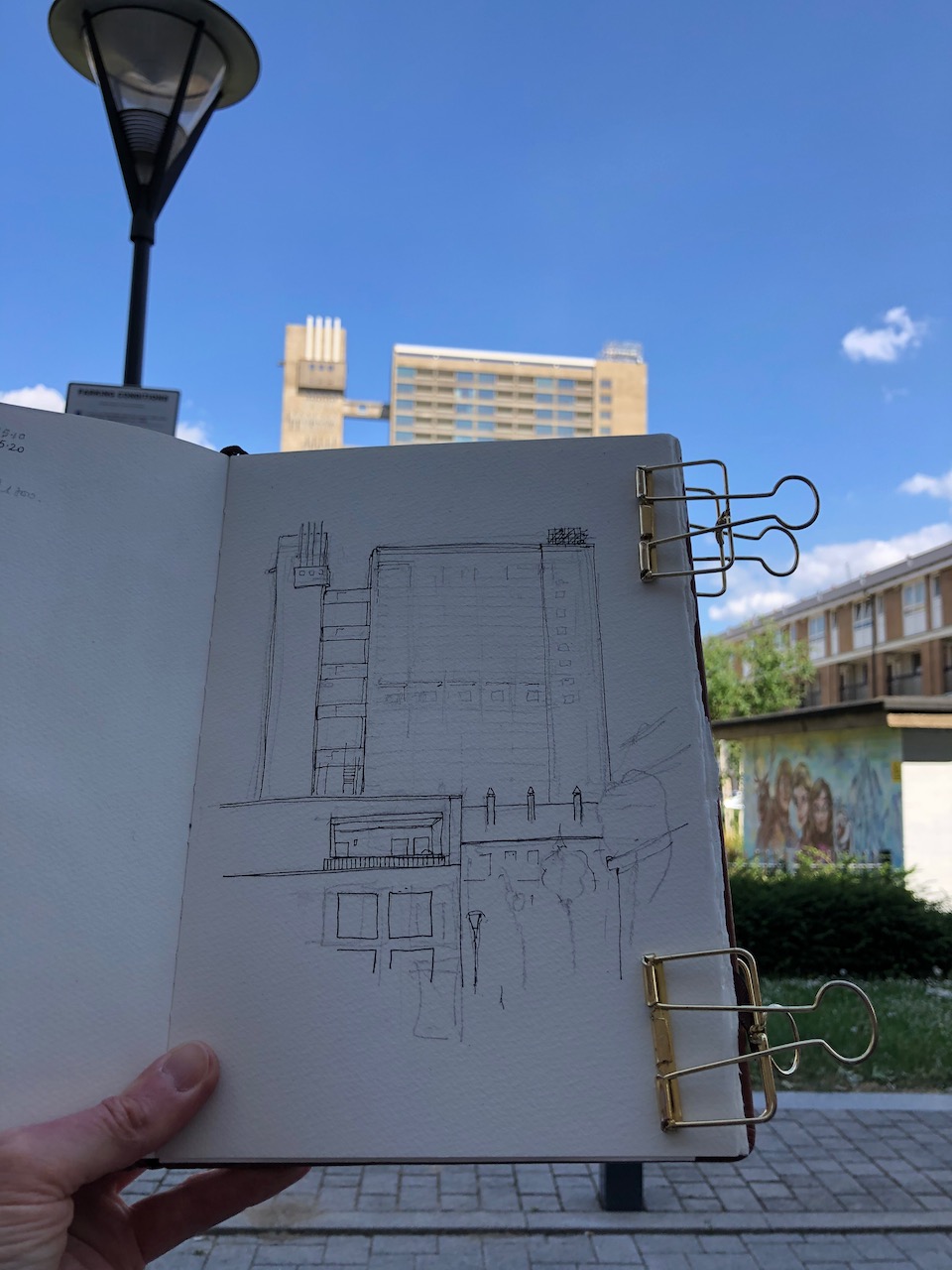
Here is work in progress. Also a glimpse of my bicycle.

As I sat sketching, a pale young man approached. “It’s beautiful,” he said as he strode past. He was referring to the Balfron Tower, not to my drawing.

“Yes, ” I agreed, “I think so”. I looked down to my drawing again. But the young man had something else to say.

“You should see Jesus,” he told me, “He’s beautiful too.” Taking my baffled silence as amazement, he continued, “I’ve seen Him, believe it or not”. He left this statement hanging in the air and walked on around the corner, without breaking step.

All Hallows on the Wall

London Wall is the old Roman Wall around the City of London. It is also the name of a road. In normal times London Wall is a very busy road, an arterial route in the City, full of buses and cars and bikes, with people thronging the pavements looking at mobile phones. Now it is empty, and you can see the scenery. Here is a view All-Hallows-on-the-Wall, sketched from the opposite pavement, outside Deutsche Bank. The church occupies a narrow site, between the present-day road and the old London Wall.

The “Friends of City Churches” site says: “The previous church on this site escaped destruction in the Great Fire but was rebuilt by George Dance the Younger in 1765/67. He was just 24 years old, but achieved an exquisite small interior of neo-classical simplicity regarded by Betjeman as one of the most successful of the London interiors.”

The Church is only open at certain times, and in the pandemic not atall. It has been the headquarters of various groups seeking to help people. Currently it is the headquarters of “XLP” and has their banners outside. Here is an extract from the XLP website:

“XLP is about creating positive futures for young people growing up on inner-city estates, struggling daily with issues such as family breakdown, unemployment and educational failure, and living in areas that experience high levels of anti-social behaviour and gang violence. Every year XLP helps thousands of young people recognise their full potential. We believe positive, long-term relationships can restore a young person’s trust in people, nurture the belief that things can change and encourage them to set positive goals and work hard to achieve​ them”

Here is work in progress on the sketch. See how empty the road is.

You can see the old London Wall under the big tree. Here is a picture from over there near the church.

Old London Wall is on the left. The modern street called “London Wall” is on the right. All Hallows main entrance is in the centre, below the tree. I did my sketch from the pavement on the other side of the road, on the right. The pale-coloured offices there are Deutsche Bank.

Sketch took about an hour, drawn and coloured on location.

Liverpool Street Station from Exchange Square

Here are the magnificent 19th Century arches of Liverpool Street Station, seen from Exchange Square.

Liverpool Street Station opened in 18751

Liverpool Street Station from Exchange Square

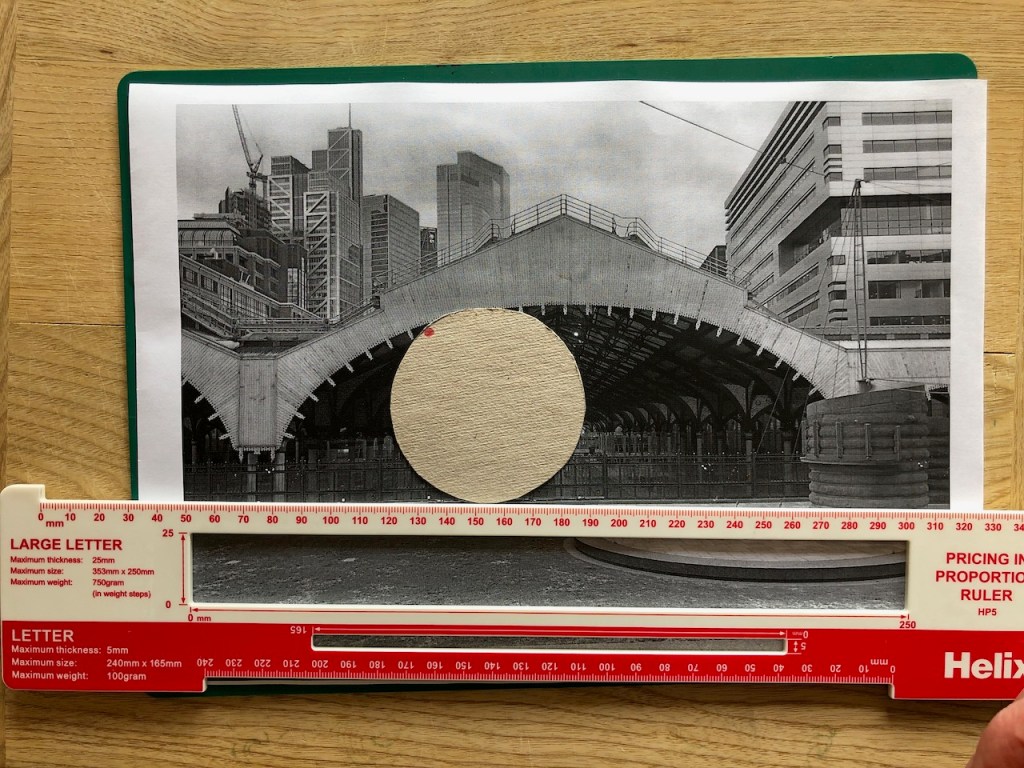
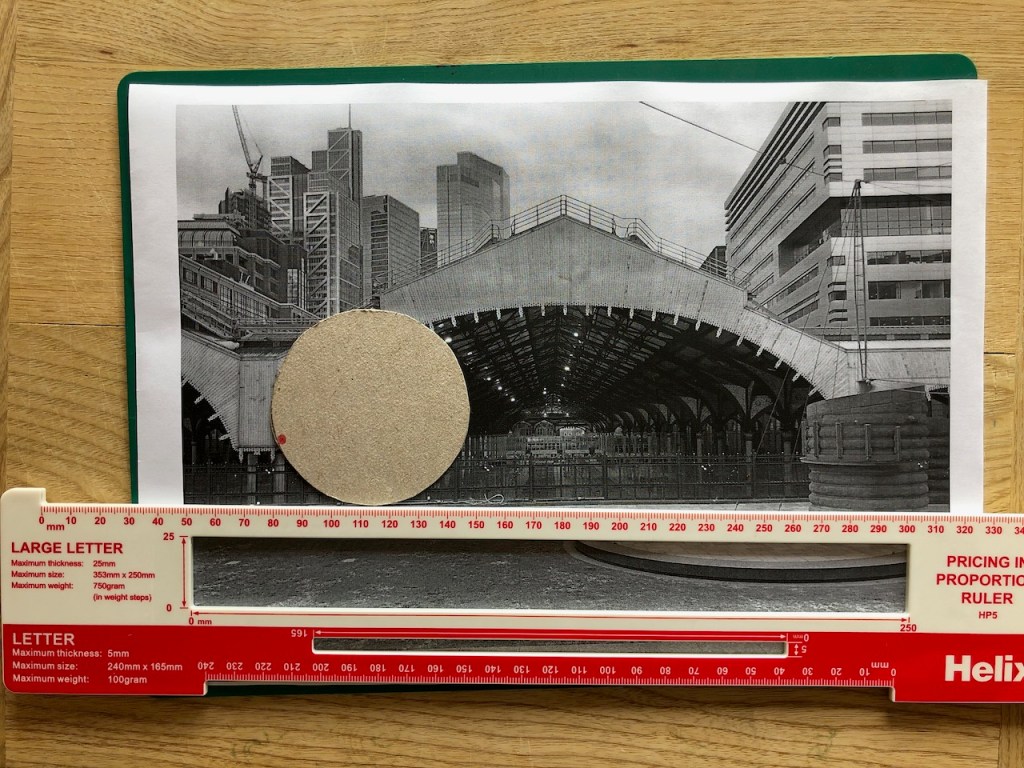
Now the question is: what curve is that arch? I thought it might be a CYCLOID. A cycloid is the shape made by a dot on the edge of a rolling wheel. I made an experiment.

An experiment to see if the arch of Liverpool St Station is a cycloid (silent video).

If you can’t see the video, here is a series of stills:

I imagine that the person2 who designed Liverpool St Station considered that a cycloid was an appropriate form for an arch that was going over rolling stock.

Exchange Square is to the North of Liverpool Street Station. It was opened as part of the Broadgate development in 1991, and covers the railway lines which lead out of Liverpool Street. Before this, the railway lines were uncovered.
My sketching at Exchange Square was interrupted by torrential rain. Twice. I finshed the drawing at home.

1Dates are from “The history of Liverpool Street Station” on the Network Rail website: (downloaded 23rd May 2020)

The history of London Liverpool Street station

2 The buildings of Liverpool St Station were designed by Edward Wilson, Chief Engineer of the Great Eastern Railway, according to Victorian Web (http://www.victorianweb.org/technology/railways/69.html) and other sources. Some of his office buildings which surround the station are listed, and his name is in the listing. I can’t ascertain whether this was the same person who designed the arches at the other end of the station. Here’s the listing page from the Historic England site.

Crossrail site, Moor Lane EC2

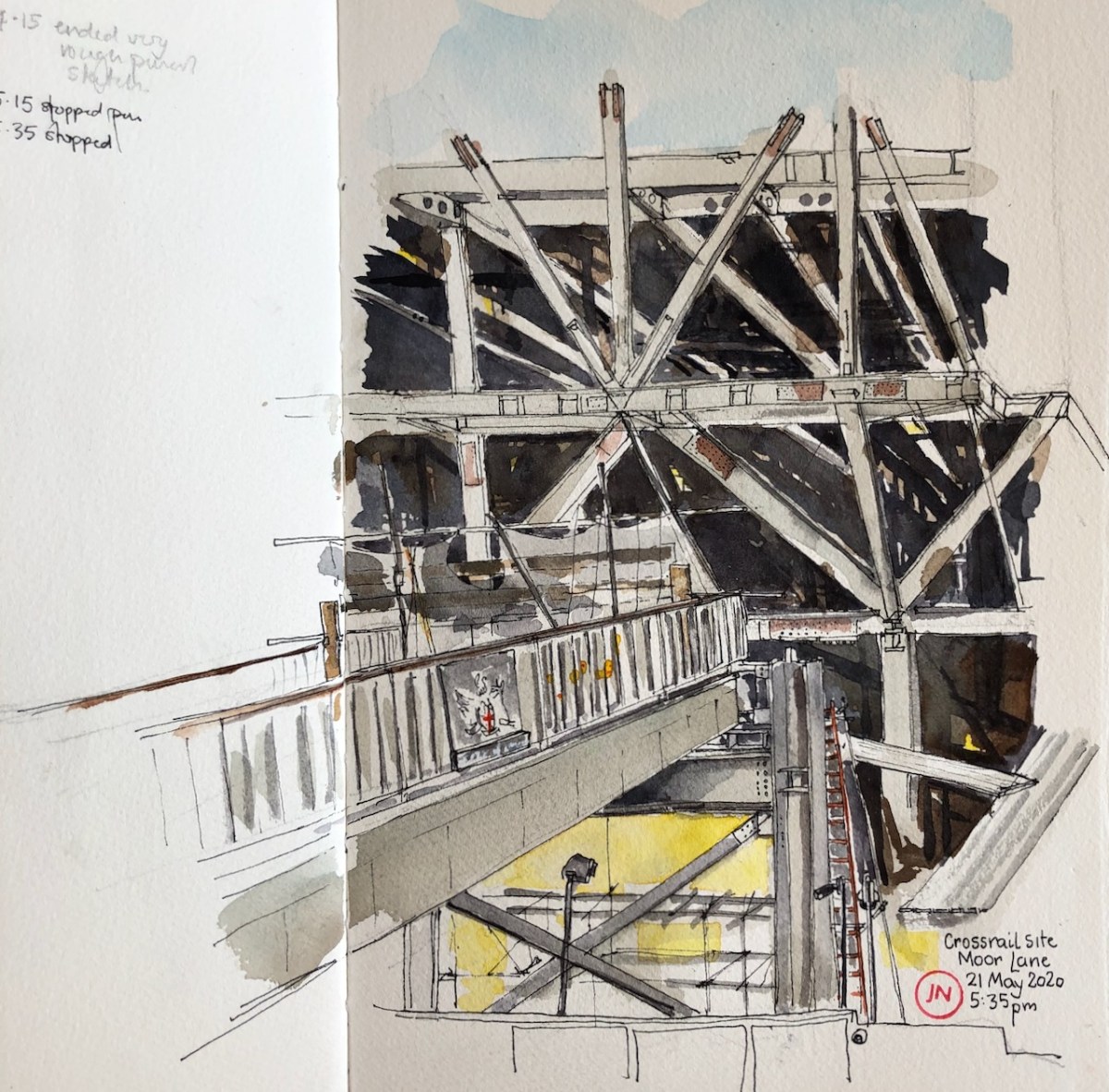
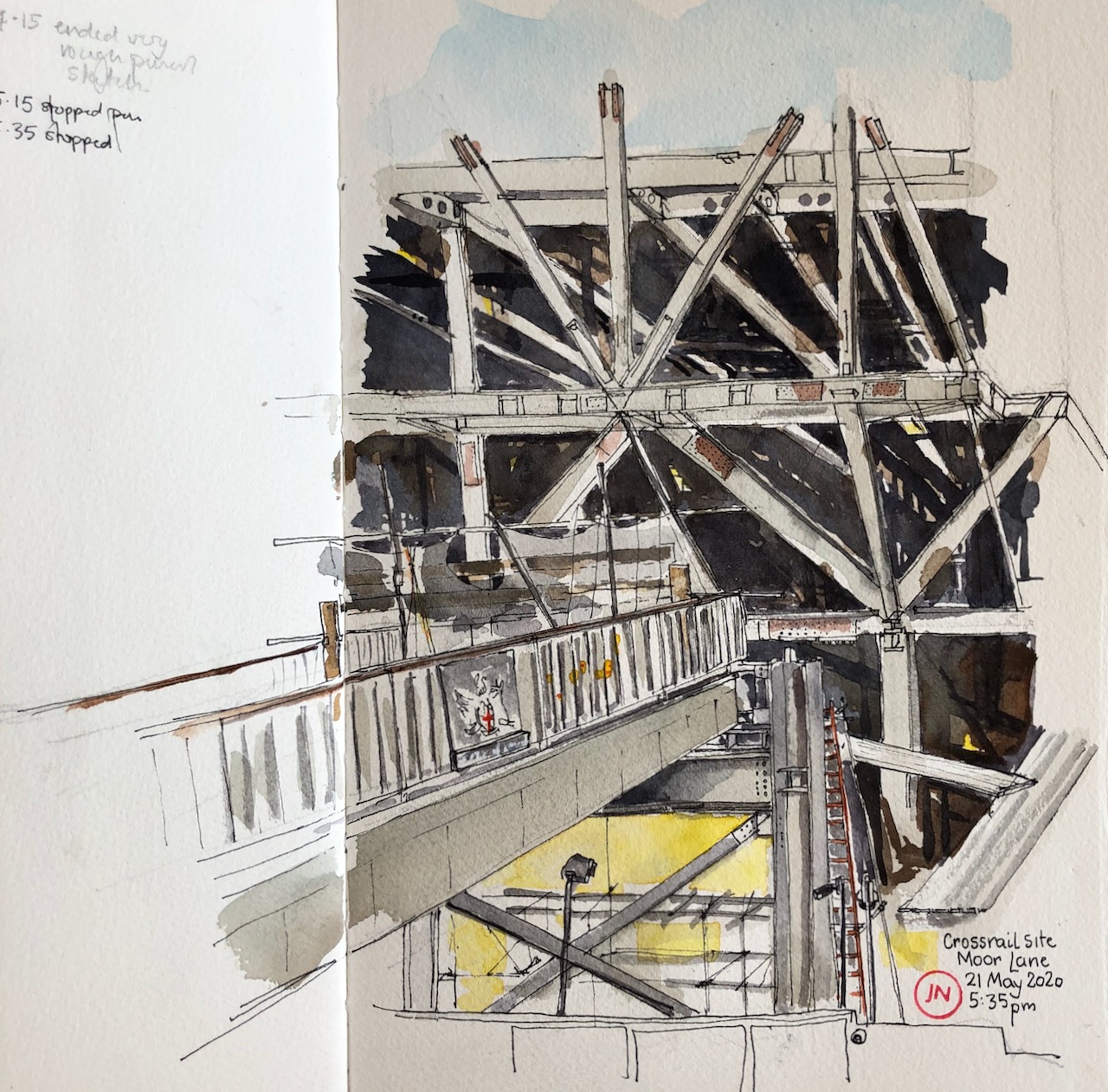
Here is the view from the Barbican Podium of the construction site on Moor Lane.

Bridge over Moor Lane, and the Crossrail construction site.

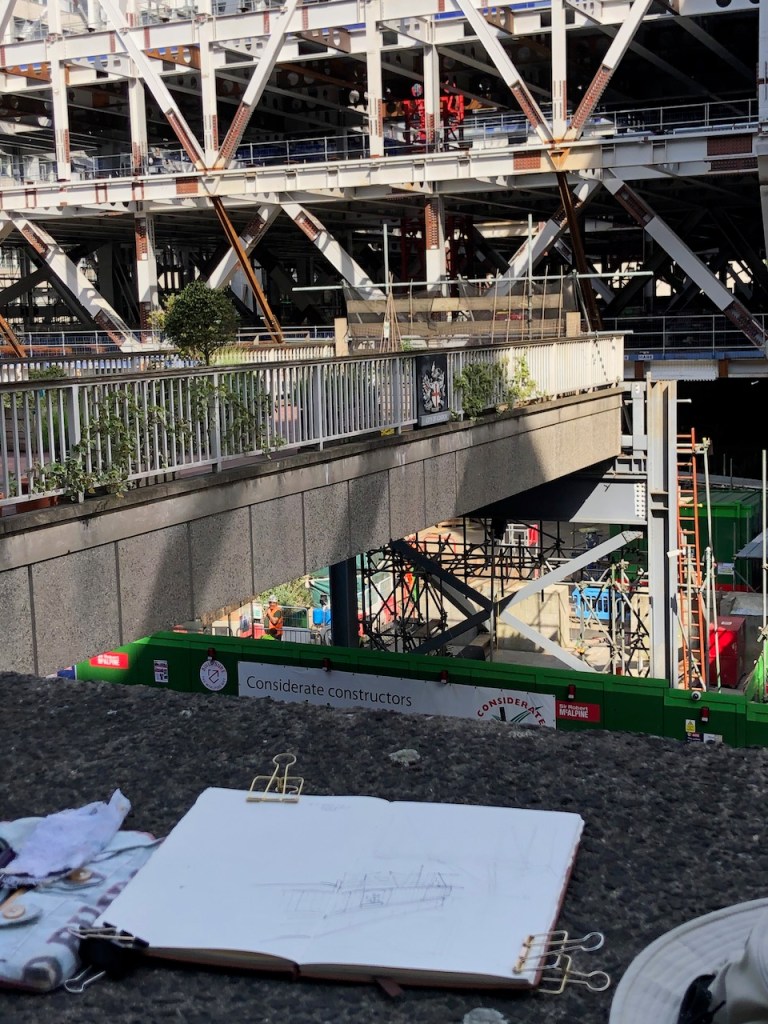
These huge triangular structures look immensely strong. This structure is above the Crossrail station at Moorgate. Below this is a huge shaft, down into Crossrail. Above will be offices and shops. I think it must be constructed this way, with so many struts, because it spans the vast station hall, like a bridge.

This construction site is in operation, and has been, for much of the lockdown. There are workers there. I could not see them but I could certainly hear them.

On the left you see a truncated pedestrian bridge, which used to be the route to Moorgate Station. I hope they reconnect it. At the moment it is sealed off, and there are plants on there, in pots. While I was drawing, a woman came and tended the plants. You can see some of the plants coming through the railings in my drawing.

Here is work in progress. I was standing on the Barbican Podium, by Willoughby House.

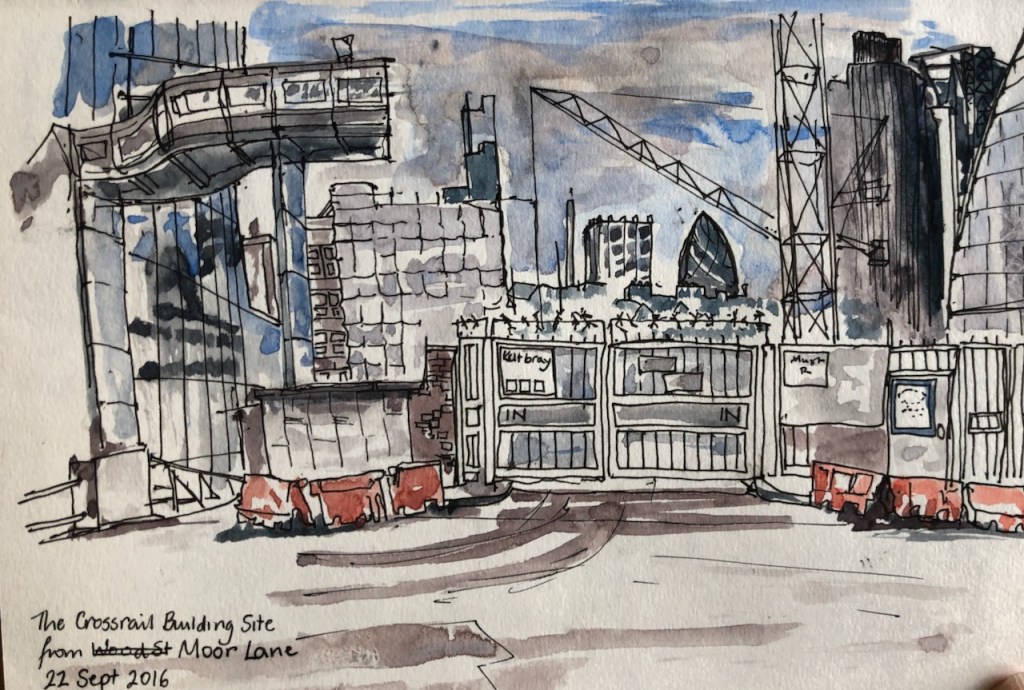
Here are some sketches I made in 2016, in the same area. You can see the bridge across Moor Lane. Click to enlarge.

Here is a a post from 2017, with a sketch done from the other side of the site, the Moorgate side.

Crossrail site from Moorgate

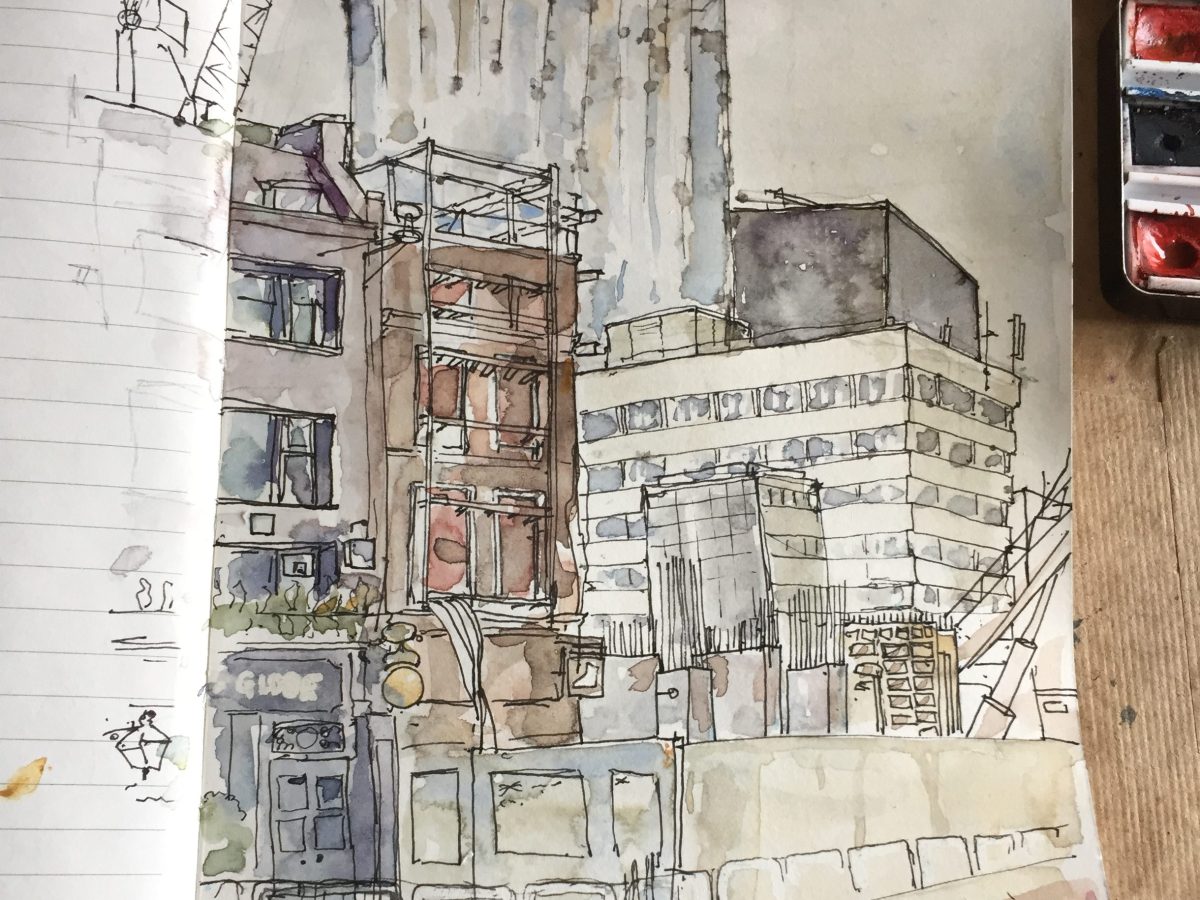
I wanted to draw this view before it disappeared. Today, Moorgate was closed completely to motor traffic, so it was calm to draw, though windy and cold. It rained, as you see from the droplets on City Point.  The Globe Pub, 19th Century, is on the left. The small square notice says: “In a House…

The Sekforde, Clerkenwell

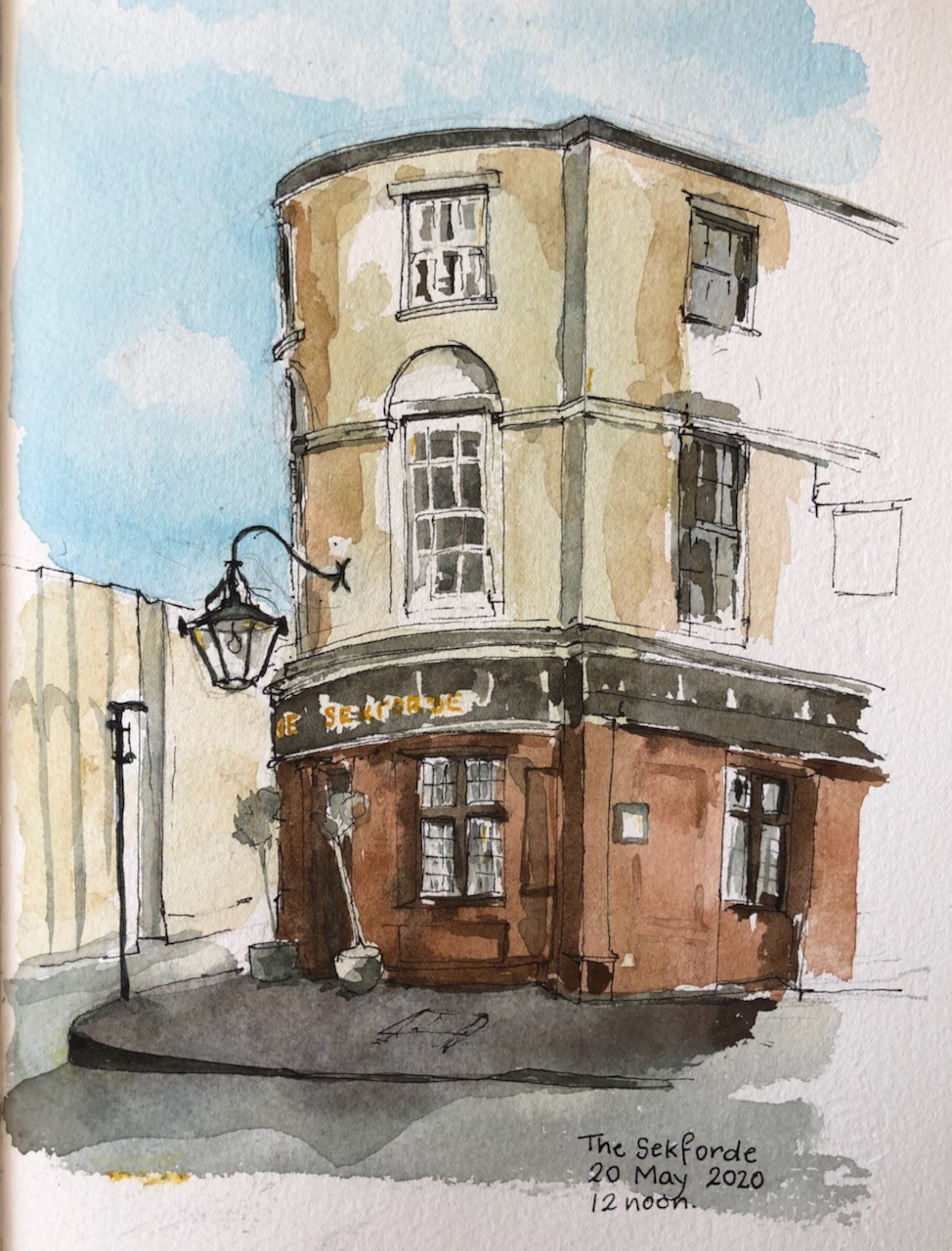
I sketched The Sekforde, sitting on a step on the other side of the road.

The Sekforde, 34 Sekforde St, EC1R 0HA

The pub was closed today. It looked like a good pub. While I was sketching I received confirmation of this. Two portly men strolled past, paused, and asked me if I was waiting for the pub to open. I said I wasn’t because I guessed I was going to have to wait a long time. The men agreed, and informed me it was a good pub, and has “been here a long time”. As they retreated, one of them called back, “I was here when it opened!”

This is unlikely. This is a Georgian pub. It opened in 1829.

Back home I found out a lot more about the pub, and was then keen to visit it when it re-opens. It is privately owned, says its website, and “we aim to be an instrument of change within Britain and the world”. They do that by hosting lectures and debates on “some of the most difficult political, moral and scientific subjects of our time”. How have I not encountered them before?

They also donate all the profits to the Sekforde House Trust, an educational charity. It offers scholarships to students each year: the Sekforde Scholars. According to the Islington Tribune (2017)* this generosity is inspired by the owner’s grandmother, “eminent scientist Kathleen Lonsdale, who was from a poor Irish family but was awarded a scholarship to university in London when she was 16″.

The place underwent a redevelopment from 2015 to 2018. There is a guest suite, very modern, which is let out on AirBnB.

Here is a sketch map showing where the pub is, in case you also would like to go there, when it re-opens, for a pint and a debate:

*Islington Tribune (2017) describes the refurbishment by David Lonsdale, who bought the pub in 2015. He is a property lawyer, and lives in the area, they say.

http://islingtontribune.com/article/opening-date-for-pub-that-serves-up-pint-and-a-debate

Brewhouse Yard, Clerkenwell

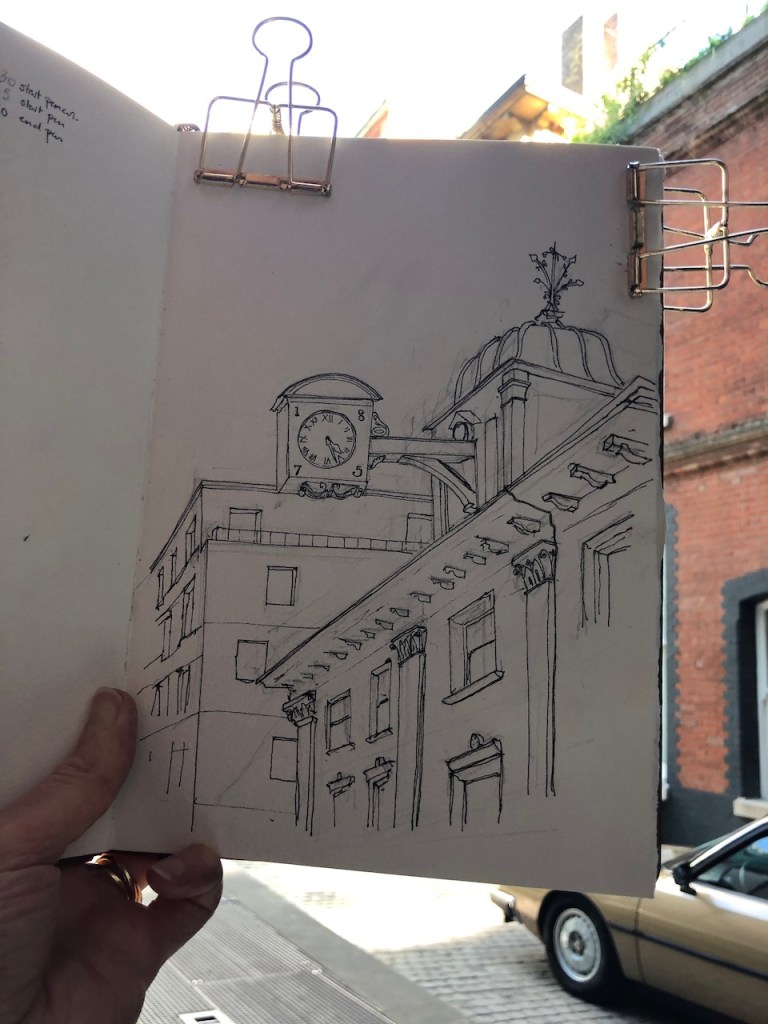
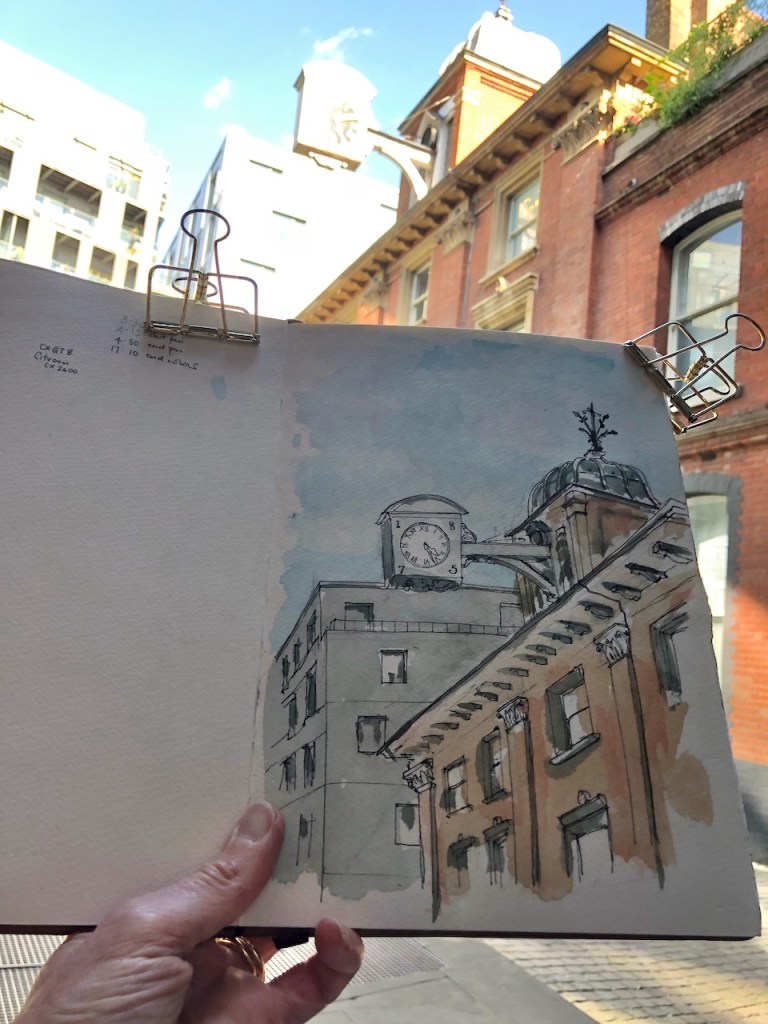
Looking up, I saw the clock.

The clock on 7 Brewhouse Yard

I sat on a convenient step to draw it. It was really hard to get all those perspective lines in the right place. While I was struggling with them, a car pulled into the silent square. It was shiny, gold metallic, and very clean. It came to a halt, and rocked a bit on its tyres. A man got out and disappeared from my field of view. I assumed he was the director of one of the architecture practices round there. I continued adjusting my perspective lines. Then I saw the man walking about photographing the car with a big digital camera. The camera made that artificial shutter-click, lots of times. He was taking a lot of photographs of the car. He moved it and photographed it from a different angle. It was a Citroen CX GT 2400. That was written on the boot lid. He must have seen me looking at it, because he came over and asked, very politely, if his car was in the way of my drawing. I was astonished, drivers are usually uncaring about parking in your sightline. But this guy cared. So I smiled and said that no, it was fine, I was drawing the clock up there, but thank you very much for asking. So he went on clicking, and I went on shifting the lines on my drawing, and we co-existed happily in the square.

He moved the car again and I thought he’d gone. But when I packed up my stuff and was examining the house I’d been drawing, he called out to me, “Did you get it?”. He meant, did I capture the view in my drawing. I said yes, and would he like to see the picture? He would. We talked about the house. He said it’s residential. Someone lives there. The resident had just gone out, in fact.

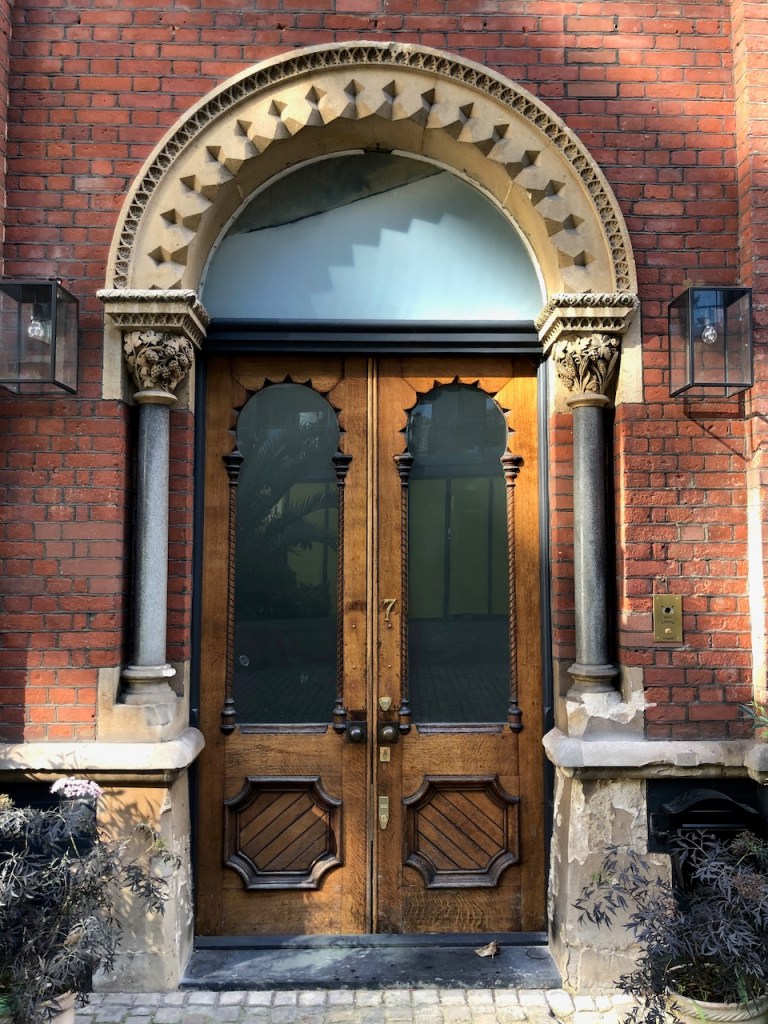
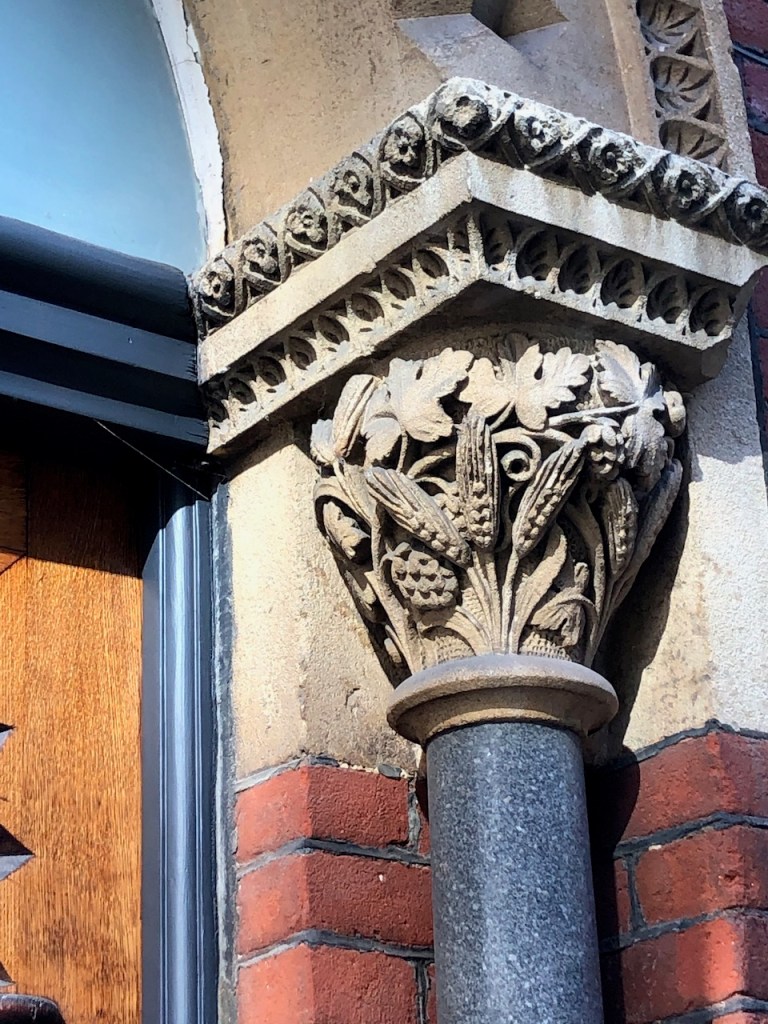
It’s clearly the former headquarters of the Brewers Yard. The door is very splendid. The pillar on one side has hops, and on the other side, barley and hops.

Here is a map showing where I was:

Courage on Nile St N1

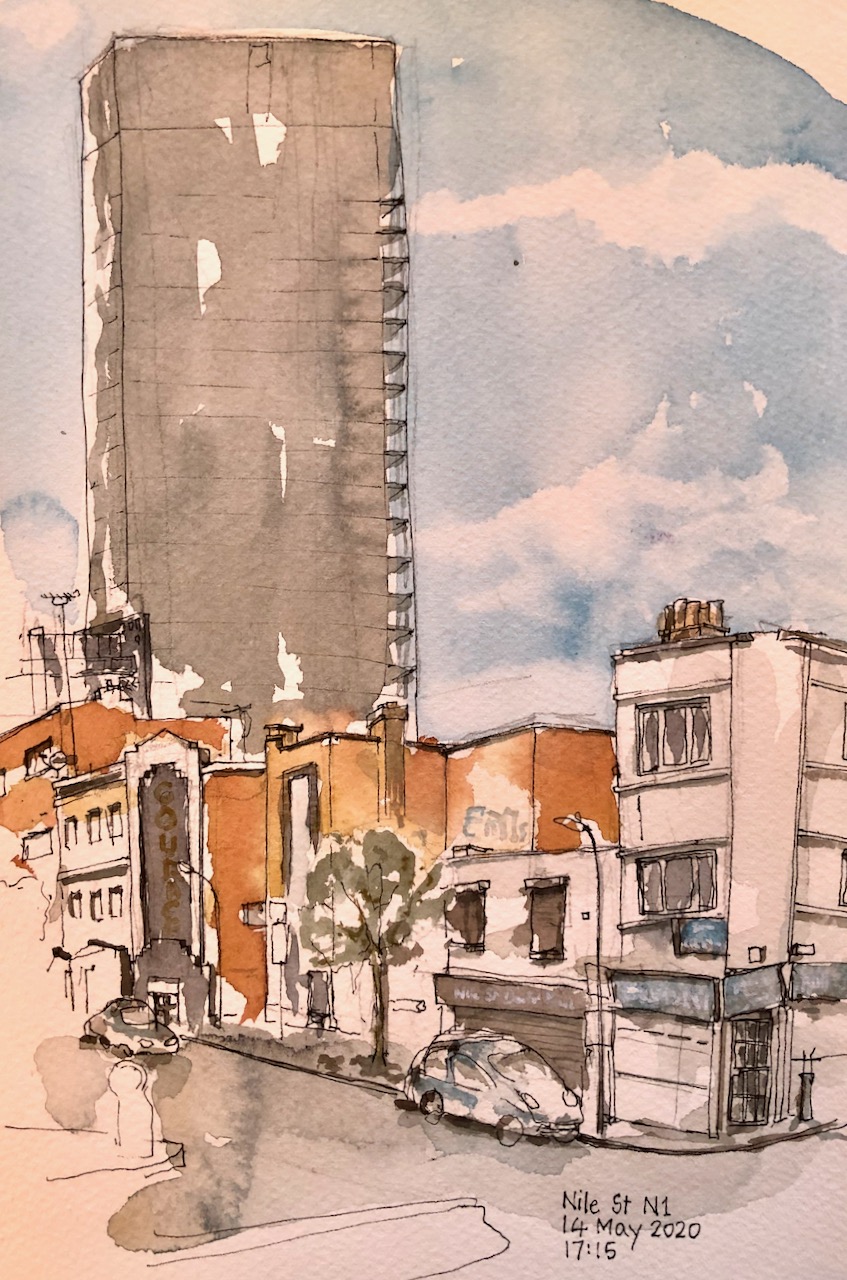
This is the view looking West from the junction of Nile St and East St, in the borough of Hackney, London N1.

Courage in Nile St: the N1 Dry Cleaners, Nile St Dental Practice, Nile St Café, The Duke of W, The Makers Shoreditch overhead.

I was leaning against a wall on a wide pavement, on the corner. I judged that I was easy to avoid there, and social distance could easily be maintained. In fact, there were almost no passers-by, and those that passed were intent on their destination. I doubt they even noticed me. A woman pushing a pram stopped though, and said (from a respectful distance) how nice it was to see someone sketching. She asked what I was sketching in that particular spot. Gesturing towards my sightline, I said I liked the contrast between the smaller, older buildings and the big modern tower. I’m not sure she shared my enthusiasm. But we smiled at each other in the sun. It was a pleasure to have conversation with a stranger.

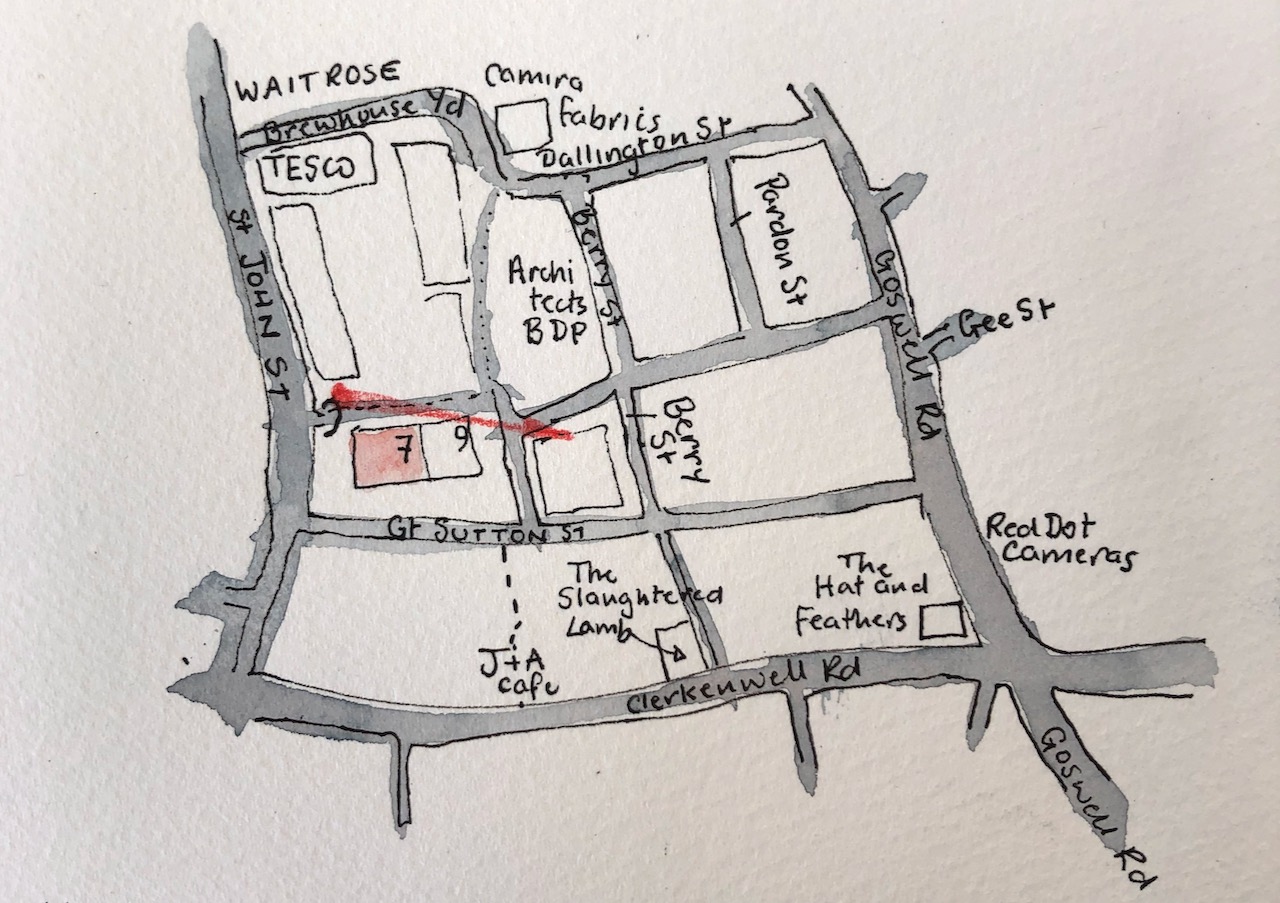
The location of the drawing, showing the sightline.

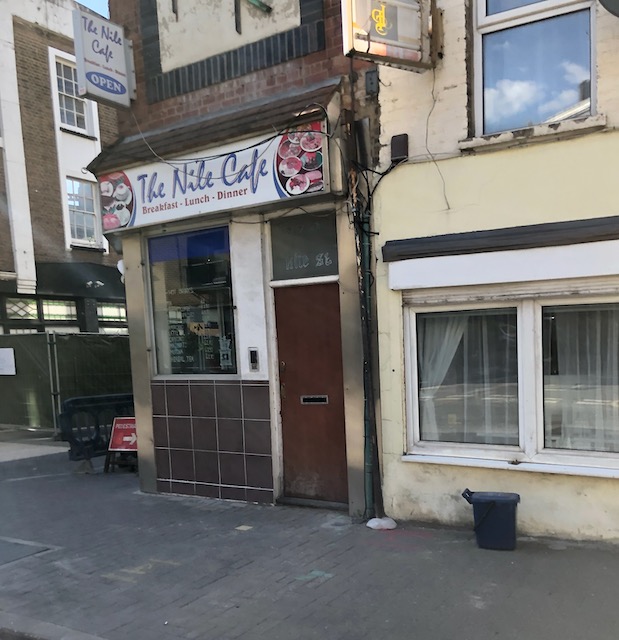
Here is a collection of photos in the area where I was standing.

Signs and spaces

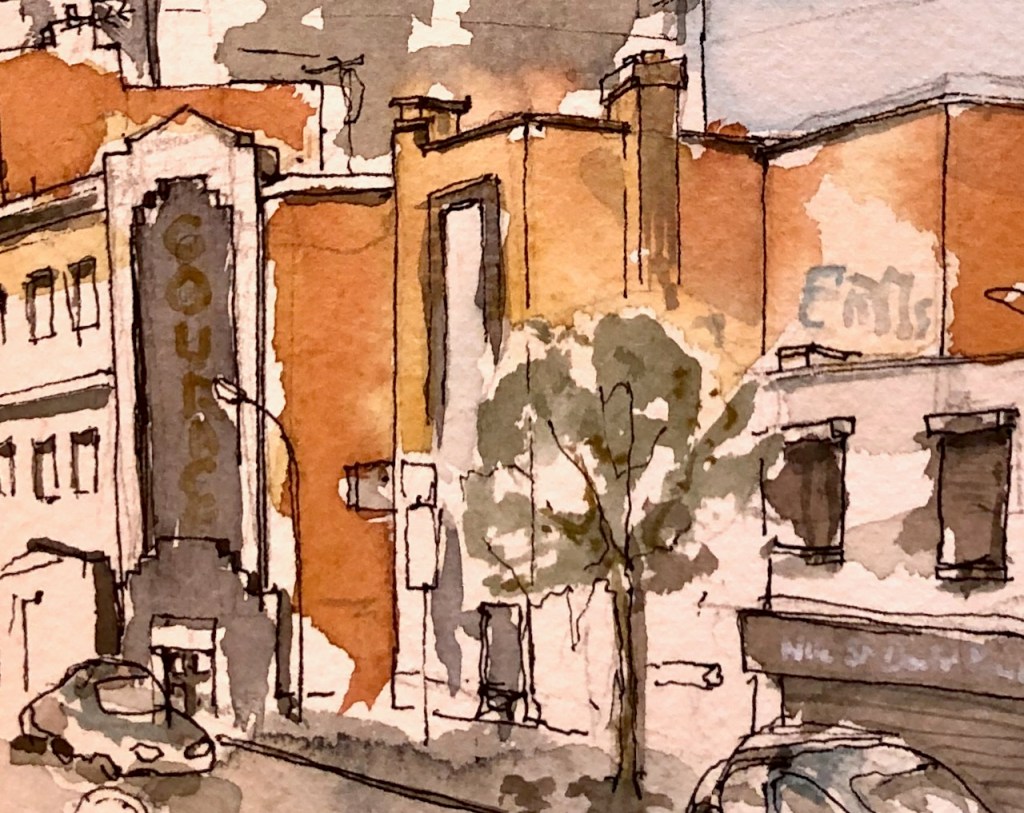
In my drawing there is the large vertical sign which says “COURAGE”. That is a pub, now decommissioned. Its sign has deteriorated so now it is the “Duke of W”.

Just before the pub, above the Nile Café, there is a large framed portion of wall. The frame is neat tiles. It looks as though that might have once contained a picture or a slogan. Now it is blank. The street artists have drawn on the brick wall above the dentists.

Signs and spaces

This drawing took one hour, drawn and coloured on location with a bit of finishing at home. It was really hot in the sun, although the temperature was only about 10 degrees C.

Colours: Daniel Smith: Burnt Umber, Mars Yellow, Perinone Orange. Winsor and Newton: Phthalo Blue Turquoise, for the sky and mixing.

Sketchbook: Etchr