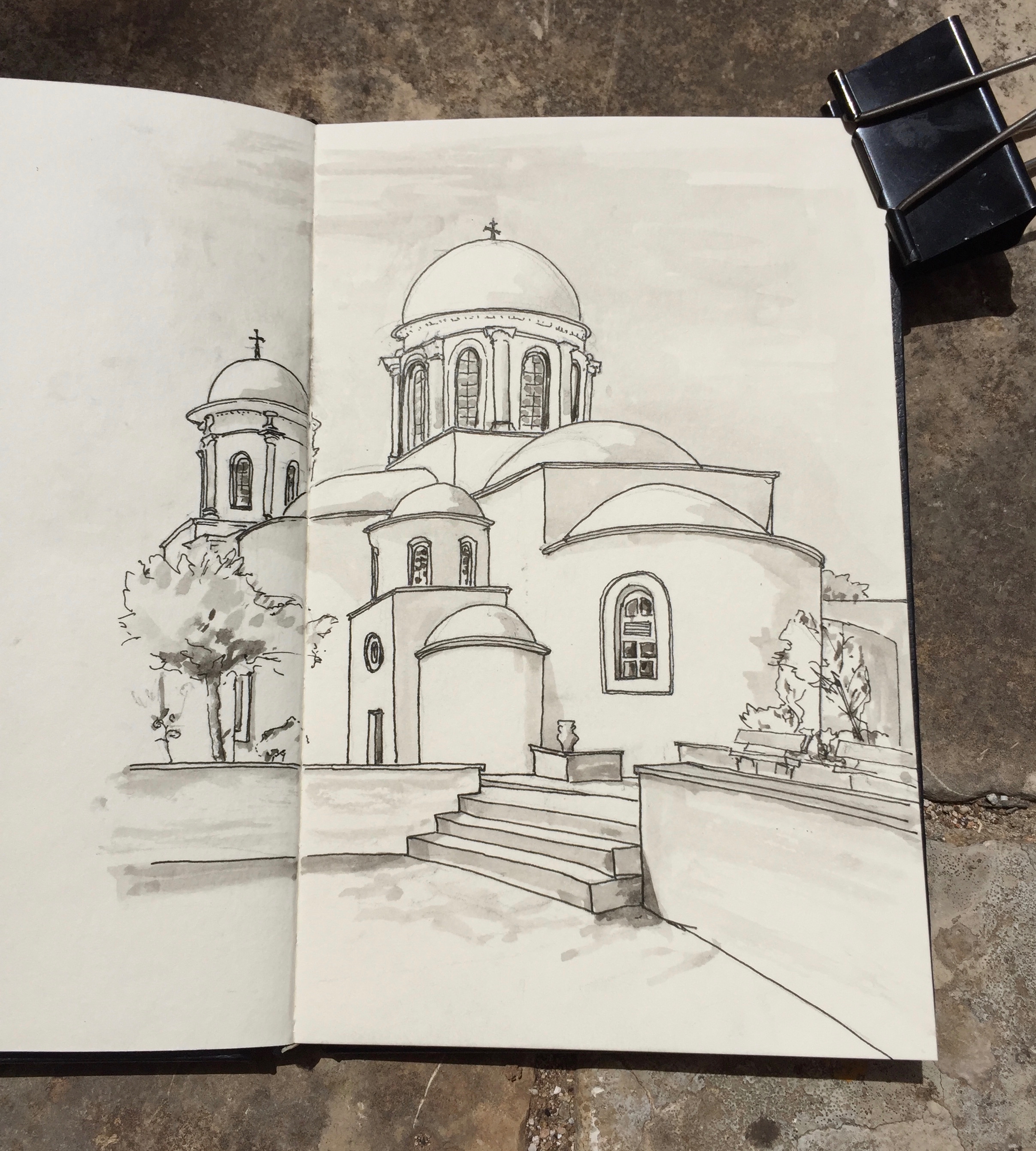
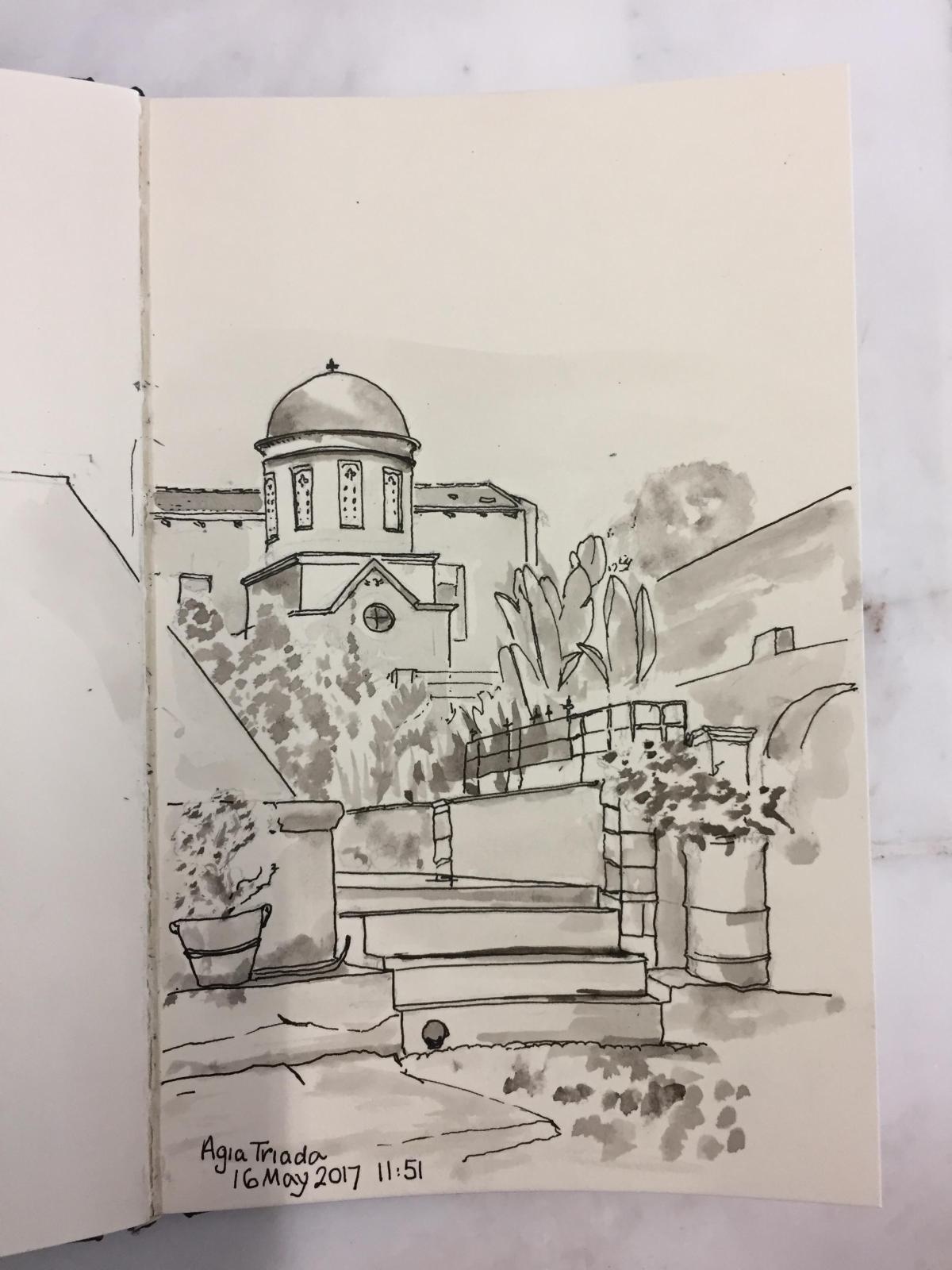
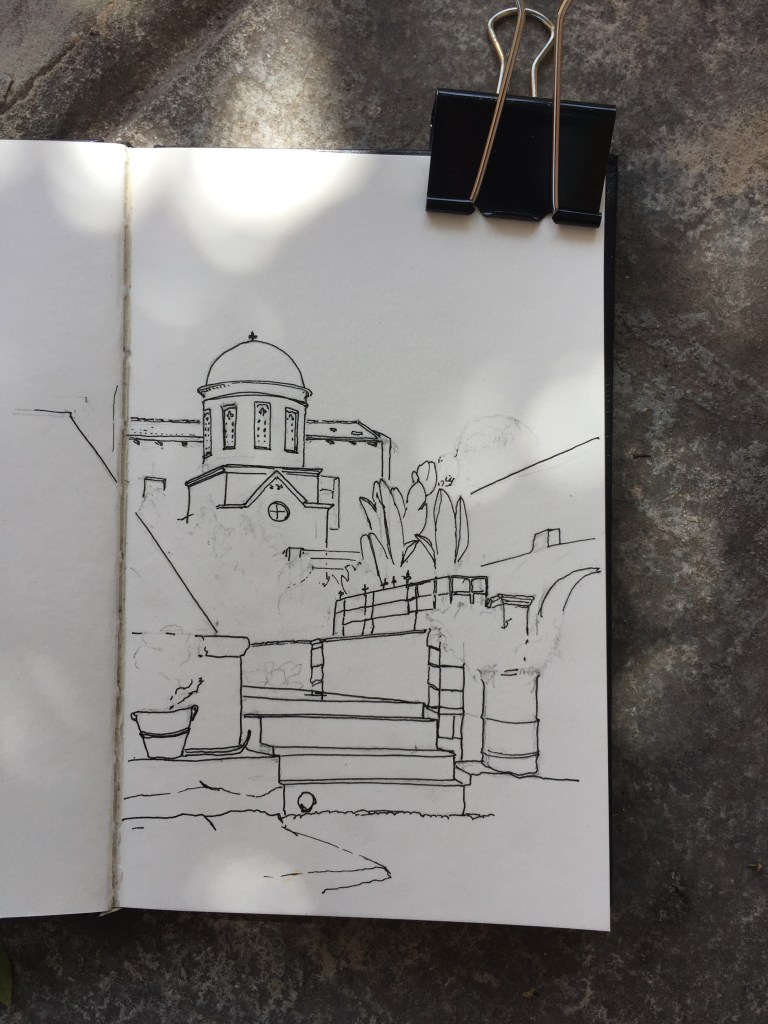
Agias Triada, small chapel

We visited the monastery again, before going to the airport. Two large coaches were in the car park.

As I drew the chapel, fragments of dialogue in French and German floated by. A French-speaker was relieved at last to have a call from Yves. He described in detail where the car was, naming the Greek village. He must insist it be ready by Thursday.

A woman with a German American accent told me my drawing was beautiful. I told her I was glad she liked it.

By and large people were respectful and did not stand in front of me while I sketched. But, according to John, a guy with a big heavy camera photographed the drawing, over my shoulder, without my knowing.

After an hour and a half John came to alert me that we should leave in 5 minutes.

Pen and ink. 1 hour 40.

Here’s what it looked like before adding the tones:
IMG_0072

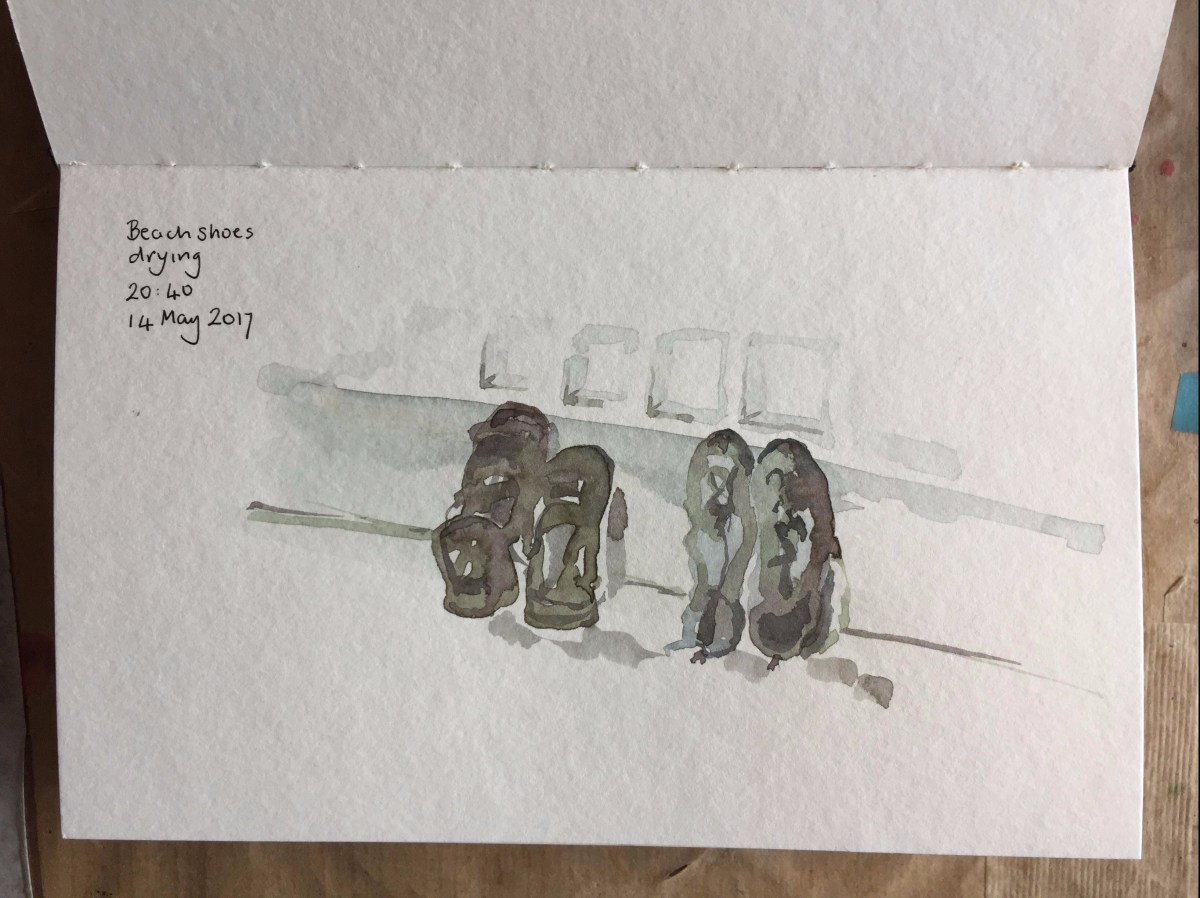
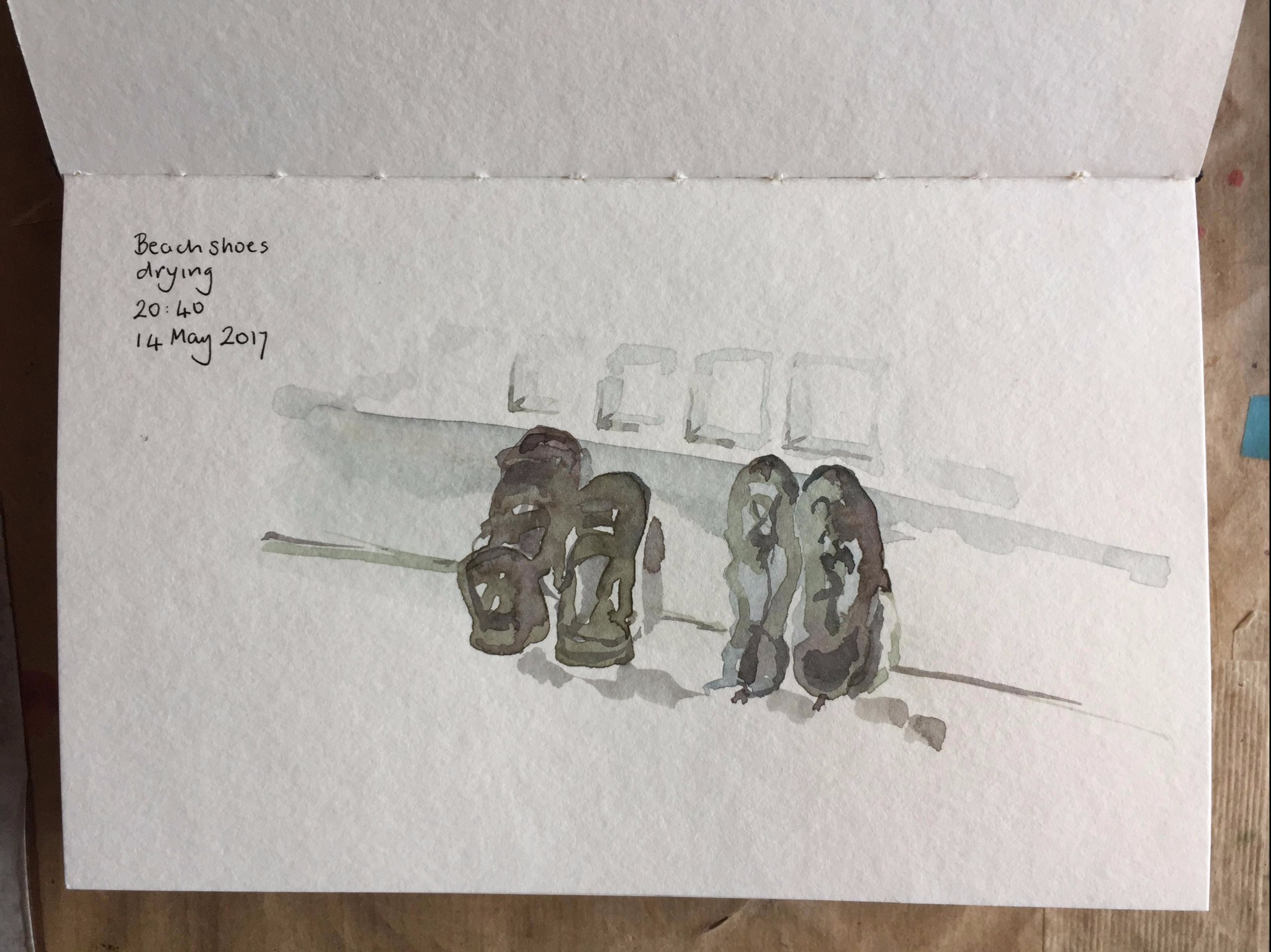
Beach shoes drying

A warm evening, an experiment in watercolour-only – no pen and ink!

Eventually the night came, and the light faded.

img 0107

About 30 mins, watercolour only.

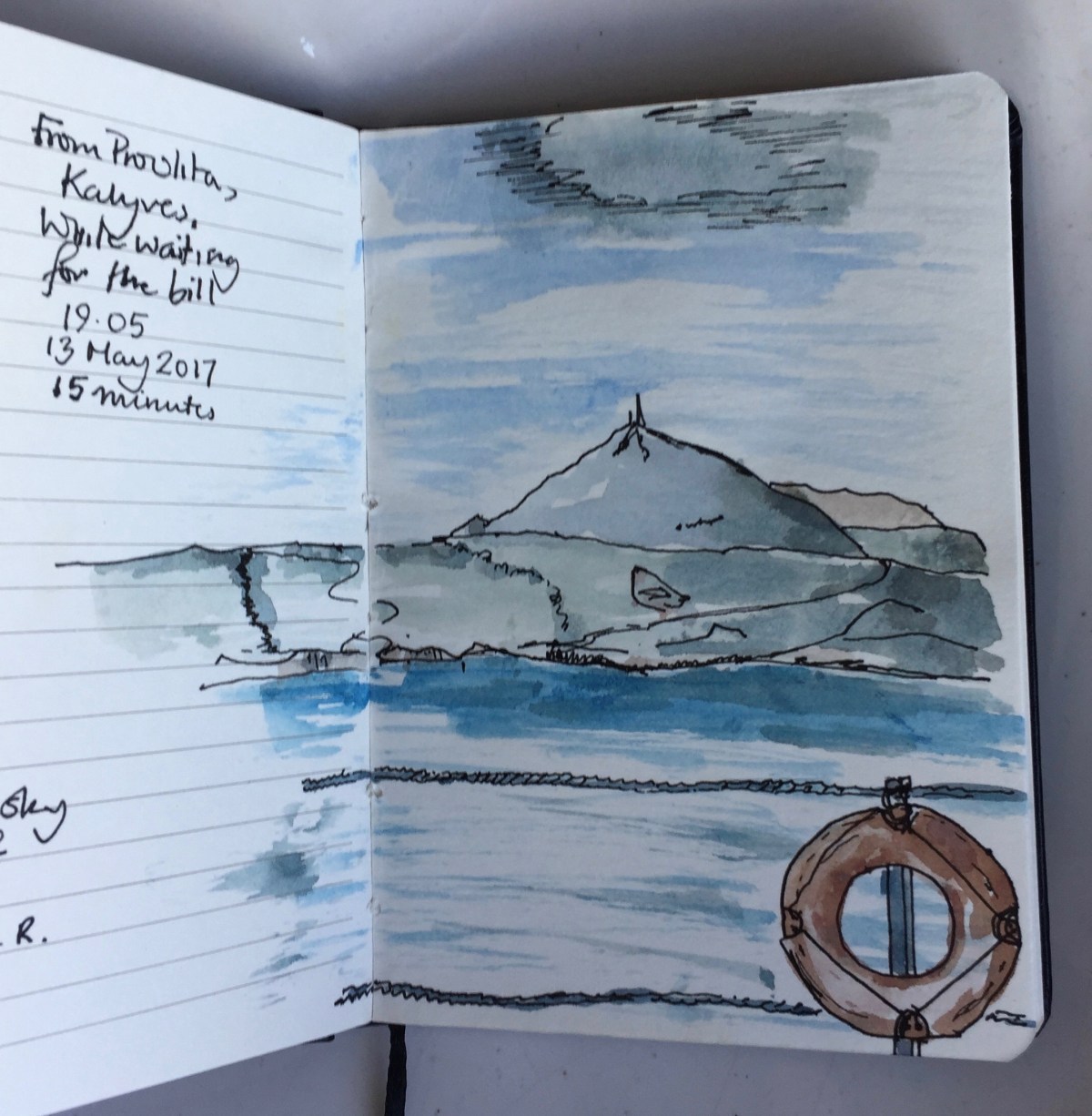
From Provlita, waiting for the bill

We finished our meal and looked for the waiter. He was otherwise occupied in a series of activities which didn’t involve us. I started doing a drawing. IMG_0083

15 minutes later we had paid, and the drawing was done.

It was a good meal though. In Crete, one must slow down and enjoy the view.


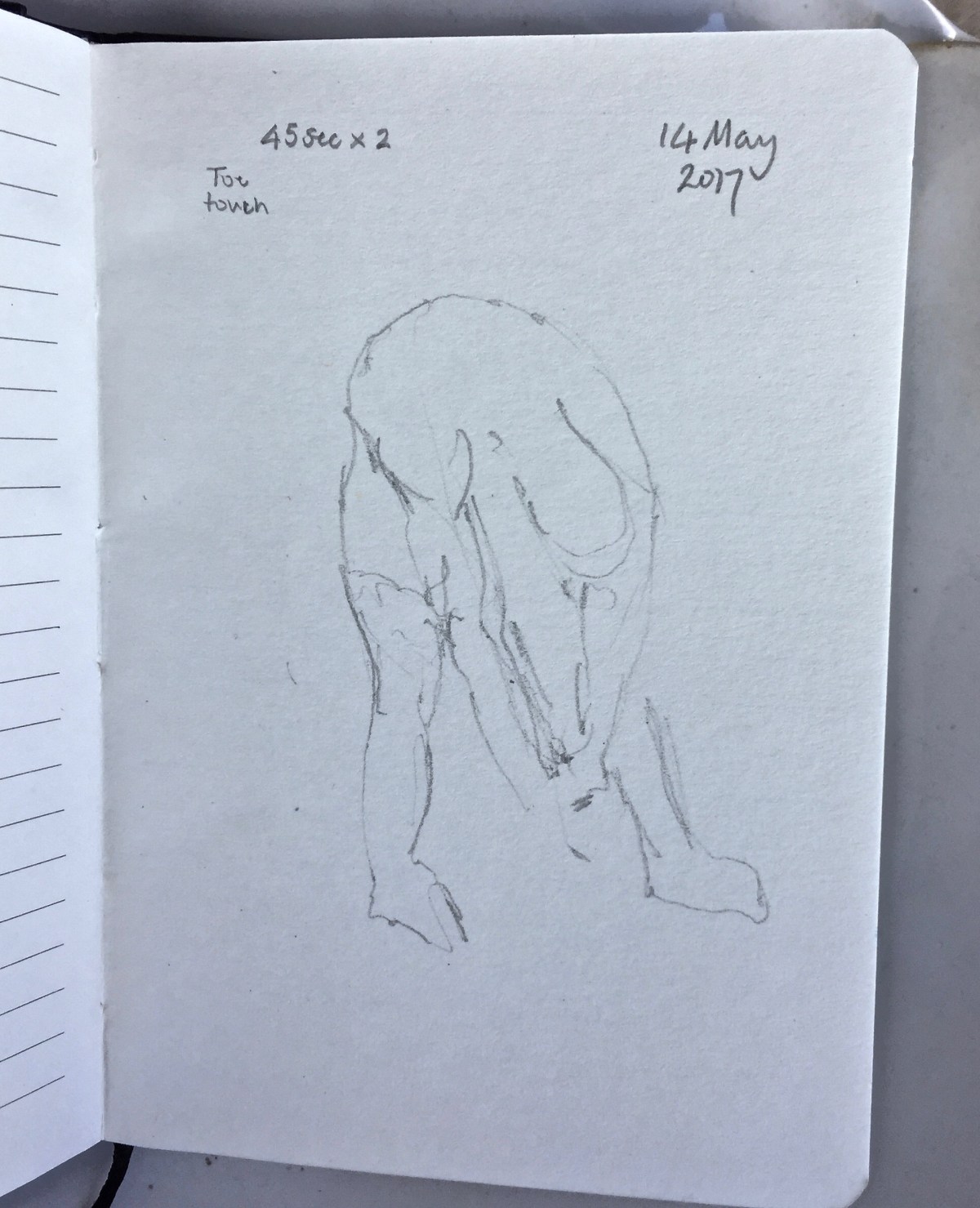
Exercises – quick sketches

Here are some very quick pencil sketches.

It’s a challenge to try to make a drawing in 45 seconds – but somehow liberating. The artist has to loosen up and concentrate, both at the same time. As does the Model.

Agias Triada

17th century monastery on the Akrotiri Peninsula, western Crete. A working monastery, with 5 monks, and adjacent vineyards and olive groves. A beautiful and sacred place.

Pen and ink. The tone is diluted ink, and was tricky to put on, as it dried quickly in the heat, and can’t be lifted as watercolour can. It’s “De Atramentis document ink” which is formulated for signing legal documents. Once on, it can’t be removed. This is good for pen and wash, because the dilute watercolour does not lift the ink.

IMG_0019

Here’s the sketch before adding the tone:
image2

About 1hr30.

The White Mountains and the wall of Aptera

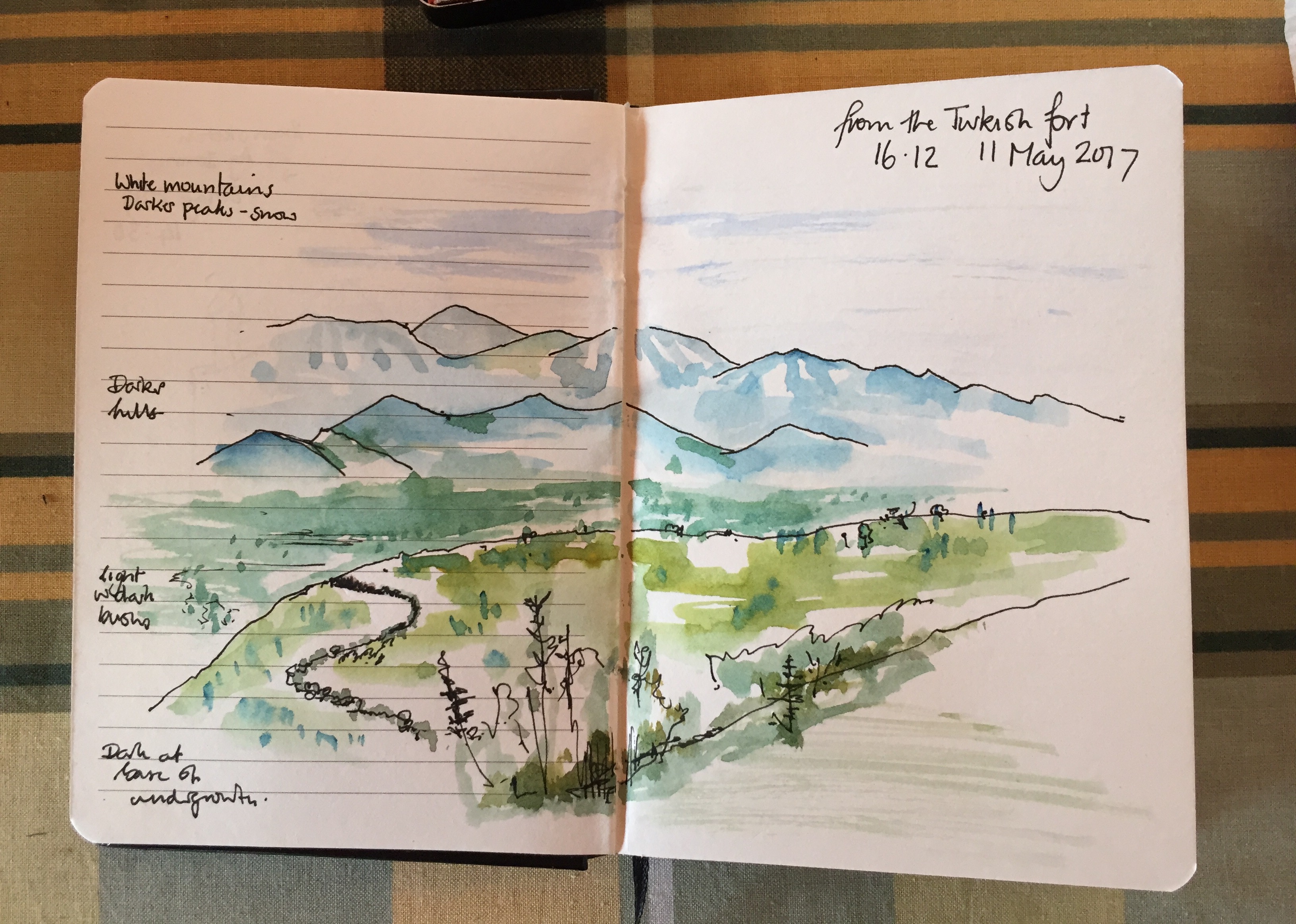
A very quick sketch, 5 minutes, coloured later.
From the Turkish Fort at Aptera.
Robert Pashley sketched a section of the wall in 1833, noting its ‘polygonal’ stones. All the stones looked polygonal to us. We found the section he drew, though.

From Fisherman’s, Kalami, Crete

The view from next to the washing line.
Shadows moved whilst I was drawing.
About 1hr30.

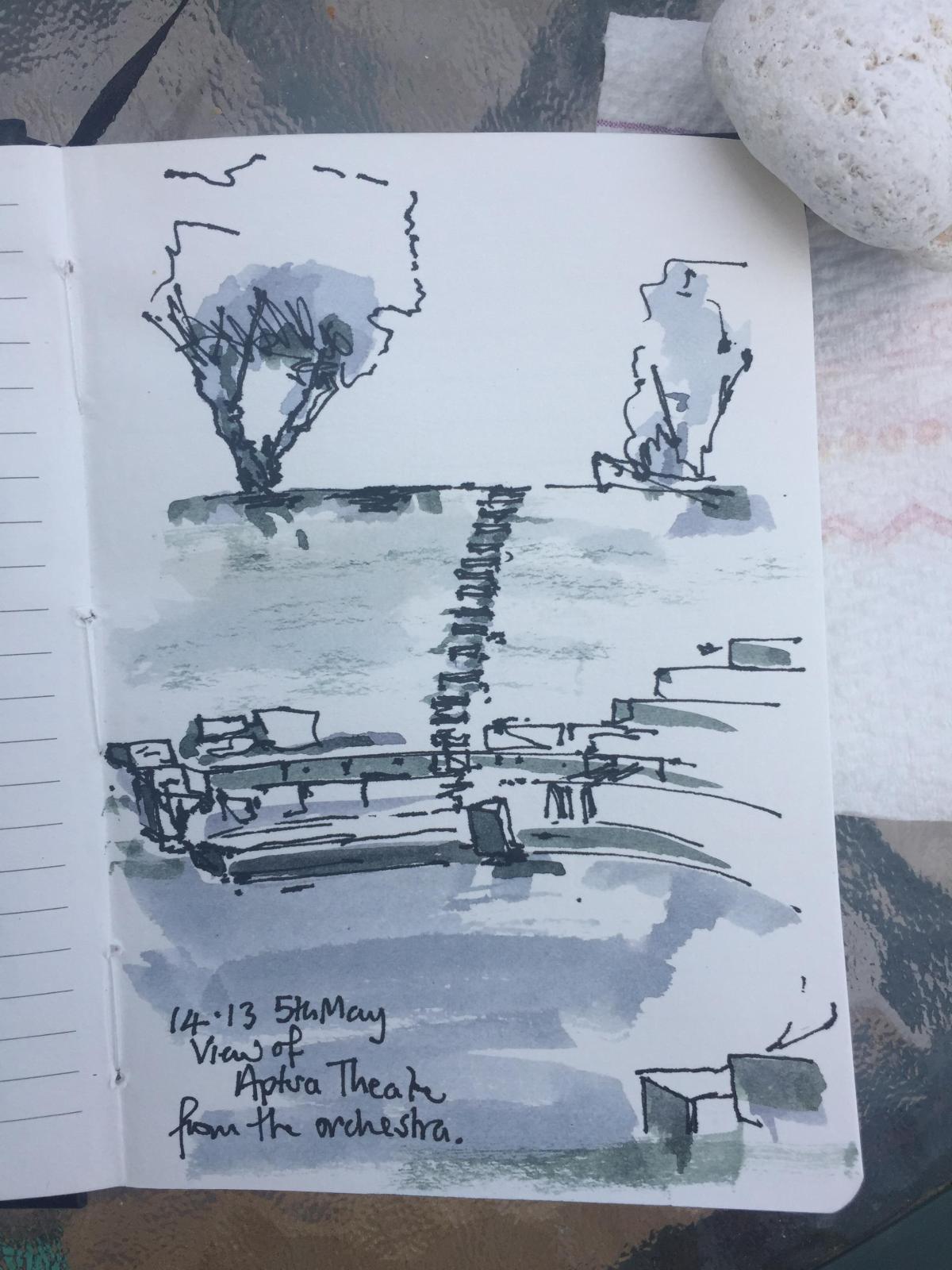
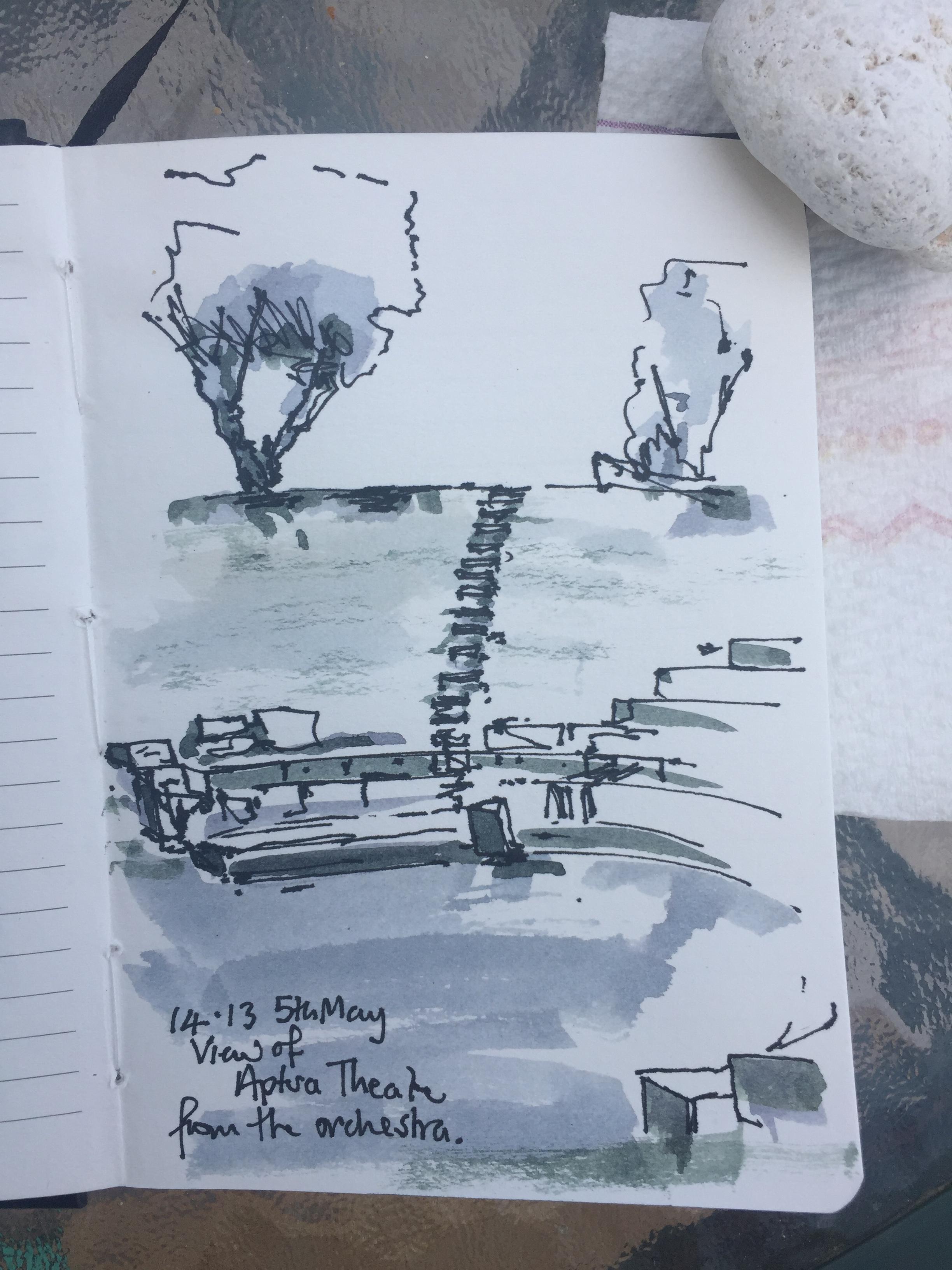
The Ancient Theatre at Aptera, Crete, quick sketch

From the entrance to the orchestra.

This was a quick sketch. The longer drawing was from under the tree at the top left.

img 9971

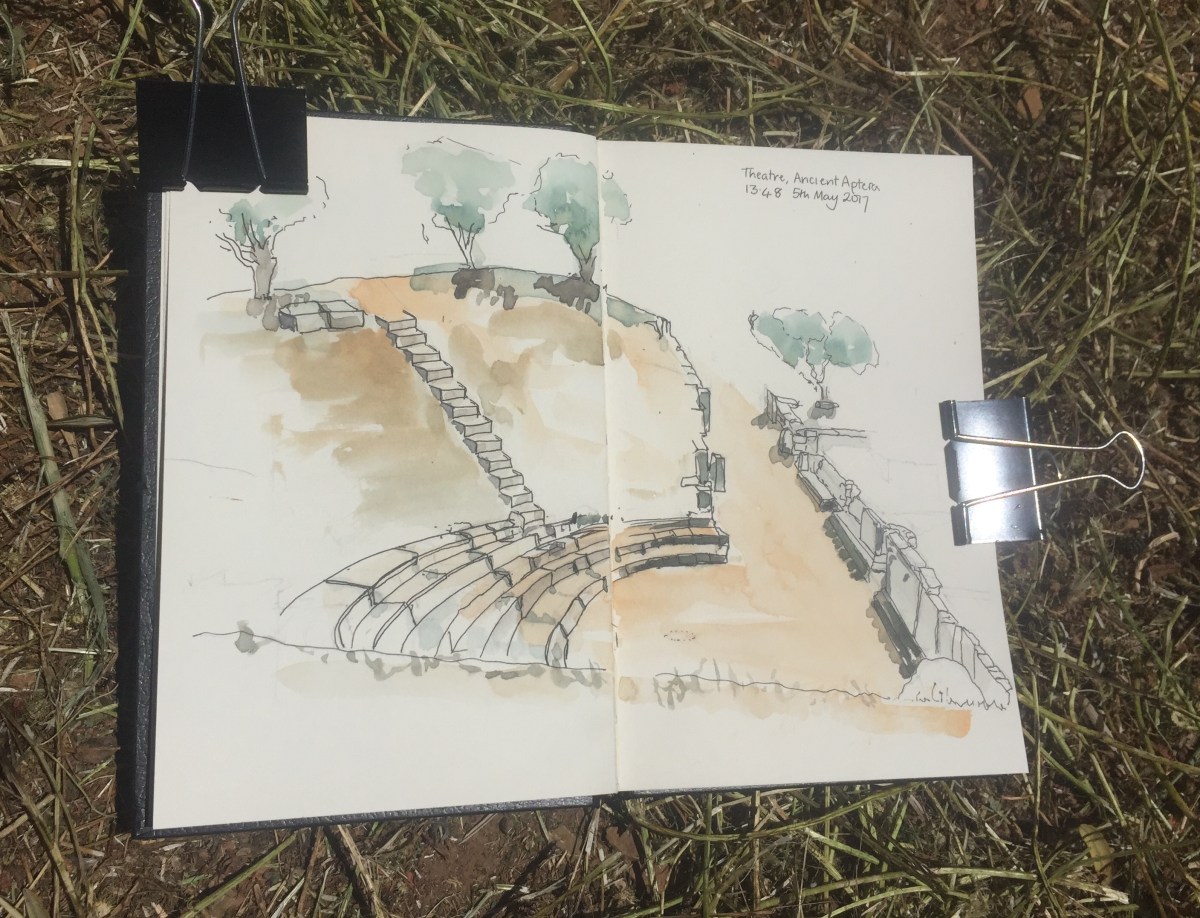
The Theatre, Ancient Aptera

Ancient Greek and Roman theatre, first constructed 3rd century BC, modified by the Romans 1st century AD. In the 20th century it was used as a lime kiln, remains of which were still there when we first visited here in 2009. In the last 5 years the remnants of the lime kiln have been removed, and the theatre is much restored. EU funding acknowledged on the notices.

Drawn and coloured on location. About an hour.

fullsizerender1