

Here is an aquatint on copper plate, based on a drawing.
I made it at ELP Studio in Stepney. It took all day! I made 5 prints. This is one on Khadi paper which has a very strong texture.
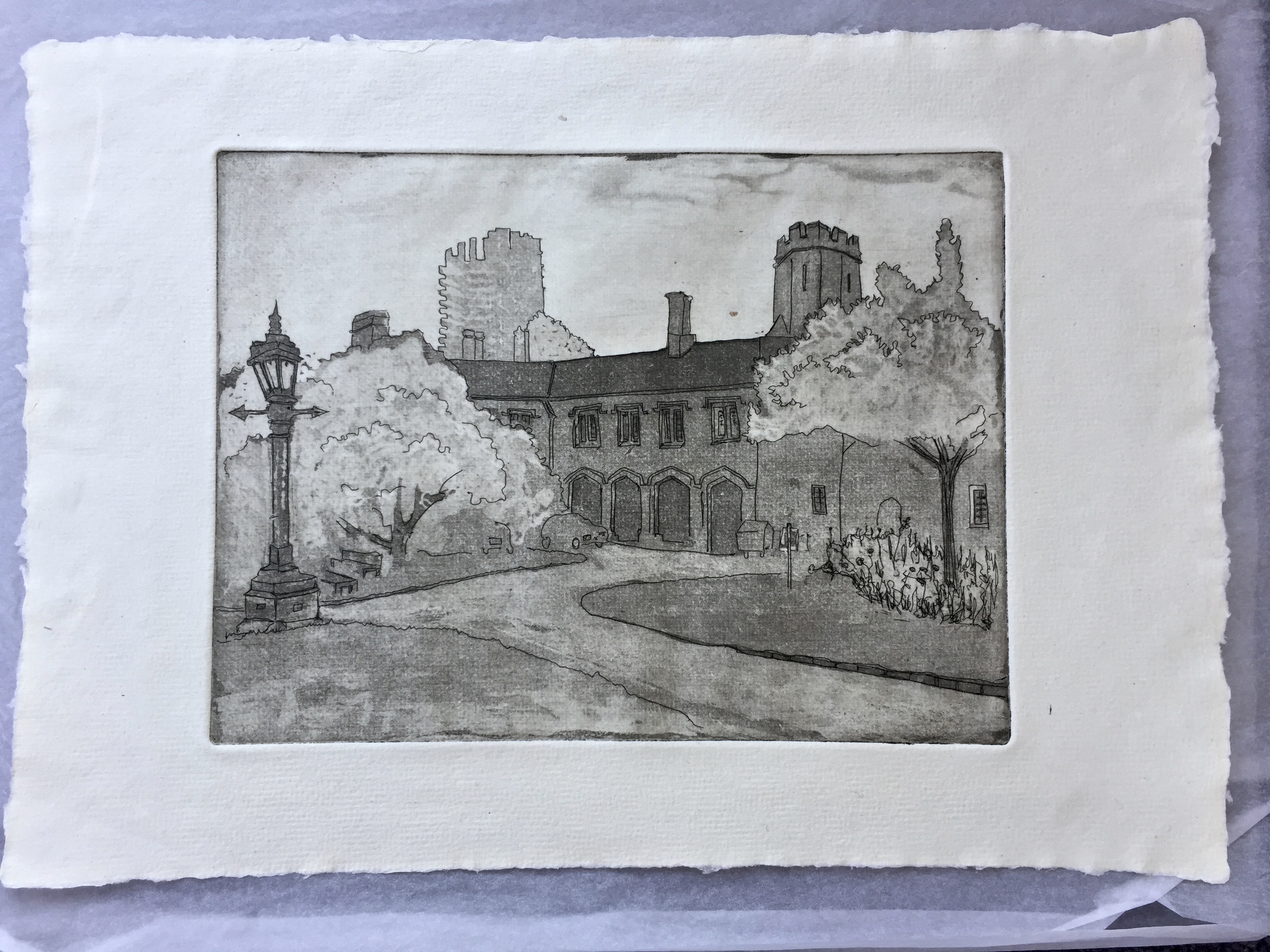
Here is an aquatint on copper plate, based on a drawing.
I made it at ELP Studio in Stepney. It took all day! I made 5 prints. This is one on Khadi paper which has a very strong texture.
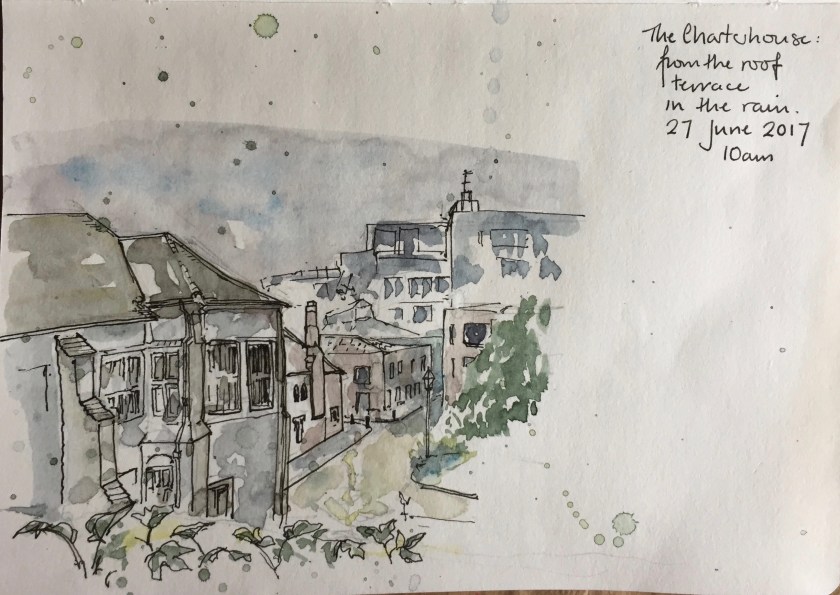
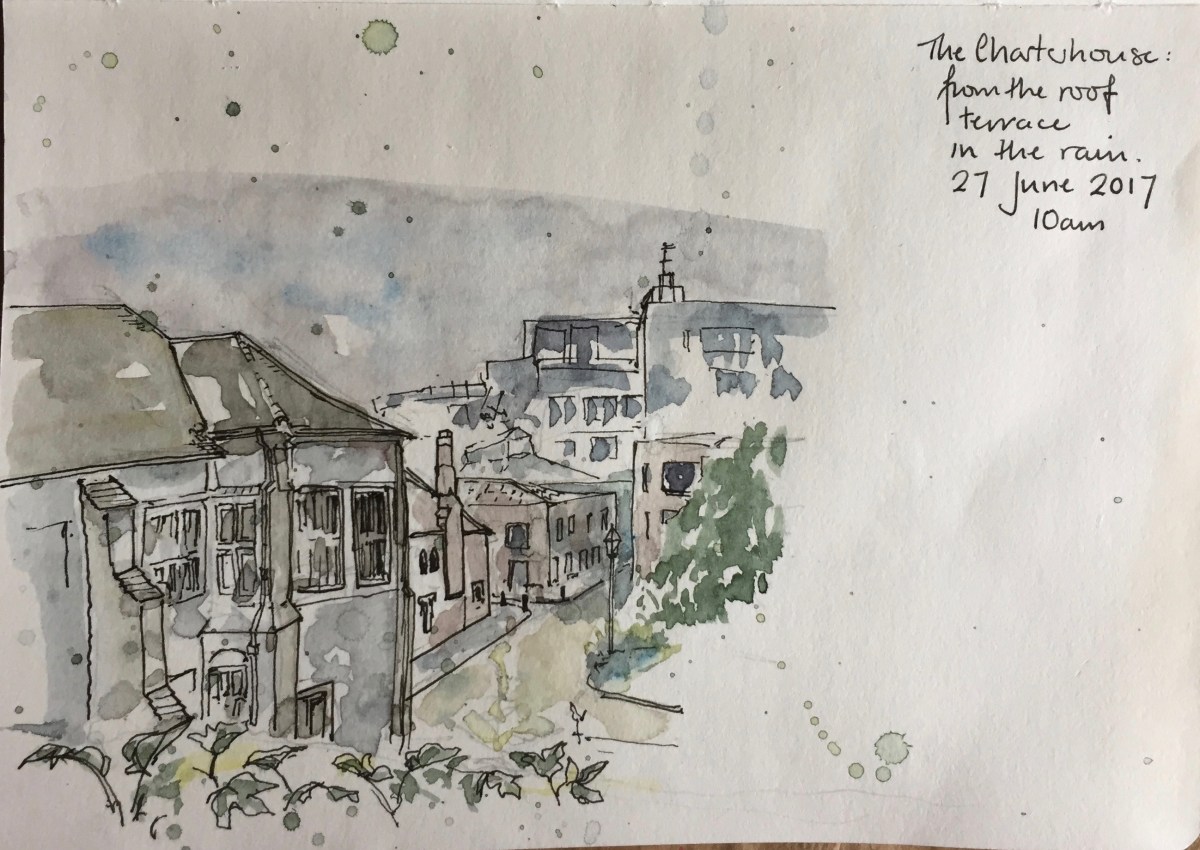
A quick sketch from the Roof Terrace of Charterhouse.
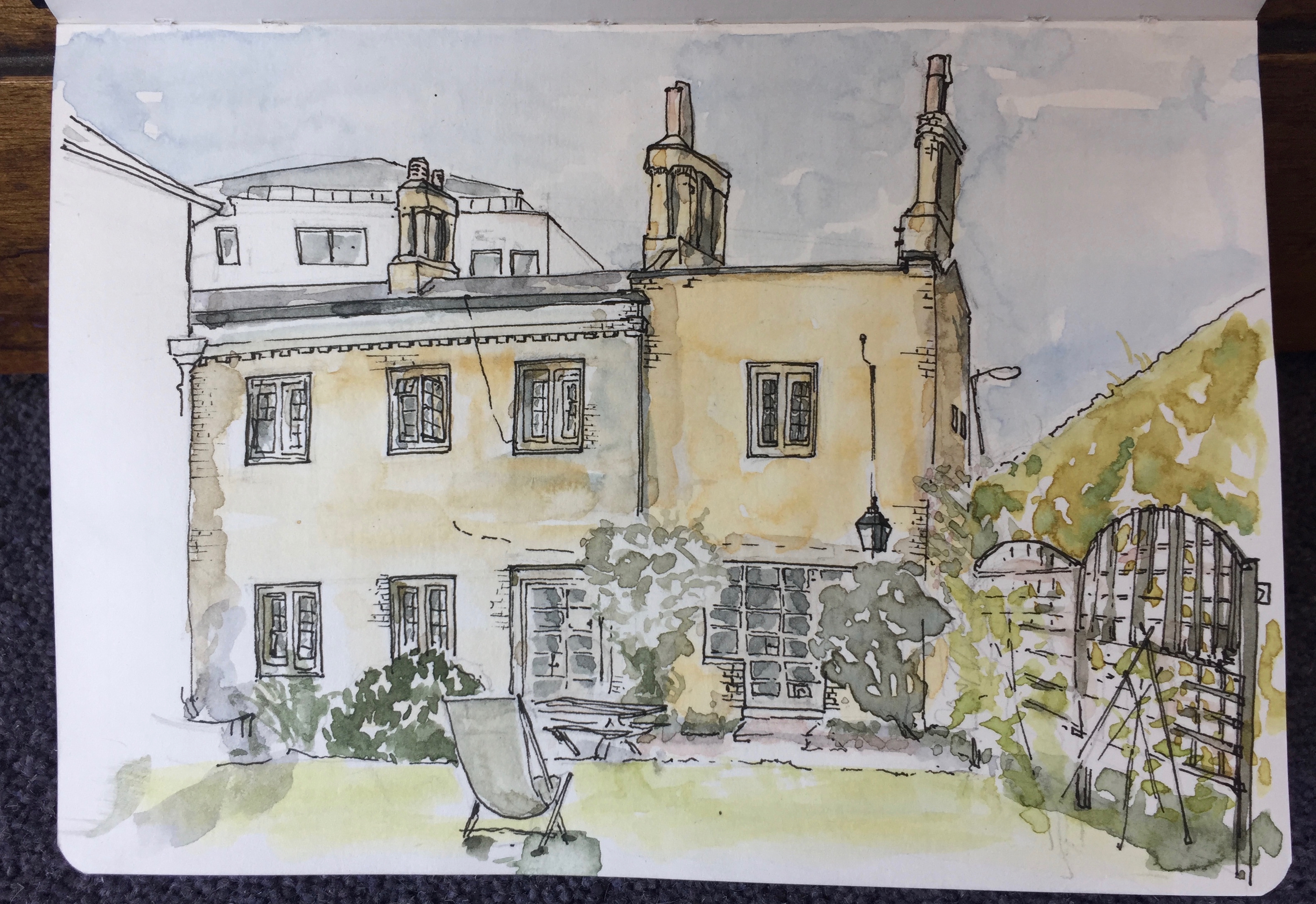
This shows the Preacher’s House. The wall on the right is next to the Clerkenwell Road. Behind the fence on the right there were bee-hives with very active bees.
About 3 hours. Drawn and coloured on location.
Here’s what it looked like before the colour went on:

This is looking South-East from the roof terrace.

Thank you to the Preacher of Charterhouse, Robin Isherwood, for arranging my access to the roof terrace. This is the view looking across a wide green space in the Queen Mary College campus, towards the Chapel and offices of The Charterhouse. The building in the foreground is part of Charterhouse, restored in the 1950s. The restoration architects were Seely and Paget, the people behind the restoration of Eltham Palace.
This is from a doorway on Pensioners’ Court, which is the court beyond Preacher’s Court. The Building with the four archways is part of the Brothers’ realm: the infirmary above and the coffee room below. I don’t know what the turret is, very intriguing.
The gardens were magnificent. In front of me was that huge magnolia tree. It moved in the wind and contained darkness much darker than I have drawn it.
I enjoyed the two towers: Barbican and Charterhouse, and the way the view was bracketed by the tree on the right and the lamp-post on the left.

One hour 45 minutes, drawn and coloured on location. The day was overcast and threatened rain. Round me, a gardener was watering the borders.
It should be “Pensioners’” court (plural).
Those chimneys are hard to draw. They are not simple rectangles, but a complicated geometric shape, a square put at an angle to another square, difficult to see in the light and shadow.
The crest of the roof is not straight. It goes downwards at quite an alarming angle, as drawn. The windows are not in a straight line with each other, which makes me wonder exactly where the floor is, inside.
I drew this from under the shade of the new building, the “Admiral Ashmore Building”. While I was drawing, the gardeners were making the window boxes, and crushed the geranium leaves. The place smelt of geranium, and earth and water.

I like it that you can see the Barbican towers beyond. I made this observation to a Brother who paused to chat. He told me that these brutalist towers are not popular with certain of the Brothers. They have identified a place in the garden where you can sit, so that the towers are obscured by a tree.
About 2 hours (those chimneys!!), drawn and coloured on location.
Here is what it looked like before the colour went on:
The headlines in the Evening Standard had described the pollution levels in central London at “Red Alert” levels. So I headed East to the clearer air and big skies of the maritime Thames.
Trinity Buoy Wharf is here:

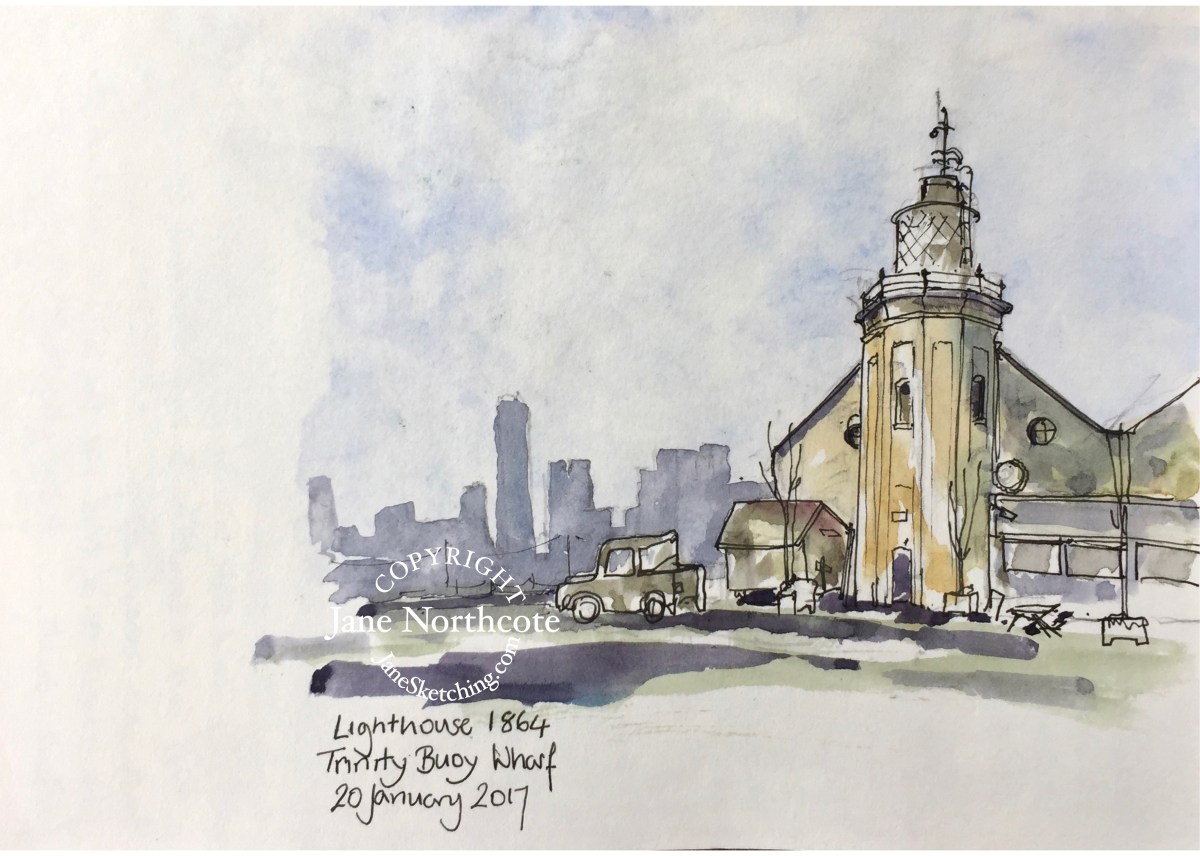
I drew a picture of the lighthouse.

Above me, four stories of shipping containers contain offices. Words floated down.
“That was his first investment. He hasn’t really been improving. … To be fair, he does wear a luminescent hat. If that isn’t a warning sticker I don’t know what is.”
I continued drawing. The shed on the left of the lighthouse contains a small display called “The Faraday Effect”. Inside the shed I learned that
“there used to be two lighthouses here. The original one was built in 1854 and demolished in the late 1920s. This was the building used by Micheal Faraday in his scientific work for Trinity House. The roof space adjoining the surviving lighthouse, which was built in 1864, housed Faraday’s workshop for examining lenses and other apparatus”
I was glad I’d drawn the roof adjoining the lighthouse. The building below it, on the right of the picture, is “Fat Boys Diner” with a Pepsi sign on top. I’ve not been in there yet.
The Faraday Effect is the phenomenon whereby when polarised light passes through a magnetic field, the polarisation rotates. Faraday also showed that light is affected by magnet force. He discovered electromagnetic induction: that electricity can be made by rotating a coil of wire in a magnetic field. Hence power stations, and much else.
Before I drew the lighthouse, I had a coffee in the marvellous “Bow Creek Café”. From there I drew this picture:

There was a lot of light. The things in the foreground were dark, and the boat shone.
The light-bulb shaped object on the left is a construction on top of a number of blue containers labelled “ENO” in the English National Opera logo.
On the left is the lightship, which is red, called “Lightship95 Audio Recording Studio”.
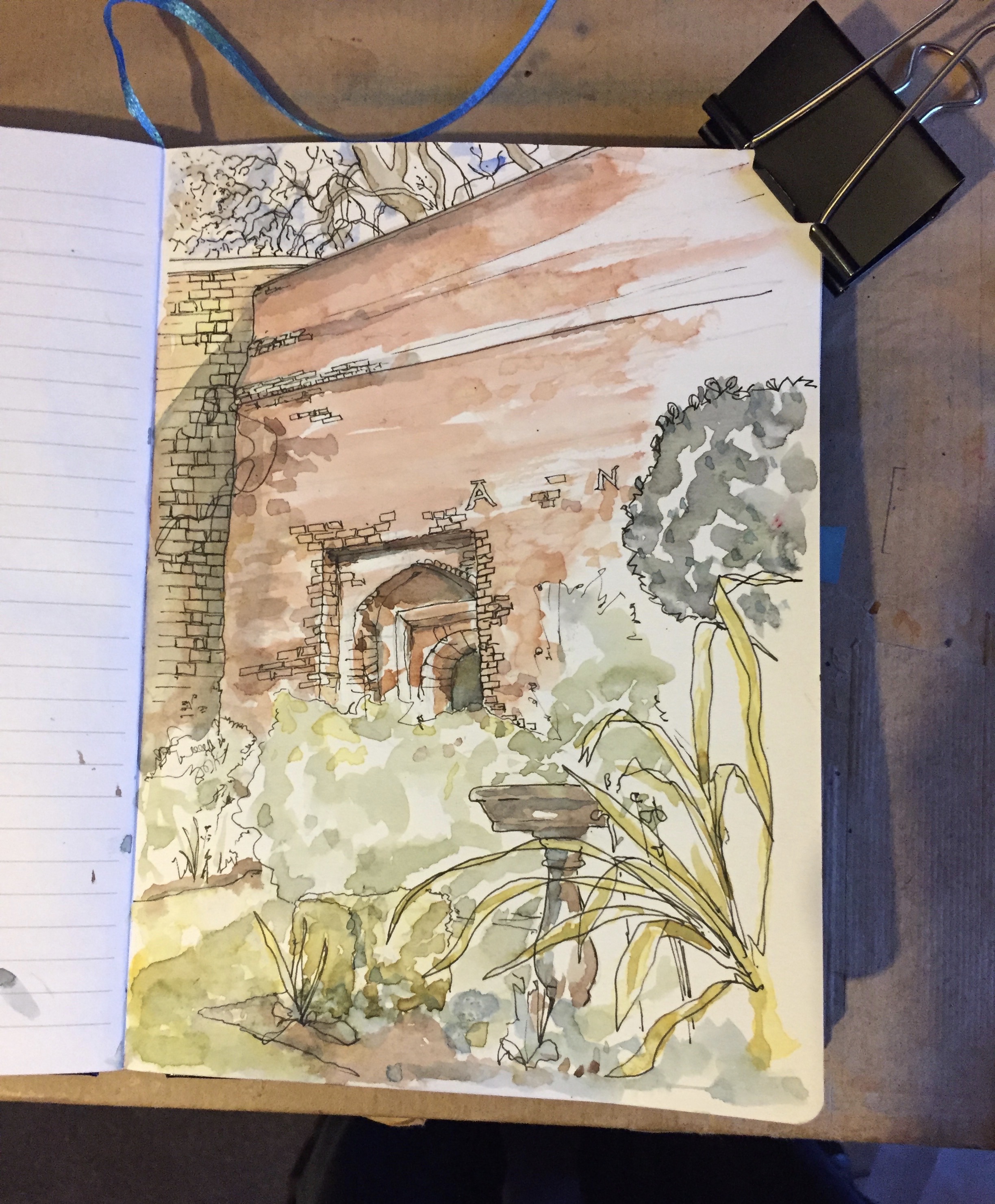
A sketch in the North Garden of The Charterhouse.
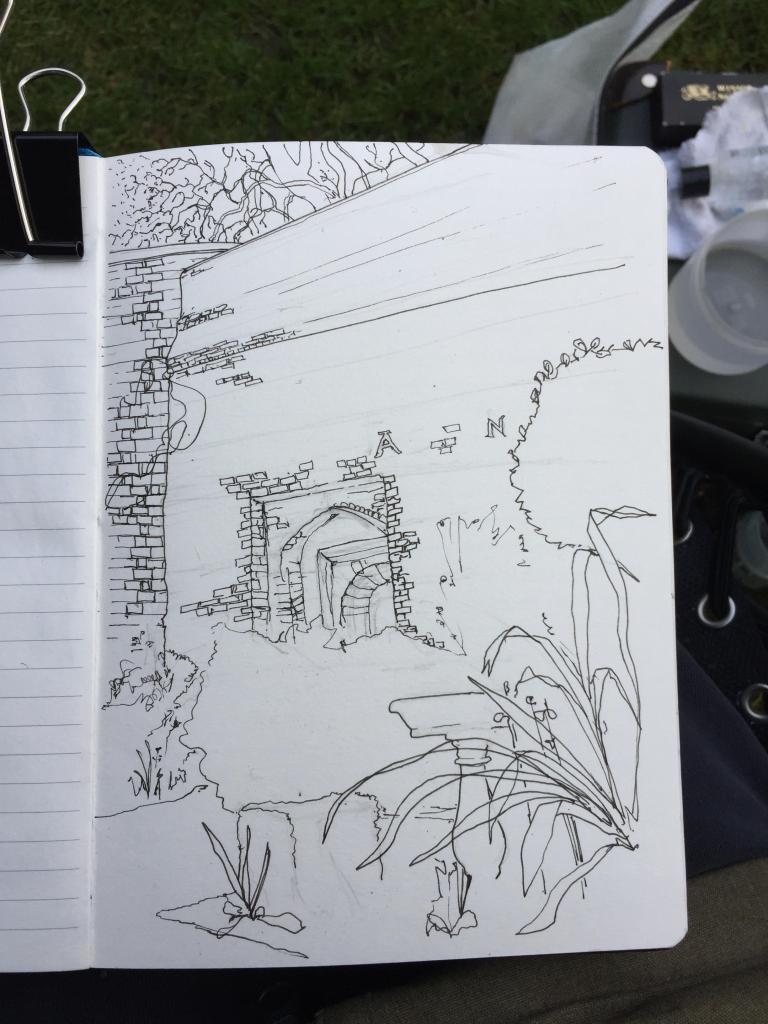
This wall is very old. The letters “A” and “N” in the drawing are iron, embedded in the brickwork. The whole message is spelled out along the 100 feet or so of the wall and reads “ANNO 1571”.
The door is more like a tunnel in the thick brickwork. It has a grass path leading to it and looks functional. Nobody went in or out while I was drawing it.
I loved this part of the garden. It was very quiet, and, for winter, amazingly lush. There was even birdsong.
It was, however, very cold. So I only could do one drawing. My hands and legs were becoming stiff. Behind me, another painting waited to be done: bright orange seedpods of the plant I know as “Chinese Lanterns”, and a very dignified old tree, gnarled but upright.
But I had to get back into the warm.
As I drew this, the gardener passed and re-passed, going down into a basement nearby. He said I wasn’t in their way. “You’re alright,” he said.
About 1hr45, to 11:10am. Drawn and coloured on location.
Here is the pen and ink, before the watercolour went on.
Thank you to the Preacher of Charterhouse, Rev Robin Isherwood, and the Brothers and workers at Charterhouse for their hospitality.
It’s a marvellous pleasure to visit.
A sunny day near Leicester Square tube station.

Two sketches, both from Preacher’s Court, The Charterhouse. One shows the view looking South West, past the new accommodation block. The other looks North East towards the John Vane Science Centre of Queen Mary, University of London campus.
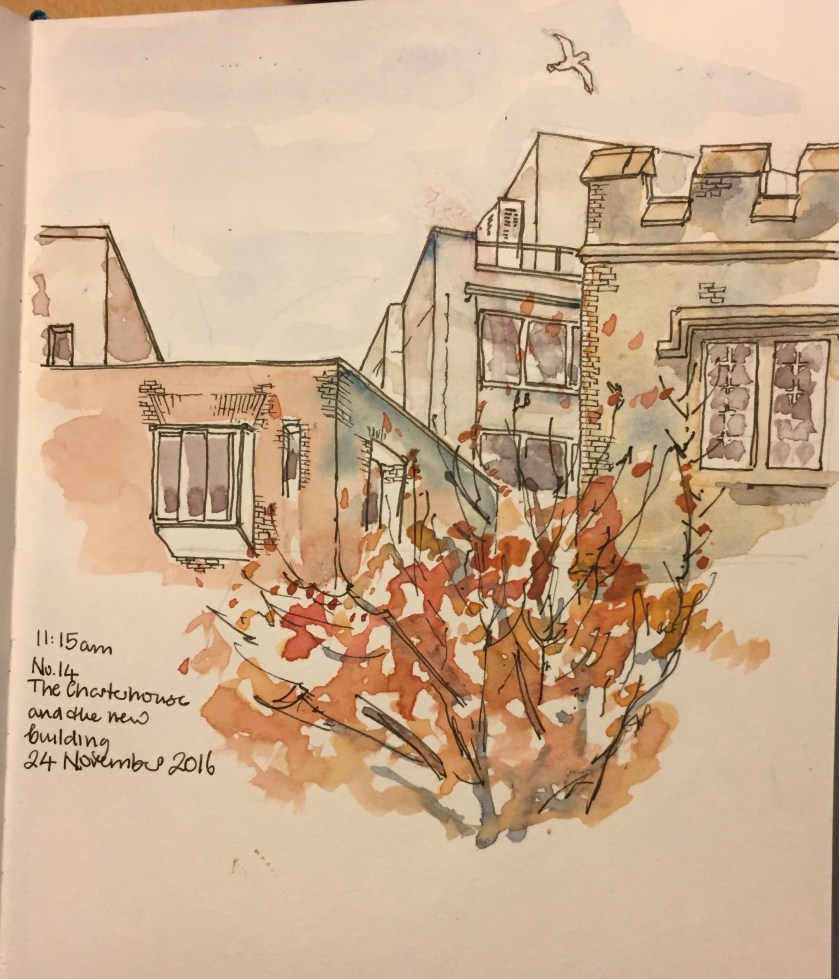
The new accommodation block in Charterhouse was built in 2000, designed by Michael Hopkins and partners, architects also of Portcullis House. It is called “The Admiral Ashmore Building”.

The John Vane Science Centre houses, amongst other things, the London Genome Centre.
In the Charterhouse, the leaves show Autumn colours, untroubled by wind, in the enclosed courtyard. It was still very cold. I sketched there from 09:30 to 12:30.




 Jane Sketching