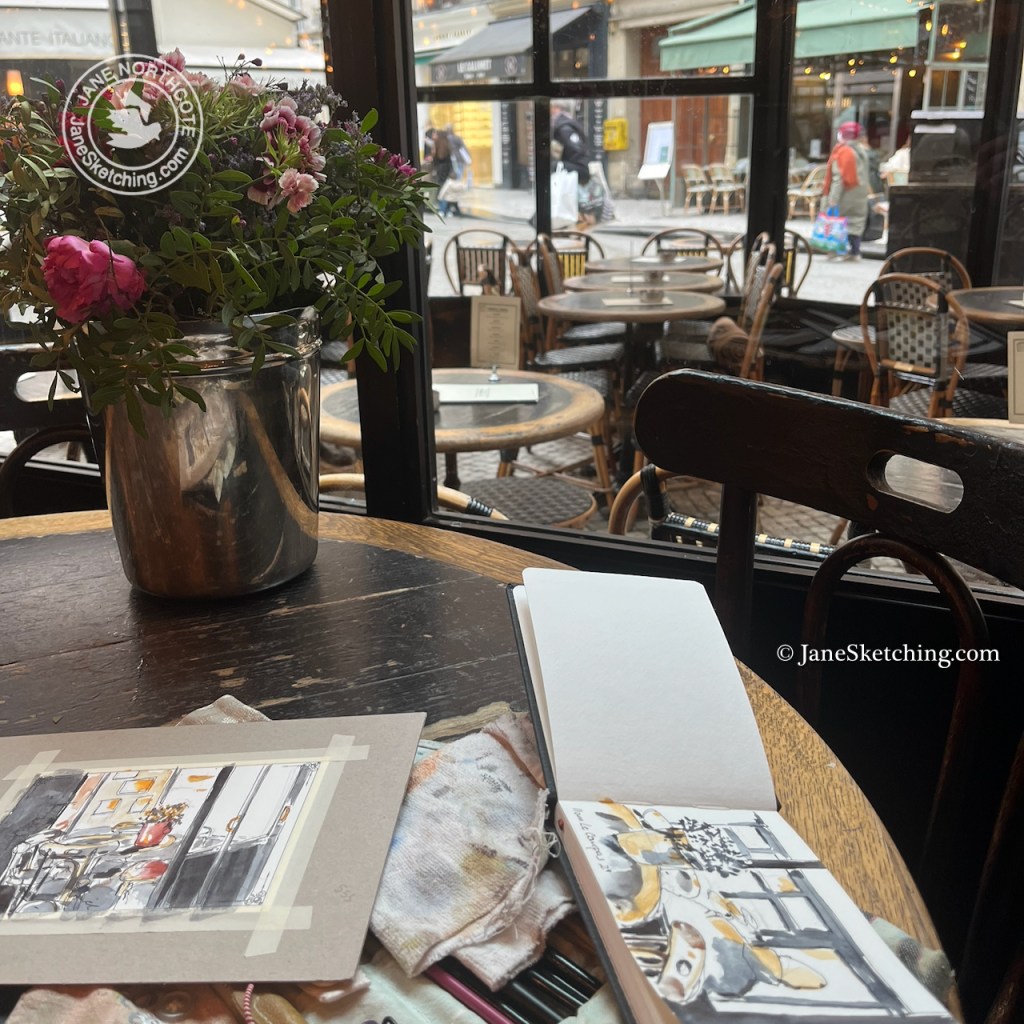
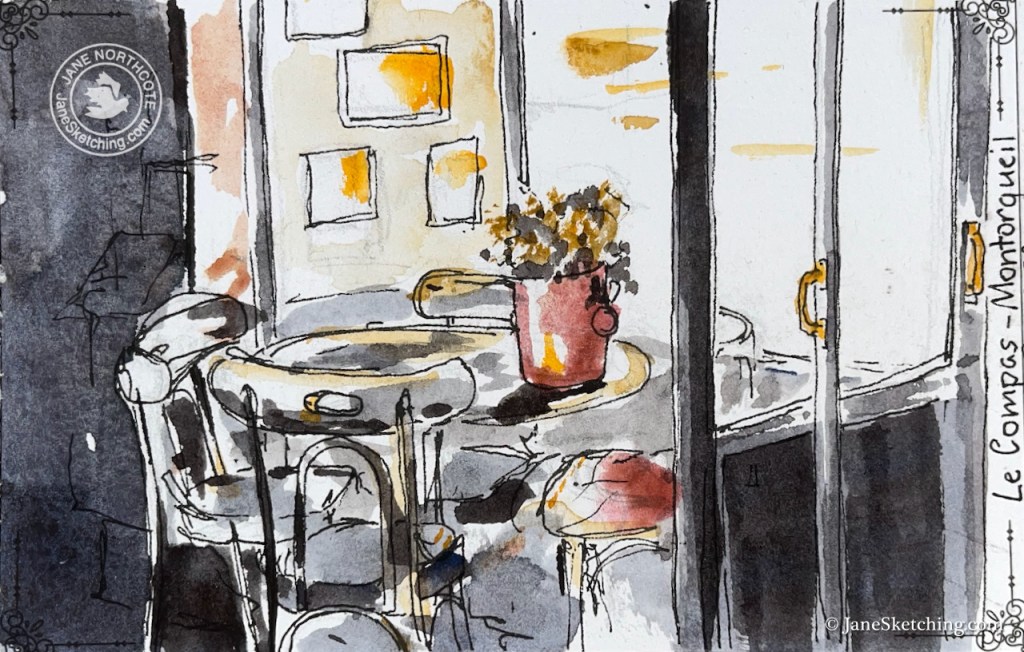
The waitress in the Paris café was tolerant. My painting things were all over the table. I’d finished my meal some time ago. But she did not hurry me away.
Sketching in a cafe, Rue Montorgueil Paris 2e
I was travelling by train, arriving many hours later in Geneva.
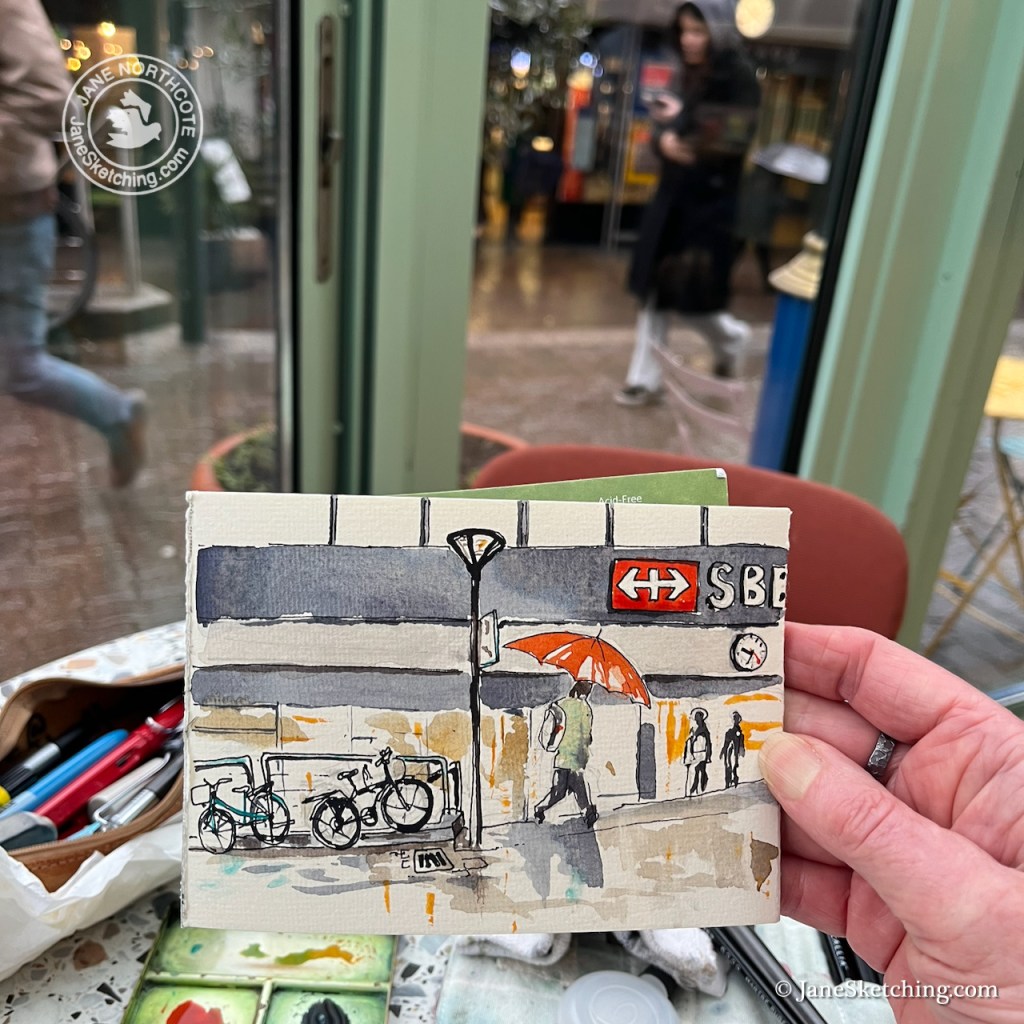
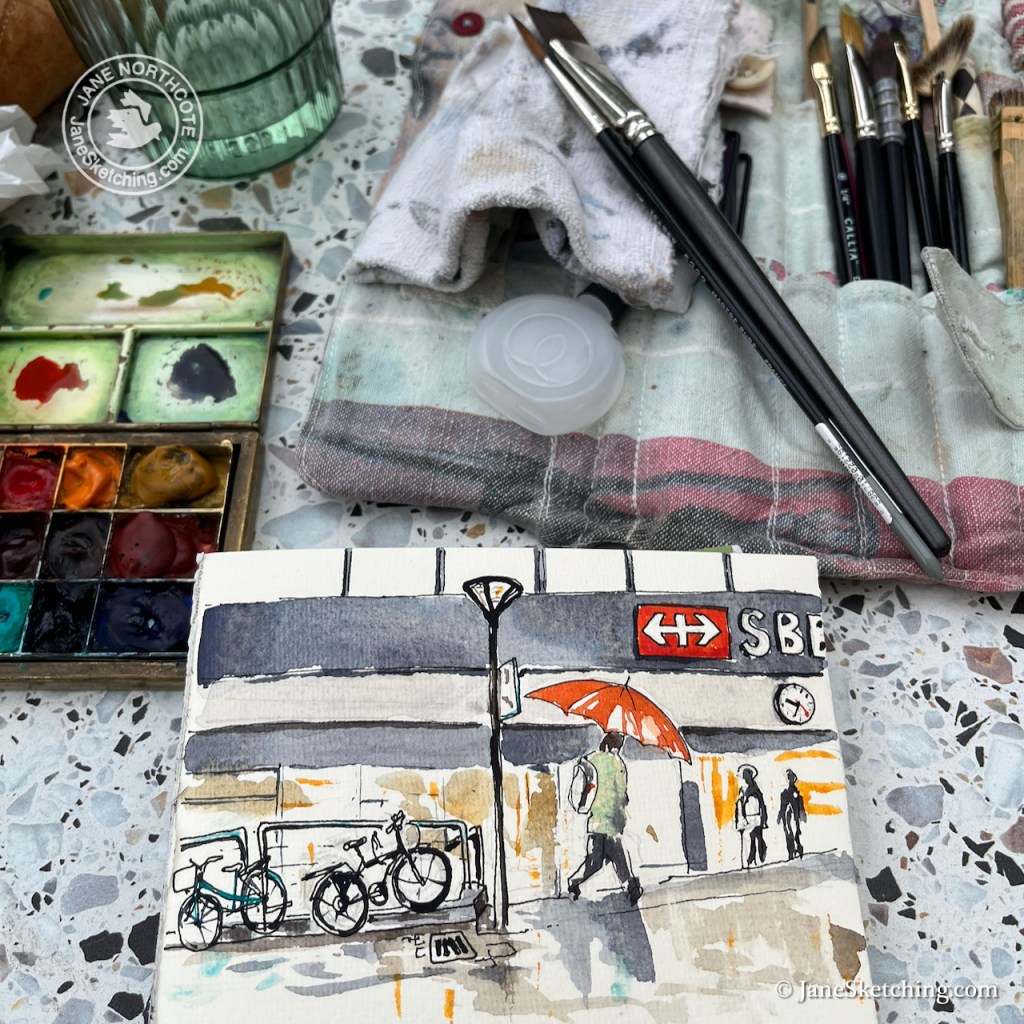
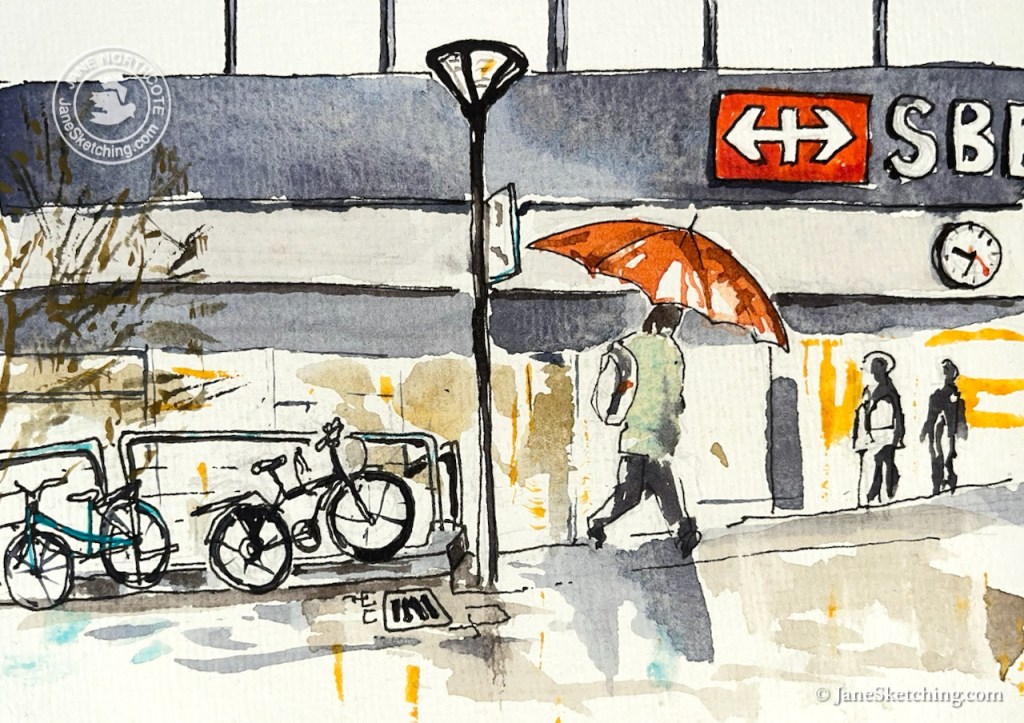
From café “Oh! Martine” next to Geneva Cornavin railway station
Trains from Geneva to Lausanne were disrupted because Swiss football supporters had, I learned later, thrown lighted fireworks out of the train windows, onto the tracks. These fireworks had landed in the one place they could do damage: communications cables temporarily exposed while track works were carried out. In local papers there was much finger pointing: the train company condemning irresponsible football supporters, the football club maintaining that it was foolish to have train windows that opened on such a train, and then the train company pointing out that the it was the person behind the lighted firework that was the problem, not the open window.
I reached my destination by a zigzag route involving unfamiliar buses through increasing fog.
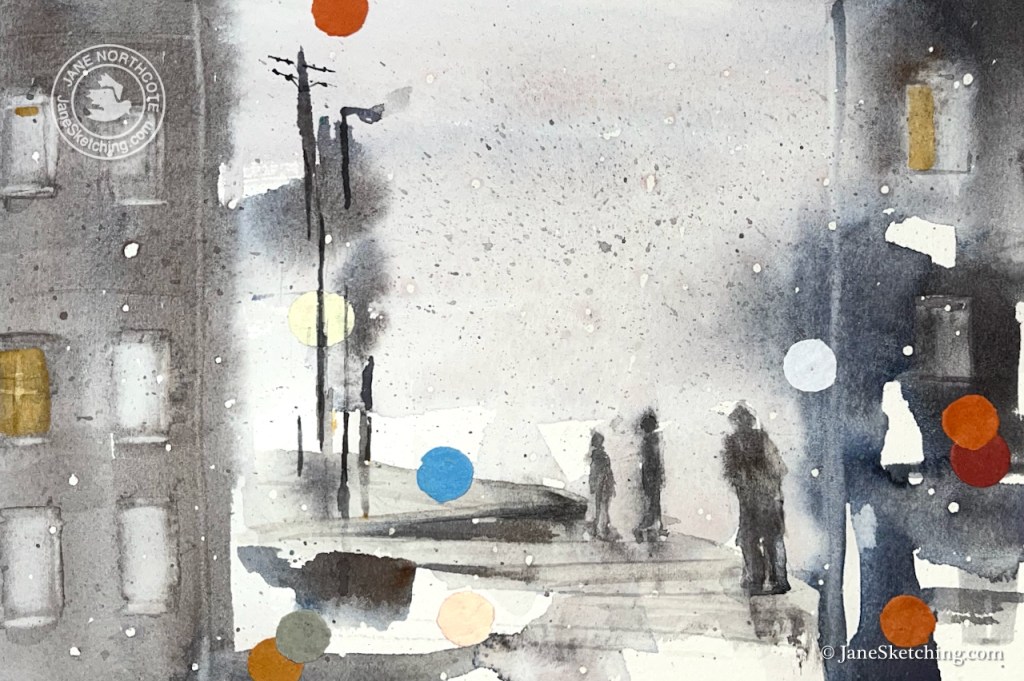
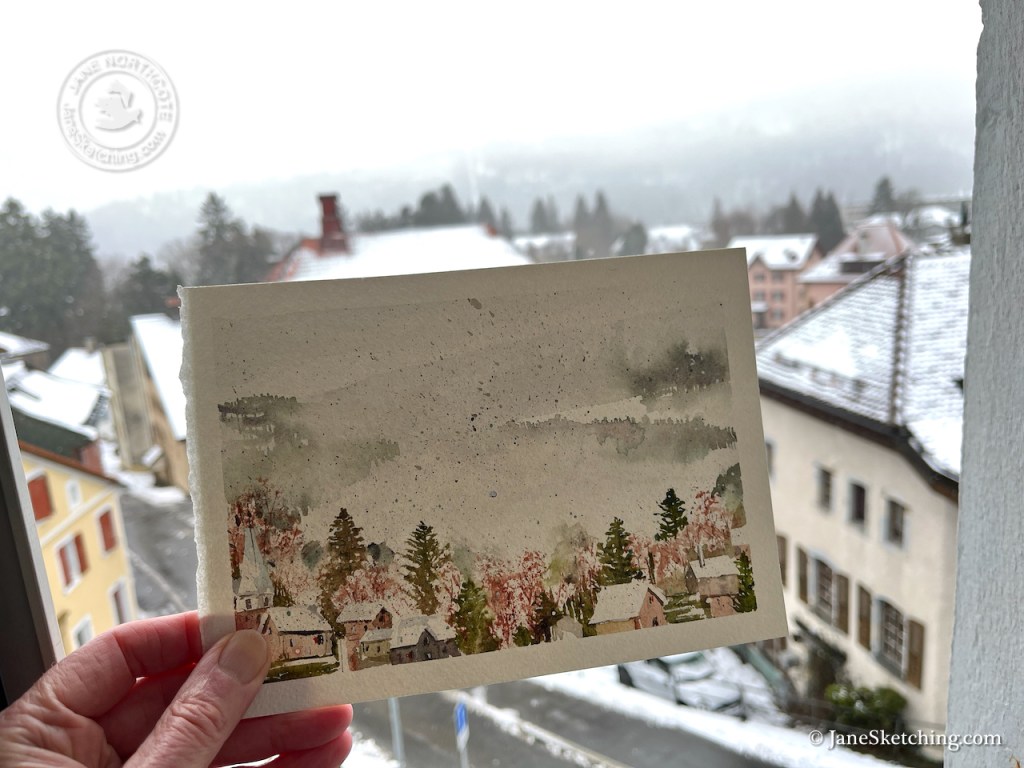
Sainte-Croix, Vaud, in the fog. The streets were littered with damp confetti. It had just been Carnival. Some of this confetti found its way onto my picture.
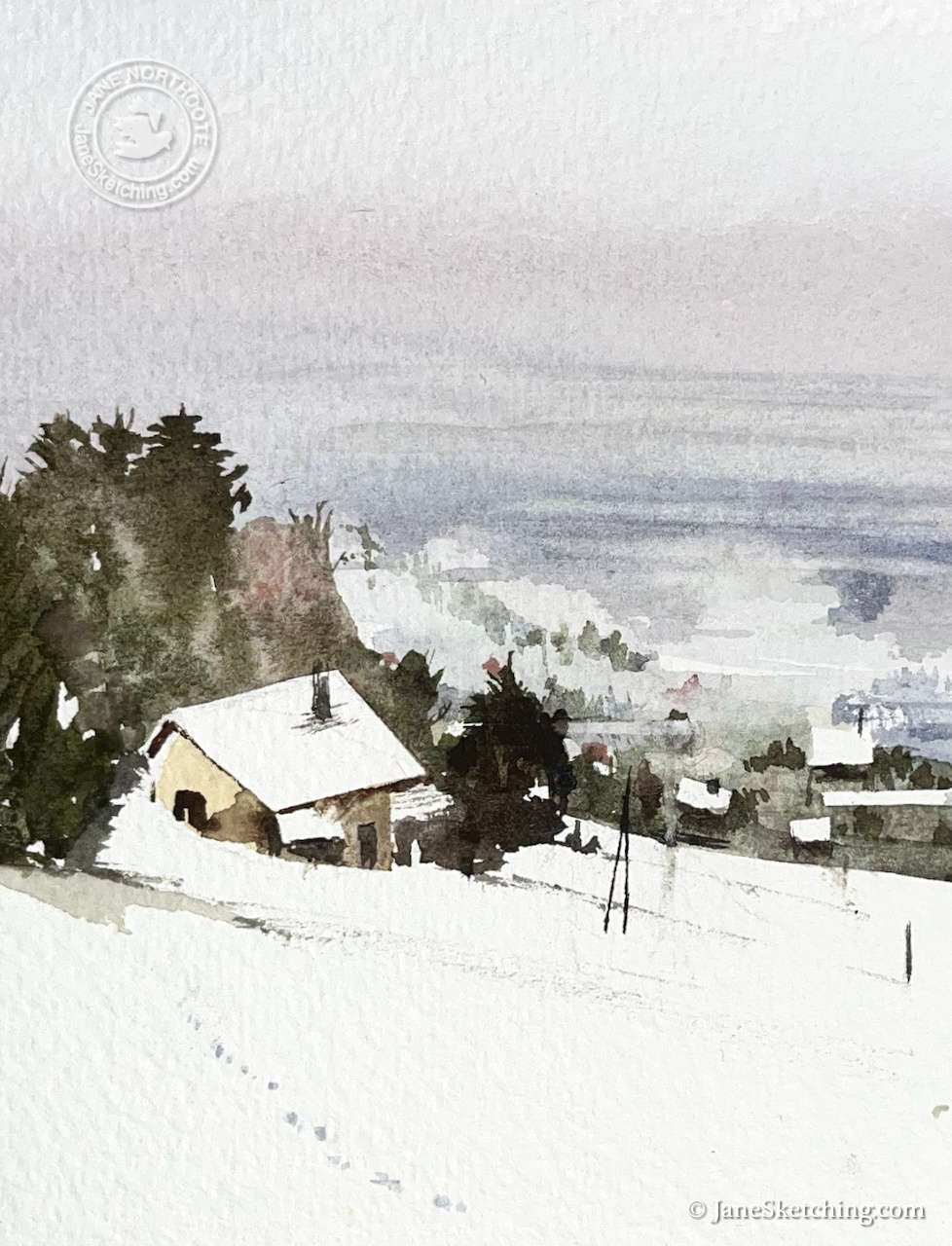
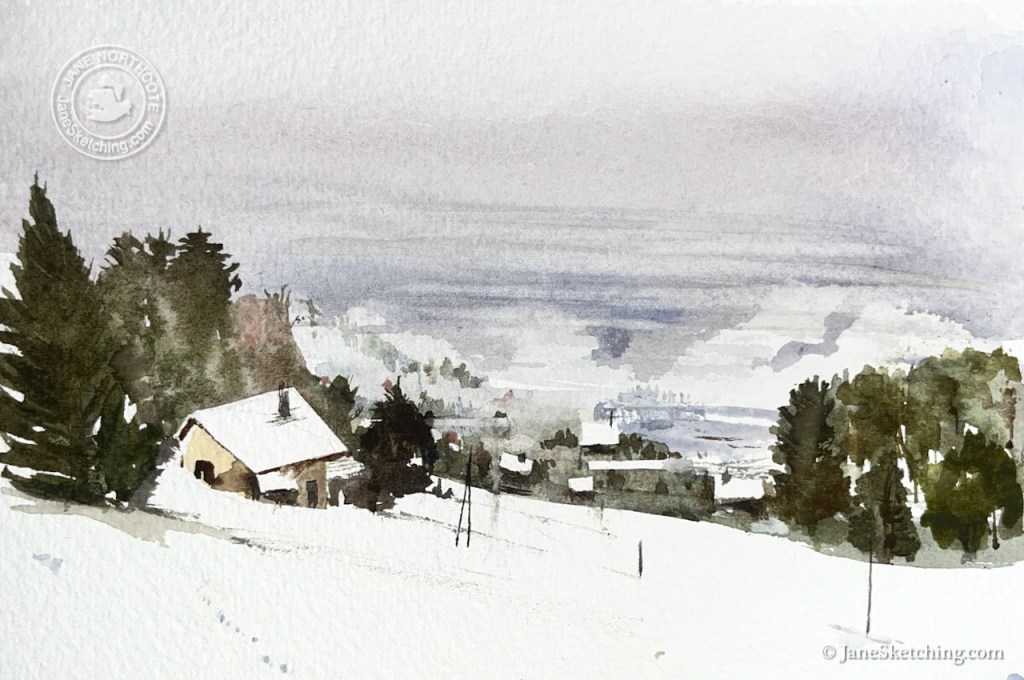
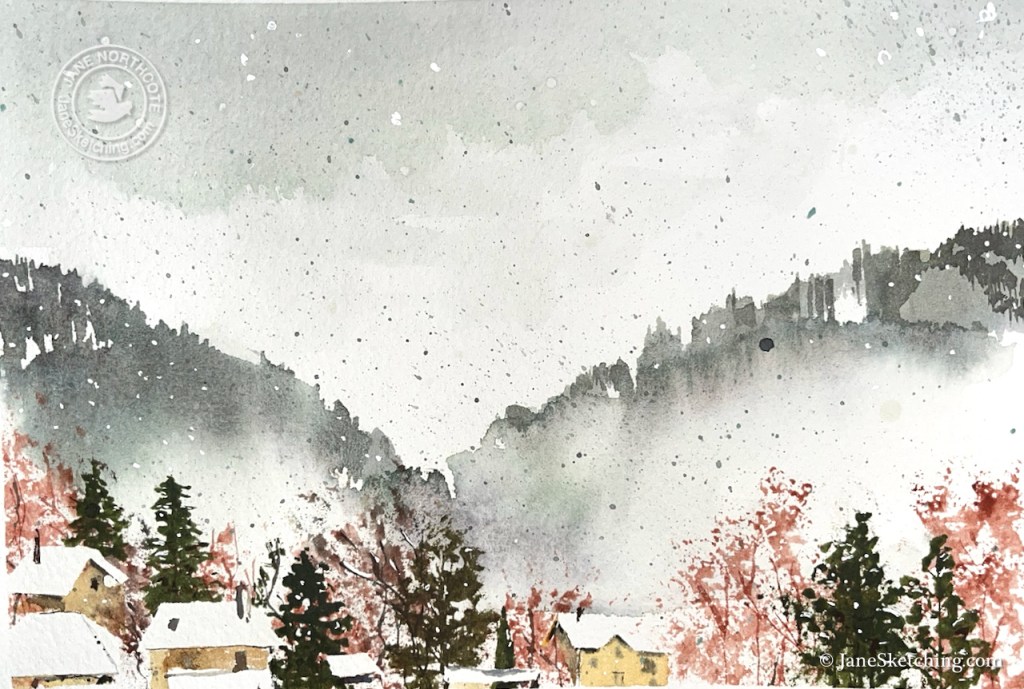
Higher up, it was snowing.
Looking towards Lake Geneva, from the Jura hills above Sainte-Croix. The Alps are invisible.
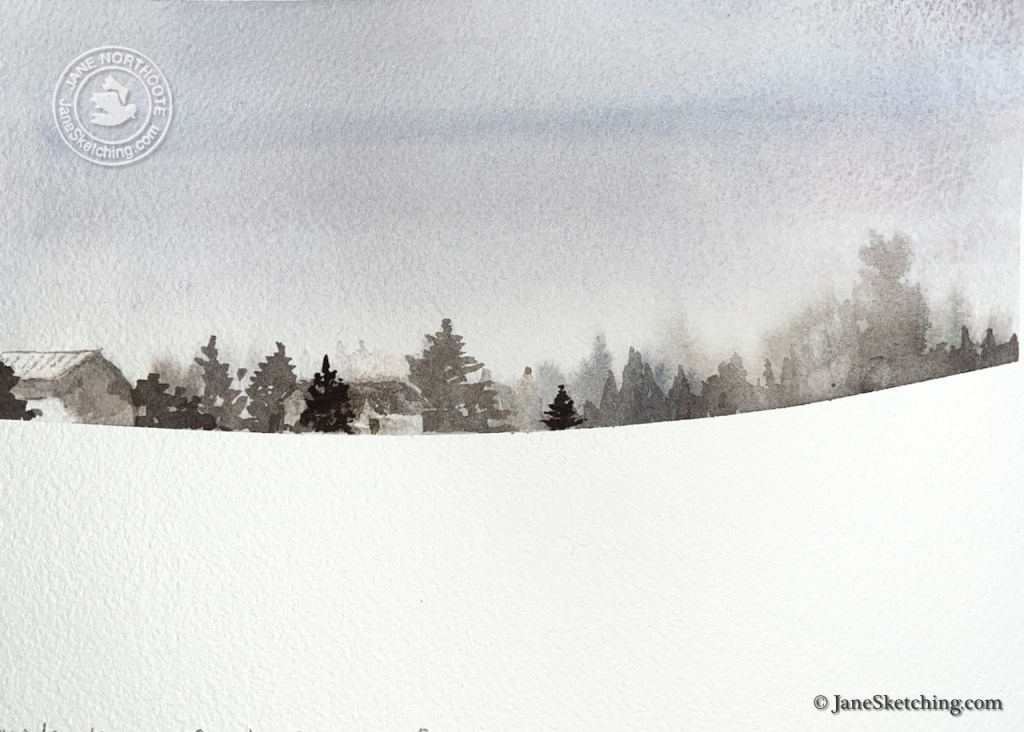
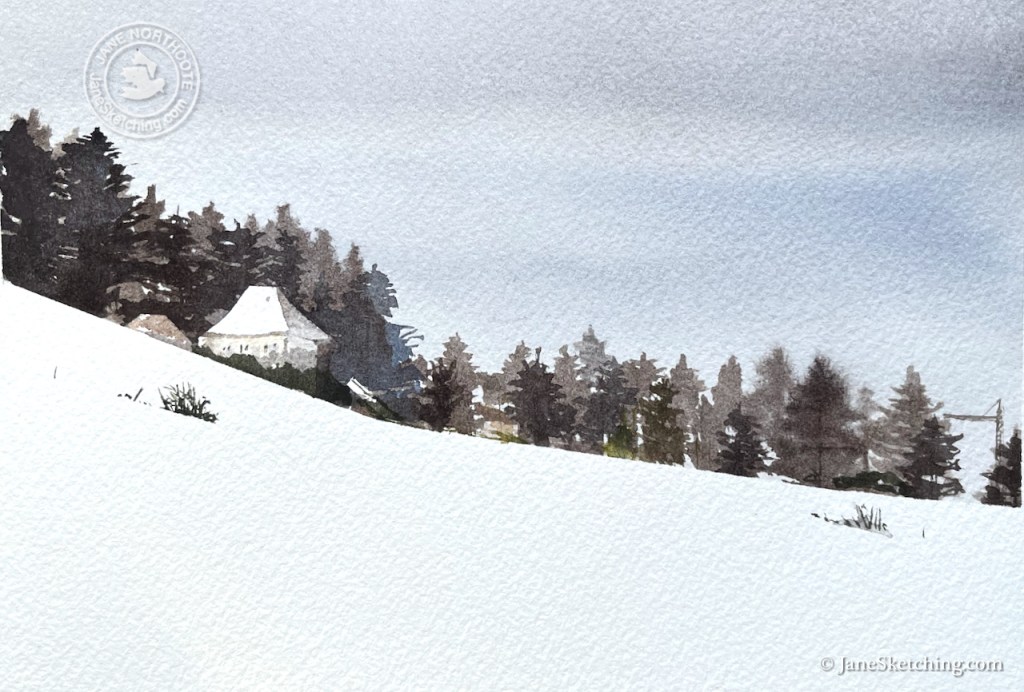
The snow fields had geometric simplicity.
The snow field above the sports stadium, Sainte-Croix, VaudRue des Chalets, Sainte-Croix. See the crane, right-hand side.
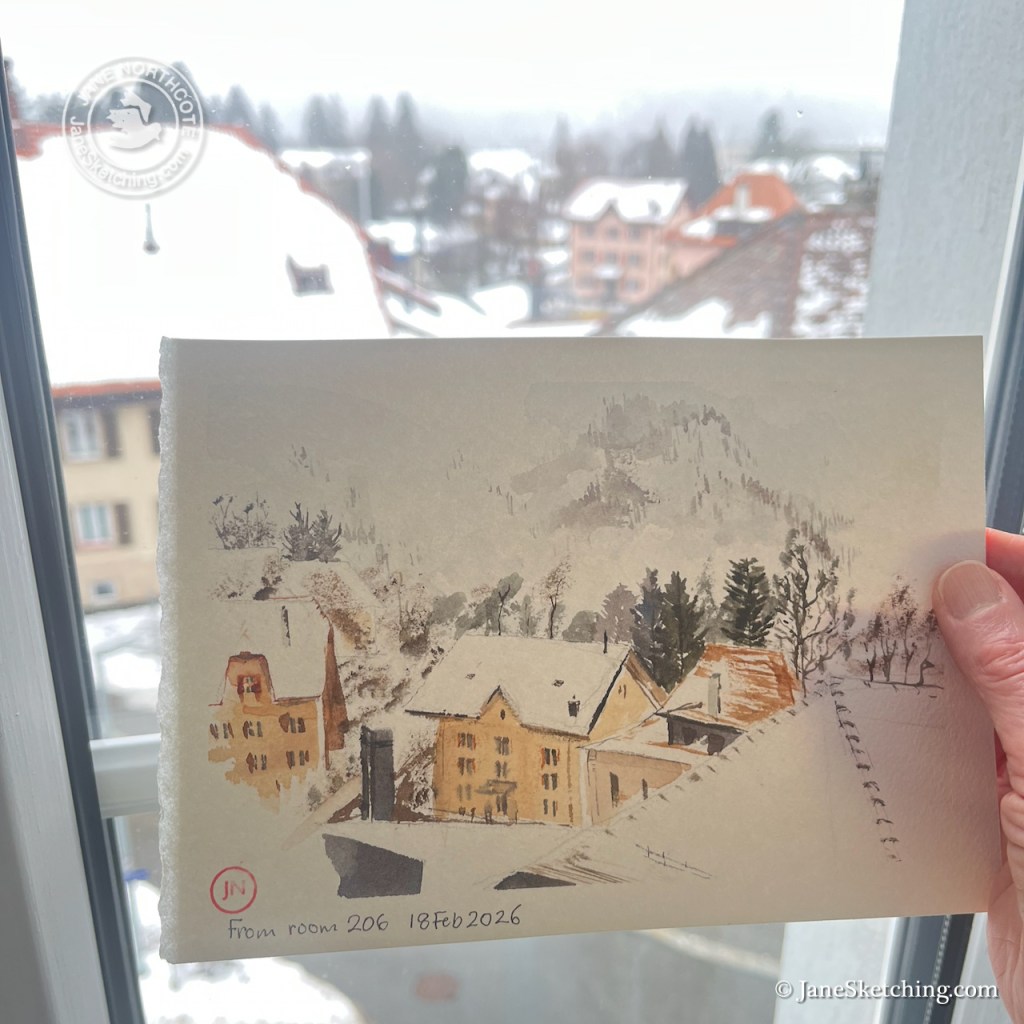
Sometimes, sketching from my room was a better idea.
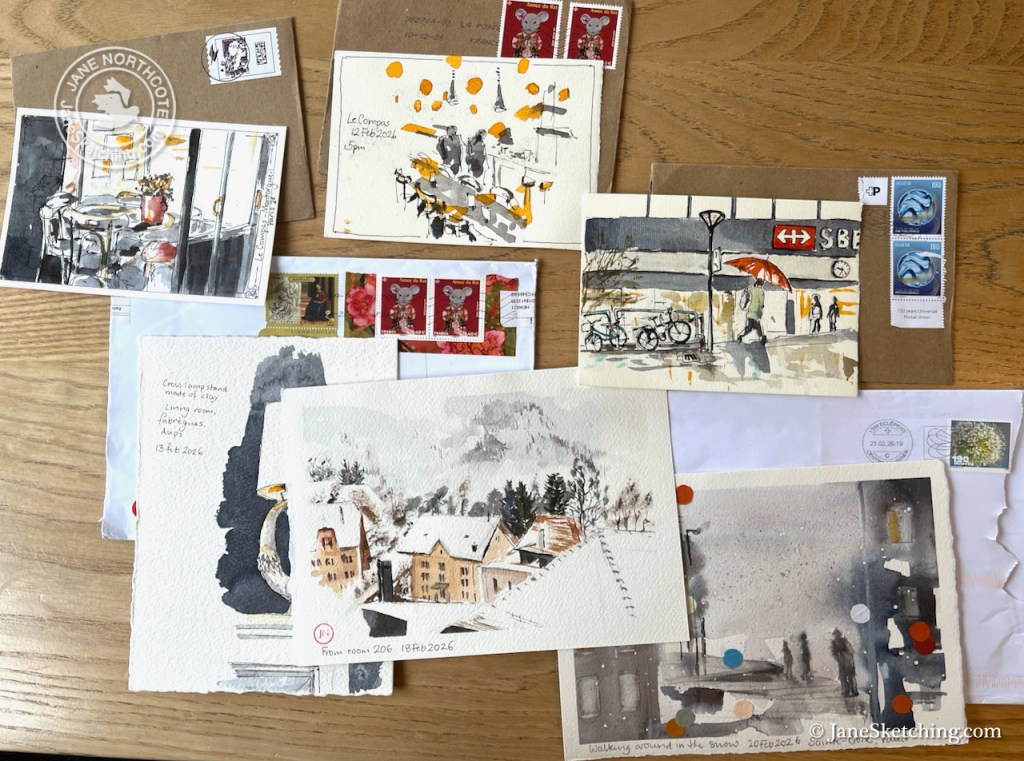
These sketches are all postcards, which I dropped into letterboxes as I travelled. My friend kept them all, and the envelopes.
Postcard selection: February 2026
Click a button below to share this post online, email it, or print it:
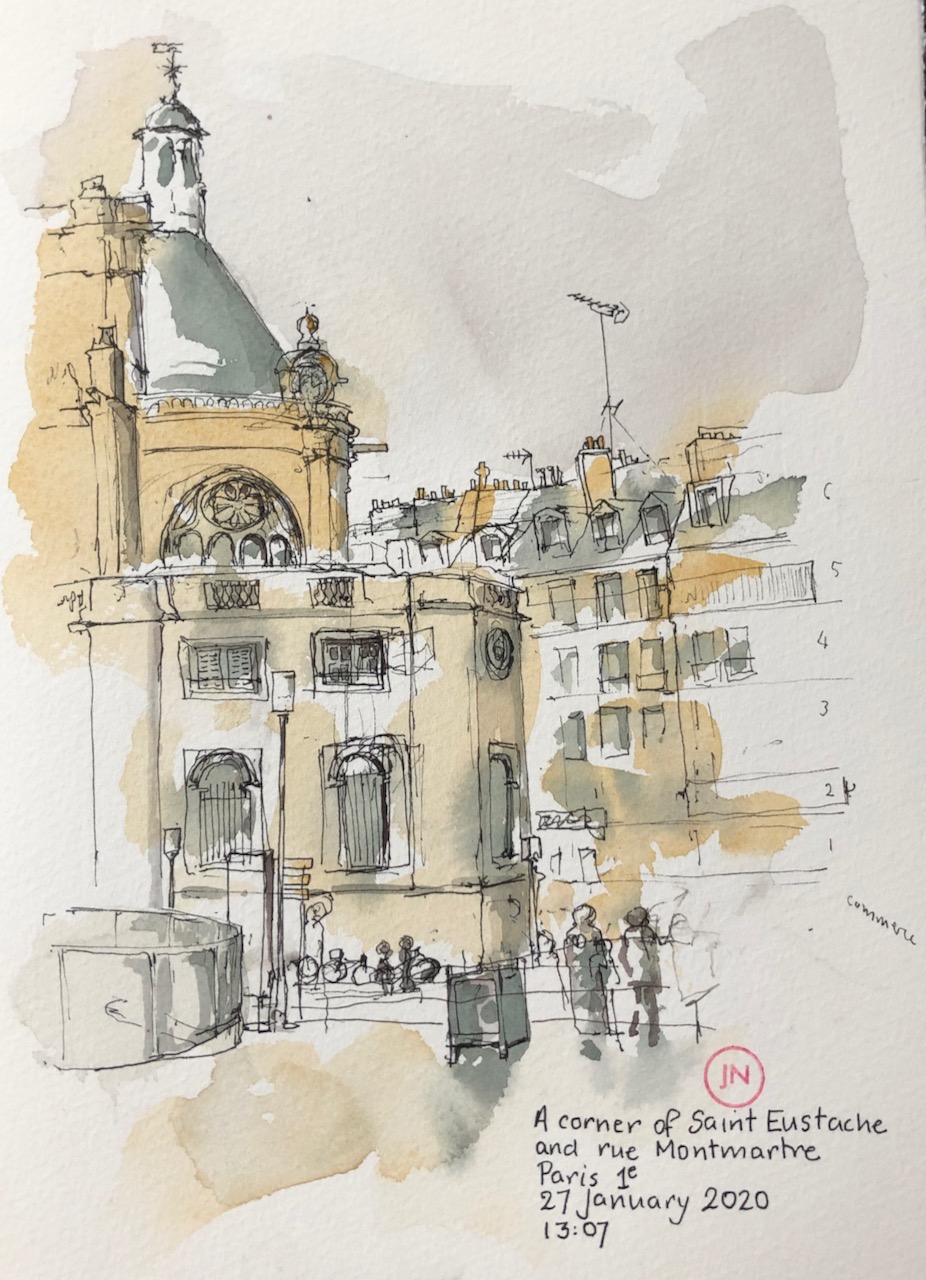
Here is a corner of St Eustache, near Les Halles in central Paris.
St Eustache was built between 1532 and 1632. I drew it standing in the pedestrian area near Les Halles, as people flowed by. I enjoyed the fact that there were huge chimneys on the church, shown high up on the left edge of the picture.
Drawing St Eustache on location
The sky was overcast. It was a Monday. A group of lively young people were hanging about, calling to each other.
Meeting point for Public Calm
This pedestrian area was one of those liminal zones: between public and private, not quite a pavement, not quite a plaza, partly a thoroughfare, partly a resting zone. As a result, the social rules were ambiguous. People were hanging around, people were passing through. Evidently there have been incidents. A large poster said: “City of Paris, Meeting Point, Public Calm. The operatives of the City of Paris in charge of Public Calm welcome your feedback and comments between 6pm and 6:30pm, Monday to Friday. To report an incident (“incivilité”) call 3975 or go to Paris.fr/incivilité”.
I was intrigued by the idea of City operatives charged with “public calm” (“tranquillité publique”), and wonder how and whether it works.
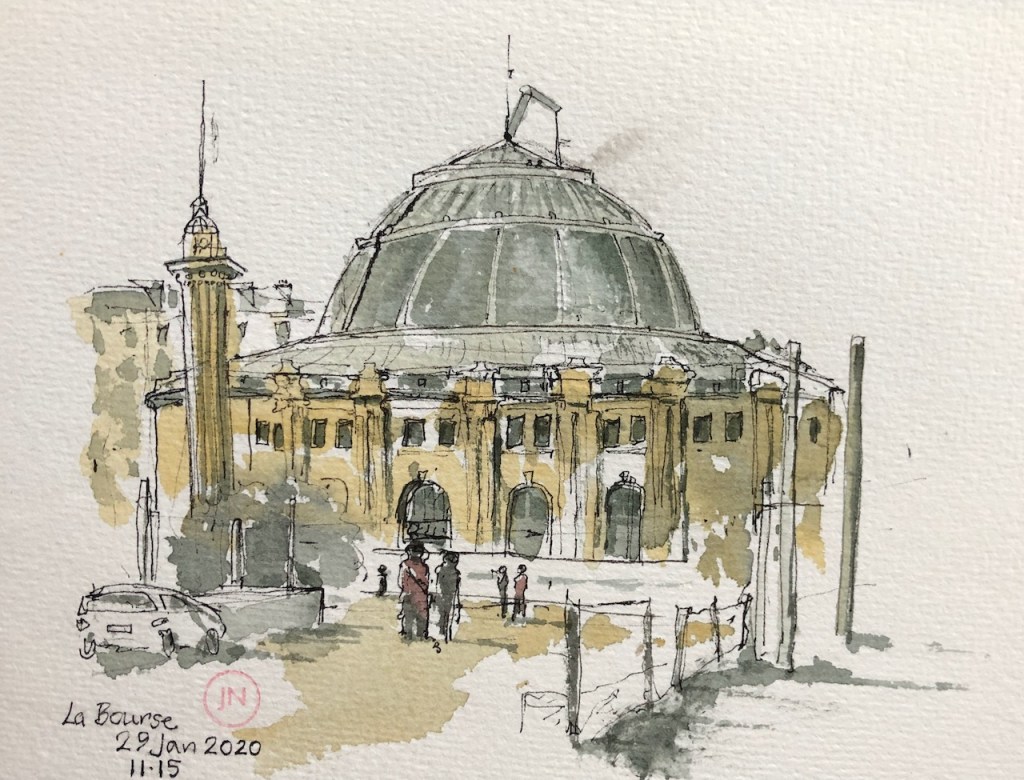
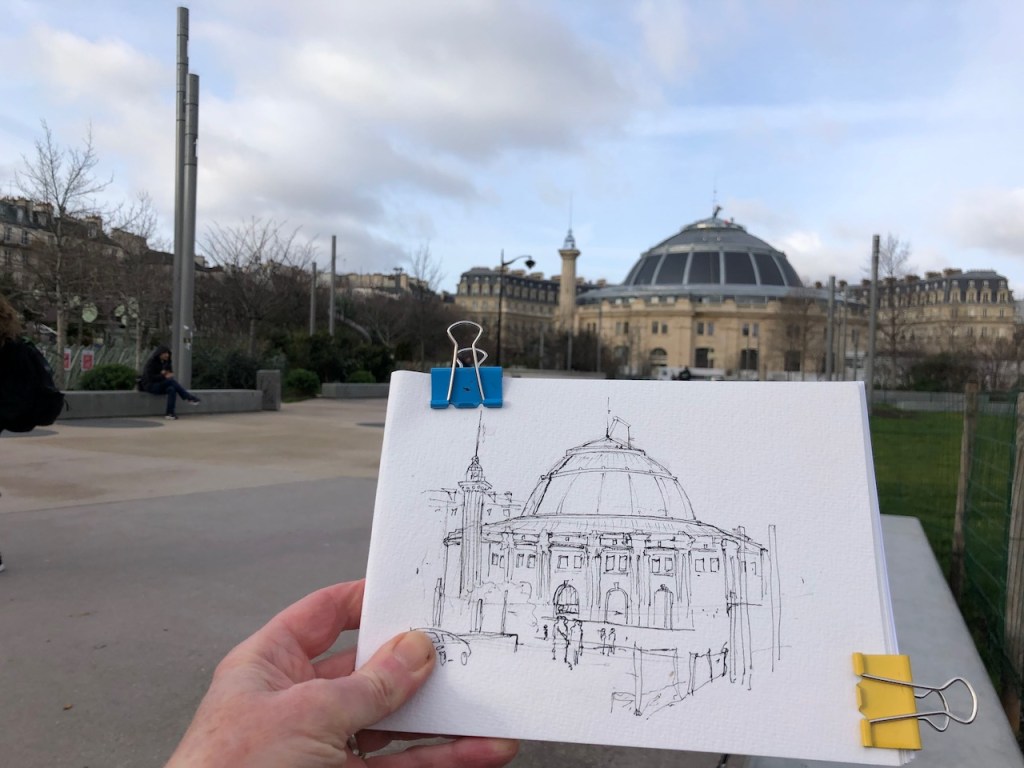
Here’s another sketch in the same area. This the “Bourse de Commerce”, the Commodities Exchange. It’s now the former Commodities Exchange, with massive building work going on to convert it into a contemporary art space. The architect for the conversion is Tadao Ando.
Bourse de Commerce, with crane and hoardings.
This was a sketch as I was waiting for the swimming pool to open.
Drawing on location
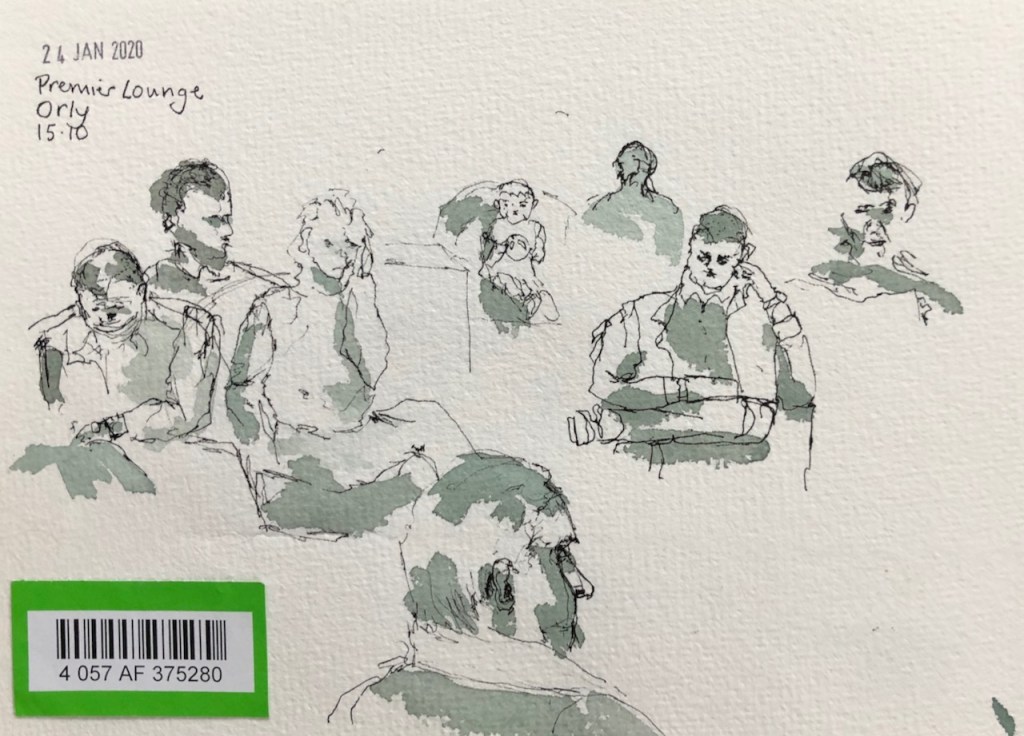
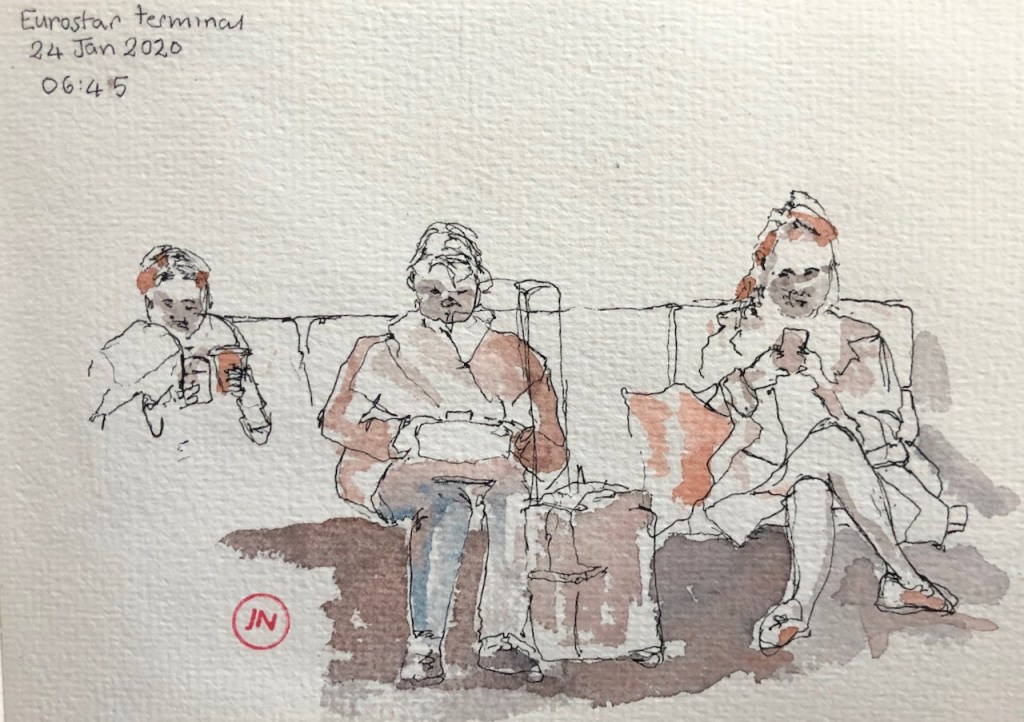
I did some people-sketching in a café and in waiting areas on the trip. I am on a mission to get more people into my drawings, so I practice.
Airport lounge
Eurostar lounge
Doing the crossword
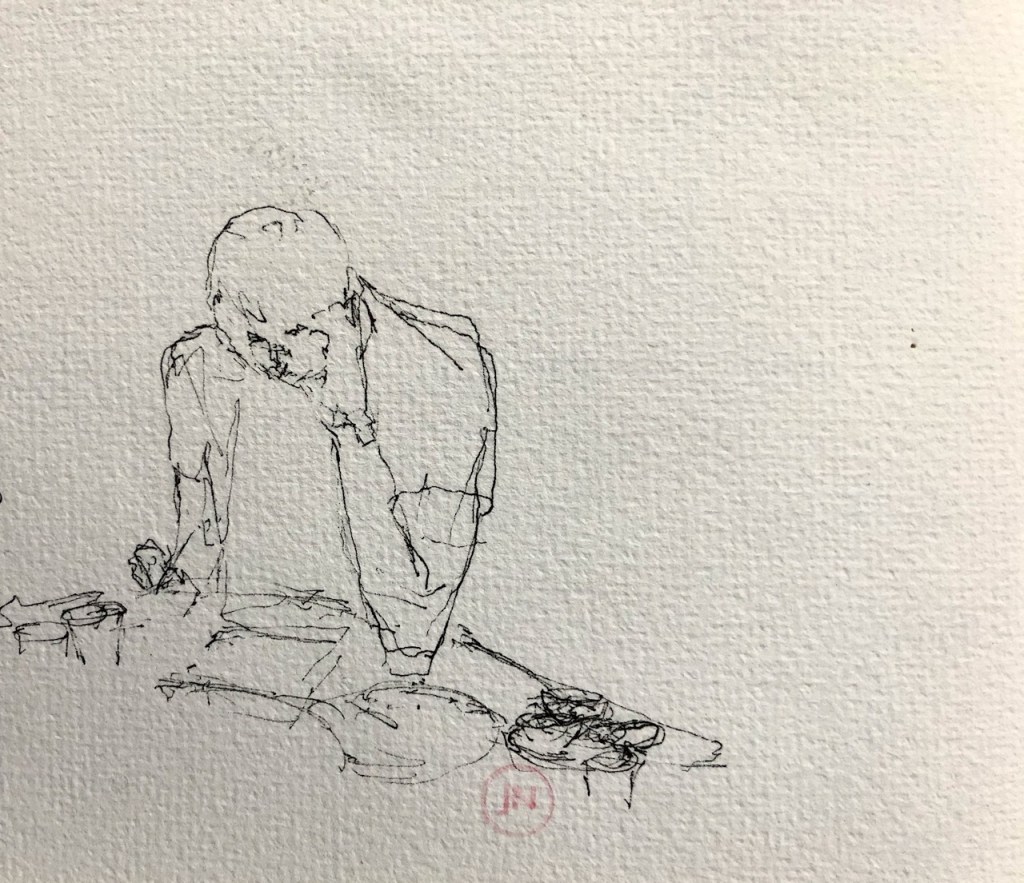
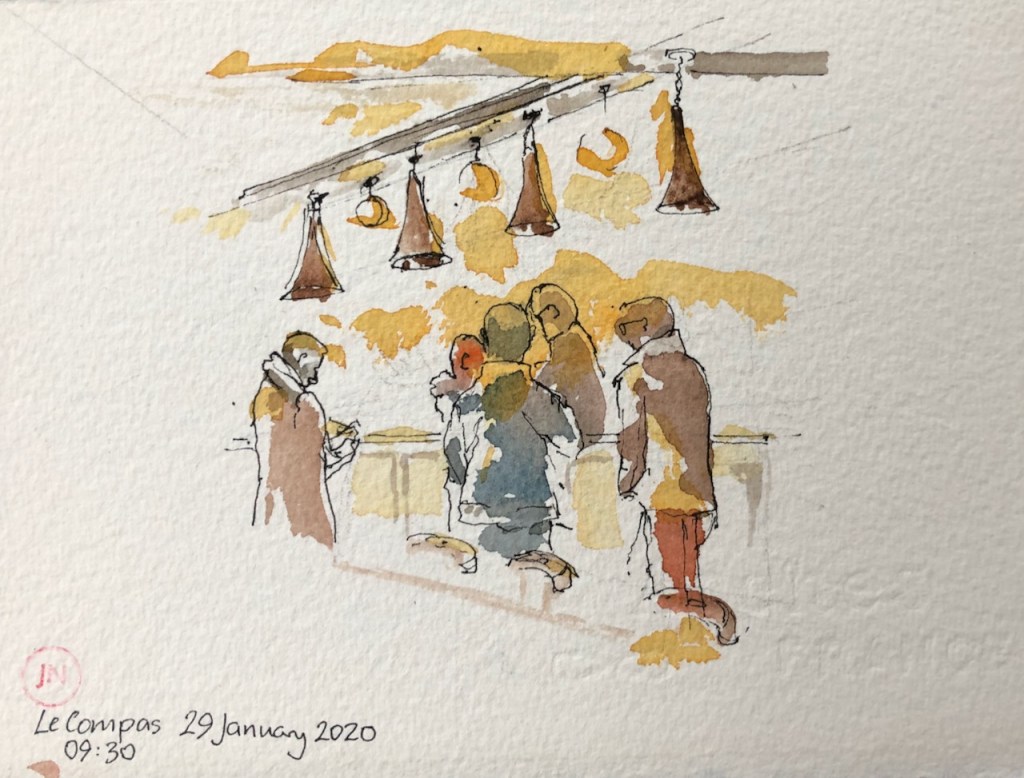
Men in the café
People watching
I walked across to the Left Bank, searching for “Maison Charbonnel”, the home of the maker of the etching ink that I favour. The place was there, on the Quai Montebello, just across the river from Notre Dame. However, because of the Métro strikes, or because of the weather or for some other reason or no reason atall, the shop was closed “until the 3rd of February”.
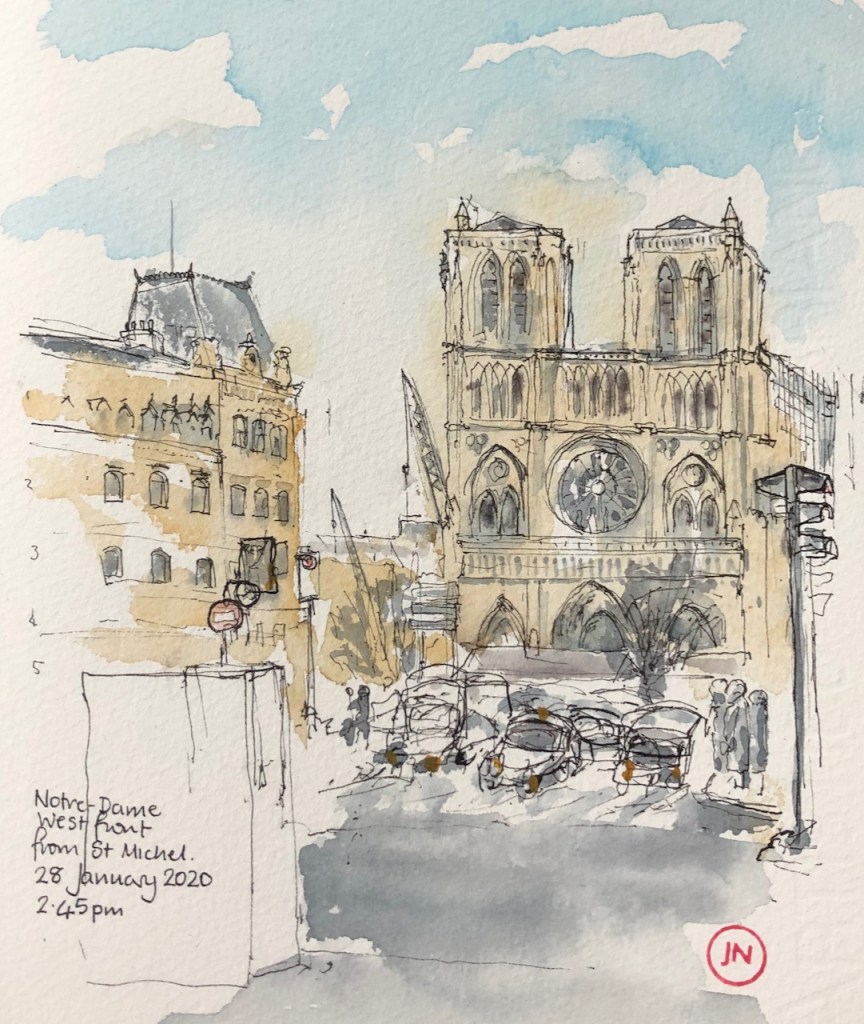
I drew a picture of Notre Dame.
Notre Dame, West front, from St Michel.
This took about one hour 35 minutes. The temperature was 7 degrees C.
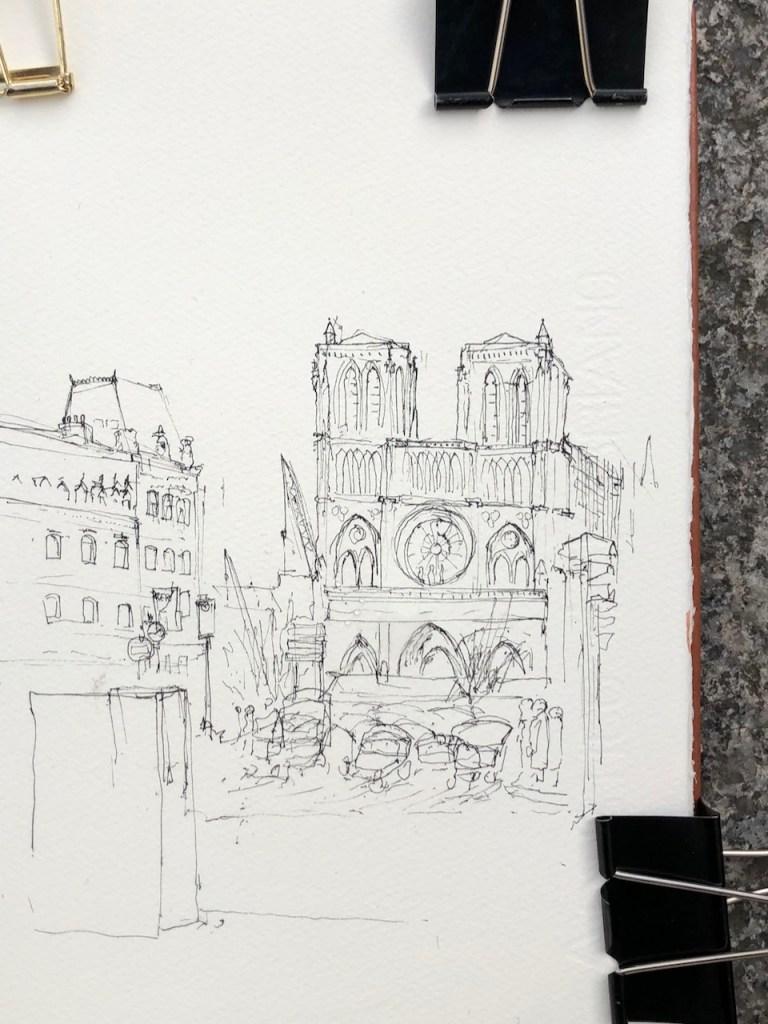
Straight to pen
On the pavement
Putting the colour on
Red arrow shows the line of sight of the drawing
Drawing on location, Notre Dame from St Michel
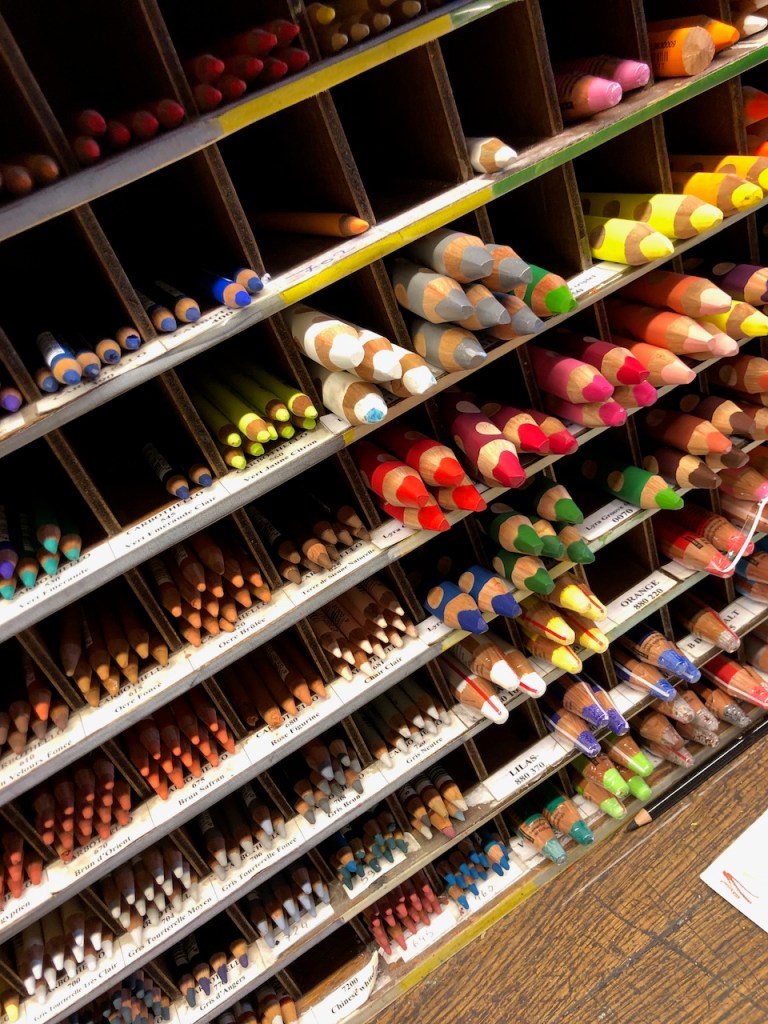
Then I took sanctuary in a marvellous art shop I found: “Magasin Sennelier”, 3 Quai Voltaire. I was served by a gentleman who might have been there since the 1950s. He was pleased to tell me he knew L. Cornelissen & Son of London, and Green and Stone, and he knew Mr Rowney, of Daler Rowney paints, personally. Or had done. Sennelier paints were superior, I was authoritatively, if not entirely objectively, informed.
Magasin Sennelier
Crayons
“Don’t use the crayons.”
Paints on the top floor
Japanese paints
A little brush I bought
Inside Magasin Sennelier, Quai Voltaire
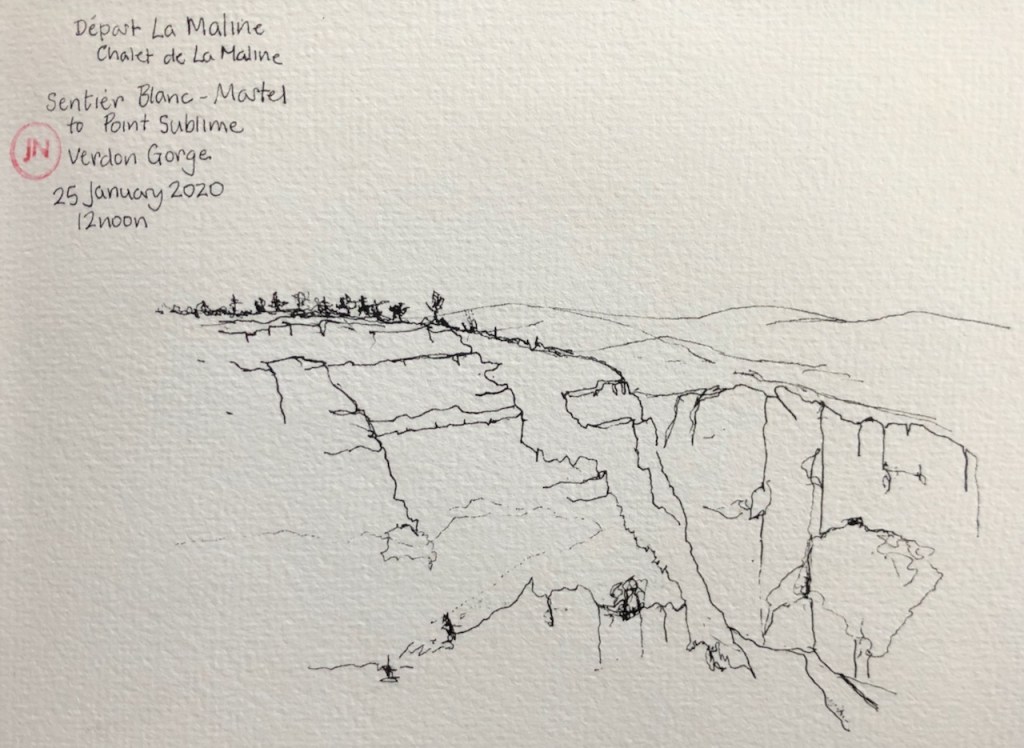
In the South I made a pen sketch of a vast canyon:
Blanc-Martel hiking trail, start point.
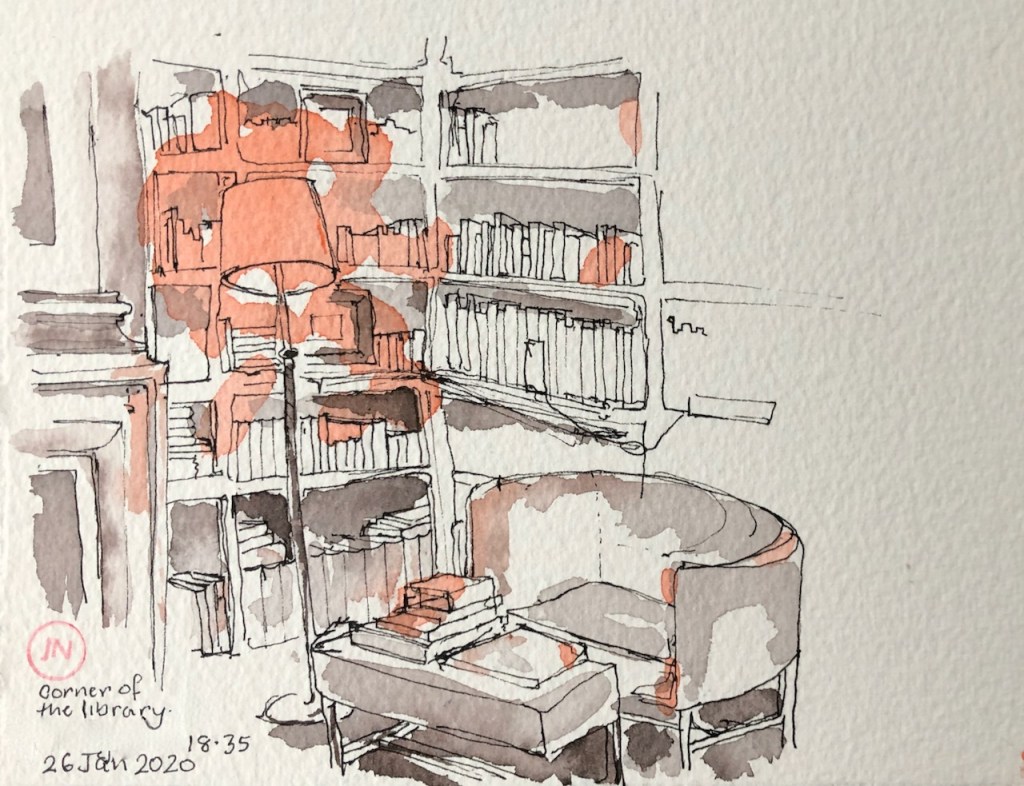
And here’s a quick sketch in the library, before dinner:
Corner of the library
Click a button below to share this post online, email it, or print it:










 Jane Sketching