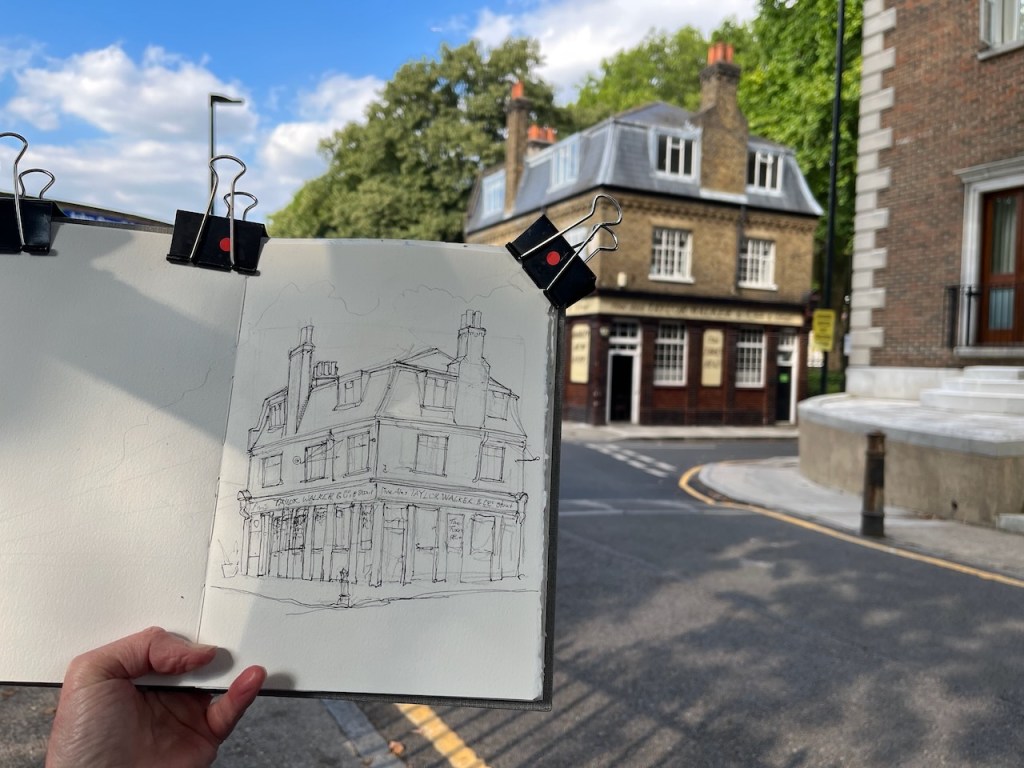
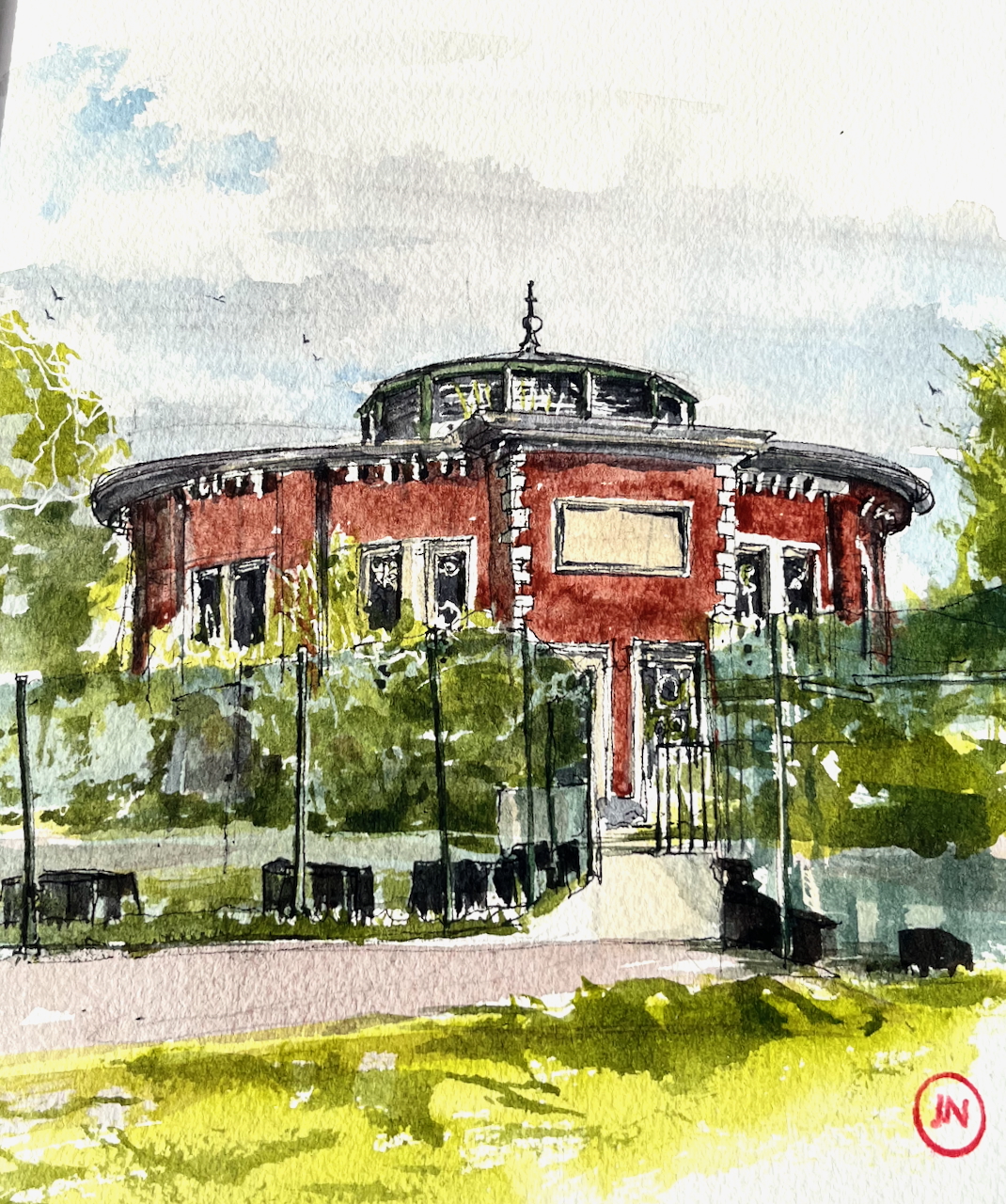
Rotherhithe Tunnel Shaft 3, King Edward Memorial Park, E14

A tale of two tunnels

Construction work for the Thames Tideway tunnel surrounds this small round building on the north side of the Thames, near Shadwell.
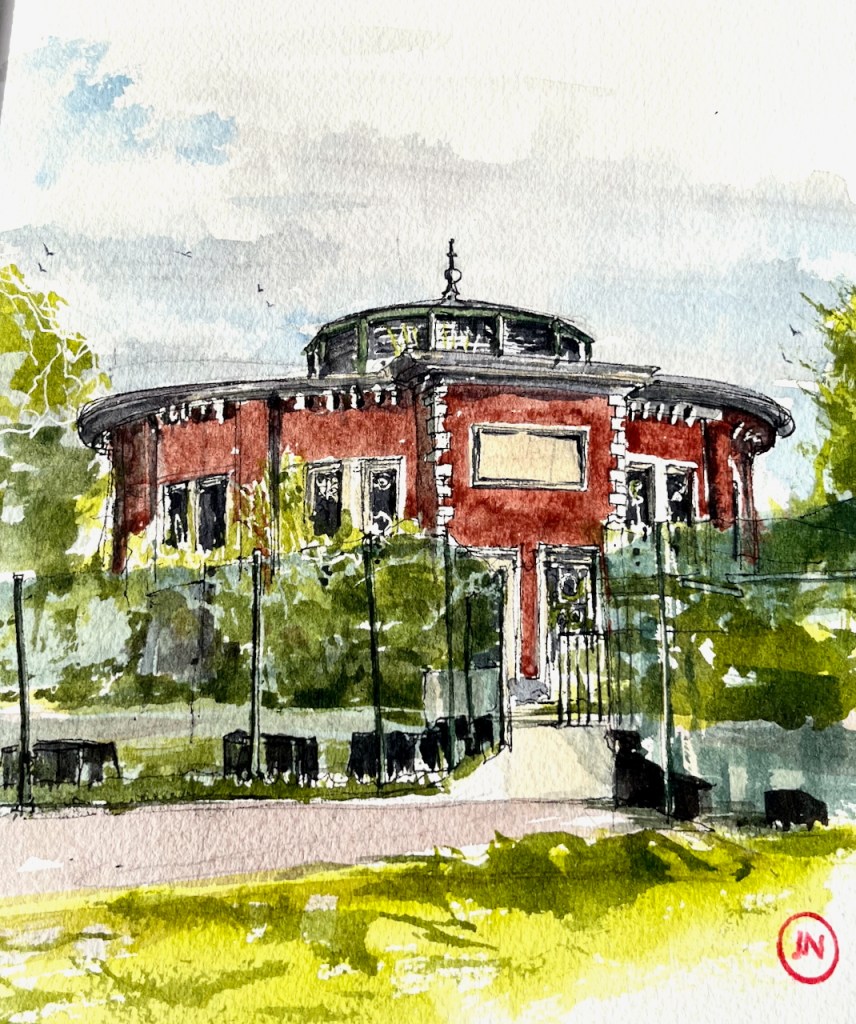
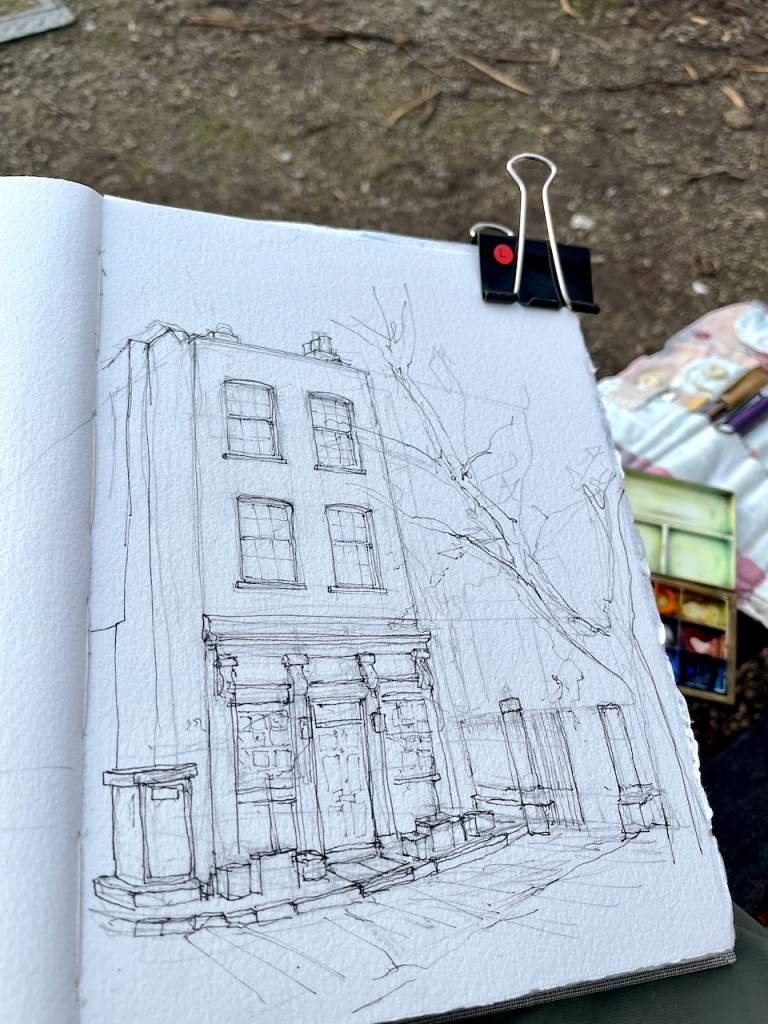
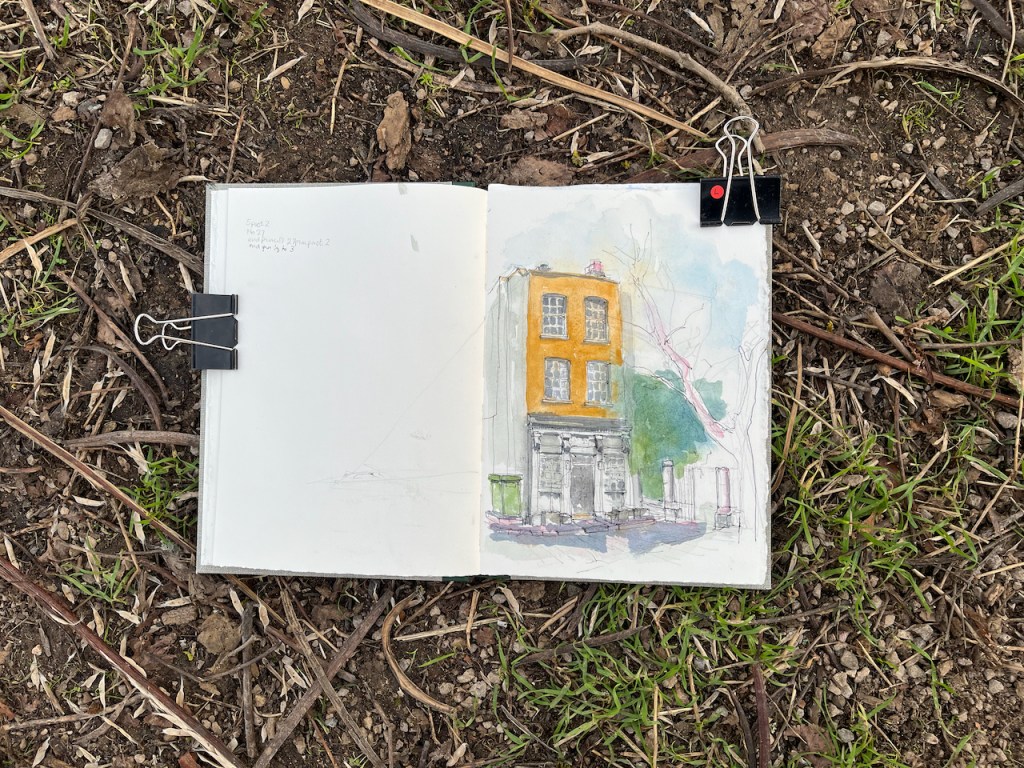
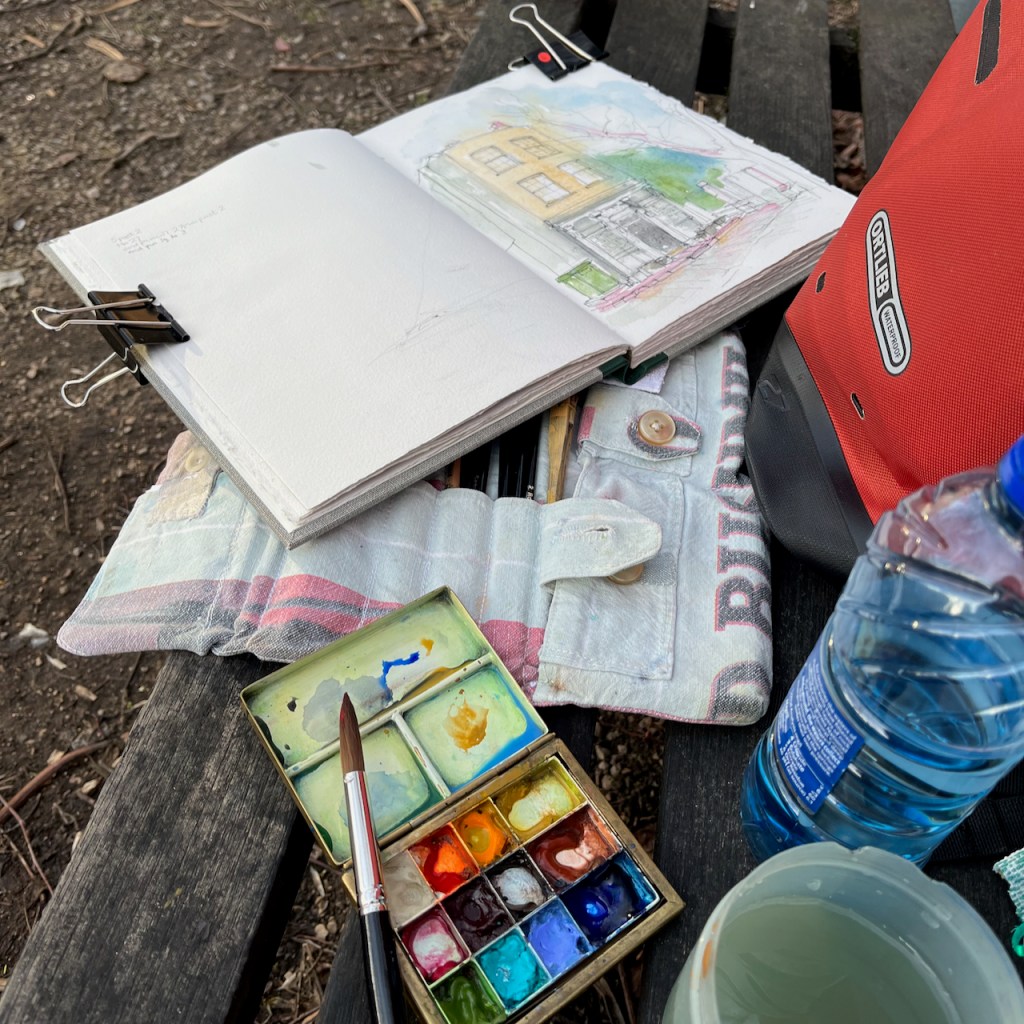
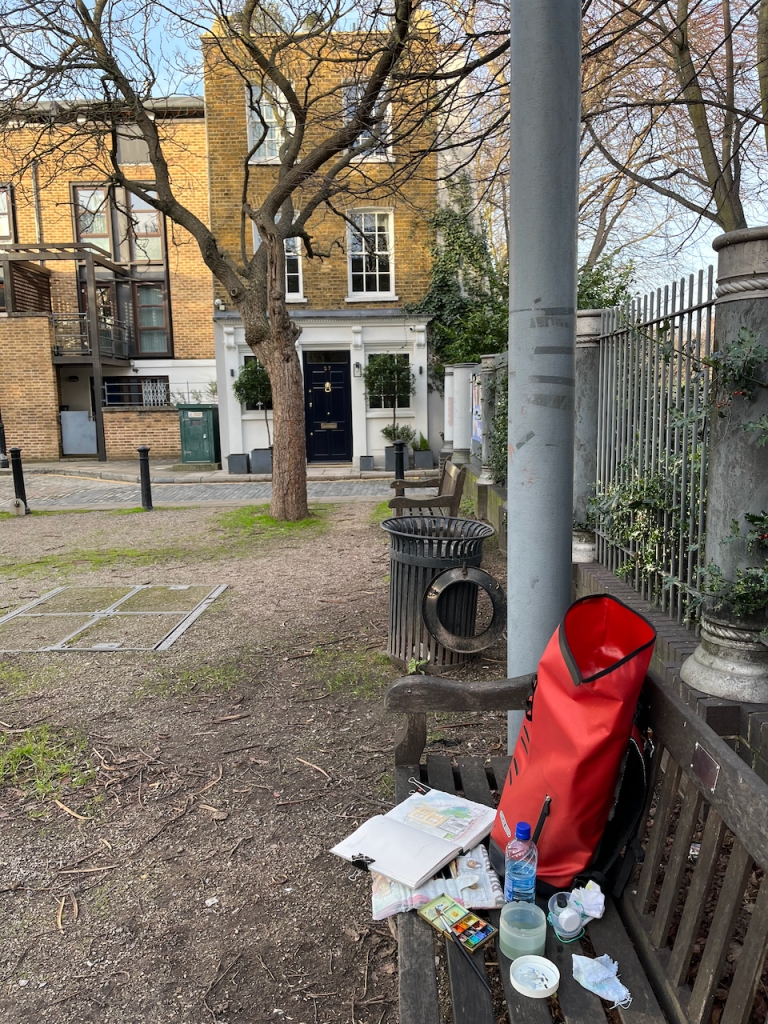
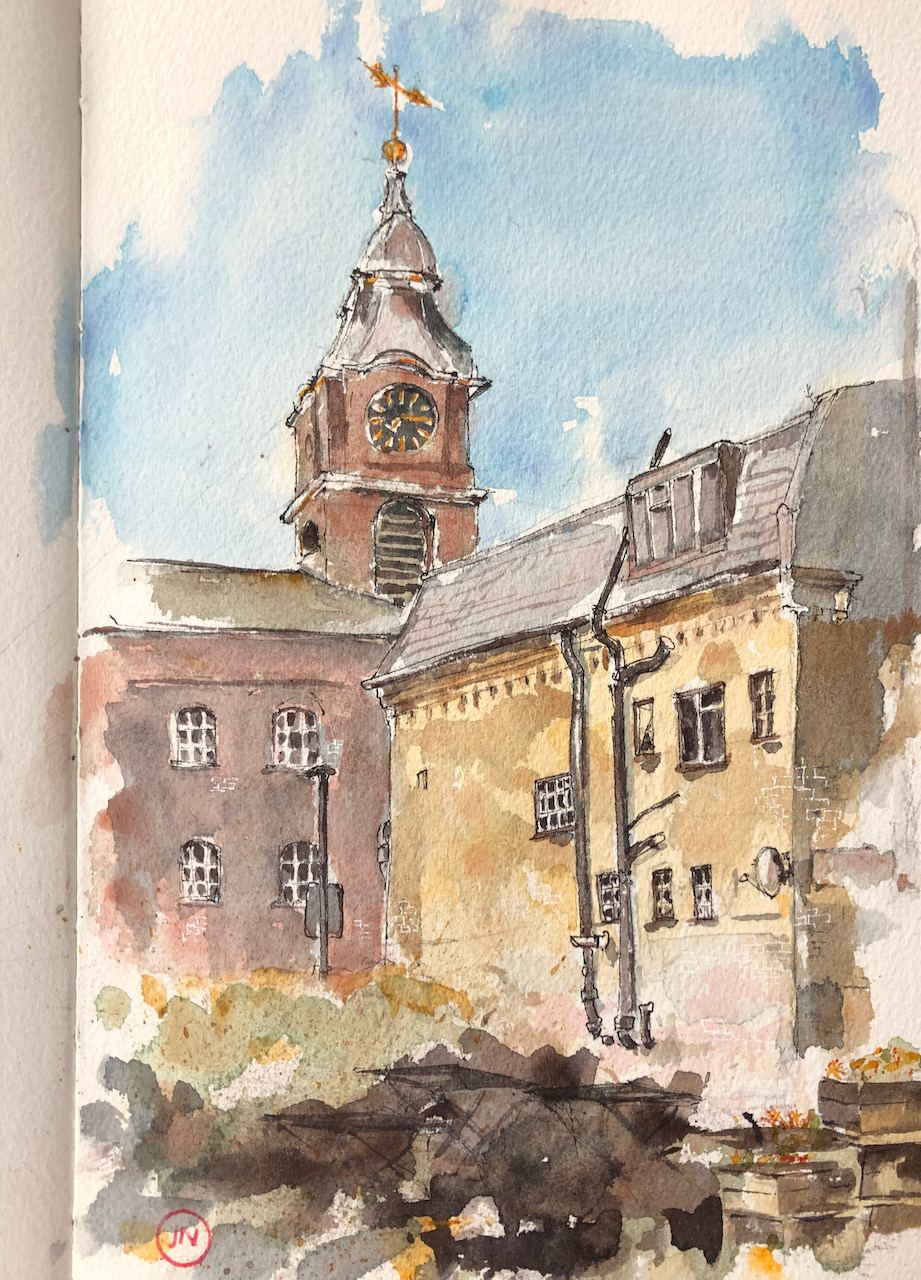
Rotherhithe Tunnel Shaft 3, King Edward VII Memorial Park, sketched 9th September 2025 in Sketchbook 16

This building is an air shaft and access point access for the Rotherhithe tunnel. The Rotherhithe Tunnel carries road traffic between Rotherhithe on the south of the river and Limehouse on the north. It was constructed between 1904 and 1908, for horses and carts. The designer was Sir Maurice Fitzmaurice.

The tunnel links Limehouse on the north of the river to Rotherhithe on the south. Built originally for horse-drawn carriages and pedestrians, the tunnel now carries far more traffic than it was designed for, which requires careful day to day management by TfL to ensure safety.

Transport for London press release 20181

This circular building is one of four shafts giving access to the tunnel. It contains a spiral staircase, which was in use from when the tunnel was opened in 1908 until the 1970s2. This access is now closed to the public. The shaft building and the staircase are Grade II listed3.

The roof in my picture dates from a refurbishment in 20074. Originally there was a glass dome5.
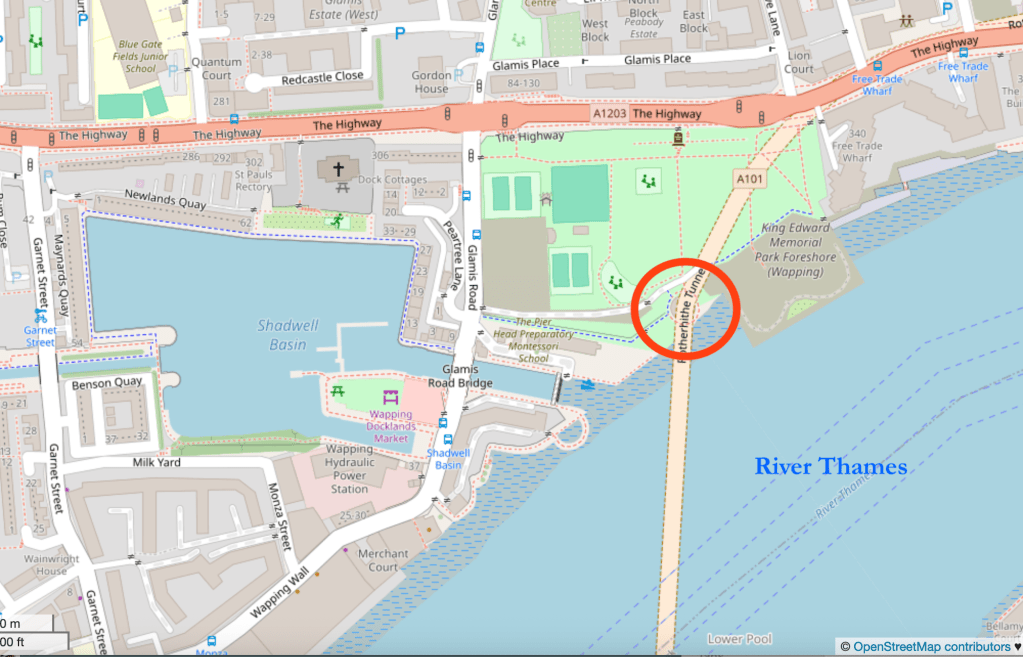
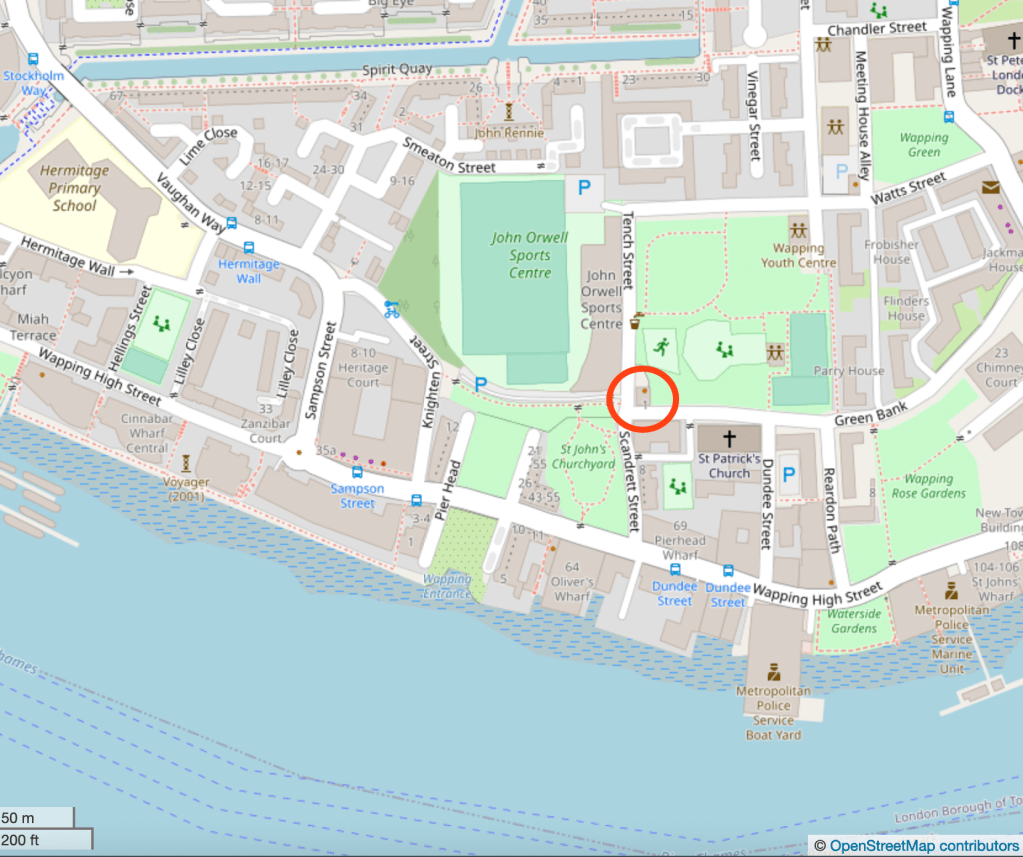
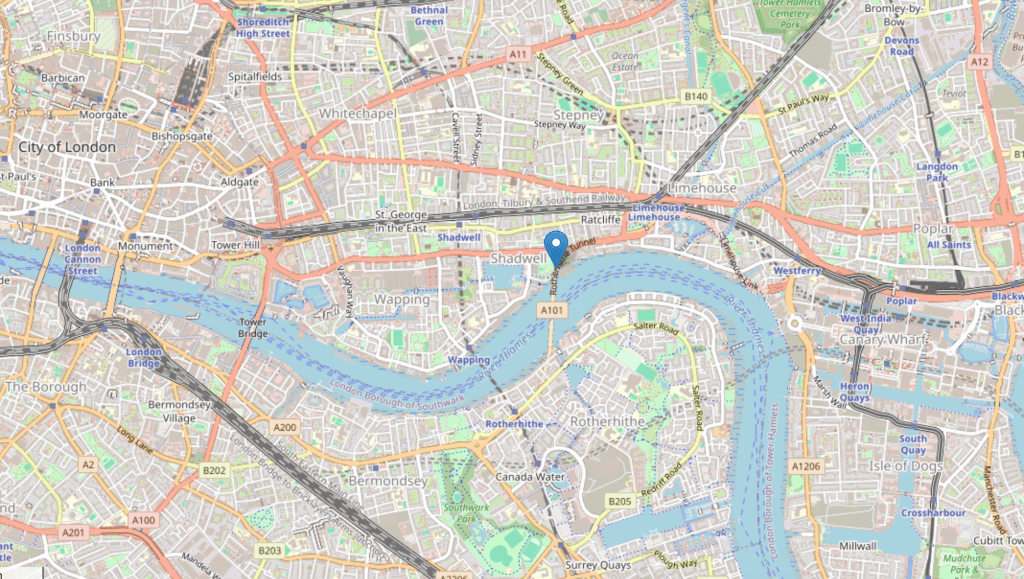
Location of Rotherhithe Tunnel Shaft 3, map (c) OpenStreetMap contributors.

The fences in my drawing are the perimeter of a Thames Tideway tunnel construction site. The Thames Tideway Tunnel carries sewage from central London to Becton Sewage Treatment Works. It runs under the Thames. At various points there is a junction between this main sewer and a local sewerage system. The site at King Edward VII is one such junction.
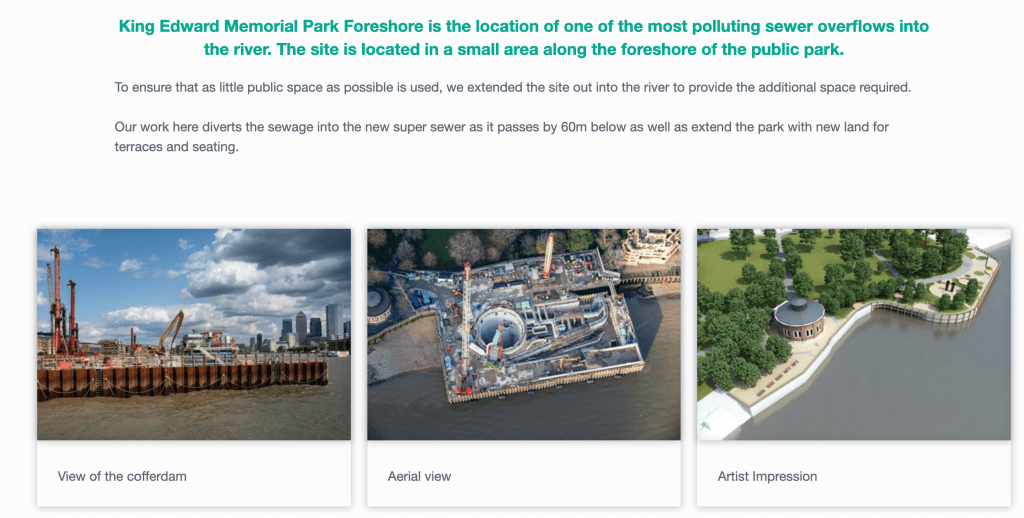
The Thames Tideway tunnel runs longitudinally along the Thames, so it crosses the Rotherhithe tunnel, which goes across the Thames. But this is not a problem, as the Thames Tideway tunnel is 60m6 below the Thames and the Rotherhithe tunnel is just 23m down7. So they do not bump into each other.
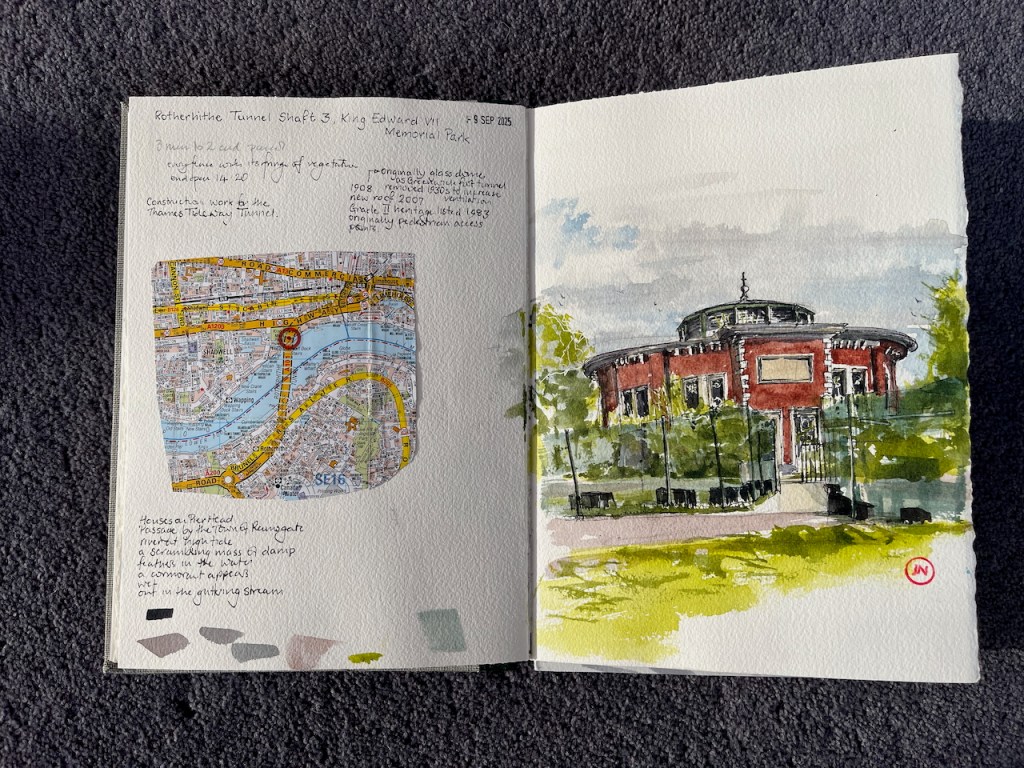
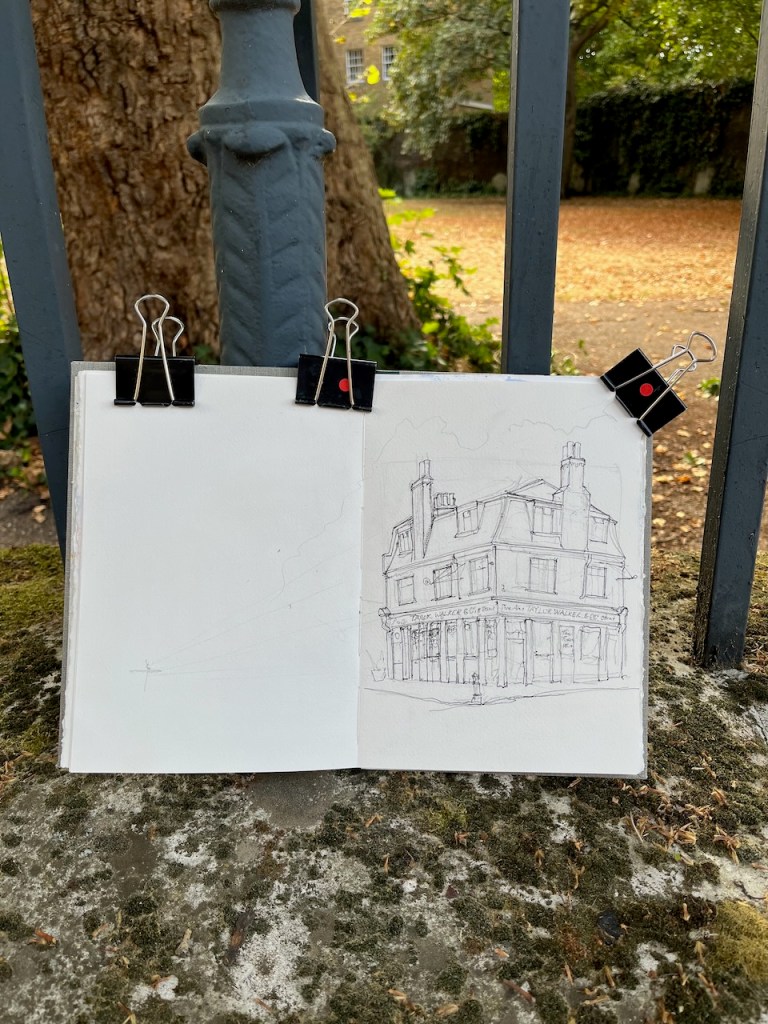
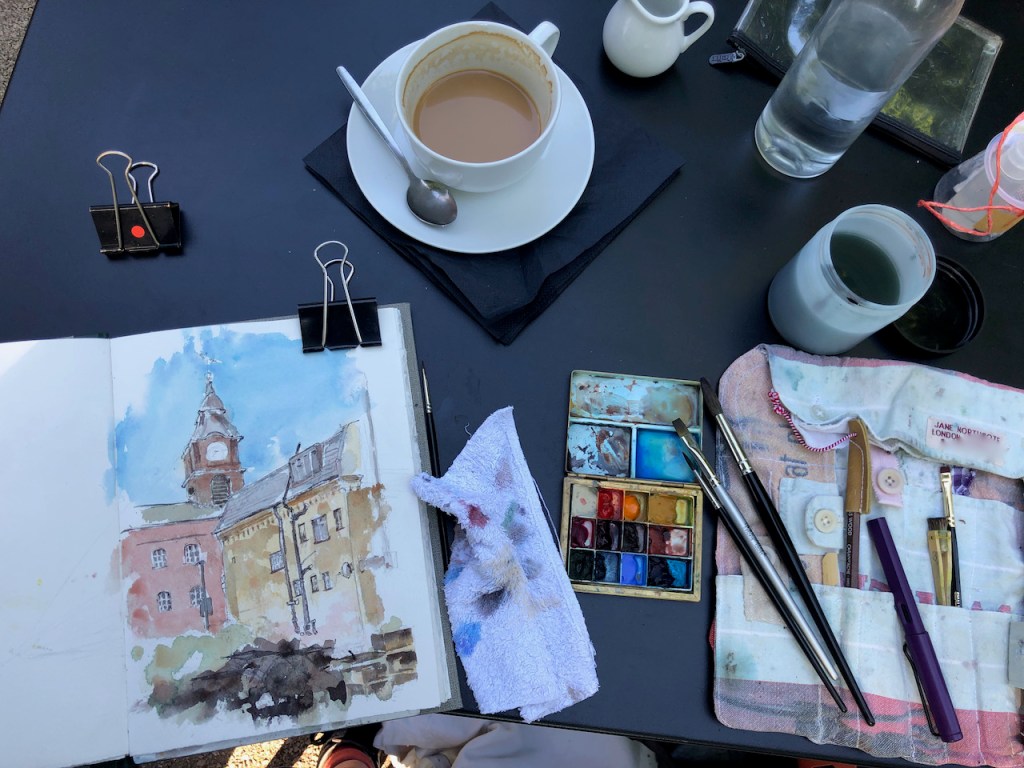
Sketchbook 16 spread

I’ve read that you can walk through the Rotherhithe Tunnel starting from one of the the tunnel entrances and passing under the shaft I’ve drawn. Those who have tried it8, even during the pandemic, do not recommend the experience. The tunnel is highly polluted from the vehicle fumes, and the pavement is narrow. It’s even pretty terrifying to drive through it in a car. Close the windows and the air vents, and stay alert while driving. If you’d like to walk a Thames tunnel, I recommend the Greenwich Foot Tunnel, or the Woolwich Foot tunnel, both of which I’ve walked. They are fun, eerie and have no traffic to pollute the air. You can read about my excursion to the Woolwich Foot Tunnel here.

Disambiguation: The Rotherhithe Tunnel I’m talking about in this post is not the same as an earlier tunnel built between 1825 and 1843 by Marc Brunel, and his son, Isambard. This Brunel tunnel was a little further upstream, and is now used as a railway tunnel only.


References:

  1. Transport For London Press release 12 June 2018 contains data about the numer of vehicles using the tunnel: https://tfl.gov.uk/info-for/media/press-releases/2018/june/rotherhithe-tunnel-celebrates-110-years-of-transporting-people-across-the-thames ↩︎
  2. Access to the tunnel via the shafts was from 1908 until the 1970s. FOI FOI-0398-2526 confirms the presence of stairs inside the shaft building: TfL Freedom of information request FOI-0398-2526: https://tfl.gov.uk/corporate/transparency/freedom-of-information/foi-request-detail?referenceId=FOI-0398-2526 ↩︎
  3. Historic England Listing: https://historicengland.org.uk/listing/the-list/list-entry/1260101?section=official-list-entry ↩︎
  4. Roof replacement 2007 confirmed by King Edward VII park “Management Plan” 2008 page 15: “The park surrounds the tunnel vent and access shaft to the Rotherhithe Tunnel. The tunnel was opened in 1908, the vent was present before the park was constructed, and early images of the park show that it visually dominated the site. The tunnel vent remains an important feature, but is no longer so visually dominant due to the present day maturity of trees in the park. The Rotherhithe Tunnel was refurbished in 2007 and a replacement roof was installed as part of these works.”
    Link: https://www.towerhamlets.gov.uk/Documents/Leisure-and-culture/Parks-and-open-spaces/king-edward-management-plan.pdf ↩︎
  5. Roof of the shaft:
    1908 – glass dome,
    by 1946 – no roof (removed in the 1930s),
    from 2007 – current roof as in my drawing.
    Evidence:
    London Picture Archive has a picture of the shaft in 1921, where you can see the glass dome that covered the shaft. Record number 118817, Catalogue number SC_PHL_01_392_A360 See this link: https://www.londonpicturearchive.org.uk/view-item?WINID=1762114518393&i=121045. They also have photographs from 1971 where it’s clear that the roof has been removed completely. See photo on this link, record number 237845, catalogue number SC_PHL_02_0666_71_35_217_30A: https://www.londonpicturearchive.org.uk/view-item?i=239938
    “A London Inheritance” post contains an aerial picture from 1946 showing that the roof had been removed by that date. See this link. This post says: ” The following photo dated 1946 from Britain from Above shows the park at lower left. Note the round access shaft to the Rotherhithe tunnel. In the photo the shaft has no roof. The original glass roof was removed in the 1930s to improve ventilation. The current roof was installed in 2007.” ↩︎
  6. Thames Tideway Tunnel information from the Tideway tunnel website: https://www.tideway.london/locations/king-edward-memorial-park-foreshore/ ↩︎
  7. Depth of the Rotherhithe Tunnel is from the website of the Rotherhithe & Bermondsey  Local History Society on this link: https://www.rbhistory.org.uk/rotherhithe-road-tunnel ↩︎
  8. Walking through the Rotherhithe tunnel: see for example “Ian Visits” : https://www.ianvisits.co.uk/articles/walking-through-a-tunnel-under-the-thames-part-1-11764/ ↩︎
The Prospect of Whitby, Wapping E1

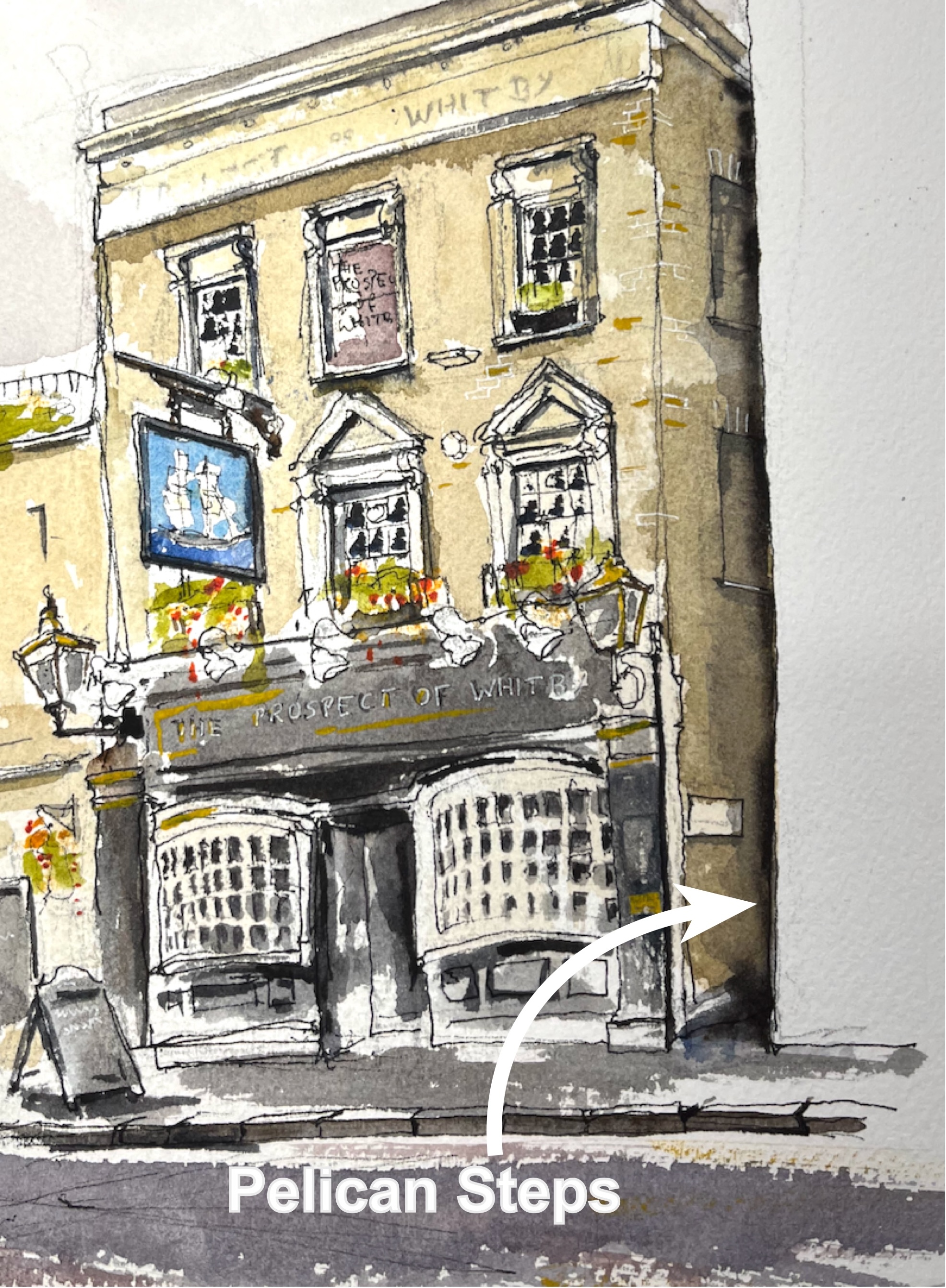
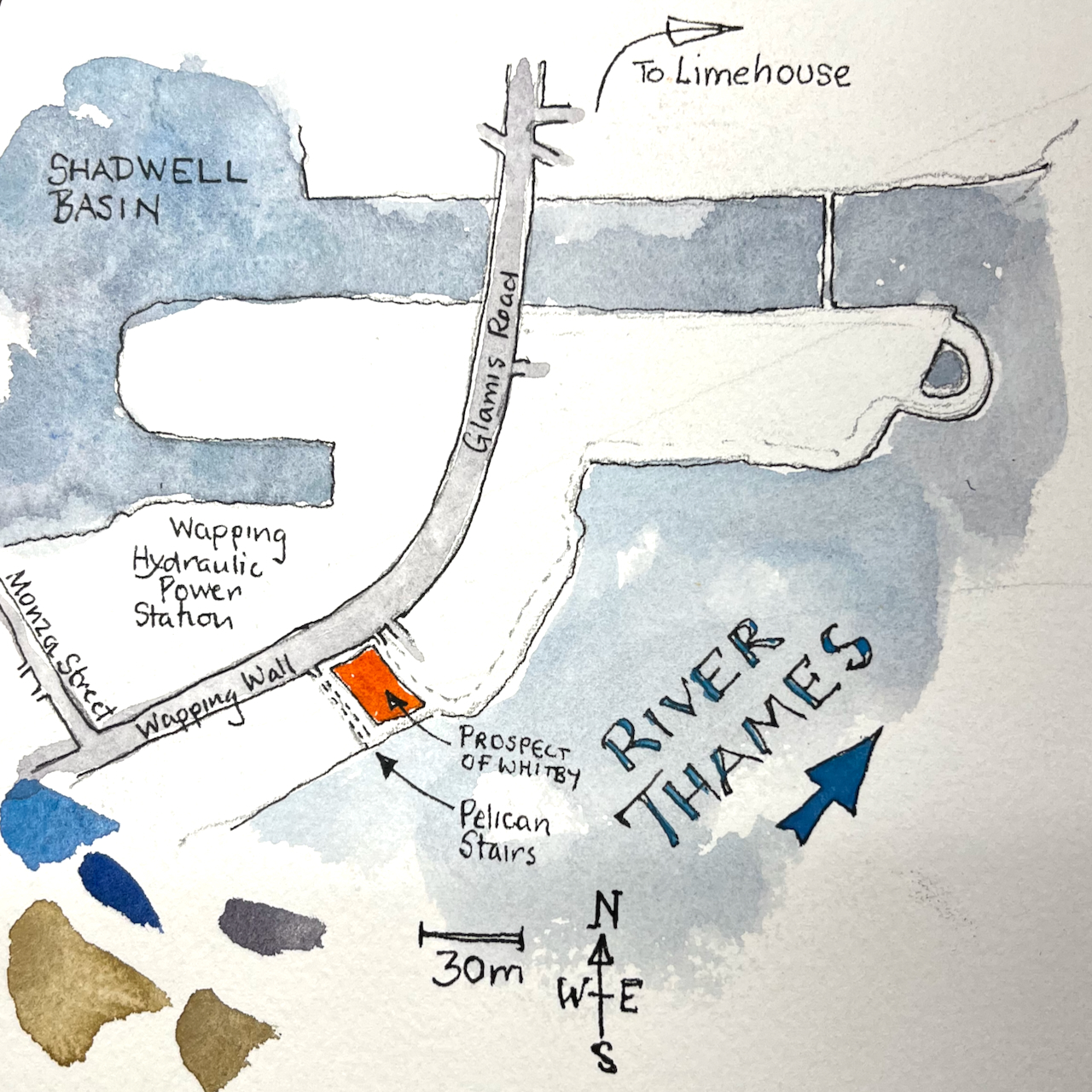
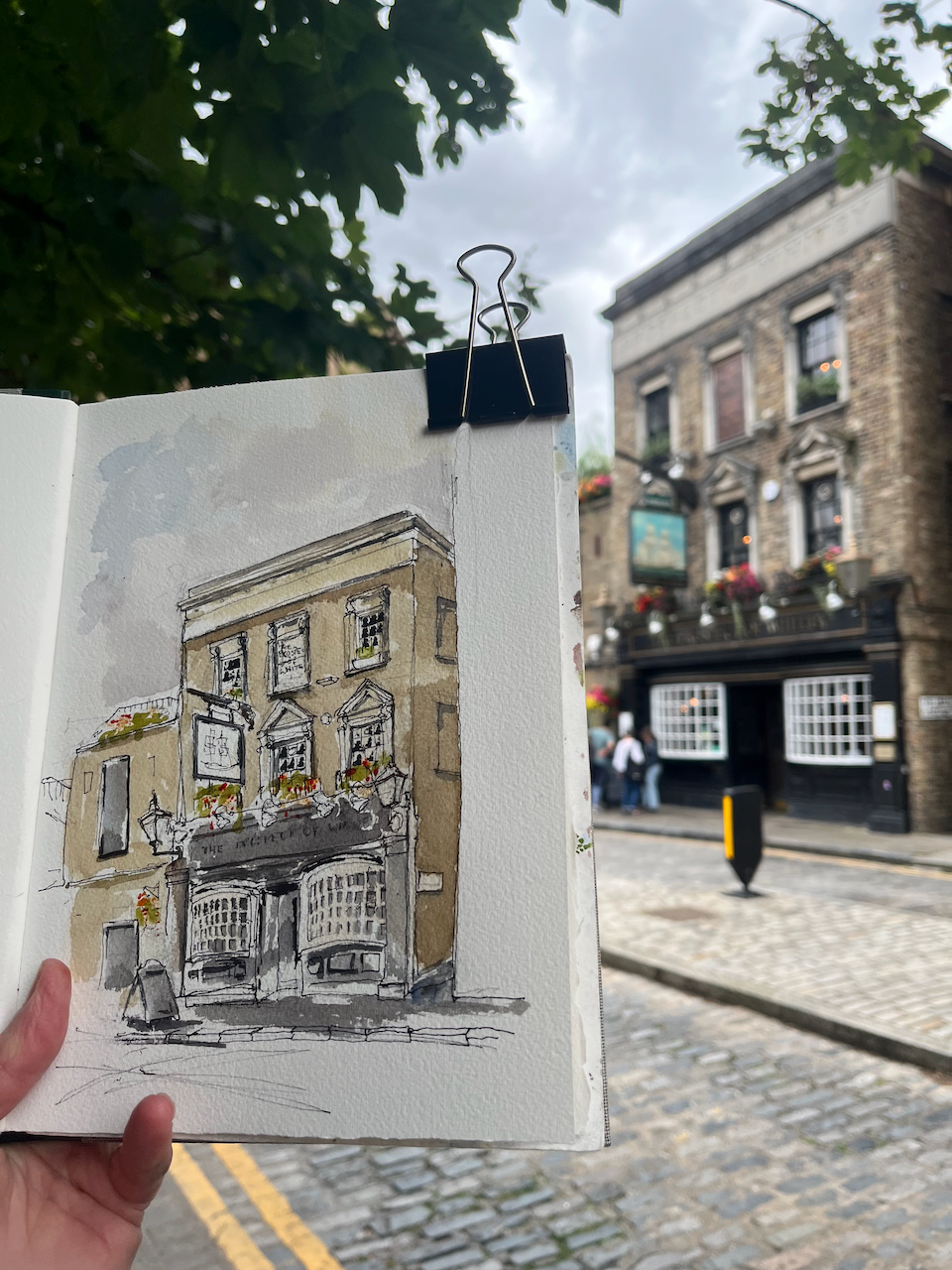
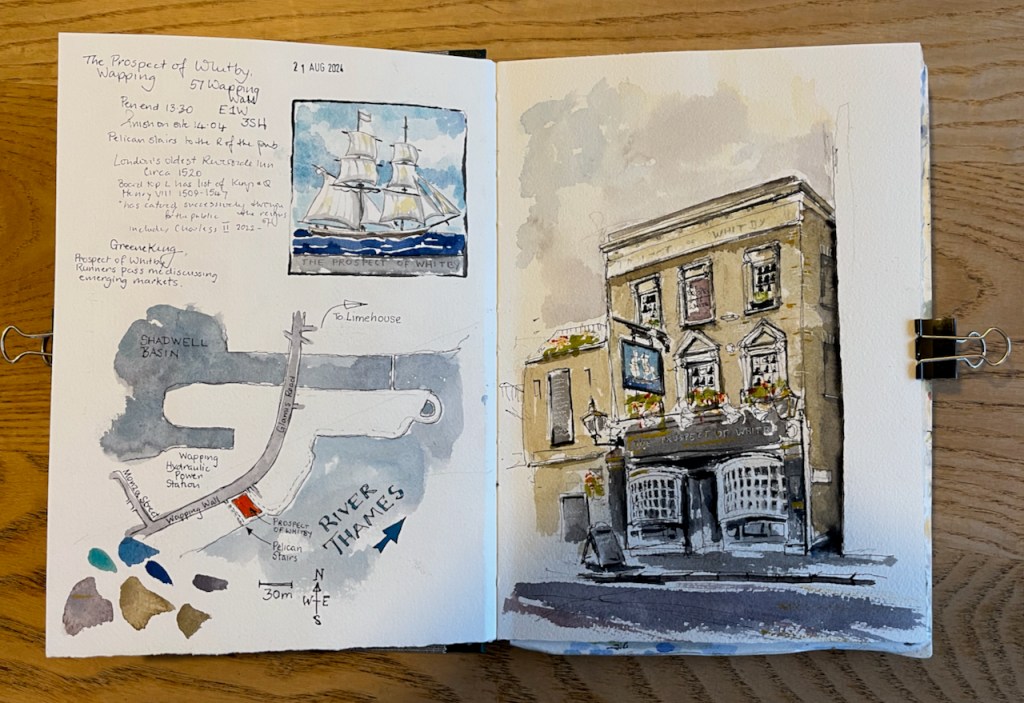
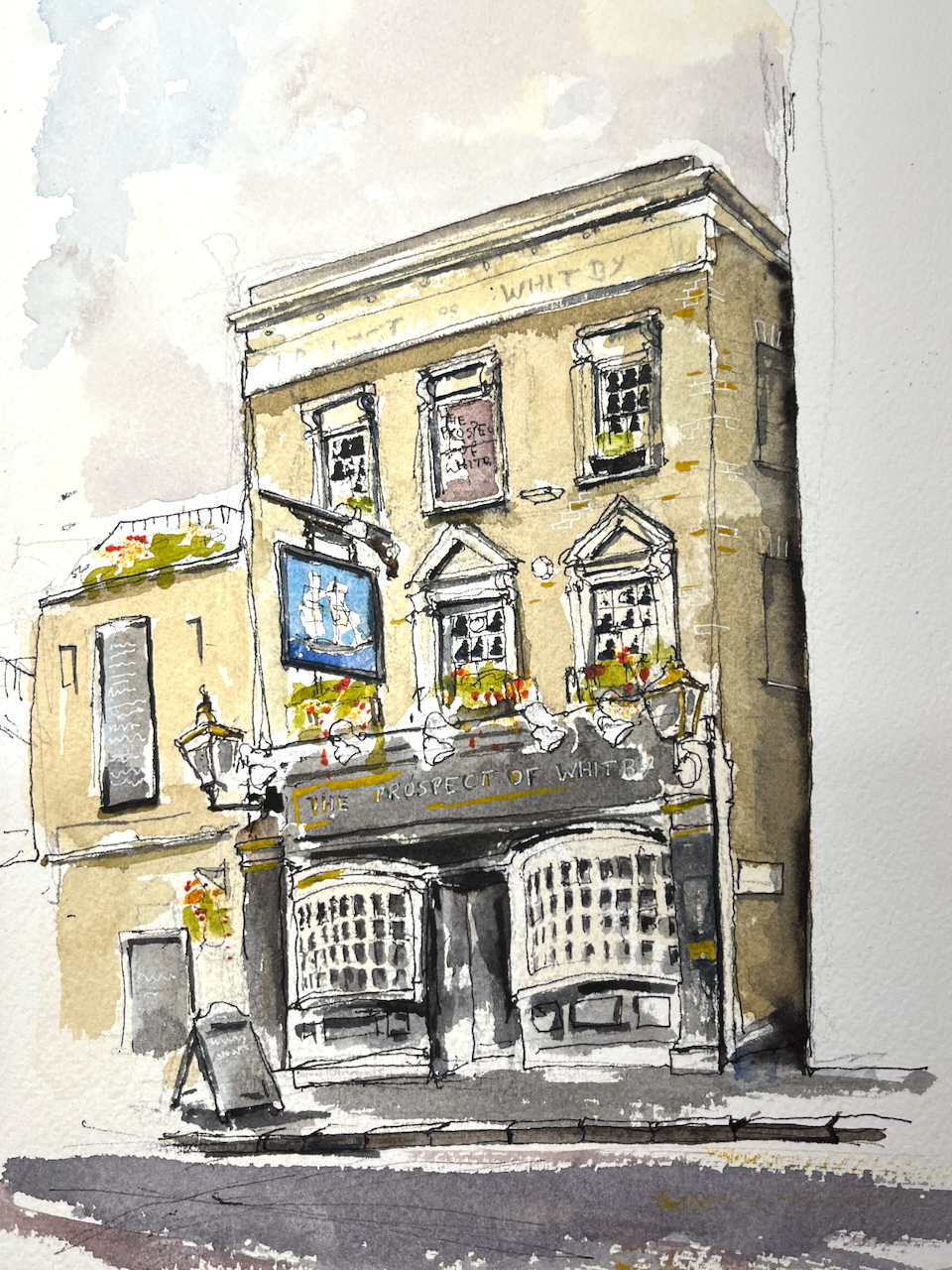
Here is the “Prospect of Whitby” pub by the Thames in Wapping.

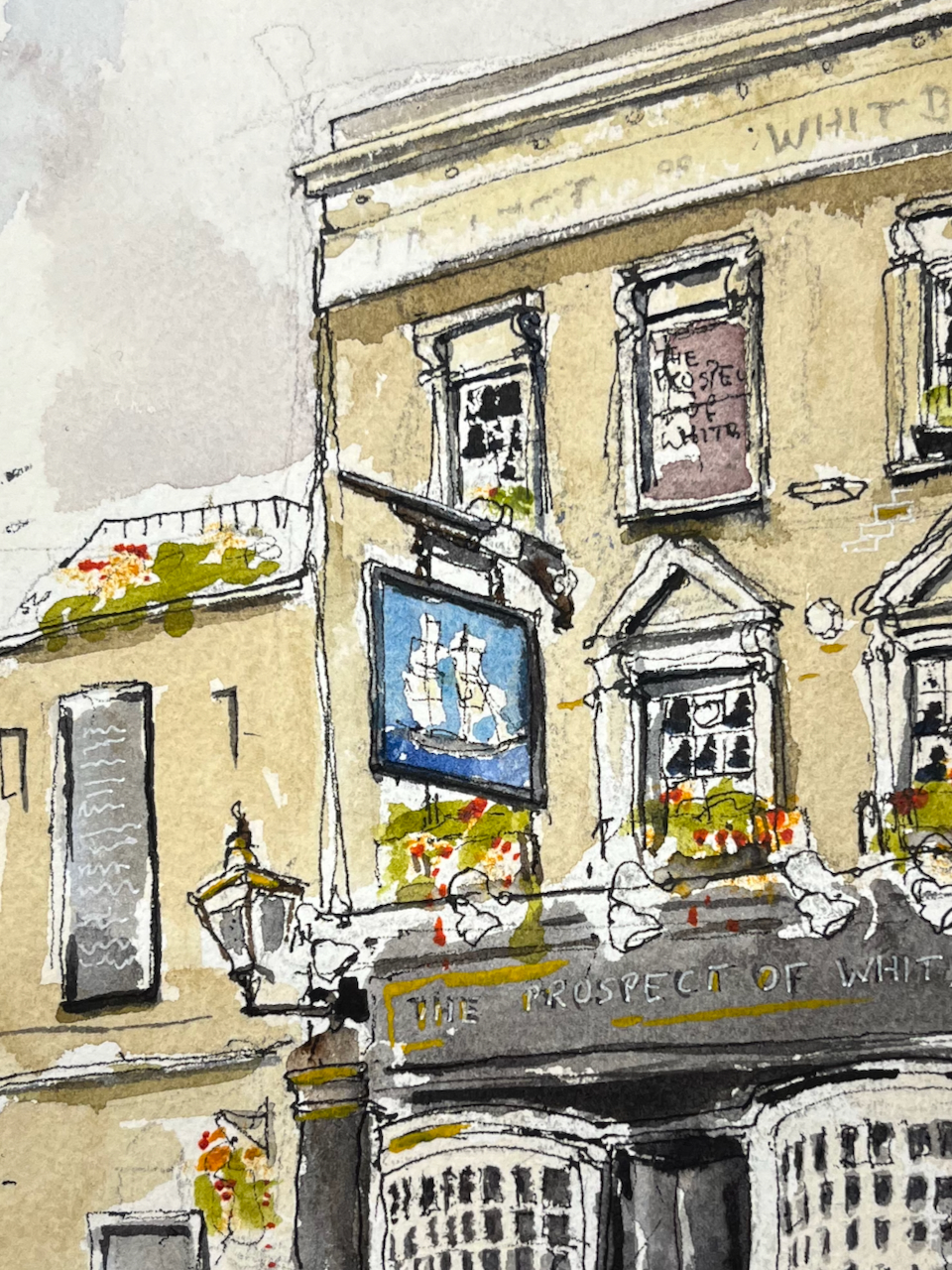
“The Prospect of Whitby” sketched 21 August 2024 at 2pm, the first picture in Sketchbook 15

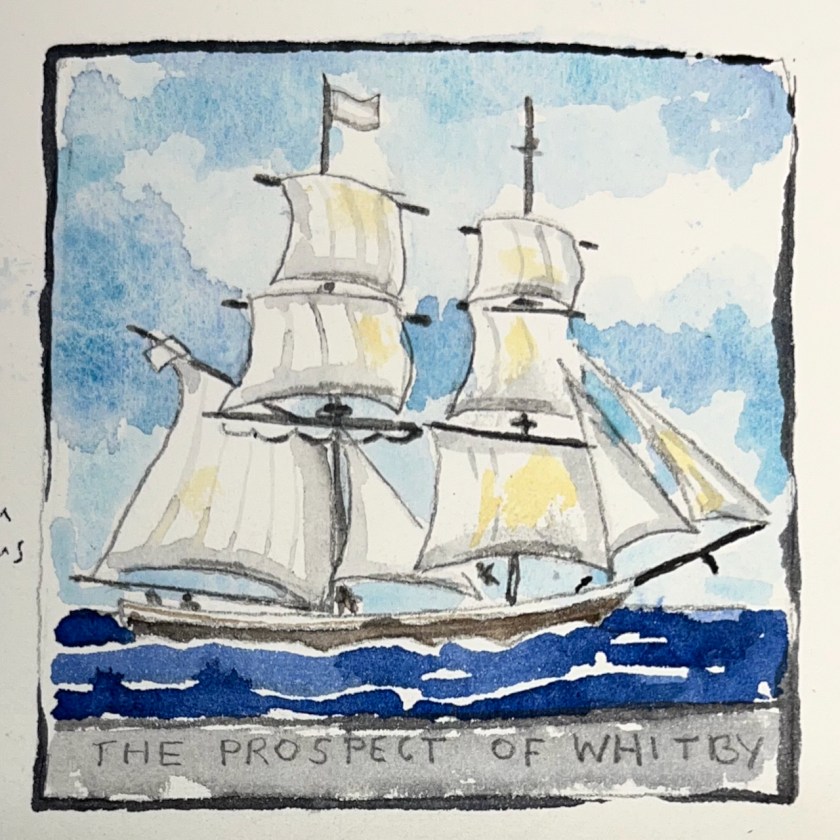
The “Prospect of Whitby” is the name of a ship.

The coal boat, “Prospect of Whitby”, from the pub sign.

There is an informative entry about the whole area in “The London Inheritance” website. He writes:

“The pub was originally called The Pelican and the alley and stairs down to the river at the side of the pub to the right are still named Pelican Stairs.

The pub is listed Grade II.

Nearby is the Wapping Hydraulic Power Station, which I have sketched previously.

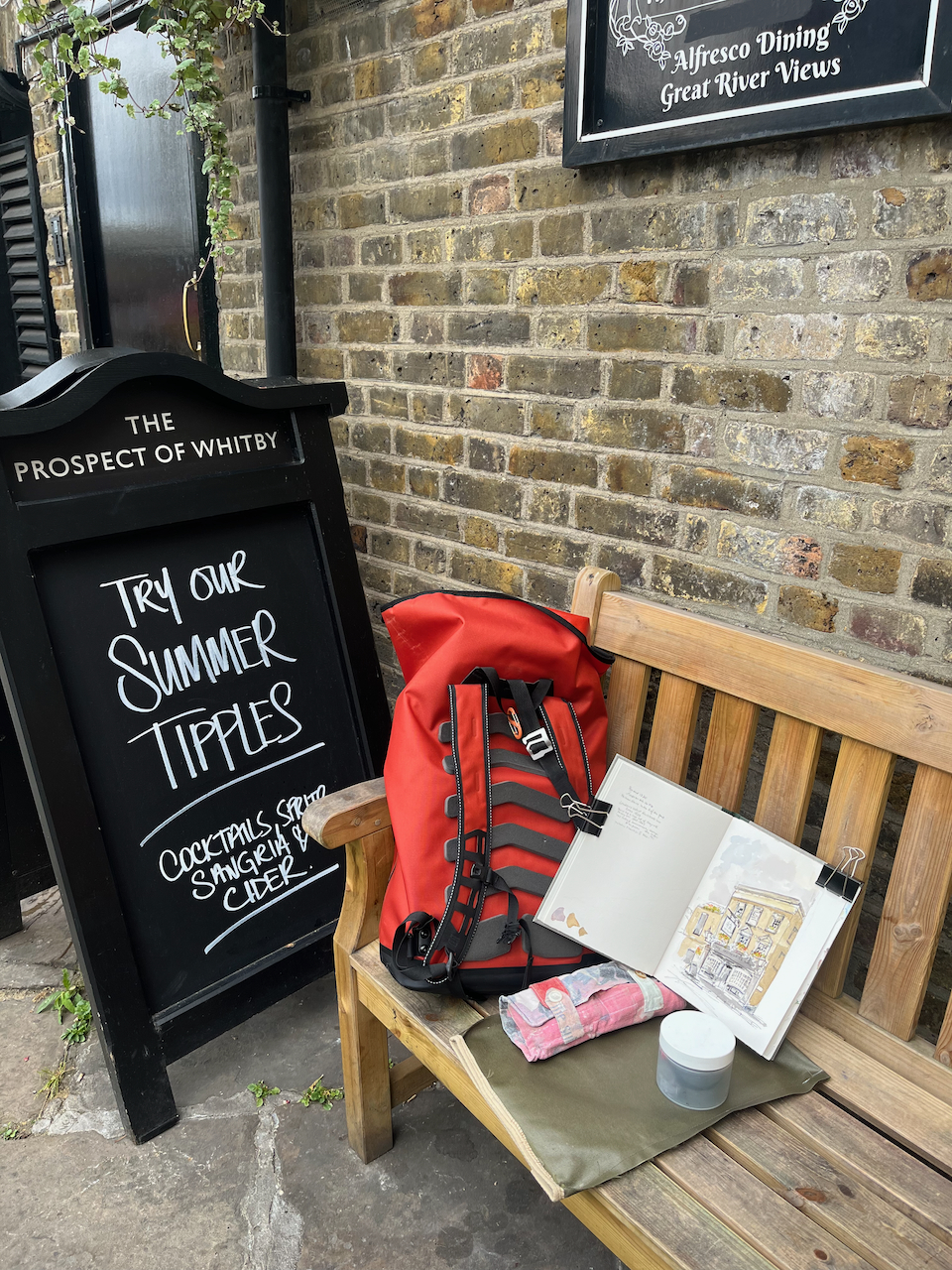
I sketched The Prospect of Whitby sitting against the wall opposite, and then finished off the picture on the convenient bench outside the pub.

Sketchbook 15

“The House they Left Behind” London E14

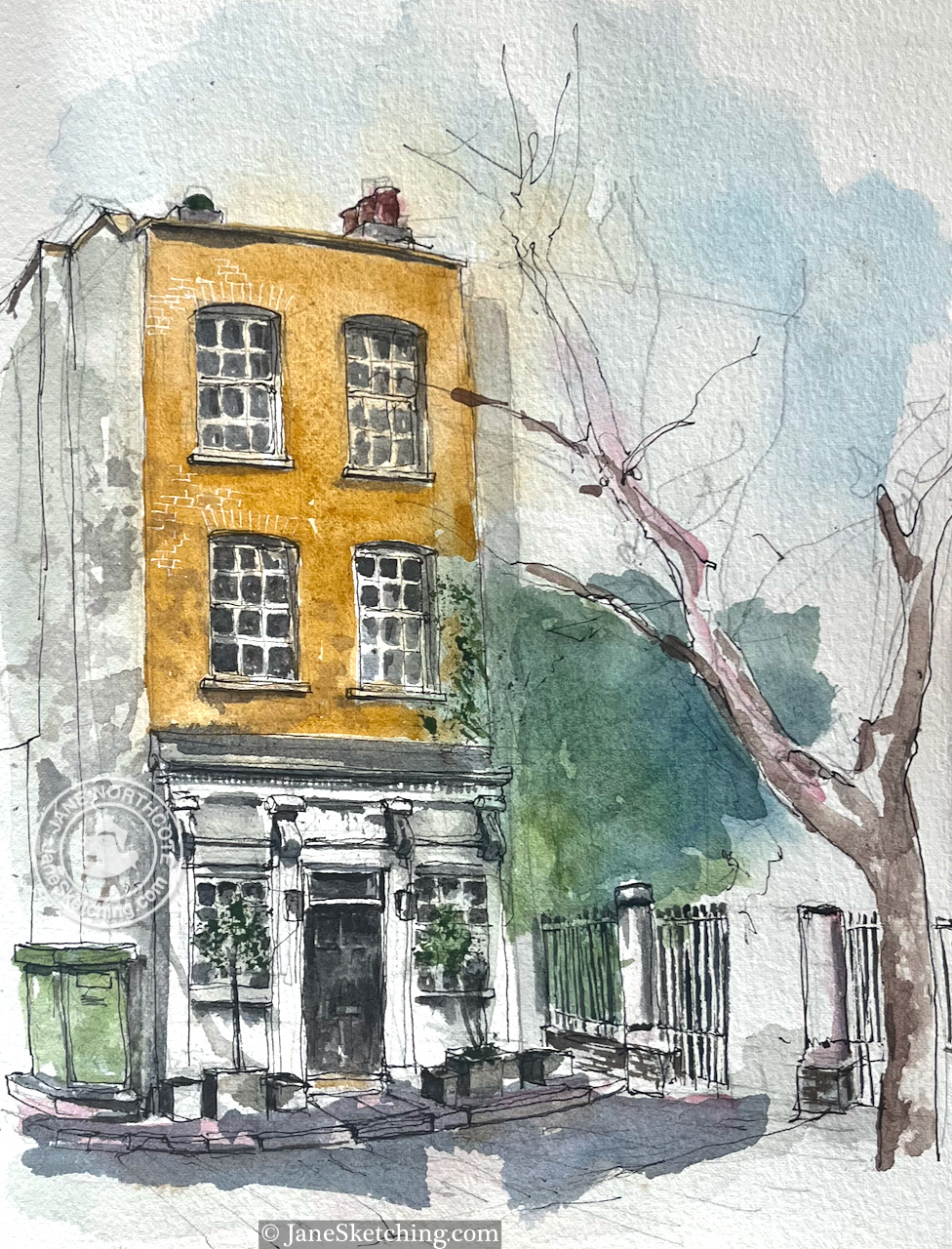
I read an article in “A London Inheritance” about this house, and went off on an expedition to find it.

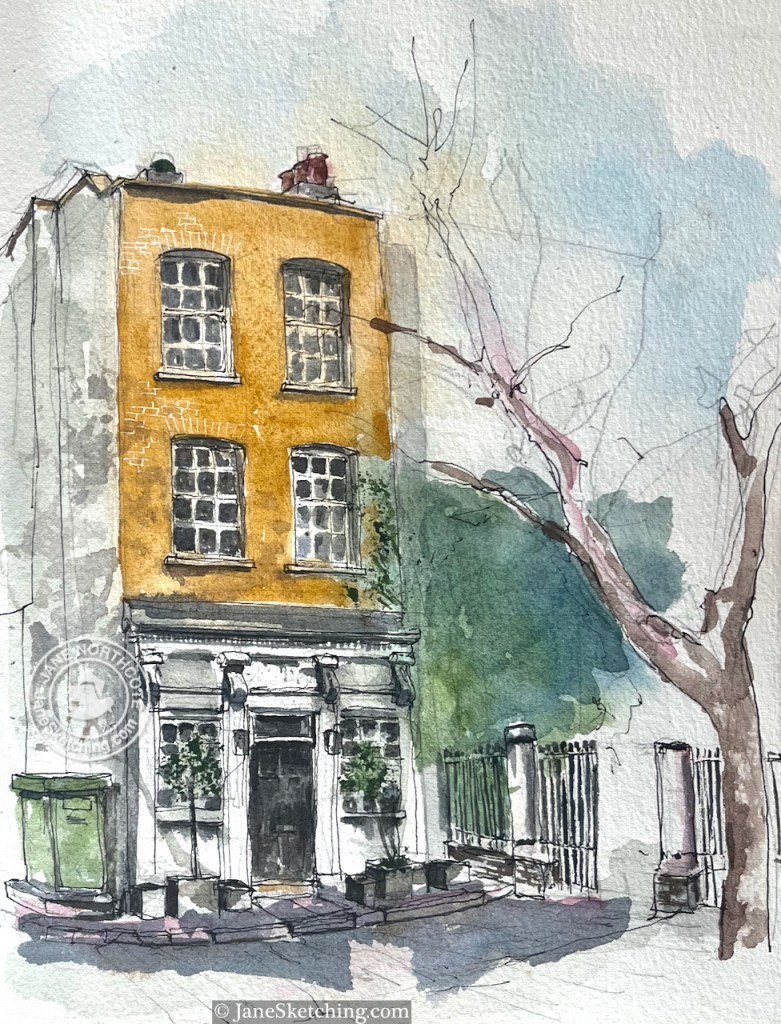
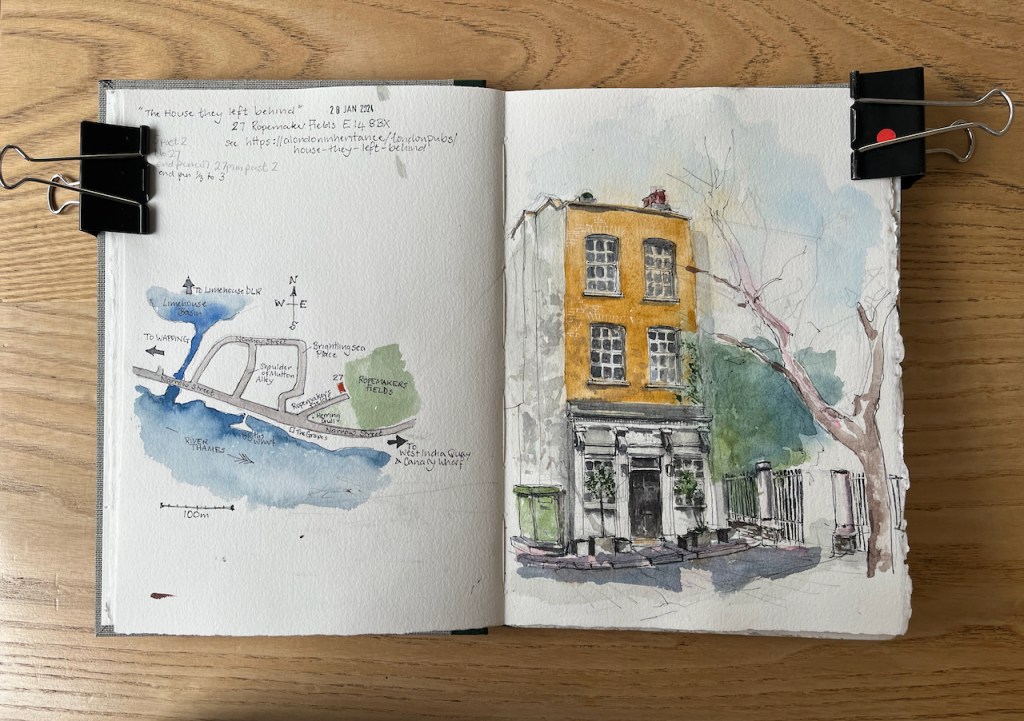
“The House they left Behind”, 27 Ropemakers Fields, London E14 8BX, sketched in Sketchbook 14 28th Jan 2024 at 2pm

The London Inheritance article shows a 1986 photo taken by the author’s father. Painted on the side of the building was the sign:

THE HOUSE THEY LEFT BEHIND
BUILT 1857
RESTORED 1985

The sign has now been painted over. The wall, which is on the left of my drawing, is now completely white. But the name lives on and appears on current maps. Here is a map showing where the house is.

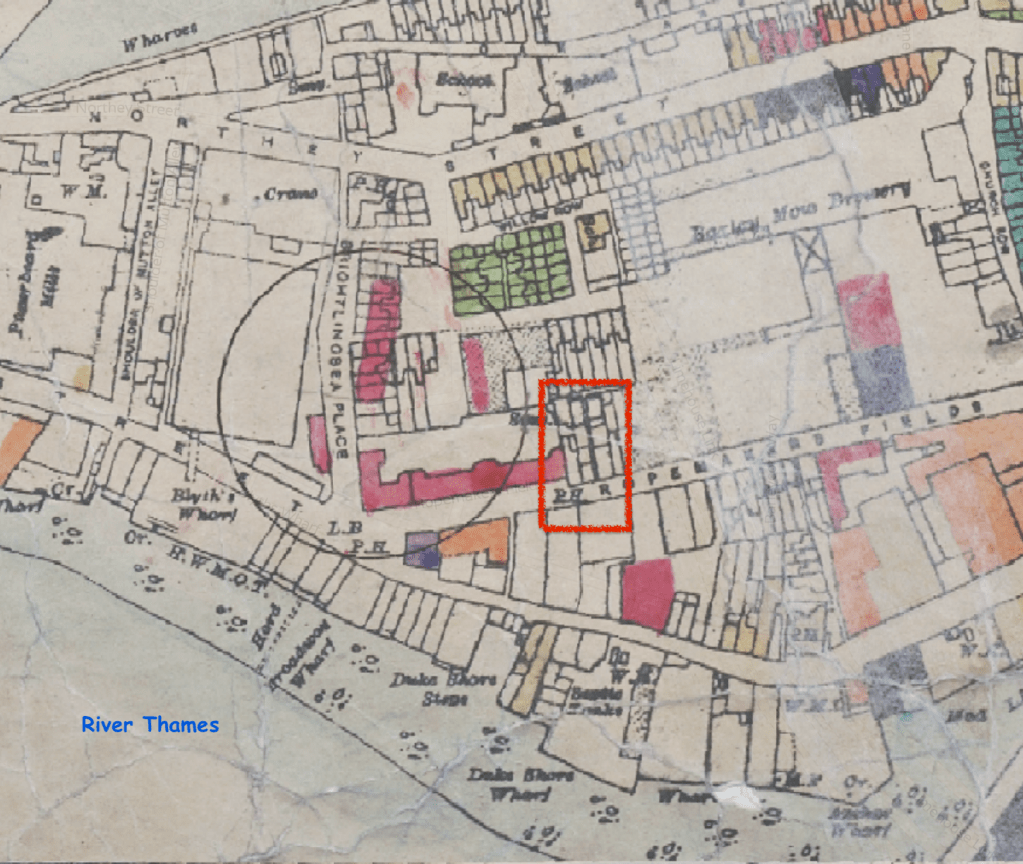
The building is now residential, but was previously a pub. It was “left behind” by the bombs dropped on London by the Luftwaffe in the 1939-45 conflict. The website “Layers of London” provides maps of bomb damage in London. Here is the area.

Map showing bomb damage. Classified from Total Destruction (Black), through Seriously Damaged (Dark Red) to Clearance Areas (Green).
credit:
https://www.layersoflondon.org/map/overlays/bomb-damage-1945
Map provided by London Metropolitan Archives. Geo-referenced with the support of the National Library of Scotland 

The map is based on 1:2500 Ordnance Survey sheets originally published in 1916. The bomb damage was recorded on these maps by hand soon after it happened. The circle represents where a V2 rocket landed. The red area shows buildings that were classified as “seriously damaged – doubtful if repairable”. As you see, the pub, labelled “P.H.”and outlined in red, is shown as undamaged.

I found more information on Bomb Damage Maps from a National Geographic article on a book about the maps. This article also provides a detailed key to the colours on the map. The book is “The London County Council Bomb Damage Maps” by Laurence Ward.

“A diary entry included in the book, from architect Andrew Butler on April 20, 1941, gives an idea of what the work was like:

For the block I have started on—eight floors high with two flats on each floor—has had its whole face ripped off … I found it possible to stand on part of the roof. So, clutching a broken chimney, I surveyed the damage there. My notebook became very messy. What with the dust and soot, wet filth and the perspiration of fluster on my hands, it was difficult to read what I wrote. The notes served their purpose however when, after drying the book, I had to transcribe them into a report.”

https://www.nationalgeographic.com/science/article/bomb-damage-maps-reveal-londons-world-war-ii-devastation

The original maps are in the London Metropolitan Archives.

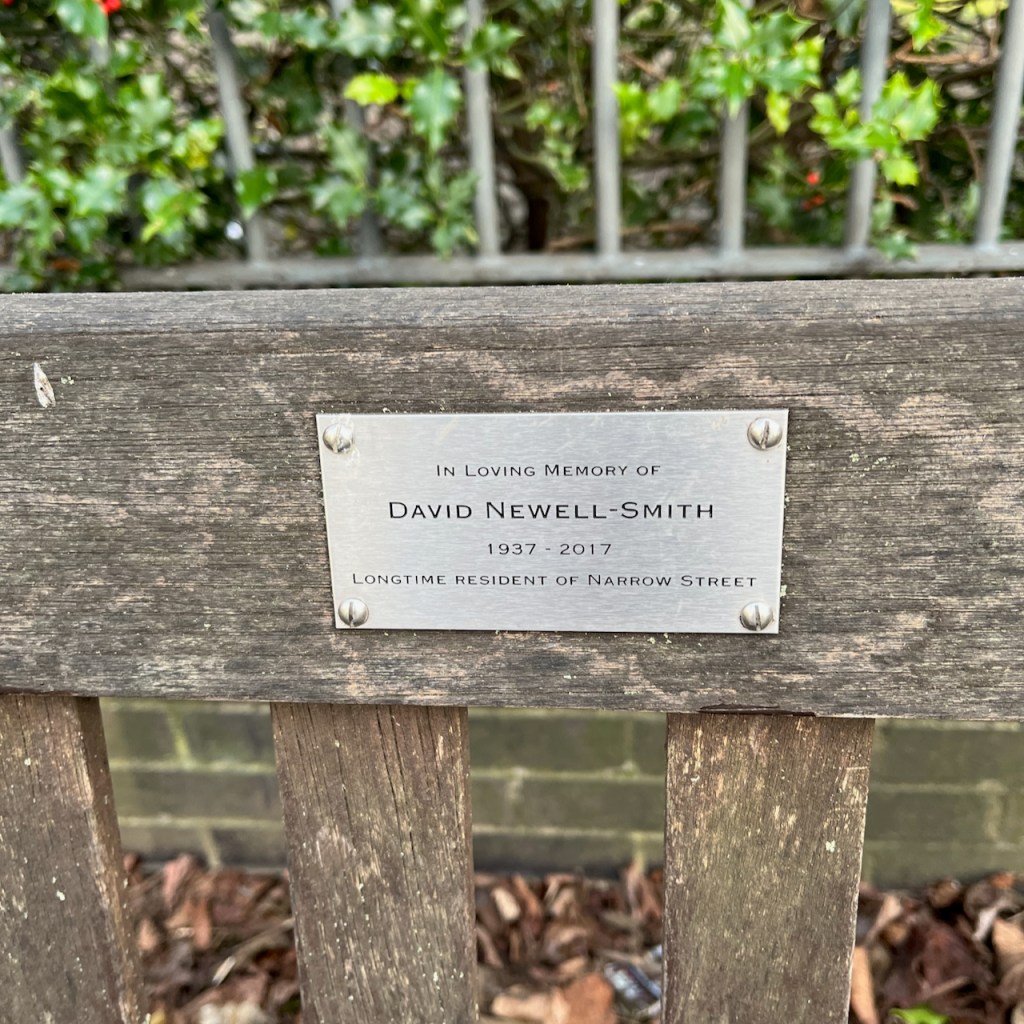
Here is my work in progress on the sketch. Thank you to the author of “A London Inheritance” for providing the stimulus for this expedition. Thank you also to the friends and family of local resident David Newell-Smith, on whose memorial bench I completed the sketch. His dates are given as 1937-2017. He would have been a boy when the bombs were falling.

Wapping Hydraulic Power Station, London E1

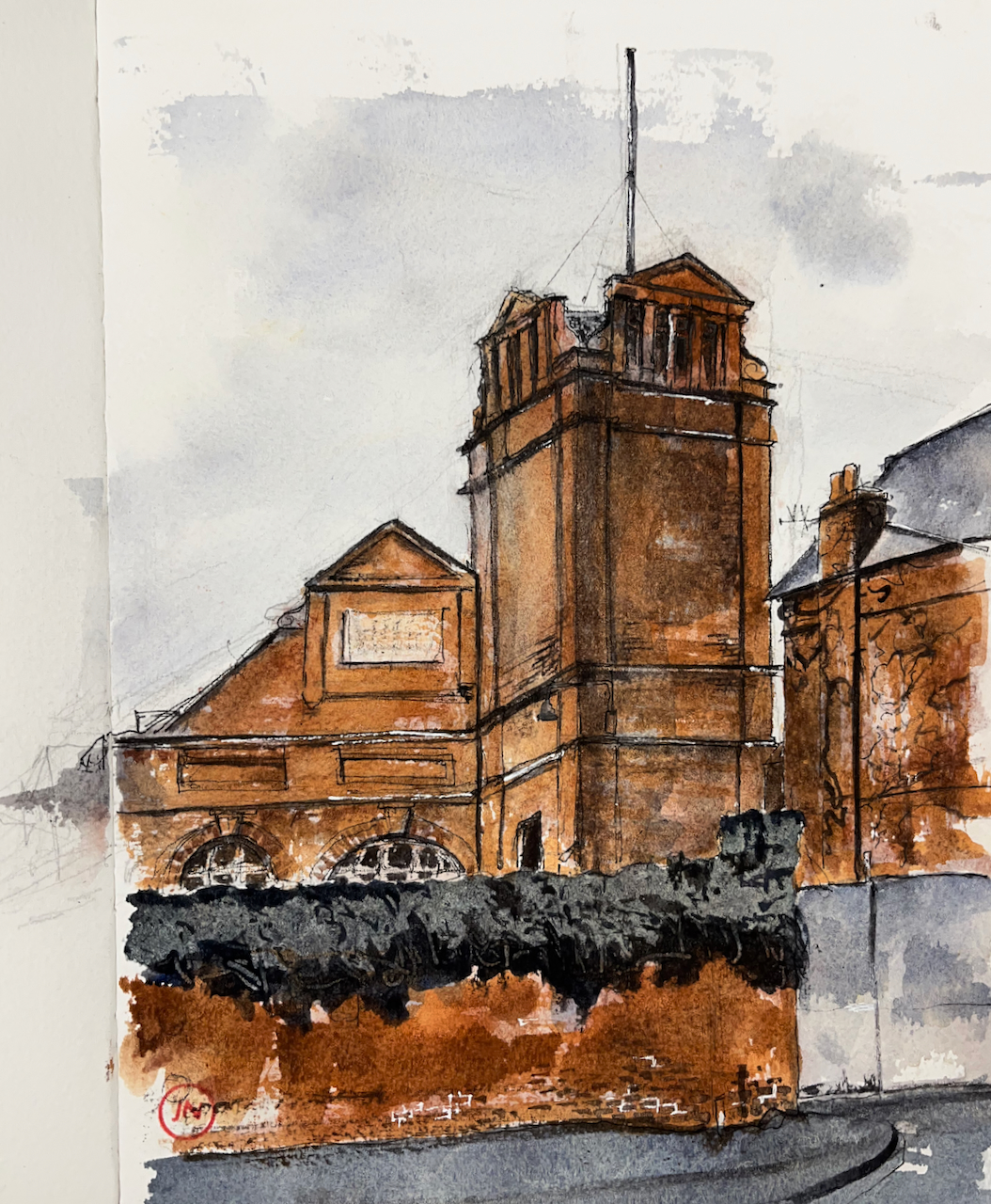
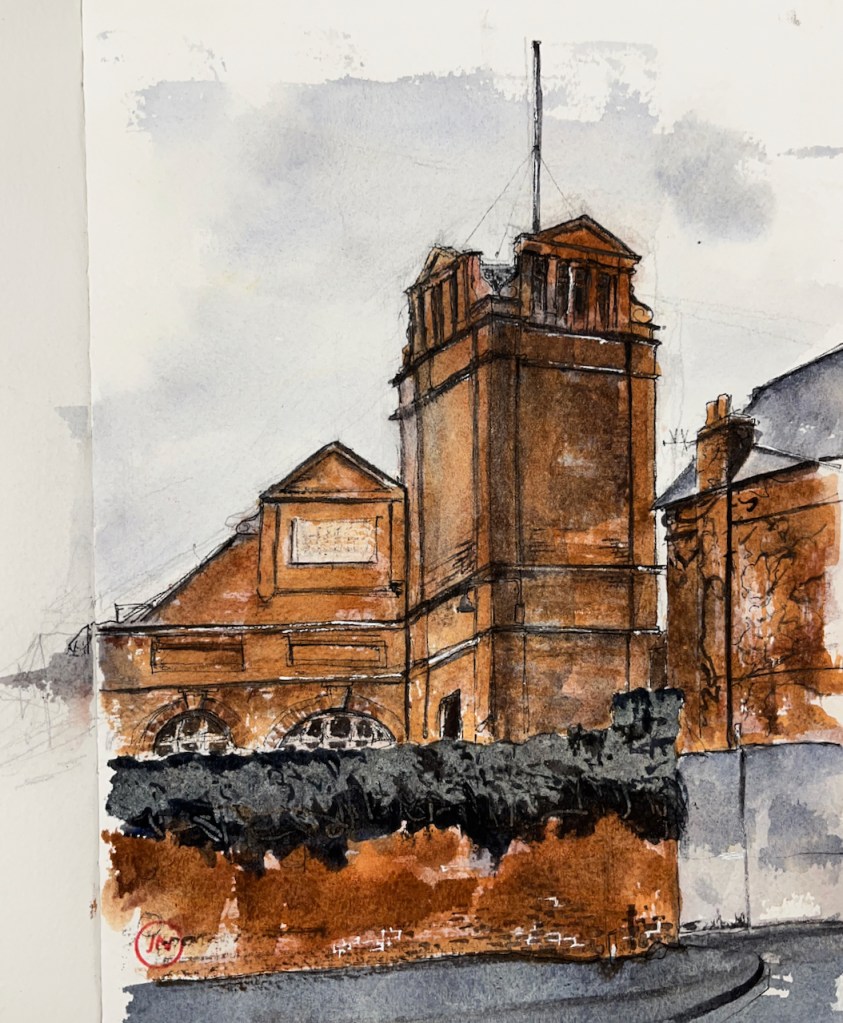
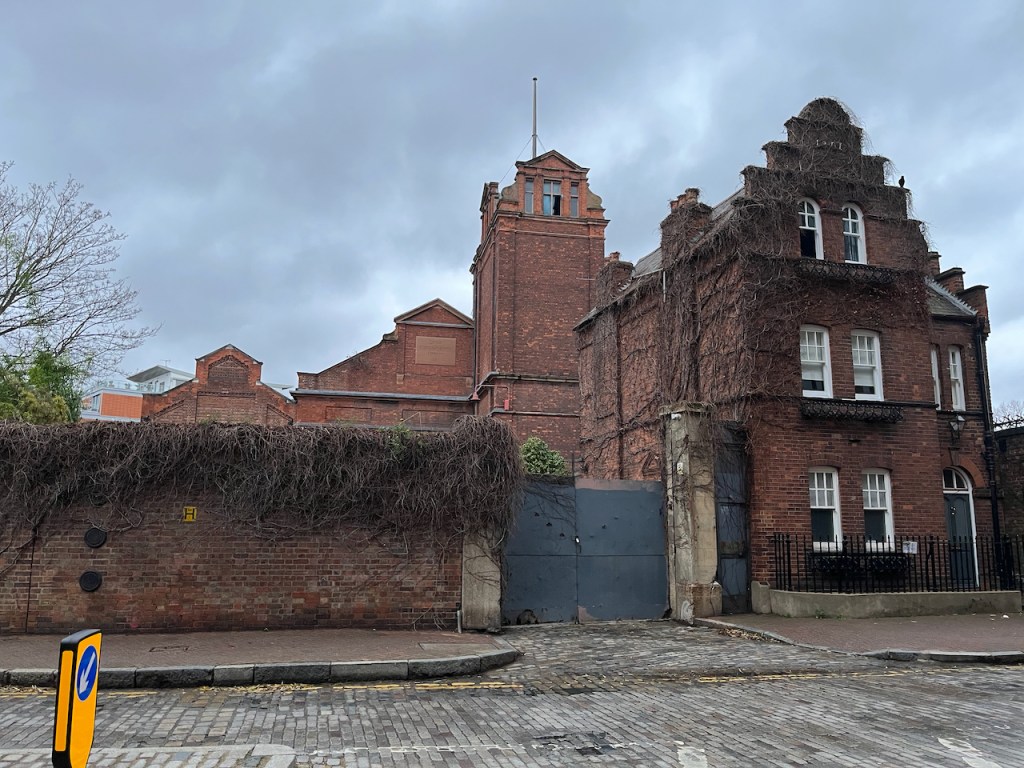
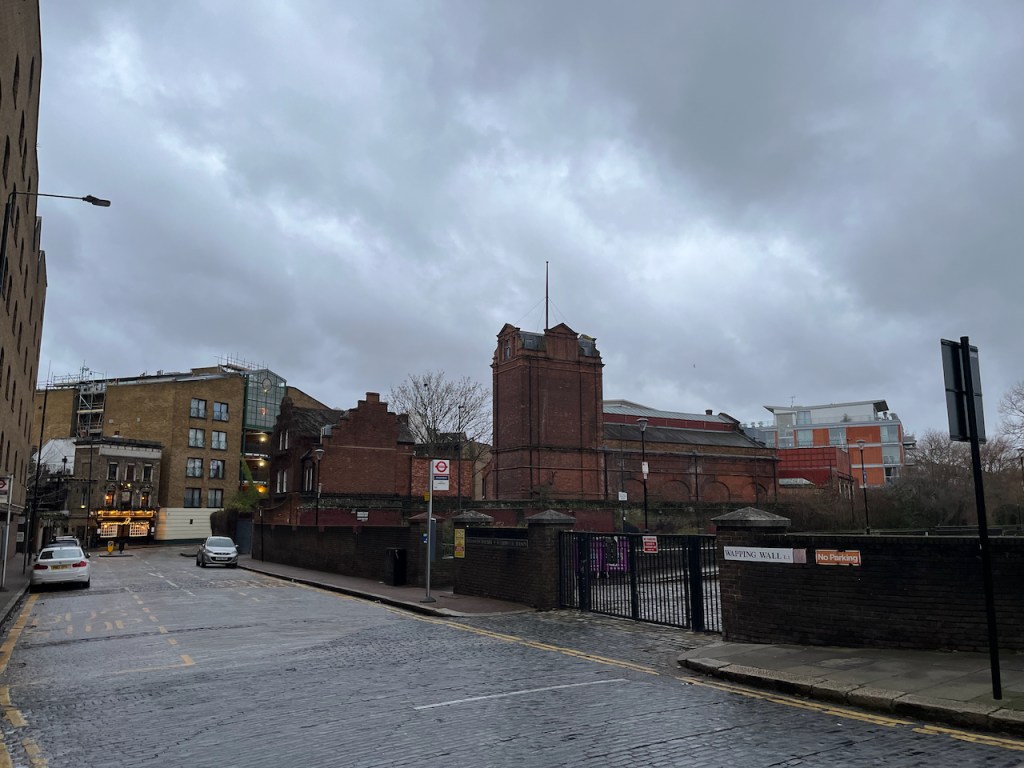
What an amazing building! It presides over a corner of Shadwell Basin, surrounded by a high wall. I spotted it on a long weekend run, and went back later to sketch it.

Wapping Hydraulic Power Station, sketched 1 Jan 2023 in Sketchbook 12, 7″ x 9″

What’s a Hydraulic Power Station? Well, in the late nineteenth century, London’s industry needed a way to exert mechanical force: to operate a printing press for example, or to raise heavy weights, for cranes and metal forming. Also, passenger lifts had been invented, and building engineers needed a way to exert force to operate the lift. One way would be to have a steam engine on site. This wasn’t always practical. Steam engines are noisy and dirty and you don’t want one next to your desirable residence, or even cluttering up your dockyard. So here’s the next idea: instead of lots of little steam engines all over the place, we’ll have a big steam engines in just a few places, and we transmit the power from them by using water. Water? Yes. The big steam engines push water at high pressure down strong cast iron pipes, and the lift engineer at the far end effectively turns on a tap and the force of the water pushes the lift up. That’s the principle.

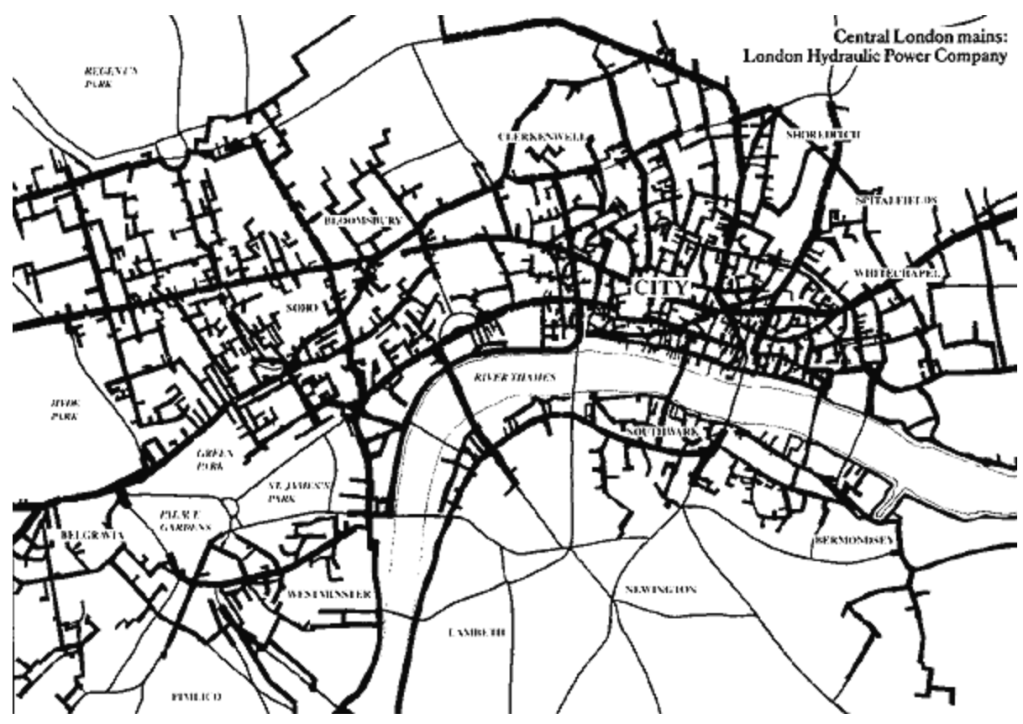
This sounds utterly implausible, but it worked. At the end of the nineteenth century, there was a great network of pipes all over London, holding water at high pressure. This water was used to raise passenger lifts, operate curtains at theatres, and to drive printing presses. It was used for cranes and other static machinery which required a strong, steady force. It’s a steampunk dream. Here’s a map. These pipes were everywhere.

The network of pipes supplying hydraudic power.
Map from https://www.subbrit.org.uk/features/hydraulic-power-in-london/

The plaque you can see in the centre of my drawing says “London Hydraulic Power Company 1890”. This was one of the big power stations driving the water along the pipes. The power came from a coal-fired steam engine.

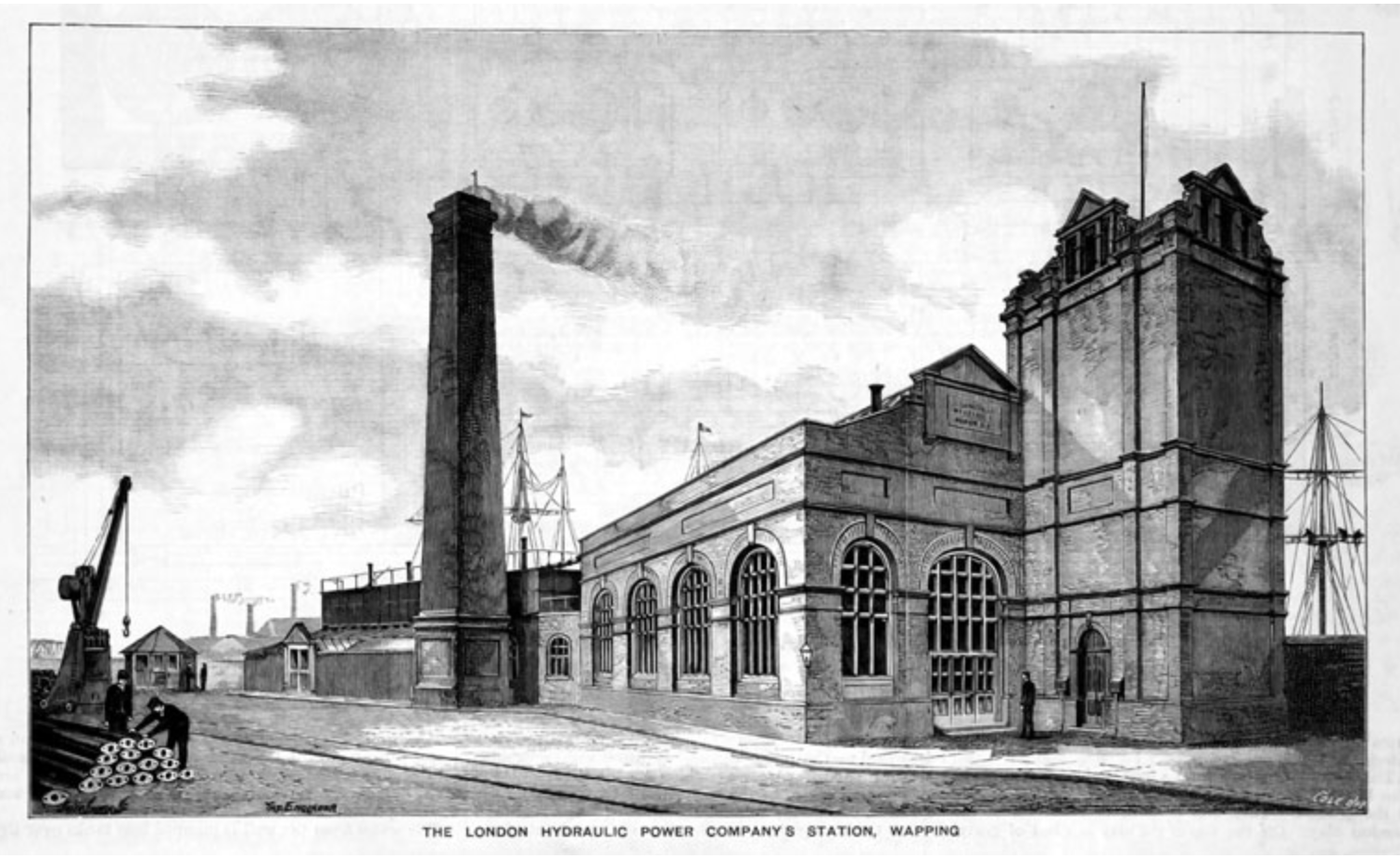
This is a picture from the early twentieth century. The chimney is from the steam engine room. The tall tower houses the “accumulator” where water under pressure is stored as a buffer against variation in demand. It is a sort of “battery”. A big weight sits at the top of a column of water. The weight is raised by pumping water in using steam power. The big weight then rests on the top of the water, keeping it under pressure and forcing it down the pipes.
This drawing is from roughly the same place where I did my drawing. Note the sailing boats in Shadwell basin, to the right and in the background. The Thames is off the picture, to the left. Picture from: https://www.gracesguide.co.uk/File:Im1893EnV75-p43.jpg#file (creative commons)
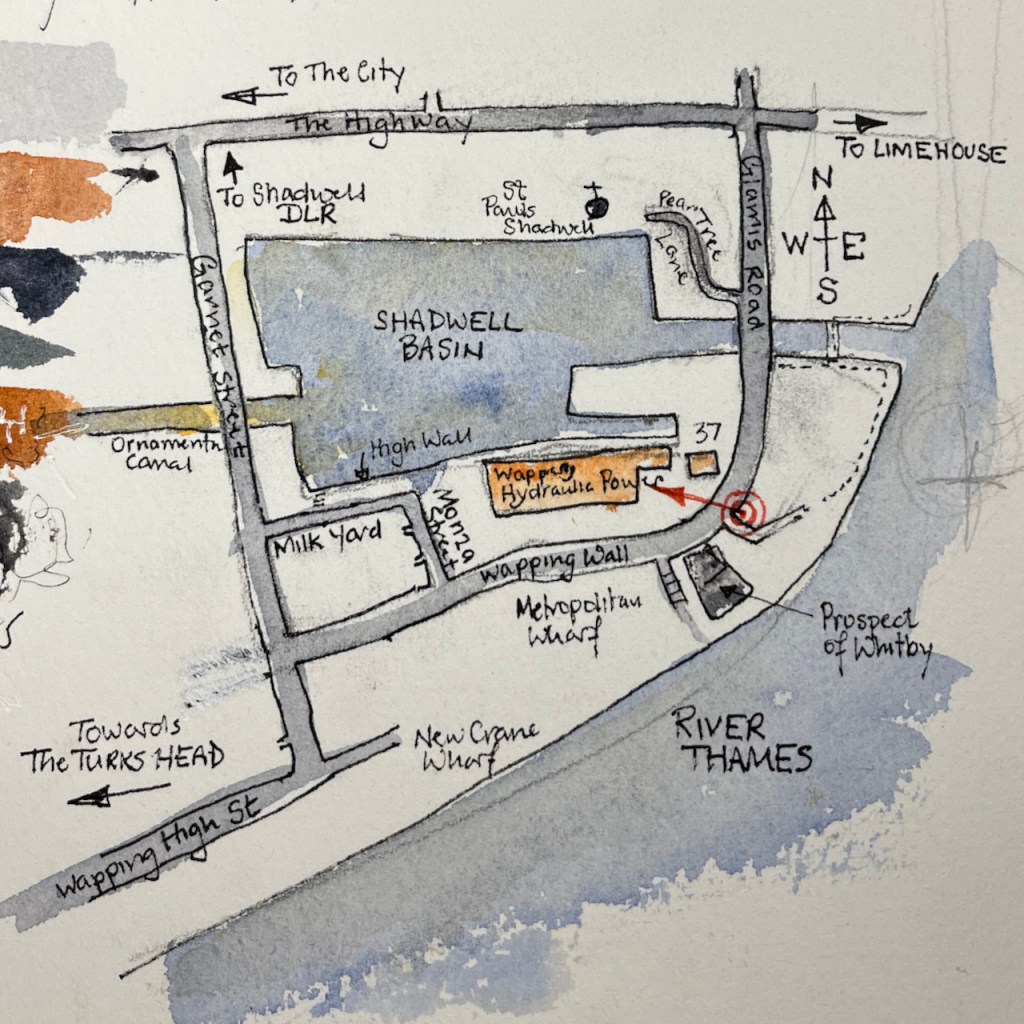
Map showing where I stood to do the drawing, which is also the approximate view point of the early twentieth century picture above.

Here is a summary of the history of the building, gleaned from various web searches:

  • 1890: completed and started working. In use until 1977.
  • September 1973: first listing
  • June 1977: use discontinued
  • December 1977: Grade II* listed, including the machinery (listing ref 1242419)
  • 1993-2013 – owned and operated by Jules Wright as “The Wapping Project”: an art and entertainment venue.
  • 2013: Sold to UK Real Estate Limited
  • March 2019: planning application for an office building in the courtyard, retail and restaurant space and changes to the interior
  • October 2020: planning permission approved (ref PA/19/00564/NC and PA/19/00571/A1), despite objections from The Victorian Society and the Turks Head Charity.
  • Meanwhile – it’s an event space.

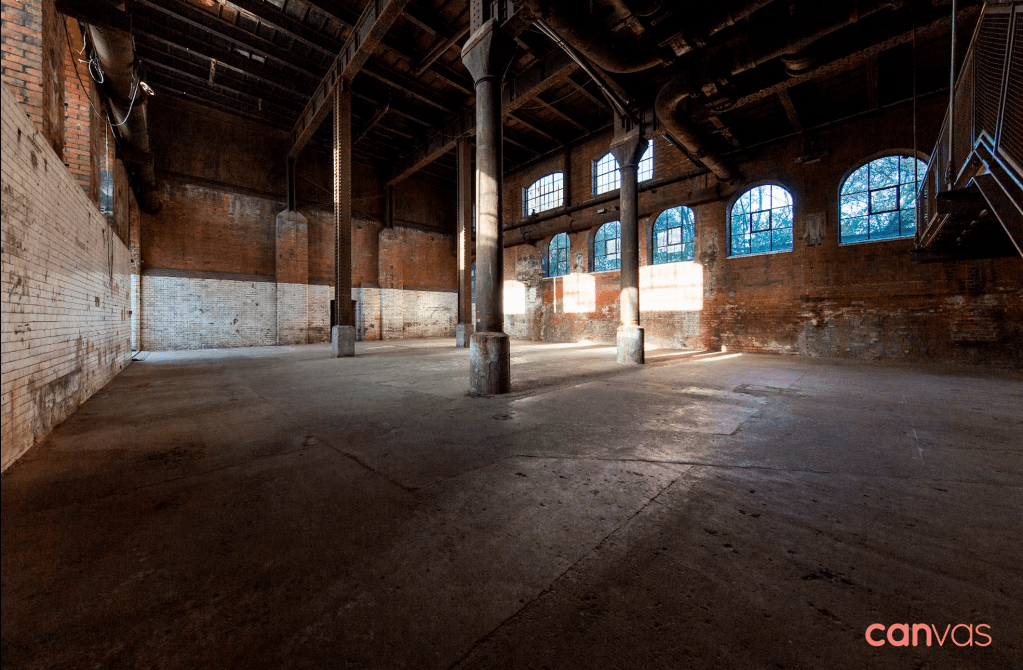
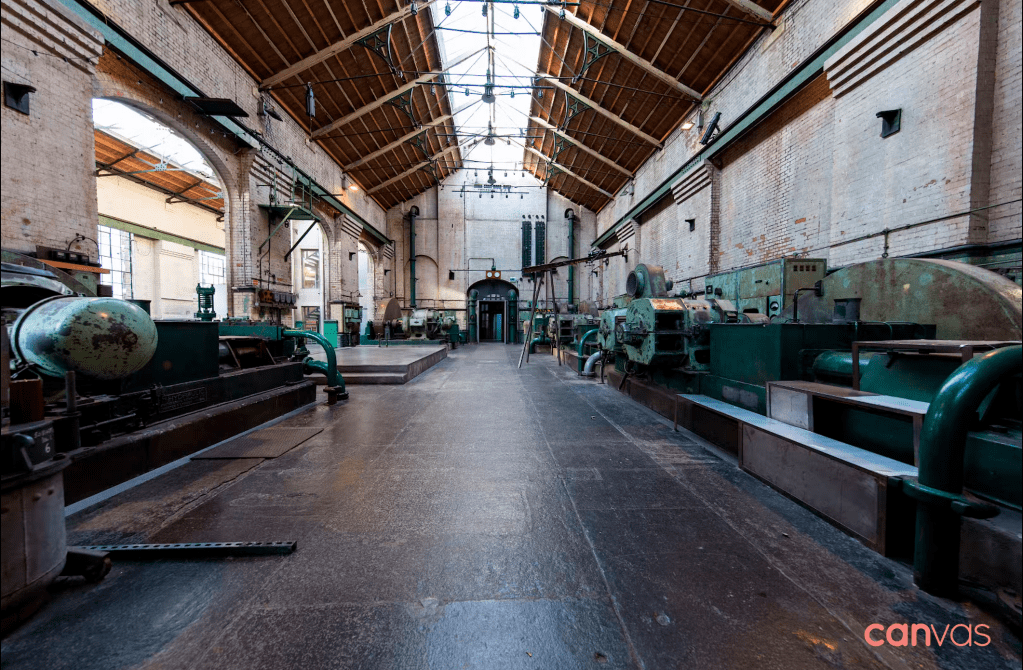
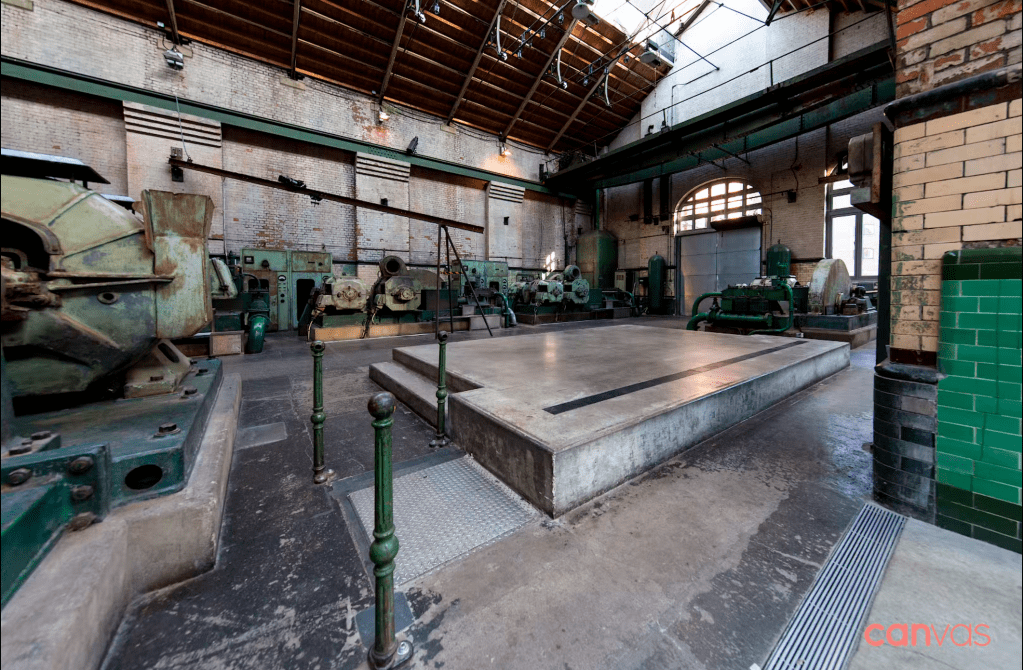
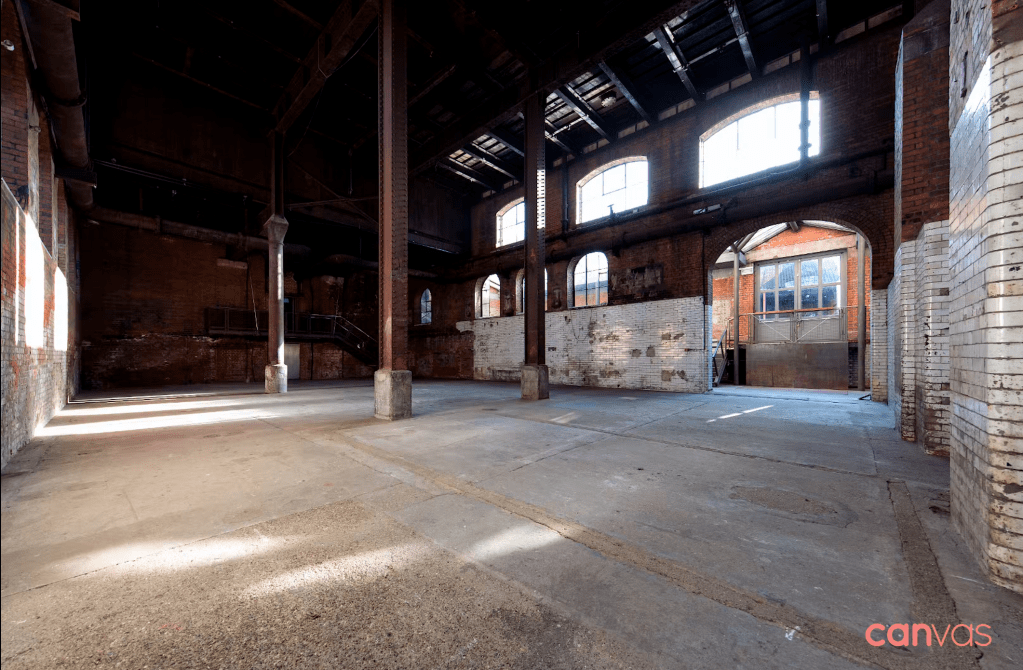
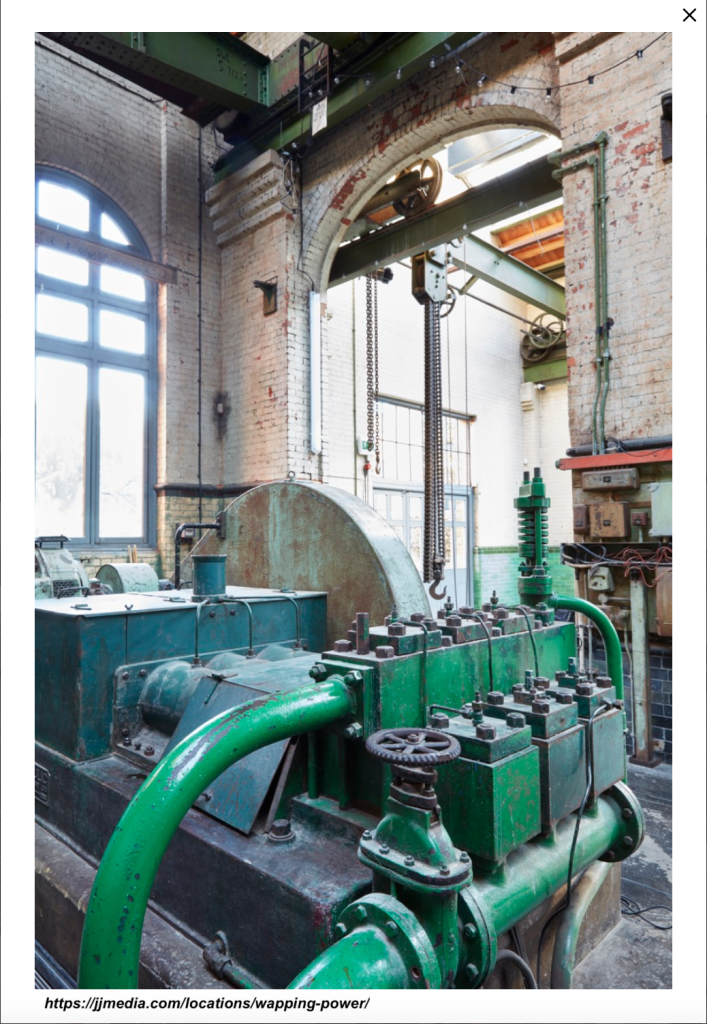
The Wapping building still has its machinery inside. It’s awaiting redevelopment. You can hire it for your fashion shoot, Christmas Party or product launch. The photos below are from the agencies advertising the use of the space: Canvas Events, and JJ Media It looks totally amazing! If you book your event there, please can I come and sketch?

The project sheet for the planning application is here: https://www.cma-planning.co.uk//images/projects/wapping_hydraulic_pumping_station/Wapping_Hydraulic_Pumping_Station_Project_Sheet.pdf

If that doesn’t work, here’s the file:

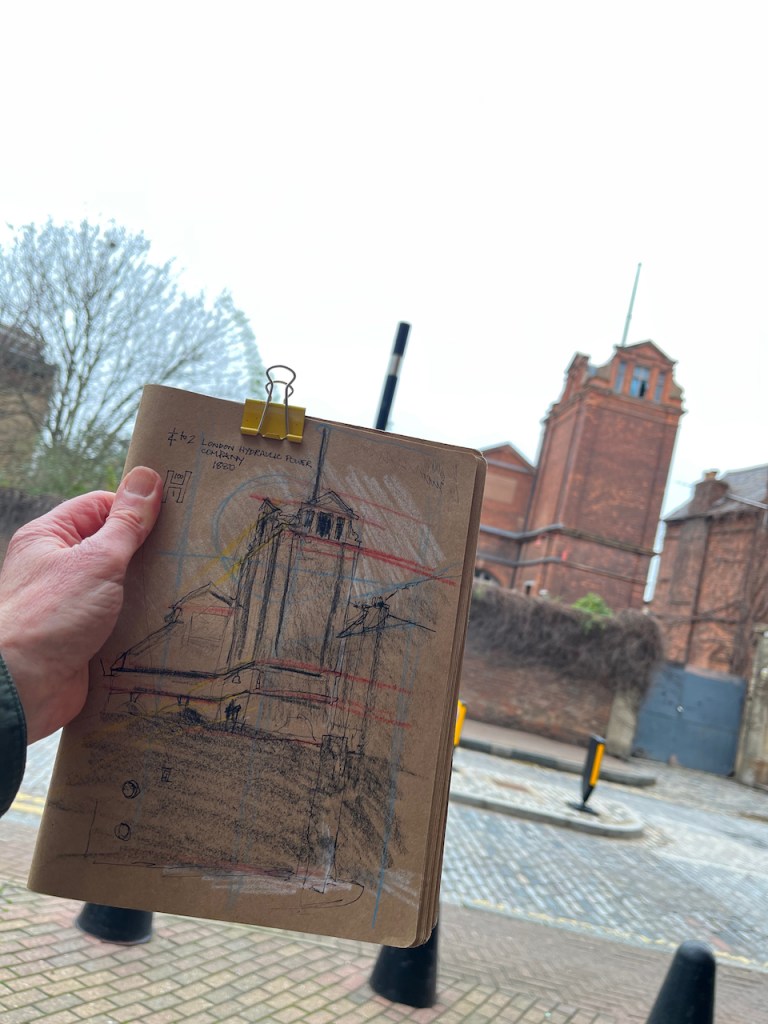
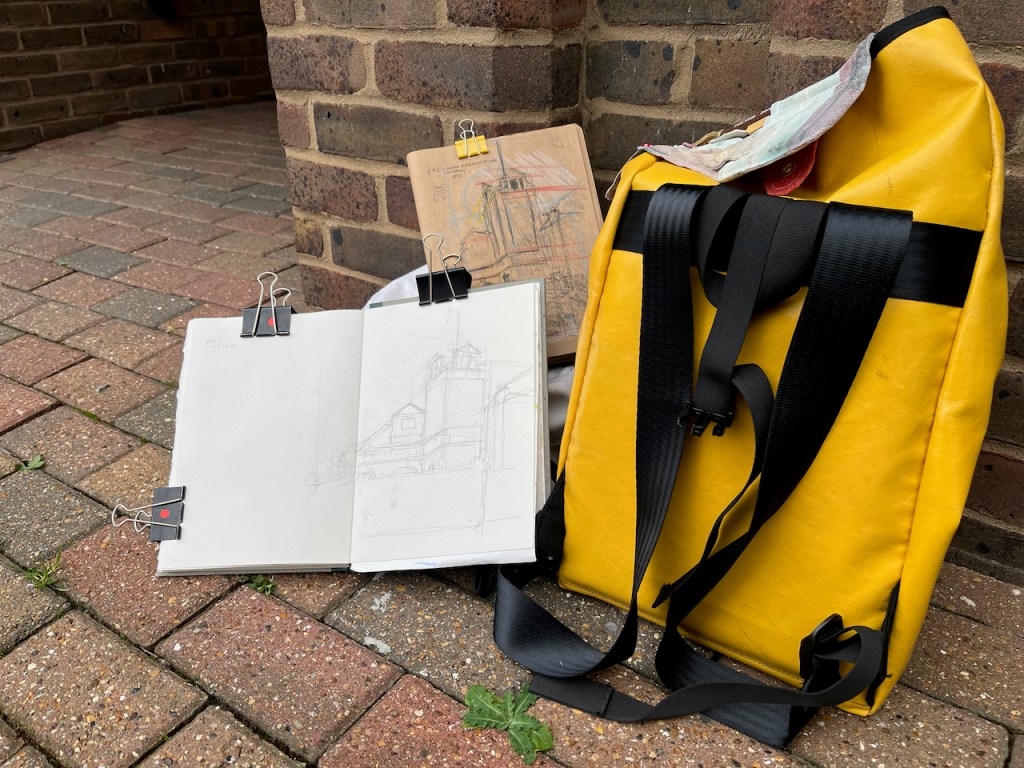
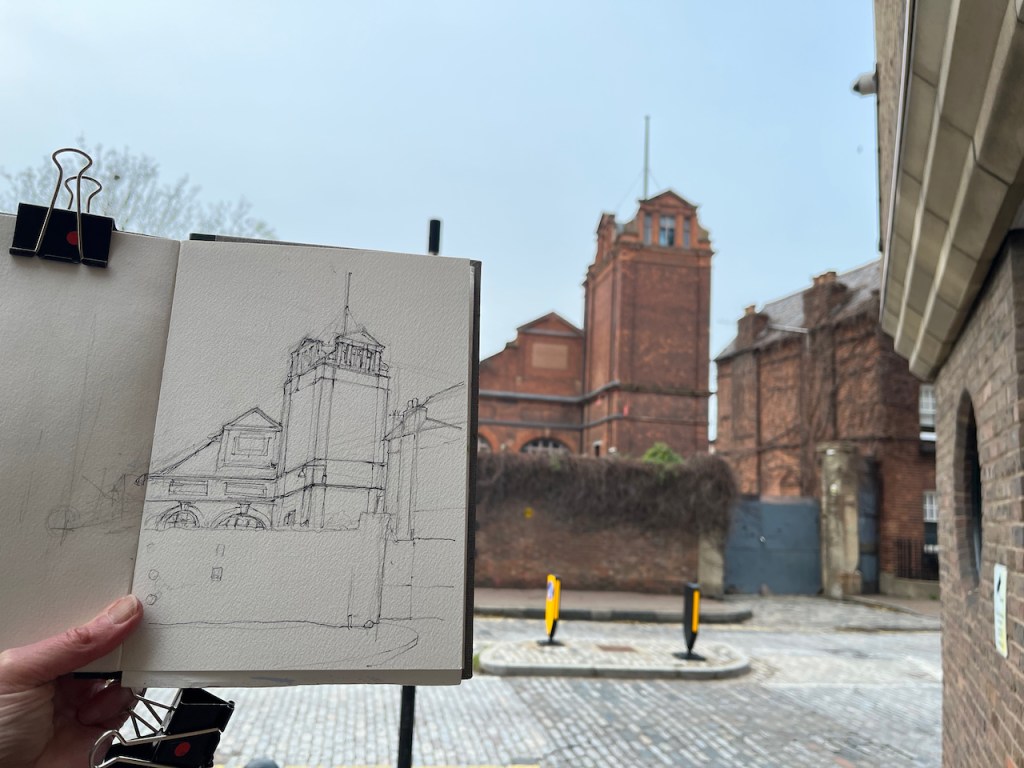
Here are some snapshots taken while I was drawing. The chimney shown in the early twentieth century drawing has vanished.

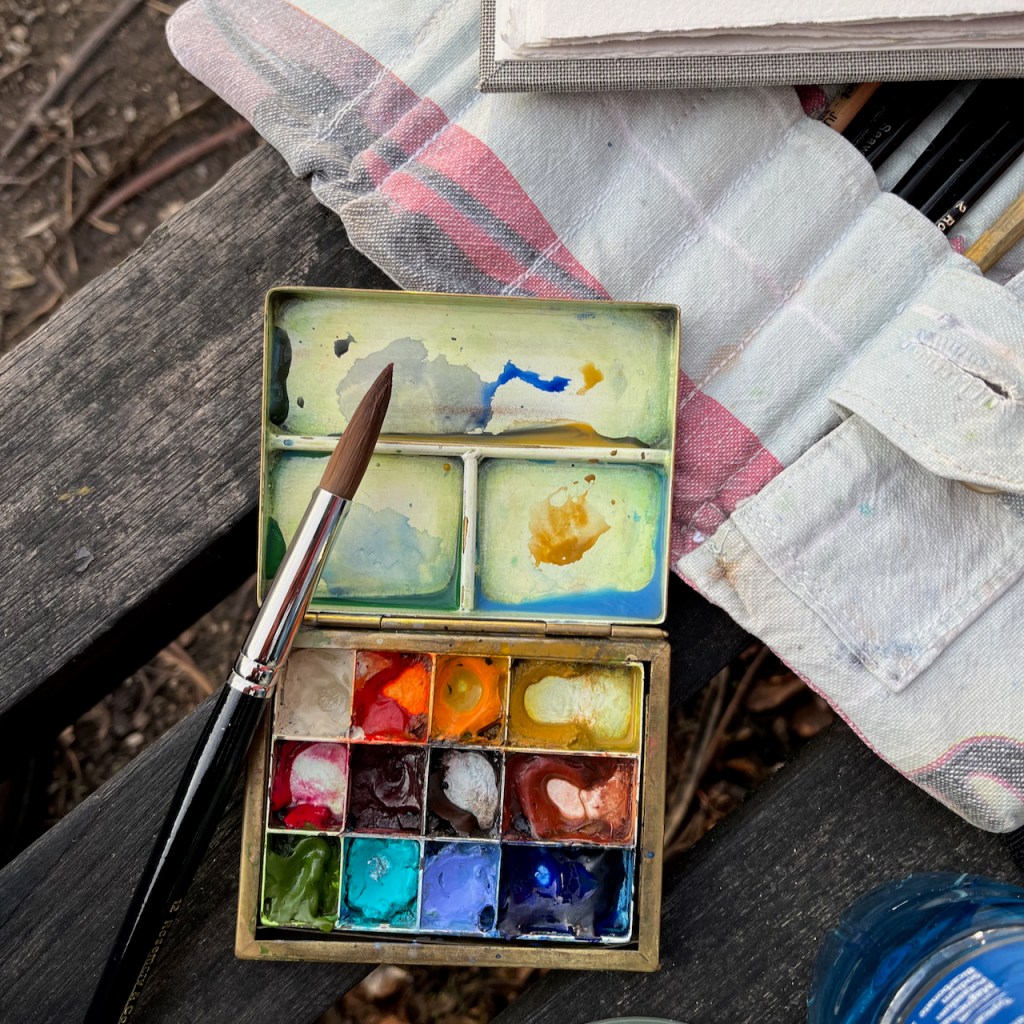
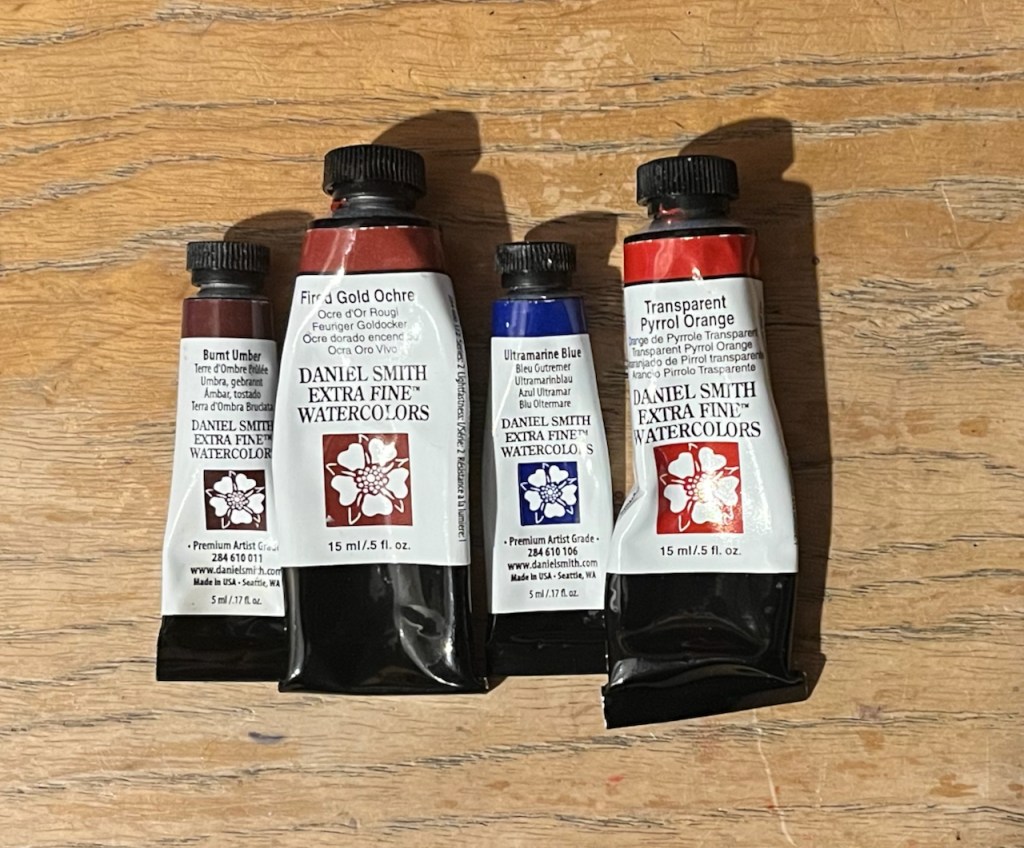
Colours used in the drawing:

  • Fired Gold Ochre
  • Ultramarine Blue
  • Burnt Umber
  • Some Transparent Pyrrol Orange, but not much.

Additional references:

https://www.rbhistory.org.uk/post/london-hydraulic-and-power-company

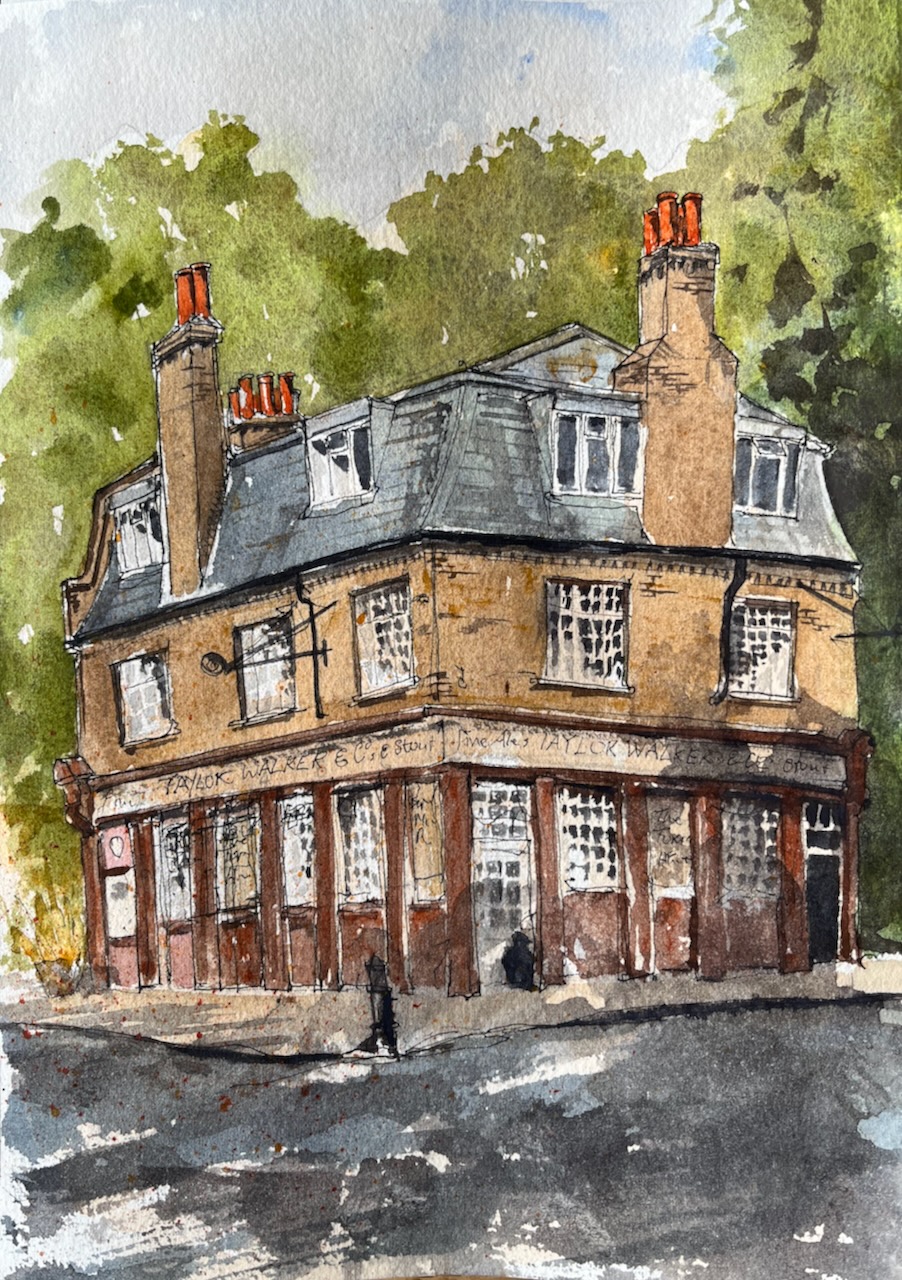
Turks Head Wapping, E1

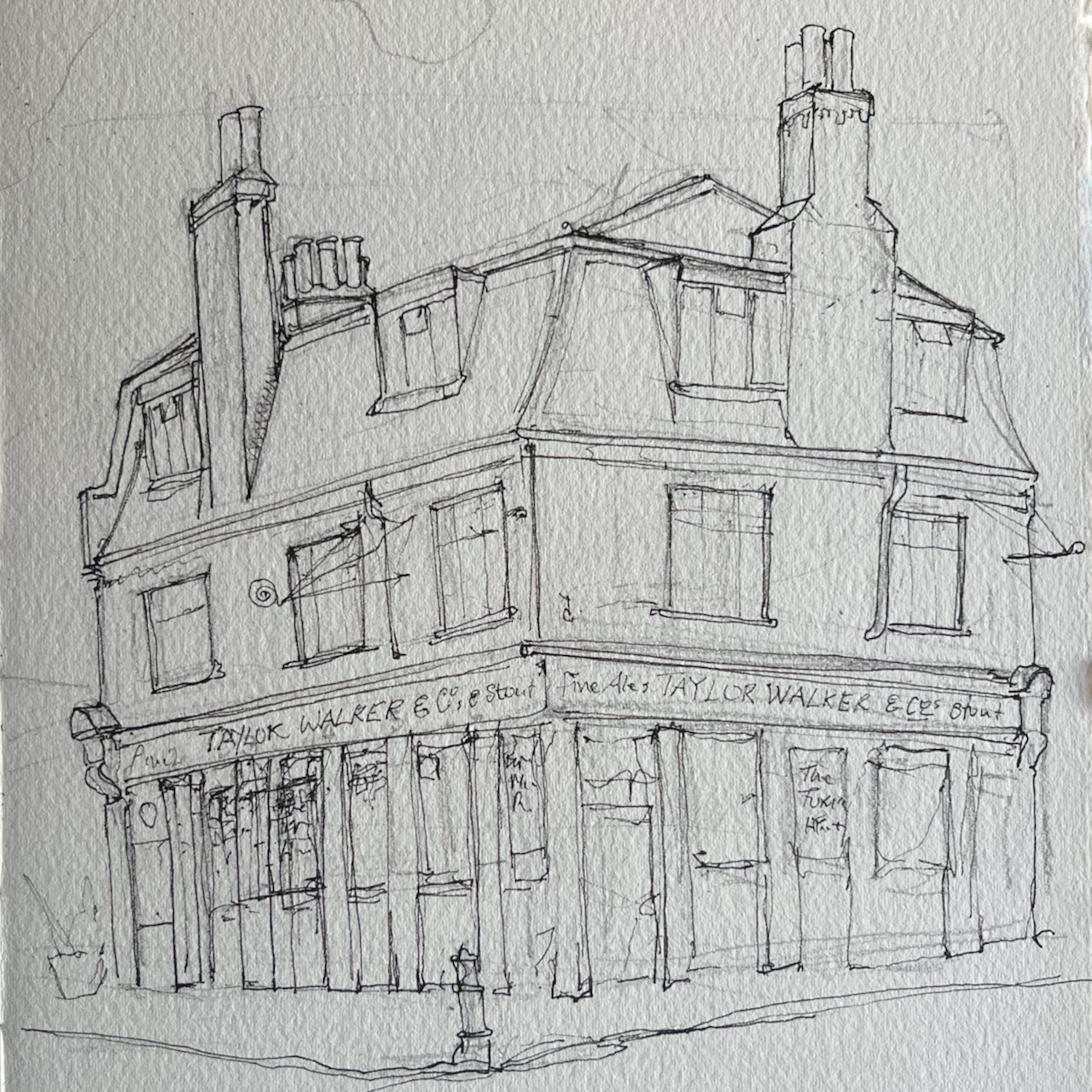
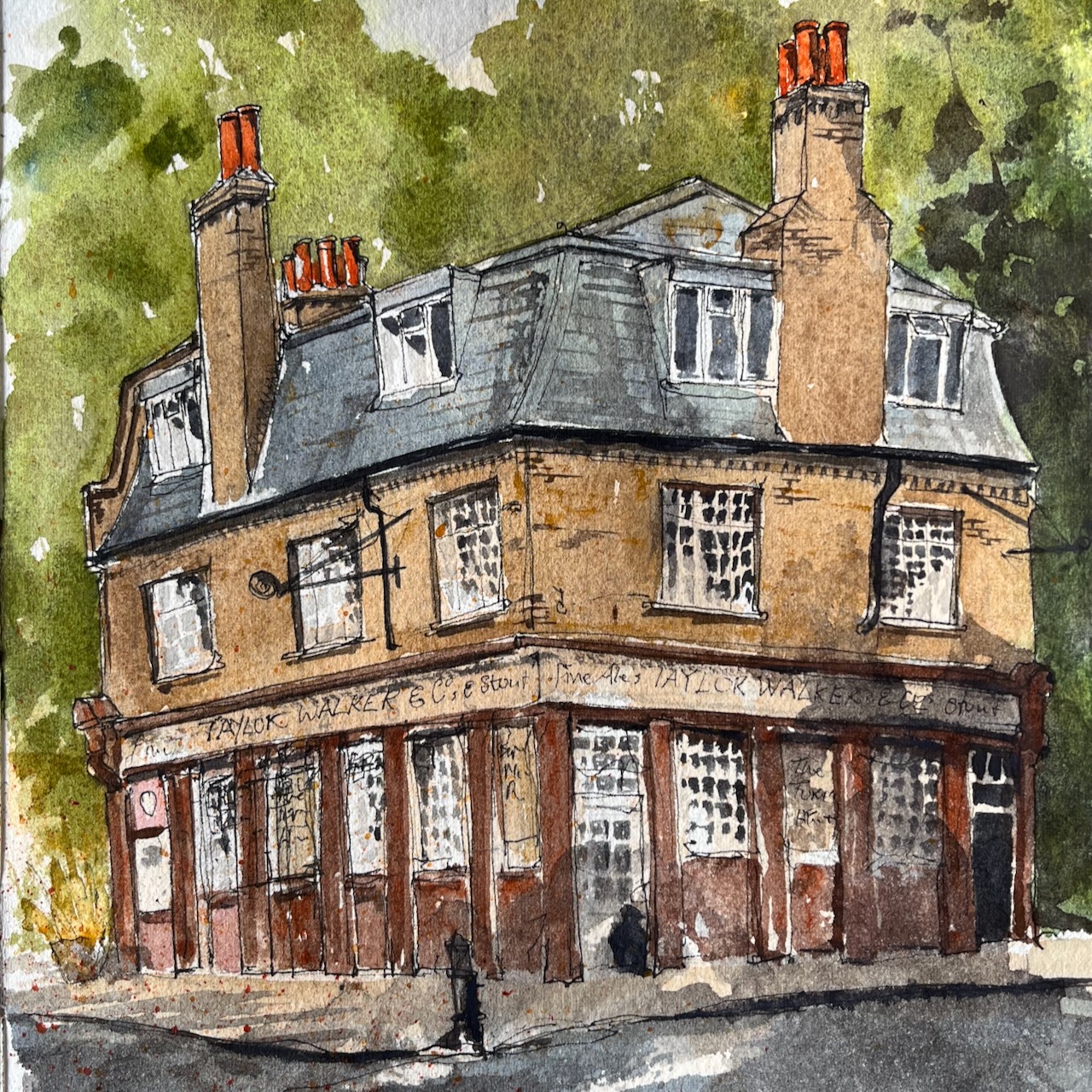
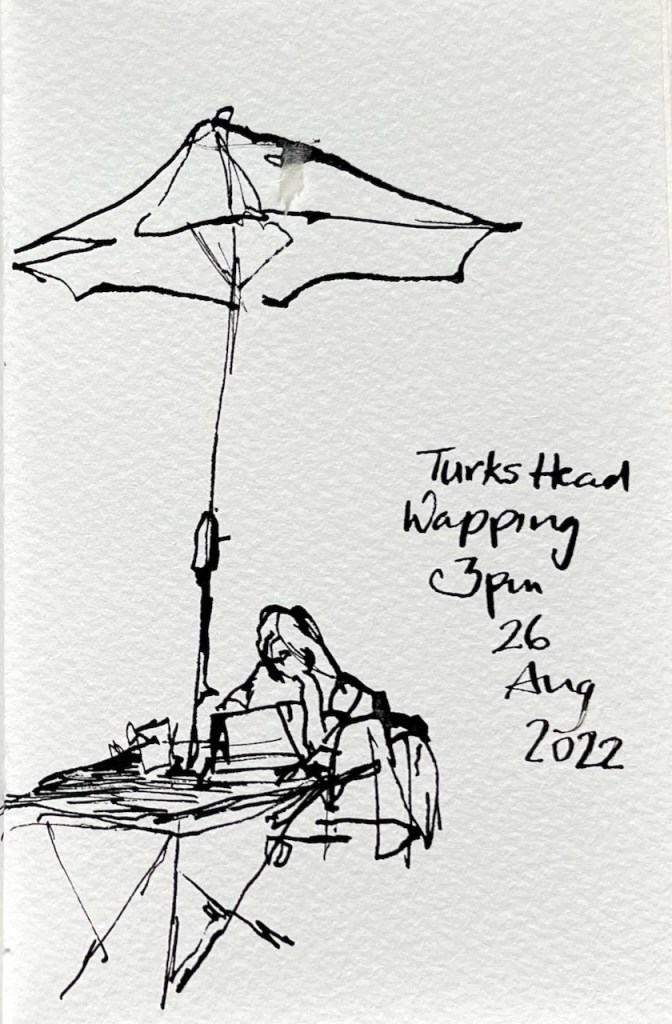
I walked to The Turks Head Wapping: a restaurant among trees. After a splendid lunch, I sketched the building.

The Turks Head Wapping E1, 10″ x 7″ in Sketchbook 12, 26th August 2022, 16:30pm

The drawing took me about 50mins on location, pen and ink. I added the colour when I got back to my desk.

Before and after the colour went on.

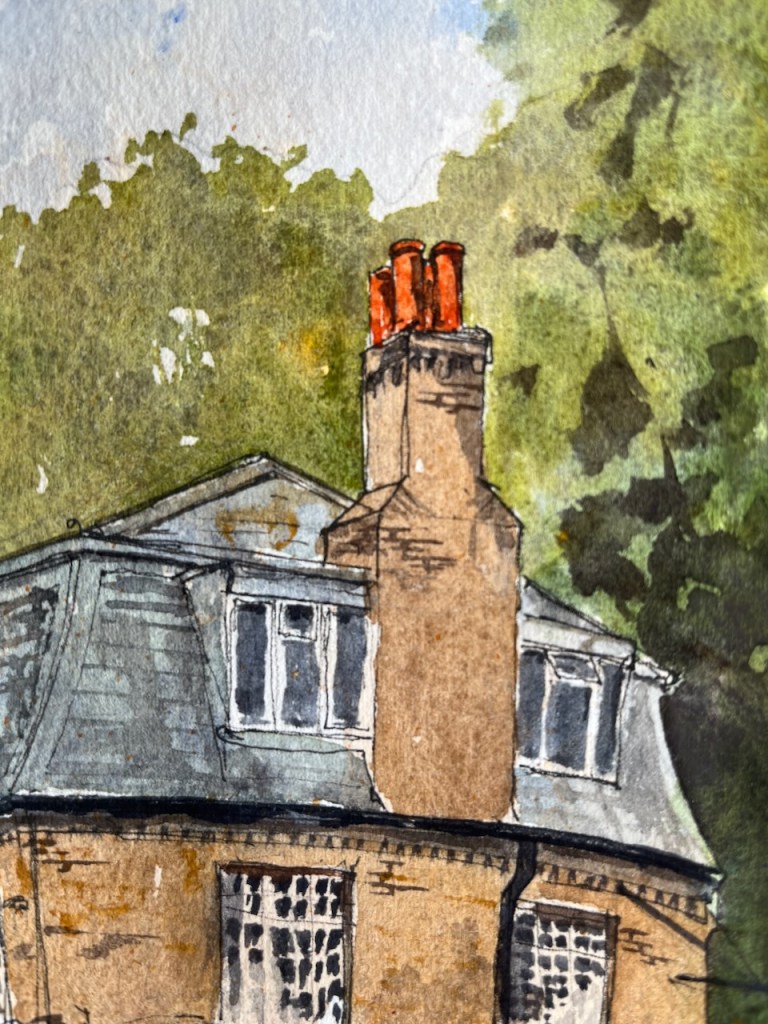
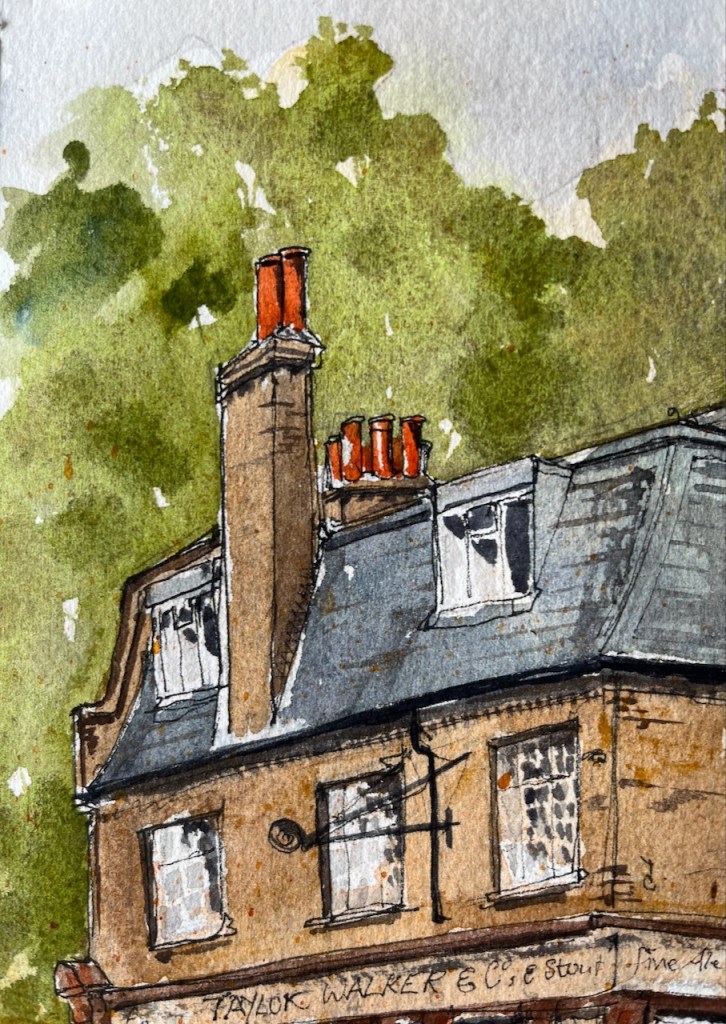
Marvellous chimneys!

The chimneys are Transparent Pyrrol Orange. Other colours are: Green Serpentine Genuine, Mars Yellow, Burnt Umber, Ultramarine Blue, Permanent Yellow Deep, and Perylene Maroon to get the darker tiled walls. The blacks and greys are Ultramarine Blue mixed with Burnt Umber. These are all Daniel Smith watercolours. The paper is Arches Aquarelle 300gsm NOT, in a sketchbook made by the Wyvern Bindery in Hoxton.

Here is work in progress:

This is a wonderful café-restaurant – recommended. It is east of Tower Bridge, about a 45 minute walk from the City.

Dip pen and W&N drawing ink.

I’ve drawn the Turk’s Head before:

Turks Head Café Wapping

Here is the marvellous Turks Head Café, Wapping, rescued from demolition by local residents in the 1980s. Inside, I found warmth, quiet tables, and the gentle murmur of conversations: people actually talking to each other.…

Read more…

The Captain Kidd, Wapping, E1

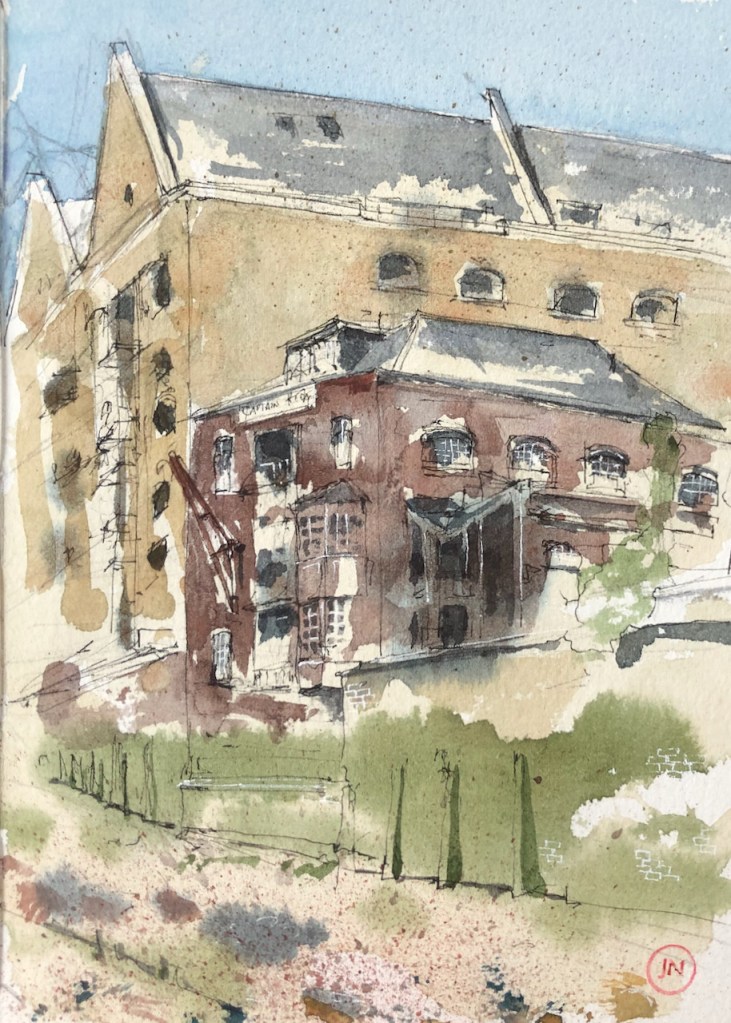
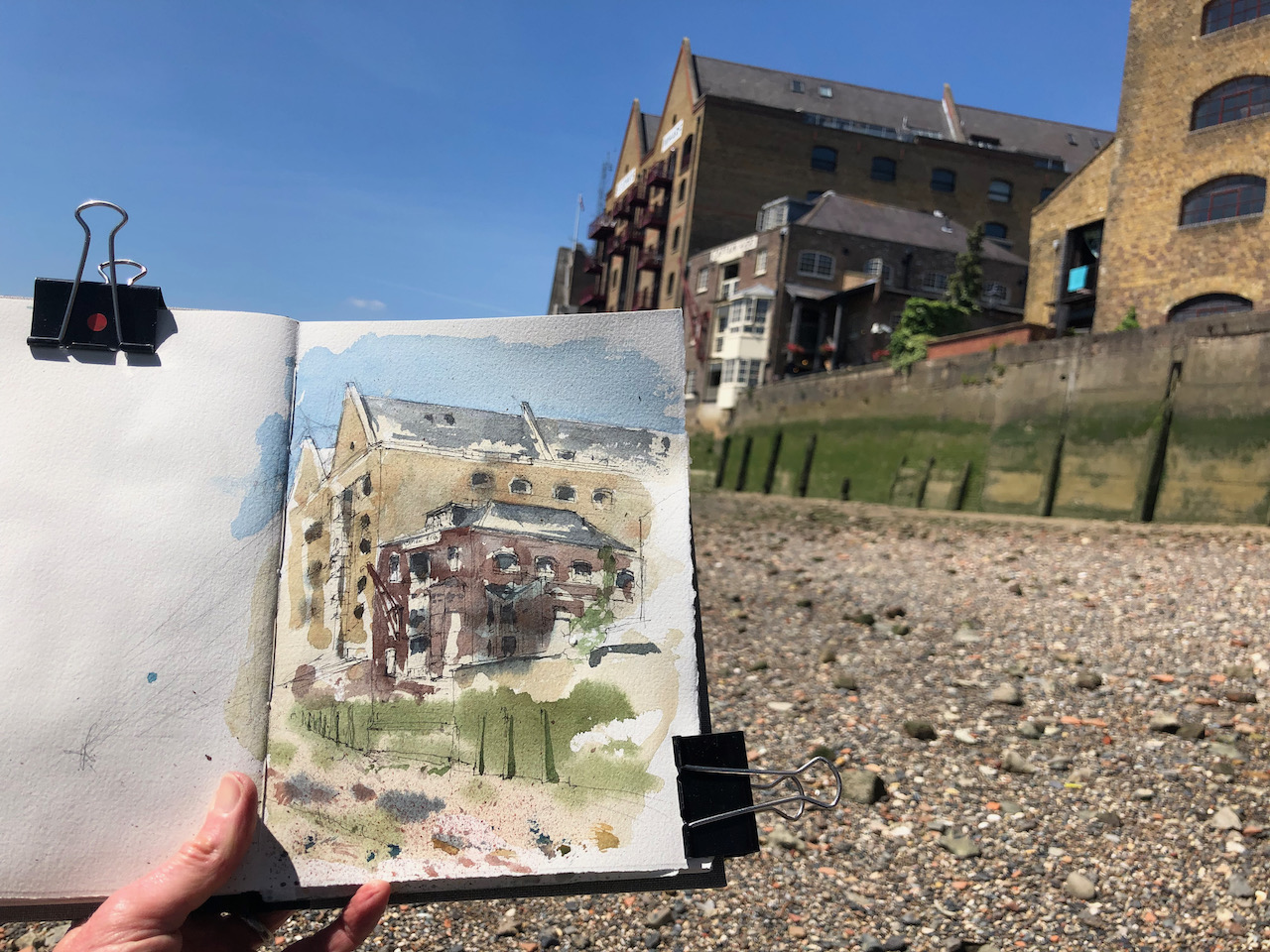
After breakfast at the Turk’s Head ( see this post ) I went down to the river. The tide was out. I sat on the Thames foreshore and sketched The Captain Kidd.

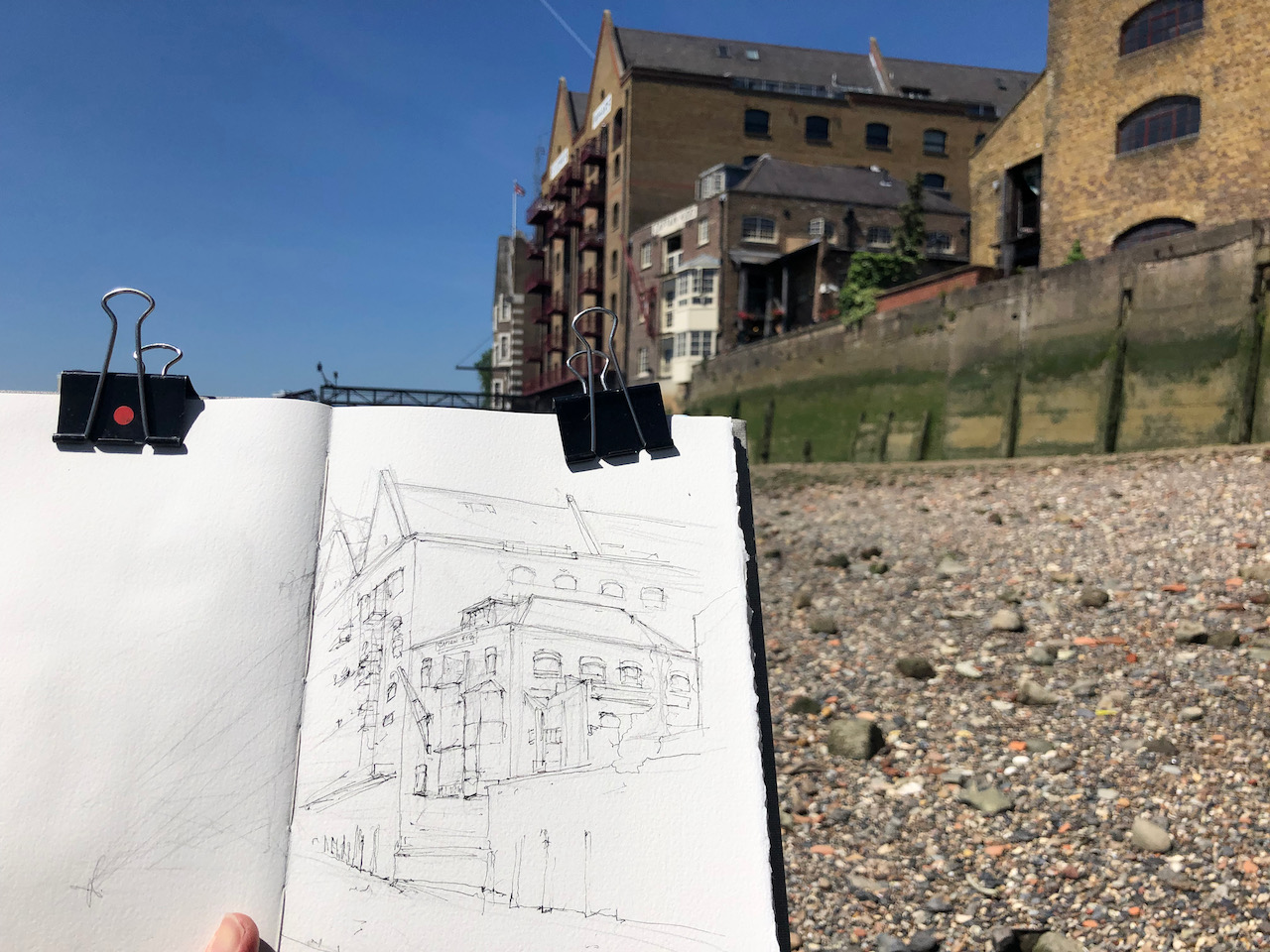
The Captain Kidd, Wapping E1. 12.10pm 14 June 2021. 7″ x10″ in Sketchbook 10

The Captain Kidd is the building at the front. It’s a pub and restaurant. The larger building behind is “St John’s Wharf”, a warehouse now converted into flats.

The “Captain Kidd” is named after a “seventeenth century pirate William Kidd who was executed [in 1701] at the nearby Execution Dock” according to various websites e.g. The Londonist.

However there is no “nearby Execution Dock”. The carefully researched article on “London Inheritance” concludes that “King Henry’s Stairs” were formerly “Execution Dock” (see note 2). The name was changed in the early 19th century to be better in line with the burgeoning use of the area for trade. The London Inheritance author cannot discover a specific “King Henry” connection. He includes a list of some of the people who were executed here, for crimes at sea including piracy, fighting on board ship, murdering shipmates, and treason.

I note with interest that, these days, the headquarters of the Marine Police are just a few hundred yards upstream. This is a very ancient establishment, which started with a one-year trial in 1798 (note 1).

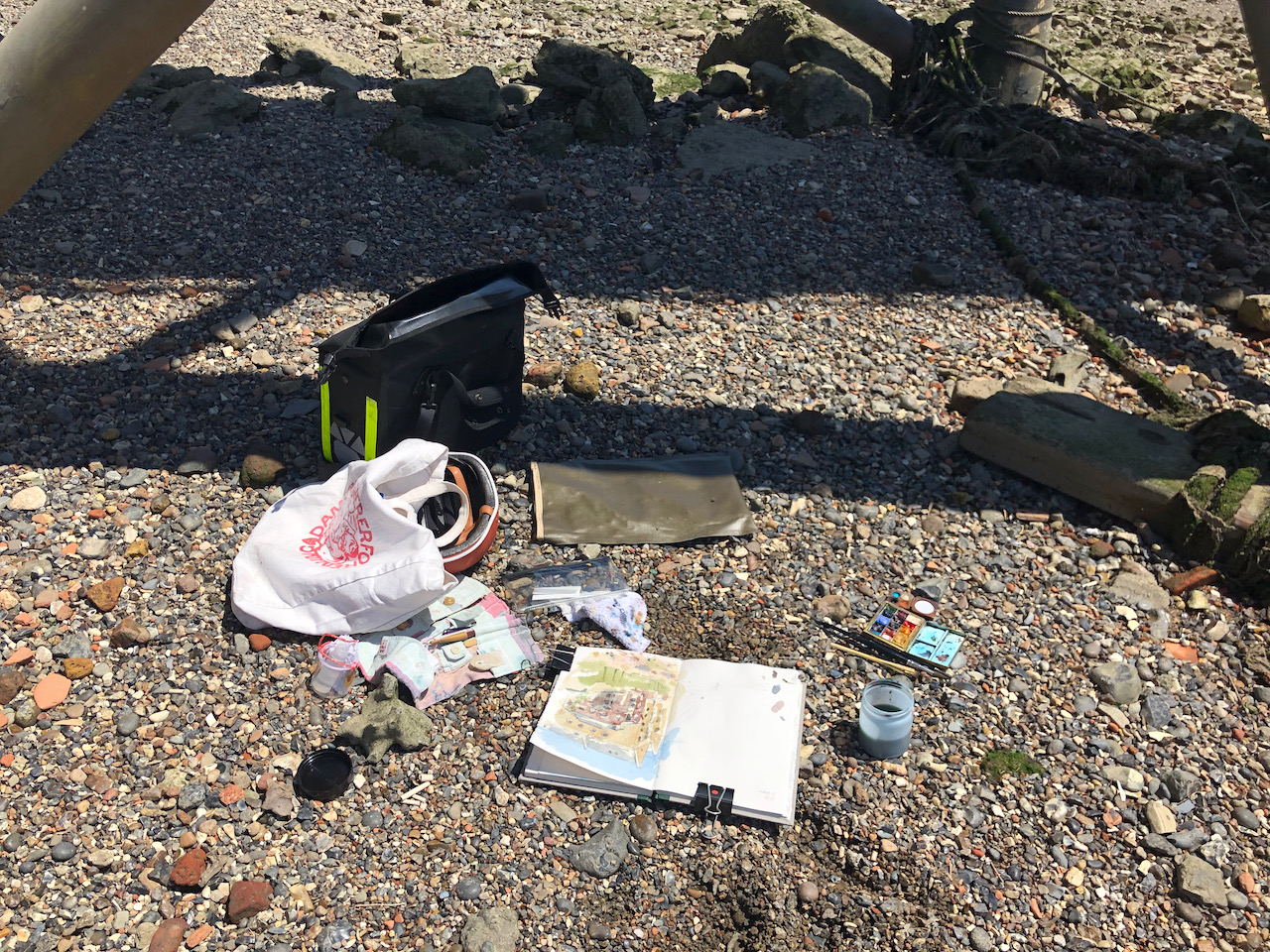
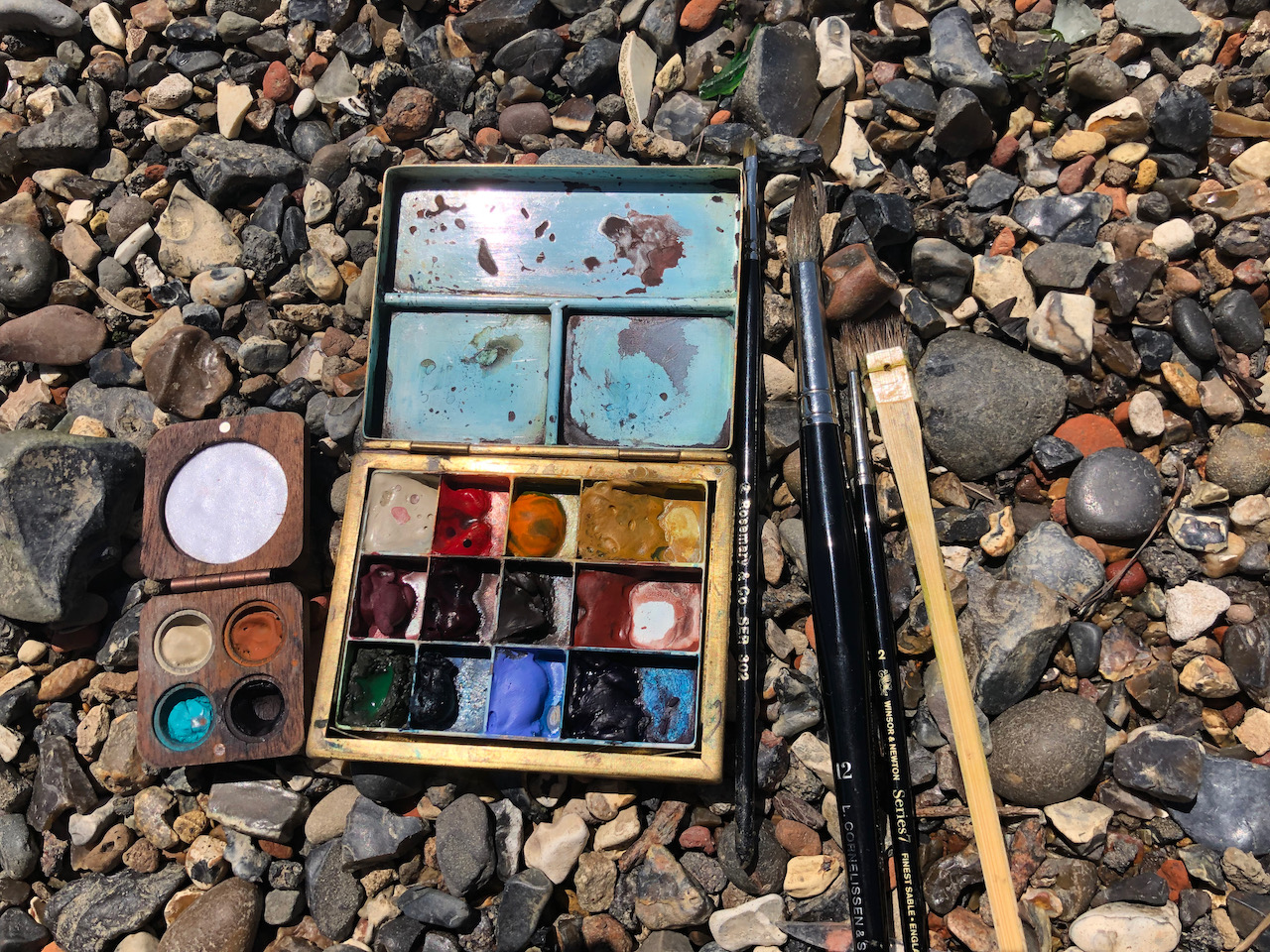
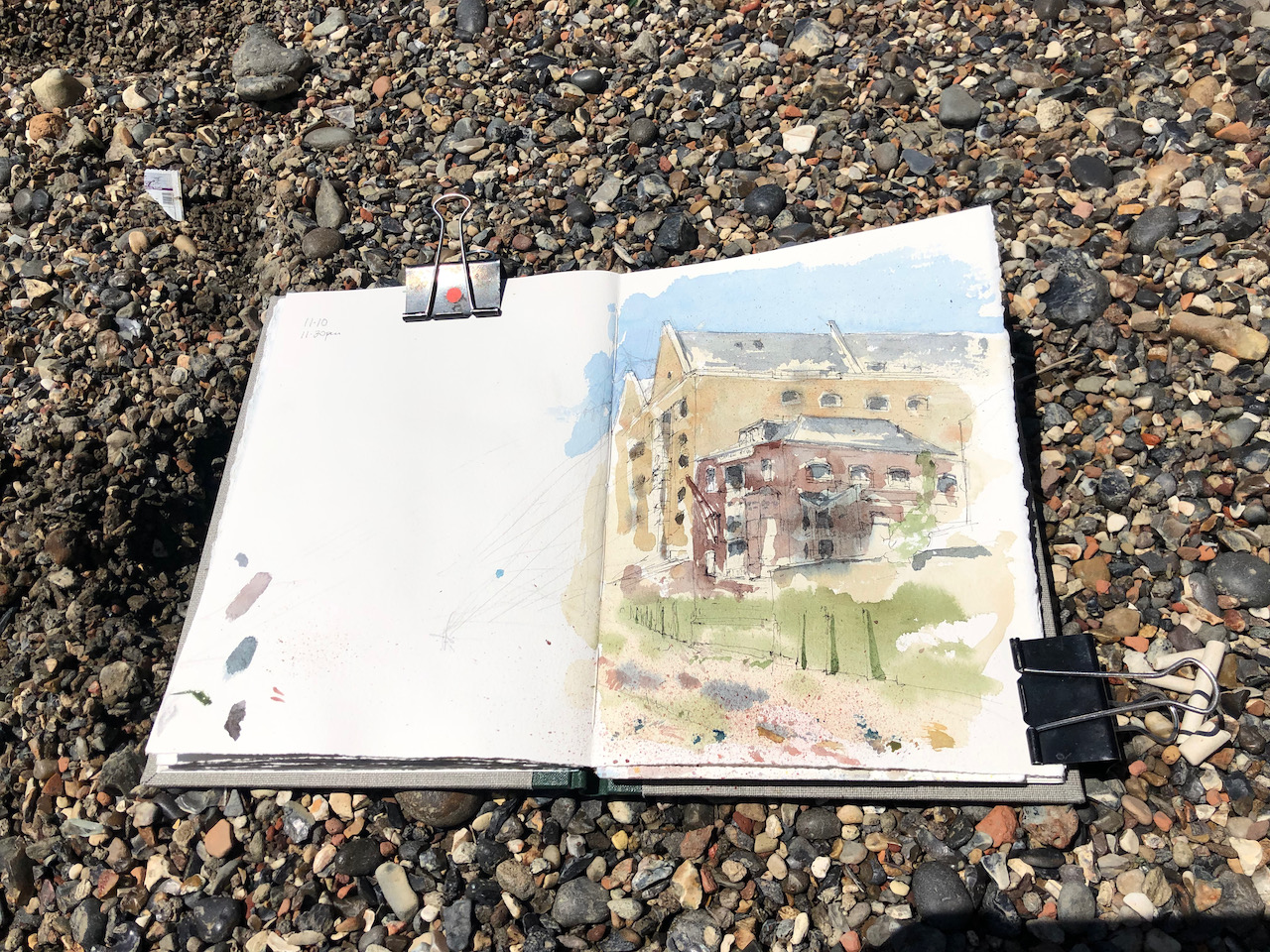
Here is work in progress on the drawing. See the wonderfully clean Thames foreshore.

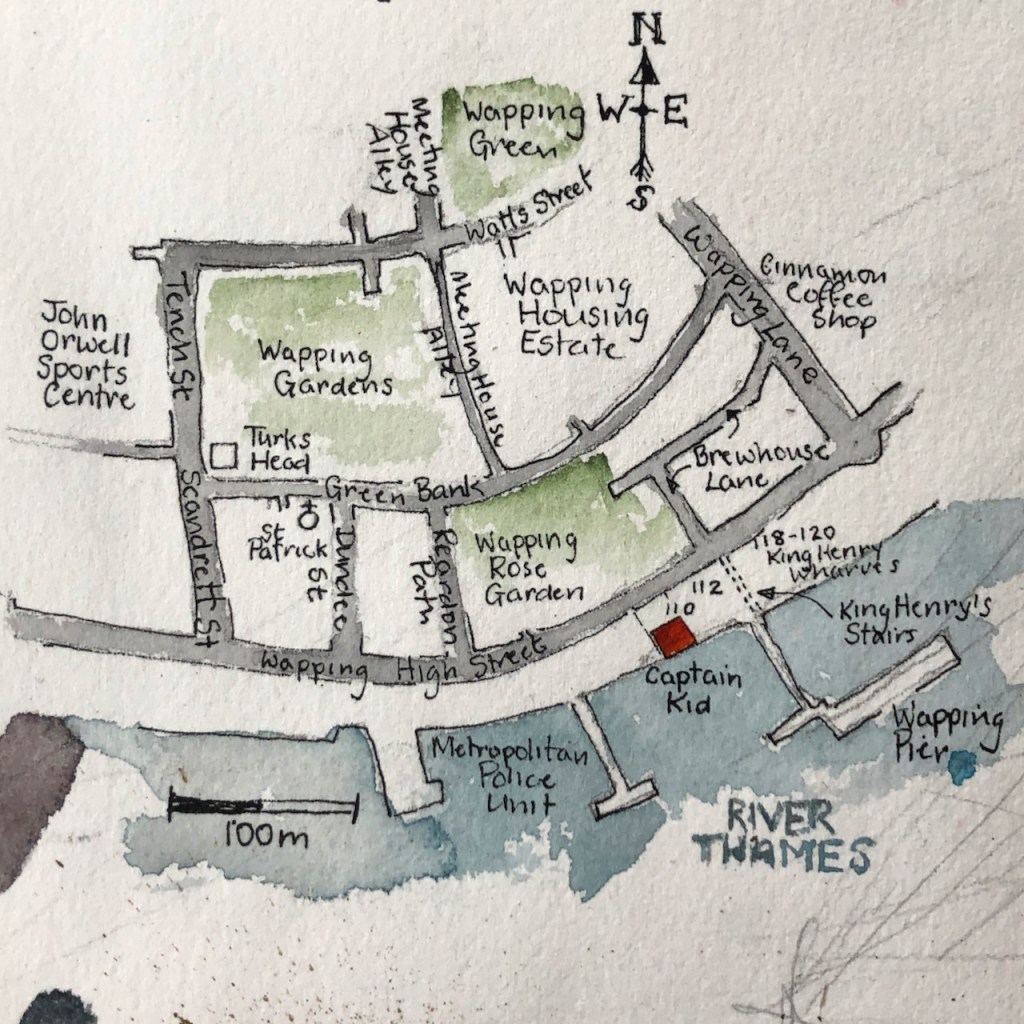
I drew my picture in the shade under Wapping pier. Here is a map:

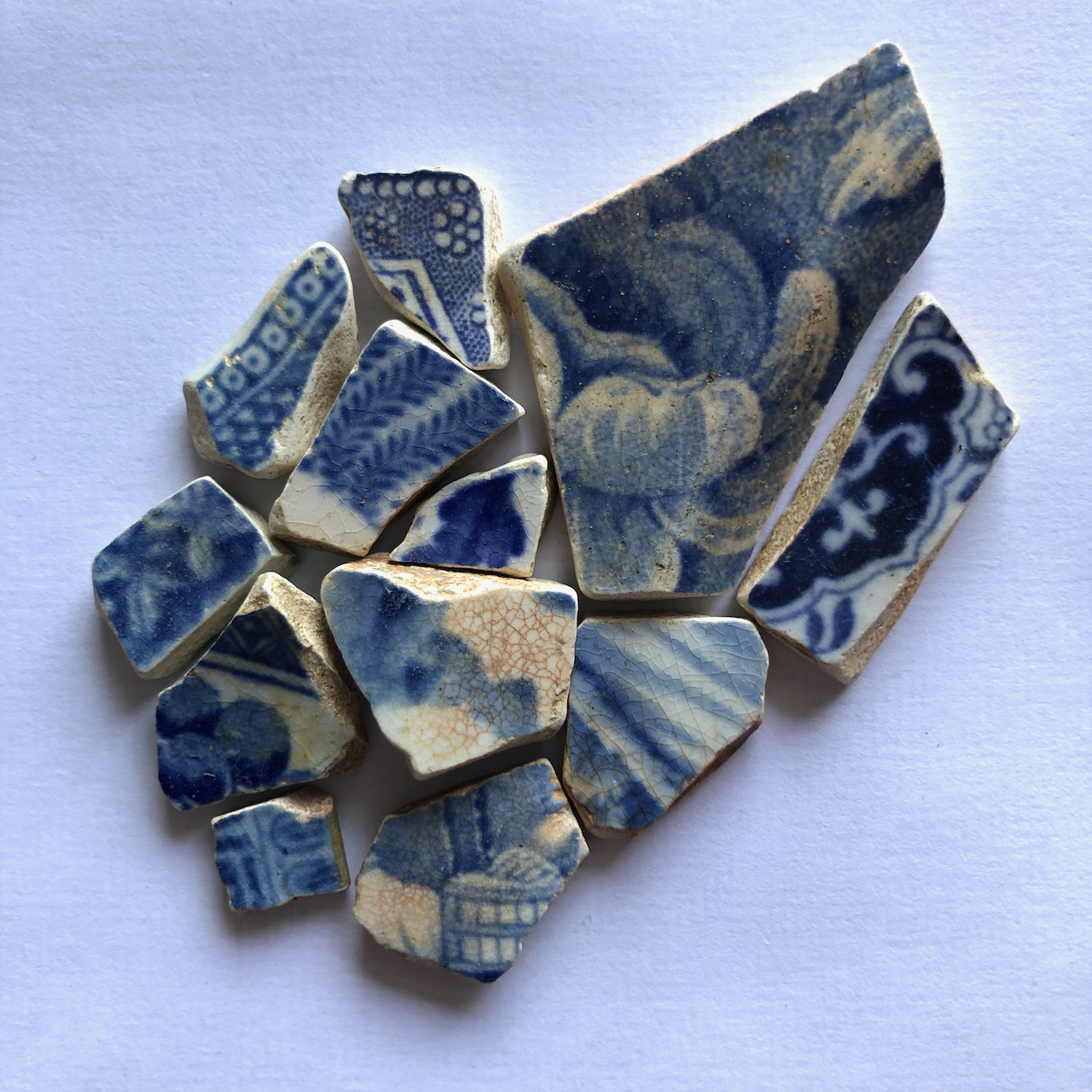
Walking back to the ladder, I collected a handful of porcelain pieces, blue and white. It was as though, years ago, someone threw a china bowl onto the foreshore, and the pieces somehow stayed in the same vicinity, through many tides. Or perhaps it is several bowls.

Note 1: There is a Wikipedia article on the River police: https://en.wikipedia.org/wiki/Thames_River_Police

Note 2. The London Inheritance article is here:

Turk’s Head Wapping E1, from the park

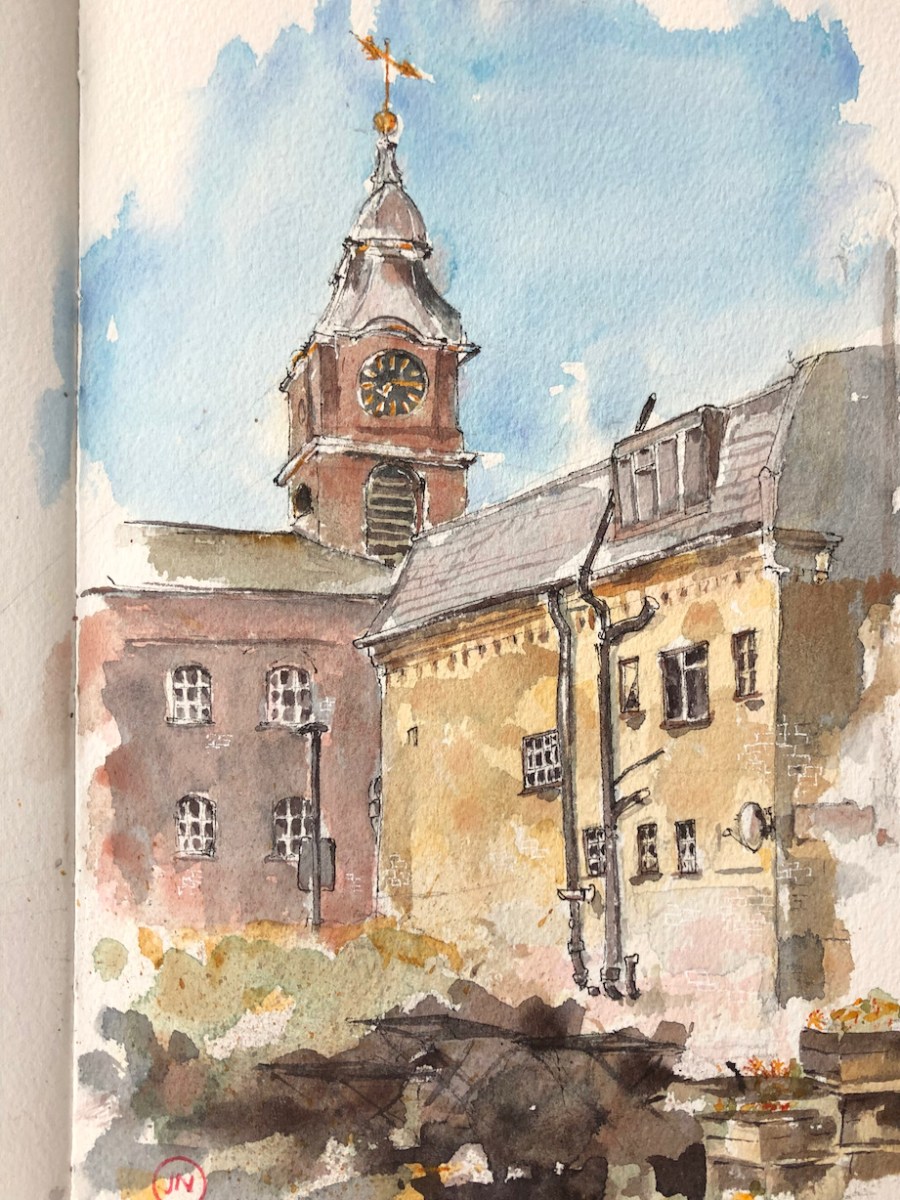
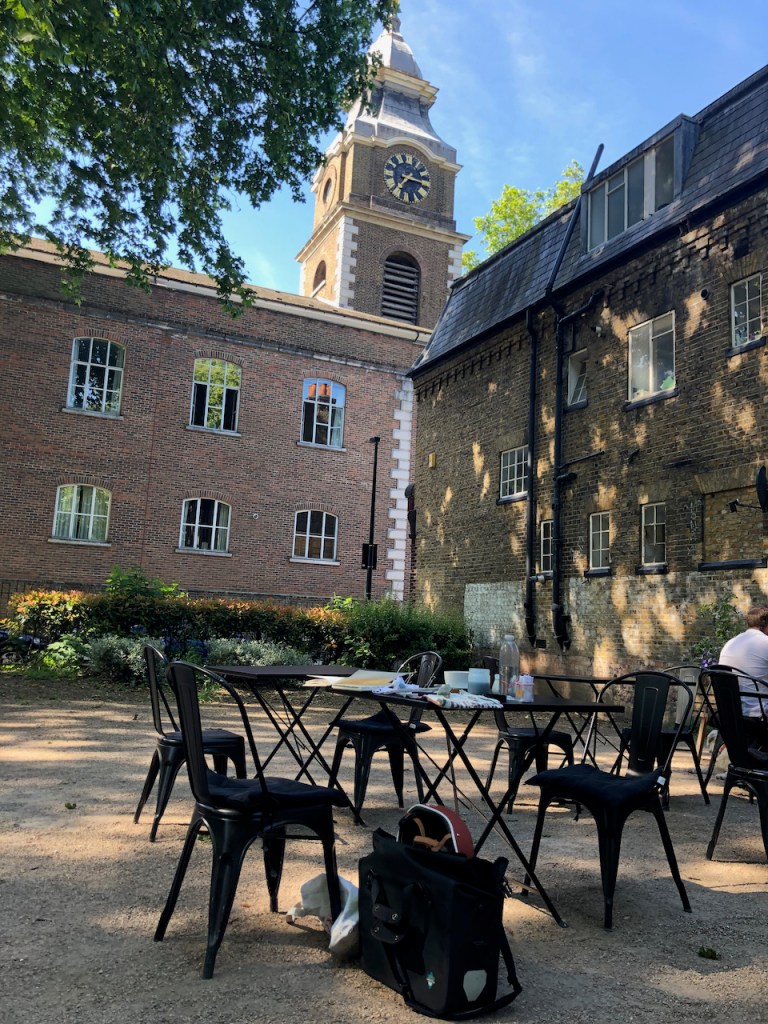
On Monday I cycled out East to the Turk’s Head for breakfast. With a coffee and croissant, in front of me, I sketched the view.

The Turk’s Head Wapping E1, from the park. 09:30am, 14 June 2021. 7″ x 10″ in Sketchbook 10

The Turk’s Head is the building on the right. The church in the picture is the former St John’s Wapping, now converted into flats.

The Turk’s head describes itself on its website:

“La Tète De Turc or The Turks Head is a French – Anglais Bistro. We serve French and English Food. Et Voilà!”

It has tables indoors, and outdoors under cover, and also in the adjacent park. I was outdoors in the park.

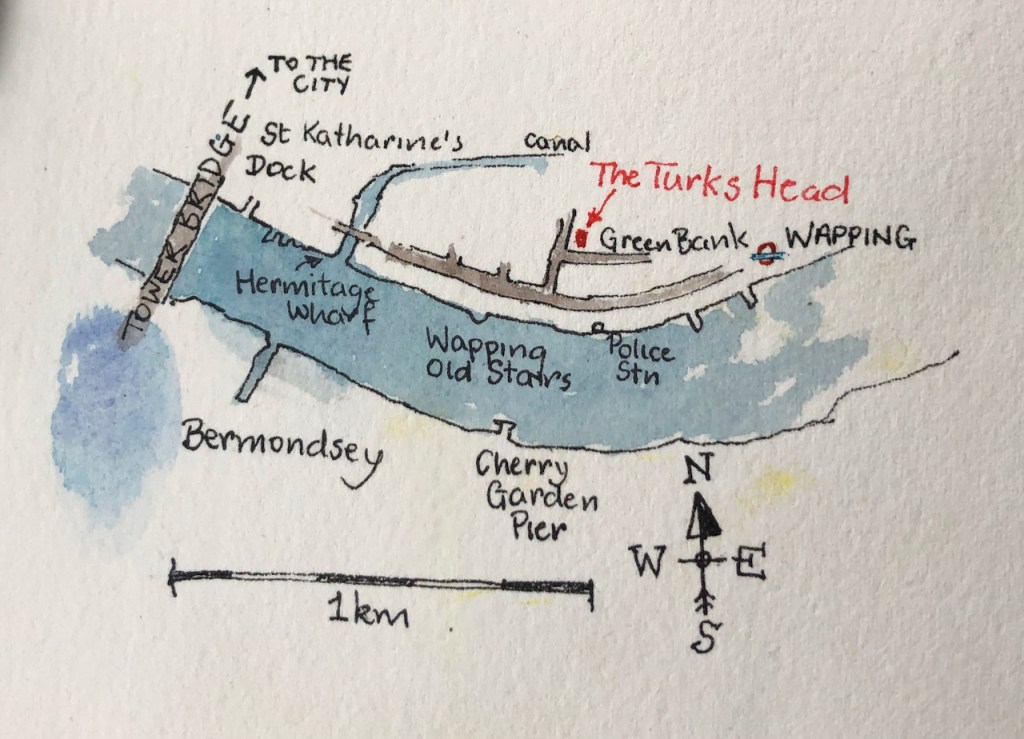
Here is a map showing where it is:

I have sketched the Turks Head before, in January 2020:

Turks Head Café Wapping

Here is the marvellous Turks Head Café, Wapping, rescued from demolition by local residents in the 1980s. Inside, I found warmth, quiet tables, and the gentle murmur of conversations: people actually talking to each other. I felt welcome here. The food was marvellous. Next time I’m going to have the Blueberry Tart. I only noticed it after I’d already had the substantial Chicken and Avocado Sandwich.…

Wapping Old Stairs – Thames Beach

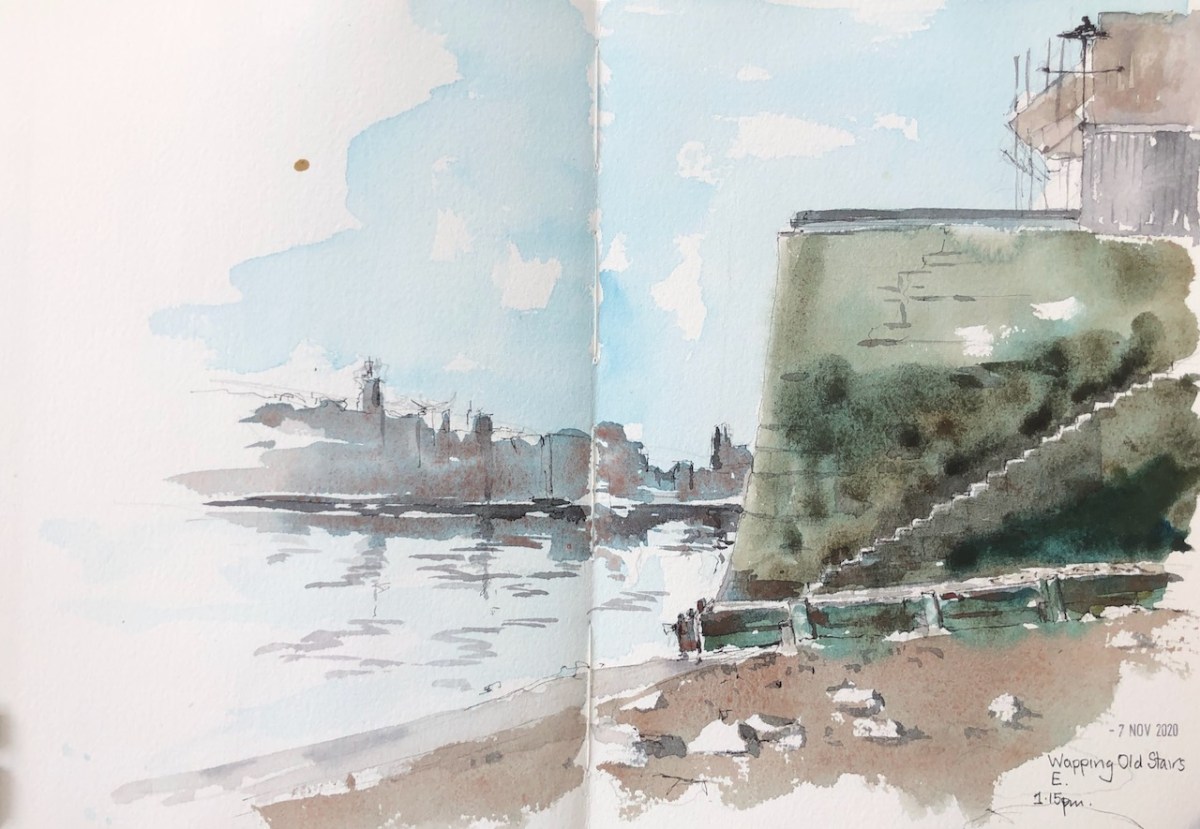
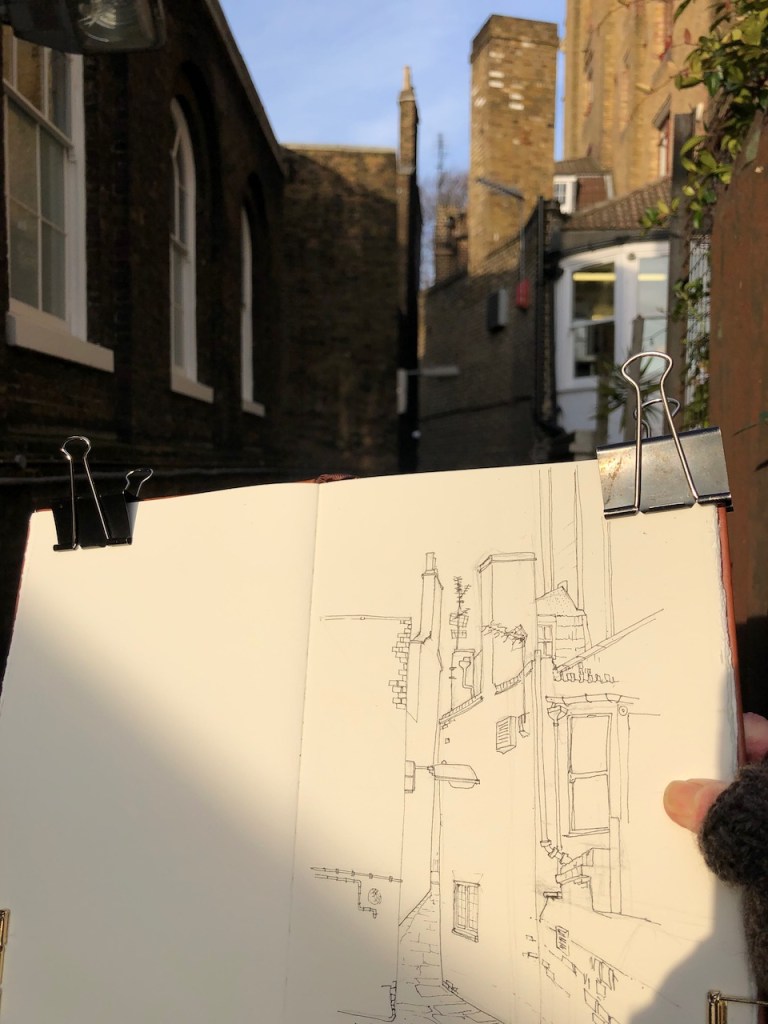
I went for a walk out East. Here is the view from the peaceful beach at Wapping Old Stairs E.

Wapping Old Stairs E

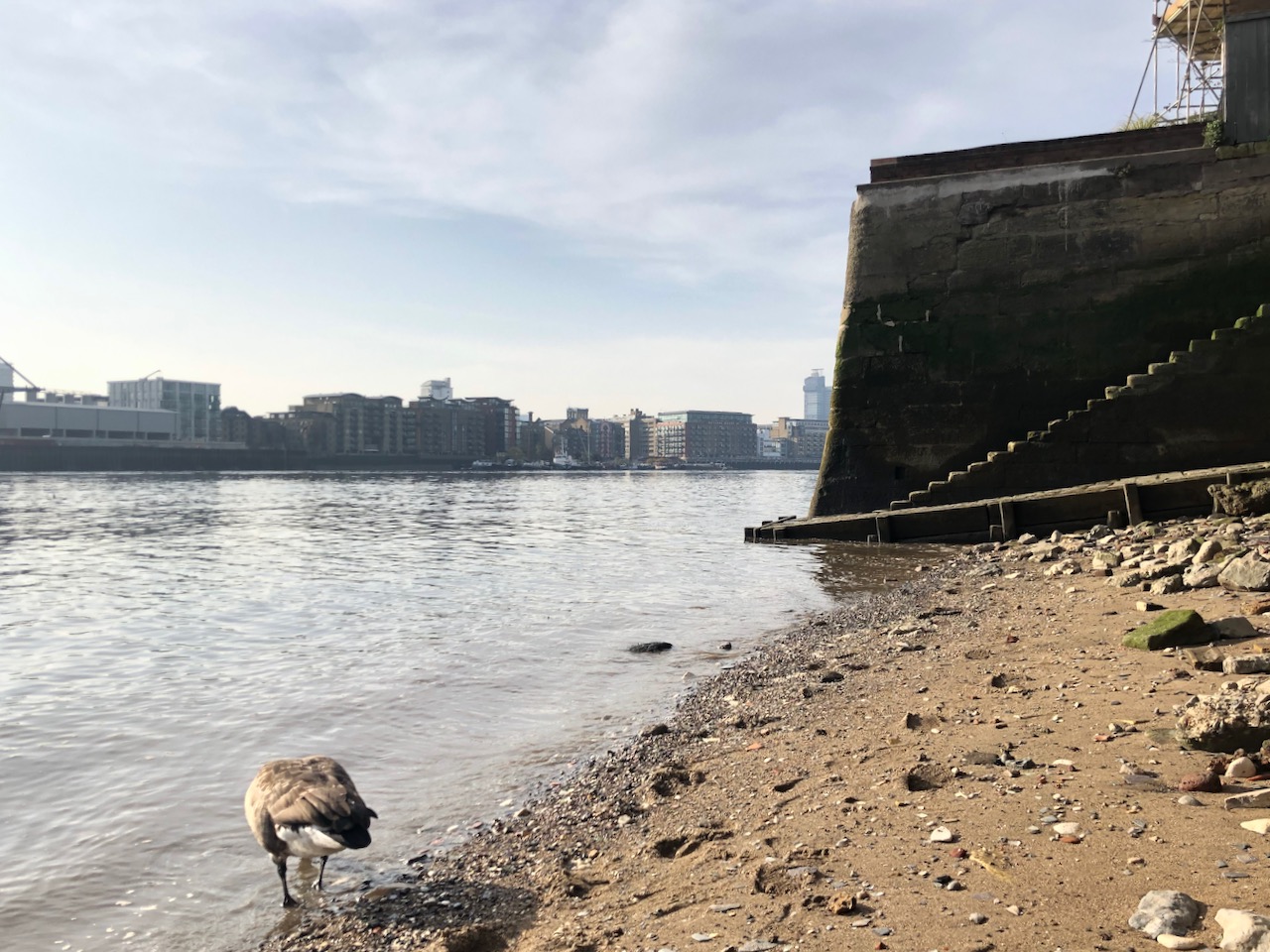
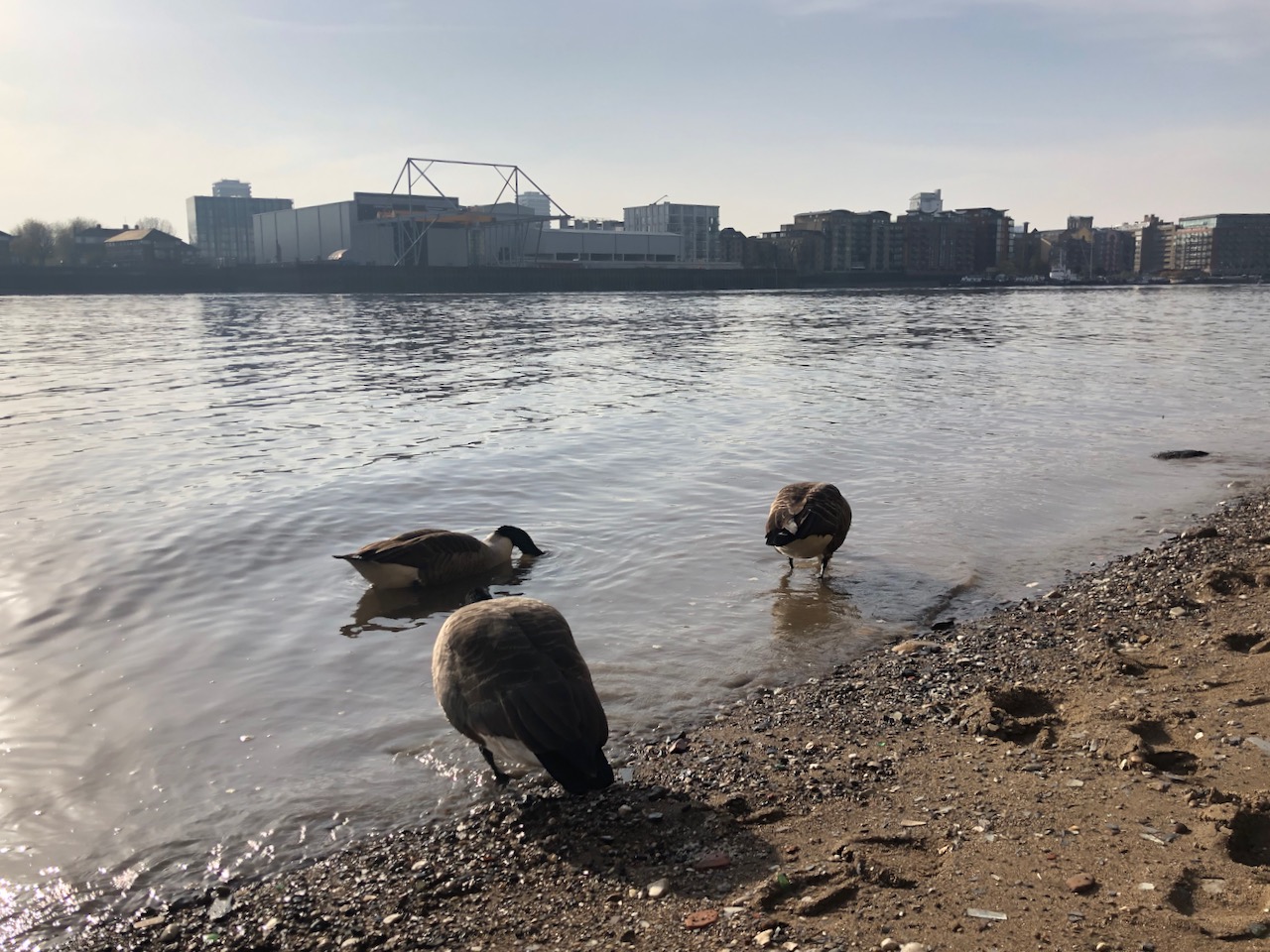
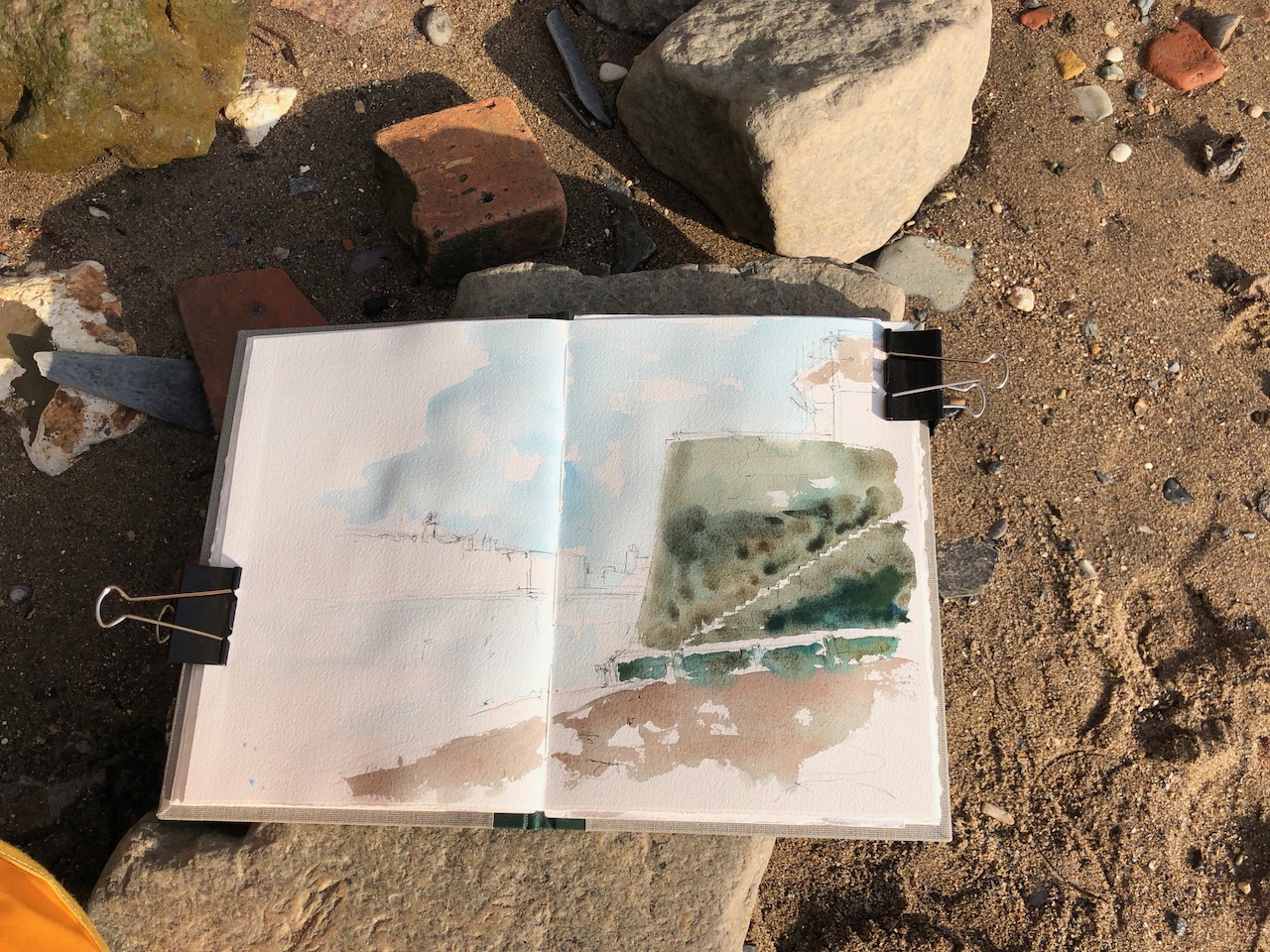
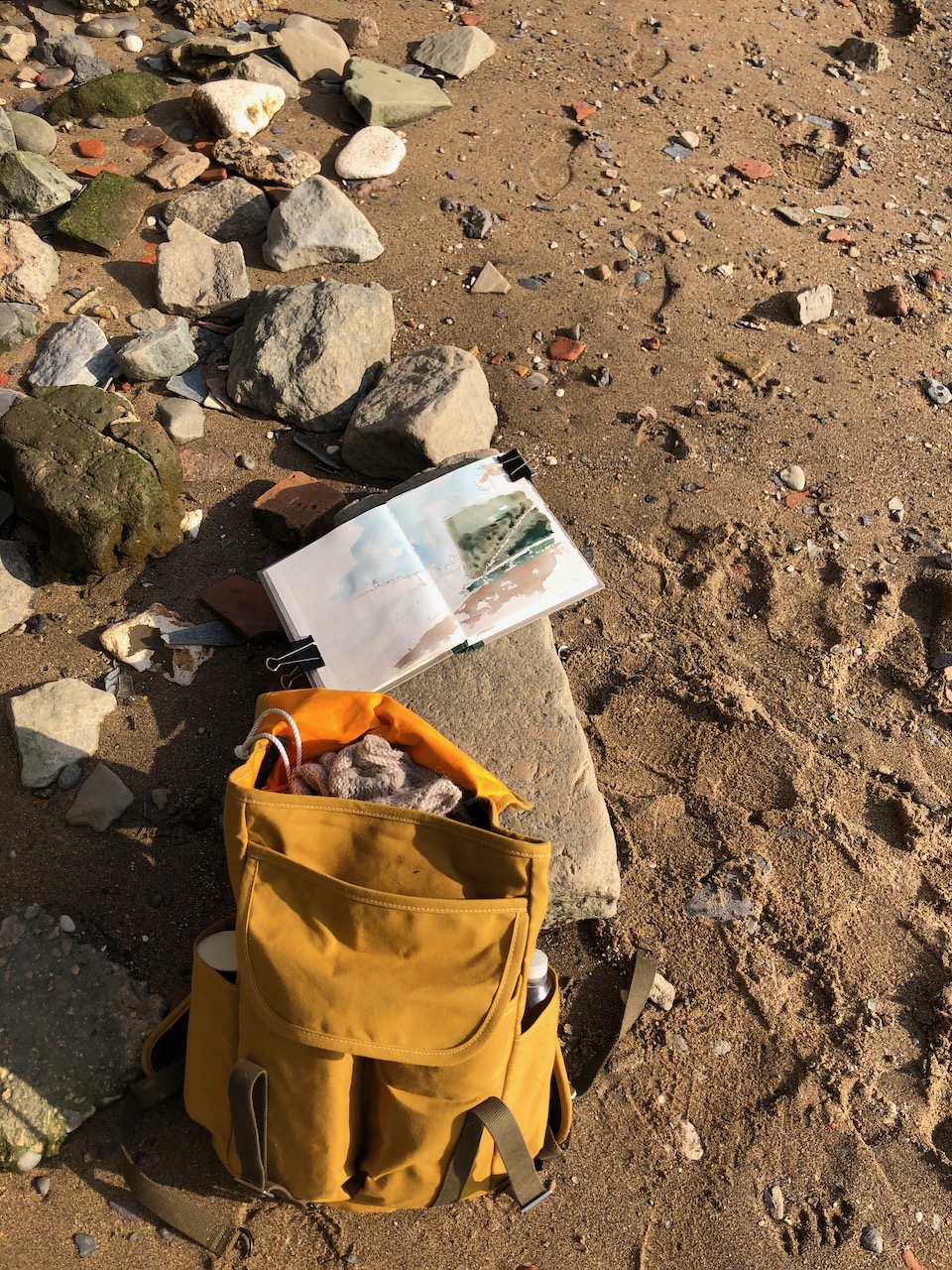
This was rather a quick sketch, because the tide was coming in. The geese came to have a look.

Earlier this year I sketched from the top of those steps, looking inland.

Wapping Old Stairs E

On a radiantly bright day I walked East from the City in search of horizons. Wapping, east of Tower Bridge, is where the buildings at last are of human size, and you can see the sky. Next to the pub called “Town of Ramsgate” on Wapping High Street, there is a small passage, a slot…

The passage is to the right, in front of the pub

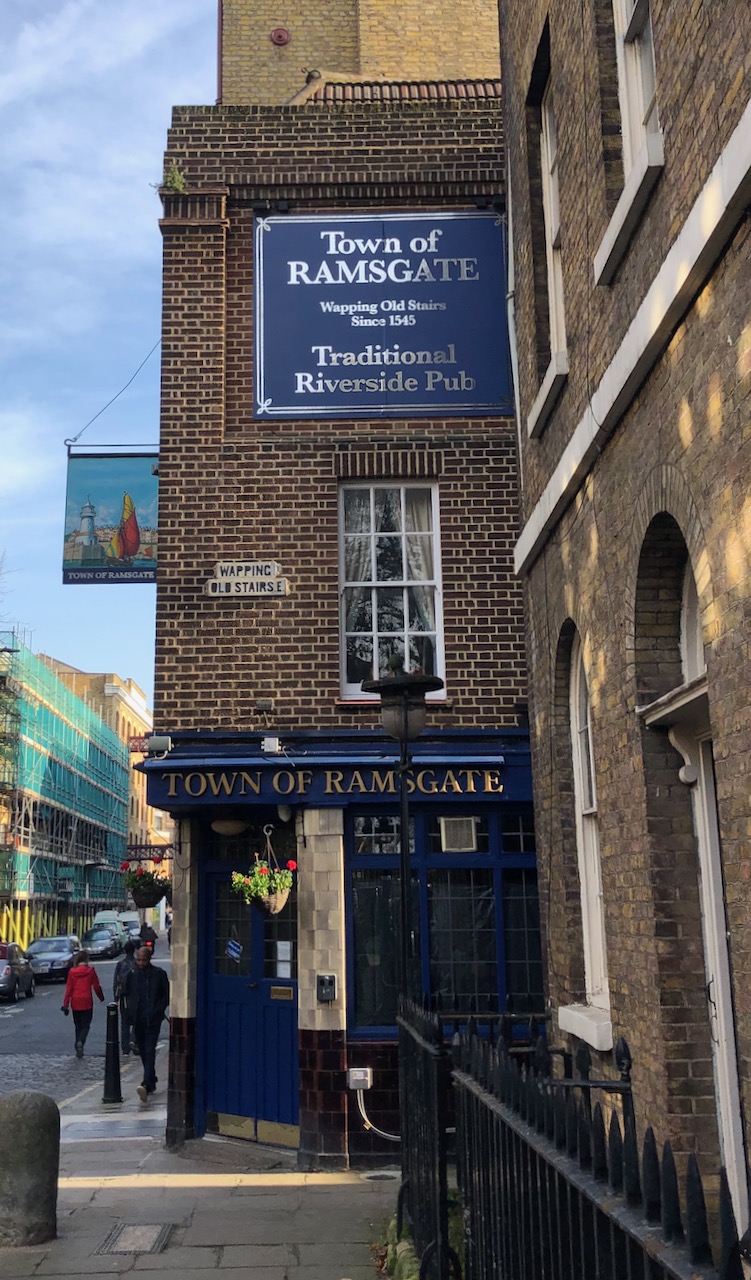
Wapping Old Stairs is quite hard to find. It is next to the “Town of Ramsgate” pub.

This sketch took about 45 minutes. The colours are Fired Gold Ochre (DS), Phthalo Turquoise (W&N), Perylene Maroon (DS), Mars Yellow (DS). I used the Fired Gold Ochre because it granulates so usefully to make the sand. The algae and green plants on the steps were slightly iridescent, glowing rather strangely even though in shadow.

Wapping Old Stairs E

On a radiantly bright day I walked East from the City in search of horizons. Wapping, east of Tower Bridge, is where the buildings at last are of human size, and you can see the sky.

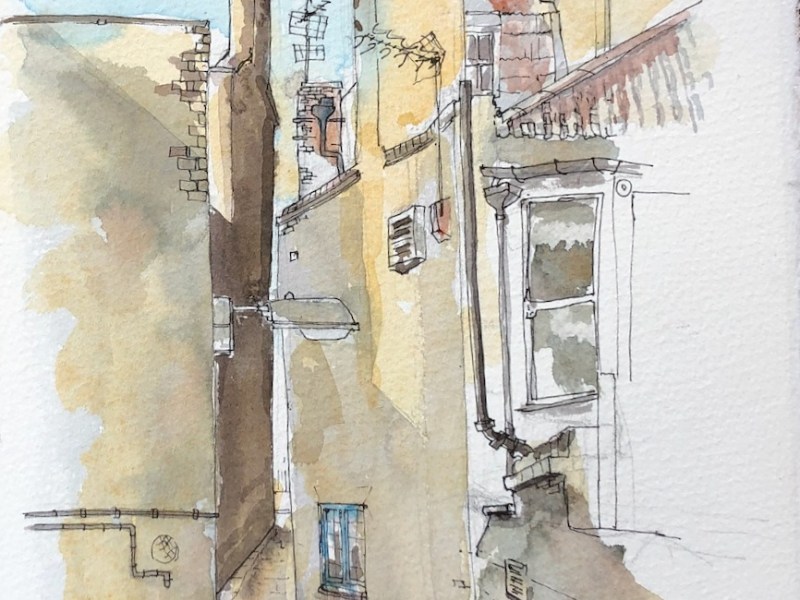
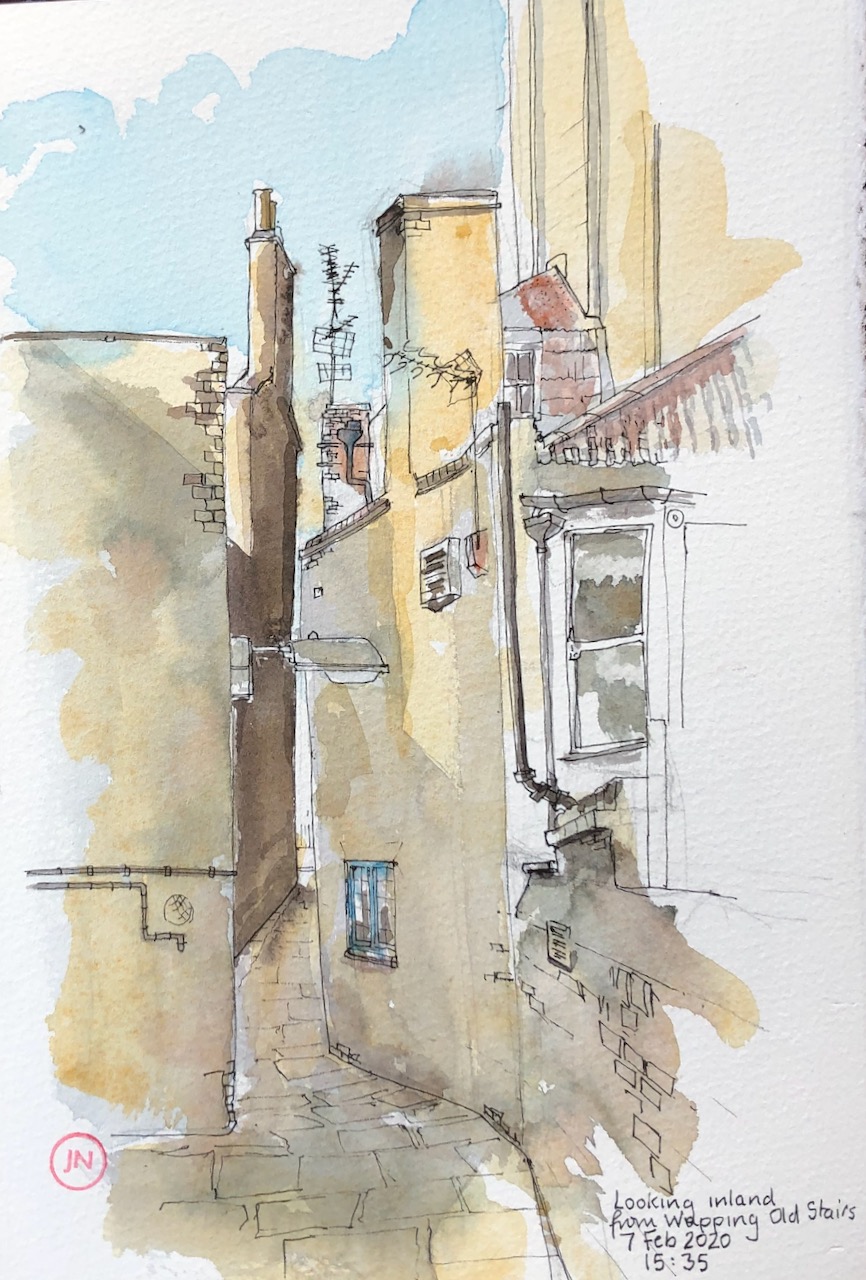
Next to the pub called “Town of Ramsgate” on Wapping High Street, there is a small passage, a slot between buildings. I darted down there, and found a long view over the Thames, and the stone steps leading down to the river. This is Wapping Old Stairs E. Turning round, to go back, I saw this mix of buildings.

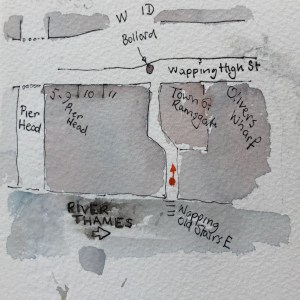
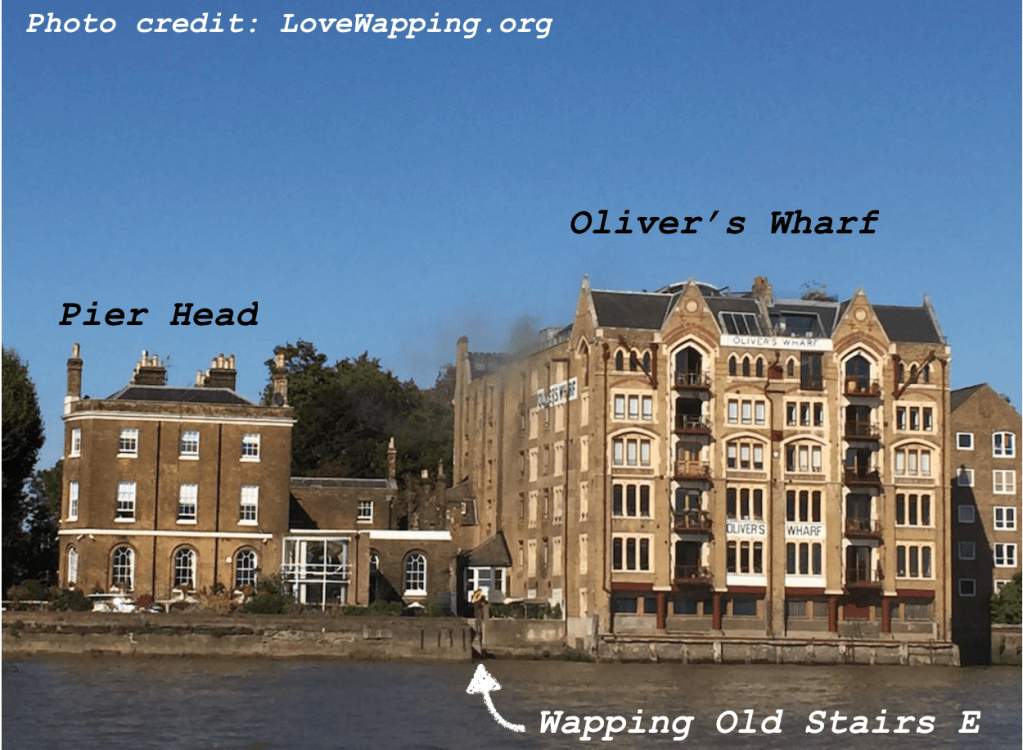
On the right, with the blue window, is the “Town of Ramsgate”. High above it are the walls of the former warehouse “Oliver’s Wharf”, built in 18691 The warehouse was turned into flats in 1970-1972, making it one of the very early warehouse conversions. Warehouse conversions later extended all the way down the river on both sides.

Sketch map showing the buildings around Wapping Old Stairs E.

On the left are the backs of the houses on “Pier Head”, which is a wide elegant road joining Wapping High Street to the river. There is a chain across the road to deter those of us who would like to look at the river from there.

One of the things I notice doing these sketches is the amazing number of television aerials that persist on rooftops, in defiance of the proliferation of broadband services. In this view there are two, both seriously complex and business-like examples of the genre. I think it is time for a exhibition of Television Aerials, as Art. If you are the V&A reading this, consider it now, before they all disappear, or become very valuable.

Wapping Old stairs is not a lonely place. It must feature in books. During the hour and a quarter I was there four couples and individuals walked along the passageway, looked out to the river, took photos and walked back. A man came with his tiny dog. The dog showed an unwise interest in my water pot, which by that time contained an unhealthy mix of Perinone Orange, Phthalo Turquoise and Mars Yellow. I tried to deter the dog from drinking it, and then had to explain to the dog’s owner that I didn’t mind the dog atall, but I didn’t think he should drink that particular water. They were going to go for a walk on the foreshore, but the tide was still high and sloshing over the steps, which put paid to that idea.

Here is work in progress.

(1) F. & H. Francis. 1869-70. Wapping, London E1. Built for George Oliver “in the Tudor gothic style, this wharf handled general cargo but had special facilities for tea” [Craig, Charles, et al.  London’s Changing Riverscape: Panoramas from London Bridge to Greenwich. London: Francis Lincoln, 2009. Quoted in “victorianweb.org”]

View from the South side of the river, photo from “LoveWapping.org”. This photo shows the smoke from a fire which broke out in one of the flats, Sept 2019.

Turks Head Café Wapping

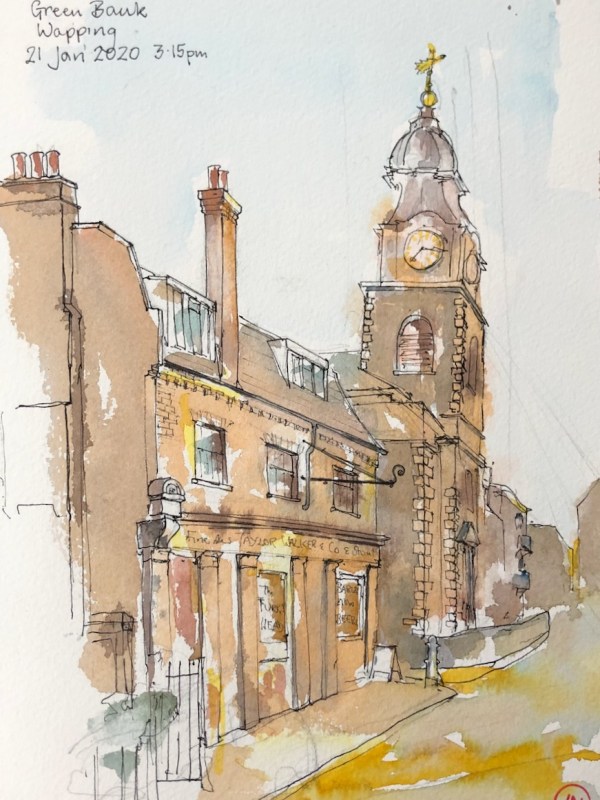
Here is the marvellous Turks Head Café, Wapping, rescued from demolition by local residents in the 1980s.

The Turks Head Cafe, in front of St John’s Tower

Inside, I found warmth, quiet tables, and the gentle murmur of conversations: people actually talking to each other. I felt welcome here. The food was marvellous. Next time I’m going to have the Blueberry Tart. I only noticed it after I’d already had the substantial Chicken and Avocado Sandwich.

Inside the Turks Head Café

I went to pay my bill. When I returned to my table, there was a little group of people admiring the sketch (above). I chatted to a man called Mark, who, it turns out, runs the website “lovewapping.org“. We exchanged anecdotes about the representation or otherwise of residents’ views on local councils. His group grapples with Tower Hamlets Council.

Then I went outside to draw the café.

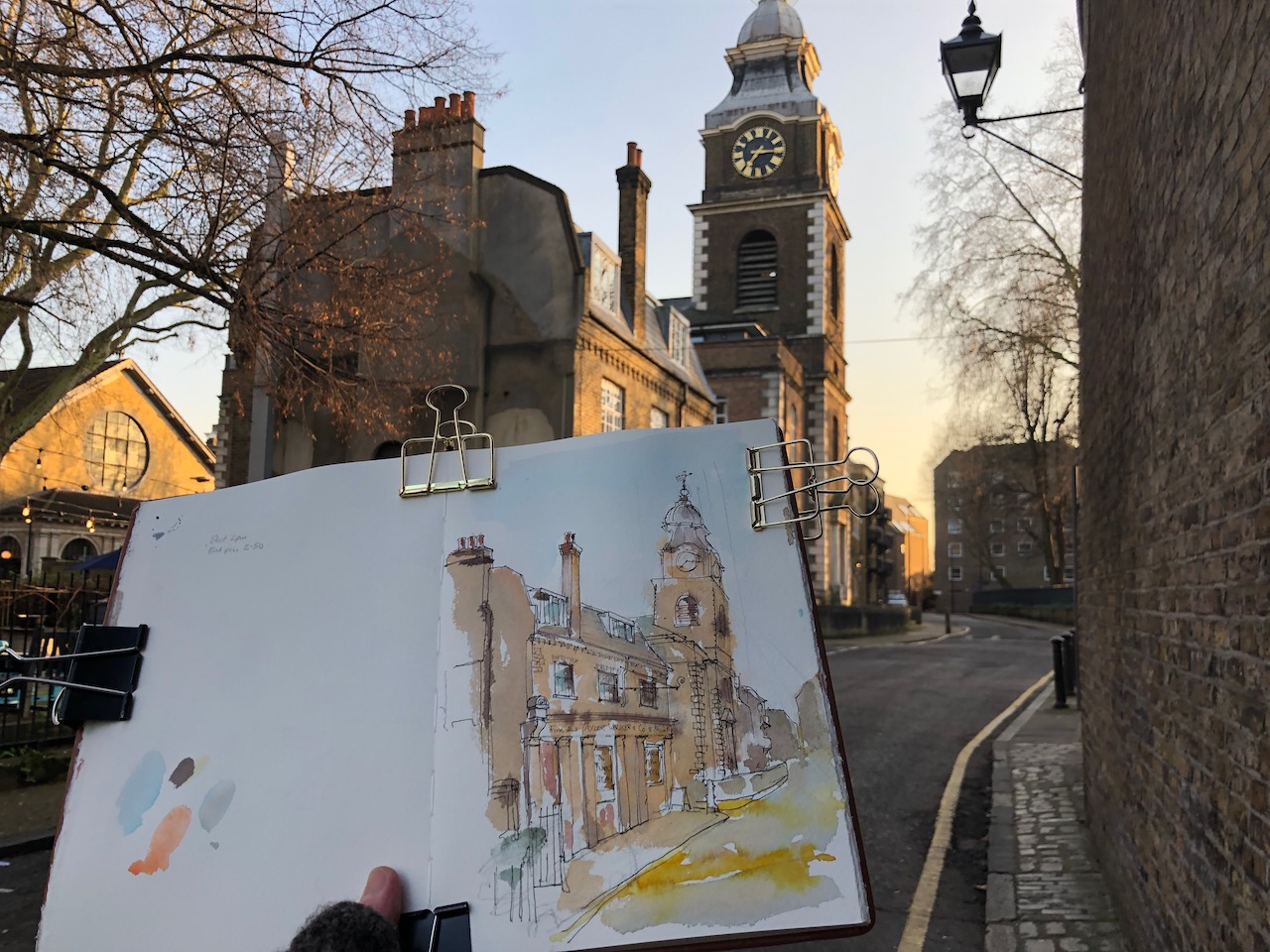
The tower in the background is St Johns Tower. The tower is “all that remains of the parish church of St Johns circa 1756 … the surrounding ground was rebuilt as flats in the 1990s to an attractive design reflecting the previous building on the site” says the Knight Frank website (an estate agent).

This drawing took 1hour 15 mins, done from the pavement by a huge brick wall. The colours are Perinone Orange, Phthalo Turquoise, Mars Yellow and Hansa Yellow Mid. As you see, the front of the cafe faces West, and caught the setting sun.

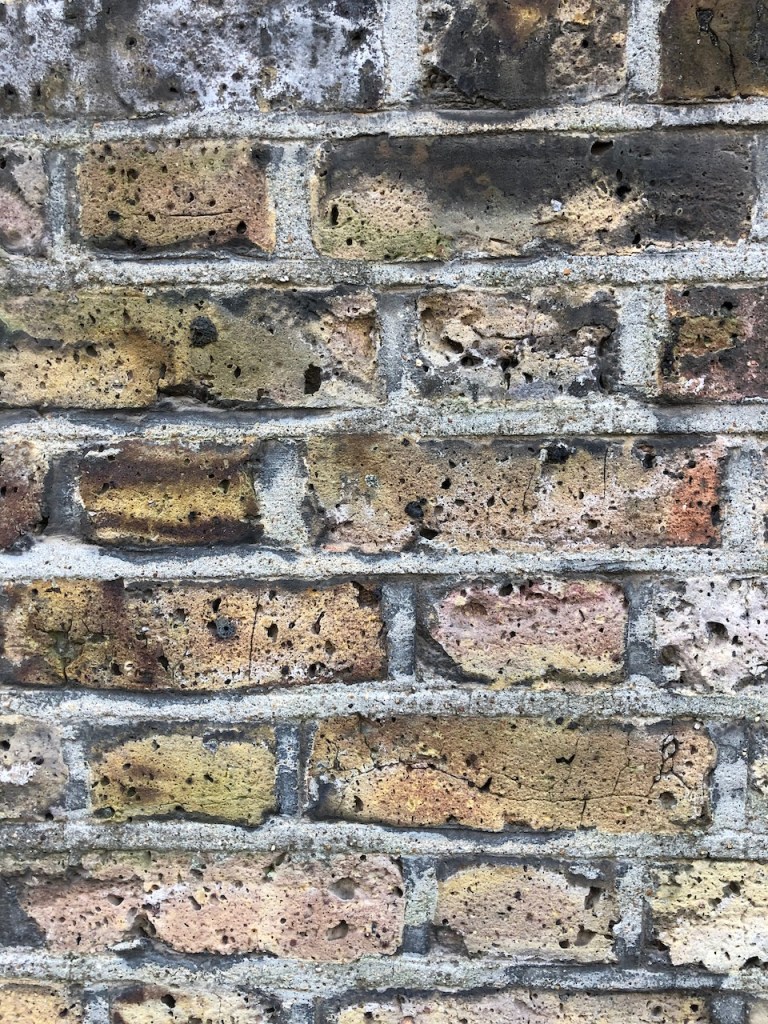
Here is the wall next to where I was standing.

London Bricks in Wapping.