Inner Hebrides – Sketch and Sail 2023

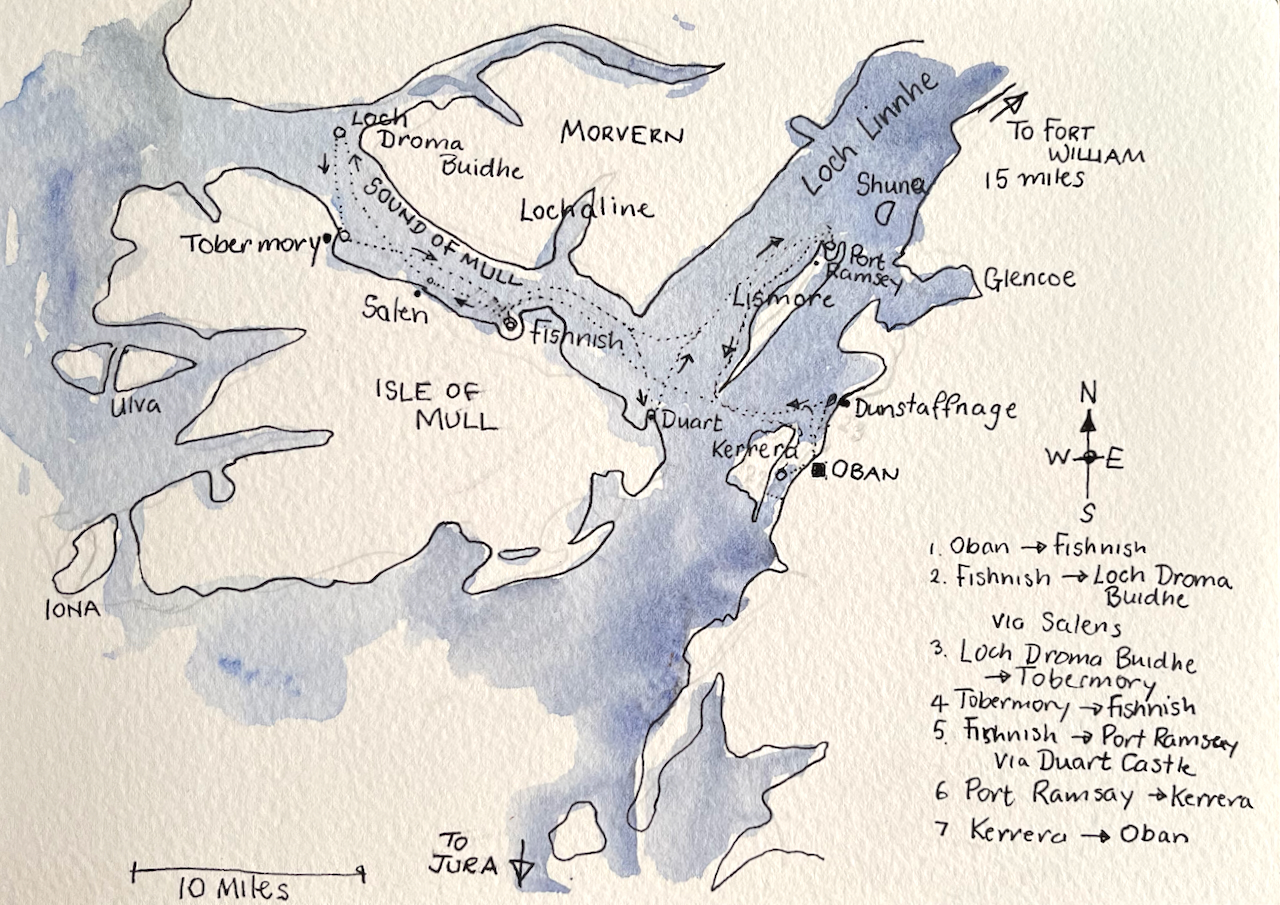
I’m just back from a “Sketch and Sail” adventure on the Lady of Avenel, a square rigged brigantine. I was one of the art tutors, together with Claudia Myatt. We spent a week sailing around the Inner Hebrides with a group of other sketchers: sketching the boat, the sea and the landscapes. The drawings which follow are ones I made. Participants’ drawings, with permission and attribution, will appear on the Lady of Avenel website.

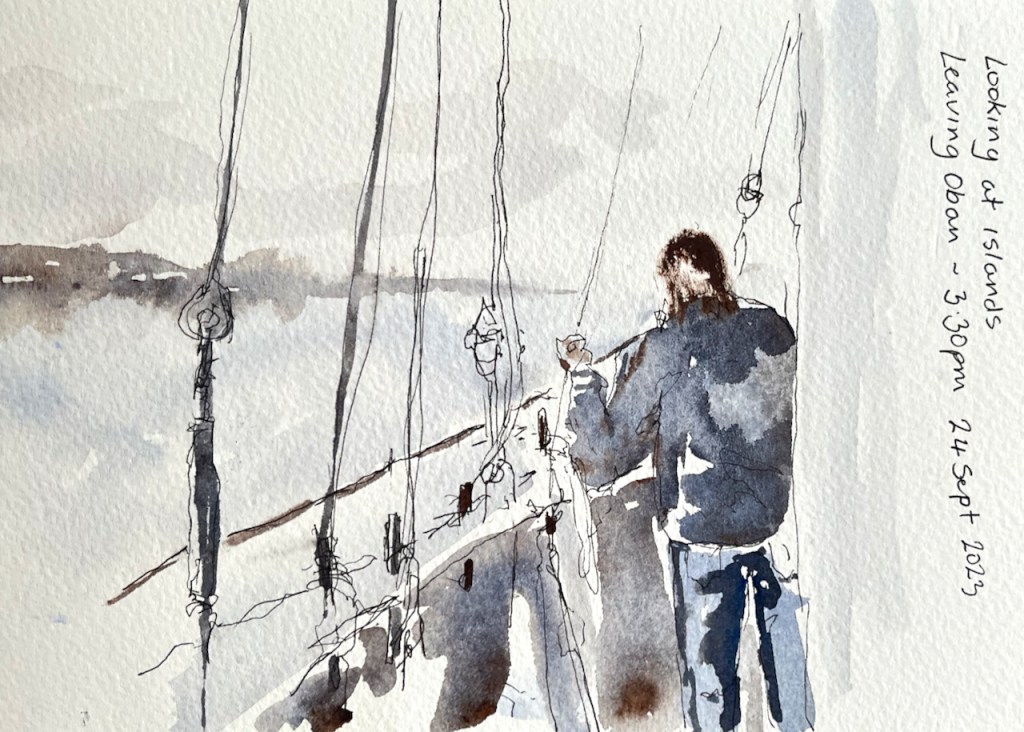
This was September in Scotland. There was wind and rain. Two storms passed over: “Nigel” and “Agnes”. But somehow, in between it all, we all did a lot of sketching. Our Skipper, Stefan Fritz, was skilled at finding sheltered anchorages. Claudia and I worked with him to plan the days so there was always something interesting to sketch.

There were days when we went ashore. Here are the boats at Salen on the Isle of Mull. Two hulks of fishing boats are in their final resting place on the beach. They lean on each other. Their grand forms are still majestic, and their paint has now flaked to reveal multi-coloured undercoats and timbers.

Boats at Salen. 25th September 2023, A5 postcard.

We visited Castle Duart. Some people went inside, others sat outside on the grass and had a go at sketching the castle’s complicated shape.
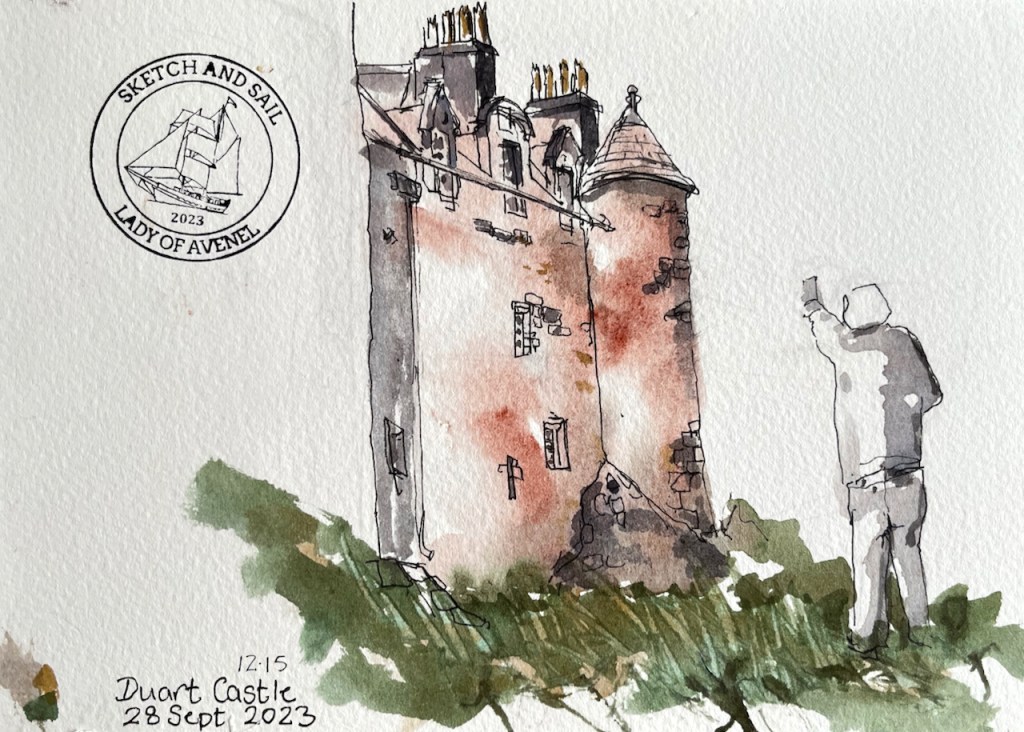
Castle Duart (and tourist), 28th September 2023

Those chimneys had multiple points, like crowns. One of the participants did a careful study of them. In the grounds of the castle there were porcini mushrooms. These were confidently identified by one of our number, a horticulture expert. We left the mushrooms exactly where they were. We didn’t touch them or eat them. But we did draw them. My drawing does not give the scale: they were about 3 inches across.

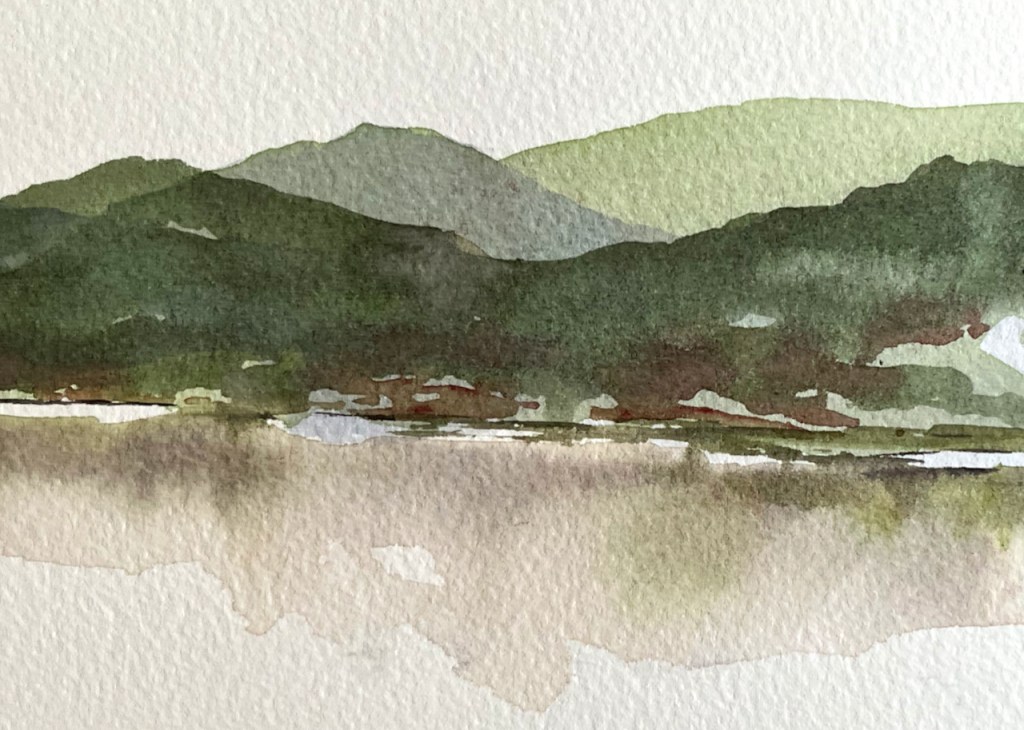
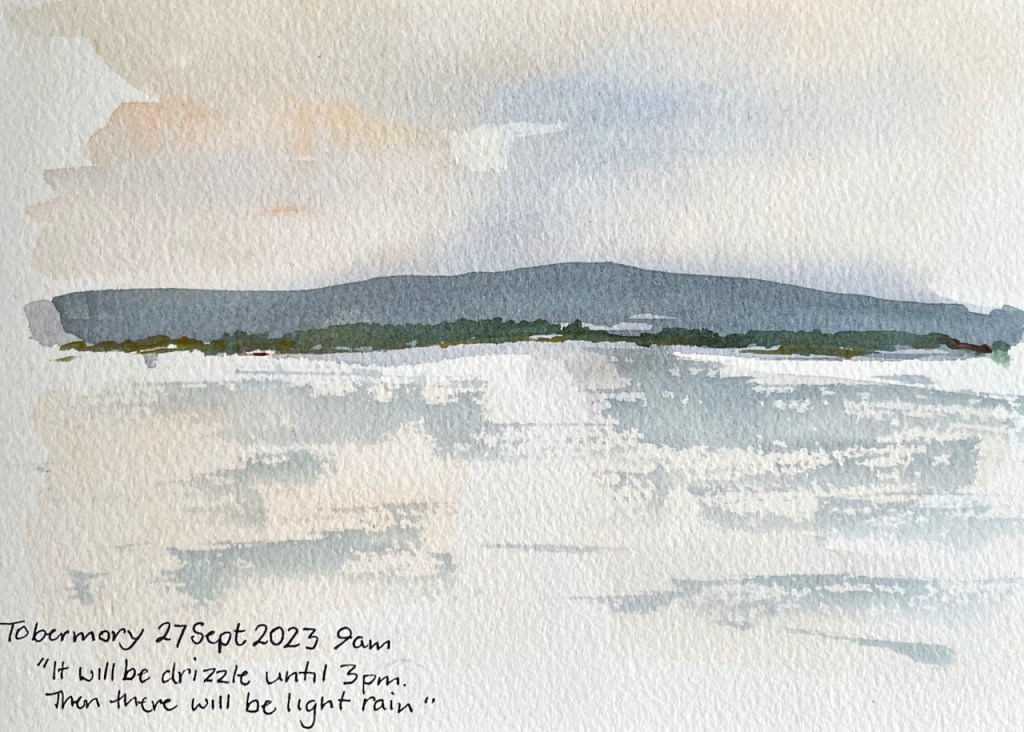
We sketched the land from the sea.

There were inspiring atmospheric effects. Here is a glimpse of the sun near the isle of Lismore.

On the way to Port Ramsay, Isle of Lismore. 28th September 2023

That neat round sun is made using a drop of melted candlewax from a nightlight which a member of the crew, Nessie, found for me. Nessie, a.k.a Carol Anderson, is an astonishing fiddle player. She played tunes for us on some evenings. We were all impressed by her skill. She maintained several melodies at once, all on just one fiddle. Other people played the harp and the recorder, and we sang sea shanties: half-remembered but rendered with gusto, and accompanied by assorted musical instruments and improvised percussion.

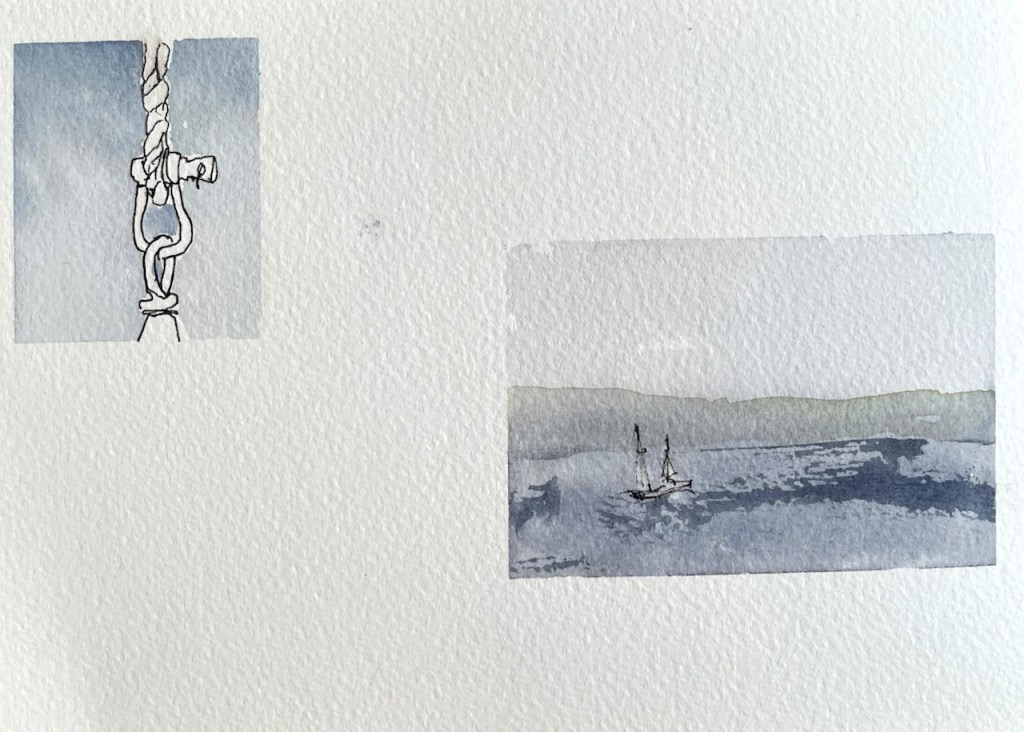
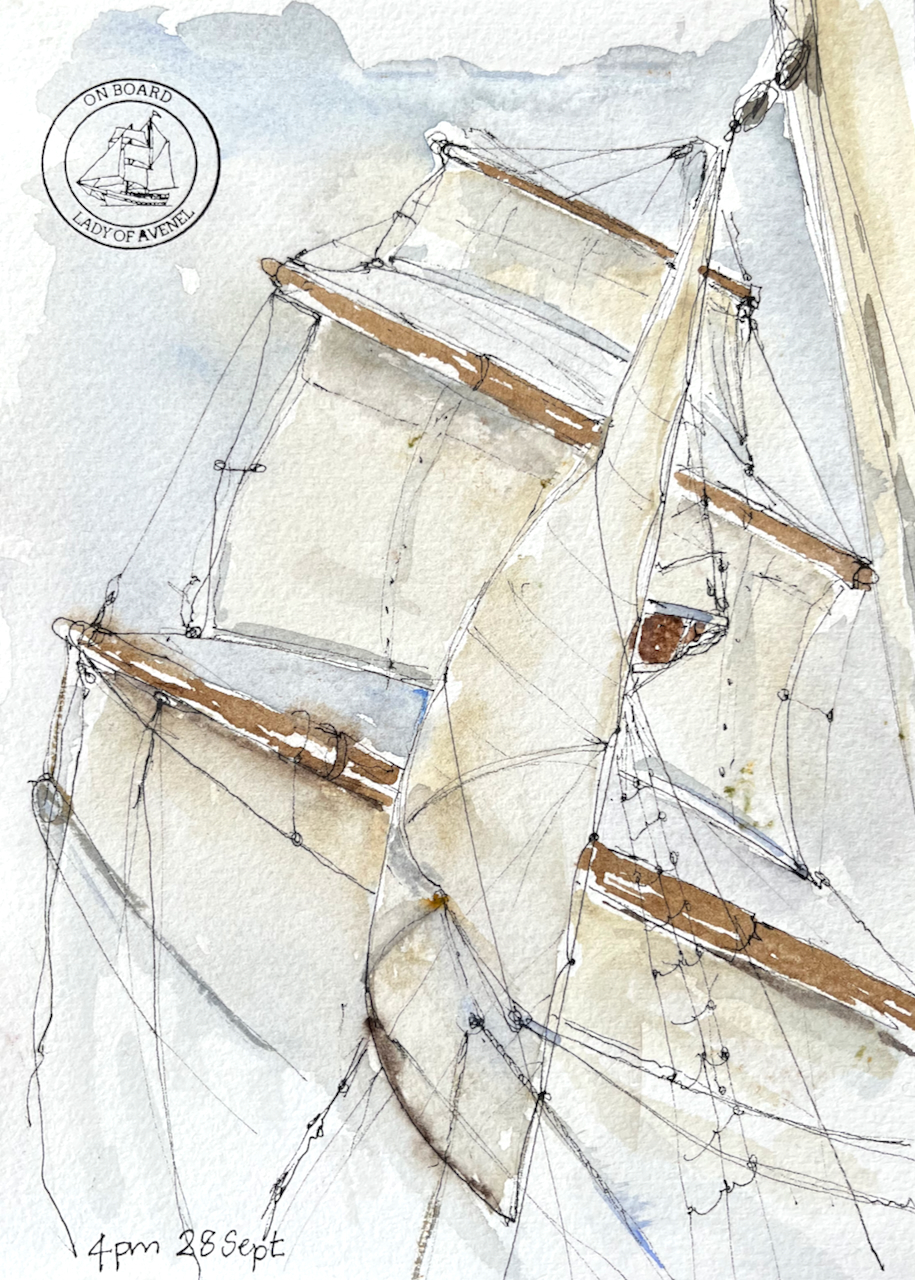
Nessie was our cook for this expedition. We also had a mate, the mate’s mate, and a ship hand, to help the skipper manage the boat. They were out there even in the pouring rain, getting us to the next safe harbour, piloting us past landmarks and between islands, and managing the engine and sails. Thanks to this crew, we had a productive and inspiring voyage: always something to see or do. The sails are beautiful, although quite hard to sketch.

Some people took time off sketching to enjoy working the boat: hauling on ropes or taking the wheel. A brave few elected to climb the rigging. One person even did a sketch from up there.

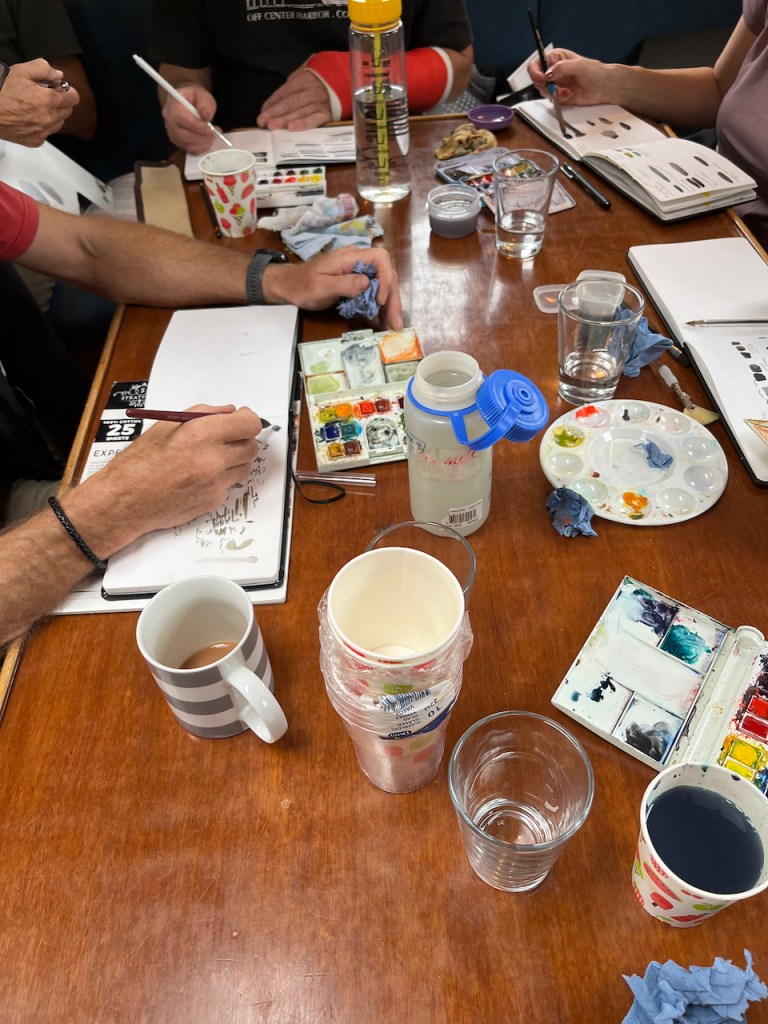
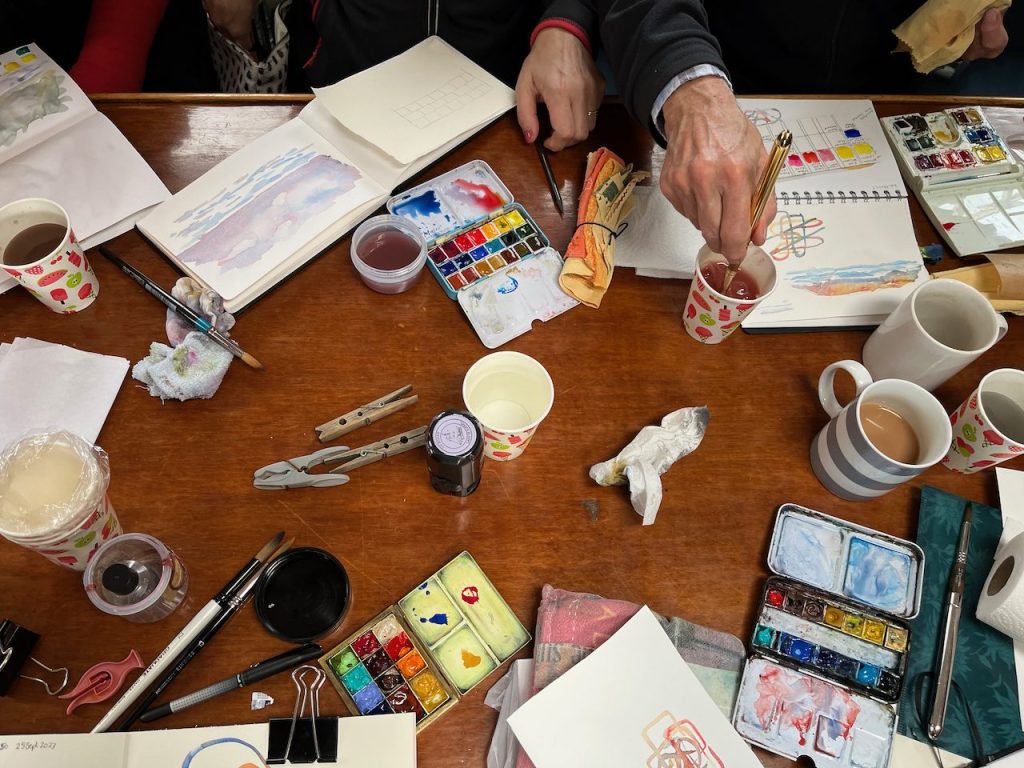
In the intervals between other activities, and when it rained, Claudia and I ran various workshops, so that people could learn new techniques, share skills, or get started: depending on skill level.
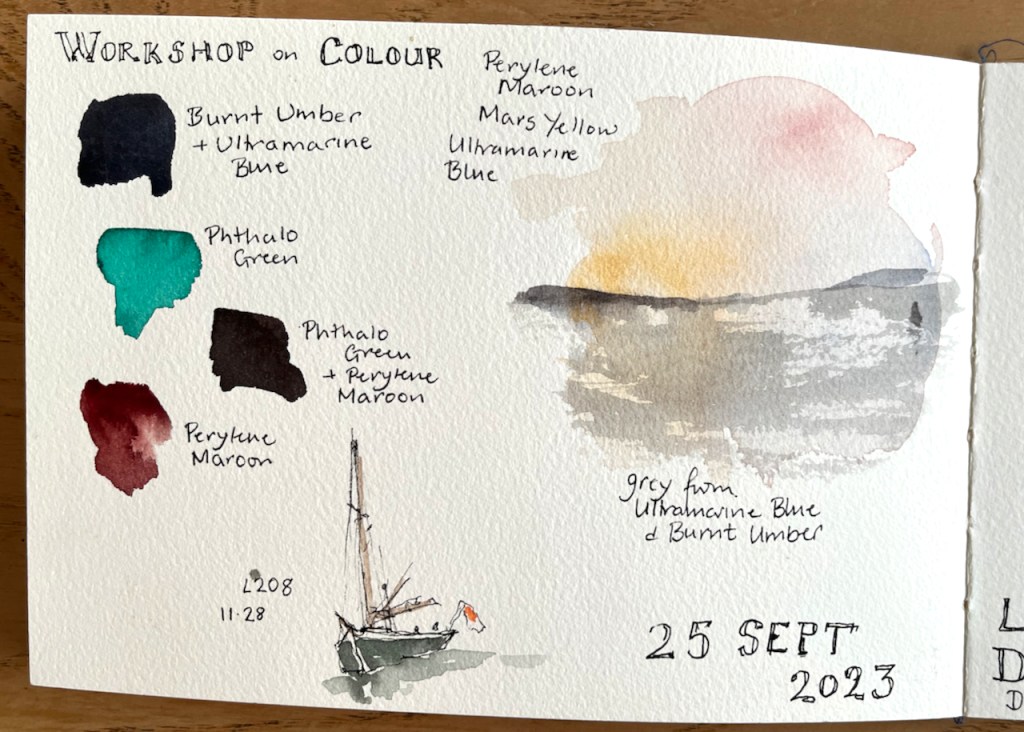
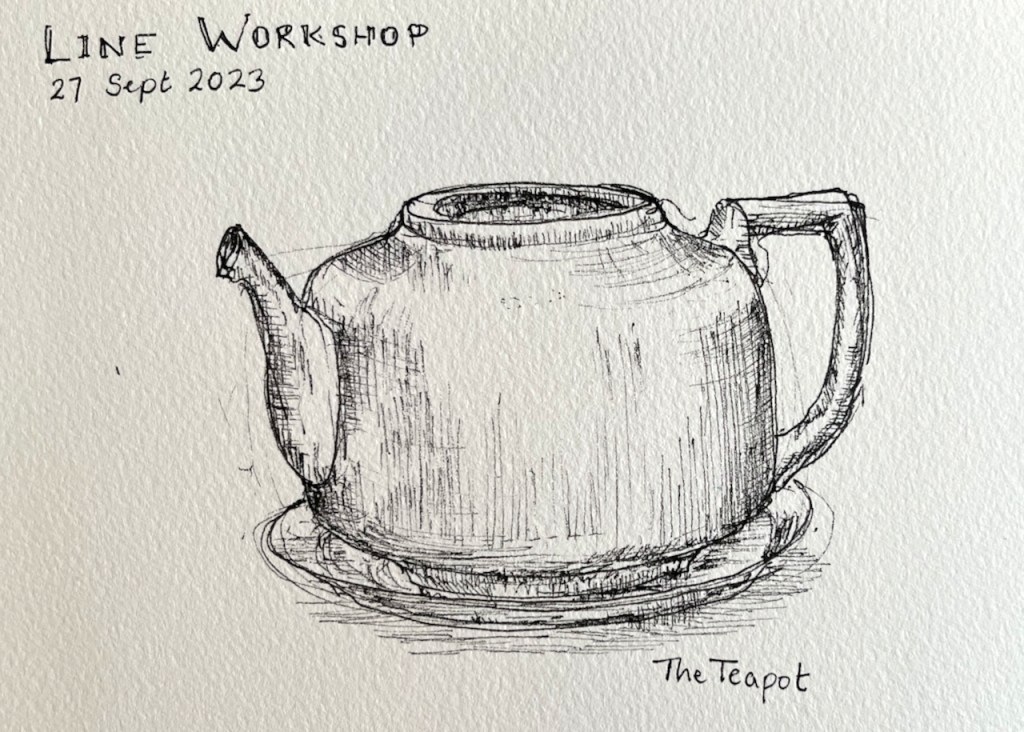
The expedition was great fun, and highly productive. Sketchbooks were filled, postcards painted and sent, maps examined and weather apps compared.

We intend to run it again in 2024 and 2025. If you’re tempted to come, you can register your interest now by contacting me, or Claudia Myatt, or the Lady of Avenel direct. You don’t need any experience of sketching or sailing!
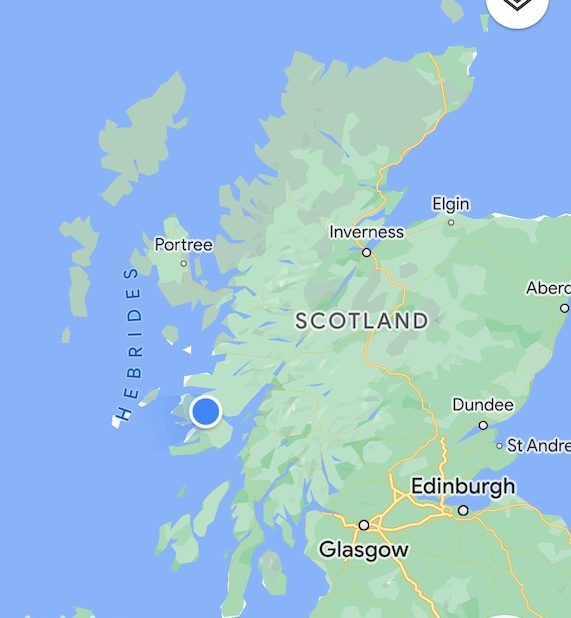
Here’s a page-turn of my sketchbook (about a minute, silent video). The sketchbook is from JP Purcell, A5, watercolour paper 300gsm. I use Daniel Smith watercolours: you can see the colour palette at the beginning of the video. (The video plays on tablets and desktops. It does not play on email or on mobile phones. Try looking at this post via the web on this link)

I’ve sketched on the Lady of Avenel before:

Lady of Avenel delivery passage, October 2022, Caledonian Canal

The Lady of Avenel is an 102ft square rigged brigantine. She was on the East coast of Scotland, and needed to be on the West Coast. So a group of us assembled to take her through the Caledonian Canal, from the North Sea to the Atlantic. This whole journey was about 190km or 120miles. I…

Outer Hebrides 2017

I took my sketching things on a swimming expedition to the Outer Hebrides with Swimtrek. We were on the wonderful Lady of Avenel 102ft square rigged brigantine. We started in Oban. It was raining when I drew this picture, as you can see from the way the pen has drifted a bit, round the chimneys.…
Sketching near Oban, Argyle and Bute, Scotland

The Lady of Avenel is an 102ft square rigged brigantine, currently based near Oban, on the west coast of Scotland. Every year the Lady of Avenel needs a refit to prepare her for her working season. This year I went up there to join the working party for the refit. I travelled by overnight train…

Lady of Avenel at Heybridge Basin

Here is Lady of Avenel, 102ft Brigantine. This was the third of three sketches. Here are the first two. I have drawn Lady of Avenel previously: Outer Hebrides 2017 See also these pages for pictures of and from Lady of Avenel: Outer Hebrides 2017 Outer Hebrides 2016 Sketch notes from maritime Holland

Lady of Avenel etchings

Here is the Lady of Avenel in aquatint. Here is the hard ground, before the aquatint went on: To help with the aquatint, I made a small test plate. It seemed a pity to leave it blank, so I put some sea life: Lady of Avenel is an 102ft brigantine square rigger. I sailed on…
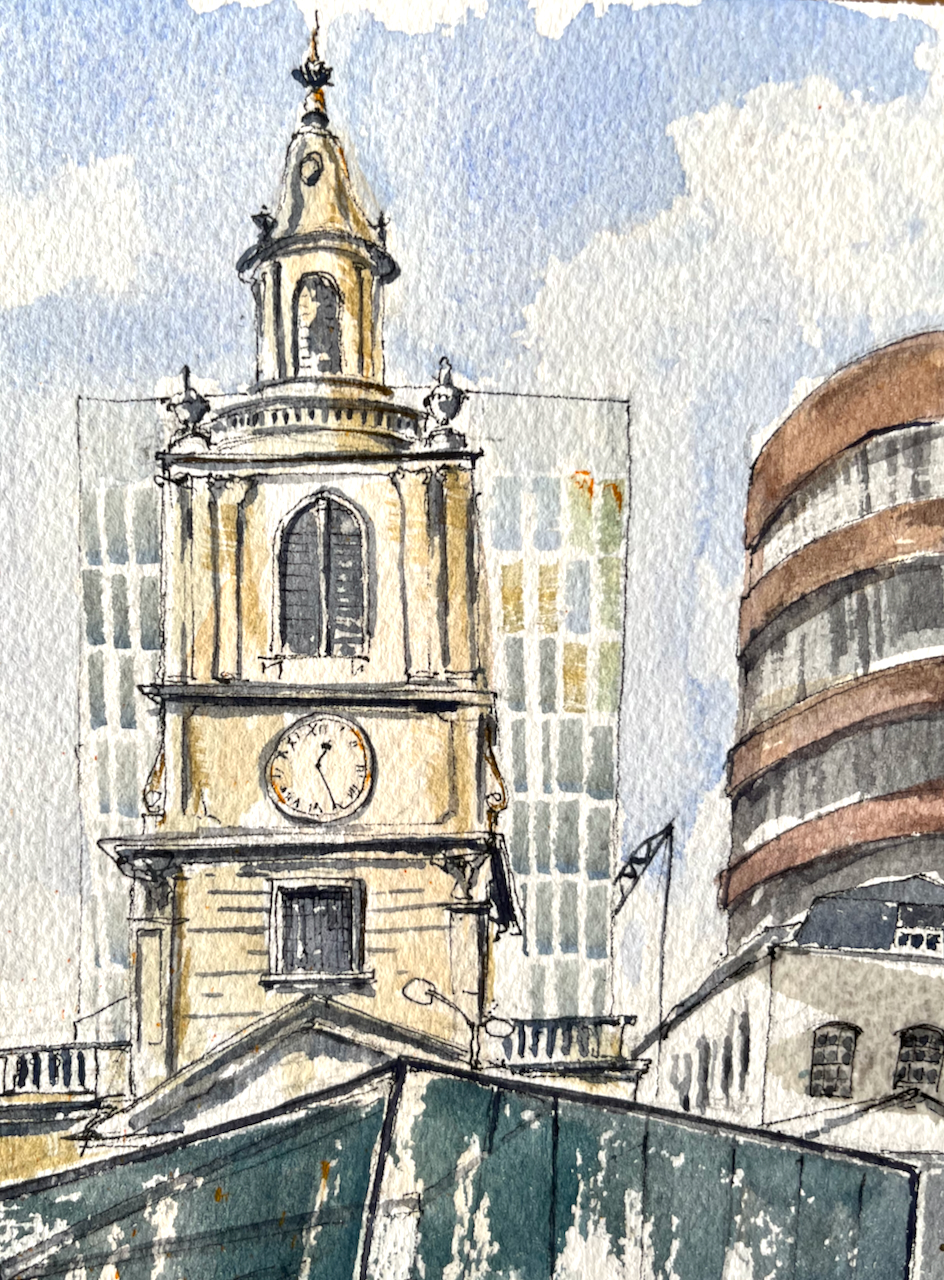
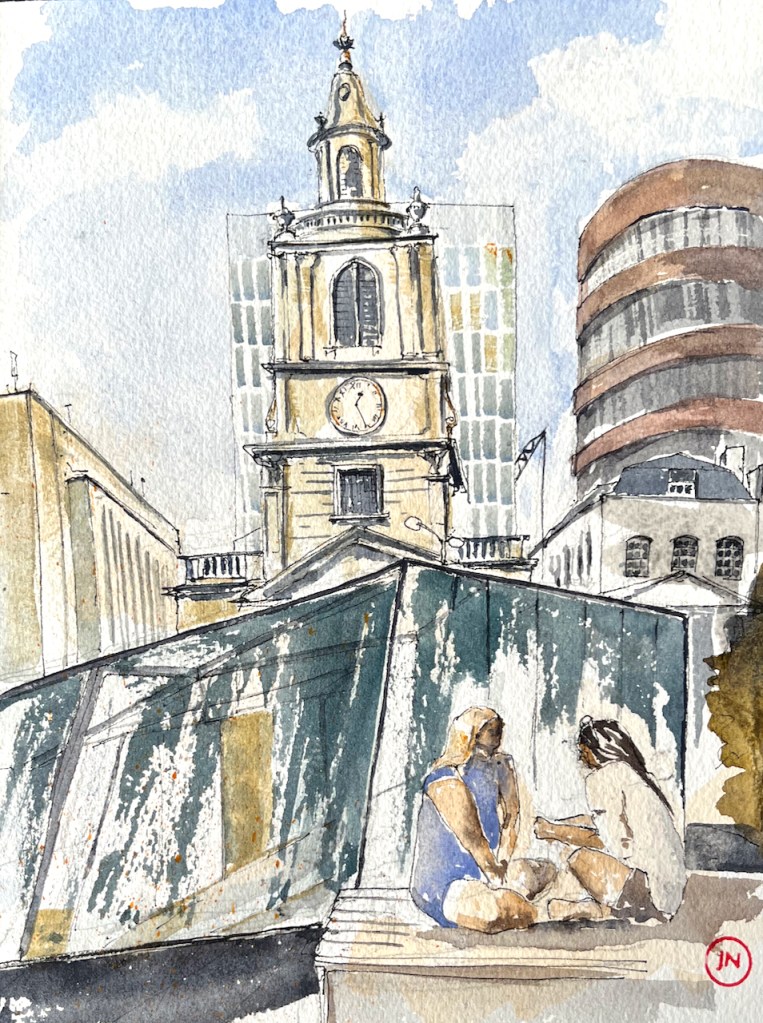
St Botolph-without-Bishopsgate, EC2

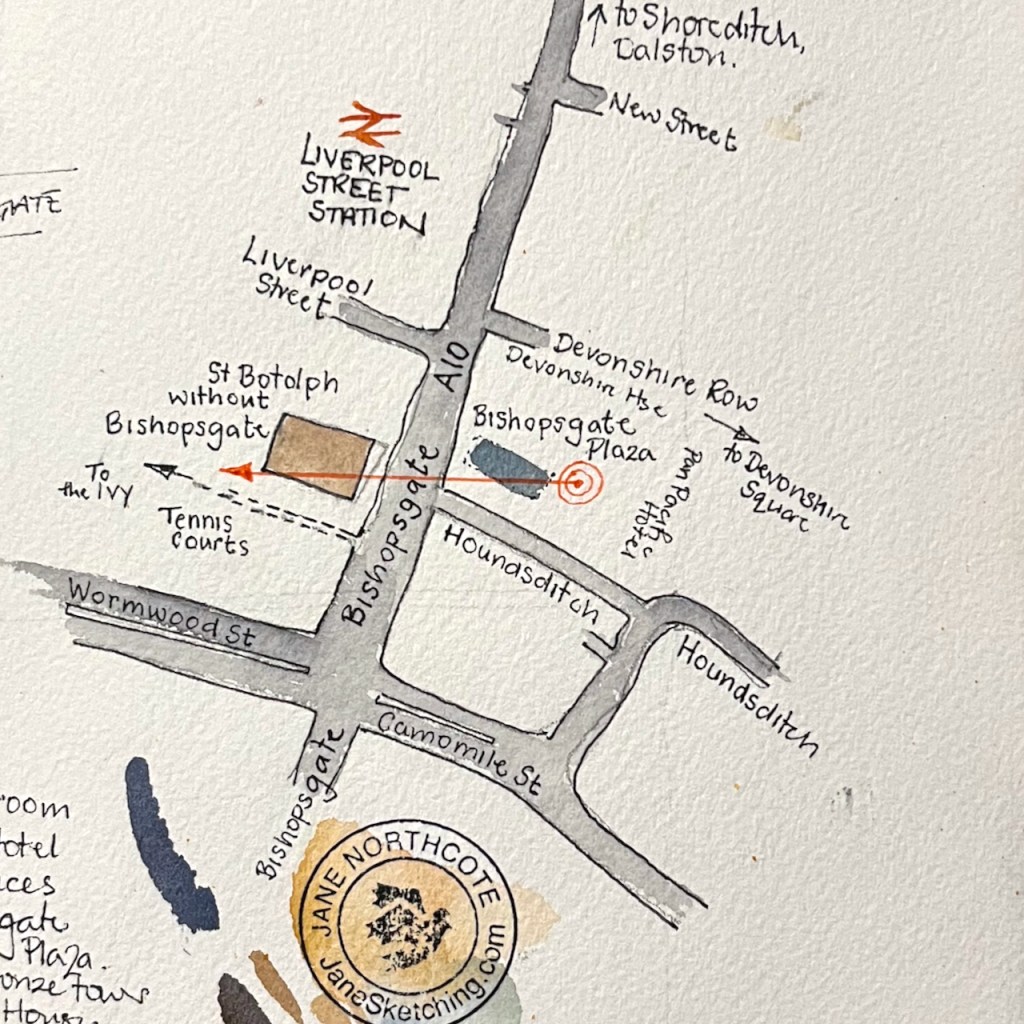
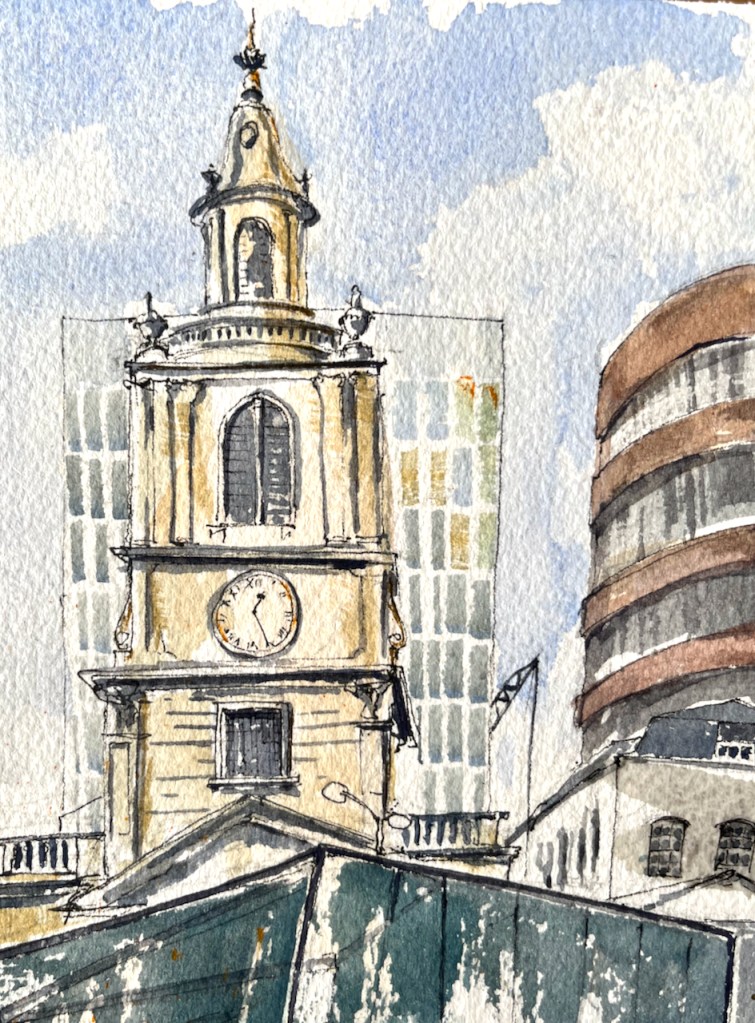
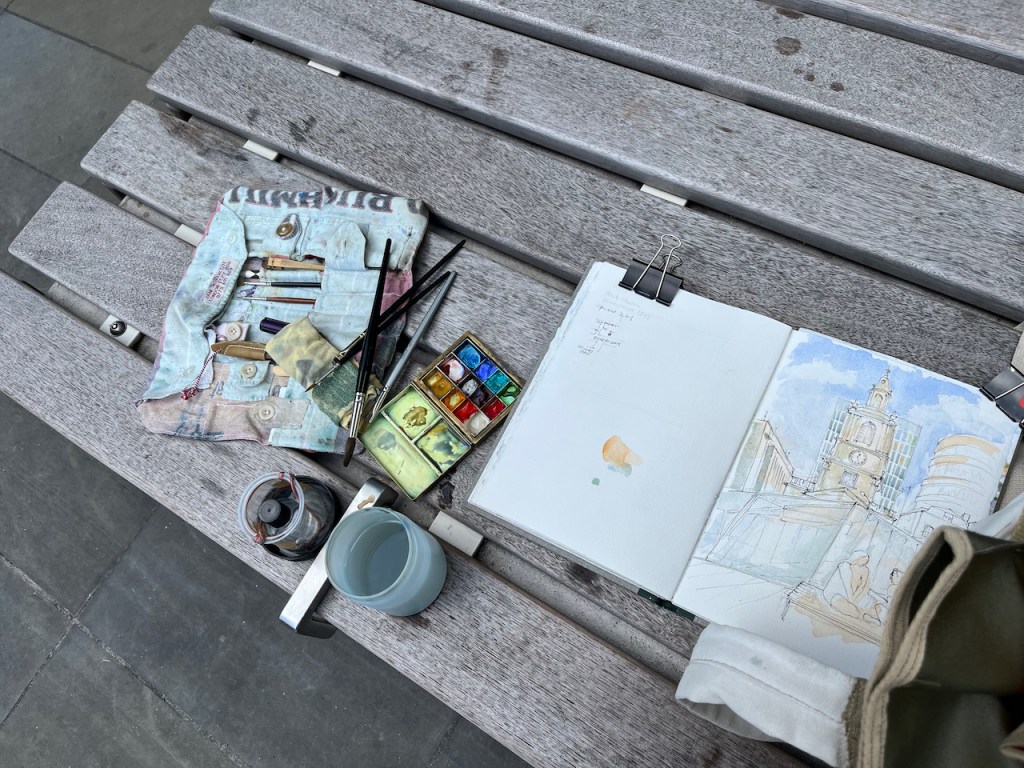
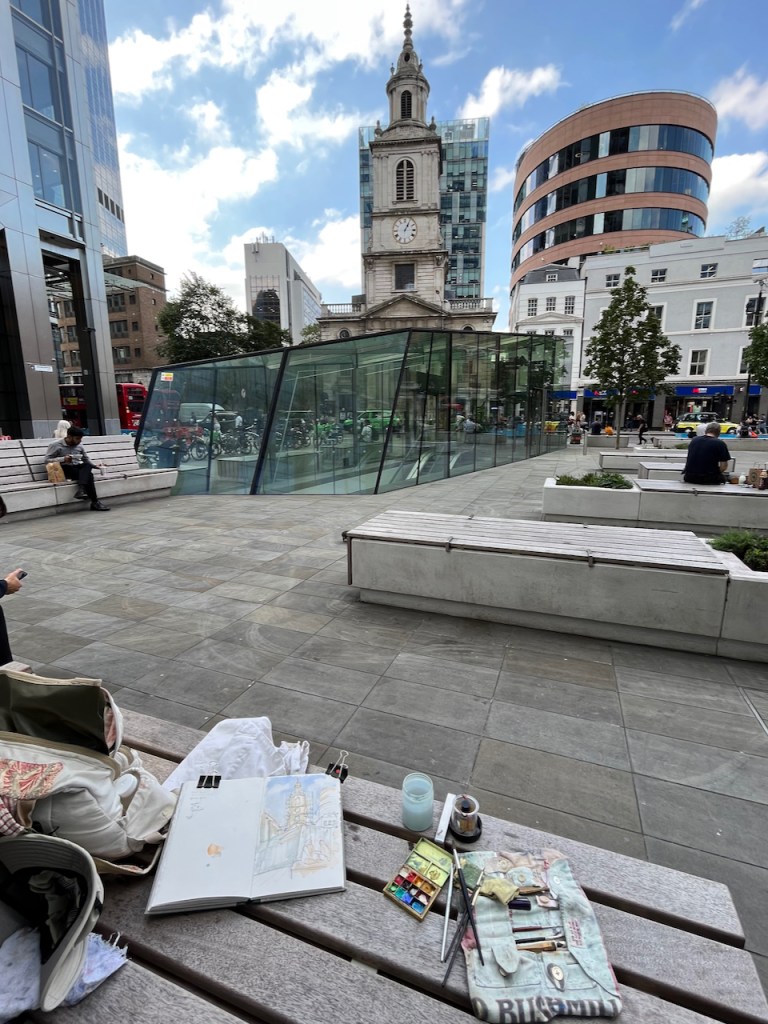
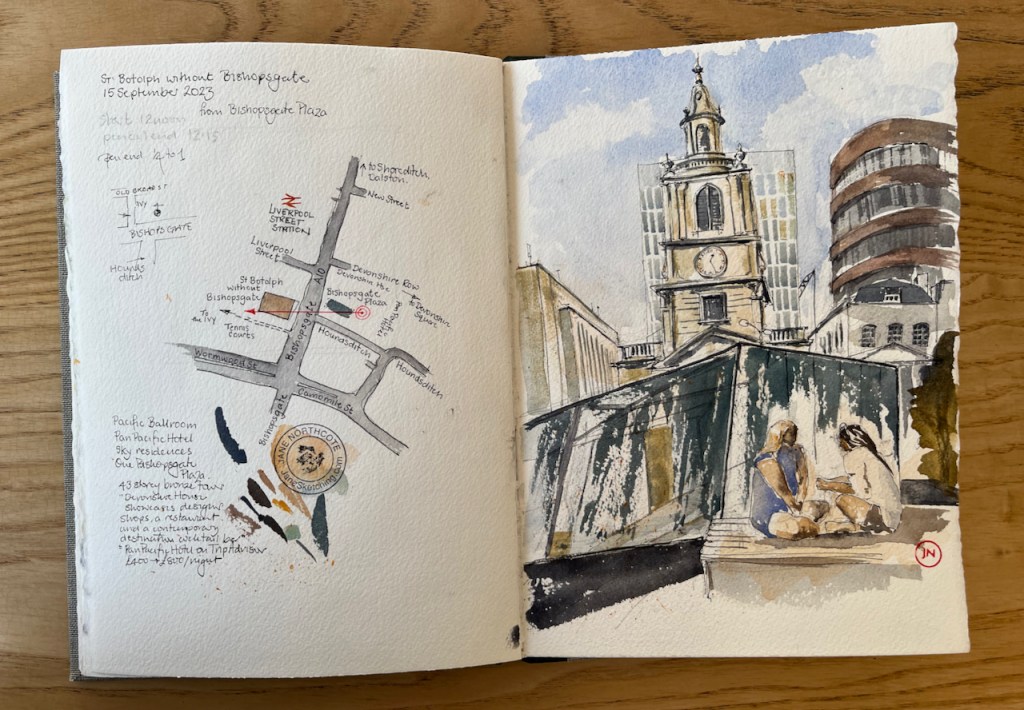
Bishopsgate Plaza is on the East side of Bishopsgate, near Liverpool Street. From the seats there, here is the view of St Botolph-without-Bishopsgate. I sketched amongst the many people enjoying the sun at lunchtime.

St Botolph-without-Bishopsgate, EC2. 15th September 2023, 1pm. 10″x 7″ in sketchbook 13

The current church was constructed in 1729, to the designs of James Gould. There has been a place of Christian worship on this site since Roman times. The parish registers are complete from 1558 according to the church’s website.

Viewed from Bishopsgate Plaza, the church is all but submerged in the surrounding buildings. The large glass structure is the entrance to the “Pacific Ballroom”. This is part of the Pan Pacific Hotel, which was behind me as I sketched.

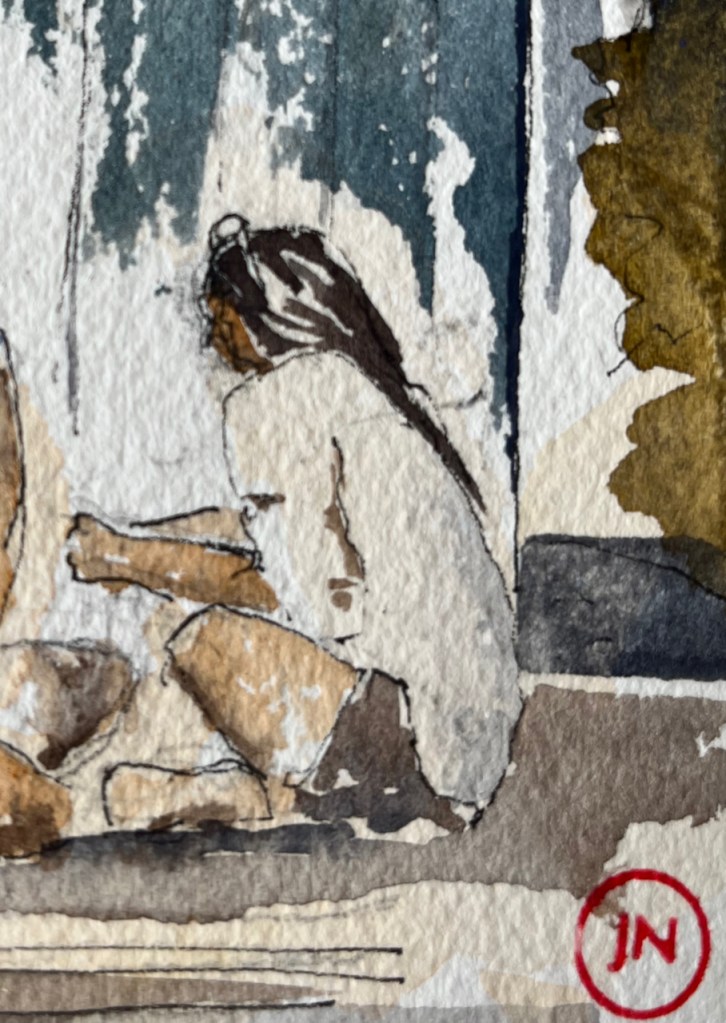
I find it quite hard to draw people, but I wanted to include the discussion between the two women. Their lively conversation contrasted with the stillness of the church, and the enormity of the buildings all around. They created a little private world between themselves.

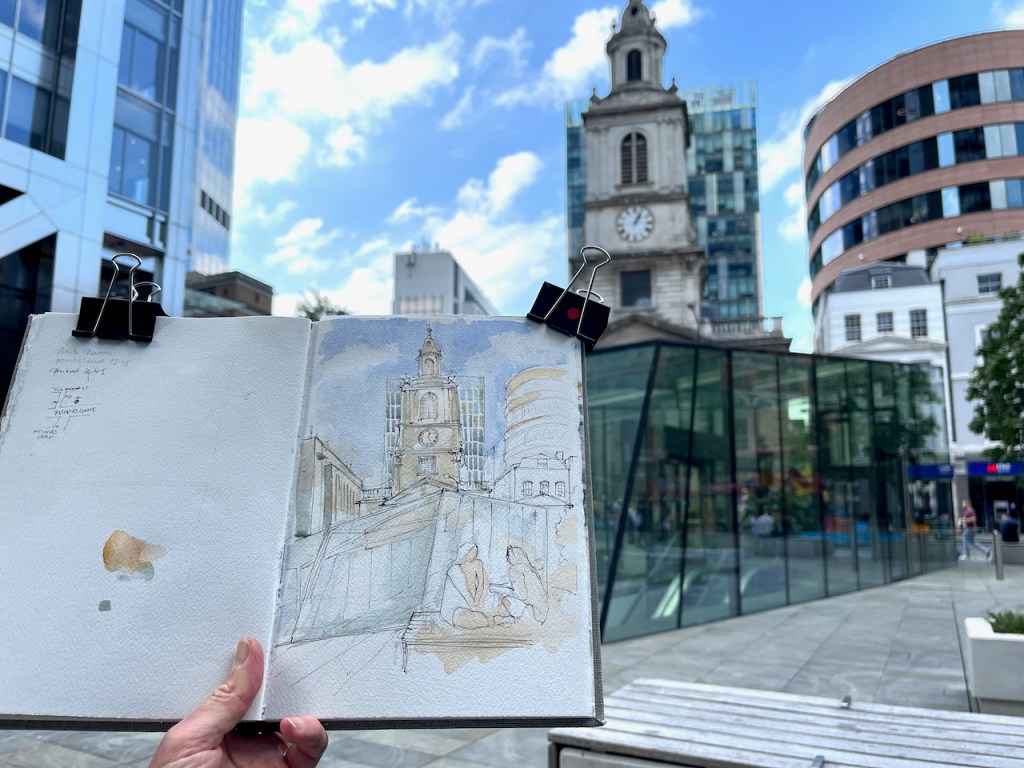
Here is work in progress on the sketch:

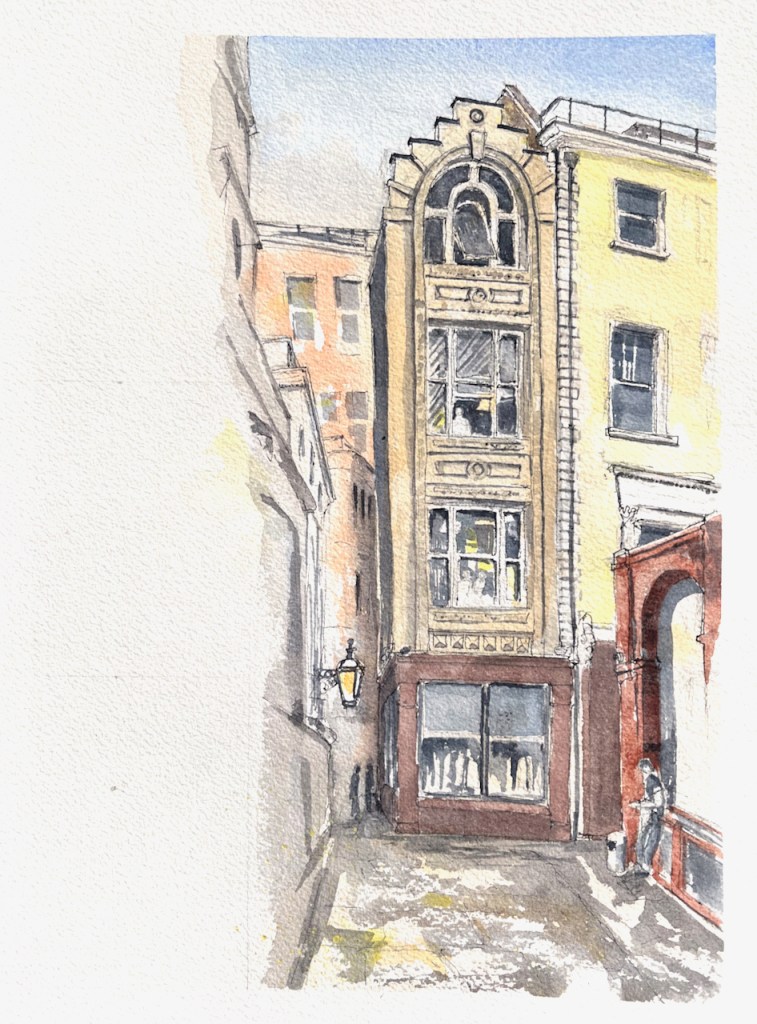
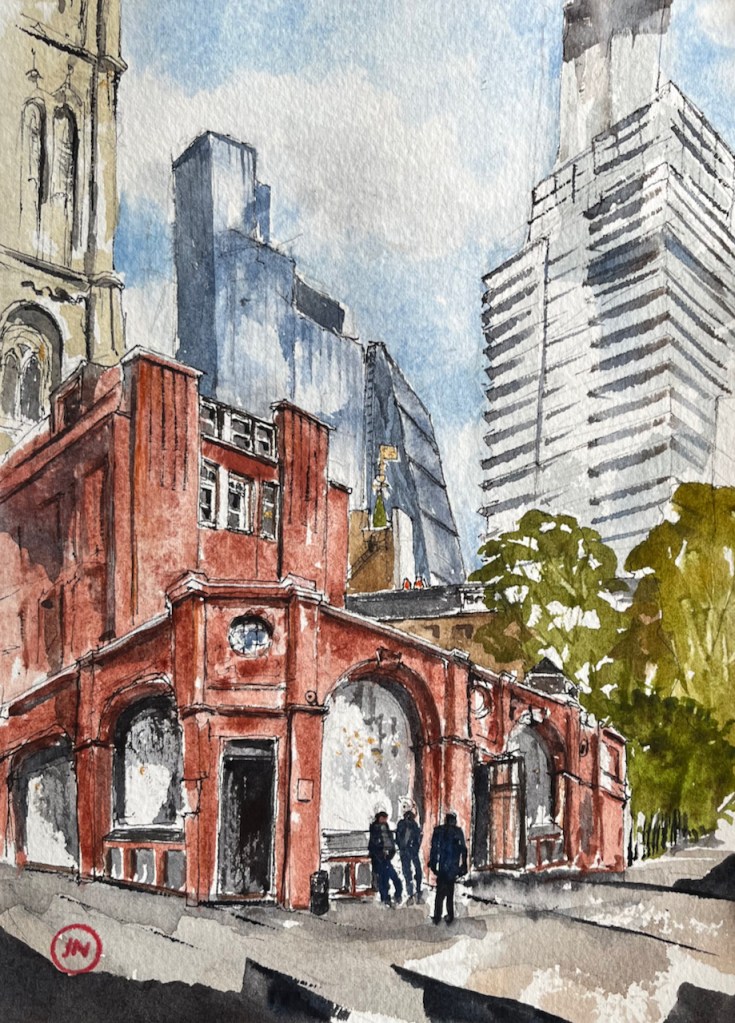
4 St Michael’s Alley, MacAngus & Wainwright, EC3

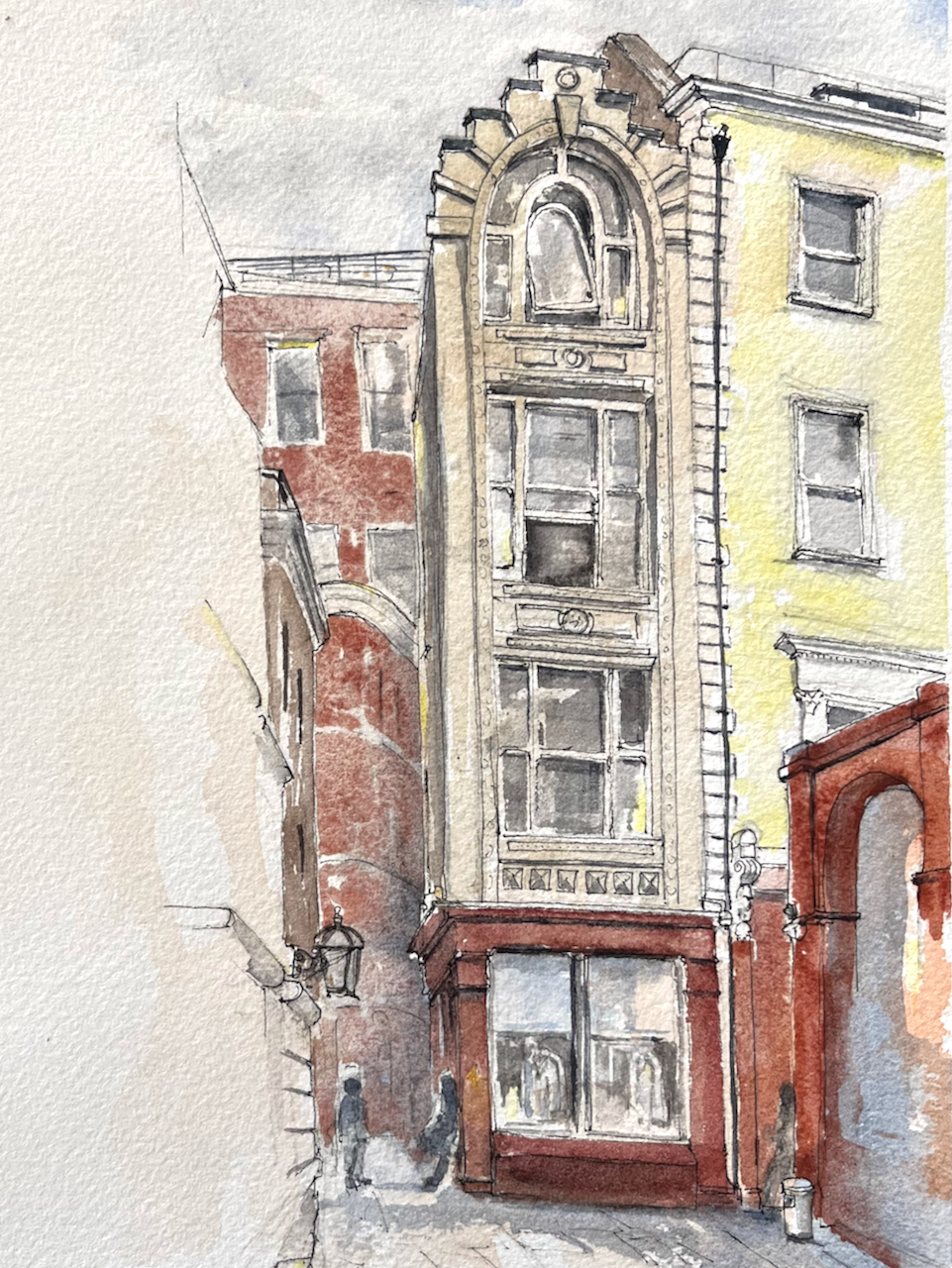
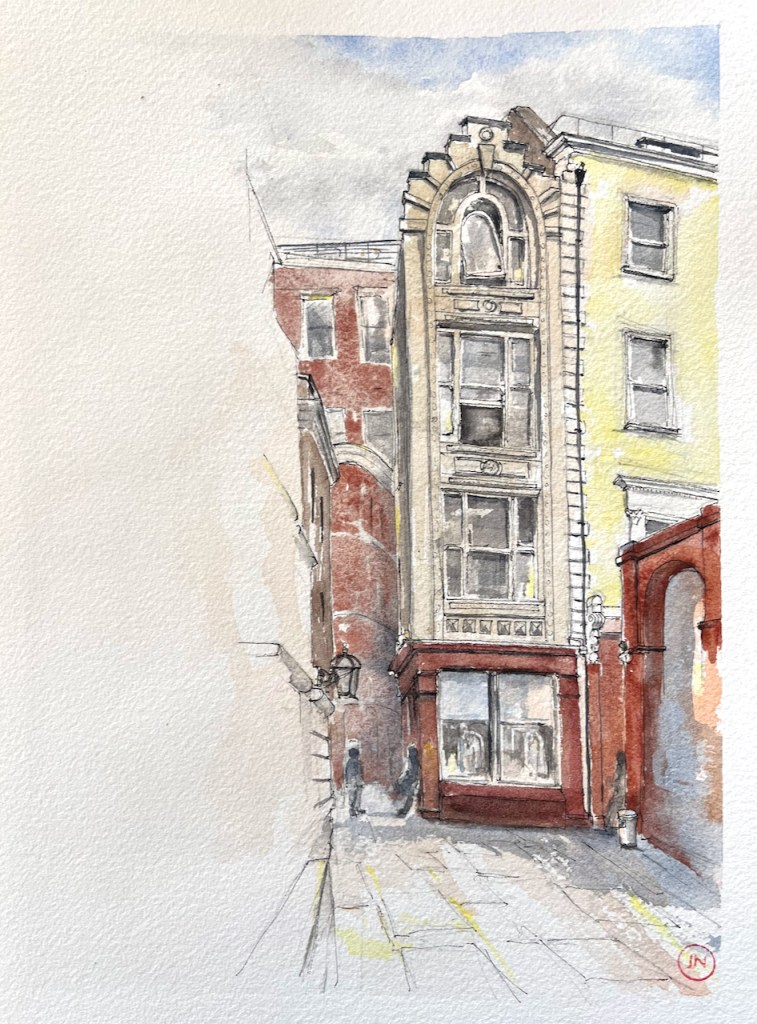
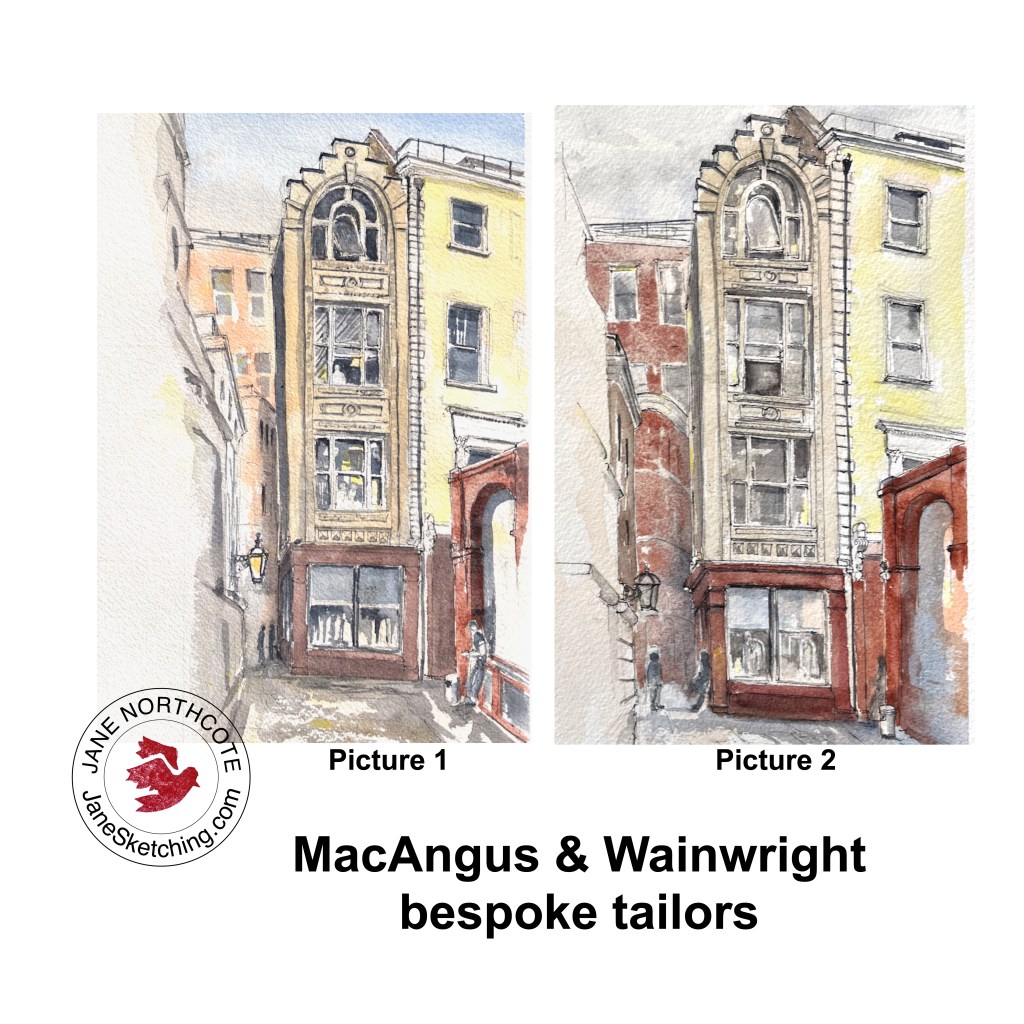
Here is 4 St Michael’s Alley, City of London, EC3, the premises of MacAngus & Wainwright, bespoke tailors. Their business uses all the floors. Above the ground floor showroom are the fitting room, workroom and cutting room.

4 St Michael’s Alley, London EC3, the premises of MacAngus & Wainwright, bespoke tailors.

The shop is just off Cornhill, near Bank in the City of London and right next to the Jamaica Wine House which I sketched previously. You can see a bit of the Jamaica Wine House on the right of my sketch. The prominent lamp is outside the “George and Vulture” pub, which is hidden on the left.
I made two pictures of this building, on different days and from slightly different angles. Here is the other one:

4 St Michael’s Alley, London EC3, the premises of MacAngus & Wainwright, bespoke tailors.

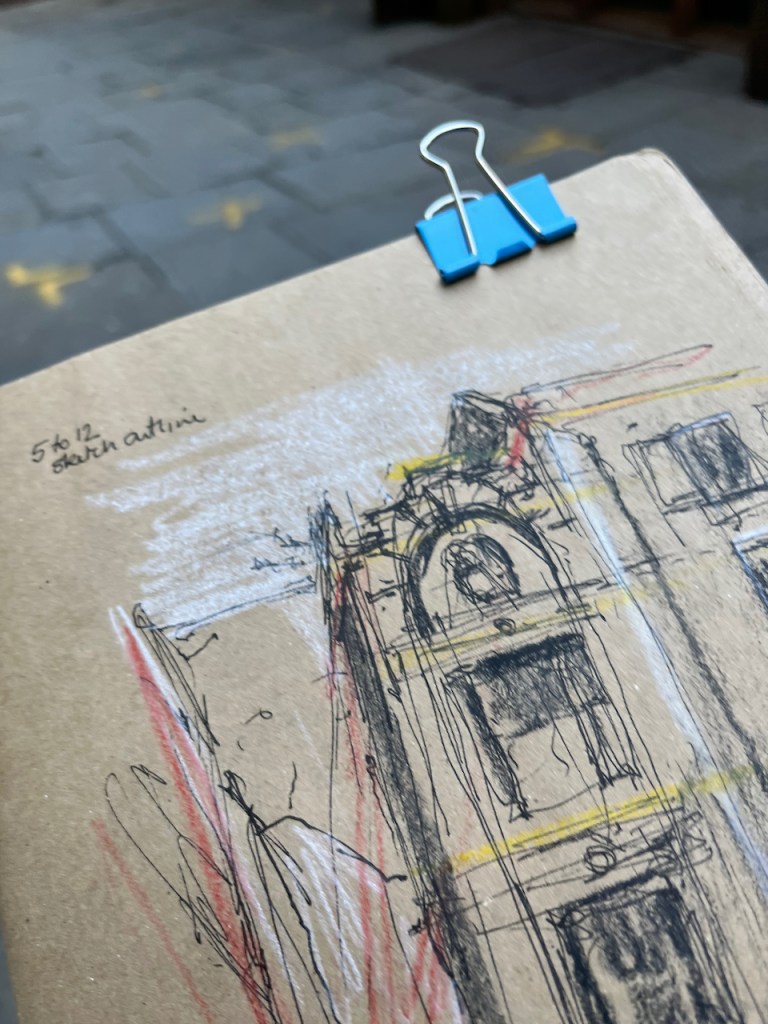
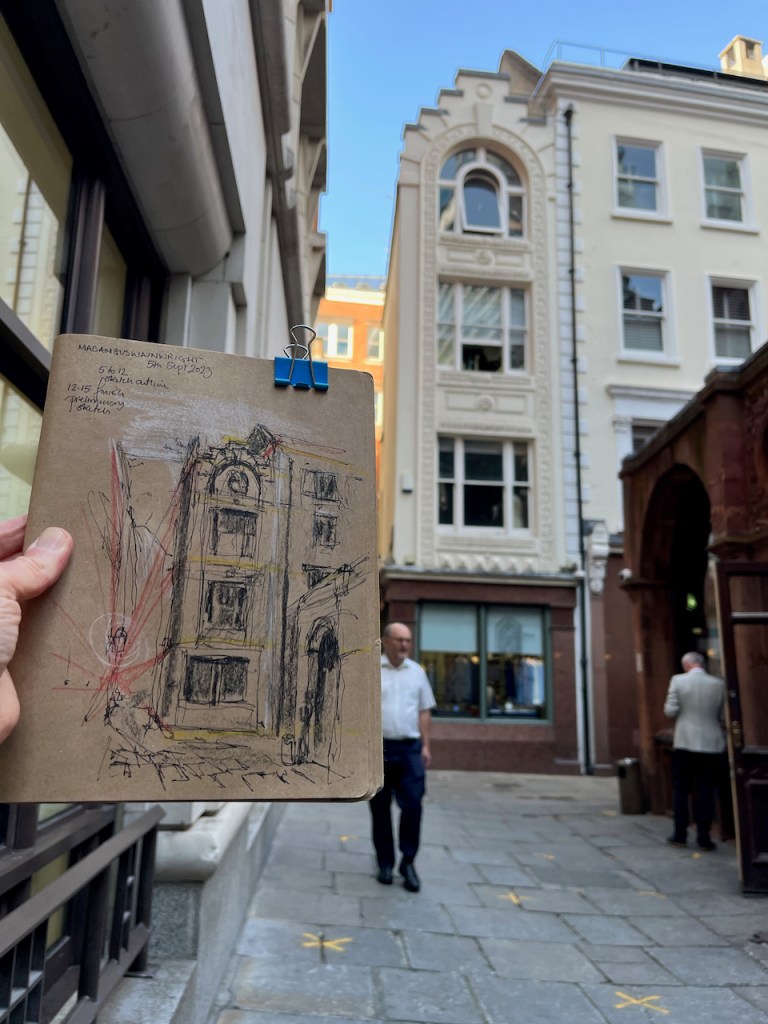
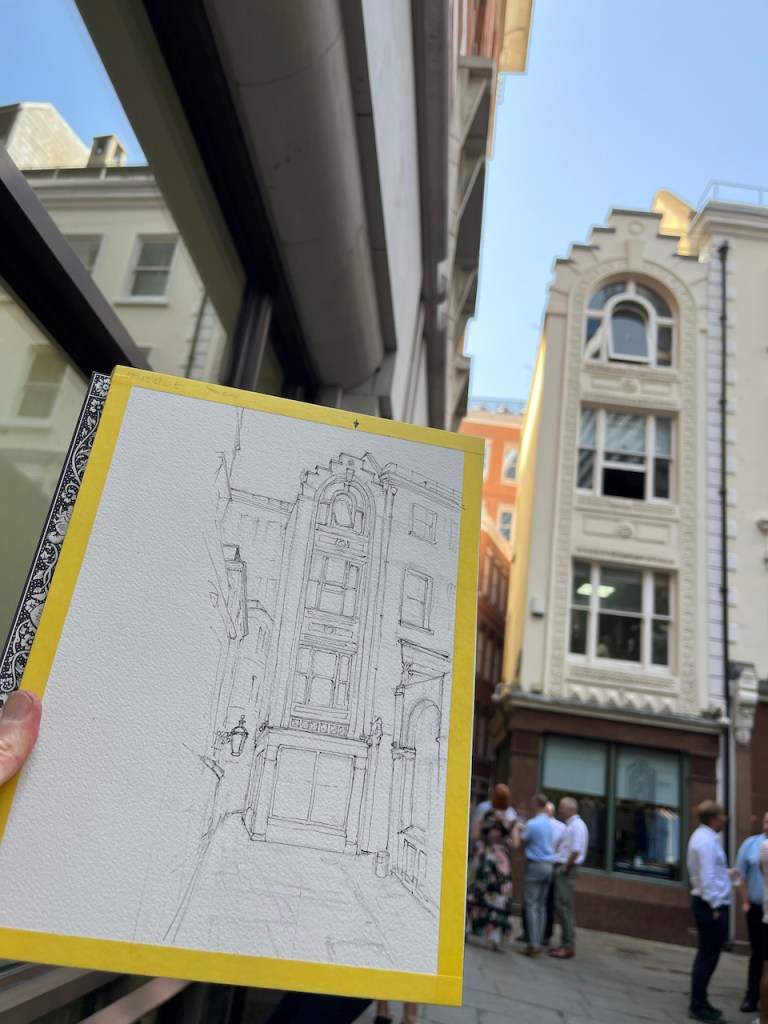
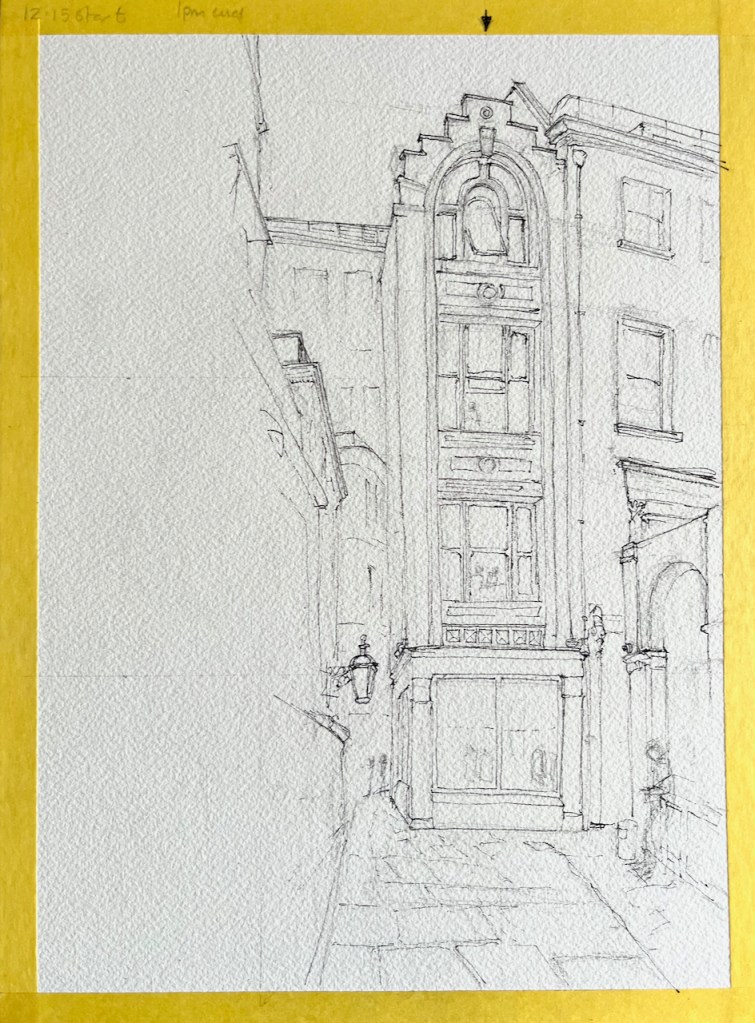
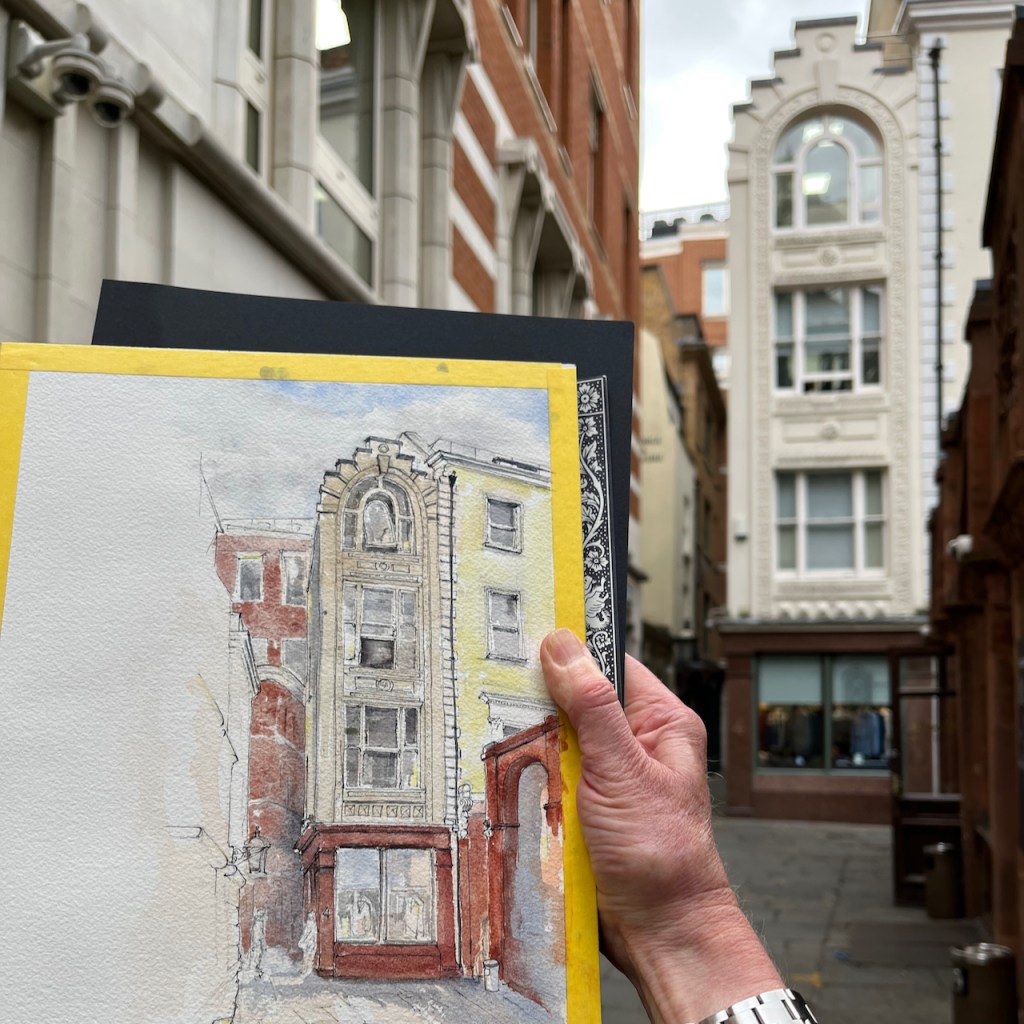
Here is work in progress on the drawings.

A succession of tour guides took their groups into the alley in the centre of my picture. This is Castle Court. These alleys apparently feature in Charles Dickens stories. Since J.K Rowling was inspired by the novels of Charles Dickens, there’s also a Harry Potter angle. I overheard this in fragments of tour guide talks. I don’t know if it’s true.

I started sketching in the late morning. This was the time for tour guides. Later, starting from about 1pm, the courtyard became populated by drinkers at the Jamaica Wine House. They were polite people, helpfully stepping aside and congregating on the other side of the alley, so they did not block my view.

The drawings are on Arches Aquarelle 12″ x 7″ 300gsm cold-pressed watercolour blocks, using Daniel Smith paints. The colours are:

Blues: Ultramarine Blue, Lavender, Cobalt Teal Blue

Yellows: Mars Yellow. The house on the right at the back is mostly Nickel Titanate Yellow. It was quite a hard colour to match.

Browns: The tailors building is a mix of Buff Titanium with Mars Yellow. The Jamaica Wine House and other buildings are Fired Gold Ochre, with a bit of transparent Pyrrol Orange.

All blacks and greys are a mix of Ultramarine Blue and Burnt Umber.

The pen drawing is De Atramentis Document Black ink in a Lamy Safari Fountain pen, fine nib.

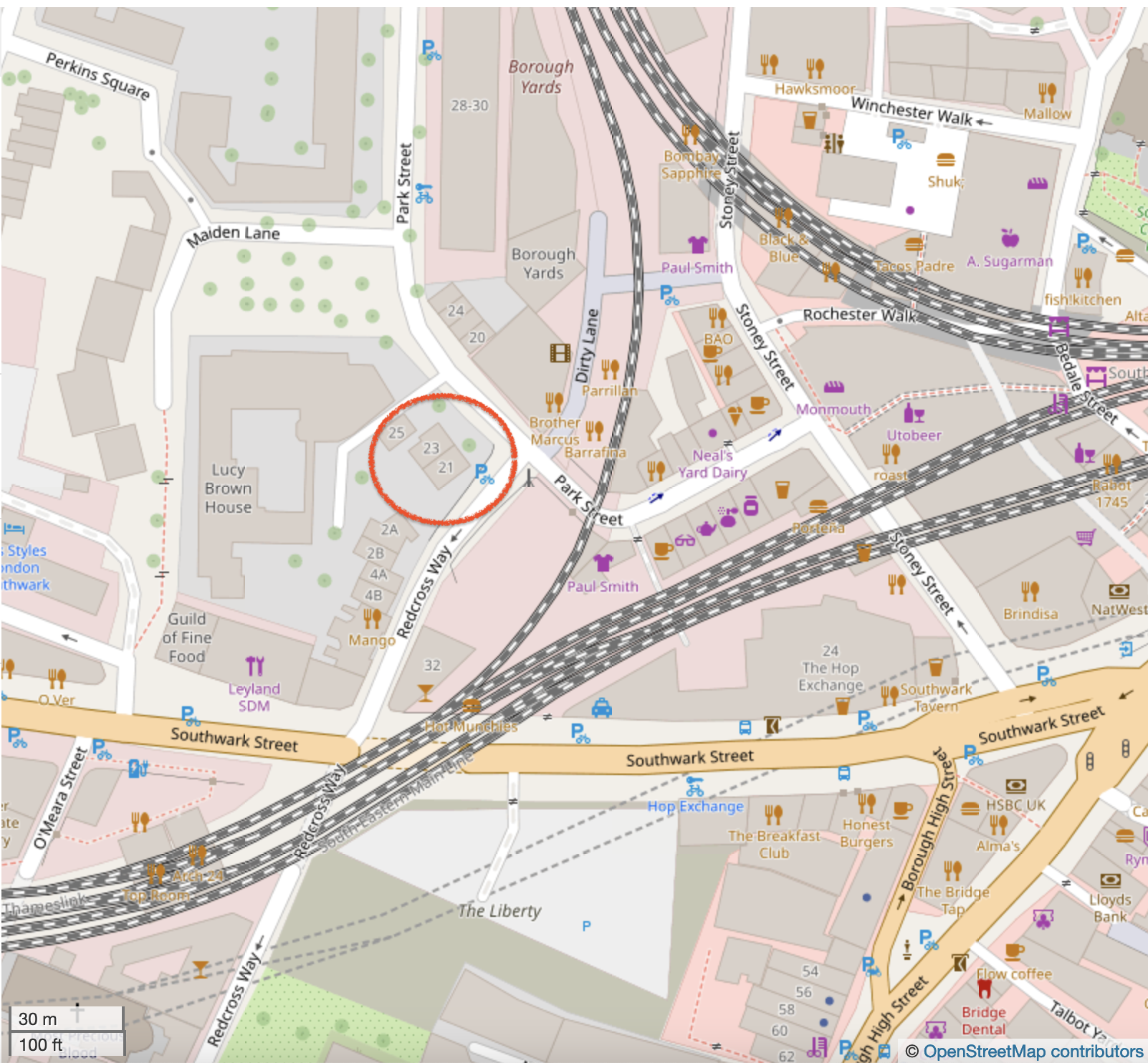
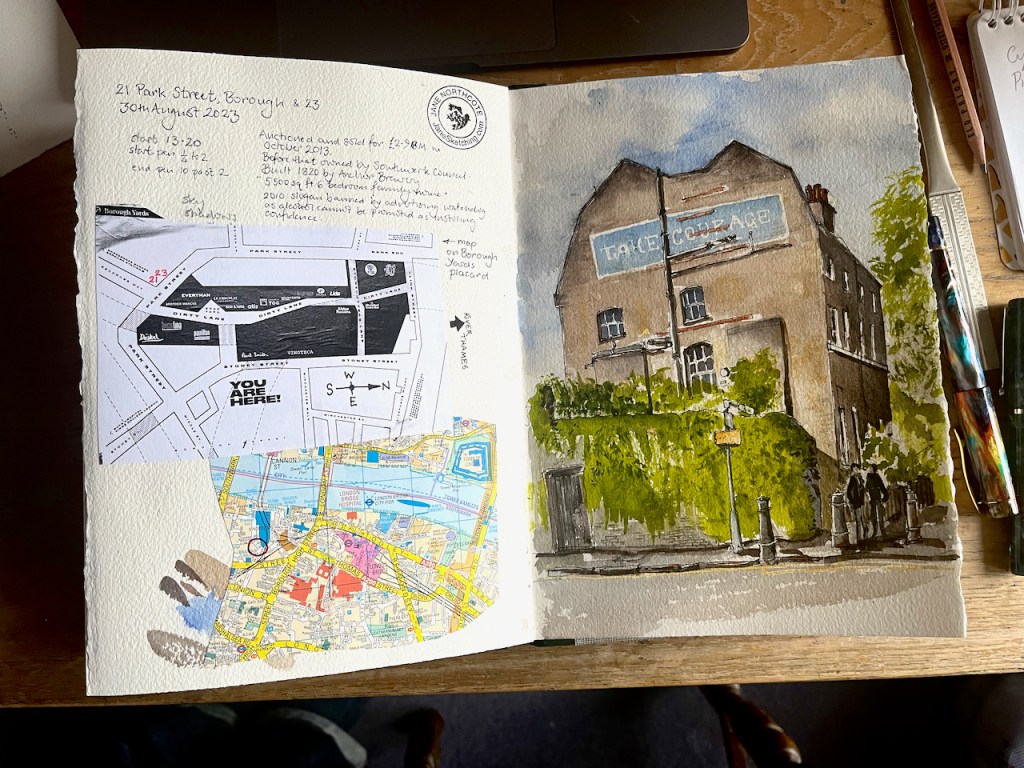
21 and 23 Park Street, Borough SE1 “Take Courage”

I enjoy the marvellous trigonometry of this roof, and the encouraging slogan on the wall.

21 and 23 Park Street, Borough, Southwark, London SE1. Sketched 30th August 2023, 2pm.

The slogan is for a brewery, Courage.
This house was built in 1820 for the managers of the Anchor Brewery, then on this site. The Anchor pub is on the river Thames nearby.

The building, and its cast iron railing, is listed Grade II, number 1385752. When I searched for the list entry in the Historic England register, I found, to my surprise, that the bollards in my picture have their own special listing, number 1385753 “

5 cast iron Canon posts 1 inscribed “CLINK 1812”

https://historicengland.org.uk/listing/the-list/list-entry/1385753?section=official-list-entry

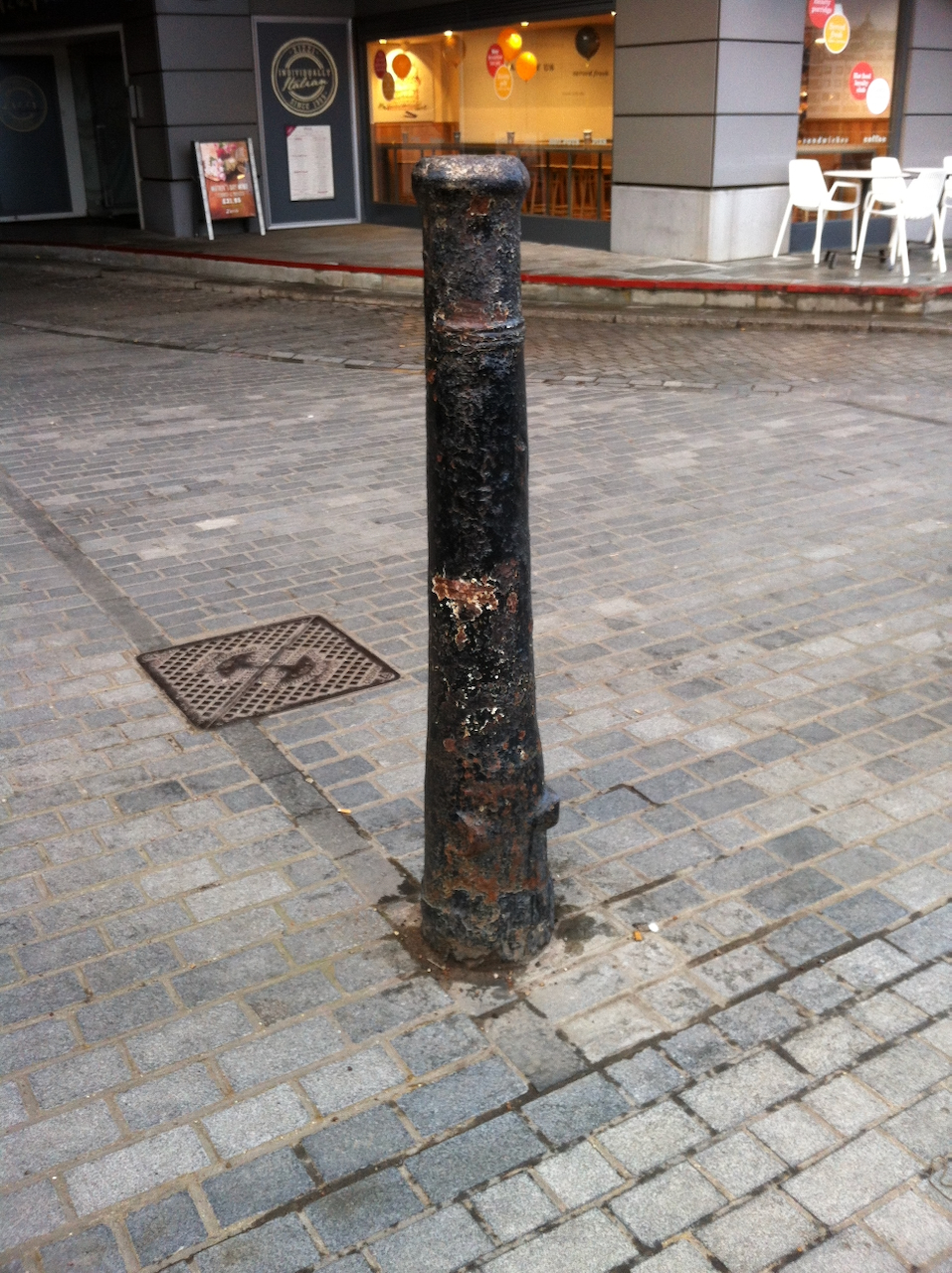
So I had to go back and have a closer look at them. Why were they listed? The list entry does not say. There are some bollards in London which are former cannon. It’s always a delight to discover them. They can be positively identified because you can see the indentation or hole near the base, which is where the gunpowder used to be poured in. Also they sometimes have protrusions about two-thirds down where they used to pivot on their gun-carriage. Sometimes the base is flattened on one side. Here are some examples of cannon (click the image to enlarge and see location):

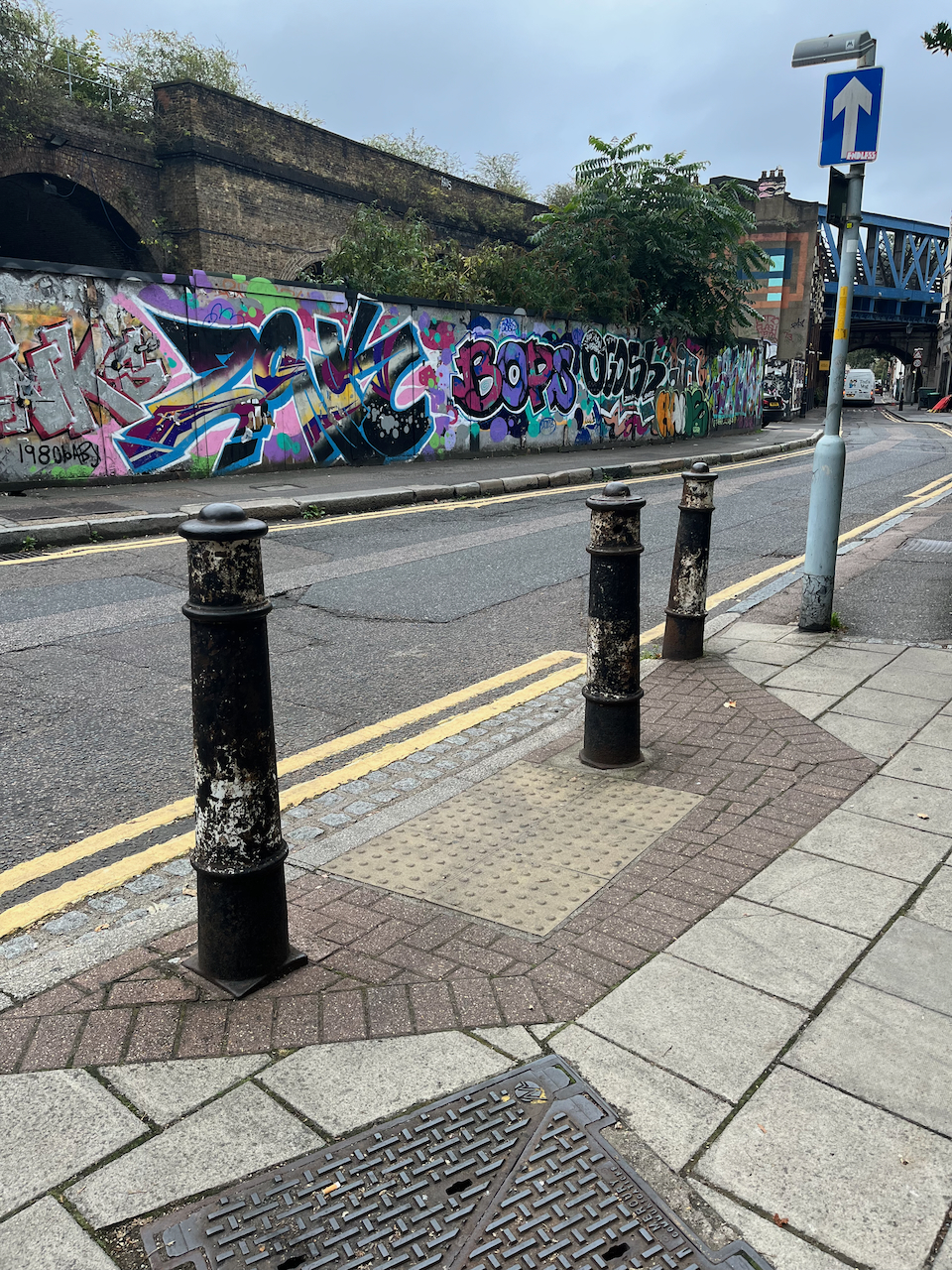
I was unable to find on these 21 Park Street bollards any characteristic which confirmed they might have been cannon. The listing says they are “canon posts” – “canon” spelt like that – not “cannon”. The words “CLINK 1812” were still just about visible on the bollard which is on the right in my drawing. Here are some photos of the posts outside 21 Park Street. Click to enlarge and see captions. Do you think they might be real cannon, or perhaps the word “canon” simply describes a design of post.

“Clink” was the name of the area, from about 1127. It was called the “Liberty of Clink”. The designation “Liberty” implied that it was a civic area under the jurisdiction of the local manor, rather than the King, or the City of London. Famously, certain activities, including theatres, which were forbidden in the City of London were permitted here. The Liberty of Clink was abolished in 1889 and amalgamated into the Southwark in the County of London.

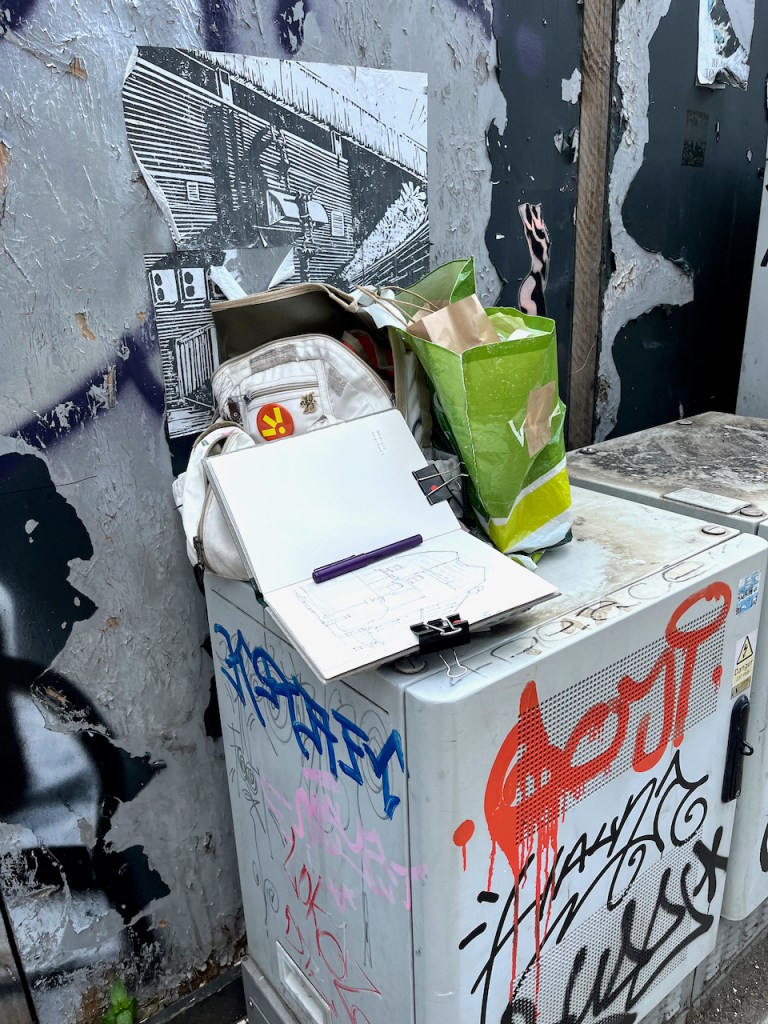
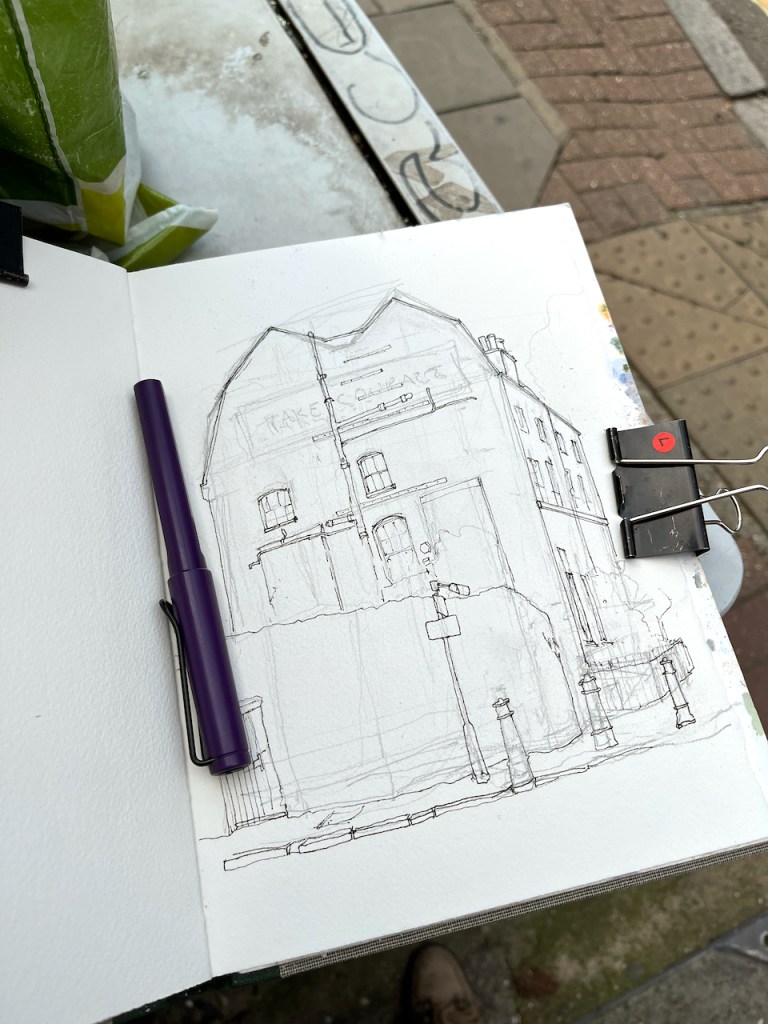
Here are some photos of work in progress on the drawing:


Drawing size 10″ x 8″ on Arches papers 300gsm NOT watercolour paper, in a sketchbook made by Wyvern Bindery.

Watercolours by Daniel Smith:

  • ultramarine blue
  • fired gold ochre
  • green gold
  • burnt umber
  • yellow line is naples yellow
  • All blacks and greys are Ultramarine Blue plus Burnt Umber

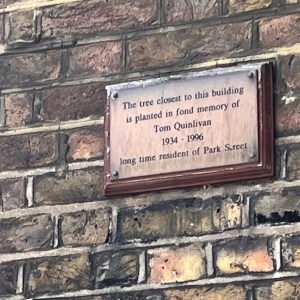
A notice on 21 Park Street reads:

The tree closest to this building
 is planted in fond memory of 
Tom Quinlivan 1934-1996 
long time resident of Park Street.

The Jamaica Wine House, EC3

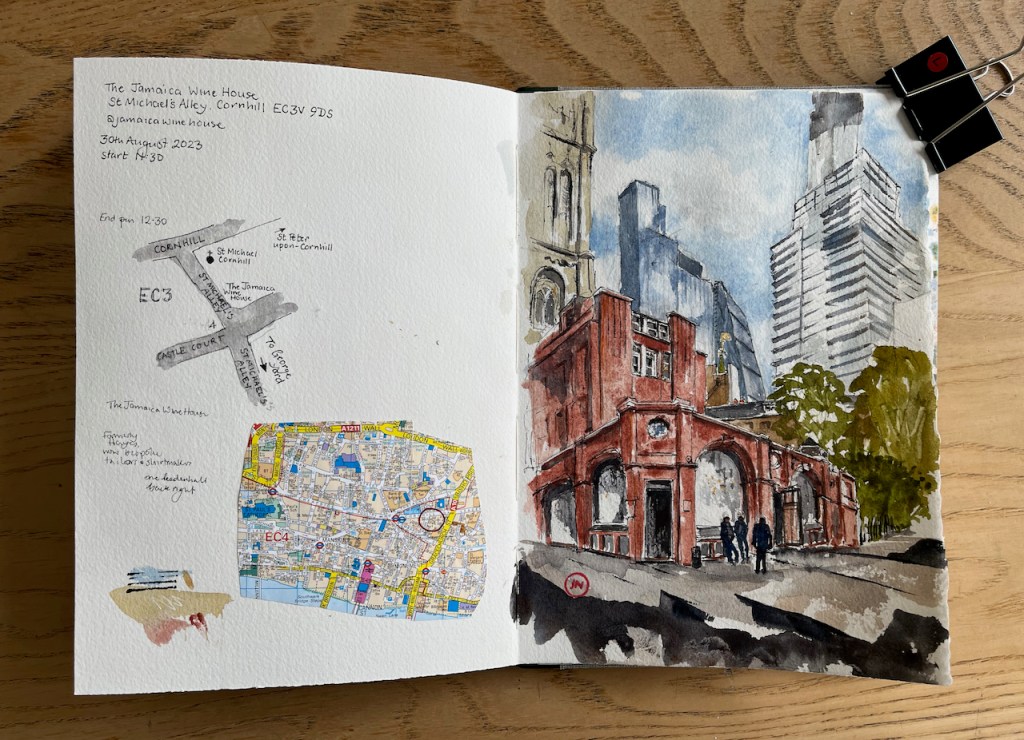
I walked through the City lanes towards London Bridge and passed by the Jamaica Wine House embedded, as it seemed, in a canyon amongst towers.

Jamaica Wine House, 12:30pm 30th August 2023 in Sketchbook 13.

The Cheesegrater and 22 Bishopsgate are the office blocks in the left background and One Leadenhall is under construction on the right.

This is a very old part of the City. Although some buildings have changed, the road layout still retains something of the feeling of Dickensian London. There has been a pub or coffee house on the site of the Jamaica Wine House since 1652. The current building dates from 1868 according to the Historic England List Entry (number 1079156).

Off the picture to the left is MacAngusWainright bespoke tailors and shirtmakers, at number 4 St Michael’s Alley. This shop used to be John Haynes&Co, the jewellers.

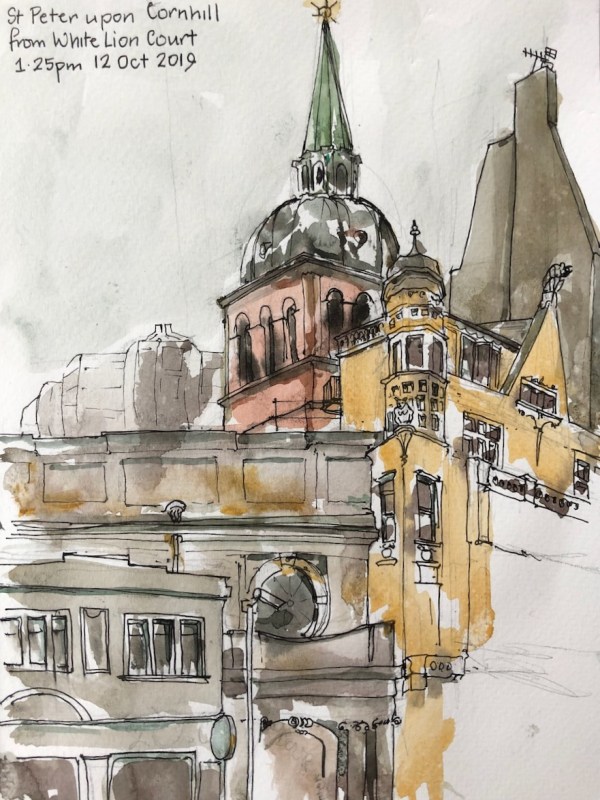
St Michael Cornhill is visible to the left in the background, and you can just see the weathervane on St Peter upon Cornhill in the centre of the picture.

My drawing of St Peter upon Cornhill is in this post:

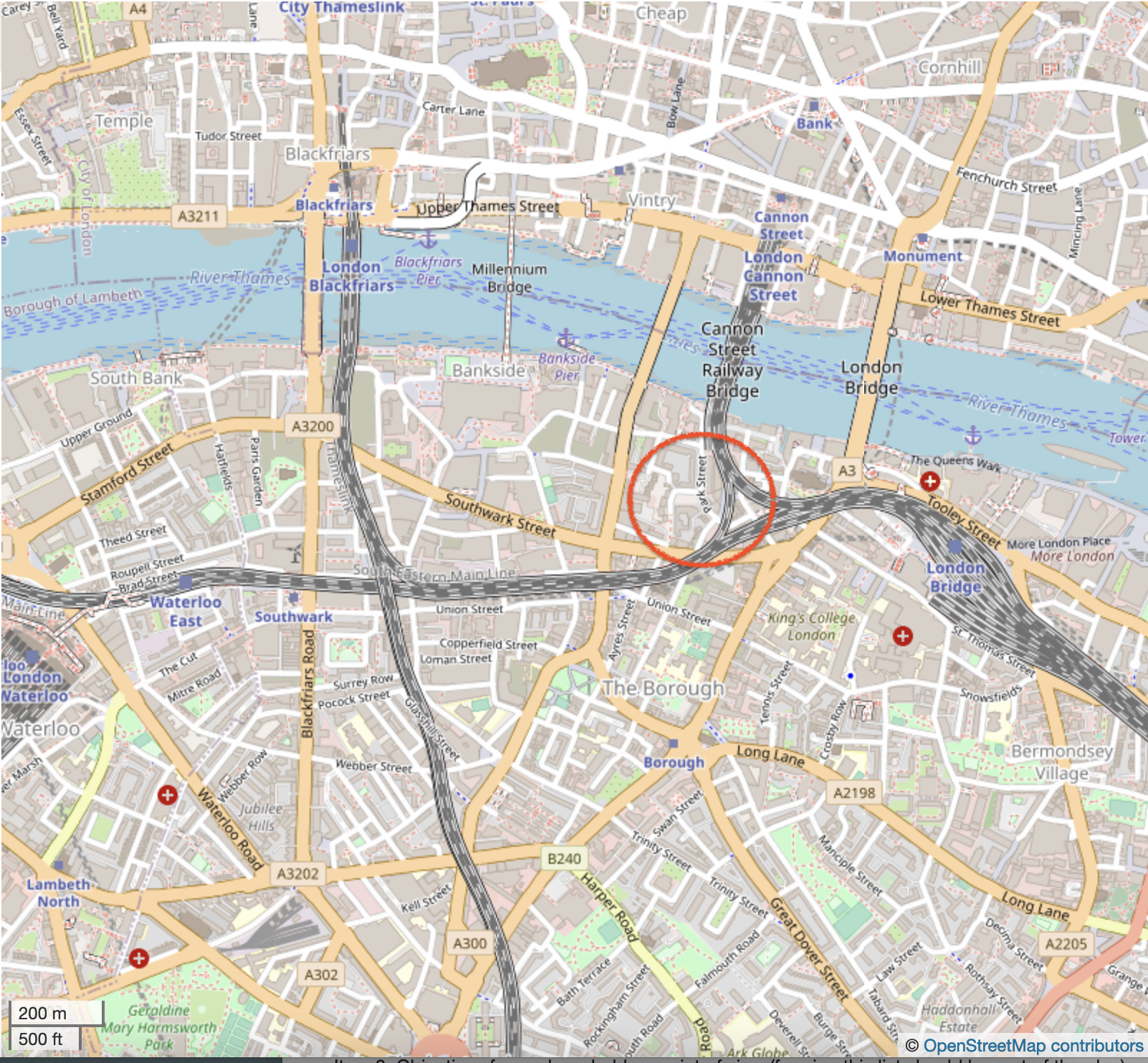
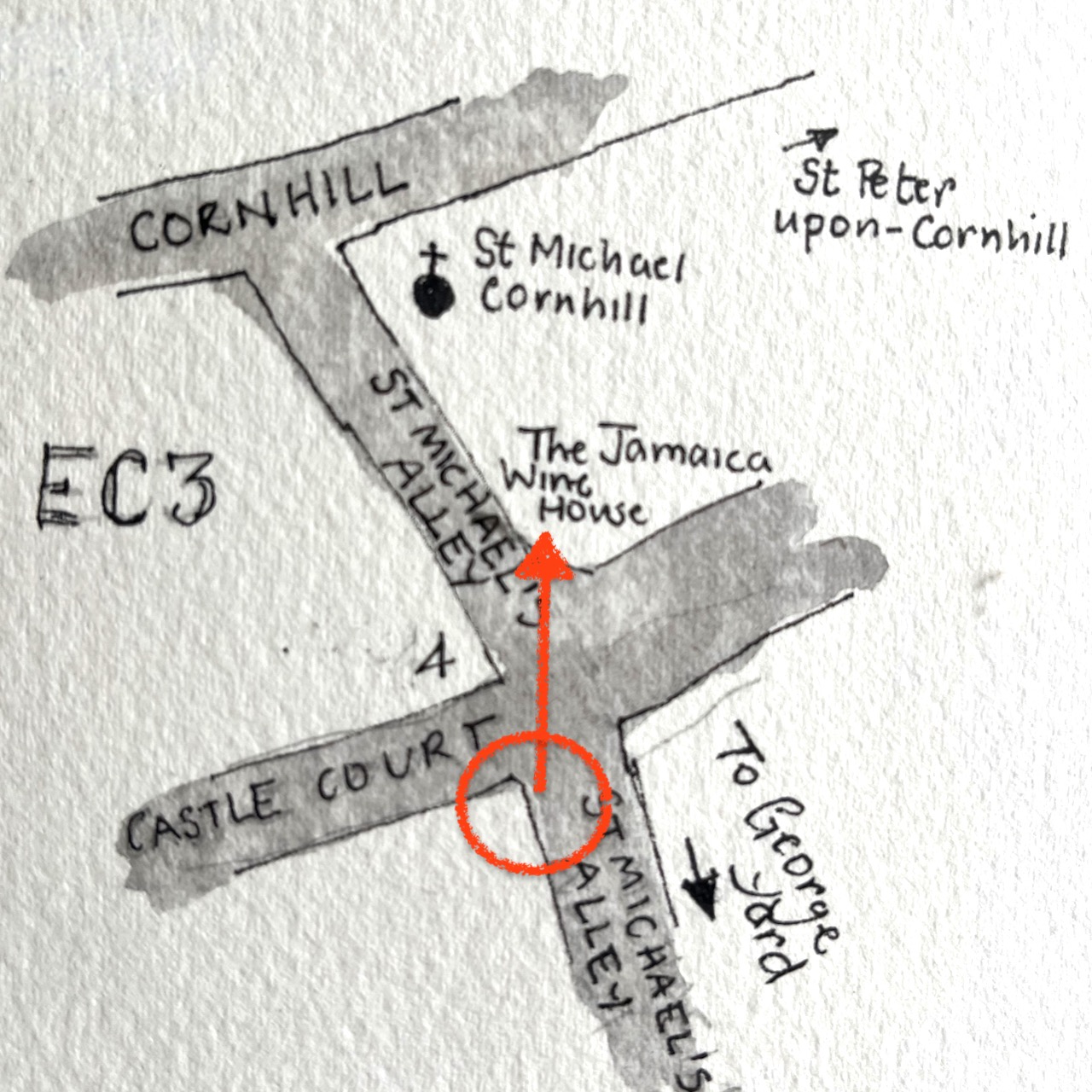
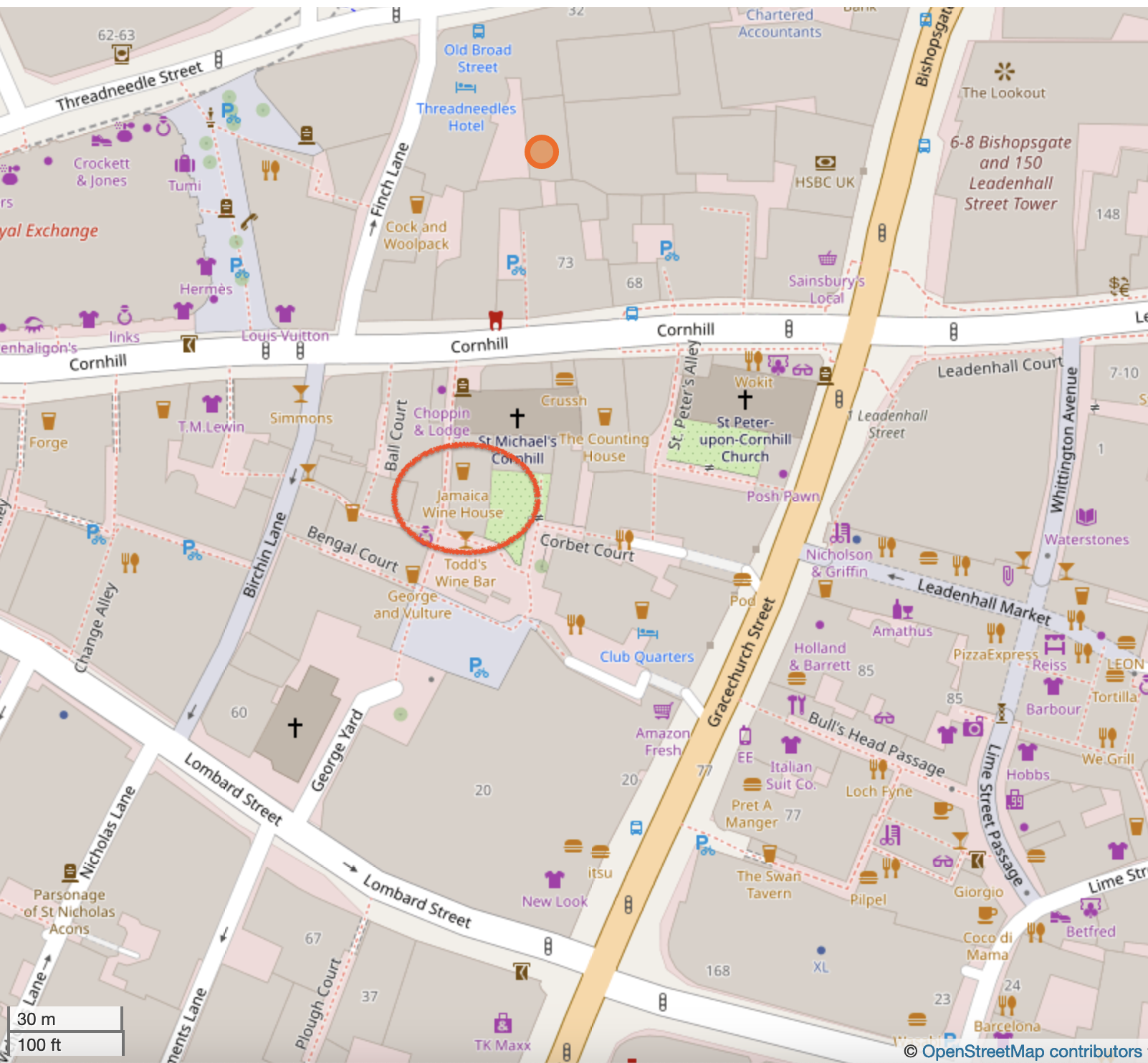
Location of the Jamaica Wine House in the alleys between Lombard Street and Cornhill. (Map (c) OpenStreetMap contributors)

The picture took an hour on location and I finished it at my desk.

The colours in the picture are:

  • Fired Gold Ochre – my go-to colour for brick and sandstone
  • Ultramarine blue, Lavender, and Cerulean Blue for the sky
  • Burnt Umber in the sky
  • All greys and blacks are Ultramarine Blue with Burnt Umber
  • There’s a bit of Iridescent Gold on the weathervane of St Peter upon Cornhill
  • The trees in St Michael’s garden are Serpentine Genuine with some Permanent Yellow Medium.
  • St Michael on Cornhill is Buff Titanium with some Burnt Umber and Ultramarine Blue.

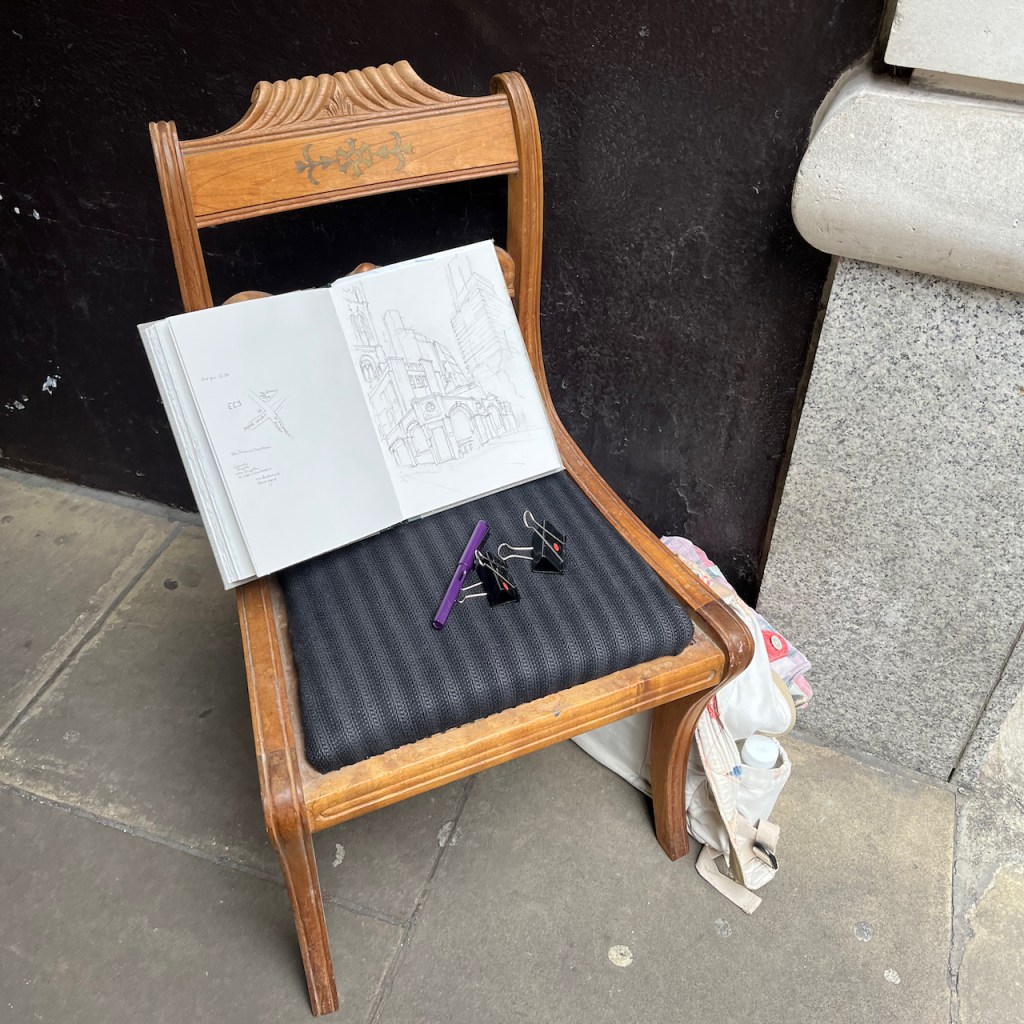
Done on Arches 300gsm NOT watercolour paper in a sketchbook by Wyvern Bindery, Hoxton. Thank you to McAngusWainwright, city tailor, for the kind loan of the chair.

Wind turbine construction in Sainte-Croix, Vaud, Switzerland

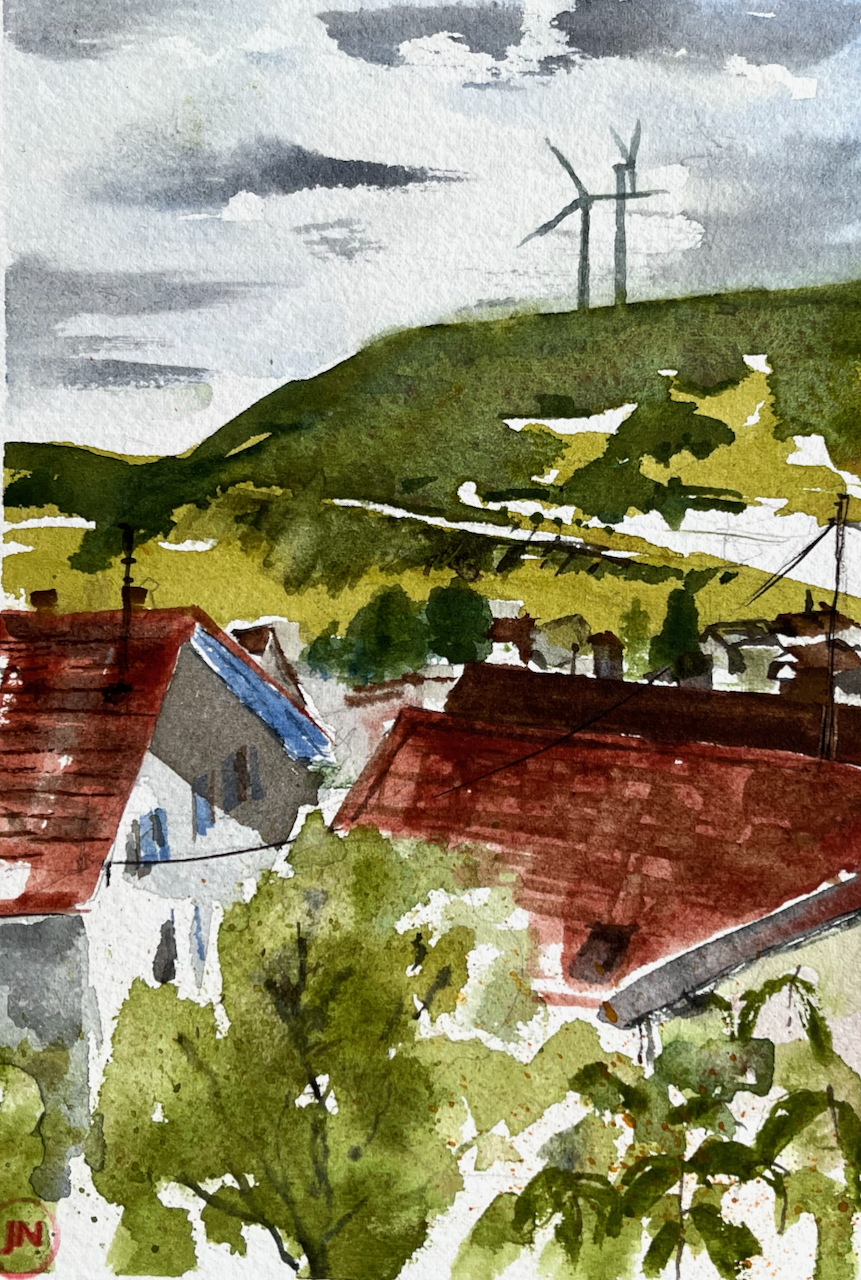
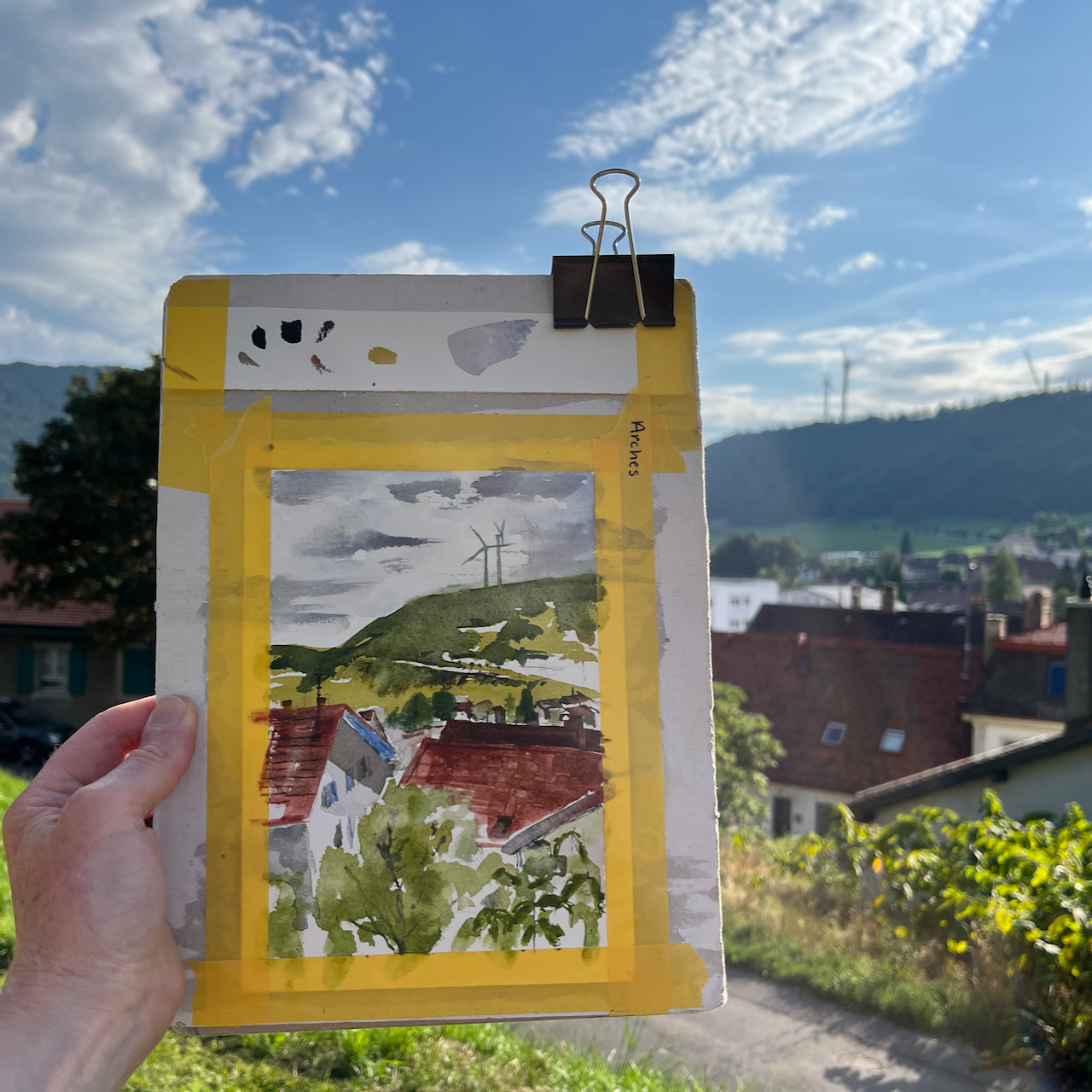
In the Swiss hotel there was much talk about the wind turbines. They are being constructed on a nearby hill. I could see them from a bench by the church.

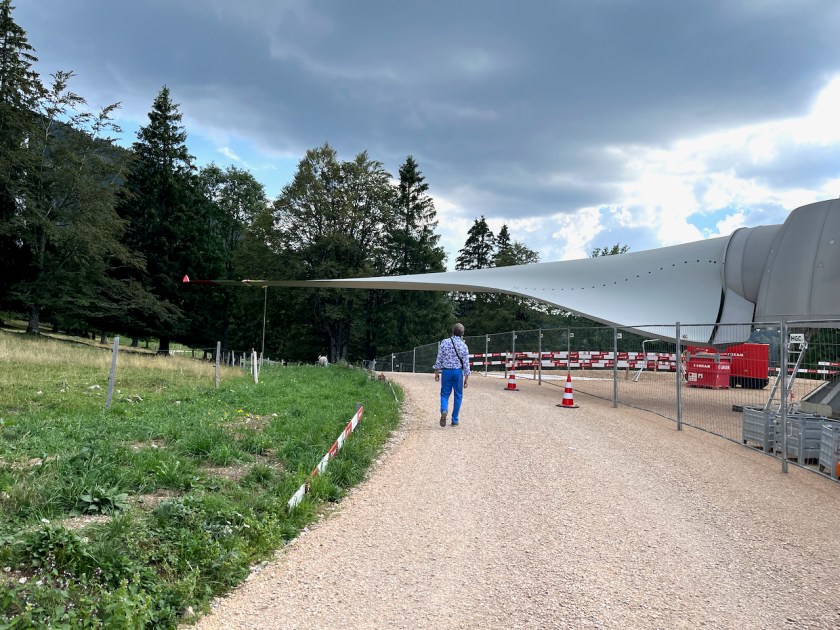
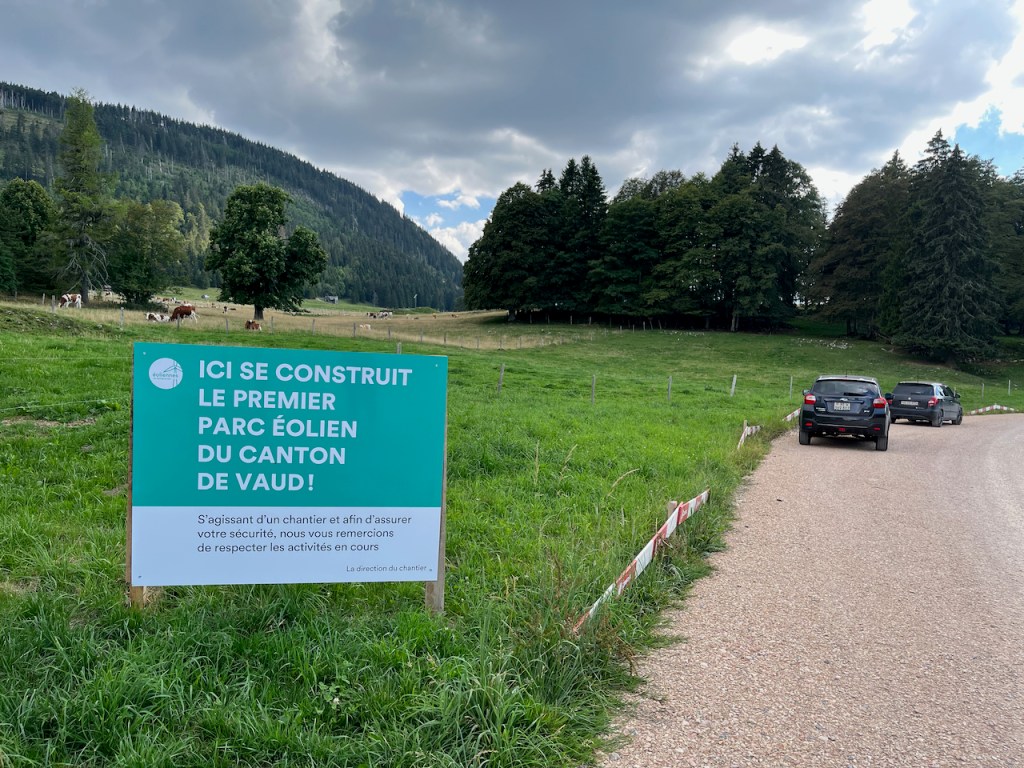
People said, you should go up there and see them, you can get very close. So on Sunday afternoon, we visited the construction site. There are information placards and a visitor car-park. Plenty of local people were up there viewing the machinery. The general atmosphere was one of curiosity and admiration.

It was a Sunday afternoon family outing: Let’s go and see the wind turbine construction site…
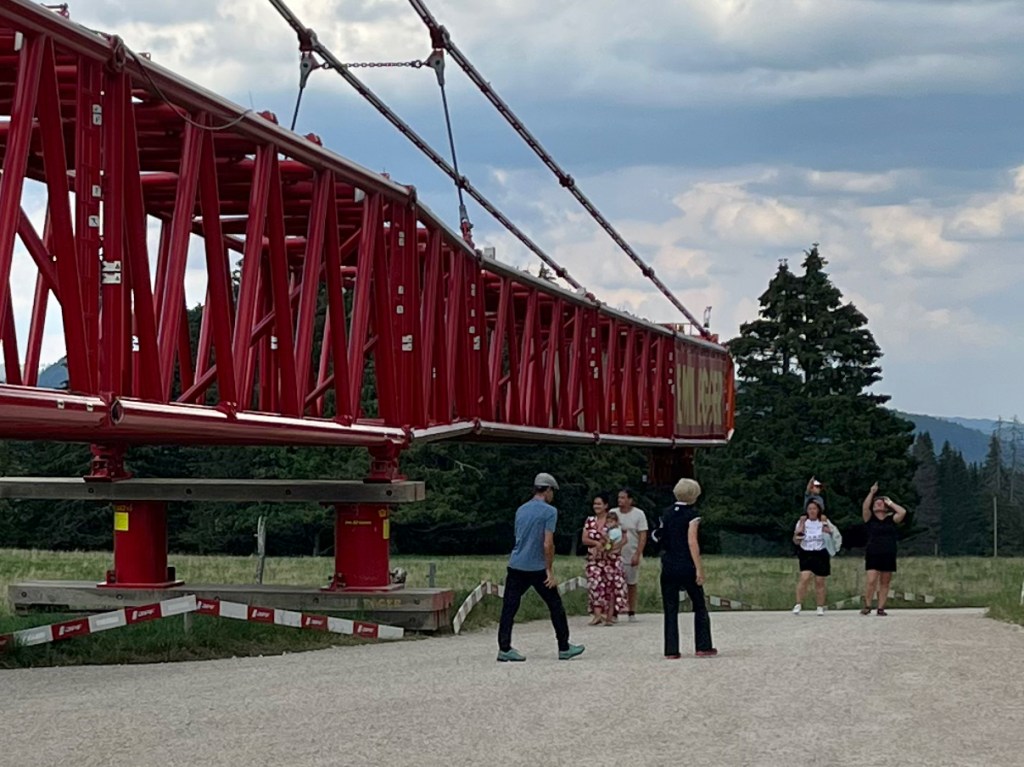
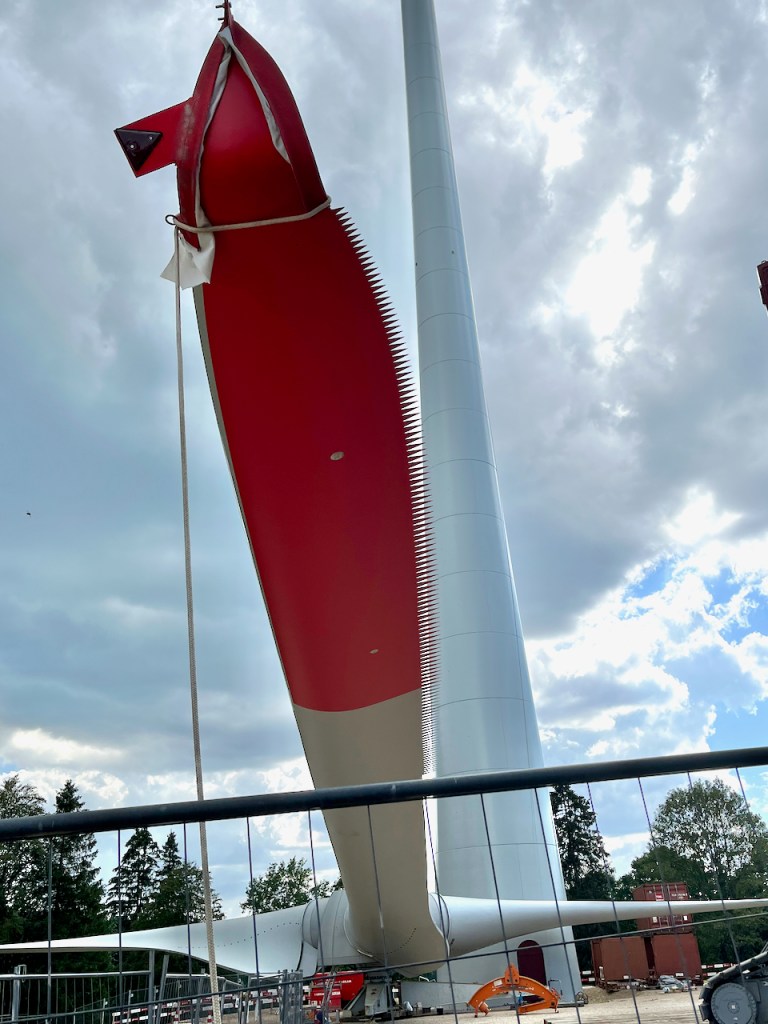
The blades are huge. 43 m.

The enormous blades, ready to raise.

As a British person, I was surprised at the openness. As it was the weekend, the site had no workers. The fascinating machinery was separated from us by some notional fences. It was supervised only by a few CCTV cameras on a stand. Perhaps there were also hidden ones. As you see from the photos, we could get close, and walk freely around the crane. My Swiss companion was surprised at my surprise.

It was also remarkable how positive the feeling was amongst the sightseers. A local person said that in the past they had been opposed to the turbines, but now that construction was started, they could see how clean and organised it was. “It’s better than a nuclear power station!” they observed. There’s no immediate benefit for the local people: they do not get a reduction on their bills. “But it’s better for everyone.” I was told.

“Here we are building the first Wind Turbine park in the Canton of Vaud”. Note the line of cars to the right: local people have come to visit the construction site.

The next day, Monday, my host came rushing up to me as I returned from a walk. “Quick, look! They are raising…”. We found a vantage point. There, on the distant hill, the blades were being raised up the mast by the crane. They moved very slowly, but definitely, “like the hands of a watch” said my host. For that Swiss person, this engineering feat had become a source of local pride.

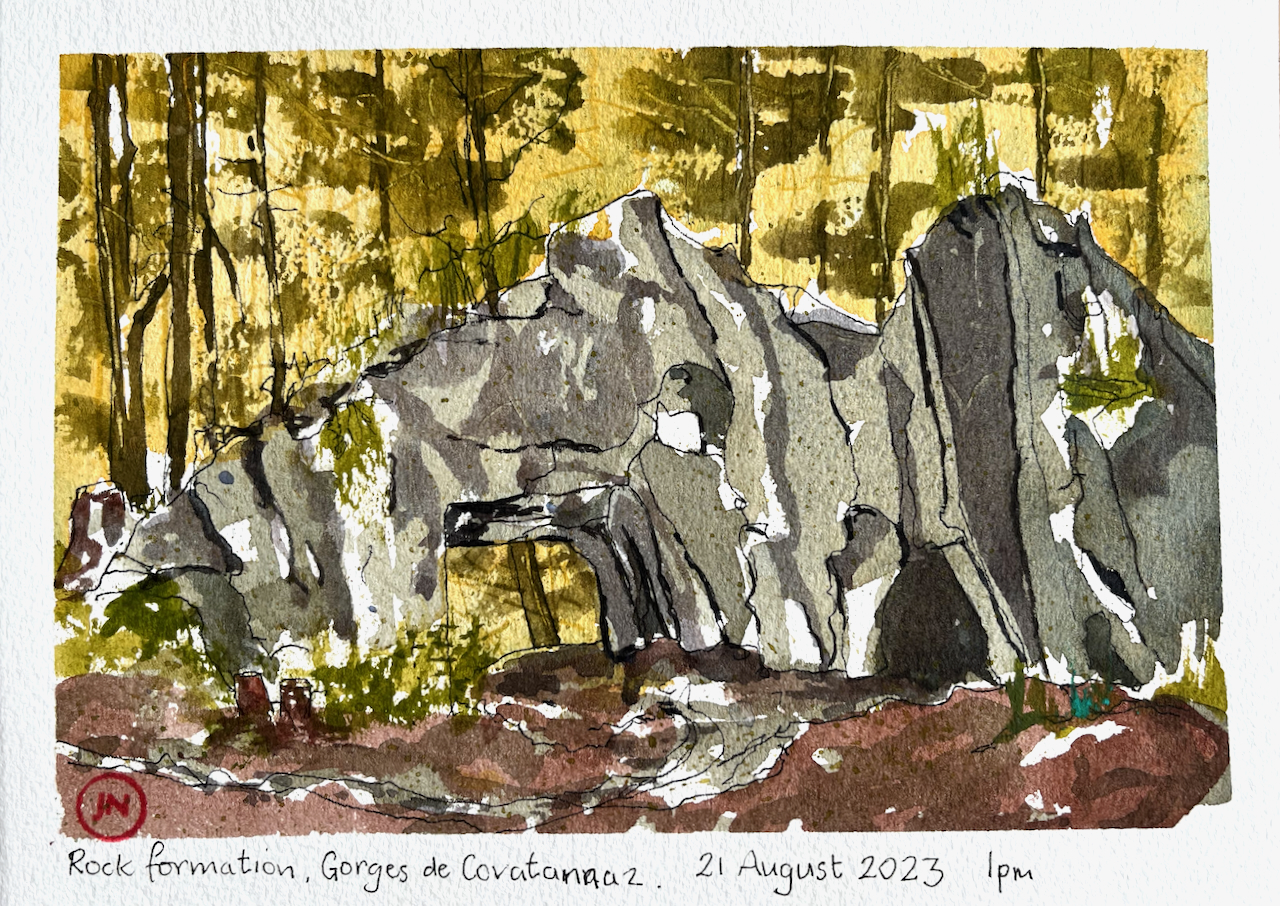
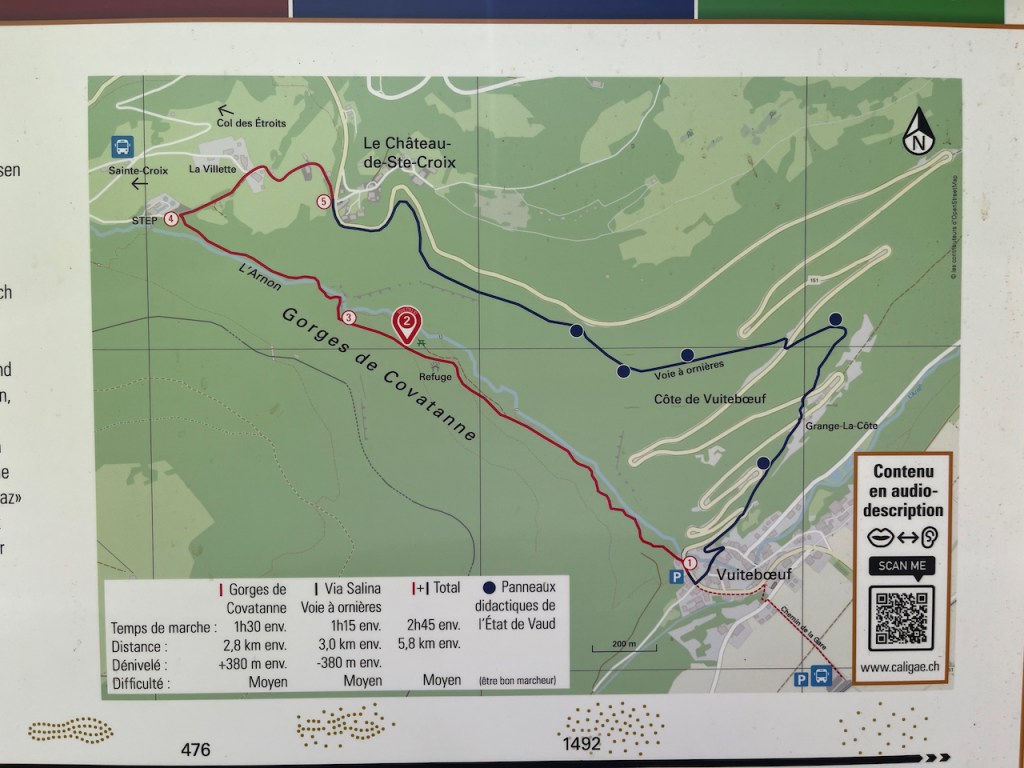
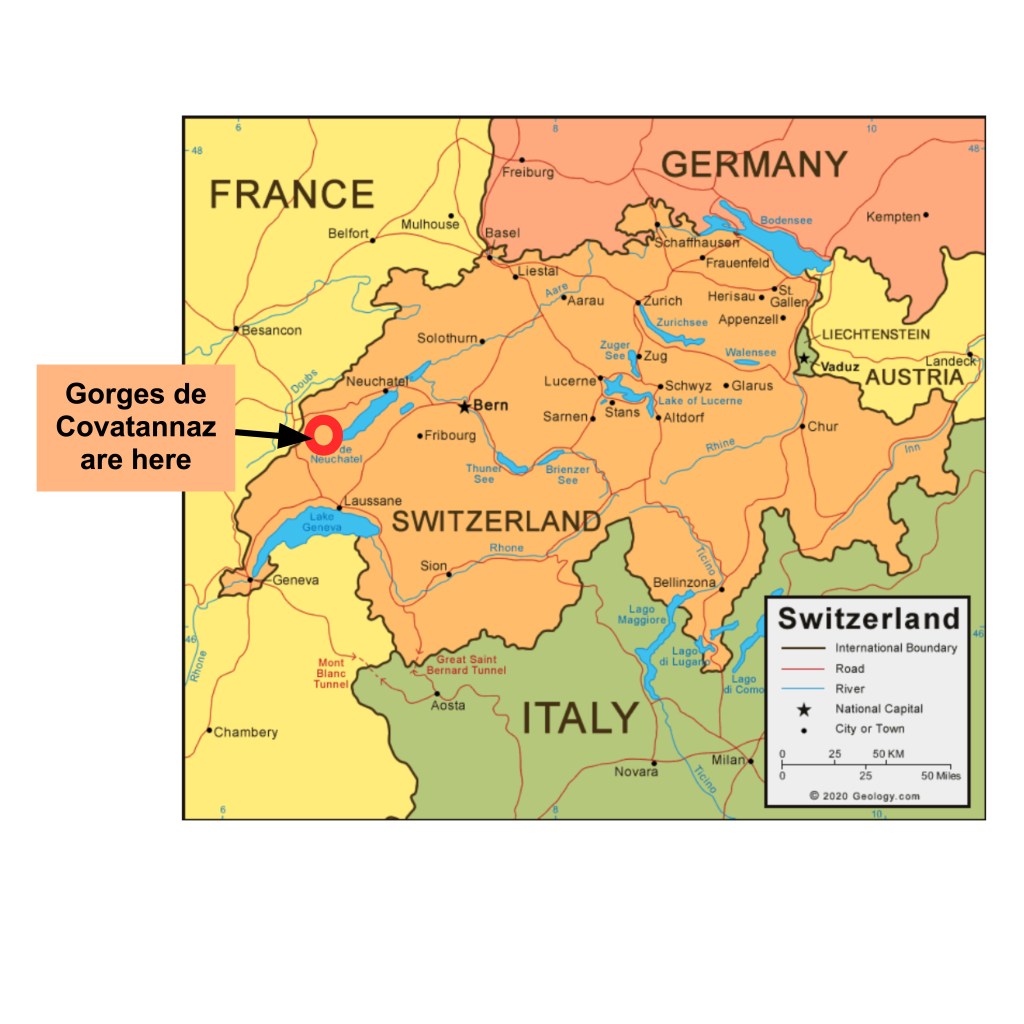
Gorge de Covatannaz, Vaud, Switzerland

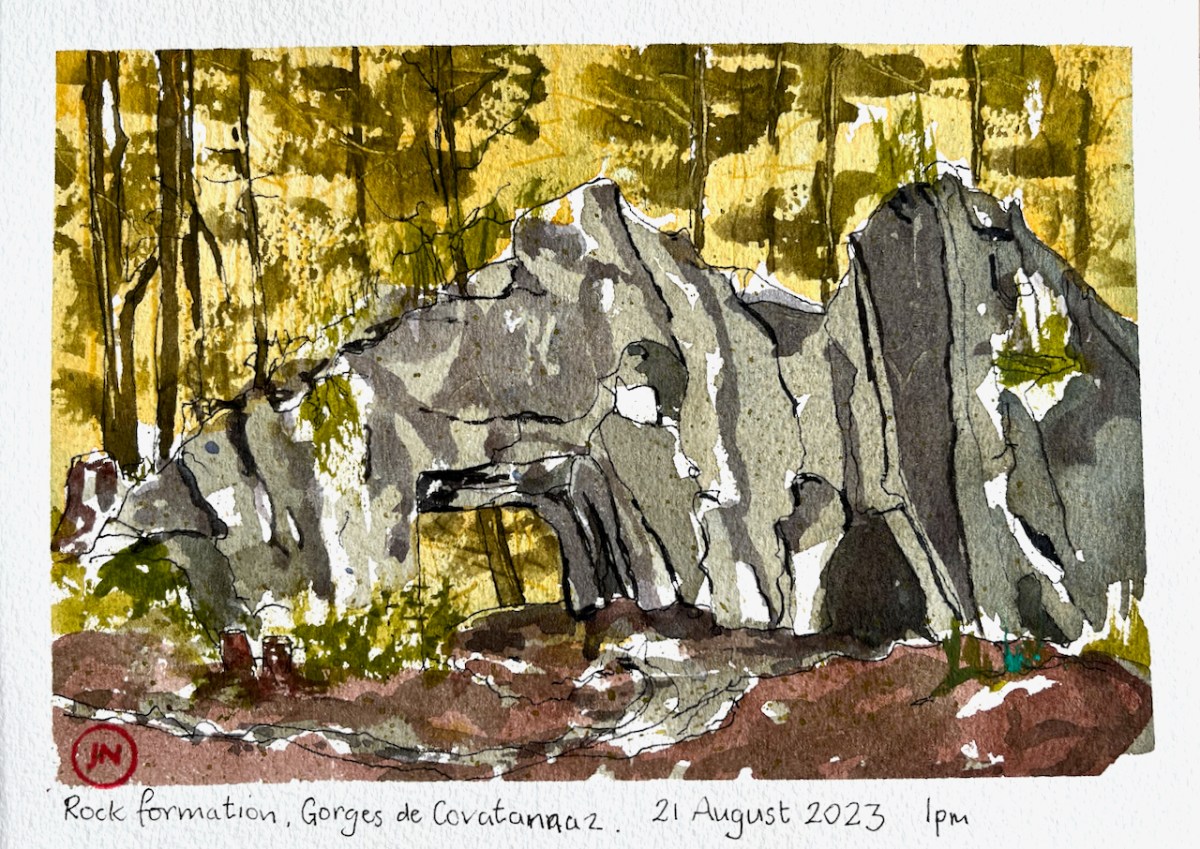
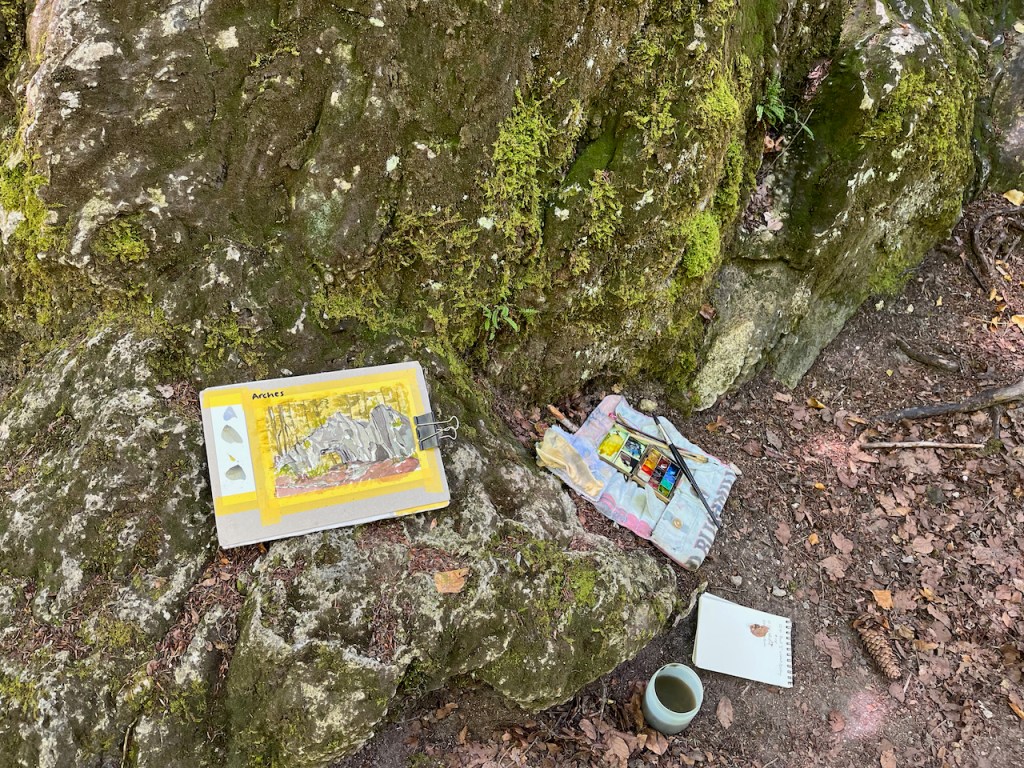
I walked up the gorge from Vuiteboeuf to Sante-Croix. Half-way up I paused to sketch this amazing rock formation.

It was an ideal place to sketch, under the trees.

As I sketched, the silence was broken by thumps and scrapes behind me. A bear? A tree fall? A rock avalanche? No. A mountain bike rider descending the path at speed. These riders are skilful – they jump and bounce, and turn in the air like dancers.

I saw one in the distance as I navigated a narrow part of the path. Since there was a steep drop on the right hand side, I flattened myself against the rock to give them room. But there was no need. The rider brought their bike to a graceful halt, slipping sideways like an ice skater. They grinned as I greeted them. “Il faut du muscle” they said in response to my comment on the steepness of the path. Yes, you have to be strong. And have a sense of balance, good eyesight and rapid reaction times. And courage. After I passed, they backed up their bike and jumped on, to hurtle off down the slope.

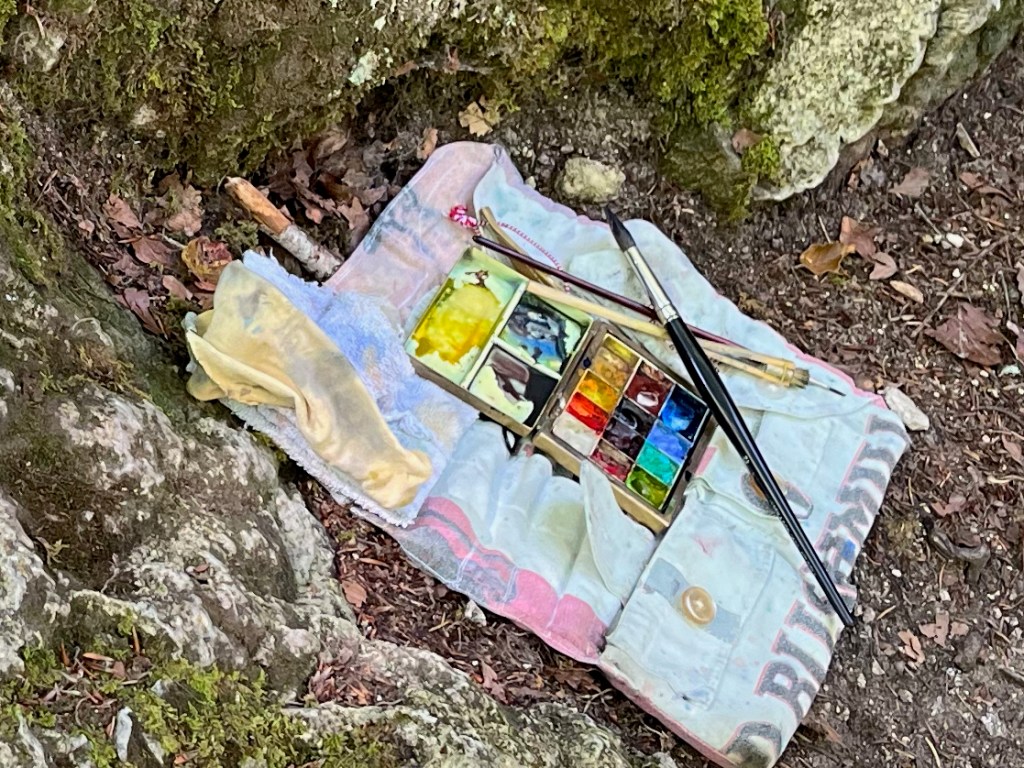
My sketch took an hour. It’s on Arches 300gsm paper, with Daniel Smith watercolours. The colours I used were:

  • Permanent yellow deep
  • Serpentine genuine
  • Cobalt teal blue
  • Burnt Umber
  • Buff titanium
  • Perylene maroon

The pen drawing is with a fountain pen, Lamy Safari, with De Atramentis Document Black waterproof ink.

Scenes from Switzerland – August 2023 sketchbook

Sketching is a way to fill those “waiting” times with creative activity.

I had an A5 sketchbook with cartridge paper. This cartridge paper behaved differently from the watercolour paper I am used to. It was more suited to quick sketches.

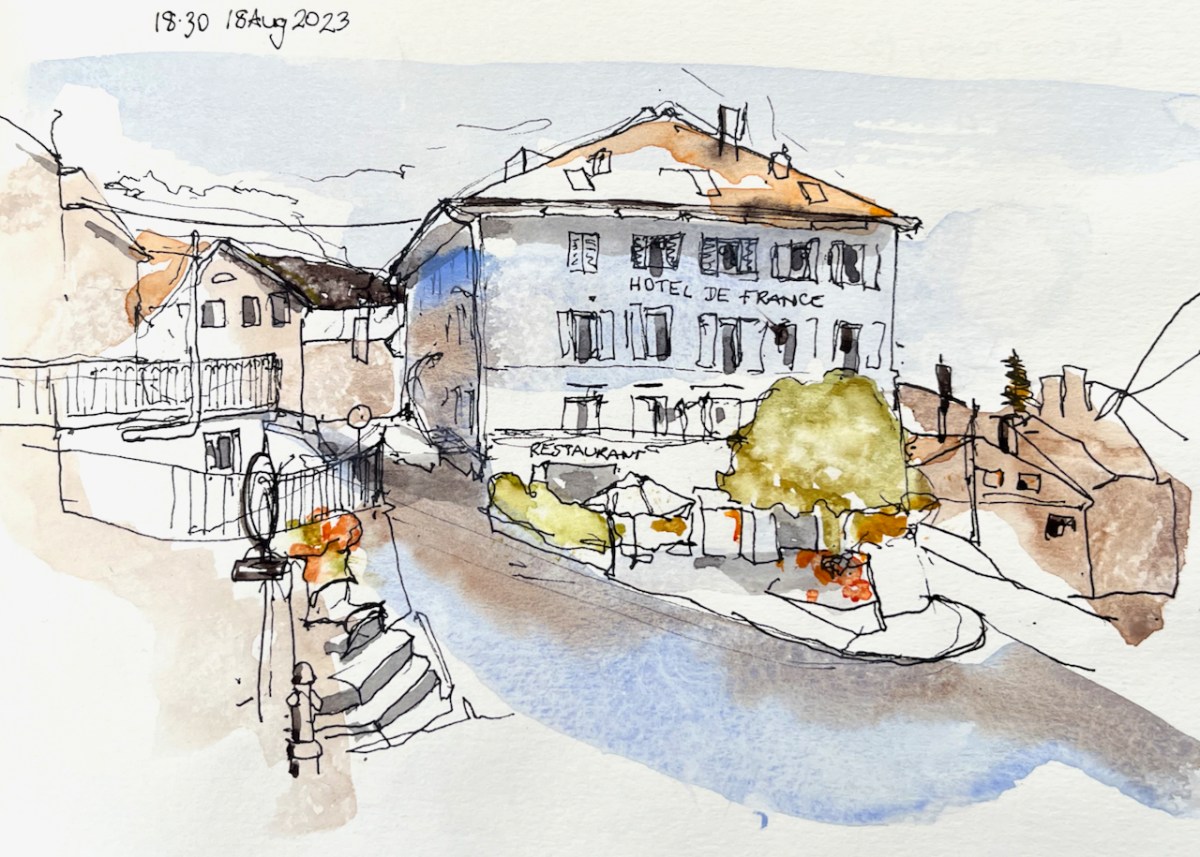
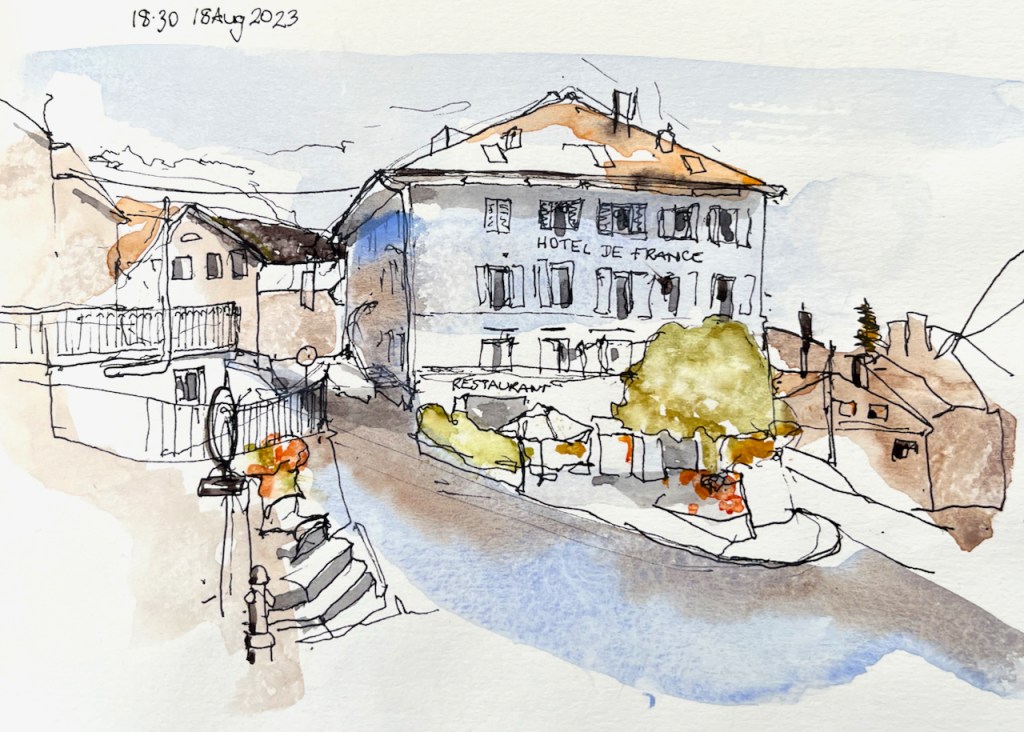
It was hot weather. Outdoors the paint dried quickly. Here’s the hotel from the other side of the road, drawn very quickly, about 20 minutes.

Hôtel de France, Sainte-Croix 18 August 2023

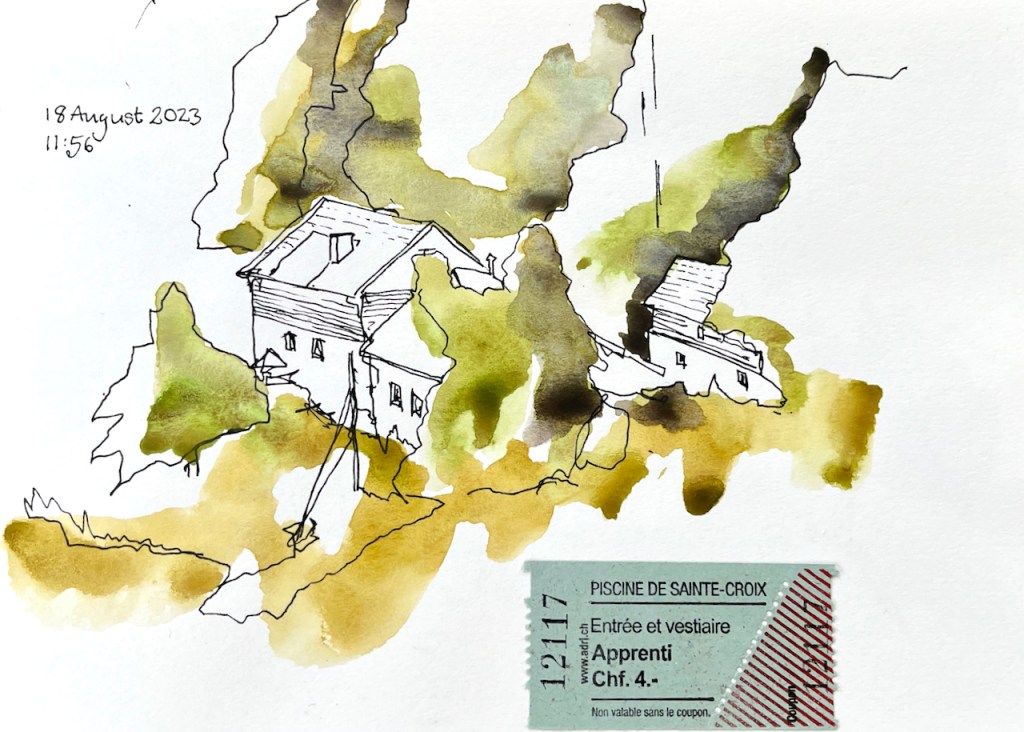
I went to the swimming pool. On the way back I stopped to sketch the sloping hill and a house in the trees.

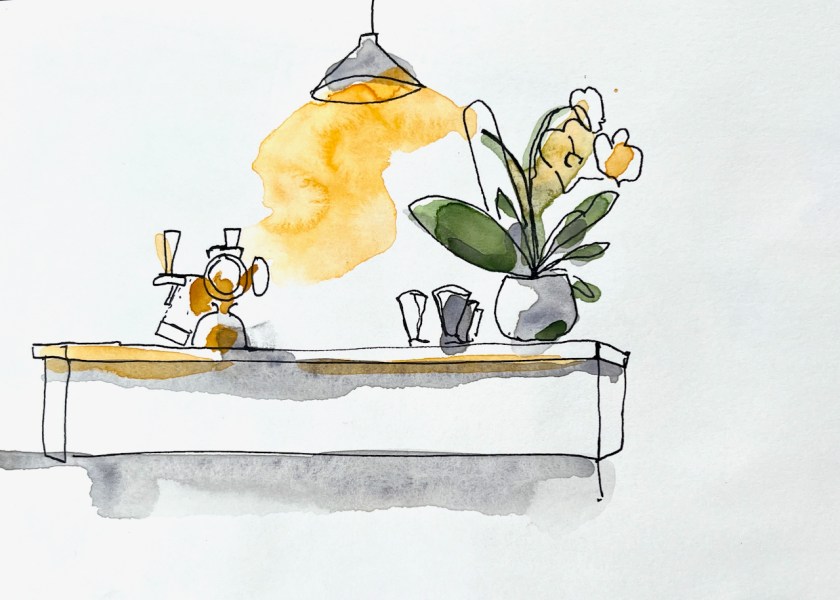
Here’s a view of the bar at the hotel.

Here’s a flip-through of the sketchbook. 20 seconds of silent video. [This video and the gallery beneath may not show on email or phones so if there’s a problem please see the web version of this post]

Sketchbook flip-through. Sketchbook from the Vintage Paper Company.

I’ve sketched in Switzerland before. Here are some other other drawings I’ve done in the same location:

Swiss house on a hill

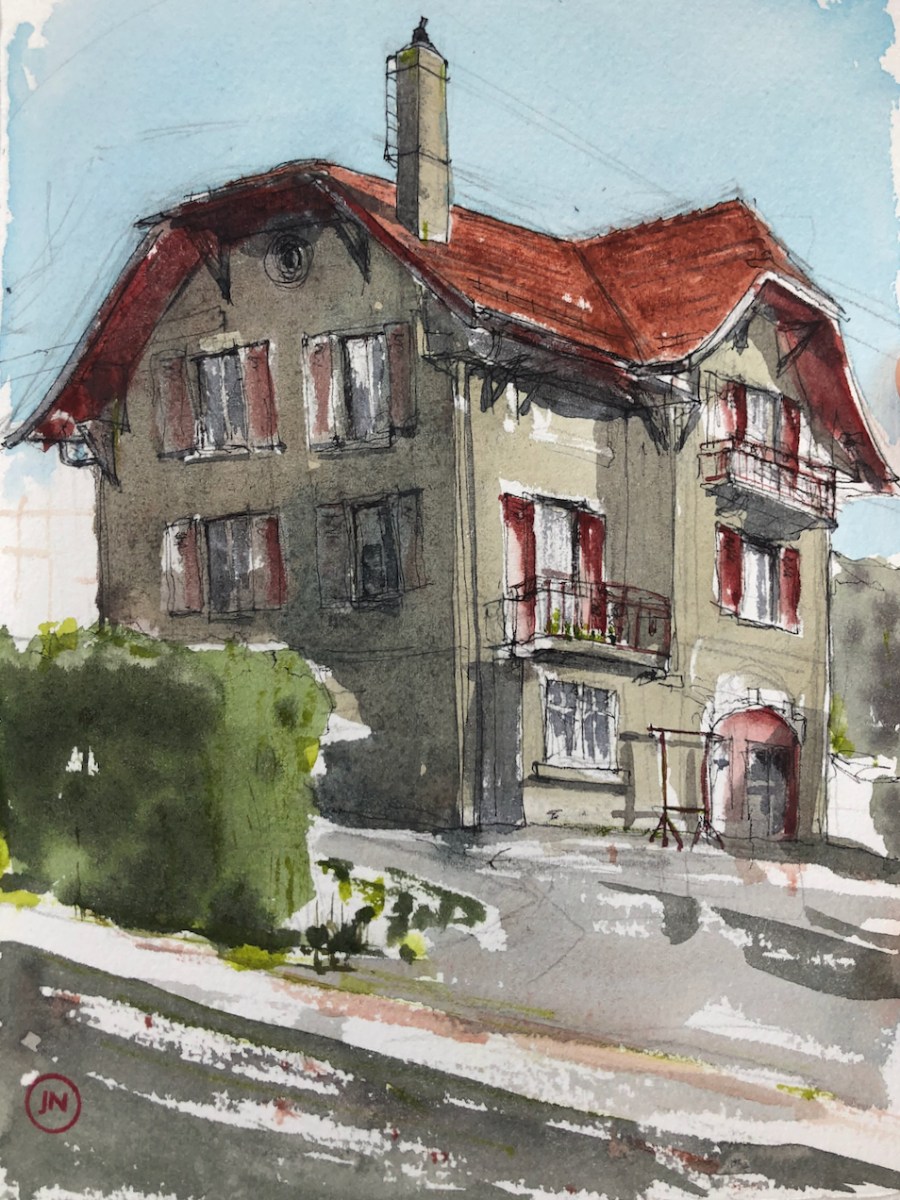
Here is 23 rue du Petit-Montreux, Sainte-Croix, Vaud. I sketched this house after breakfast. The sun was bright and I rushed out into the crisp morning. It took me…
read this post…

View from a Swiss Hotel

It was raining in Switzerland. Here is a sketch I did looking out of the window of the Hôtel de France, Sainte-Croix, Vaud. The building with the flags is…

read this post…

Sainte-Croix, February 2020

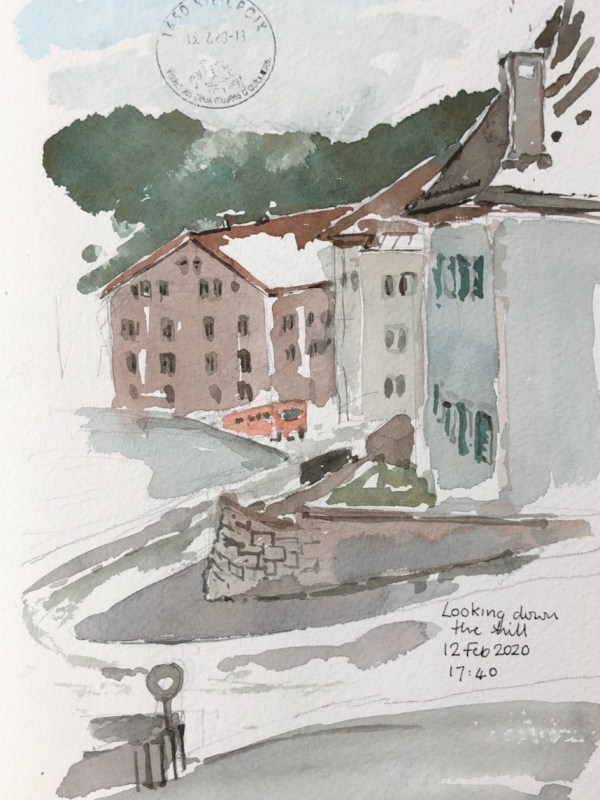
The weather in the Jura mountains is changing. This is climate change, the residents tell me. Once, the snow came reliably every year, bringing skiers. Now, the snow is…

read this post…

Sainte-Croix, Vaud

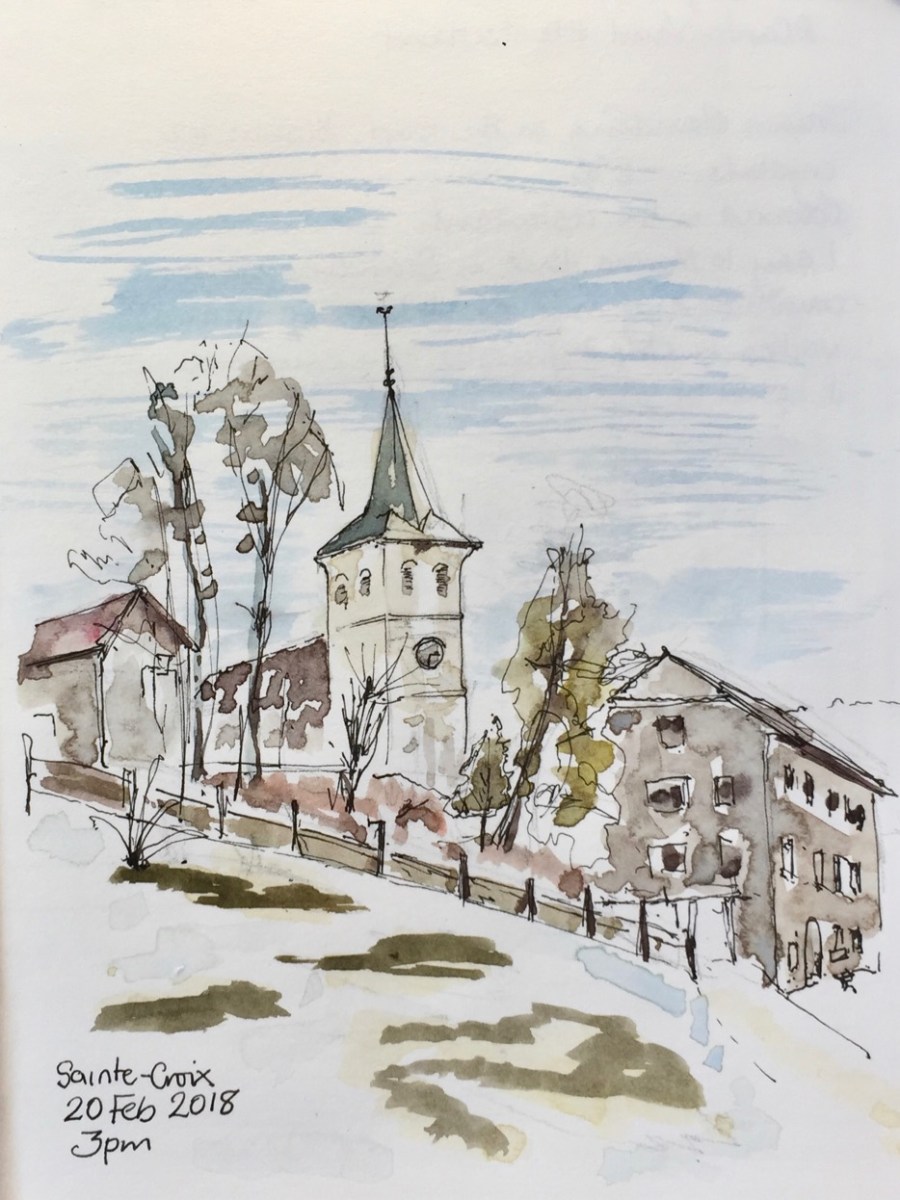
This is the church. Drawn and coloured on location, about 1 degree C. That’s snow in the foreground. Then later, it was colder. Hotel de France, drawn from the…

read this post…

Snow in Sainte-Croix

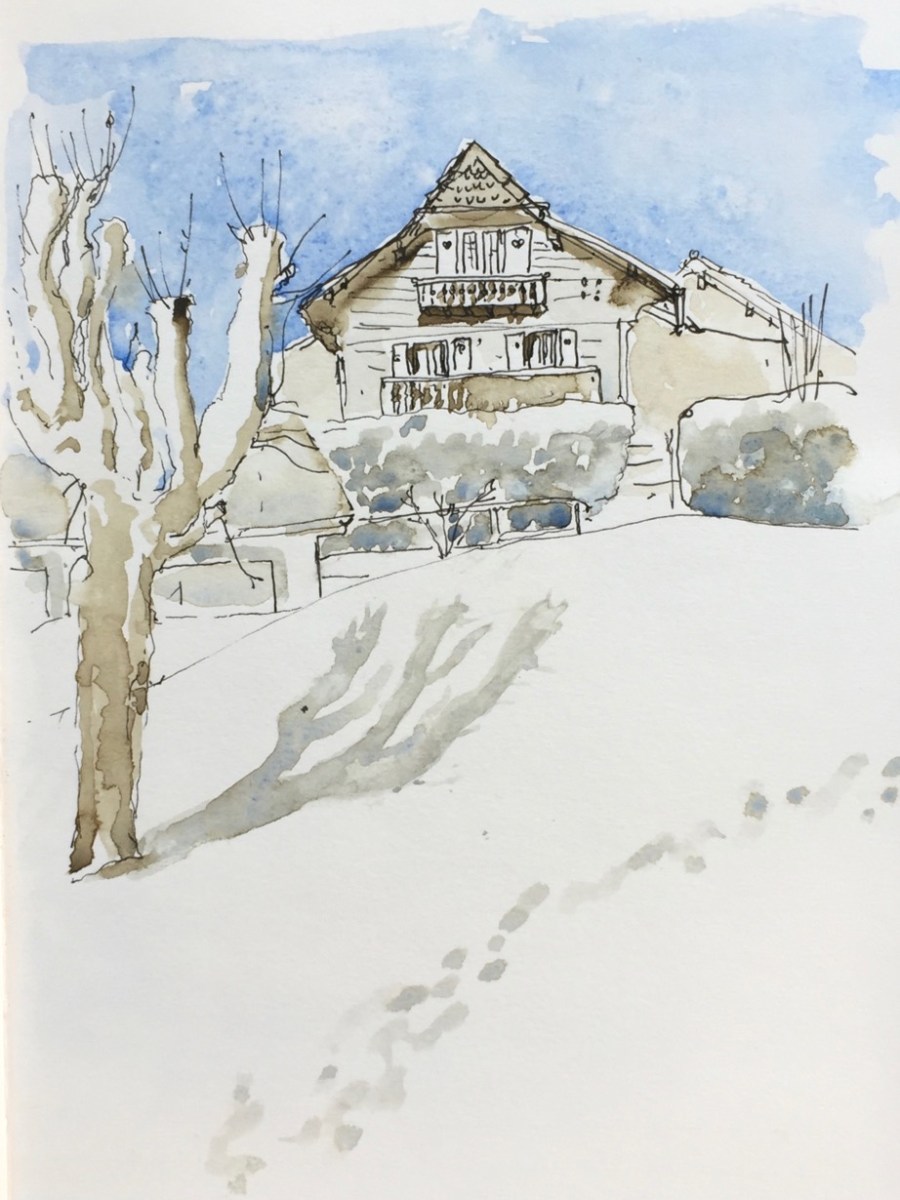
Snowfield behind the church. Painted with melted snow as I forgot to bring water. All done standing up as everything was wet and cold. Snow blew from the roof…

read this post…

Urban sketching, Shetland and the journey south 2023

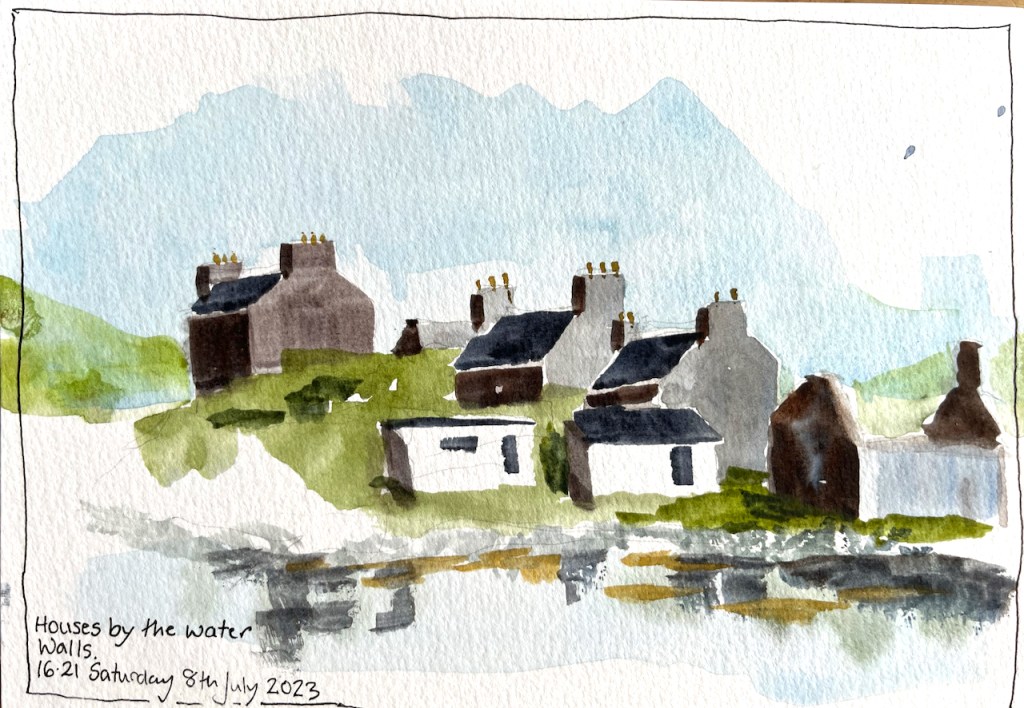
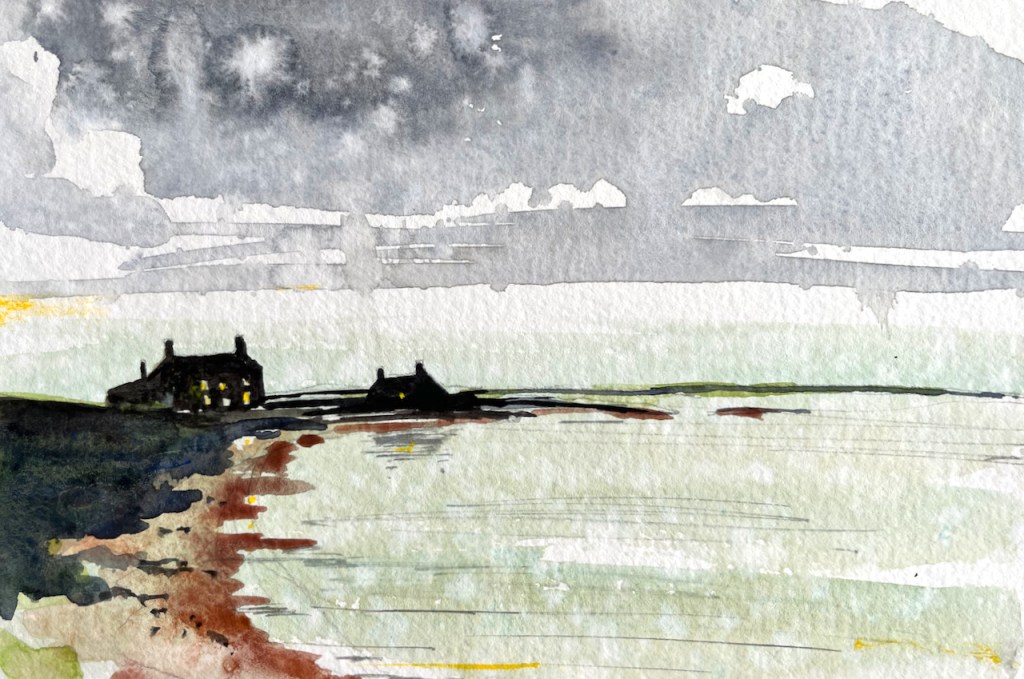
Here is a postcard which I made at the end of a long hot walk. It shows the houses in Walls, on Shetland West Side.

Houses by the water, Walls, Shetland. Postcard sketch A5, 8th July 2023

Here is Burrastow House and Burrastow Cottage, an evening view. I sketched this on top of a sky view I’d sketched earlier, but which had been spotted by rain, as you see.

Burrastow House and cottage, evening view. A5 postcard.

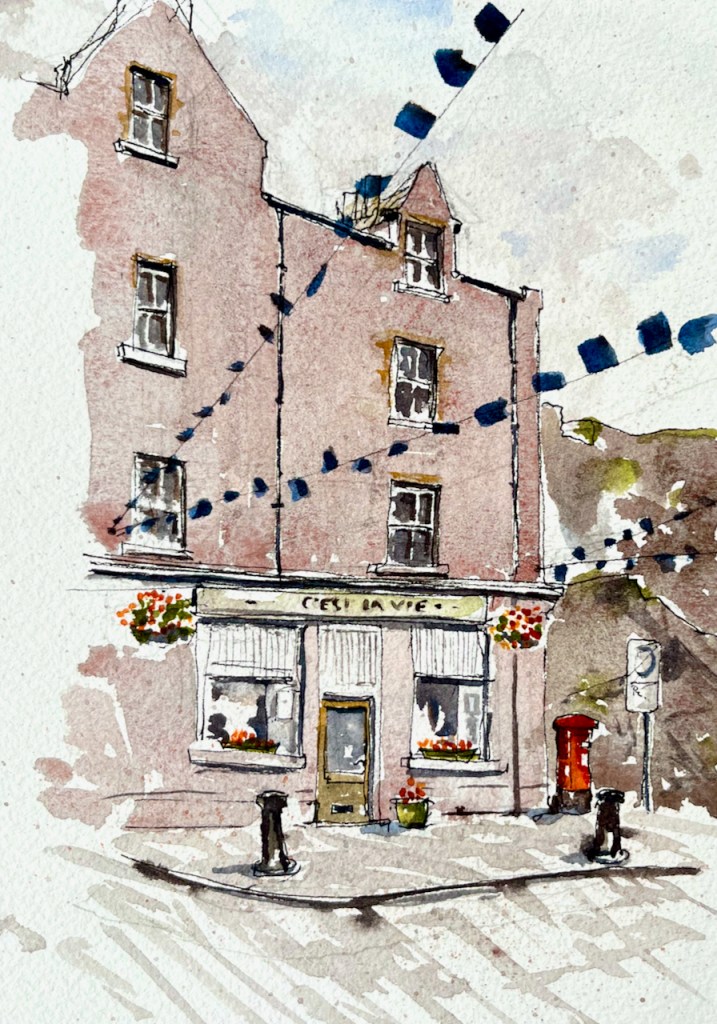
This is a restaurant in Lerwick: “C’est la vie”.

“C’est la vie” French restaurant, Lerwick, postcard sketch A5, August 3rd 2023

The flags are to welcome the “Tall Ships” which came to Lerwick earlier in the week. The restaurant was closed, I was waiting to see if it opened. Then the rain started. Then the restaurant opened and I finished the sketch inside. Then I walked to the Ferry Terminal.

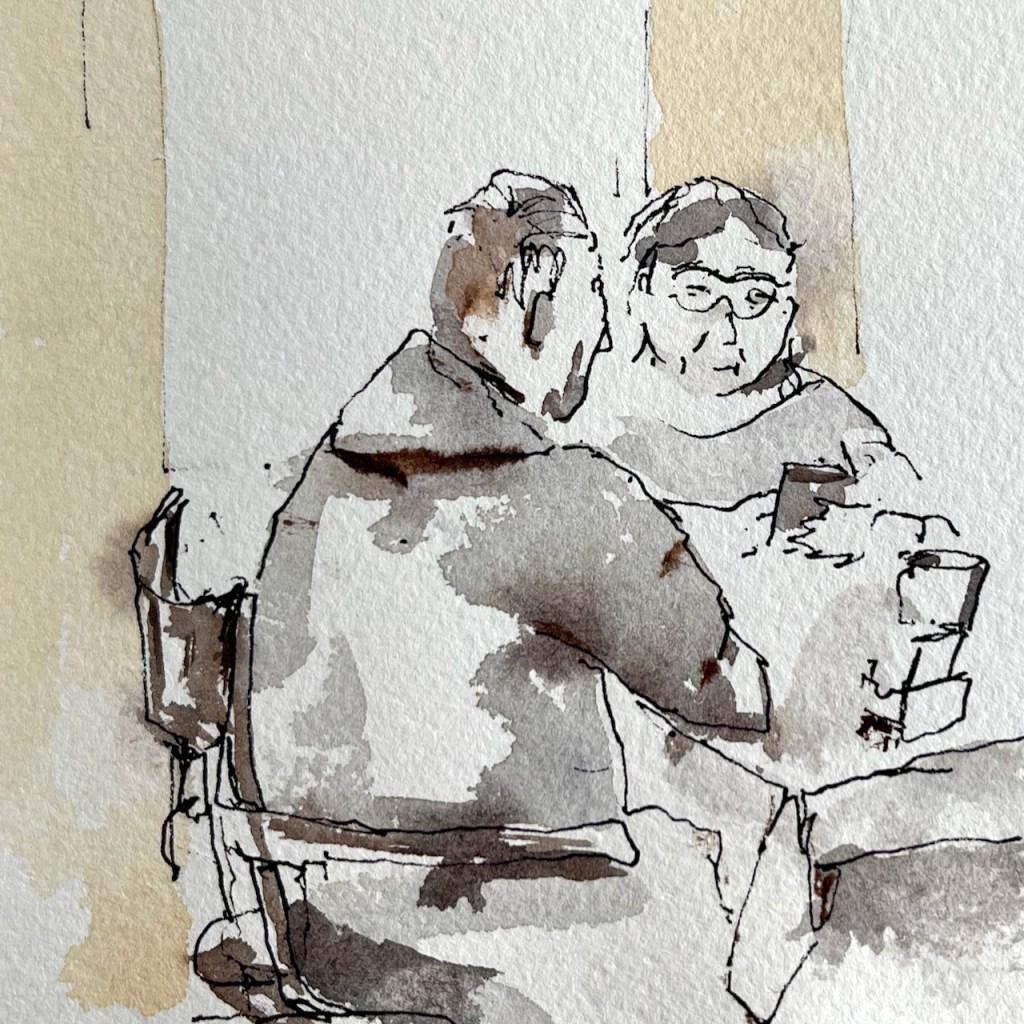
On the ferry, I made quick sketch of people at breakfast.

On board MV Hrossey, approaching Aberdeen. Breakfasters in the lounge. August 4th 2023. Vintage paper company sketchbook, A5

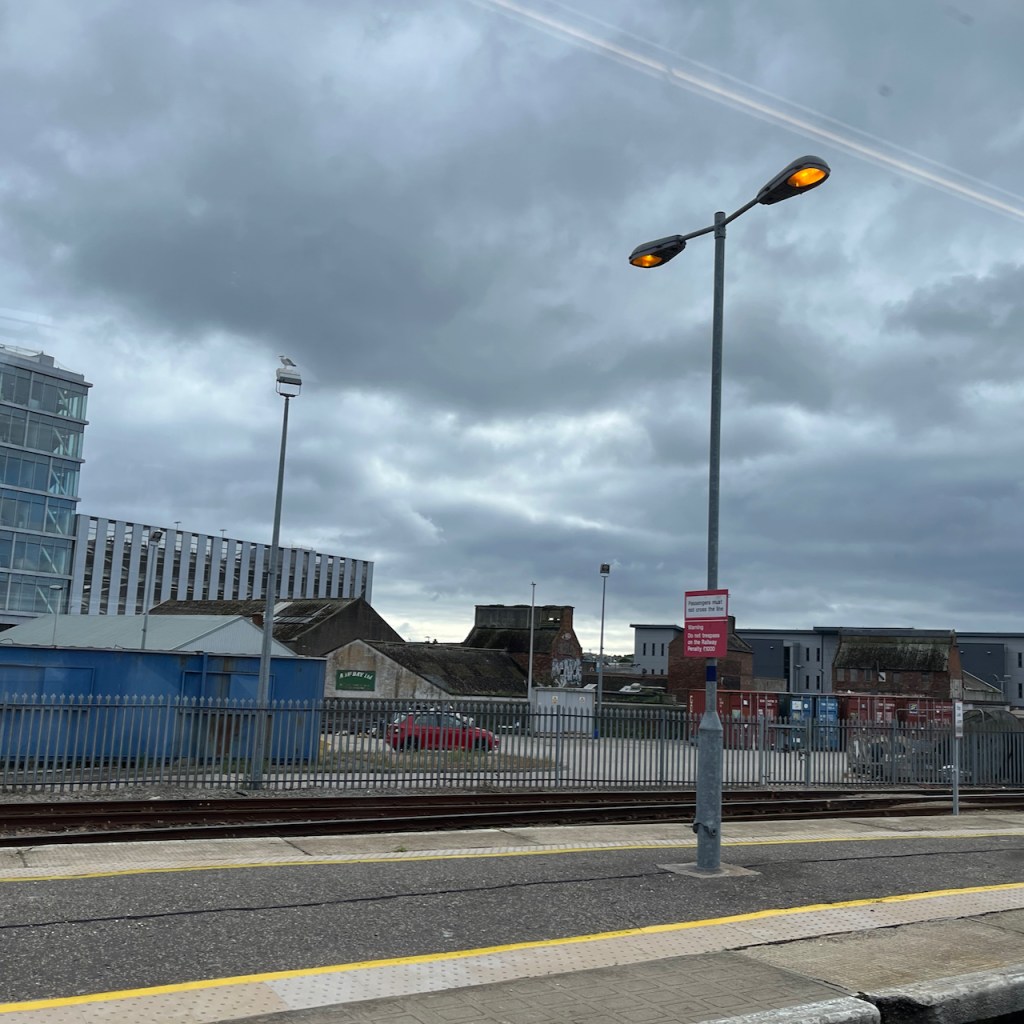
Here is my final sketch of the expedition. On the train at Aberdeen, I looked out of the window.


I have a sketchbook full of images. Here’s a quick flip through showing random glimpses of the visit: (19 second silent video)

Sketches in Fair Isle 2023

Fair Isle is a small island some 28 miles south of Shetland, between Orkney and Shetland. It is 3 miles long and 1 mile wide.

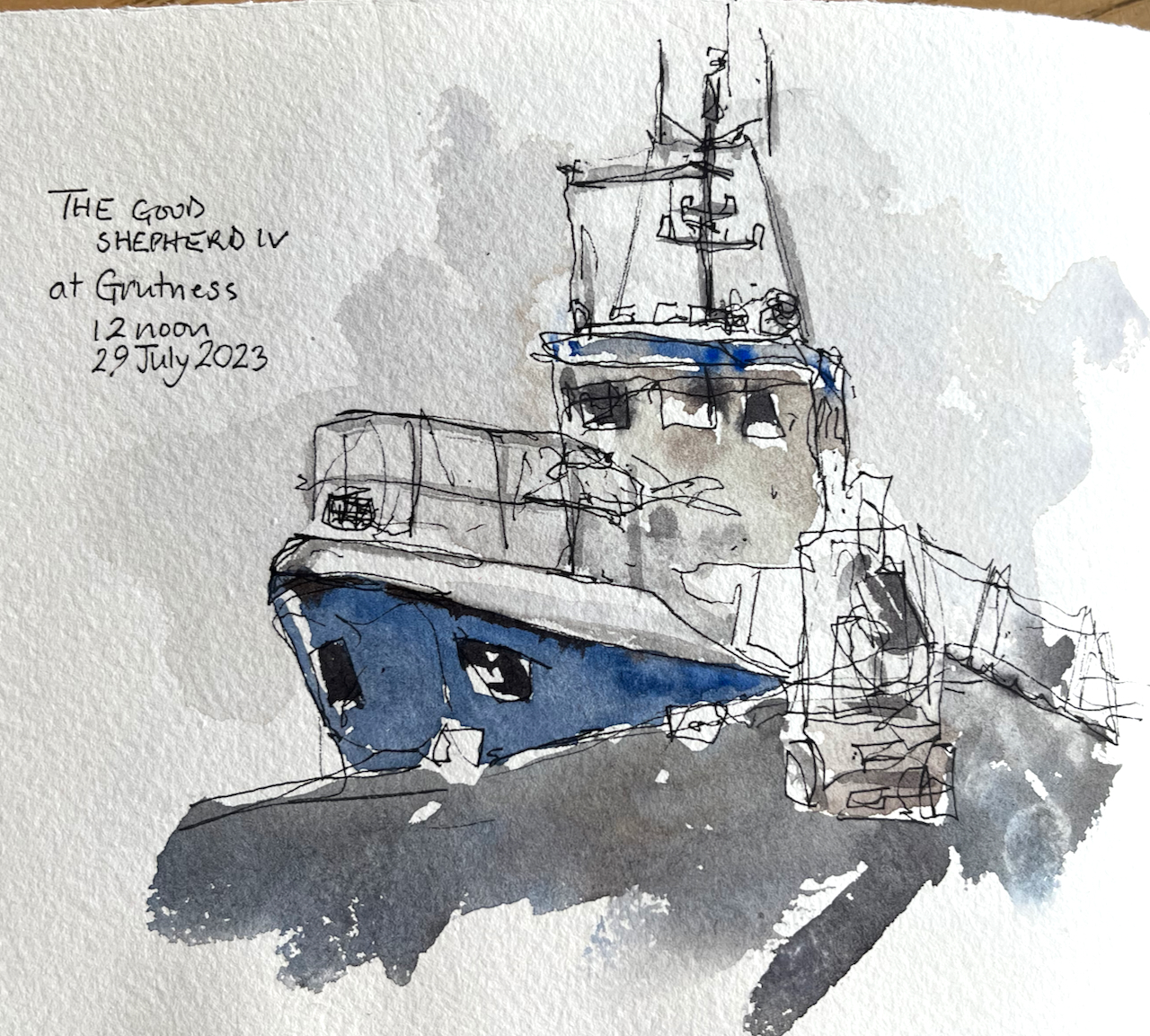
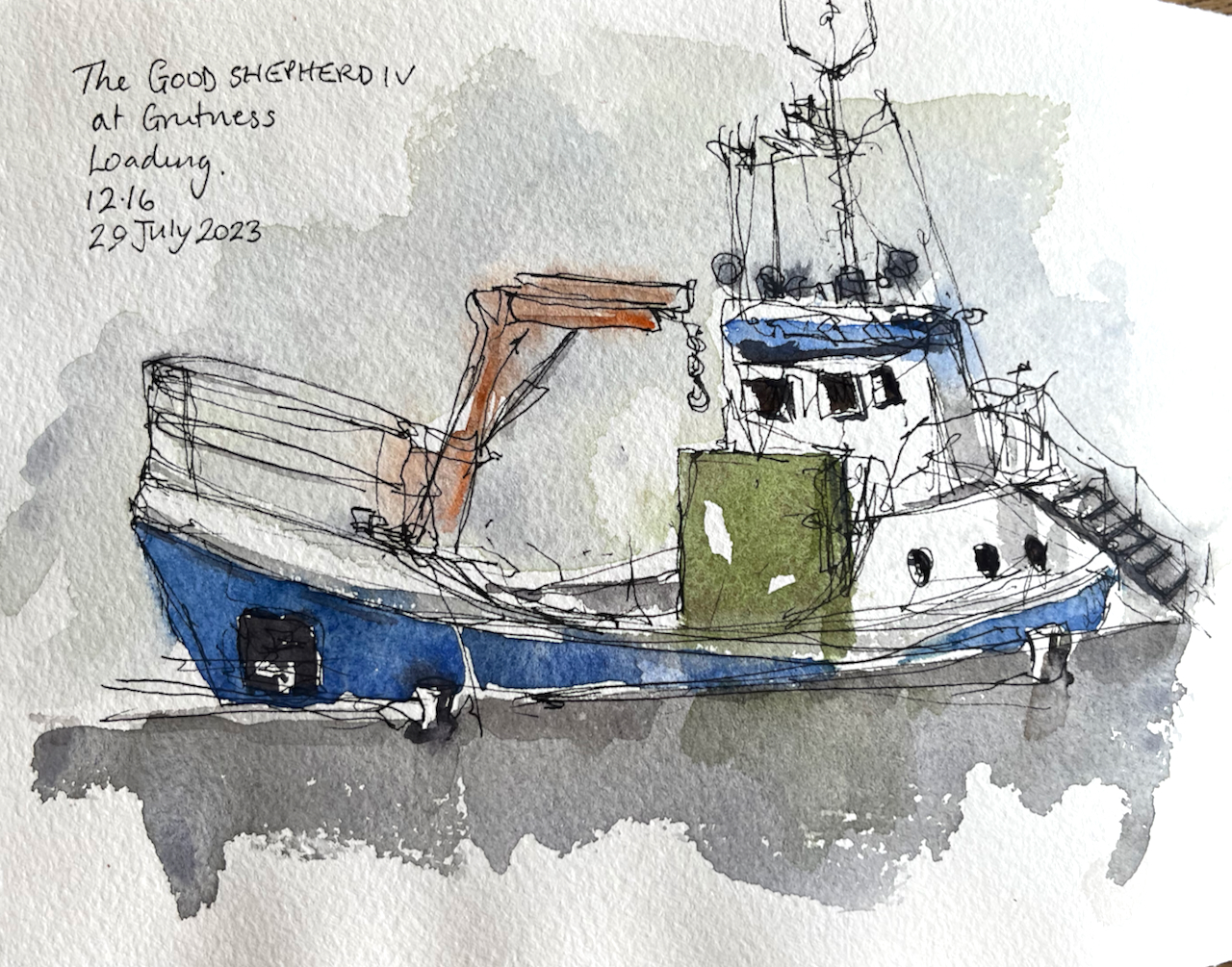
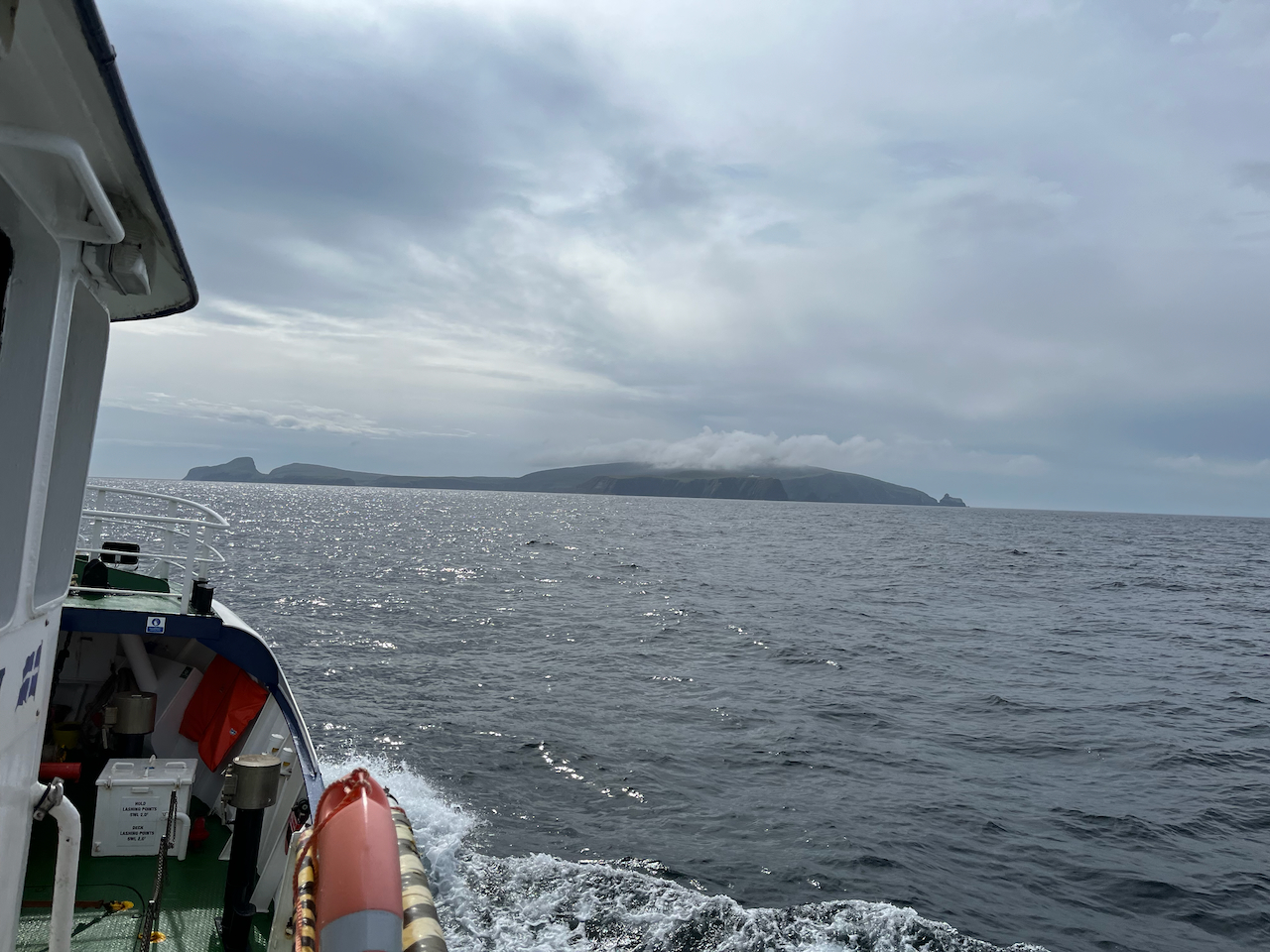
I travelled there by the boat “Good Shepherd IV”.

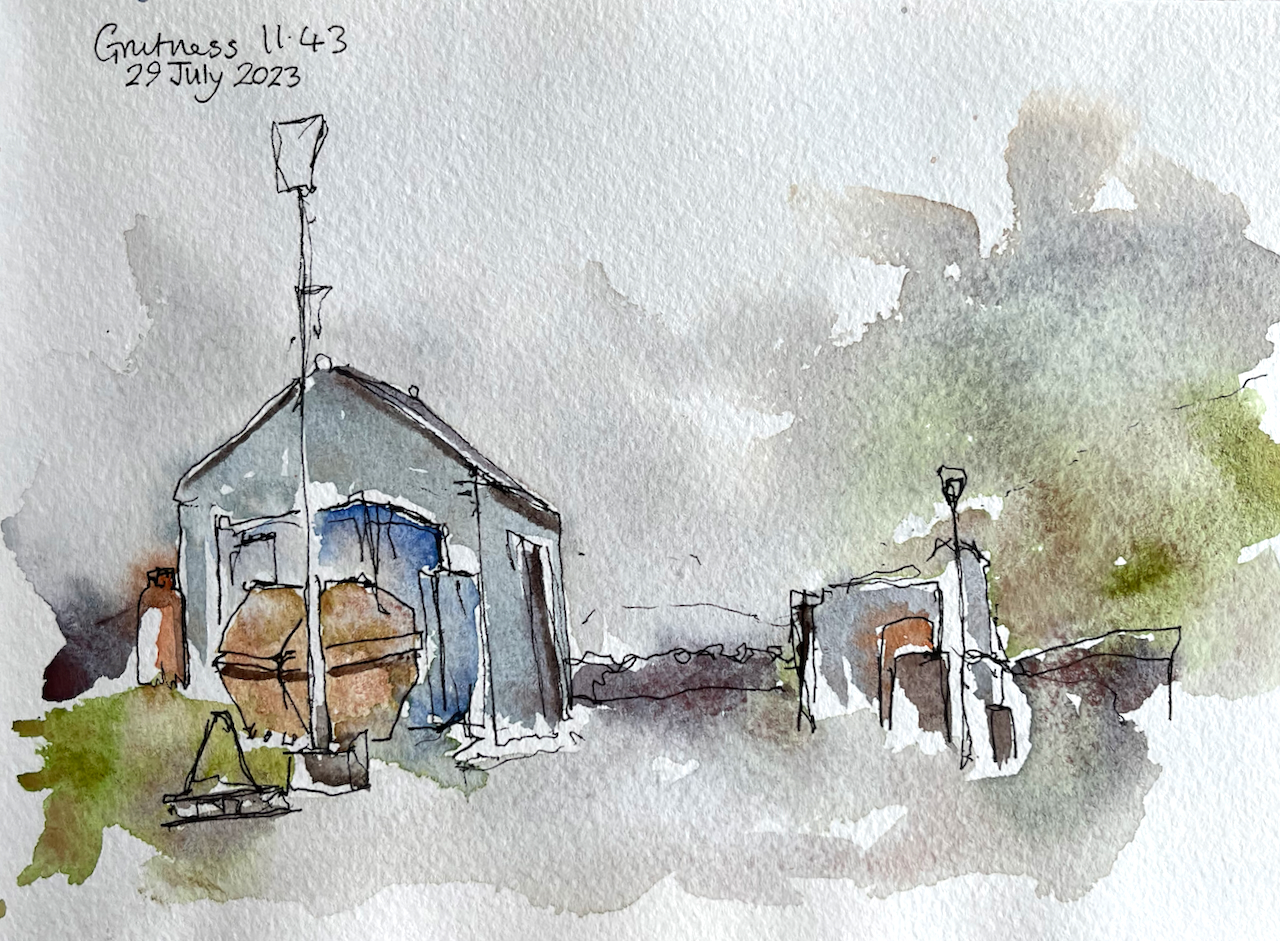
The ferry leaves from the pier at Grutness which is close to Sumburgh airport at the southern tip of Shetland mainland.

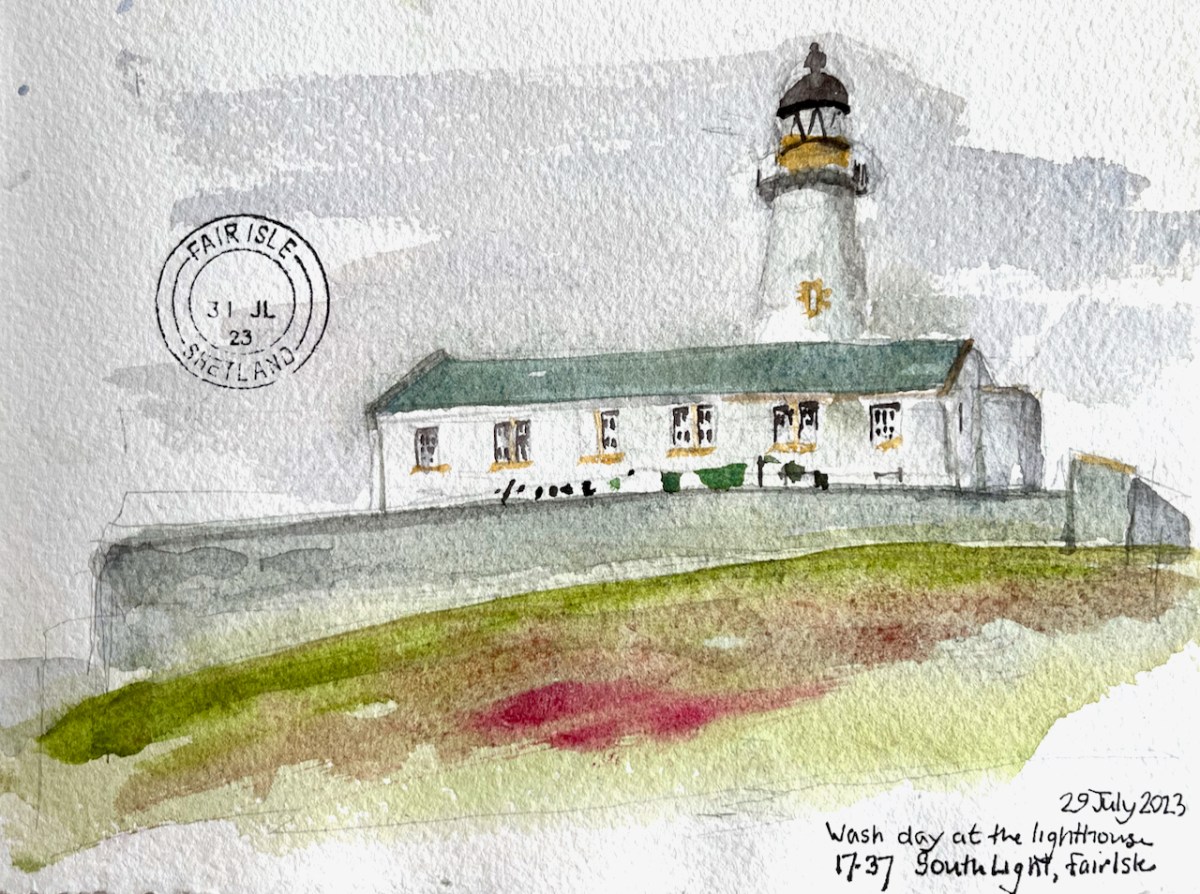
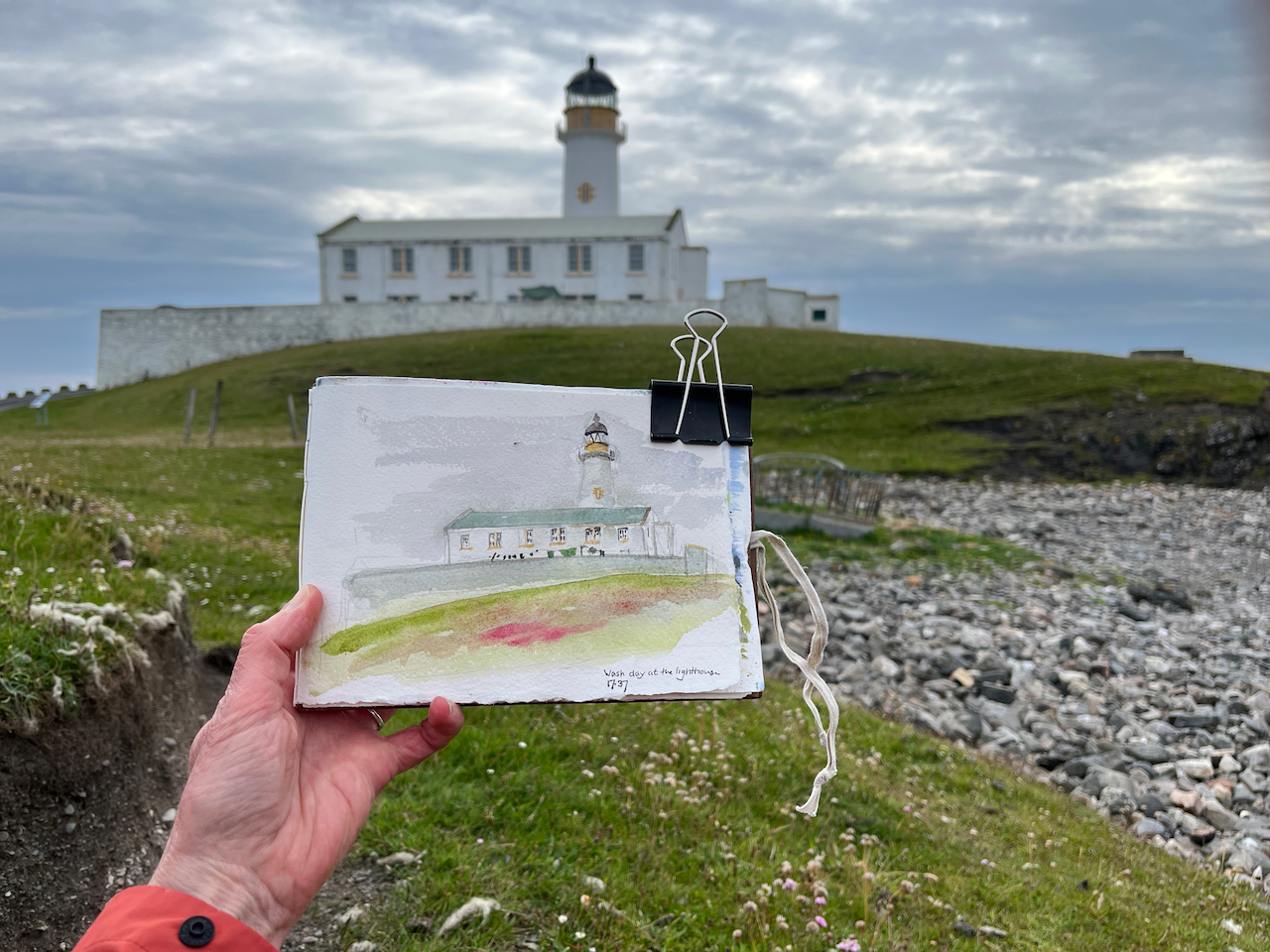
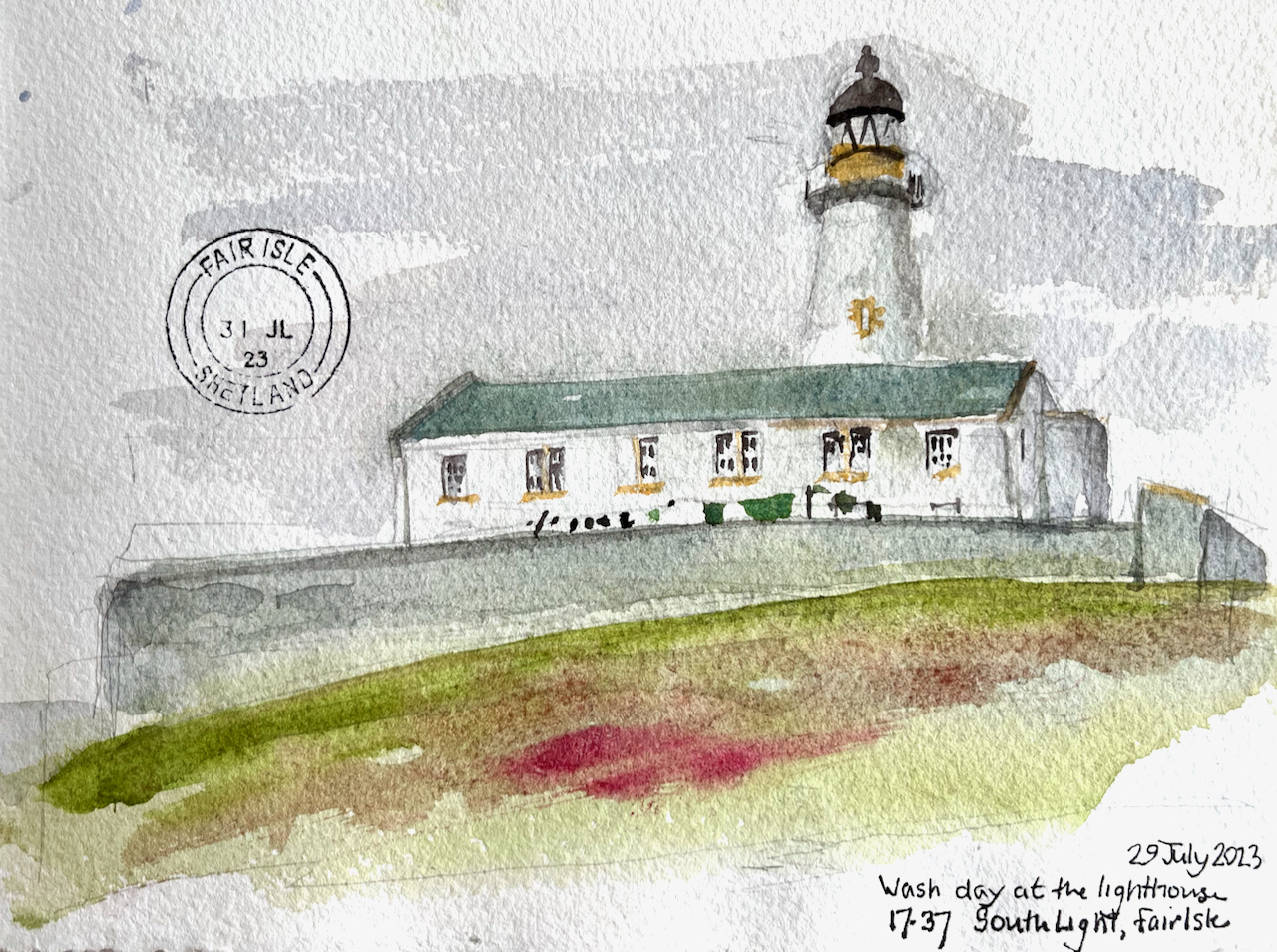
Fair Isle has two lighthouses: the North Lighthouse and the South Lighthouse. I sketched the South Lighthouse:

The postmaster at the Fair Isle Post Office kindly put their special postmark on my sketch for me.

Both lighthouses were designed by David A Stevenson and built in 1892. Both are still functional, now automated. The South Lighthouse light is “Fl (4) W 30 seconds” : a group of 4 flashes of white light every 30 seconds. The North Lighthouse flashes white twice every 30 seconds.

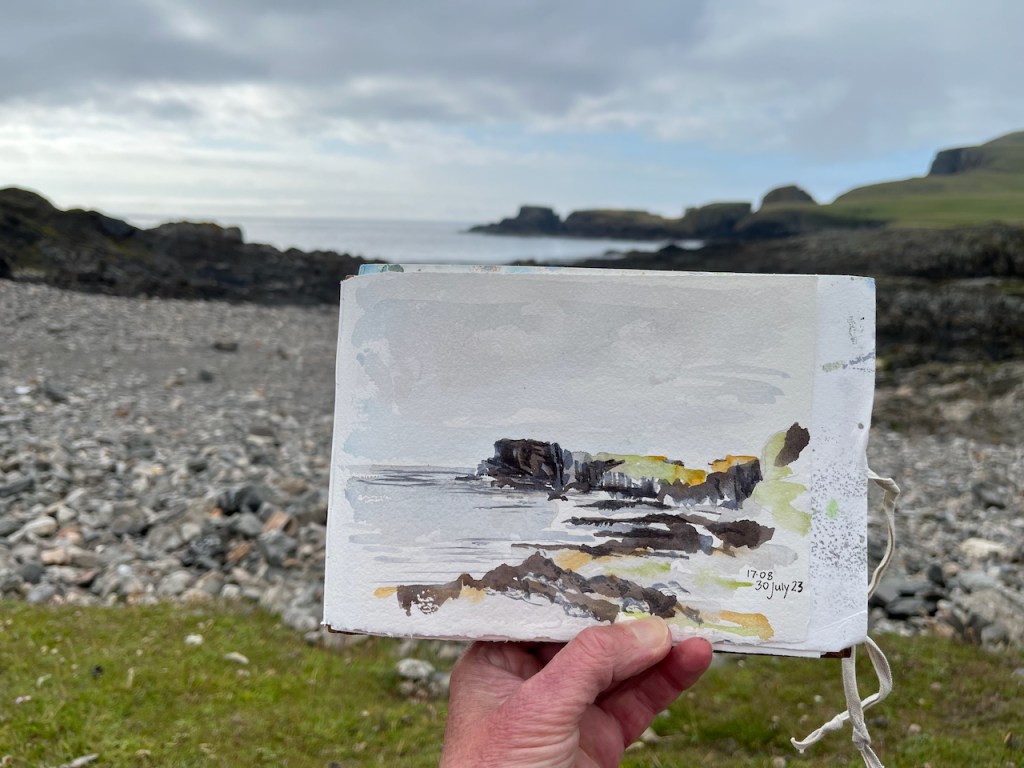
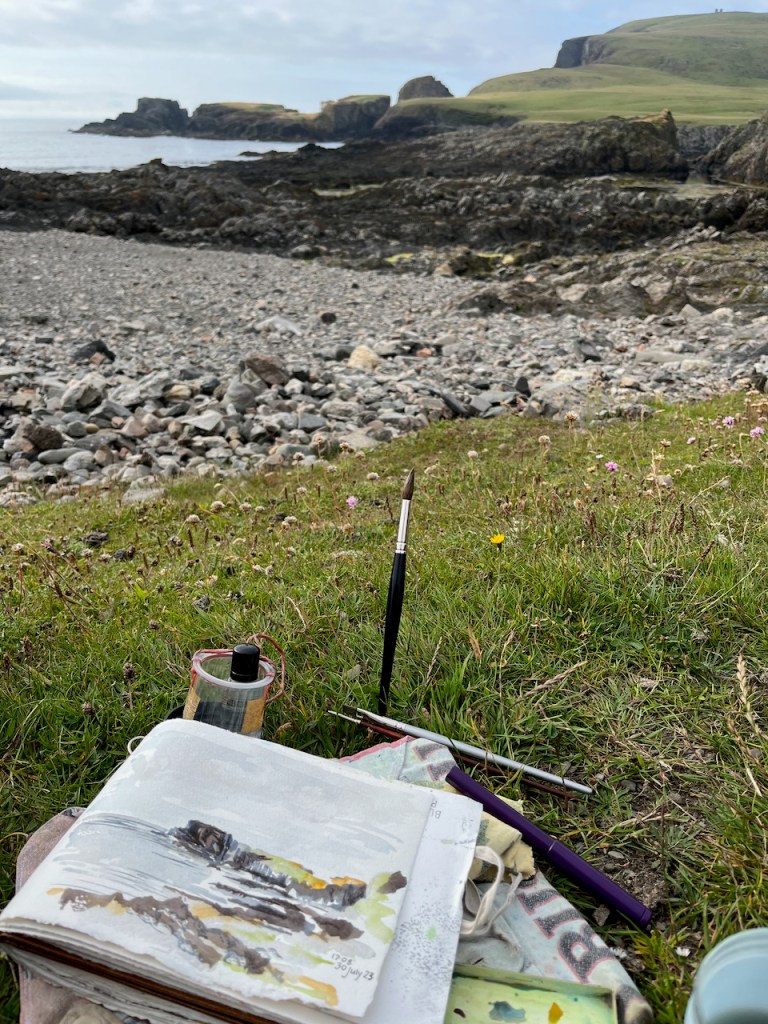
Here is a view of the cliffs called Mathers Head. It’s the view from the same spot where sketched the South Lighthouse, but looking out towards the west.

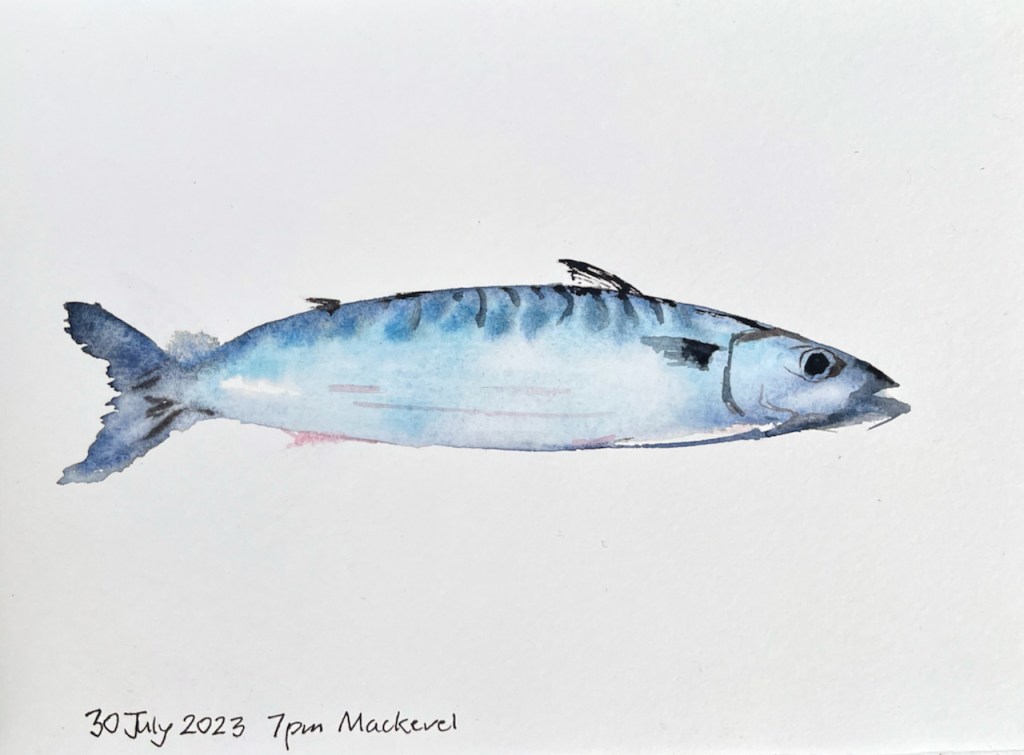
I was staying at “The Auld Haa” which is just a few hundred yards from the lighthouse. When I returned from drawing this scene, Tommy, who runs the guest house, called out, “Come and choose a fish!”. There was me and two other women staying at the guest house at that point. Bemused, we all made our way round the side of the house to find a cheerful fisherman standing by his car trailer on the small road. The trailer was laden with fish. The fish were in buckets. There were cod about two feet long, and mackerel, and a whole bucket of lobsters. The fisherman was Stephen, who I recognised as one of the ferry crew.

With suggestions and promptings from his three guests, Tommy made his selections. I was keen on the mackerel. Others opted for white fish. Tommy carried the bucket back to the house.

After this excitement I was resting on the bench outside the house when Tommy called out to me, “Would you like to do a painting of the mackerel?”.

Yes, I would like to do a painting of the mackerel, even though I was tired, even though it was evening, even though I’d already done a long walk, a dip in a rockpool, and several paintings of headlands. How often do you get invited to paint a mackerel? Seize the moment. Tommy brought out the mackerel on a plate, and I settled down to drew, while the hens scraped around on the grass, and small birds scuttled in the hedge.

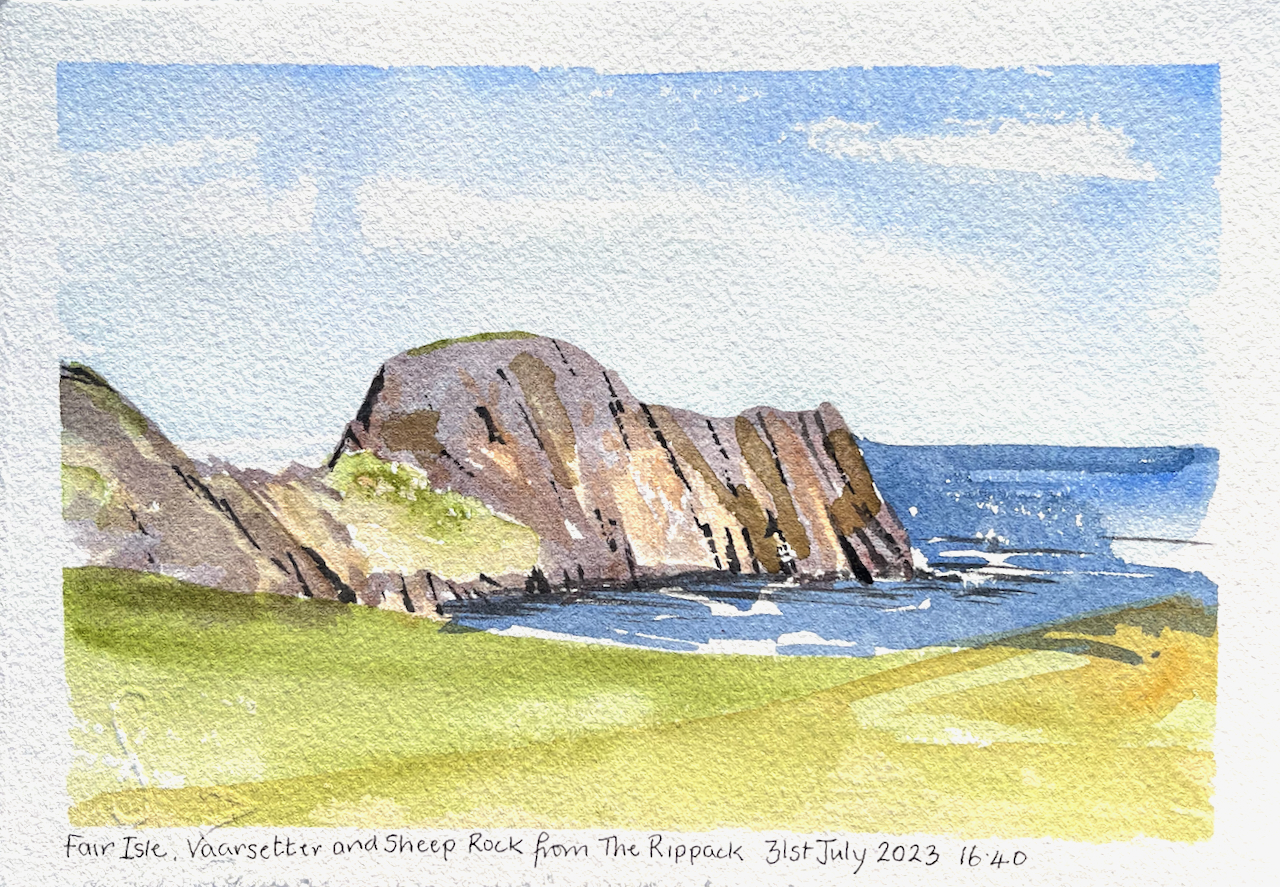
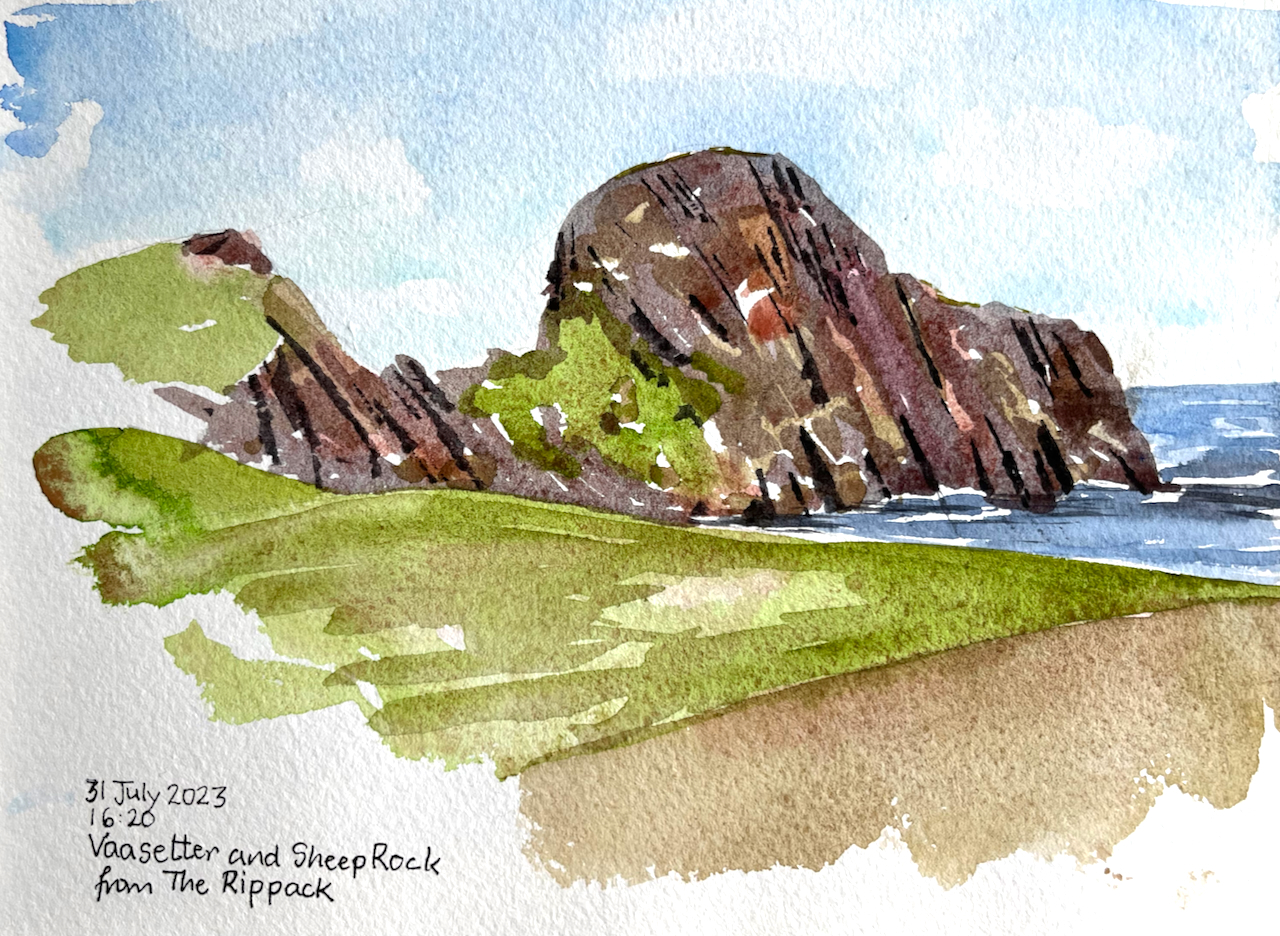
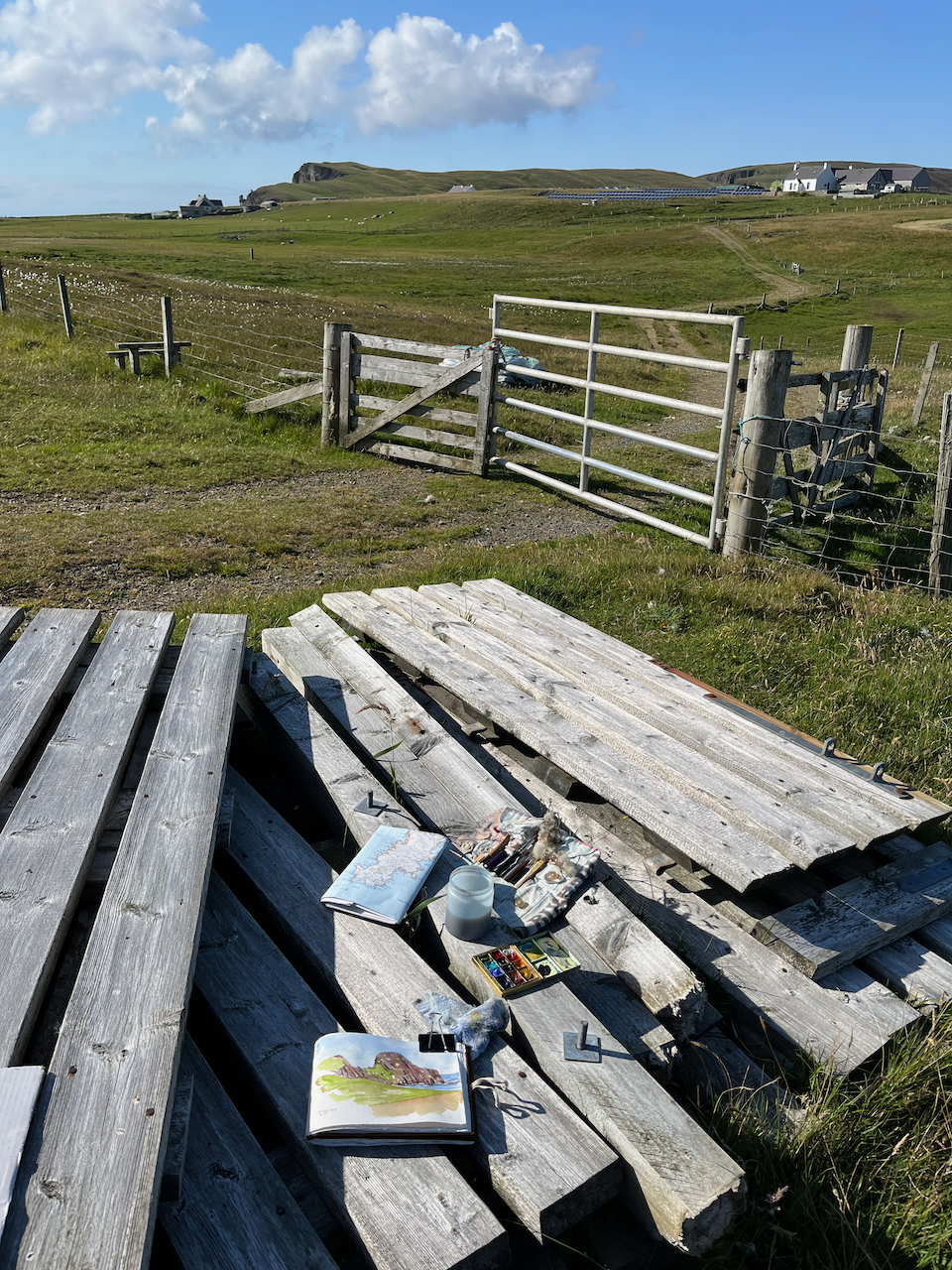
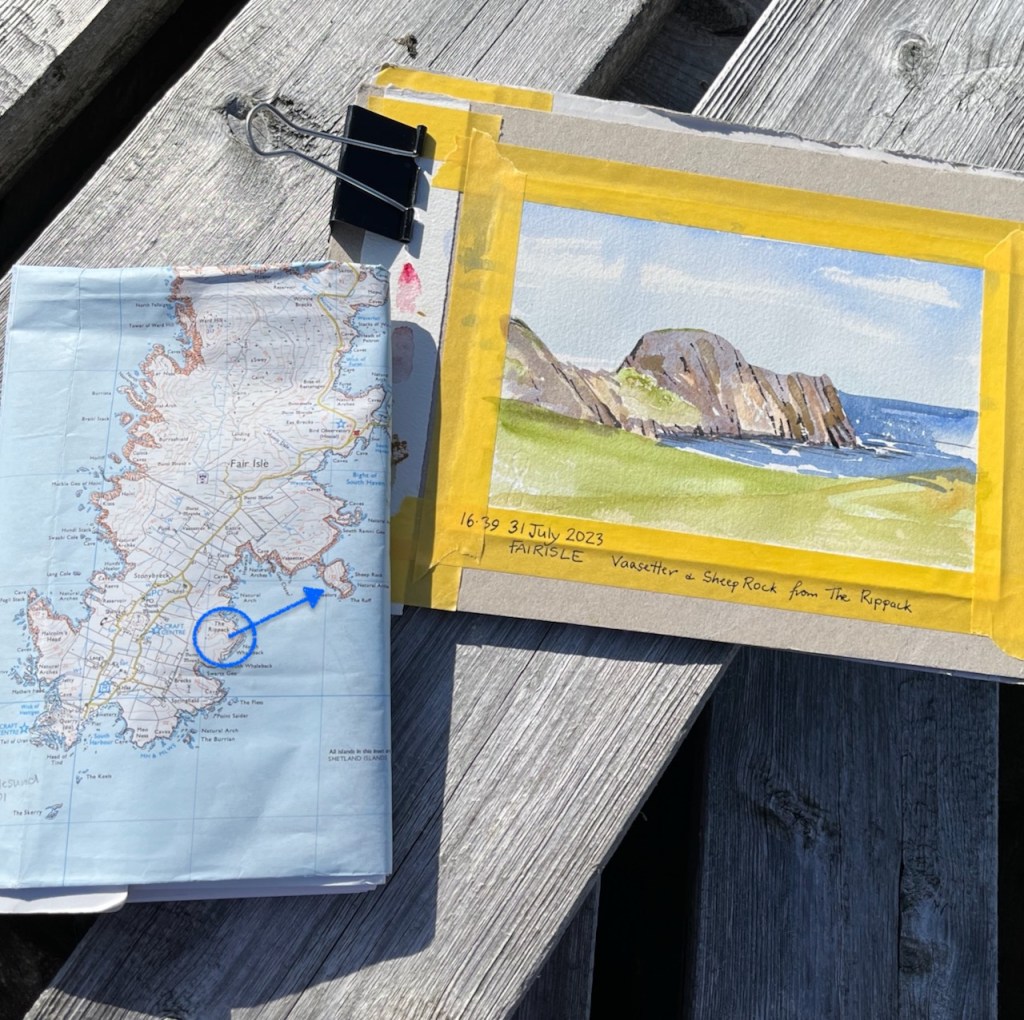
On another day I sketched the huge headland called “Sheep Rock”.

Postcard drawing of the Sheep Rock.

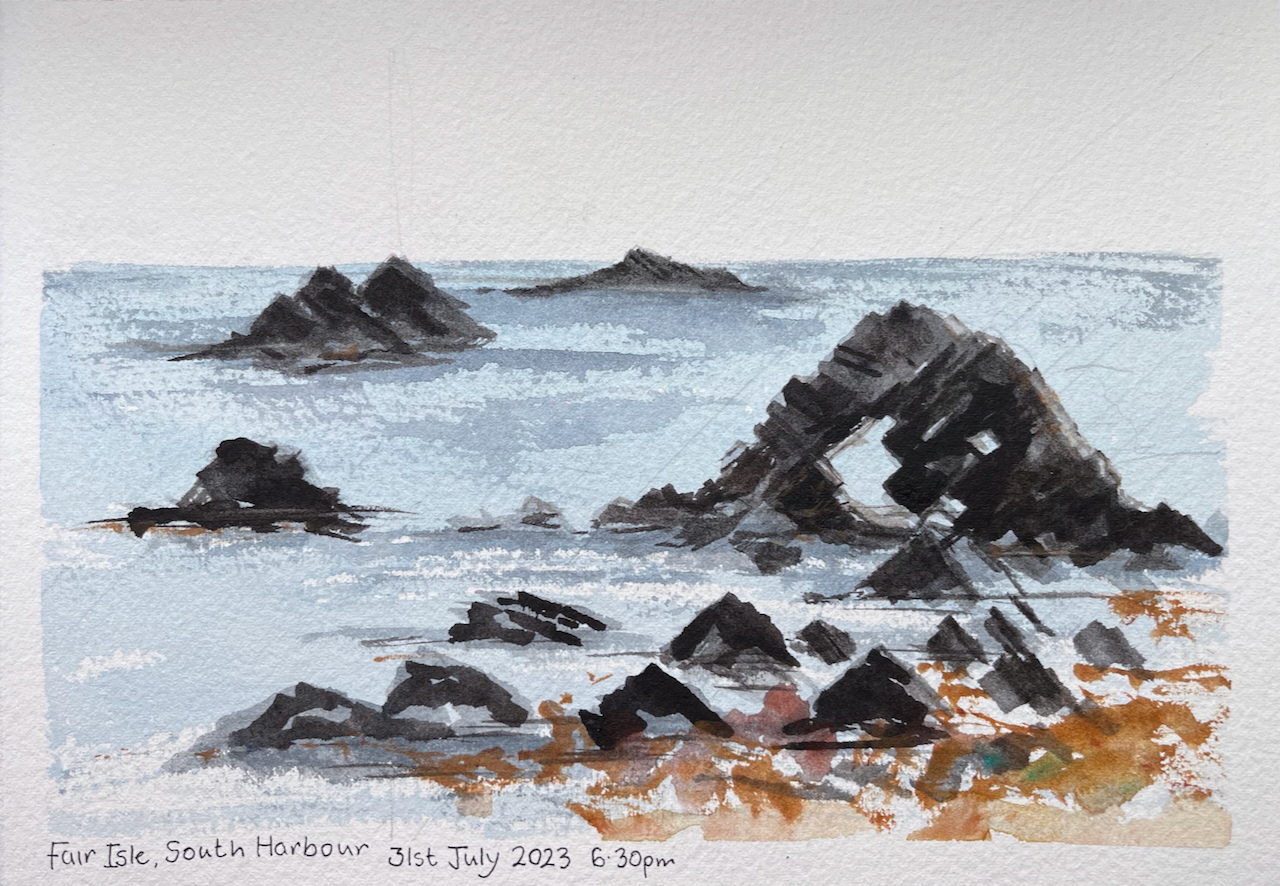
Here is the spectacular rock arch on South Beach, which is near the Auld Haa.

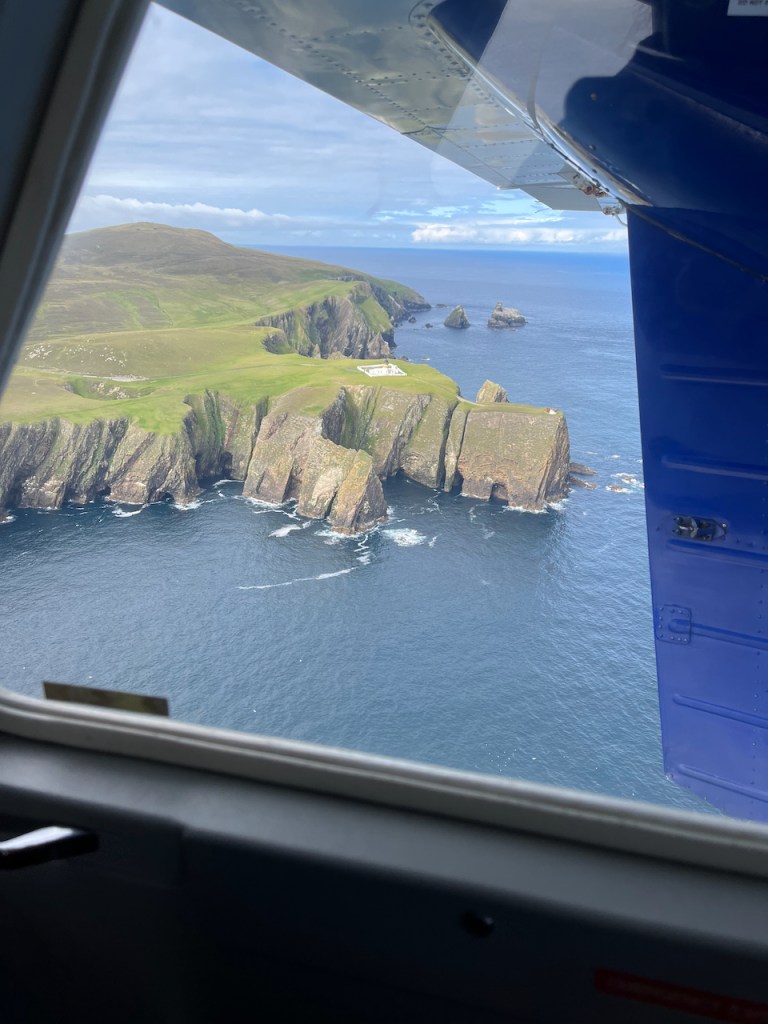
I was only on Fair Isle for three days. It’s an extraordinary place. Here was my final view of the island as I left on the tiny plane. The small square is the North Lighthouse, high up on its cliff.

View from the window of the plane: North Lighthouse.