Norwich is two hours from London on the train.
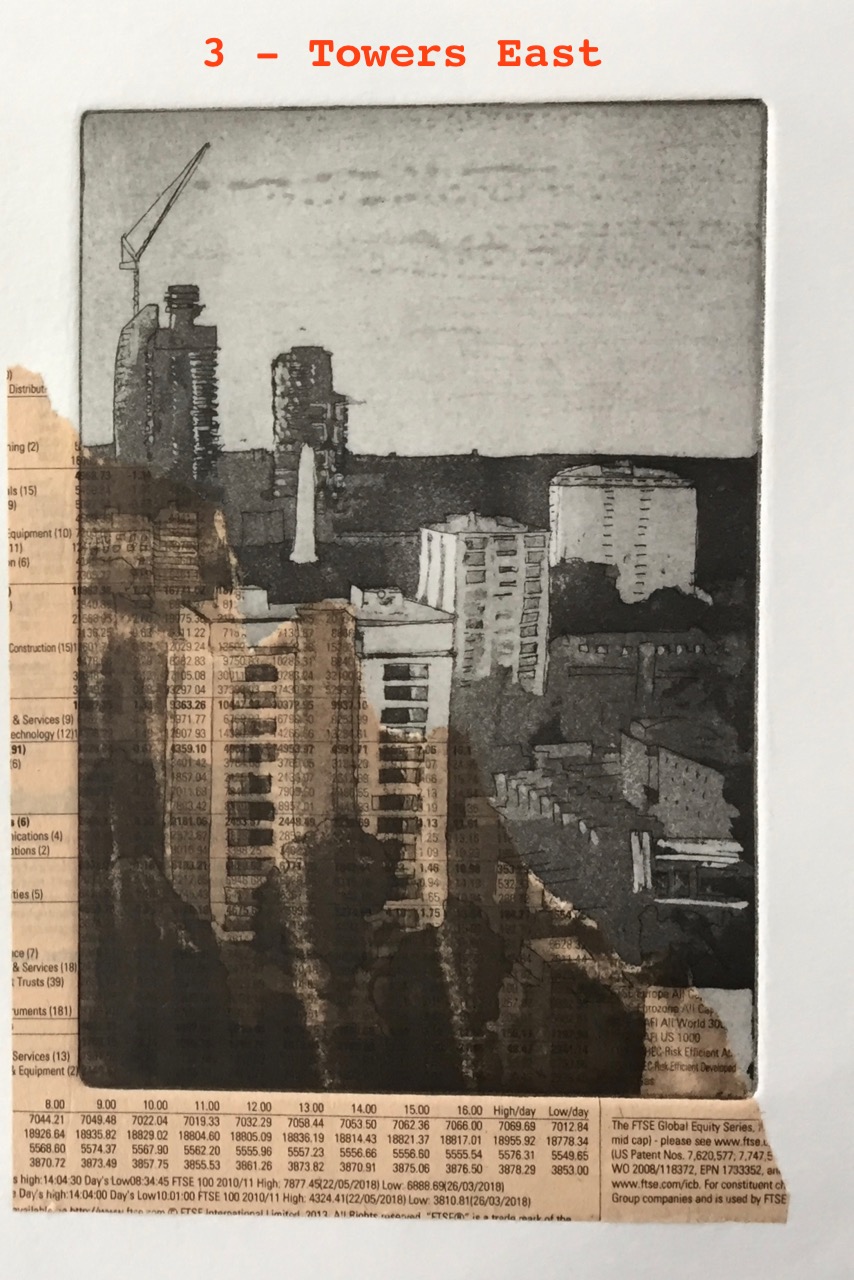
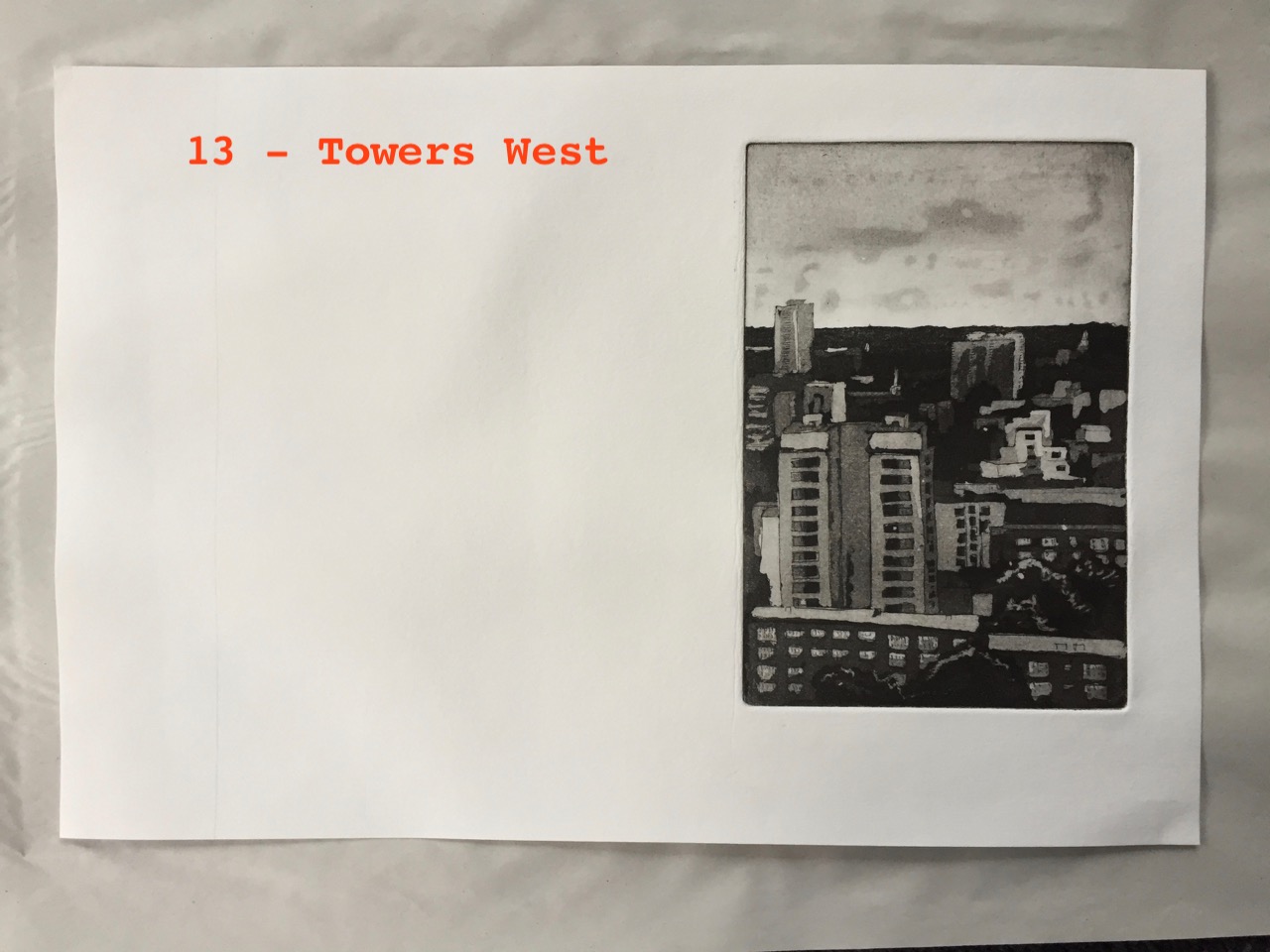
I tried sketching the landscape as it went by:


These were tiny drawings, each about 2 inches by 3inches.
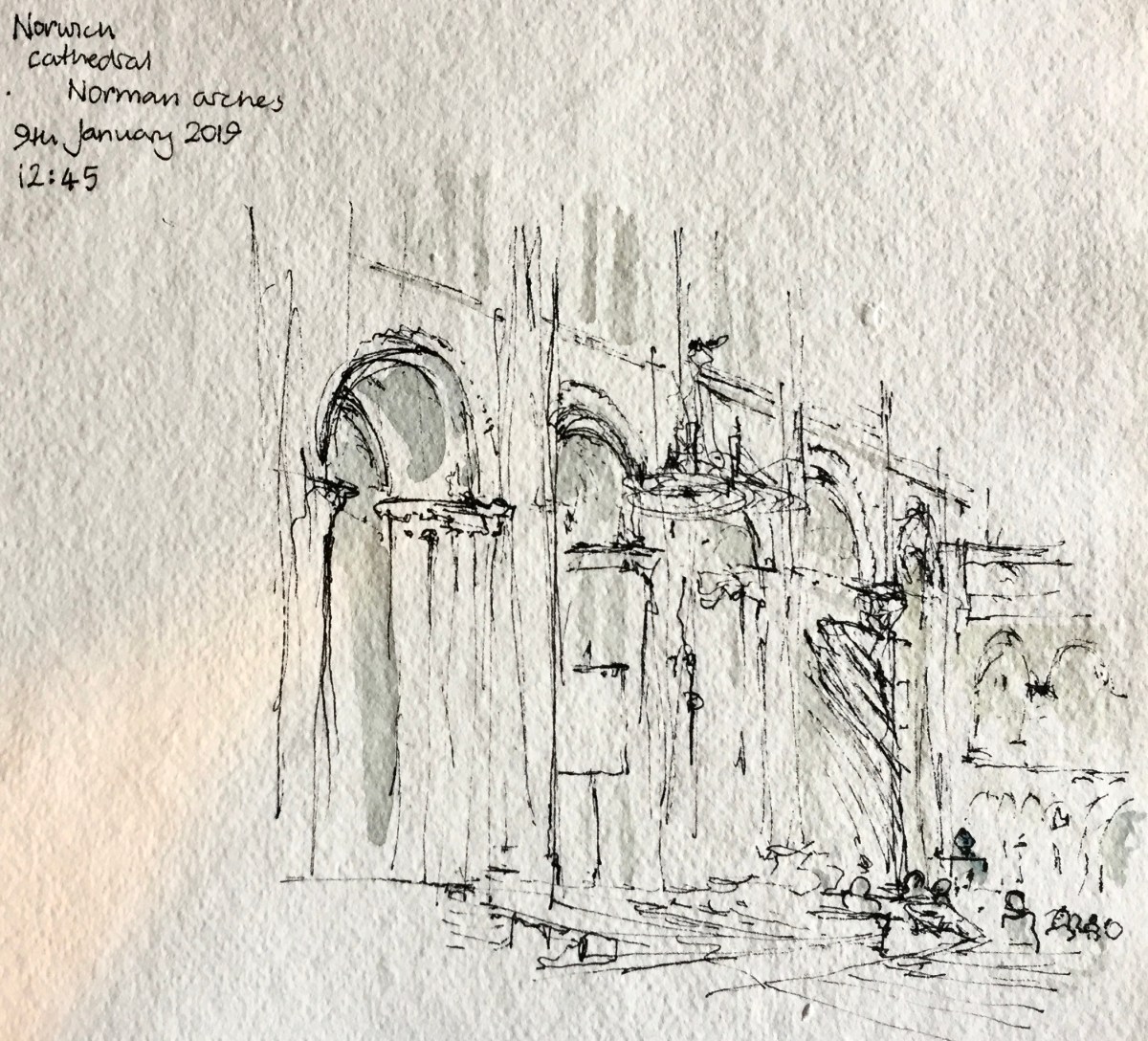
Here is the inside of Norwich Cathedral.

The picture shows the Norman nave of the cathedral. This building was started in 1096 and took about 50 years to build. The stone comes from Caen, in France, and was shaped there. It is a cladding. The structure is mortar and flint. One of the pillars in the picture has a spiral pattern on it, and is matched by another spiral one on the other side. But on the other side the spiral cladding doesn’t go up to the top, as though they ran out of the special stones. I wondered if these spiral stones are used elsewhere, or if they are still waiting at Caen. Or did someone make a mistake in their arithmetic?
I learned from the guide, Mark Hill, that a bishop is in charge of a diocese, not the cathedral. The Dean is in charge of the cathedral. The bishop has a special seat called a cathedra, which is to the right of the choir, and separate from it. And the Bishop’s seat has a hugely ornate covering.
At the Sainsbury Centre for the Visual Arts at the University of East Anglia, there was an exhibition of sculpture by Elizabeth Frink.
I sketched her warrior figures which are called “Riace”:


They had slightly strange proportions, rather short legs and wide shoulders. All are greater than life size. There were about 5 or 6 of them, and they seemed to be moving.
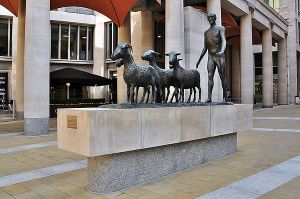
Elizabeth Frink (1930-1993) was a British sculptor and printmaker. Whenever I walk through Paternoster Square I say hello to her sculpture there: The Paternoster. It shows a shepherd and his sheep. When I first moved here, this sculpture was temporarily in the Barbican, next to the Museum of London. It was at ground level, so children used to climb on the sheep and hold onto their ears. The ears were bright and shiny. When the Paternoster Square renovation was complete (2003), the statue was moved back. But it is on a high plinth, so inaccessible. I think that’s a pity. I don’t think the Paternoster minded children riding his sheep.



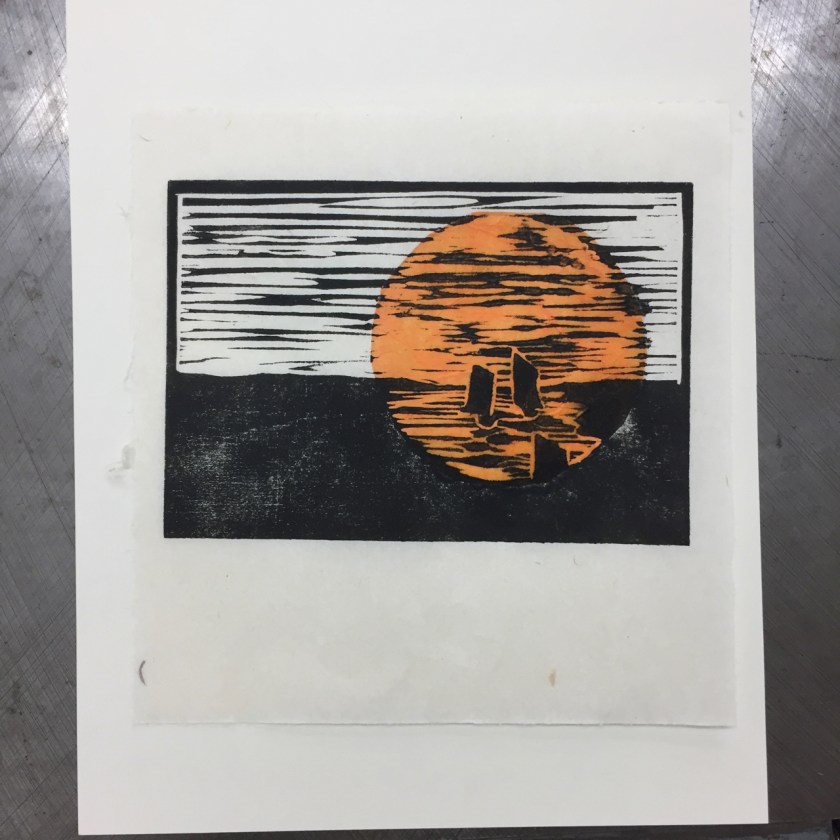





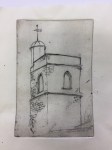


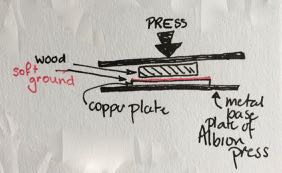 I was going to use them as relief blocks. Then I got talking to a fellow printer at East London Printmakers. She suggested I press them into soft ground and make an etching plate. Then I thought I’d use the Albion press to get sufficient pressure.
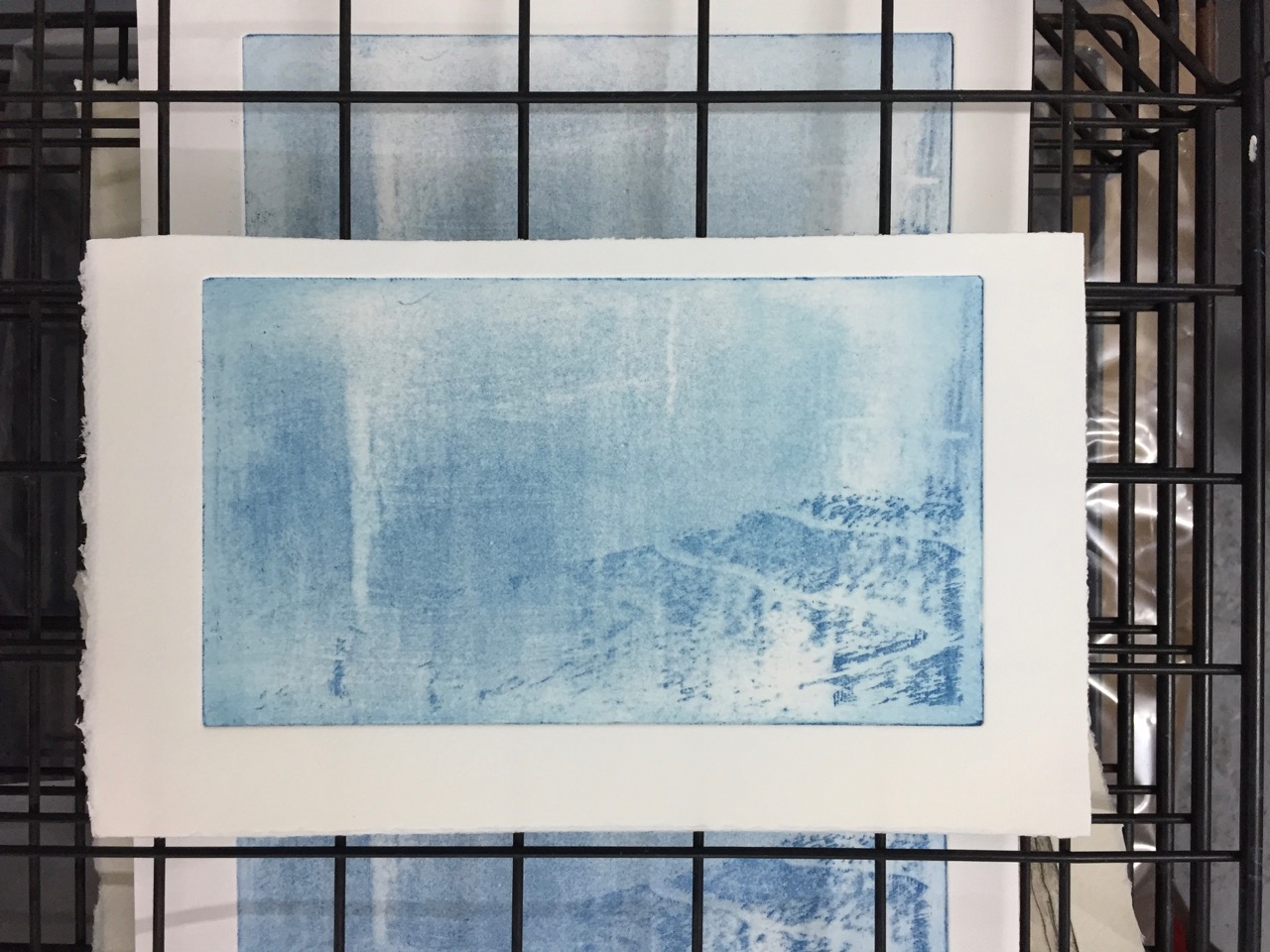
 Since this whole session was experimental, I also used some experimental paper from the Vintage Paper Company. They say on the package: “This was made some time between 1969 and 1973 as waterleaf (unsized) printing paper by J Green and Sons (brilliant but now extinct British papermakers). I had it gelatine sized in December 2017 by Two Rivers Paper (brilliant and very much alive and kicking British papermakers” and they ask for feedback. I think it worked really well, and I’m now off to write them an email.