The Fish Market West Smithfield EC1

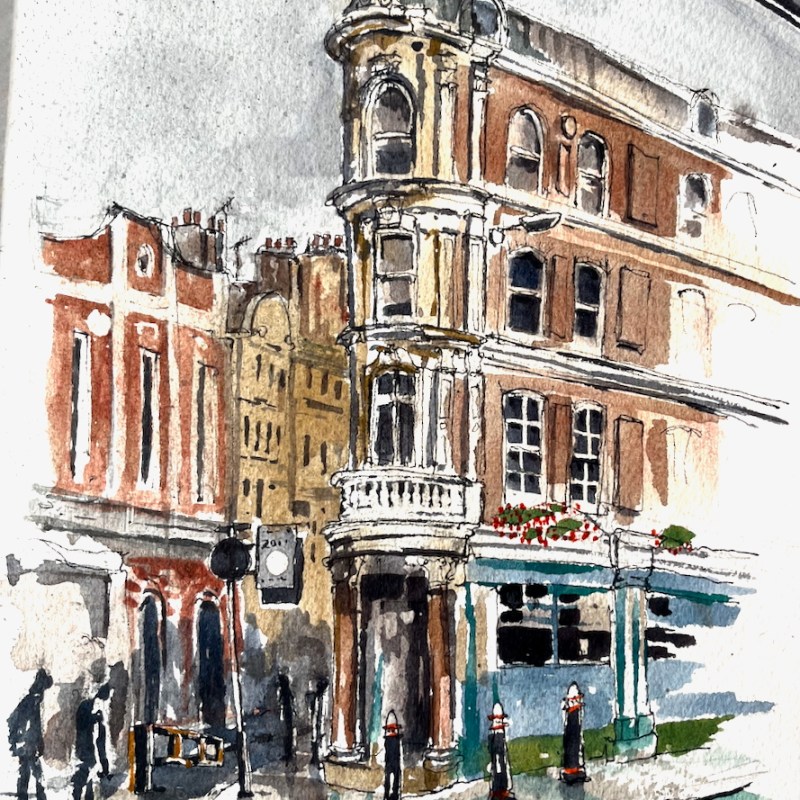
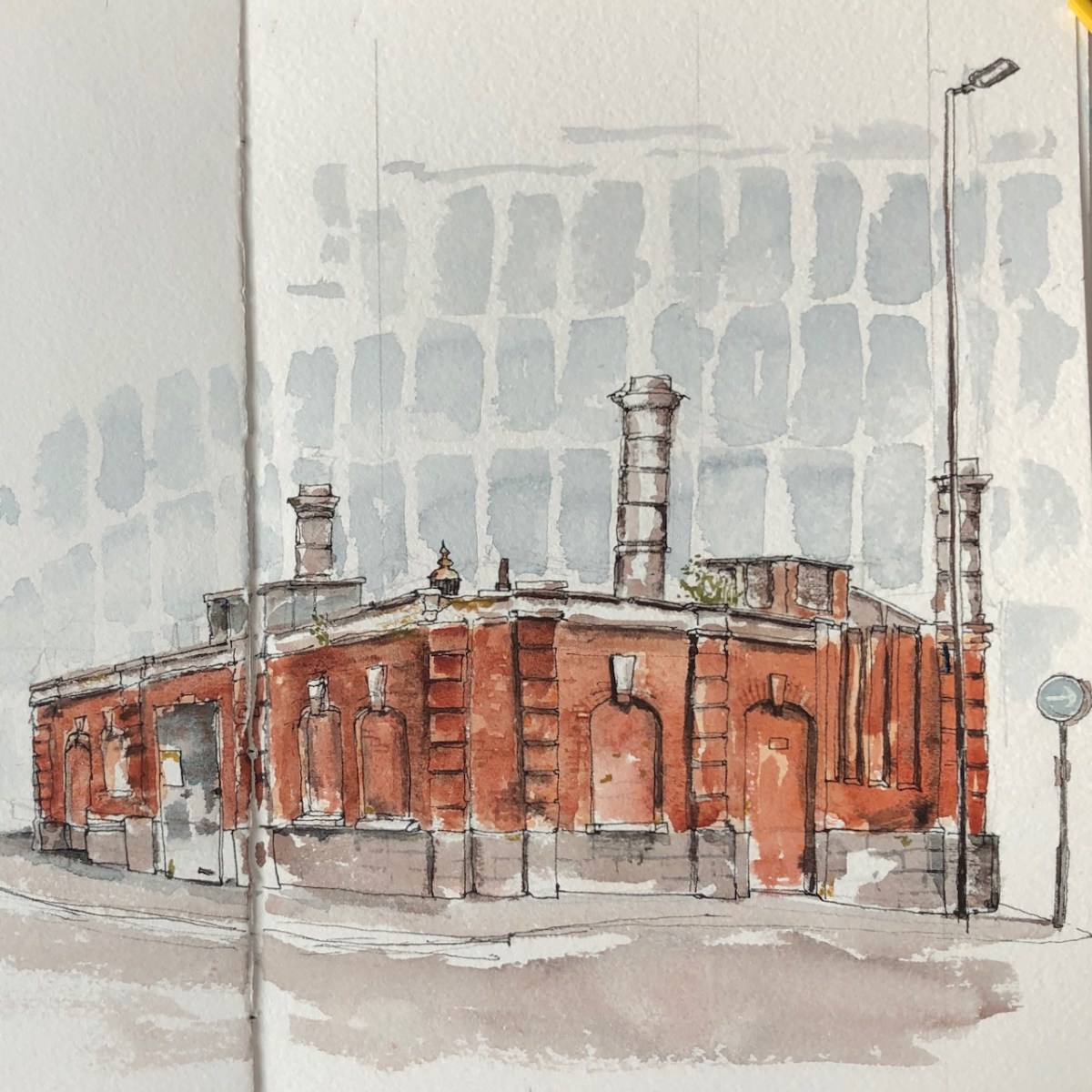
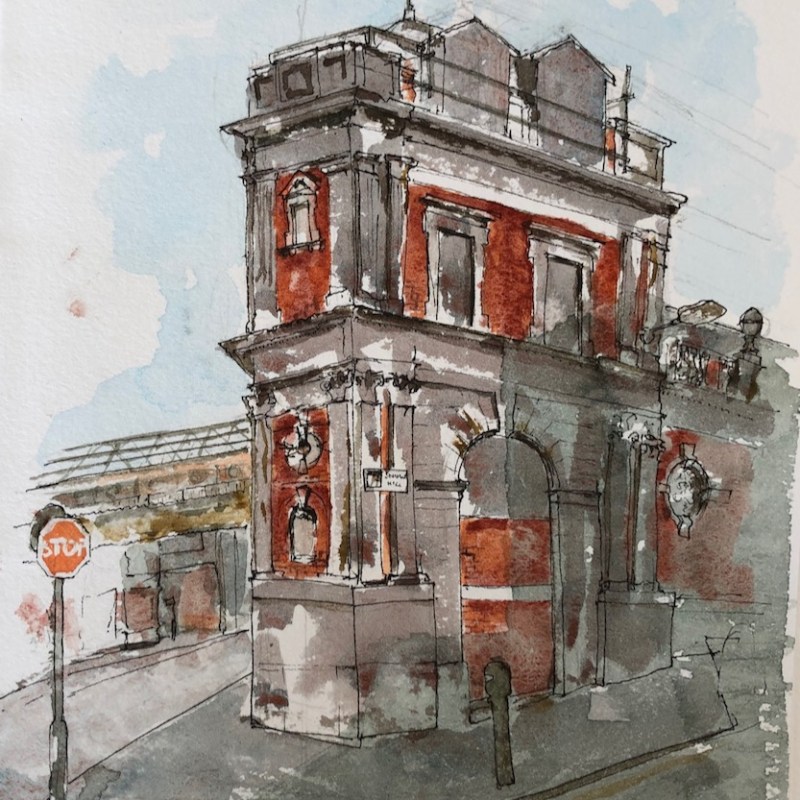
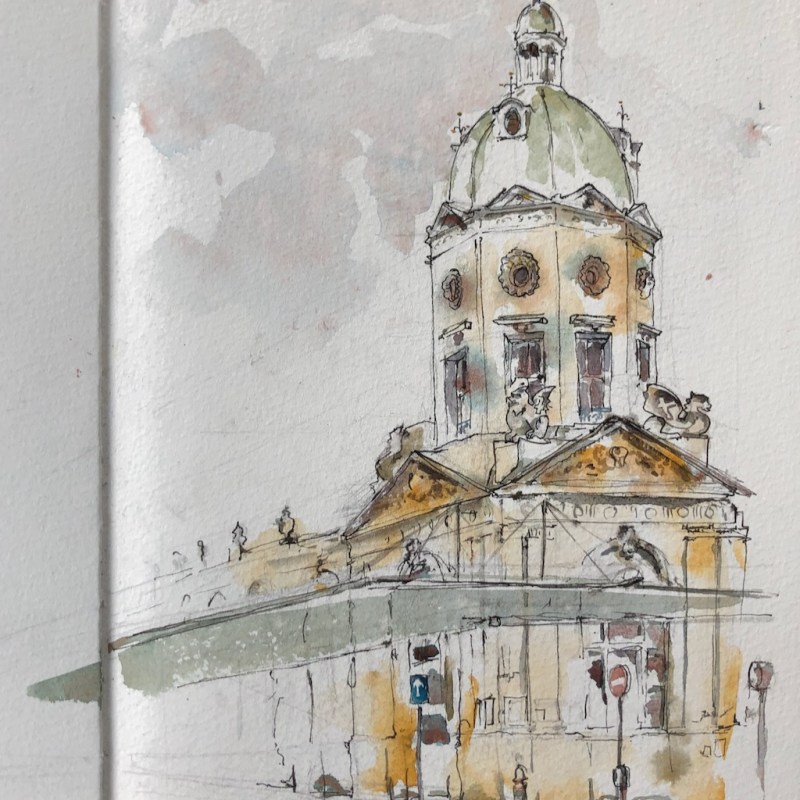
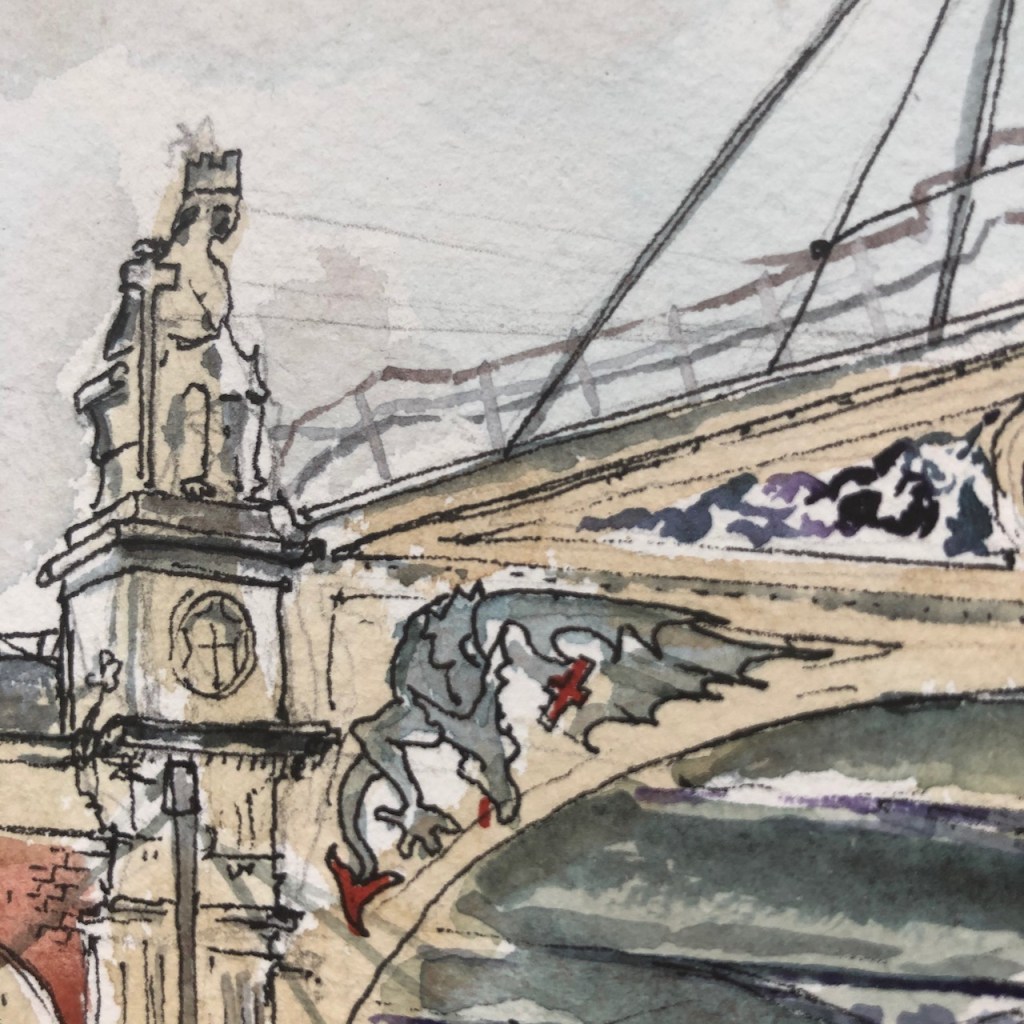
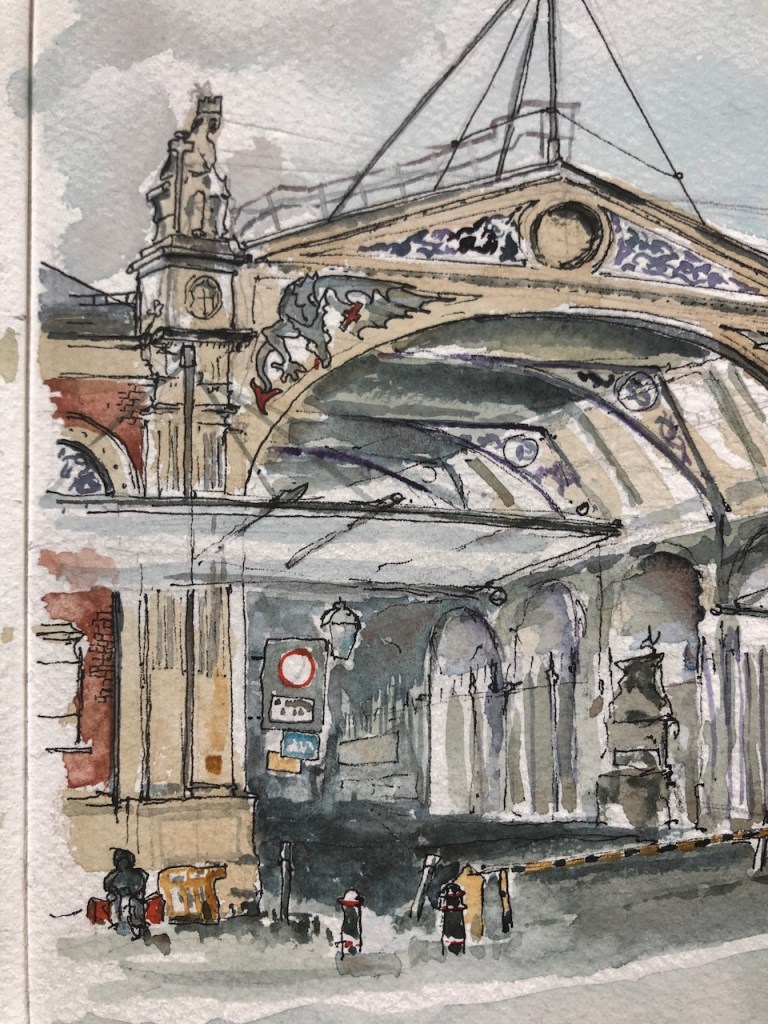
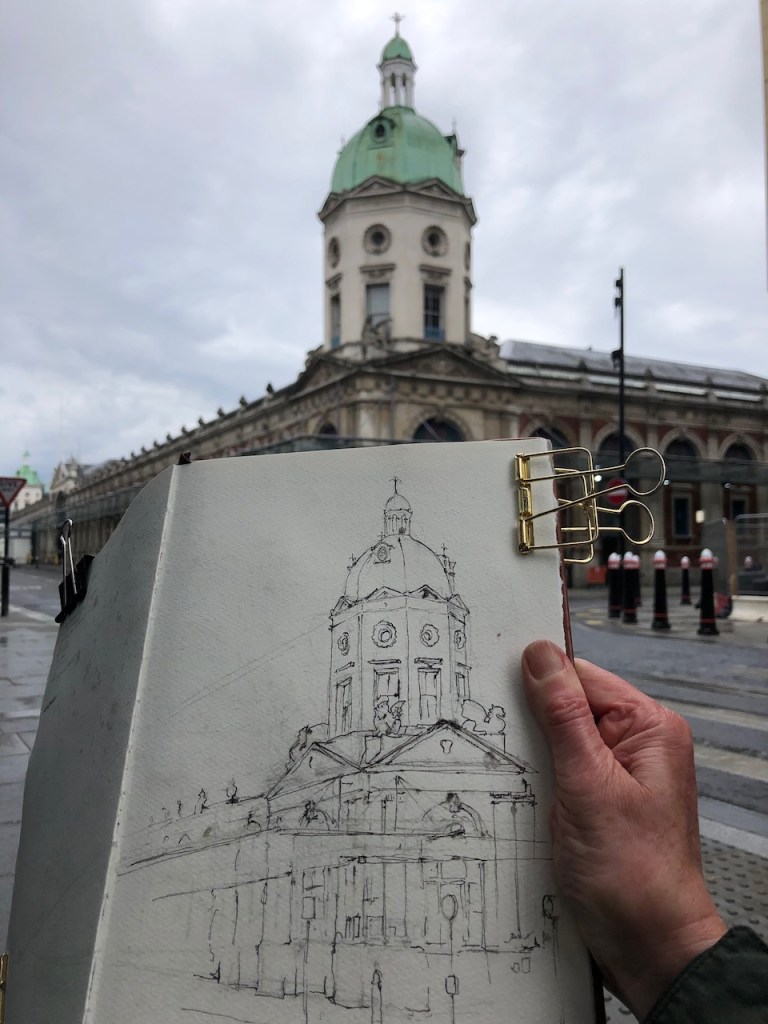
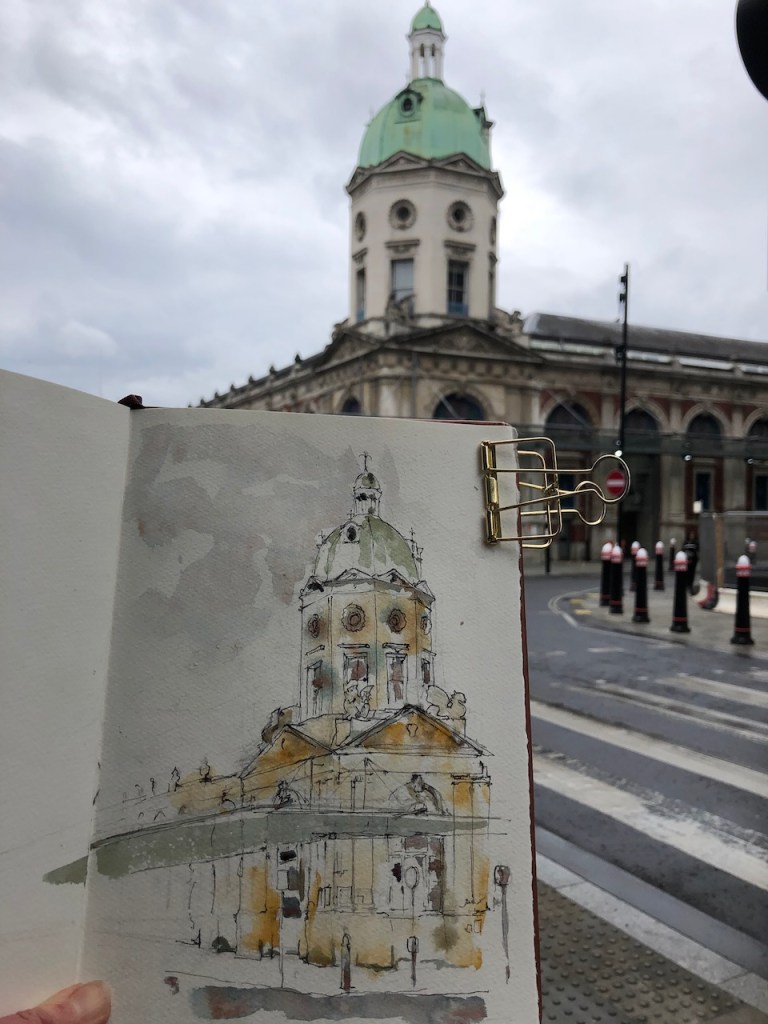
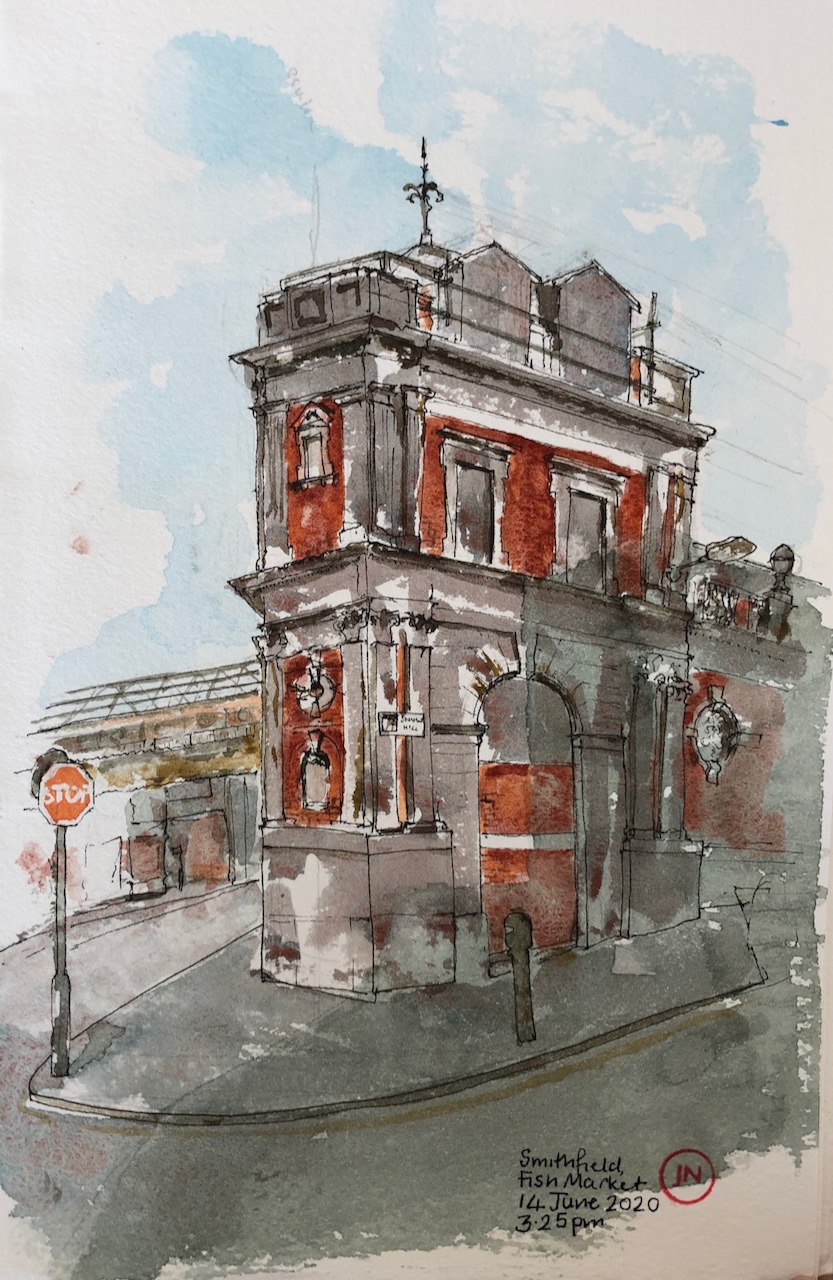
This building is at the Westernmost side of Smithfield Market. It is a corner of the former Fish Market, built in 1886.

The former Fish Market, Smithfield, at the corner of Snow Hill and West Smithfield.

I thought I’d picked a good place to stand and draw. But no. When I was about 10 minutes in, I realised that there was a more-or-less constant stream of cars queuing for the traffic lights. They queued for several minutes then they went off. There was much to observe about this. A surprising number of cars were playing loud music with their windows open, assuming, I guess, that everyone would enjoy their choice of music. And I thought modern cars switched their engines off when stationery? But evidently I am mistaken about this. No-one switched their engines off. Except one person.

A motorbike came up to the red light, a black Kawasaki. The rider was all in black, with a black helmet. The black helmet inclined slightly. I took it as a greeting. Then a gloved hand switched off the engine. I smiled at the helmet and nodded my thank you. Then the lights changed, the engine ignited, and the bike moved off. If that was you, thank you.
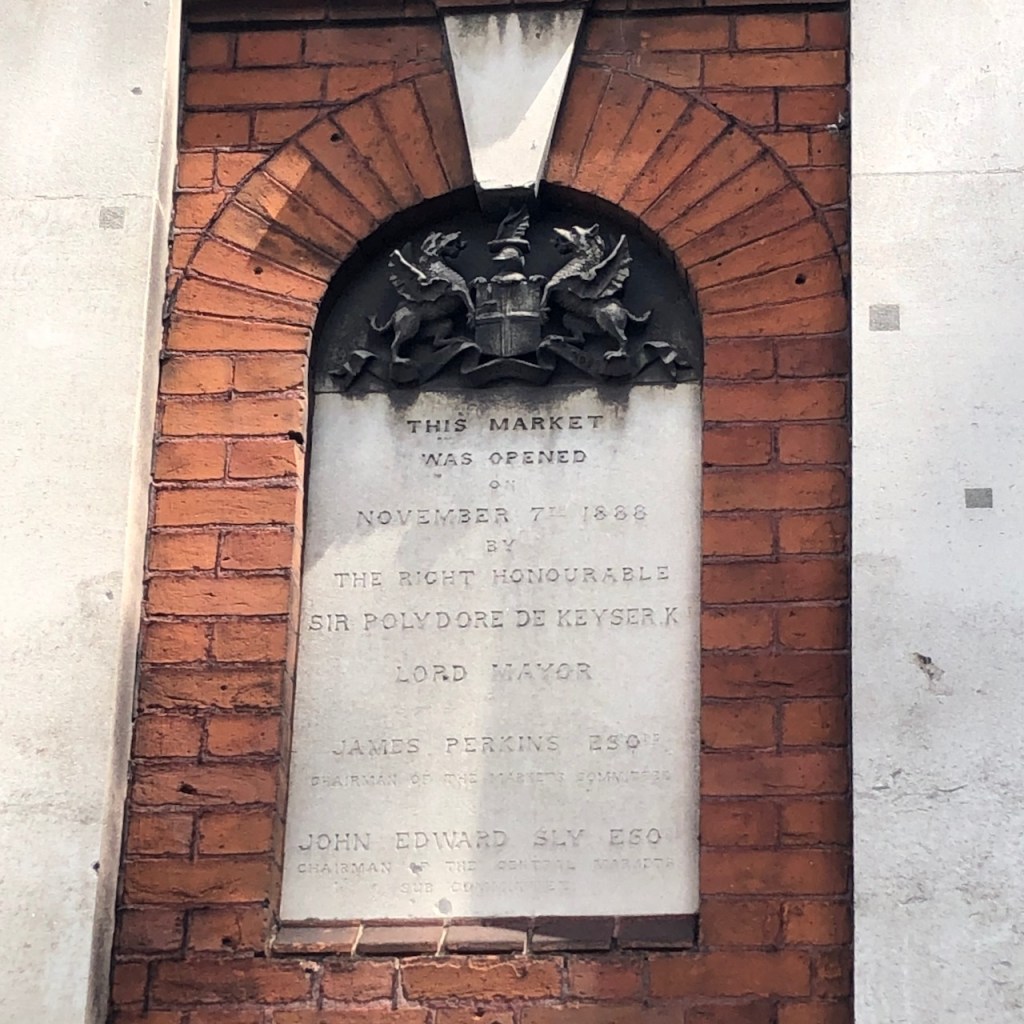
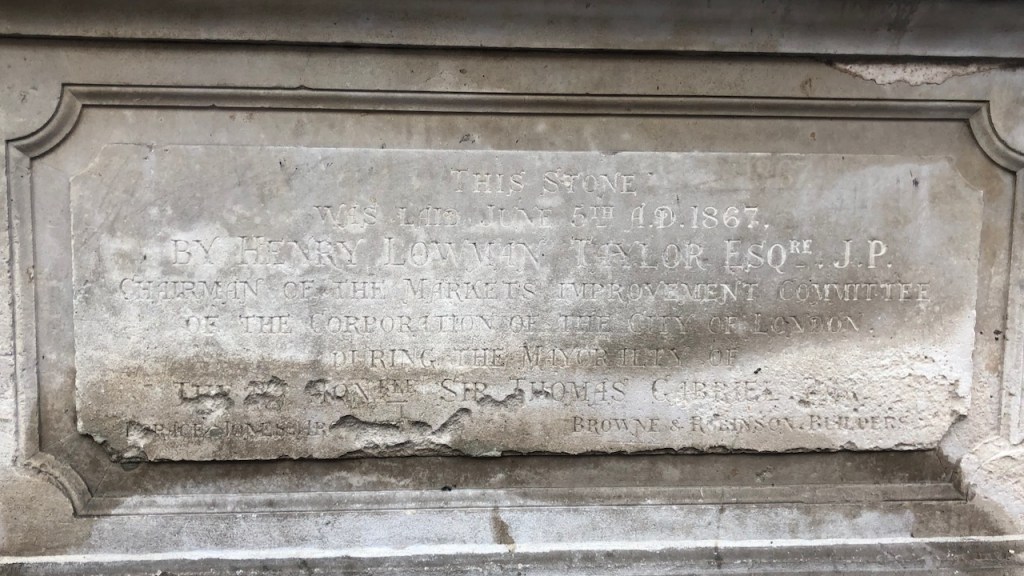
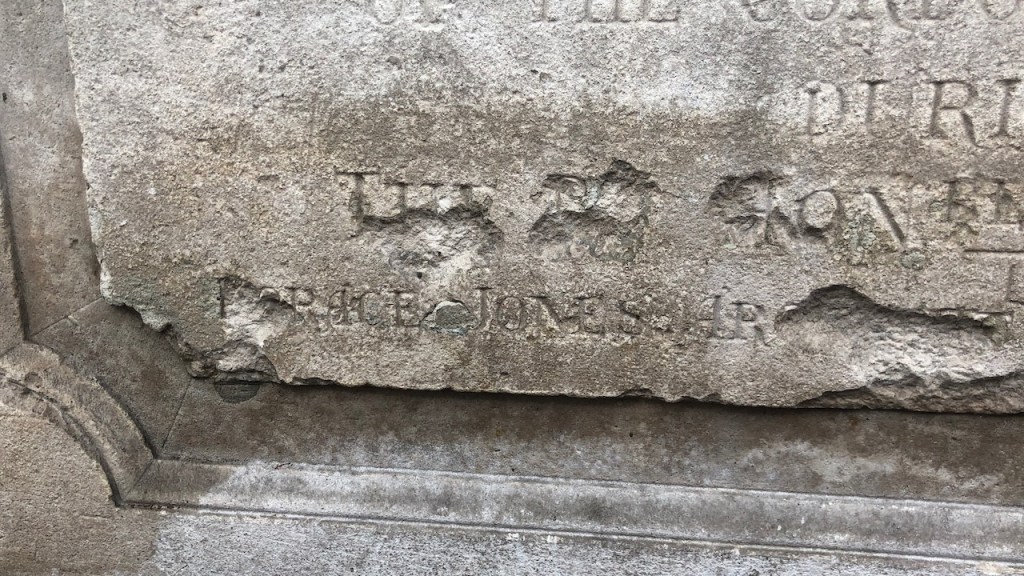
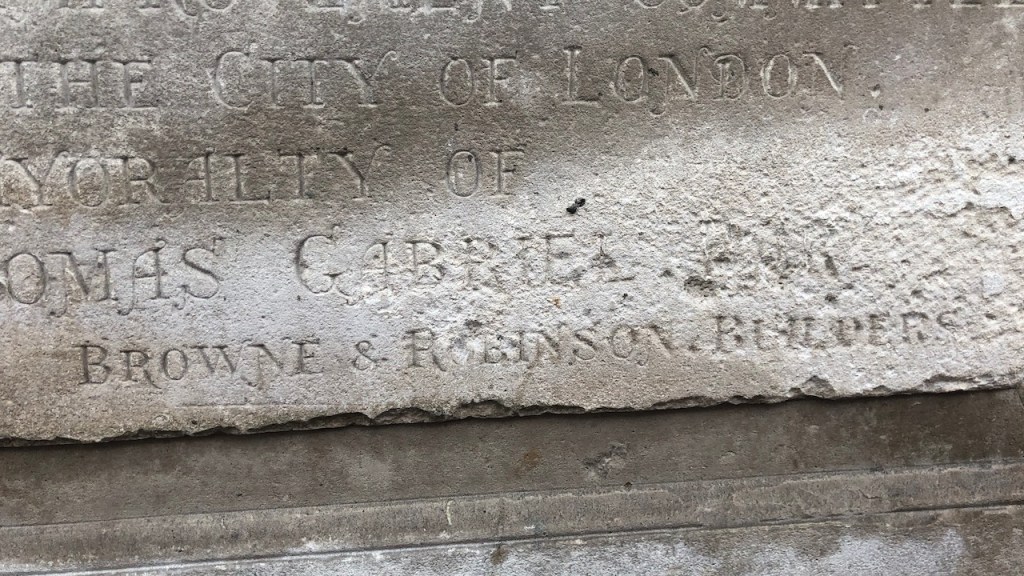
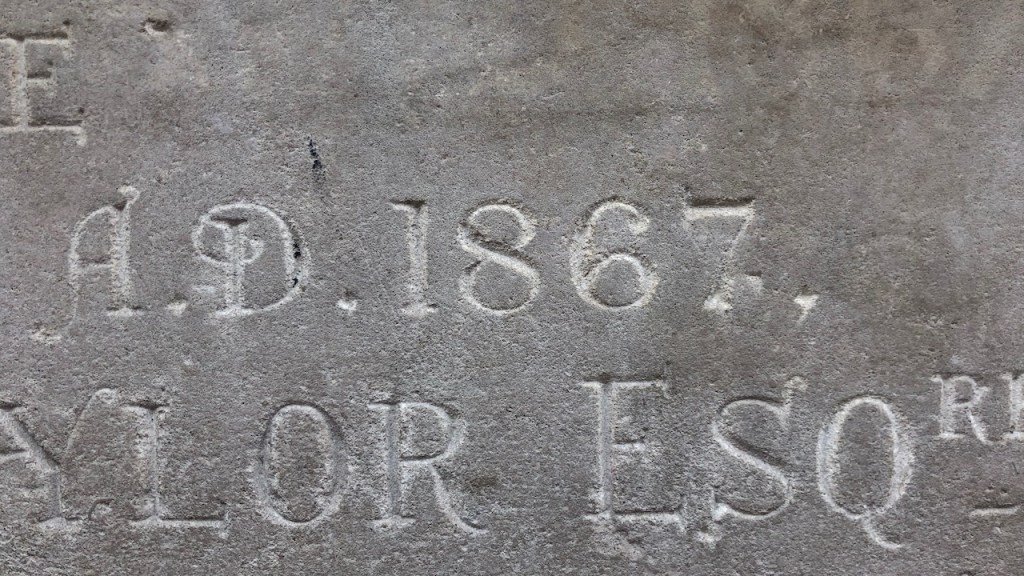
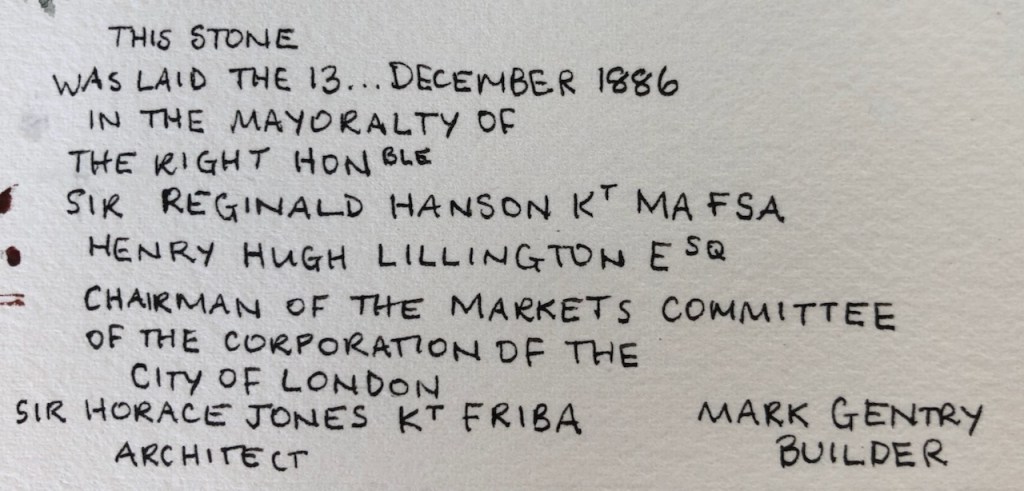
Here is a plaque that is on the side of the building I drew. It is heavy marble, somewhat damaged, and the inscription is hard to read. I transcribed it as best I could.

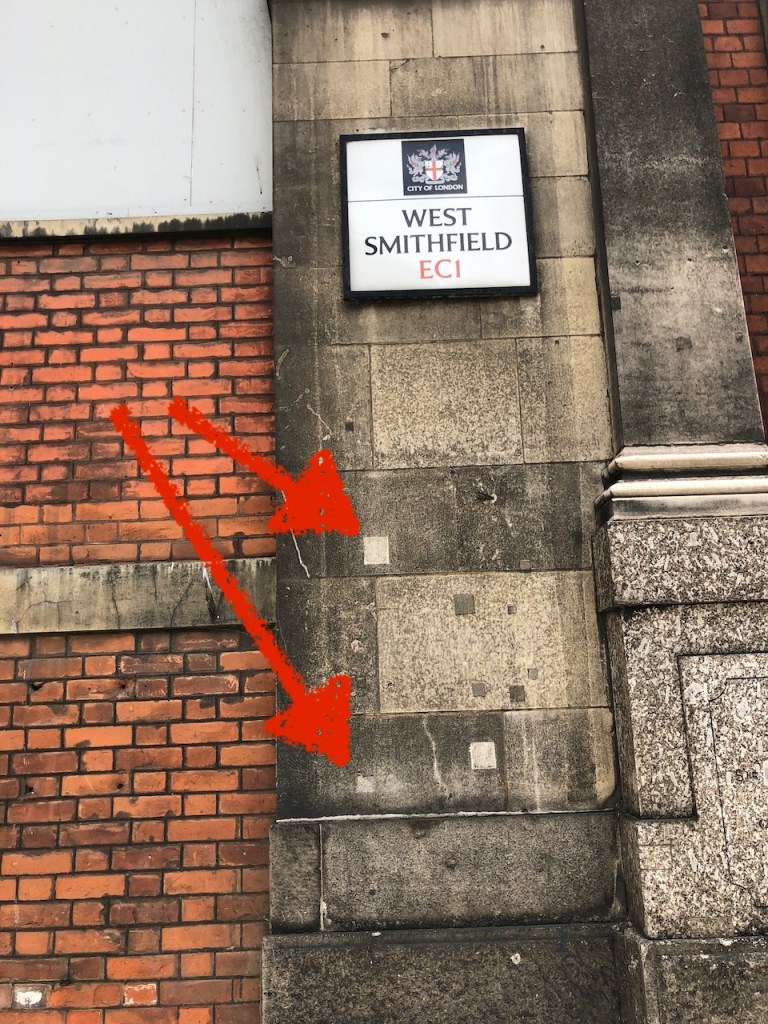
As you see, the marble plaque has been damaged and repaired. An adjacent part of the building likewise has been repaired in the same way, with little square and rectangular sections. Much erosion and damage has occurred elsewhere the building and not been repaired. So what is this? Could it be very early damage? If I were to guess, I’d say it was bullets, or shrapnel, damage. What happened?

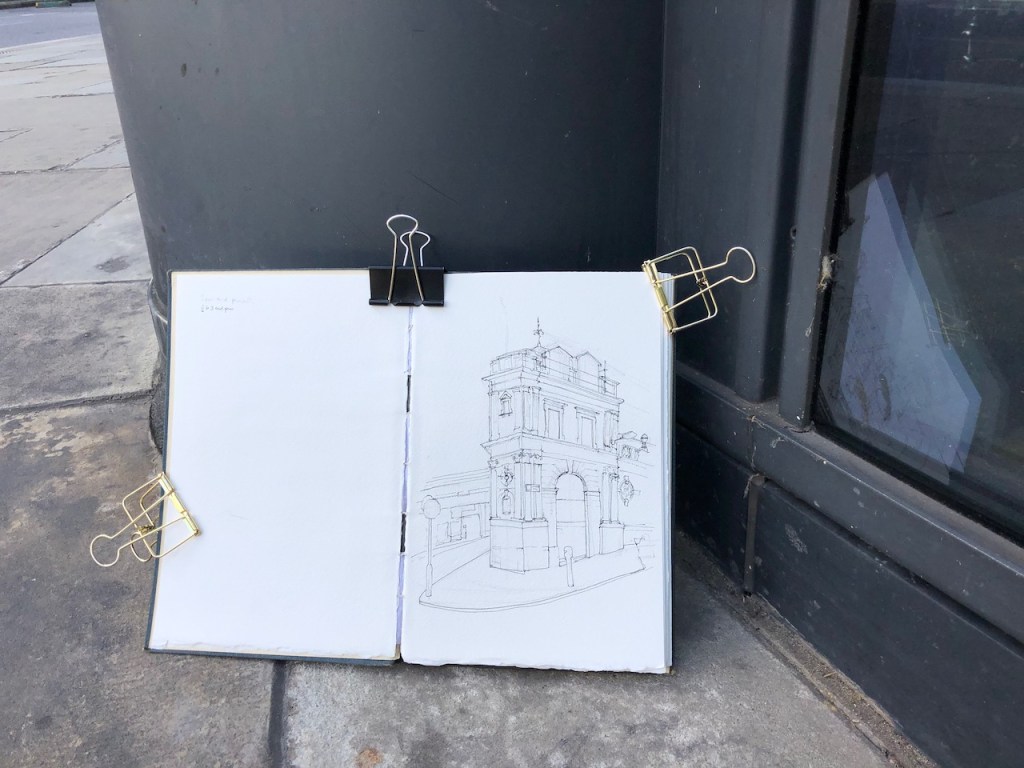
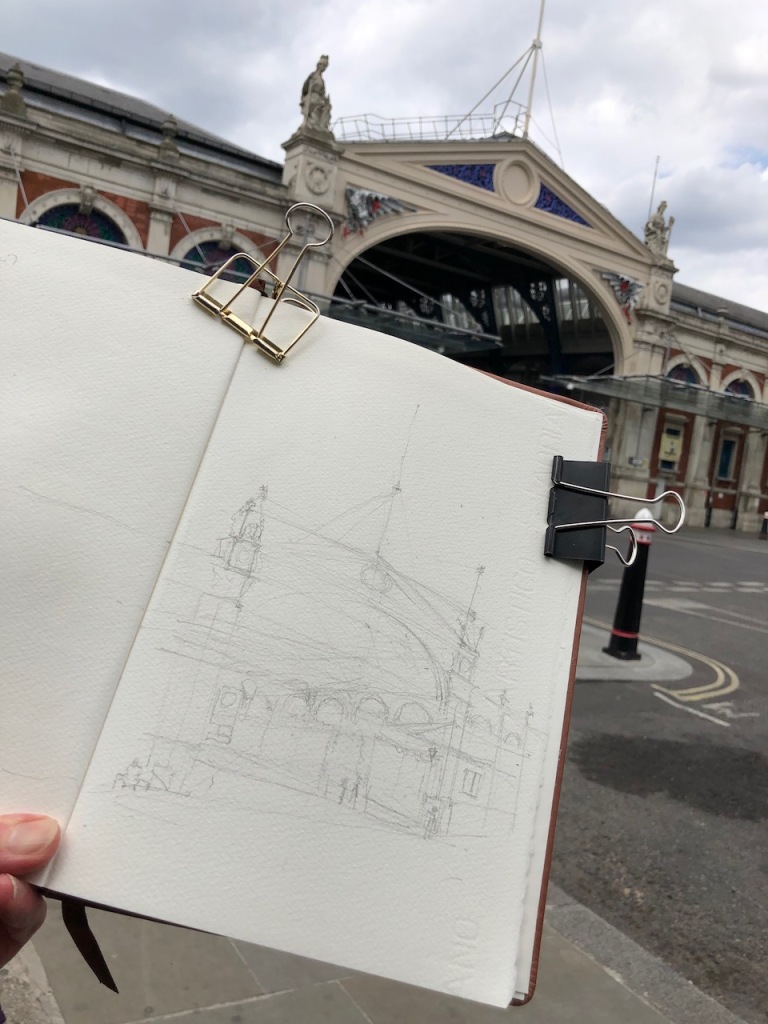
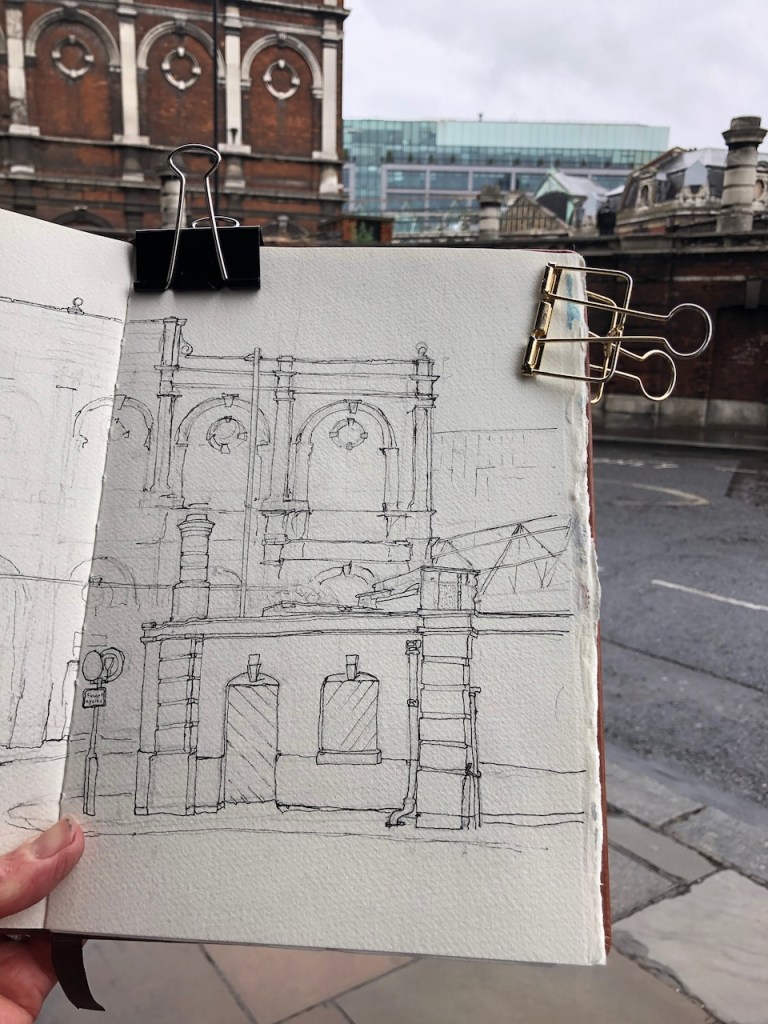
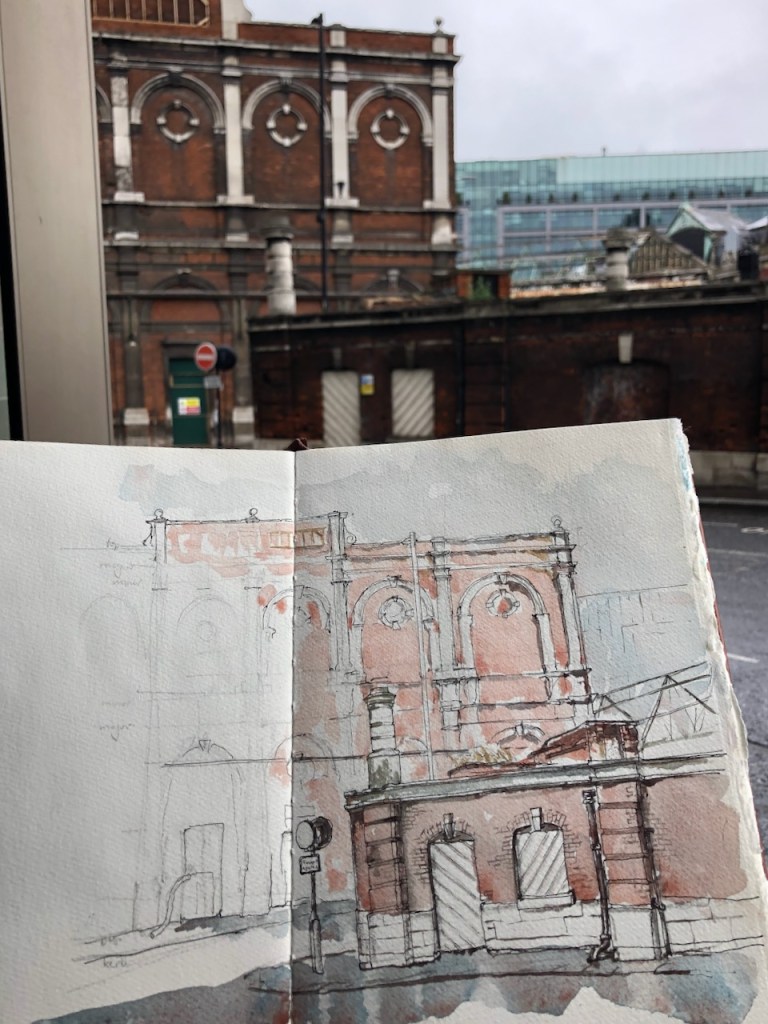
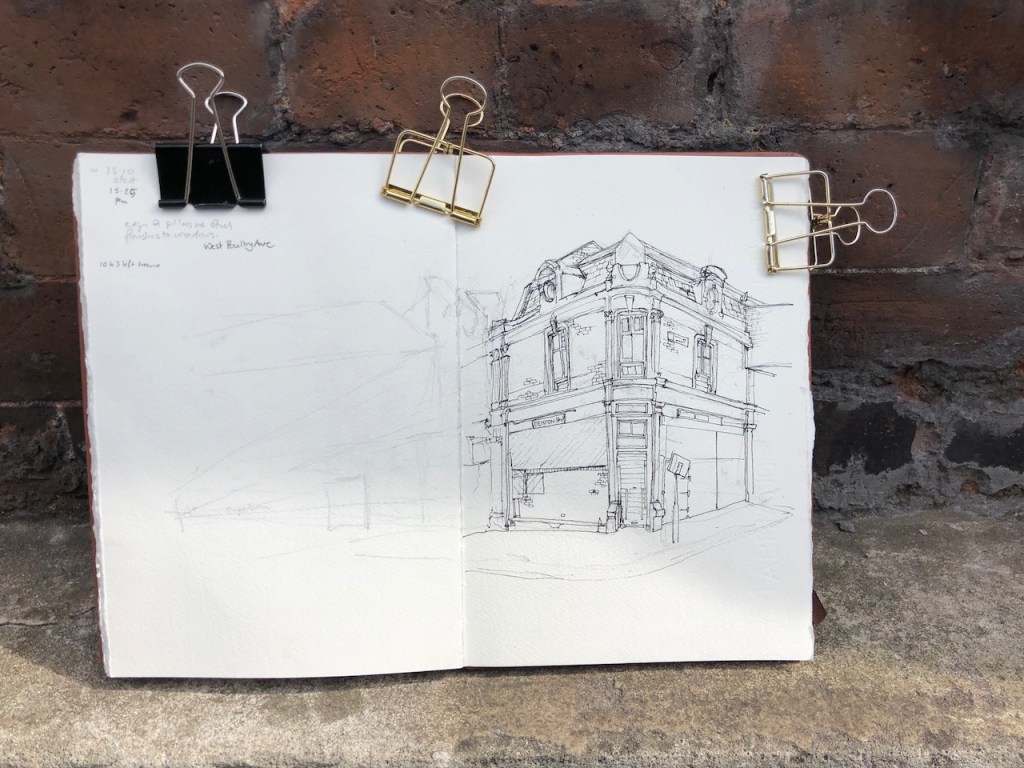
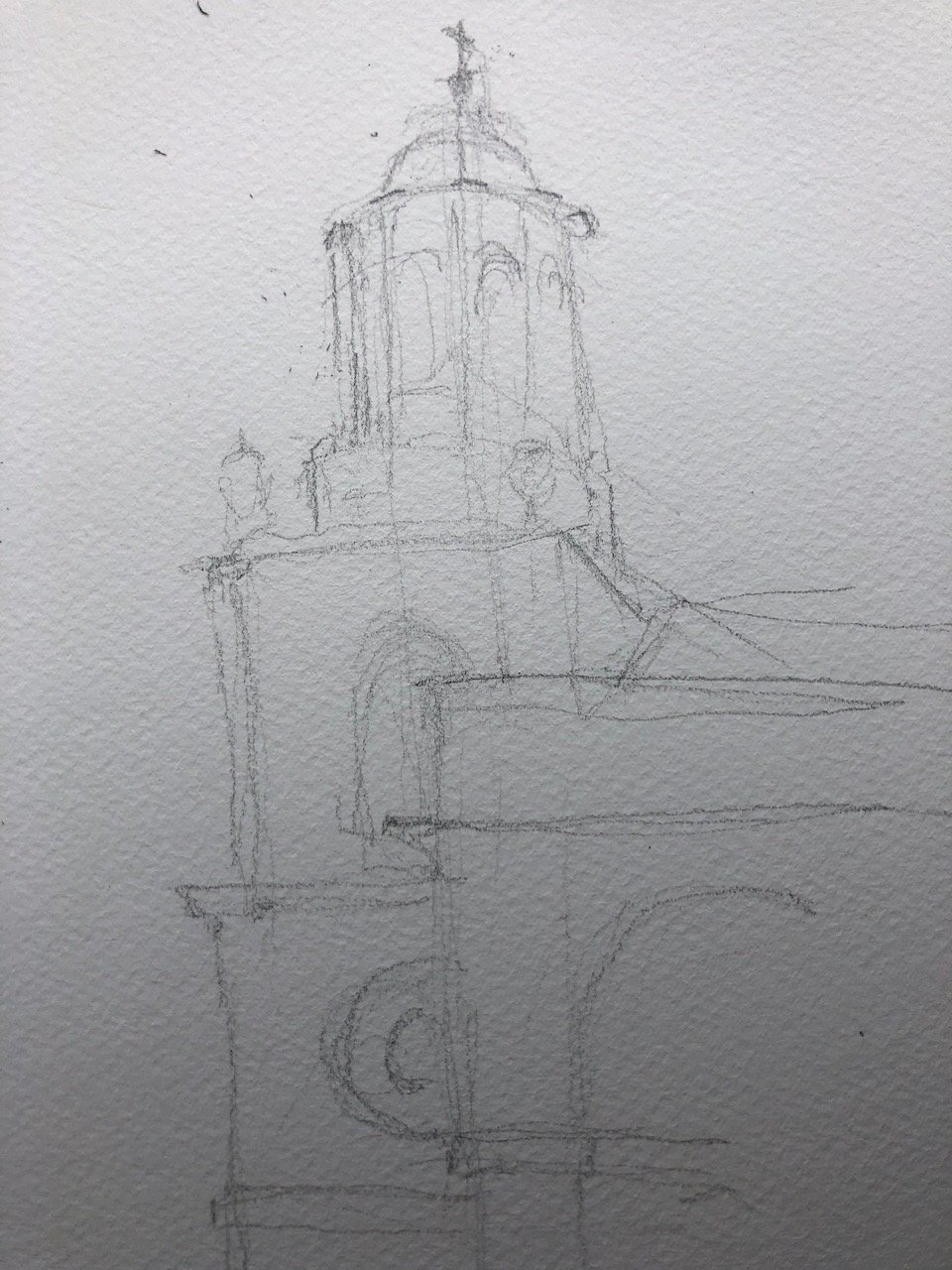
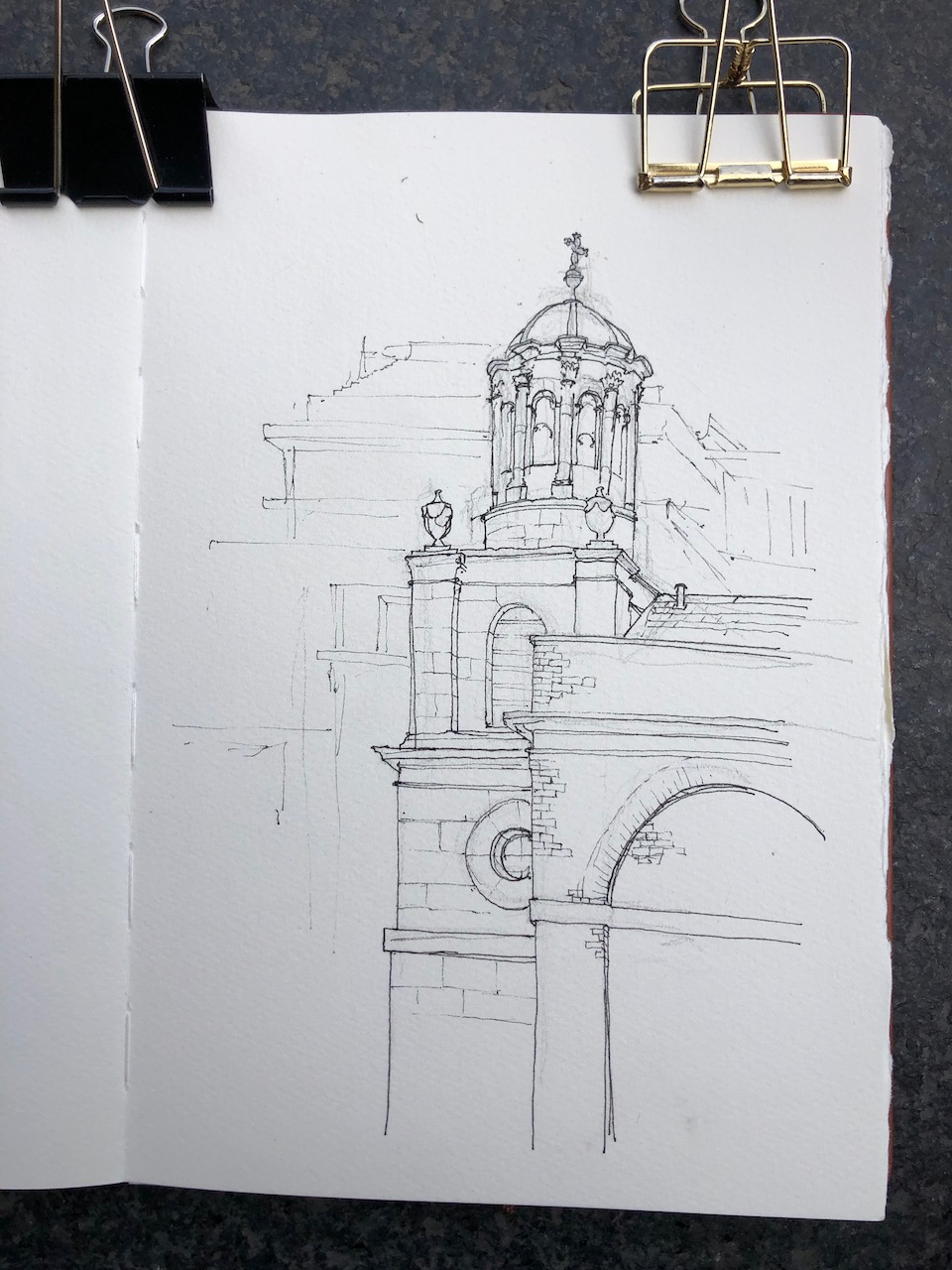
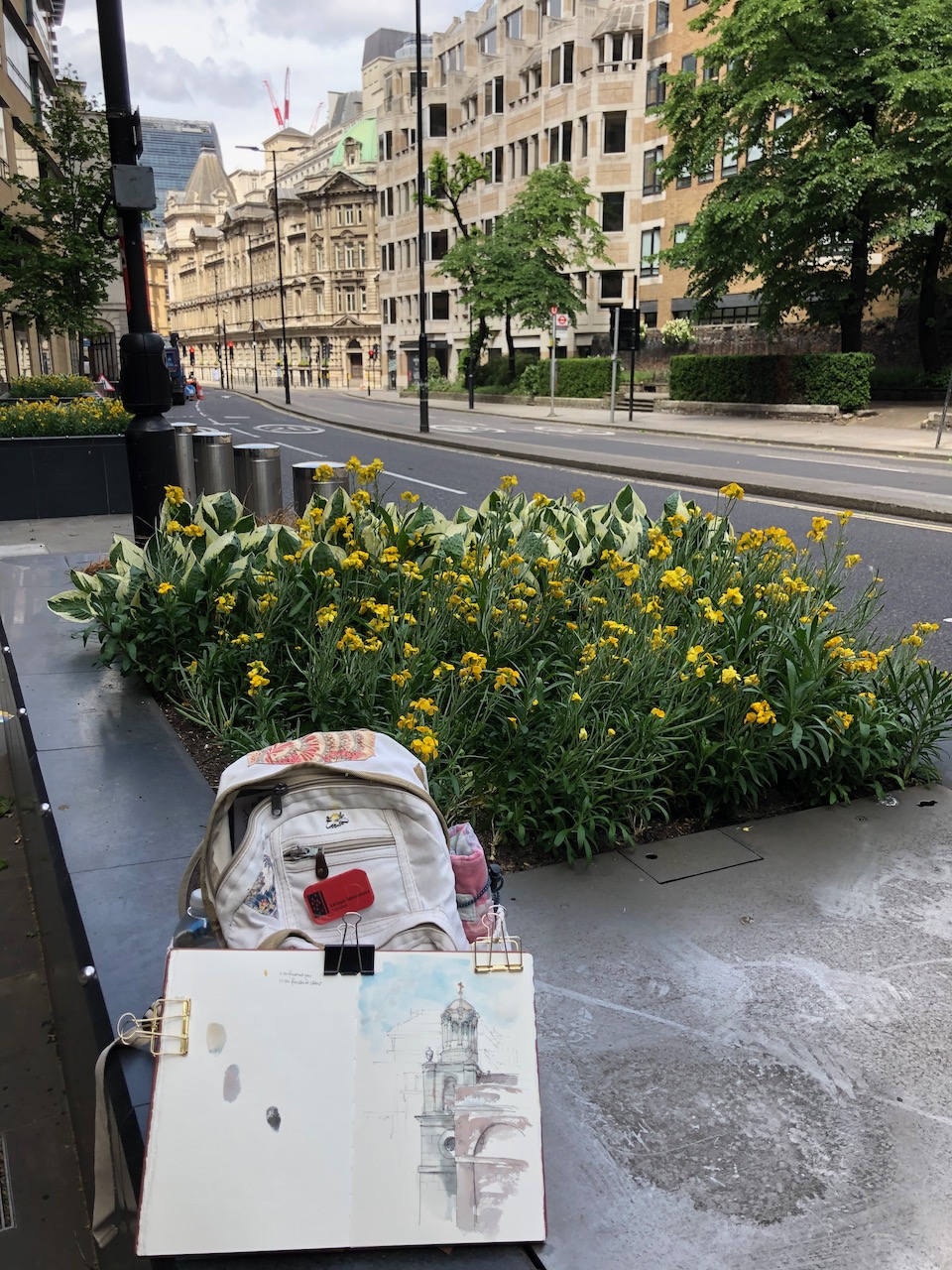
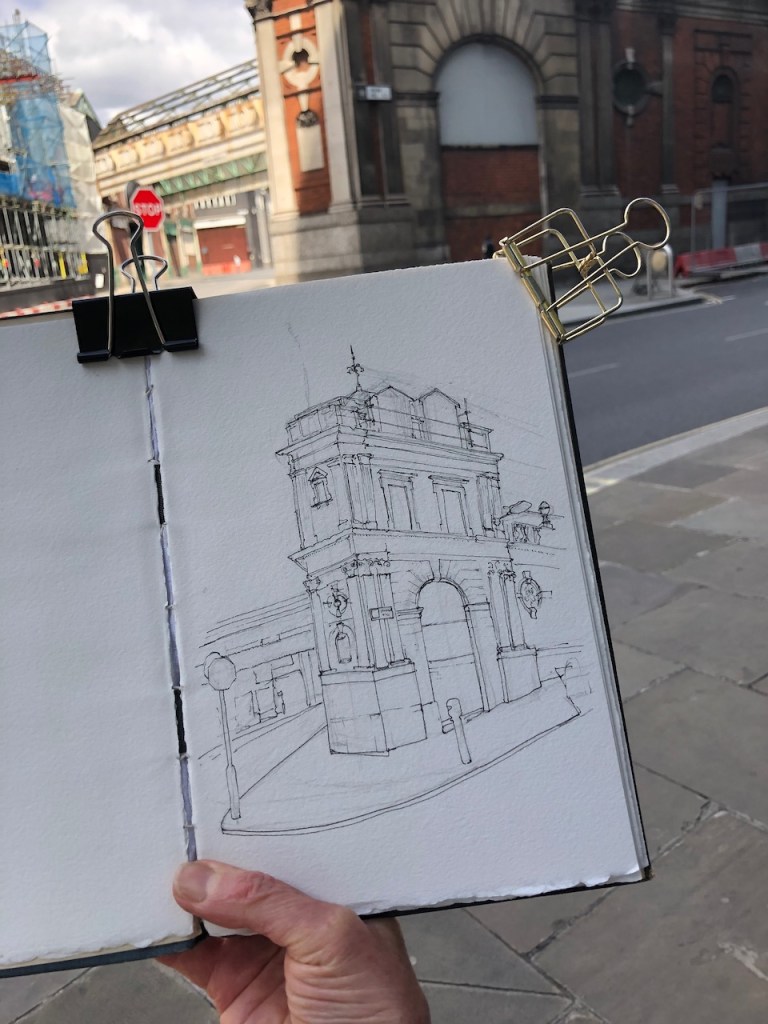
Here is work in progress on the drawing.
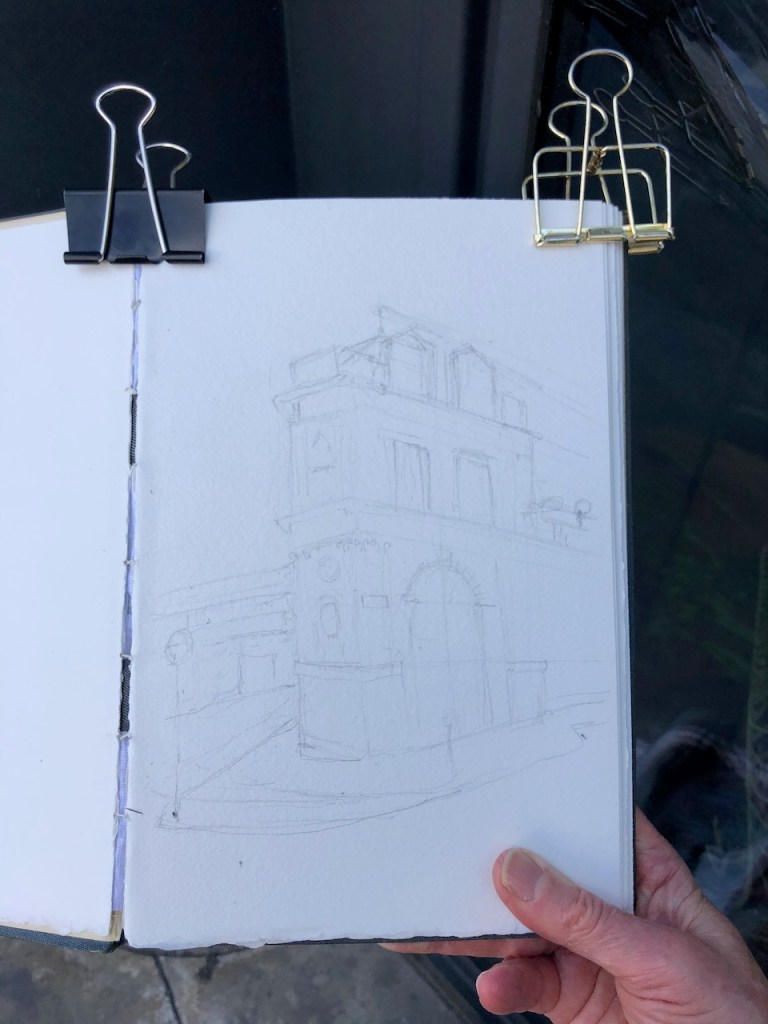
The drawing took 2 hours: 30 mins pencil underdrawing, 45min pen, 45min colour. The colours are: Fired Red Ochre (DS), Phthalo Turquoise (W&N), Transparent Pyrrol Orange (DS), and a tiny bit of Mars Yellow (DS).

The plaque shown in the drawing: “This Market was opened on November 7th 1888 by the Right Honourable Sir Polydore de Keyser K Lord Mayor, James Perkins Esq Chairman of the Markets Committee, John Edward Sly Esq Chairman of the Central Markets Sub Committee.”

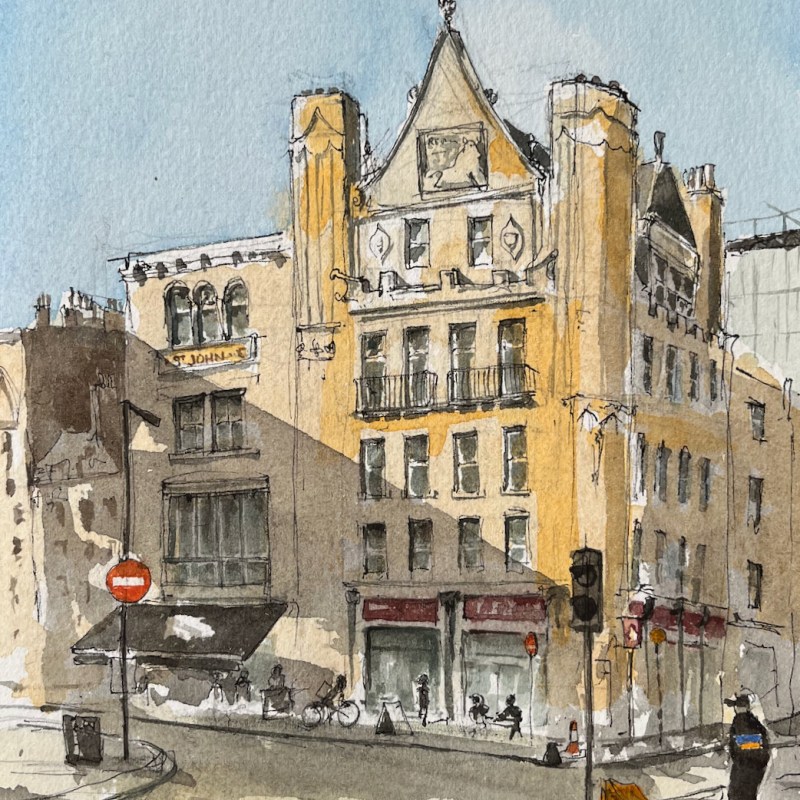
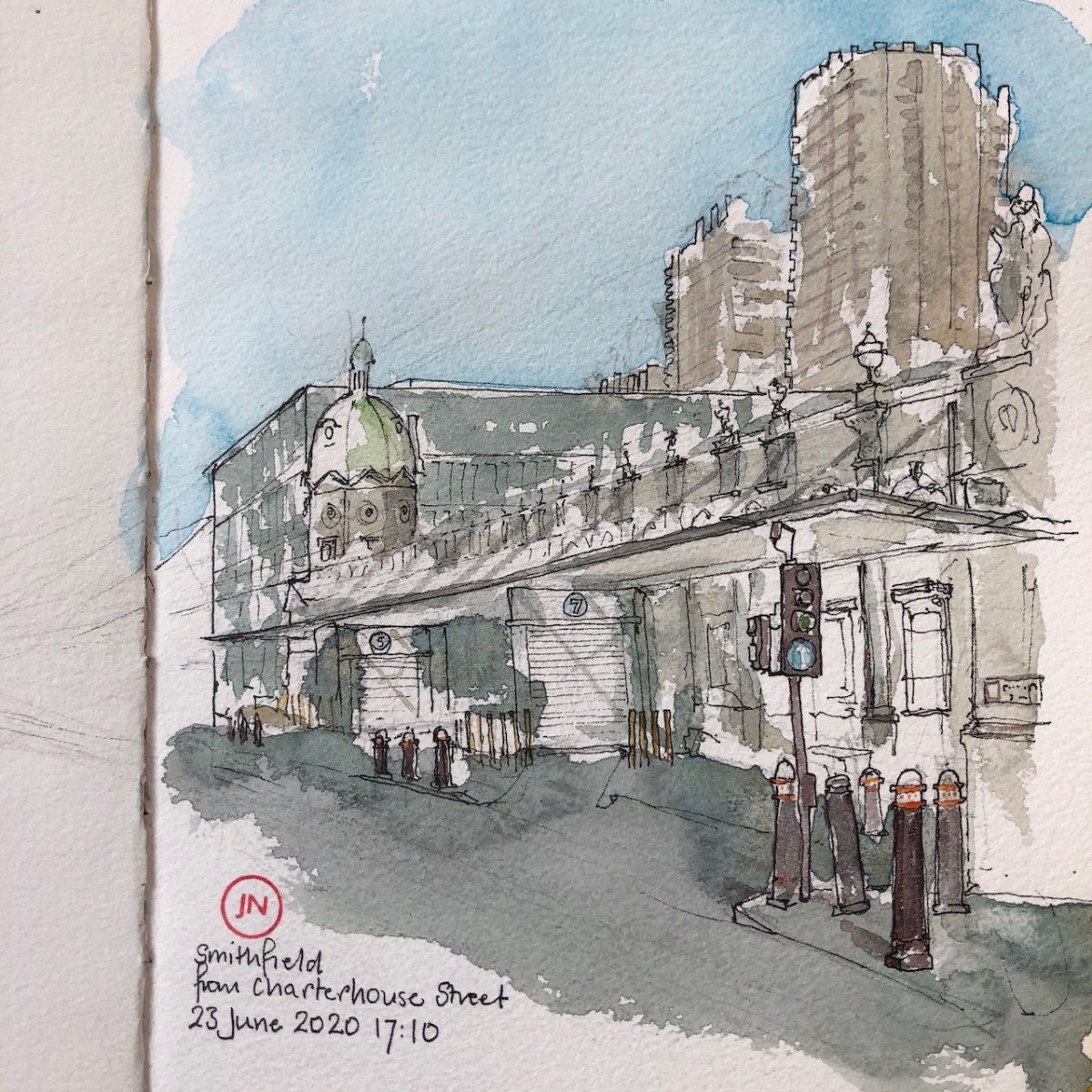
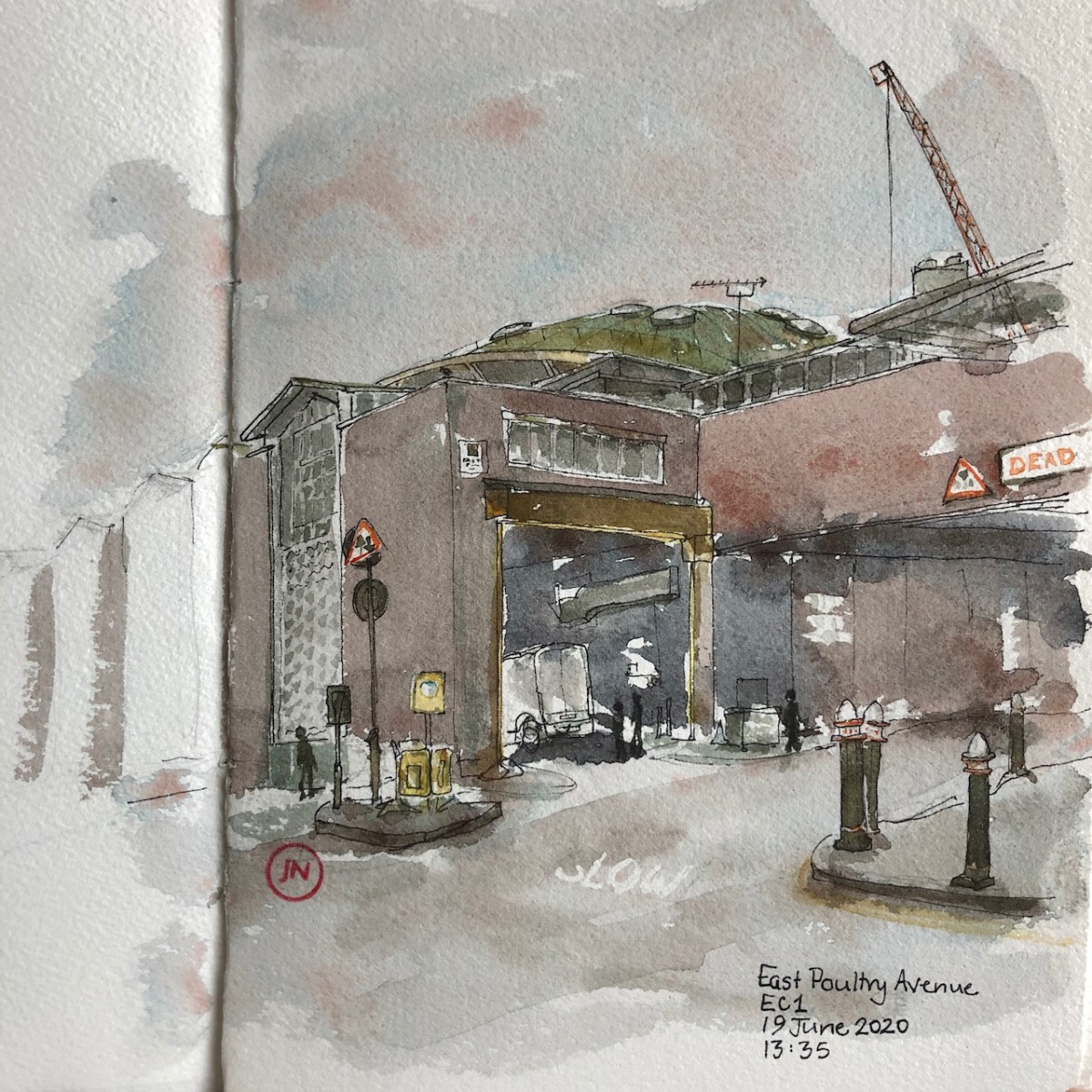
Here is a collection of all the drawings I have done of Smithfield:

Grand Avenue Smithfield EC1

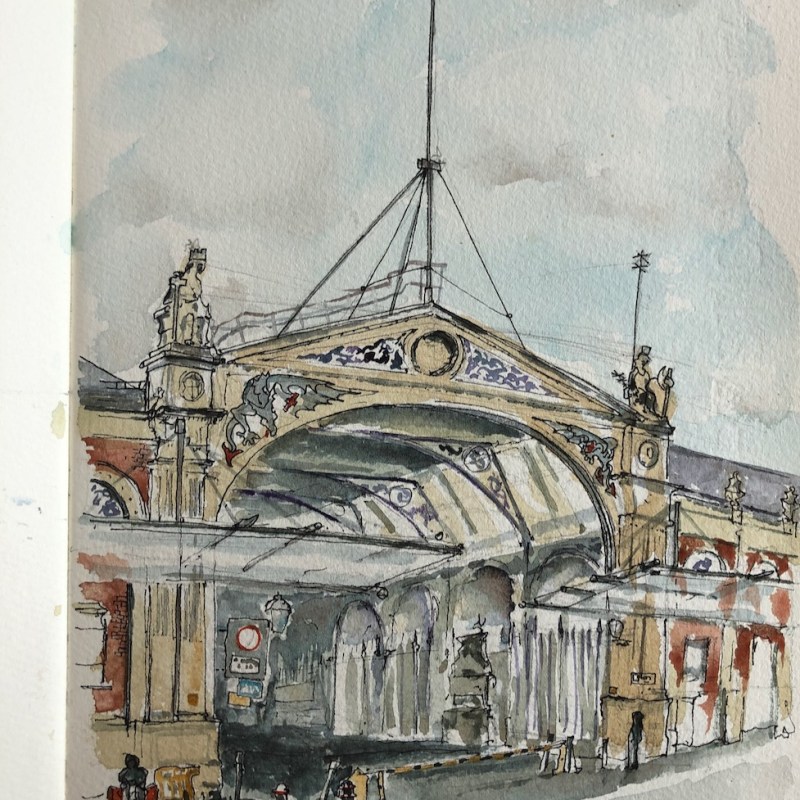
Here is the entrance to Grand Avenue, Smithfield.

It’s the entrance to the working meat market, sketched in the afternoon when there is little market activity. The trading takes place 2am to 7am.

See the wonderful life-like dragons either side of the entrance high up!

Here is work in progress:

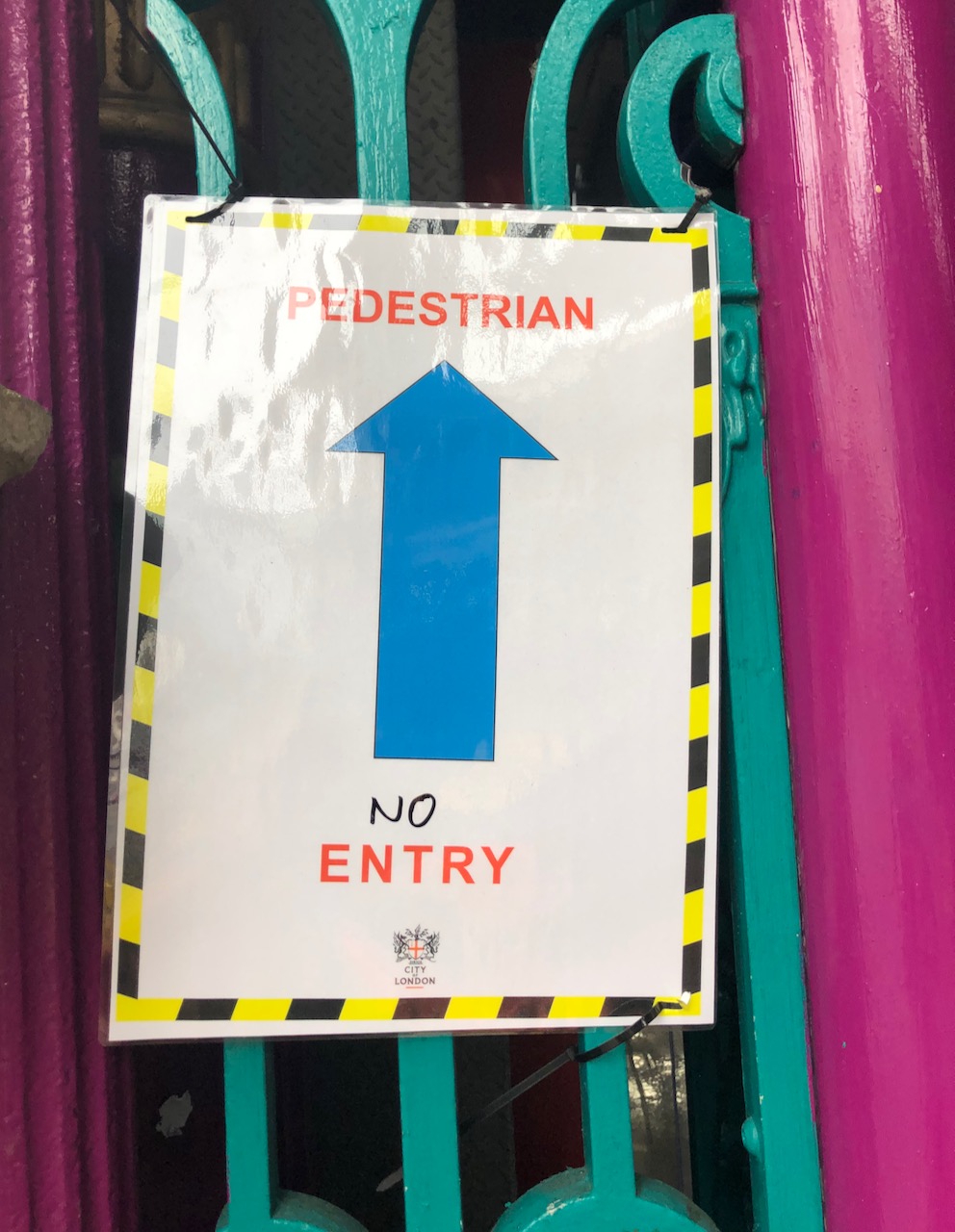
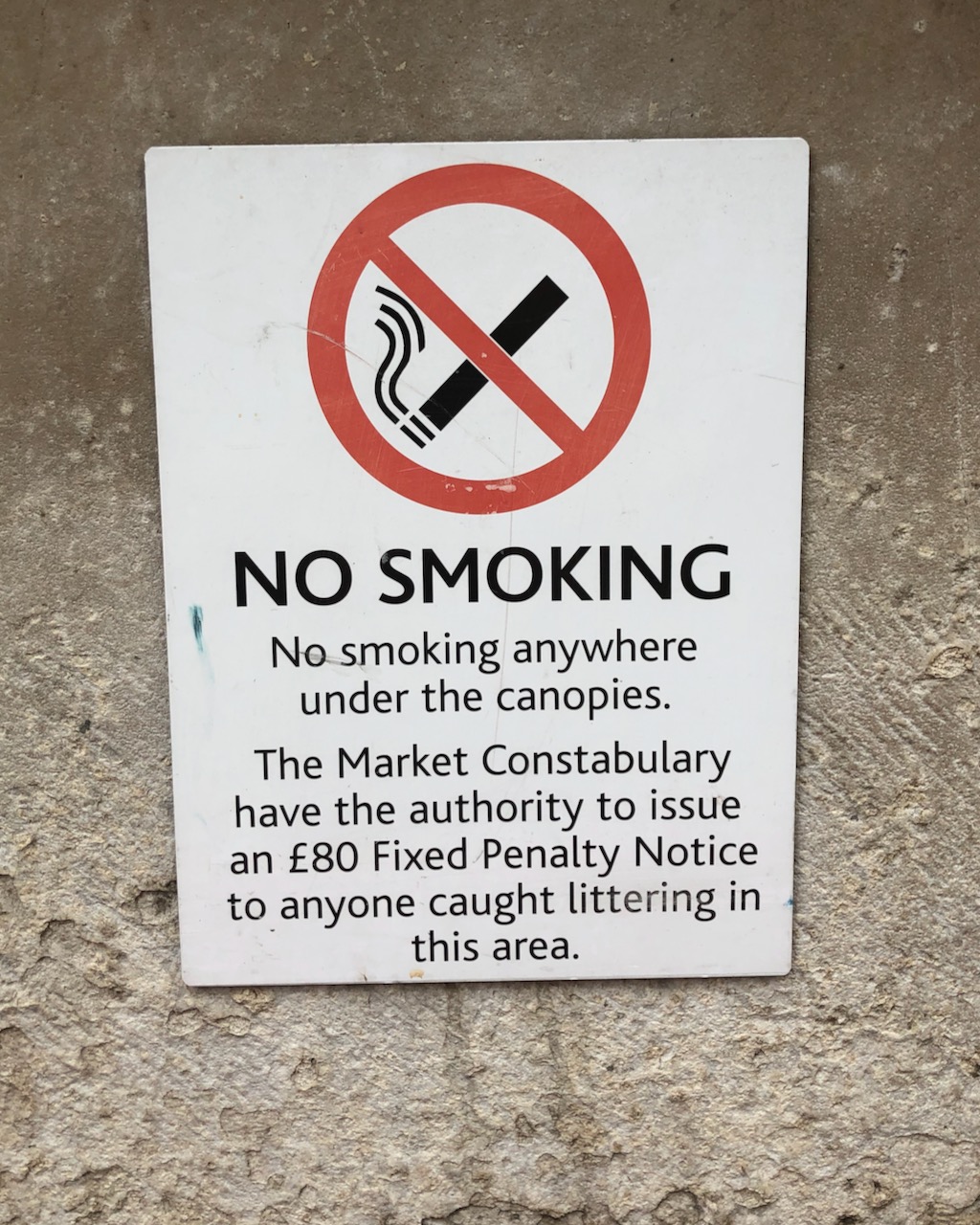
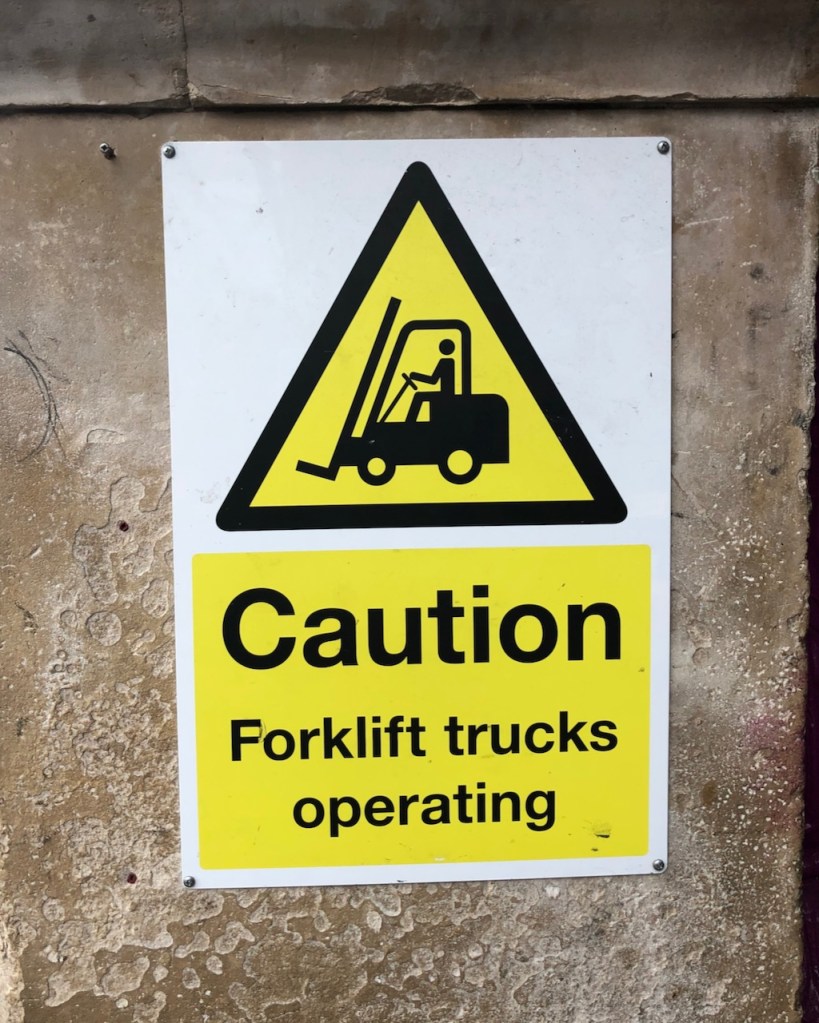
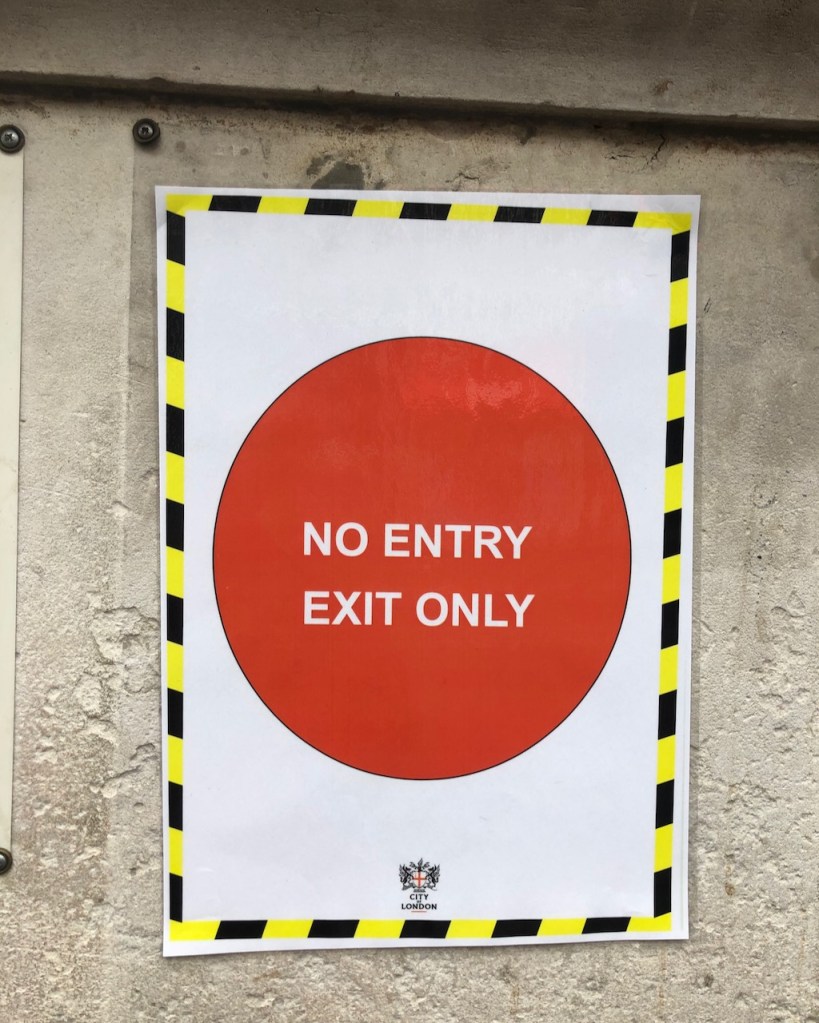
I was struck by the proliferation of notices fastened to the market.

This is a whole instruction book written on the walls. Then we come to the notice board:

Notice Board at the Lindsey St entrance of Smithfield Meat Market.

Here on this notice board is a whole timeline of concerns and instructions, layered. At the back we are alerted to the potential danger of terrorists. In the top left hand corner the Food and Hygiene Act is invoked on fading yellow paper. This is partially obscured by simpler and recent instructions to stay 2m apart. And the future appears too: the notice on top is about the proposed redevelopment.

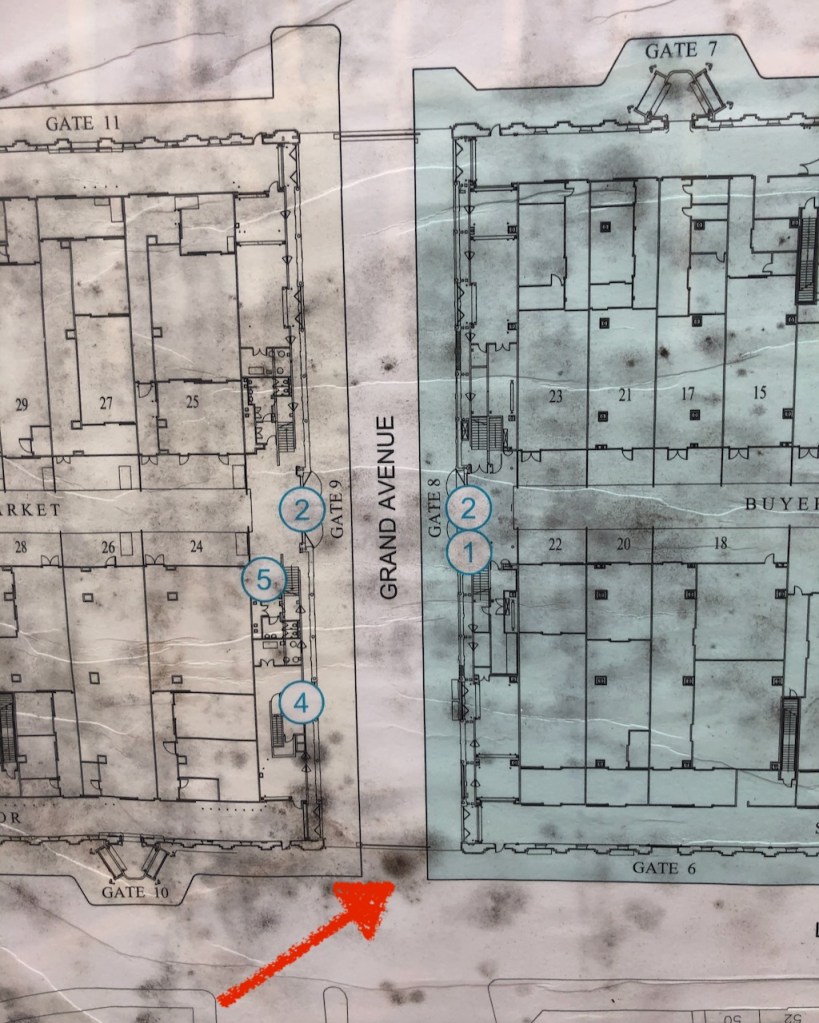
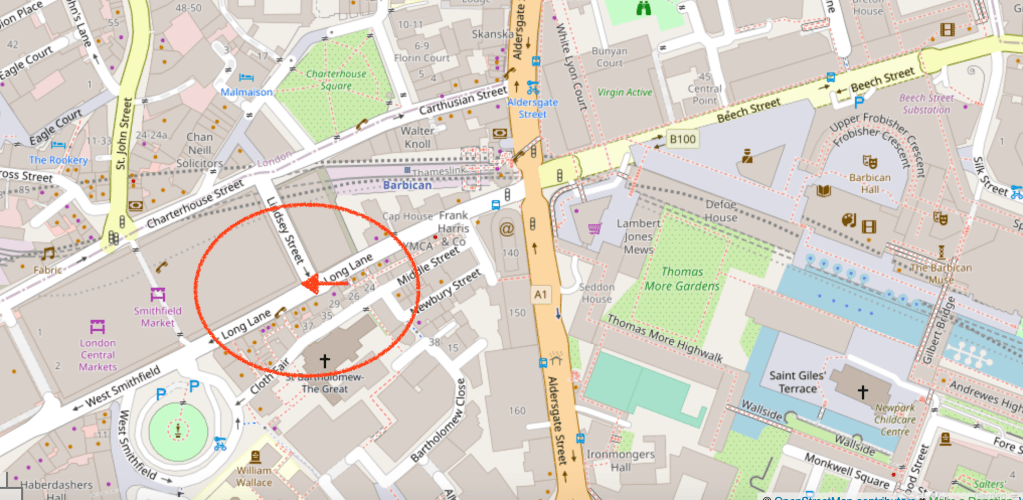
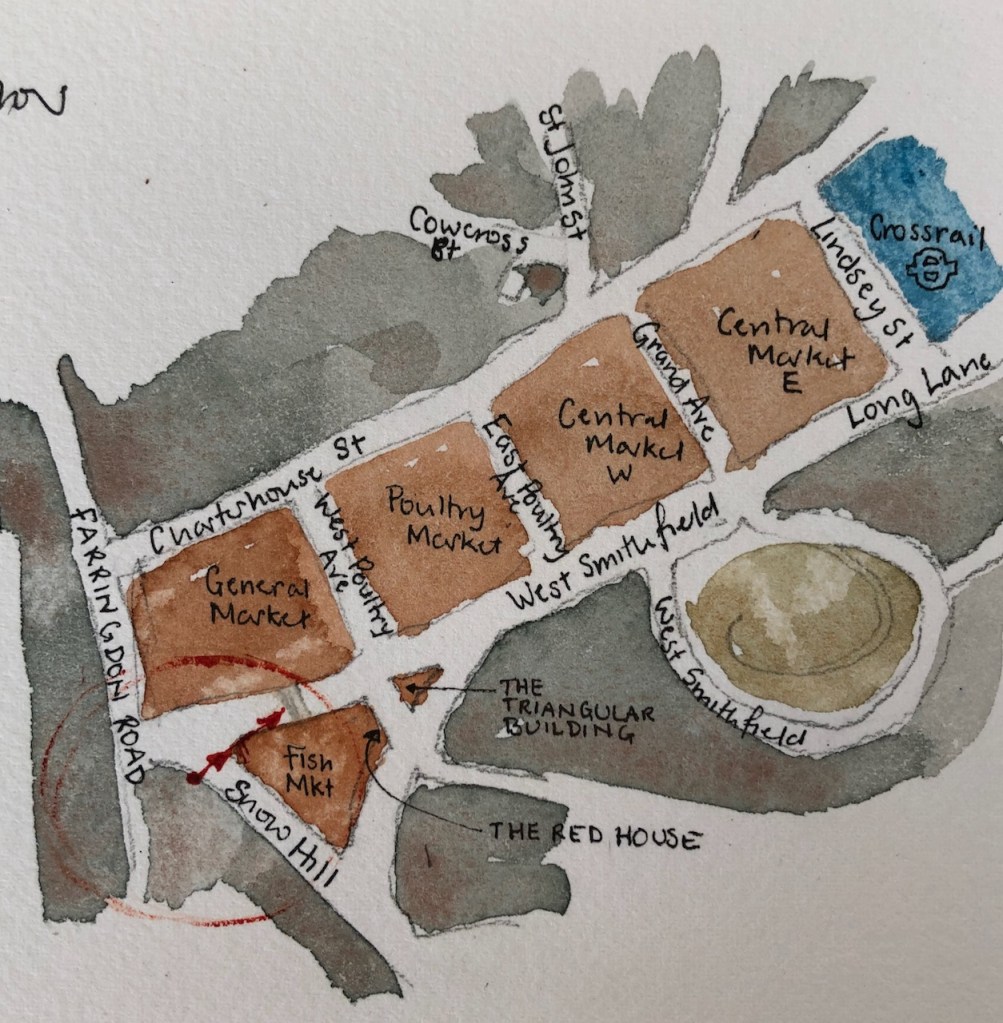
Here’s the map:

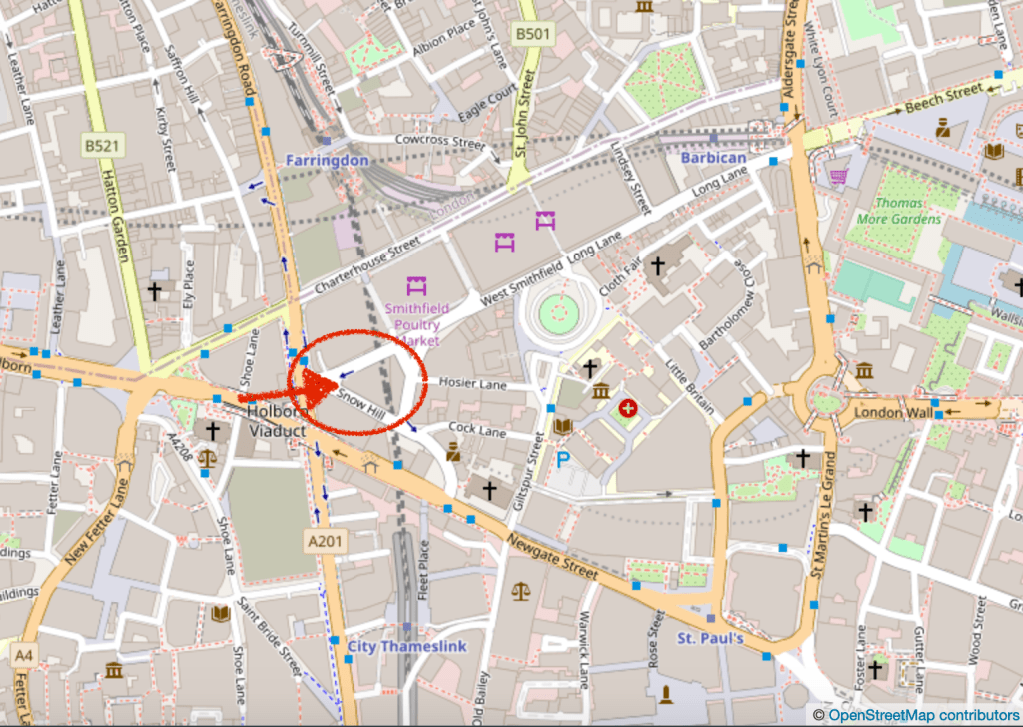
Here’s where I was drawing my picture:

Sightline of the drawing

The West and East Market was designed by Horace Jones, and built by Browne and Robinson, as the carved stones proudly declare. The East Market was refurbished in 1997.

More of my drawings of Smithfield are on the links below:

Smithfield East Market EC1 from Long Lane

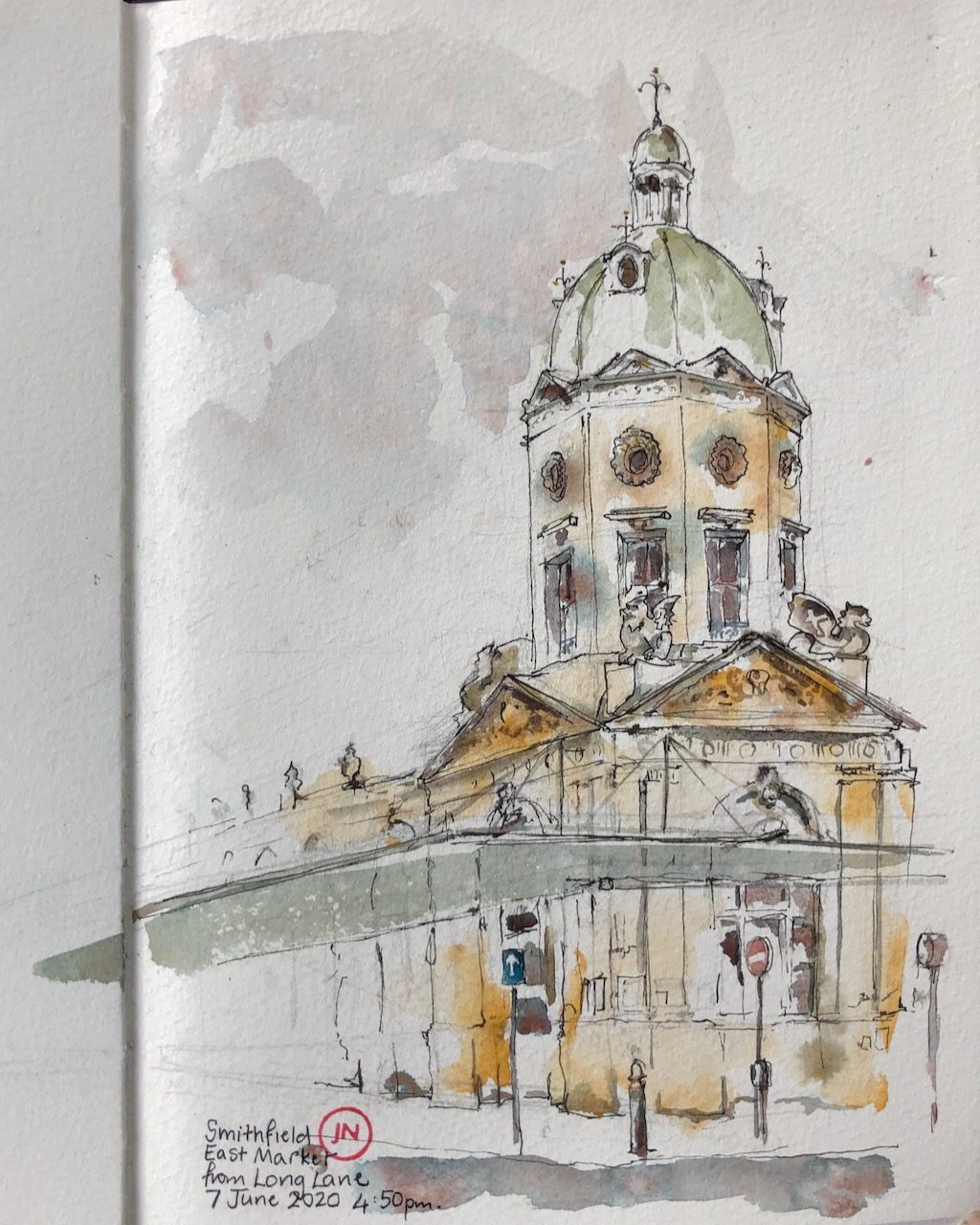
Here is Smithfield East Market on the corner of Lindsey Street and Long Lane.

This is a a wonderful building, with, as you see, paraboloid domes. It was built as a meat market in 1866-68 to the designs of Horace Jones (1819-1897), architect to the City of London. It has been a meat market ever since, and continues to operate, even through the current pandemic.

You see the glass canopy which allows goods to be unloaded under cover. Today is Sunday. This view would be impossible on a weekday. There are large refrigerated delivery lorries which arrive, often from Scotland. The driver sleeps in the cab.

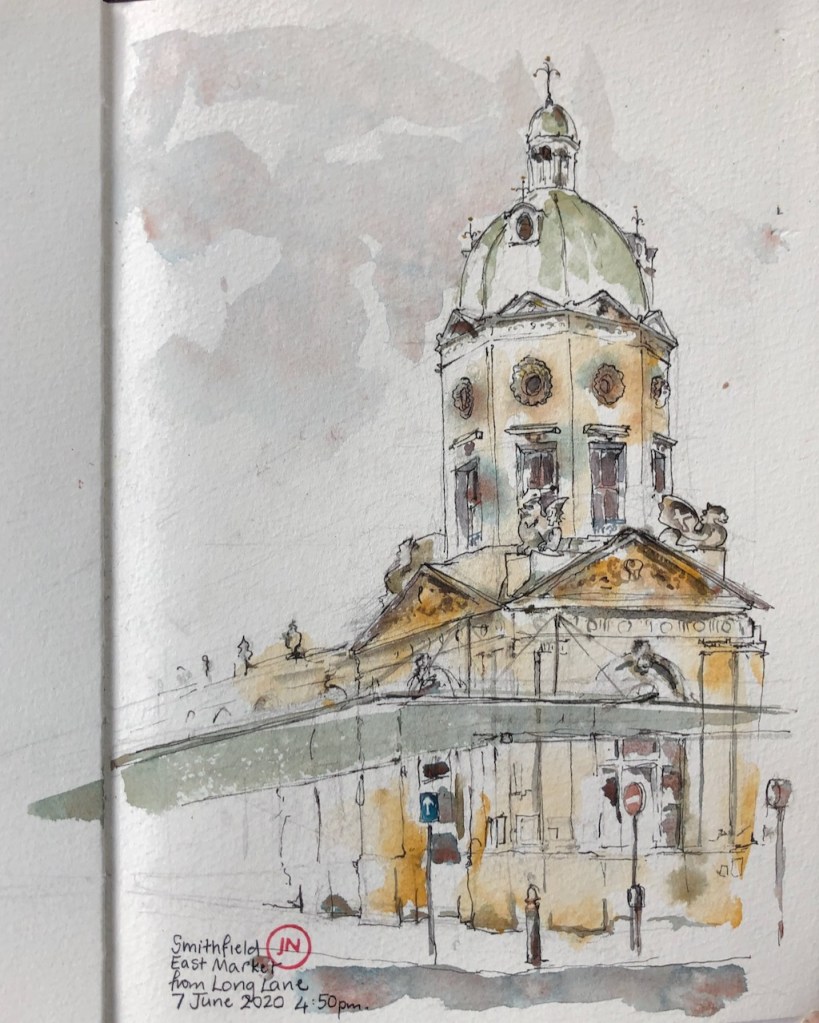
Here is work in progress on the drawing. It took about 1hour30mins. The colours are Mars Yellow, Phthalo Turquoise, and Fired Red Ochre.
I am making a series of drawings of Smithfield:

The Red House and The Triangular Building, Smithfield EC1

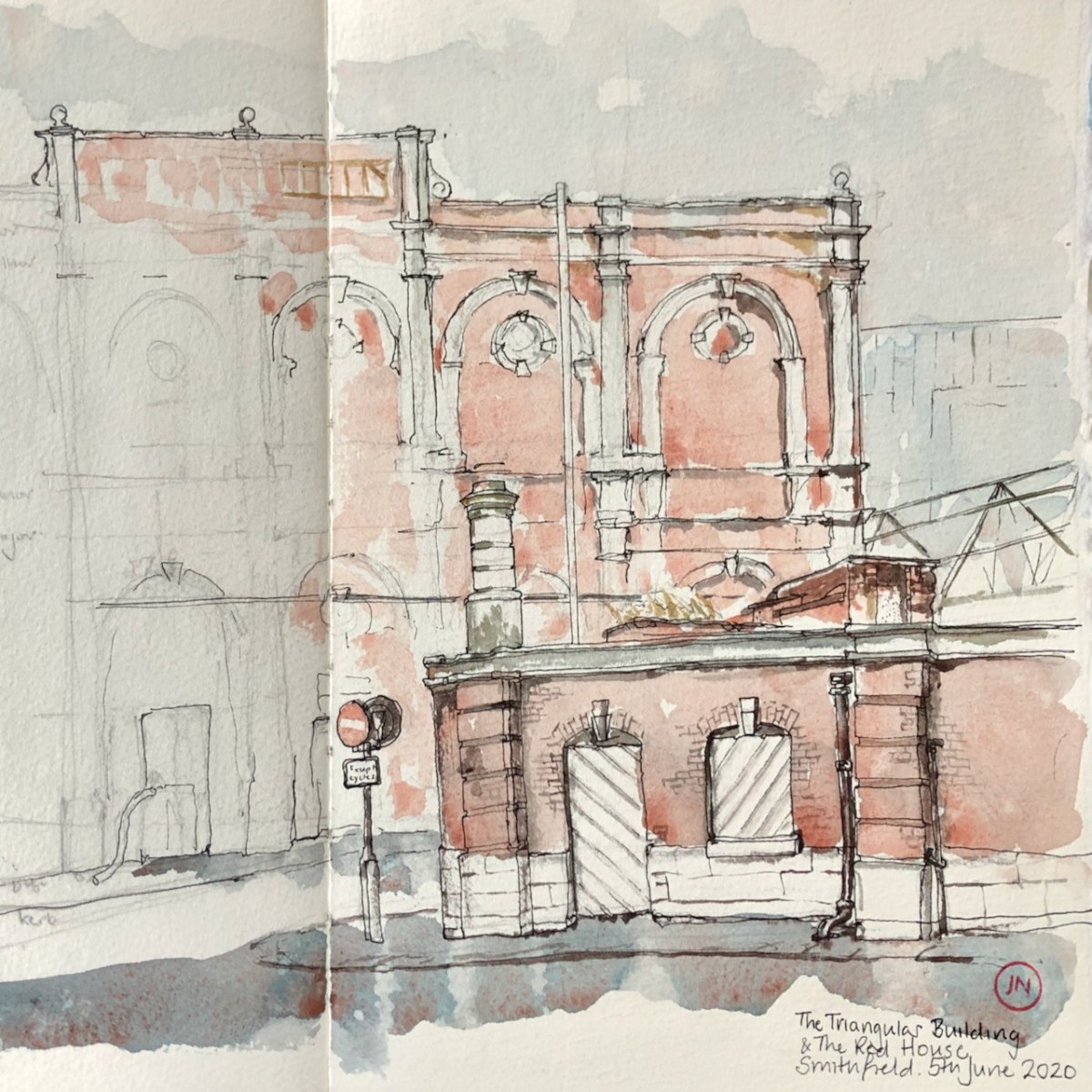
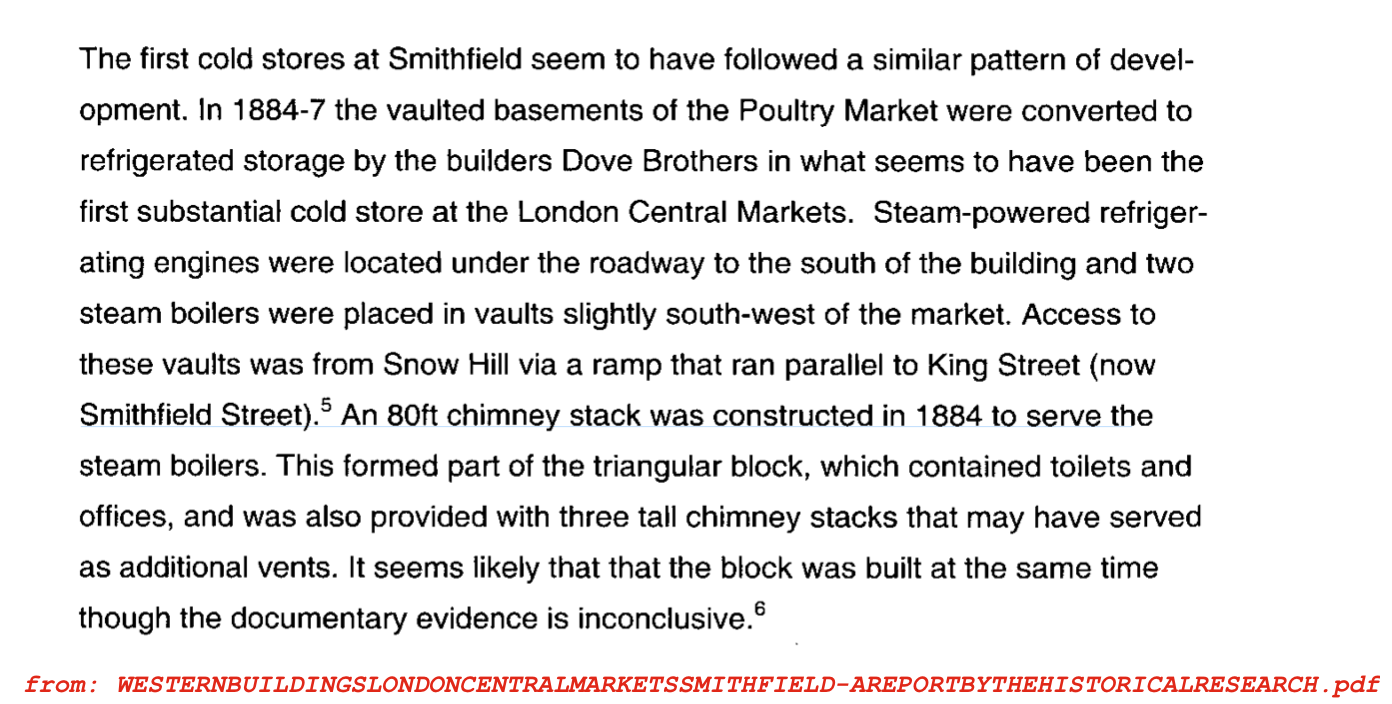
Here is another view of The Triangular Building, drawn previously. On this view you can see the magnificent cold storage block, behind. The cold storage block is called “The Red House”. It is now dilapidated, but still magnificent. A discordant rail, carrying cables, goes horizontally across the front, function taking severe precedent over aesthetics. There’s a weird orange tube coming from one of the boarded-up doors. But still it stands. Come quickly and admire it, before it is covered up, and then transformed into something else.

The Triangular Building in front of the Red House, Smithfield, EC1

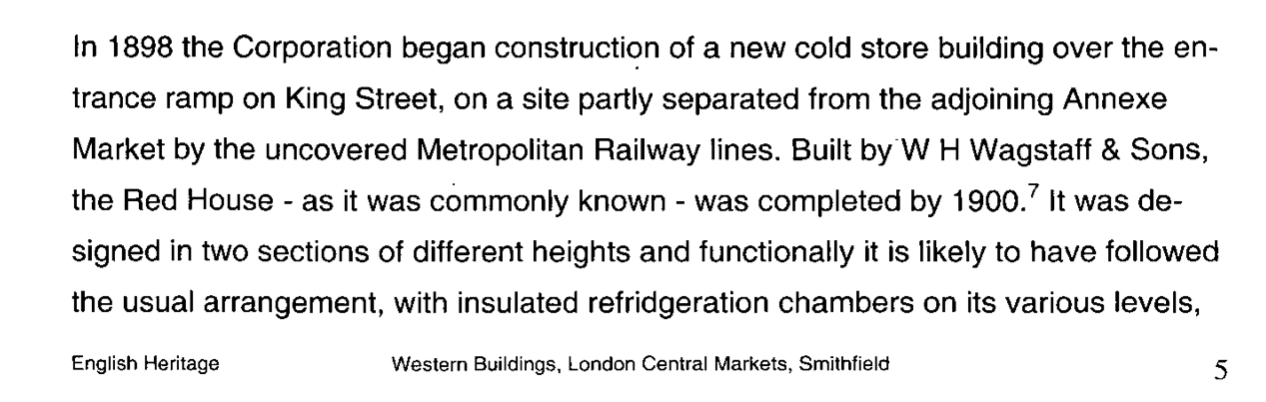
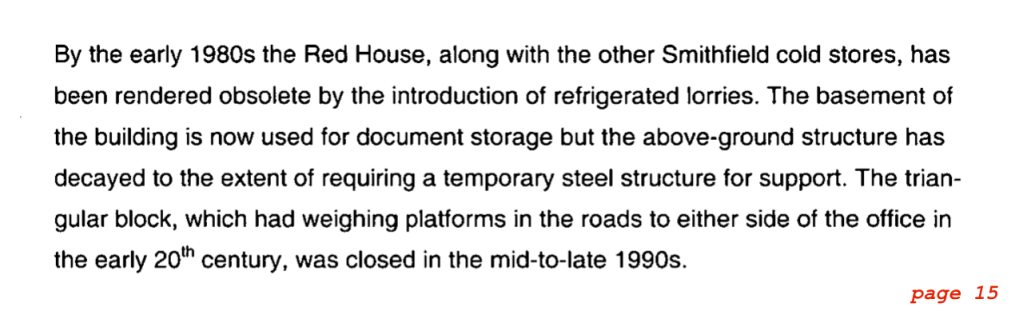
The Red House was completed in 1900. It “was designed by Andrew Murray or the City Engineer, David James Ross” 1.

Extract from a 2003 Report by English Heritage. See footnote 1.

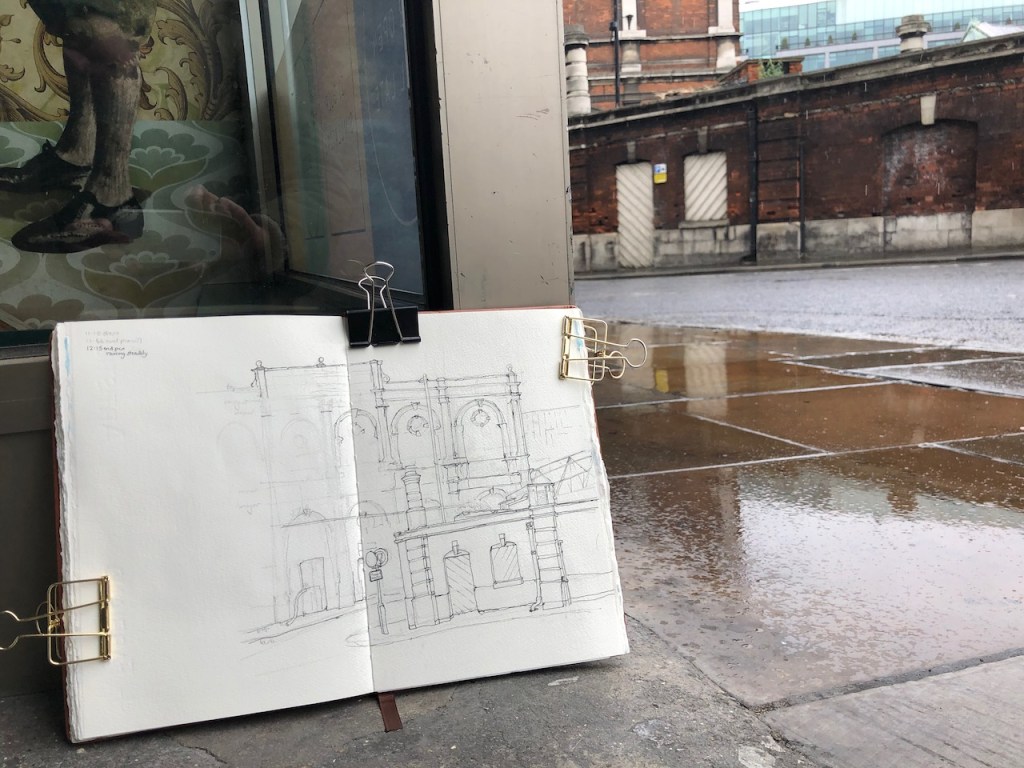
I attempted this drawing on 4th June. However a heavy goods vehicle appeared exactly in my sightline, so I abandoned it and drew a different view. Today I returned to have another go. Being Saturday, there is less traffic today.

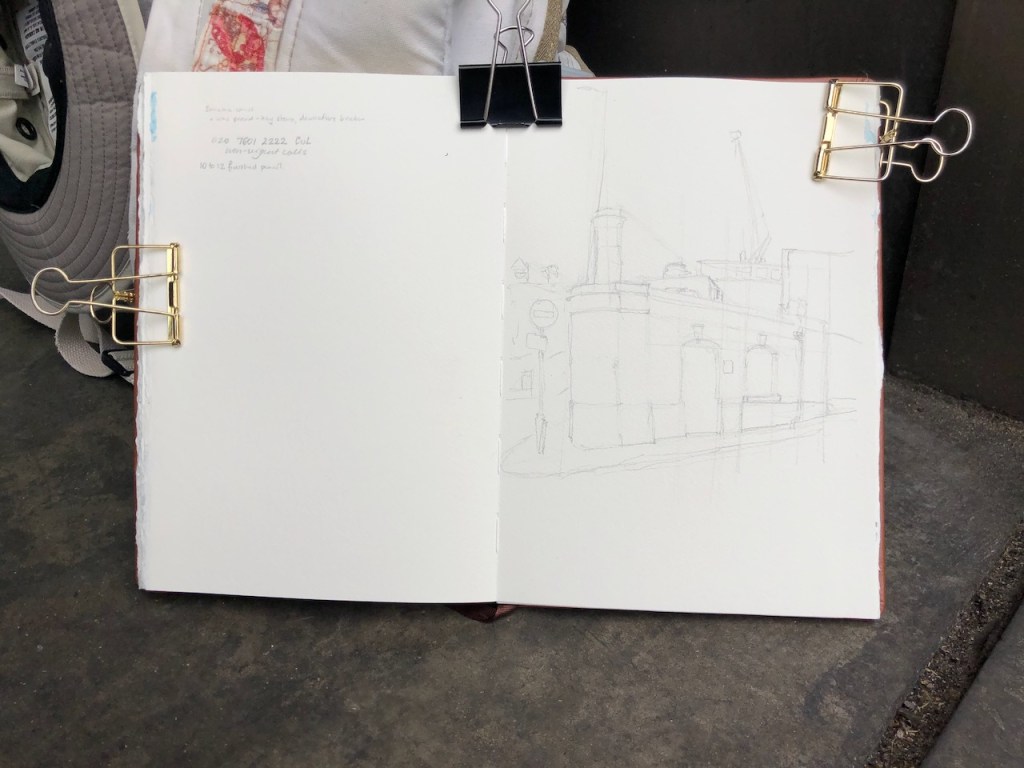
Here is work in progress. As you see, it rained. But I was in a doorway, and so sheltered. The doorway was that of “Urban Golf”, which accounts for the odd pictures you see in the background of the first image.

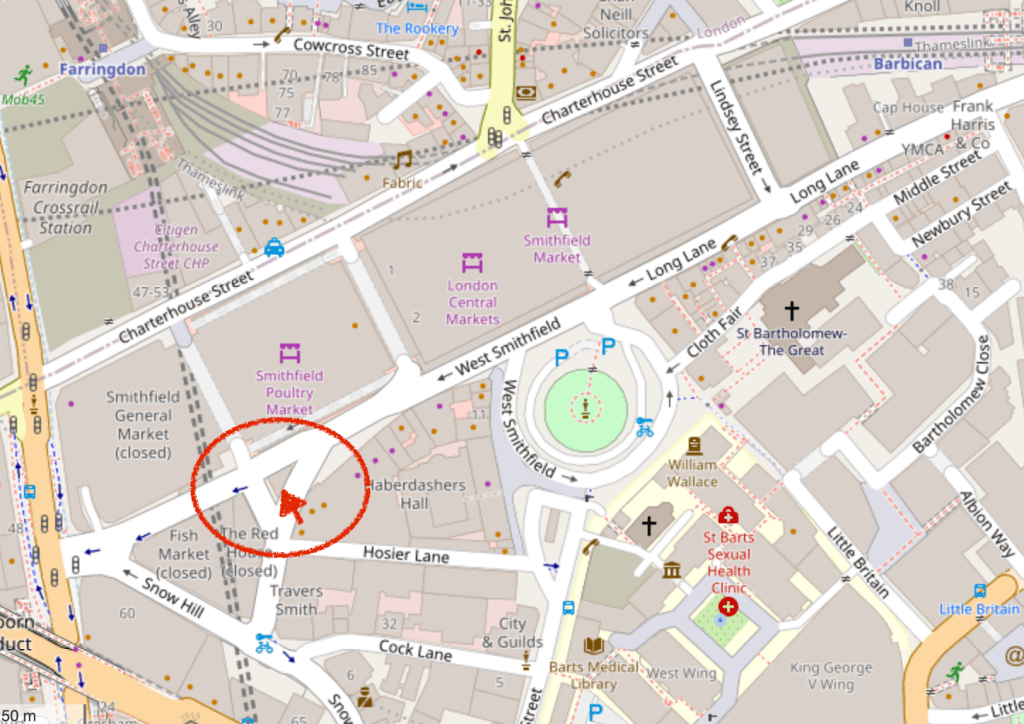
Map showing the location of The Red House. The arrow shows my sightline. Map credit: © OpenStreetMap contributors

Note 1: NBR File no: 92219, NGR: TQ 3161 8163, Reports and Papers B/013/2003, Report by Joanna Smith and Jonathan Clarke, Photographs by Derek Kendall and Nigel Corrie. The document in full is on the following link as a pdf (53 pages).

An extract from the 2003 Report by English Heritage. See footnote 1.

The Triangular Building, Smithfield EC1

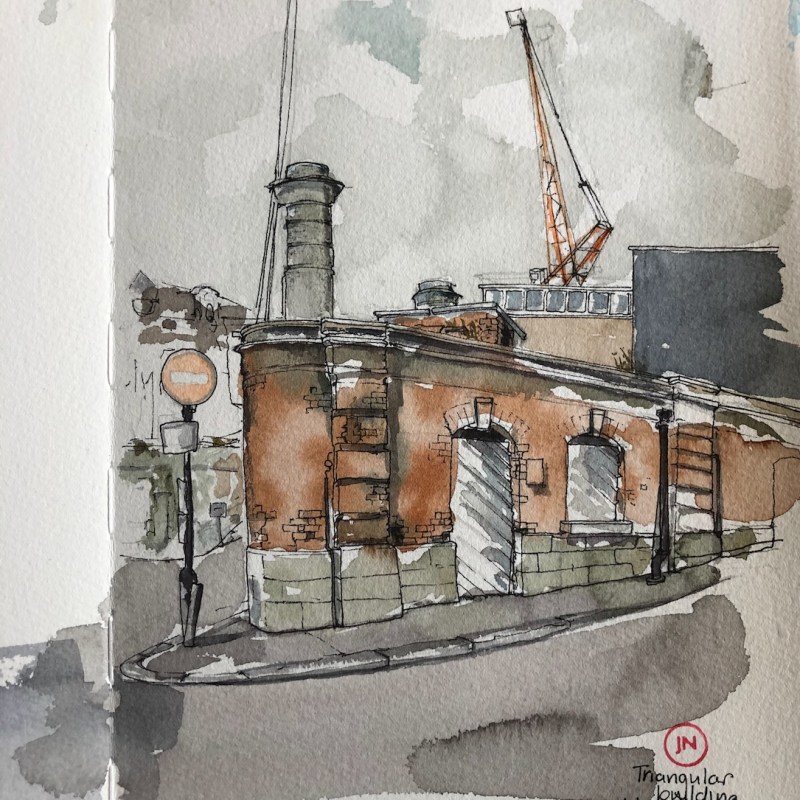
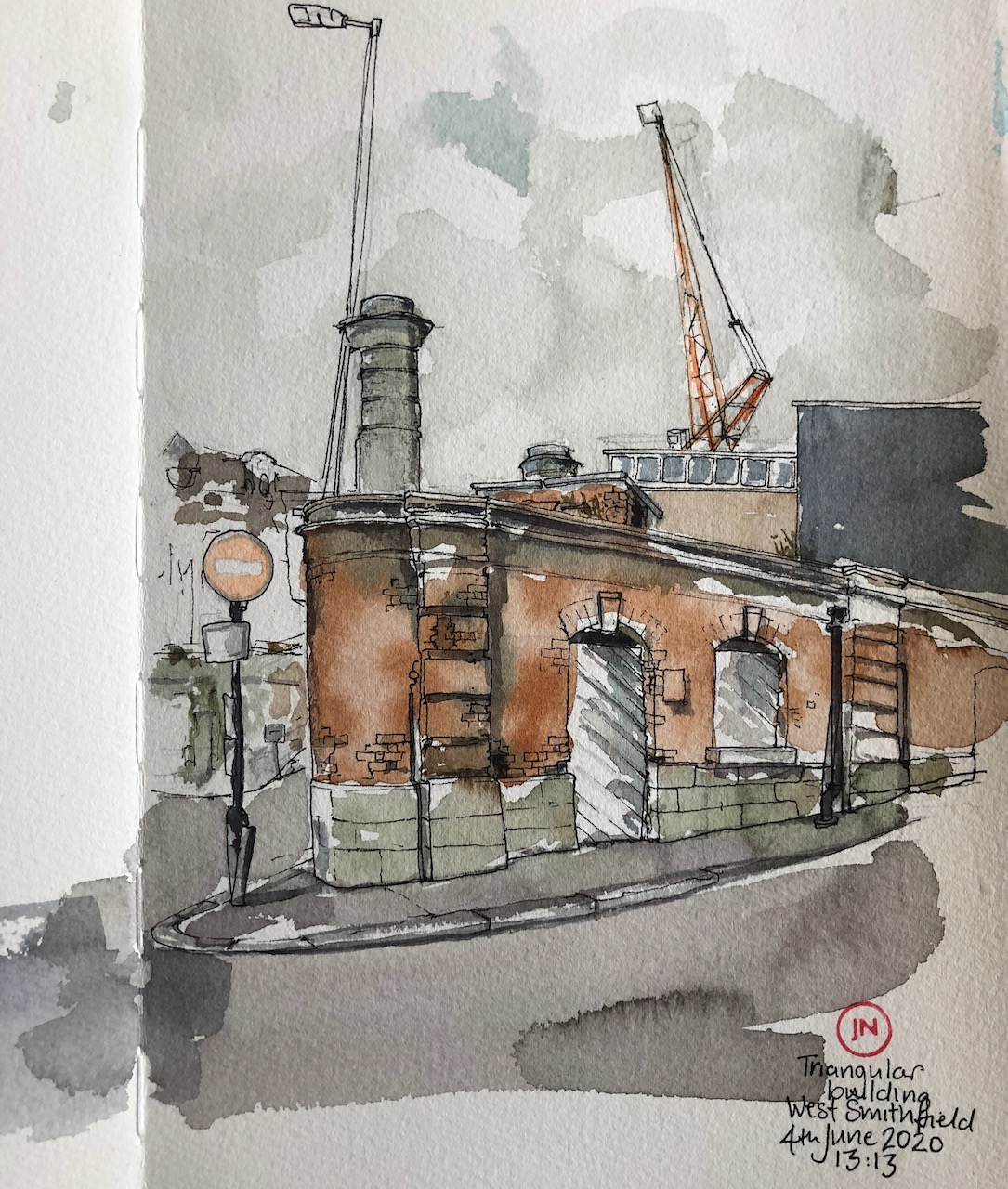
Here is “The Triangular Building” in West Smithfield. I have sketched it from the South. This is its South West corner.

Triangular Building, West Smithfield.

The question is: what is it? It has three vertical columns above, which look like chimney stacks, but might be vents of some sort. One is shown on the left of the drawing and another is just visible above the roof.

I found a marvellous document online, published by English Heritage: Western Markets, London Central Markets Smithfield, A Report by the Historical Research and Conservation Support London Team, June 20031

This suggests that the Triangular Block might have housed the base of a tall chimney stack. The chimney was for the boiler room of the Cold Store, which is adjacent. It was built around 1884. Certainly there were toilets in there, either originally or later, as there is a neat sign saying “GENTLEMEN” on the other side. The door is blocked up.

It is clear that whoever funded, designed and used this building cared about it, and was proud of it. The windows have key-stones, and there are stripes of decoration in the brickwork, now very much eroded. The chimney stacks also are decorated with bands. The building is on a sloping road, and must have been quite hard to build.

from the English Heritage report – see note (1) at the end of this article.

This whole area is due to be redeveloped2. In the distance on the left you can see “Denton Bros”, which I drew in a previous post. The crane in the background is from the Crossrail site at Farringdon. The buildings in the background are the Central Markets, still very much operational.

For more on Smithfield Market (and much more besides) , I recommend the wonderful “A London Inheritance” website. The article about West Smithfield is on this link: https://alondoninheritance.com/london-buildings/buildings-smithfield-market/

Location of the Triangular Building. Arrow shows my sightline in the drawing. Map © OpenStreetMap contributors
  1. NBR File no: 92219, NGR: TQ 3161 8163, Reports and Papers B/013/2003, Report by Joanna Smith and Jonathan Clarke, Photographs by Derek Kendall and Nigel Corrie. The document in full is on the following link as a pdf (53 pages).
  1. Here is a leaflet About the redevelopment. The leaflet is not dated, but must be fairly recent as it was lodged in people’s letterboxes as I walked through Smithfield today. I picked this one up off the pavement.
Timescale of the redevelopment, as set out in the leaflet.

Here is a collection of my other drawings in Smithfield:

West Poultry Avenue, Smithfield EC1

I set off to go and draw the architecture of the South Bank. Walking through West Smithfield on the way, I thought, The South Bank will always be there, but Smithfield is about to be redeveloped. Draw it Now.

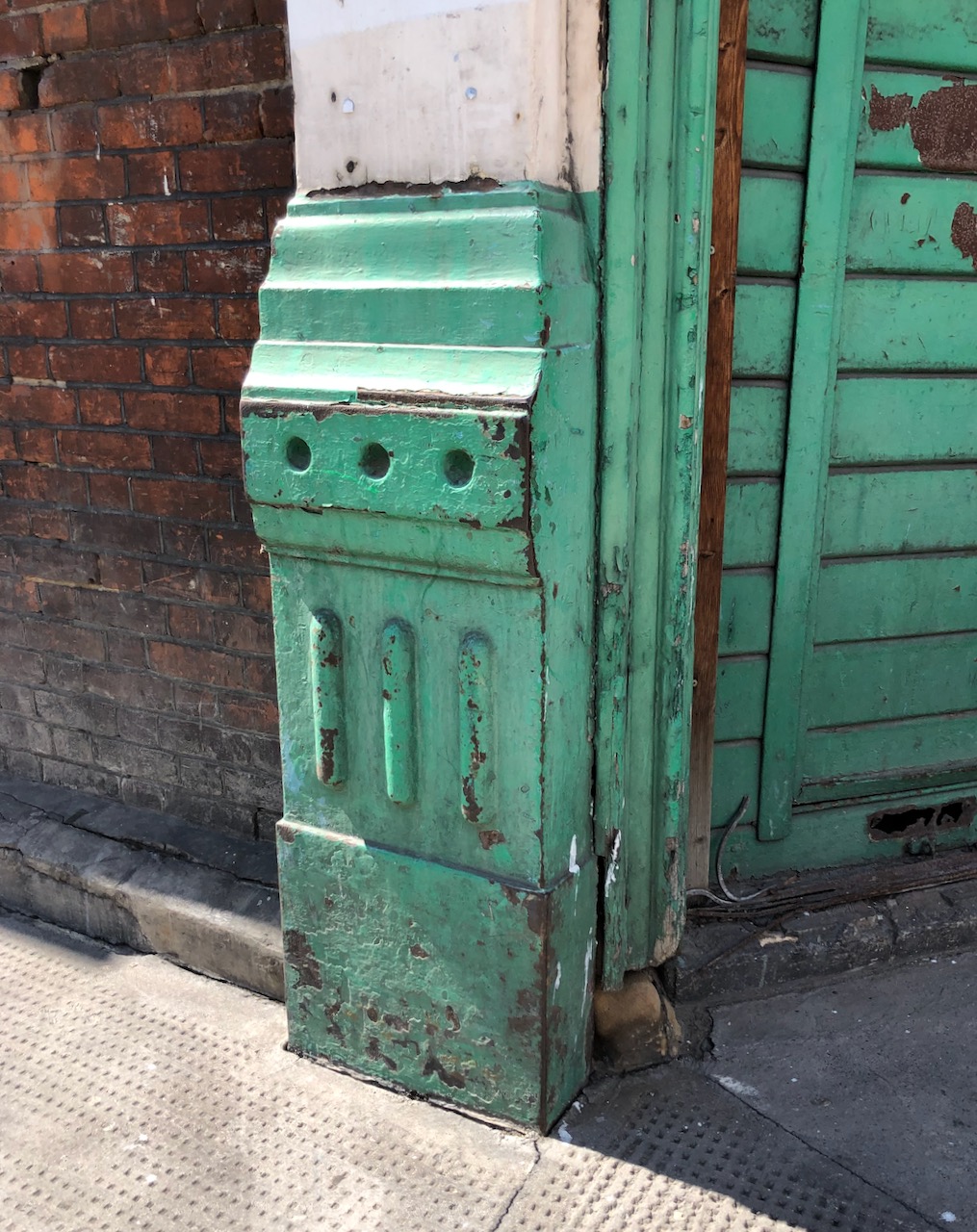
Green painted iron protectors for the door posts.

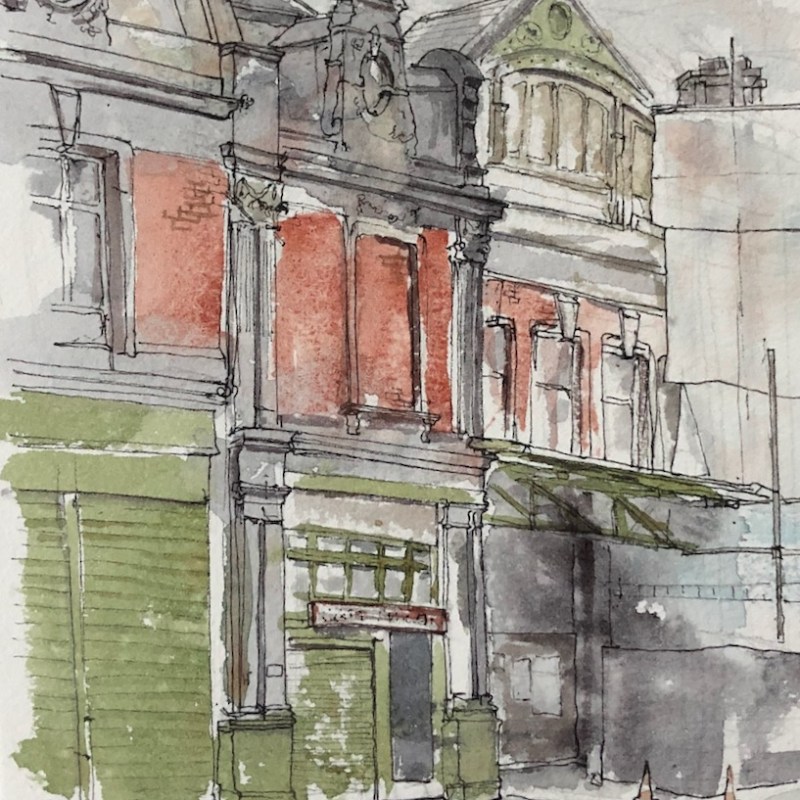
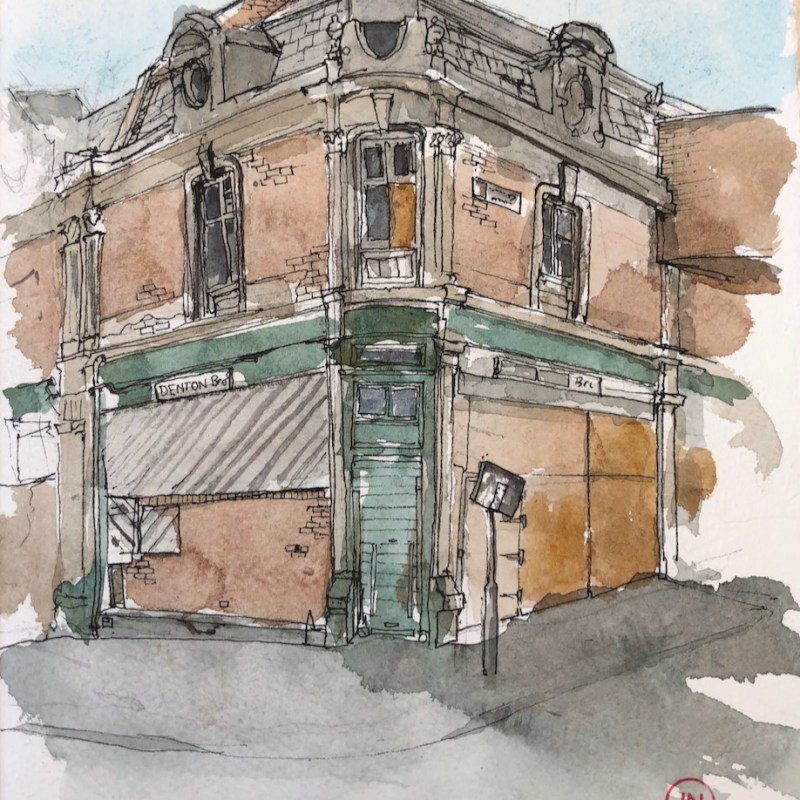
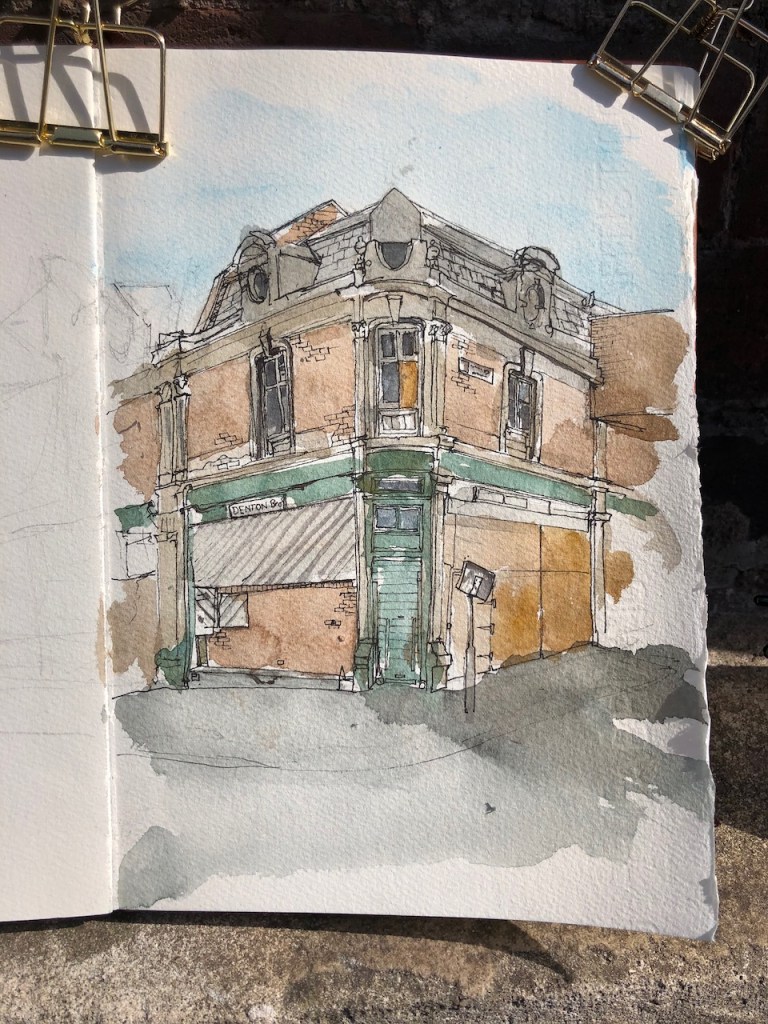
So here is Denton Bros , on the corner of West Poultry Avenue and West Smithfield. I like this building. The green objects at the base of the doorposts are made of iron. I think they must be to protect the brickwork from being bashed by market trolleys. The windows are well made and ornate. The lower panes are wood, which must have been for some specific purpose. I wonder if it is so the supervisors can open a wooden door and lean out to examine proceedings below. Or perhaps it was to stop lowly clerks on the first floor from wasting time looking out of the window.

Denton Bros. West Smithfield.

Smithfield is the main wholesale Meat Market in London. The East part of the Market is fully operational. Opening hours are 2am to about 7am, Monday to Friday. It sells meat to restaurants and butchers, and also to any members of the general public who show up. It has been open right through the pandemic, which has been very useful.

The West part of the market is dilapidated, as you see in the picture. It was due to be demolished in 2012 and replaced by restaurants, offices. The demolition was prevented by campaigning groups, ‘Save Britain’s Heritage’, and others. Now the plan is that the Museum of London will relocate there, from its current site in the Barbican. They will preserve the façade of the existing buildings. See the picture below. The place I drew will be part of the “portal” welcoming visitors in. Here is a an extract from the Museum of London website, downloaded 2nd June.

Visitors will enter through West Poultry Avenue. It will be both part of the city and a portal to the museum, and its character will remain that of a street. It will be a place of arrival, orientation and promise. Our team will welcome visitors and help them to navigate the museum – and, if they need it, the city itself. From here, visitors will move into the General Market or the Poultry Market, or they can stop awhile for a drink in The Cocoa Rooms café. This space will reflect London in real time – the present not the past, the London we experience today, the 24-hour city, constantly on the move. Data visualisations incorporated into the street will reflect London in the moment.

Here is where the new Museum of London will be, and what it will look like. You can recognise the building I drew.

The existing wholesale Meat Market, in the eastern part of the site, will relocate to Barking, that’s the plan. I don’t know what will go where the eastern market is now.

I had better do some more sketching around Smithfield, before the whole thing is swathed in plastic and transformed. Here is work in progress on the sketch. It took one and a half hours. The colours are: Phthalo Turquoise, Mars Yellow, Perylene Maroon and a bit of Transparent Pyrrol Orange.

Here are some maps to show you where it is. Click to enlarge.

Here is a collection of my drawings of Smithfield: click on the words to see more information.
Charcot House, Roehampton

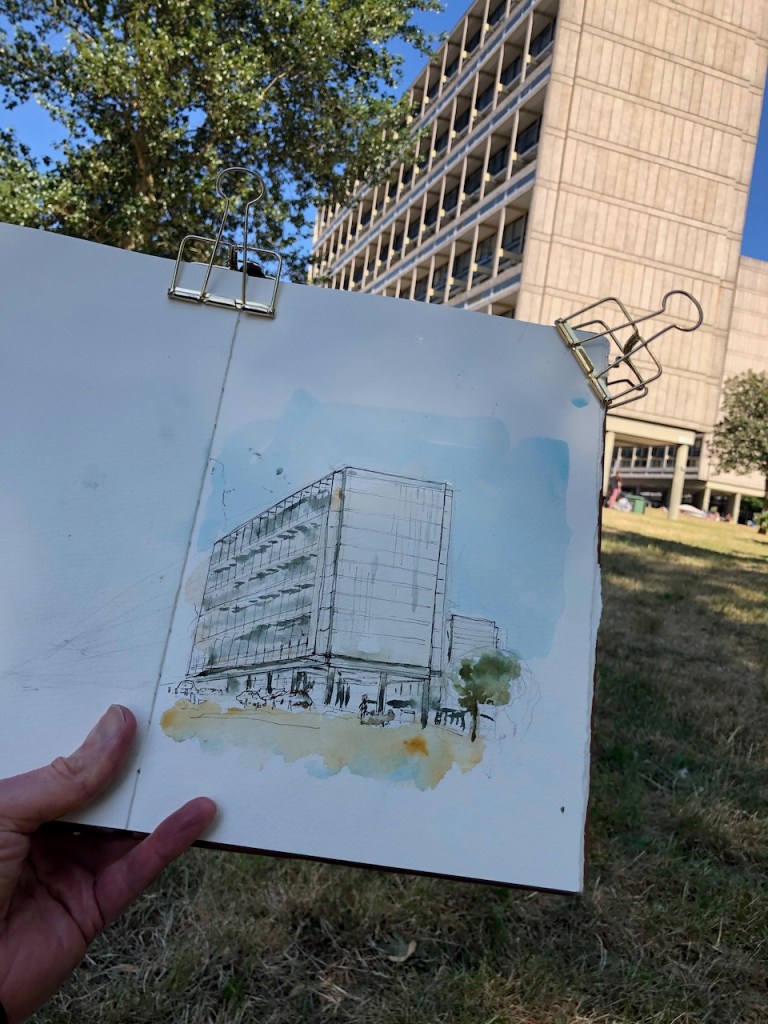
Here is a sketch of Charcot House, one of the five tower blocks in the Alton West Estate, Roehampton, SW15.

The Alton West estate was completed in 1958, as social housing. It was designed by a London County Council team led by Rosemary Stjernstedt (1912-1998).

The five tower blocks stand in a huge green space, on a hill, with many trees. When I visited, people were picnicking on the dry grass. You can see some of them in the centre of the picture.

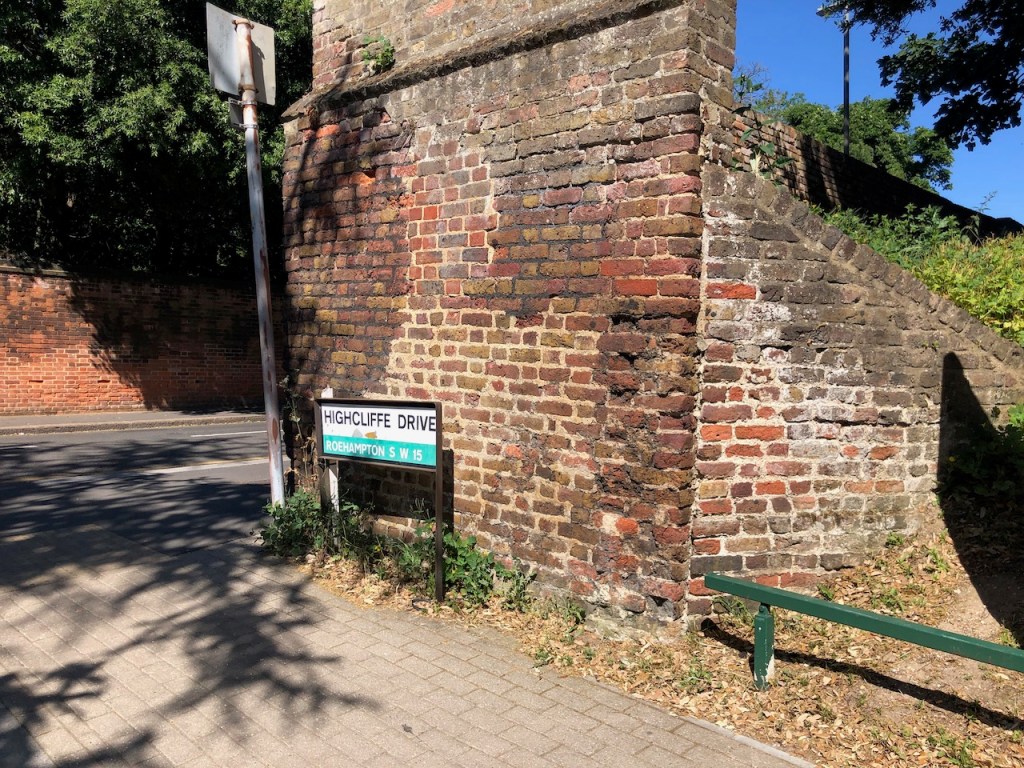
I went there by bike, it took about two hours, partly because I also went to look at the Dover House Estate, nearby, which was built in 1918. Also it took me a while to find the Alton West estate. There are a number of hills in the area.

Here is a map:
The arrow shows the sightline of the drawing.

Drawing time: 45 min. Colours: Mars Yellow (DS), Phthalo Turquoise (W&N), Burnt Umber (Jacksons).

The O2 from Trinity Buoy Wharf

Here is the view across the river Thames from Trinity Buoy Wharf, E14. The drawing shows “The O2”, which used to be called “The Millenium Dome”. It is an events arena. I have never been inside. In the distance are the towers of Canary Wharf.

I drew this in a lovely peaceful spot sitting on a wooden step next to a shed at Trinity Buoy Wharf. Each person who walked past said hello. A man paused and commented, “Ah, Art is going on!”, which made me laugh, somehow. Perhaps it was the way he said it.

Here is work in progress, and a photo of my art materials and my bike helmet on the step.

The drawing took 1hour30mins. The colours are: Mars Yellow (Daniel Smith), Transparent Pyrrol Orange (Daniel Smith), Phthalo Turquoise (Winsor and Newton).

I have sketched at Trinity Buoy wharf before. See this blog post:

Trinity Buoy Wharf

The headlines in the Evening Standard had described the pollution levels in central London at “Red Alert” levels. So I headed East to the clearer air and big skies of the maritime Thames. Trinity Buoy Wharf is here: I drew a picture of the lighthouse. Above me, four stories of shipping containers contain offices. Words…

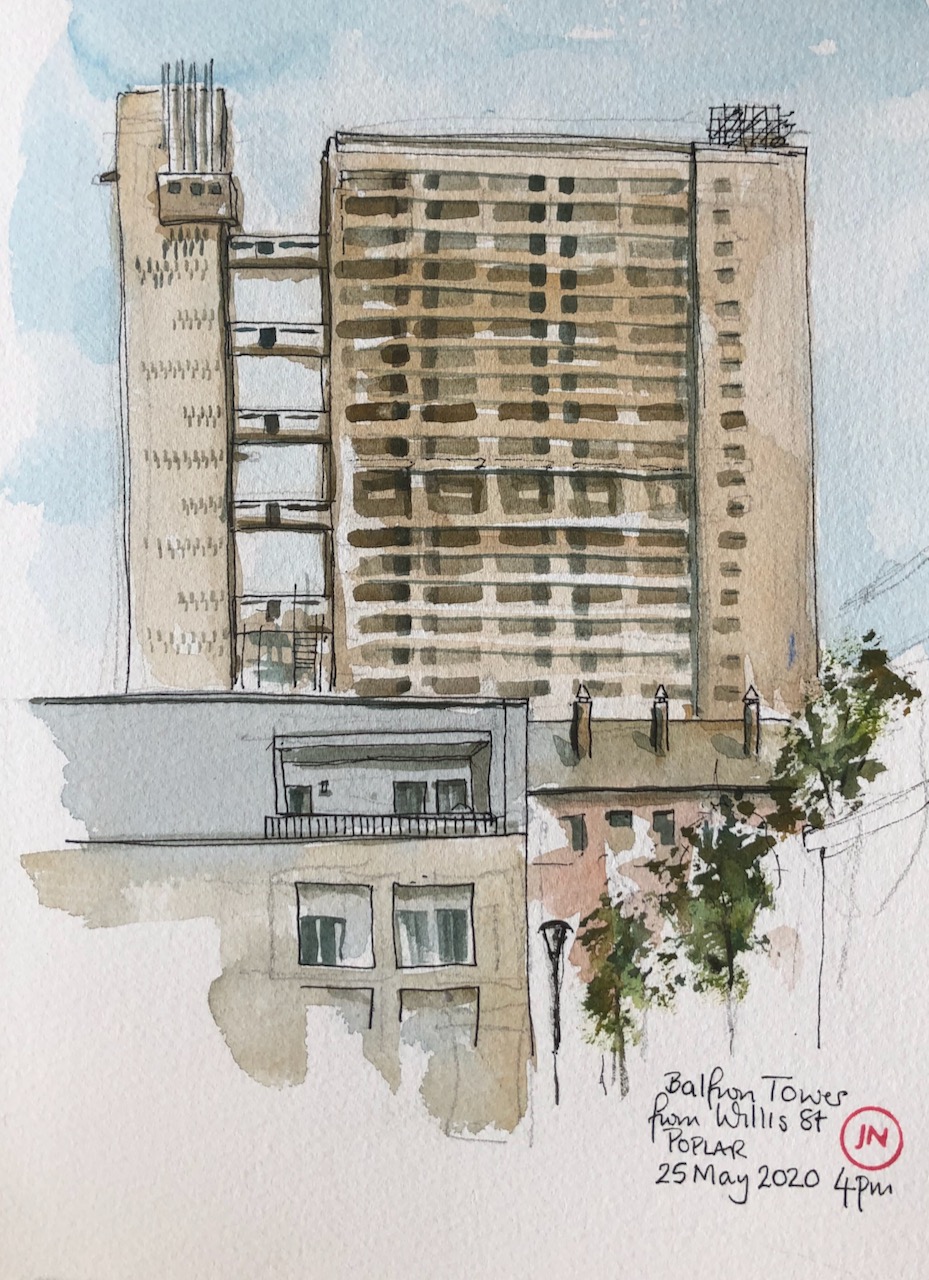
Balfron Tower

I went on a marvellous cycle ride in East London. The air was clear, the roads were wide and empty. As I came back I spotted this view of the Balfron Tower. I sat on a low wall in a housing estate off Willis Street, and sketched it.

Balfron Tower, Poplar, east London.

This tower is designed by the architect Ernő Goldfinger, and resembles his other famous tower, Trellick Tower, which is in North West London. Balfron Tower was built in 1967 as council housing.

It has recently been sold by Tower Hamlets Council, and redeveloped by the developer LondonNewcastle as luxury flats. You can see some of the scaffolding in the drawing.

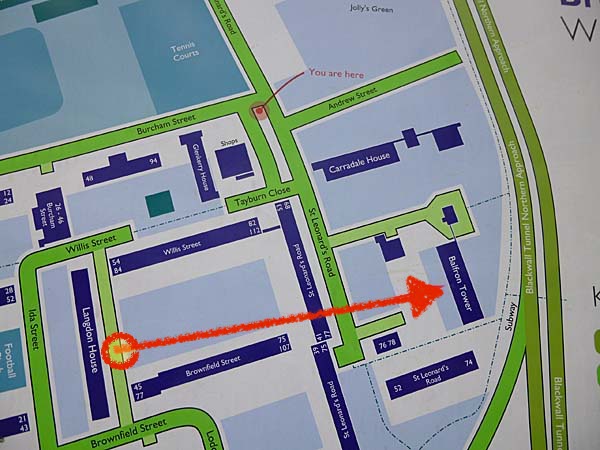
Here is where it is.

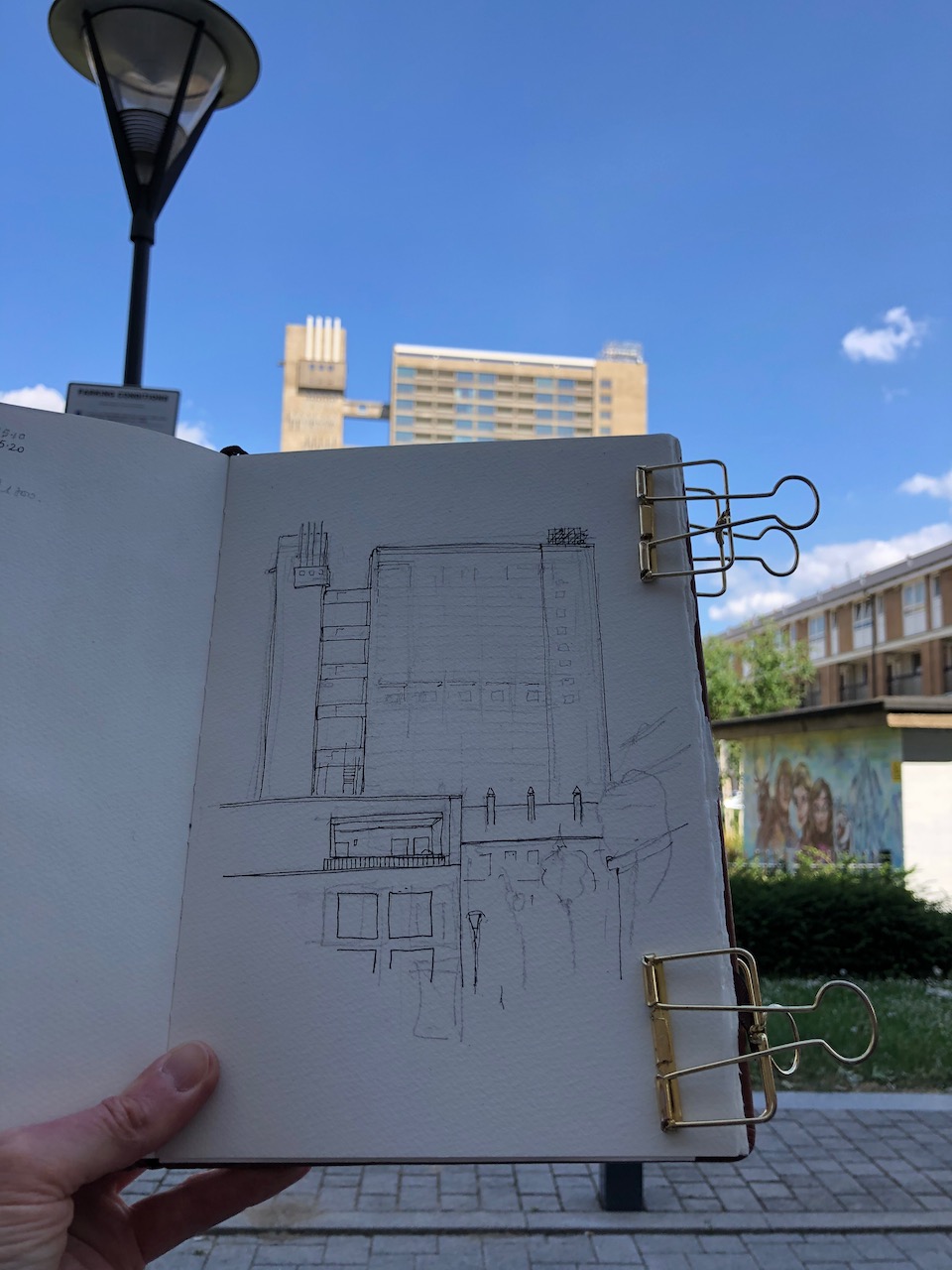
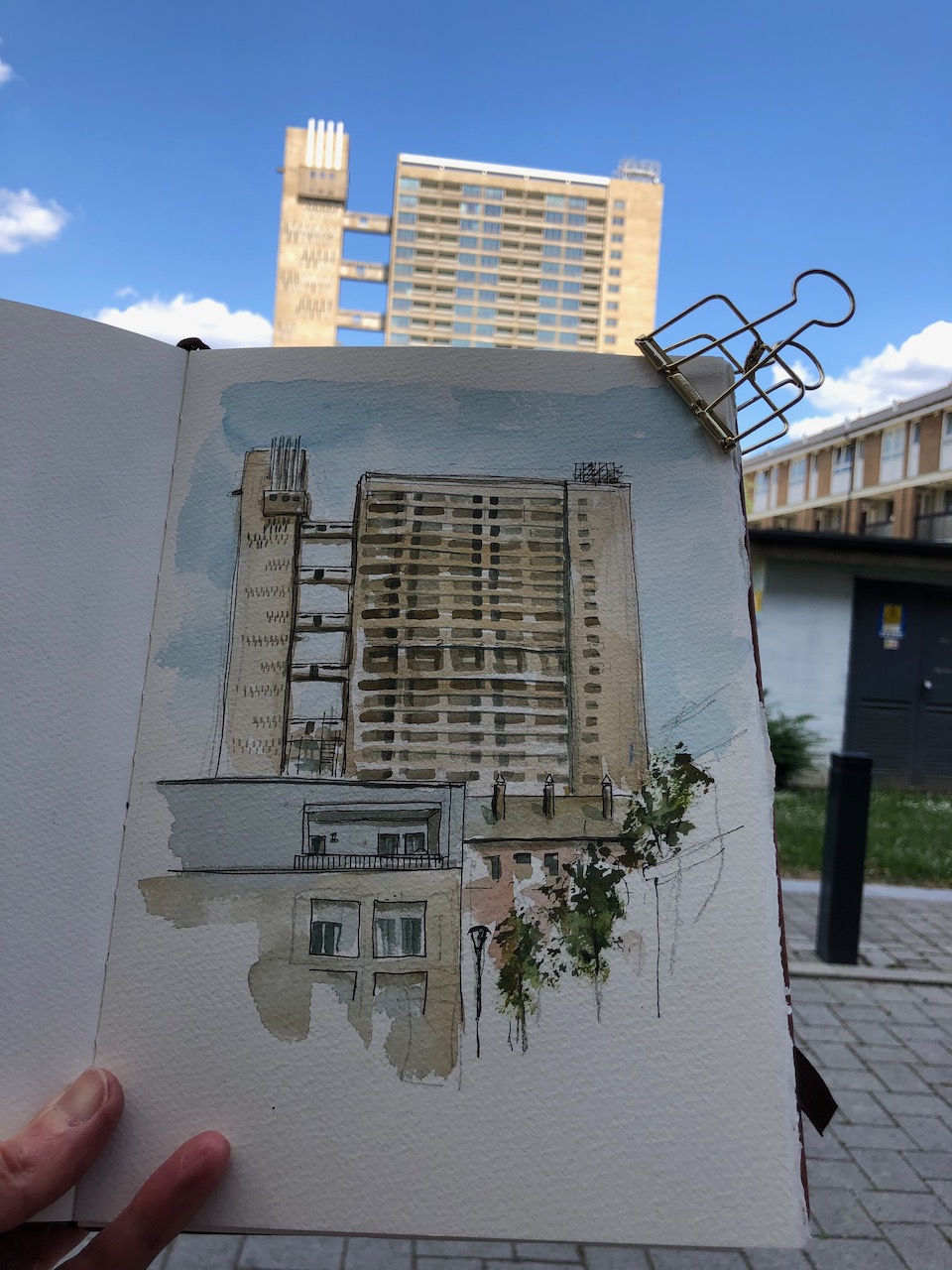
Here is work in progress. Also a glimpse of my bicycle.

As I sat sketching, a pale young man approached. “It’s beautiful,” he said as he strode past. He was referring to the Balfron Tower, not to my drawing.

“Yes, ” I agreed, “I think so”. I looked down to my drawing again. But the young man had something else to say.

“You should see Jesus,” he told me, “He’s beautiful too.” Taking my baffled silence as amazement, he continued, “I’ve seen Him, believe it or not”. He left this statement hanging in the air and walked on around the corner, without breaking step.

All Hallows on the Wall

London Wall is the old Roman Wall around the City of London. It is also the name of a road. In normal times London Wall is a very busy road, an arterial route in the City, full of buses and cars and bikes, with people thronging the pavements looking at mobile phones. Now it is empty, and you can see the scenery. Here is a view All-Hallows-on-the-Wall, sketched from the opposite pavement, outside Deutsche Bank. The church occupies a narrow site, between the present-day road and the old London Wall.

The “Friends of City Churches” site says: “The previous church on this site escaped destruction in the Great Fire but was rebuilt by George Dance the Younger in 1765/67. He was just 24 years old, but achieved an exquisite small interior of neo-classical simplicity regarded by Betjeman as one of the most successful of the London interiors.”

The Church is only open at certain times, and in the pandemic not atall. It has been the headquarters of various groups seeking to help people. Currently it is the headquarters of “XLP” and has their banners outside. Here is an extract from the XLP website:

“XLP is about creating positive futures for young people growing up on inner-city estates, struggling daily with issues such as family breakdown, unemployment and educational failure, and living in areas that experience high levels of anti-social behaviour and gang violence. Every year XLP helps thousands of young people recognise their full potential. We believe positive, long-term relationships can restore a young person’s trust in people, nurture the belief that things can change and encourage them to set positive goals and work hard to achieve​ them”

Here is work in progress on the sketch. See how empty the road is.

You can see the old London Wall under the big tree. Here is a picture from over there near the church.

Old London Wall is on the left. The modern street called “London Wall” is on the right. All Hallows main entrance is in the centre, below the tree. I did my sketch from the pavement on the other side of the road, on the right. The pale-coloured offices there are Deutsche Bank.

Sketch took about an hour, drawn and coloured on location.