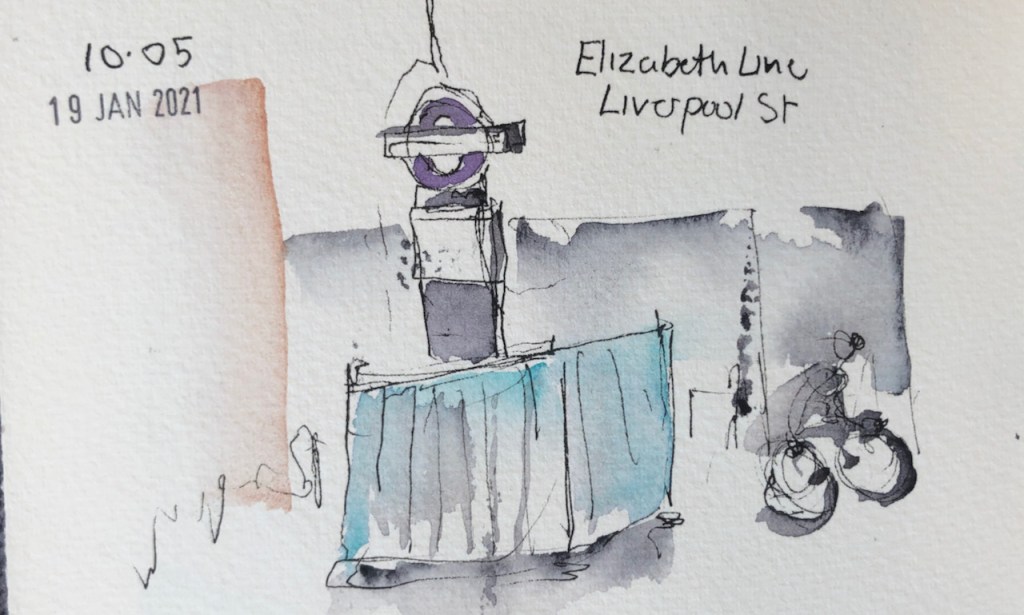
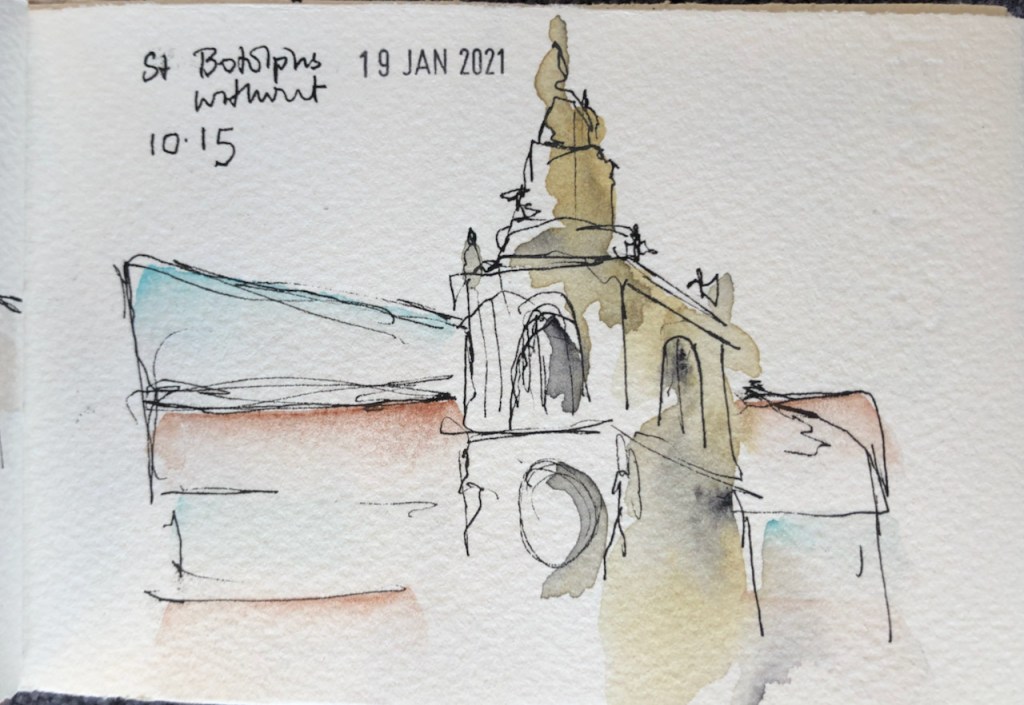
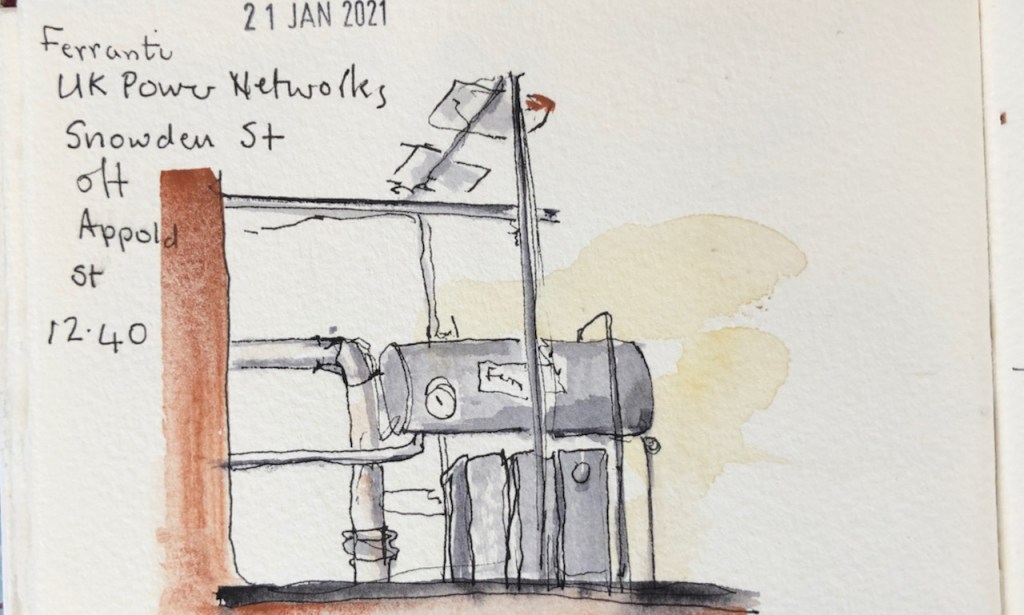
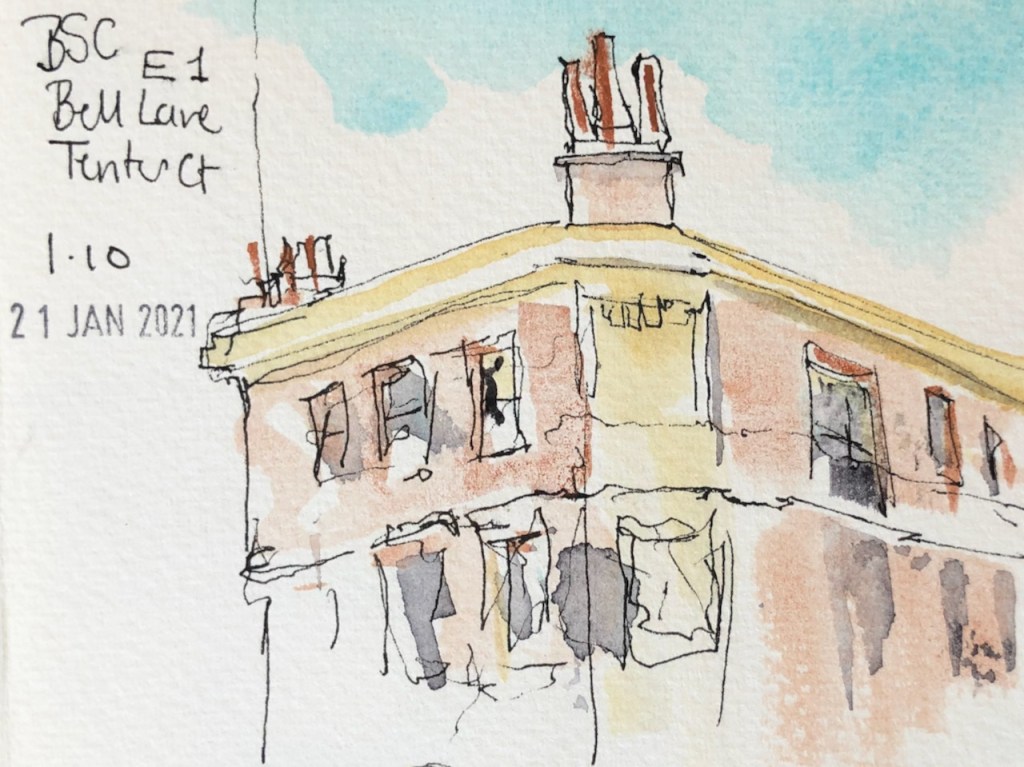
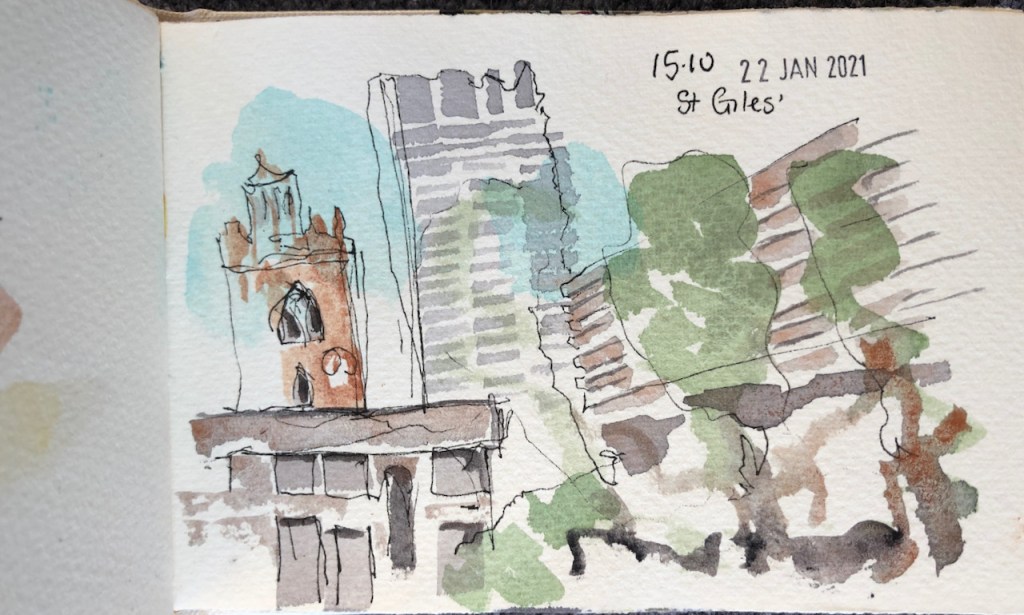
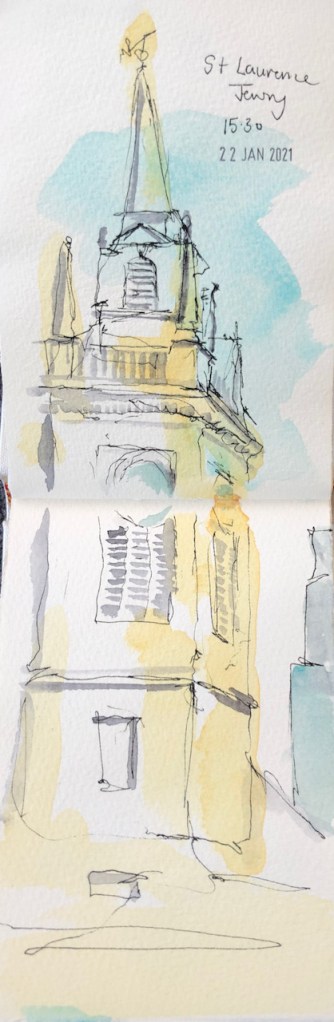
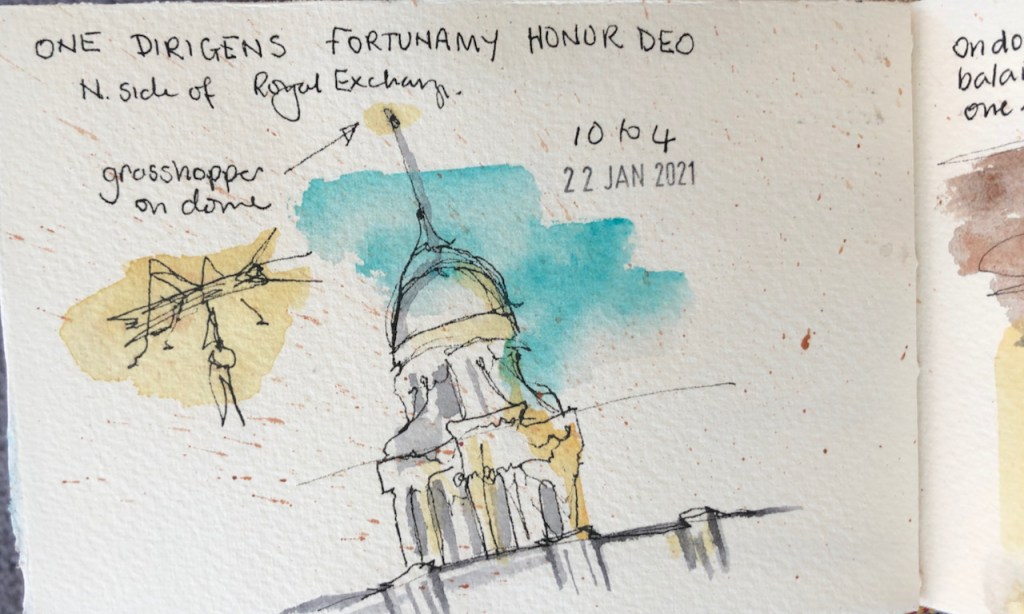
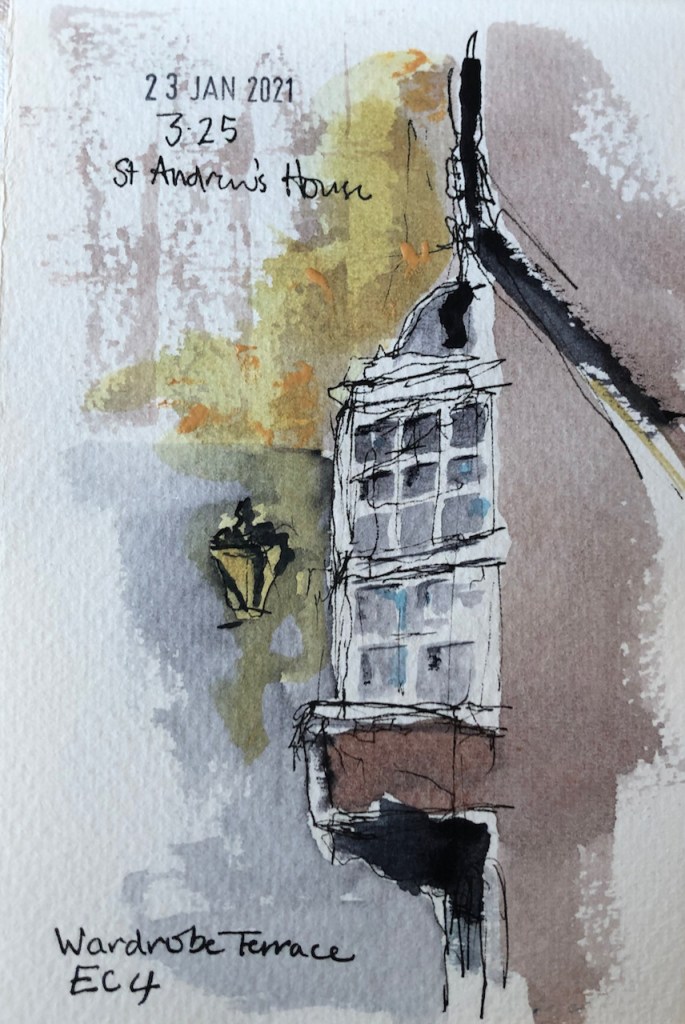
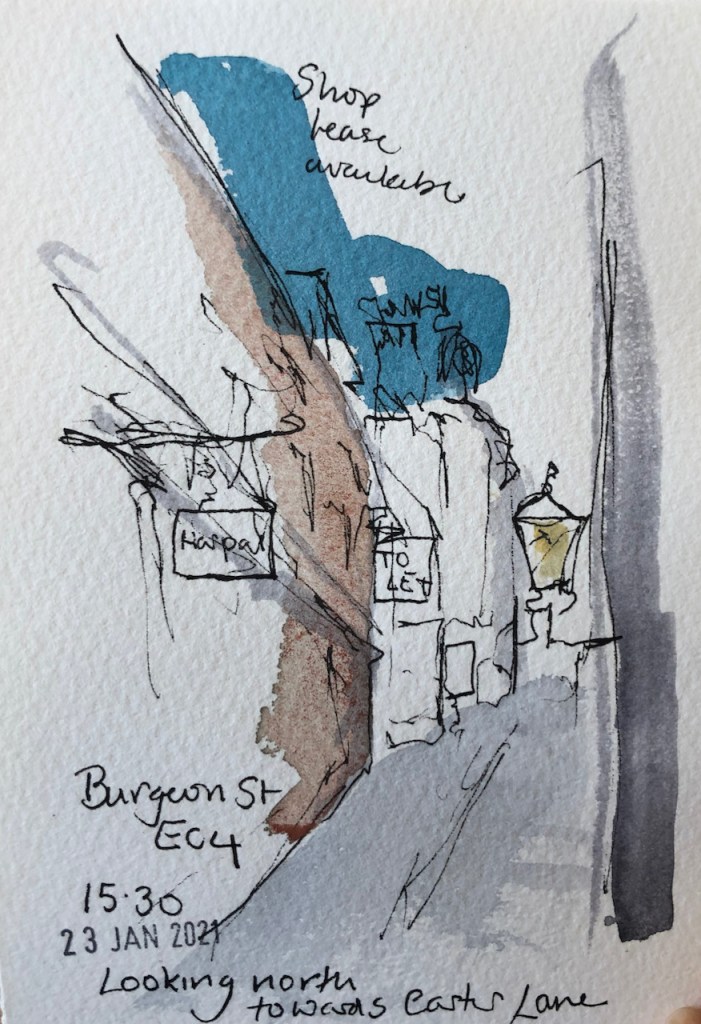
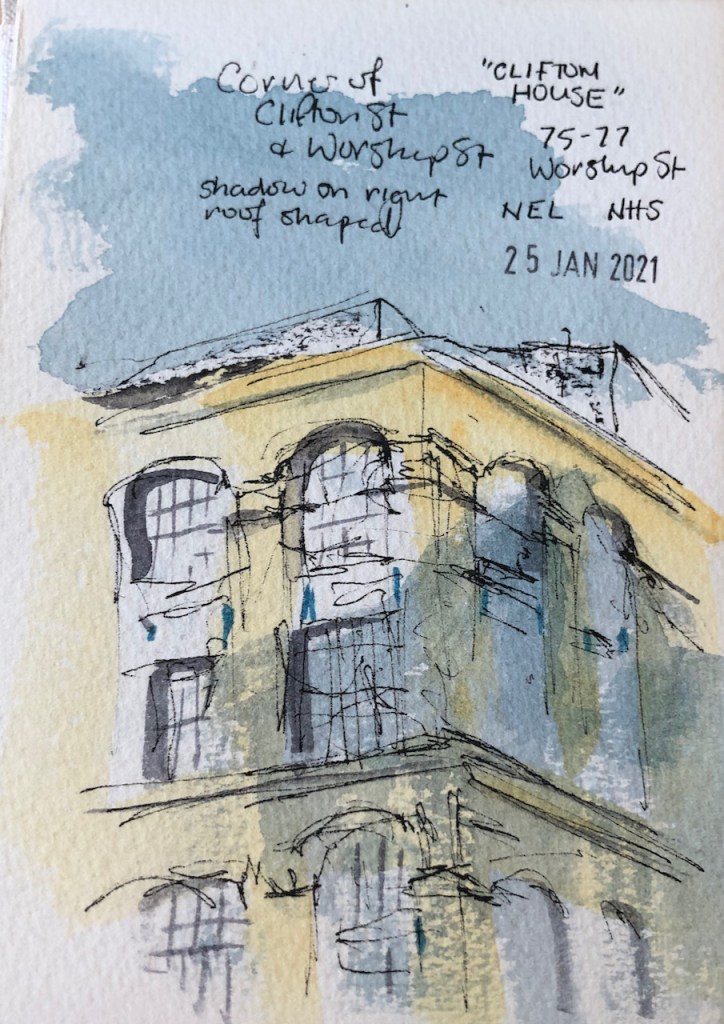
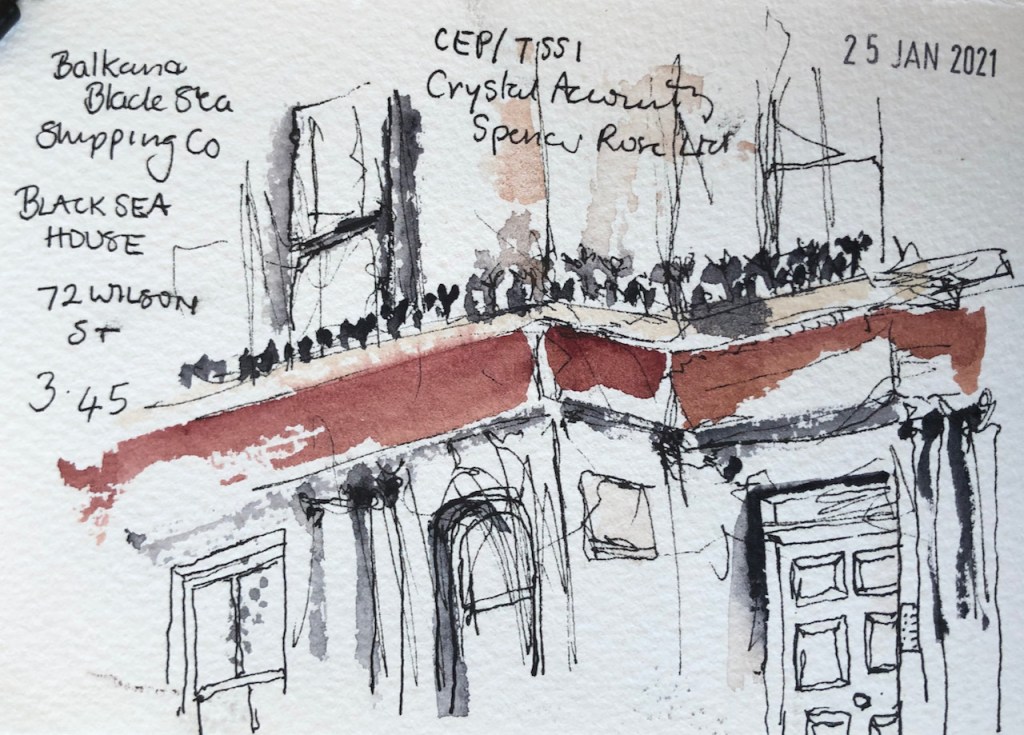
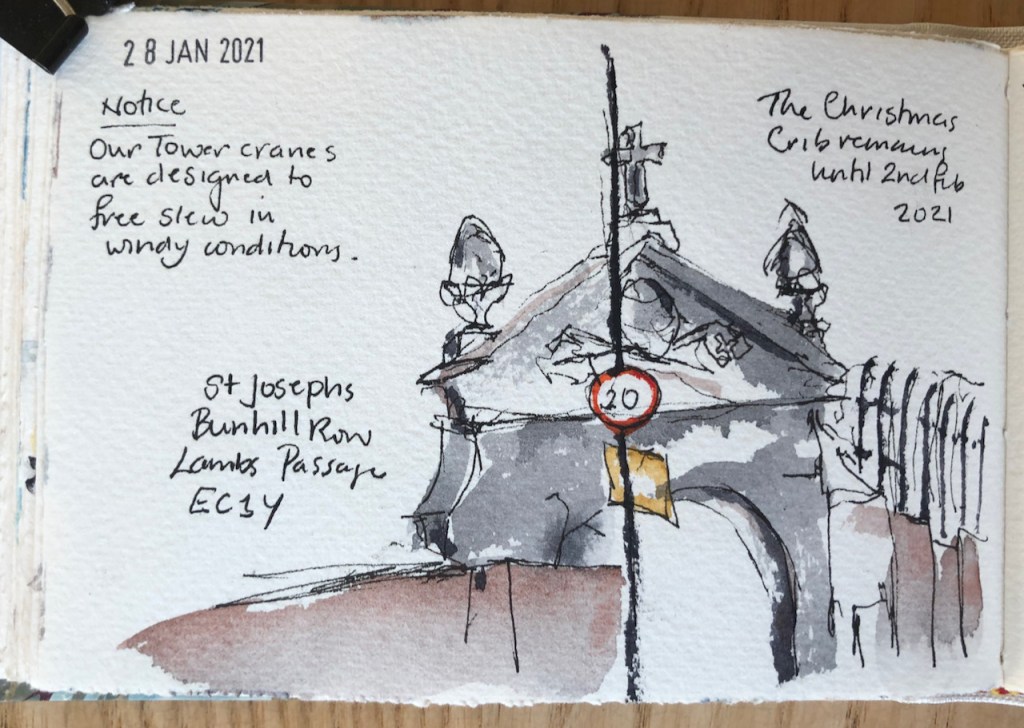
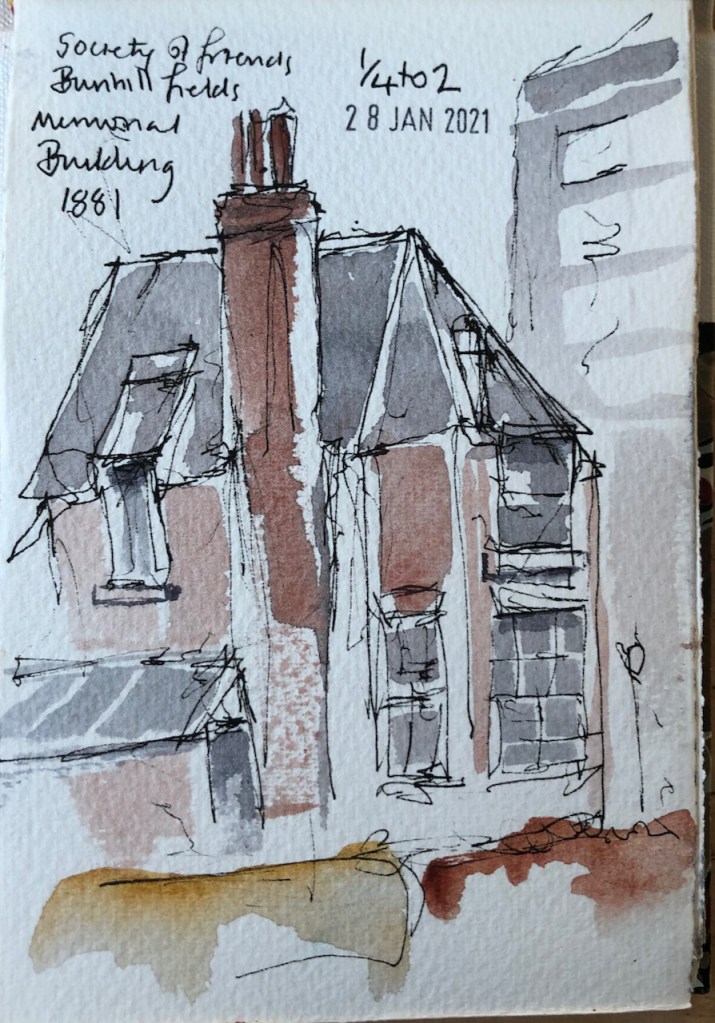
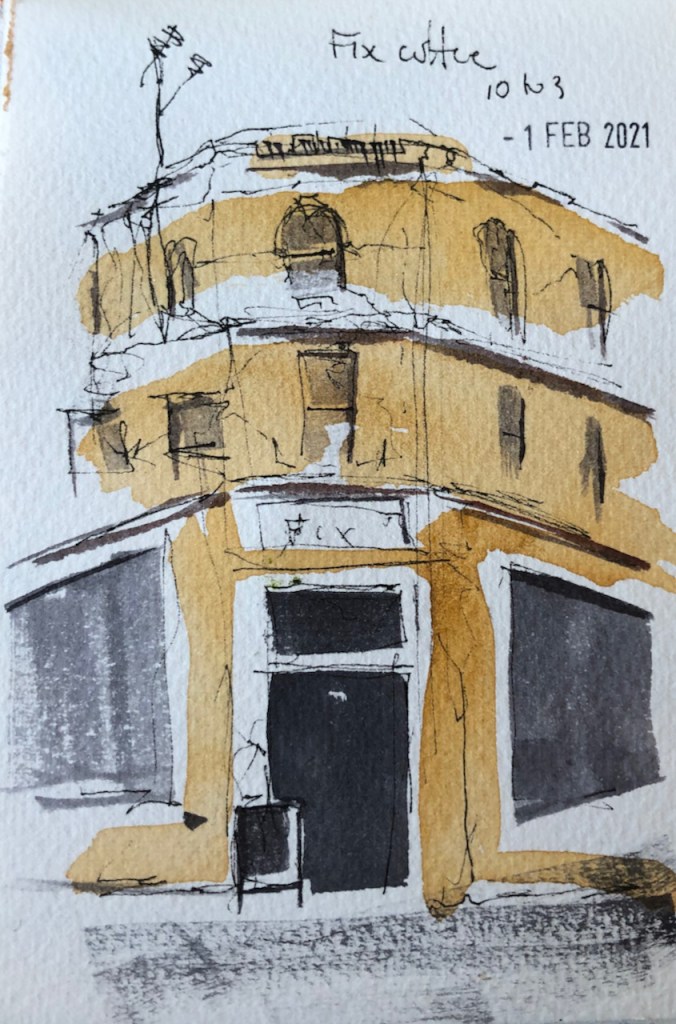
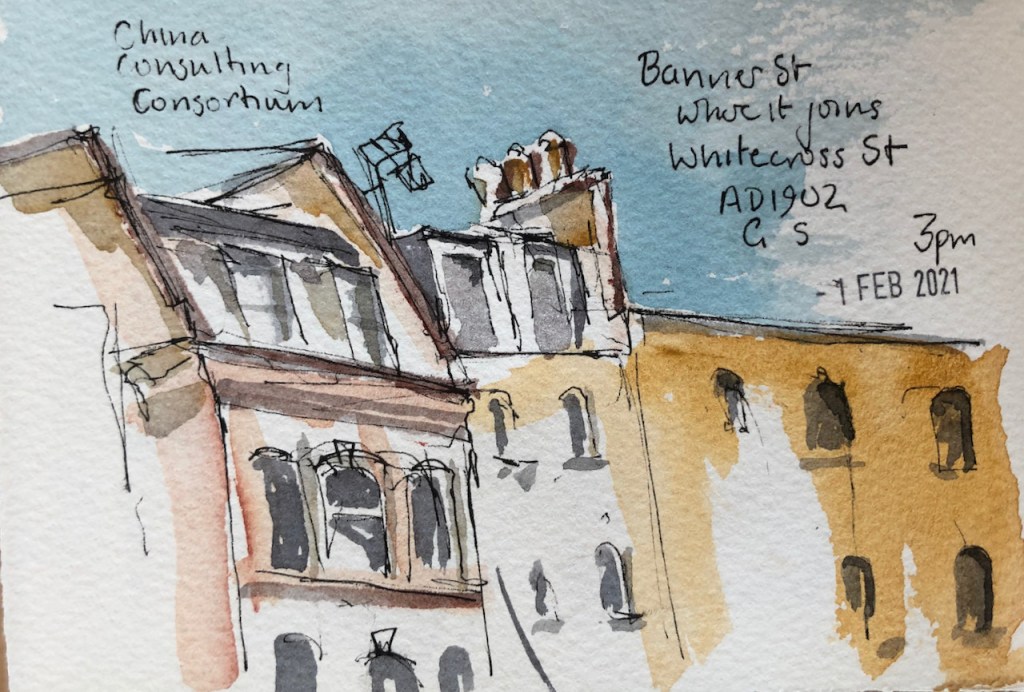
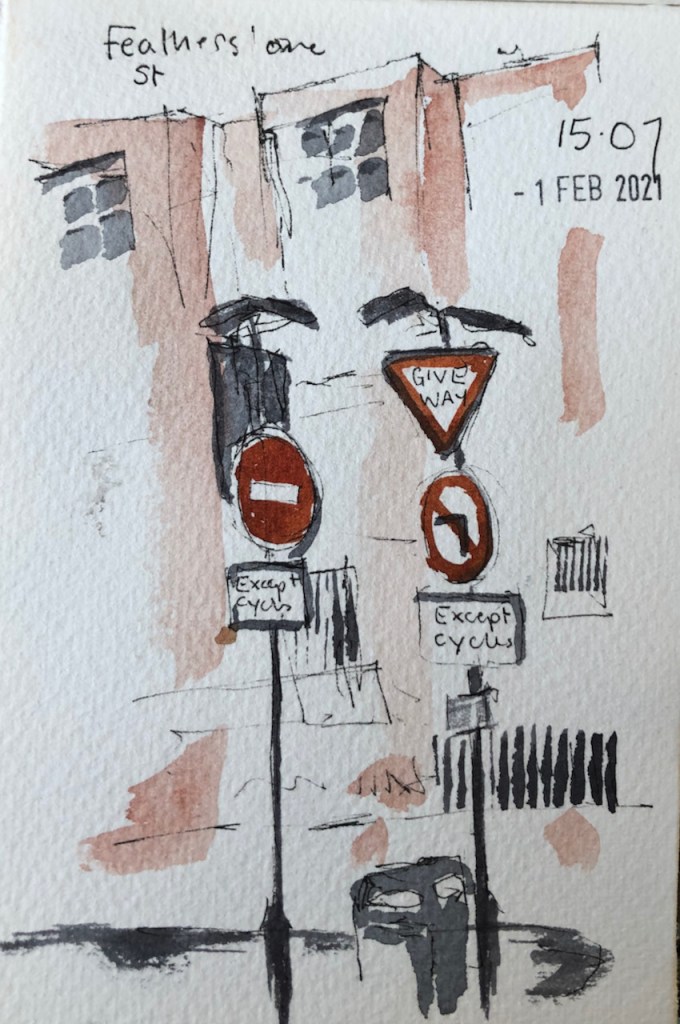
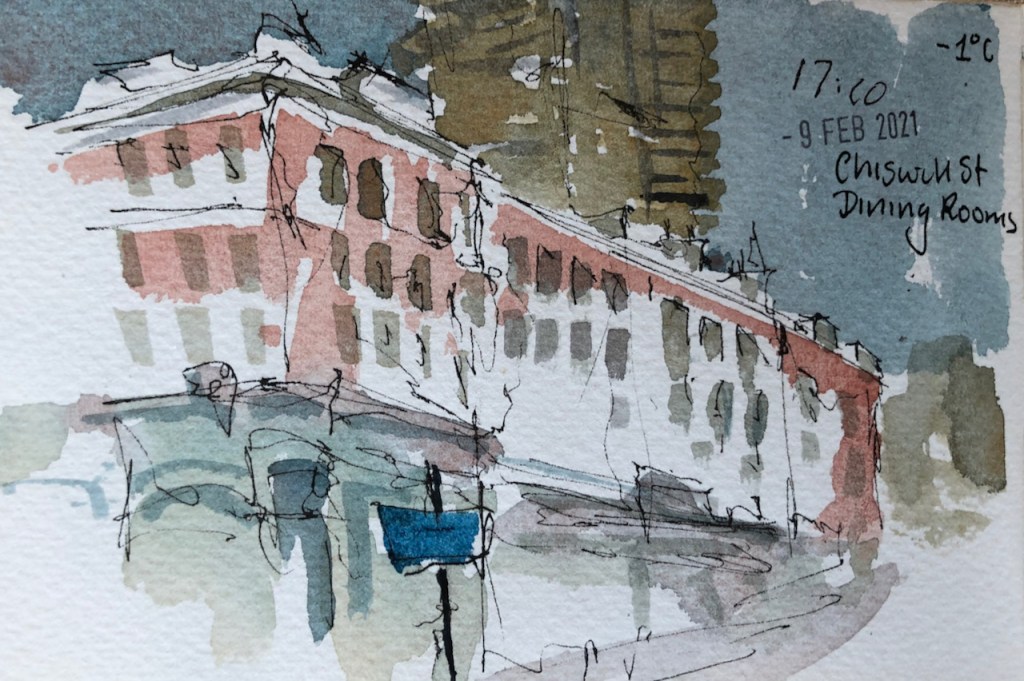
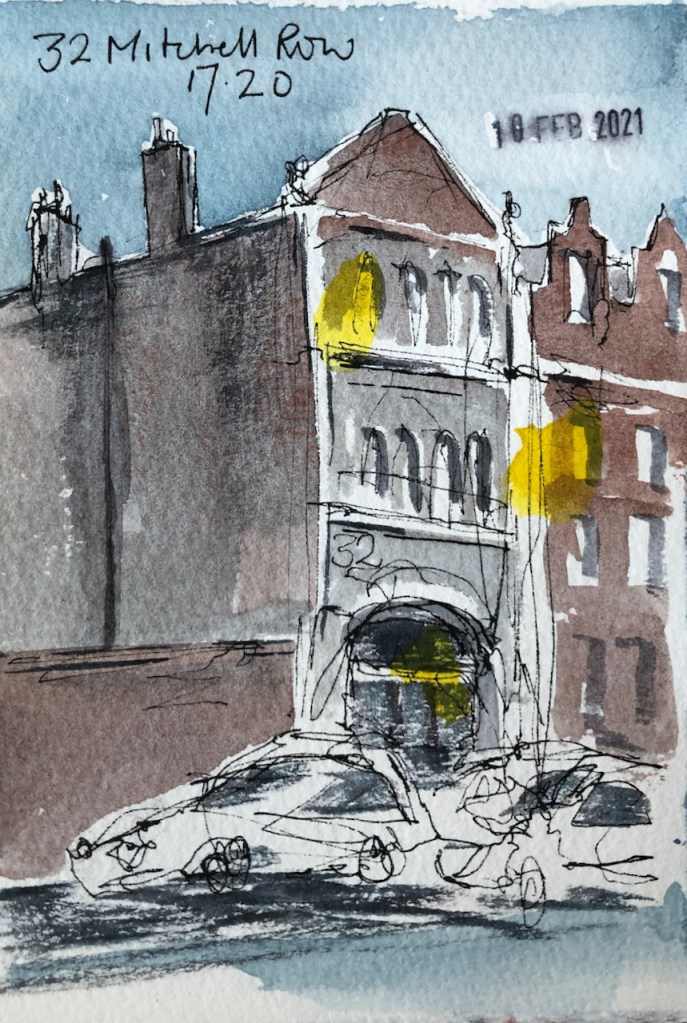
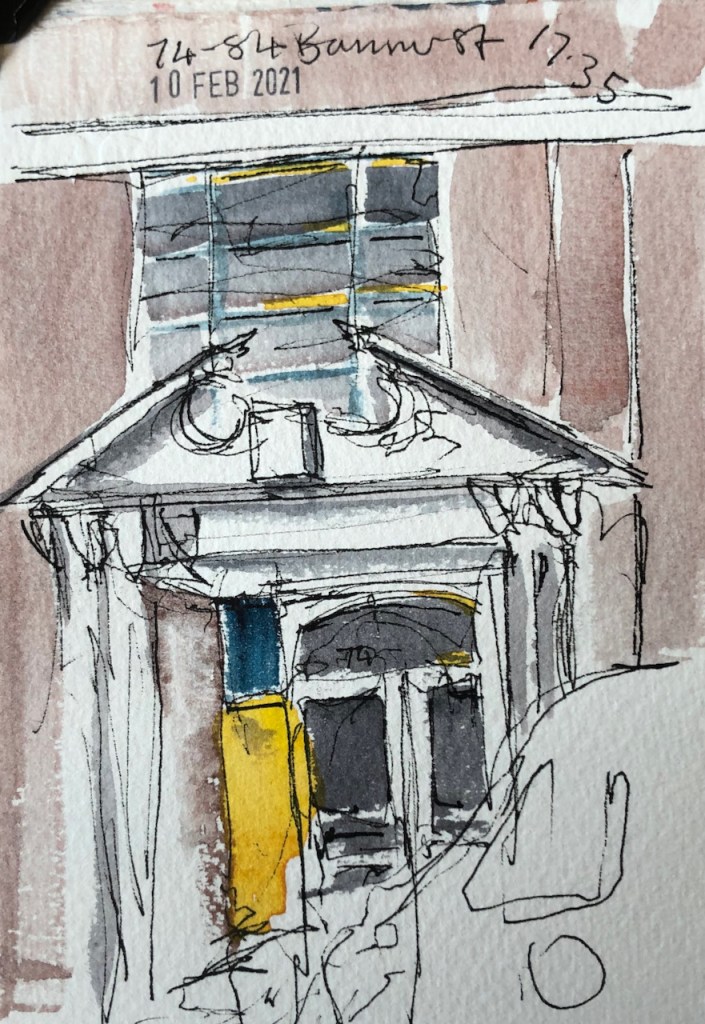
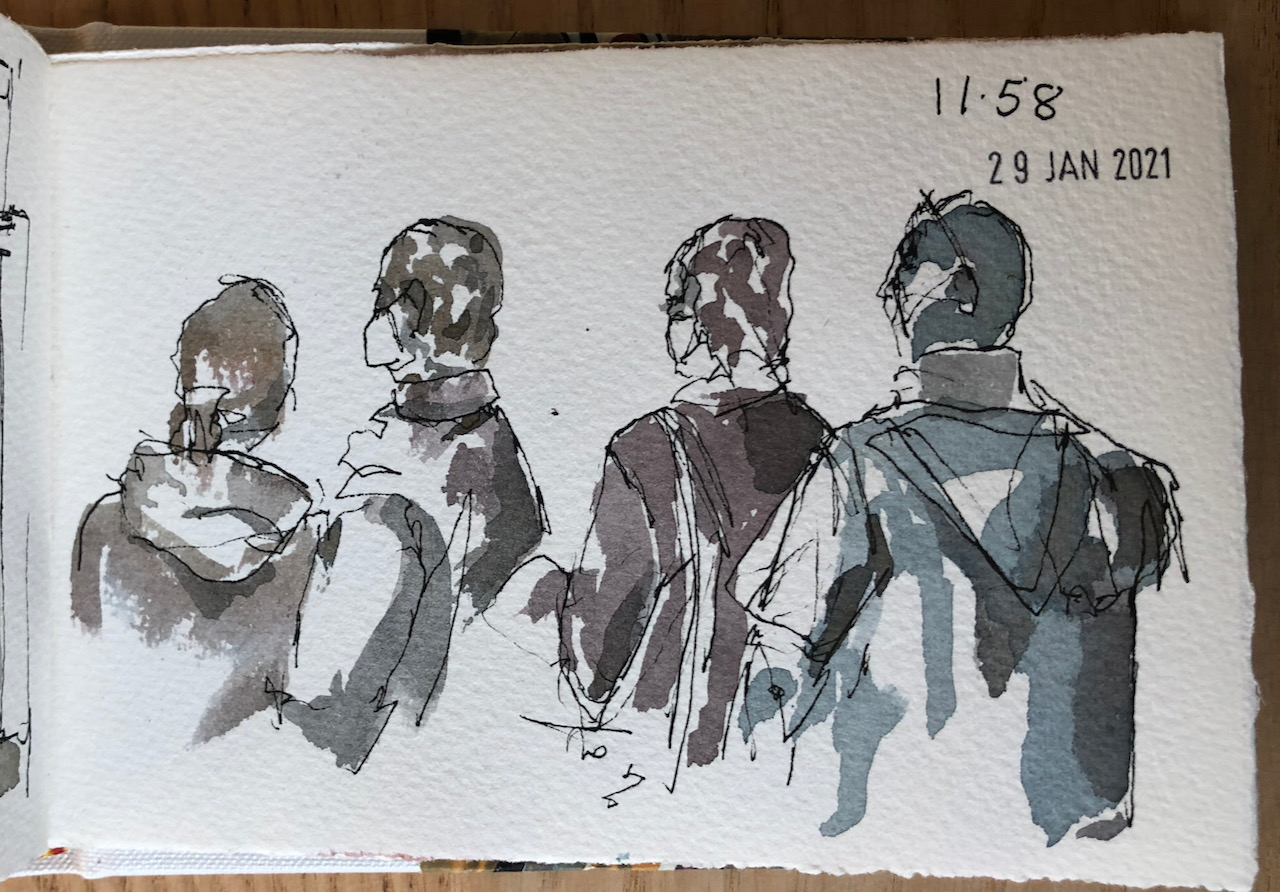
Here are some tiny sketches I made as a result of local walks. I have a small sketchbook, about 3½ inches by 5½ inches, the size of a big mobile phone. On my walks, I pause for a minute or so to notice a view, a detail. I make a few marks in the sketchbook, to remind me. Then when I get home, I make the sketch in watercolour, using the marks, and memory. I am trying to train my memory.
Monument on the South East corner of Finsbury Square.
Royal Exchange
“Shop lease available” – many “To Let” signs…
St Joseph, Catholic Church
Quaker meeting house.
So many instructions…
The pub is closed.
COLPAI building under construction, Central St
Near St Luke’s
Old doorway, modern windows.
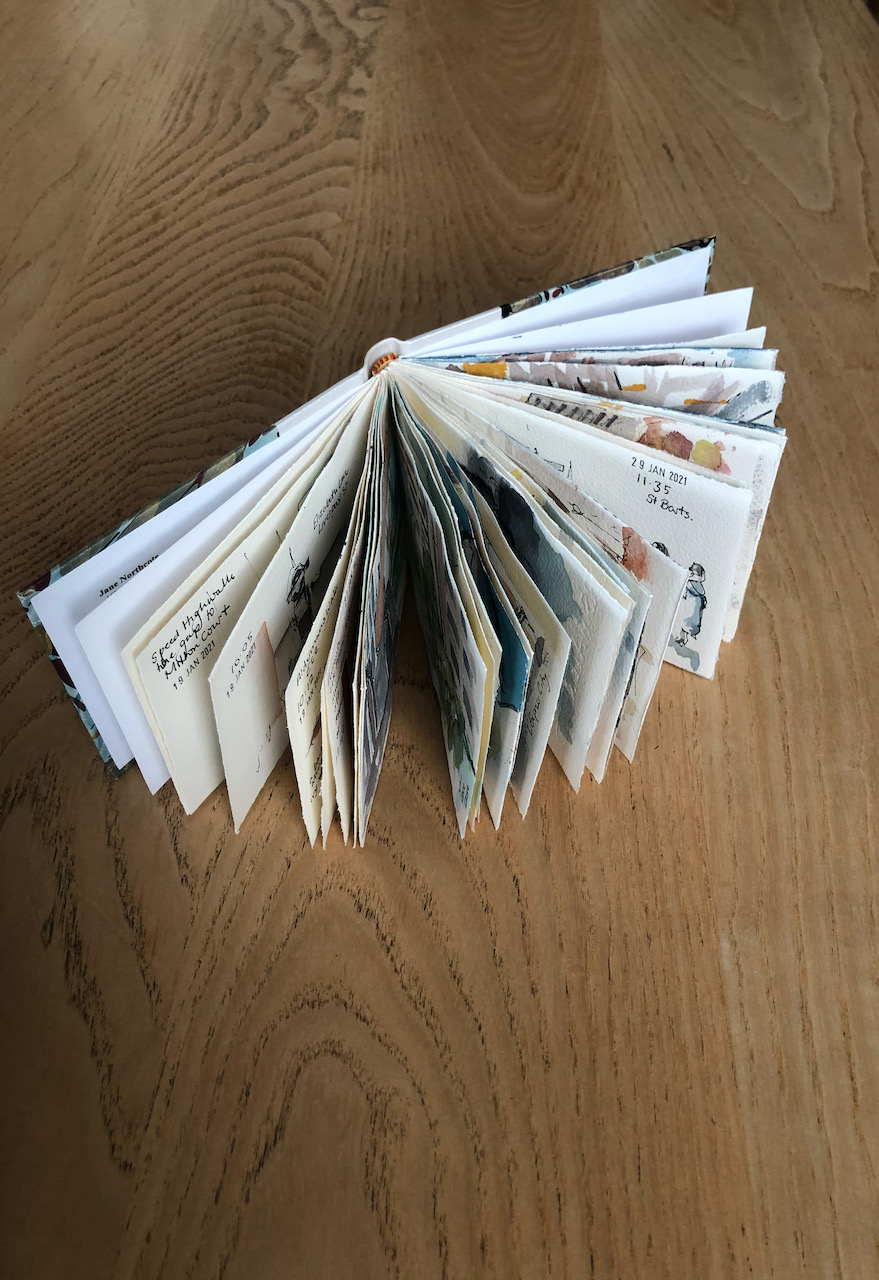
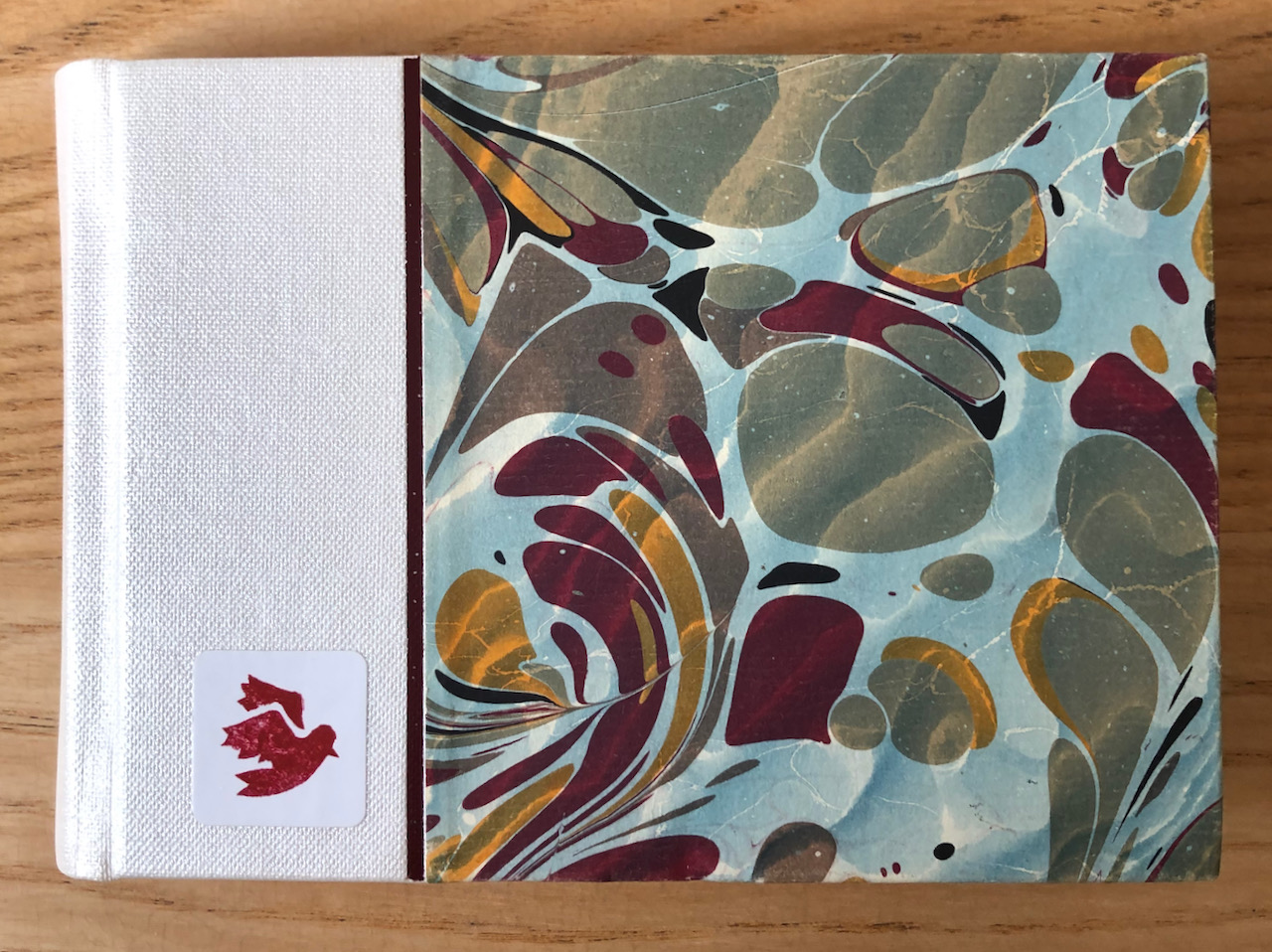
Here is the sketchbook:
It is from The Vintage Paper Company of Orkney. It was bound by Heather Dewick, @heatherthebookbinder on instagram. The paper is Saunders Waterford 200gsm Cold Pressed.
A nice small size for all occasions:
St Barts Hospital, “Welcome to the Vaccine Hub”
Colours are all Daniel Smith Watercolours. Pen is Sailor Reglus fountain pen with De Atramentis Black document ink (waterproof).
Click a button below to share this post online, email it, or print it:
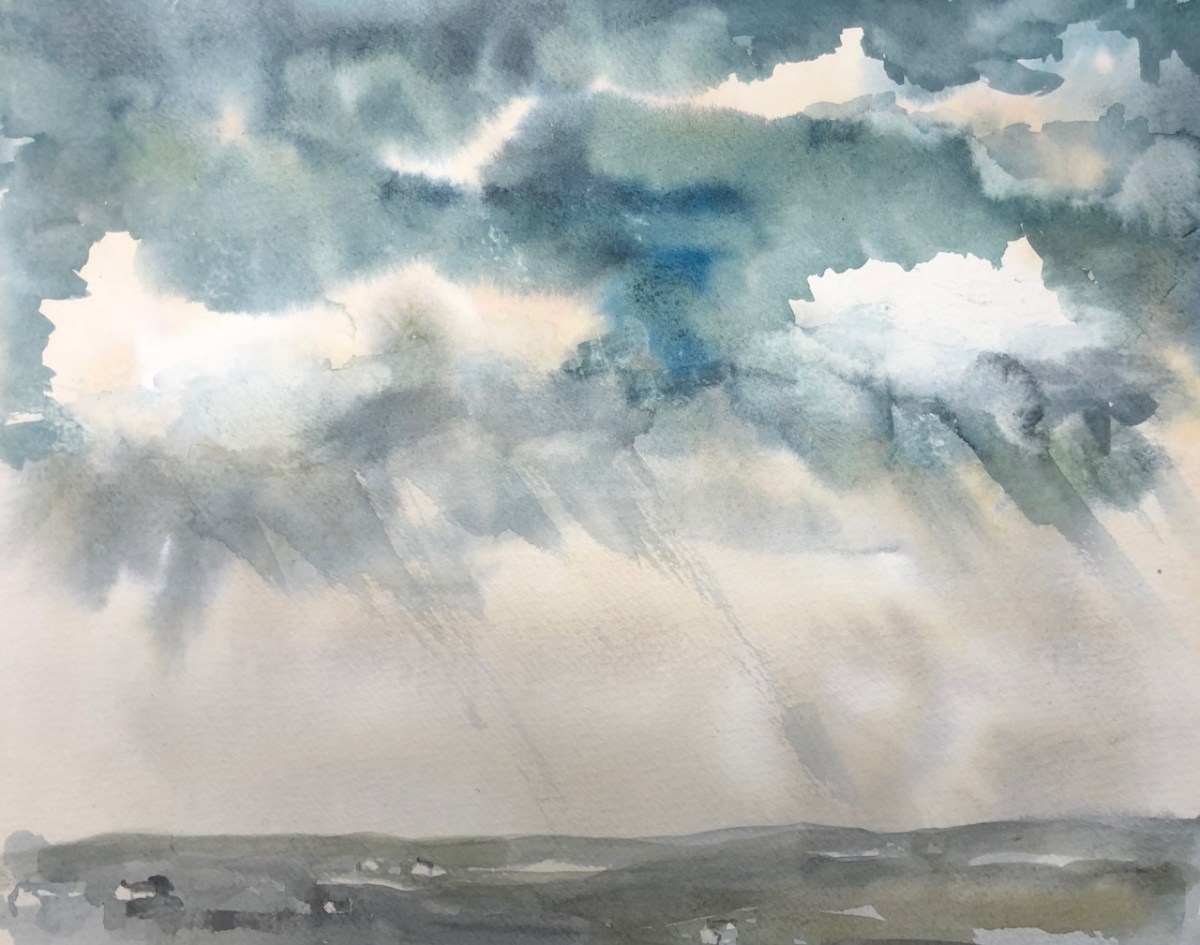
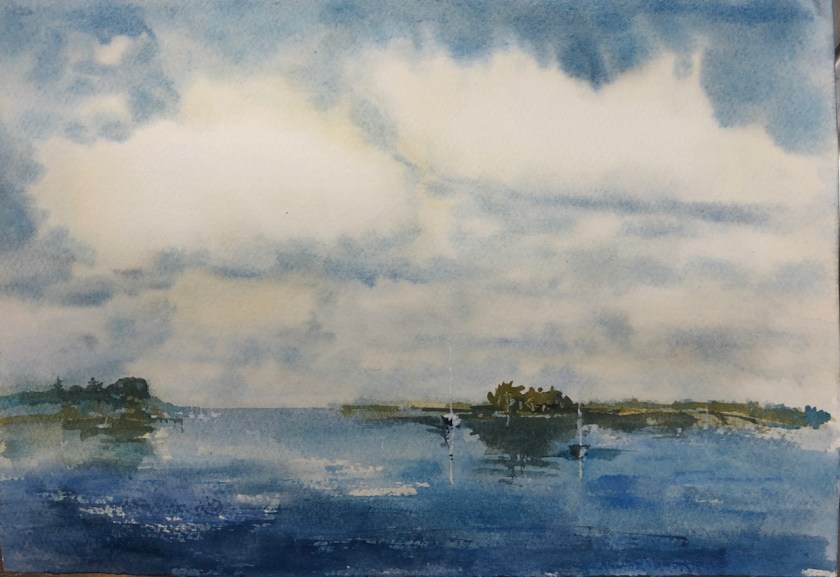
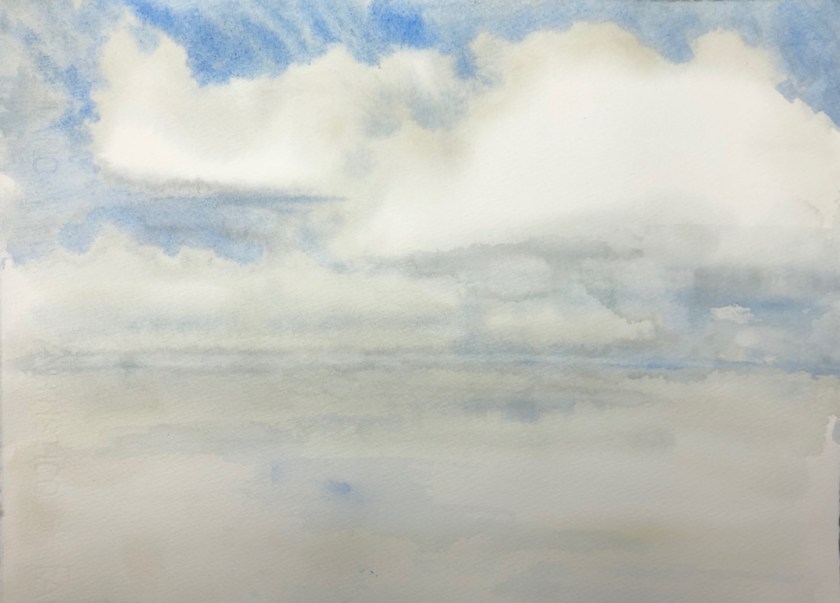
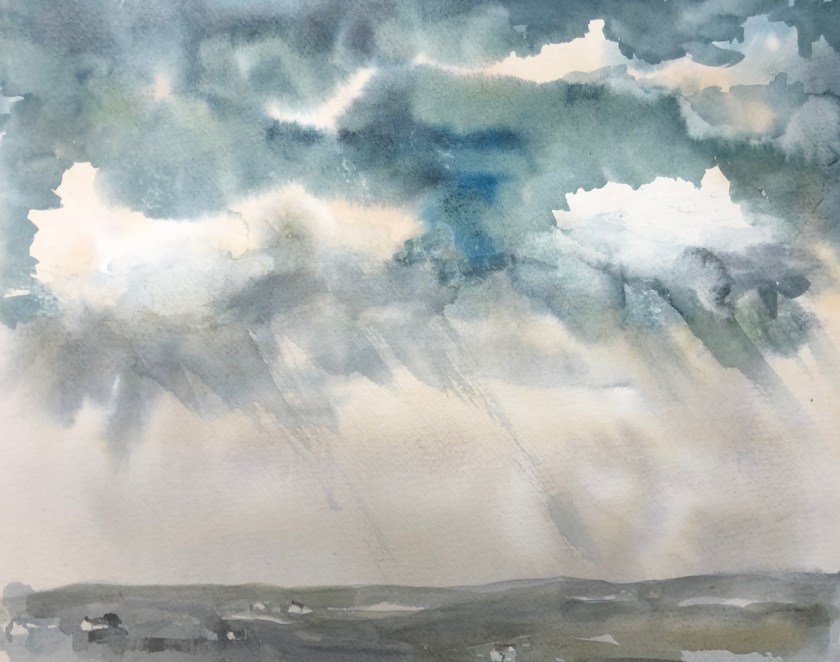
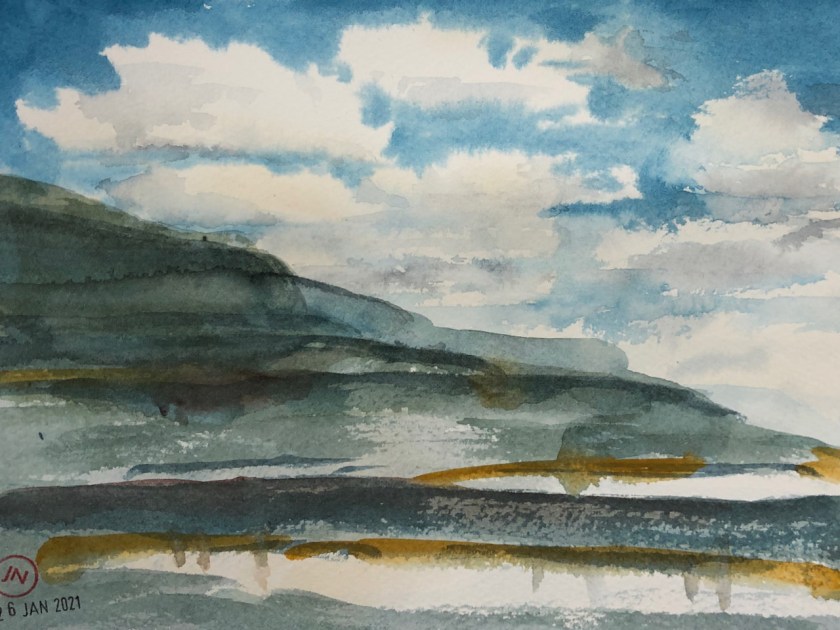
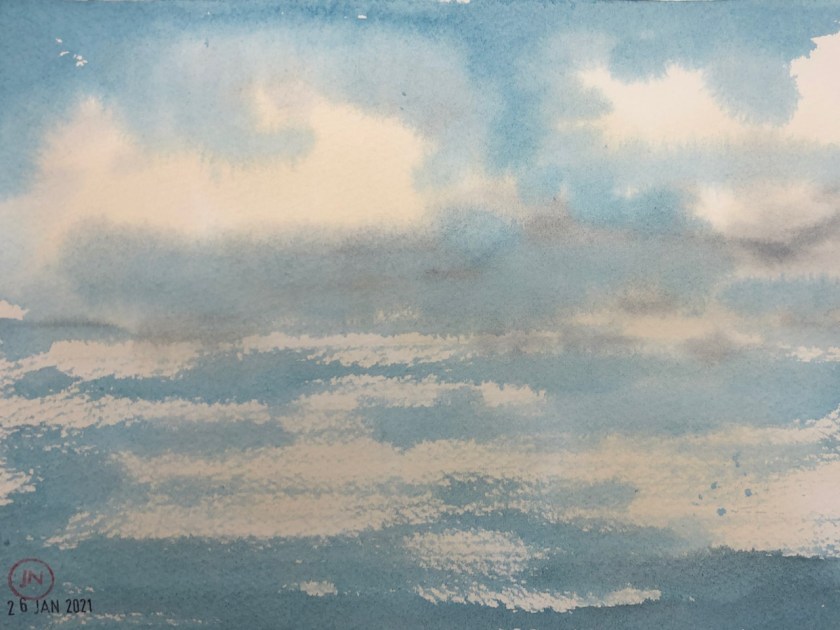
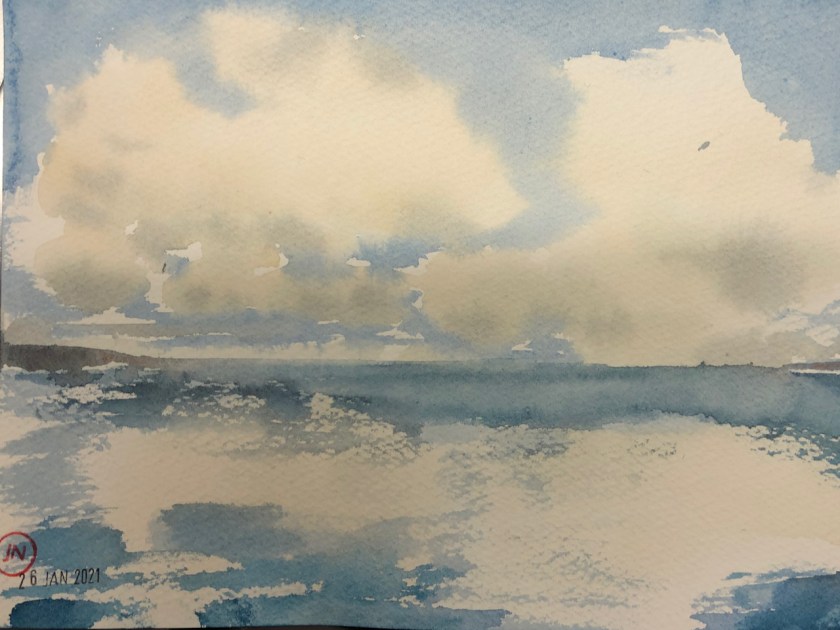
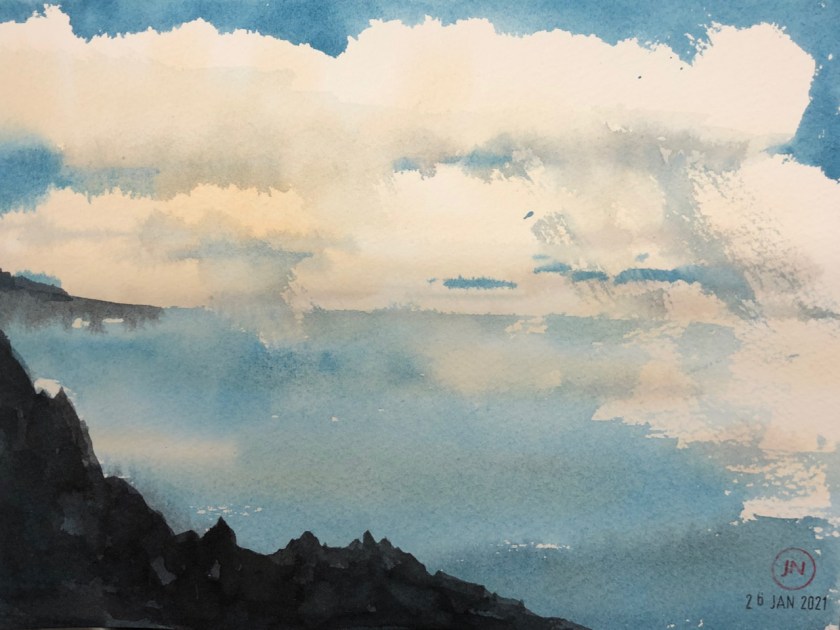
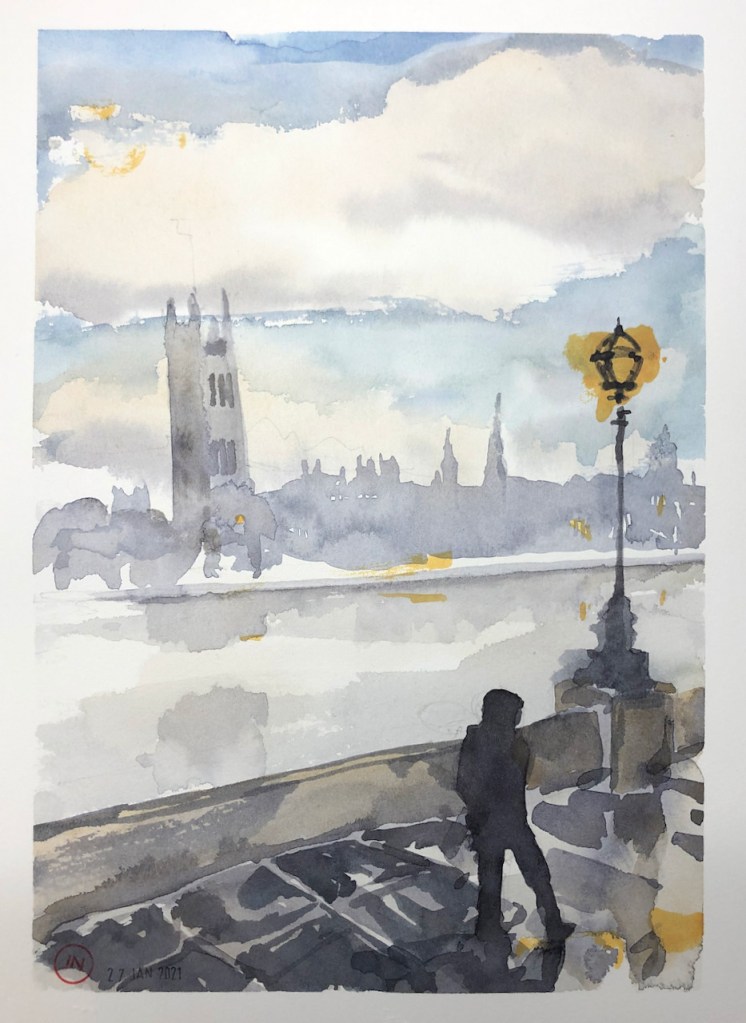
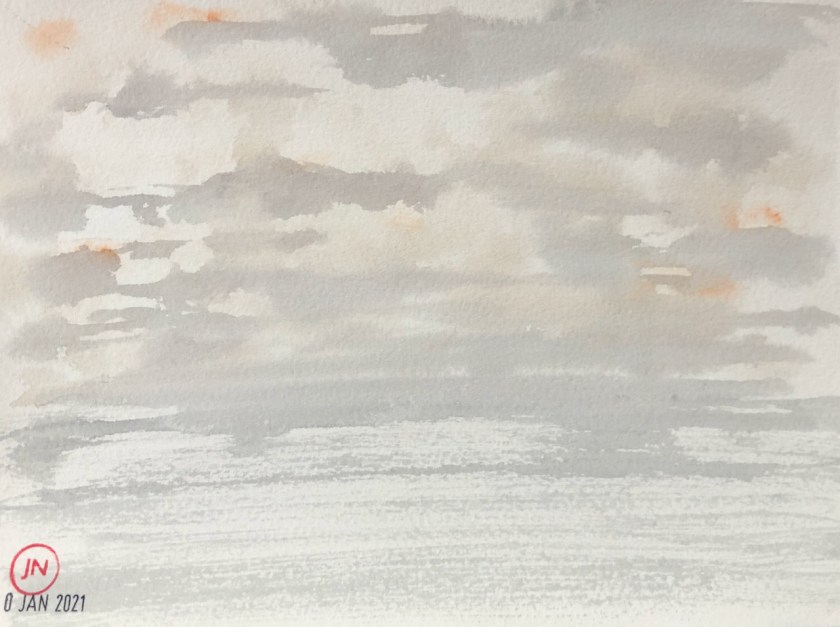
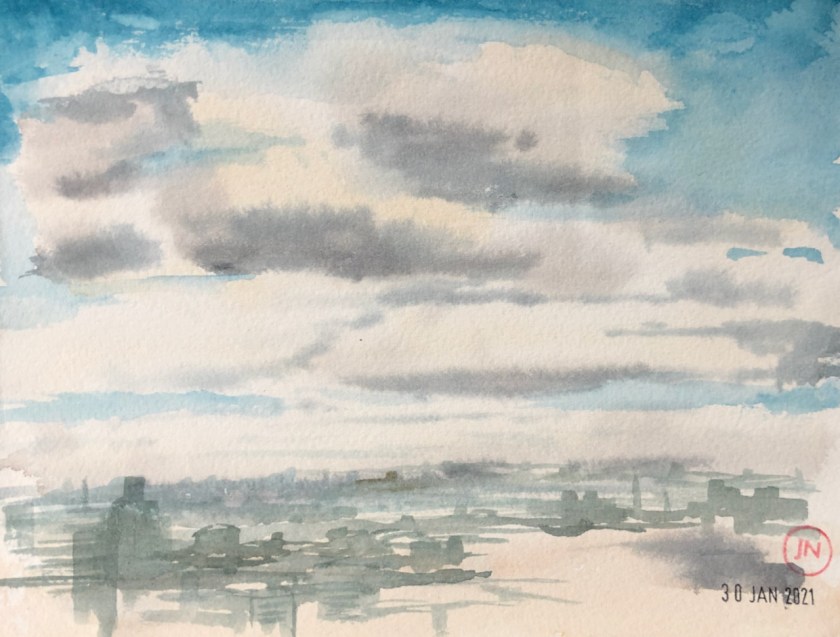
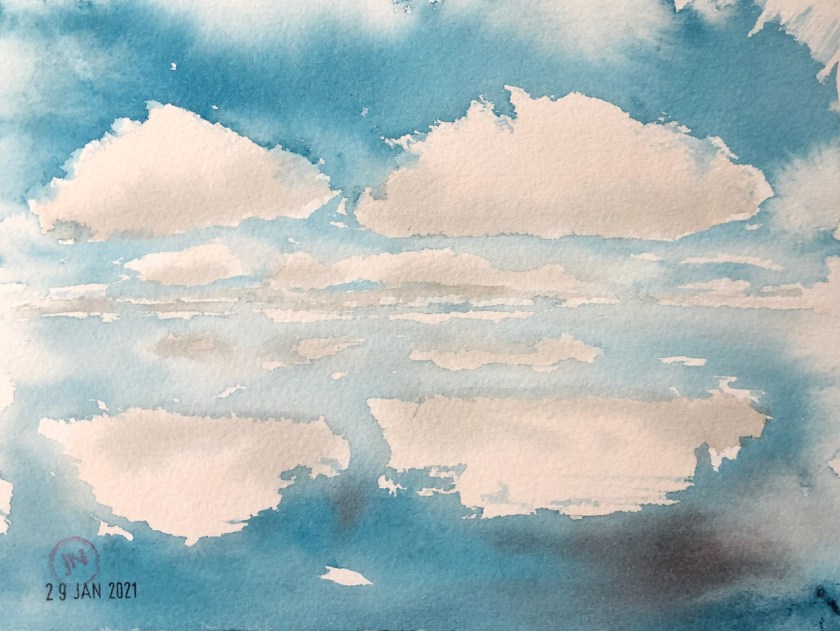
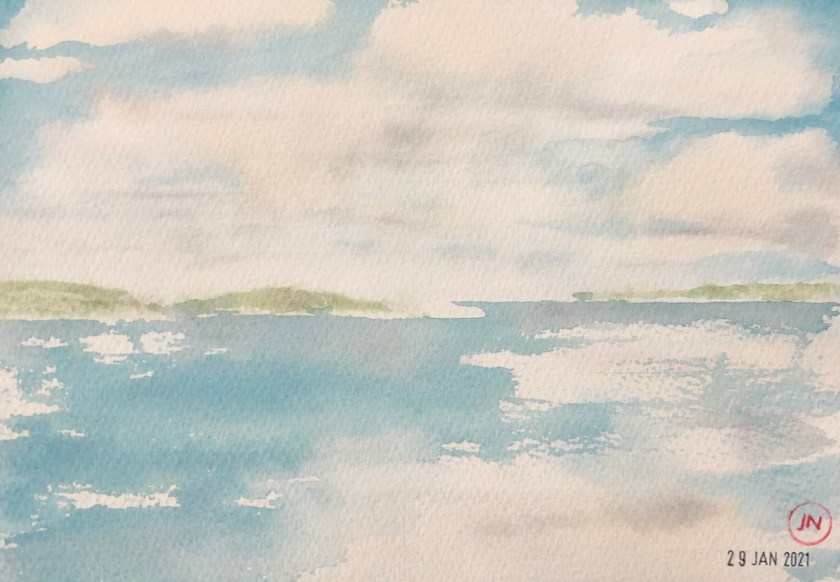
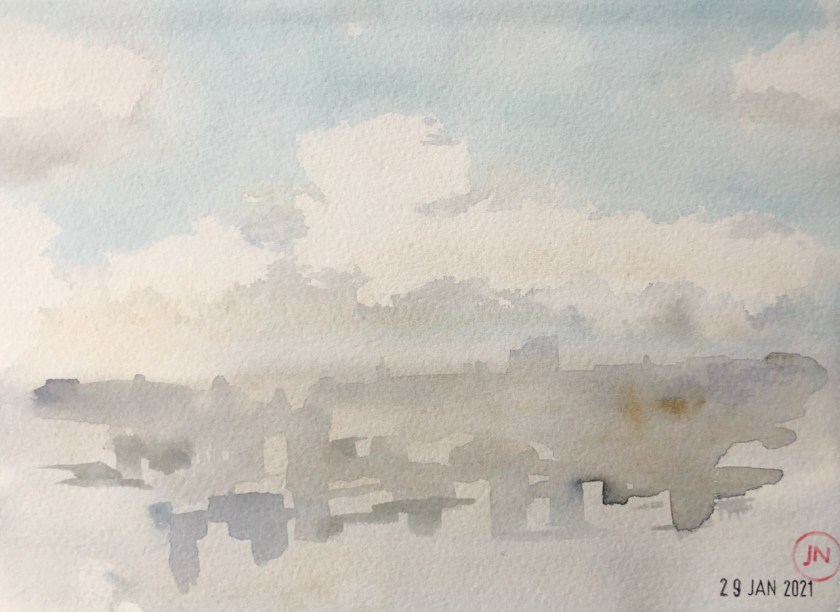
Here is a collection of cloud studies. This is me experimenting with “wet on wet” watercolour technique, from my desk. Click the image to see it bigger.
(1) Scene with boat (8″x11″)
(2) Clouds and sea (15″x11″)
(3)Shetland (12″x10″)
(4) Walk on the cliffs (9″x6″)
(5) A calm day (9″x6″)
(7) Headlands (9″x6″)
(8) Clouds and rocks (9″x6″)
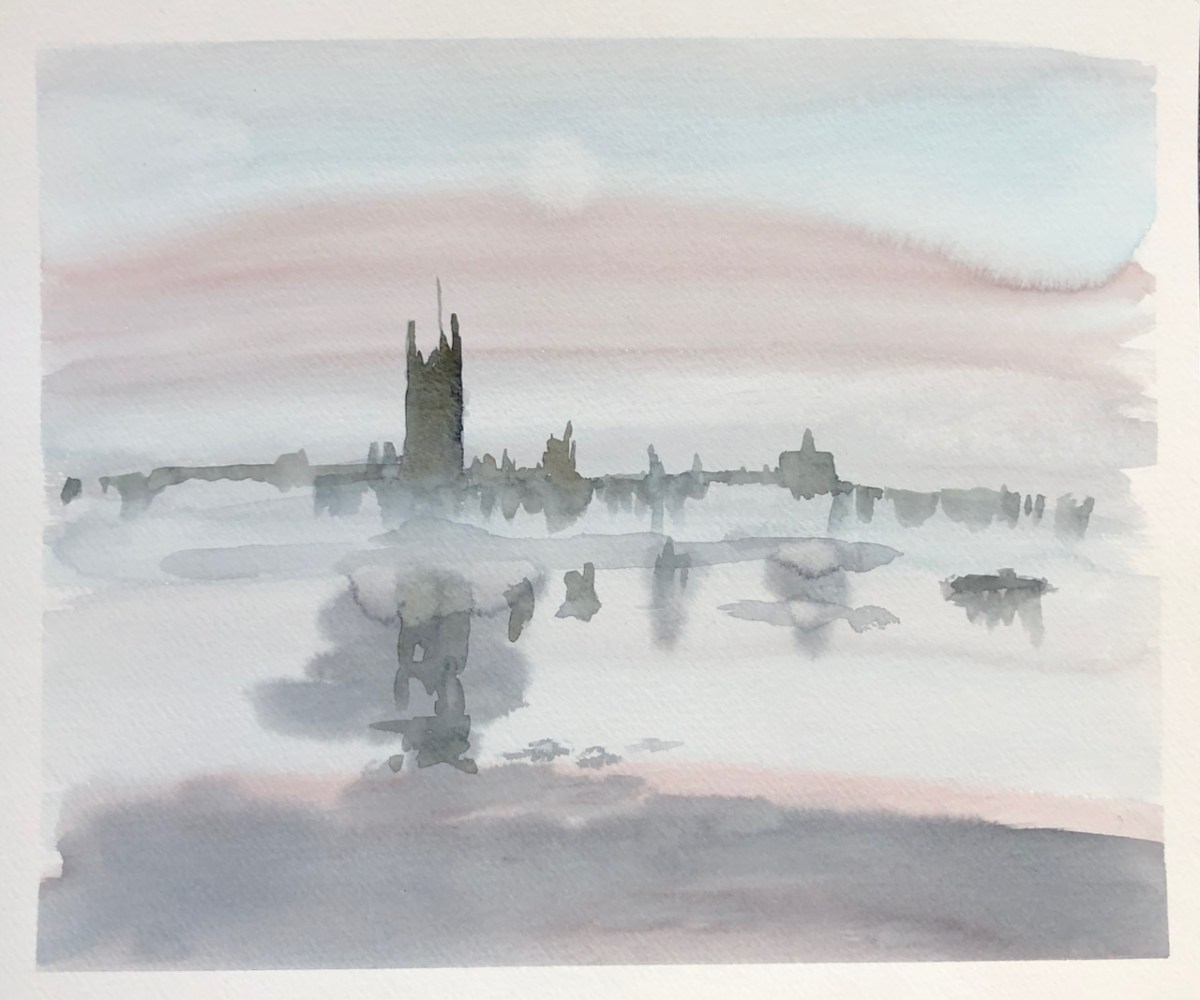
(9) Westminster (9″x12″)
(10) The North Sea (7″x5″)
(11) “..clearing from the West later” (7″x5″)
(12) Clouds in the sea (7″ x5″) [NFS*]
(13) Headlands (8″x6″)
(14) Mist over the city (7″x5″) [NFS*]
This wet-on-wet technique is a learning curve. For one thing, it makes my desk where I’m working all wet. I’m not yet sure how I’m going to translate this technique into a method I can use on location. I’m working on it. It’s certainly fun to see how the watercolour flows. The technique is a bit unpredictable, like tie-dying, or sourdough baking or surfing. One has to learn to guide rather than control.
I’m learning this wet-on-wet technique from the talented watercolour artist Matthew White in a video I’ve been watching.
Click a button below to share this post online, email it, or print it:
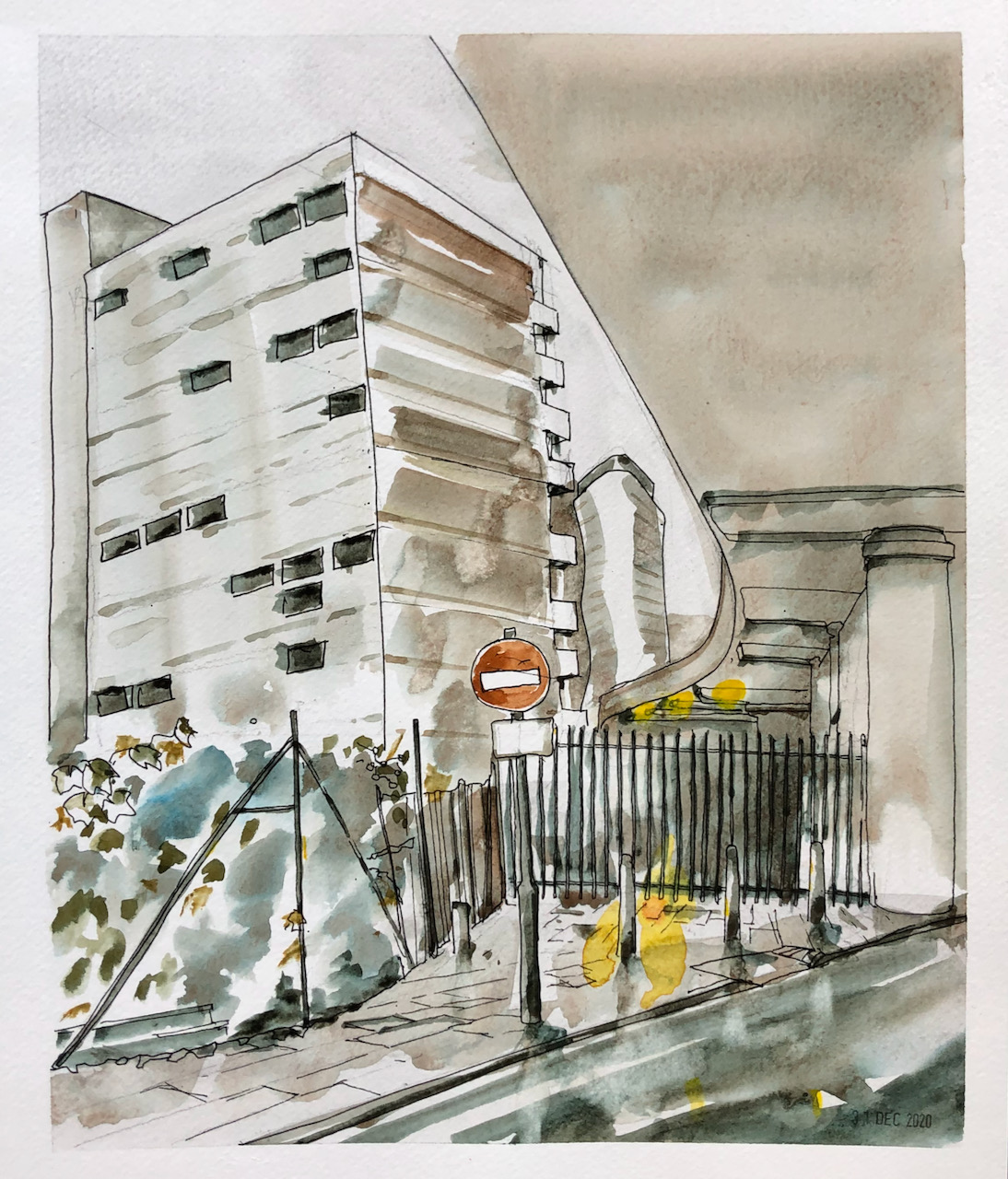
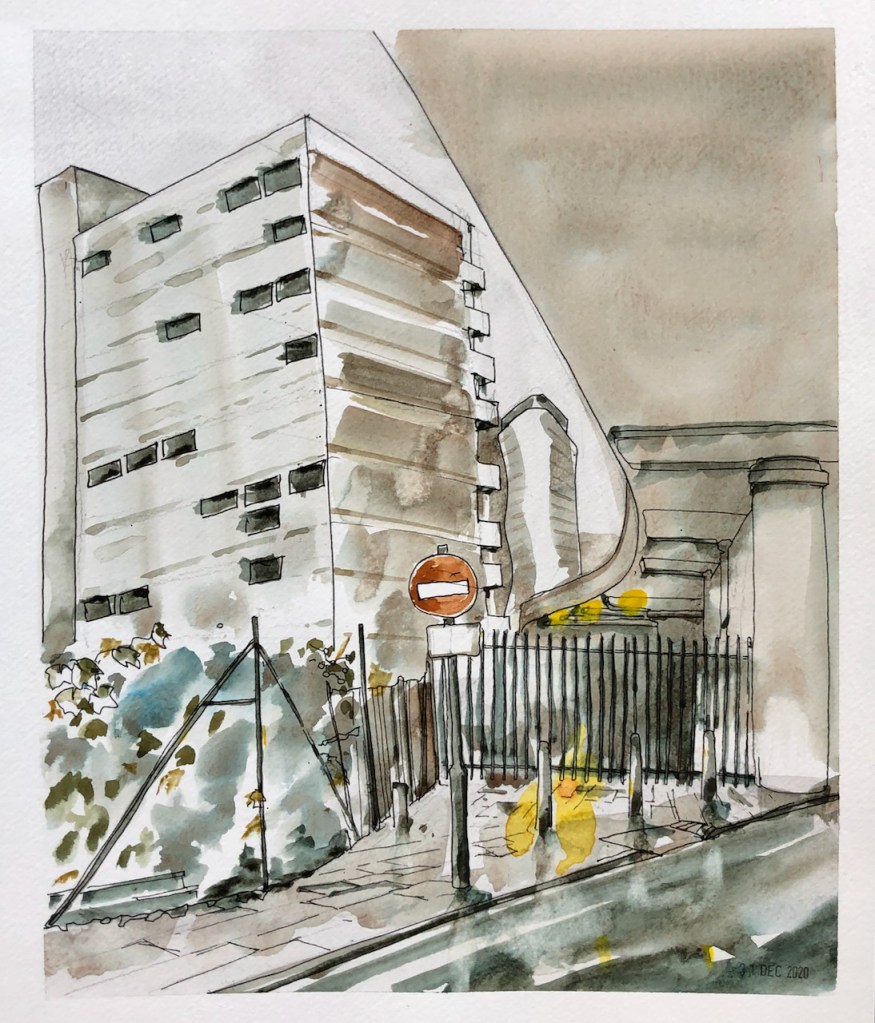
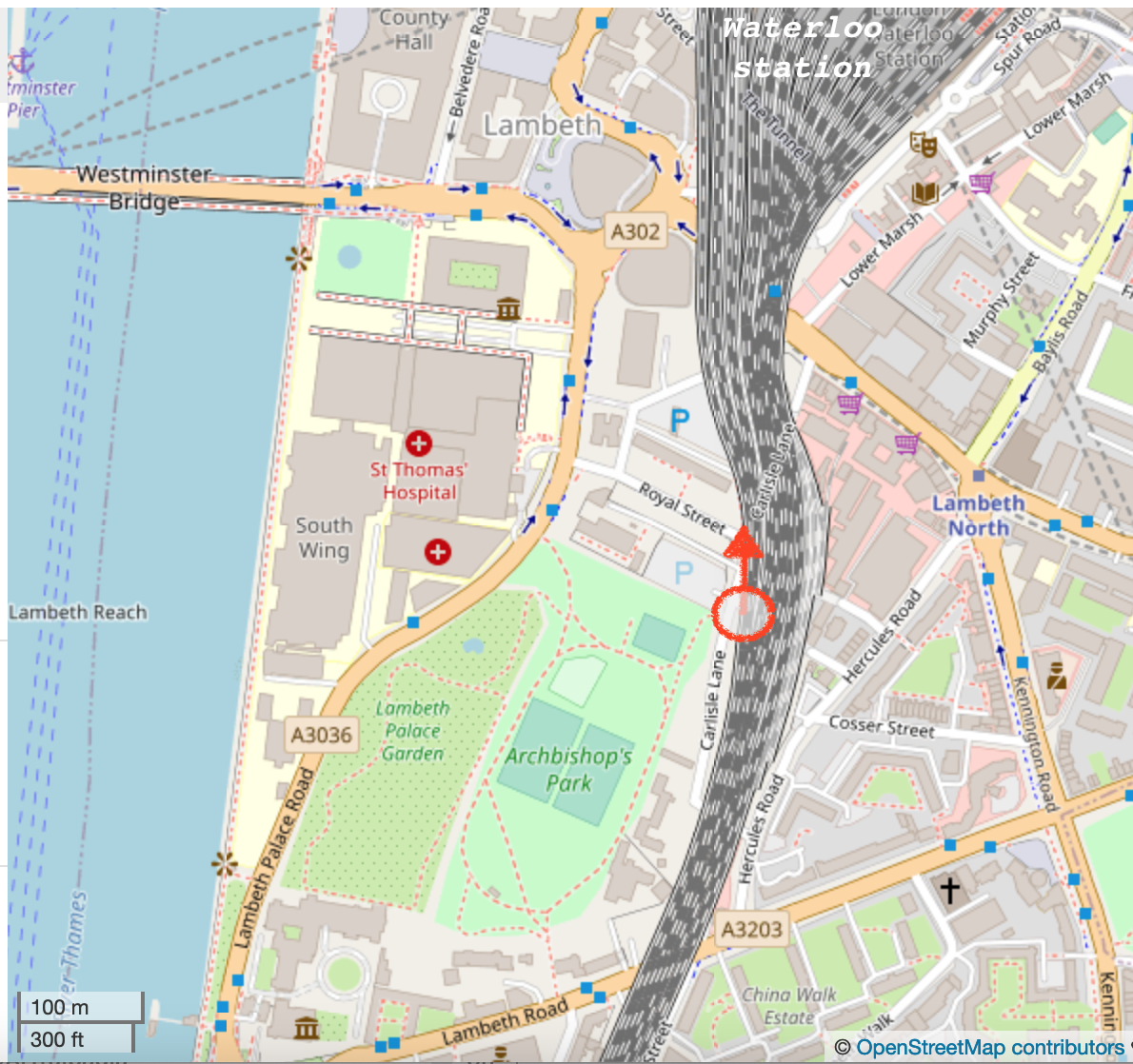
There are some wonderful railway arches near Waterloo. They are architectural marvels, with striking mathematical curves and uncountable numbers of bricks. Here is a view from underneath one such arch, on Carlisle Lane, looking North towards Waterloo.
Carlisle Lane, looking North. 12″ x 10″ From photo reference, 31st Dec 2020
Map showing location of drawing, (c) Open Street Map contributors. Click to enlarge.
The building on the left of the picture is “Canterbury House” on Royal Street, built 1959-1960. The greenery at the front is part of gardens and allotments, adjacent to Archbishop’s Park.
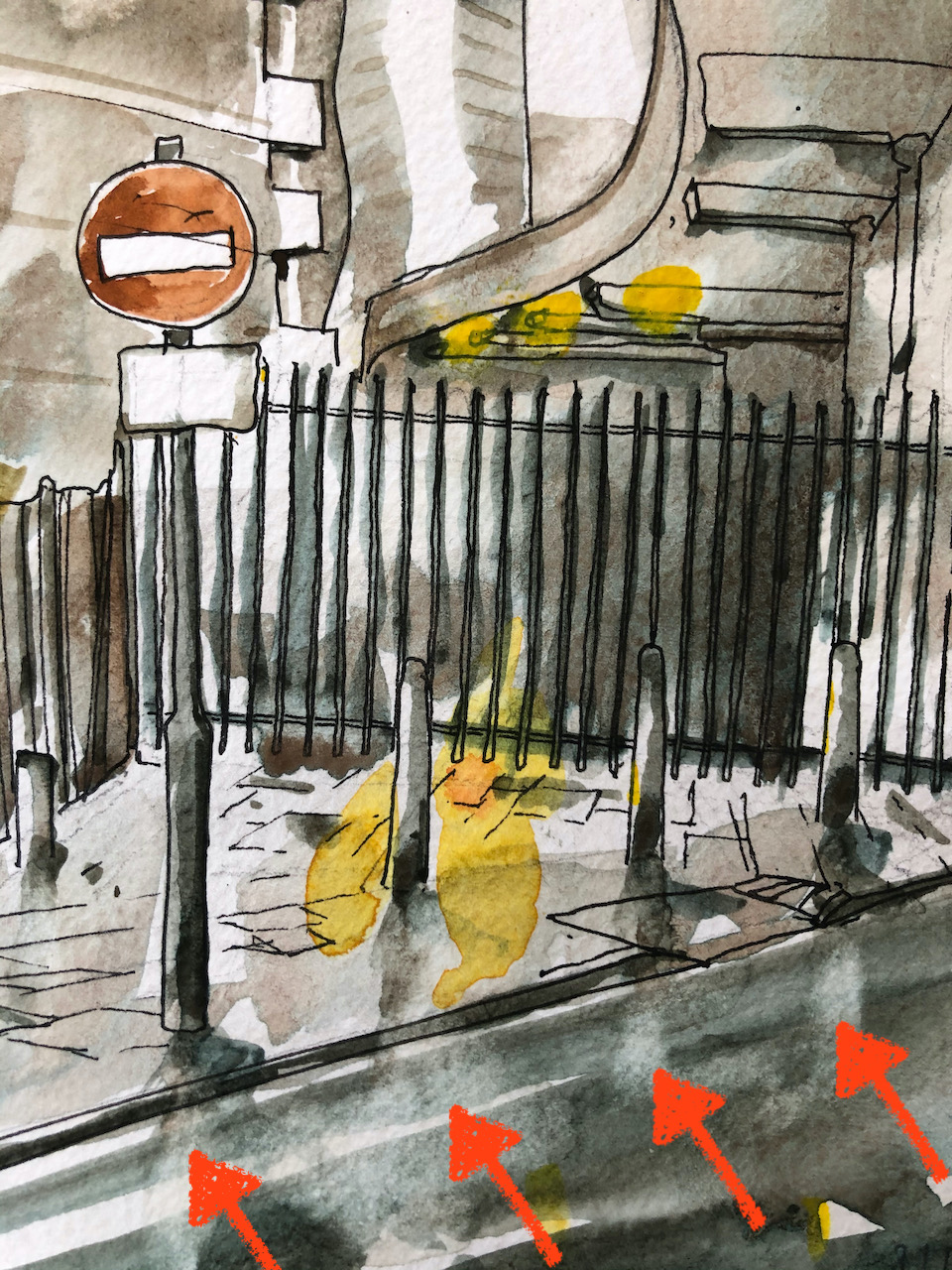
The white notice below the “No Entry” sign says “Except cycles”.
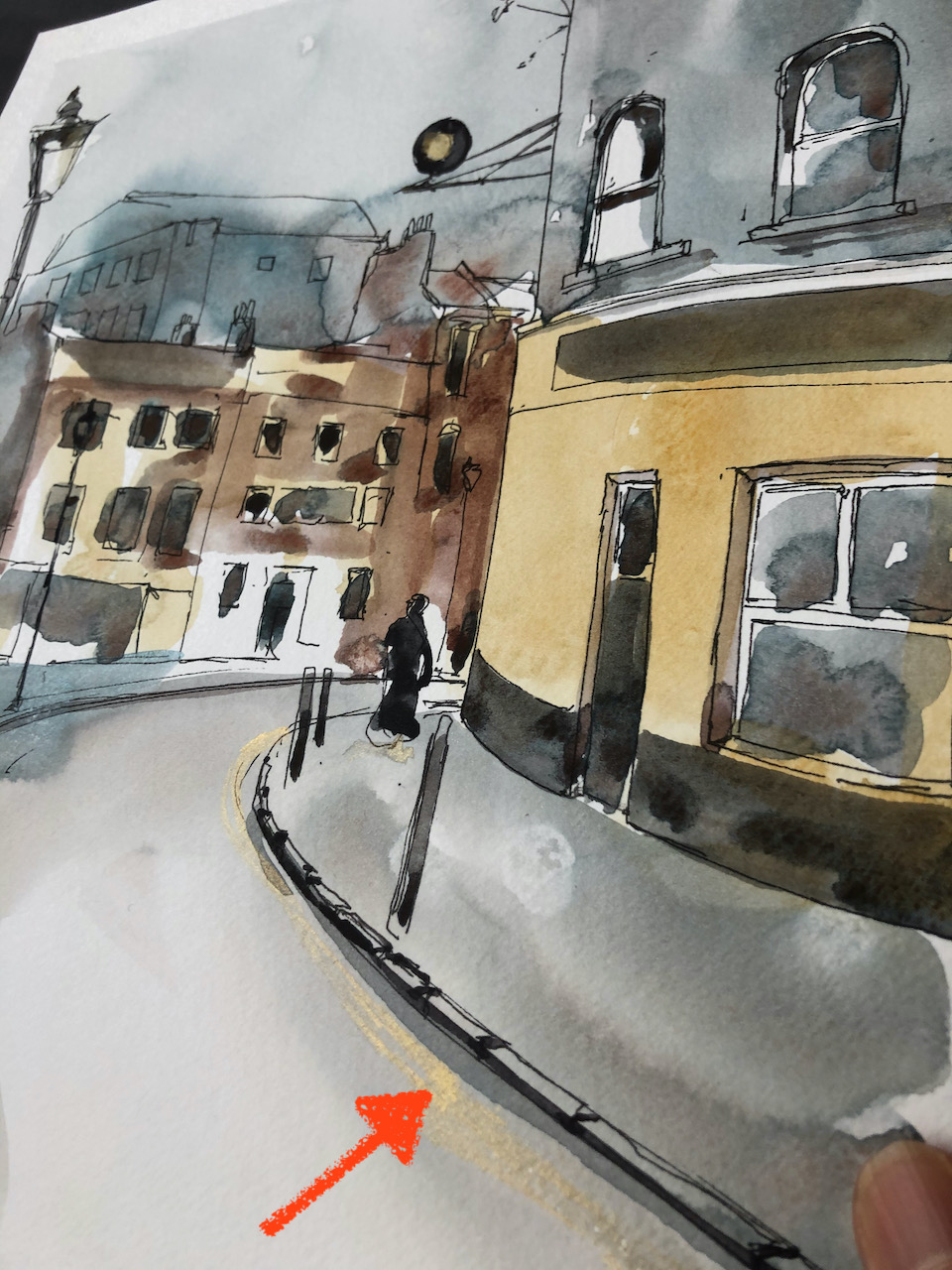
Here is a close up of the picture. The parts marked with arrows show where I lifted the wet paint off the paper to make a white mark.
The main colours are Phthalo Turquoise, Fired Red Ochre and Mars Yellow, with a bit of Transparent Pyrrol Orange for the traffic sign. This is on a sheet of Jackson’s watercolour paper, 12″ x 10″.
Click a button below to share this post online, email it, or print it:
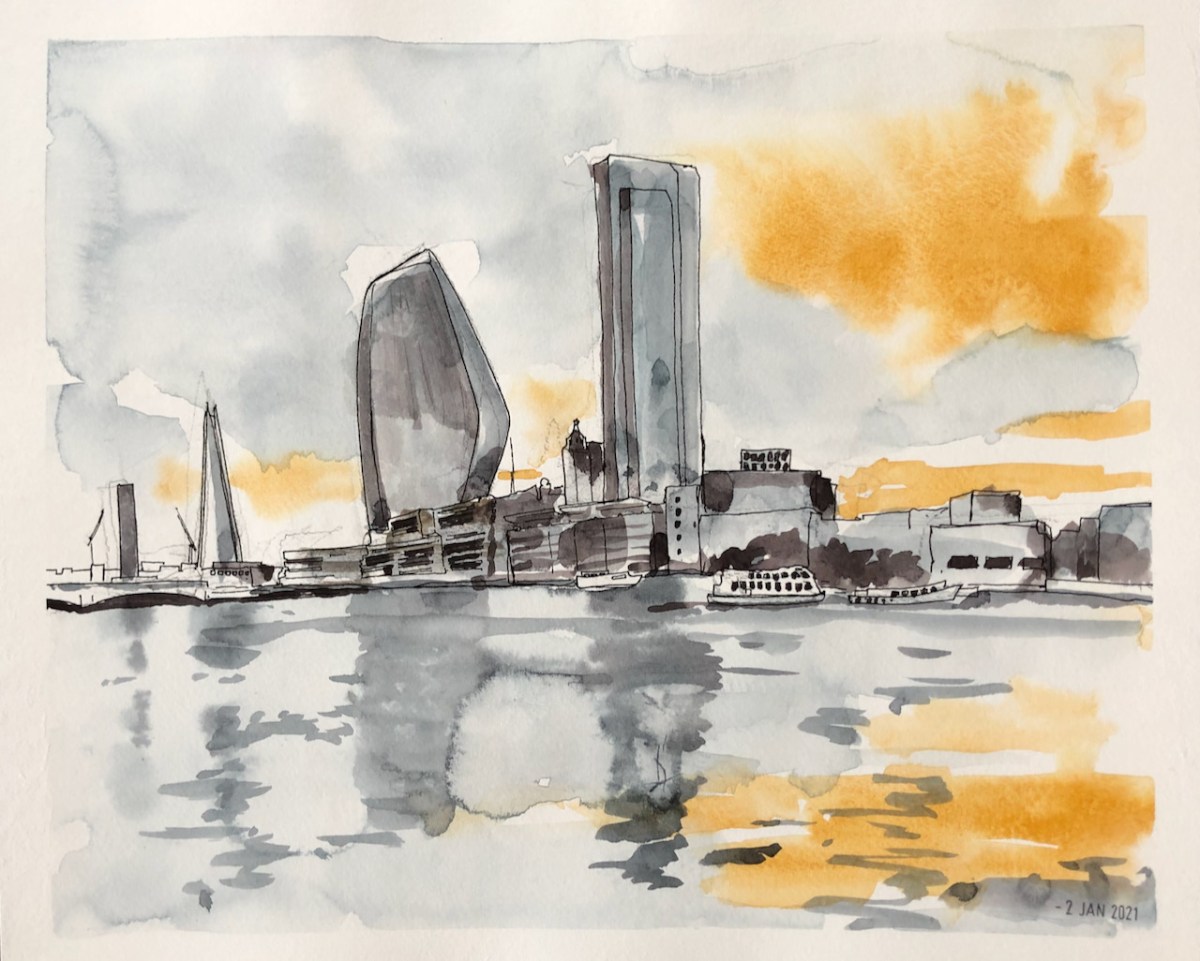
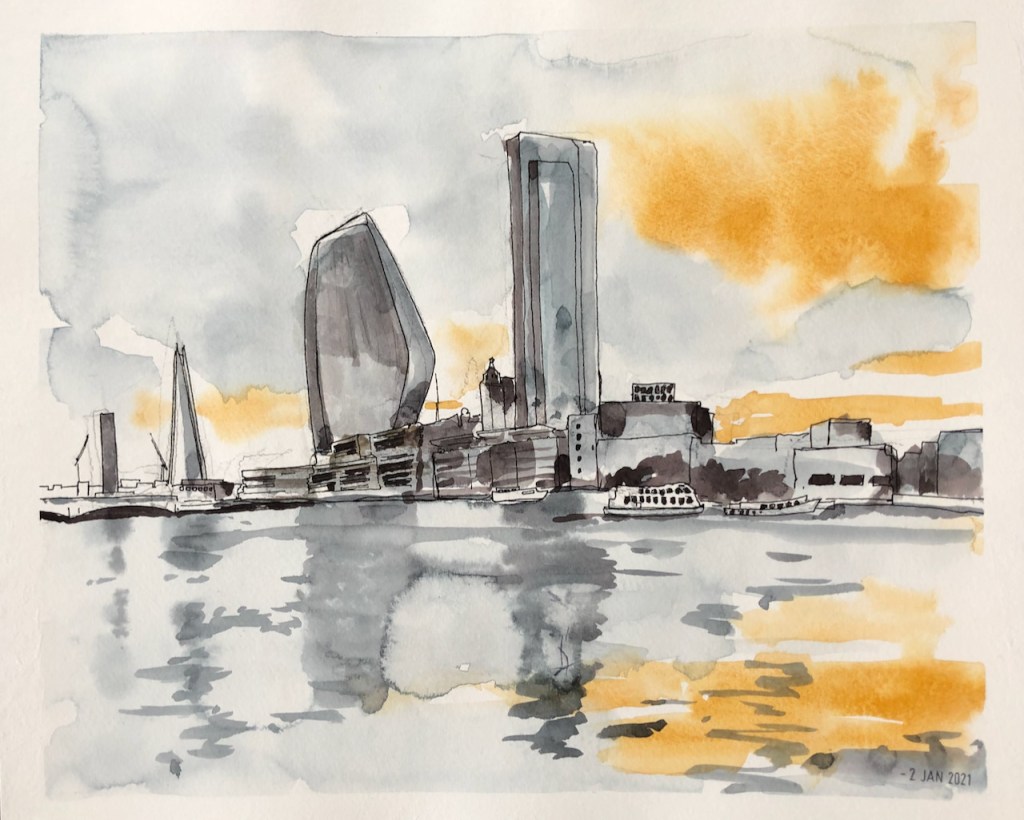
This is the South Bank of the Thames, near Blackfriars Bridge, seen from the North Bank.
South Bank (1), from photo reference. 2nd Jan 2021. 12″ x10″ sheet.
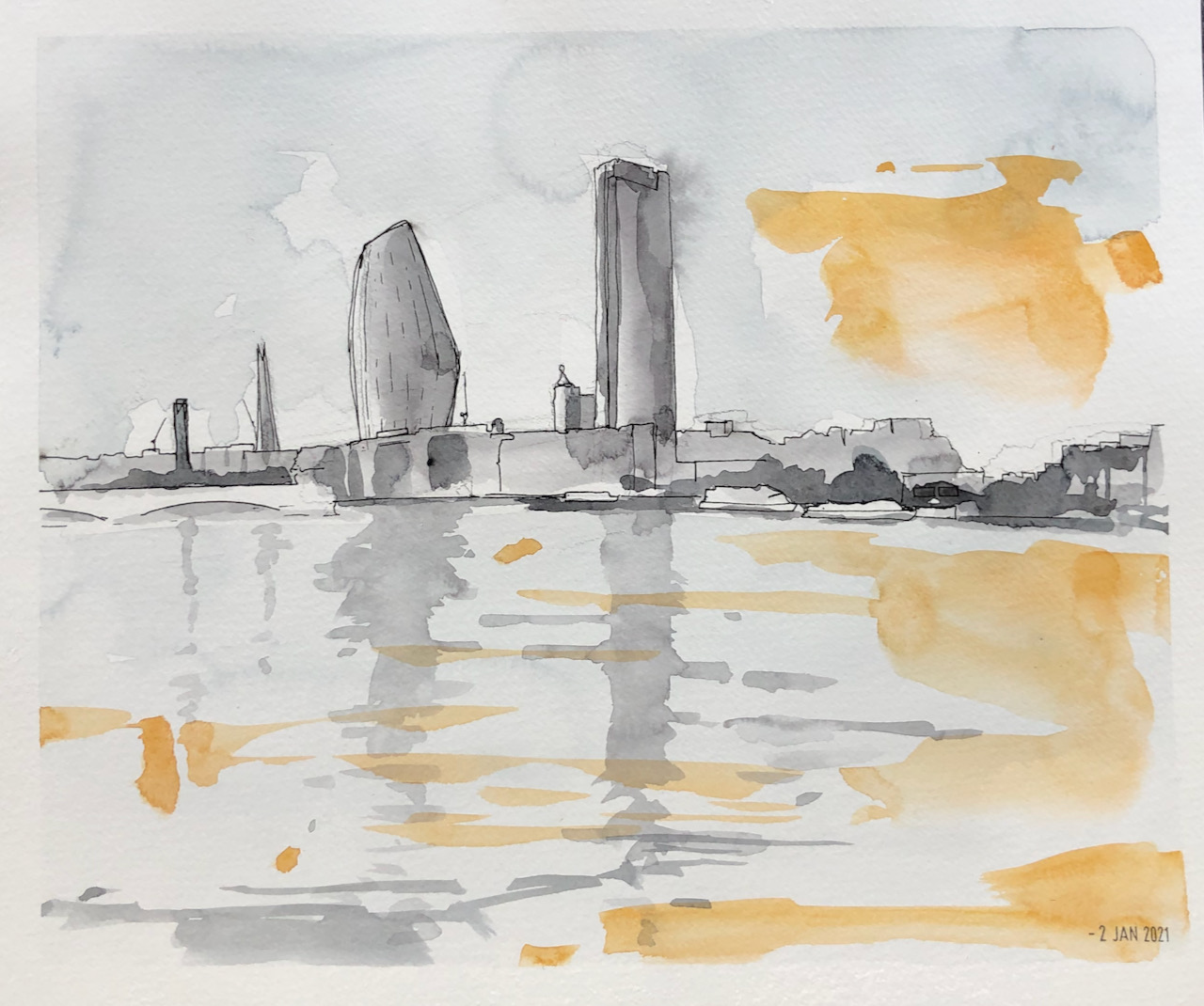
This was part of my experimentation with Jackson’s watercolour paper. Jacksons Art Supplies sent me a pack of 50 sheets, and asked for an honest review. 50 sheets is a lot of paper, and so I’ve felt able to experiment. I’ve enjoyed using it. Here is another version of the same scene.
South Bank (2), from photo reference. 2nd Jan 2021, 12″ x10″ sheet
Jackson’s also sent a few brushes, one of which was an enormous “Raven” mop brush. This has a soft furry head. It is great fun to use as it holds so much paint.
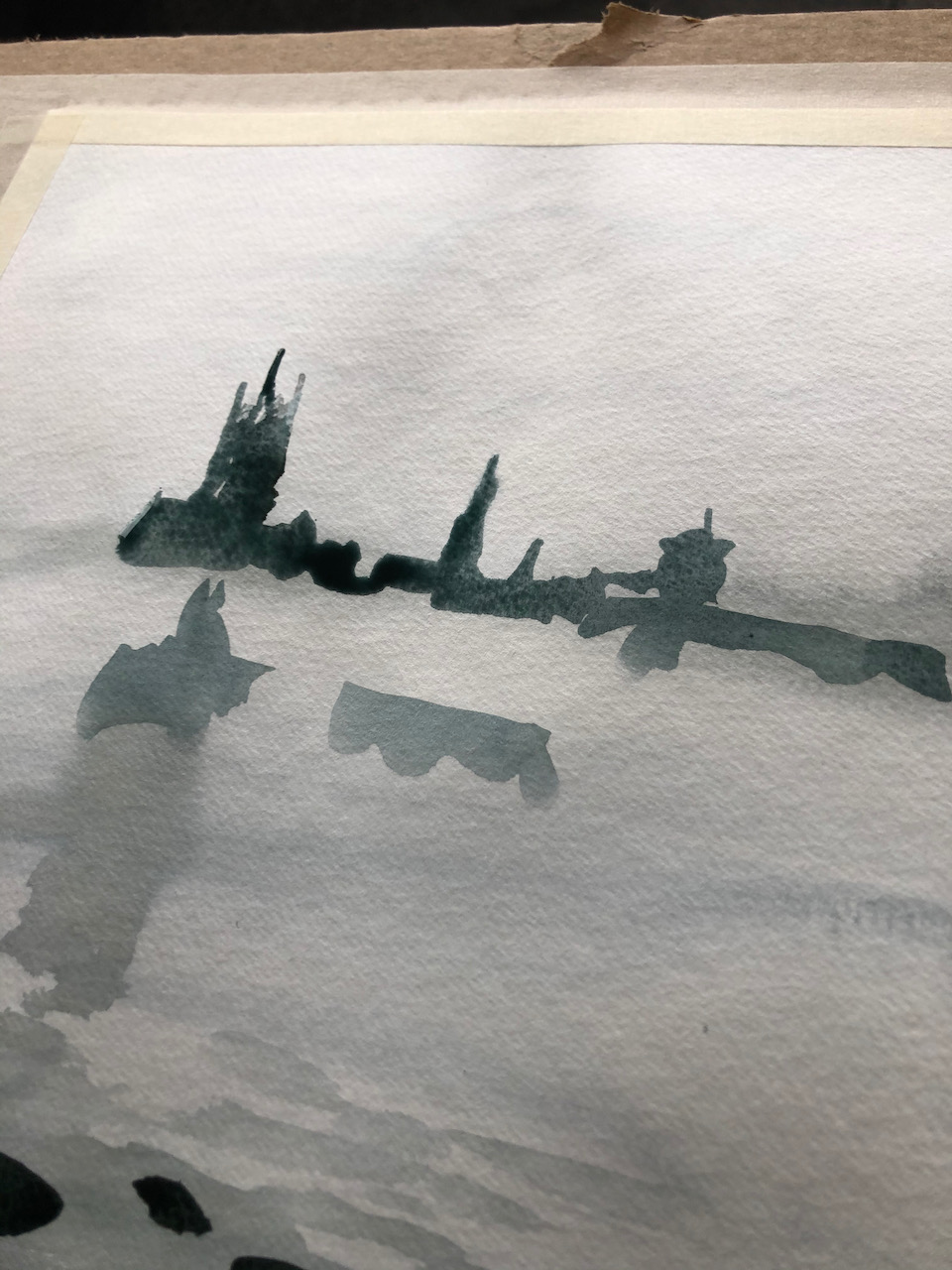
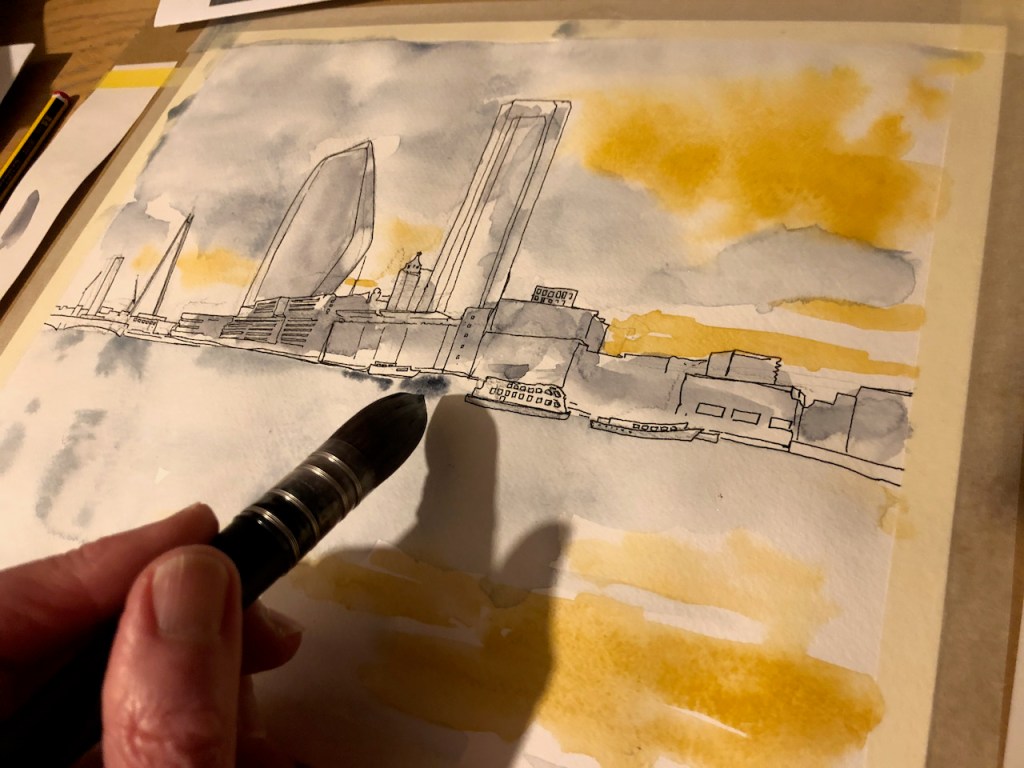
Here is the Raven brush in action. Although it is huge, it comes to a small point, so I can make little dots, or add a small amount of colour to a wash, as here.
The paper is capable of taking “layers” of paint, as you see here. The grey and the orange overlap without becoming a muddy mess. I was painting indoors, so I could allow each layer to dry, which is important in order to avoid a mush.
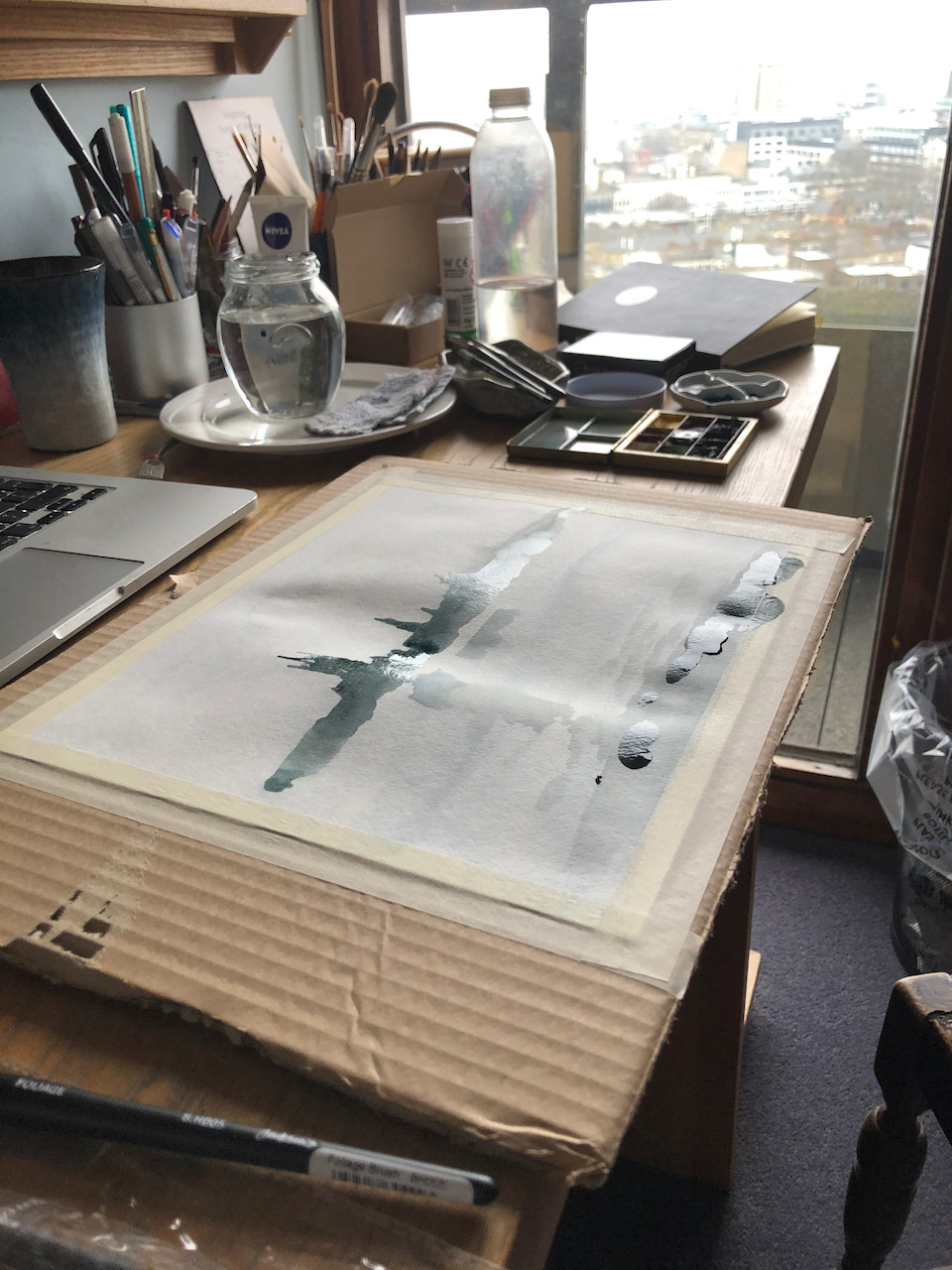
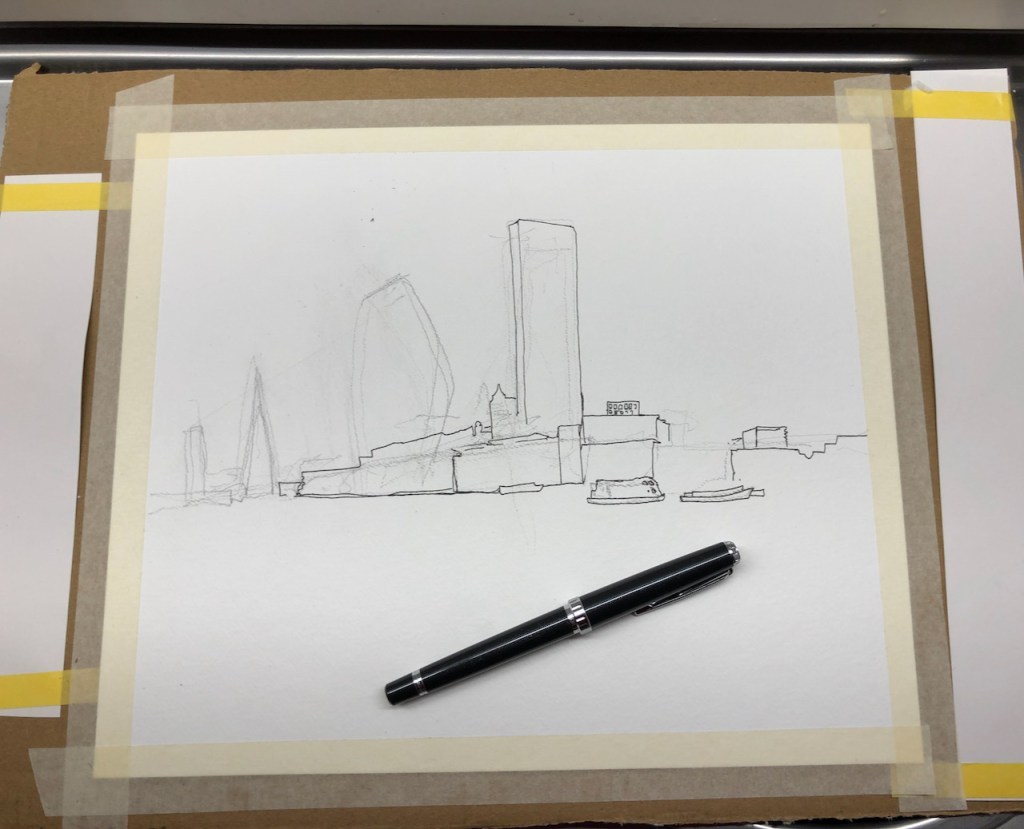
Here is work in progress. I taped the paper to a piece of corrugated cardboard from a delivery box. The white strips down the edges are to give me somewhere to try out the colours.
Last year, before the first lockdown, I drew this view in a sketchbook on location:
Here’s the South Bank seen from the Victoria Embankment on the North Bank. Here you see the modern blocks, with the older wharves in front. The low red building towards the right is Oxo Tower Wharf, formerly a factory making OXO cubes, now a place with workshops for jewellers, a restaurant and various cafés. The…
Click a button below to share this post online, email it, or print it:
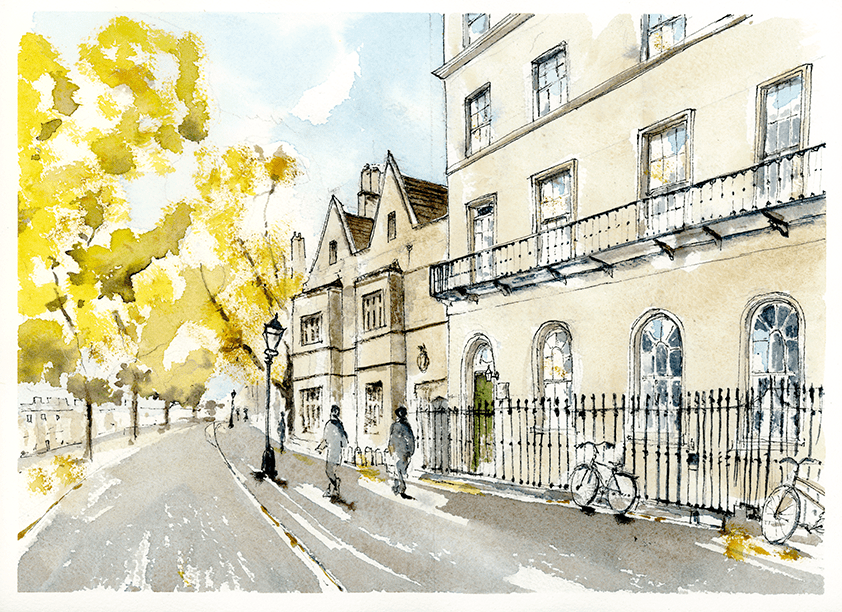
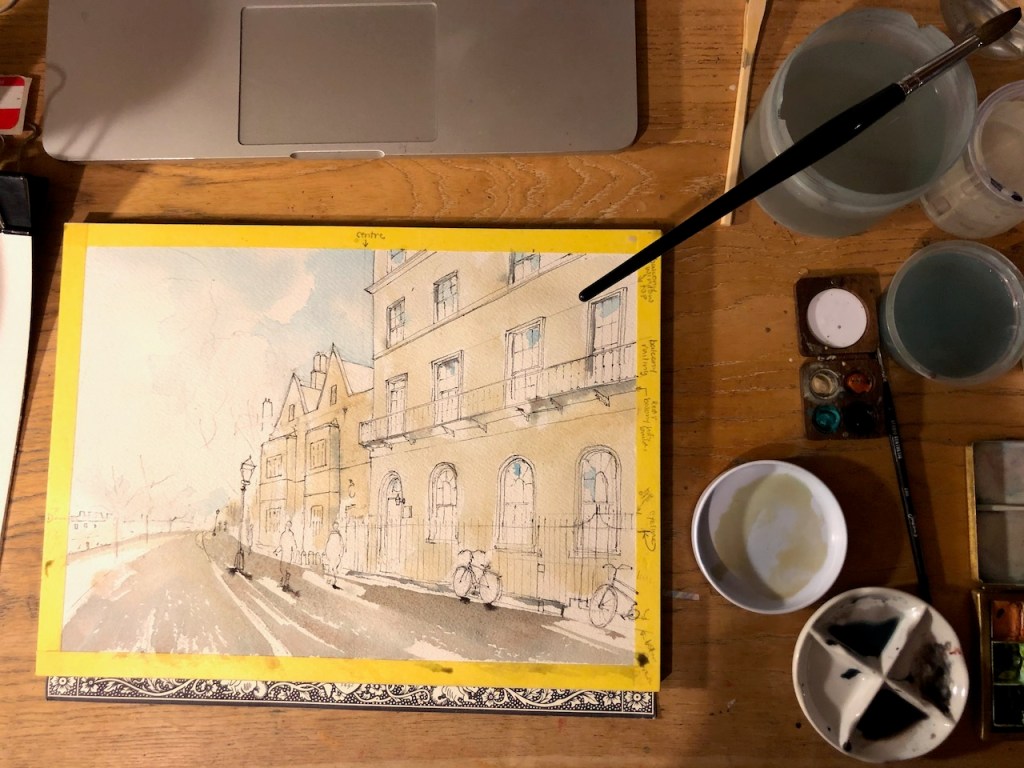
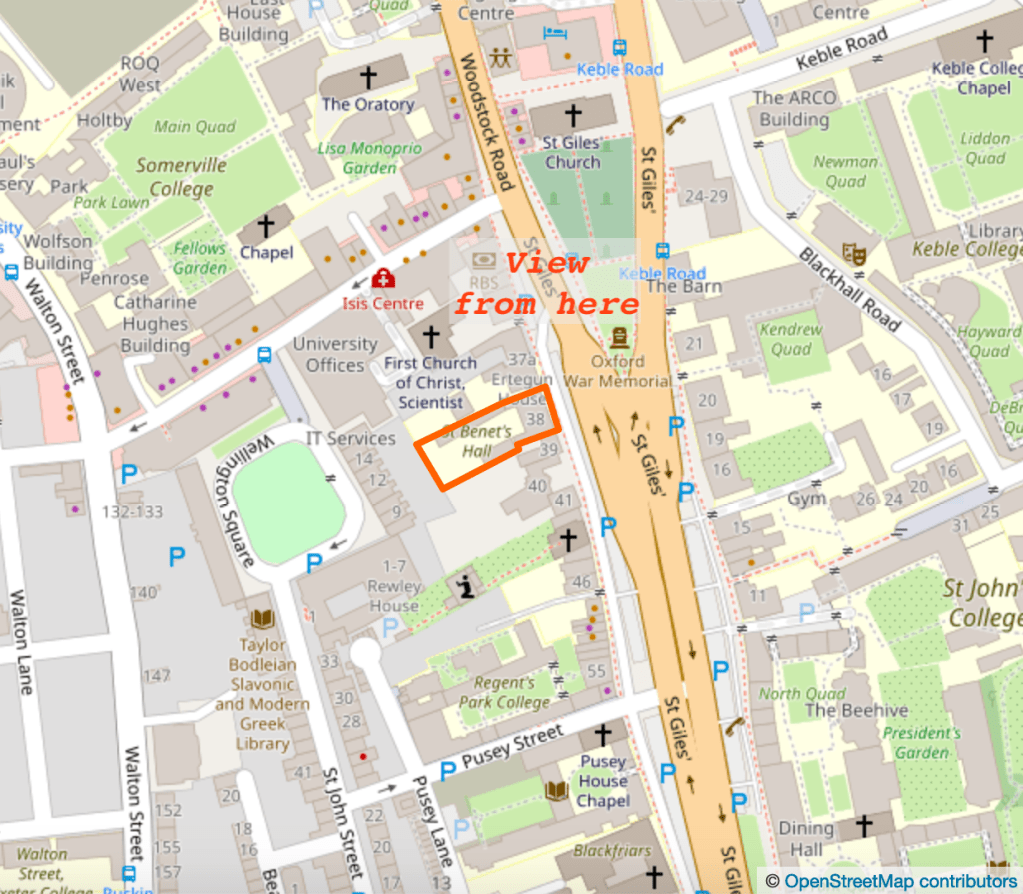
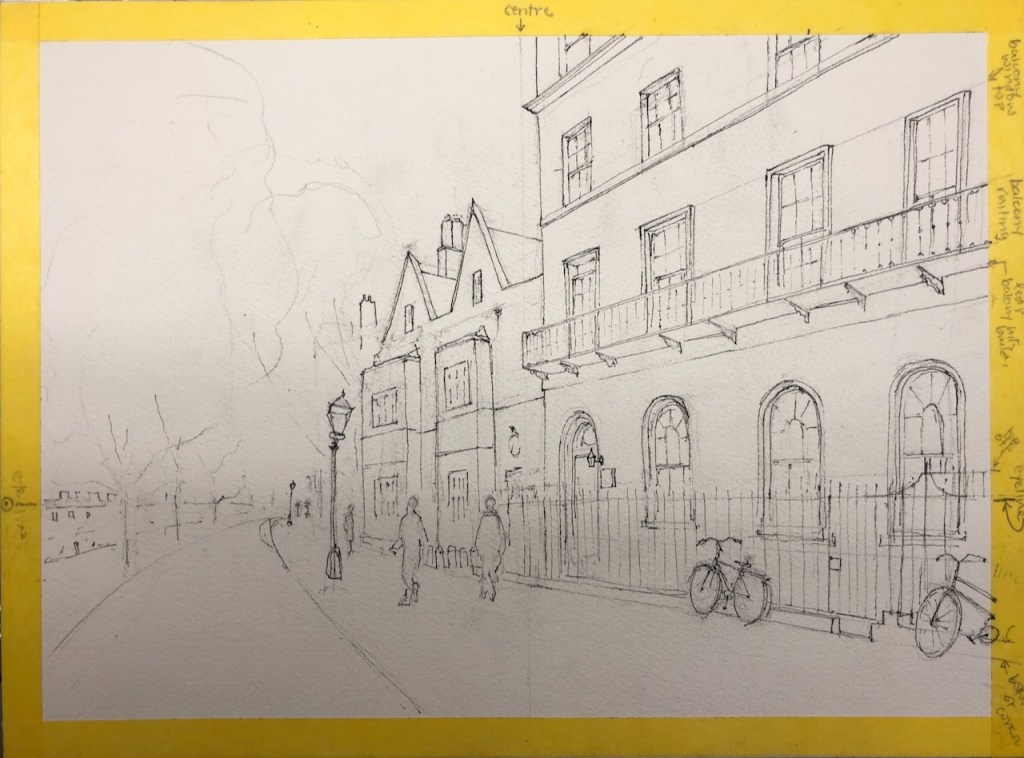
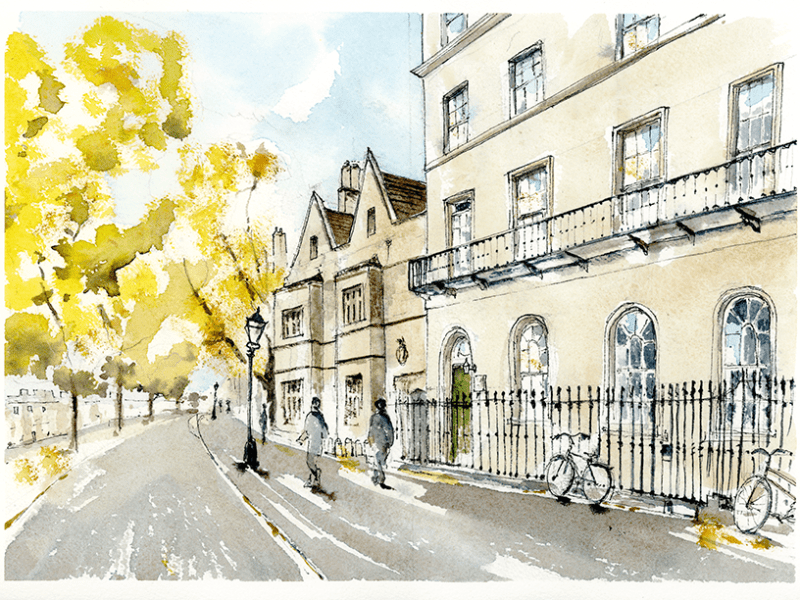
This is a view of the front of St Benet’s Hall, in St Giles, Oxford, looking South.
St Giles, Oxford.
I drew this as a commission, for Ken Craig of Canongate Design. It will form the front cover of a publication.
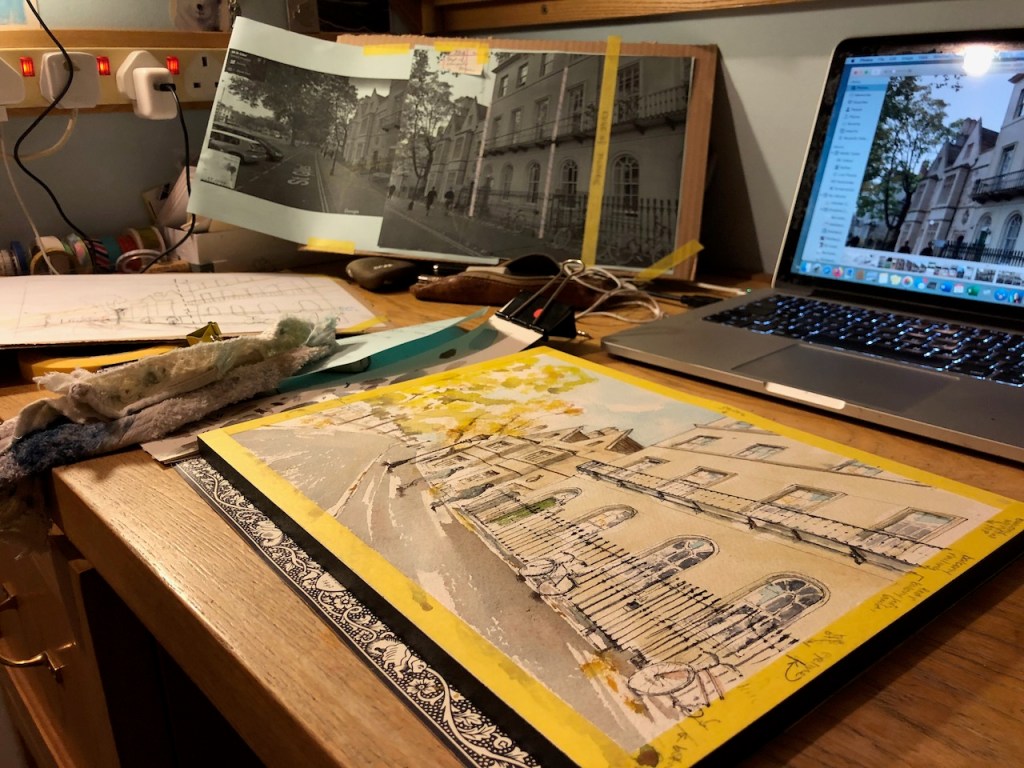
The challenge was to fit the view onto a sheet with A4 aspect ratio, in such a way that the façade of St Benet’s Hall is on the right. The front door had to be to the right of the centre line. Because the timescales were short, and the country was in Covid-related restrictions, I worked from photos, memory and imagination.
Janet Smart kindly provided photo references, including pictures of the architectural details.
Thankyou to Ken Craig for the commission, and for providing the scanned image of my drawing at the head of this post.
The colours are Buff Titanium, Green Gold, Phthalo Turquoise, Mars Yellow, Burnt Umber and some Perylene Maroon to make the greys. I drew it on a paper block of Arches 300gsm NOT watercolour paper, 9″ x 12″.
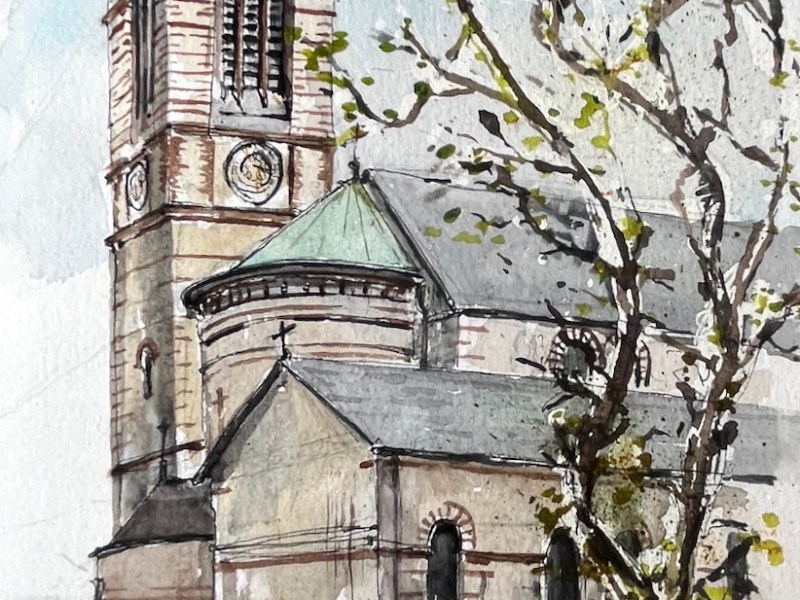
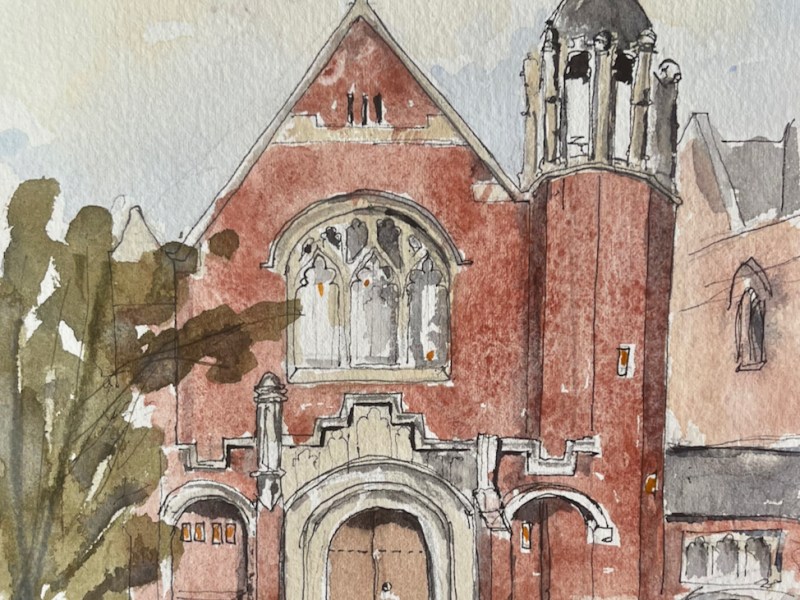
Walking through Jericho on my way to the station, I glimpsed this church tower, and heard its bells. I wove through the small streets until I found it. This is St Barnabus Jericho. Its website says that it is also known as “Oxford Basilica”. It was built as the daughter church of St Paul’s, which…
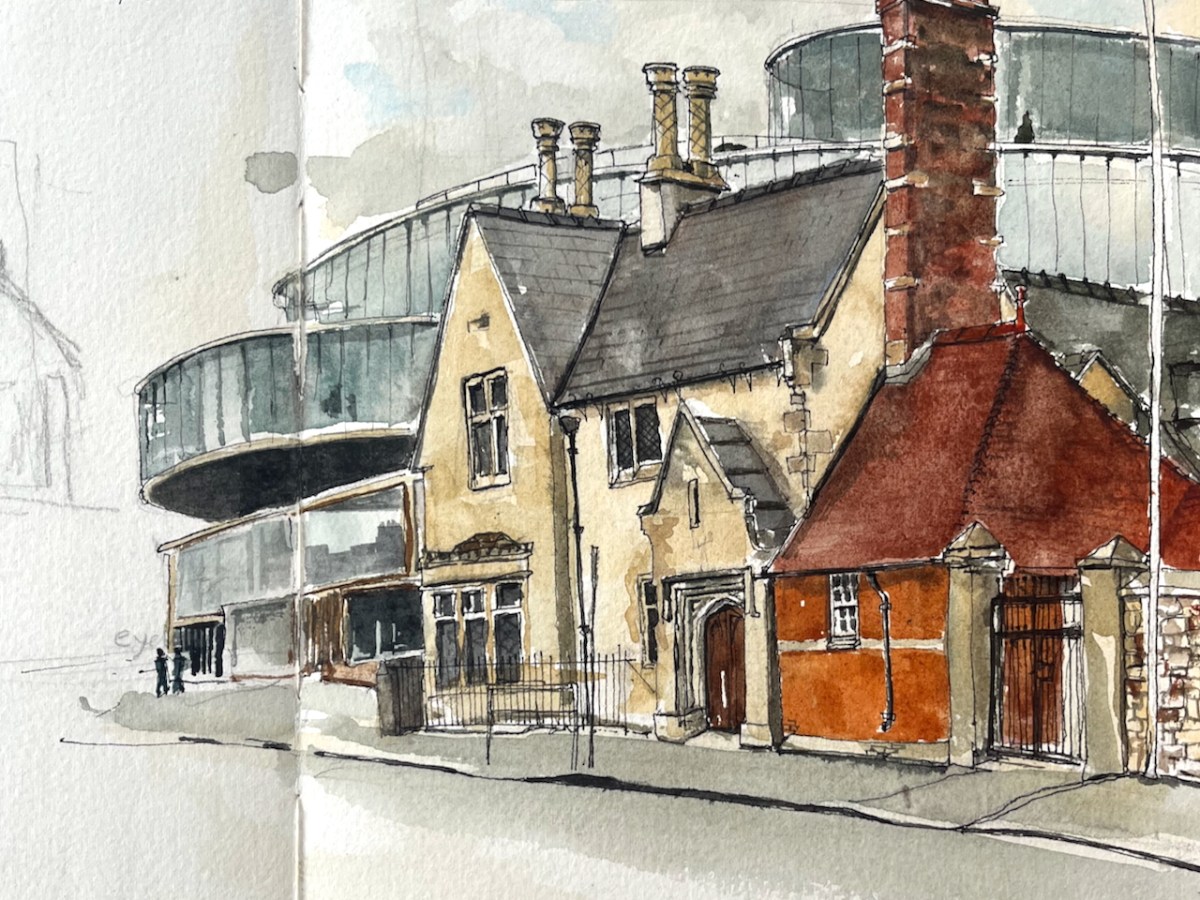
This 19th Century building on Walton Street is a nursery school. It contrasts with the huge sweeping curves of the Blavatnick School of Government behind. The building now houses a co-ed nursery: “St Paul’s Nursery is a 16-place day nursery that caters for children between the ages of 3 months and 5 years. The Nursery…
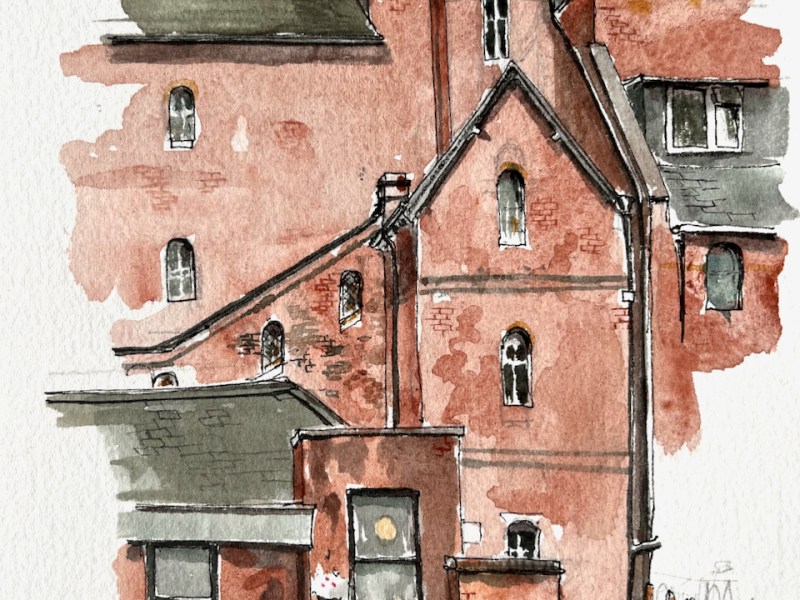
Wycliffe Hall is a “permanent private hall” in the University of Oxford. A permanent private hall is like a college, in that it provides accommodation and tuition for its students. The difference is that a college is governed by its Master and Fellows, whereas the Hall is governed, at least in part, by the Church…
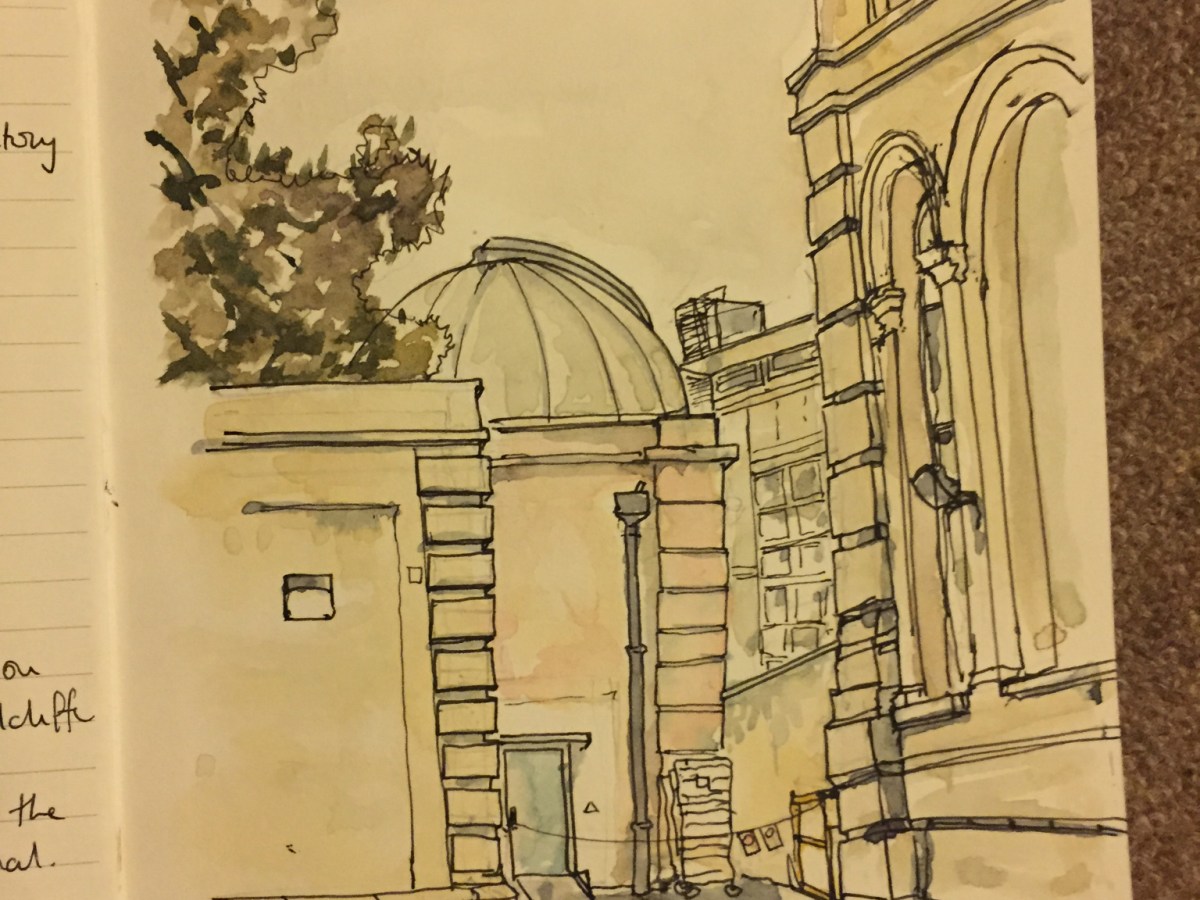
Here is the view from room D17 in Somerville College, OX2 6HD. I sketched it quickly, before leaving, just as the sun was coming up. Somerville College was women-only for the first 115 years of its existence. It started to admit men in 1994.
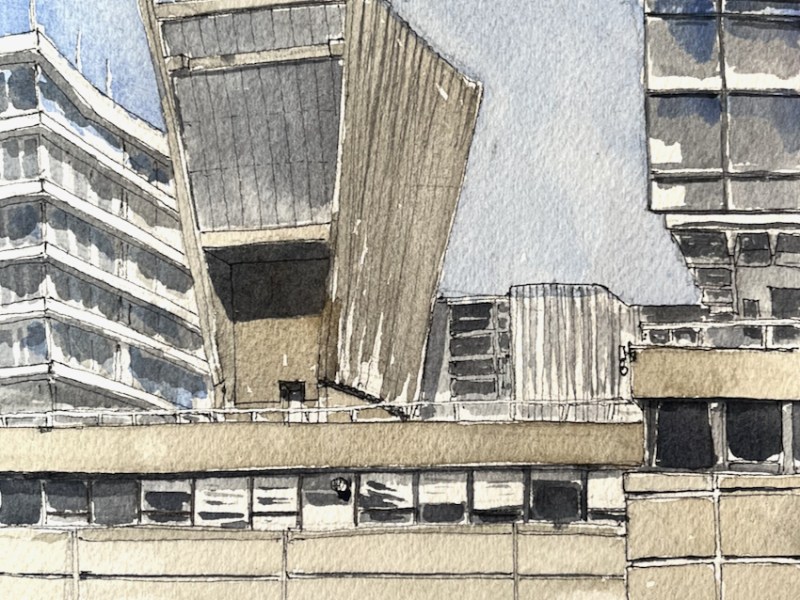
Here is the University of Oxford Nuclear Physics building, seen from the Banbury Road. The building was renamed the “Denys Wilkinson Building” in 2002. It was built in 1967 to the designs of architect Philip Dowson of Arup. The fan-shaped structure originally housed a Van der Graff particle accelerator, now dismantled. [https://manchesterhistory.net/architecture/1960/denyswilkinson.html] Professor Wilkinson (1922-2016)…
On a visit to Oxford recently, I stayed at Wycliffe Hall as a Bed and Breakfast guest. Wycliffe Hall is on the Banbury Road in North Oxford. It offers theological training to women and men who wish to become ordained or lay ministers in the Church of England. The hall was established in 1877, on…
This is a view of the front of St Benet’s Hall, in St Giles, Oxford, looking South. I drew this as a commission, for Ken Craig of Canongate Design. It will form the front cover of a publication. The challenge was to fit the view onto a sheet with A4 aspect ratio, in such a…
Here is a view looking south down Walton Street, from The Jericho Café, Oxford. It was raining outside. People peered in through the windows. One person actually came inside the café to look at my picture. Or maybe it was to escape temporarily from the rain. They looked at the picture, in any case, and…
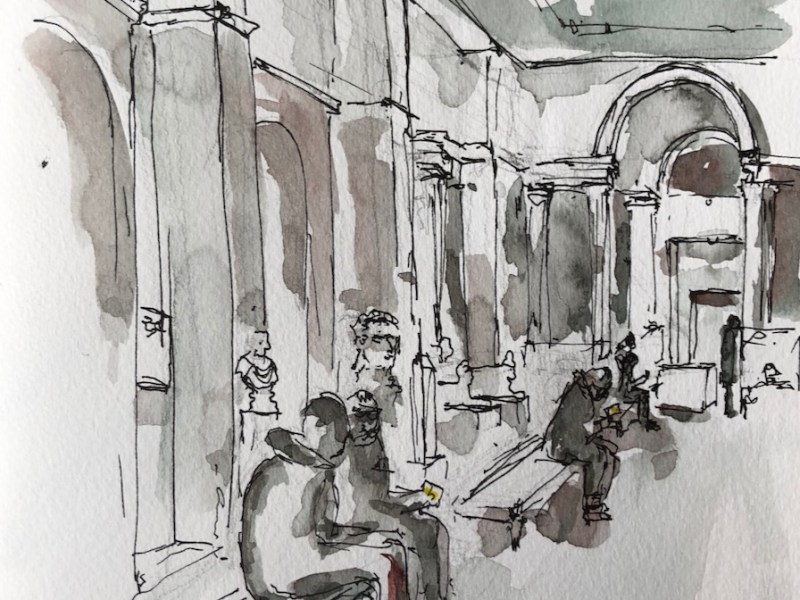
What is the purpose of a museum? The previous evening, I’d been to a lecture by Tim Reeve, Deputy Director of the V&A. He had described, with great conviction, a new building they plan for East London, in “Here East” on the former Olympic Park. It will open up the V&A storage and logistics centre…
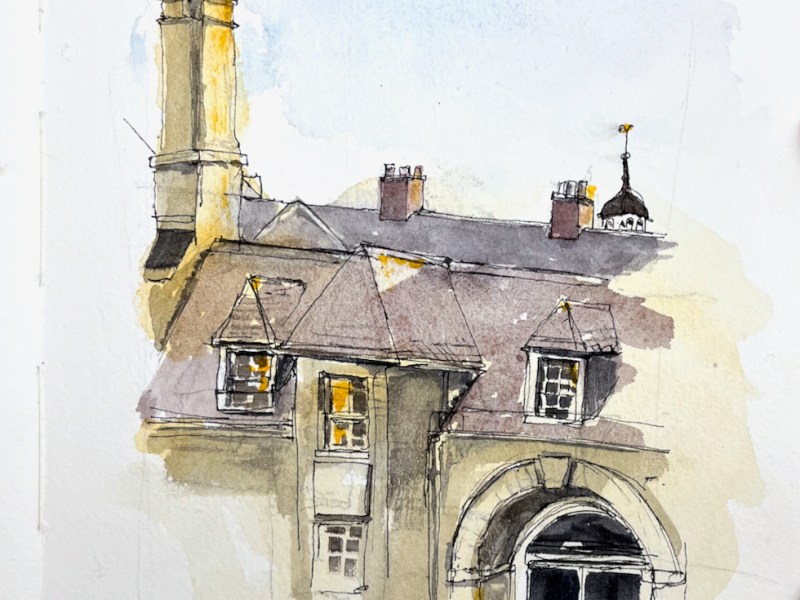
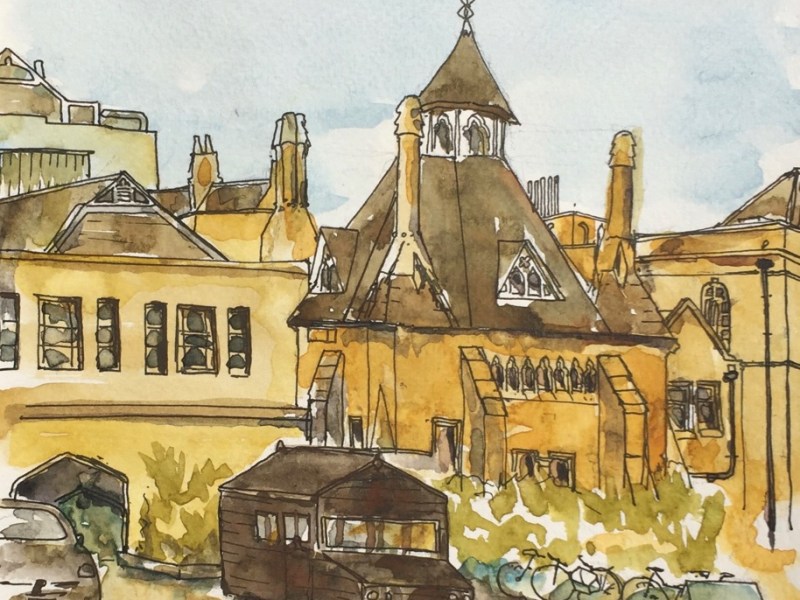
This little building to the right (South) of the Pitt Rivers Museum has often intrigued me. It has four chimneys. one in each corner. After I’d drawn it, I went to try to find out what it is. It appears to be connected to the Pitt Rivers Museum, but has no special name itself, and…
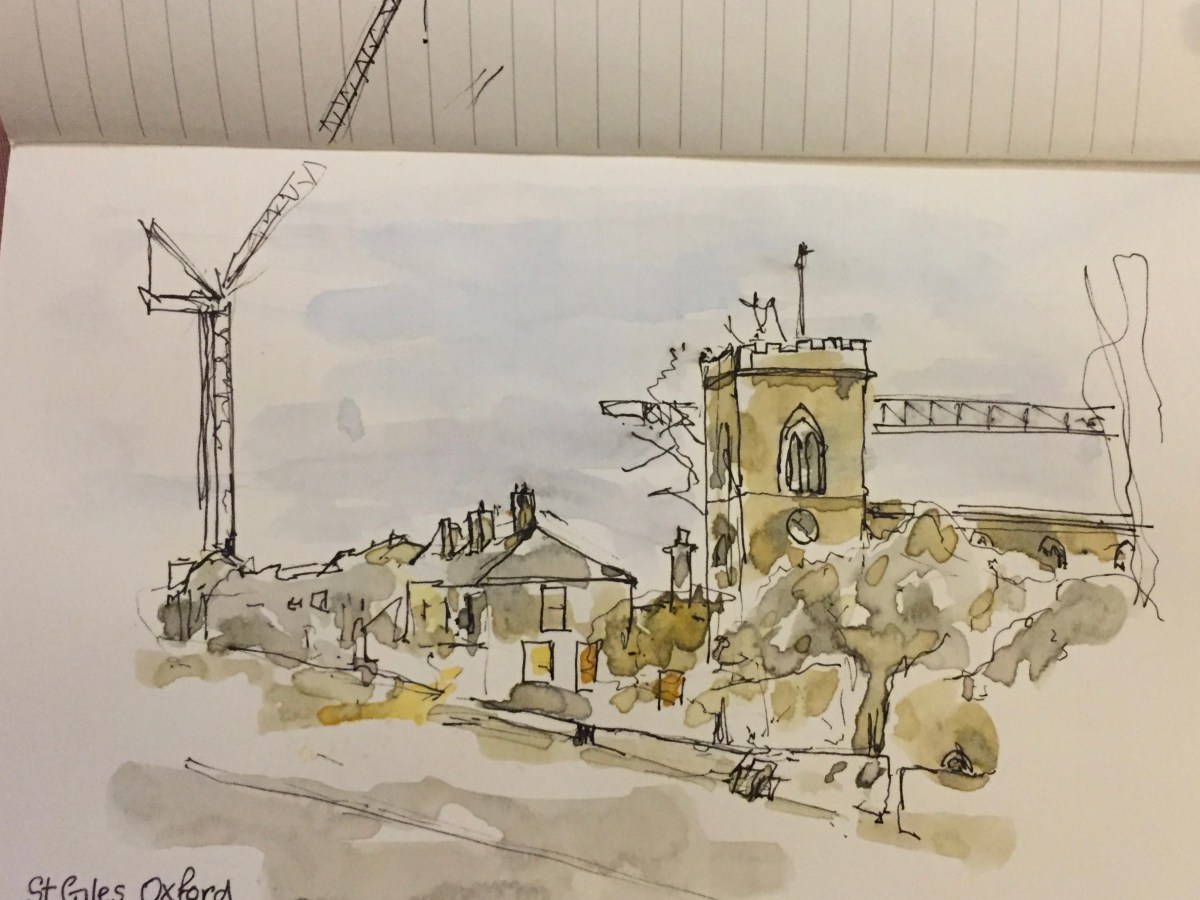
As the daylight faded, I made this sketch from outside 37 St Giles, Estagun House. St Giles is the name of the road going North out of Oxford, and also of the Church, which where the road starts. There has been a “St Giles” church near Oxford from at least 1120. “St Giles is supposed…
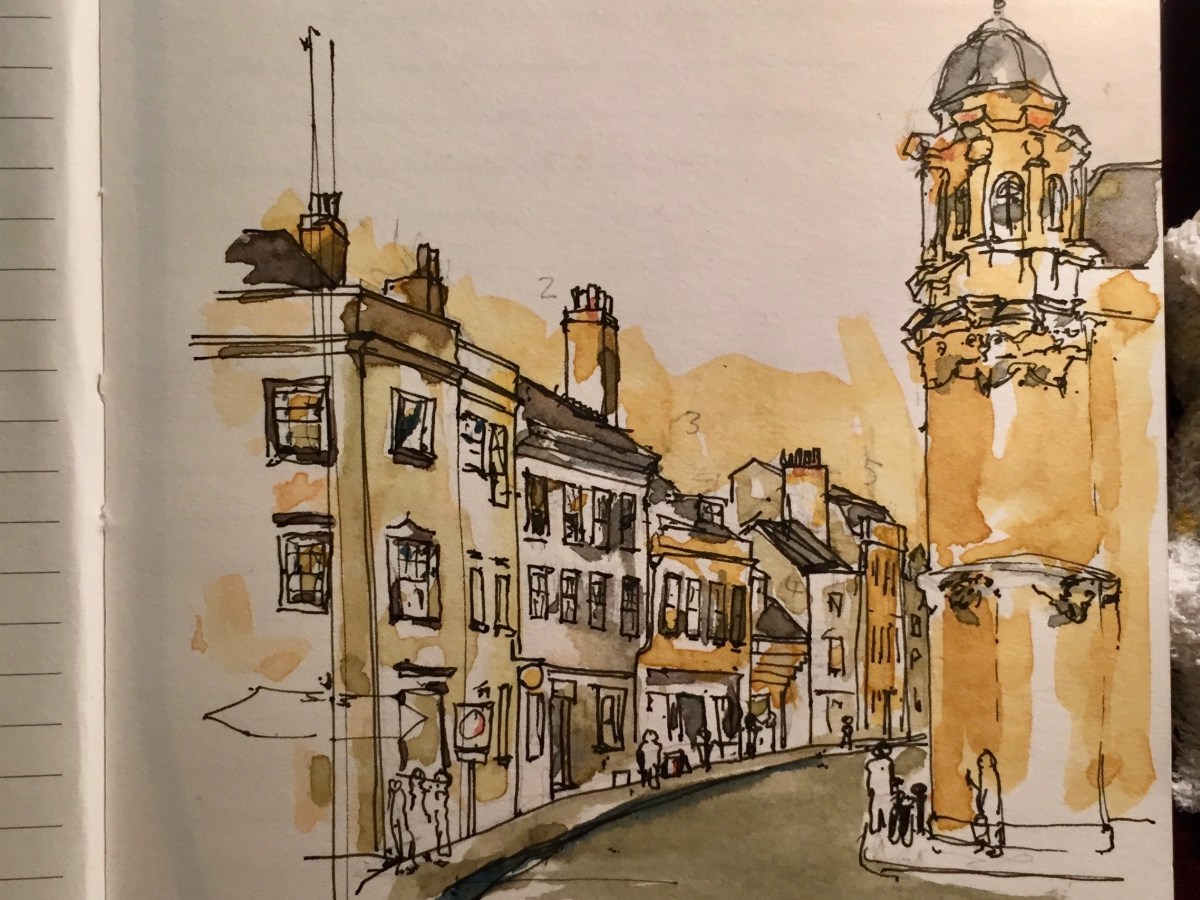
Here is the corner of Catte Street. On the left is the Kings Arms, a Youngs pub. The marvellous turret on the right is part of the Oxford Martin School. This building was originally the “Indian Institute”. It was designed by Basil Champneys in 1884. The weathercock is an elephant. It now houses the Oxford…
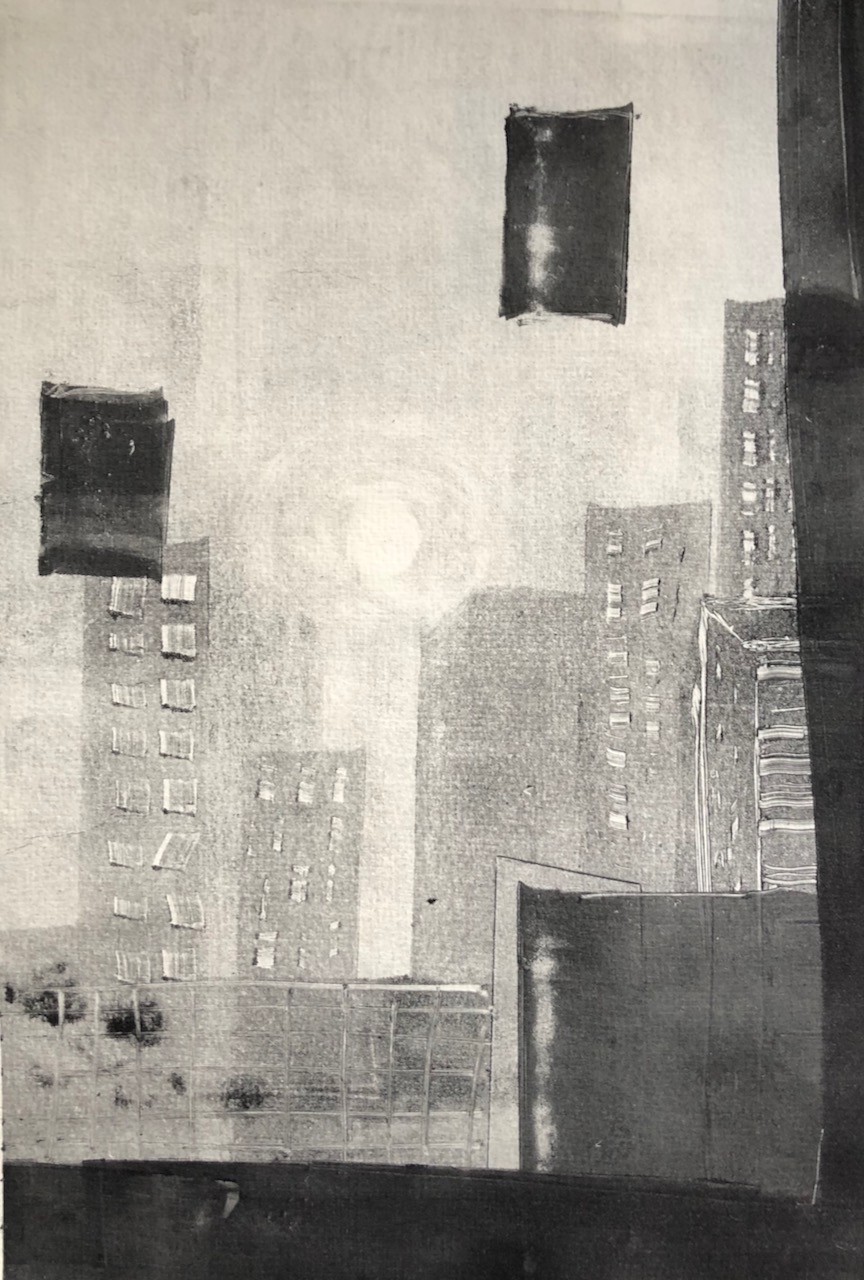
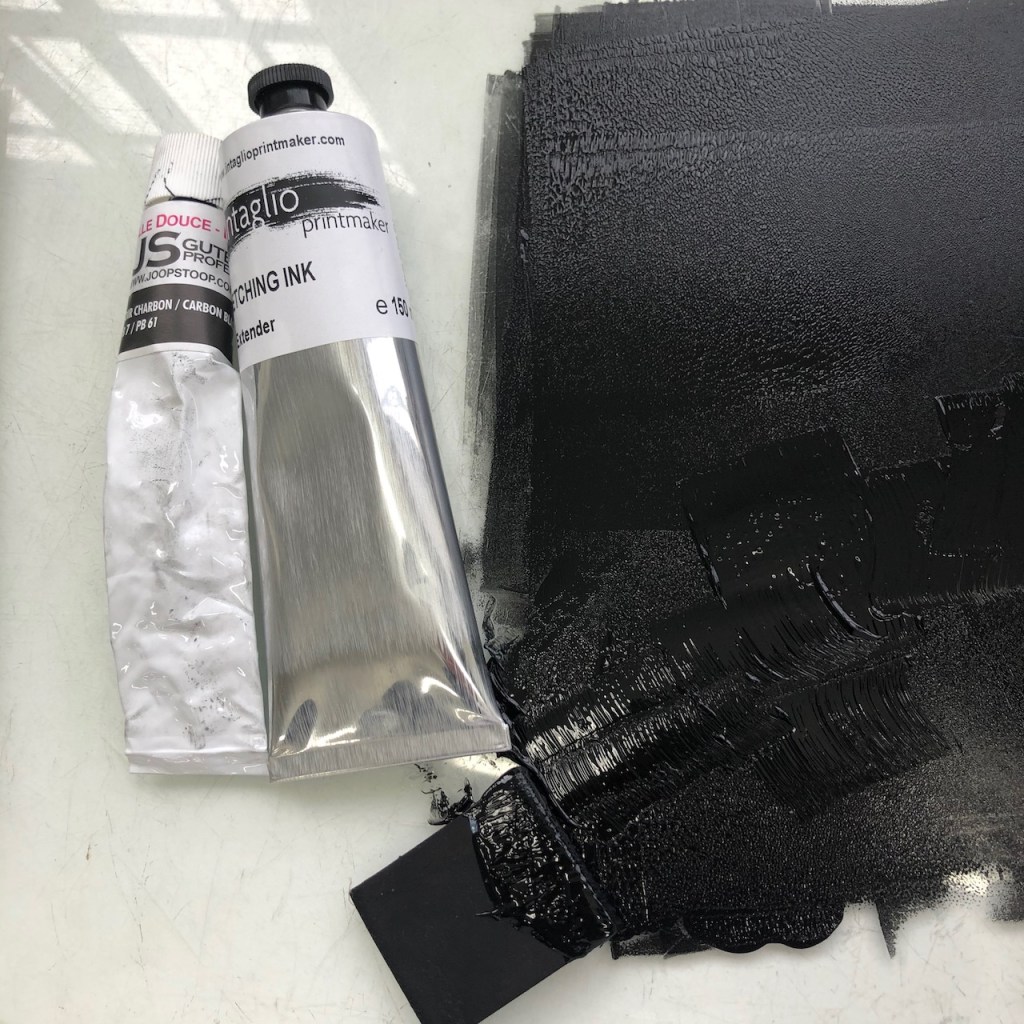
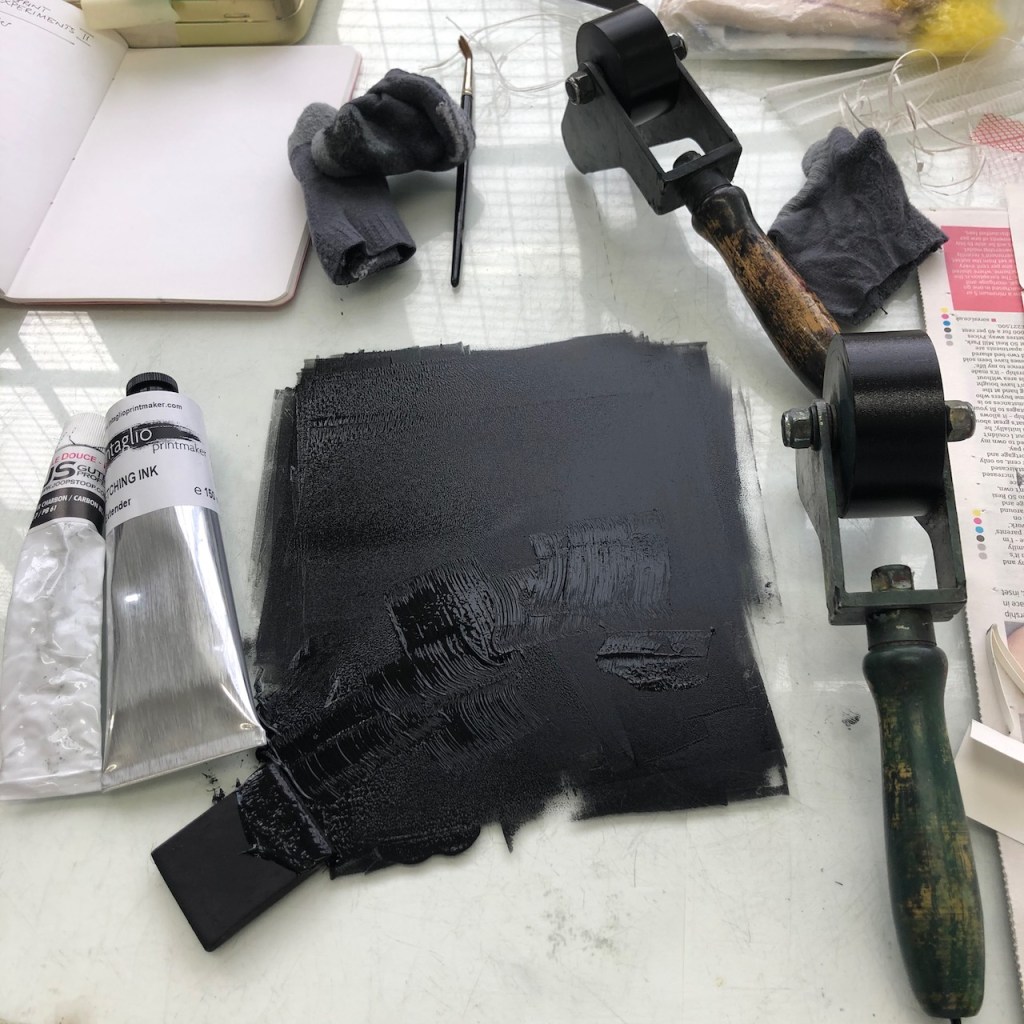
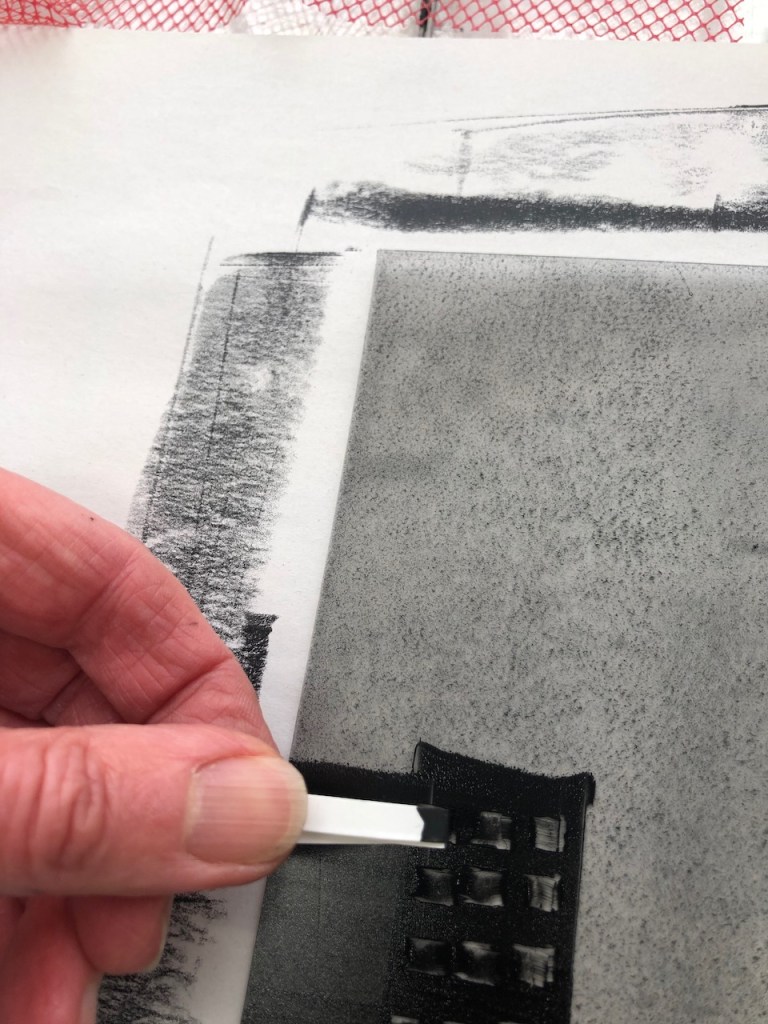
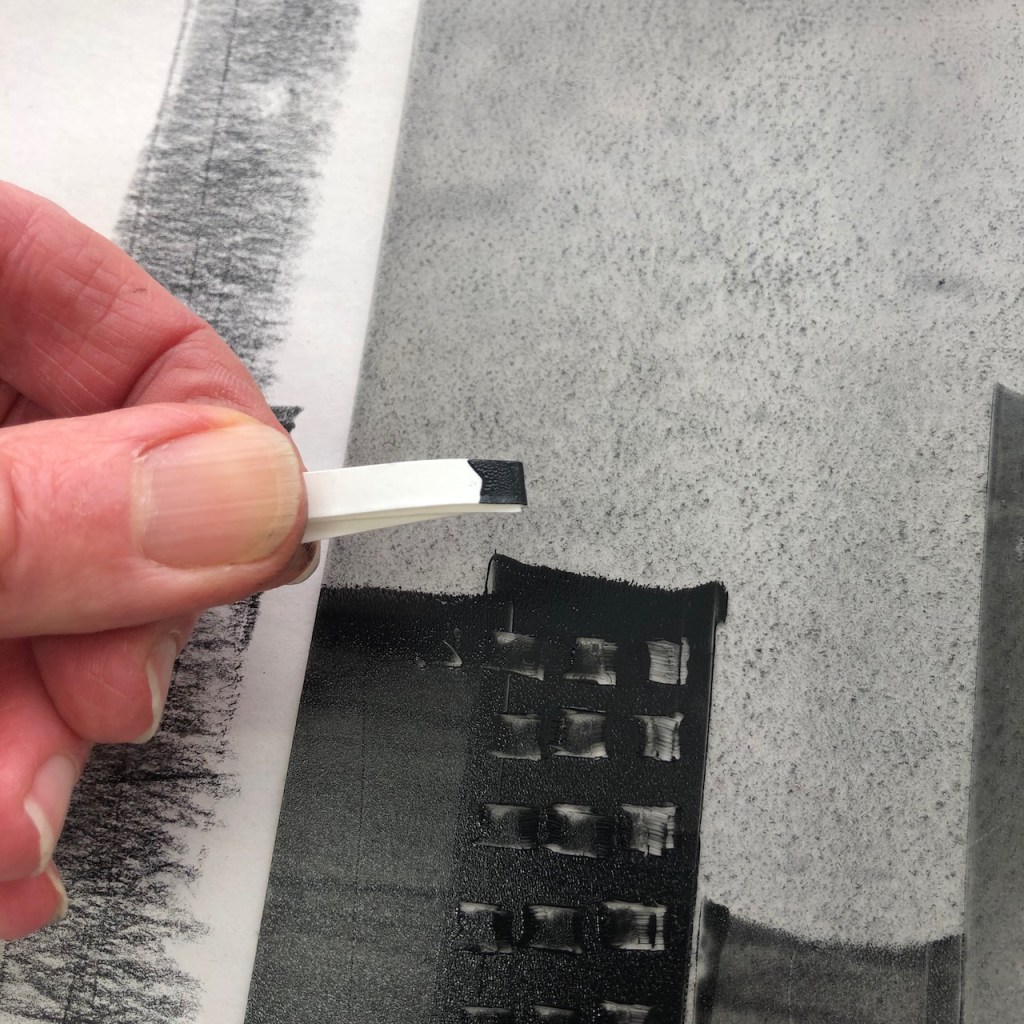
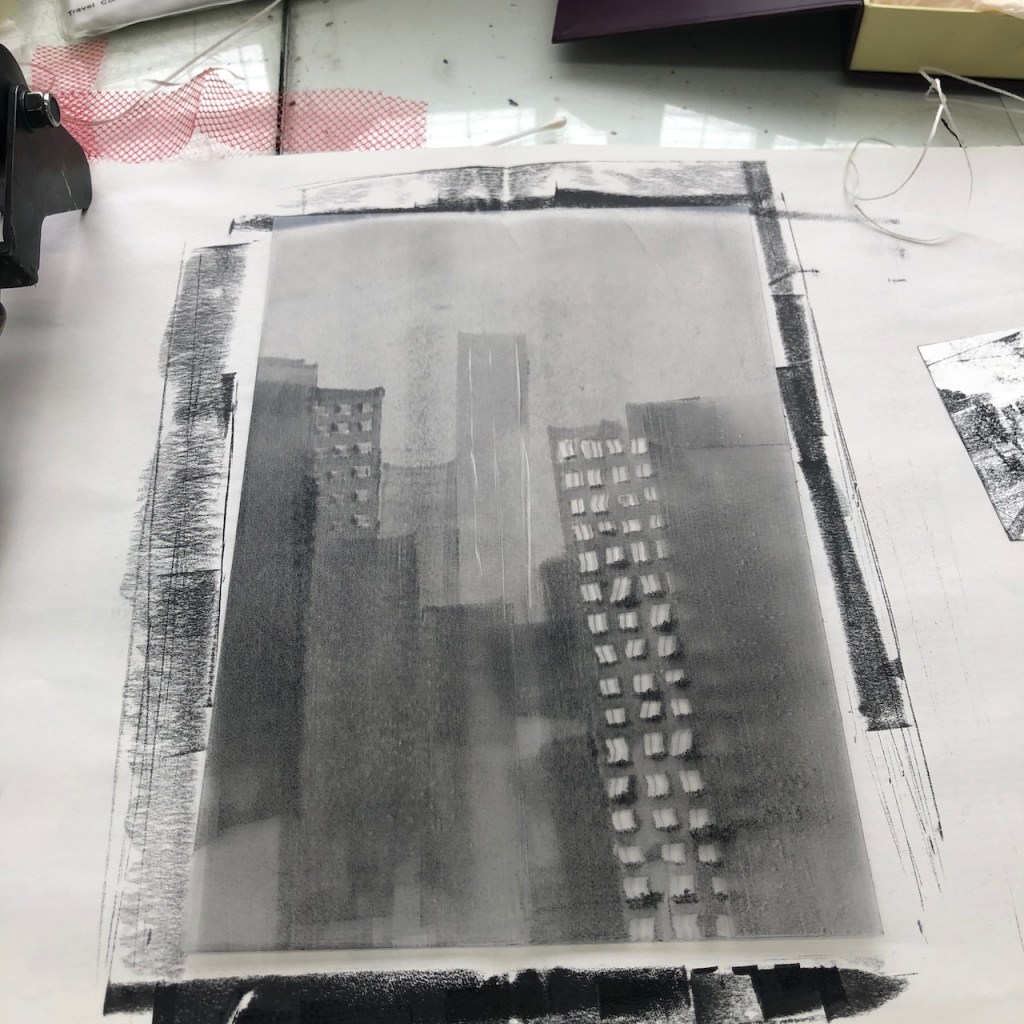
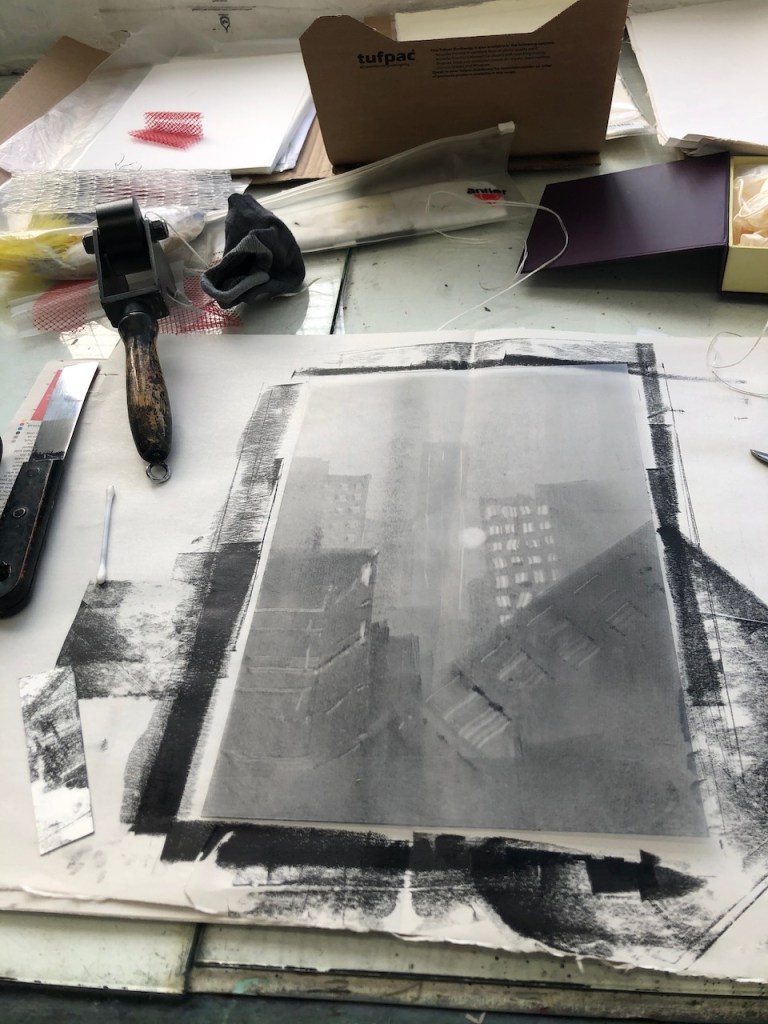
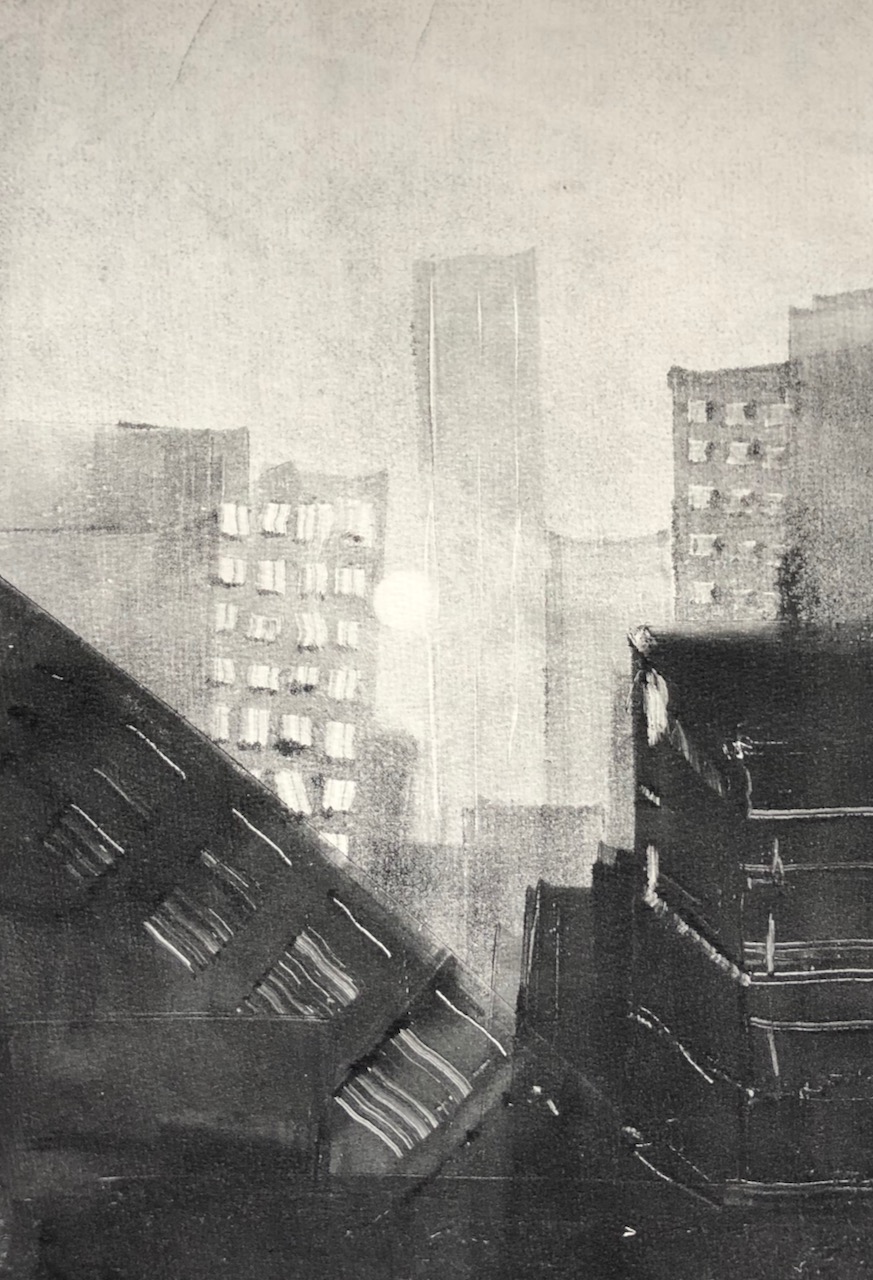
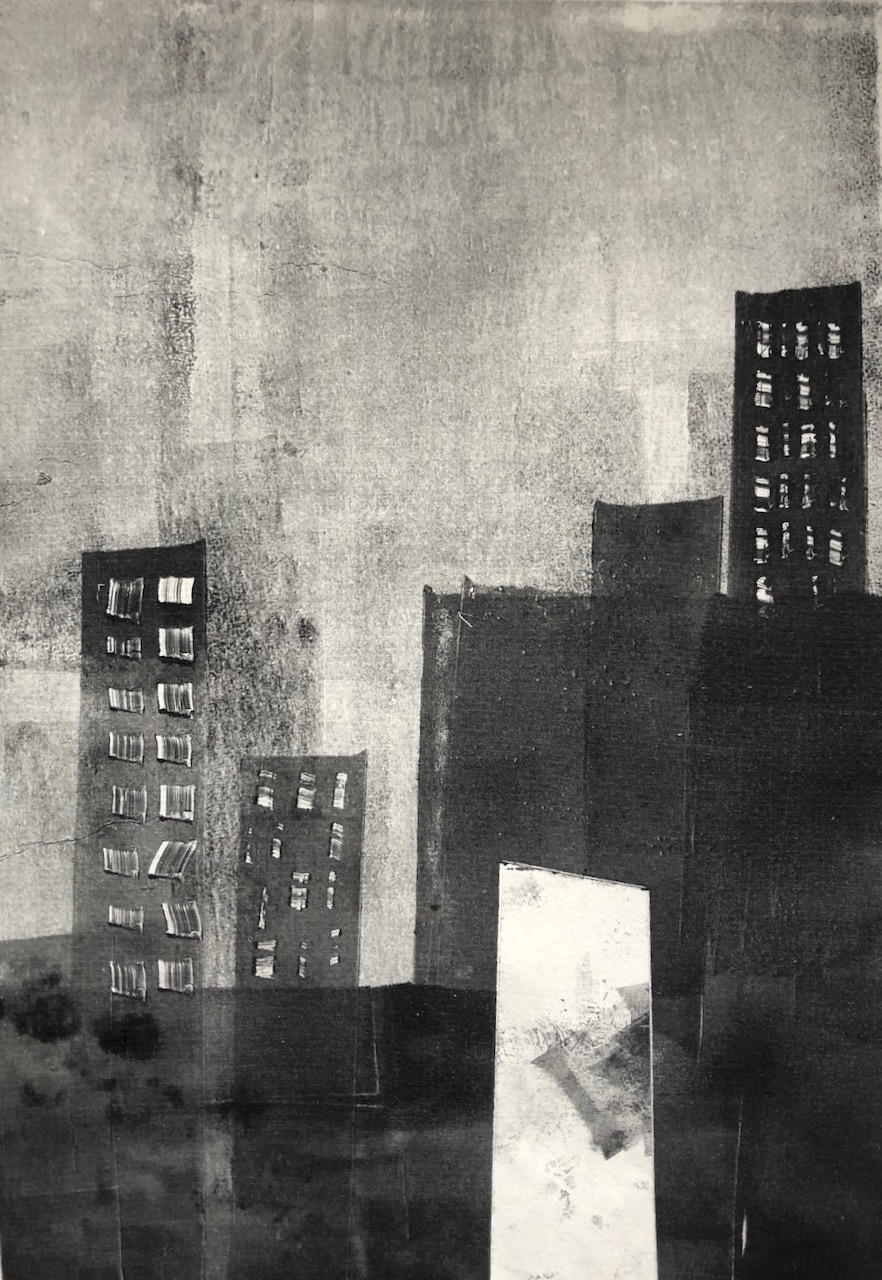
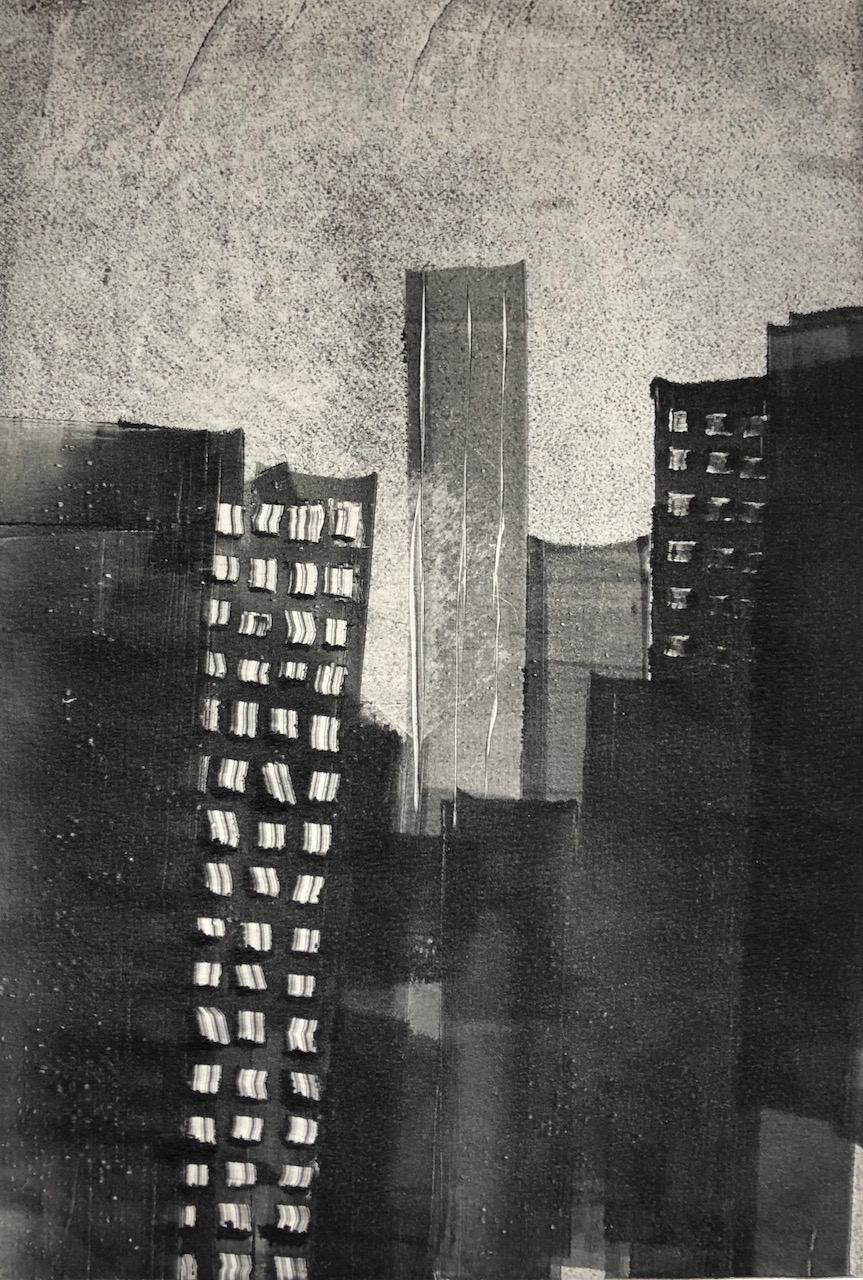
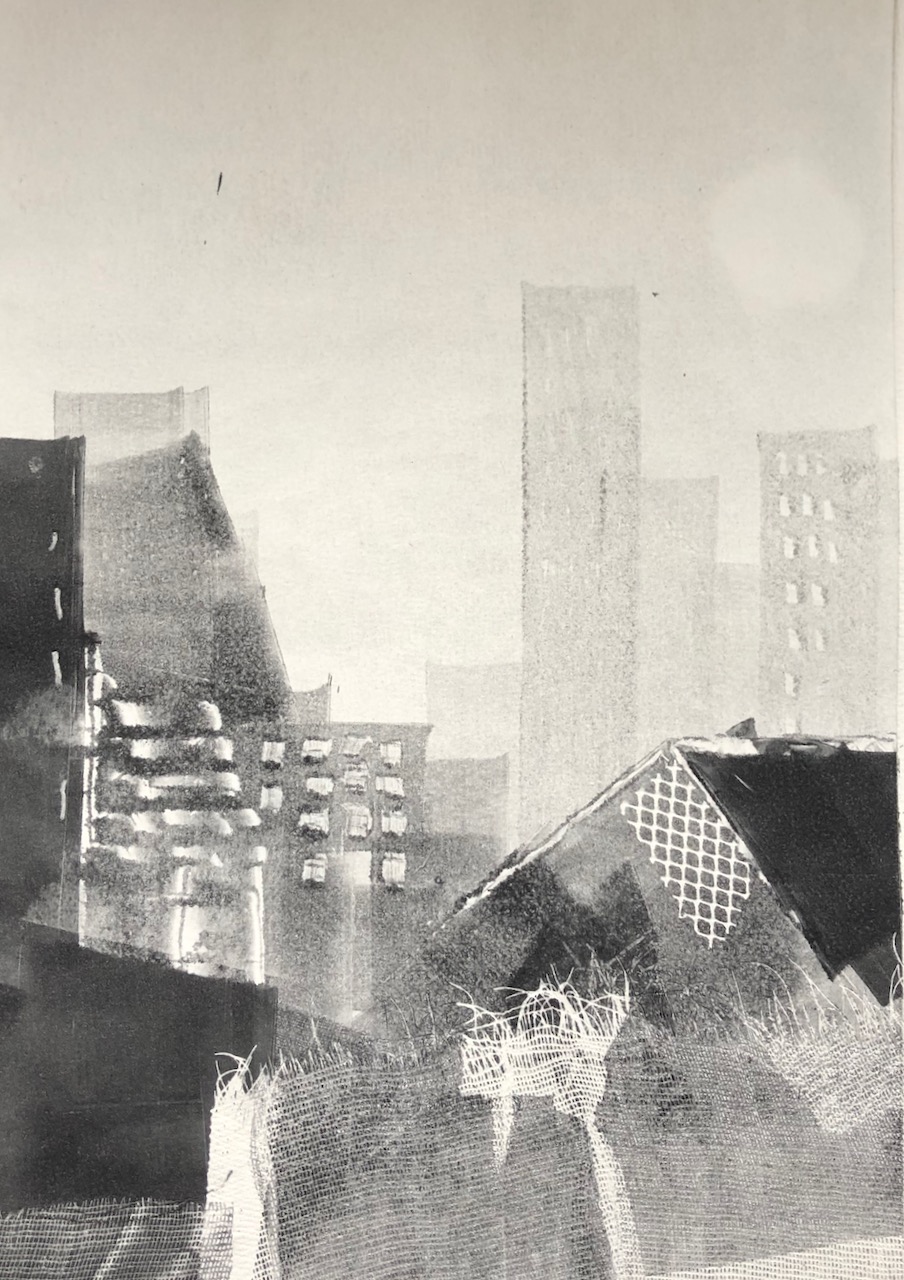
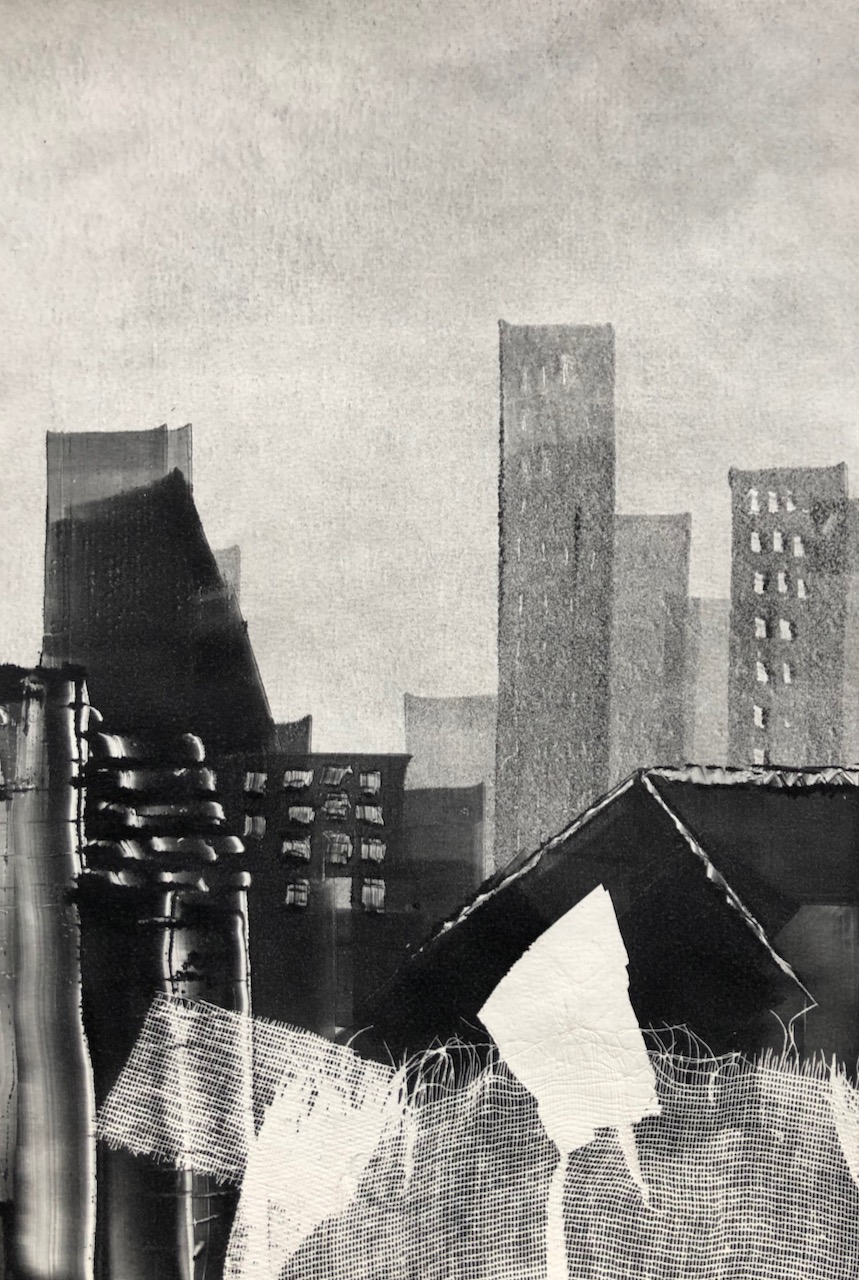
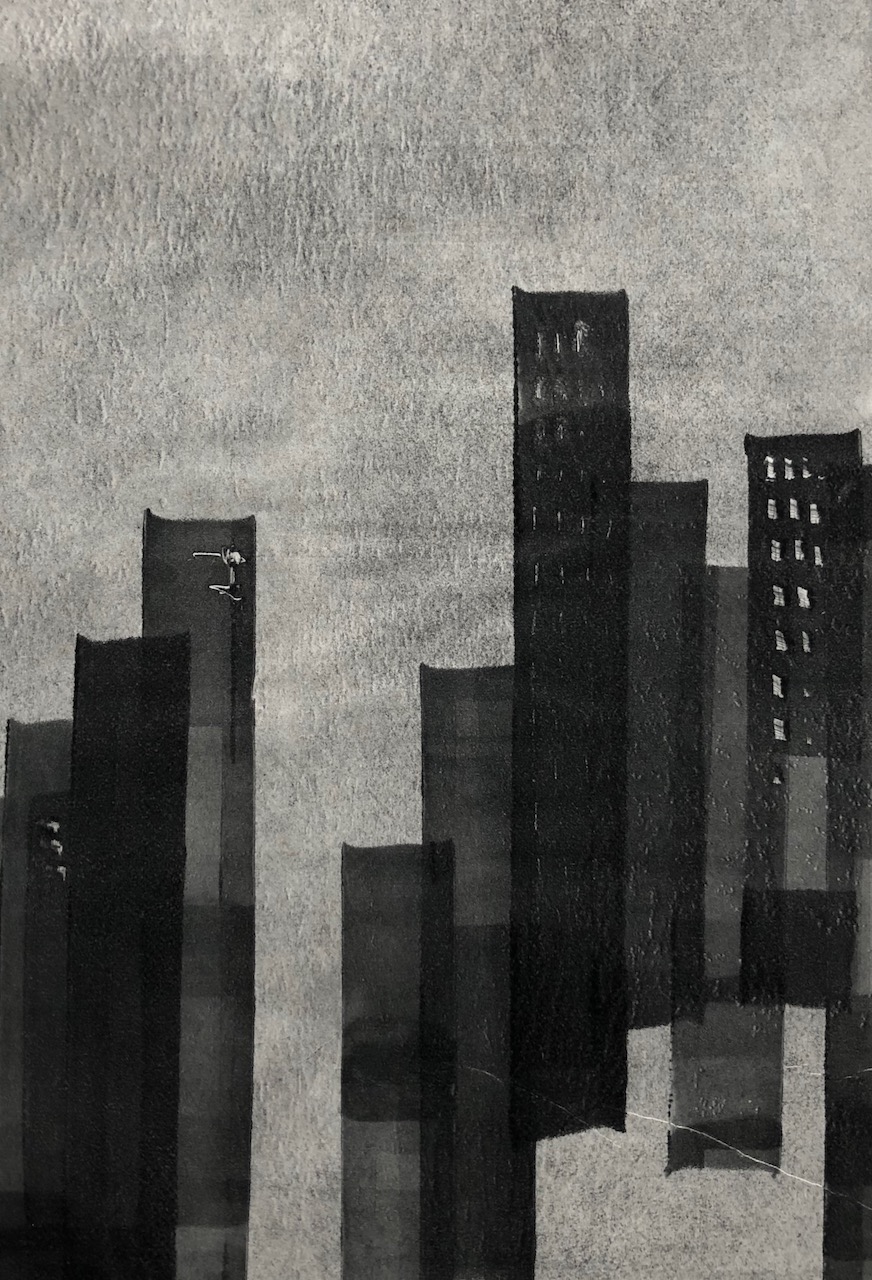
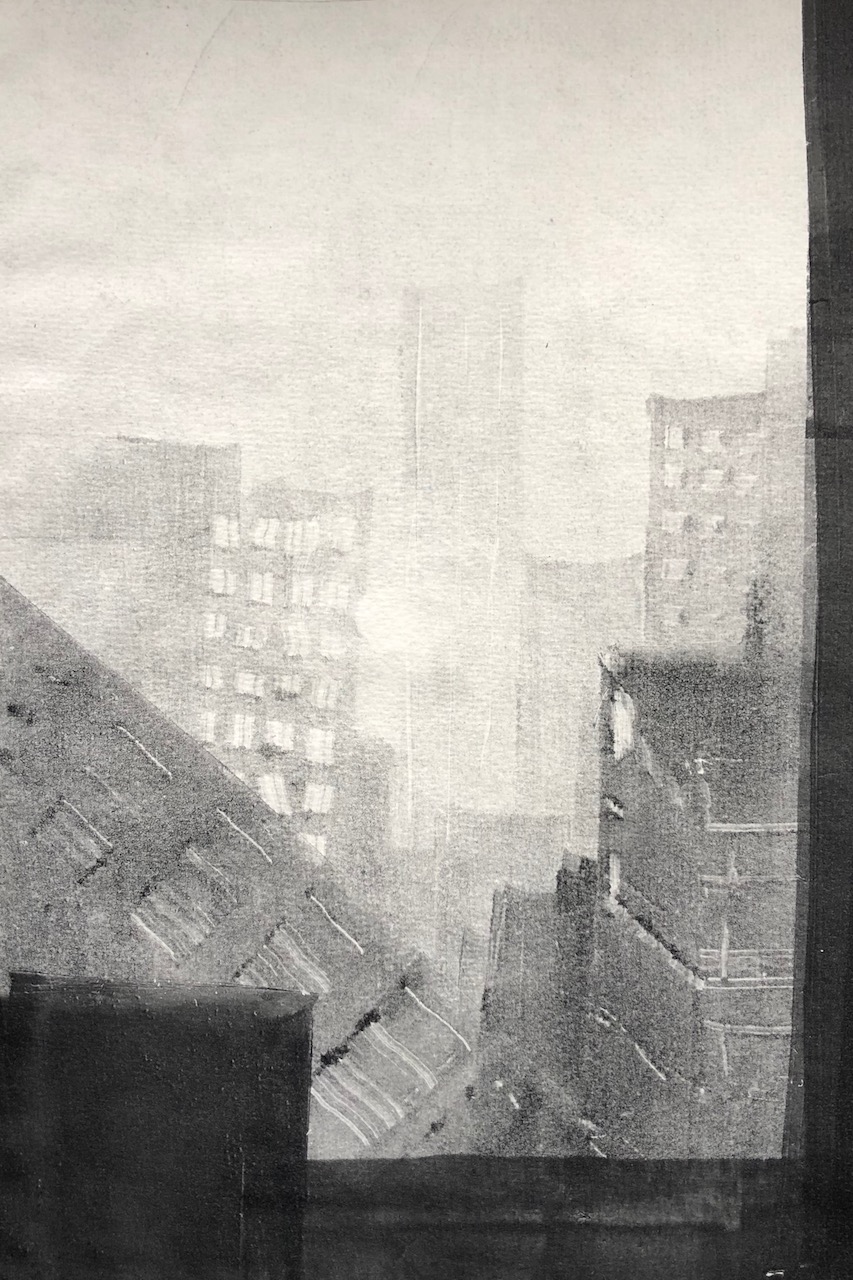
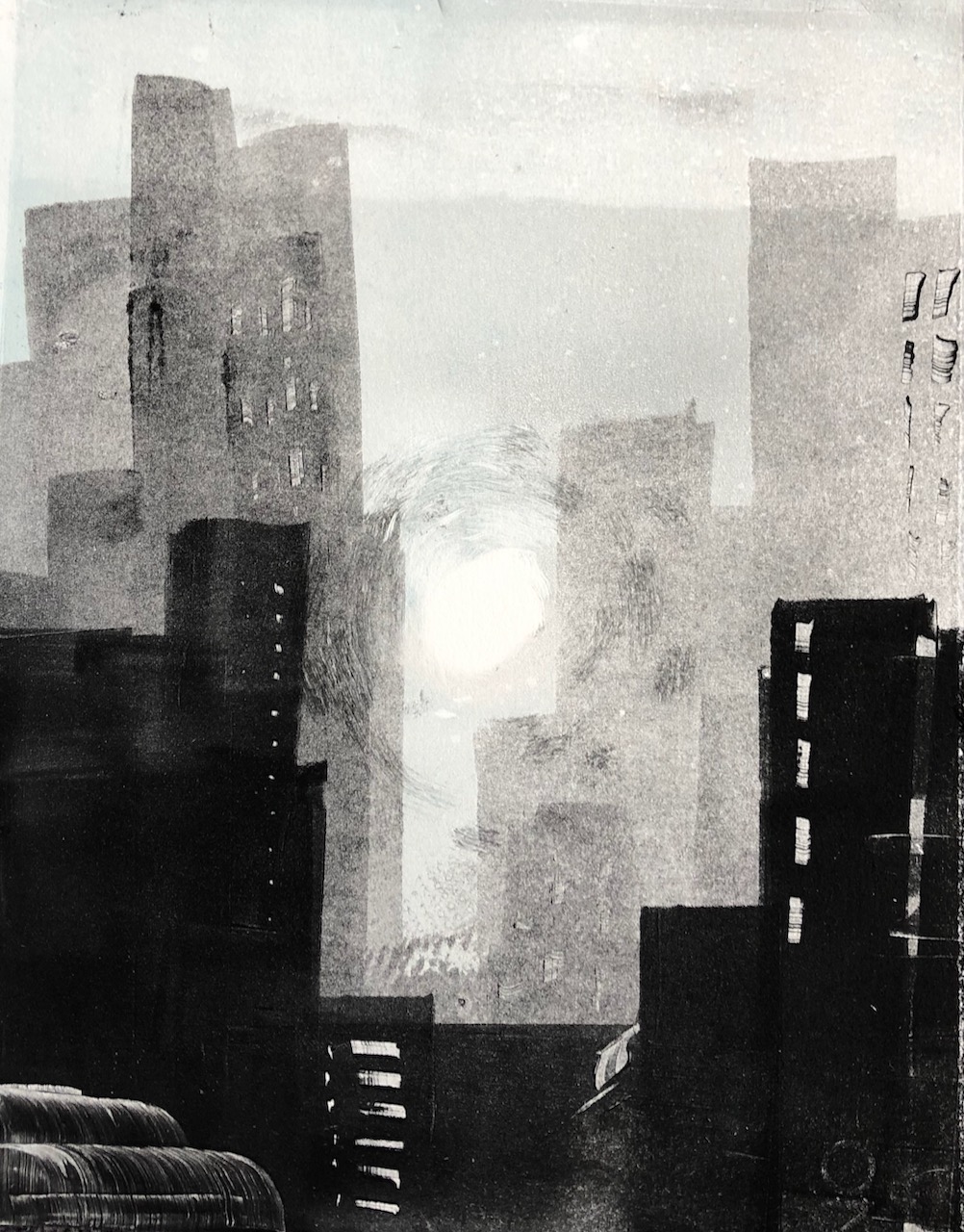
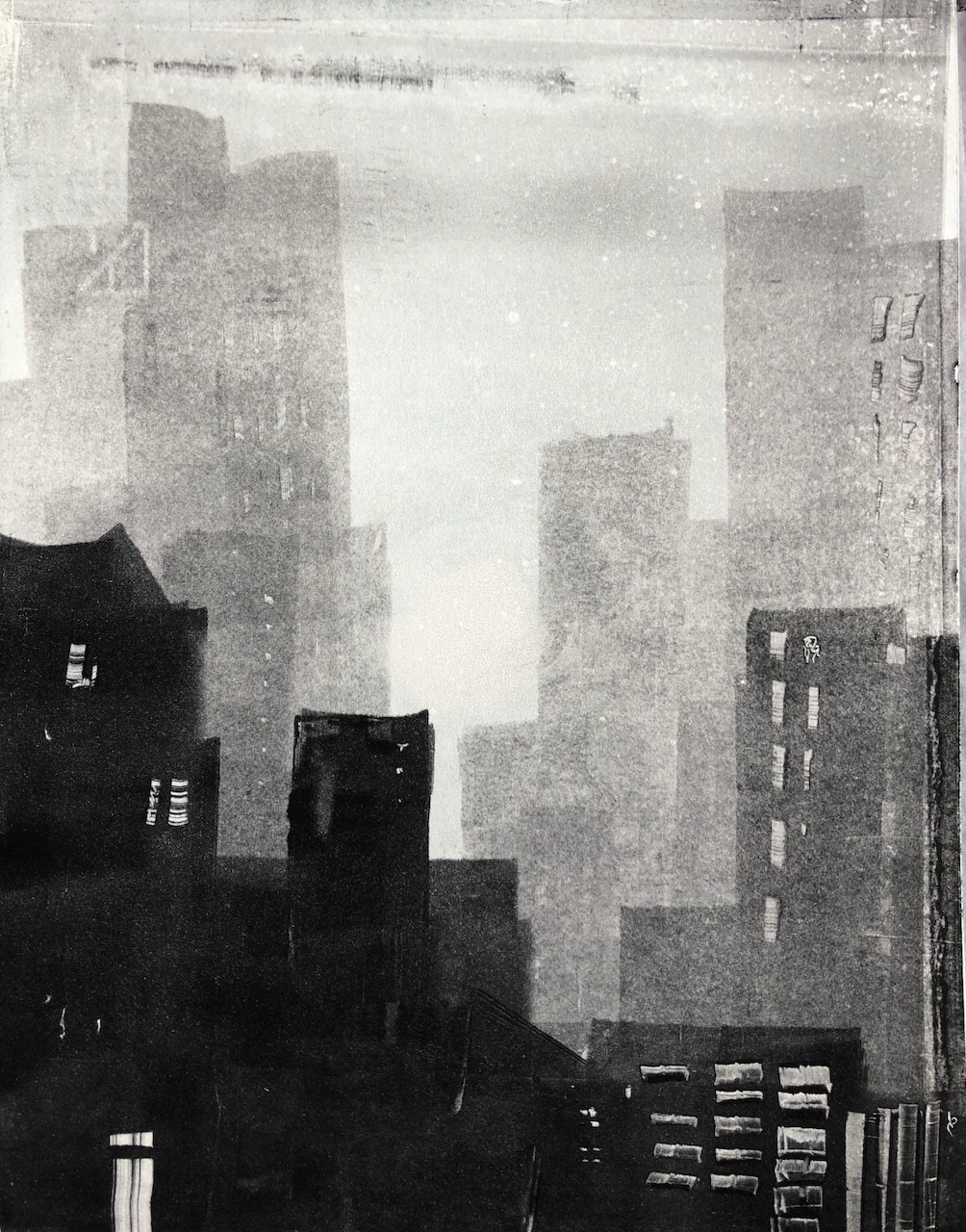
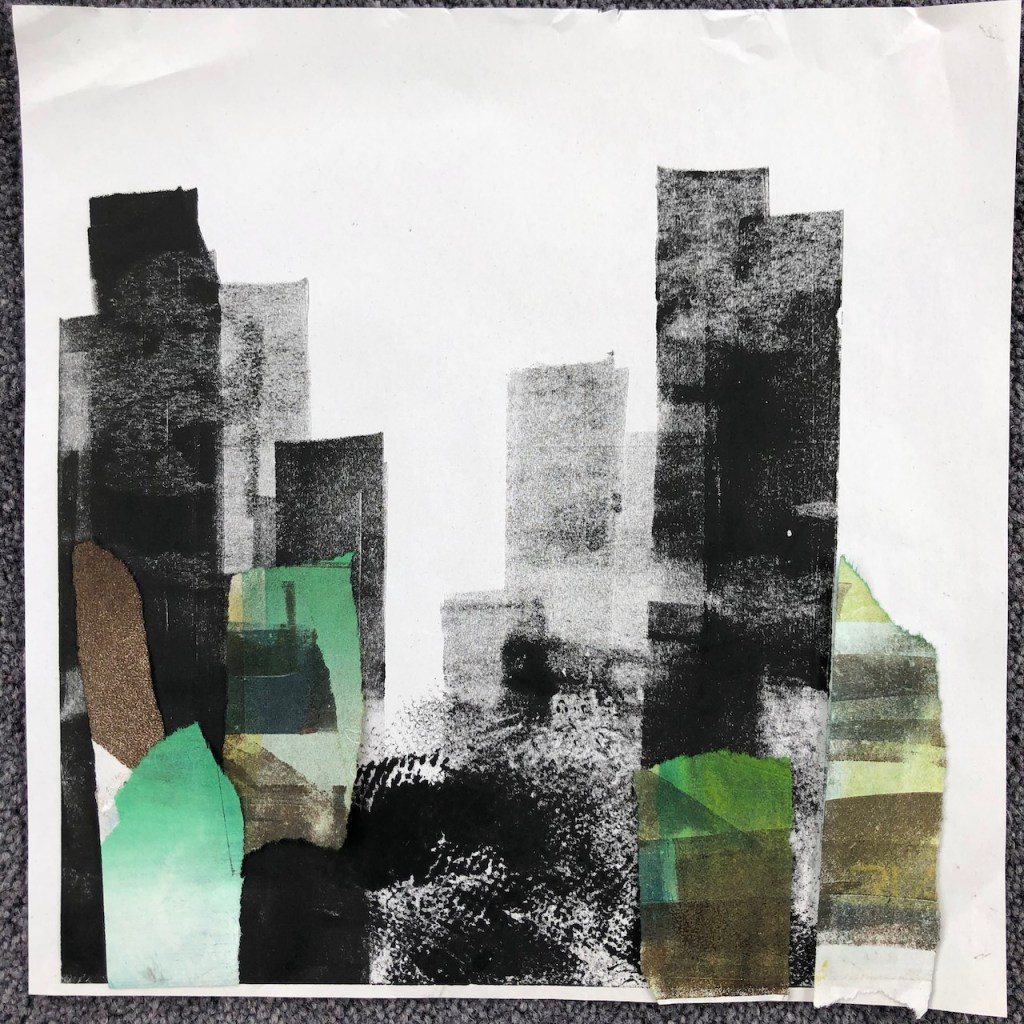
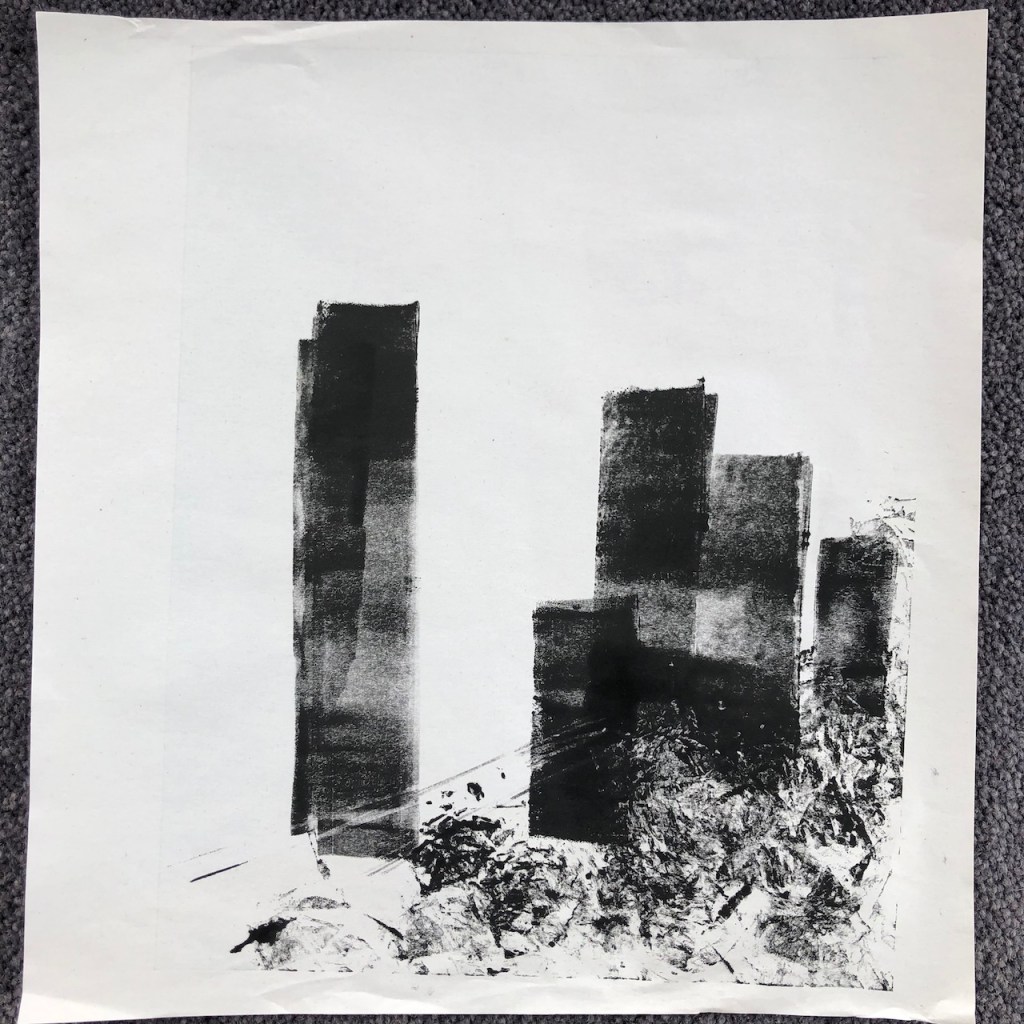
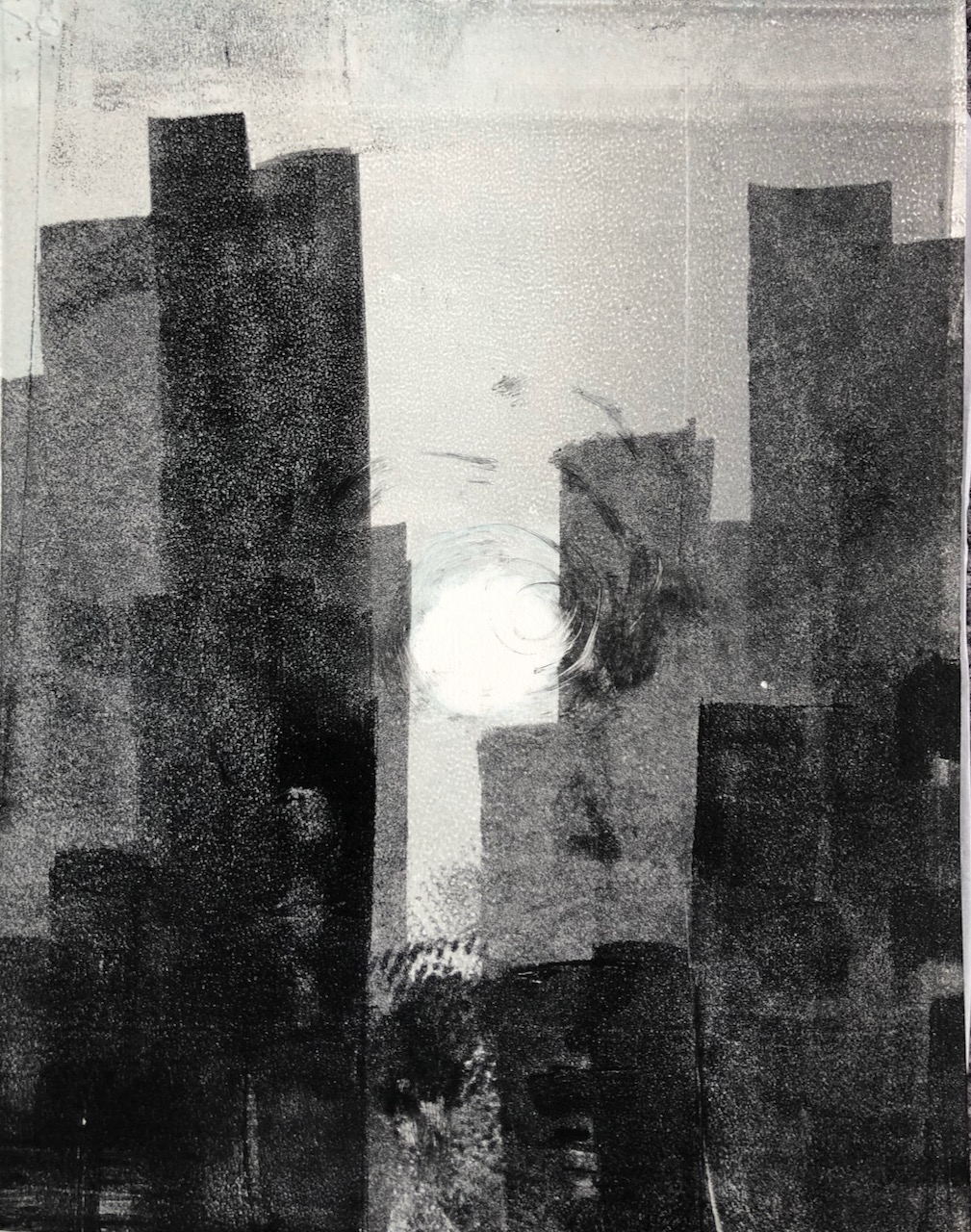
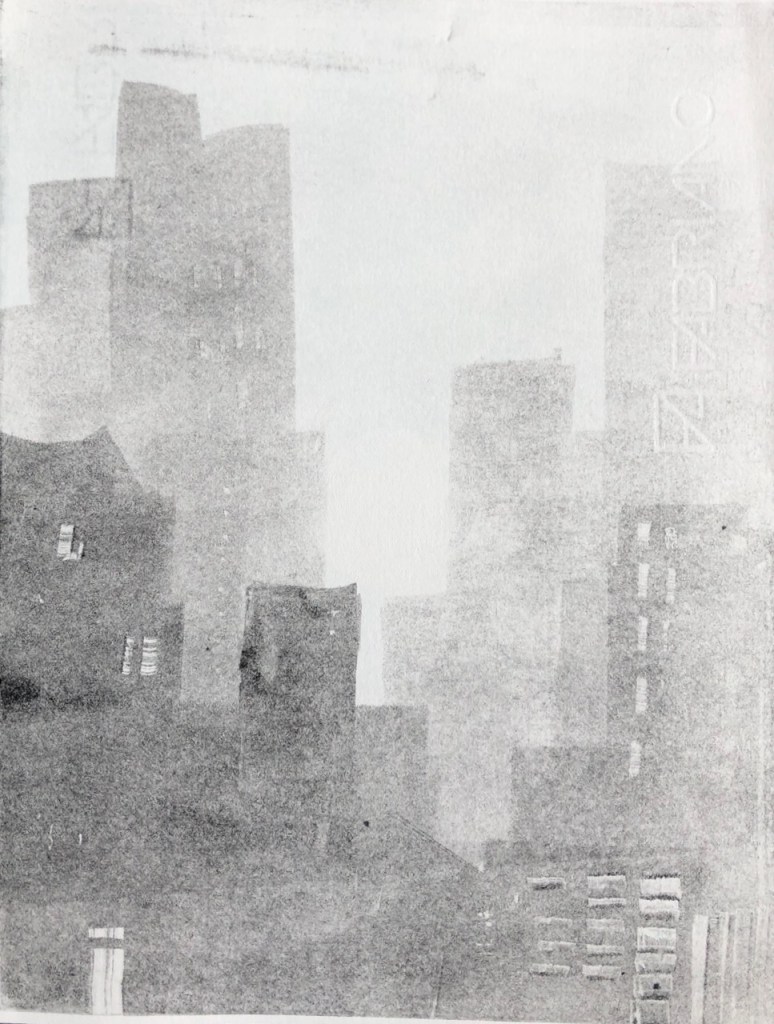
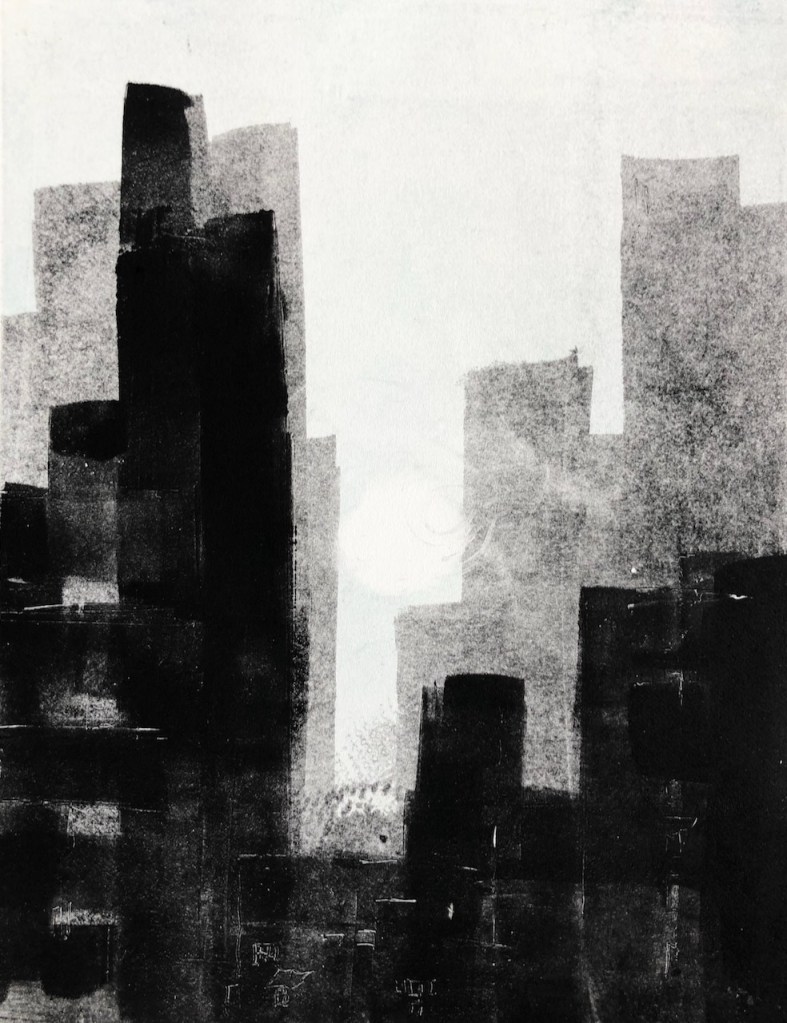
I have long admired the work of Fiona Fouhy. Fiona makes monoprints of forests and landscapes, with amazing depth and atmospheric effects. My idea was to try to get those effects in urban landscapes. So when East London Printmakers announced that Fiona would be running a workshop, I signed up immediately. That was in January 2020. The course was in February and was of course postponed. It took place in August. Here is some of my work from that day.
Here is the city.
The City (1), Monoprint
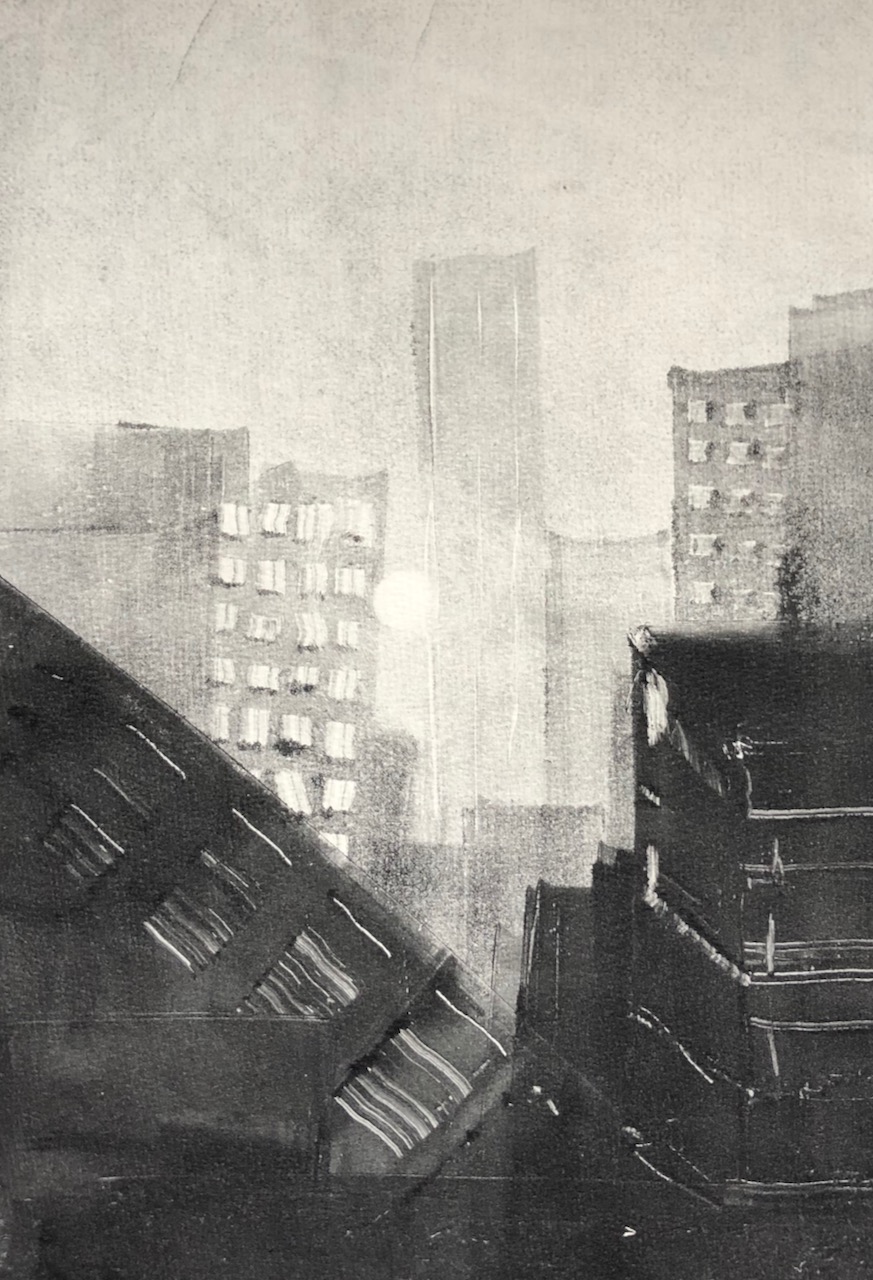
Here’s another attempt. This time I made sloping roofs. I quite like the “snow” effect, representing a view through a dirty window, or pollution in the atmosphere.
The City (2), Monoprint
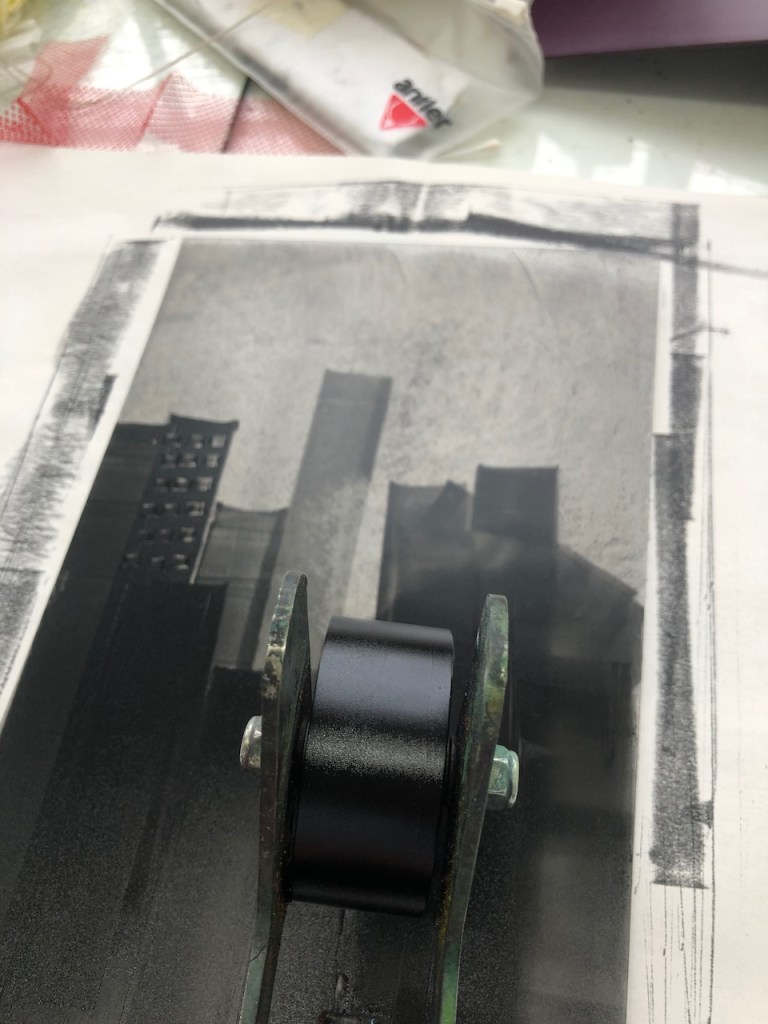
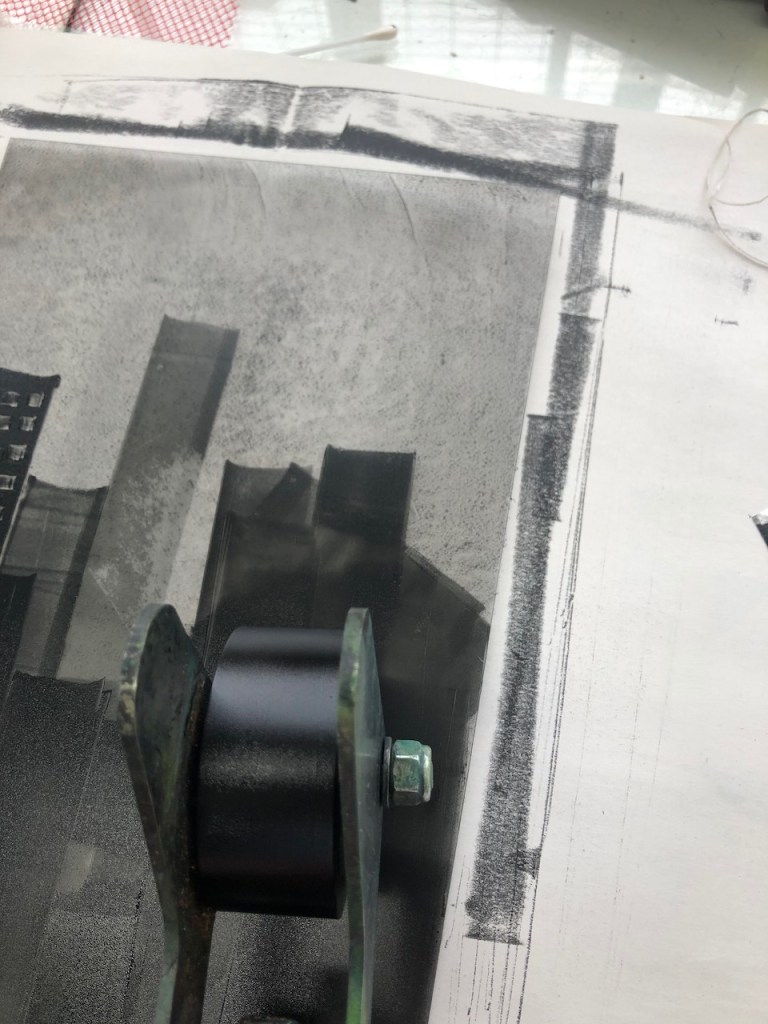
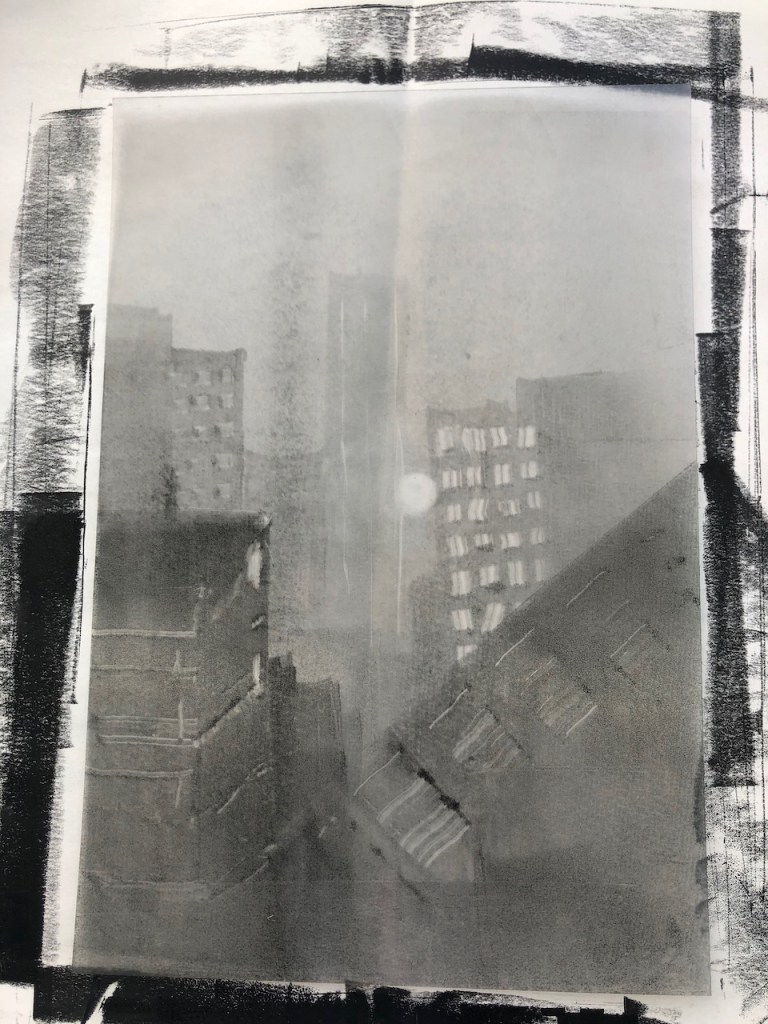
Here are two prints on newsprint, made as part of the process.
The City, (3) and (4), Monoprint out-takes.
As you see, every print is different, but they are related.
The City (5)
The City (6) – Fog
The City (7)
Apart from the out-takes on newsprint, these are all monoprints on Fabriano printing paper, 20x24cm. All are for sale.
Click a button below to share this post online, email it, or print it:
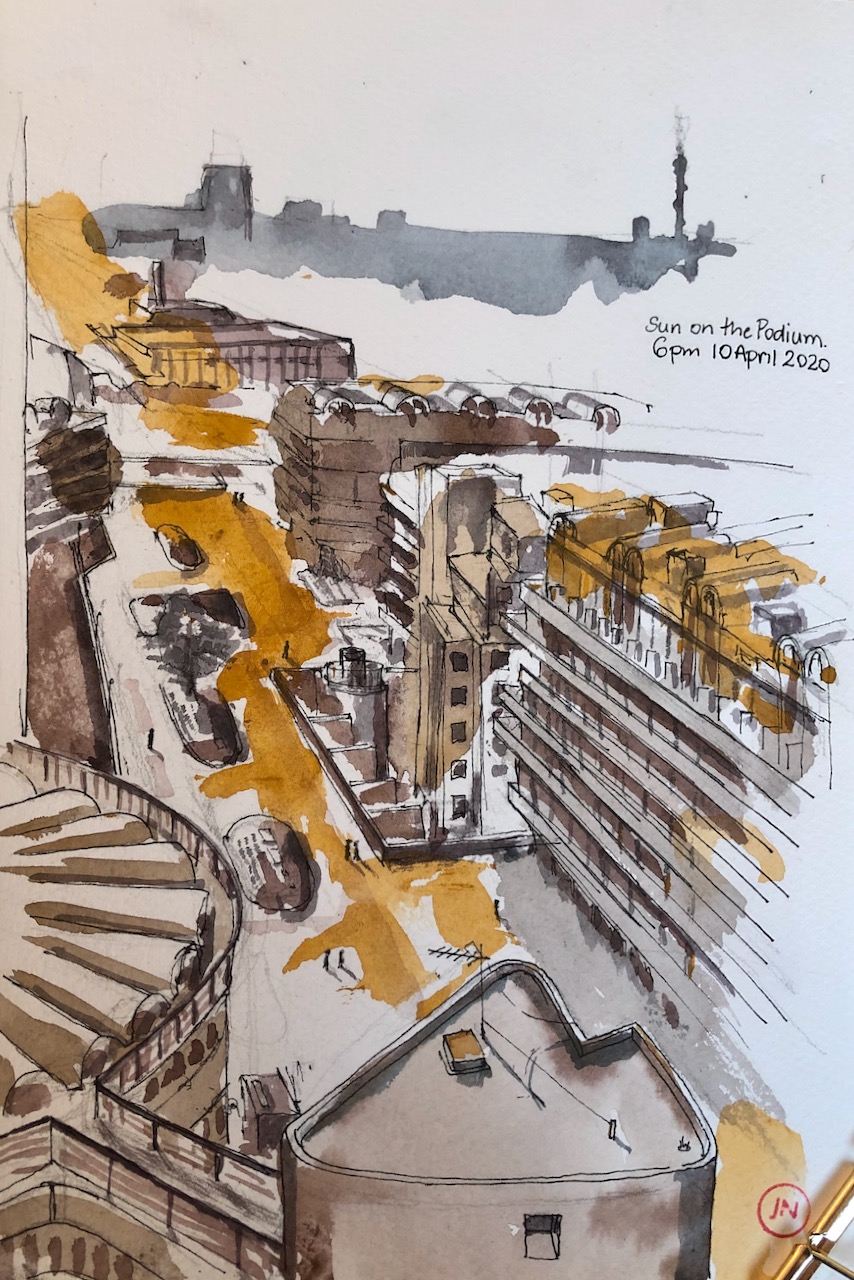
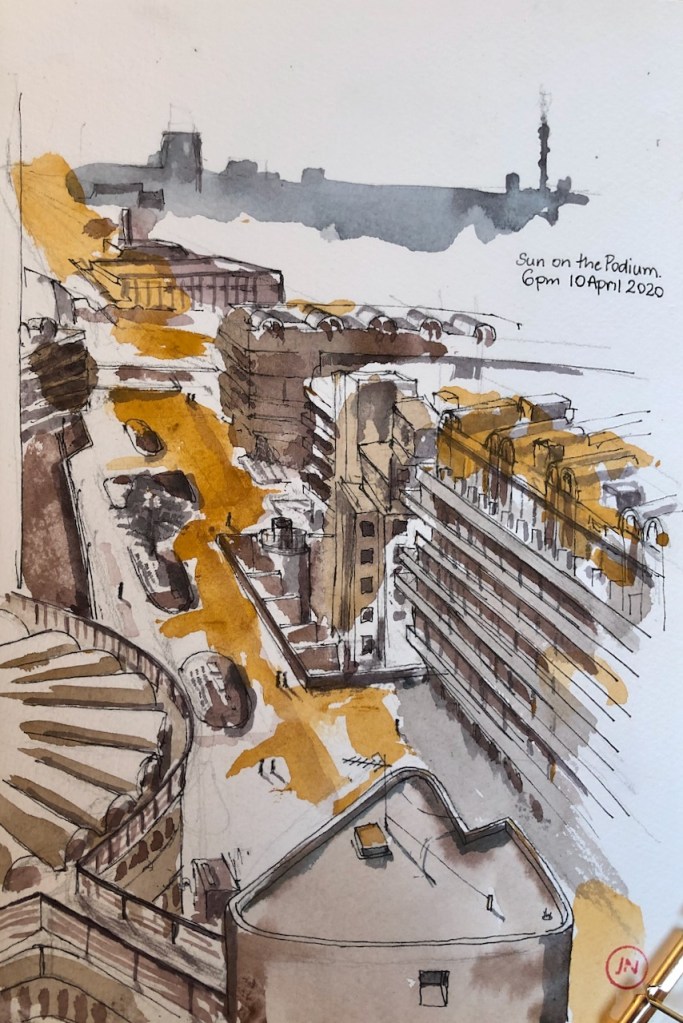
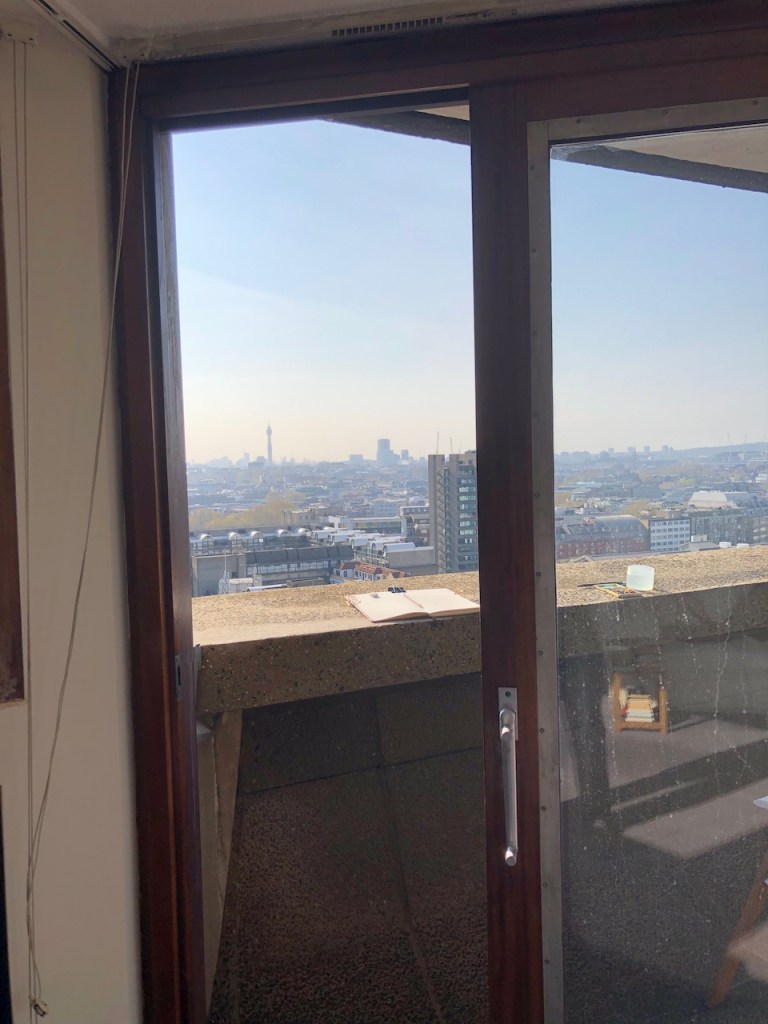
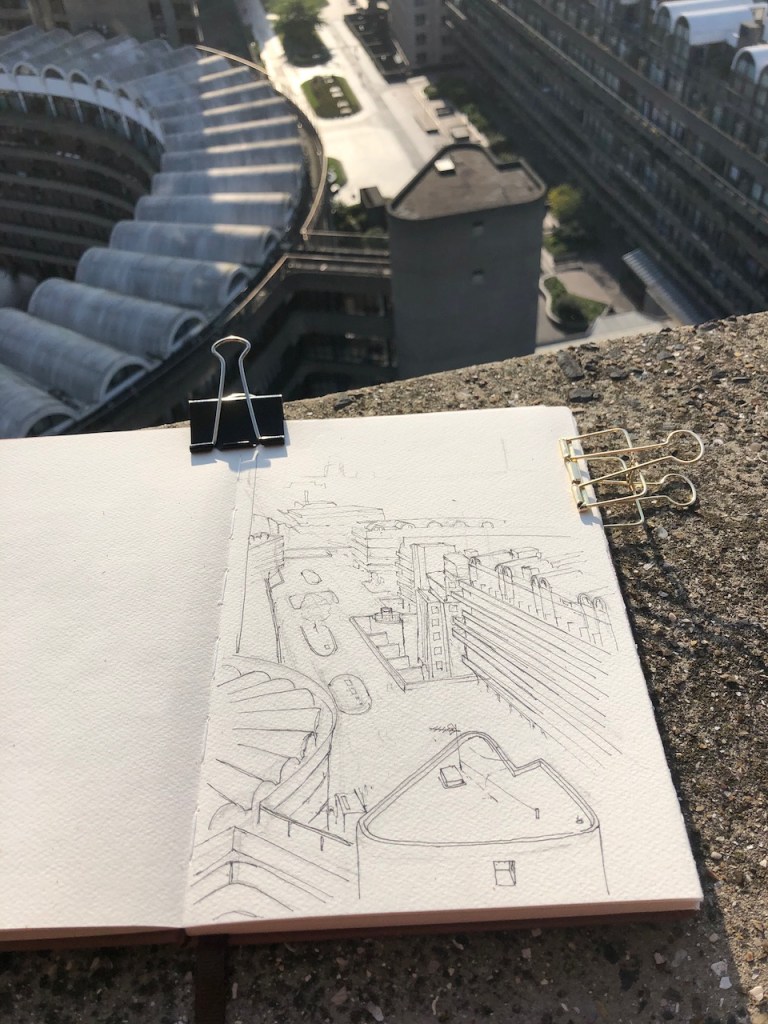
The tower in the foreground is part of Frobisher Crescent. Frobisher Crescent itself is on the left. Ben Jonson House is on the right. On the horizon you can see Centrepoint, and the Post Office Tower.
This took 2 hours. The sun moved, of course.
Colours: Mars Yellow, Perylene Maroon, Prussian Blue, all Daniel Smith watercolours.
Click a button below to share this post online, email it, or print it:

























 Jane Sketching