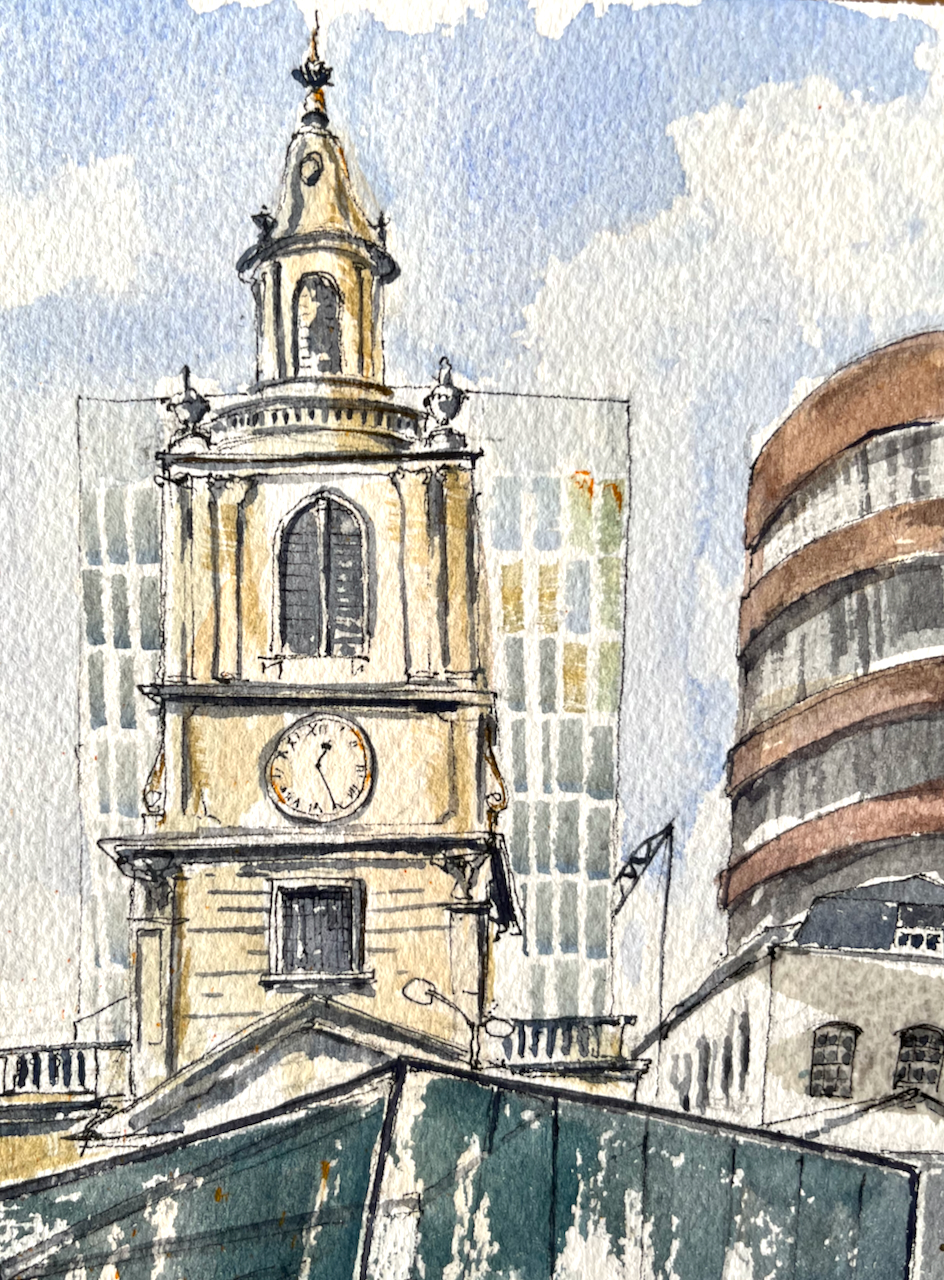
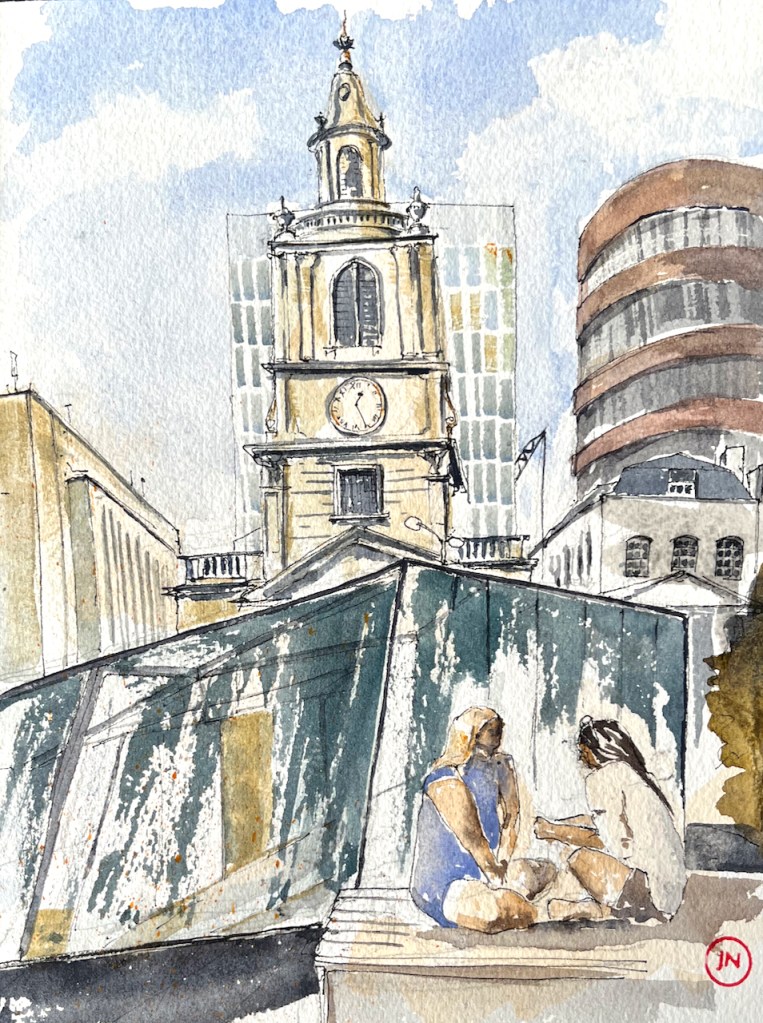
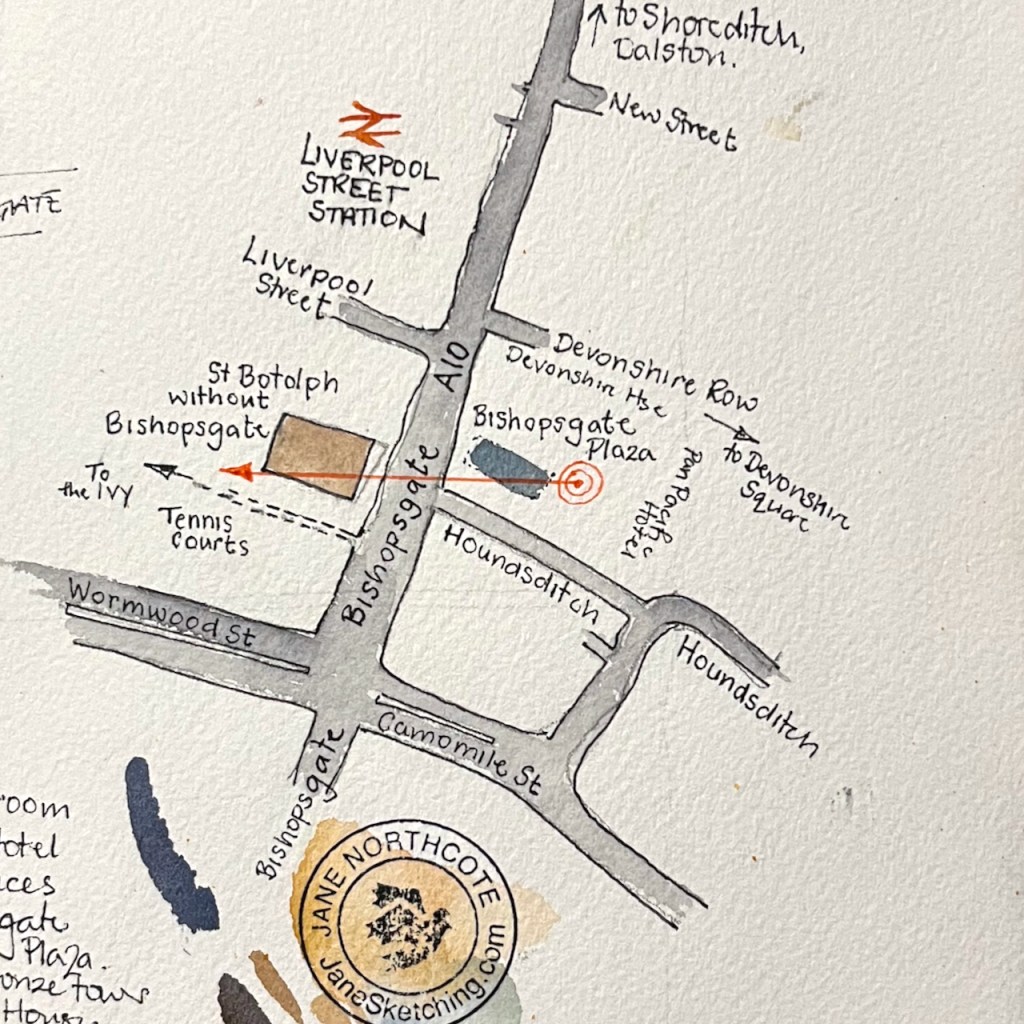
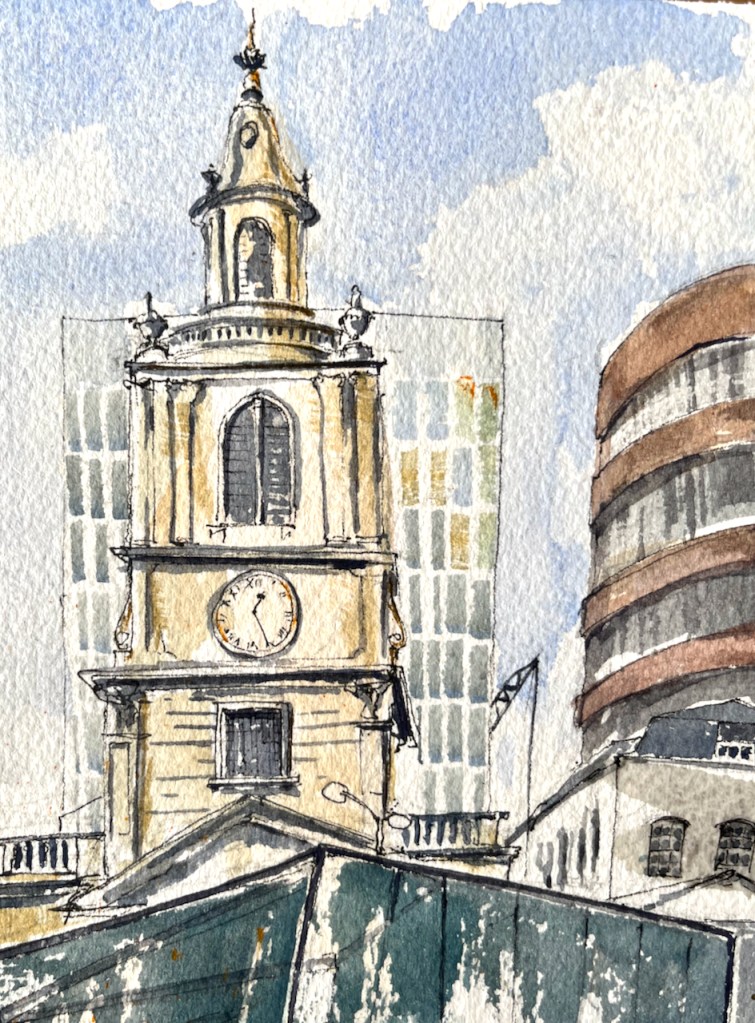
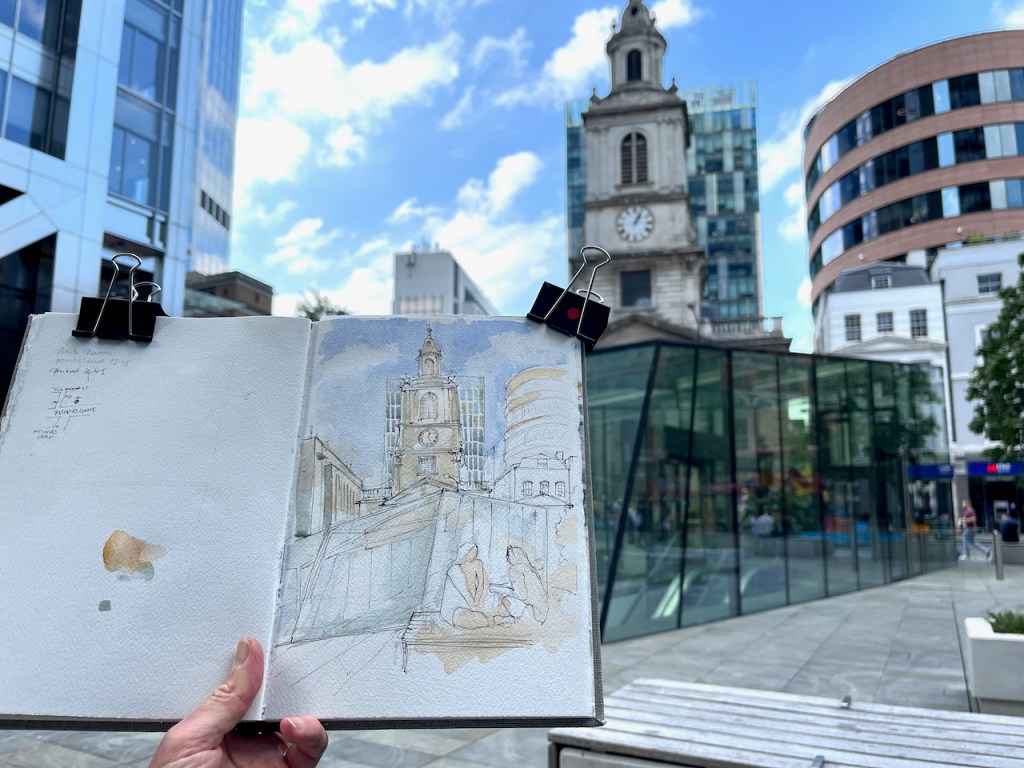
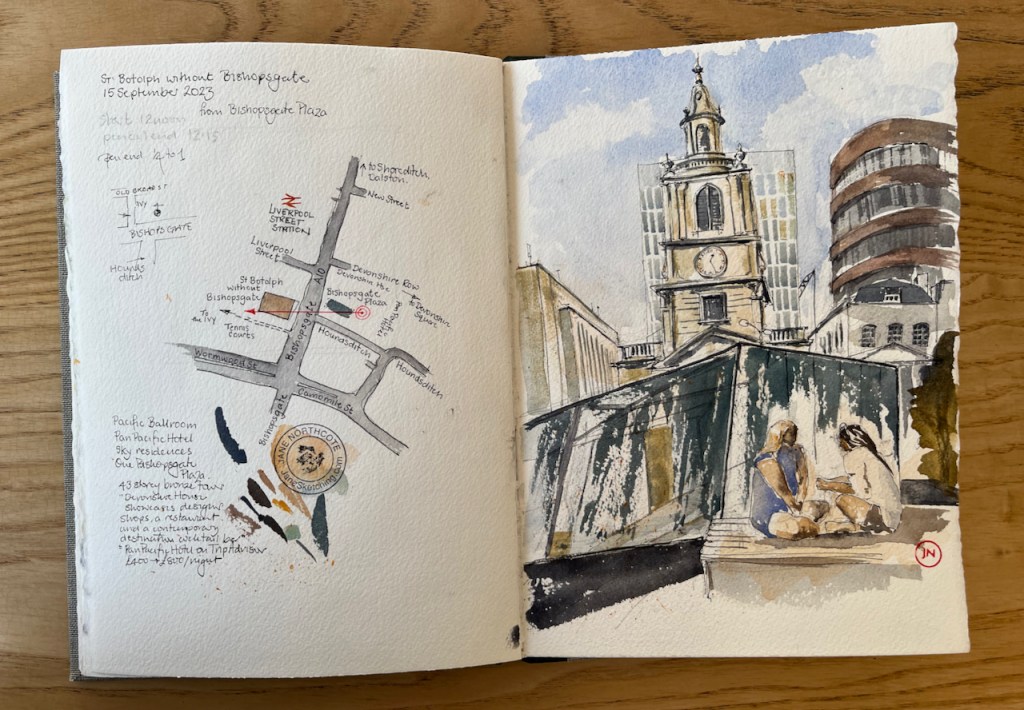
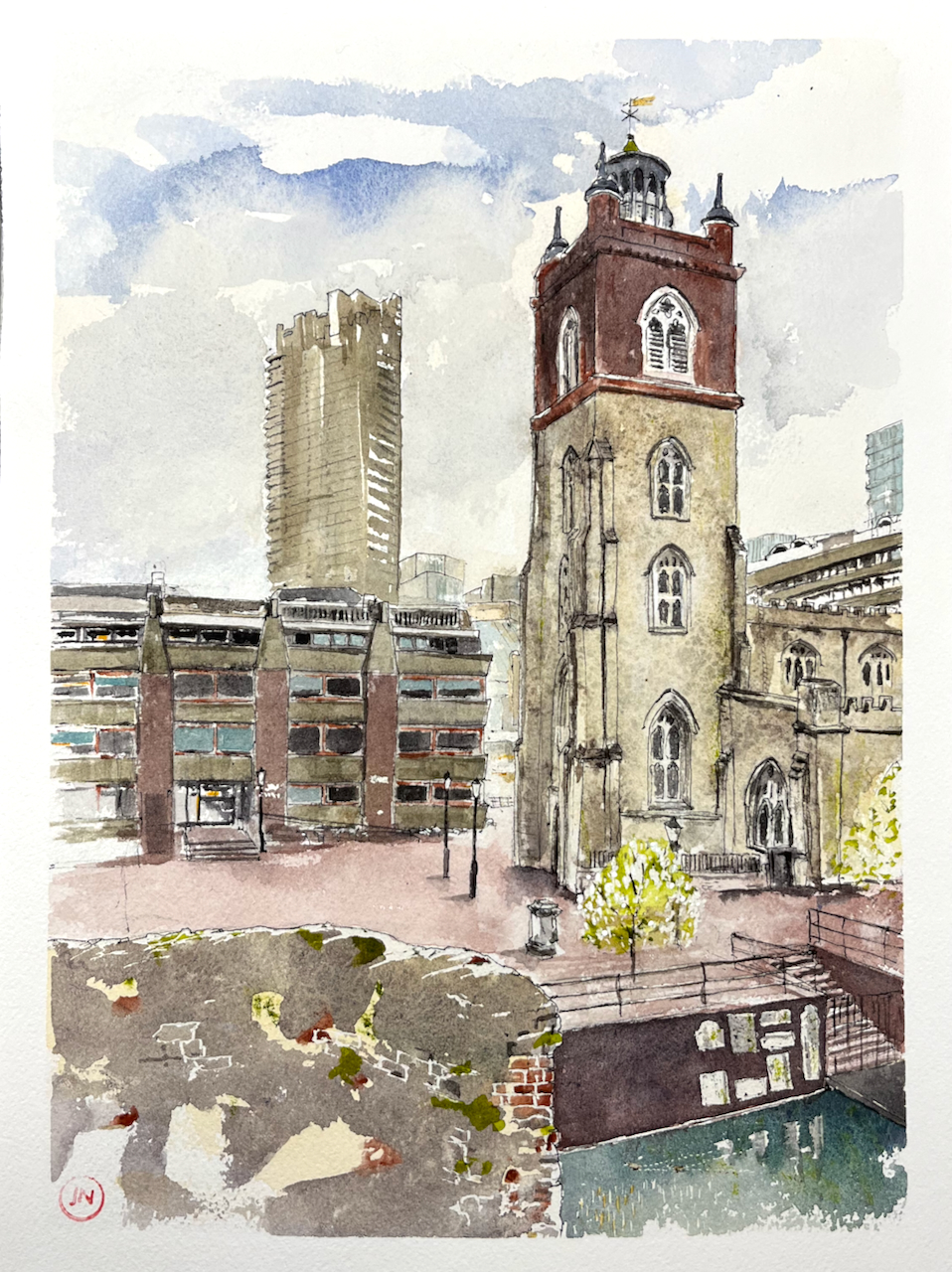
Bishopsgate Plaza is on the East side of Bishopsgate, near Liverpool Street. From the seats there, here is the view of St Botolph-without-Bishopsgate. I sketched amongst the many people enjoying the sun at lunchtime.
St Botolph-without-Bishopsgate, EC2. 15th September 2023, 1pm. 10″x 7″ in sketchbook 13
The current church was constructed in 1729, to the designs of James Gould. There has been a place of Christian worship on this site since Roman times. The parish registers are complete from 1558 according to the church’s website.
Viewed from Bishopsgate Plaza, the church is all but submerged in the surrounding buildings. The large glass structure is the entrance to the “Pacific Ballroom”. This is part of the Pan Pacific Hotel, which was behind me as I sketched.
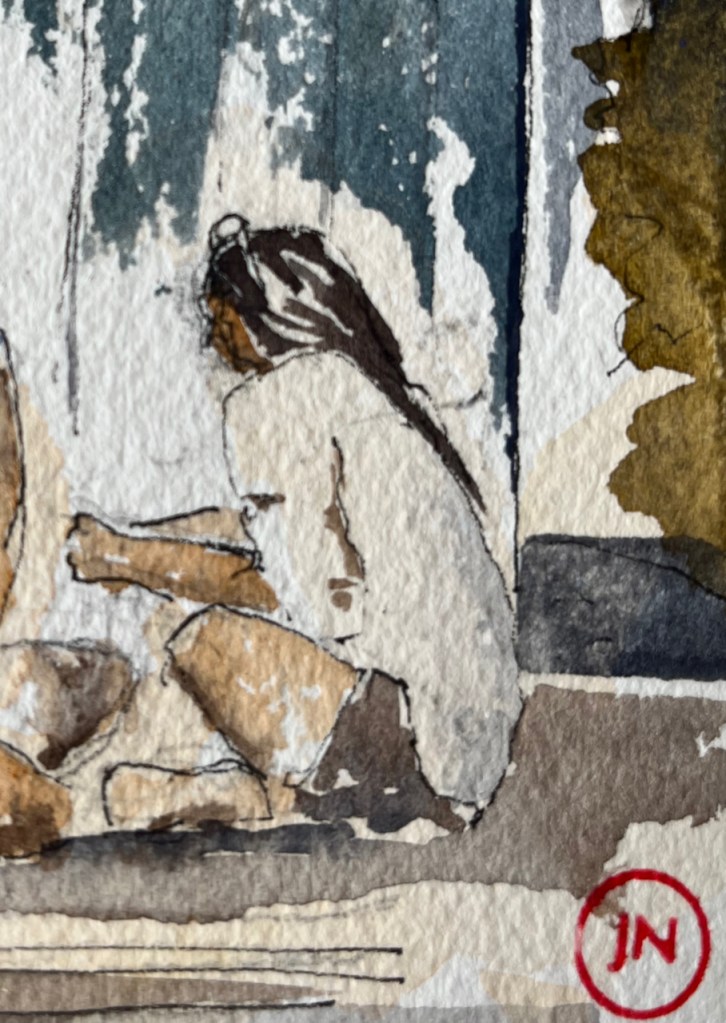
I find it quite hard to draw people, but I wanted to include the discussion between the two women. Their lively conversation contrasted with the stillness of the church, and the enormity of the buildings all around. They created a little private world between themselves.
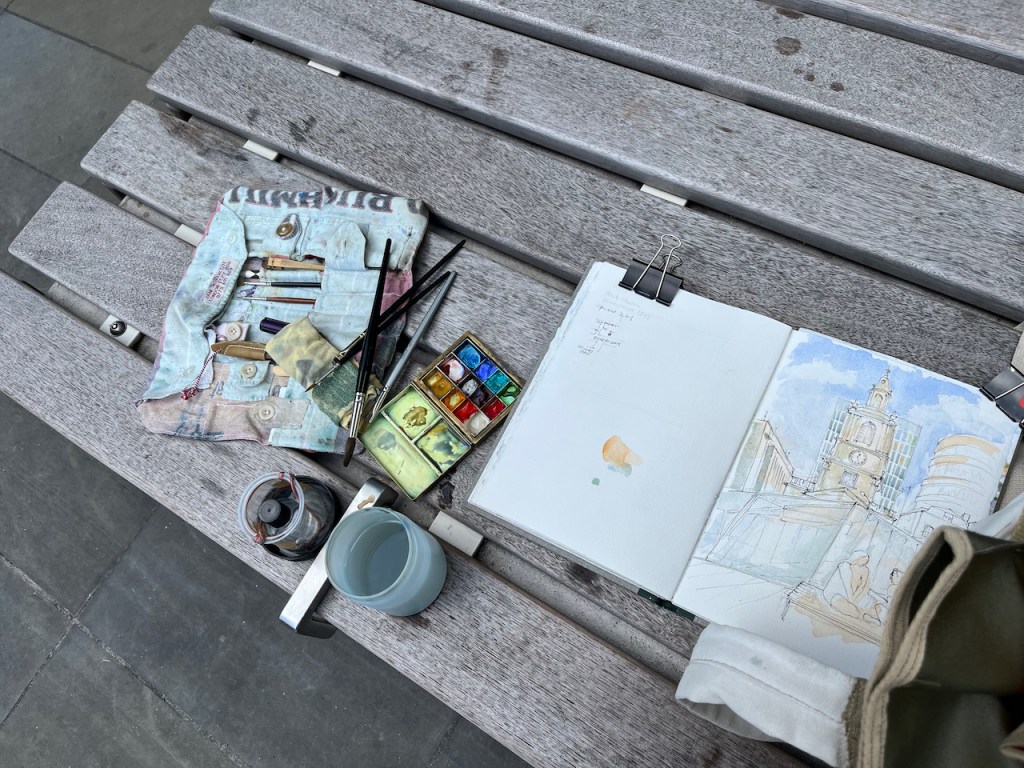
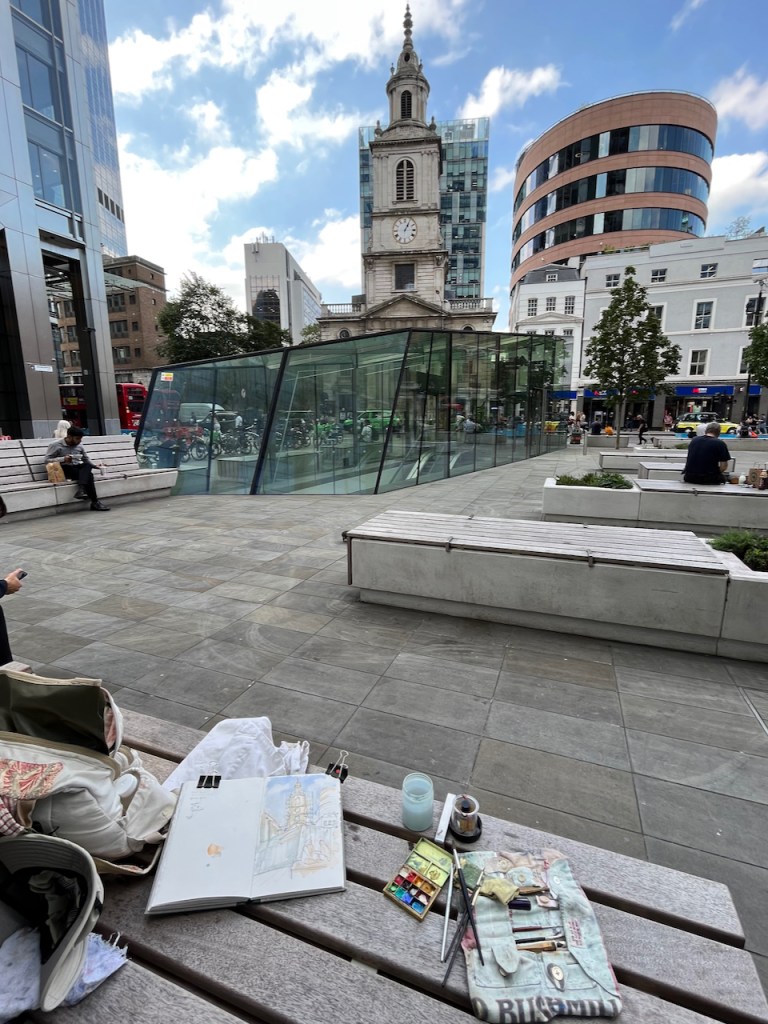
Here is work in progress on the sketch:
Sketchbook 13
Click a button below to share this post online, email it, or print it:
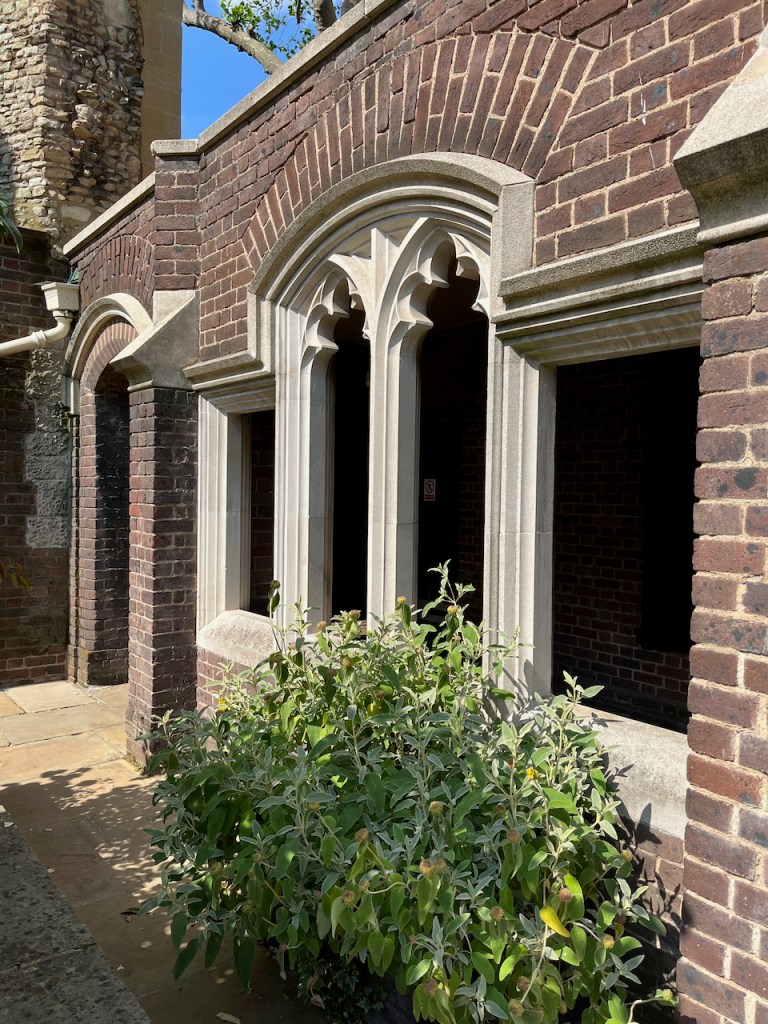
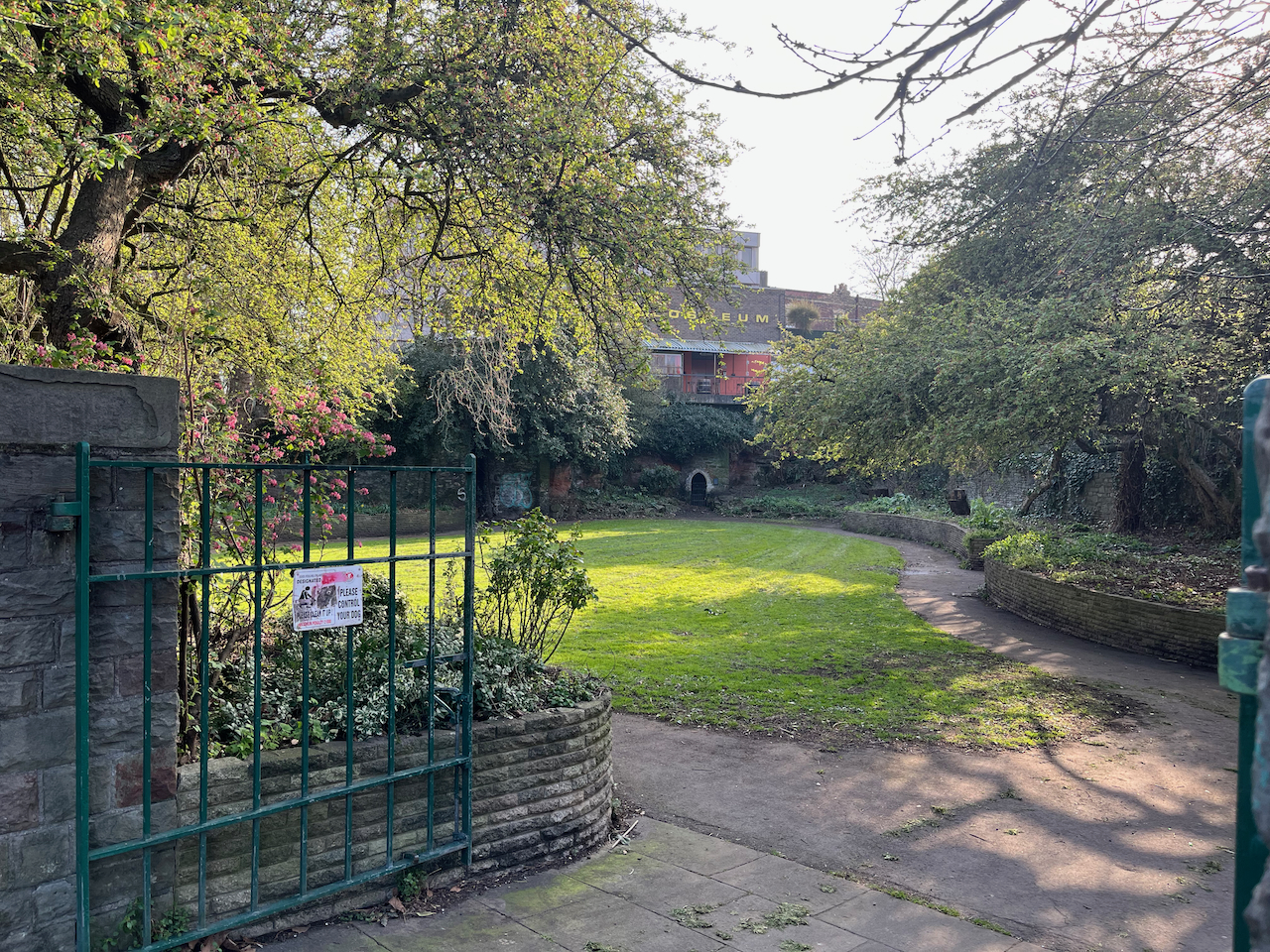
On a hot day, in need of healing, I re-discovered this herb garden. It is hidden away the other side of a gate off St John’s Square in Clerkenwell. The gate is open and you can walk right in. There are benches, and aromatic plants. At the back, there’s.a cloister.
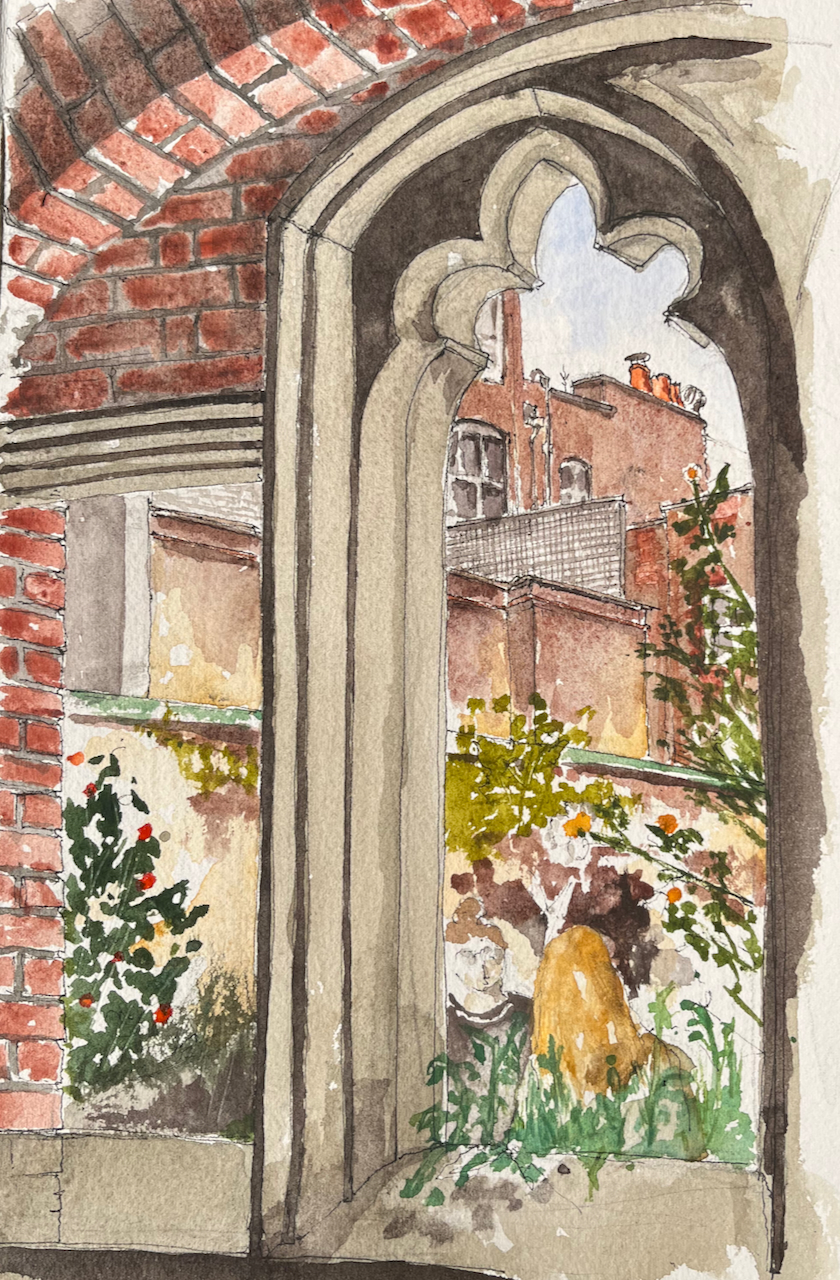
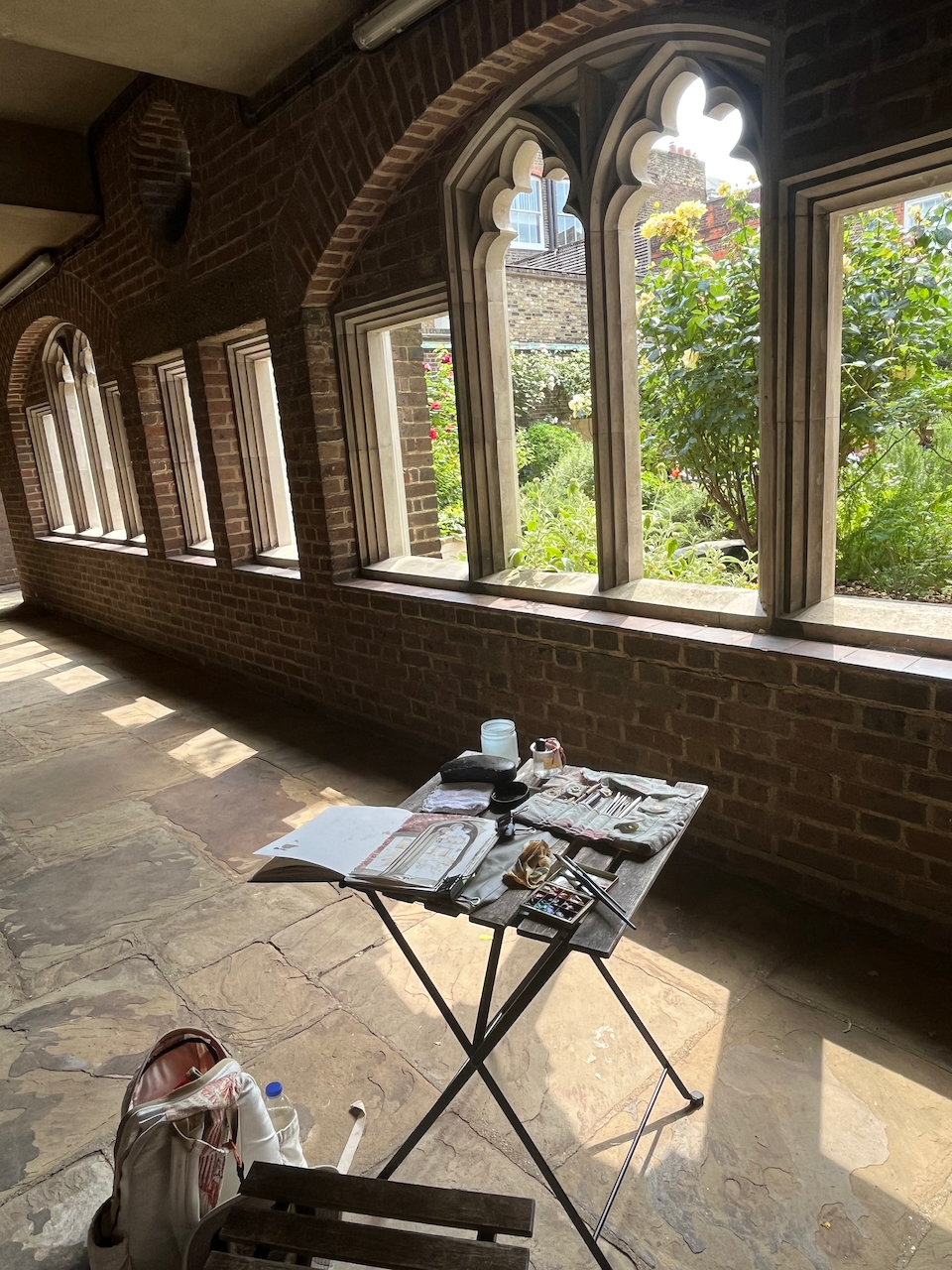
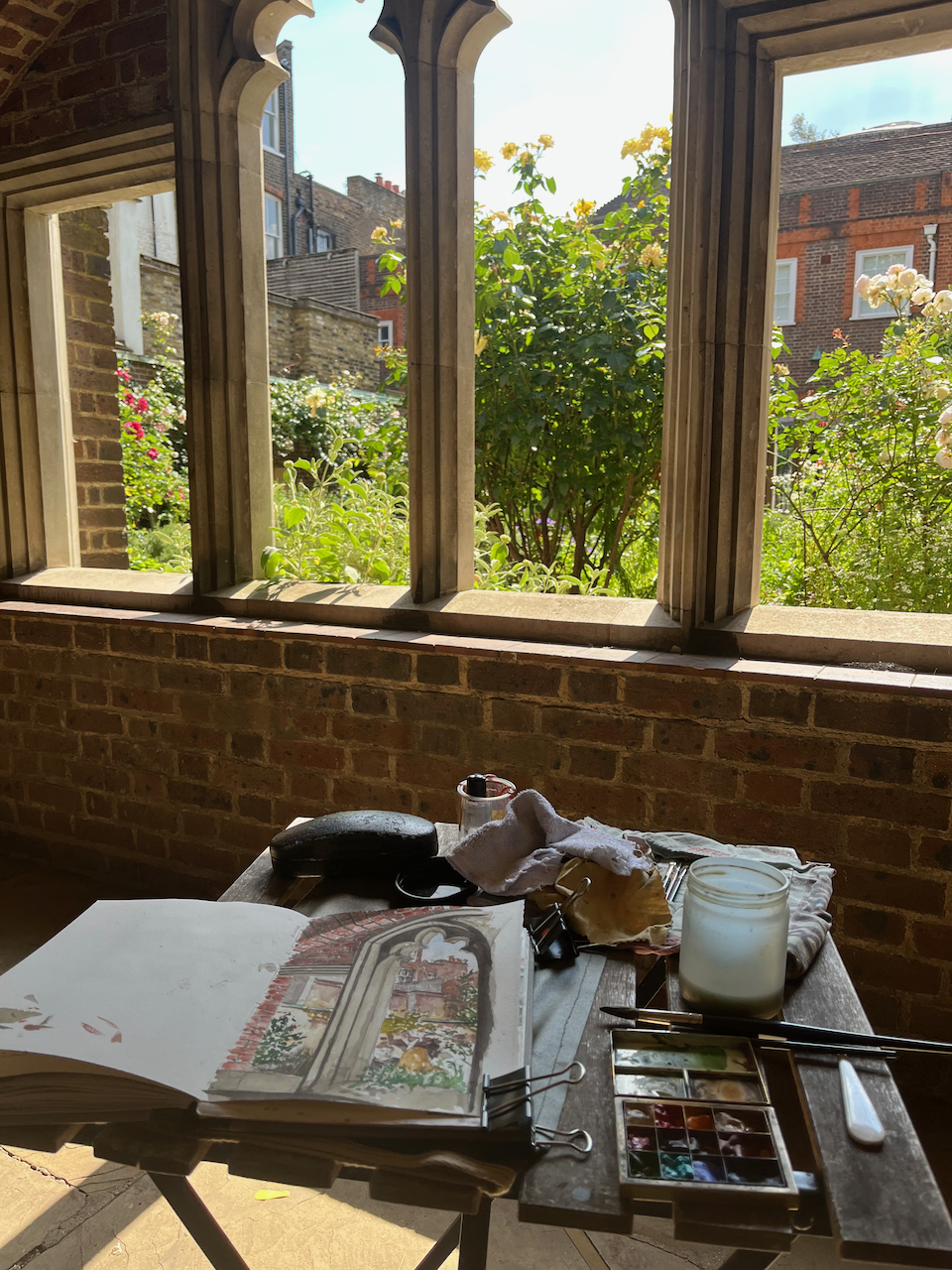
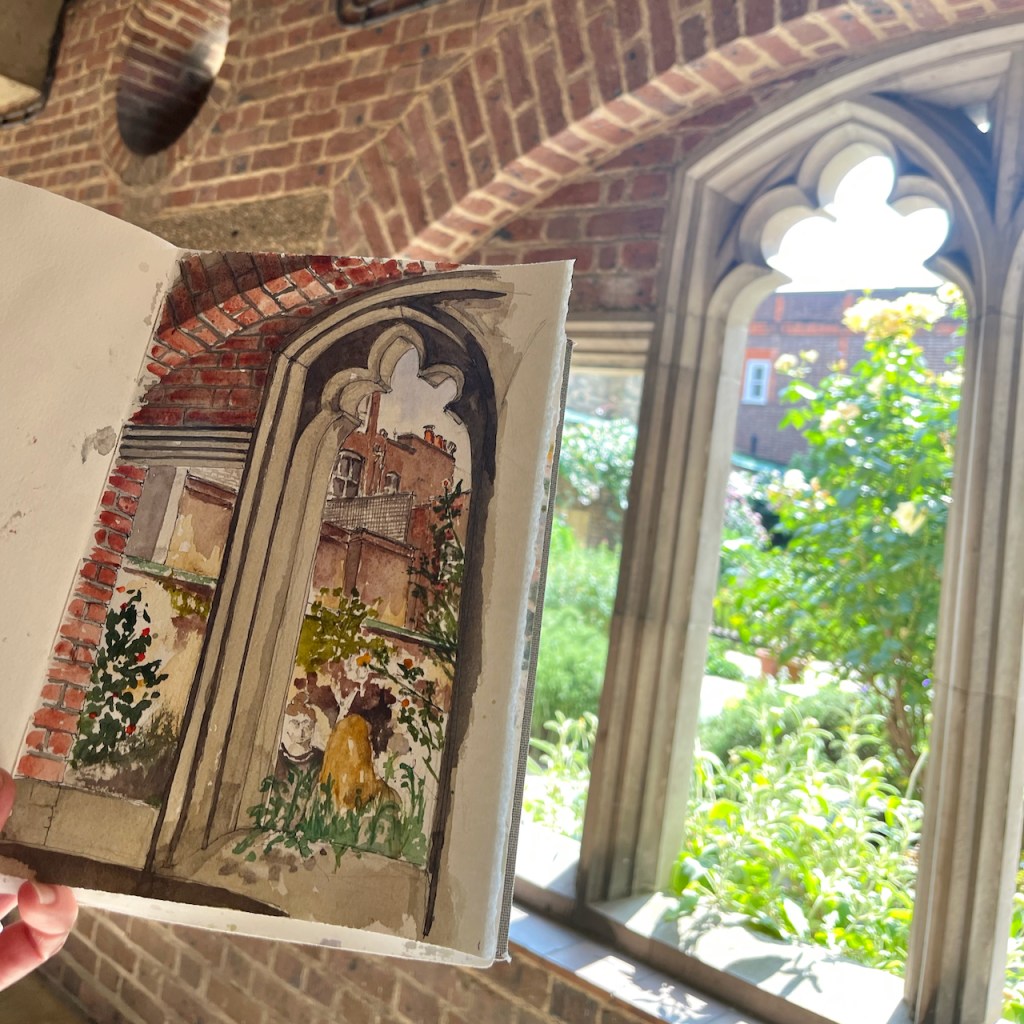
I went in the cloister, and found the ideal place to sketch: cool, still, and quiet, with a view from those windows.
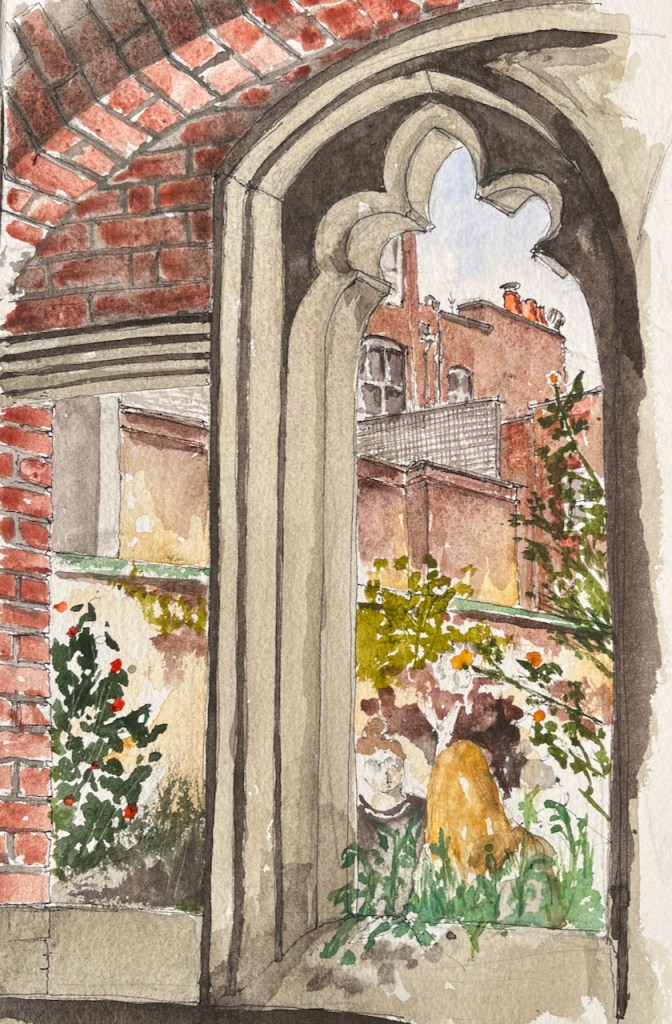
Here’s the view:
From the Cloister, looking into the garden, 15th June 2023, 10″ x 8″ in Sketchbook 13
The Order of St John has a long history.
By 1080, a hospital had been established in Jerusalem by a group of monks under the guidance of Brother Gerard. Its purpose was to care for the many pilgrims who had become ill on their travels to the Holy Land. The men and women who worked there were members of a new religious order, officially recognised by the Church in 1113. Known as the Hospitallers, they cared for anyone, without distinction of race or faith.
These days, this is the organisation behind St John Ambulance.
The garden is wonderful. A place of solace. People from the offices around go there to eat their lunches and also to discuss office politics I realised. But also to read books, dream, doze, and of course, to sketch. There is a book stand by the gate as you go in, with secondhand books you can borrow or buy.
I’ve sketched in this garden a few years ago, from a slightly different viewpoint:
I drew this in the Cloister Garden of the Museum of the Order of St John, Clerkenwell, a beautiful tranquil place on a hot day. It was a very hot day, and I’d left the flat in some irritation, after a series of frustrations, mostly computer-related.…
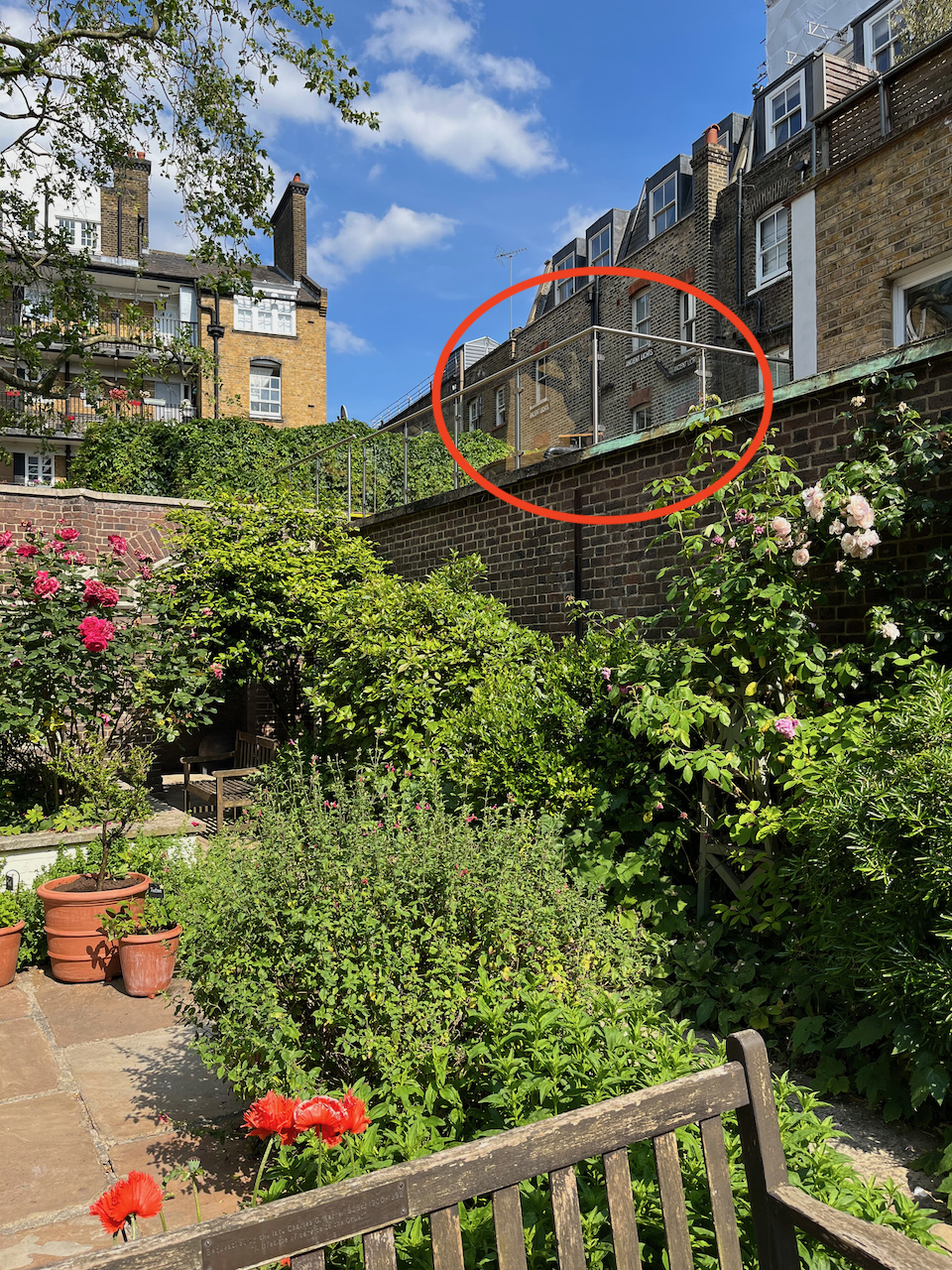
My sketch shows the backs of houses on Albemarle Way. This street and others nearby feature in the novel “Troubled Blood” by Robert Galbraith.
I looked back at the houses as I walked through the garden on my way out. I saw that one of them claims “Ancient Lights”. That’s asserting the right to light, and was a way in law to prevent anyone constructing a tall building which obstructed your windows. It’s “ancient” because you had to have enjoyed the benefit of the light for 20 years or more before you could assert “Ancient Lights”. This has now been superseded by “modern planning laws” I read. But maybe we should put some “ancient lights” notices on the windows of our flat, just to be sure.
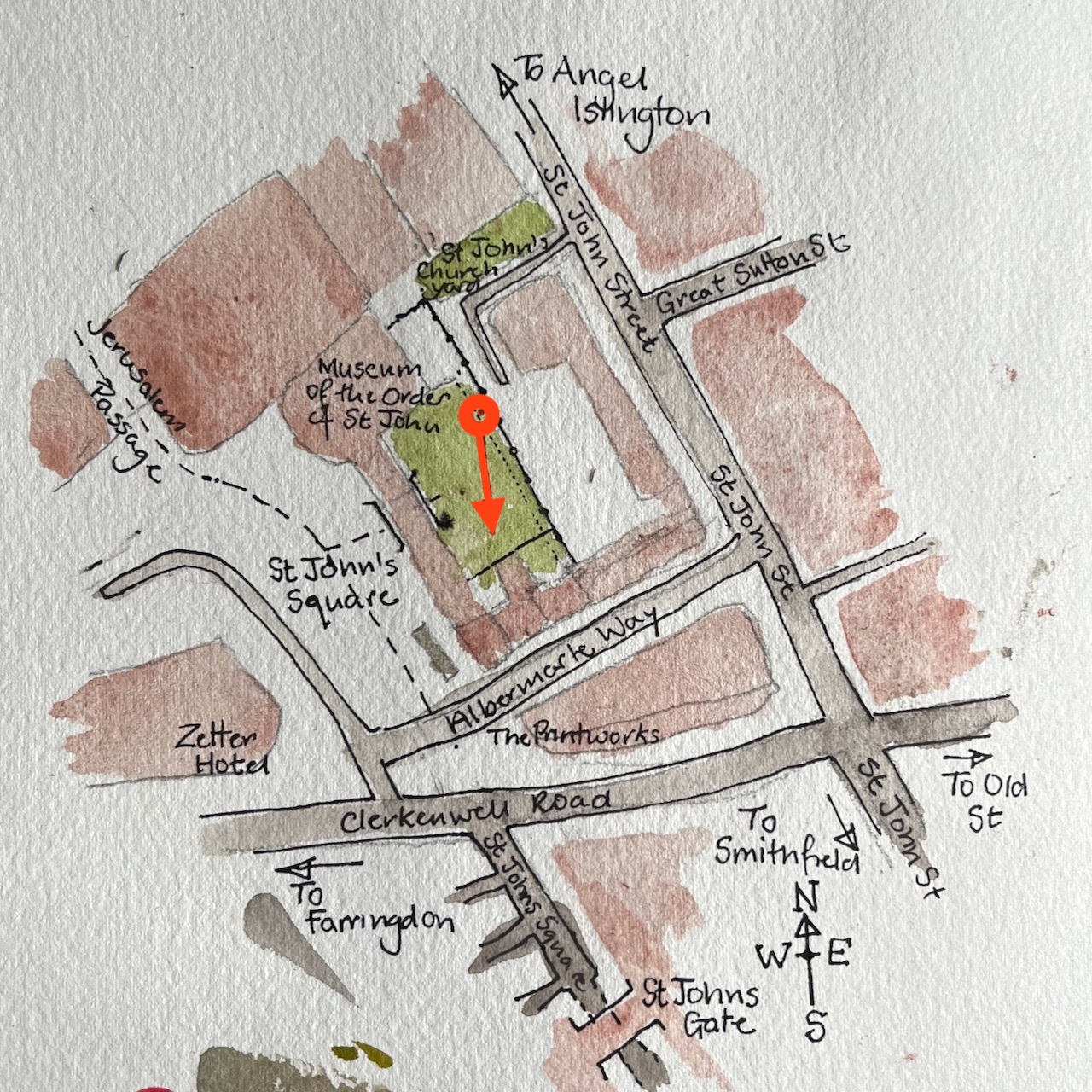
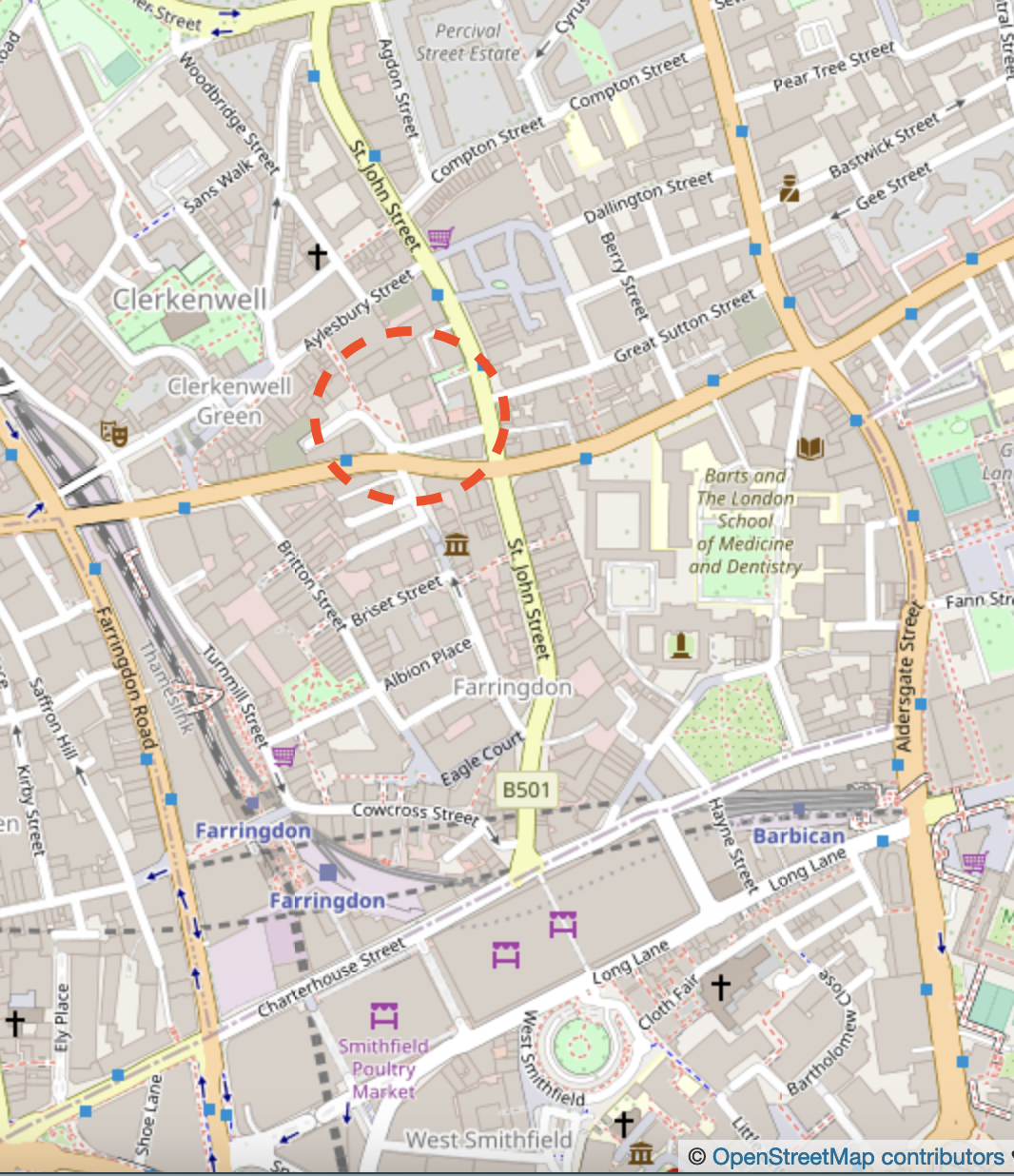
Here are maps:
The drawing took three hours. By the end of that time, my mood had transformed itself, and I walked out healthier than I walked in.
Click a button below to share this post online, email it, or print it:
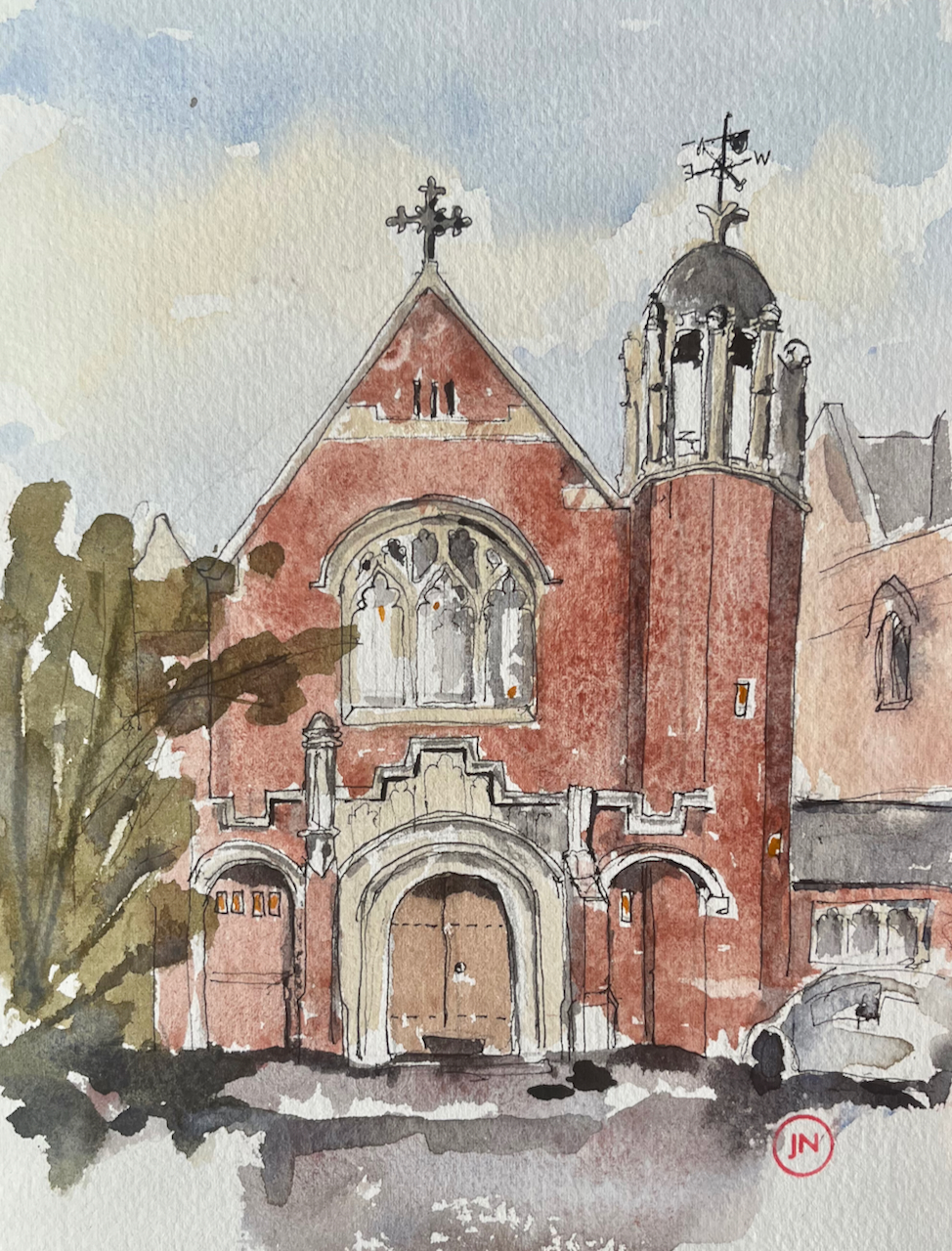
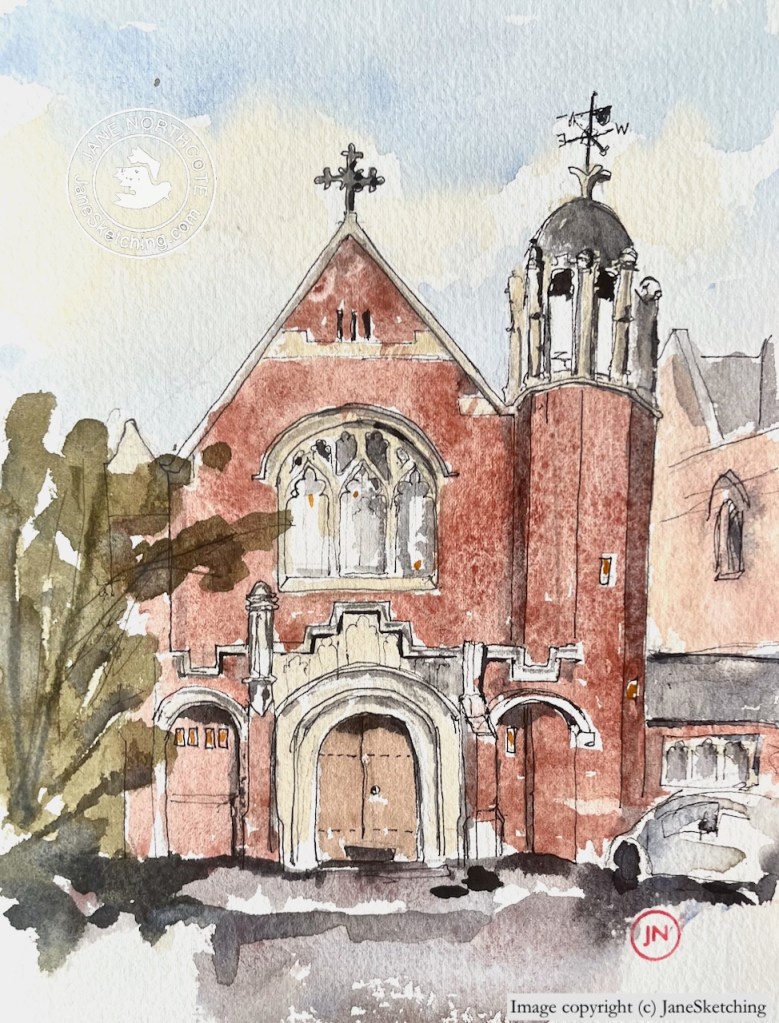
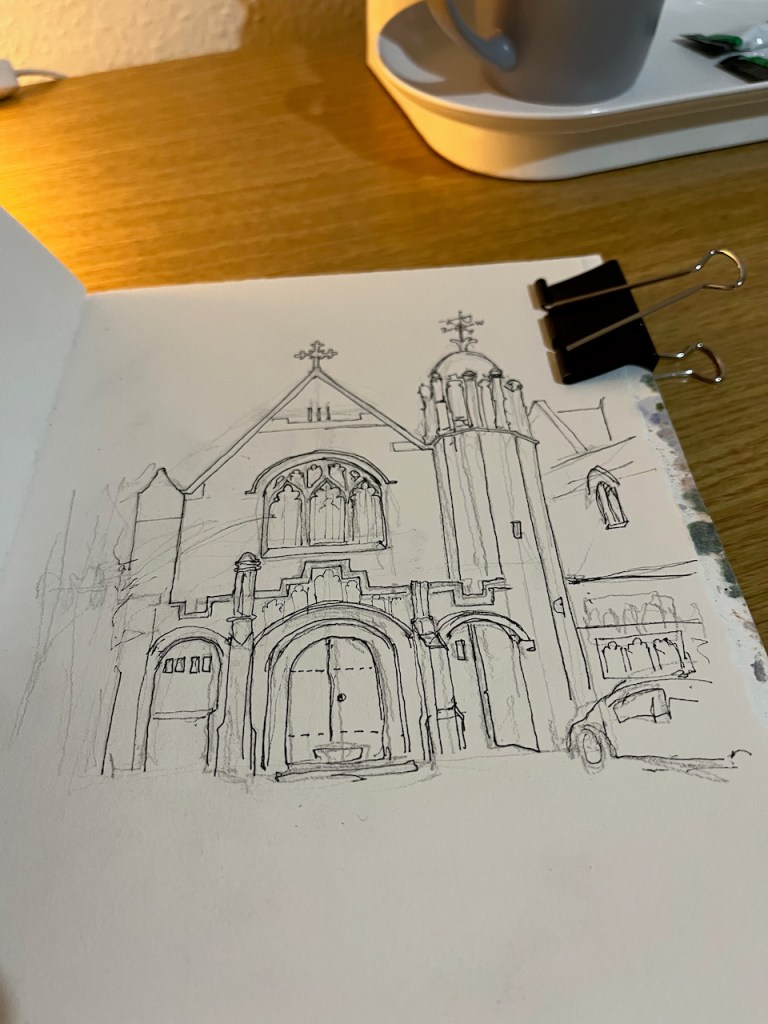
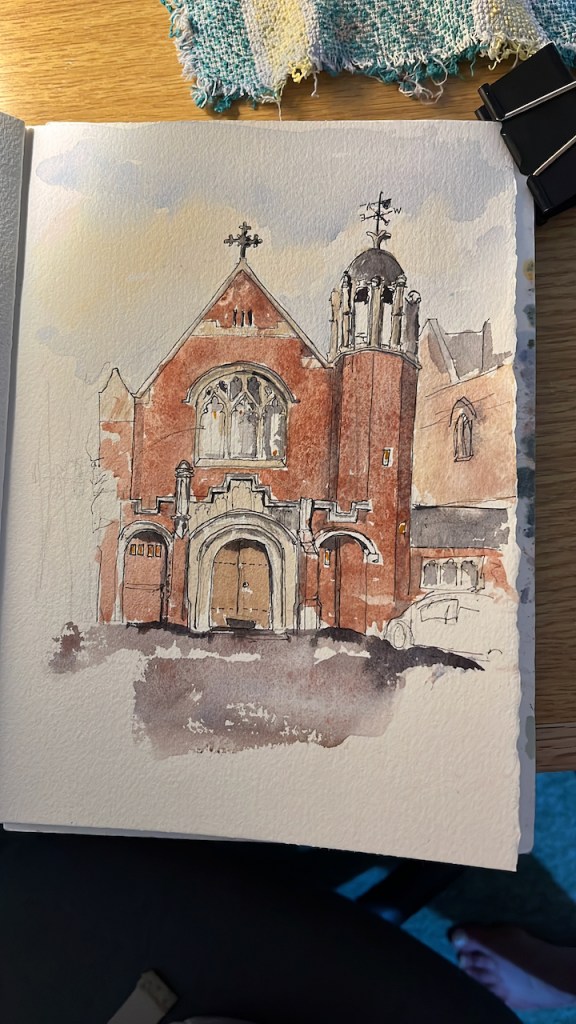
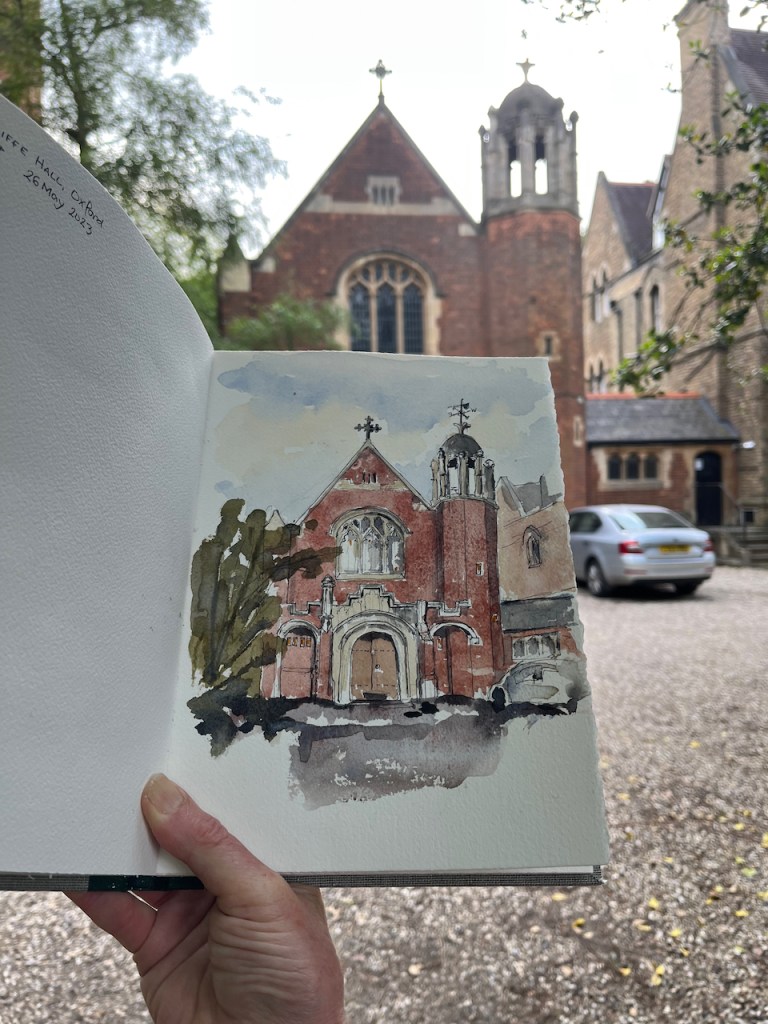
On a visit to Oxford recently, I stayed at Wycliffe Hall as a Bed and Breakfast guest. Wycliffe Hall is on the Banbury Road in North Oxford. It offers theological training to women and men who wish to become ordained or lay ministers in the Church of England. The hall was established in 1877, on the current site, and is named for John Wycliffe, bible translator and master of Balliol College in the 14th century.
I sketched the chapel which was added in 1896, designed by architect George Wallace.
Wycliffe Hall Chapel, 54 Banbury Road, Oxford, sketched 26 May 2023, in Sketchbook 13
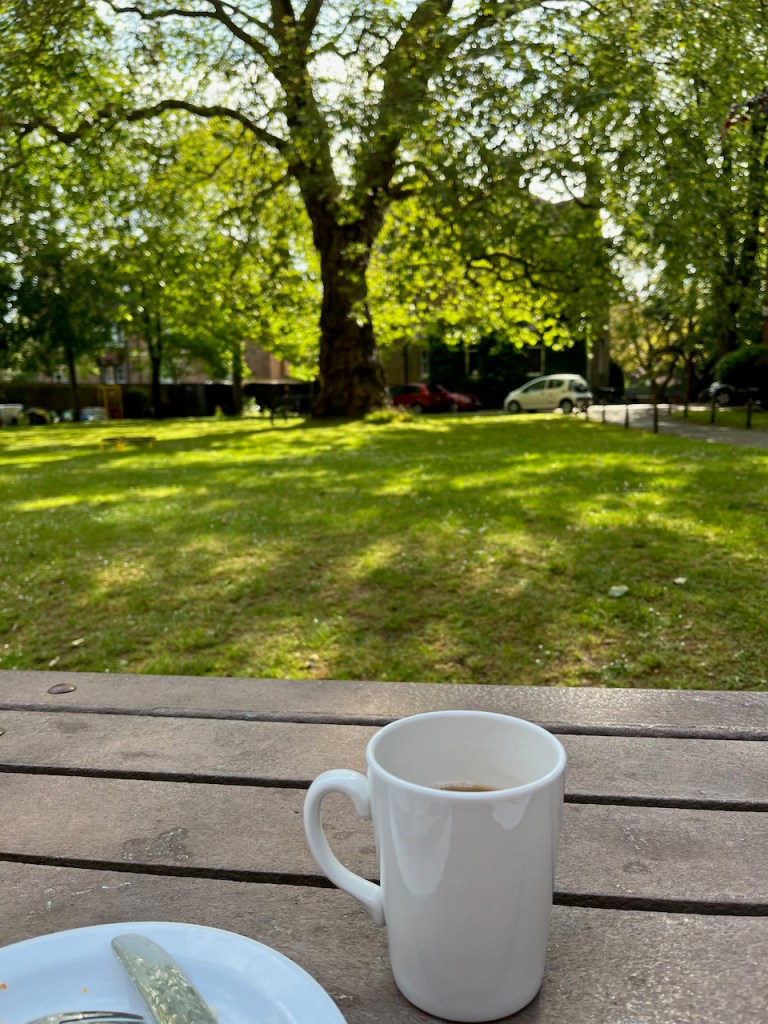
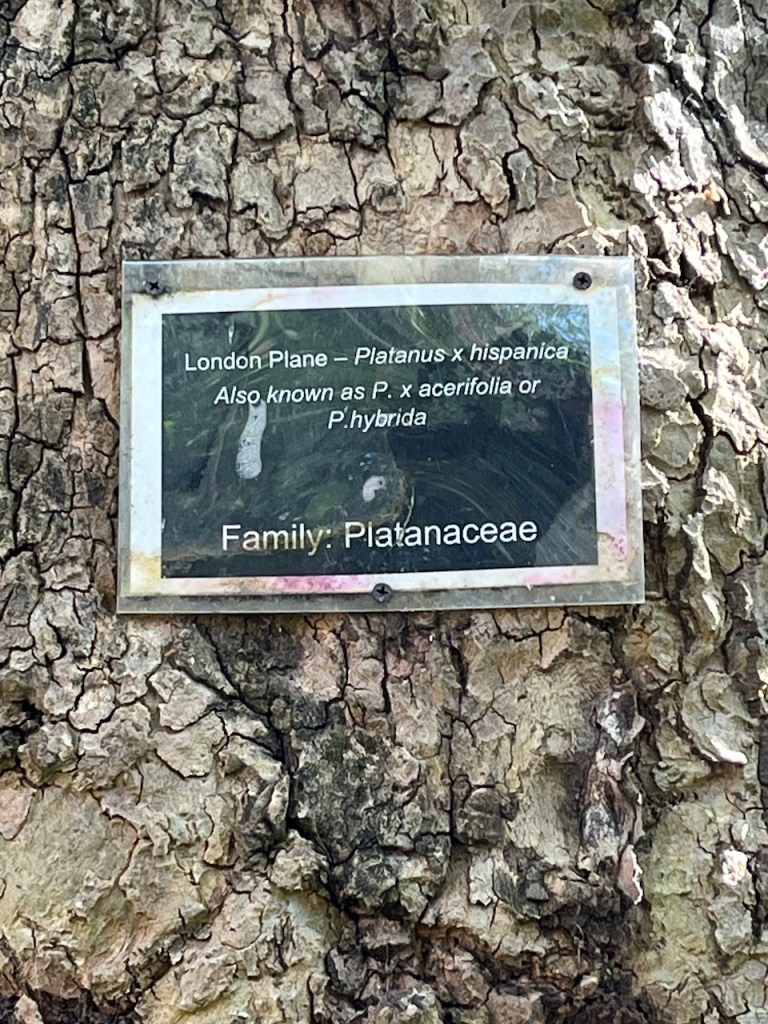
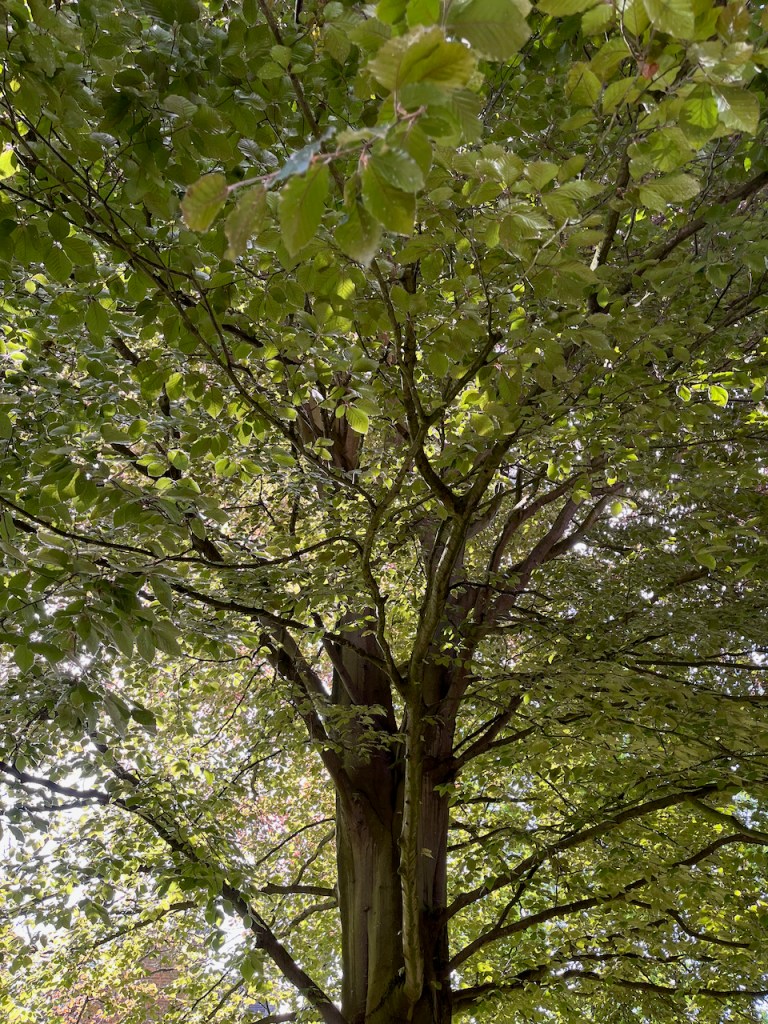
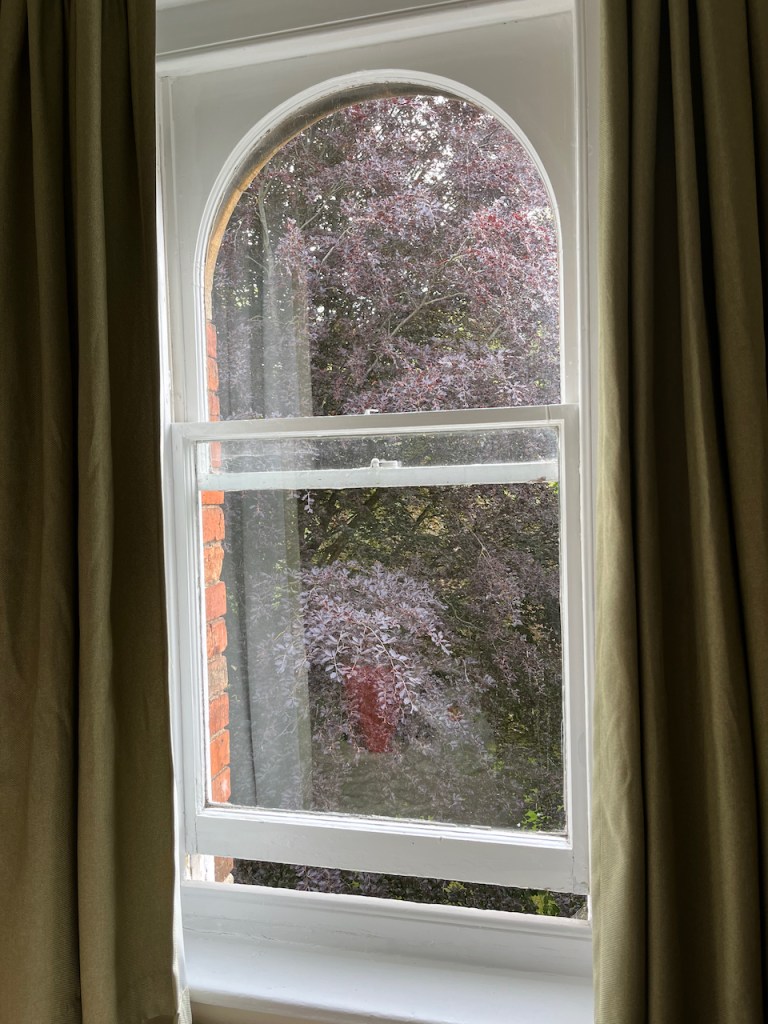
There are amazing trees in this part of Oxford. The houses are large, but the trees are larger. I had my breakfast outdoors in the garden at Wycliffe Hall, looking at a gigantic London Plane. The view from my bedroom was filled with beech tree.
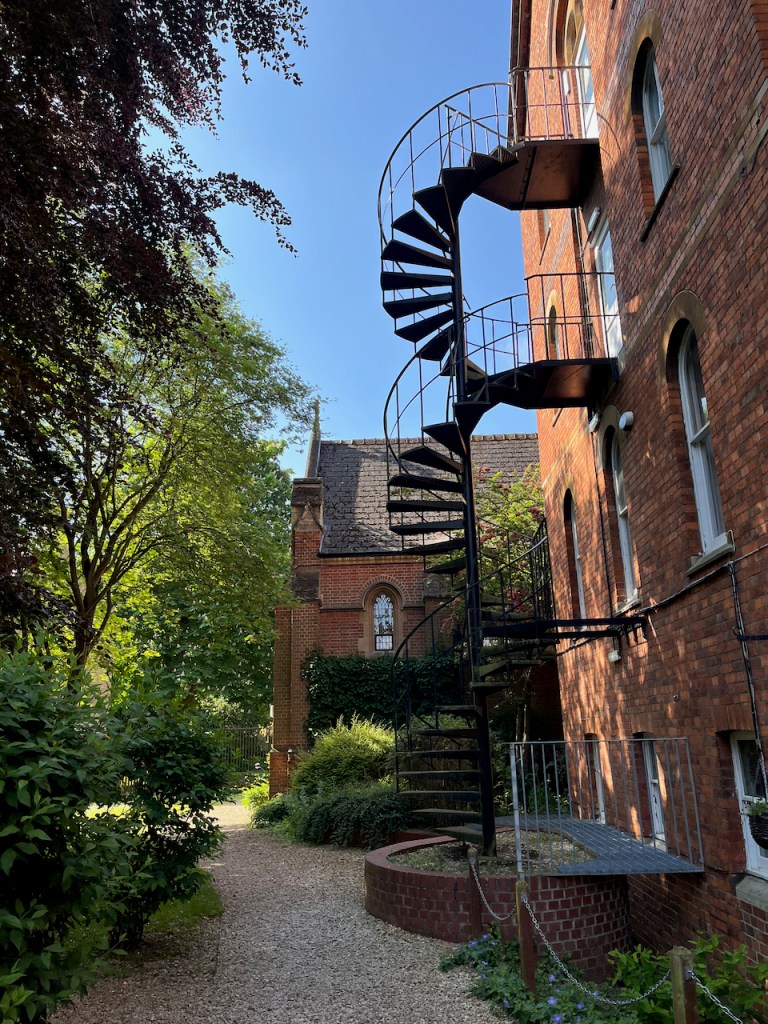
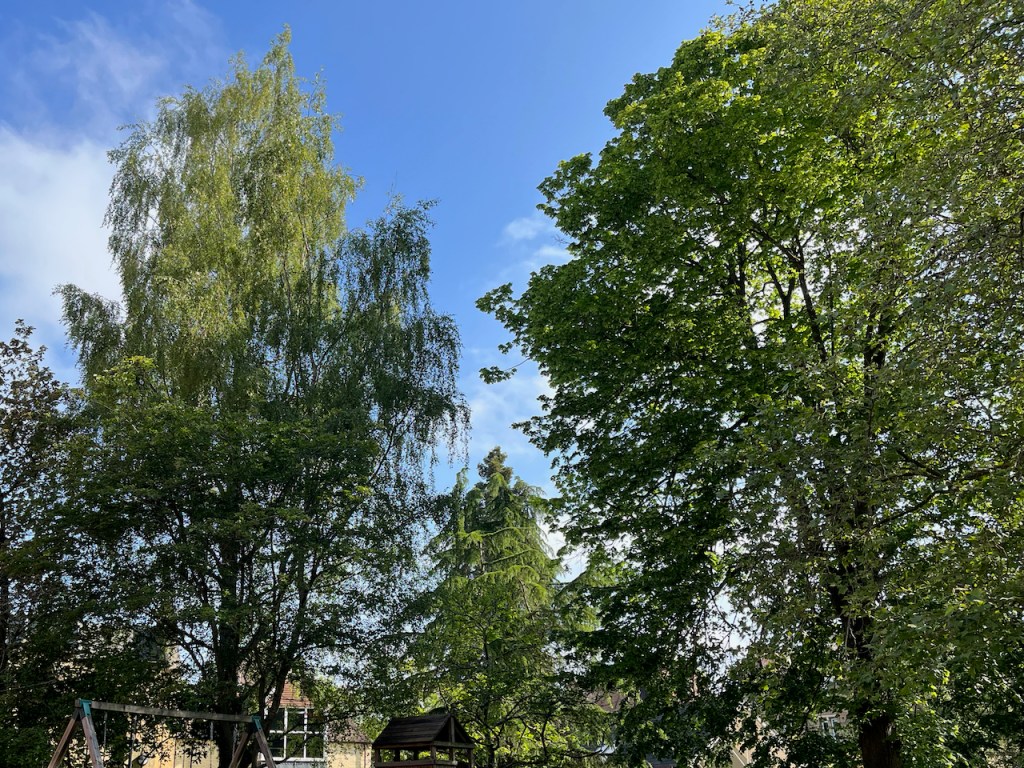
Breakfast and the Plane treePlane treeBeech tree in Wycliffe HallView from the bedroom windowTrees and the spiral staircase, Wycliffe HallMore trees seen from Wycliffe Hall
I sketched the chapel in the evening and finished the sketch the next morning.
For a sketch of the west side of the Hall, see this post.
Click a button below to share this post online, email it, or print it:
Here is St Giles’ Church, Cripplegate, seen from the public walkway at Wallside. The church is surrounded by the Barbican Estate. Cromwell Tower is in the background. The City of London School for Girls is the lower building, centre and left. Through the gap between the church and the school, you can just glimpse the Barbican Centre.
The magnolia was in bloom!
St Giles from Wallside, Barbican, 1 April 2023 12″ x 9″ [Commission]
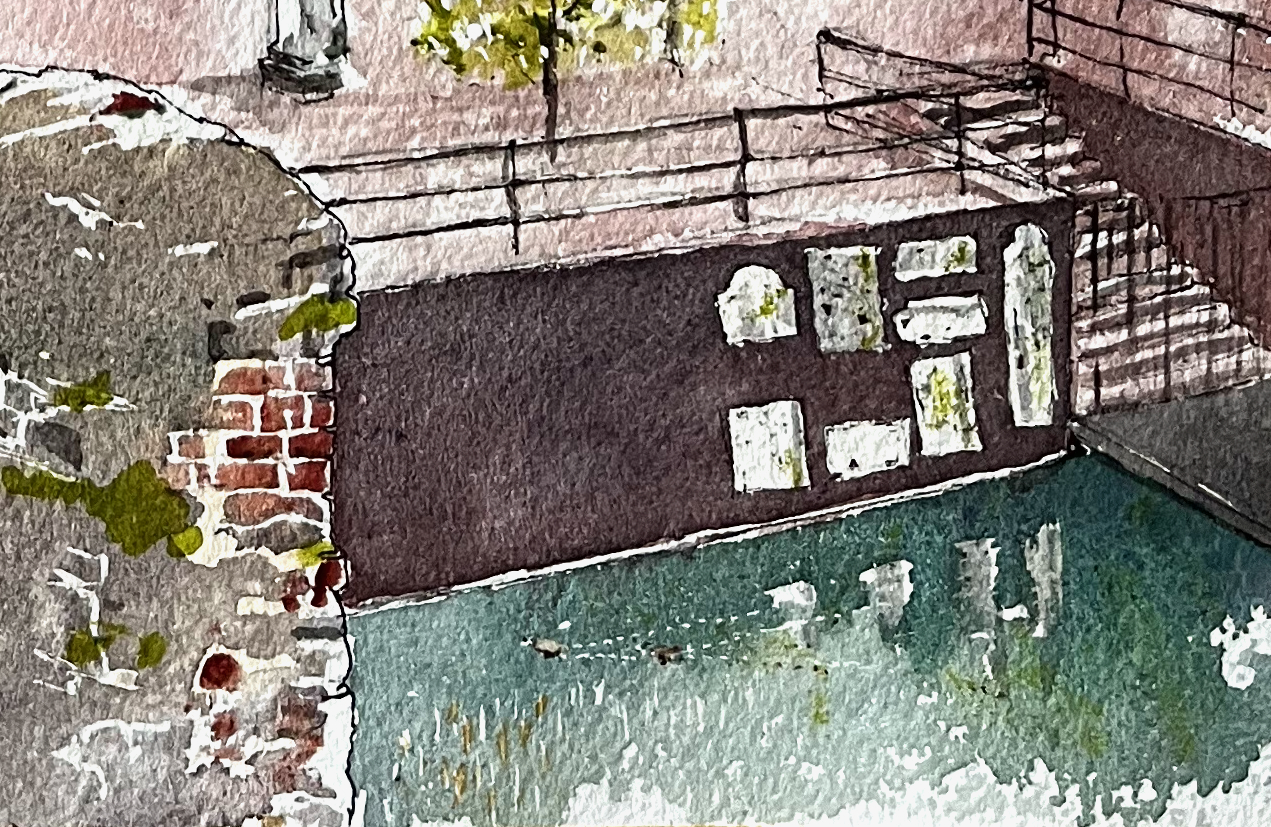
I painted this as a commission, for some clients who wanted this particular view. A special request for this commission was that I showed two ducks. These are small, but they are there!
Ducks on the lake.
The white shapes on the lakeside wall are gravestones.
Old London Wall is on the left: part stone, part brick. This is the old Roman wall round the City of London.
Thank you to my clients for this commission and for their permission to post the picture here online. It was a real pleasure to do.
The colours I used are:
For the sky: a pale yellow wash of permanent yellow deep, followed by a grey made from ultramarine blue and burnt umber, with some ultramarine blue for the blue bits.
For the church: the stone is a pale yellow wash of permanent yellow deep, then a dilute buff titanium wash. I put salt on it to get some texture. Then the dark areas are a grey made from ultramarine blue and burnt umber.
The top part of the church, St Giles Terrace and all the reddish/purple brickwork is a combination of perylene maroon, burnt umber, fired gold ochre, and a bit of ultramarine blue for the dark areas.
The lake, which really is that green colour, is ultramarine blue, plus some serpentine genuine which makes it granulate.
All concrete is the same mix of burnt umber and ultramarine blue with some mars yellow.
Old London wall is the pale yellow wash of permanent yellow deep, with a second wash of lunar blue with burnt umber. Lunar blue is highly granulating, which gives a wonderful stone effect. The bricks are fired gold ochre.
All green plants are green gold, and there’s also some green gold on the stonework of the church, to show the lichen.
The weathervane is Liquitex gold ink, applied with a fine brush.
The line drawing is done with a Lamy Safari fountain pen, using De Atramentis Black ink, which is waterproof.
The white parts of the picture, for example the lines between the bricks on Old London Wall, (and the ducks) are done using a resist. This is a rubbery substance, applied before putting on any paint. The resist I use is called Pebeo Drawing Gum. I put it on using a dip pen to get the fine lines. After the paint is dry, I rub it off, and the parts where it was show up white. There are also a few tiny dots of white gouache paint on the magnolia tree.
The paper is Arches Aquarelle 300gsm 12″ x 9″ in a block.
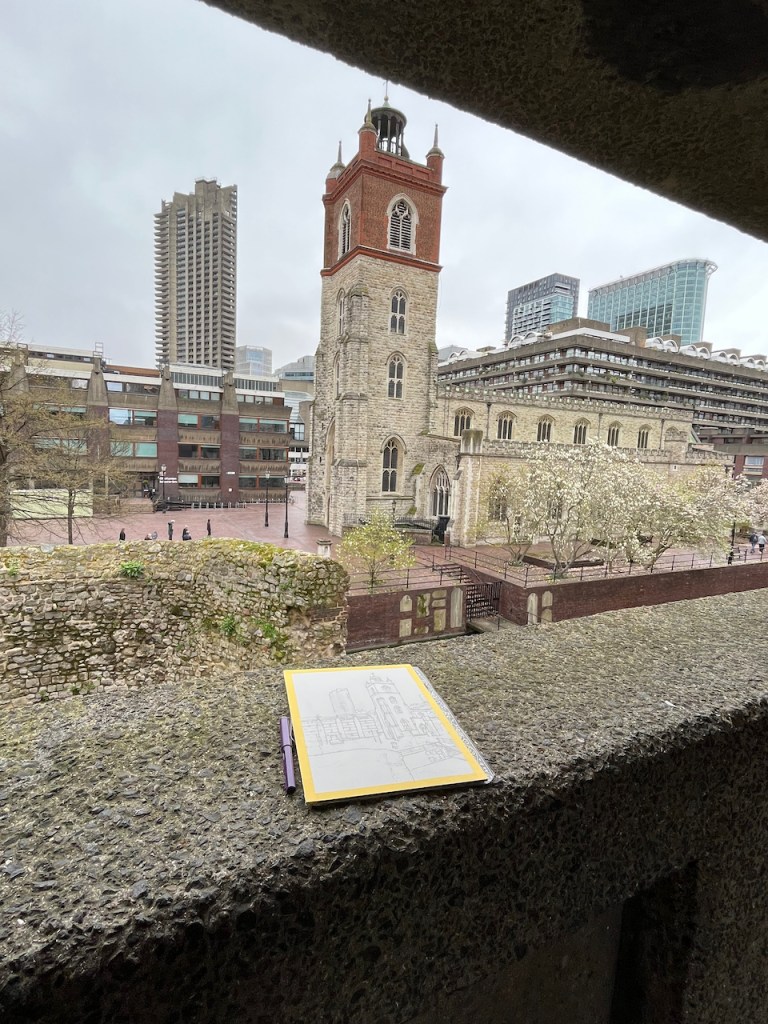
Work in progress. Arches Aquarelle block, Lamy Safari pen. The yellow is masking tape, which I put round to make the picture easier to handle and to give a crisp edge to the work. The people on St Giles Terrace were practising Tai Chi. It was very relaxing to watch them. See the green lichen on the concrete. And the magnolia.
Click a button below to share this post online, email it, or print it:
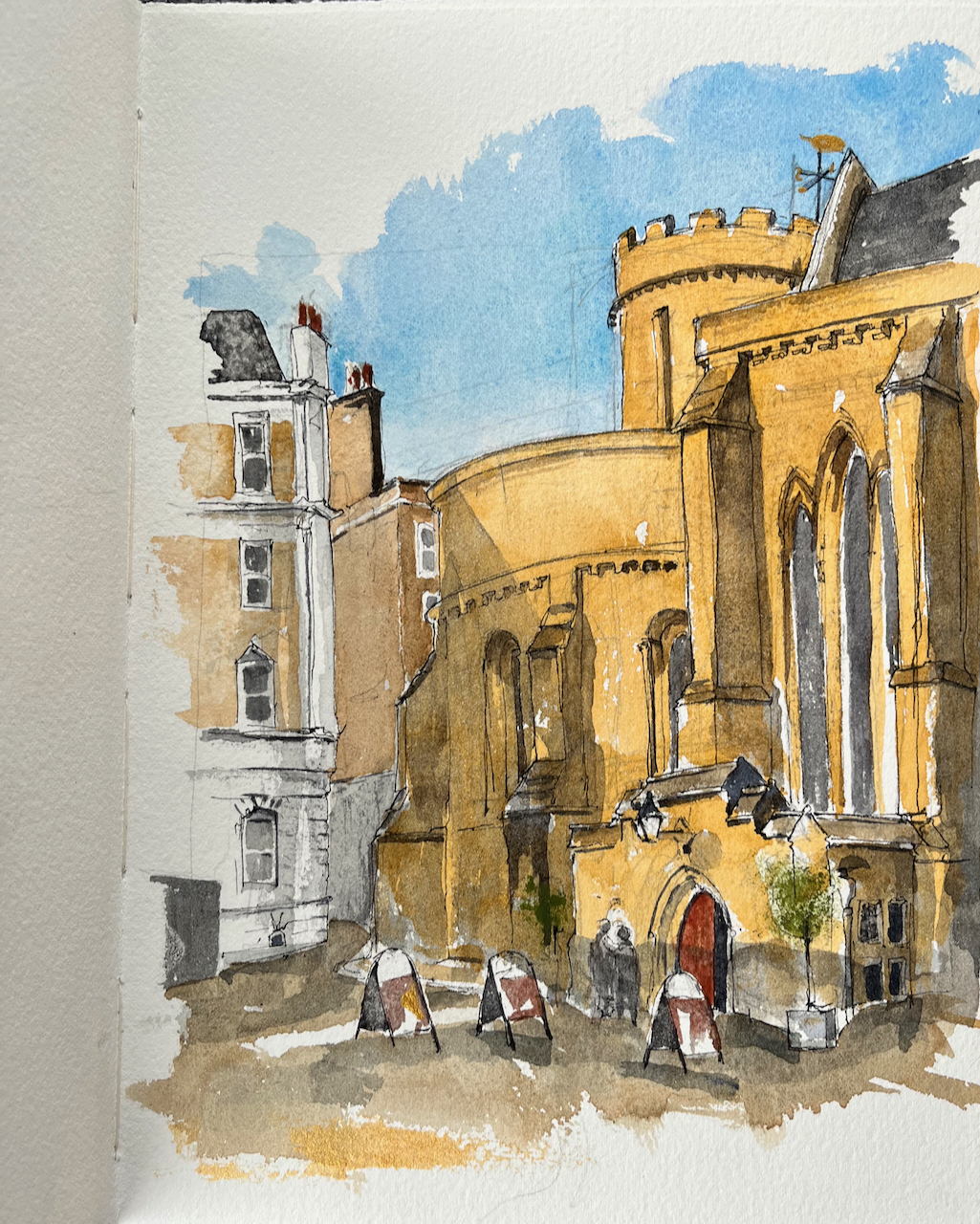
The Inns of Court are an ancient area of London, around Fleet Street, close to the Royal Courts of Justice. It’s an area of narrow lanes and quiet courtyards. Lawyers’ practices are there.
In amongst the buildings is this church, which opened on 10 February 1185.
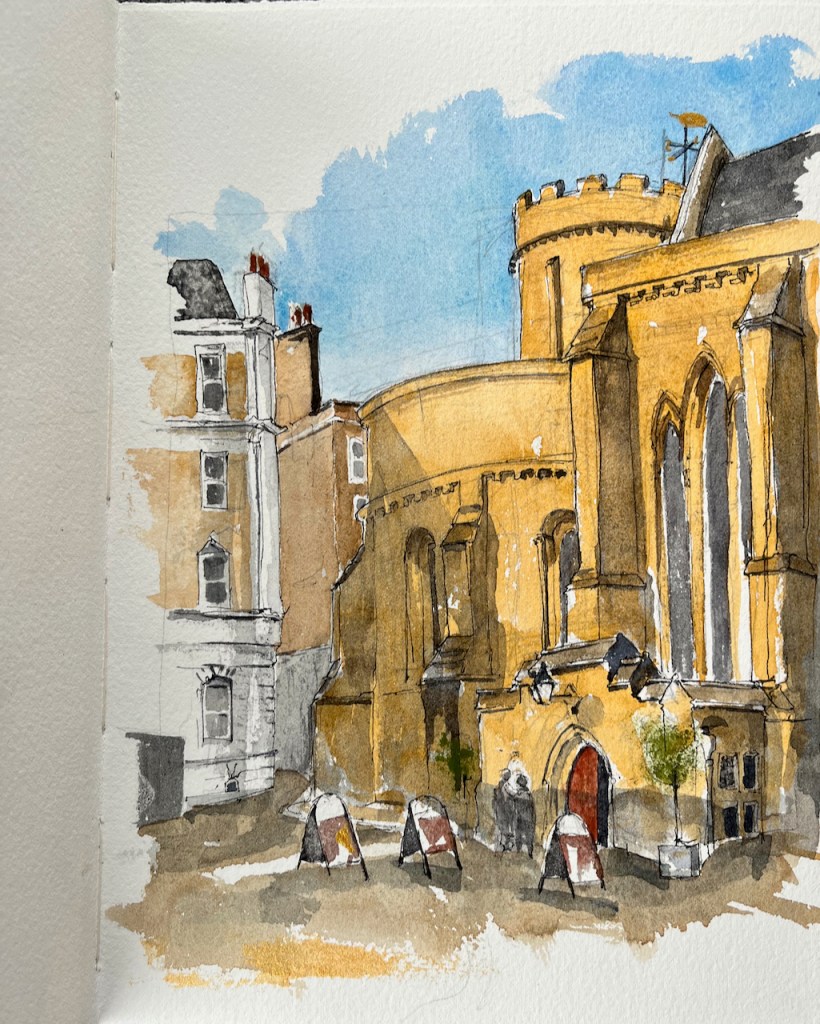
Temple Church, 14th February 2023, in sketchbook 13
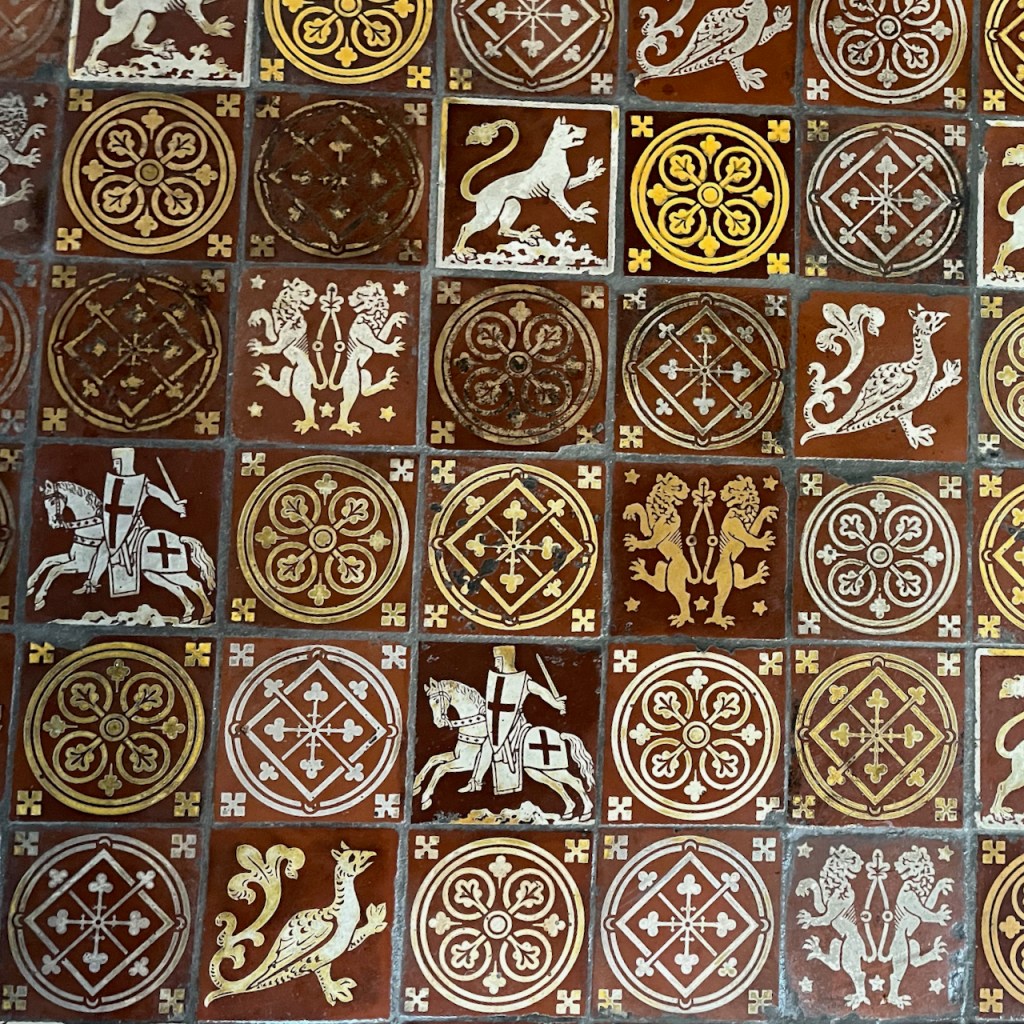
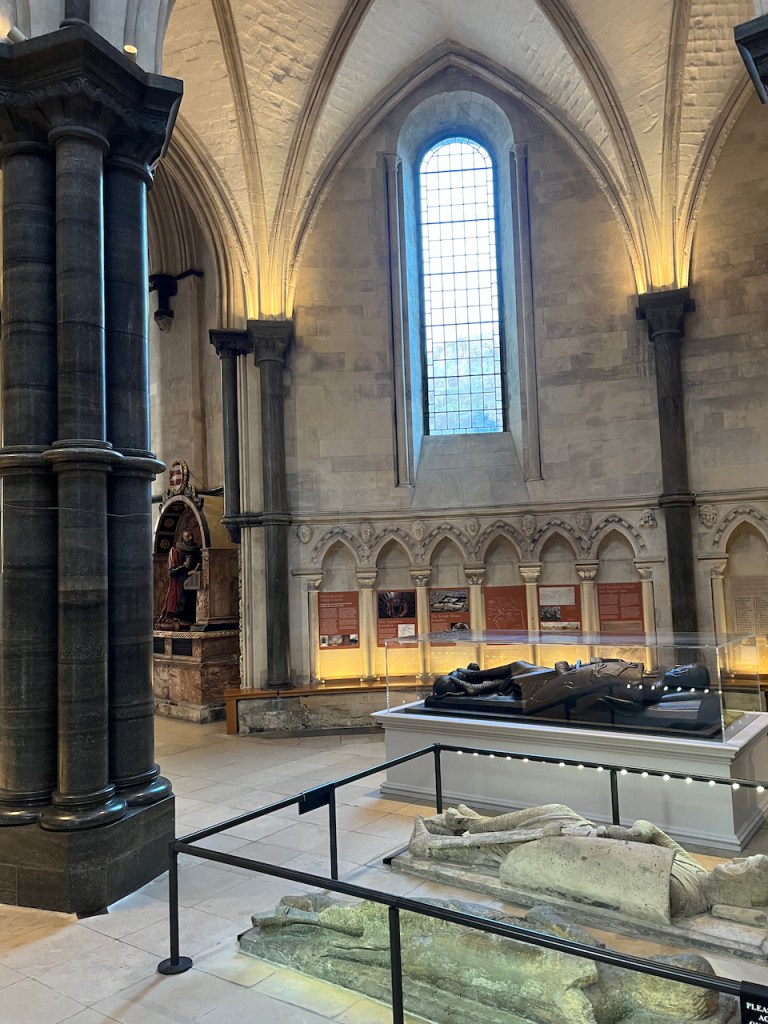
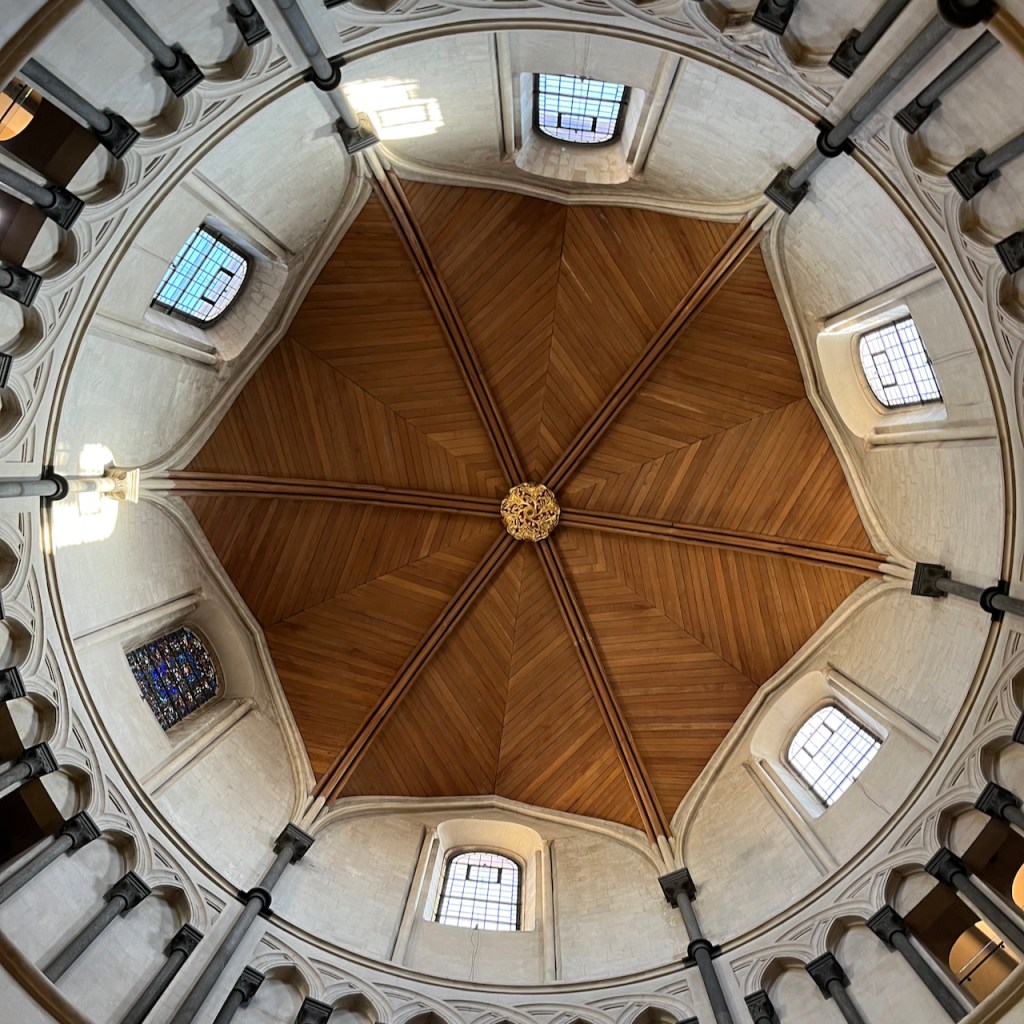
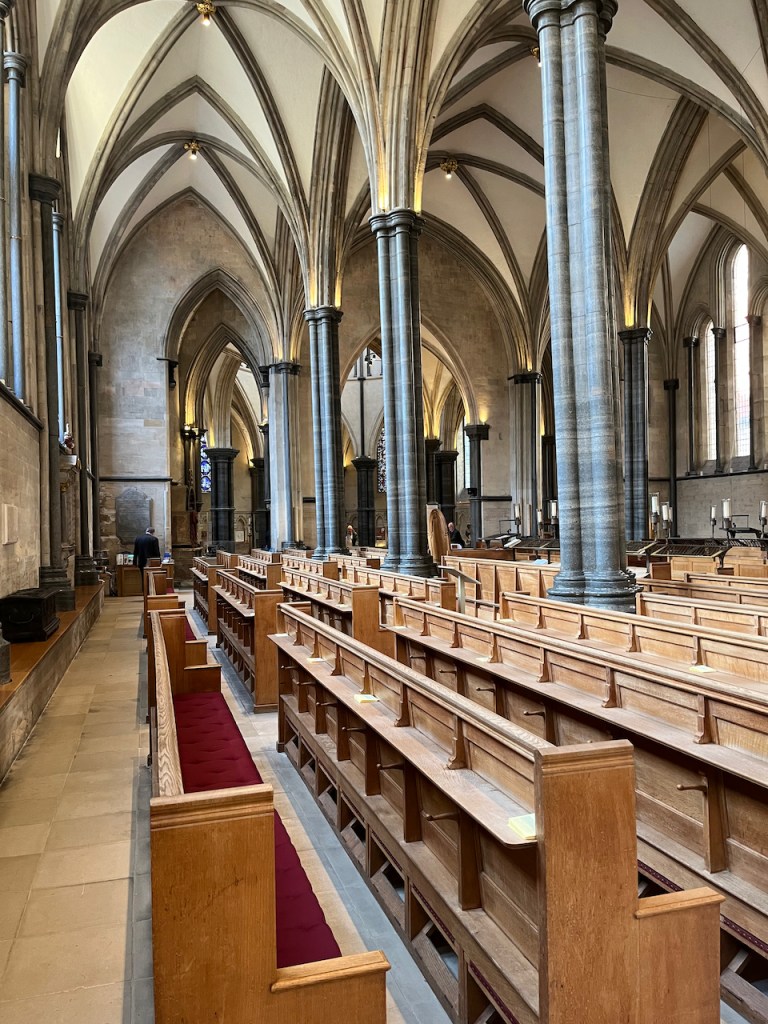
The church is open to visitors. I went in. It’s a splendid space, very calm, beautifully vaulted. You can even go up a narrow winding staircase inside the round structure I have drawn. Here are some photos of the inside.
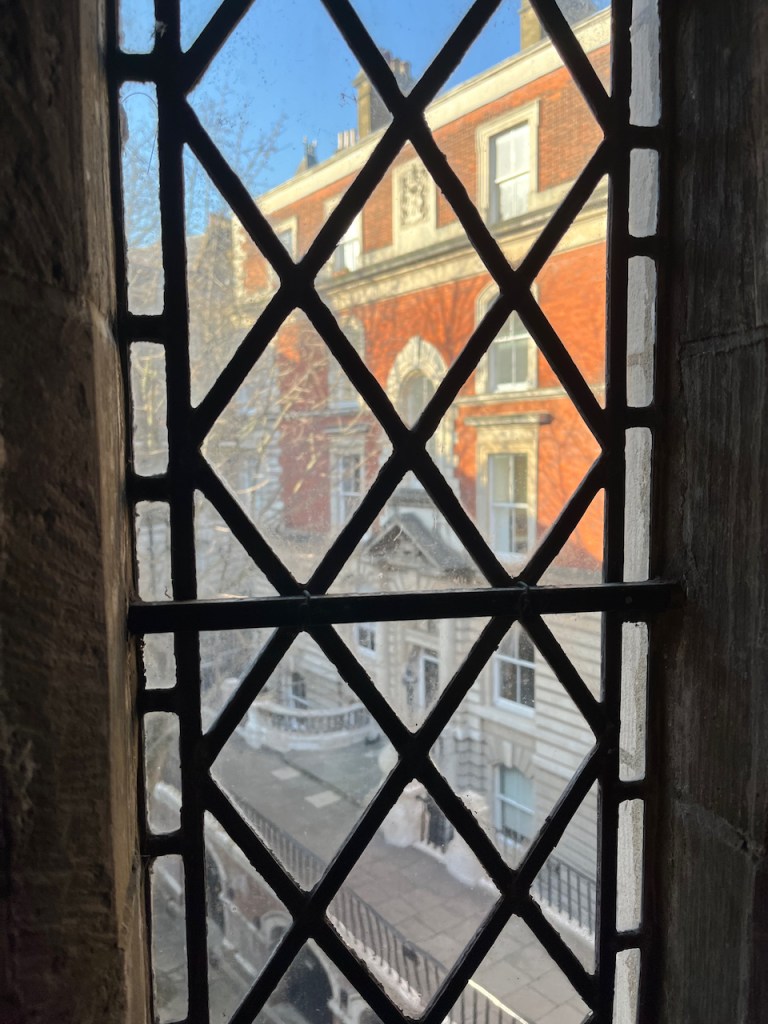
Victorian tilesA view out over the buildings of TempleThis is a window in my drawing, now inside looking out.Looking up towards the roof A calm space
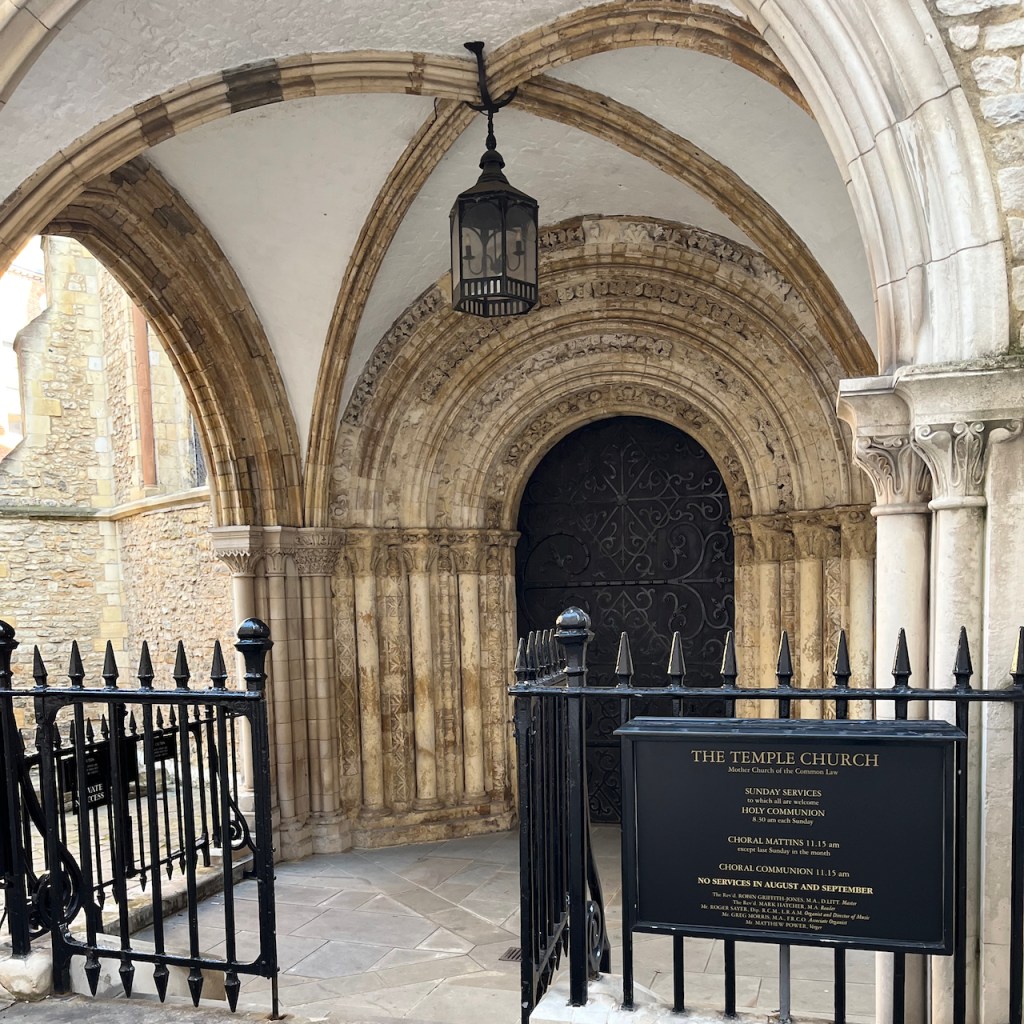
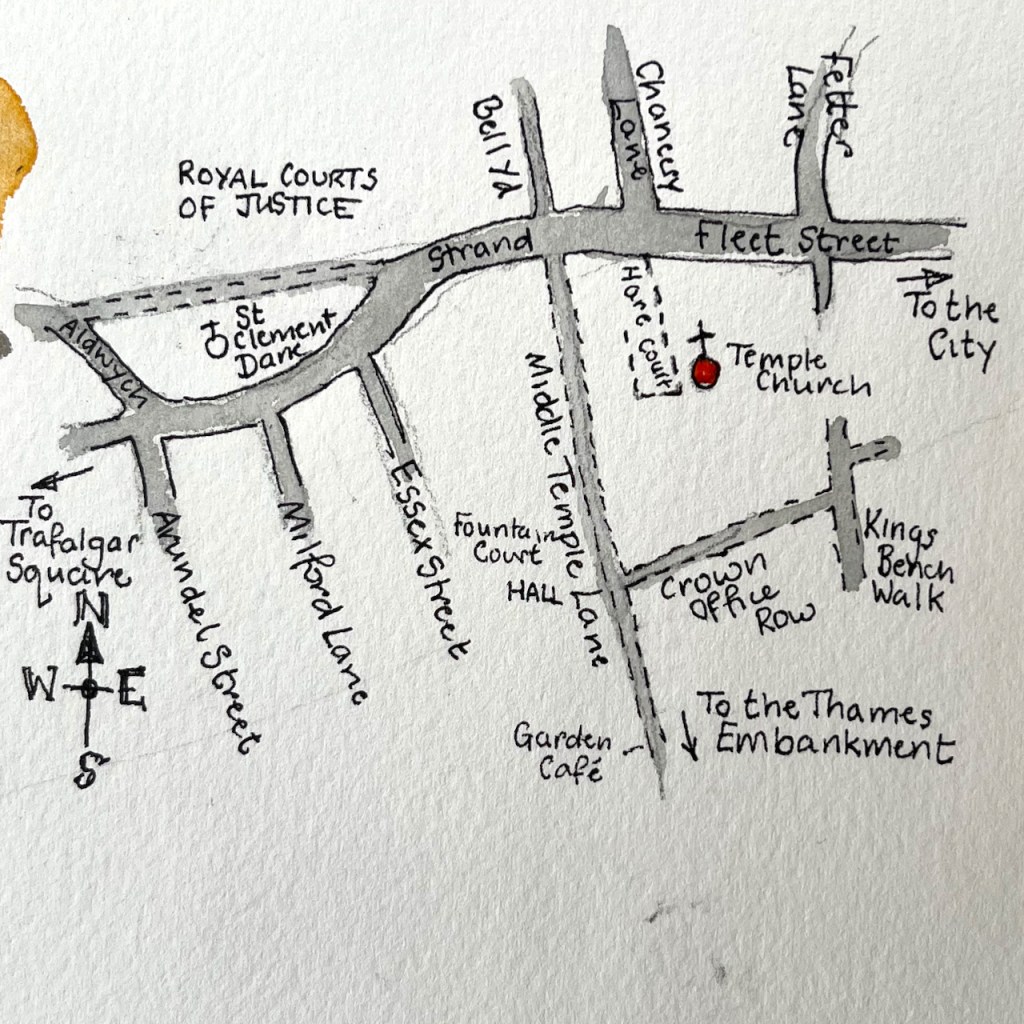
Here’s a map and a photo of the Norman arch on the outside
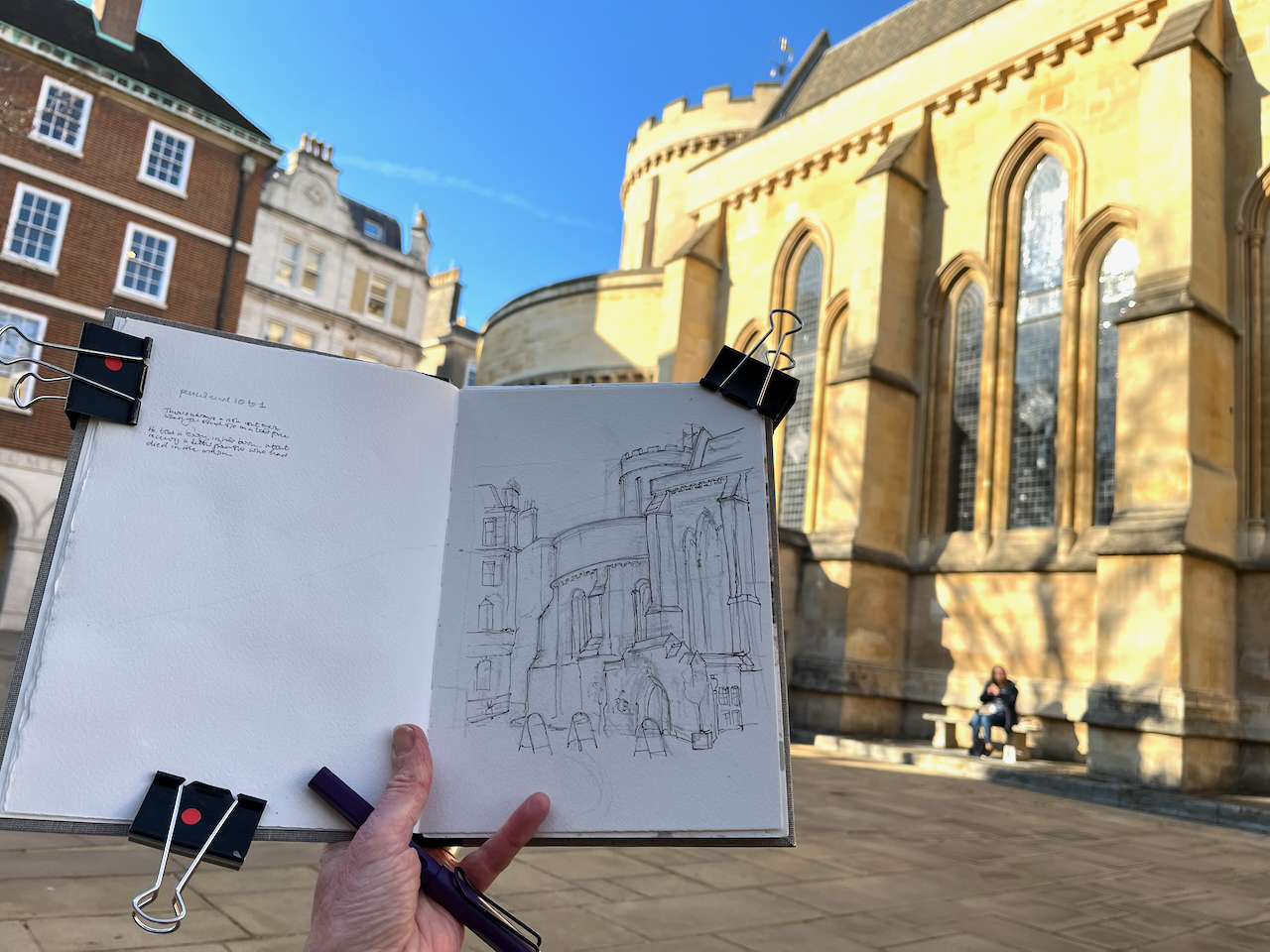
Here are some work-in-progress photos.
Working on the pen drawingIn Pegasus Court
Click a button below to share this post online, email it, or print it:
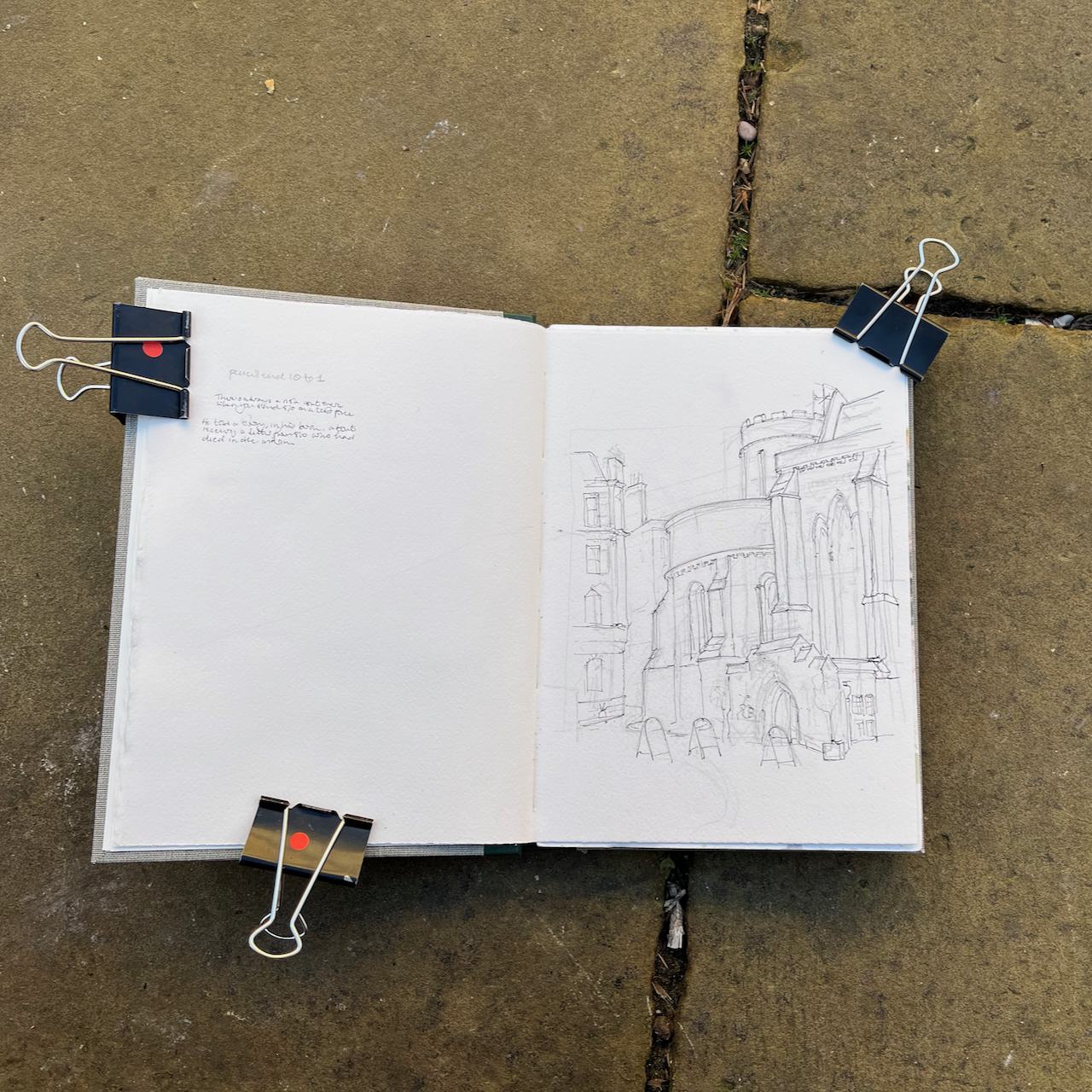
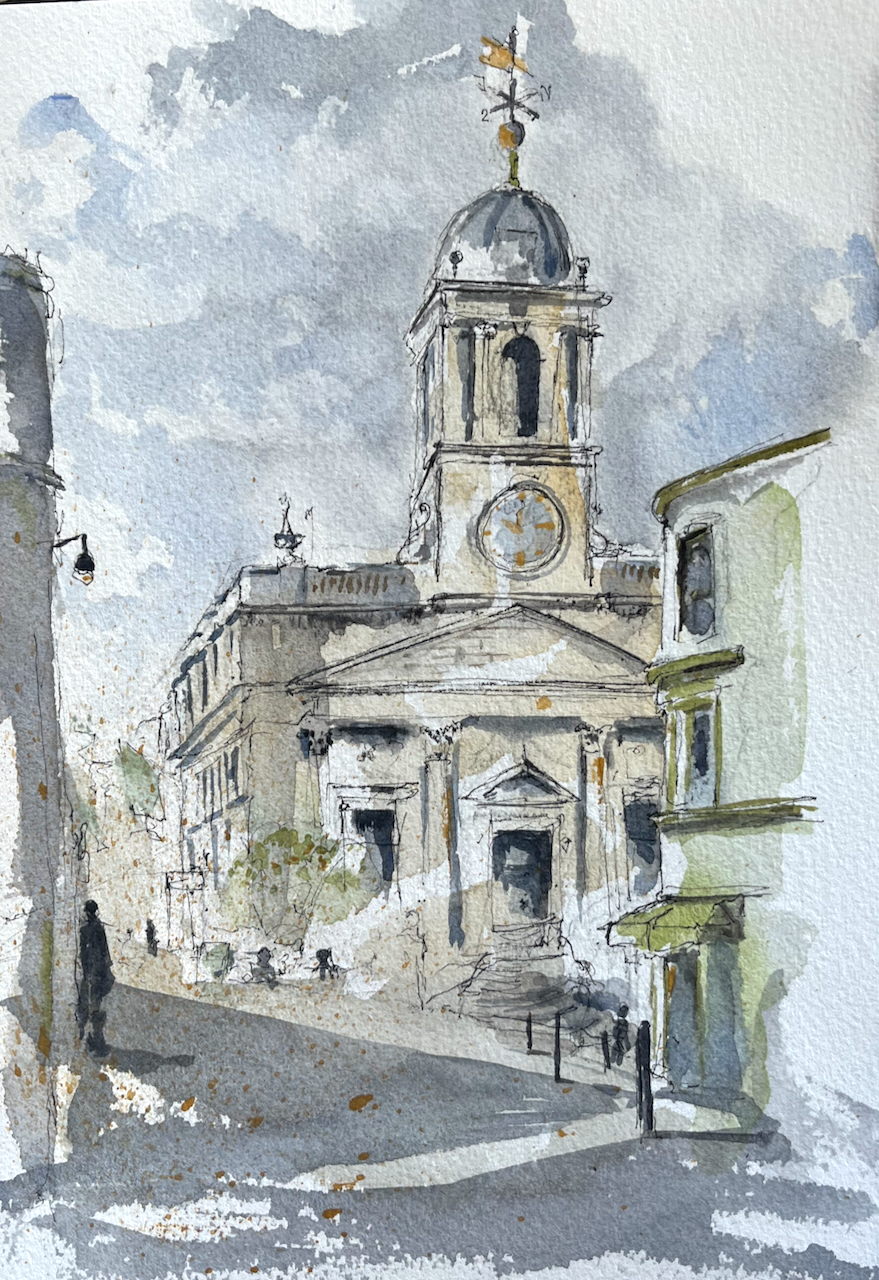
On the way back from a visit to the West End, I passed St-Martin-in-the-Fields, standing out against the cold sky.
St Martin-in-the-Fields, Trafalgar Square. Sketched 2nd Dec 2022, in sketchbook 12
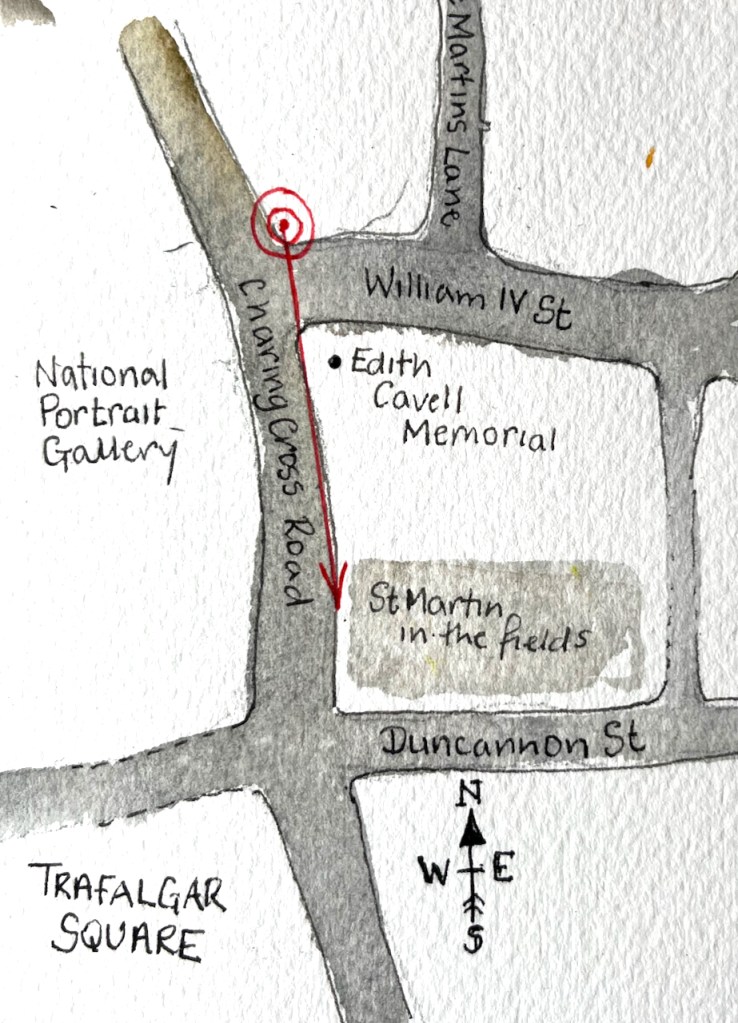
The statue in the foreground, left, is the Edith Cavell Memorial, seen from the back. Edith Cavell (1865-1915) was a British nurse. In German-occupied Belgium, guided by her principles of humanity and her Christian faith, she provided medical care to soldiers irrespective of which side they were on. She was executed by a German firing squad 1915, because she had helped Belgian, British and French soldiers to escape the German occupation and reach Britain. Her grave is in Norwich Cathedral.
I sketched standing on a corner of the Charing Cross road, see map above. This turned out to be a very noisy location. The National Portrait Gallery is being refurbished and there was continuous drilling and banging. Buses and cars ground their gears, and thundered past, rushing through the traffic lights to shriek to a halt at the next junction.
But St-Martin-in-the-Fields rose above it all. The inscriptions which faced me on the Edith Cavell Memorial were: “Determination”, “Fortitude”.
Click a button below to share this post online, email it, or print it:
Norwich describes itself as “A Fine City”. Indeed it is. The city centre streets are clean, car-free, and lined with a huge variety of shops, restaurants, and service providers such as key-cutters and barbers. All very interesting. And there’s a lovely river too.
The City of Norwich website tells me: “On 17 July 1967, London Street became the first shopping street in the UK to be pedestrianised. It started a revolution that saw people given priority over traffic in city centres.”
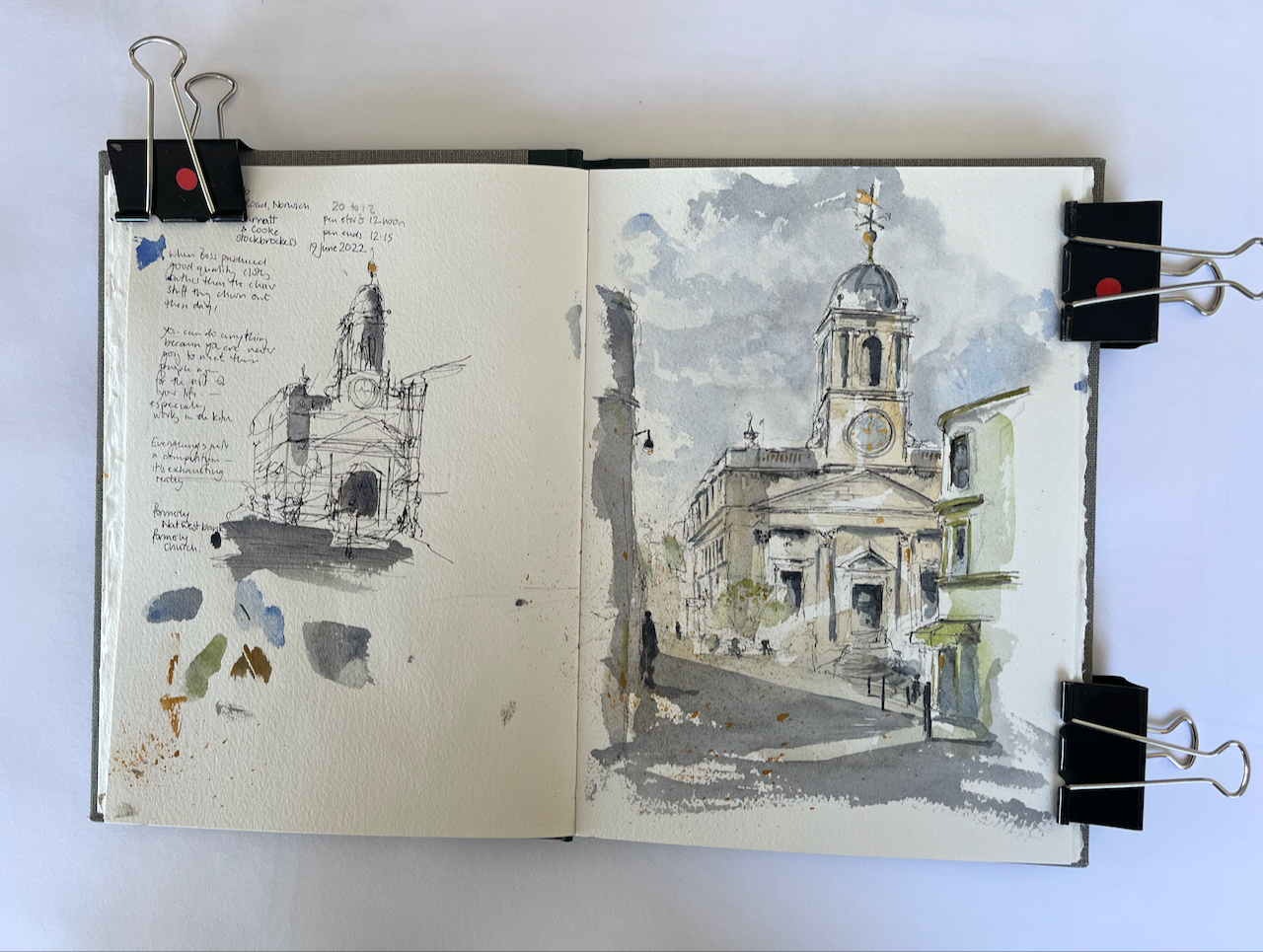
This building stands in London Street, at the junction with St Andrews Hill. It was designed by FCR Palmer for the National Provincial Bank, and was completed in 1925 [1]. The National Provincial became NatWest after a series of mergers and takeovers. NatWest moved out in 2017.
“Cosy Club” 45-51 London St, Norwich NR2 1AG, 19th June 2022 12:15, in Sketchbook 12
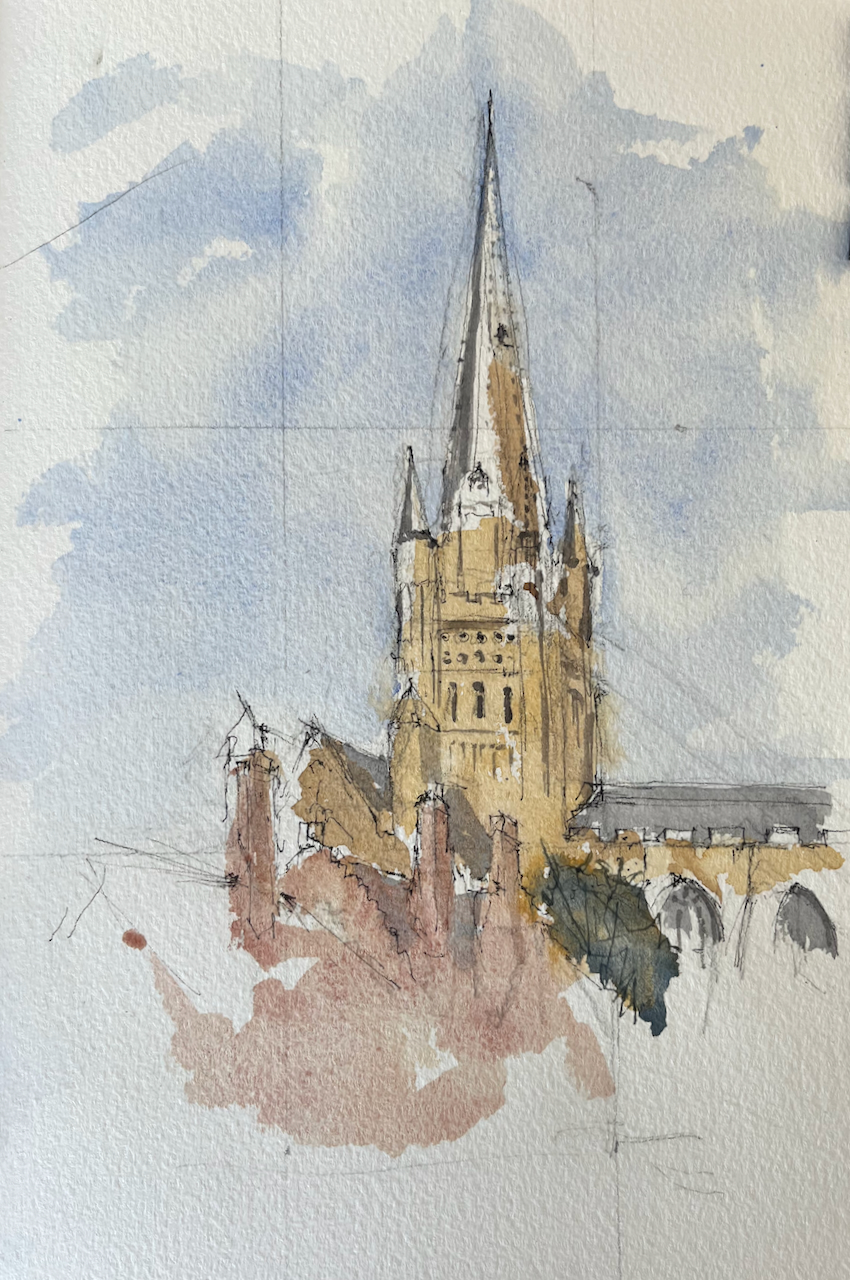
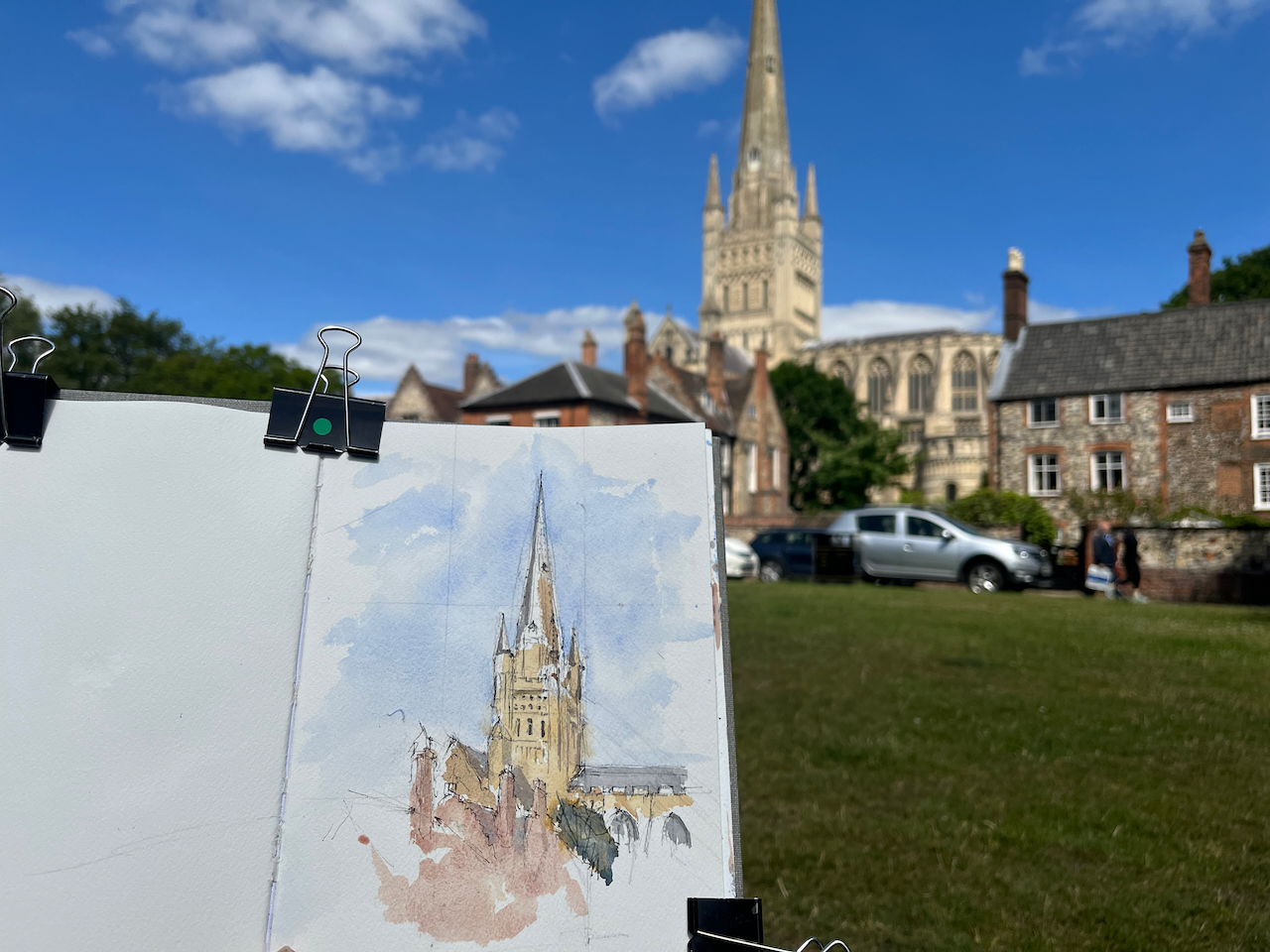
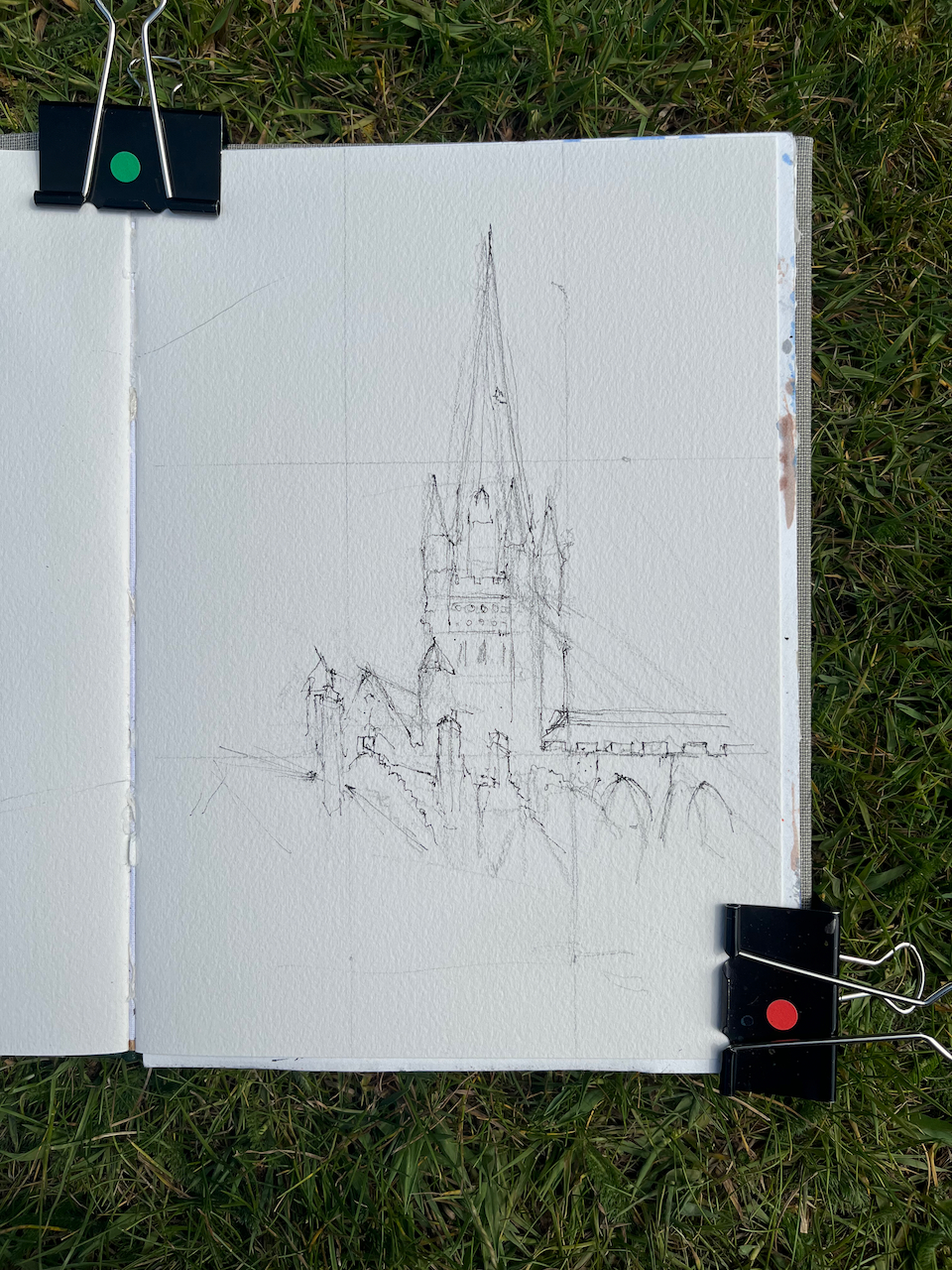
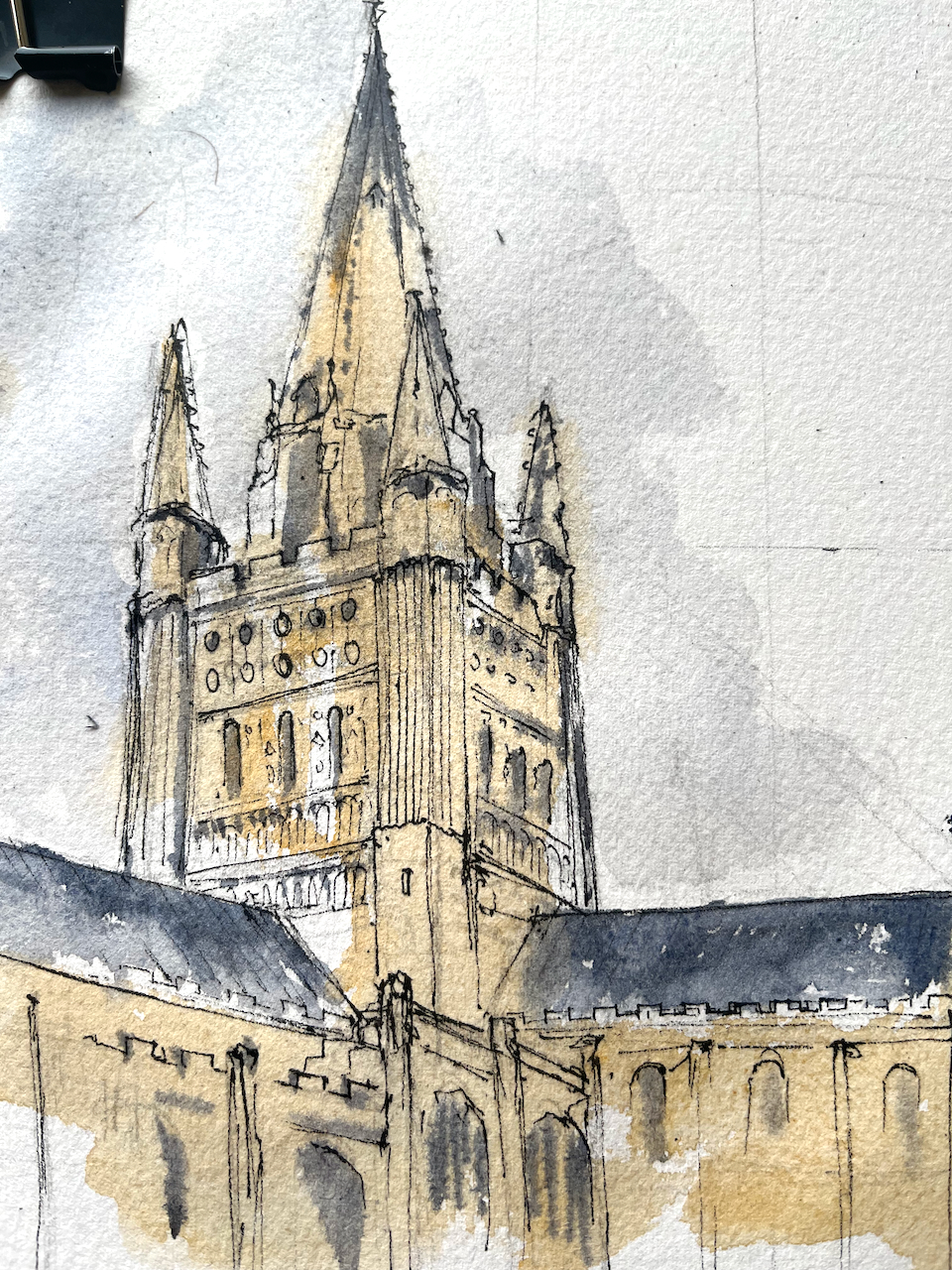
I also sketched Norwich Cathedral, from the Cathedral Close.
Norwich Cathedral from the Cathedral Close 40min sketch, 11:15 19th June 2022, Sketchbook 12
Certainly a fine city, and one to which I hope to return.
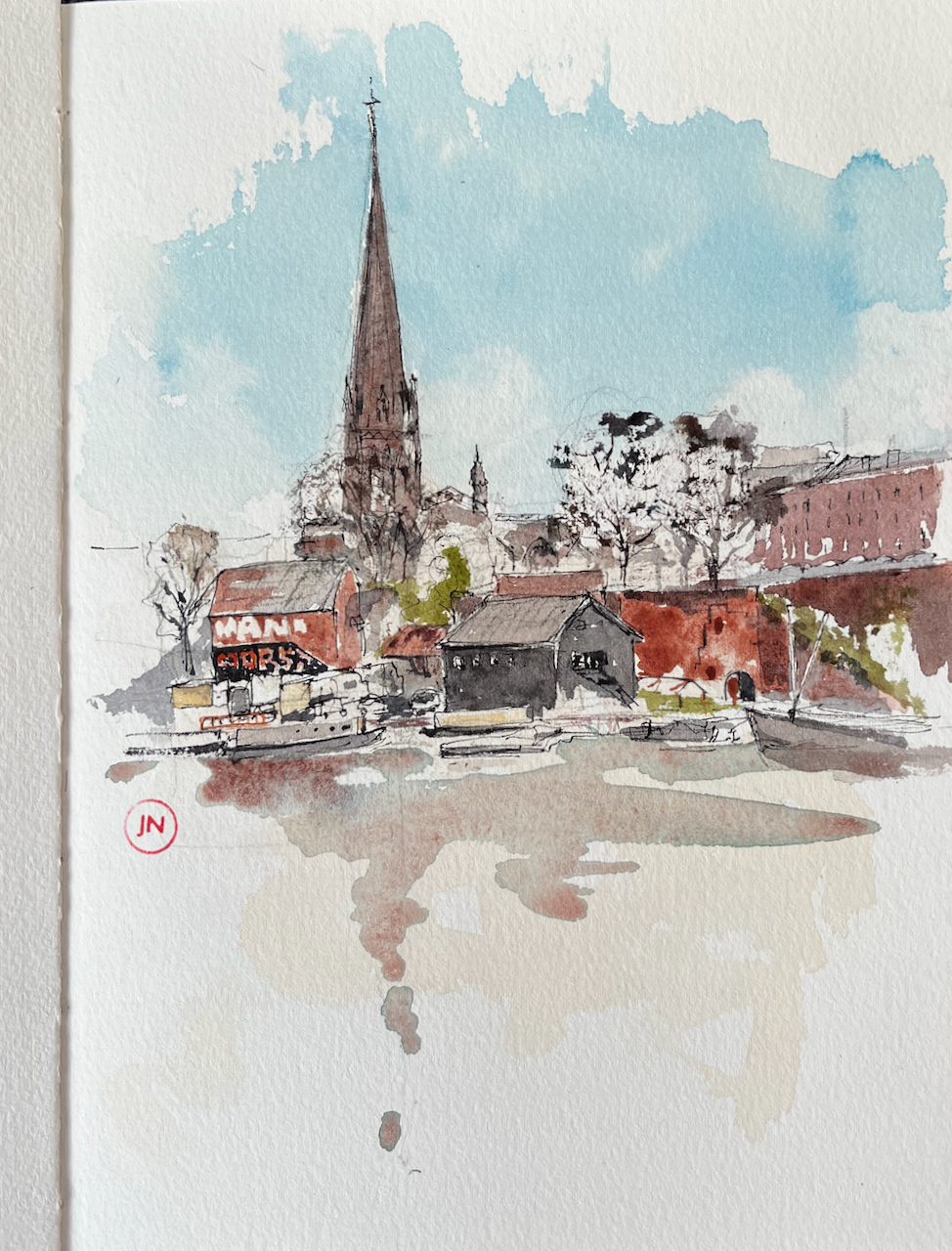
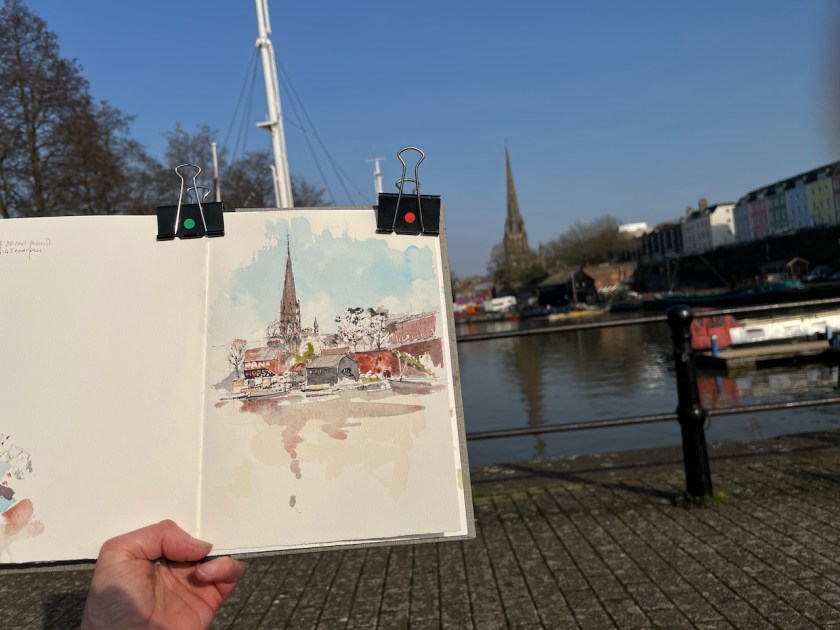
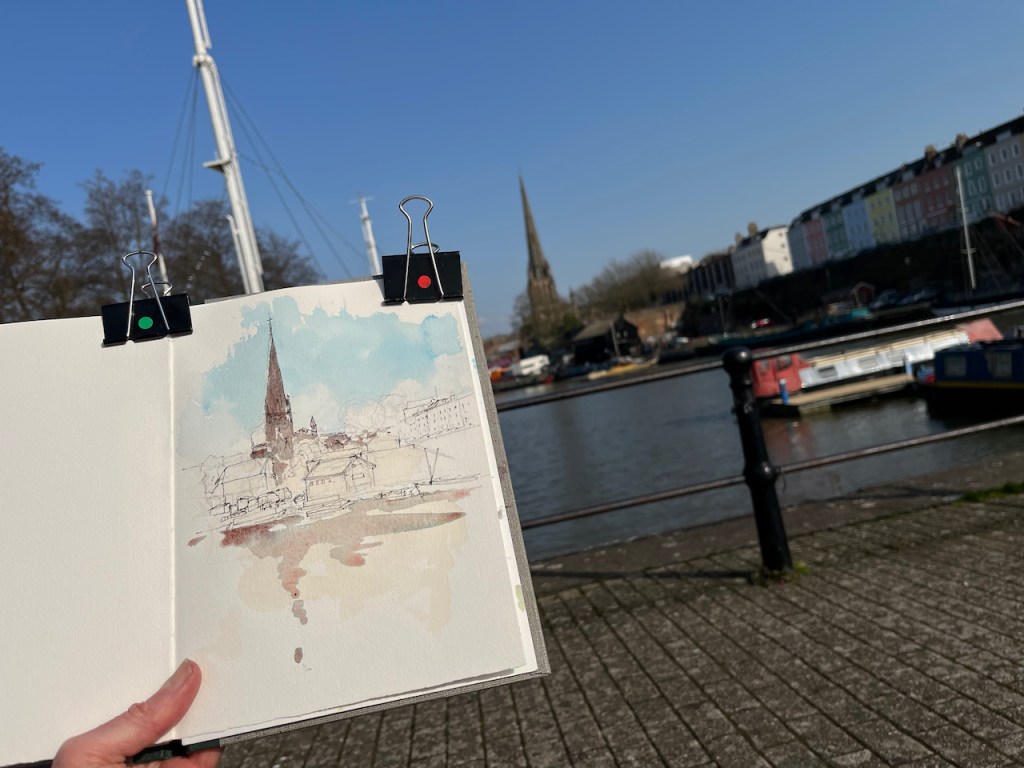
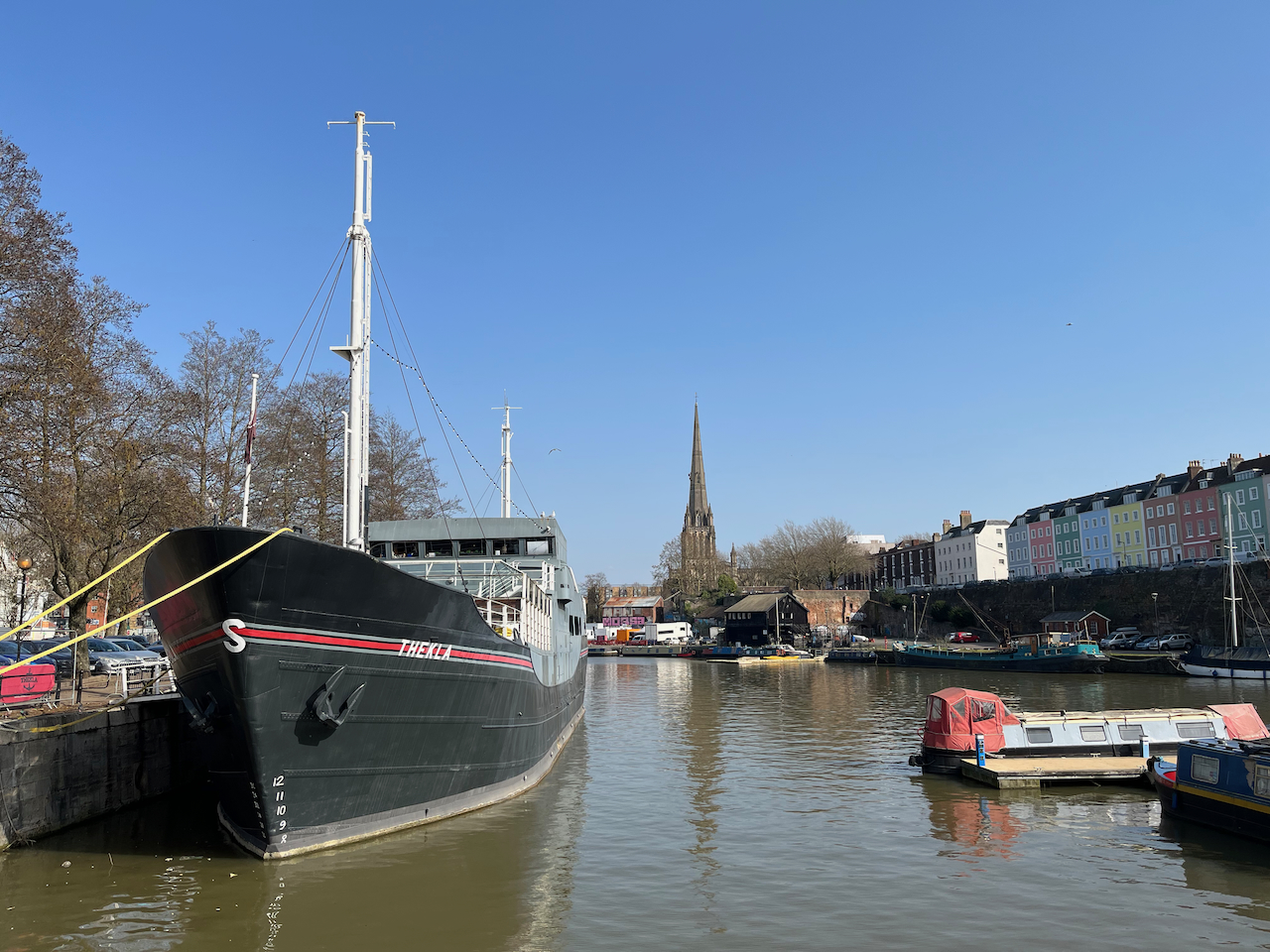
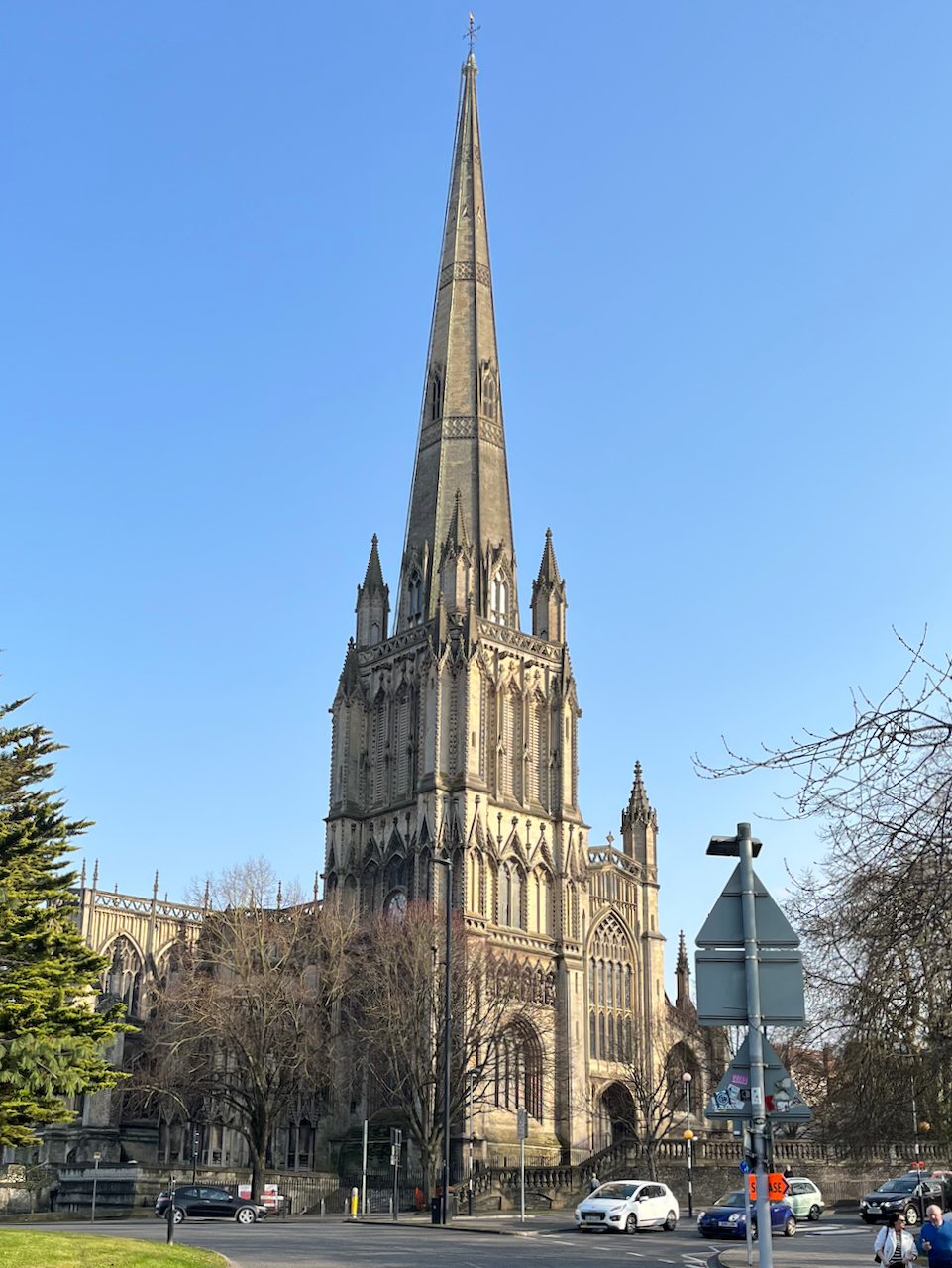
Walking back to Bristol Temple Meads I stopped by the “Thekla” boat and music venue. Much of Bristol docklands area has changed radically in the last 35 years, in appearance and use. But the Thekla is still there, still in the same place, still a music venue, although the music has changed somewhat. I looked across the water as I thought these things, and saw St Mary Redcliffe.
St Mary Redcliffe from The Grove car park, next to Thekla, 23rd March 4pm in Sketchbook 11
St Mary Redcliffe has been there since the 12th century. The current building dates from the 13th and 14th century, and the spire was rebuilt in 1872.
On the left of my drawing, the building with the graffiti, that’s the last remaining undeveloped parts of the docks. The vans and lorries parked in front of it turned out to be a film crew. As I walked past, I saw the big hoardings advertising the redevelopment of the site to become “Redcliffe Wharf”. The developer’s website tells me:
This exciting development is the last direct waterside location on Bristol’s Harbourside. Once complete the development will create around 41,000 sq ft of highly sustainable Grade A office accommodation plus 45 two and three bedroom apartments, two waterside restaurants and space for local businesses.
website for the “Redcliffe Wharf” redevelopment
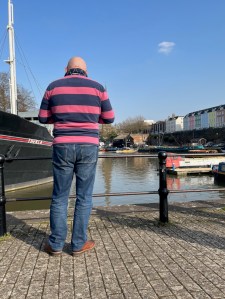
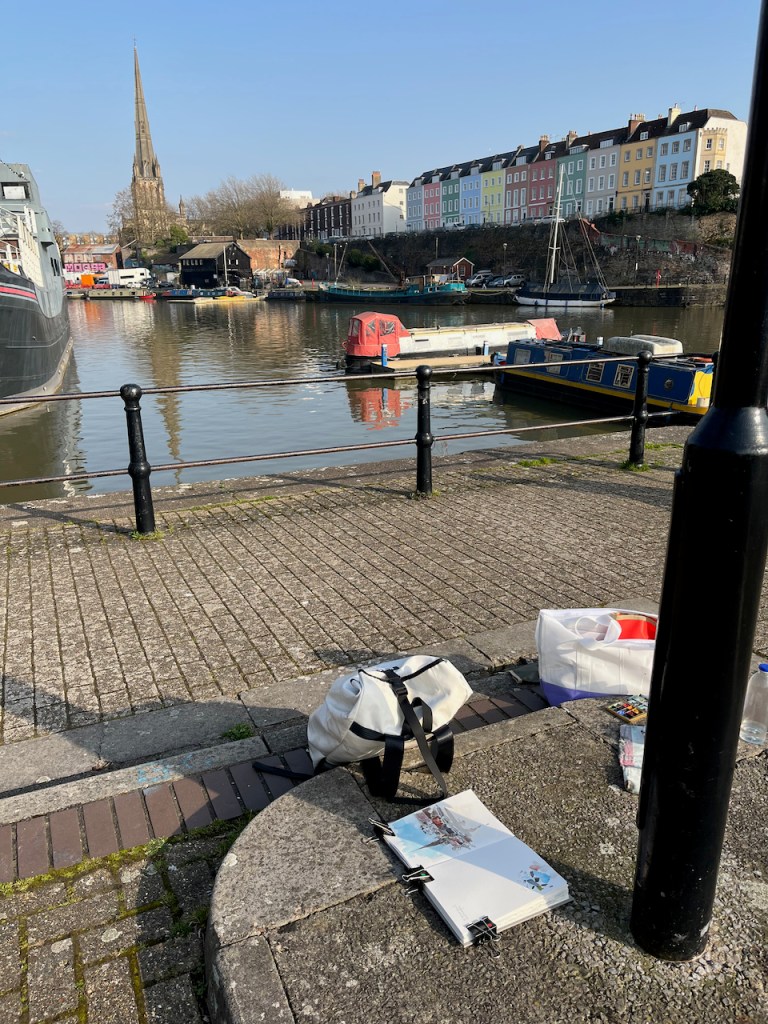
As I was drawing, a person came and stood, for quite some considerable time so it seemed to me, directly in my field of view. This person was a member of a group. They all walked past, saw me sitting on the kerbstone drawing, and then wondered what I was drawing and went to have a look across the water for themselves. This particular person then chose to align themselves exactly in front of me, adjusting a camera and taking multiple shots. I practised Zen patience, cleaned my palette, mixed some colour, looked at the seagulls, and waited. Then I decided to take a photo.
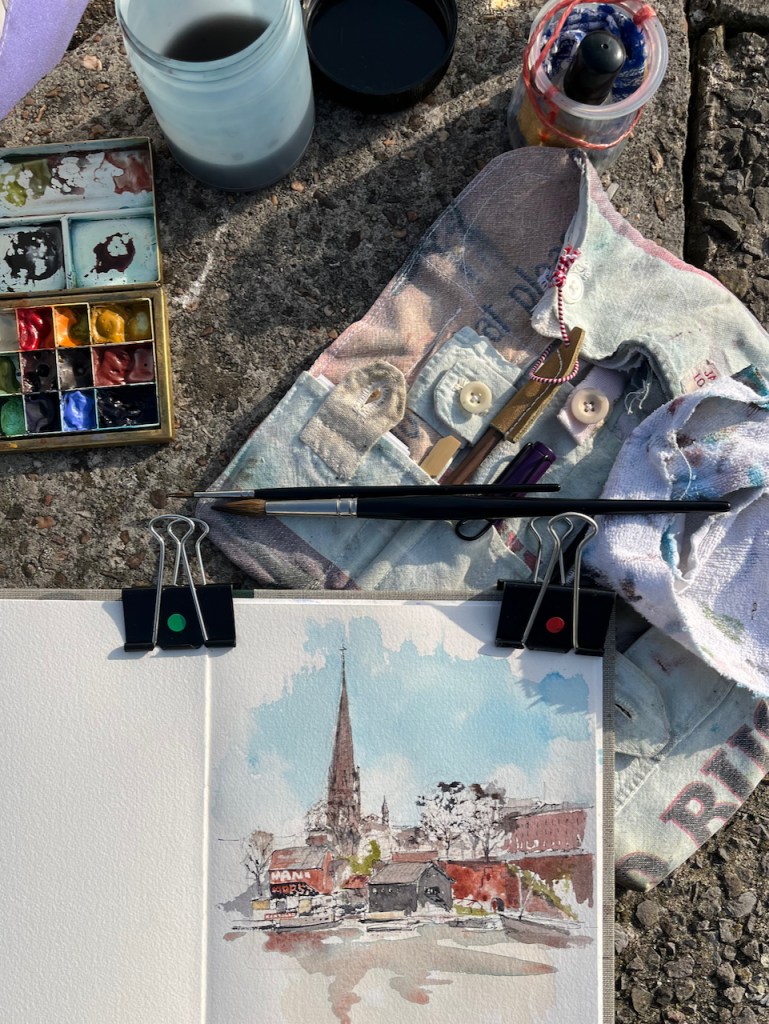
Work in progress
When I finished my drawing, I walked on into the picture, and past St Mary Redcliffe.
I hope the redevelopment does not touch the beautiful tranquil garden at the top of the hill.
Quakers’ Garden near St Mary Redcliffe, above and behind the building with graffiti in my drawing.Map from about 2005, showing the sightline of the drawing
Click a button below to share this post online, email it, or print it:
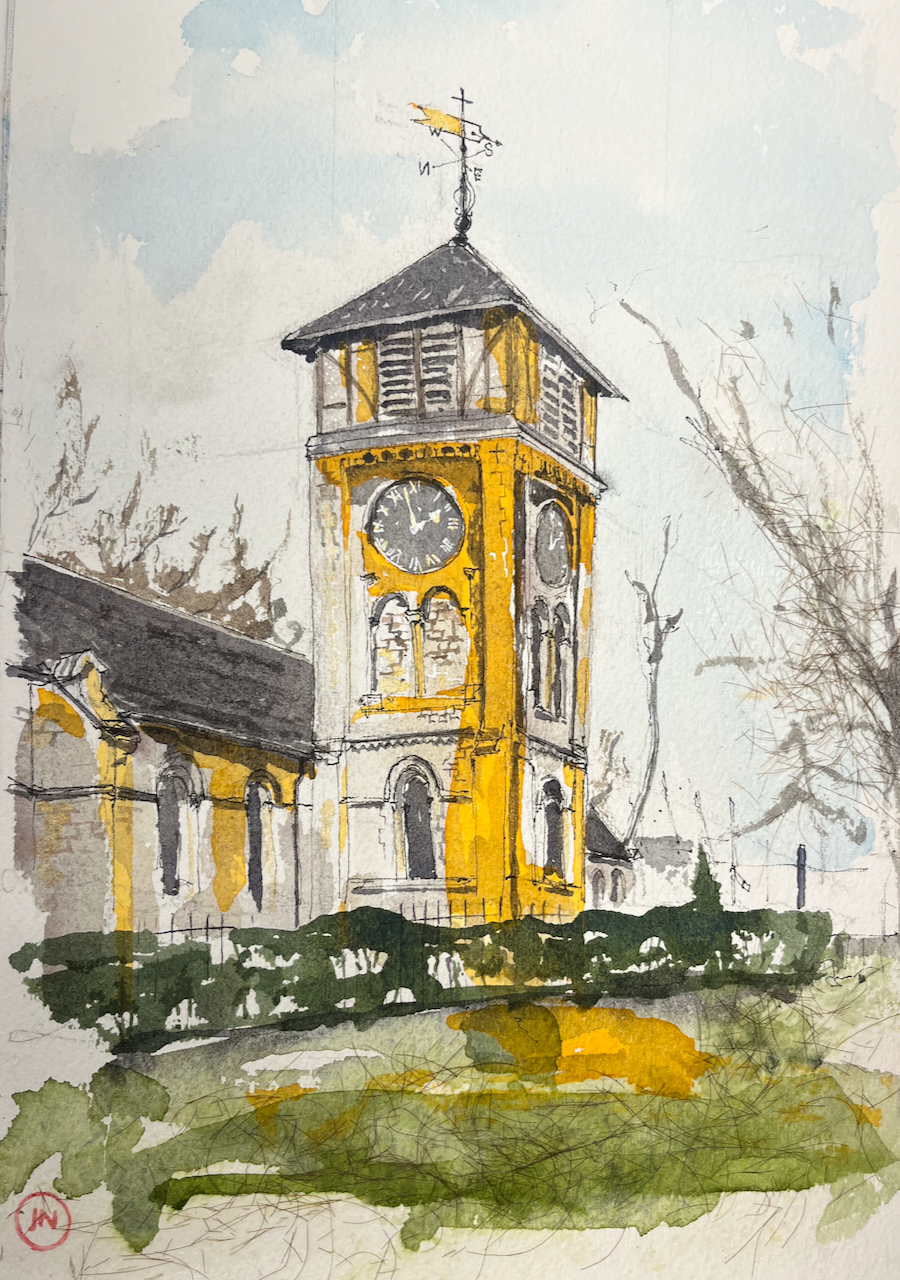
On a sunny day I went to draw a church tower in a country churchyard. The churchyard is near Kings Cross and the church tower is that of St Pancras Old Church.
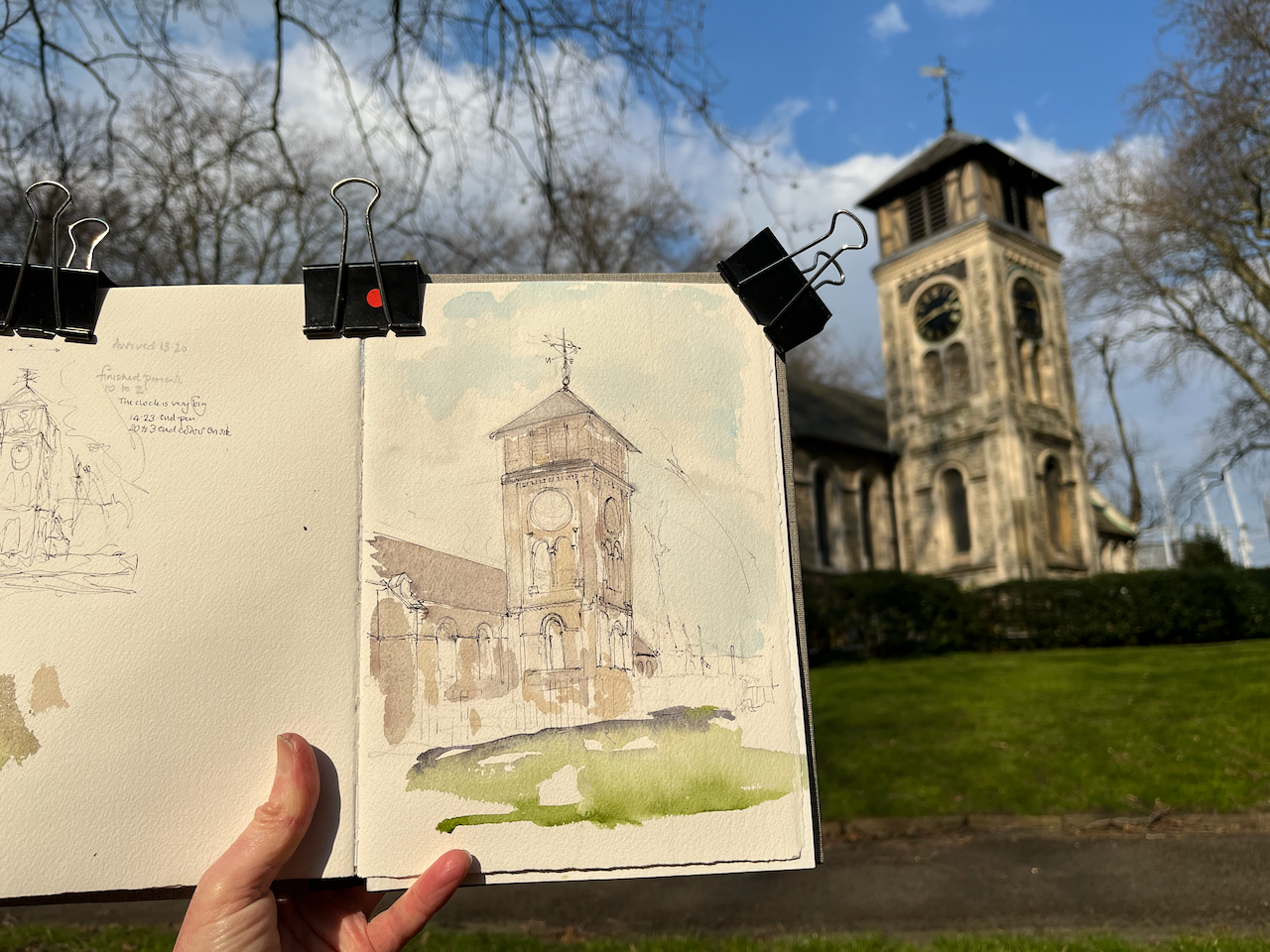
St Pancras Old Church, tower. 20th March 2022 10″ x 7″ in Sketchbook 11
I sketched sitting on the grass beside the River Fleet, while the river flowed behind me, in my imagination.
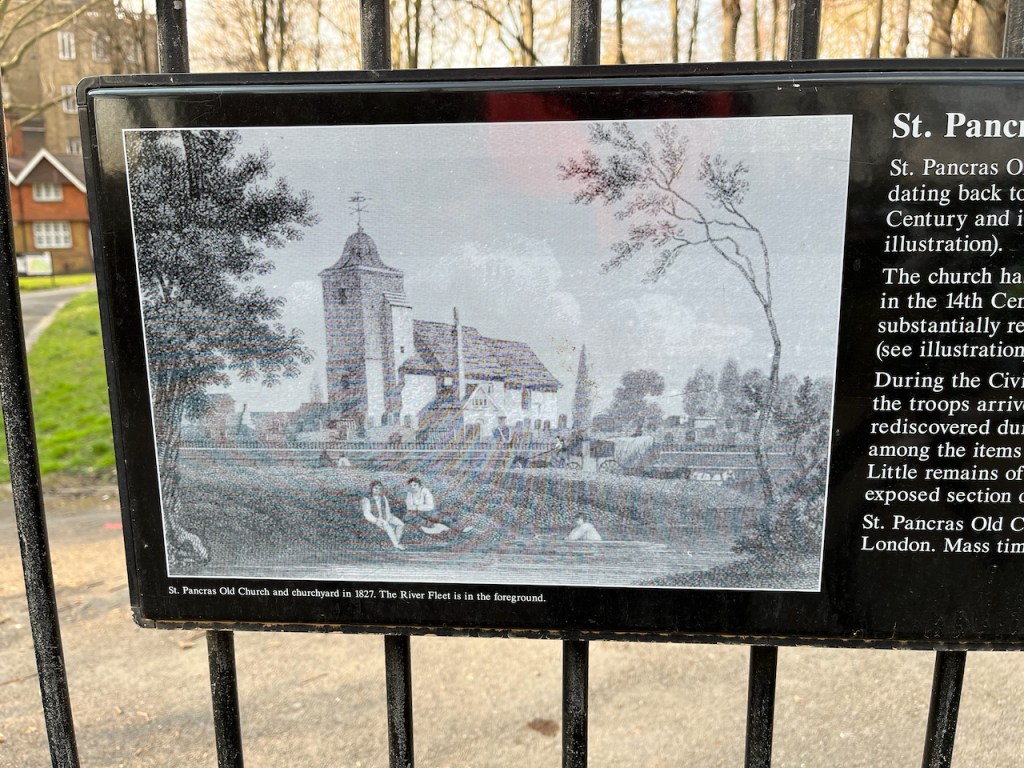
It’s a real river though. These days it’s under St Pancras Way. But it used to flow by the church.
“St Pancras Old Church and churchyard in 1827. The River Fleet is in the foreground.” notice on the railings of the churchyard.
As you see from that picture, in 1827 the church looked very different. The south tower which I sketched is not as ancient as it looks. It was constructed in 1847 to the designs of A.D. Gough.
The church site itself is very ancient. According to the church website, this is one of the oldest sites of Christian worship in London, possibly dating back to the 4th century:
The suggestion that St Pancras Old Church dates back to Roman times has a long tradition, with most suggesting that it was founded in 313 or 314. Most churches in England named for the martyr St Pancras have, or may have, ancient origins, suggesting that veneration of the saint spread quickly after his death in 304.
Today it is an active church, and a music venue. The churchyard is a glorious green space, much used. Many people wandered past on the paths. No-one paid any attention to me drawing. The dogs did though. I was inspected and approved by each dog that went past.
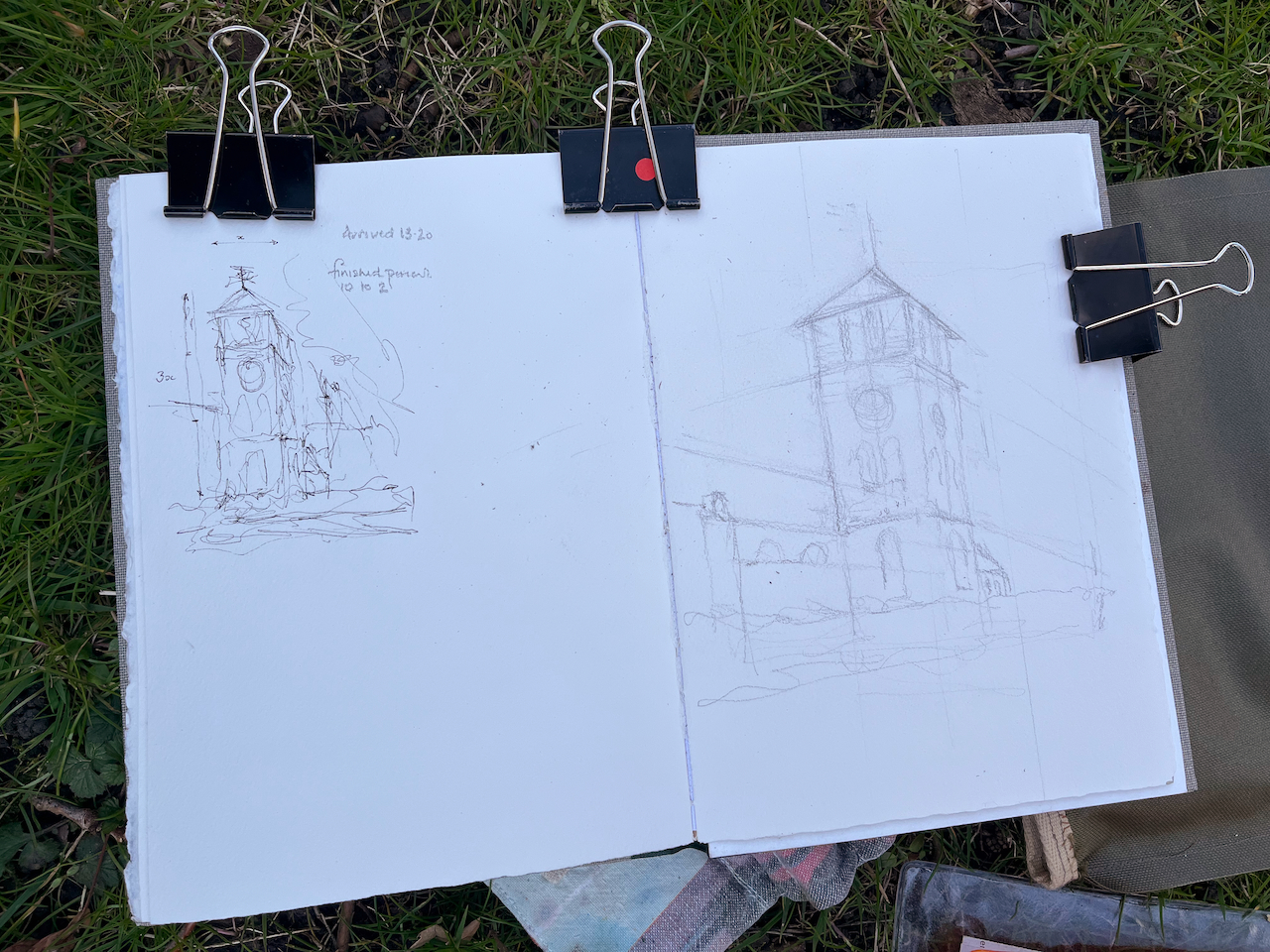
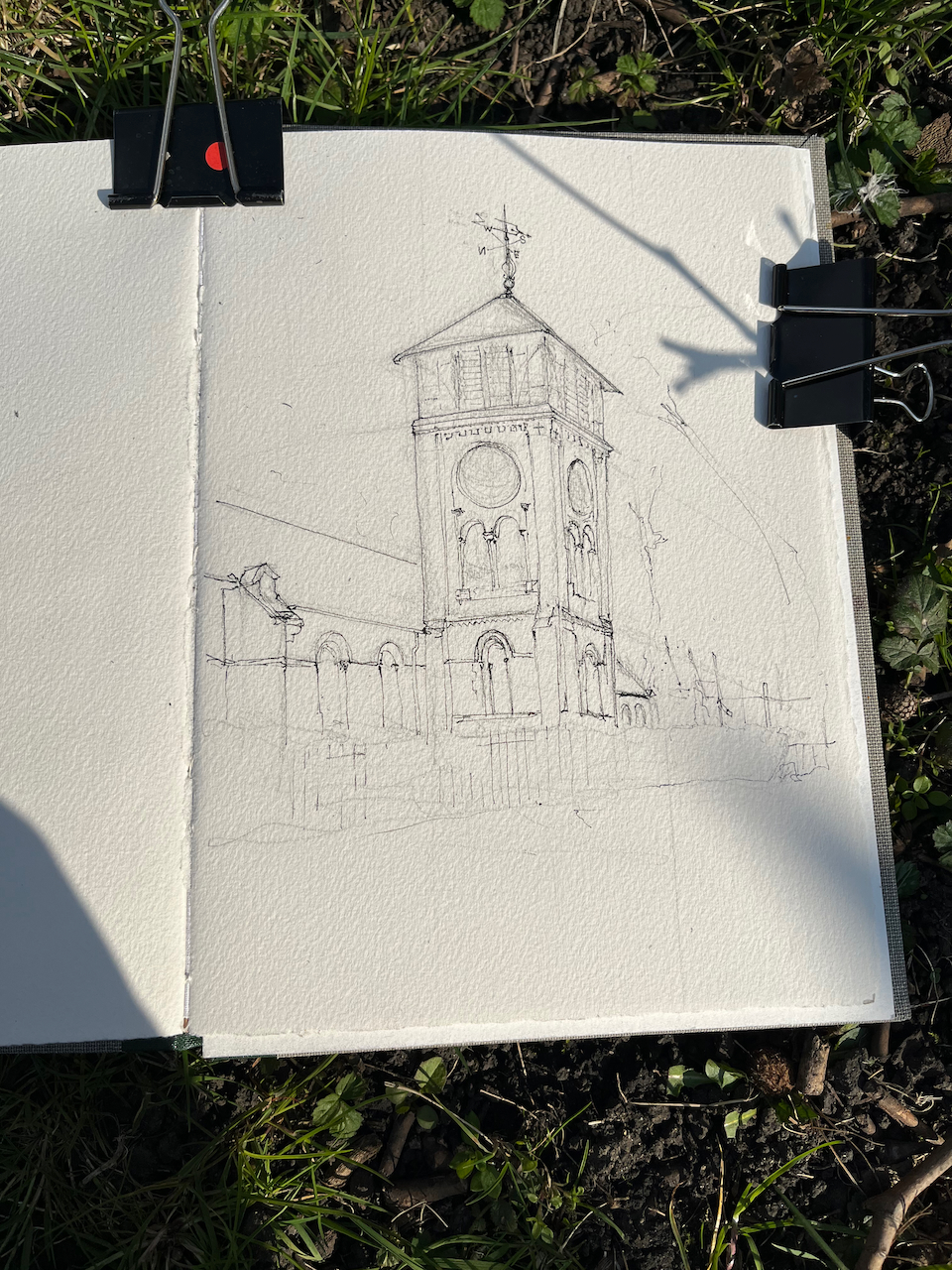
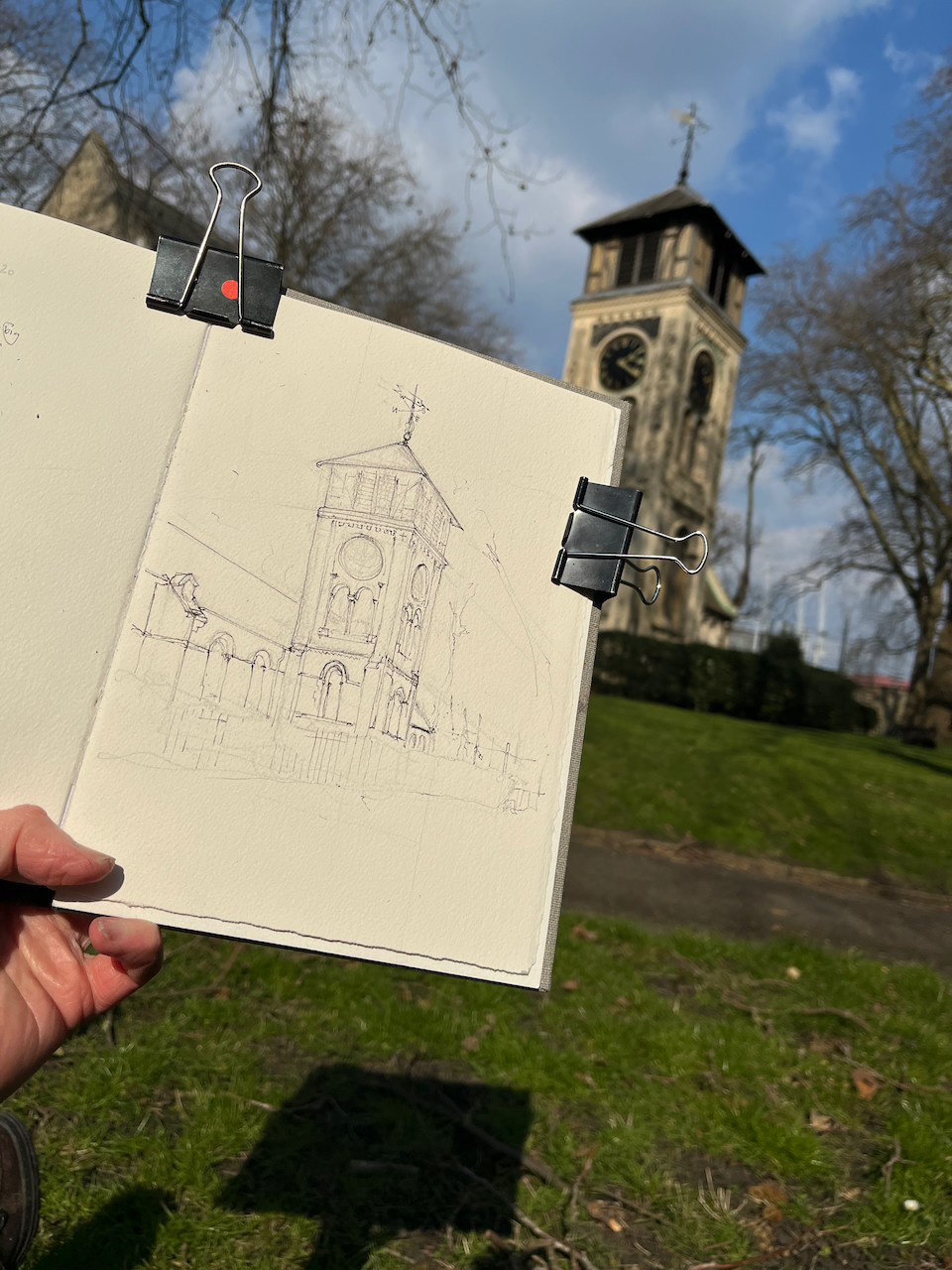
Here is work in progress and a map (click to enlarge the image)
Click a button below to share this post online, email it, or print it:
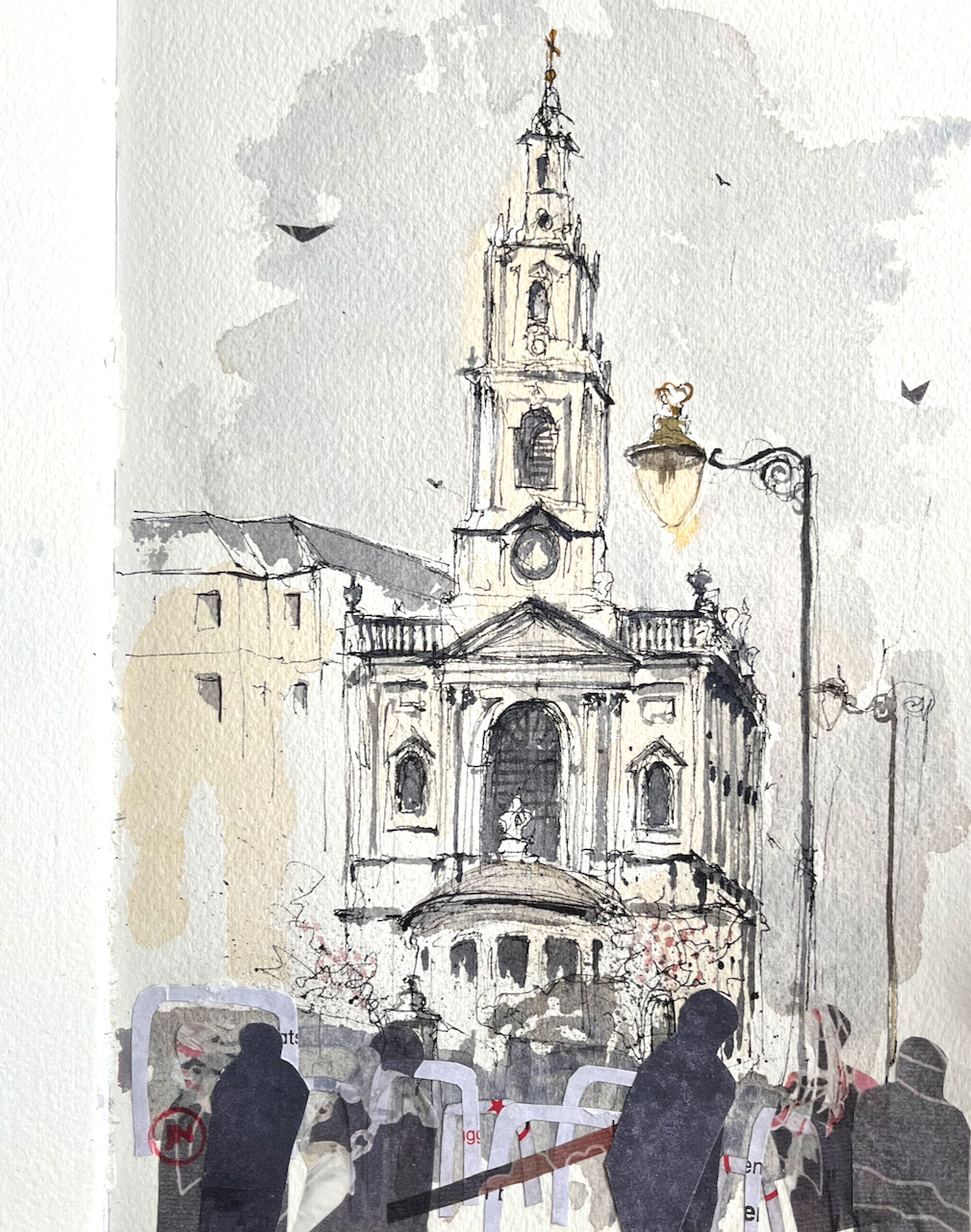
Here is a sketch of St Mary Le Strand, which is the church in the middle of the Strand at Aldwych. I sketched this from outside Somerset House. As you see it was really busy there. The south part of Aldwych is being closed off to motor traffic and made a pedestrian-only route. It will be great when it’s finished, but right now it means that the busy pavements are narrowed with barriers and there are many types of confusion.
St Mary Le Strand WC2, 1st March 2022, 10″ x 7″ in Sketchbook 11
The foreground is collage, added after the drawing.
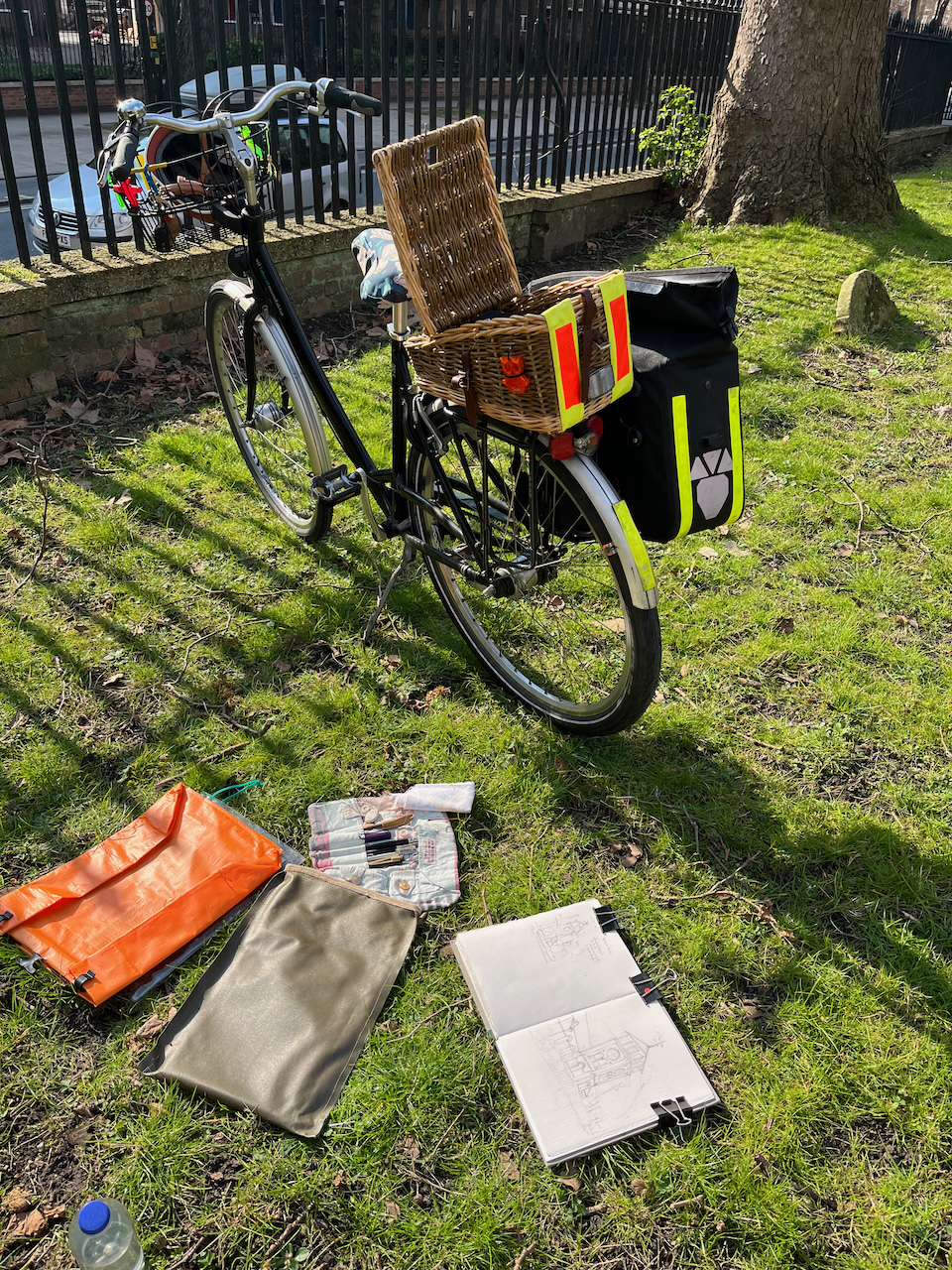
Here is work in progress and a map.
Click a button below to share this post online, email it, or print it:




















 Jane Sketching