Crescent House, Golden Lane Estate

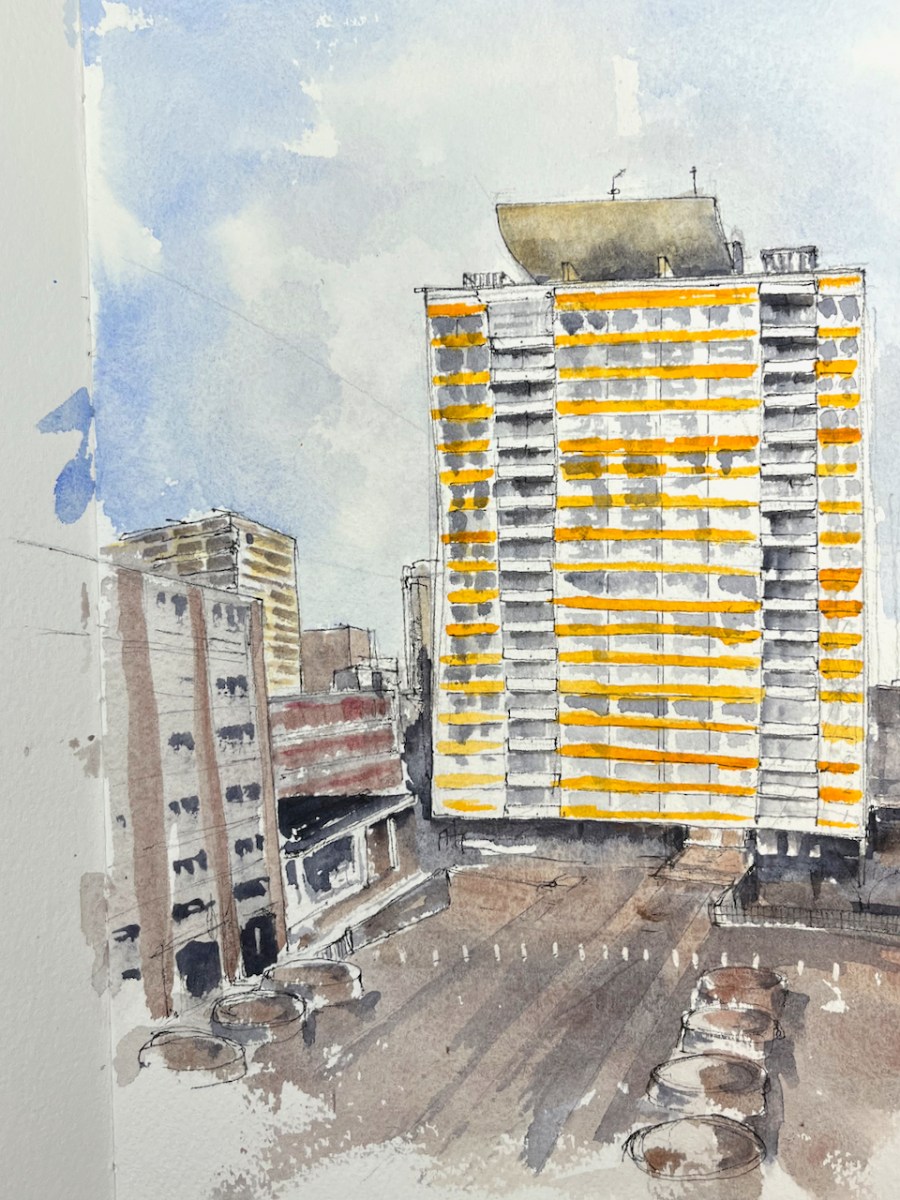
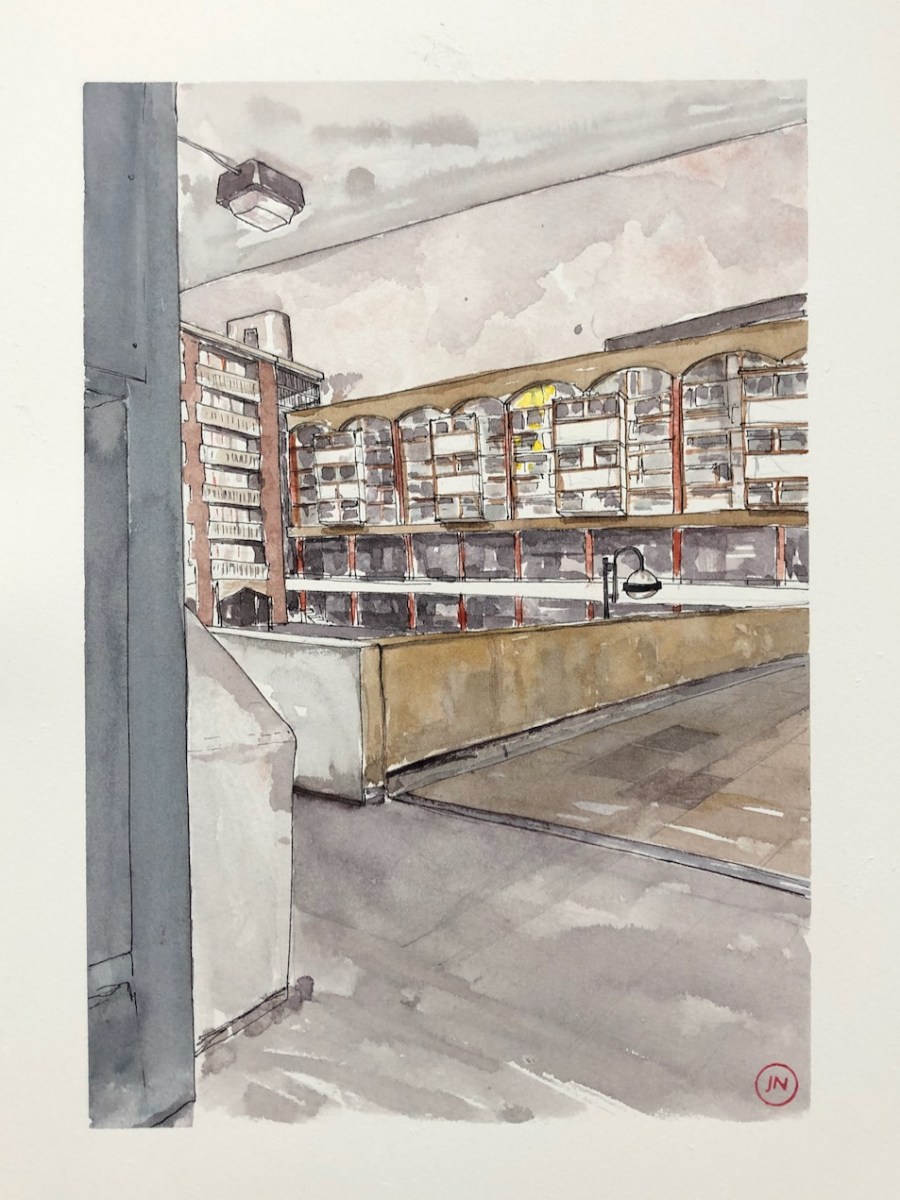
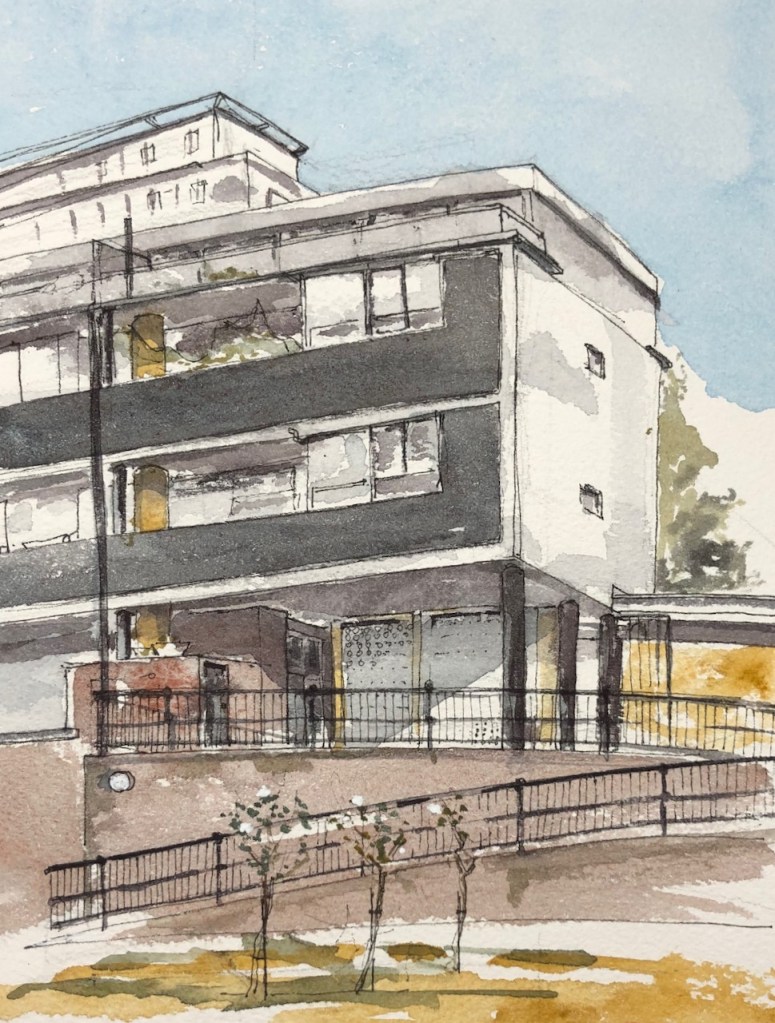
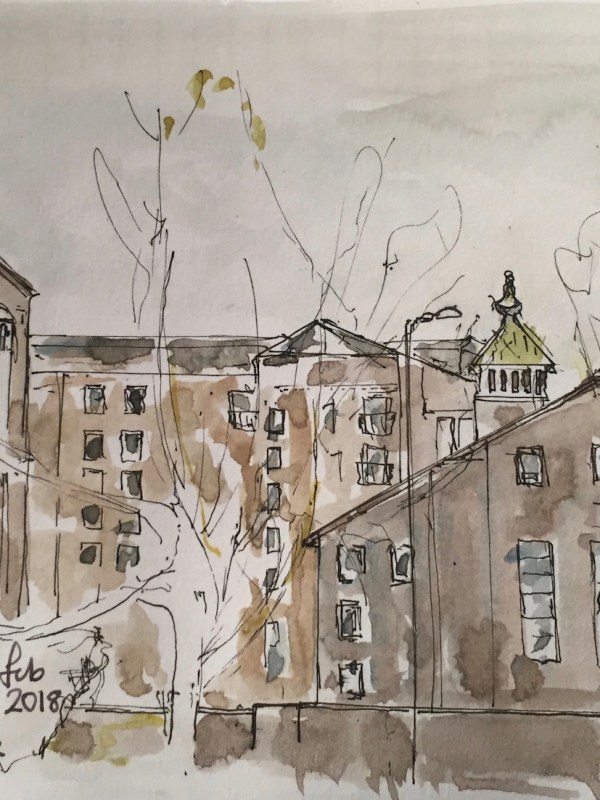
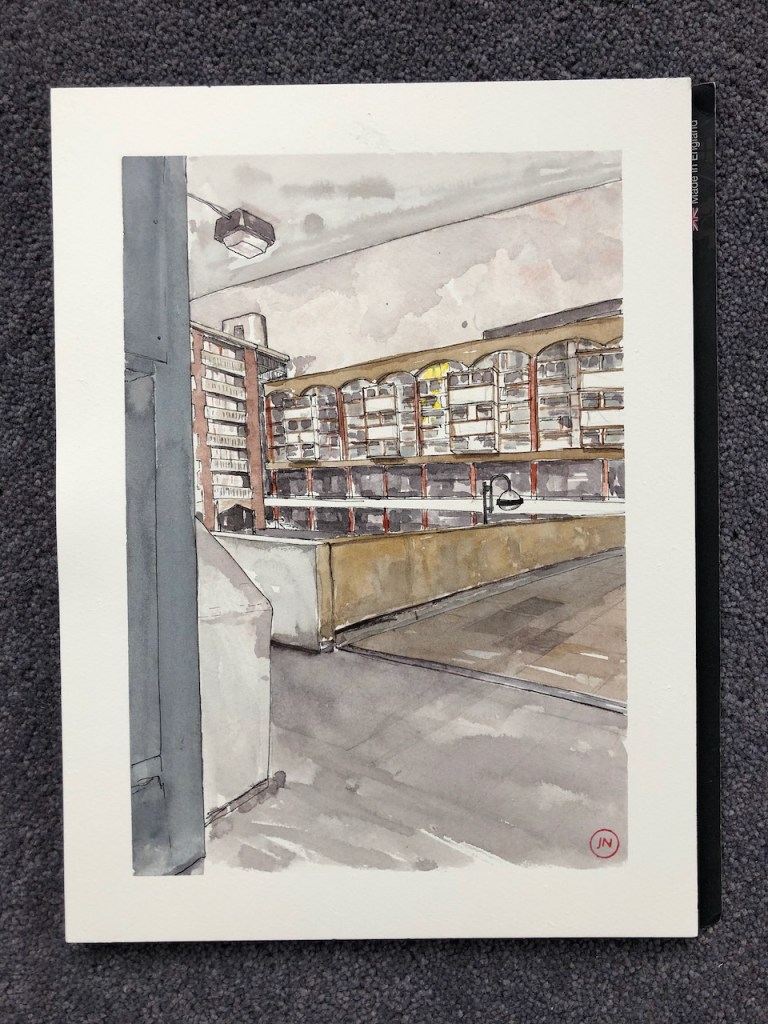
A resident of Crescent House commissioned me to draw his block.

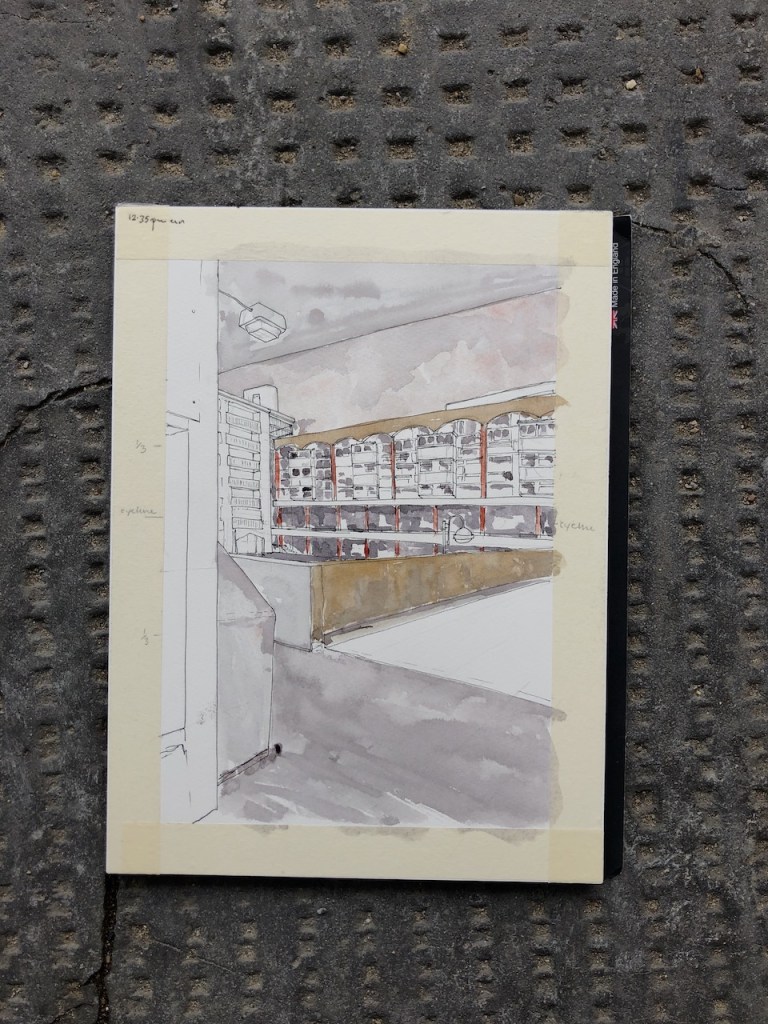
Crescent House – 12″x9″ original watercolour (SOLD)

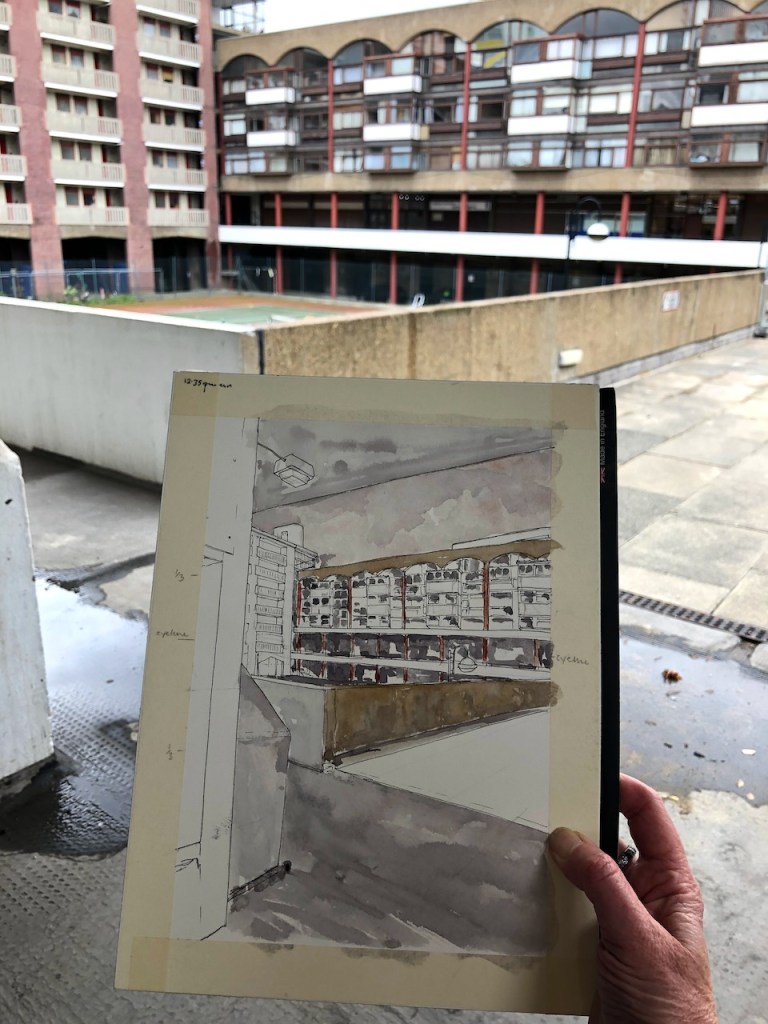
This is a view from the podium level, above the Golden Lane Leisure centre. The block on the left is Cullum Welch House. The yellow colour in the centre is a reflection of Great Arthur House in the windows of Crescent House.

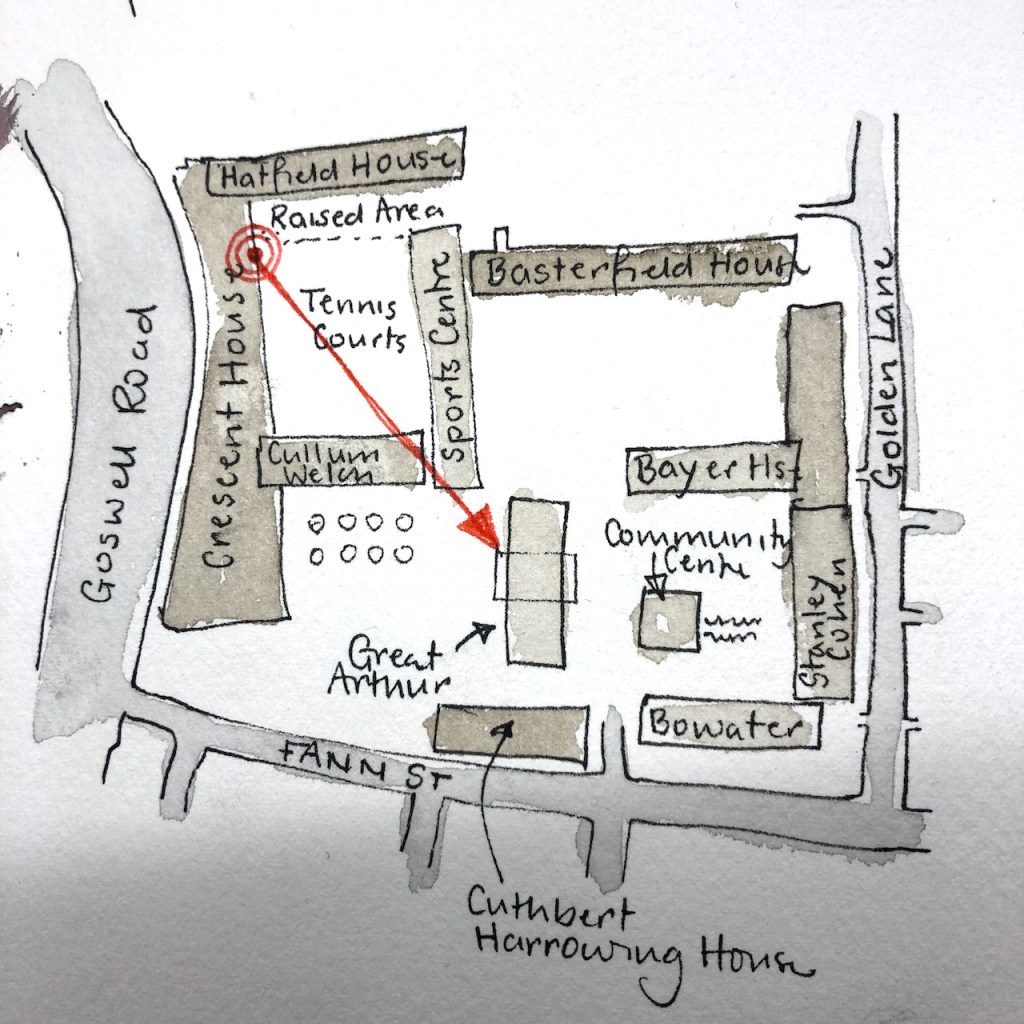
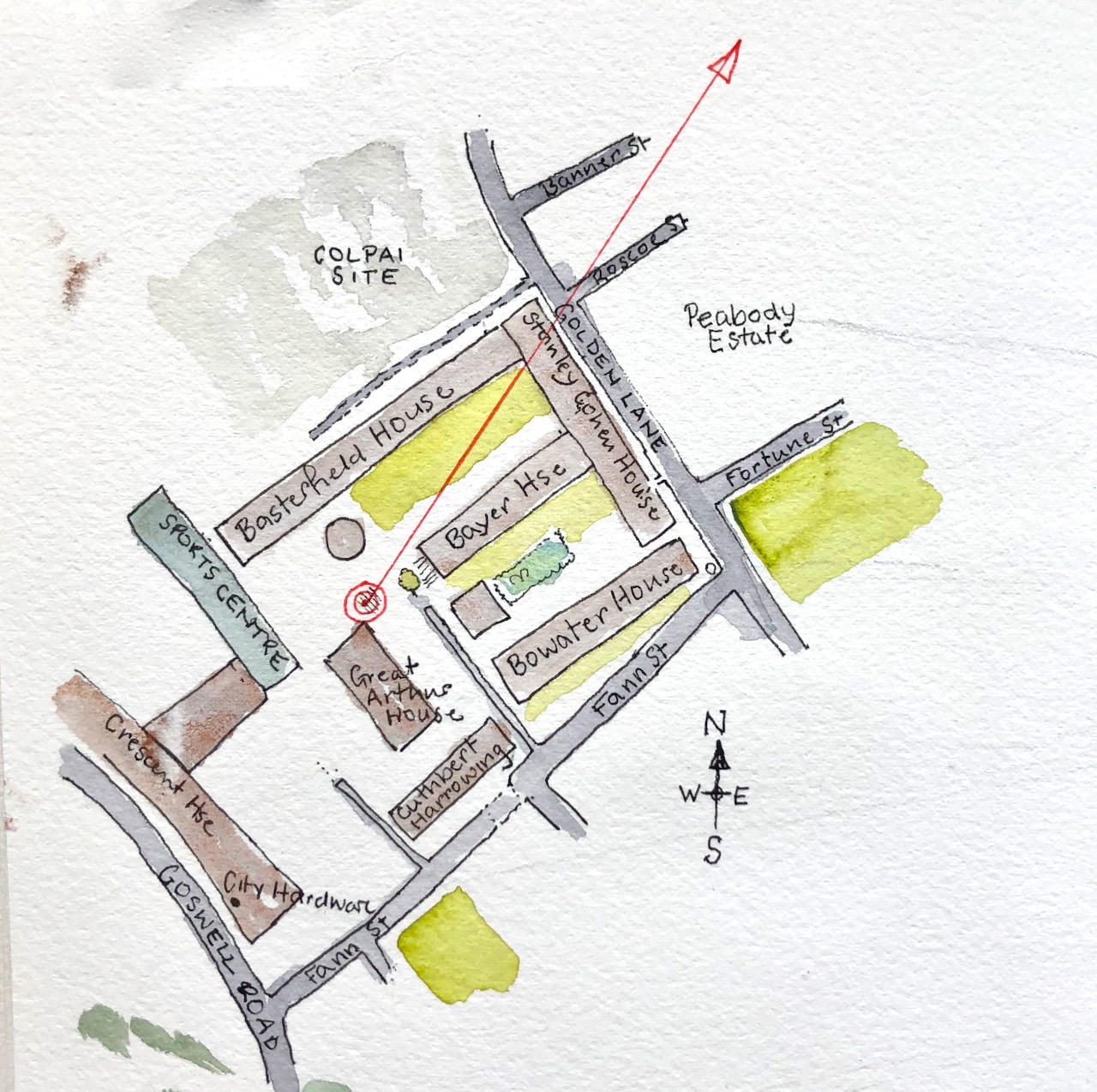
Map showing the view of Crescent House in the drawing (North is on the right)

The pavement by the wall was being re-laid. Just off the picture, to the right, people who were laying the paving stones sang merry tunes, and insulted each other. “Dean, I don’t believe how long that’s taken you. It’s a five minute job!”

Dean was moving the metal fencing around, making a sound like a drum roll. They needed to reconfigure their enclosure as they finished one section of paving and moved onto the next. I didn’t catch Dean’s repost, but the answer was, “No…no.. it’s just because you are lazy….”

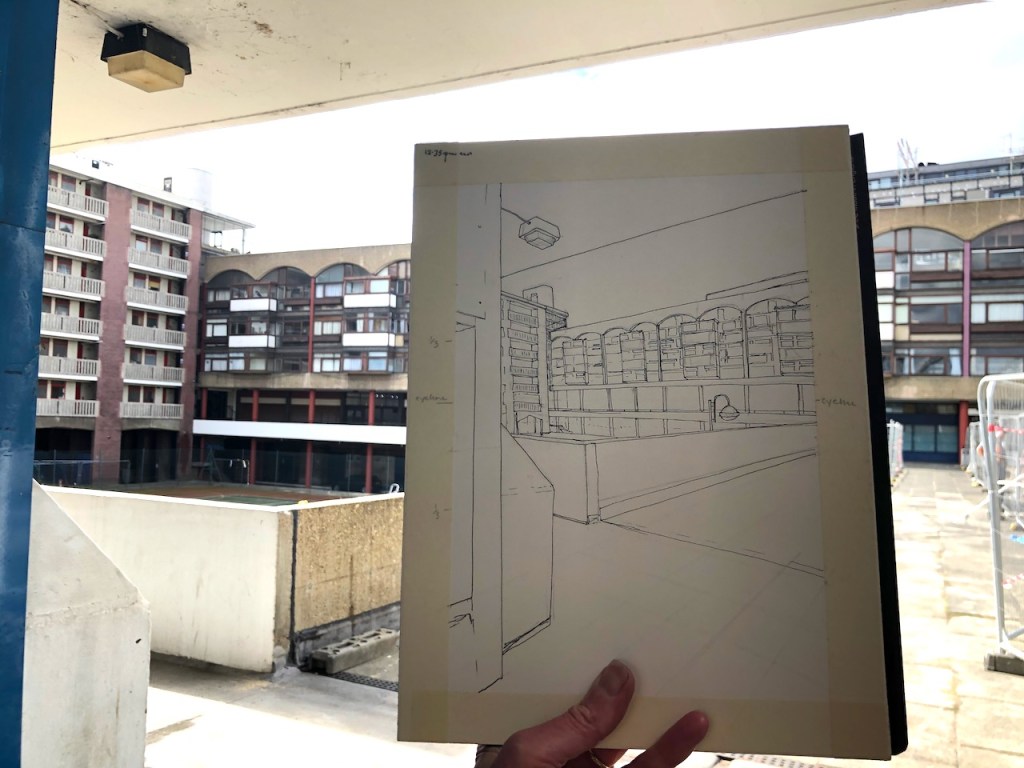
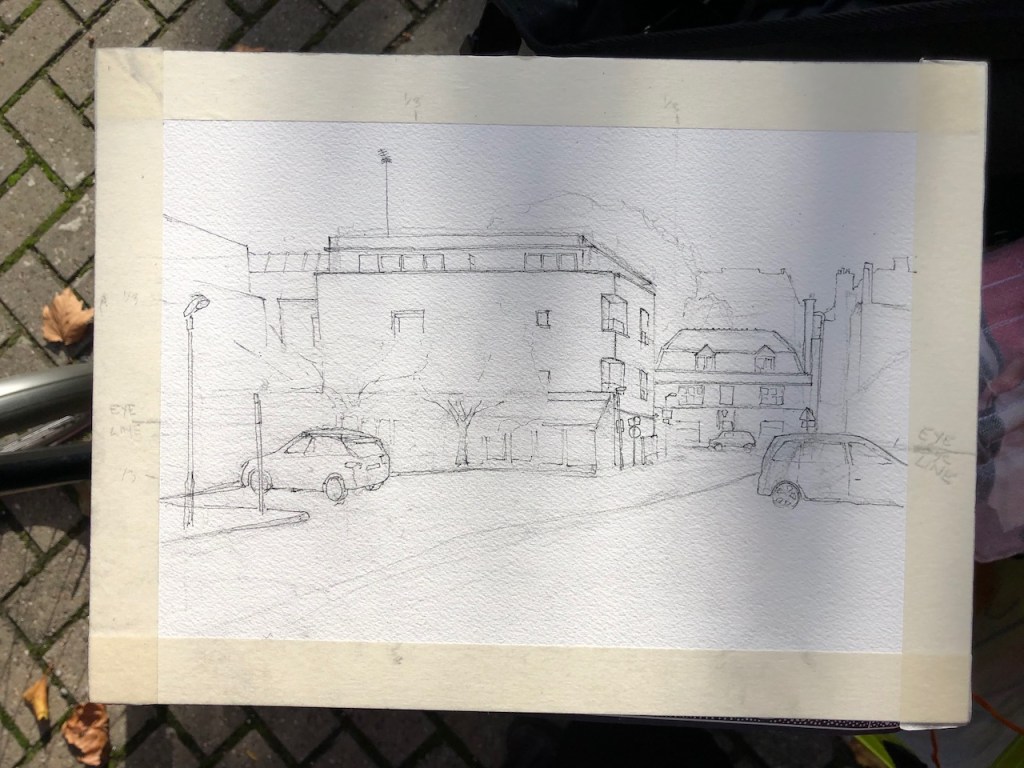
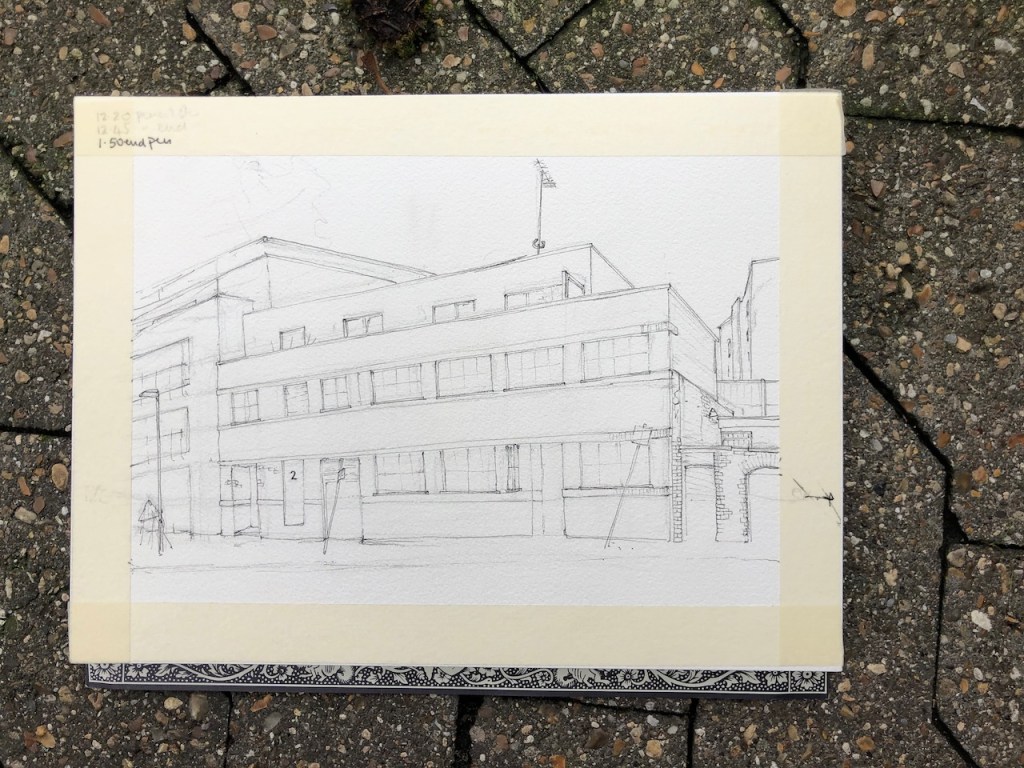
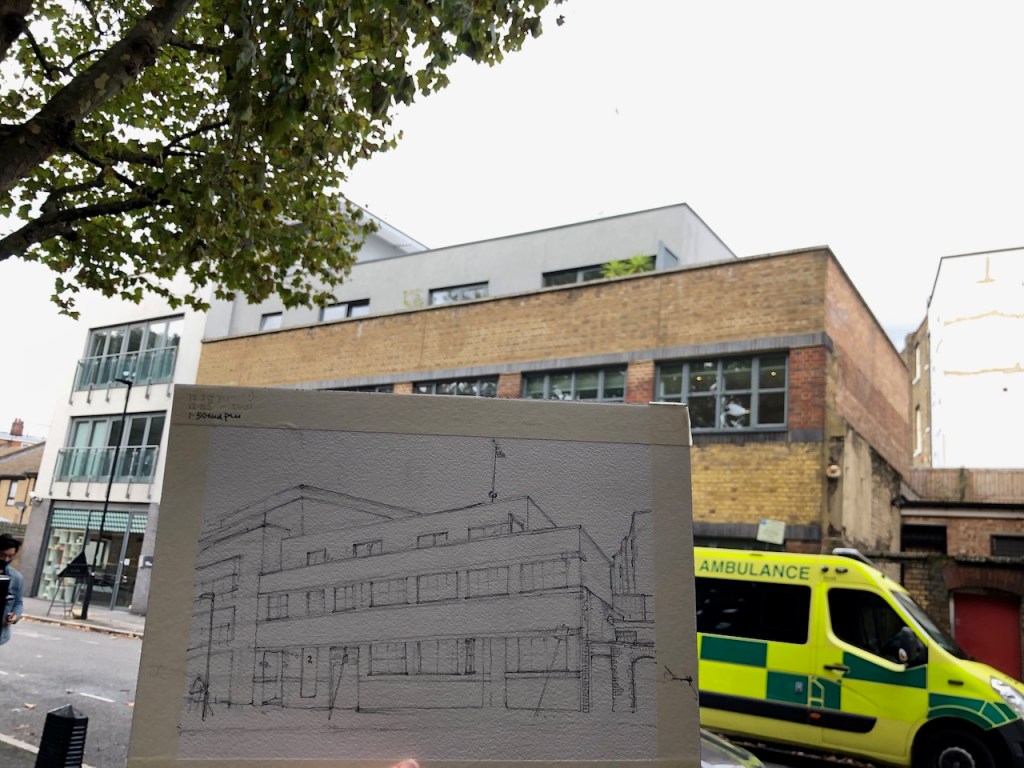
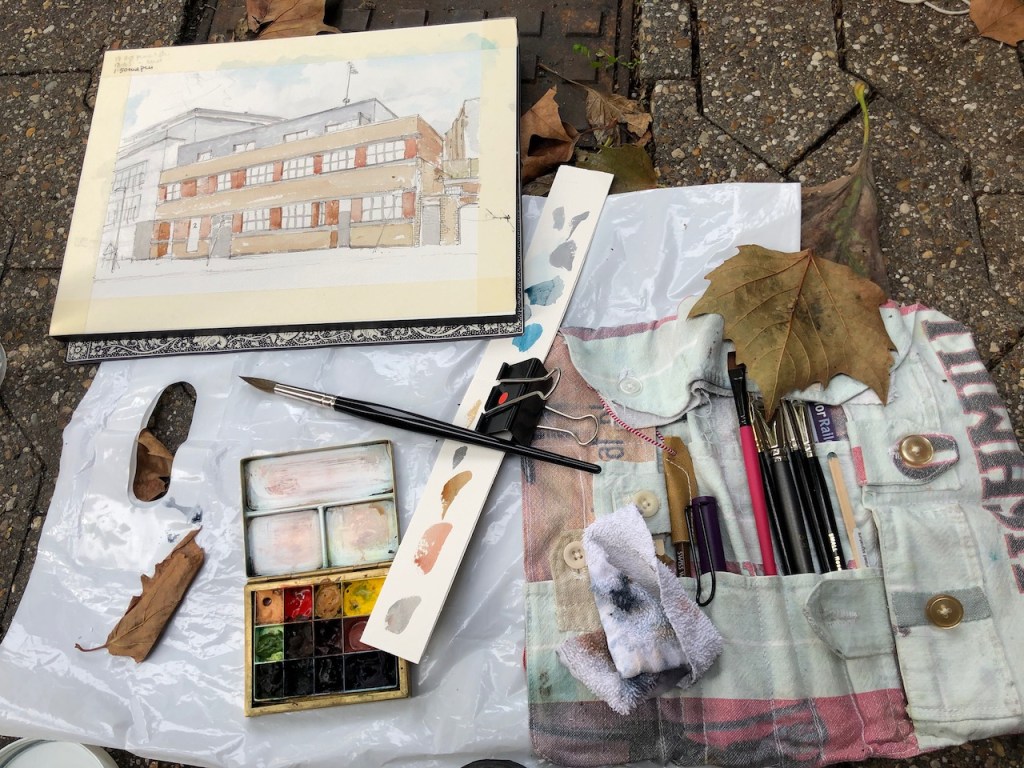
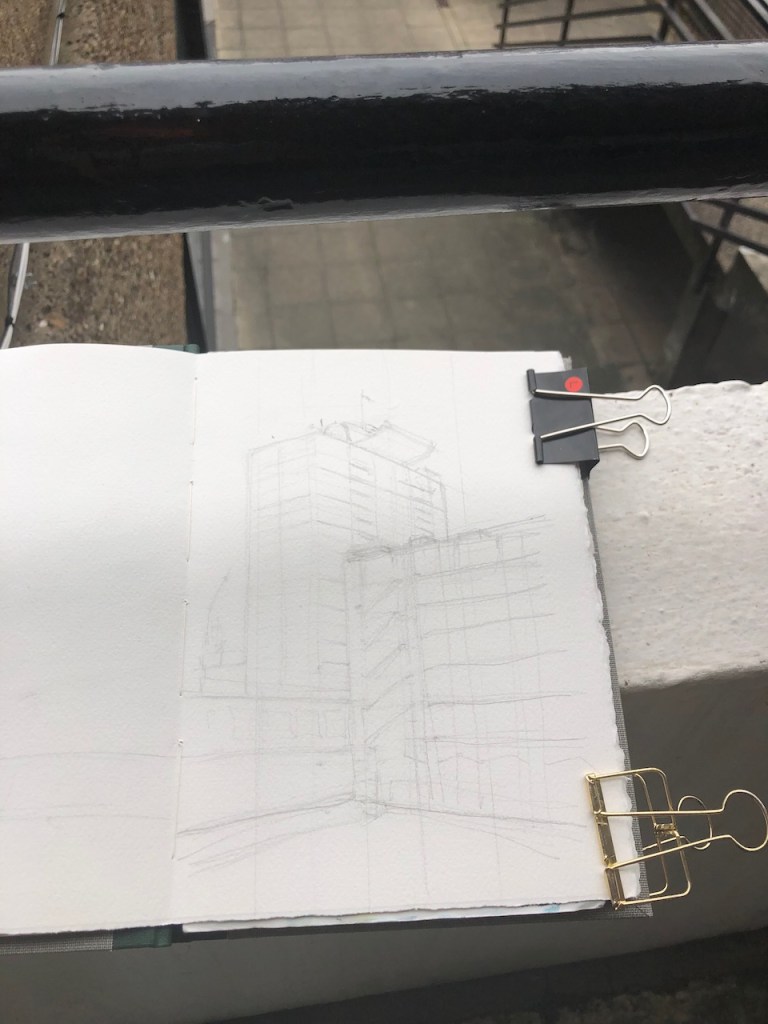
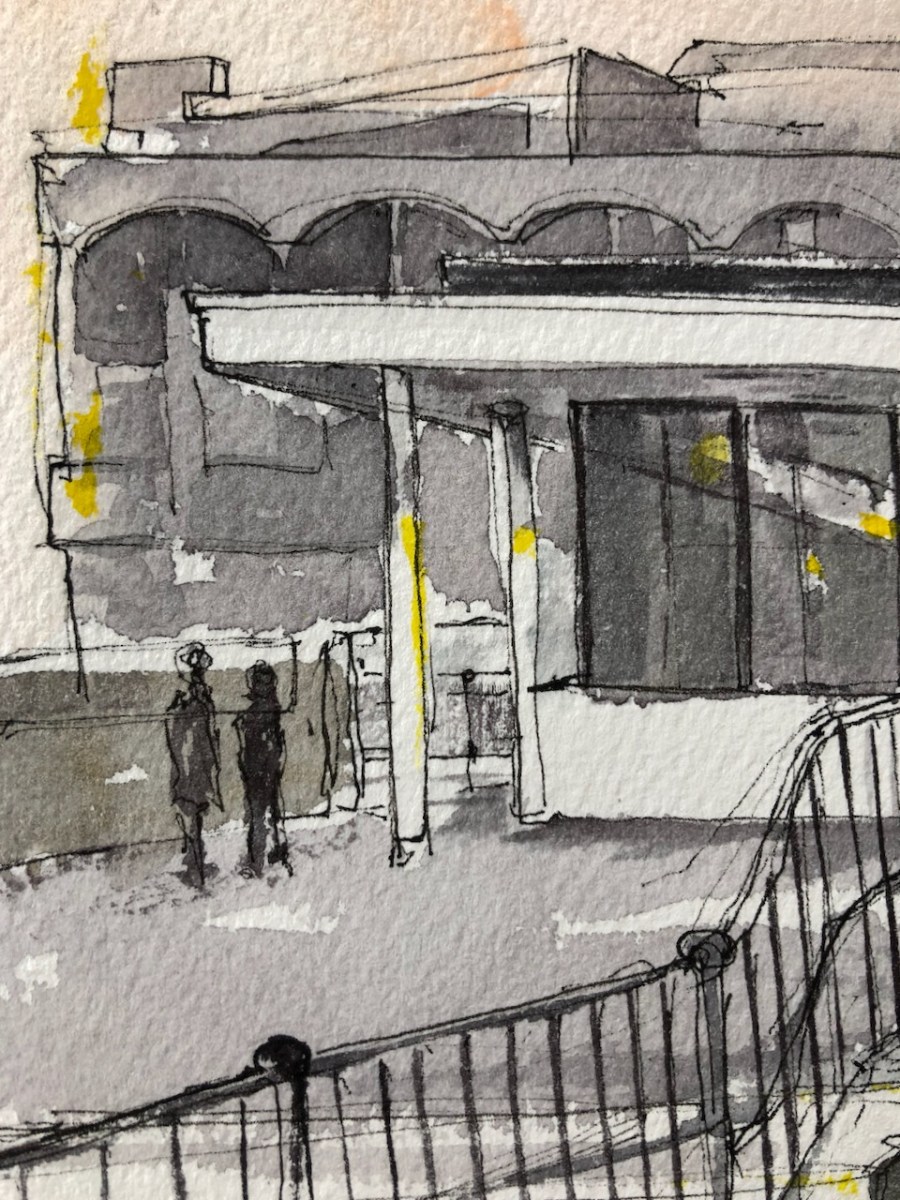
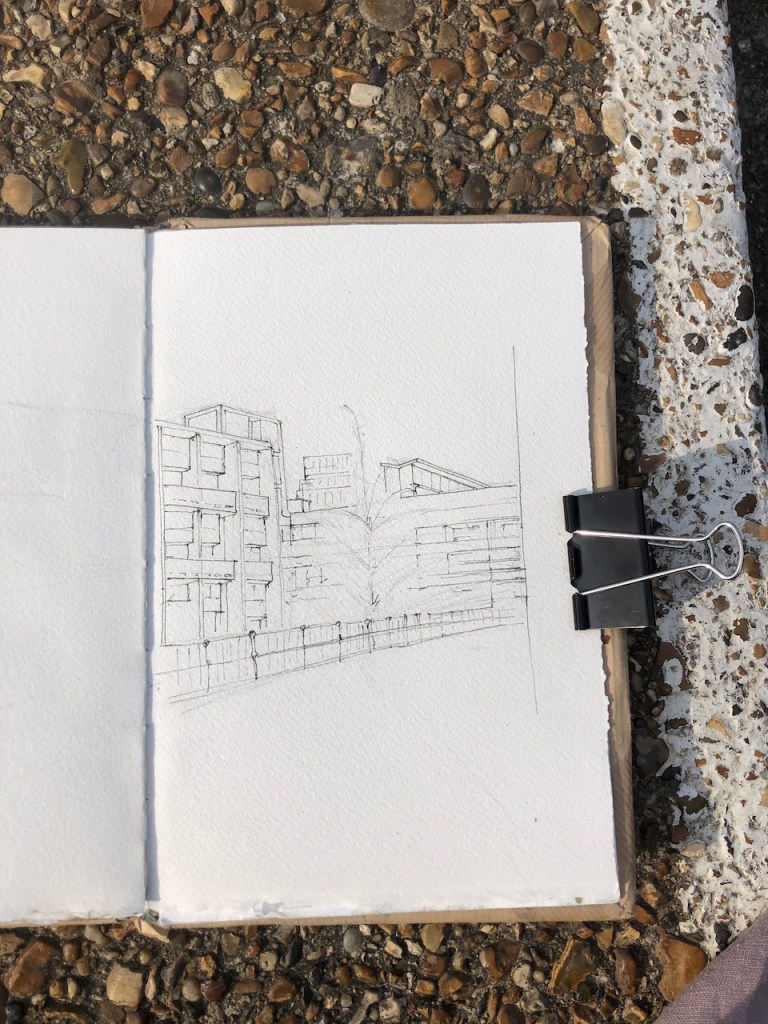
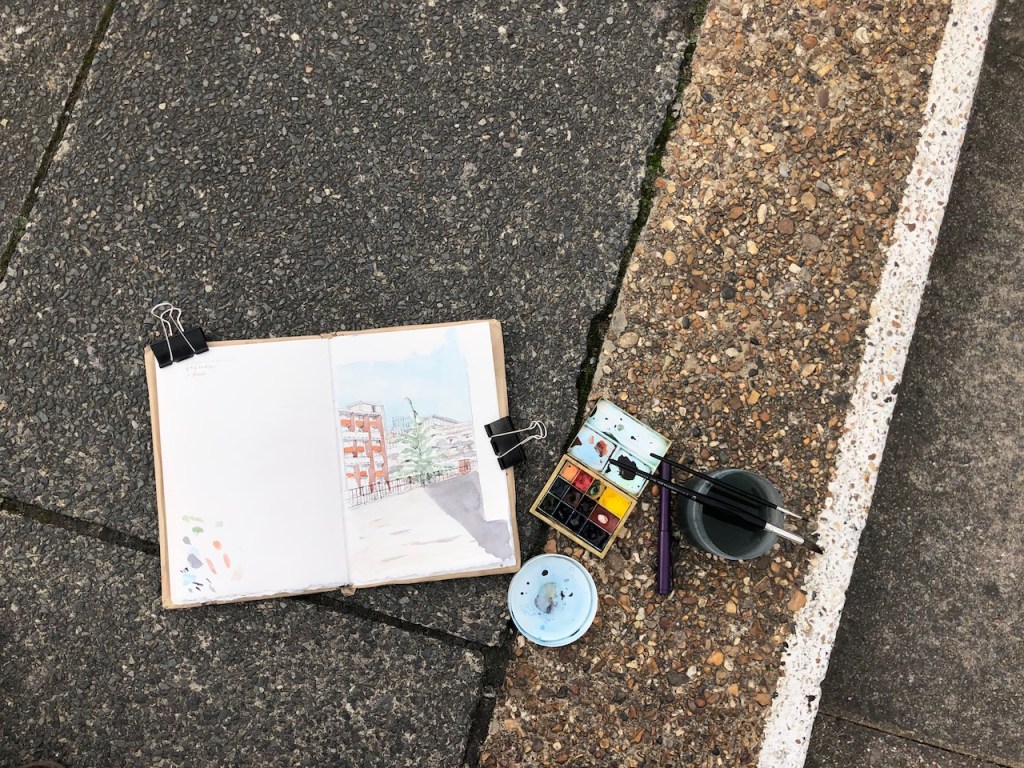
Here is work in progress on this final drawing. It is made on a block of Saunders Waterford Hot Press 300gsm paper.
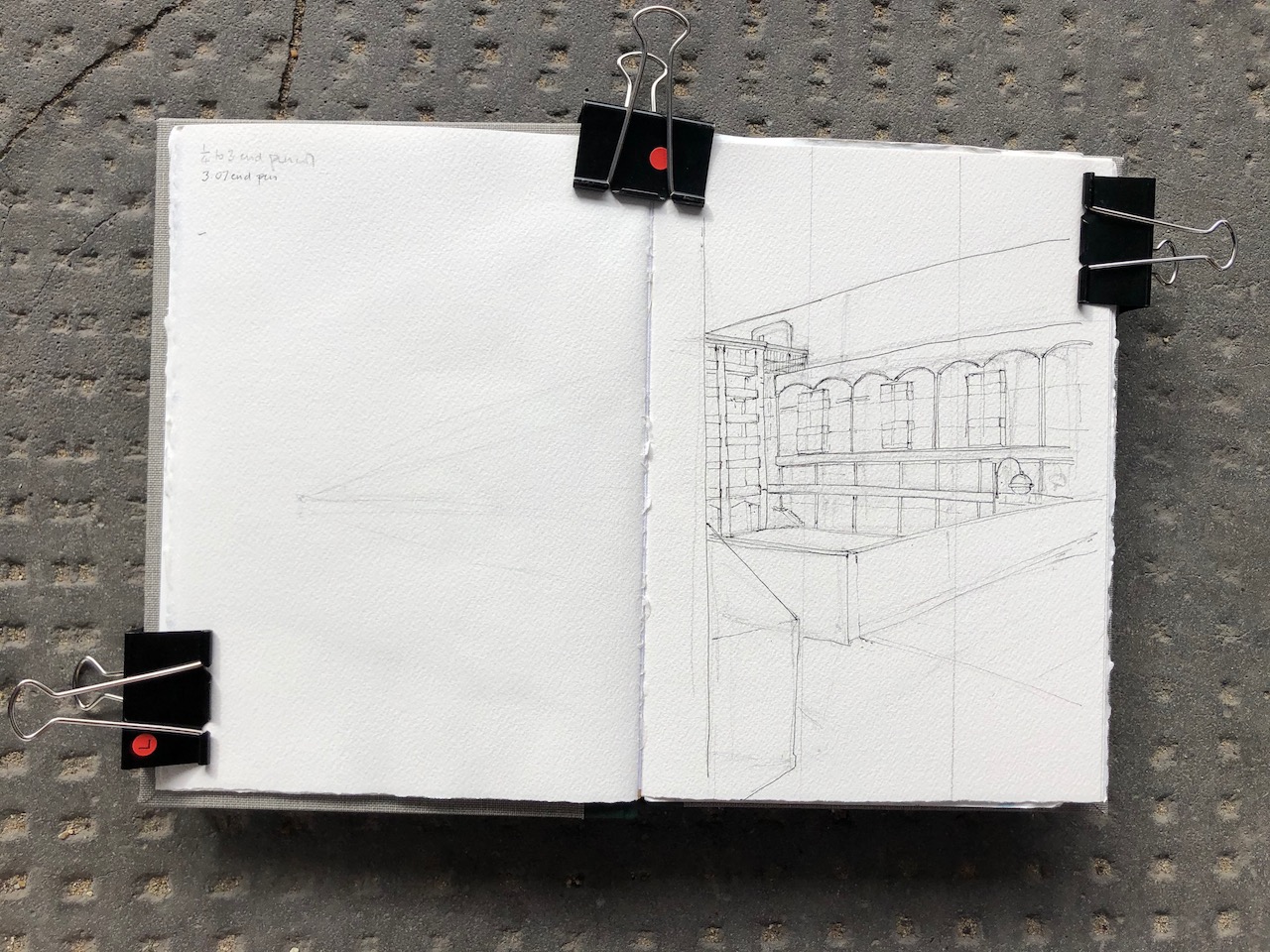
I made some preliminary drawings a few days previously, to get my head around the composition and the perspective challenges.

At the bottom left of the sketch is that strange sloping block. It is pointed. I didn’t get the whole of it in the sketch as it is so fascinating that it would have distracted from the main object of the drawing which is Crescent House. But it is worthy of examination. It looks like a tank trap. But what is it doing there? There are two of them.

As you see they are wonderful sculptural objects, worthy of a drawing in their own right.

Probably they are to stop people from sitting on that convenient ledge.
Cosser St, SE1 – North East

Here is the second sketch of Cosser St.

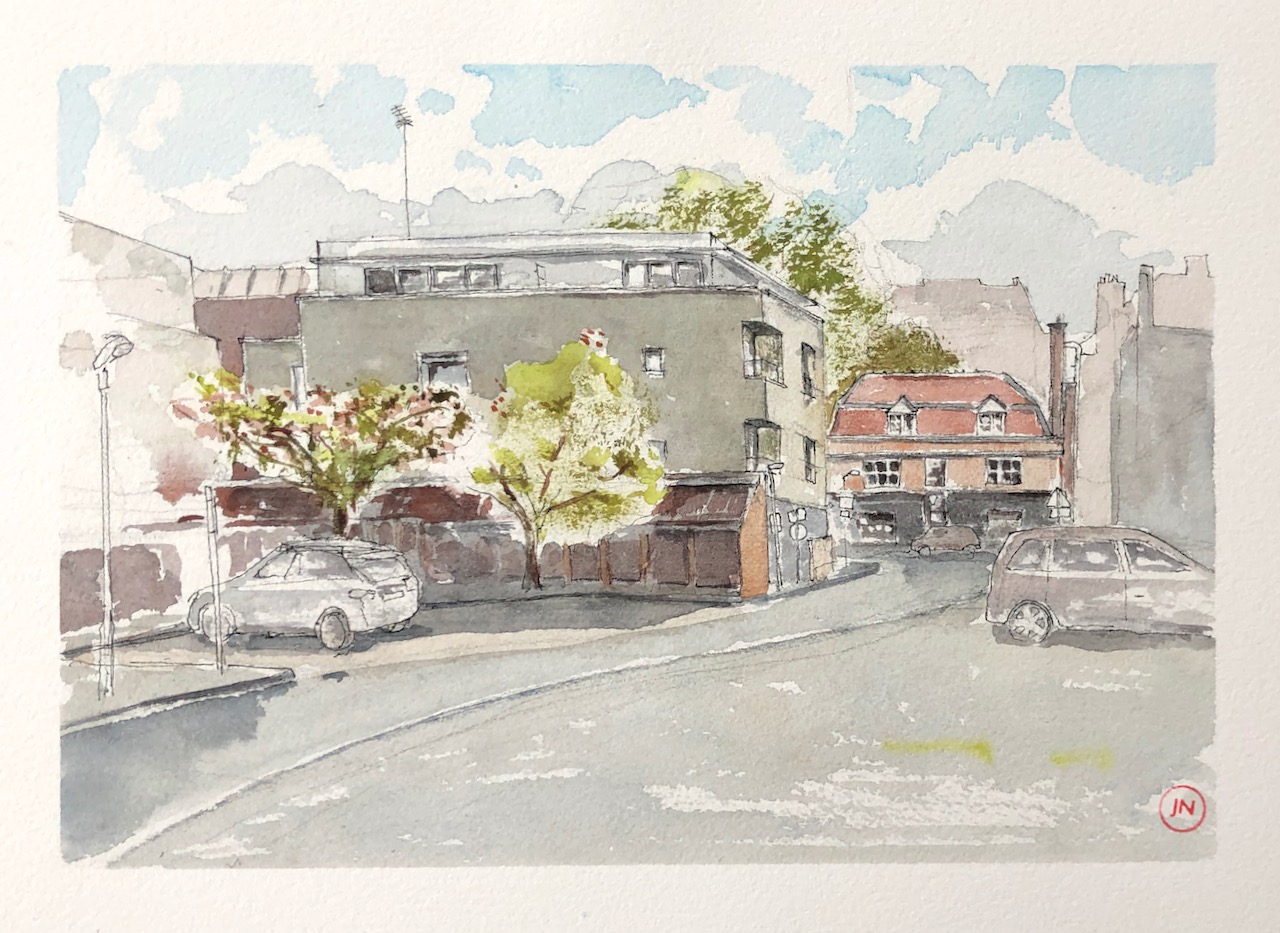
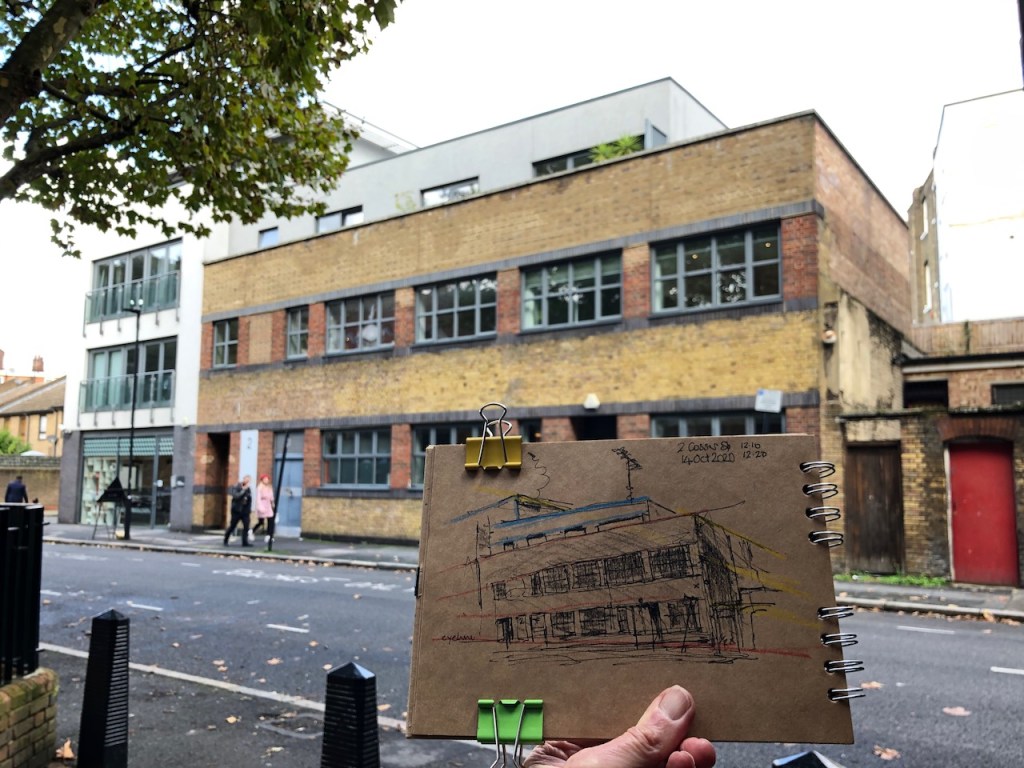
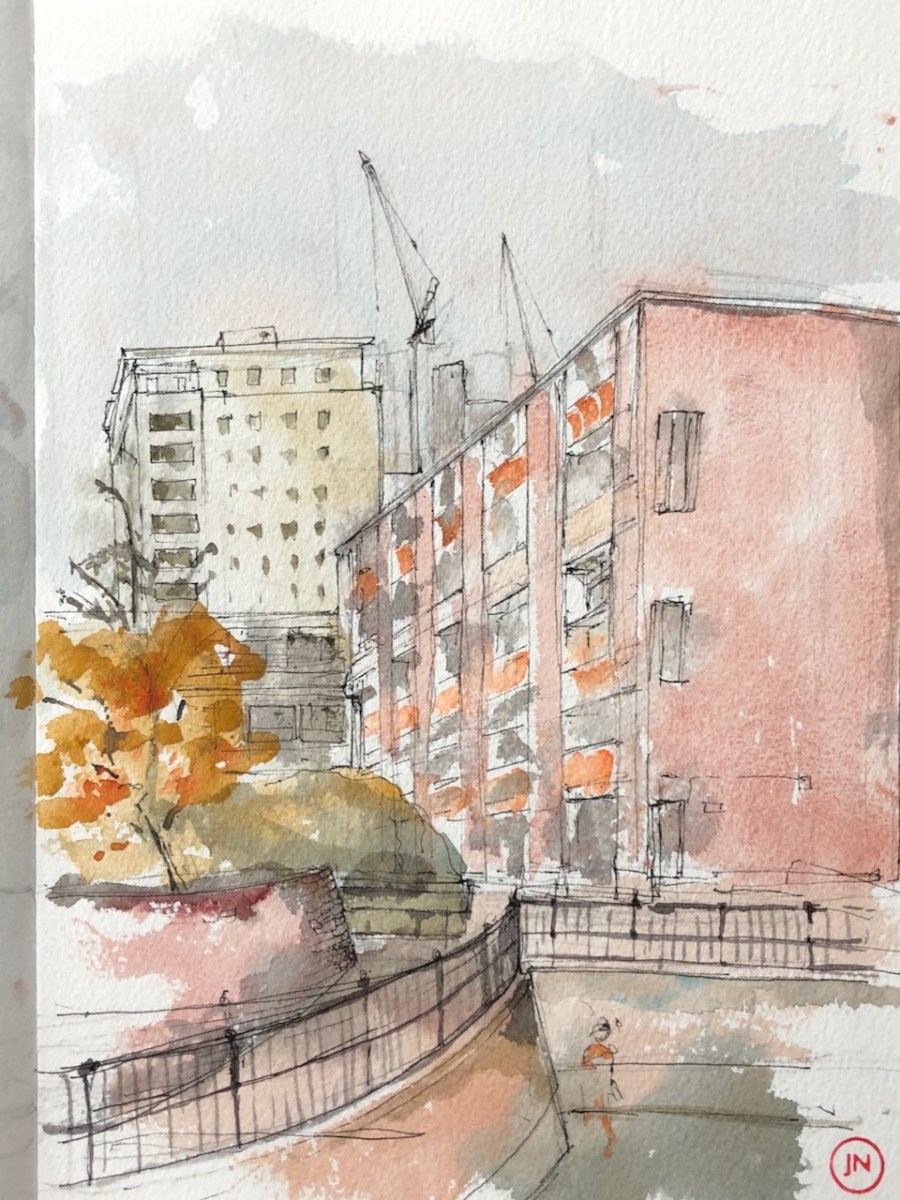
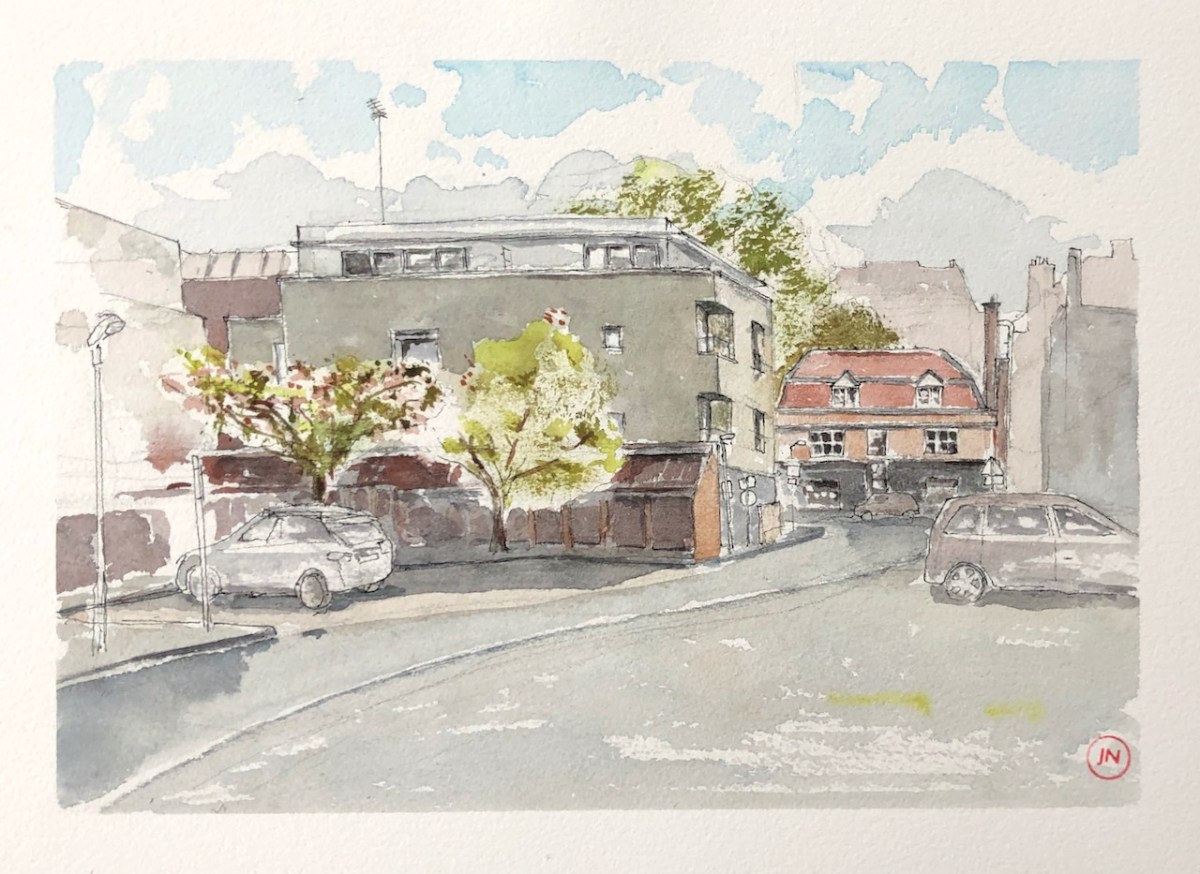
Cosser St SE1 – North East Side, from McAuley Crescent. 12 inches by 9 inches [SOLD]

From this angle you can see “The Steam Engine” pub, which is the red-roofed building in the picture, fronting onto Cosser St.

The day when I drew this was a surprisingly hot October day. The blue sky is accurate.

I was drawing standing up, with a dull red van behind me and my bicycle in front of me. As I drew, a rubbish truck arrived in front of The Steam Engine, and proceeded to reverse slowly down McAuley Crescent towards me. You can see the curve of the Crescent in the drawing. The driver skilfully negotiated that bend in the road, and kept on coming. I must have looked rather nervous, because the driver grinned at me, wound down his window, and called out, “Are you doin’ alright there?” I said that yes I was doing fine, and was I in his way? No no, he assured me. I told him how much I had admired his skilful driving, backwards down the road. He laughed again, and informed me, “I bin doin’ this since the 1980s. I should be good at it!”. Then he continued his smooth reversing, back beyond the red van and out of my line of sight.

I knew he must come back again, so when I heard the lorry engine I paused my drawing to wave. He waved back and called out a greeting, as he and his lorry hurtled confidently back towards Cosser St and their next collection.

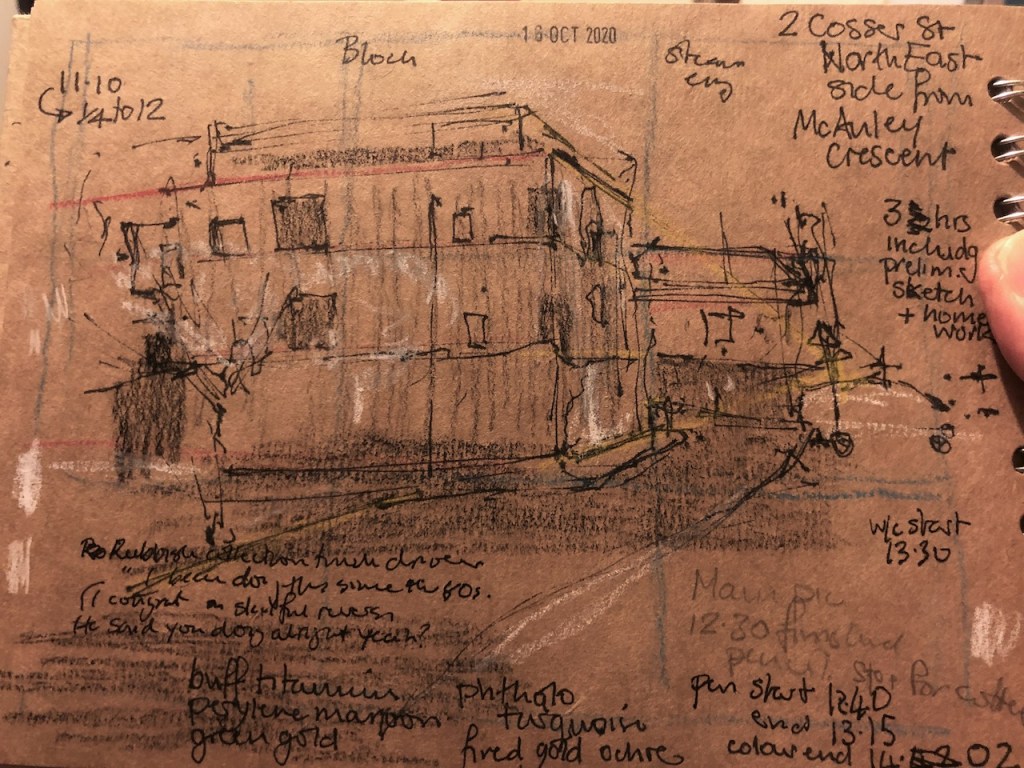
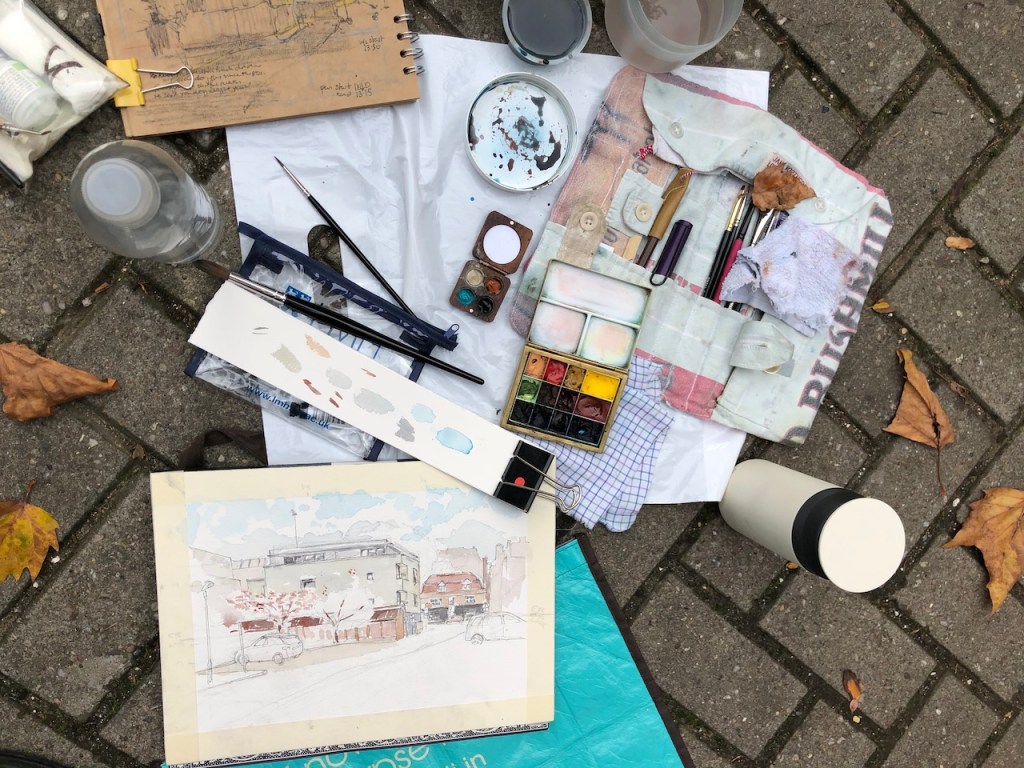
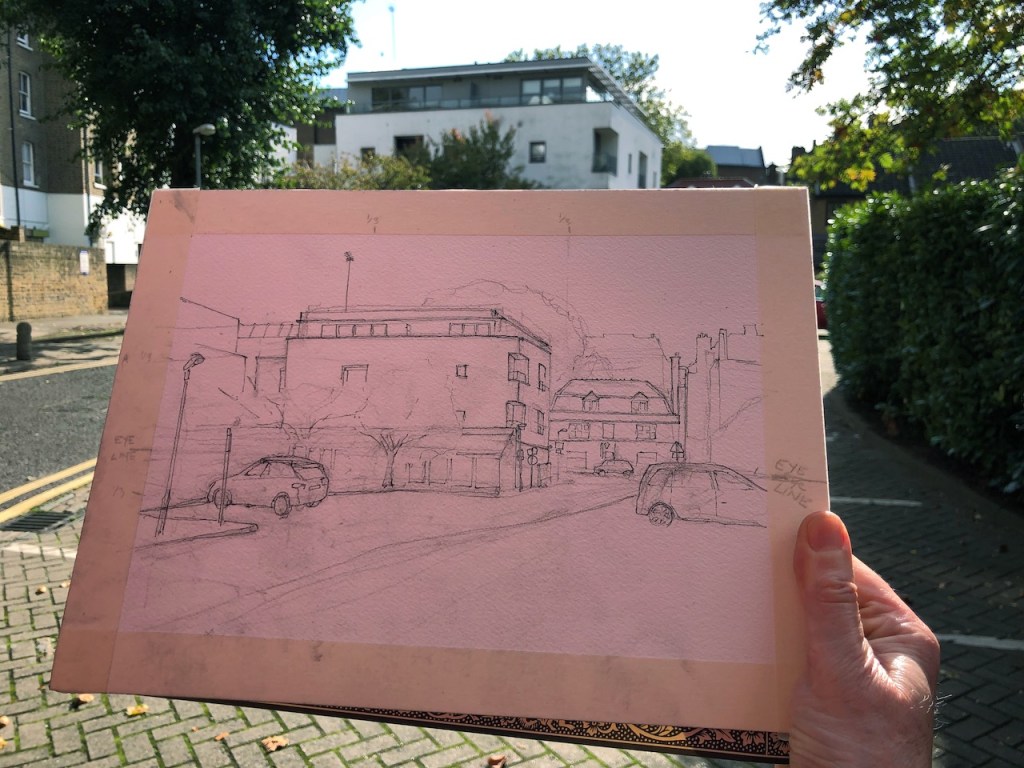
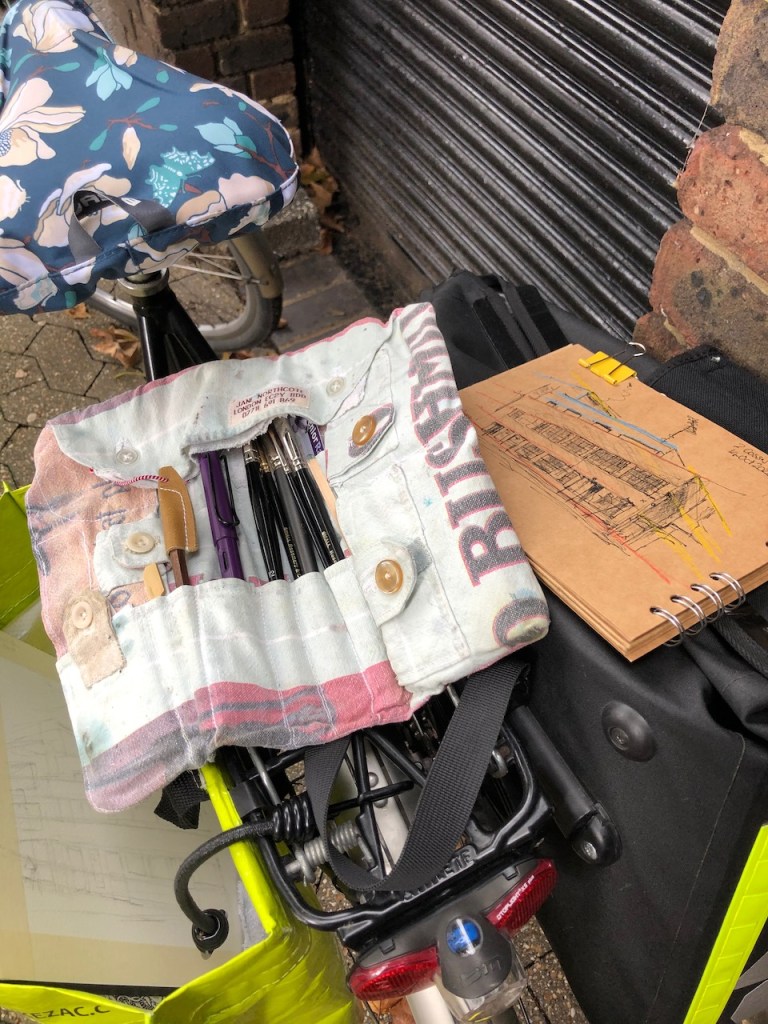
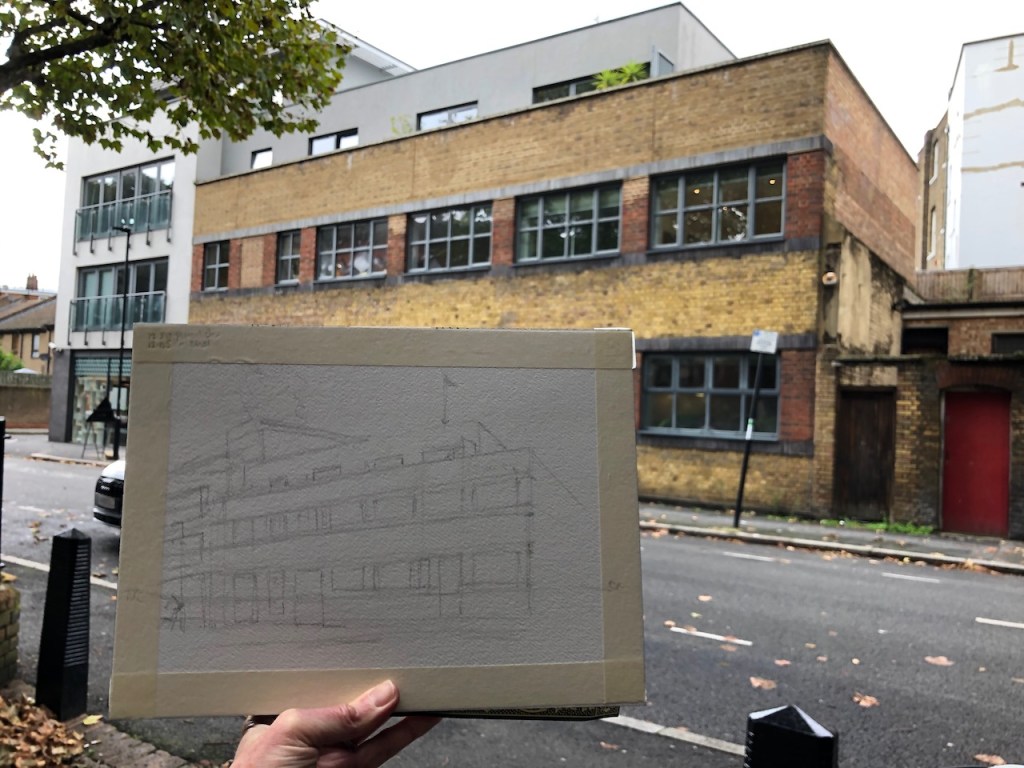
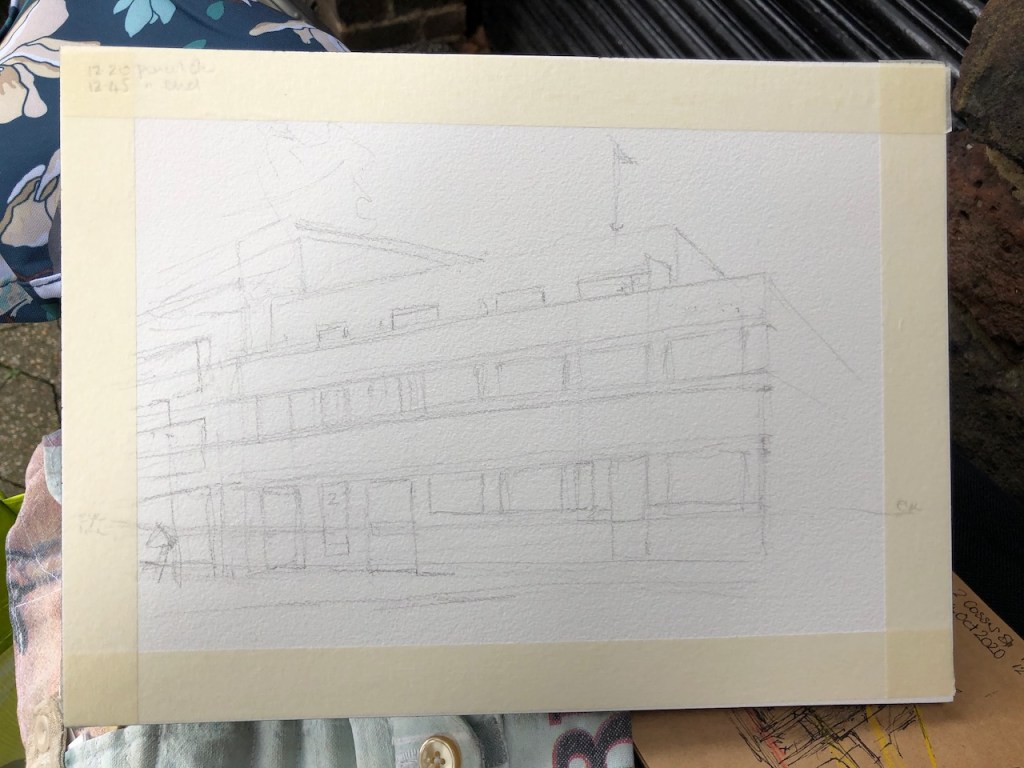
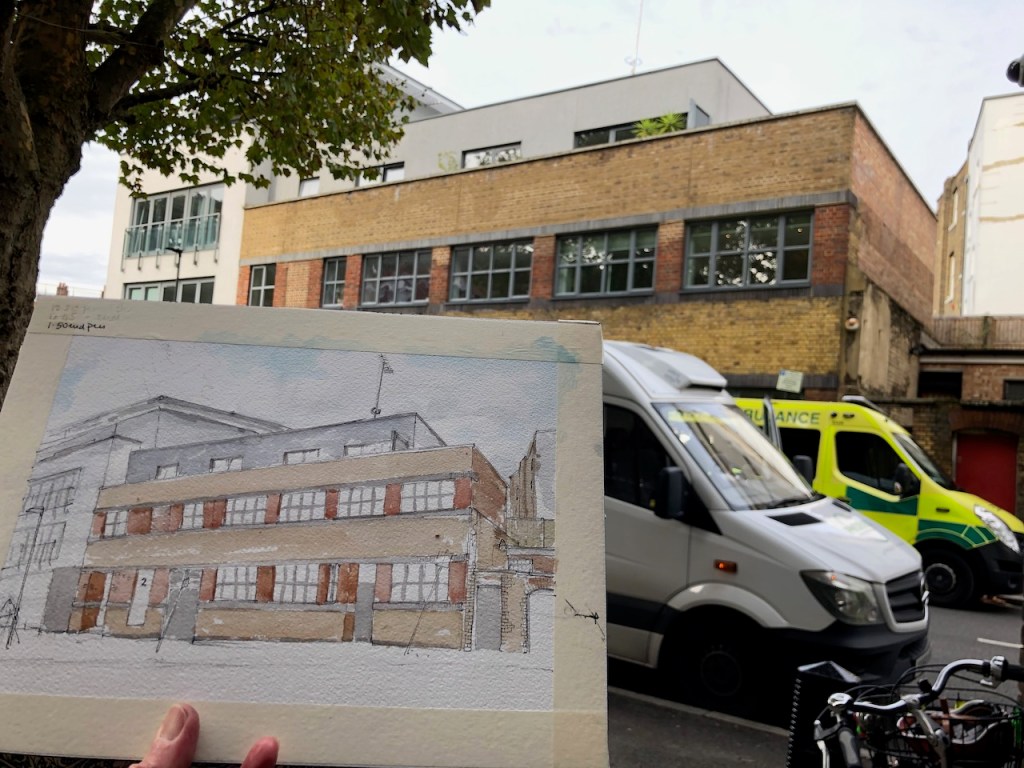
The colours in this picture are: Buff Titanium (DS), Perylene Maroon (DS), Green Gold (DS), Fired Gold Ochre (DS) and Phthalo Turquoise (W&N). I did a preliminary sketch, which you see in these work-in-progress pictures.

This was the second picture done in a set of three for a commission.

The first one is here:

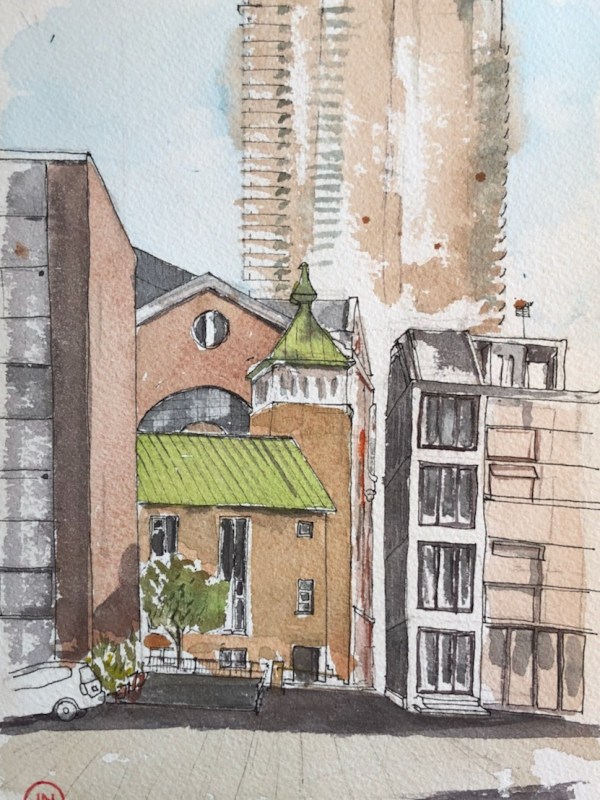
Cosser Street, SE1 – South West

Here is a building in Cosser St, near Lambeth North tube station. This is the first of three drawings in the area, for a commission. Someone who had enjoyed living here was going to be moving to the country, and asked me make some pictures for them, to remember the locality. Ambulances park in this…

Cosser Street, SE1 – South West

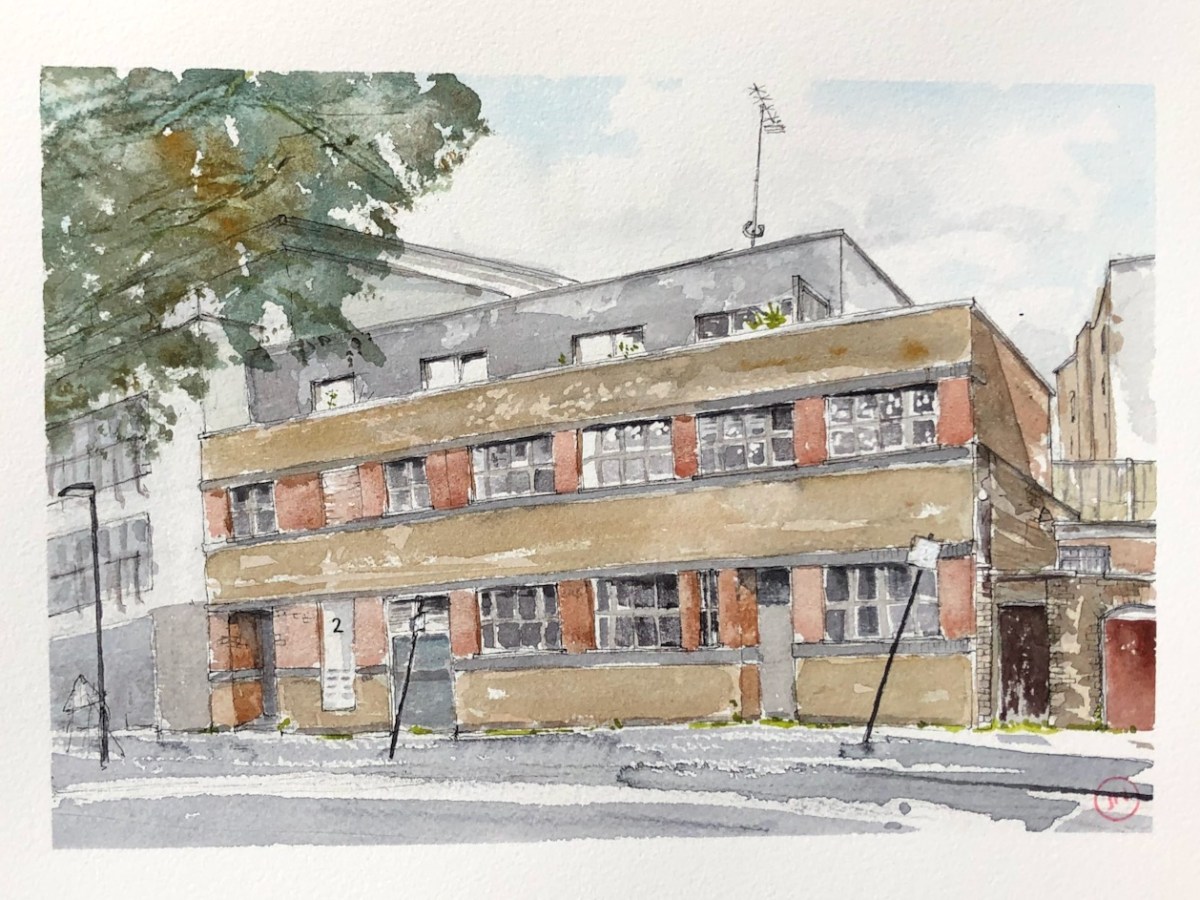
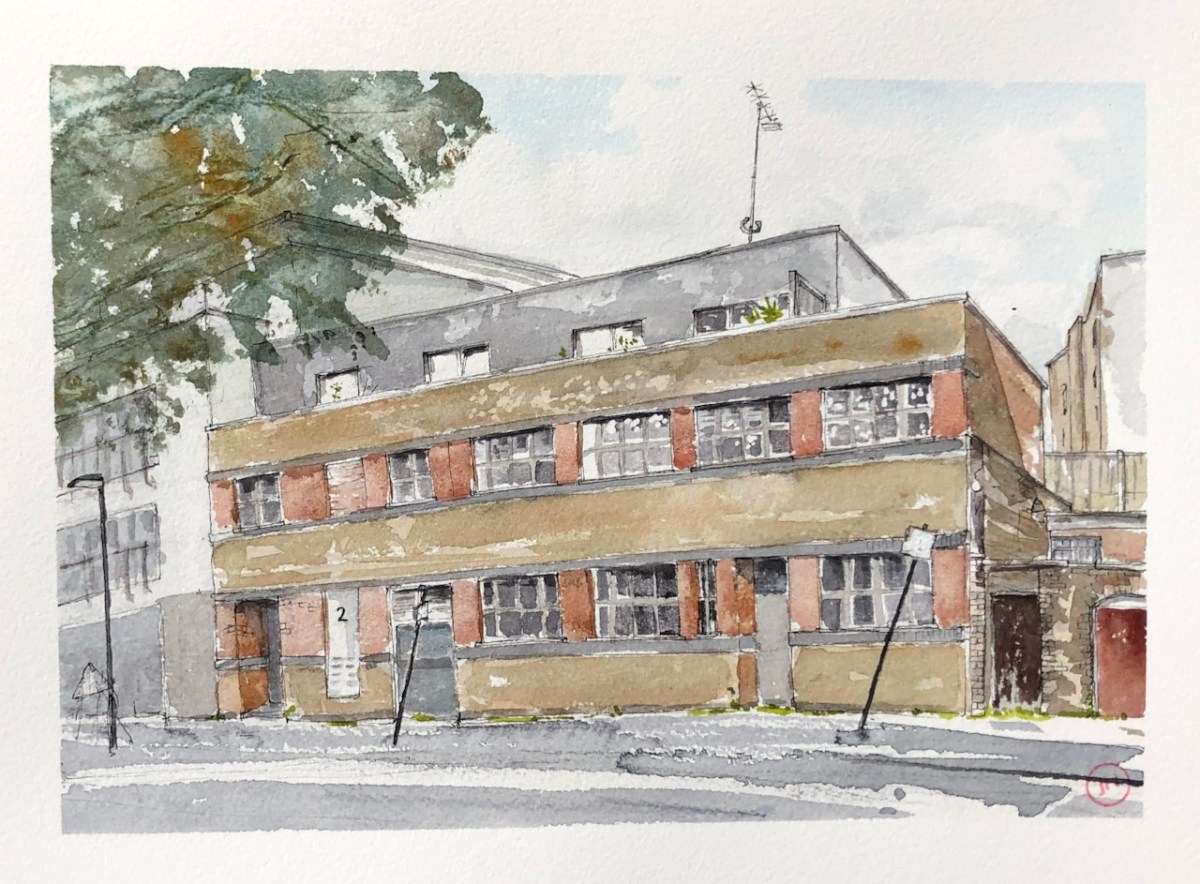
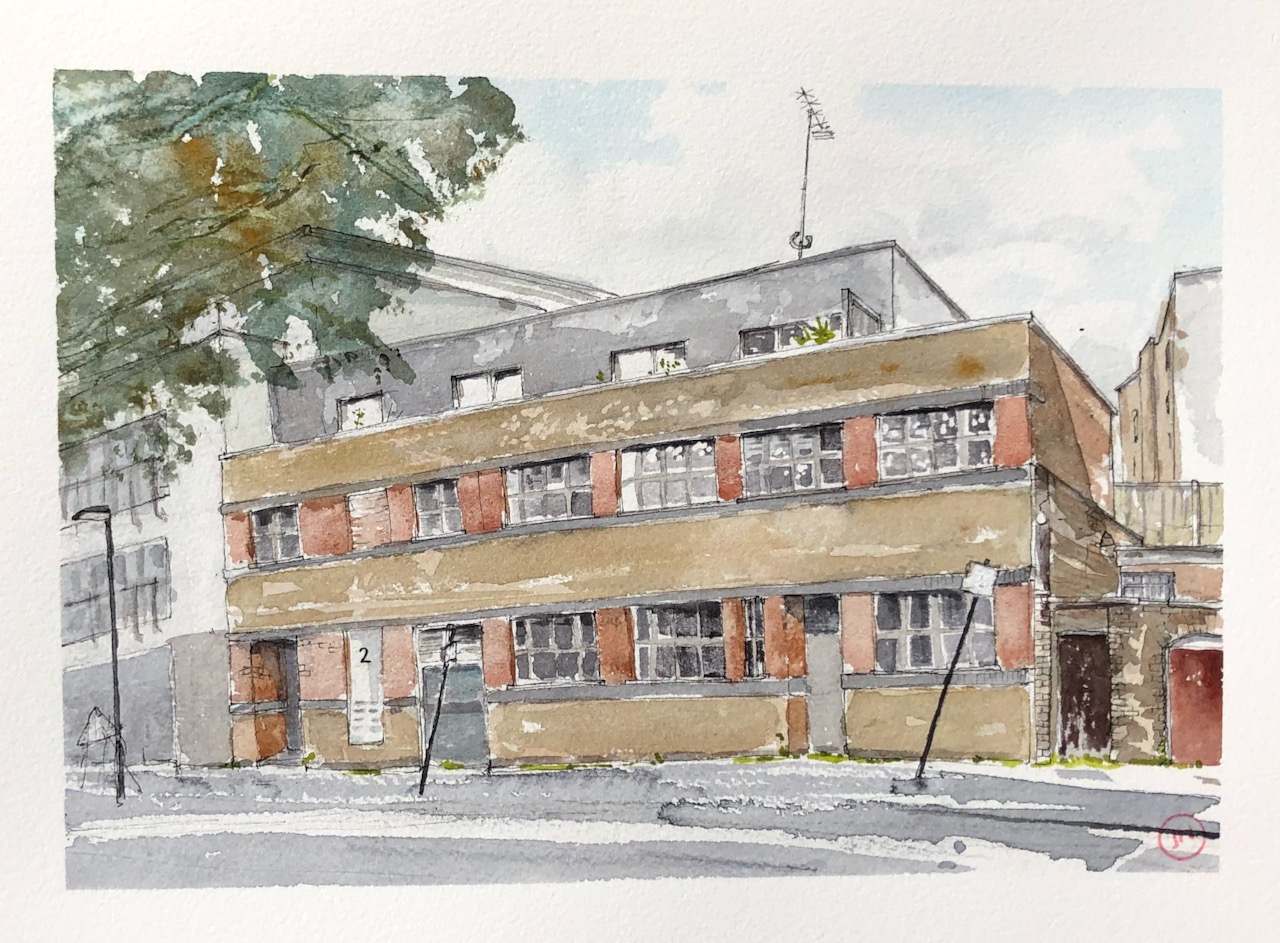
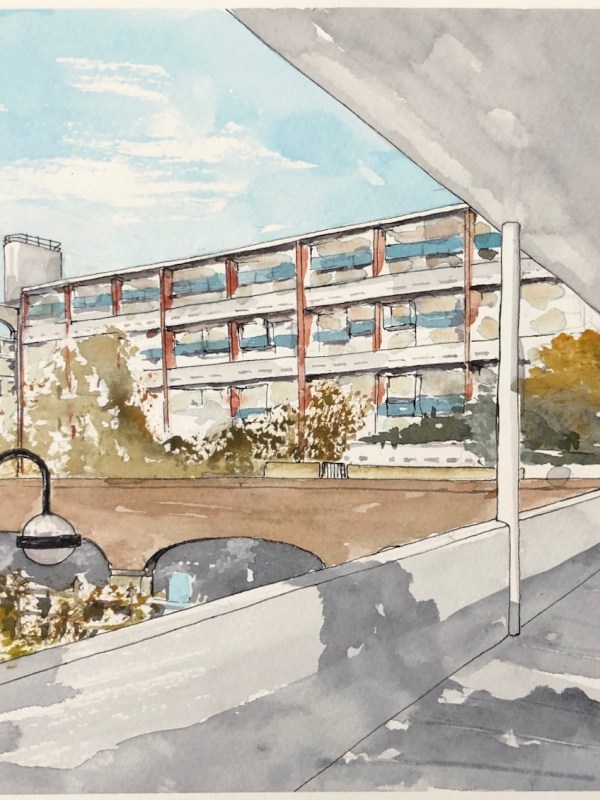
Here is a building in Cosser St, near Lambeth North tube station.

Cosser Street SE1 – South West view. 12 inches by 9 inches [SOLD]

This is the first of three drawings in the area, for a commission. Someone who had enjoyed living here was going to be moving to the country, and asked me make some pictures for them, to remember the locality.

Ambulances park in this area. The street is not so empty as I have drawn it. Fortunately, they do not always park in the same place, so I could draw the front of the building a bit at a time. You can see the ambulances in the work-in-progress drawings below.

It was very cold, and there was an autumn wind.

The colours in this picture are: Phthalo Turquoise (W&N), Perylene Maroon (DS), Fired Gold Ochre (DS), Mars Yellow (DS), and Green Gold (DS).

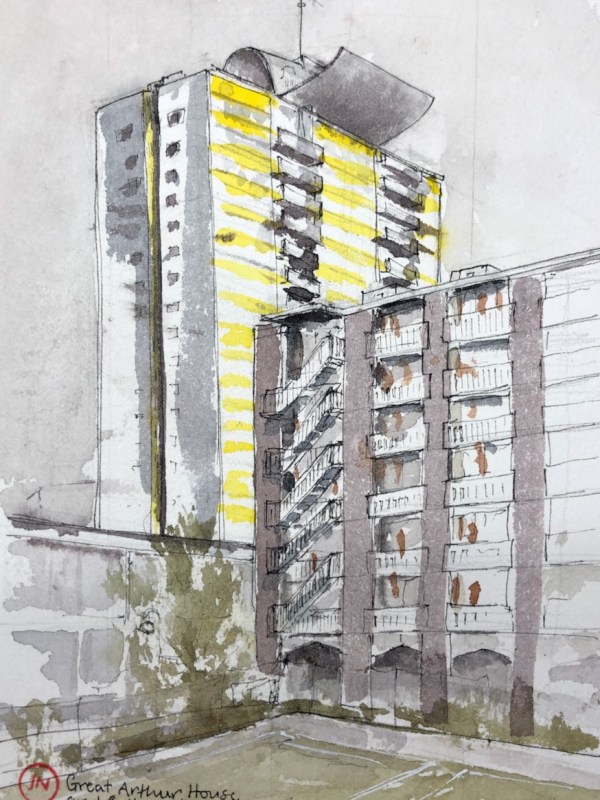
Great Arthur House and Cullum Welch House

I found a good viewpoint at Podium level, underneath Crescent House. At ground level a woman ran circuits of the tennis courts. After a while she started doing interval training: running up and down the stairs near where I was standing. Then she came and asked if she could see the picture.

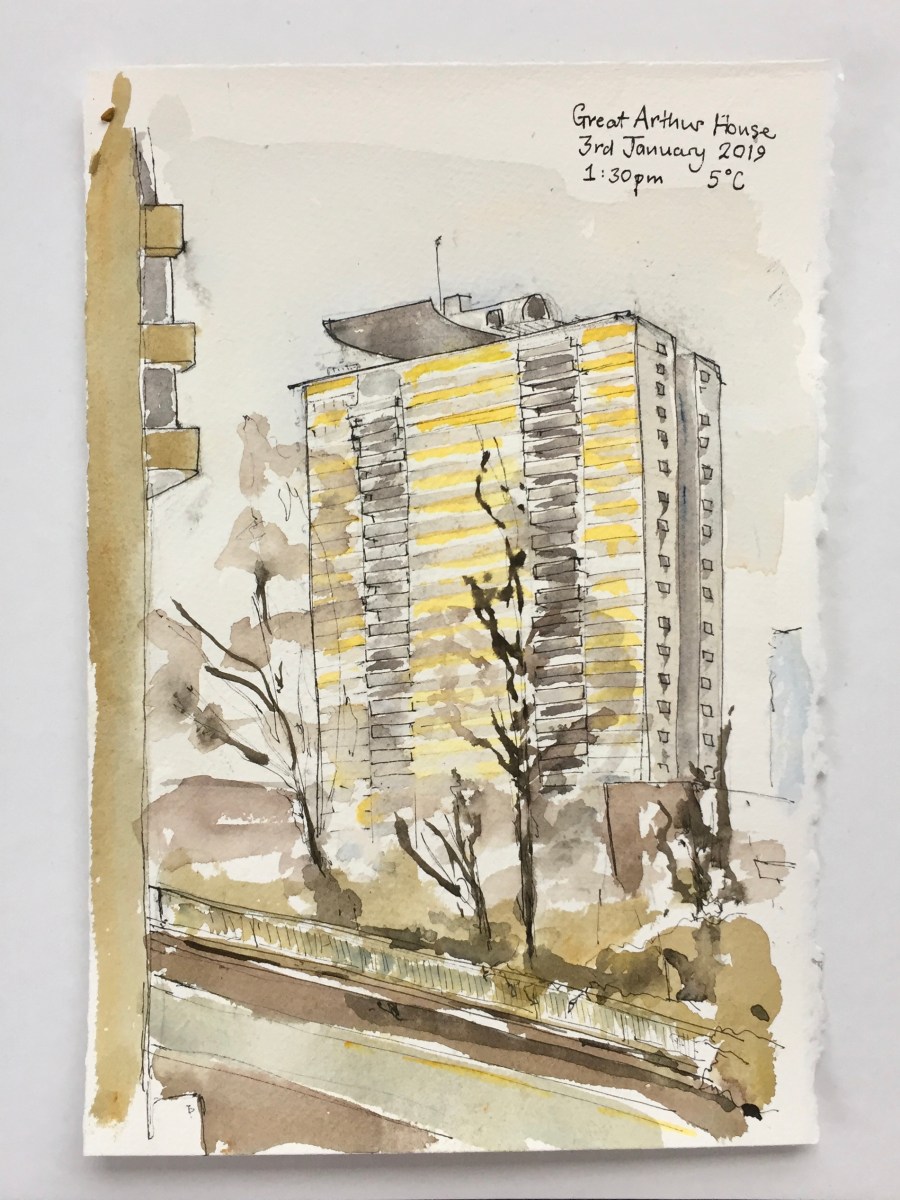
Great Arthur House and Cullum Welch House, Golden Lane Estate, from Crescent House.

Cullum Welch House is named for Sir George James Cullum Welch O.B.E., M.C. He was Sheriff of London, then knighted, then Lord Mayor of London in 1956, which was when the Golden Lane Estate was being built. He was knighted in the 1952 New Year Honours. He served in the army in 1914-18 and 1939-45 conflicts, and gained the rank of Lieutenant-Colonel.

Cullum Welch House and Great Arthur House, together with other buildings in the Golden Lane Estate are listed Grade II. The listing was in December 1997. Here is an extract from the listing on the Historic England site.

REASONS FOR DESIGNATION: Cullum Welch House, part of the Golden Lane Estate, is designated at Grade II for the following principal reasons:

* Architectural interest: as a self-sufficient ‘urban village’, in which every element of space is accounted for and every detail carefully considered, the Golden Lane Estate has claim to be the most successful of England’s housing developments from the early 1950s.

* Planning interest: the estate reflects the formality, mixed with picturesque attention to landscape, which was emerging in British architecture in the early 1950s, this saw the spaces between the buildings being almost as important as the buildings themselves.

The strong formality of the estate became a key characteristic of the work of Chamberlin, Powell and Bon, as did the provision of a wide range of facilities on the site other than just housing. These are features that can also be seen at their Barbican development.

Here’s the description of Great Arthur House from the Historic England website:

Great Arthur House was built in 1953-7 from reinforced concrete. The 17 floor building was the first to break the London County Council’s 100 ft height restriction and was briefly the tallest inhabited building in England. The flats were designed for single people and couples such as nurses and policemen who had to live near their work. The architects for the estate were Chamberlin, Powell and Bon.

It was cold when I drew the picture, 10 degrees C. I wore a hat and gloves. Here are photos of work in progress, and a map.

This picture took about two hours overall, plus 15 minutes for the preliminary sketch.

The colours are Perylene Maroon and Prussian Blue, which make the grey tones, plus Hansa Yellow Mid which is the exact colour of the yellow cladding on Great Arthur House.

Here is a collection of my recent drawings of the Golden Lane Estate. Click on the picture to read more about the picture.

Wells Cathedral

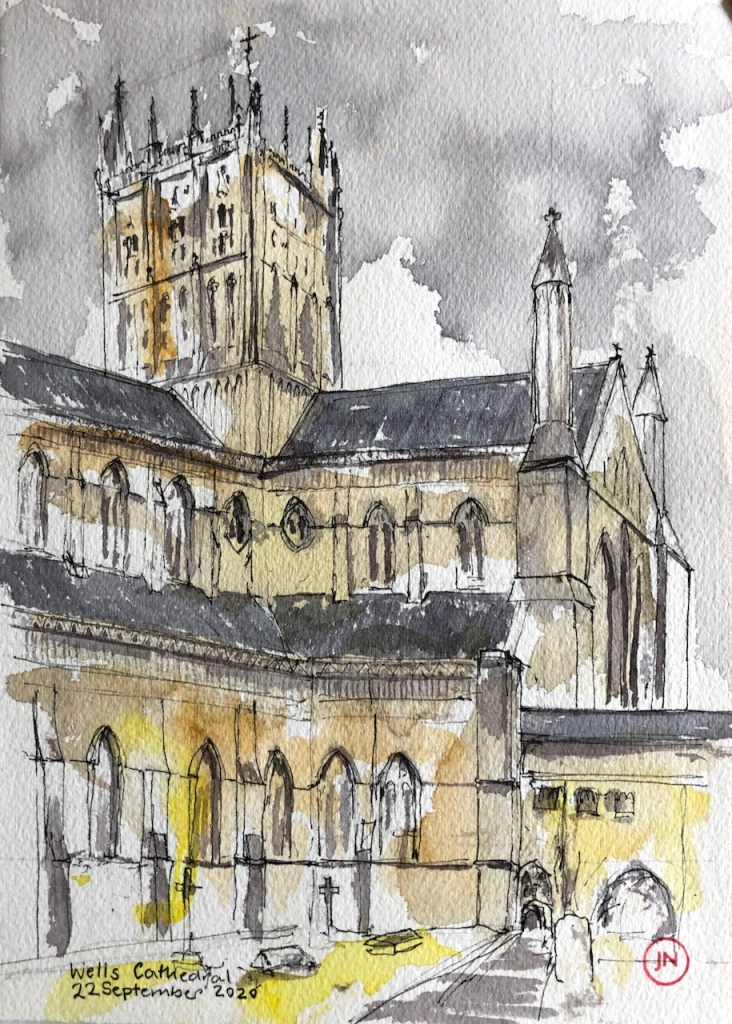
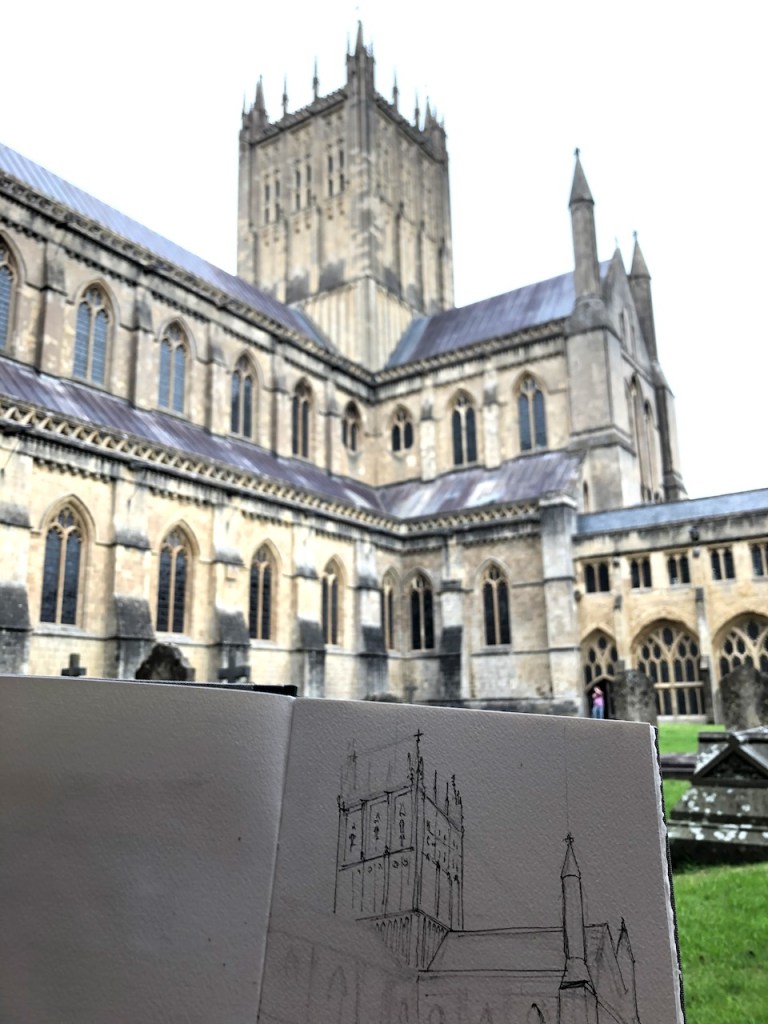
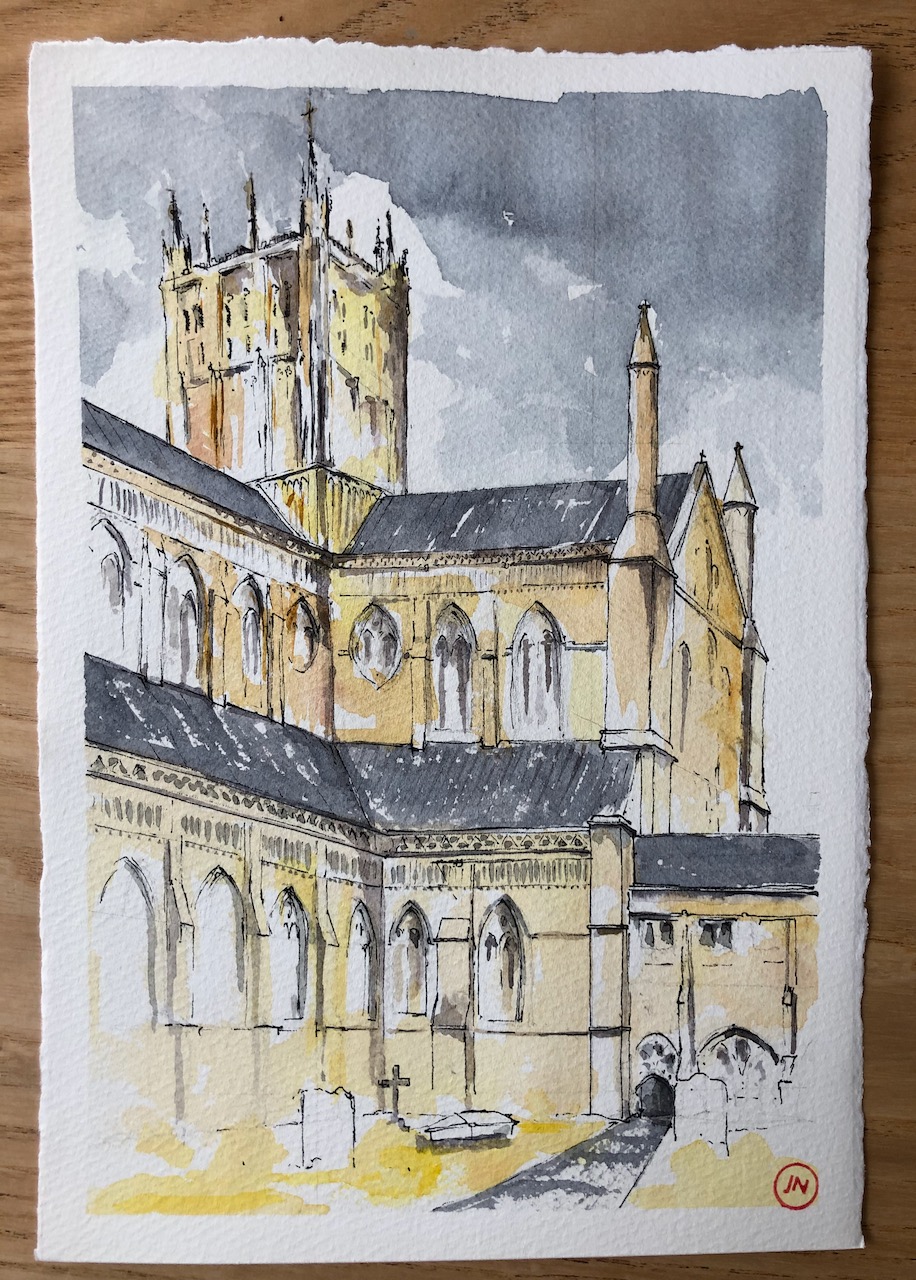
Here is Wells Cathedral, sketched from a stone step in the cloisters.

Wells Cathedral, central tower and South transept. In sketchbook on Arches paper, 10″ x 8″.

The cathedral was started in 1175 and dedicated in 1239. This central tower was heightened in 1326, and is supported by a marvellous system of scissor arches, installed across the nave and transepts in 1338 by a mason called William Joy. He must have been courageous, as the design of the internal bracing arches is radical, and evidently he was talented, as the tower still stands.

The pinnacles I have drawn were installed in the 15th century after a fire destroyed the original lead roof and spire.

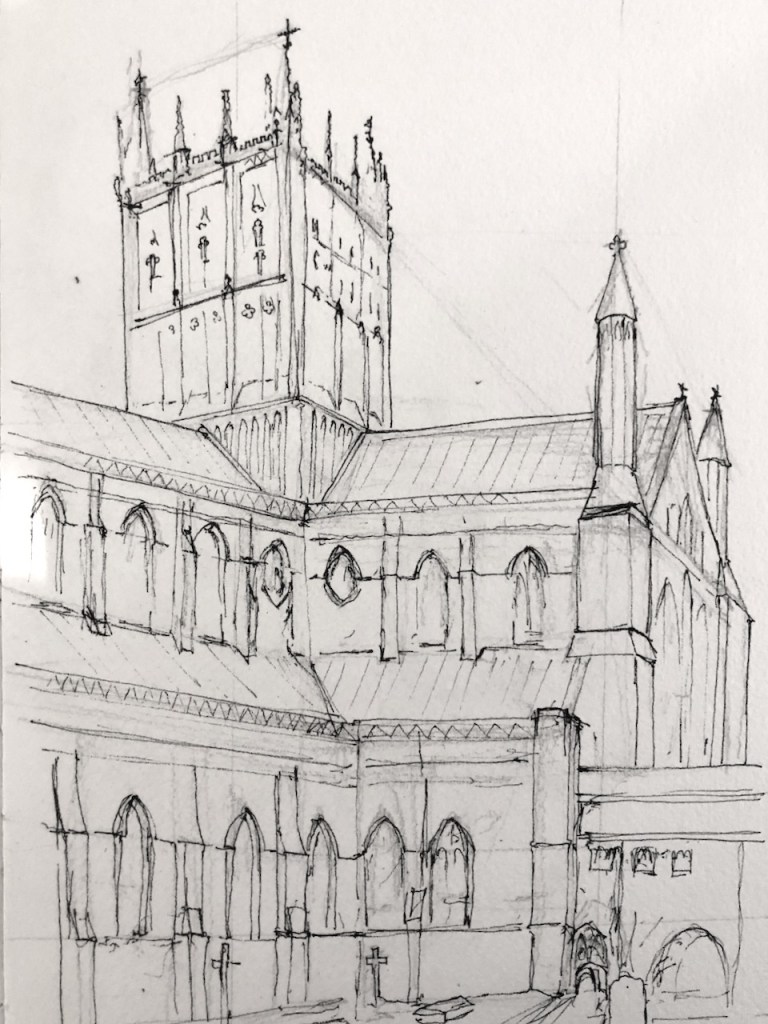
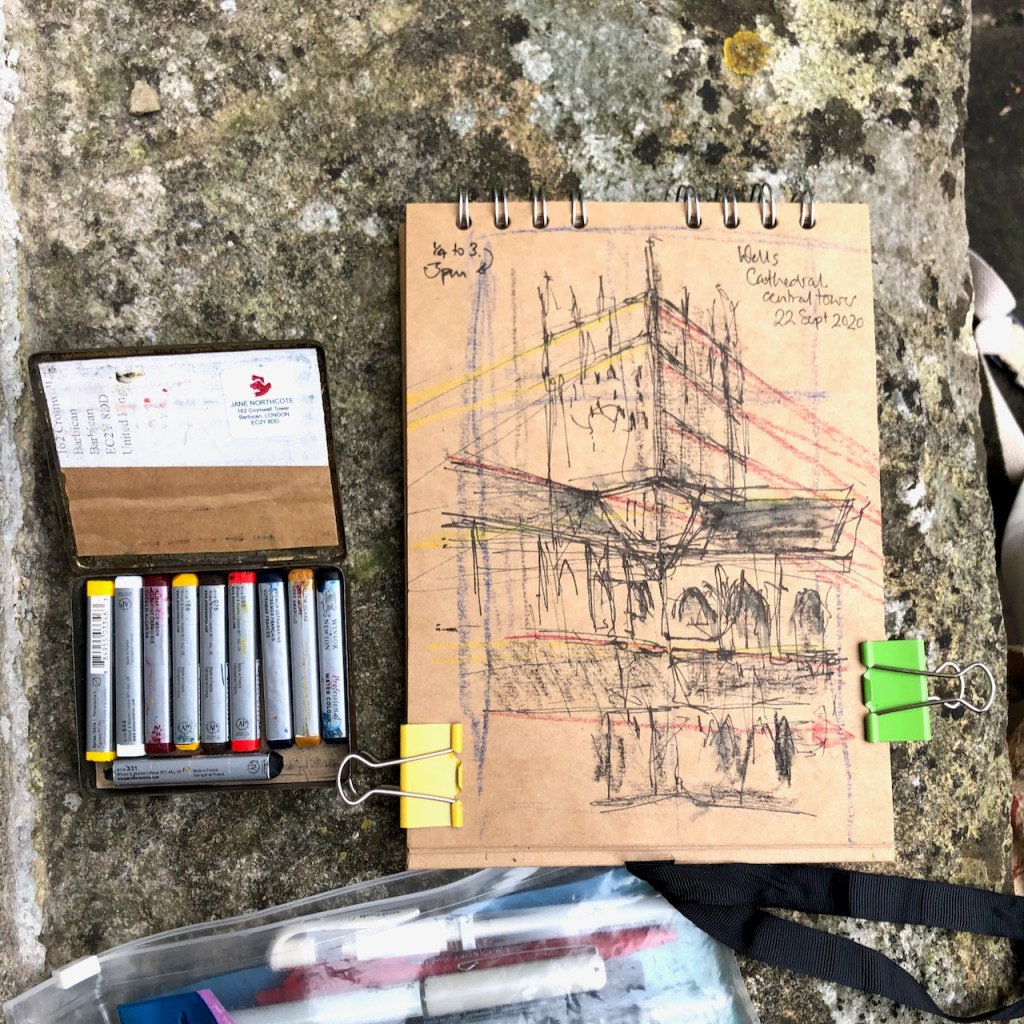
Here is work in progress on the drawing, and a map to show the viewpoint. As you see, I made a preliminary sketch to try to get my head around the perspective lines.

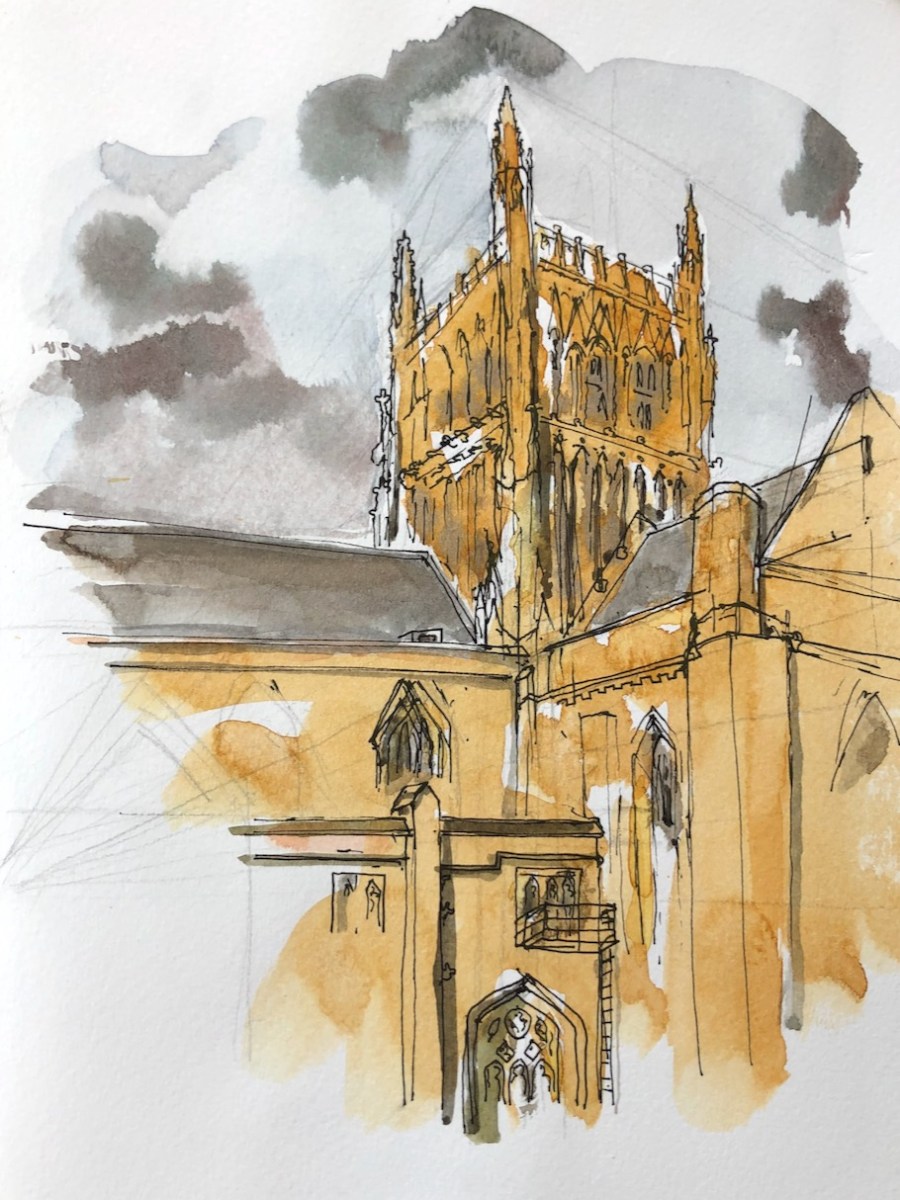
I made a second sketch, based on the first:

Wells Cathedral, drawing 2, on watercolour paper, 11 inches by 8 inches.

This is one of a series of drawings of English Cathedrals. Here are some of the others in the series:

Stanley Cohen House, Golden Lane Estate

I sat near the Community Centre and looked East.

Stanley Cohen House, on the East side of the Golden Lane Estate. Peabody House in the background.

I enjoyed the bold statement of the vertical yellow rubbish chute, visible above the balconies.

There were many plants on people’s balconies. I didn’t draw them all. Many people had window boxes, with geraniums and trailing leaves. On the upper floor, a length of camouflage netting hung across the balcony. You can just see it towards the middle of the picture. Then there were the three rose bushes, sketched in the foreground. All the while, the fountain played. There were lilies in the pond.

Stanley Cohen was chairman of the City of London public health committee in 1954. His name appears on the almost-indecipherable Foundation stone on Bowater House, near where I did this drawing.

Here is work in progress and a map.

This drawing is 25cm by 16cm, 10 inches by 6½ inches on Arches 300gsm watercolour paper. It took 1½ hours. After a preliminary sketch, shown in the gallery above, I started work on this drawing at 14:30 and finished at 16:00. The colours are Fired Red Ochre, Mars Yellow, Perylene Maroon, and Phthalo Turquoise, over De Atramentis document black ink.

Here is a collection of my drawings of the Golden Lane Estate:

Basterfield House, Golden Lane Estate

Yesterday I drew Basterfield House, sitting on some steps in the shadow of Great Arthur House.

Basterfield House is at the North of the Golden Lane Estate. Here is a map. Great Arthur House was over my right shoulder, and cast its huge shadow in the afternoon sun.

Sketch map showing the view shown in the drawing.

Behind the tree, the low-rise block is Stanley Cohen House. In the background of the drawing is the Atlas Building, just to the left of the tree. On the right of the tree is the architect’s practice at 88 Golden Lane.

Godfrey House and the Atlas Building

On the right is Godfrey House, Bath Street, Islington, part of the St Luke’s Estate managed by the London Borough of Islington. It’s former “council housing” built in 1965. Today many of the flats are privately owned, as is evident from the number listed for sale. On the left is the Atlas Building, on City…

88 Golden Lane

Today was a glorious sunny day. I walked out into the sun and everywhere was worthy of a sketch. Here is 88 Golden Lane, a strange thin building. It is an architects’ practice: Blair Architecture. I sketched this standing on the side of the road in the sun, then retreated to sit on my case…

This drawing is 25cm by 16cm, 10 inches by 6½ inches on Arches 300gsm watercolour paper. It took 1½ hours. I did a preliminary sketch first, shown in the work-in-progress photos below. The colours are Fired Gold Ochre, Phthalo Turquoise, Transparent Pyrrol Orange, and Mars Yellow, watercolours over De Atramentis document black ink.

I have drawn the Golden Lane Estate before. Here is a selection of drawings in this area:

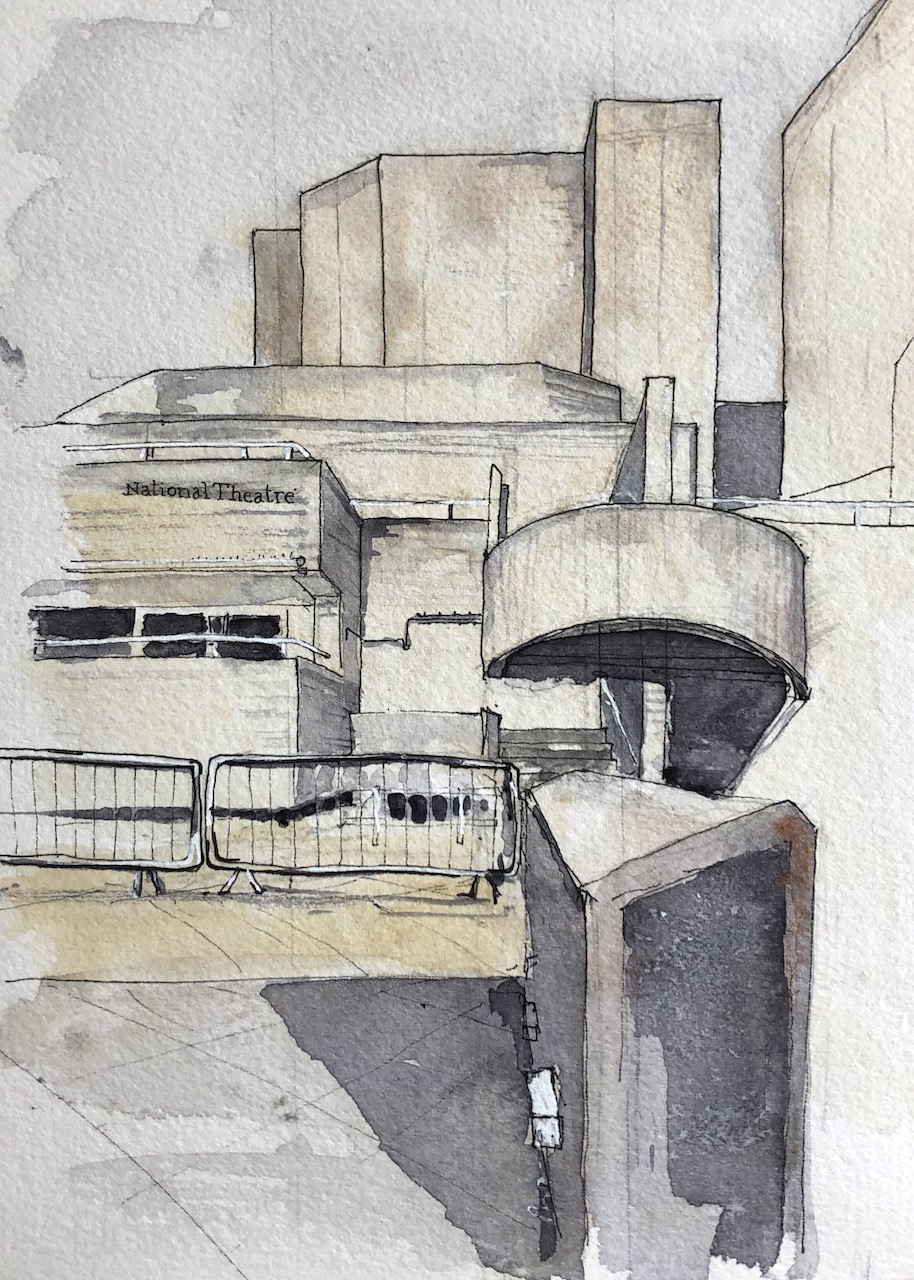
National Theatre in lockdown

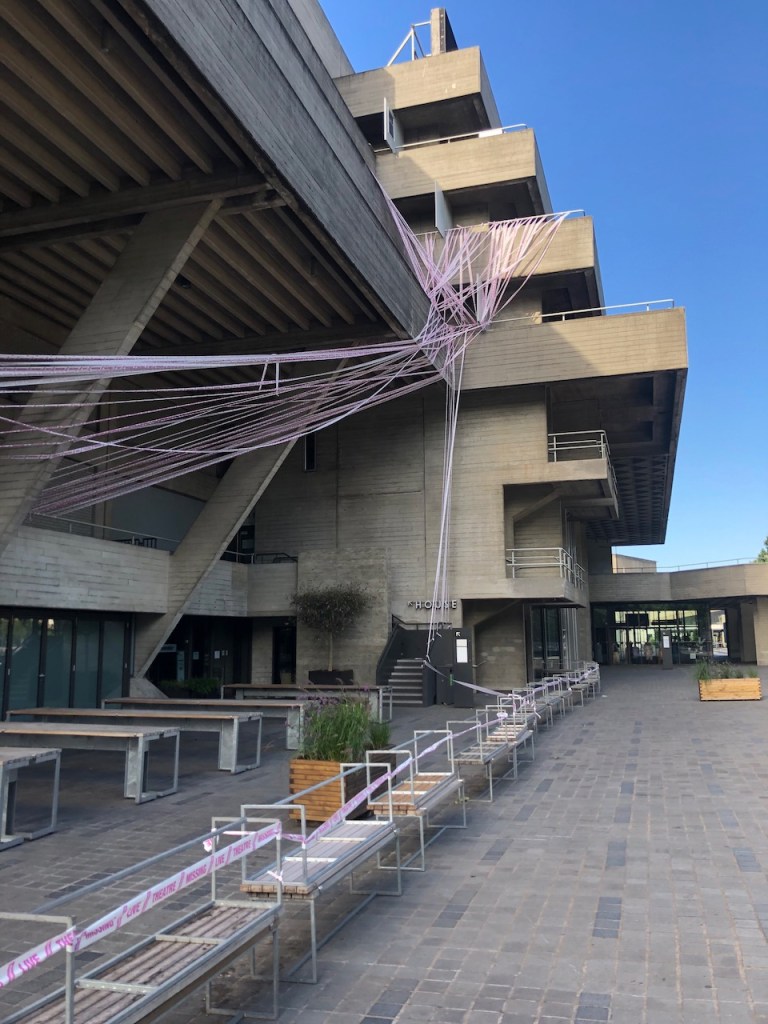
The National Theatre is on the South Bank of the Thames. Here is a view, looking East from Waterloo Bridge.
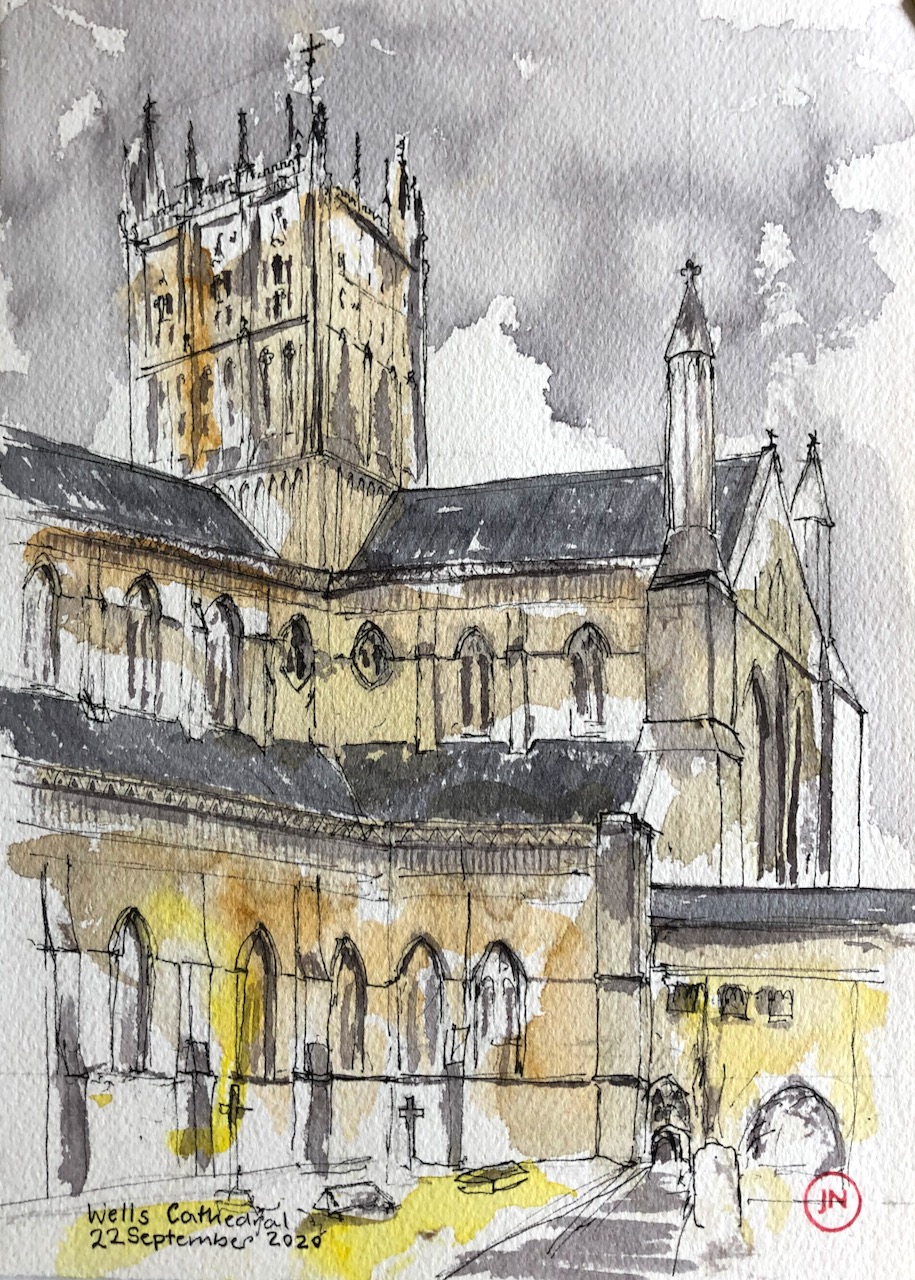
National Theatre, 9th September 2020, 3:20pm

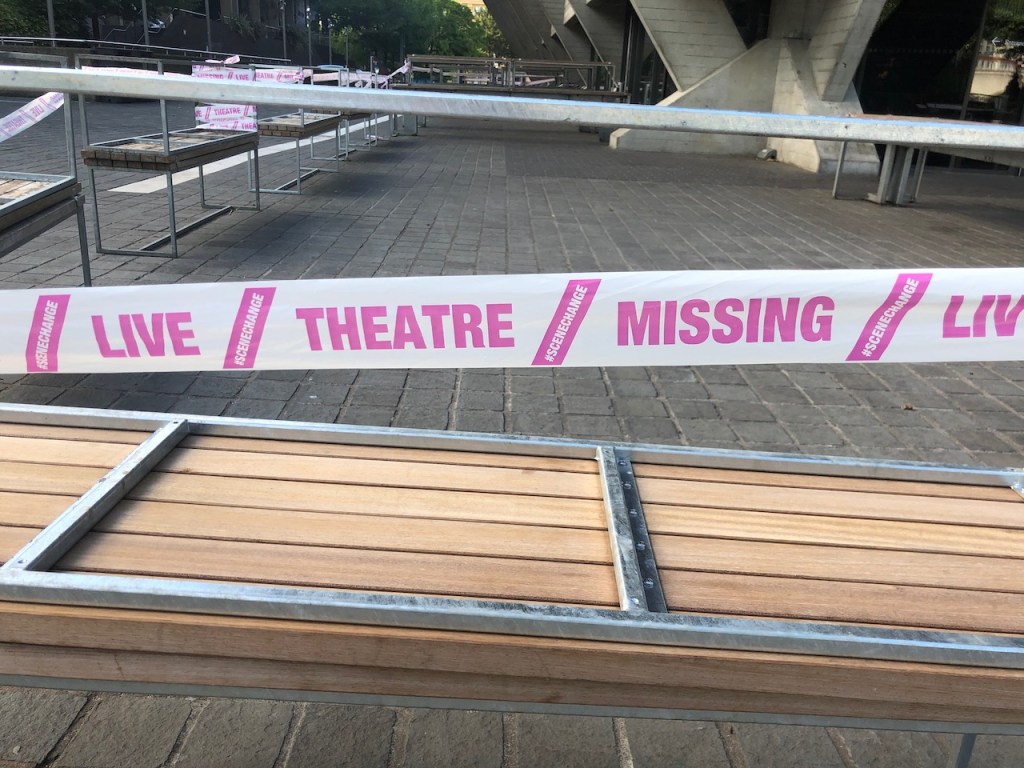
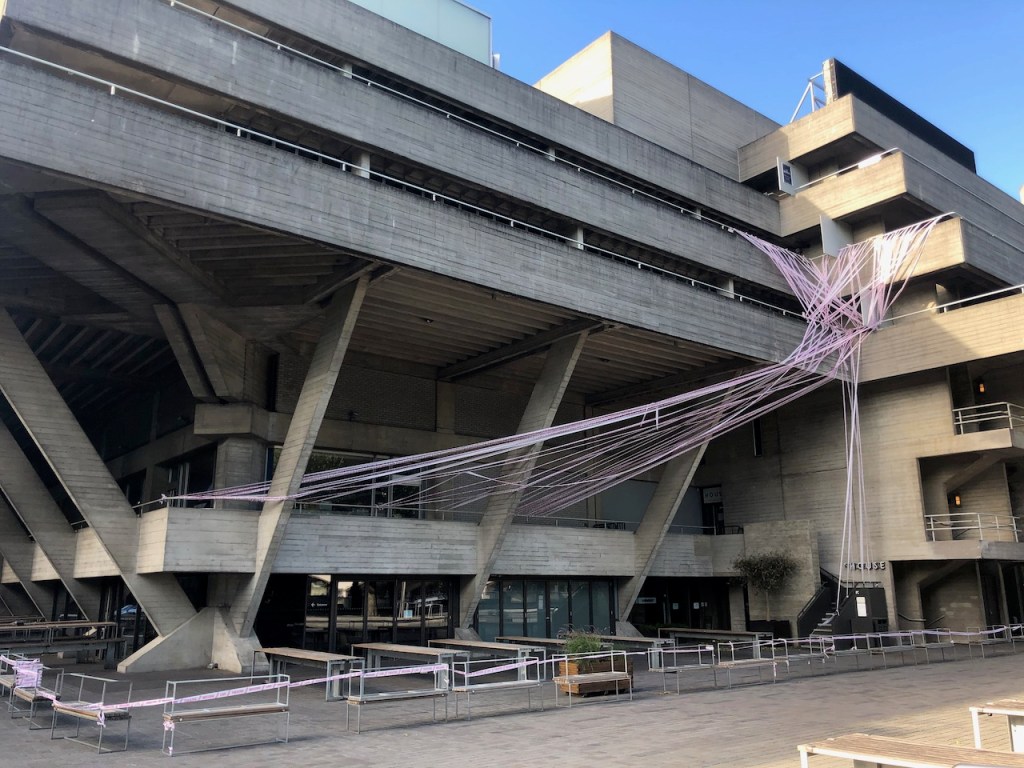
As you see, there are gates across the walkway. The Theatre is closed, and the walkways are closed.

My drawing shows the empty theatre, and the empty walkways. The theatre restaurant, which is on the left of the drawing, is also closed and empty.

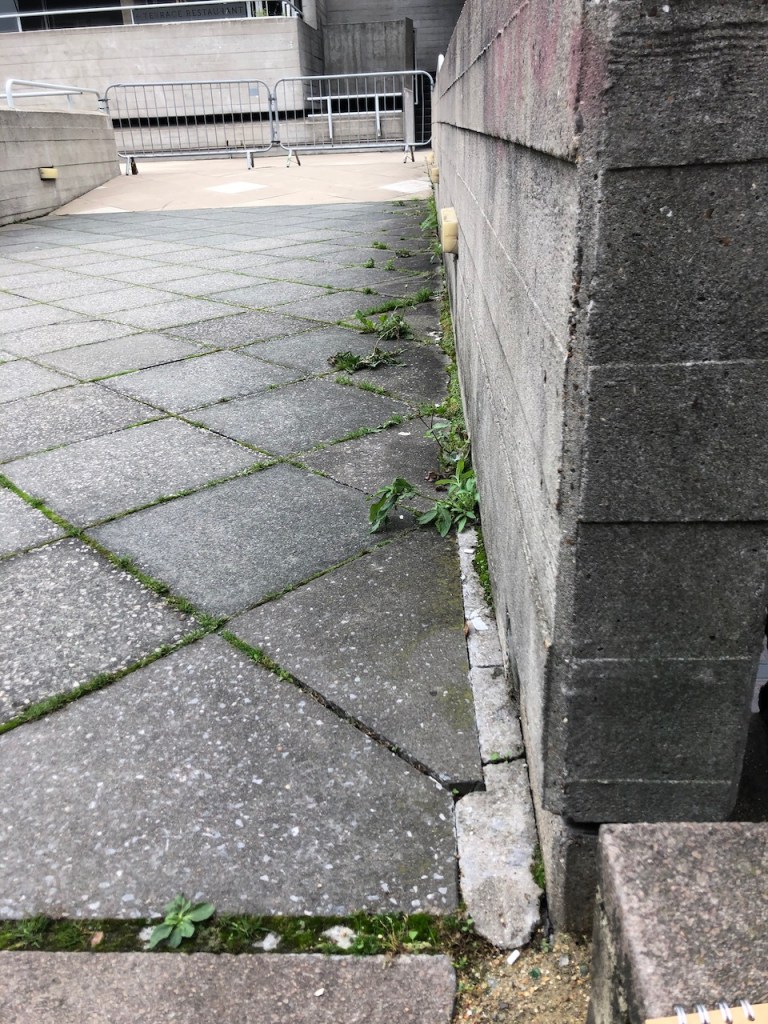
The walkways, in true 1960s style, are at “podium” level, above the traffic. Below me as a drew, people walked and cycled, and traffic passed on the nearby road, Upper Ground. Grass and buddleia grow in the cracks. Life continues, but at a different level.

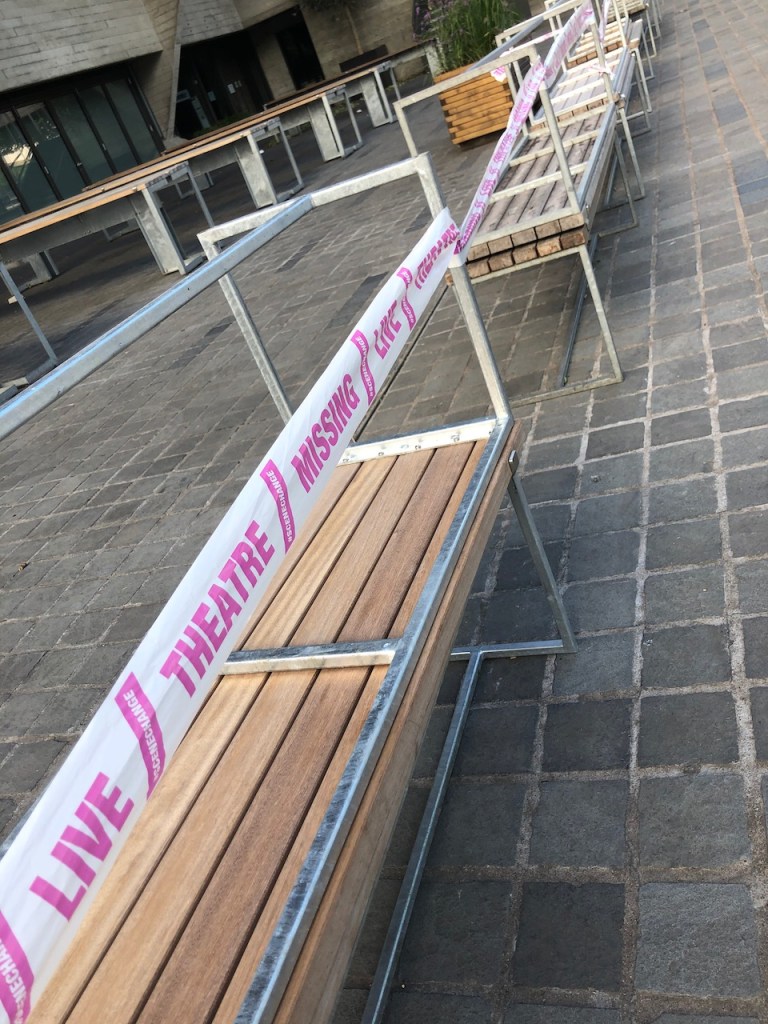
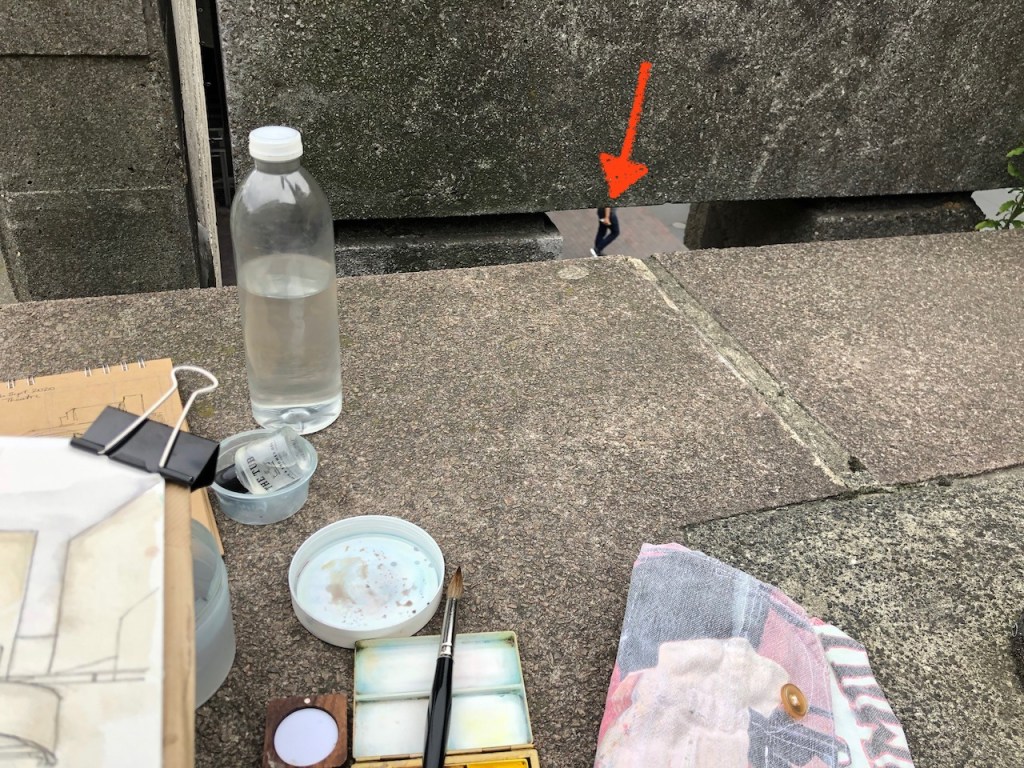
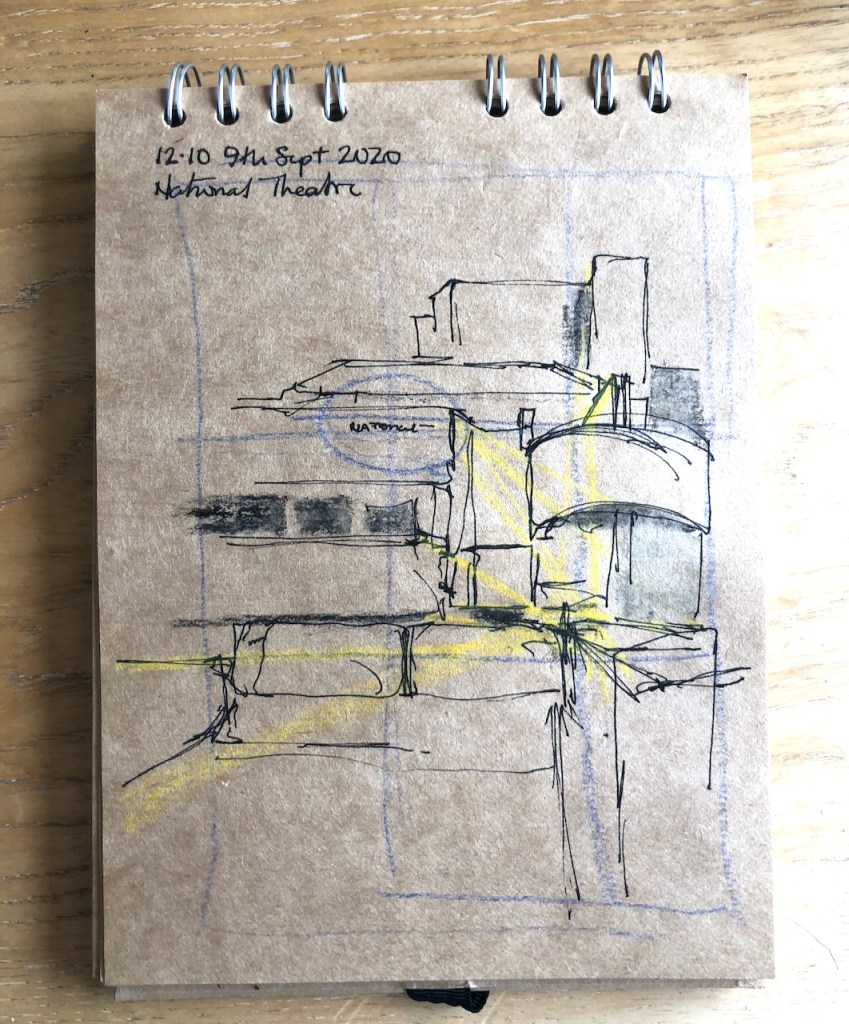
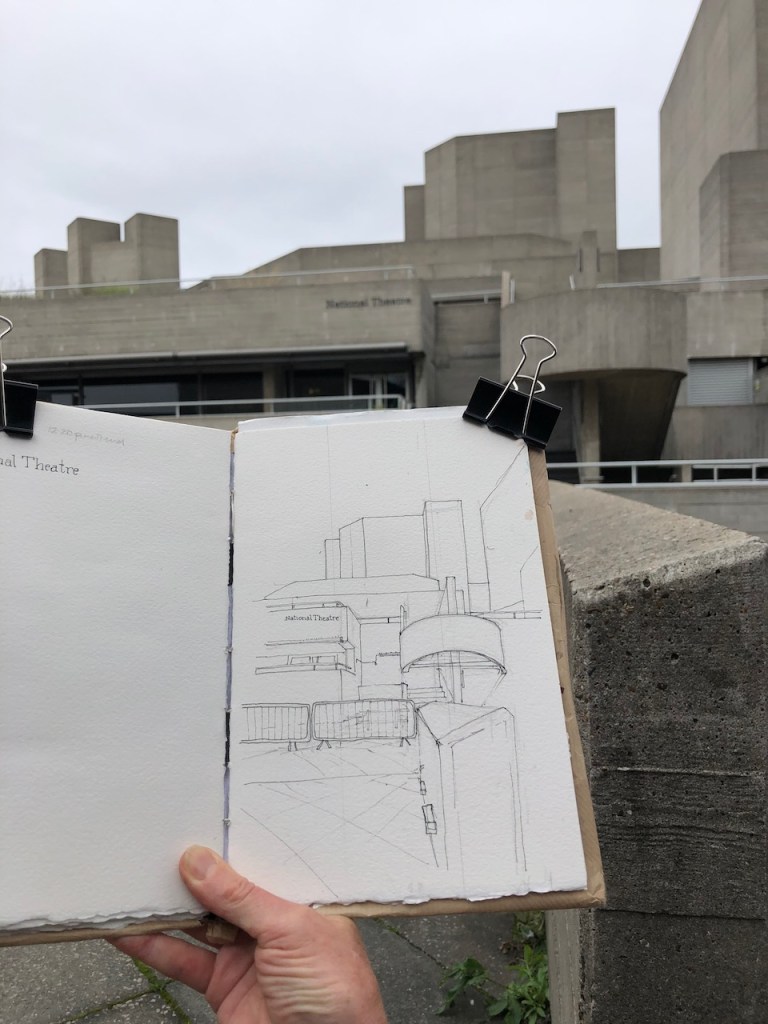
This drawing is 25cm by 16cm, 10 inches by 6½ inches on Arches 300gsm watercolour paper. It took 1½ hours. I did a preliminary sketch first, shown in the work-in-progress photos below. The colours are Buff Titanium, Neutral Tint, and Lunar Earth, all Daniel Smith watercolours, over De Atramentis document black ink.

I’ve drawn the South Bank before:

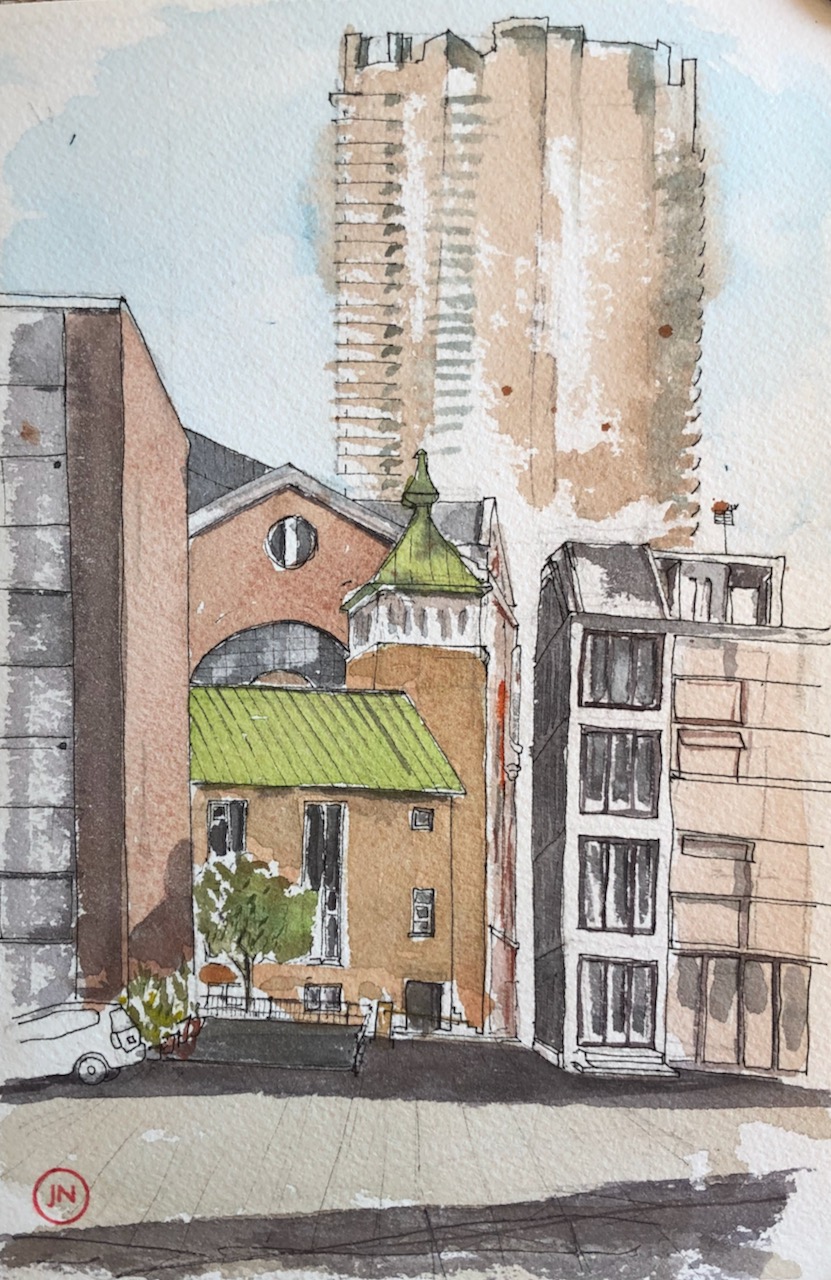
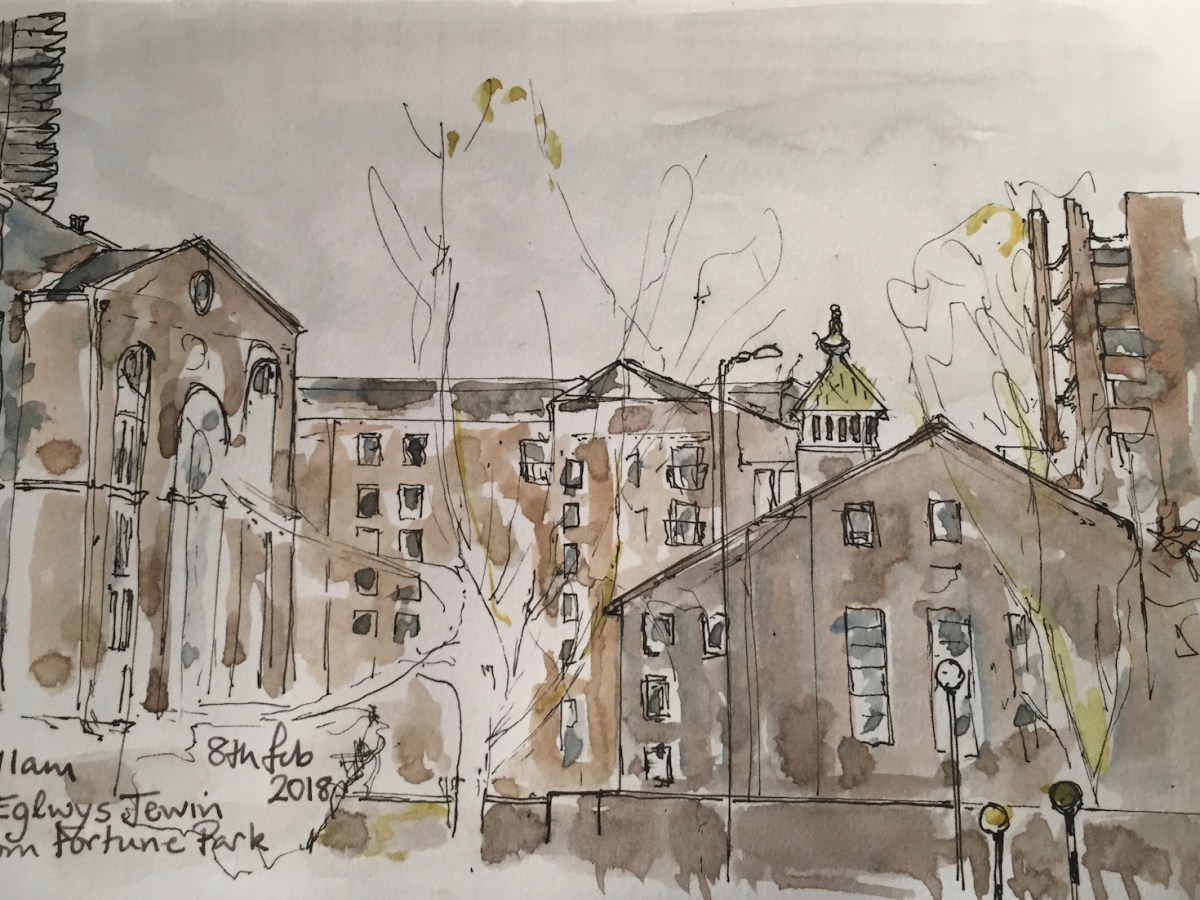
Eglwys Jewin, the Welsh Church, from Golden Lane Estate

On a glorious sunny Sunday, the sun lit up the roof of the Welsh Church.

Eglwys Jewin, the Welsh Church, from Golden Lane Estate.
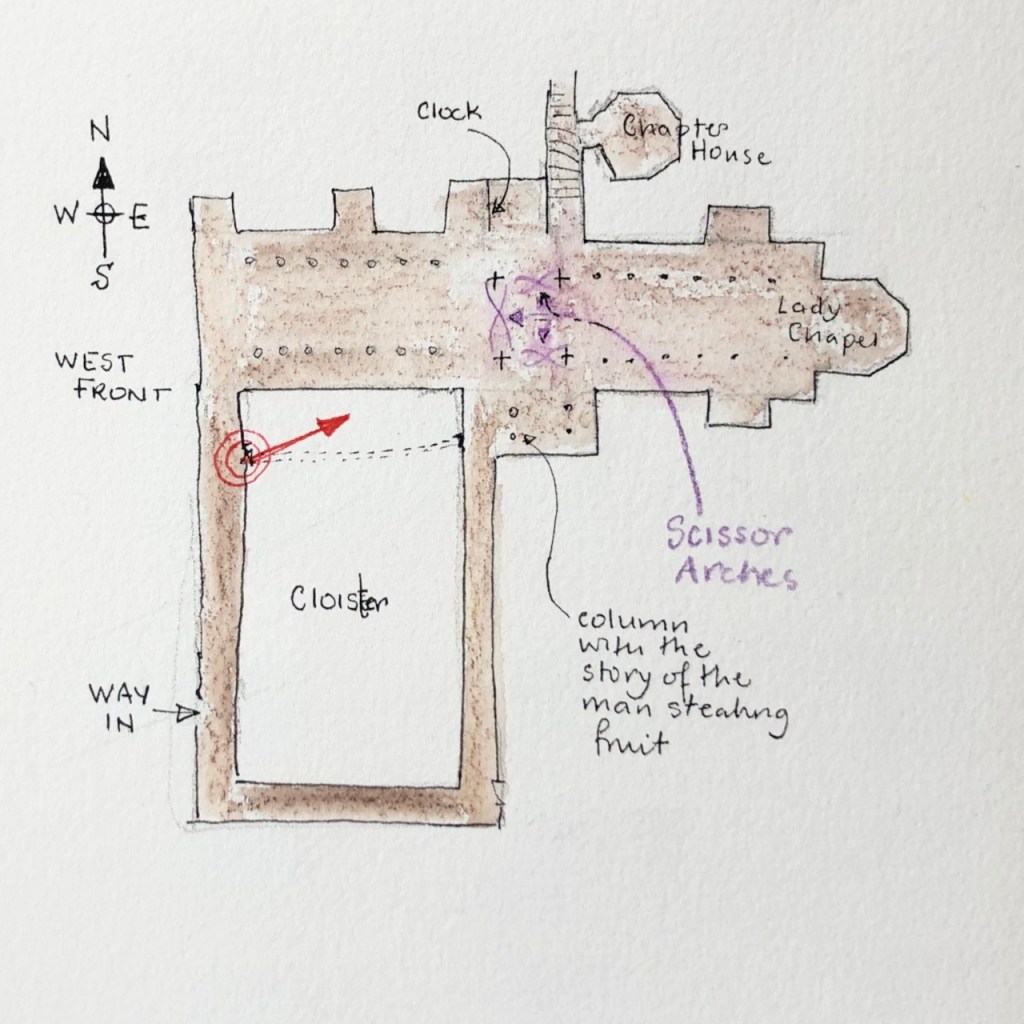
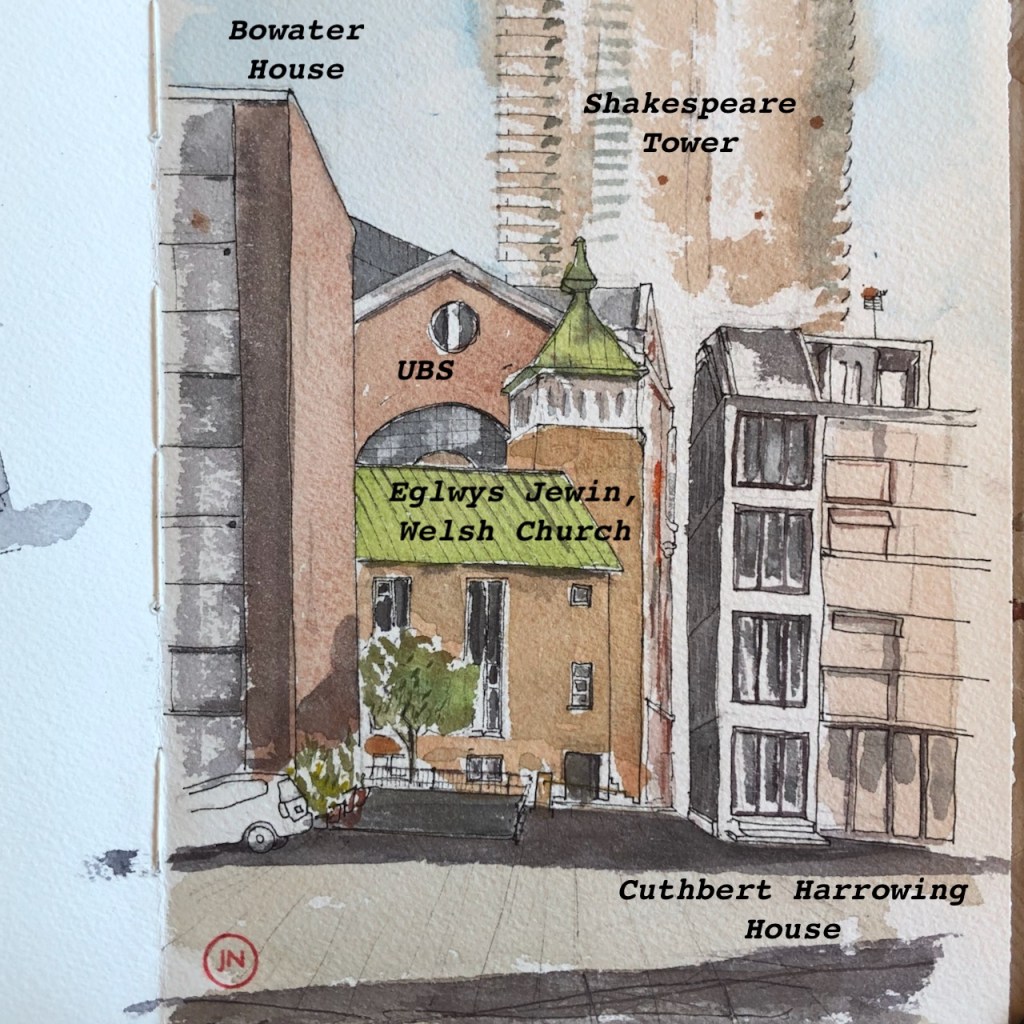
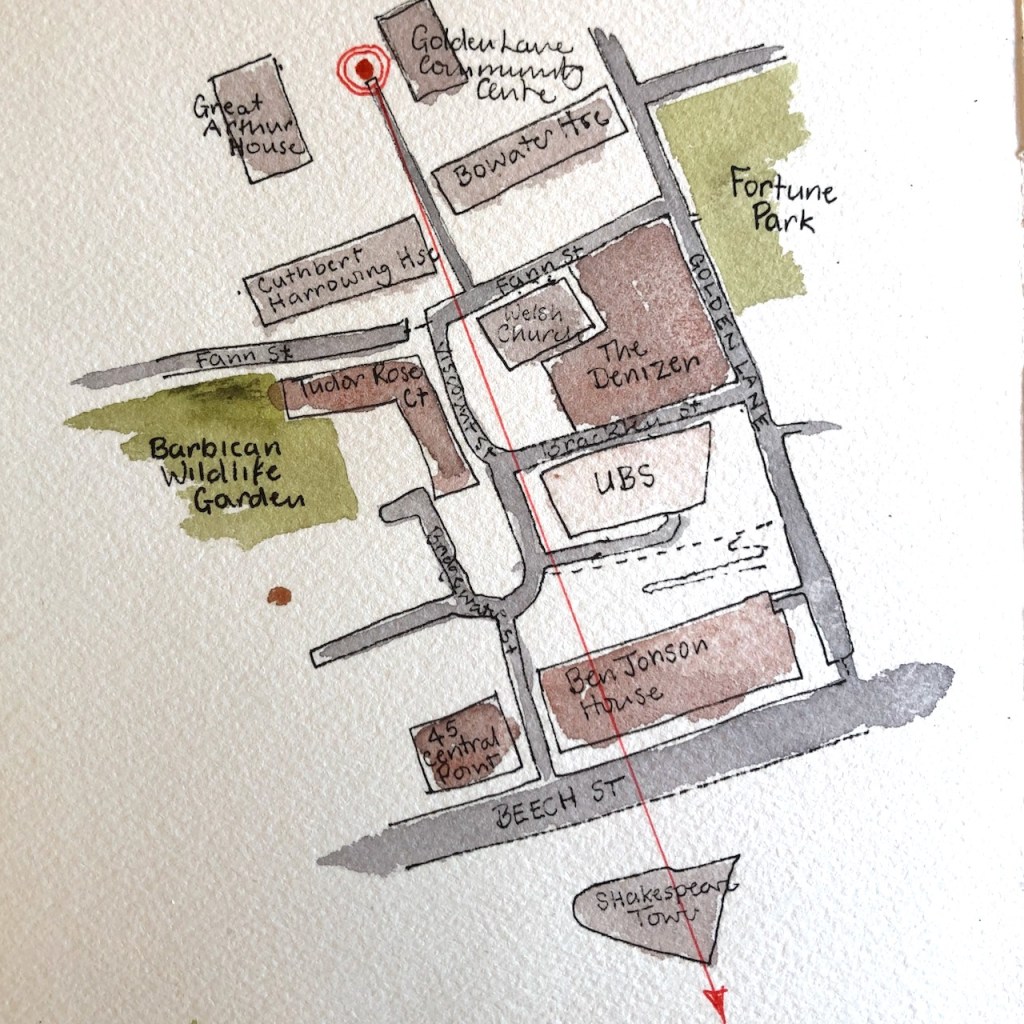
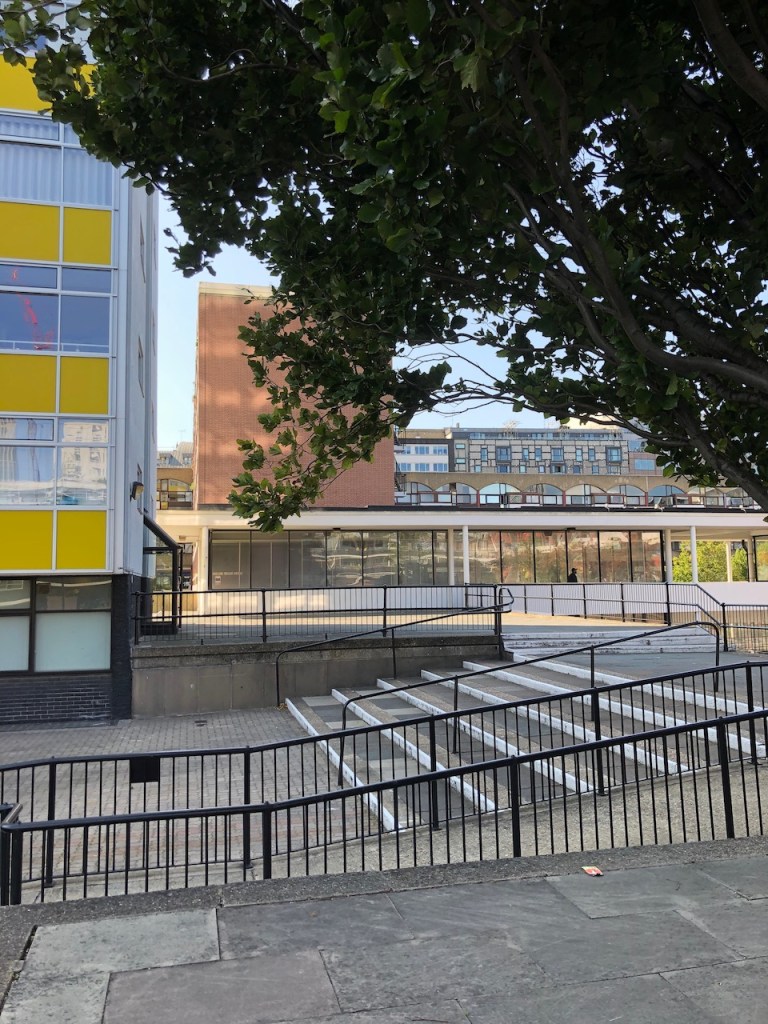
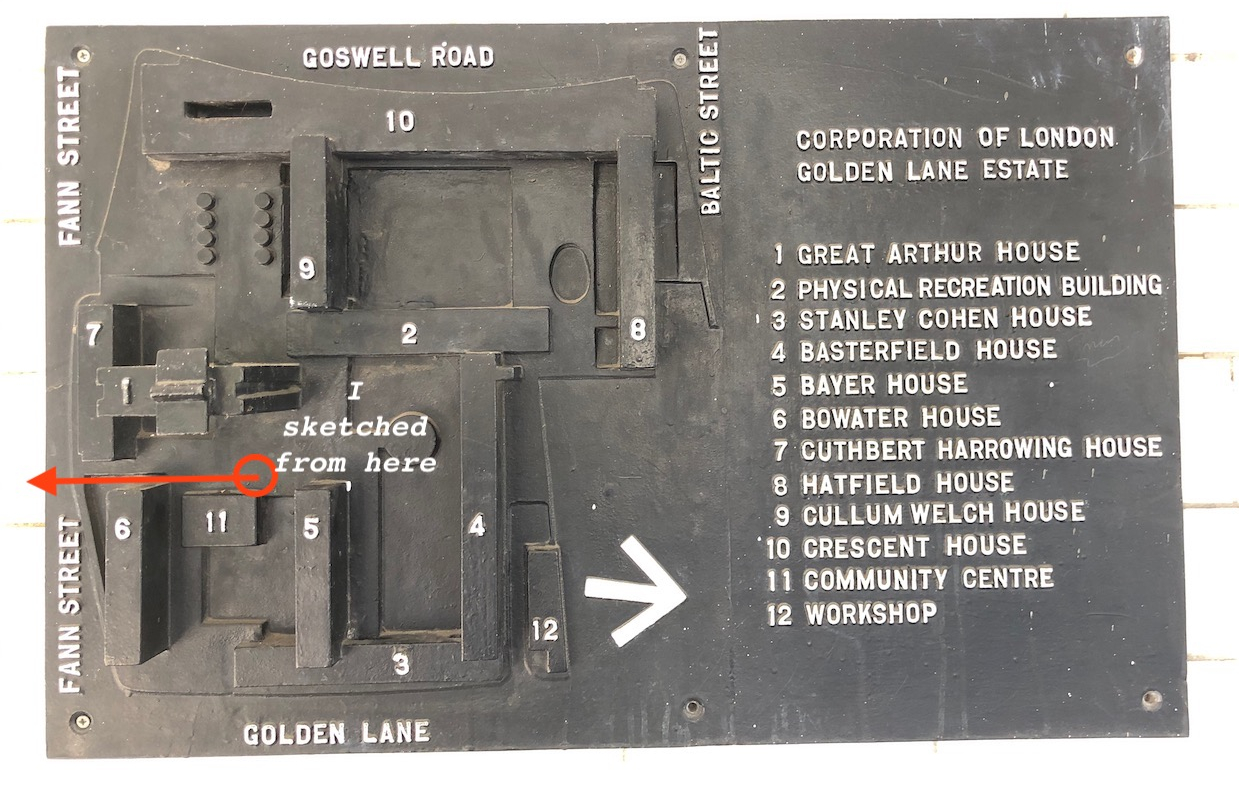
This is the view from the Golden Lane Estate. Here is a map, and an annotated image to show which building is which. The arrow on the map shows the direction I was looking.
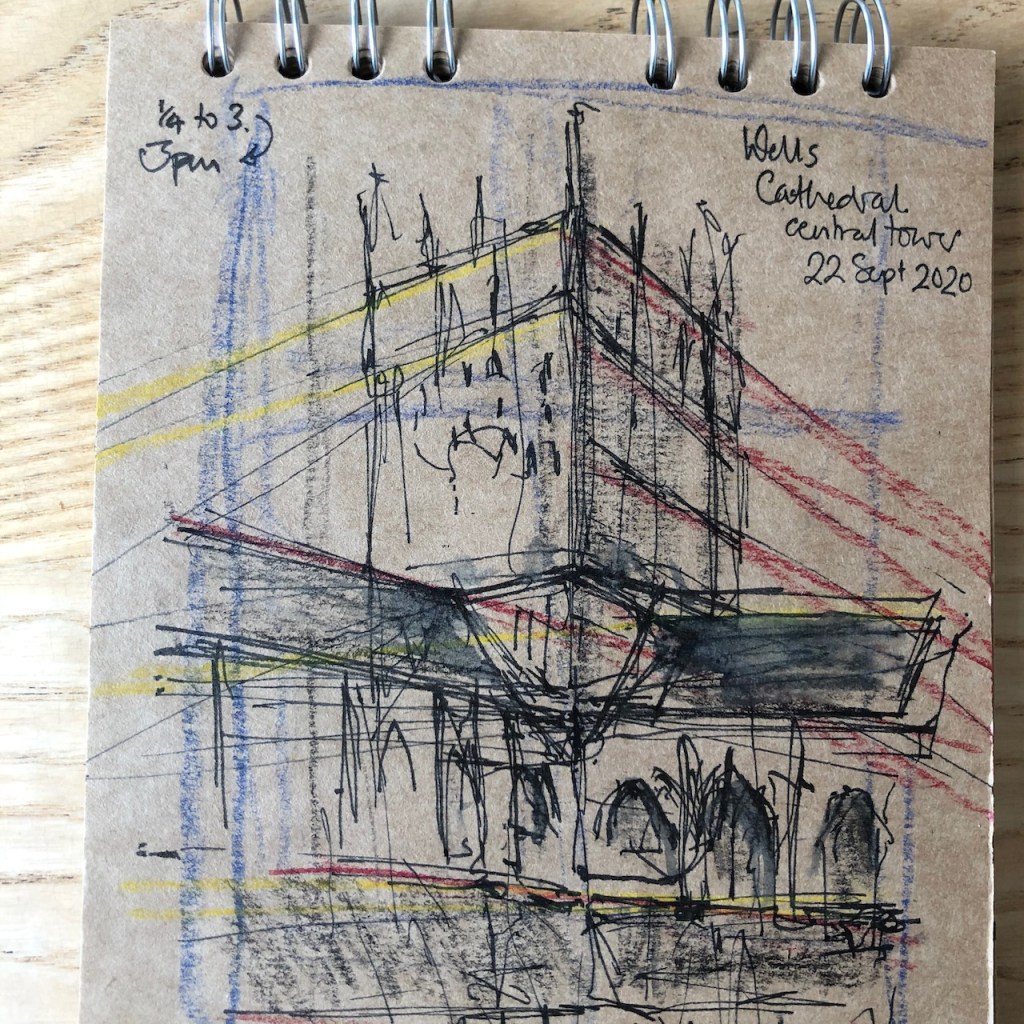
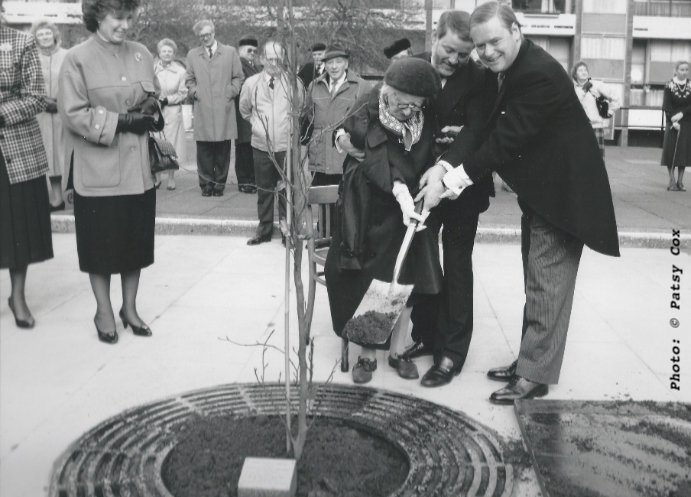
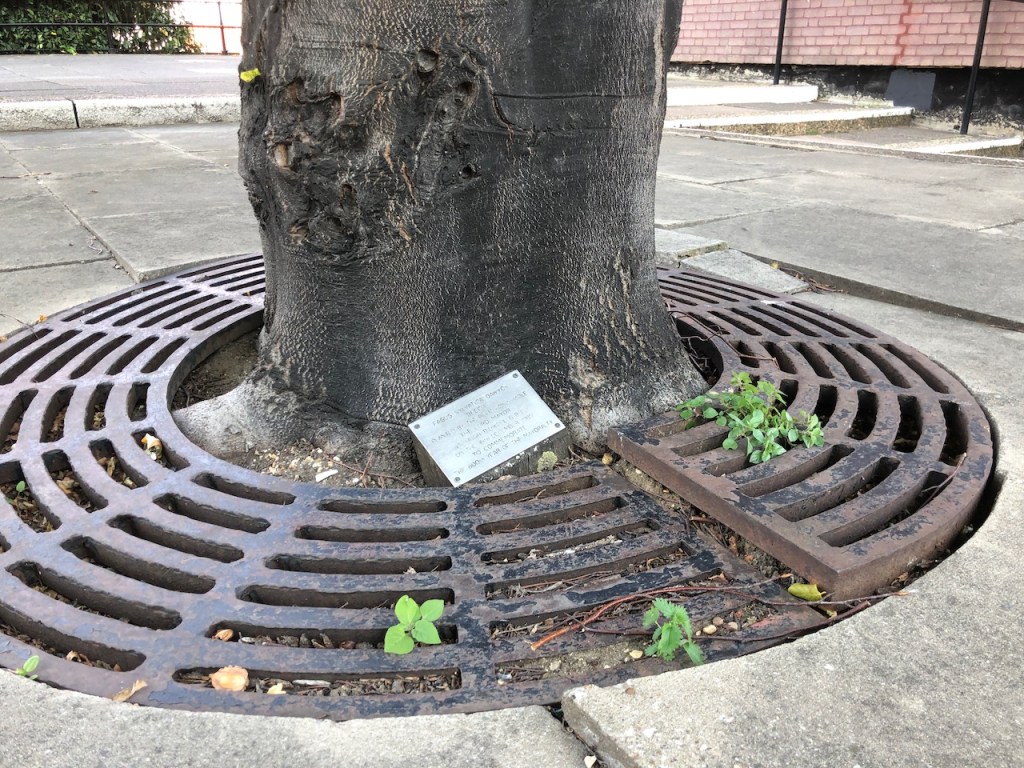
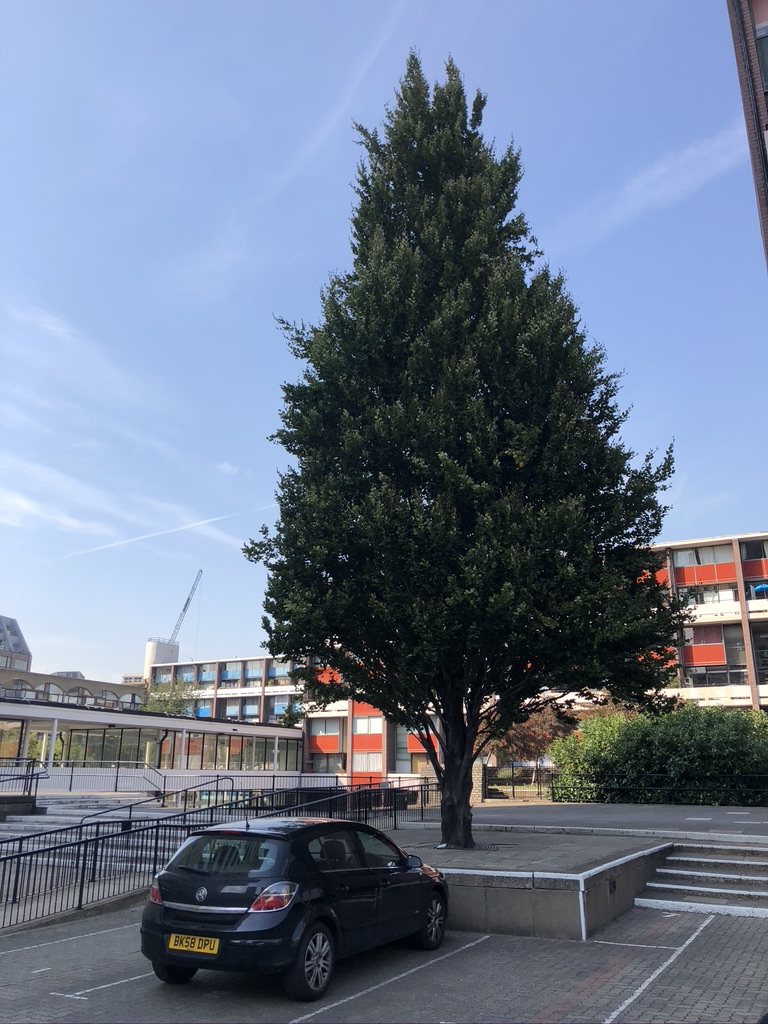
I was sitting next to a beech tree, Fagus Sylvatica Dawyck. A small notice at the base of the tree informed me that it has been planted on the 9th December 1989, to commemorate 800 years of the Lord Mayoralty. By co-incidence, this is the same anniversary that was commemorated by the bollard in my previous post. Here is a picture of the planting ceremony, kindly provided by Billy Mann from his Golden Lane Archive.
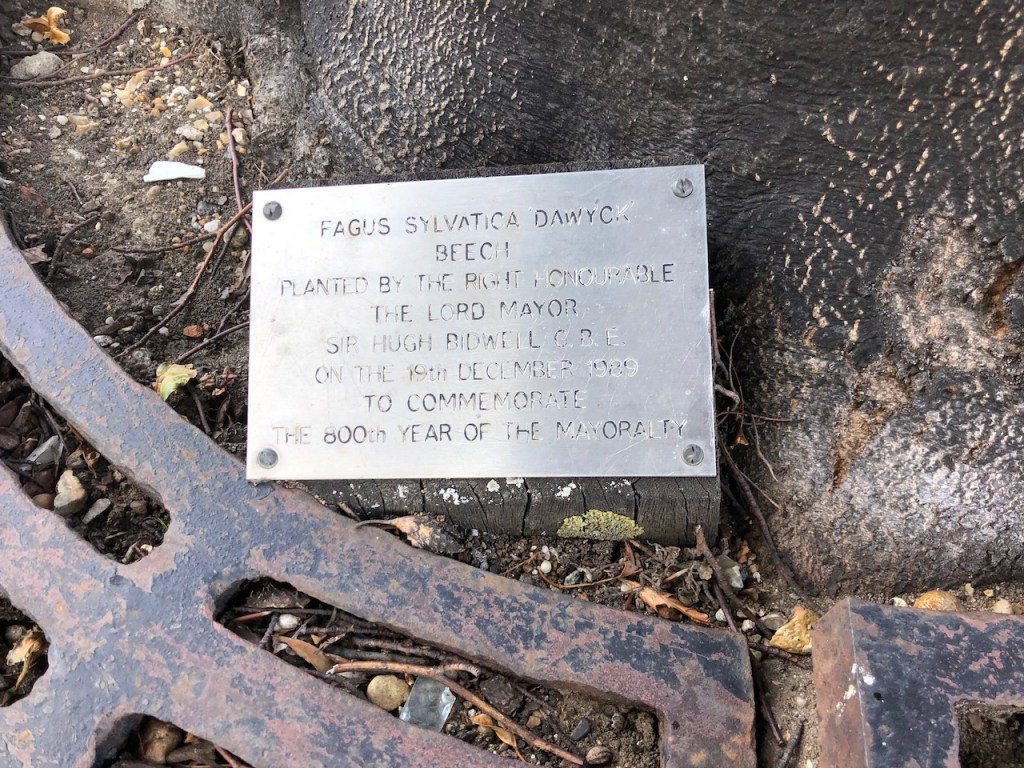
Fagus Sylvatica Dawyck, Beech Tree on the Golden Lane Estate, being planted.
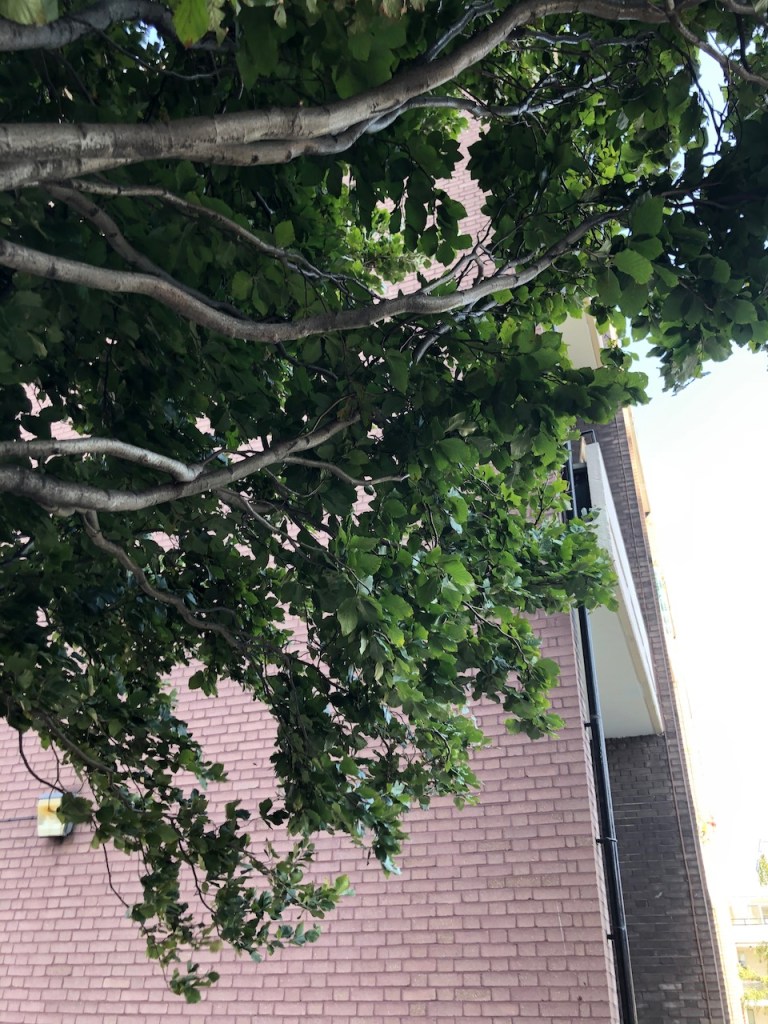
Photo courtesy of Patsy Cox and used with permission. The photographer was standing almost exactly where I sat to draw my picture.

The tree has grown strongly in the last 30 years. It surges out of its metal hoops, and pushes the notice aside.

The Golden Lane Estate is a busy place. Many people passed by on the nearby paths. The tree and I were on a raised area, above parked cars. Some people were on foot, one was in a wheelchair, and there were several groups of cyclists. One person had a dog. This was a small dog, the same size as my sketchbook. I can say that with certainty, because, while the person was occupied on their mobile phone, the dog dashed onto my dais and plonked itself foursquare on my sketchbook. What to do?

I must have shouted out, because the person looked up briefly from their phone. I glared at the person, and shooed the dog away. The person uttered a perfunctory ‘sorry’ and continued their conversation. “No, no, it’s alright,” they said into the phone, “it’s just that Tabatha…”. They didn’t ask me if it was alright. I looked down at my drawing. It was alright.

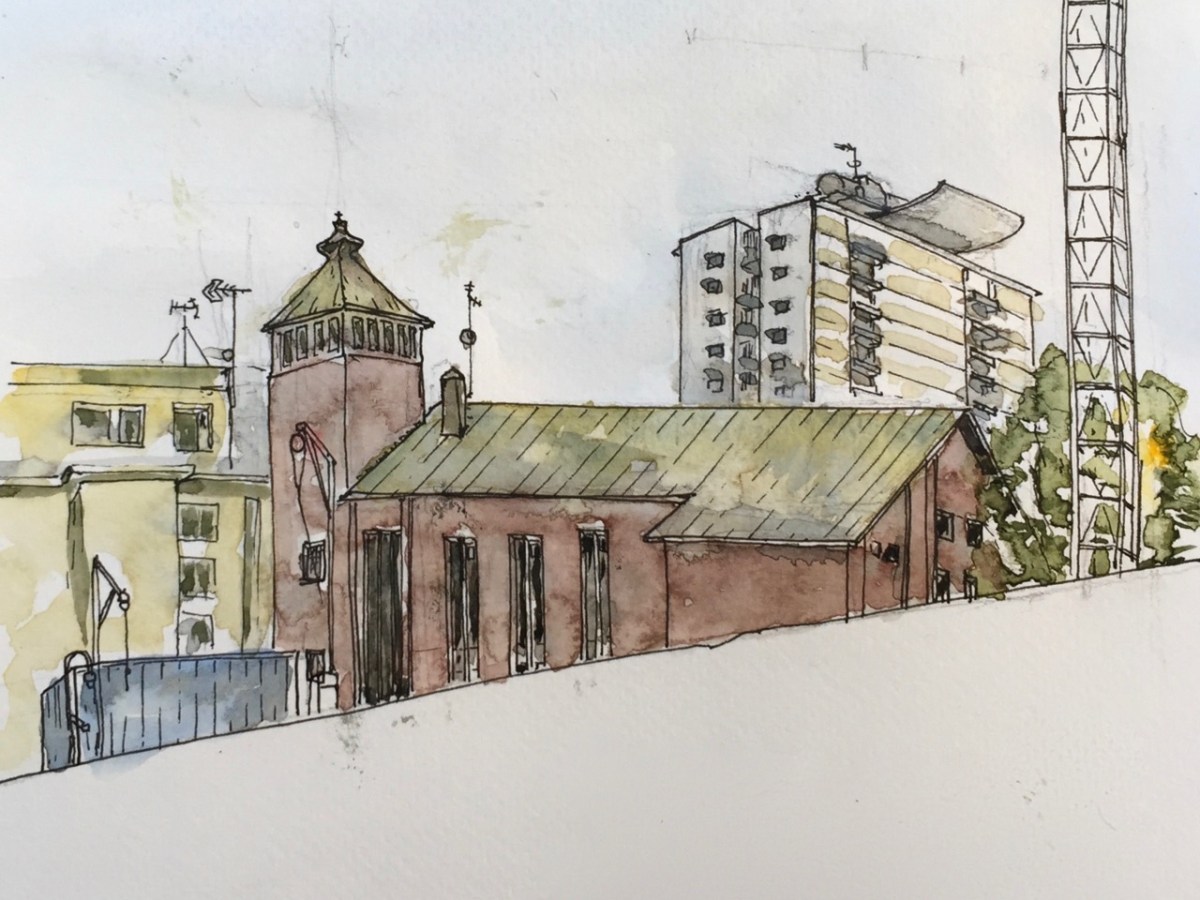
I have drawn this church before. It was built in the 1960s. More information about this interesting building is on my previous posts:

Eglwys Jewin from Fortune Park

The building which was Bernard Morgan House has now been pulled down. This is sad. It had a calm 1960s look, and ceramic tiles on the side. I looked across the gap and could see the Welsh Church: Eglwys Jewin. The church is the building with the green roofed turret and the long windows. It…

Welsh Church and Great Arthur House

Here is the Welsh Jewin Church seen from Brackley Street. This is one of those ephemeral views: a huge new building is about to go up behind the hoarding, and this view will be completely obscured. The church is Eglwys Jewin, the Welsh Church. I have drawn it before, from Fortune Park. Here’s the link…

This drawing took two hours. It is 25cm by 16cm, 10 inches by 6½ inches on Arches 300gsm watercolour paper. The main colours are Fired Gold Ochre, Mars Yellow, Phthalo Turquoise, and Perylene Maroon, with some Prussian Blue for the shadows.

This is the wonderful three dimensional map of the Golden Lane Estate, which is on the South end of Stanley Cohen House on Golden Lane. It has West at the top because that’s the direction you are facing when you are looking at the map.


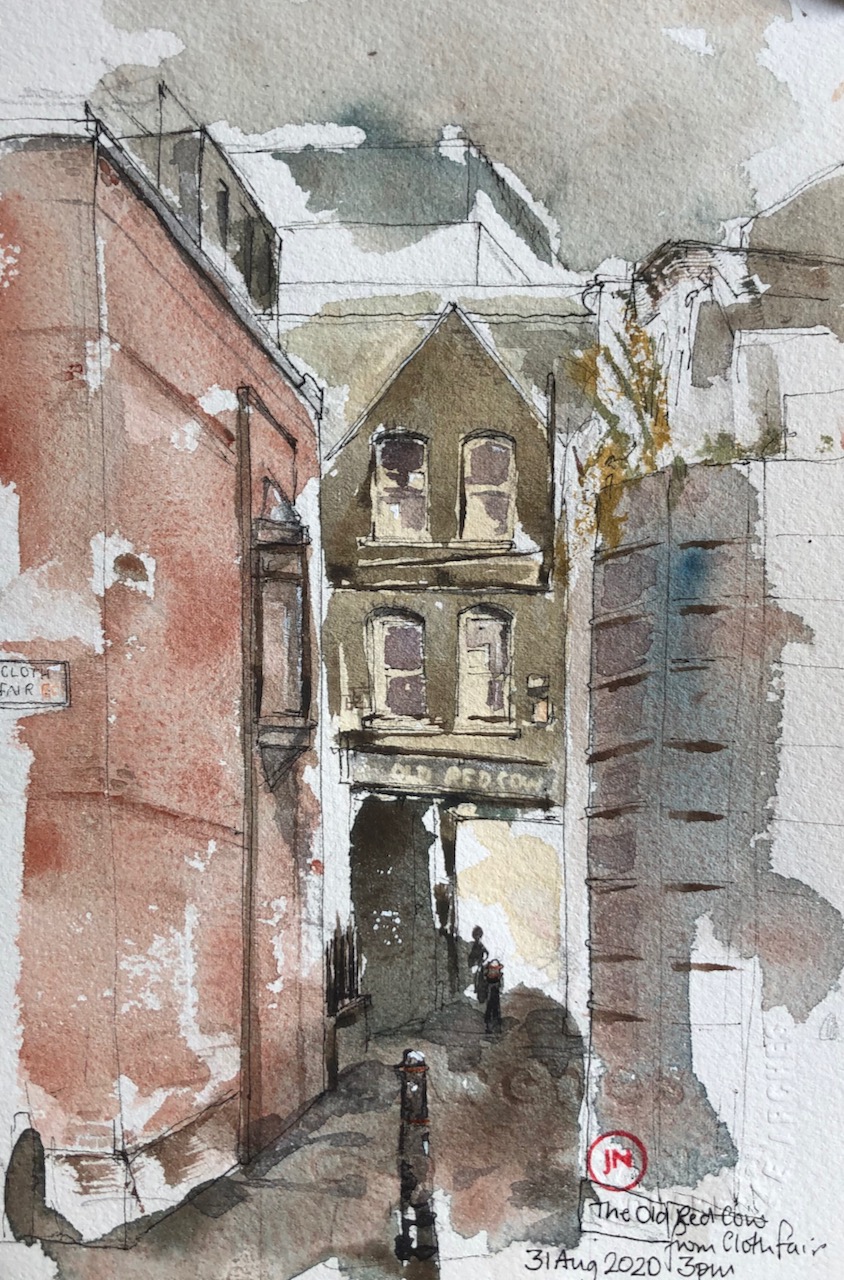
The Old Red Cow, from Cloth Fair

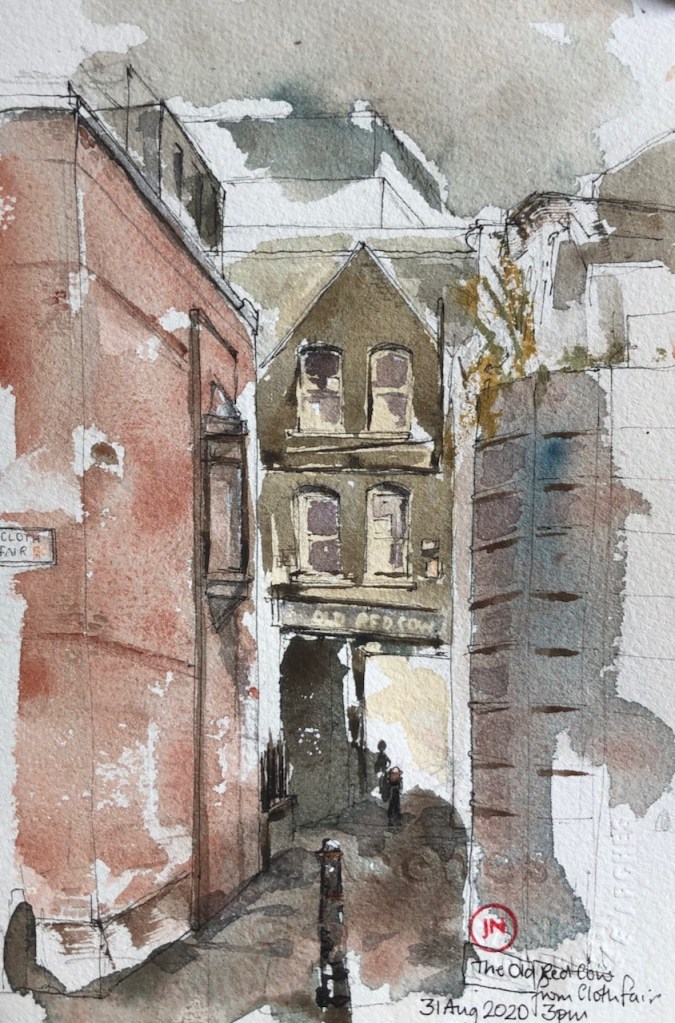
Here is a view of the pub “The Old Red Cow”, seen from Cloth Fair.

The Old Red Cow from Cloth Fair
I drew the picture from outside “The Hand and Shears”

The front of the pub is on Long Lane. When CrossRail opens, it will be very well placed to serve the people flooding out of the new “Farringdon East” station. At the moment, however, it’s closed due to the COVID pandemic.

In Cloth Fair in this area there is a particularly varied collection of bollards. One celebrates 800 years of the Lord Mayor: 1189-1989.

Here are some photos of work in progress and a picture of the bollard.

One hour and 20 minutes, drawn and coloured outside the “Hand and Shears”.